
The ceiling is often called the “fifth wall” of interior design, yet it remains one of the most overlooked elements in kitchen planning. A thoughtfully designed kitchen ceiling can dramatically transform your culinary space, creating visual interest, improving functionality, and establishing the overall aesthetic tone of the room. From rustic exposed beams that evoke farmhouse charm to sleek contemporary installations that showcase cutting-edge technology, the right ceiling design serves as both a practical solution and an artistic statement that reflects your personal style and enhances your daily cooking experience.
Modern kitchen ceiling design has evolved far beyond simple painted drywall surfaces. Today’s innovative approaches incorporate advanced lighting systems, sustainable materials, acoustic solutions, and even living elements that bring nature indoors. Whether you’re drawn to the timeless elegance of coffered ceilings, the raw authenticity of industrial exposed elements, or the cutting-edge appeal of smart glass technology, the perfect ceiling design can elevate your kitchen from merely functional to truly extraordinary.
This comprehensive guide explores thirty distinct ceiling design concepts, each offering unique advantages and aesthetic appeals. From traditional craftsmanship techniques to revolutionary sustainable solutions, these designs represent the full spectrum of possibilities for transforming your kitchen’s overhead space into a stunning architectural feature that enhances both form and function.
1. Modern Coffered Ceiling Elegance
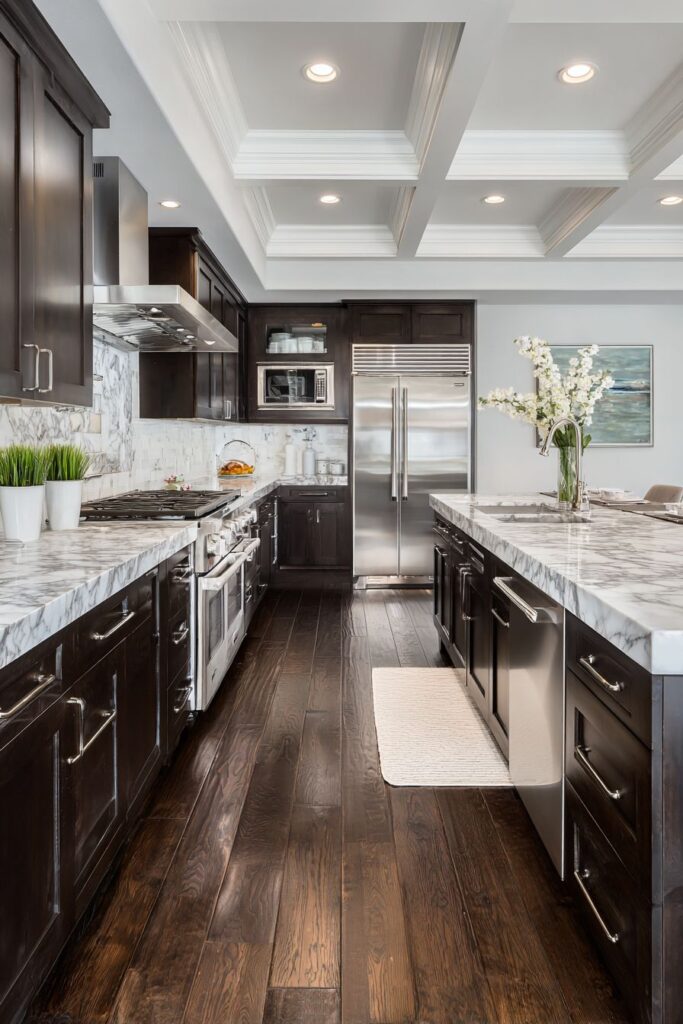
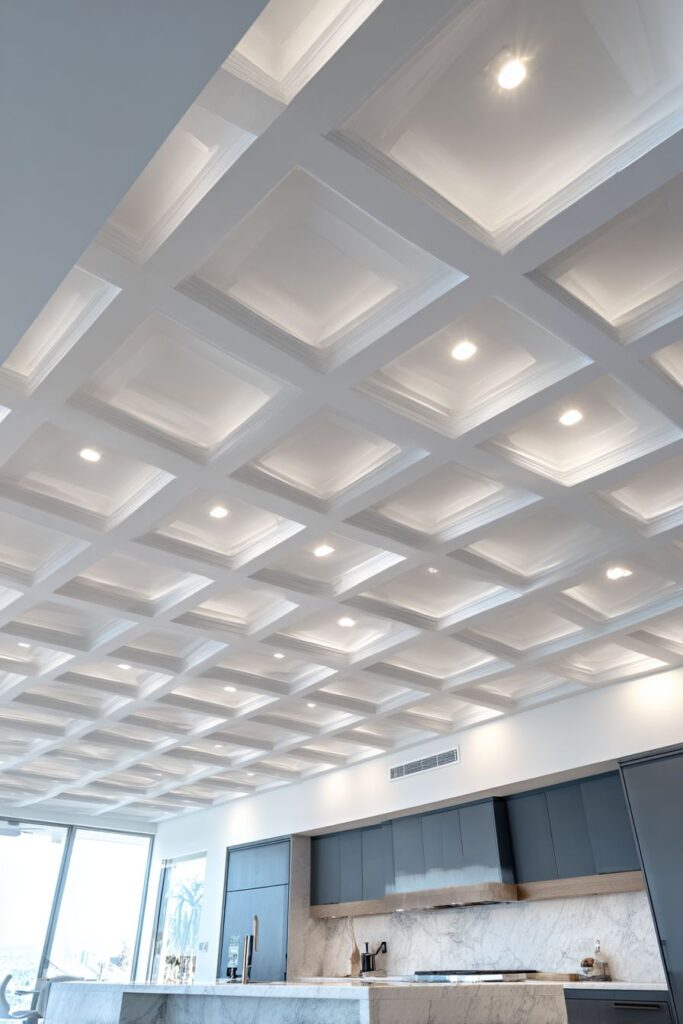
Step into a kitchen where architectural sophistication meets contemporary functionality through a stunning coffered ceiling design. The geometric precision of crisp white panels creates a sense of order and grandeur that immediately elevates the entire space. Each carefully crafted coffer houses integrated LED lighting, ensuring even illumination across every work surface while highlighting the dimensional beauty of the ceiling’s structured design.
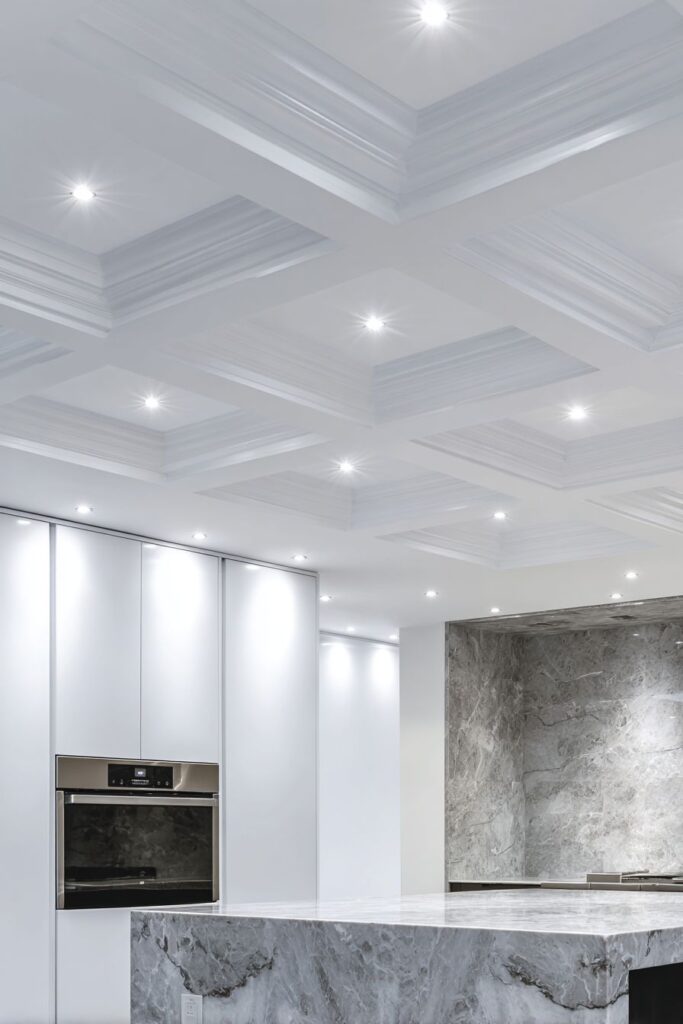
The interplay between light and shadow within each panel creates subtle depth variations that change throughout the day, making the ceiling a dynamic architectural element rather than a static surface. The clean lines and perfect proportions of the coffered design complement modern kitchen aesthetics while adding a touch of classical refinement that never goes out of style.
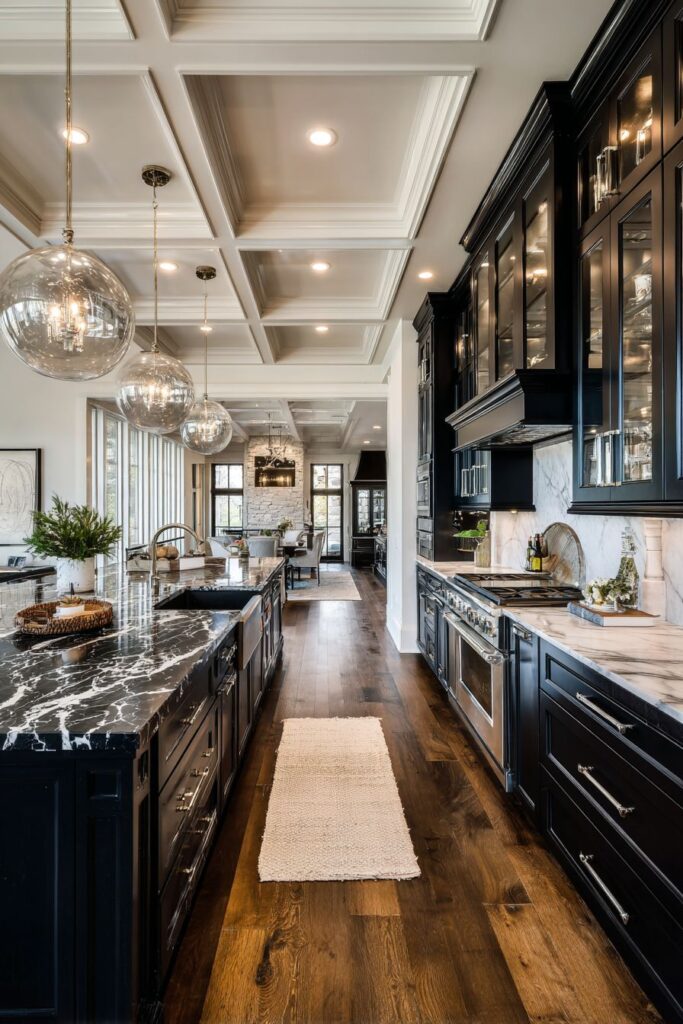
Below this masterpiece of ceiling design, dark cabinetry provides striking contrast against the bright ceiling treatment, while luxurious marble countertops echo the sophisticated material palette. The combination creates a kitchen environment that feels both professional and welcoming, suitable for everyday cooking and elegant entertaining.
Key Design Tips:
- Ensure coffer proportions align with room dimensions for balanced visual impact
- Integrate LED lighting within each panel for even illumination without visible fixtures
- Choose paint colors that complement your kitchen’s overall color scheme
- Consider adding crown molding around the perimeter for enhanced sophistication
2. Farmhouse Exposed Beam Character
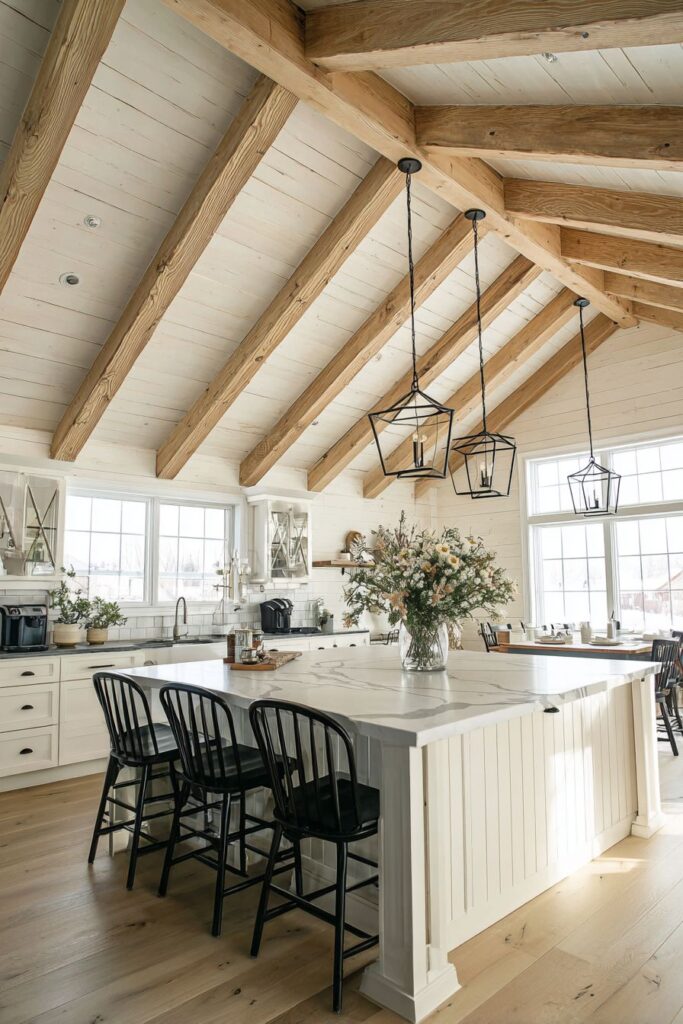
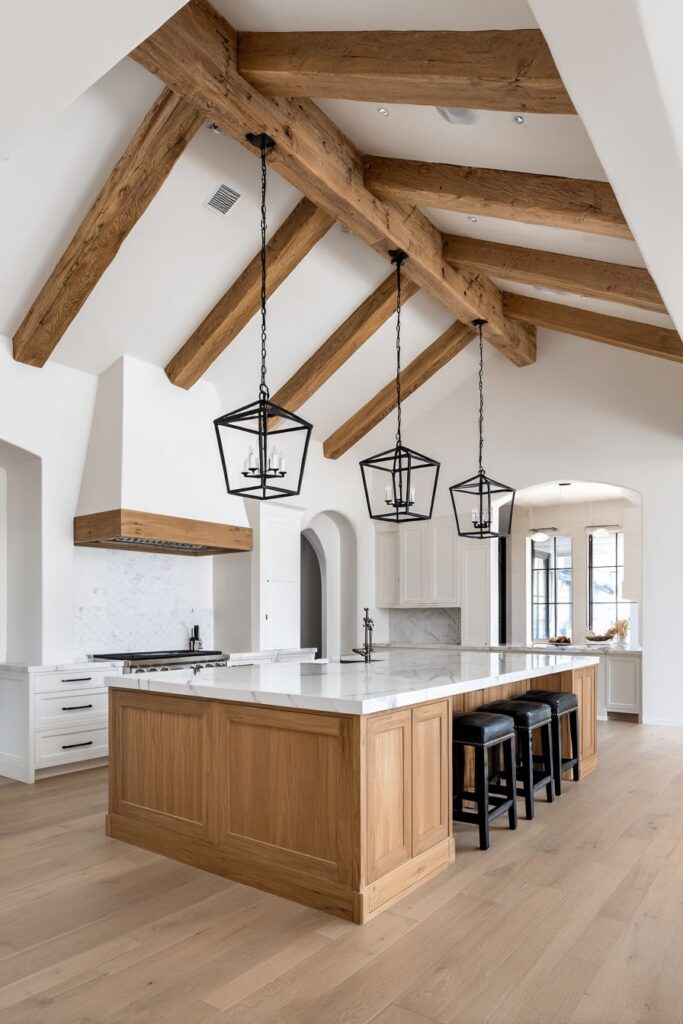
Nothing captures the essence of farmhouse charm quite like exposed natural wood beams stretching across a kitchen ceiling. The authentic character of weathered timber brings warmth and history into the culinary space, creating an atmosphere that invites family gatherings and leisurely meal preparation. Each beam tells its own story through grain patterns, natural imperfections, and the patina that only time can create.
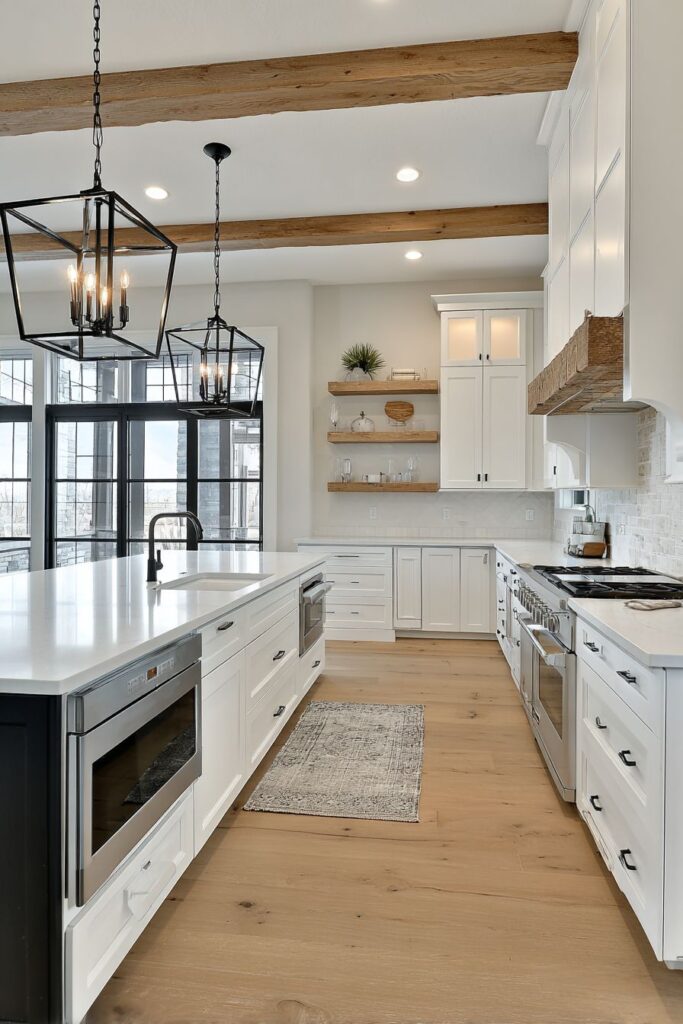
The contrast between the rustic ceiling beams and painted white shiplap boards creates visual interest while maintaining the clean, fresh aesthetic that defines modern farmhouse style. This combination of textures and tones establishes a perfect balance between casual comfort and refined design sensibility.
Pendant lights with black metal frames suspended from the beams provide task lighting over the kitchen island while enhancing the industrial-meets-rustic aesthetic. The lighting fixtures become part of the ceiling’s architectural narrative, creating focal points that draw the eye upward and emphasize the room’s generous vertical space.
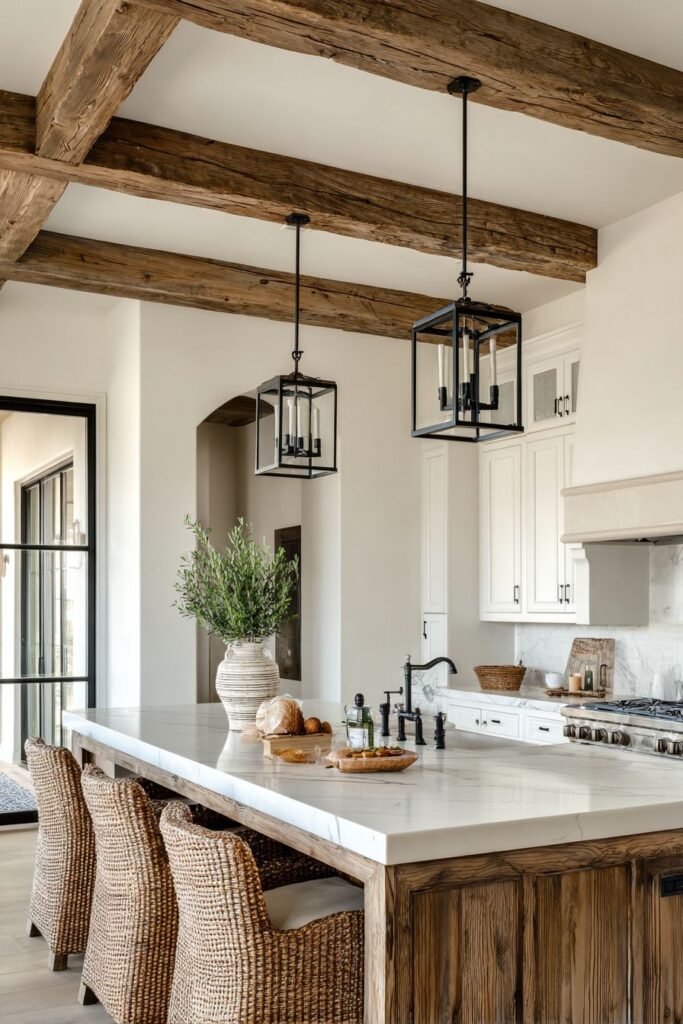
The authentic wood grain variations and subtle color differences in each beam add organic beauty that manufactured materials simply cannot replicate. This natural irregularity creates visual richness that makes the ceiling a constantly engaging element of the kitchen’s design story.
Key Design Tips:
- Source reclaimed beams for authentic character and environmental sustainability
- Maintain proper beam spacing to avoid overwhelming the visual space
- Balance beam darkness with lighter ceiling boards to prevent heaviness
- Use pendant lights strategically to highlight beams without competing for attention
3. Contemporary Tray Ceiling Drama
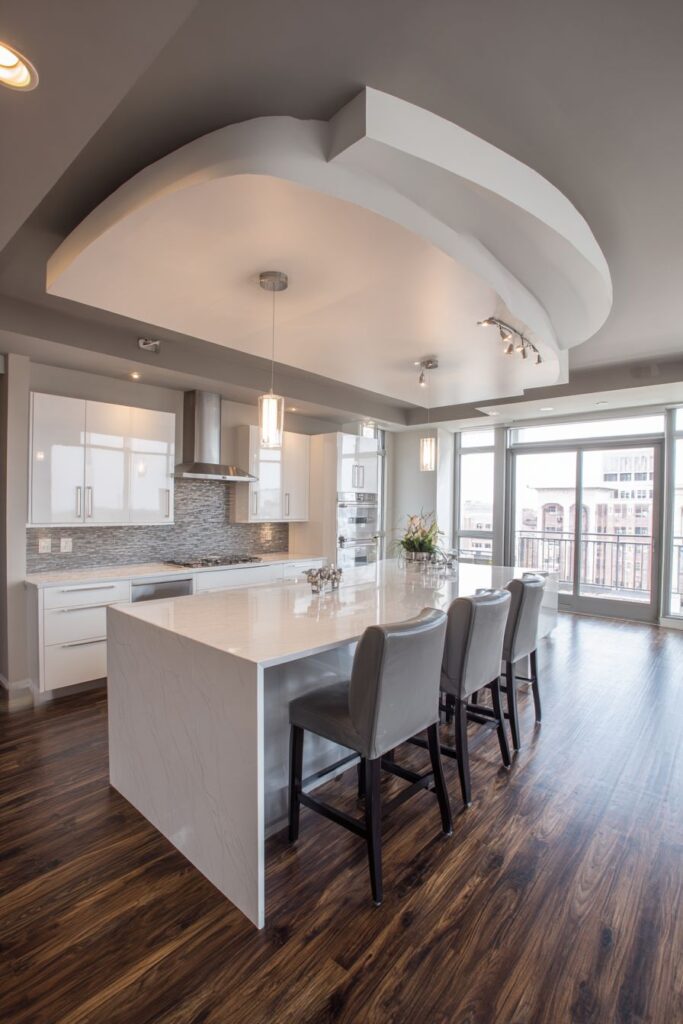
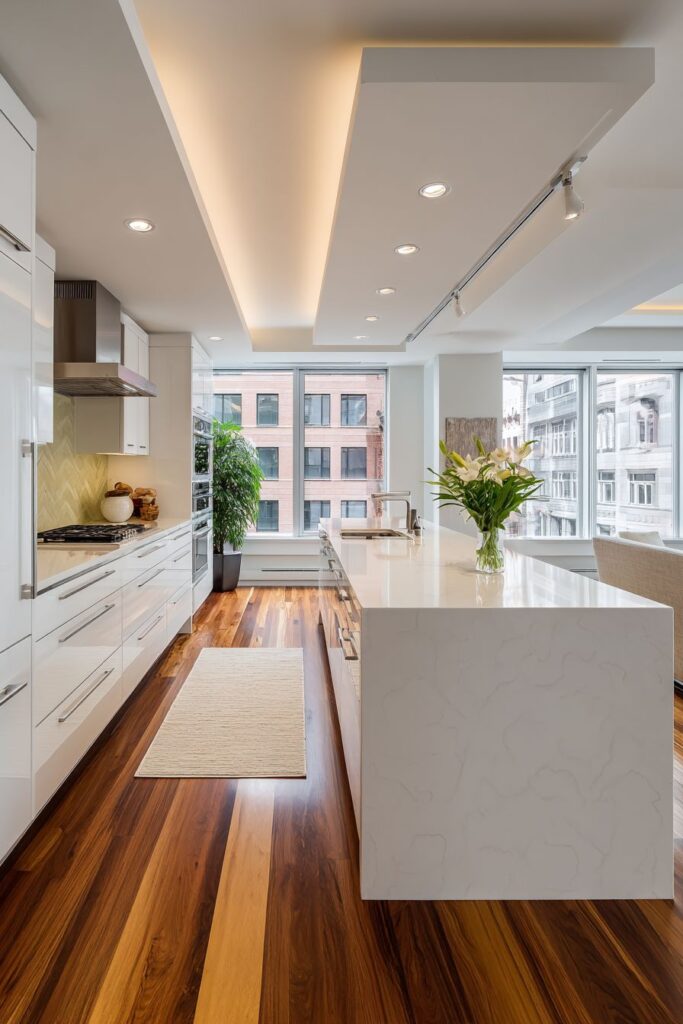
A contemporary tray ceiling transforms an ordinary kitchen into an architectural showcase through the power of layered illumination and geometric sophistication. The multi-level ceiling design creates impressive visual depth while serving practical purposes, housing ventilation systems and providing multiple lighting zones for different kitchen activities.
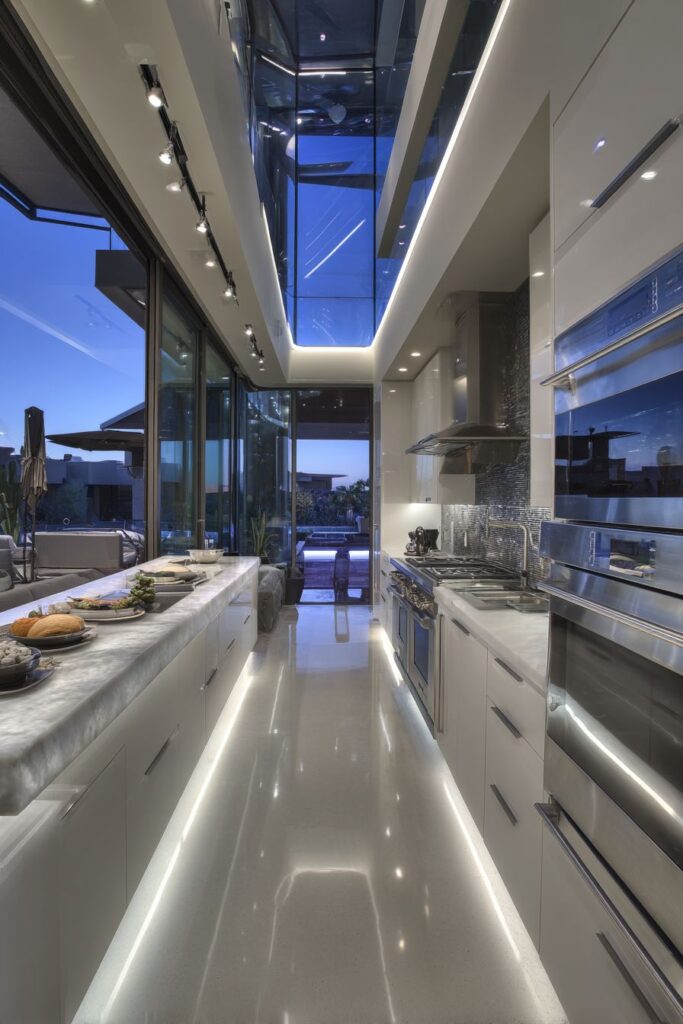
Hidden LED strips tucked into the recessed perimeter create a floating effect that makes the central ceiling plane appear to hover magically above the kitchen space. This indirect lighting technique eliminates harsh shadows while creating a soft, ambient glow that makes the entire kitchen feel more spacious and welcoming.
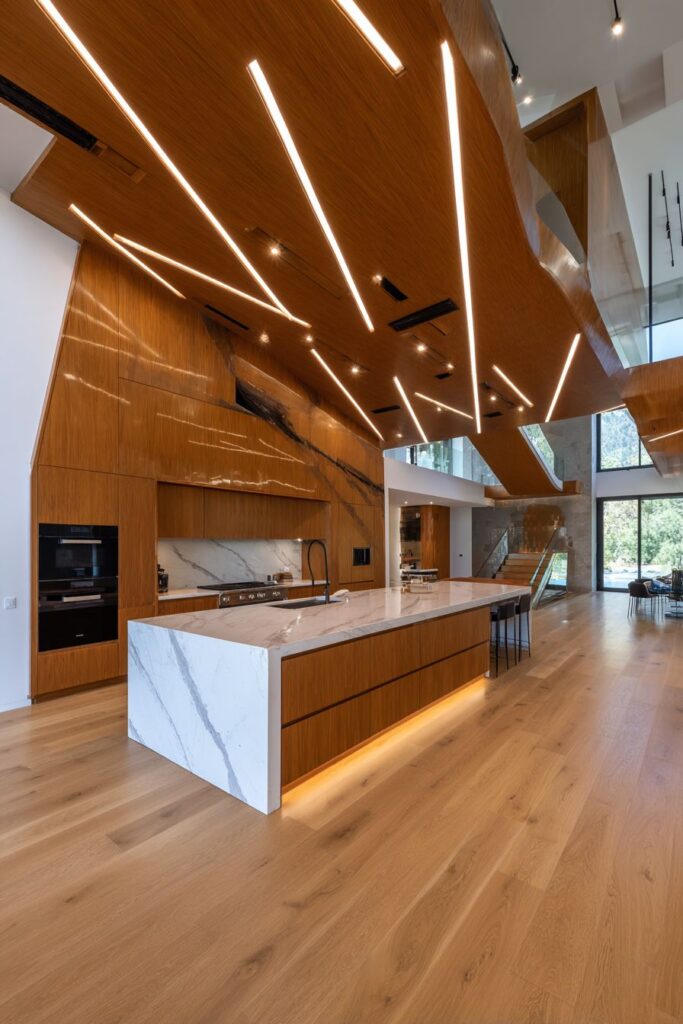
The clean, angular lines of the tray ceiling complement sleek cabinetry and modern appliances, creating a cohesive design language that speaks of contemporary sophistication. Track lighting integrated into the lower ceiling level provides focused task illumination, ensuring that food preparation areas receive adequate light for safe and efficient cooking.
The interplay between different ceiling heights creates natural zones within the kitchen, subtly defining cooking, preparation, and social areas without the need for physical barriers. This spatial organization enhances both functionality and visual flow throughout the culinary space.
Key Design Tips:
- Plan lighting zones to complement different kitchen activities
- Ensure tray proportions work harmoniously with room dimensions
- Hide ventilation and mechanical systems within the tray structure
- Use dimmable LED systems for flexible ambiance control
4. Transitional Tongue-and-Groove Warmth
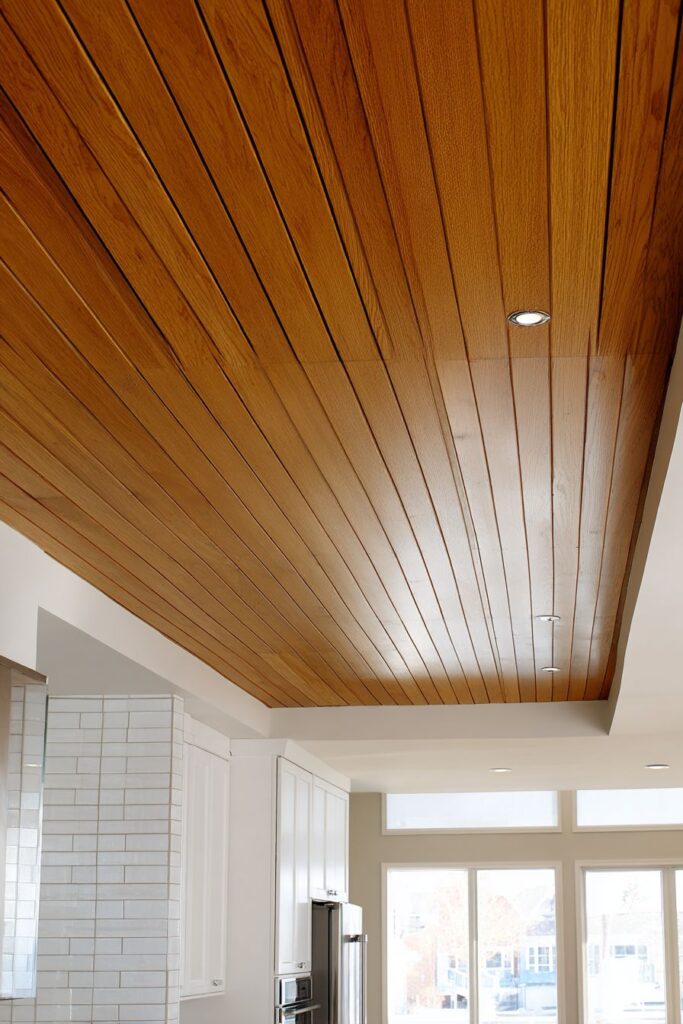
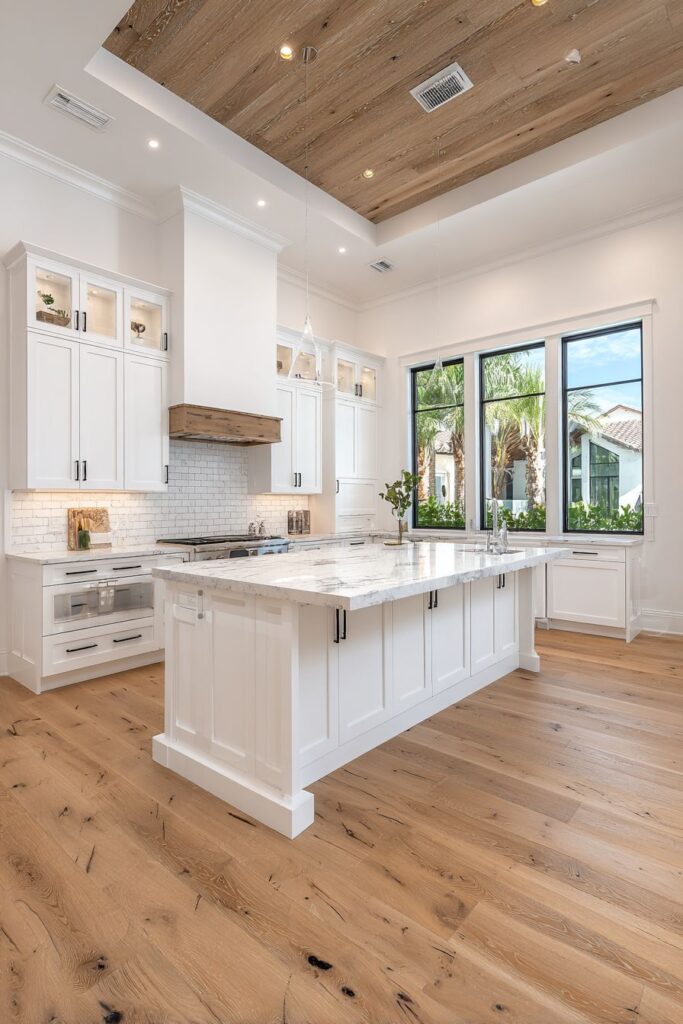
The timeless appeal of honey oak tongue-and-groove planks creates a ceiling design that bridges traditional craftsmanship with contemporary functionality. The linear arrangement of wood planks draws the eye along the ceiling’s length, creating visual movement that makes the kitchen feel larger and more dynamic.
Natural wood grain patterns in each plank contribute unique character, with subtle variations in color and texture creating an organic tapestry overhead. The warm honey oak finish adds richness to the kitchen palette while maintaining enough neutrality to complement various cabinet colors and design styles.
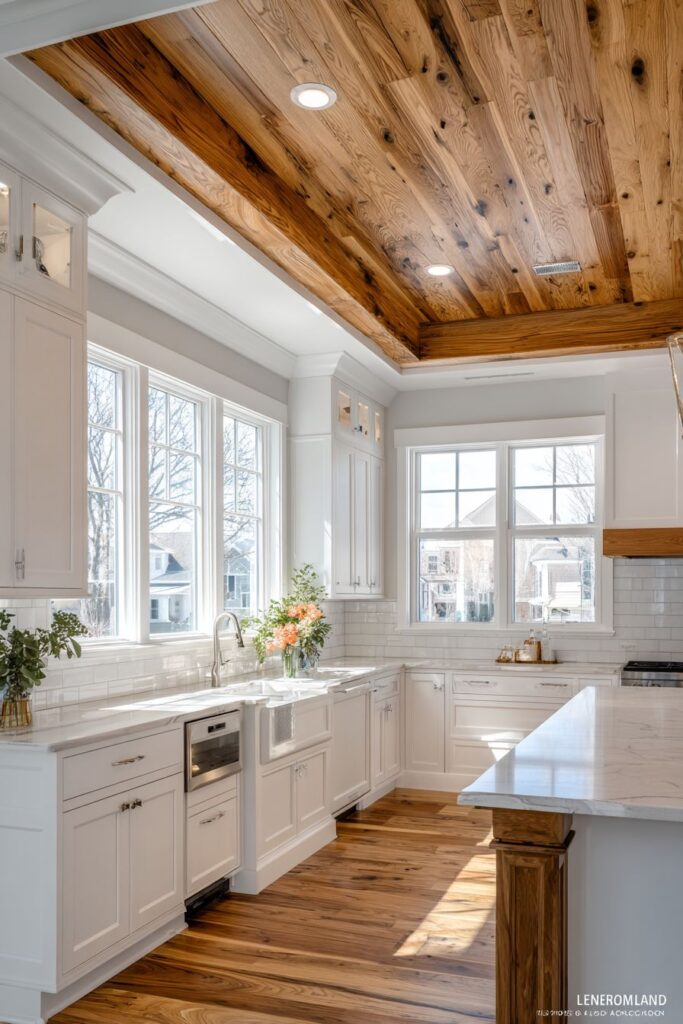
Simple recessed lighting fixtures disappear into the wood ceiling, providing necessary illumination without competing with the natural beauty of the timber surface. This restraint allows the wood to be the star of the ceiling show, creating a warm focal point that enhances the kitchen’s overall ambiance.
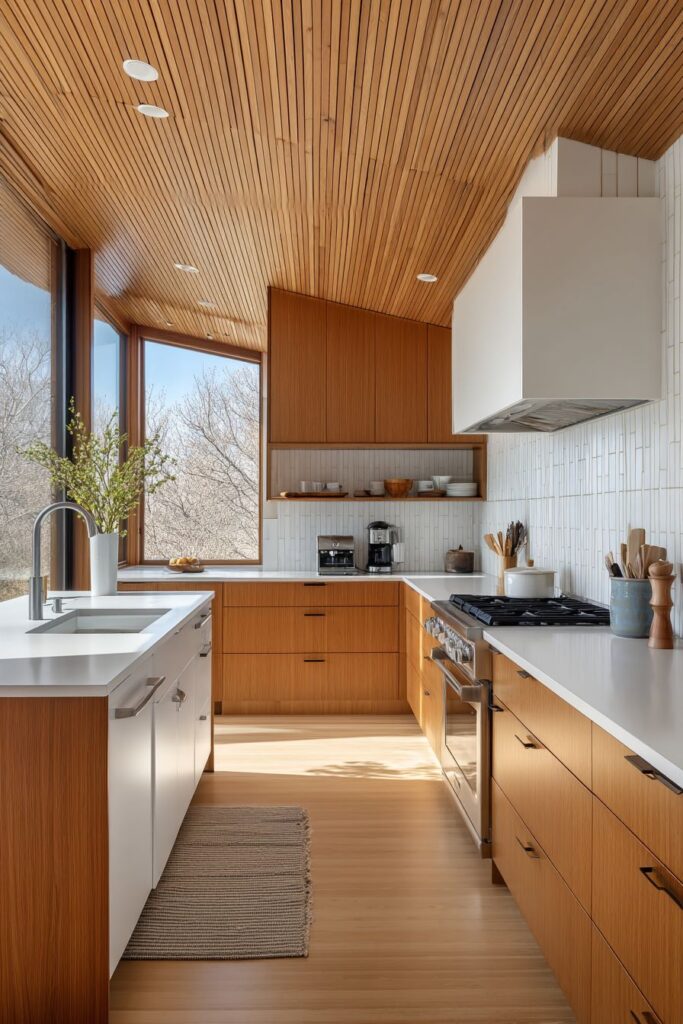
The contrast between the warm ceiling treatment and crisp white cabinetry creates visual tension that keeps the design interesting and prevents either element from overwhelming the space. Classic subway tile backsplash adds another layer of timeless appeal that reinforces the transitional design aesthetic.
Key Design Tips:
- Choose wood finish that complements your cabinet hardware and fixtures
- Install planks parallel to the longest wall to maximize visual expansion
- Use recessed lighting sparingly to maintain clean sightlines
- Seal wood properly to protect against kitchen moisture and grease
5. Industrial Raw Authenticity
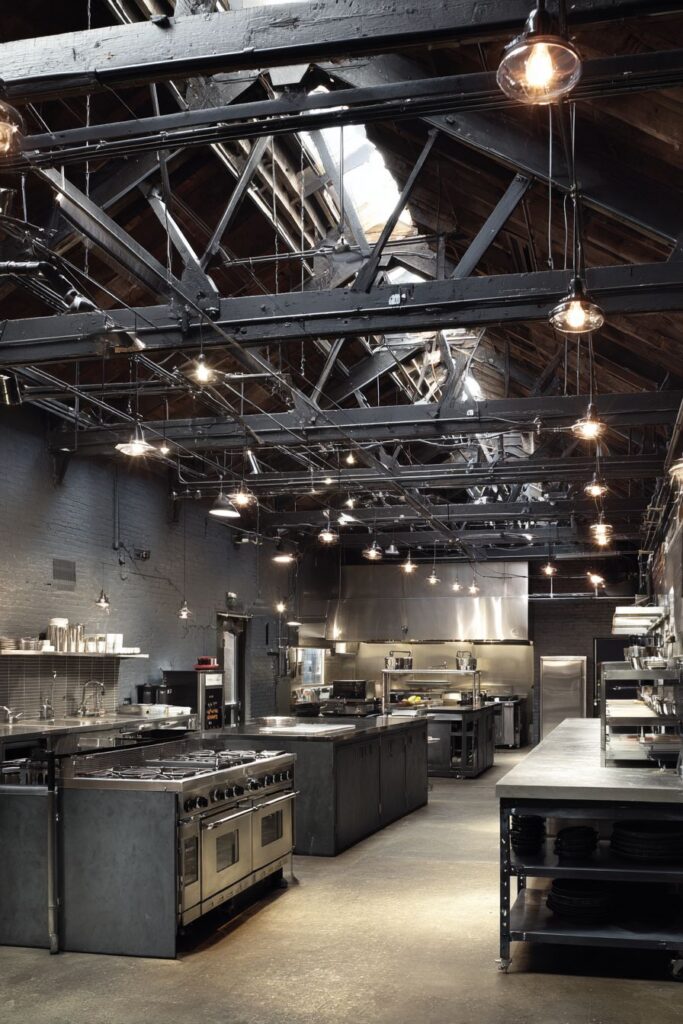
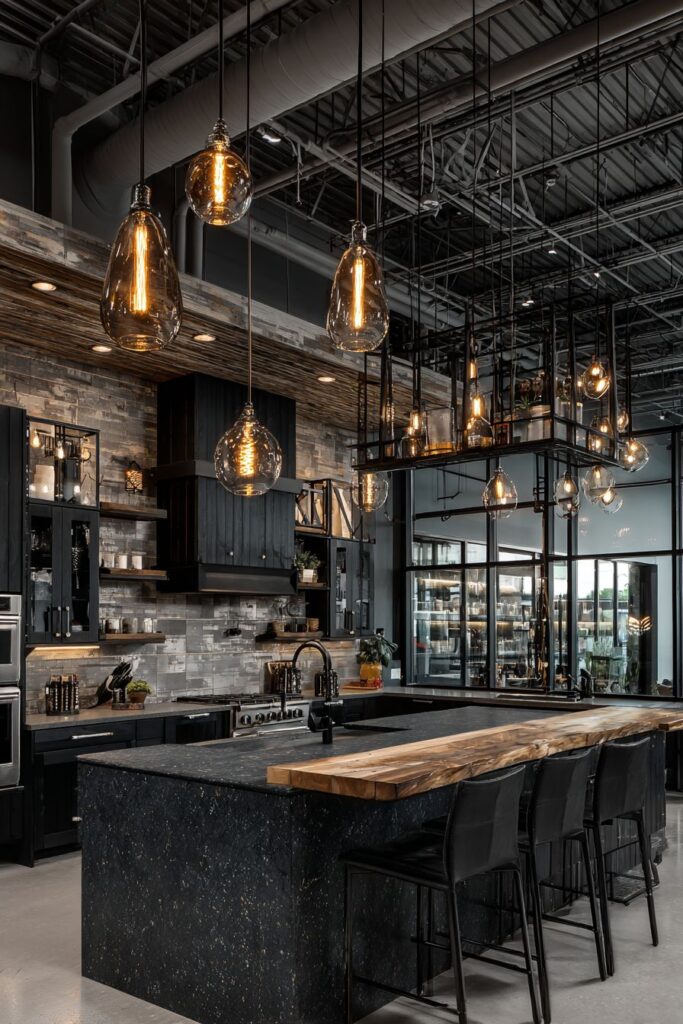
Embrace the raw beauty of industrial design with an exposed ceiling that celebrates functional elements as decorative features. Black-painted ductwork, conduit, and structural steel beams create an urban loft aesthetic that transforms utilitarian infrastructure into compelling visual elements.
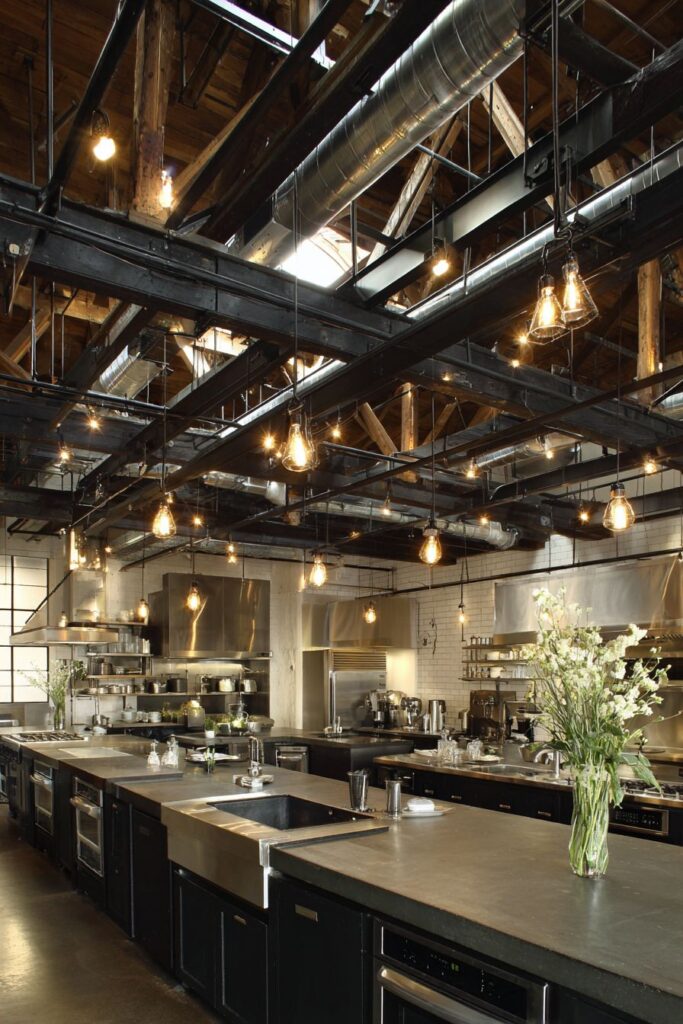
The matte black finish unifies disparate mechanical elements while creating dramatic contrast against lighter kitchen surfaces. This bold ceiling treatment requires confidence but rewards with a space that feels authentically industrial rather than merely styled to appear so.
Edison bulb pendant lights suspended from the exposed infrastructure provide both task lighting and atmospheric ambiance. The warm glow of vintage-style bulbs softens the hard edges of the industrial elements while maintaining the aesthetic’s authentic character.
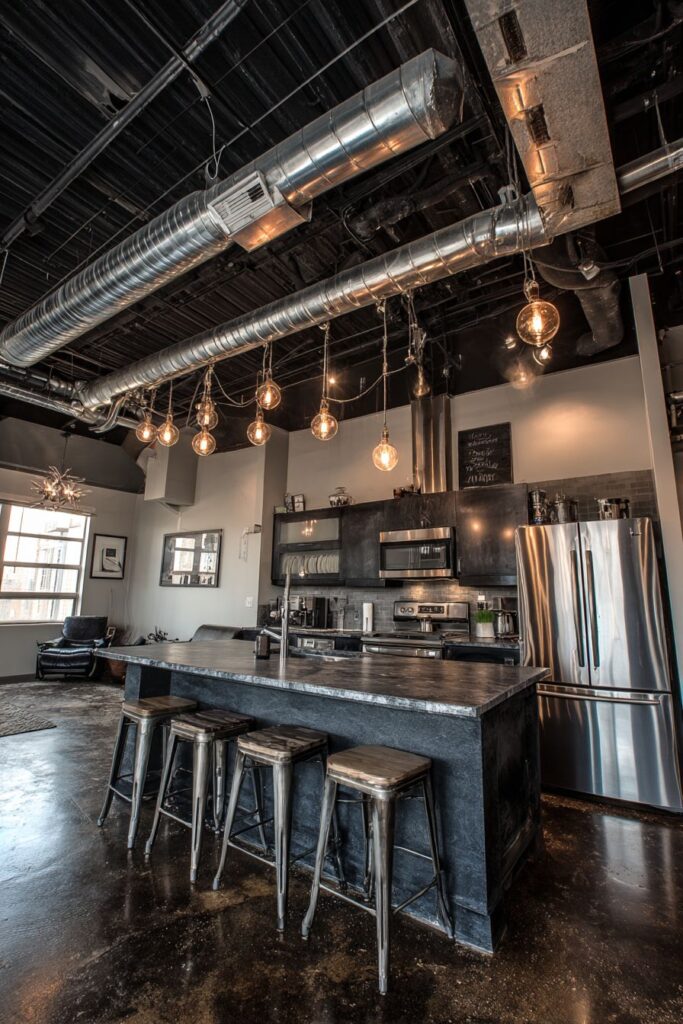
Concrete countertops and stainless steel appliances complete the industrial narrative, creating a kitchen that feels like a chef’s laboratory where serious culinary creativity happens. The exposed ceiling’s honest expression of function creates an environment that celebrates the act of cooking as both craft and art.
Key Design Tips:
- Paint all exposed elements the same color for visual cohesion
- Ensure adequate insulation above exposed elements for energy efficiency
- Plan pendant placement to avoid head clearance issues
- Balance industrial elements with warmer materials to prevent sterility
6. Mediterranean Tile Artistry
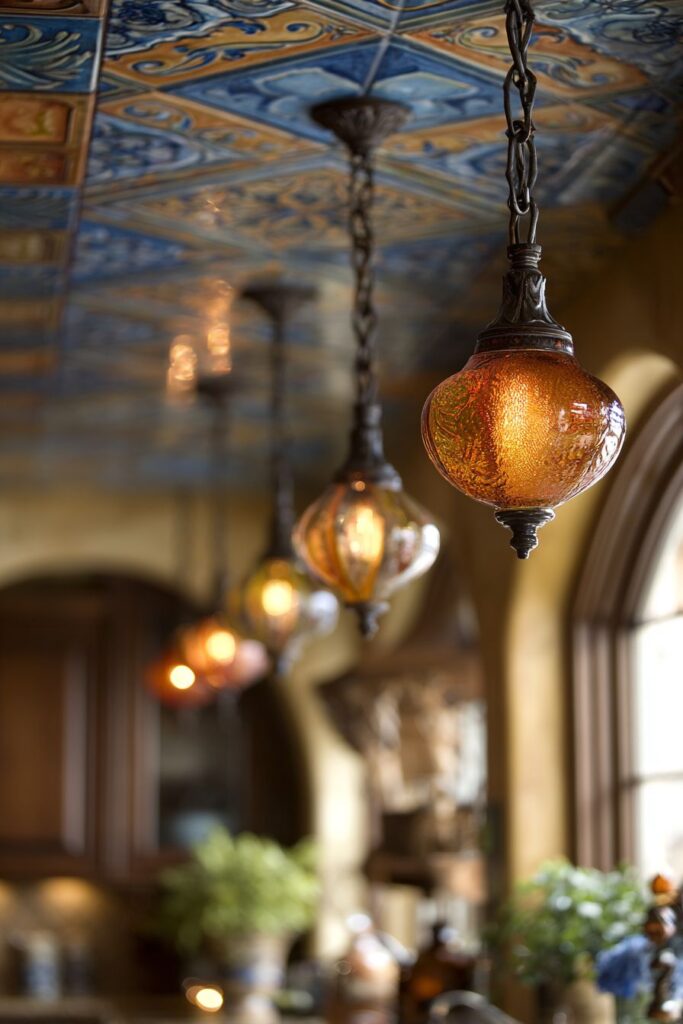
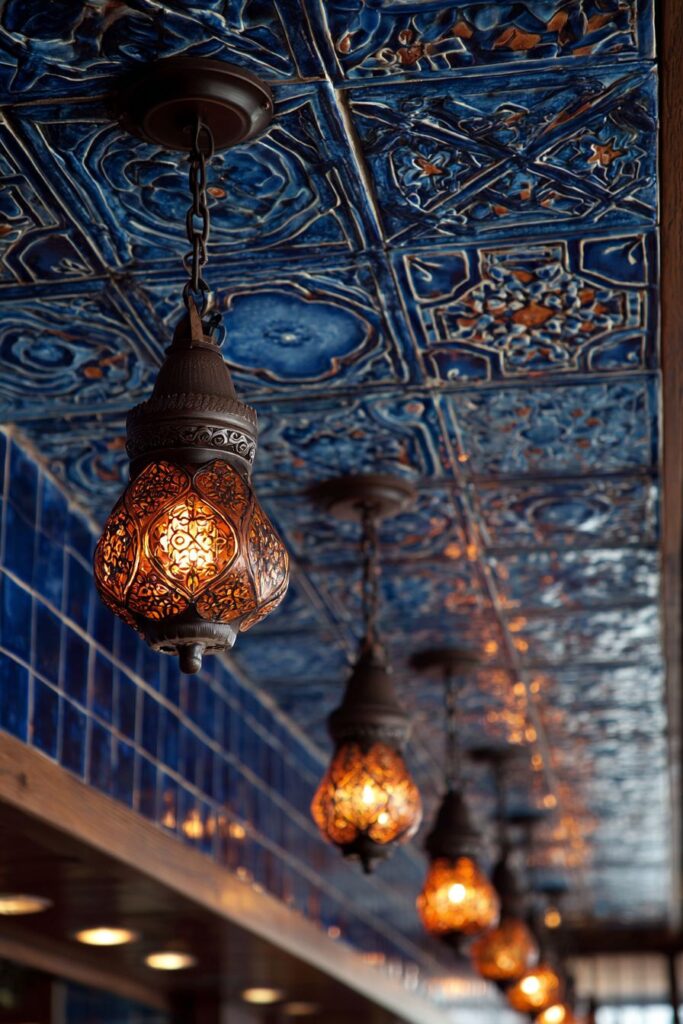
Transform your kitchen ceiling into a canvas of Mediterranean artistry with hand-painted ceramic tiles arranged in traditional geometric patterns. The intricate tilework creates a sense of Old World craftsmanship that elevates the entire culinary space into something approaching gallery status.
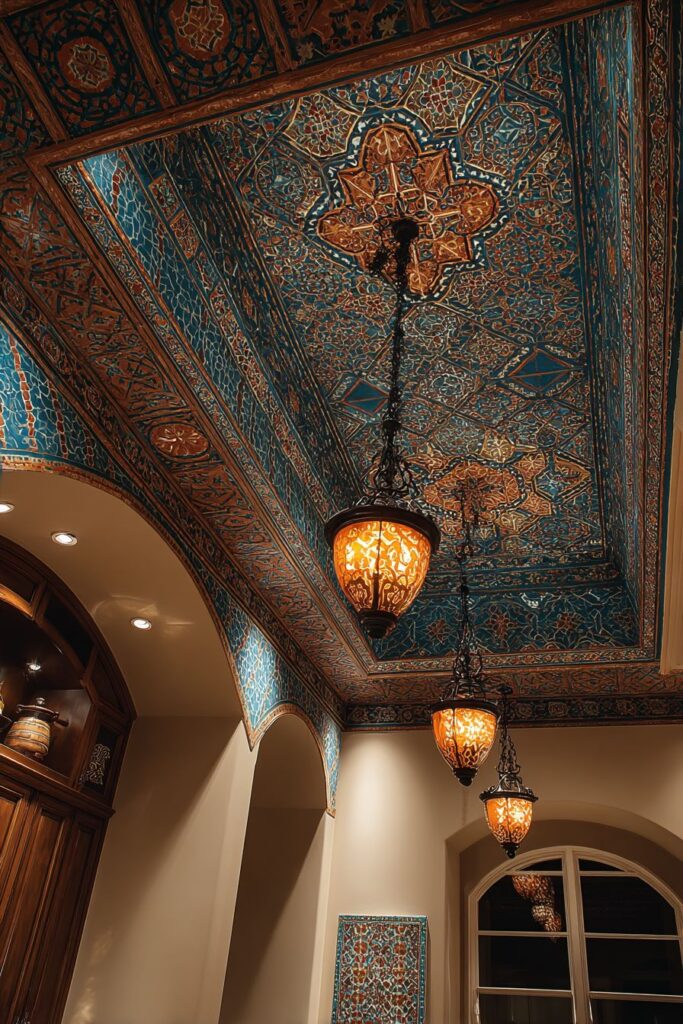
Rich terra cotta and deep blue tiles work together to create patterns that reflect centuries of Mediterranean ceramic tradition. Each tile contributes to a larger geometric composition that draws the eye upward and creates visual interest from every angle in the kitchen.
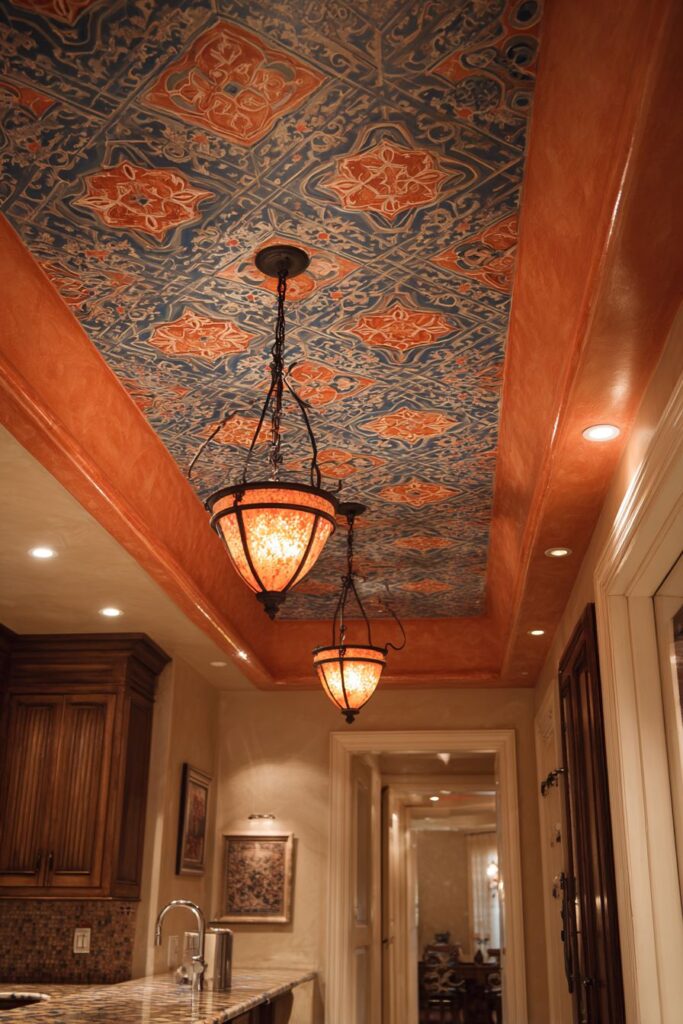
Wrought iron pendant lights with amber glass shades complement the warm tile colors while providing practical illumination for cooking tasks. The fixtures’ traditional styling reinforces the Mediterranean theme while their warm light enhances the rich colors and textures of the ceiling tiles.
The handcrafted quality of painted ceramic tiles adds authenticity that mass-produced materials cannot match. Slight variations in color and brushstroke patterns create visual richness that makes the ceiling a constantly engaging element of the kitchen’s design story.
Key Design Tips:
- Plan tile patterns on paper before installation to ensure balanced composition
- Choose complementary colors that work with your kitchen’s overall palette
- Seal tiles properly to protect against kitchen moisture and grease
- Consider professional installation for complex geometric patterns
7. Scandinavian Minimalist Beauty
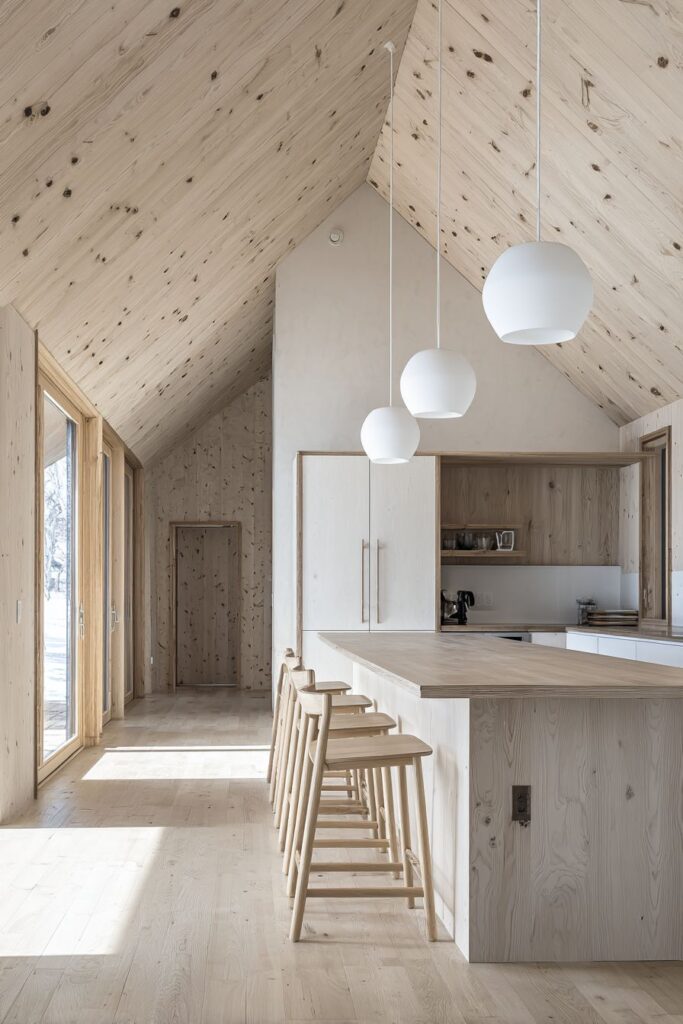
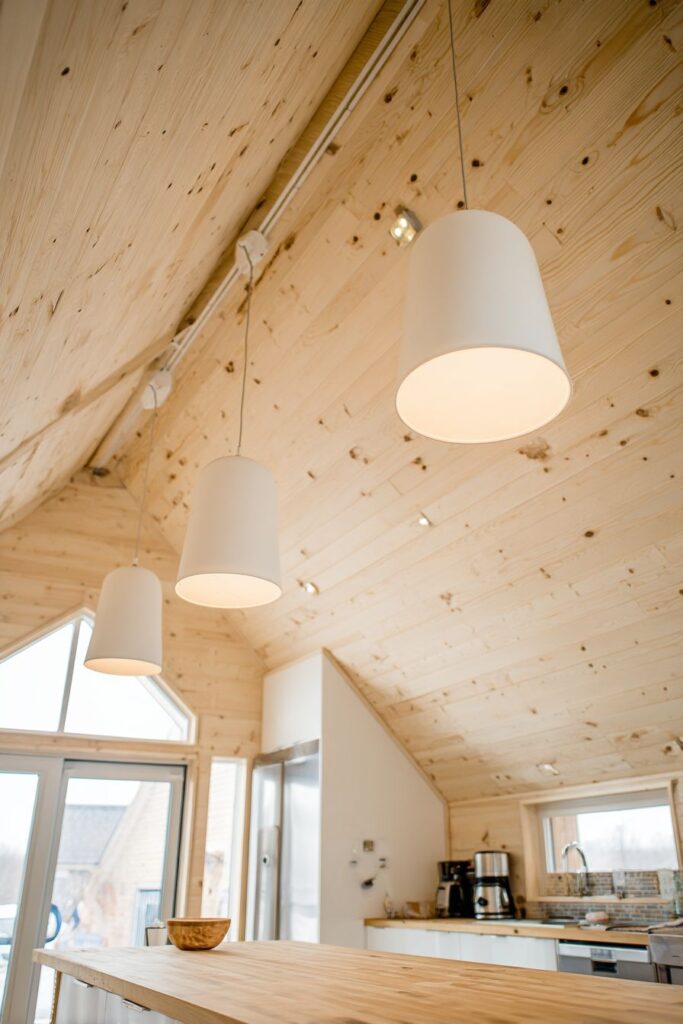
Light pine wood planks create a Scandinavian ceiling design that embodies the Nordic principles of natural beauty and functional simplicity. The pale wood’s visible grain patterns and natural knots add organic character while maintaining the clean, uncluttered aesthetic that defines Scandinavian design.
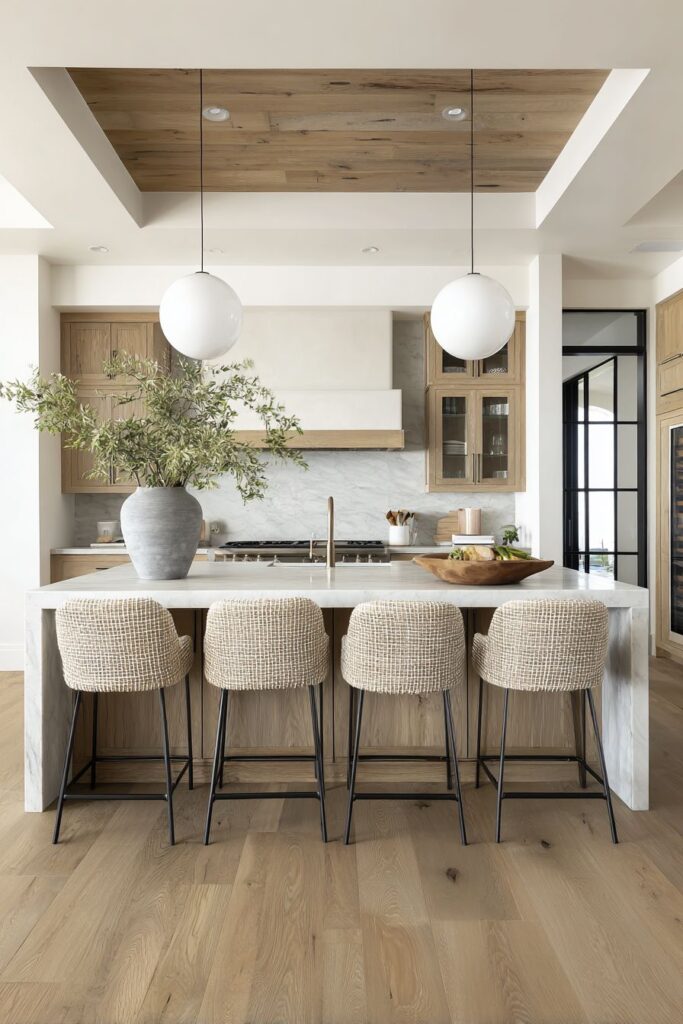
The light wood ceiling brightens the entire kitchen space, reflecting natural light from windows and artificial light from fixtures to create an airy, spacious feeling. This luminous quality is essential to Scandinavian design, which emphasizes brightness and openness as antidotes to long winter months.
Simple white pendant lights suspended at varying heights create visual rhythm while providing task lighting over the kitchen island. The lights’ clean lines and pure color reinforce the minimalist aesthetic while their varied heights prevent monotony in the ceiling plane.
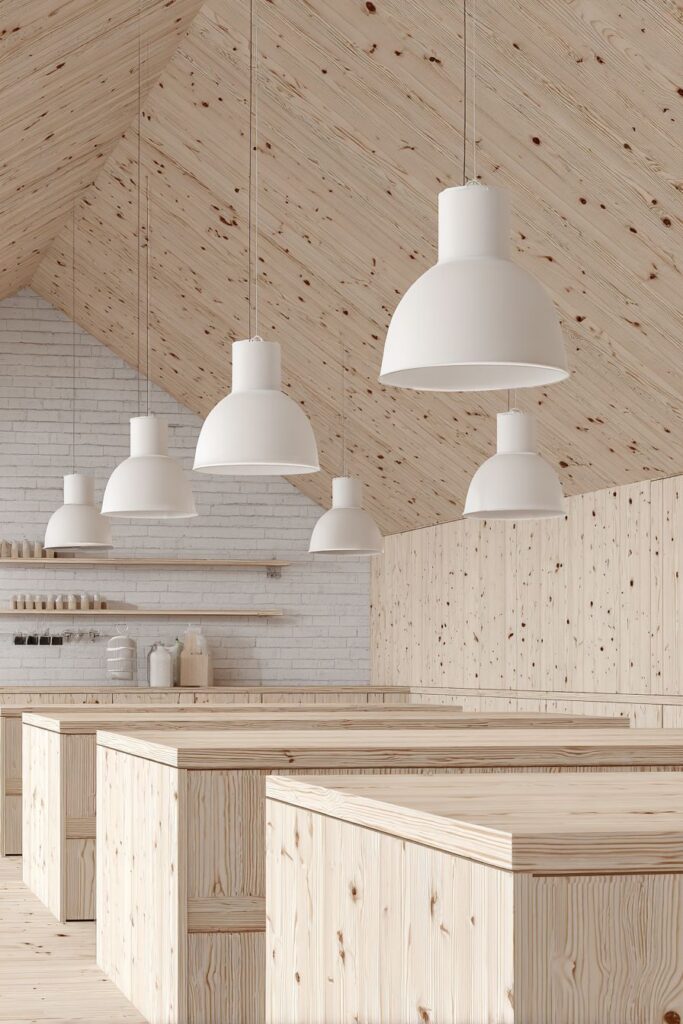
The natural wood ceiling pairs beautifully with light wood butcher block countertops, creating material harmony that strengthens the Scandinavian design story. This consistency in material choice creates visual calm while celebrating the inherent beauty of natural wood.
Key Design Tips:
- Choose light wood species to maintain brightness and airiness
- Embrace natural wood imperfections as character elements
- Keep lighting fixtures simple and unobtrusive
- Balance wood elements with white surfaces to prevent heaviness
8. Luxury Ornate Sophistication
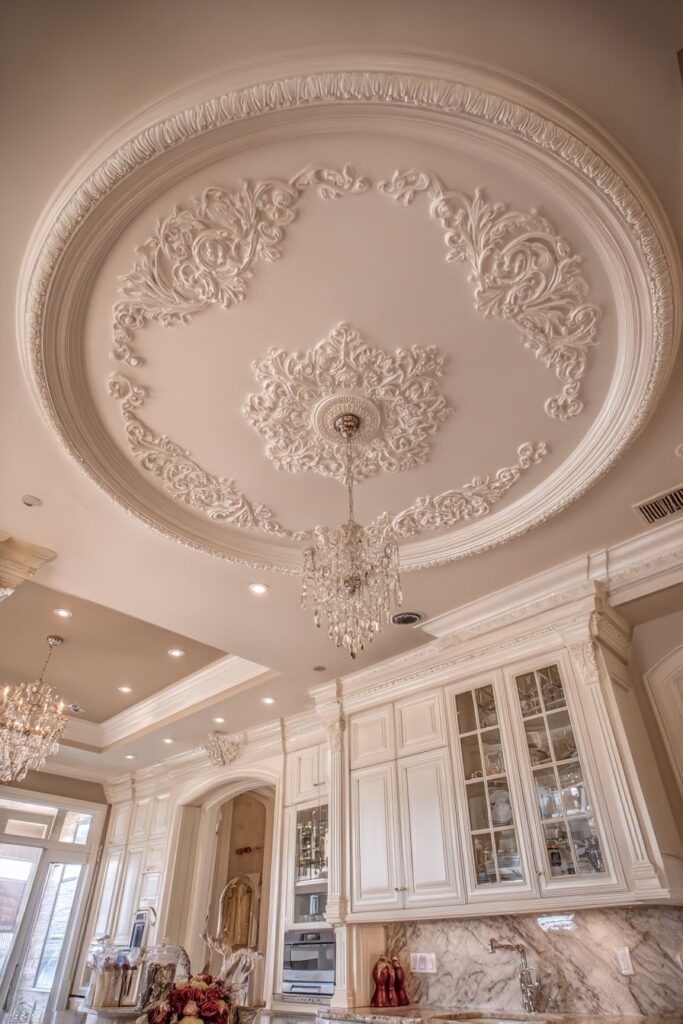
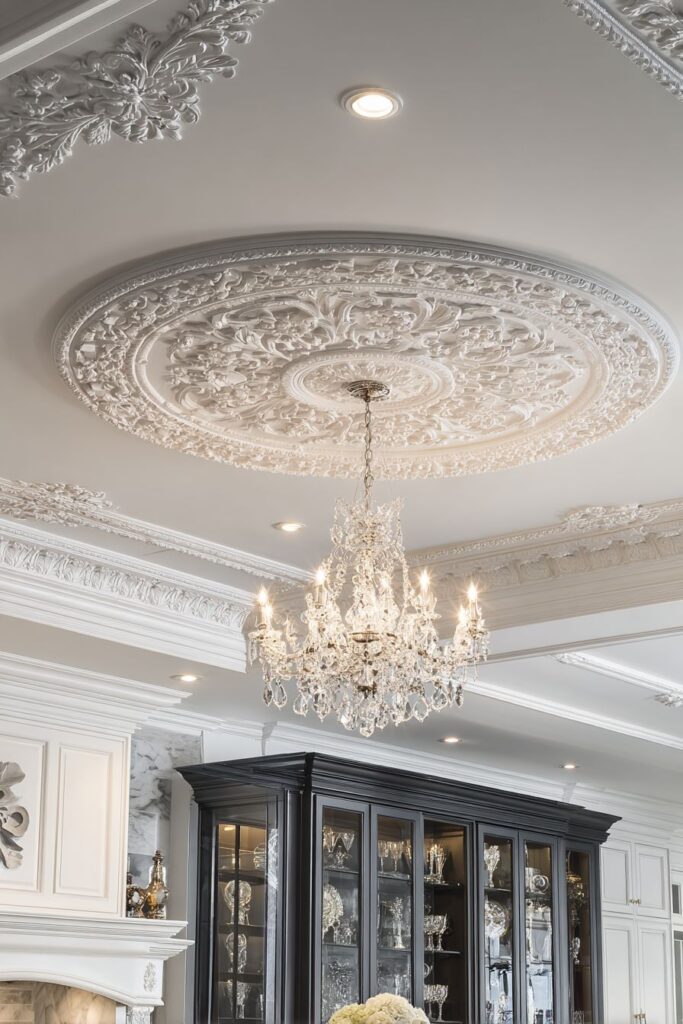
Elaborate crown molding and decorative plaster medallions create a luxury kitchen ceiling that rivals the grandest formal dining rooms. The ornate white plasterwork demonstrates masterful craftsmanship while establishing an atmosphere of refined elegance and timeless sophistication.
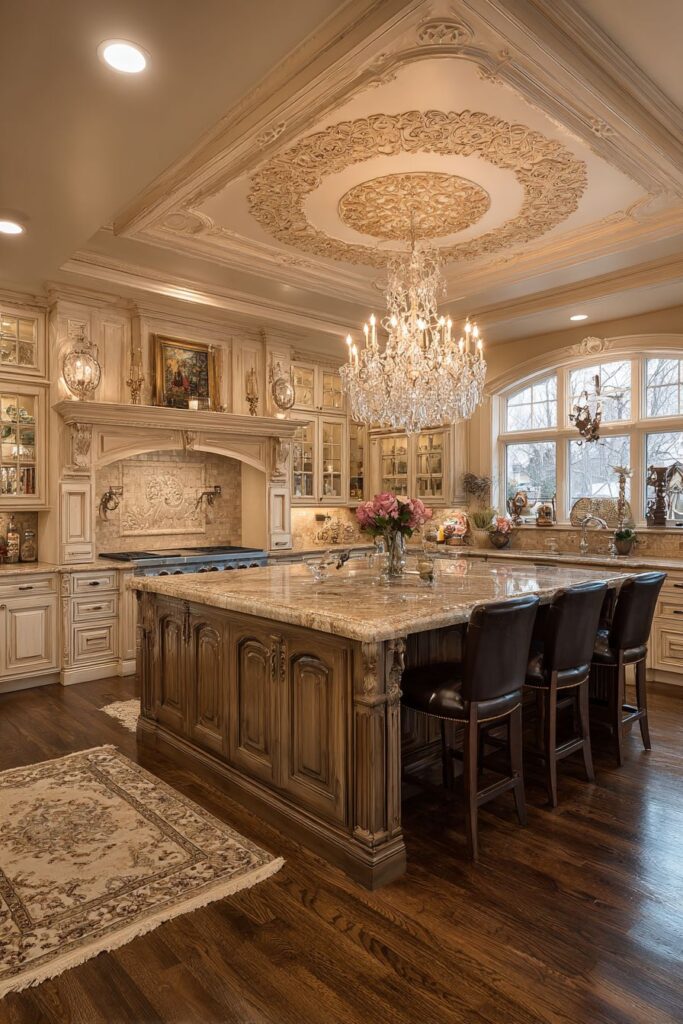
Subtle shadow details within the molding profiles create depth and dimension that changes throughout the day as natural light shifts. This play of light and shadow keeps the ornate ceiling from appearing flat or static, instead making it a dynamic element that contributes to the kitchen’s evolving ambiance.
A central crystal chandelier serves as the crowning jewel of this elaborate ceiling treatment, providing both illumination and sparkling focal point that anchors the ornate design. The chandelier’s traditional styling complements the classical plasterwork while adding another layer of luxury and refinement.
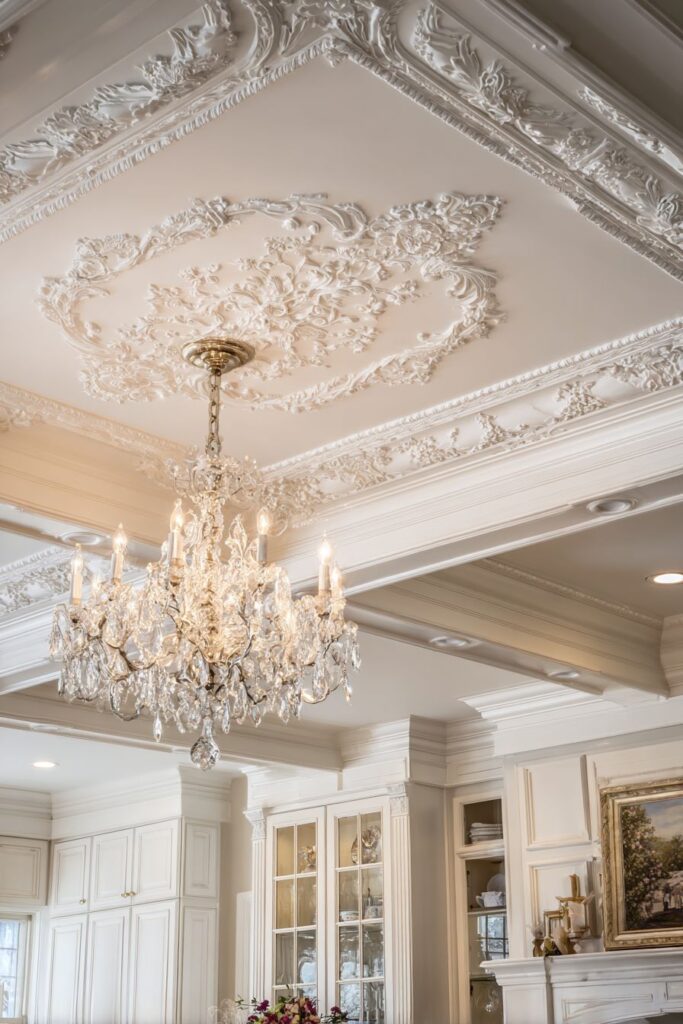
High-end cabinetry with glass fronts and marble surfaces throughout the kitchen complement the formal ceiling treatment, creating a culinary space that feels more like a luxury hotel kitchen than a typical residential cooking area.
Key Design Tips:
- Ensure room proportions can support elaborate ceiling treatments
- Choose chandelier size appropriate to ceiling height and room dimensions
- Paint all plaster elements the same color to maintain visual unity
- Balance ornate ceiling with simpler wall treatments to prevent visual overload
9. Rustic Herringbone Pattern
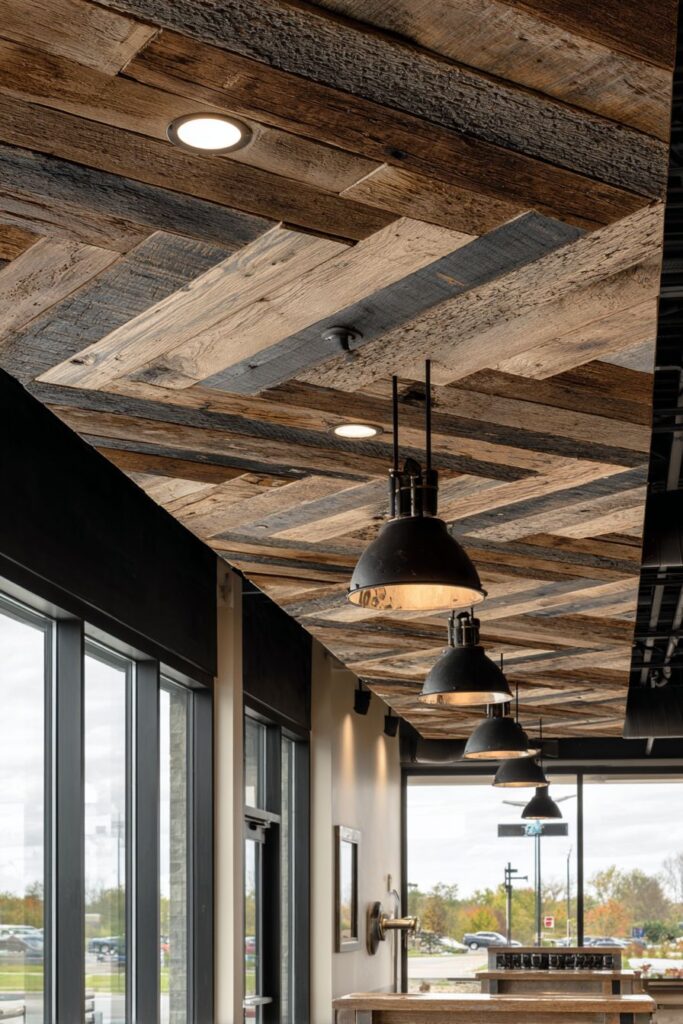
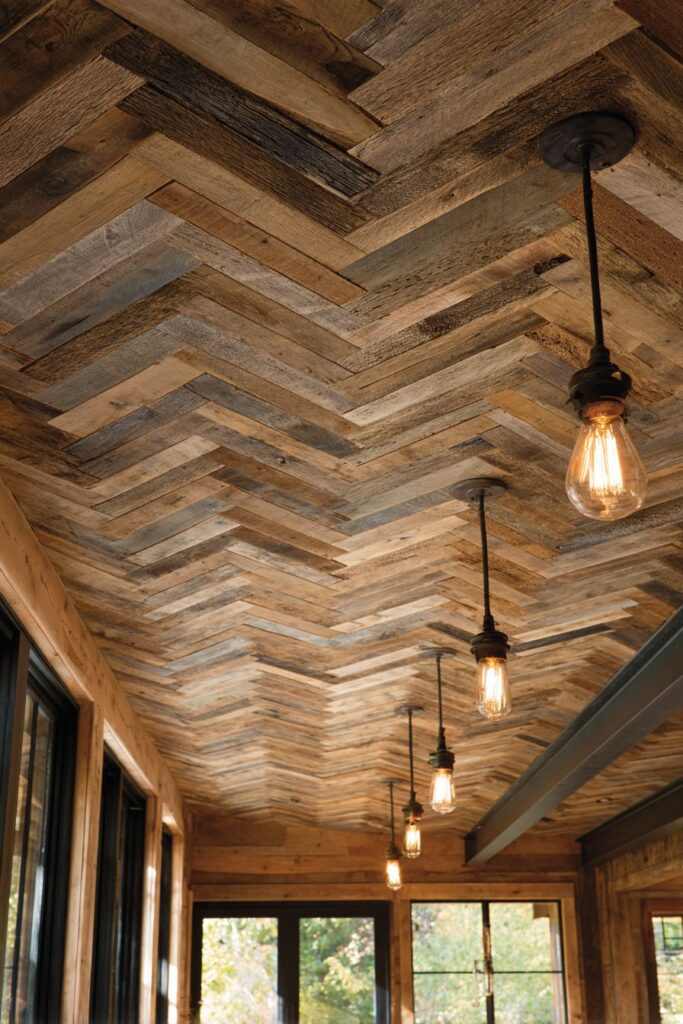
Reclaimed barn wood planks arranged in a sophisticated herringbone pattern create a ceiling design that combines rustic authenticity with geometric sophistication. The complex pattern draws the eye upward while showcasing the natural beauty and character of weathered timber.
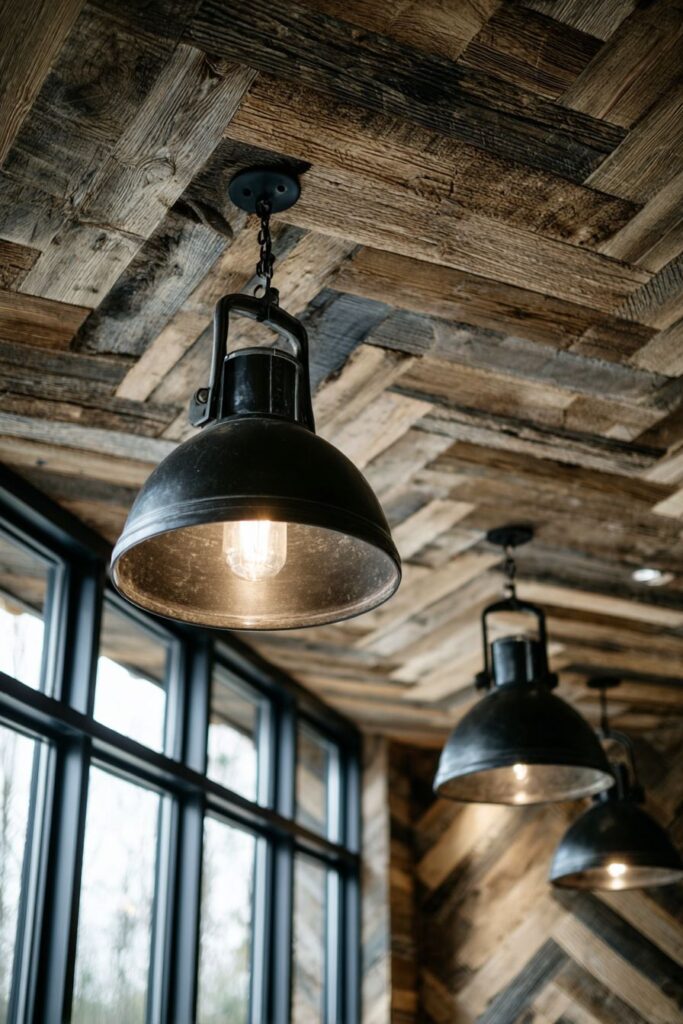
Each piece of reclaimed wood contributes its own story through nail holes, saw marks, and weathering patterns that speak of previous lives in agricultural settings. This authentic patina and character cannot be replicated by new materials, making the ceiling a unique historical element within the modern kitchen.
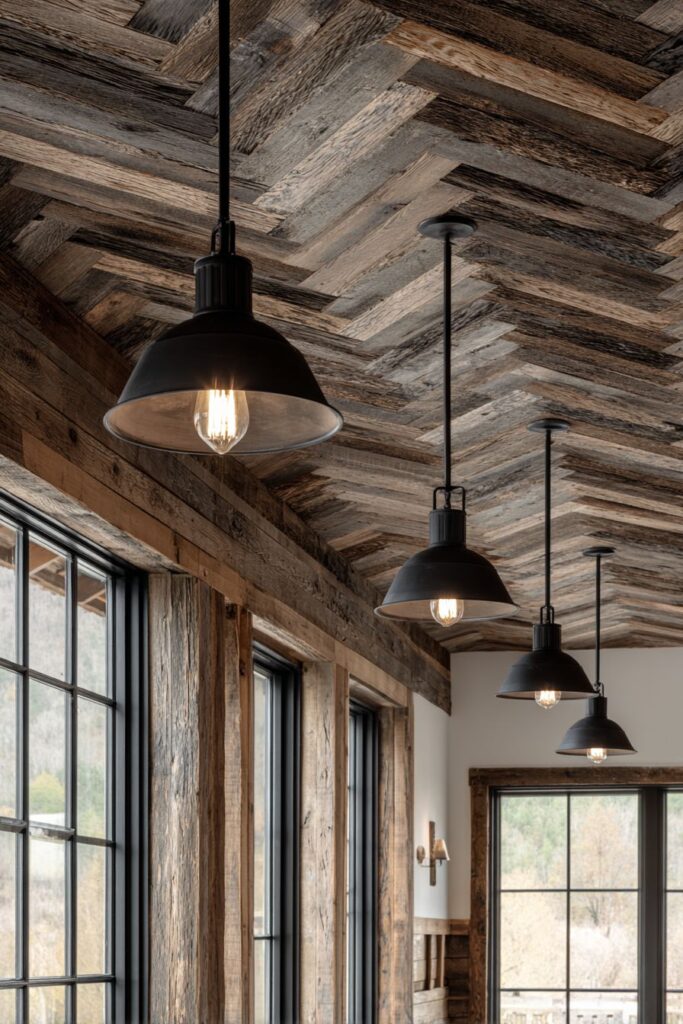
The herringbone pattern creates visual movement and interest while maintaining the warm, natural feeling that makes kitchens welcoming gathering spaces. The geometric arrangement elevates rustic materials into something approaching art, proving that sustainable choices can also be beautiful choices.
Simple black metal pendant lights provide necessary task illumination while allowing the dramatic ceiling pattern to dominate the visual space. The fixtures’ understated design ensures they complement rather than compete with the ceiling’s complex geometry.
Key Design Tips:
- Source reclaimed wood from reputable suppliers to ensure quality and safety
- Plan herringbone layout carefully to ensure balanced composition
- Pre-treat wood to prevent insect or moisture issues
- Use simple lighting fixtures that won’t compete with pattern complexity
10. Minimalist Linear Integration
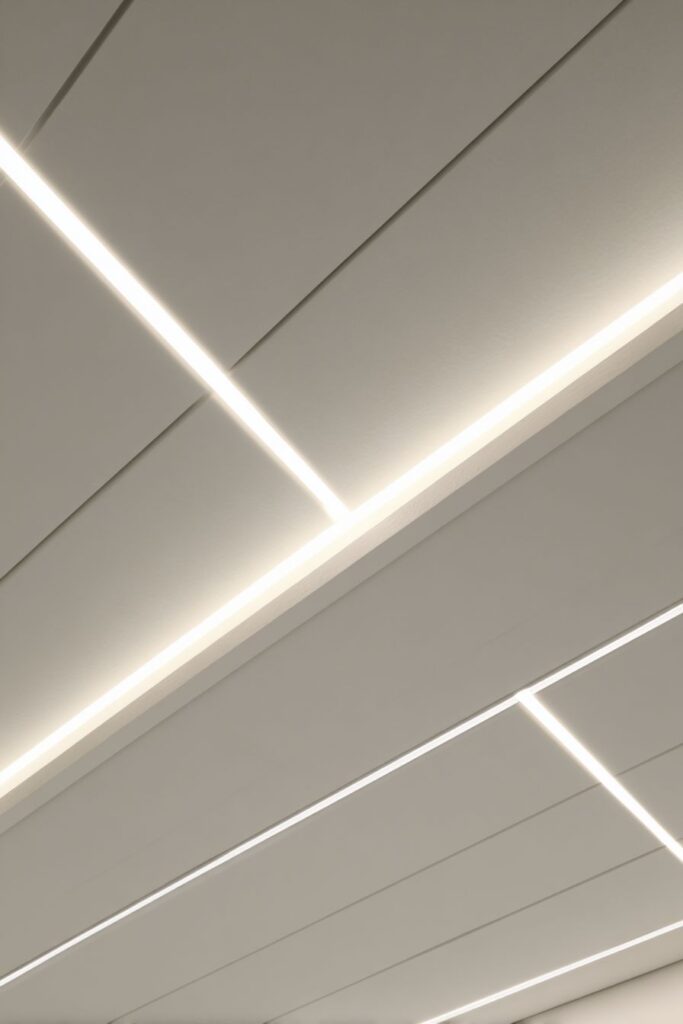
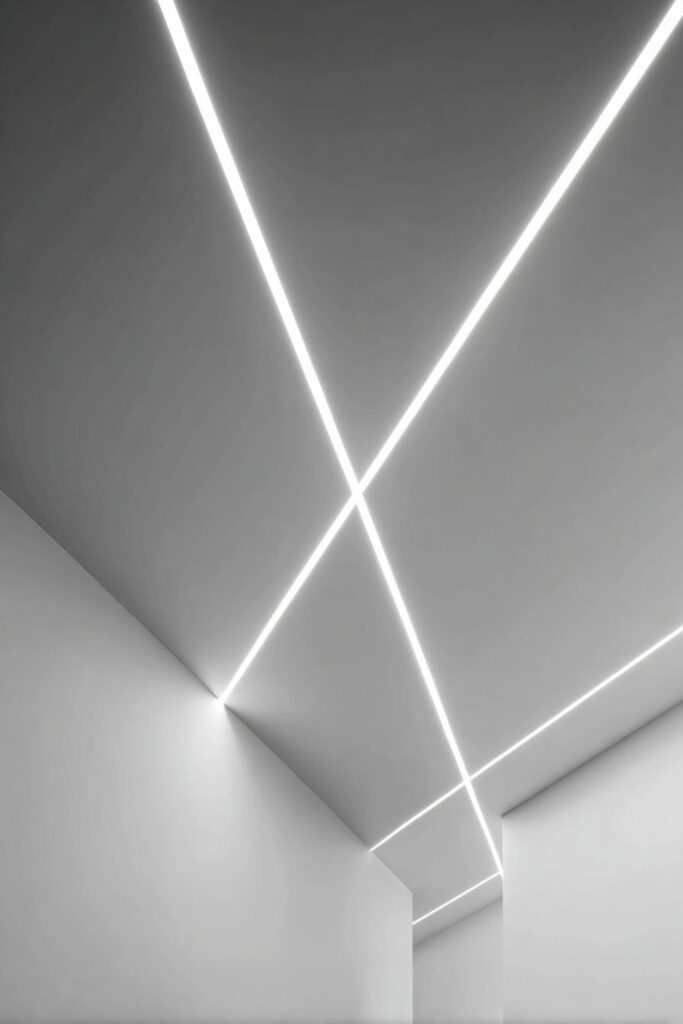
Clean lines and perfect integration define this modern minimalist ceiling design that incorporates lighting seamlessly into the architectural envelope. Linear LED strips embedded within the ceiling surface create subtle ambient illumination while maintaining the sleek simplicity that defines contemporary design.
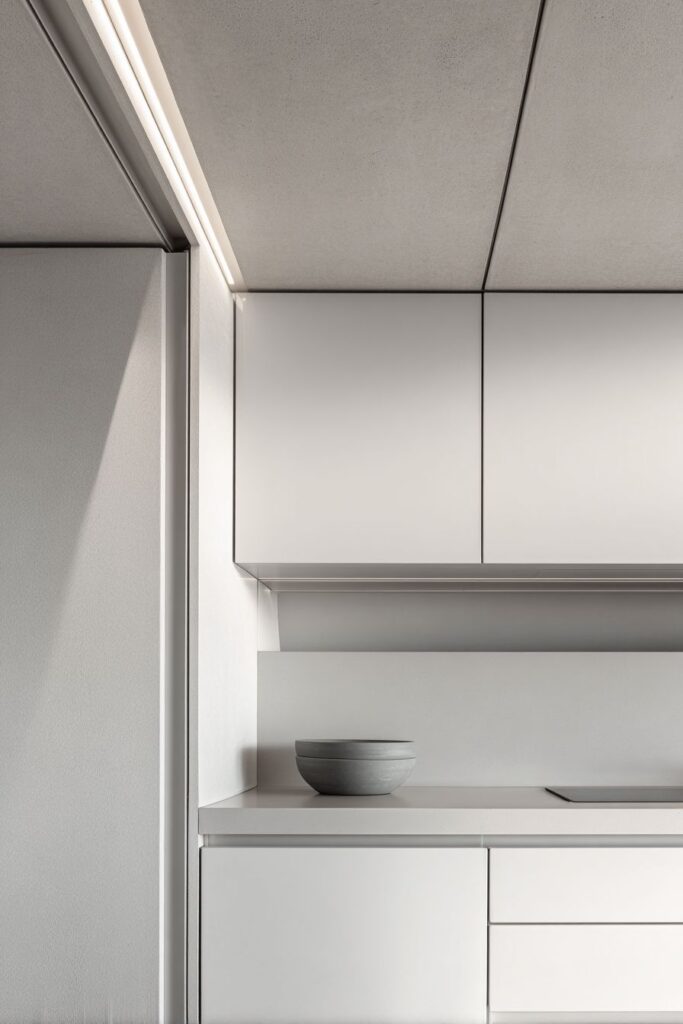
The smooth drywall surface provides a neutral backdrop that allows other kitchen elements to shine while contributing to the overall sense of spaciousness and calm. Hidden ventilation systems and mechanical elements maintain the ceiling’s clean appearance while providing essential functionality.
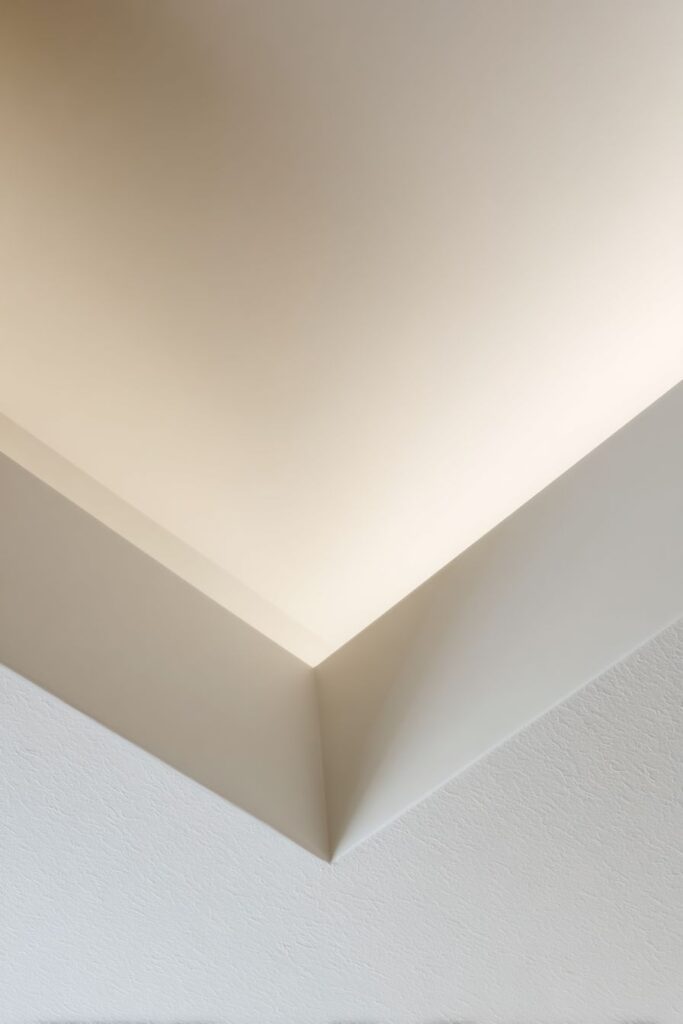
Perfect alignment between the ceiling’s linear lighting elements and the kitchen’s geometric cabinetry creates visual harmony throughout the space. This attention to detail and geometric precision demonstrates the high level of planning required for successful minimalist design.
The white and grey color palette emphasizes the ceiling’s sleek simplicity while providing a timeless backdrop for kitchen activities. This neutral approach ensures the design will remain fresh and relevant for years to come.
Key Design Tips:
- Plan all mechanical systems for hidden integration
- Use high-quality drywall finishing for perfectly smooth surfaces
- Align lighting elements with kitchen geometry for visual harmony
- Choose dimmable LED systems for flexible ambient control
11. Coastal Whitewashed Charm
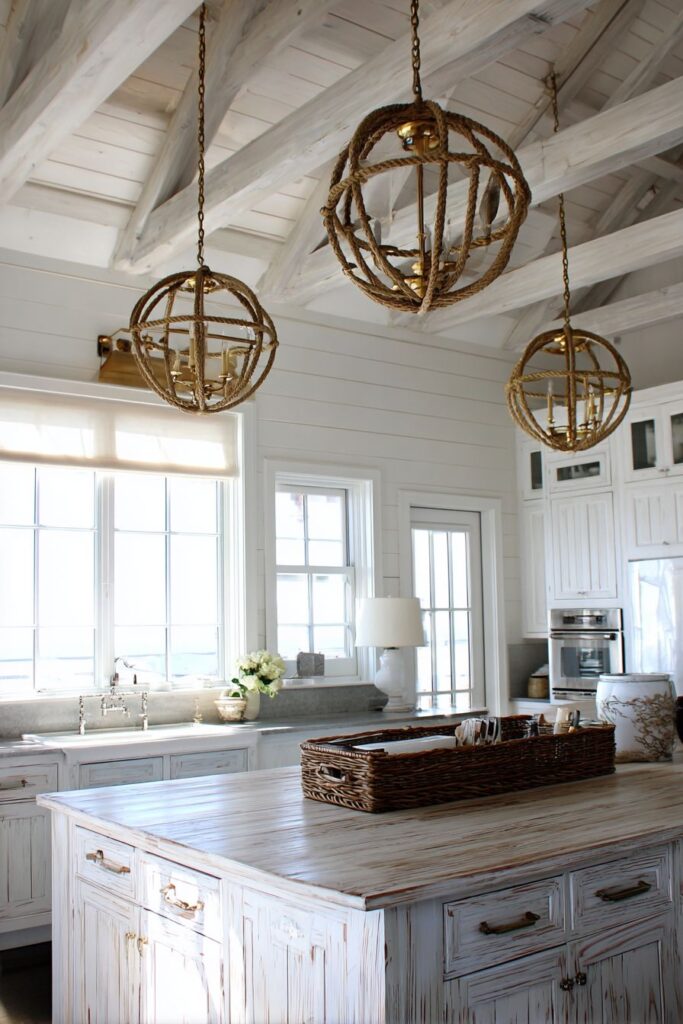
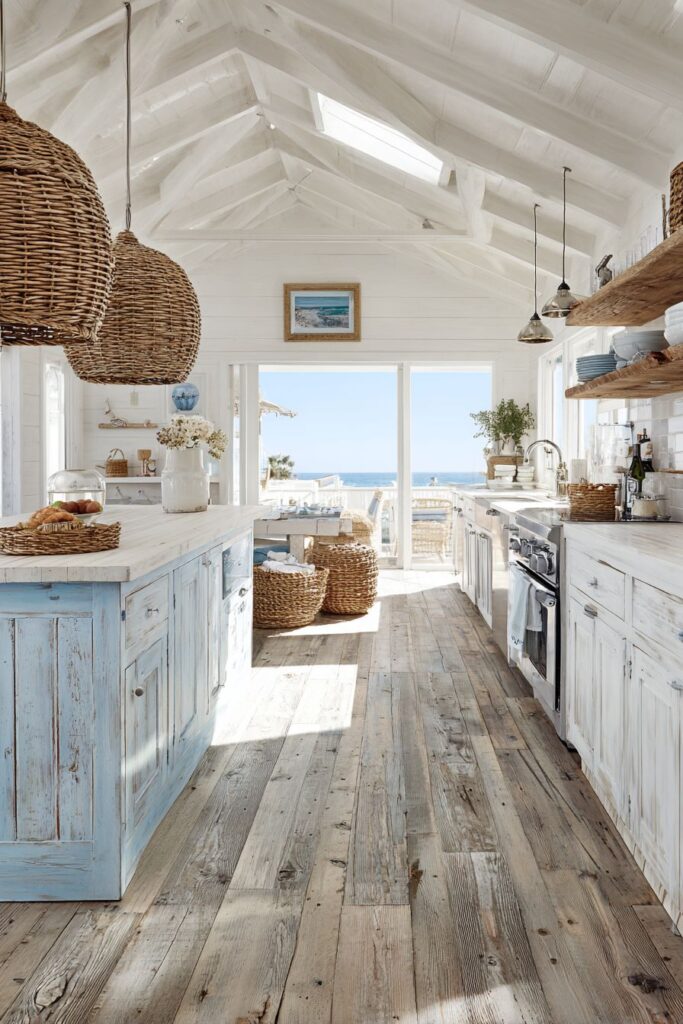
Whitewashed tongue-and-groove pine boards create a coastal ceiling design that evokes the relaxed atmosphere of seaside cottages. The weathered finish and natural wood texture add character while maintaining the bright, airy feeling essential to coastal design aesthetics.
Nautical-inspired rope and brass pendant lights suspended above weathered wood countertops reinforce the coastal theme while providing practical task illumination. The fixtures’ maritime styling adds authentic coastal character without resorting to cliché decorative elements.
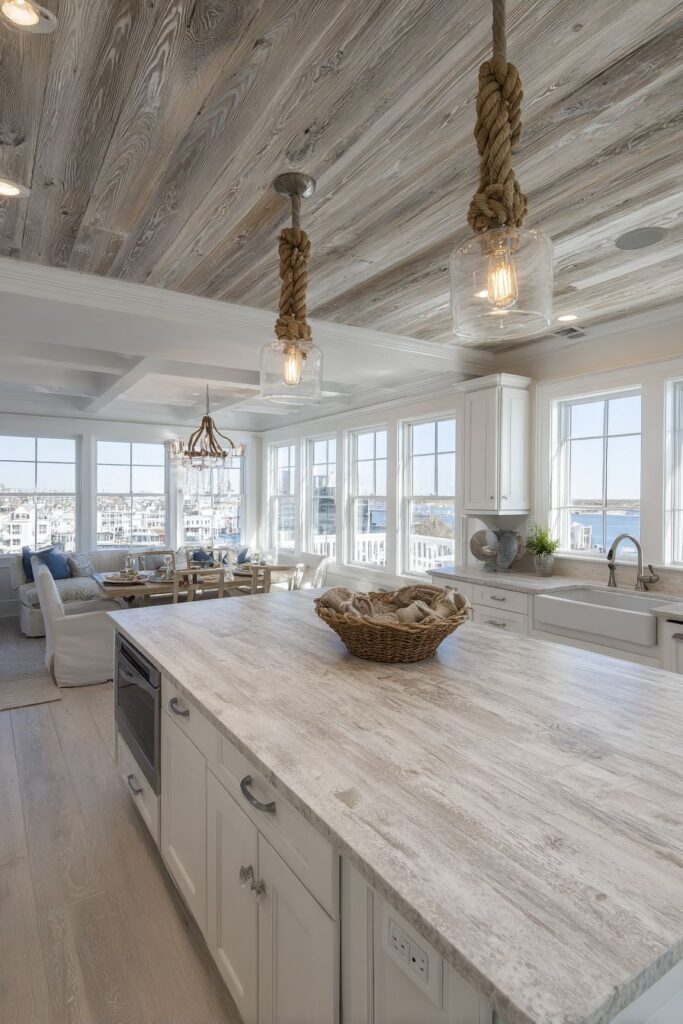
The ceiling’s whitewashed finish allows wood grain and natural imperfections to show through, creating subtle texture variations that keep the surface visually interesting. This organic quality contributes to the relaxed, unpretentious atmosphere that defines successful coastal design.
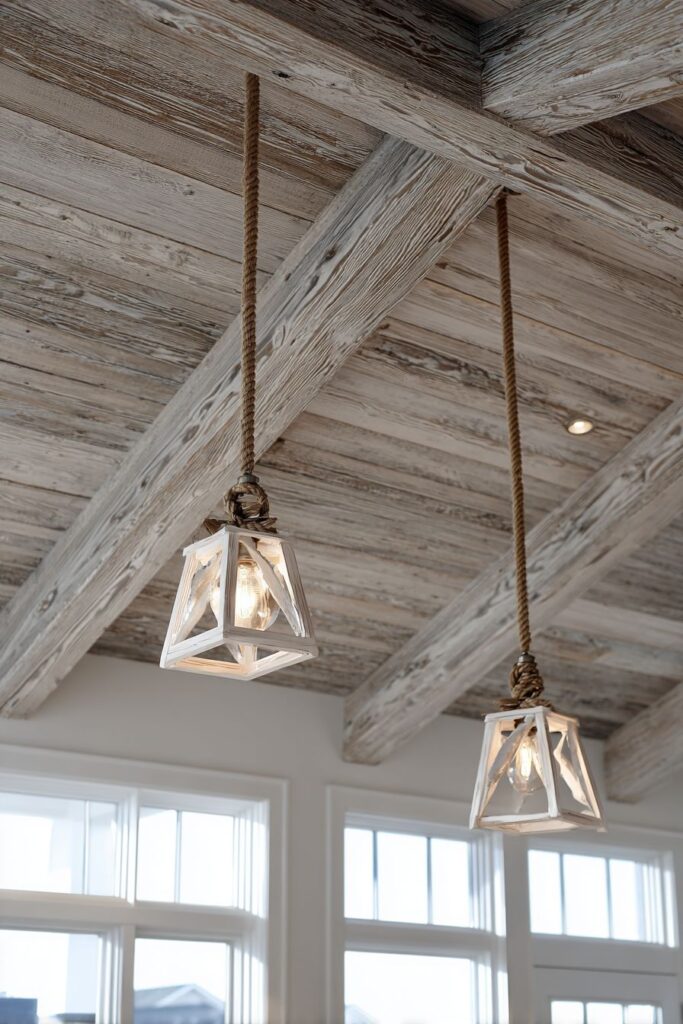
Soft natural lighting from windows highlights the wood’s weathered finish while creating gentle shadows that emphasize the ceiling’s three-dimensional texture. This interplay of light and shadow creates an ever-changing ceiling surface that reflects the dynamic nature of coastal environments.
Key Design Tips:
- Use proper whitewash technique to allow wood character to show through
- Choose pendant fixtures with authentic nautical detailing
- Balance weathered elements with fresh white surfaces
- Protect wood from kitchen moisture with appropriate sealers
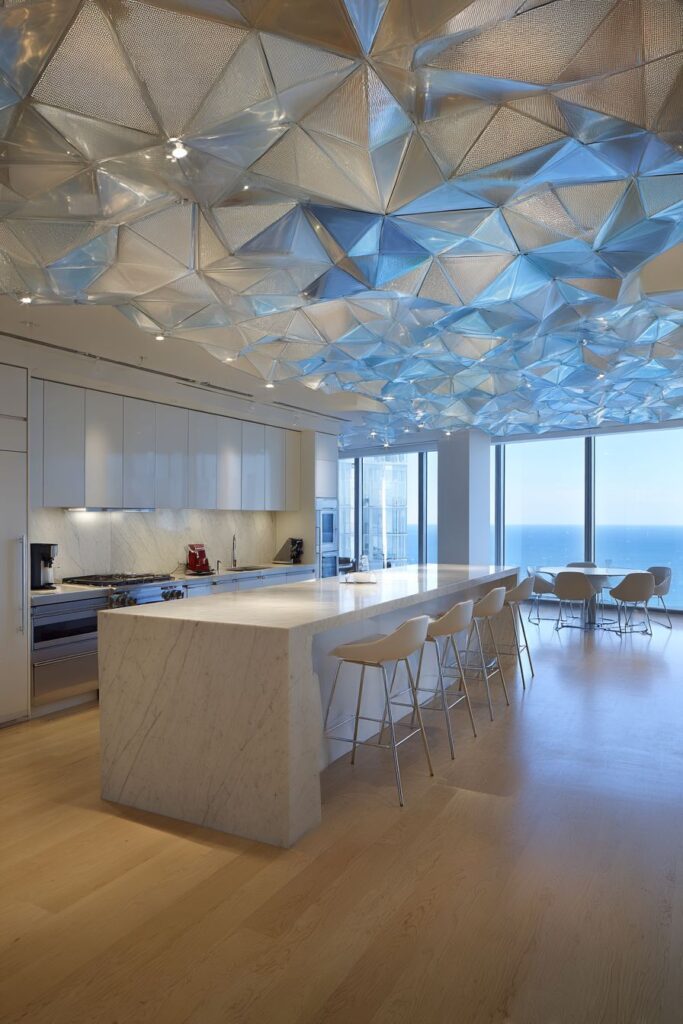
12. Contemporary Metal Module System
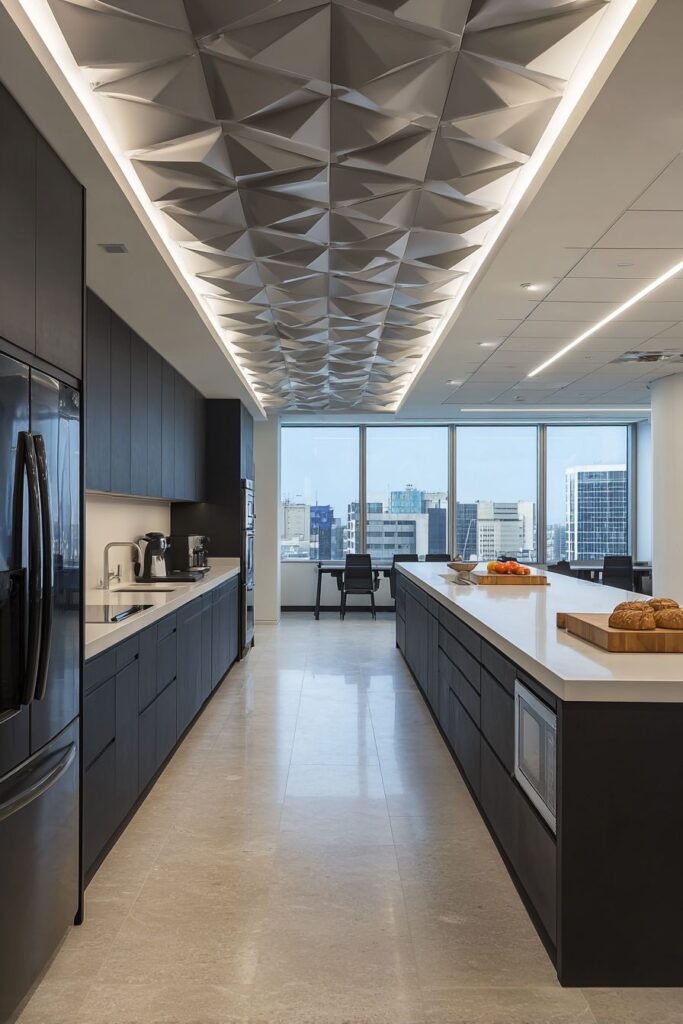
Brushed stainless steel panels arranged in geometric patterns create a high-tech ceiling design that celebrates modern materials and precision manufacturing. The modular system provides flexibility while creating visual rhythm through repeated geometric elements.
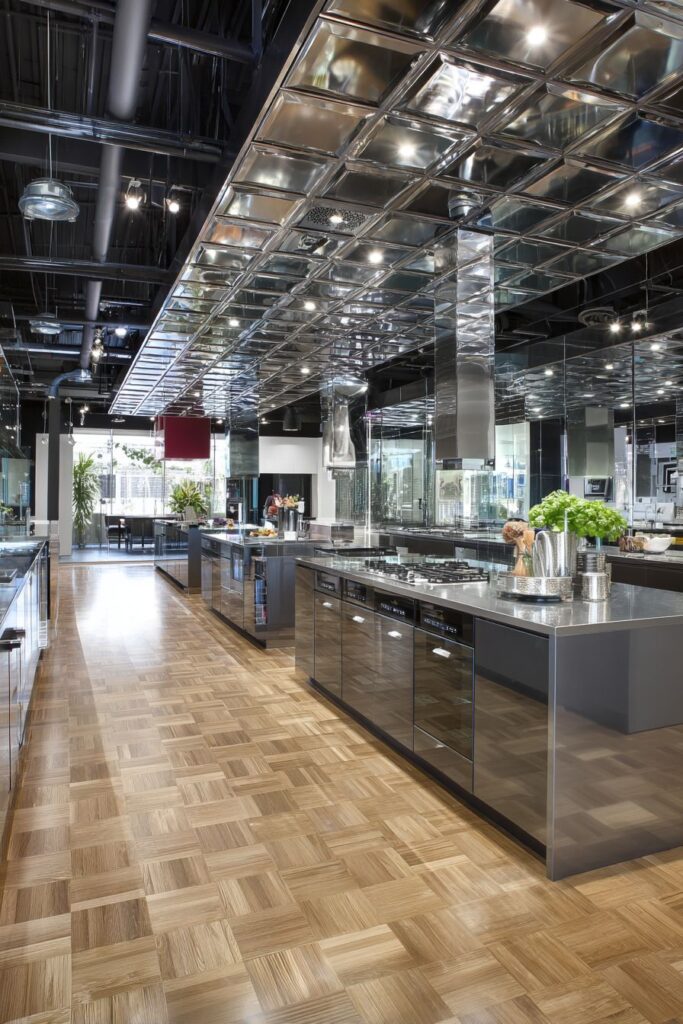
Integrated downlighting within each panel ensures excellent task illumination throughout the kitchen workspace while maintaining the ceiling’s sleek, technological appearance. The lighting system’s integration demonstrates how function and form can work together seamlessly in contemporary design.
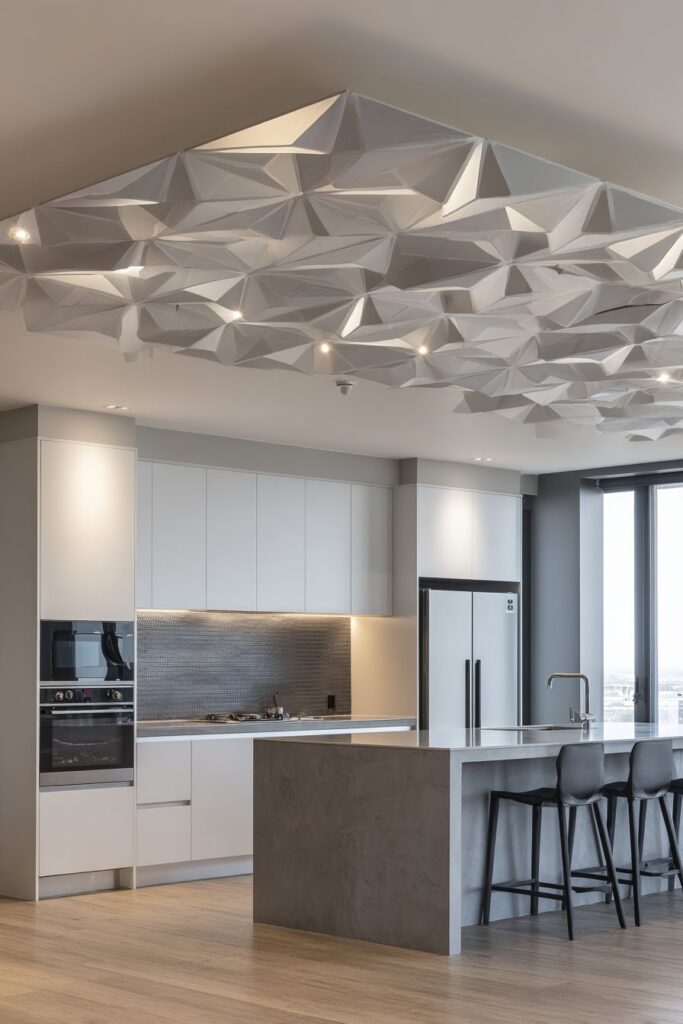
The metal panels’ reflective properties help distribute natural and artificial light throughout the kitchen, creating a brighter, more spacious feeling. This light-enhancing quality makes the ceiling an active participant in the kitchen’s illumination strategy rather than merely a decorative element.
Modern appliances and handleless cabinetry complement the high-tech ceiling treatment, creating a cohesive design language that speaks of technological sophistication and contemporary lifestyle preferences.
Key Design Tips:
- Choose panel finishes that complement kitchen appliances and fixtures
- Plan module layout for balanced visual rhythm
- Integrate lighting systems during initial planning phases
- Consider acoustic properties of metal surfaces in open kitchen designs
13. Traditional Raised Panel Elegance
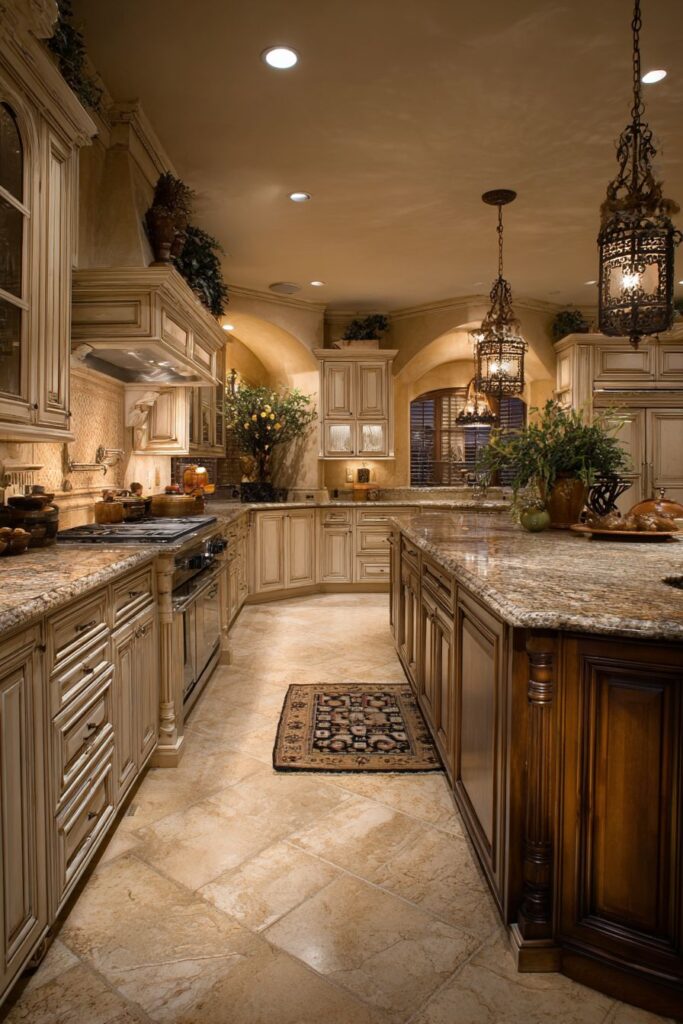
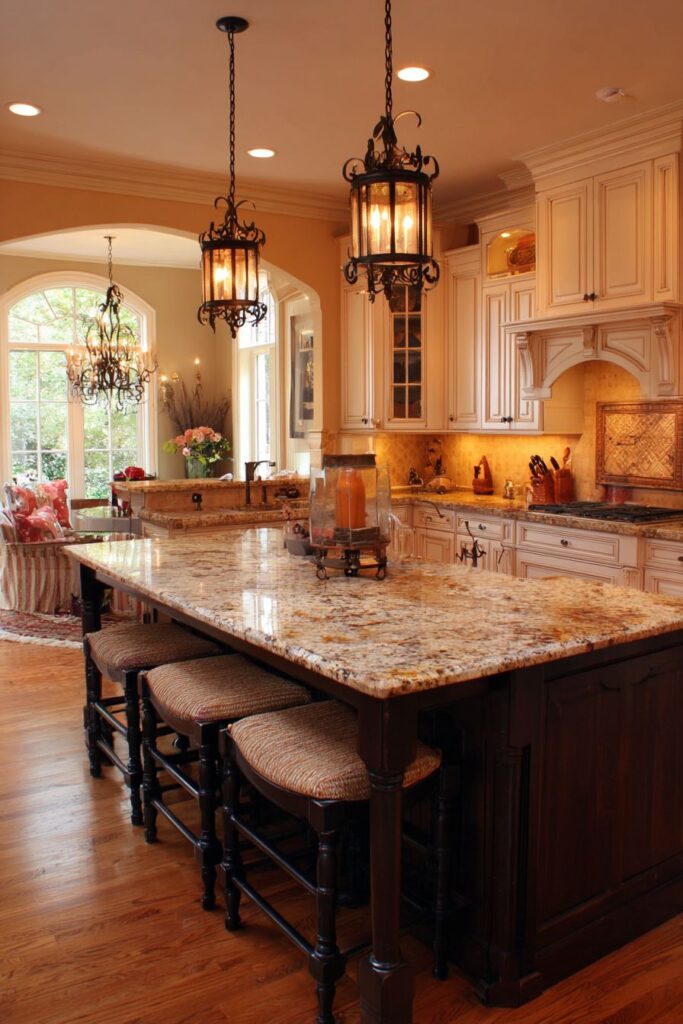
Warm cream-colored raised panels create a traditional ceiling design that demonstrates classical craftsmanship and timeless appeal. The formal ceiling treatment establishes an atmosphere of refined elegance that makes everyday cooking feel like a special occasion.
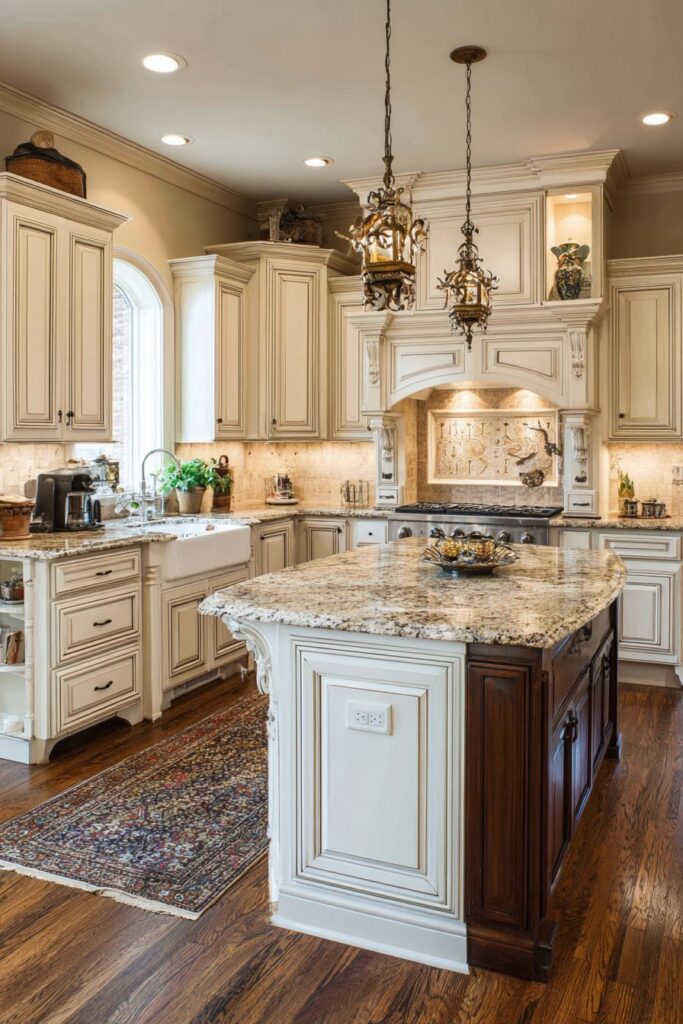
Detailed crown molding creates elegant transition between ceiling and walls while adding another layer of traditional craftsmanship. The molding profiles’ shadow lines add depth and visual interest that prevents the ceiling from appearing flat or boring.
Classic brass chandeliers provide ambient lighting while reinforcing the traditional aesthetic through their warm metal finish and traditional styling. Recessed fixtures offer additional task illumination without compromising the ceiling’s formal character.
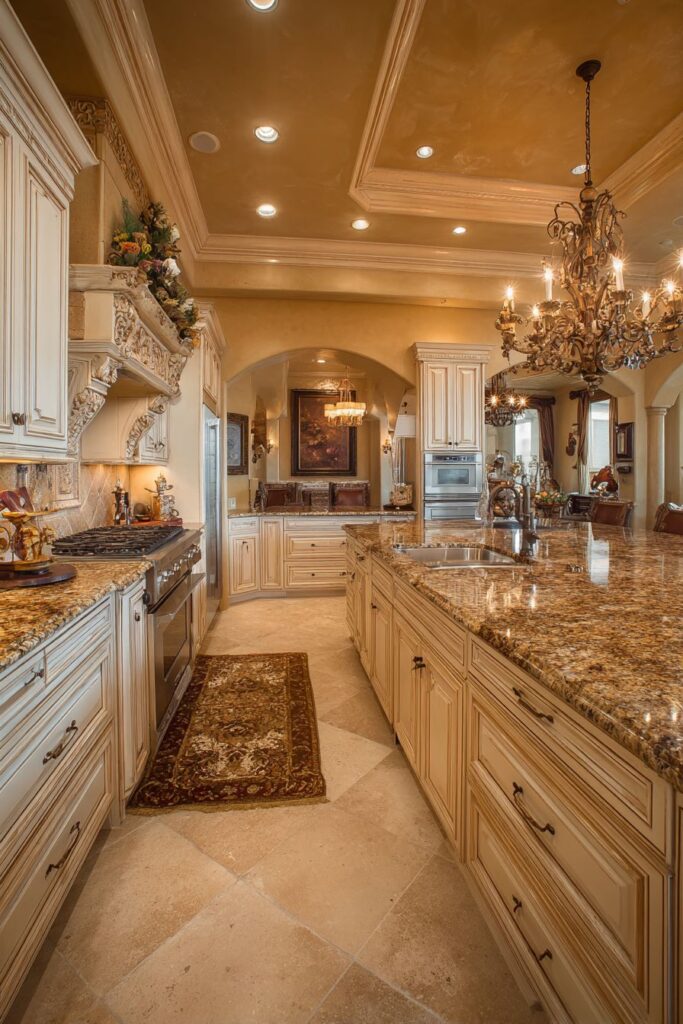
Cherry wood cabinetry and granite countertops complete the traditional kitchen narrative, creating a space that feels both sophisticated and welcoming. The warm color palette throughout creates visual harmony while celebrating natural materials and traditional craftsmanship.
Key Design Tips:
- Ensure panel proportions work harmoniously with room dimensions
- Choose crown molding profiles that complement panel depth
- Balance warm and cool lighting for optimal functionality
- Maintain consistent traditional styling throughout kitchen elements
14. Vaulted Scissor Truss Drama
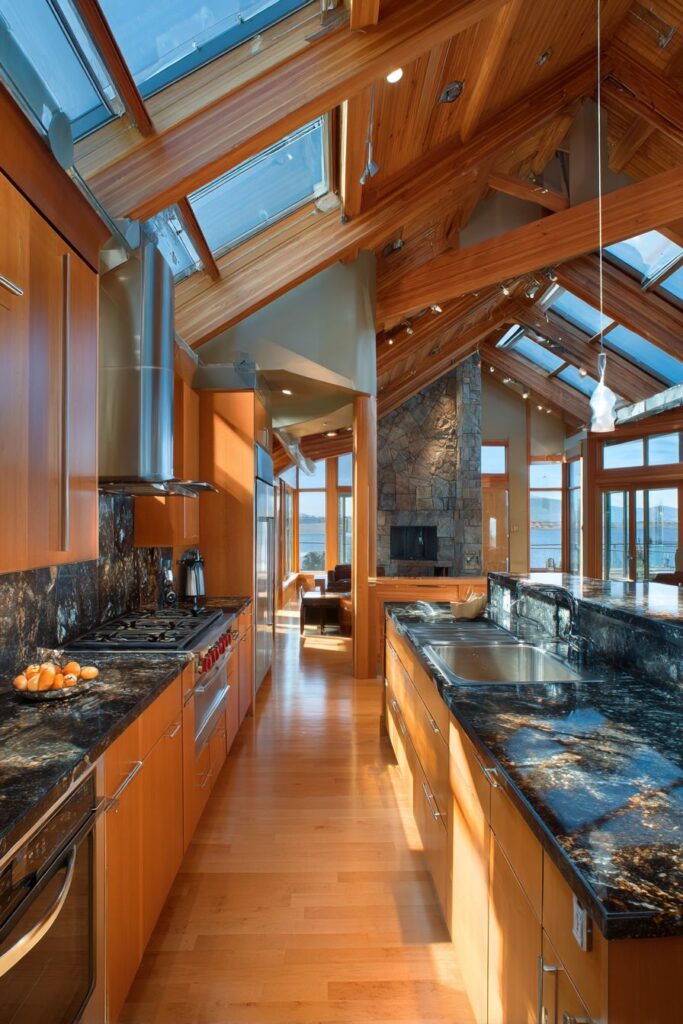
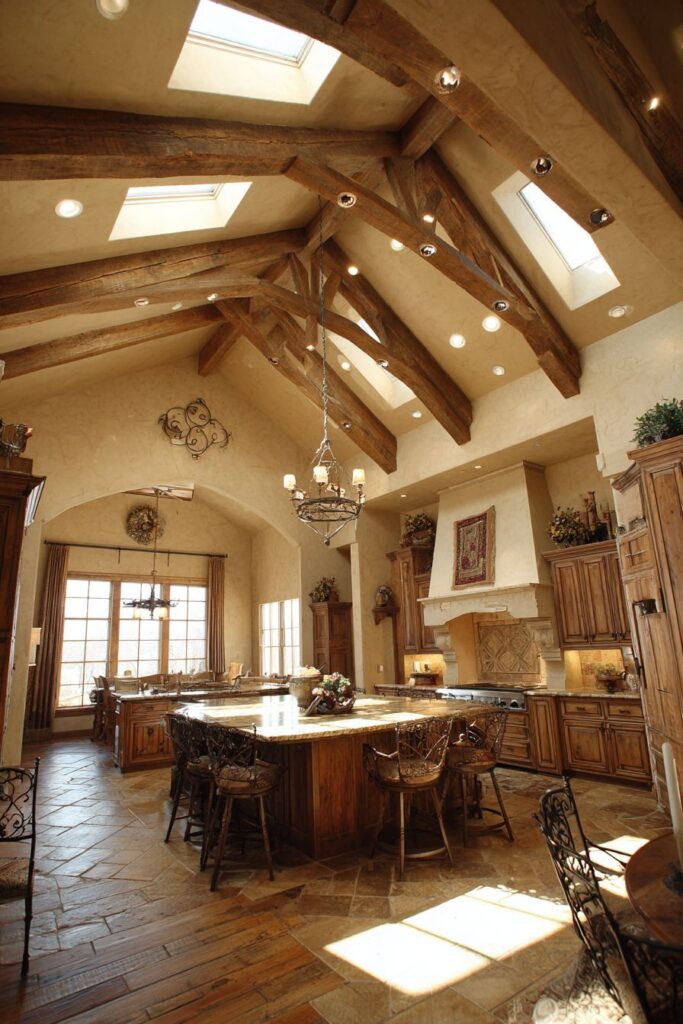
Natural cedar scissor trusses create dramatic architectural interest while providing the structural framework for a soaring vaulted ceiling design. The exposed structural elements become decorative features that add both visual impact and authentic architectural character.
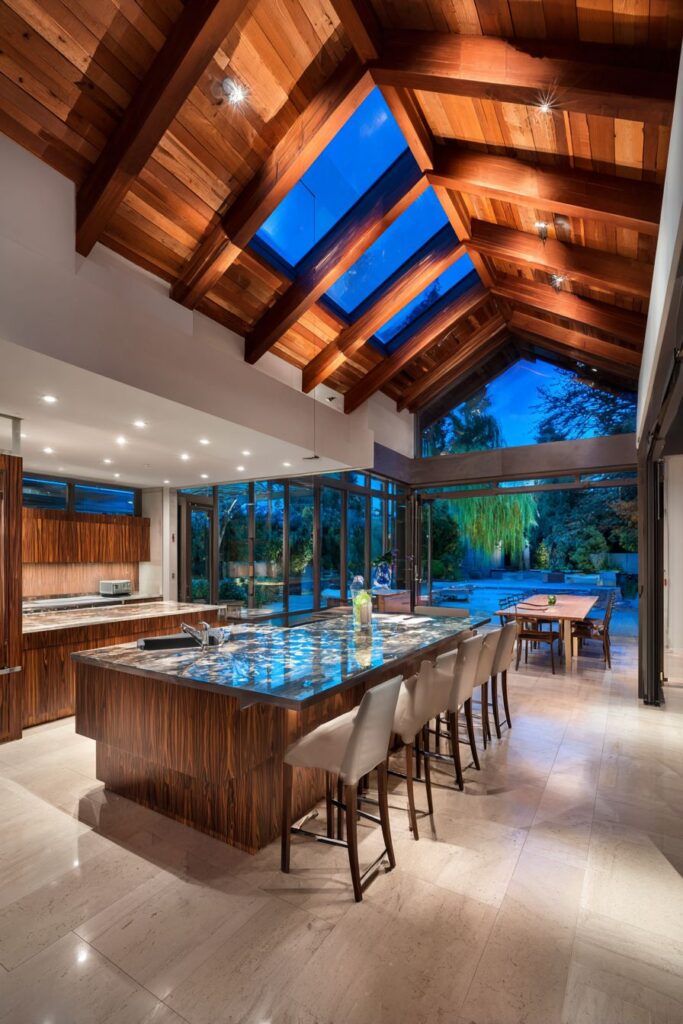
Large skylights integrated between structural beams flood the kitchen with natural light while creating dynamic shadow patterns that change throughout the day. This connection to natural lighting cycles makes the kitchen feel more connected to outdoor environments.
The soaring ceiling creates impressive vertical space that makes even modest kitchens feel grand and spacious. The dramatic height draws the eye upward while maintaining intimate proportions in the work areas below where cooking activities take place.
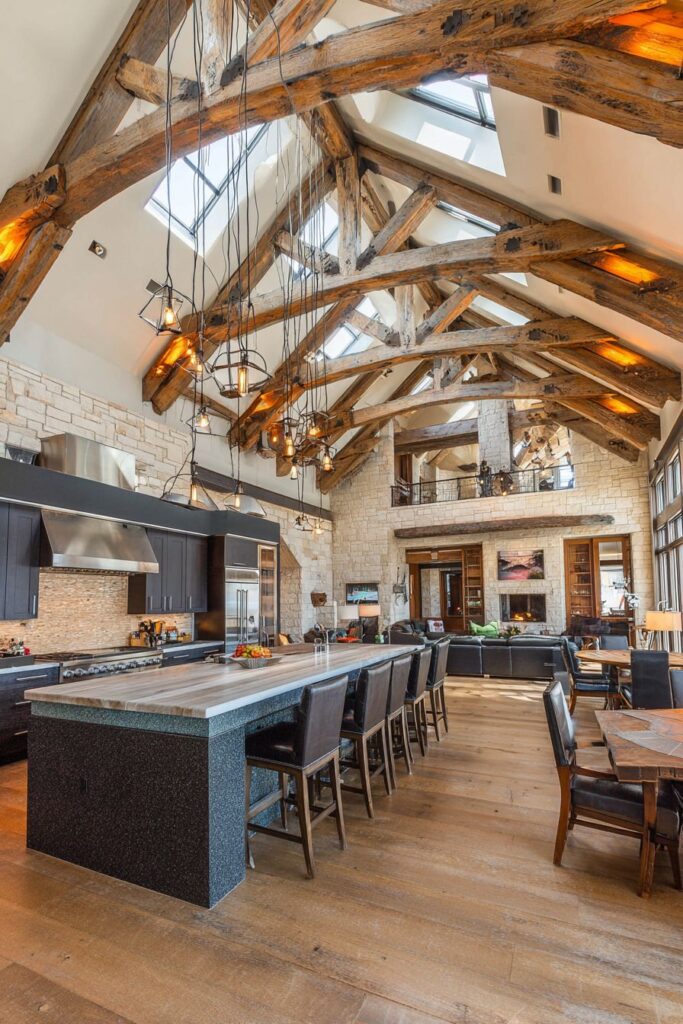
The natural cedar finish celebrates the beauty of wood construction while requiring minimal maintenance. The warm wood tones add richness to the kitchen palette while providing a natural focal point that anchors the entire design scheme.
Key Design Tips:
- Ensure structural elements are properly sized for both function and proportion
- Plan skylight placement for optimal natural light distribution
- Consider ceiling fans for air circulation in high-ceiling spaces
- Balance dramatic ceiling with appropriately scaled kitchen elements below
15. Victorian Pressed Tin Heritage

Pressed tin tiles in antique bronze finish create a ceiling design that celebrates Victorian-era decorative arts while providing practical functionality for modern kitchen use. The ornate patterns embossed into each tile demonstrate the high level of craftsmanship that characterized 19th-century architectural decoration.
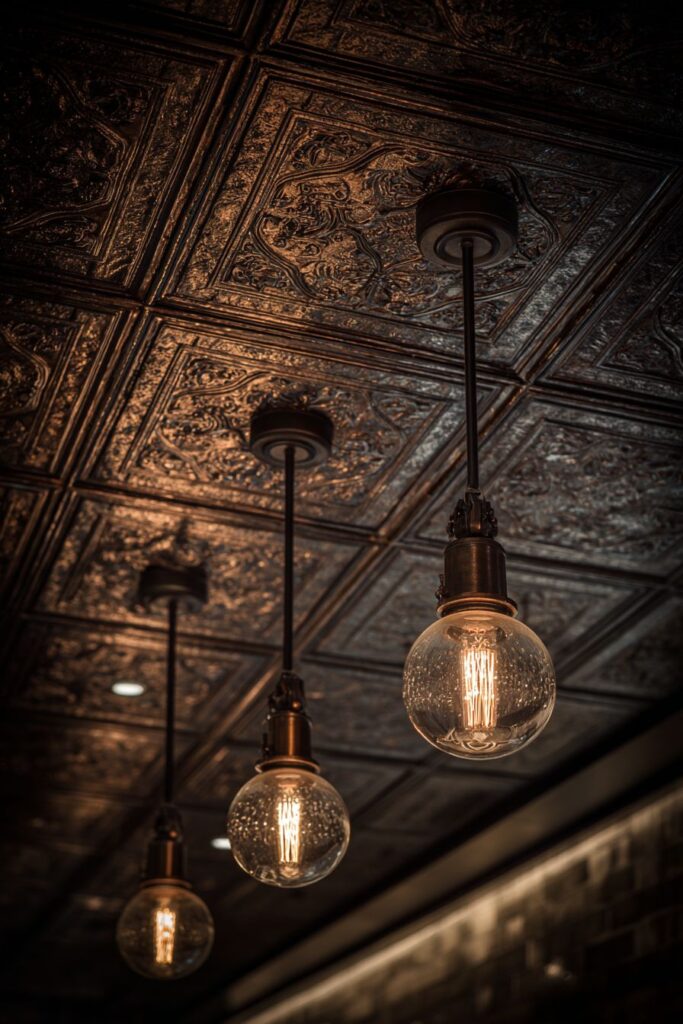
Traditional Victorian patterns arranged across the ceiling surface create visual richness that transforms the kitchen into something approaching museum quality. Each tile contributes to a larger composition that rewards close examination while creating impressive overall impact.

Period-appropriate pendant lights with milk glass shades complement the decorative ceiling treatment while providing necessary illumination for cooking tasks. The fixtures’ historical styling reinforces the Victorian theme while their practical function ensures the kitchen remains fully functional.
The antique bronze finish adds warmth and richness while creating the appearance of aged metal that has developed patina over decades of use. This authentic aging effect cannot be replicated by modern finishing techniques, making vintage tin tiles valuable architectural elements.

Key Design Tips:
- Source authentic vintage tin tiles when possible for maximum character
- Plan tile layout to ensure balanced pattern arrangement
- Choose complementary lighting fixtures with period-appropriate styling
- Protect tin finish with appropriate sealers for kitchen environment
16. Southwestern Adobe Construction
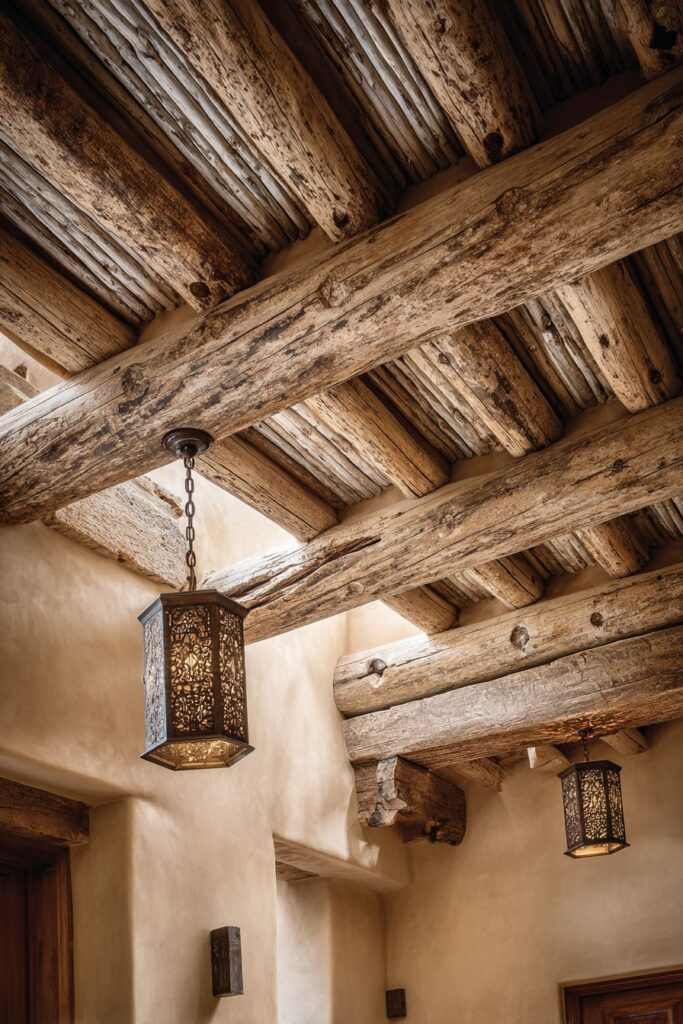
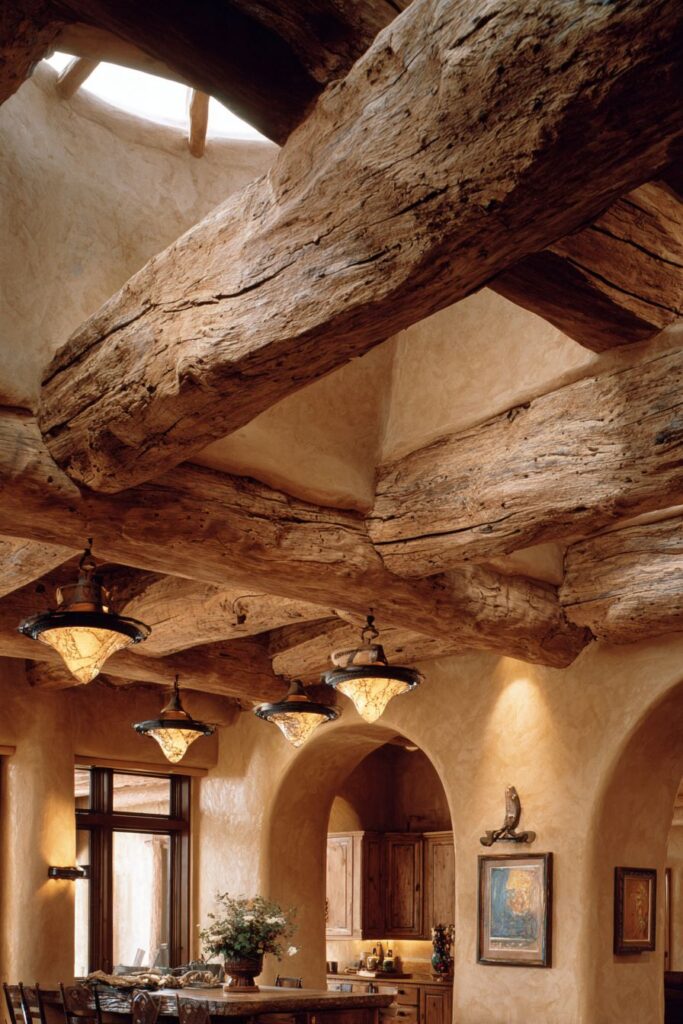
Rough-hewn vigas and painted latilla create an authentic Southwestern ceiling design that celebrates traditional Native American and Hispanic construction techniques. The hand-carved wooden beams demonstrate traditional craftsmanship while providing structural and decorative function.
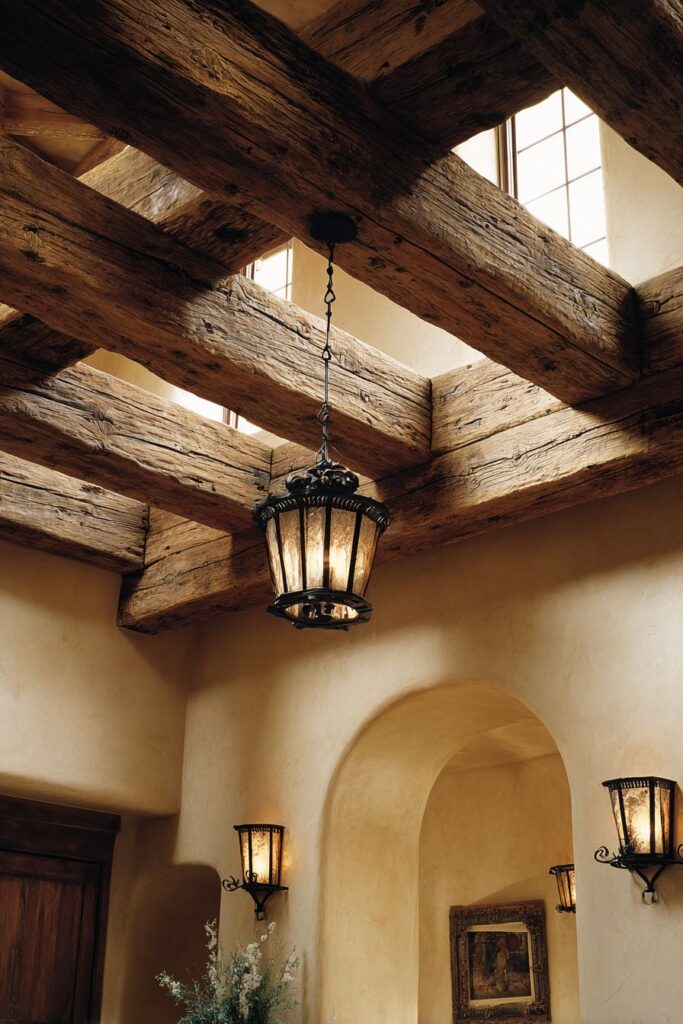
Adobe-style plaster walls complement the ceiling’s rustic timber construction while creating the authentic Southwestern atmosphere that makes kitchens feel connected to regional building traditions. The earth-toned materials create warmth while maintaining the organic character essential to Southwestern design.
Wrought iron and mica pendant lights provide illumination that enhances the ceiling’s rustic textures while maintaining authentic regional styling. The fixtures’ handcrafted quality complements the ceiling’s artisanal character while providing necessary task lighting for cooking activities.
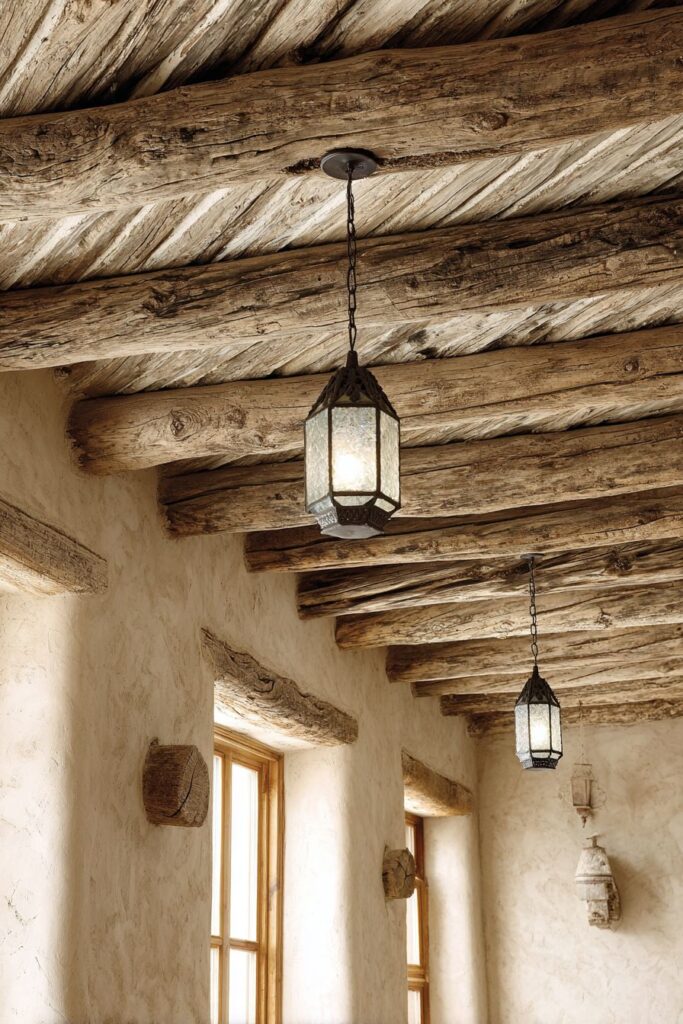
The organic variations in beam carving and latilla placement create visual interest that manufactured materials cannot replicate. This handcrafted irregularity adds authenticity while demonstrating the human touch that makes traditional construction techniques valuable cultural expressions.
Key Design Tips:
- Source authentic southwestern materials from regional suppliers
- Embrace irregularities as authentic character elements
- Choose complementary earth-tone color palettes throughout kitchen
- Consider regional climate factors in material selection and treatment
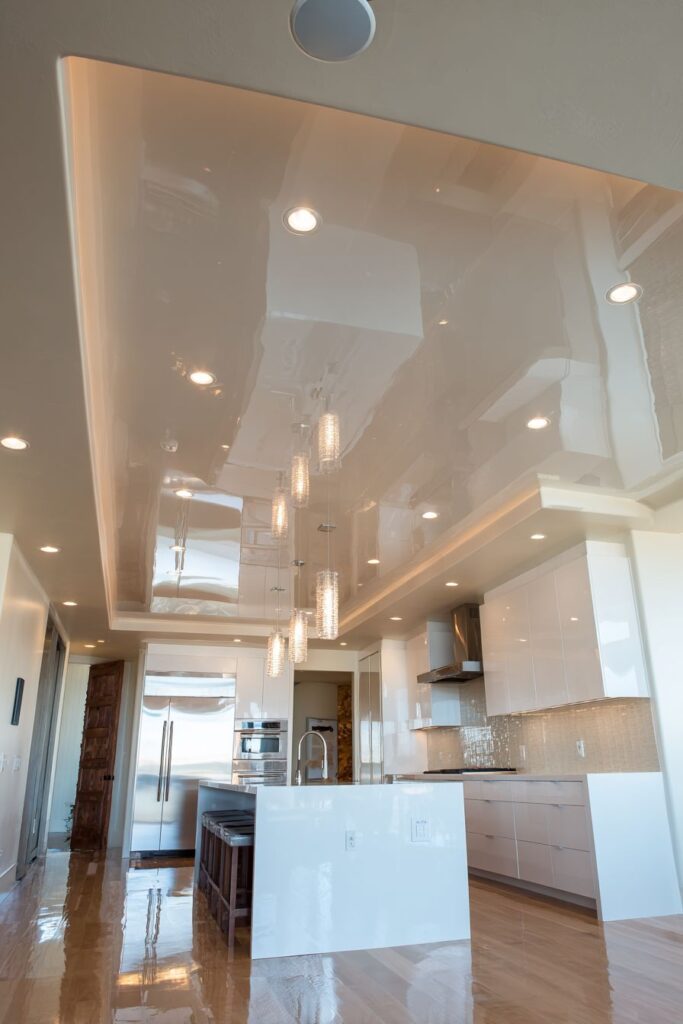
17. Floating Drywall Innovation
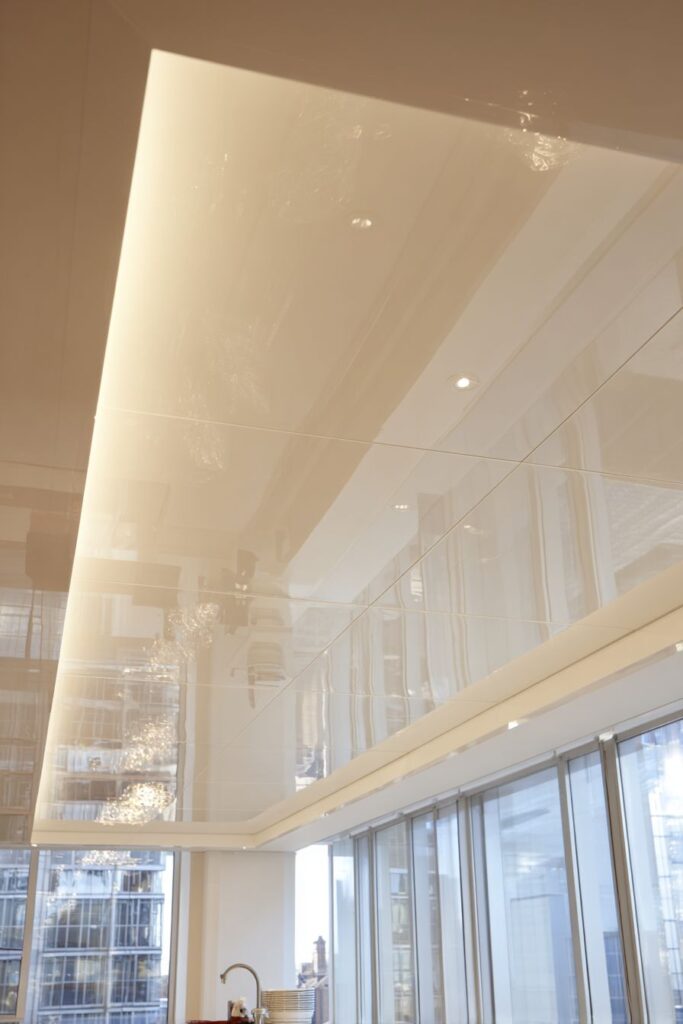
A sleek floating drywall plane with hidden perimeter lighting creates the illusion of a ceiling that hovers magically above the kitchen space. This innovative design technique demonstrates how simple materials can create dramatic architectural effects through careful planning and execution.
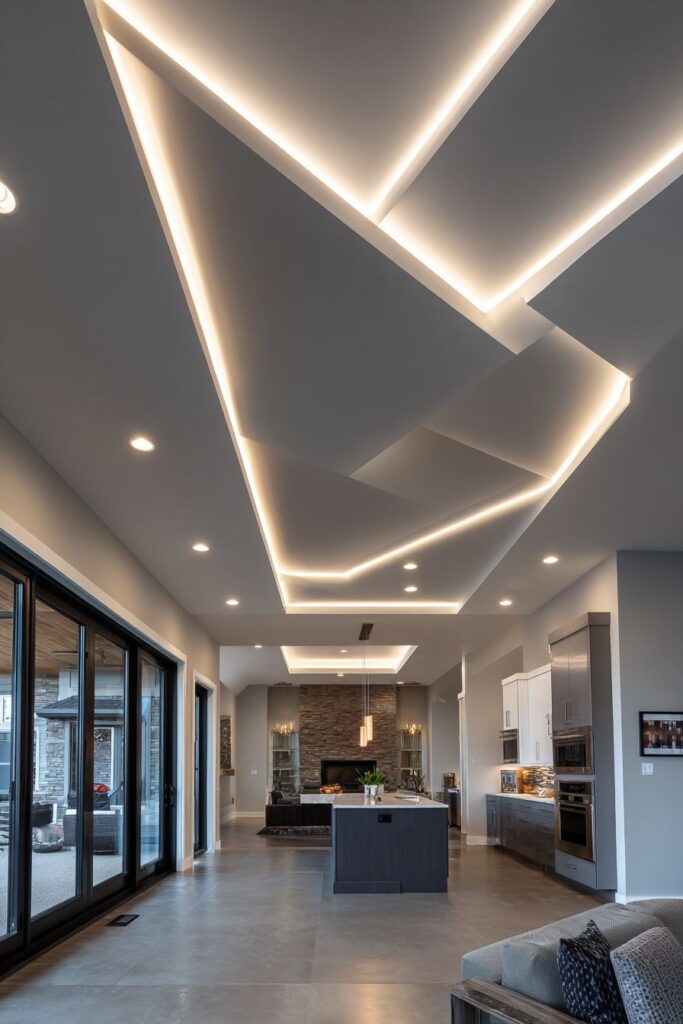
Perfect edges and clean lines emphasize modern architectural precision while the floating effect adds visual drama that transforms an ordinary kitchen into an extraordinary space. The technique requires expert installation but rewards with impressive visual impact.
Hidden LED strips tucked into the perimeter recess create even ambient lighting while maintaining the ceiling’s clean appearance. This indirect lighting technique eliminates harsh shadows while creating a soft glow that makes the entire kitchen feel more spacious and welcoming.
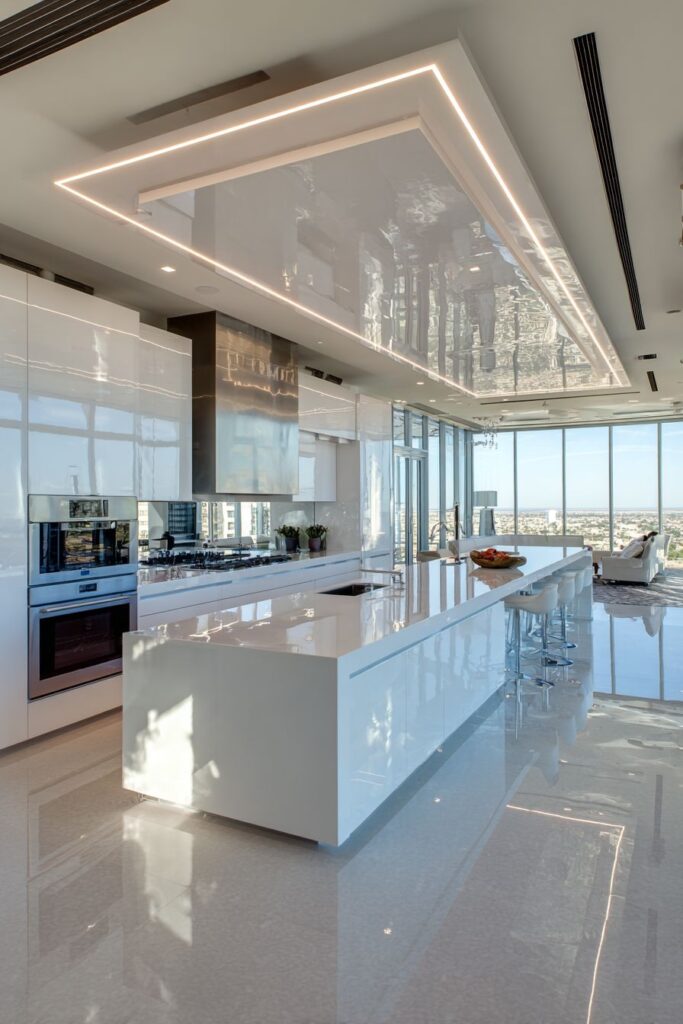
Glossy lacquer cabinetry and engineered stone surfaces complement the ceiling’s high-tech appearance while maintaining the sleek, contemporary aesthetic. The material palette’s consistency creates visual harmony while celebrating modern manufacturing capabilities.
Key Design Tips:
- Plan mechanical systems for hidden integration above floating plane
- Use high-quality drywall finishing for perfect edge details
- Install dimmable LED systems for flexible lighting control
- Ensure adequate structural support for suspended ceiling elements
18. Decorative Wood Grid Framework
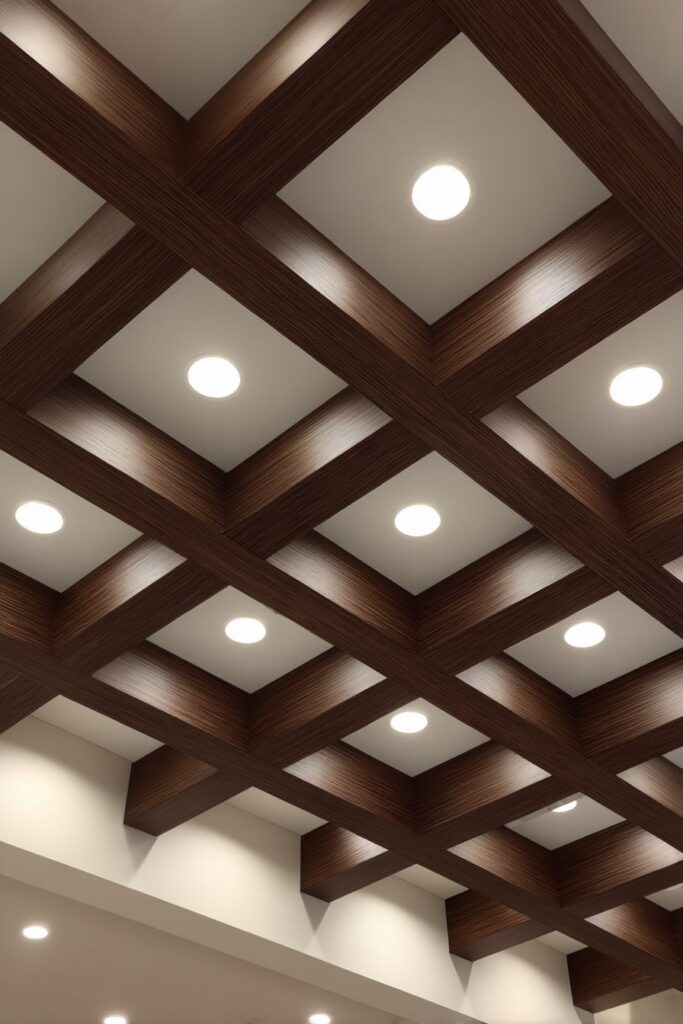
Dark stained wood grid framework filled with white painted drywall panels creates a ceiling design that combines structural honesty with decorative appeal. The geometric pattern adds visual interest while providing practical framework for recessed lighting integration.
Each grid section contains strategically placed recessed fixtures that provide even illumination distribution throughout the kitchen workspace. This systematic approach to lighting ensures adequate task illumination while maintaining the ceiling’s clean geometric appearance.
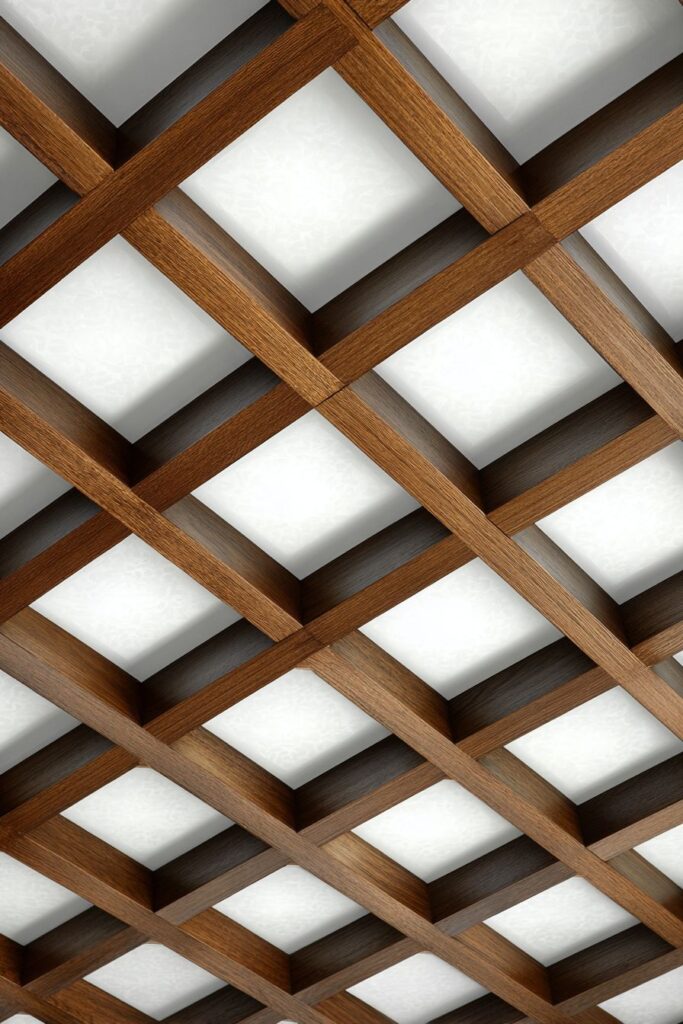
The contrast between dark wood framework and white infill panels creates visual tension that keeps the ceiling interesting without overwhelming the space. This balanced approach allows the ceiling to be prominent without dominating other kitchen elements.
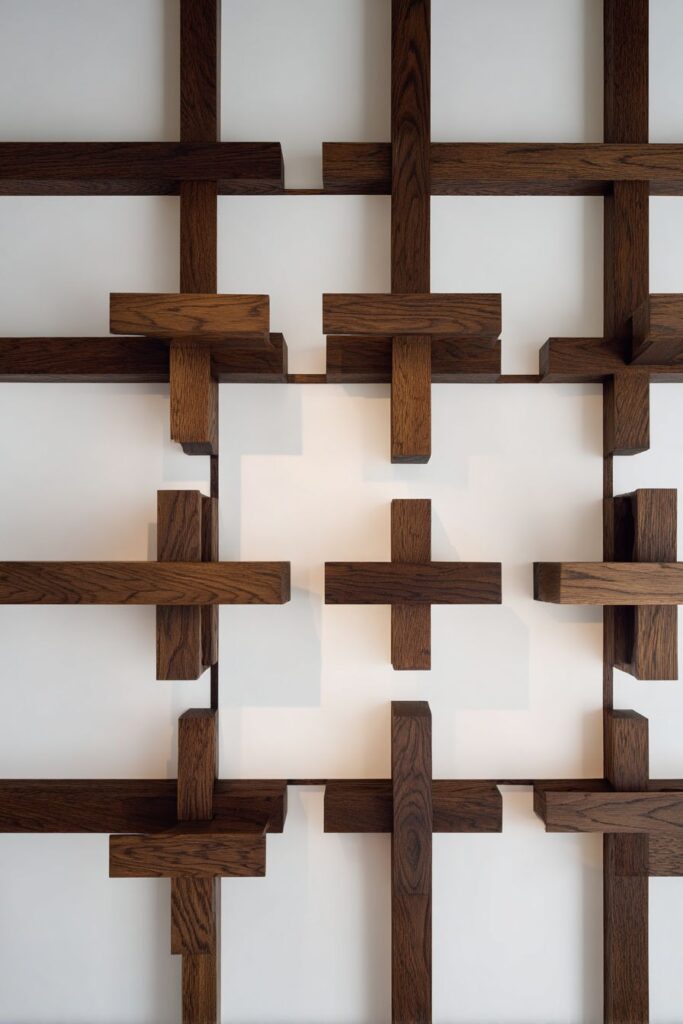
Natural wood grain textures in the grid framework add organic character while the geometric arrangement provides order and structure. This combination of natural and geometric elements creates visual richness that works well with various kitchen styles.
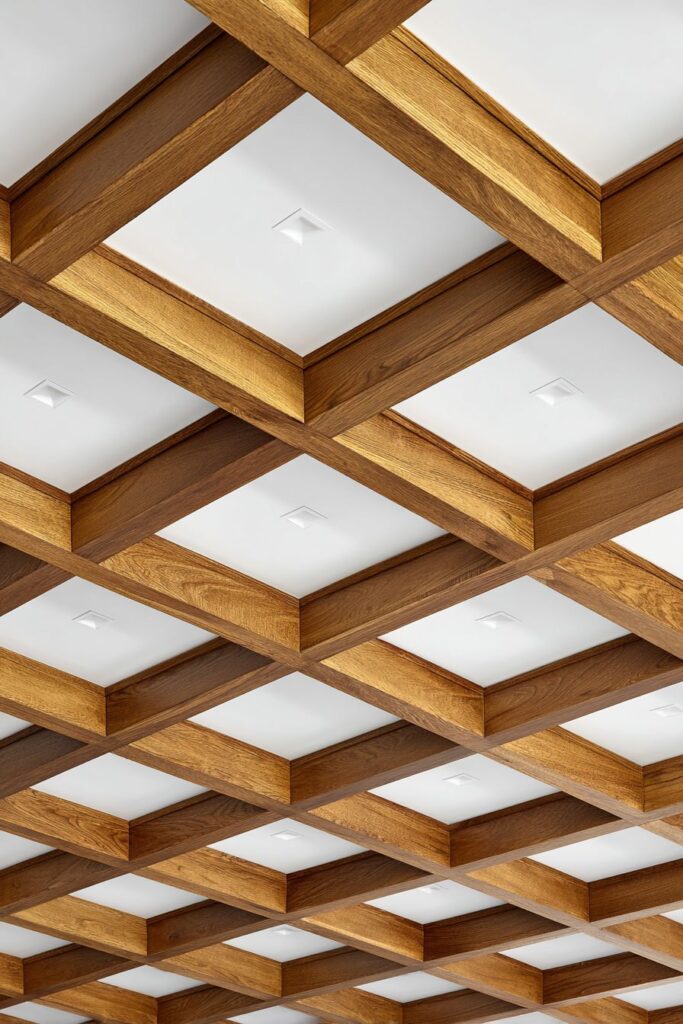
Key Design Tips:
- Plan grid proportions to complement room dimensions and lighting needs
- Choose wood stain that coordinates with kitchen cabinetry and trim
- Integrate lighting systems during framework installation
- Maintain consistent spacing for balanced visual rhythm
19. Galley Barrel Vault Architecture
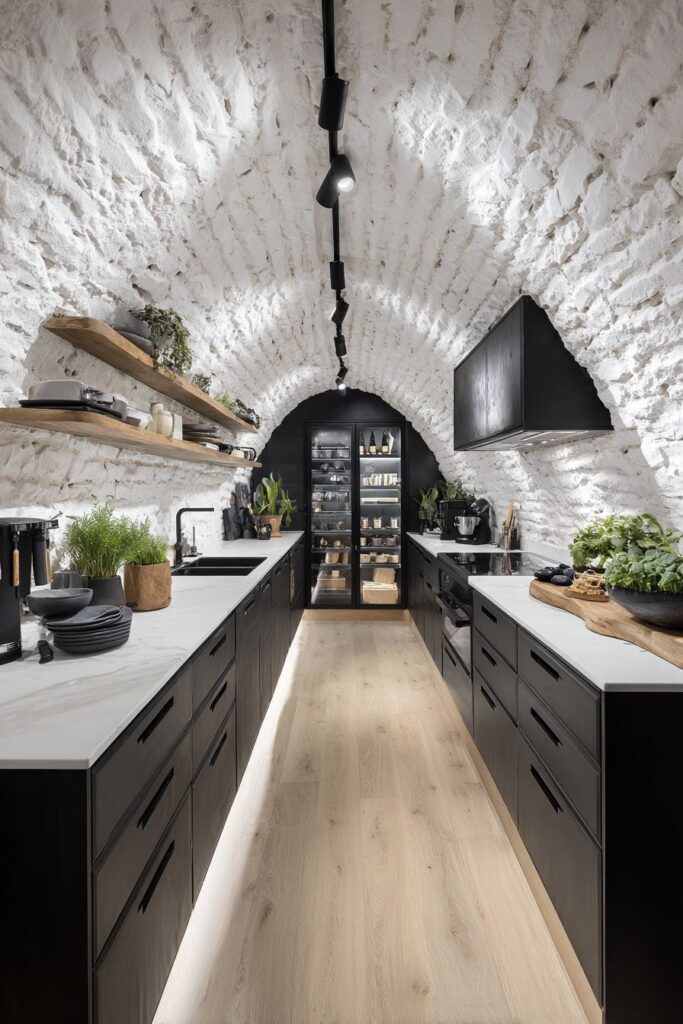
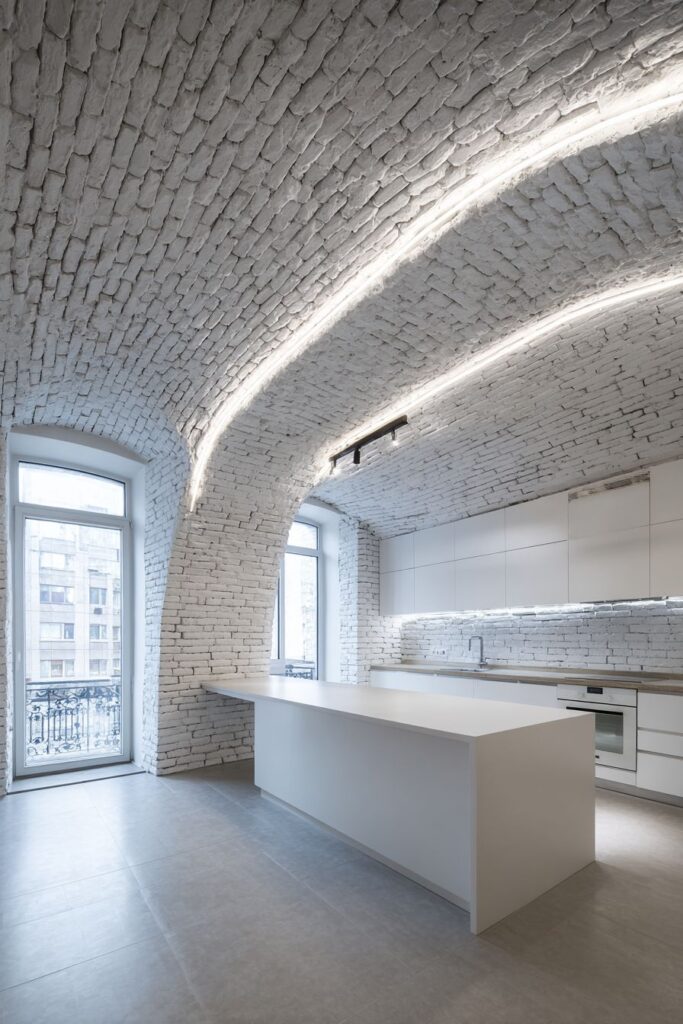
A barrel vault constructed in painted white brick creates architectural interest in narrow galley kitchen spaces while maintaining comfortable human scale. The curved ceiling form adds visual drama while making efficient use of limited vertical space.
Integrated track lighting follows the curved ceiling form to provide flexible task illumination that can be adjusted for different cooking activities. The track system’s flexibility allows lighting to be redirected as kitchen layouts and needs change over time.

The arched ceiling design creates the illusion of greater width in narrow kitchen spaces while adding architectural character that transforms utilitarian galley layouts into charming culinary spaces. The curved form softens the kitchen’s linear geometry while maintaining practical functionality.
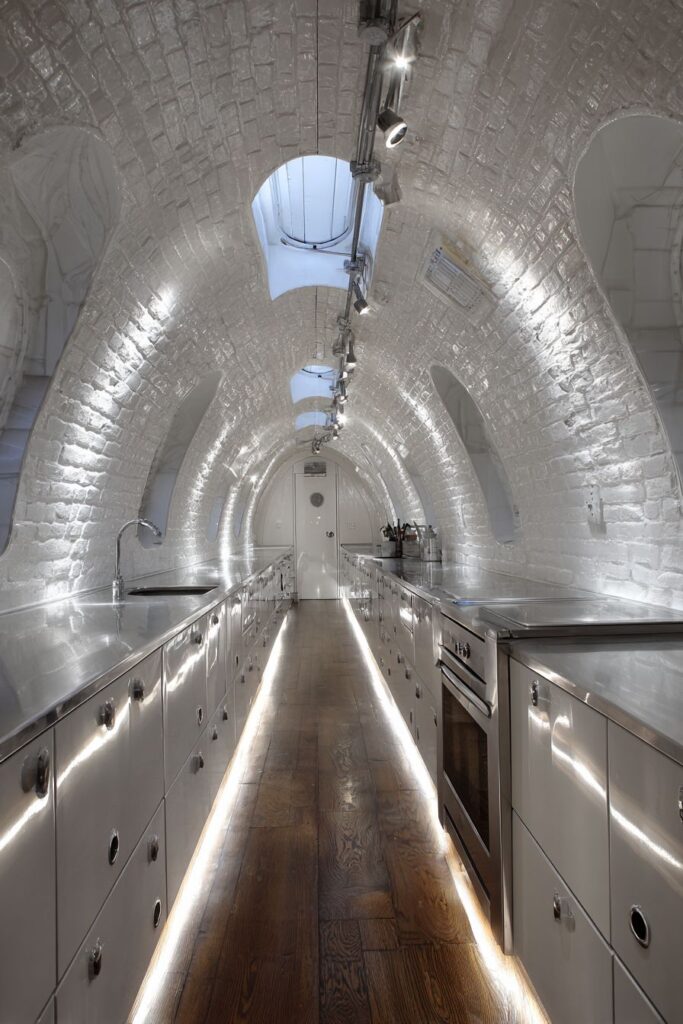
The white painted brick finish adds texture while keeping the ceiling bright and reflective. This combination of textural interest and light reflection creates visual appeal without making the narrow space feel cramped or dark.
Key Design Tips:
- Ensure adequate head clearance throughout curved ceiling areas
- Plan track lighting for flexible task illumination needs
- Consider acoustic properties of hard brick surfaces
- Use light colors to maximize brightness in narrow spaces
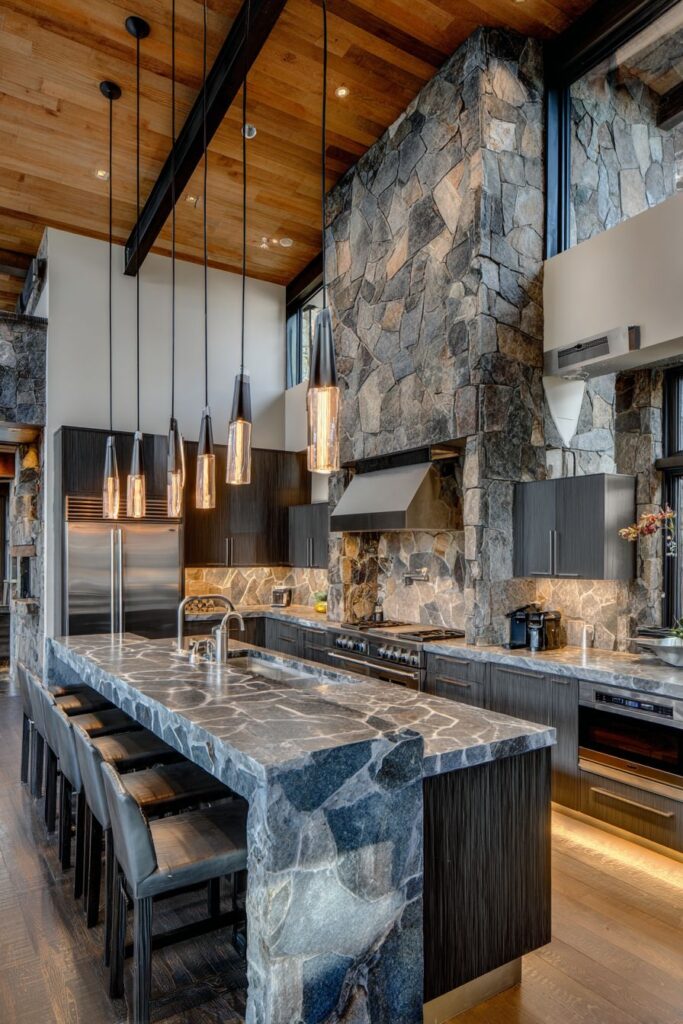
20. Natural Stone Veneer Texture
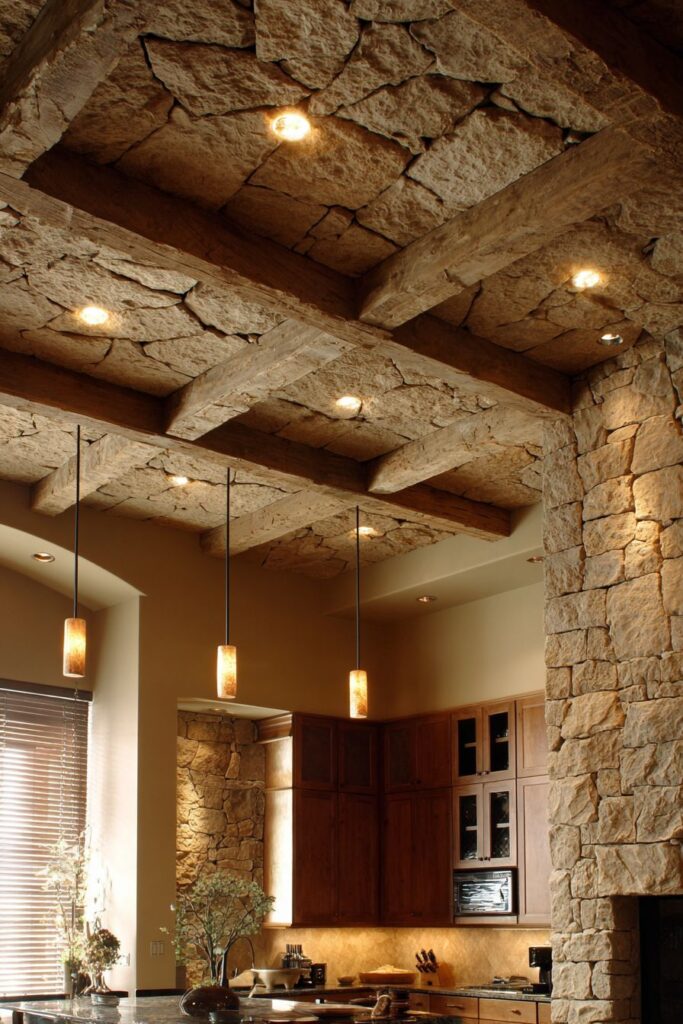
Irregular natural stone veneer patterns create a ceiling design that brings outdoor textures into the kitchen environment. The organic stone arrangements add geological character while providing dramatic textural contrast to smooth modern appliances and cabinetry.
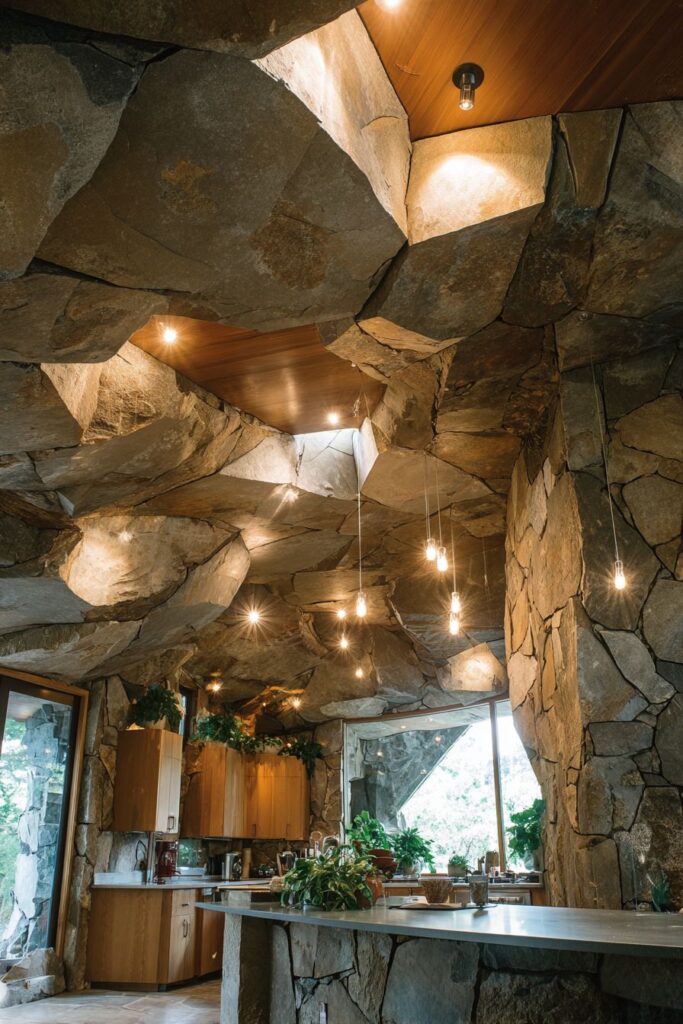
Rustic wood beams provide structural accent while serving as mounting points for pendant lights suspended at varied heights. The combination of stone and wood creates a natural material palette that connects the kitchen to outdoor environments.
Natural lighting highlights the stone’s color variations and three-dimensional surface textures while creating dramatic shadows that emphasize the ceiling’s organic character. This interplay of light and shadow makes the ceiling a dynamic element that changes throughout the day.
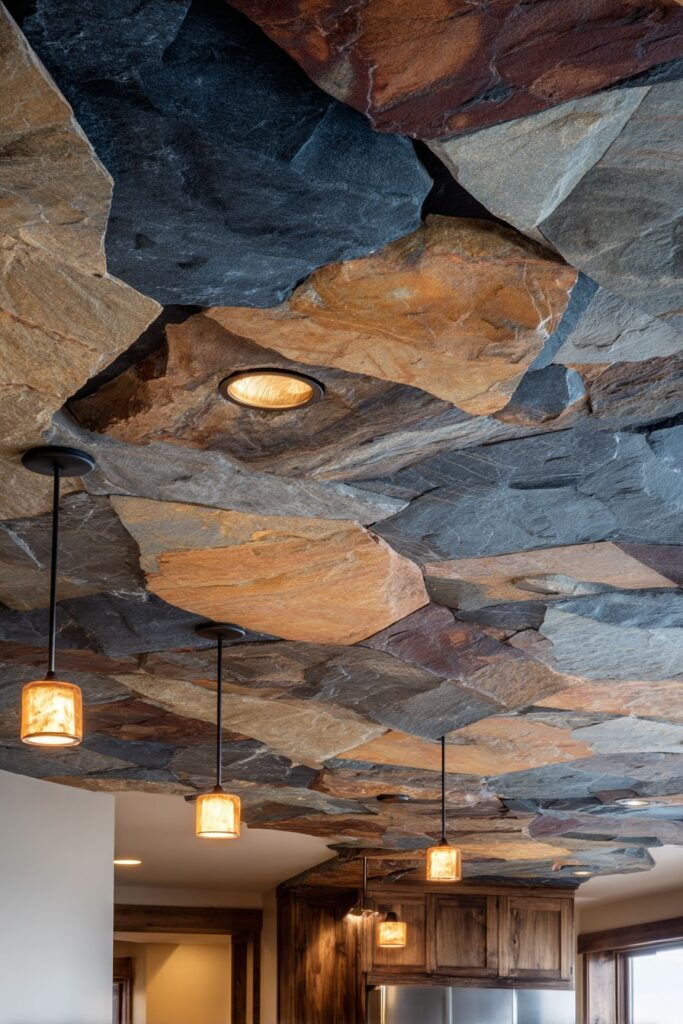
The stone ceiling’s textural richness provides visual balance for smooth contemporary kitchen surfaces while adding natural character that cannot be replicated by manufactured materials. This authentic geological beauty creates lasting appeal that transcends temporary design trends.
Key Design Tips:
- Choose stone types appropriate for overhead installation weight
- Plan adequate structural support for stone ceiling systems
- Consider maintenance requirements for textured stone surfaces
- Balance stone elements with lighter materials to prevent visual heaviness
21. Acoustic Wood Panel Performance
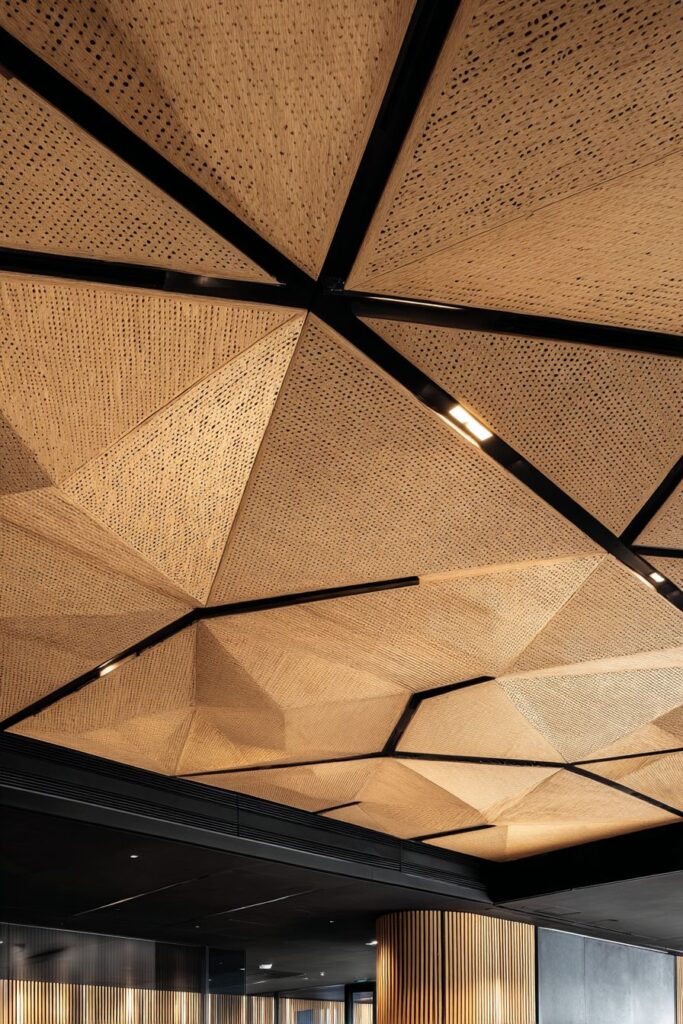
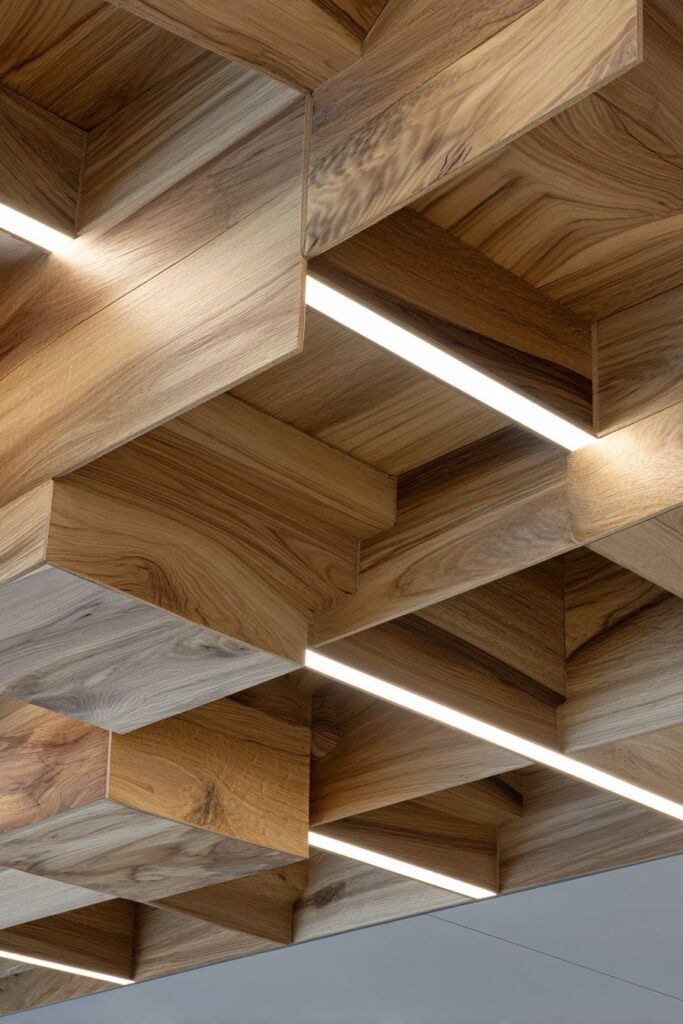
Natural wood finish acoustic panels arranged in geometric patterns create a ceiling design that combines sound absorption with visual appeal. The functional panels address kitchen noise issues while adding natural wood beauty to the culinary space.
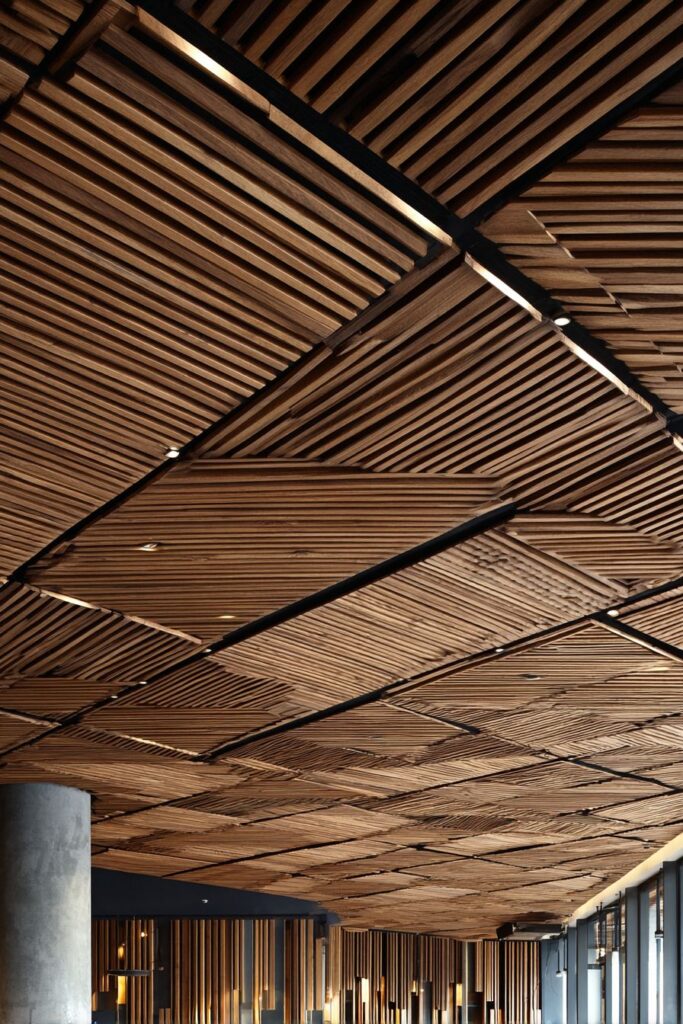
Integrated LED strips between panel sections provide ambient lighting while highlighting the wood’s natural grain patterns. The lighting system’s integration maintains the ceiling’s clean appearance while creating gentle illumination that enhances the wood’s natural beauty.
The acoustic panels’ sound-absorbing properties create a more comfortable kitchen environment by reducing noise from appliances, conversation, and cooking activities. This functional benefit makes the kitchen more pleasant for extended cooking sessions and social gatherings.
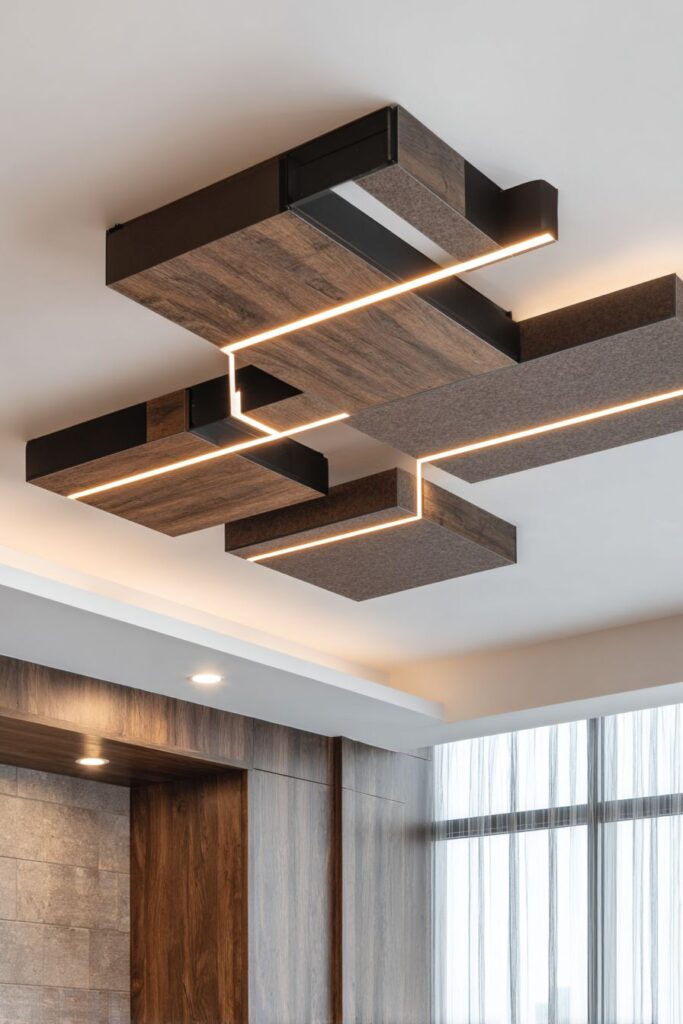
The geometric panel arrangement creates visual rhythm while showcasing natural wood textures and precise craftsmanship. The systematic layout demonstrates how functional elements can be arranged to create decorative patterns that enhance rather than compromise aesthetic appeal.
Key Design Tips:
- Choose acoustic panels with appropriate sound absorption ratings
- Plan panel arrangement for balanced visual composition
- Integrate lighting systems for even illumination distribution
- Select wood finishes that complement kitchen cabinetry and trim
22. Glass Panel Transparency
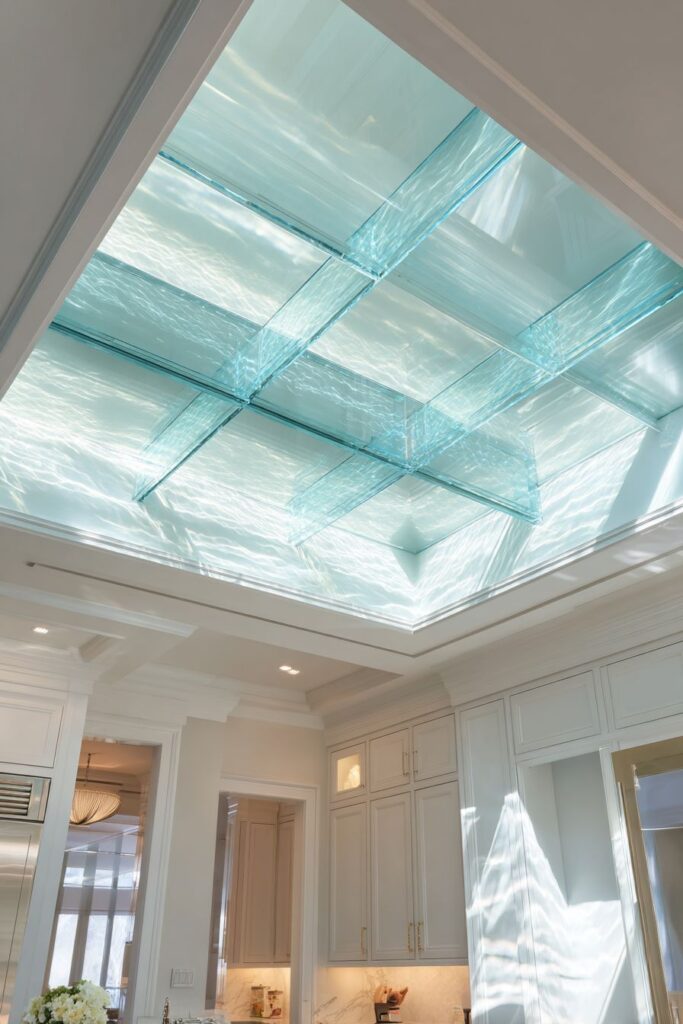
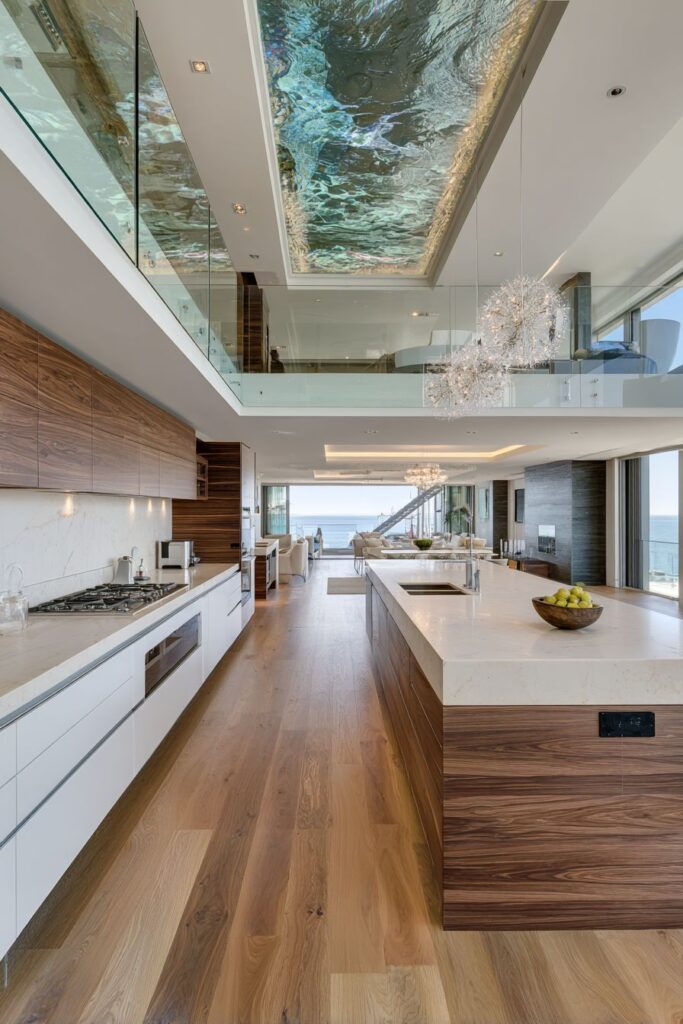
Glass panels supported by metal framework create a transparent ceiling design that maximizes natural light penetration while maintaining visual connection between kitchen and upper floor levels. The innovative approach transforms traditional solid ceiling concepts into light-transmitting architectural elements.
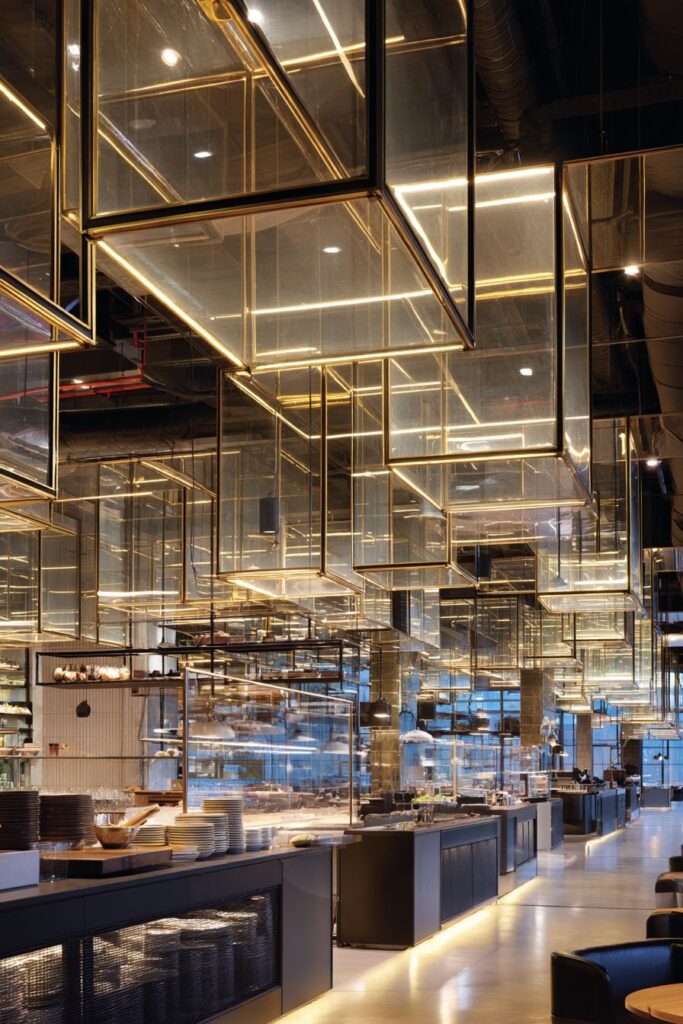
Strategic lighting above the glass creates interesting shadow patterns while providing practical illumination for kitchen activities. The dual-level lighting approach allows for different ambiance settings while showcasing the ceiling’s transparent character.
The glass ceiling design requires careful structural planning to ensure safety while maintaining the desired transparency effects. Tempered or laminated glass specifications ensure occupant safety while providing the clear views that make this design concept successful.
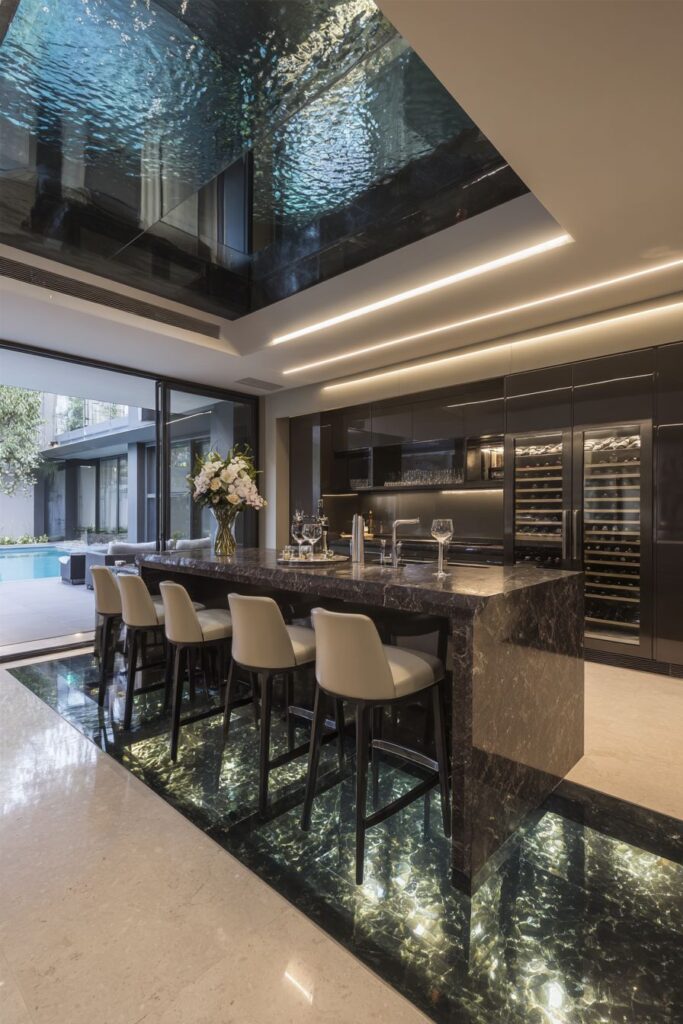
The transparent ceiling maximizes the sense of spaciousness while creating unique visual connections between different levels of the home. This openness enhances the kitchen’s integration with overall home circulation and social patterns.
Key Design Tips:
- Use appropriate safety glass specifications for overhead installations
- Plan structural support systems for proper glass panel mounting
- Consider cleaning and maintenance access for glass ceiling surfaces
- Integrate lighting systems for both functional and aesthetic purposes
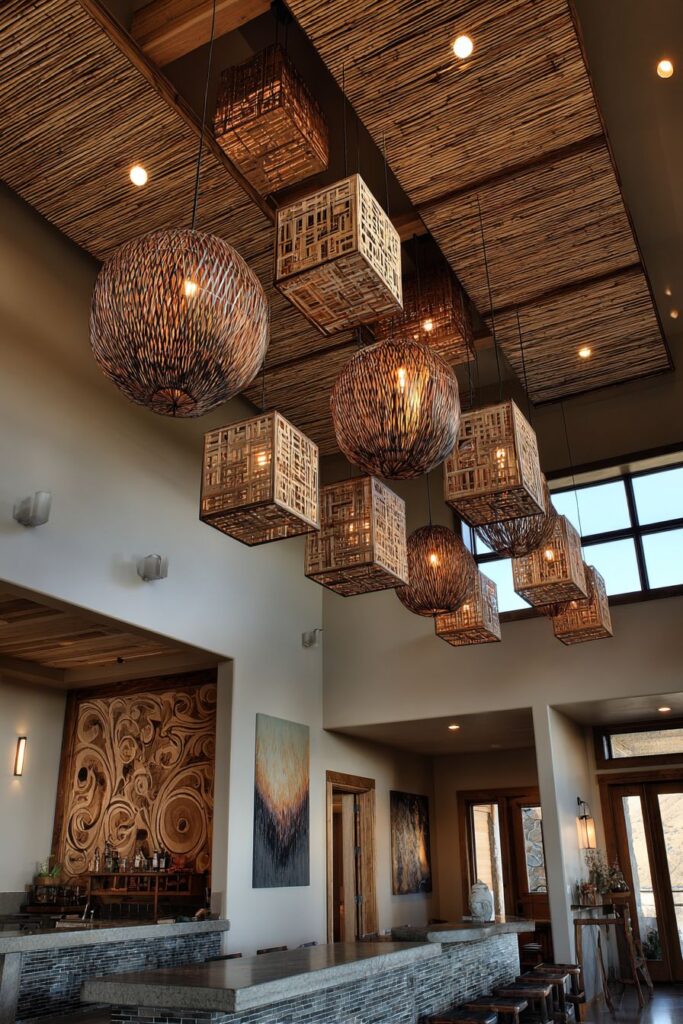
23. Sustainable Bamboo Innovation
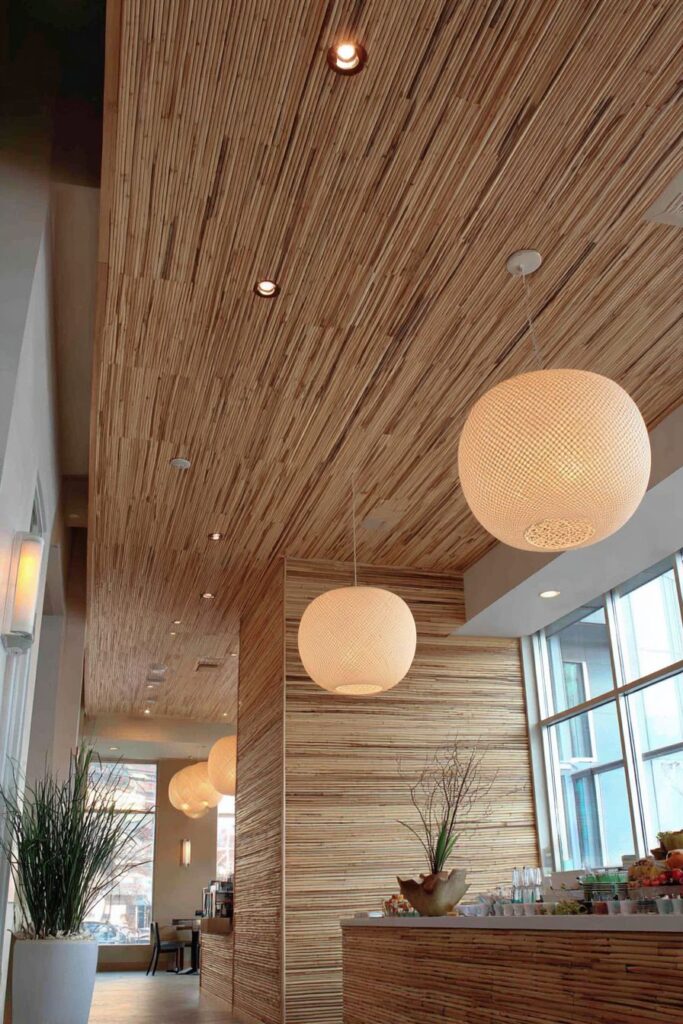
Bamboo panels in natural finish create an eco-friendly ceiling design that emphasizes sustainability while adding organic texture to the kitchen environment. The renewable material choice demonstrates environmental consciousness while providing natural beauty that connects indoor spaces to outdoor environments.
Linear bamboo arrangements create visual movement while showcasing the material’s natural grain patterns and subtle color variations. The systematic panel layout provides order while celebrating bamboo’s organic character and sustainable properties.
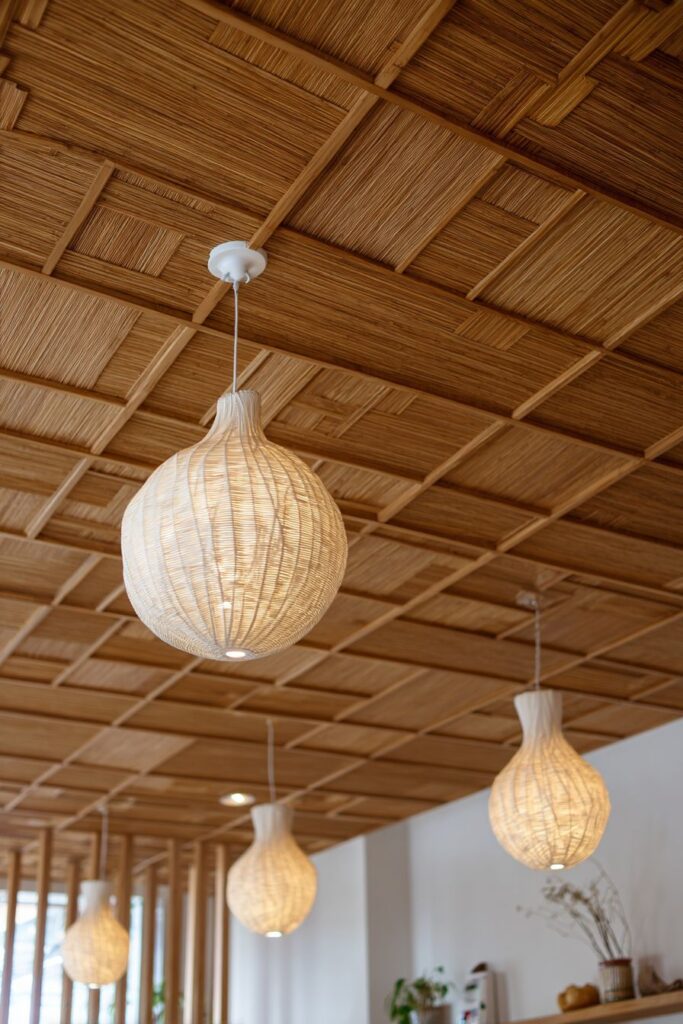
Simple pendant lights with organic forms complement the bamboo ceiling material while maintaining the natural aesthetic throughout the kitchen design. The fixtures’ nature-inspired styling reinforces the sustainable design theme while providing necessary task illumination.
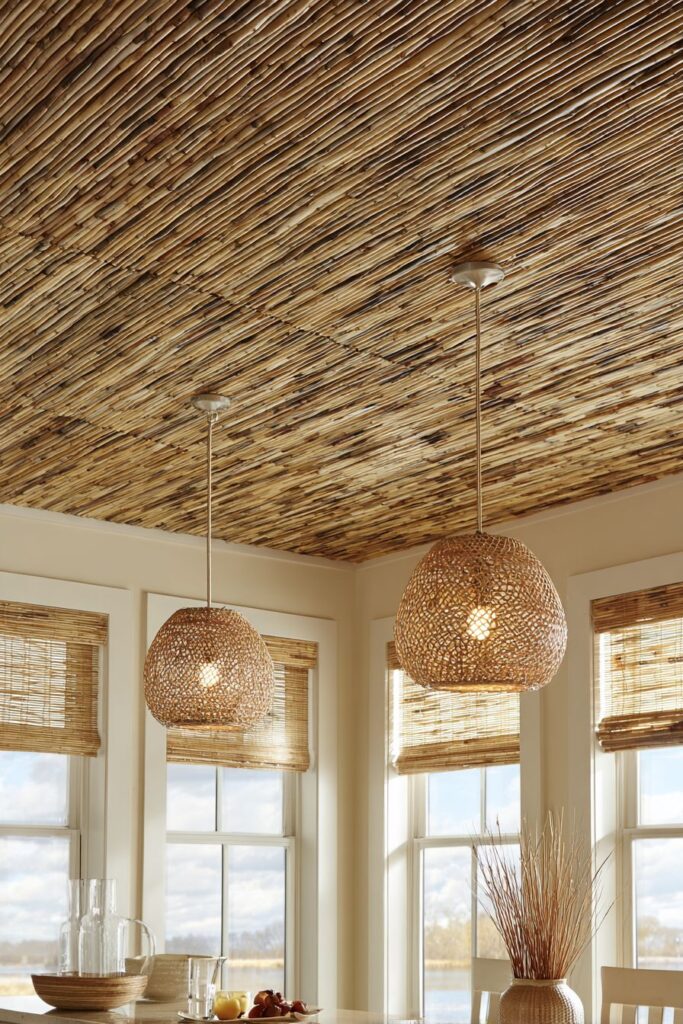
The bamboo ceiling’s sustainable credentials make it an excellent choice for environmentally conscious homeowners while its natural beauty ensures the practical choice doesn’t compromise aesthetic appeal. This combination of environmental responsibility and visual appeal creates lasting value.
Key Design Tips:
- Source bamboo from certified sustainable suppliers
- Choose appropriate bamboo species for ceiling applications
- Consider expansion and contraction factors in installation planning
- Protect bamboo with appropriate sealers for kitchen environments
24. Exposed Concrete Waffle Grid
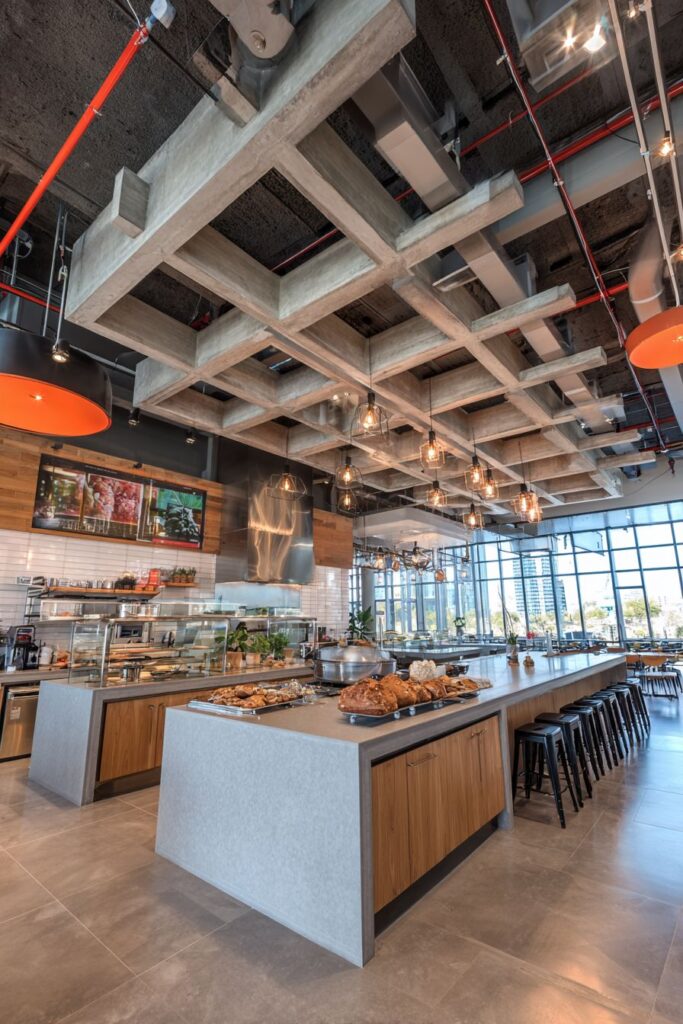
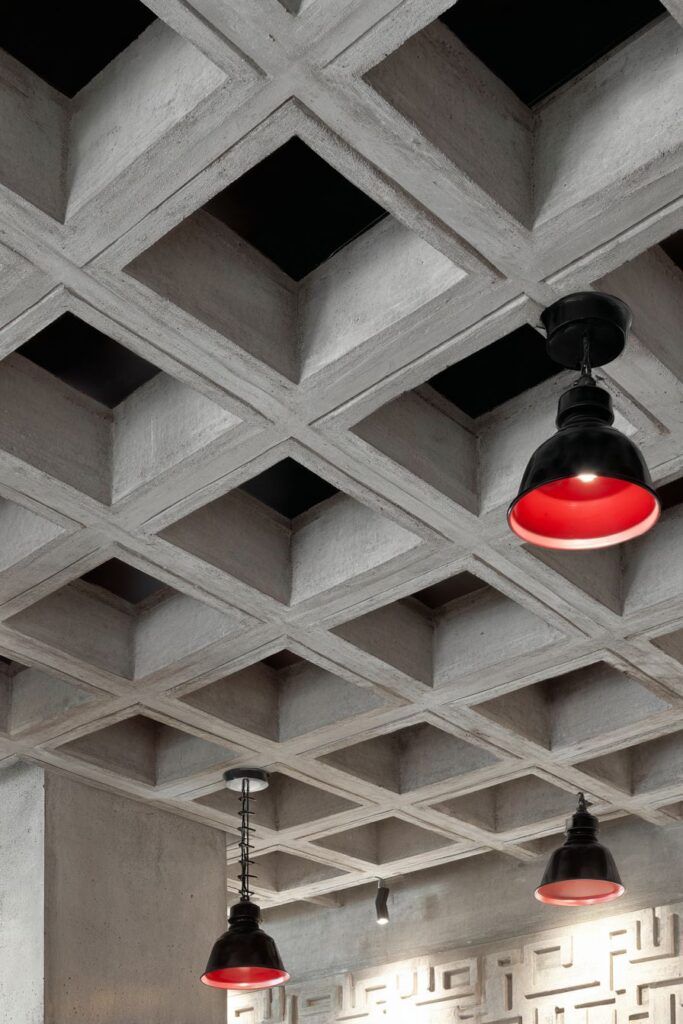
Exposed concrete waffle slab construction painted in light grey creates an industrial ceiling design that celebrates structural elements as decorative features. The geometric grid pattern adds visual interest while showcasing the architectural honesty that defines industrial aesthetic approaches.
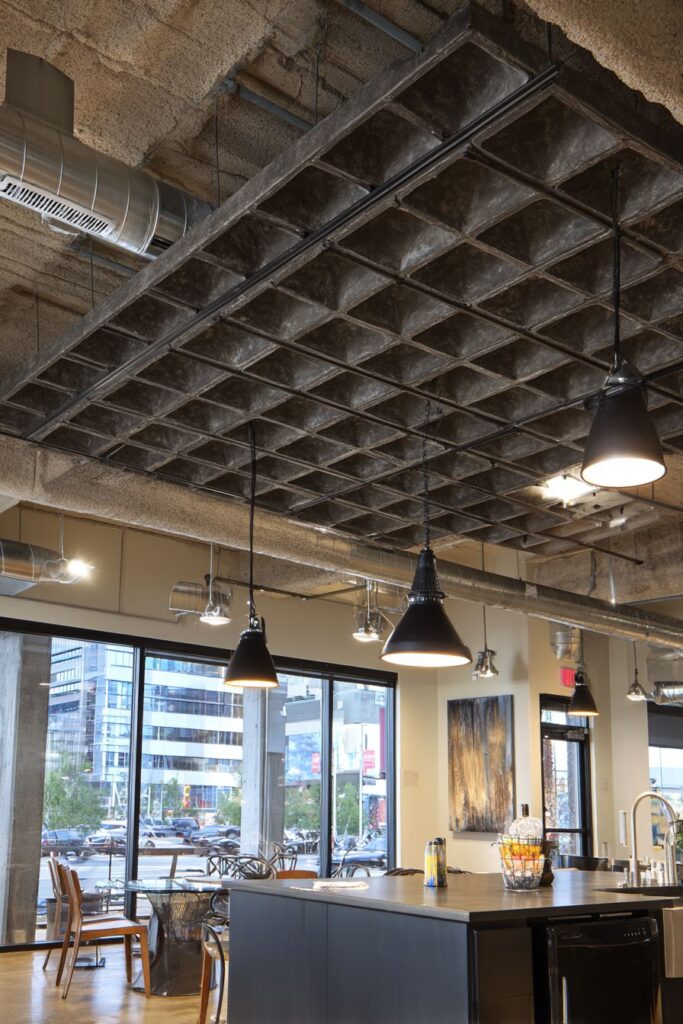
Industrial pendant lights hang from the concrete grid while providing necessary task illumination for cooking activities. The fixtures’ utilitarian styling complements the exposed concrete while maintaining the authentic industrial character throughout the kitchen design.
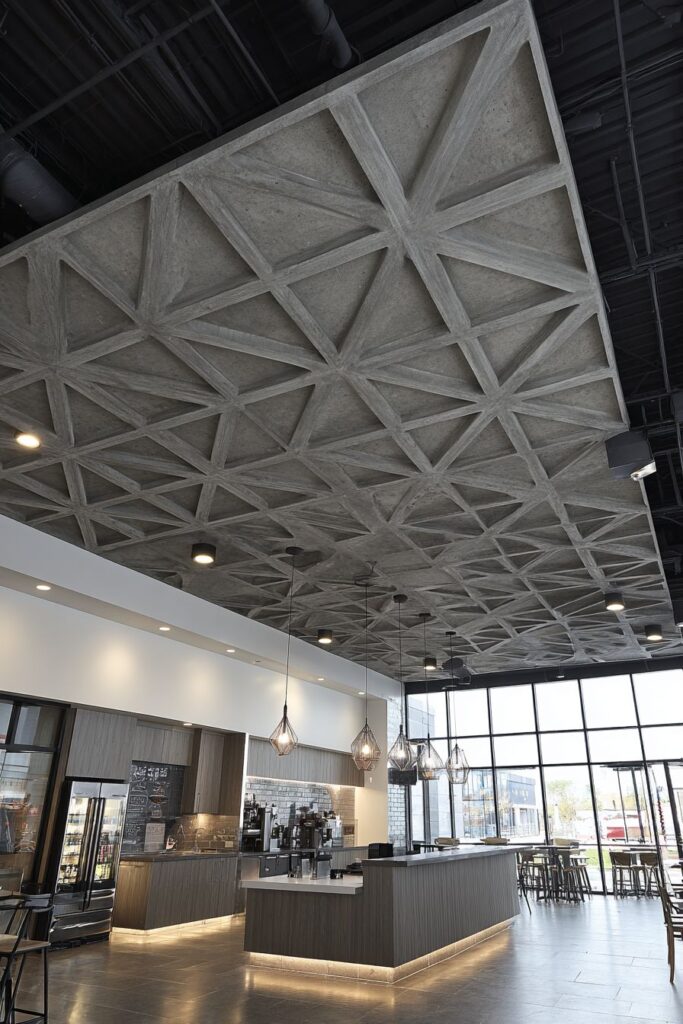
The concrete ceiling’s thermal mass provides energy benefits while its structural grid creates natural zones for lighting and ventilation systems. This integration of structural and mechanical systems demonstrates how industrial approaches can be both practical and beautiful.
Light grey paint treatment keeps the concrete ceiling from appearing too heavy while maintaining the material’s authentic character. The neutral color works well with various kitchen color schemes while providing a sophisticated backdrop for culinary activities.
Key Design Tips:
- Ensure adequate structural support for concrete ceiling systems
- Plan lighting integration within concrete grid framework
- Consider thermal and acoustic properties of exposed concrete
- Choose paint finishes appropriate for concrete surface preparation
25. Textile Panel Comfort
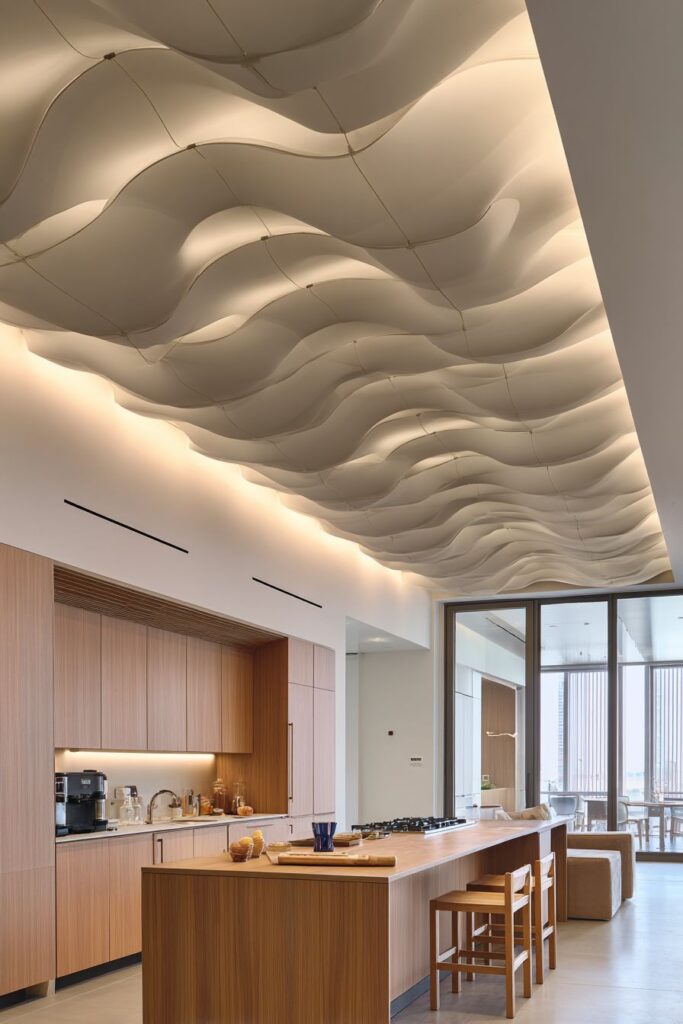
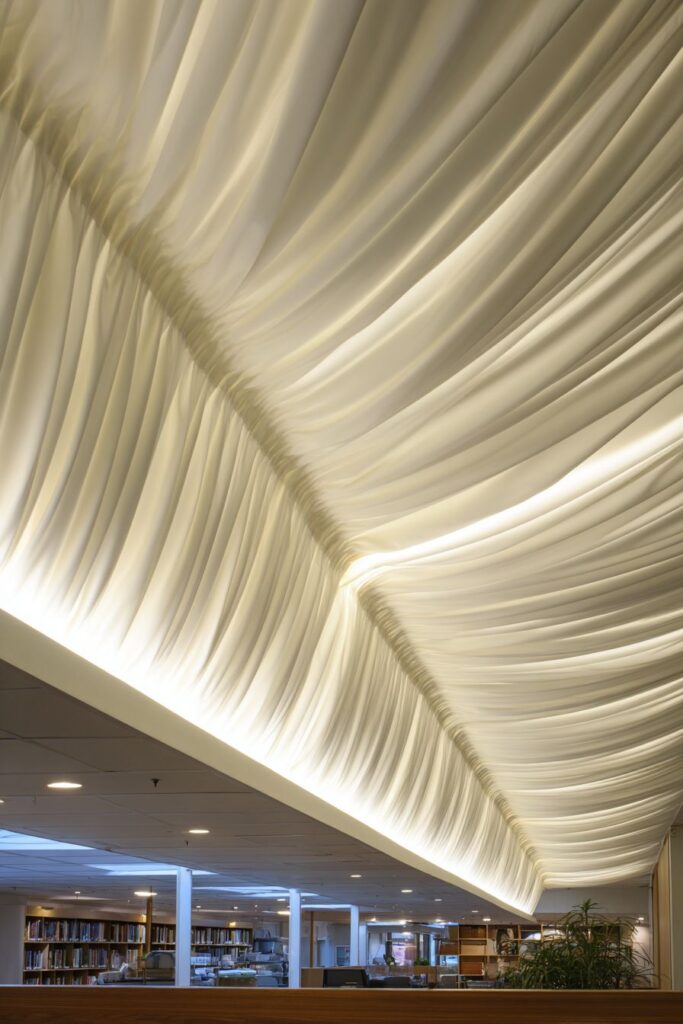
Fabric panels stretched within metal frames create a ceiling design that adds warmth and acoustic comfort to kitchen environments. The textile surfaces provide sound absorption while introducing softness that balances hard kitchen surfaces like stone and metal.
Soft LED backlighting creates gentle ambient illumination while reducing harsh shadows that can make kitchen work areas uncomfortable. The diffused lighting quality created by backlit fabric panels provides even illumination that enhances both functionality and atmosphere.
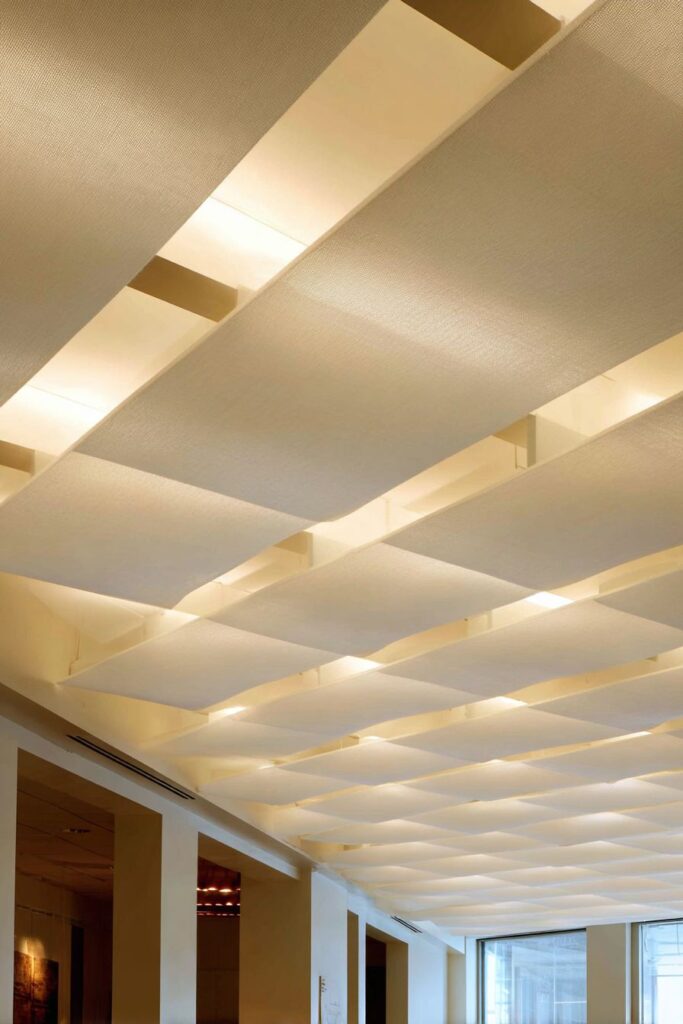
The textile ceiling’s sound-absorbing properties create a more comfortable acoustic environment by reducing noise from kitchen appliances and activities. This functional benefit makes the kitchen more pleasant for conversation and extended cooking sessions.
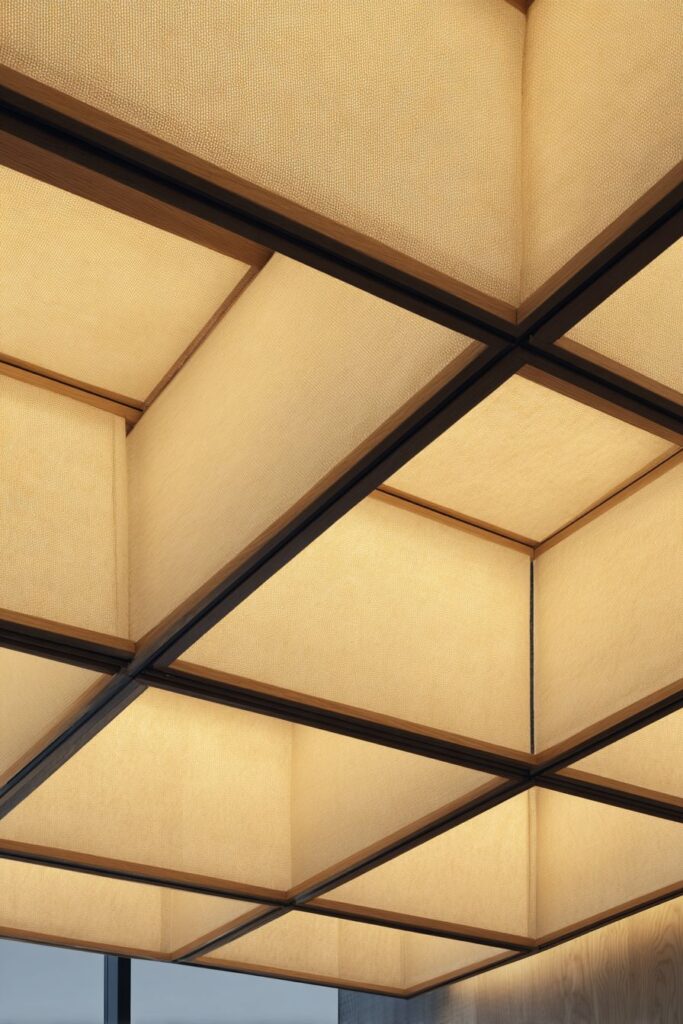
The fabric panels’ color and texture options provide flexibility for coordinating with various kitchen design schemes while maintaining the acoustic and lighting benefits that make this ceiling approach practical as well as beautiful.
Key Design Tips:
- Choose fabric materials appropriate for kitchen environments
- Plan frame systems for easy fabric replacement when needed
- Integrate LED lighting systems for even backlighting distribution
- Consider fire safety ratings for textile ceiling materials
26. Copper Patina Artistry

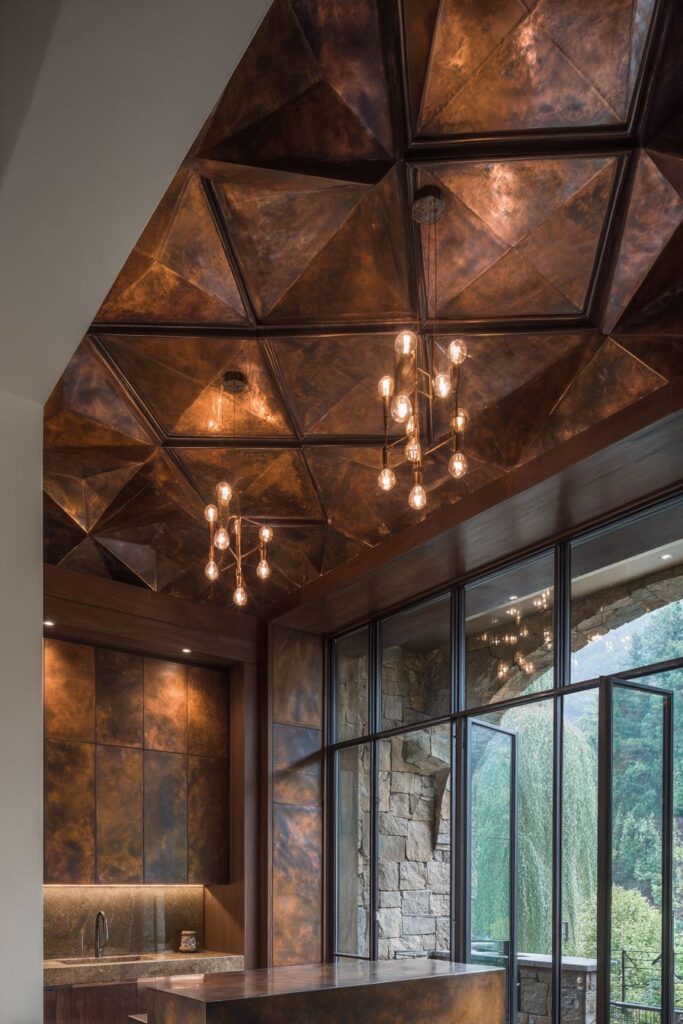
Aged copper panels arranged in diamond patterns create a ceiling design that celebrates the natural oxidation process while adding warm metallic character to kitchen environments. The authentic patina variations tell the story of copper’s reaction to time and atmosphere.
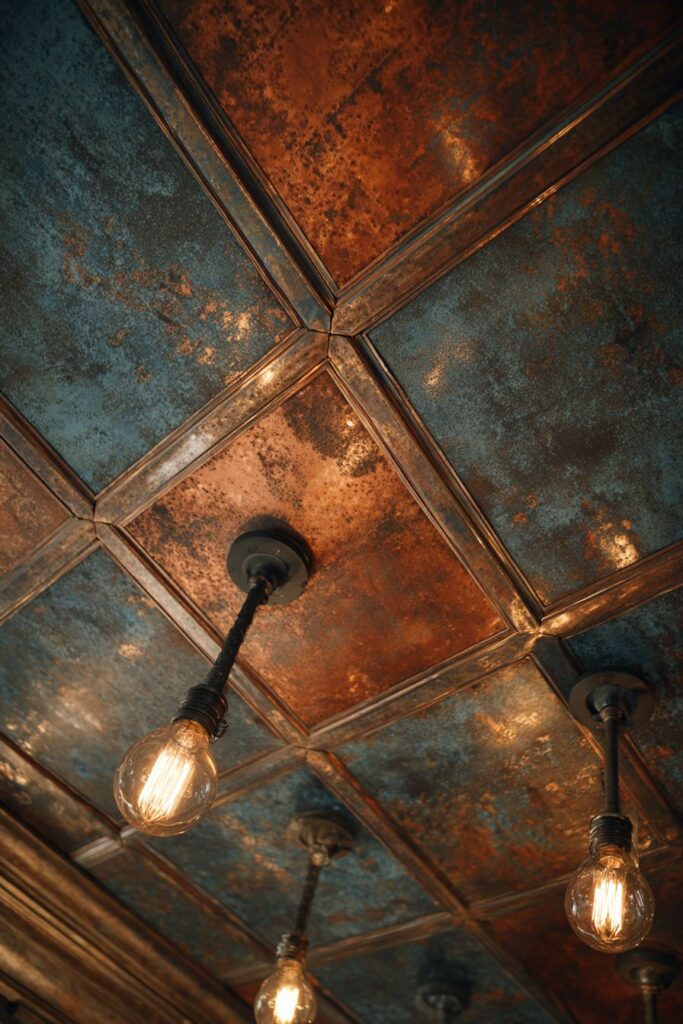
Vintage-style Edison bulb fixtures complement the warm copper ceiling treatment while providing atmospheric lighting that enhances the metal’s rich color variations. The fixtures’ historical styling reinforces the aged aesthetic while maintaining practical functionality.
The copper ceiling’s natural patina development creates unique color patterns that cannot be replicated by artificial finishing techniques. This authentic aging process ensures that each installation develops individual character over time.
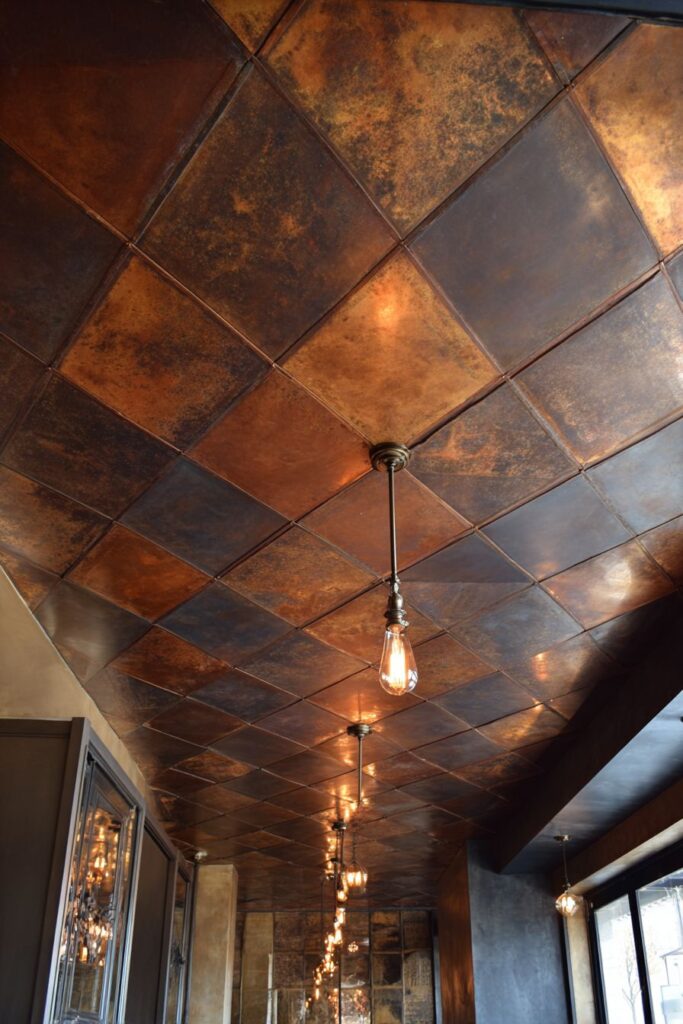
The warm metal ceiling treatment provides rich color that complements various kitchen color schemes while adding luxury and sophistication that elevates the entire culinary space. The copper’s inherent antimicrobial properties also provide practical benefits for kitchen environments.
Key Design Tips:
- Allow for natural patina development rather than forcing artificial aging
- Choose appropriate copper weights for ceiling installation requirements
- Plan ventilation to manage moisture effects on copper oxidation
- Consider maintenance requirements for copper ceiling surfaces
27. Living Ceiling Garden Systems
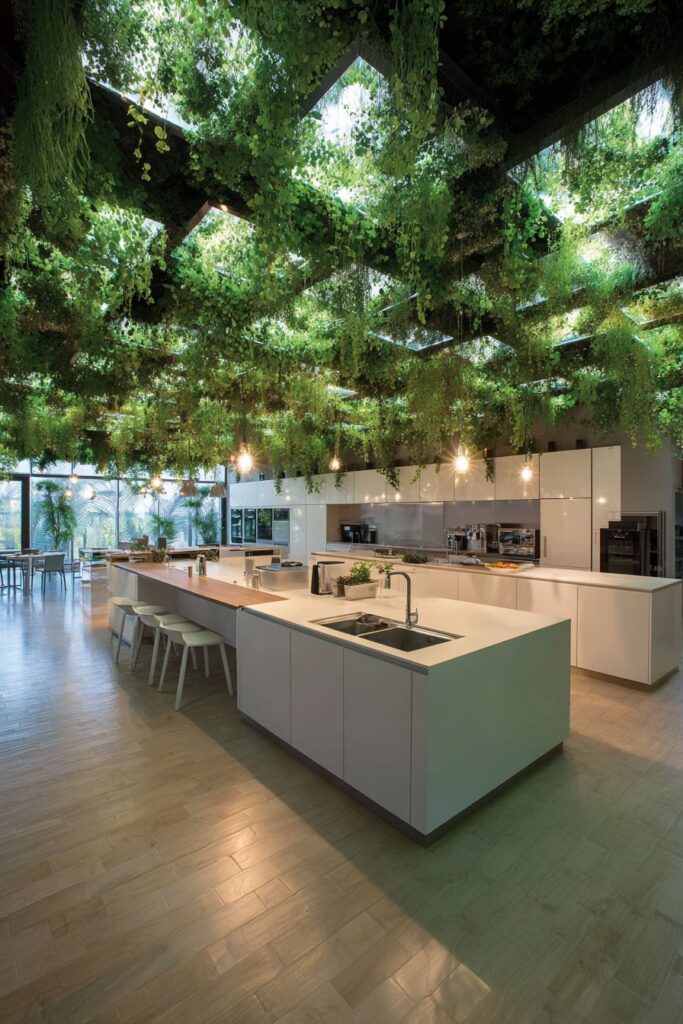
Modular green roof sections with integrated growing systems create a productive ceiling design that combines sustainability with practical food production. The living ceiling transforms overhead space into functional growing area while providing natural air purification benefits.
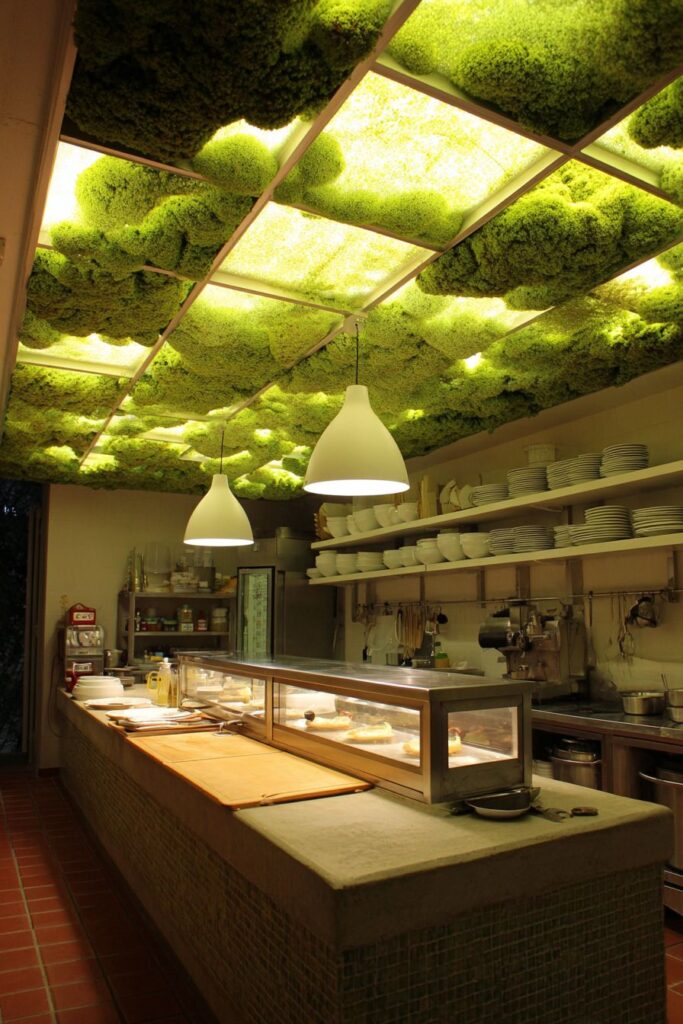
Specialized grow lights provide both plant illumination and ambient room lighting while supporting healthy plant growth throughout the year. The dual-purpose lighting systems maximize efficiency while maintaining the aesthetic appeal of the living ceiling concept.
The ceiling garden concept maximizes space efficiency in urban kitchens while providing access to fresh herbs and small vegetables. This productive approach to ceiling design demonstrates how architectural elements can serve multiple functions simultaneously.
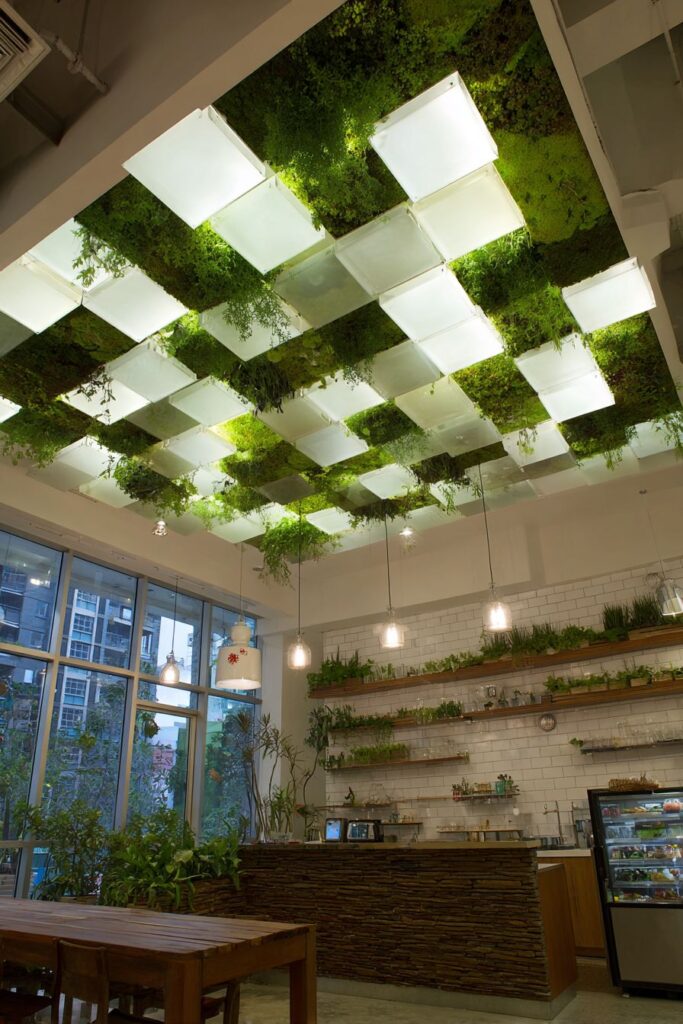
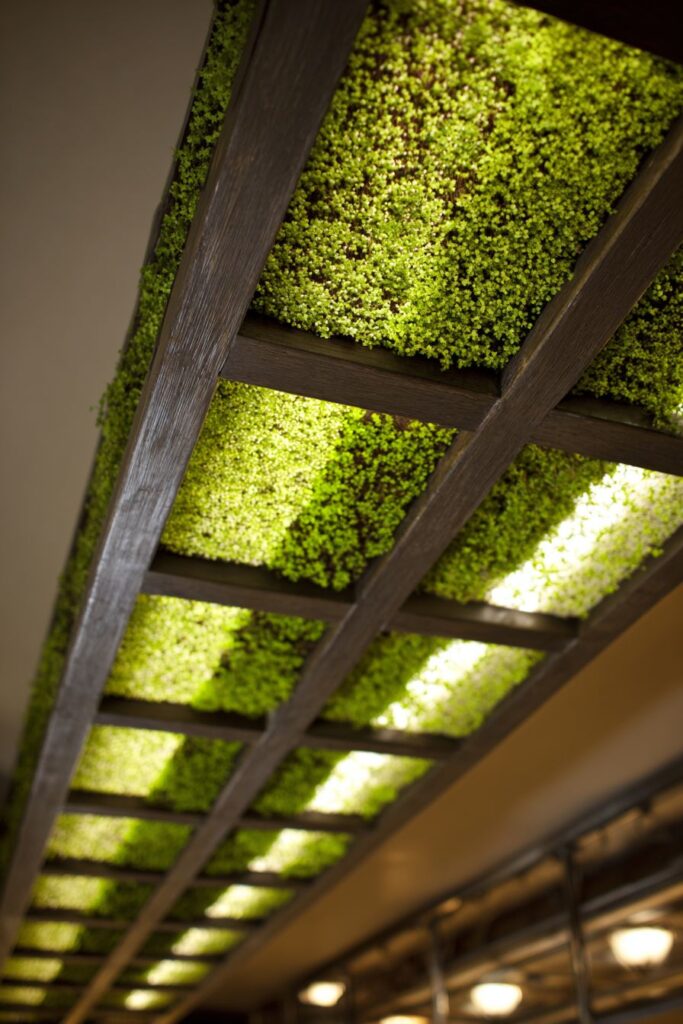
The living ceiling requires specialized irrigation and drainage systems while providing ongoing maintenance requirements that must be considered in the initial design planning. However, the benefits of fresh food production and air purification make this innovative approach attractive for committed gardeners.
Key Design Tips:
- Plan irrigation and drainage systems for proper water management
- Choose appropriate plant varieties for overhead growing conditions
- Integrate grow lighting with ambient lighting needs
- Consider maintenance access requirements for ongoing plant care
28. Smart Glass Technology Integration
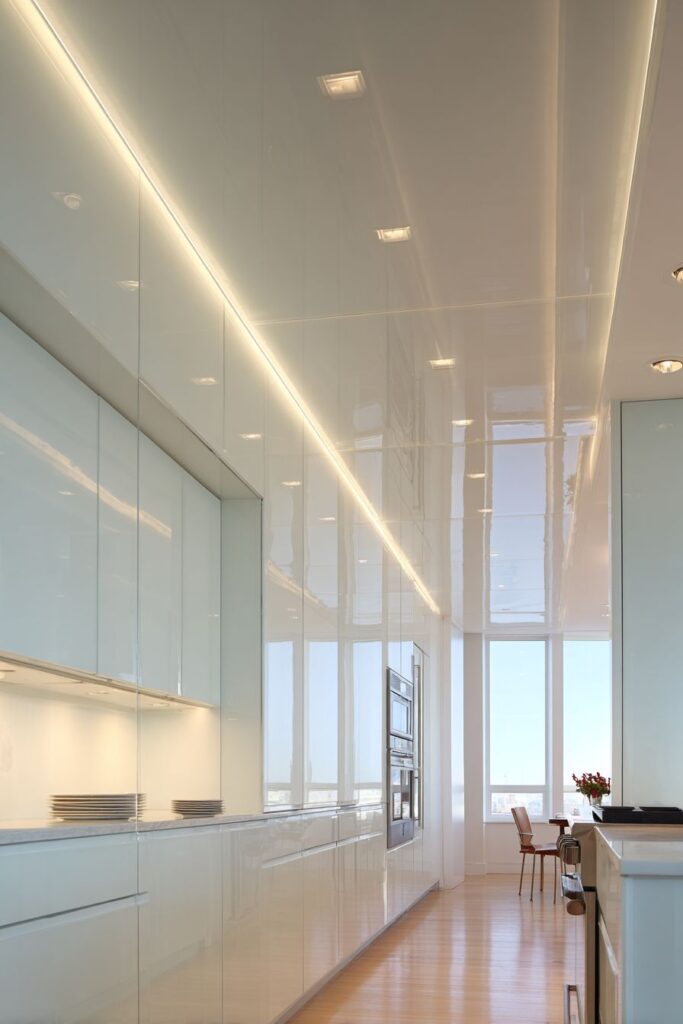
Smart glass panels that transition from opaque to transparent on demand create a high-tech ceiling design that offers privacy control and dynamic lighting options. The technology integration represents the cutting edge of architectural innovation while providing practical benefits for modern living.
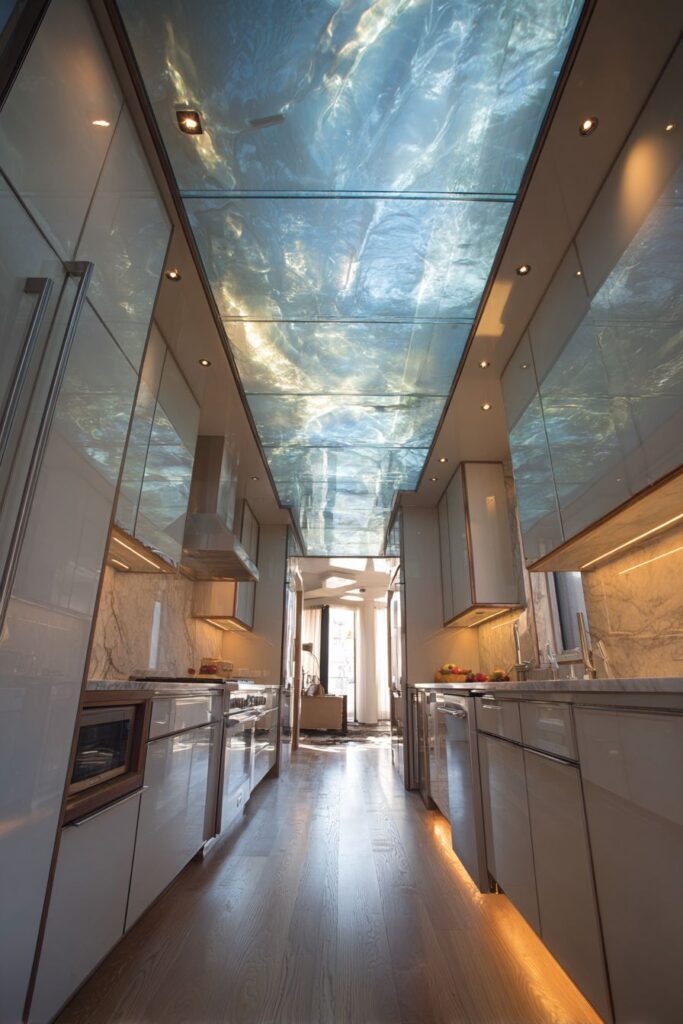
Hidden LED systems provide customizable lighting scenarios throughout the day while working in conjunction with the smart glass technology. The integrated systems allow for precise control over both natural light transmission and artificial illumination levels.
The smart glass ceiling design offers flexibility for different kitchen activities and times of day while demonstrating how technology can enhance rather than complicate architectural elements. The system provides options that traditional static ceilings cannot offer.
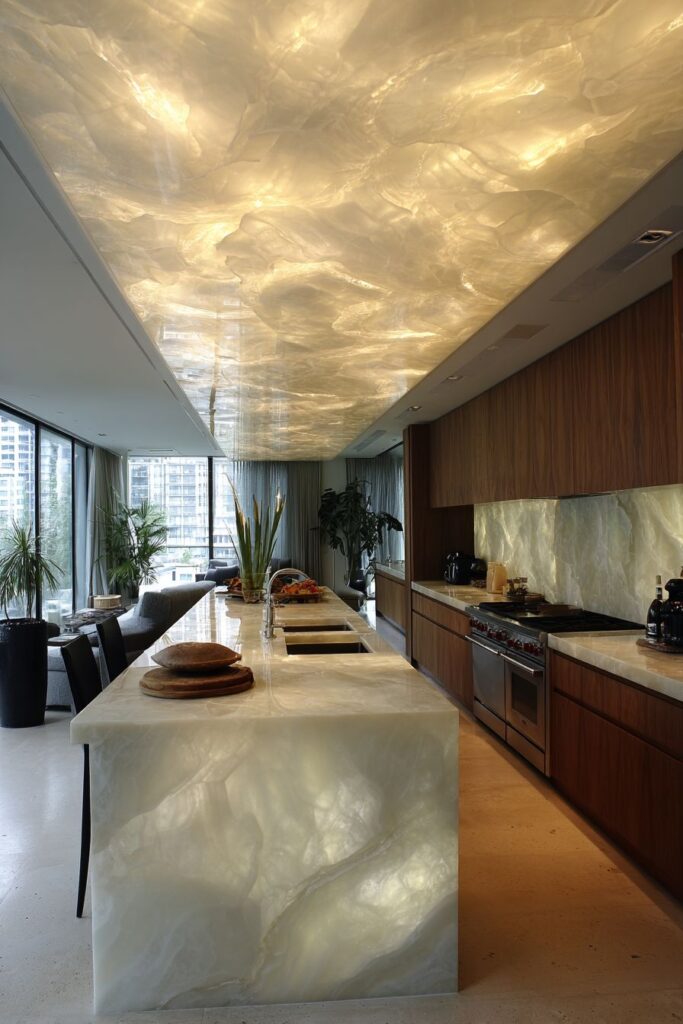
The high-tech approach requires significant initial investment while providing long-term benefits through energy efficiency and enhanced functionality. This advanced ceiling technology represents the future direction of responsive architectural elements.
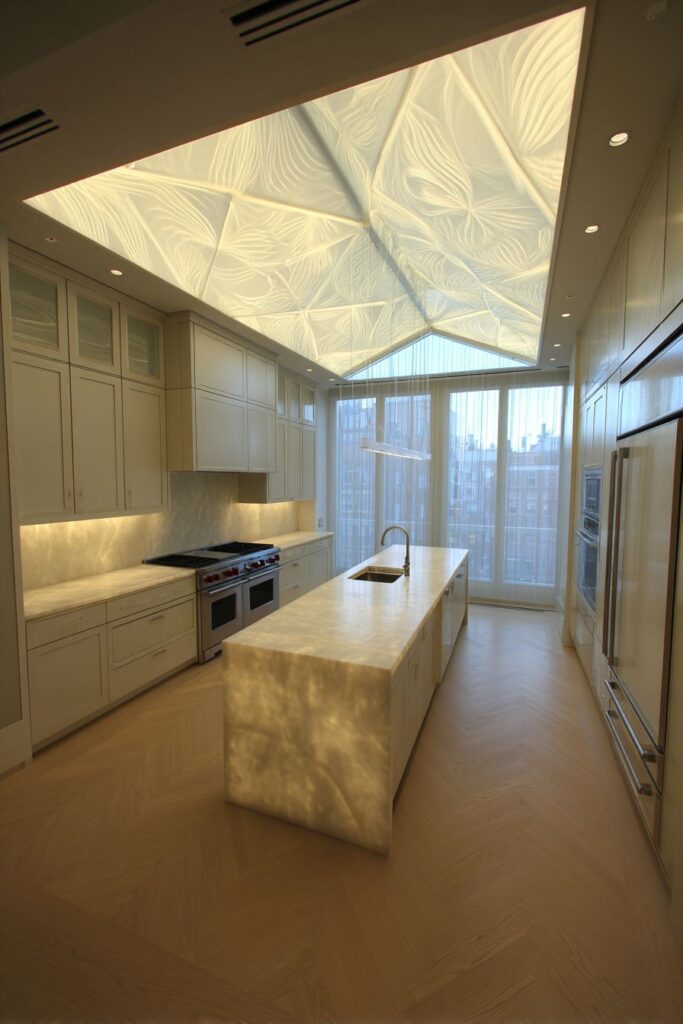
Key Design Tips:
- Plan electrical systems for smart glass power requirements
- Integrate control systems for user-friendly operation
- Consider backup power systems for continued functionality
- Plan installation access for technology maintenance needs
29. Wine Barrel Wood Heritage
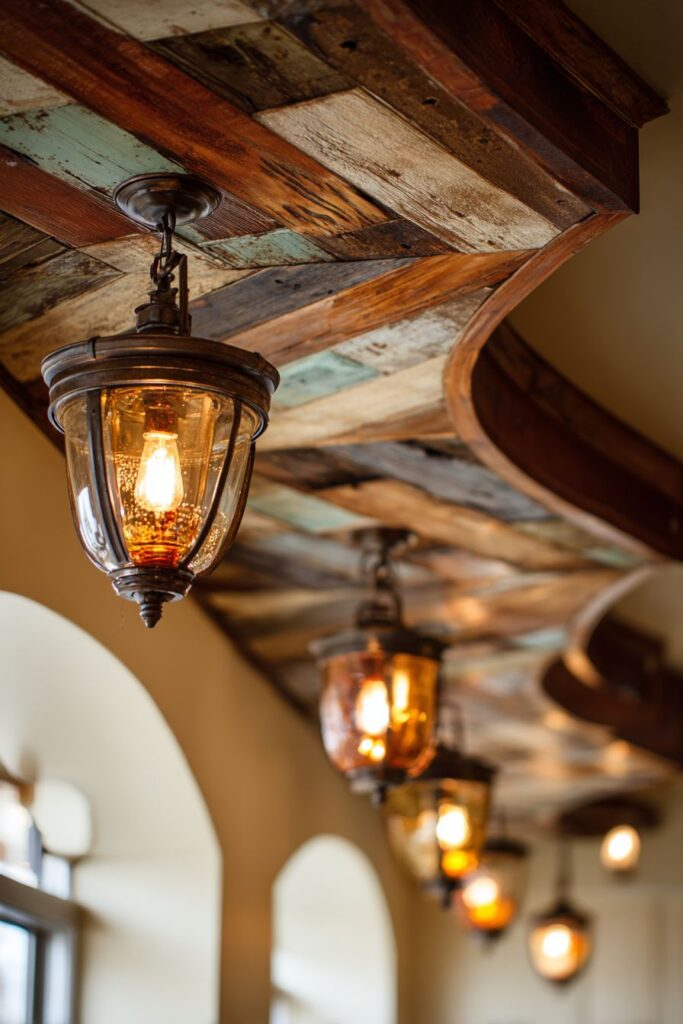
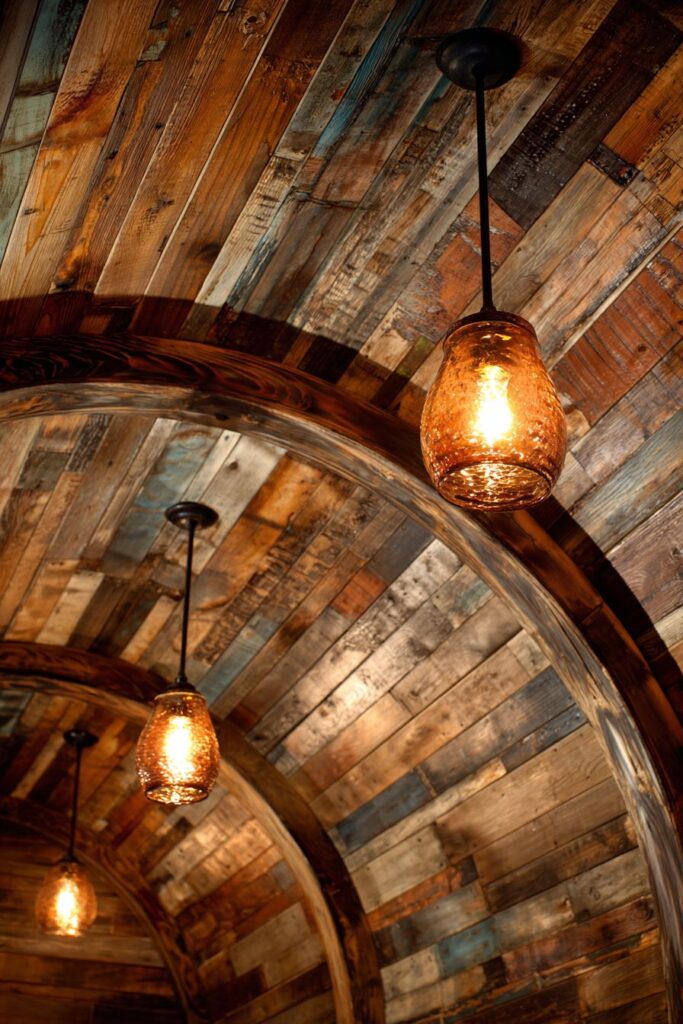
Reclaimed wood from old wine barrels arranged in curved patterns creates a ceiling design that tells stories while providing unique architectural character. The repurposed material’s wine stains and aging patterns add authenticity that cannot be manufactured or replicated.
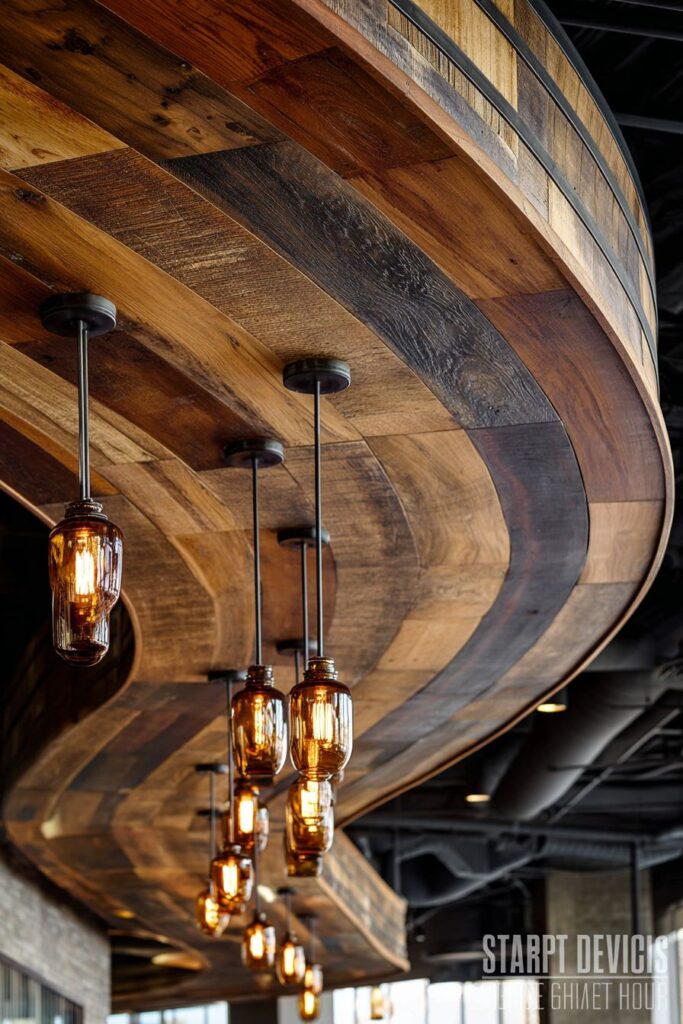
Vintage pendant lights with amber glass complement the aged wood’s rich patina while providing warm illumination that enhances the wood’s natural character. The fixtures’ traditional styling reinforces the heritage aspect while maintaining practical functionality.
The curved arrangement patterns echo the barrels’ original form while creating visual movement across the ceiling surface. This organic geometry adds interest while celebrating the material’s previous life and the craftsmanship that created the original barrels.
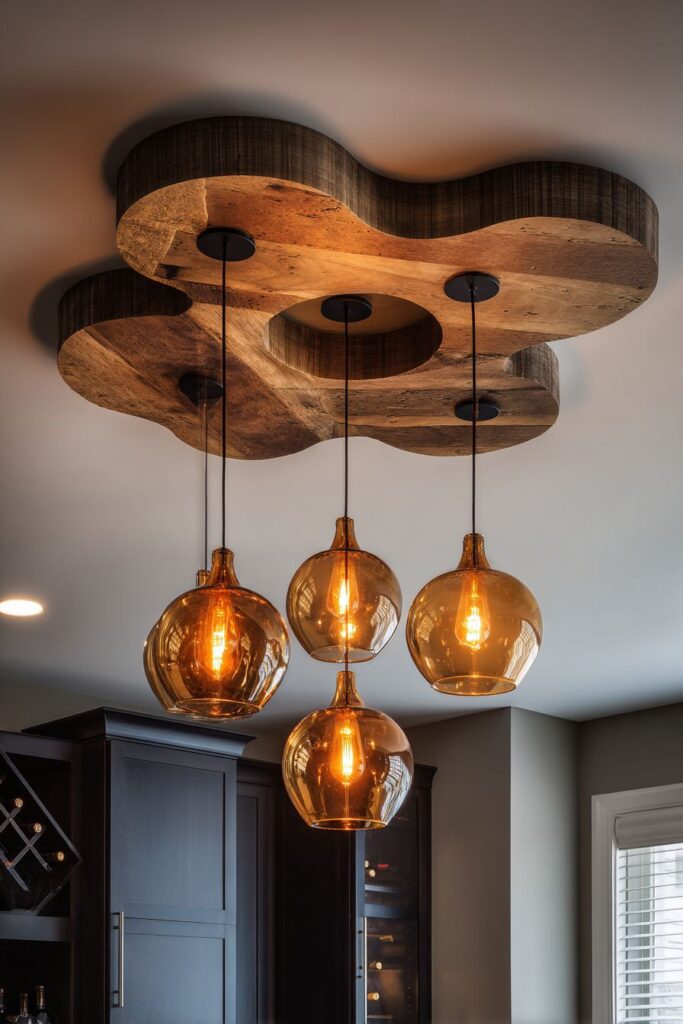
The wine barrel wood’s unique character comes from years of wine aging that created distinctive staining patterns and aromatic qualities. This authentic heritage cannot be duplicated, making reclaimed barrel wood a valuable architectural material with compelling backstory.
Key Design Tips:
- Source reclaimed barrel wood from reputable wine industry suppliers
- Plan curved arrangements for balanced visual composition
- Consider aromatic properties of wine-aged wood in kitchen applications
- Protect reclaimed wood with appropriate sealers for kitchen environments
30. Hydroponic Growing Integration
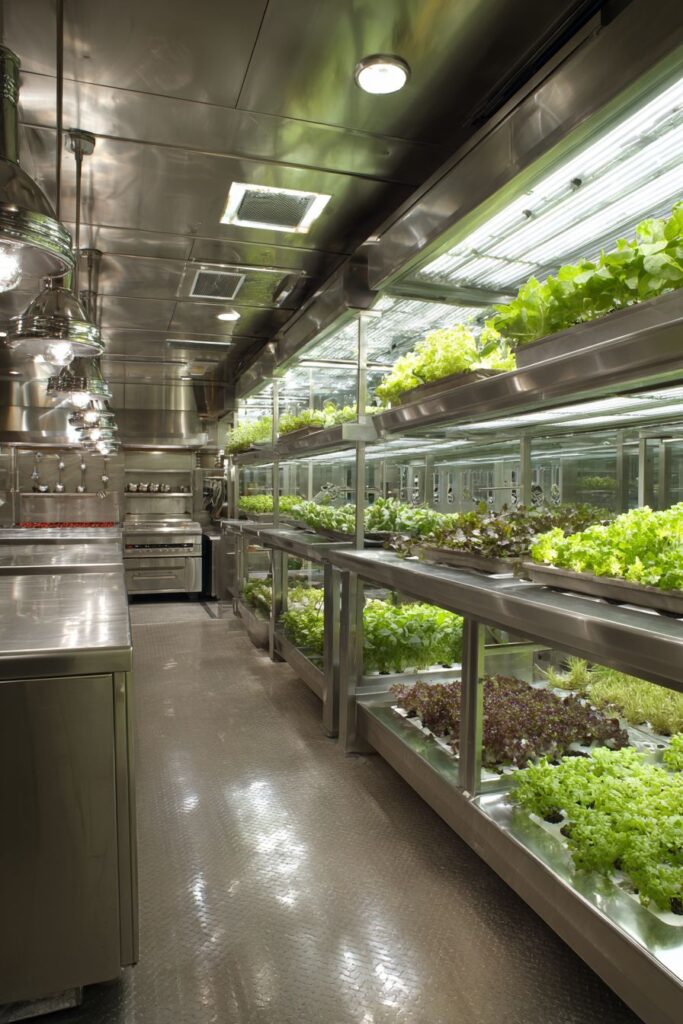
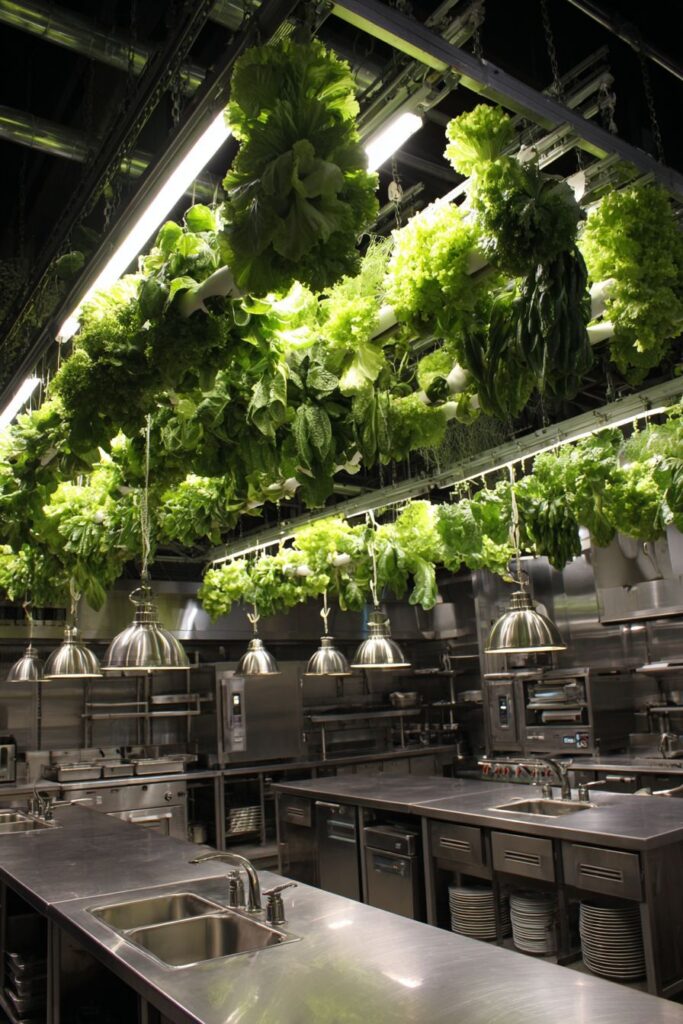
Integrated hydroponic growing systems suspended from track-mounted supports create a productive ceiling design that maximizes space efficiency while providing fresh ingredients for cooking. The innovative approach combines food production with architectural function in urban kitchen environments.
LED grow lights provide plant illumination while pendant task lights serve cooking functions, creating a dual-purpose lighting system that supports both plant growth and culinary activities. The integrated approach maximizes efficiency while maintaining aesthetic appeal.
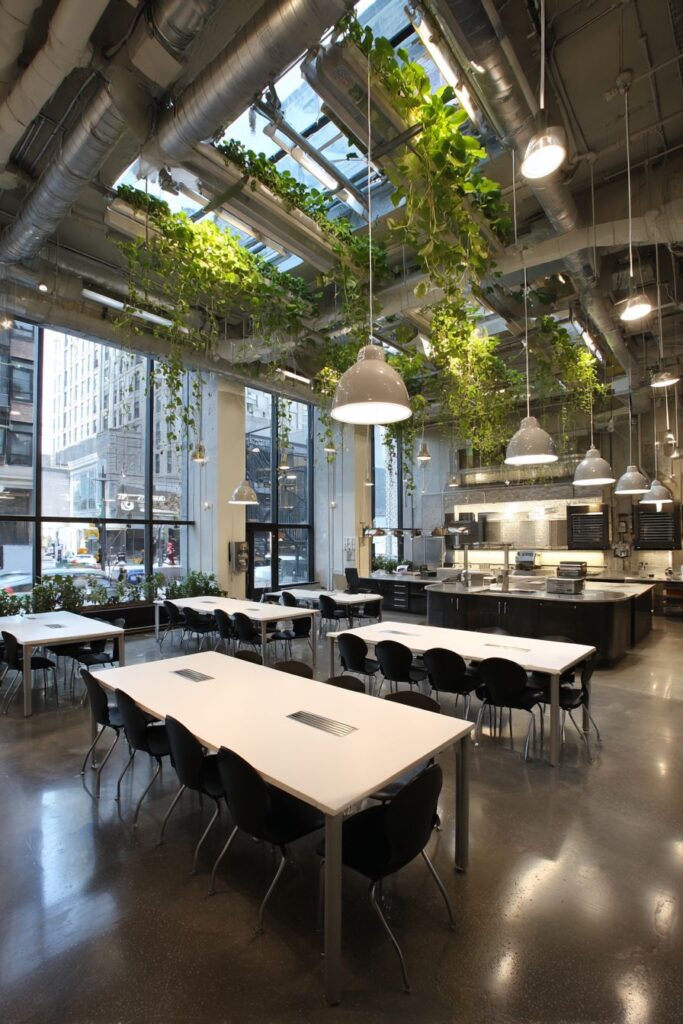
The productive ceiling design demonstrates how vertical growing can supplement traditional gardening while bringing food production directly into the kitchen environment. This connection between growing and cooking creates educational opportunities while providing practical benefits.
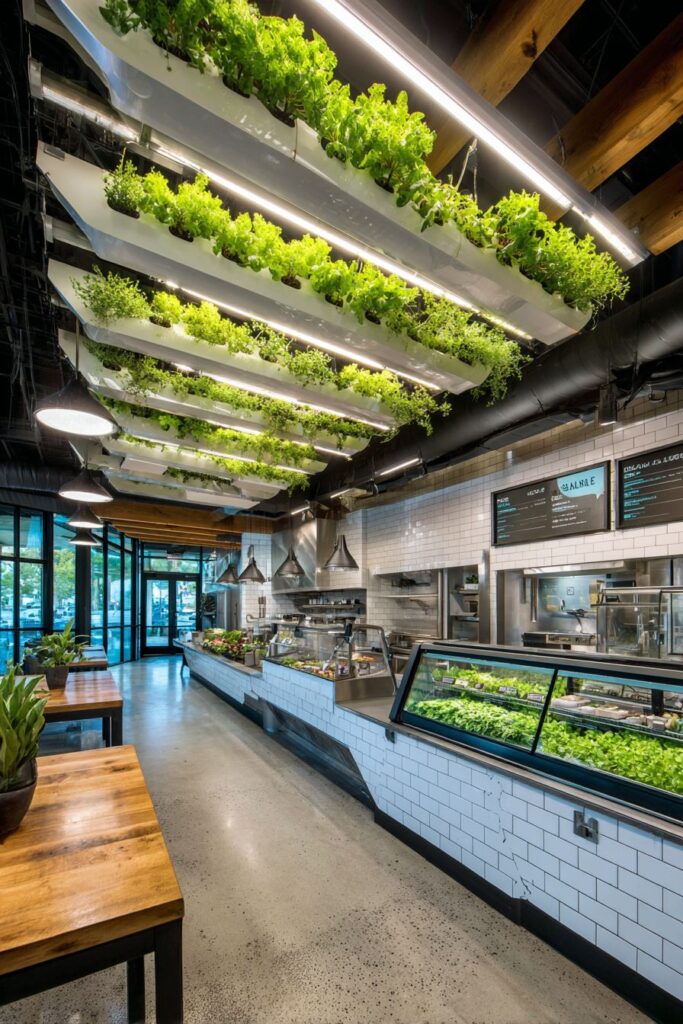
The hydroponic systems require ongoing maintenance and monitoring while providing year-round growing capabilities that are independent of weather conditions. This controlled environment approach ensures consistent production while demonstrating sustainable food production methods.
Key Design Tips:
- Plan adequate structural support for hydroponic equipment and water weight
- Integrate drainage systems for proper water management
- Choose appropriate plant varieties for hydroponic ceiling growing
- Consider maintenance access requirements for ongoing system care
Why These Kitchen Ceiling Designs Represent the Best Options
These thirty kitchen ceiling designs represent the finest approaches to overhead space treatment because they successfully balance aesthetic appeal with practical functionality. Each design addresses specific needs and preferences while demonstrating how ceilings can transform from ignored surfaces into compelling architectural features that enhance the entire kitchen experience.
Modern and Contemporary Options like coffered ceilings, tray designs, and floating planes appeal to homeowners seeking clean lines and sophisticated lighting integration. These designs work particularly well in open-concept homes where the kitchen serves as both cooking space and entertainment area. The emphasis on geometric precision and advanced lighting technology creates environments that feel both professional and welcoming.
Traditional and Heritage Styles including exposed beams, tongue-and-groove planks, and ornate plasterwork satisfy those seeking timeless character and craftsmanship quality. These approaches connect modern kitchens to architectural traditions while providing warmth and authenticity that manufactured materials cannot replicate. The emphasis on natural materials and traditional techniques creates lasting value that transcends temporary design trends.
Industrial and Urban Aesthetics featuring exposed ductwork, concrete waffle slabs, and metal panel systems appeal to those who appreciate honest expression of functional elements. These designs work particularly well in loft conversions and urban environments where the industrial aesthetic complements the architectural context while creating dramatic visual impact.
Sustainable and Eco-Friendly Solutions including bamboo panels, reclaimed wood, and living ceiling systems address growing environmental consciousness while providing natural beauty and functional benefits. These approaches demonstrate how responsible material choices can enhance rather than compromise design quality while supporting sustainable living practices.
High-Tech and Innovative Approaches like smart glass systems, hydroponic integration, and advanced lighting controls represent the cutting edge of ceiling design technology. These solutions appeal to early adopters who want their homes to demonstrate the latest innovations while providing practical benefits that traditional approaches cannot offer.
The keyword-rich nature of these ceiling designs includes coffered ceiling construction, exposed beam installation, tray ceiling lighting, tongue-and-groove planking, industrial ductwork exposure, Mediterranean tile artistry, Scandinavian minimalism, ornate plasterwork, herringbone wood patterns, linear LED integration, coastal whitewashing, metal panel systems, traditional raised panels, vaulted truss structures, pressed tin restoration, Southwestern adobe styling, floating drywall techniques, decorative grid frameworks, barrel vault construction, natural stone veneer, acoustic panel integration, glass transparency systems, bamboo sustainability, concrete waffle structures, textile panel comfort, copper patina development, living garden systems, smart glass technology, wine barrel reclamation, and hydroponic growing integration.
These diverse approaches ensure that every homeowner can find ceiling solutions that match their aesthetic preferences, functional needs, and budget requirements while creating kitchen environments that inspire daily cooking activities and special occasion entertaining.
Conclusion
The kitchen ceiling represents one of the greatest untapped opportunities in residential design, offering the potential to transform functional cooking spaces into inspiring architectural environments. These thirty innovative ceiling designs demonstrate that overhead surfaces can be far more than afterthoughts, instead serving as focal points that establish style, enhance lighting, improve acoustics, and even provide growing space for fresh ingredients.
From the timeless elegance of coffered constructions to the cutting-edge innovation of smart glass technology, each ceiling approach offers unique benefits while addressing specific design challenges and lifestyle preferences. Whether you’re drawn to the authentic character of reclaimed materials, the clean sophistication of contemporary systems, or the environmental benefits of sustainable solutions, the perfect ceiling design can elevate your kitchen from merely functional to truly extraordinary.
The key to successful kitchen ceiling design lies in understanding how overhead treatments interact with lighting, ventilation, acoustics, and overall spatial composition. By considering these factors alongside aesthetic preferences and practical requirements, homeowners can create kitchen environments that inspire daily cooking while providing lasting architectural value that enhances both property values and quality of life.
As you consider implementing these ideas in your own kitchen renovation or new construction project, remember that the best ceiling design is one that reflects your personal style while enhancing the functionality and atmosphere of your culinary space. Whether you choose traditional craftsmanship techniques or innovative technological solutions, your kitchen ceiling can become a signature design element that transforms everyday cooking into an inspiring architectural experience.
"As an Amazon Associate, I earn from qualifying purchases."
