

Bunk beds represent the perfect marriage of functionality and space-saving design, making them an increasingly popular choice for children’s rooms, guest bedrooms, and compact living spaces. When chosen and styled correctly, these versatile furniture pieces can transform a cramped bedroom into an organized, playful sanctuary while maximizing every square inch of available space.
However, the decision to incorporate bunk beds into your home requires careful consideration of both safety standards and aesthetic appeal to ensure they serve your family well for years to come.
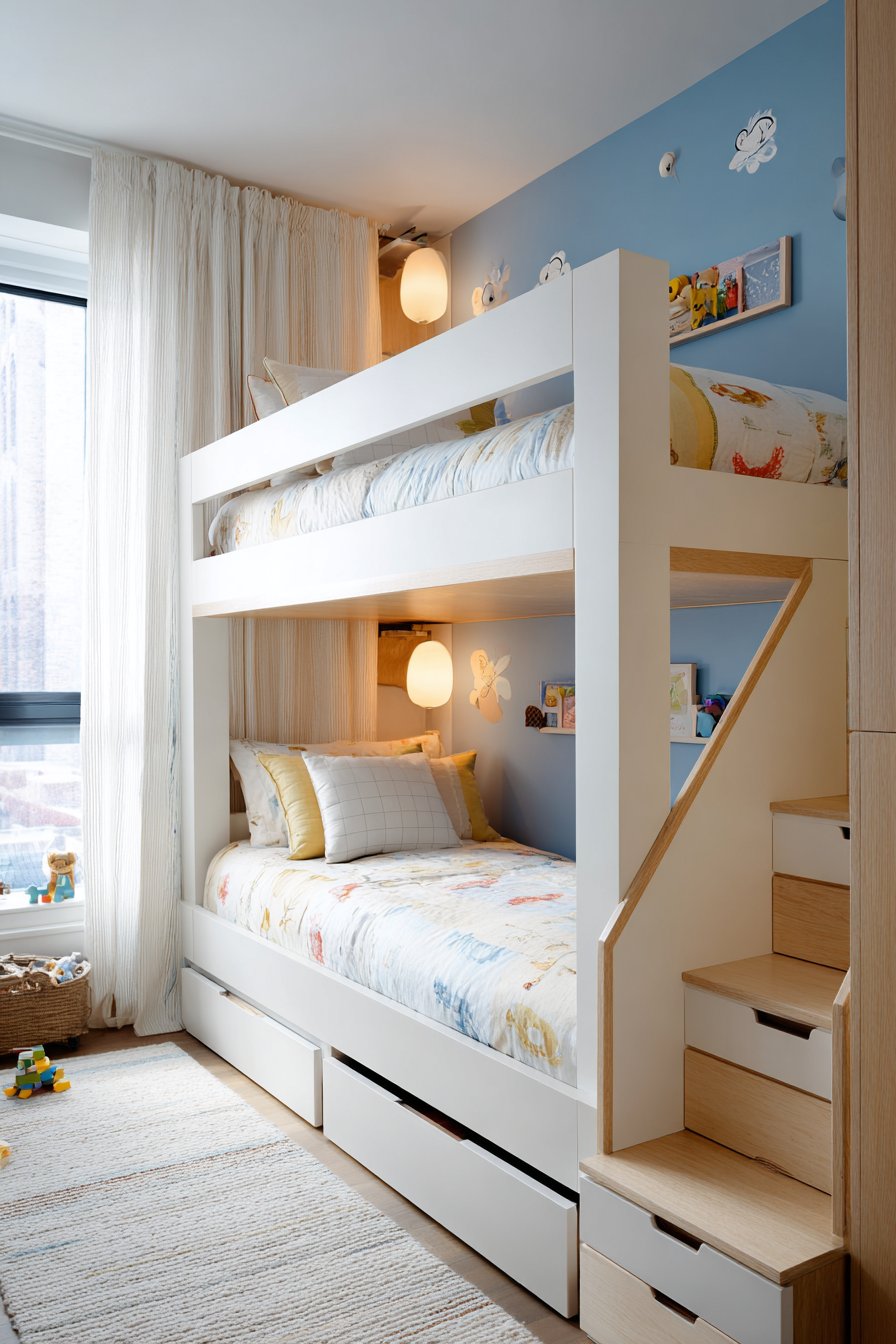
The beauty of modern bunk beds lies in their remarkable evolution from purely utilitarian furniture to stylish design statements that complement various interior design themes. Today’s market offers an impressive array of options ranging from sleek minimalist frames to elaborate themed designs that spark imagination and creativity.
Whether you’re furnishing a shared children’s room, creating a guest space that accommodates multiple visitors, or maximizing a small apartment’s potential, understanding the essential safety features and styling opportunities will help you make an informed decision.
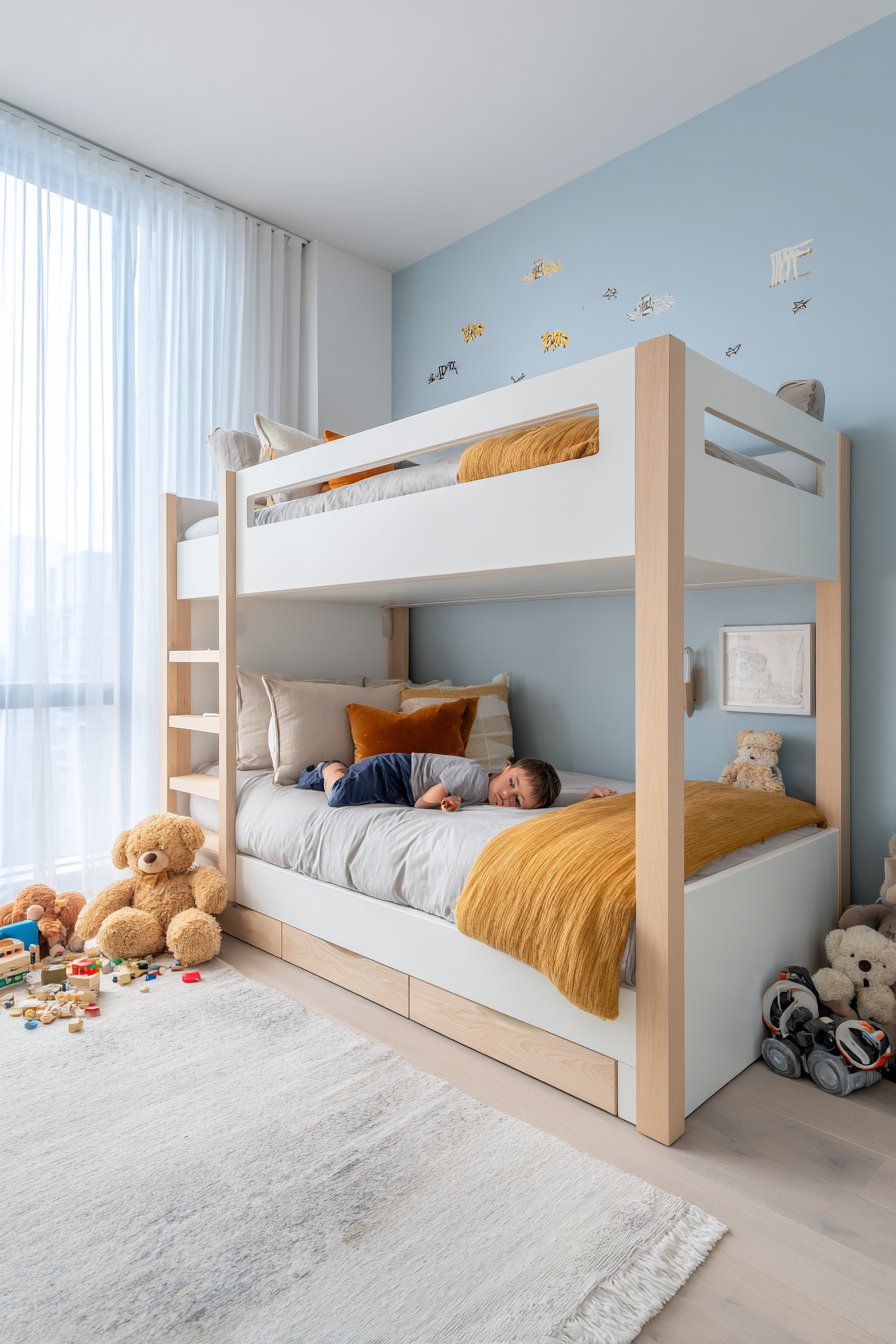
This comprehensive guide explores eight crucial tips that balance safety requirements with aesthetic considerations, ensuring your bunk bed selection enhances both the functionality and visual appeal of your space.
From structural integrity and material selection to color coordination and personalized touches, these insights will empower you to create a sleeping arrangement that’s not only secure and comfortable but also reflects your family’s unique style and personality.
1. Prioritize Sturdy Construction and Weight Capacity
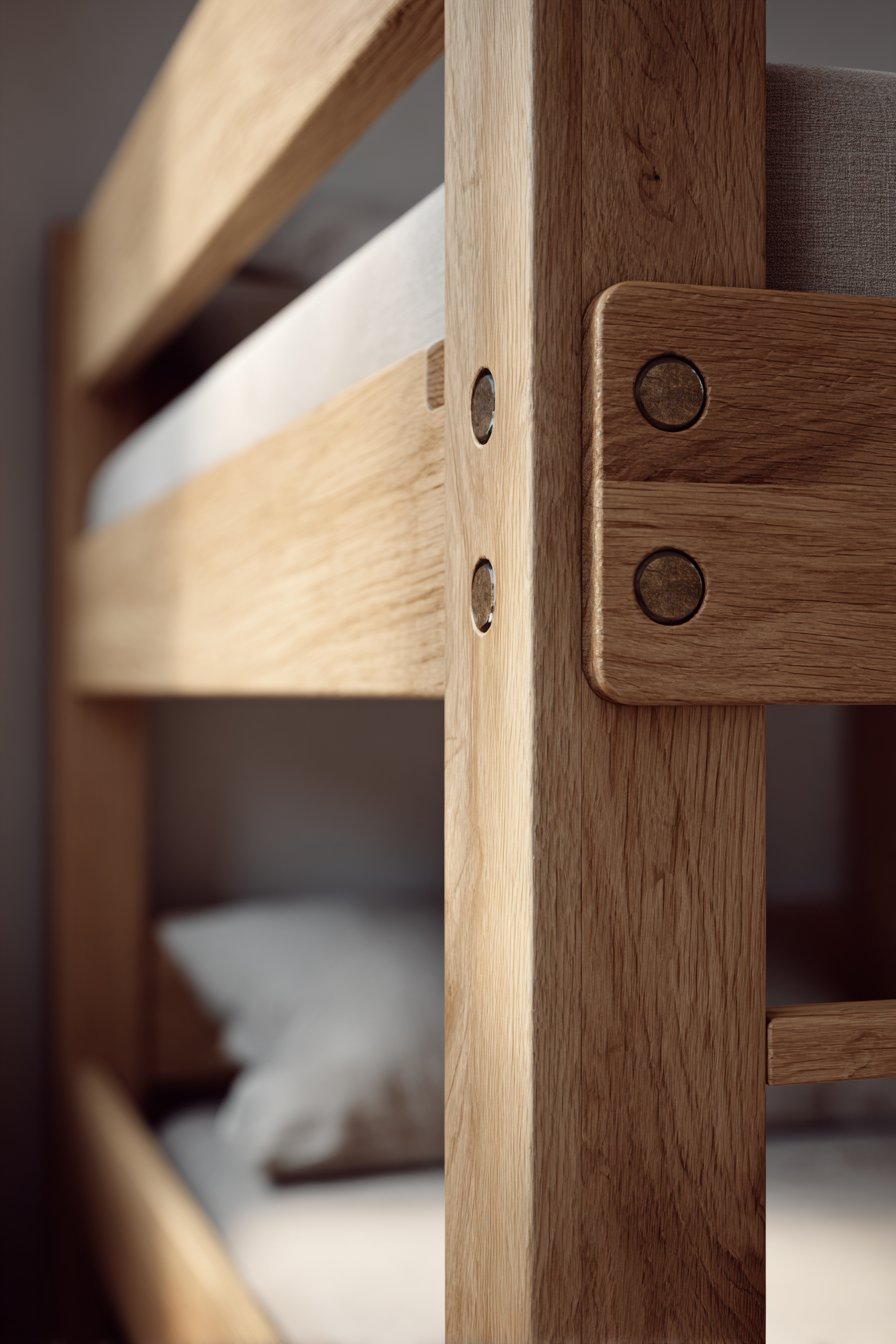
The foundation of any safe bunk bed begins with robust structural integrity that can withstand years of active use. When evaluating potential bunk beds, examine the frame materials carefully—solid wood and heavy-duty metal frames consistently outperform particle board or lightweight alternatives.
The joints should feature reinforced connections such as bolts, screws, or wooden dowels rather than simple staples or glue, as these create stronger, more durable bonds that won’t loosen over time.
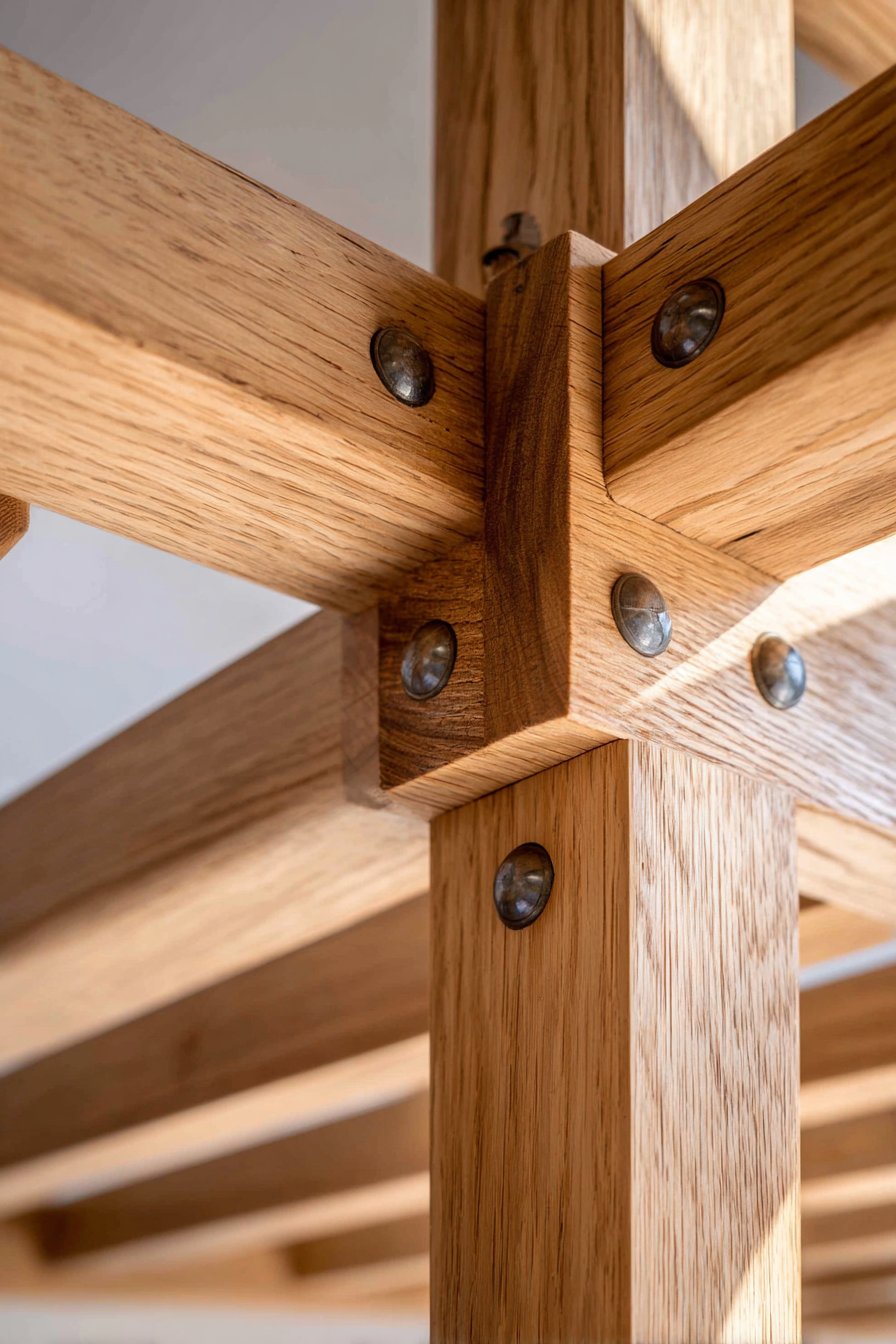
Understanding weight capacity is equally critical for ensuring long-term safety and functionality. Most manufacturers specify maximum weight limits for both upper and lower bunks, typically ranging from 200 to 400 pounds depending on construction quality.
Always choose a bunk bed that exceeds your anticipated needs by at least 50 pounds to account for active movement, multiple occupants during playtime, and the accumulated weight of bedding and personal items. Check certification labels from organizations like the Consumer Product Safety Commission (CPSC) to verify the bed meets current safety standards.
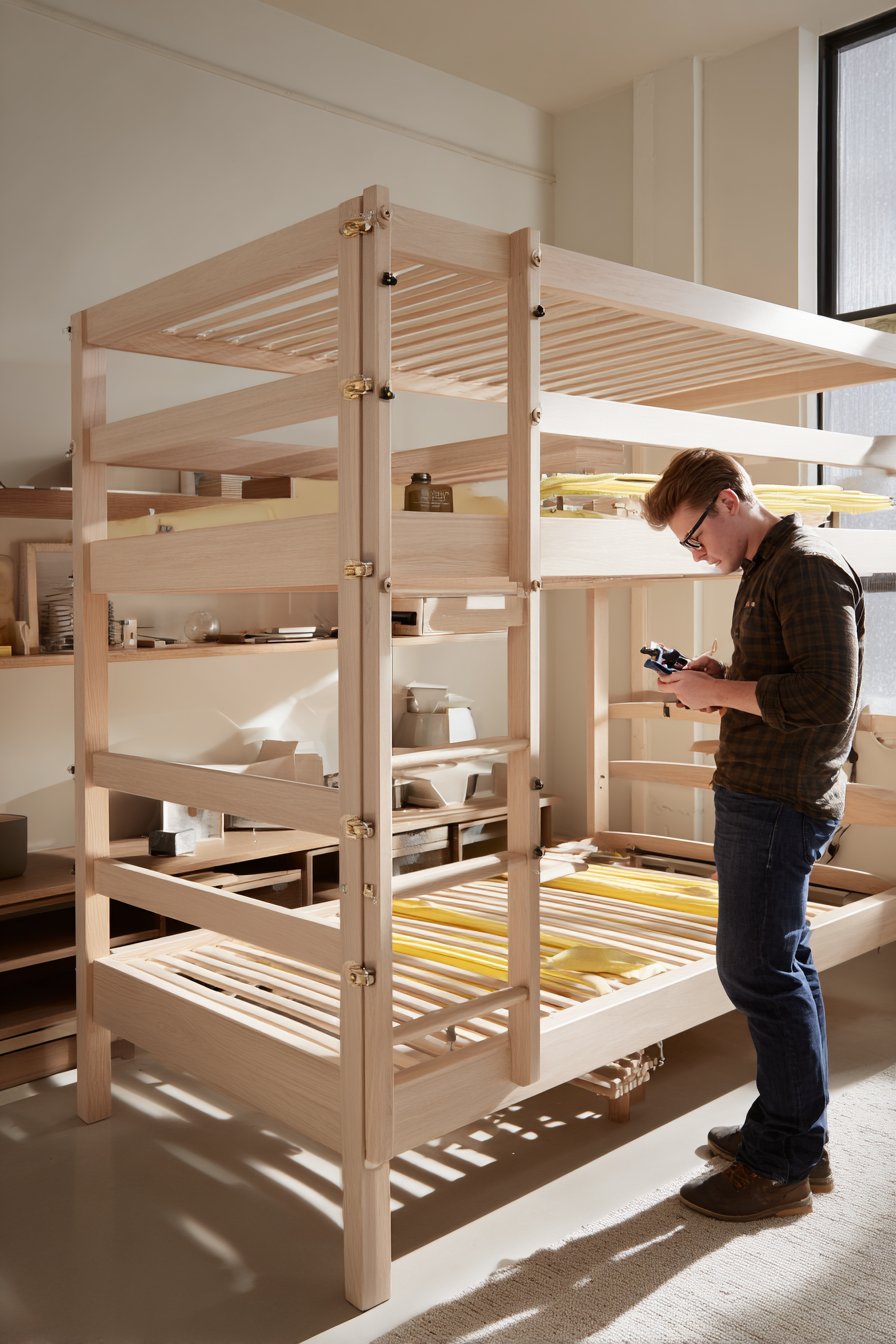
- Inspect welded joints on metal frames for smooth, complete connections without gaps
- Test wooden frames for solid construction by gently shaking the assembled display model
- Verify that support slats are spaced no more than 3.5 inches apart to prevent mattress sagging
- Choose beds with center support rails on both bunks for enhanced stability
- Request detailed specifications showing weight capacity for each sleeping surface
- Consider professional assembly for complex designs to ensure proper structural integrity
2. Install Proper Guardrails with Appropriate Heights
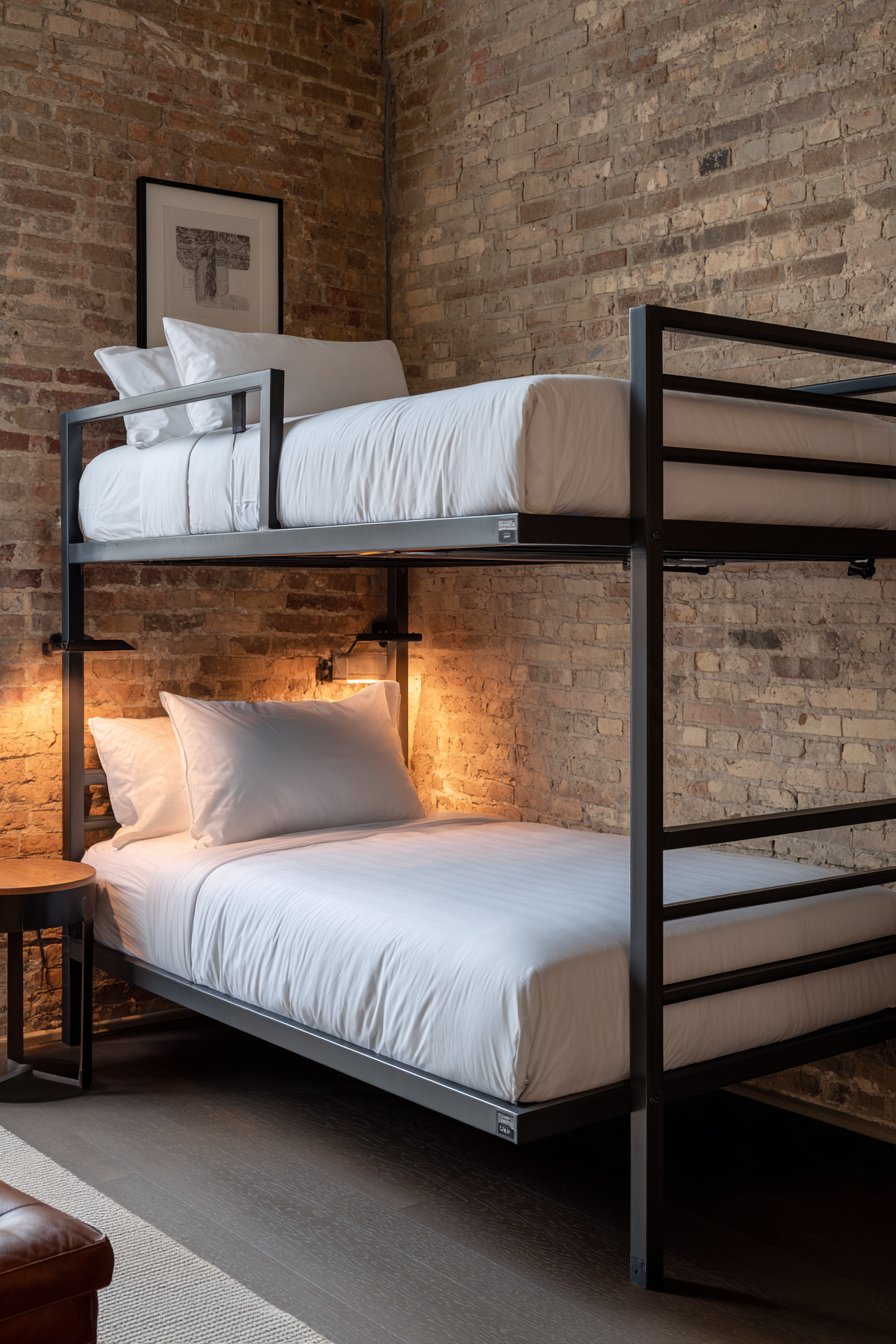
Guardrails serve as the most critical safety feature on any bunk bed, preventing accidental falls during sleep or active play. Building codes and safety standards typically require guardrails on both sides of the top bunk, with the upper edge standing at least five inches above the mattress surface when compressed.
For optimal protection, look for designs where guardrails extend seven to nine inches above the mattress, creating a more substantial barrier that accommodates restless sleepers and prevents bedding from pulling children toward the edge.
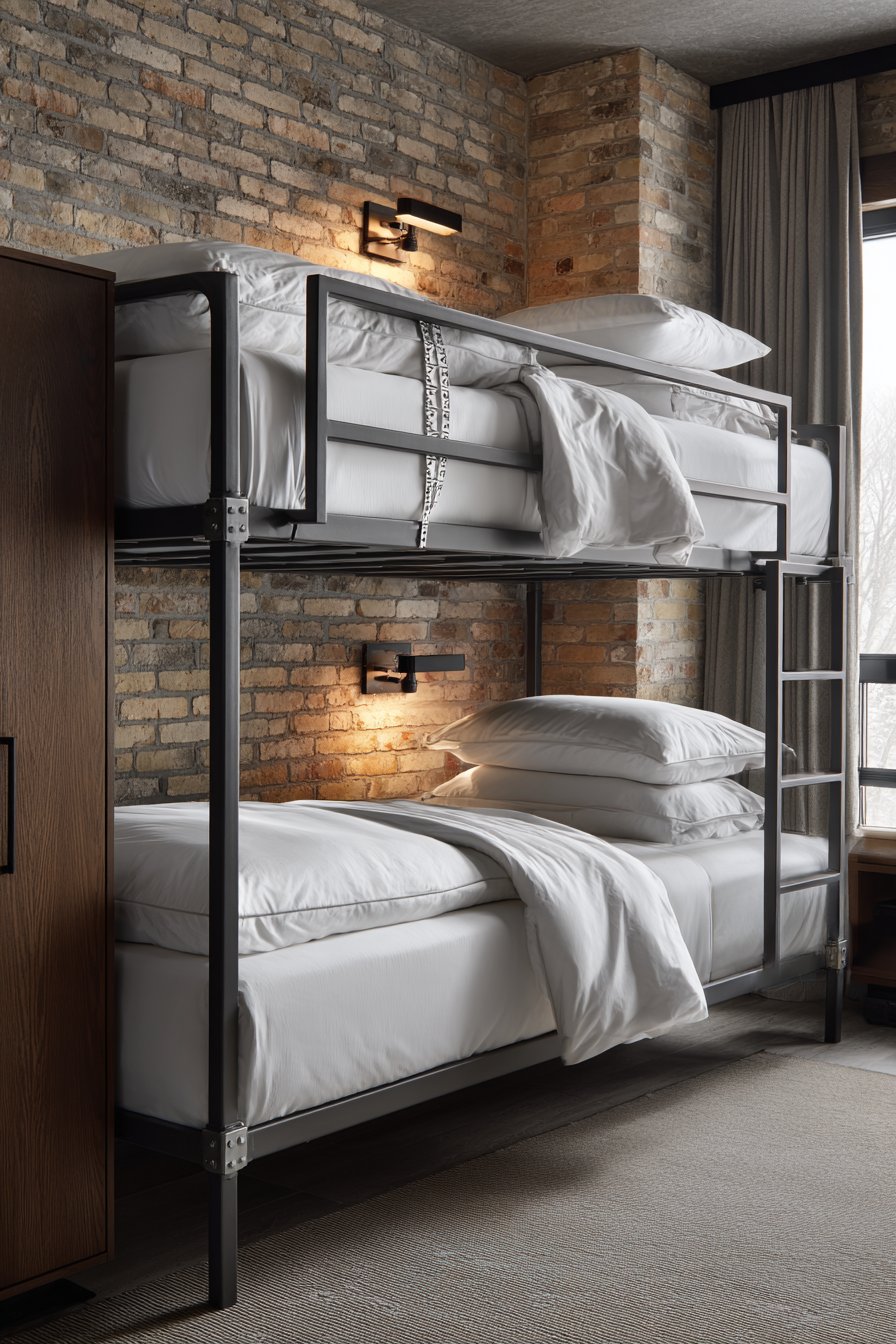
The spacing between guardrail slats demands equal attention to prevent dangerous entrapment situations. Safety regulations specify that all openings in guardrails, headboards, and footboards must measure less than 3.5 inches to prevent a child’s body from passing through while keeping their head trapped.
Additionally, ensure there’s no gap between the mattress edge and guardrail exceeding this measurement. Proper guardrail design should feel substantial and secure, never flimsy or easily removed by curious children who might view them as obstacles to nighttime adventures.
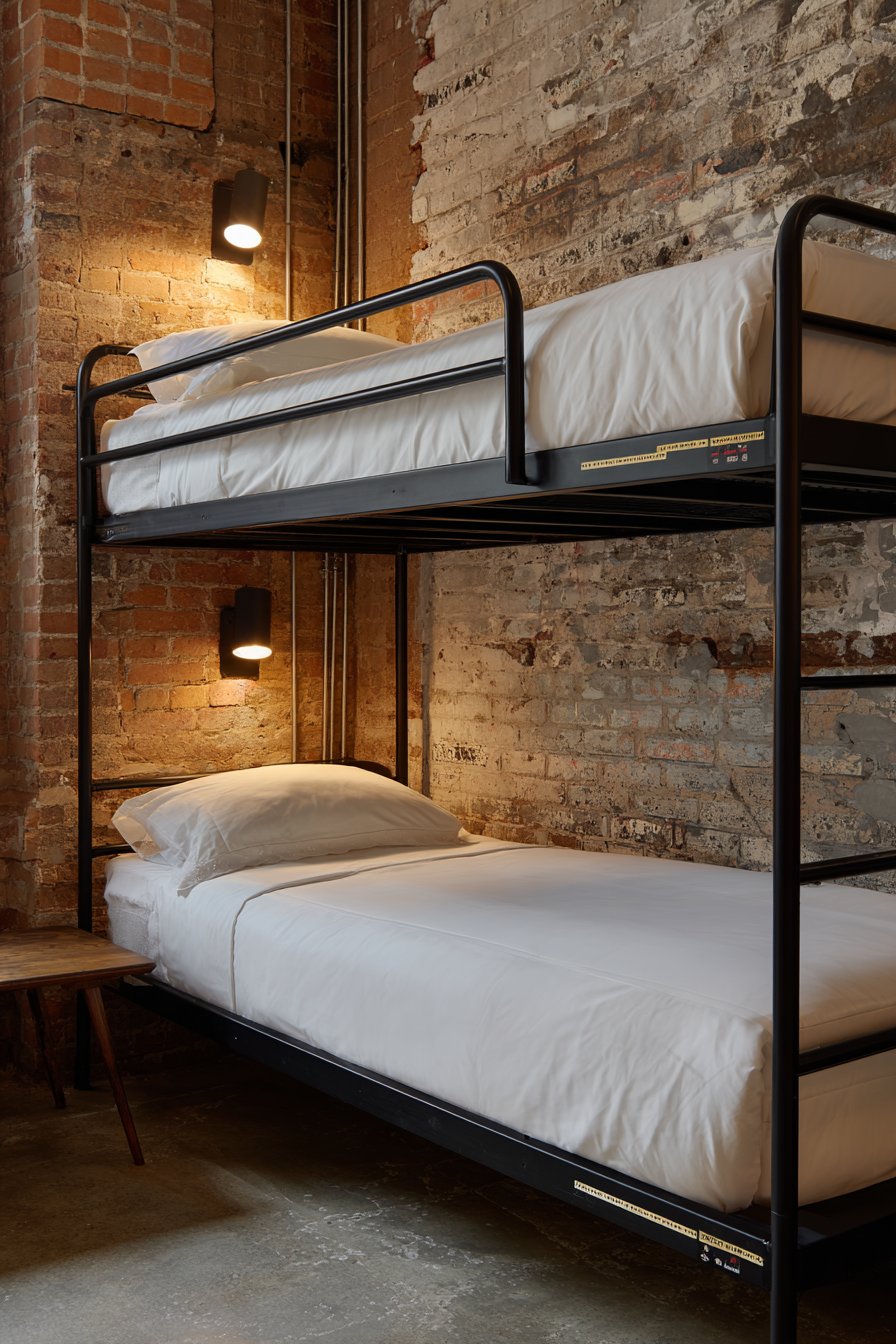
- Measure guardrail height with the mattress fully compressed under weight
- Ensure guardrails cover at least the upper two-thirds of the mattress length
- Check that guardrail attachments use metal brackets rather than plastic clips
- Install additional guardrails on the lower bunk if children under six will use it
- Avoid decorative cutouts or patterns in guardrails that create hazardous openings
- Replace any damaged or loose guardrails immediately before allowing bed use
3. Select Age-Appropriate Designs and Mattress Heights
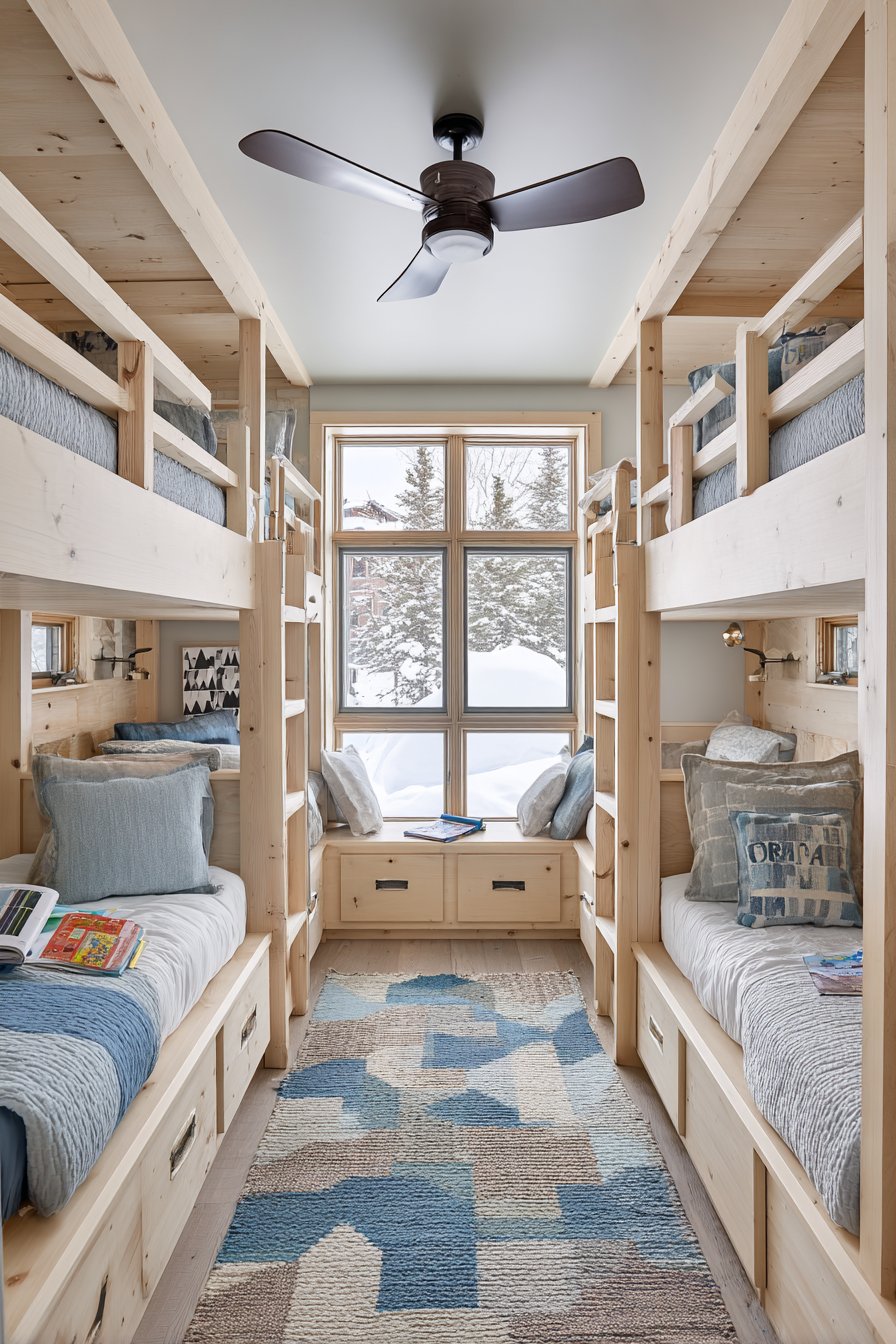
Age appropriateness significantly impacts both safety considerations and long-term satisfaction with your bunk bed investment. Leading pediatric organizations recommend that children under six years old should never sleep on the top bunk, regardless of maturity level, as their coordination and judgment haven’t developed sufficiently to navigate ladders safely.
For families with younger children, consider low-profile bunk beds that position the top sleeping surface closer to the ground or convertible designs that can separate into individual twin beds until your children reach appropriate ages.
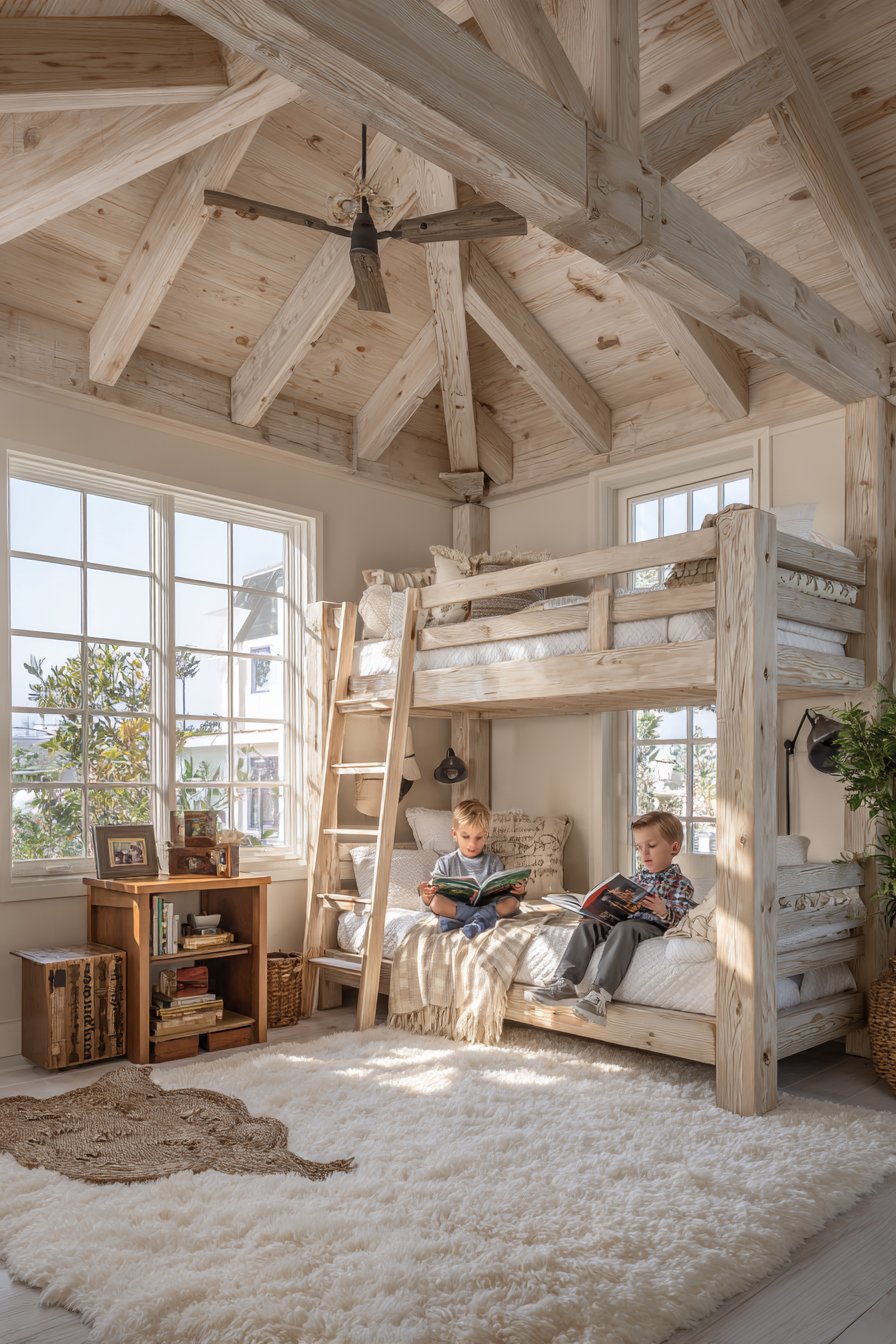
Mattress thickness plays an equally important role in maintaining proper guardrail effectiveness and overall safety. Standard bunk bed guardrails are designed to work with mattresses no thicker than six inches, though some modern designs accommodate up to eight-inch mattresses.
Using an overly thick mattress reduces the effective height of guardrails, creating dangerous conditions where children can easily roll over the protective barrier. Always measure your mattress choice against manufacturer specifications to ensure adequate protection remains after installation.
- Establish clear household rules about top bunk use for children under age six
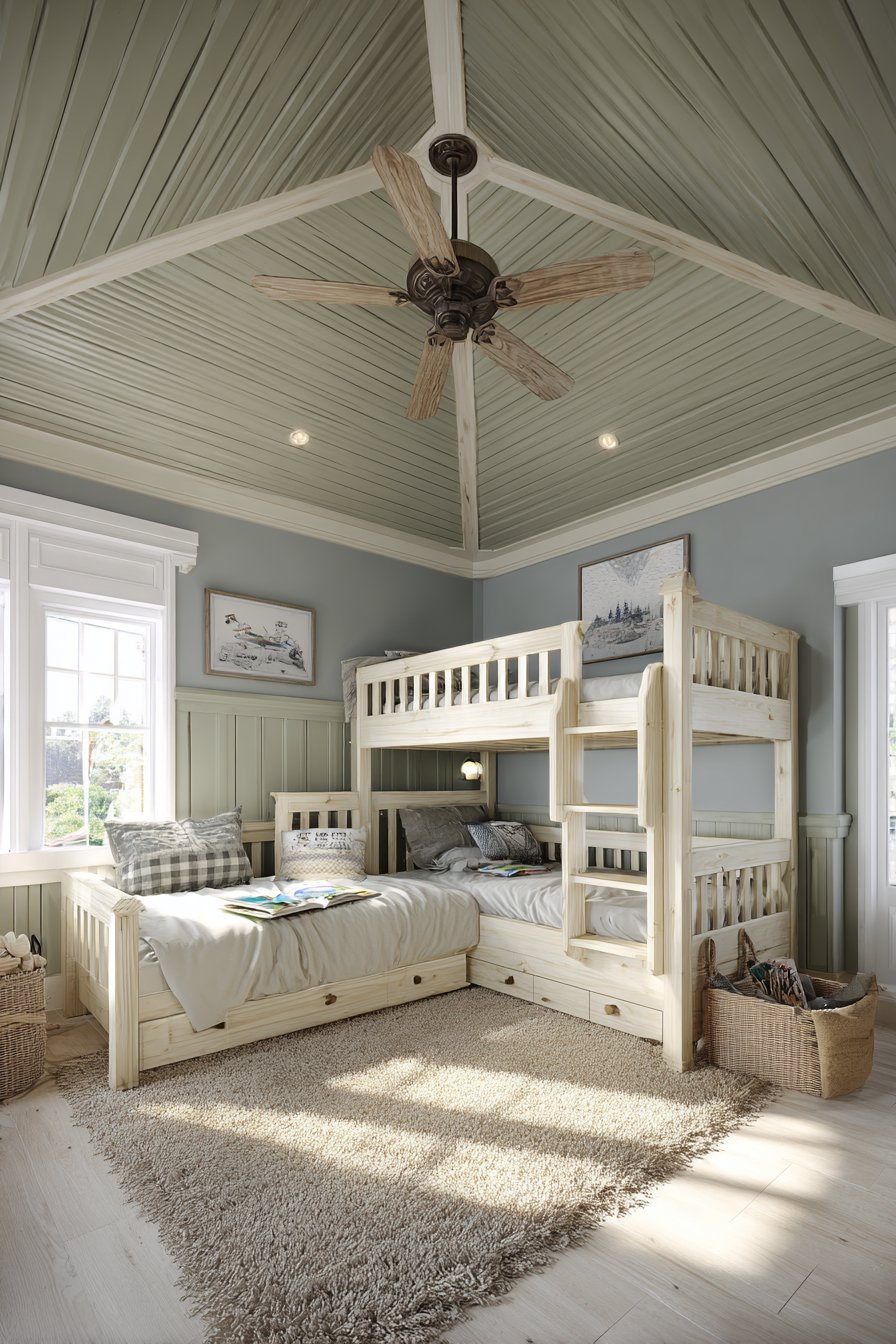
- Choose lower bunk heights for rooms with ceiling fans or low ceilings
- Consider L-shaped or perpendicular bunk designs that reduce overall height
- Select firm mattresses rather than plush designs that compress unevenly
- Measure from the top of the compressed mattress to the guardrail edge
- Plan for growth by selecting designs that accommodate changing family needs
4. Ensure Safe and Accessible Ladder Design
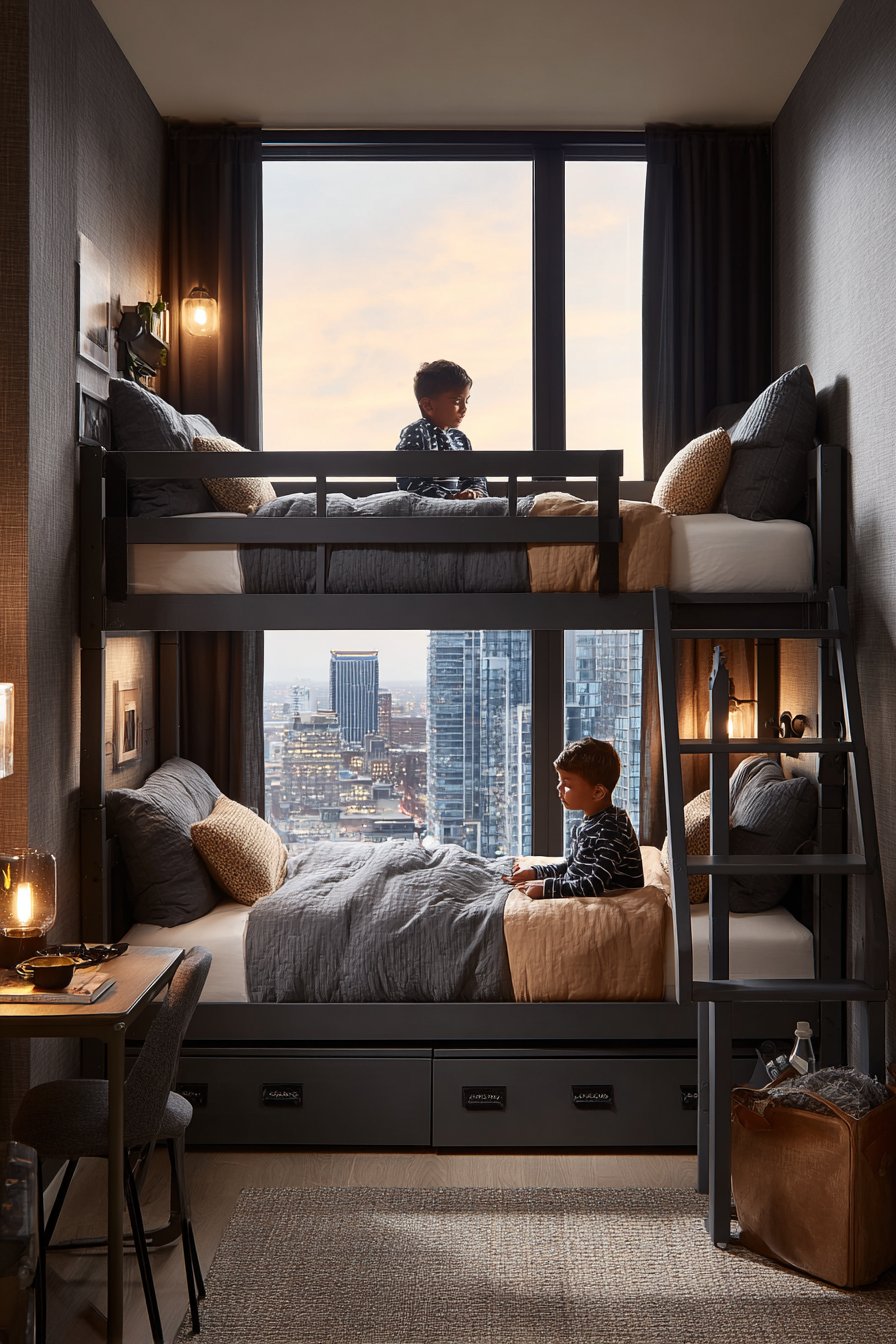
The ladder connecting ground level to the top bunk represents a critical safety component that deserves careful evaluation during the selection process. Flat, wide steps or rungs provide significantly more stability and comfort than round rungs that can dig into bare feet and make climbing uncomfortable.
Look for ladders with steps measuring at least two inches wide, positioned at comfortable intervals of 10-12 inches apart. Angled ladders that lean slightly back toward the bed frame often prove easier and safer to navigate than vertical designs, especially for younger climbers or nighttime bathroom trips.
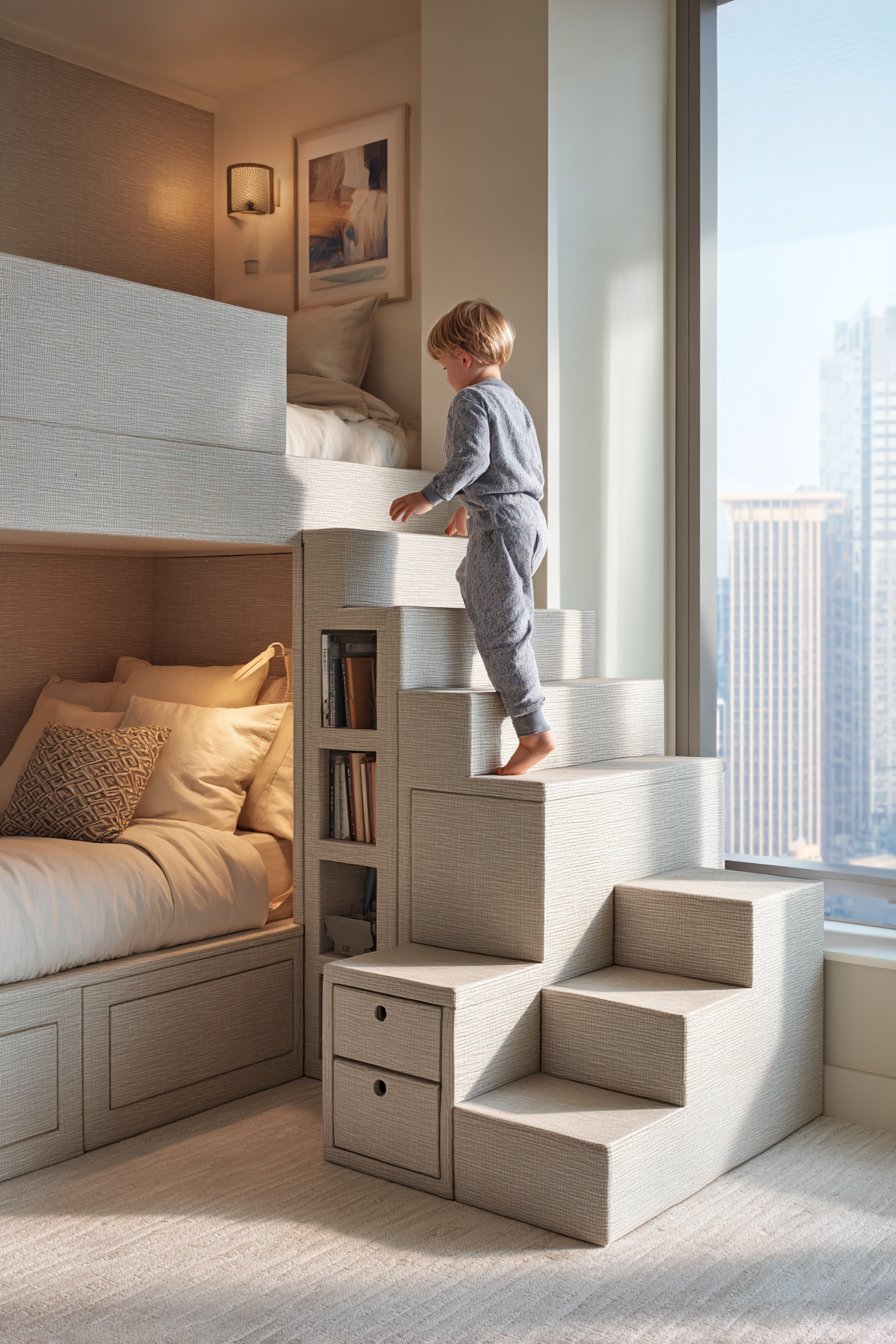
Ladder attachment methods significantly impact both stability and longevity of your bunk bed setup. Permanently attached ladders that integrate with the frame structure provide superior stability compared to hook-on designs that can shift or detach during use.
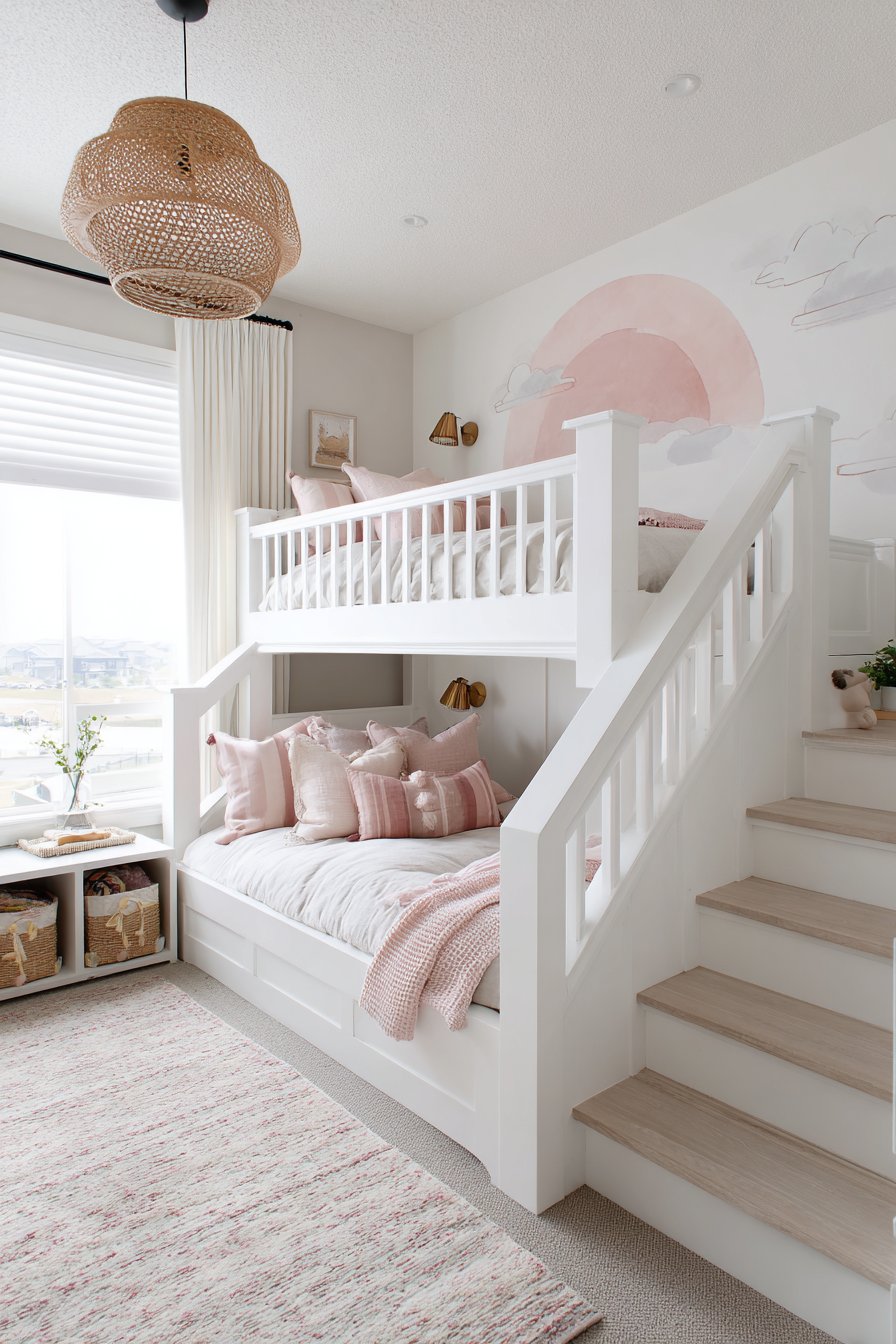
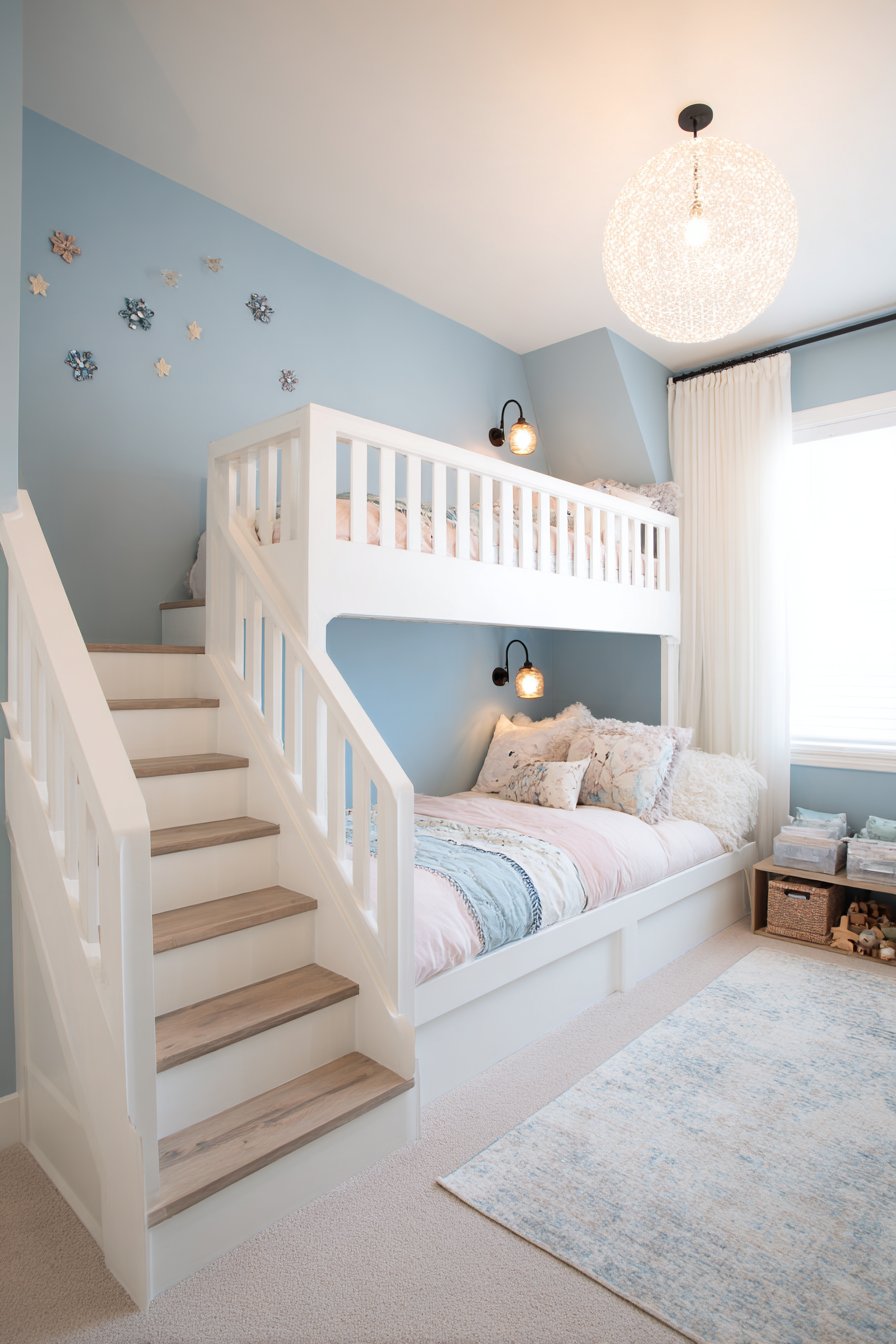
For rooms with limited floor space, some manufacturers offer integrated staircase designs with built-in storage drawers that serve dual purposes while providing the safest possible access to the top bunk. These staircase alternatives work particularly well for younger children, individuals with mobility concerns, or anyone who frequently navigates the ladder during nighttime hours.
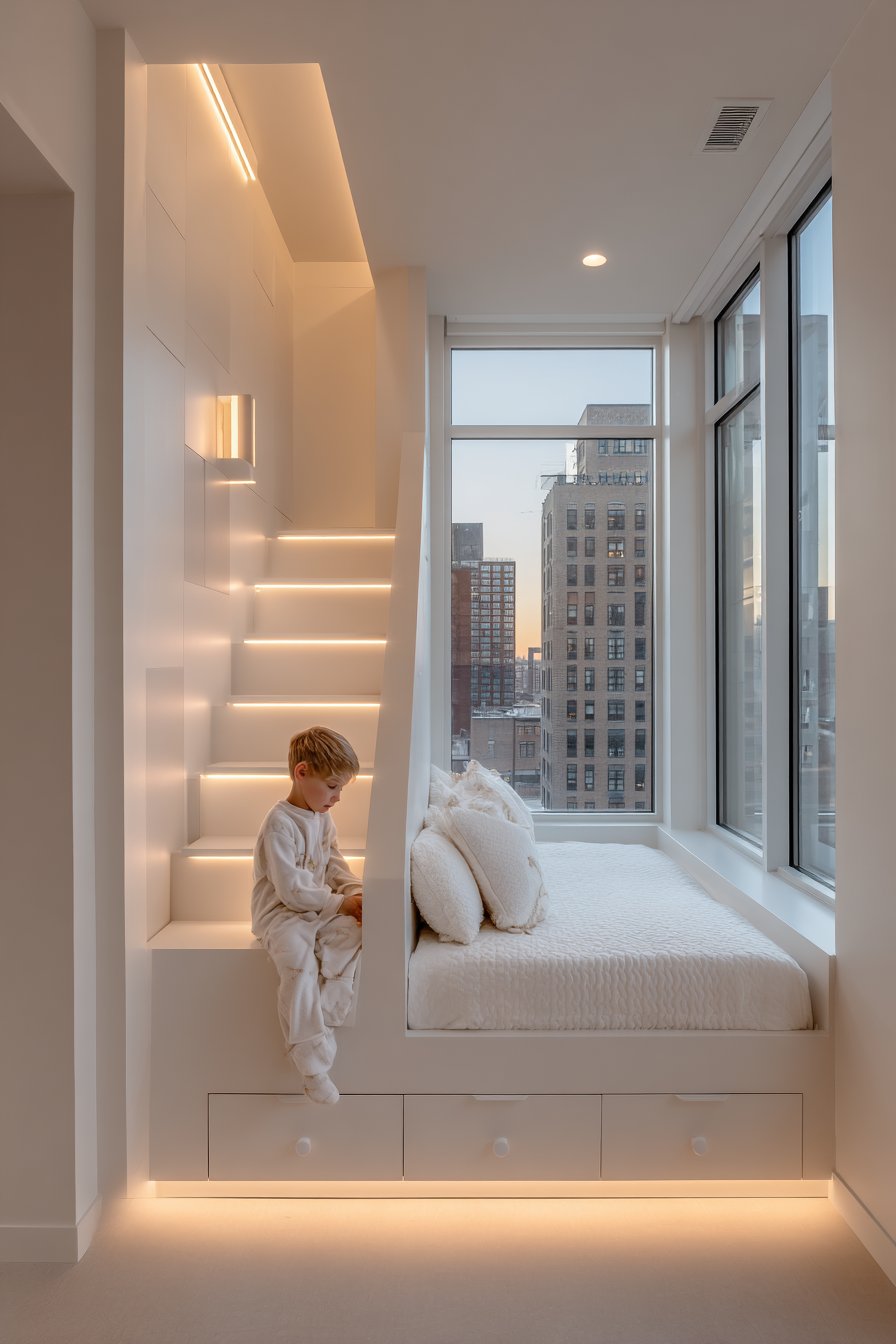
- Test ladder stability by applying weight and checking for movement or flexing
- Position ladders at the bed’s end rather than sides for easier access
- Consider rubberized or textured ladder rungs for improved traction
- Install nightlights near the ladder area for safe nighttime navigation
- Teach children to face the ladder while climbing up or down
- Regularly inspect ladder connections and tighten any loose hardware
5. Choose Materials and Finishes That Balance Style and Safety
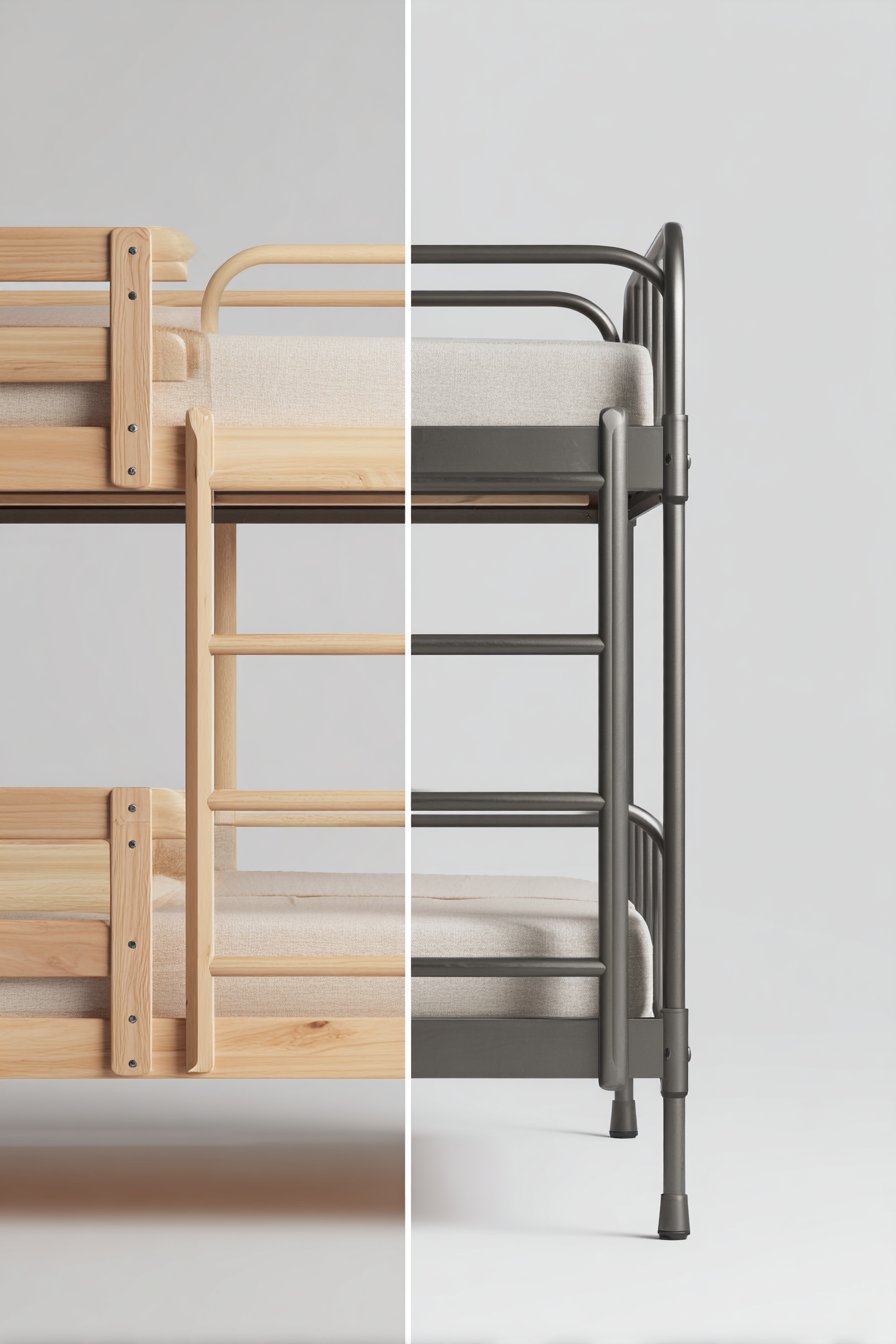
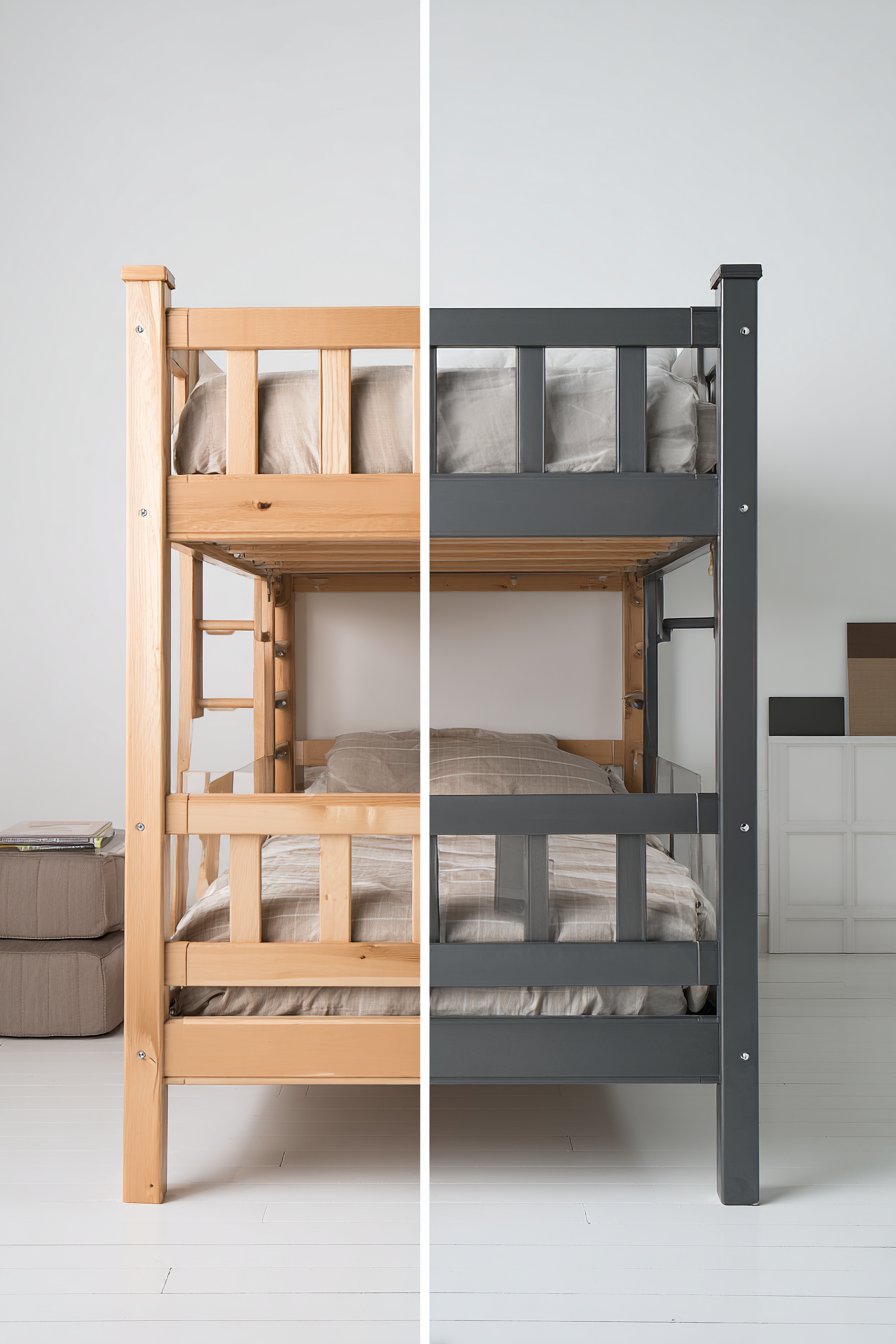
Material selection profoundly influences both the aesthetic impact and functional longevity of your bunk bed investment. Solid hardwoods like oak, maple, or pine offer exceptional durability and timeless appeal while supporting substantial weight capacities that grow with your children.
These natural materials accept stains and paints beautifully, allowing you to customize the appearance to match your room’s color scheme. Metal frame construction provides a more contemporary look with industrial or minimalist appeal, offering excellent structural integrity while typically weighing less than comparable wooden designs.
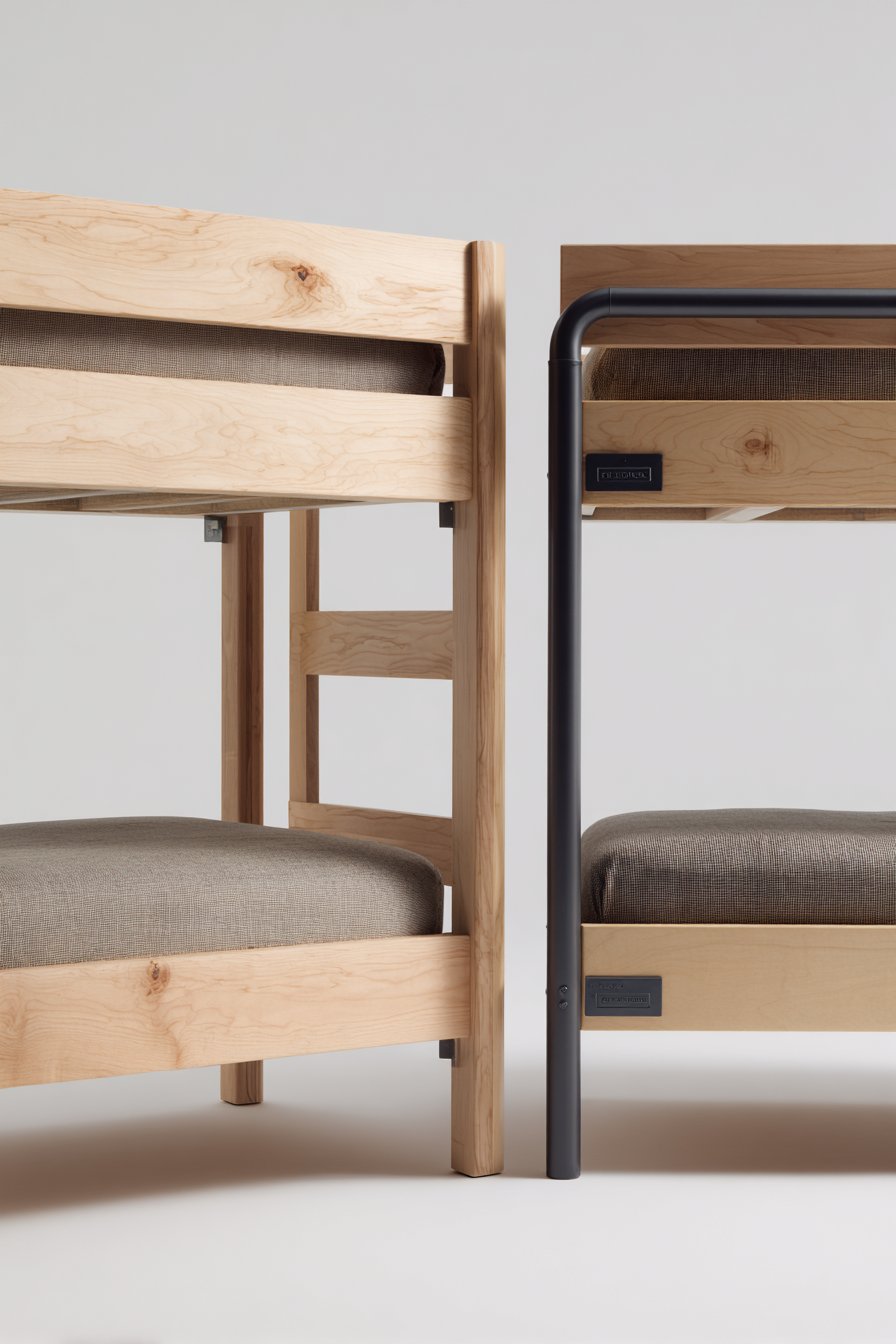
Finish quality extends beyond mere appearance to impact air quality and long-term safety in your child’s sleeping environment. Always verify that paints, stains, and sealants carry certifications for low or zero VOC content, indicating they won’t release harmful chemicals into the bedroom air.
Non-toxic, water-based finishes have become industry standard for children’s furniture, but cheaper imports may still use questionable materials. Look for products certified by organizations like Greenguard Gold, which tests for thousands of chemicals and volatile organic compounds to ensure furniture meets stringent safety standards.
- Request Material Safety Data Sheets (MSDS) for finishes used on the bed
- Allow new furniture to off-gas in a well-ventilated space before bedroom installation
- Choose smooth, splinter-free finishes that won’t snag clothing or skin
- Consider powder-coated metal finishes that resist chipping and rust
- Match wood tones to existing bedroom furniture for cohesive design
- Select finishes that can be easily cleaned with child-safe products
6. Incorporate Smart Storage Solutions for Clutter-Free Spaces
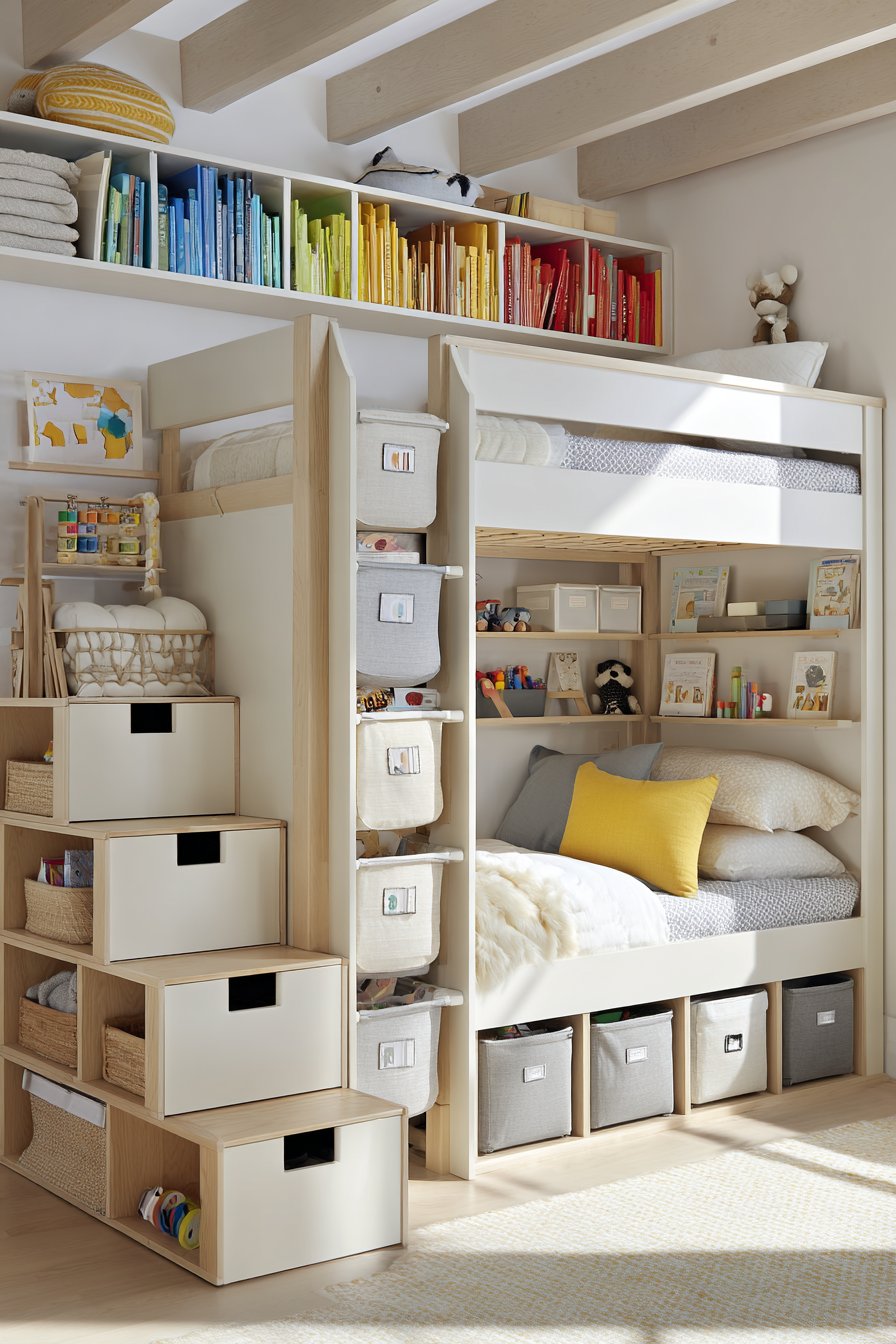
Modern bunk bed designs increasingly feature integrated storage options that address the perpetual challenge of organizing children’s belongings in limited spaces. Under-bed drawers, built-in shelving units, and trundle storage compartments transform wasted vertical space into valuable organization opportunities.
These additions prove particularly valuable in shared bedrooms where two children’s possessions must coexist harmoniously. Staircase-style bunk beds often incorporate the most storage potential, with each step serving as a drawer or cabinet that houses toys, books, clothing, or school supplies while maintaining easy access to the upper bunk.
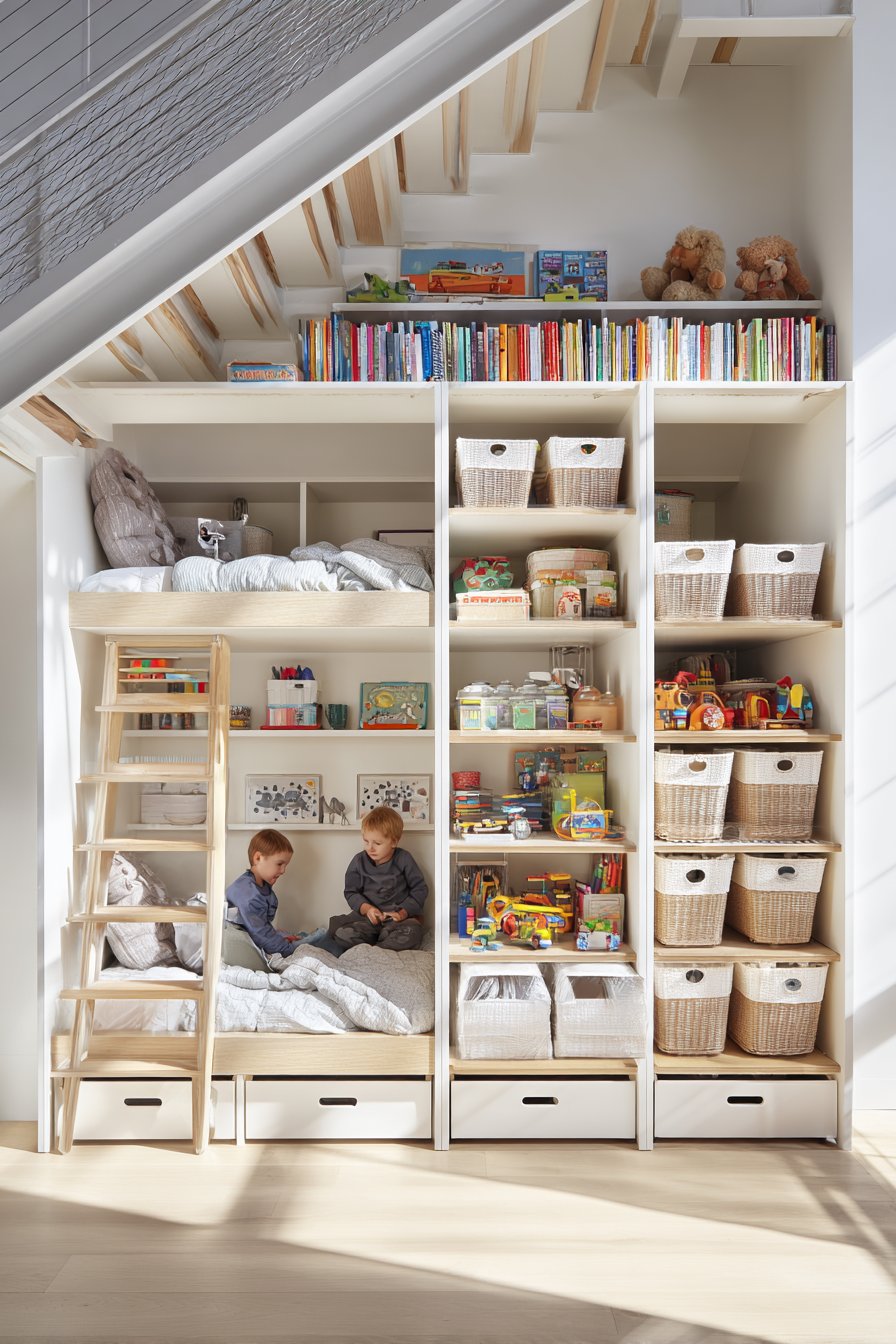
Strategic storage planning extends the functional value of your bunk bed far beyond simple sleeping accommodations. Consider how different storage configurations might serve your family’s specific needs—shallow drawers work well for art supplies or puzzle collections, while deeper compartments accommodate bulkier items like sports equipment or seasonal clothing.
Vertical storage attachments such as hanging organizers, bookshelf headboards, or side-mounted pockets maximize every available surface without compromising safety or accessibility. When properly implemented, these storage solutions create a self-contained bedroom system that encourages children to maintain organized, clutter-free spaces.
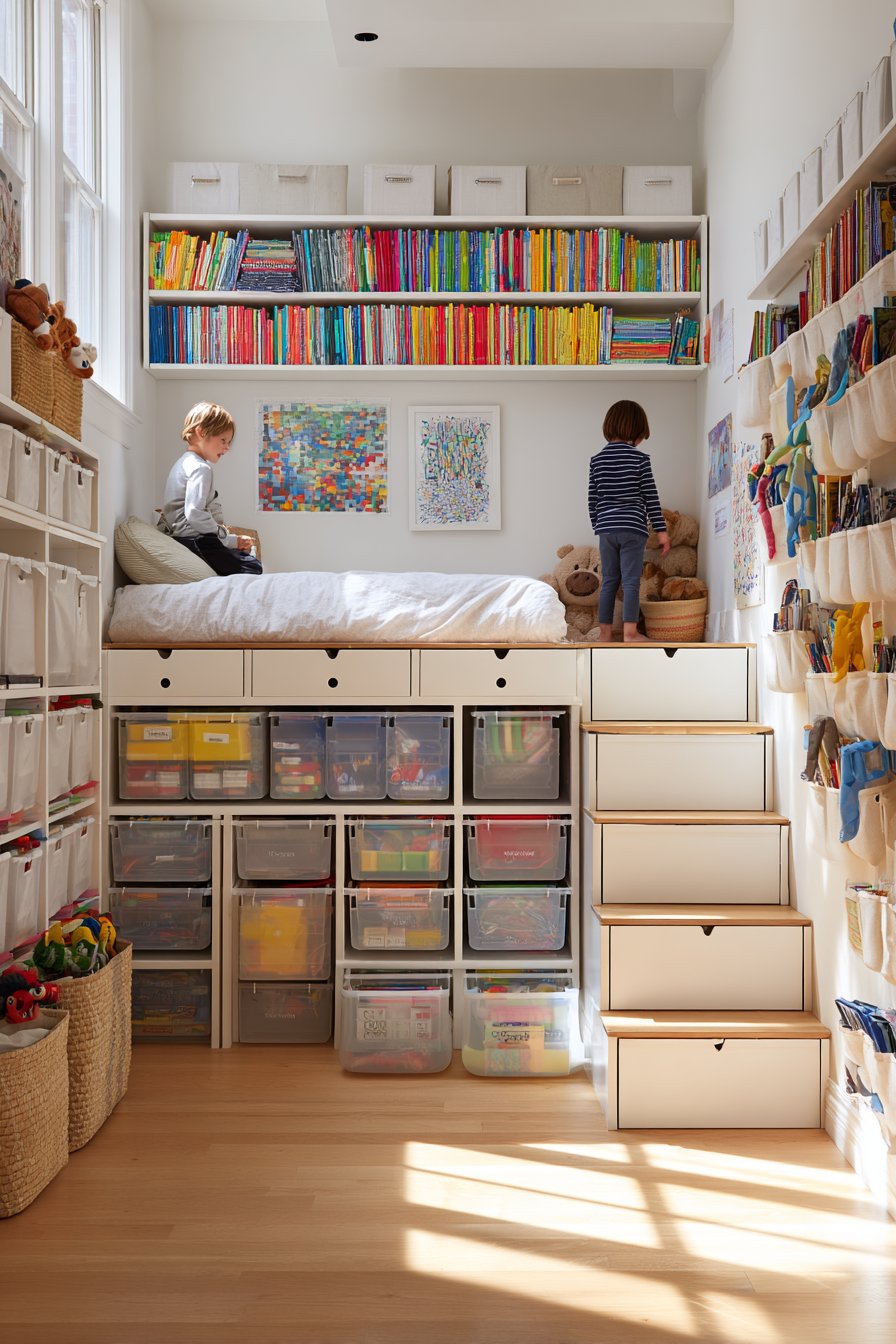
- Measure available floor space before selecting beds with protruding drawers
- Choose storage units on smooth-rolling casters or ball-bearing slides
- Install shelf units between or beside bunks for personal belonging displays
- Use storage bins or baskets within shelving for organized small item containment
- Label storage compartments to help children maintain organizational systems
- Keep frequently used items in lower, easily accessible storage locations
7. Create Visual Interest Through Color Coordination and Themed Designs
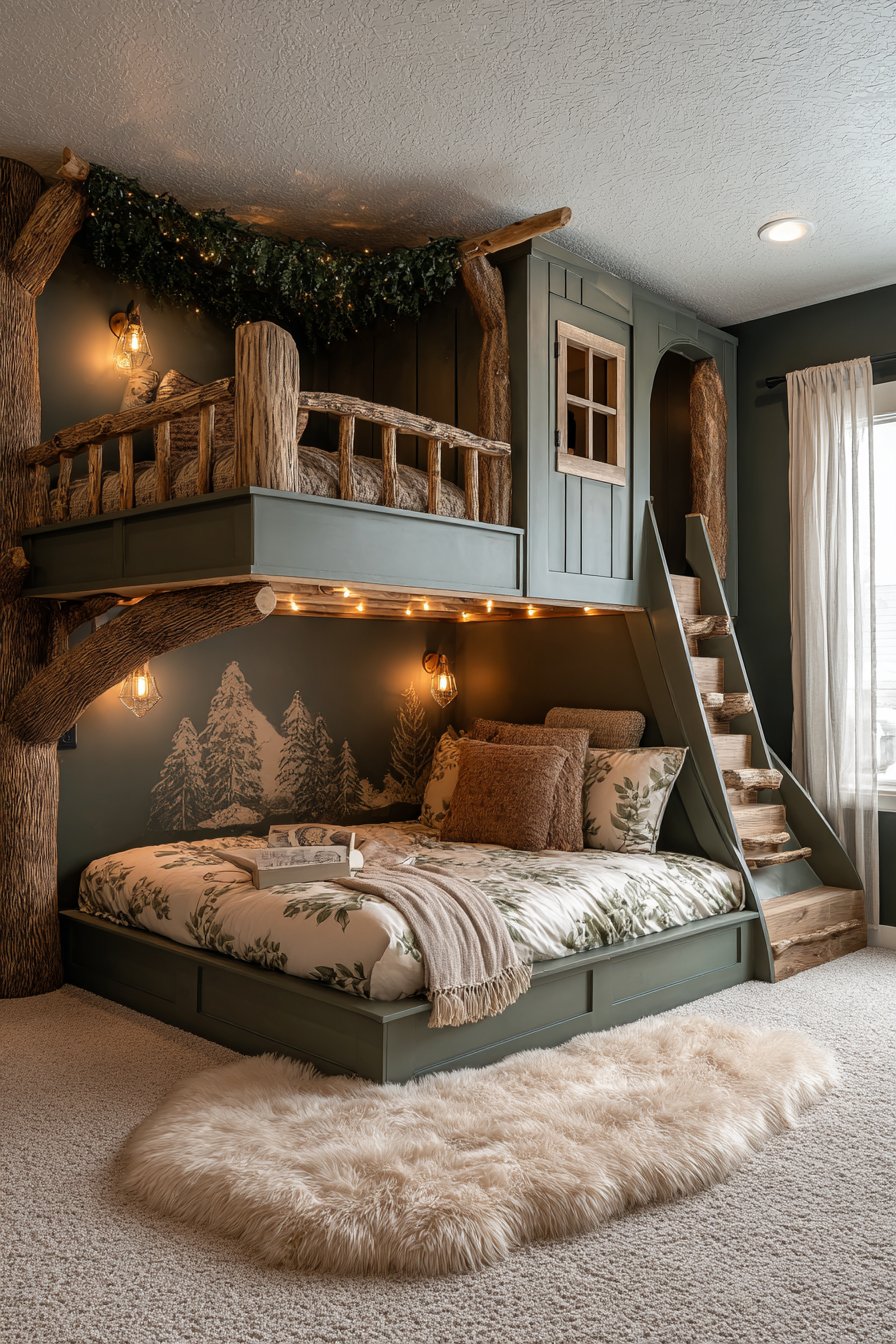
The aesthetic transformation potential of bunk beds extends far beyond their space-saving functionality when you approach them as central design elements rather than purely utilitarian furniture. Color choice dramatically impacts the overall room atmosphere—crisp white frames create bright, airy feelings while promoting versatile decoration options, whereas rich wood tones add warmth and traditional charm. Bold color selections like navy blue, forest green, or charcoal gray can anchor a room’s color scheme while disguising inevitable wear and tear better than lighter alternatives.
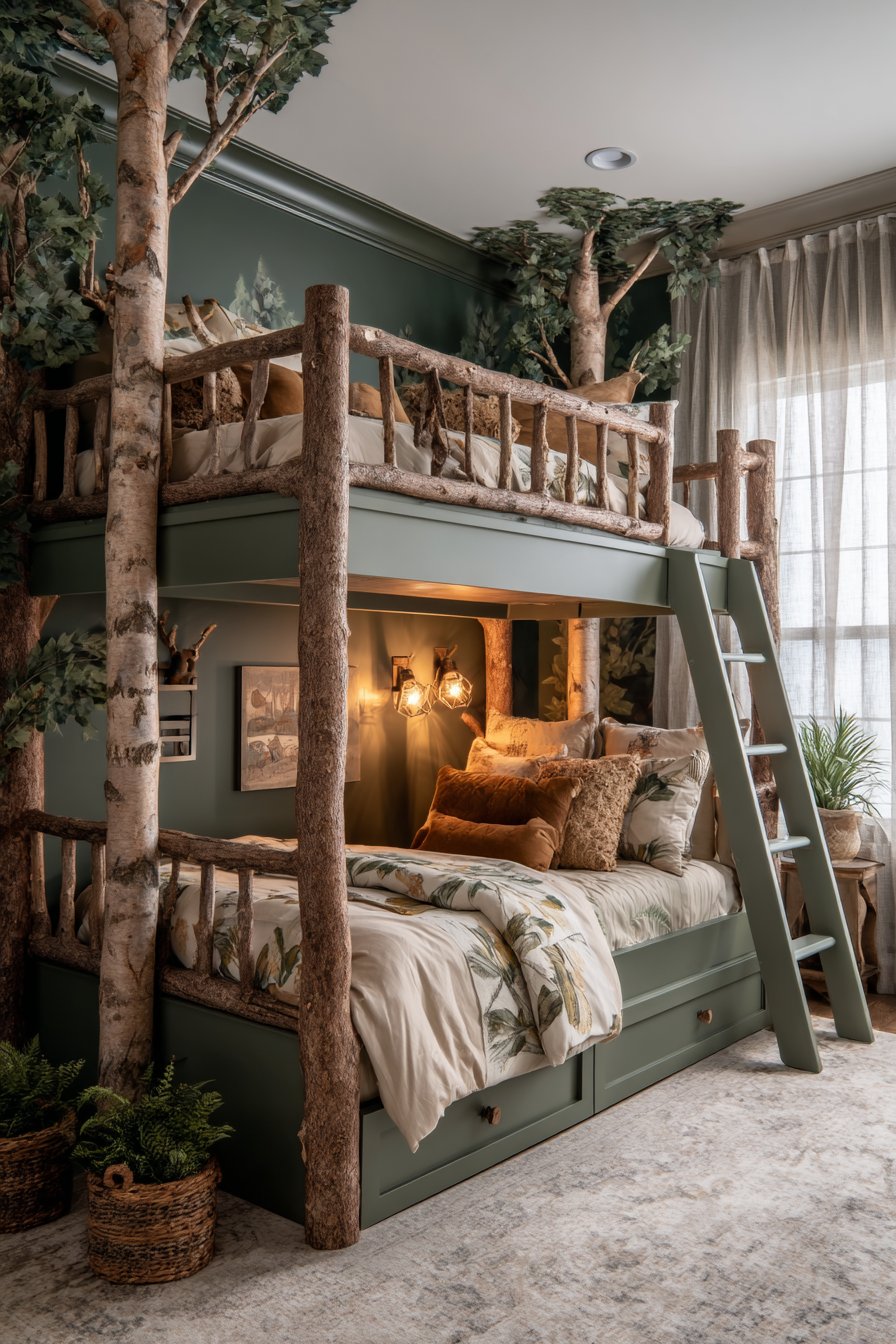
Themed bunk bed designs offer extraordinary opportunities to spark imagination and create truly memorable childhood spaces. Castle towers, treehouses, fire trucks, and spacecraft designs transform ordinary sleeping arrangements into adventure destinations that children eagerly anticipate each bedtime.
While elaborate themed beds command higher price points, they eliminate needs for additional decorative expenses and create cohesive room designs with minimal effort. Balance themed enthusiasm with longevity considerations—tastes change as children mature, so seek designs with removable decorative elements or classic themes with broader age appeal to maximize your investment value.
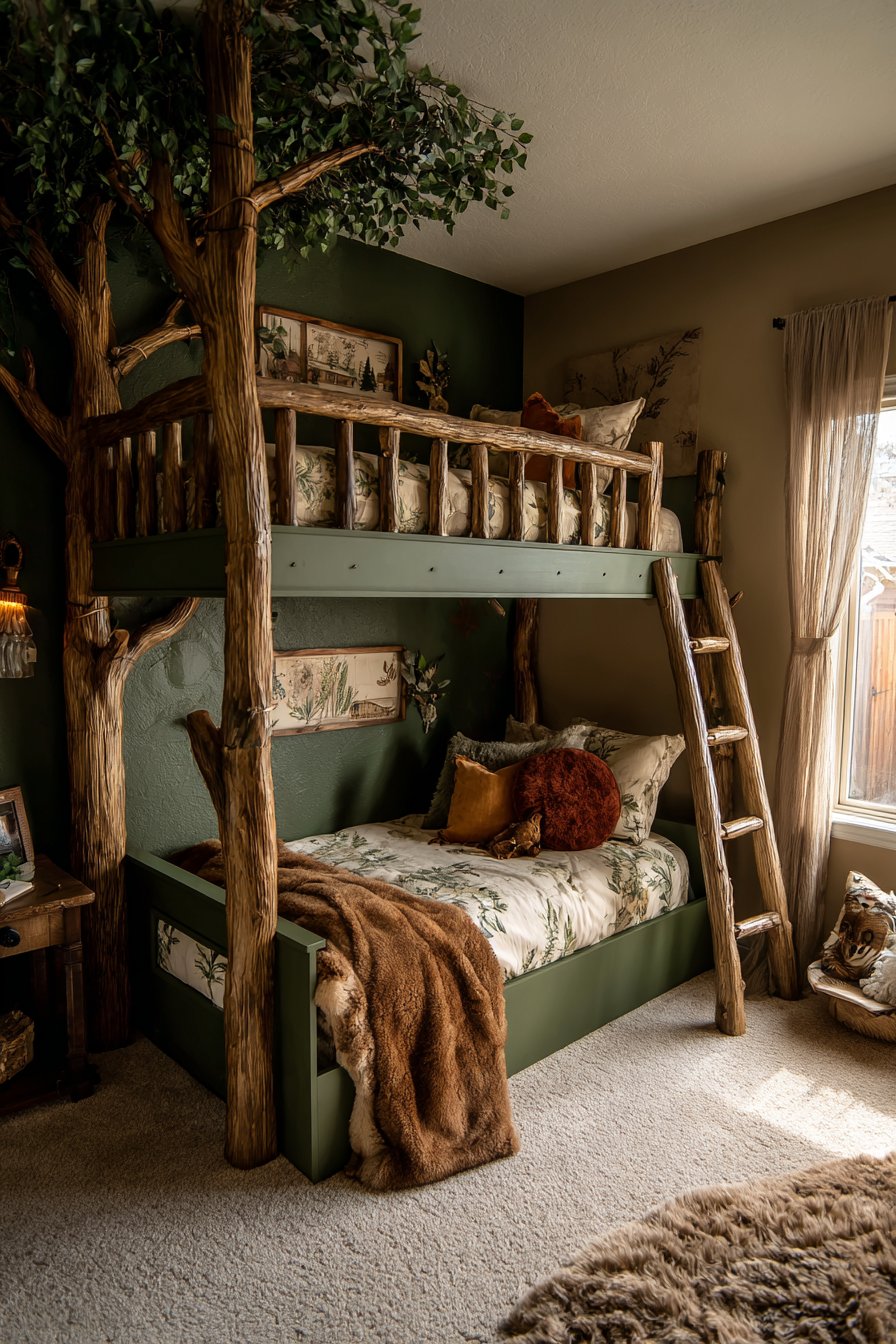
- Coordinate bedding colors with the bed frame for polished, intentional looks
- Use accent walls behind bunk beds to create dramatic focal points
- Select neutral frame colors for flexibility as children’s preferences evolve
- Add removable wall decals or artwork that complements themed bed designs
- Layer textures through varied bedding fabrics and decorative pillows
- Install LED strip lighting under bunks or along edges for customizable ambiance
8. Establish and Enforce Clear Safety Rules for Daily Use
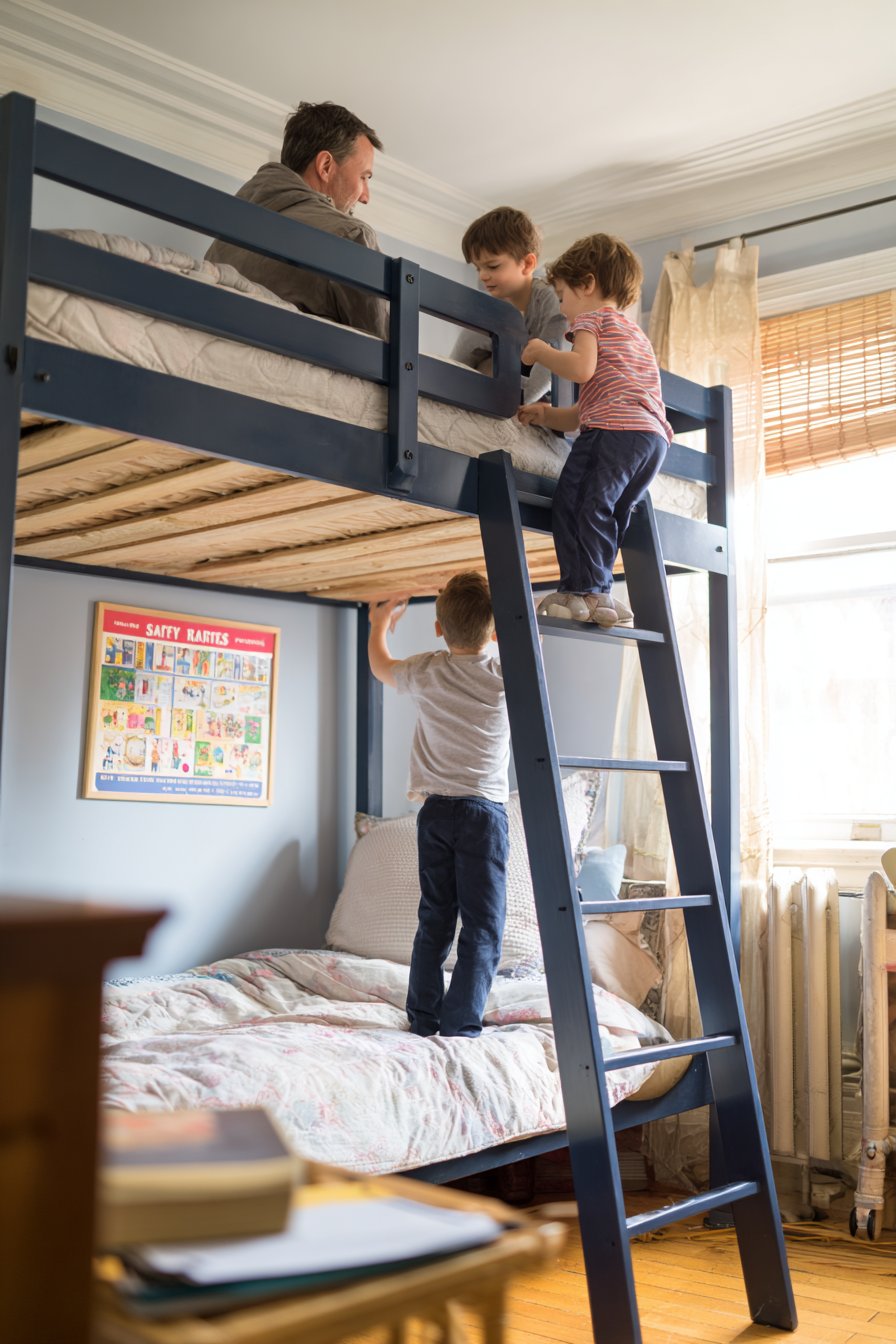
Even the most well-designed, properly installed bunk bed requires consistent safety practices to prevent accidents and ensure long-term secure use. Establishing clear household rules from the first day of bunk bed use creates expectations and habits that protect your children throughout their years of use.
Fundamental rules should prohibit roughhousing, jumping, or playing on the top bunk, as these activities dramatically increase fall risks. No hanging or swinging from guardrails, ladder rungs, or bed frames prevents both immediate injuries and long-term structural damage that compromises safety features.
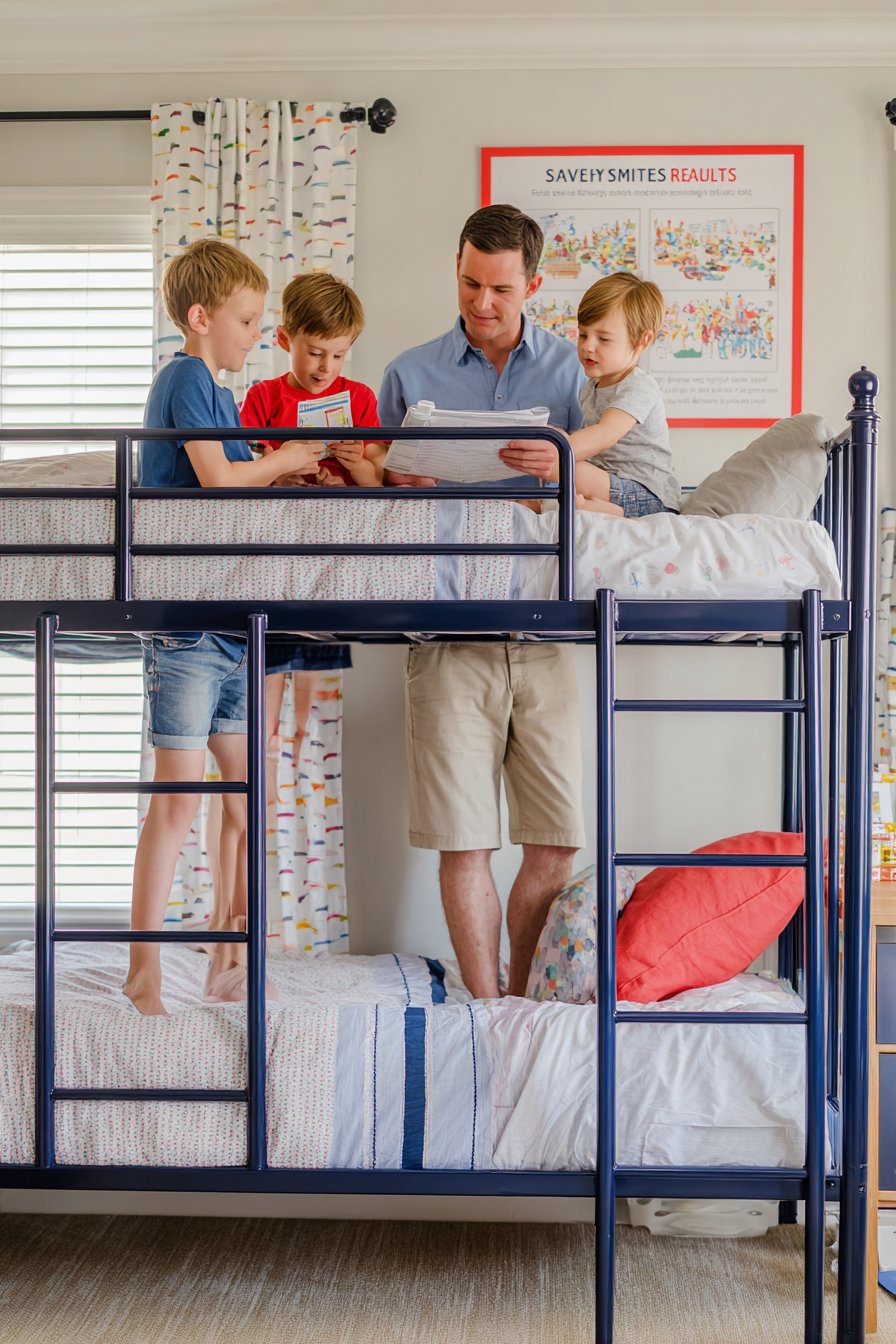
Regular maintenance routines complement established rules by ensuring the bunk bed remains in safe operating condition throughout its service life. Schedule monthly inspections that check for loose bolts, cracked slats, bent guardrails, or other signs of wear requiring attention.
Teach older children to report any unusual sounds, movements, or visible damage immediately. Proactive maintenance prevents minor issues from escalating into serious safety hazards while extending your furniture investment’s functional lifespan. Document these inspections and any repairs made to maintain awareness of the bed’s condition and predict when major components might require replacement.
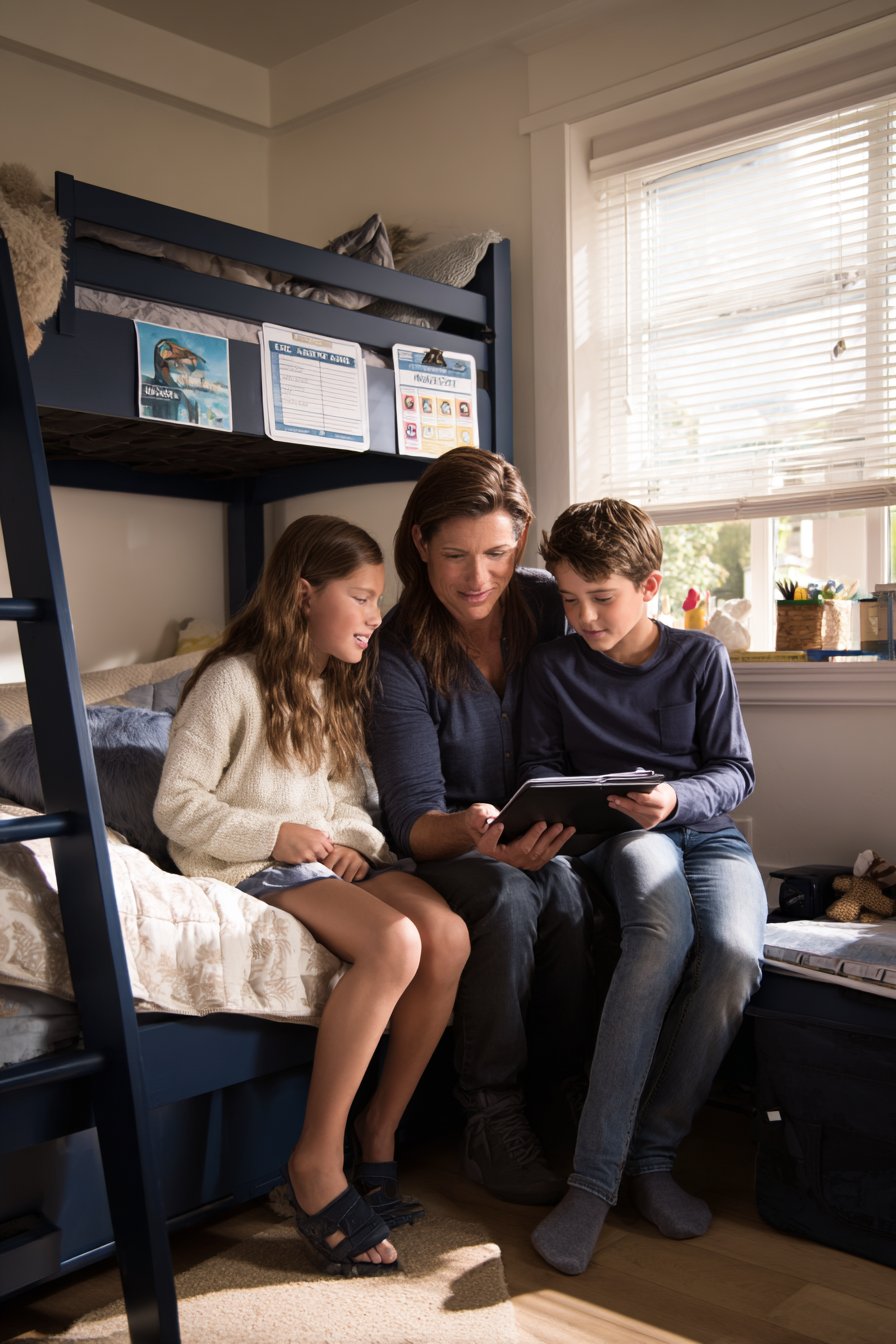
- Post simplified safety rules at child-appropriate reading levels near the bed
- Prohibit toys, books, or other items stored on the top bunk’s outer edges
- Remove or secure any cords, blinds, or decorations near the top bunk
- Establish consequences for safety rule violations that emphasize protection over punishment
- Create bedtime routines that include safe ladder navigation practices
- Review and update safety rules as children mature and capabilities change
Conclusion
Selecting and styling the perfect bunk bed requires thoughtful balance between safety fundamentals and aesthetic aspirations. By prioritizing structural integrity, proper guardrails, age-appropriate designs, and secure ladder access, you create a foundation of protection that allows your family to enjoy these space-saving solutions with confidence.
The integration of smart storage options, appealing colors, and personalized themes transforms basic sleeping arrangements into functional design statements that serve your family’s practical needs while reflecting personal style preferences.
Remember that bunk bed safety extends beyond initial purchase decisions to encompass ongoing maintenance and consistent rule enforcement. Regular inspections, immediate repairs, and clear household expectations ensure these versatile furniture pieces remain safe throughout years of active use.
Whether furnishing a children’s shared bedroom, creating flexible guest accommodations, or maximizing small living spaces, these eight essential tips empower you to make informed decisions that prioritize both protection and personality. Embrace the creative possibilities while never compromising on safety standards, and your bunk bed investment will deliver years of restful nights and memorable childhood experiences.
"As an Amazon Associate, I earn from qualifying purchases."
