
In today’s urban living landscape, the challenge of creating a functional and beautiful home within limited square footage has become an art form in itself. The integration of a living room and dining area in a single space is no longer just a compromise—it’s an opportunity to showcase creative design thinking and innovative spatial solutions. When thoughtfully planned, these dual-purpose spaces can offer the best of both worlds: a comfortable zone for relaxation and entertainment, seamlessly combined with an inviting area for shared meals and gatherings. The key lies in understanding how furniture placement, color schemes, lighting design, and spatial flow can work together to create distinct yet harmonious zones within a compact footprint.
The beauty of combining living and dining areas is that it encourages a more connected, open lifestyle while maximizing every square inch of available space. Whether you’re working with a studio apartment, a small home, or simply a cozy room that needs to serve multiple purposes, the right design approach can transform limitations into advantages. From Scandinavian minimalism to bohemian eclecticism, from industrial chic to coastal tranquility, there’s a style to suit every personality and preference. The twenty designs featured in this comprehensive guide showcase diverse aesthetic approaches while sharing a common thread: intelligent space planning that never sacrifices style for function.
This article explores twenty distinct design concepts that demonstrate how small living rooms with dining areas can be both practical and visually stunning. Each design offers unique solutions to common challenges, employing different furniture configurations, material choices, color palettes, and decorative elements. Whether you’re drawn to the clean lines of modern design, the warmth of rustic farmhouse style, or the sophistication of transitional interiors, you’ll find inspiration and actionable ideas to help you create a beautiful, functional space that reflects your personal style while meeting your everyday needs.
1. Open-Plan Efficiency with Contemporary Neutrals
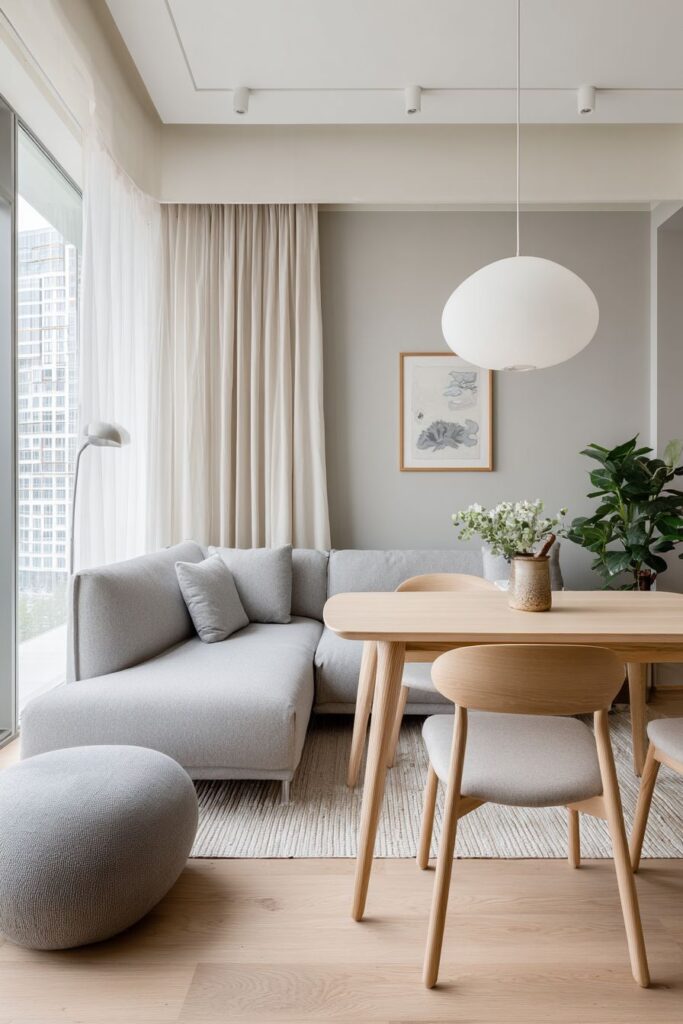
The foundation of this design begins with an intelligent furniture arrangement that maximizes every inch of available space. A compact L-shaped sofa upholstered in soft grey linen creates a defined living zone while maintaining an open feel that doesn’t overwhelm the room. The sofa’s clean lines and low profile ensure it doesn’t visually dominate, allowing sight lines to flow freely across the space. Positioned strategically, it faces toward the room’s focal point while creating a natural boundary that subtly separates the living area from the dining zone without the need for physical dividers or walls.
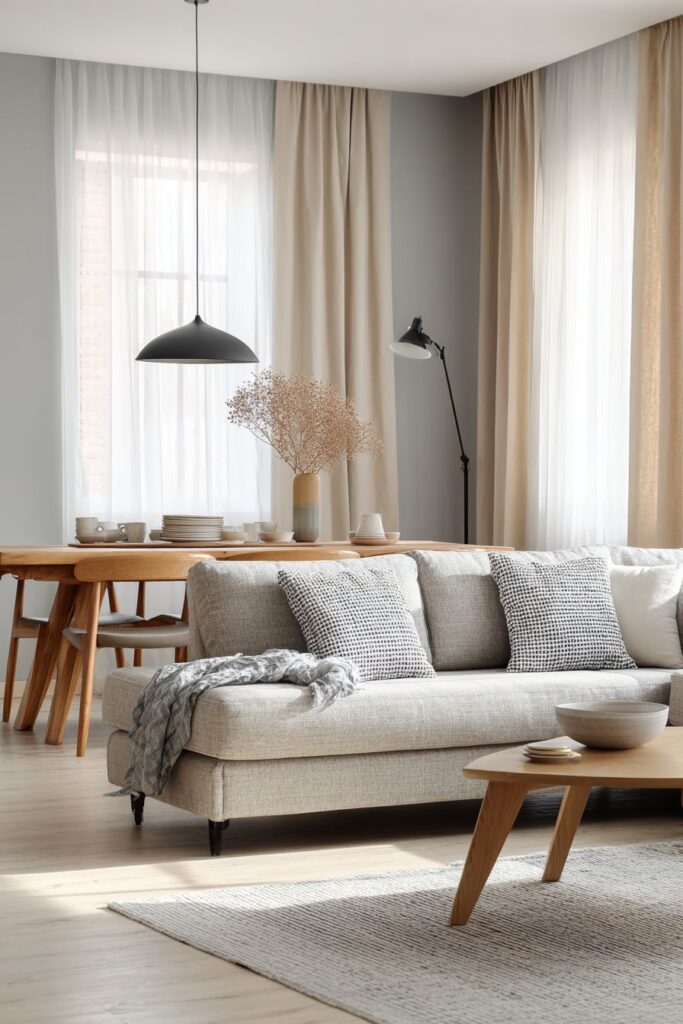
The dining area features a streamlined table crafted from light oak with gracefully tapered legs, a design choice that brings warmth through natural wood tones while keeping the overall aesthetic light and airy. Sized appropriately for four people, the table is positioned against the wall—a space-saving strategy that keeps the center of the room open for easy movement. The light oak finish complements the grey sofa beautifully, creating a cohesive neutral palette that makes the room feel larger and more serene. The tapered legs add visual interest without bulk, an important consideration in compact spaces where every design element must earn its place.
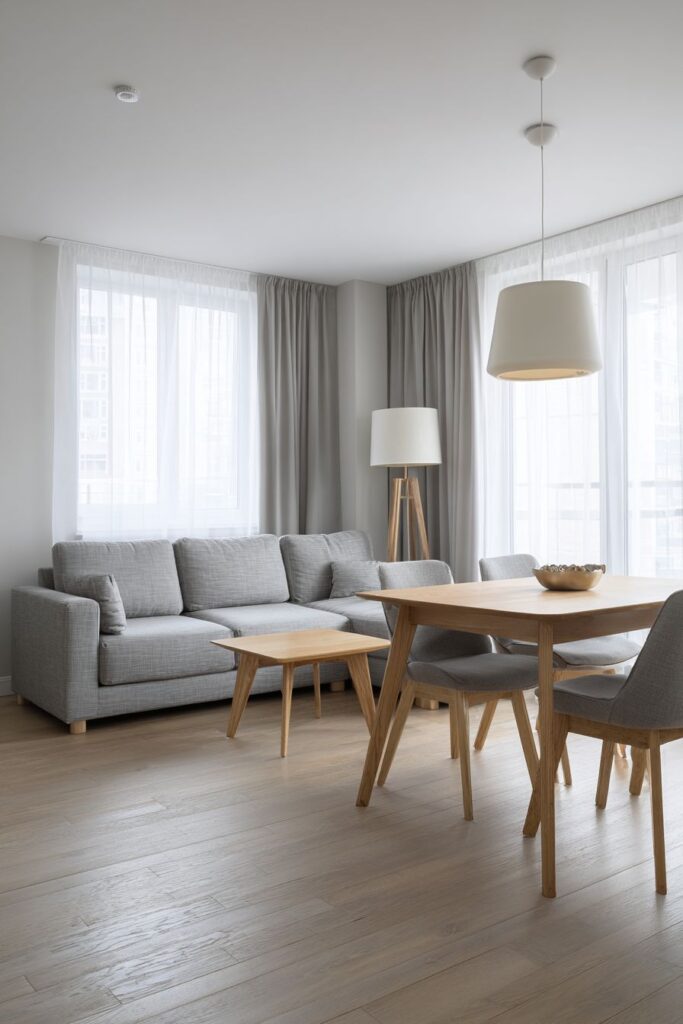
Lighting plays a crucial role in defining the two zones while maintaining unity. A minimalist pendant light hangs above the dining table, providing focused illumination for meals and creating a visual anchor that identifies the dining area as its own distinct space. Meanwhile, a floor lamp positioned near the sofa offers ambient lighting for the living zone, perfect for reading, conversation, or evening relaxation. The combination of natural daylight streaming through sheer curtains and these carefully placed artificial light sources ensures the space feels bright and welcoming throughout the day.
The sheer curtains deserve special mention—they filter harsh sunlight while maintaining privacy, and their light, flowing fabric adds softness without competing with the room’s clean aesthetic. The efficient use of space in this design proves that with the right furniture choices and thoughtful placement, even the smallest rooms can accommodate both living and dining functions without feeling cramped or cluttered.

Key Design Tips:
- Position furniture against walls to keep the center of the room open and maximize walkable floor space
- Choose a neutral color palette with soft greys and natural wood tones to create visual continuity and make the space feel larger
- Select furniture with clean lines and tapered legs that maintain an open, airy feeling rather than heavy, bulky pieces
- Use different lighting fixtures to define separate zones while maintaining overall cohesion
- Install sheer curtains that allow natural light to flood the space while providing privacy
- Opt for an L-shaped sofa that provides ample seating without requiring multiple pieces of furniture
2. Transparent Elegance with Space-Saving Solutions
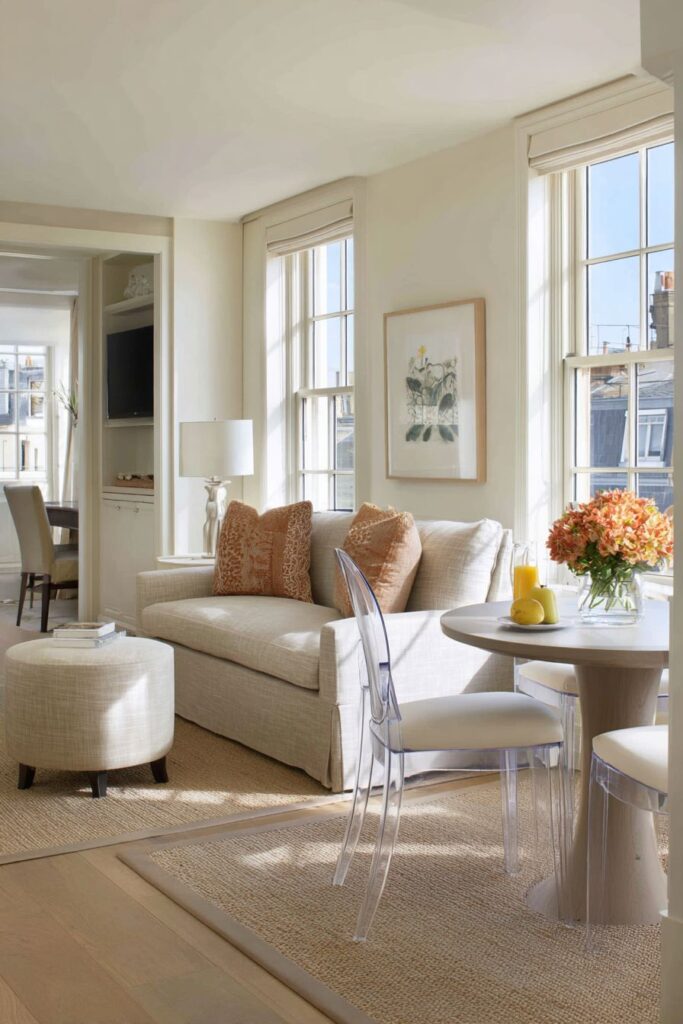
This design demonstrates how visual lightness can be achieved through clever material choices and furniture selection that literally allows you to see through the space. A low-profile loveseat in warm beige fabric anchors the living area, its modest scale ensuring it doesn’t overpower the room. The loveseat faces a wall-mounted television, eliminating the need for a bulky entertainment center and freeing up valuable floor space. This wall-mounting strategy is particularly effective in small spaces, as it keeps surfaces clear and creates a cleaner, more streamlined appearance.
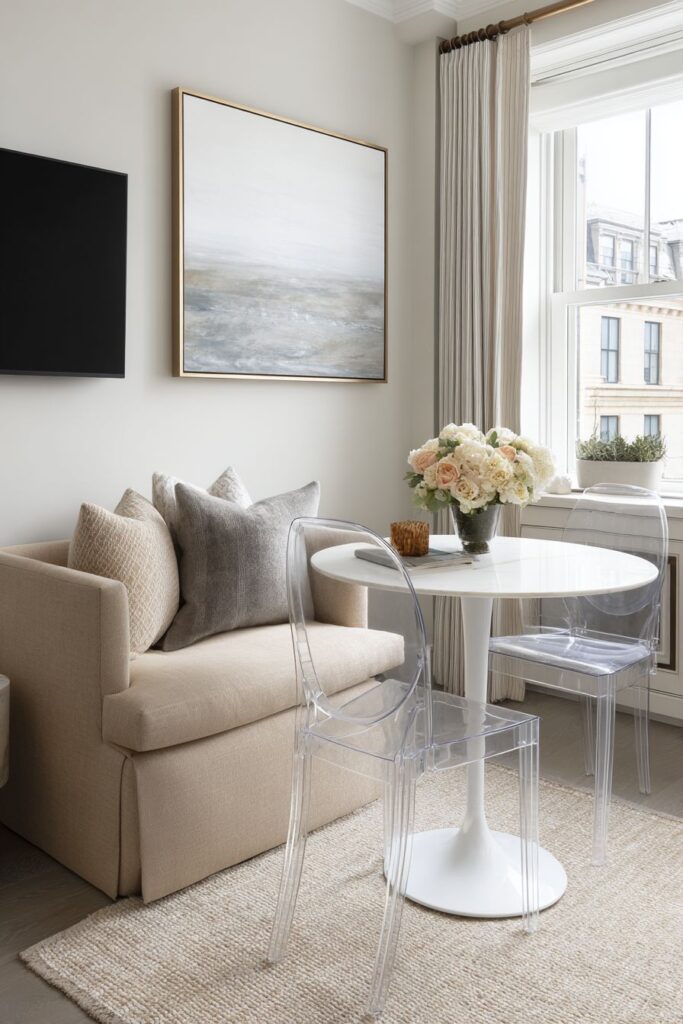
Behind the loveseat sits a round pedestal dining table, an ingenious positioning that allows both areas to coexist without interference. The round shape is crucial here—it eliminates sharp corners that could create navigation hazards in tight spaces, and the pedestal base means there are no table legs to bump into when moving around the furniture. The table comfortably accommodates dining needs while its circular form promotes conversation and creates a more intimate dining experience. The placement behind the sofa is unexpected yet highly functional, proving that traditional room layouts aren’t always the best solution for compact spaces.
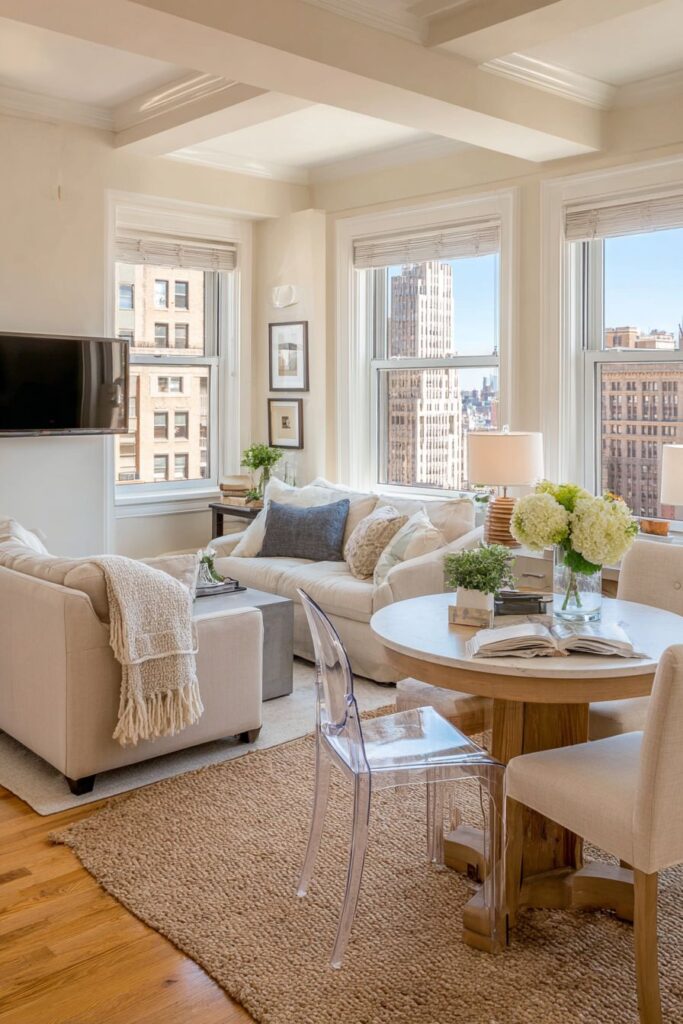
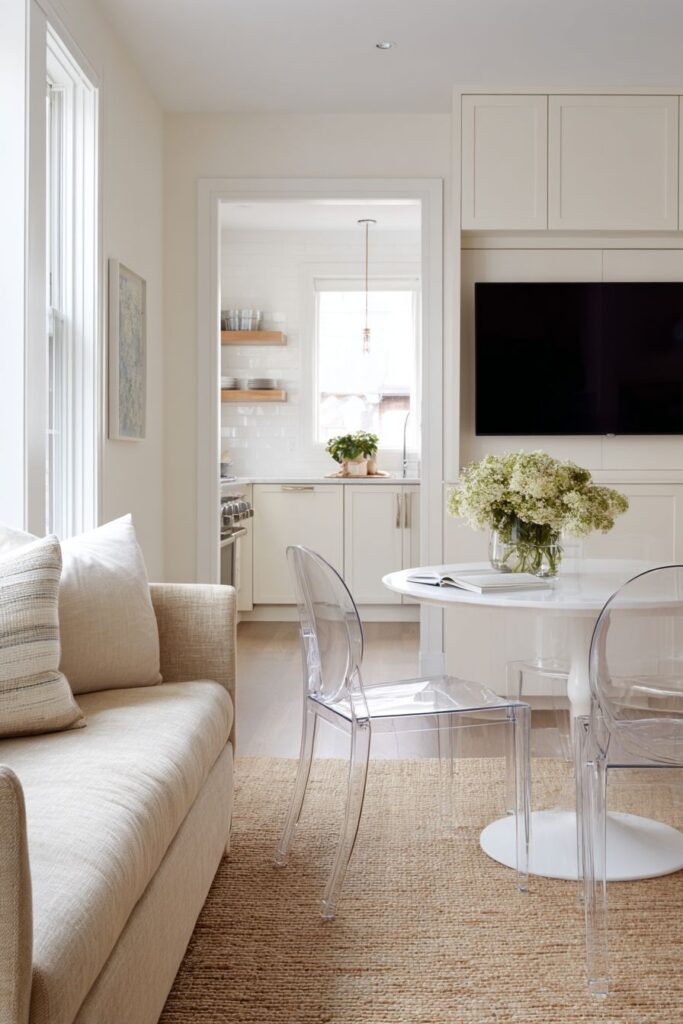
The real genius of this design lies in the choice of transparent acrylic dining chairs. These ghost-like chairs provide necessary seating without adding visual weight to the room. Because you can see through them, they effectively disappear, making the space feel more open and less cluttered than it would with solid chairs. This transparency allows light to flow freely throughout the room, preventing the dining area from feeling boxed in or separate. The acrylic material also brings a contemporary edge to the design, contrasting beautifully with the warm beige upholstery of the loveseat.
A sisal area rug defines the living zone, its natural texture adding warmth and grounding the seating area without overwhelming the space with pattern or color. The neutral tone of the sisal complements both the beige loveseat and the warm wood tones elsewhere in the room, while its organic texture brings a tactile element that prevents the space from feeling too sleek or cold. The rug’s boundaries create a subtle definition between living and dining zones without actually dividing them.
Key Design Tips:
- Choose transparent furniture pieces like acrylic chairs to maintain visual openness in small spaces
- Position the dining table behind the sofa to maximize floor space and create an efficient layout
- Select a round dining table with a pedestal base to improve traffic flow and eliminate corner obstacles
- Use a wall-mounted TV to eliminate bulky entertainment furniture and free up floor space
- Define the living zone with a natural fiber rug that adds texture without visual weight
- Opt for warm, neutral fabrics on upholstered pieces to create a welcoming atmosphere
- Keep the color palette cohesive with warm neutrals that flow from one zone to the next
3. Built-In Storage with Sectional Sophistication
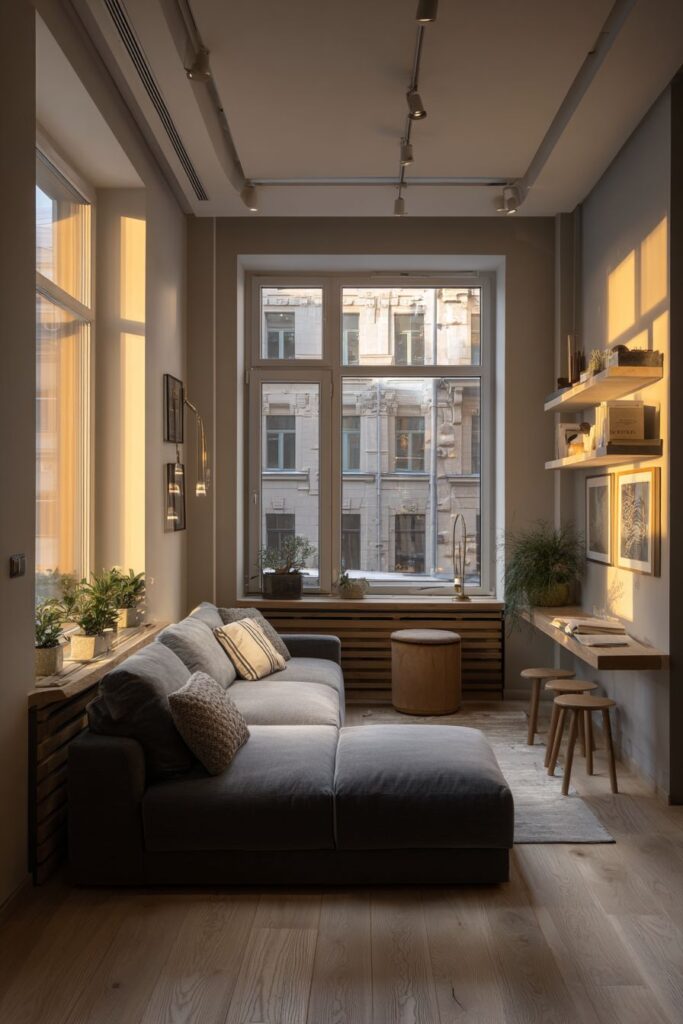
Storage is often the biggest challenge in small living spaces, and this design addresses that concern head-on with a sectional sofa that incorporates built-in storage compartments. This multifunctional piece serves triple duty: providing comfortable seating for the living area, creating a natural visual division between living and dining zones, and offering concealed storage for blankets, books, media, and other items that would otherwise clutter the space. The sectional’s positioning creates an L-shaped layout that defines the living zone while its back naturally separates it from the dining area without completely closing off the space.
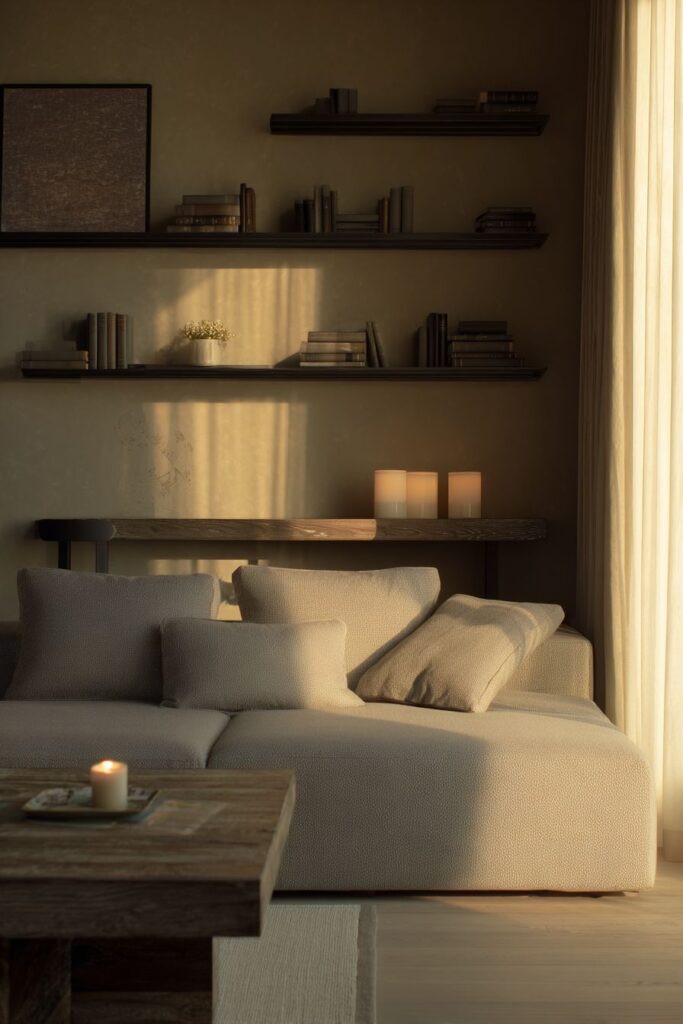
The dining solution in this design is particularly clever—a narrow console table doubles as a dining surface, demonstrating that traditional dining tables aren’t always necessary in compact spaces. Console tables are typically designed to sit against walls and have narrow depths, making them perfect for small rooms where a standard dining table would protrude too far into the space. Paired with backless counter stools that tuck completely underneath when not in use, this setup provides full dining functionality while taking up minimal square footage. The backless stools are key to this arrangement, as they slide entirely out of sight beneath the console, leaving the floor clear and the space feeling open.
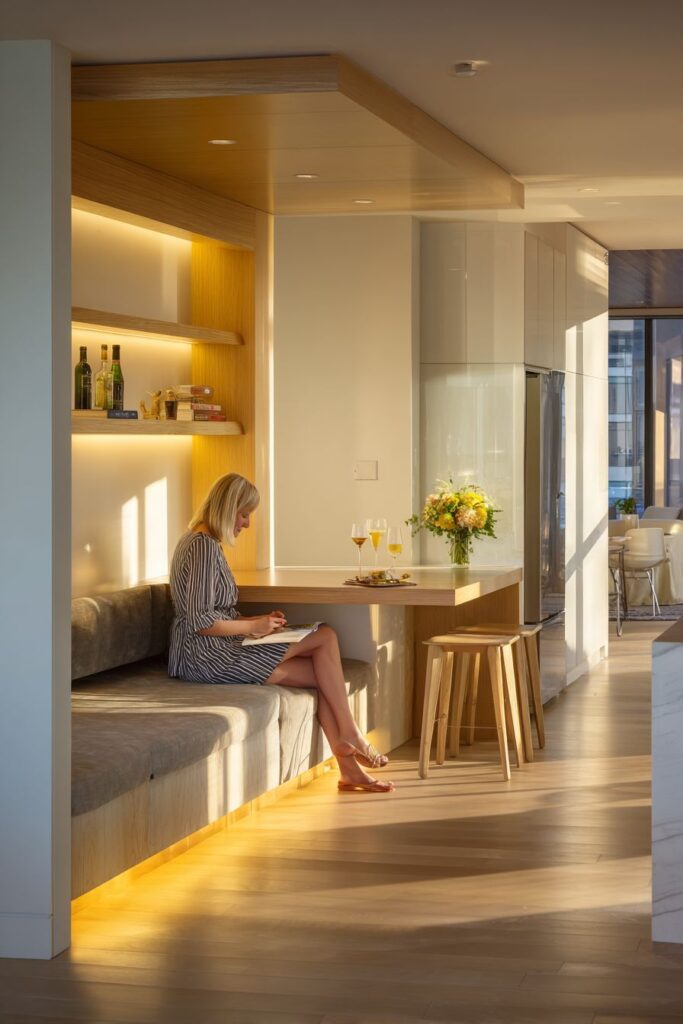
Light wood flooring runs throughout the entire space, a design choice that visually expands the room by creating continuity from one zone to the next. Unlike area rugs or different flooring materials that can visually chop up a small space, the consistent wood flooring makes the room feel larger and more unified. The light tone of the wood also reflects natural light, brightening the space and creating an airy atmosphere. The wood’s natural grain adds subtle visual interest without competing with other design elements.
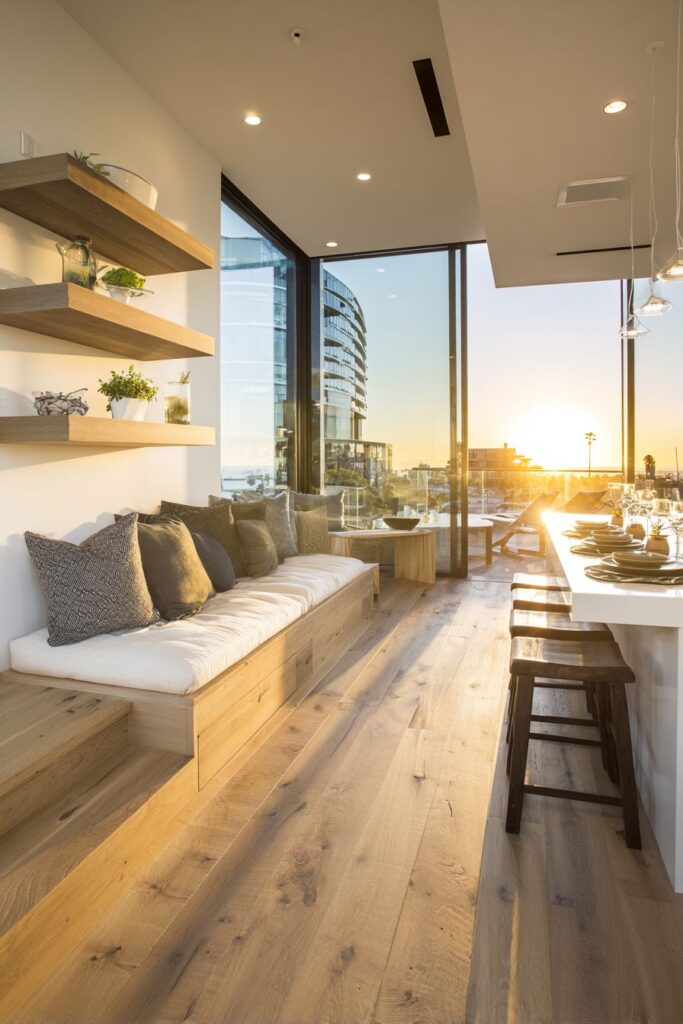
Floating shelves mounted above the dining area provide essential display and storage space without the bulk of traditional cabinets or bookcases. Because they’re wall-mounted with concealed brackets, floating shelves appear to hover against the wall, taking up zero floor space while offering functional storage. They can hold decorative objects, dinnerware, glassware, books, or plants, adding personality to the dining area while keeping necessary items within easy reach. The shelves’ clean lines complement the modern aesthetic while their practical function addresses storage needs.
Key Design Tips:
- Invest in a sectional sofa with built-in storage to maximize seating and concealment space simultaneously
- Use a narrow console table as a dining surface paired with backless stools that tuck underneath completely
- Install floating shelves to provide storage and display space without consuming precious floor area
- Choose light wood flooring that runs throughout to create visual continuity and make the space feel larger
- Position the sectional to create a natural division between zones while maintaining an open feel
- Select furniture pieces that serve multiple functions to maximize utility in limited square footage
- Keep the design streamlined with clean-lined furniture that doesn’t add unnecessary visual complexity
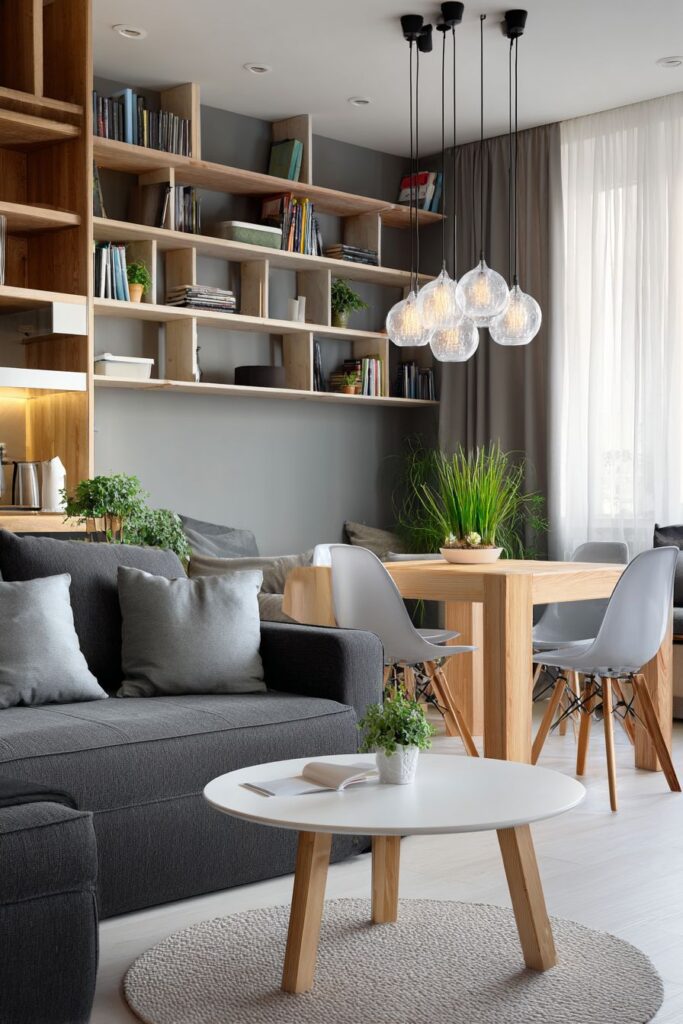
4. Scandinavian Simplicity with Functional Minimalism

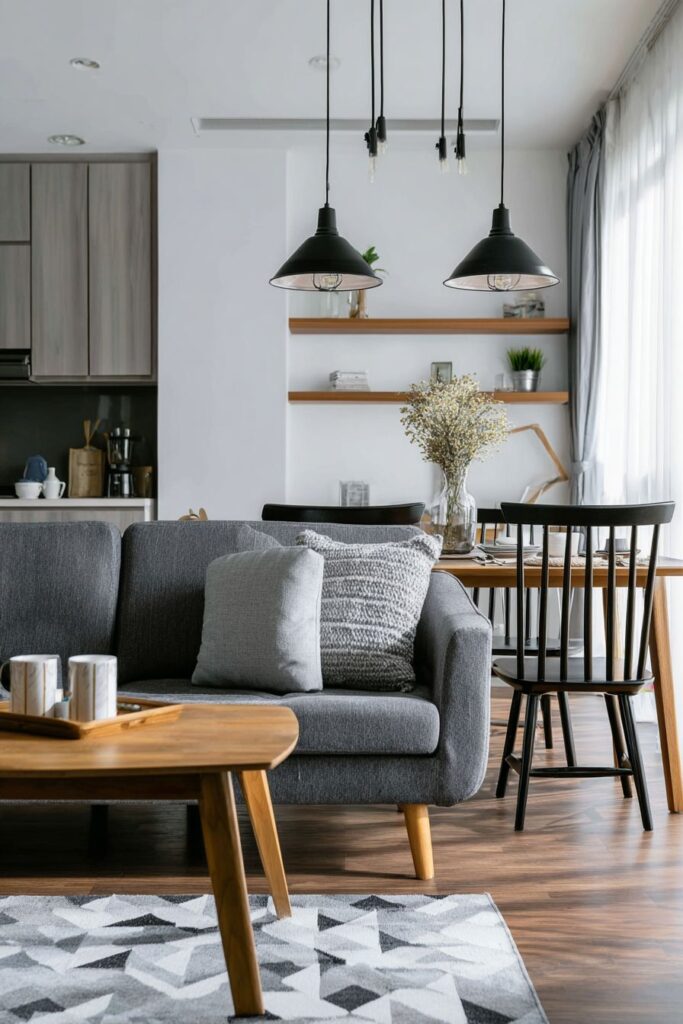
Scandinavian design philosophy celebrates simplicity, functionality, and connection to natural materials, making it an ideal aesthetic for small living spaces that need to feel open and calming. This design embraces those principles with a compact two-seater sofa upholstered in charcoal grey, a sophisticated neutral that provides depth without overwhelming the small footprint. The sofa’s modest scale ensures it doesn’t dominate the room, while the charcoal color adds just enough contrast to create visual interest against lighter elements. The clean lines and minimal ornamentation characteristic of Scandinavian furniture keep the look streamlined and uncluttered.
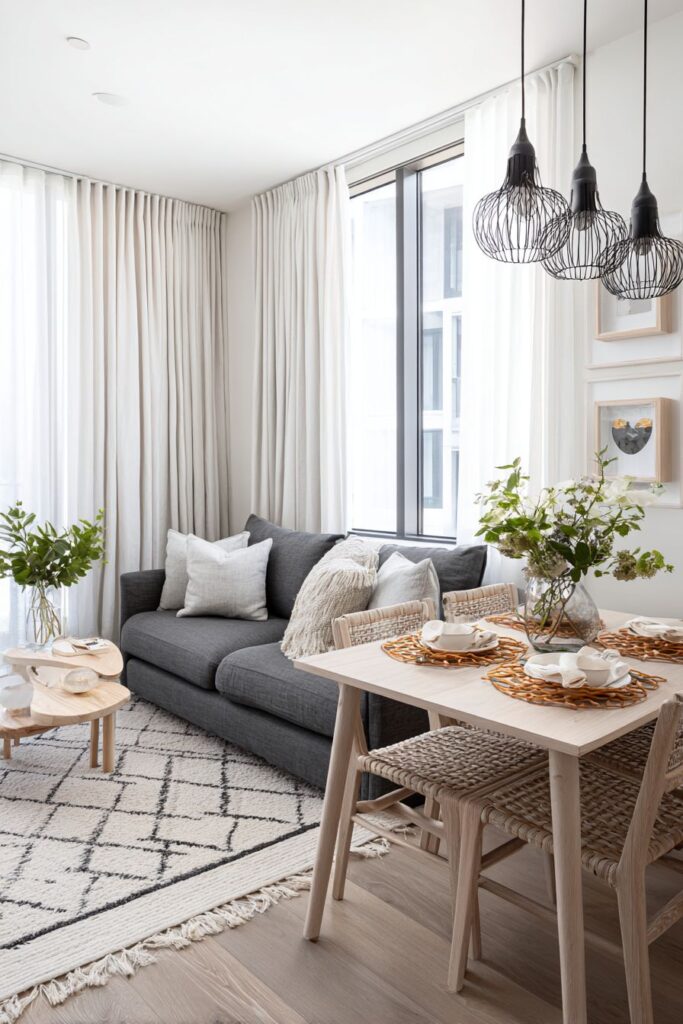
The dining area features a small square table crafted from white oak, a wood choice that’s quintessentially Scandinavian. White oak’s pale, cool-toned finish and subtle grain pattern bring natural warmth without heaviness, perfectly embodying the Nordic aesthetic. The square shape works well in small spaces, providing a defined edge that can be pushed against a wall or positioned in a corner to save space, while still accommodating four people comfortably when pulled away from the wall. The table’s compact dimensions ensure it serves its purpose without monopolizing precious square footage.
The dining chairs exemplify Scandinavian design at its finest, with slim wooden frames and woven rope seats that provide comfortable seating while maintaining visual lightness. The rope seats are a traditional Scandinavian detail that adds texture and craftsmanship to the space while allowing light and air to pass through, preventing the chairs from appearing heavy or solid. The slim wooden frames, likely in a finish that complements the table, showcase the wood’s natural beauty while keeping the overall look minimal and refined. These chairs can be pushed under the table when not in use, further maximizing floor space.
A geometric wool rug anchors the living area, introducing pattern in a controlled, sophisticated way. Scandinavian design often incorporates geometric patterns inspired by nature and traditional crafts, and the wool material adds softness and warmth underfoot while providing acoustic benefits in an open-plan space. The rug’s boundaries define the living zone without rigid separation, creating a sense of organization within the combined space. Above the dining table, pendant lighting with black metal shades provides focused illumination while adding a graphic element that contrasts beautifully with the pale wood and neutral upholstery.

Key Design Tips:
- Embrace a minimal color palette focused on whites, greys, and natural wood tones for a calming atmosphere
- Choose compact-scaled furniture that provides function without overwhelming the space visually
- Select dining chairs with open frames and woven seats to maintain visual lightness and air flow
- Use geometric patterns sparingly in textiles like rugs to add interest without visual chaos
- Incorporate natural materials like wood, wool, and rope that connect the space to nature
- Add black metal accents through lighting fixtures to provide graphic contrast against pale neutrals
- Keep decorative elements to a minimum, focusing on quality over quantity in true Scandinavian style
5. Continuous Seating with Vintage Character
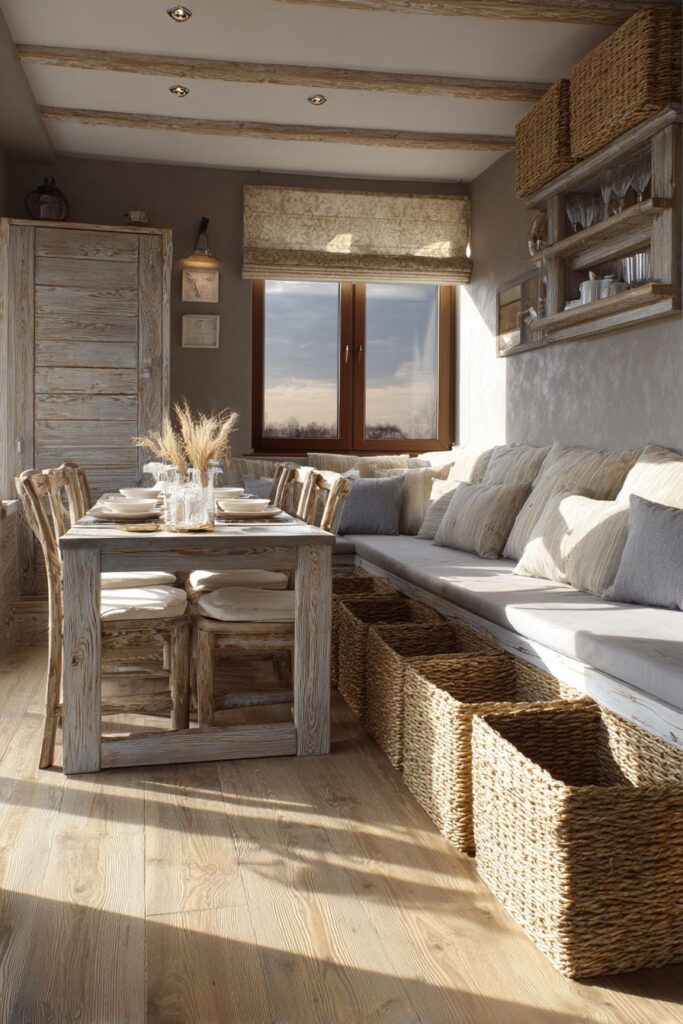
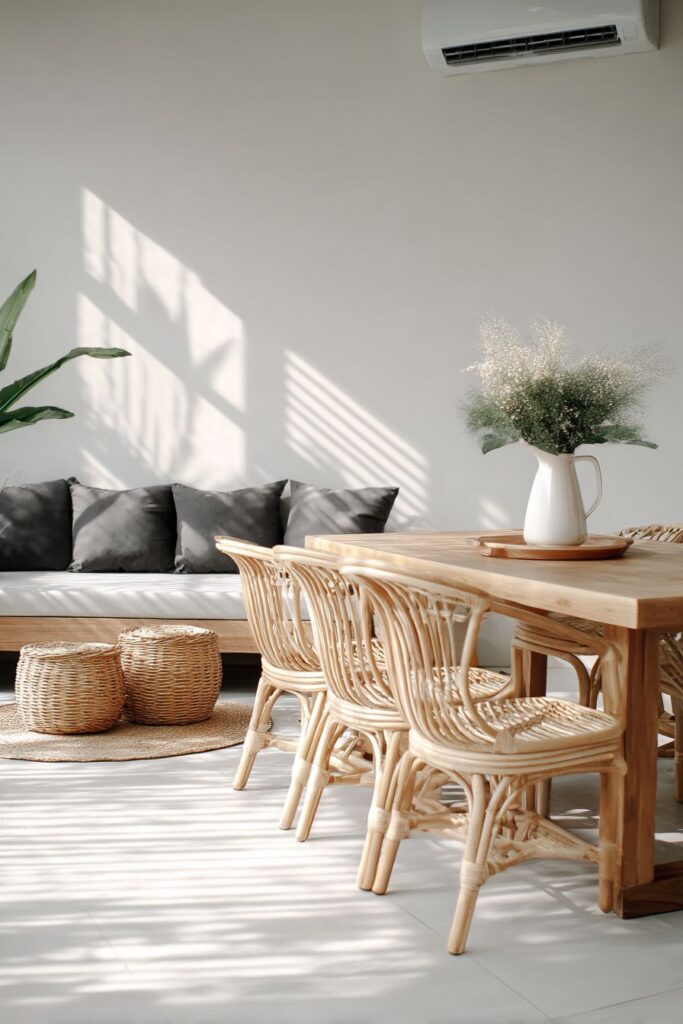
This innovative design showcases how creative thinking about seating arrangements can solve multiple challenges simultaneously. The concept centers on a dining bench positioned against the wall that extends seamlessly from the sofa area, creating one continuous seating element that serves both living and dining functions. This unified approach eliminates the need for separate pieces and creates visual flow that makes the small space feel more cohesive and intentional. The bench provides dining seating on one side while connecting to the living area’s sofa, blurring the boundaries between zones in an elegant, space-efficient way.
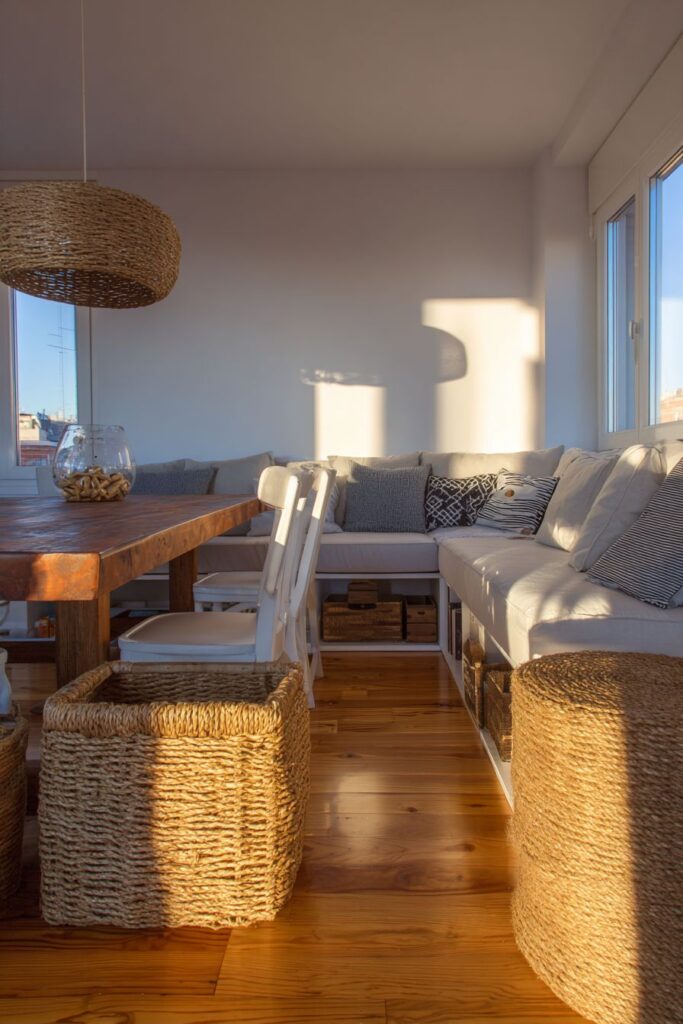
The rectangular dining table is crafted from natural walnut, a wood species prized for its rich, chocolate-brown color and distinctive grain patterns. Walnut brings warmth and sophistication to any space, and its dark tones create beautiful contrast against lighter elements in the room. The table’s rectangular shape allows it to fit efficiently along the wall when not in full use, while providing ample surface area for dining, work, or other activities. The natural finish showcases the wood’s inherent beauty, bringing organic character to the space.

On the opposite side of the table, mismatched vintage chairs create an eclectic, collected-over-time aesthetic that adds personality and charm. Rather than matching the modern bench, these chairs introduce history and individuality to the dining area. Vintage chairs often feature unique details, patinas, and construction techniques that mass-produced modern furniture lacks, and the deliberate mismatch prevents the space from feeling too coordinated or sterile. This approach also offers practical flexibility—vintage chairs can be found affordably at thrift stores, estate sales, and antique shops, making the design budget-friendly while being environmentally conscious.
The living area features a compact sofa positioned to face away from the dining zone, creating some visual separation while maintaining the open feel. Natural jute baskets tucked beneath the bench provide concealed storage that’s both beautiful and functional. Jute is a sustainable natural fiber with wonderful texture that complements the wood tones and vintage elements, while the baskets can hold anything from table linens and extra cushions to magazines and toys, keeping clutter hidden but accessible.
Key Design Tips:
- Create continuous seating by extending a bench from the sofa area to serve both living and dining functions
- Choose a rich wood like walnut for the dining table to add warmth and visual weight as a focal point
- Embrace mismatched vintage chairs for character, sustainability, and budget-friendly furnishing
- Use natural jute baskets for concealed storage that adds texture while keeping clutter out of sight
- Position the sofa to face away from the dining area to create subtle psychological separation between zones
- Allow natural materials like wood, jute, and vintage textiles to bring organic warmth to the space
- Mix modern and vintage elements to create a layered, collected aesthetic with personality
6. Modern Transparency with Mirror Magic
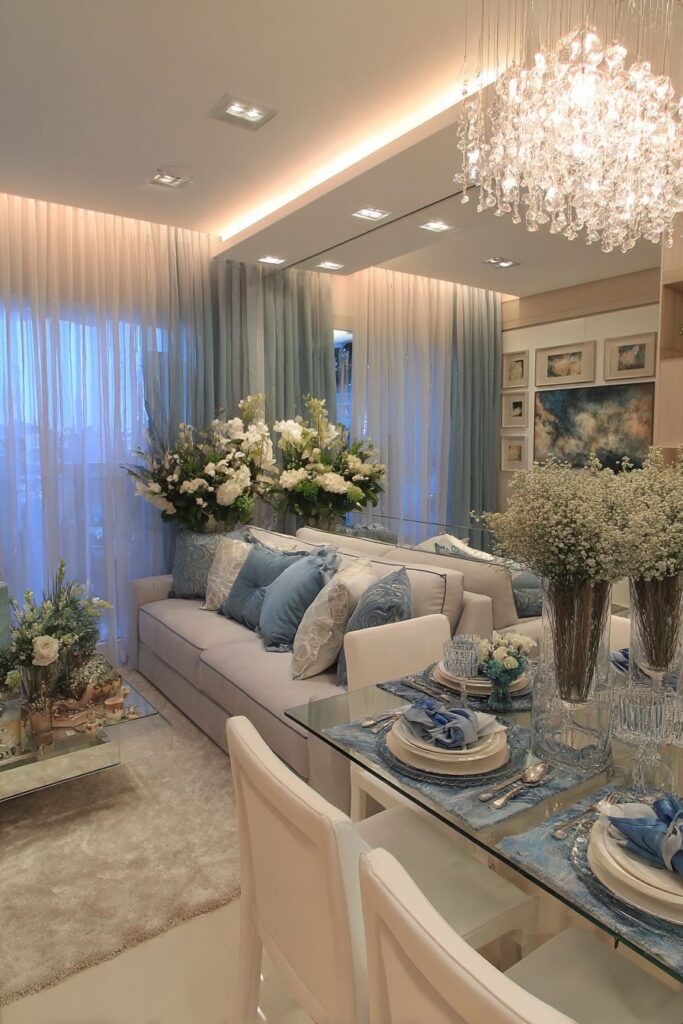
This design demonstrates how reflective and transparent materials can dramatically alter spatial perception in small rooms. The centerpiece is a sleek grey sofa with clean, contemporary lines positioned perpendicular to the dining area rather than parallel to it. This perpendicular arrangement creates a more dynamic layout that breaks away from predictable furniture placement, while the grey upholstery provides sophisticated neutrality that works with virtually any accent color. The sofa’s modern silhouette keeps the aesthetic streamlined and uncluttered.
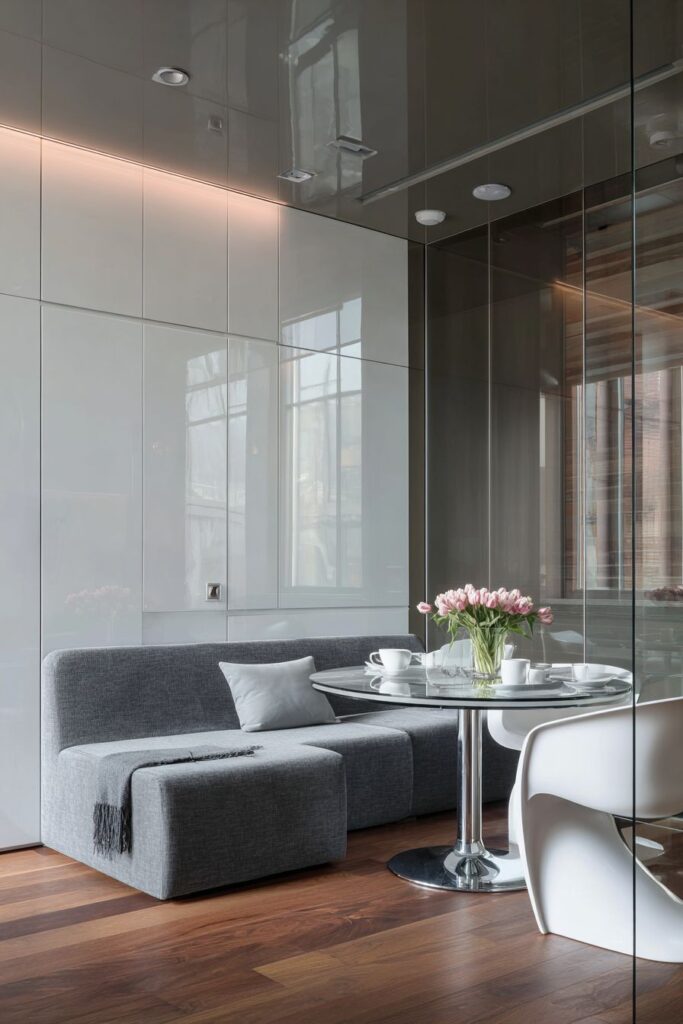
The dining table is where this design truly shines—a glass top supported by a chrome pedestal base creates a piece that’s almost invisible, maintaining precious sight lines across the small space. Glass dining tables are magical in compact rooms because they occupy physical space without visual weight. You can see straight through them to the floor and the wall beyond, preventing the table from creating a visual barrier that would make the room feel smaller. The chrome pedestal base adds contemporary sparkle while taking up minimal footprint compared to four-legged table bases.

White dining chairs with molded plastic seats continue the theme of visual lightness. Molded plastic chairs, descendants of mid-century modern design, combine sculptural form with practical function. Their single-piece construction eliminates visual complexity, and the white color allows them to recede into the background rather than competing for attention. These chairs are also typically lightweight and stackable, making them easy to move when you need to reconfigure the space. The plastic material is easy to clean—an important consideration for dining furniture.
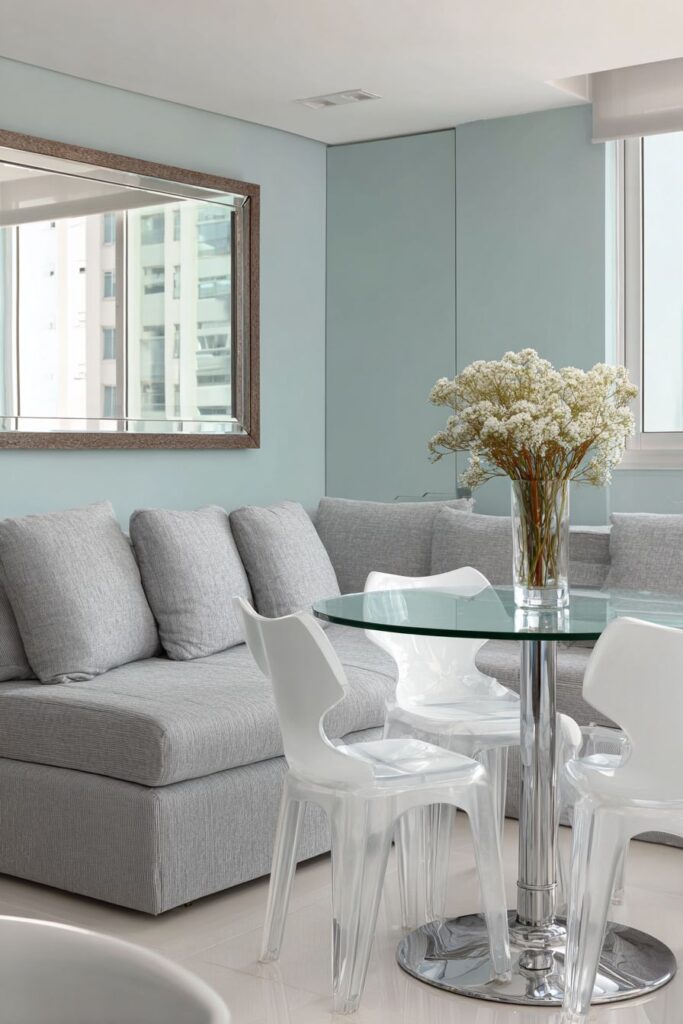
The true genius of this space is the large mirror positioned on the dining area wall. Mirrors are the designer’s secret weapon in small spaces, creating the illusion of depth and effectively doubling the perceived size of the room. This mirror reflects light from windows, making the space feel brighter, and reflects the room itself, suggesting that the space continues beyond its actual boundaries. The mirror’s placement on the dining area wall is strategic—it reflects the living area, making both zones feel larger and more connected.
Key Design Tips:
- Choose a glass-top dining table to maintain sight lines and prevent visual barriers in small spaces
- Position furniture perpendicular rather than parallel to create more dynamic, interesting layouts
- Install a large mirror on one wall to double the perceived space and reflect natural light
- Select white or transparent chairs that provide seating without adding visual weight
- Use reflective materials like chrome and glass throughout to bounce light and create sparkle
- Keep the color palette neutral with grey upholstery and white accents for a clean, modern aesthetic
- Embrace the principle that what you can see through takes up less visual space than solid objects
7. Cozy Farmhouse with Rustic Comfort

Farmhouse style brings warmth, comfort, and lived-in charm to small spaces, proving that cozy doesn’t have to mean cluttered. This design centers on a slipcovered sofa in natural linen, embodying the relaxed, washable practicality that defines farmhouse living. Slipcovers are brilliant for families because they can be removed and laundered, keeping the sofa fresh even with daily use. The natural linen fabric brings texture and organic beauty while its neutral color creates a calm backdrop for other elements. The sofa’s casual silhouette invites relaxation, making the living area feel like a true retreat.
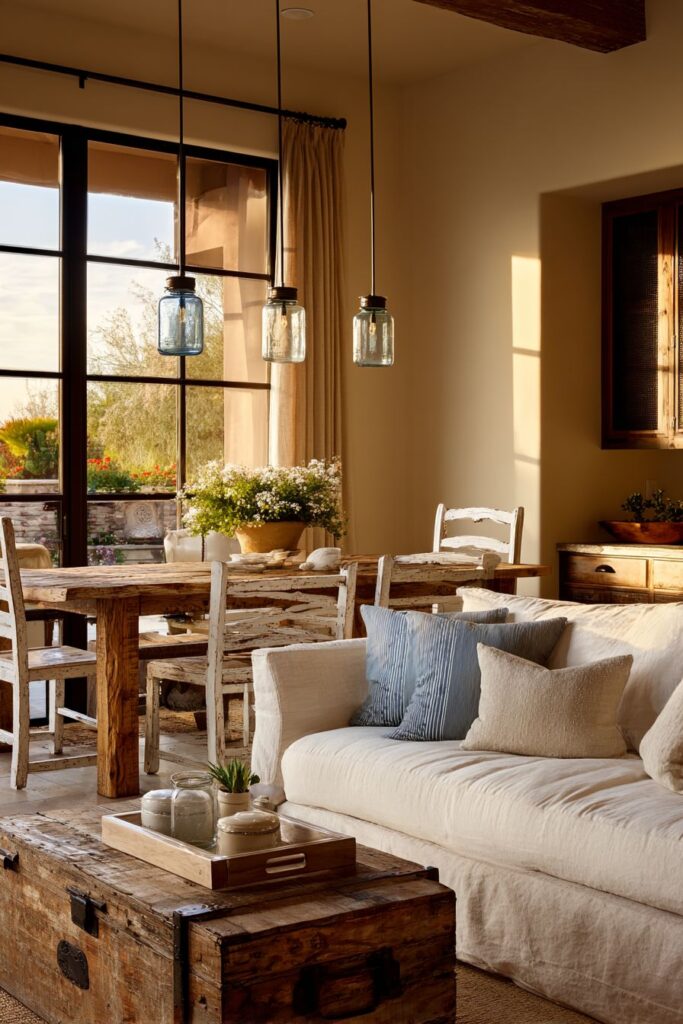
The dining table is crafted from rustic wood with visible grain patterns that celebrate the material’s natural character. Unlike polished, formal dining tables, rustic farmhouse tables often feature knots, color variations, and organic imperfections that add authenticity and warmth. The visible grain tells a story, connecting the space to traditional craftsmanship and natural materials. This type of table pairs beautifully with the casual farmhouse aesthetic, creating a surface that’s meant to be used and enjoyed rather than kept pristine.
Ladder-back dining chairs painted in distressed white complement the casual, vintage-inspired aesthetic. Ladder-back chairs are a traditional American form characterized by horizontal slats that resemble a ladder, and they’re quintessentially farmhouse in style. The distressed white paint adds to the vintage character—intentional wear reveals wood beneath the paint, creating a patina that suggests the chairs have been loved for years. This distressing technique prevents the white from feeling too stark or modern, keeping it soft and approachable.
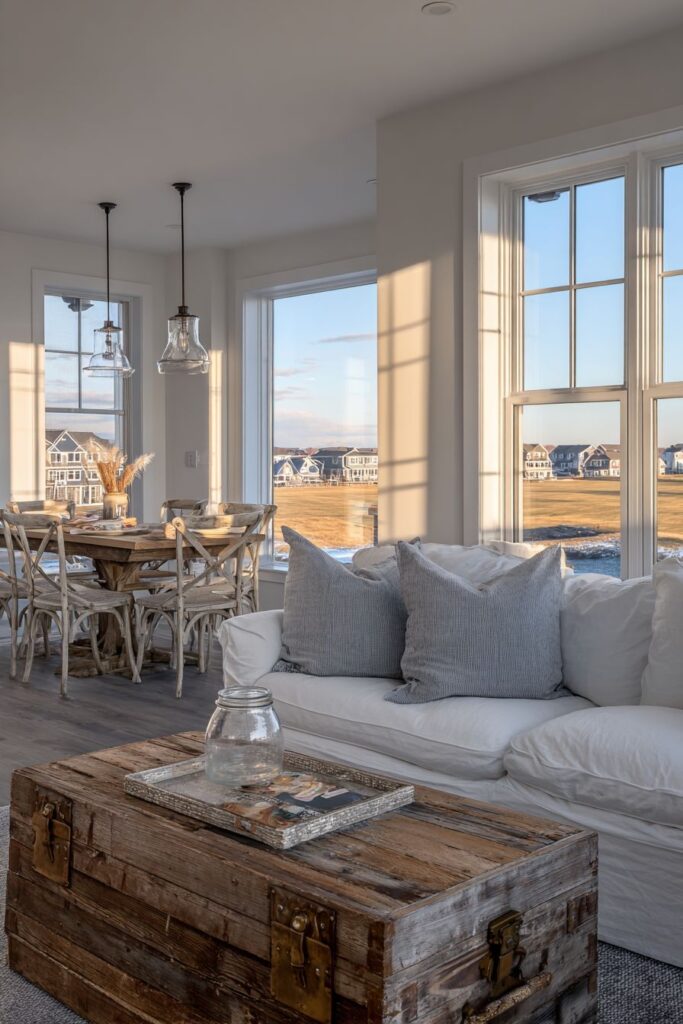
A vintage wooden trunk serves double duty as a coffee table and storage piece, embodying the farmhouse principle of functional beauty. Trunks were originally designed for travel and storage, and repurposing them as coffee tables brings history into the space while providing concealed storage for blankets, games, remotes, and other living room essentials. The trunk’s weathered wood and vintage hardware add character that new furniture simply can’t replicate. Above the dining area, mason jar pendant lights bring farmhouse charm—these fixtures transform humble glass jars into lighting features that cast warm, ambient light while celebrating American rural traditions.

Key Design Tips:
- Choose a slipcovered sofa for easy maintenance and relaxed, casual style that defines farmhouse living
- Select a rustic wood dining table with visible grain, knots, and imperfections that celebrate natural materials
- Paint dining chairs in distressed white to achieve an authentic vintage farmhouse aesthetic
- Repurpose a vintage trunk as a coffee table to add character while providing hidden storage
- Install mason jar pendant lights to embrace farmhouse charm while providing ambient lighting
- Embrace weathered, worn finishes that suggest history and lived-in comfort
- Keep the overall palette neutral with whites, natural linens, and warm wood tones
8. Space-Efficient Innovation with Convertible Elements
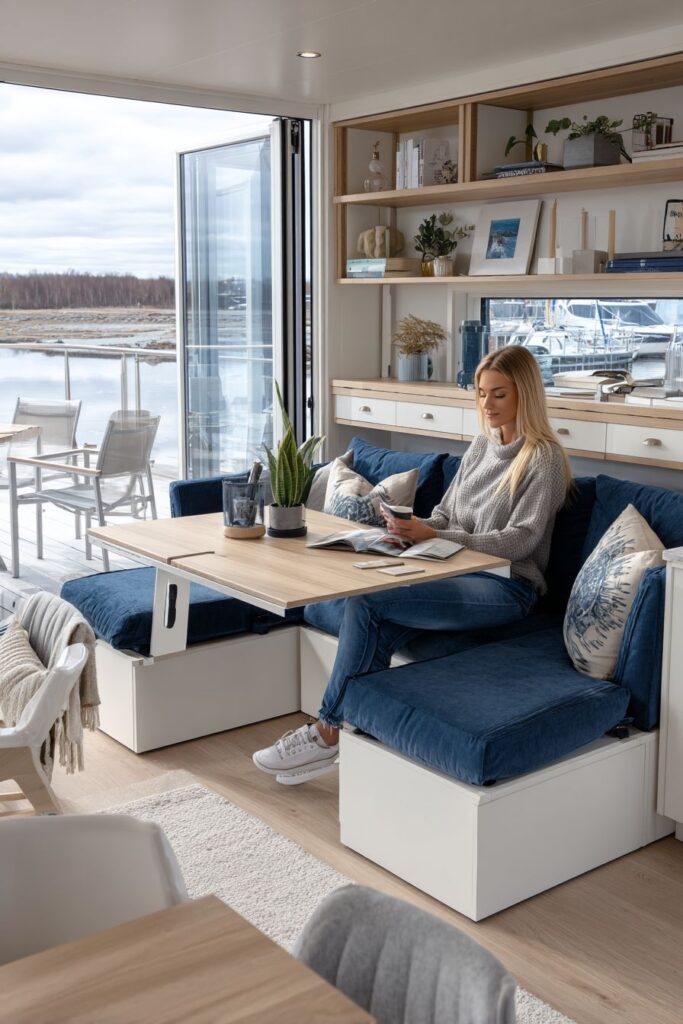
This design represents the pinnacle of space-saving innovation, perfect for truly compact spaces where every square inch must earn its keep. The living area features a compact sectional in navy blue fabric, a bold color choice that adds personality and depth to the space. The sectional creates an L-shaped seating arrangement that maximizes seating capacity within a minimal footprint, while the navy color provides a sophisticated backdrop that can work with various accent colors. The compact scale ensures the sectional doesn’t overwhelm the small room, while its configuration defines the living zone clearly.
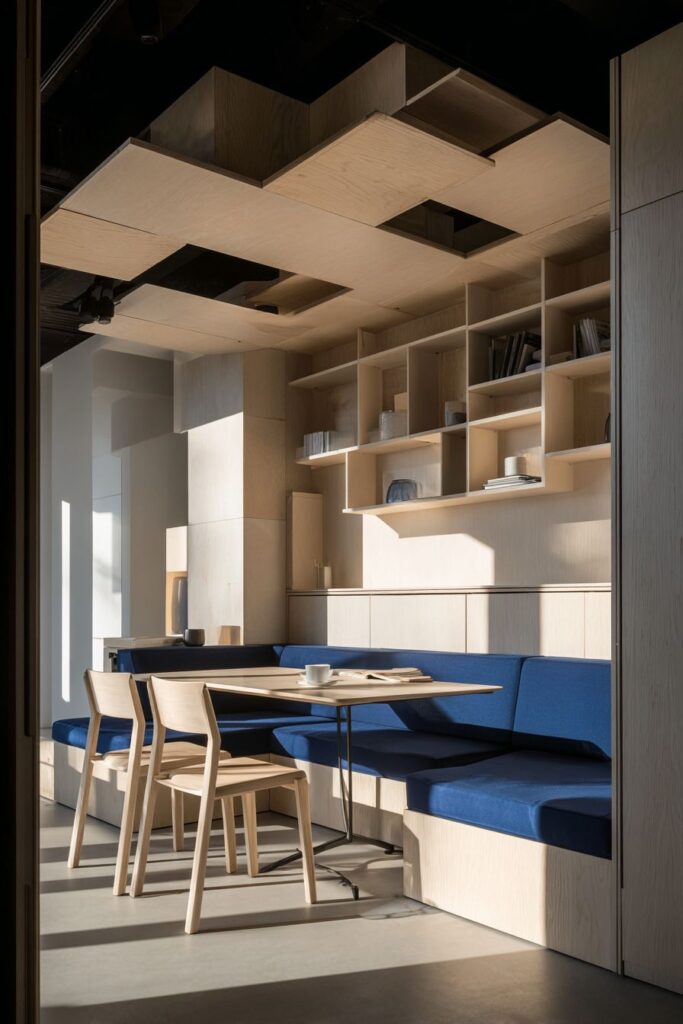
The dining solution is brilliantly innovative—a fold-down wall-mounted table in light wood that drops down only when needed. These Murphy-style tables attach to the wall with sturdy hinges and fold flat against the wall when not in use, completely disappearing and freeing up the floor space for living area activities. When it’s time to eat, the table simply lowers into position, providing a full dining surface. The light wood finish keeps the folded-up table from appearing heavy or dark against the wall, and its clean lines complement the modern aesthetic. This convertibility means you can have a spacious living area most of the time, with dining capability always available.
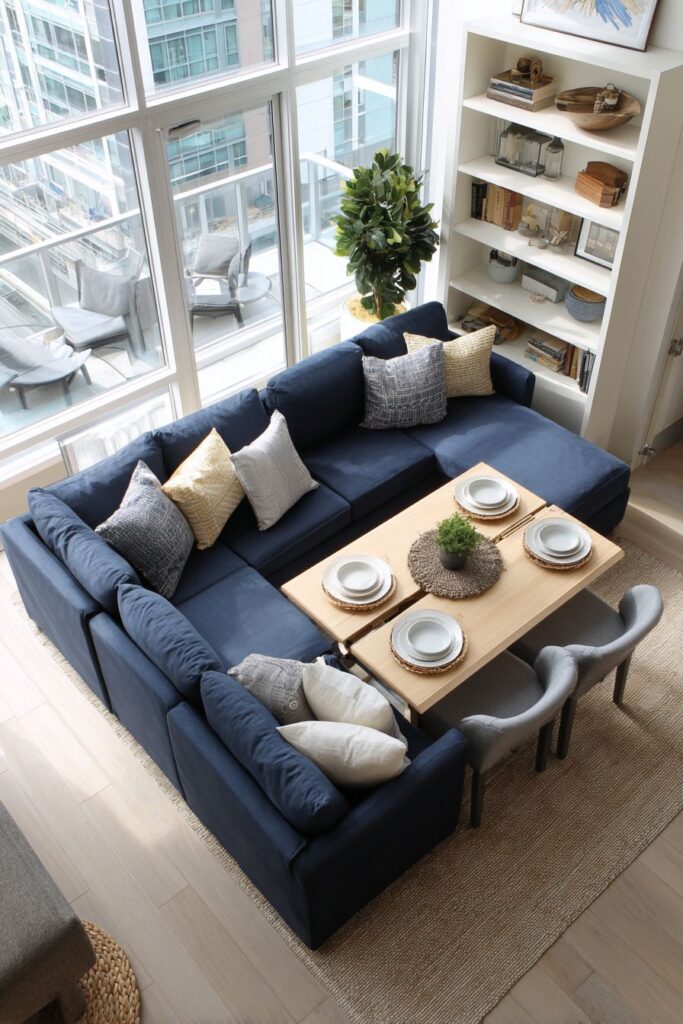
Paired with the fold-down table are folding chairs stored nearby—perhaps in a closet, behind the door, or tucked into a niche. Folding chairs have come a long way from uncomfortable metal varieties; modern versions offer comfort and style while maintaining the ability to fold flat for storage. When dinner is over, the chairs fold up and the table folds away, instantly returning the room to its full living configuration. This flexibility is invaluable in small spaces where adaptability is essential.
Open shelving mounted above the dining area serves dual purposes: displaying minimal decor that brings personality to the space and providing practical storage for dishes, glasses, and dining essentials. The open design prevents the shelves from feeling heavy or enclosing, maintaining the airy feel that’s crucial in small spaces. The shelving’s placement above the fold-down table is strategic—it keeps dining items accessible while utilizing vertical space that might otherwise go unused.

Key Design Tips:
- Install a fold-down wall-mounted table that disappears when not in use to maximize floor space
- Choose folding chairs that can be stored in a closet or niche rather than taking up permanent floor space
- Use a compact sectional to maximize seating while defining the living zone in an L-shape configuration
- Mount open shelving above the dining area for storage and display without adding visual weight
- Select bold colors like navy blue for the sofa to add personality without requiring additional decor
- Embrace convertible furniture that allows the space to transform based on current needs
- Keep the design streamlined with minimal decor so the space doesn’t feel cluttered when furniture is deployed
9. Industrial Urban with Raw Material Mix
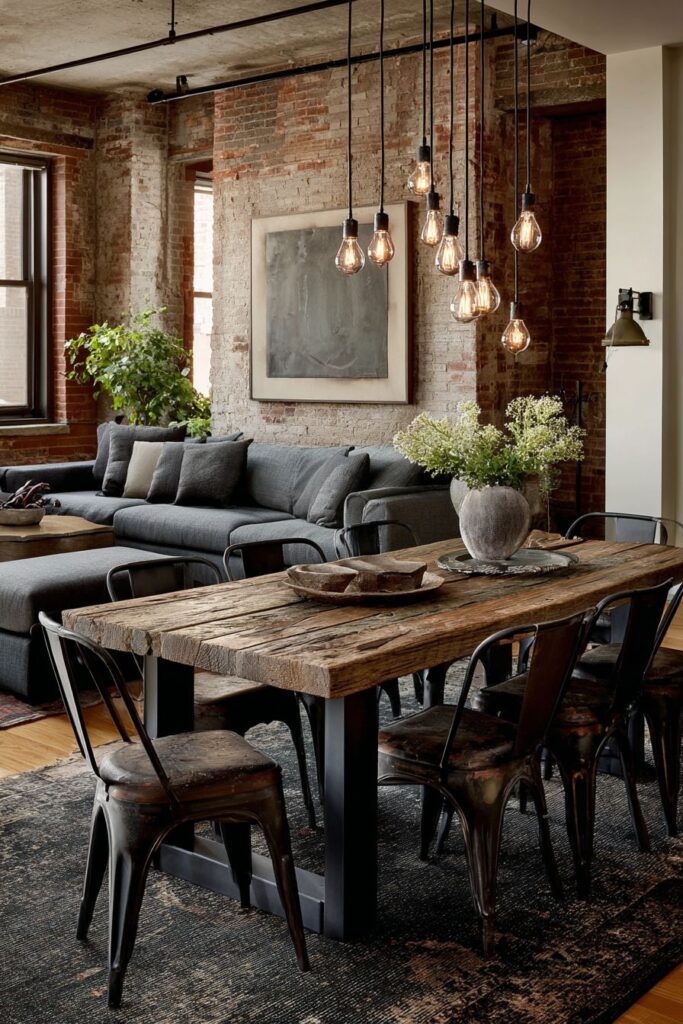
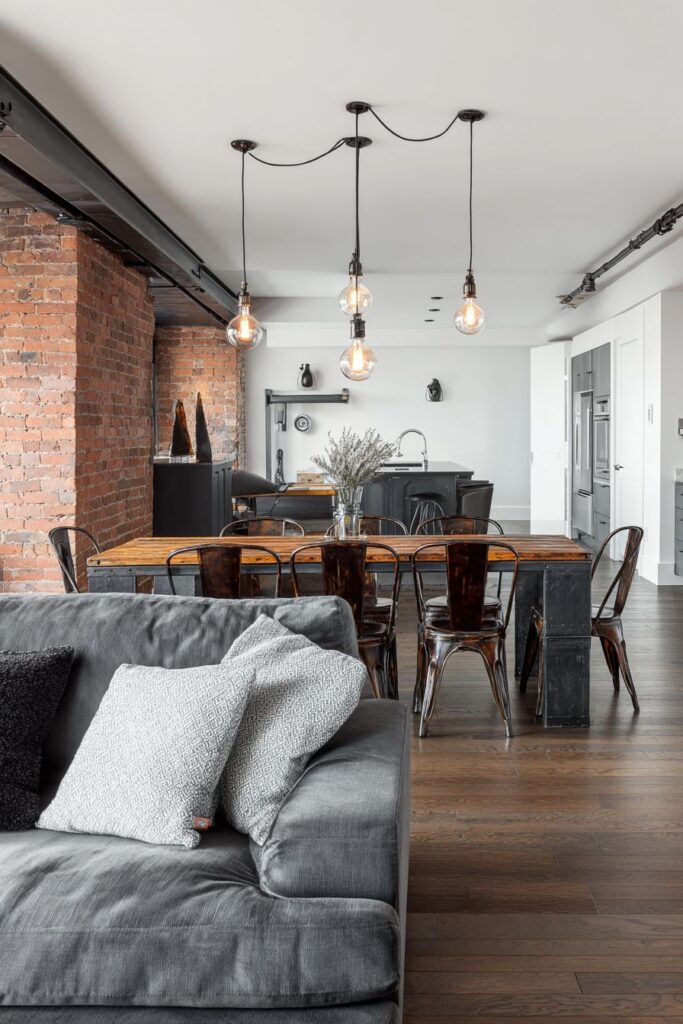
Industrial design brings urban edge and masculine energy to small living spaces through the strategic use of raw, unfinished materials and utilitarian furniture. This design features a low-profile sofa in charcoal grey, a color that provides neutral sophistication while complementing the darker, moodier palette typical of industrial spaces. The low profile keeps the sight lines open, preventing the sofa from blocking views across the room, while the charcoal color anchors the living zone with solid visual weight.
The dining table embodies industrial aesthetic with its metal frame and reclaimed wood top—a combination that perfectly captures the style’s essence. Metal frames, often in black or raw steel finishes, provide structural honesty that industrial design celebrates, showcasing the mechanics of how things are built rather than hiding them. The reclaimed wood top brings warmth and history, with each mark, scratch, and color variation telling a story of its previous life. This marriage of cold metal and warm wood creates visual interest and textural contrast that prevents the space from feeling too severe or cold.
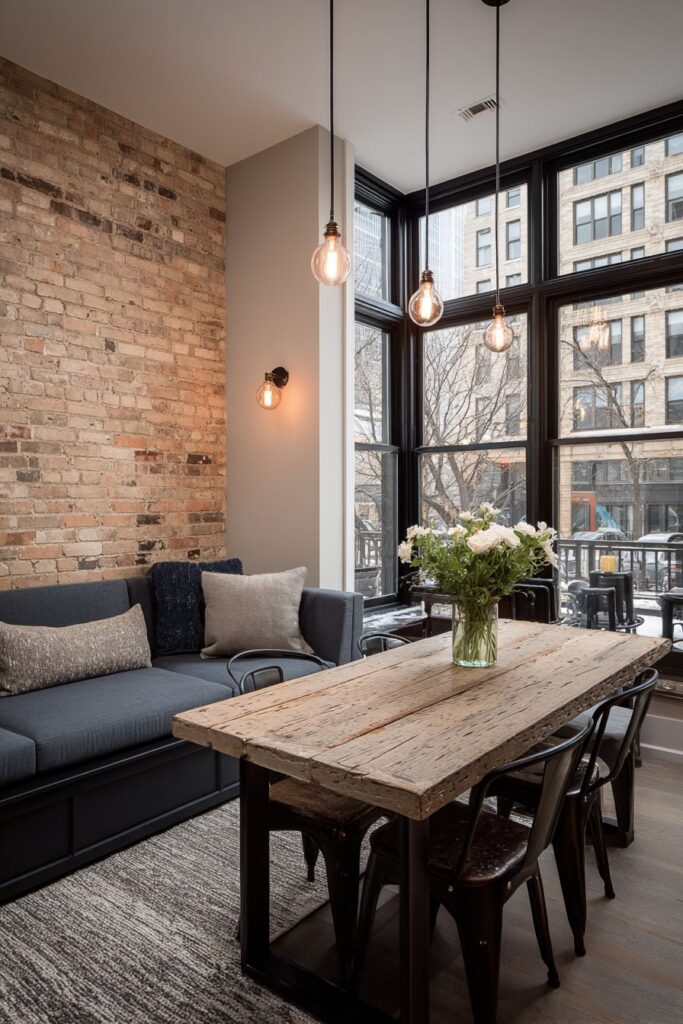
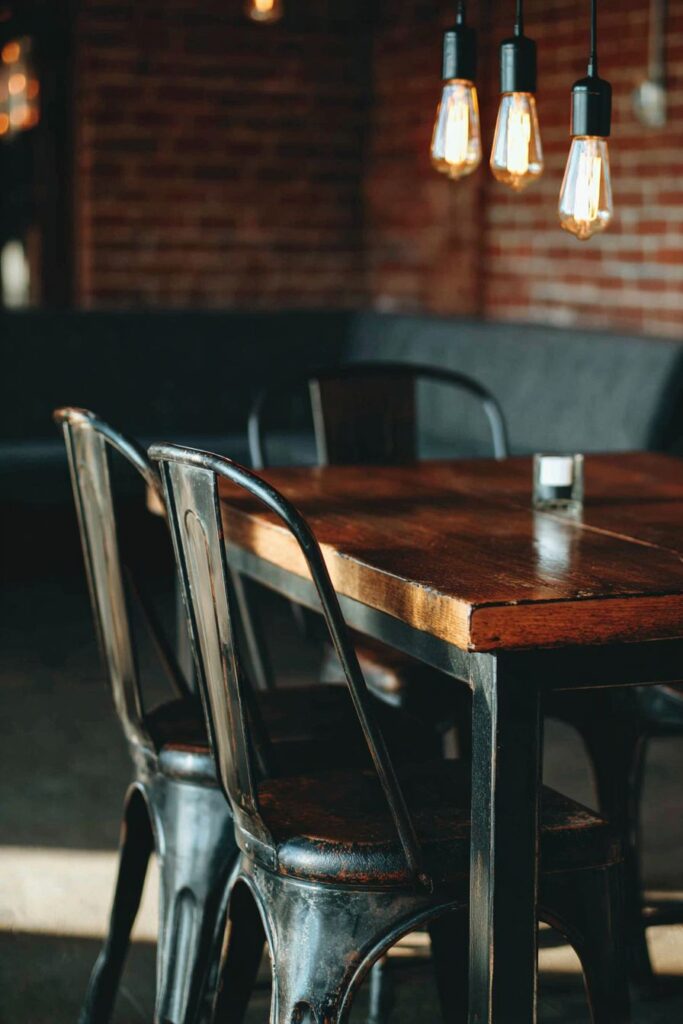
Black metal dining chairs with distressed leather seats continue the industrial theme while providing comfortable seating. Metal chairs reference factory and workshop furniture, bringing authentic industrial character to the dining area. The distressed leather seats add a second texture and introduce brown tones that warm the space, while their worn appearance suggests age and use. These chairs are typically sturdy and substantial, built to last—a quality that industrial design values highly.
The exposed brick accent wall behind the dining area is a hallmark of industrial style, adding tremendous texture and visual interest. Exposed brick brings architectural character, warmth, and a sense of permanence to the space. Its varied tones—ranging from deep reds to oranges to browns—create depth that painted walls can’t match. Edison bulb pendant lights suspended from black cords provide ambient lighting while celebrating early industrial electrical fittings. The visible filaments in Edison bulbs create warm, atmospheric light while serving as sculptural elements themselves.
Key Design Tips:
- Combine metal and wood furniture to achieve the signature industrial aesthetic of mixed raw materials
- Expose or add brick walls to bring texture, warmth, and architectural character to the space
- Choose distressed leather and worn finishes that suggest age and authentic use
- Install Edison bulb pendant lights with exposed filaments for ambient lighting and vintage industrial charm
- Use a charcoal or dark grey sofa to anchor the living area while complementing industrial materials
- Embrace visible construction elements like metal frames and black cords rather than concealing them
- Keep the color palette in the moody, darker range with blacks, greys, browns, and warm metallics
10. Bright Coastal with Weathered Textures
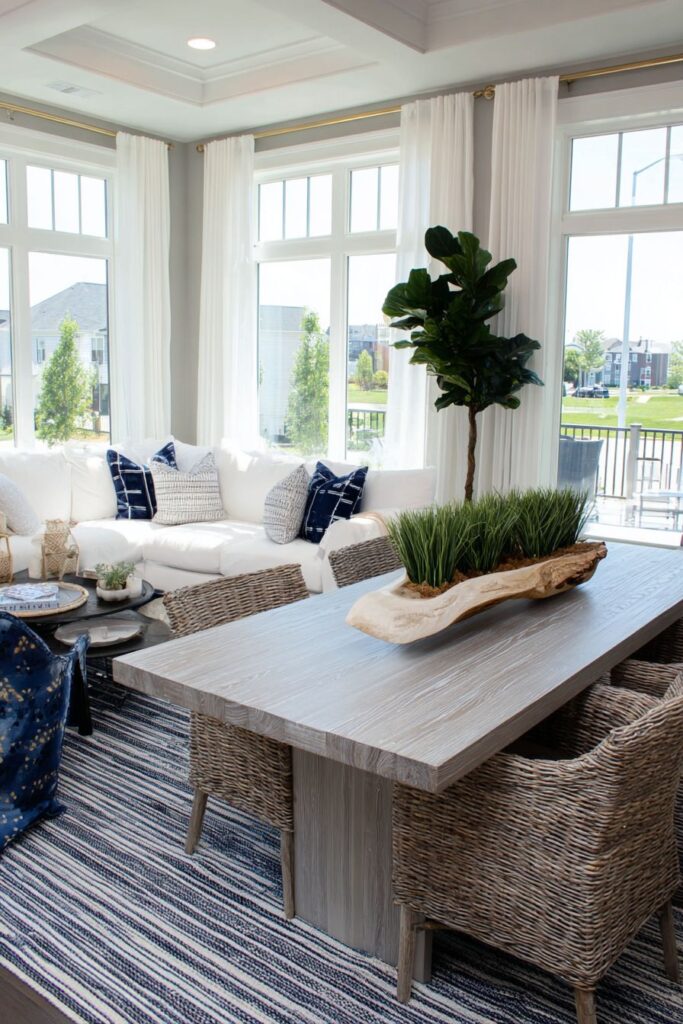
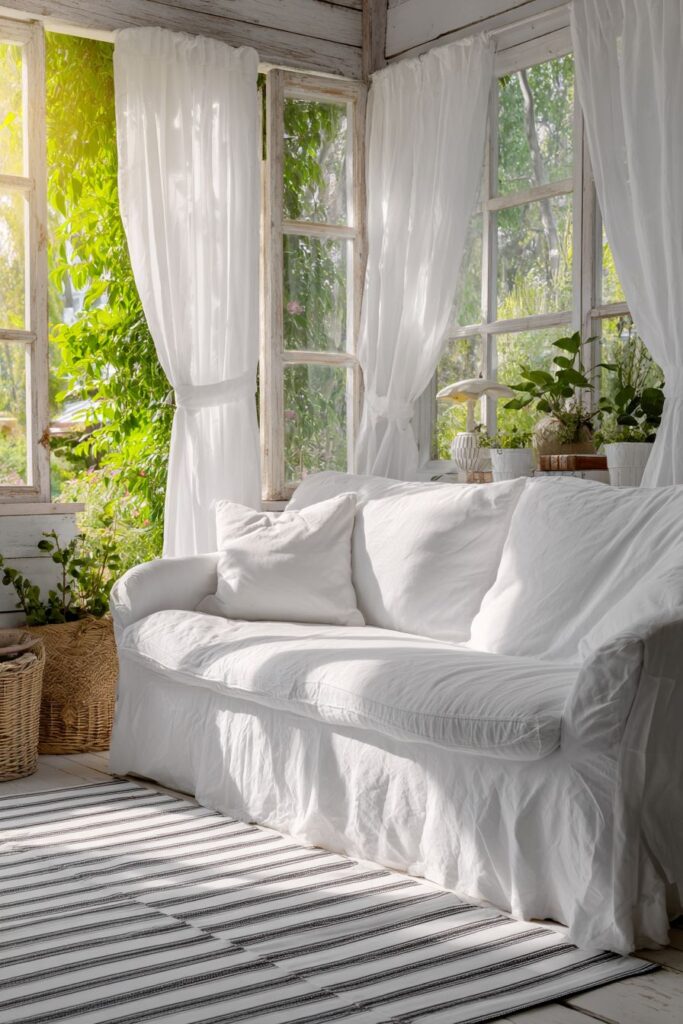
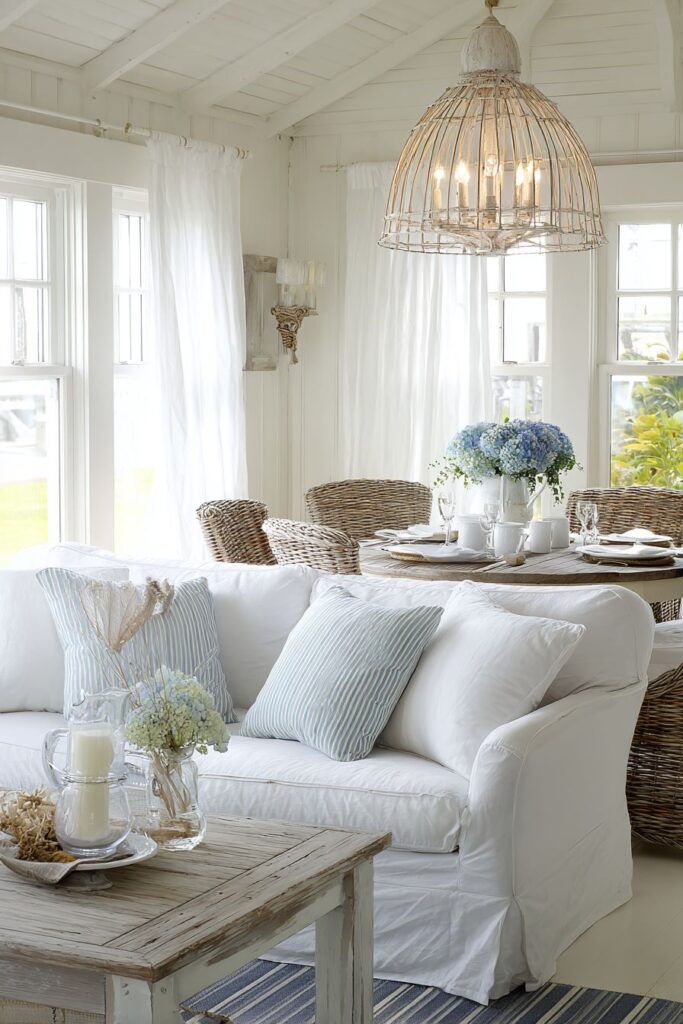
Coastal design brings the relaxed, breezy atmosphere of beach living into small spaces through the strategic use of light colors, natural textures, and weathered finishes. This design centers on a white slipcovered sofa that embodies coastal style’s emphasis on casual comfort and easy maintenance. White slipcovers are practical for coastal living—they can be removed and bleached clean, keeping the sofa fresh even with sandy feet and salty air. The white color also maximizes light reflection, making the small space feel brighter and more open while creating a clean backdrop that evokes beach houses and seaside cottages.
The dining table is crafted from weathered wood finished in driftwood grey, a color that perfectly captures the sun-bleached, salt-washed appearance of wood found on beaches. This grey-toned finish brings coastal authenticity while remaining neutral enough to work with various accent colors. The weathered appearance adds character without heaviness, and the grey tone prevents the wood from dominating visually, keeping the overall aesthetic light and airy. The table’s finish suggests the organic weathering process that occurs naturally when wood is exposed to ocean elements.
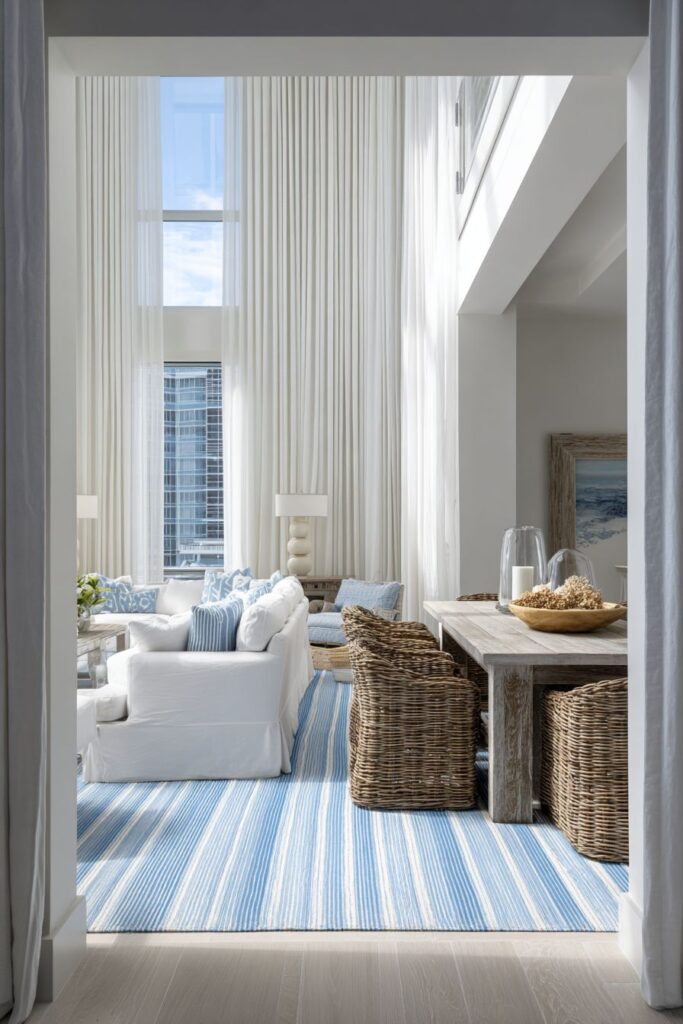
Rattan dining chairs introduce natural texture while maintaining the light, airy feeling essential to coastal style. Rattan is a vine-like palm that’s woven into furniture frames, creating pieces that are both sturdy and visually light. The natural material brings organic warmth and tropical references, connecting the space to beach destinations and island living. Rattan’s open weave allows light to pass through, preventing the chairs from adding visual weight. The material’s natural color—usually a warm tan or honey tone—complements the driftwood grey table beautifully.
A striped navy and white area rug grounds the living space while reinforcing the coastal theme. Stripes are classic in coastal design, referencing boat sails, beach umbrellas, and nautical flags. The navy and white color combination is crisp and nautical without being overly themed or kitschy. The rug defines the living zone while its pattern adds visual interest to the predominantly neutral space. Sheer white linen curtains filter natural light beautifully, diffusing harsh sunlight into a soft, ambient glow while maintaining privacy. The linen fabric’s natural texture adds organic beauty while its white color contributes to the breezy, bright atmosphere.
Key Design Tips:
- Use a white slipcovered sofa as the foundation for an easily maintained, bright coastal living area
- Choose weathered wood in driftwood grey tones to evoke sun-bleached beach wood
- Incorporate rattan or wicker furniture for natural texture that maintains visual lightness
- Add navy and white striped textiles for classic nautical references without being overly themed
- Install sheer linen curtains that filter and diffuse natural light while providing soft privacy
- Keep the overall palette light with whites, soft greys, and natural material tones
- Embrace weathered, casual finishes that suggest relaxed beach living rather than formal elegance
11. Contemporary Sophistication with Neutral Layers
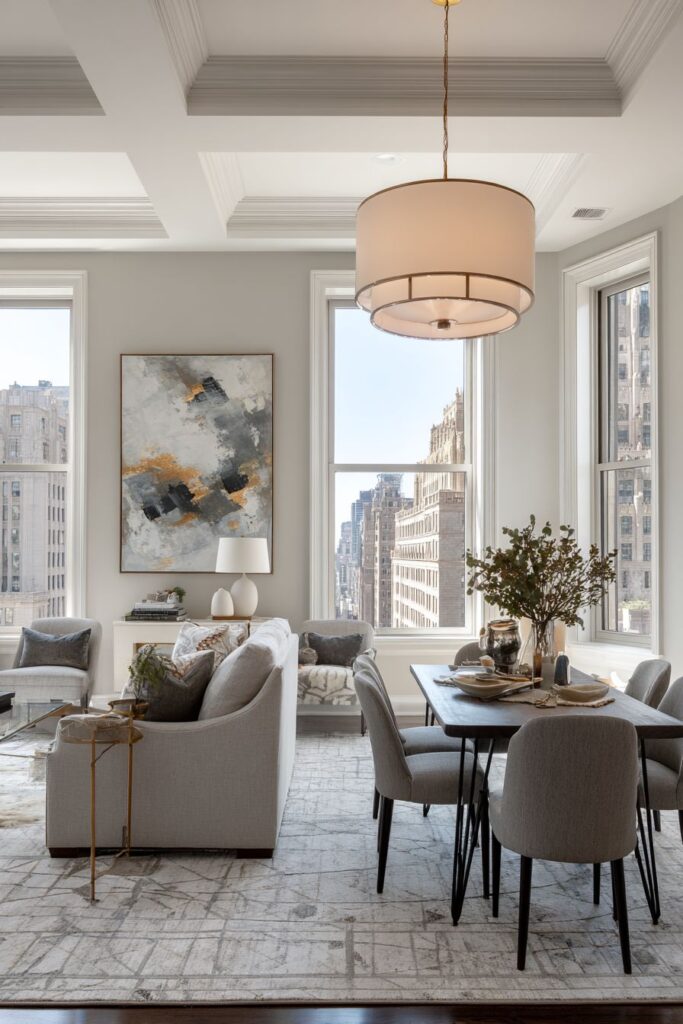
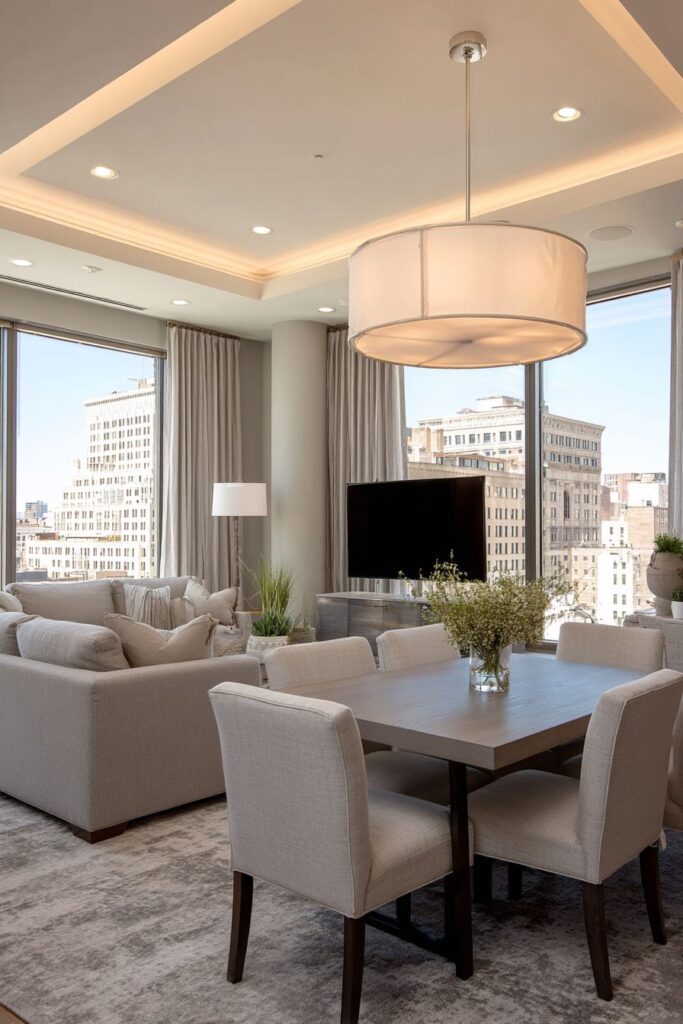
This design showcases how a sophisticated, contemporary space can be achieved through careful attention to furniture scale, neutral color layering, and lighting design. The living area features a streamlined sofa in warm taupe, a color that sits between beige and grey, offering warmth without the potential yellowness of beige or the coolness of grey. Taupe is sophisticated and versatile, working beautifully as a neutral base that can be accented with virtually any color. The streamlined profile keeps the look contemporary and clean, while the warm tone prevents the space from feeling cold or unwelcoming.
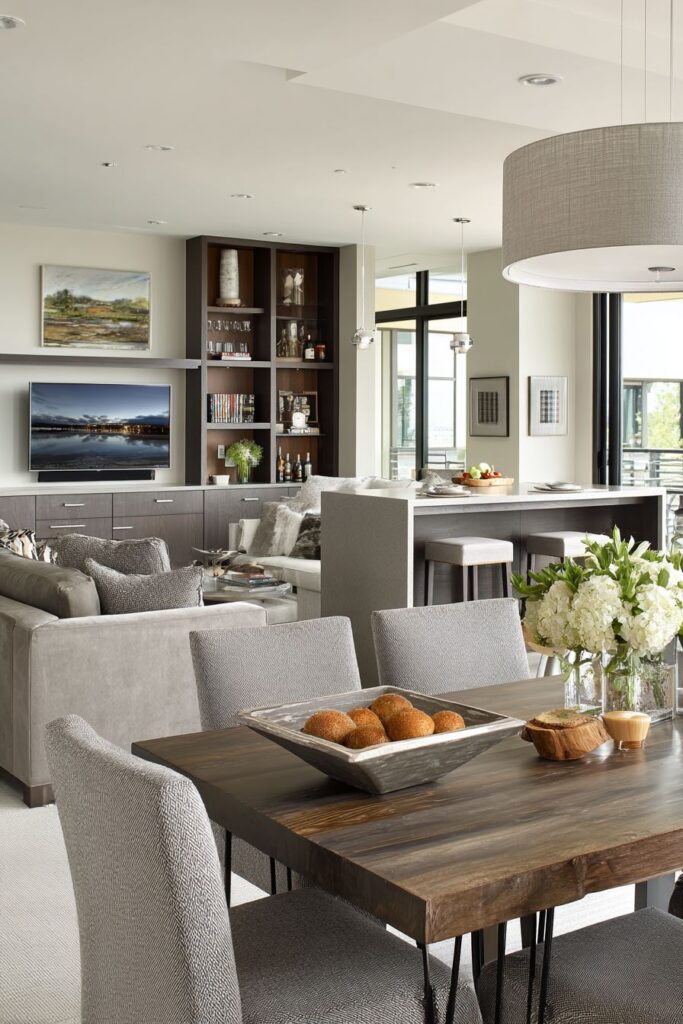
The dining table features hairpin legs in matte black—slender metal legs that taper down from the table top in graceful curves. Hairpin legs are a mid-century modern invention that’s been embraced by contemporary design for their minimal footprint and sculptural simplicity. The matte black finish adds graphic punch and provides contrast against lighter elements, while the slender profile ensures the legs don’t visually compete with the table top. The rectangular table shape works efficiently in the space, providing ample dining surface while fitting well along a wall when necessary.
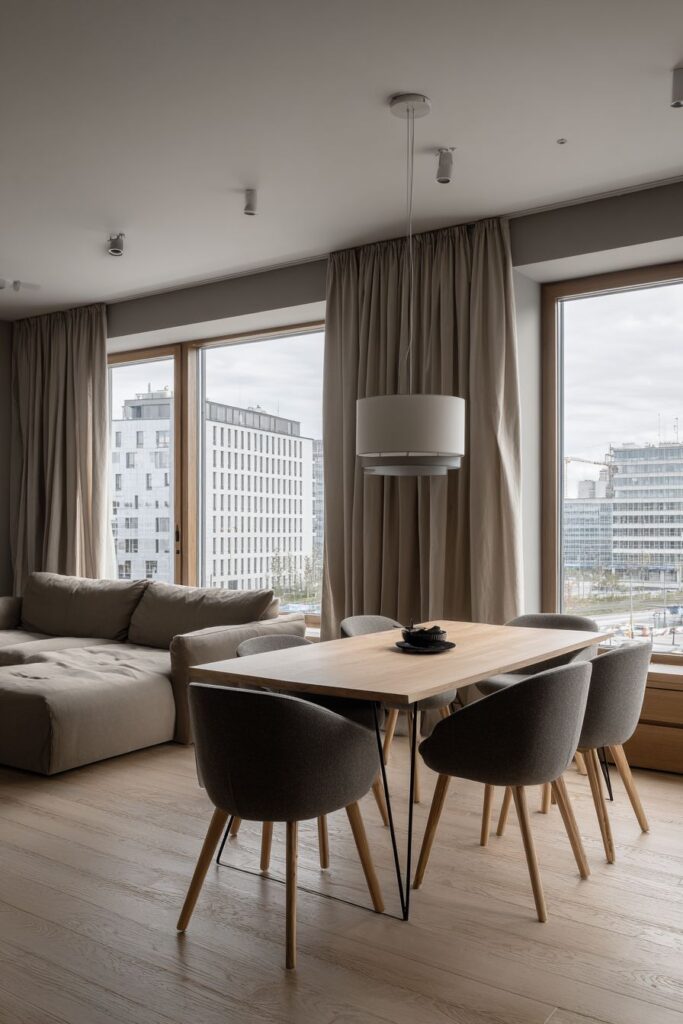
Upholstered dining chairs in coordinating neutral fabric provide comfortable seating that complements rather than matches the sofa. Coordination rather than matching is key to sophisticated design—the chairs’ neutral fabric relates to the taupe sofa without being identical, creating cohesion while allowing each piece to have its own identity. Upholstered chairs are more comfortable for long dinners than wood or metal alternatives, encouraging lingering over meals and conversation. The neutral fabric keeps the overall palette calm and sophisticated.
A low-profile media console separates the zones without blocking sight lines, providing essential storage for media equipment while maintaining the open feel. The console’s low height—typically under 24 inches—ensures it doesn’t create a visual barrier between living and dining areas, while its surface provides space for a television and decorative objects. Recessed lighting combined with a statement drum pendant over the dining table creates layered illumination that’s both functional and atmospheric. Recessed lights provide overall ambient light, while the drum pendant focuses attention on the dining area and creates a focal point. The drum shape is clean and contemporary, adding architectural interest without visual clutter.
Key Design Tips:
- Choose warm taupe upholstery to create sophisticated neutrality with more warmth than grey
- Select dining tables with hairpin legs for minimal visual weight and contemporary style
- Use upholstered dining chairs for comfort that encourages lingering over meals
- Install a low-profile media console that provides storage without blocking sight lines between zones
- Layer lighting with recessed ambient light and statement pendants for functional beauty
- Coordinate colors and finishes rather than matching them exactly for sophisticated cohesion
- Keep the palette neutral with various shades of taupe, beige, and warm greys for understated elegance
12. Bohemian Eclecticism with Layered Textures
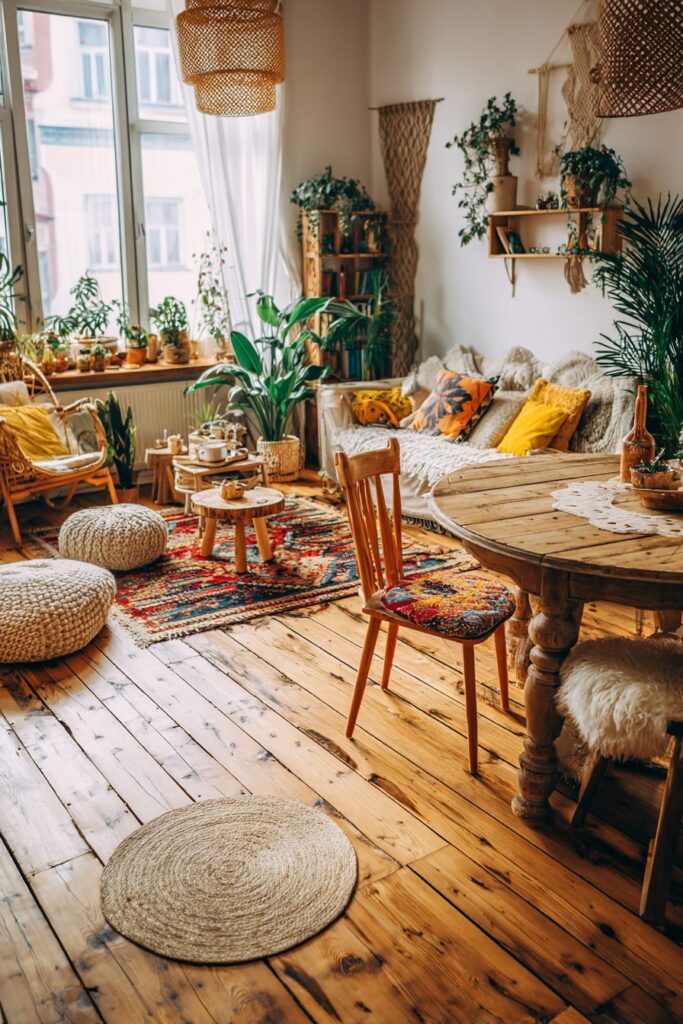
Bohemian style celebrates individuality, global influences, and the beauty of collecting pieces over time rather than purchasing a coordinated set. This design features a low-slung sofa piled with textured throw pillows that create an inviting, relaxed seating area. The low profile is characteristic of bohemian style, creating casual seating that encourages lounging and conversation. The abundance of throw pillows in various textures, patterns, and colors adds comfort while showcasing the collected-over-time aesthetic. Each pillow can tell a story—perhaps one is vintage, another handmade, another purchased during travel.

A vintage kilim rug layers texture and pattern onto the floor, grounding the living area with global style. Kilim rugs are flat-woven textiles from Turkey, the Middle East, and Central Asia, featuring bold geometric patterns and rich colors achieved with natural dyes. Vintage kilims have a worn patina that new rugs lack, and their bold patterns add visual interest without the softness of pile rugs. The geometric designs bring global influence while the rich colors—often featuring reds, oranges, blues, and creams—create warmth and character.
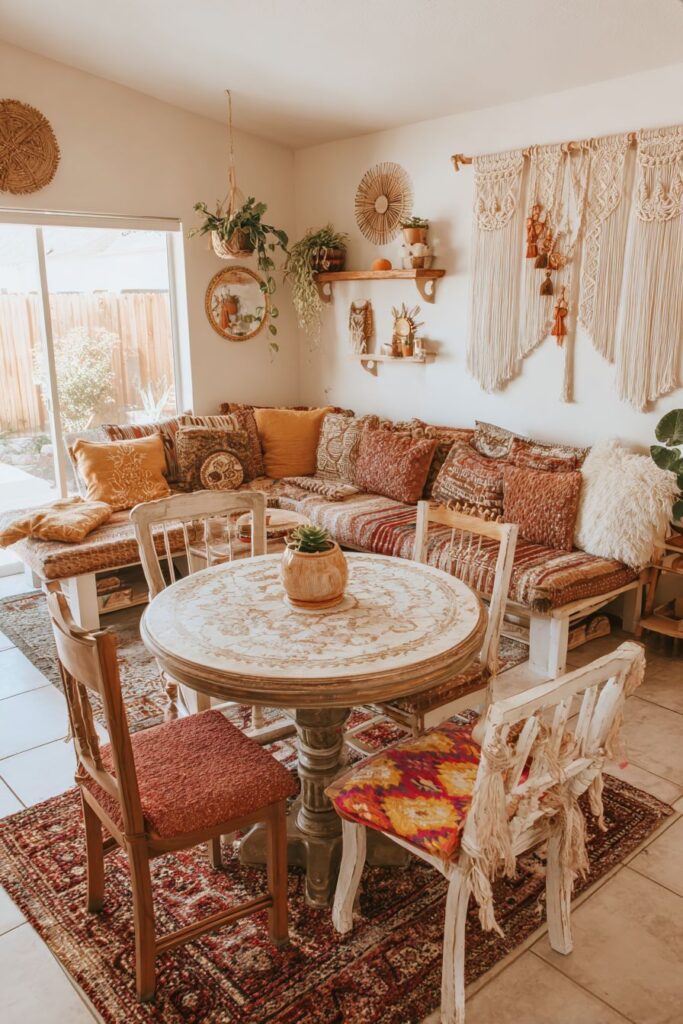
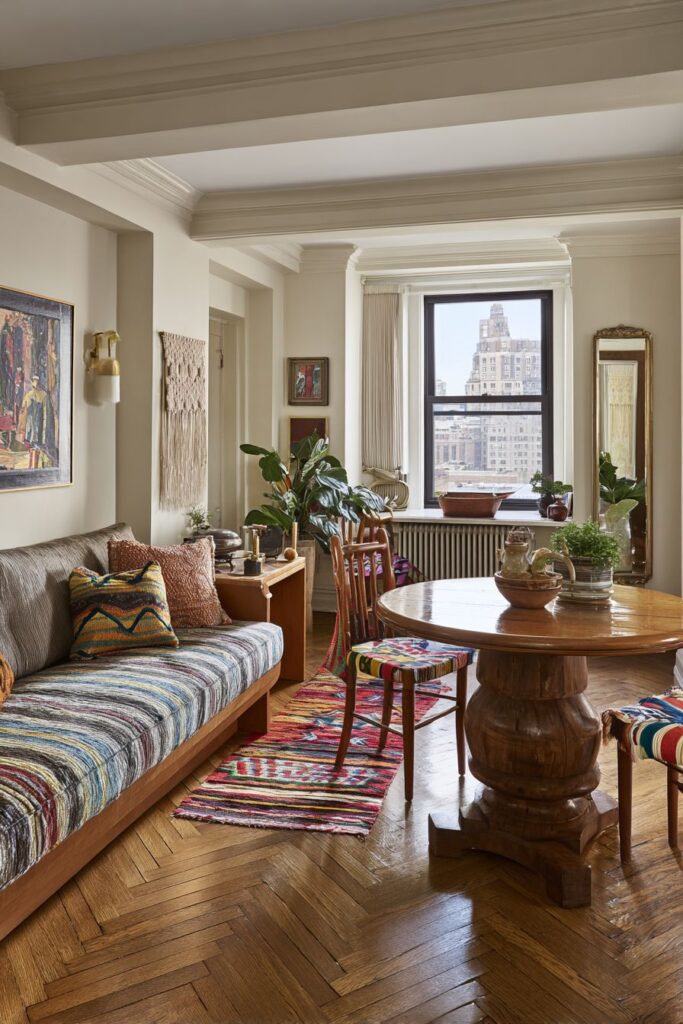
The round dining table with carved wooden legs brings artisan craftsmanship to the space. Unlike mass-produced furniture with simple turned legs, this table features hand-carved details that add visual interest and celebrate traditional woodworking skills. The carving might be intricate or simple, but its handmade quality aligns with bohemian values of artisan work and unique pieces. The round shape promotes conversation and fits well in the eclectic space. Surrounding it are mismatched chairs with colorful woven seats—perhaps bright turquoise, deep orange, vibrant pink—each contributing to the layered, collected aesthetic.
A macramé wall hanging above the dining area adds vertical interest and introduces the natural beauty of knotted rope. Macramé experienced a revival in bohemian interiors for its handmade quality and organic texture. The large-scale wall hanging creates a focal point while adding softness to the wall plane. Throughout both zones, potted plants bring life, improving air quality while adding organic shapes and green tones. Plants in various sizes and types—perhaps a large fiddle leaf fig, trailing pothos, and smaller succulents—create a jungle-like layering that’s quintessentially bohemian.
Key Design Tips:
- Layer multiple throw pillows in varied textures, patterns, and colors for collected bohemian comfort
- Use vintage kilim or other global-inspired rugs to add pattern, color, and cultural richness
- Choose furniture with hand-carved details that celebrate artisan craftsmanship
- Embrace mismatched chairs with colorful woven seats for eclectic, individual character
- Add macramé wall hangings for texture and handmade beauty that creates focal points
- Fill the space with potted plants in various sizes for organic life and jungle-like layering
- Mix global influences from various cultures rather than committing to a single ethnic style
13. Minimalist Japanese with Serene Simplicity
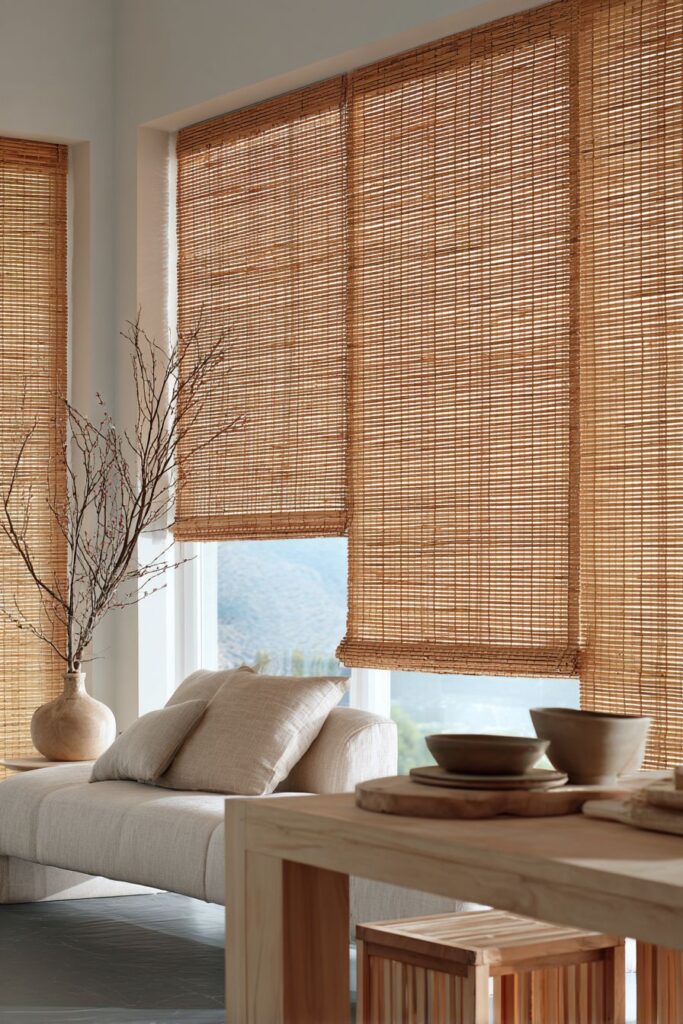
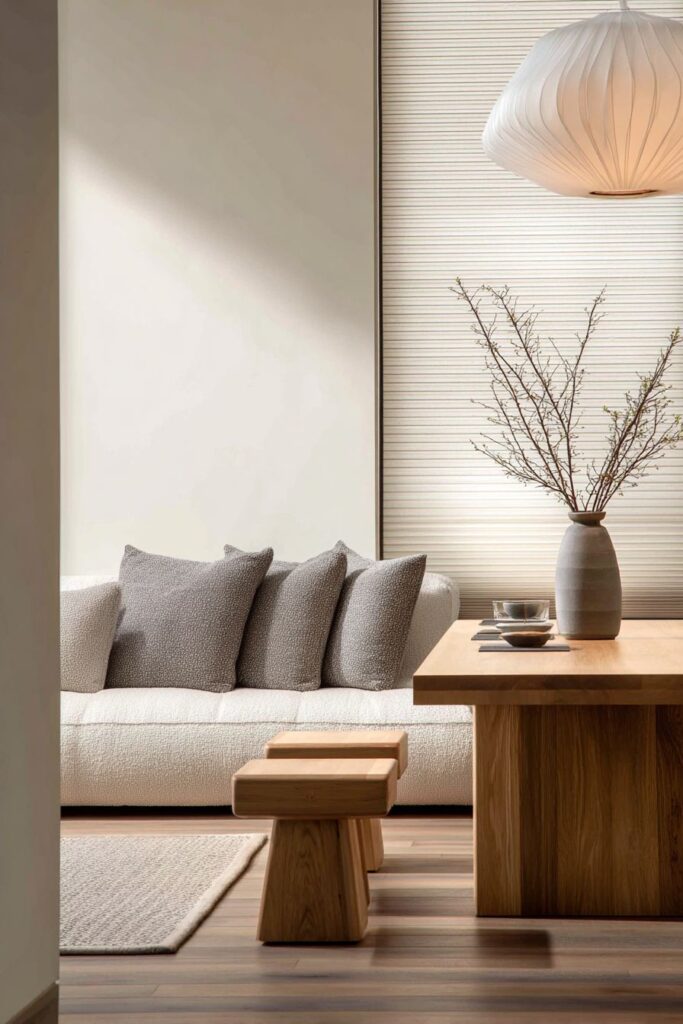
Japanese-inspired design brings profound calm and intentional simplicity to small spaces through the strategic use of natural materials, low furniture profiles, and carefully curated negative space. This design features a low-profile sofa in natural linen that sits closer to the floor than typical Western sofas, a characteristic borrowed from traditional Japanese floor seating. The low height creates a horizontal emphasis that makes ceilings feel higher and spaces feel more expansive. Natural linen is an ideal material choice—its organic texture and neutral color align with Japanese design principles of celebrating natural materials in their authentic state.
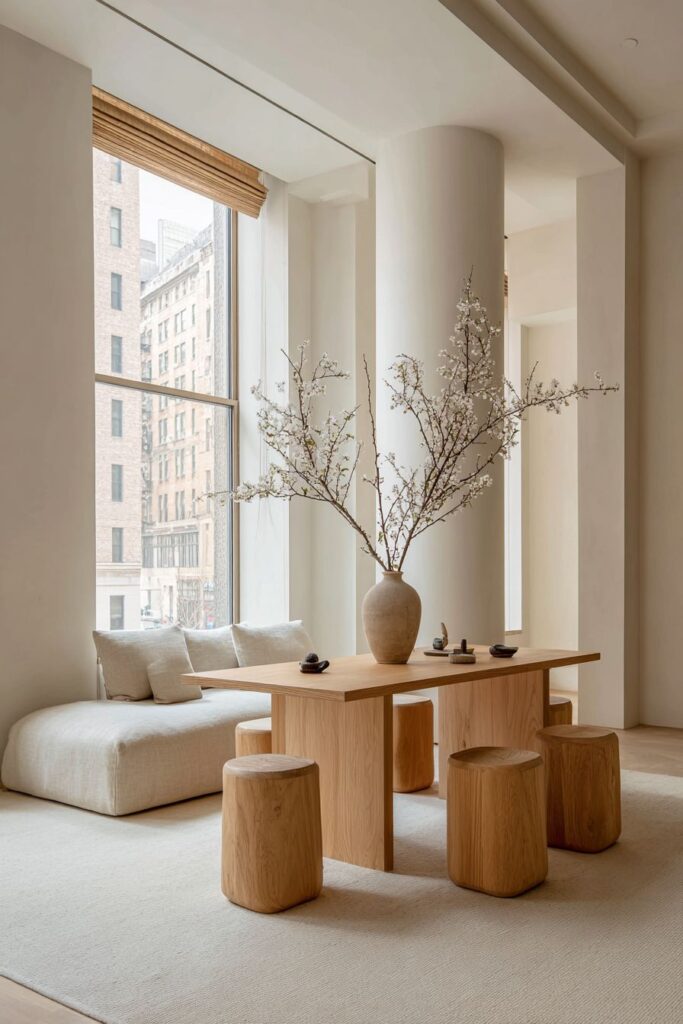
The dining table is crafted from light ash wood with clean lines devoid of unnecessary ornamentation. Ash is a pale hardwood with subtle grain that embodies the Japanese aesthetic of quiet beauty. The table’s simple form focuses attention on material quality and craftsmanship rather than decorative details. Its clean lines create visual calm, allowing the space to breathe. The light wood tone maintains the airy, serene atmosphere while bringing warmth through natural material. The table’s design philosophy reflects the Japanese concept of “ma”—the meaningful use of empty space as an active design element.
Backless wooden stools provide dining seating that tucks completely under the table when not in use, disappearing entirely and maximizing the sense of openness. These simple stools, perhaps inspired by traditional Japanese furniture forms, eliminate visual clutter through their minimal design. The backless form allows them to slide fully beneath the table edge, creating clean lines and unobstructed views. When seated, the backless design encourages upright posture while maintaining the low, grounded feeling that characterizes Japanese interiors. The natural wood construction connects to the table, creating material harmony.
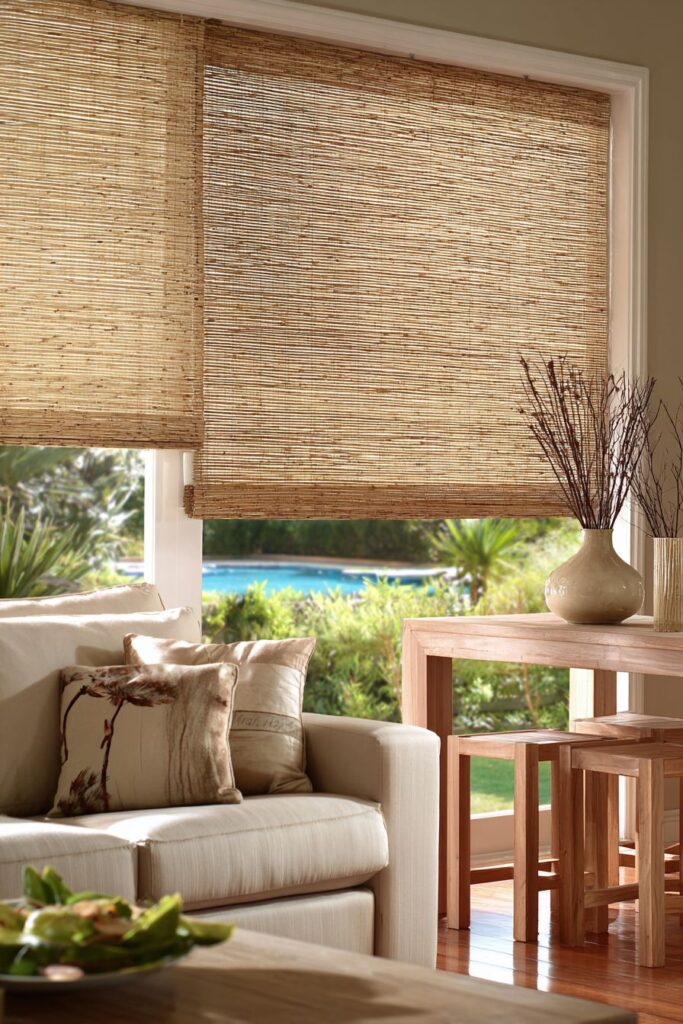
Bamboo roller shades filter diffused light through the windows, a distinctly Japanese element that transforms harsh sunlight into soft, ambient illumination. Bamboo shades create beautiful shadow patterns while maintaining privacy, and their natural material adds subtle texture without competing for attention. The way they filter light creates a contemplative atmosphere, changing throughout the day as the sun moves. A single ceramic vase with branches provides the only decorative element, embodying the Japanese principle of restraint and the beauty of simplicity. The vase might hold a few carefully chosen branches—perhaps cherry blossoms in spring or bare winter branches—arranged according to ikebana principles that celebrate natural form and seasonal change.
The overall design embraces negative space as a crucial element rather than something to be filled. Empty floor areas, unadorned walls, and minimal furniture create a sense of openness and tranquility that allows the mind to rest. This approach proves that in small spaces, less truly can be more—the room feels larger and more peaceful precisely because it isn’t filled with objects.
Key Design Tips:
- Choose low-profile furniture that sits close to the floor to create horizontal emphasis and make ceilings feel higher
- Select light-colored woods like ash that bring warmth while maintaining an airy, open feeling
- Use backless stools that tuck completely under the table to minimize visual clutter
- Install bamboo roller shades that filter light beautifully while adding natural texture
- Embrace negative space as an active design element rather than filling every surface
- Limit decorative objects to one or two carefully chosen pieces with meaning
- Keep the color palette neutral with natural linens, pale woods, and subtle earth tones
14. Transitional Elegance with Classic Details
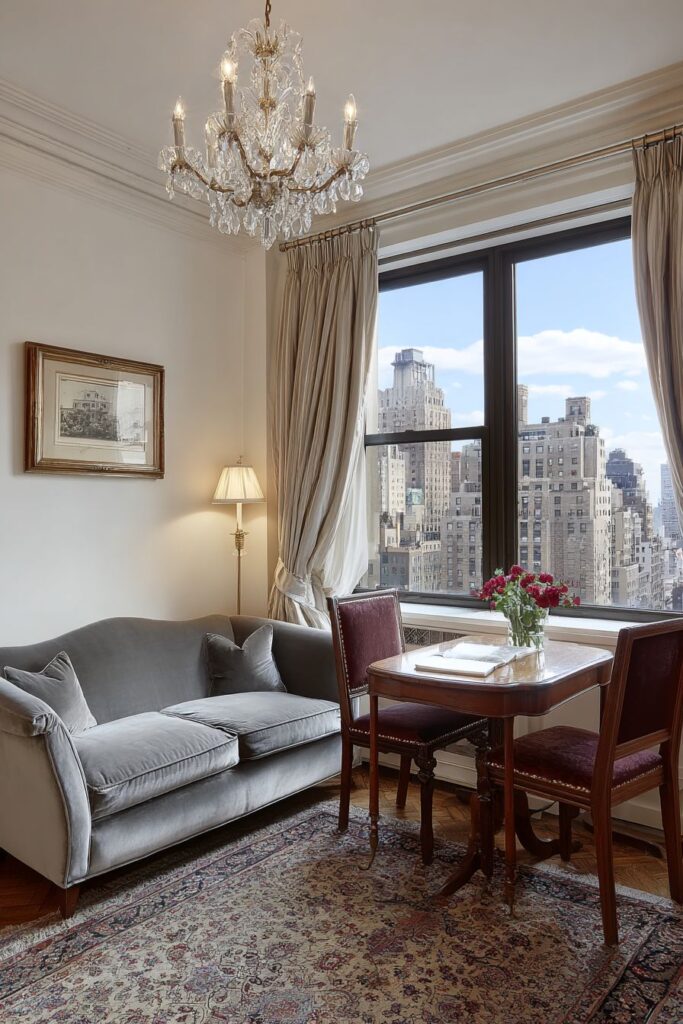
Transitional style bridges traditional and contemporary design, offering the warmth and details of classic furniture with the cleaner lines and edited approach of modern design. This combination works beautifully in small spaces, providing visual interest and sophistication without the heavy ornamentation that can overwhelm compact rooms. The living area features a camelback sofa upholstered in soft grey velvet, a piece that exemplifies transitional style. The camelback form—with its distinctive humped back line—is a traditional silhouette dating to the 18th century, but rendered here in contemporary grey velvet rather than floral chintz, it feels current and sophisticated.
The velvet upholstery adds luxury and depth through its light-catching texture. Velvet’s pile creates subtle color variations as light hits it from different angles, adding visual interest to the solid grey color. The softness invites touch and adds sensory richness to the space. The grey color choice—rather than traditional burgundy or navy—keeps the look fresh and contemporary while providing neutral sophistication that works with various accent colors.
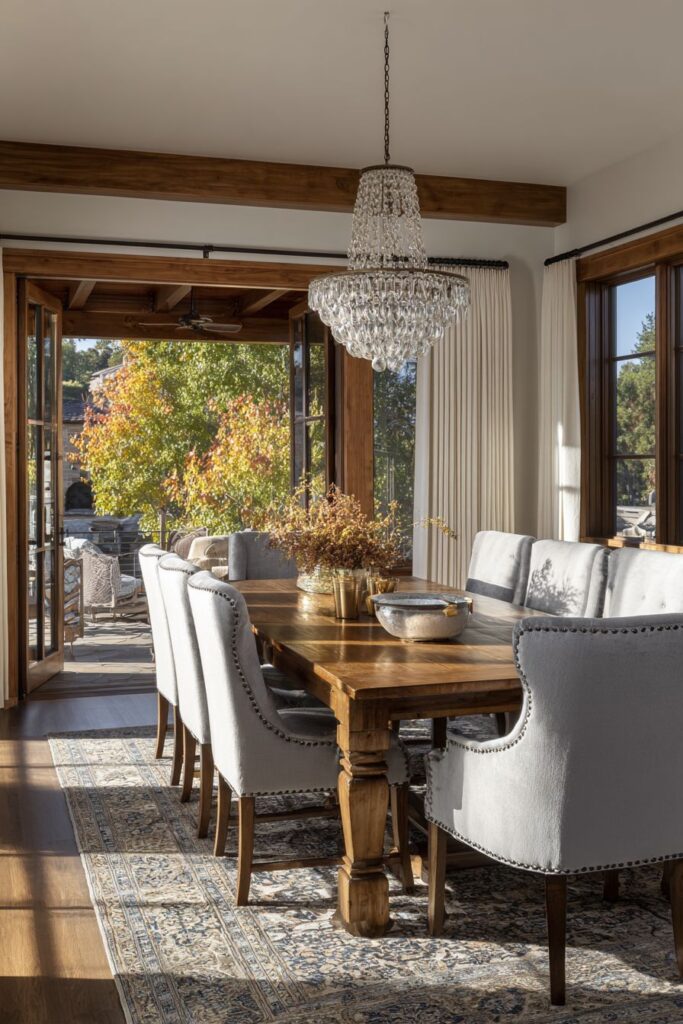
The dining table in cherry wood with turned legs represents classic traditional furniture adapted for contemporary living. Cherry wood brings warmth and richness through its reddish-brown tones that deepen beautifully with age. The turned legs—shaped on a lathe to create decorative profiles—add visual interest and reference traditional craftsmanship, but their scale is appropriately modest for a small space. The table’s proportions are carefully considered to provide dining functionality without overwhelming the room, proving that traditional forms can work in compact settings when properly scaled.
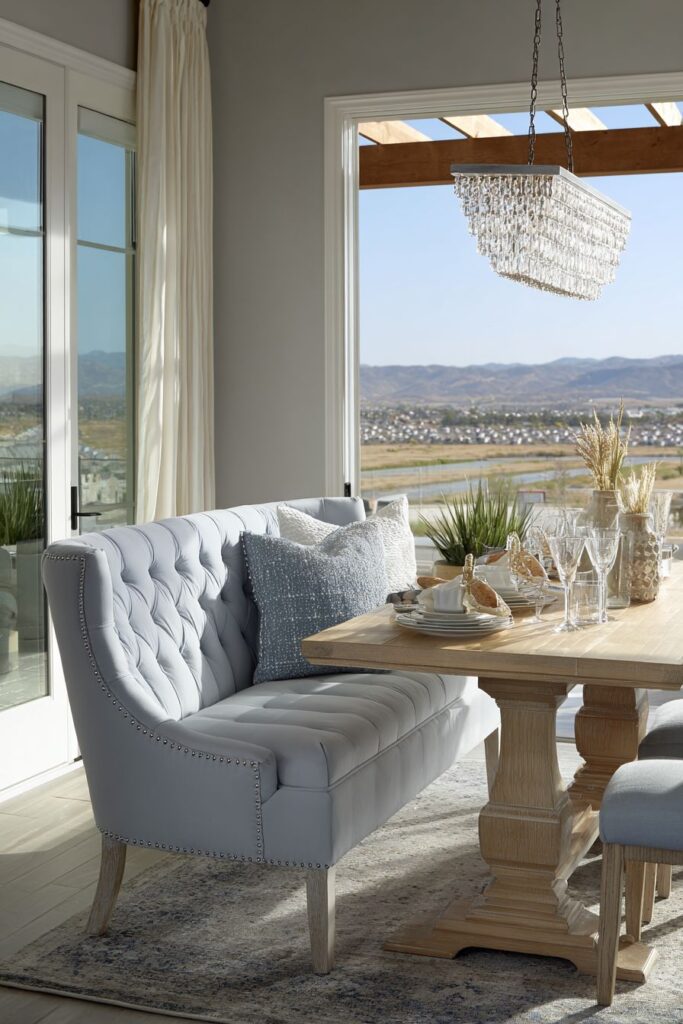
Upholstered dining chairs with nailhead trim provide classic elegance scaled appropriately for small spaces. Nailhead trim—decorative brass or nickel tacks applied in rows along chair edges—is a traditional upholstery detail that adds refinement without excessive ornamentation. The upholstered seats and backs offer comfort for extended dining, while the trim detail elevates them beyond simple contemporary chairs. The chairs’ scale is compact enough to work in the small dining area while maintaining the substance that traditional furniture requires.
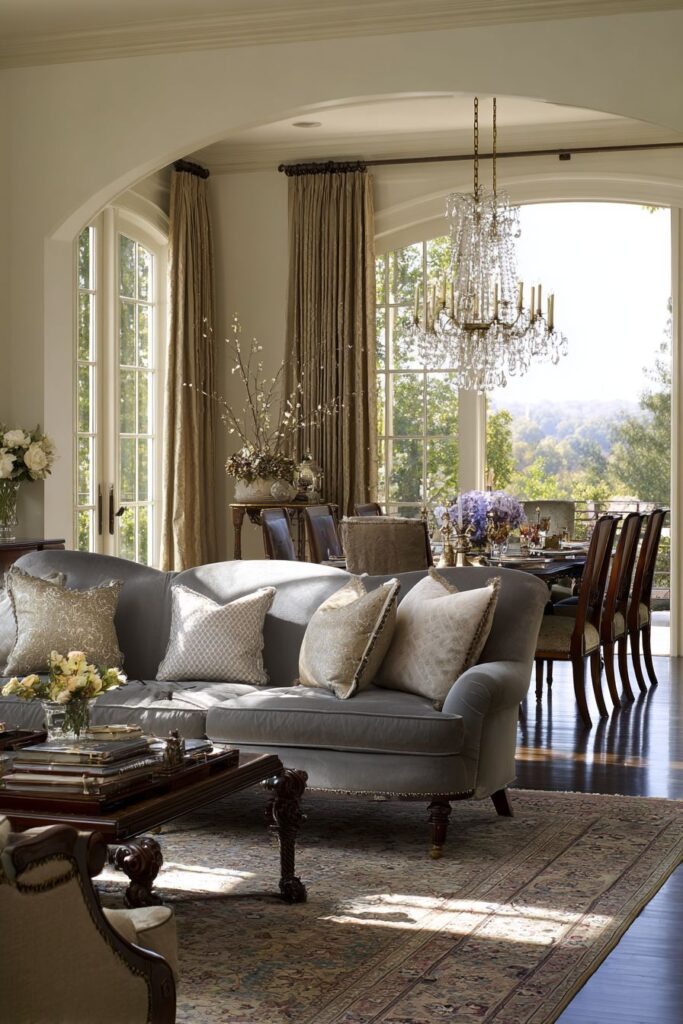
A Persian-style area rug in muted tones anchors the living area, bringing pattern and traditional beauty without overwhelming the space. Traditional Persian rug patterns feature intricate floral and geometric designs, but choosing one in muted, faded colors—perhaps soft blues, ivories, and faded reds—allows the pattern to add interest without dominating. The muted tones create a sophisticated backdrop that doesn’t compete with other elements. Above the dining area, a crystal chandelier adapted for lower ceilings provides elegant illumination. Rather than a large, dramatic fixture that would overwhelm, this chandelier is appropriately scaled, bringing sparkle and traditional beauty while fitting the space’s proportions.
Key Design Tips:
- Choose furniture with traditional silhouettes like camelback sofas rendered in contemporary fabrics and colors
- Use velvet upholstery for luxury texture and light-catching depth that adds richness
- Select cherry or other warm wood tones for dining tables to bring traditional warmth
- Add nailhead trim to upholstered pieces for classic detail that doesn’t overwhelm
- Use Persian-style rugs in muted colors that provide pattern without visual chaos
- Scale traditional elements like chandeliers appropriately for compact spaces
- Bridge traditional and contemporary through edited details and restrained ornamentation
15. Mid-Century Modern with Retro Warmth

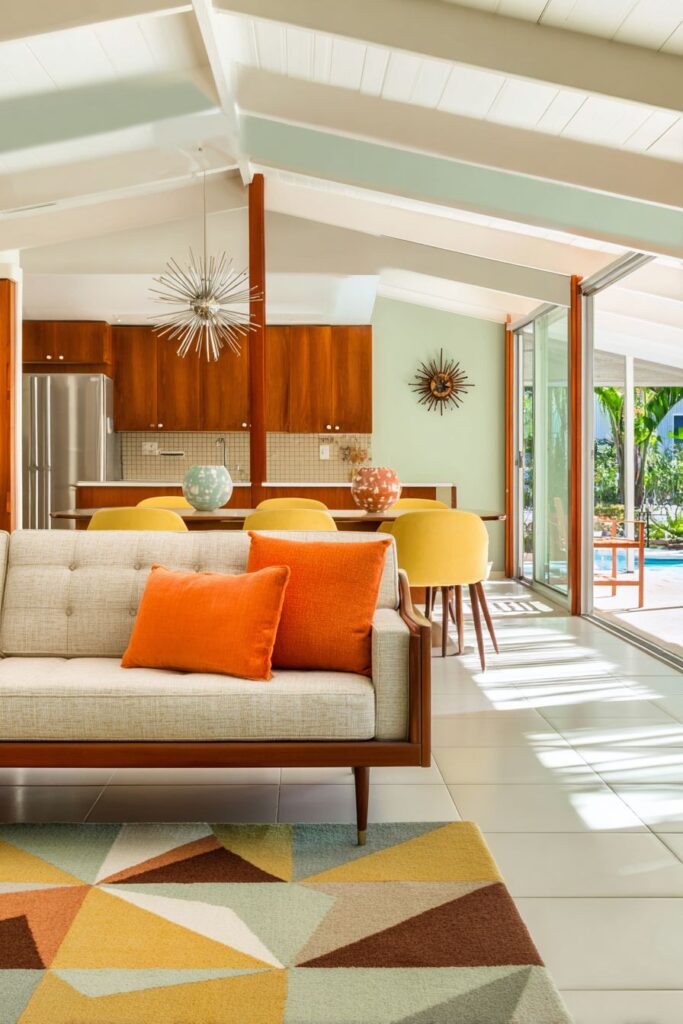
Mid-century modern design from the 1950s and 1960s remains popular for its clean lines, organic forms, and optimistic color palettes—all qualities that work beautifully in small spaces. This design features a teak-framed sofa with orange cushions, capturing the essence of the era. Teak was the wood of choice during the mid-century period, prized for its warm honey tones, beautiful grain, and durability. The exposed wood frame showcases the material’s natural beauty while the clean, angular design reflects Scandinavian and Danish influences that defined the period. The orange cushions bring the bold, optimistic color that characterized mid-century interiors—not pale pastels but saturated, confident hues.
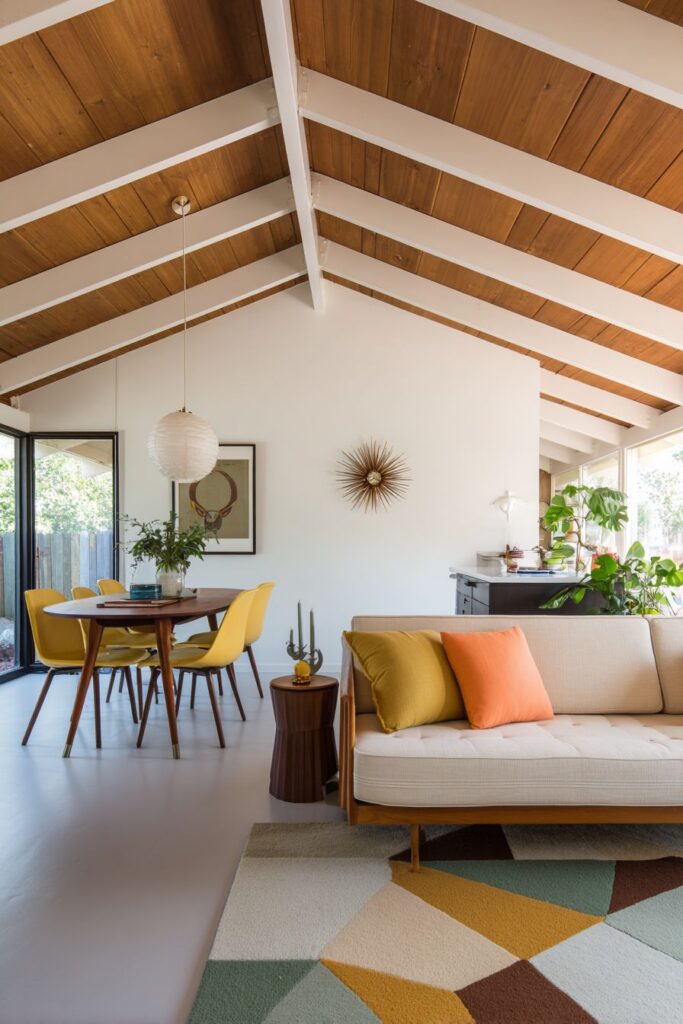
The dining table is an oval form in walnut with tapered legs, both signature mid-century elements. The oval shape softens the geometry while maintaining efficiency, and its curved edges improve traffic flow in compact spaces. Walnut was another favored mid-century wood, darker and richer than teak, creating beautiful contrast. The tapered legs—thick at the top where they attach to the table, narrowing as they descend to the floor—are quintessentially mid-century, combining structural logic with visual lightness. This leg treatment became iconic during the period and remains a defining characteristic of the style.
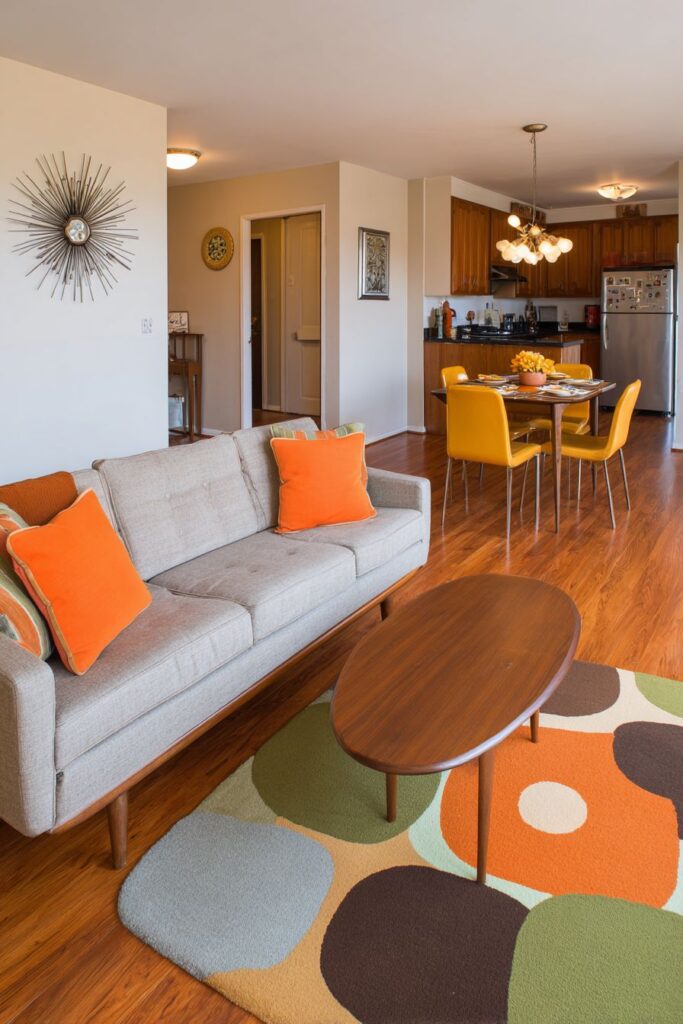
Molded plastic dining chairs in mustard yellow add period-appropriate color while showcasing mid-century innovation in materials and manufacturing. Designers like Charles and Ray Eames pioneered the use of molded plastic and fiberglass to create affordable, comfortable seating with sculptural forms. These one-piece chairs, often with molded seats that cradle the body, brought modern design to mass markets. The mustard yellow color—earthy yet vibrant—complements the orange sofa cushions while adding visual variety. These chairs’ lightweight construction and stackable design add practical benefits to their aesthetic appeal.
A geometric area rug in earth tones defines the living space with pattern that references the atomic age and space race that influenced mid-century design. Geometric patterns featuring circles, starbursts, boomerangs, and abstract shapes captured the era’s fascination with science and progress. The earth tones—perhaps burnt orange, olive green, chocolate brown, and cream—create warmth while anchoring the brighter furniture colors. A starburst clock and atomic-era pendant light complete the vintage look, adding authentic period details. The starburst clock, with rays emanating from a central circle, is an iconic mid-century form, while atomic pendant lights with multiple arms and spheres reference molecular structures and space-age design.
Key Design Tips:
- Choose teak or walnut furniture with exposed wood frames and tapered legs for authentic mid-century style
- Embrace bold, saturated colors like orange and mustard yellow that capture the era’s optimism
- Use molded plastic chairs that showcase mid-century material innovation and sculptural forms
- Select geometric rugs with abstract patterns referencing atomic age and space exploration
- Add authentic period accessories like starburst clocks and atomic pendant lights
- Mix warm wood tones—teak’s honey color with walnut’s darker richness—for depth and variety
- Keep the overall design clean-lined and uncluttered, celebrating form and material over ornamentation
16. Multifunctional Flexibility with Adaptable Elements

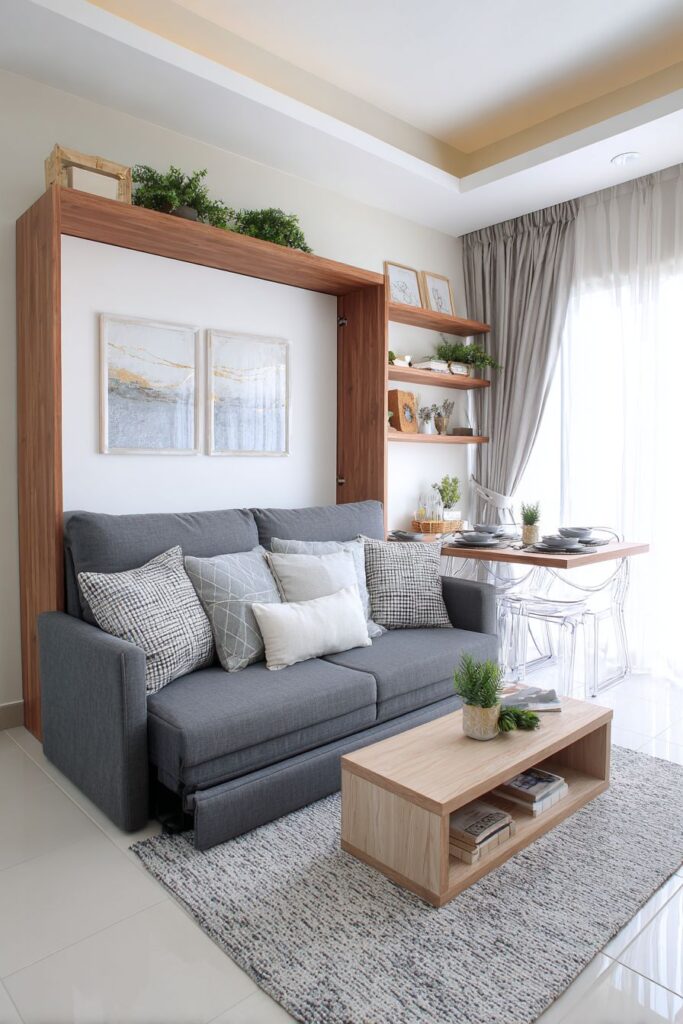
In truly small spaces or homes that serve multiple purposes, furniture that adapts to changing needs becomes essential. This design prioritizes flexibility through carefully chosen multifunctional pieces that transform the space based on current requirements. The living area features a sleeper sofa in charcoal grey that provides comfortable daily seating while converting to a guest bed when needed.
Modern sleeper sofas have evolved significantly from uncomfortable fold-out varieties—today’s versions offer supportive mattresses and easy-operating mechanisms that make the transformation simple. The charcoal grey color provides sophisticated neutrality that works in any context, whether the room is functioning as living space or temporary bedroom.
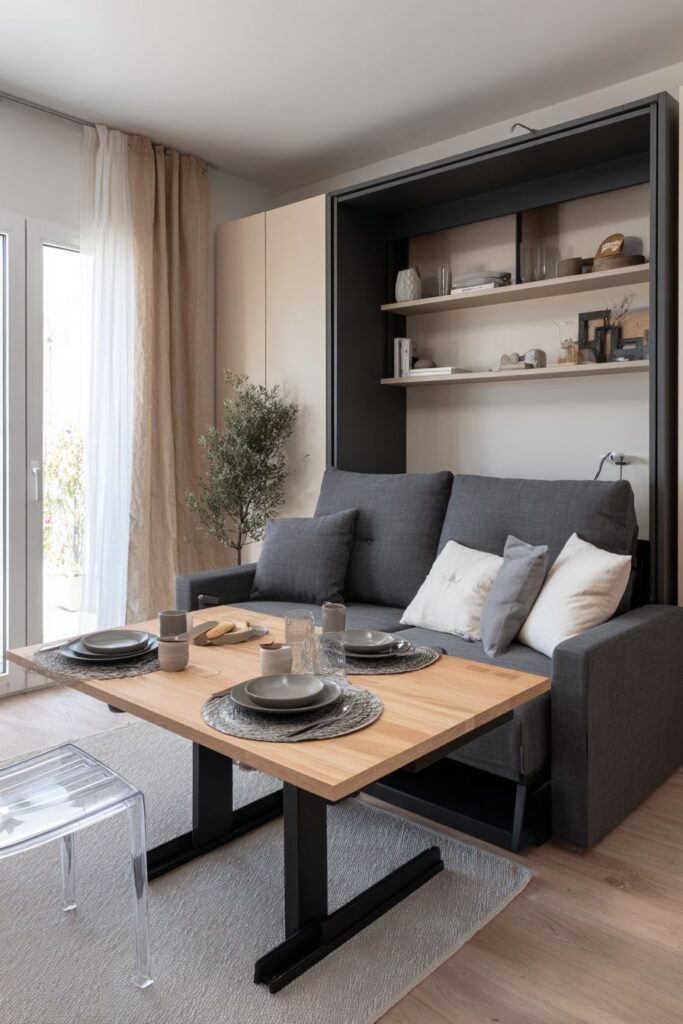
The dining table is an extendable design in natural oak that expands for entertaining, accommodating additional guests when needed while remaining compact for daily use. Extendable tables use various mechanisms—drop leaves, pull-apart centers with insertable leaves, or flip-up extensions—to dramatically increase surface area.
When collapsed, the table serves two to four people efficiently, but extended, it might accommodate six to eight, making dinner parties possible even in a small space. The natural oak finish brings warmth and organic beauty while remaining neutral enough to work with changing decor needs.
Stackable dining chairs in transparent polycarbonate provide seating that stores easily when not needed. These modern chairs, made from clear plastic, stack vertically to take up minimal storage space—perhaps in a closet, against a wall, or in a corner. When guests arrive, they can be quickly deployed around the extended table. The transparency prevents them from adding visual weight even when in use, and the lightweight material makes moving them effortless. Wall-mounted floating shelves provide display and storage without consuming floor space, crucial in a room that needs to serve multiple functions.
The shelves can hold books, decorative objects, and everyday items, keeping surfaces clear so the space can easily transition between uses. The wall-mounted installation means they can be positioned at whatever height works best without worrying about floor clearance. This design proves that small spaces can be highly functional and adaptable without sacrificing style—the key is choosing furniture that transforms efficiently while maintaining visual appeal in all configurations.
Key Design Tips:
- Invest in a quality sleeper sofa with a comfortable mattress for guest accommodation without a dedicated bedroom
- Choose an extendable dining table that expands significantly when needed but remains compact daily
- Use stackable chairs that store vertically in minimal space but deploy quickly for guests
- Select transparent furniture materials like polycarbonate that provide function without visual weight
- Install wall-mounted floating shelves for storage that doesn’t consume precious floor area
- Keep the color palette neutral so the space works equally well in all its various configurations
- Prioritize furniture quality and operating mechanisms that make transformations effortless
17. Art Deco Glamour with Luxe Materials
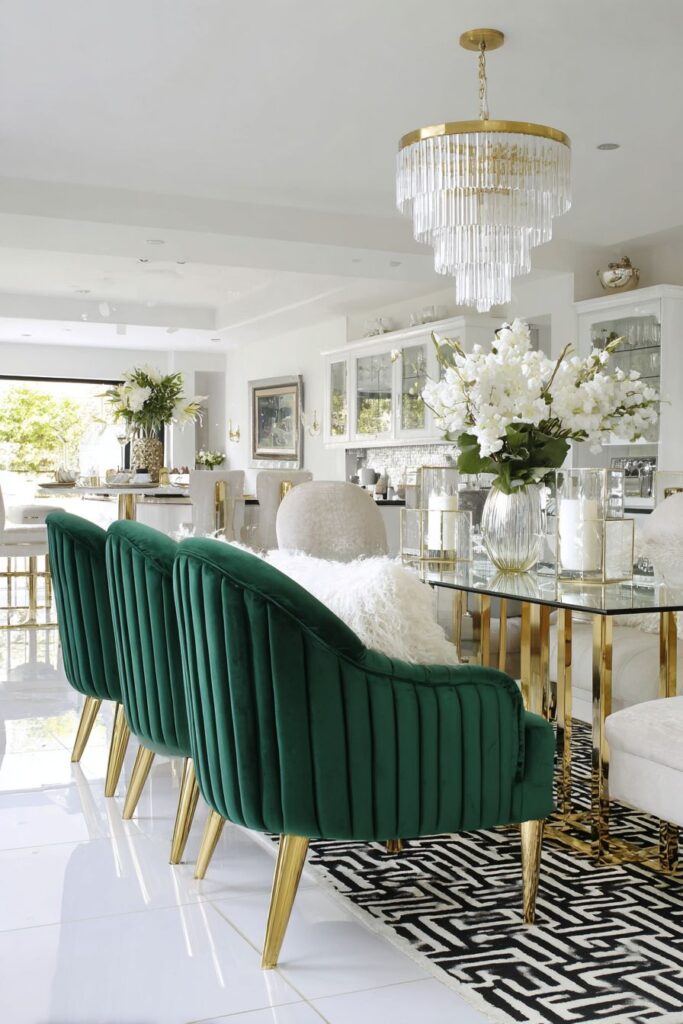
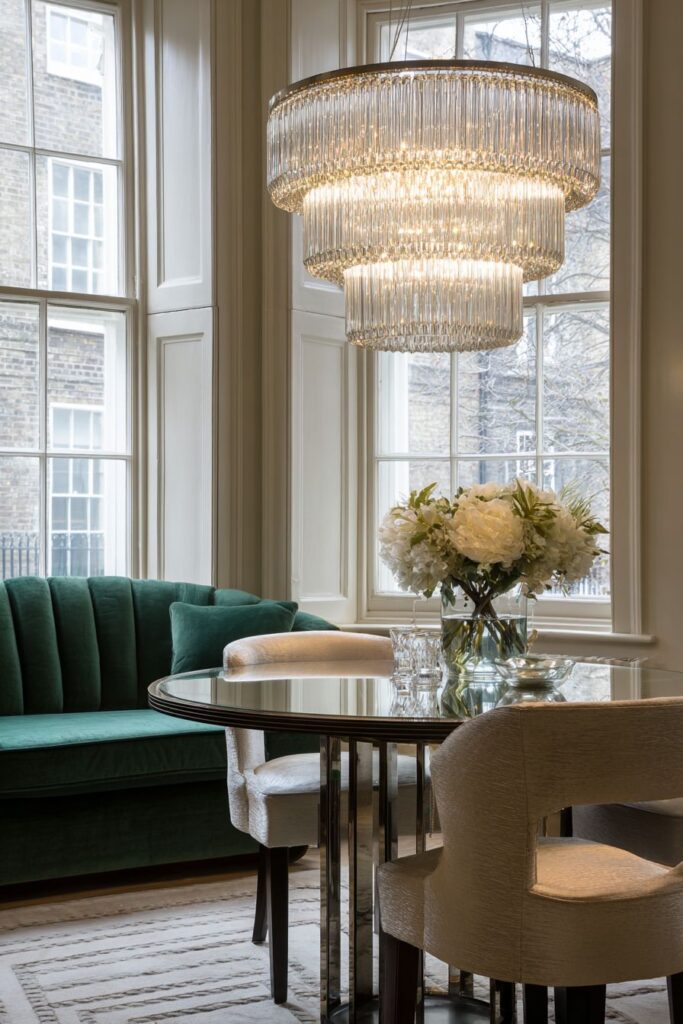
Art Deco style brings luxury, glamour, and geometric sophistication to interiors through rich materials, bold colors, and symmetrical arrangements. This design features a velvet sofa in emerald green, a jewel tone that epitomizes Art Deco’s love of rich, saturated colors. Emerald green brings depth and drama, creating a focal point that commands attention.
The velvet upholstery adds luxury through its light-catching pile and sensory richness. The sofa’s form likely features the geometric lines and possibly curved arms characteristic of the period, creating a piece that’s both comfortable and visually striking.

The dining table showcases Art Deco’s fascination with reflective surfaces and geometric forms through its mirrored top and geometric base. Mirrored furniture was hugely popular during the Art Deco period, bringing sparkle and glamour while reflecting light throughout the space. The geometric base might feature zigzag patterns, stepped forms, or angular shapes that reference the skyscrapers and machine age that influenced the style. The mirror’s reflective quality makes the table appear less solid, helping it work in the small space while maintaining the glamorous aesthetic.
Dining chairs upholstered in champagne silk with curved backs provide glamorous seating that echoes Art Deco’s love of luxury materials and sensuous curves. Silk upholstery catches light beautifully, creating subtle sheen and color variations. The champagne color—a warm, pale gold—complements the emerald sofa while maintaining elegance. The curved backs add comfort while their rounded forms contrast with the geometric table base, creating the mix of curves and angles characteristic of the period. These chairs elevate the dining area into something special, turning every meal into a glamorous occasion.
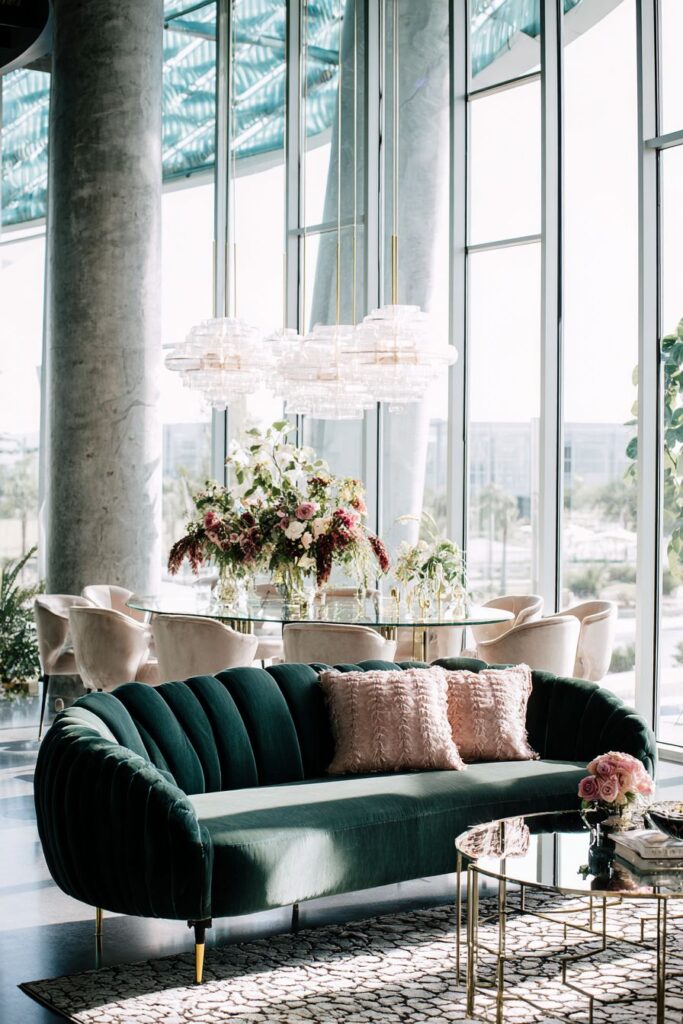
A black and gold geometric area rug anchors the living zone with classic Art Deco colors and patterns. Black and gold is perhaps the most iconic Art Deco color combination, representing sophistication and luxury. The geometric pattern might feature chevrons, Greek key designs, or abstract shapes that create visual interest while maintaining symmetry.
The rug grounds the emerald sofa while connecting the living area to the dining zone through shared metallic gold tones. Above the dining area, a tiered glass chandelier provides illumination while serving as jewelry for the room. Tiered chandeliers with crystal or glass elements capture Art Deco’s glamorous sensibility, casting sparkling light throughout the space.
Key Design Tips:
- Choose rich jewel tones like emerald green for upholstered pieces to create drama and luxury
- Use mirrored furniture to add glamour while maintaining visual lightness through reflection
- Select silk or velvet upholstery fabrics that catch light and add sensory richness
- Incorporate black and gold color combinations through rugs and accessories for classic Art Deco sophistication
- Add geometric patterns that reference the period’s love of angular, symmetrical designs
- Install tiered crystal or glass chandeliers that serve as sparkling focal points
- Embrace luxury and glamour as design goals, creating spaces that feel special and elevated
18. Rustic Modern with Organic Elements
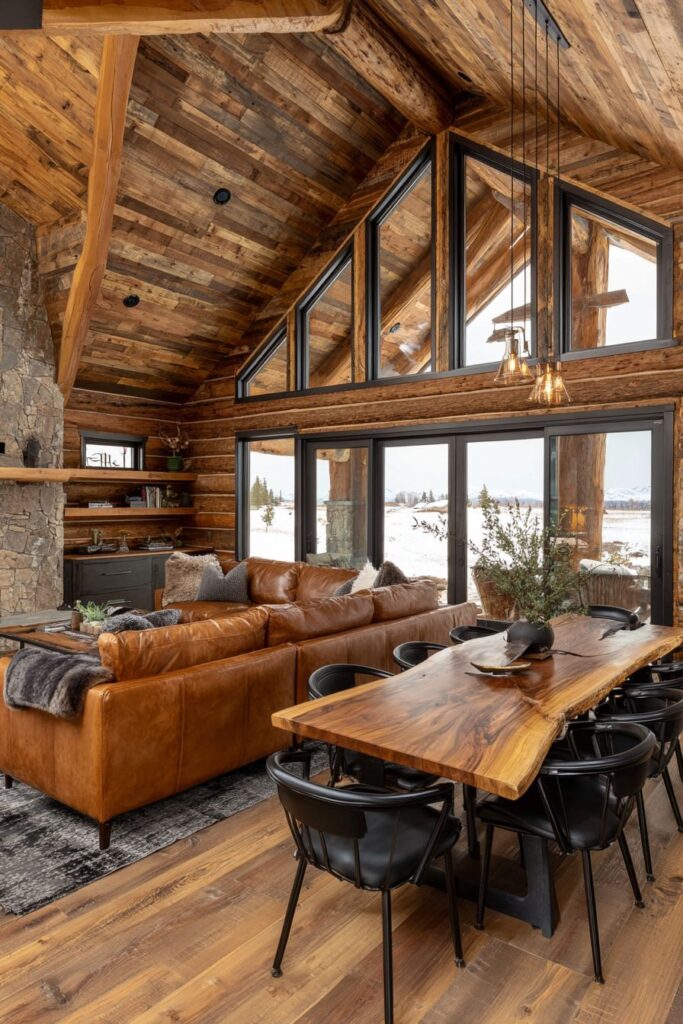
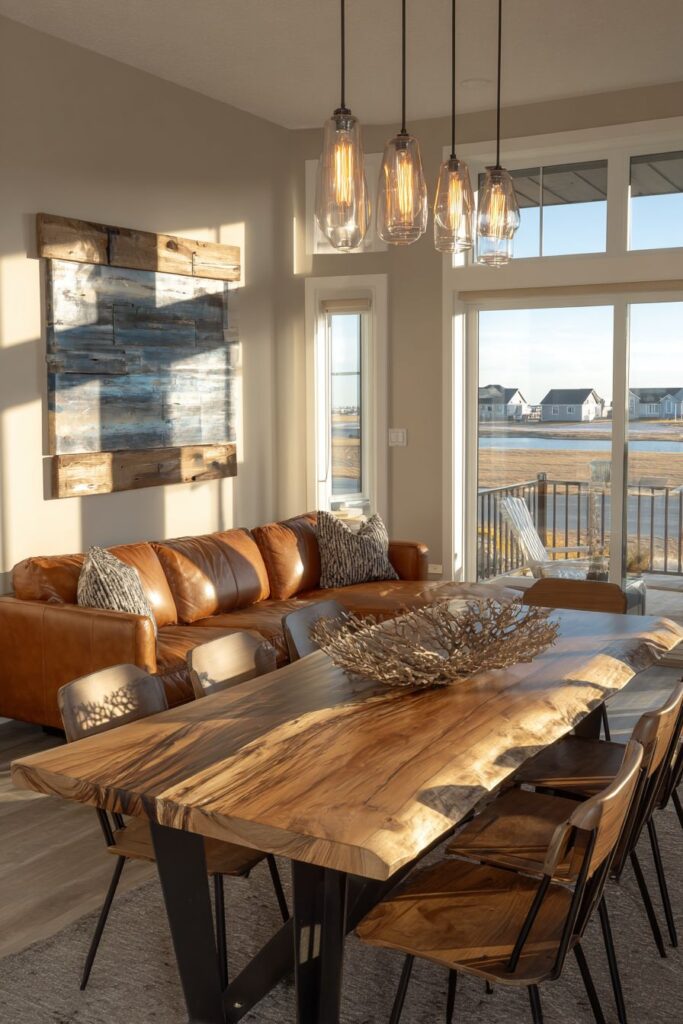
Rustic modern design combines the warmth and authenticity of rustic materials with the clean lines and edited aesthetic of contemporary style, creating spaces that feel both grounded and current. This design features a leather sofa in cognac brown, a color that brings rich warmth through its caramel-to-rust tones. Leather is an ideal material for rustic modern spaces—it’s natural, ages beautifully, and becomes more comfortable over time. The cognac color suggests well-worn saddles and vintage leather goods, adding instant warmth and character. As leather ages, it develops a patina that adds to rather than detracts from its beauty, making it perfect for spaces celebrating authentic materials.
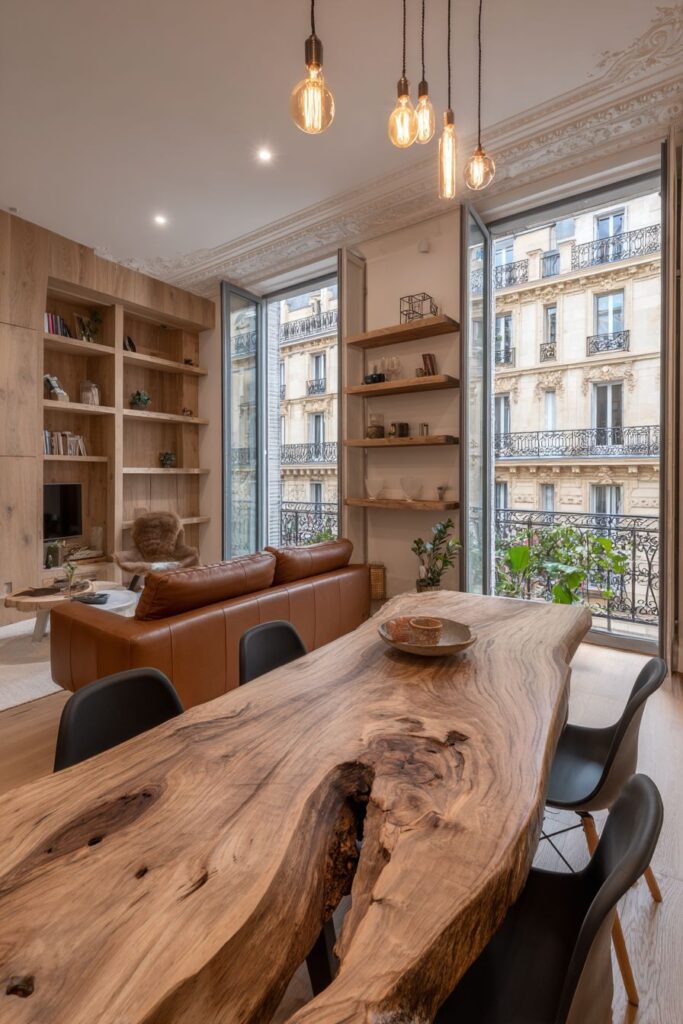
The dining table is the room’s showpiece—a live-edge slab in natural wood with black metal legs that embodies rustic modern philosophy. Live-edge wood retains the tree’s natural edge, including bark, irregular lines, and organic shapes that celebrate the material’s origin. Each live-edge piece is unique, with character determined by the specific tree it came from. The natural wood might show knots, color variations, and grain patterns that tell the tree’s story. The black metal legs provide contemporary contrast, their clean industrial lines balancing the organic wood top. This combination of raw natural materials with refined modern elements defines rustic modern style.
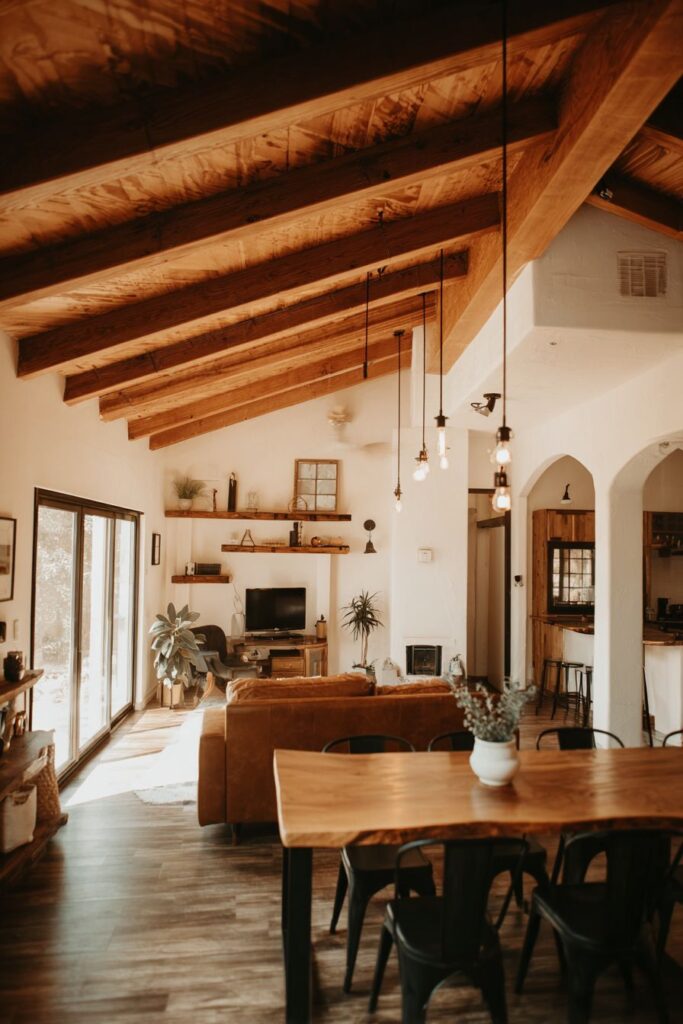
Simple dining chairs in black metal with wooden seats maintain the industrial-rustic blend without competing with the statement table. The black metal frames echo the table legs, creating cohesion, while wooden seats add warmth and comfort. These chairs likely have minimal design—perhaps inspired by cafe chairs or industrial seating—keeping the focus on the live-edge table. Their simplicity prevents visual clutter while their materials bridge rustic and modern elements.
Reclaimed wood floating shelves display minimal decor, adding storage without bulk while reinforcing the rustic material palette. Reclaimed wood brings history and authenticity—each board might show nail holes, weathering, or previous finishes that hint at its former life. The floating installation keeps the look modern and clean, while the wood material maintains warmth. Edison bulb pendant lights with exposed filaments hang above the dining area, providing ambient light while celebrating early industrial electrical fittings. The visible filaments create a warm glow while serving as sculptural elements that reference both rustic and industrial aesthetics.
Key Design Tips:
- Choose cognac or brown leather upholstery for warmth that improves with age and use
- Use live-edge wood tables that celebrate natural form and make each piece unique
- Pair organic wood elements with black metal legs and frames for rustic modern contrast
- Install reclaimed wood floating shelves that bring history while maintaining clean modern lines
- Add Edison bulb lighting with exposed filaments for warm, ambient illumination
- Keep the design edited and uncluttered despite using rich materials
- Embrace authentic material imperfections like knots, color variations, and weathering as design features
19. Contemporary Scandinavian with Modular Flexibility
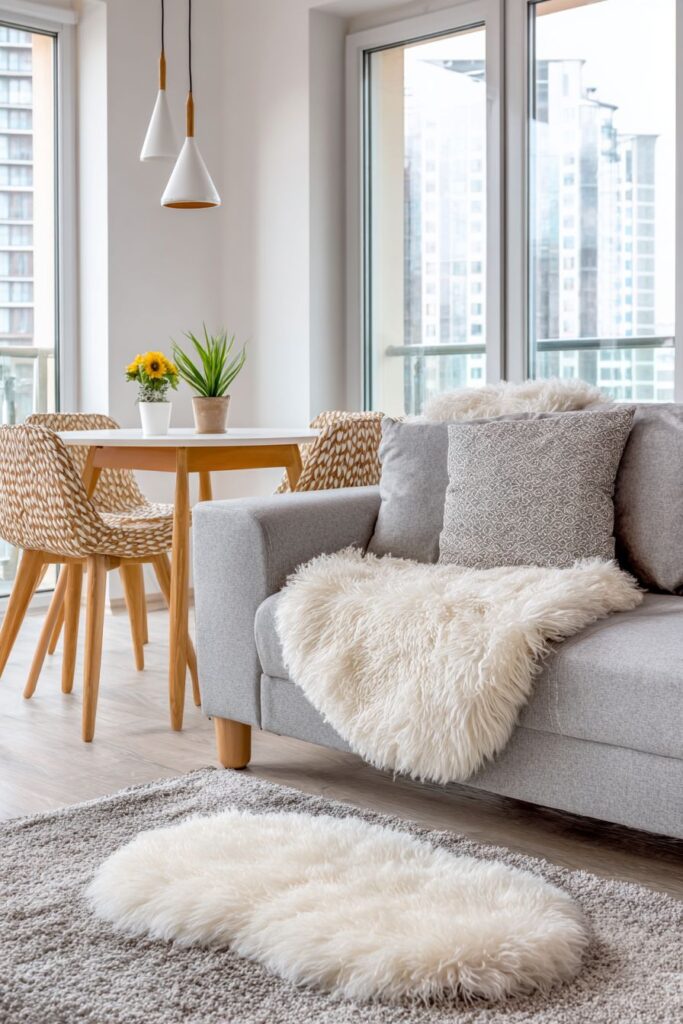
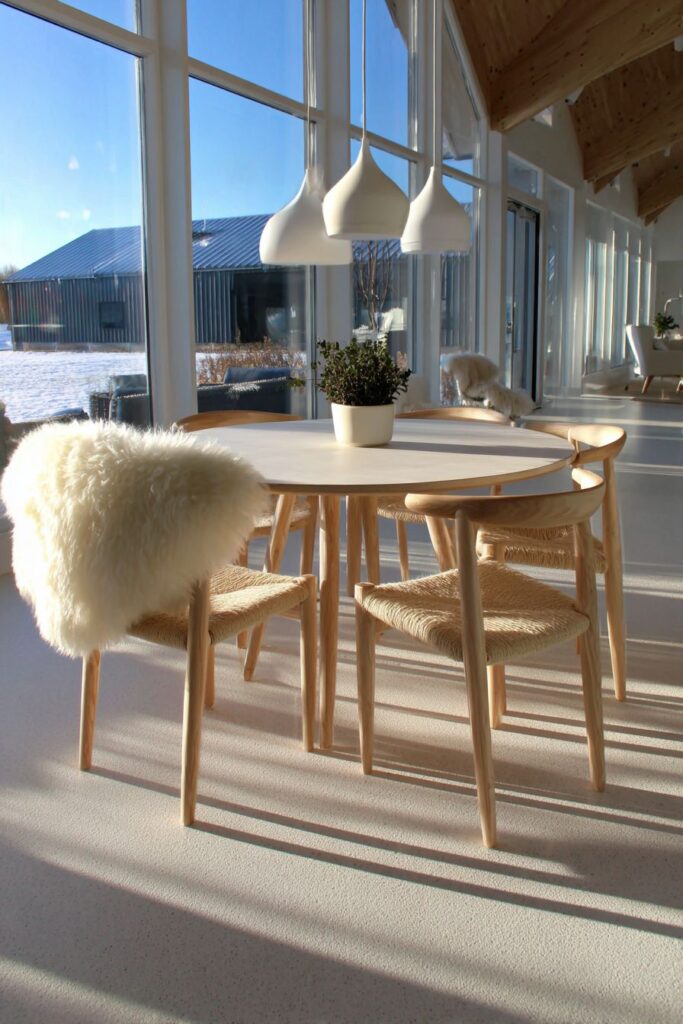
This design represents the evolution of Scandinavian style into contemporary iterations that prioritize flexibility, functionality, and the Danish concept of “hygge”—the feeling of cozy contentment. The living area features a modular sofa in light grey that can be reconfigured as needed, embodying contemporary Scandinavian values of adaptability and practicality. Modular sofas consist of individual sections that can be arranged in various configurations—L-shapes, U-shapes, facing sections, or straight lines—allowing the layout to change as needs evolve. The light grey color provides neutral sophistication while maximizing light reflection in the space, and the fabric is likely a practical, durable weave suited to daily life.
The dining table combines materials in a distinctly contemporary Scandinavian way—a round top in white lacquer with solid oak legs. The white lacquer top provides a smooth, easy-to-clean surface with subtle sheen, while its bright white color maintains the light, airy feeling central to Scandinavian design. The round shape promotes conversation and intimacy while eliminating sharp corners that could be problematic in tight spaces. The solid oak legs bring natural warmth and organic beauty, grounding the bright white top with earthy material. This combination of painted and natural wood is quintessentially contemporary Scandinavian, balancing the style’s love of white with its deep connection to natural materials.
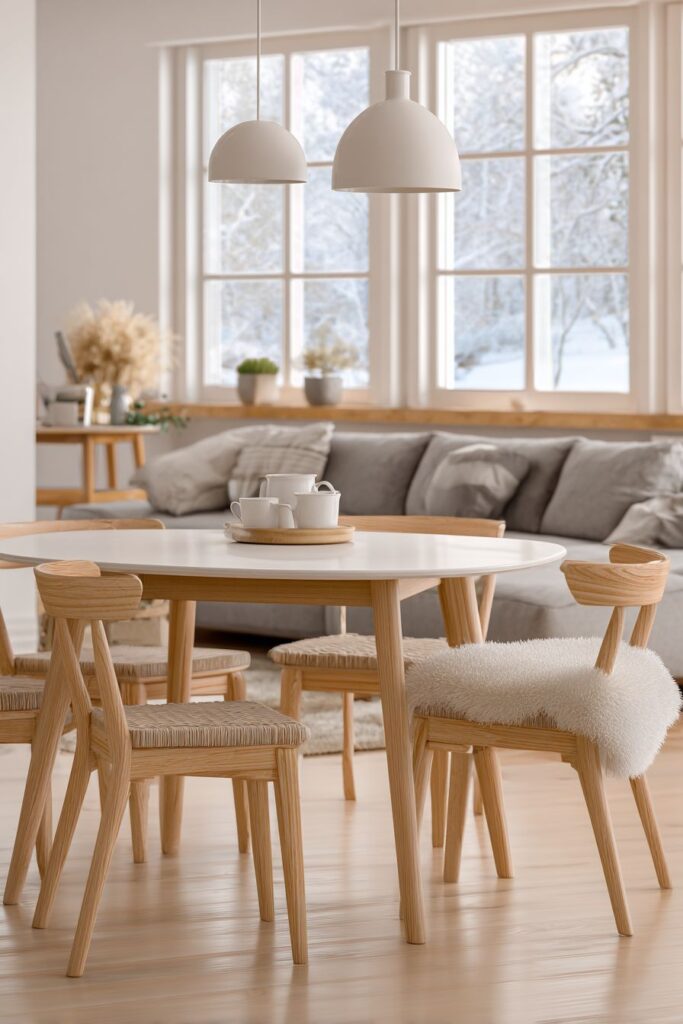
Dining chairs in natural beech with woven cord seats provide Nordic simplicity and timeless design. Beech is a pale hardwood common in Scandinavian furniture, appreciated for its subtle grain and warm tone. The woven cord seats—perhaps in natural fiber or paper cord—are a traditional Scandinavian detail that adds texture and craftsmanship while allowing air circulation for comfortable seating. These chairs likely follow classic Danish modern forms, with clean lines and ergonomic shaping that make them comfortable despite their minimal appearance. A sheepskin throw draped over the sofa adds textural warmth and the cozy element essential to hygge. Natural sheepskin provides incredible softness and warmth, inviting touch and creating a nest-like feeling of comfort.
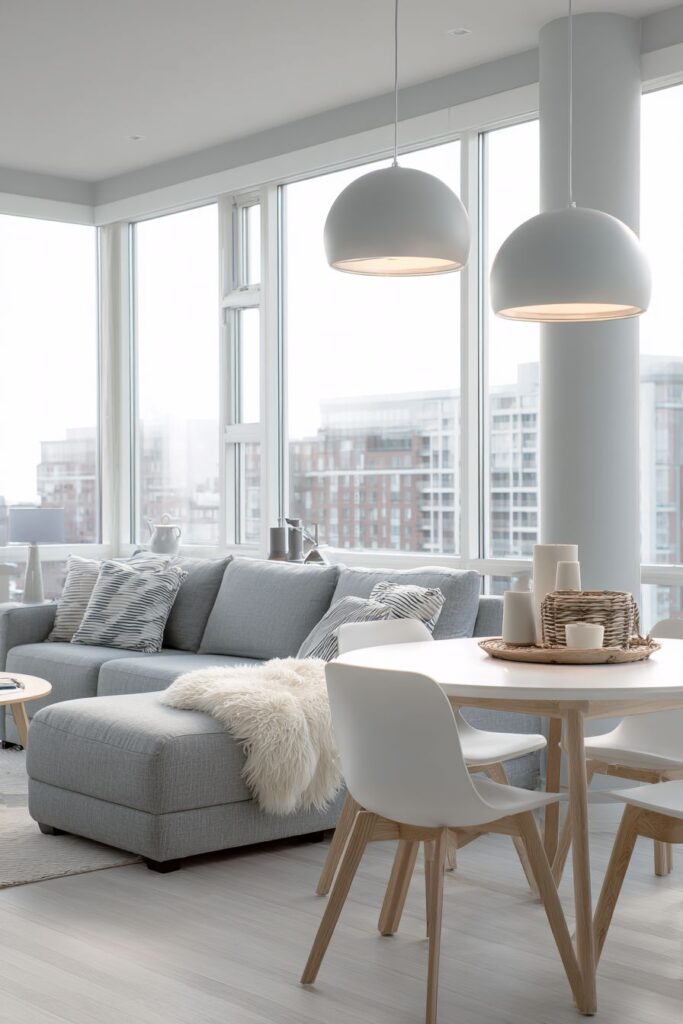
Minimalist pendant lights in matte white hang low over the dining table, providing focused illumination while maintaining the clean aesthetic. The matte white finish prevents glare while complementing the lacquer table top, and the minimalist design—perhaps simple dome or bell shapes—keeps attention on the dining area rather than the fixtures themselves. Bright natural daylight streaming through large windows emphasizes the clean aesthetic, functional design, and hygge atmosphere. Scandinavian design prioritizes natural light, and the clean, uncluttered space allows maximum light penetration, creating the bright, airy feeling that defines the style.
Key Design Tips:
- Choose modular seating that can be reconfigured to adapt to changing needs and uses
- Combine white lacquer with natural wood for contemporary Scandinavian material contrast
- Select dining chairs with woven cord seats for traditional Nordic craftsmanship and comfort
- Add sheepskin throws for textural warmth and hygge coziness
- Use minimalist lighting in matte white that provides function without visual distraction
- Maximize natural light through uncluttered layouts and minimal window treatments
- Keep the palette light with whites, light greys, and natural wood tones for brightness and serenity
20. Eclectic Urban with Curated Character

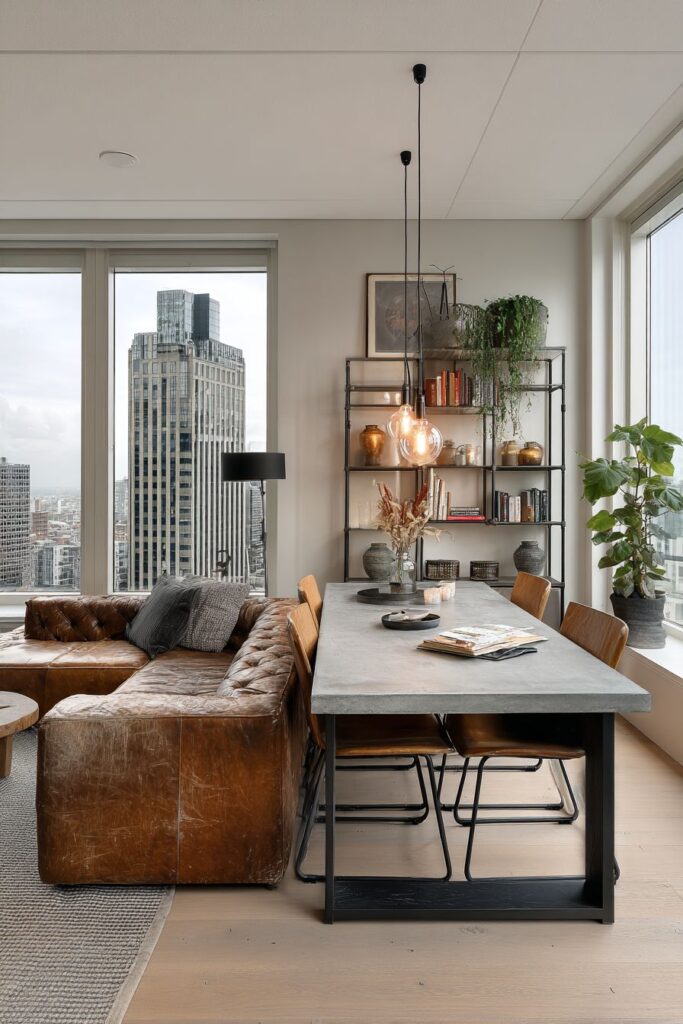
The final design celebrates individuality and personal style through the mixing of periods, styles, and aesthetics in a way that feels intentional rather than random. This approach requires confidence and a strong personal point of view, but the results are spaces filled with character and uniqueness. The living area features a vintage Chesterfield sofa in worn brown leather, bringing immediate character and history. Chesterfield sofas, characterized by their deep button tufting, rolled arms, and substantial presence, originated in 18th century England. The worn leather shows age through creases, color variations, and patina that new furniture can’t replicate, adding authenticity and suggesting the sofa has been loved through decades of use.

The dining table provides dramatic contrast—a modern piece with a concrete top and steel frame that’s thoroughly contemporary in both material and aesthetic. Concrete brings industrial edge and substantial visual weight, its grey tones and varied surface creating organic beauty. The steel frame provides structural support while maintaining the industrial modern aesthetic. This juxtaposition of vintage leather and contemporary concrete exemplifies eclectic design’s power—rather than matching periods, it creates visual interest and conversation through contrast.
The mix of dining chairs creates collected character that suggests the space evolved over time rather than being purchased in a single shopping trip. A wooden Windsor chair—a traditional American form with spindle back and shaped seat—might sit alongside black metal cafe chairs that reference Parisian bistros or factory seating. This deliberate mismatch adds personality while allowing each chair to tell its own story. The variety also offers practical flexibility—chairs can be swapped out or added as needs change without disrupting the overall aesthetic.
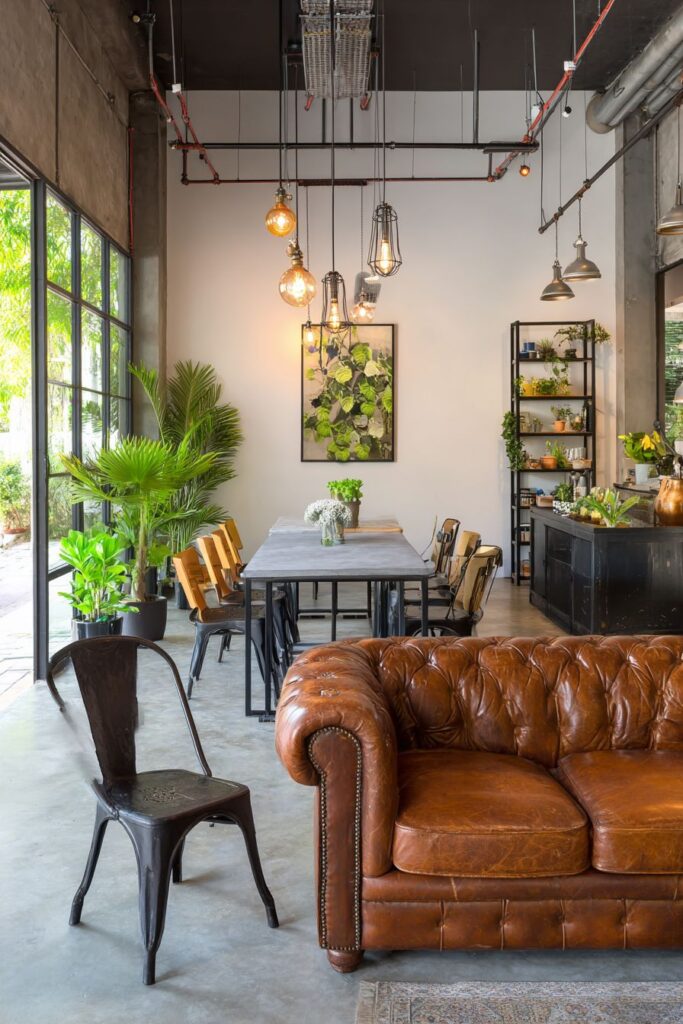
Industrial pipe shelving displays books and plants, adding function while reinforcing the urban aesthetic. Pipe shelving, made from plumbing components and wood boards, became popular in industrial lofts before being adopted more widely. It provides substantial storage while adding architectural interest and textural variety. The mix of pendant lights in different styles hanging above the dining area takes the eclectic approach even further—perhaps one vintage glass pendant, one modern metal shade, one Edison bulb—creating visual interest while maintaining cohesion through their placement above the same zone. Throughout, books and plants add life and personality, making the space feel collected, lived-in, and deeply personal.
Key Design Tips:
- Mix periods and styles deliberately—vintage with modern, traditional with industrial—for curated character
- Choose a statement vintage piece like a Chesterfield sofa as a foundation for building eclectic spaces
- Embrace material contrast like worn leather with concrete or wood with metal for visual interest
- Use mismatched dining chairs that each contribute personality while working together as a collection
- Install industrial pipe shelving for storage that adds architectural interest and urban edge
- Mix lighting styles above a single area for eclectic interest that maintains cohesion through placement
- Add books, plants, and collected objects that make the space feel personal and lived-in
Why These Small Living Room Designs with Dining Areas Work
Each of the twenty designs featured in this comprehensive guide succeeds because it addresses the fundamental challenges of combining living and dining areas in compact spaces while maintaining distinct aesthetic character. The open-plan efficiency design demonstrates how neutral color palettes and streamlined furniture create visual continuity that makes small spaces feel larger. The transparent elegance approach proves that material choices—glass, acrylic, and reflective surfaces—can dramatically affect spatial perception, making rooms appear more open through visual lightness rather than physical space.
The built-in storage solution addresses one of the most pressing concerns in small space living: where to put things. By incorporating storage into seating furniture, this design maximizes functionality without adding separate storage pieces that would consume floor area. The Scandinavian simplicity design shows how minimalist aesthetics—clean lines, limited color palettes, and essential furniture only—create calm, uncluttered spaces that feel more spacious precisely because they aren’t filled with objects.
The continuous seating and vintage character design illustrates how creative spatial arrangements can serve dual purposes, with furniture elements transitioning seamlessly between living and dining functions. This approach eliminates redundancy and makes efficient use of every piece. The modern transparency with mirror magic design proves that optical illusions—reflections, transparent materials, and strategic mirror placement—can effectively double the perceived size of compact rooms.
The cozy farmhouse design demonstrates that small spaces don’t require minimalism—warmth, texture, and collected character can work beautifully when materials remain light and furniture scale is appropriate. The space-efficient innovation with convertible elements showcases the cutting edge of small space design, where furniture transforms to meet changing needs, allowing a single room to function differently at different times. The industrial urban design proves that even moody, darker palettes can work in compact spaces when materials like exposed brick and metal are balanced with warm wood tones.
The bright coastal approach shows how light colors, weathered finishes, and natural textures create airy, relaxed spaces that feel larger through their connection to nature and beach-inspired elements. The contemporary sophistication design demonstrates that neutral doesn’t mean boring—layers of taupe, beige, and warm greys create depth and interest while maintaining the calm that small spaces require. The bohemian eclecticism proves that pattern, color, and collected pieces can work in compact rooms when balanced with plenty of negative space and strategic furniture placement.
The minimalist Japanese design takes the opposite approach, showing how embracing empty space, low furniture profiles, and extreme simplicity create expansive feelings in the smallest footprints. The transitional elegance design proves that traditional furniture forms can work in contemporary small spaces when properly scaled and rendered in modern colors and fabrics. The mid-century modern approach shows how iconic designs from the 1950s and 60s—with their clean lines and compact scales—remain perfectly suited to small space living today.
The multifunctional flexibility design addresses the needs of spaces that must serve multiple purposes, showing how adaptable furniture allows rooms to transform based on current needs without sacrificing aesthetics. The Art Deco glamour approach proves that luxury and drama are possible even in compact spaces when achieved through color, reflective surfaces, and rich materials rather than size. The rustic modern design demonstrates how organic materials like live-edge wood and leather bring warmth while black metal and clean lines keep the aesthetic contemporary.
The contemporary Scandinavian with modular flexibility design shows the evolution of Nordic design principles into solutions perfect for modern life—adaptable, functional, and deeply comfortable. Finally, the eclectic urban approach celebrates individuality, showing how mixing periods, styles, and aesthetics creates spaces with unique character that reflect personal stories rather than catalog perfection.
Together, these twenty designs prove that small living rooms combined with dining areas present opportunities rather than limitations. Whether you prefer minimal Scandinavian simplicity, warm farmhouse charm, sophisticated transitional elegance, bold bohemian color, or any point in between, there’s a design approach that can make your compact space both beautiful and functional. The key lies in understanding your personal style, choosing furniture at appropriate scales, using color and material strategically, and embracing the creative challenge of making every design decision count.
Conclusion
Combining living and dining areas in small spaces is no longer a compromise forced by limited square footage—it’s an opportunity to create connected, multifunctional rooms that support contemporary lifestyles while expressing personal style. As these twenty diverse designs demonstrate, success comes from thoughtful furniture selection, strategic color use, creative spatial arrangements, and willingness to embrace innovative solutions. Whether you’re drawn to the serene simplicity of Japanese-inspired minimalism or the collected character of bohemian eclecticism, the foundation remains the same: understanding how to maximize space through smart choices while never sacrificing beauty for function.
The designs featured here share common threads despite their aesthetic diversity. They all prioritize furniture at appropriate scales that provide necessary function without overwhelming compact footprints. They use color strategically—whether through light neutrals that expand space visually or bold jewel tones that create focal points without requiring excessive square footage. They employ lighting thoughtfully, using different fixtures to define zones while creating ambiance. They incorporate storage creatively, recognizing that clutter is the enemy of small space success.
Perhaps most importantly, these designs prove that personal style doesn’t need to be sacrificed to spatial constraints. From the glamorous luxury of Art Deco to the relaxed comfort of coastal style, from the raw authenticity of industrial design to the refined tradition of transitional elegance, every aesthetic can be adapted to small spaces when approached thoughtfully. The key is understanding the principles that make each style work and applying them with sensitivity to scale, proportion, and spatial flow.
As you consider implementing these ideas in your own home, remember that the best design solutions come from understanding your specific needs, lifestyle, and preferences. Consider how you use your space—do you entertain frequently, requiring flexible dining that expands? Do you need the dining area to double as workspace? Does the living area need to accommodate overnight guests? Let these functional requirements guide your choices while your aesthetic preferences determine the style.
Don’t be afraid to experiment with different layouts before committing to furniture placement. Many of these designs succeed through unexpected arrangements—dining tables behind sofas, console tables serving as dining surfaces, sectionals creating natural divisions. Try various configurations, live with them for a few days, and notice how you move through the space. The right layout will feel natural and intuitive, while the wrong one will create frustration and awkward moments.
Remember that small spaces reward editing and restraint. Rather than filling every surface and corner, allow your space to breathe with carefully curated pieces that serve clear purposes. One beautiful live-edge dining table makes more impact than a standard table with excessive accessories. A vintage Chesterfield sofa creates more character than new furniture surrounded by decorative pillows. Quality over quantity, always.
Finally, embrace your small space as an asset rather than a limitation. Compact rooms foster intimacy and connection—dinner conversations happen more easily when the dining table is just steps from the living area. These combined spaces encourage open, connected living where family members and guests naturally interact rather than retreating to separate rooms. With thoughtful design, your small living room with dining area can become the heart of your home—beautiful, functional, and uniquely yours.
"As an Amazon Associate, I earn from qualifying purchases."
