

In today’s world of compact living spaces and urban apartments, the dining area often presents one of the most challenging design dilemmas. How do you create a welcoming space for meals and gatherings without sacrificing precious square footage? The answer lies in innovative space saving dining table solutions that combine intelligent design with aesthetic appeal. These versatile furniture pieces prove that limited space doesn’t mean compromising on style or functionality. Whether you’re furnishing a studio apartment, a cozy breakfast nook, or simply looking to maximize your dining area’s potential, the right space saving table can transform how you live and entertain.
The beauty of modern space saving dining tables lies in their ingenious engineering and thoughtful design. From fold-down mechanisms and extendable surfaces to convertible pieces that serve multiple purposes, today’s furniture designers have created solutions that seamlessly adapt to our changing needs throughout the day. These tables aren’t merely practical necessities—they’re statements of smart living that reflect a mindful approach to interior design. The key is finding a solution that not only fits your physical space but also complements your lifestyle, aesthetic preferences, and dining habits.
This comprehensive guide explores twenty exceptional space saving dining table ideas, each offering unique advantages for different living situations and design sensibilities. From Scandinavian minimalism to industrial chic, from traditional gateleg tables to cutting-edge hydraulic systems, you’ll discover options that span various styles, materials, and mechanisms. Each design demonstrates how thoughtful furniture selection can dramatically improve your home’s functionality while creating inviting spaces where memories are made around shared meals. Let’s explore these transformative ideas that prove small spaces can accommodate big dreams.
1. Wall-Mounted Drop-Leaf Table in Natural Oak
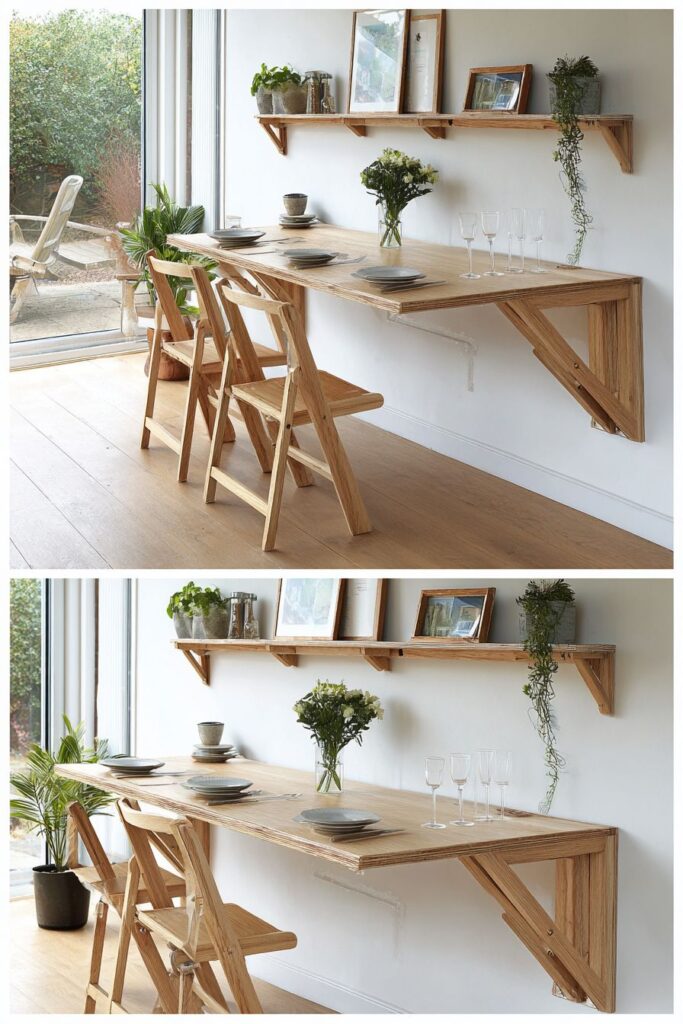
Imagine a dining solution that virtually disappears when not needed, yet provides comfortable seating for four when extended. The wall-mounted drop-leaf table in natural oak represents the pinnacle of space efficiency without sacrificing warmth or character. When folded down, this ingenious piece becomes a narrow console measuring just inches from the wall, creating an unobtrusive profile that maintains open flow throughout your living space. The natural oak finish brings organic beauty to your interior, with rich grain patterns that catch and reflect natural light streaming from adjacent windows.
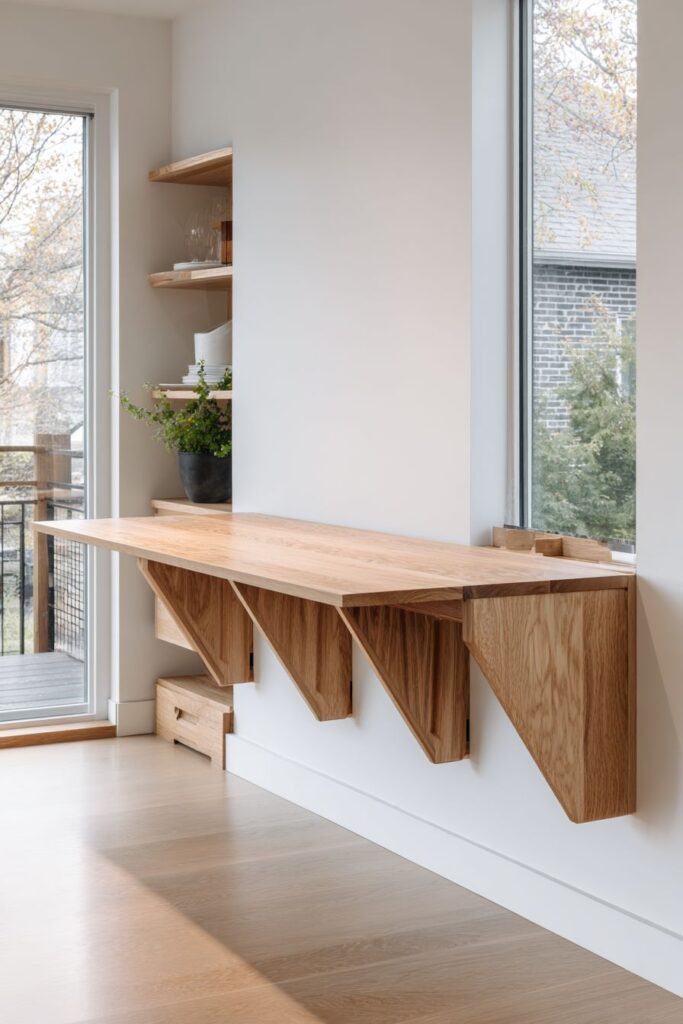
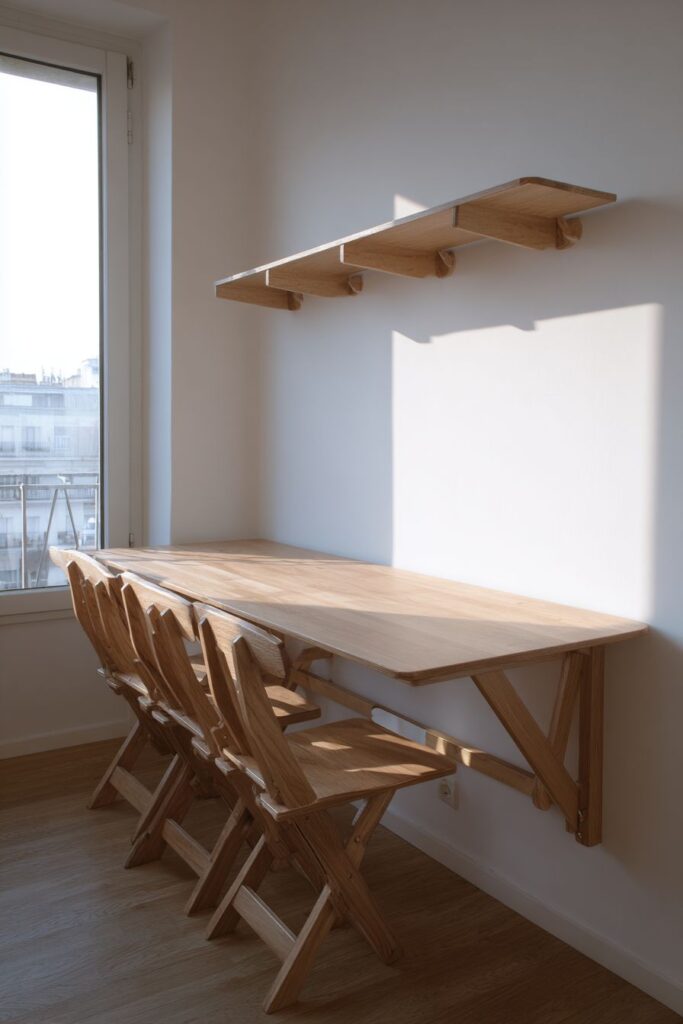
The true magic reveals itself when it’s time to dine. With a simple lifting motion, the leaf extends to create a generous surface that comfortably accommodates four people. The matching folding chairs, cleverly stored on wall hooks nearby, complete the transformation in moments. This setup exemplifies the marriage of form and function, where every element serves a purpose while contributing to the room’s aesthetic appeal. The wide-angle view of this space showcases how the table’s dual functionality allows you to maintain an open, airy environment for daily living while being fully prepared for dining and entertaining.
The beauty of this design lies in its simplicity and the quality of materials used. Natural oak offers durability that improves with age, developing a lovely patina that tells the story of countless meals shared. The visible wood grain adds textural interest to your wall, even when the table is in its folded position. The practical mechanism operates smoothly, designed for daily use without complicated procedures or heavy lifting. The versatility of this wall-mounted solution makes it ideal for studio apartments, small condos, or any space where flexibility is paramount.
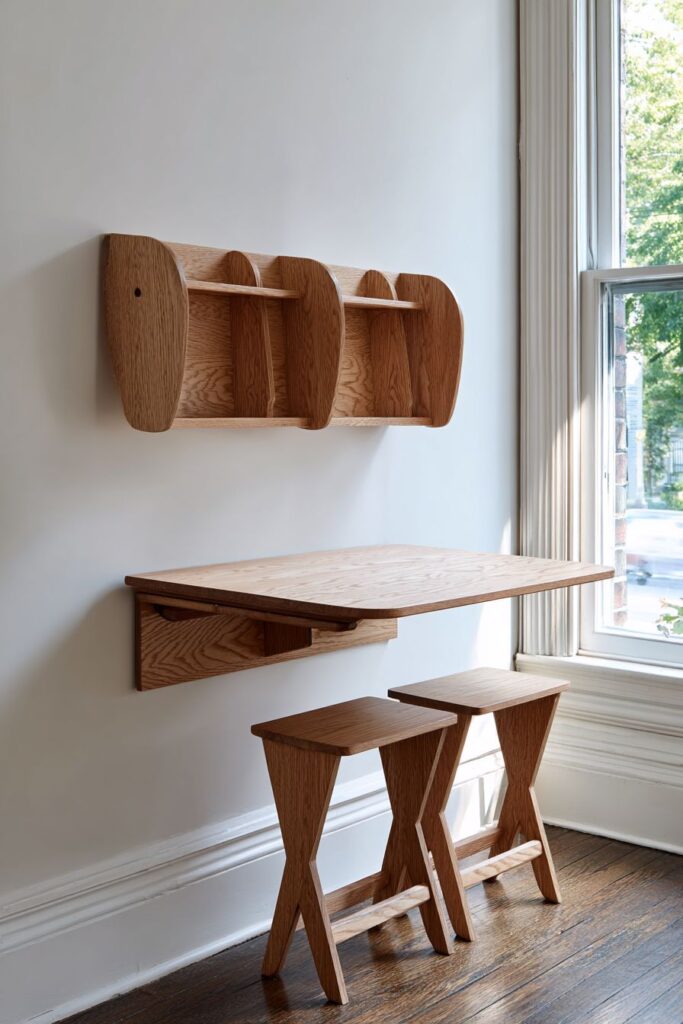
Key design tips for implementing this solution include installing the table at a height that allows comfortable seating for all family members, typically between 28 and 30 inches from the floor. Choose decorative wall hooks for chairs that can double as wall art when not holding chairs, adding visual interest to your space. Position the table near natural light sources to highlight the oak’s beautiful grain patterns and create an inviting dining atmosphere. Consider adding a thin cushion or pad to the folded table surface to use it as a functional console for keys, mail, or decorative items when not in use for dining. Apply furniture wax periodically to protect the oak finish and maintain its natural luster for years to come.
2. Round Pedestal Table with Hidden Butterfly Leaf
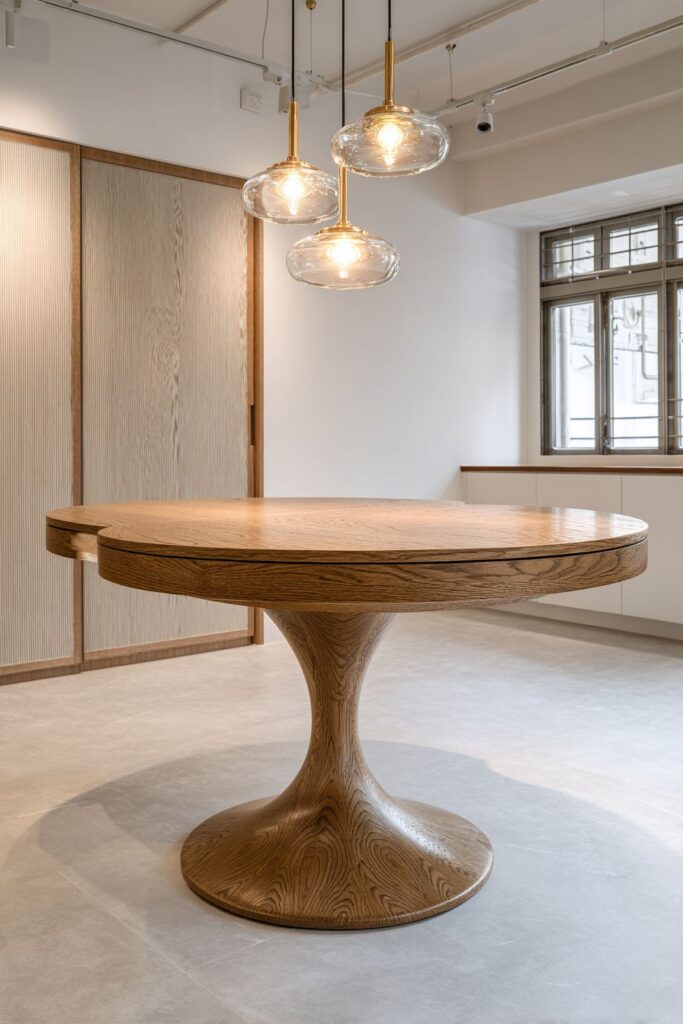
The round pedestal table with hidden butterfly leaf extension represents sophisticated engineering disguised as simple elegance. In its compact form, this charming table seats two people comfortably, making it perfect for intimate meals or morning coffee. The light ash wood finish radiates warmth while keeping the space feeling bright and open. The visible grain patterns create subtle visual interest that draws the eye without overwhelming the senses. Positioned beneath pendant lighting in a small apartment dining area, this table becomes a focal point that anchors the space with grace and functionality.
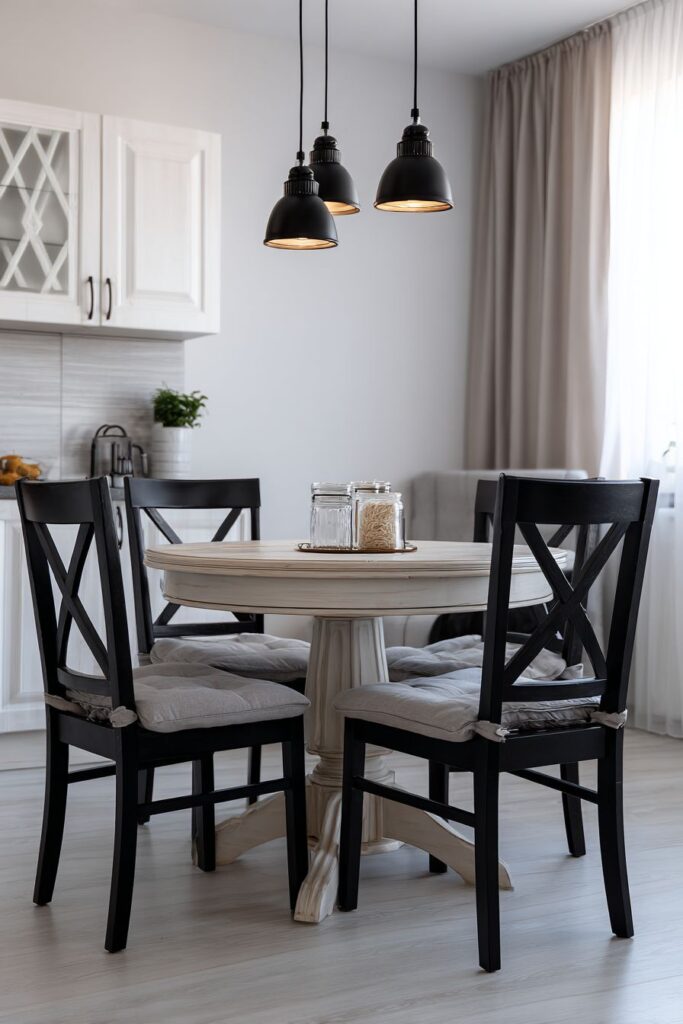
What makes this design truly remarkable is the concealed butterfly leaf mechanism hidden within the table’s structure. When guests arrive, the table effortlessly expands to accommodate six people, transforming from an everyday breakfast spot to a proper dinner party venue. The expansion process is smooth and intuitive, requiring no separate leaf storage or complicated assembly. The clever engineering ensures that the extended table maintains structural stability and aesthetic coherence, with the added leaf matching perfectly in both color and grain pattern. This seamless transformation means you’re always prepared for unexpected guests or planned gatherings without maintaining a permanently large dining footprint.
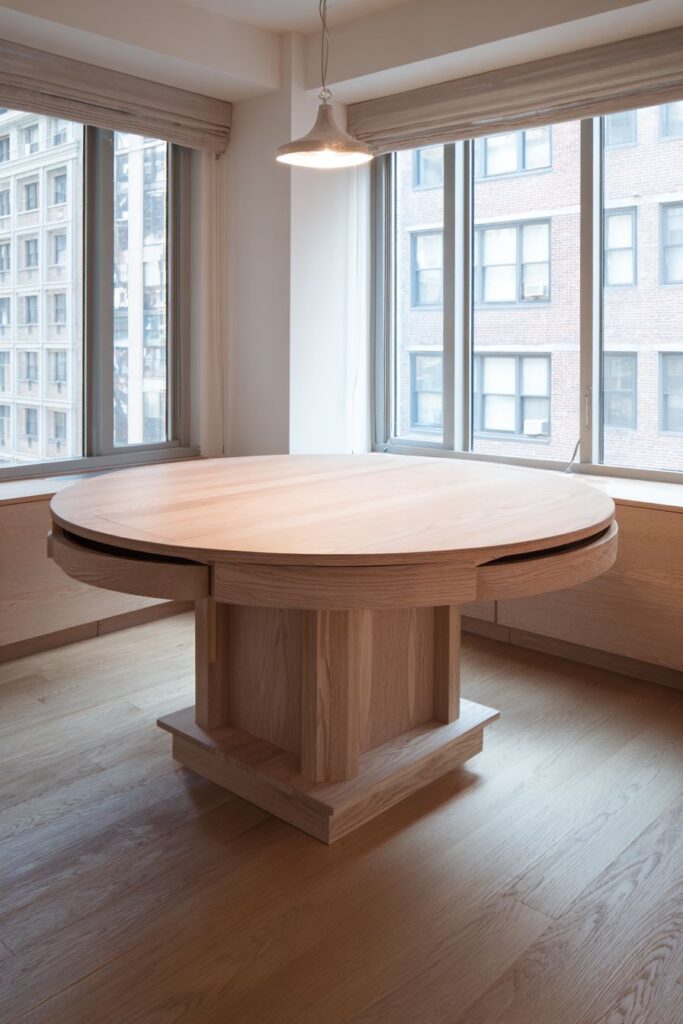
The pedestal base design offers additional advantages for space saving beyond the extendable top. Unlike four-legged tables that can restrict seating positions and create obstacles for chairs, the single central support allows for flexible seating arrangements and easier movement around the table. Guests can slide chairs in and out without navigating table legs, and the open space beneath provides a less cluttered visual appearance that helps small rooms feel more spacious. The professional interior photography of this piece captures the soft natural lighting that emphasizes the clever engineering and smooth expansion mechanism, showcasing how form and function unite in this exceptional design.
The light ash wood finish chosen for this table deserves special mention for its contribution to the overall aesthetic. Ash is known for its pronounced grain patterns and light coloration that ranges from creamy white to light brown, creating visual depth without heaviness. This wood choice is particularly effective in small spaces where darker finishes might make the room feel closed in or cramped. The natural variations in the grain ensure that each table is unique, adding character and personality to your dining area while maintaining a contemporary, uncluttered appearance.
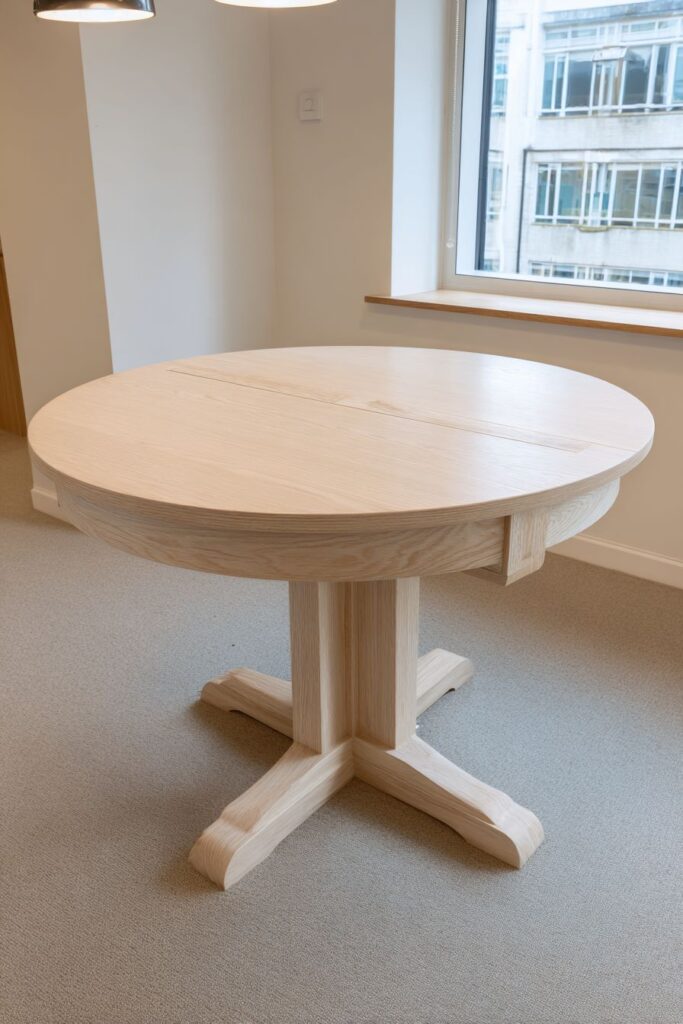
Key design considerations include ensuring adequate clearance around the table in both its compact and extended positions so that chairs can be pulled out comfortably. Invest in quality pendant lighting positioned directly above the table center to provide even illumination whether the table is expanded or not. Choose chairs with comfortable backs that encourage lingering conversation but with profiles slim enough to tuck under the table edge when not in use. Protect the ash wood finish with appropriate sealants designed for light-colored woods to prevent staining and water damage. Consider placing a low-profile area rug beneath the table to define the dining zone and add warmth underfoot without interfering with the table’s expansion mechanism.
3. Rectangular Table with Integrated Storage Drawers
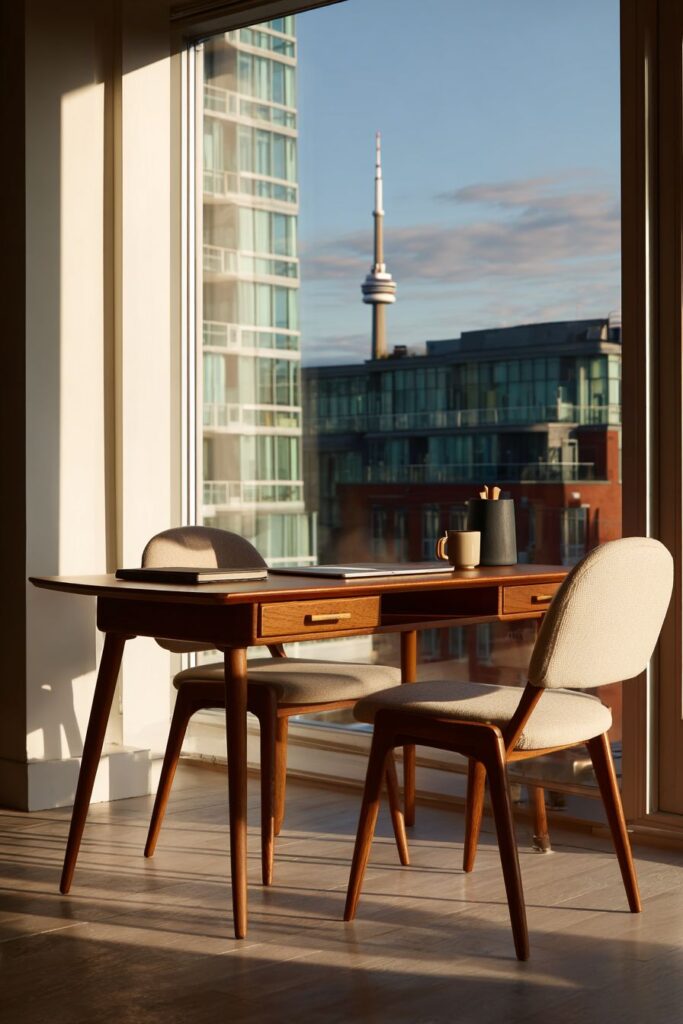
Picture a dining table that doesn’t just provide a surface for meals but actively solves your storage challenges. The sleek rectangular table with integrated storage drawers on both sides represents a holistic approach to space saving furniture design. Crafted in rich walnut veneer with tapered legs that convey mid-century modern elegance, this table measures a slim profile that fits comfortably in studio apartments or compact dining areas. The warm, chocolate-brown tones of walnut create an inviting atmosphere while the smooth finish reflects light beautifully, adding depth and sophistication to the space.
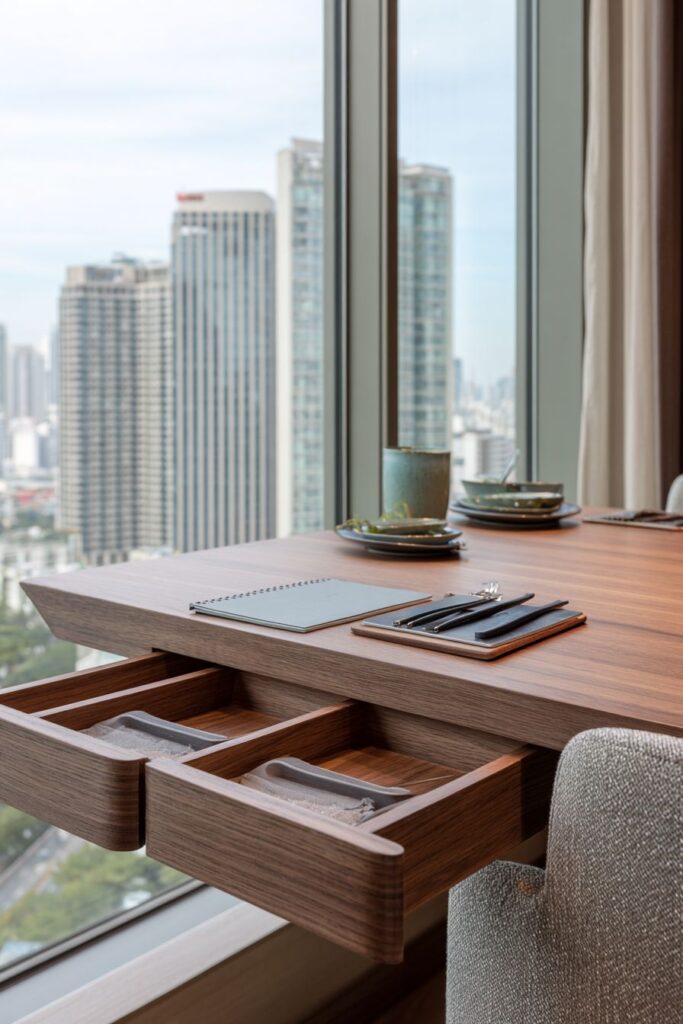
The integrated drawers are the star feature of this design, offering dedicated storage for placemats, napkins, utensils, and other dining essentials. This built-in organization means everything you need for a meal is within arm’s reach, eliminating trips to the kitchen or linen closet. The drawers are positioned on both sides of the table, making them accessible from either seating position and maintaining the table’s balanced aesthetic. The slim profile design ensures the table doesn’t dominate the room despite its generous storage capacity. When positioned against a window in a studio apartment with two upholstered chairs tucked completely underneath, the entire setup occupies minimal floor space while providing maximum functionality.
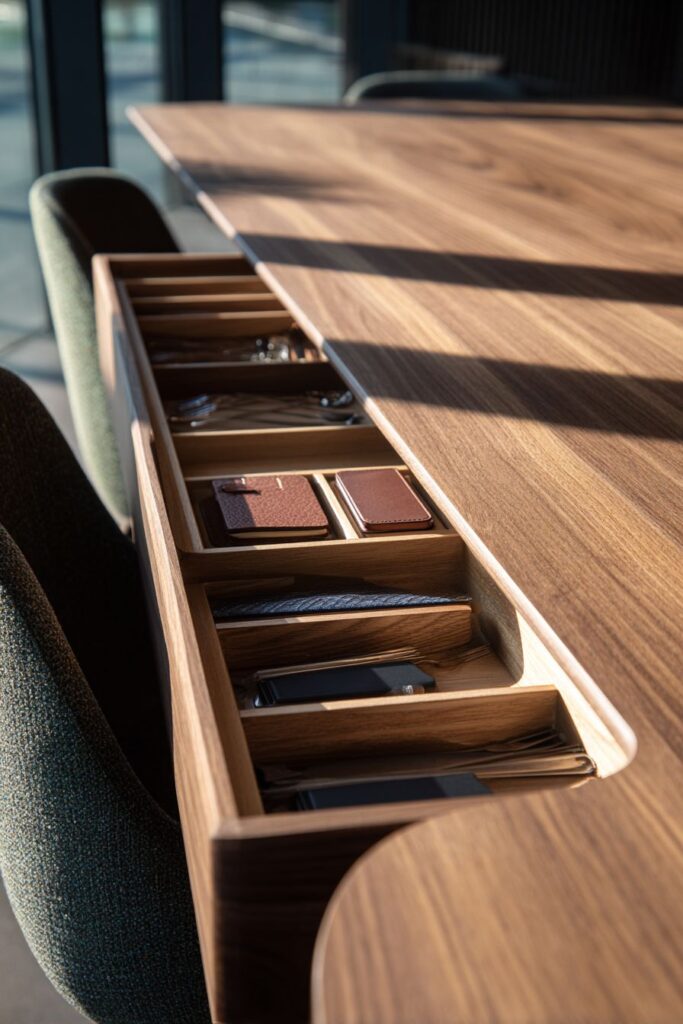
The tapered legs deserve special attention as they contribute significantly to the table’s visual lightness. Rather than chunky, heavy legs that can make furniture feel burdensome in small spaces, these angled supports create an airy, lifted appearance that allows light to flow around and beneath the table. This design choice helps the room feel more spacious and less cluttered, even though the table itself is a substantial piece of furniture. The walnut veneer features beautiful grain patterns with rich variations in color, from deep brown to lighter amber tones, creating visual interest that makes the table a true statement piece.
Golden hour lighting streaming through adjacent windows transforms this table into a glowing centerpiece, highlighting the functional storage details and space-efficient proportions. The way natural light plays across the walnut veneer emphasizes the wood’s natural beauty and brings warmth to the entire dining area. The two upholstered chairs can be fully tucked under the table when not in use, creating a clean, streamlined look that maintains clear pathways and prevents the space from feeling crowded. The upholstery adds softness and comfort, inviting people to linger over meals and conversation.
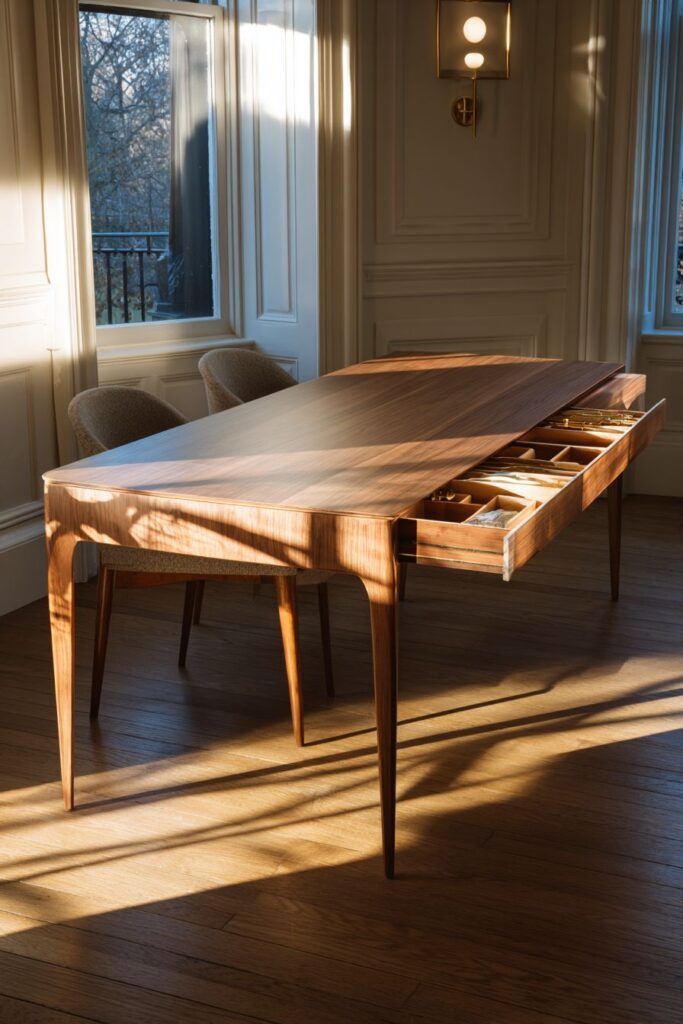
Important design tips for this style include organizing drawer contents with small dividers or organizers to maximize storage efficiency and keep items from shifting when drawers are opened. Choose drawer pulls or handles that complement your overall design scheme, whether modern bar pulls for contemporary spaces or vintage-inspired hardware for eclectic interiors. Position the table to allow easy access to drawers from both sides, avoiding placement too close to walls or other furniture.
Select chairs with seats that tuck completely under the table edge to maintain the streamlined profile when not in use. Apply quality wood conditioner to the walnut veneer regularly to prevent drying and maintain the rich color and luster. Consider using drawer liners to protect the interior surfaces and add a subtle decorative element when drawers are opened.
4. Multifunctional Console Table with Pull-Out Leaves
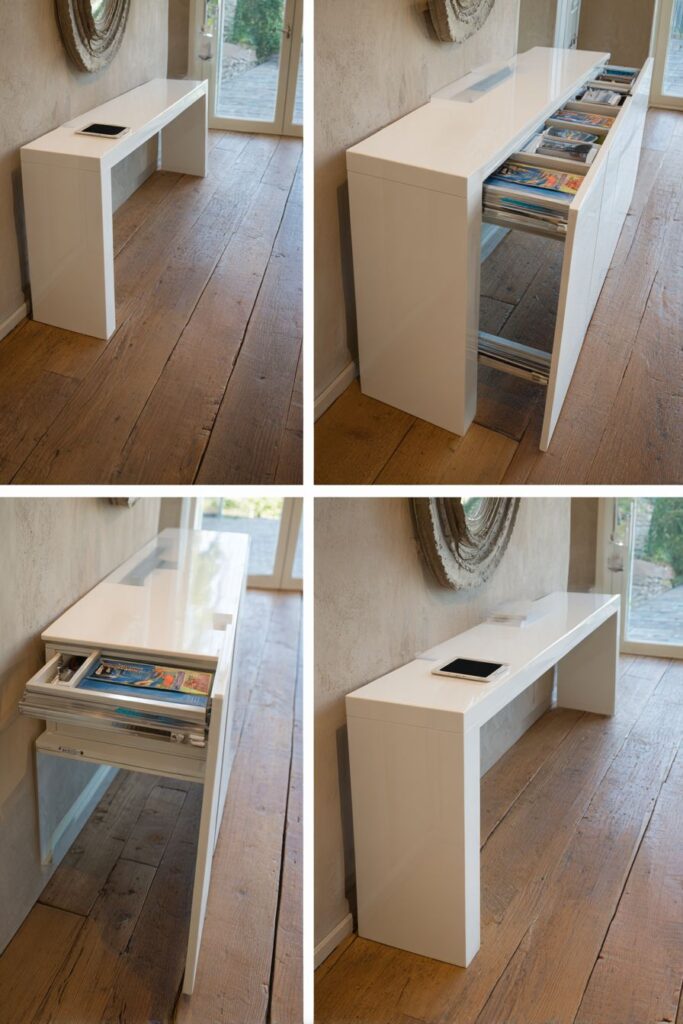
The multifunctional console table that extends into a full dining table represents the ultimate in transformative furniture design. This remarkable piece begins its life as a sleek, narrow console measuring just twelve inches in depth, perfect for hallways, behind sofas, or against walls where a full dining table would be impractical. Crafted from white lacquered wood with gleaming chrome hardware, this table embodies contemporary sophistication with its clean lines and glossy finish. The stark white surface reflects light beautifully, helping to brighten spaces and create an illusion of greater square footage.
The transformation from console to dining table is nothing short of theatrical. Two ingenious pull-out leaves extend the table from its svelte twelve-inch profile to a generous thirty-six-inch dining surface capable of seating six to eight people comfortably. The engineering behind this expansion is both robust and refined, with smooth-gliding mechanisms that allow one person to easily transform the table in moments. The chrome hardware isn’t merely decorative but serves as part of the structural support system, adding industrial-chic visual interest while ensuring stability in both configurations. This dual-purpose design means you never have to choose between having adequate living space and being prepared to host dinner parties.
Captured in architectural digest style photography, the transformation sequence reveals the practical versatility of this innovative design. In its console form, the table can display decorative objects, hold lamps, or serve as a landing spot for keys and mail. Extended, it becomes the heart of social gatherings, accommodating multiple guests with generous elbow room and comfortable spacing. The white lacquered finish creates a blank canvas that works with virtually any decor style, from ultra-modern minimalism to eclectic bohemian spaces. The glossy surface is also practical, easily wiping clean after meals and resisting everyday wear and scratches better than many other finishes.
The modern apartment setting shown in these images demonstrates how this table type fits seamlessly into contemporary living spaces. The clean aesthetic doesn’t compete with other design elements but rather enhances them, providing functional beauty that adapts to changing needs throughout the day and week. When entertaining, the extended table creates a proper dining experience with enough surface area for full place settings, serving dishes, and centerpieces. When daily life resumes, the table retreats to its console form, returning precious floor space for other activities like yoga, play areas, or simply moving freely through your home.
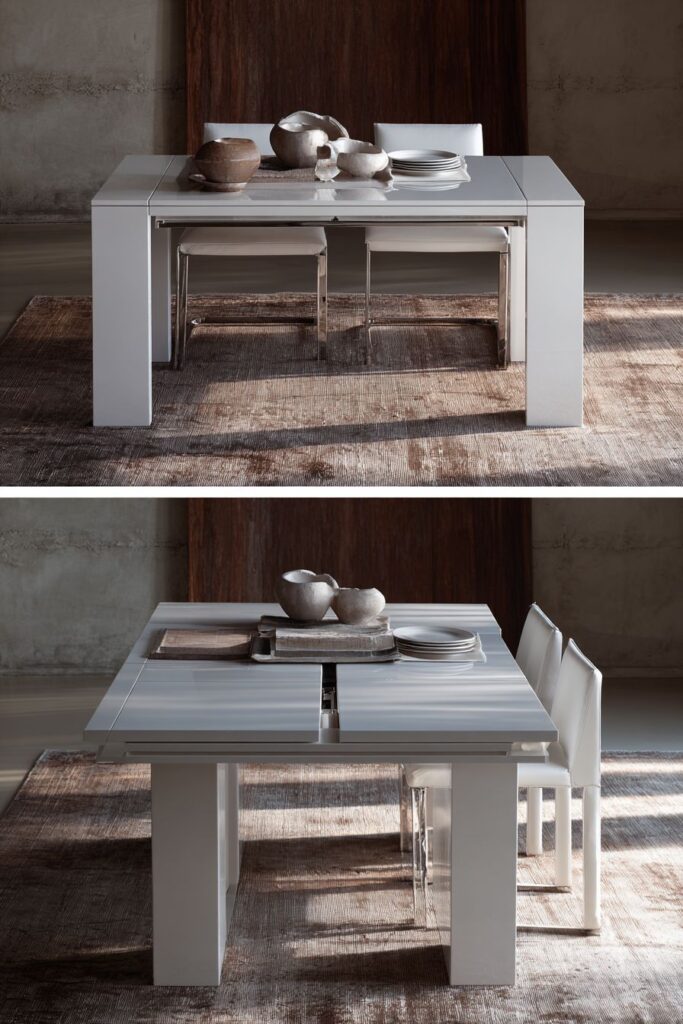
Design considerations for this style include ensuring you have adequate space for the table to extend fully without blocking doorways or traffic patterns. Measure carefully before purchasing, accounting for both configurations and the clearance needed for chairs. Choose dining chairs that complement the table’s modern aesthetic, perhaps with chrome legs or white upholstery to create visual continuity. Consider chairs that stack or fold for easy storage when the table is in console mode.
Position the console against a wall that allows room for extension in both directions if possible, or plan for one-sided expansion if space is limited. Protect the white lacquered surface with coasters and trivets, as heat and moisture can damage the finish over time. Keep the chrome hardware polished and clean to maintain its brilliant shine and prevent tarnishing. Store the extension leaves securely in their locked position to prevent accidental deployment and maintain the table’s integrity.
5. Bench-Style Wall-Mounted Dining Setup
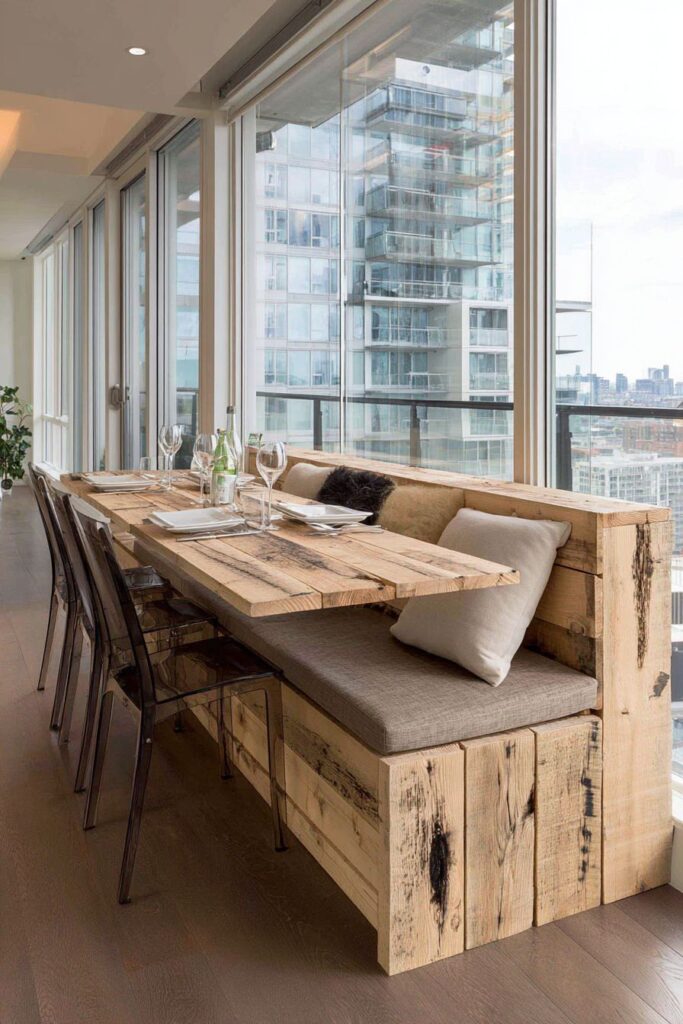
The bench-style dining setup with a narrow rectangular table pushed against the wall revolutionizes how we think about seating arrangements in tight spaces. This configuration maximizes every available inch by eliminating the need for chairs on one side of the table entirely. Instead, one long upholstered bench seats three people comfortably against the wall, while two compact chairs serve the opposite side. Made from reclaimed pine with natural color variations and visible knots, the table brings rustic charm and authentic character to the dining area. Each board tells a story through its weathering, nail holes, and unique grain patterns, creating a one-of-a-kind piece that adds warmth and personality to your home.
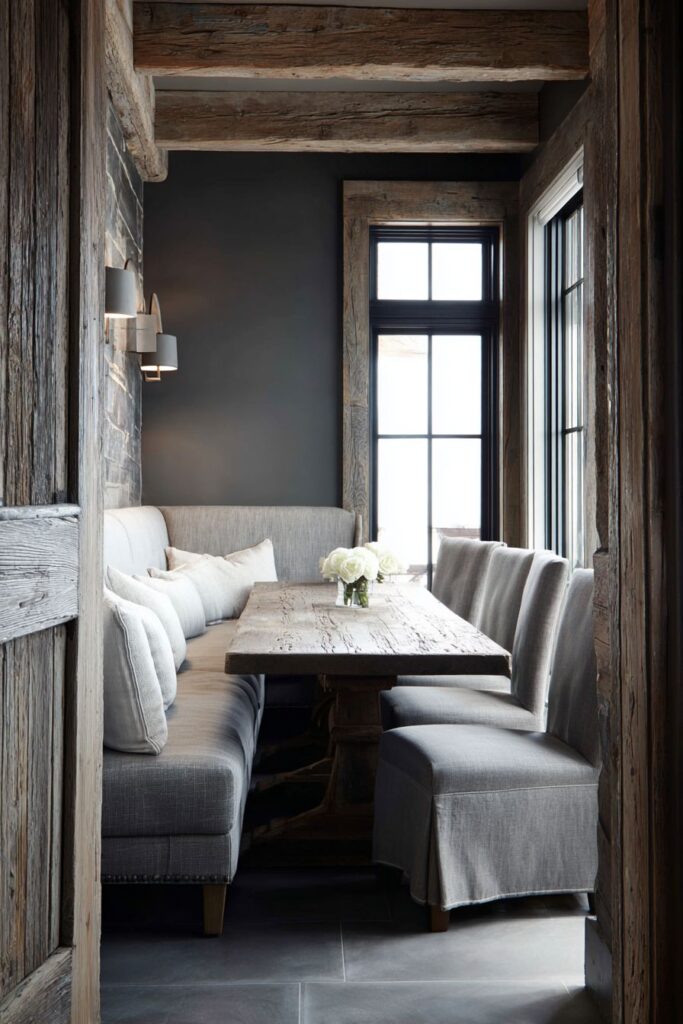
The genius of this arrangement lies in its efficient use of limited floor space. By placing the table against the wall and using a bench instead of individual chairs on that side, you eliminate the clearance space typically needed for chairs to pull in and out. The bench can be pushed completely under the table or remain in place, as diners simply slide in from the ends. This configuration works exceptionally well in breakfast nooks, narrow dining rooms, or apartments where every square foot counts. The upholstered bench adds comfort and softness, inviting people to settle in for leisurely meals and long conversations. The padding makes extended sitting more pleasant than hard chairs, encouraging the kind of lingering that turns meals into memorable occasions.
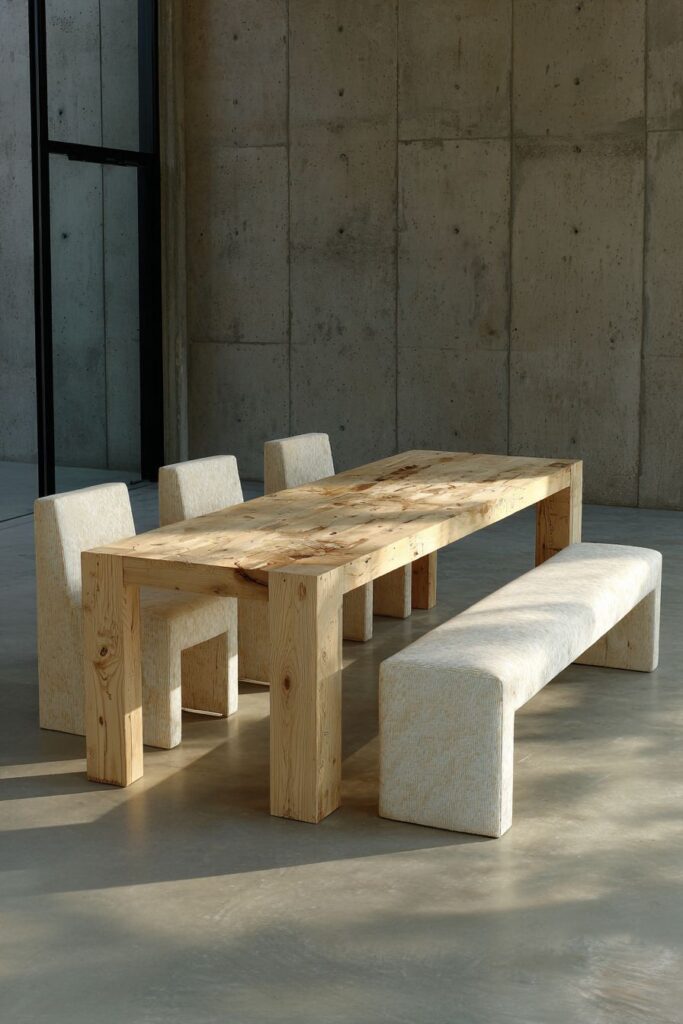
The reclaimed pine table showcases the beauty of imperfection and the appeal of sustainable design. The natural color variations range from honey gold to warm gray, with darker knots punctuating the surface like punctuation marks in a wooden sentence. These imperfections aren’t flaws but features that give the table character and visual interest that manufactured uniformity simply cannot achieve. The visible knots, subtle cracks, and weathered patina connect you to the wood’s history, whether it came from old barns, shipping pallets, or demolished buildings. This eco-friendly choice appeals to environmentally conscious homeowners while delivering authentic rustic aesthetics.
Wide-angle interior photography with soft diffused daylight emphasizes how this arrangement efficiently uses limited floor space while creating an inviting dining environment. The natural light highlights the pine’s warm tones and brings out the subtle texture variations in the wood surface. The two compact chairs opposite the bench can be tucked partially or fully under the table when not occupied, maintaining clear pathways and preventing the space from feeling cramped. The overall effect is cozy rather than confined, with the wall-mounted setup creating an intimate dining alcove that feels purposefully designed rather than squeezed in as an afterthought.
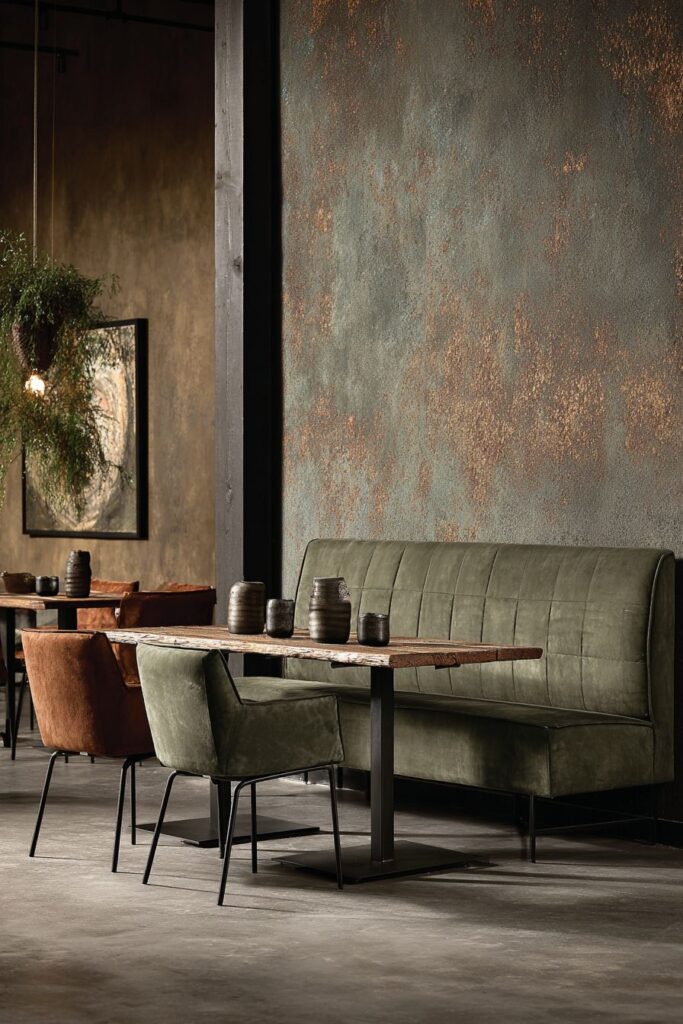
Design tips for implementing this arrangement include choosing a bench with removable cushions for easy cleaning and seasonal updates to your decor. Select fabric for the upholstery that resists stains and wears well, especially if you have young children or pets. Ensure the bench height matches the table height appropriately, typically with the seat about 12 inches lower than the table surface. Add throw pillows to the bench for extra comfort and pops of color that can be changed with seasons or moods. Position the table at a comfortable distance from the wall to allow adequate legroom without making the table too far forward. Consider adding wall-mounted lighting above the table to create ambiance and provide task lighting for meals. Apply food-safe oil or wax to the reclaimed pine periodically to nourish the wood and protect it from spills and moisture. Celebrate the imperfections in the reclaimed wood rather than trying to hide them, as they contribute to the table’s unique character and charm.
6. Glass-Top Table with Nesting Chairs
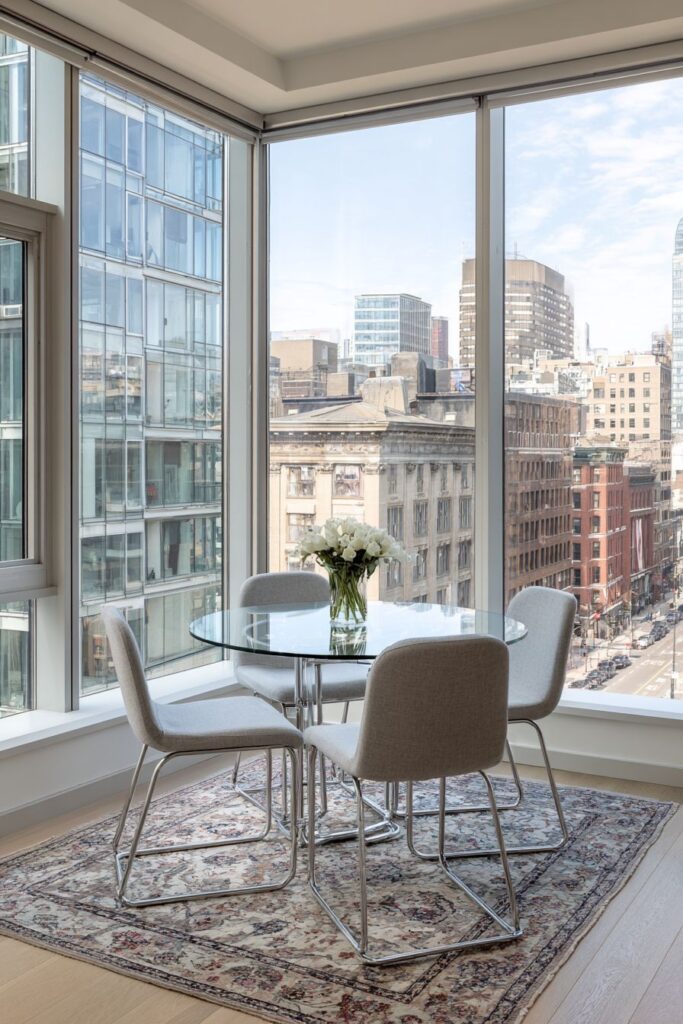
The contemporary glass-top table with minimalist chrome base and nesting chairs represents the epitome of visual spaciousness in small dining areas. The transparent glass top creates a see-through quality that allows light to pass through the table, making it nearly disappear from a visual standpoint while still providing a fully functional dining surface. This clever optical trick helps small rooms feel significantly larger and less cluttered than they would with a solid, opaque table. The minimalist chrome base provides structural support with sculptural grace, its polished surface reflecting light and adding contemporary elegance to the space.
The four nesting chairs with slim profiles in light grey upholstery complete this space saving ensemble with practical brilliance. These chairs are specifically designed to slide completely under the table when not in use, tucking away so neatly that they virtually disappear from view. The slim profiles mean they don’t add visual bulk even when visible, and the light grey upholstery creates a soft, neutral backdrop that doesn’t compete for attention with other design elements. When guests arrive, the chairs pull out effortlessly, providing comfortable seating without any storage hassles or furniture juggling.
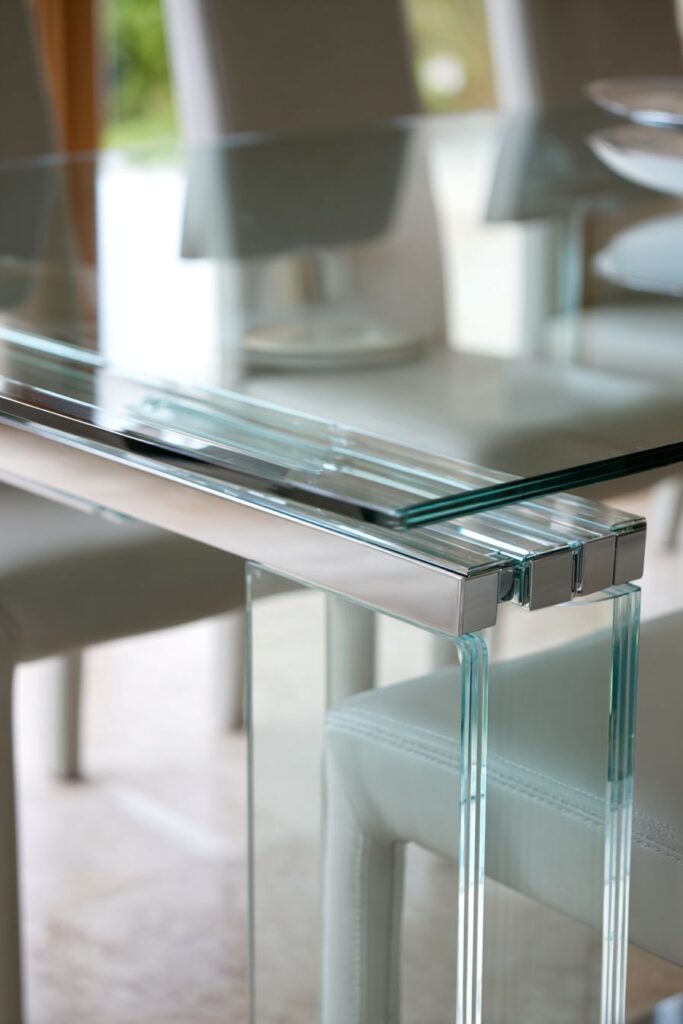
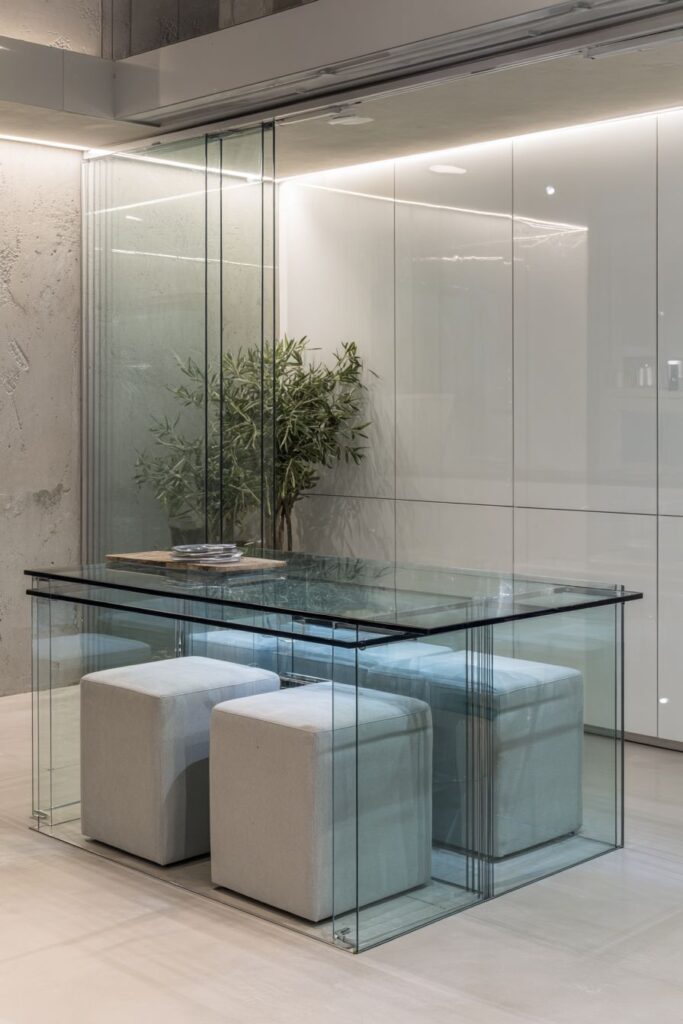
Professional interior photography with balanced exposure highlights the see-through quality and streamlined storage capability of this design. The way light interacts with the glass top creates interesting reflections and refractions that add dynamic visual interest without physical clutter. The chrome base acts almost like jewelry for your dining area, its clean lines and polished finish catching light from multiple angles and adding just enough visual weight to ground the design without overwhelming it. The transparent nature of the glass makes this table particularly effective in studio apartments or open-plan living spaces where maintaining sight lines and visual flow between areas is crucial.
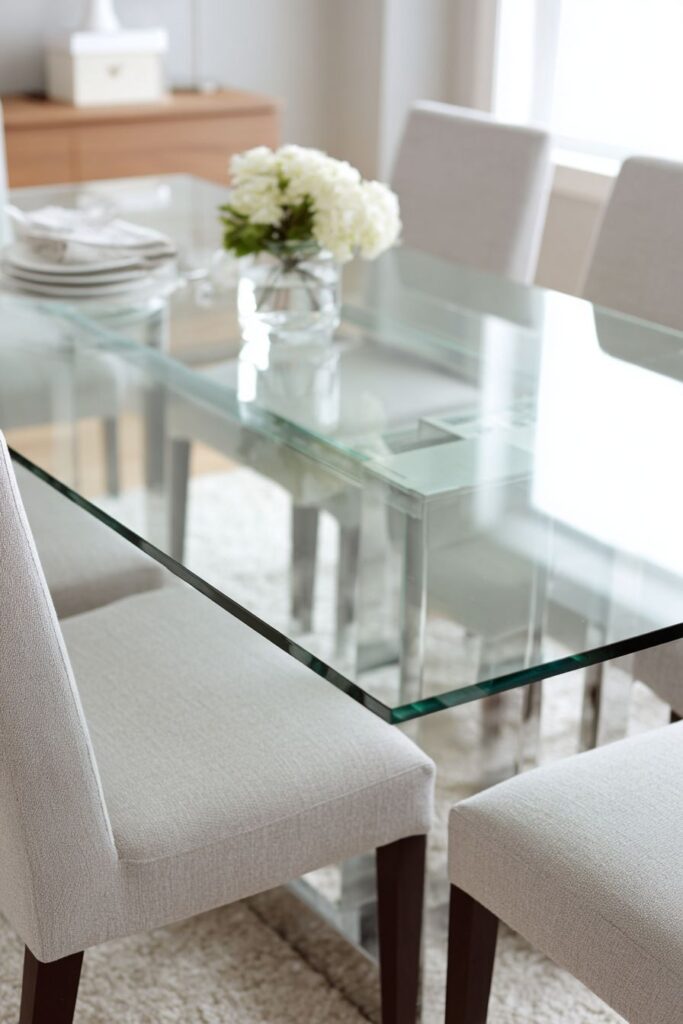
The practical advantages of glass extend beyond aesthetics. The smooth, non-porous surface is incredibly easy to clean, requiring only a quick wipe with glass cleaner to remove fingerprints, crumbs, and spills. Glass doesn’t absorb odors or stains, making it ideal for messy eaters or households with children. The material is also highly durable when tempered properly, resisting scratches and impacts that would damage wood or laminate surfaces. The light grey upholstery on the chairs strikes a balance between showing stains too readily, as white might, and the visual heaviness of darker colors, creating a practical yet sophisticated seating solution.
Considerations for this design include choosing tempered glass for safety, ensuring it can withstand the demands of daily use without shattering. Select a glass thickness appropriate for your table size, typically at least half an inch for dining tables to prevent flexing or feeling unstable. Keep glass cleaner and microfiber cloths handy for maintaining the pristine, transparent appearance that makes this design so effective. Consider adding felt pads to the bottom of items regularly placed on the table to prevent scratching the glass surface. Choose placemats or table runners to add warmth and define individual dining spaces while protecting the glass from hot plates and serving dishes. Ensure the chrome base is properly maintained with chrome polish to prevent water spots and maintain its brilliant shine. Position the table away from high-traffic areas where people might bump into the glass edges, and consider the safety implications if you have young children who might not notice the transparent surface.
7. Convertible Coffee Table with Hydraulic Lift
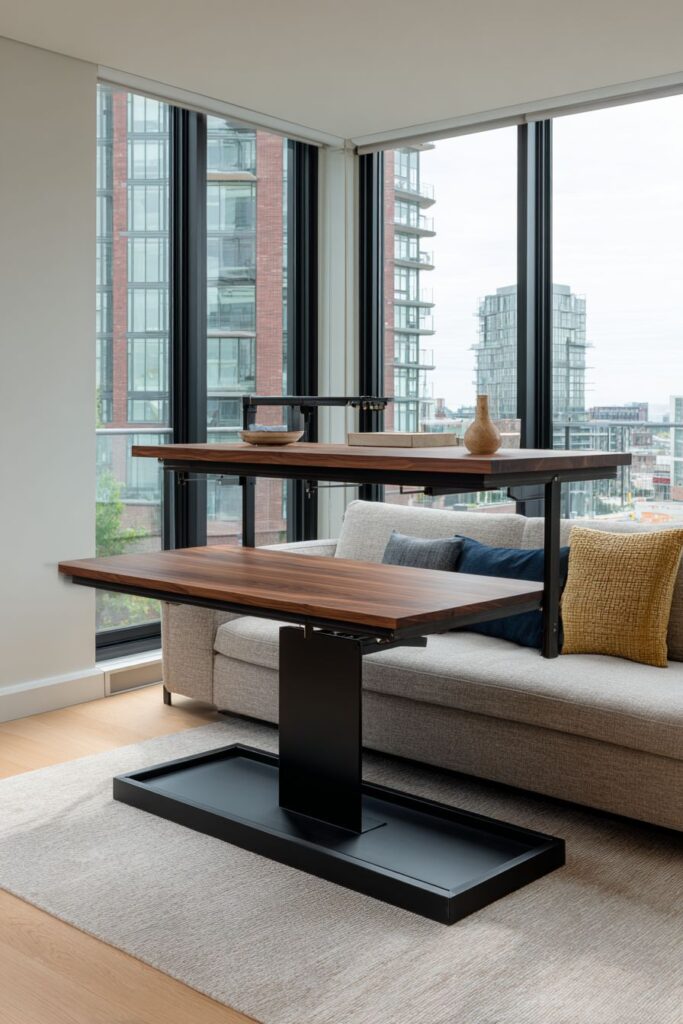
The convertible coffee table that hydraulically lifts and expands to dining height represents innovative thinking at its finest, perfectly suited for studio apartments and compact living spaces where every piece of furniture must work overtime. In its resting state, this remarkable piece functions as a handsome coffee table with a wood-grain laminate top in medium brown tones that complement a wide range of decor styles. The finish mimics natural wood with convincing grain patterns and warm coloring, providing the aesthetic appeal of real wood with enhanced durability and easier maintenance. The sturdy lift mechanism remains hidden from view, giving no hint of the table’s transformative capabilities.
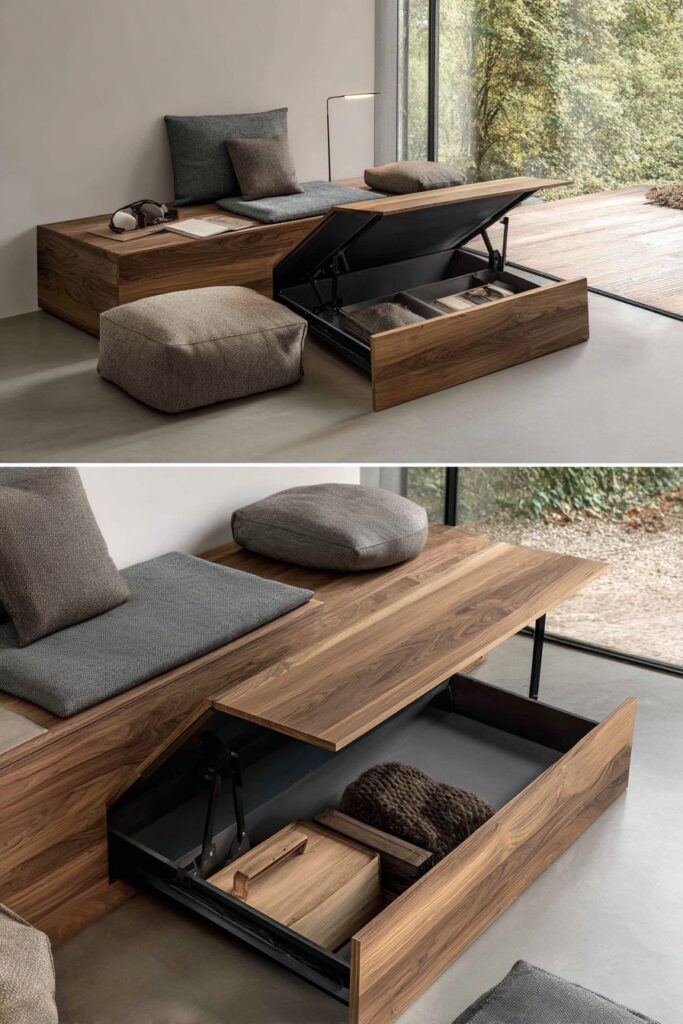
The magic happens with minimal effort, as the hydraulic system allows the table to rise smoothly from coffee table height to full dining height with just a gentle lift. The expansion isn’t limited to height alone; the surface often unfolds or extends to provide adequate space for dining, transforming from a compact surface perfect for holding remote controls and magazines into a proper dining table that can accommodate four to six people. This dual functionality eliminates the need for separate coffee and dining tables, freeing up significant floor space and reducing furniture clutter. The transformation takes mere seconds and requires no tools, complex procedures, or significant physical strength.
Positioned in a studio apartment living area with floor cushions stored nearby, this design exemplifies flexible living at its best. During the day or evening when dining isn’t on the agenda, the table sits at coffee table height, providing a convenient surface for working on laptops, playing games, or displaying decorative objects. When mealtime arrives, the table rises to meet the occasion, creating a proper dining experience without requiring a dedicated dining area. The floor cushions offer supplementary seating that stores flat when not needed and can be deployed quickly when guests arrive, complementing the table’s adaptability with their own space-saving credentials.
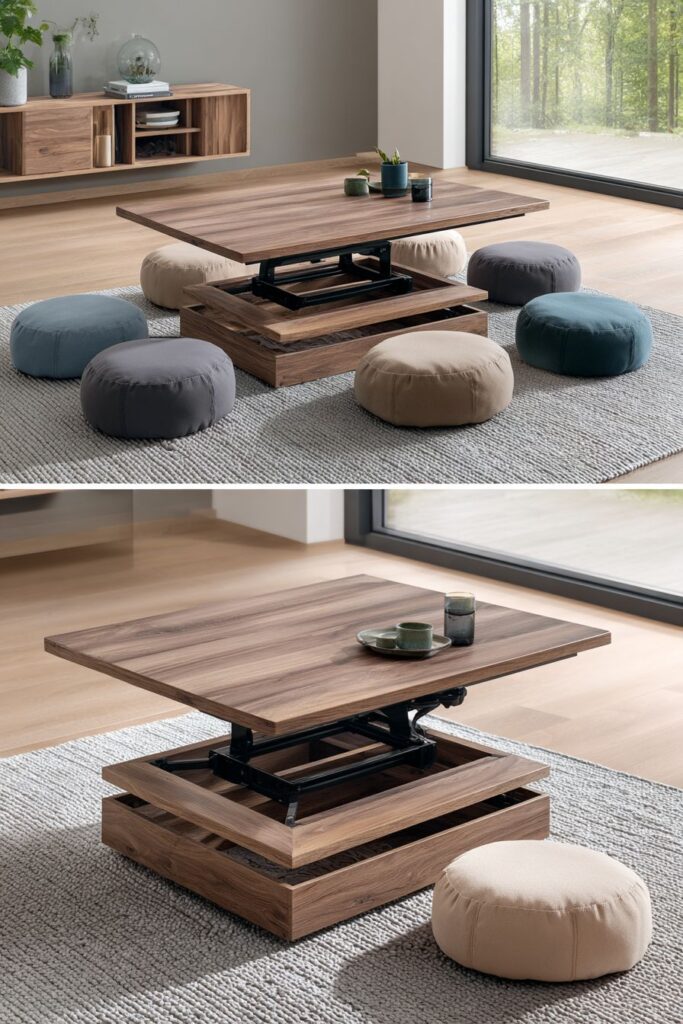
Detail shot interior photography capturing the transformation process reveals the innovative engineering that makes this dual-purpose design possible. Natural window lighting emphasizes the wood-grain laminate’s convincing texture and the smooth operation of the lift mechanism. The medium brown tones create warmth without heaviness, making the table feel substantial enough to serve as a focal point without dominating the space. The hydraulic system operates with precise control, allowing users to stop at any height between coffee and dining positions if desired, adding even more versatility to the design.
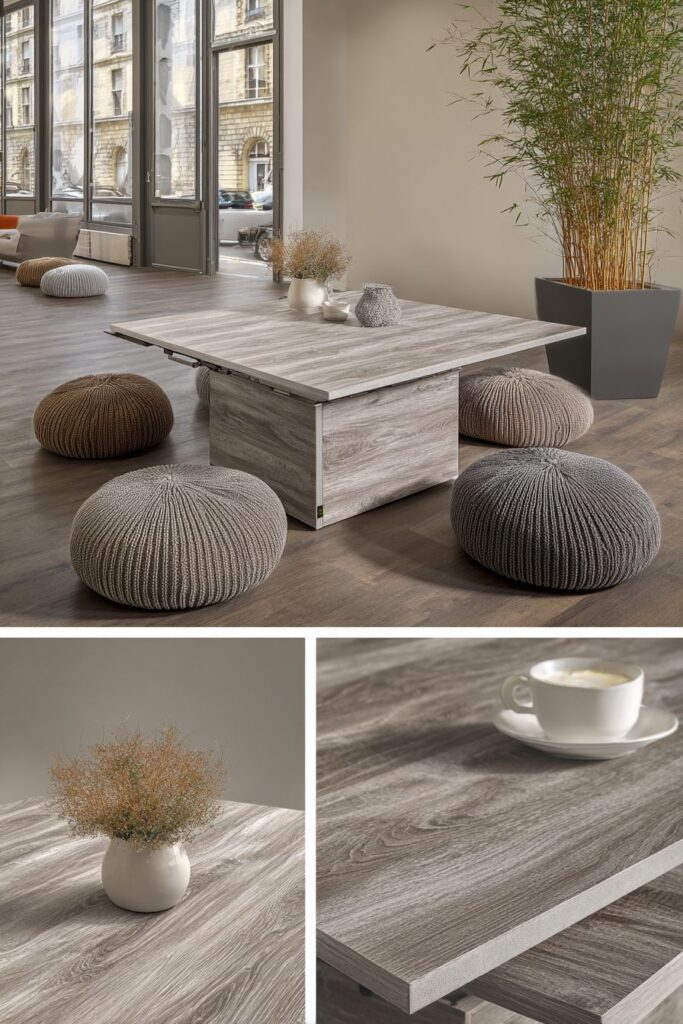
Implementation tips include testing the lift mechanism regularly to ensure it continues operating smoothly, and consulting the manufacturer’s instructions for any maintenance requirements like lubricating moving parts. Clear the table surface completely before operating the lift mechanism to prevent items from falling during transformation. Choose chairs or floor cushions that store easily when not in use, maintaining the open feel that makes this table so effective in small spaces. Consider the table’s footprint in both configurations when planning your room layout, ensuring adequate clearance for both uses. Protect the laminate surface with coasters and trivets, as heat and moisture can damage the finish over time despite its durability. Position the table where its dual purposes make sense, typically in a living area that can flexibly serve as a dining space when needed. Appreciate the versatility this piece provides, allowing you to maintain separation between living and dining functions within a single compact footprint.
8. Scandinavian Drop-Leaf Square Table
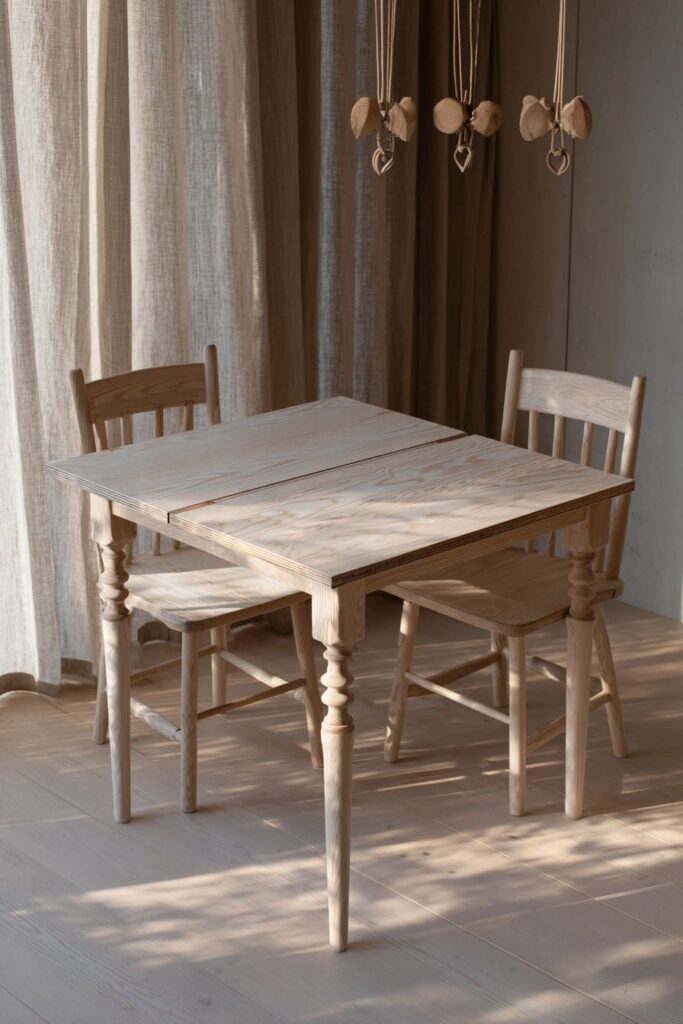
The Scandinavian-inspired space saving dining table presents a masterclass in minimalist functionality and understated beauty. This small square table features two drop leaves that fold down completely for a minimal footprint, embodying the Nordic design principle that less is truly more. Made from light birch wood with simple turned legs and a natural finish that showcases subtle wood texture, this table radiates the warmth and simplicity that defines Scandinavian design. The pale wood tones create an airy, luminous quality that helps small spaces feel larger and more inviting, while the honest material expression connects users to natural elements.
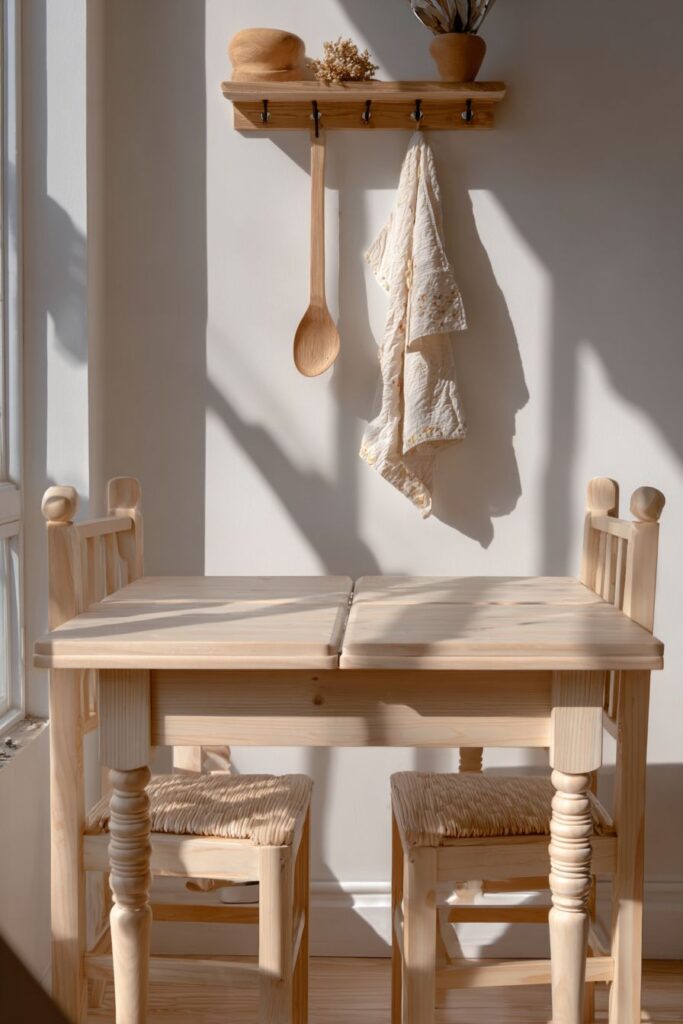
The ingenious drop-leaf mechanism allows this table to adapt seamlessly to different needs throughout the day. With both leaves folded down, the table becomes a compact square perfect for solo meals, morning coffee, or as a small work surface. One leaf up creates a rectangular table suitable for two people, ideal for everyday dining.
Both leaves extended transform the piece into a generous table that can accommodate four to six people, making it perfect for hosting dinner parties or family gatherings. This flexibility means you maintain maximum floor space for daily living while remaining prepared for entertaining without storing extra furniture or leaves separately.
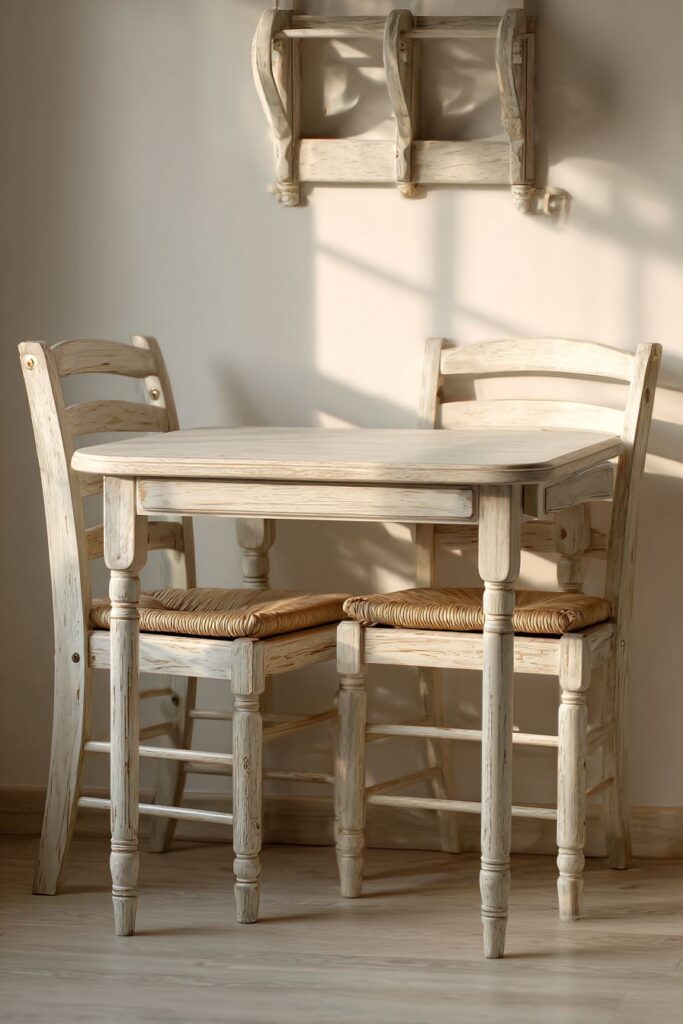
The two folding wooden chairs that hang on wall-mounted hooks complete this Scandinavian vignette with practical elegance. The matching birch wood creates visual cohesion while the folding mechanism allows the chairs to hang flat against the wall when not needed. This storage solution turns necessary furniture into decorative wall elements, with the chairs’ simple lines and natural wood finish contributing to the room’s aesthetic even when not in use. The wall hooks themselves can be chosen to complement the overall design, perhaps in brushed nickel, matte black, or natural wood to coordinate with your decor scheme.
Soft natural lighting creates gentle shadows that emphasize the table’s clean lines and honest construction. The light birch wood seems to glow from within when bathed in daylight, creating a serene and inviting atmosphere perfect for starting your day with breakfast or winding down with dinner. Wide-angle interior design photography captures the compact elegance and practical folding mechanism, demonstrating how this modest table can serve diverse functions without demanding permanent floor space. The overall aesthetic is calm, uncluttered, and deeply functional, embodying the Scandinavian philosophy that beautiful design should serve practical purposes.
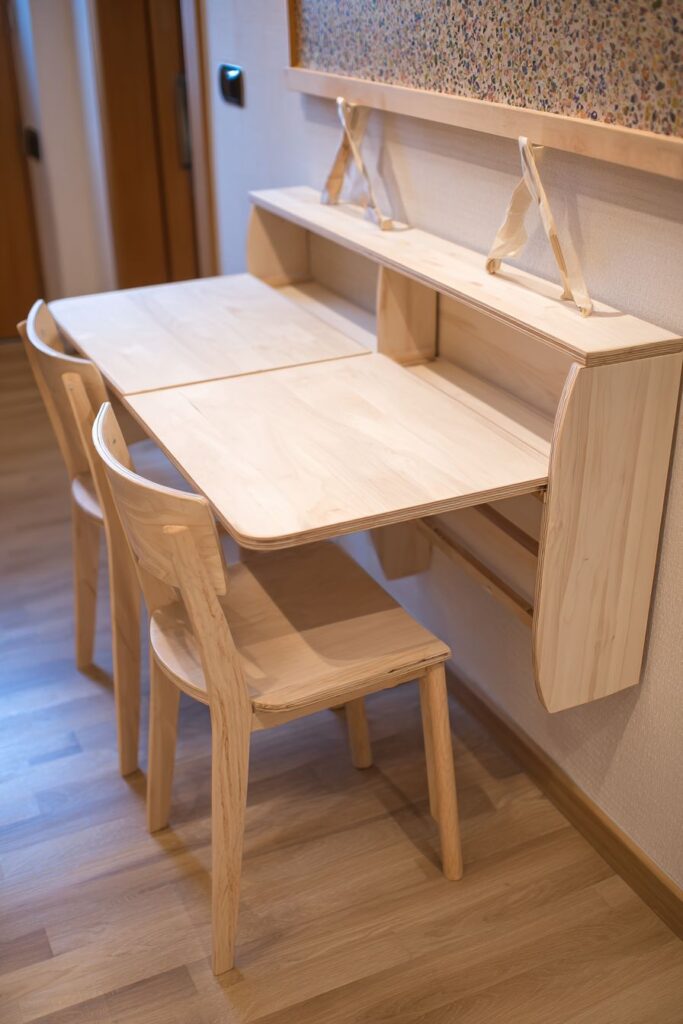
Design guidance for this style includes maintaining the natural birch finish with appropriate wood oils that enhance the grain without darkening the pale color. Position the table near natural light sources to maximize the brightening effect of the light wood. Choose simple tableware and linens in neutral tones or soft pastels to complement the Scandinavian aesthetic.
Keep the table surface uncluttered when not in use, allowing the beauty of the wood and simple construction to shine. Install the wall hooks at a height that makes hanging and retrieving chairs easy while considering the visual balance of the arrangement. Select a neutral-colored area rug in natural fibers to define the dining space and add warmth underfoot. Embrace negative space and resist the urge to over-decorate, allowing the table’s simple beauty and practical design to be the star of the space. Consider adding a small vase with fresh flowers or a single candle as a centerpiece, maintaining the minimalist approach while adding life and warmth.
9. Counter-Height Table with Wine Rack Storage
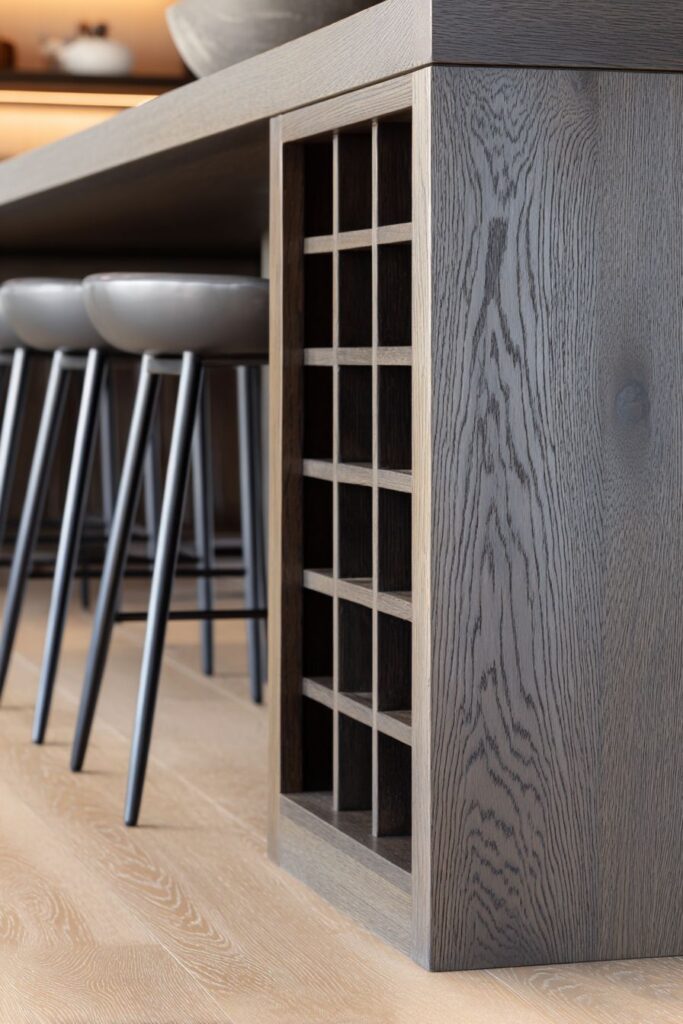
The counter-height table with built-in wine rack storage underneath ingeniously combines dining functionality with practical storage in a vertical design that maximizes limited floor space. This narrow table measures only eighteen inches deep, making it perfect for small kitchens, breakfast nooks, or narrow dining areas where a standard-depth table would be impractical. Crafted from dark espresso-stained oak with visible grain patterns, the table exudes sophistication and warmth. The deep, rich brown color creates dramatic visual weight that grounds the space while the elevated height adds a contemporary, casual dining vibe.
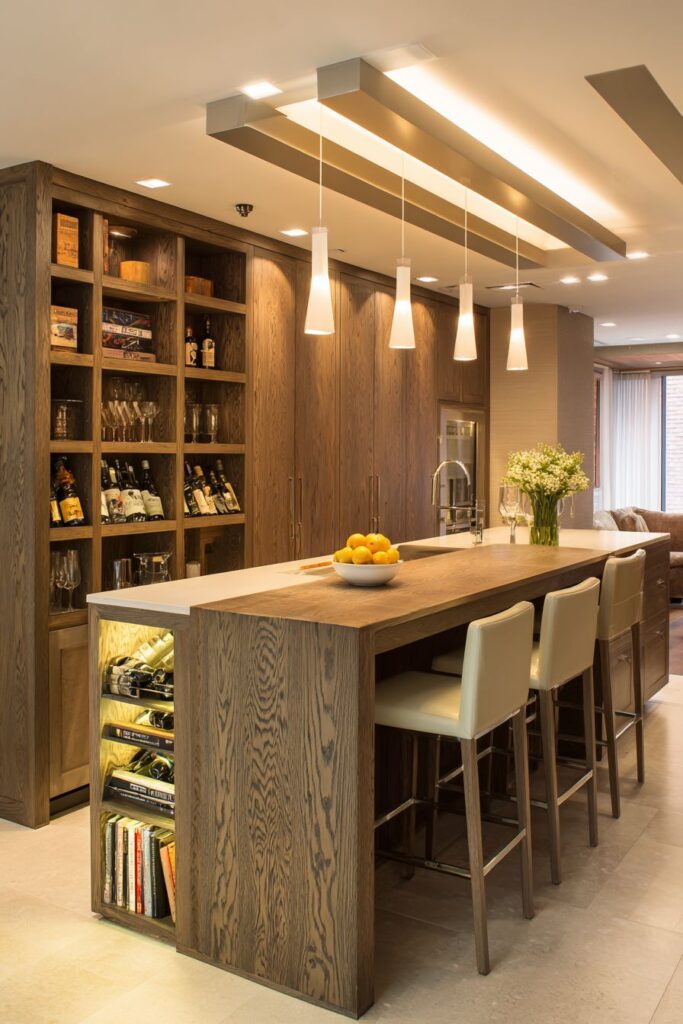
The built-in wine rack storage represents thoughtful design that addresses multiple needs in a single piece of furniture. The vertical space beneath the elevated table surface, often wasted in traditional dining table designs, becomes valuable storage for wine bottles, glassware, or decorative items. The wine rack adds visual interest with its organized geometry while providing convenient access to beverages during meals.
This integration eliminates the need for separate wine storage furniture, freeing up floor or counter space elsewhere in your kitchen or dining area. The dark espresso finish on the oak creates a sophisticated backdrop for displaying your wine collection.
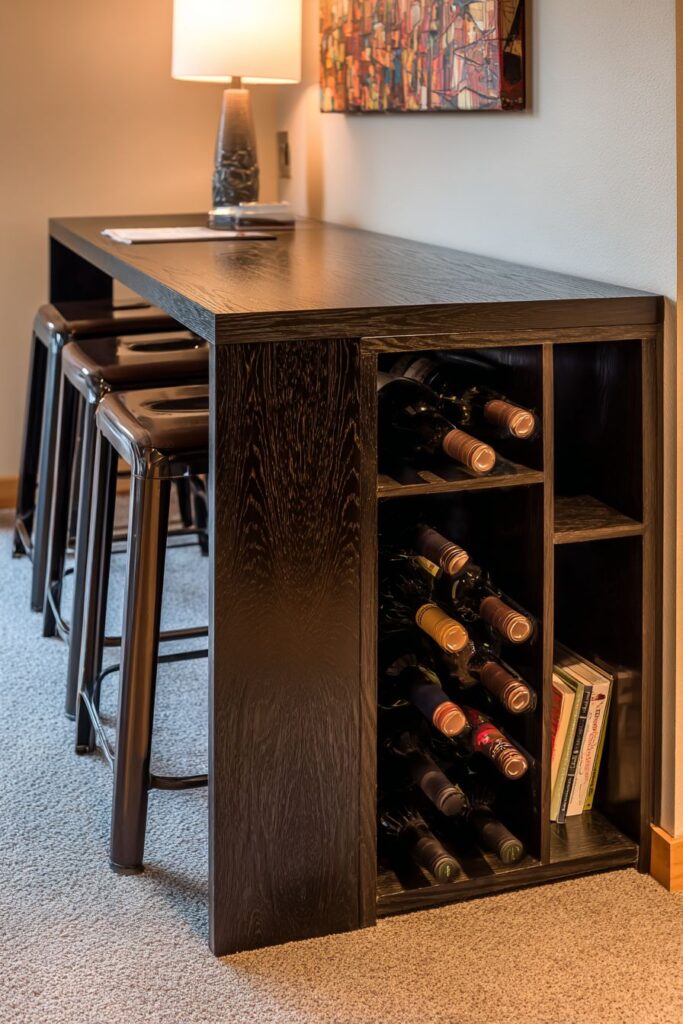
Four sleek bar stools tuck completely under the elevated surface when not in use, maintaining clear floor space and allowing unobstructed movement through the area. The bar stool height matches the counter-height table perfectly, creating comfortable seating that encourages a more casual, convivial dining experience than traditional table-and-chair arrangements. The stools’ sleek design with minimal profiles ensures they don’t add visual clutter even when partially visible, and their ability to disappear completely under the table between meals maintains the open, airy feel essential in small spaces.
Professional interior photography with warm artificial lighting highlights the vertical storage solution and slim profile that makes this design so effective. The lighting emphasizes the oak’s visible grain and the depth of the espresso stain, creating a rich, inviting atmosphere perfect for everything from quick breakfasts to leisurely evening meals. The warm glow also highlights the wine bottles stored below, turning practical storage into a decorative display that adds personality and sophistication to the space. The eighteen-inch depth proves that a table doesn’t need to be deep to be functional, providing adequate surface area for place settings and serving dishes while occupying a remarkably small footprint.
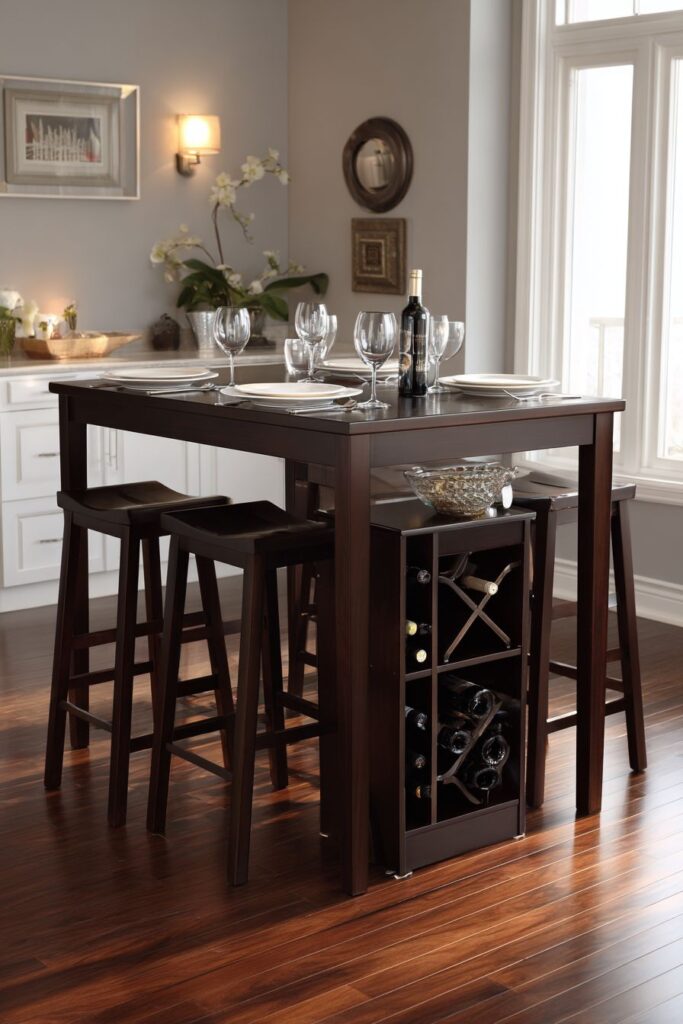
Implementation considerations include choosing bar stools with comfortable seats and backs if you plan to linger over meals, as counter-height seating can be less comfortable than standard dining chairs for extended periods. Ensure the stools have footrests to provide proper support and comfort at the elevated height. Stock your wine rack thoughtfully, arranging bottles to create visual appeal as well as convenient access to your favorites. Consider adding LED strip lighting under the table surface to illuminate the wine storage area and create ambiance during evening meals.
Use the counter-height surface for casual buffet-style serving during parties, taking advantage of the elevation that makes food easily accessible to standing guests. Apply quality wood conditioner to the espresso-stained oak regularly to maintain the rich color and protect the finish from kitchen humidity and temperature fluctuations. Keep the slim profile in mind when selecting tableware and centerpieces, choosing items that don’t overwhelm the narrow surface or make the table feel cluttered.
10. Farmhouse Trestle Table with Removable Leaf
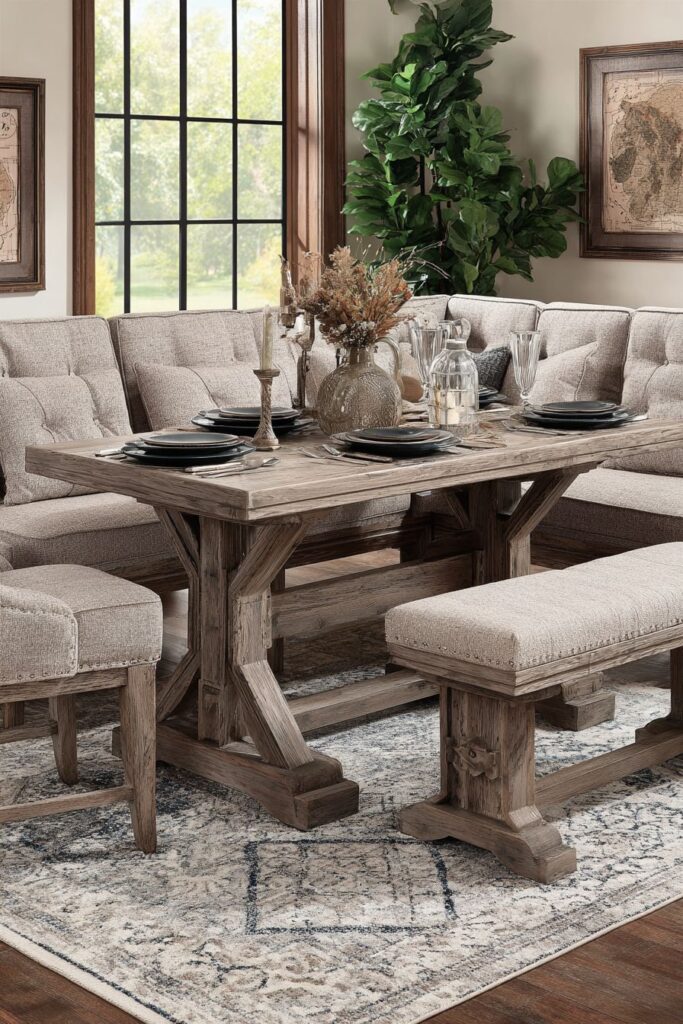
The rustic farmhouse-style trestle table with removable center leaf brings country charm and practical flexibility to cozy dining nooks. Finished in weathered grey with natural wood texture and subtle distressing, this table looks like a treasured heirloom passed down through generations. The trestle base design, characterized by horizontal stretchers connecting two vertical supports, provides excellent stability while creating an open, airy feel beneath the table that accommodates comfortable seating. The weathered grey finish strikes a perfect balance between traditional farmhouse aesthetics and contemporary neutral color palettes that work in modern homes.
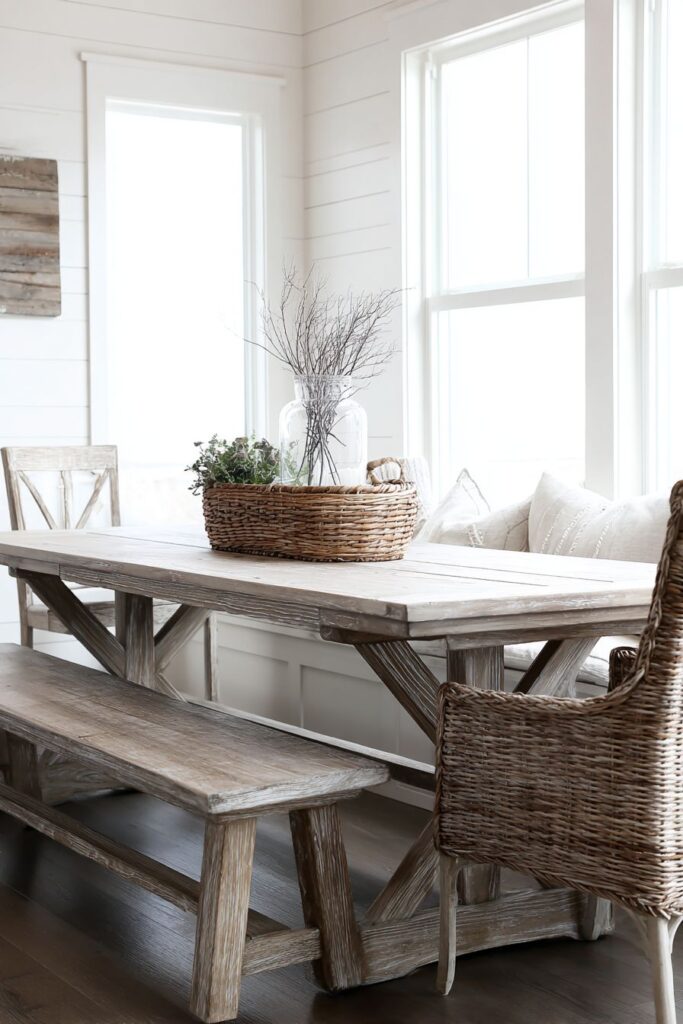
The removable center leaf transforms this table from a compact everyday dining surface to an expanded table perfect for hosting family gatherings and dinner parties. Unlike fold-down or permanent leaves, the removable design allows you to completely detach and store the center section when not needed, giving you more flexibility in managing your space. When removed, the two table halves push together seamlessly, with matching grain patterns and finish creating the appearance of a solid, purposefully sized table. When needed, the leaf inserts easily, extending the table’s length significantly while maintaining the same width and visual coherence.
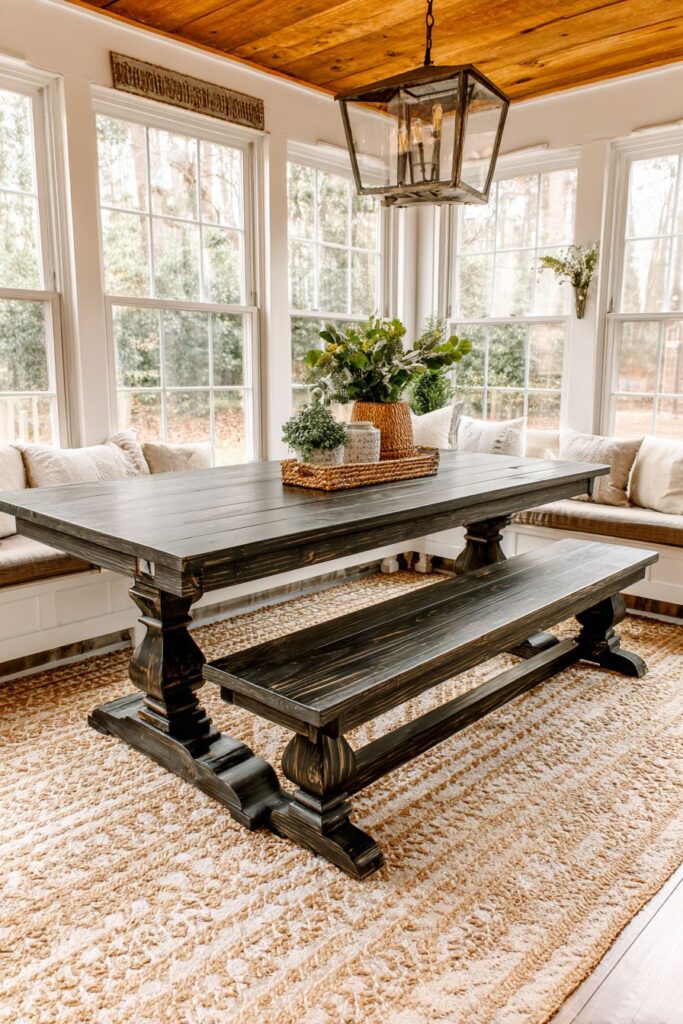
Positioned in a cozy dining nook with built-in corner bench seating, this arrangement maximizes available space with remarkable efficiency. The corner bench utilizes space that might otherwise be wasted, providing comfortable seating for three or four people who can slide in from the open side. The trestle base aligns perfectly with this configuration, as the horizontal stretchers don’t interfere with the corner bench seating or restrict leg room. Natural daylight streams through nearby windows, illuminating the weathered grey finish and highlighting the subtle distressing that gives this table its authentic, aged appearance.
Interior design photography emphasizes the authentic wood character and space-efficient corner placement that makes this setup so effective in homes where dining space is at a premium. The weathered finish shows variations in color and texture that mimic years of use and love, with lighter areas where the wood shows through the grey wash and darker patches where the stain has settled into the grain. This natural variation creates depth and visual interest that solid-colored furniture simply cannot achieve. The subtle distressing, including small dings, worn edges, and gentle scratches, adds to the authentic farmhouse feel without looking artificially aged or overly manufactured.
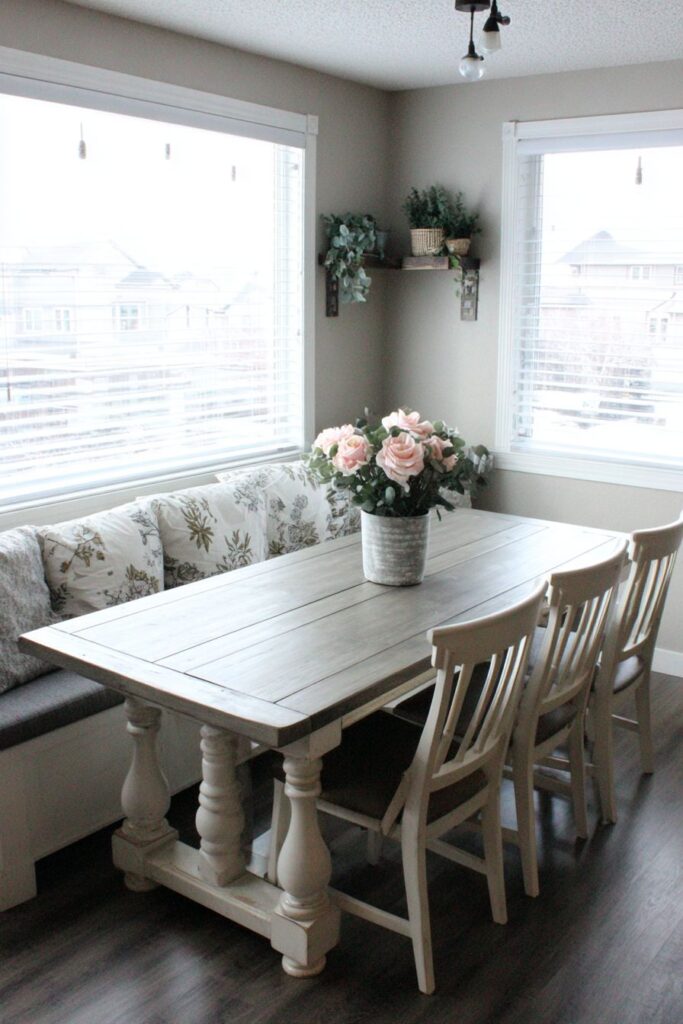
Design recommendations include pairing this table with mismatched chairs on the non-bench side to enhance the collected, farmhouse aesthetic. Choose chairs in complementary wood tones or painted finishes that coordinate with the weathered grey table. Add cushions to the corner bench in farmhouse-appropriate fabrics like ticking stripes, gingham checks, or natural linen for comfort and style. Store the removable leaf in a convenient location where it won’t be damaged and can be accessed easily when needed, perhaps leaning against a closet wall or sliding under a bed.
Protect the weathered finish with appropriate wood treatments that won’t alter the grey tone or remove the distressing that gives the table its character. Embrace the rustic aesthetic with simple centerpieces like mason jars filled with wildflowers, wooden bowls of fresh fruit, or vintage crockery. Keep the corner bench area uncluttered to make sliding in and out easy and comfortable for diners.
11. Triangular Corner Table Design
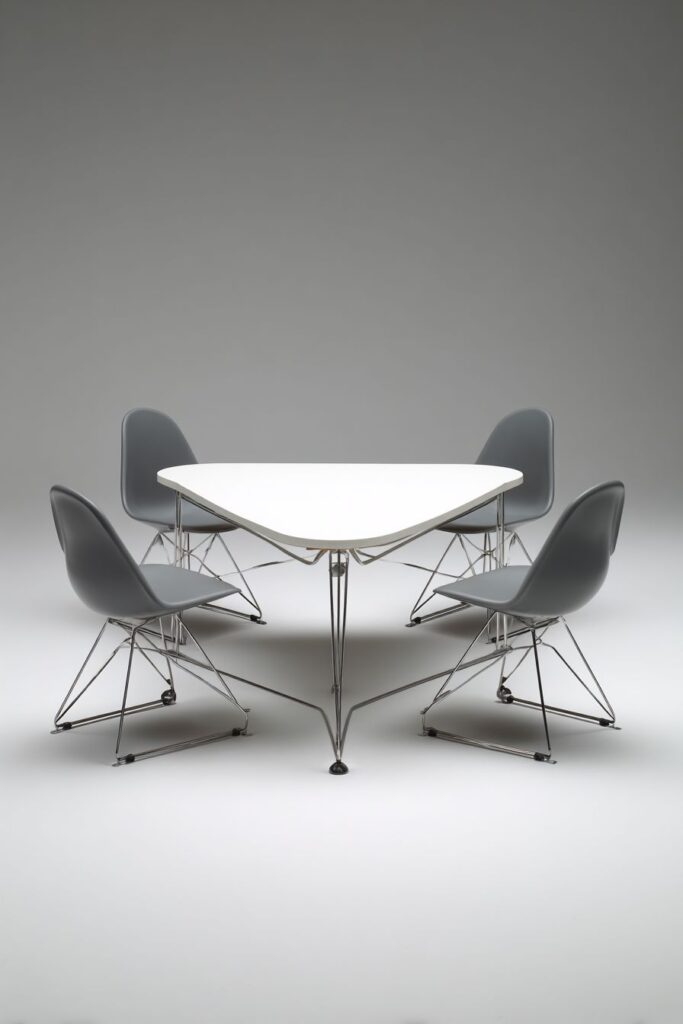
The modern triangular corner table design represents innovative thinking about how furniture can fit into and activate underutilized spaces. This clever piece fits perfectly into an unused corner, transforming dead space into a functional dining area. Made from white laminate with clean lines and a single central support leg, the table embodies contemporary minimalism while solving a real spatial challenge. The white finish creates a bright, fresh appearance that helps small spaces feel larger and more open. The smooth laminate surface offers easy maintenance and durability, resisting stains and scratches better than many other materials.
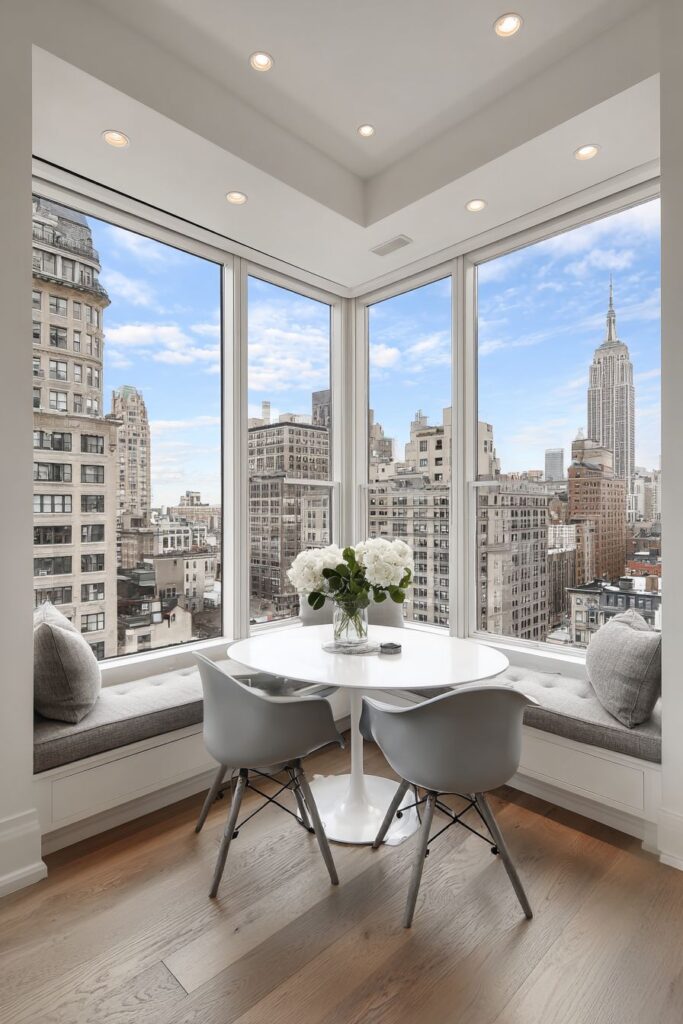
The triangular shape might seem unusual at first, but it’s precisely this geometry that makes the design so effective. The three-sided configuration allows the table to nestle into corners where rectangular or round tables would leave awkward gaps or block access. Each side of the triangle can accommodate one person, creating seating for three around this compact piece. The corner placement means two sides of the table sit against walls, minimizing the table’s intrusion into the room while maximizing usable dining surface. This design proves that thinking outside the conventional rectangle can yield remarkably functional results.
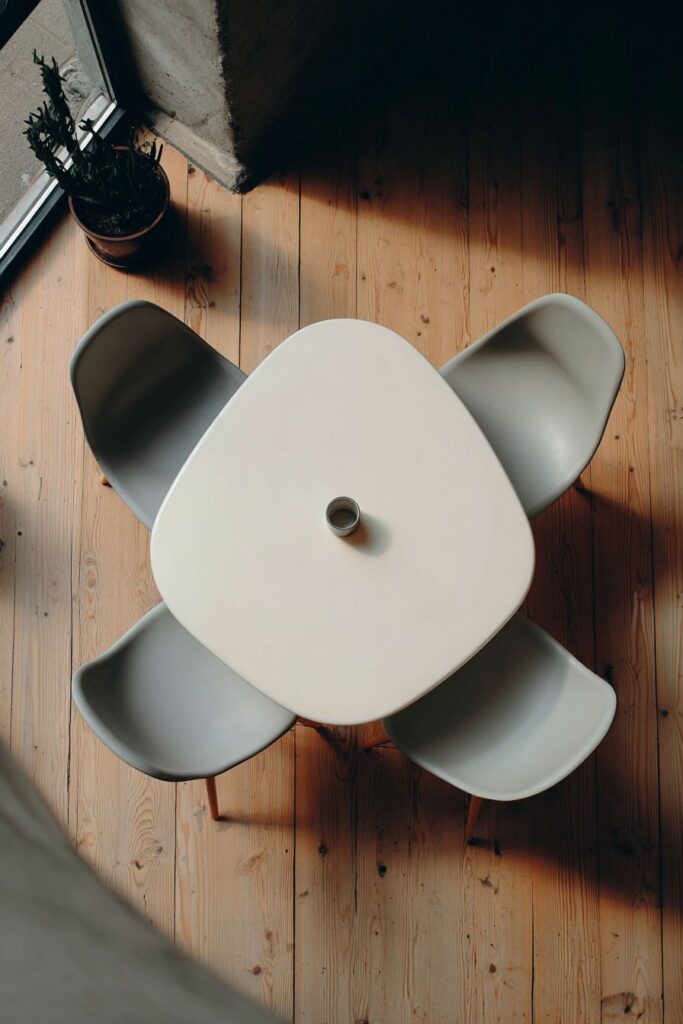
The single central support leg is both aesthetically pleasing and practically advantageous. Unlike four-legged designs that can create obstacles and restrict seating positions, the central pedestal allows diners to sit comfortably at any point along the table’s edges without navigating around legs. The minimalist support structure contributes to the table’s contemporary aesthetic while providing stable, robust support for the laminate top. Three compact molded plastic chairs in complementary grey complete the ensemble, their modern contours and neutral color coordinating perfectly with the white table while adding subtle visual interest through their sculptural forms.
Wide-angle interior photography with balanced exposure shows the innovative geometry and efficient corner utilization that makes this design so clever. Soft natural lighting illuminates the white laminate surface, creating a bright, inviting dining space in what might otherwise be a forgotten corner. The clean lines and simple forms create a crisp, uncluttered appearance that appeals to contemporary sensibilities while the practical function addresses real-world space constraints. The grey chairs provide just enough contrast to define individual seating areas without breaking up the cohesive, monochromatic color scheme.
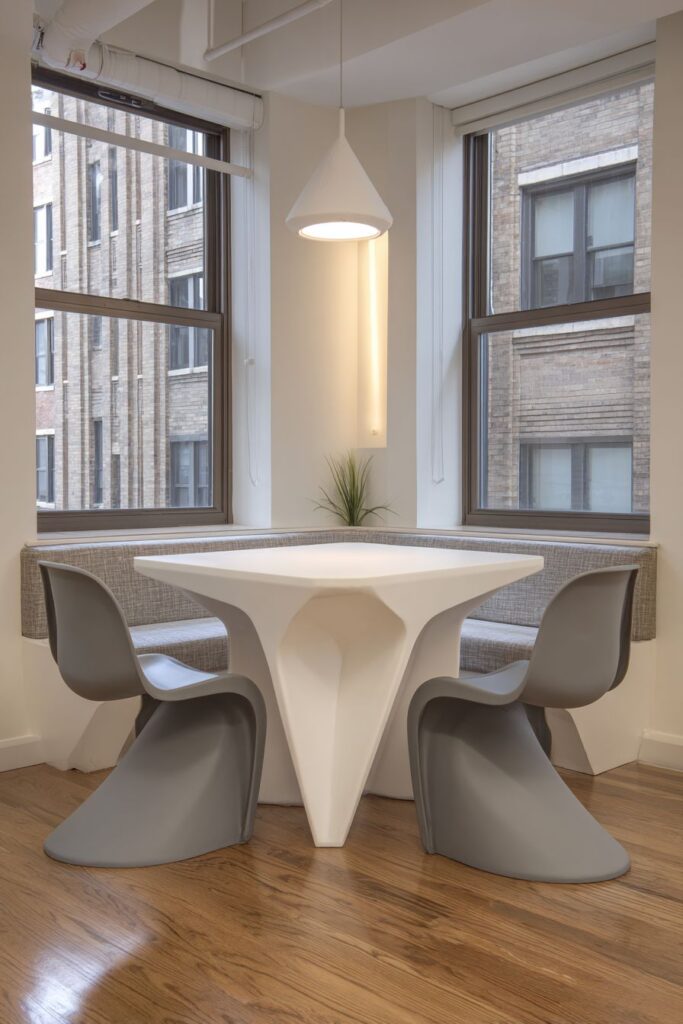
Design tips for implementing this unique solution include carefully measuring your corner space before purchasing to ensure proper fit and adequate clearance for chairs to pull in and out. Consider the corner’s location relative to traffic patterns, ensuring the table won’t obstruct main pathways or doorways. Choose molded plastic chairs that stack for easy storage if you sometimes need to reclaim the corner space for other purposes. Keep the white laminate clean with gentle cleaners, avoiding abrasive products that could dull the finish or leave scratches.
Add a small pendant light centered over the table to create ambiance and provide task lighting for meals, positioning it high enough that it doesn’t interfere with sight lines across the table. Use the triangular shape to your advantage when setting the table, placing one centerpiece at the table’s center where all three sides can appreciate it. Consider the psychological aspects of triangular seating, which creates a more intimate, conversation-conducive arrangement than rectangular configurations where people sit across from or beside each other in more formal arrangements.
12. Traditional Gateleg Table in Mahogany
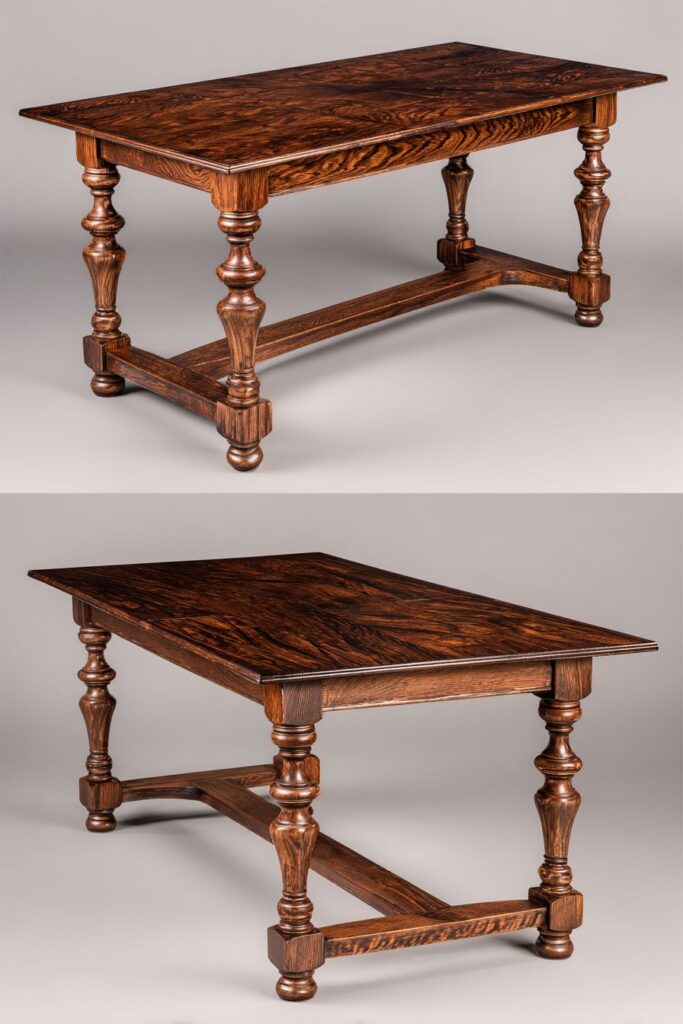
The traditional gateleg table with dual drop leaves in rich mahogany finish represents centuries of proven design excellence adapted for modern space-conscious living. When both leaves are down, this remarkable table becomes a slim side table only ten inches wide, perfect for hallways, narrow rooms, or against walls where space is extremely limited. The mahogany finish glows with deep, reddish-brown warmth that adds richness and sophistication to any interior. Traditional turned legs showcase classic woodworking craftsmanship, with decorative shaping that adds visual interest and historical character to the design.
The gateleg mechanism represents ingenious engineering that has served homes well since the 16th century. When you need dining space, the gates swing out to support the leaves, which lift to create a full table that seats six comfortably. The transformation is remarkably stable, with the gate legs providing robust support that prevents wobbling or tipping. When dining is complete, the leaves drop back down and the gates fold inward, returning the table to its impossibly narrow profile. This flexibility made gateleg tables treasured possessions in homes where space was precious, and that value remains just as relevant in today’s compact living environments.
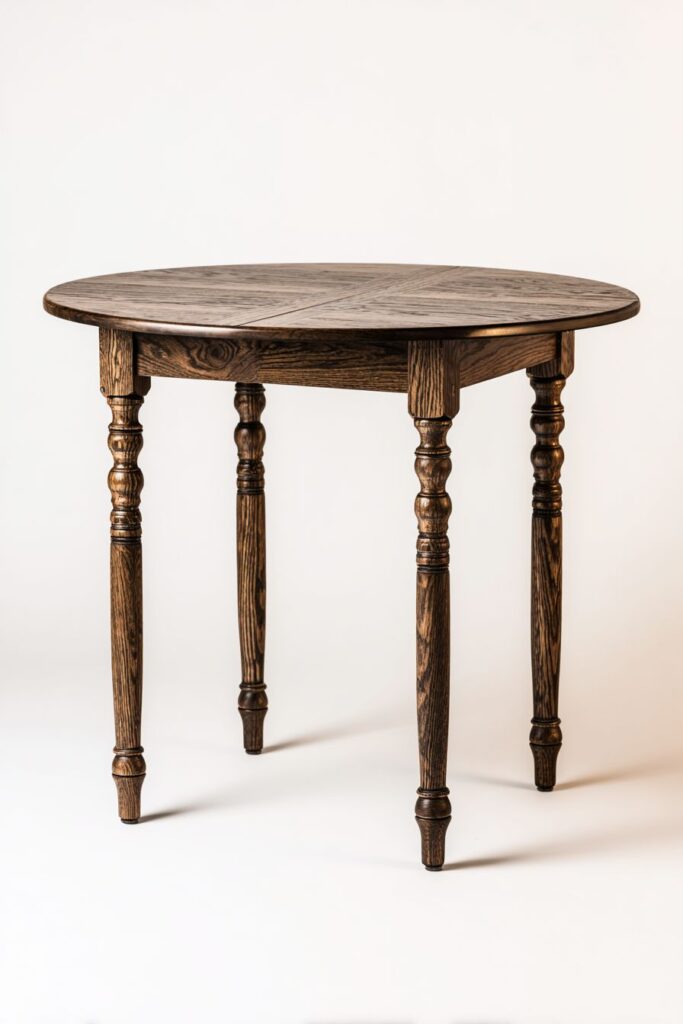
The authentic wood grain visible in natural lighting reveals the beauty of genuine mahogany, a hardwood prized for its durability, workability, and stunning appearance. The grain patterns create subtle striations and variations in color that range from lighter golden tones to deeper burgundy browns, with the overall effect being one of warmth and luxury. Unlike manufactured materials, real mahogany develops a beautiful patina over time, actually improving with age as the wood oxidizes and deepens in color. This living quality means your table becomes more beautiful with each passing year, a true investment piece that can be passed down through generations.
Professional interior photography captures both configurations with attention to the historical folding mechanism and material details that make this design so special. The turned legs show the skill of traditional woodworking, with symmetrical curves and proportions that please the eye while providing structural integrity. The brass or wooden hardware that operates the gate mechanism becomes a decorative element in itself, with hinges and locks that show quality craftsmanship. The way the leaves align perfectly when raised demonstrates precision engineering that ensures a smooth, level dining surface without gaps or misalignment.
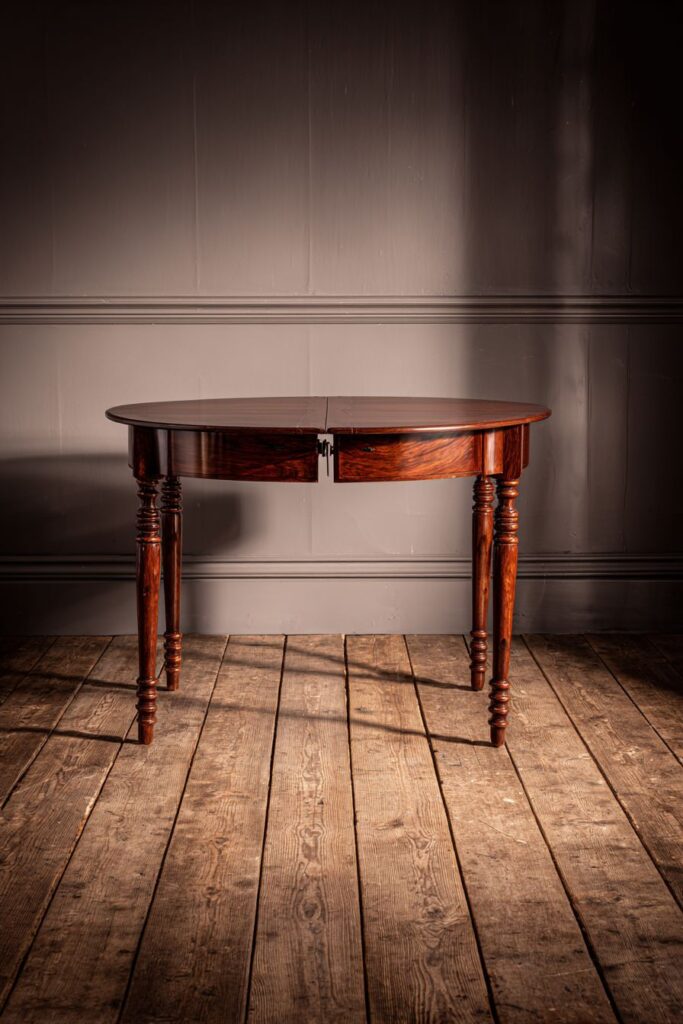
The versatility of this traditional design makes it suitable for a wide range of interior styles. In traditional or historical homes, it fits naturally as an authentic period piece. In contemporary spaces, it provides pleasing contrast and warmth that prevents minimalist interiors from feeling cold or sterile. The mahogany’s rich color anchors the space with gravitas while the slim profile when folded maintains the open feel essential in small rooms. This combination of old-world craftsmanship and practical space-saving functionality creates a piece that transcends design trends and remains relevant regardless of changing tastes.
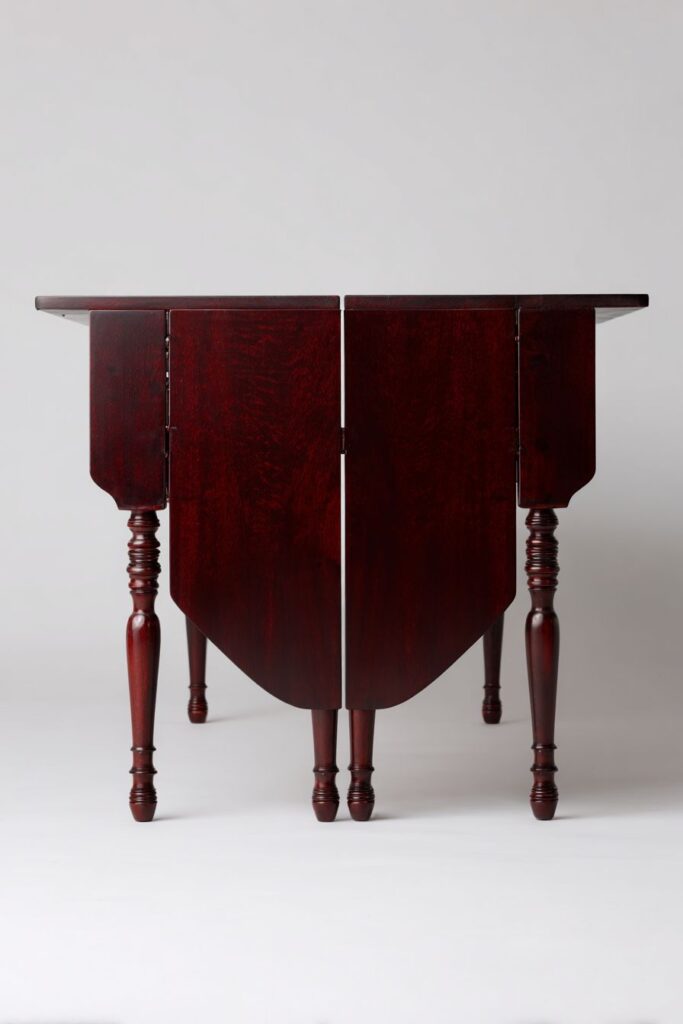
Implementation advice includes treating the mahogany finish with appropriate wood care products designed for fine furniture, avoiding harsh chemicals or excessive moisture that could damage the finish or raise the grain. Support both leaves fully when extended to prevent stress on the hinges and gate mechanisms. Practice opening and closing the gates gently to maintain the integrity of the hardware over decades of use. Choose dining chairs that complement the traditional aesthetic, perhaps with turned legs or carved details that echo the table’s classical design. Position the table where it can extend fully in both directions if possible, or plan for one-sided extension if space constraints require it. Polish the mahogany periodically with quality furniture wax to maintain its lustrous finish and protect the wood from environmental damage. Appreciate the historical significance of this design, recognizing that you’re using a furniture form that has served humanity well for over four centuries. Consider having the table professionally refinished if the finish becomes damaged or worn, as quality mahogany can be restored to like-new condition and will last for many more generations with proper care.
13. Industrial Metal Frame with Fold-Down Sides
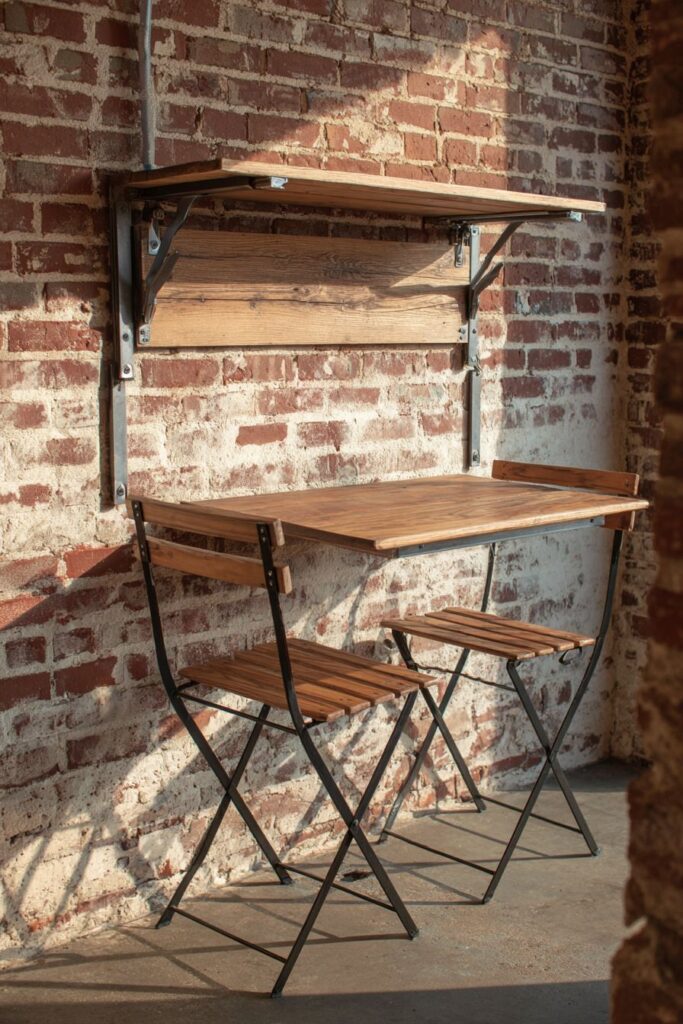
The industrial-style table showcasing a metal frame with reclaimed wood top and fold-down sides brings urban loft aesthetics to space-saving dining solutions. The raw steel frame features exposed bolts, visible welds, and a natural patina that celebrates the beauty of honest materials and utilitarian construction. This isn’t furniture trying to look industrial; it embodies authentic workshop and factory aesthetics where form follows function and every element serves a purpose. The metal framework provides exceptional strength and stability while creating visual interest through its structural expressiveness and raw finish.
The reclaimed wood top contrasts beautifully with the industrial metal base, bringing warmth and organic texture to balance the cool, hard edges of steel. The wood shows its history through weathering, nail holes, color variations, and the unique character marks that come from decades of previous use. Each board tells a story, whether salvaged from old factories, demolished buildings, or repurposed industrial equipment. The combination of rough-hewn wood and unfinished metal creates a powerful aesthetic that appeals to those who appreciate authenticity, sustainability, and spaces with personality and edge.
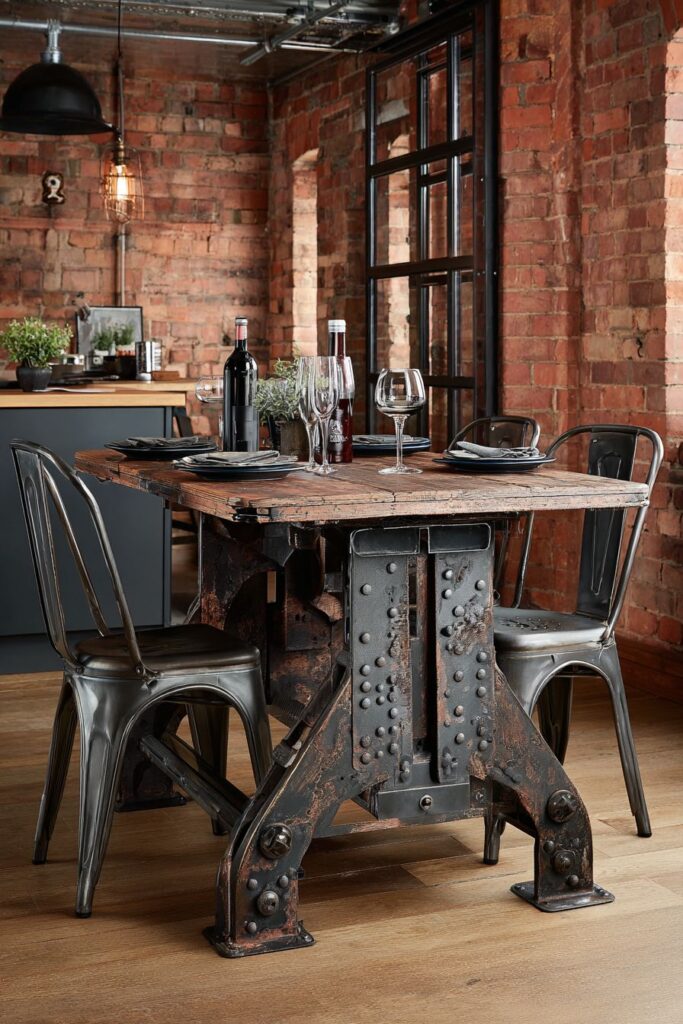
The fold-down sides provide the space-saving functionality that makes this design practical for loft apartments and compact urban dwellings. When both sides are up, the table provides ample surface area for dining or working. When one or both sides drop, the table’s footprint shrinks dramatically, allowing it to function as a narrow console or work surface. The folding mechanism uses heavy-duty hinges and support brackets that operate smoothly despite the robust construction, proving that industrial strength and practical flexibility can coexist beautifully. The visible hardware becomes part of the design statement rather than something to hide.
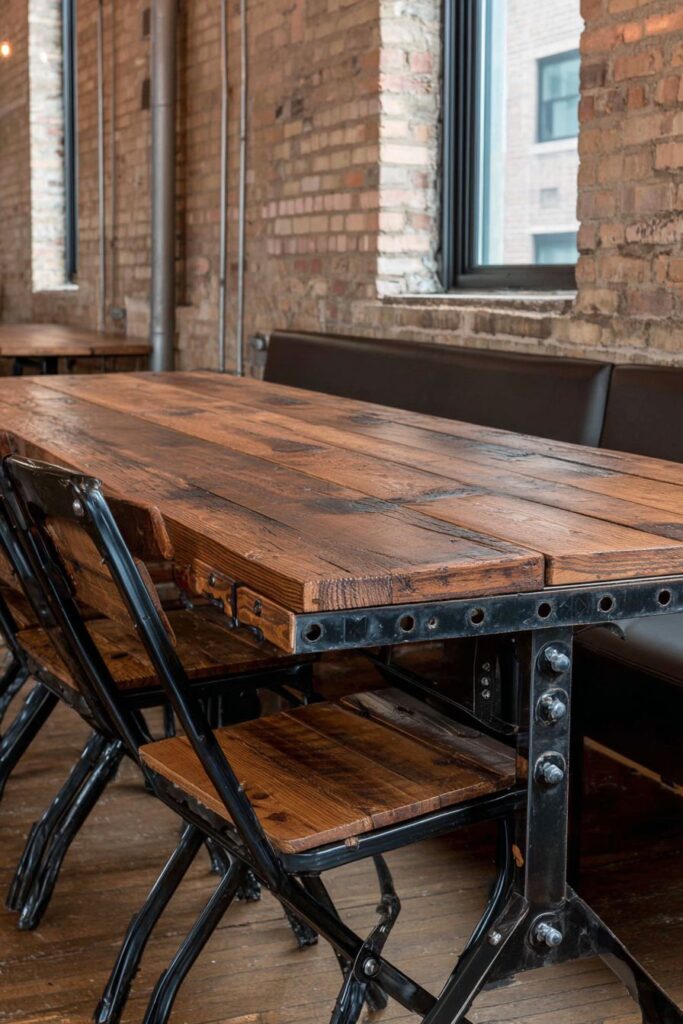
Positioned against an exposed brick wall in a loft apartment, this table finds its natural habitat. The brick’s texture and aged appearance complement the reclaimed materials perfectly, creating a cohesive aesthetic that celebrates urban living and repurposed materials. Metal folding chairs in matching industrial aesthetic complete the picture, their simple construction and raw metal finish coordinating perfectly with the table’s design language. Interior design photography with dramatic natural lighting emphasizes the utilitarian design and authentic material textures, with shadows and highlights revealing every surface variation and structural detail.
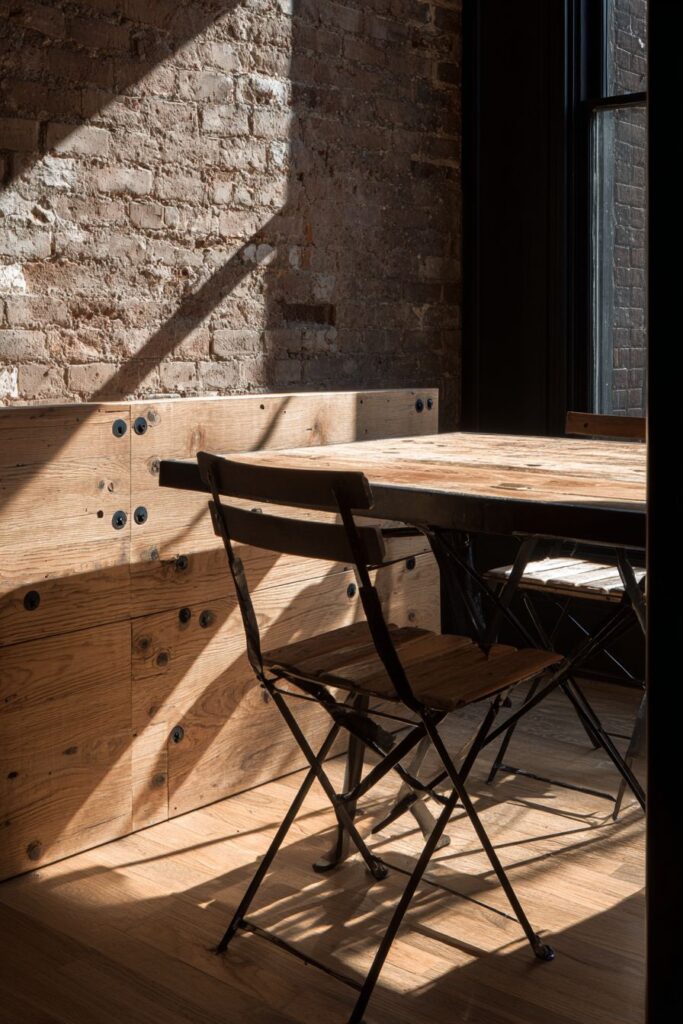
Design considerations for this style include embracing rather than fighting the raw, unfinished aesthetic that defines industrial design. Don’t worry about perfect alignment or flawless surfaces; the beauty lies in the imperfections and honest expression of materials. Protect the reclaimed wood with food-safe finishes that enhance the grain without obscuring the character marks and weathering. Consider leaving the metal frame unfinished or applying a clear sealant to preserve the natural patina while preventing rust progression. Choose compatible accessories like Edison bulb lighting, wire baskets for storage, and industrial-style tableware to complete the aesthetic. Pair the table with metal shelving, exposed ductwork, and other industrial elements to create a cohesive design narrative throughout your space. Ensure adequate support for the fold-down sides when extended, checking the hardware periodically for any loosening or wear. Appreciate the sustainable aspect of reclaimed materials, recognizing that your furniture choice diverts waste from landfills while creating something beautiful and functional.
14. Peninsula-Style Kitchen Island Extension
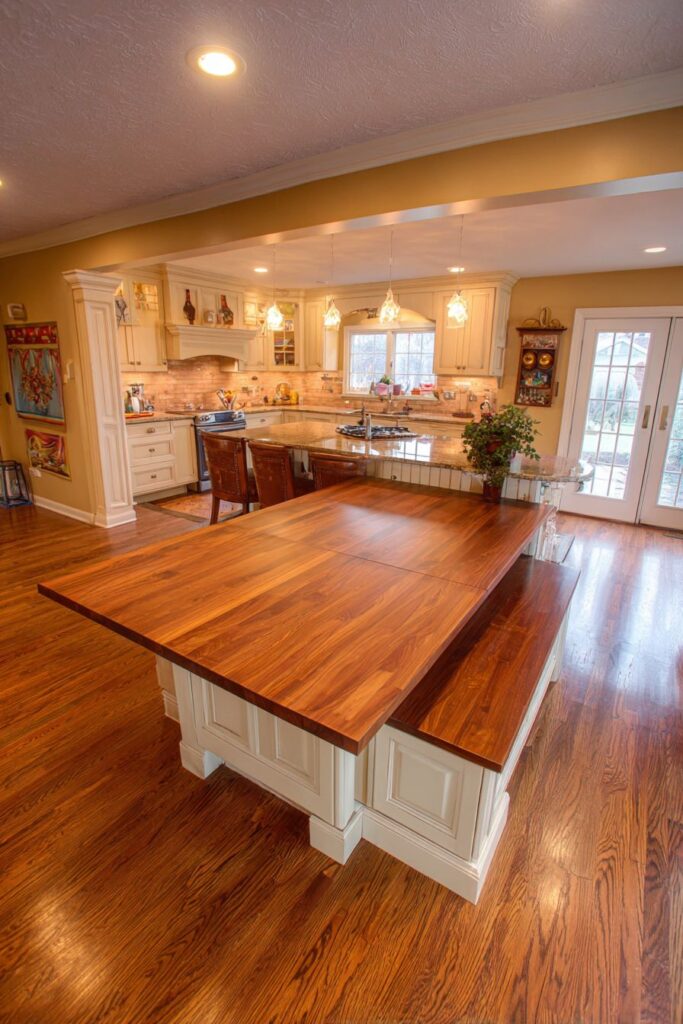
The peninsula-style table attached to a kitchen island with fold-down eating surface represents seamless integration between cooking and dining spaces. This innovative design extends directly from your existing kitchen island, creating additional seating for three when the fold-down surface is deployed. The butcher block oak construction provides a warm, natural surface that’s both beautiful and practical, with the end-grain or edge-grain pattern showing the wood’s natural striations and honey-toned coloring. The thickness of butcher block adds substantial visual weight that makes the extension feel solid and permanent rather than flimsy or temporary.
The fold-down mechanism uses brushed nickel support brackets and hinges that are both functional and decorative. When raised, these hardware elements support the oak surface securely, creating a stable eating area that doesn’t wobble or flex. When lowered, the surface drops flush against the island side, returning precious floor space to your kitchen and maintaining clear traffic patterns. The brushed nickel finish coordinates with modern kitchen hardware and appliances while providing durability and easy maintenance. The visible brackets and hinges contribute to the overall design aesthetic, their mechanical precision and metal construction adding contemporary edge to the warm wood surface.
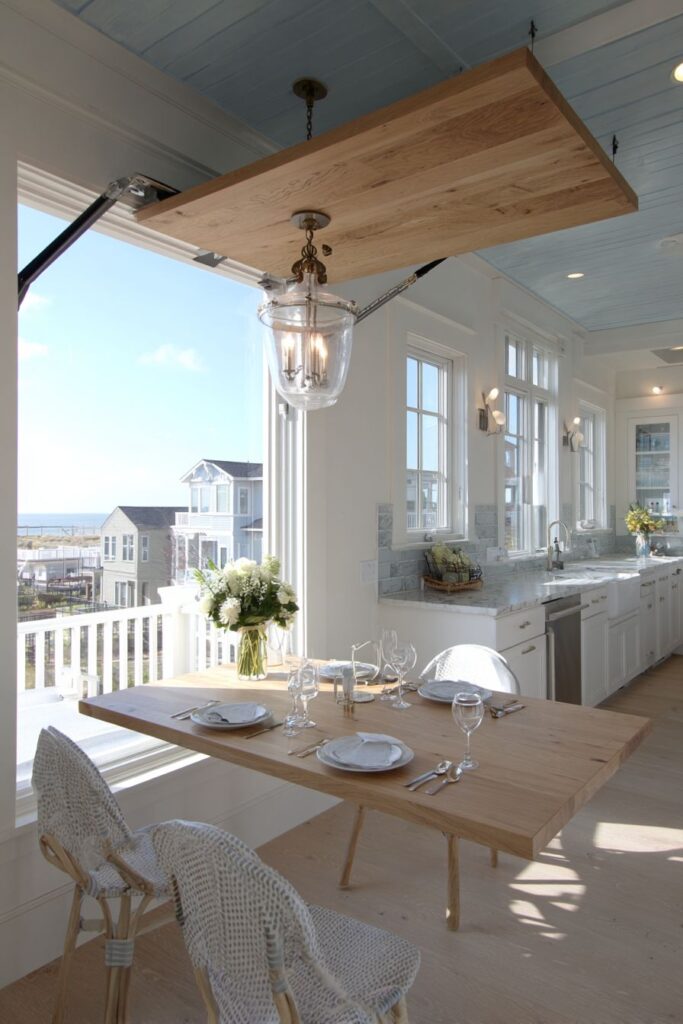
Wide-angle interior photography showing the kitchen integration demonstrates how this solution blurs the boundaries between cooking and dining areas. The natural lighting highlights the seamless connection between island and extension, with matching materials and finishes creating visual continuity. The butcher block oak coordinates beautifully with kitchen cabinetry, whether you’ve chosen traditional wood cabinets or contemporary painted finishes. The practical breakfast bar function makes this setup perfect for quick meals, homework sessions, or casual entertaining where guests can chat with the cook while meal preparation continues.
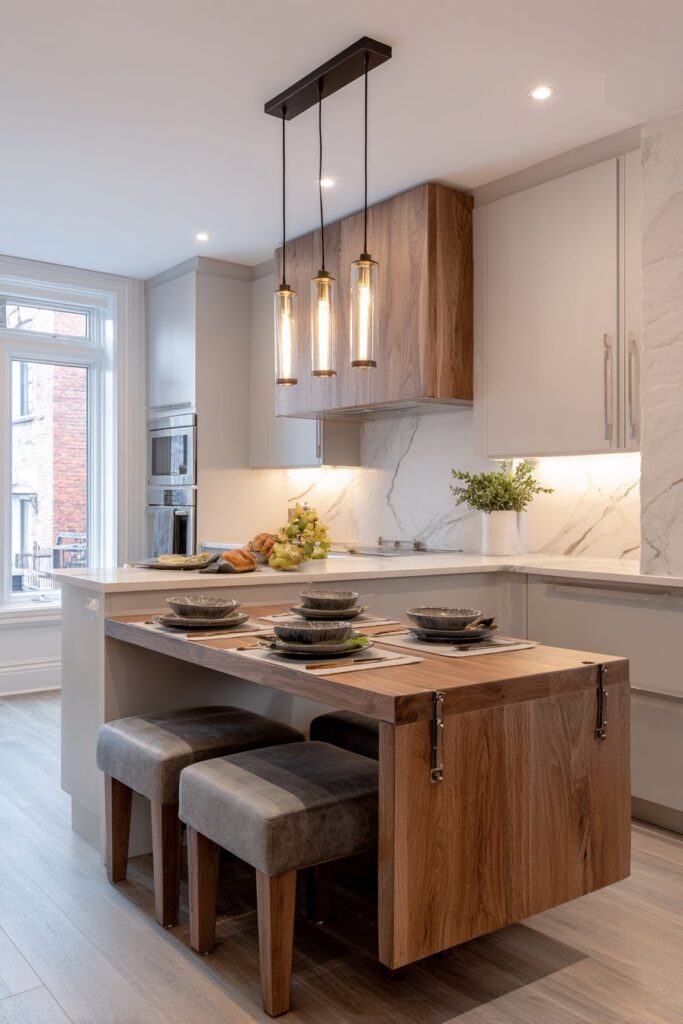
This configuration offers particular advantages in open-plan living spaces where the kitchen flows into living areas. The island with its fold-down extension can serve as a subtle room divider that defines zones without blocking sight lines or creating barriers. When entertaining, the extra seating keeps guests in the heart of the action rather than separated in a formal dining room. For families with children, this setup provides a convenient spot for breakfast before school or after-school snacks where kids can be supervised while parents work in the kitchen.
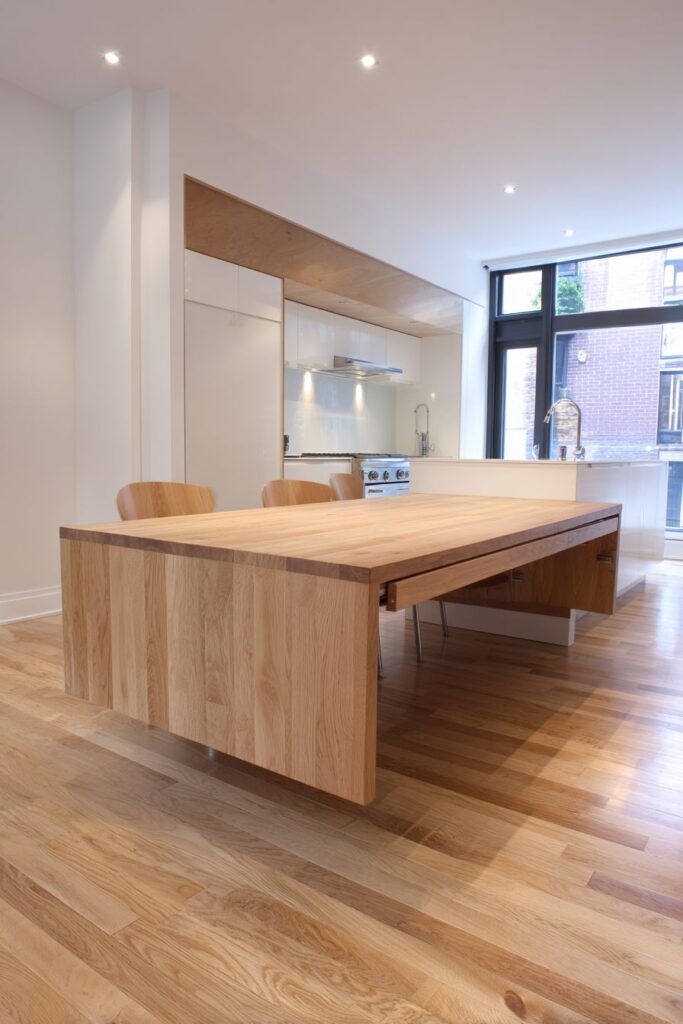
Implementation tips include ensuring the fold-down surface is installed at appropriate counter height for comfortable eating, typically 36 inches from the floor to match standard counter height or 42 inches for bar height seating. Choose bar stools or counter stools that coordinate with your kitchen design and tuck partially or fully under the extension when seated. Apply food-safe mineral oil or butcher block conditioner to the oak surface regularly to prevent drying, cracking, and staining. Wipe up spills immediately to prevent water damage or staining of the natural wood. Consider adding a power outlet to the island near the extension for charging devices or using small appliances during meals. Test the fold-down mechanism regularly to ensure smooth operation and address any sticking or resistance promptly. Maintain the brushed nickel hardware with appropriate metal cleaners to prevent fingerprints and maintain the satiny finish. Appreciate the convenience of having dining space exactly where you need it without dedicating a separate room or area to formal dining.
15. Minimalist Hairpin Leg Design
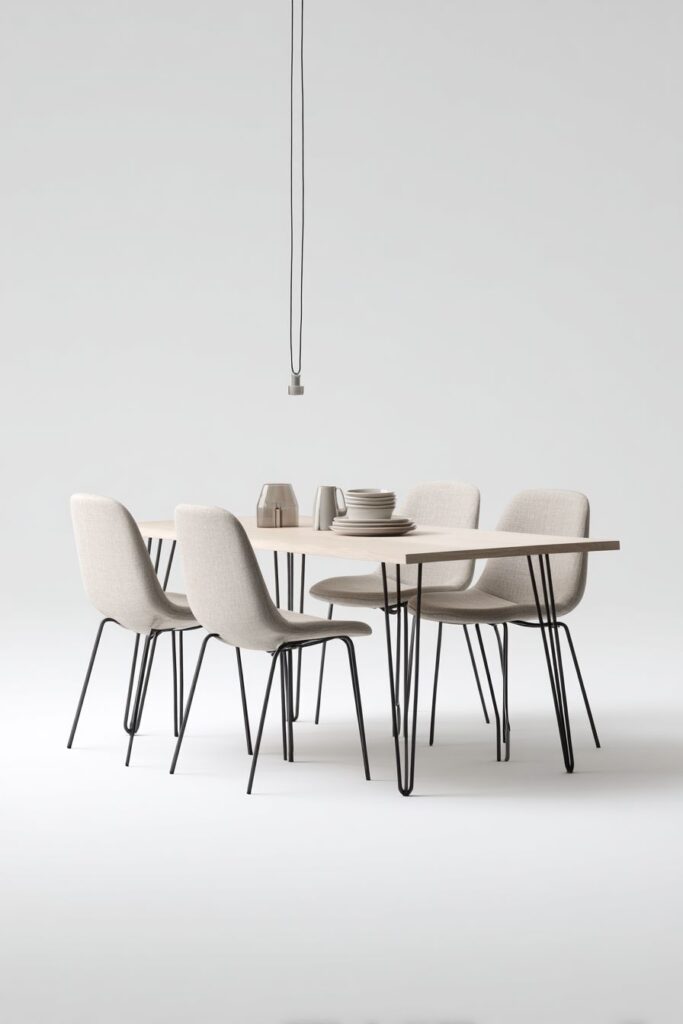
The minimalist dining table displaying ultra-slim rectangular proportions with hairpin legs in matte black metal embodies the principle that less is more. The table top in light ash wood measures only twenty-four inches wide yet seats four with compact chairs, proving that generous dimensions aren’t necessary for functional dining. The light ash wood features subtle grain patterns and pale coloring that ranges from cream to light tan, creating a bright, airy appearance that helps small spaces feel larger and more open. The smooth finish showcases the wood’s natural beauty without heavy staining or treatments that might obscure its organic character.
The hairpin legs deserve special recognition as icons of mid-century modern design that have experienced renewed popularity in contemporary interiors. These simple metal supports, created from bent steel rod in a distinctive hairpin shape, provide stable support with absolute minimal visual weight. The matte black finish creates dramatic contrast against the light wood top while maintaining a sleek, understated appearance that never overwhelms the design. The three-rod construction of each leg provides adequate stability while keeping the profile incredibly slim, allowing maximum light and visual flow around and beneath the table.
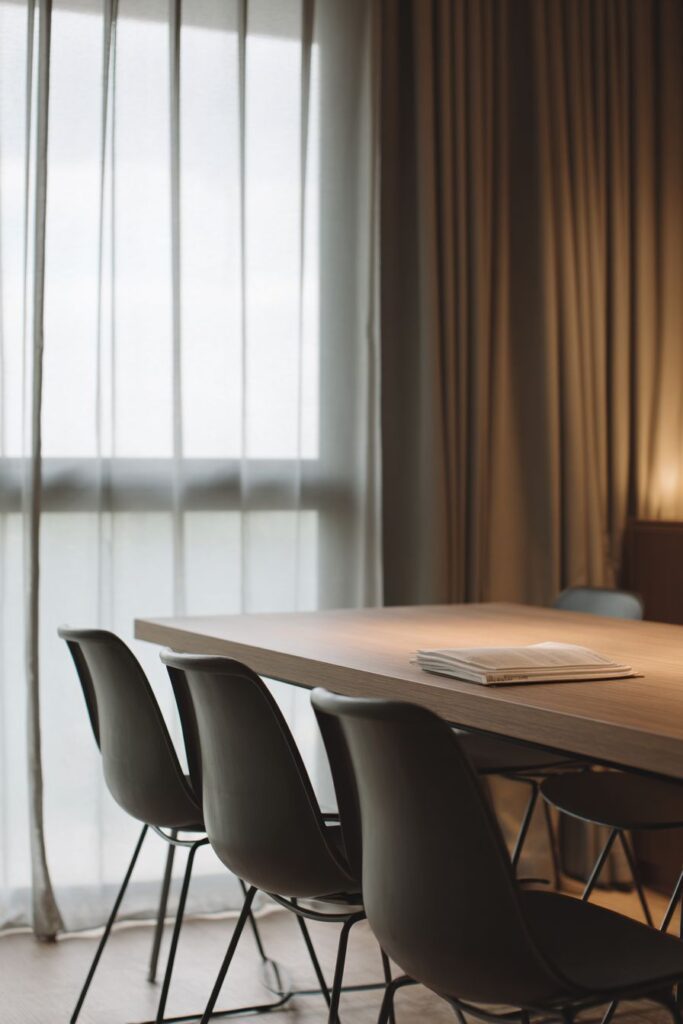
Clean lines and simple construction emphasize the minimalist aesthetic that defines this design approach. There are no ornamental details, decorative carvings, or unnecessary elements; every component serves a clear functional purpose. This honesty in design creates furniture that feels calm, uncluttered, and timeless rather than trendy. The slender proportions might seem impractical at first glance, but the twenty-four-inch width actually provides adequate space for place settings, with diners’ elbows comfortably accommodated without crowding. Four compact chairs with equally minimal profiles complete the ensemble without adding visual bulk.
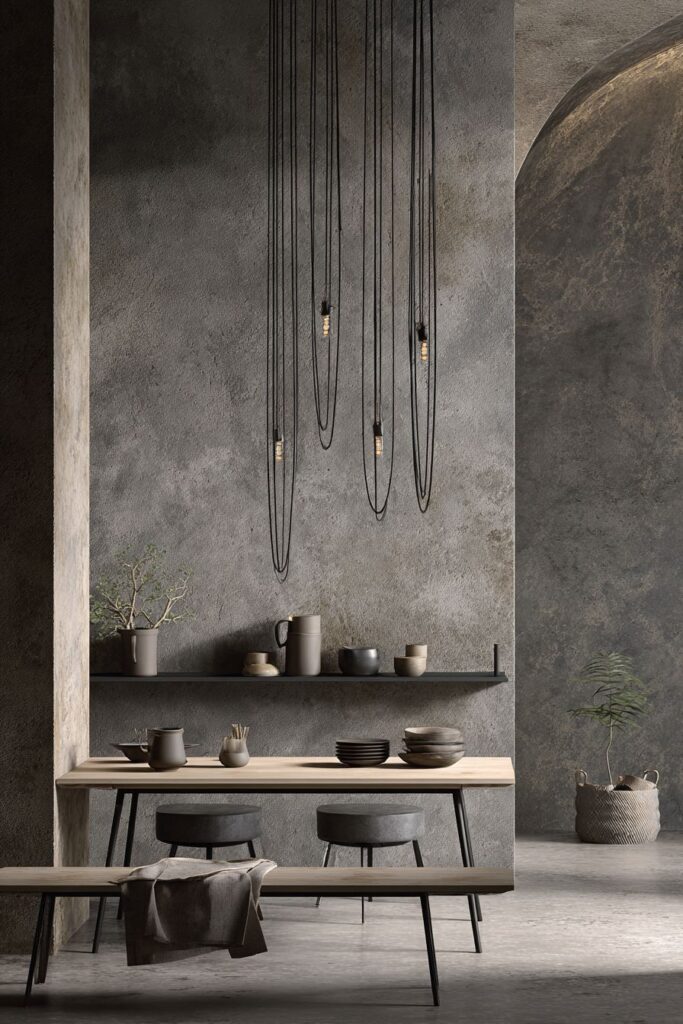
Professional interior photography with soft diffused lighting creates subtle shadows that highlight the slender proportions and understated elegance of this design. The way light interacts with the pale ash wood emphasizes its natural grain and smooth texture, while the matte black hairpin legs create graphic linear elements that ground the composition. The overall effect is sophisticated simplicity that works in studios, small apartments, or any space where maintaining visual lightness is important. The minimalist aesthetic also makes this table incredibly versatile, working with everything from Scandinavian to industrial to contemporary design schemes.
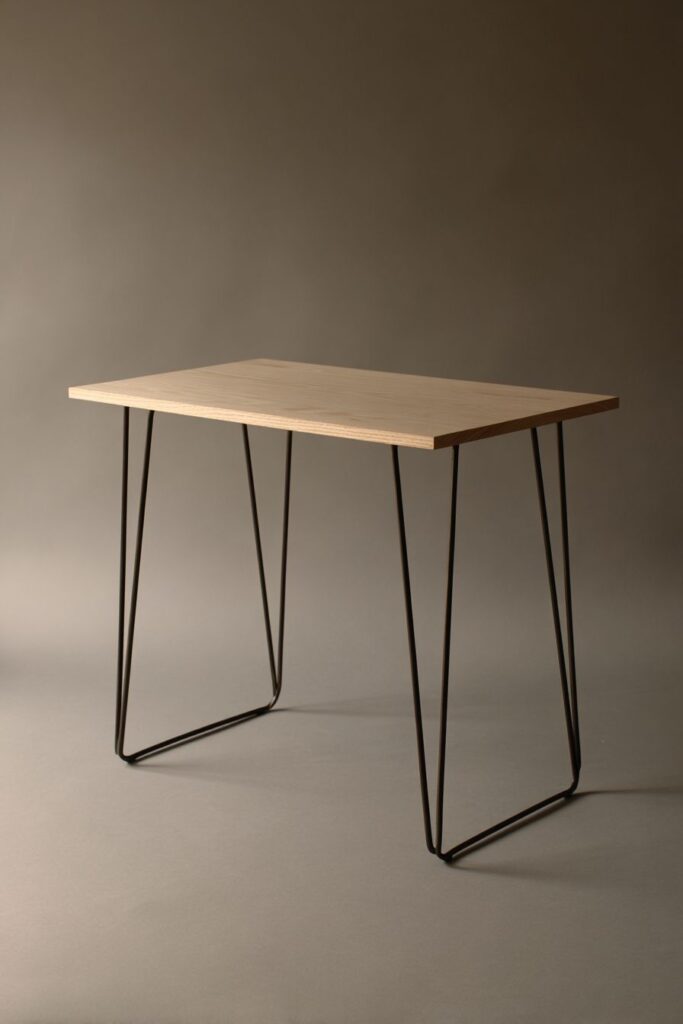
Design guidance includes keeping the table surface largely clear of decorative items to honor the minimalist aesthetic and maintain the clean, uncluttered look. Choose simple tableware in neutral tones or with minimal patterns to complement rather than compete with the furniture. Select compact chairs that embrace similar minimalist principles, perhaps with metal frames and simple upholstered seats. Position the table to take advantage of natural light that will emphasize the light ash wood and create interesting shadow patterns from the hairpin legs. Apply light-colored wood oil to the ash top periodically to nourish the wood and protect it from moisture without darkening its pale natural tone. Keep the matte black legs clean with a slightly damp cloth, avoiding oils or polishes that might create shine and detract from the intended flat finish. Embrace negative space around the table, resisting the urge to fill every corner with furniture or accessories. Appreciate how this simple design creates calm and order in your home, providing a peaceful backdrop for meals and conversation.
16. Circular Expandable with Petal-Leaf Mechanism
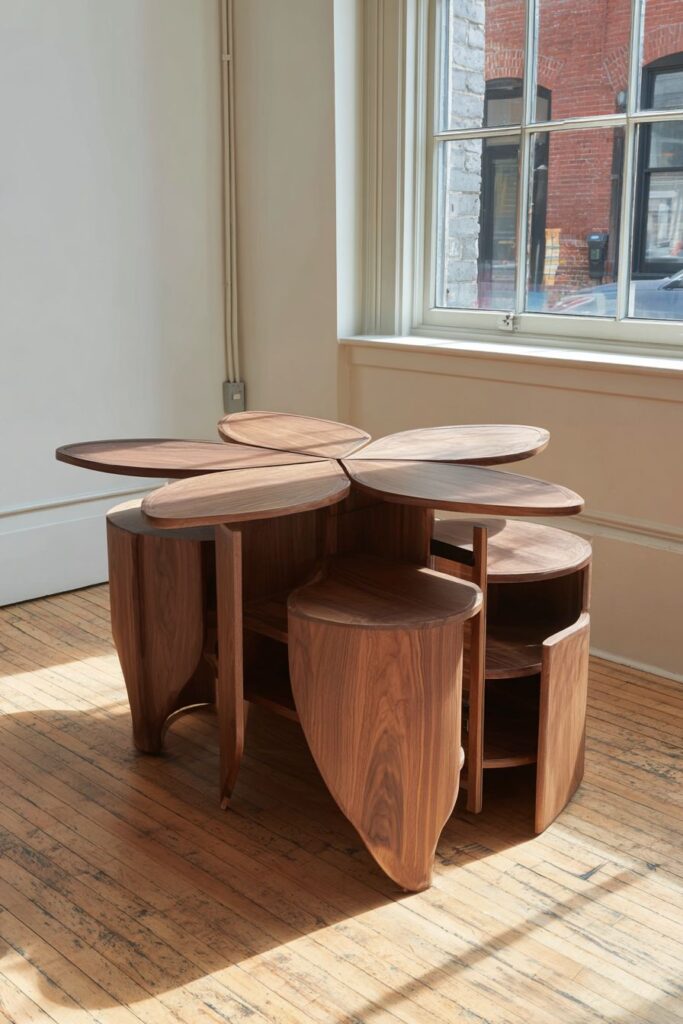
The circular expandable table with unique petal-leaf mechanism represents mechanical ingenuity at its most poetic. Crafted in warm walnut with engineered wood construction, this table grows from seating four to accommodating six people through an expansion system that unfolds like a flower opening to the sun. The petal leaves are stored within the table’s structure, hidden beneath the main surface until needed. When expansion is required, the table segments separate radially from the center, and the petal leaves rise and unfold to fill the gaps, creating a larger circle with seamless integration.
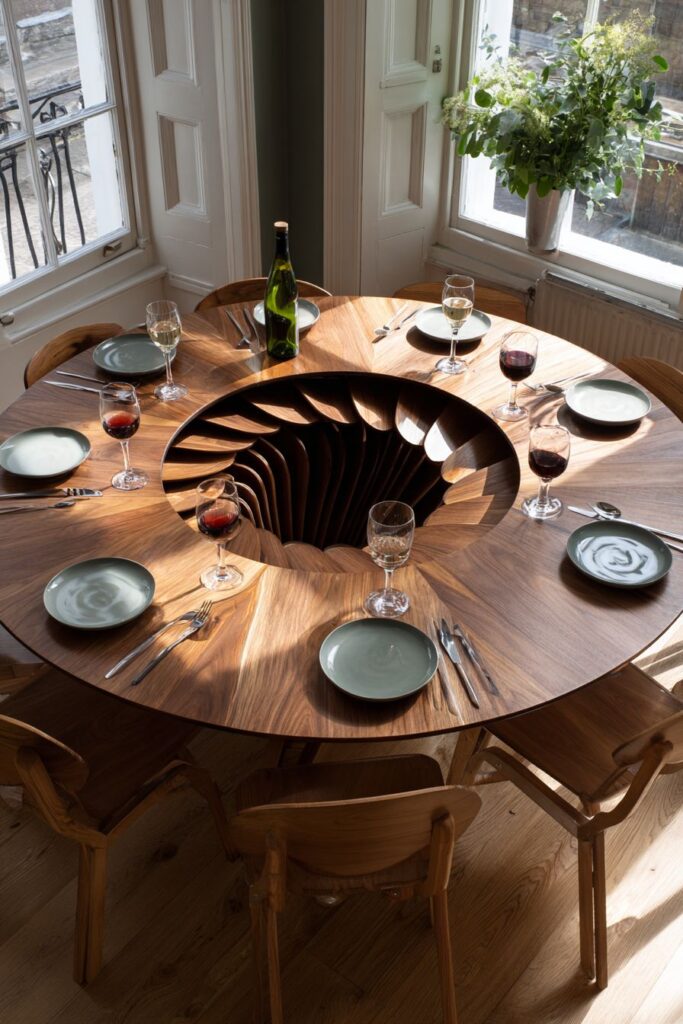
The warm walnut finish showcases rich brown tones with subtle reddish and golden undertones that create depth and visual interest. The engineered wood construction provides stability and resistance to warping that solid wood sometimes struggles with, while the walnut veneer surface maintains the authentic appearance and texture of natural wood. The smooth finish reflects light beautifully, with the wood’s natural variations in color and grain creating organic patterns that draw the eye. This combination of beauty and engineering excellence creates a statement piece that’s both practical and impressive.
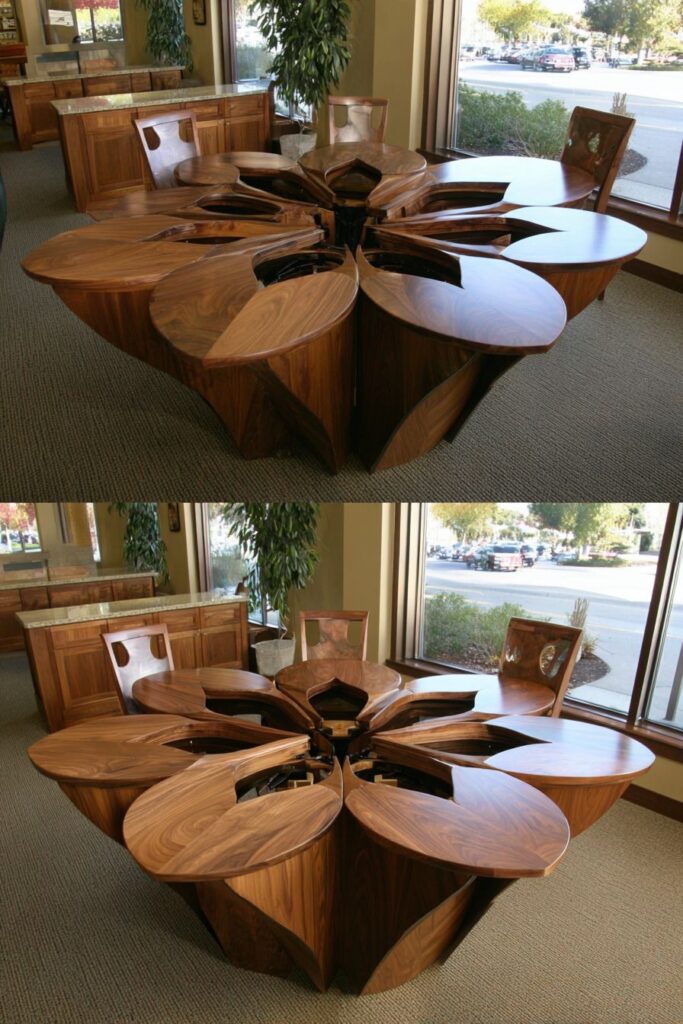
Detail-oriented interior photography showing the ingenious mechanical expansion system reveals how thoughtful design can transform furniture into conversation pieces. Natural window light emphasizes the wood tone variations and the precision with which the petal segments align when deployed. The mechanism operates smoothly, with the weight distribution and support structure carefully engineered to maintain stability in both configurations. The expanded table maintains a circular shape that facilitates conversation and creates a democratic dining arrangement where no seat is at the head of the table.
The circular form offers advantages beyond the clever expansion mechanism. Round tables fit more naturally into square spaces than rectangular tables, with no corners to navigate around. They create better traffic flow in open-plan living areas, with the curved edge providing a gentle boundary that’s easier to walk around than sharp table corners. The round shape also encourages more egalitarian social interaction, as everyone can see and hear each other equally well regardless of where they’re seated. This makes round tables particularly suitable for dinner parties and gatherings where conversation is a priority.
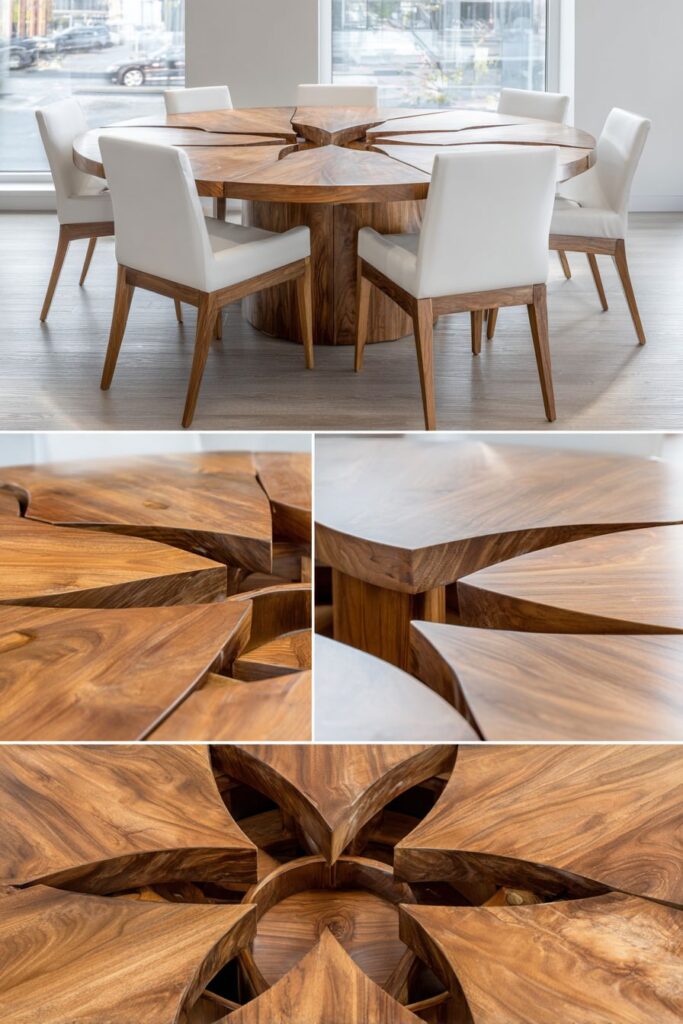
Design tips include demonstrating the expansion mechanism to guests before attempting it with a fully set table to avoid any awkwardness or accidents. Practice the expansion process several times until you can operate it smoothly and confidently. Choose round placemats or simply forgo placemats entirely to emphasize the table’s beautiful circular form. Select a centerpiece that works for both table sizes, perhaps a low floral arrangement that doesn’t obstruct sight lines across the table. Position a pendant light or chandelier directly over the table center to provide balanced illumination in both configurations. Apply wood conditioner to the walnut veneer periodically to maintain its rich color and protect against moisture damage. Consider how the circular form will work in your space, ensuring adequate clearance around the entire perimeter for chairs to pull out comfortably. Appreciate the engineering excellence that makes the petal-leaf mechanism possible, recognizing that you’re using a table that represents significant innovation in expandable furniture design.
17. Coastal Weathered White Cross-Back Design
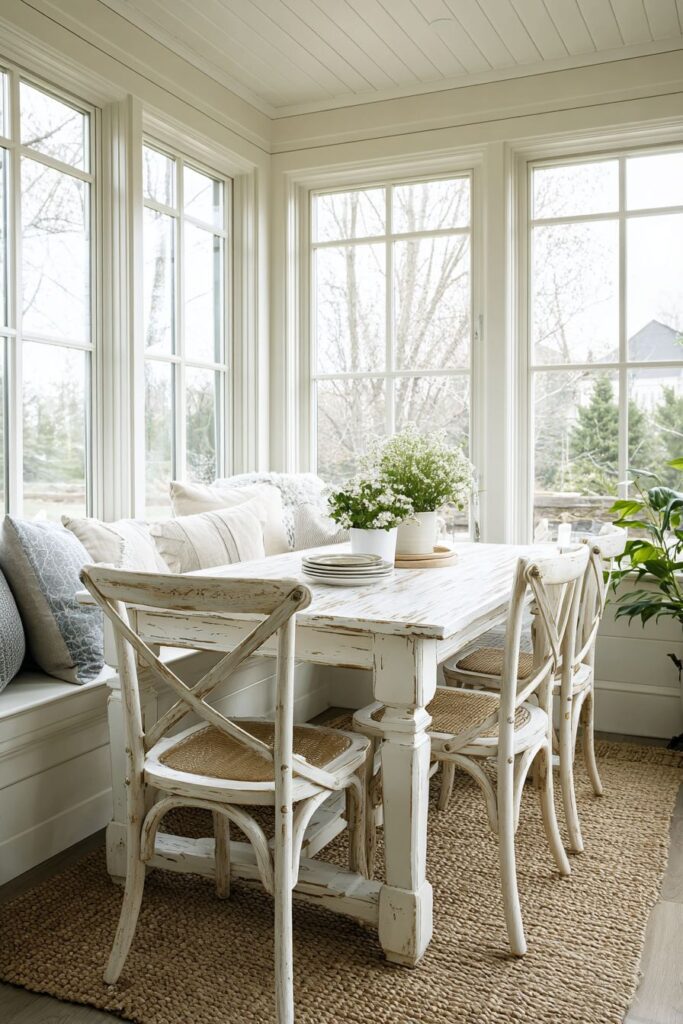
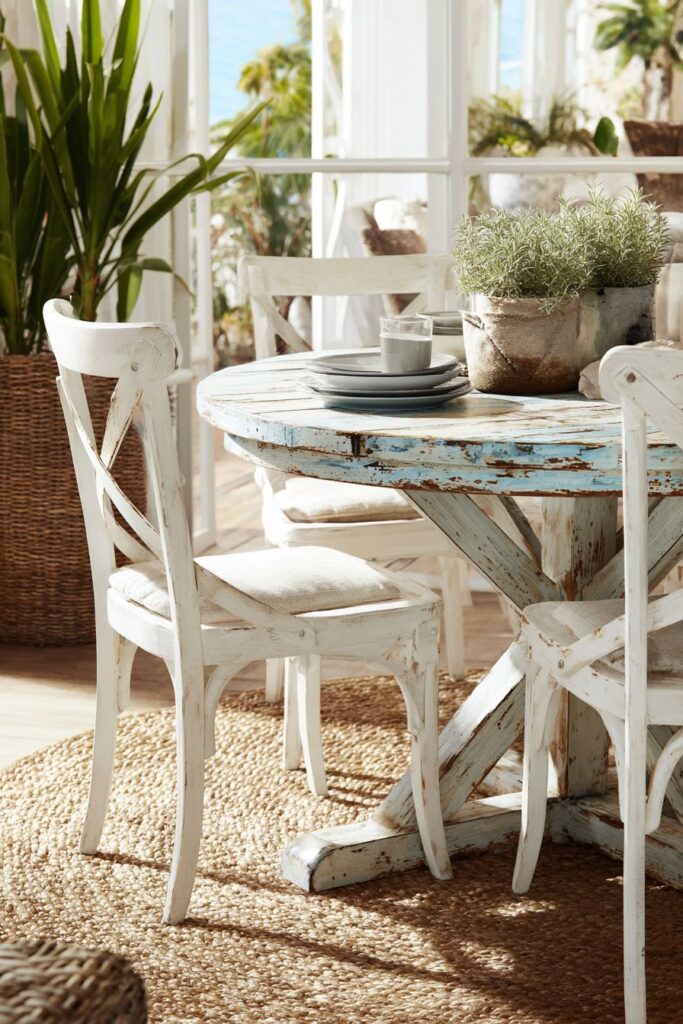
The coastal-style dining table presenting weathered white-painted wood with cross-back chairs brings breezy, relaxed elegance to space-saving dining solutions. The table features a distressed finish with subtle blue undertones that evoke seaside living, beachy mornings, and carefree summer days. The visible wood texture beneath the paint shows through in places where the finish has been intentionally worn, creating an aged, well-loved appearance that adds character and charm. This weathered aesthetic feels authentic rather than manufactured, as if the piece has spent years in a beach cottage absorbing sun, salt air, and the patina of happy memories.
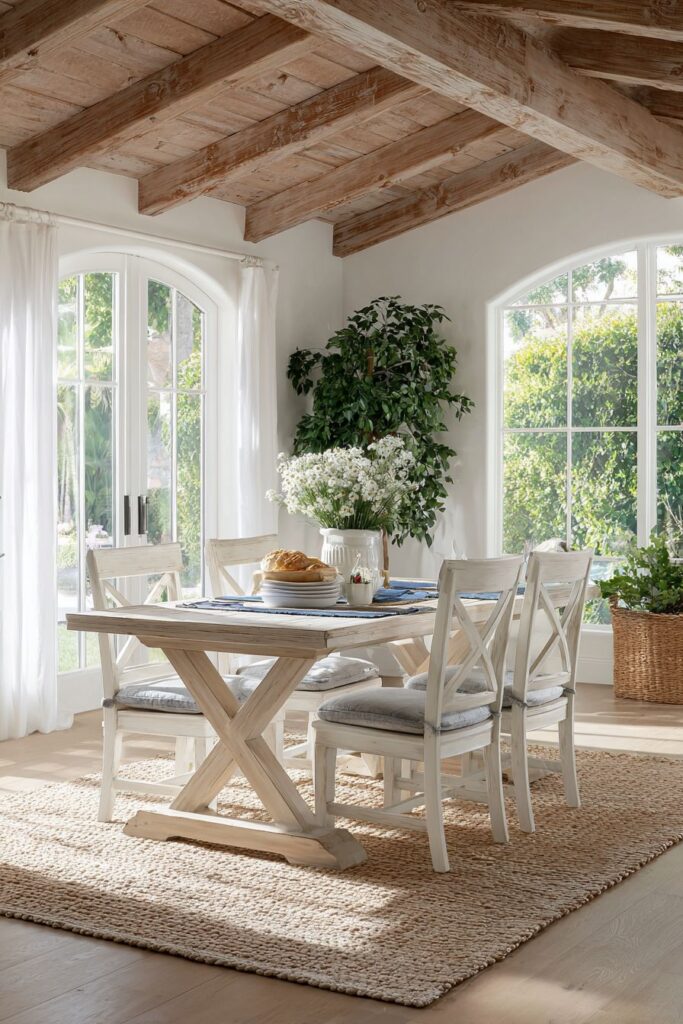
The cross-back chairs nest underneath the table with remarkable efficiency, their distinctive X-shaped back design providing both structural support and visual interest. These chairs, also finished in weathered white with hints of the wood showing through, coordinate perfectly with the table while maintaining enough visual texture to avoid monotony. When tucked under the table, the chairs’ slim profiles minimize the overall footprint, creating a compact ensemble that works beautifully in small spaces. When pulled out for dining, they provide comfortable seating with backs that support proper posture during extended meals.
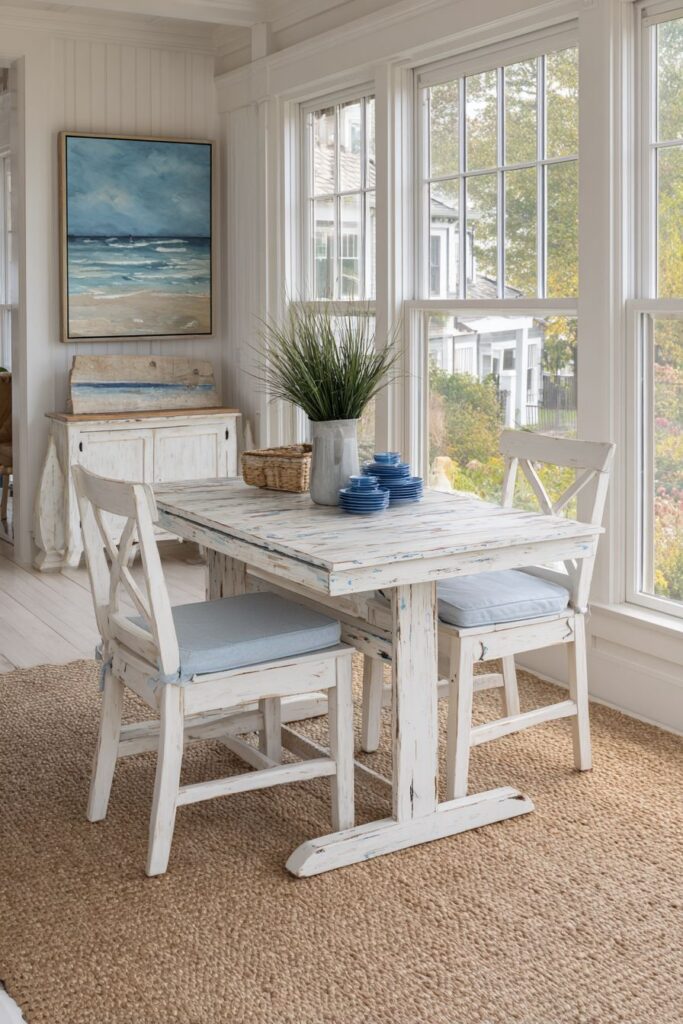
Positioned in a bright sunroom with abundant natural light, this coastal setup reaches its full potential. The white finish reflects and amplifies the available light, creating a luminous, airy atmosphere that feels expansive despite limited square footage. Natural fiber rugs underneath add texture and warmth while reinforcing the casual, coastal aesthetic. The neutral tones of sisal, jute, or seagrass complement the weathered white table and ground the space with earthiness that prevents the all-white color scheme from feeling too stark or clinical.
Interior design photography creating a breezy, light-filled atmosphere perfectly captures the essence of coastal living that this table embodies. The way sunlight plays across the weathered finish highlights the subtle blue undertones that give this piece its beachy character. The distressing and intentional imperfections create shadow and depth that flat, uniform paint simply cannot achieve. The overall effect transports you mentally to coastal retreats where life moves slower and meals are enjoyed with windows open to ocean breezes.
Design recommendations include pairing this table with predominantly white or neutral decor to maintain the light, airy coastal aesthetic. Add pops of blue, aqua, or coral through accessories like cushions, table linens, or decorative objects to reinforce the seaside theme without overwhelming the space. Choose simple, natural materials for tableware and centerpieces, such as driftwood, seashells, sea glass, or beach stones displayed in clear glass vessels. Keep window treatments minimal or sheer to maximize natural light that makes this design shine. Protect the weathered finish with clear wax or sealant that won’t obscure the distressing or change the color. Embrace the imperfections and worn areas as features rather than flaws, understanding that they contribute to the authentic coastal aesthetic. Consider adding rope details, nautical stripes, or weather-worn accessories to complete the beachy vibe. Maintain the natural fiber rug with regular vacuuming and immediate attention to spills, as these materials can be prone to staining if not treated promptly.
18. Modular Bamboo Stackable System
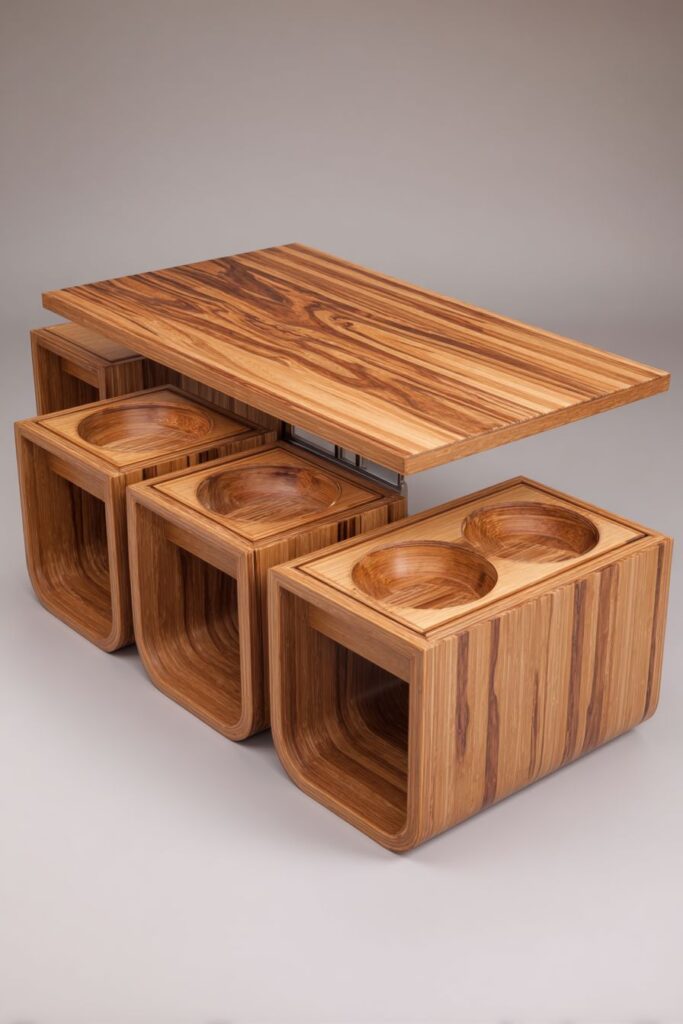
The modular table system with stackable sections represents revolutionary thinking about dining furniture as something that can be reconfigured endlessly. Made from bamboo with natural honey tones and visible linear grain patterns, this system consists of multiple sections that separate to create individual lap trays or combine into a dining surface for six. The bamboo construction offers exceptional sustainability, as this fast-growing grass replenishes far more quickly than traditional hardwoods while providing comparable strength and durability. The natural honey tones create warmth without heaviness, with the linear grain patterns adding visual interest and texture.
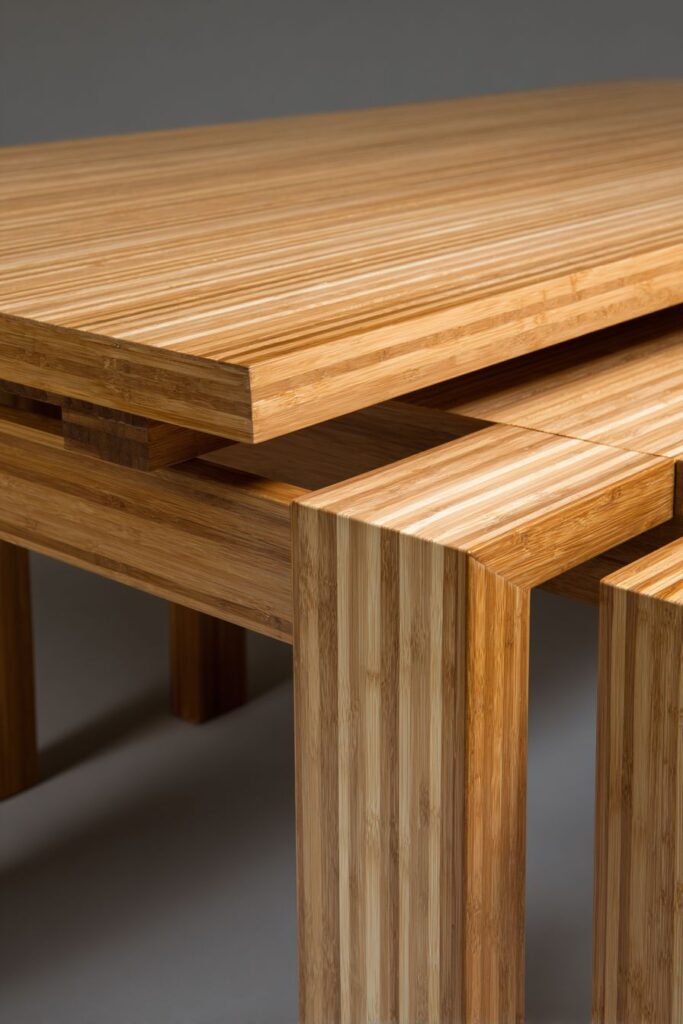
The modular concept liberates you from fixed furniture configurations, allowing you to adapt your dining setup to whatever situation arises. Need individual TV trays for casual movie night dining? Separate the sections and distribute them throughout your living room. Hosting a dinner party? Stack and connect the sections to create a proper dining table with room for all your guests. Working from home? Use one or two sections as laptop stands or work surfaces positioned wherever convenient. This flexibility means a single furniture purchase serves multiple purposes, maximizing both value and functionality.
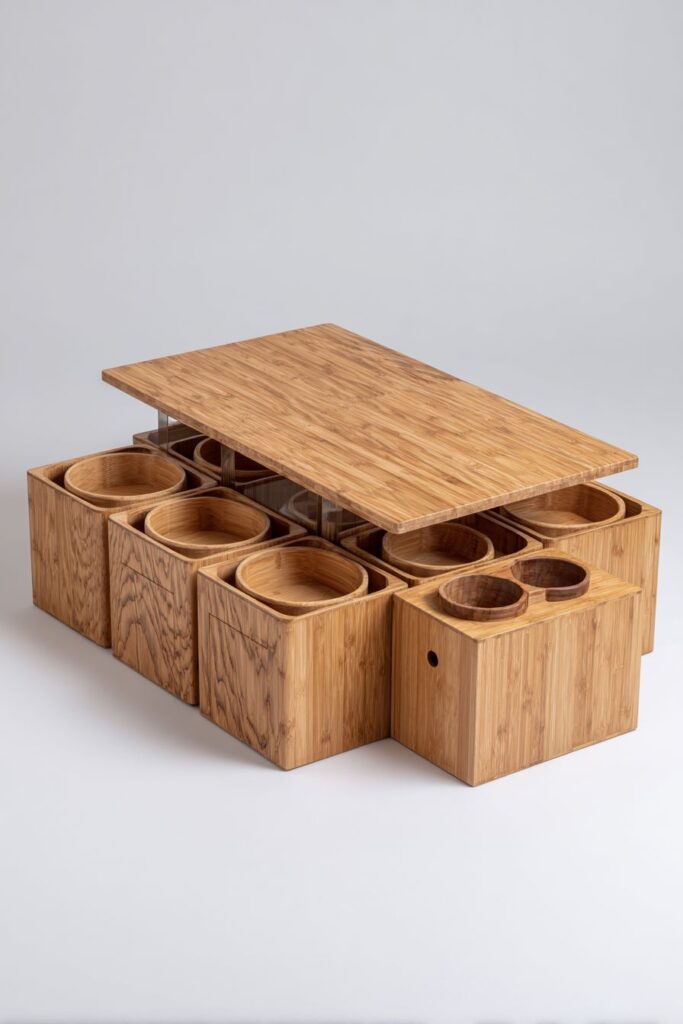
The stackable design solves storage challenges that often plague small-space living. When not configured as a dining table, the sections stack vertically into a compact tower that occupies minimal floor space. This vertical storage approach takes advantage of often-underutilized height in rooms while keeping your pieces accessible and organized. The bamboo’s light weight makes moving and reconfiguring the sections easy, even for a single person, encouraging you to experiment with different arrangements and uses.
Wide-angle interior photography with balanced exposure highlights the versatile arrangement possibilities and sustainable material choice. The honey-toned bamboo glows warmly in natural light, with the linear grain creating subtle texture that adds depth and visual interest. The images demonstrate various configurations, showing how the same pieces can transform from scattered lap trays to a cohesive dining ensemble. The sustainable aspect of bamboo adds feel-good factor to your furniture choice, allowing you to furnish your home beautifully while making environmentally responsible decisions.
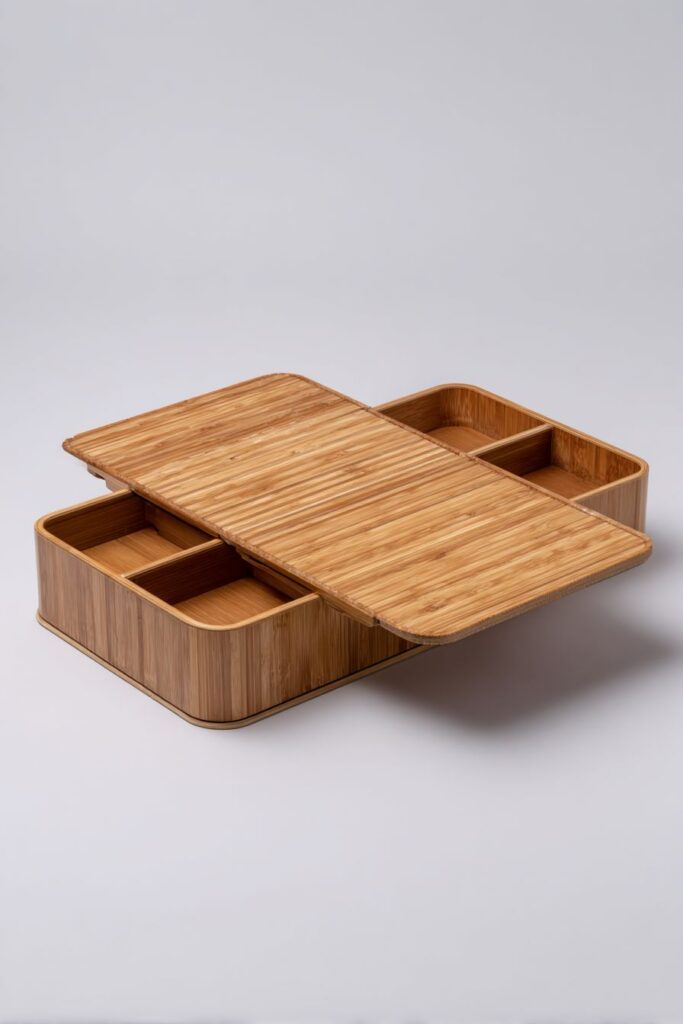
Implementation advice includes experimenting with different section arrangements to discover configurations that work best for your space and lifestyle. Use the sections individually more often than you might expect, taking advantage of their versatility for everything from breakfast in bed to outdoor picnics. Store the stacked sections in a convenient location where you can access them easily when needed, perhaps in a closet corner or beside a bookshelf. Protect the bamboo finish with food-safe oil specifically formulated for bamboo, which has different characteristics than traditional hardwoods. Wipe up spills immediately as bamboo can be sensitive to excess moisture despite its inherent durability. Consider purchasing connector hardware if your set doesn’t include it, allowing you to secure sections together more firmly for more stable dining configurations. Appreciate the sustainable nature of your choice, knowing that bamboo forests sequester more carbon dioxide than equivalent hardwood forests while regenerating after harvest. Share your modular setup with friends and family who struggle with small-space living, as this innovative approach to dining furniture might inspire their own space-saving solutions.
19. Mid-Century Modern Oval Teak Extension
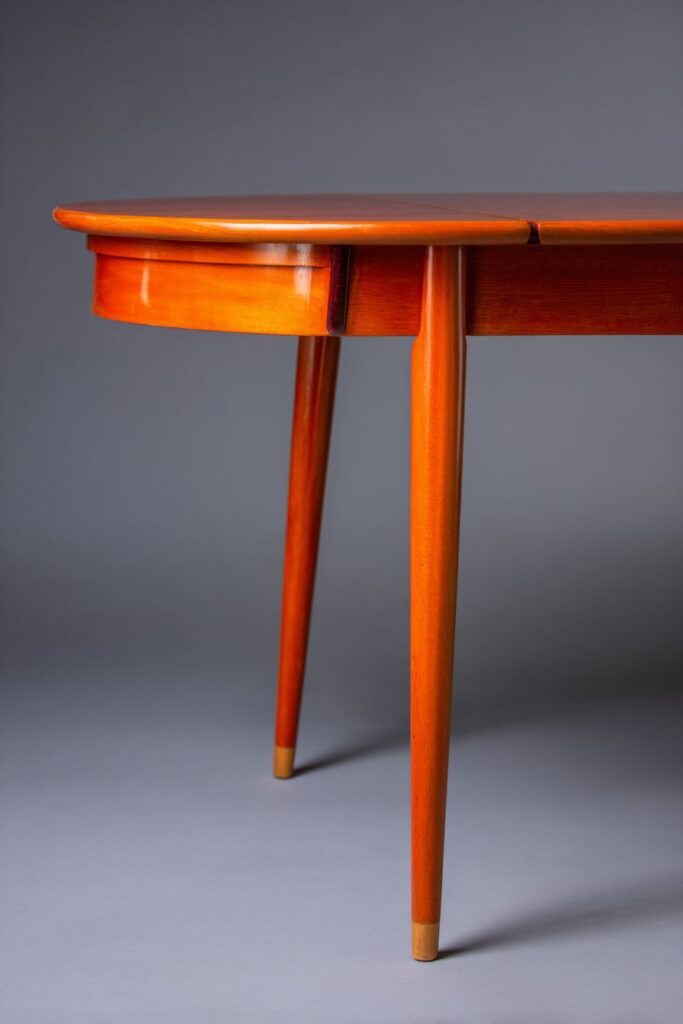
The mid-century modern dining table featuring an oval shape with tapered wooden legs and single center leaf extension embodies iconic 1960s design that remains timelessly appealing. Crafted in teak with authentic period design details, this table showcases warm orange-brown coloring that defines mid-century aesthetic. The rich, lustrous finish highlights teak’s natural oil content and beautiful grain patterns, with subtle color variations creating depth and visual interest. The oval form softens the geometry while maintaining the clean lines characteristic of mid-century modern design.
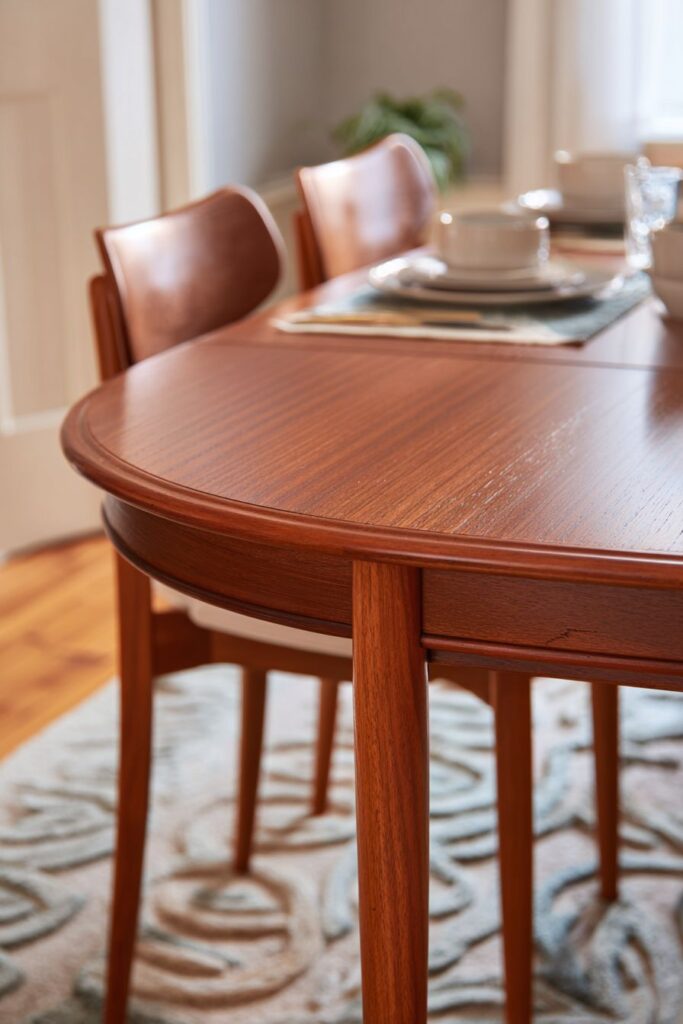
The single center leaf extension operates with elegant simplicity, sliding out from beneath the table surface to add length when needed. This configuration transforms the table from seating four to accommodating six comfortably, with the oval shape ensuring that all diners have adequate elbow room and nobody feels squeezed at the table’s ends. The extension mechanism represents quality engineering from an era when furniture was built to last generations, with smooth-operating hardware and precise fitting that maintains the table’s stability and level surface in both configurations.
The tapered wooden legs showcase the refined craftsmanship that defines quality mid-century furniture. These legs angle gently inward as they descend from the table surface, creating dynamic visual lines that suggest movement and lightness despite the table’s solid construction. The tapering serves both aesthetic and practical purposes, making the table appear less bulky while maintaining adequate structural support. This attention to proportion and detail elevates the design from simply functional to genuinely beautiful, exemplifying the mid-century belief that everyday objects should bring joy through excellent design.
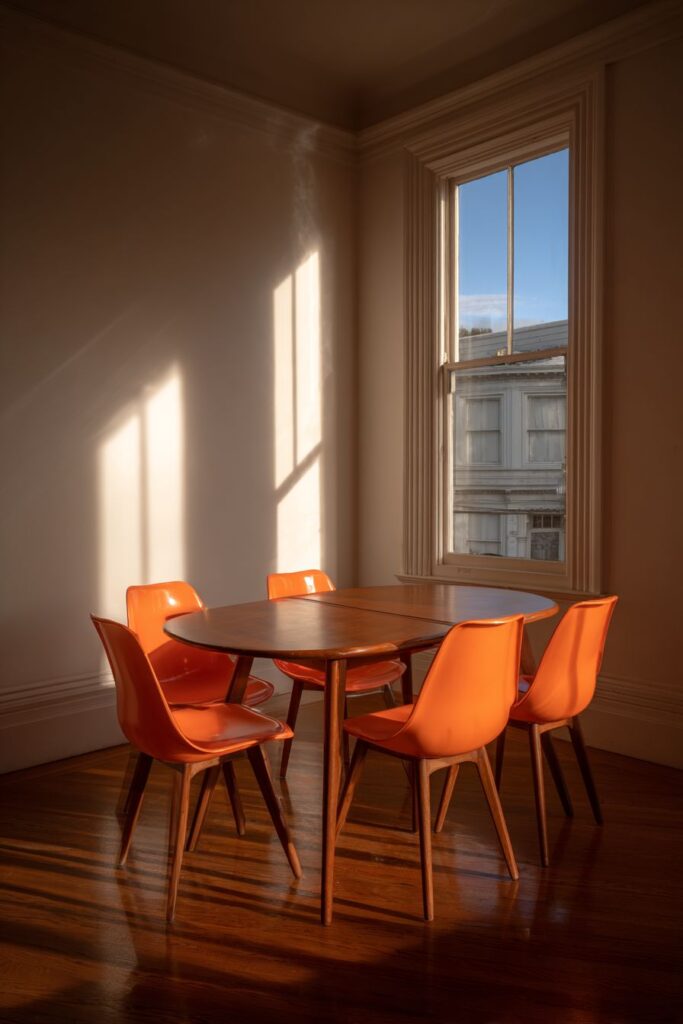
Four molded plastic chairs that stack for storage complement the table perfectly, embodying the mid-century embrace of new materials and manufacturing techniques. These iconic chair designs, originally created by pioneering designers in the 1950s and 1960s, feature organic curves that provide surprising comfort despite their simple construction. The chairs stack efficiently for storage, an important consideration in homes where space must serve multiple purposes. Professional interior photography with warm natural lighting emphasizes the iconic silhouette and clever expandable design, capturing the essence of mid-century modern style with attention to period-appropriate staging and authentic vintage atmosphere.
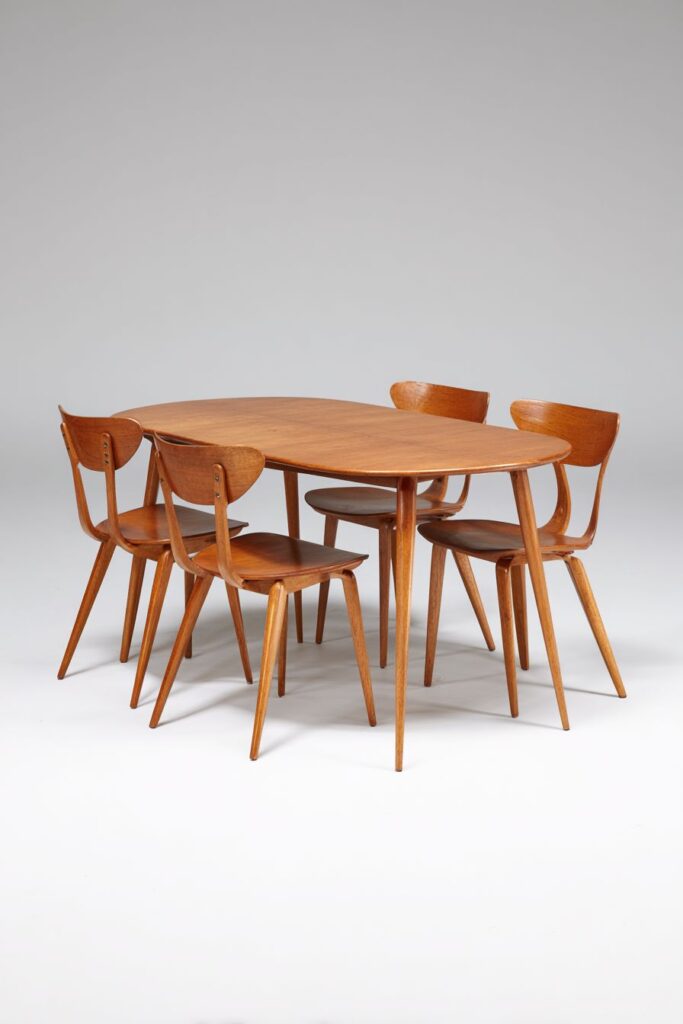
Design considerations include maintaining the teak finish with teak oil applied annually to prevent drying and maintain the wood’s lustrous appearance. Position the table where its oval form can be appreciated fully, perhaps in a room with sufficient space to walk around the entire perimeter. Choose accessories and decor that honor the mid-century aesthetic, including period-appropriate lighting fixtures like Sputnik chandeliers or arc lamps, geometric artwork, and accessories in the era’s characteristic colors like avocado green, harvest gold, or burnt orange.
Keep centerpieces low and simple to maintain the clean lines that define mid-century style. Store the center leaf carefully when not in use, protecting it from damage or warping that could prevent proper fit when reinstalled. Consider the chairs as design objects in their own right, displaying them prominently even when stacked to showcase their sculptural forms. Appreciate the historical significance of owning authentic mid-century design or quality reproductions that honor this influential design movement. Understand that mid-century modern furniture represents a high point in accessible, democratic design that brought good taste and quality craftsmanship to average homes.
20. Hidden Pull-Out from Kitchen Island
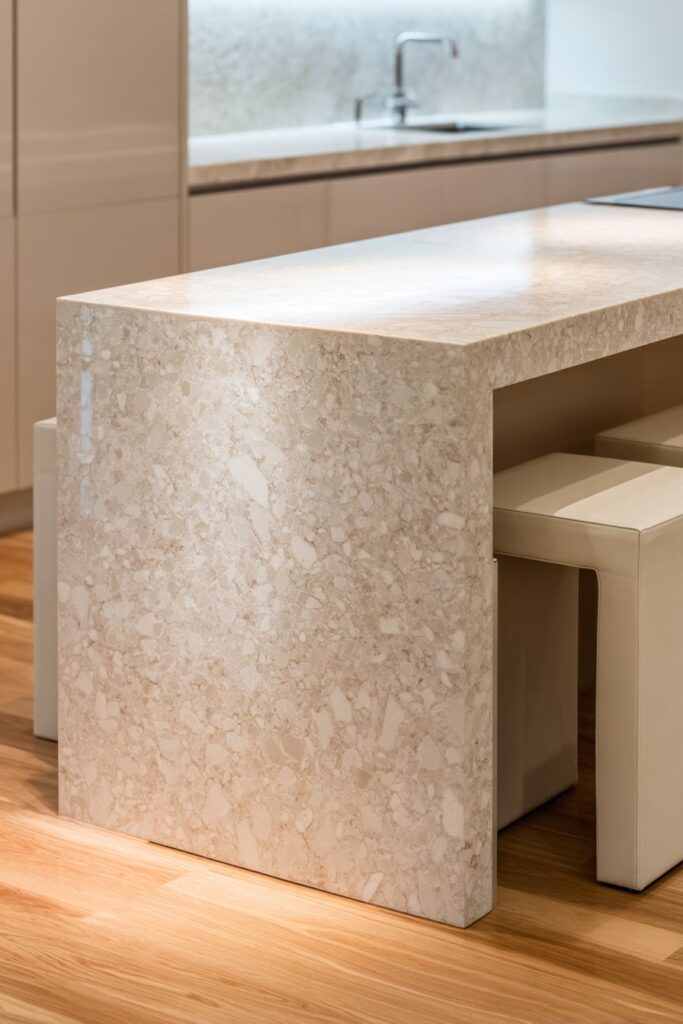
The hidden pull-out table concealed within kitchen island cabinetry represents the ultimate in space-saving innovation and seamless integration. When extended, the table surface in matching quartz countertop material creates seating for two to three people, providing a convenient dining spot that appears instantly when needed.
The quartz surface matches your island countertop exactly, creating visual continuity that makes the extended table feel like an intentional part of the island rather than an add-on accessory. The soft-close mechanism with chrome hardware ensures smooth, quiet operation that feels refined and well-engineered.
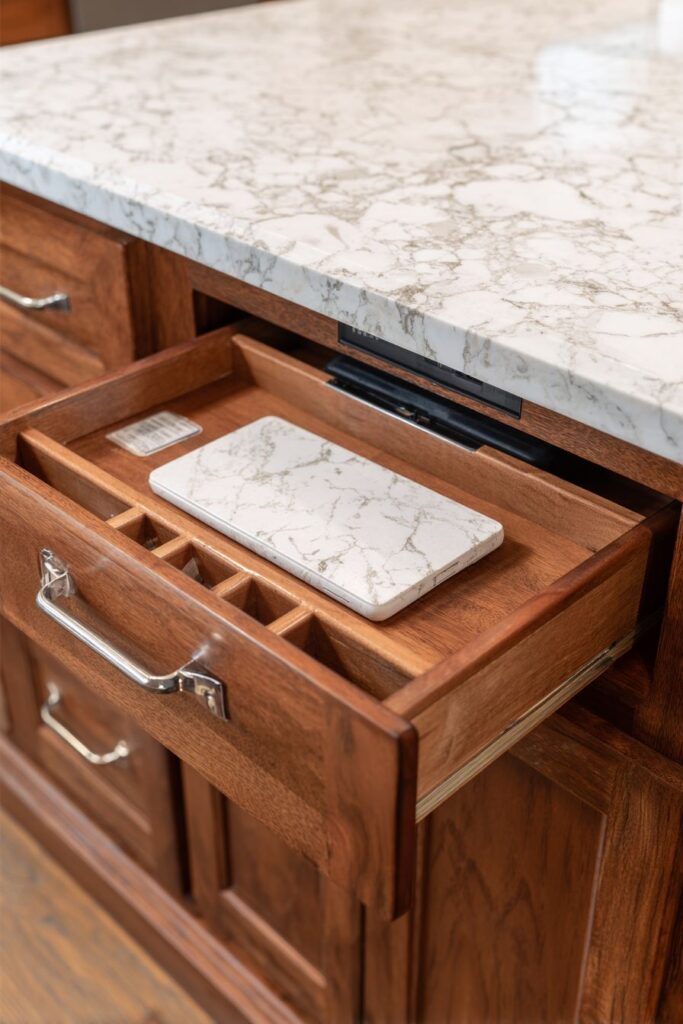
The genius of this design lies in its complete invisibility when not in use. The hidden table returns flush with the cabinetry, revealing no hint of its presence beyond perhaps a subtle seam or handle. This integration means you maintain the clean lines and uninterrupted surfaces that define contemporary kitchen design while secretly harboring a fully functional dining table. The space typically wasted inside base cabinets becomes valuable real estate that transforms your kitchen’s functionality without altering its aesthetic or footprint.
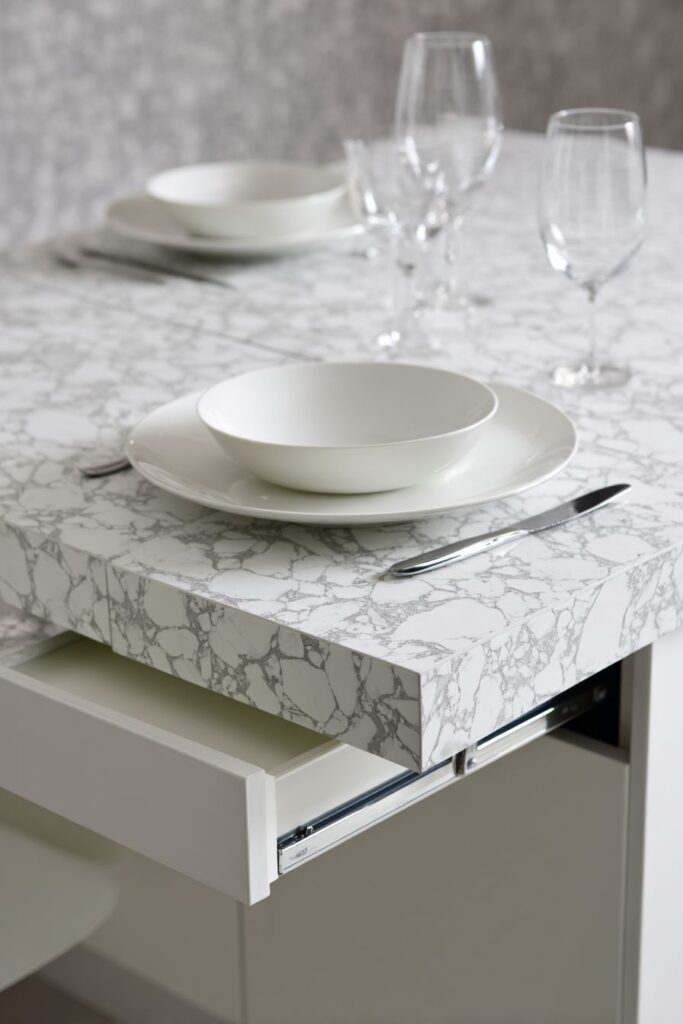
Detail shot interior photography with task lighting highlights the seamless integration and innovative space-saving solution. The images reveal how the pull-out mechanism operates, with the table surface extending smoothly on heavy-duty drawer slides or specialized hardware designed for this purpose. The matching quartz creates an illusion that the island has simply extended, with color, veining, and finish matching so precisely that the join becomes nearly invisible. The focus on the smooth sliding mechanism emphasizes the quality engineering that makes this solution feel luxurious rather than merely functional.
This hidden table serves multiple purposes beyond dining. It can function as additional prep space when cooking, providing a convenient surface for setting out ingredients or staging plated dishes. During entertaining, it serves as a bar area where guests can set drinks while socializing in the kitchen. For families with children, it becomes a homework station, art surface, or craft area that appears when needed and disappears when activities conclude. The pull-out surface can even serve as a laptop desk for those who work from home, providing a standing-height workspace that keeps you in the heart of the household.
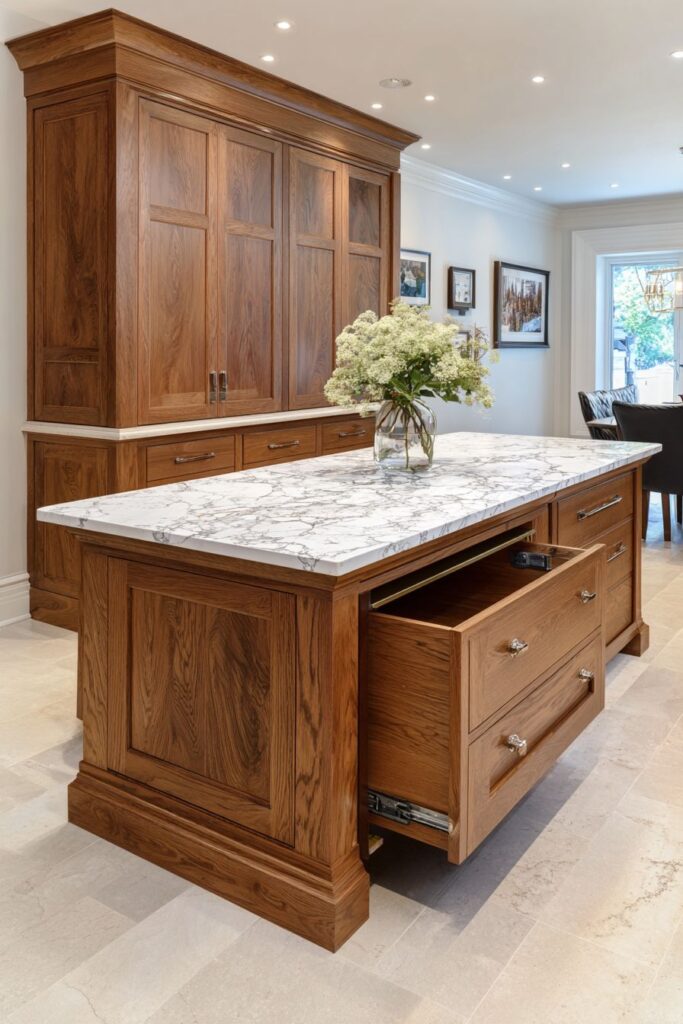
Implementation tips include ensuring adequate clearance for the table to extend fully without blocking traffic patterns or interfering with appliance doors. Choose durable quartz in colors and patterns that work with your overall kitchen design while hiding stains and wear effectively. Opt for quality hardware specifically rated for the weight and dimensions of your pull-out table, as inadequate support can lead to sagging, binding, or premature failure. Consider adding electrical outlets to the underside of the table or nearby on the island for charging devices or plugging in small appliances during meal preparation.
Test the soft-close mechanism regularly to ensure proper adjustment, tightening screws or adjusting dampers as needed to maintain smooth operation. Keep the area around the hidden table relatively clear so you can extend it quickly without needing to move items first. Appreciate the sophisticated integration this solution provides, understanding that successful space-saving design often means making functional elements invisible until needed. Consider this approach when planning kitchen renovations or new construction, as incorporating hidden features during initial design is far easier than retrofitting them later.
Why These Space Saving Dining Table Designs Excel
These twenty space saving dining table ideas represent the pinnacle of innovative furniture design that addresses real-world challenges faced by millions of people living in compact spaces. Each solution demonstrates that limited square footage doesn’t require sacrificing style, comfort, or the ability to gather around the table for meals and meaningful conversation. From traditional gateleg mechanisms that have served homes for centuries to cutting-edge hydraulic systems that transform coffee tables into dining surfaces, these designs span historical periods and design aesthetics while sharing a common commitment to maximizing functionality within minimal footprints.
The wall-mounted drop-leaf tables and fold-down designs excel at creating dining surfaces that virtually disappear when not needed, returning precious floor space to your home for other activities. These solutions prove particularly valuable in studio apartments or multi-purpose rooms where every square foot must work overtime. The natural oak, birch, and other wood finishes bring warmth and organic beauty even when folded, ensuring these practical pieces contribute positively to your decor rather than looking like compromises or afterthoughts.
Extendable tables with butterfly leaves, petal mechanisms, or removable center sections provide remarkable flexibility that allows small everyday footprints to expand dramatically when guests arrive. These clever engineering solutions mean you’re always prepared for entertaining without maintaining a permanently oversized table that dominates your space. The smooth operation of quality extension mechanisms transforms what could be awkward furniture juggling into elegant, effortless expansion that takes moments and requires no storage of separate leaves or complex assembly procedures.
Tables with integrated storage, whether wine racks, drawers, or shelf space, address multiple needs simultaneously by combining dining surfaces with organizational solutions. These multifunctional pieces eliminate the need for separate storage furniture, freeing up floor and wall space while keeping dining essentials conveniently accessible. The thoughtful integration of storage into table design represents holistic thinking about how furniture can serve multiple purposes without appearing cluttered or over-complicated.
Console tables that transform into full dining tables exemplify versatility at its finest, serving as elegant accent pieces throughout the week before converting into proper dining tables for weekend gatherings. The dramatic transformation from twelve-inch depths to full dining surfaces demonstrates how innovative design can make single pieces of furniture replace what would traditionally require two or three separate items. This consolidation saves money, reduces clutter, and provides flexibility that static furniture simply cannot match.
Counter-height and bar-height tables with tucking stools maximize vertical space while creating casual dining atmospheres that feel contemporary and convivial. The elevated surfaces work particularly well in small kitchens and breakfast nooks where standard-height tables might feel too formal or take up too much visual space. The ability for stools to disappear completely under the table maintains clear floor areas essential for comfortable movement in compact cooking and dining spaces.
Corner tables and triangular designs activate space that traditional rectangular or round tables cannot utilize effectively, transforming forgotten corners into functional dining areas. These geometrically innovative solutions demonstrate that thinking beyond conventional shapes can yield surprisingly effective results. The corner placement keeps traffic patterns clear while providing adequate seating without dominating the room’s center.
Bench seating arrangements that push against walls eliminate the clearance space required for chairs on that side, effectively reducing the table’s functional footprint by nearly half. The built-in corner benches maximize seating capacity while the upholstered comfort encourages lingering over meals. This configuration works beautifully in breakfast nooks, small dining rooms, or any space where efficiency is paramount.
Glass-top tables create visual spaciousness through transparency that allows light to pass through and sight lines to continue unobstructed. This optical trick helps small rooms feel significantly larger while still providing fully functional dining surfaces. The minimalist aesthetic of glass paired with chrome or other metal bases embodies contemporary design sensibilities while solving practical space challenges.
Industrial-style tables with metal frames and reclaimed wood tops bring character and sustainability to space-saving furniture. The raw materials and honest construction appeal to those who appreciate authenticity and urban aesthetics while the fold-down sides provide the flexibility needed in loft apartments and contemporary homes. The combination of metal’s strength and wood’s warmth creates balanced designs that work in various interior styles.
Traditional designs like gateleg tables and farmhouse trestle tables prove that time-tested solutions remain relevant in modern homes. These historical forms have endured because they work beautifully, combining aesthetic appeal with practical functionality. The quality materials and solid construction mean these pieces can serve families for generations, developing patina and character that make them increasingly valuable over time.
Modular and convertible systems represent the newest thinking in adaptive furniture design, where pieces reconfigure endlessly to meet changing needs throughout the day and across different seasons of life. These innovative approaches to dining furniture acknowledge that modern living is fluid and multifunctional, requiring furniture that can keep pace with our diverse activities and changing household compositions.
Hidden and integrated tables concealed within kitchen islands or other cabinetry demonstrate how seamless integration can make functional elements invisible until needed. This approach maintains clean aesthetics essential in contemporary design while providing instant functionality that appears magically when required. The matching materials and precise engineering create illusions that extended surfaces are intentional permanent elements rather than pull-out additions.
The materials used across these designs range from sustainable bamboo and reclaimed wood to engineered materials that provide enhanced durability and stability. Each material choice brings specific advantages, whether the warmth of natural wood, the sustainability of rapidly renewable resources, the transparency of glass, or the industrial edge of raw metal. Understanding material properties helps you select tables that will serve your specific needs while complementing your aesthetic preferences.
The finishes applied to these tables contribute significantly to their effectiveness in small spaces. Light colors like white, natural oak, ash, and birch help rooms feel larger and brighter, reflecting available light and creating airy atmospheres. Darker finishes like walnut, mahogany, and espresso add sophistication and grounding weight that prevents spaces from feeling insubstantial. Weathered and distressed finishes bring character and hide the inevitable marks of daily use, making them practical choices for busy households.
The chair solutions that accompany these tables deserve recognition for their own space-saving credentials. Folding chairs, stacking chairs, chairs that nest completely under tables, and benches built into corners all contribute to the overall space efficiency. Wall-mounted hooks turn chair storage into decorative wall displays, while slim profiles ensure chairs don’t add visual bulk even when visible.
These designs work across various interior styles from Scandinavian minimalism to industrial loft aesthetics, from mid-century modern to coastal casual, from traditional farmhouse to ultra-contemporary. This stylistic diversity ensures that regardless of your design preferences, space-saving solutions exist that will complement rather than compromise your aesthetic vision. The key is selecting designs that resonate with your personal style while meeting your practical requirements.
The engineering excellence demonstrated across these tables represents significant innovation in furniture design. Smooth-operating mechanisms, stable expansion systems, robust folding hardware, and precise fitting all contribute to user experiences that feel refined and effortless. Quality engineering transforms potentially awkward operations into seamless transitions that encourage you to actually use the space-saving features rather than leaving tables permanently deployed because adjustment seems too difficult.
The psychological impact of these space-saving solutions extends beyond mere functionality. Living in uncluttered spaces with room to move freely reduces stress and creates calmer environments. Having furniture that adapts to your needs rather than dictating how you must live provides a sense of control and flexibility valuable for mental wellbeing. Being able to entertain comfortably despite limited square footage maintains social connections and prevents small-space living from feeling isolating or restrictive.
These twenty space saving dining table ideas collectively demonstrate that small-space living requires creativity, quality design, and willingness to think beyond conventional furniture solutions. They prove that you don’t need spacious homes to live well, eat well, and gather with loved ones around beautiful tables. Each design offers specific advantages suited to different living situations, aesthetic preferences, and functional requirements, ensuring that everyone can find solutions that work for their unique circumstances while creating homes that feel spacious, welcoming, and distinctly personal.
Conclusion
Space saving dining tables represent far more than clever furniture solutions for compact living; they embody a thoughtful approach to modern life that values flexibility, efficiency, and beautiful design in equal measure. Throughout this comprehensive exploration of twenty innovative dining table ideas, we’ve discovered that limited square footage doesn’t mean compromising on style, comfort, or the joy of gathering for meals. From wall-mounted drop-leaf designs that fold away to virtually nothing, to sophisticated extension mechanisms that transform intimate tables into generous entertaining surfaces, each solution demonstrates how intelligent design can dramatically improve how we live in small spaces.
The diversity of styles, materials, and mechanisms presented here ensures that regardless of your aesthetic preferences or spatial constraints, excellent options exist to meet your needs. Traditional gateleg tables bring centuries of proven functionality to contemporary homes, while cutting-edge hydraulic systems and hidden pull-outs showcase the latest innovations in transformable furniture. Natural materials like oak, walnut, teak, and bamboo warm spaces with organic beauty, while glass and metal create contemporary elegance and visual lightness. The finishes range from weathered coastal whites to rich mahogany, from industrial raw steel to honey-toned bamboo, offering palettes that complement any interior design scheme.
What makes these space saving solutions truly exceptional is how they enhance rather than diminish the dining experience. Far from feeling like compromises, these tables create inviting spaces where memories are made over shared meals, conversations flow freely, and the ritual of gathering around the table remains sacred despite practical constraints. The flexibility they provide means you can maintain open, breath able living spaces for daily life while being fully prepared to host dinner parties, holiday gatherings, or family celebrations at a moment’s notice.
As you consider which space saving dining table might work best for your home, think beyond measurements and mechanisms to how you actually live. Do you entertain frequently or primarily dine solo? Do you need a table that completely disappears or one that maintains a subtle presence? Is your aesthetic minimalist and modern, or do you gravitate toward traditional warmth and rustic character? Does your space demand maximum flexibility with modular options, or would a simple fold-down design serve your needs perfectly? These questions will guide you toward solutions that integrate seamlessly into your lifestyle rather than forcing you to adapt to inflexible furniture.
Remember that investing in quality space saving furniture pays dividends far beyond the initial purchase. Well-engineered mechanisms operate smoothly for decades rather than binding or breaking after minimal use. Solid materials like hardwood, quality metal, and tempered glass withstand daily demands while developing character and patina that enhance their appeal over time. Thoughtful design remains relevant and attractive regardless of changing trends, meaning your table will serve you well for years or even generations. When you calculate cost per use over the lifetime of quality furniture, the investment becomes remarkably reasonable compared to cheaper alternatives that require frequent replacement.
The practical benefits of space saving dining tables extend into every aspect of home life. Parents appreciate having open floor space for children to play while knowing the table can expand for family dinners. Remote workers value the ability to reclaim living areas after business hours by folding away work surfaces. Entertainers love being able to host without maintaining permanently large tables that dominate small apartments. Minimalists enjoy the clean aesthetics and reduced visual clutter that comes with furniture that adapts and transforms rather than consuming constant space. Everyone benefits from the improved traffic flow, enhanced functionality, and increased livability that smart furniture choices provide.
The environmental considerations shouldn’t be overlooked either. Choosing multifunctional furniture that serves multiple purposes reduces overall consumption and waste. Selecting pieces made from sustainable materials like bamboo or reclaimed wood supports responsible forestry and waste reduction. Investing in quality construction that lasts generations rather than disposable furniture that fills landfills makes your home more sustainable. These choices align with growing awareness about how our consumption patterns impact the planet, allowing you to furnish beautifully while treading more lightly on the earth.
Looking forward, space saving furniture will only become more relevant as urban density increases and housing costs make compact living the reality for more people worldwide. The designs highlighted in this article represent current best practices, but innovation continues with designers developing ever more ingenious solutions to spatial challenges. Smart furniture incorporating technology, materials science advances creating stronger yet lighter construction, and evolving aesthetic sensibilities will shape the next generation of space saving dining tables. By understanding current options and underlying principles, you’re well positioned to evaluate new solutions as they emerge.
The transformation that thoughtful furniture selection can bring to small spaces cannot be overstated. A cramped, cluttered apartment becomes a curated, functional home when furniture works with rather than against limited square footage. The stress of navigating obstacle courses of oversized furniture gives way to calm movement through clear spaces. The embarrassment of feeling unable to host friends dissolves when your table expands to welcome guests comfortably. These improvements in daily experience and quality of life justify the time spent researching options and the investment in quality pieces that truly serve your needs.
As you embark on selecting your ideal space saving dining table, take time to measure your space carefully, understanding not just the footprint required but also the clearance needed for chairs, extension mechanisms, and comfortable movement. Consider how the table will look in both compact and extended positions if applicable, ensuring both configurations work aesthetically and functionally. Think about maintenance requirements and choose finishes appropriate for your household’s demands. Read reviews and seek recommendations to identify brands and designs known for quality construction and reliable operation. Visit showrooms when possible to test mechanisms and experience the furniture in person before committing.
Most importantly, remember that your dining table serves as the heart of your home, regardless of its size or configuration. This is where you’ll share countless meals, have important conversations, celebrate milestones, comfort loved ones during difficult times, work on creative projects, help children with homework, and create the daily rituals that define home life. The table you choose deserves to be beautiful, functional, and perfectly suited to how you live. Whether you select a traditional gateleg table in rich mahogany, a contemporary glass-topped design with nesting chairs, a convertible coffee table with hydraulic lift, or any of the other brilliant solutions explored in this guide, you’re investing in more than furniture. You’re creating space for connection, nourishment, and the meaningful moments that make a house a home.
The beauty of small-space living enhanced by intelligent furniture choices is that it encourages intentionality about what we own and how we live. Each item must justify its presence by serving genuine needs and bringing authentic joy. This curation leads to homes that feel personal, uncluttered, and deeply comfortable despite or perhaps because of their compact dimensions. Your space saving dining table becomes not a compromise but a celebration of thoughtful design, smart living, and the understanding that square footage matters far less than how creatively and intentionally you use the space you have.
Embrace these space saving dining table ideas as inspiration for transforming your own home. Experiment with different arrangements, trust your instincts about which designs resonate with your aesthetic sensibilities, and don’t be afraid to try unconventional solutions that might seem unusual at first glance. The triangular corner table, the modular bamboo system, the hidden pull-out from your kitchen island—these innovative approaches might be exactly what your space needs. Allow yourself to think creatively about furniture placement and function, questioning assumptions about how dining areas should be configured. The most successful small-space solutions often come from breaking conventional rules and discovering new possibilities.
Share your discoveries with friends and family who struggle with similar spatial challenges. The knowledge you’ve gained through this exploration can help others transform their living situations and discover that small spaces can accommodate full, rich lives filled with good food, warm hospitality, and cherished gatherings. By spreading awareness about space saving solutions, you contribute to a broader cultural shift toward smarter, more sustainable, and more intentional living that values quality over quantity and ingenuity over excess.
Your journey toward better small-space living starts with a single thoughtful furniture choice. Let it be a space saving dining table that works beautifully for your specific needs, reflects your personal style, and creates opportunities for all the meaningful moments that happen when people gather around a table to share food and conversation. The perfect solution awaits among these twenty ideas or in the creative combinations and adaptations you imagine. Your home, your lifestyle, and everyone who shares meals at your table will benefit from the transformation that comes when form, function, and thoughtful design unite in furniture that truly enhances how you live.
"As an Amazon Associate, I earn from qualifying purchases."
