
Every living room has that awkward empty corner that seems to defy decoration. Perhaps it’s too small for furniture, too dark for plants, or simply forgotten in the rush of arranging the main seating area. Yet these overlooked spaces hold tremendous potential to elevate your interior design and add both functionality and visual interest to your home. A well-styled corner can become a focal point, a practical addition, or a personal retreat within your larger living space. The key lies in understanding your needs, your room’s architecture, and the endless possibilities that thoughtful design can unlock.
The beauty of corner styling lies in its versatility. Whether your aesthetic leans toward mid-century modern minimalism, bohemian eclecticism, or sleek contemporary design, there’s a corner solution that will seamlessly integrate with your existing decor. These spaces offer opportunities to express personality, solve storage challenges, or create intimate zones within open-plan living areas. From reading nooks to vertical gardens, from home bars to meditation spaces, the transformation possibilities are limited only by imagination and spatial constraints.
This comprehensive guide explores twenty innovative approaches to corner styling, each offering unique design solutions for different lifestyles and preferences. We’ll examine how materials, lighting, color, and spatial arrangement combine to create cohesive, purposeful corner designs. Whether you’re working with abundant natural light or a shadowy alcove, generous square footage or compact dimensions, you’ll discover actionable ideas that transform empty corners from afterthoughts into intentional design statements that enhance your daily living experience.
1. Cozy Reading Nook with Mid-Century Modern Flair
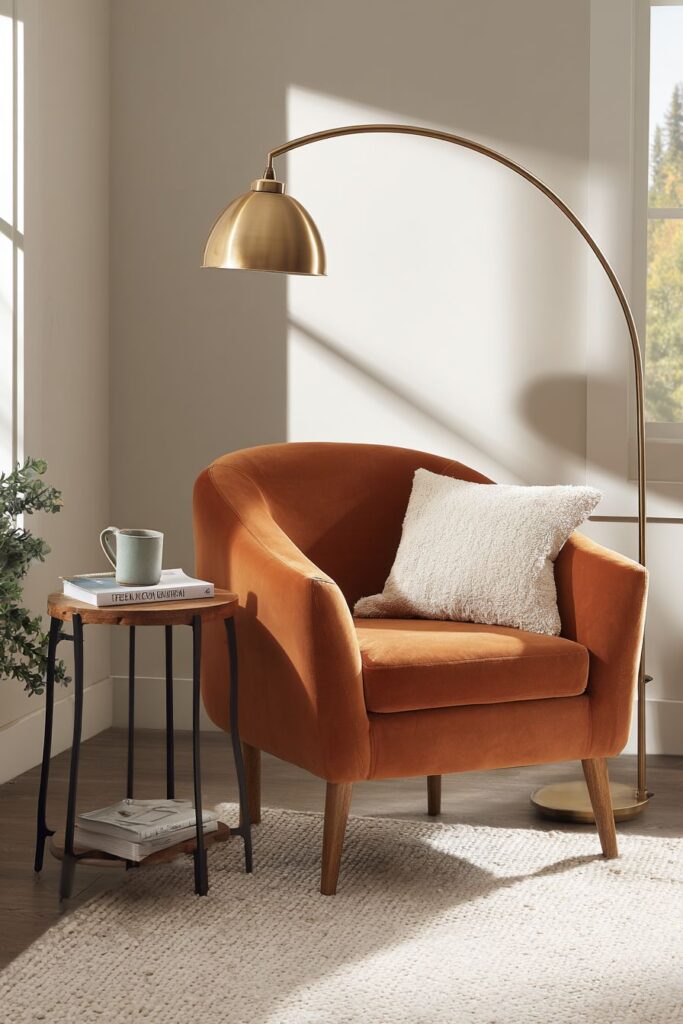
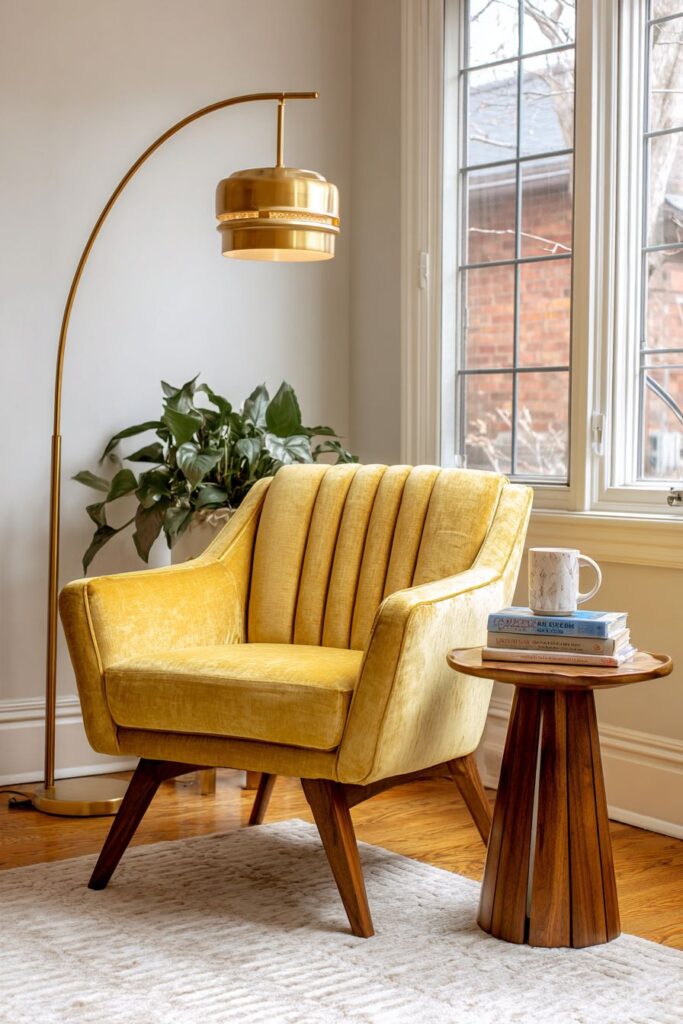
Picture a forgotten corner transformed into your personal literary sanctuary. A mid-century modern accent chair in warm mustard velvet anchors the space, positioned at a subtle angle that creates visual dynamism. The chair’s tapered wooden legs and clean lines exemplify the era’s emphasis on functional beauty. Above, a sleek arc floor lamp in brass finish curves gracefully, its adjustable arm directing focused light exactly where you need it for comfortable reading sessions.
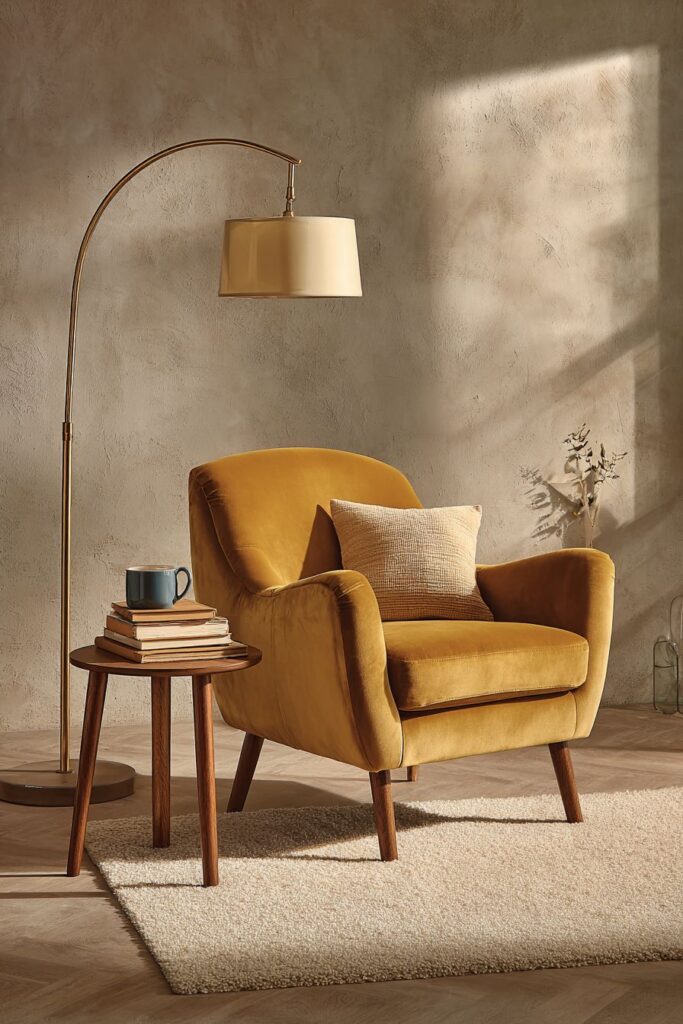
The supporting elements complete this inviting composition. A small round side table in rich walnut wood sits within arm’s reach, its circular form echoing the lamp’s curves while providing practical surface space. Here, a carefully curated stack of books and a ceramic mug suggest the simple pleasures of afternoon reading. The textured cream area rug beneath defines the zone, creating psychological separation from the larger room while adding tactile warmth underfoot.

Natural light from a nearby window bathes the arrangement in soft, shifting illumination throughout the day. Morning sun creates long shadows that gradually shorten, while afternoon light warms the velvet upholstery to glowing amber. This interplay between natural and artificial light sources ensures the corner remains functional and inviting from dawn to evening. The space becomes a destination rather than a passthrough.
Key Design Tips:
- Position chairs at 30-45 degree angles to create visual interest and improve sightlines
- Choose arc lamps with adjustable heads to customize lighting direction for different times of day
- Layer lighting sources by combining ambient window light with focused task lighting
- Select side tables with lower profiles to maintain open sightlines and prevent visual clutter
- Use area rugs to psychologically define intimate spaces within larger rooms
2. Vertical Garden Display with Natural Elements
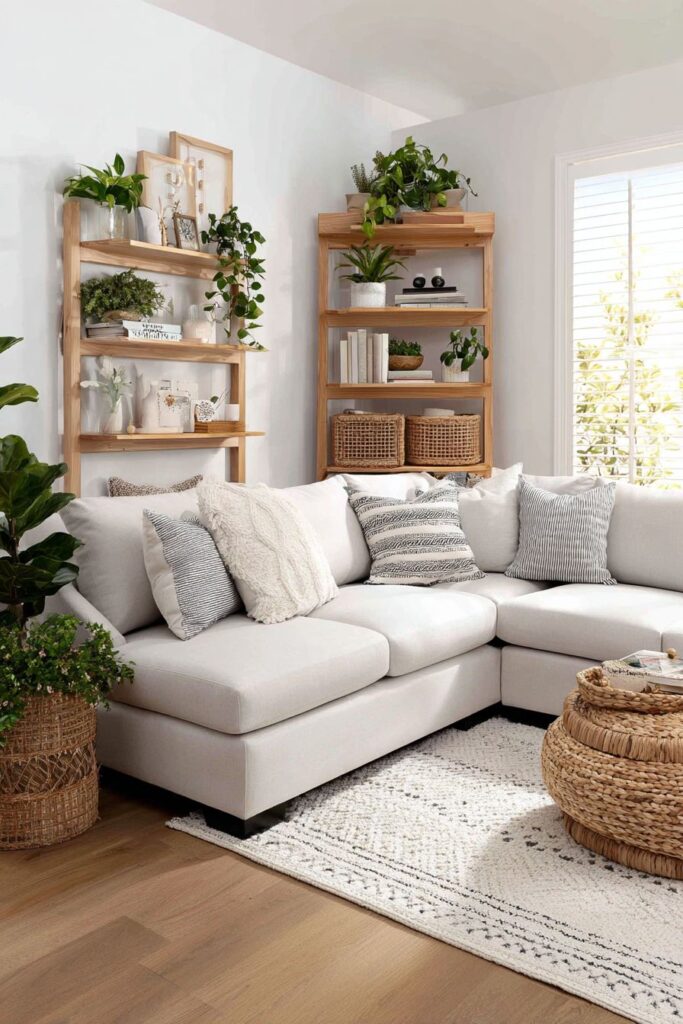
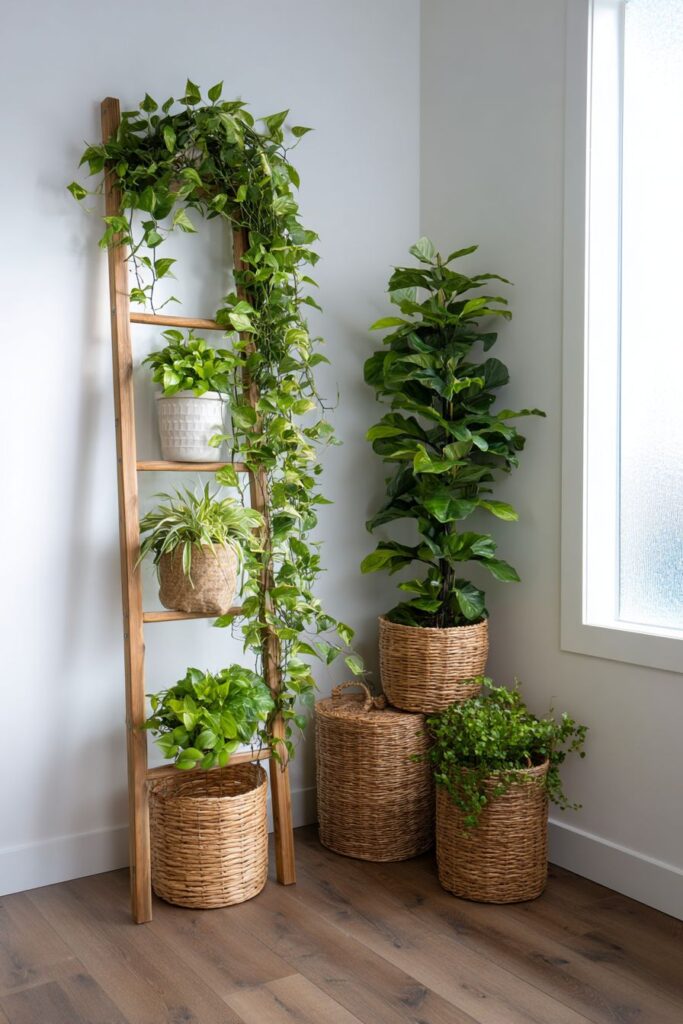
Transform your empty corner into a thriving botanical showcase that brings nature indoors. A tall ladder-style plant stand in natural oak creates vertical interest, its tiered design allowing you to display multiple plants at varying heights. This arrangement mimics natural plant communities where vegetation grows at different elevations. Trailing pothos cascade gracefully from upper shelves, their heart-shaped leaves creating living curtains of green, while a statuesque fiddle leaf fig commands attention from a middle tier.
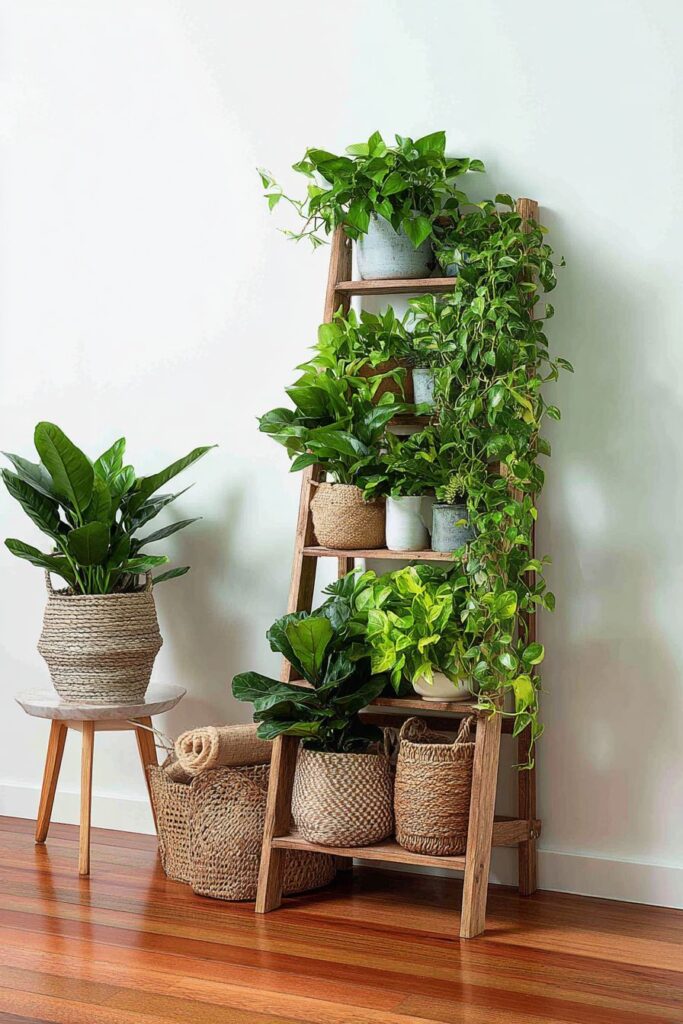
The practical aspects of this design extend beyond aesthetics. Woven baskets positioned at the base provide concealed storage for plant care supplies, extra pots, or general household items. These natural fiber containers echo the organic theme while maintaining visual cohesiveness. The white walls serve as a clean backdrop, allowing the varied green tones to truly shine without competing visual elements. This neutral canvas makes the living display the undisputed focal point.
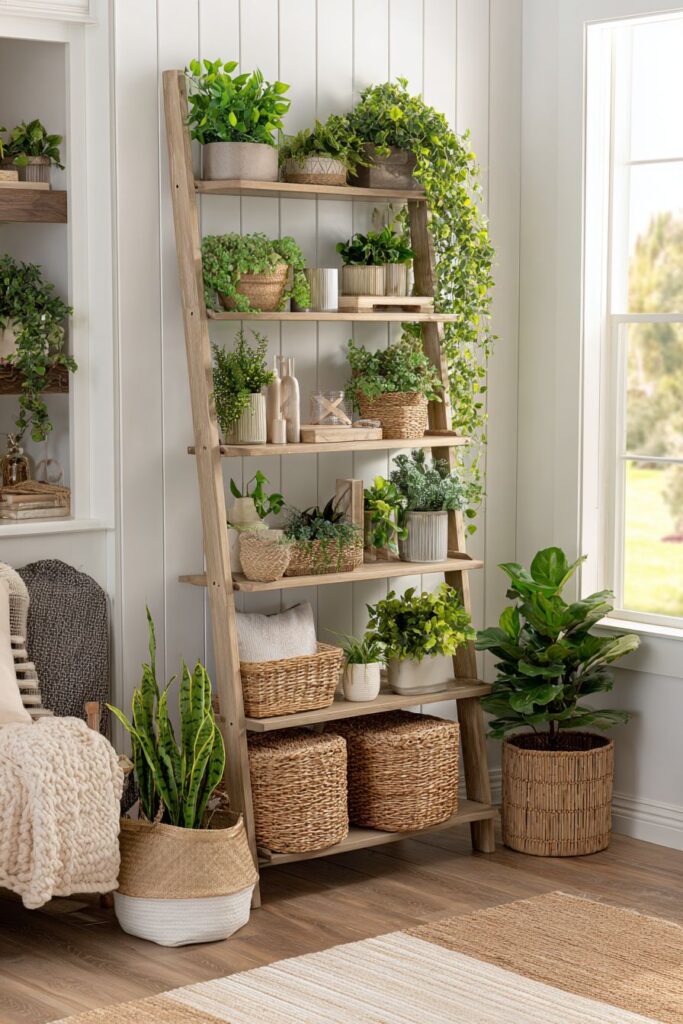
Lighting considerations prove crucial for plant health and visual appeal. Soft, diffused natural light highlights the diverse textures—the waxy leaves of the fiddle leaf fig contrast beautifully with the trailing pothos’s matte finish. The oak wood grain becomes more pronounced in direct sunlight, adding warmth to the composition. This corner becomes a living, changing element that evolves with the seasons and requires ongoing interaction, making it ideal for plant enthusiasts.
Key Design Tips:
- Choose plant stands with multiple tiers to maximize vertical growing space in compact corners
- Mix plant types with different growth habits for textural variety and visual depth
- Position light-loving plants on upper shelves where they receive maximum illumination
- Use storage baskets in natural materials to maintain cohesive organic aesthetic
- Group plants with similar water requirements together for easier maintenance routines
3. Minimalist Workspace for Maximum Productivity

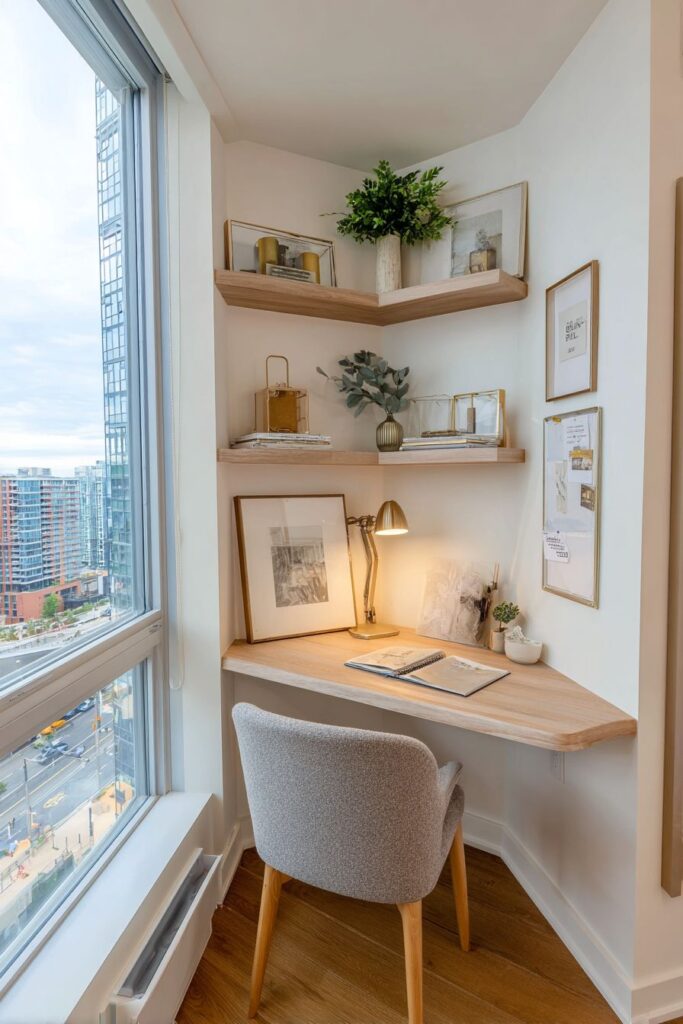
Modern life increasingly demands flexible work-from-home solutions, and corner spaces offer ideal opportunities for compact, efficient workstations. A floating corner desk in light ash wood mounts directly to the walls, eliminating bulky legs and creating an airy, uncluttered appearance. This wall-mounted approach maximizes floor space while providing adequate work surface for a laptop, notebook, and essential supplies. The light wood tone reflects available light, helping smaller corners feel more spacious.
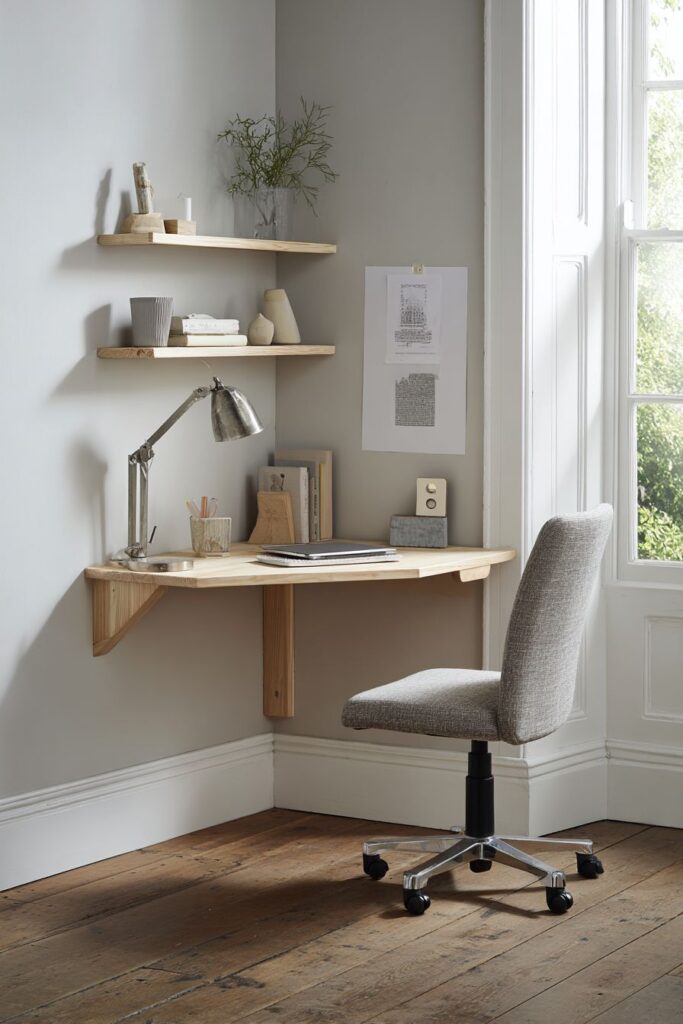
Above the desk, a single floating shelf provides vertical storage without overwhelming the minimal aesthetic. This shelf displays only carefully selected items—perhaps a small succulent, a desk clock, and one or two meaningful objects. The restraint in decoration maintains focus on work tasks while preventing the sterile feeling of completely bare walls. A simple metal desk lamp with adjustable arm offers targeted illumination for evening work sessions or cloudy days.
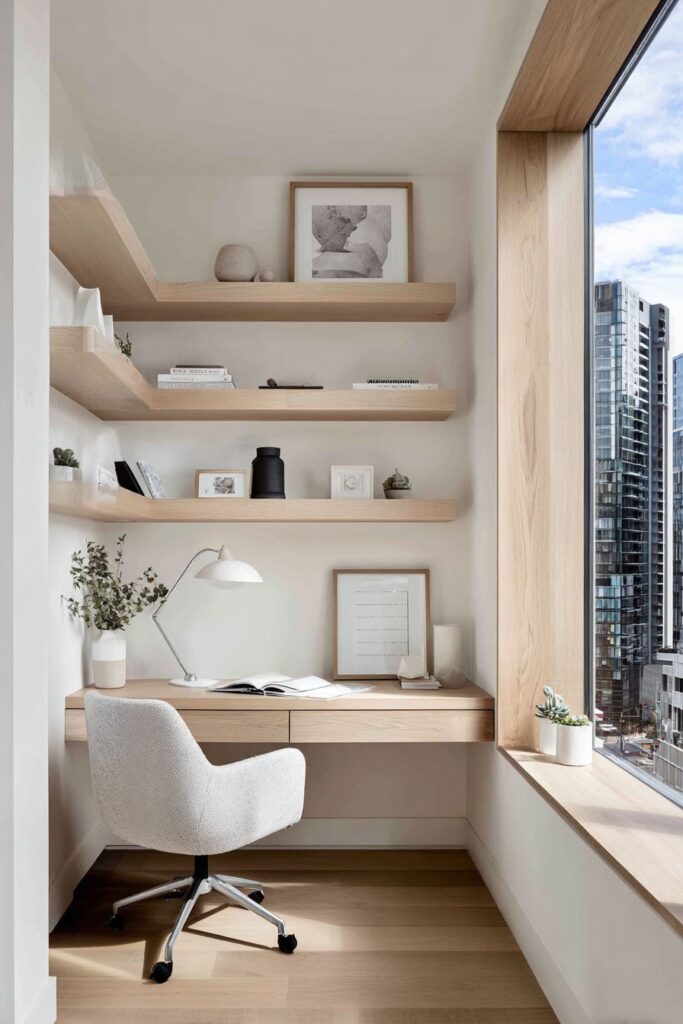
The ergonomic office chair in neutral grey linen tucks neatly beneath the desk when not in use, maintaining clean lines and preserving traffic flow. Hidden cable management solutions route power cords and charging cables through the wall or beneath the desk surface, eliminating the visual chaos that typically plagues home offices. Natural daylight from an adjacent window provides ideal working conditions, reducing eye strain and connecting the workspace to outdoor rhythms.
Key Design Tips:
- Install floating desks at precisely 28-30 inches from the floor for optimal ergonomic positioning
- Limit desktop items to absolute essentials to maintain focus and reduce visual distractions
- Invest in quality cable management systems before setting up electronics
- Position monitors perpendicular to windows to minimize screen glare during daylight hours
- Choose chairs with proper lumbar support even in compact designs for long-term comfort
4. Sophisticated Corner Library with Custom Shelving

Floor-to-ceiling corner bookcases transform dead space into impressive home libraries that serve both functional and aesthetic purposes. A tall corner bookshelf unit in dark walnut extends from baseboard to crown molding, utilizing every inch of vertical space. The rich, dark wood creates dramatic contrast against lighter walls while conveying sophistication and intellectual gravitas. Books arranged by color create rainbow-like progressions that transform functional storage into artistic installation.
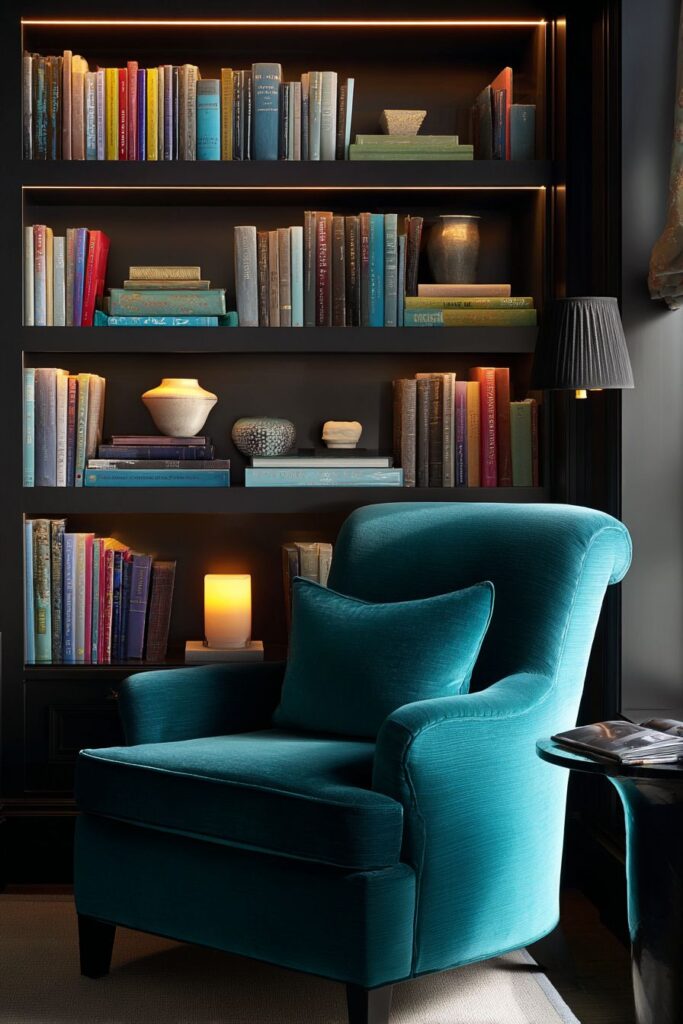
Decorative objects interspersed among volumes add personality and prevent the monotony of uniform spines. Small sculptures, framed photographs, and collected curiosities tell personal stories while breaking up visual density. Built-in LED strip lighting installed along each shelf level provides both functional illumination and dramatic accent lighting. These discrete light sources make titles readable while creating a warm glow that enhances evening ambiance.
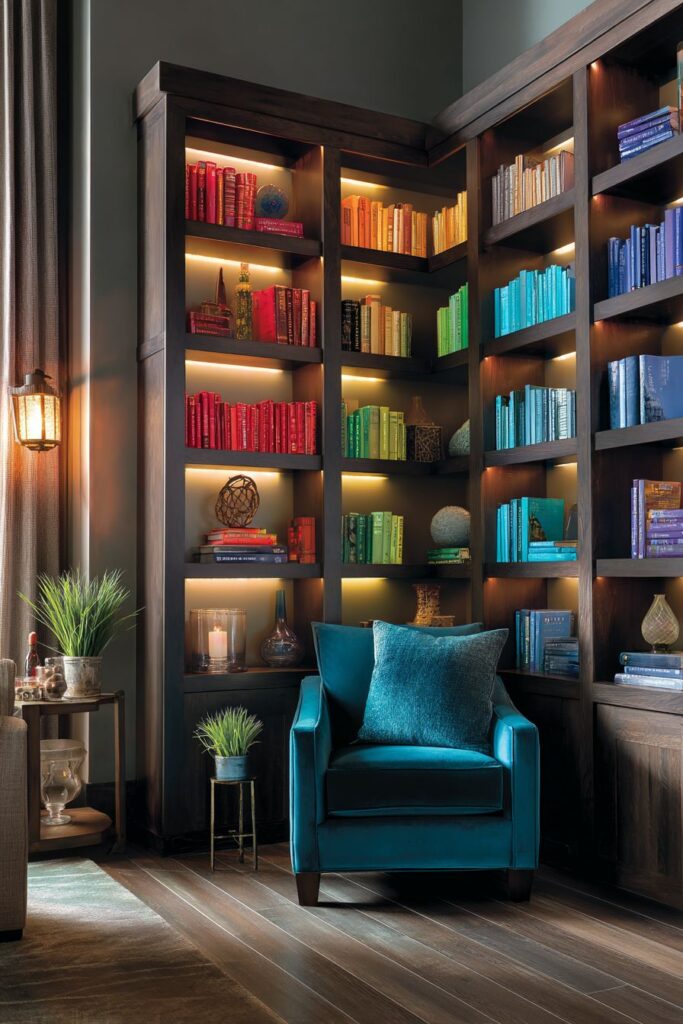
A plush armchair in deep teal positioned nearby invites comfortable browsing and impromptu reading sessions. The chair’s jewel tone complements the warm walnut while adding contemporary color contrast. This seating element transforms the corner from mere storage into a functional reading zone. Warm ambient lighting from multiple sources creates layered illumination that adapts to different activities and times of day.

Key Design Tips:
- Extend shelving fully to the ceiling to maximize storage capacity and create architectural presence
- Vary shelf heights to accommodate oversized art books and standard volumes
- Install lighting on each shelf rather than relying on single overhead sources
- Balance color-coordinated book arrangements with strategic decorative object placement
- Position seating close enough for convenient book selection but allowing adequate circulation space
5. Statement Indoor Tree for Dramatic Impact

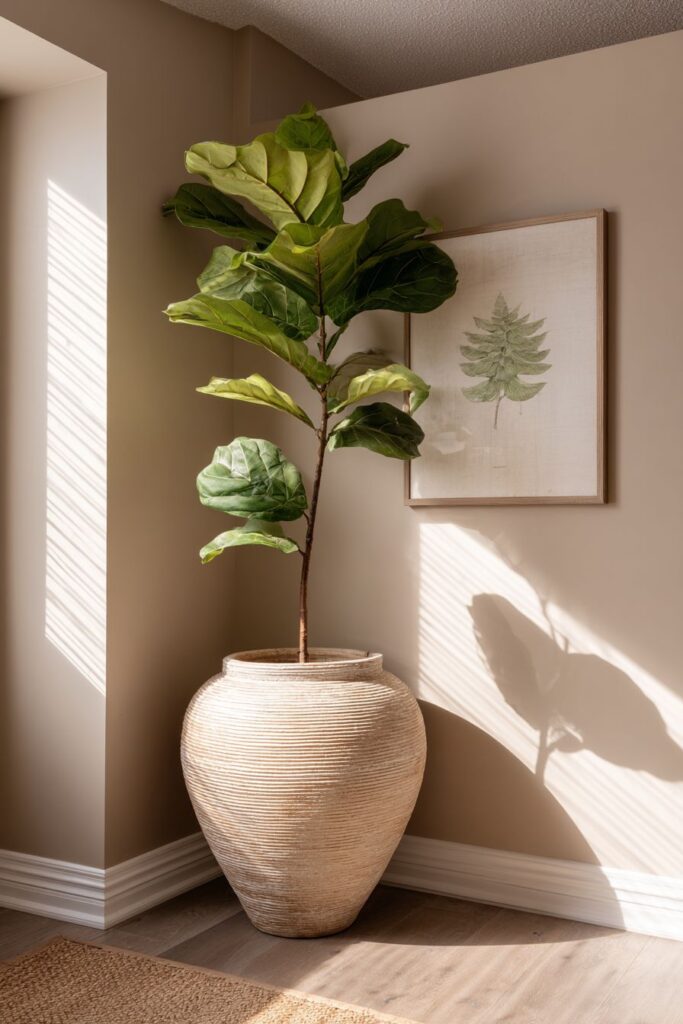
Sometimes the simplest solutions create the most powerful effects. A single statement indoor tree in a large textured ceramic planter commands attention through sheer scale and organic beauty. A fiddle leaf fig with its enormous glossy leaves or a rubber plant with dramatic burgundy foliage reaches toward the ceiling, creating striking vertical interest that draws the eye upward. This approach works particularly well in corners with high ceilings where the tree’s height becomes a design asset rather than a spatial constraint.
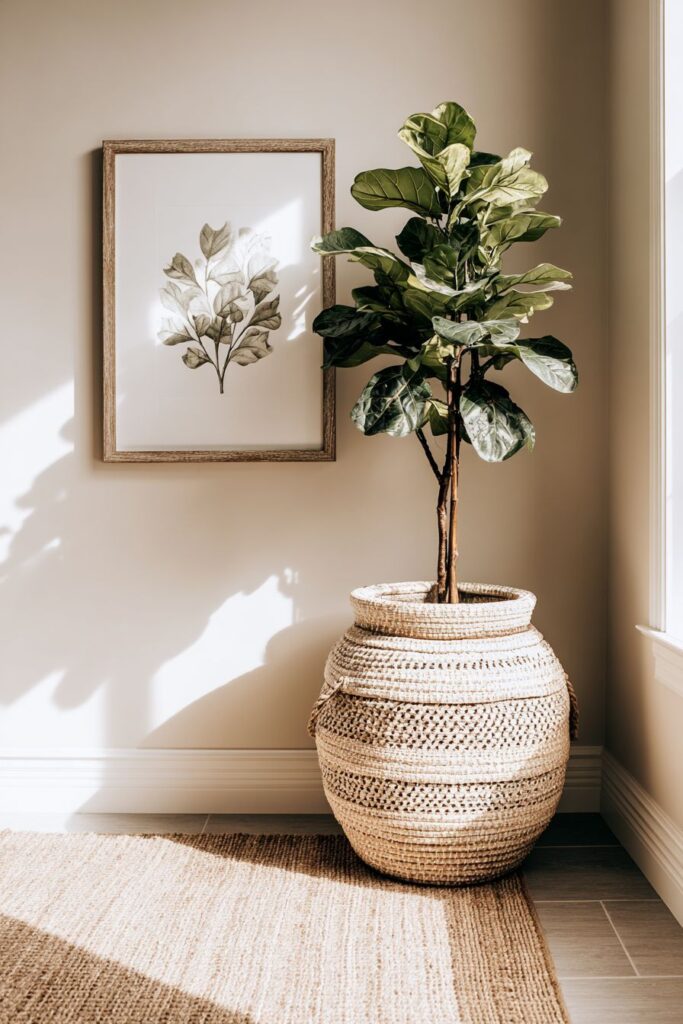
The planter itself contributes significantly to the overall aesthetic. A large textured ceramic vessel in neutral tones provides visual weight that grounds the composition while its organic surface texture complements the living plant. The natural jute rug beneath adds another layer of tactile interest, its woven fibers echoing natural materials and defining the tree’s footprint. This layering of textures creates depth despite the design’s essential simplicity.
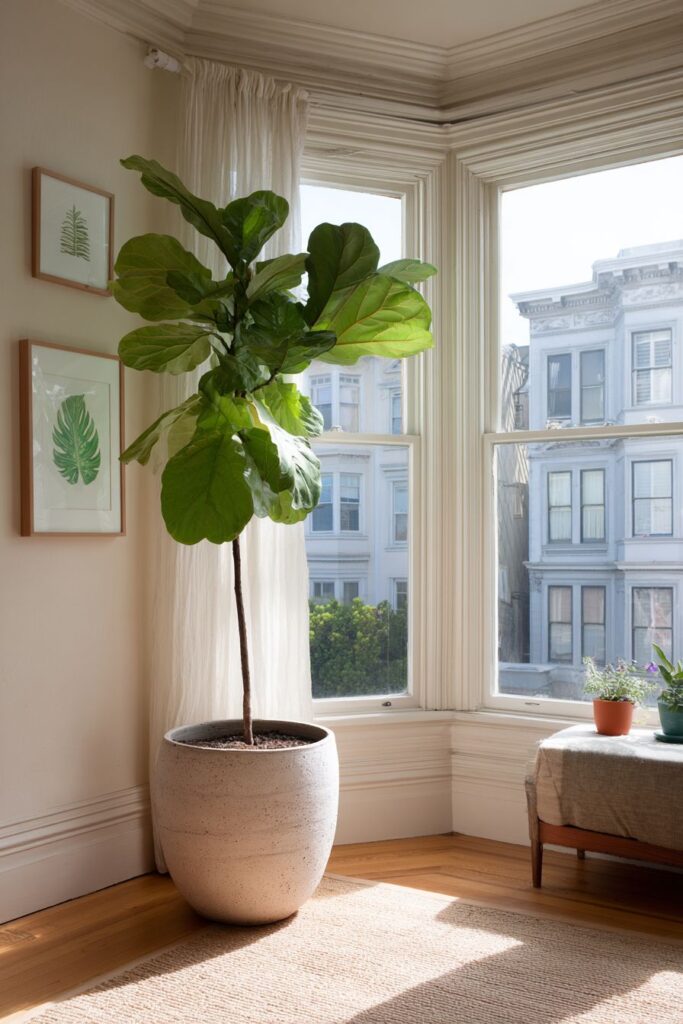
An adjacent wall featuring a simple framed botanical print extends the natural theme without competing with the living specimen. Morning sunlight streaming through nearby windows creates natural shadows that shift throughout the day, turning the corner into a dynamic composition that changes with the sun’s movement. The interplay of light through leaves creates dappled patterns on walls and floor, bringing outdoor qualities into interior spaces.
Key Design Tips:
- Select indoor trees that tolerate your specific light conditions to ensure long-term health
- Choose planters large enough to accommodate root growth for several years
- Position trees away from heating vents and cold drafts that can damage foliage
- Rotate plants quarterly to ensure even growth and prevent one-sided development
- Use moisture meters to prevent overwatering, the leading cause of indoor tree death
6. Vintage Record Player Console for Music Lovers
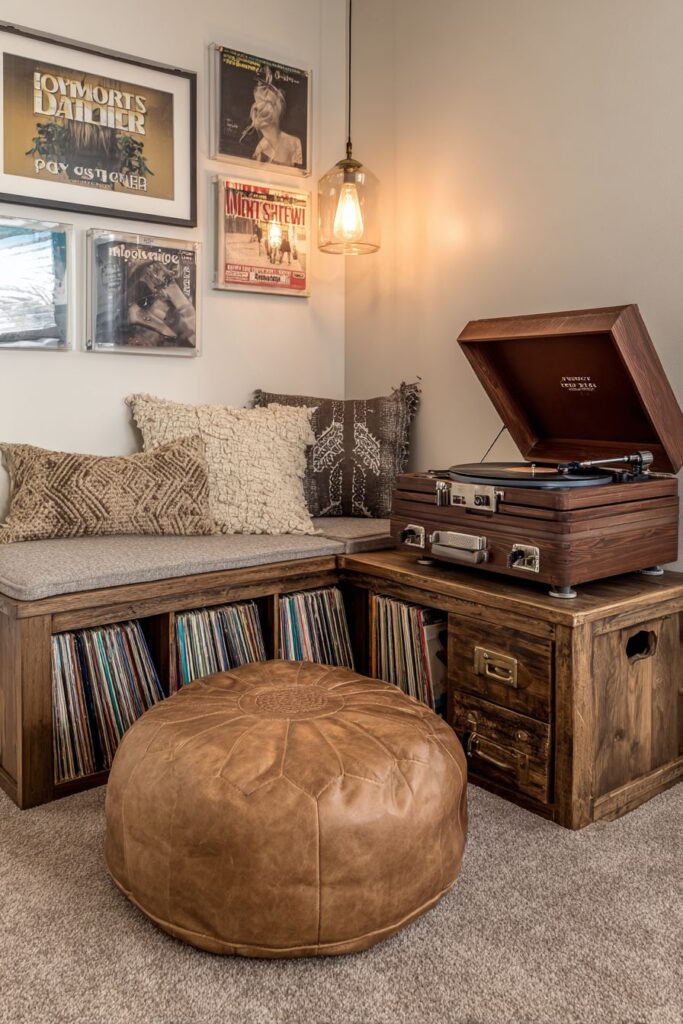
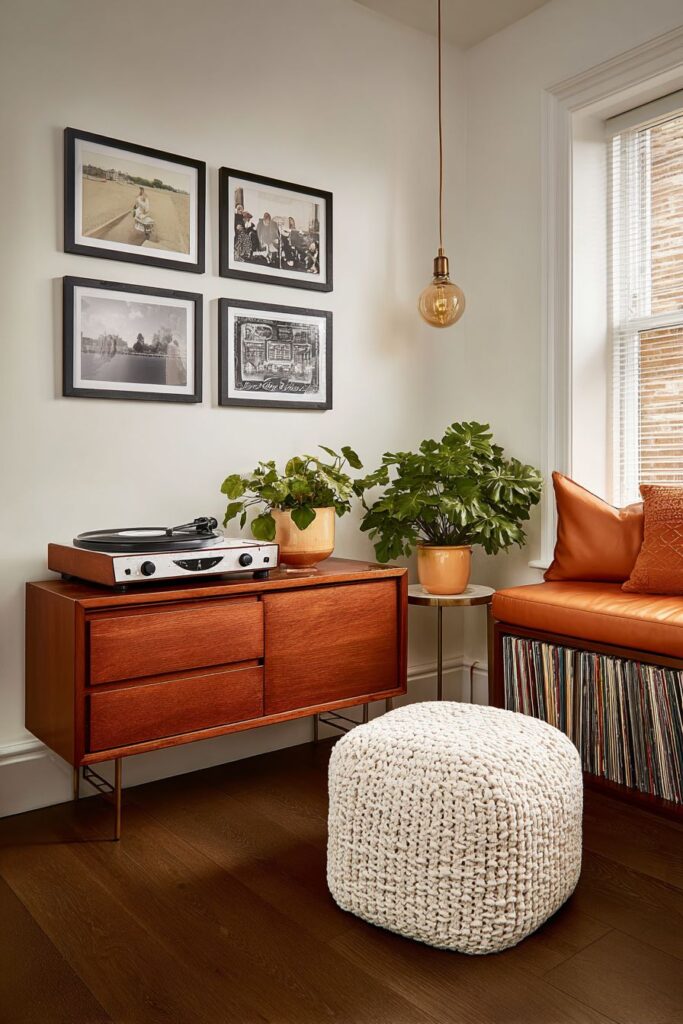
Nostalgia meets functionality in a corner dedicated to analog music appreciation. A vintage record player console in rich mahogany sits diagonally in the corner, its warm wood tones and mid-century design details serving as both functional equipment and sculptural object. The angled placement creates visual interest while allowing easy access from multiple approach angles. Adjacent wall-mounted storage cubes display vinyl records with their colorful covers facing outward, transforming album art into a rotating gallery wall.
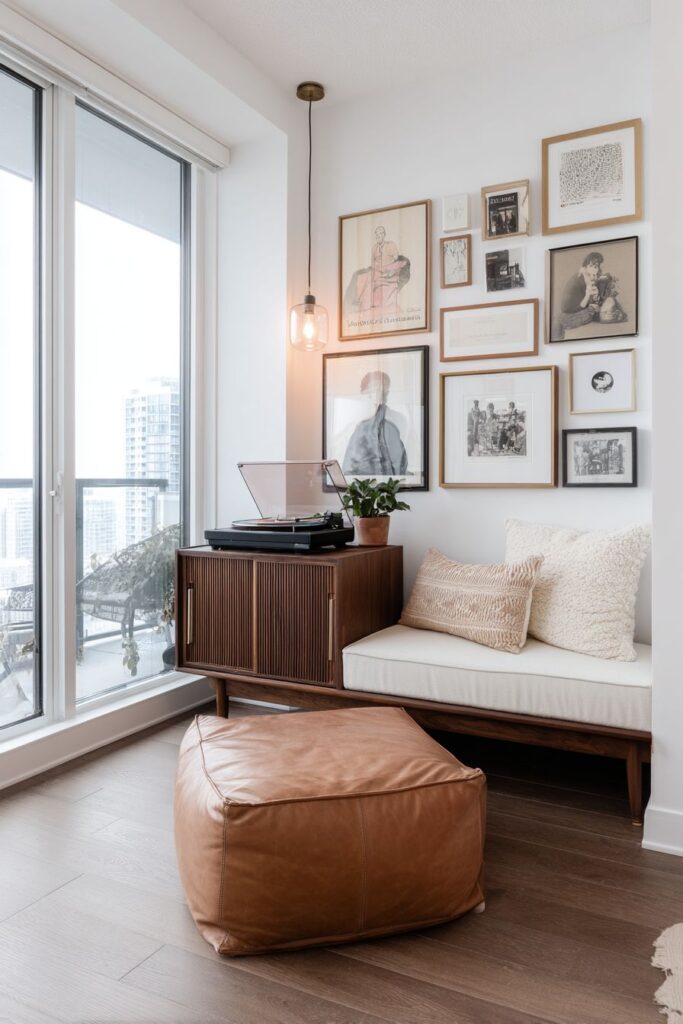
The low-profile pouf in cognac leather provides flexible seating that can be easily repositioned for listening sessions or tucked away when not needed. Its compact circular form and rich leather patina complement the wooden console while adding contemporary contrast. A warm Edison bulb pendant light hangs above, its exposed filament and amber glow creating atmospheric lighting perfect for evening music sessions. The vintage-style bulb bridges historical and contemporary design elements.

This corner becomes a destination for intentional listening, encouraging the mindful appreciation of music that vinyl demands. The ritual of selecting an album, carefully placing the needle, and settling in for uninterrupted listening creates moments of presence rare in our streaming age. The space honors music as an experience rather than mere background, appealing to audiophiles and design enthusiasts alike.
Key Design Tips:
- Position turntables on stable surfaces away from foot traffic to prevent skipping
- Mount record storage at eye level for easy browsing and selection
- Install dimmer switches on pendant lights to adjust ambiance for different listening moods
- Keep cleaning supplies nearby to maintain equipment and record collection properly
- Use furniture pads under speakers to reduce vibration transmission and improve sound quality
7. Serene Meditation Corner for Daily Practice

In our overstimulated world, dedicated spaces for quiet reflection become increasingly valuable. A low platform cushion in natural linen centers on a round jute rug, creating a simple meditation zone. The cushion’s neutral tone and organic fabric promote the calm, unadorned aesthetic essential for contemplative practice. Its low profile keeps practitioners grounded while providing adequate comfort for extended sitting sessions. The circular jute rug defines the meditation zone while its natural fibers maintain the organic, earthy quality.
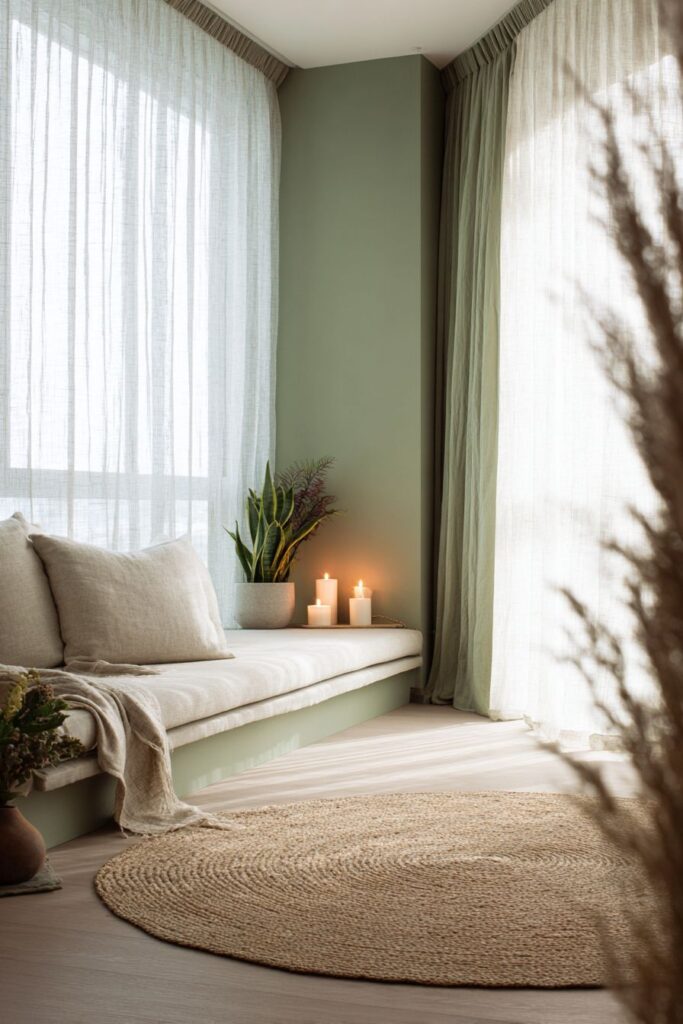
A simple floating shelf above holds minimal objects carefully chosen for their contemplative qualities—a small succulent representing growth and patience, unscented candles for focal points during practice. The walls painted in soft sage green create a calming atmosphere, this muted tone known for its stress-reducing properties and connection to nature. Color psychology research consistently identifies sage green as one of the most relaxing hues for interior spaces.
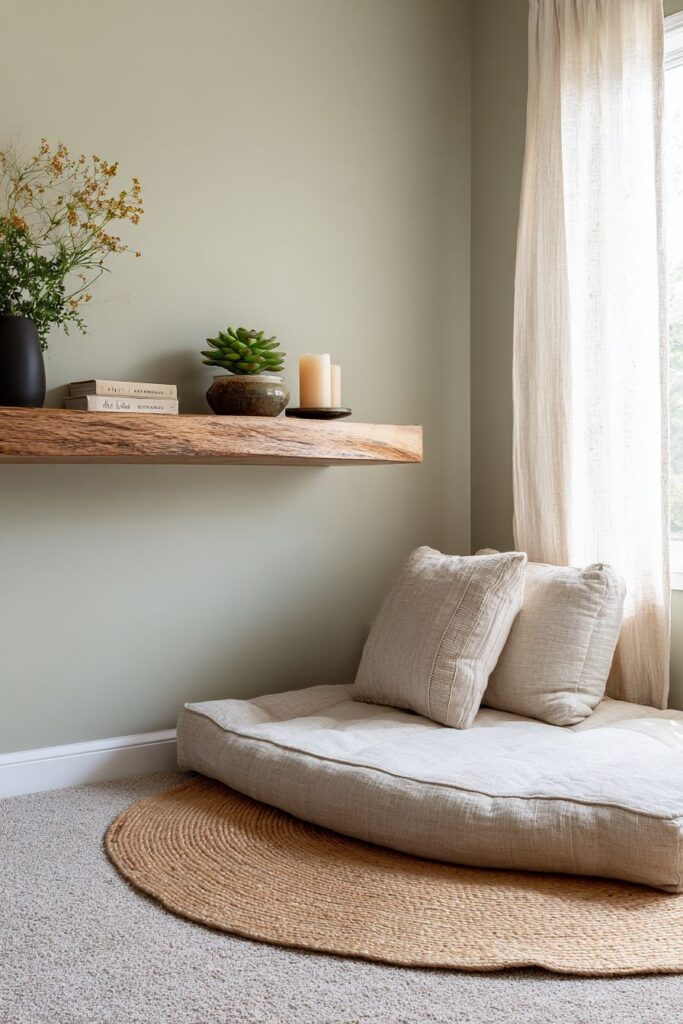
Sheer curtains filter natural light, creating gentle diffused illumination that changes throughout the day without becoming distracting. This soft, indirect light eliminates harsh shadows and glare, supporting the meditative state. The corner becomes a refuge from household activity, a designated space where sitting down signals a shift from doing to being. Regular use conditions the mind to enter calm states more readily in this location.

Key Design Tips:
- Choose meditation cushions with adequate loft to support proper spinal alignment during extended sitting
- Keep the space minimally decorated to reduce visual distraction during practice
- Select wall colors in cool, muted tones that promote rather than stimulate mental activity
- Position the meditation corner away from high-traffic areas to minimize interruptions
- Maintain consistent practice times to strengthen the spatial association with calm states
8. Layered Bohemian Corner with Mirror Magic

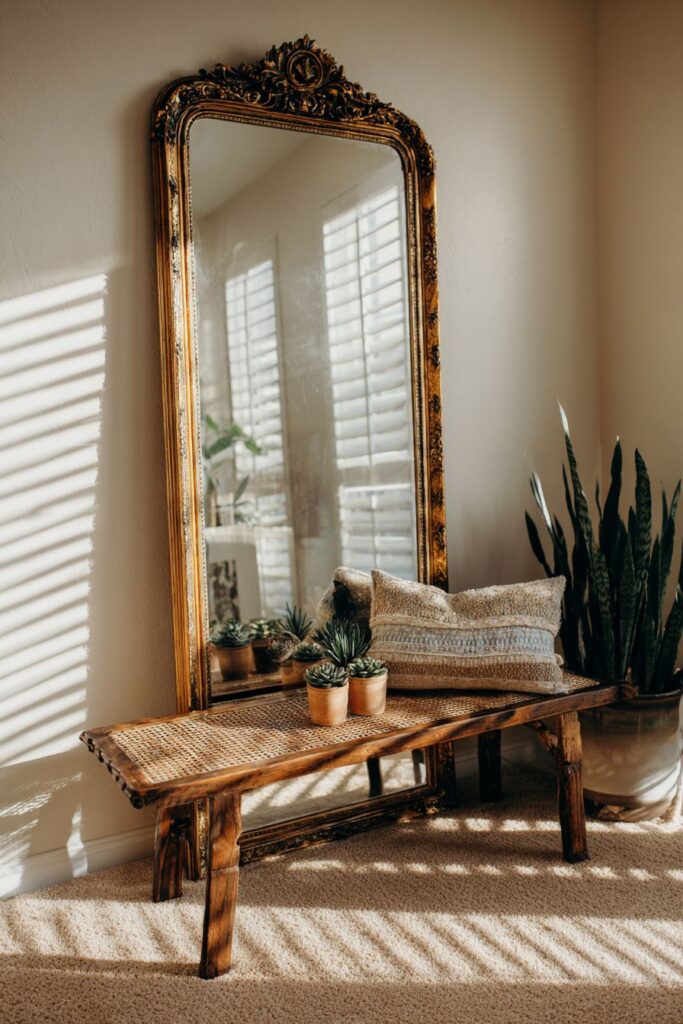
Bohemian style celebrates layered textures, collected treasures, and artful imperfection. A tall decorative mirror with ornate gold frame leans casually against the wall rather than hanging, creating relaxed, collected aesthetic. This casual placement suggests treasures gathered over time rather than perfectly coordinated design. Layered in front, a rustic wooden bench with woven seat holds an artful arrangement of throw pillows in varied patterns and textures.
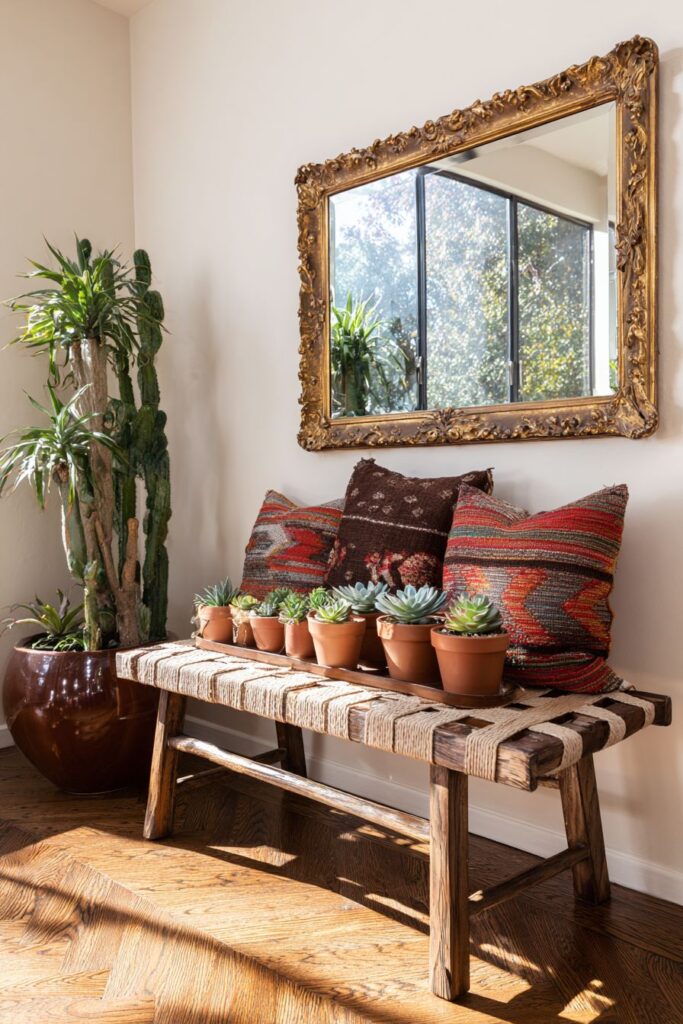
Small potted succulents on the bench add living elements without demanding extensive care. These low-maintenance plants suit the bohemian aesthetic while bringing nature indoors. Their varied forms and subtle color variations create visual interest at a human scale. Natural light reflecting in the mirror brightens the corner while creating the illusion of additional space, a classic design trick that works particularly well in corners where walls meet at right angles.
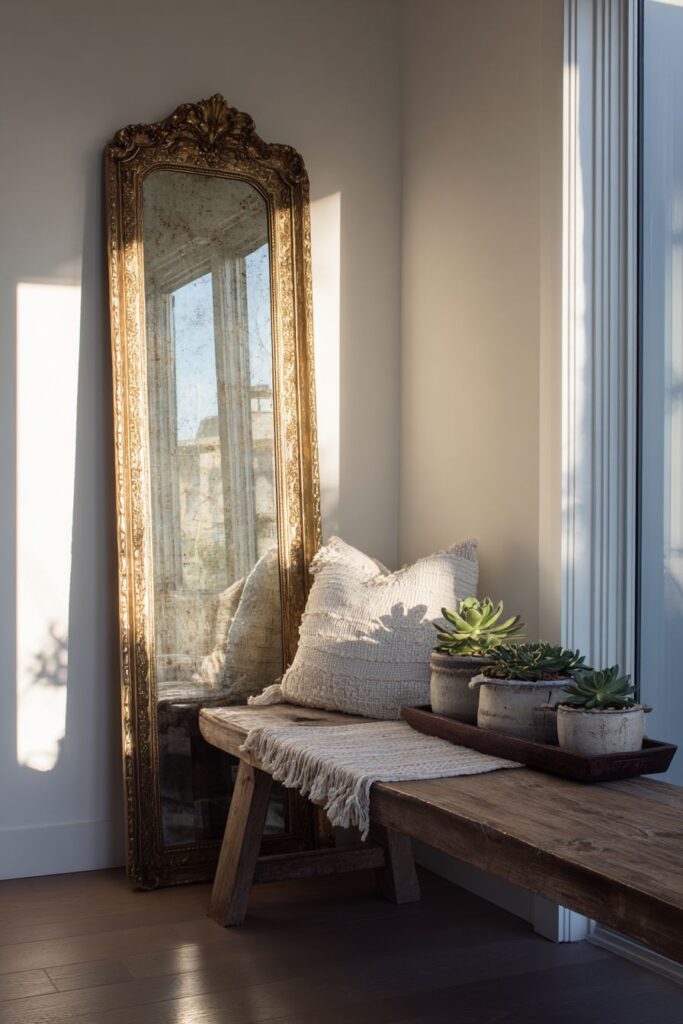
The layered composition creates depth and visual richness characteristic of bohemian style. Rather than empty space reading as neglected, it feels intentionally curated through thoughtful arrangement of diverse elements. This approach works well for collectors and travelers who want to display found objects and meaningful pieces rather than matching sets. The corner becomes a personal vignette telling stories through objects.
Key Design Tips:
- Lean oversized mirrors rather than hanging them for easier rearranging and more casual aesthetic
- Layer elements at varying heights to create visual depth in flat corner spaces
- Mix metallic finishes freely in bohemian spaces rather than matching all metals
- Choose benches with storage capacity to maximize functionality in decorative pieces
- Rotate displayed objects seasonally to keep the vignette fresh and personally relevant
9. Sophisticated Bar Cart Station for Entertaining

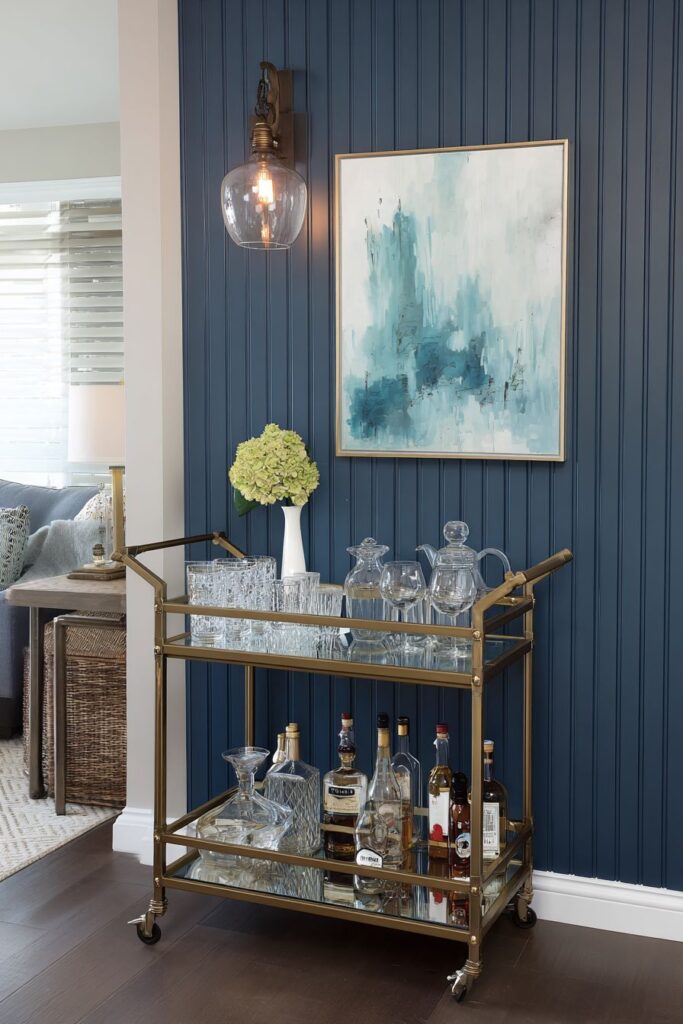
Elevate home entertaining with a dedicated corner bar station that combines functionality with style. A brass-framed rolling cart displays glassware and bottles on two tiers, its wheeled design allowing easy repositioning for parties or permanent corner placement. The brass frame’s warm metallic finish adds luxury while its open framework maintains visual lightness. Above, a simple abstract art print in complementary colors provides visual interest without overwhelming the functional elements below.
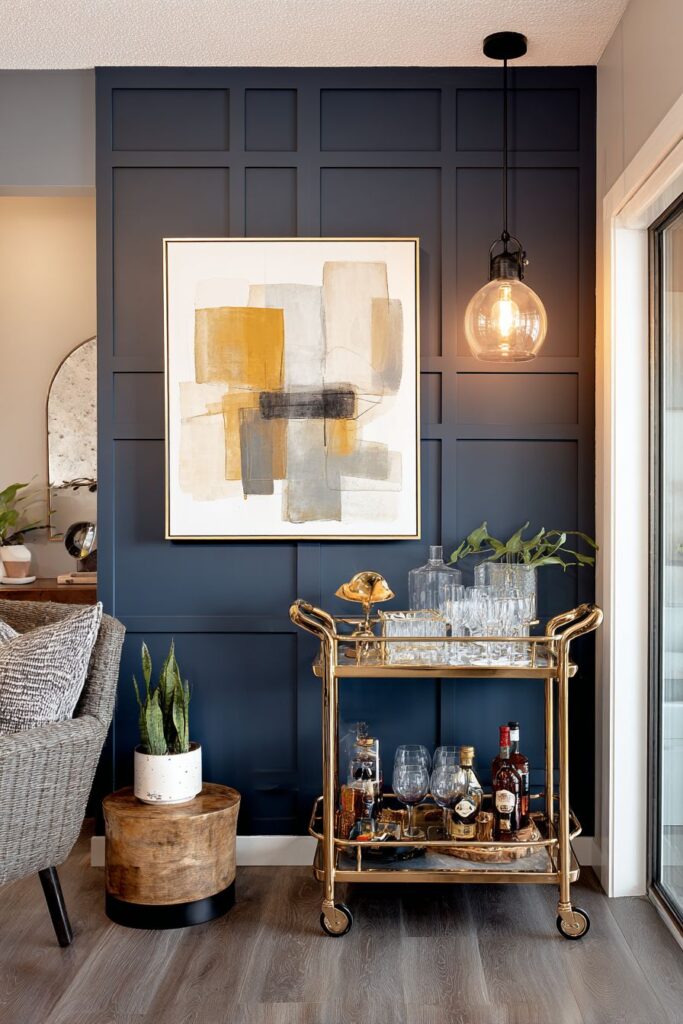
A small pendant light with exposed bulb creates focused ambient glow that highlights glassware and bottles while adding atmospheric lighting for evening cocktails. The corner wall features board and batten paneling painted in deep navy, creating sophisticated backdrop that makes the brass cart truly pop. This architectural detail adds dimension to flat walls while the dark color provides dramatic contrast to lighter room elements.
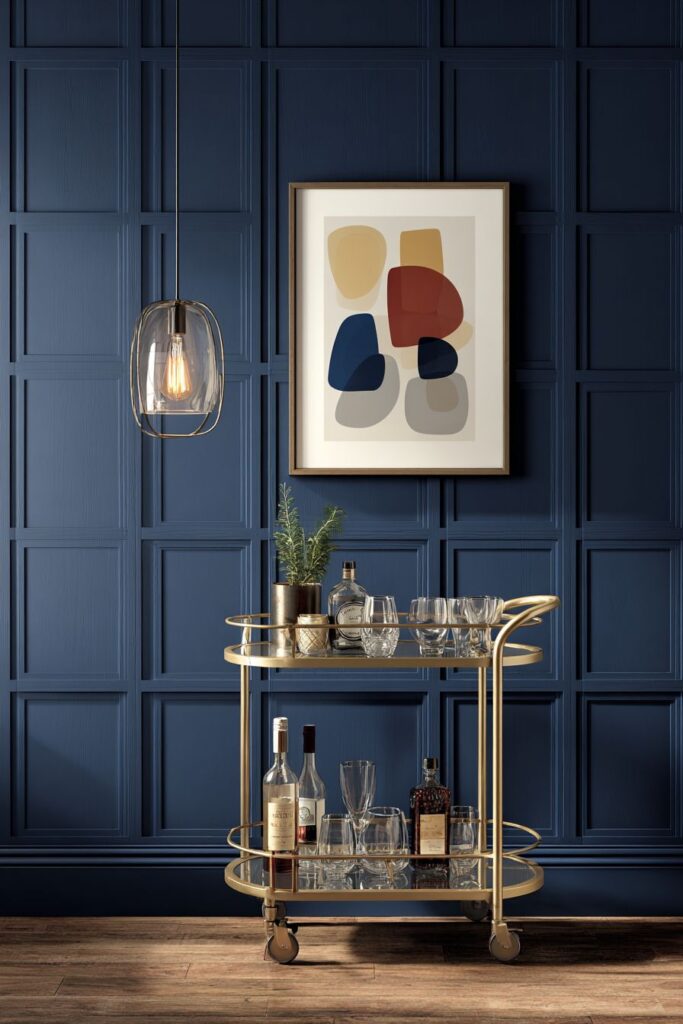
This corner becomes the gathering point during social occasions, drawing guests naturally to the drinks station while keeping bar service contained to one designated area. The mobility of the cart allows easy restocking from the kitchen while the fixed pendant light and wall treatment anchor the station as a permanent design feature even when the cart rolls away.
Key Design Tips:
- Choose bar carts with braking wheels to prevent unwanted rolling on uneven floors
- Install pendant lights on dimmer switches to adjust ambiance from bright mixing light to soft entertaining glow
- Arrange bottles by height with tallest at the back for visibility and aesthetic balance
- Keep mixing tools and garnishes in decorative containers on the lower cart level
- Coordinate wall paint colors with metallics in fixtures for cohesive, intentional appearance
10. Modern Electric Fireplace as Corner Focal Point
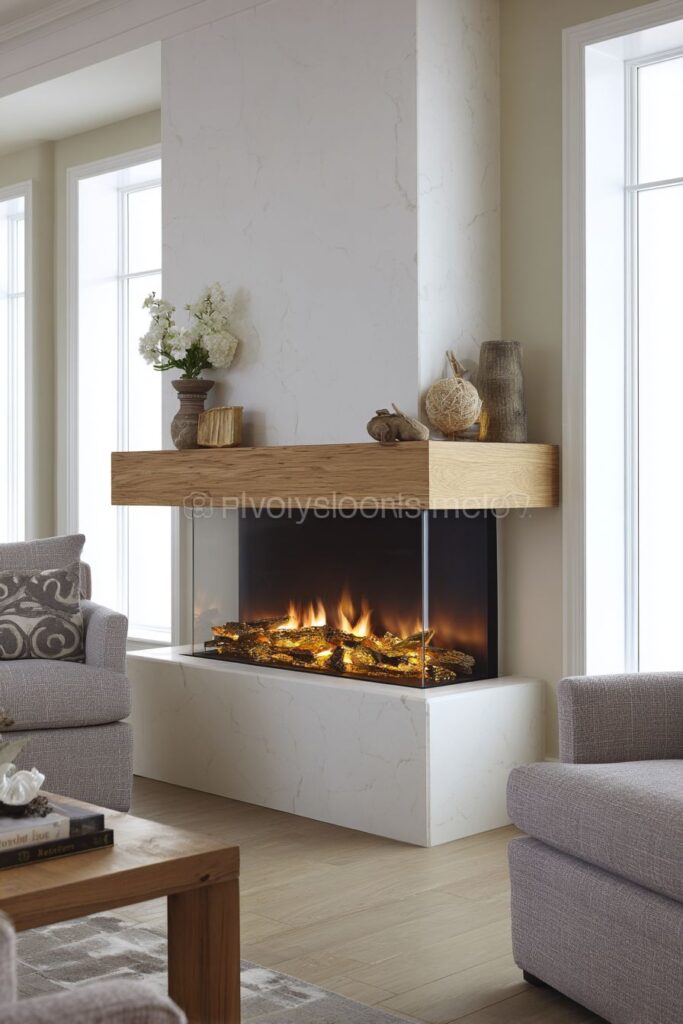
Nothing draws people together like a fireplace, even when that fire is electric rather than wood-burning. A modern electric fireplace insert creates instant focal point in previously empty corners. A minimalist mantel shelf in white oak displays curated decor items arranged with careful symmetry—matching candlesticks, a centered art object, balanced book stacks. This symmetrical arrangement creates formality and visual calm that suits the fireplace’s role as gathering point.
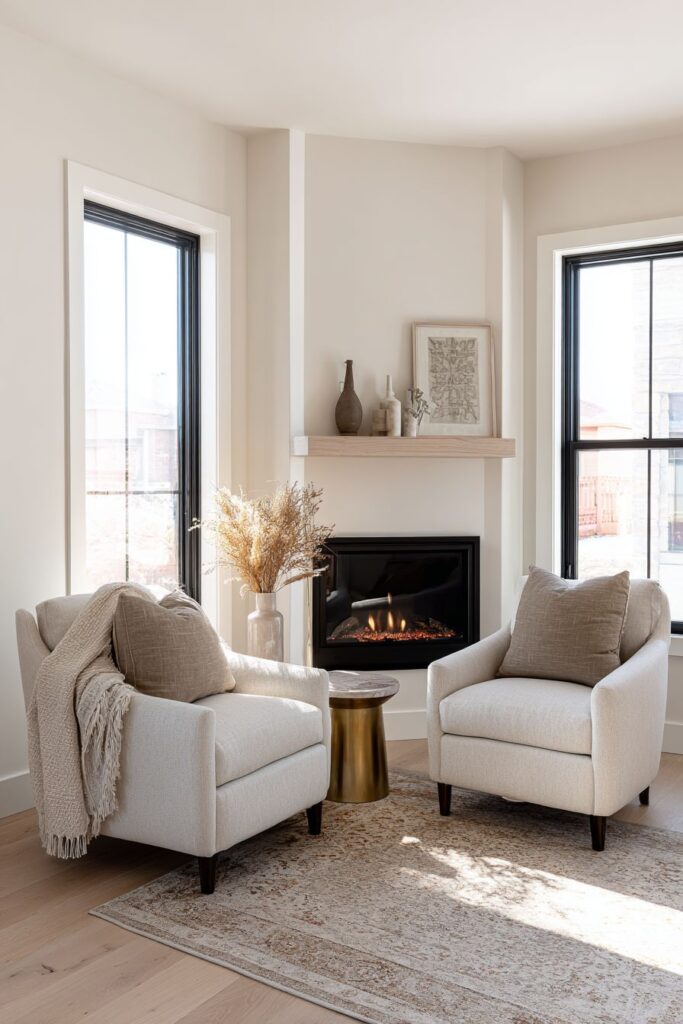
Two small wingback chairs in grey linen flank the fireplace, creating an intimate conversation area separate from the main seating zone. These chairs angle slightly inward, their positioning encouraging face-to-face interaction rather than side-by-side television watching. The wingback design provides subtle privacy while their compact scale prevents overwhelming the corner. Soft firelight glow combines with natural window light to create layered illumination that adapts throughout the day.
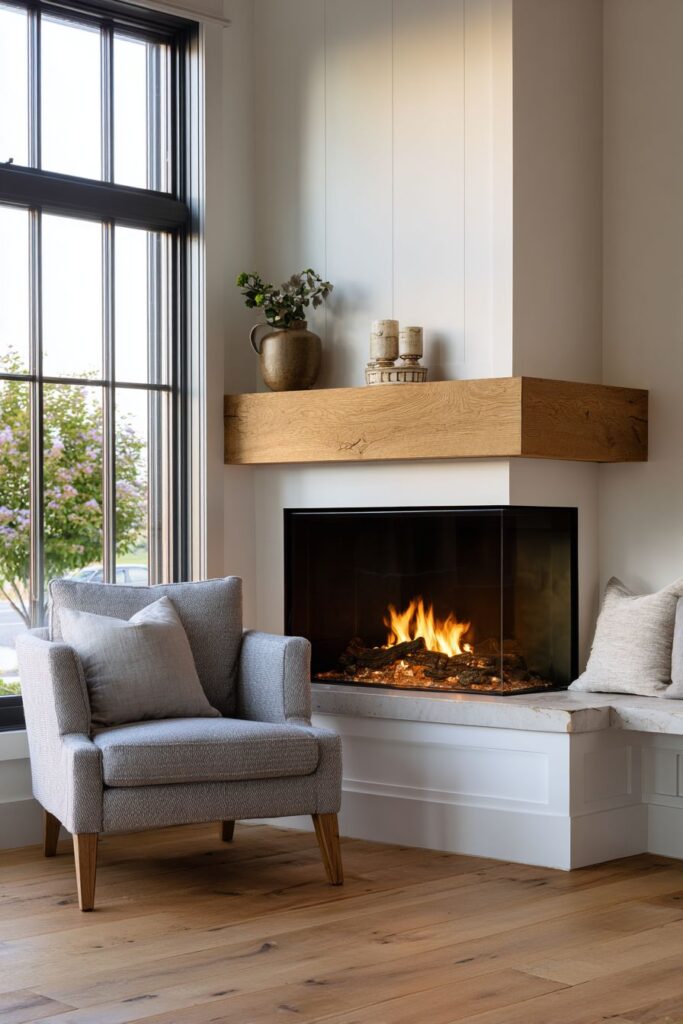
Electric fireplaces offer significant advantages over traditional options—no chimney required, customizable flame effects, supplemental heating without smoke or soot. Modern versions feature realistic flame simulations that provide authentic ambiance without installation challenges or ongoing maintenance. This technology makes fireplace focal points accessible in apartments, condos, and homes where traditional fireplaces would be impractical or impossible.

Key Design Tips:
- Verify electrical requirements before purchasing electric fireplaces to ensure adequate power supply
- Mount fireplace inserts at proper viewing height when seated, typically 12-18 inches from floor
- Style mantels with odd numbers of objects for more dynamic, less rigid arrangements
- Choose chairs that can rotate toward the fireplace or outward toward the room
- Consider fireplaces with separate heat and flame functions for year-round ambiance
11. Compact Breakfast Nook with Bistro Charm

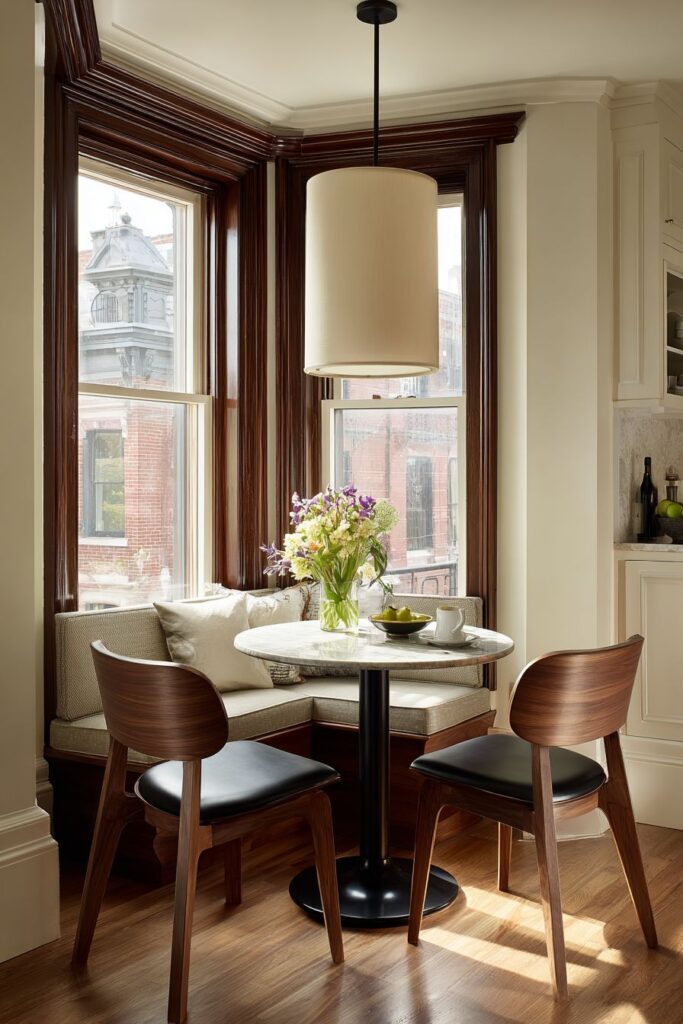
European-style bistro dining translates beautifully to underutilized corners, creating intimate eating spaces separate from formal dining areas. A tall cylindrical drum pendant light hangs over a compact round bistro table, its black metal frame and marble top combining industrial and classic elements. The round table shape facilitates conversation while fitting efficiently into corner spaces. Its compact diameter accommodates two diners comfortably without wasting square footage.
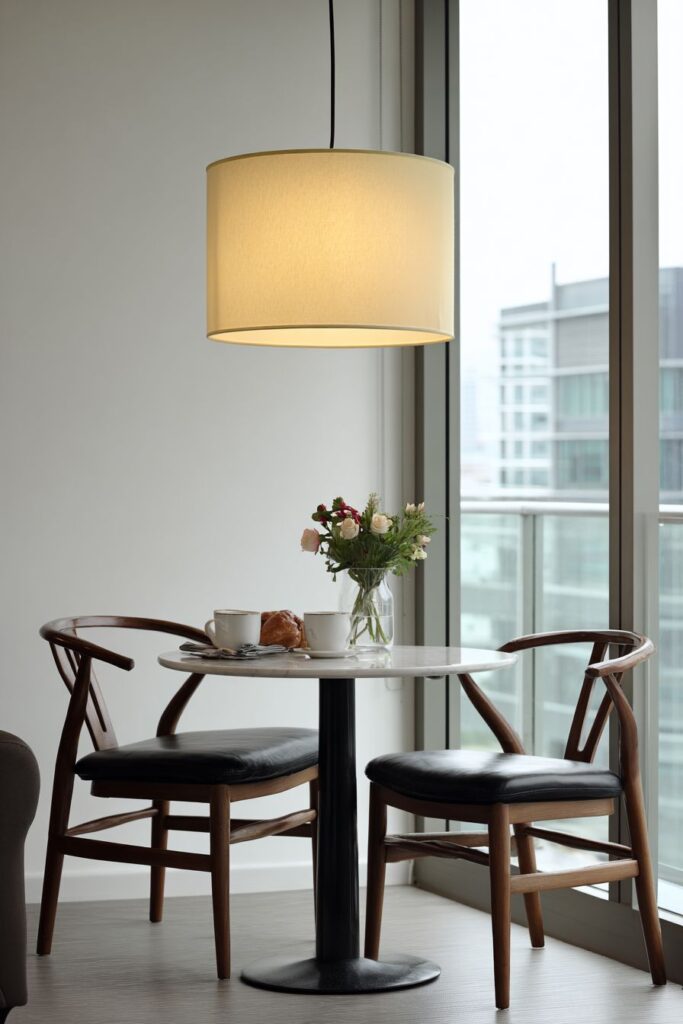
Two modern dining chairs with curved backs in walnut and black leather surround the table. The curved backs reference mid-century design while providing surprising comfort for lingering over coffee and newspapers. A small vase with fresh flowers adds color and life, reinforcing the French café inspiration. Natural light from nearby windows highlights the intimate dining corner, making it ideal for morning coffee, casual meals, or solo working lunches.
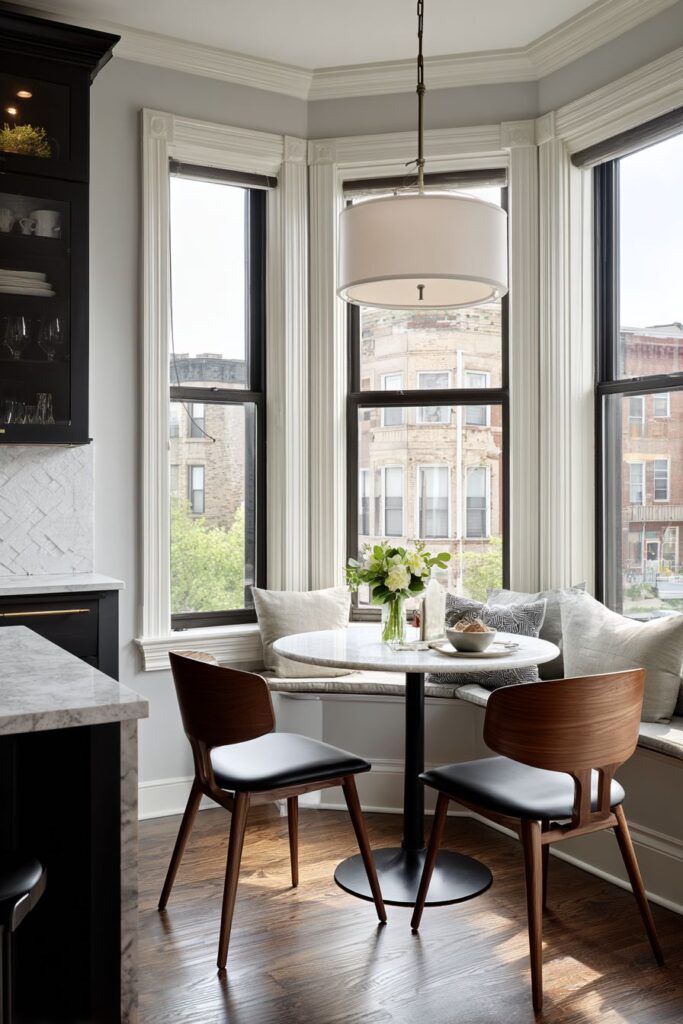
This breakfast nook approach works particularly well in open-concept homes where kitchen and living spaces flow together. The corner location creates subtle separation for dining without requiring walls or heavy furniture arrangements. The setup encourages slower, more mindful eating compared to counter-height stools or eating on the sofa. It carves out human-scale moments in potentially overwhelming open spaces.
Key Design Tips:
- Hang pendant lights 30-36 inches above table surfaces for optimal illumination without obstruction
- Choose bistro tables with weighted bases to prevent tipping when bumped
- Select marble or quartz tops that resist heat and water for low-maintenance dining
- Position breakfast nooks near natural light sources to enhance morning ambiance
- Keep table styling minimal to preserve precious surface area for actual dining use
12. Functional Entryway Station in Living Room Corner

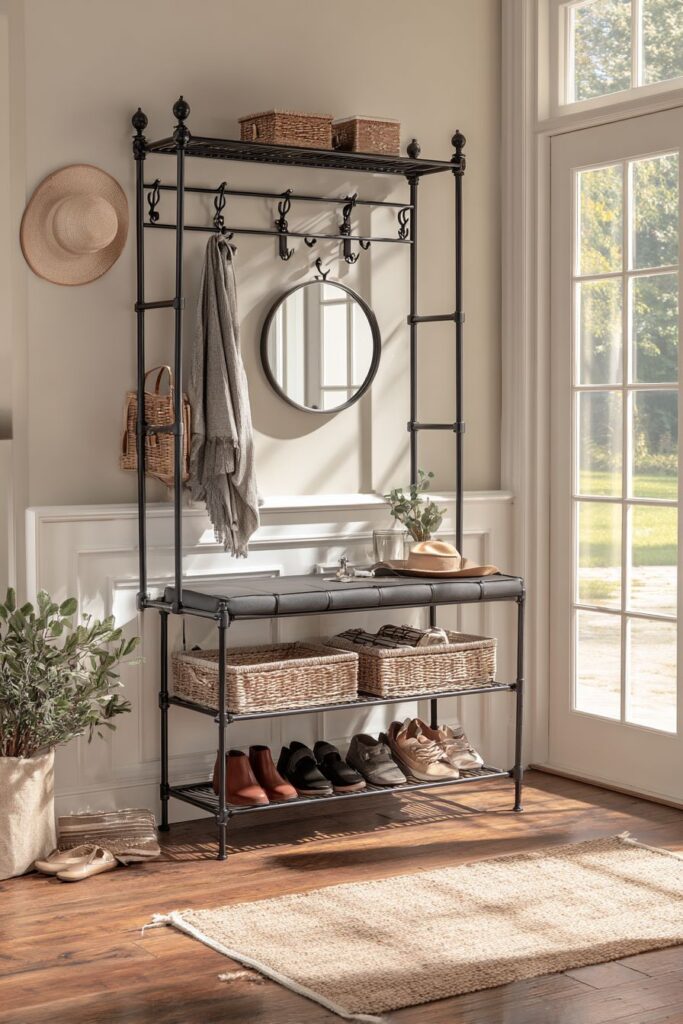
Sometimes the most practical corner solution addresses organizational needs rather than pure aesthetics. A standing coat rack in matte black metal with geometric design provides vertical storage for outerwear and bags. Woven baskets positioned below contain shoe storage, containing outdoor footwear that otherwise clutters entry areas. A narrow console table against the wall holds keys, mail, and other pocket-emptying essentials, creating a landing strip for daily comings and goings.
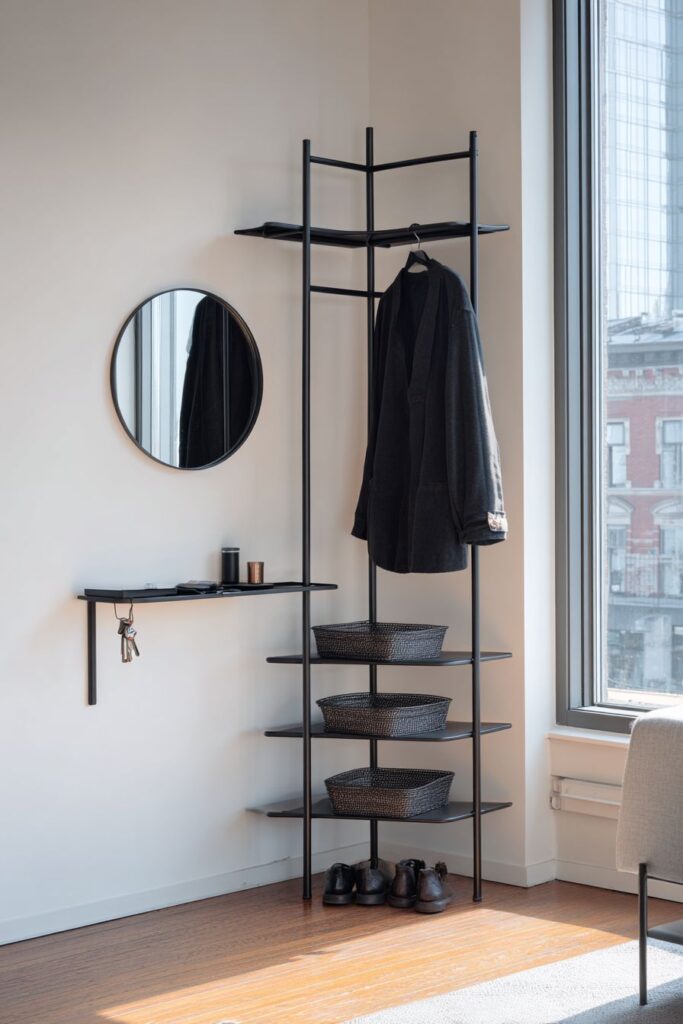
A round mirror above reflects light while allowing last-minute appearance checks before heading out. The mirror’s circular form softens the geometric angles of the coat rack and console, creating visual balance. Hardwood flooring with visible grain adds warmth to this highly functional zone, preventing it from feeling purely utilitarian. The corner becomes a pseudo-entryway in homes where actual entryways are small or nonexistent.
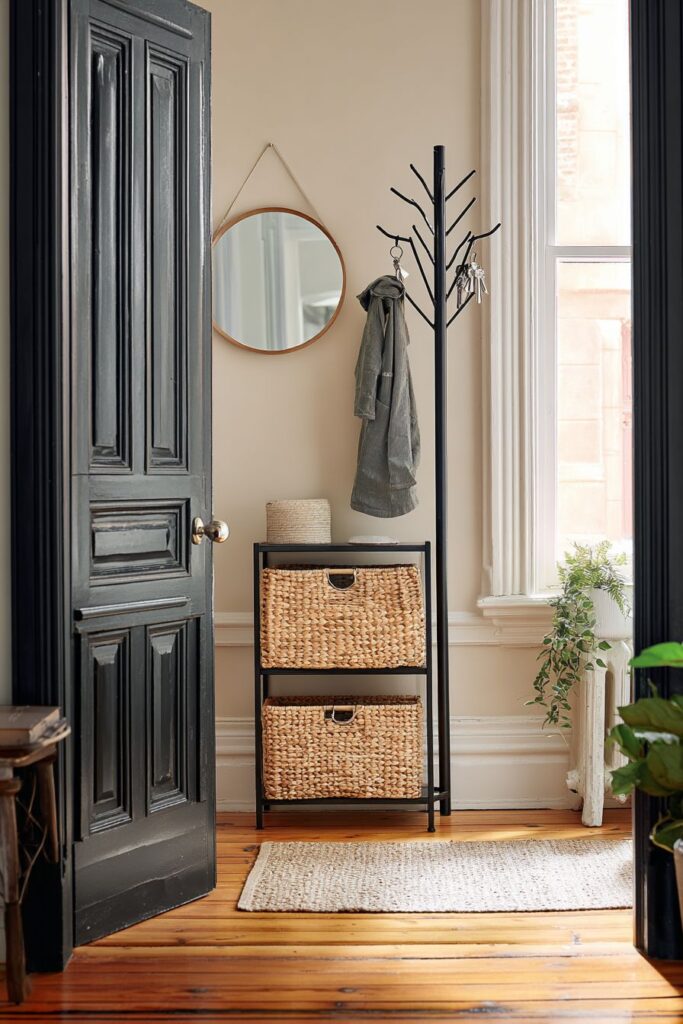
This approach works especially well in apartments and condos with minimal dedicated entry space. By establishing a designated drop zone in the living room corner, household members develop routines around object placement rather than scattering belongings throughout the home. The visible storage encourages better organizational habits while keeping essential items readily accessible when leaving home.
Key Design Tips:
- Choose coat racks with multiple hook heights to accommodate children’s and adults’ items
- Use waterproof liners in storage baskets to protect from wet shoes and umbrellas
- Mount mirrors at proper height for average household member heights, typically 60-65 inches center
- Install console tables deep enough for key bowls and charging stations, minimum 10 inches
- Establish household systems for using the station to maximize its organizational benefits
13. Art Display Corner with Gallery Lighting
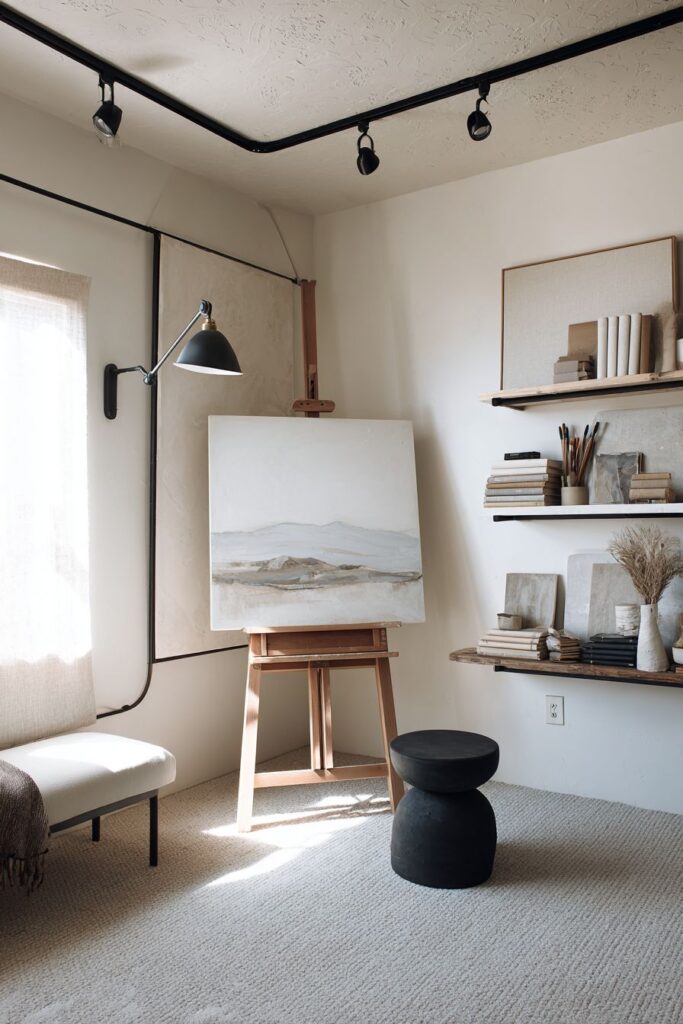
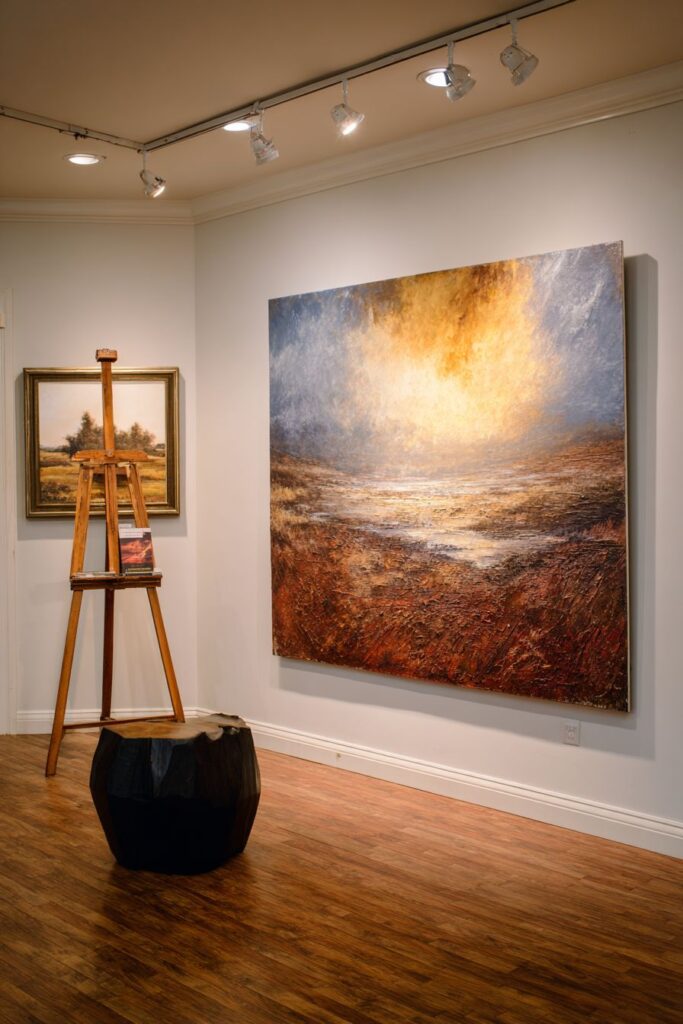
Transform a corner into a personal gallery space dedicated to showcasing art you love. A single large-scale canvas painting rests on an easel in natural wood, making the artwork the undisputed focal point. This presentation method—using an easel rather than hanging—creates gallery-like formality while allowing easy rotation of displayed pieces. Track lighting mounted on the ceiling spotlights the artwork, mimicking professional gallery illumination and adding drama to residential spaces.
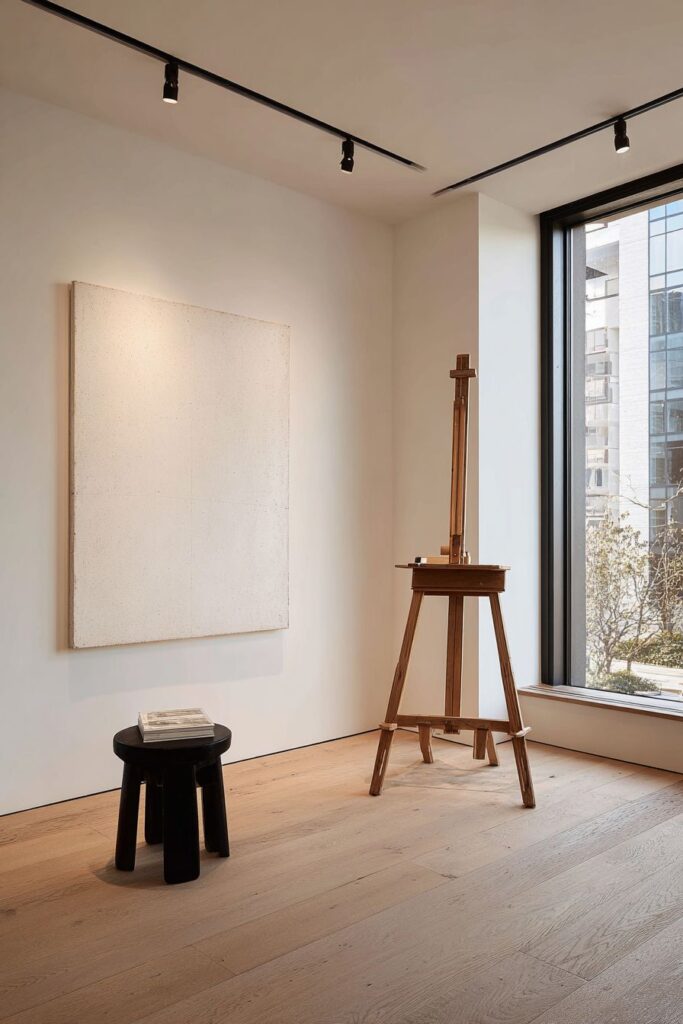
A low sculptural stool in black serves dual purposes as additional display space for art books and occasional seating for contemplating the featured work. Its compact form and dark color prevent visual competition with the artwork while providing functional benefits. White walls provide gallery-like backdrop, allowing the art itself to command full attention without competing backgrounds or busy patterns.
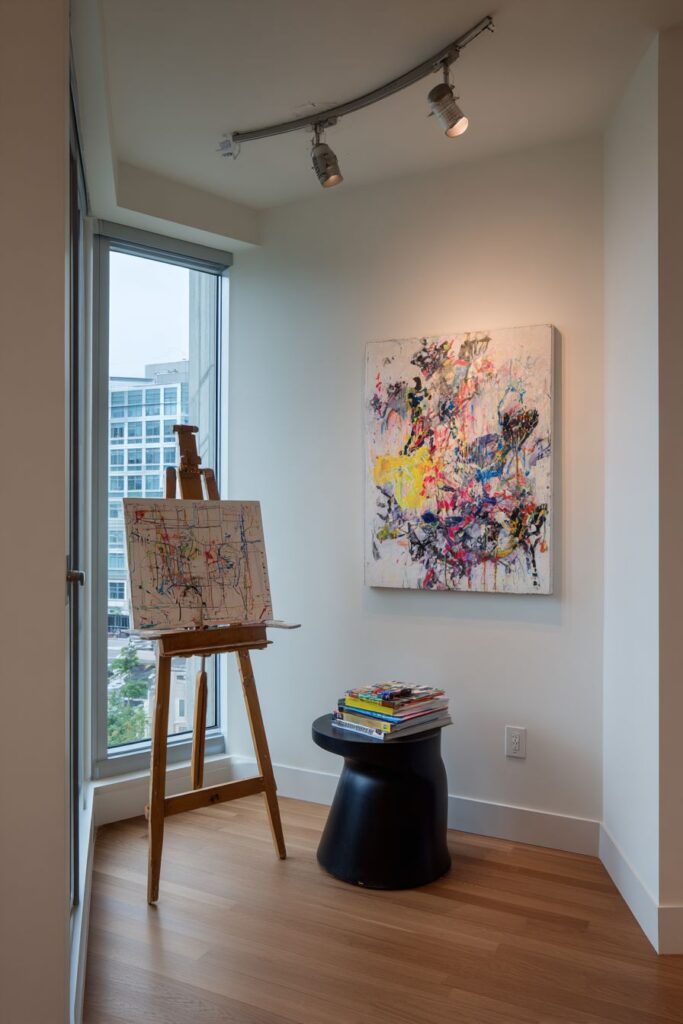
This corner becomes a rotating exhibition space, allowing homeowners to feature different pieces from their collection or display works by local artists. The flexibility of the easel setup encourages more active engagement with art compared to permanently hung pieces that fade into background familiarity. Regular rotation keeps the corner fresh and maintains visual interest over time.
Key Design Tips:
- Install track lighting with adjustable heads to customize illumination angles for different artworks
- Use museum-quality LED bulbs that emit minimal UV light to prevent artwork damage
- Position easels at slight angles to reduce glare from windows and overhead lights
- Maintain neutral wall colors in art display corners to prevent color casts on artworks
- Consider proper humidity levels if displaying valuable pieces, ideally 40-50 percent
14. Custom Corner Seating with Built-In Storage
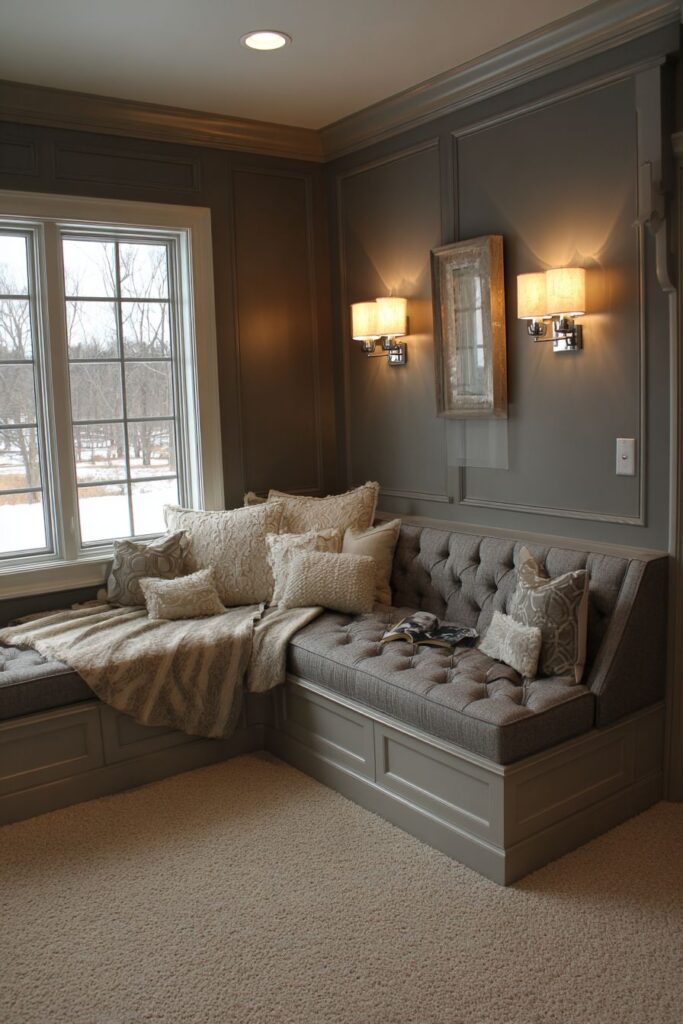
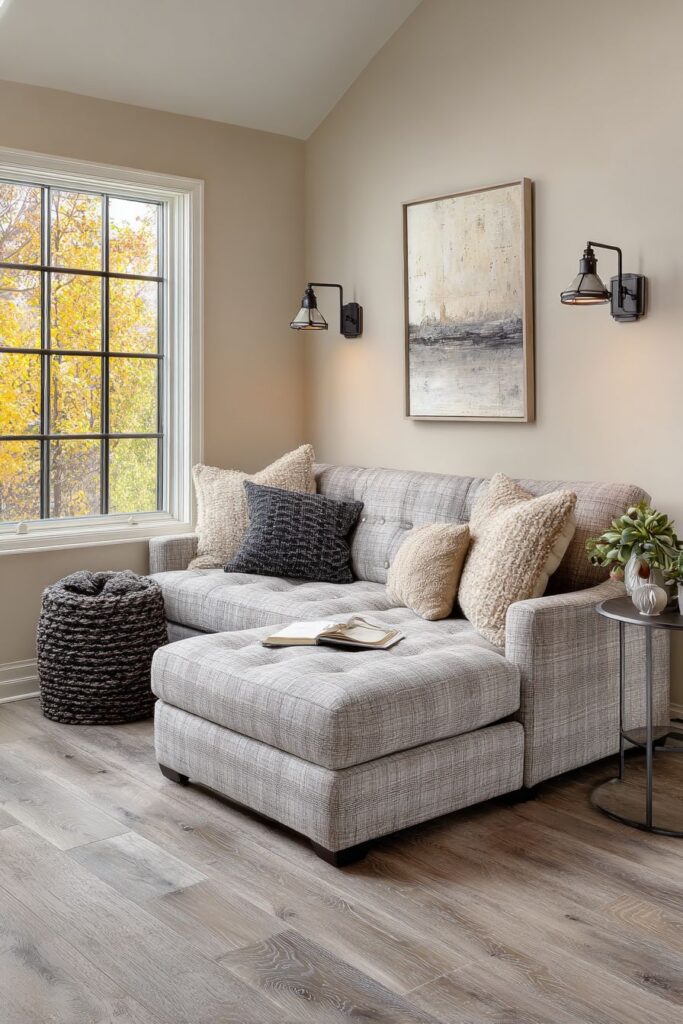
Purpose-built furniture solutions maximize corner potential in ways standard pieces cannot. A corner sectional reading bench with built-in storage beneath the seat provides generous seating while solving storage challenges. Upholstered in durable grey fabric with button tufting, the bench combines comfort with visual interest. The tufting creates shadow and dimension on the flat upholstery surface while the neutral grey coordinates with virtually any color scheme.
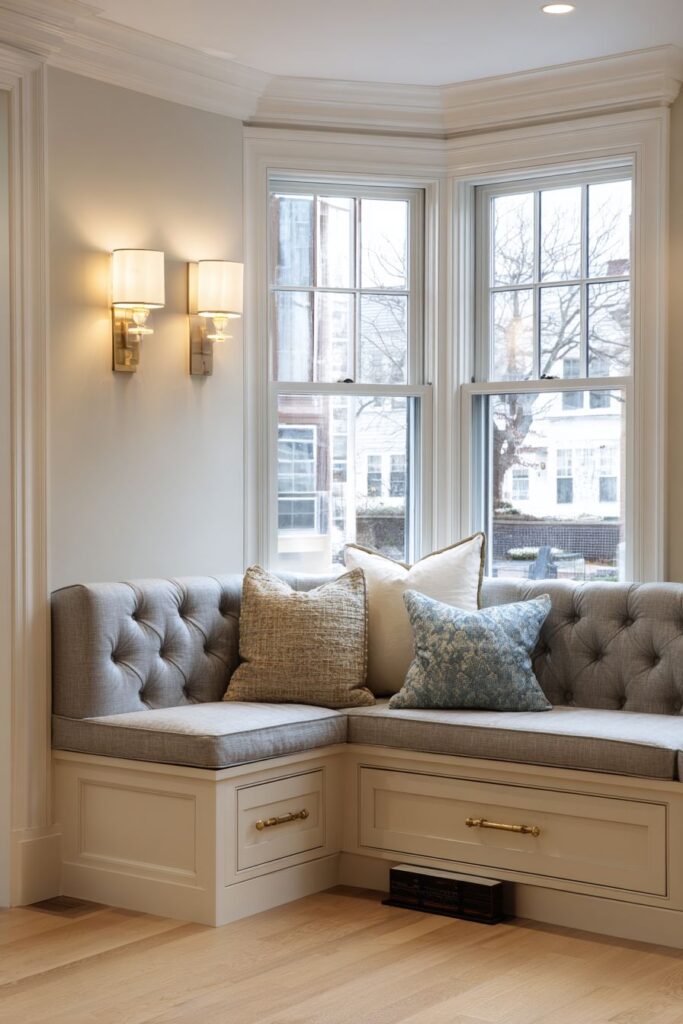
Throw pillows in varied textures create comfort while adding opportunities for color and pattern. The mix of velvet, linen, and patterned pillows prevents monotony while allowing seasonal updates through simple pillow swaps. Wall-mounted sconces on either side provide focused reading light from multiple angles, eliminating shadows that single overhead lights create. Natural window light adjacent to the bench makes daytime reading especially pleasant.
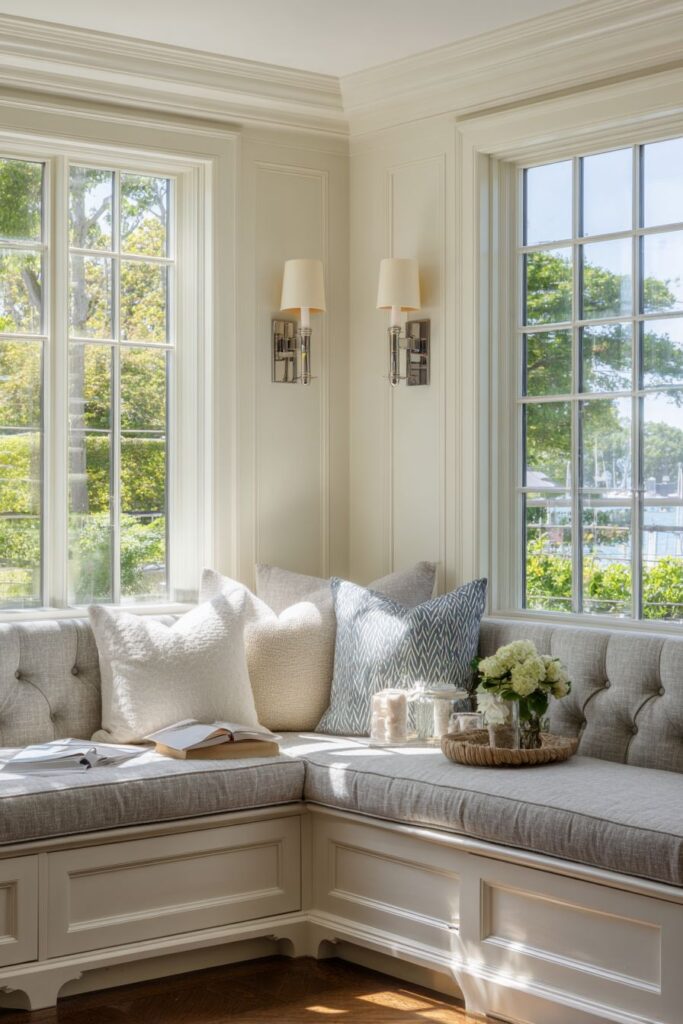
The hidden storage beneath the seat contains seasonal items, extra bedding, or book overflow, proving that decorative furniture can be highly functional. Hydraulic lifts or hinged lids provide easy access while keeping contents concealed. This custom approach works particularly well in rooms lacking closets or built-in storage where furniture must work harder to meet household needs.
Key Design Tips:
- Install wall sconces at 60-66 inches from floor for optimal reading light when seated
- Choose upholstery fabrics rated for at least 25,000 double rubs for durability
- Add cushion toppers with removable covers for easy cleaning in high-use areas
- Use piano hinges on storage bench lids to prevent sagging over time
- Consider soft-close mechanisms on storage compartments to prevent finger pinching and noise
15. Lush Cascading Plant Collection on Tiered Stand
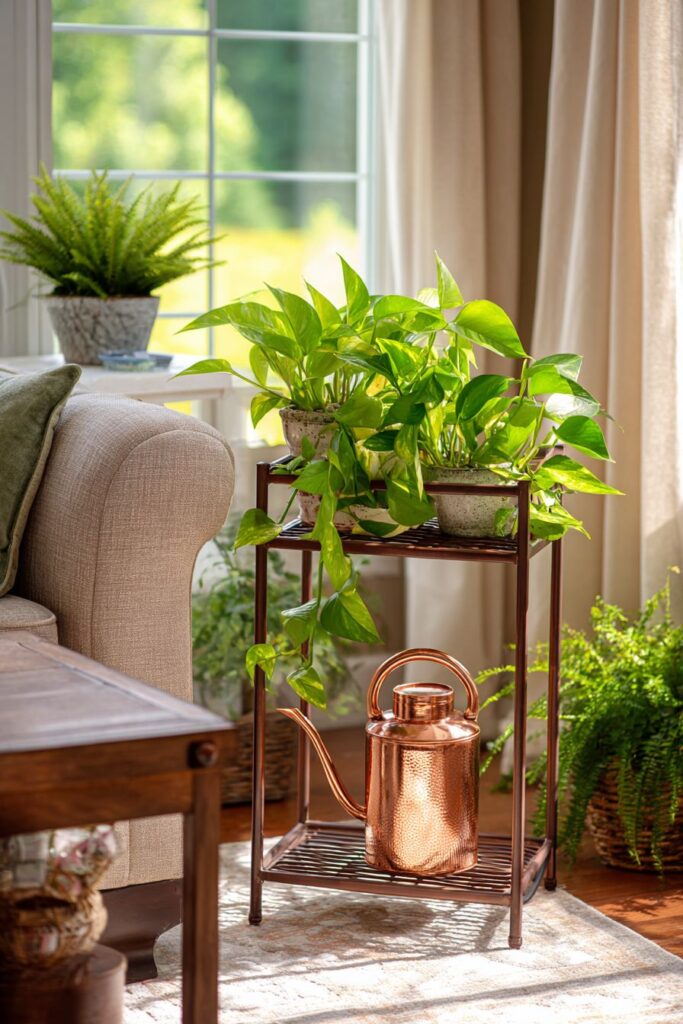
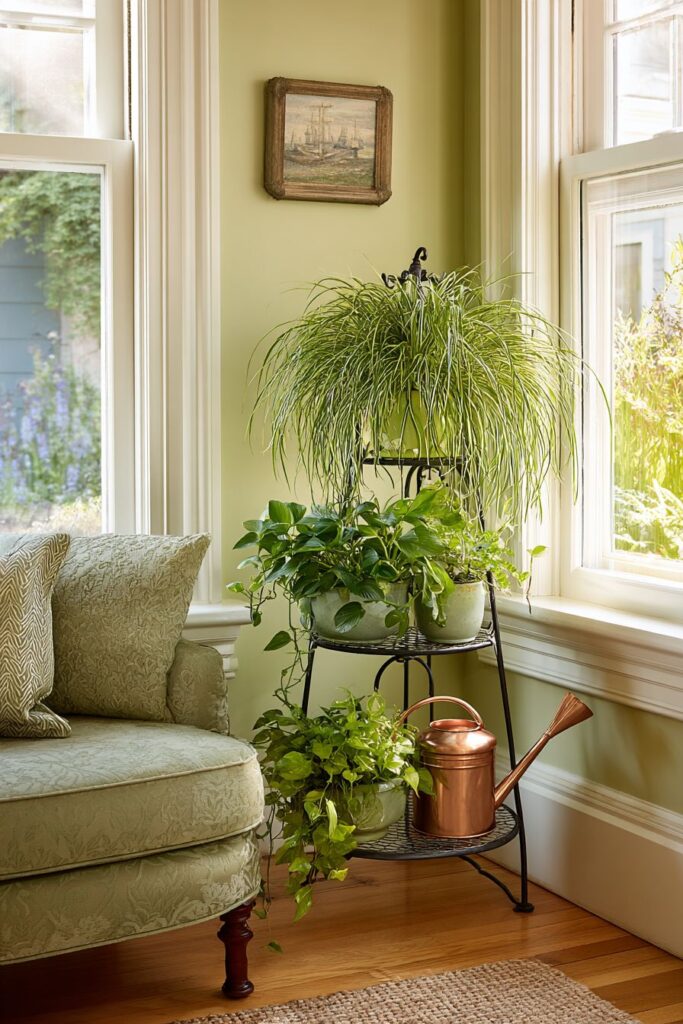
Plant enthusiasts need dedicated display spaces that accommodate growing collections. A tiered corner plant stand in wrought iron holds cascading collections of trailing and upright plants at varying heights. Pothos with their heart-shaped leaves, spider plants producing baby plantlets, and peace lilies with elegant white blooms create diverse visual interest. The varied forms—trailing, upright, flowering—create dynamic living sculpture that changes constantly as plants grow.

A decorative watering can in copper rests on the bottom tier, serving both practical and aesthetic purposes. Its metallic finish complements the wrought iron while always being within reach for plant care. Natural light from nearby windows creates dappled shadows through leaves, producing ever-changing patterns on walls and floor. This shadow play adds another dimension to the display, making the corner visually interesting even when viewed from angles where the plants themselves aren’t directly visible.
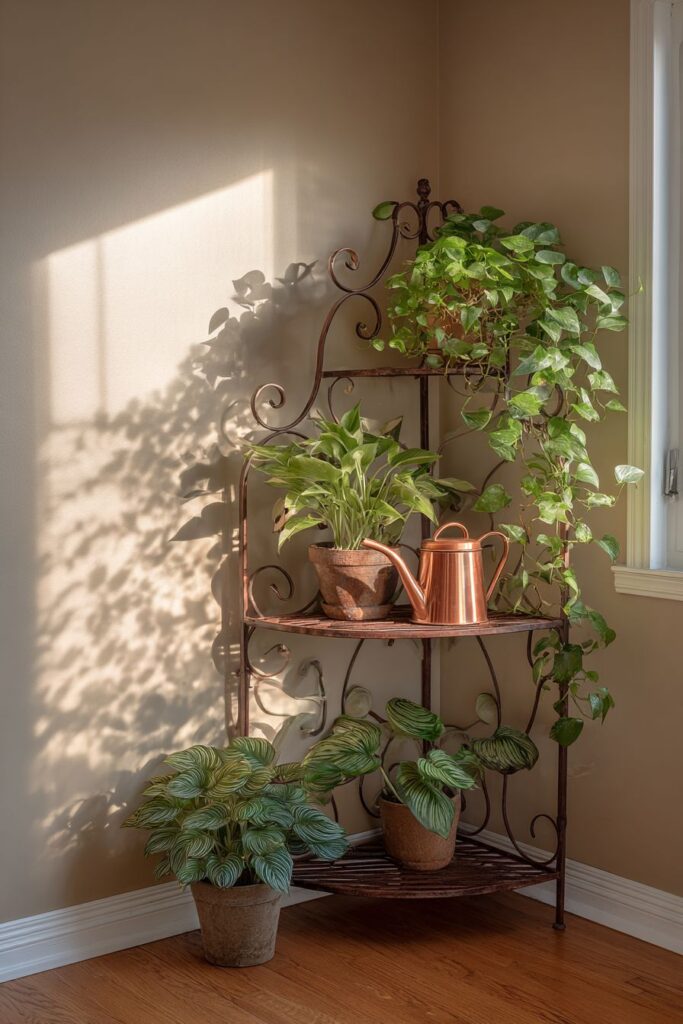
The tiered approach efficiently uses vertical space while ensuring each plant receives adequate light exposure. Upper tiers capture maximum light while lower levels accommodate shade-tolerant species. This thoughtful arrangement considers both aesthetic and horticultural needs, creating displays that thrive rather than merely surviving. The corner becomes a living element that rewards daily observation as new leaves unfurl and growth progresses.
Key Design Tips:
- Group plants with similar watering needs on the same tier for efficient maintenance
- Rotate corner plant stands weekly to ensure even light distribution to all sides
- Use saucers beneath all pots to protect furniture and catch drainage water
- Trim trailing plants regularly to maintain fullness and prevent leggy growth
- Monitor for pests more frequently in dense plant groupings where problems spread easily
16. Personal Music Practice Corner with Acoustic Guitar Display
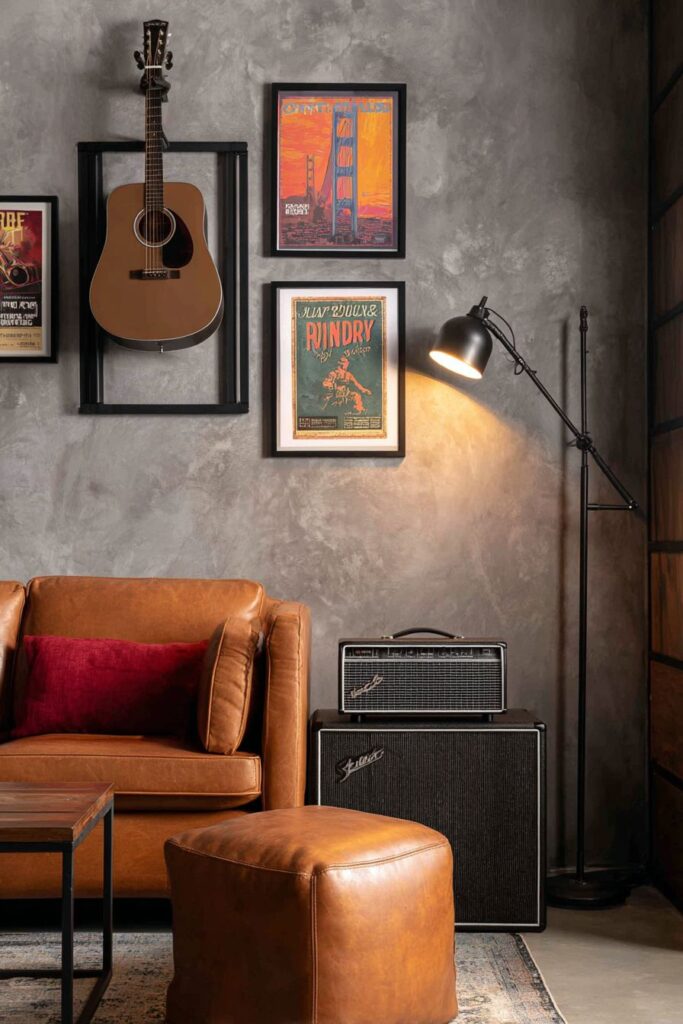
Hobbies deserve dedicated spaces that honor the time and passion we invest in them. A music corner featuring an acoustic guitar on a wooden wall-mounted holder celebrates musical pursuits. The holder securely cradles the instrument while displaying its beautiful curves and wood grain as functional art. Below, a small amplifier sits ready for electric practice sessions while a cushioned ottoman in vintage leather provides comfortable seating during practice.
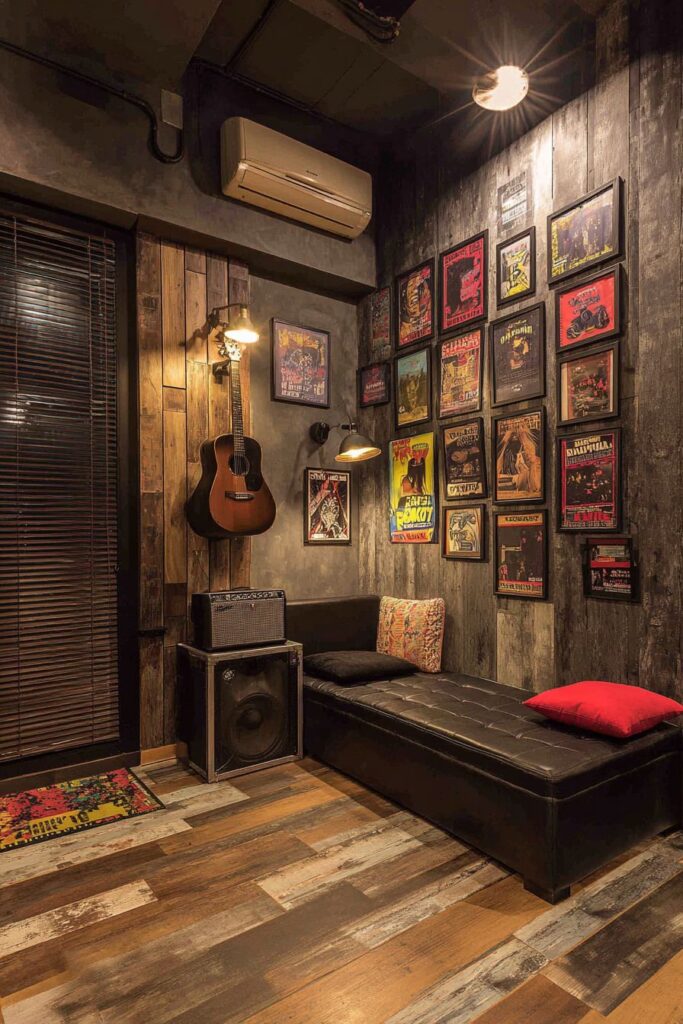
Framed concert posters create a gallery wall above the guitar, personalizing the space with musical memories and inspirations. These posters reference favorite bands, memorable concerts, or aspirational musicians, making the corner deeply personal. Warm task lighting from an adjustable wall lamp allows practicing at any hour without disturbing others. The focused light illuminates sheet music and fretboards while the adjustable arm positions light exactly where needed.
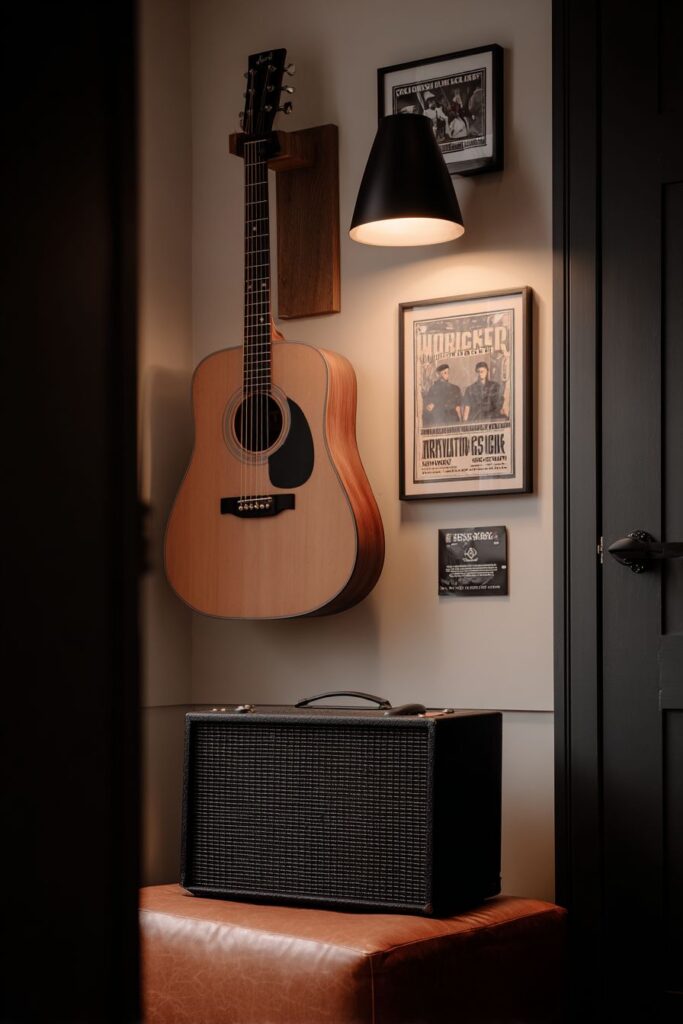
This corner becomes a destination for daily practice rather than instruments leaning forgotten in closets. The visible, accessible setup encourages frequent engagement while the dedicated space signals that musical pursuits deserve room in daily life. The ottoman provides proper posture support during extended practice sessions, demonstrating attention to both form and function.

Key Design Tips:
- Mount guitar holders at heights allowing easy removal, typically 60-65 inches to holder center
- Choose wall mounts with padded supports to prevent finish damage to instruments
- Position practice corners away from direct sunlight which can damage wood instruments
- Install multiple electrical outlets to accommodate amplifiers, effects pedals, and music stands
- Use acoustic panels behind practice areas to improve sound quality and reduce room echo
17. Linear Electric Fireplace with Contemporary Millwork
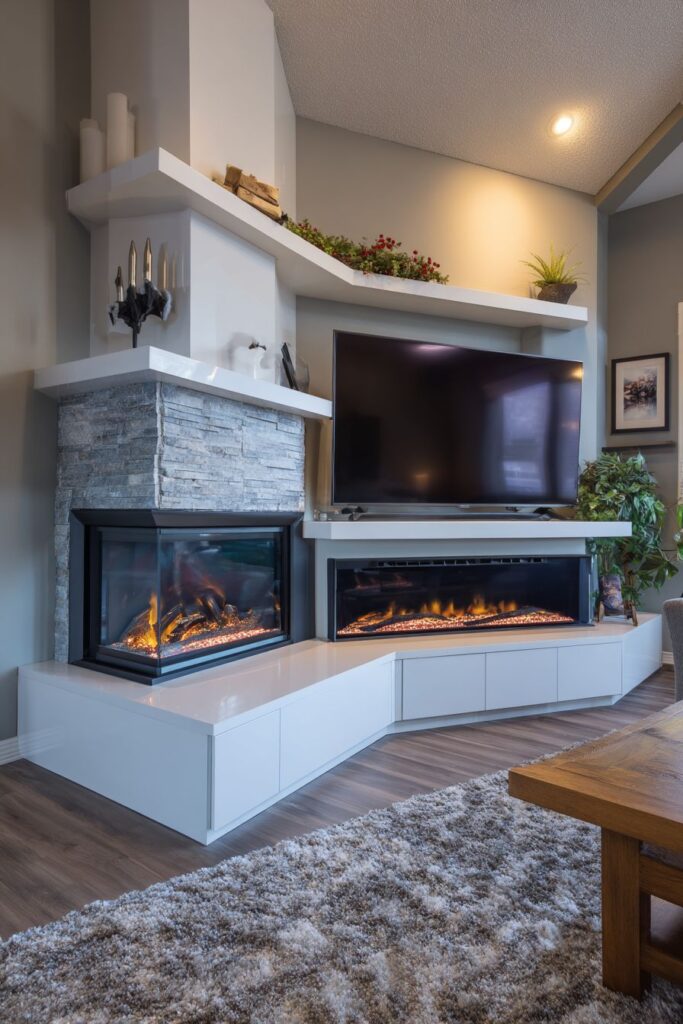
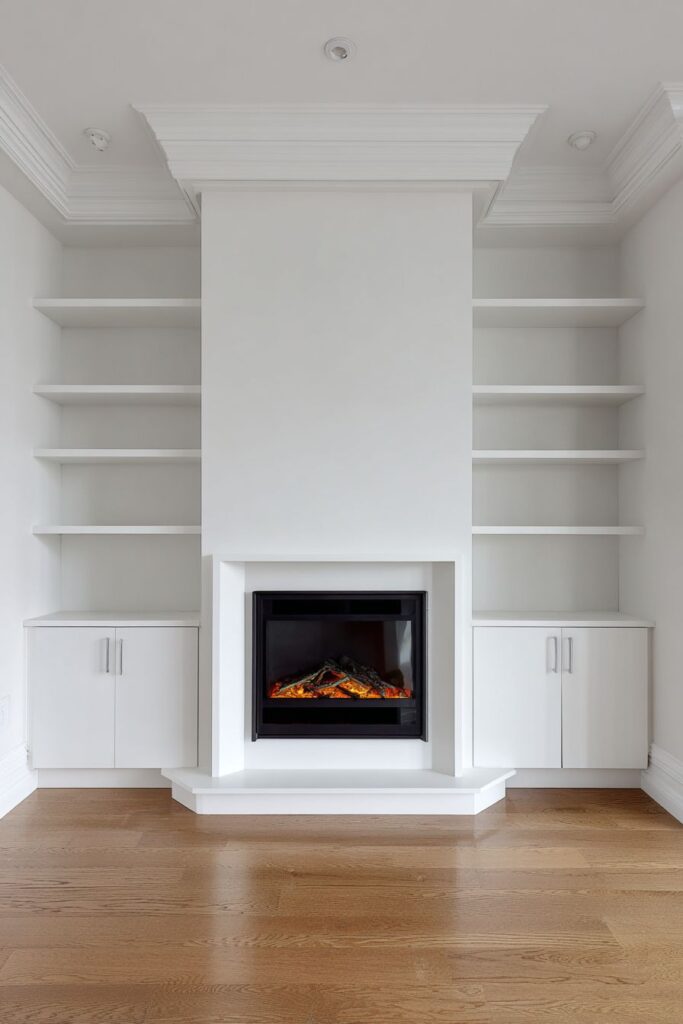
Modern fireplace design emphasizes clean lines and architectural integration rather than ornamental mantels. A sleek corner electric fireplace with linear design builds into custom millwork for seamless appearance. Floating shelves on either side display minimal decor in monochromatic tones—white ceramics, black picture frames, grey stone objects. This restrained color palette emphasizes form over decoration, creating sophisticated contemporary aesthetic.
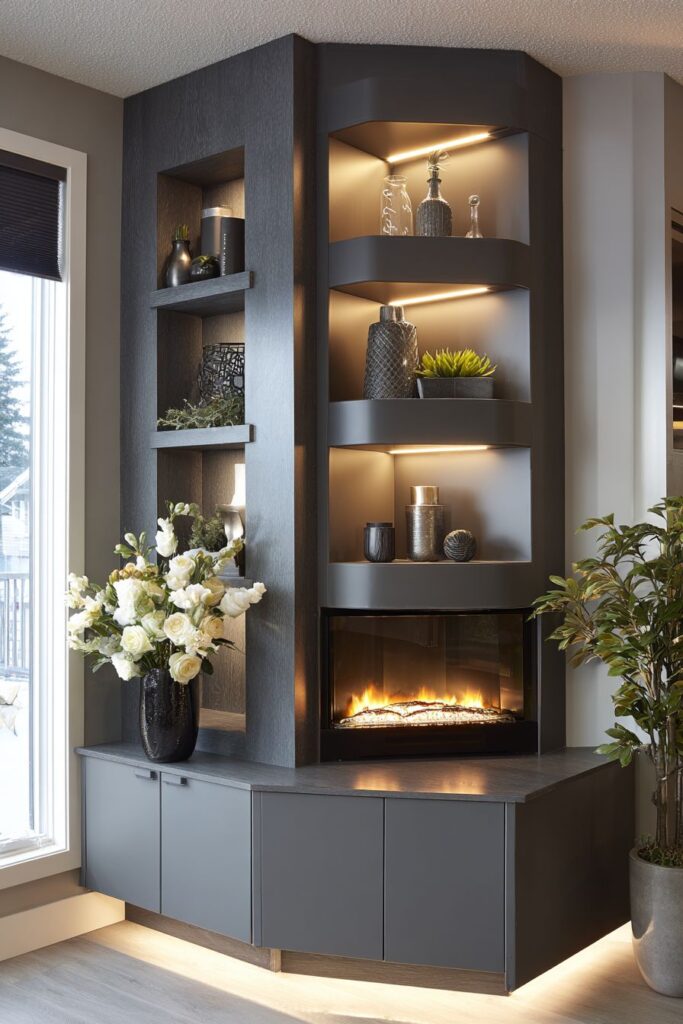
The fireplace glass reflects ambient room lighting, adding dimensional quality that shifts with changing light throughout the day. Below the fireplace unit, concealed storage with push-to-open doors in matte white maintains clean lines while providing practical storage. The handleless doors disappear into the millwork when closed, preserving the minimalist aesthetic while hiding necessary storage for media equipment, books, or household items.
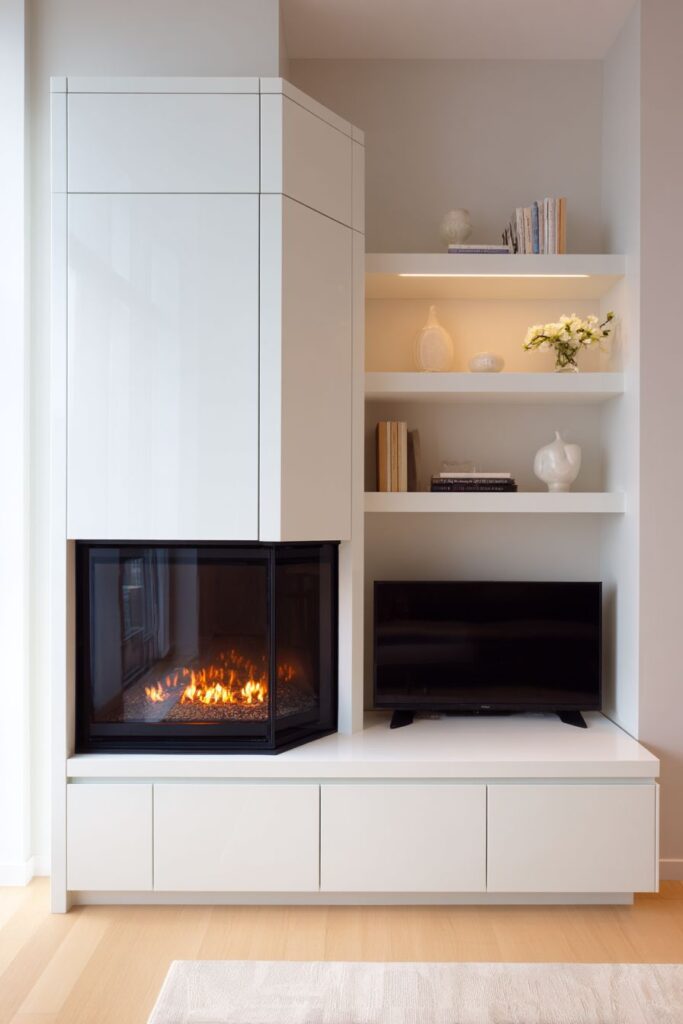
This built-in approach creates custom appearance rivaling high-end architectural projects while using modular electric fireplace inserts and standard cabinetry techniques. The corner location makes dramatic impact while occupying space often left empty. The linear flame design suits modern interiors better than traditional flame patterns, providing ambiance without dated aesthetic associations.
Key Design Tips:
- Build millwork with adequate ventilation around electric fireplace units per manufacturer specifications
- Use touch-latch hardware on handleless cabinets for truly seamless appearance
- Wire electrical outlets inside storage cabinets for concealed device charging
- Select LED flame technology for most realistic appearance and lowest operating costs
- Finish millwork in same paint color as walls for fully integrated built-in appearance
18. Bold Sculptural Statement with Dried Botanicals
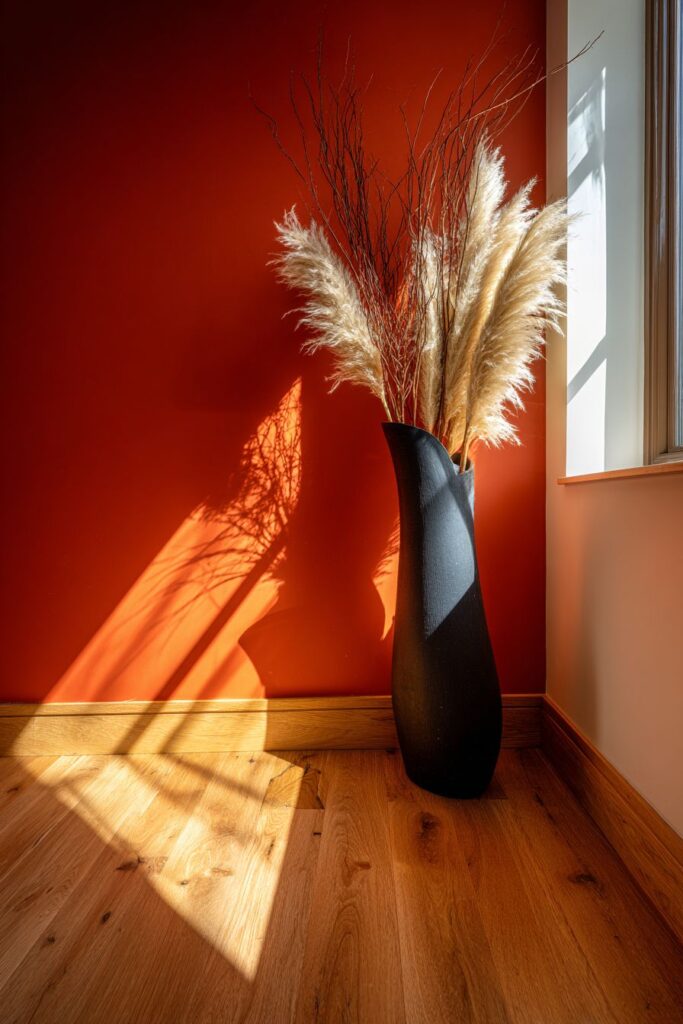
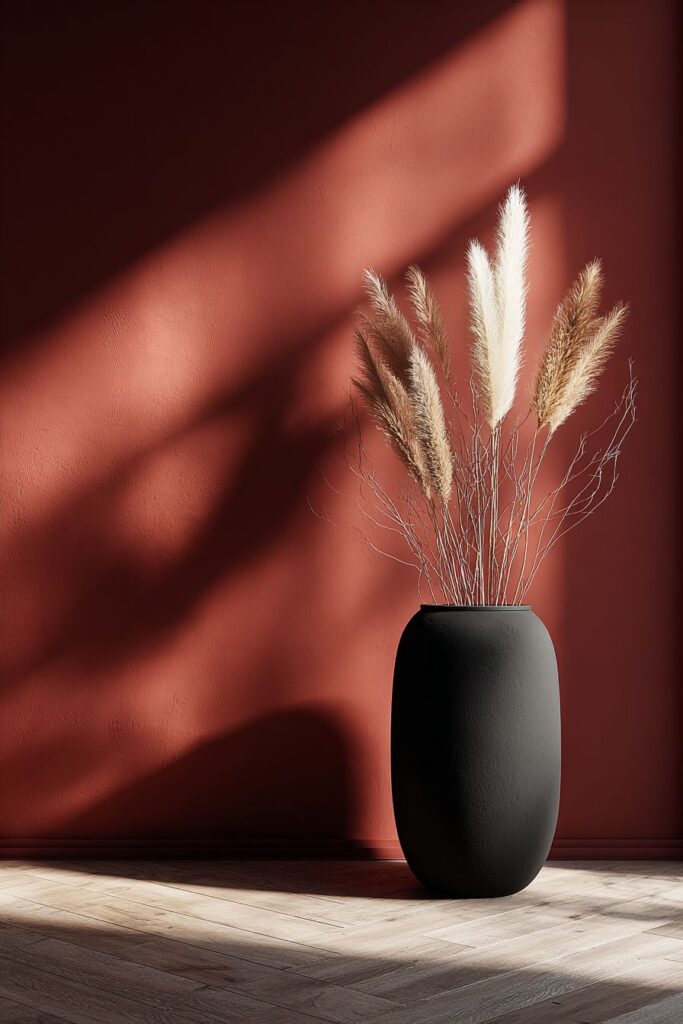
Sometimes the boldest design move is the simplest. A statement sculptural floor vase in matte black ceramic holds tall dried pampas grass and branches, creating dramatic vertical statement through minimalist means. The vase’s substantial scale—often 30 inches or taller—commands attention through sheer presence. Matte black finish provides sophisticated neutral that grounds the organic materials above.
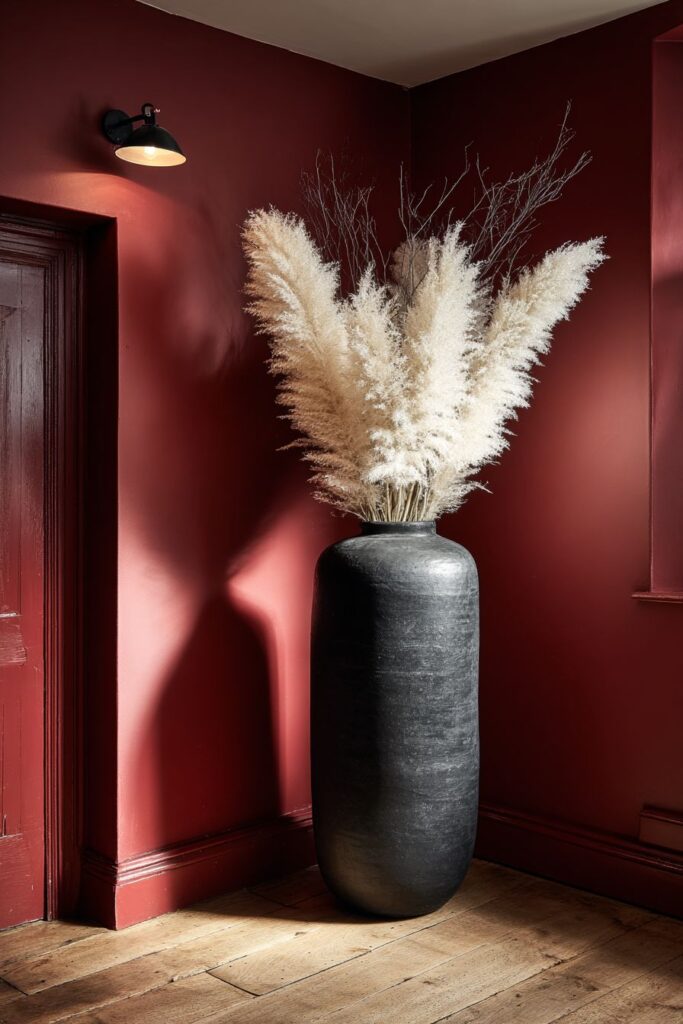
The corner wall painted in contrasting warm terracotta creates depth and highlights the sculptural display. This bold color choice transforms the corner into intentional design moment rather than afterthought. Terracotta’s warm earthiness complements natural dried materials while the strong contrast with black vase creates visual punch. A simple spotlight from above casts dramatic shadows that change throughout the day as natural light shifts.
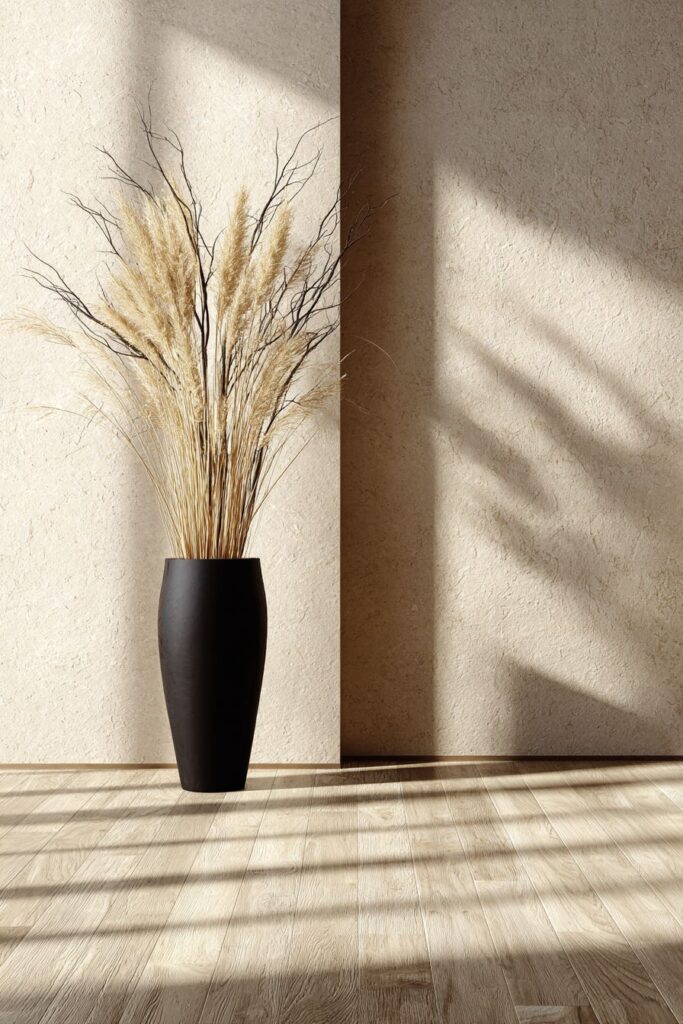
Wide-plank light oak flooring grounds the minimalist arrangement, its horizontal lines contrasting with the vertical thrust of the grass and branches. The natural wood grain and warm tone prevent the black-and-terracotta scheme from feeling too stark. This approach proves that empty corners need not require furniture or extensive styling—sometimes a single bold gesture makes the most powerful statement.
Key Design Tips:
- Choose floor vases with adequate weight or wide bases to prevent tipping
- Select dried materials in varied heights to create visual interest and movement
- Position spotlights slightly off-center to create asymmetrical shadow drama
- Refresh dried materials annually as they fade and accumulate dust over time
- Consider vase scale relative to ceiling height, aiming for arrangements that use 60-70 percent of vertical space
19. Mid-Century Bar Cabinet for Sophisticated Entertaining
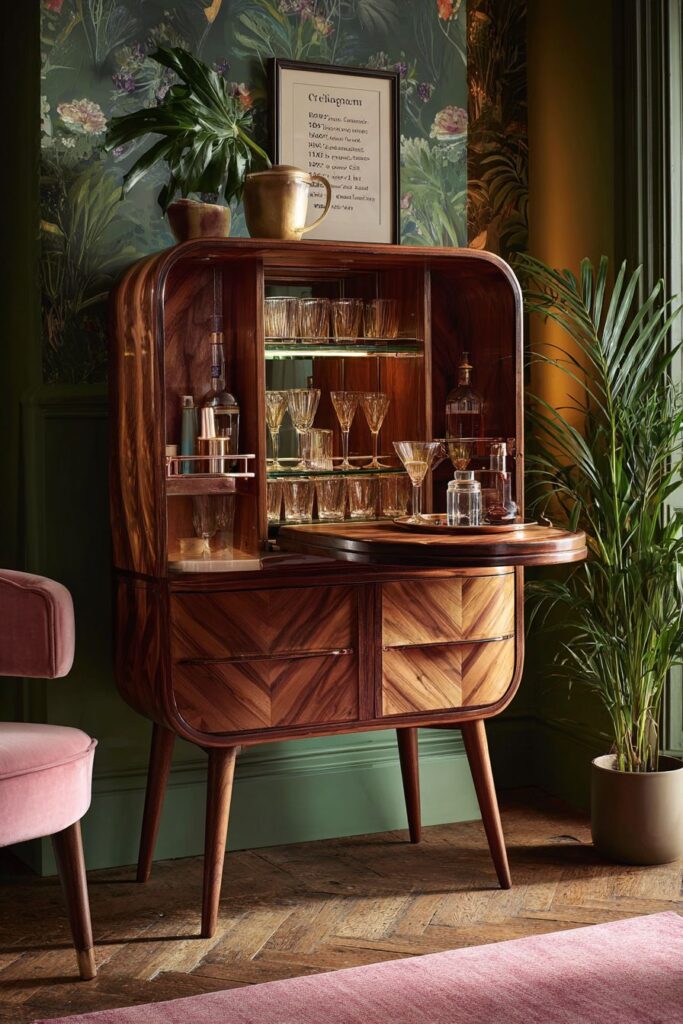
Vintage-inspired bar cabinets combine nostalgic design with modern functionality. A compact bar cabinet in mid-century modern design features tapered legs and sliding doors in walnut veneer, hallmarks of 1960s furniture design. The tapered legs create visual lightness while elevating the cabinet off the floor for easier cleaning. Interior shelving displays glassware with integrated LED lighting that illuminates crystal and glass when doors slide open.
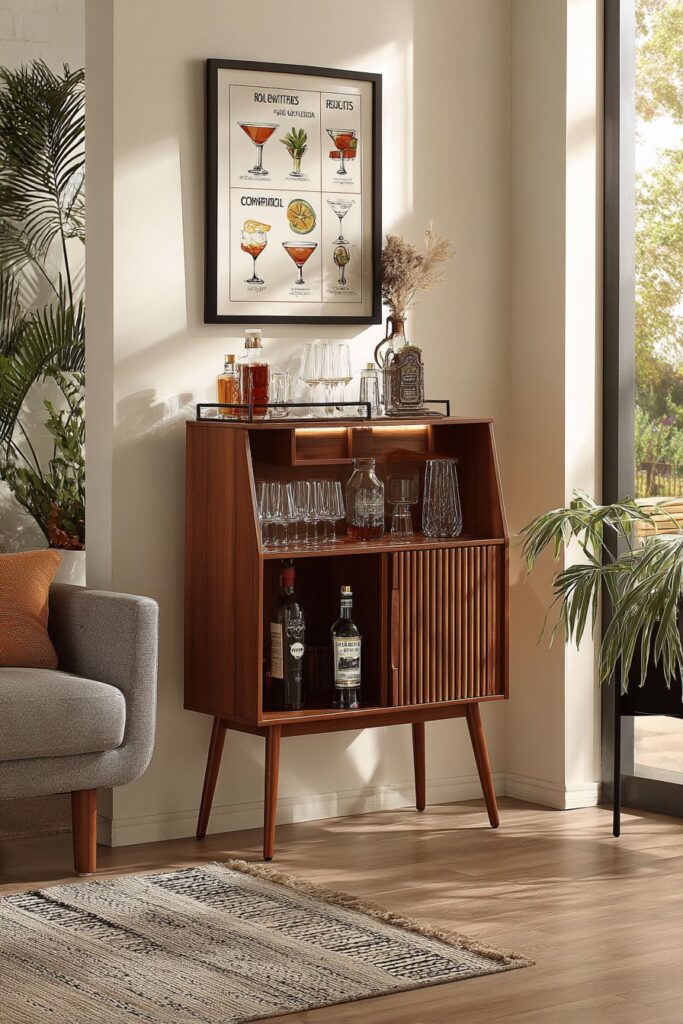
A small tray on top holds decanters filled with amber spirits, their glass forms catching and refracting light beautifully. The adjacent wall features a vintage cocktail recipe print in simple black frame, adding whimsical functional art. These framed recipes serve both decorative and practical purposes, offering mixing inspiration during cocktail hours. Warm ambient lighting showcases the functional corner entertaining station while creating inviting atmosphere for guests.
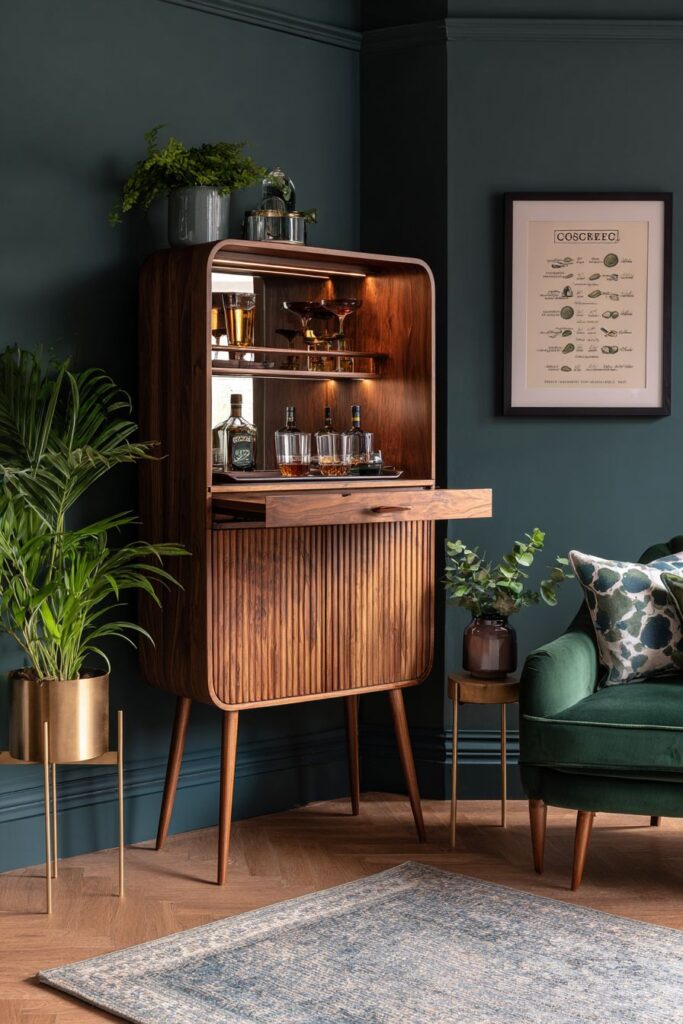
This cabinet approach offers concealed storage that maintains clean lines when closed while revealing well-stocked bar when entertaining. The mid-century aesthetic brings retro charm without feeling dated, as these designs have maintained popularity for decades. The compact scale suits corner placement while providing surprising storage capacity for bottles, glassware, mixing tools, and bar accessories.

Key Design Tips:
- Install LED strip lighting with warm color temperature (2700-3000K) to enhance amber spirits
- Use non-slip shelf liners to prevent glassware sliding when cabinet doors open and close
- Arrange barware by frequency of use with everyday glasses at eye level
- Install cabinet door dampeners to prevent slamming and glass breakage
- Position bar cabinets away from direct sunlight which can damage spirits over time
20. Personal Photo Gallery Wall with Bench Seating
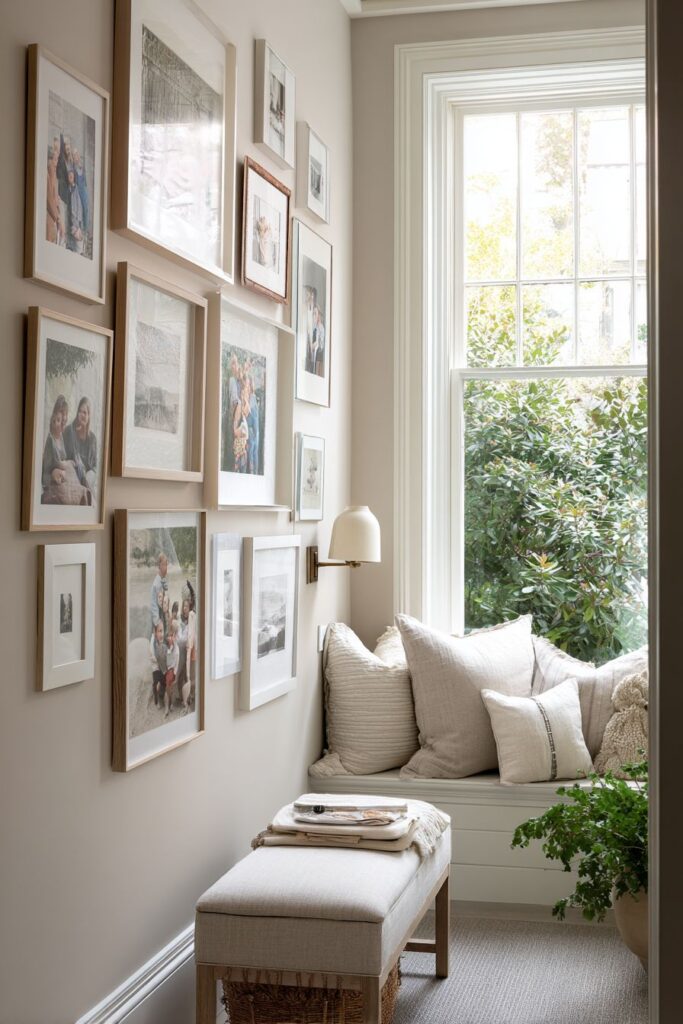
Personal photographs deserve prominent display that celebrates family memories and milestones. A floor-to-ceiling corner gallery wall arrangement features family photos in mixed frame styles and sizes, creating dynamic visual composition. The frames progress from larger at eye level to smaller toward ceiling, creating visual flow that draws the eye upward. This varied sizing prevents monotony while accommodating different photo proportions and importance.

A small upholstered bench in neutral linen below provides viewing spot where family members can sit and reminisce. The bench location encourages engagement with displayed photos rather than walking past without notice. Its neutral color ensures the bench enhances rather than competes with the photograph display. Natural window light from the side illuminates the personal display, causing frames to cast gentle shadows that add depth to the flat wall surface.

This approach transforms family photos from scattered frames throughout the house into cohesive, impactful display. The corner location creates destination for the gallery, giving it prominence without occupying prime wall space needed for furniture placement. Regular updates keep the display current as children grow and new memories accumulate, making the corner a living family history that evolves over time.

Key Design Tips:
- Start gallery walls by arranging frames on the floor before committing to wall placement
- Maintain consistent spacing between all frames, typically 2-3 inches, for cohesive appearance
- Use level and measuring tape to ensure proper alignment despite varied frame sizes
- Choose frames in no more than three finish colors to maintain visual unity
- Update photos regularly to keep displays relevant and encourage ongoing family engagement
Why These Corner Solutions Represent the Best in Interior Design
These twenty corner transformations exemplify excellence in residential interior design because they address fundamental principles that separate mediocre spaces from exceptional ones. Each solution demonstrates thoughtful consideration of scale, proportion, lighting, functionality, and personal expression. They prove that successful design requires neither massive budgets nor extensive square footage—only intentionality and understanding of how spaces can be optimized.
The versatility across these approaches accommodates diverse lifestyles, budgets, and aesthetic preferences. Whether drawn to minimalist restraint, bohemian abundance, mid-century nostalgia, or contemporary sophistication, homeowners find applicable solutions. This range ensures that corner styling isn’t prescriptive but adaptable, allowing personalization that reflects individual needs and tastes. Design should serve occupants rather than imposing rigid rules that ignore how people actually live.
Each design maximizes corner geometry that conventional furniture often ignores. Corner spaces present unique challenges—converging walls create awkward angles, natural traffic patterns bypass them, lighting frequently proves inadequate. These solutions acknowledge and solve these challenges rather than fighting against spatial realities. By working with rather than against corner geometry, they transform perceived limitations into design opportunities that enhance entire rooms.
The emphasis on layered lighting throughout these designs reveals professional understanding that illumination makes or breaks interior spaces. Natural light, task lighting, accent lighting, and ambient lighting combine to create adaptable environments that function throughout the day and across seasons. Poor lighting renders even perfectly furnished spaces unwelcoming, while thoughtful illumination makes modest furnishings shine. These corner solutions treat lighting as essential design element rather than afterthought.
Material selection across these designs demonstrates sophisticated understanding of texture, color, and visual weight. Wood tones bring warmth, metals add sophistication, textiles introduce comfort, living plants provide organic vitality. These material choices aren’t arbitrary but deliberately selected to create specific moods and sensory experiences. The interplay between smooth and rough, matte and glossy, heavy and light creates visual interest that prevents spaces from feeling flat or one-dimensional.
Functionality underlies every aesthetic choice in these transformations. Beautiful corners that don’t serve household needs represent missed opportunities. The best designs seamlessly integrate beauty and utility—reading lights positioned for actual reading, plant stands that simplify maintenance, storage that conceals clutter, seating that invites use rather than preserving pristine appearance. This functional emphasis ensures designs remain relevant long after initial installation rather than proving impractical in daily life.
The incorporation of personal elements throughout these designs acknowledges that homes should reflect inhabitants rather than resembling showrooms. Photo galleries celebrate family histories, music corners honor creative pursuits, meditation spaces support wellness practices, book collections display intellectual interests. These personalized touches transform generic corner solutions into meaningful spaces that enhance daily living and express individual identity. Design should enable self-expression rather than imposing homogeneous aesthetic.
Sustainability considerations appear subtly throughout these designs through emphasis on quality materials, timeless aesthetics, and adaptable configurations. Rather than trendy solutions requiring replacement when fashions change, these approaches favor enduring design principles and quality craftsmanship. Natural materials, energy-efficient lighting, and furniture built to last reflect increasing awareness that sustainable design benefits both households and environments. Investment in quality over quantity ultimately proves more economical and environmentally responsible.
The accessibility of these solutions removes barriers that often prevent people from improving their homes. Most require neither professional installation nor specialized tools, making them achievable for typical homeowners. Price points range from budget-friendly to investment pieces, ensuring options exist at various financial levels. This accessibility democratizes good design, proving that expertise and taste matter more than unlimited budgets when creating beautiful, functional spaces.
These corner transformations also demonstrate how small changes create disproportionate impact on overall room appearance. Empty corners create visual voids that make entire rooms feel incomplete or poorly planned. Addressing these spaces—even with simple solutions like a plant stand or reading chair—creates finished appearance that elevates surrounding areas. This ripple effect proves that comprehensive room design requires attention to every area, not just major furniture arrangements.
The solutions collectively showcase how intentional design improves daily quality of life in measurable ways. Reading nooks encourage unplugging from screens, meditation corners support mental health practices, plant displays improve indoor air quality, home offices enable productive work habits. These functional improvements transcend mere aesthetics, demonstrating that good design serves human wellbeing through both beauty and utility. Homes should enhance rather than merely contain life.
Finally, these corner designs exemplify how constraints often inspire creativity rather than limiting it. The very limitations of corner spaces—converging walls, irregular dimensions, lighting challenges—force innovative thinking that produces distinctive results. This principle applies broadly in design: working within constraints often yields more interesting solutions than unlimited freedom. The corner transformations prove that perceived limitations can become defining features that give spaces character and distinction.
Conclusion:
Empty corners throughout your home hold untapped potential waiting for recognition and creative vision. These twenty transformation ideas demonstrate that with thoughtful planning, appropriate materials, and attention to both aesthetics and function, any corner can become a valued feature rather than overlooked afterthought. Whether you’re drawn to cozy reading nooks, vertical gardens, compact workspaces, or sophisticated entertainment stations, there’s a solution that fits your lifestyle, space, and budget.
The journey from empty corner to design feature begins with honest assessment of your needs and constraints. Consider available natural light, proximity to electrical outlets, traffic patterns, and how you actually use adjacent spaces. Successful corner design integrates seamlessly with existing room function rather than creating obstacles or disrupting flow. Take measurements, note architectural features, and spend time observing how light and activity patterns change throughout the day.
Start with one corner transformation rather than attempting multiple projects simultaneously. This focused approach allows you to refine your process, learn what works in your specific space, and build confidence before tackling additional areas. Document your progress with photographs that capture the transformation from empty to exceptional. These records provide both motivation and reference as you develop your personal design style and approach.
Remember that the most successful corner designs evolve over time rather than achieving instant perfection. Allow yourself to experiment, rearrange, and refine your chosen solution. Living with a space reveals insights that no amount of planning can anticipate. Be willing to adjust furniture placement, swap decorative elements, or even completely reimagine corners that aren’t working. Flexibility and willingness to iterate separate good design from great.
Most importantly, trust your instincts and personal preferences over rigid design rules or fleeting trends. Your home should reflect your personality, support your daily activities, and bring you genuine pleasure. The most beautifully designed corner means nothing if it doesn’t serve your life and resonate with your aesthetic sensibilities. Use these ideas as inspiration rather than prescription, adapting elements that speak to you while discarding those that don’t.
Your empty corners await transformation. With creativity, intention, and willingness to see potential in overlooked spaces, you can create rooms that feel complete, cohesive, and distinctly yours. These small transformations accumulate into homes that truly work for the people who live in them—spaces that are both beautiful and deeply functional. Begin your corner transformation today and discover how these often-neglected spaces can become your favorite features.
"As an Amazon Associate, I earn from qualifying purchases."
