

In an increasingly fast-paced digital world, the cottagecore aesthetic offers a gentle respite—a return to simpler times where handcrafted beauty, natural materials, and the rhythm of rural life take center stage. The cottagecore living room embodies this philosophy through its celebration of vintage finds, nature-inspired elements, and the kind of lived-in comfort that makes a house feel like a true home. This romantic design movement draws inspiration from the English countryside, pastoral traditions, and the simple pleasures of rural living, creating spaces that feel both nostalgic and deeply nurturing.
The beauty of cottagecore interior design lies in its accessibility and authenticity. Unlike minimalist trends that demand perfection, cottagecore embraces imperfection—the worn patina on vintage furniture, the mismatched patterns of collected treasures, and the organic chaos of fresh-cut wildflowers scattered throughout the room. This aesthetic celebrates handcrafted items, repurposed pieces, and the stories behind each carefully curated object. Whether you’re transforming a modern apartment or enhancing an actual country cottage, the cottagecore living room offers endless possibilities for creating a sanctuary that nurtures both body and soul.
Throughout this comprehensive guide, we’ll explore twenty distinctive cottagecore living room designs, each offering unique interpretations of this beloved aesthetic. From cozy reading nooks bathed in golden afternoon light to multipurpose farmhouse tables that serve as creative workspaces, these designs showcase the versatility and timeless appeal of cottagecore style. You’ll discover how to layer vintage textiles, integrate botanical elements, work with natural materials, and create that elusive quality of a space that appears to have evolved organically over generations rather than being designed all at once.
1. Romantic Floral Haven with Vintage Charm
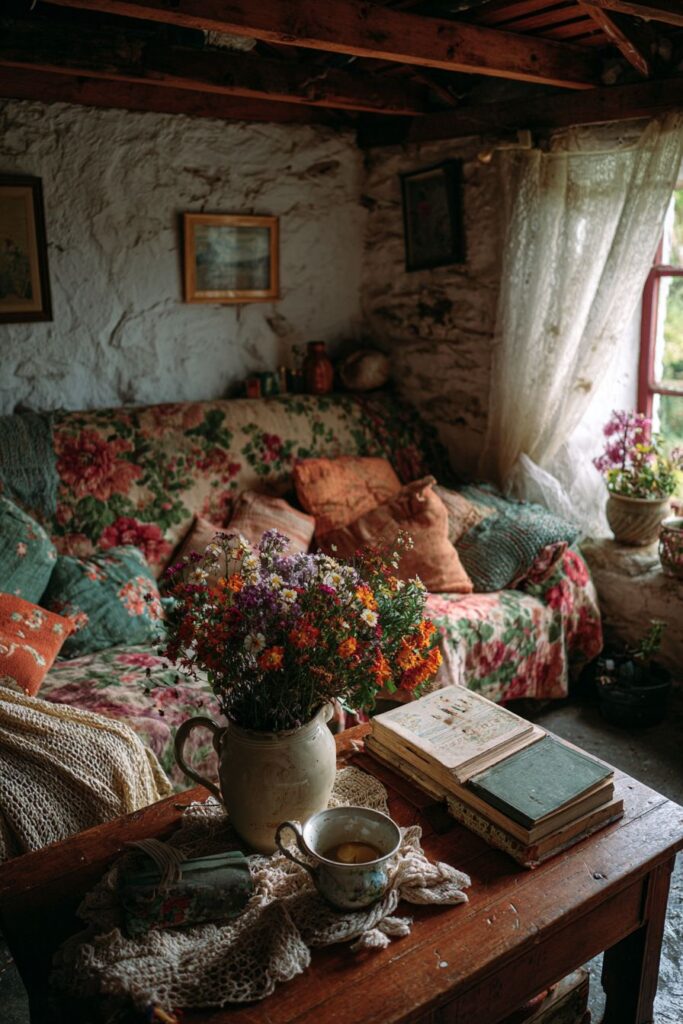
Step into a living room where romance and nostalgia intertwine seamlessly through carefully selected vintage pieces and natural elements. The centerpiece of this enchanting space is a worn floral-patterned sofa adorned with an eclectic collection of mismatched vintage cushions, each telling its own story through faded fabrics and delicate embroidery. Draped casually across the sofa’s arm, a handmade crochet throw blanket adds tactile warmth and showcases the handcrafted artistry central to cottagecore philosophy. This isn’t a showroom—it’s a living, breathing space that invites you to curl up with a good book and lose yourself in simpler pleasures.
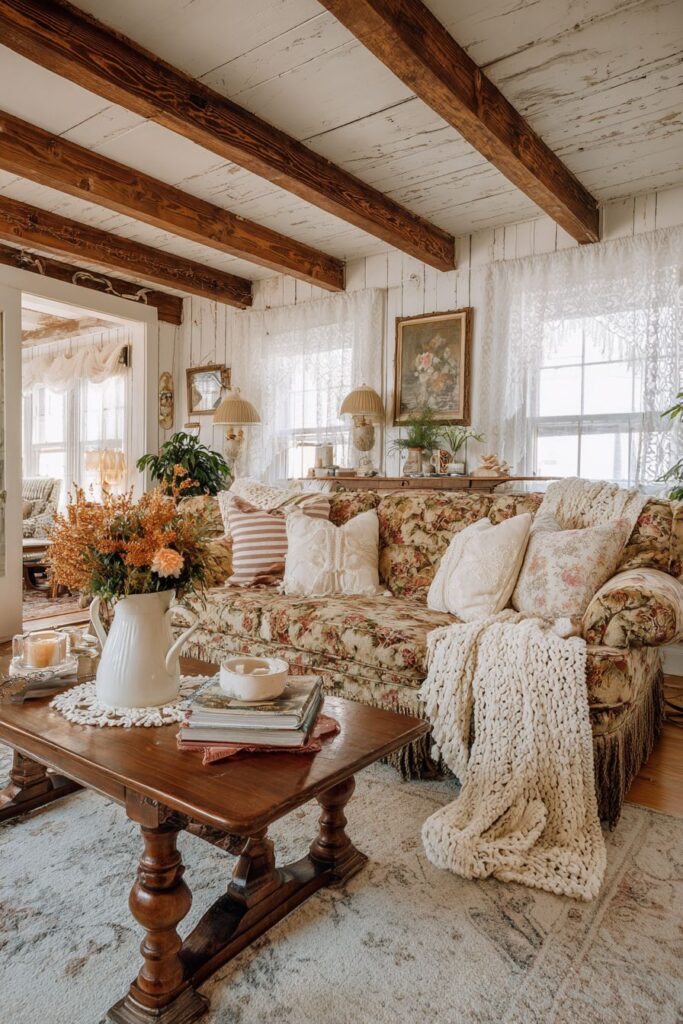
The rustic wooden coffee table serves as more than mere furniture; it’s a stage for life’s small beauties. A ceramic pitcher overflowing with freshly picked wildflowers brings the garden indoors, while a carefully arranged stack of well-loved books with fabric bookmarks speaks to quiet afternoons spent reading. The pages are dog-eared, the spines are creased—these are books meant to be lived with, not just displayed. Natural light streams generously through delicate lace curtains, creating dancing patterns across the room and illuminating the exposed wooden ceiling beams that add architectural character and rustic authenticity.
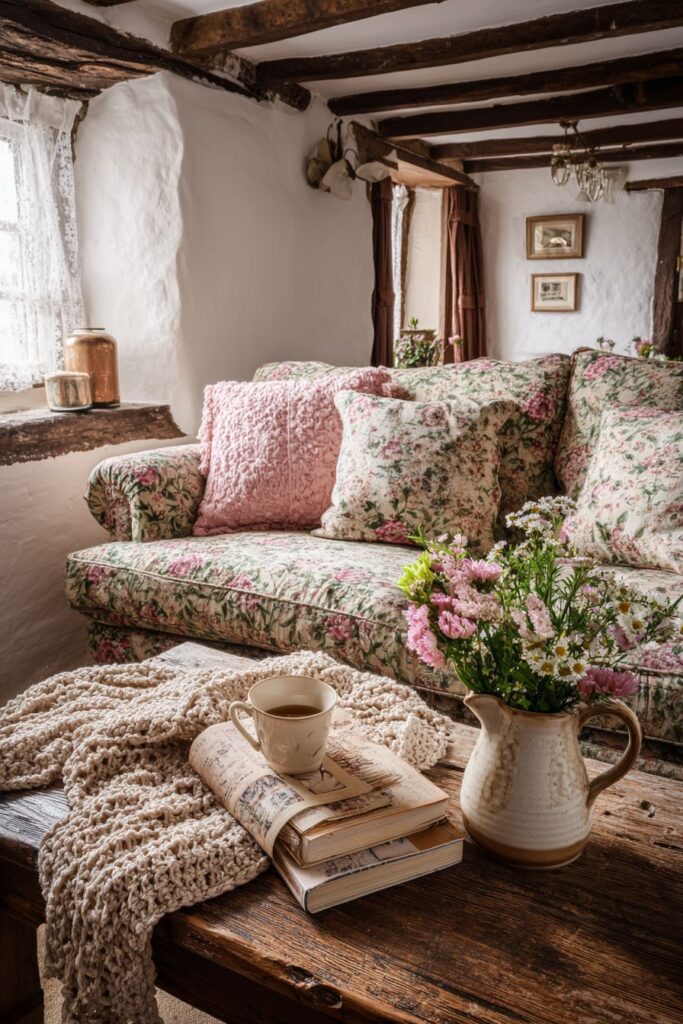
The whitewashed walls provide a soft, neutral backdrop that allows the floral patterns, natural textures, and vintage treasures to shine without competing for attention. This color choice also maximizes the natural light, creating an airy atmosphere that feels open despite the abundance of decorative elements. The lived-in quality of this space is its greatest strength—nothing feels staged or overly precious. Instead, every element contributes to an atmosphere of comfortable, unpretentious beauty that embodies the very heart of cottagecore living.
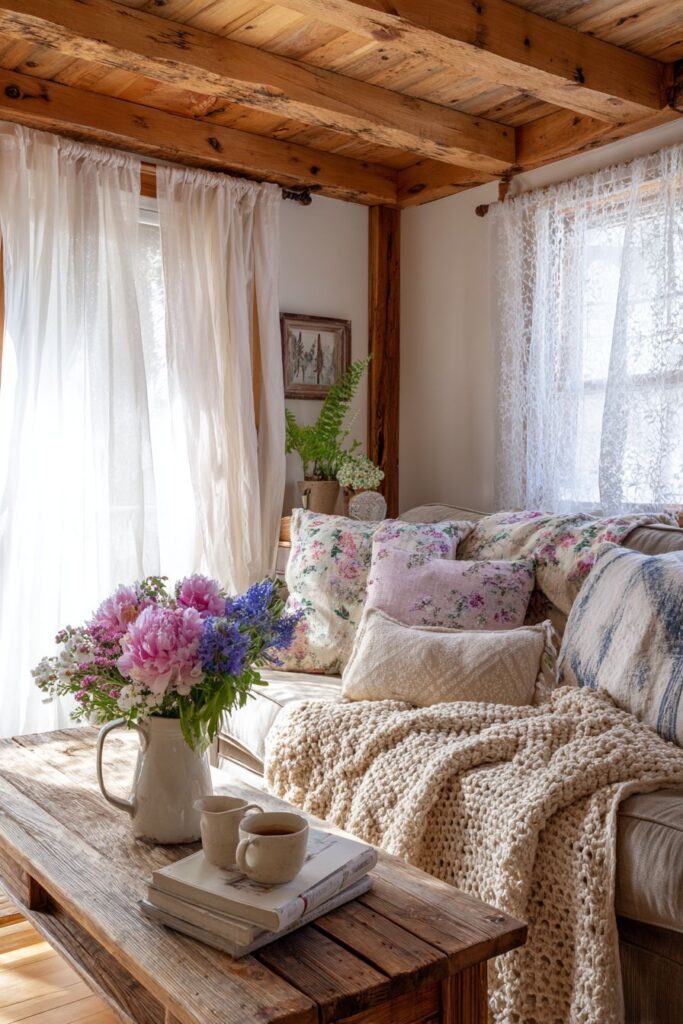
Key Design Tips:
- Select a vintage floral sofa as your anchor piece, prioritizing comfort and character over pristine condition—gentle wear adds authentic charm
- Layer multiple cushions in varied floral patterns, mixing scales and color palettes while maintaining a cohesive muted tone
- Incorporate handmade textiles like crochet throws or embroidered pillows to add warmth and celebrate traditional crafts
- Style your coffee table with living elements like fresh wildflowers that you can change seasonally to keep the space feeling connected to nature
- Install sheer lace curtains that filter light beautifully while maintaining privacy and adding romantic softness
- Display well-loved books rather than pristine decorative volumes to create an authentic lived-in atmosphere
2. Fireside Gathering with Pastoral Warmth
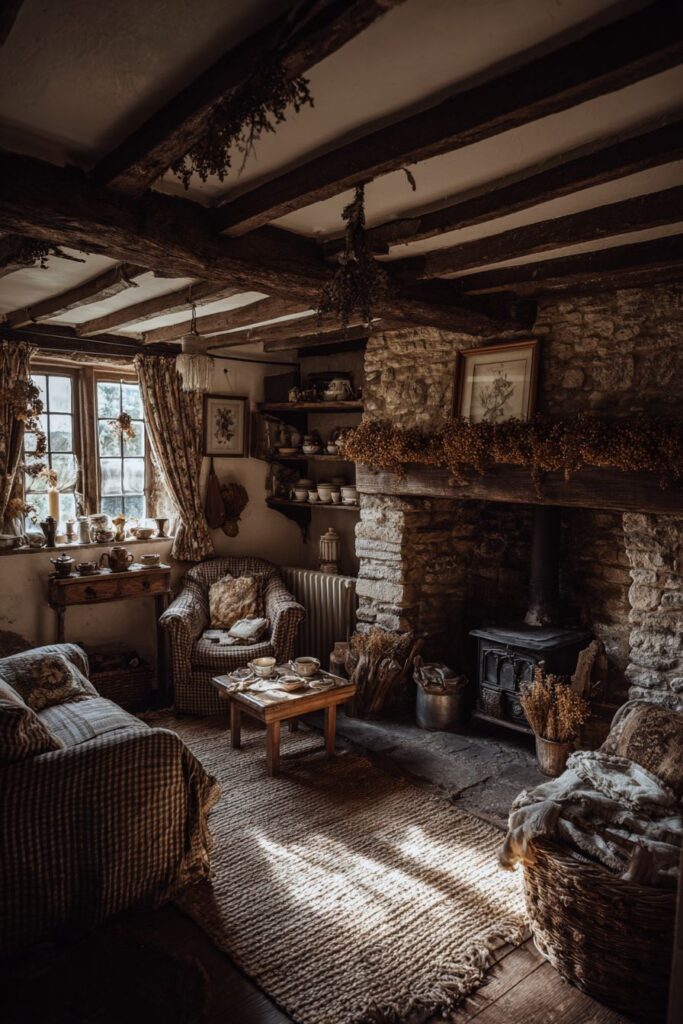
The stone fireplace commands attention as the undeniable heart of this cottagecore sanctuary, its rough-hewn surface bearing the marks of countless fires and decades of use. Surrounding this focal point are carefully arranged dried flower bundles in muted sage, lavender, and cream tones, their preserved beauty offering year-round botanical interest. Vintage brass candlesticks of varying heights create an asymmetrical display that catches and reflects the flickering firelight, adding warmth and romantic ambiance to evening gatherings. This fireplace isn’t merely decorative—it’s a living element that invites family and friends to gather close during chilly evenings.
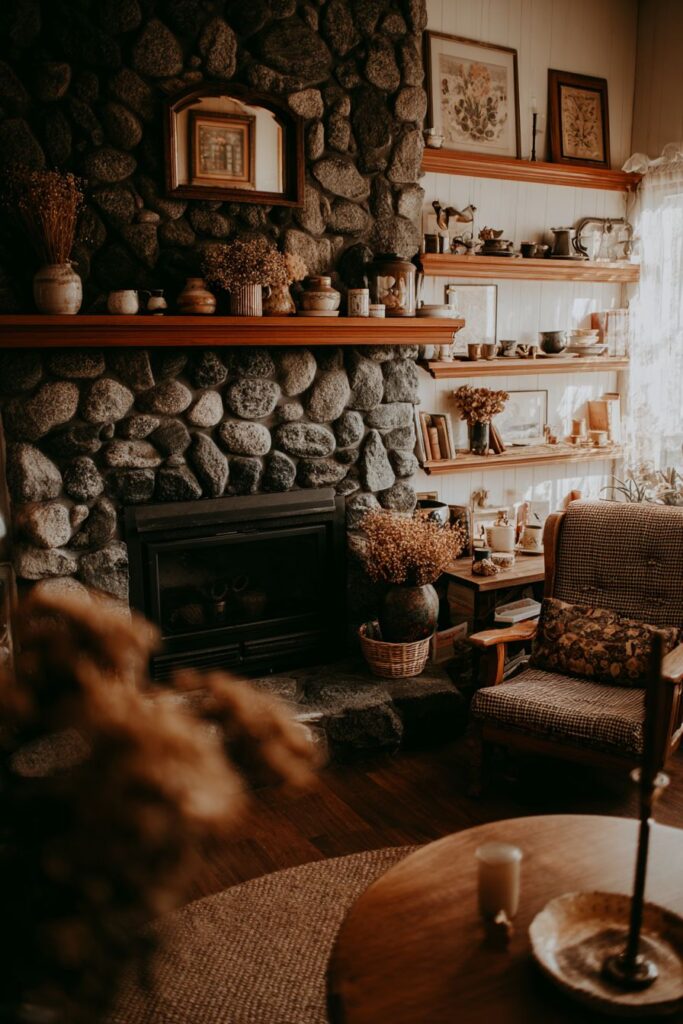
The seating arrangement embraces the cottagecore principle of collected-over-time charm through deliberately mismatched armchairs. One features faded floral upholstery in soft pinks and greens that have mellowed beautifully with age, while another boasts classic gingham fabric in muted tones that add textural variety without disrupting the cohesive aesthetic. These chairs rest atop a substantial braided wool rug that grounds the seating area while adding another layer of handcrafted texture. The rug’s circular pattern and natural fiber construction perfectly complement the organic, artisanal quality of the space.
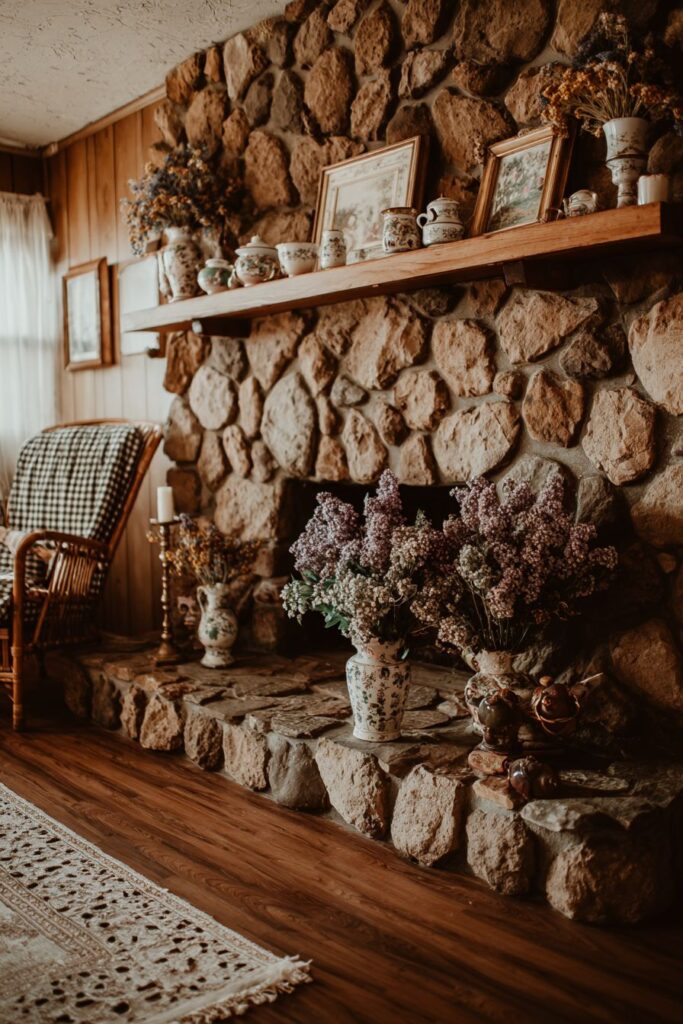
Wooden shelves mounted along the adjacent wall display a curated collection of antique teacups in various patterns—some delicate porcelain with hand-painted flowers, others sturdy earthenware with time-worn glazes. Interspersed among these treasures are botanical prints housed in weathered frames that show the gentle patina of age. The natural window light creates gentle shadows throughout the day, emphasizing the dimensional quality of the stone fireplace and highlighting the varied textures of fabrics, woods, and ceramics. This interplay of light and shadow adds depth and visual interest while reinforcing the pastoral charm that defines authentic cottagecore design.
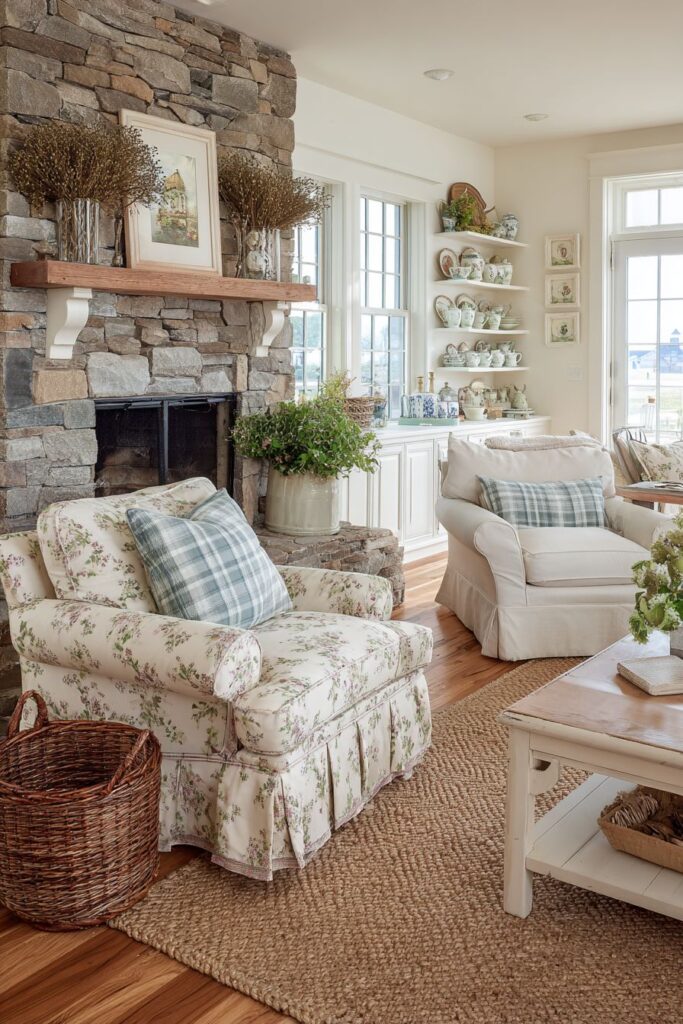
Key Design Tips:
- Establish your fireplace as the room’s focal point by keeping the mantel styling simple and organic with dried flowers and vintage finds
- Choose mismatched seating intentionally, ensuring pieces share a common color palette or scale to maintain visual harmony
- Invest in a quality braided wool rug that adds warmth underfoot while contributing handcrafted texture to the space
- Display vintage teacup collections on open shelving where they’re accessible for use, not merely decoration
- Frame botanical prints in weathered or vintage frames that enhance rather than detract from the artwork
- Allow natural light to work its magic throughout the day, creating shifting patterns and moods
3. Tranquil Reading Nook by the Window
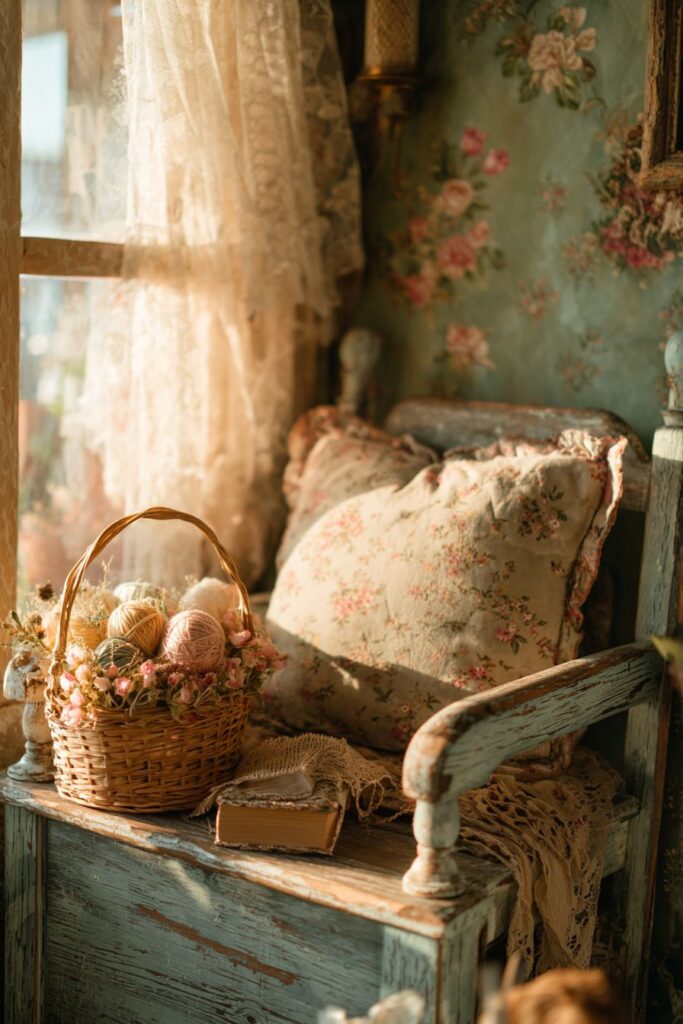
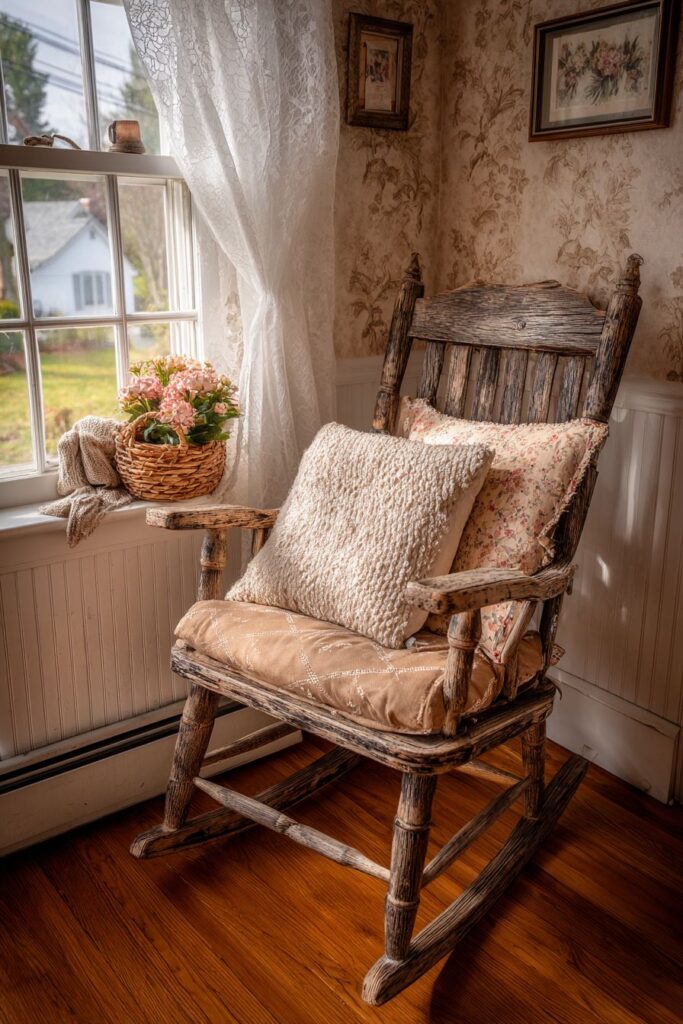
Positioned to capture the best natural light throughout the day, this reading nook represents the ultimate cottagecore retreat—a dedicated space for quiet contemplation, handwork, and losing oneself in beloved books. The distressed wood rocking chair serves as the anchor piece, its gentle motion adding a meditative quality to reading sessions. The chair is made infinitely more comfortable through hand-stitched cushions featuring muted floral patterns that echo the garden-inspired theme carried throughout the space. The fabrics show the slight irregularities and charming imperfections that come from handcrafted items, making the nook feel personal and lovingly created.
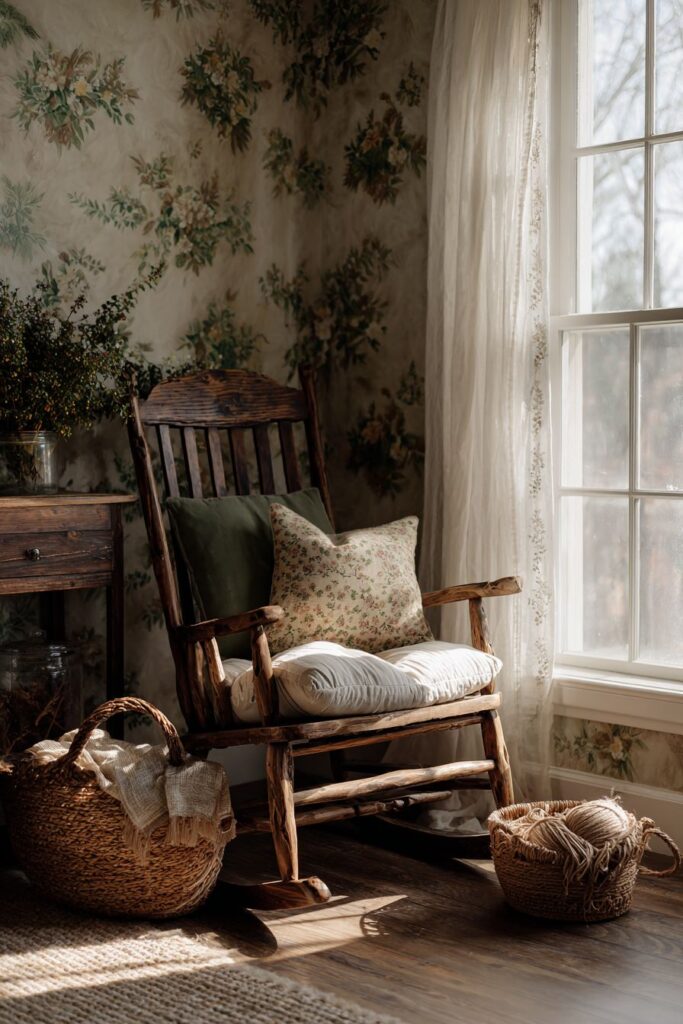
The multi-paned window provides both practical illumination and a connection to the natural world beyond. Sheer embroidered curtains frame the view without blocking precious daylight, their delicate stitchwork casting subtle patterns when backlit by the sun. At the chair’s side, a wicker basket overflows with an ongoing knitting project—balls of wool in cream and sage tones, wooden needles, and a half-finished blanket that testifies to the slower, more intentional pace of cottagecore living. This isn’t just decoration; it’s evidence of life genuinely lived according to traditional rhythms and handcrafted pleasures.
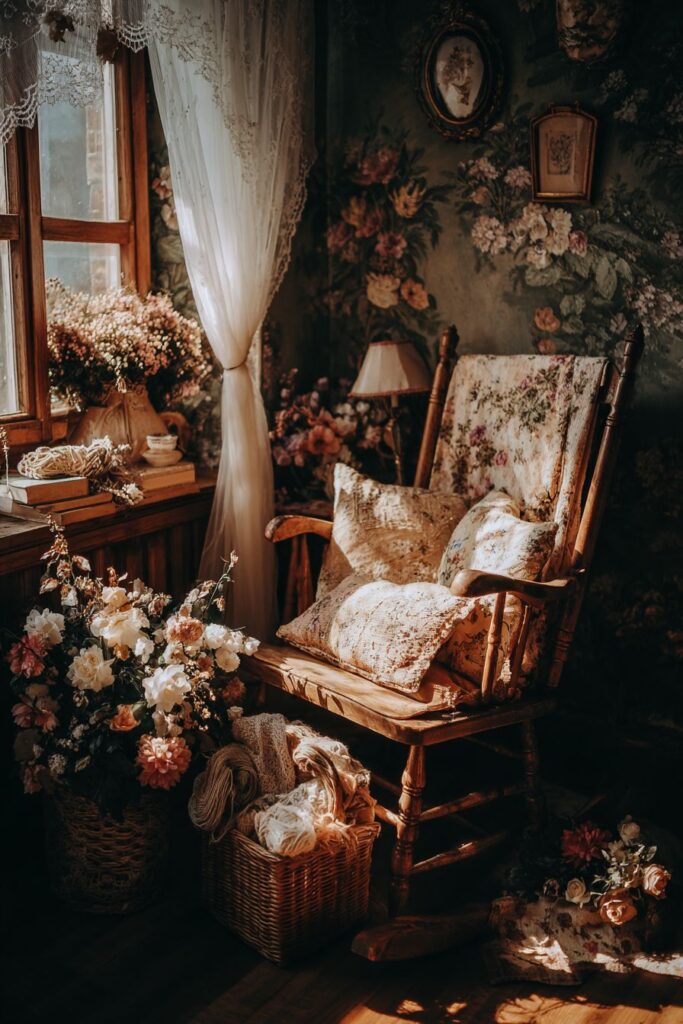
The vintage botanical wallpaper covering the nook’s walls creates an immersive garden-inspired backdrop in soft sage and cream tones. The small-scale pattern feels intimate rather than overwhelming, featuring detailed illustrations of herbs, wildflowers, and trailing vines that botanical enthusiasts would recognize and appreciate. During golden hour, when the afternoon sun streams through the window at its most flattering angle, the entire nook glows with warm, honey-toned light that emphasizes the aged wood’s grain, highlights the delicate fabrics’ textures, and creates the peaceful, countryside-inspired ambiance that makes this spot irresistible for afternoon reading sessions.
Key Design Tips:
- Position reading nooks near windows with multiple panes that divide and filter light beautifully
- Select a comfortable rocking chair with visible wear and patina that adds character and authenticity
- Create custom cushions using vintage-inspired floral fabrics in muted, nature-derived color palettes
- Display ongoing handcraft projects like knitting or embroidery to show the space is actively used
- Choose botanical wallpaper with historically accurate illustrations in soft, weathered tones
- Plan furniture placement to maximize golden hour light for the most flattering illumination
4. Rustic Entertainment Center with Country Elegance
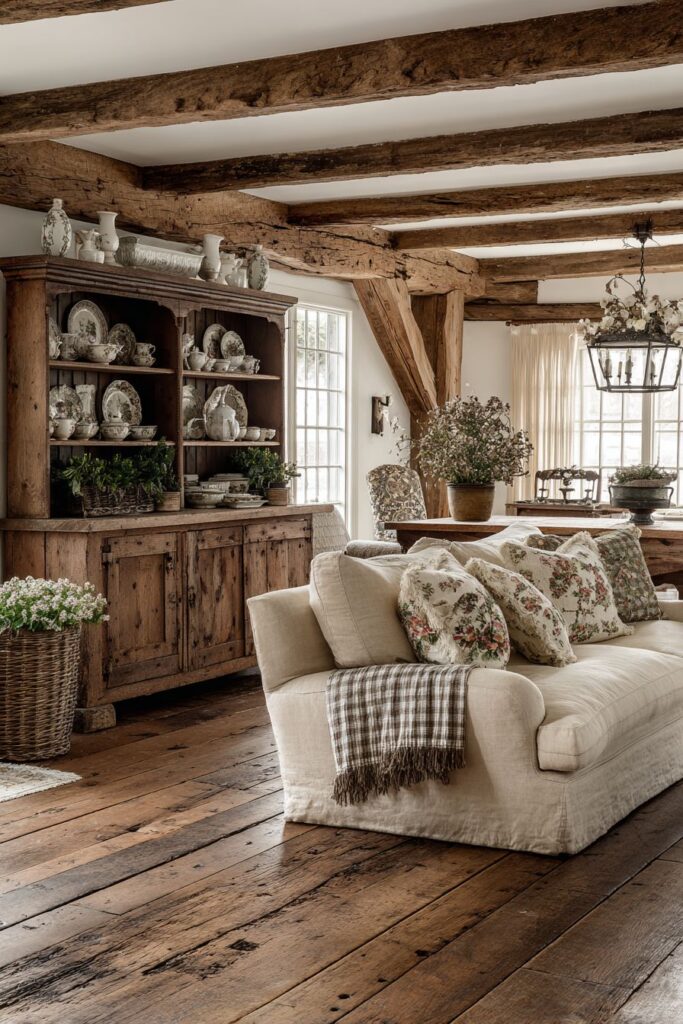
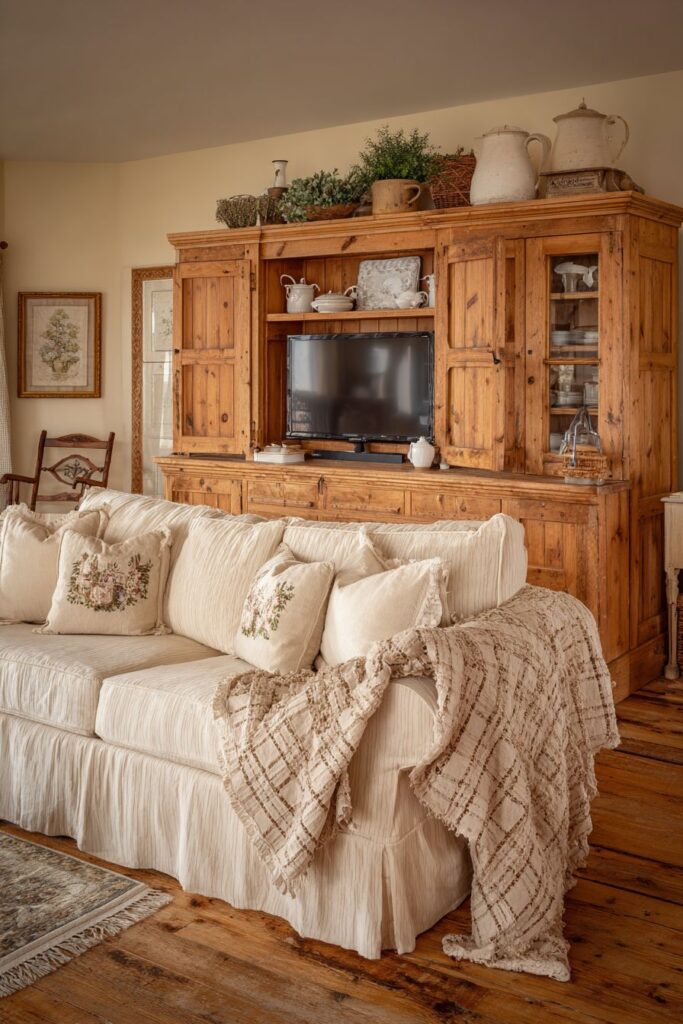
The reclaimed barn wood entertainment center stands as a masterpiece of repurposed materials and functional beauty, its weathered surface telling stories of its previous life in agricultural service. The wood’s natural variations—knots, nail holes, and color shifts—create visual interest that no manufactured piece could replicate. Rather than housing modern electronics exclusively, this piece displays a thoughtfully curated collection of vintage china in cream and soft floral patterns, interspersed with potted herbs like rosemary, thyme, and lavender that bring living greenery indoors while serving practical culinary purposes.
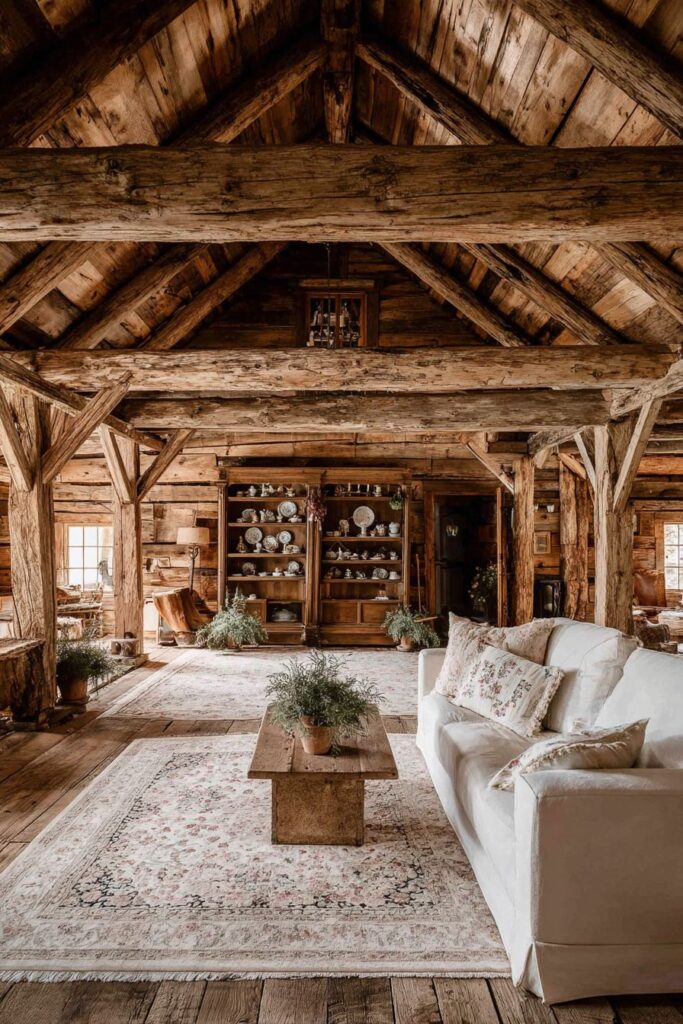
Facing this rustic focal point, a low-slung sofa dressed in a natural cream linen slipcover offers comfortable, unfussy seating that embodies cottagecore’s relaxed elegance. The slipcover choice is both practical and aesthetic—it can be removed for washing, embraces the slightly rumpled look that comes with actual use, and provides a neutral foundation for layered accessories. Needlepoint pillows featuring traditional motifs like roses, birds, and botanical specimens add pops of muted color and showcase traditional handcraft techniques. A vintage patchwork quilt draped casually over the sofa’s back introduces additional pattern and texture while remaining functional for cozy evenings.
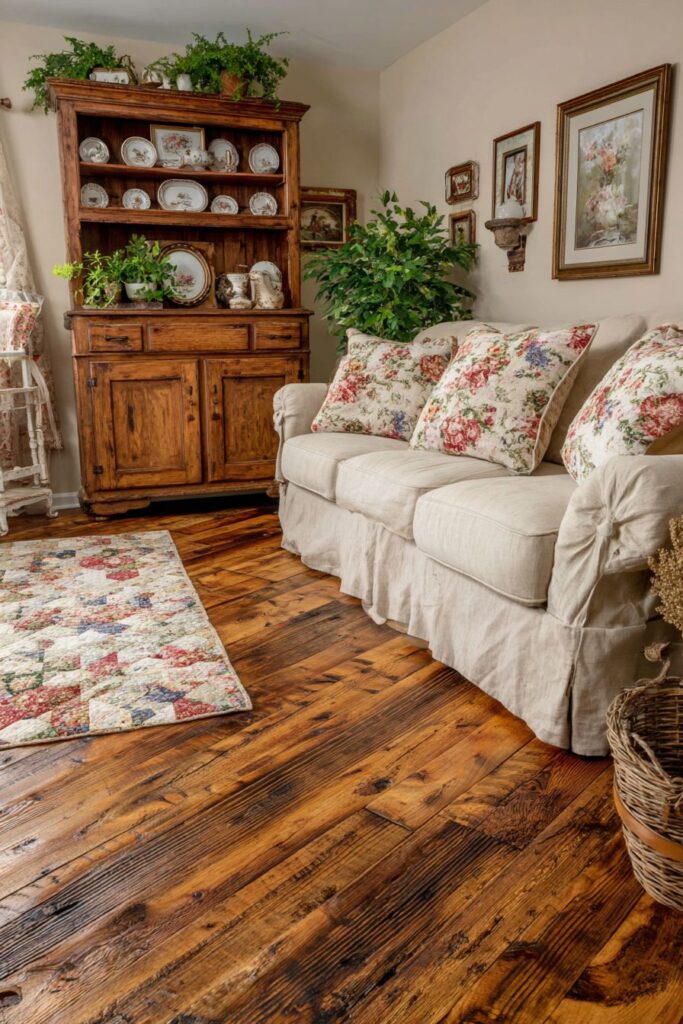
The wide plank wooden flooring grounds the entire space with authentic rustic character. These substantial boards show natural wear patterns, knots, and variations in grain that speak to genuine age and quality craftsmanship. The flooring’s honey-toned finish complements both the barn wood entertainment center and the cream upholstery, creating a cohesive color story that feels warm and inviting. The balanced exposure throughout the room ensures every element—from the rough barn wood to the delicate china displays—receives proper visual attention while maintaining the romantic country aesthetic that defines authentic cottagecore design.
Key Design Tips:
- Source reclaimed barn wood for furniture pieces to add instant history and environmental sustainability
- Style functional pieces like entertainment centers with both practical items and decorative vintage finds
- Choose linen slipcovers in neutral tones that age beautifully and launder easily
- Layer multiple textiles including needlepoint pillows and patchwork quilts for depth and comfort
- Install wide plank flooring or enhance existing floors to emphasize rustic architectural character
- Incorporate living herbs in vintage containers that serve both decorative and practical purposes
5. Eclectic Vintage Collection in Dusty Rose Tones
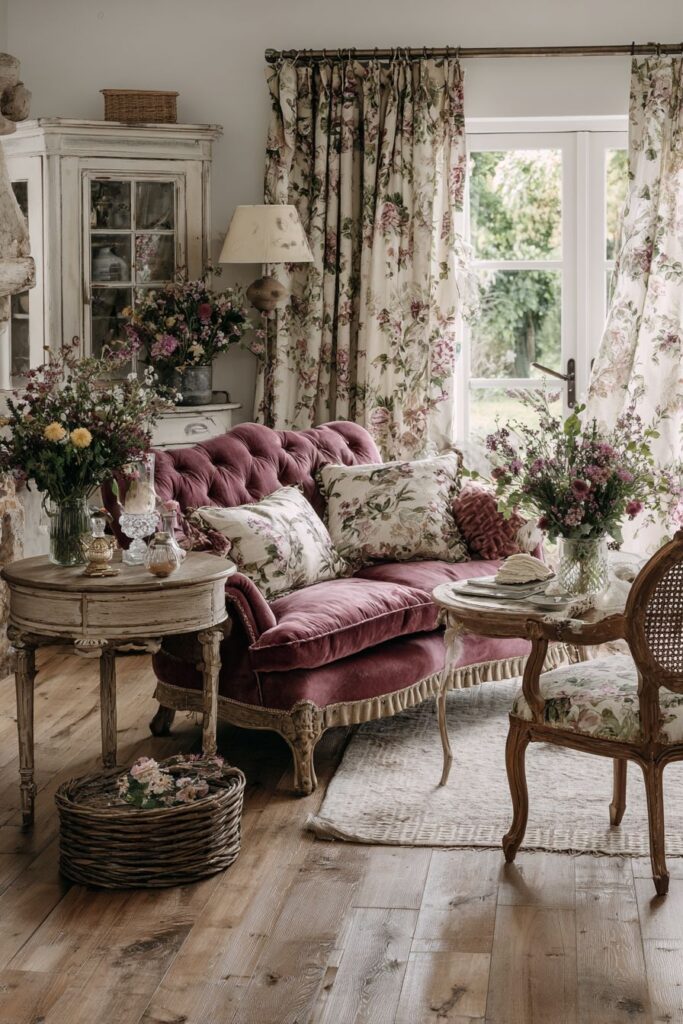
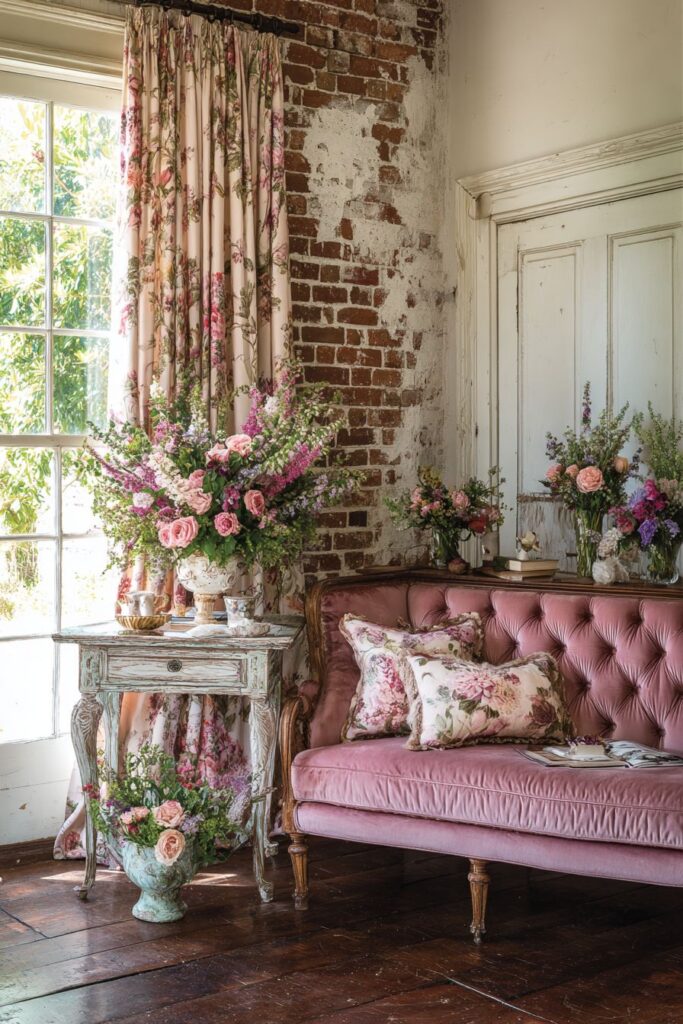
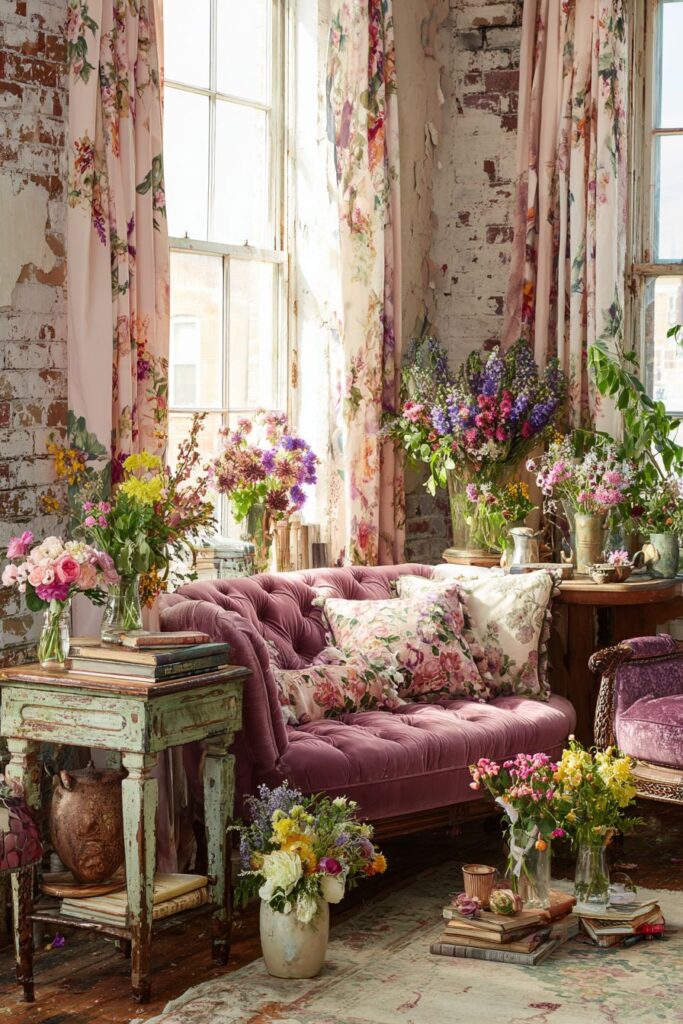
This living room celebrates the art of mixing furniture styles and periods with confidence and creative vision. The velvet tufted settee in dusty rose serves as a romantic anchor piece, its button-tufted back and curved arms embodying Victorian elegance softened by the passage of time. The velvet has faded to a perfect muted shade that feels vintage rather than new, with gentle wear patterns adding authenticity. Beside it, a painted wooden side table shows deliberate chipped patina in layers of soft white and sage green, revealing glimpses of earlier paint colors beneath—a technique that suggests generations of use and loving maintenance.
A cane-backed chair contributes textural variety and lighter visual weight to the furniture arrangement. The caning shows the slight irregularities of handwoven craftsmanship, and the wooden frame has been painted in a weathered cream tone that ties it to the side table. Throughout the room, fresh wildflowers arranged in various antique vessels create focal points and bring the garden inside. A blue transferware pitcher holds daisies and Queen Anne’s lace, while a vintage mason jar displays a simple bunch of lavender. Each vessel has its own character—some showing crazing in the glaze, others bearing the patina of age.
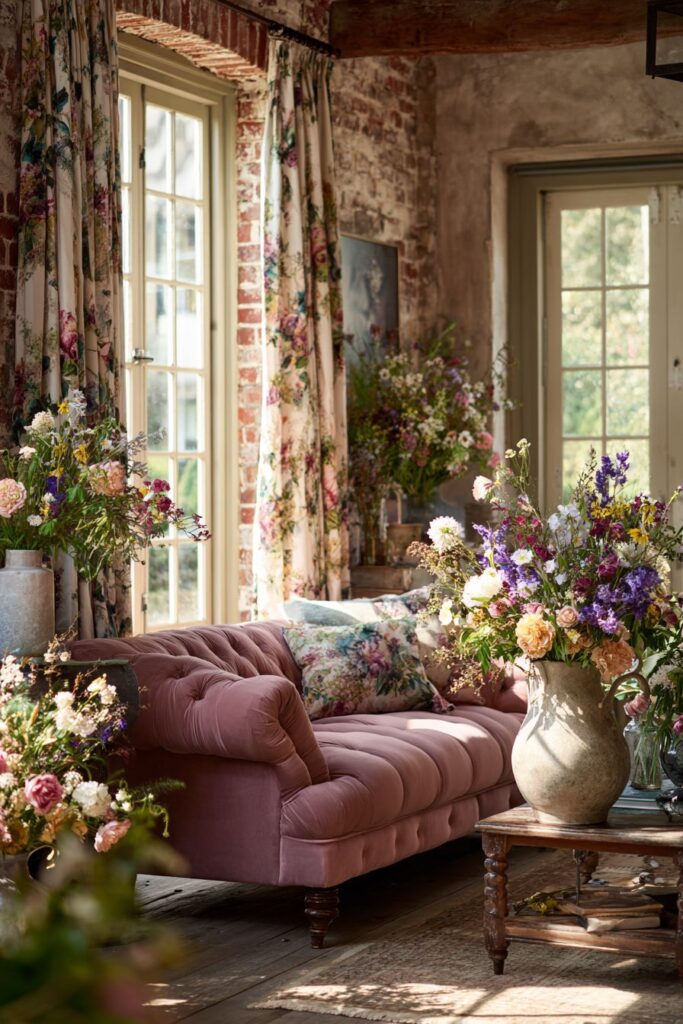
The exposed brick wall, painted in soft white, provides substantial texture while maintaining the light, airy quality essential to cottagecore spaces. The brick’s dimensional surface creates subtle shadows and depth that plain drywall could never achieve. Floral curtains in a medium-scale pattern frame the windows, their soft folds adding movement and romantic femininity. The gentle color palette—dusty rose, soft white, sage green, and cream—creates cohesion despite the eclectic furniture mix. The wide-angle perspective reveals how each mismatched piece contributes to a harmonious whole, proving that intentional eclecticism can create spaces more interesting than perfectly matched furniture sets.
Key Design Tips:
- Mix furniture periods and styles confidently, ensuring pieces share a common color palette for cohesion
- Seek out velvet upholstery in muted, vintage-inspired colors like dusty rose, sage, or soft blue
- Create intentional patina on painted furniture using distressing techniques that reveal underlayers
- Display wildflowers in a variety of antique vessels rather than matched vases for authentic cottage charm
- Paint exposed brick in soft white to add texture while maintaining light, bright spaces
- Choose medium-scale floral curtains that add pattern without overwhelming smaller rooms
6. Curated Treasury of Vintage Collections
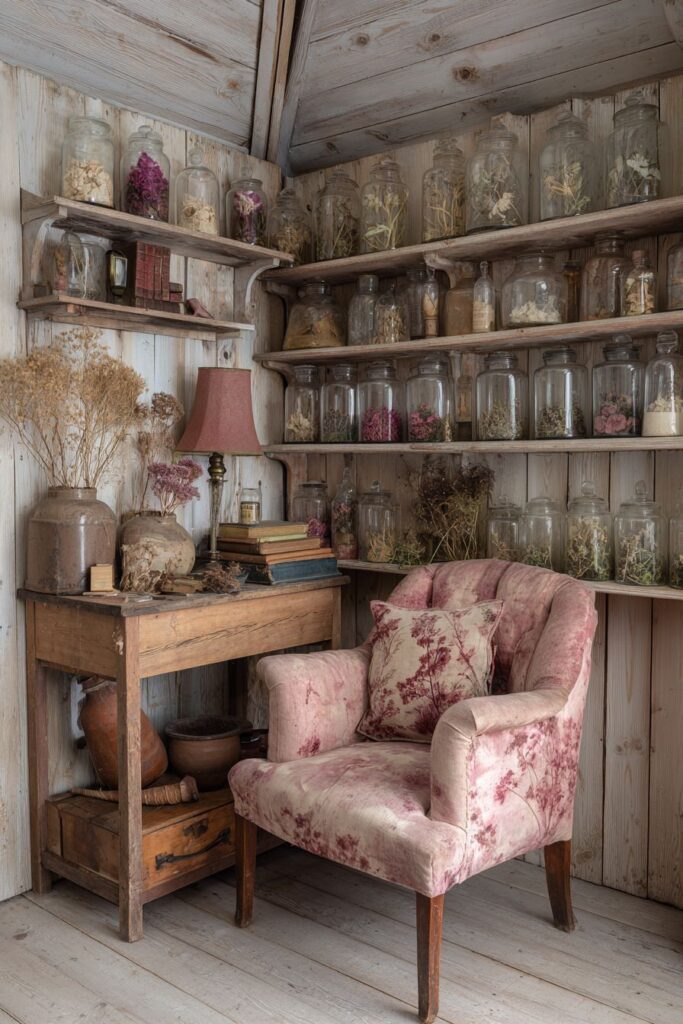
Built-in wooden shelving transforms an entire wall into a display opportunity for carefully curated vintage collections that tell personal stories and celebrate found treasures. The shelves themselves show the warm honey tones of natural wood, their simple construction allowing the displayed items to command attention. Vintage books with cloth covers and embossed spines fill several shelves, arranged both vertically and horizontally to create visual interest. These aren’t pristine first editions but well-read volumes with dog-eared pages and marginalia—books that have genuinely enriched lives rather than merely decorating them.
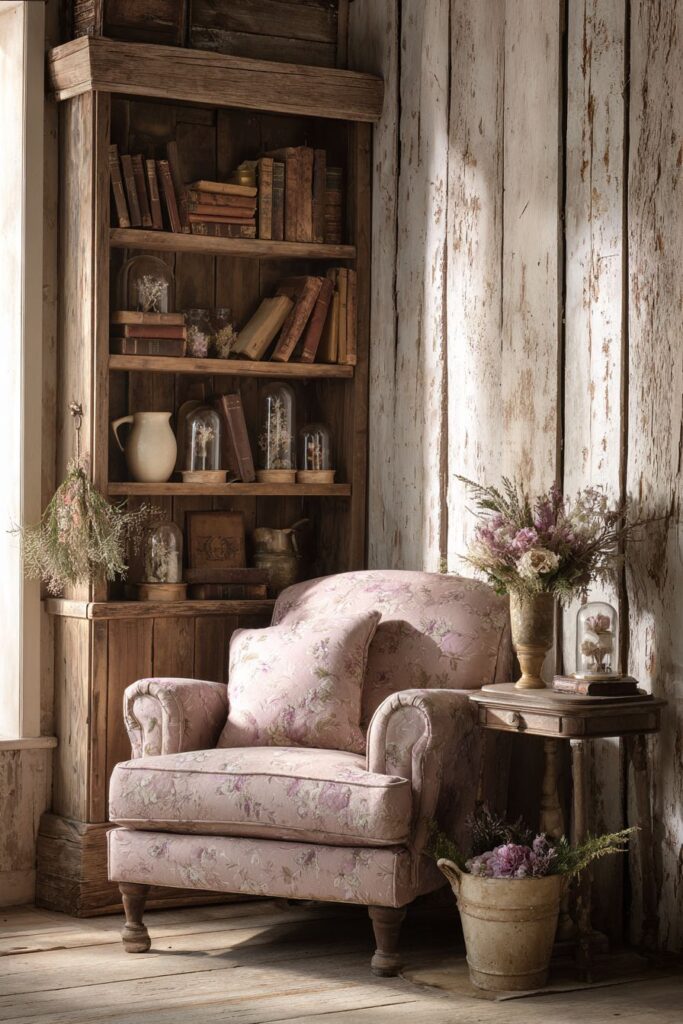
Preserved flowers under glass cloches create Victorian-inspired vignettes that protect delicate botanical specimens while displaying them beautifully. Roses, hydrangeas, and wild grasses have been carefully dried to maintain their color and form, creating permanent gardens that require no maintenance yet provide year-round beauty. Hand-thrown pottery pieces—some glazed in earthy browns and greens, others left in natural clay tones—add sculptural interest and celebrate traditional craftsmanship. Each pot shows the subtle irregularities and thumb marks of the potter, making them unique artworks rather than mass-produced vessels.
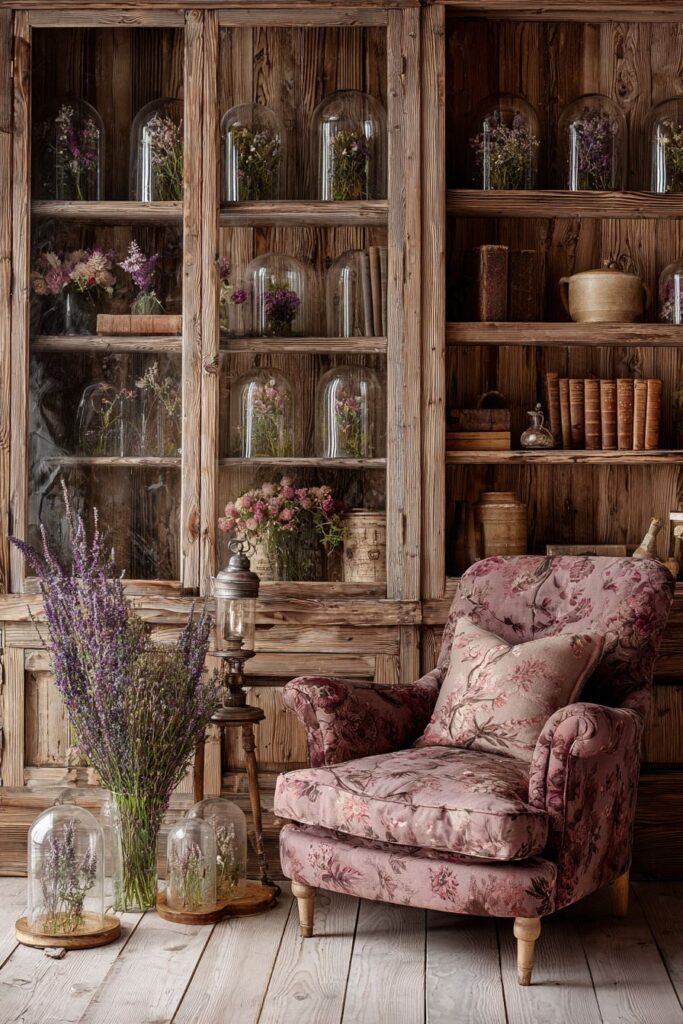
The comfortable overstuffed armchair positioned near the shelving invites extended browsing and reading sessions. Upholstered in faded rose-patterned fabric that has mellowed beautifully with age and sunlight exposure, the chair offers deep cushioning and wide arms perfect for resting teacups or books. A side table within easy reach holds an oil lamp with a glass chimney—not merely decorative, but functional for evening reading when soft lamplight creates an even more intimate atmosphere. The whitewashed tongue-and-groove paneling covering the remaining walls provides architectural interest through its linear pattern while maintaining the light, bright quality that allows the thoughtful arrangement of collected treasures to shine. Natural light from nearby windows emphasizes textures—the rough pottery glazes, the delicate pressed flowers, the worn book covers—creating a space that celebrates both found objects and the natural world.
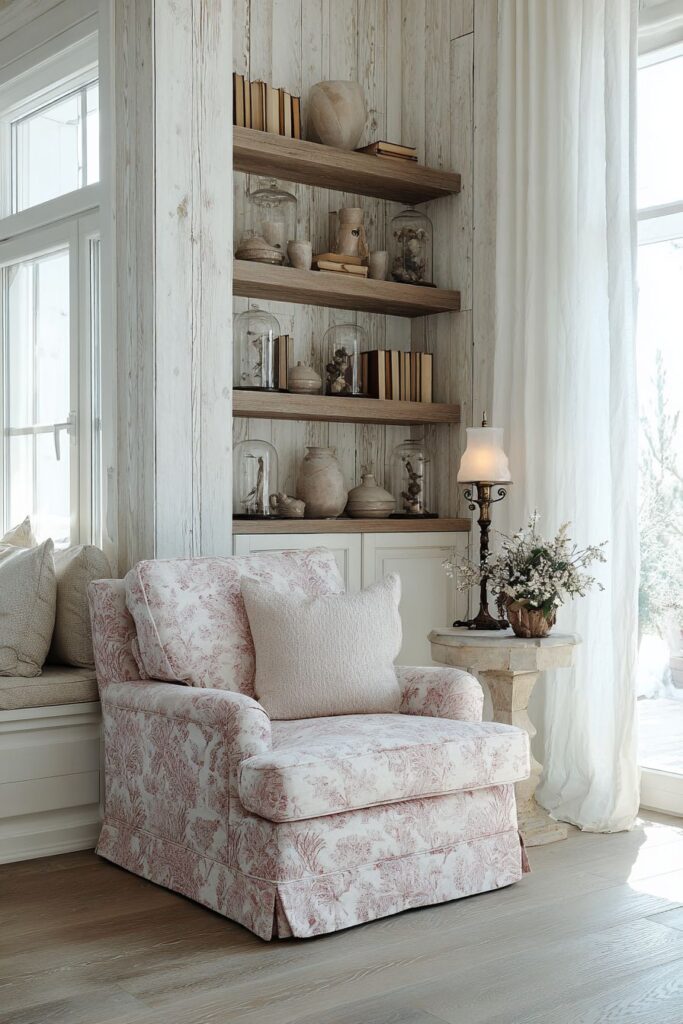
Key Design Tips:
- Install built-in shelving to maximize display space while maintaining clean architectural lines
- Curate vintage book collections for their covers, bindings, and genuine character rather than color coordination
- Display preserved flowers under glass cloches to create lasting botanical specimens
- Incorporate hand-thrown pottery that shows the maker’s marks and celebrates artisanal craftsmanship
- Choose deeply comfortable upholstered seating in faded vintage patterns for reading areas
- Use functional oil lamps or vintage-style lighting to create ambient evening illumination
7. Farmhouse Table as Central Gathering Hub
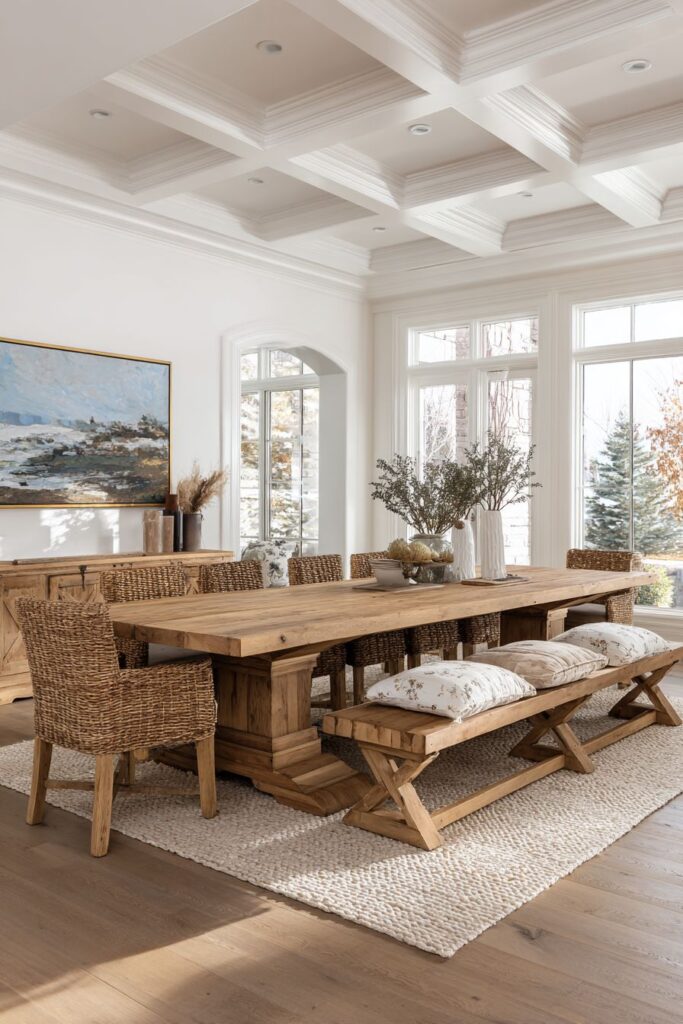
Breaking from traditional living room conventions, this space centers around a large farmhouse-style wooden dining table that serves multiple purposes—dining, crafting, working, and gathering. The table’s substantial size and sturdy construction speak to generations of family meals and shared activities. Its wood surface shows the beautiful patina of use: light scratches, slight indentations, and variations in color that prove its authenticity. The table isn’t precious or protected but embraced as a functional piece that improves with age and use, embodying the cottagecore principle that beauty and utility need not be separate.
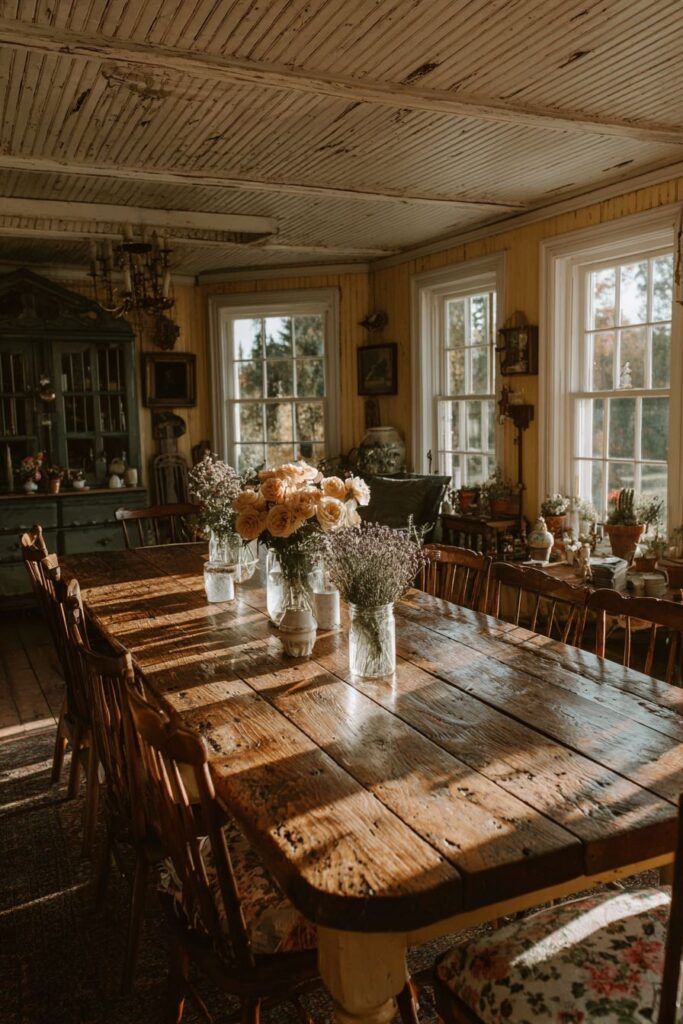
Surrounding the table, mismatched wooden chairs create an eclectic seating arrangement that feels collected over time rather than purchased as a set. Each chair has its own character—one with turned legs and a ladder back, another with a simpler design and worn paint finish, a third featuring a rush seat that shows expert handwork. Needlepoint cushions in various floral and geometric patterns soften the seats while adding color and handcrafted detail. The cushions show the slight irregularities of handwork, with stitches that vary subtly and patterns that may not align perfectly—qualities that increase rather than diminish their charm.
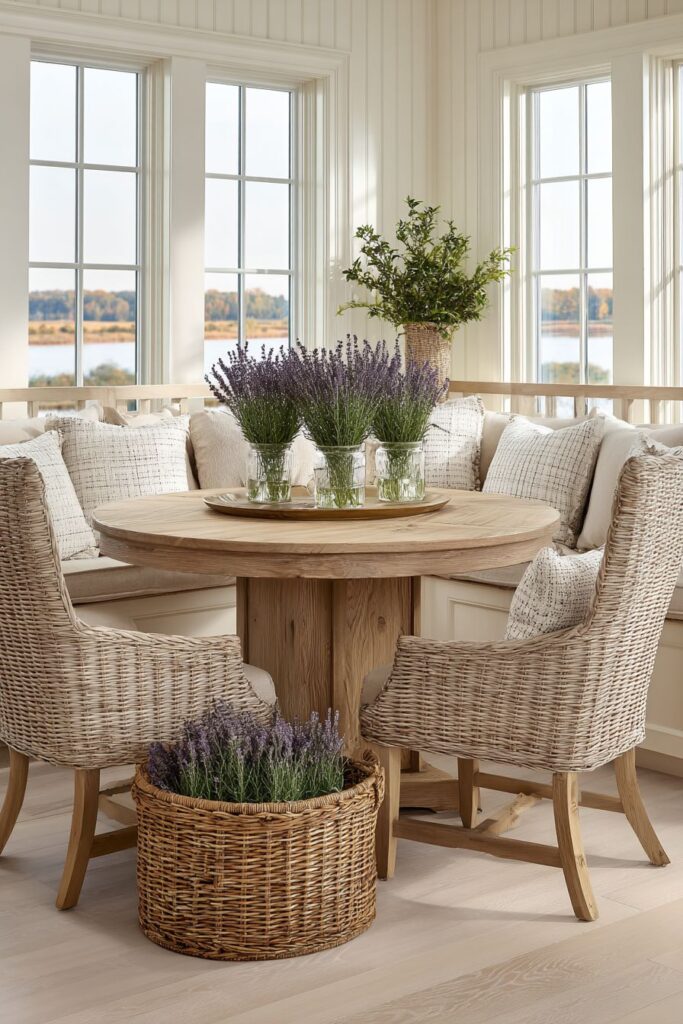
Mason jars filled with garden roses and lavender create simple, accessible centerpieces that can be easily moved when the table is needed for other activities. The jars’ utilitarian simplicity and wide availability make them perfect cottagecore vessels—no expensive vases required when humble mason jars display flowers so beautifully. Beadboard wainscoting in cream tones adds architectural interest to the lower walls, its linear pattern creating subtle texture without overwhelming the space. Soft afternoon light streaming through cottage-style windows illuminates the scene, emphasizing the pastoral simplicity and multipurpose functionality that makes this unconventional living room so appealing for families who value flexibility and authentic country living.
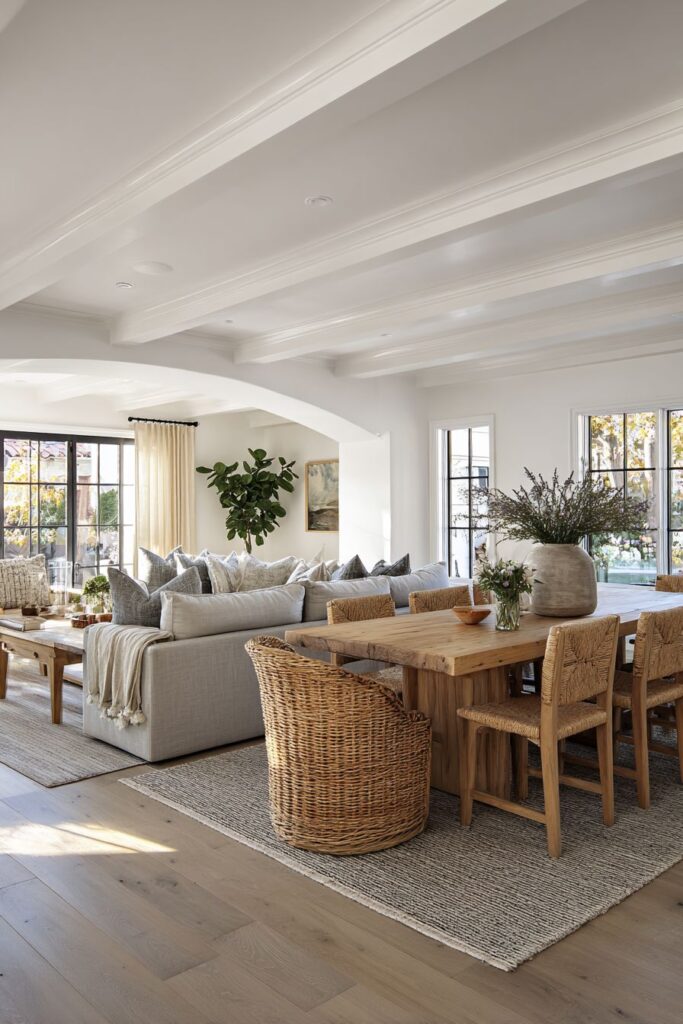
Key Design Tips:
- Consider placing a large farmhouse table as your living room centerpiece for multipurpose functionality
- Collect mismatched wooden chairs from flea markets and antique stores, refinishing or painting as needed
- Create needlepoint or embroidered cushions that coordinate through color while featuring varied patterns
- Use mason jars as vessels for fresh flowers that can be easily rearranged or replaced
- Install beadboard wainscoting to add architectural character to plain walls
- Maximize natural light from multiple windows to enhance the airy, pastoral atmosphere
8. Romantic Daybed Sanctuary
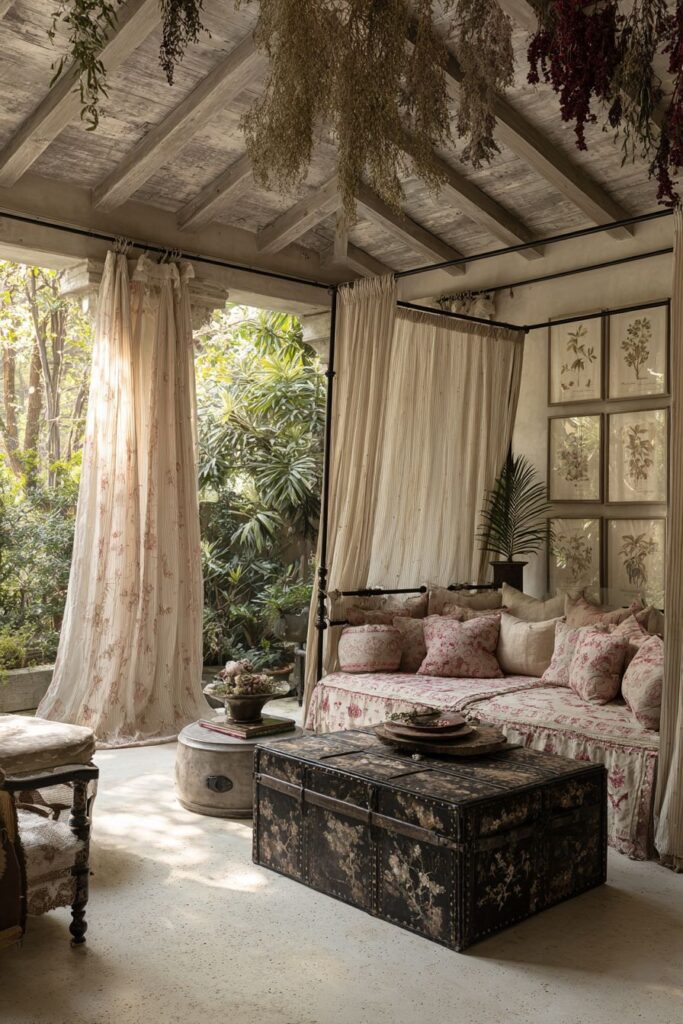
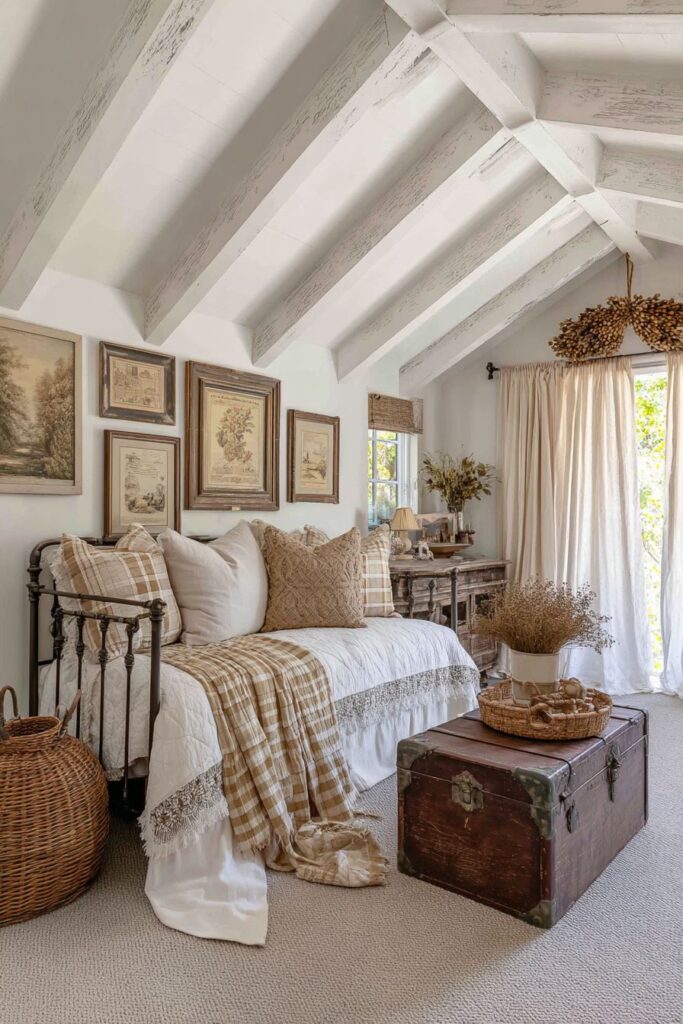
The iron frame daybed creates an unexpectedly romantic focal point in this cottagecore living room, its metal curves and decorative details suggesting Victorian elegance adapted for comfortable modern living. Rather than serving as a bed per se, this daybed functions as generous seating that can accommodate afternoon naps, reading marathons, or social gatherings with equal ease. The iron frame shows gentle rust patina in places—not deterioration, but the authentic aging that comes from years of use. This imperfection adds character rather than detracting from the piece’s beauty.
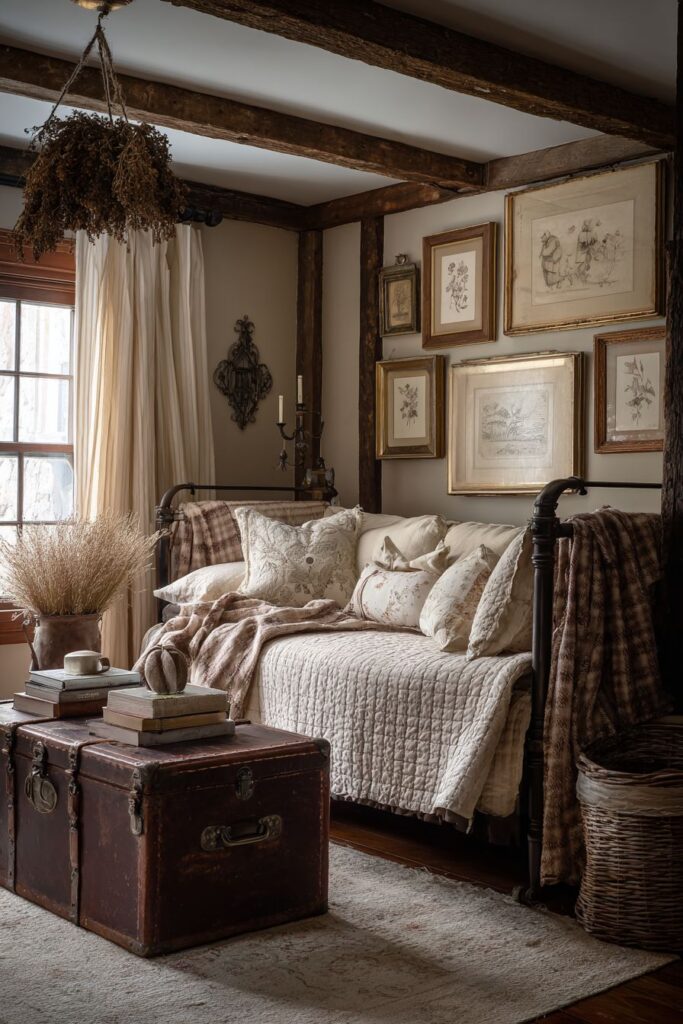
Layered across the daybed, vintage quilts in various patterns create a sumptuous, textured surface. One quilt features a traditional log cabin pattern in soft pinks and creams, another displays a flower garden appliqué with hand-stitched details, while a third shows the geometric precision of a grandmother’s flower garden design. These quilts aren’t stored away in closets but used daily, their slight fading and gentle wear testifying to their ongoing role in daily life. Embroidered linens—pillowcases with delicate floral motifs, a top sheet with scalloped edges and monogrammed initials—add refined touches that speak to traditional domestic arts.
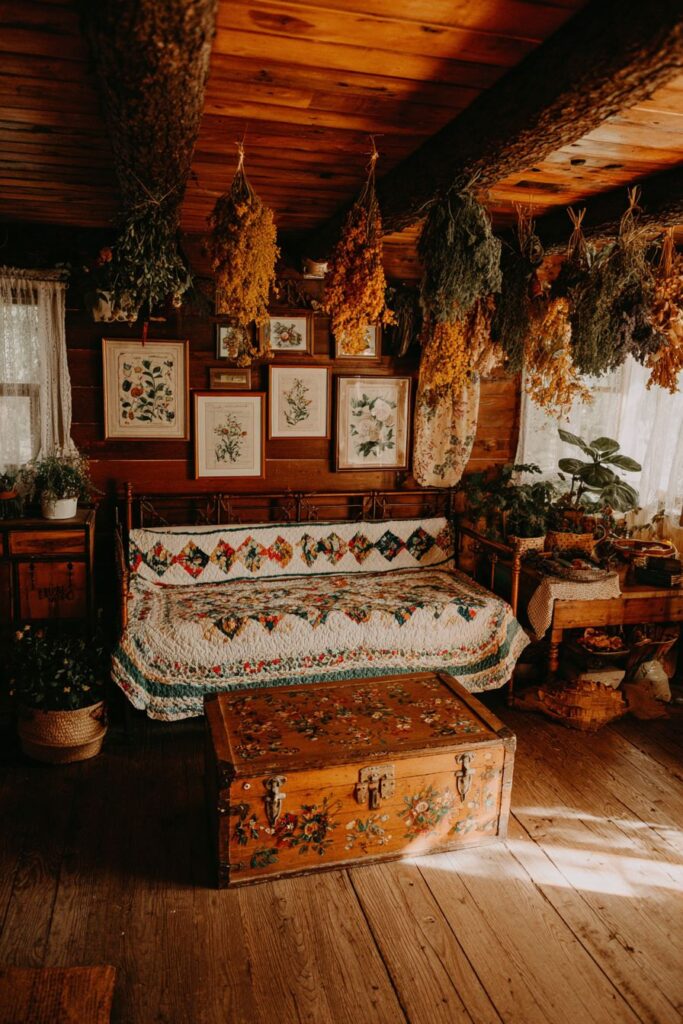
The wall above the daybed becomes a gallery for botanical prints housed in antique frames of varying sizes, styles, and finishes. These aren’t reproductions but genuine vintage prints, some hand-colored, others rendered in sepia tones or delicate watercolors. The frames’ mismatched quality adds interest rather than chaos because the botanical subject matter creates thematic cohesion. A painted wooden trunk positioned at the daybed’s foot serves dual purposes—it provides storage for extra linens and pillows while functioning as a coffee table surface for books and tea trays. Dried herbs hang from exposed ceiling beams above, their subtle fragrances scenting the air while adding vertical visual interest. Natural lighting filtered through gauzy curtains creates the dreamy, soft-focus atmosphere that makes this romantic countryside retreat irresistible for afternoon relaxation.
Key Design Tips:
- Choose a daybed with an iron frame for its versatility as both seating and occasional sleeping space
- Layer multiple vintage quilts in coordinating colors but varied patterns for rich textile interest
- Hang botanical prints in mismatched antique frames, uniting them through subject matter rather than uniformity
- Repurpose vintage trunks as storage ottomans or coffee tables for character and functionality
- Dry and display herbs from ceiling beams for both visual appeal and subtle natural fragrance
- Install sheer, gauzy curtains that diffuse light softly while maintaining privacy
9. Window Seat Reading Haven
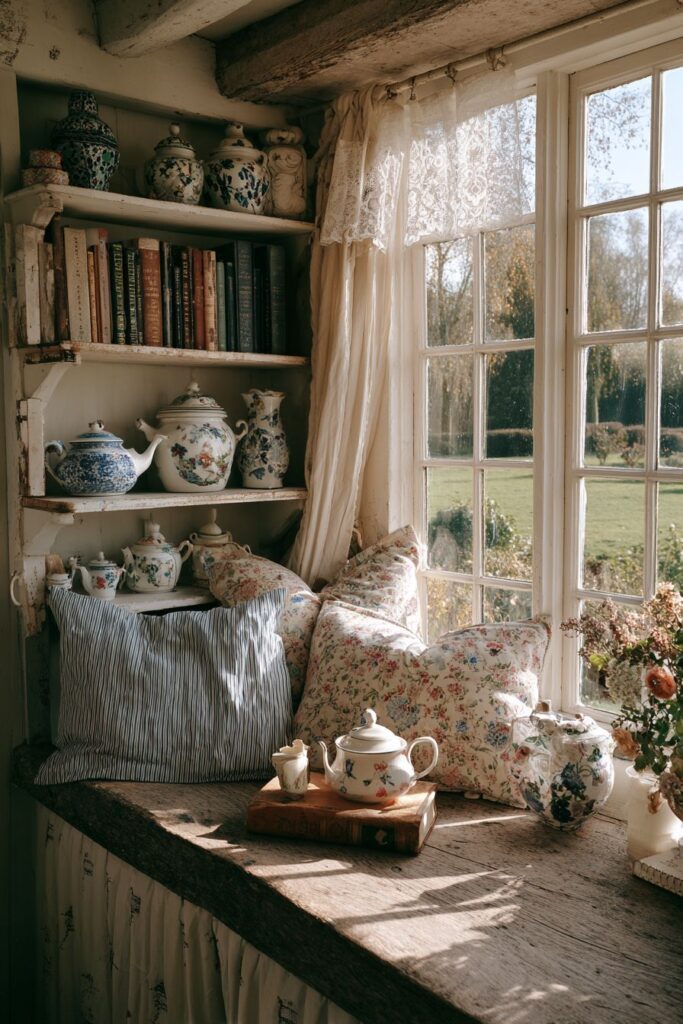
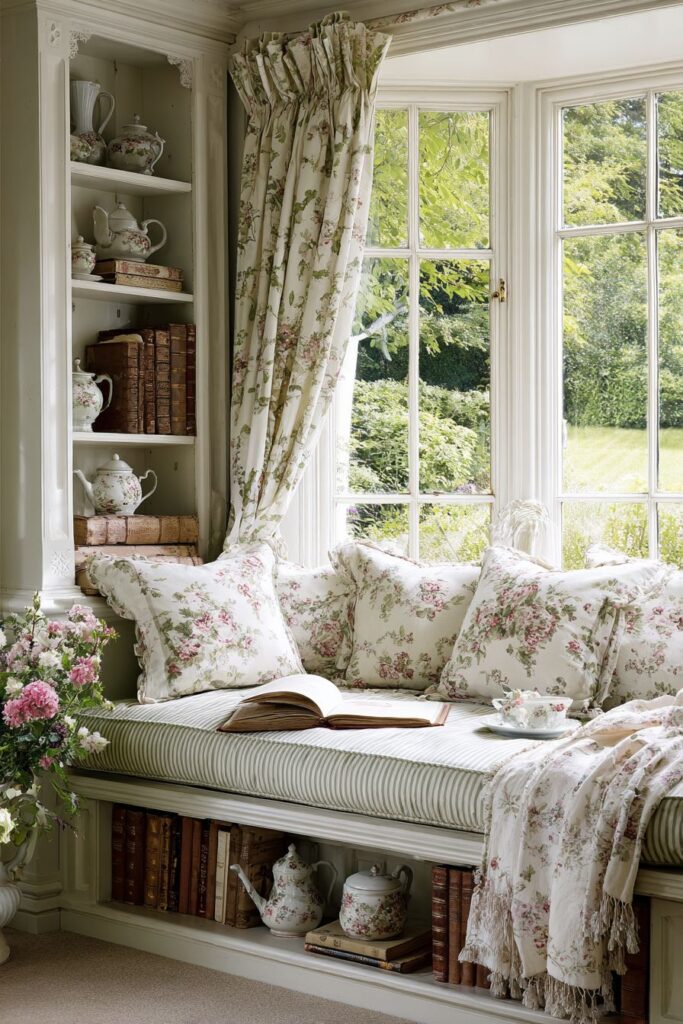
The built-in window seat nestled into a charming bay window represents the quintessential cottagecore reading spot—a dedicated space flooded with natural light and cushioned for extended comfort. The seat’s construction integrates seamlessly with the room’s architecture, creating the impression that it has always been part of the home rather than added later. Beneath the seat, practical storage compartments hold extra blankets, books, or craft supplies, maximizing functionality without sacrificing aesthetic appeal. The window seat isn’t merely decorative but genuinely designed for use.
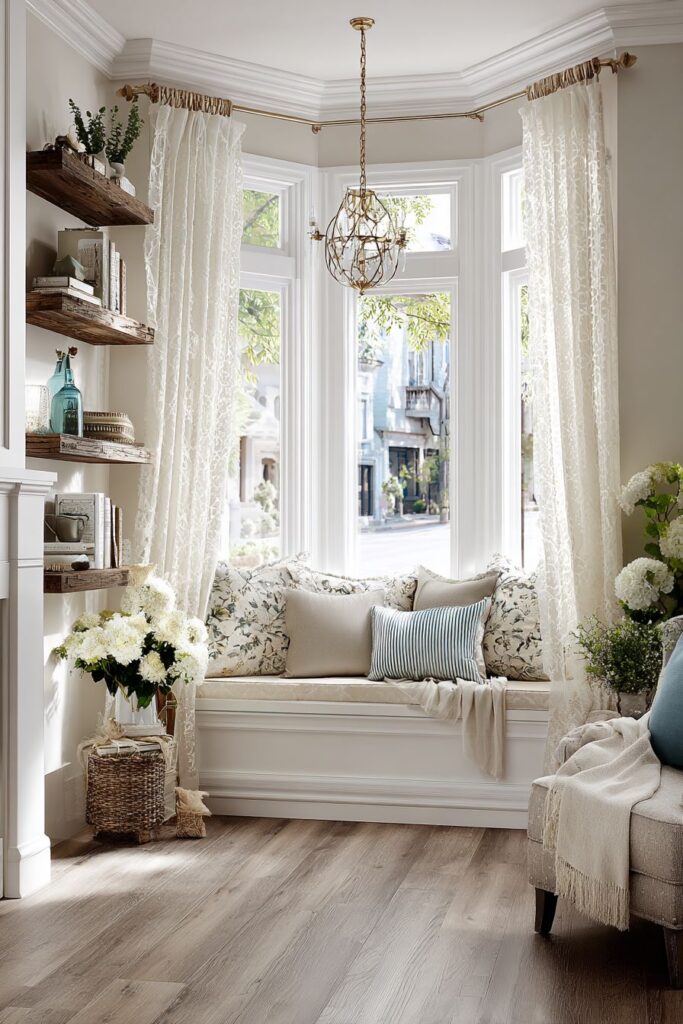
Cushions upholstered in vintage ticking stripe and floral fabrics create a mix-and-match charm that feels curated over time. The ticking stripe fabric—traditional navy or black stripes on cream background—provides graphic punch while maintaining period-appropriate authenticity. Floral cushions in muted pinks, soft greens, and weathered blues add romantic femininity. Hand-stitched details like embroidered corners or piped edges showcase traditional sewing techniques and add refined finishing touches. The cushions’ slightly irregular shapes and hand-finished seams prove they were crafted with care rather than mass-produced.
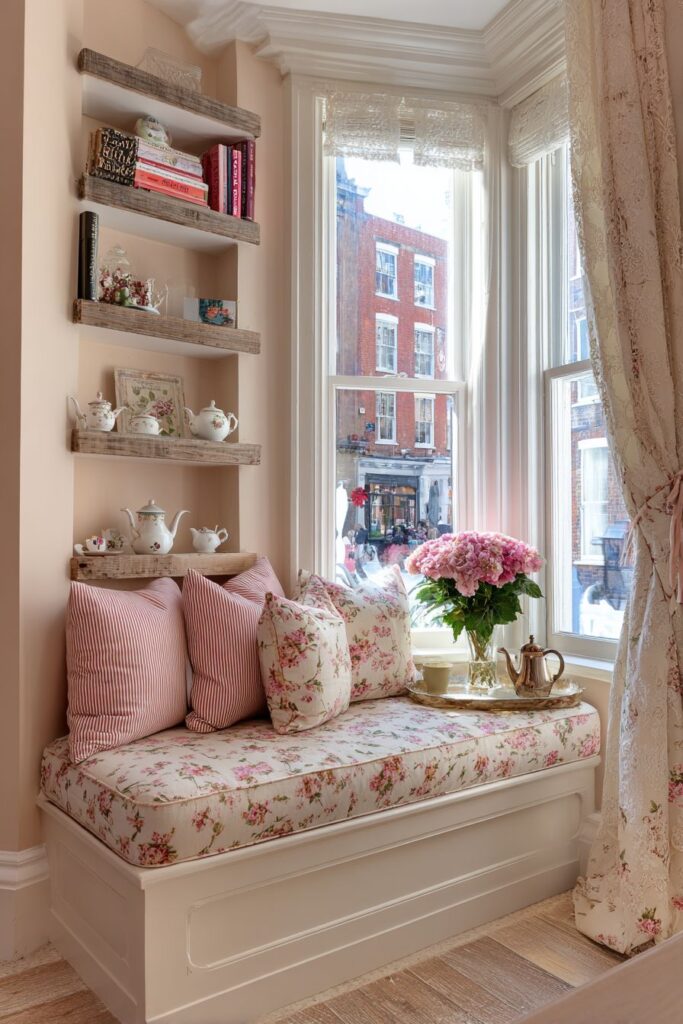
Open shelving made from reclaimed wood flanks the window seat, providing easy access to vintage teapots in various patterns and sizes alongside well-worn novels with cracked spines and faded covers. The teapots aren’t matched but collected—some china with hand-painted flowers, others sturdy Brown Betty designs, a few featuring whimsical shapes or unusual glazes. The novels show the gentle damage of being read repeatedly and loved deeply.
Lace curtain panels frame the window view without blocking precious natural light, their delicate patterns creating subtle visual interest while maintaining the airy, open feeling essential to this cozy reading spot. The wide-angle perspective showcases how vintage-inspired functional elements integrate seamlessly into this lived-in space, creating an environment that invites you to spend hours with a good book and a cup of tea.
Key Design Tips:
- Build or install window seats in bay windows or other alcoves to create dedicated reading spaces
- Mix fabric patterns intentionally, pairing graphic stripes with soft florals in coordinating colors
- Showcase hand-stitched details on cushions and pillows to celebrate traditional needlework
- Install open shelving within arm’s reach of seating for books, teacups, and other frequently used items
- Display vintage teapot collections that can be rotated into actual use rather than permanently displayed
- Choose lace curtain panels that filter light beautifully while framing attractive views
10. Layered Hearth with Accumulated Treasures
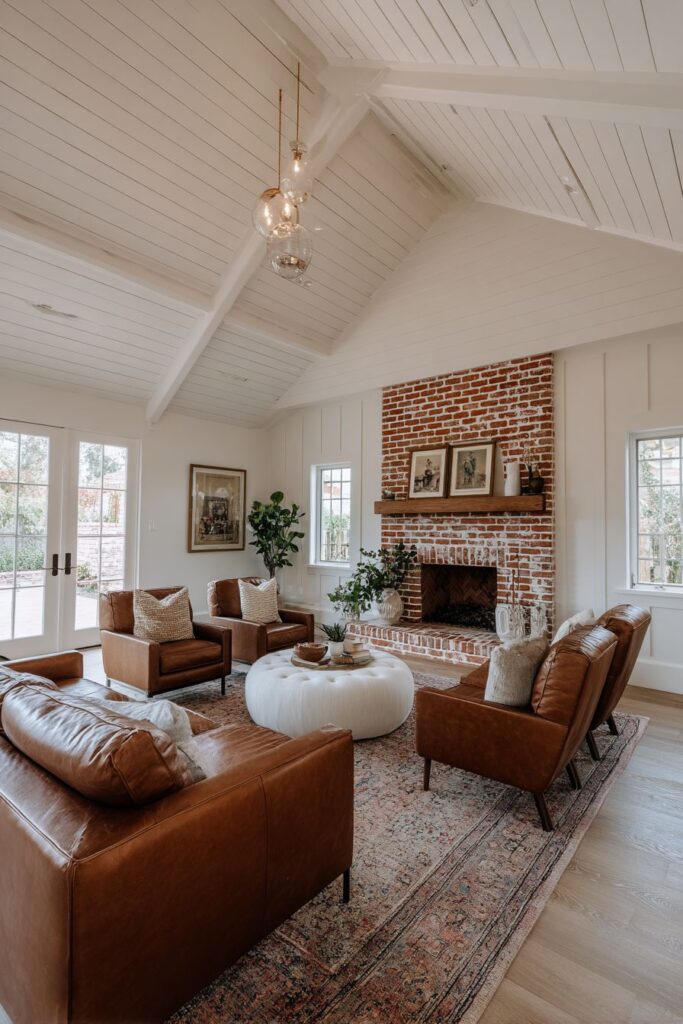
The brick hearth anchors this living room with substantial architectural presence, its rough masonry and generous proportions suggesting a fireplace built for genuine heating rather than mere aesthetics. The mantel, crafted from a single substantial beam, shows the saw marks and natural variations of hand-hewn wood. This isn’t a manufactured piece but salvaged from old construction, bringing authentic history into the space. The mantel’s display celebrates found objects and family history through antique milk glass vases in various heights and shapes, vintage family portraits in tarnished silver frames, and foraged branches chosen for their sculptural forms and seasonal interest.
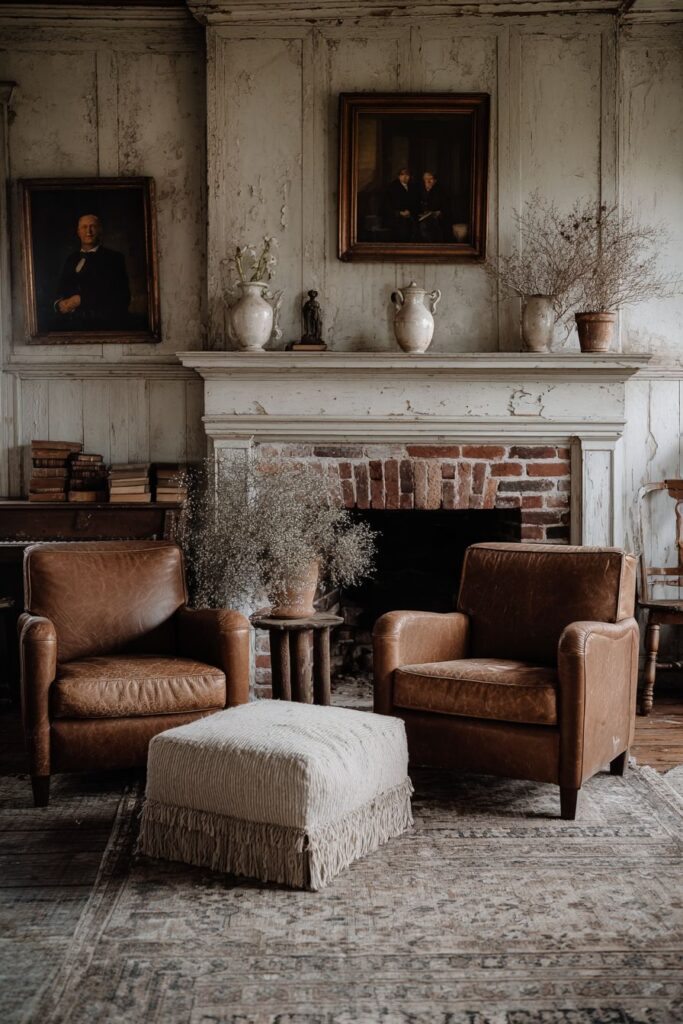
A faded Persian-style rug anchors the seating area with rich pattern and muted color. The rug’s design features traditional medallions and borders in soft reds, blues, and creams that have mellowed beautifully over decades. Its worn areas and slight fraying add authenticity—this is a rug that has served generations well and continues to do so. Worn leather armchairs with honest patina and comfortable slouch surround a linen-covered ottoman that serves as both coffee table and extra seating. The leather shows the beautiful aging that quality materials develop—darkened areas where hands have gripped the arms, softened surfaces where bodies have rested, and gentle creasing that maps years of use.
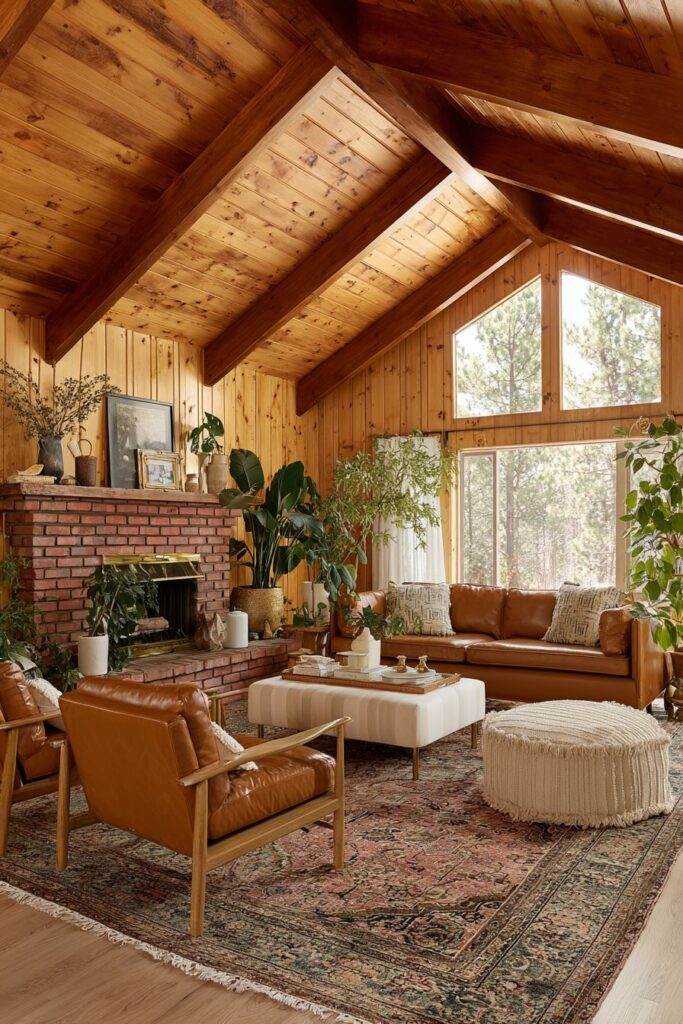
Painted wood paneling in soft butter cream covers the walls, its warm yellow undertones creating a envelope of gentle color that makes the space feel sunny even on overcast days. The paneling’s simple tongue-and-groove construction adds subtle texture through its linear pattern. Balanced exposure photography captures the layered textures throughout the space—the rough brick, the smooth milk glass, the worn leather, the soft linen, the intricate rug pattern—while conveying the authentic, accumulated-over-time quality that defines truly successful cottagecore design. This room feels inherited rather than decorated, as though each piece arrived gradually to serve a purpose and remained because it brought beauty or comfort.
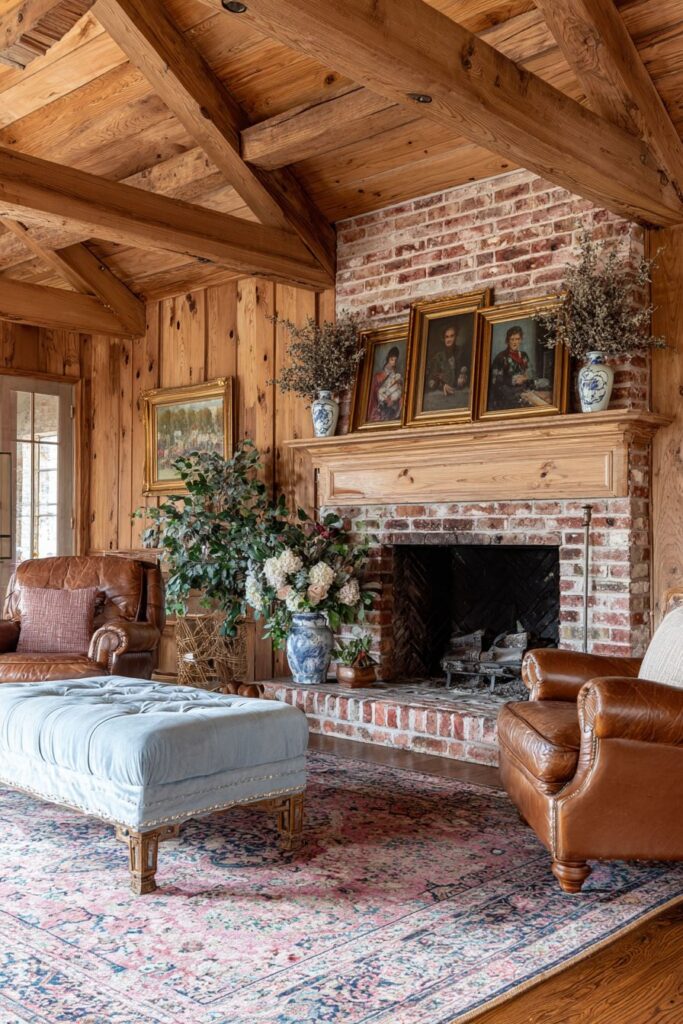
Key Design Tips:
- Display milk glass collections in varied heights and shapes for monochromatic impact with textural interest
- Incorporate genuine vintage family photographs in tarnished frames rather than replicas
- Choose worn Persian or Persian-style rugs whose fading and patina add character
- Select leather furniture with honest wear rather than distressed-to-look-old pieces
- Paint wood paneling in warm cream or butter tones that create enveloping comfort
- Arrange furniture to facilitate conversation around the fireplace as the natural focal point
11. Romantic Wallpaper and Pressed Flower Gallery
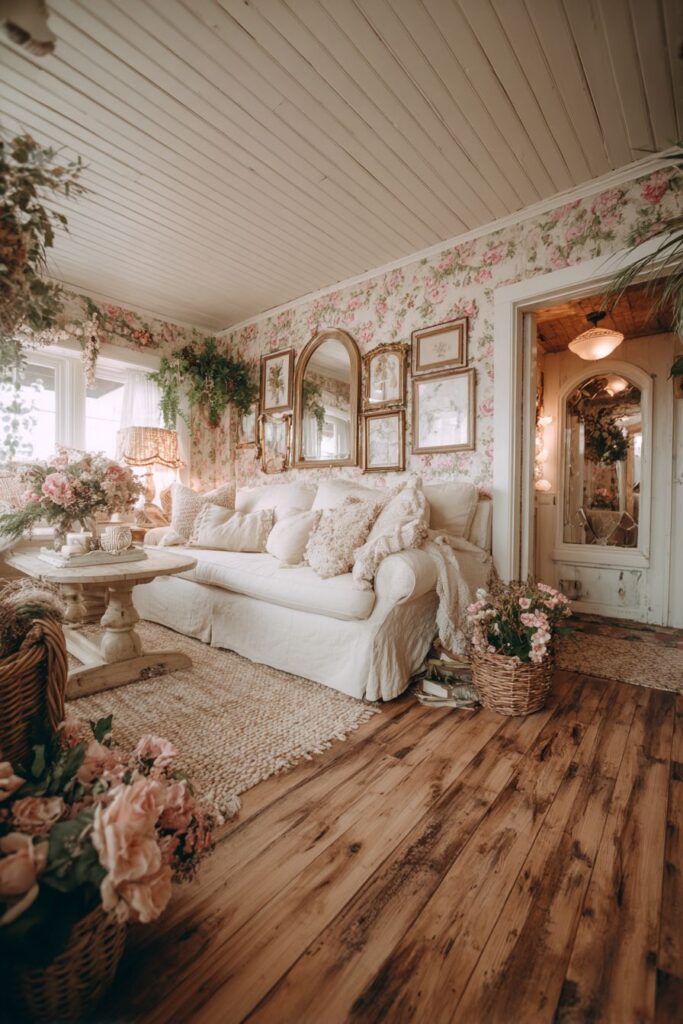
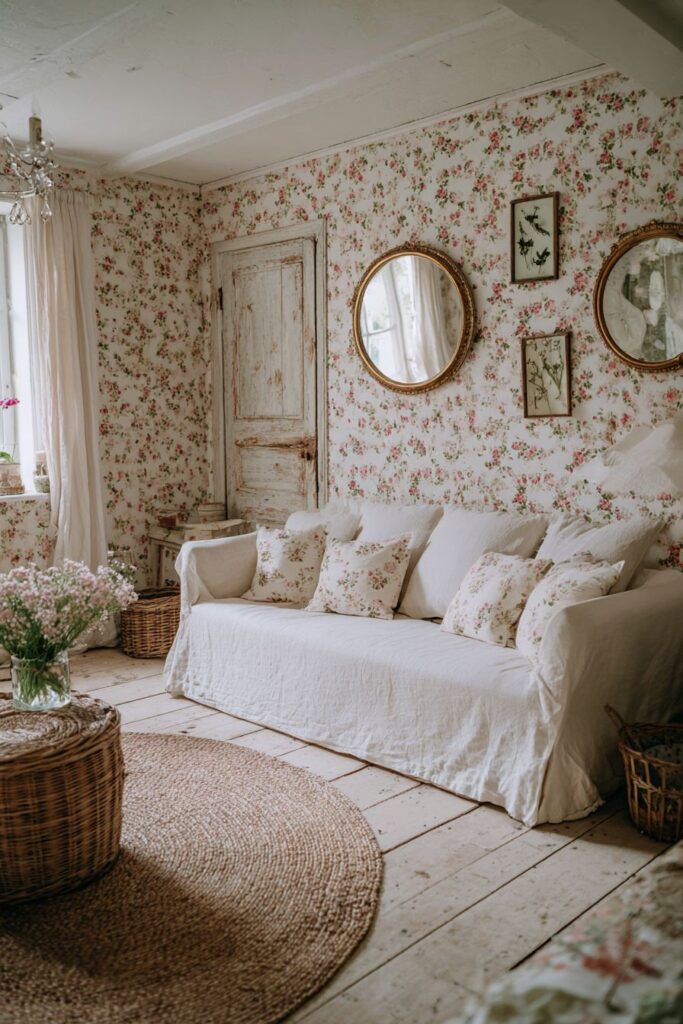
Vintage floral wallpaper envelops this living room in garden-inspired romance, its small-scale rose patterns in muted pinks and greens creating immersive botanical atmosphere. The wallpaper’s design references historical patterns from the Victorian and Edwardian eras when floral wallcoverings reached their aesthetic peak. The muted color palette ensures the pattern enhances rather than overwhelms the space—these aren’t bright, primary colors but the soft, weathered tones of aged roses, new leaves, and morning mist. The wallpaper creates the effect of sitting in a perpetual English garden regardless of season or weather.
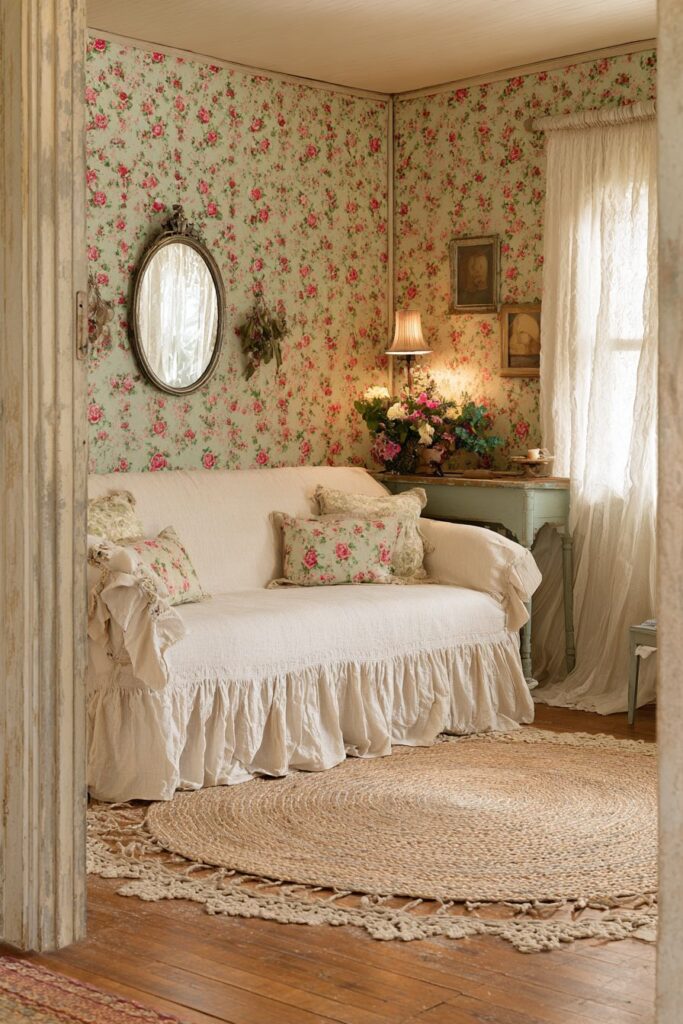
A slipcovered sofa in natural linen provides neutral, comfortable seating that doesn’t compete with the patterned walls. The slipcover’s relaxed fit allows gentle rumpling and slippage that would be flaws in formal settings but read as comfortable informality in cottagecore design. The linen’s natural color and subtle slub texture add organic interest without pattern or bright color. Facing the sofa, a gallery wall creates visual interest through its collection of pressed flowers and antique mirrors with ornate frames showing gentle tarnish. The pressed flowers are mounted simply—perhaps between glass panes or in shallow shadow boxes—allowing their delicate forms and faded colors to command attention.
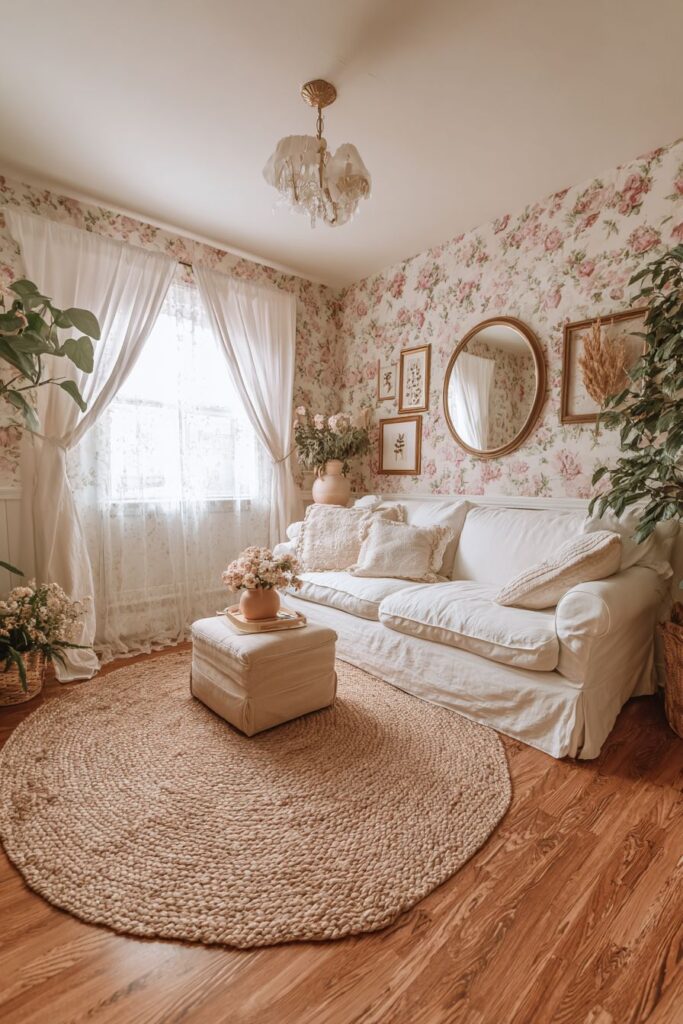
The antique mirrors vary in size and frame style, but each shows the authentic aging that comes from decades or centuries of use. The silvering has darkened and mottled, creating mysterious, romantic reflections. The frames—some carved wood, others composition plaster—show gilding that has worn away in high spots, revealing darker layers beneath. Braided rag rugs layer over painted wood floors, adding textural softness underfoot and additional handcrafted elements. Soft natural lighting emphasizes the romantic, garden-inspired details throughout the space, from the wallpaper’s delicate rose blooms to the pressed specimens’ intricate forms, creating a cohesive environment captured through professional interior design photography that showcases the layered, thoughtfully detailed nature of authentic cottagecore design.
Key Design Tips:
- Choose vintage-inspired floral wallpaper with small-scale patterns in muted, aged tones
- Balance patterned walls with solid neutral upholstery in natural fibers like linen or cotton
- Create gallery walls combining pressed botanicals with antique mirrors for varied textures and reflection
- Seek mirrors with authentic tarnished silvering rather than artificially aged reproductions
- Layer braided rag rugs over painted floors for additional texture and handcrafted appeal
- Position seating to take advantage of natural light that brings wallpaper patterns to life
12. Creative Craft Corner with Nostalgic Details
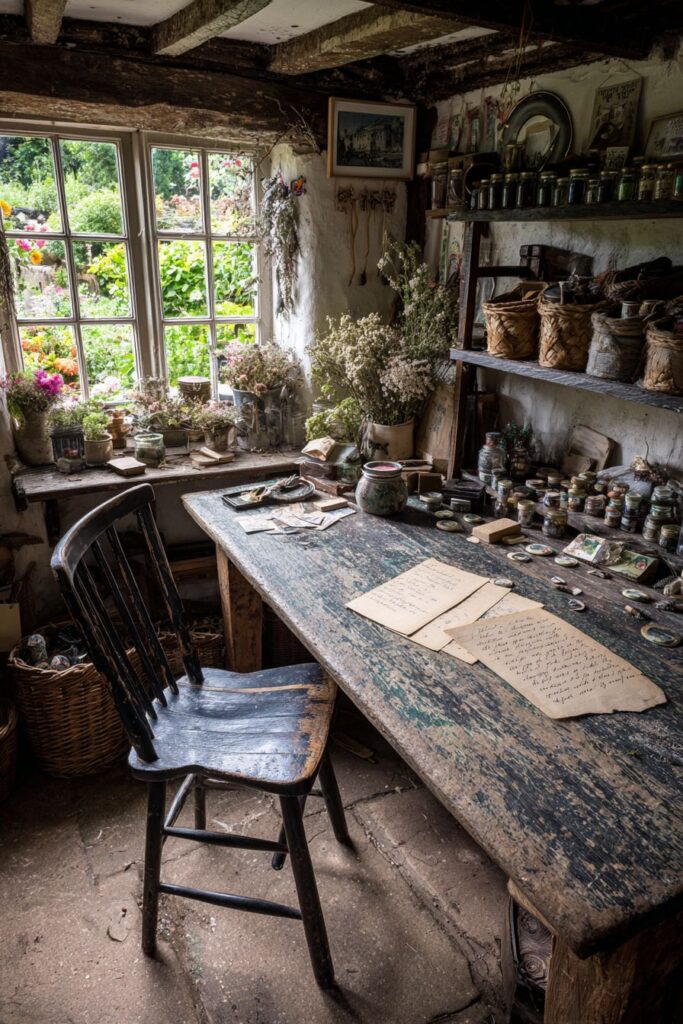
A distressed wooden desk transforms a corner of the living room into a dedicated creative workspace celebrating the traditional correspondence and handcraft central to cottagecore philosophy. The desk surface shows the beautiful marks of use—ink stains, scratches from pens and craft tools, and variations in finish from decades of hands working across its surface. Rather than being cleared for photographic perfection, the desk is scattered with the tools of creative living: handwritten letters mid-composition on quality stationery, dried flowers waiting to be pressed or arranged, and vintage ink bottles with their evocative labels and satisfying glass heft.
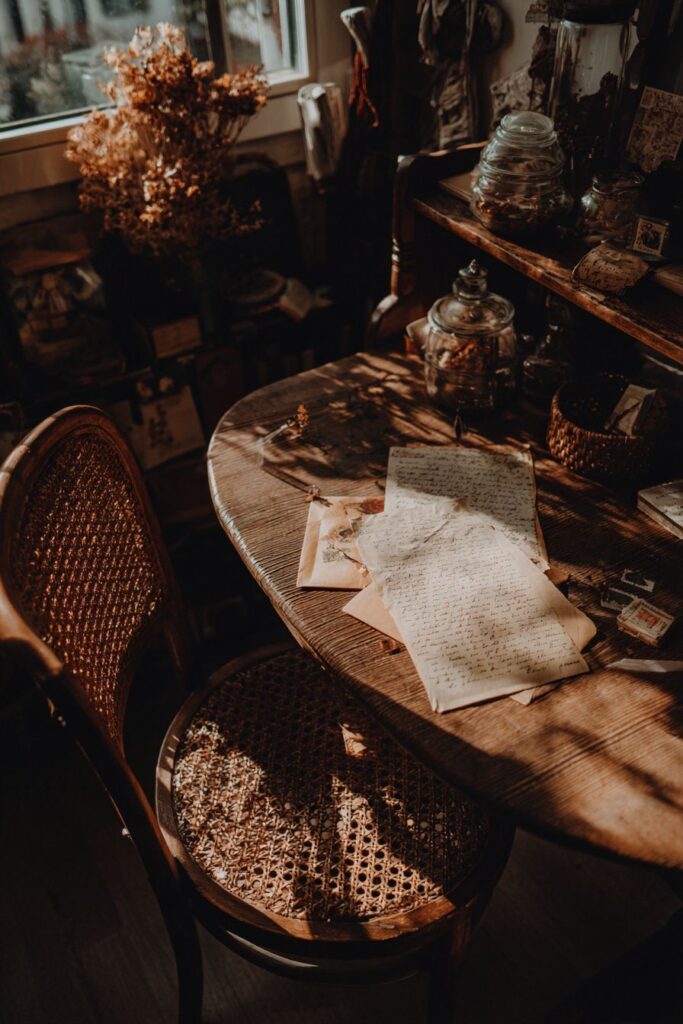
A bentwood chair with caned seat provides ergonomic support while contributing traditional craftsmanship details. The bentwood construction showcases the steaming and bending techniques that allow curves without joinery, while the hand-caned seat displays the beautiful geometric patterns created by woven natural fiber. The chair’s light weight and open construction keep the corner from feeling heavy or cramped despite the presence of substantial furniture. Nearby shelves hold the organized chaos of creative supplies—woven baskets in various sizes containing different project materials, jars of buttons sorted by color or size, and spools of ribbons in silk, velvet, and grosgrain creating tempting arrays of texture and hue.
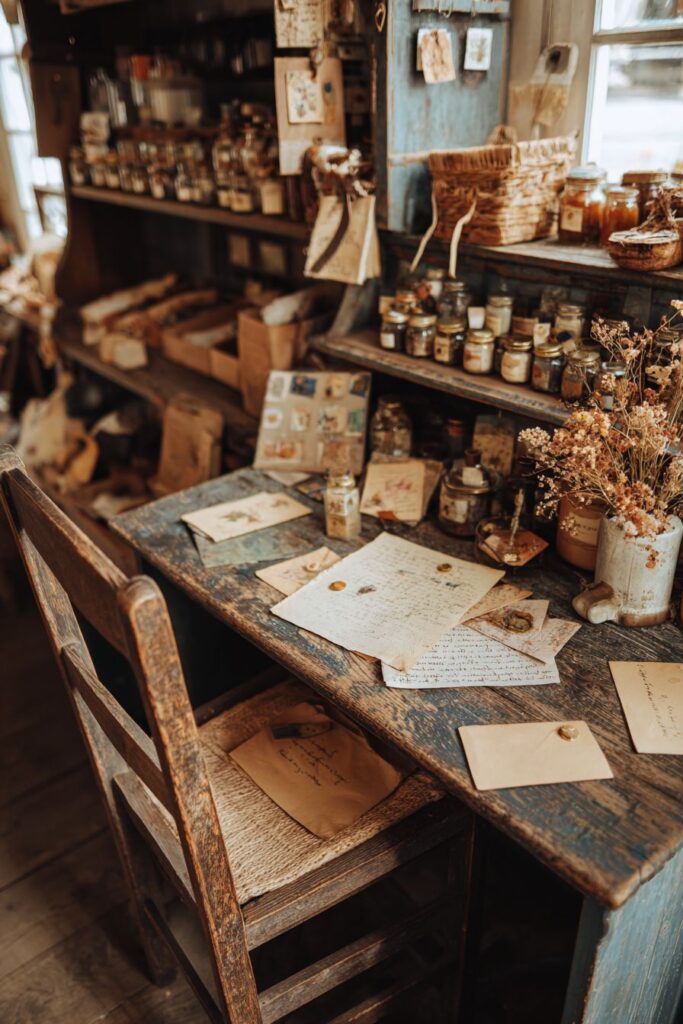
Detail photography with natural window light creates the intimate, documentary quality appropriate for this workspace. The lighting emphasizes the creative process rather than presenting finished perfection—we see works in progress, tools mid-use, and the gentle disorder that accompanies genuine creative work. This isn’t a staged craft room but a working space where letters are actually written, flowers actually pressed, and handwork actually completed. The natural light streaming through the nearby window provides ideal illumination for detailed work while creating the warm, inviting atmosphere that makes this corner irresistible for creative pursuits. The handmade, nostalgic quality integral to cottage aesthetic permeates every element, from the antique desk to the ongoing projects.
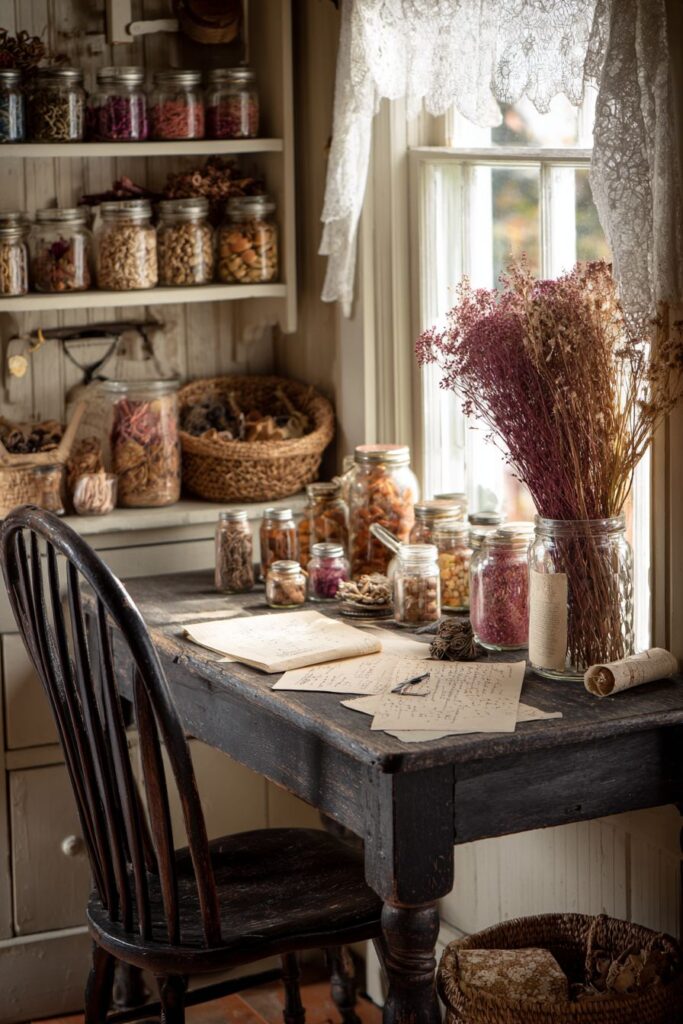
Key Design Tips:
- Dedicate a corner or nook to creative pursuits with proper desk space and natural lighting
- Display works in progress rather than hiding them away to show genuine creative living
- Store craft supplies in attractive vintage or natural containers like woven baskets and glass jars
- Choose bentwood or other traditionally constructed chairs that combine beauty with ergonomic function
- Organize supplies by color or type for both functionality and visual appeal
- Maintain well-lit workspace near windows for detailed handwork and correspondence
13. Stone Cottage Fireplace with Intimate Seating
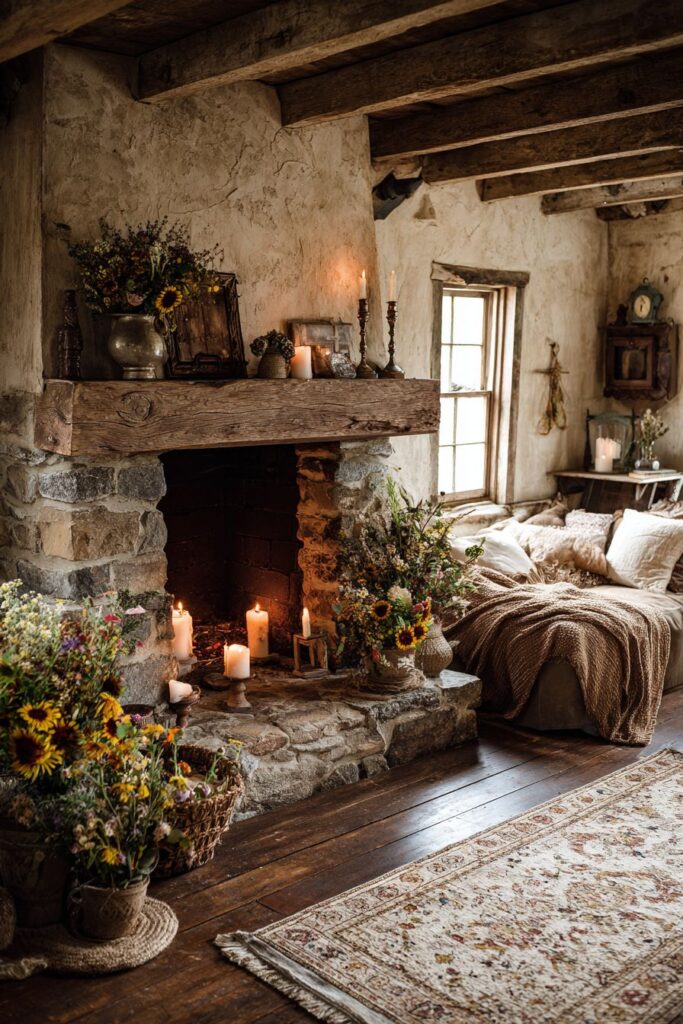
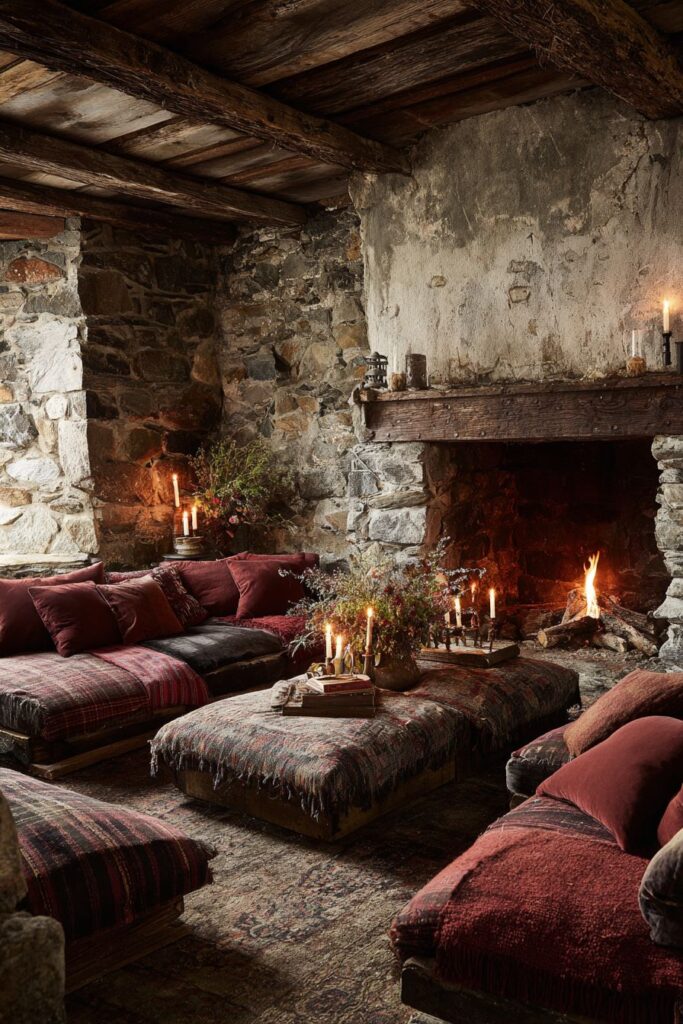
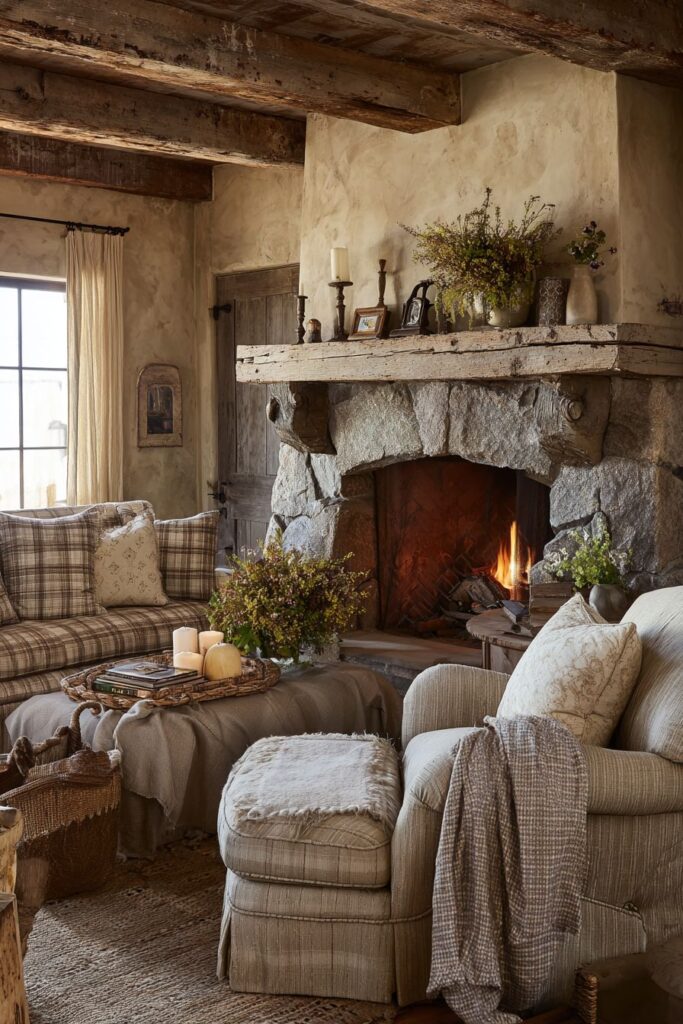
The large stone cottage fireplace dominates this living room with its substantial masonry presence and rough-hewn wooden beam mantel. Unlike brick construction, the stone fireplace showcases irregular shapes, varied colors, and the substantial mass that provides both thermal efficiency and visual impact. Each stone shows its natural surface texture—some smooth and water-worn, others rough and showing geological layers. The rough-hewn mantel beam retains bark remnants and saw marks, its substantial size suggesting it was salvaged from old building construction or milled from a significant tree.
The mantel display celebrates simple country elements through pewter candlesticks developing natural patina and wildflower arrangements that change with seasons—spring daffodils giving way to summer meadow grasses, then autumn branches with preserved leaves, and winter evergreen boughs. The pewter’s soft gray surface shows the fingerprints and handling marks that prove these aren’t shelf pieces but functional objects used regularly. The wildflowers are arranged casually in simple vessels, their informal placement suggesting the arranger simply brought inside whatever looked beautiful in the garden or hedgerow that morning.
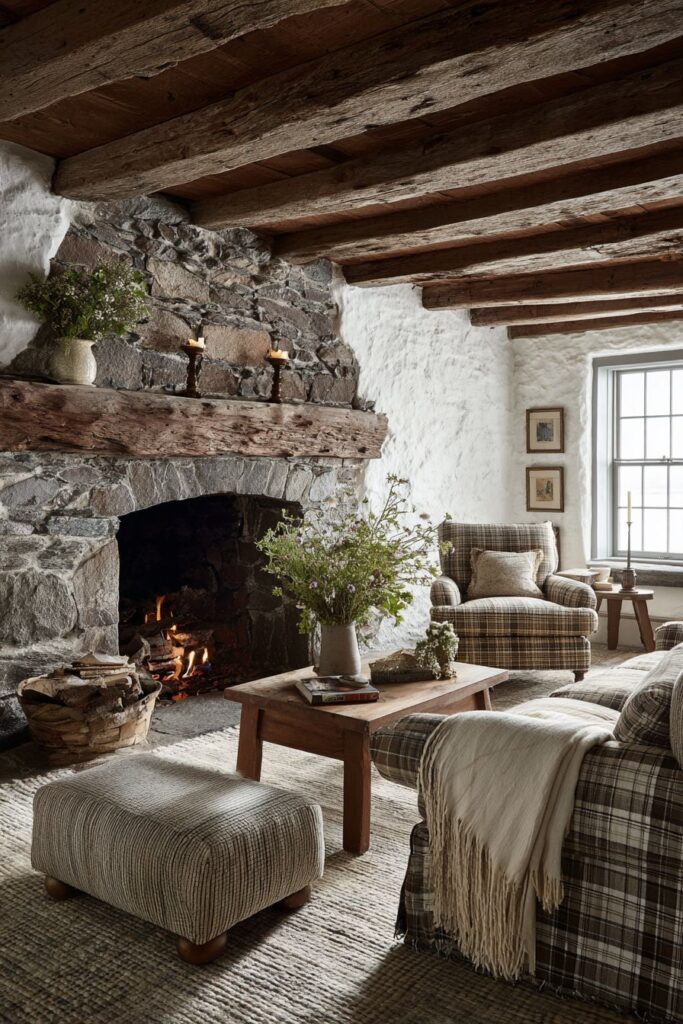
Overstuffed furniture in faded florals and checks creates multiple intimate conversation areas on a vintage hooked rug whose naive pattern and handwork add folk art charm. The furniture’s generous proportions and deep cushioning invite settling in for extended conversations or solitary reading. The fabrics have faded to soft, muted tones that read as restful rather than tired—these are colors that invite the eye to rest rather than demanding attention. The plastered walls show subtle texture and age through small cracks, slight irregularities, and variations in surface that prove this is genuine plaster applied by hand rather than modern drywall. Wide-angle interior photography captures the rustic architectural elements—the substantial stone fireplace, the hand-plastered walls, the rough-hewn mantel—while natural lighting creates the warm, inviting atmosphere that makes this countryside retreat so appealing for family gatherings and quiet evenings by the fire.
Key Design Tips:
- Emphasize natural stone fireplaces with minimal mantel decoration to showcase the masonry’s beauty
- Choose rough-hewn or salvaged wood beams for mantels that add authentic rustic character
- Display pewter accessories that develop natural patina rather than staying bright and shiny
- Arrange seasonal wildflowers and foliage informally for fresh, countryside-gathered appeal
- Select deeply cushioned furniture with generous proportions for genuine comfort
- Appreciate rather than repair minor plaster cracks and irregularities that add authentic age
14. Textile-Focused Collection with Handcrafted Details
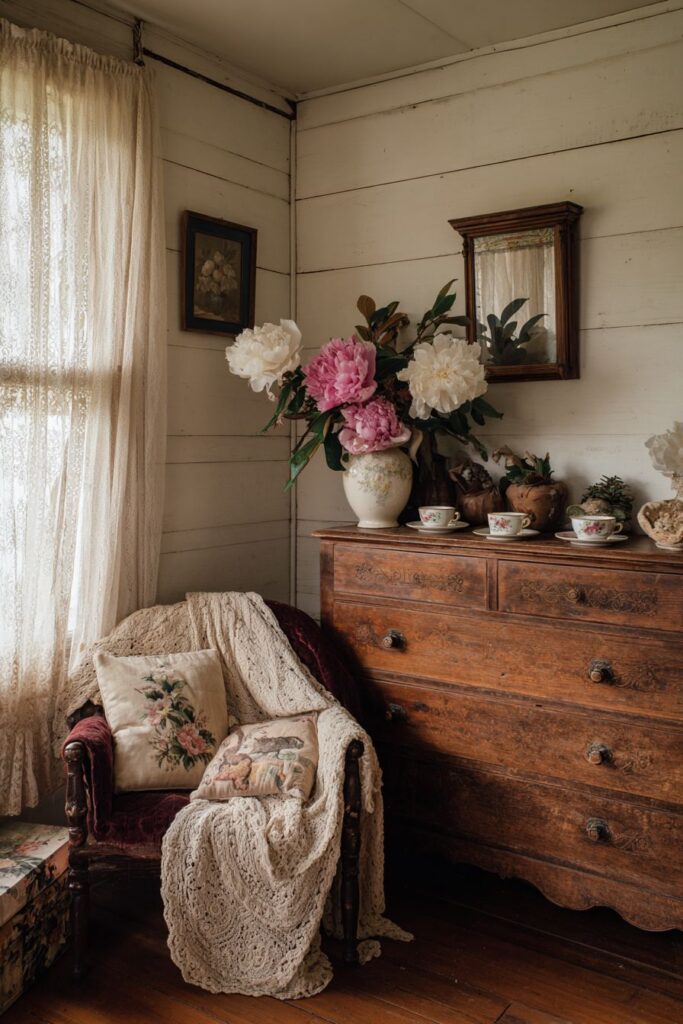
This living room celebrates the domestic arts through an extensive collection of vintage textiles that showcase traditional needlework techniques and handcrafted beauty. Embroidered pillows feature delicate floral motifs worked in silk threads that catch the light, some showing the slightly irregular stitches of hand embroidery rather than machine perfection. Crocheted doilies grace side tables and chair arms, their intricate patterns worked in fine cotton thread demonstrating patient craftsmanship. A handmade patchwork quilt draped over a worn velvet armchair becomes a textile artwork, its varied fabrics and careful construction revealing the maker’s eye for color and composition.
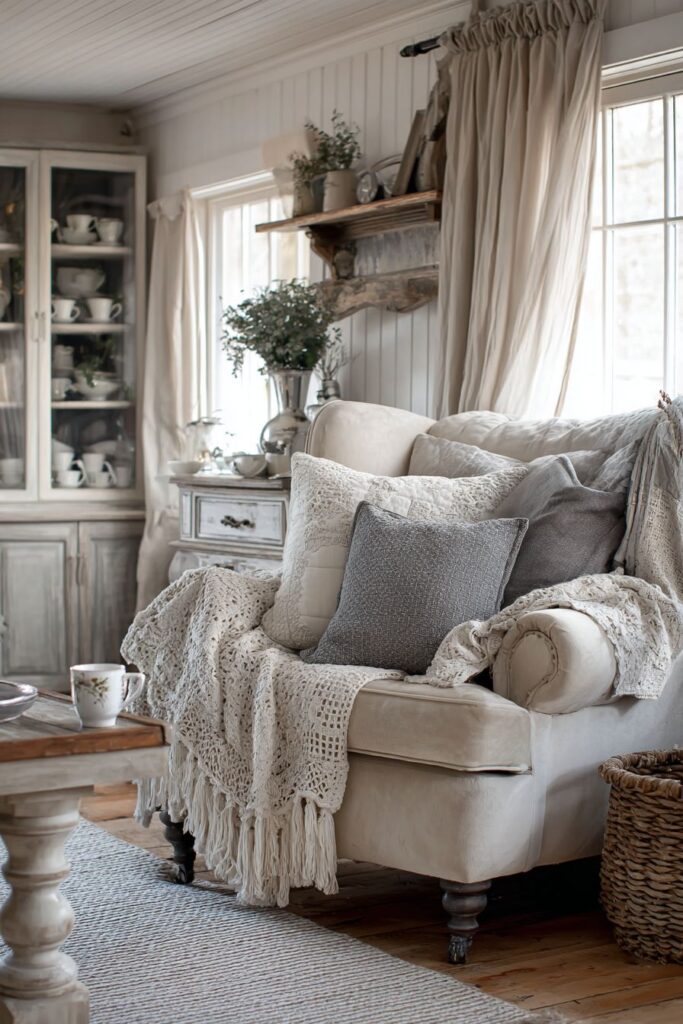
The worn velvet armchair beneath the quilt shows the luxurious depth of aged velvet, its pile compressed in some areas and fluffed in others, creating subtle color variations across its surface. The velvet has faded from what was likely a rich jewel tone to a softer, muted shade that feels restful and gentle. The chair’s form shows the generous proportions of quality vintage furniture—wide seat, high back, substantial arms—built for comfort rather than minimalism. This is furniture meant to be used and loved rather than preserved in pristine condition.
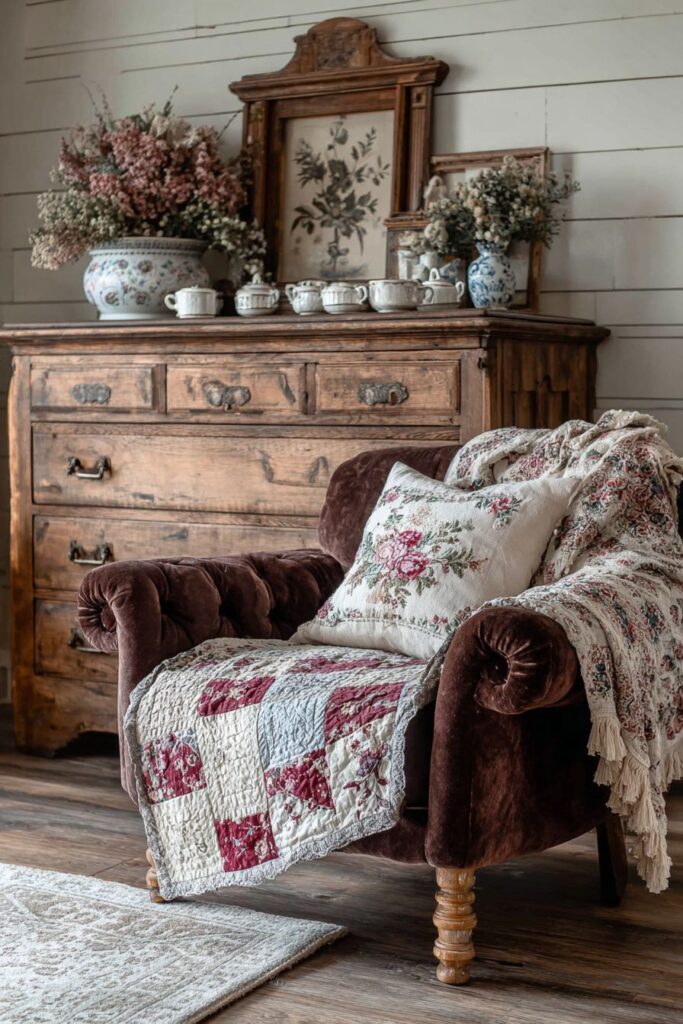
A painted wooden dresser repurposed as a console demonstrates the cottagecore principle of adapting furniture to new uses when needs change. The dresser retains its original drawer pulls and carved details but has been painted in soft white that shows gentle distressing and wear. Across its surface, a collection of china teacups in various patterns creates a display both beautiful and functional—these cups can be pressed into service when guests arrive rather than remaining permanently decorative.
Botanical specimens in various states—fresh flowers in small vases, dried flowers in rustic bundles, pressed leaves in frames—create natural focal points throughout the arrangement. Shiplap walls in soft white provide a simple backdrop that allows the rich textile collection and handcrafted details to command attention without competition.
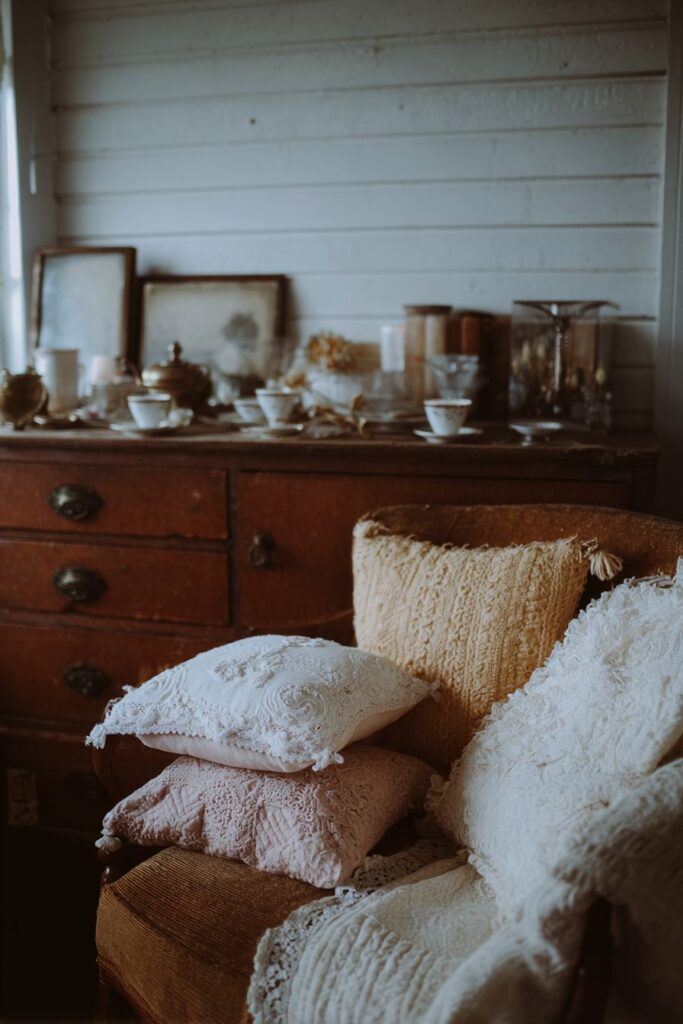
Professional interior photography with soft diffused lighting showcases the textile details in all their glory—the texture of crochet work, the dimensional quality of embroidery, the intricate piecing of patchwork quilts. The lighting emphasizes how these handcrafted elements add warmth and personality to the space while celebrating domestic arts that connect us to generations of makers who created beauty with needle and thread. Each textile piece tells a story of patient handwork, careful stitching, and the desire to create beauty in everyday objects. This room isn’t merely decorated but layered with the tangible evidence of traditional crafts and handcrafted aesthetic.
Key Design Tips:
- Display embroidered pillows prominently where their needlework details can be appreciated up close
- Use crocheted doilies functionally on furniture surfaces rather than storing them away
- Drape handmade quilts over seating where their patterns and construction can be admired
- Choose worn velvet upholstery that shows authentic aging through pile compression and gentle fading
- Repurpose vintage dressers and cabinets as consoles or storage in new contexts
- Create shiplap or simple plank wall backgrounds that don’t compete with textile collections
15. Garden-Integrated Living with Potting Station
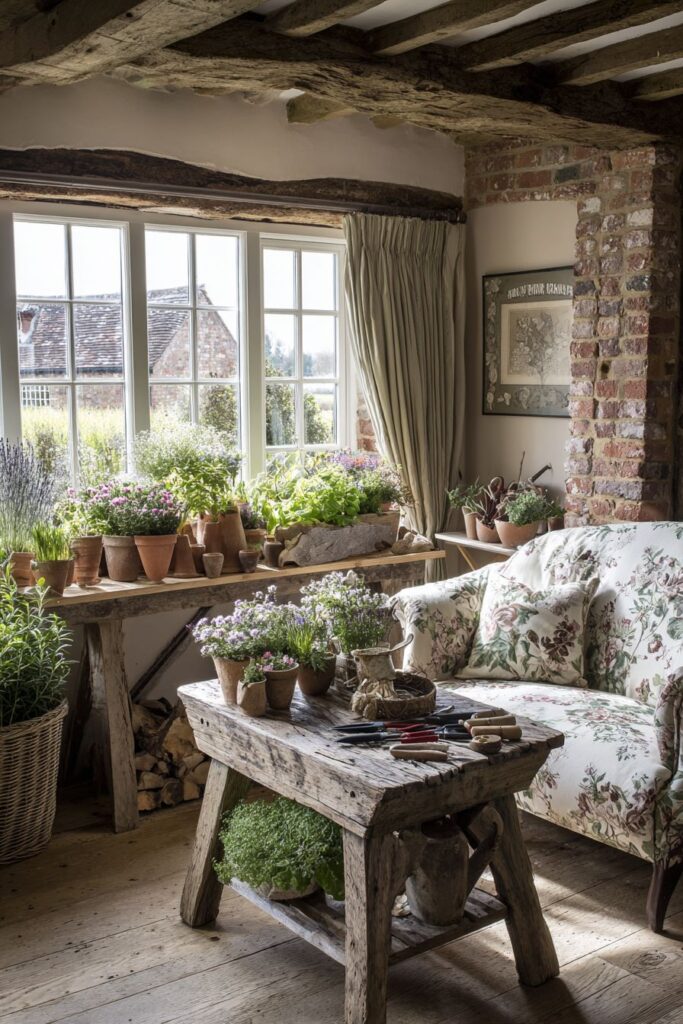
This innovative cottagecore living room blurs the boundaries between indoor and outdoor living by integrating a practical potting station directly into the space. A rustic wooden bench serves as the potting surface, its weathered wood showing the water stains and soil marks that come from genuine gardening work. Terracotta pots in various sizes stack nearby, their porous clay surfaces developing the mineral deposits and moss that prove they’ve been used for actual planting rather than mere decoration. Garden tools—trowels with worn wooden handles, pruning shears with honest rust spots, watering cans with aged patina—hang from hooks or rest in vintage crocks, always within easy reach.
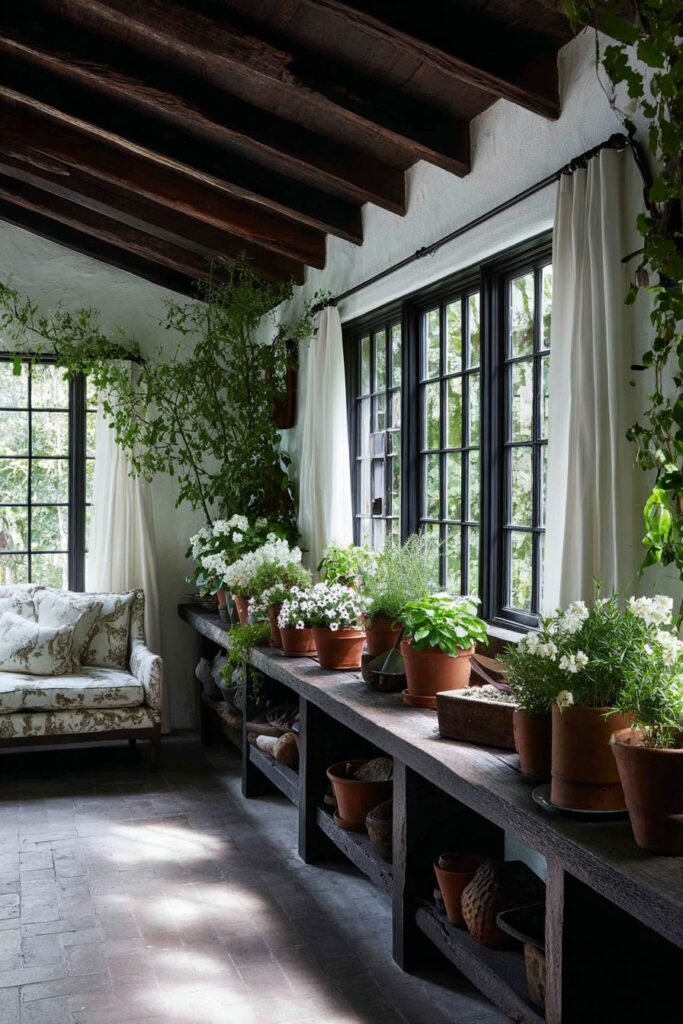
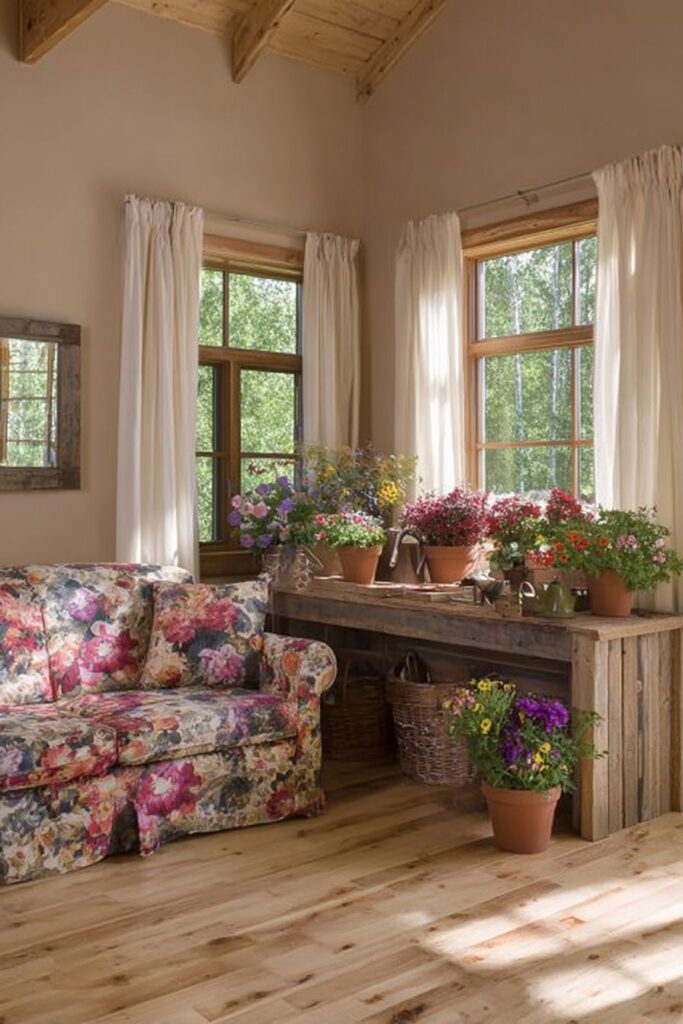
Fresh-cut flowers from the garden await arrangement in simple vessels, their stems still damp from cutting. Depending on the season, these might include armfuls of peonies, bundles of lavender, branches of flowering quince, or the russet tones of autumn foliage. The potting station isn’t cordoned off but integrated into the living space, celebrating the gardener’s lifestyle and the seasonal rhythms that govern cottagecore living. Nearby, a floral-upholstered settee creates a transition to the more traditional seating area, its romantic fabric pattern echoing the fresh flowers while providing comfortable perching for those who want to chat with the gardener at work.
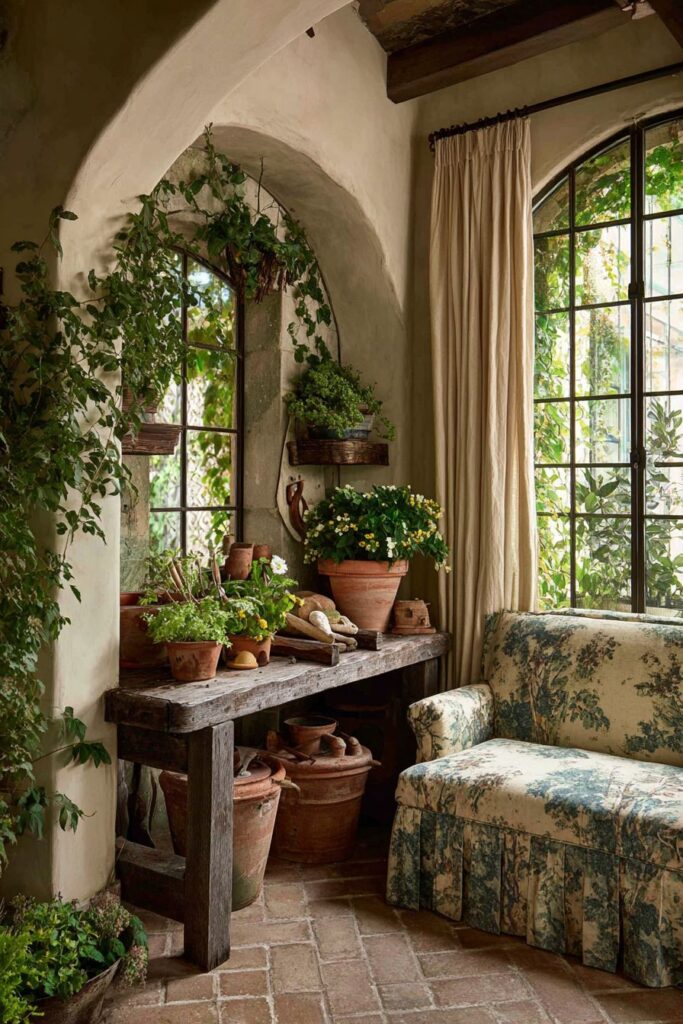
Windows with simple cotton curtains in natural cream or soft white provide abundant natural light essential for both plant care and general living. The curtains’ unpretentious fabric and straightforward hanging style maintain the casual, practical atmosphere while softening the architecture and filtering harsh midday sun. Interior design photography captures the unique blend of functional gardening elements with comfortable living space that characterizes genuine cottage life. This isn’t a room where gardening happens elsewhere and living happens here—instead, both activities coexist naturally, reflecting the integrated lifestyle where tending plants and enjoying beautiful spaces are equally valued daily activities rather than segregated pursuits.
Key Design Tips:
- Integrate practical gardening activities into living spaces if you’re an active gardener
- Choose rustic wooden furniture that can tolerate moisture and soil without concern
- Display gardening tools as both functional implements and decorative objects
- Stage fresh-cut flowers in various states—some arranged, others awaiting attention
- Position potting areas near windows for optimal natural light and ventilation
- Bridge practical and living areas with transitional furniture like settees or benches
16. Intimate Writing Corner with Nostalgic Correspondence
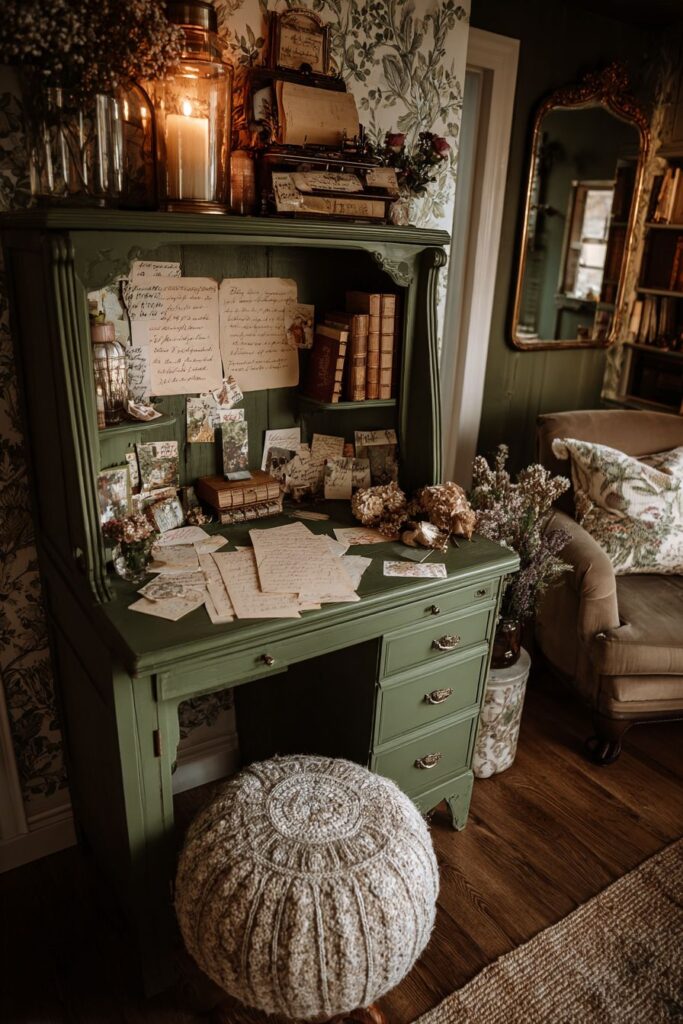
A vintage secretary desk creates an intimate writing corner dedicated to the lost art of handwritten correspondence and personal record-keeping. The secretary desk’s clever design provides a fold-down writing surface that reveals numerous small cubbies and drawers perfect for organizing stationery, stamps, and correspondence materials. These compartments display handwritten recipe cards in vintage cursive, pressed flowers marking special occasions, and antique correspondence that provides fascinating glimpses into lives lived long ago. The desk itself shows quality construction from an era when furniture was built to last generations, its wood grain beautifully figured and its hardware showing the patina of decades.
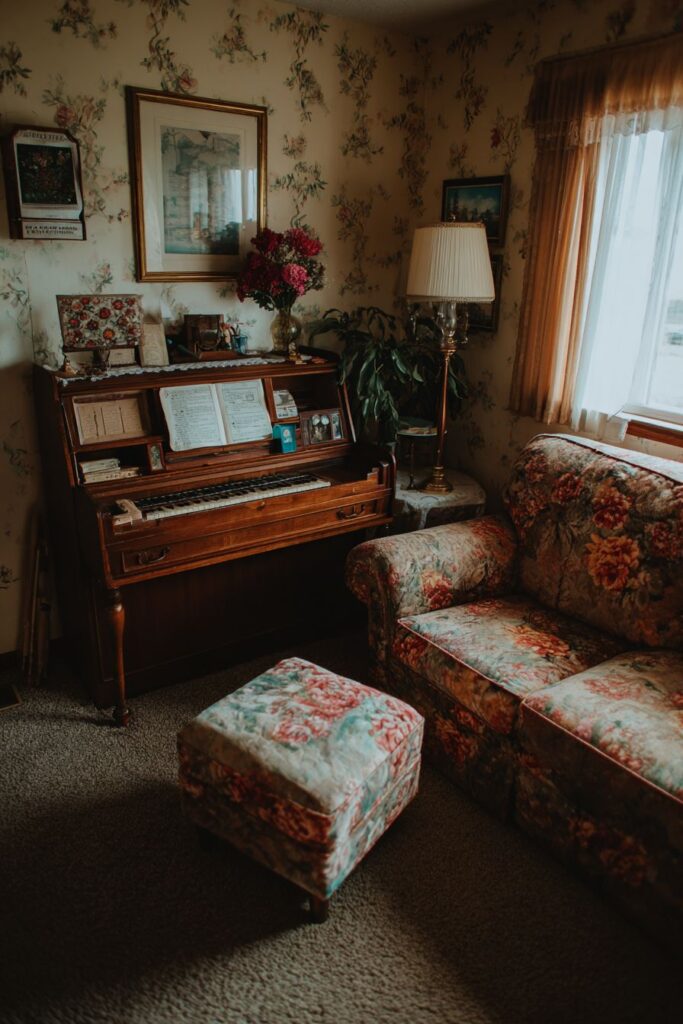
A needlepoint footstool provides comfortable leg support during extended writing sessions, its hand-stitched top featuring traditional floral or geometric patterns worked in wool yarn. The footstool’s slightly worn top proves it serves genuine comfort rather than mere decoration. An oil lamp positioned on the desk creates romantic evening illumination—when electricity dims and the flame flickers gently in its glass chimney, letter-writing becomes a meditative ritual rather than a rushed chore. The lamp’s brass or copper base develops natural patina, while its glass chimney may show slight cloudiness from use.
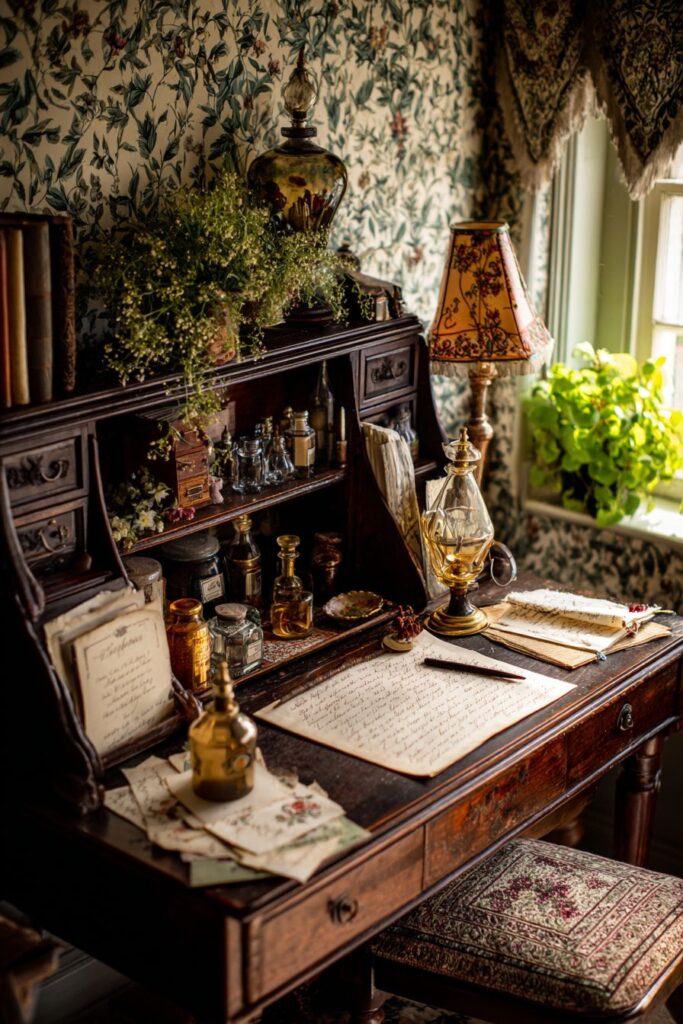
Wallpaper with delicate trailing vine patterns in sage and cream covers the walls, its subtle design creating botanical atmosphere without overwhelming the intimate space. The vines meander organically across the surface, occasionally punctuated by small flowers or leaves that reward close observation. Close-up interior photography with natural lighting emphasizes the nostalgic details—the elegant cursive handwriting on old letters, the delicate pressed flowers’ translucent petals, the intricate needlework on the footstool—and conveys the personal, collected-over-time quality of romantic country style. This corner celebrates slower rhythms and traditional practices, inviting occupants to pause, reflect, and communicate thoughtfully through handwritten words.
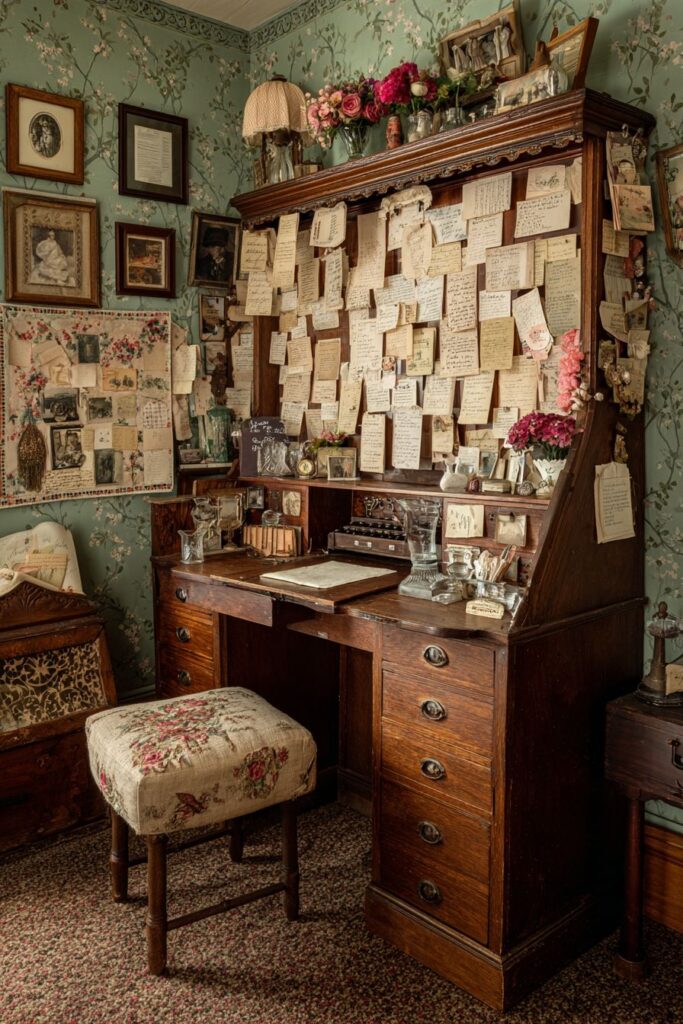
Key Design Tips:
- Choose secretary desks with multiple cubbies for organizing correspondence materials
- Display handwritten items like recipe cards and letters that celebrate traditional penmanship
- Create needlepoint or tapestry footstools that combine comfort with handcrafted beauty
- Use functional oil lamps that can provide actual lighting during evening writing sessions
- Select wallpaper with subtle trailing patterns that create atmosphere without distraction
- Dedicate spaces specifically to letter-writing and other traditional correspondence activities
17. Open Shelving Display with Curated Vintage China
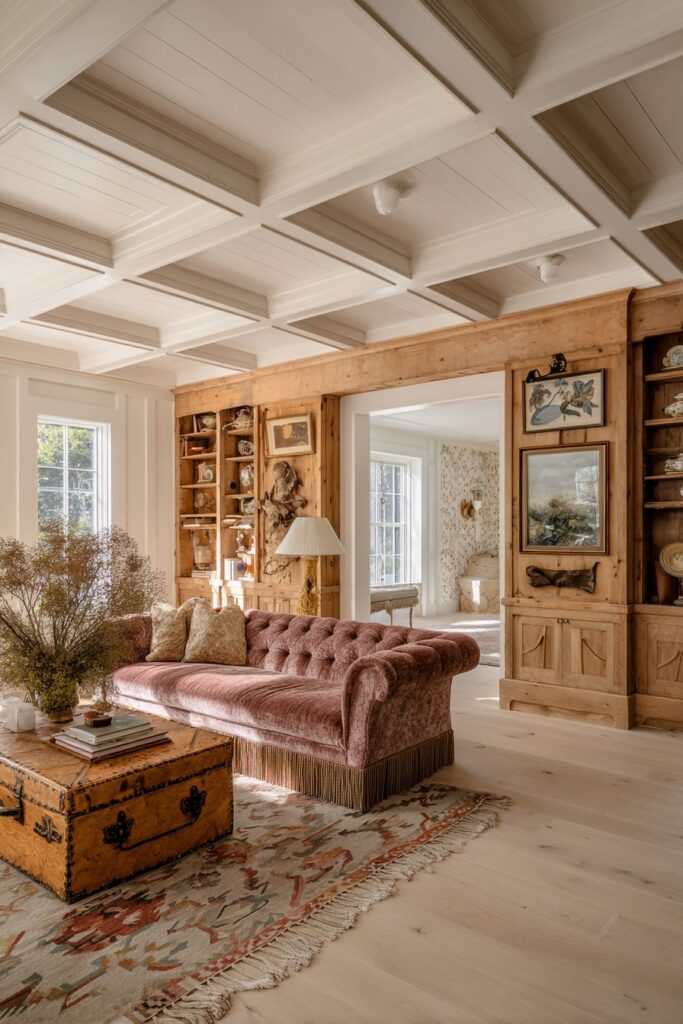
Open wooden shelving transforms an entire wall into a gallery for eclectic collections that celebrate found treasures and hunting through antique markets. The shelves themselves are simple in construction—solid wood boards with visible grain and minimal styling—allowing displayed objects to command attention. An extensive collection of vintage china in deliberately mismatched patterns creates visual feast and talking points. One shelf might hold delicate floral teacups with matching saucers, another displays substantial ironstone platters in creamy white, while a third showcases transfer ware in classic blue and white patterns. The intentional mismatch creates interest while the commitment to vintage china creates cohesion.
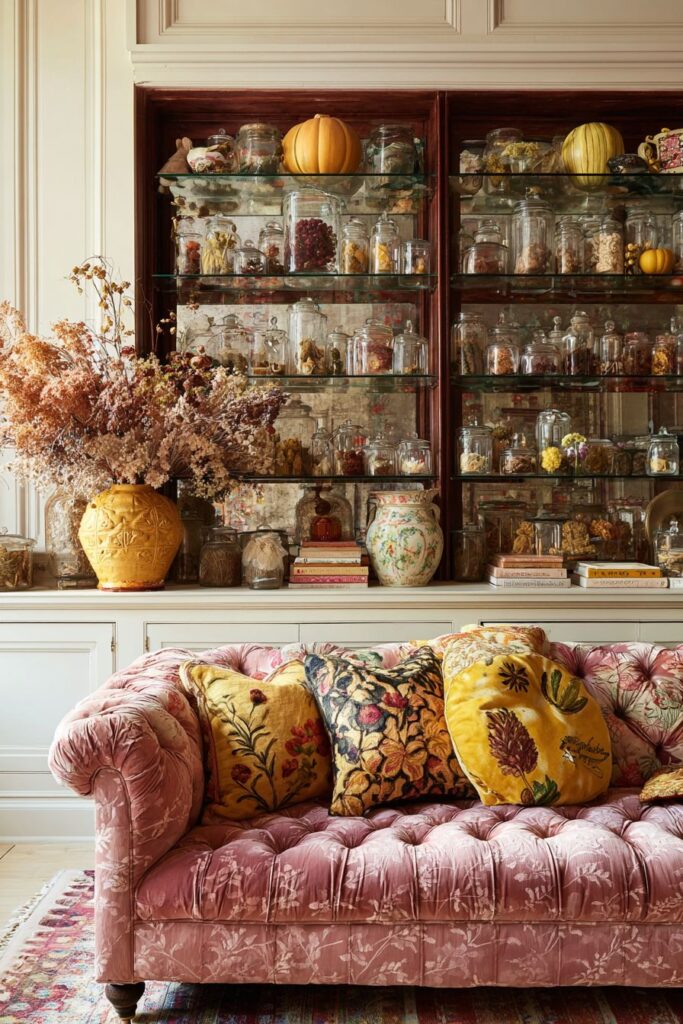
Copper molds in various shapes add sculptural interest and warm metallic tones throughout the display. Some molds show the elaborate forms of Victorian-era cooking—fish molds with detailed scale patterns, architectural jelly molds with turret shapes, and bundt pans with geometric precision. The copper has aged beautifully, developing natural patina that ranges from rosy pink to deep brown depending on exposure and handling. Glass jars containing preserved botanical specimens create natural history cabinet atmosphere—dried flower heads, seed pods with interesting architecture, pressed leaves showing intricate vein patterns, or even small pinecones and interesting bark fragments collected during countryside walks.
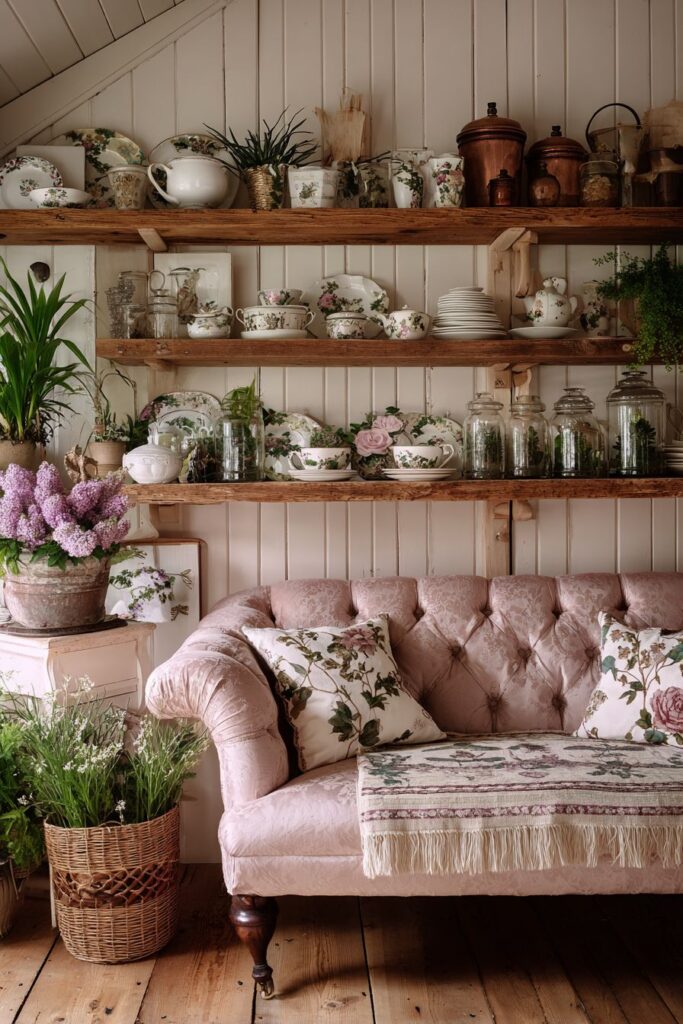
A worn kilim rug anchors the seating area with its flat-weave construction and geometric patterns in faded reds, blues, and creams. Unlike pile rugs, kilims show their pattern equally on both sides and develop beautiful wear patterns that add rather than detract from their appeal. A tufted loveseat in faded rose damask provides comfortable seating, its button-tufted back and luxurious fabric creating romantic Victorian atmosphere while its compact size keeps the space from feeling cramped. Wainscoting painted in soft cream adds architectural charm to the lower walls, its horizontal lines providing visual grounding beneath the busy shelving display above. Wide-angle professional photography with balanced natural light showcases both the curated vintage collections and the pastoral color palette that makes this room feel cohesive despite the abundance of varied objects.
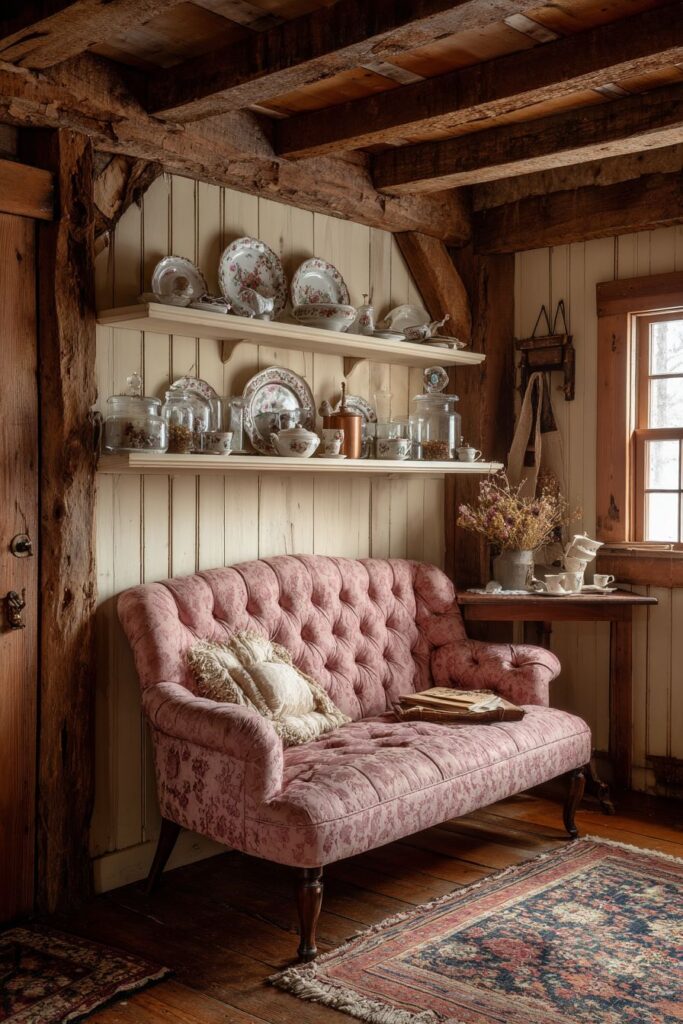
Key Design Tips:
- Install substantial open shelving for displaying collections where they can be easily accessed and appreciated
- Collect vintage china patterns intentionally, mixing styles while maintaining quality standards
- Display copper molds and vintage cooking implements as sculptural objects
- Preserve botanical specimens in glass jars for natural history cabinet aesthetic
- Choose kilim rugs whose flat-weave construction and geometric patterns complement vintage collections
- Add wainscoting to anchor visually busy upper walls with simple lower wall treatment
18. Peaceful Corner with Handwork and Natural Light
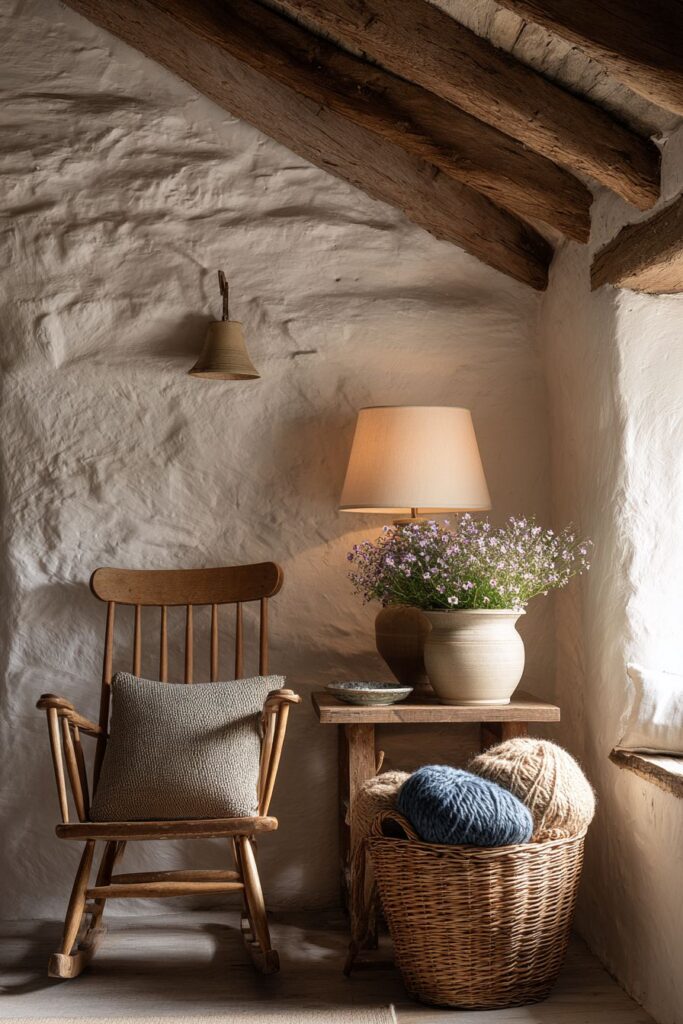
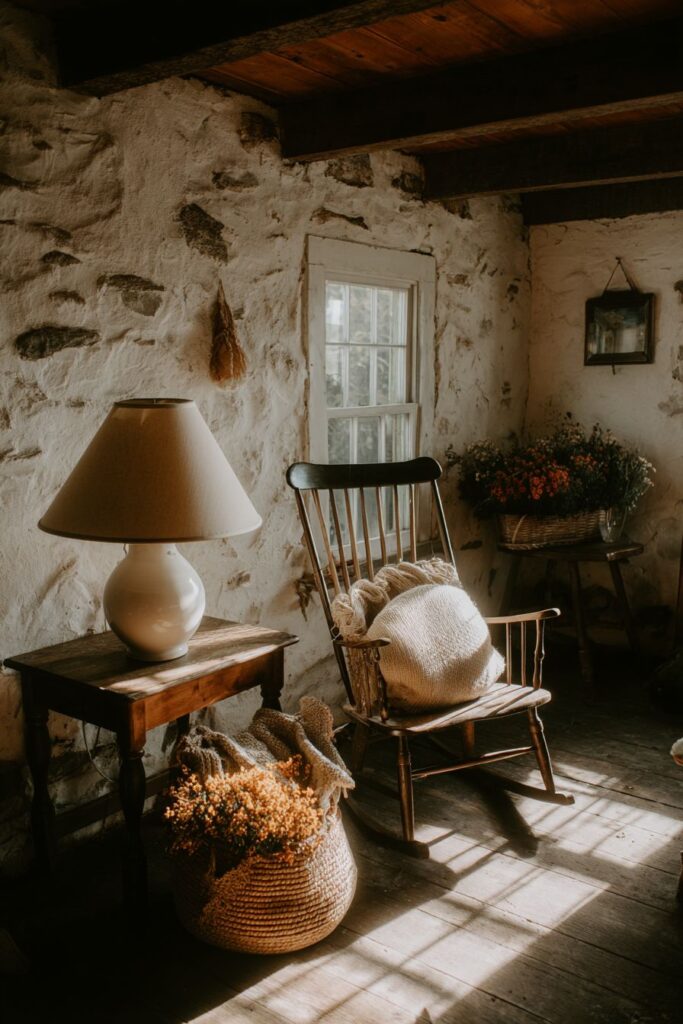
A ladder-back rocking chair with hand-tied cushions creates the quintessential cottagecore corner—a space dedicated to handwork, contemplation, and the gentle rhythms of traditional domestic activities. The rocking chair’s ladder-back design showcases traditional construction techniques, its vertical slats and simple turning representing generations of chair-making wisdom. The hand-tied cushions feature muted floral fabrics carefully chosen to coordinate with the room’s palette, their ties knotted in simple bows that add charming detail. The cushions make extended sitting comfortable while showcasing basic sewing skills that every cottagecore enthusiast can learn.
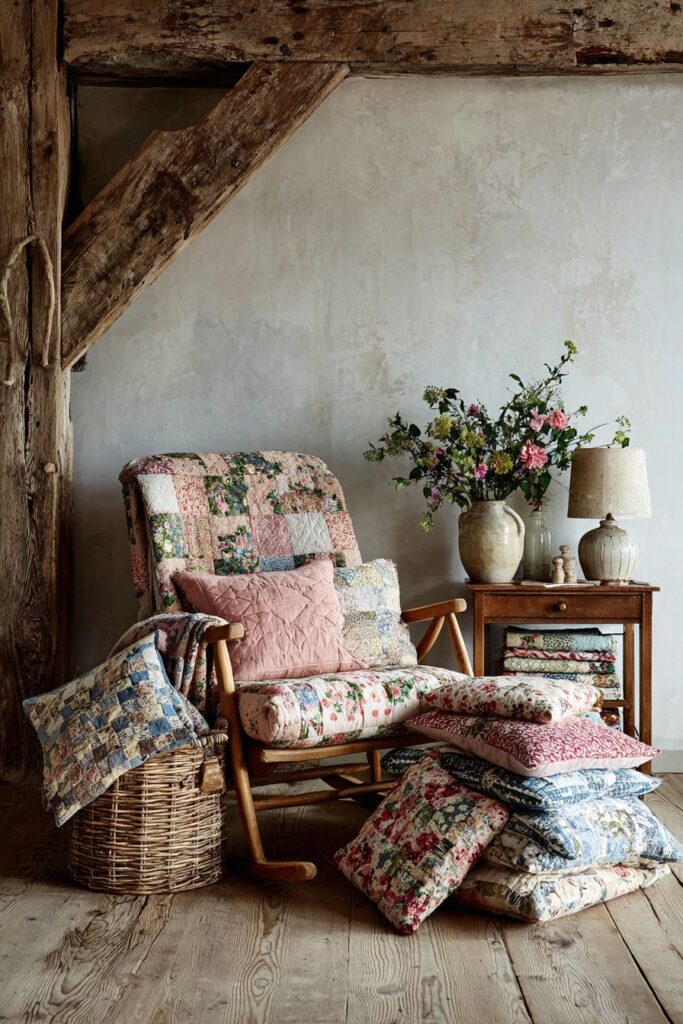
Beside the chair, a wicker basket overflows with tangible evidence of traditional crafts—vintage quilts in various states of completion or repair, knitting projects with wooden needles thrust through balls of natural wool, and perhaps embroidery hoops holding works in progress. The basket’s generous size and sturdy construction make it both functional storage and attractive display. Its woven pattern adds textural interest while its natural materials harmonize with the wood furniture and organic fabrics throughout the space. This isn’t a staged vignette but genuine documentation of ongoing handwork projects.
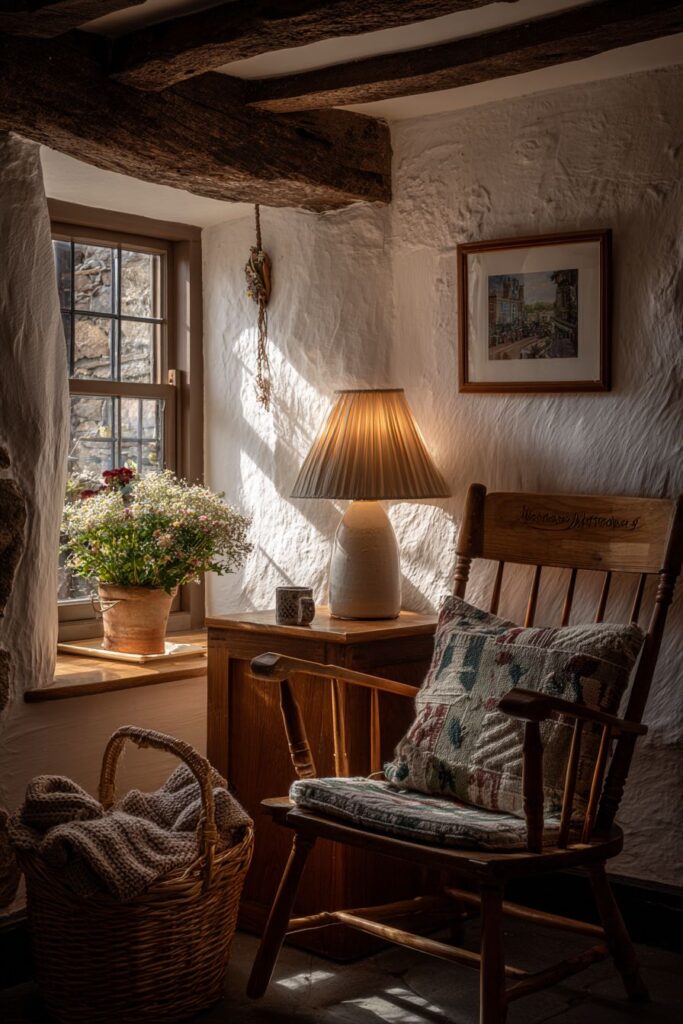
A simple side table holds essential comforts—a ceramic lamp with fabric shade providing task lighting for close work, and a vase of fresh garden flowers that brings nature close and provides inspiration for embroidery patterns or quilt colors. The lamp’s ceramic base might show hand-thrown irregularities or vintage transfer patterns, while its fabric shade diffuses light softly for eye-comfort during detailed work. Exposed wooden beams overhead and whitewashed plaster walls create authentic cottage architecture that requires no additional ornamentation. Natural afternoon light streams through nearby windows, captured through interior photography techniques that highlight textures—the woven basket’s pattern, the various fabric textures in the quilts, the smooth worn wood of the rocking chair—and emphasize the peaceful, handcrafted atmosphere that makes this corner irresistible for quiet afternoons spent with traditional handwork.
Key Design Tips:
- Position rocking chairs in well-lit corners ideal for handwork and reading
- Create hand-tied cushions using simple sewing techniques and coordinating vintage-inspired fabrics
- Display ongoing handwork projects in attractive baskets rather than hiding them in closets
- Provide adequate task lighting through ceramic or vintage-style lamps with fabric shades
- Arrange fresh flowers within view for color inspiration and natural beauty
- Appreciate exposed beams and simple plaster walls for their architectural authenticity
19. Multipurpose Farmhouse Table as Creative Hub
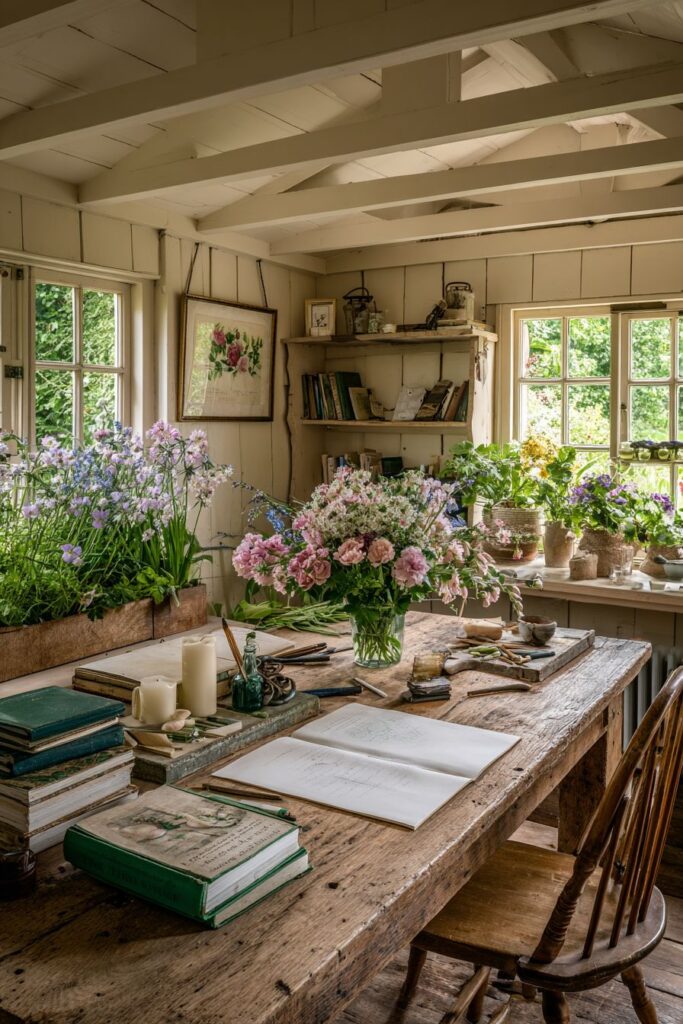
A substantial rustic wooden farmhouse table anchors this living room as a central work surface that adapts to various activities throughout the day and seasons. Unlike the dining-focused table in an earlier design, this table serves specifically as creative hub—its surface holds freshly picked flowers being arranged for display throughout the home, vintage gardening books opened to inspiring pages, and hand-dipped candles cooling on wax paper. The table’s generous size allows multiple simultaneous activities—someone might arrange flowers at one end while another person reads or writes at the opposite end, with room for tea service in between.
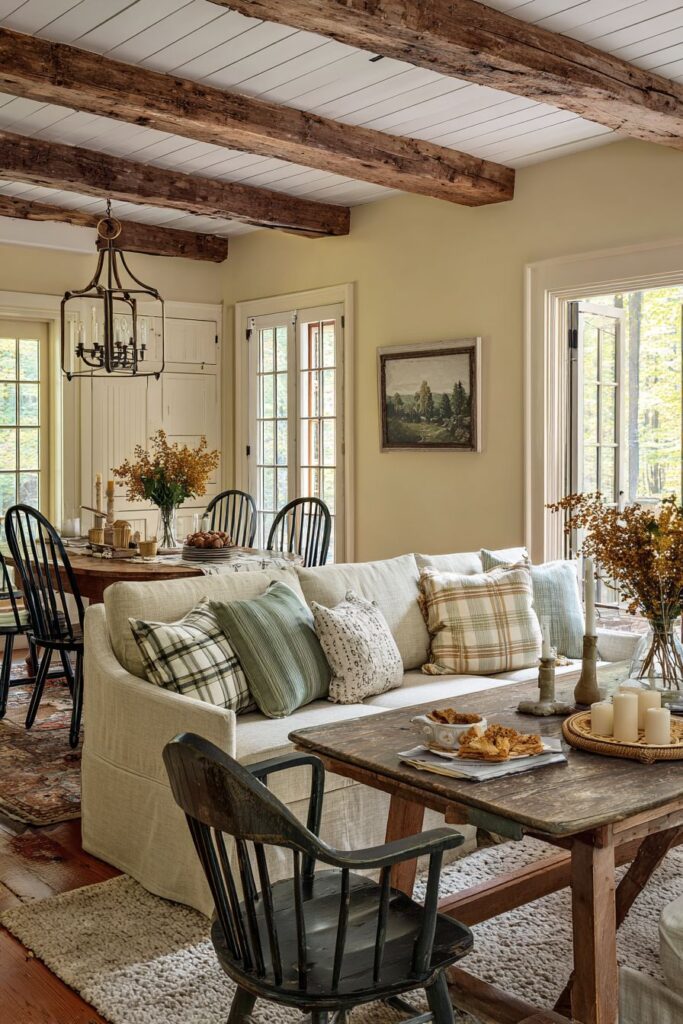
Windsor-style chairs surround the table, their characteristic spindle backs and saddle seats representing classic country furniture design that has remained virtually unchanged for centuries. The chairs show worn paint finishes in soft cream, sage, or butter yellow, with paint loss revealing earlier colors beneath—perhaps a glimpse of original dark paint showing through cream, or wood grain visible where paint has worn away from seat edges and arm tops. These wear patterns prove authenticity and add character that deliberately distressed new furniture can never quite achieve. The chairs’ curved backs and shaped seats provide surprising comfort despite their simple appearance.
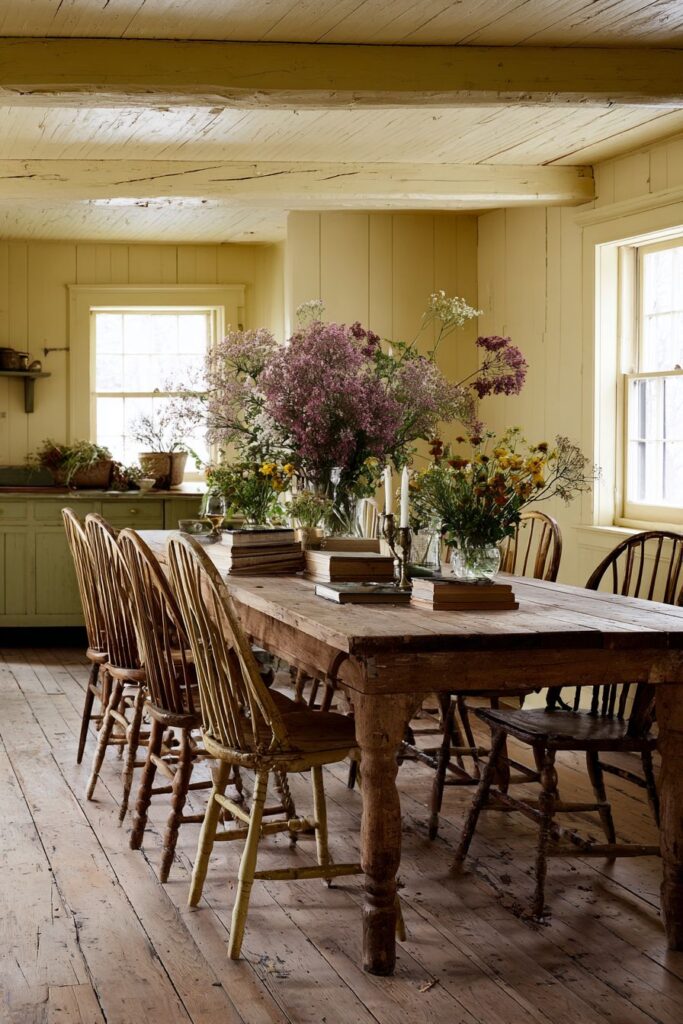
The painted tongue-and-groove ceiling and walls in soft butter yellow create an enveloping warmth that makes the space feel perpetually sunny even on overcast days. The yellow’s soft tone avoids any harshness, reading instead as gentle and welcoming. The tongue-and-groove construction adds subtle linear texture through its joints and variations. Interior design photography capturing the multipurpose functionality shows real activities in progress—flowers actually being arranged rather than completed arrangements, books opened to pages actually being read, candles in various states of cooling rather than perfectly staged tapers. Natural lighting emphasizes the practical, lived-in countryside aesthetic where beautiful spaces serve daily life rather than existing separate from it.
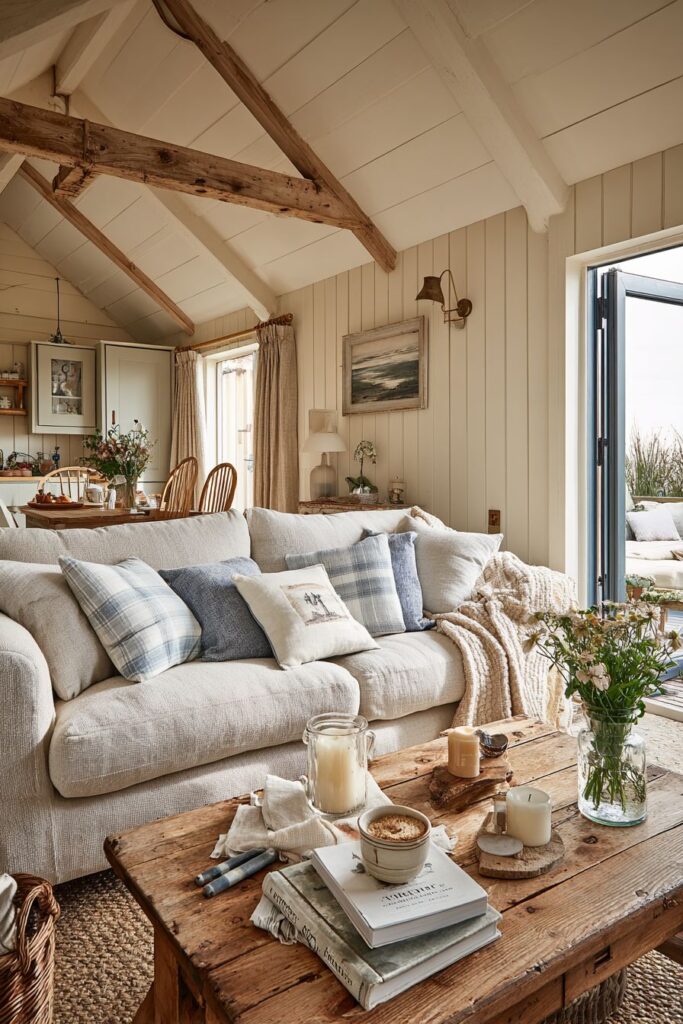
Key Design Tips:
- Position large farmhouse tables centrally for multipurpose creative and social activities
- Choose Windsor-style chairs for their traditional design and surprising comfort
- Appreciate worn paint finishes that reveal underlayers and authentic aging
- Paint ceilings and walls in warm yellows or creams that create enveloping comfort
- Document real activities in progress rather than staging perfect completed projects
- Design spaces that serve practical needs while maintaining aesthetic beauty
20. Window Wall Garden Display with Vintage Collections
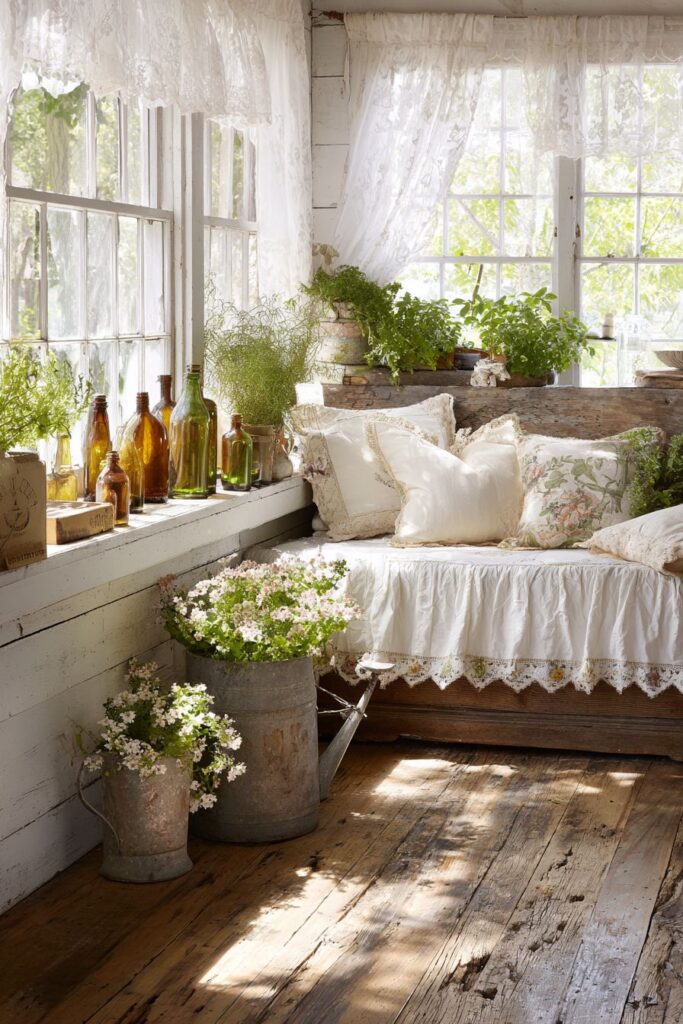
Floor-to-ceiling windows or a wall of multiple windows creates a light-filled space that celebrates the connection between indoor living and outdoor garden views. The deep window sills function as display areas for carefully curated collections that bridge interior and exterior worlds. Vintage bottles in various colors—cobalt blue medicine bottles, amber apothecary jars, green wine bottles with embossed labels—catch and filter sunlight, creating colored light patterns across nearby surfaces. Their transparent and translucent surfaces allow light to pass through while displaying their form and color beautifully.
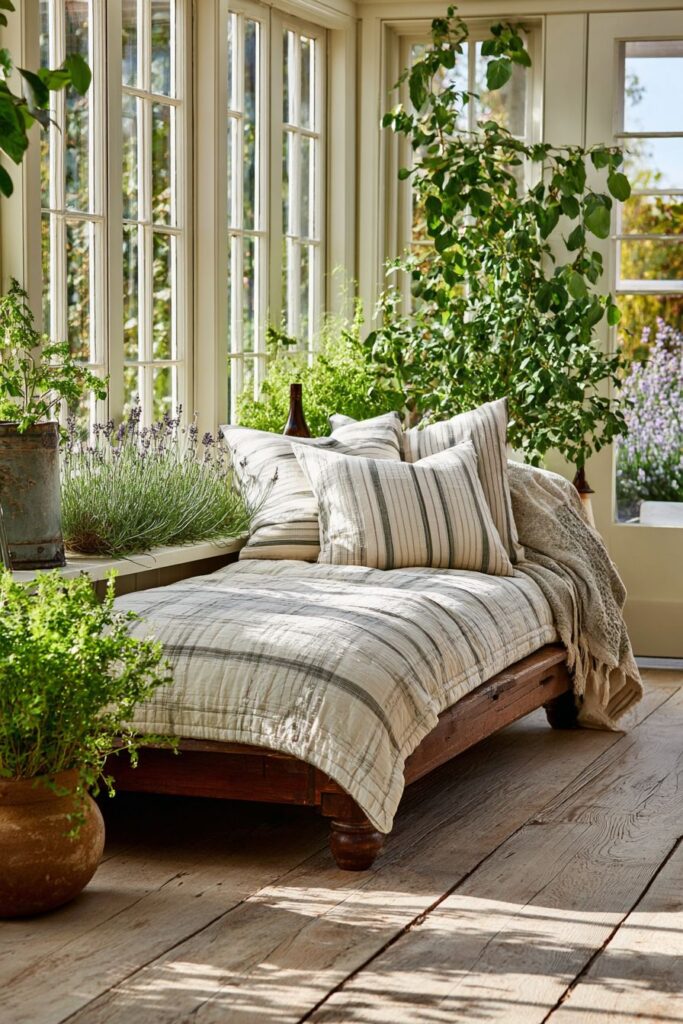
Potted herbs crowd the sills, their practical presence providing fresh culinary ingredients while filling the room with subtle fragrance. Rosemary grows into small shrubs, basil bushes out in verdant abundance, thyme cascades over pot edges, and mint threatens to take over neighboring containers. The terracotta pots show mineral deposits and moss growth proving they’re genuinely used for cultivation rather than staging. Antique watering cans in weathered zinc or copper provide both functional tools and sculptural objects, their aged surfaces and honest wear testifying to decades of garden service.
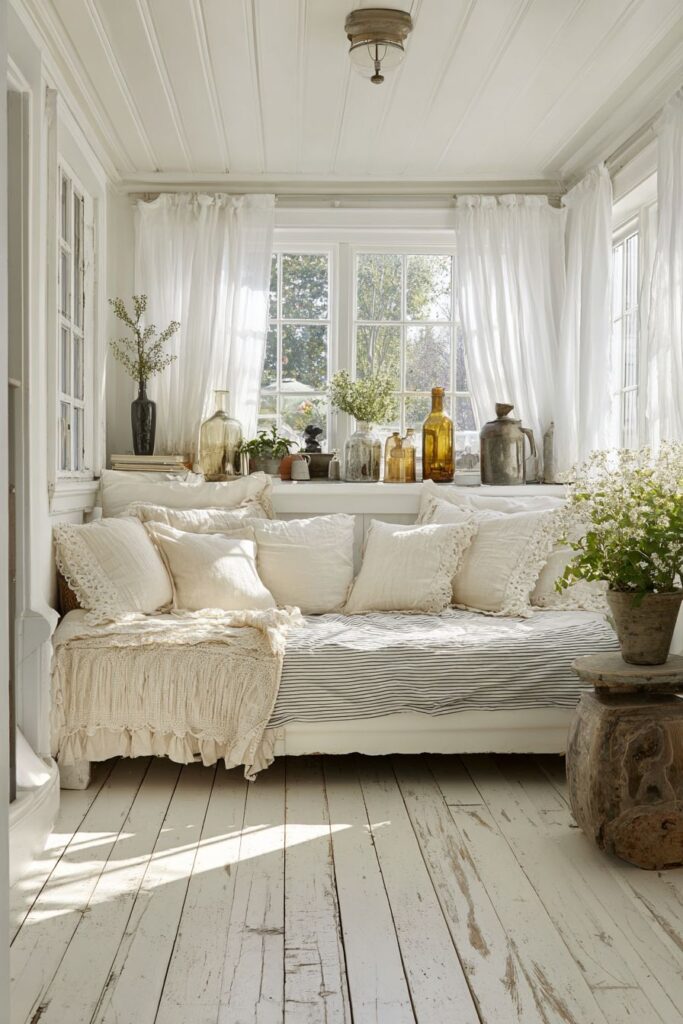
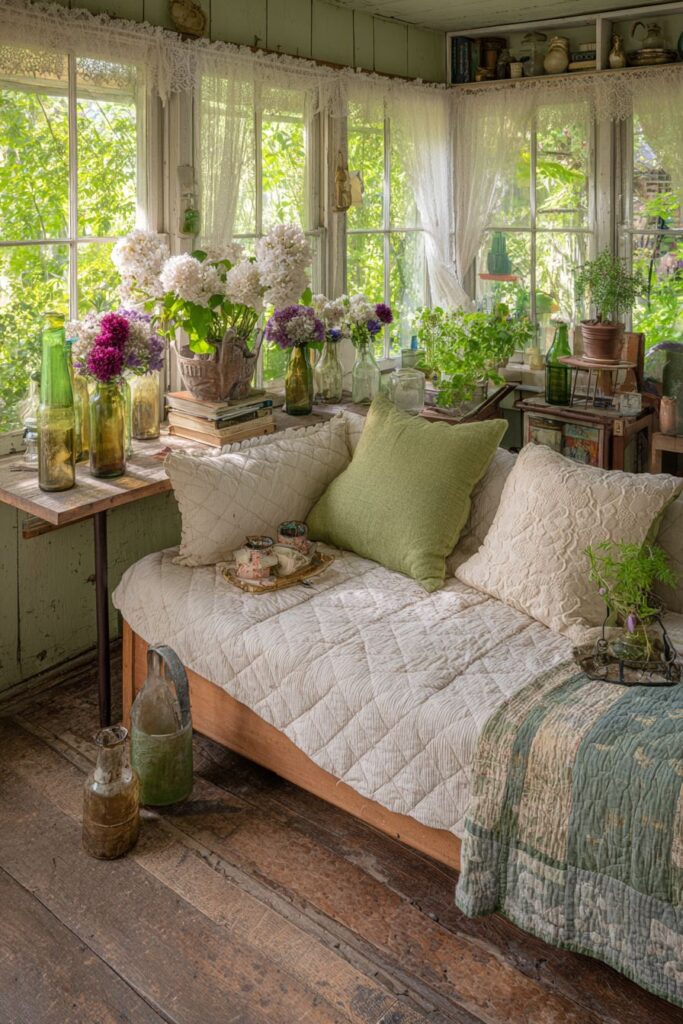
A daybed upholstered in classic ticking stripe—navy or black stripes on cream ground—provides comfortable seating positioned to maximize natural light and garden views. Layered across the daybed, vintage quilts in varied patterns create inviting surfaces for reading, napping, or conversation. The quilts’ varied provenance—some showing hand-quilted stitching in traditional patterns, others featuring tied construction or machine piecing—creates textural and visual interest through their diversity. Painted wood floors show gentle wear patterns and age through subtle variations in color, exposed grain where finish has worn away, and the slight unevenness that comes from centuries of settlement and use. Professional interior photography captures soft morning light streaming through lace curtains, illuminating the romantic garden-inspired details—the colored glass bottles, the lush potted herbs, the abundant quilts—and documenting the authentic patina of well-loved vintage pieces that have served generations and will serve many more.
Key Design Tips:
- Maximize window space to flood rooms with natural light and maintain garden views
- Utilize deep window sills for displaying collections that interact with sunlight
- Grow culinary herbs indoors for practical use and fresh fragrance
- Display vintage bottles where sunlight can illuminate their colors and forms
- Position daybeds or seating to take full advantage of natural light and views
- Layer multiple vintage quilts for textural interest and practical warmth
Why These Cottagecore Living Room Designs Represent the Best of the Aesthetic
These twenty cottagecore living room designs collectively showcase why this aesthetic has captured hearts and imaginations across the globe. Each design demonstrates the fundamental cottagecore principles that distinguish this style from other interior design movements: the celebration of imperfection over sterile perfection, the integration of handcrafted elements and traditional domestic arts, the connection to nature through botanical elements and natural materials, and the creation of spaces that appear accumulated over time rather than decorated all at once.
The cottagecore living room aesthetic succeeds brilliantly because it addresses a deep cultural hunger for authenticity in an increasingly digital, disposable world. Where minimalism can feel cold and contemporary design can feel impersonal, cottagecore offers warmth, story, and connection. Every chipped paint finish tells a story, every handmade quilt represents hours of patient stitching, every vintage teacup suggests afternoon teas and quiet conversations. These aren’t just decorative choices but philosophical statements about what we value: craftsmanship over mass production, natural materials over synthetic, accumulated treasures over purchased sets, and lived-in comfort over showroom perfection.
The versatility demonstrated across these designs proves that cottagecore adapts beautifully to different needs and lifestyles. Some designs emphasize cozy reading nooks perfect for introverted book lovers, while others feature large gathering tables ideal for social families. Some integrate practical elements like potting stations or craft corners, while others focus purely on comfortable relaxation spaces. This flexibility means cottagecore works equally well for actual rural cottages, suburban homes, and urban apartments—the aesthetic transcends geography because it’s fundamentally about values and lifestyle rather than location.
The color palettes throughout these designs exemplify cottagecore’s sophisticated approach to hue and tone. Rather than bright primaries or stark neutrals, cottagecore favors the muted, weathered tones that fabrics and painted surfaces develop through age and sunlight exposure—dusty rose, soft sage, butter cream, faded florals, and gentle whites that read as warm rather than clinical. These colors create restful environments that don’t demand attention but instead provide soothing backdrops for daily life. The consistent use of these muted, nature-derived colors across varied design elements creates cohesion even when patterns, textures, and furniture styles are deliberately mismatched.
Texture plays a crucial role in every successful cottagecore living room, as these designs clearly demonstrate. The layering of multiple textures—rough reclaimed wood against smooth linen, nubby crochet work beside soft velvet, rustic brick beneath delicate lace—creates dimensional richness that engages multiple senses. Running your hand across a vintage quilt feels different than touching a crocheted throw, which feels different than smoothing the wrinkled surface of linen slipcovers. This textural variety prevents cottagecore spaces from feeling flat or one-dimensional despite their limited color palettes. The textures also reinforce the handcrafted, natural materials emphasis that distinguishes cottagecore from more synthetic contemporary styles.
The integration of botanical elements throughout these designs—fresh wildflowers, potted herbs, dried flower bundles, pressed specimens, botanical prints—keeps cottagecore living rooms connected to nature and the changing seasons. Unlike artificial flowers or generic prints, these natural elements require regular interaction and seasonal replacement, creating rituals that connect inhabitants to natural cycles. Bringing in fresh garden roses in June, harvesting and drying lavender in August, foraging autumn branches in October, and displaying winter evergreens in December creates year-round engagement with the natural world even for those living in urban environments. This seasonal responsiveness prevents cottagecore spaces from becoming static or stale.
The furniture selections across these designs demonstrate cottagecore’s democratic approach to acquisition and display. Rather than requiring matching suites from single manufacturers, cottagecore celebrates found treasures from flea markets, inherited pieces from family members, and rescued items from thrift stores. This approach makes cottagecore accessible to various budgets while encouraging sustainable practices through furniture reuse. The deliberate mismatching of chairs around dining tables, the combination of different woods and finishes, and the integration of pieces from various eras creates visual interest while telling personal stories about how the collection was assembled. Each piece has its own history before arriving in your home, and that history adds depth and meaning that brand-new furniture cannot provide.
The lighting throughout these designs emphasizes natural illumination over artificial, with numerous windows, sheer curtains, and strategic furniture placement to maximize daylight. This focus on natural light serves multiple purposes: it reveals the true colors and textures of materials and fabrics, creates shifting patterns and moods throughout the day, connects interior spaces to exterior weather and time, and reduces energy consumption. The supplemental lighting tends toward vintage oil lamps, ceramic table lamps with fabric shades, and antique fixtures rather than modern overhead lighting, maintaining the nostalgic atmosphere while providing necessary task and ambient illumination.
The architectural elements featured in these designs—exposed ceiling beams, brick or stone fireplaces, tongue-and-groove paneling, built-in shelving, window seats—demonstrate how cottagecore celebrates traditional construction methods and details. These elements provide character that modern drywall construction lacks while connecting spaces to building traditions spanning centuries. Even in homes lacking original architectural interest, adding elements like beadboard wainscoting, installing reclaimed wood beams, or building window seats can introduce the architectural character essential to fully realized cottagecore spaces. These additions serve aesthetic purposes while often improving functionality through added storage or seating.
The display of collections throughout these designs—vintage china, antique teacups, pressed flowers, old books, copper molds, milk glass—showcases cottagecore’s curatorial approach to decoration. Rather than purchasing coordinated decorative objects, cottagecore enthusiasts actively hunt for treasures that speak to them personally. This collecting practice becomes hobby and lifestyle, with weekend visits to antique markets, estate sales, and thrift stores yielding ongoing discoveries. The displayed collections tell personal stories about what the collector values and finds beautiful, creating spaces that feel unique and individual rather than replicated from catalog spreads.
The emphasis on traditional domestic arts and handwork throughout these designs—embroidery, needlepoint, crochet, quilting, knitting—celebrates skills that previous generations considered essential but that modern life has often relegated to hobby status. Cottagecore reclaims these activities as valuable practices worth time and attention, creating beautiful useful objects while providing meditative, screen-free activities. The display of works in progress rather than only finished pieces acknowledges that cottagecore is lived lifestyle rather than static decoration. The visible presence of ongoing projects normalizes and encourages continued engagement with these traditional crafts.
The multipurpose functionality evident in several designs—dining tables serving as creative workspaces, secretary desks combining storage and writing surfaces, daybeds providing both seating and sleeping accommodation, trunks functioning as storage and tables—reflects cottagecore’s practical roots in actual cottage living where space limitations required furniture to serve multiple purposes. This functionality makes cottagecore particularly well-suited to smaller modern homes and apartments where square footage is precious. The beautiful multipurpose furniture proves that practical necessity and aesthetic beauty need not be contradictory but can instead reinforce each other.
The nostalgic quality permeating these designs appeals to deep psychological needs for connection, continuity, and stability in rapidly changing times. Surrounding ourselves with objects and styles from earlier eras creates temporal bridges to the past while providing comfort through proven, time-tested aesthetics. The cottagecore living room becomes a refuge from constant novelty and planned obsolescence, offering instead the reassurance of styles and objects that have endured decades or centuries and will likely endure many more. This connection to past generations and traditional ways of living provides meaning and depth often missing from purely contemporary spaces.
The environmental sustainability inherent in cottagecore’s embrace of vintage furniture, natural materials, handcrafted items, and quality-over-quantity purchasing aligns with growing consciousness about consumption’s environmental impact. Buying a vintage dresser prevents new manufacturing resource use while rescuing a well-built piece from disposal. Choosing natural fibers like linen, cotton, and wool over synthetics means selecting biodegradable materials with lower environmental impacts. Investing time in handcrafted items like quilts or embroidered pillows that will last decades represents sustainable alternatives to mass-produced disposable goods. Cottagecore’s aesthetic preferences happen to align beautifully with environmental responsibility.
The emotional resonance of cottagecore living rooms stems from their fundamental hospitality and welcome. These aren’t intimidating showplaces where visitors fear touching anything or children must be constantly monitored. Instead, cottagecore spaces invite interaction—sitting on the comfortable furniture, browsing the bookshelves, admiring the collections, enjoying the fresh flowers, touching the textured fabrics. The lived-in quality and embrace of gentle wear mean that a new scratch or stain doesn’t constitute disaster but simply adds to the space’s ongoing story. This relaxed approach to perfection makes cottagecore homes genuinely comfortable for inhabitants and visitors alike.
These twenty designs collectively demonstrate that cottagecore offers something increasingly rare in modern life: permission to slow down, embrace beauty for its own sake, prioritize comfort over trends, celebrate imperfection, connect with nature, engage in traditional practices, and create spaces that nurture rather than impress. The cottagecore living room becomes more than mere decoration—it represents a philosophical stance about what matters in life and how we want to spend our limited time. By surrounding ourselves with handcrafted beauty, natural materials, collected treasures, and comfortable furnishings, we create environments that support the kind of life we want to live: slower, more connected, more intentional, and more beautiful.
Conclusion
The cottagecore living room represents far more than a passing design trend—it embodies a meaningful response to modern life’s challenges and a roadmap toward more intentional, beautiful, and connected living. Through these twenty distinctive designs, we’ve explored how vintage furniture, natural materials, handcrafted textiles, botanical elements, and carefully curated collections combine to create spaces that nurture body, mind, and spirit. From cozy fireside seating to sun-drenched window seats, from creative craft corners to multipurpose farmhouse tables, each design demonstrates the remarkable versatility and enduring appeal of cottagecore aesthetic principles.
The key takeaways from this comprehensive exploration are both practical and philosophical. Practically, successful cottagecore spaces layer multiple textures, embrace imperfection and patina, maximize natural light, display meaningful collections, integrate botanical elements, and prioritize comfort over formality. Philosophically, cottagecore living rooms remind us that our homes should reflect our values, that beauty and function can coexist harmoniously, that slowing down enriches rather than impoverishes life, and that connecting with traditional crafts and natural rhythms provides deep satisfaction in our increasingly digital world.
As you contemplate transforming your own living space, remember that cottagecore is ultimately about authenticity rather than perfection. Start with what you have—perhaps an inherited quilt, a flea market chair, or simply fresh flowers from your garden. Add elements gradually as you discover treasures that speak to you personally. Don’t feel pressured to achieve a finished look immediately; the most successful cottagecore spaces appear accumulated over time because they genuinely were. Allow your space to evolve organically, reflecting your journey and discoveries rather than replicating someone else’s vision exactly.
Experiment with the ideas presented in these designs, adapting them to your specific circumstances, budget, and lifestyle. Maybe you’ll create a dedicated reading nook by a window, start collecting vintage china to display on open shelving, learn embroidery to create custom pillows, or simply drape a handmade quilt over your existing sofa. Each small change moves you closer to a space that embodies cottagecore’s gentle, nurturing aesthetic while serving your practical daily needs. The goal isn’t perfection but rather creating a home that welcomes you warmly, supports your activities comfortably, and reflects what you truly value—and that’s something worth pursuing, one thoughtful element at a time.
"As an Amazon Associate, I earn from qualifying purchases."
