
The kitchen sink serves as the hardworking heart of any culinary space, where daily tasks of food preparation, cooking, and cleanup converge in a symphony of functionality and design. More than just a utilitarian fixture, today’s kitchen sinks have evolved into statement pieces that can define the entire aesthetic of your kitchen while enhancing its practical efficiency. From farmhouse charm to sleek contemporary lines, the right sink choice reflects your personal style while accommodating the unique demands of your household’s cooking and entertaining habits.
Modern homeowners are increasingly recognizing that the kitchen sink represents one of the most significant investments in kitchen design, both in terms of daily use and visual impact. Whether you’re embarking on a complete kitchen renovation or simply seeking to upgrade this essential element, understanding the vast array of available styles, materials, and configurations can help you make an informed decision that will serve your needs for years to come. The interplay between form and function becomes particularly important when selecting a sink, as the most beautiful design means little if it doesn’t support your cooking workflow and maintenance preferences.
This comprehensive guide explores twenty distinct kitchen sink concepts, each offering unique approaches to material selection, installation methods, and design integration. From space-saving solutions for compact kitchens to luxurious statement pieces for grand culinary spaces, these ideas represent the current pinnacle of kitchen sink design innovation. Each concept addresses specific needs while maintaining the aesthetic coherence that transforms a simple kitchen fixture into an integral component of your home’s design narrative.
1. Farmhouse Kitchen Sink Ideas

The timeless appeal of farmhouse kitchen sinks continues to captivate homeowners seeking to infuse their culinary spaces with rustic charm and practical functionality. A white porcelain apron-front sink with its distinctive exposed front panel creates an immediate focal point that bridges traditional craftsmanship with contemporary convenience.
The generous basin depth accommodates large pots and oversized serving platters, making it ideal for households that frequently entertain or prepare meals from scratch. The exposed front edge, often called the “apron,” adds architectural interest while protecting the cabinet base from water damage during heavy use periods.
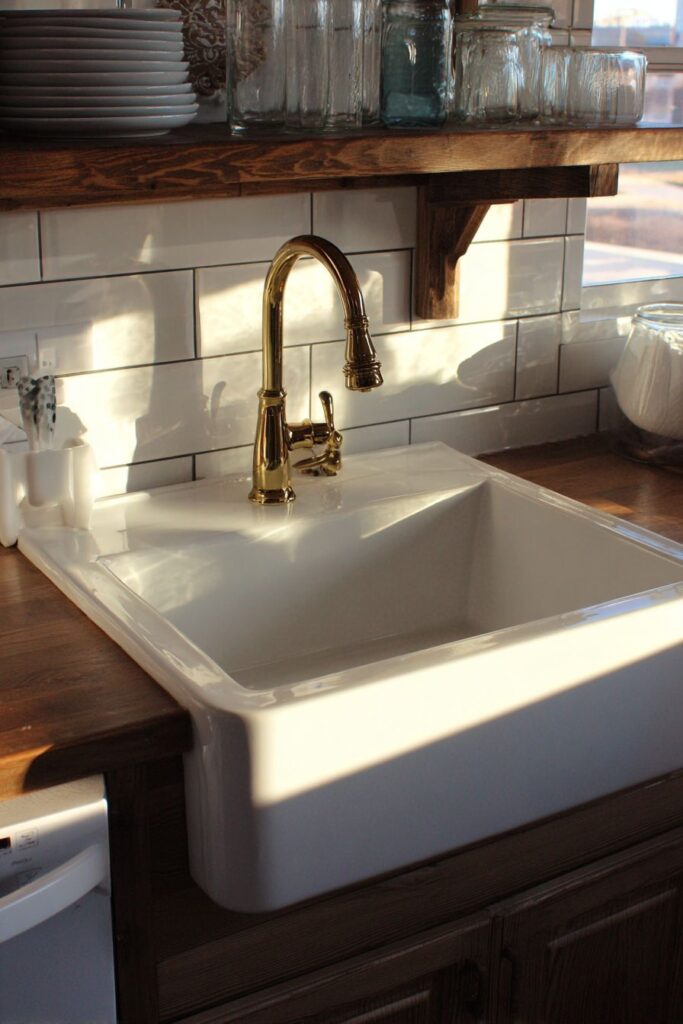
The integration of brushed brass fixtures elevates the farmhouse aesthetic beyond simple country styling into a more sophisticated design territory. The warm metallic tones complement the crisp white porcelain while adding visual weight that balances the sink’s substantial presence. A pull-down sprayer attachment enhances functionality without compromising the traditional aesthetic, providing the flexibility needed for modern cooking demands. The brass finish develops a natural patina over time, adding authentic character that speaks to the farmhouse tradition of elements that improve with age and use.
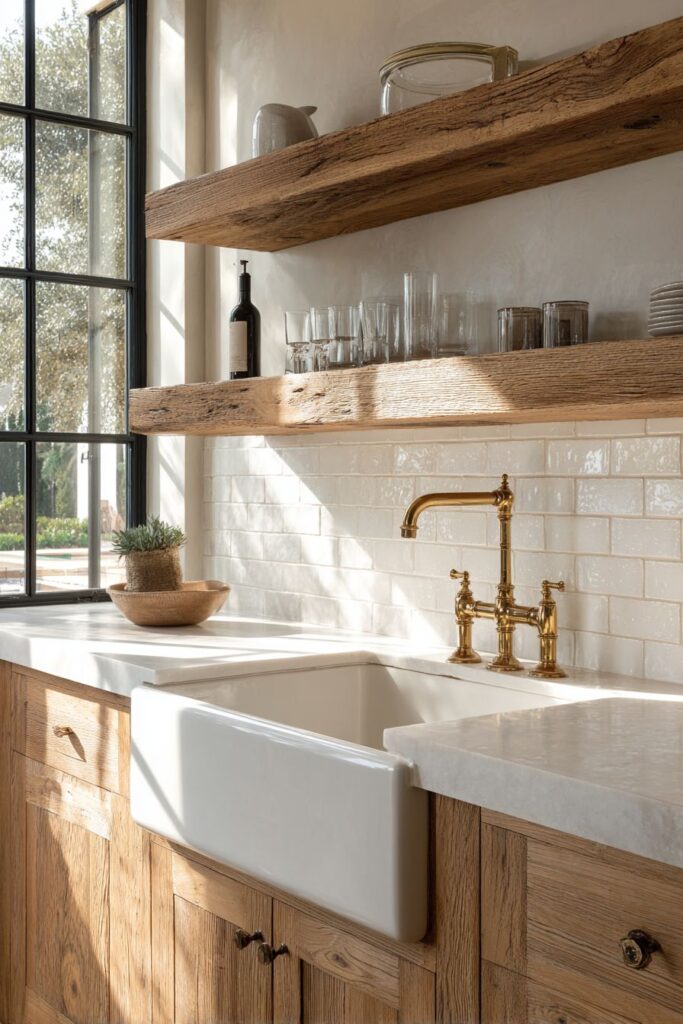
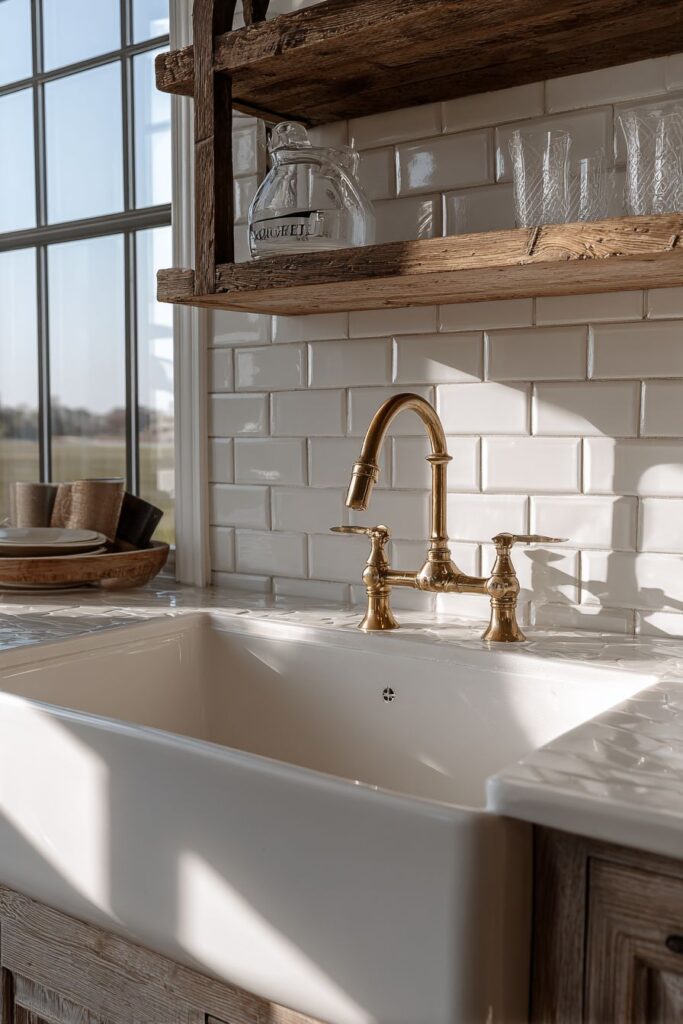
Open wooden shelving surrounding the sink area reinforces the farmhouse theme while providing practical storage for everyday dishware and decorative containers. This approach creates visual continuity between the sink and its surroundings while maintaining the honest, unpretentious character that defines authentic farmhouse design. The natural wood tones warm the space and provide textural contrast against the smooth porcelain surfaces.
Key Design Tips:
- Choose porcelain over fireclay for easier maintenance and stain resistance
- Position the sink beneath a window to maximize natural light and create a pleasant working environment
- Install deep drawers rather than traditional cabinets beneath farmhouse sinks for better access to storage
- Consider a workstation sink with integrated accessories to enhance the practical benefits of the large basin
- Select fixtures with a living finish that develops character over time rather than maintaining a static appearance
2. Modern Kitchen Sink Ideas

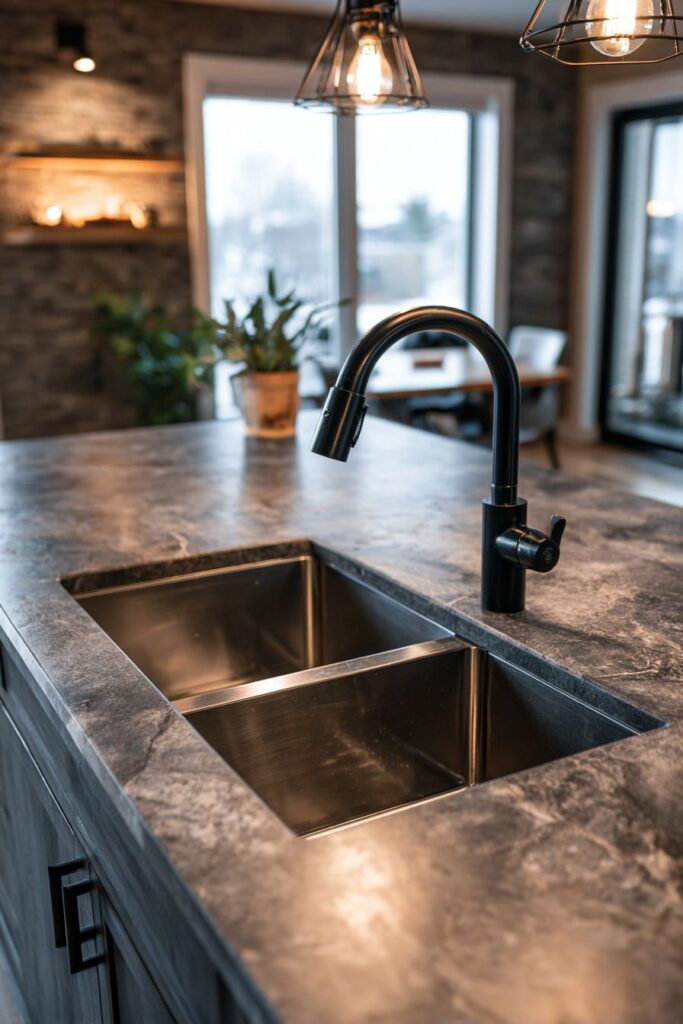
Contemporary kitchen design embraces the principle that form follows function, and nowhere is this more evident than in modern sink installations that prioritize clean lines, geometric precision, and material honesty. A deep stainless steel undermount sink represents the pinnacle of modern design thinking, where the absence of visible rim creates a seamless transition between countertop and basin. This installation method not only enhances the visual flow of the workspace but also eliminates the cleaning challenges associated with traditional drop-in sinks, where debris accumulates around the rim edges.
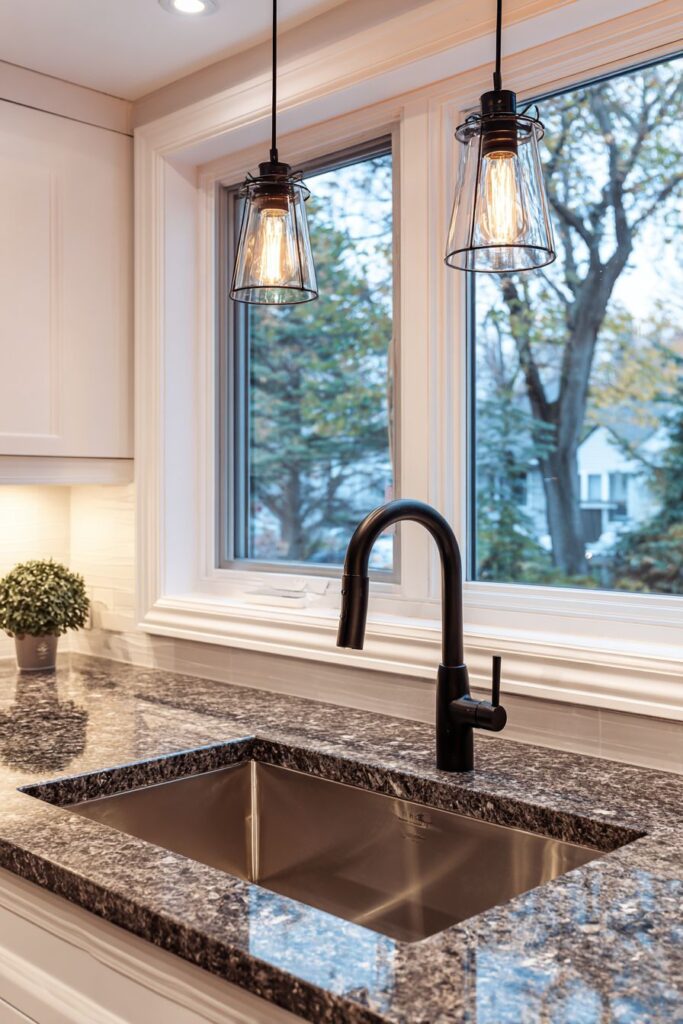
The selection of dark granite countertops provides a sophisticated backdrop that allows the stainless steel’s reflective qualities to create dynamic visual interest throughout the day as light conditions change. This material pairing exemplifies modern design’s preference for honest materials that celebrate their inherent properties rather than attempting to mimic other substances. The cool tones and smooth surfaces create a sense of calm efficiency that supports focused cooking activities while maintaining the visual serenity that characterizes successful modern interiors.
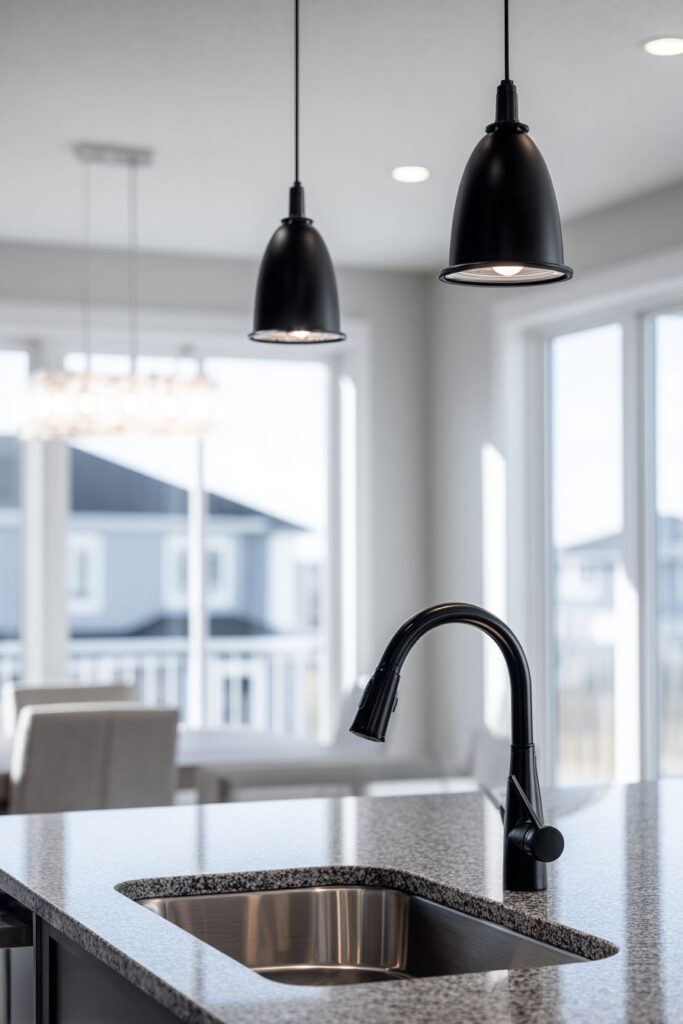
Contemporary faucet design in matte black finish creates a striking focal point that demonstrates modern design’s willingness to embrace bold contrast rather than seeking safe harmonious matching. The single-handle operation reflects modern preferences for streamlined functionality, reducing visual clutter while providing precise control over water temperature and flow. The geometric forms of both sink and faucet work together to create a composition that feels both sculptural and purposeful.
Key Design Tips:
- Invest in quality sound dampening for stainless steel sinks to reduce noise during use
- Choose undermount installation for easier countertop cleaning and streamlined appearance
- Consider workstation sinks with integrated ledges for accessories to maximize functionality
- Select faucets with ceramic disc valves for longevity and consistent performance
- Plan adequate task lighting to prevent shadows in deep basin sinks during food preparation
3. Small Kitchen Sink Ideas
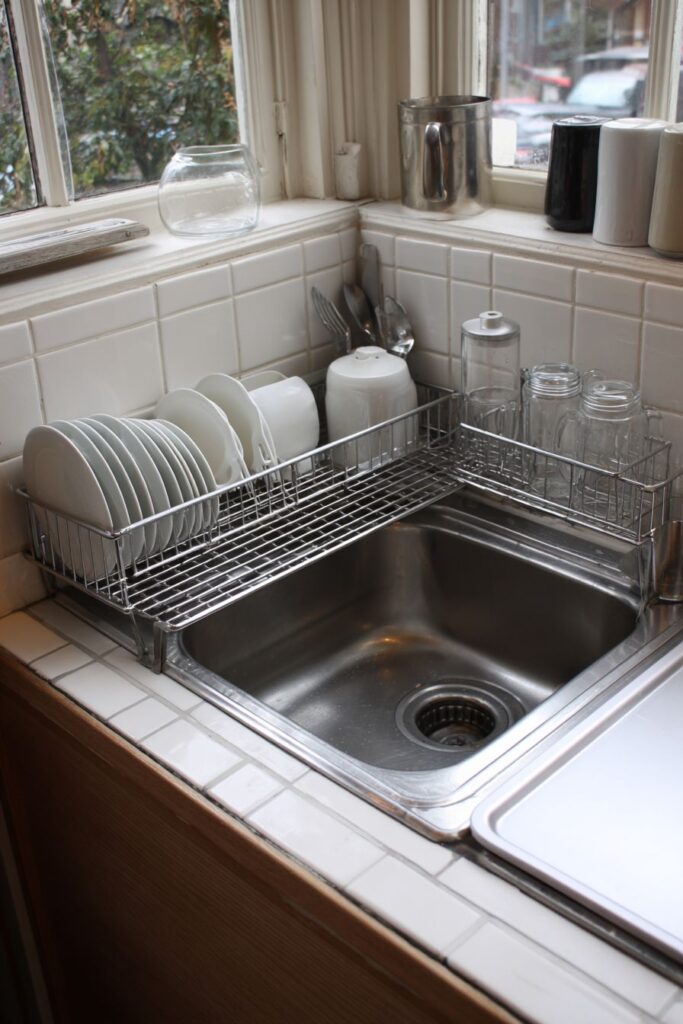
Maximizing functionality in compact kitchen spaces requires creative solutions that transform limitations into advantages through thoughtful design and strategic placement. A compact single-bowl stainless steel sink positioned directly beneath a window exemplifies how small kitchens can maintain full functionality while creating an efficient workflow that makes the most of every available inch. The window placement not only provides natural task lighting during the day but also creates a psychological sense of spaciousness by extending the visual boundaries beyond the confines of the small kitchen.
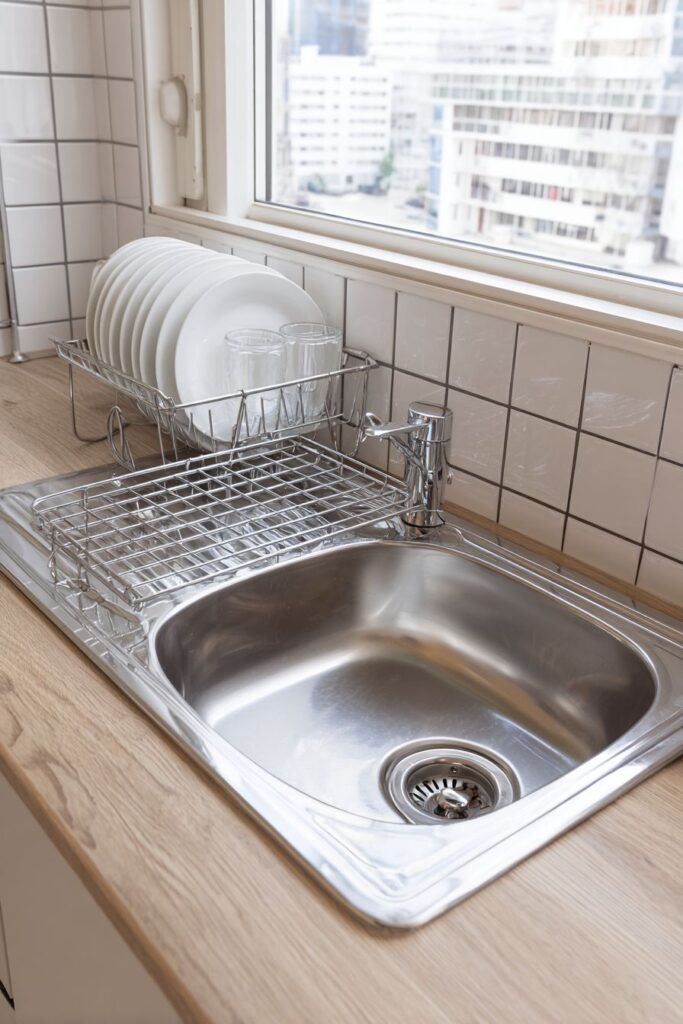
Corner-mounted accessories represent a key strategy for small kitchen success, where every surface must serve multiple purposes to achieve livability. A corner dish drying rack utilizes otherwise awkward triangular space while keeping the limited counter area clear for food preparation activities. Pull-out cutting boards that extend the work surface demonstrate how modern kitchen design can incorporate expandable elements that provide additional functionality when needed while maintaining a compact footprint when stored.
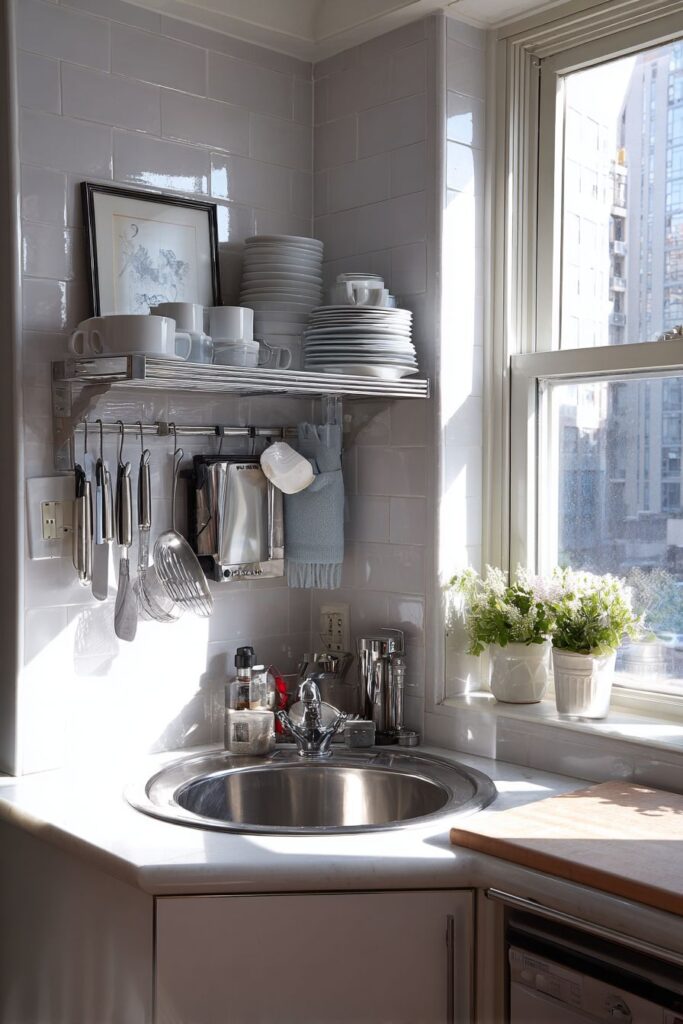
The strategic use of light-colored materials and reflective surfaces amplifies the available natural light while creating the illusion of greater space. White ceramic tile backsplashes serve this dual purpose while providing easy-to-clean surfaces essential in compact cooking areas where splatters and moisture are more concentrated. The careful coordination of these elements creates a kitchen that feels efficient rather than cramped, proving that thoughtful design can overcome spatial constraints.

Key Design Tips:
- Position sinks beneath windows whenever possible to maximize natural light and create visual expansion
- Choose single-bowl sinks for maximum interior space and easier cleaning of large items
- Install pull-out or fold-down accessories that expand functionality without permanent counter space commitment
- Use light colors and reflective surfaces to amplify available light and create spaciousness
- Consider corner installations to utilize awkward spaces while maintaining efficient workflow patterns
4. Luxury Kitchen Sink Ideas
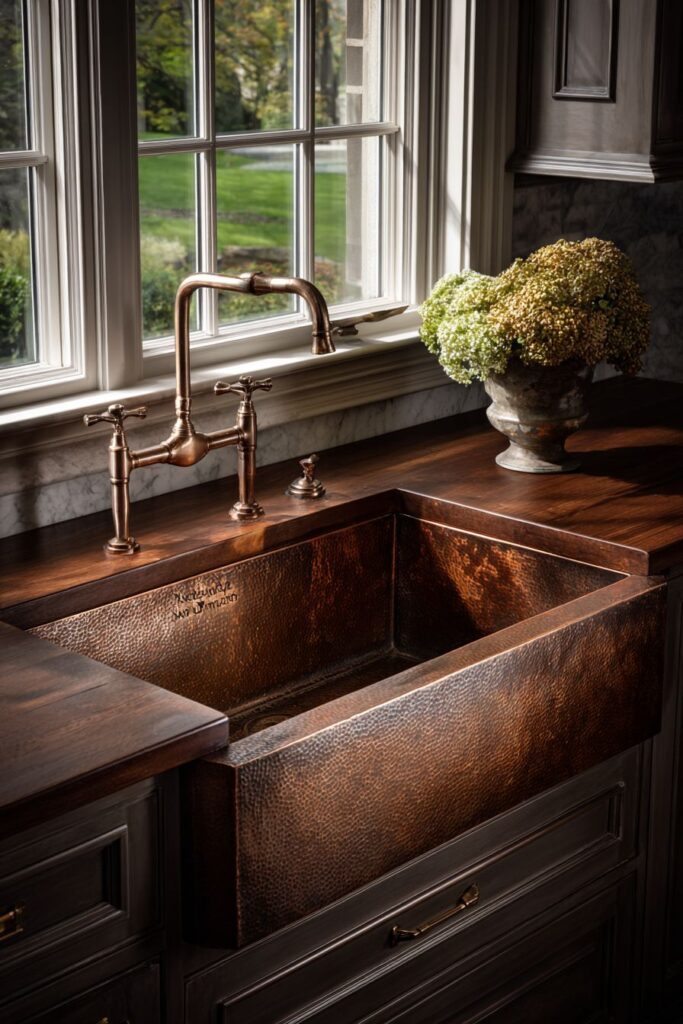
The pinnacle of kitchen luxury manifests in the selection of premium materials that elevate functional elements into works of art, and few materials command attention like a copper farmhouse sink with its distinctive warm glow and natural patina development. The living finish of copper creates a unique personality that evolves over time, developing a patina that tells the story of the kitchen’s daily rhythms while adding depth and character impossible to achieve with static finishes. This natural aging process transforms the sink from a simple fixture into a personalized element that reflects the household’s cooking patterns and maintenance preferences.
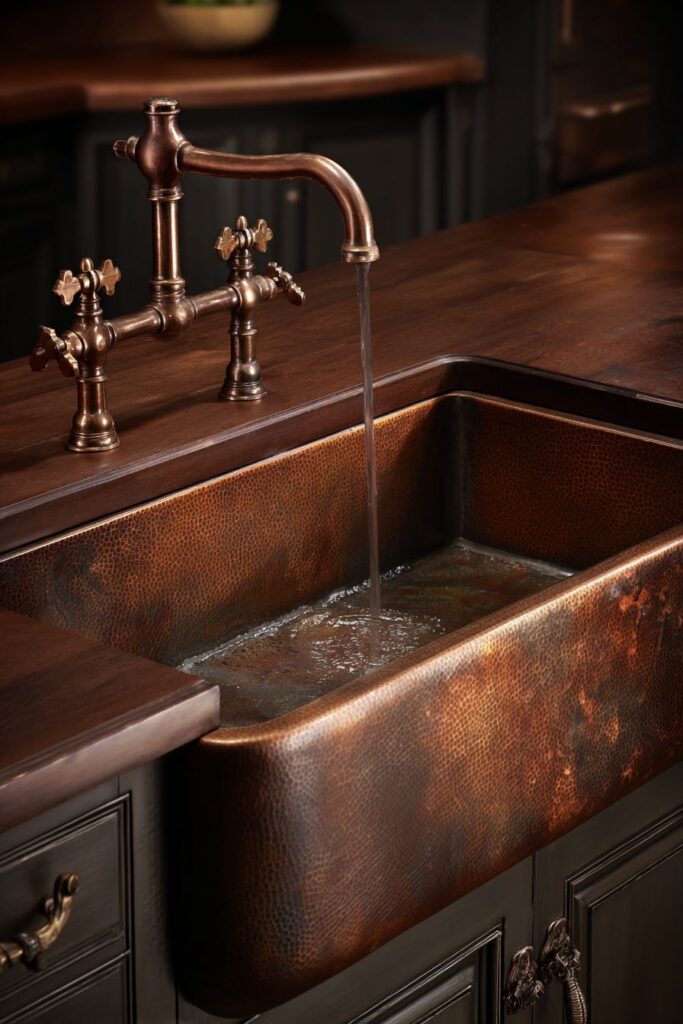
The coordination of matching copper fixtures maintains design coherence while amplifying the warm metallic theme throughout the workspace. Cross handles on the faucet reference traditional design elements while providing the tactile satisfaction of substantial, well-crafted hardware. The weight and substance of these fixtures communicate quality and permanence, essential characteristics of luxury design that values longevity over trend-driven choices. The brass and copper family of metals brings warmth to kitchen spaces that might otherwise feel cold or institutional with purely stainless steel appointments.

Dark walnut countertops provide the perfect complement to copper’s warm tones while adding the richness and depth that only natural wood can provide. The organic grain patterns create visual interest that changes with viewing angle and lighting conditions, providing the dynamic character essential to sophisticated design schemes. Custom cabinetry ensures perfect proportions and seamless integration while demonstrating the attention to detail that distinguishes luxury installations from standard renovations.

Key Design Tips:
- Embrace the patina development of copper as a desirable feature rather than a maintenance issue
- Coordinate warm metallic finishes throughout the kitchen for design coherence
- Choose natural materials like wood and stone that develop character over time
- Invest in custom cabinetry for perfect proportions and seamless integration
- Plan specialized lighting to highlight the copper’s warm glow during evening use
5. Double Kitchen Sink Ideas

The practical advantages of dual-basin sink configurations become immediately apparent to anyone who has attempted to wash large cookware while simultaneously preparing fresh ingredients for the next course. Twin undermount stainless steel bowls of different sizes optimize workflow efficiency by creating dedicated zones for different activities within the same fixture. The larger bowl handles the heavy-duty washing of pots, pans, and serving dishes, while the smaller basin accommodates food preparation tasks like rinsing vegetables or thawing proteins without contaminating the clean washing area.
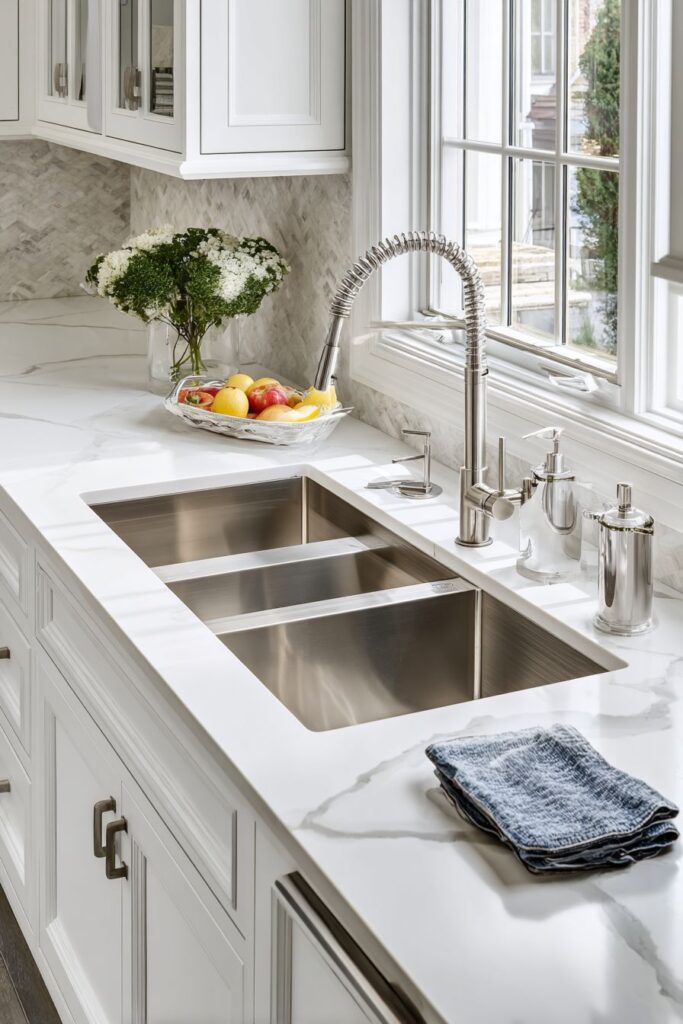
This size differentiation reflects a sophisticated understanding of kitchen workflow patterns, where the ability to multitask efficiently can transform the cooking experience from stressful juggling act into smooth orchestration. Professional chefs have long recognized the value of dedicated prep and cleaning areas, and residential double sinks bring this principle into home kitchens. The undermount installation ensures easy cleanup between the bowls while maintaining the sleek appearance that characterizes modern kitchen design.
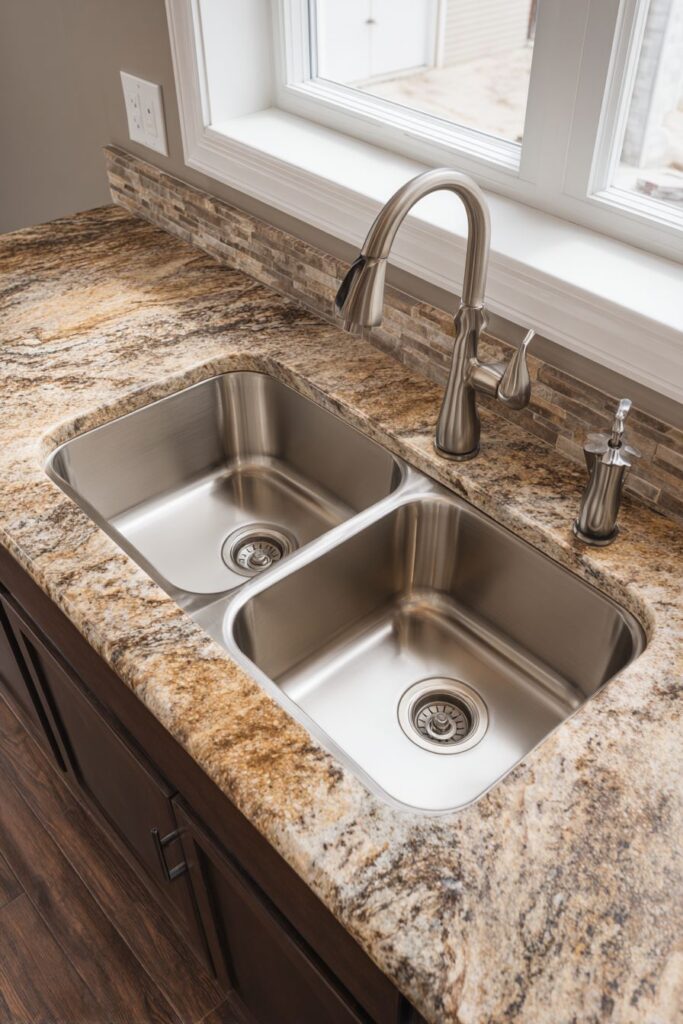
The integration of specialized accessories like separate soap dispensers and coordinated hardware creates a comprehensive washing station that anticipates user needs while maintaining visual coherence. Brushed nickel finishes provide durability and easy maintenance while complementing both warm and cool color schemes. The subtle texture of brushed finishes also helps hide water spots and fingerprints that can make polished surfaces appear constantly dirty in high-use areas.

Key Design Tips:
- Size the bowls according to your specific cooking patterns rather than choosing equal sizes
- Position the larger bowl on the side of your dominant hand for easier access during heavy cleaning
- Install separate soap dispensers to avoid cluttering the deck area around the faucet
- Choose brushed finishes over polished surfaces for easier maintenance and fewer visible water spots
- Plan adequate counter space on both sides of the sink for dish drying and food preparation
6. Kitchen Island Sink Ideas

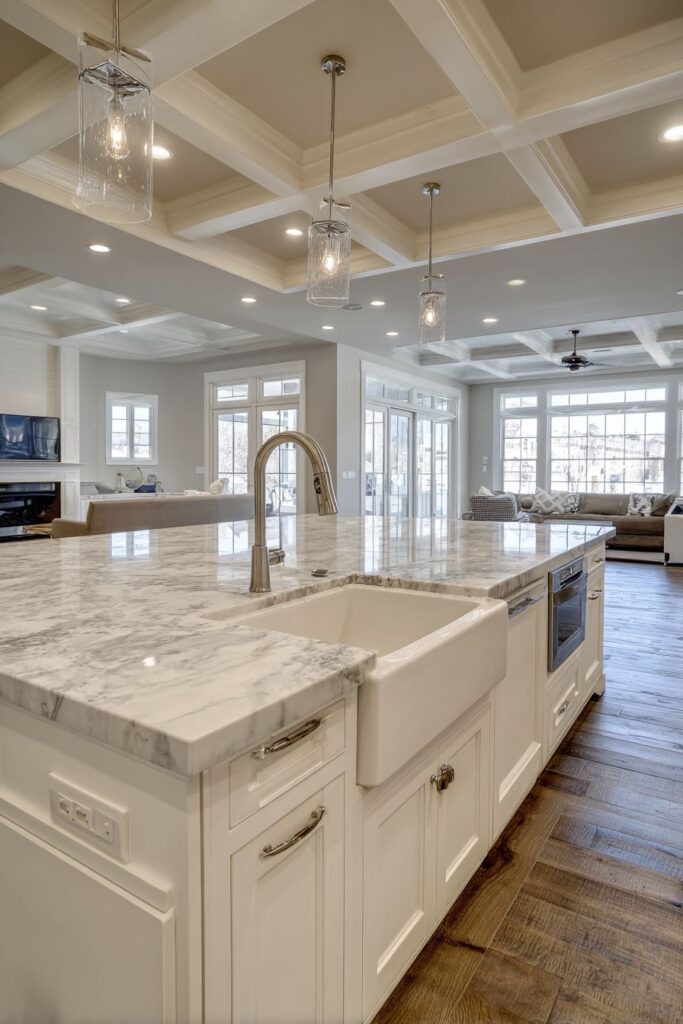
The integration of a prep sink into a kitchen island transforms the island from simple storage and seating area into the dynamic heart of culinary activity, creating a social cooking environment where family and guests can participate in meal preparation while maintaining conversation flow. A compact round sink integrated into a marble-topped island demonstrates how secondary sinks can provide specialized functionality without overwhelming the island’s other purposes. The round configuration maximizes interior space while minimizing the footprint, leaving ample room for seating and work surfaces.
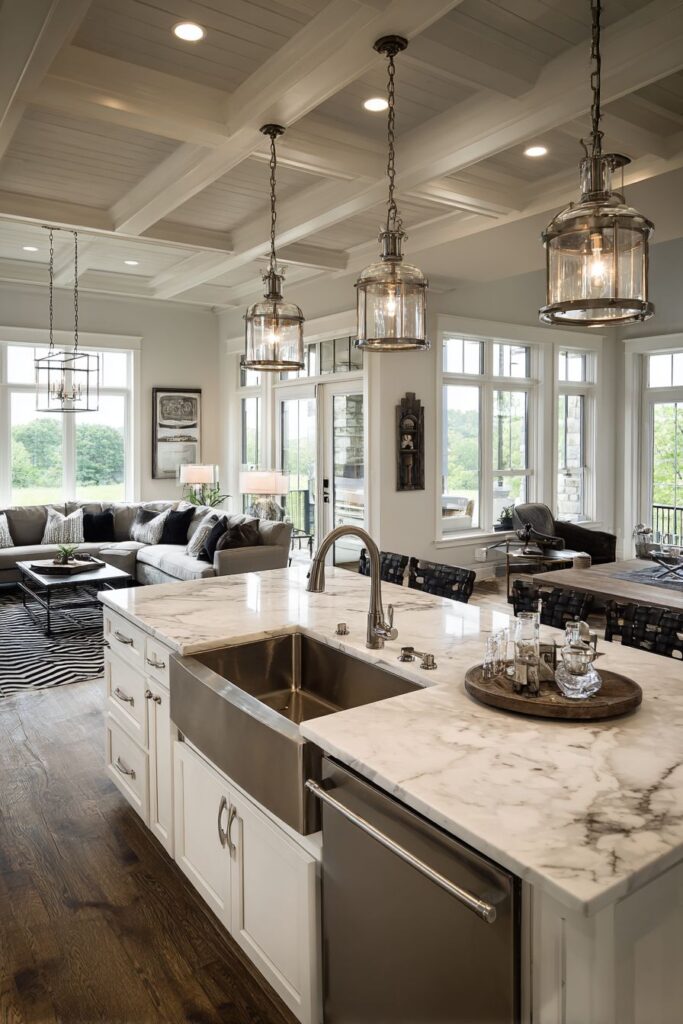
Waterfall edge details on the marble countertop create dramatic visual impact while showcasing the stone’s natural beauty through continuous grain patterns that flow from horizontal to vertical surfaces. This detail adds architectural sophistication while protecting the island’s base from damage during heavy use periods. The substantial appearance of waterfall edges also provides visual weight that balances the island within larger kitchen spaces, preventing it from appearing insignificant despite its practical importance.
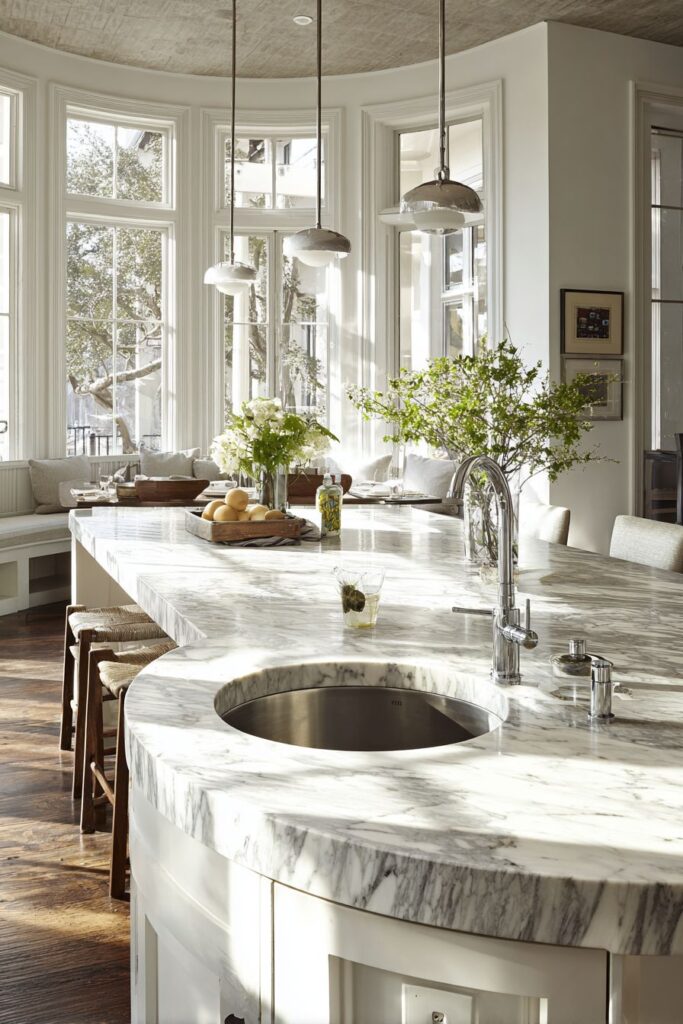
The contemporary gooseneck faucet provides the height and reach necessary for efficient food preparation while maintaining proportional relationships with the island’s other elements. Bar seating on the opposite side creates natural gathering areas where family members can participate in cooking activities or simply visit while meals are prepared. This social aspect of island cooking represents a return to the kitchen as the heart of the home, where food preparation becomes a shared activity rather than isolated work.
Key Design Tips:
- Position island sinks to face seating areas for enhanced social interaction during food preparation
- Choose compact sink configurations that preserve adequate work surface around the basin
- Install dedicated electrical circuits for island appliances and task lighting
- Plan plumbing access carefully during initial construction to avoid expensive retrofit complications
- Consider prep sink accessories like cutting boards and colanders that maximize functionality
7. Vintage Kitchen Sink Ideas
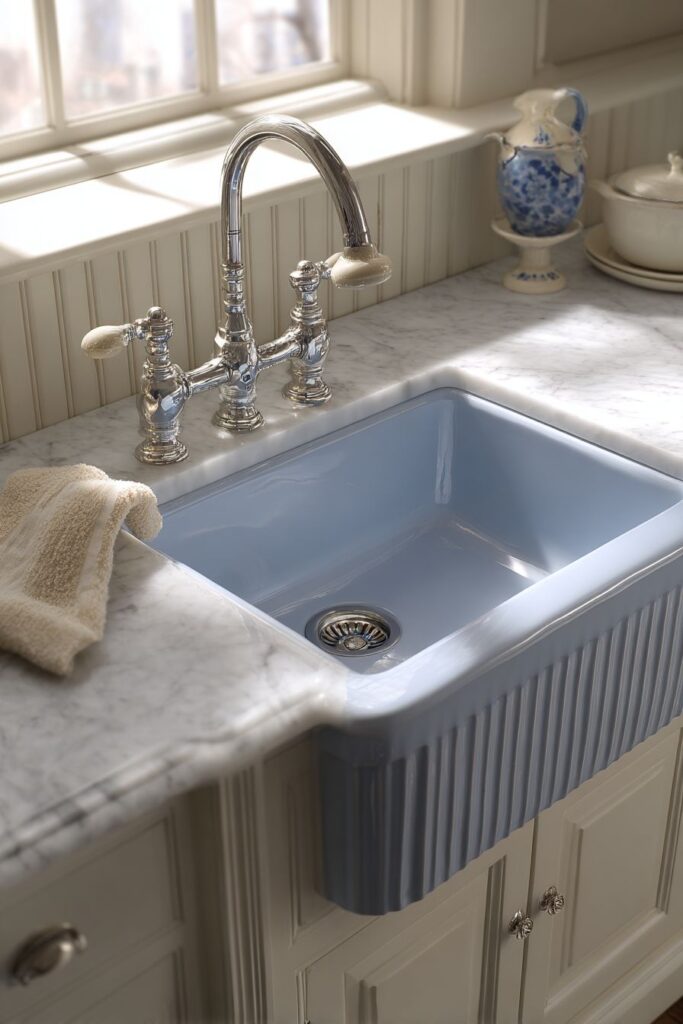
Authentic period design requires attention to historical accuracy that extends beyond surface-level styling into the realm of proper proportions, appropriate materials, and period-correct installation methods. A restored cast iron sink with porcelain enamel finish represents the gold standard of 1920s kitchen fixtures, combining the durability of iron construction with the hygienic properties of glazed porcelain surfaces. The substantial weight and thickness of these sinks communicate quality and permanence while the pristine white finish creates a clean, sanitary appearance that was revolutionary in its time.
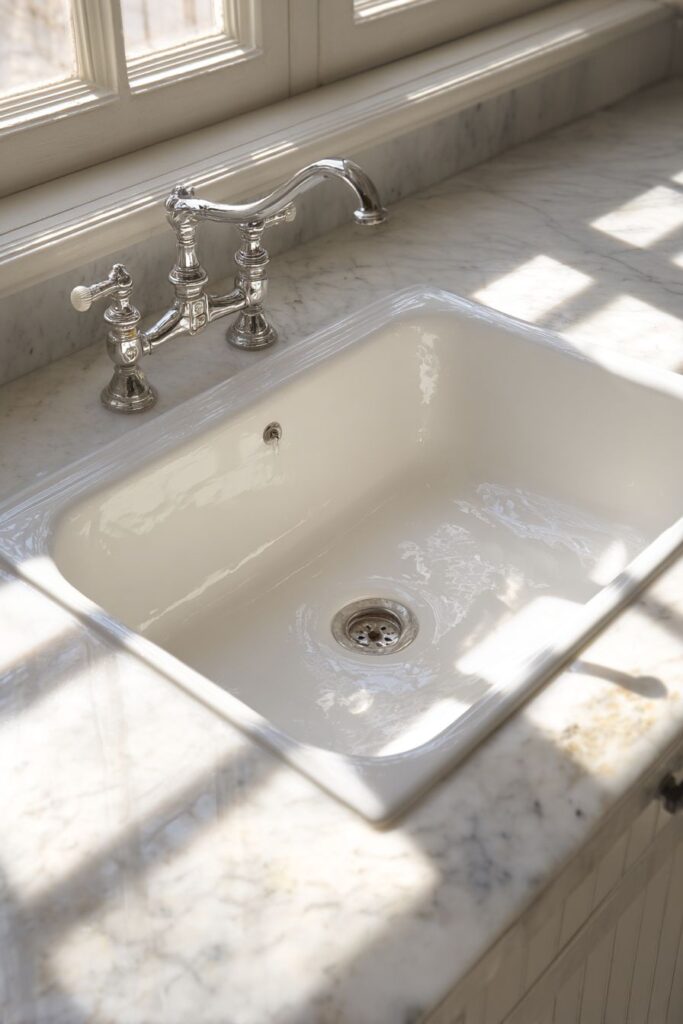
Bridge faucets with porcelain handles maintain historical authenticity while providing the functionality expected in modern applications. The wall-mounted installation preserves valuable counter space while creating the visual lightness characteristic of period design. Cross handles with porcelain caps reference the era’s preference for decorative elements that enhanced daily life experiences, transforming routine tasks into moments of aesthetic pleasure. The substantial feel of quality hardware provides tactile satisfaction that modern plastic alternatives cannot match.

Beadboard wainscoting and marble countertops complete the period aesthetic while providing practical benefits that explain their enduring popularity. The vertical lines of beadboard create visual height while protecting walls from moisture and impact damage. Natural marble provides a work surface that remains cool for pastry preparation while developing a patina that adds character over time. These materials age gracefully, improving rather than deteriorating with proper care.

Key Design Tips:
- Research period-appropriate proportions and installation methods for authentic appearance
- Invest in quality restoration rather than reproduction pieces when possible
- Choose materials that develop attractive patina over time rather than showing wear as deterioration
- Plan modern conveniences like electrical outlets to be invisible while maintaining period accuracy
- Consider the maintenance requirements of period materials and plan accordingly
8. Contemporary Kitchen Sink Ideas
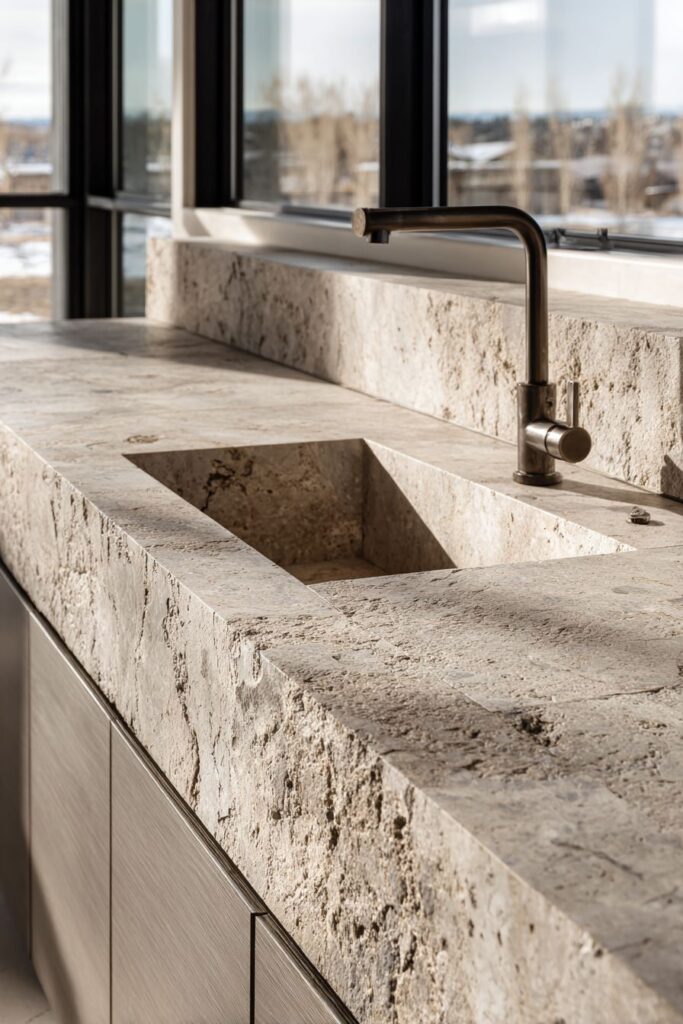
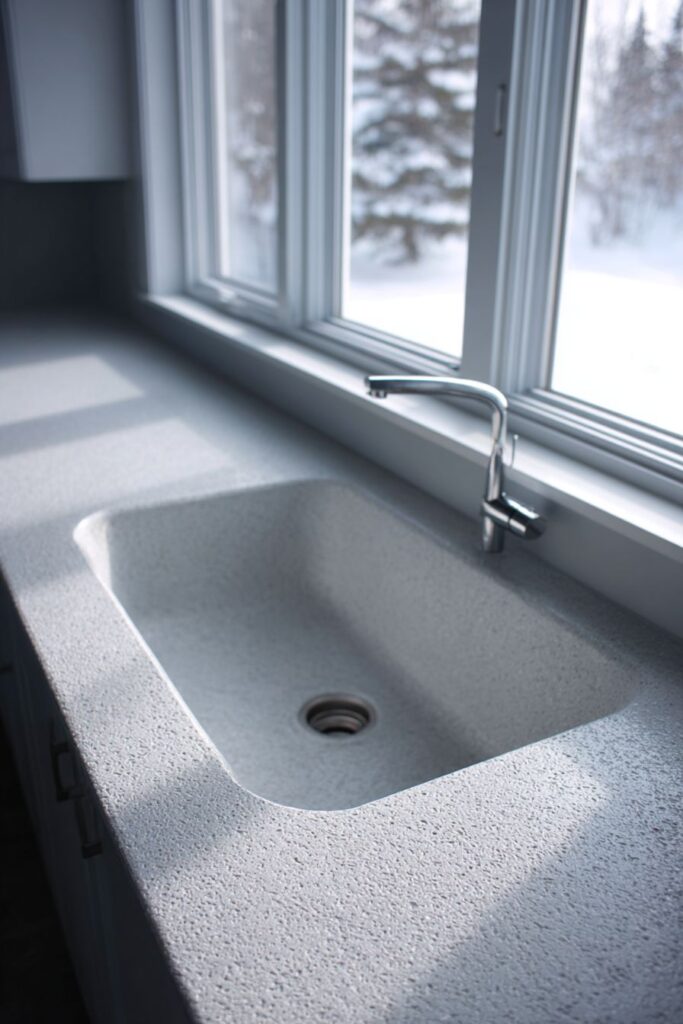
The pinnacle of contemporary sink design lies in the seamless integration of fixture and countertop into a monolithic composition that eliminates visual breaks while simplifying maintenance routines. Integrated sinks molded from the same quartz material as the countertop represent advanced manufacturing techniques that create surfaces impossible to achieve through traditional installation methods. The absence of seams eliminates bacterial harboring areas while creating visual continuity that enhances the sense of spaciousness essential to contemporary design philosophy.
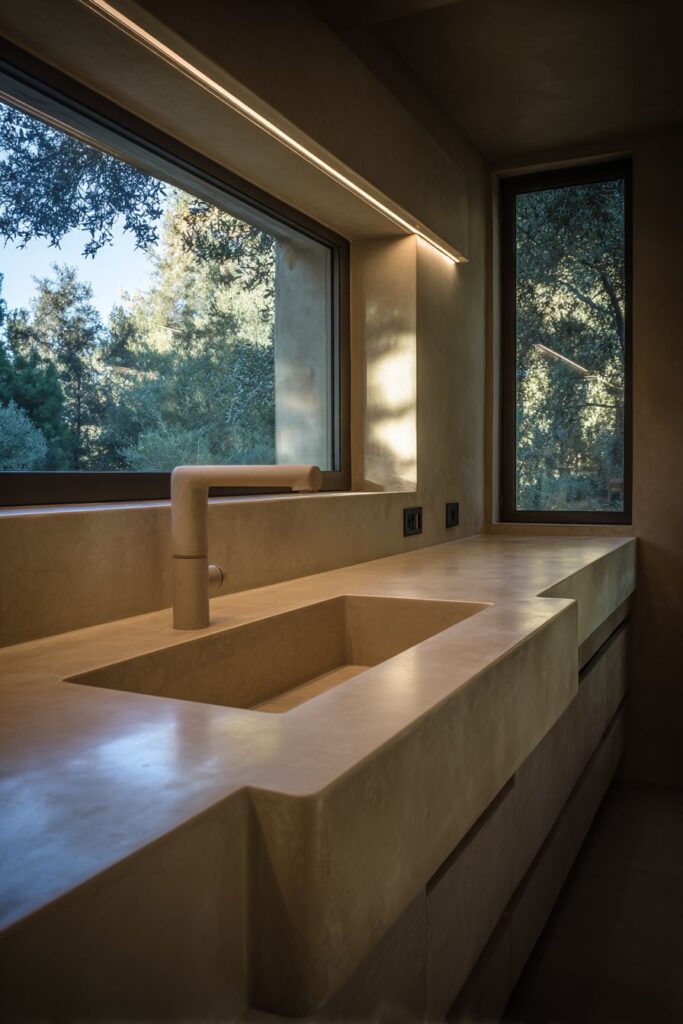
Single-bowl configurations with generous interior dimensions accommodate the largest cookware while rounded interior corners facilitate thorough cleaning without sharp angles where debris can accumulate. This attention to hygienic design reflects contemporary priorities that value health and cleanliness alongside aesthetic achievement. The substantial depth of modern sinks also reduces splashing while providing ample room for soaking and washing oversized items that characterize current cooking trends toward fresh, whole-food preparation.
Pull-out faucet technology provides the flexibility essential to contemporary cooking methods while maintaining the clean lines that characterize modern design. The ability to direct water flow precisely where needed transforms routine tasks like vegetable washing and pot filling into efficient operations. Under-cabinet LED lighting creates shadow-free task illumination while highlighting the seamless integration of sink and counter surfaces during evening use periods.
Key Design Tips:
- Choose integral sinks for the ultimate in seamless design and easy maintenance
- Plan generous interior dimensions to accommodate modern cooking equipment and techniques
- Install pull-out faucets for maximum flexibility in food preparation and cleanup tasks
- Incorporate task lighting to prevent shadows in deep, single-bowl configurations
- Consider the acoustic properties of different materials and plan sound dampening accordingly
9. Rustic Kitchen Sink Ideas

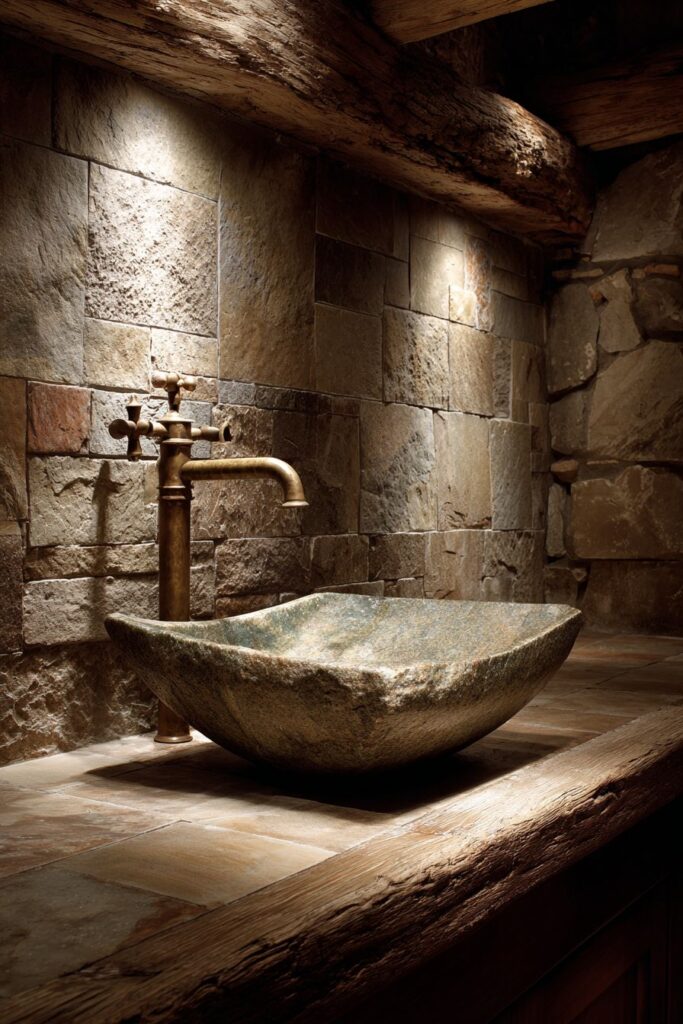
Natural materials in their most authentic form create kitchen environments that celebrate the inherent beauty of earth-derived substances while providing functionality that improves with age and use. A natural stone vessel sink carved from a single piece of granite represents the ultimate expression of rustic design philosophy, where each piece possesses unique character impossible to replicate through manufacturing processes. The organic variations in color, texture, and pattern create visual interest that changes with lighting conditions while providing a substantial presence that anchors the entire kitchen design.
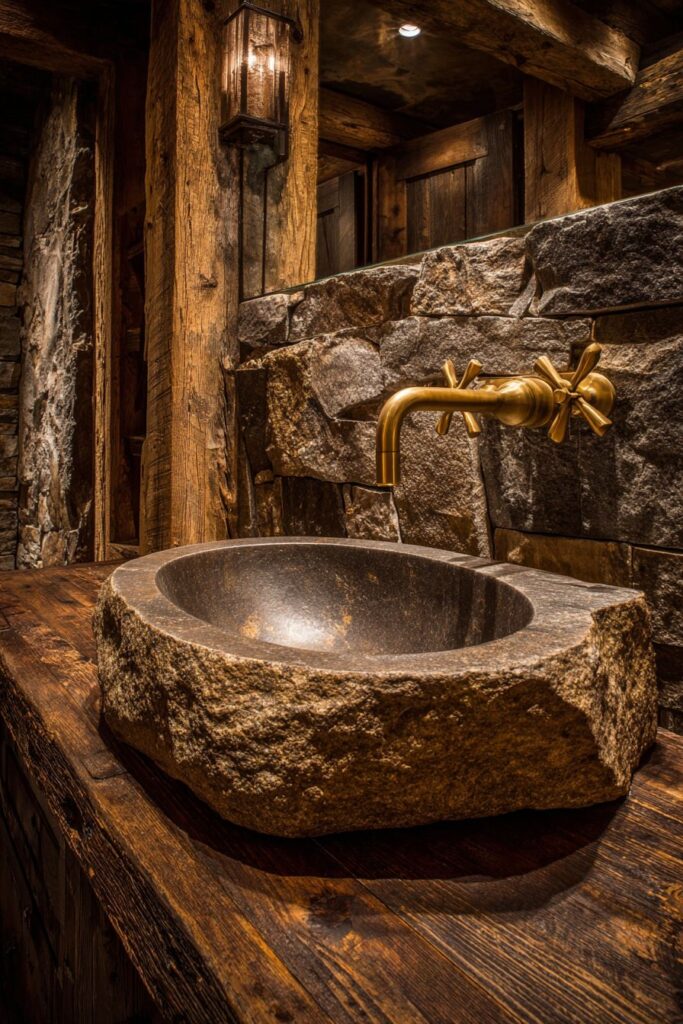
Reclaimed wood countertops complement the stone’s organic character while adding warmth and texture that only aged timber can provide. The patina developed through decades of use creates depth and richness that new materials cannot match, while the imperfections and wear patterns tell stories of previous lives and uses. This historical connection adds meaning and authenticity to kitchen spaces that might otherwise feel artificial or contrived in their attempt to achieve rustic character.
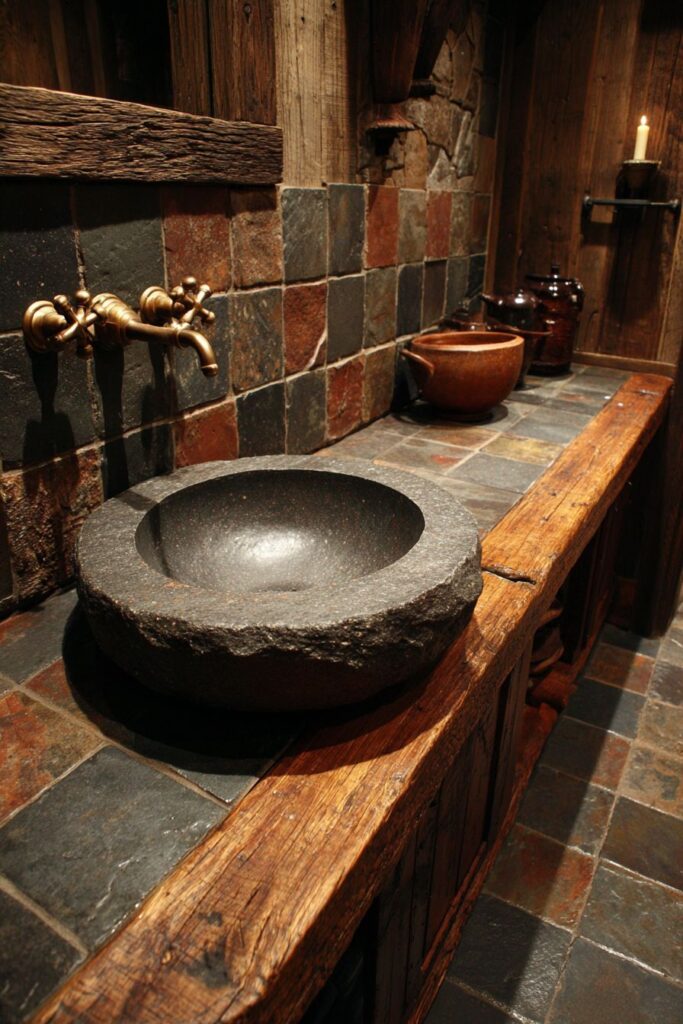
Aged brass fixtures with cross handles reference traditional pump mechanisms while providing modern convenience and water control precision. The warm metallic tones complement both stone and wood while developing natural patina that adds character over time. Exposed wooden beams overhead and stone tile backsplashes complete the organic material palette while providing practical benefits like moisture protection and structural support.
Key Design Tips:
- Embrace natural variations in stone as desirable character rather than defects to be avoided
- Seal natural materials properly while maintaining their authentic appearance and texture
- Choose hardware that develops attractive patina over time rather than maintaining static appearance
- Plan adequate ventilation for natural materials that may be more sensitive to moisture
- Consider the weight requirements of stone sinks and plan structural support accordingly
10. Black Kitchen Sink Ideas
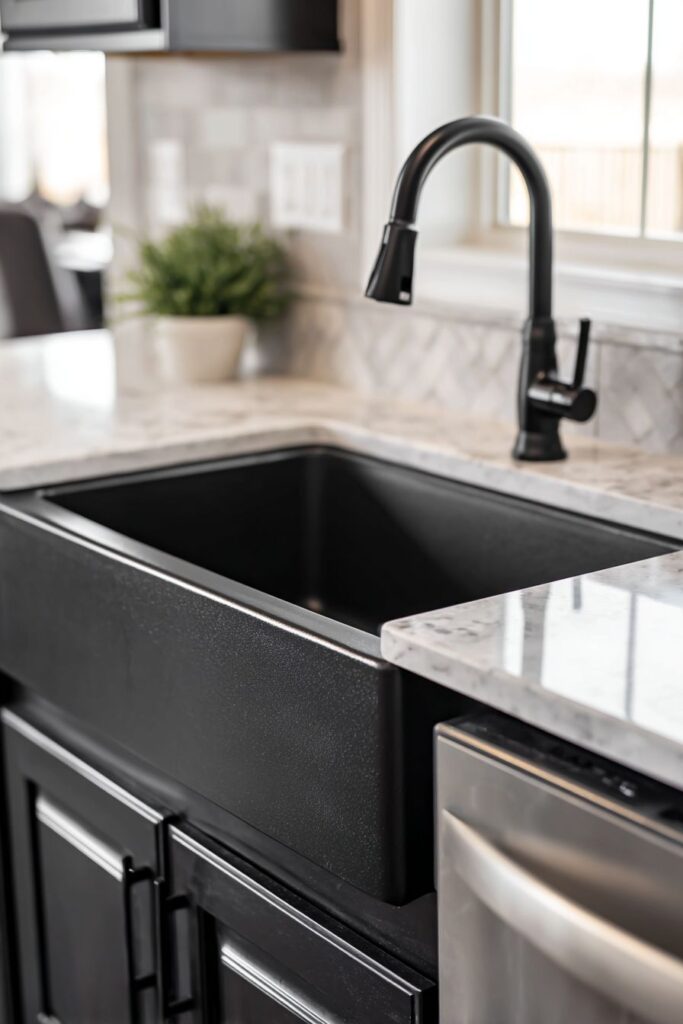
Bold color choices in kitchen fixtures require confidence and commitment, but the dramatic impact of a matte black composite granite sink demonstrates how dark elements can create sophisticated contrast while maintaining practical functionality. The deep, rich color provides striking contrast against light countertops while coordinating seamlessly with dark cabinetry to create visual coherence throughout the kitchen design. This monochromatic approach eliminates the visual competition that can occur when too many different materials and colors compete for attention within a single space.

Composite granite construction combines the aesthetic appeal of natural stone with enhanced durability and stain resistance that make it ideal for high-use kitchen applications. The non-porous surface resists bacterial growth while maintaining its color integrity even under heavy use conditions. The matte finish effectively hides water spots and soap residue that can make darker surfaces appear constantly dirty, while the substantial feel and appearance communicate quality and permanence.
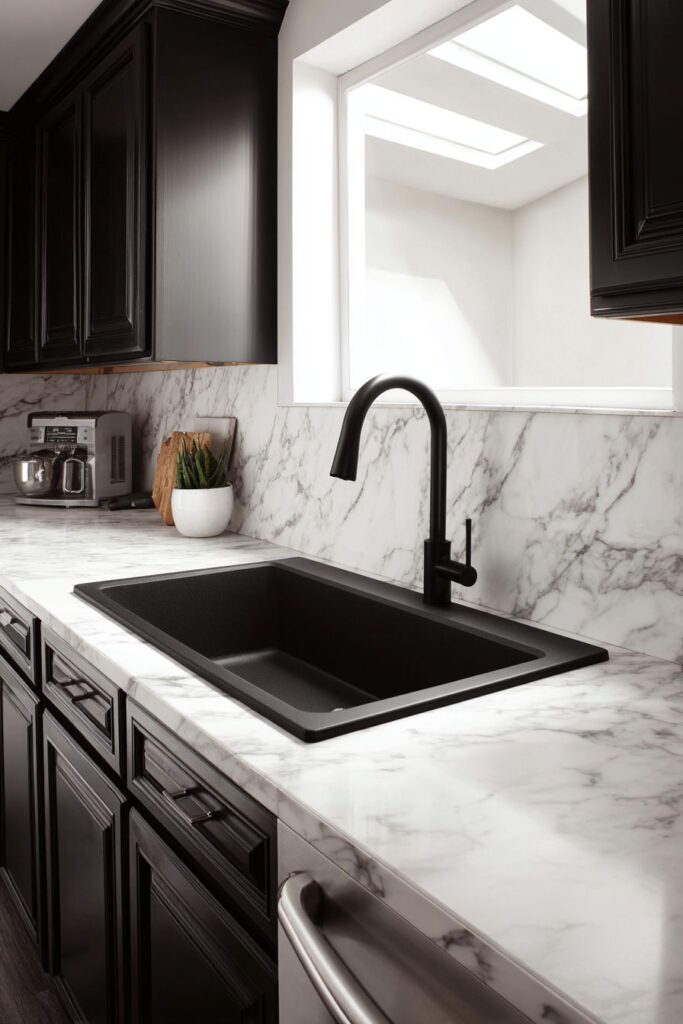
The coordination of matching black faucets maintains design coherence while creating a comprehensive dark accent that balances the overall color composition. Sleek modern lines in the faucet design prevent the dark color from appearing heavy or oppressive while providing the visual continuity essential to sophisticated design schemes. Stainless steel appliances introduce metallic accents that prevent the space from appearing too monochromatic while adding the reflective surfaces necessary to maintain visual brightness.

Key Design Tips:
- Balance dark sinks with adequate lighting to prevent the space from feeling too heavy
- Choose matte finishes over glossy surfaces to minimize visible water spots and maintenance
- Coordinate dark fixtures with other black elements throughout the kitchen for design coherence
- Plan contrasting countertop materials to prevent the sink from disappearing visually
- Consider the room’s natural light levels when choosing dark fixture colors
11. Corner Kitchen Sink Ideas
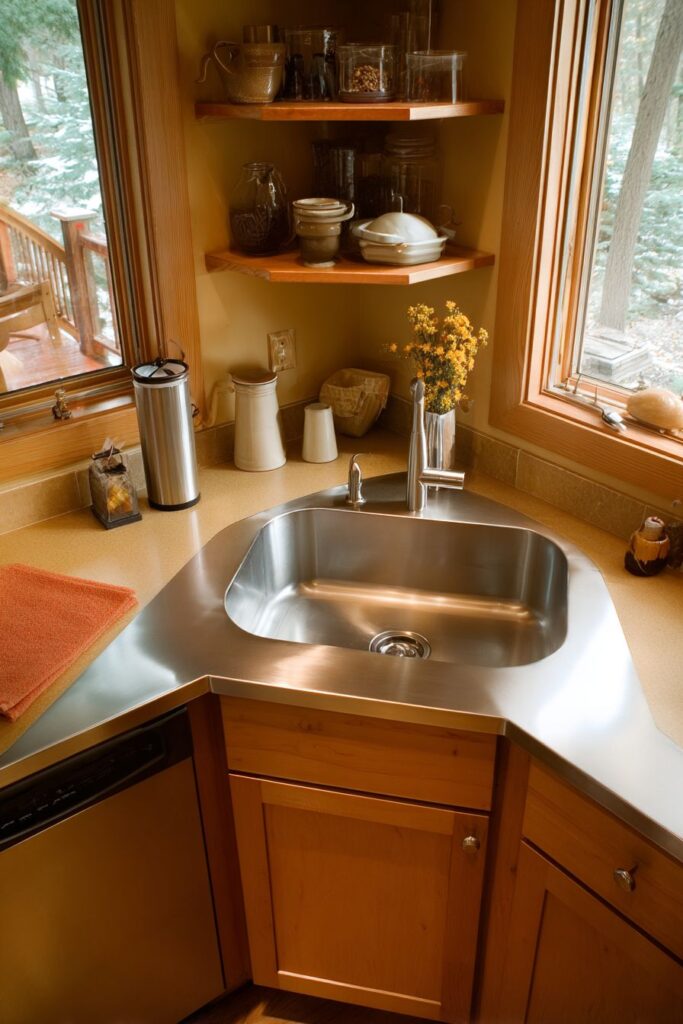
Challenging kitchen layouts often require creative solutions that transform awkward spaces into functional assets, and corner sink installations demonstrate how innovative thinking can optimize workflow in compact L-shaped kitchen configurations. The angled installation maximizes counter space on both sides while creating efficient access to plumbing connections that might otherwise require expensive rerouting. Rounded corners in the sink basin facilitate thorough cleaning while preventing debris accumulation in sharp angles that characterize rectangular configurations.
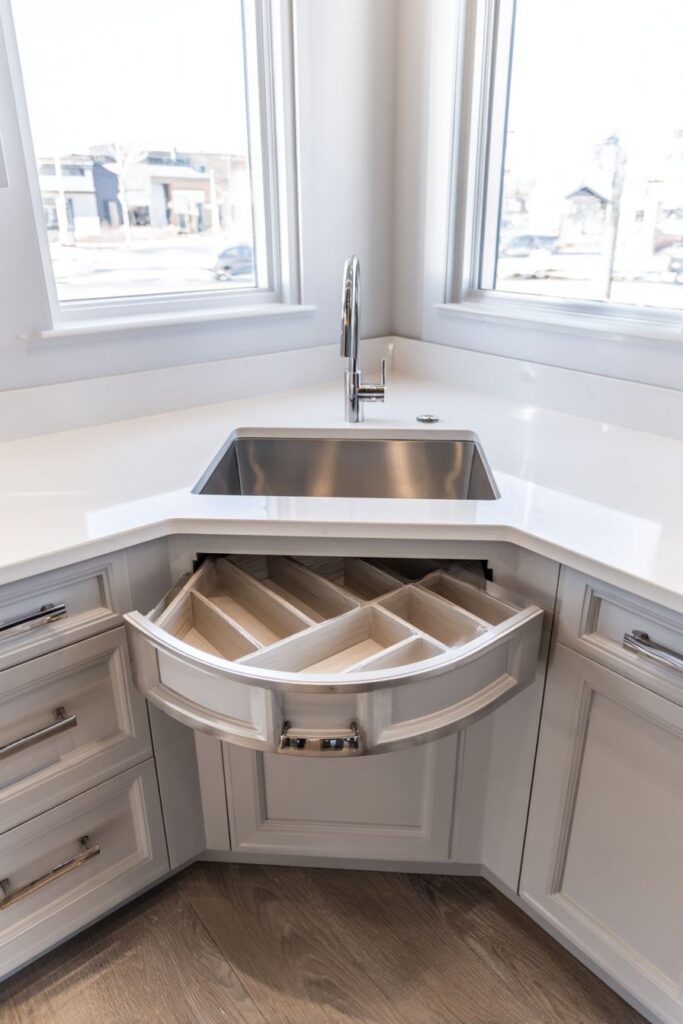
Custom cabinetry solutions address the storage challenges inherent in corner installations through specialized mechanisms like lazy Susan systems that bring items from the back of deep cabinets to easily accessible positions. These rotating storage solutions maximize the use of corner space that might otherwise remain largely inaccessible while providing organized storage for cleaning supplies and kitchen accessories. The integration of these storage systems during initial planning ensures smooth operation and prevents the mechanical failures common in retrofit applications.

Corner-mounted faucets position water delivery optimally for both basin access and counter space preservation while creating unique visual interest through their angular approach to traditional fixture placement. The strategic positioning allows efficient use of both counter areas while maintaining comfortable working positions for users of different heights. Natural lighting from adjacent windows illuminates the workspace while soft shadows define the angular installation’s geometric character.

Key Design Tips:
- Plan corner installations during initial design phases for optimal plumbing and structural integration
- Choose specialized storage solutions designed specifically for corner cabinet challenges
- Position faucets to optimize access from both counter areas adjacent to the corner sink
- Consider the workflow implications of corner placement in relation to other kitchen work zones
- Install adequate task lighting to prevent shadows in corner installations
12. Industrial Kitchen Sink Ideas
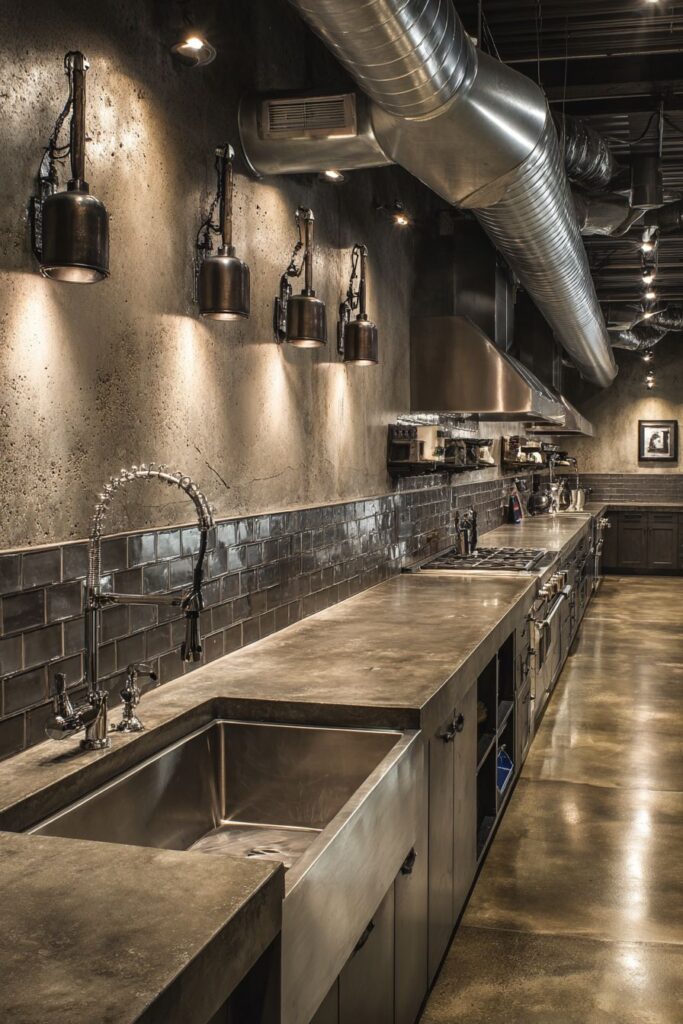
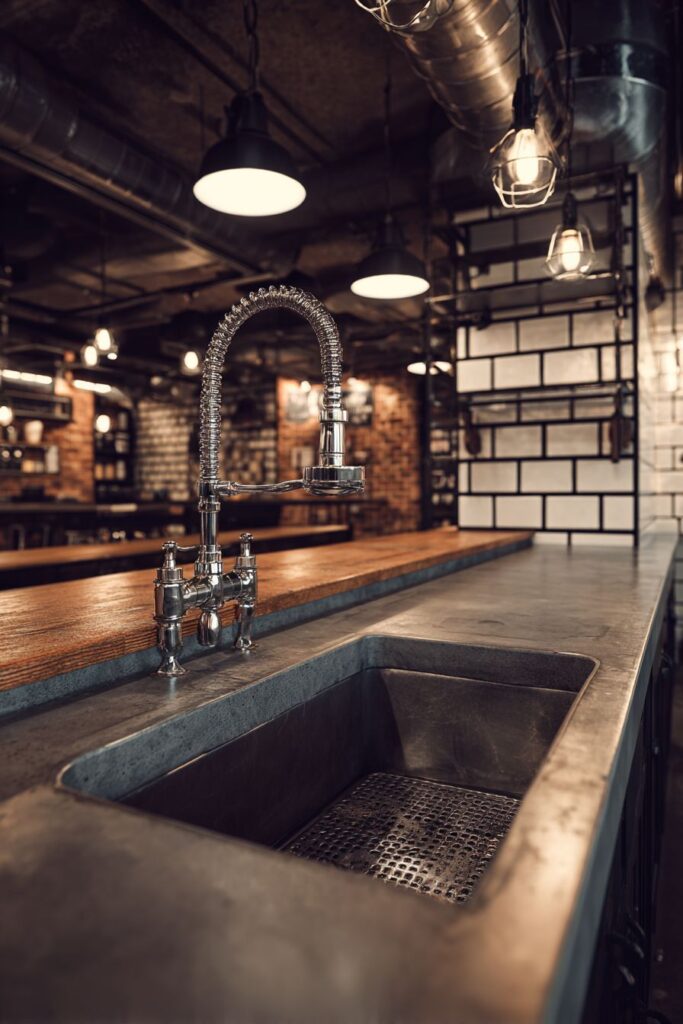
Professional-grade kitchen fixtures bring commercial durability and functionality into residential settings while creating dramatic visual impact through an honest expression of utilitarian design principles. Deep stainless steel commercial sinks with exposed mounting brackets celebrate industrial aesthetics while providing the capacity and durability necessary for serious home cooking. The substantial gauge steel construction resists denting and damage while the generous basin depth accommodates the largest cookware and serving pieces with ease.
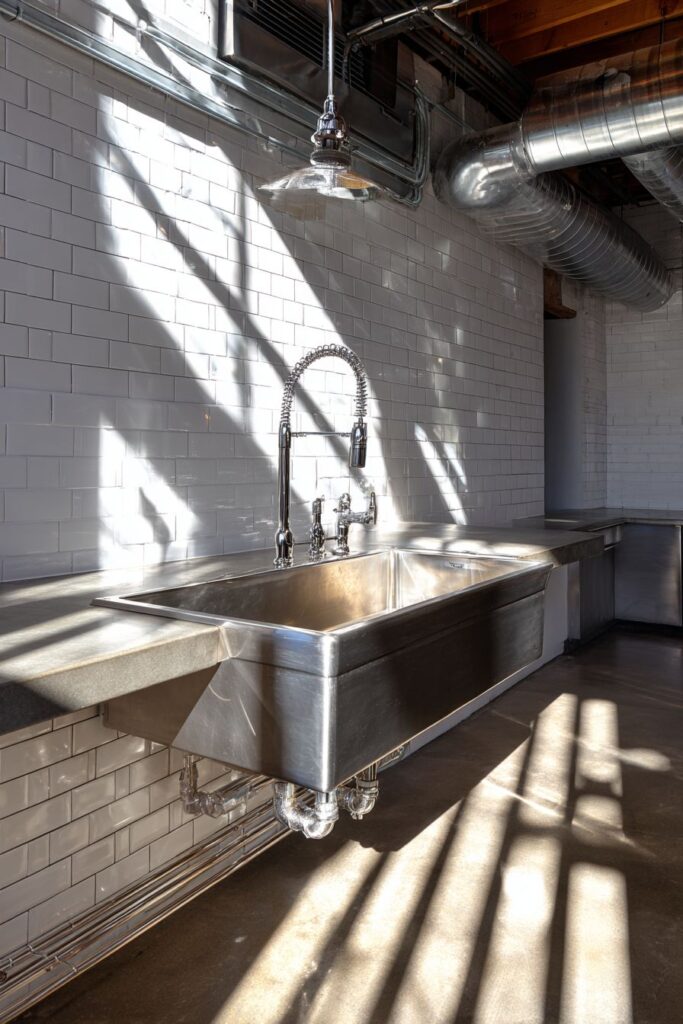
High-arc commercial faucets with pre-rinse sprayers provide the functionality demanded by professional kitchens while adding visual interest through their substantial scale and purposeful design. These fixtures prioritize function over form while achieving beauty through honest expression of their intended purpose. The extended reach and powerful spray patterns make quick work of cleaning tasks while the durable construction withstands the intensive use characteristic of serious cooking environments.

Concrete countertops enhance the industrial aesthetic while providing heat resistance and durability that complement the professional-grade fixtures. The subtle texture and neutral color create a backdrop that allows the stainless steel elements to command attention while maintaining the monochromatic color scheme essential to authentic industrial design. Exposed ductwork and utilitarian lighting complete the loft-style environment while providing practical benefits like efficient ventilation and task illumination.
Key Design Tips:
- Choose commercial-grade fixtures for authentic industrial appearance and superior durability
- Plan adequate ventilation for industrial materials that may retain odors or moisture
- Balance industrial elements with softer textures to prevent the space from feeling cold or harsh
- Install sound dampening for commercial fixtures that may produce more noise than residential alternatives
- Consider the maintenance requirements of industrial finishes and plan cleaning routines accordingly
13. Kitchen Sink Ideas with Window
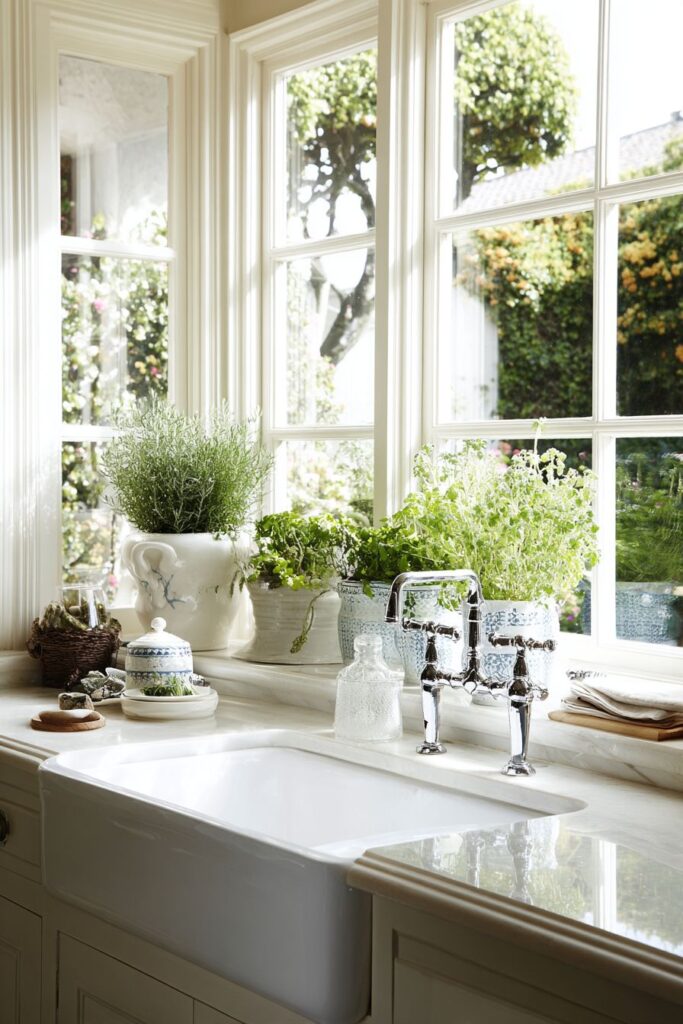
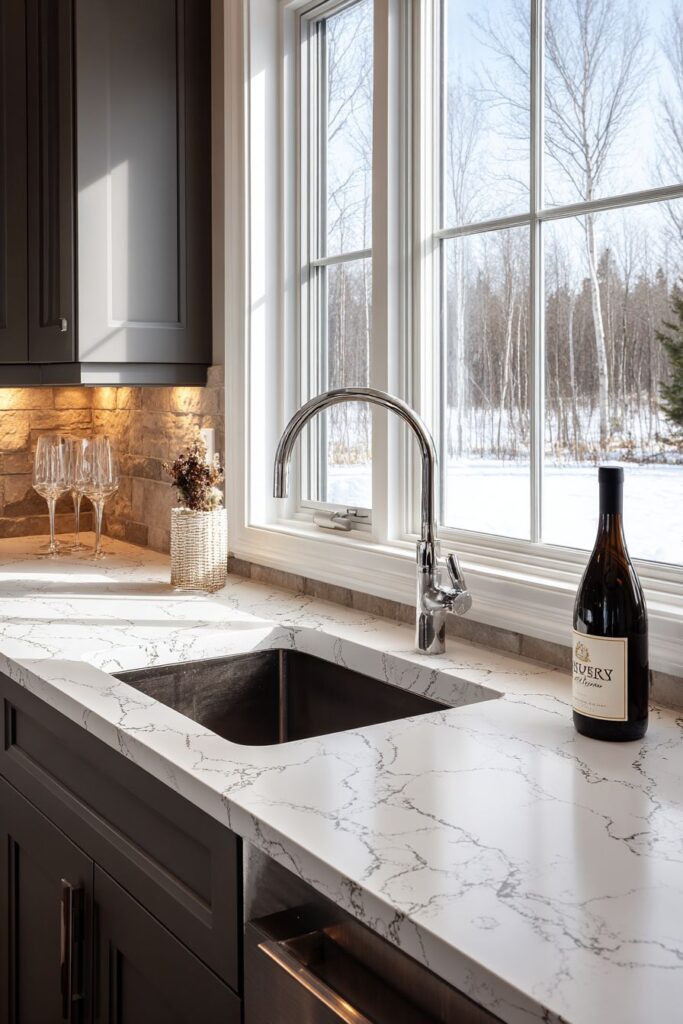
The strategic placement of kitchen sinks beneath windows creates natural task lighting while establishing visual connections between interior workspaces and exterior environments that enhance the psychological comfort of routine kitchen tasks. A white porcelain sink positioned directly beneath a large casement window transforms dishwashing from mundane chore into pleasant interlude where users can observe seasonal changes and garden activities. The natural light streaming across the basin reduces eye strain during detailed food preparation while creating dynamic shadows that change throughout the day.
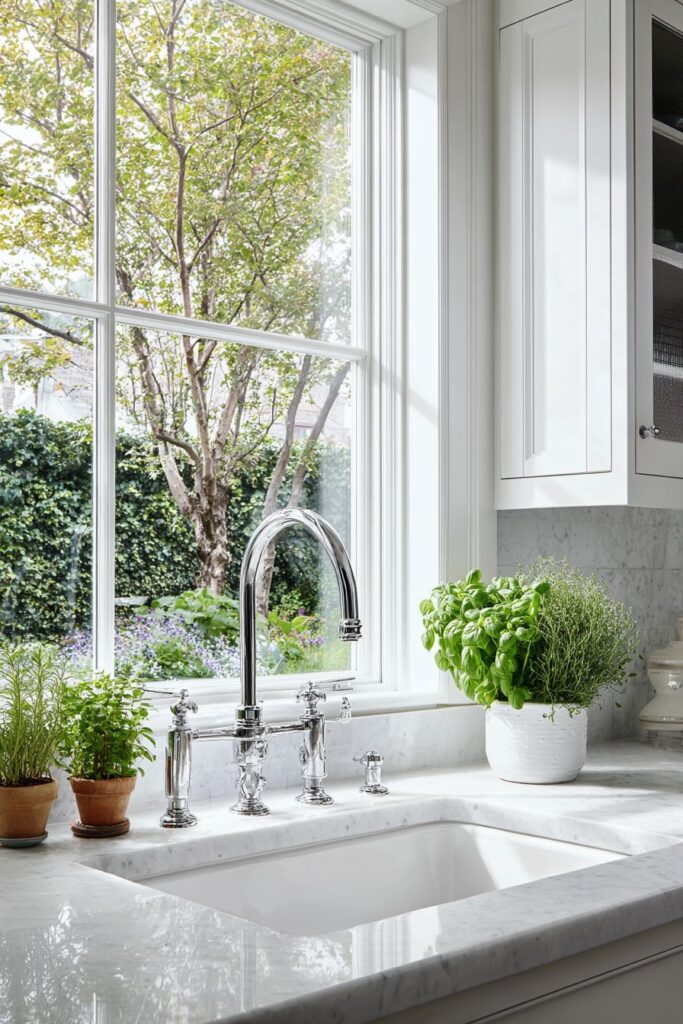
Living elements like potted herbs positioned on window sills create functional backsplashes that provide fresh ingredients while adding natural color and texture to the workspace. This integration of growing elements brings life and seasonal variation into the kitchen while providing practical benefits that justify their presence beyond pure decoration. The ability to harvest fresh herbs during cooking enhances both flavor profiles and the connection between cooking and growing that characterizes authentic kitchen garden traditions.

Traditional polished chrome fixtures complement classic white porcelain while providing the reflective qualities necessary to amplify available natural light throughout the workspace. The timeless combination of white and chrome creates a clean, sanitary appearance that never feels dated while providing sufficient visual contrast to prevent the space from appearing bland or institutional. Professional interior photography techniques capture the peaceful integration of indoor workspace with outdoor views.

Key Design Tips:
- Position sinks beneath windows whenever possible to maximize natural task lighting
- Choose window treatments that provide privacy while preserving natural light access
- Plan herb gardens or other living elements to create functional and beautiful window displays
- Consider seasonal sun angles when positioning sinks to avoid glare during peak use times
- Install adequate artificial task lighting for evening use when natural light is unavailable
14. Undermount Kitchen Sink Ideas
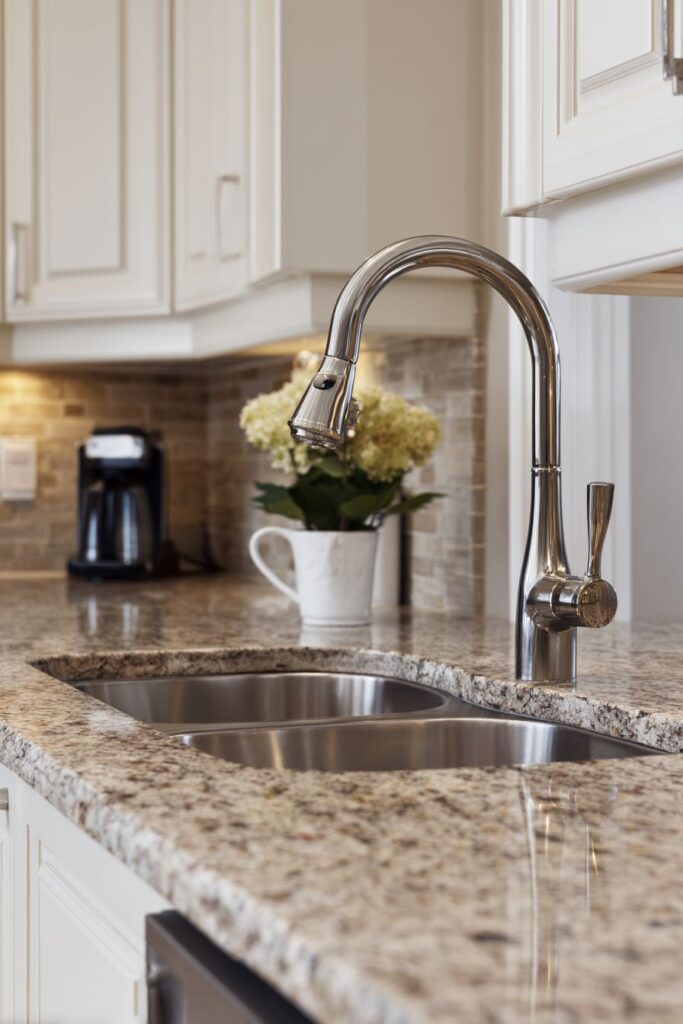
Professional installation techniques create seamless transitions between countertops and sink basins that enhance both aesthetic appeal and practical functionality through elimination of rim details where debris and bacteria can accumulate. Granite countertops that appear to float above stainless steel basins demonstrate the sophisticated visual effects possible through precision undermount installation methods. The continuous surface created by this technique facilitates effortless cleanup while creating visual flow that enhances the sense of spaciousness essential to contemporary kitchen design.

Seamless edge details require precise template cutting and professional installation to achieve the perfect fit necessary for water-tight seals that prevent damage to cabinet structures below. The investment in quality installation pays dividends through years of trouble-free operation while maintaining the pristine appearance that justifies the initial expense. Brushed stainless steel finishes coordinate with sink materials while providing the subtle texture necessary to hide water spots and maintain attractive appearance between cleaning sessions.
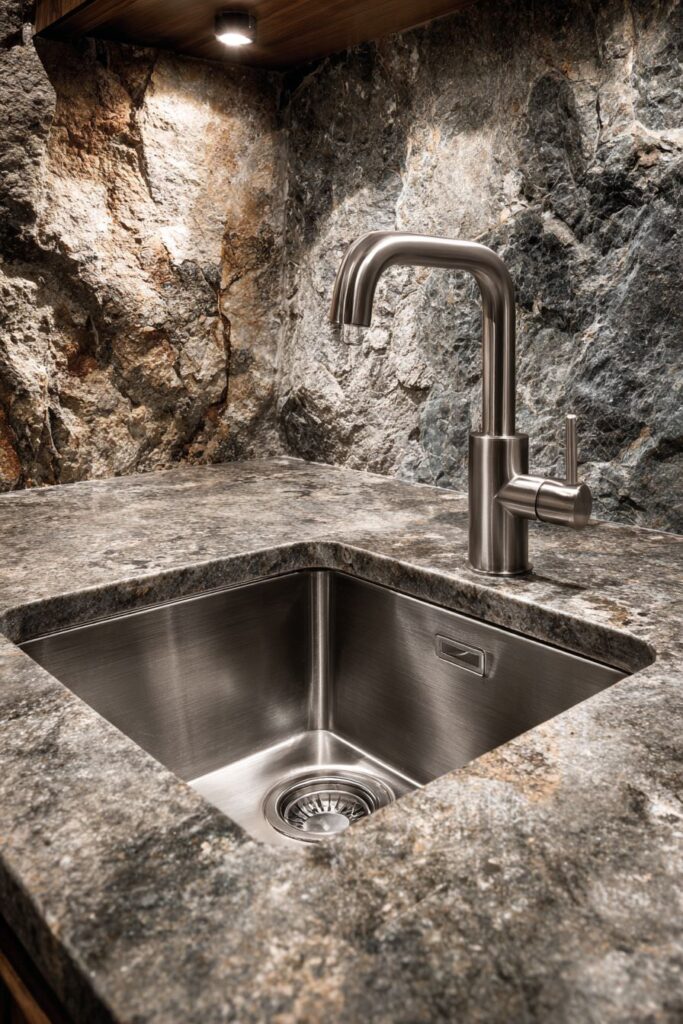
Natural stone backsplashes add textural interest while providing practical protection from splashing during heavy use periods. The coordination of stone materials creates visual continuity while allowing individual elements to maintain their distinct characteristics and contribute to the overall design composition. Task lighting positioned beneath wall cabinets provides even illumination for detailed food preparation while preventing shadows that can make precise cutting and measuring tasks difficult.

Key Design Tips:
- Invest in professional installation for undermount sinks to ensure proper sealing and longevity
- Choose coordinated materials and finishes for visual coherence throughout the workspace
- Plan adequate support structures for the weight of stone countertops and undermount installations
- Install quality caulking materials designed specifically for kitchen applications and moisture exposure
- Consider the long-term maintenance requirements of different material combinations
15. Apron Front Kitchen Sink Ideas
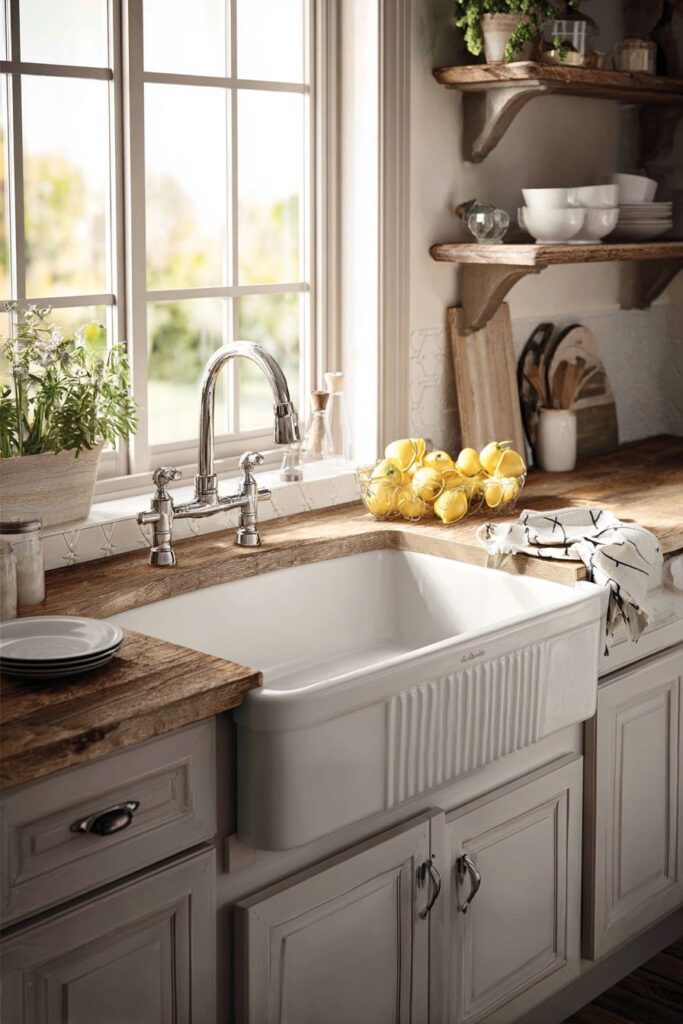
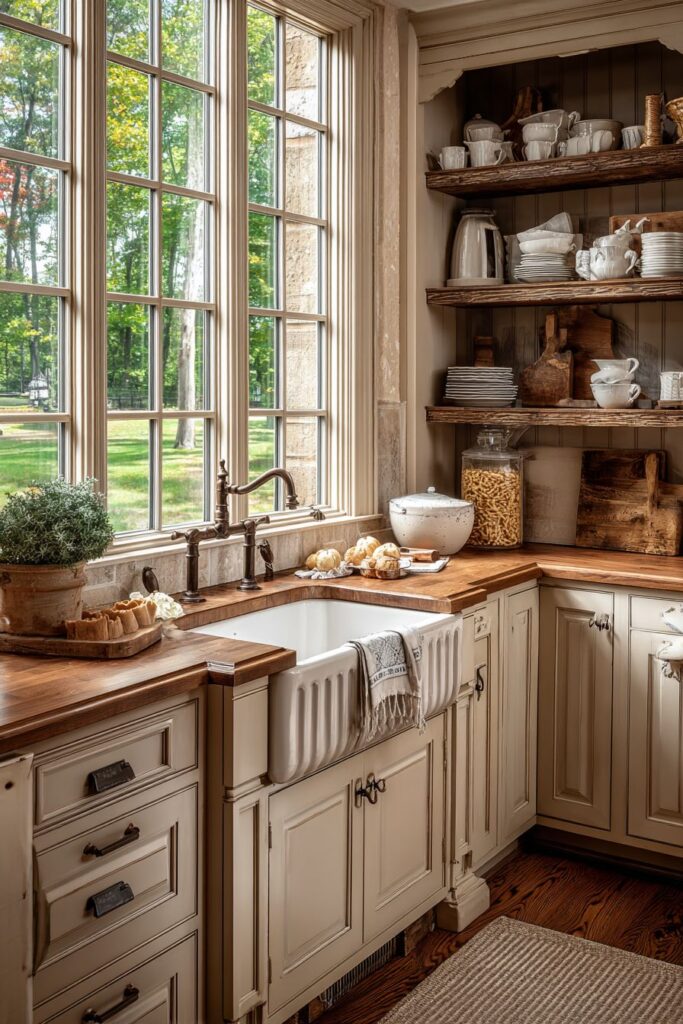
The distinctive front panel of apron-front sinks creates architectural focal points that anchor kitchen designs while providing practical benefits through cabinet protection and enhanced basin capacity. White fireclay construction with decorative fluted front panels demonstrates how functional elements can achieve artistic status through attention to craftsmanship and surface detail. The handcrafted quality evident in traditional fireclay work adds authenticity and character impossible to achieve through mass production methods, while the substantial thickness provides durability that improves with age.

Vintage-style bridge faucets with wall mounting preserve counter space while enhancing period authenticity through proper proportional relationships and historically accurate installation methods. The elevated position of wall-mounted fixtures creates visual lightness while providing clearance for large cookware and serving pieces. Cross handles and traditional spout designs reference the era when fixtures were crafted rather than manufactured, while modern internal components ensure reliable operation and easy maintenance.
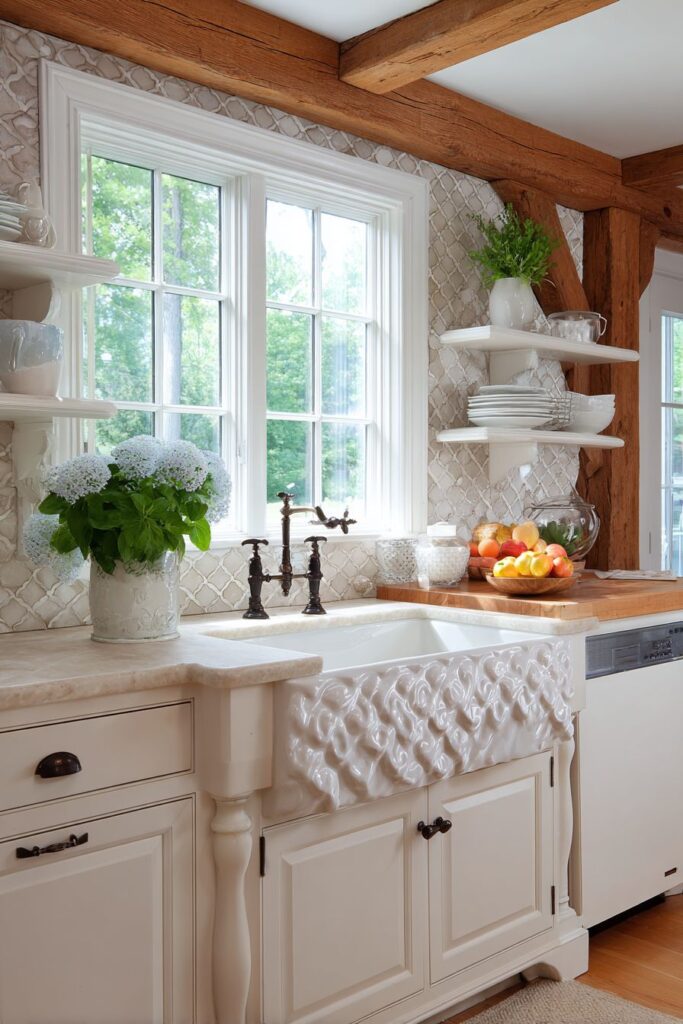
Butcher block countertops and open shelving displays complement the country aesthetic while providing practical work surfaces and storage solutions that enhance daily kitchen operations. The natural wood tones add warmth while the open storage approach creates visual lightness that prevents traditional elements from feeling heavy or oppressive. The honest expression of materials and construction methods reflects authentic country design principles where functionality and beauty emerge from proper use of appropriate materials.
Key Design Tips:
- Choose authentic materials like fireclay for superior durability and traditional appearance
- Plan wall-mounted faucets during initial construction for proper structural support and plumbing access
- Balance traditional elements with modern conveniences to achieve livable period authenticity
- Consider the maintenance requirements of natural materials and plan care routines accordingly
- Install proper support for heavy fireclay sinks to prevent settling and structural damage
16. Kitchen Sink Ideas for Small Spaces

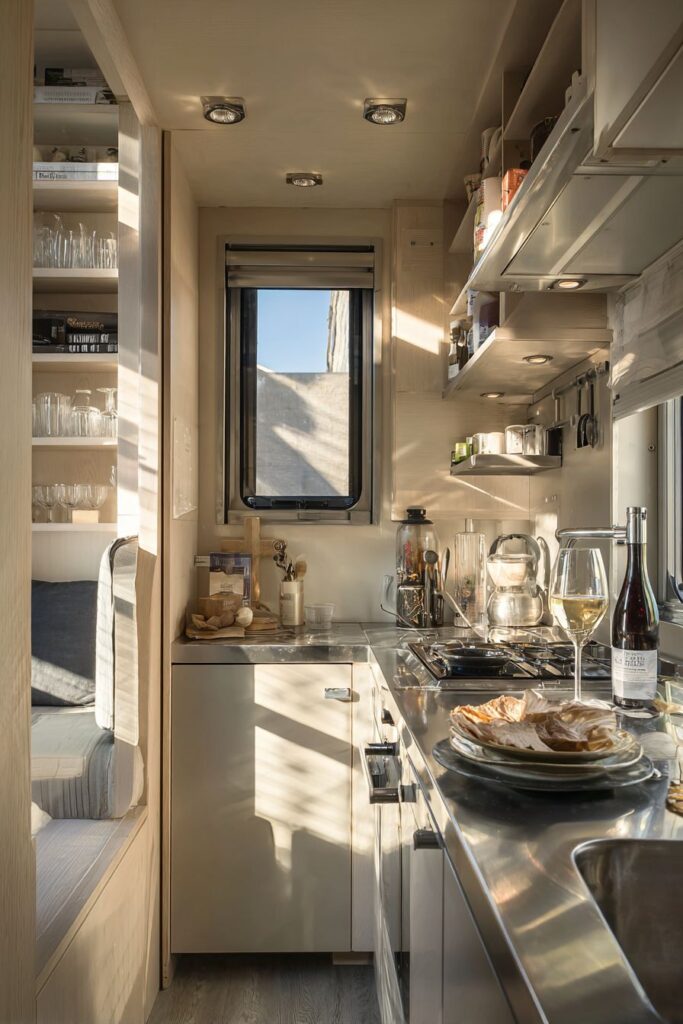
Ingenious space-saving solutions transform the limitations of compact kitchens into opportunities for innovative design that maximizes functionality within minimal footprints. Narrow single-bowl sinks designed specifically for galley kitchen layouts demonstrate how specialized products can address unique spatial challenges while maintaining full functionality. The compact dimensions preserve precious counter space while the integrated drainboard molded directly into the stainless steel eliminates the need for separate drying racks that would otherwise consume valuable work surfaces.

Fold-down faucets represent brilliant space-saving innovation that stores flat against the wall when not in use, eliminating the visual clutter and physical obstruction that traditional faucets can create in tight quarters. This space-saving approach extends to magnetic accessories that attach directly to the sink’s sides, providing tool storage without requiring permanent counter space commitment. These innovations demonstrate how modern design thinking can overcome spatial constraints through clever engineering and thoughtful planning.
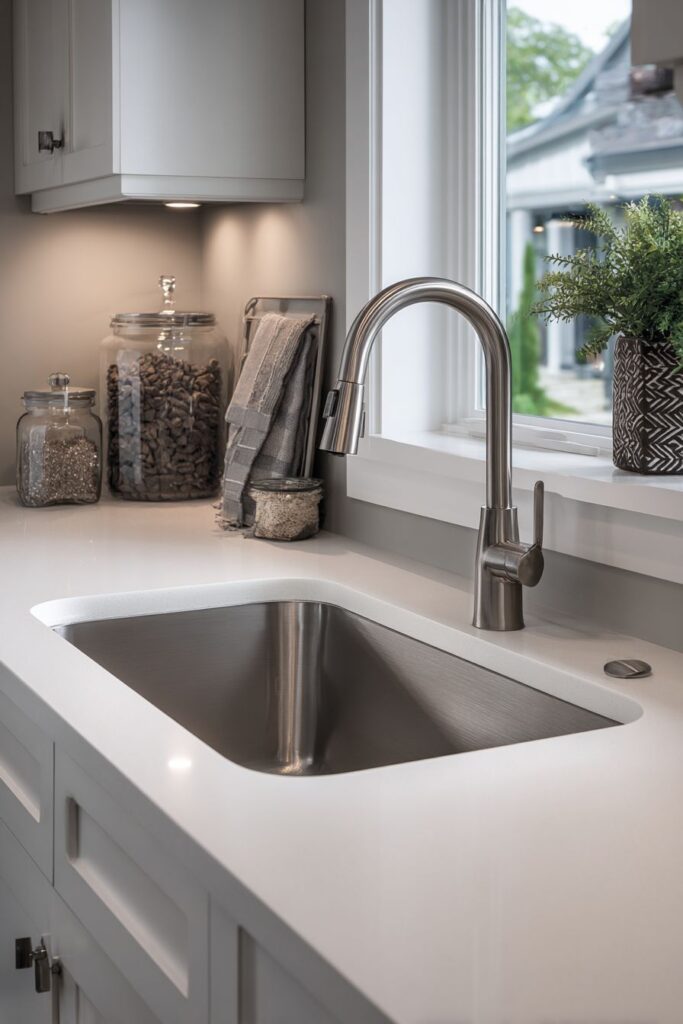
The strategic use of small windows above compact sinks maximizes available natural light while creating visual expansion that makes confined spaces feel more generous and welcoming. Natural light becomes particularly important in small kitchens where artificial lighting alone can create claustrophobic feelings that make cooking tasks feel burdensome rather than enjoyable. The careful coordination of light-colored materials amplifies the available illumination while maintaining the clean, uncluttered appearance essential to successful small-space design.
Key Design Tips:
- Choose specialized fixtures designed specifically for small-space applications rather than simply scaling down full-size elements
- Maximize natural light through strategic window placement and light-colored material selection
- Plan fold-away and magnetic storage solutions that provide functionality without permanent space commitment
- Consider the psychological impact of design choices on the perceived spaciousness of confined areas
- Coordinate all elements to maintain visual simplicity and prevent small spaces from feeling cluttered
17. Workstation Kitchen Sink Ideas
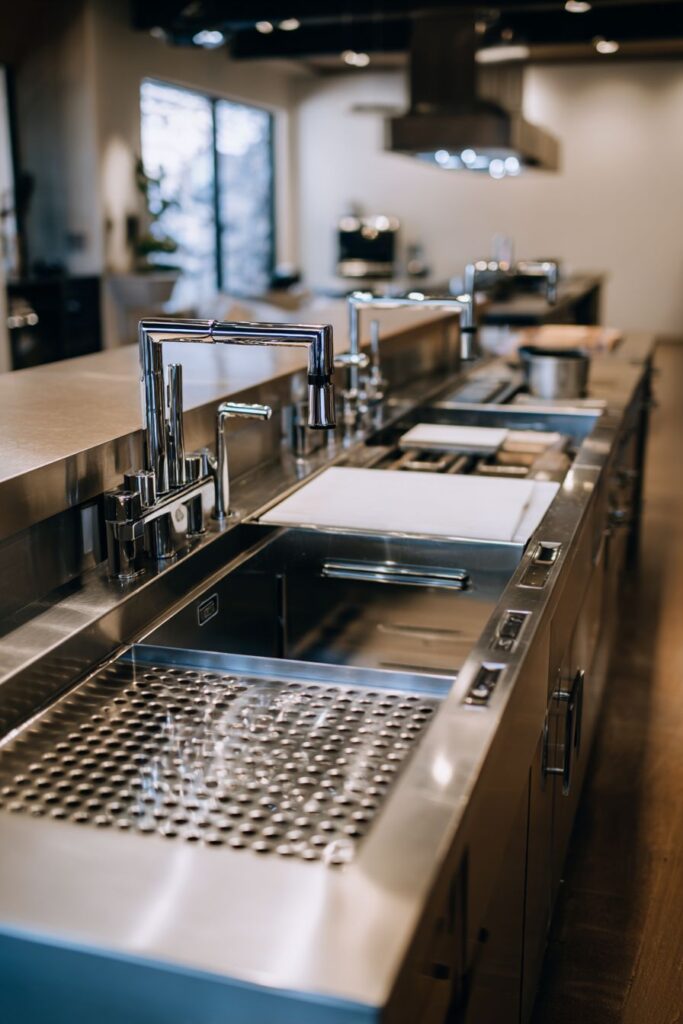
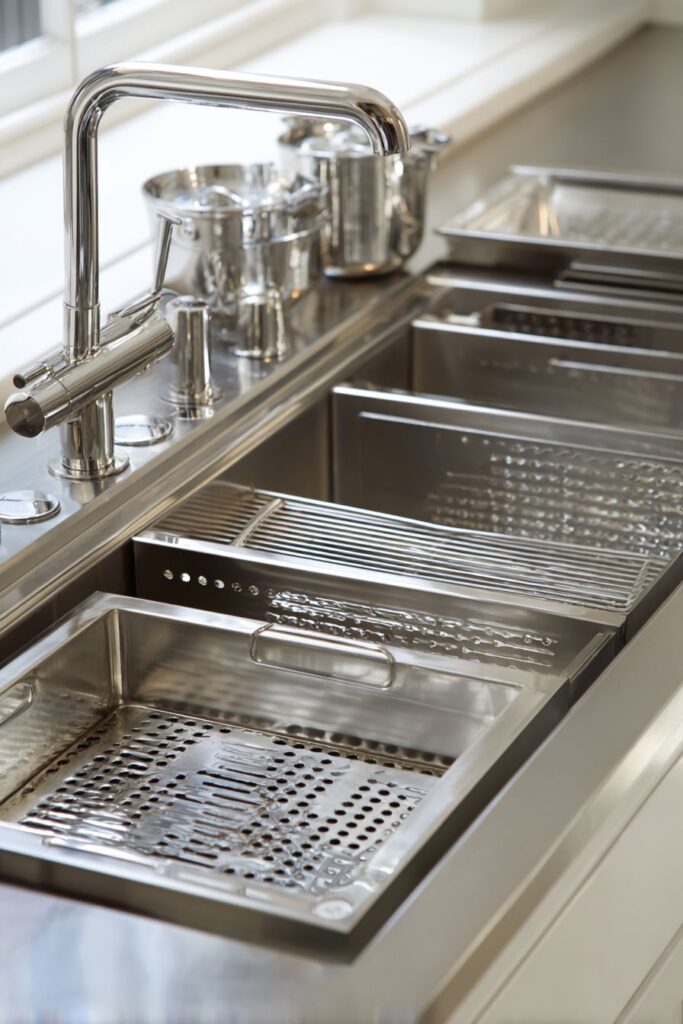
Advanced sink systems that integrate multiple accessories within the basin structure create comprehensive food preparation stations that maximize efficiency while maintaining organized work environments. Multi-level configurations with cutting boards, colanders, and drying racks that nest perfectly within the basin demonstrate how modern engineering can transform simple fixtures into sophisticated workstations. The deep stainless steel construction accommodates multiple accessories simultaneously while maintaining the clean lines essential to contemporary kitchen aesthetics.
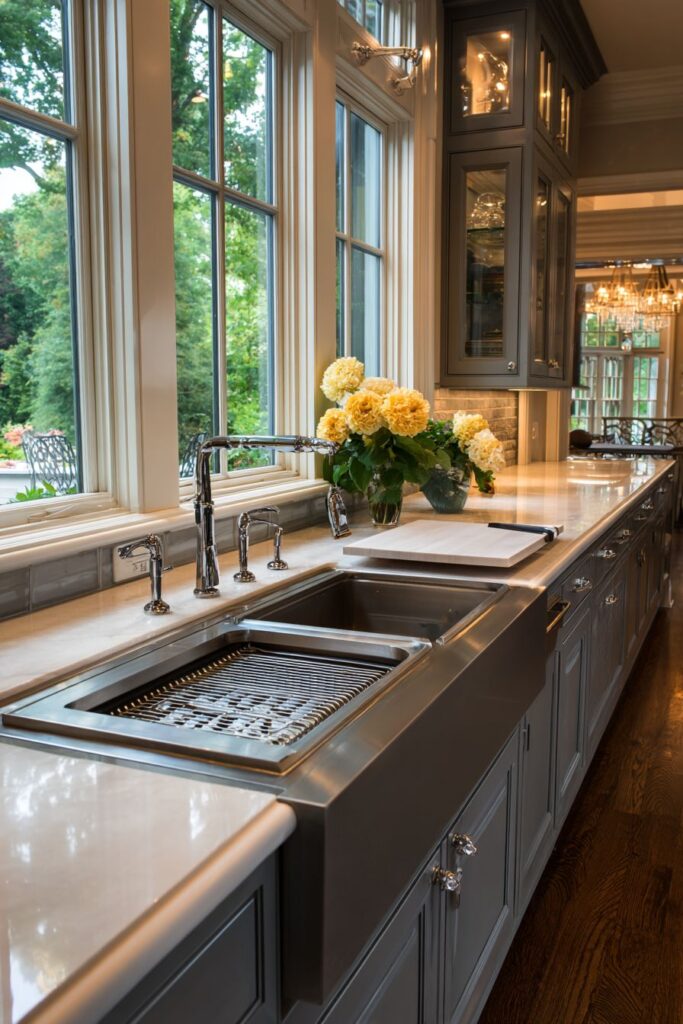
Commercial-style faucets with multiple spray functions support various food preparation tasks through specialized water delivery patterns designed for specific applications. The ability to switch between powerful cleaning sprays and gentle rinse patterns without changing tools enhances workflow efficiency while reducing the clutter of multiple specialized fixtures. These professional-grade features bring restaurant-level functionality into home kitchens while maintaining residential scale and aesthetic sensibilities.

Task lighting specifically designed for workstation applications provides shadow-free illumination that enhances safety and accuracy during detailed food preparation activities. The integration of specialized lighting with sink workstations demonstrates comprehensive approach to kitchen design that considers all aspects of user experience. Natural light supplements artificial illumination while creating dynamic lighting conditions that change throughout the day, preventing the workspace from feeling static or institutional.
Key Design Tips:
- Plan workstation accessories during initial design phases to ensure proper fit and functionality
- Choose commercial-grade faucets for durability and specialized functionality in demanding applications
- Install dedicated task lighting to eliminate shadows during detailed food preparation work
- Consider the workflow implications of workstation placement in relation to other kitchen zones
- Plan adequate counter space adjacent to workstations for ingredient staging and finished product placement
18. Kitchen Sink Ideas with Storage
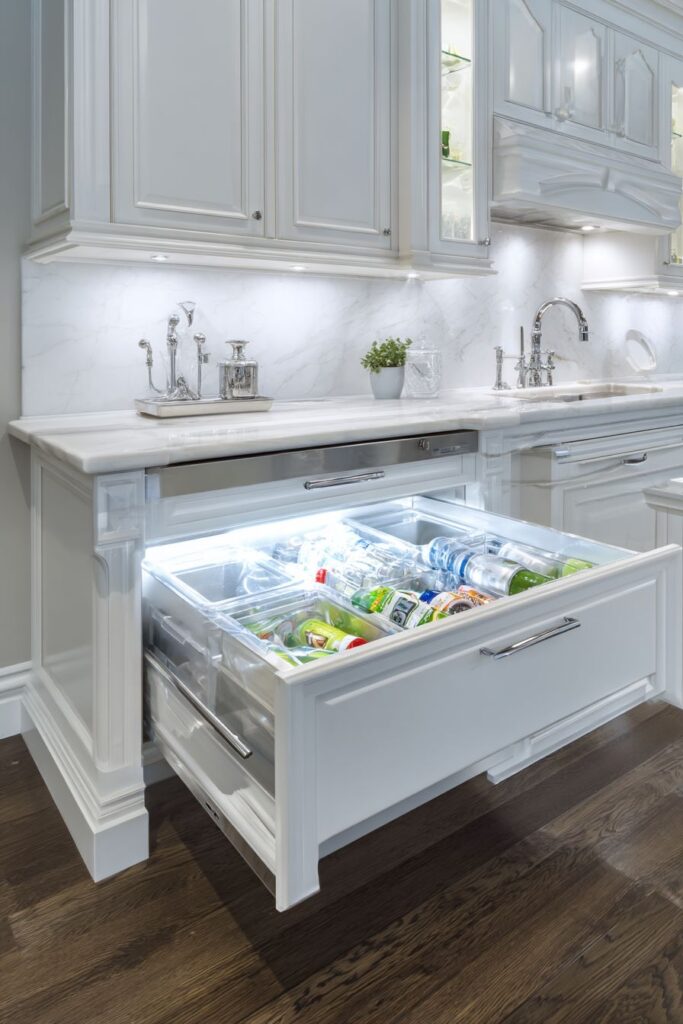
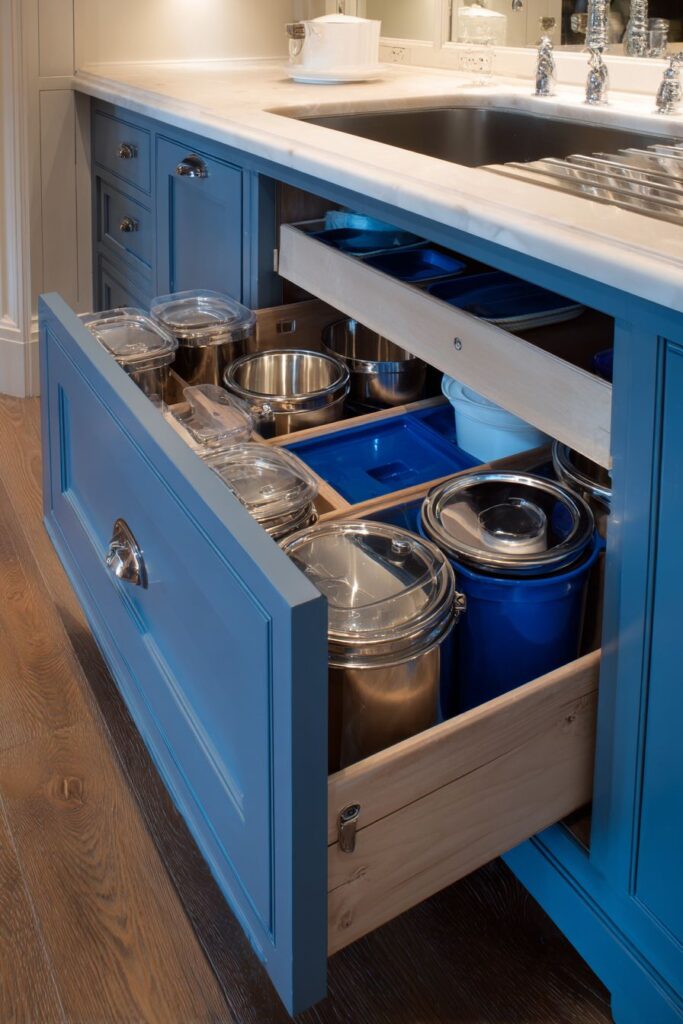
Innovative storage solutions integrated beneath sink installations maximize the utility of often-wasted cabinet space while maintaining organized access to cleaning supplies and kitchen accessories. Deep drawers with waterproof construction and soft-close mechanisms demonstrate how modern cabinetry hardware can enhance daily kitchen operations while protecting stored items from moisture exposure. The precision fit of custom drawer systems ensures efficient use of available space while preventing the mechanical failures common in retrofit storage solutions.
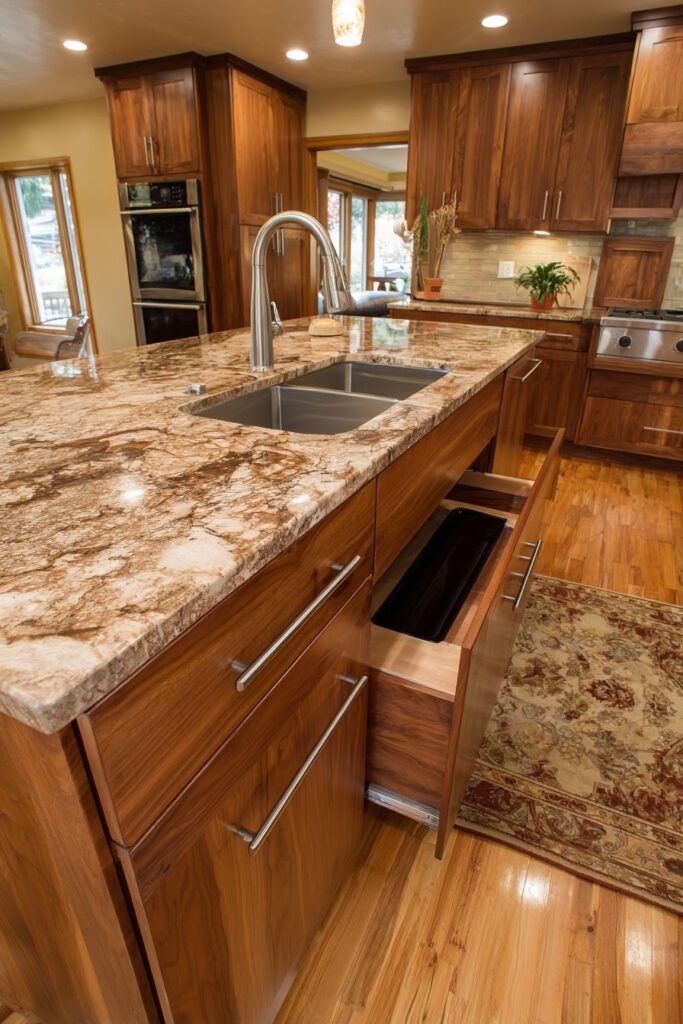
Pull-out trash bins and recycling containers address waste management needs while keeping unsightly receptacles concealed within attractive cabinetry systems. These integrated solutions maintain sanitary conditions while providing convenient access during food preparation activities. The ability to customize container sizes and configurations ensures optimal fit for household waste patterns while maintaining the visual cleanliness essential to attractive kitchen design.
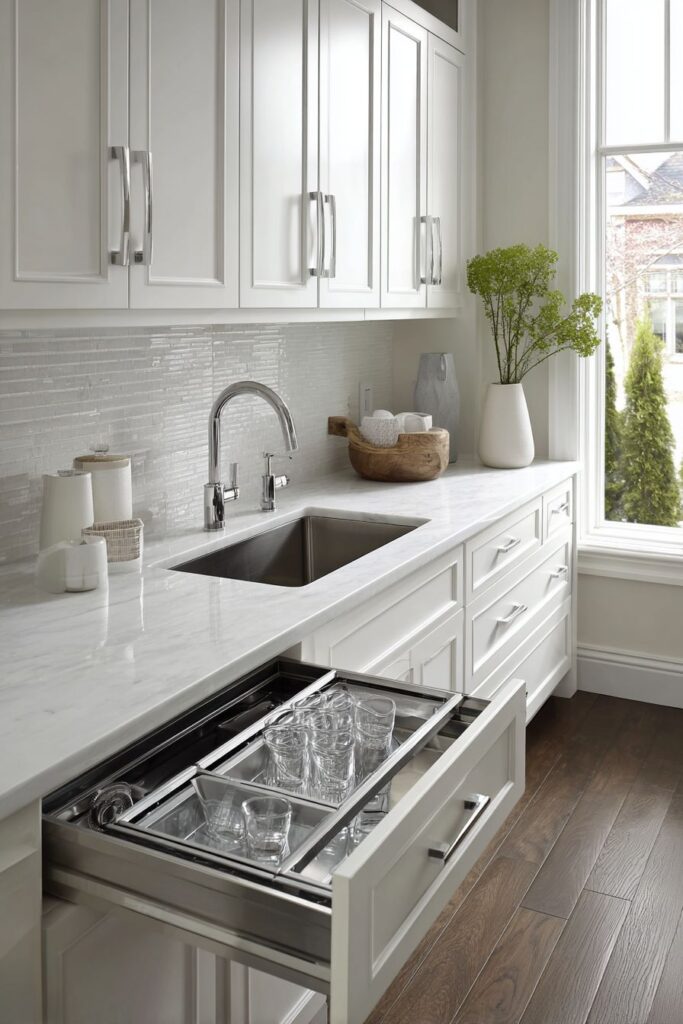
Undermount installation techniques preserve sight lines while creating seamless integration between fixture and storage systems that enhances both aesthetic appeal and practical functionality. Under-cabinet lighting illuminates storage areas while providing task lighting for sink activities, demonstrating comprehensive approach to workspace design that addresses multiple user needs simultaneously. Professional interior photography captures these integrated systems while highlighting the sophisticated planning required to achieve seamless functionality.
Key Design Tips:
- Plan storage solutions during initial design phases for optimal integration and functionality
- Choose waterproof construction materials for sink cabinet storage to prevent moisture damage
- Install soft-close mechanisms for quiet operation and extended hardware life
- Consider household-specific storage needs when planning cabinet interior configurations
- Integrate lighting systems that illuminate both work surfaces and storage areas
19. Colored Kitchen Sink Ideas
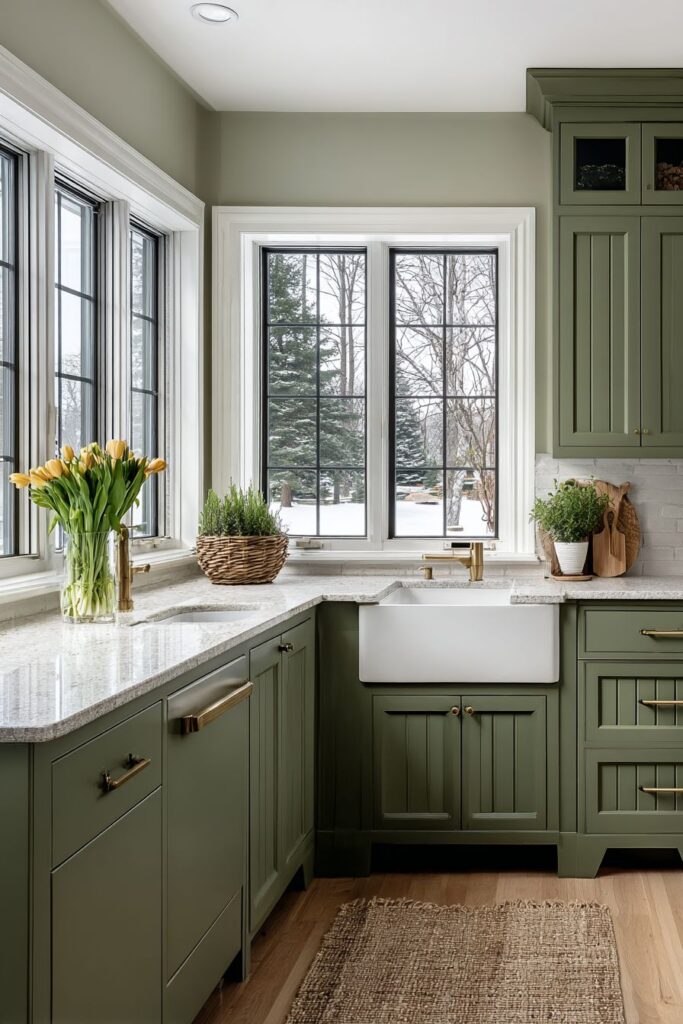
Bold color choices in kitchen fixtures require confidence and commitment, but the sophisticated impact of colored composite granite sinks demonstrates how non-traditional hues can enhance rather than overwhelm kitchen design schemes. Sage green composite construction coordinates beautifully with painted cabinetry while creating subtle contrast against white quartz countertops that prevents the color from appearing overwhelming or trendy. This organic color choice brings natural elements into modern kitchen designs while maintaining the durability and stain resistance essential to high-use applications.
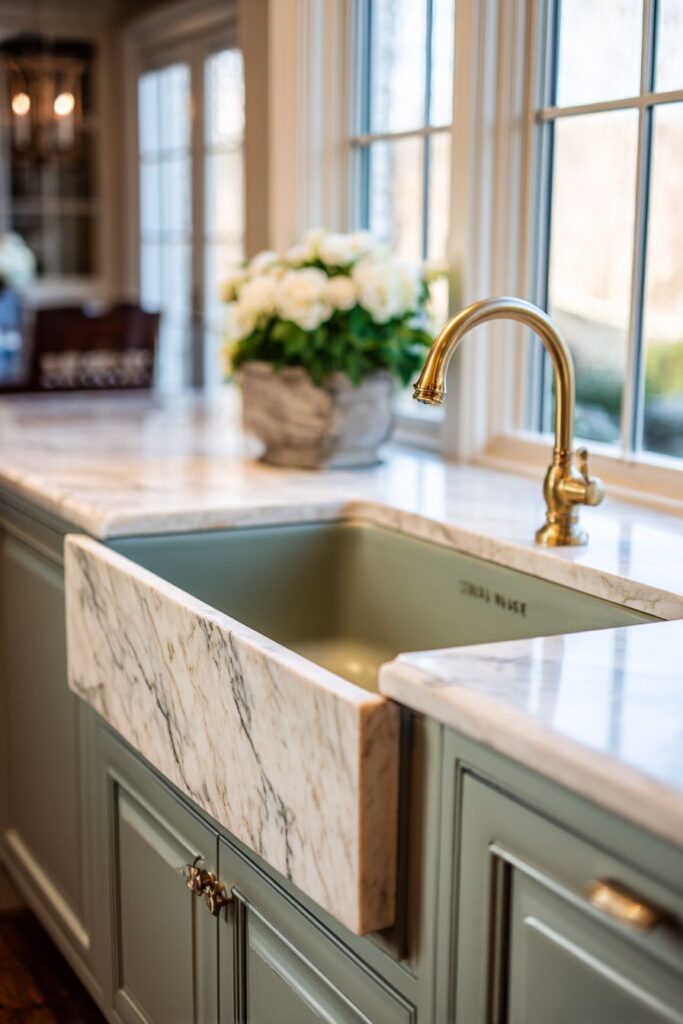
The selection of brushed gold fixtures adds warm metallic accents that complement the green tones while providing visual interest through mixed metal applications that reflect current design trends. The warm finish coordinates with both cool green and neutral white surfaces while adding the luxury touch that elevates the overall design composition. Natural light from garden windows enhances the earthy color palette while creating dynamic color variations throughout the day that prevent static appearance.

Interior design photography with balanced exposure captures the unique color integration while highlighting the sophisticated material combinations that create harmonious yet interesting design compositions. The careful coordination of colors, textures, and finishes demonstrates professional design thinking that considers all elements as part of comprehensive aesthetic strategies rather than individual decisions made in isolation.

Key Design Tips:
- Choose colored sinks that coordinate with existing design elements rather than creating jarring contrast
- Consider the long-term appeal of colored fixtures and their impact on future design changes
- Balance colored elements with neutral materials to prevent overwhelming the space with too much color
- Plan lighting carefully to show colored surfaces at their best throughout different times of day
- Test color samples in actual lighting conditions before making final fixture selections
20. Two-Tier Kitchen Sink Ideas

Innovative multi-level sink designs represent the cutting edge of kitchen fixture engineering, where elevated prep bowls positioned above main washing basins create enhanced functionality during complex food preparation activities. This revolutionary configuration allows simultaneous washing and prep work while conserving water through intelligent design that separates clean and dirty activities within the same fixture footprint. The ability to work at multiple levels within a single installation maximizes efficiency while maintaining the compact footprint necessary for modern kitchen layouts.

Stainless steel construction throughout both levels maintains hygienic standards while providing the durability necessary for intensive use applications. The unique configuration optimizes workflow by eliminating the need to move between different work areas during food preparation, while the innovative water management system ensures efficient operation without waste. Professional task lighting illuminates both levels while natural window light provides ambient brightness that enhances the workspace environment.
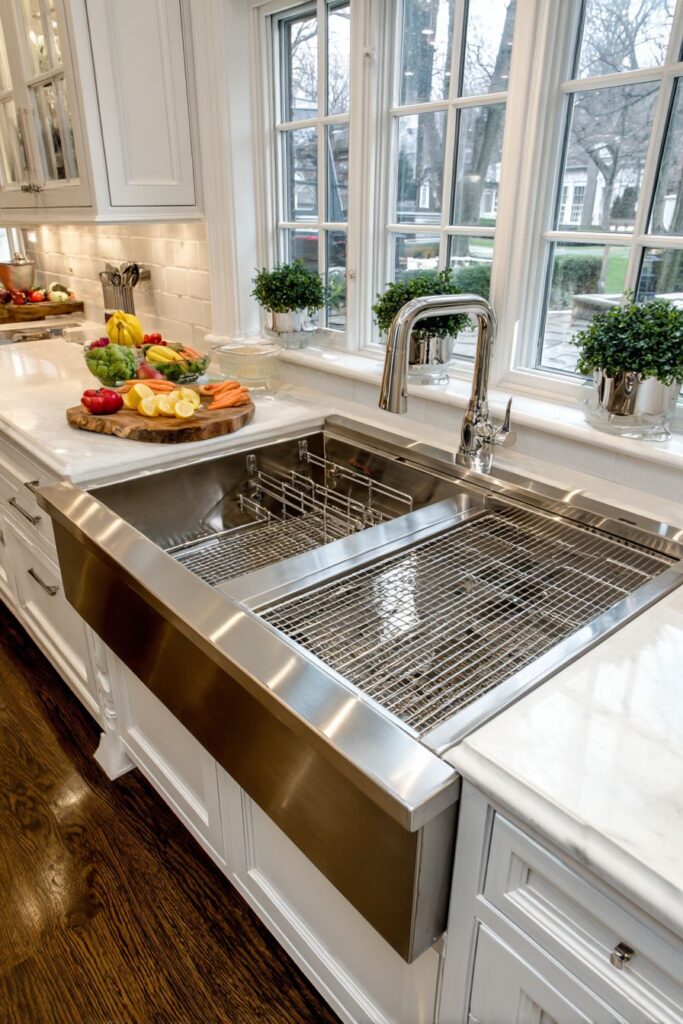
Architectural photography captures the innovative multi-level design while highlighting the practical functionality that justifies the complexity of dual-level installations. The attention to workflow optimization and space efficiency demonstrates advanced design thinking that addresses real kitchen challenges through creative engineering solutions. These innovative fixtures represent the future direction of kitchen design, where traditional single-function elements evolve into comprehensive workstation systems.

Key Design Tips:
- Plan plumbing systems carefully for multi-level installations to ensure adequate water pressure at both levels
- Consider the learning curve associated with innovative fixtures and plan user education accordingly
- Install specialized lighting that illuminates both levels without creating shadows or glare
- Choose quality construction materials for complex fixtures that will receive intensive daily use
- Plan maintenance access for innovative fixtures that may require specialized service procedures
Why These Kitchen Sink Designs Represent the Best in Modern Kitchen Planning
The twenty kitchen sink concepts explored in this comprehensive guide represent the current pinnacle of kitchen design thinking, where traditional functionality meets innovative engineering to create solutions that enhance daily life while contributing to the overall aesthetic success of modern homes. These designs succeed because they address fundamental human needs for efficiency, beauty, and durability while accommodating the diverse lifestyle patterns that characterize contemporary households.
Farmhouse and vintage designs continue to resonate because they connect users with authentic craftsmanship traditions while providing the generous capacity and honest materials that improve with age and use. The popularity of apron-front sinks and period-appropriate fixtures reflects a desire for permanence and character in an increasingly disposable world. These designs work particularly well in homes where cooking is central to family life and entertainment patterns.
Modern and contemporary approaches excel in environments where clean lines, efficient workflows, and low-maintenance materials align with busy lifestyles and minimalist aesthetic preferences. Undermount installations, integrated sinks, and streamlined fixtures support the contemporary emphasis on seamless design that eliminates visual clutter while maximizing practical functionality. These designs particularly benefit households that value efficiency and sophisticated simplicity.
Space-saving and innovative solutions address the reality of smaller homes and urban living patterns where every square inch must serve multiple purposes. Corner installations, workstation sinks, and multi-level configurations demonstrate how creative engineering can transform spatial constraints into design opportunities. These solutions prove that small kitchens need not sacrifice functionality or aesthetic appeal when properly planned with specialized fixtures designed for compact applications.
Luxury and specialty materials like copper, natural stone, and colored composites serve households that view their kitchens as expressions of personal style and investment in long-term home value. These premium options justify their higher costs through superior durability, unique aesthetic character, and the psychological satisfaction that comes from owning truly distinctive fixtures. The patina development and natural aging of these materials creates personalized character impossible to achieve with mass-produced alternatives.
Industrial and commercial-inspired designs appeal to serious home cooks who demand professional-level functionality without compromising residential comfort and style. Deep basins, powerful faucets, and durable construction materials support intensive cooking activities while creating dramatic visual impact through honest expression of utilitarian design principles. These fixtures work particularly well in open-plan homes where kitchen activities are part of the entertainment experience.
The integration of smart storage solutions beneath and around sink installations demonstrates comprehensive design thinking that addresses the reality of modern kitchen storage needs. Pull-out trash systems, organized cleaning supply storage, and integrated accessories maximize utility while maintaining the clean sight lines essential to contemporary aesthetic preferences. These solutions recognize that beautiful kitchens must also function efficiently for daily household operations.
Window placement and natural lighting integration appears throughout these designs because the psychological benefits of natural light during routine kitchen tasks cannot be overstated. The connection between interior workspaces and exterior environments enhances the daily experience of cooking and cleaning while providing practical illumination that reduces eye strain and energy consumption. These designs recognize that kitchens serve as more than purely functional spaces—they are environments where families gather and memories are created.
The material coordination and finish selection strategies demonstrated across these twenty concepts show how successful kitchen design requires comprehensive planning that considers every element as part of a unified composition. The interplay between warm and cool tones, matte and reflective surfaces, and natural and manufactured materials creates visual interest while maintaining design coherence. These sophisticated material relationships elevate simple kitchen fixtures into integral components of comprehensive interior design schemes.
Advanced faucet technology integrated throughout these designs reflects the evolution of kitchen fixtures from simple water delivery devices into sophisticated tools that enhance cooking efficiency and user comfort. Pull-out sprayers, multiple spray patterns, and commercial-grade construction bring restaurant-level functionality into residential applications while maintaining appropriate scale and aesthetic sensibilities for home environments.
The acoustic considerations addressed in several of these designs recognize that modern open-plan living requires attention to sound management, particularly in kitchens where noise from fixtures and appliances can affect the entire living space. Sound dampening materials, strategic placement, and fixture selection all contribute to creating kitchen environments that support both focused cooking activities and social interaction without acoustic interference.
Future-proofing through timeless design principles characterizes the most successful of these sink concepts, where current trends are balanced against enduring aesthetic values that will remain appealing as styles evolve. The emphasis on quality materials, classic proportions, and functional excellence ensures that these investments will continue to serve households well beyond the typical renovation cycle.
Conclusion
The twenty kitchen sink designs explored in this comprehensive guide demonstrate the remarkable evolution of kitchen fixtures from purely utilitarian elements into sophisticated design statements that enhance both daily functionality and long-term home value. Each concept addresses specific lifestyle needs while contributing to the overall aesthetic success of contemporary kitchen environments, proving that thoughtful fixture selection can transform routine tasks into pleasant experiences.
The diversity of approaches—from authentic farmhouse charm to cutting-edge multi-level innovations—ensures that every household can find solutions that align with their cooking patterns, aesthetic preferences, and space constraints. The key to successful sink selection lies in understanding how these fixtures will integrate with existing design elements while supporting the specific activities that define your kitchen’s role in daily life.
Whether you’re drawn to the timeless appeal of porcelain farmhouse sinks, the sleek efficiency of integrated contemporary designs, or the innovative functionality of workstation configurations, these concepts provide inspiration and practical guidance for creating kitchen environments that truly serve your needs. The investment in quality fixtures, professional installation, and comprehensive planning pays dividends through years of enhanced cooking experiences and sustained aesthetic satisfaction.
As you consider these ideas for your own kitchen renovation or new construction project, remember that the most successful designs emerge from careful consideration of how you actually use your kitchen, combined with honest assessment of your maintenance preferences and long-term aesthetic goals. The best sink choice is one that enhances your daily routines while contributing to the overall design vision that makes your kitchen a place where you genuinely enjoy spending time.
Take inspiration from these twenty concepts, but adapt them to your specific circumstances, spatial constraints, and personal style preferences. The goal is not to replicate these designs exactly, but to understand the principles that make them successful and apply those insights to create kitchen environments that reflect your unique lifestyle and design sensibilities while providing the functionality essential to modern home life.
"As an Amazon Associate, I earn from qualifying purchases."
