
The industrial kitchen aesthetic has emerged as one of the most compelling and enduring design trends in contemporary home renovation, captivating homeowners who crave spaces that seamlessly blend raw authenticity with refined functionality. This distinctive design philosophy celebrates the beauty of unfinished materials, exposed structural elements, and utilitarian fixtures, transforming what was once considered purely commercial into sophisticated residential spaces that exude character and purpose. Industrial kitchens represent more than just a design choice; they embody a lifestyle that values honest craftsmanship, sustainable materials, and the practical beauty found in functional design elements.
The appeal of industrial kitchen design lies in its ability to create spaces that feel both timeless and contemporary, offering homeowners the opportunity to express their appreciation for authentic materials and architectural honesty. From exposed brick walls and steel beam ceilings to concrete countertops and weathered metal cabinetry, these kitchens showcase the inherent beauty of raw materials while maintaining the highest standards of functionality and comfort. The industrial aesthetic particularly resonates with those who appreciate the intersection of form and function, where every element serves a purpose while contributing to the overall visual narrative of the space.
This comprehensive exploration will delve into twenty distinct industrial kitchen concepts, each showcasing unique approaches to incorporating industrial elements while maintaining the warmth and livability essential for residential spaces. These designs demonstrate how industrial aesthetics can be adapted to various layouts, budgets, and personal preferences, proving that this robust design philosophy offers endless possibilities for creating kitchens that are both striking and supremely functional.
1. Exposed Steel Beam and Concrete Industrial Kitchen
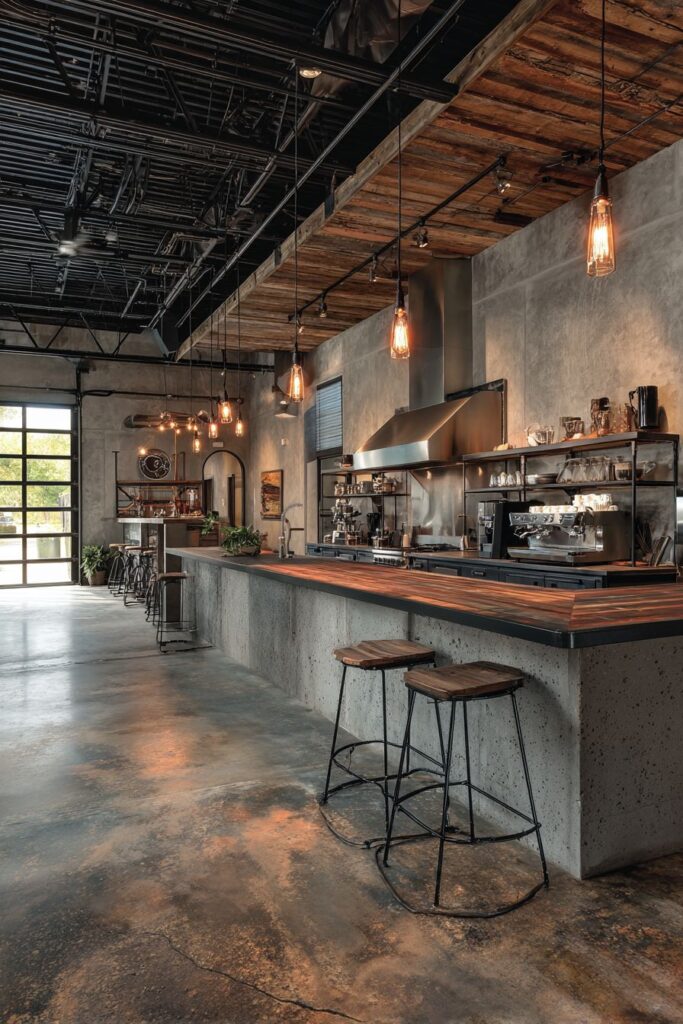
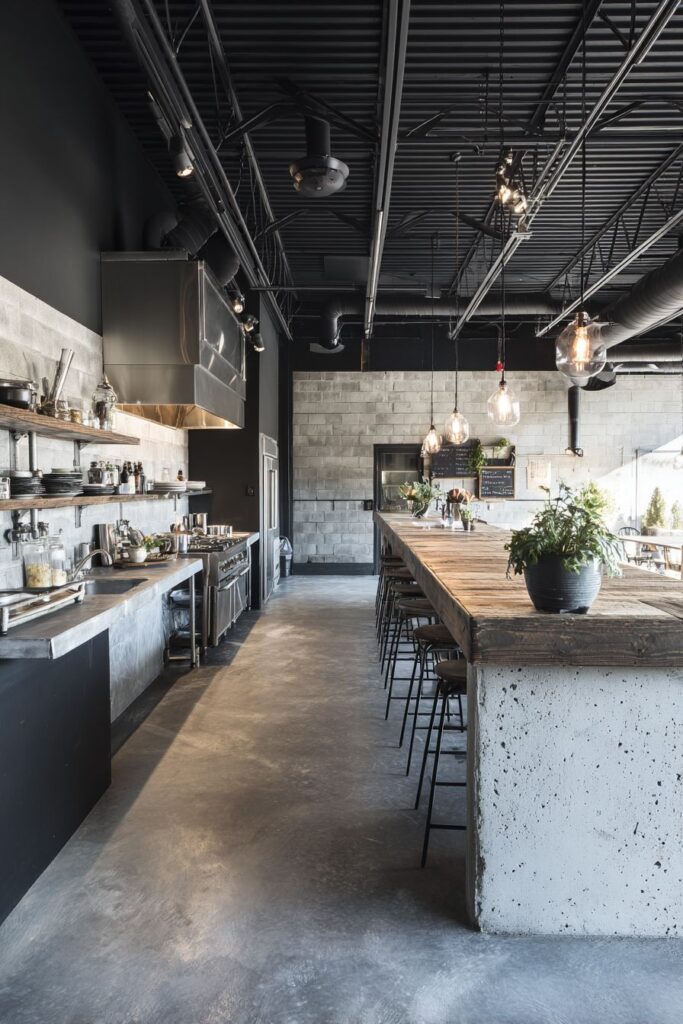
The foundation of exceptional industrial kitchen design begins with embracing structural elements as integral design features, and nothing exemplifies this principle more dramatically than exposed black steel ceiling beams paired with aggregate concrete countertops. This design approach transforms necessary structural components into stunning architectural focal points, creating a space where function and aesthetics merge seamlessly. The interplay between the linear strength of steel beams and the organic texture of concrete establishes a visual rhythm that defines the entire kitchen experience.
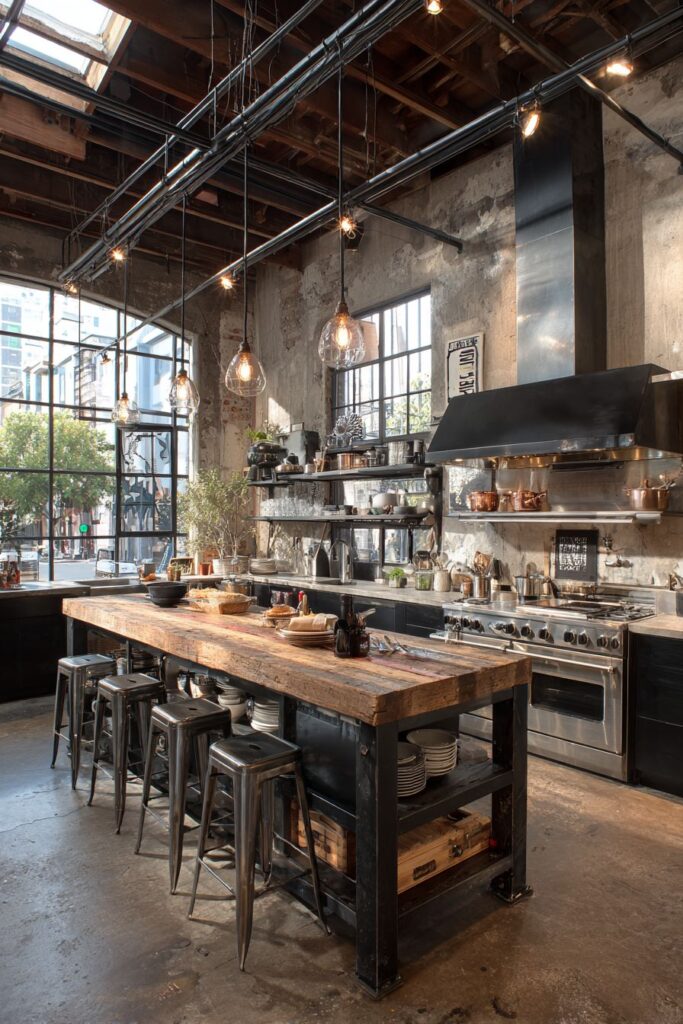
Professional-grade stainless steel appliances anchor this design, providing both the performance demanded by serious home cooks and the commercial aesthetic that reinforces the industrial theme. The substantial presence of a professional range and coordinating range hood creates a commanding focal point along one wall, while their reflective surfaces add visual depth and light distribution throughout the space. Open metal shelving replaces traditional upper cabinets, displaying practical cookware and dishware as functional art pieces that contribute to the overall industrial narrative.
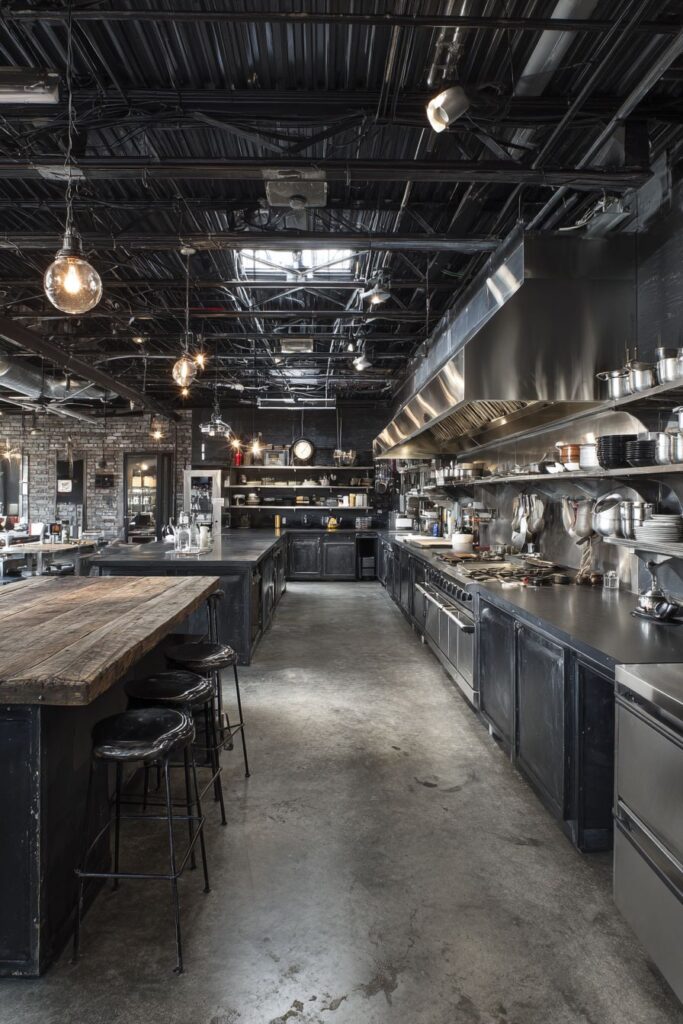
The reclaimed wood island serves as a crucial warming element, softening the harder materials while maintaining the authentic industrial character. Metal bar stools with industrial detailing provide comfortable seating while reinforcing the design theme. Edison bulb pendant lights suspended from black iron fixtures add both task lighting and ambient warmth, their exposed filaments echoing the honest expression of materials found throughout the space.
Key Design Tips:
- Select exposed steel beams with authentic welding details and patina for maximum visual impact and historical authenticity
- Choose concrete countertops with visible aggregate to showcase natural material beauty and add textural interest
- Integrate professional-grade appliances as design anchors that provide both function and commercial kitchen aesthetics
- Use open metal shelving to display cookware as functional decoration while maintaining easy access to daily essentials
- Install Edison bulb fixtures with black iron hardware to provide warm ambient lighting that complements the industrial materials
2. Brick Accent Wall with Polished Concrete Floors
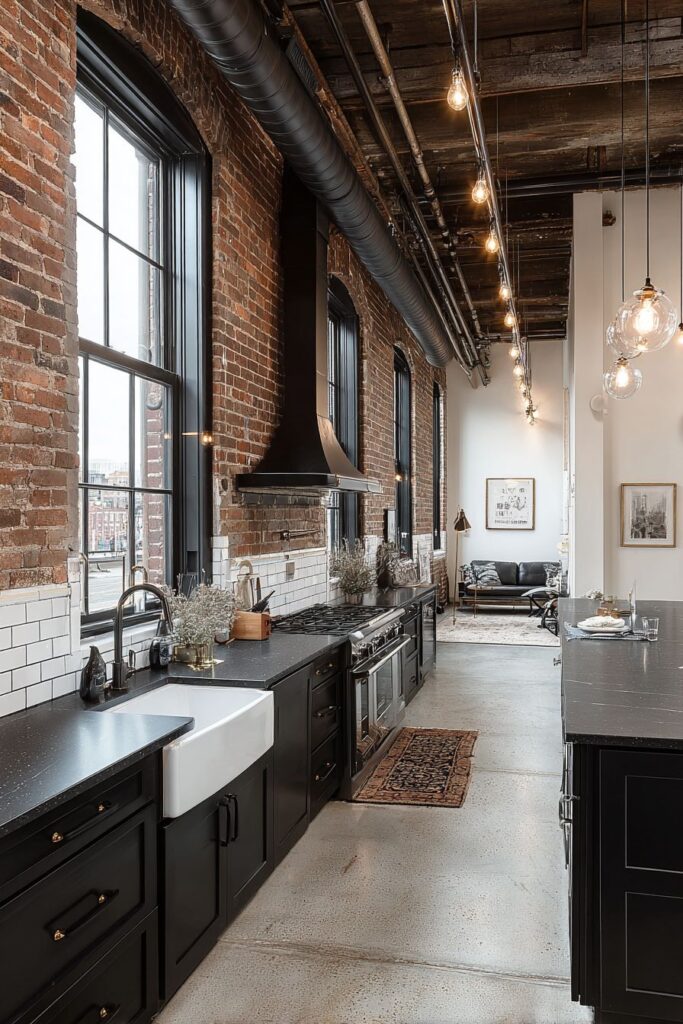
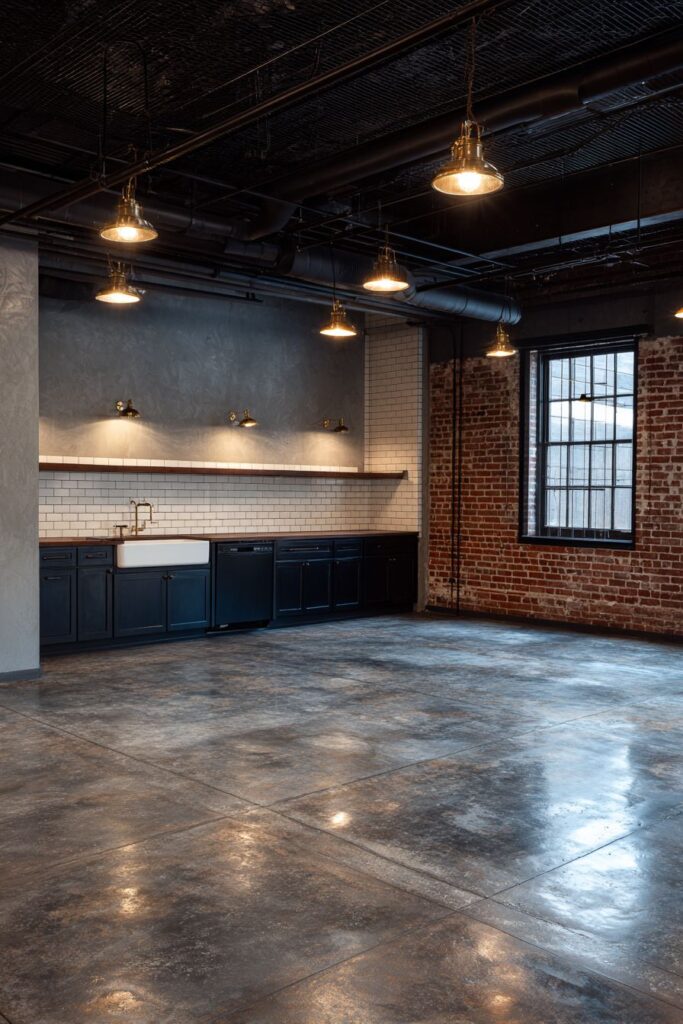
The timeless appeal of exposed brick serves as the cornerstone for this industrial kitchen design, where natural brick variations create a textured backdrop that grounds the space in authentic materials and historical character. The brick wall’s inherent irregularities and color variations provide visual warmth while establishing a focal point that draws the eye and anchors the overall design composition. Polished concrete floors with subtle wear patterns reflect this commitment to authentic materials, offering durability and easy maintenance while contributing to the industrial narrative through their honest expression of natural aging.
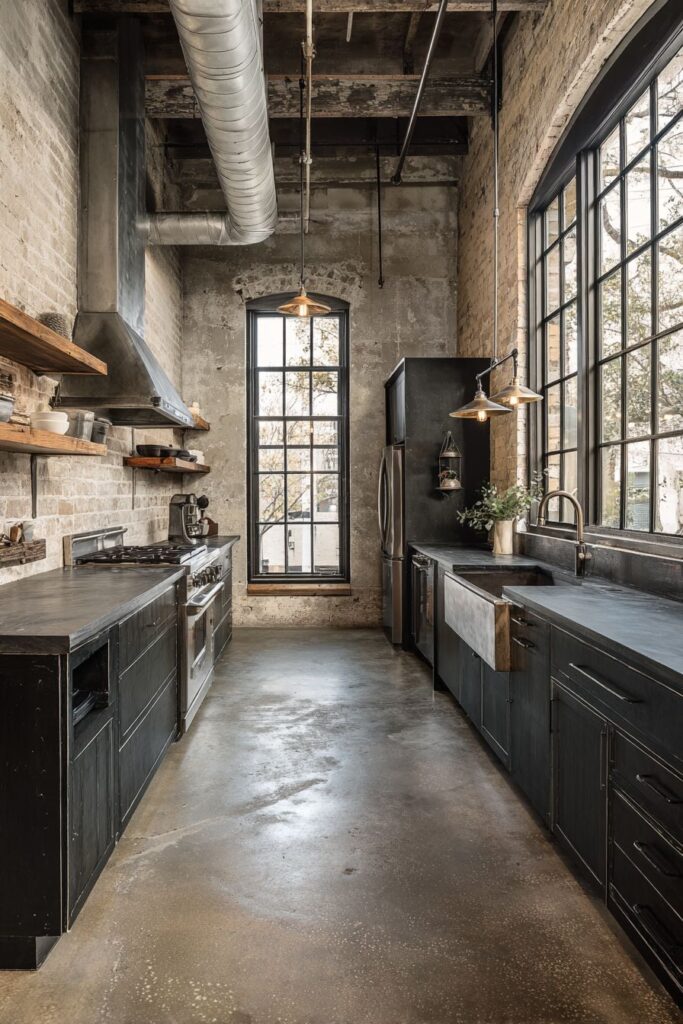
Black metal cabinets with minimal hardware maintain clean lines while providing ample storage, their matte finish contrasting beautifully with the organic texture of the brick wall. The stainless steel subway tile backsplash bridges the gap between industrial functionality and residential comfort, offering easy maintenance while reflecting light throughout the workspace. This material choice demonstrates how traditional subway tile can be reimagined through material selection to support contemporary industrial aesthetics.
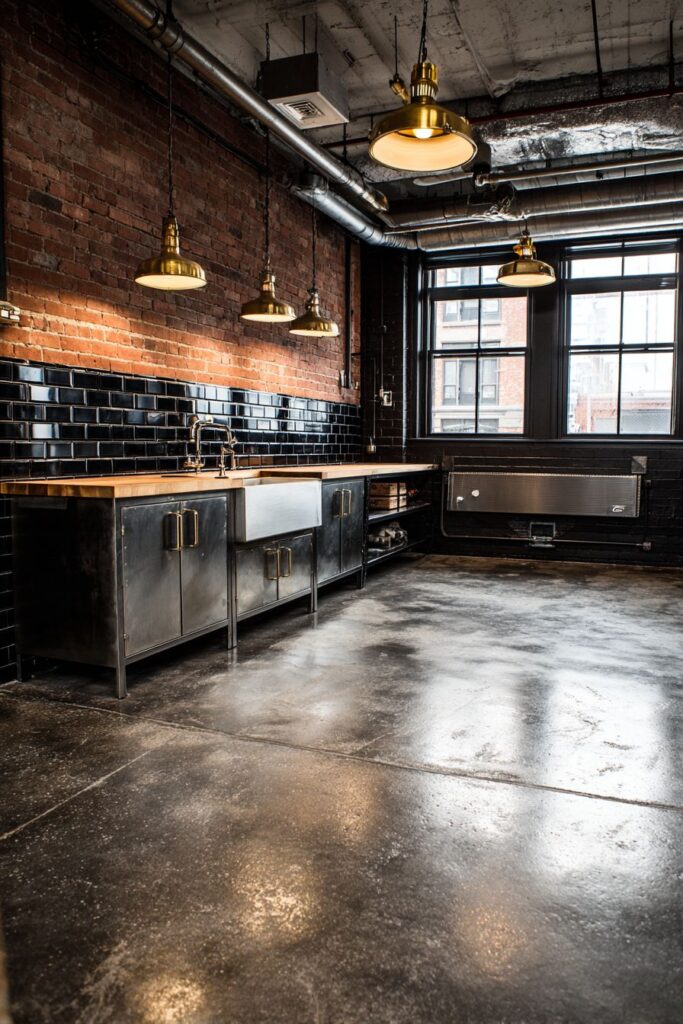
A large farmhouse sink positioned beneath industrial-style windows creates a practical work zone while maintaining visual connection to outdoor spaces. The black metal window frames reinforce the industrial theme while providing structural contrast to the softer brick texture. Vintage-inspired pendant lighting with brass accents adds warmth and personality, proving that industrial design can incorporate metallic variations that enhance rather than compromise the overall aesthetic vision.
Key Design Tips:
- Choose exposed brick with natural color variations to create authentic character and visual depth in the space
- Install polished concrete floors with subtle wear patterns to achieve industrial authenticity while maintaining practical durability
- Select black metal cabinets with minimal hardware to emphasize clean lines and industrial simplicity
- Use stainless steel subway tile backsplashes to combine functionality with industrial aesthetic appeal
- Incorporate brass accent lighting to add warmth while maintaining the industrial material palette
3. Concrete Island with Integrated Steel Brackets
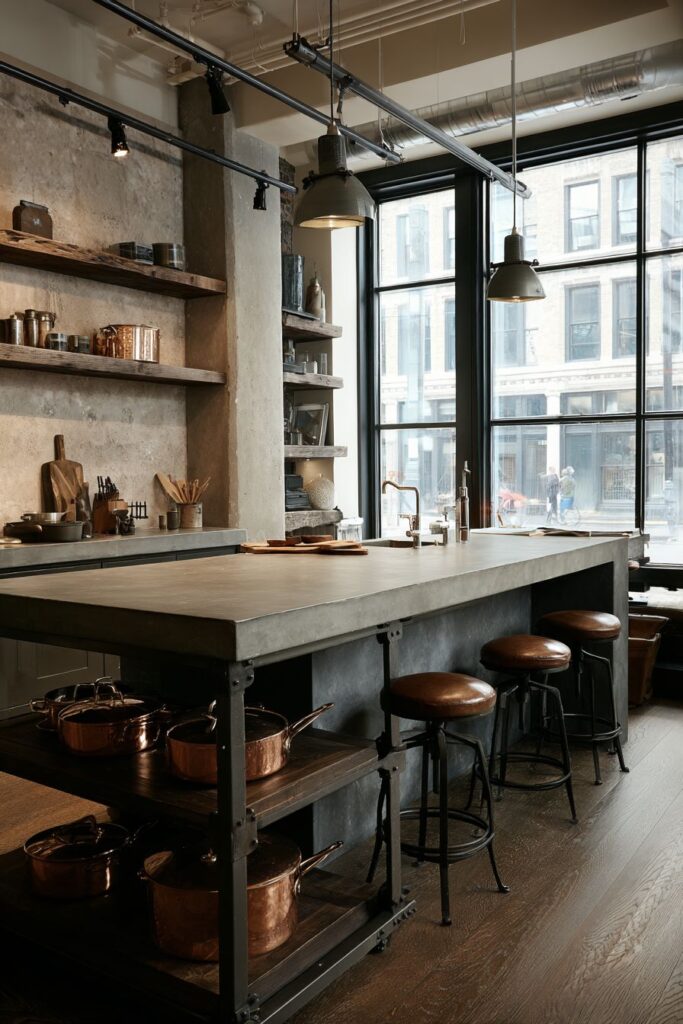
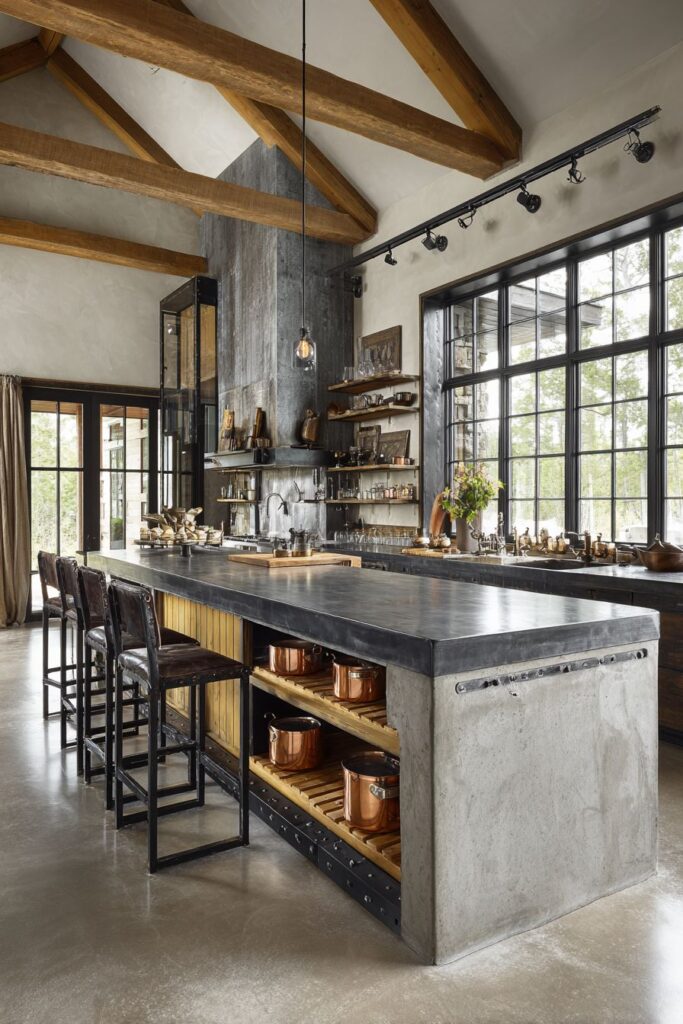
The kitchen island represents the heart of most contemporary kitchen designs, and in industrial aesthetics, it becomes an opportunity to showcase robust construction methods and authentic material combinations. A thick concrete countertop integrated with exposed steel brackets creates a substantial workspace that demonstrates the honest expression of structural support while providing exceptional durability and visual impact. The integration of steel support structures as visible design elements transforms necessary engineering into compelling architectural features.
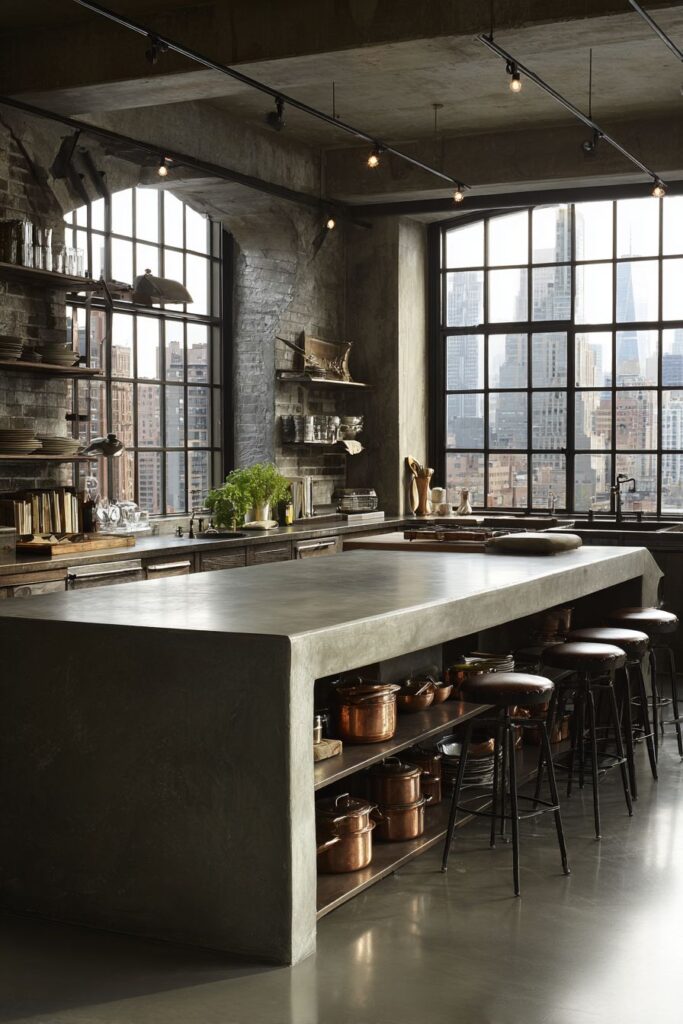
Black iron bar stools with worn leather seats provide comfortable seating while their patinated metal finishes contribute to the authentic industrial character. The combination of hard metal structures with soft leather upholstery creates tactile contrast that enhances user comfort while maintaining design consistency. Open shelving below the island serves dual purposes, providing accessible storage for frequently used cookware while creating display opportunities for copper pots and cast iron pieces that reinforce the industrial narrative.
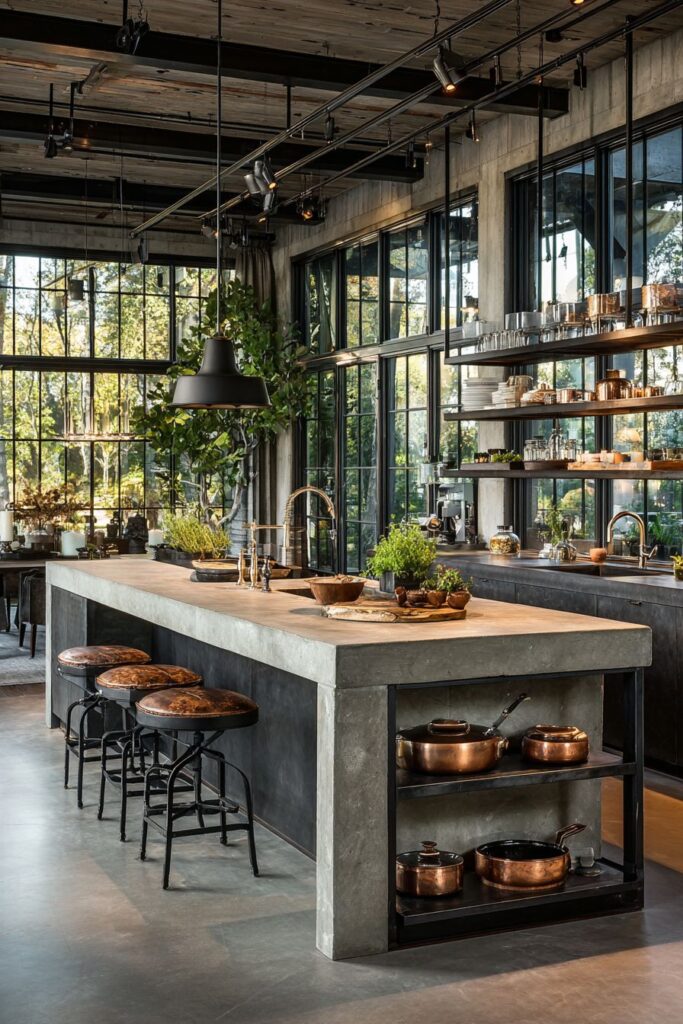
Factory-style track lighting delivers precise task illumination while its adjustable fixtures allow for customized lighting scenarios throughout different times of day. Large steel-framed windows flood the space with natural light, their industrial glazing systems maintaining authenticity while providing essential connection to outdoor spaces. The interplay between natural and artificial lighting creates dynamic shadows and highlights that emphasize material textures throughout the day.
Key Design Tips:
- Design concrete countertops with integrated steel brackets to showcase honest structural support as decorative elements
- Select bar stools with worn metal finishes and leather seats to balance industrial authenticity with comfortable seating
- Install open shelving below islands to display cookware as functional decoration while maintaining easy accessibility
- Use factory-style track lighting with adjustable fixtures to provide flexible task and ambient illumination
- Choose steel-framed windows to maintain industrial authenticity while maximizing natural light penetration
4. Floor-to-Ceiling Metal Cabinetry with Exposed Ductwork
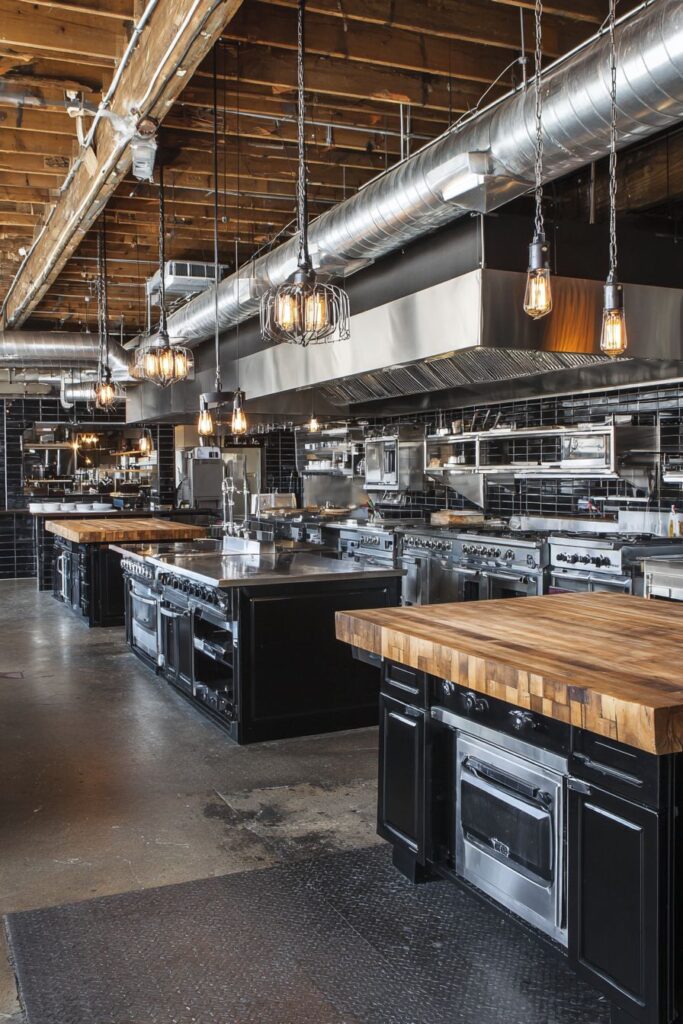
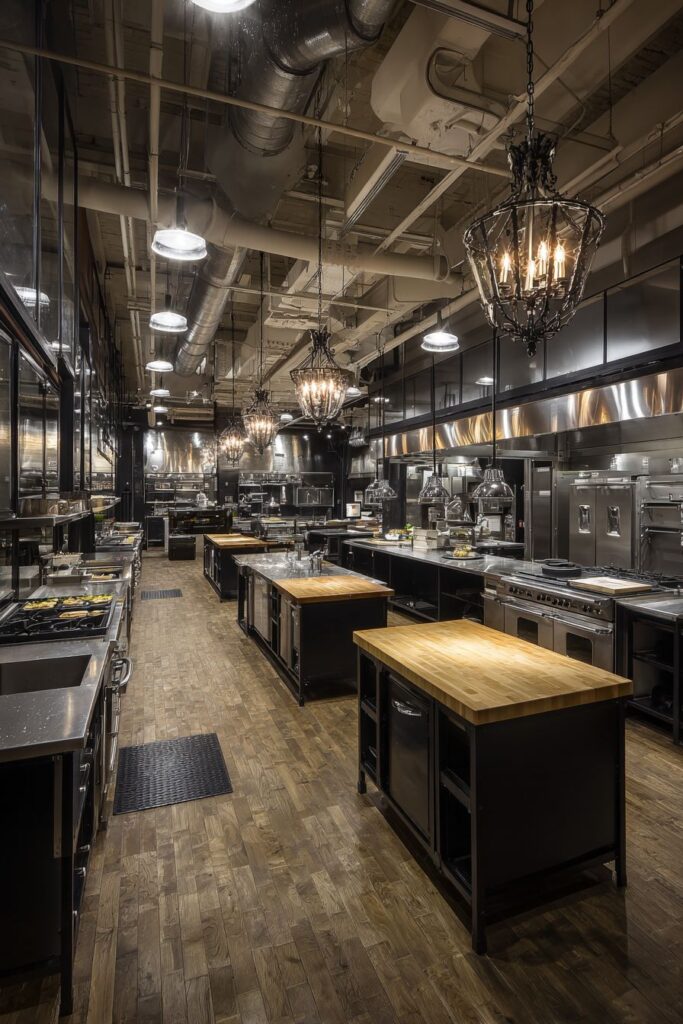
The boldest industrial kitchen designs embrace mechanical systems as integral design elements, transforming what might typically be concealed into prominent architectural features. Floor-to-ceiling black metal cabinetry creates dramatic vertical emphasis while providing exceptional storage capacity, their substantial presence anchoring the design with commercial-grade functionality. Exposed galvanized steel ductwork becomes sculptural overhead, its industrial forms creating visual interest while honestly expressing the mechanical systems essential for kitchen ventilation and climate control.
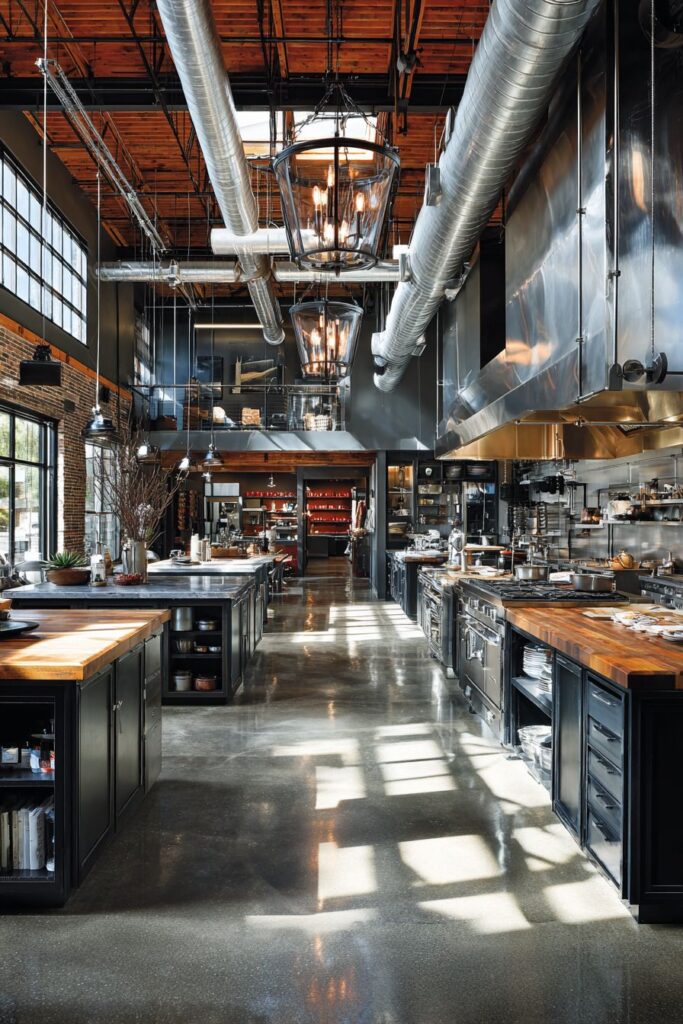
Butcher block countertops introduce natural warmth that balances the predominantly metal palette, their wood grain and tactile qualities providing essential contrast to harder industrial surfaces. This material choice demonstrates how organic elements can be seamlessly integrated into industrial designs without compromising authenticity or visual coherence. The rich patina that develops on butcher block over time contributes to the lived-in quality that distinguishes authentic industrial spaces from sterile commercial environments.
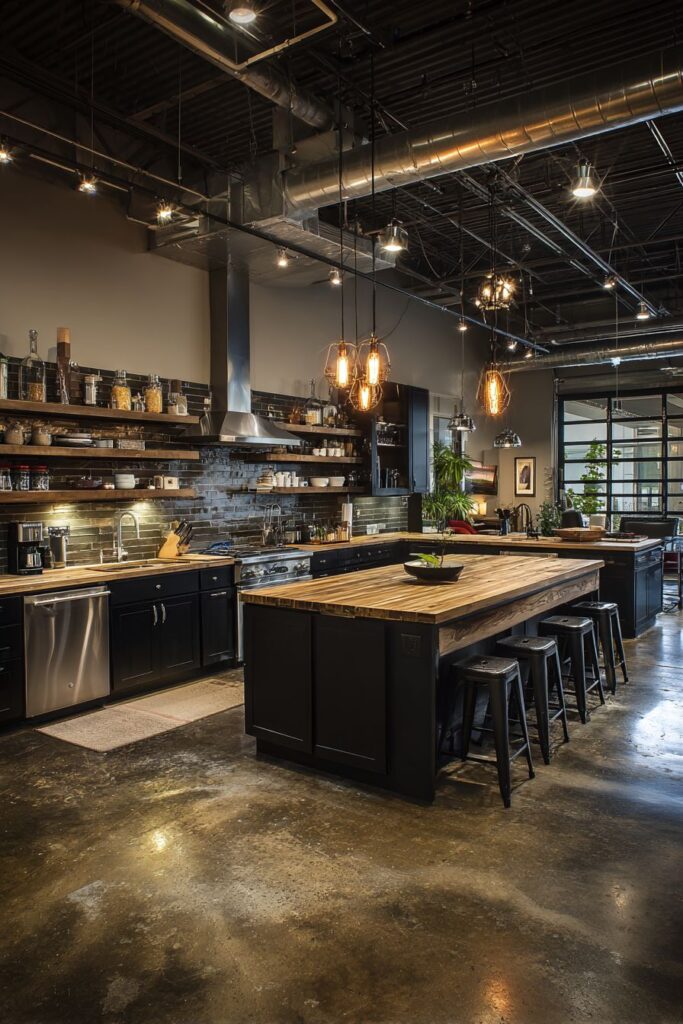
Commercial-style stainless steel backsplashes extend behind professional appliances, creating cohesive work zones that prioritize both function and visual unity. Vintage Edison bulb chandeliers provide ambient lighting while their exposed filaments and industrial mounting hardware reinforce the commitment to honest material expression. The combination of task-specific lighting and decorative fixtures creates layered illumination that supports both practical kitchen work and social gatherings.
Key Design Tips:
- Install floor-to-ceiling metal cabinetry to maximize storage while creating dramatic vertical emphasis in the space
- Expose galvanized steel ductwork as sculptural design elements that honestly express mechanical systems
- Choose butcher block countertops to introduce natural warmth that balances predominantly metal material palettes
- Extend stainless steel backsplashes behind appliances to create cohesive commercial-grade work zones
- Use vintage Edison bulb chandeliers to provide ambient lighting while reinforcing industrial authenticity
5. Weathered Steel Range Hood with Exposed Brick
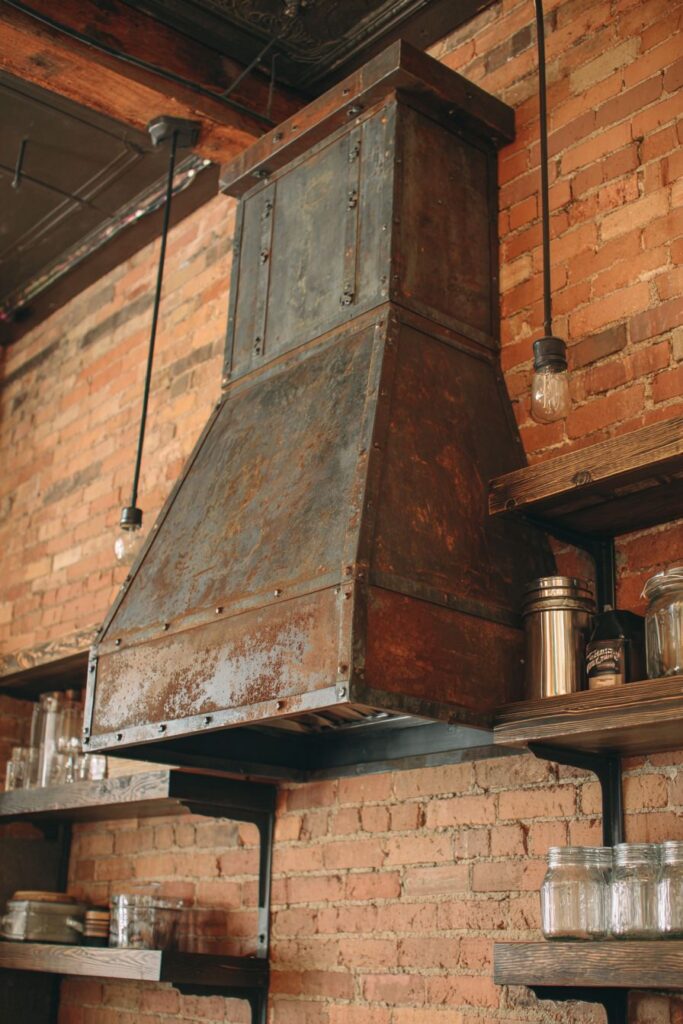
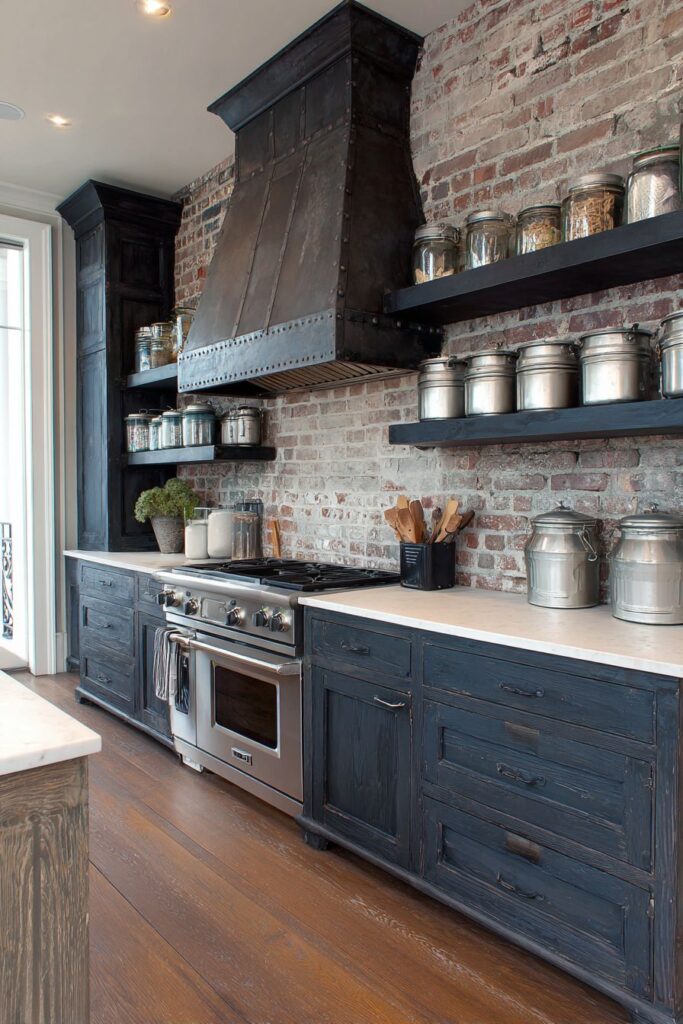
Statement range hoods offer exceptional opportunities to showcase industrial craftsmanship while serving essential functional purposes in kitchen ventilation systems. A custom weathered steel range hood with visible welding seams and natural patina becomes the commanding focal point, its substantial presence demonstrating authentic metalworking techniques while providing powerful ventilation for serious cooking activities. The visible welding details and surface patination tell the story of honest construction methods, creating visual interest through imperfection and time-worn character.
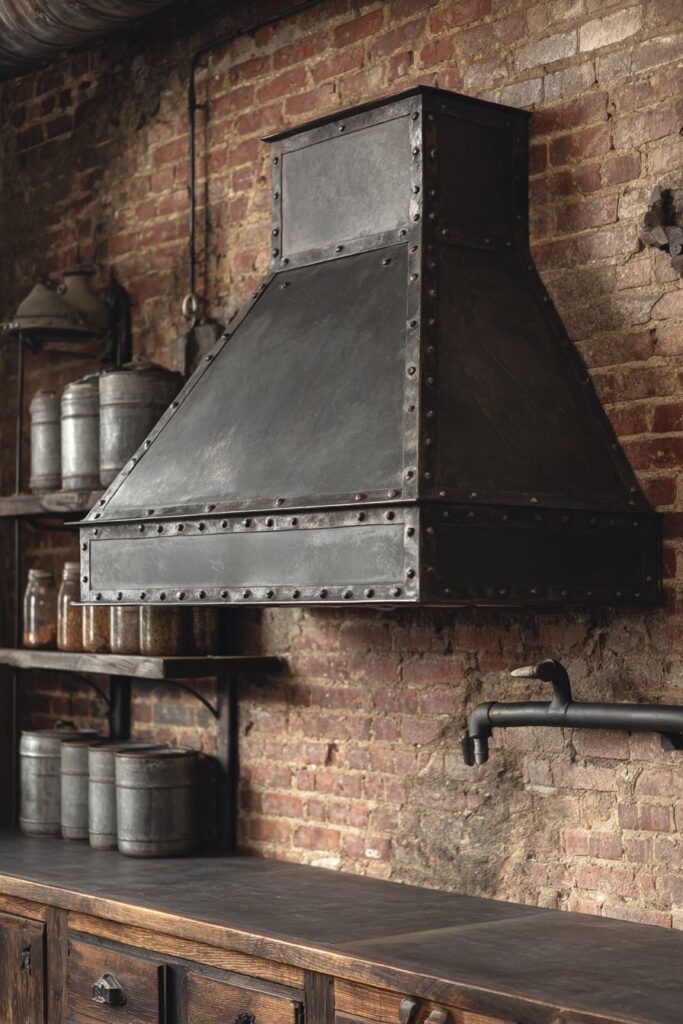
Surrounding walls of exposed brick with natural color variations provide textural contrast that softens the harder metallic elements while maintaining authentic industrial character. The irregular surface of brick creates shadow play that adds visual depth throughout different lighting conditions, while its thermal mass contributes to temperature stability within the kitchen environment. Black metal floating shelves display mason jars and industrial-style storage containers, transforming practical storage into curated displays that reinforce the design narrative.
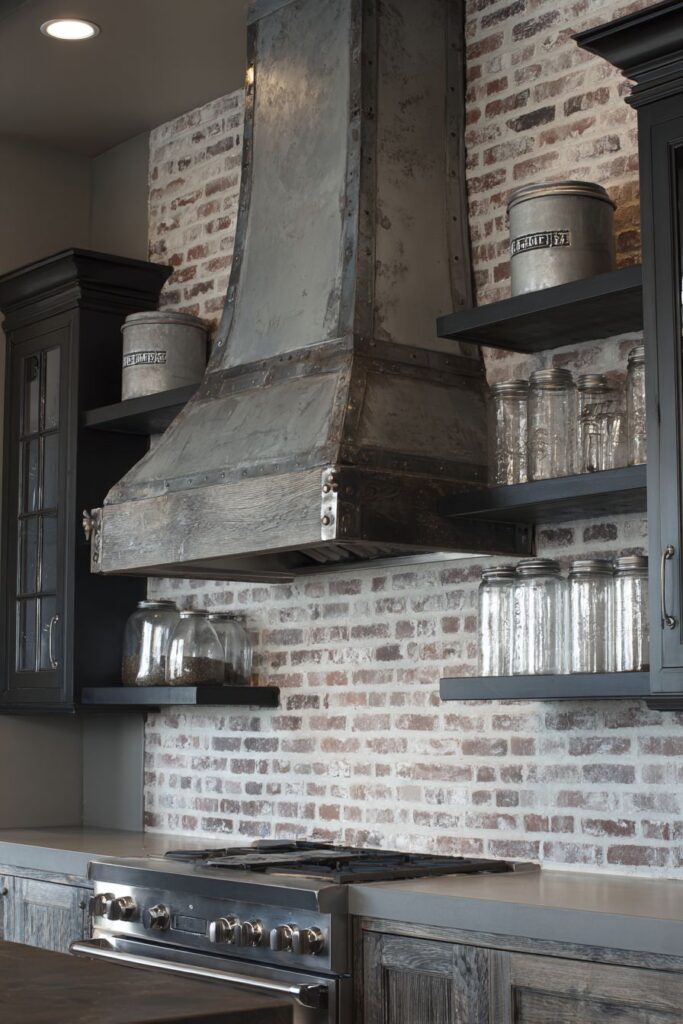
Reclaimed wood accents on cabinet faces introduce organic warmth that prevents the space from feeling cold or institutional, their weathered surfaces echoing the patinated metal finishes found throughout the design. These wood elements demonstrate how industrial aesthetics can accommodate natural materials that enhance rather than compromise the overall design vision. The integration of multiple textures and patinated surfaces creates visual richness that develops and deepens over time.
Key Design Tips:
- Commission custom weathered steel range hoods with visible welding seams to create authentic industrial focal points
- Use exposed brick walls with natural color variations to provide textural contrast and visual warmth
- Install black metal floating shelves to display storage containers as functional decoration
- Integrate reclaimed wood cabinet accents to soften hard industrial materials while maintaining authenticity
- Showcase visible welding details and surface patination to demonstrate honest construction techniques
6. Polished Concrete with Integrated Reinforcement Bars
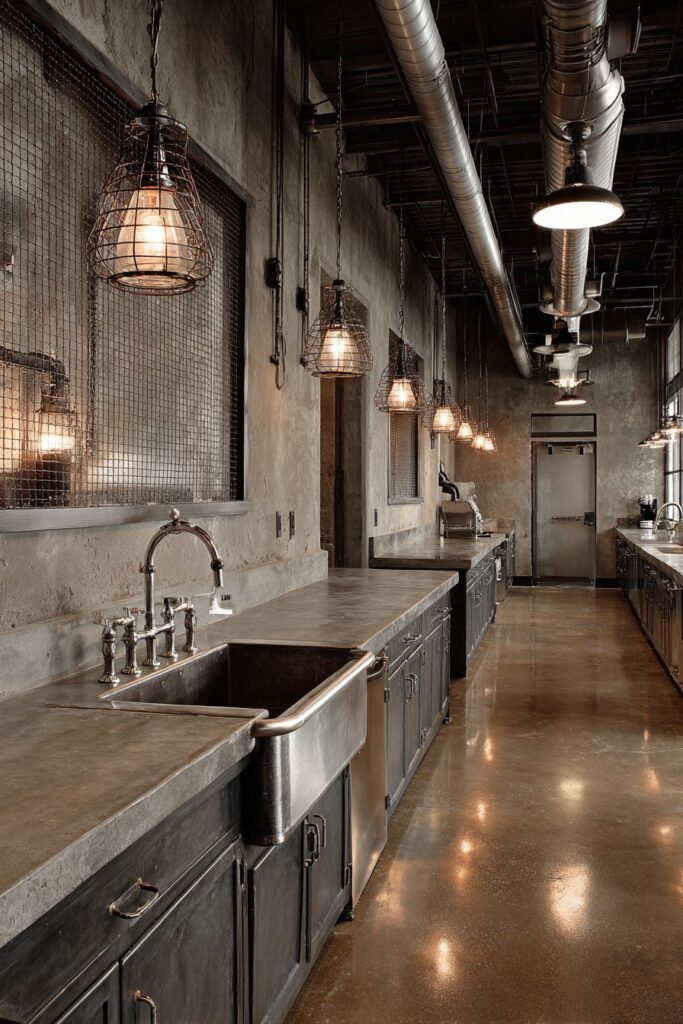
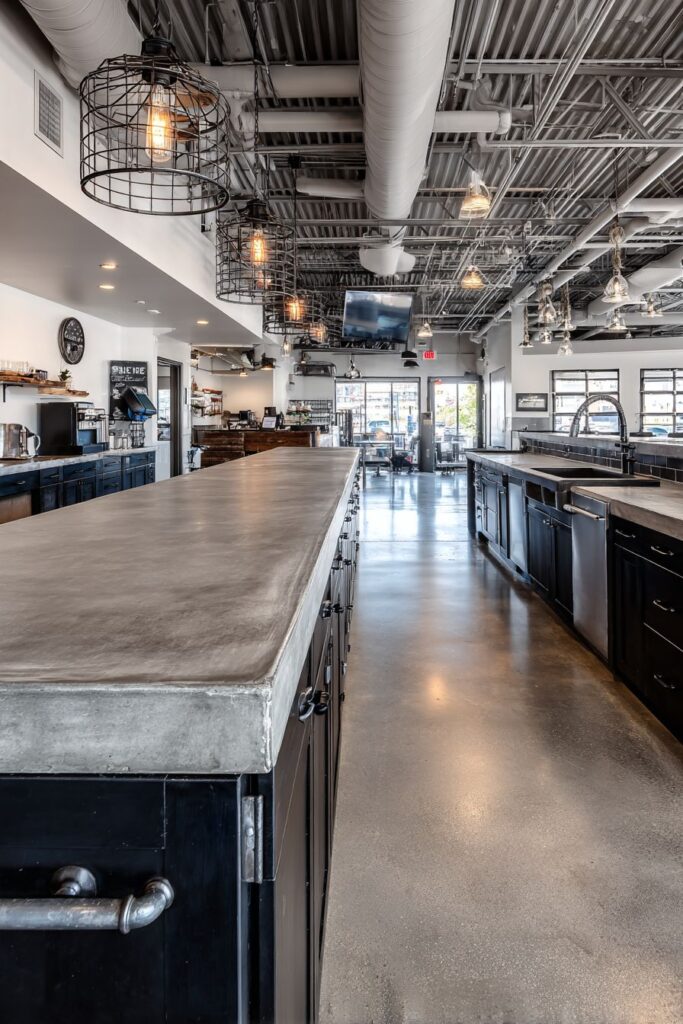
Advanced concrete techniques allow for creative integration of structural elements as decorative features, transforming utilitarian construction methods into sophisticated design statements. Polished concrete countertops featuring integrated steel reinforcement bars as visible design elements demonstrate how structural engineering can enhance rather than compromise aesthetic appeal. The precise placement of reinforcement creates linear patterns that add visual interest while honestly expressing the internal structure required for structural integrity.
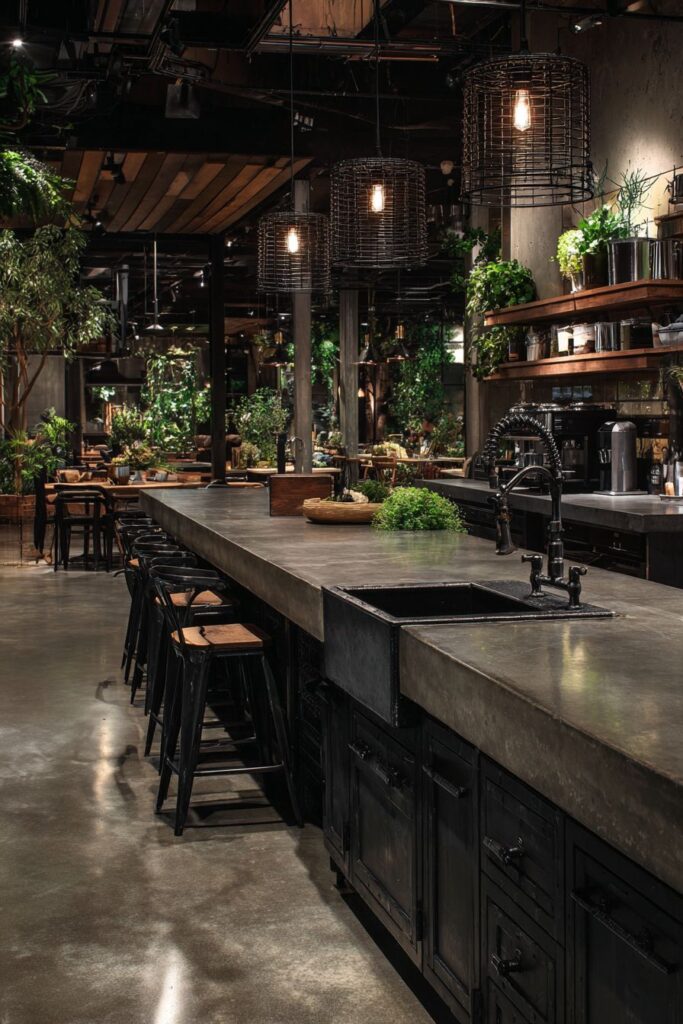
Matte black metal cabinets with pipe-style handles reinforce the utilitarian theme while providing sleek storage solutions that maintain clean lines and minimal visual disruption. The pipe-style hardware references industrial plumbing components, creating consistency between functional elements and decorative details throughout the design. A vintage industrial sink with exposed plumbing adds authentic character while providing practical workspace functionality that supports serious cooking activities.
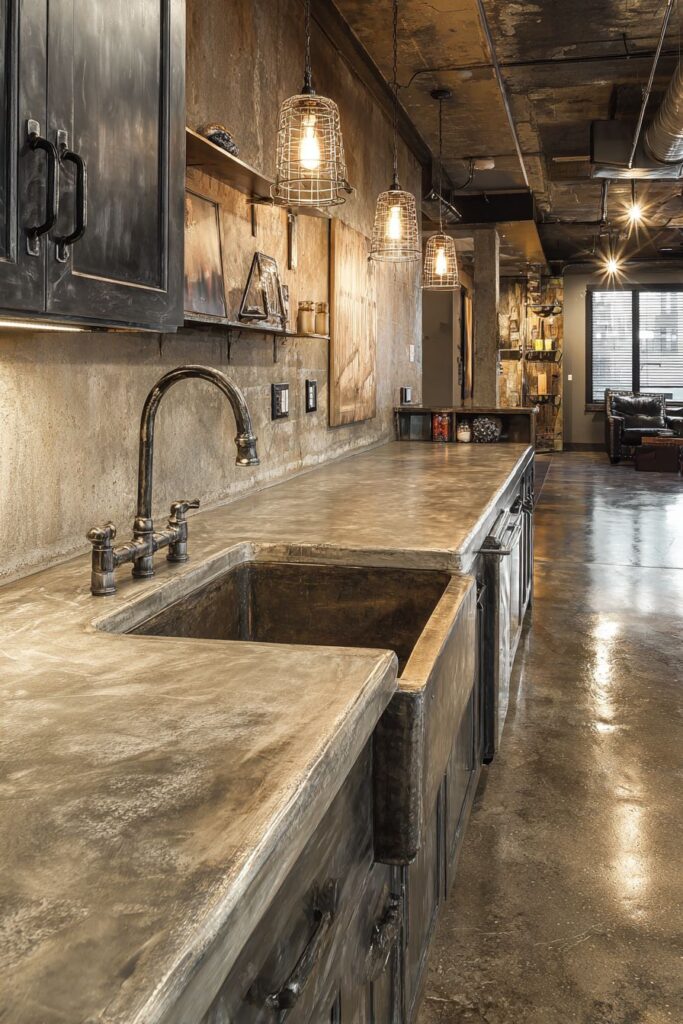
Pendant lights with metal cage shades suspended at varying heights create dynamic lighting compositions while their industrial forms reference warehouse and factory environments. The varying suspension heights add visual rhythm and accommodate different work zones within the kitchen layout. The interplay between polished concrete surfaces and matte metal finishes creates subtle reflections that add depth and visual interest throughout different lighting conditions.
Key Design Tips:
- Integrate steel reinforcement bars as visible decorative elements in polished concrete countertops
- Select matte black metal cabinets with pipe-style handles to reference industrial plumbing components
- Install vintage industrial sinks with exposed plumbing to add authentic character and functionality
- Use pendant lights with metal cage shades at varying heights to create dynamic lighting compositions
- Balance polished and matte finishes to create subtle reflections that enhance visual depth
7. Reclaimed Wood Dining Integration with Steel Pipe Structure
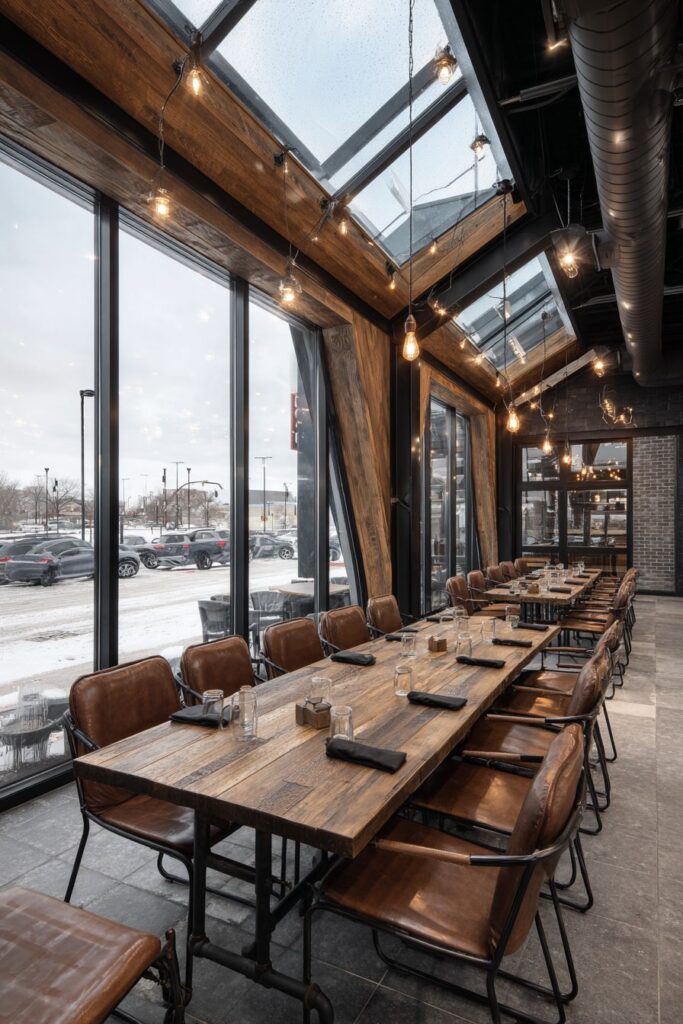
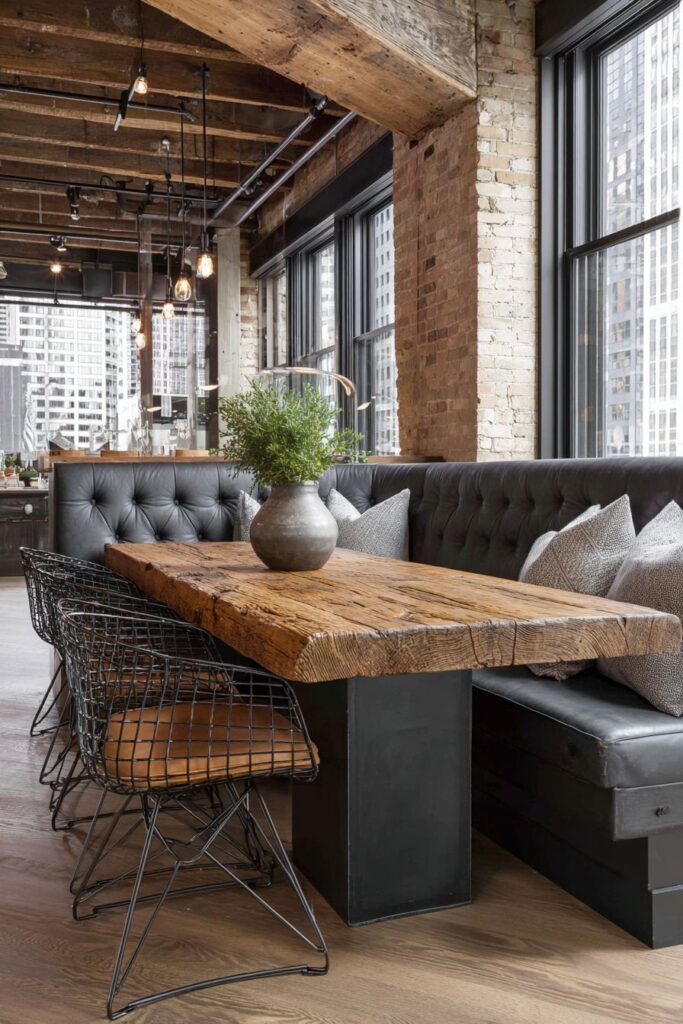
Industrial kitchen design extends beyond cooking zones to encompass dining and social spaces, creating cohesive environments that support various daily activities while maintaining consistent design vocabulary. A reclaimed wood dining table supported by black steel pipe legs demonstrates how structural honesty can create compelling furniture pieces that bridge industrial functionality with residential comfort. The combination of weathered wood surfaces and precise steel fabrication creates visual and tactile contrast that enhances user experience.
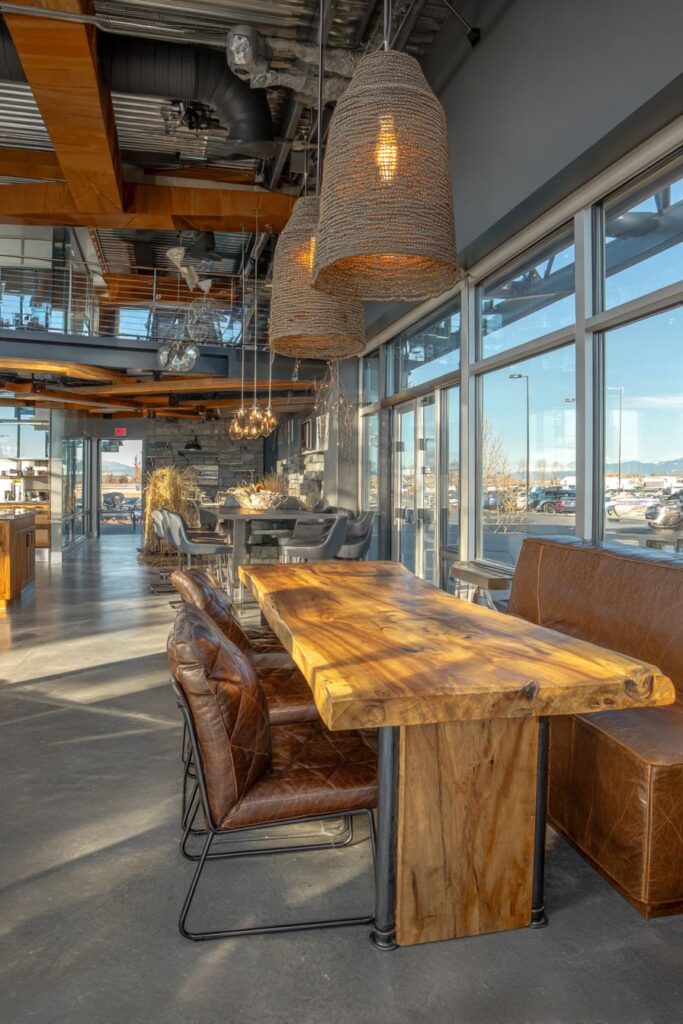
Metal wire chairs with leather cushions surround the dining table, their industrial forms softened by comfortable upholstery that invites extended use during meals and social gatherings. The wire construction maintains visual lightness while providing necessary support, demonstrating how industrial forms can be adapted for residential comfort without sacrificing aesthetic integrity. Exposed steel beam ceiling structure frames the eating area, creating architectural definition while showcasing structural elements as decorative features.
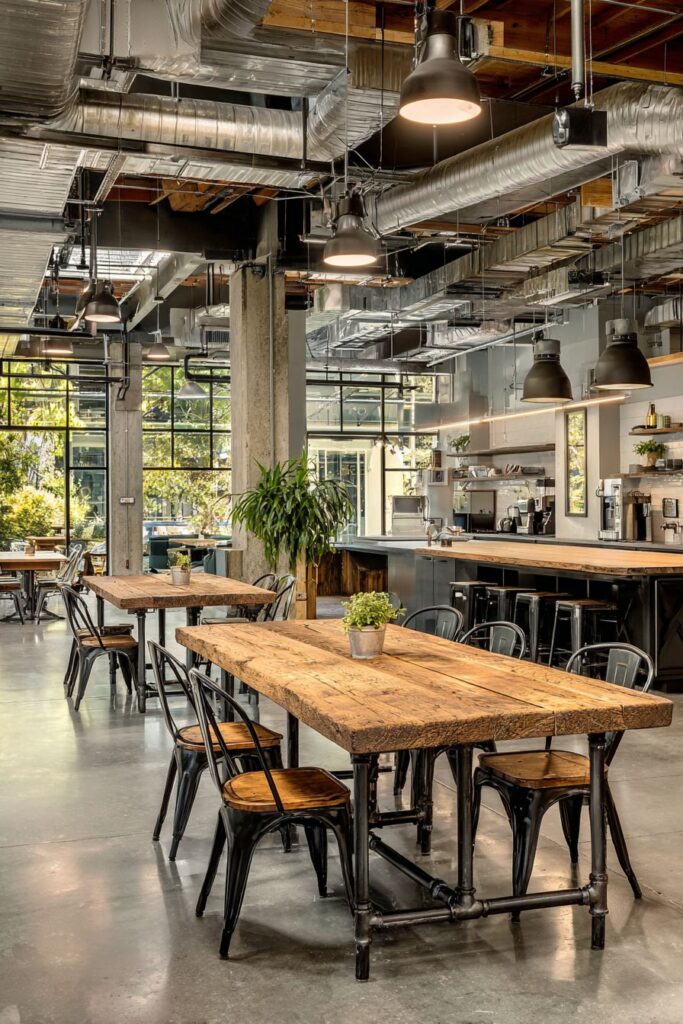
Large factory-style windows flood the dining space with natural light, their industrial glazing systems and black metal frames maintaining design consistency while providing essential connection to outdoor environments. The scale and proportions of factory windows create dramatic architectural statements while supporting the industrial narrative through authentic material choices and construction methods.
Key Design Tips:
- Design dining tables with reclaimed wood tops and black steel pipe legs to bridge industrial and residential aesthetics
- Choose metal wire chairs with leather cushions to combine industrial forms with comfortable seating
- Expose steel beam ceiling structure to frame dining areas with architectural definition
- Install large factory-style windows to maximize natural light while maintaining industrial authenticity
- Create visual contrast between weathered wood surfaces and precise steel fabrication for enhanced tactile interest
8. Custom Steel Cabinetry with Mesh Panel Inserts
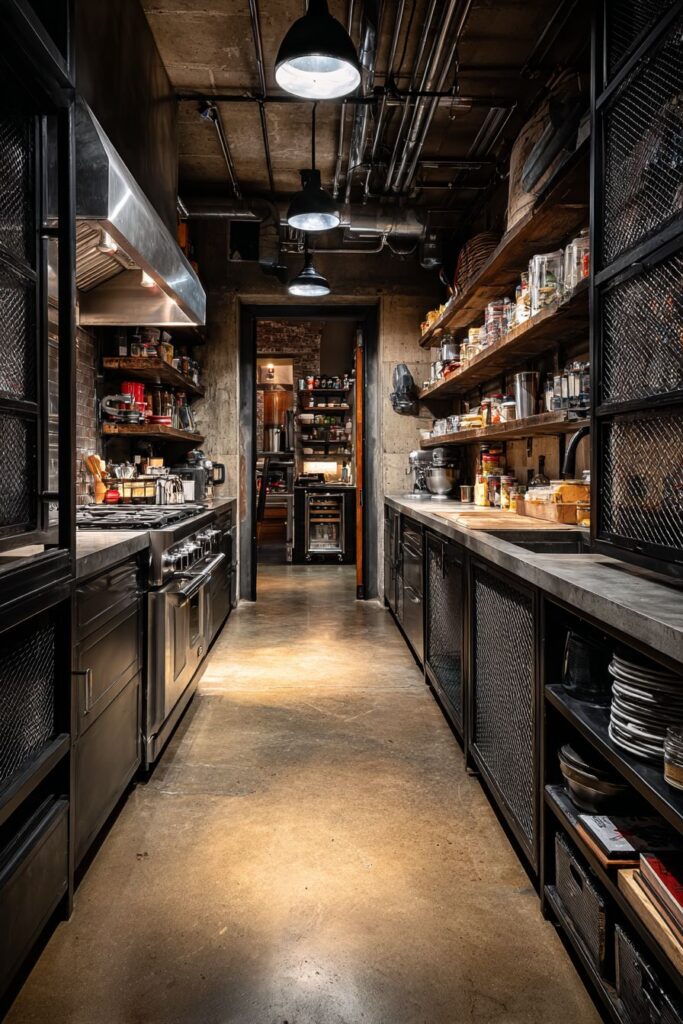
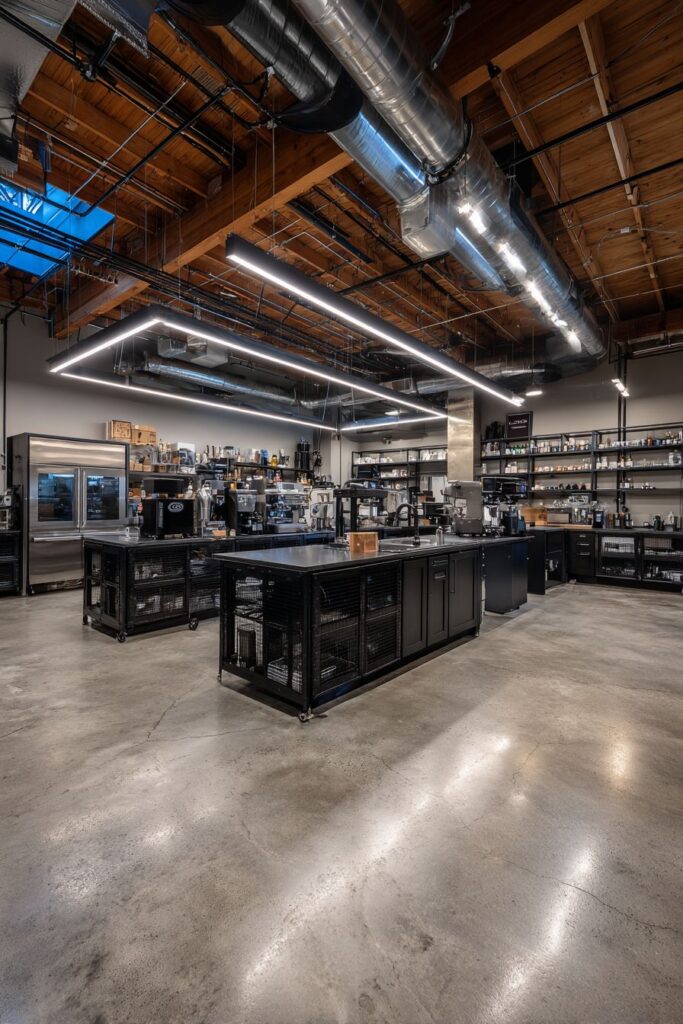
Transparency in storage solutions represents an innovative approach to industrial kitchen design, where traditional concealment gives way to organized display that celebrates both function and visual appeal. Custom black steel cabinetry with mesh panel inserts reveals organized storage systems inside, transforming typically hidden kitchen essentials into curated displays that contribute to the overall aesthetic narrative. The mesh panels provide visual transparency while maintaining dust protection and organizational structure.
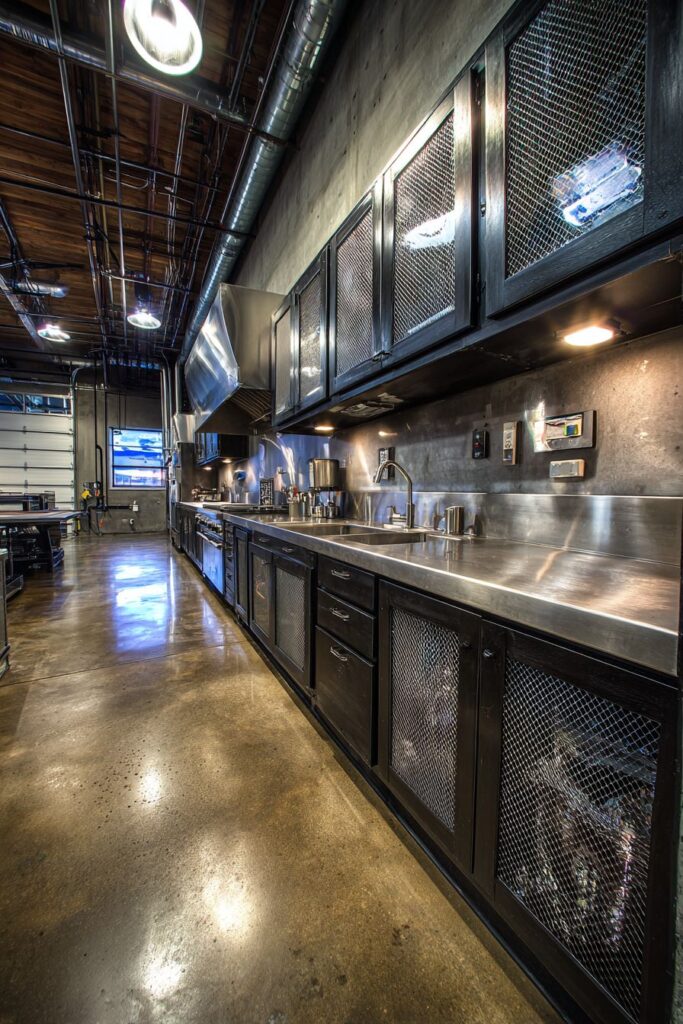
Concrete floors with natural color variations and subtle joint lines create authentic industrial surfaces that improve with age and use, their neutral palette providing foundation for other design elements while contributing to acoustic comfort through their substantial mass. Stainless steel appliances blend seamlessly with the industrial aesthetic, their commercial-grade performance and reflective surfaces enhancing both functionality and visual coherence throughout the design composition.
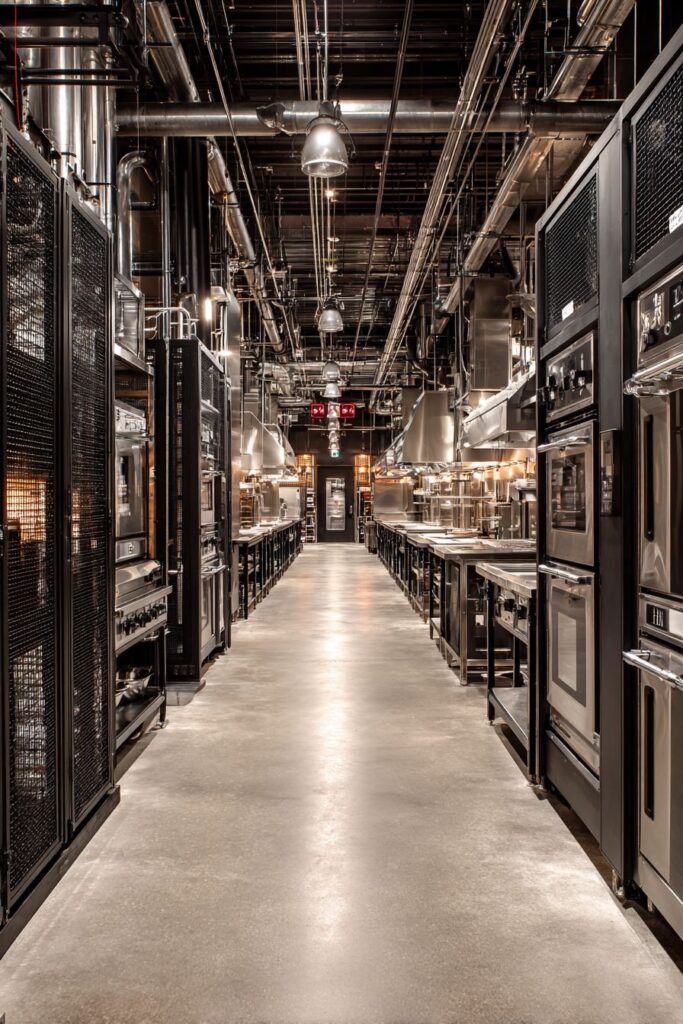
Exposed conduit and junction boxes become decorative elements when thoughtfully integrated into the overall design scheme, transforming necessary electrical infrastructure into interesting visual details that reinforce the honest expression of building systems. This approach demonstrates how industrial design can embrace rather than conceal the mechanical systems essential for modern kitchen functionality.
Key Design Tips:
- Design custom steel cabinetry with mesh panel inserts to create transparent storage that displays organization
- Choose concrete floors with natural color variations to create authentic surfaces that improve with age
- Integrate stainless steel appliances seamlessly with industrial cabinetry for visual and functional coherence
- Expose electrical conduit and junction boxes as decorative elements that express building systems honestly
- Organize storage systems as curated displays that contribute to overall aesthetic appeal
9. Massive Concrete Island with Steel Reinforcement Details
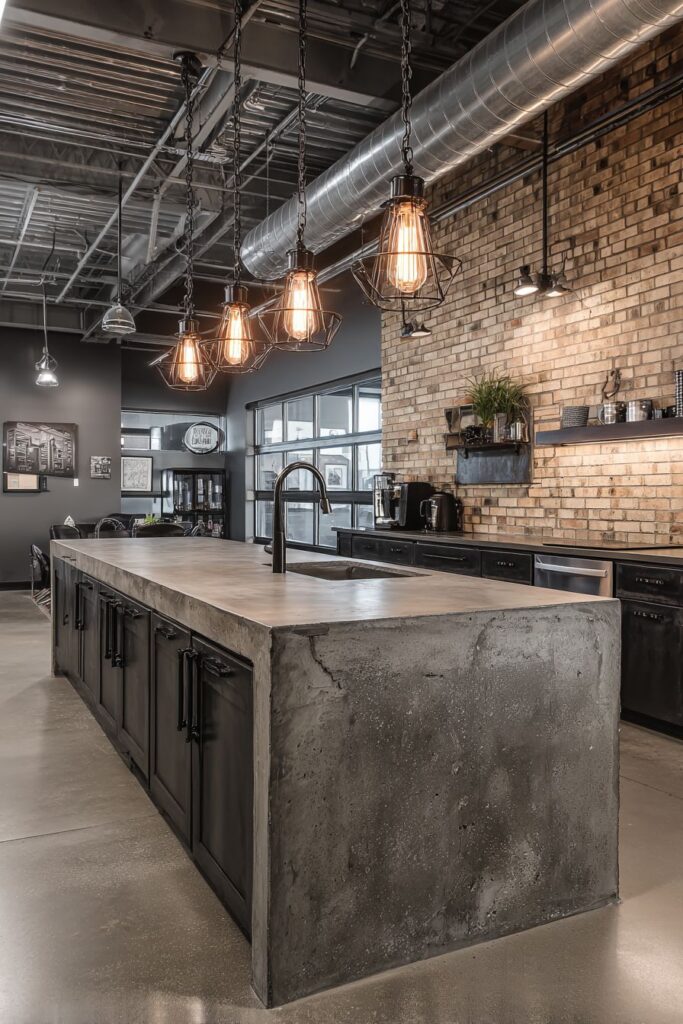
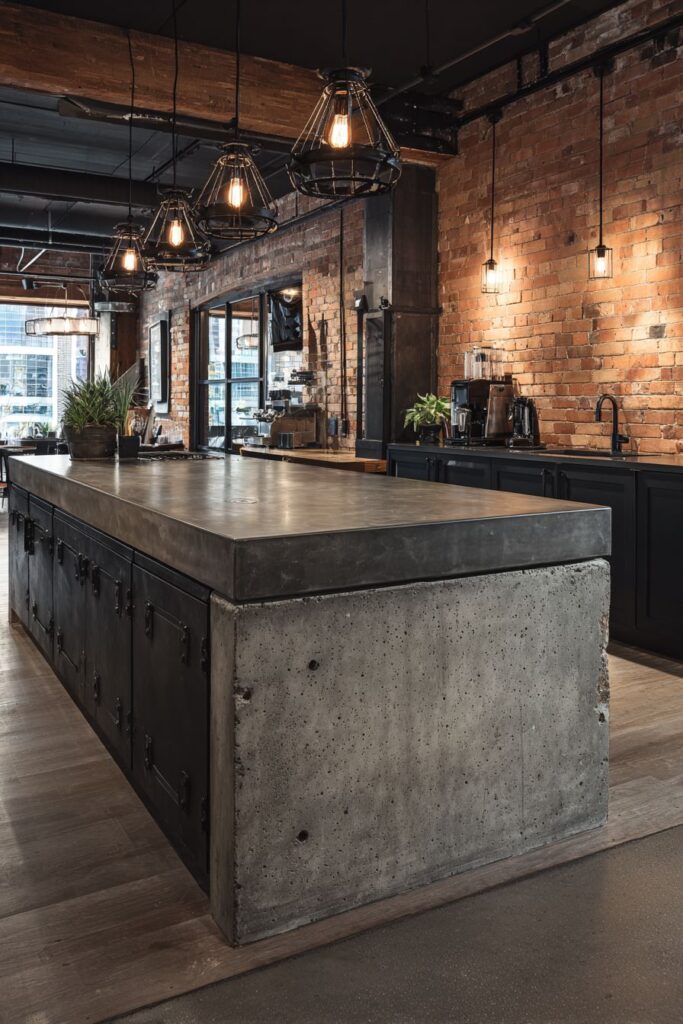
Scale and proportion play crucial roles in successful industrial kitchen design, where substantial elements create commanding presence while maintaining human-scaled functionality. A massive concrete island featuring integrated steel reinforcement exposed as design detail demonstrates how structural engineering can enhance aesthetic appeal while providing exceptional durability and workspace functionality. The visible reinforcement creates linear patterns that add visual interest while honestly expressing the internal structure required for supporting heavy loads.
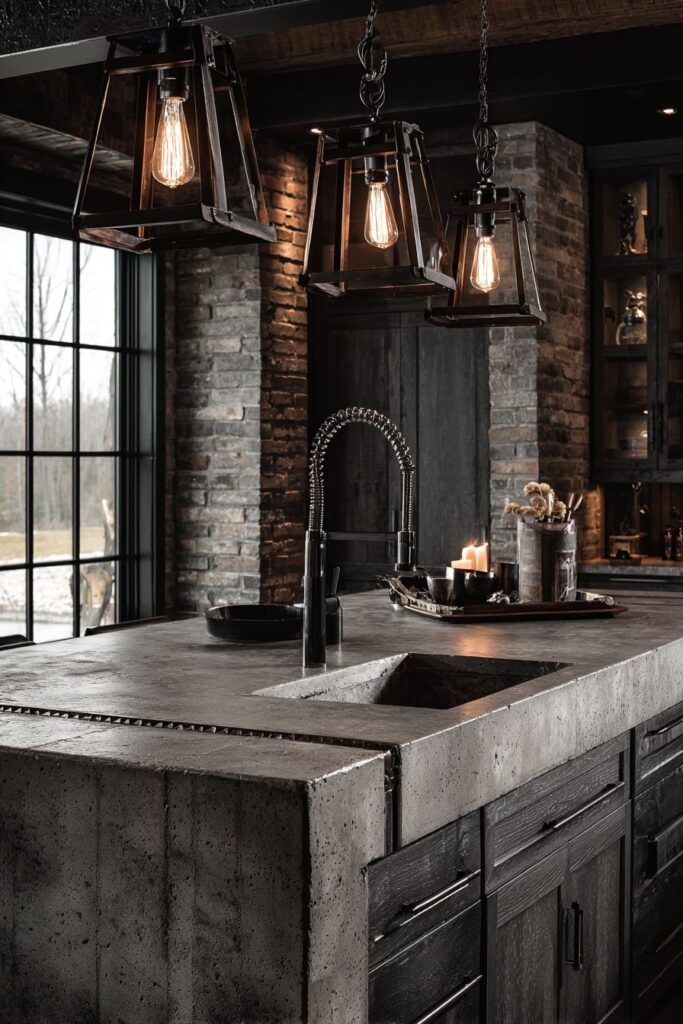
Black metal pendant lights with vintage Edison bulbs suspended above the workspace provide both task illumination and ambient warmth, their industrial forms and exposed filaments reinforcing the commitment to honest material expression throughout the design. The combination of substantial concrete mass and delicate light fixtures creates compelling scale relationships that enhance visual interest and functional performance.
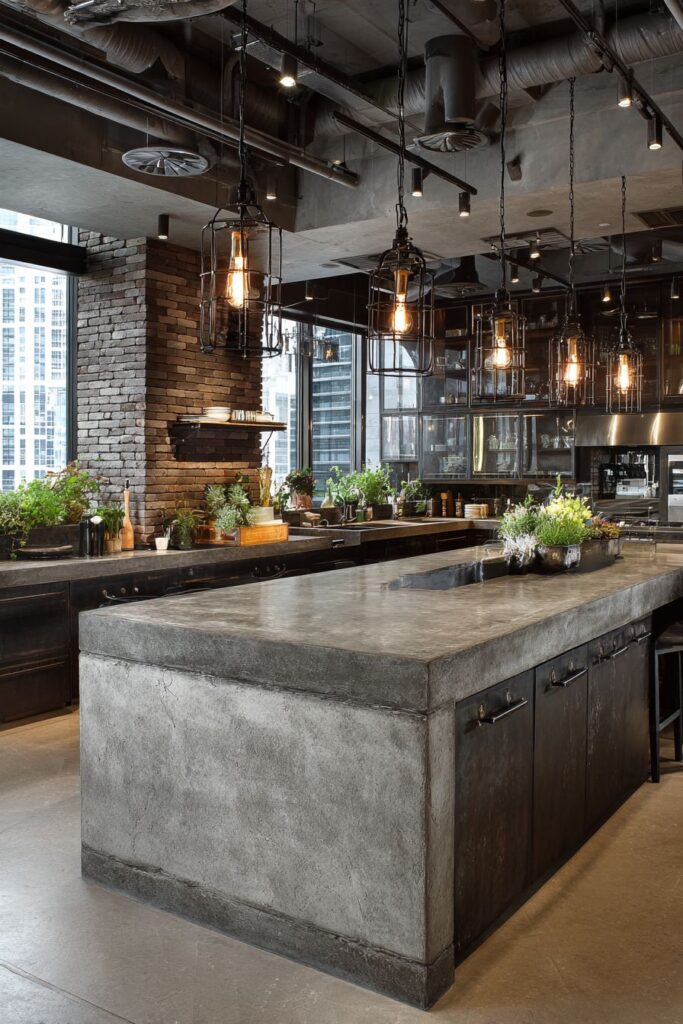
Perimeter cabinetry featuring dark metal construction with industrial latches and hardware provides extensive storage while maintaining visual consistency with the island design. The robust hardware references commercial and industrial applications while providing reliable performance under heavy daily use. Exposed brick walls provide textural contrast that softens the predominantly hard surfaces while contributing to acoustic comfort and visual warmth.
Key Design Tips:
- Design massive concrete islands with exposed steel reinforcement to create substantial workspace focal points
- Install black metal pendant lights with Edison bulbs to provide task illumination with industrial authenticity
- Use dark metal cabinetry with industrial latches to provide storage while maintaining commercial-grade durability
- Integrate exposed brick walls to provide textural contrast and acoustic comfort in hard-surfaced environments
- Create compelling scale relationships between substantial structural elements and delicate lighting fixtures
10. Steel Stud Framing and Galvanized Metal Panels
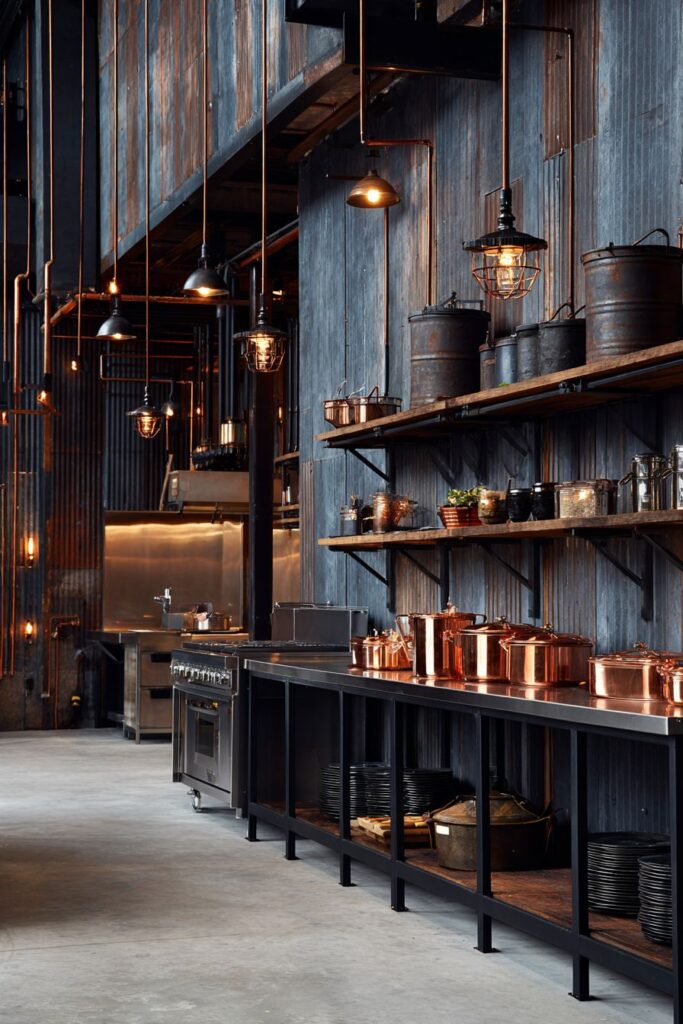
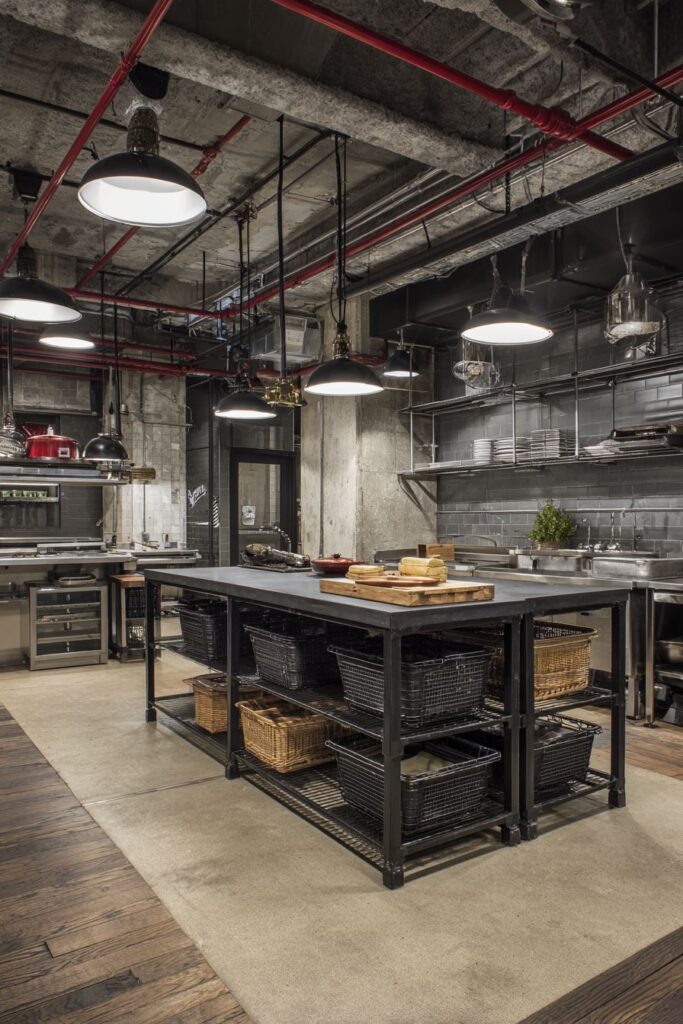
Honest expression of construction methods represents a fundamental principle in industrial design, where typically concealed framing systems become prominent architectural features that contribute to both structural and aesthetic performance. Exposed steel stud framing combined with galvanized metal panel wall cladding creates authentic industrial surfaces while providing excellent durability and easy maintenance. The regular rhythm of structural framing creates visual patterns that add architectural interest without requiring additional decorative elements.
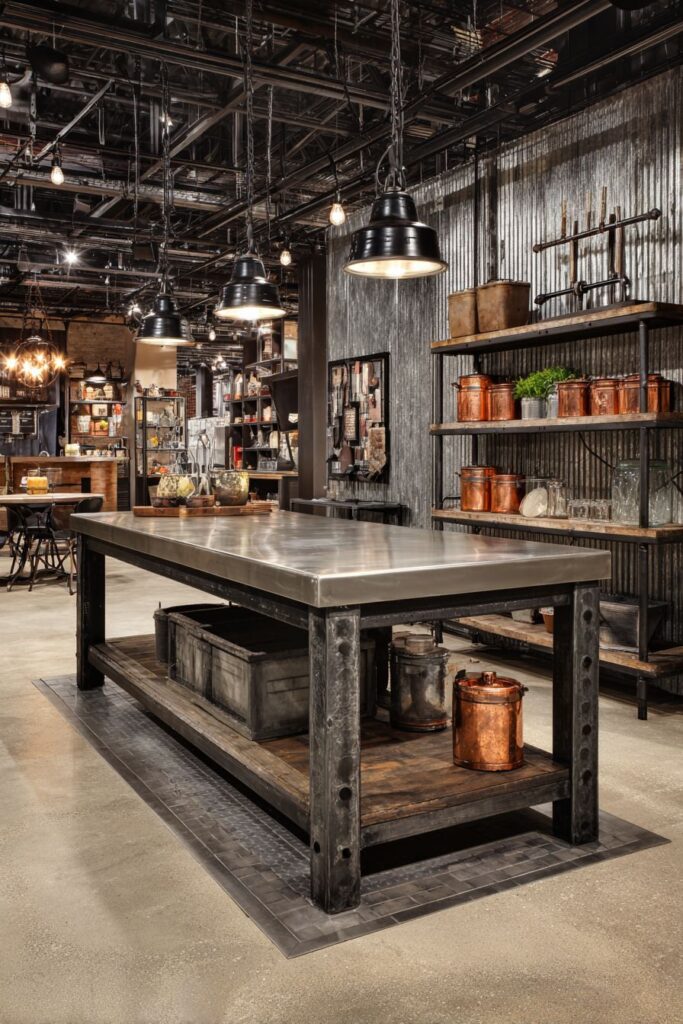
A stainless steel prep table serves as additional workspace with integrated lower storage shelving, its commercial-grade construction providing exceptional durability while reinforcing the industrial aesthetic through authentic material choices. The mobile nature of prep tables allows for flexible workspace configurations that adapt to various cooking activities and social functions throughout daily use.
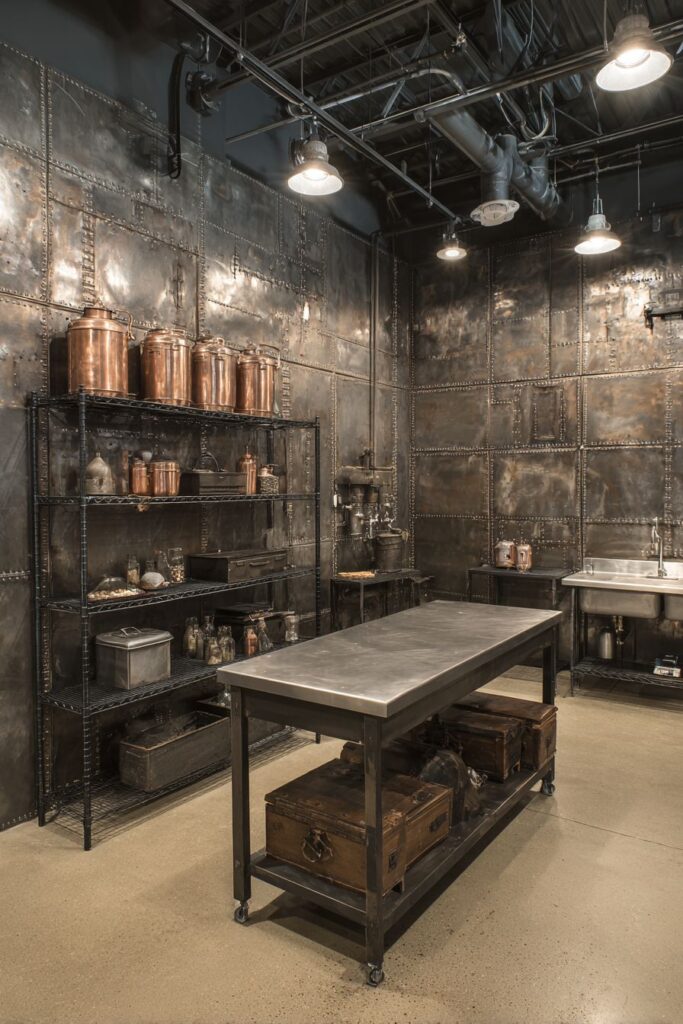
Black iron pipe shelving displays vintage industrial containers and copper accents, creating organized storage that doubles as curated display space for authentic industrial artifacts. The combination of iron pipe structure with vintage containers creates visual interest while providing practical storage solutions that improve with age and use. Factory-style lighting fixtures with metal shades provide focused task illumination while their industrial forms reinforce the workshop aesthetic.
Key Design Tips:
- Expose steel stud framing systems as architectural features that express honest construction methods
- Use galvanized metal panels for wall cladding to create authentic industrial surfaces with excellent durability
- Integrate stainless steel prep tables with storage to provide flexible commercial-grade workspace solutions
- Install black iron pipe shelving to create storage that displays vintage industrial containers as functional decoration
- Choose factory-style lighting with metal shades to provide task illumination with authentic industrial forms
11. Weathered Steel Cabinets with Natural Patina
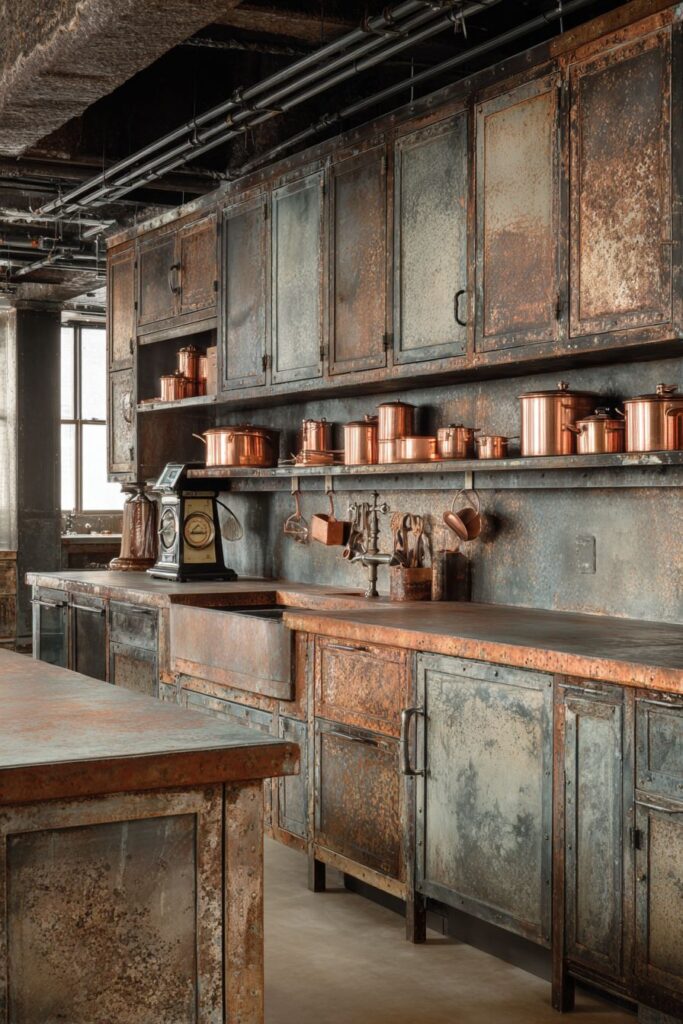
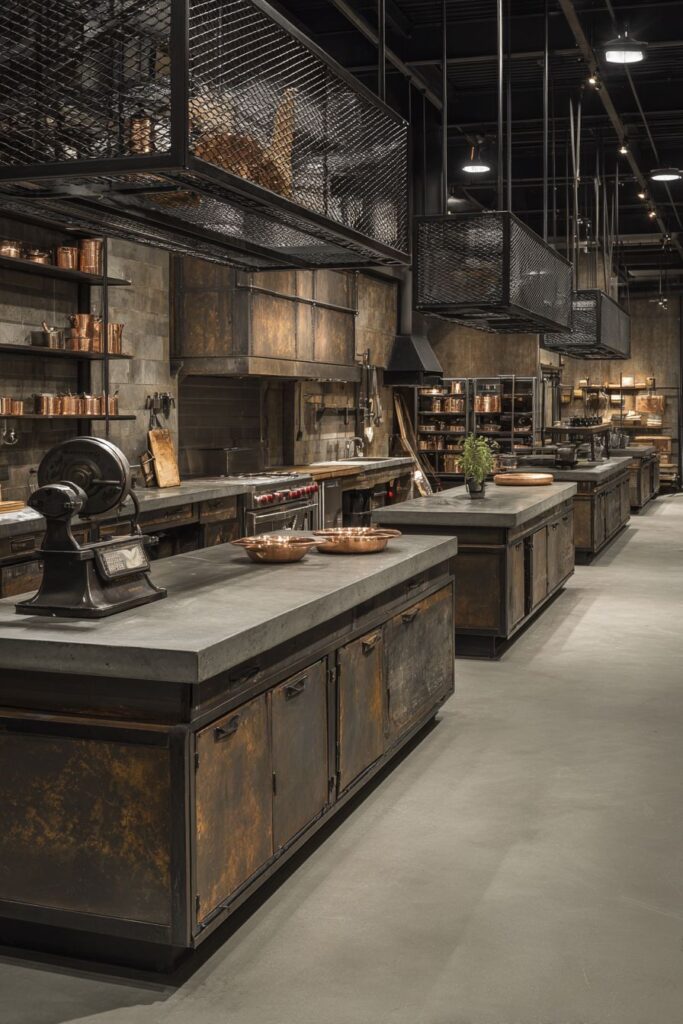
Authentic aging processes create the most compelling surface treatments in industrial design, where time and use develop natural patina that cannot be artificially replicated. Weathered steel cabinet fronts displaying natural patina and surface variations demonstrate how authentic materials improve with age, their imperfect surfaces telling stories of use and weathering that add character and visual interest. The subtle color variations and texture changes create unique surfaces that serve as focal points while providing practical storage solutions.
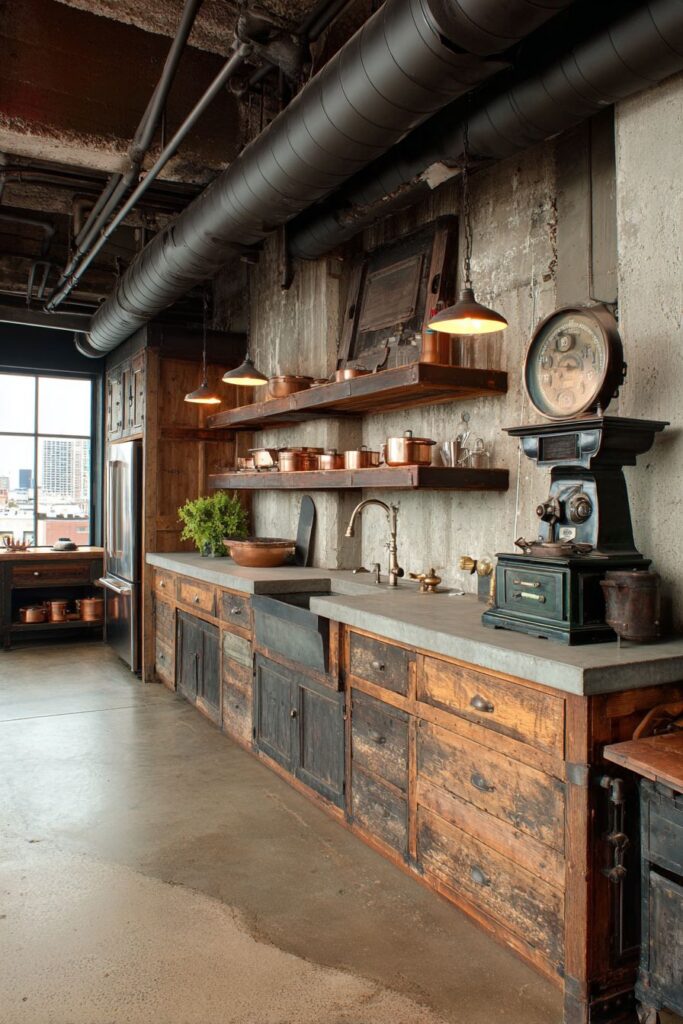
Concrete countertops featuring integrated drainboards and steel reinforcement details combine exceptional functionality with honest material expression, their monolithic appearance providing visual continuity while supporting heavy daily use. The integrated drainboards eliminate transition details while providing practical workspace solutions that improve kitchen efficiency during food preparation and cleanup activities.
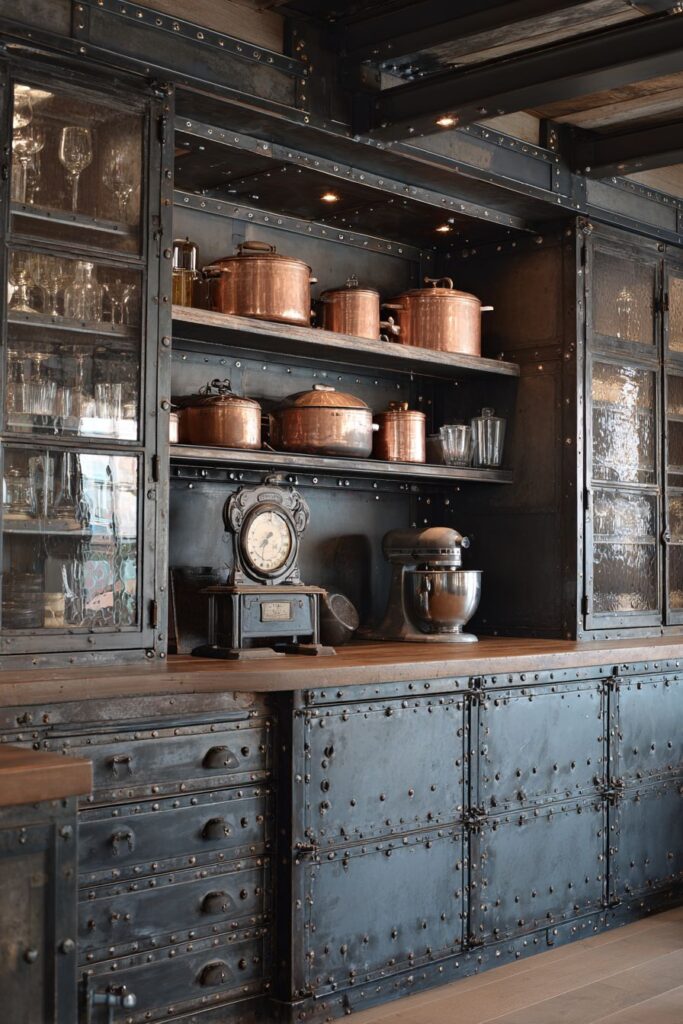
Vintage industrial scales and copper cookware add authentic touches that reference historical industrial applications while providing functional tools for contemporary cooking activities. These carefully selected accessories demonstrate how authentic vintage pieces can enhance industrial designs without feeling contrived or artificial. Exposed ceiling joists painted matte black frame the space while providing mounting points for lighting and mechanical systems.
Key Design Tips:
- Choose weathered steel cabinets with natural patina to showcase authentic aging processes and surface character
- Design concrete countertops with integrated drainboards to combine functionality with monolithic visual appearance
- Display vintage industrial scales and copper cookware as authentic accessories that enhance historical references
- Paint exposed ceiling joists matte black to create unified overhead framing while supporting mechanical systems
- Embrace imperfect surfaces and color variations that develop naturally through use and environmental exposure
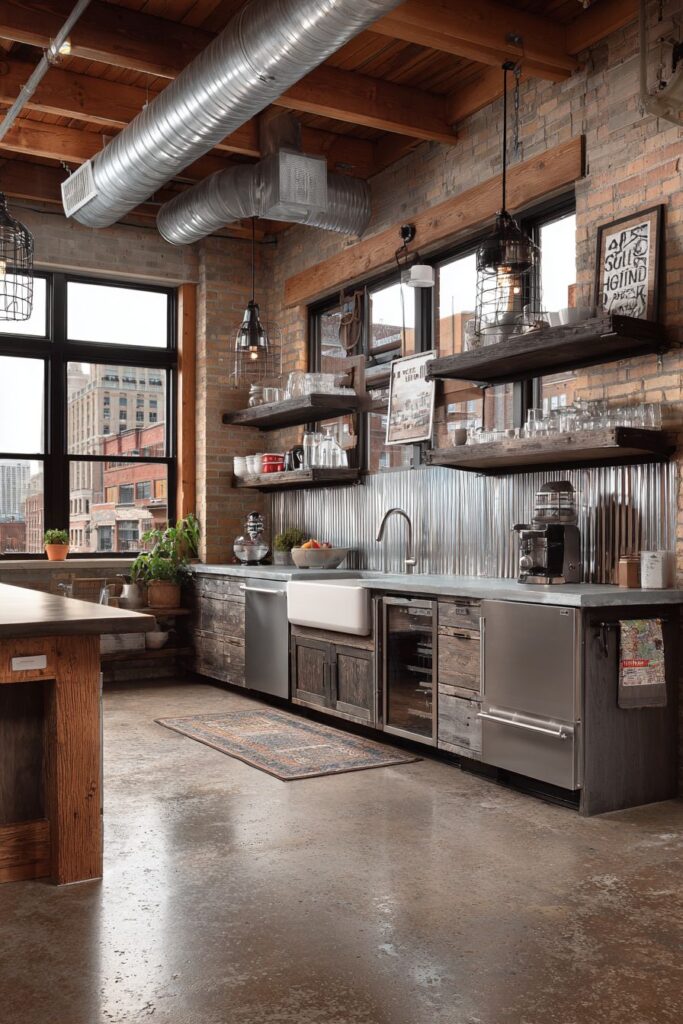
12. Corrugated Metal Backsplash with Fastener Details
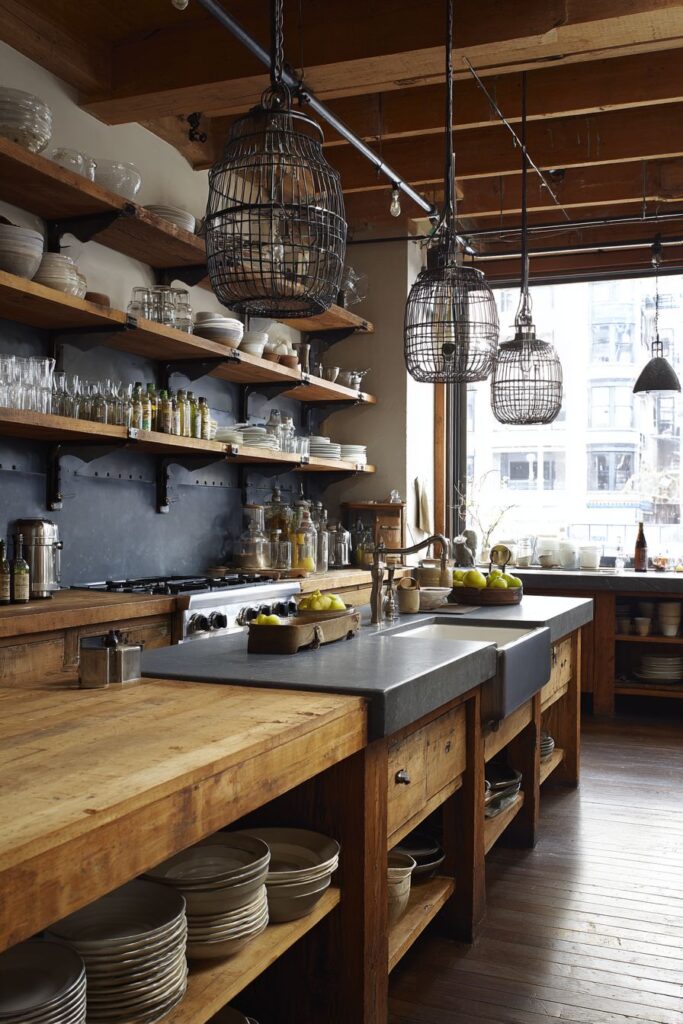
Industrial materials often derive their aesthetic appeal from functional construction methods, where utilitarian fastening systems become decorative elements that enhance rather than compromise visual appeal. A statement backsplash crafted from corrugated metal panels with visible fasteners and seam details creates textural interest while providing easy maintenance and excellent durability. The linear patterns of corrugation add visual rhythm while the honest expression of fastening methods reinforces industrial authenticity.
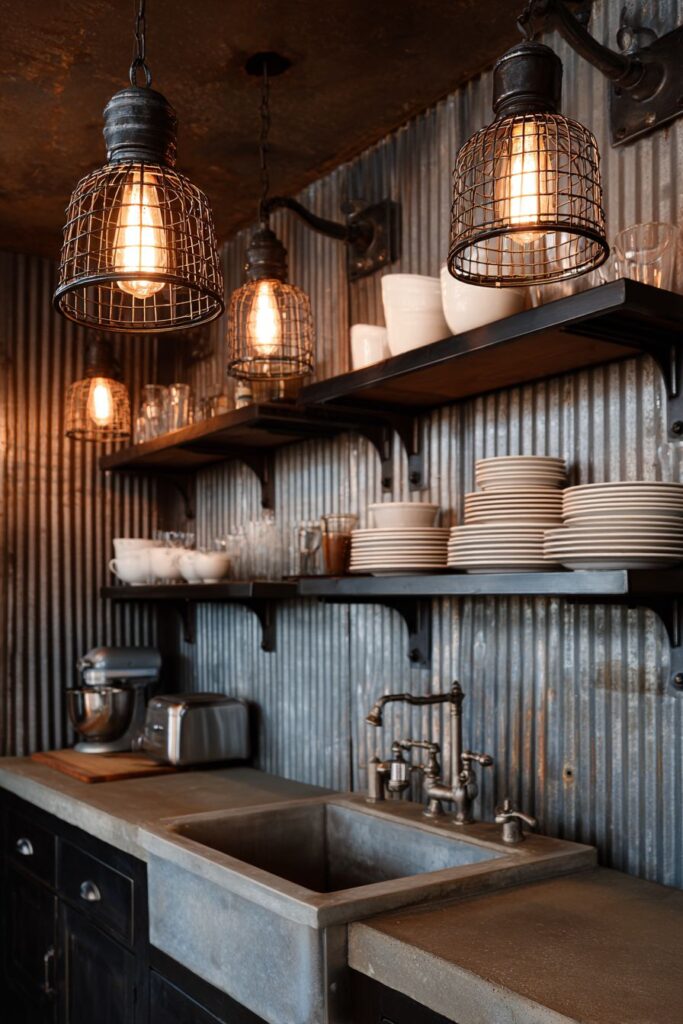
Black steel floating shelves display practical dishware and vintage industrial accessories, transforming everyday kitchen items into curated displays that contribute to the overall design narrative. The floating mounting system eliminates visual clutter while providing flexible storage solutions that can be adjusted as needs change over time. A farmhouse sink with exposed plumbing fixtures adds authentic character while providing generous workspace for food preparation and cleanup activities.
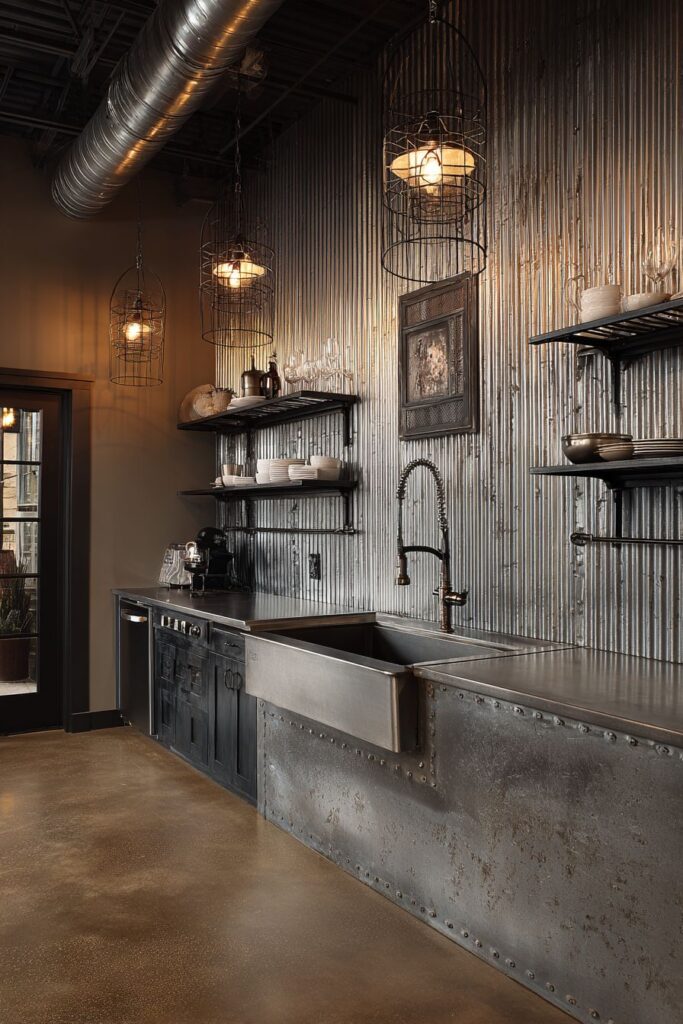
Pendant lighting with metal cage guards suspended above work surfaces provides focused task illumination while protecting bulbs from potential impact during kitchen activities. The cage guards reference industrial safety requirements while adding visual interest through their geometric patterns and shadow play throughout different lighting conditions.
Key Design Tips:
- Install corrugated metal backsplashes with visible fasteners to showcase functional construction as decorative elements
- Use black steel floating shelves to display dishware and accessories as curated functional decoration
- Choose farmhouse sinks with exposed plumbing to add authentic character while providing generous workspace
- Install pendant lighting with metal cage guards to provide task illumination with industrial safety references
- Embrace visible seam details and fastening methods as honest expressions of construction techniques
13. Custom Steel Cabinetry with Rivet Details
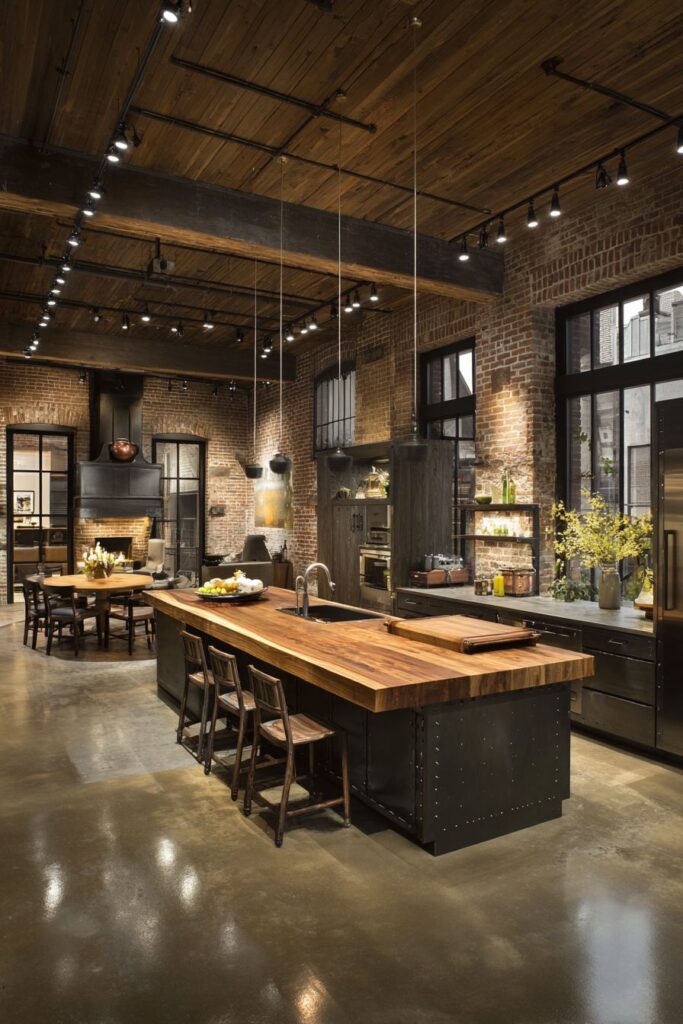
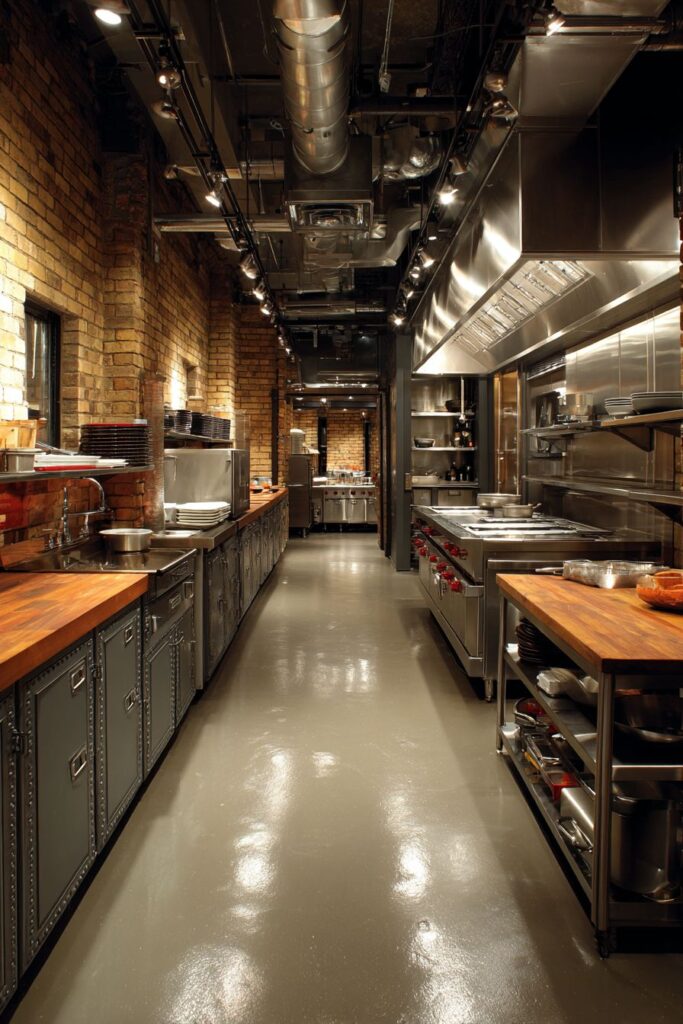
Authentic industrial construction techniques create compelling visual details that distinguish genuine industrial design from superficial styling exercises. Custom steel cabinetry featuring rivet details and industrial-grade hinges demonstrates how traditional metalworking methods can be adapted for residential applications while maintaining authentic construction character. The visible rivets create regular patterns that add visual interest while referencing aircraft and bridge construction techniques that define industrial engineering aesthetics.
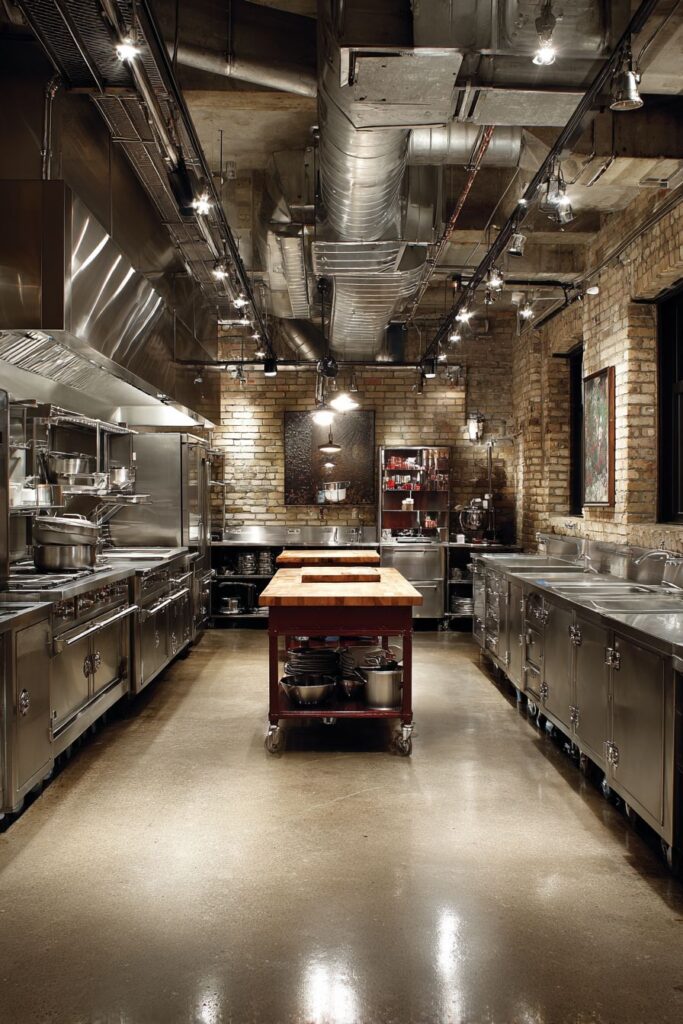
Polished concrete floors reflect overhead track lighting systems with adjustable metal fixtures, creating dynamic lighting conditions that change throughout the day while supporting various kitchen activities. The reflective properties of polished concrete enhance light distribution while providing easy maintenance and exceptional durability under heavy daily use. Track lighting systems offer maximum flexibility for task and ambient illumination while their industrial forms reinforce the overall design aesthetic.
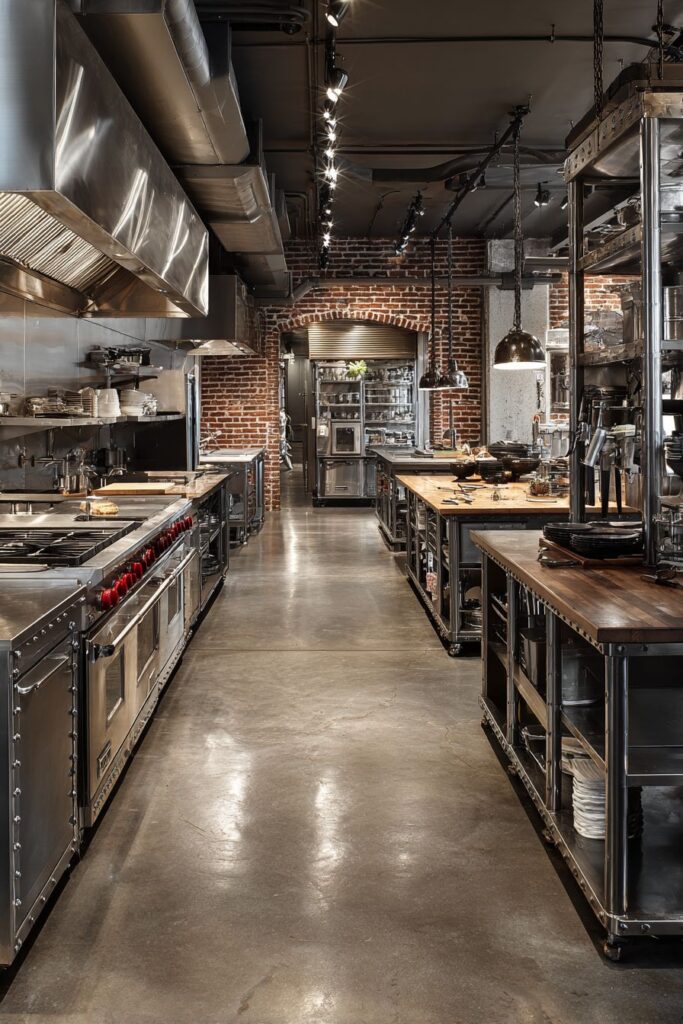
A reclaimed wood butcher block provides essential warmth against predominantly metal surfaces, its organic grain patterns and natural aging creating visual and tactile contrast that enhances user comfort. The substantial thickness of butcher block work surfaces provides excellent cutting and preparation areas while their natural antibacterial properties support food safety requirements. Exposed brick chimney walls add textural interest while providing architectural focal points that ground the design in historical references.
Key Design Tips:
- Design custom steel cabinetry with authentic rivet details to reference traditional industrial construction techniques
- Install polished concrete floors to reflect track lighting while providing durable, easy-maintenance surfaces
- Use reclaimed wood butcher blocks to provide warmth and tactile contrast against predominantly metal surfaces
- Choose track lighting systems with adjustable fixtures to provide flexible illumination for various kitchen activities
- Integrate exposed brick chimney walls as textural focal points that reference industrial architectural history
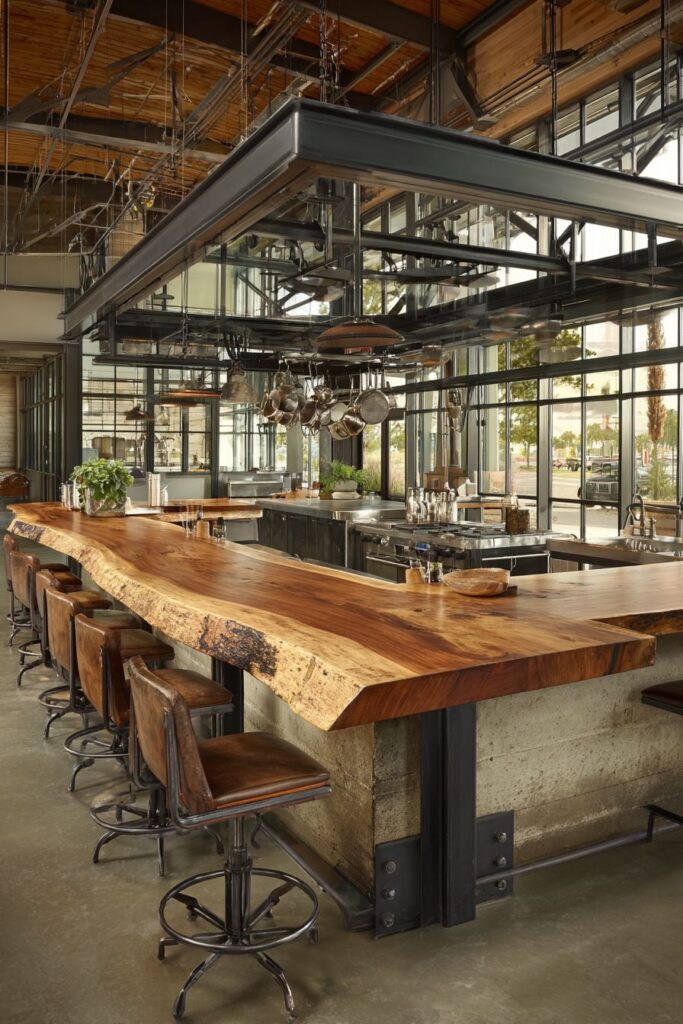
14. Live-Edge Wood Counter with Steel Bracket Support
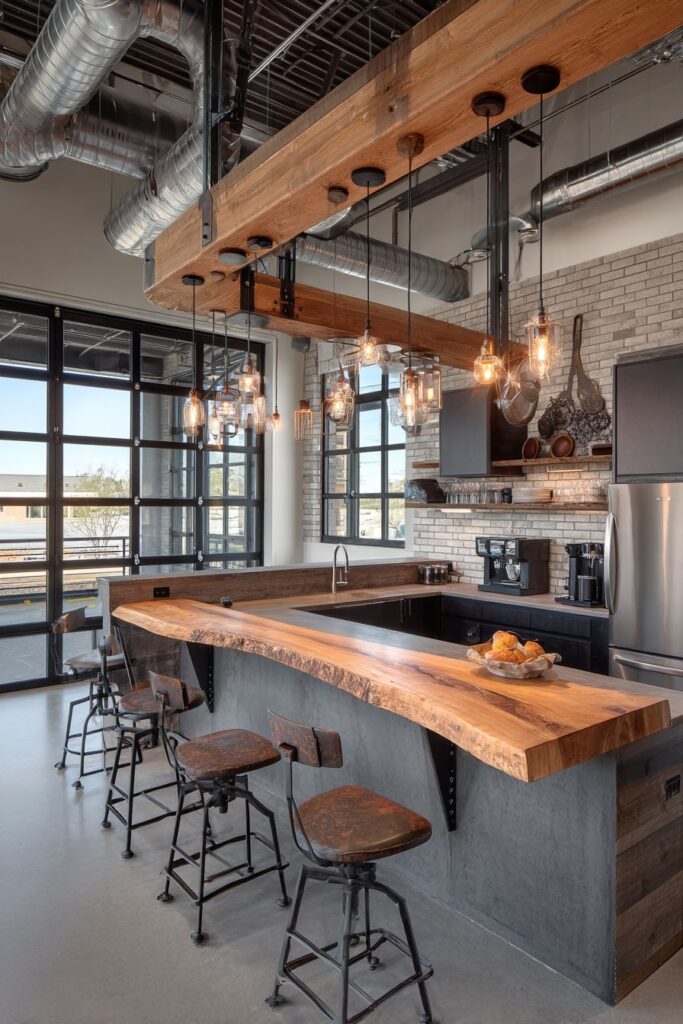
The integration of organic and manufactured materials represents a sophisticated approach to industrial design that celebrates both natural beauty and engineering precision. A live-edge wooden countertop supported by black steel brackets with visible welding details creates compelling contrast between organic irregularity and precise fabrication, demonstrating how disparate materials can be unified through thoughtful design integration. The visible welding details showcase authentic metalworking craftsmanship while providing necessary structural support.
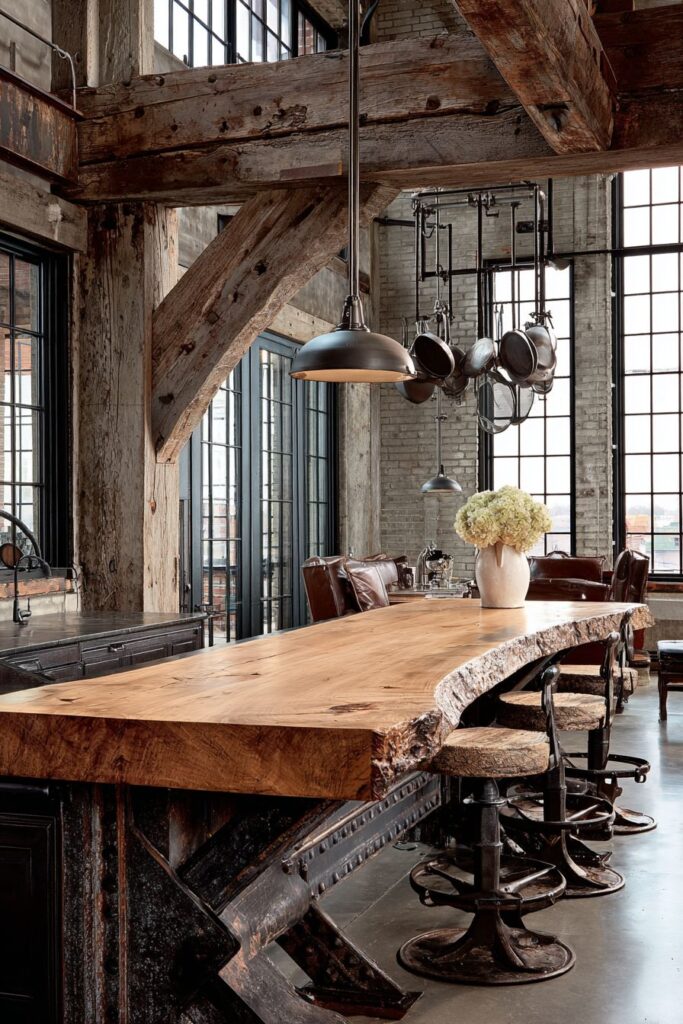
Industrial bar stools with adjustable heights and worn metal finishes provide flexible seating solutions that accommodate various users while their patinated surfaces contribute to authentic industrial character. The adjustable mechanism references industrial workshop furniture while providing practical functionality for contemporary family use. Exposed steel beam structure overhead displays hanging pot racks that transform storage into functional sculpture while providing convenient access to frequently used cookware.
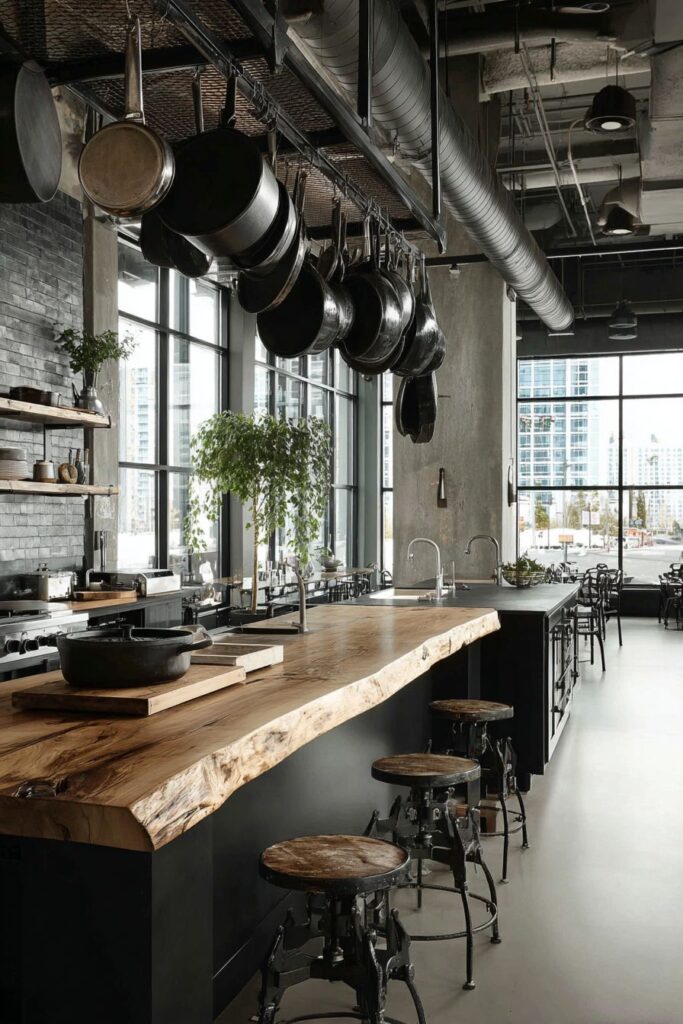
Natural light from steel-framed windows illuminates the breakfast bar area, creating inviting spaces for casual dining and social interaction while maintaining visual connection to outdoor environments. The black metal window frames reinforce industrial authenticity while providing structural contrast to the organic wood surfaces throughout the design composition.
Key Design Tips:
- Design live-edge wood countertops with black steel brackets to create compelling contrast between organic and manufactured materials
- Choose industrial bar stools with adjustable heights to provide flexible seating with authentic patinated finishes
- Install exposed steel beam structure to support hanging pot racks as functional sculpture storage solutions
- Use steel-framed windows to maintain industrial authenticity while maximizing natural light penetration
- Showcase visible welding details on steel brackets to demonstrate authentic metalworking craftsmanship techniques
15. Steel Mesh Cabinet Doors with Organized Storage Systems
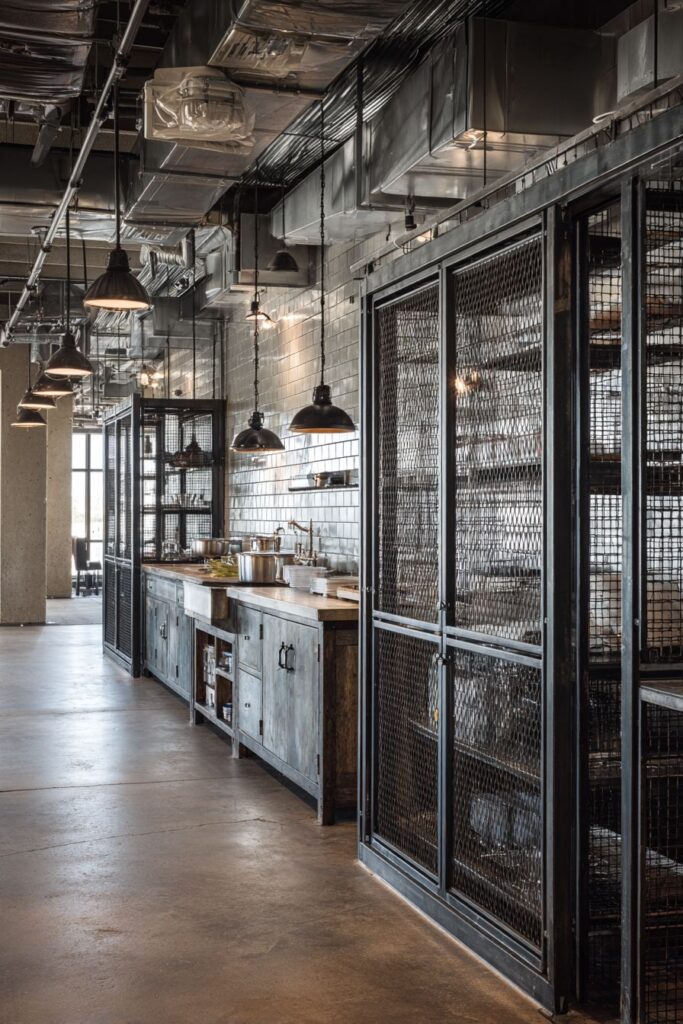
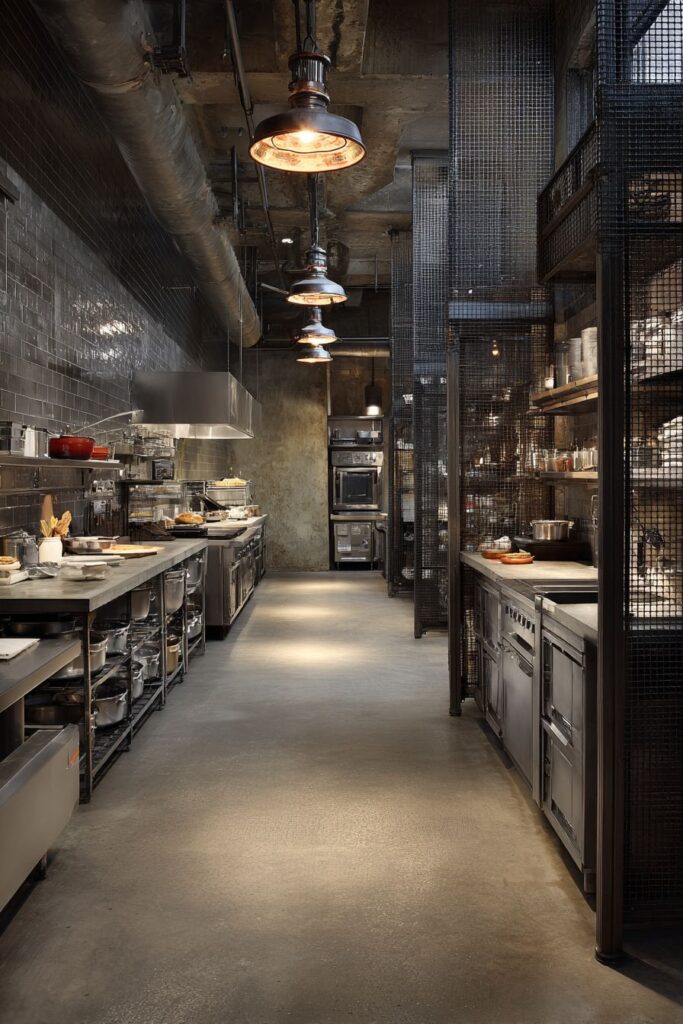
Transparency in storage design represents an evolution in industrial kitchen aesthetics, where organizational systems become integral design elements that contribute to visual appeal while supporting functional requirements. Floor-to-ceiling steel mesh cabinet doors reveal organized storage systems inside, transforming typically concealed kitchen necessities into carefully curated displays that enhance rather than compromise the overall aesthetic composition. The mesh panels provide visual transparency while maintaining dust protection and structural integrity.
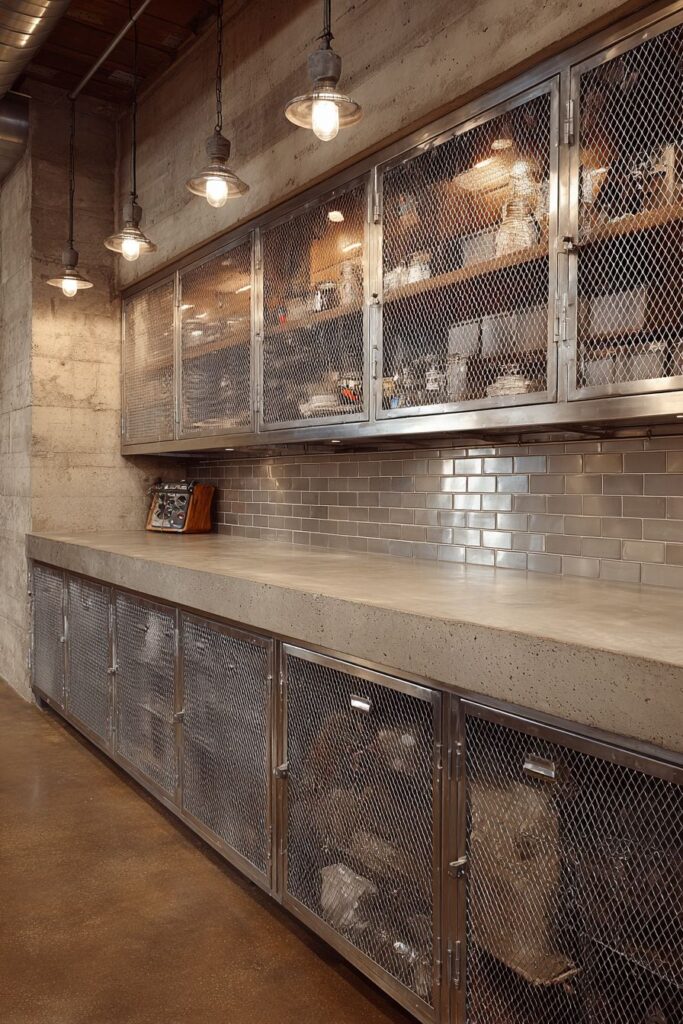
Concrete countertops displaying hand-troweled texture and natural color variations demonstrate artisanal construction techniques that create unique surfaces with inherent character and visual interest. The hand-troweled finish adds subtle irregularities that reference traditional plastering methods while providing exceptional durability and easy maintenance. Stainless steel subway tiles create durable backsplashes that bridge commercial functionality with residential comfort through familiar forms executed in industrial materials.
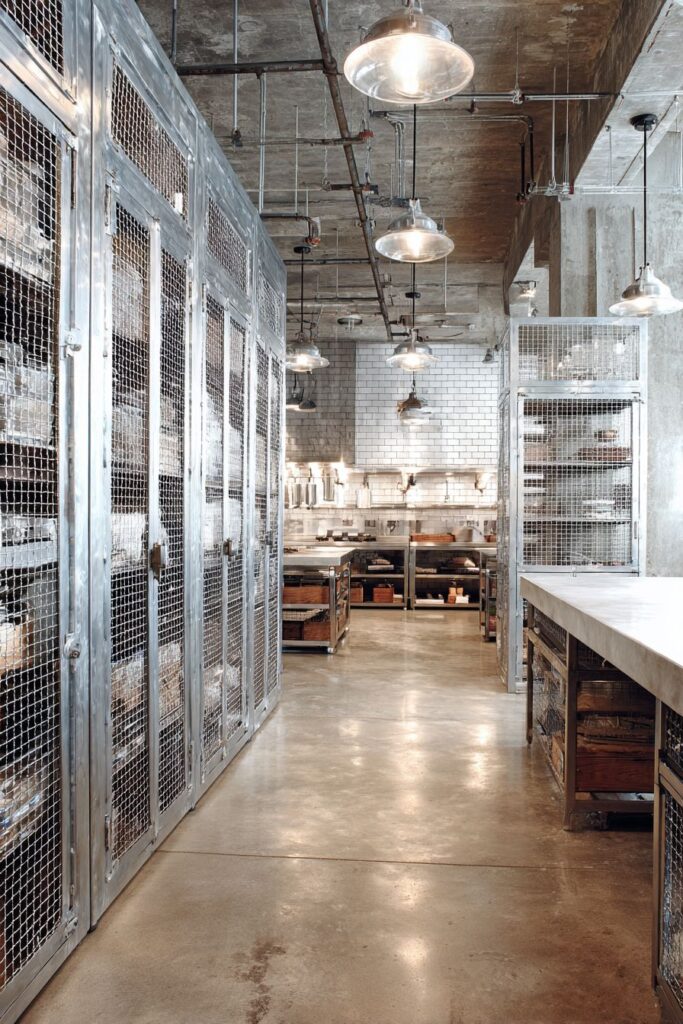
Vintage industrial pendant lights with porcelain insulators add period authenticity while providing focused task illumination over work surfaces. The porcelain insulators reference electrical infrastructure from early industrial periods while their white ceramic surfaces provide visual contrast against predominantly dark metal finishes throughout the design.
Key Design Tips:
- Install steel mesh cabinet doors to create transparent storage that displays organizational systems as design elements
- Choose hand-troweled concrete countertops to showcase artisanal construction with natural color variations
- Use stainless steel subway tiles for backsplashes to bridge commercial functionality with familiar residential forms
- Select vintage pendant lights with porcelain insulators to add period authenticity and visual contrast
- Organize storage systems as carefully curated displays that enhance overall aesthetic composition
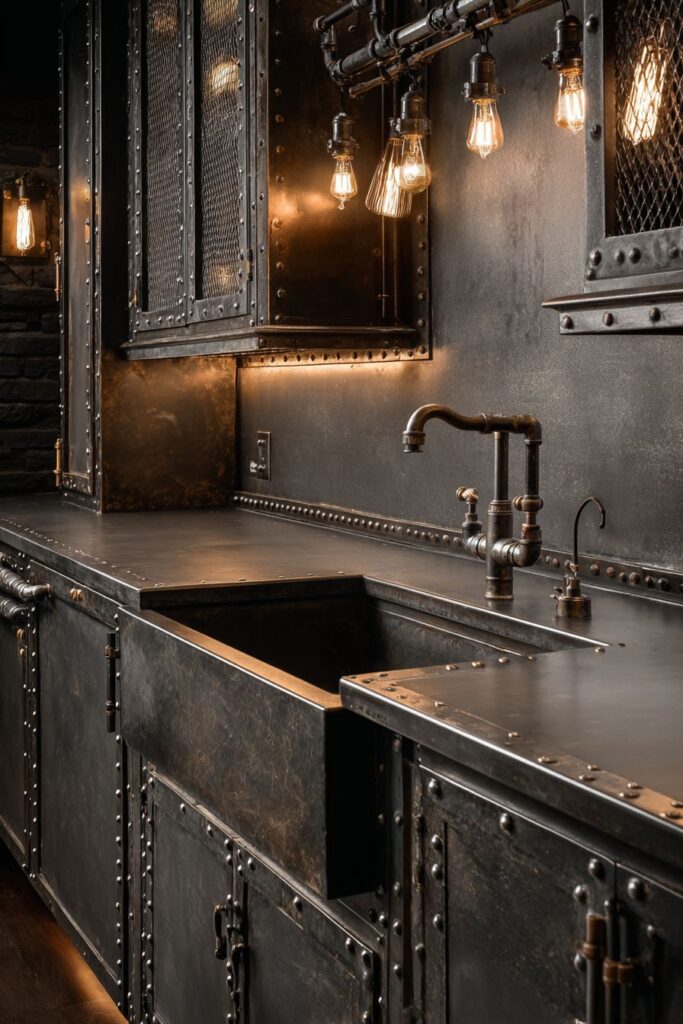
16. Exposed Pipe Plumbing as Decorative Integration
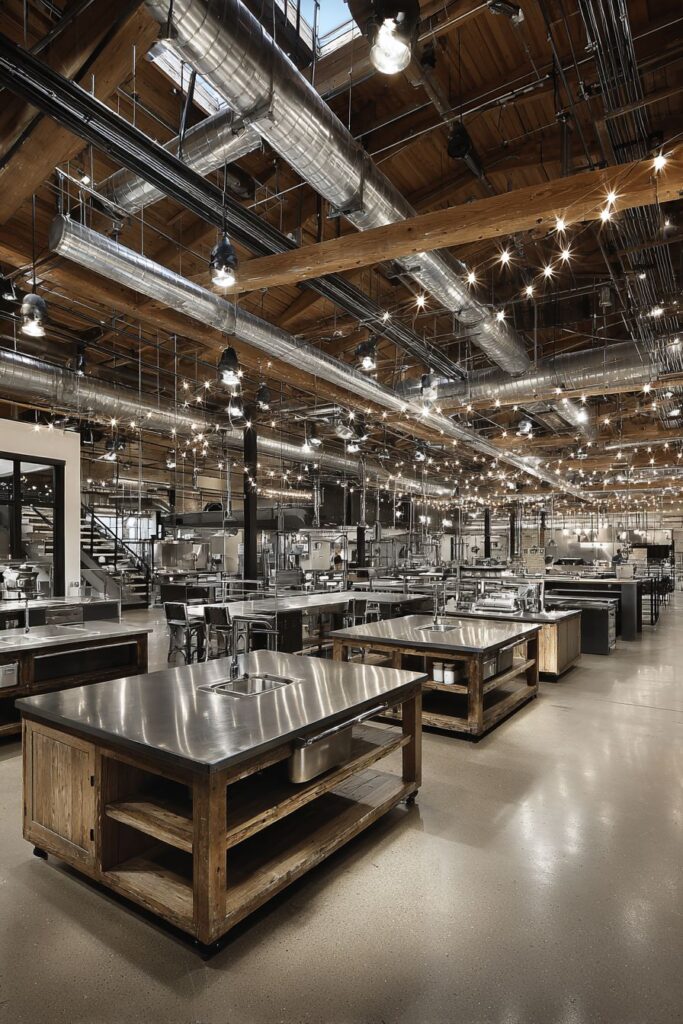
Industrial design principles celebrate the honest expression of building systems, transforming necessary infrastructure into compelling architectural features that enhance rather than compromise aesthetic appeal. Exposed steel pipe plumbing integrated into cabinet design creates authentic industrial character while providing practical water supply and drainage systems for kitchen functionality. The visible plumbing demonstrates honest material expression while creating interesting linear elements that add visual rhythm and geometric pattern.
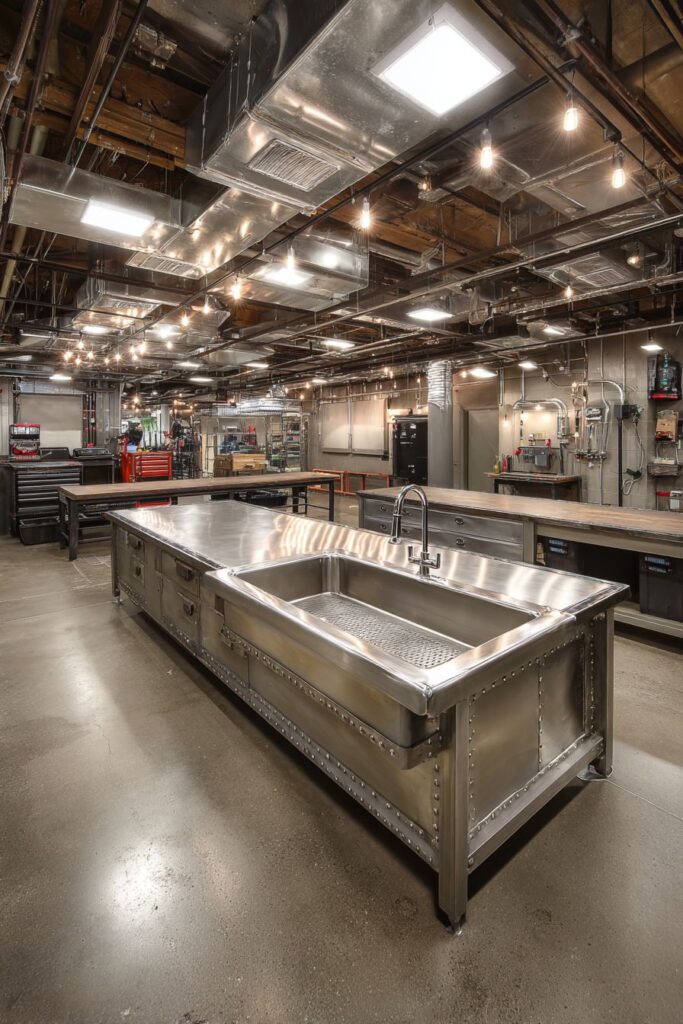
Black metal countertops with steel angle edge banding provide exceptionally durable work surfaces while reinforcing industrial authenticity through commercial-grade material choices and construction details. The angle edge banding references structural steel construction while providing clean finished edges that resist damage from heavy daily use. A vintage industrial sink with bridge faucet adds authentic character while providing generous workspace for food preparation and cleanup activities.
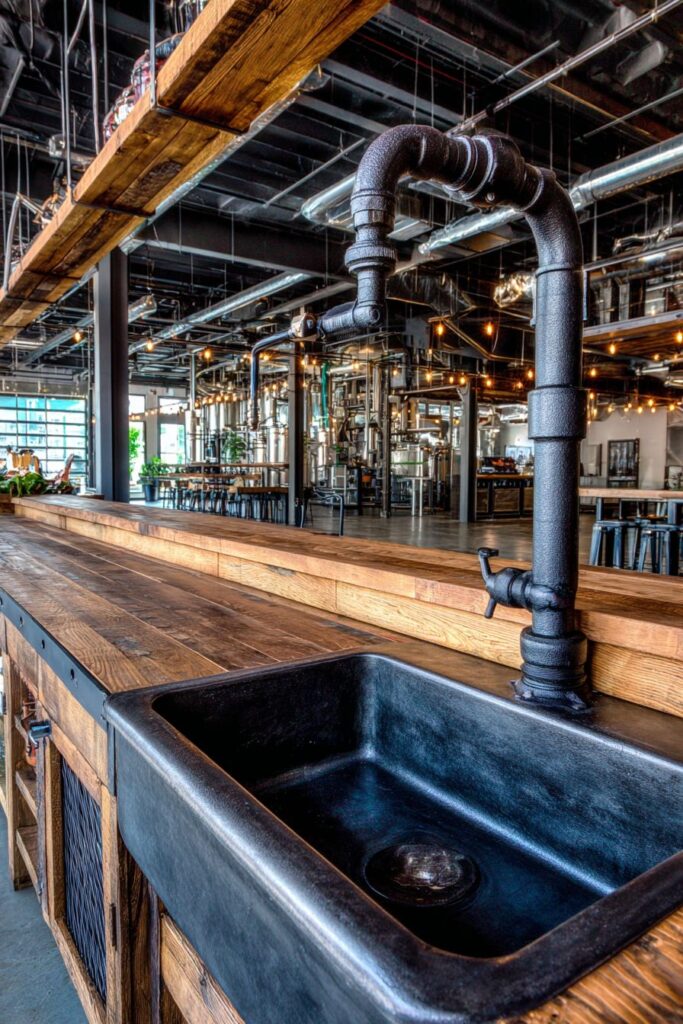
Edison bulb string lights create ambient lighting that softens the harder industrial elements while maintaining authentic period references through exposed filament technology. The casual arrangement of string lighting adds warmth and intimacy to work areas while their industrial-style mounting hardware reinforces the overall design theme.
Key Design Tips:
- Integrate exposed steel pipe plumbing as decorative elements that honestly express building systems
- Choose black metal countertops with angle edge banding to provide durable surfaces with authentic construction details
- Install vintage industrial sinks with bridge faucets to add character while providing generous workspace
- Use Edison bulb string lights to create ambient lighting that softens hard industrial materials
- Celebrate visible infrastructure as compelling architectural features rather than concealed necessities
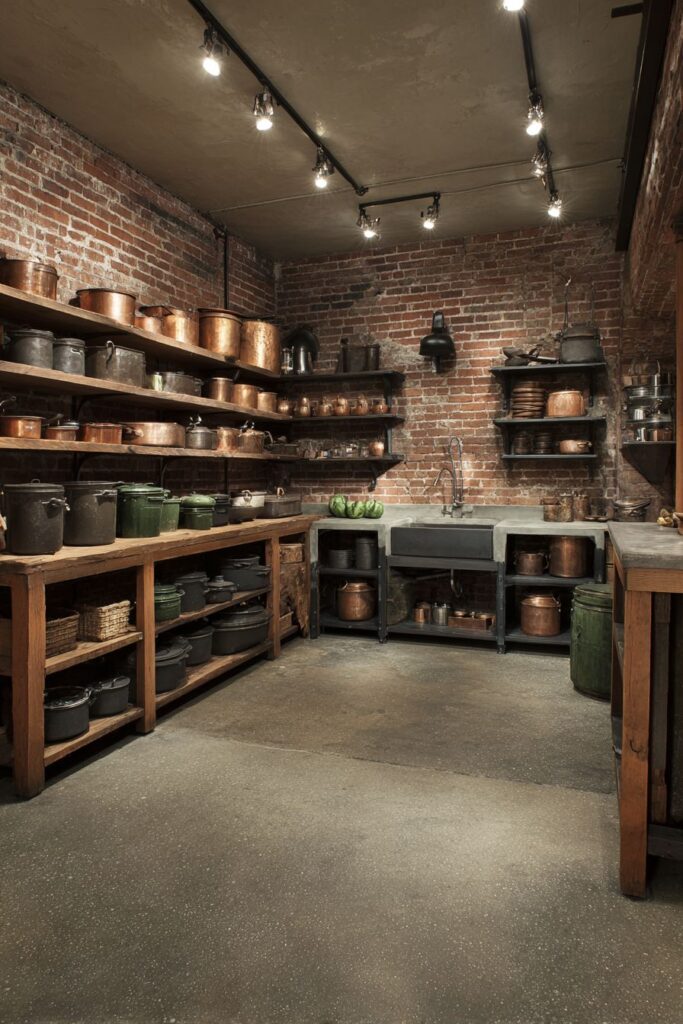
17. Custom Steel and Reclaimed Wood Open Shelving
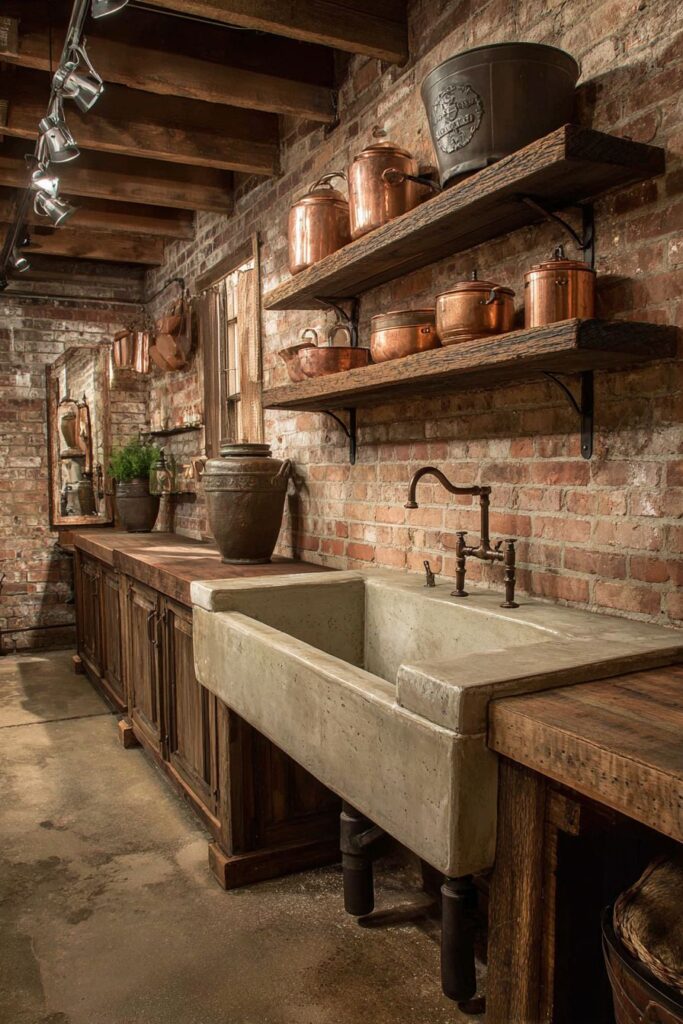
Open shelving systems in industrial kitchens serve dual purposes, providing essential storage while creating opportunities for displaying functional items as decorative elements that contribute to the overall design narrative. Custom steel and reclaimed wood open shelving combines the structural strength of steel framework with the natural warmth of weathered wood, creating storage solutions that improve with age while providing flexible display options for copper pots, cast iron cookware, and vintage industrial containers.
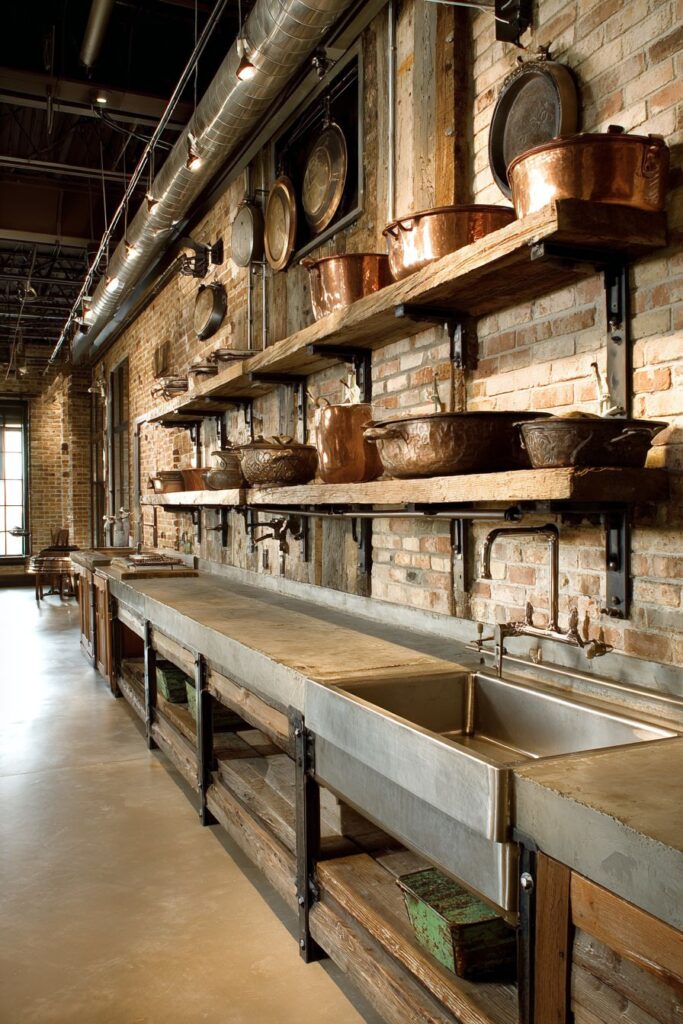
Exposed brick walls with natural color variations and visible mortar joint details provide textural backgrounds that enhance displayed items while contributing to acoustic comfort and thermal mass within the kitchen environment. The irregular surface of exposed brick creates shadow play that adds visual depth and interest throughout changing light conditions during daily use.
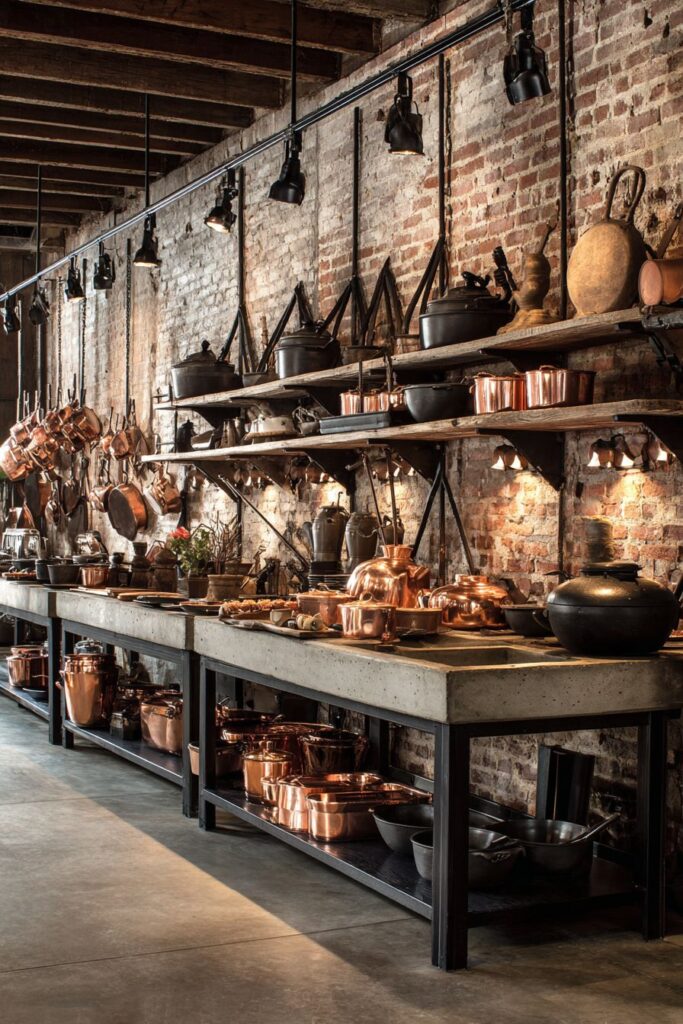
A concrete apron-front sink with steel support brackets serves as a commanding focal point while providing generous workspace for serious cooking activities. The visible steel brackets demonstrate honest structural support while their precise fabrication contrasts beautifully with the organic irregularities of hand-finished concrete surfaces. Track lighting with adjustable metal fixtures provides flexible task illumination that can be customized for various work zones and activities throughout daily kitchen use.
Key Design Tips:
- Design custom open shelving with steel framework and reclaimed wood to combine structural strength with natural warmth
- Display copper pots and cast iron cookware as functional decoration that reinforces industrial material themes
- Use exposed brick walls to provide textural backgrounds that enhance displayed items while adding acoustic comfort
- Install concrete apron-front sinks with visible steel brackets to create focal points with honest structural expression
- Choose track lighting with adjustable fixtures to provide flexible task illumination for various work zones
18. Steel Plate Countertop with Flame-Cut Edges
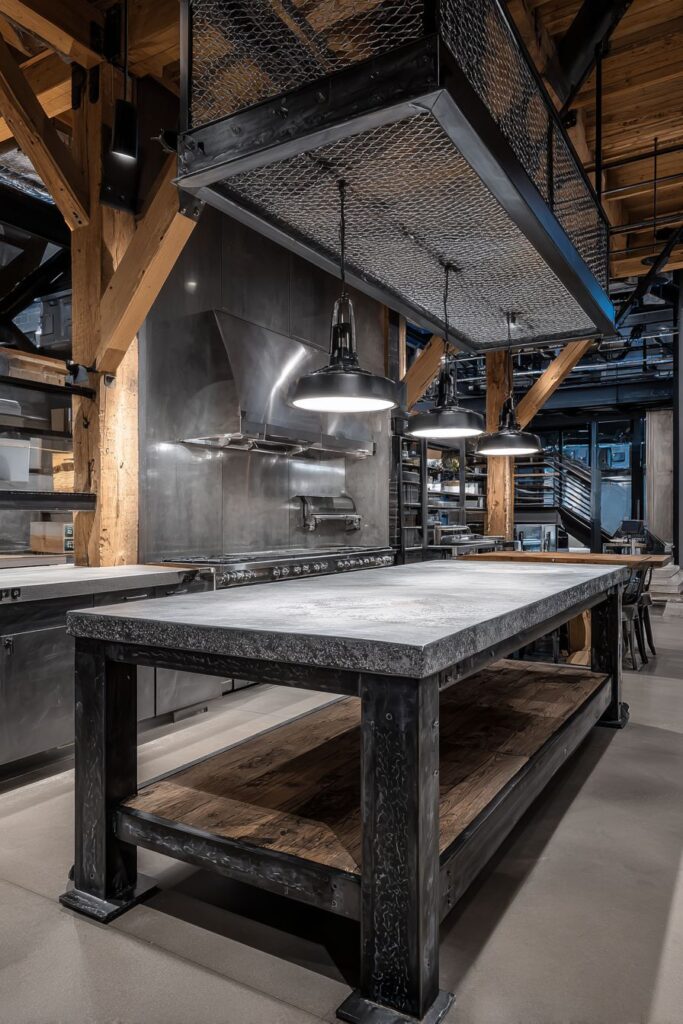
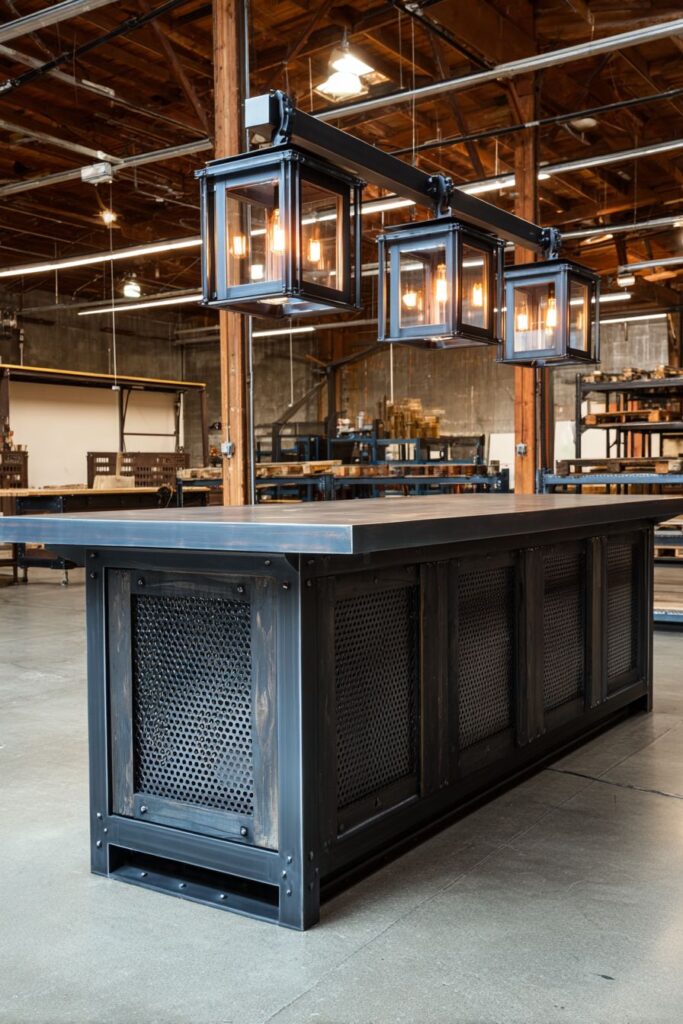
Advanced metalworking techniques create unique surface treatments that showcase industrial craftsmanship while providing exceptional durability and distinctive aesthetic character. A thick steel plate countertop with flame-cut edges and visible heat coloration demonstrates how industrial fabrication methods can create compelling surface treatments that celebrate rather than conceal construction techniques. The flame-cutting process creates organic edge patterns while the heat coloration adds subtle color variation that develops into unique patina over time.
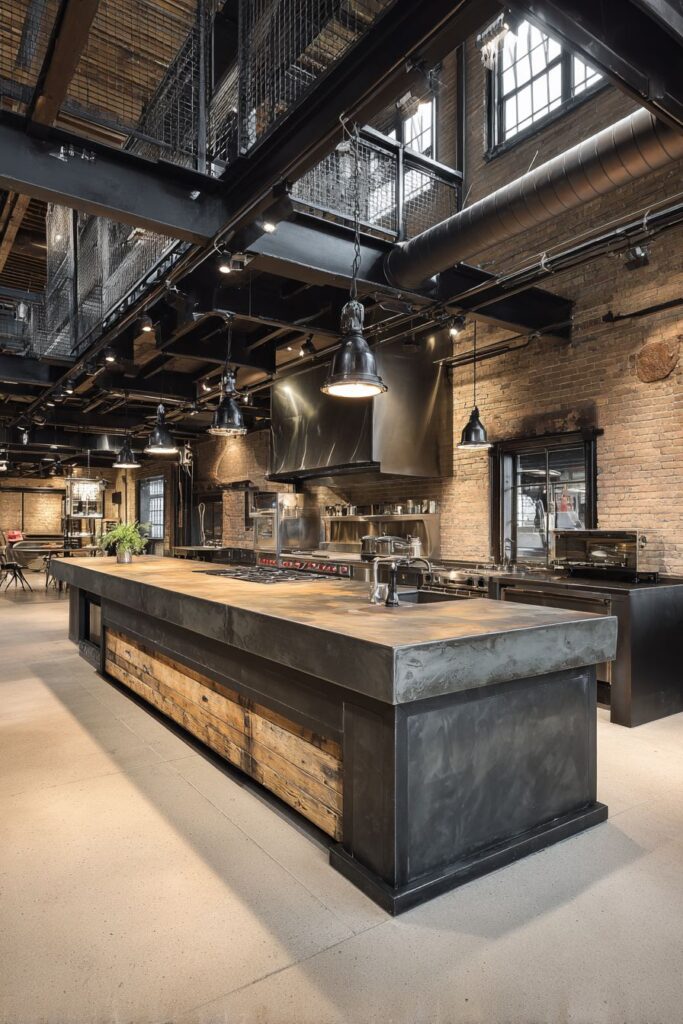
The island base combines black steel frame construction with reclaimed wood panel inserts, creating visual and material contrast that balances hard manufactured elements with natural organic textures. This combination demonstrates how industrial design can incorporate multiple material systems while maintaining overall aesthetic coherence and functional performance.
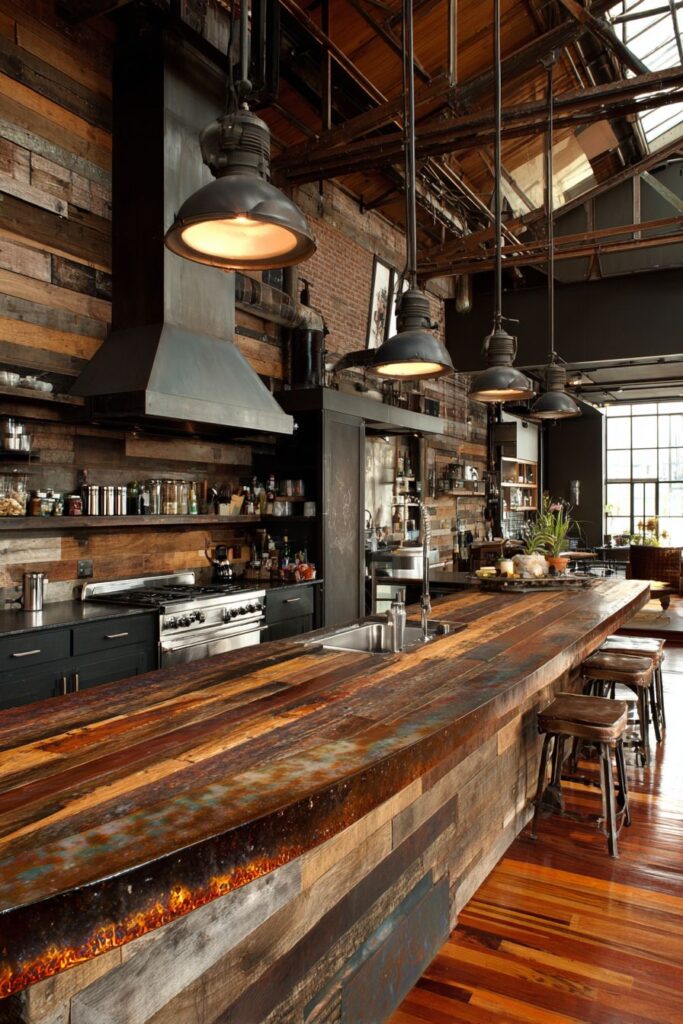
Industrial-style gas lighting fixtures provide authentic illumination that references historical industrial lighting technology while creating warm ambient conditions suitable for residential use. The exposed gas lines and period-appropriate fixtures add historical authenticity while providing practical lighting solutions that support various kitchen activities. Exposed ceiling structure shows steel beams and metal decking, creating architectural interest while honestly expressing structural systems.
Key Design Tips:
- Choose steel plate countertops with flame-cut edges to showcase industrial fabrication techniques and heat coloration
- Combine black steel frame construction with reclaimed wood panels to balance manufactured and organic materials
- Install industrial-style gas lighting fixtures to provide authentic illumination with historical references
- Expose ceiling structure with steel beams and metal decking to express structural systems as architectural features
- Embrace visible heat coloration and patina development as unique surface treatments that improve with age
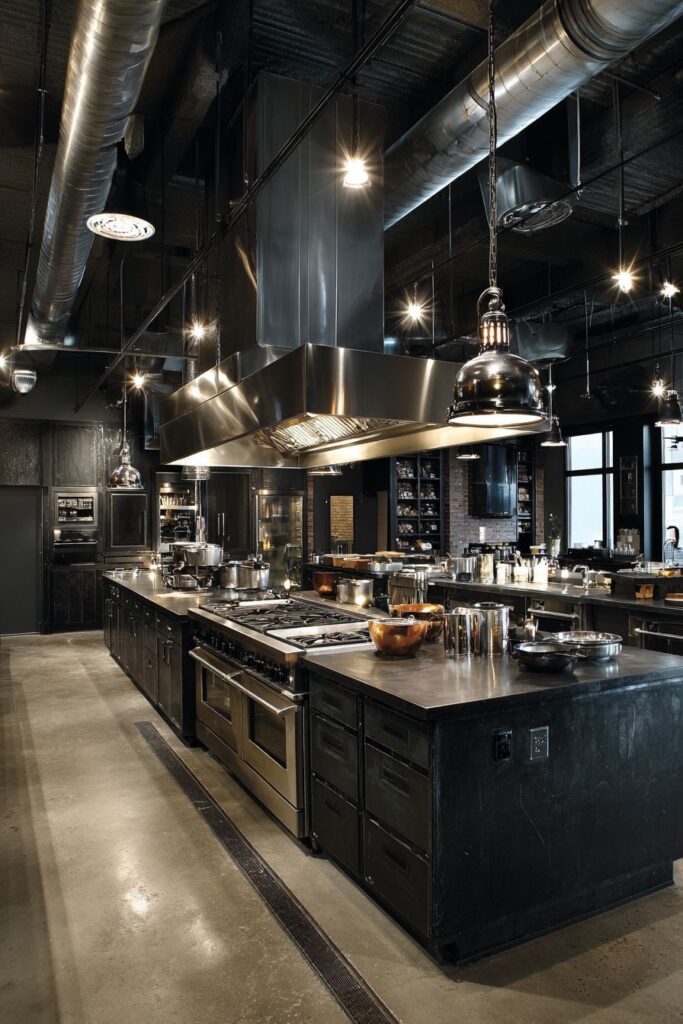
19. Monochromatic Industrial Palette with Blackened Steel
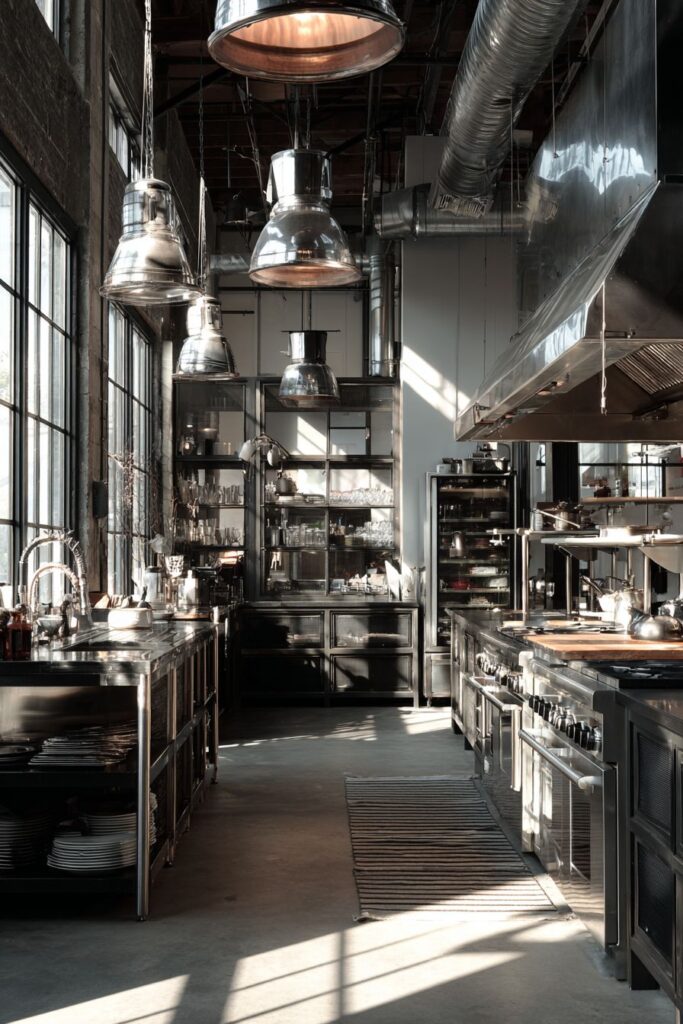
Sophisticated industrial design often employs restrained color palettes that allow material textures and construction details to serve as primary visual elements. Perimeter cabinetry crafted from blackened steel with minimal hardware and clean weld seams creates monochromatic composition that emphasizes form and proportion while providing exceptional storage capacity. The blackened steel finish eliminates color distractions while highlighting surface textures and construction details that define authentic industrial character.
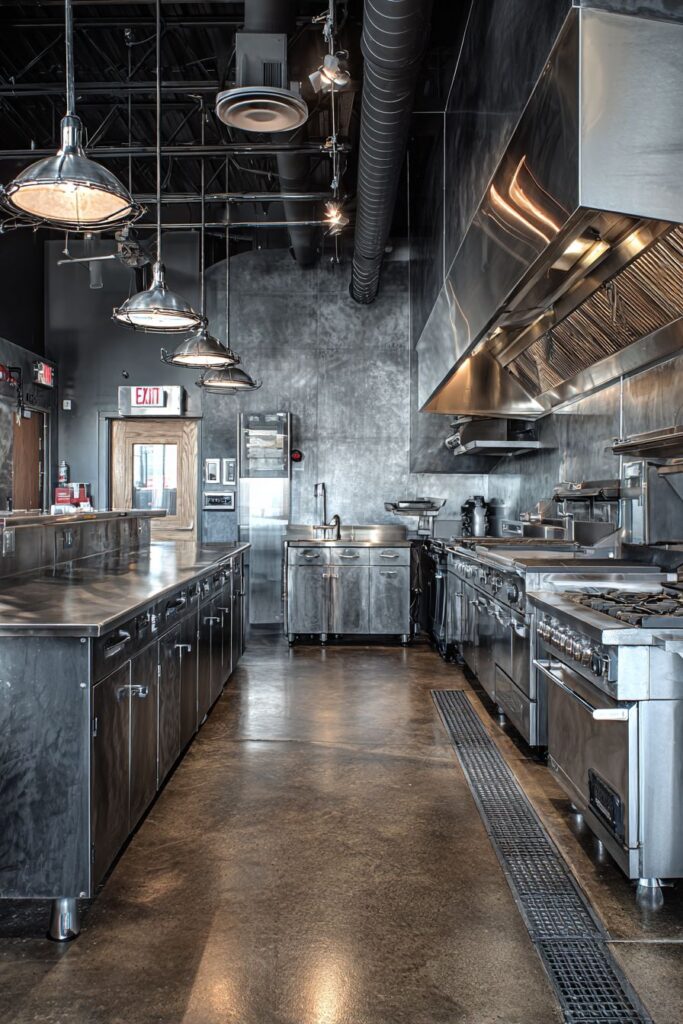
Concrete floors featuring integrated steel strips as expansion joints demonstrate how necessary construction details can be transformed into decorative elements that enhance rather than compromise aesthetic appeal. The steel strips create linear patterns that add visual rhythm while serving essential functional purposes in concrete floor systems. A stainless steel commercial range and ventilation system anchor the cooking zone while providing professional-grade performance for serious culinary activities.
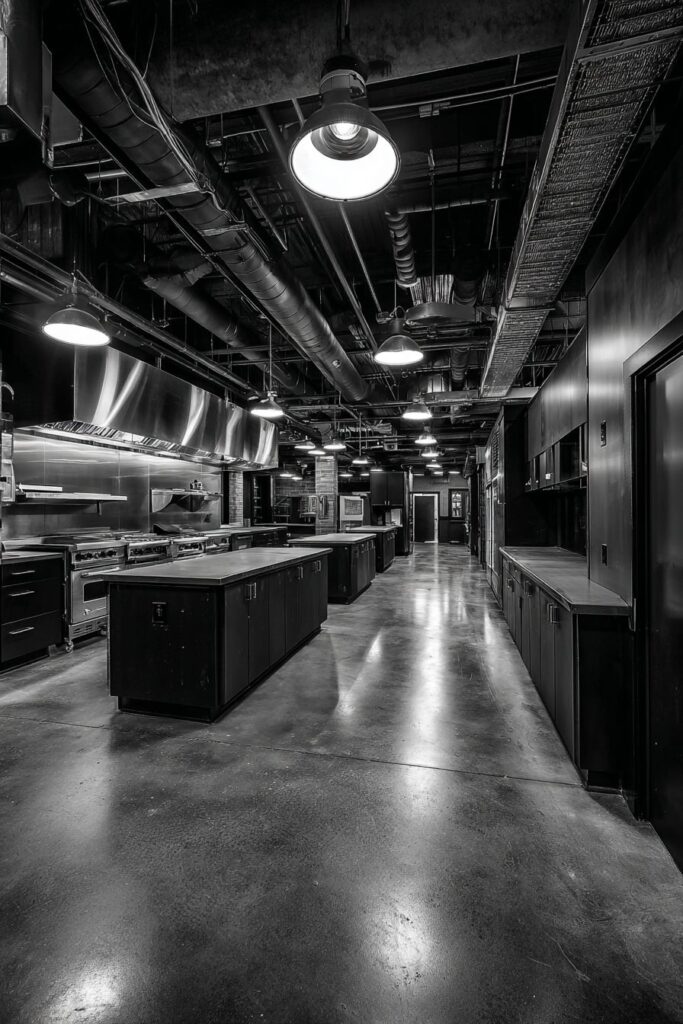
Vintage industrial lighting with metal reflectors suspended from exposed conduit creates focused task illumination while reinforcing period authenticity through historically accurate fixtures and mounting systems. The metal reflectors efficiently direct light while their industrial forms contribute to the overall aesthetic composition without visual competition from decorative elements.
Key Design Tips:
- Use blackened steel cabinetry with minimal hardware to create monochromatic compositions that emphasize form and proportion
- Integrate steel strips in concrete floors as expansion joints that serve as decorative linear elements
- Install stainless steel commercial ranges to anchor cooking zones with professional-grade performance and authentic aesthetics
- Choose vintage industrial lighting with metal reflectors to provide task illumination with period authenticity
- Employ restrained color palettes that allow material textures and construction details to serve as primary visual elements
20. Comprehensive Industrial Systems Integration
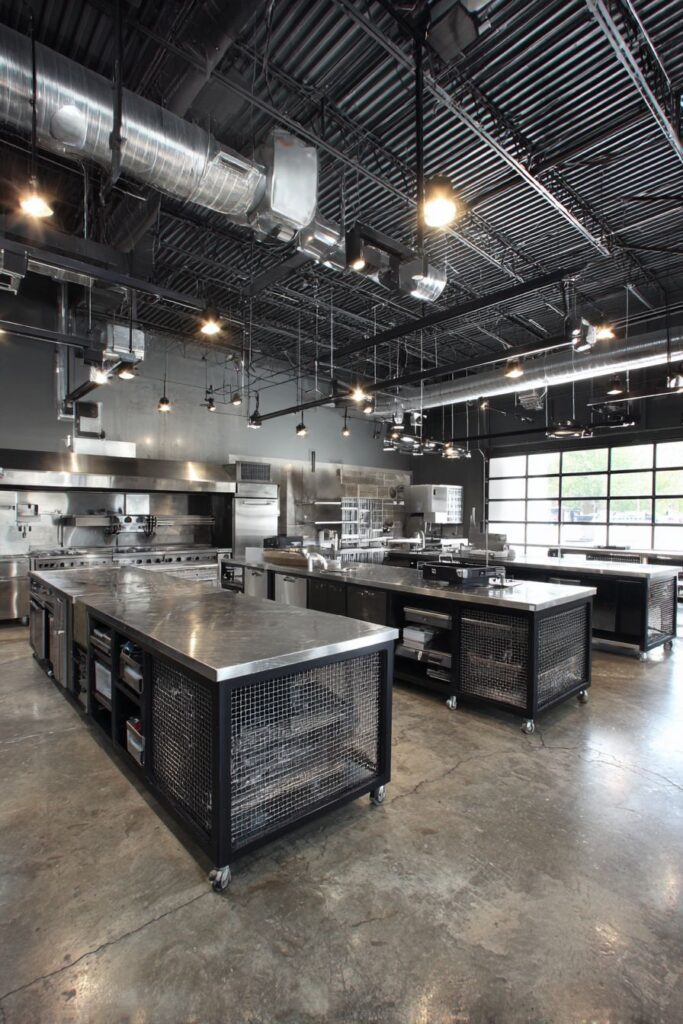
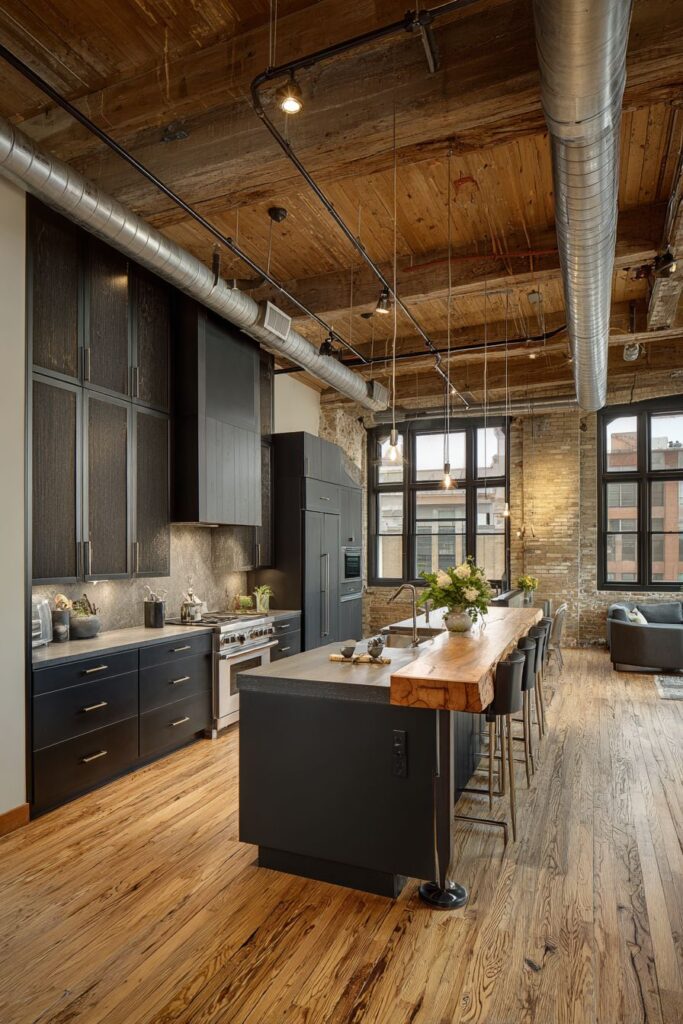
The most successful industrial kitchen designs achieve seamless integration of all building systems, creating cohesive environments where mechanical, electrical, and structural elements work together to support both functional requirements and aesthetic goals. A statement ceiling installation featuring exposed galvanized steel ductwork and industrial lighting systems demonstrates how comprehensive systems integration can create architectural drama while honestly expressing the mechanical infrastructure essential for contemporary kitchen functionality.
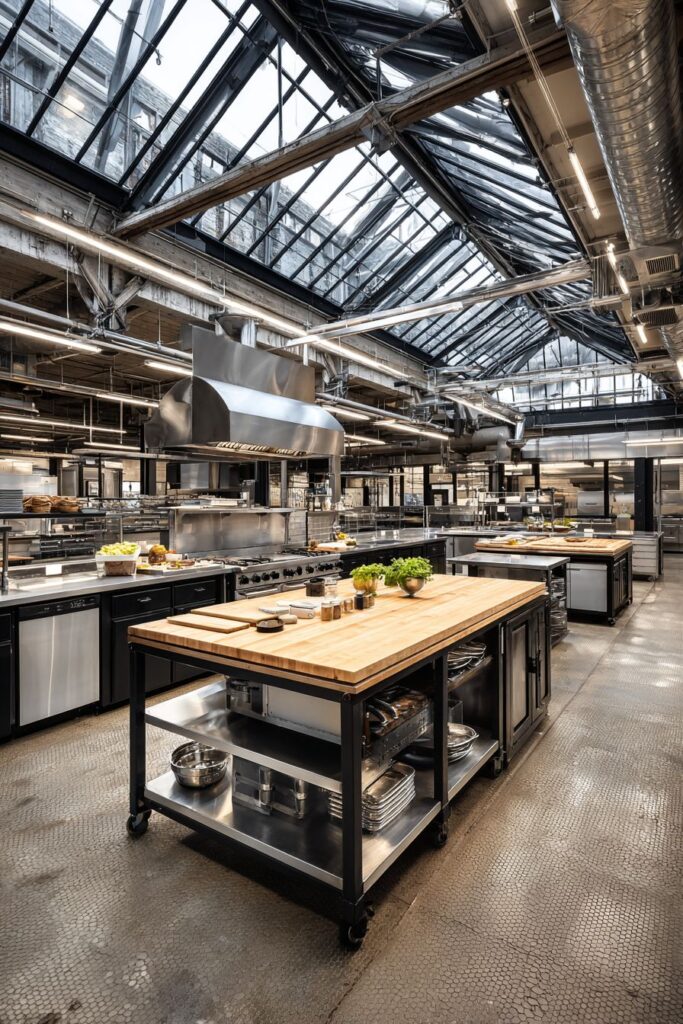
Black steel cabinetry with mesh panel details provides extensive storage while maintaining visual lightness through transparent elements that prevent overwhelming the space with solid surfaces. The mesh panels reference industrial security applications while providing practical dust protection and organizational structure for stored items. A butcher block island with steel pipe base structure serves as central workspace and display area while demonstrating the successful integration of organic and manufactured materials.
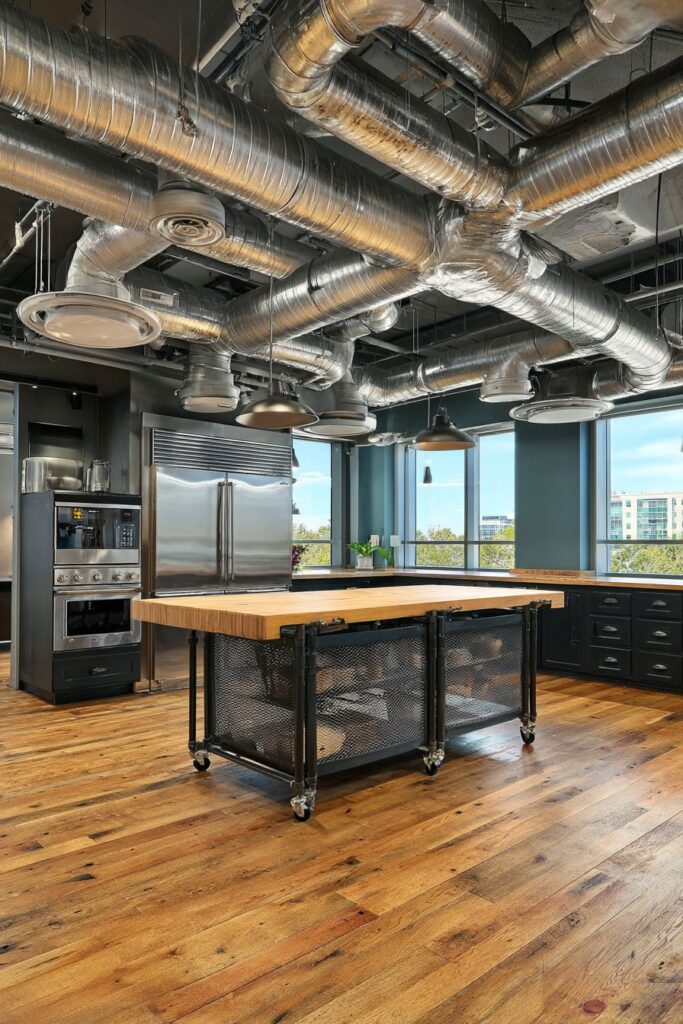
Factory windows with steel frames flood the entire space with natural light while maintaining authentic industrial glazing systems and proportions that reference historical industrial architecture. The scale and detailing of factory windows create commanding architectural statements while providing essential connection to outdoor environments that prevents industrial spaces from feeling enclosed or institutional.
Key Design Tips:
- Design comprehensive systems integration where mechanical, electrical, and structural elements work together cohesively
- Install exposed galvanized steel ductwork as statement ceiling features that honestly express mechanical infrastructure
- Use black steel cabinetry with mesh panels to provide storage while maintaining visual lightness through transparency
- Create butcher block islands with steel pipe bases to demonstrate successful integration of organic and manufactured materials
- Choose factory windows with steel frames to provide natural light while maintaining authentic industrial proportions and details
Why These Industrial Kitchen Designs Represent the Best in Contemporary Home Design
These twenty industrial kitchen concepts represent the pinnacle of contemporary residential design because they successfully bridge the gap between commercial functionality and residential comfort while celebrating authentic materials and honest construction techniques. Each design demonstrates how industrial aesthetics can be adapted to various spatial configurations, budget constraints, and lifestyle requirements without compromising the fundamental principles that make industrial design so compelling and enduringly popular.
The success of industrial kitchen design lies in its celebration of materials in their most honest forms, where steel, concrete, brick, and reclaimed wood are allowed to express their inherent characteristics without artificial treatments or superficial styling. This authentic approach to material use creates spaces that improve with age, developing natural patina and wear patterns that add character and visual interest over time. Unlike trend-driven design approaches that quickly become dated, industrial kitchens maintain their relevance by focusing on timeless material qualities and construction techniques that transcend temporary fashion cycles.
Industrial kitchen design particularly excels in its ability to accommodate serious cooking activities while maintaining visual appeal, making these spaces ideal for homeowners who view cooking as both practical necessity and creative expression. The commercial-grade appliances, durable surfaces, and efficient layouts found in industrial kitchens provide professional-level functionality while the honest material expressions and authentic construction details create environments that feel both purposeful and inspiring.
These designs also demonstrate exceptional sustainability principles through their emphasis on reclaimed materials, durable construction, and timeless aesthetics that resist obsolescence. The use of reclaimed wood, weathered steel, and vintage fixtures reduces environmental impact while adding historical character that cannot be replicated through new manufacturing. The exceptional durability of concrete countertops, steel cabinetry, and brick walls ensures these kitchens will provide decades of reliable service while improving in appearance through natural aging processes.
The industrial aesthetic particularly resonates with contemporary homeowners who appreciate honest craftsmanship and authentic material expression in an increasingly digital world. These kitchens provide tactile experiences through varied surface textures, temperature differences between materials, and the visible evidence of skilled craftsmanship found in welding details, hand-troweled concrete, and carefully selected vintage accessories. This emphasis on authentic material experiences creates spaces that engage multiple senses while supporting the practical activities of daily cooking and family life.
Conclusion
Industrial kitchen design represents far more than a simple aesthetic choice; it embodies a philosophy that celebrates authentic materials, honest construction, and the inherent beauty found in functional design elements. These twenty distinctive approaches demonstrate the remarkable versatility and enduring appeal of industrial aesthetics while proving that this robust design vocabulary can be successfully adapted to various residential applications without sacrificing comfort or livability.
The key to successful industrial kitchen design lies in achieving the perfect balance between commercial functionality and residential warmth, where durable materials and efficient layouts create spaces that support serious cooking activities while maintaining the visual appeal and comfort essential for family life. By embracing the honest expression of structural elements, celebrating the natural aging processes of authentic materials, and integrating building systems as architectural features, these designs create kitchens that are both supremely functional and visually compelling.
The enduring popularity of industrial kitchen design stems from its fundamental honesty and authenticity in a world increasingly dominated by artificial surfaces and superficial styling. These spaces celebrate the beauty found in raw materials, skilled craftsmanship, and purposeful design, creating environments that inspire both culinary creativity and daily living. The visible welding seams, weathered patina, hand-troweled concrete, and carefully curated vintage accessories all contribute to narratives of authentic craftsmanship that resonate deeply with homeowners seeking meaningful connections to their living spaces.
Furthermore, the sustainability aspects inherent in industrial design philosophy make these kitchens particularly relevant for contemporary environmental consciousness. The emphasis on reclaimed materials, durable construction methods, and timeless aesthetics creates spaces that resist obsolescence while minimizing environmental impact through reduced material consumption and extended service life. The natural aging processes that improve industrial materials over time eliminate the need for frequent updates or replacements, making these investments both economically and environmentally sound.
The flexibility demonstrated across these twenty design concepts proves that industrial aesthetics can accommodate diverse spatial constraints, budget parameters, and personal preferences while maintaining design integrity and functional excellence. Whether implemented through dramatic exposed steel beam ceilings and massive concrete islands or more subtle integration of industrial elements like mesh cabinet panels and vintage lighting fixtures, the industrial vocabulary offers endless possibilities for creating unique and personalized kitchen environments.
As you consider incorporating industrial elements into your own kitchen renovation or new construction project, remember that authenticity remains the cornerstone of successful industrial design. Choose genuine materials over artificial replications, celebrate rather than conceal construction methods, and allow the inherent characteristics of steel, concrete, brick, and reclaimed wood to express their natural beauty. Embrace the imperfections and irregularities that make each industrial kitchen unique, and trust that these authentic elements will create spaces that improve with age while providing exceptional functionality for years of culinary adventures and family gatherings.
The industrial kitchen represents the perfect marriage of form and function, where every element serves a purpose while contributing to an overall aesthetic narrative that celebrates human craftsmanship, material authenticity, and purposeful design. By implementing the principles and techniques demonstrated in these twenty exceptional examples, you can create a kitchen that not only meets your practical cooking and entertaining needs but also provides daily inspiration through its honest beauty and authentic character.
"As an Amazon Associate, I earn from qualifying purchases."
