
Creating a living room that reflects your personality while maintaining functionality is an art form that requires careful consideration of style, comfort, and practicality. The living room serves as the heart of your home, where families gather, guests are entertained, and memories are made. Whether you’re starting from scratch or reimagining an existing space, thoughtful interior design can transform an ordinary room into an extraordinary sanctuary that speaks to your unique aesthetic sensibilities.
Modern living room design has evolved beyond following rigid rules to embracing personal expression and individual lifestyle needs. Today’s homeowners have access to an incredible variety of styles, from minimalist Scandinavian concepts to richly layered maximalist approaches. Each design philosophy offers distinct advantages, catering to different personalities, spatial requirements, and daily living patterns. The key lies in understanding which elements resonate with your vision while ensuring the space remains practical for everyday use.
This comprehensive guide explores twenty distinctive living room design concepts, each offering a unique perspective on creating beautiful, functional spaces. From coastal-inspired retreats to industrial lofts, from cozy farmhouse charm to sleek mid-century modern aesthetics, these ideas provide actionable inspiration for transforming your living area. Each concept demonstrates how carefully selected furniture, thoughtful color palettes, strategic lighting, and curated accessories work together to create cohesive, inviting environments that enhance your quality of life.
1. Modern Comfort with Natural Elements
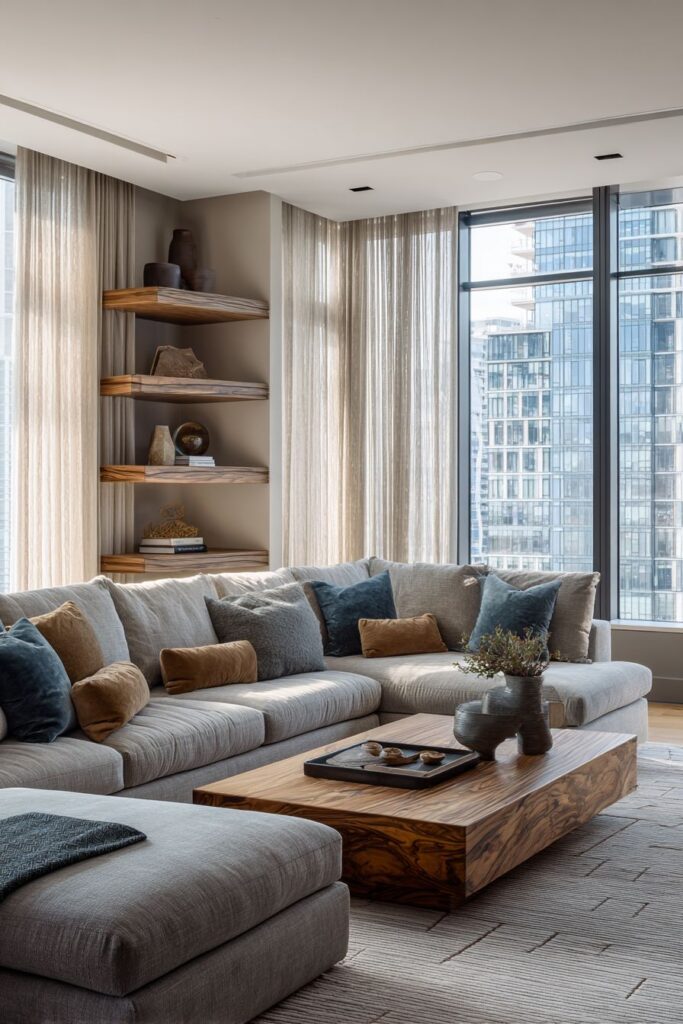
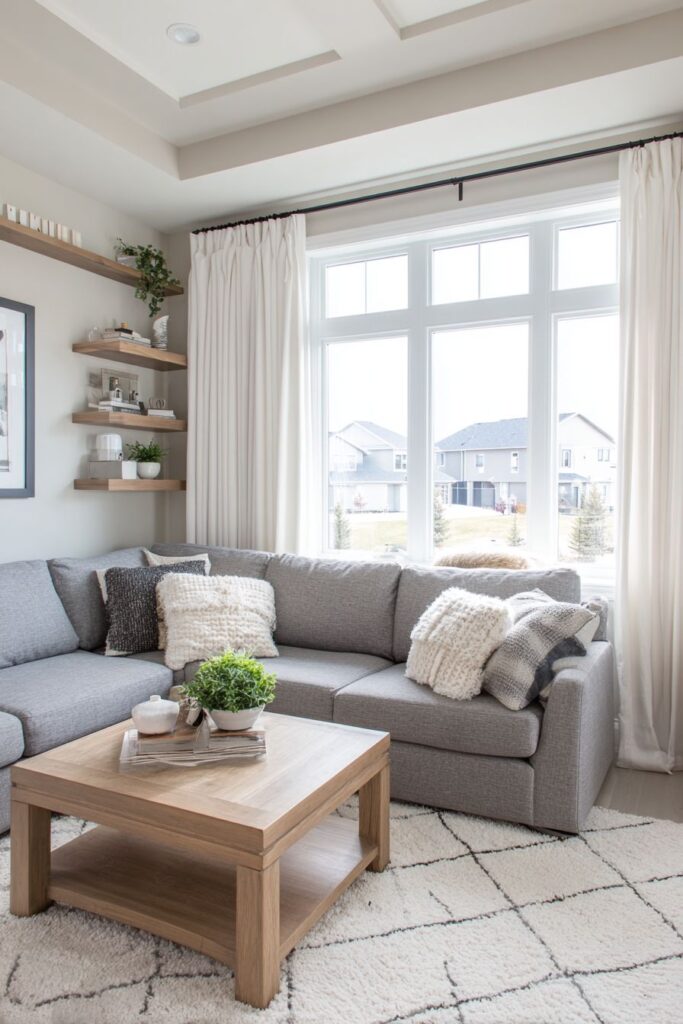
The contemporary living room embracing modern comfort centers around a luxurious sectional sofa in warm grey fabric that invites relaxation. Varied texture throw pillows in earth tones and muted blues add visual interest while maintaining a cohesive color story. The natural oak coffee table with visible wood grain becomes a functional centerpiece, grounding the space with organic warmth. A plush wool area rug featuring geometric patterns defines the seating zone while adding another layer of texture underfoot.
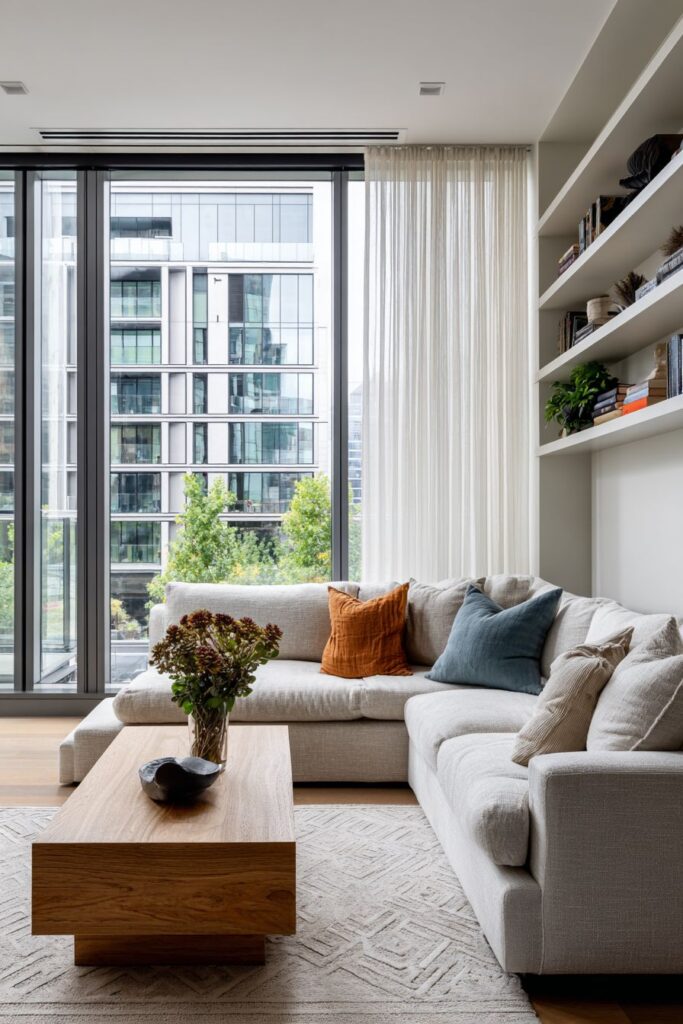
Floor-to-ceiling windows dressed in sheer linen curtains create an ethereal atmosphere, allowing soft diffused daylight to illuminate every corner. This approach to window treatment maximizes natural light while maintaining privacy and controlling harsh glare. The filtering effect creates dynamic lighting throughout the day, transforming the space from bright and energizing in the morning to soft and contemplative in the evening. Built-in floating shelves provide display opportunities for curated decorative objects and books, adding personality without cluttering surfaces.
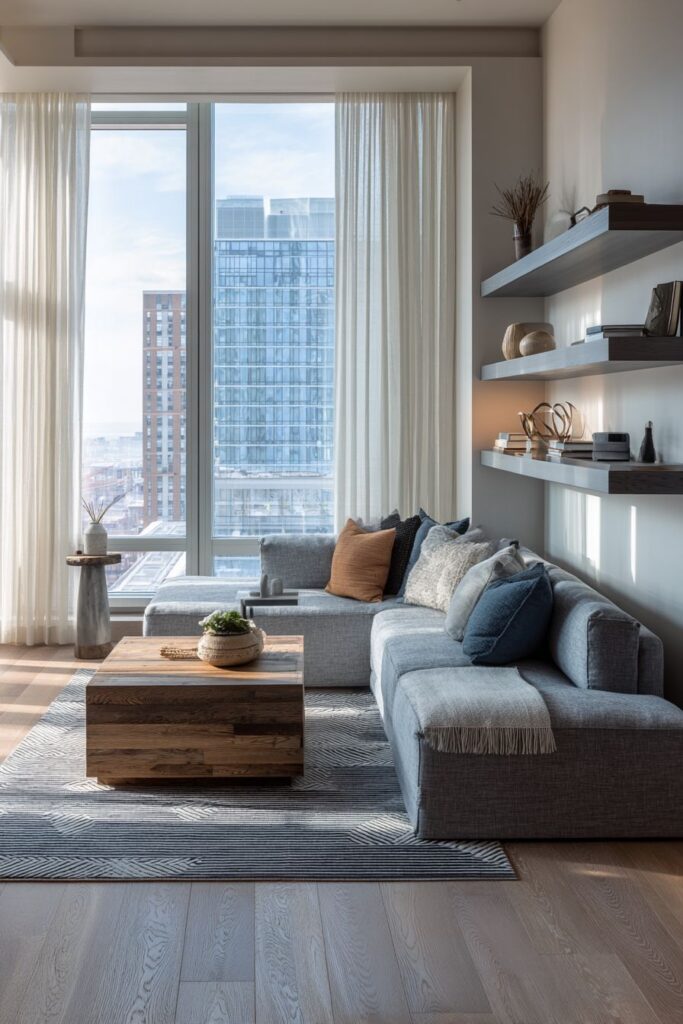
The beauty of this design lies in its balanced approach to combining comfort with sophistication. Material textures play starring roles, from the soft wool rug to the natural oak grain to the woven linen curtains. Each element contributes to a sensory experience that feels both elevated and approachable. The geometric patterns introduce subtle visual interest without overwhelming the neutral palette, demonstrating how restraint in pattern selection can create refined elegance.
Key Design Tips:
- Select a sectional sofa in neutral tones for versatility and longevity
- Layer multiple textures through pillows, rugs, and window treatments
- Incorporate natural wood elements to add warmth to modern spaces
- Use sheer curtains to maximize natural light while maintaining privacy
- Create display opportunities with floating shelves for personalization
- Choose geometric patterns sparingly to add interest without visual chaos
- Maintain a cohesive color palette with earth tones and muted accents
2. Brick Accent Wall Sophistication
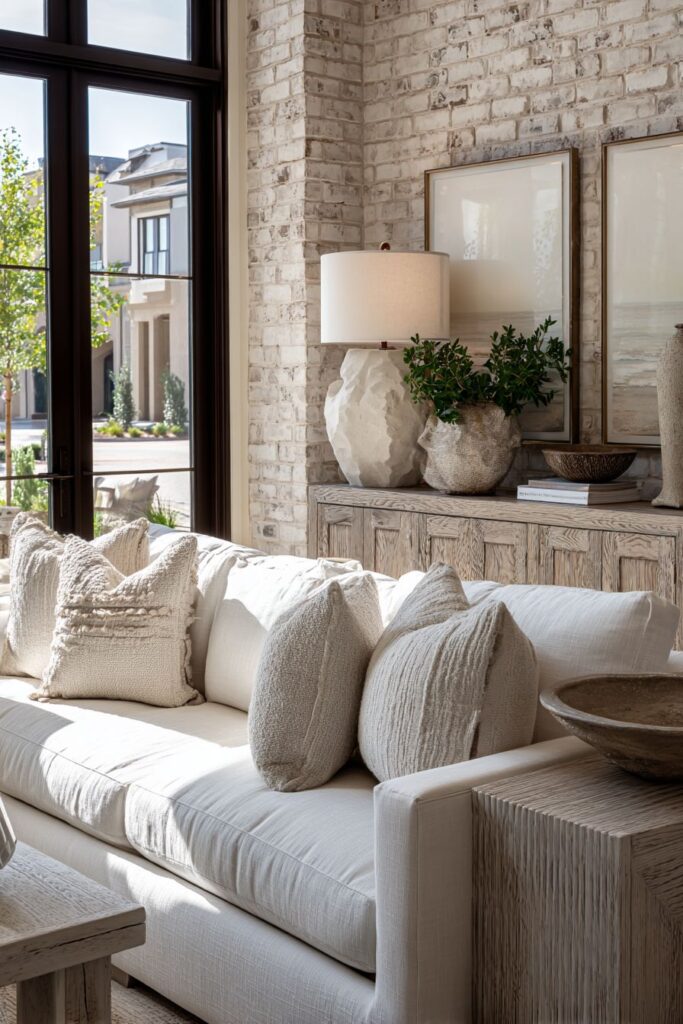
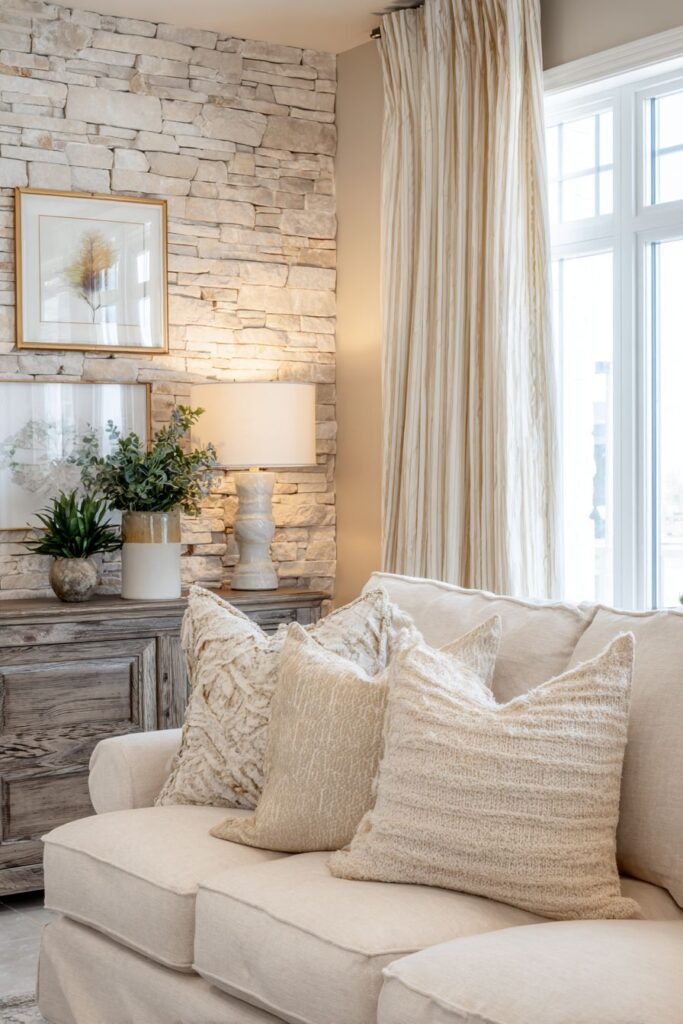
A living room featuring a brick accent wall painted in soft white creates an unexpected textural focal point that blends industrial heritage with contemporary refinement. The neutral linen sofa adorned with textured cushions provides comfortable seating while complementing the wall’s tactile quality. A reclaimed wood media console houses entertainment equipment with practical efficiency while displaying potted plants and framed artwork, transforming functional storage into a curated vignette. This multi-purpose approach maximizes utility without sacrificing aesthetic appeal.
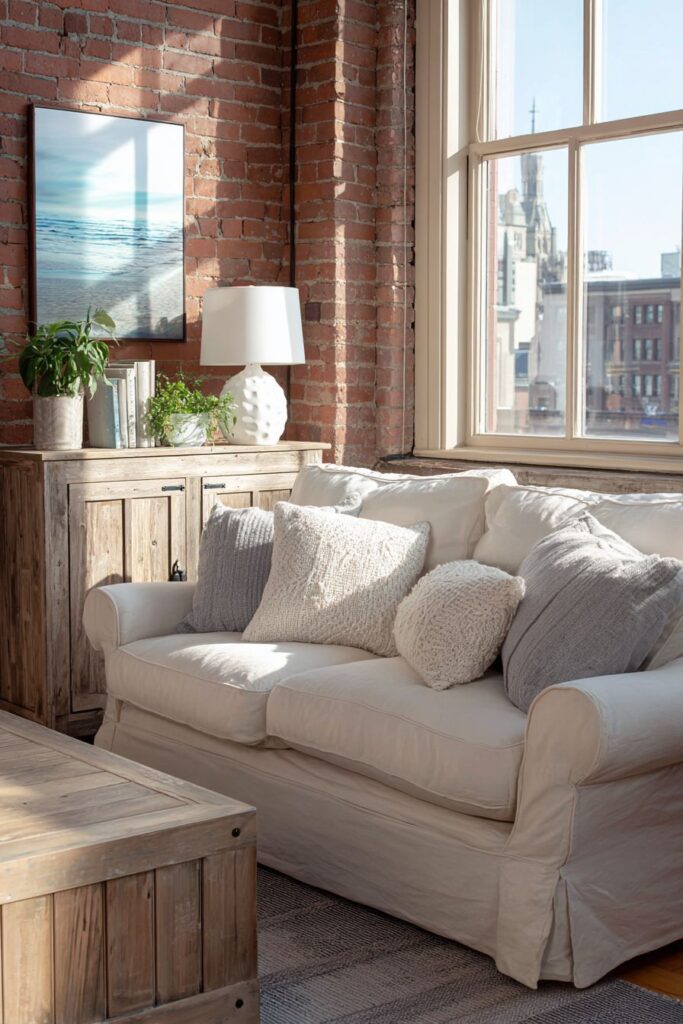
Layered lighting transforms this space throughout the day, combining a sculptural floor lamp with warm LED strip lights positioned behind the console. This thoughtful lighting strategy creates ambient glow during evening hours while the sculptural floor lamp provides task lighting for reading or conversation. Natural afternoon light streams through large windows, creating gentle highlights that emphasize the brick wall’s texture and cast beautiful shadows across the room. The interplay between natural and artificial light sources ensures the space remains functional and inviting regardless of time or season.
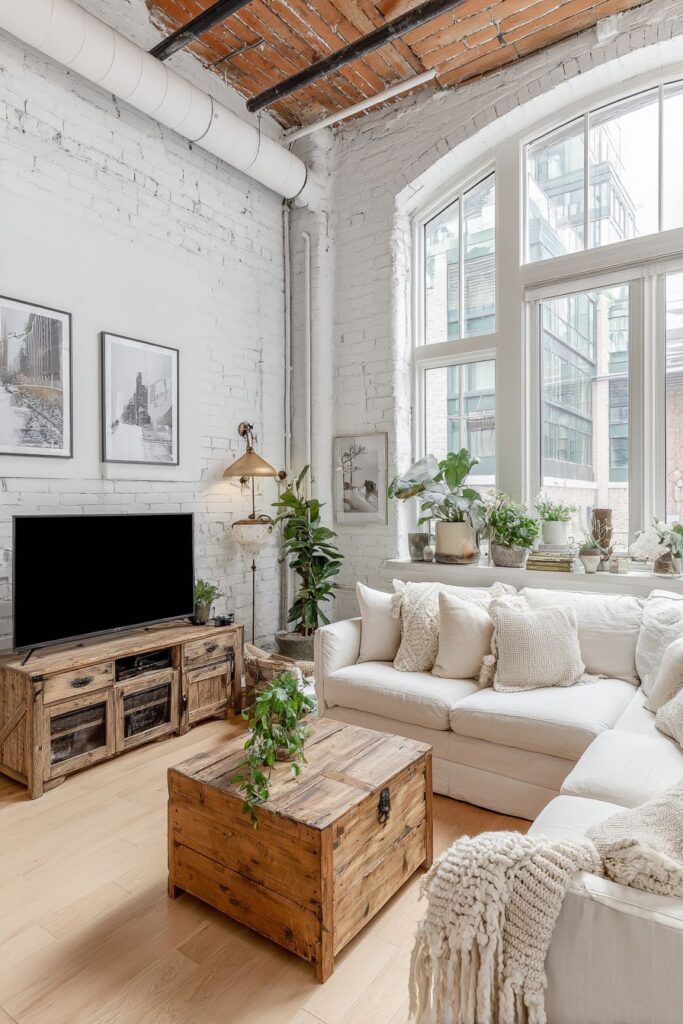
The reclaimed wood console deserves special attention as it bridges rustic authenticity with modern functionality. Its weathered character tells a story while organizing contemporary technology seamlessly. Potted plants introduce living elements that soften hard surfaces and improve air quality, while framed artwork adds personal expression. This combination demonstrates how practical furniture can serve multiple purposes, housing necessities while creating opportunities for meaningful decoration.
Key Design Tips:
- Paint brick walls in light colors to maintain texture while brightening the space
- Choose linen upholstery for breathability and timeless appeal
- Incorporate reclaimed wood furniture for character and sustainability
- Layer lighting sources for flexibility and ambiance control
- Use LED strip lights behind furniture for modern atmospheric effects
- Position plants strategically to soften architectural elements
- Balance technology storage with decorative display opportunities
3. Scandinavian Serenity
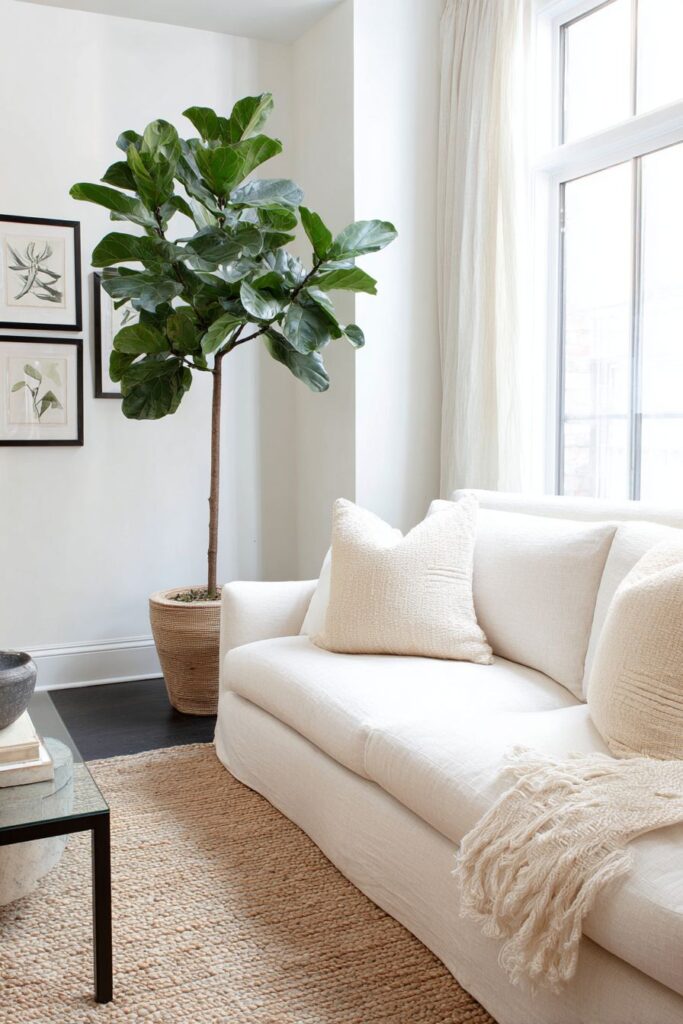
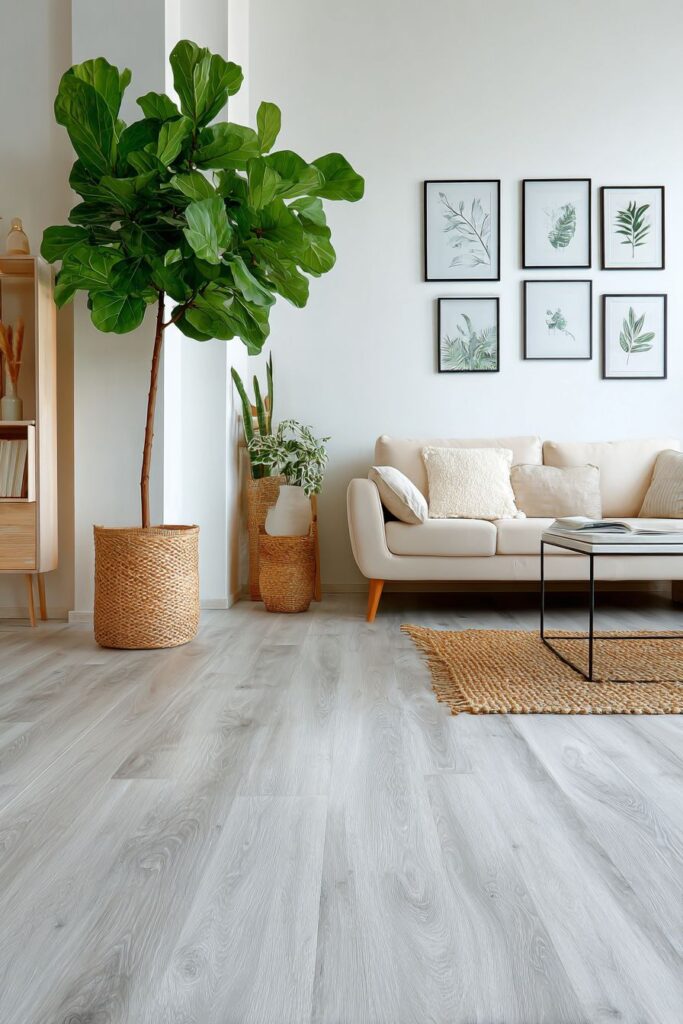
Scandinavian-inspired living room design celebrates simplicity, functionality, and connection to nature through carefully edited elements. Light ash wood flooring establishes a bright foundation that reflects natural light beautifully. A low-profile sofa in oatmeal fabric with clean lines embodies the minimalist philosophy, offering comfort without visual heaviness. The handwoven jute rug defines the seating area beneath a minimalist glass coffee table, creating layers of natural texture while maintaining visual lightness. This approach to space planning ensures the room feels open and uncluttered.
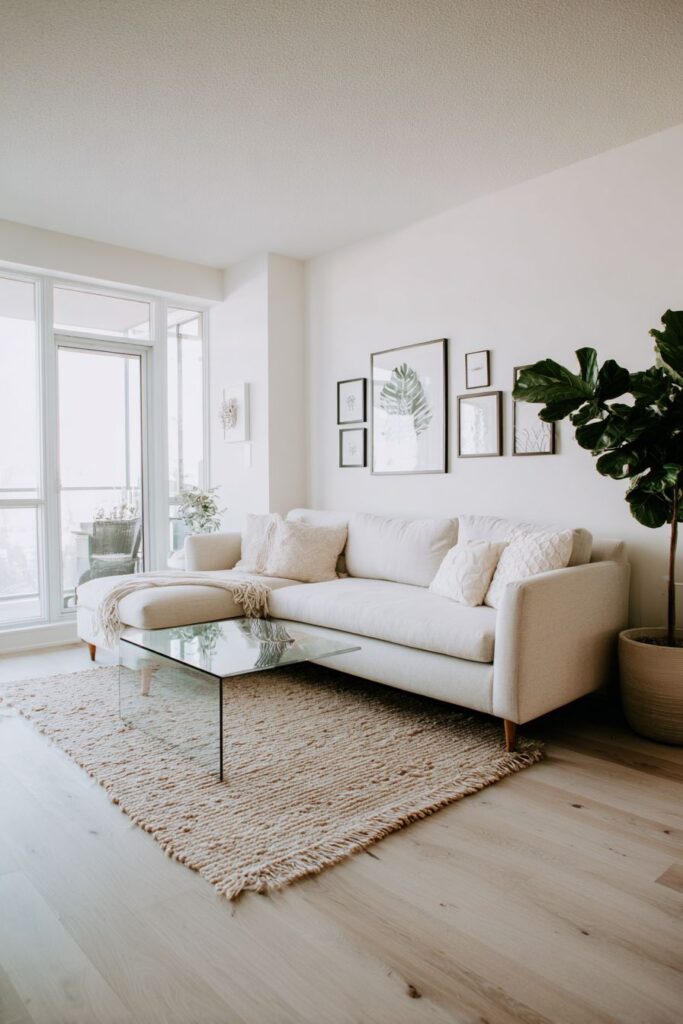
White walls provide a serene backdrop for a gallery wall arrangement of black-framed botanical prints, introducing organic motifs without color complexity. The high contrast between black frames and white walls creates graphic impact while the botanical subjects maintain connection to nature. A fiddle leaf fig tree in a ceramic planter adds essential living greenery, bringing scale variation and organic form to the composed environment. The plant’s large leaves create dramatic silhouettes while purifying indoor air naturally.
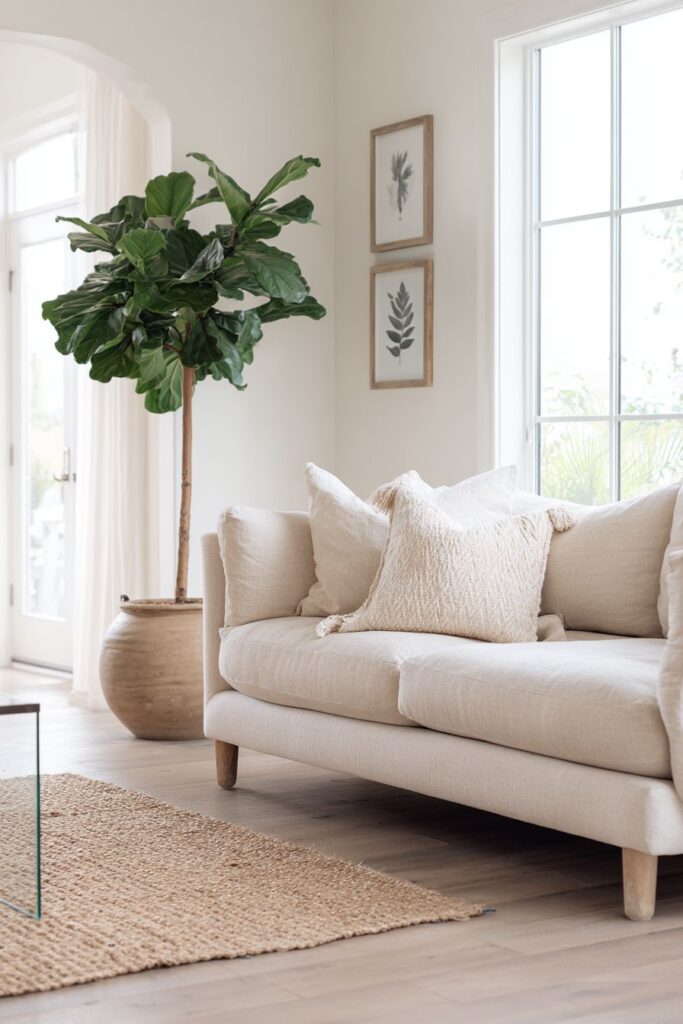
Captured with soft natural lighting, this design emphasizes subtle texture variations within a restrained color palette. The beauty emerges from quality materials rather than decorative abundance. Each element serves a purpose while contributing to overall tranquility. The glass coffee table maintains sightlines across the room, preventing visual blockage despite its functional presence. This transparency supports the Scandinavian principle of creating spacious, breathing environments.
Key Design Tips:
- Choose light wood flooring to maximize brightness and spaciousness
- Select low-profile furniture to maintain open sightlines
- Incorporate handwoven natural fiber rugs for organic texture
- Use glass furniture strategically to preserve visual openness
- Create gallery walls with high-contrast frames and botanical subjects
- Add substantial plants for dramatic impact and air purification
- Embrace white walls as backdrops rather than blank canvases
- Prioritize quality over quantity in furniture and accessory selection
4. Fireplace-Centered Elegance
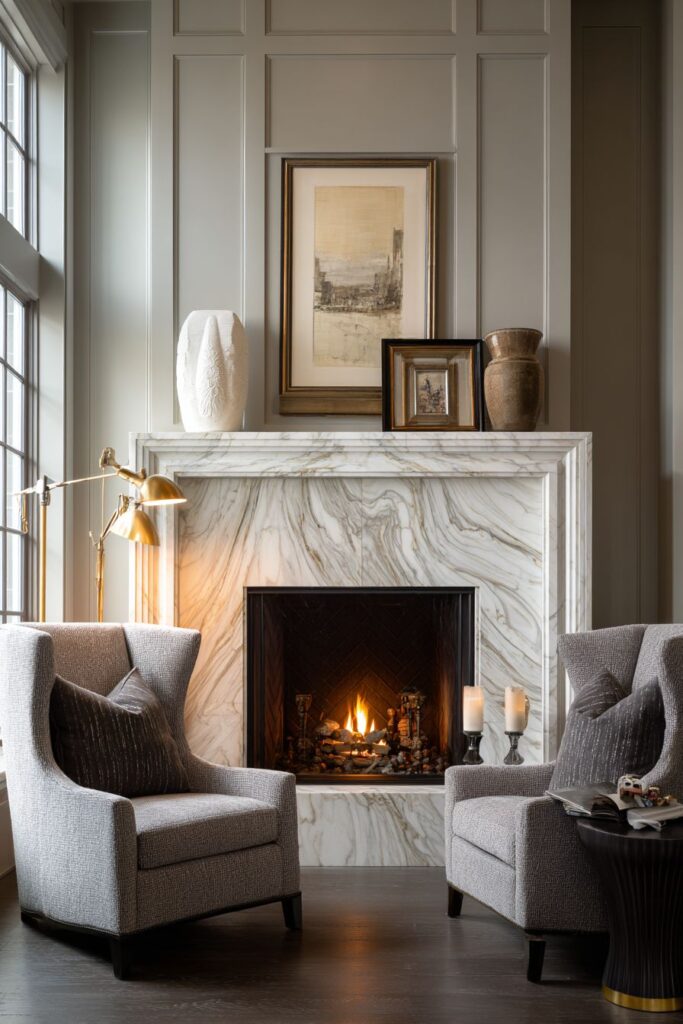
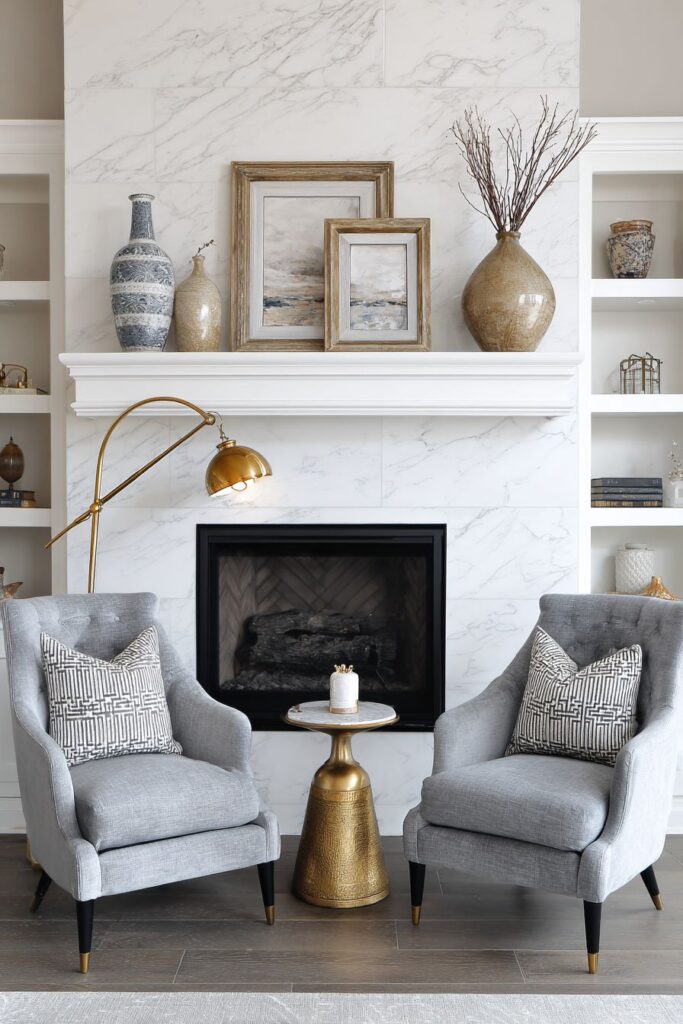
A living room designed around an elegant fireplace creates an intimate atmosphere perfect for conversation and contemplation. The white marble surround paired with a black metal insert establishes classic contrast while the fireplace becomes the room’s undeniable focal point. Two wingback chairs in dove grey velvet flank the fireplace symmetrically, creating a dedicated conversation area that draws people together. This furniture arrangement prioritizes human connection over television-centric layouts, fostering meaningful interaction.
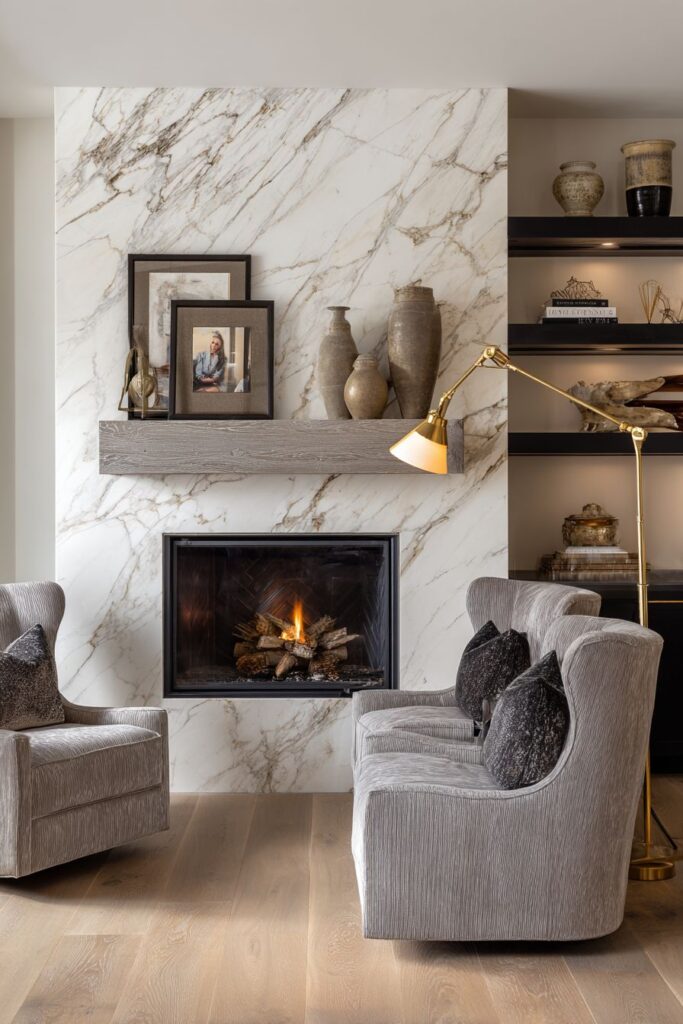
The brass floor lamp with adjustable arm provides practical task lighting while adding metallic warmth to the soft grey and white palette. Its adjustable feature demonstrates how lighting can serve multiple functions, from reading illumination to ambient atmosphere. The mantel displays a curated collection of ceramic vases and framed family photos, transforming functional architecture into a personal gallery. This styling approach balances aesthetic refinement with emotional significance, making the space feel both sophisticated and deeply personal.
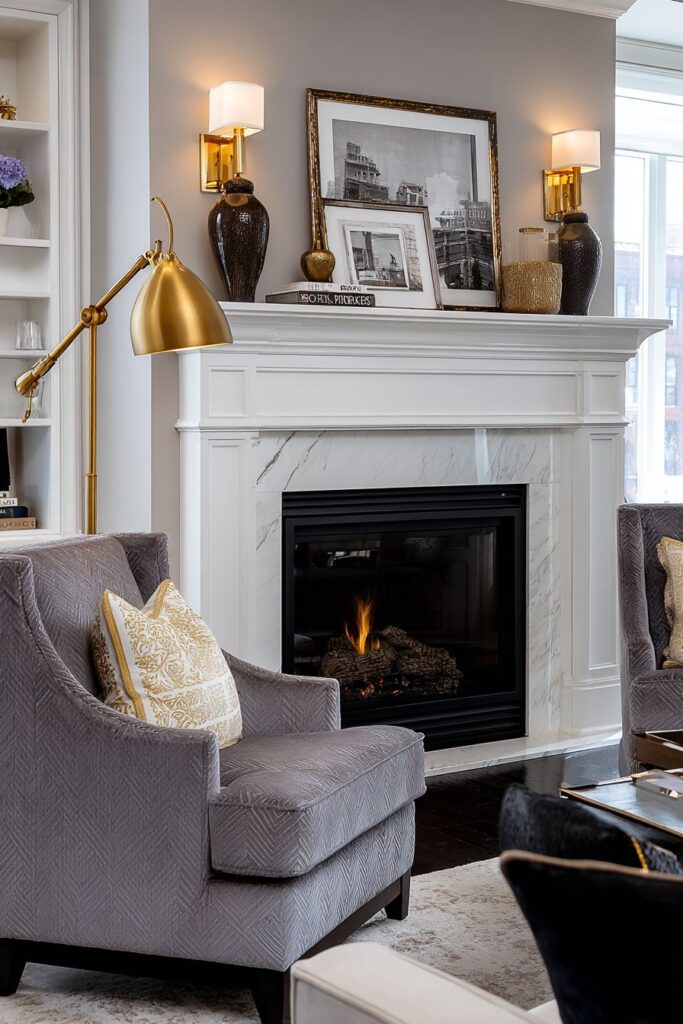
Natural shadows add depth throughout the room, emphasizing architectural details and creating visual interest through light and dark interplay. The warmth generated by the fireplace combines with thoughtful lighting to create a cocoon-like environment perfect for cold evenings. The velvet upholstery on the wingback chairs introduces luxurious tactility while the dove grey color maintains sophisticated restraint. This combination of comfort and elegance demonstrates how traditional elements can feel fresh and relevant.
Key Design Tips:
- Position seating to take advantage of fireplace warmth and views
- Choose velvet upholstery for luxury and richness in traditional settings
- Use brass accents to add warmth without overwhelming the palette
- Select adjustable lighting for functional flexibility
- Style mantels with both decorative objects and personal photographs
- Create symmetrical arrangements for formal elegance
- Incorporate marble for timeless sophistication
- Allow natural shadows to add depth and dimension
5. Contemporary Open-Concept Living
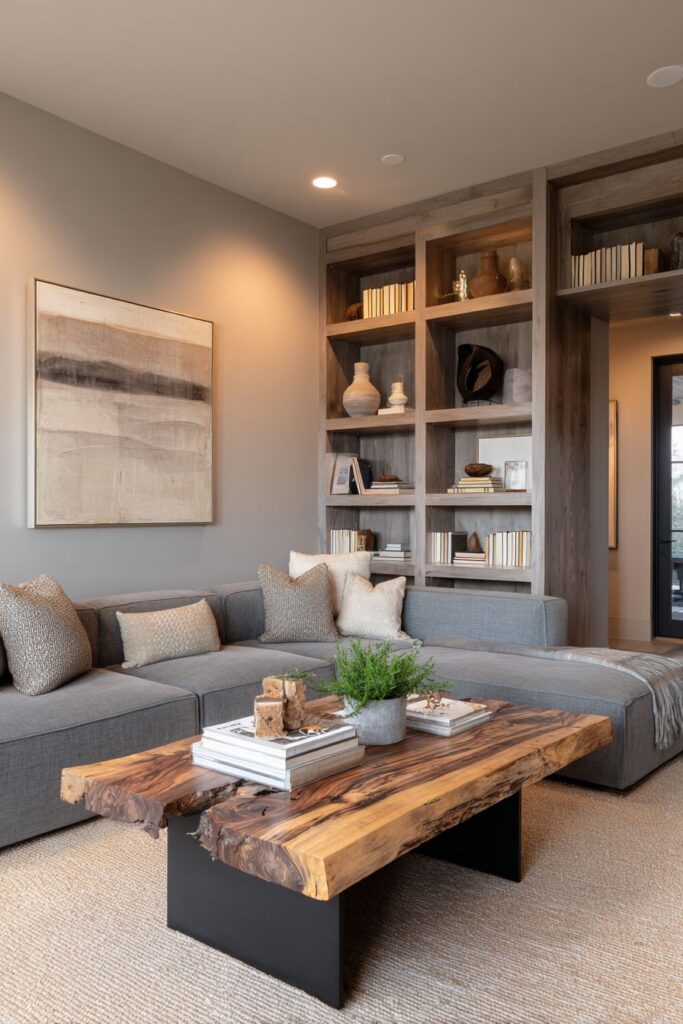
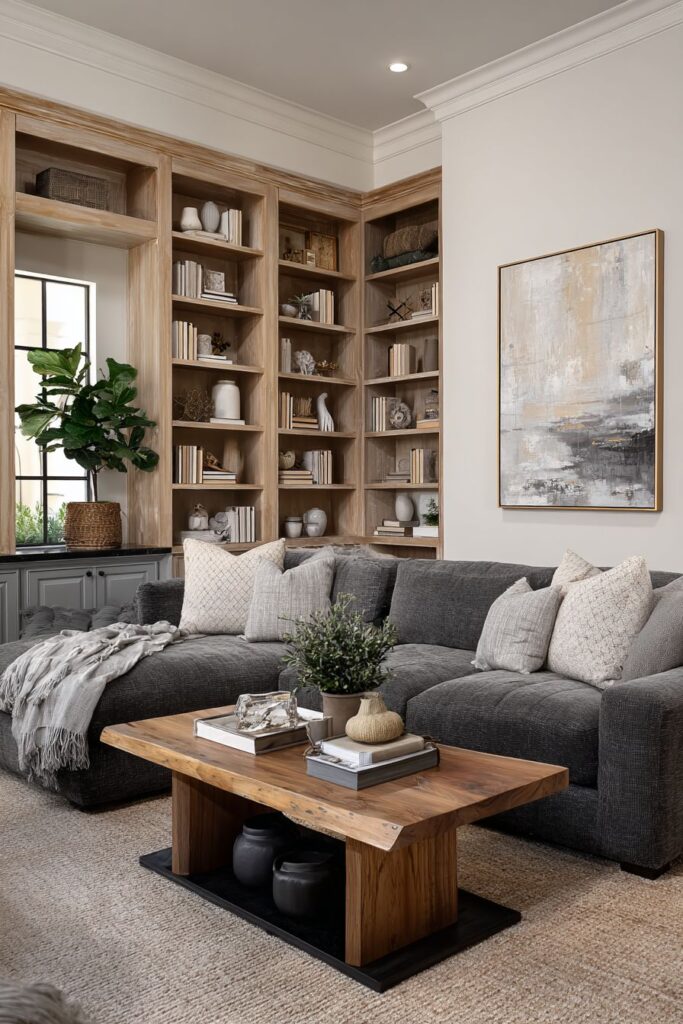
Contemporary open-concept living embraces spatial fluidity while using furniture to define functional zones. A modular sofa in charcoal grey positions strategically to delineate the living area without erecting physical barriers. The live-edge walnut coffee table adds organic character with its natural contours, celebrating wood’s inherent beauty. A sisal area rug provides natural texture underfoot while further defining the seating zone within the larger open space. This layered approach to space definition creates intimacy within expansiveness.
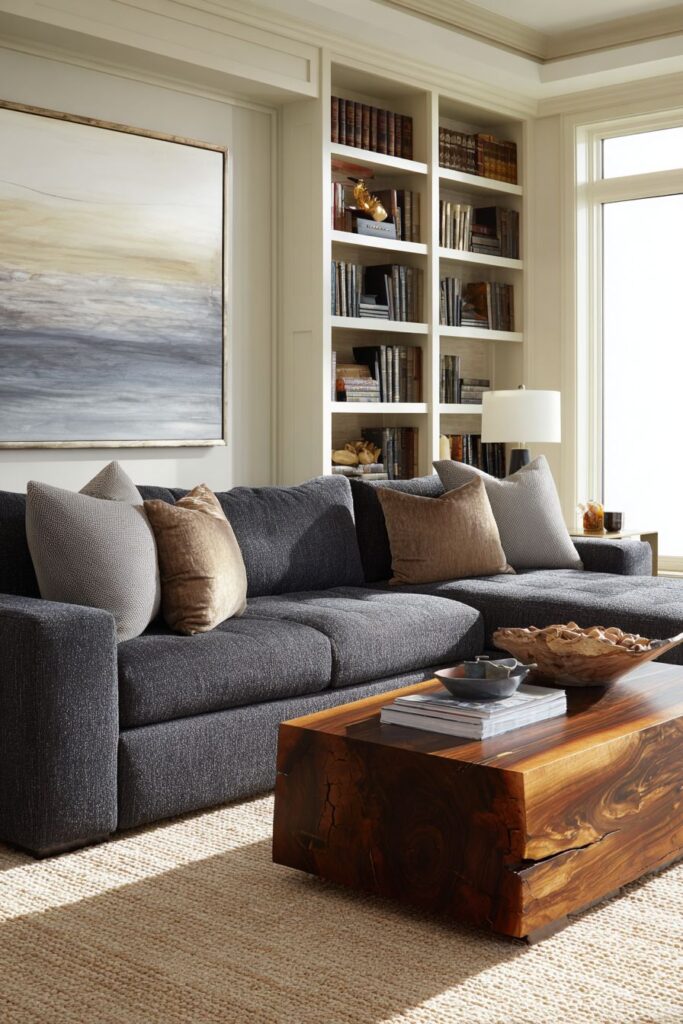
Floor-to-ceiling built-in bookshelves painted in warm white house an extensive book collection alongside carefully selected decorative objects. These vertical storage solutions maximize wall space while creating visual interest and displaying personal interests. Large abstract artwork in muted tones anchors one wall, providing a focal point that draws the eye without demanding attention. The artwork’s scale balances the room’s proportions while its subdued palette maintains overall serenity.
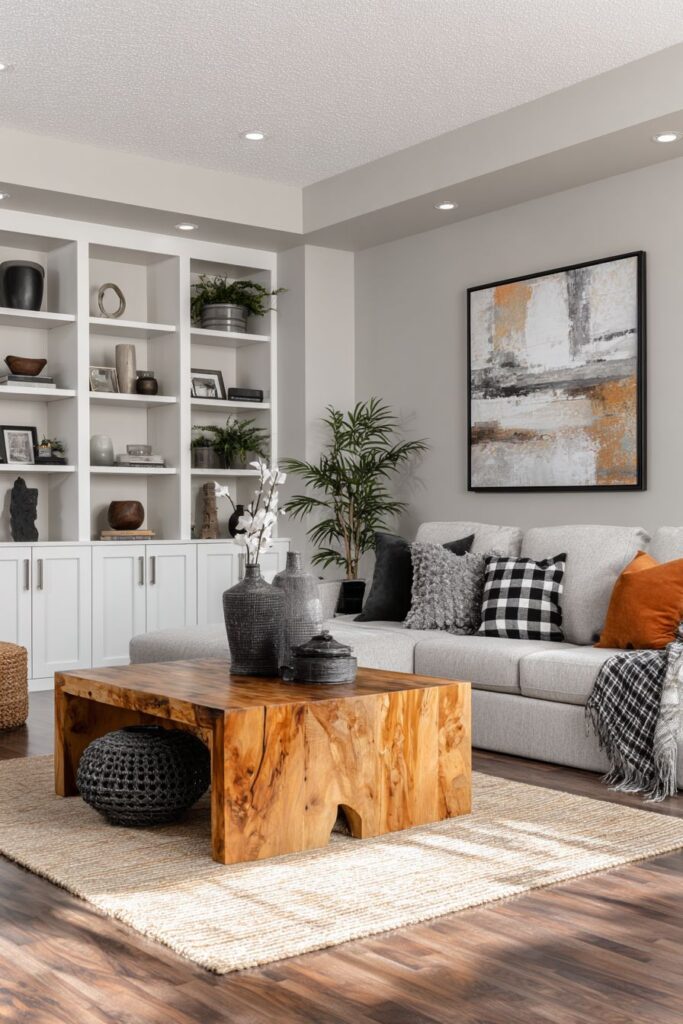
The thoughtful layering of textures throughout this space creates sensory richness within a relatively simple color scheme. From the nubby sisal rug to the smooth walnut wood to the textured charcoal upholstery, each material contributes distinct tactile quality. This functional elegance demonstrates how contemporary design can feel warm and inviting rather than cold and austere. The modular sofa’s flexibility allows configuration changes as needs evolve, embodying practical adaptability.
Key Design Tips:
- Use furniture placement rather than walls to define spaces
- Incorporate live-edge wood pieces for organic sculptural interest
- Choose modular furniture for adaptability in open layouts
- Install floor-to-ceiling shelving to maximize vertical storage
- Select large-scale artwork appropriate to room proportions
- Layer natural textures within neutral color palettes
- Paint built-ins in warm whites to maintain brightness
- Display books and objects together for personalized styling
6. Bohemian Layered Comfort
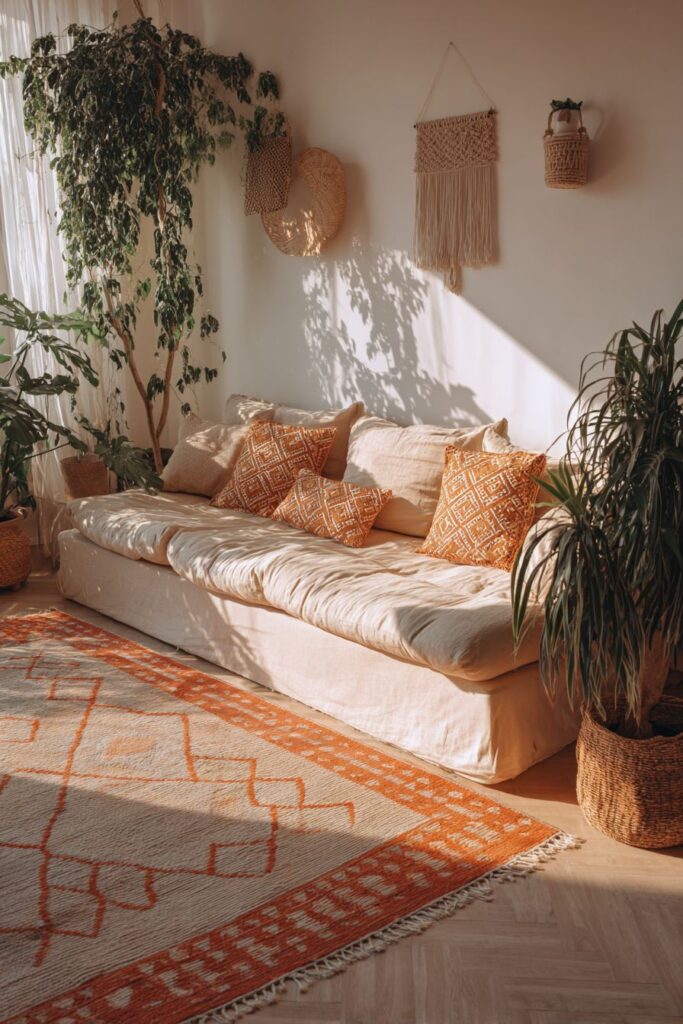
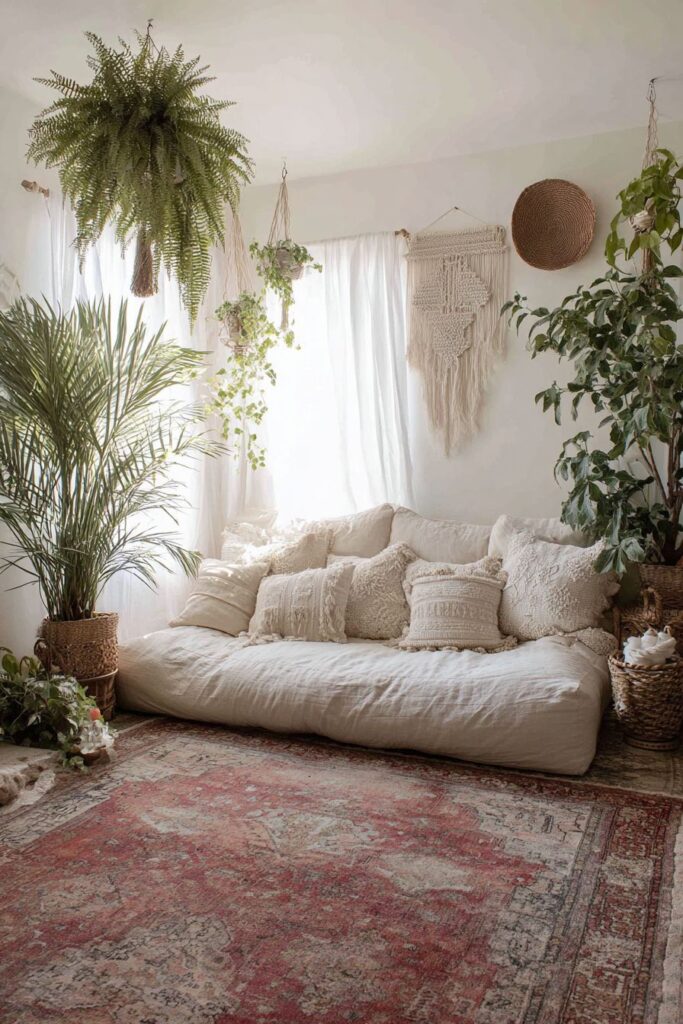
Bohemian living room design celebrates eclecticism, pattern mixing, and relaxed comfort through abundant layering. A low-slung sofa with overstuffed cushions in natural linen provides the foundation, surrounded by an adventurous mix of patterned throw pillows. Macramé wall hangings and woven baskets add textural interest against white walls, introducing handcrafted elements that bring warmth and artisanal character. A vintage Moroccan rug in faded terracotta and indigo tones grounds the space with global influence and time-worn beauty.
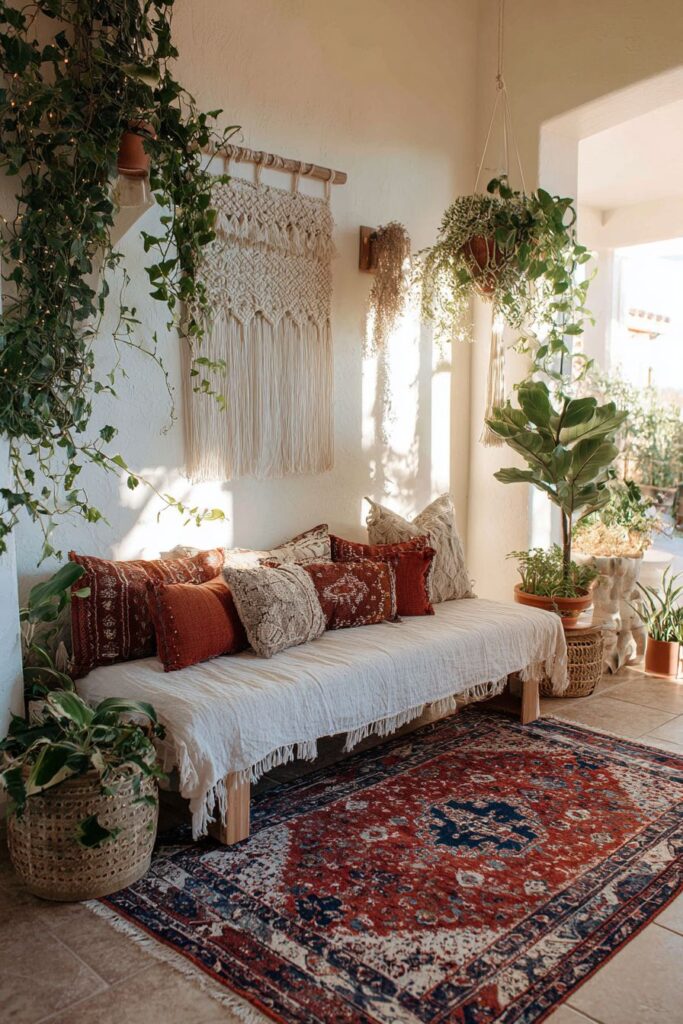
Potted plants including hanging spider plants and a tall rubber tree create lush greenery that softens hard surfaces and improves air quality. This abundant plant life connects the interior to nature while adding vertical interest at various heights. Natural golden hour lighting filtering through sheer curtains creates warm ambiance that enhances the space’s inviting quality. The combination of natural light and organic elements establishes a connection to the outdoors despite being fully interior.
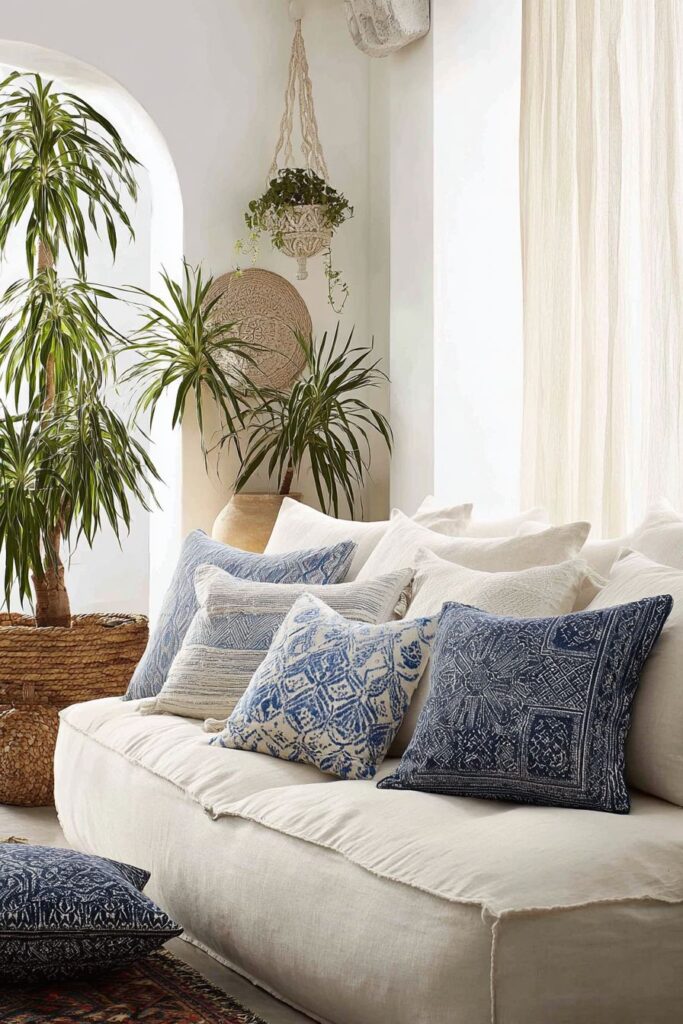
The beauty of bohemian style lies in its personal, collected-over-time aesthetic that resists rigid rules. Pattern mixing works successfully when unified by a consistent color story, as demonstrated here with terracotta, indigo, and natural tones. The textile focus—from macramé to woven baskets to patterned pillows—creates richness without requiring expensive furniture pieces. This approach makes bohemian style accessible and adaptable to various budgets.
Key Design Tips:
- Mix patterns confidently within a cohesive color palette
- Incorporate handcrafted textiles for warmth and artisanal quality
- Layer multiple plants at varying heights for lush atmosphere
- Choose vintage rugs for character and unique beauty
- Use macramé and woven elements to add texture to walls
- Position furniture low to the ground for relaxed, casual feel
- Take advantage of golden hour lighting with sheer window treatments
- Embrace eclectic collecting rather than matching sets
7. Minimalist Intentional Living
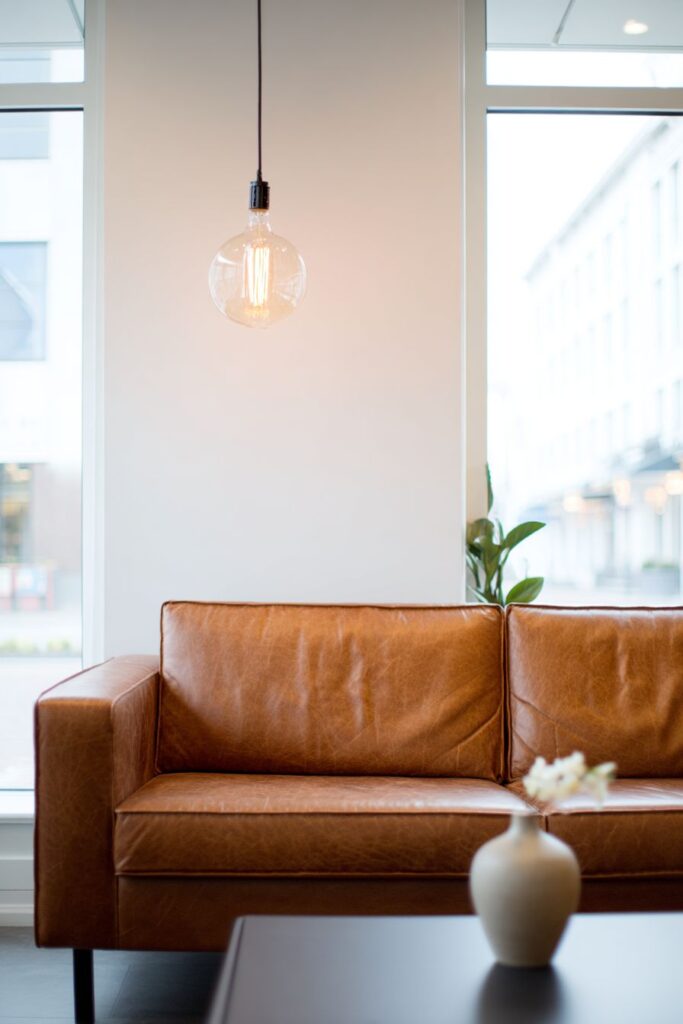
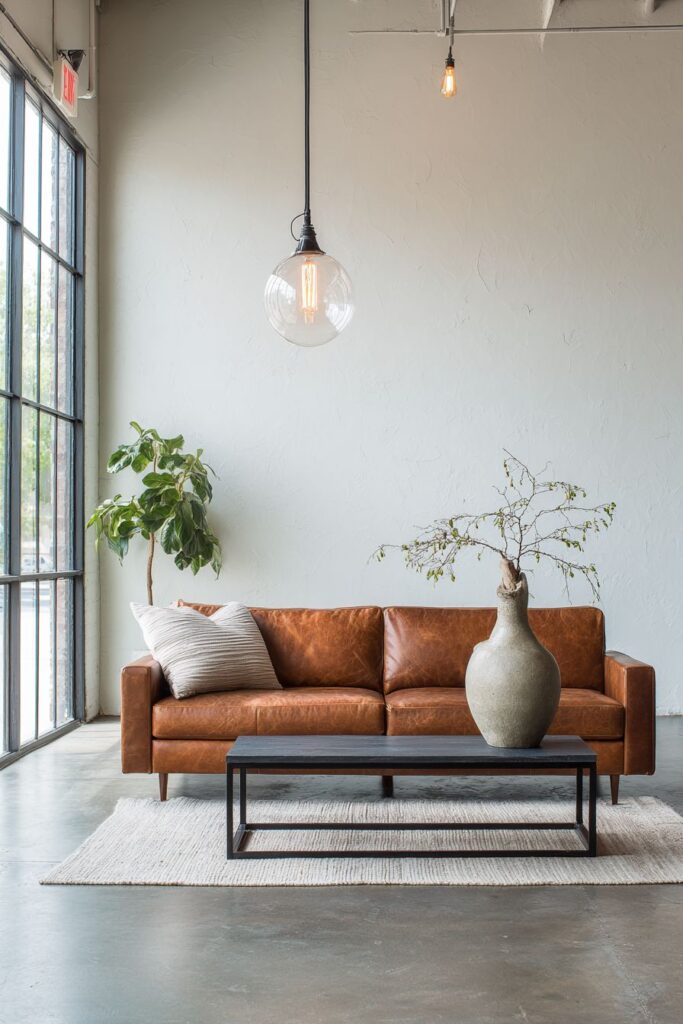
Minimalist living room design demonstrates the power of restraint and intentional selection. A streamlined leather sofa in caramel brown positions against a plain white wall, its clean lines and quality material speaking volumes without embellishment. A simple rectangular coffee table in blackened steel and glass maintains the aesthetic through material honesty and functional purity. The single statement pendant light with exposed Edison bulb provides ambient lighting while serving as sculptural art, proving that lighting fixtures can fulfill multiple roles.
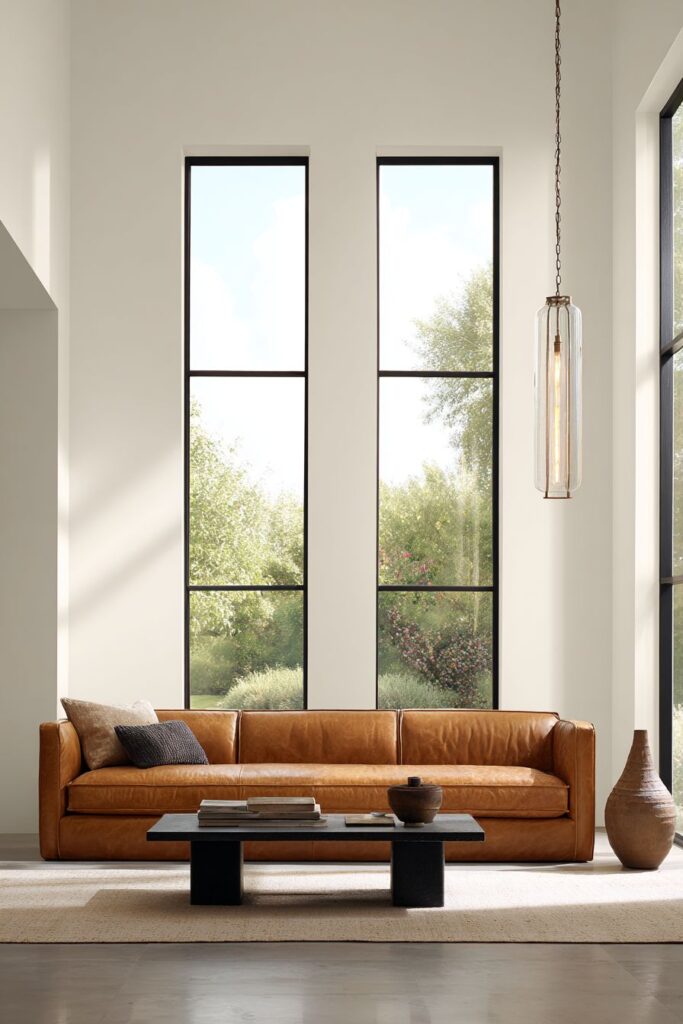
Large windows without treatments maximize natural light, embracing transparency and connection to the exterior environment. This decision requires confidence in the view and surrounding context but rewards with abundant daylight and spatial expansion. A single sculptural ceramic vase on the coffee table provides the only decorative element, demonstrating how one perfect object can satisfy visual needs more effectively than multiple mediocre pieces. This curation discipline defines minimalist philosophy.
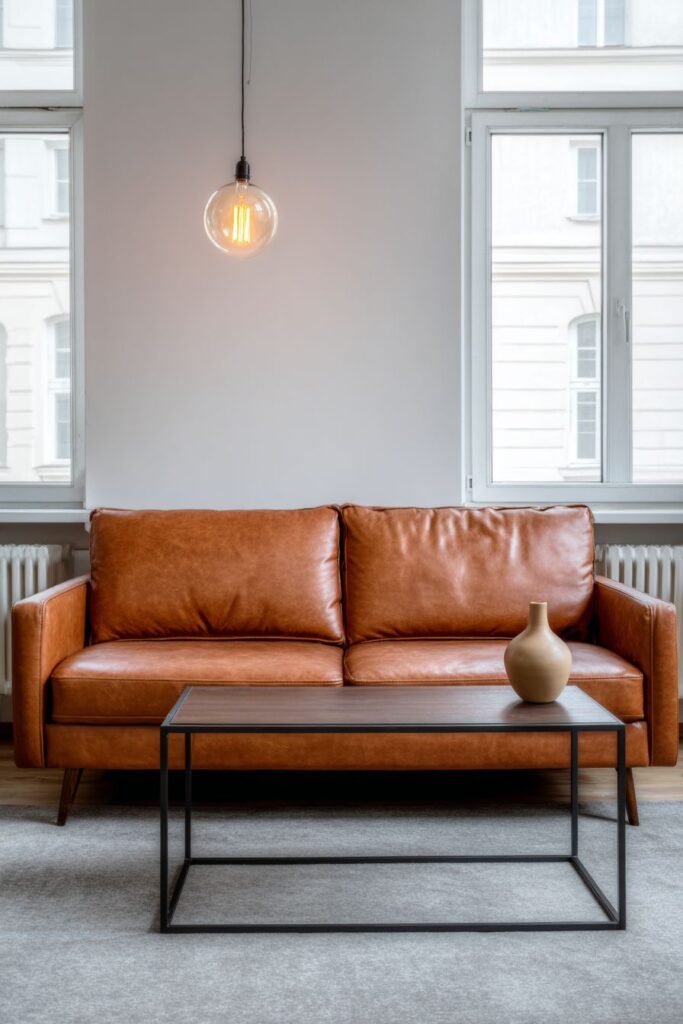
The intentional simplicity creates contemplative atmosphere where the mind can rest from visual overstimulation. Negative space becomes as important as occupied space, allowing eyes and thoughts to breathe. The caramel leather introduces warmth that prevents the minimal palette from feeling cold or austere. Natural shadows define furniture silhouettes throughout the day, creating ever-changing visual interest without adding physical objects. This proves that dynamic lighting can provide decoration.
Key Design Tips:
- Invest in fewer, higher-quality furniture pieces
- Embrace negative space as intentional design element
- Choose leather upholstery for warmth in minimal settings
- Select sculptural lighting that serves multiple purposes
- Eliminate window treatments when views and privacy allow
- Limit decorative objects to one perfect piece per surface
- Use material contrast for visual interest without adding objects
- Allow natural shadows to create changing decoration
8. Farmhouse Authentic Comfort
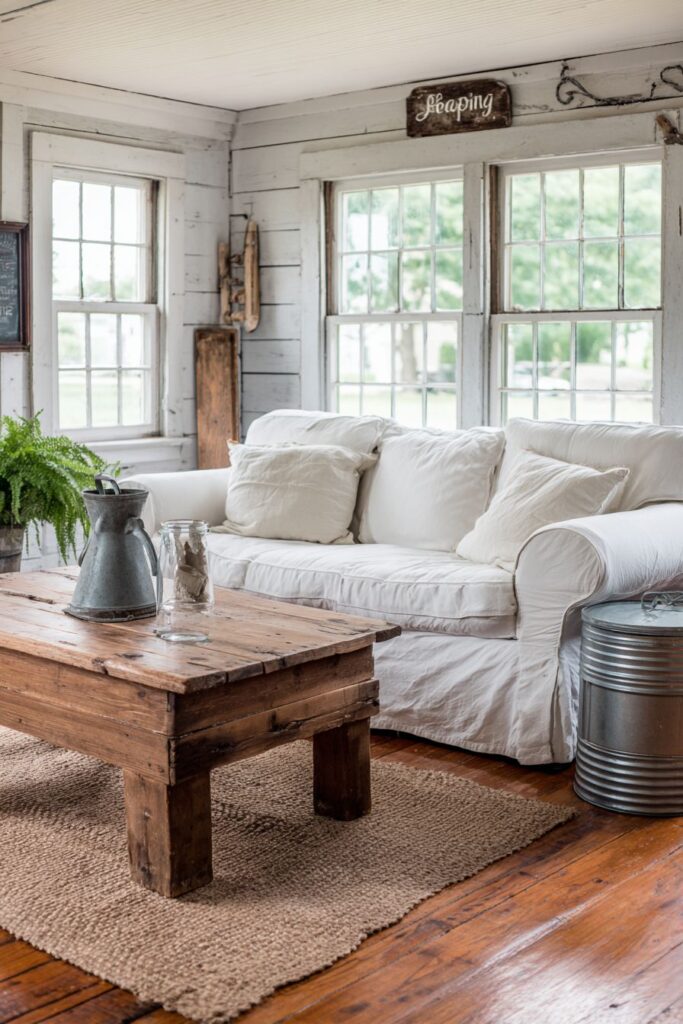
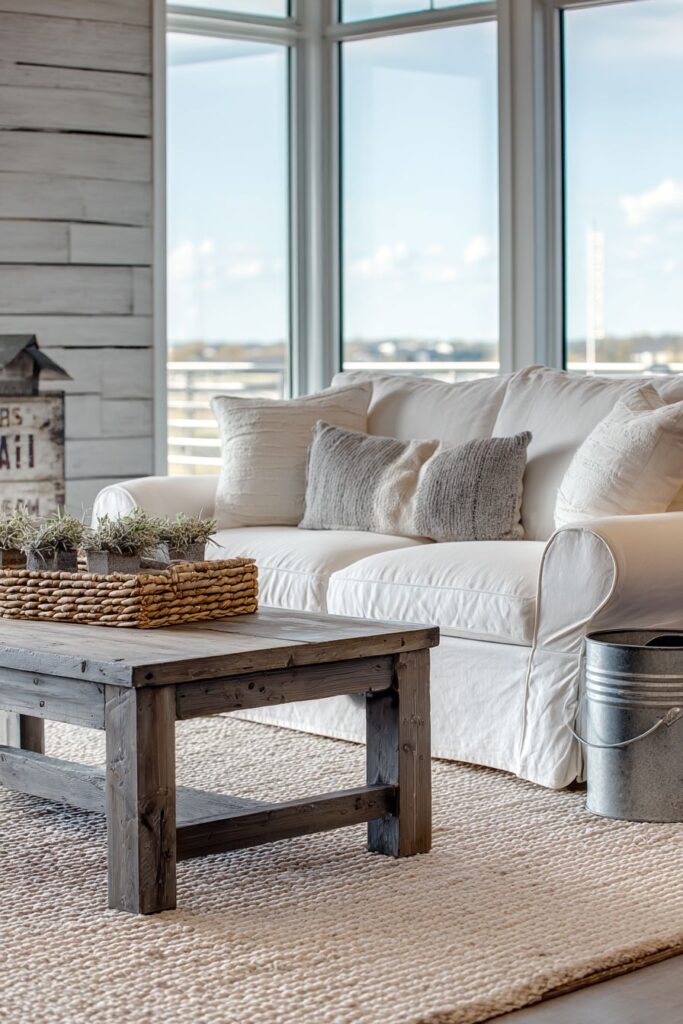
Farmhouse living room design celebrates rural authenticity and lived-in comfort through natural materials and relaxed styling. A slipcovered sofa in white cotton with rolled arms shows visible texture from natural fabric wear, embracing imperfection as character rather than flaw. The shiplap accent wall painted in soft grey provides rustic architectural interest while maintaining light-reflective qualities. A weathered wood coffee table with chunky legs centers the space on a braided wool rug, combining substantial scale with handcrafted charm.
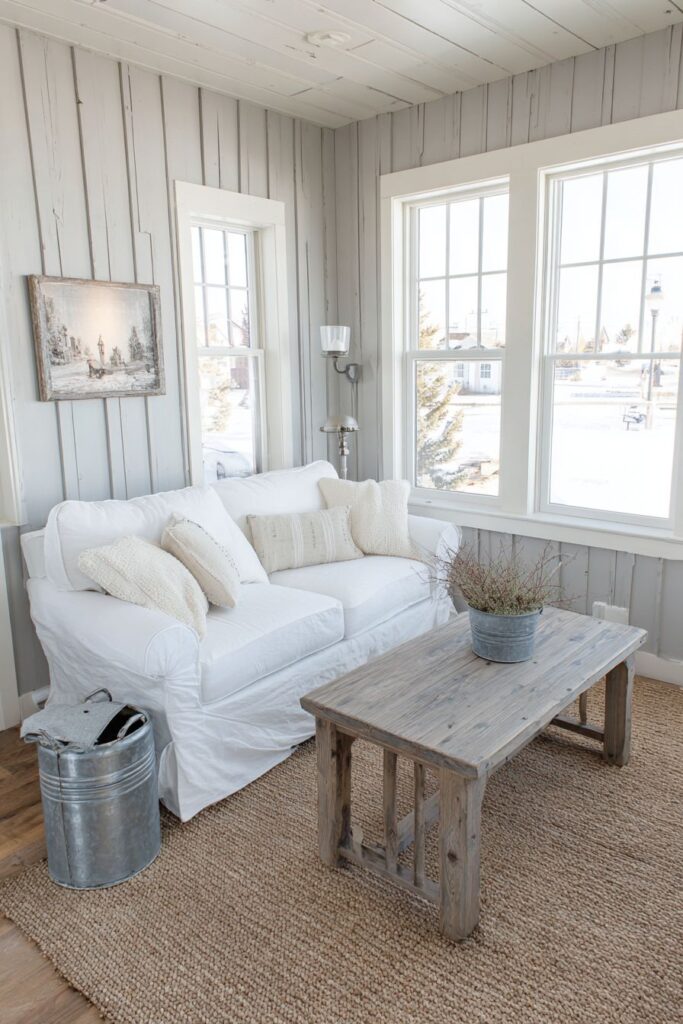
Galvanized metal accents including a vintage milk can repurposed as a side table add authentic rural character while demonstrating creative resourcefulness. These unexpected functional elements tell stories while serving practical purposes. Natural daylight through divided-light windows creates gentle highlights that emphasize material textures and surfaces, from the cotton slipcover’s weave to the wood’s weathered patina. This natural illumination enhances the room’s organic, unpretentious quality.
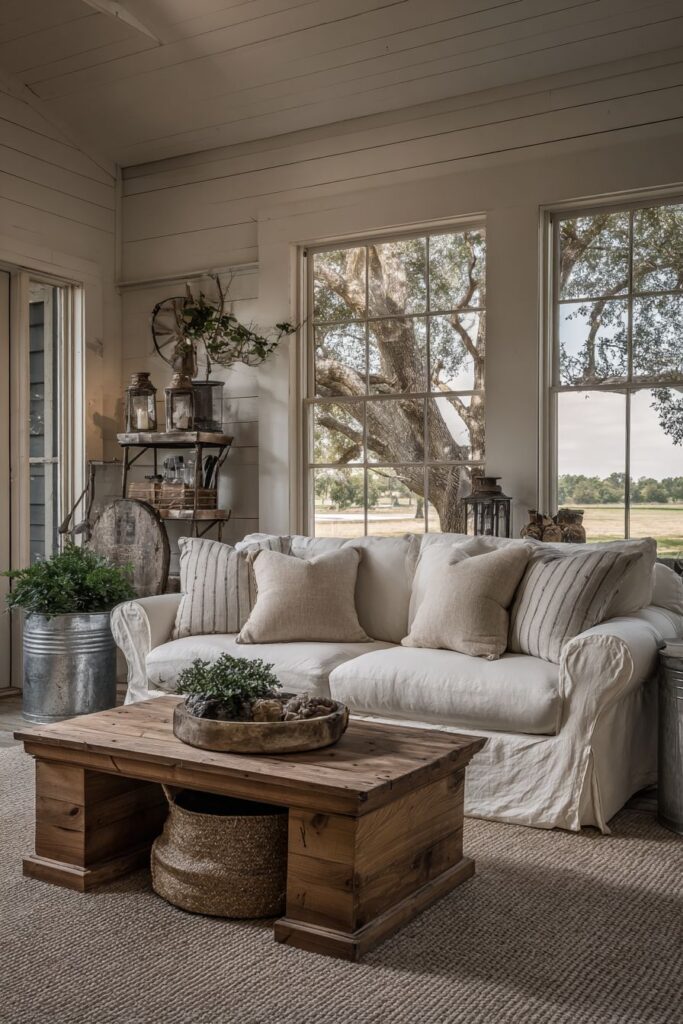
The farmhouse aesthetic succeeds by balancing rustic elements with cleanliness and order. While materials show wear and patina, the overall effect remains fresh and inviting rather than shabby. The white slipcover brightens the space while its washable practicality suits active family life. This combination of aesthetic appeal and functional practicality defines successful farmhouse design, creating spaces that accommodate real living while maintaining visual warmth.
Key Design Tips:
- Choose slipcovered furniture for washable practicality
- Embrace material patina as desirable character
- Incorporate shiplap for architectural texture
- Repurpose vintage agricultural items as furniture
- Select chunky-scaled furniture for substantial presence
- Use divided-light windows for period-appropriate detail
- Layer handcrafted textiles like braided rugs
- Balance rustic elements with clean backgrounds
9. Mid-Century Modern Revival
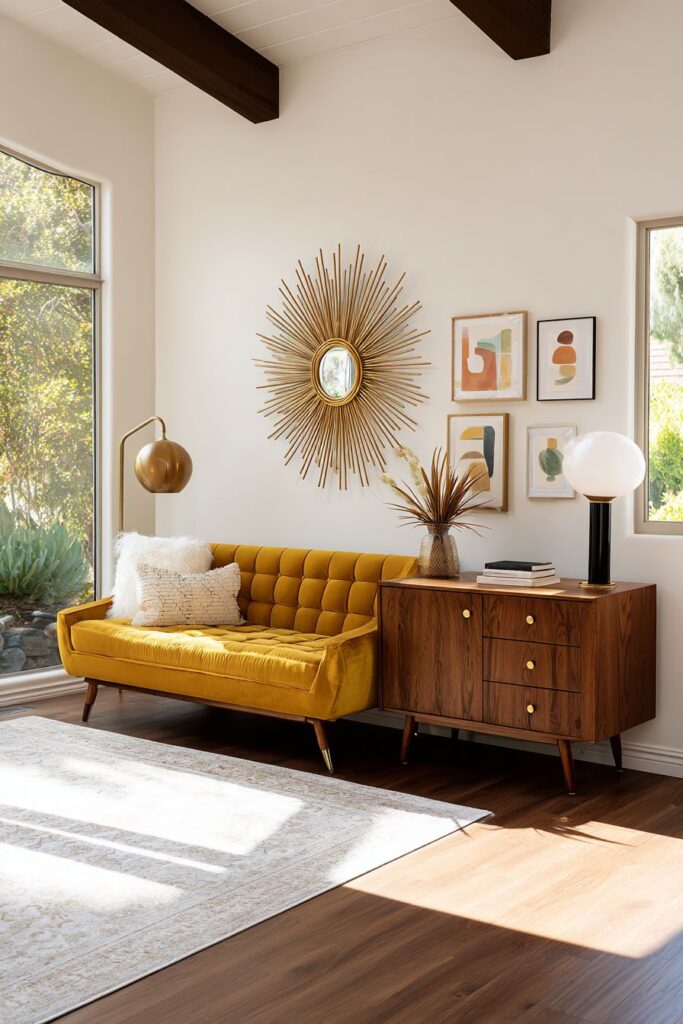
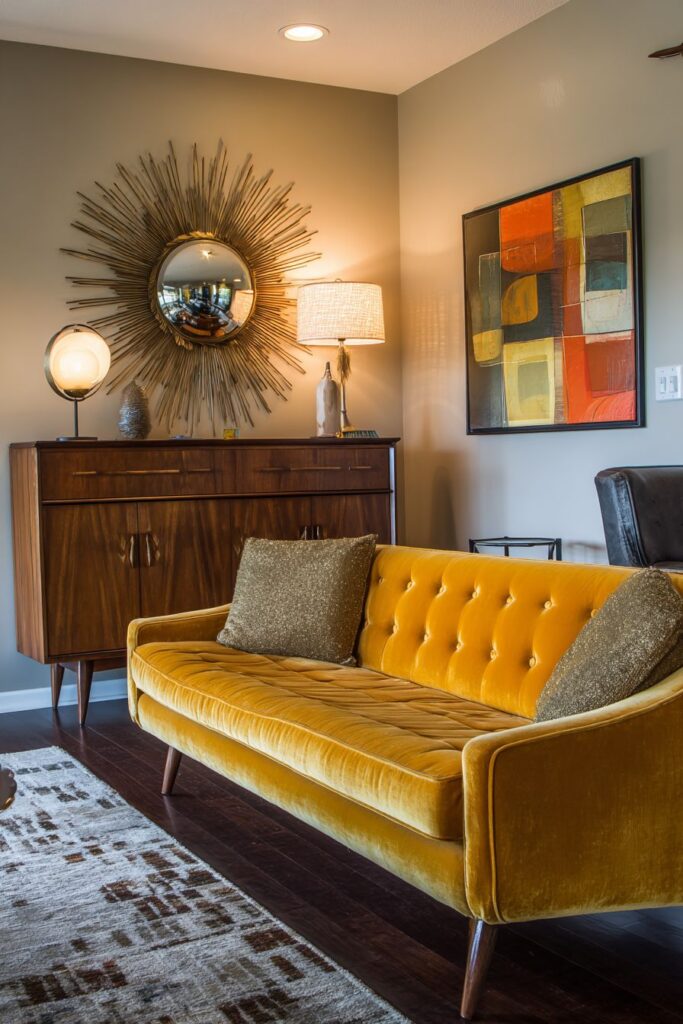
Mid-century modern living room design celebrates the iconic furniture silhouettes and rich materials of the 1950s and 1960s. A walnut credenza with tapered legs and brass drawer pulls positions beneath a large sunburst mirror, creating a signature vignette that defines the era. The low-profile sofa in mustard yellow velvet with tufted back cushions anchors the seating area with bold color and luxurious texture. Hairpin leg side tables in matte black metal flank the sofa, their sculptural simplicity exemplifying mid-century design philosophy.
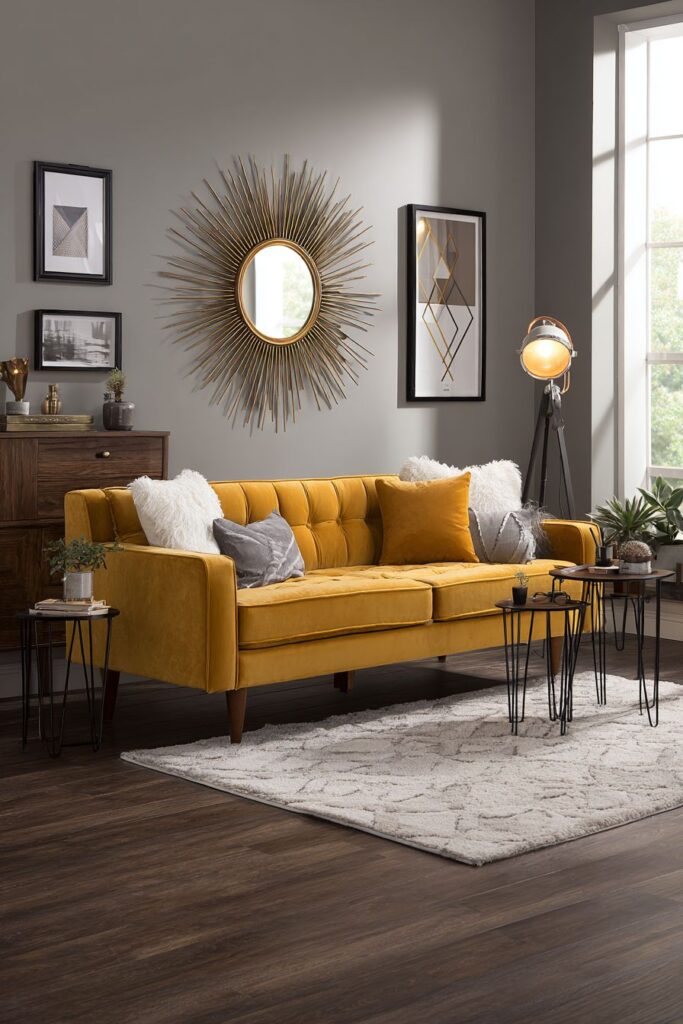
A vintage-inspired globe floor lamp provides warm task lighting while serving as period-appropriate sculpture. Abstract geometric artwork in era-appropriate colors adorns the walls, completing the aesthetic immersion. The balanced exposure highlighting iconic furniture silhouettes emphasizes form as much as function, a key principle of mid-century design. Natural afternoon light enhances rich material textures, from the walnut’s grain to the velvet’s pile to the brass’s warm glow.
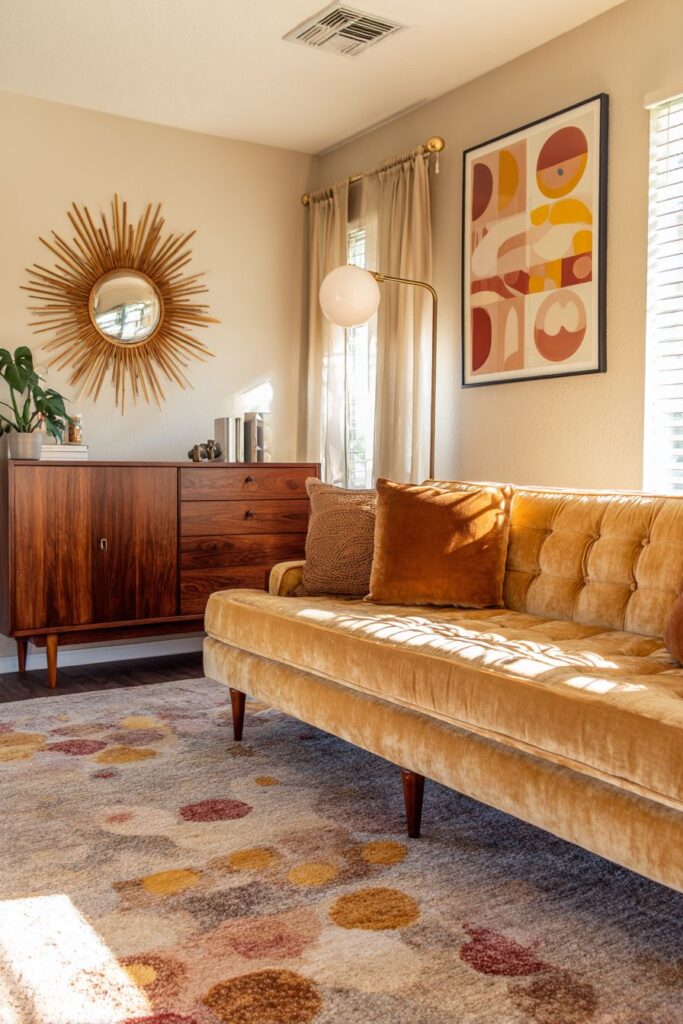
This design demonstrates how mid-century modern remains relevant through quality craftsmanship and timeless proportions. The mustard yellow upholstery adds brave color that energizes without overwhelming, proving that statement hues can work in living spaces. The combination of organic walnut wood with metallic brass and black metal creates material diversity within a cohesive aesthetic. This period revival works because it honors original design principles rather than creating pastiche.
Key Design Tips:
- Invest in authentic or quality reproduction mid-century furniture
- Choose bold jewel tones for upholstery confidence
- Incorporate brass accents for warm metallic contrast
- Select hairpin legs for characteristic mid-century look
- Use sunburst mirrors as era-defining decorative elements
- Display abstract geometric artwork from or inspired by the period
- Emphasize wood grain through walnut and teak furniture
- Position globe floor lamps as functional sculpture
10. Coastal Breezy Retreat
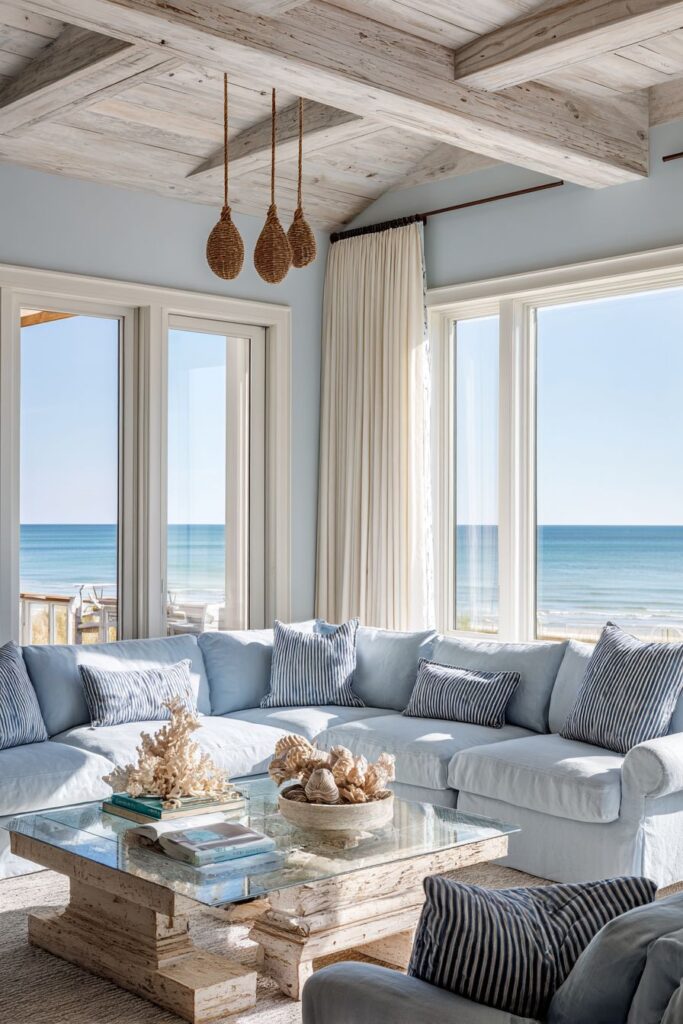
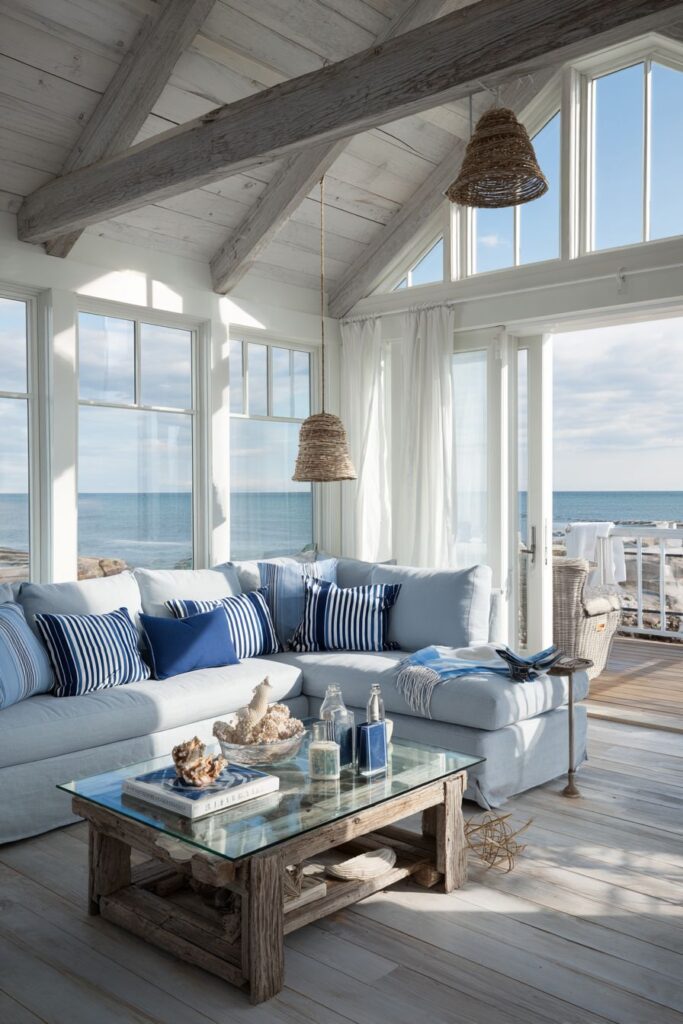
Coastal living room design evokes seaside tranquility through light colors, natural textures, and relaxed comfort. Whitewashed wood plank walls establish immediate beach-house character while reflecting light beautifully. A relaxed linen sectional in pale blue-grey provides ample seating with soft, breathable fabric perfect for warm climates. The driftwood coffee table with glass top maintains the beach-inspired aesthetic while providing practical surface space and displaying collected seashells and coral specimens beneath the glass.
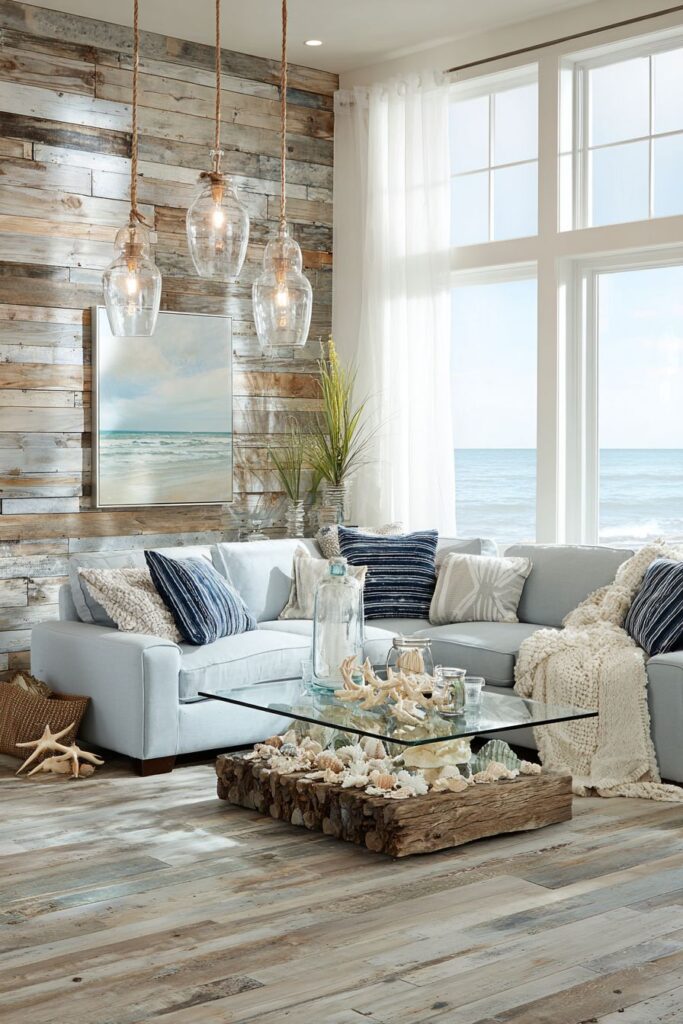
Navy and white striped throw pillows add classic nautical touches without becoming cliché, their graphic pattern providing visual crispness. Rope-wrapped pendant lights hanging at varying heights introduce organic texture overhead while their varied placement creates visual interest. Large windows showcase ocean views while sheer white curtains soften bright sunlight, filtering harsh glare while maintaining transparency. This balance between openness and light control suits coastal environments perfectly.
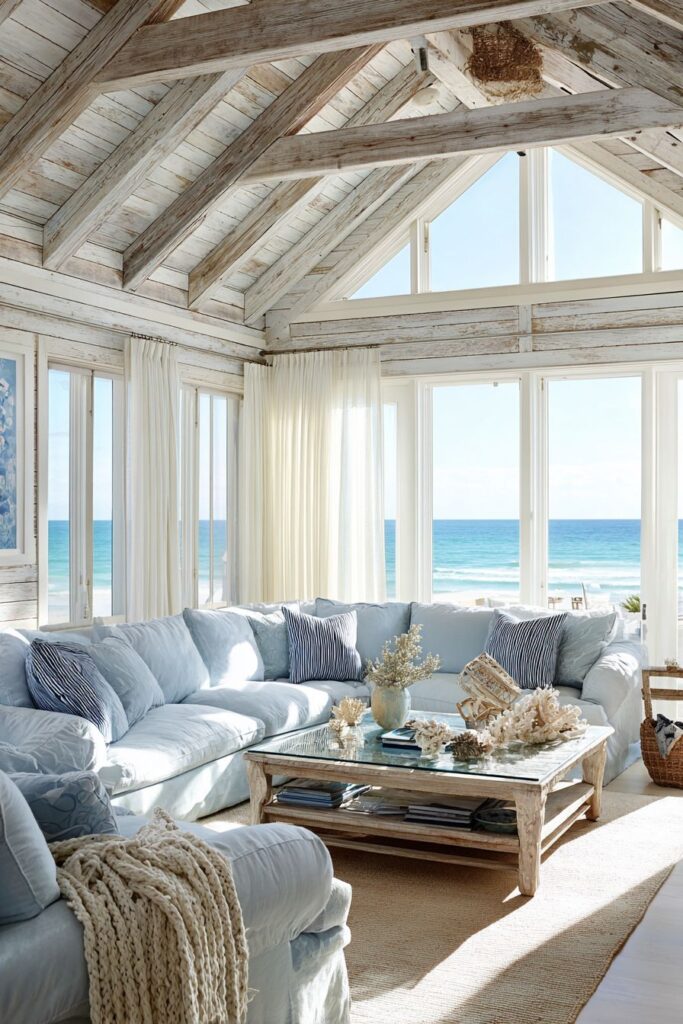
The sun-drenched atmosphere created by abundant natural light and pale colors makes the space feel larger and more open. Natural textures from driftwood, rope, and linen prevent the light palette from feeling sterile or cold. The collected shells and coral displayed beneath glass demonstrate how coastal design can incorporate found natural objects as decoration, personalizing the space with location-specific treasures. This connection to place creates authentic coastal character.
Key Design Tips:
- Use whitewashed wood planking for instant coastal character
- Choose linen upholstery for breathability in warm climates
- Incorporate driftwood furniture for organic beach connection
- Display found natural objects as personalized decoration
- Add navy and white striped patterns for nautical accents
- Wrap rope around light fixtures for textural detail
- Install sheer curtains to filter bright coastal sunlight
- Maintain light color palettes to maximize airiness
11. Transitional Timeless Blend
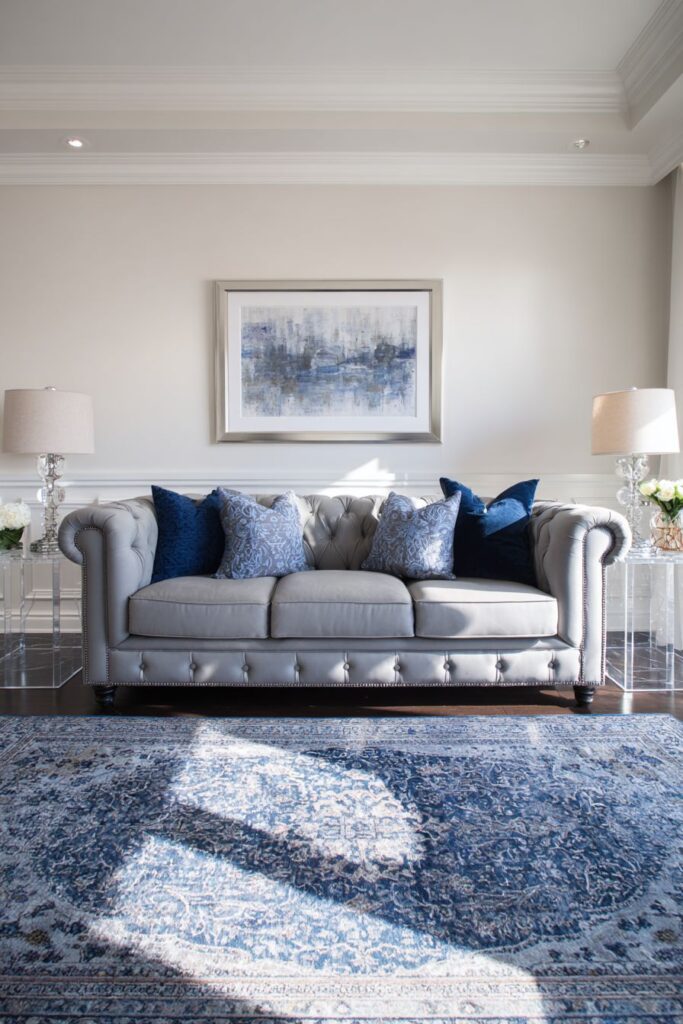
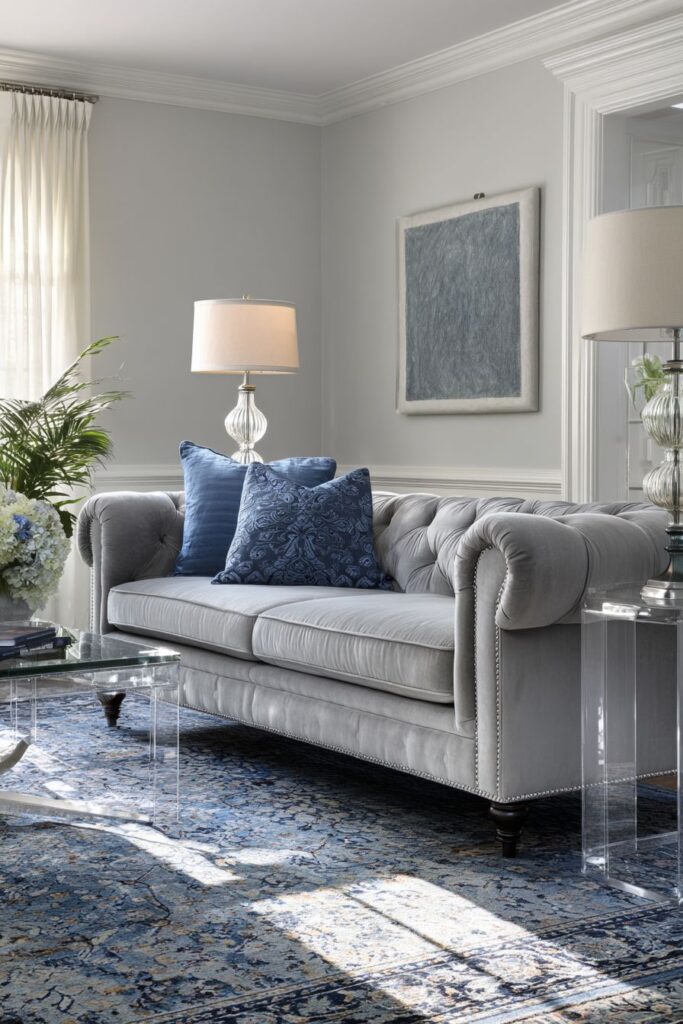
Transitional living room design successfully bridges traditional and contemporary aesthetics, creating timeless spaces that avoid trend-driven extremes. A tufted Chesterfield sofa in soft grey fabric brings classic British elegance while its neutral color maintains contemporary relevance. Modern acrylic side tables introduce clear contemporary elements that complement rather than clash with traditional pieces. Traditional crown molding and wainscoting painted in crisp white provide architectural interest rooted in classical design while the fresh white paint keeps the look current.
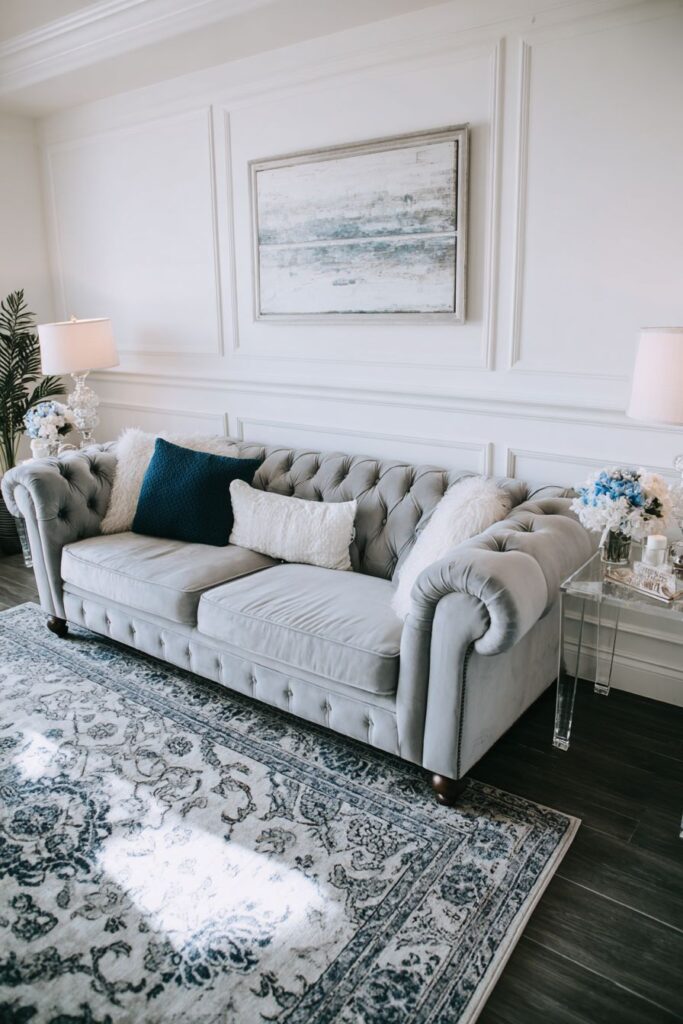
A contemporary abstract painting in blues and greys serves as the bridge between classic and modern elements, its color palette harmonizing with both style vocabularies. The Persian-style area rug features traditional pattern but with updated colors that prevent the space from feeling dated. Crystal table lamps with linen shades combine traditional materials with simplified contemporary forms, demonstrating how classic elements can update through restraint and editing. This balance requires careful curation but achieves enduring appeal.
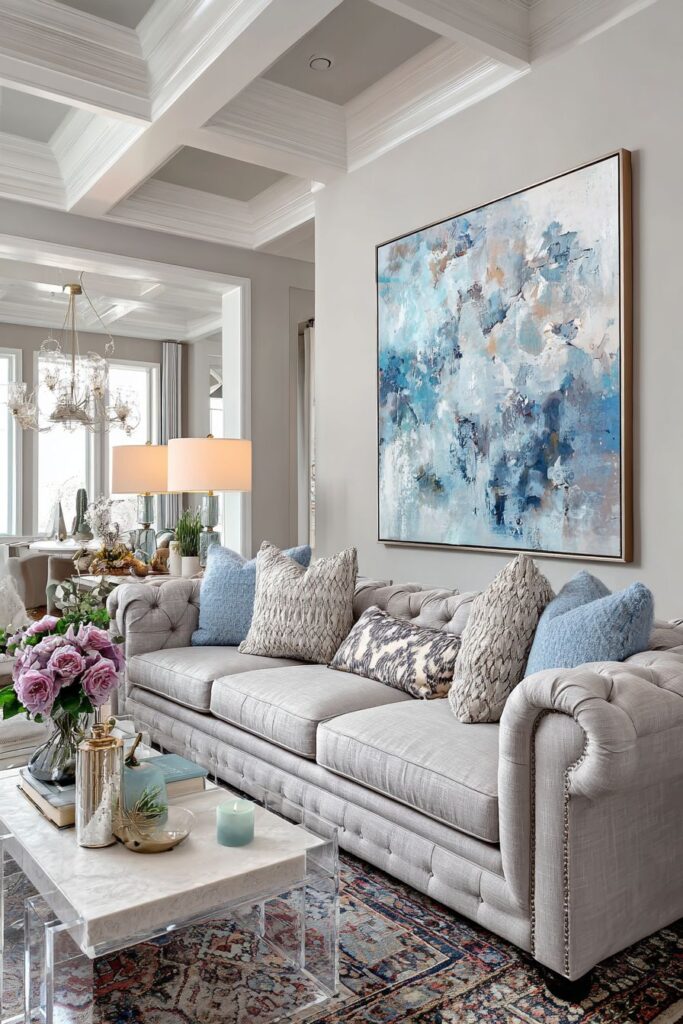
The successful blend of traditional and contemporary elements creates spaces that feel collected and refined rather than decorated all at once. This approach allows for evolution over time, accommodating heirloom pieces alongside modern acquisitions. The grey and blue color palette provides enough neutrality to unify diverse styles while offering sufficient color to prevent blandness. This demonstrates how transitional design serves as comfortable middle ground for those unable to commit fully to either traditional or modern camps.
Key Design Tips:
- Combine classic furniture silhouettes with contemporary materials
- Update traditional rugs through modern color palettes
- Use abstract art to bridge style periods
- Paint architectural details in fresh white for updated look
- Choose neutral upholstery colors that transcend style boundaries
- Incorporate crystal and linen for refined traditional touches
- Select acrylic furniture for contemporary transparency
- Balance ornate and simple elements for visual harmony
12. Small Space Smart Solutions
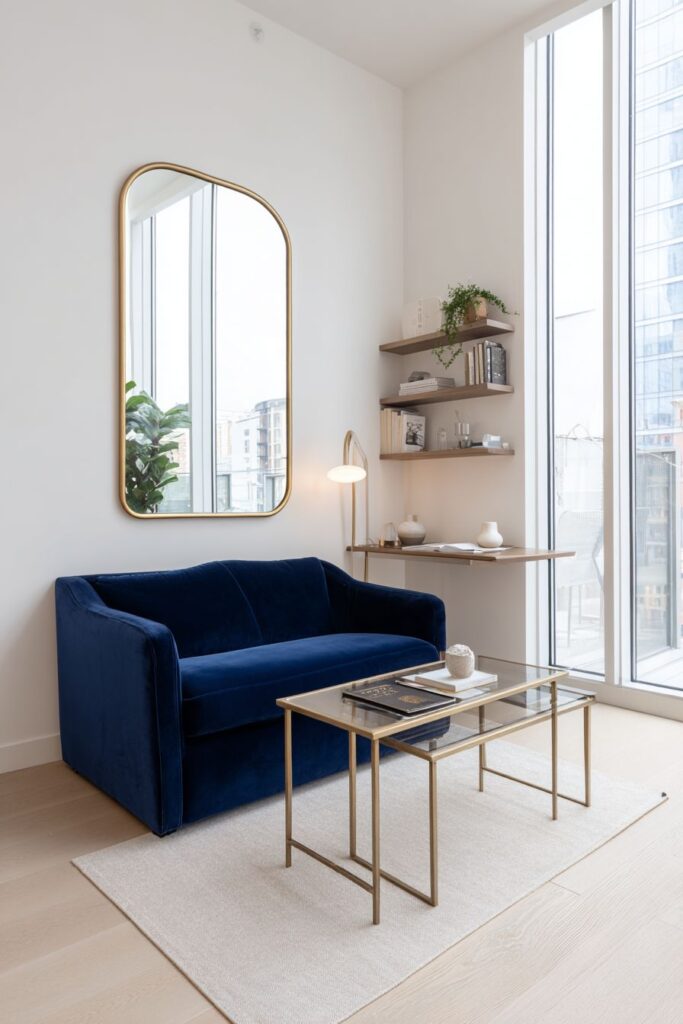
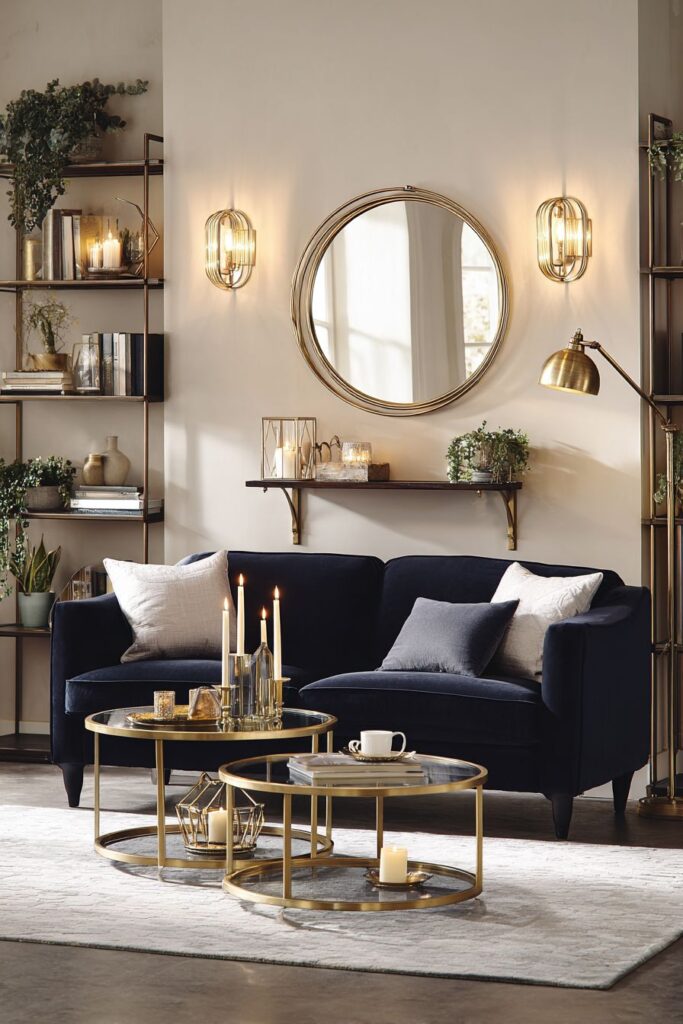
Small living room design requires strategic planning and multi-functional furniture to maximize limited square footage. A compact loveseat in navy velvet positions against a wall-mounted floating console, combining seating comfort with space efficiency. Nested coffee tables in brass and glass allow flexibility, tucking away when not needed and pulling out for entertaining. Wall-mounted shelving maximizes vertical storage while displaying books and plants, drawing the eye upward and utilizing often-wasted wall space.
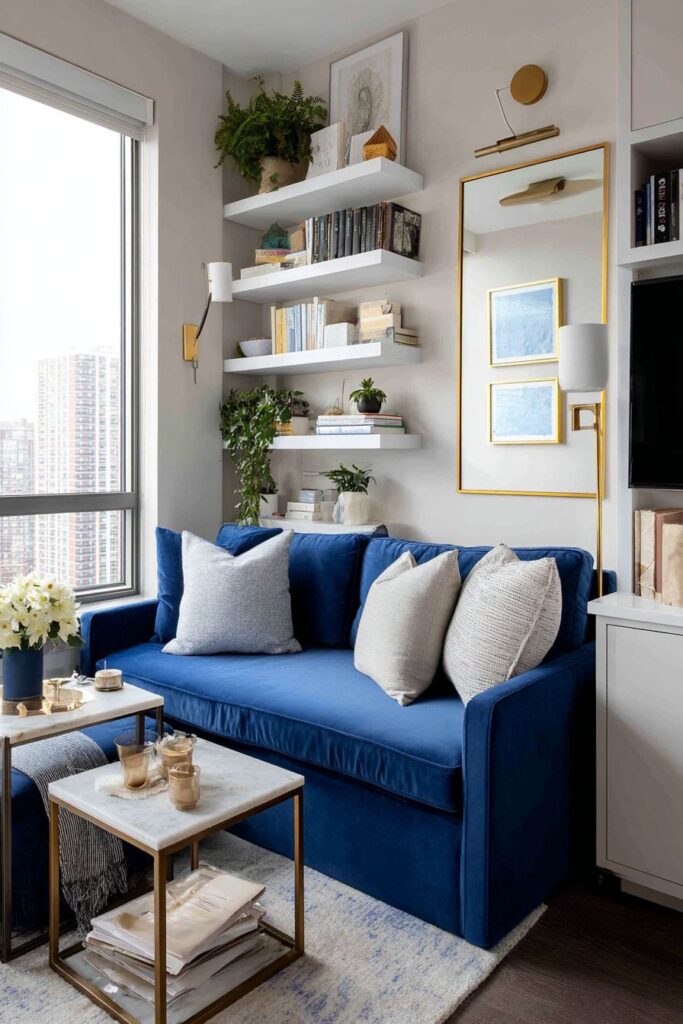
A large mirror with thin gold frame creates the illusion of expanded space through reflection while adding subtle glamour. This optical trick effectively doubles the perceived room size while reflecting light throughout. Strategic lighting including wall sconces and a slim floor lamp brighten the compact area without consuming valuable floor space. The wall sconces provide ambient light while freeing table surfaces, demonstrating how thoughtful lighting placement maximizes functionality in small rooms.
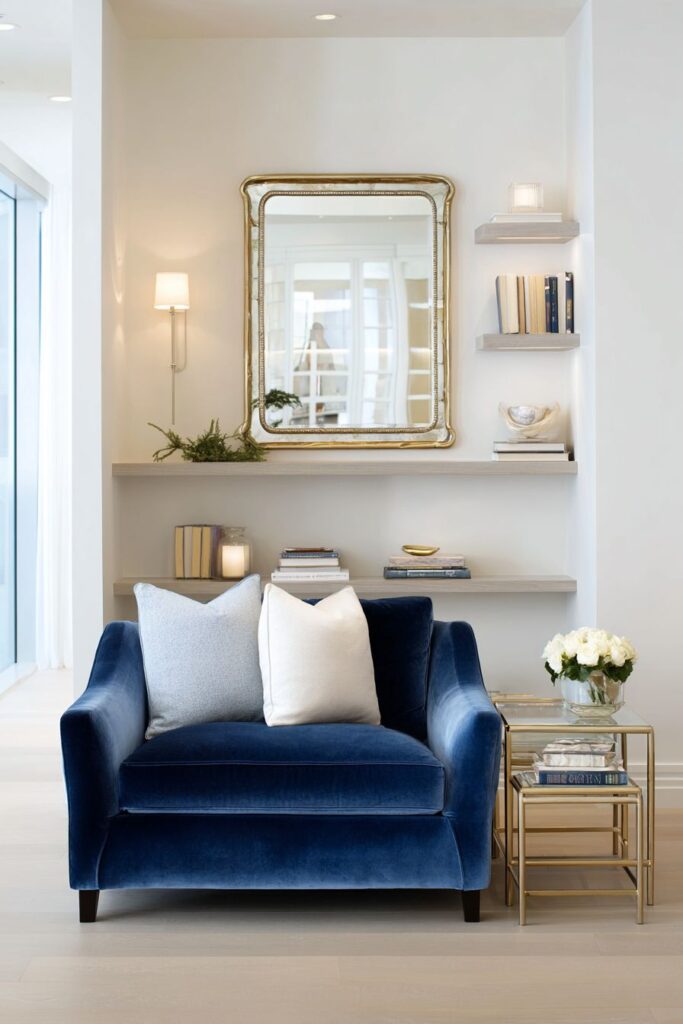
The smart space utilization demonstrates that small rooms can feel generous through clever design decisions. Every piece serves multiple purposes—the floating console provides storage and display, the nested tables offer flexibility, the mirror expands space visually. The navy velvet loveseat proves that small spaces can accommodate rich colors and luxurious materials without feeling cramped. This challenges the assumption that small rooms must feature only light colors and minimal furniture.
Key Design Tips:
- Choose compact-scaled furniture proportionate to room size
- Use wall-mounted furniture to preserve floor space
- Select nested tables for flexible surface options
- Install large mirrors to visually expand small spaces
- Maximize vertical storage with wall-mounted shelving
- Use wall sconces to free table and floor space
- Incorporate floating furniture for airiness
- Choose multi-functional pieces that serve multiple purposes
13. Industrial Urban Edge
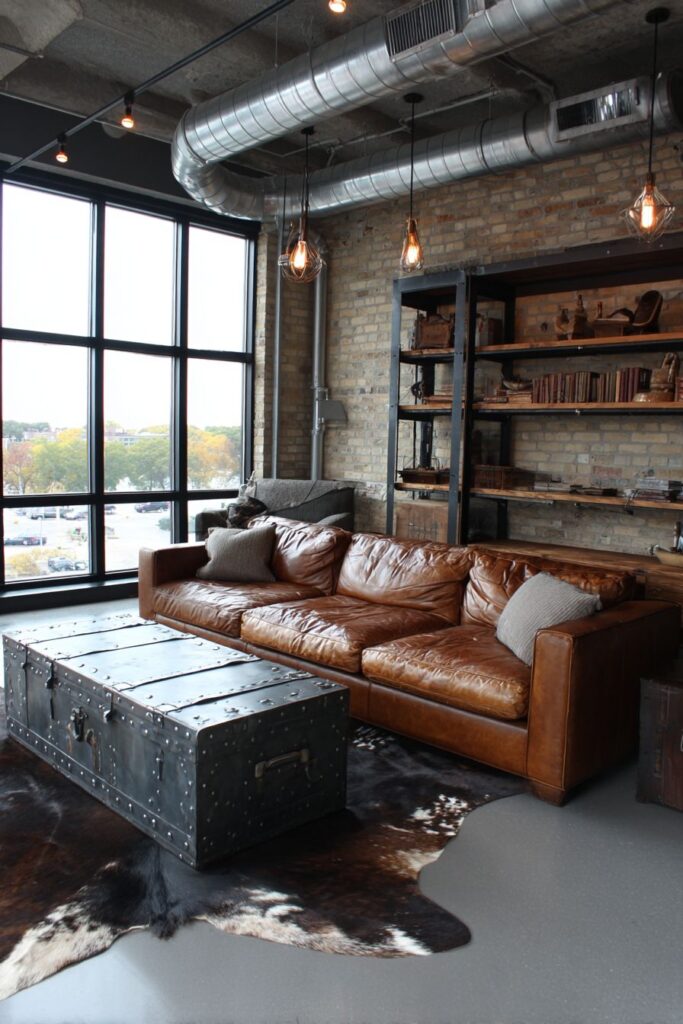
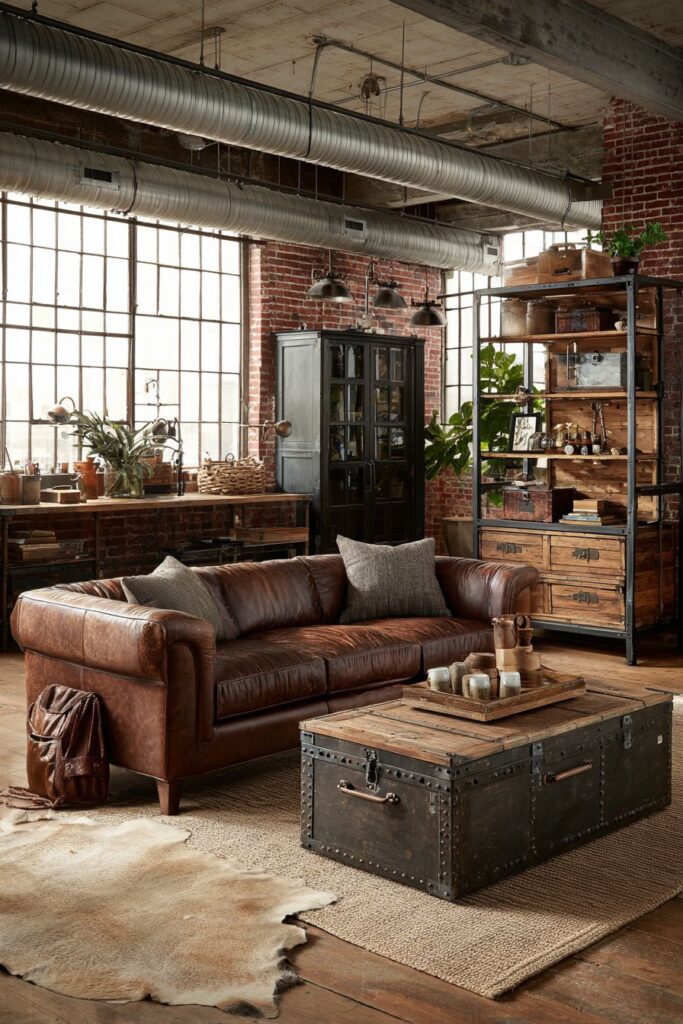
Industrial living room design celebrates raw materials, exposed structural elements, and urban grit transformed into sophisticated living spaces. Exposed brick walls and visible ductwork painted matte black embrace building bones as decorative features rather than hiding them. A leather sofa in cognac brown with visible grain and natural patina anchors the space with substantial presence and aging character. Reclaimed wood and metal pipe shelving units provide both storage and display while exemplifying industrial aesthetic through materials and construction methods.
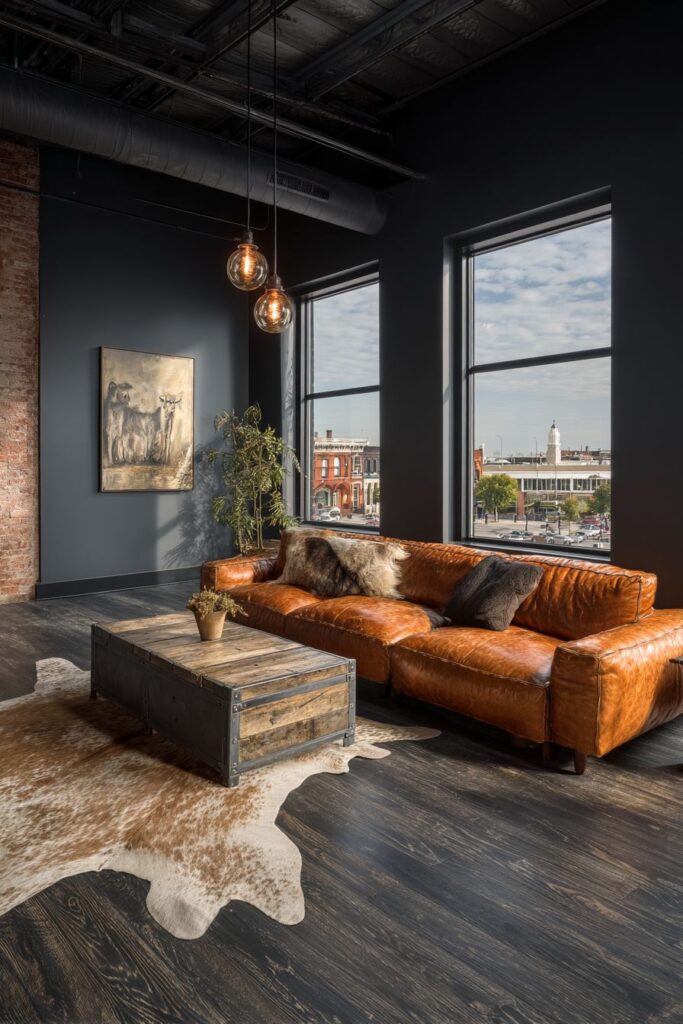
Edison bulb pendant lights hanging from black cord provide warm ambient lighting while their exposed filaments serve as decorative elements. The distressed metal coffee table with riveted details sits atop a cowhide rug, combining industrial fabrication with natural materials. Large factory-style windows flood the space with natural light, their industrial origins now serving residential purposes. This conversion of industrial elements for residential use defines the style’s essential character.
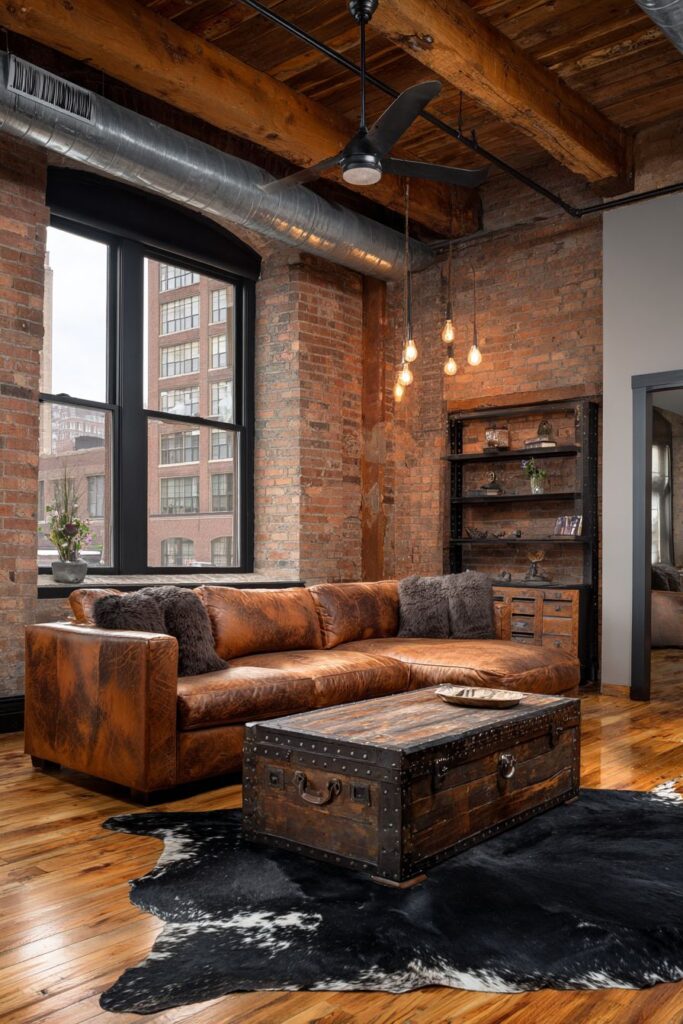
The raw materials and utilitarian aesthetic create spaces with masculine energy and urban authenticity. The emphasis on metal textures and leather characteristics brings tactile richness despite the deliberately unfinished appearance. The cognac leather develops beautiful patina over time, improving with age rather than showing wear. This appreciation for material authenticity and aging represents a core industrial design principle—celebrating rather than hiding time’s effects.
Key Design Tips:
- Expose and celebrate structural elements like brick and ductwork
- Choose leather upholstery that develops beautiful patina
- Incorporate reclaimed wood for sustainability and character
- Use metal pipe for shelving and furniture construction
- Install Edison bulb lighting for vintage industrial ambiance
- Paint exposed ductwork matte black for refined finish
- Select distressed metal furniture with visible rivets and welds
- Add cowhide rugs for natural texture contrast
14. Styled Console Vignette
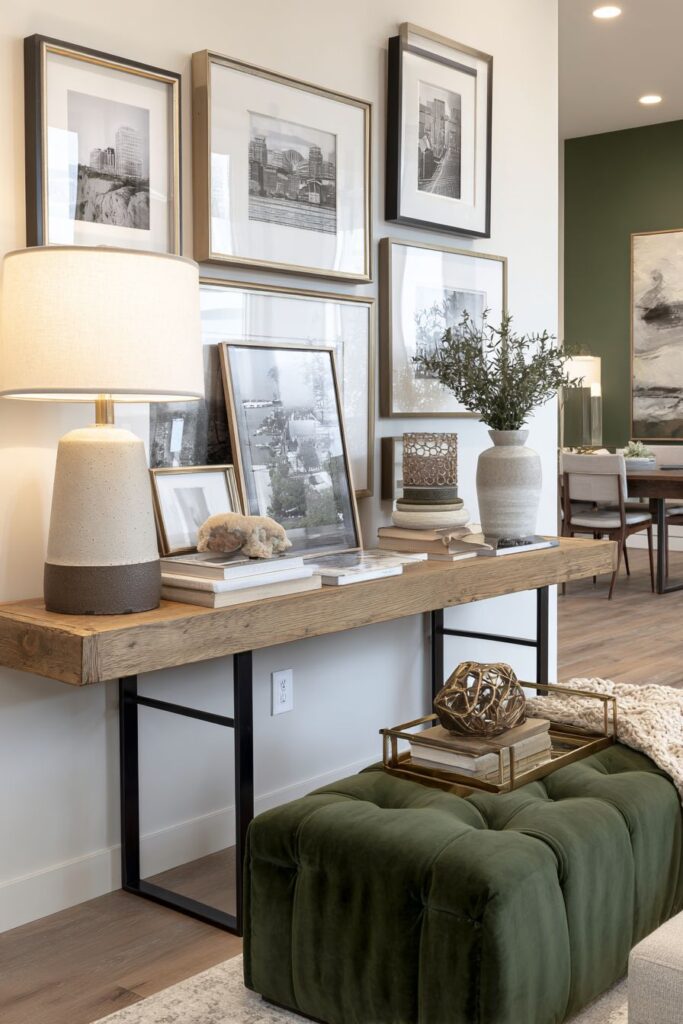
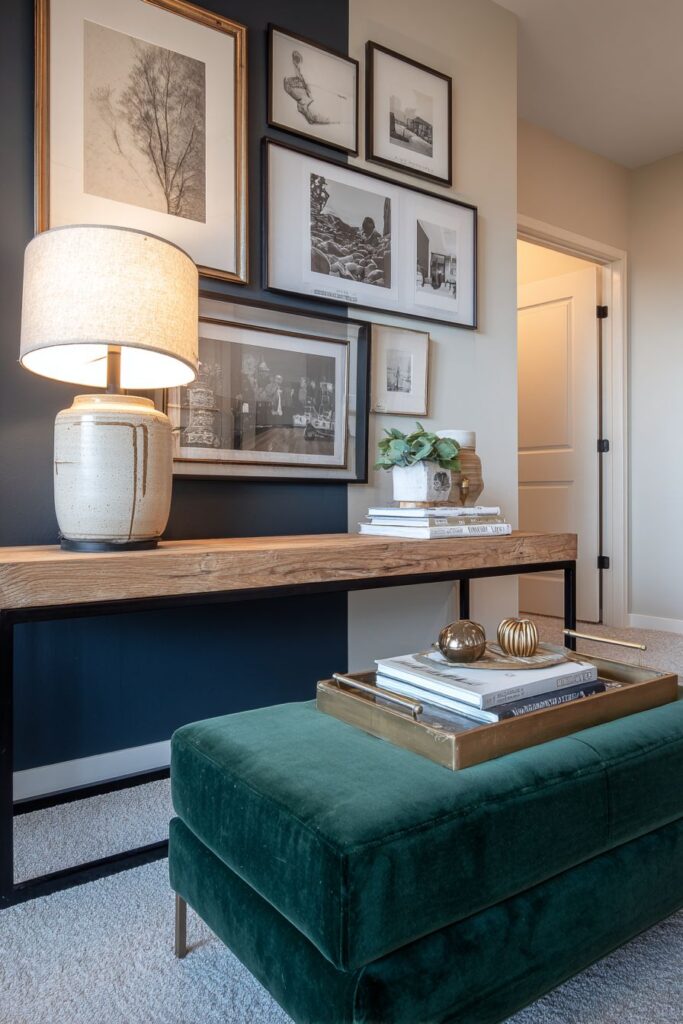
Creating a thoughtfully styled console table vignette demonstrates how smaller moments within a room contribute to overall design success. Against a navy accent wall, the natural wood console with black metal frame provides surface space for layered decoration. A table lamp with ceramic base provides both illumination and decorative sculptural form. A stack of coffee table books adds height variation while displaying personal interests. A brass tray corrals smaller decorative objects, creating visual organization within the arrangement.
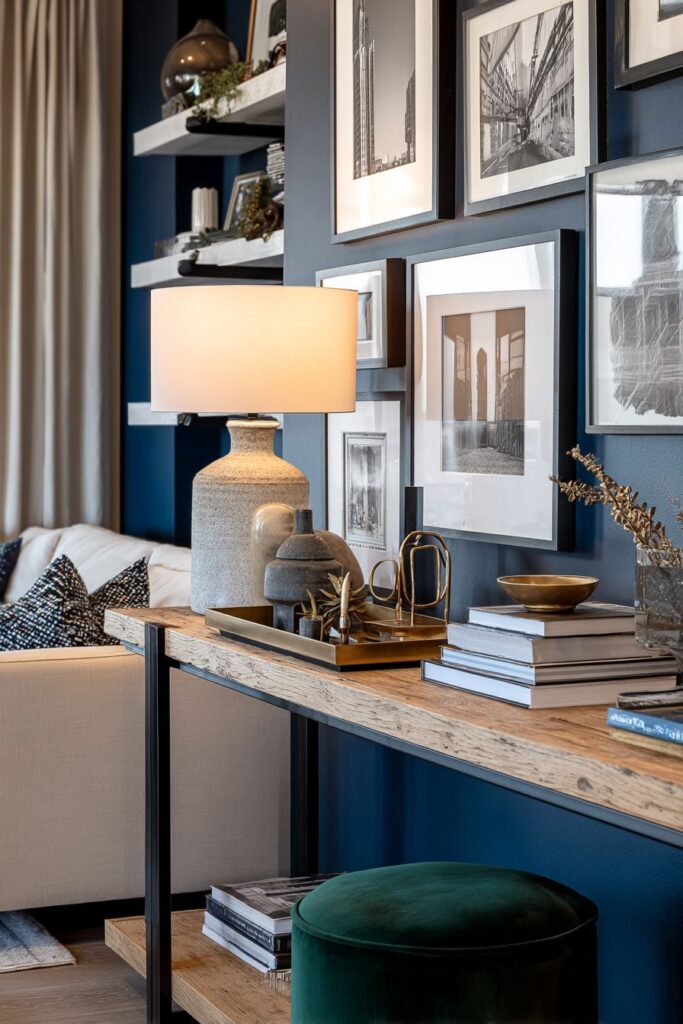
Above the console hangs a collection of framed black and white photographs in varied sizes creating a gallery wall. This arrangement requires careful planning to achieve balanced composition despite irregular sizes and proportions. The black frames against the navy wall create sophisticated contrast while the varied sizes add visual interest. A plush ottoman in emerald green velvet positioned nearby serves as additional seating while introducing bold color accent. This demonstrates how accessories and secondary furniture pieces contribute significantly to overall room success.
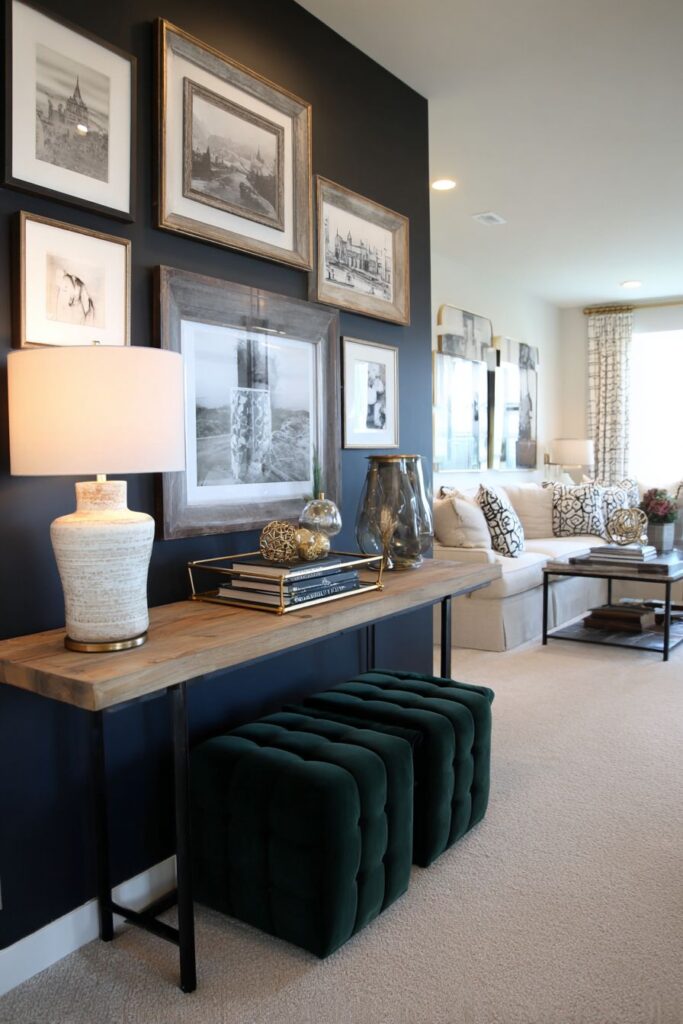
The curated styling demonstrates key principles of successful vignette creation—height variation, material contrast, color coordination, and personal expression. The brass tray’s metallic finish contrasts beautifully with the ceramic lamp base and wood console. The photography gallery adds personality and meaning while the emerald ottoman introduces unexpected color that energizes the space. This attention to smaller moments creates layered, interesting rooms that reward closer examination.
Key Design Tips:
- Create height variation through lamp, books, and objects
- Use trays to corral and organize smaller items
- Mix materials like wood, metal, and ceramic for contrast
- Create gallery walls with varied frame sizes for visual interest
- Paint accent walls in bold colors like navy for drama
- Add metallic accents through brass or gold accessories
- Include personal photographs for meaningful decoration
- Position ottomans as flexible seating and color accents
15. Eclectic Collected Character
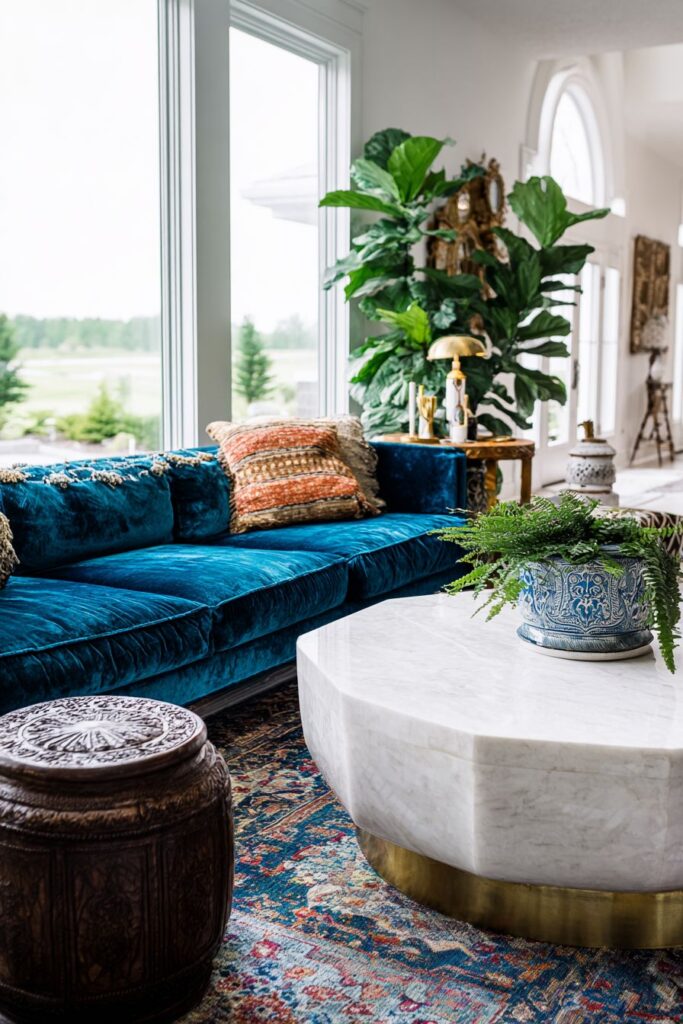
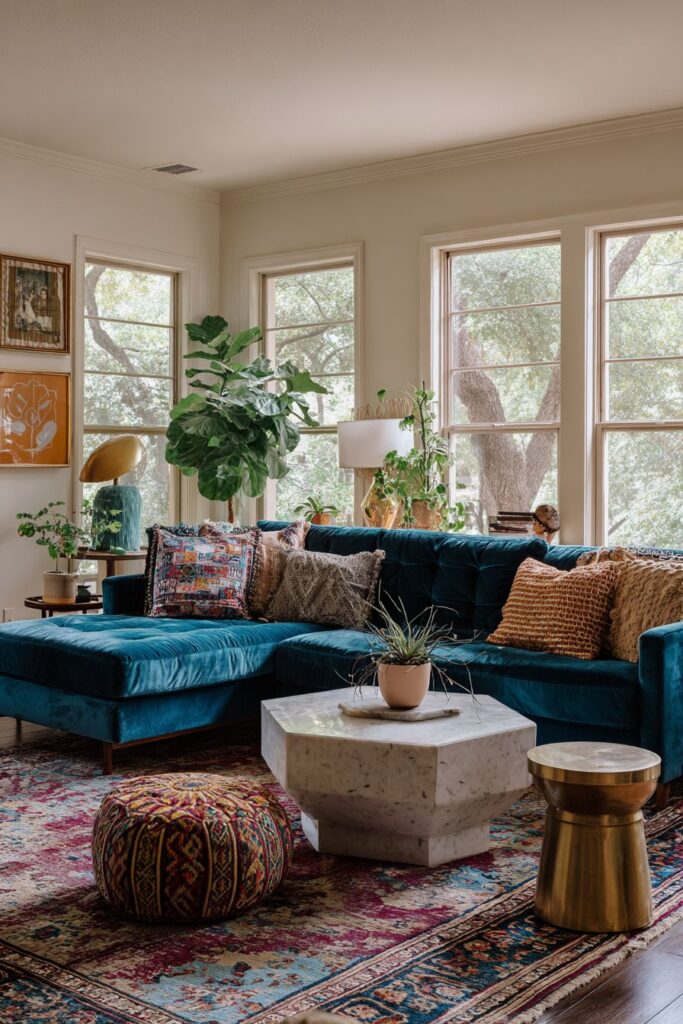
Eclectic living room design celebrates mixing periods, styles, and origins to create uniquely personal spaces. A vintage velvet sofa in deep teal pairs unexpectedly but successfully with a contemporary geometric coffee table in white marble and brass. Mismatched side tables including a Moroccan pouf and a vintage wooden stool add character while rejecting matching set mentality. The gallery wall combines antique mirrors, modern prints, and textile art, demonstrating confident curation that honors diverse objects while creating cohesive display.
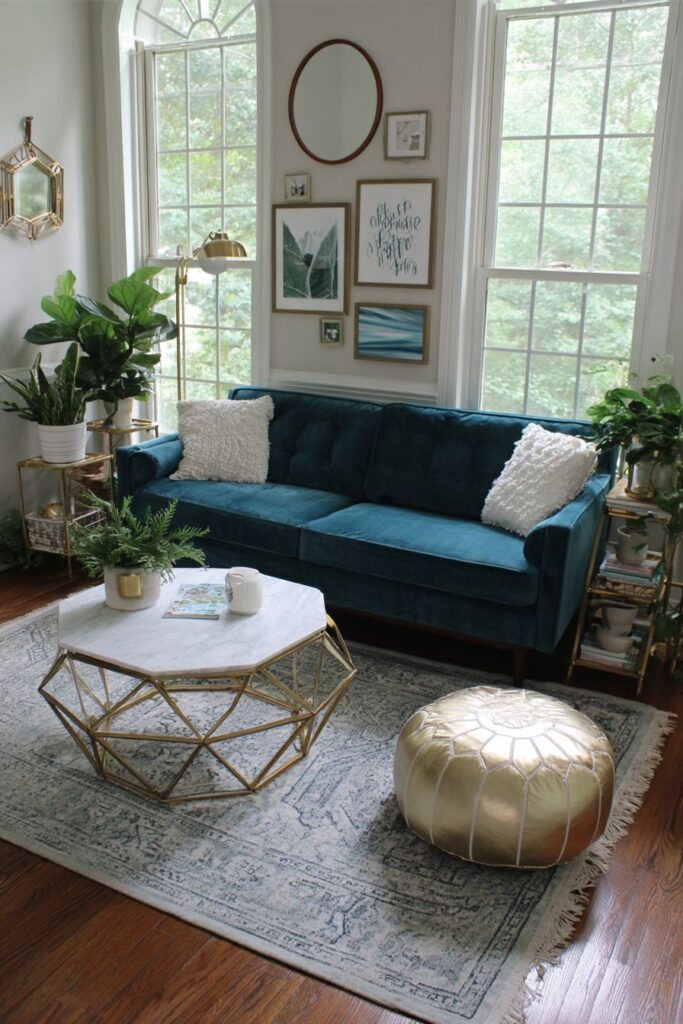
A Persian rug with faded jewel tones unifies the diverse elements through color harmony, proving that rugs serve as anchors in eclectic spaces. Potted fiddle leaf fig and trailing pothos add living greenery at different heights and forms. Natural light through tall windows combines with vintage brass floor lamp to create layered illumination. This collected-over-time aesthetic suggests personal history and world travel rather than single-purchase room design.
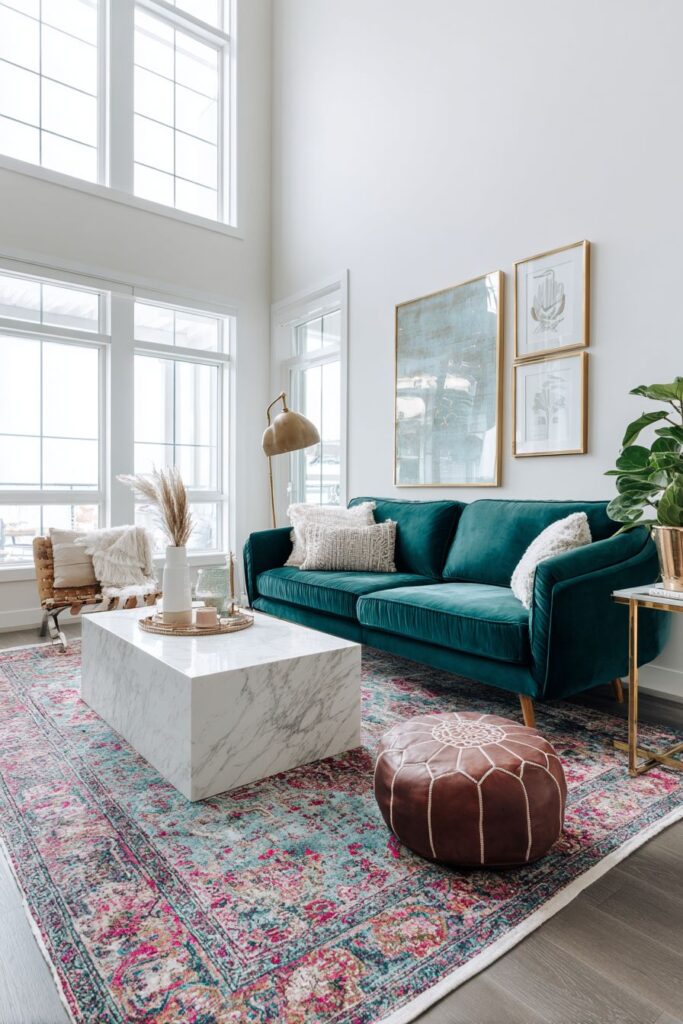
The curated aesthetic requires strong curatorial eye to succeed—too much diversity creates chaos while too little caution results in bland predictability. The interplay of different eras and styles works when unified by consistent color palette and quality standards. The deep teal sofa, jewel-toned rug, and brass accents create color harmony despite stylistic diversity. This demonstrates how color can unify disparate elements when pattern and form vary widely.
Key Design Tips:
- Mix furniture from different periods and origins confidently
- Use vintage pieces alongside contemporary designs
- Create gallery walls combining diverse art types and origins
- Select Persian or vintage rugs to anchor eclectic schemes
- Embrace mismatched side tables for character
- Incorporate textile art for textural wall interest
- Add plants at varying heights for organic elements
- Unify diversity through consistent color palette
16. Organic Modern Texture
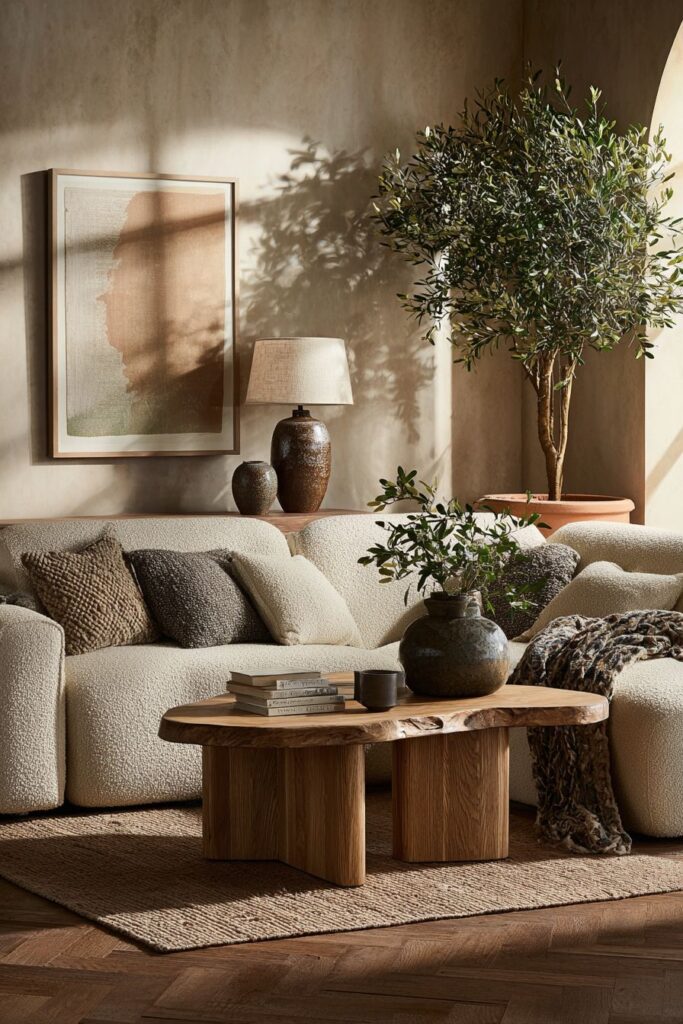
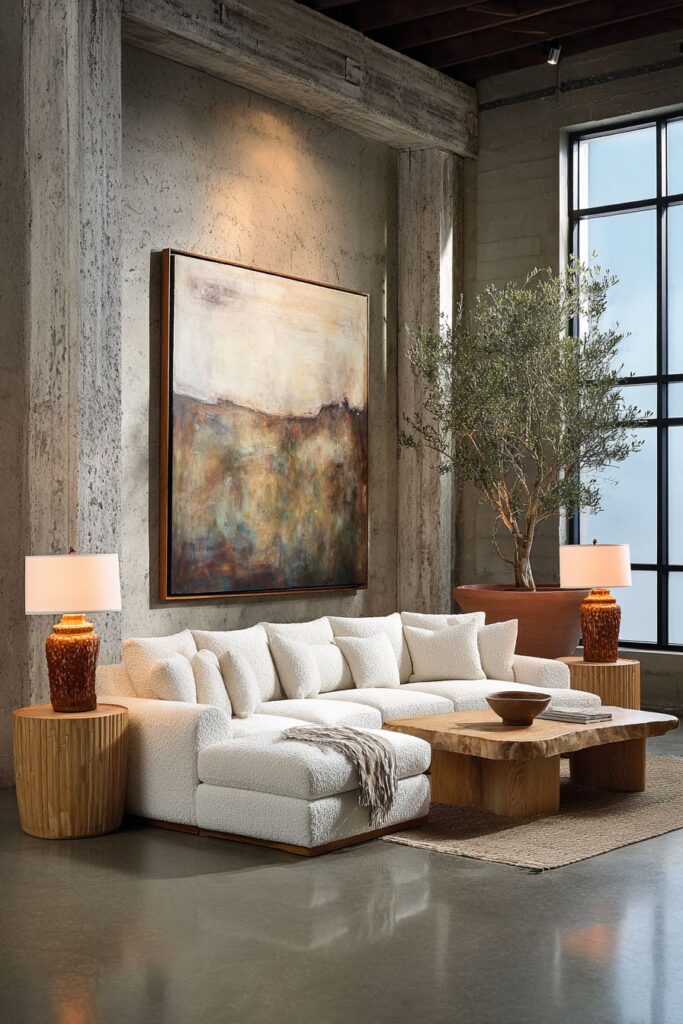
Organic modern living room design emphasizes natural materials, curved forms, and tactile textures within contemporary frameworks. A statement sectional sofa in textured bouclé fabric in cream provides substantial seating with nubby, inviting texture. The organic-shaped coffee table in light oak with live edge brings natural elements through both material and form, its irregular edge celebrating wood’s growth patterns. Oversized abstract artwork in earth tones creates a focal point above the sofa, its scale appropriate to the furniture’s substantial proportions.
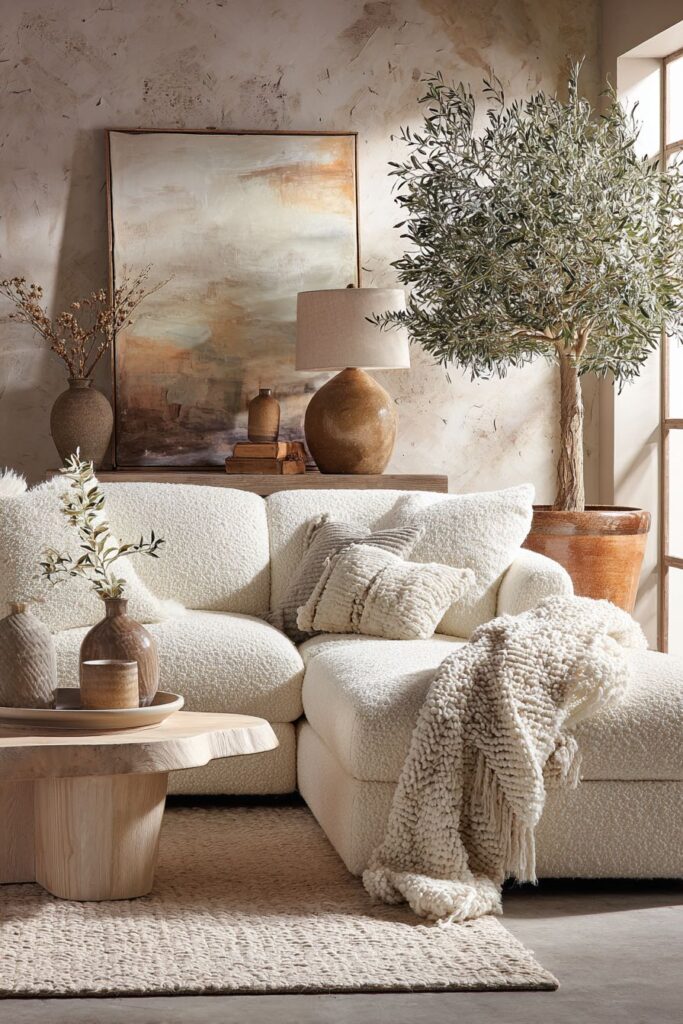
Ceramic table lamps with reactive glaze finishes provide warm ambient lighting while displaying unique surface patterns created during firing. A handwoven wool throw blanket drapes casually over the sofa arm, adding textile warmth and inviting touch. A large potted olive tree in terracotta planter adds height and organic texture while connecting to Mediterranean landscapes. The soft diffused natural lighting emphasizes the tactile quality of materials, from the bouclé’s texture to the wood’s grain to the ceramic’s glaze variations.
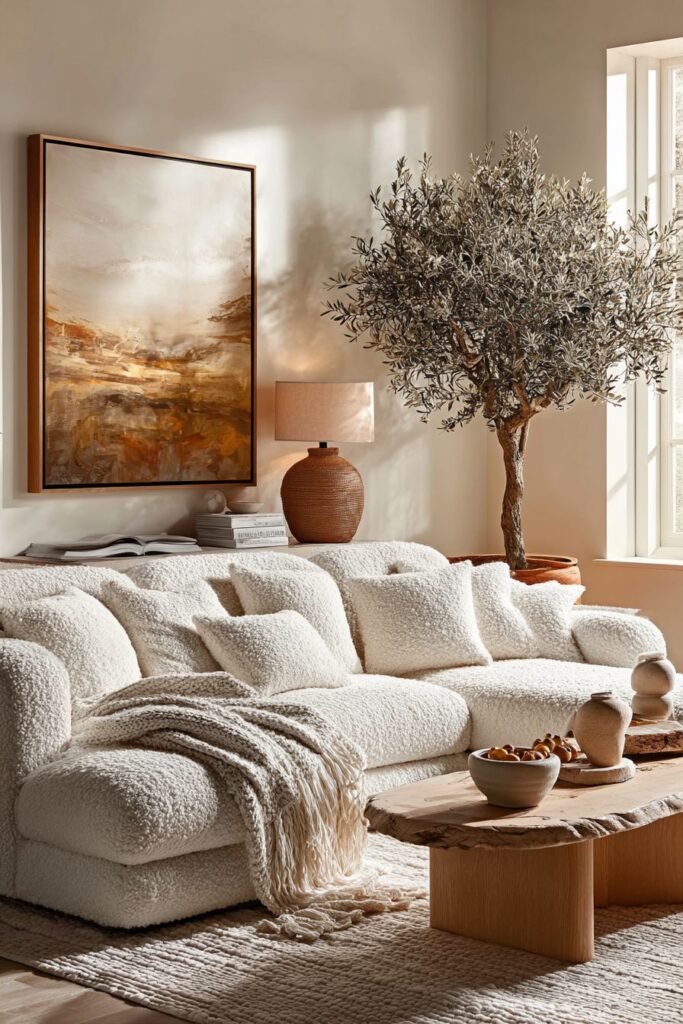
The organic modern aesthetic succeeds through celebrating natural materials’ inherent beauty rather than disguising or transforming them. The live-edge coffee table showcases wood’s organic growth rather than forcing it into rigid geometry. The bouclé fabric invites touch through visible texture. The reactive glaze celebrates ceramic’s unpredictability. This material honesty creates spaces that feel grounded and authentic despite contemporary styling.
Key Design Tips:
- Choose bouclé fabric for substantial inviting texture
- Incorporate live-edge wood to celebrate organic forms
- Select oversized art scaled appropriately to furniture
- Use ceramic pieces with reactive glazes for unique finishes
- Add handwoven textiles for artisanal character
- Include substantial plants like olive trees for height
- Display natural materials’ inherent beauty honestly
- Create earth-tone palettes that connect to nature
17. Maximalist Opulent Layering
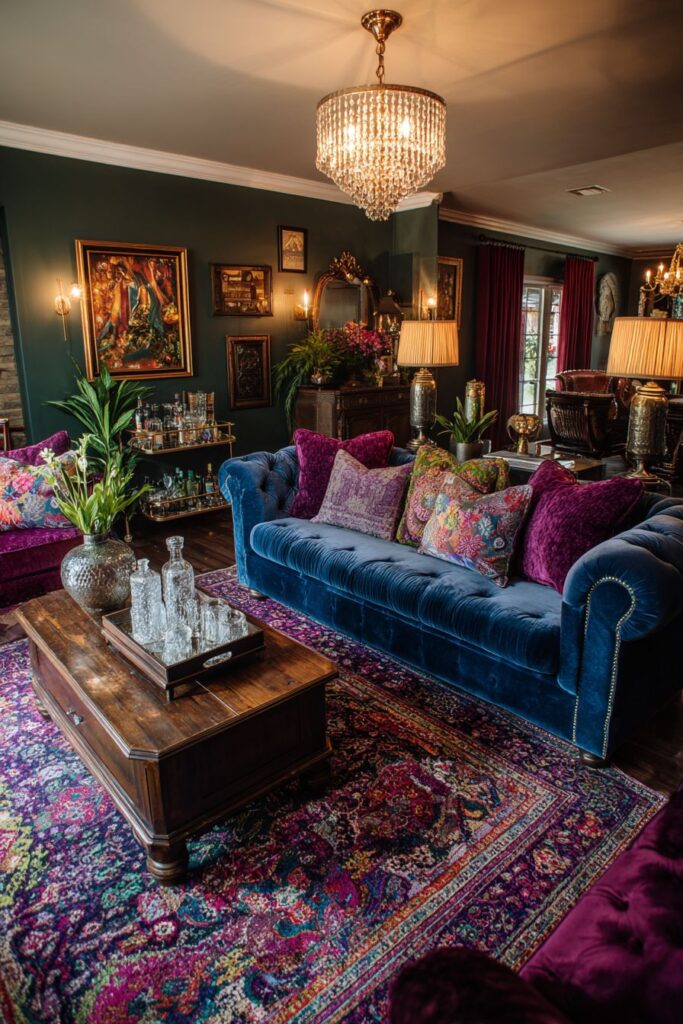
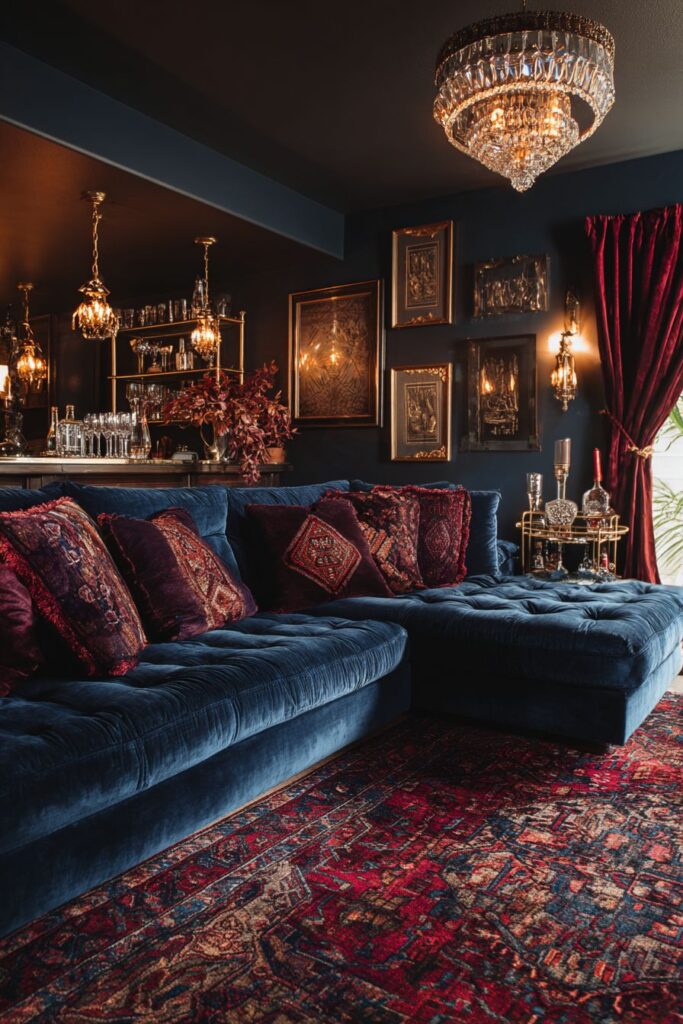
Maximalist living room design celebrates abundance, rich color, and confident layering to create dramatic, personality-filled spaces. Richly layered textiles including velvet curtains in deep burgundy, patterned throw pillows in jewel tones, and an ornate Persian rug create sensory richness. Walls painted in moody forest green provide dramatic backdrop for an eclectic artwork collection in gilded frames. The tufted velvet sofa in peacock blue anchors the space with bold color and luxurious material, commanding attention rather than fading into backgrounds.
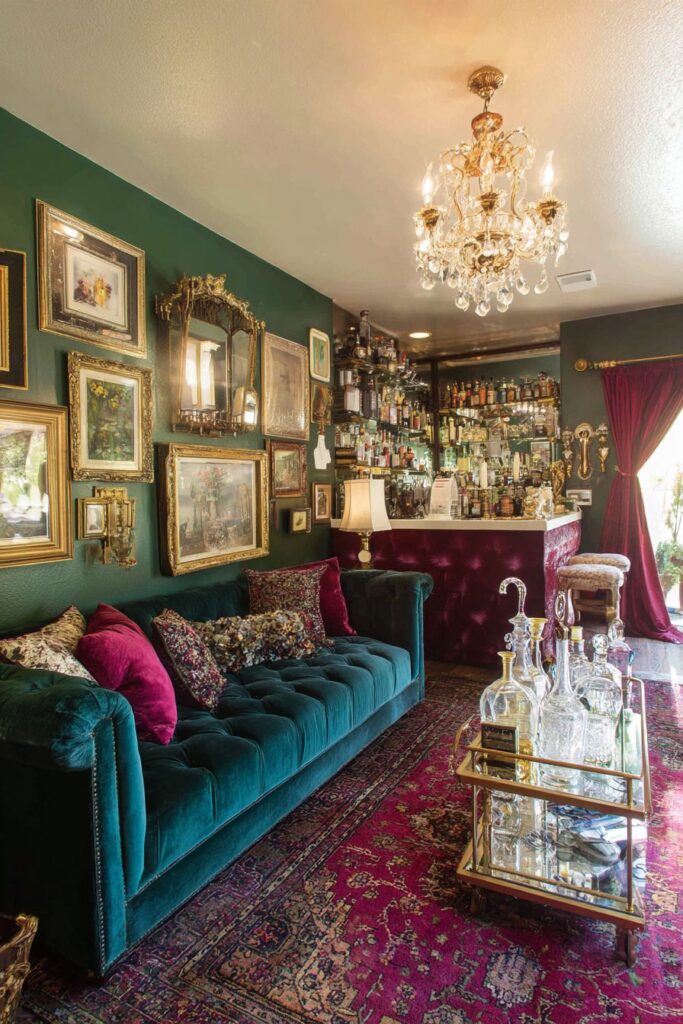
A brass and glass bar cart styled with decanters and glassware adds functionality while contributing to the room’s glamorous character. Multiple light sources including crystal chandelier and table lamps create warm glow that enhances rich colors and metallic accents. The opulent layering and rich color saturation create immersive environments that reward visual exploration. Each surface, wall, and corner offers something to discover, from ornate frame details to textile patterns to glassware collections.
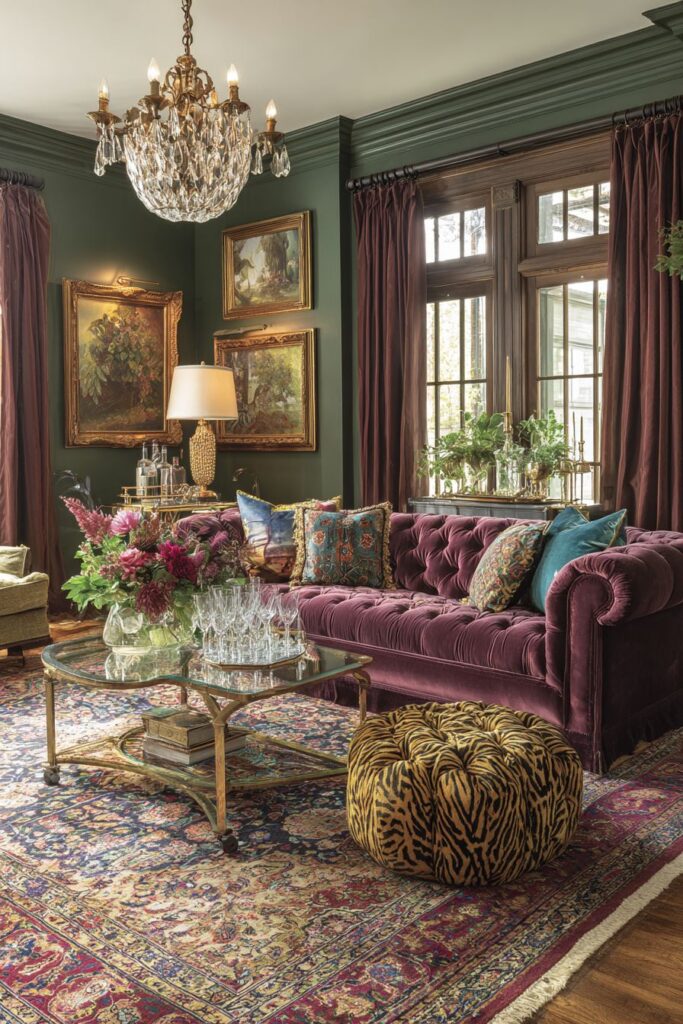
Maximalist design requires confidence to succeed, embracing abundance rather than apologizing for it. The key lies in maintaining intentionality despite abundance—each element should be chosen deliberately rather than accumulated randomly. The jewel-tone palette unifies diverse patterns while the repeated use of brass throughout creates metallic thread. This demonstrates that maximalism requires as much curation as minimalism, simply with opposite philosophies guiding selection.
Key Design Tips:
- Layer multiple textile patterns and textures confidently
- Paint walls in dramatic colors like forest green or navy
- Choose jewel-tone upholstery for bold statement pieces
- Display artwork collections in gilded frames
- Incorporate bar carts for functional glamour
- Use multiple light sources for layered illumination
- Select crystal chandeliers for luxurious focal points
- Embrace abundance while maintaining intentional curation
18. Biophilic Green Connection
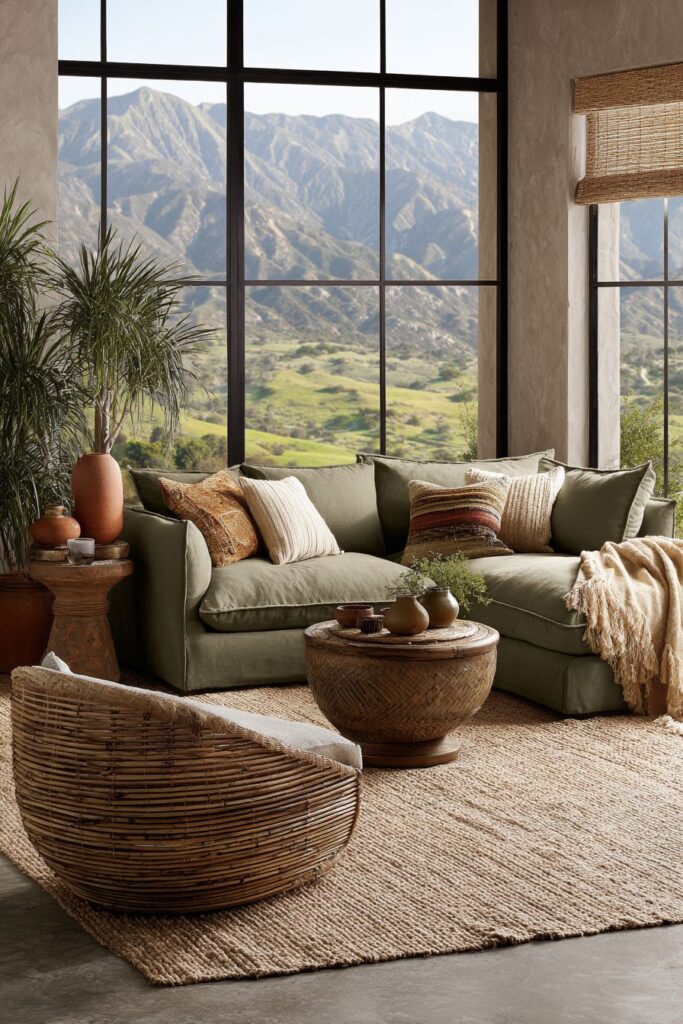
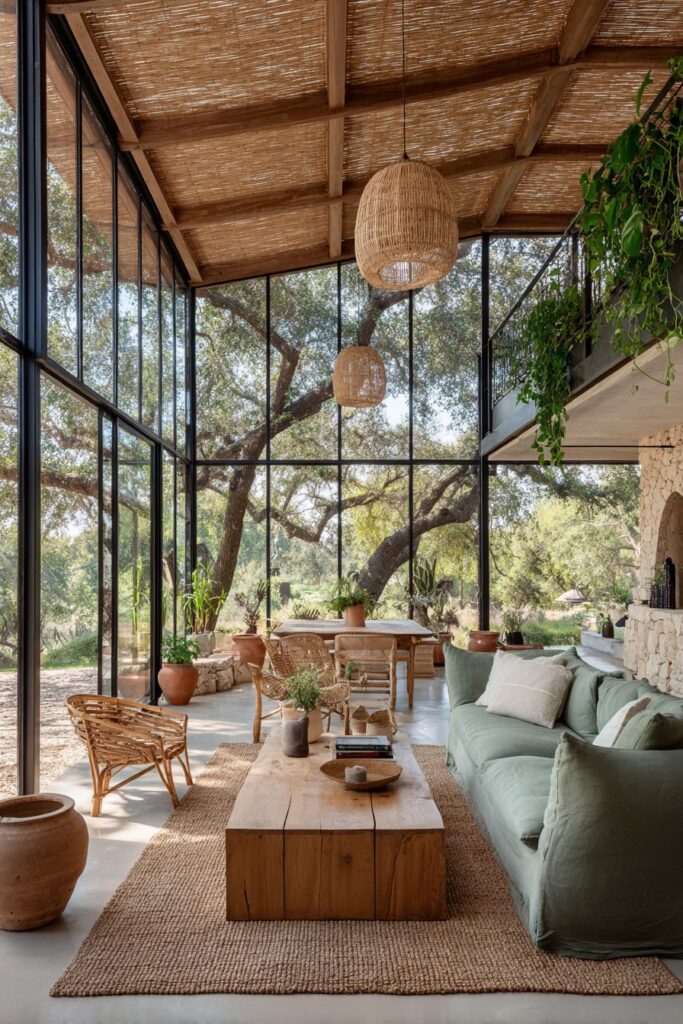
Biophilic living room design prioritizes connection to nature through abundant plant life, natural materials, and visual transparency to outdoor spaces. Floor-to-ceiling windows overlooking greenery dissolve boundaries between interior and exterior. A natural linen sofa in sage green blends with outdoor views, its color harmonizing with surrounding landscape. The living wall installation featuring mixed tropical plants creates an indoor garden that improves air quality while providing ever-changing living art. This commitment to plant life transforms the living room into a green sanctuary.
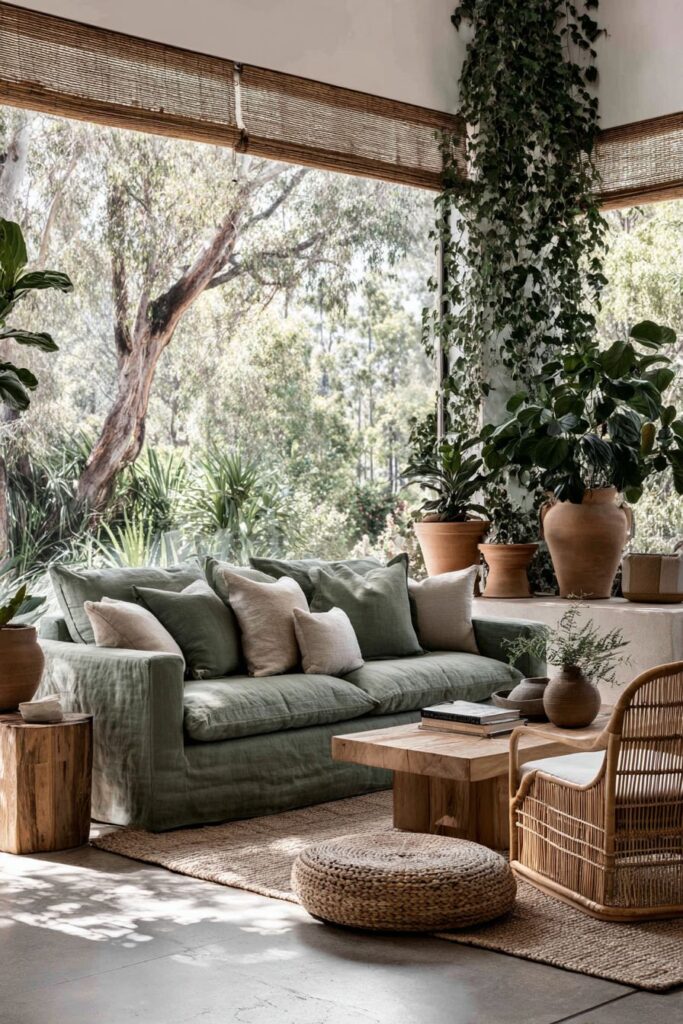
Furniture in natural materials including rattan accent chairs and a reclaimed teak coffee table reinforces nature connection through material selection. A jute area rug adds organic texture underfoot while terracotta pots in various sizes house additional plants throughout the space. Soft natural daylight filters through bamboo roman shades, controlling light while maintaining natural material palette. The seamless indoor-outdoor connection and attention to natural materials create spaces that feel nurturing and restorative.
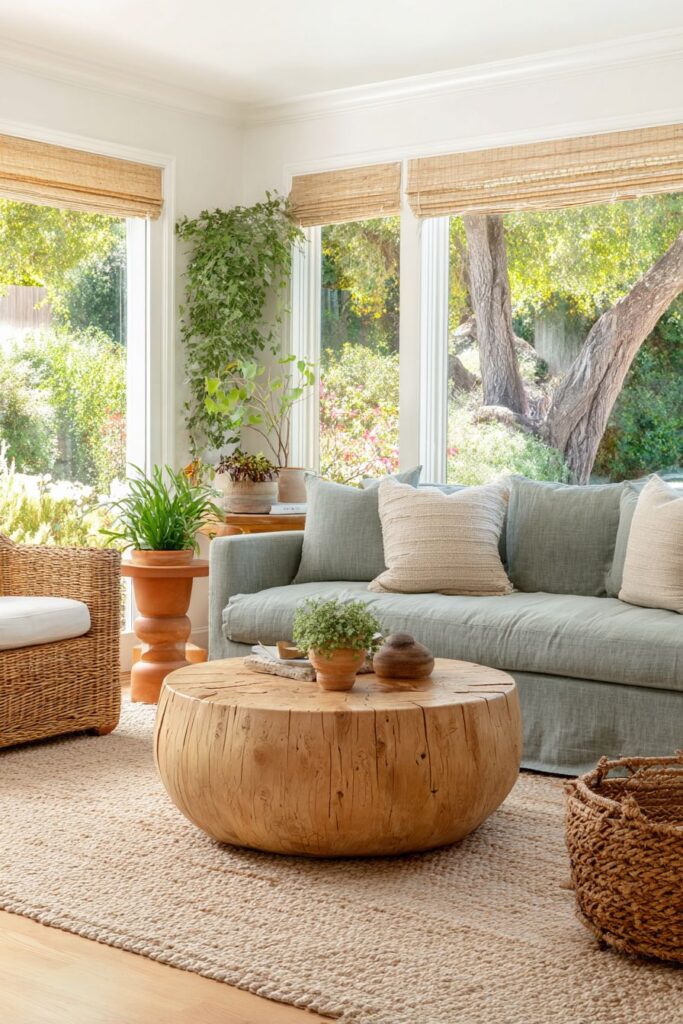
The abundant plant life requires commitment to maintenance but rewards with improved air quality, visual beauty, and psychological benefits. The biophilic design principle suggests that humans have innate need to connect with nature, and spaces facilitating this connection promote wellbeing. The mixed tropical plants provide varied leaf shapes, sizes, and textures that create visual interest while the living wall serves as dynamic focal point that changes with growth and seasons.
Key Design Tips:
- Maximize window size to connect interior with nature
- Create living walls for dramatic plant displays
- Choose furniture in natural materials like rattan and teak
- Select upholstery colors that harmonize with greenery
- Use jute and sisal rugs for organic texture
- Display plants in terracotta for classic natural aesthetic
- Install bamboo window treatments for material consistency
- Commit to plant maintenance for healthy displays
19. Symmetrical Conversation Seating
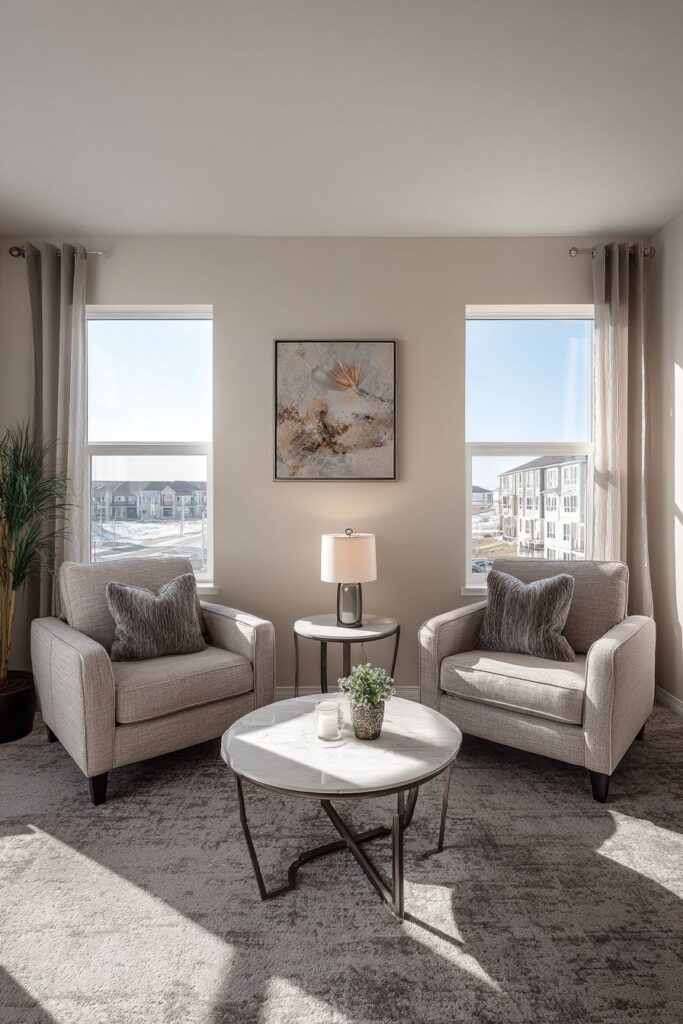
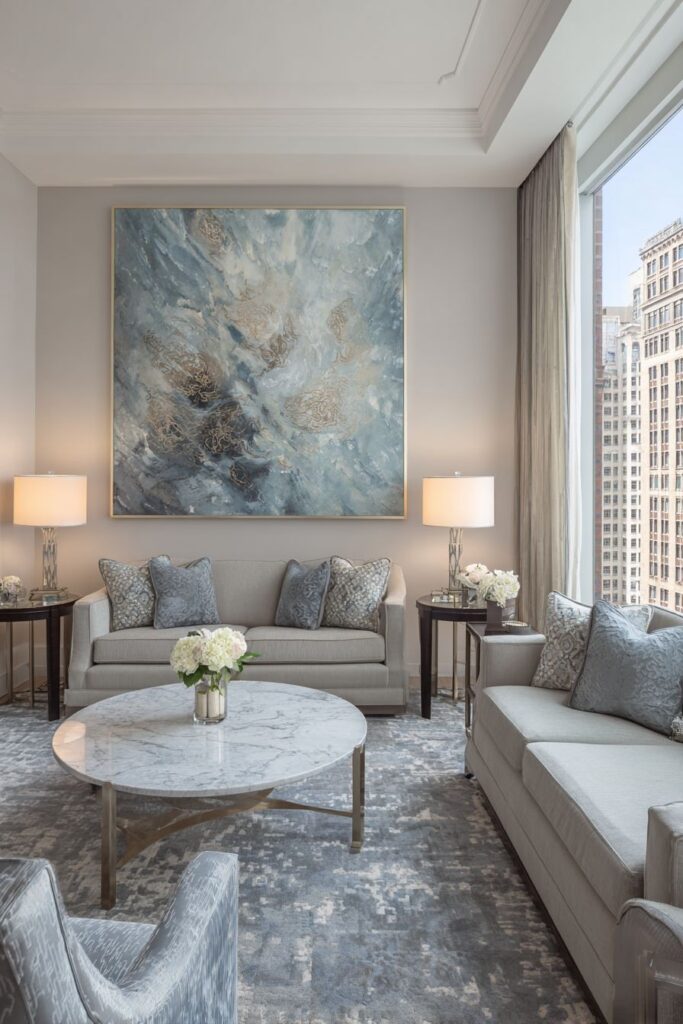
Creating a symmetrical conversation area prioritizes human interaction through intentional furniture arrangement. Two facing sofas in neutral linen create balanced seating that encourages engagement. A round marble coffee table centered between them facilitates interaction while its circular form softens the rectangular furniture arrangement. Matching table lamps on side tables flanking each sofa provide balanced lighting while reinforcing symmetry. This formal arrangement creates order and elegance through careful spatial planning.
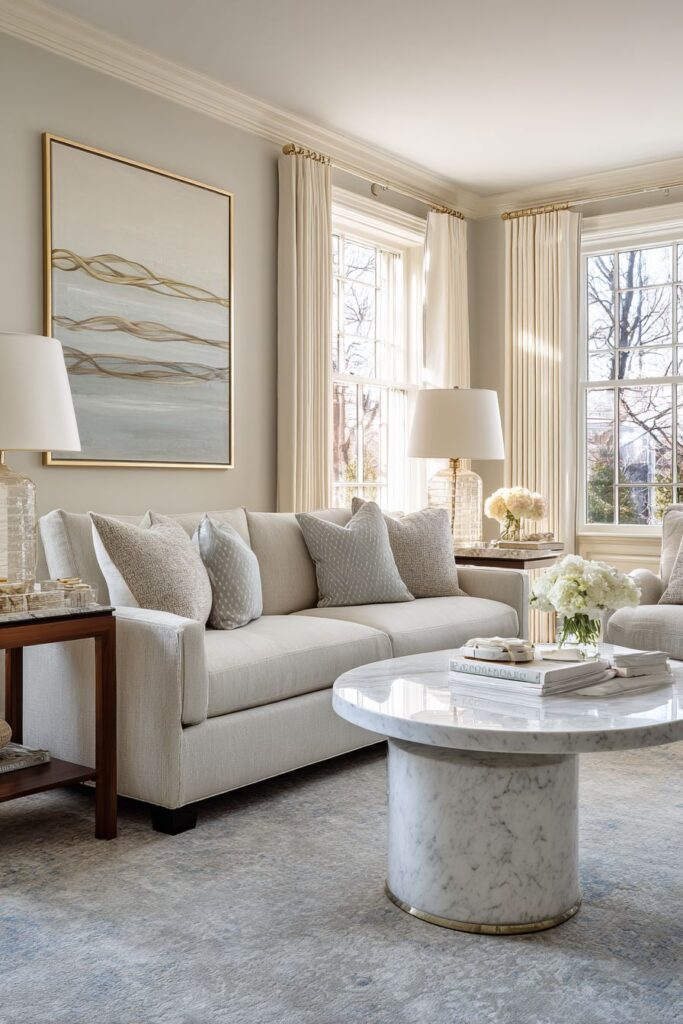
Large-scale artwork in abstract organic forms hangs above one sofa as focal point, providing visual interest while maintaining the room’s balanced composition. An area rug in subtle pattern grounds the symmetrical layout, defining the conversation zone within the larger space. Natural light from windows on either side creates even illumination that enhances the balanced composition. The soft shadows defining furniture silhouettes add depth while maintaining the arrangement’s inherent order.
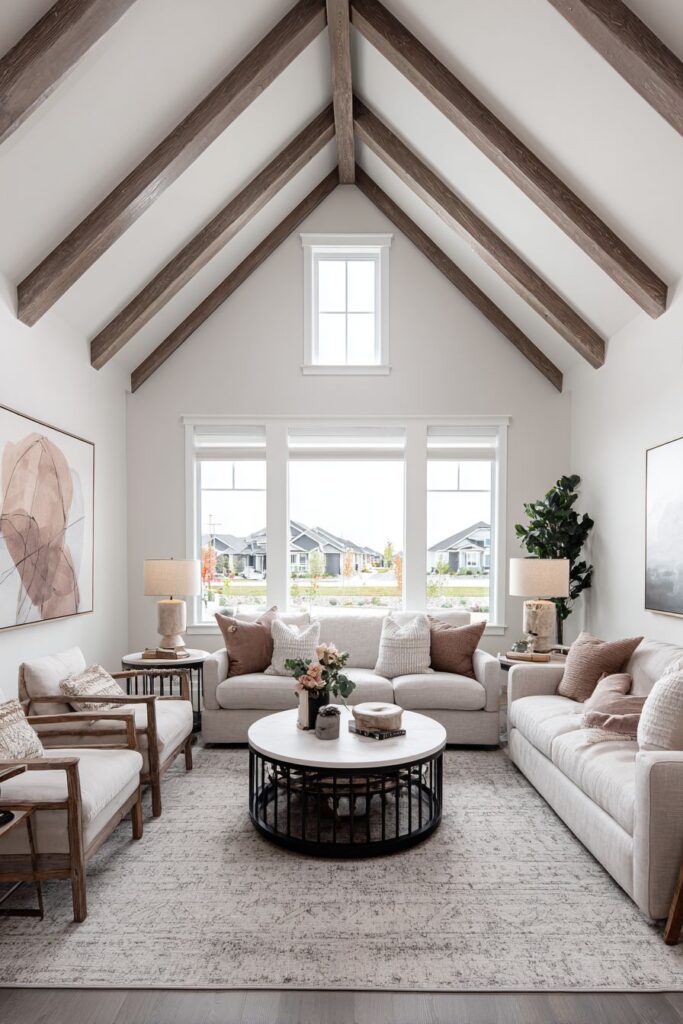
The symmetrical composition creates formal elegance suitable for entertaining and meaningful conversation. The facing sofa arrangement facilitates eye contact and discussion better than L-shaped or scattered seating. The round coffee table prevents sharp corners while encouraging circular conversation flow. This demonstrates how furniture arrangement significantly impacts room function and social dynamics, with symmetrical layouts promoting formality and balanced interaction.
Key Design Tips:
- Position sofas facing each other for conversation focus
- Use round coffee tables to encourage interaction
- Install matching lamps for symmetrical lighting
- Select neutral upholstery to maintain serenity
- Hang large-scale art as focal point above one sofa
- Choose subtle rug patterns that don’t compete with arrangement
- Position windows symmetrically for balanced natural light
- Emphasize spatial balance through careful furniture placement
20. Dedicated Reading Nook
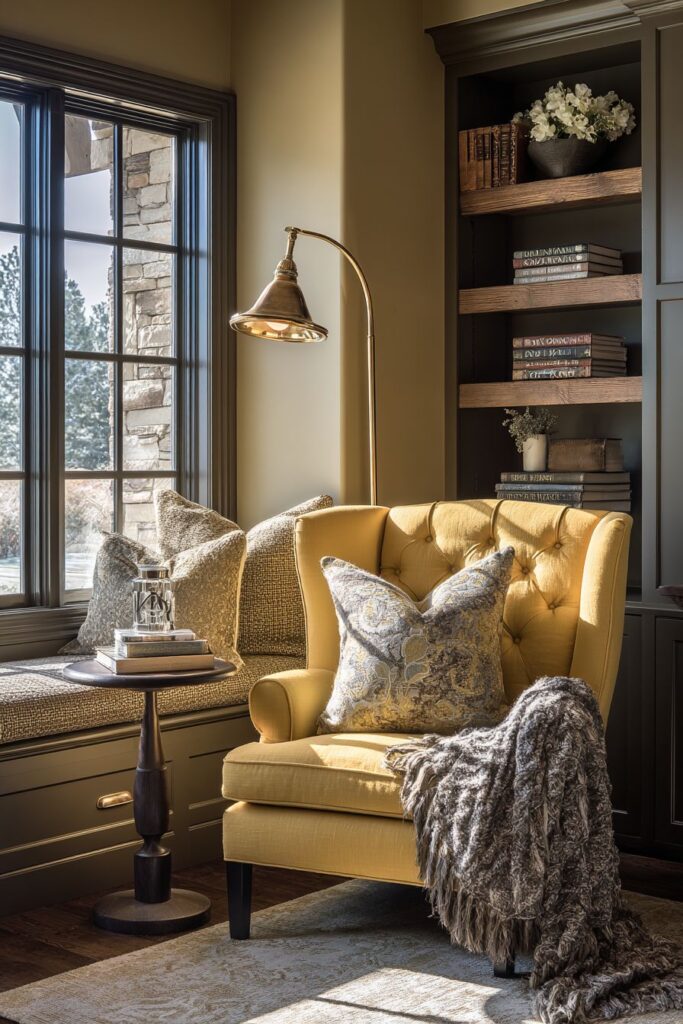
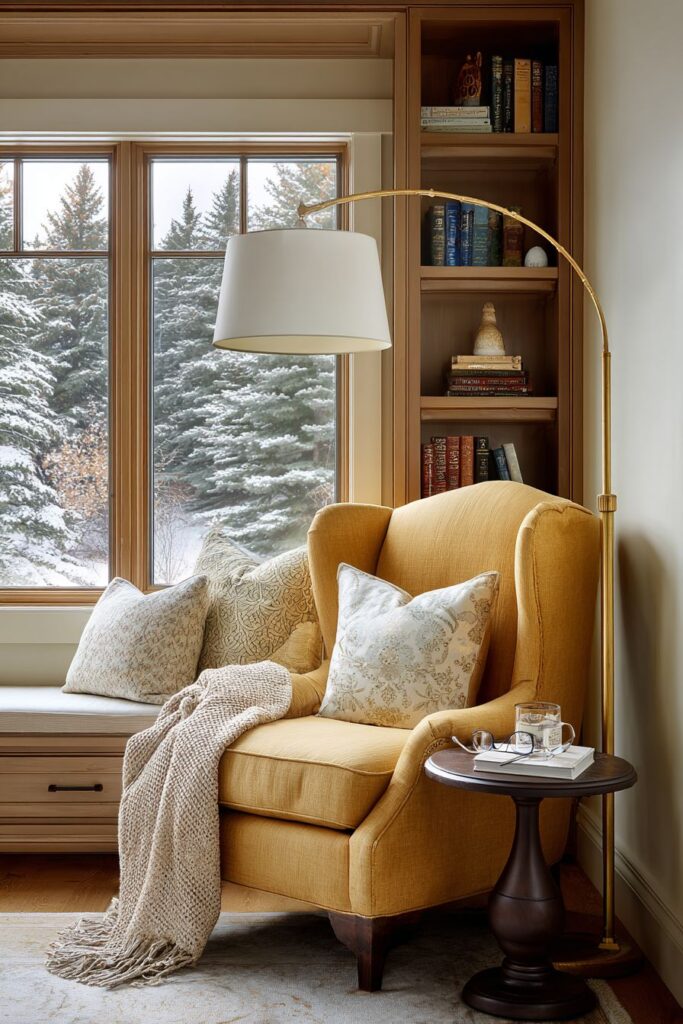
Creating a dedicated reading nook within the larger living room provides intimate retreat space for solitary pursuits. A wingback chair upholstered in warm mustard linen positions near a window, taking advantage of natural daylight. An arc floor lamp with brass finish provides dedicated task lighting for reading when natural light fades. A small round side table in dark wood holds books and reading glasses within easy reach. This furniture grouping creates complete functional zone for reading pleasure.
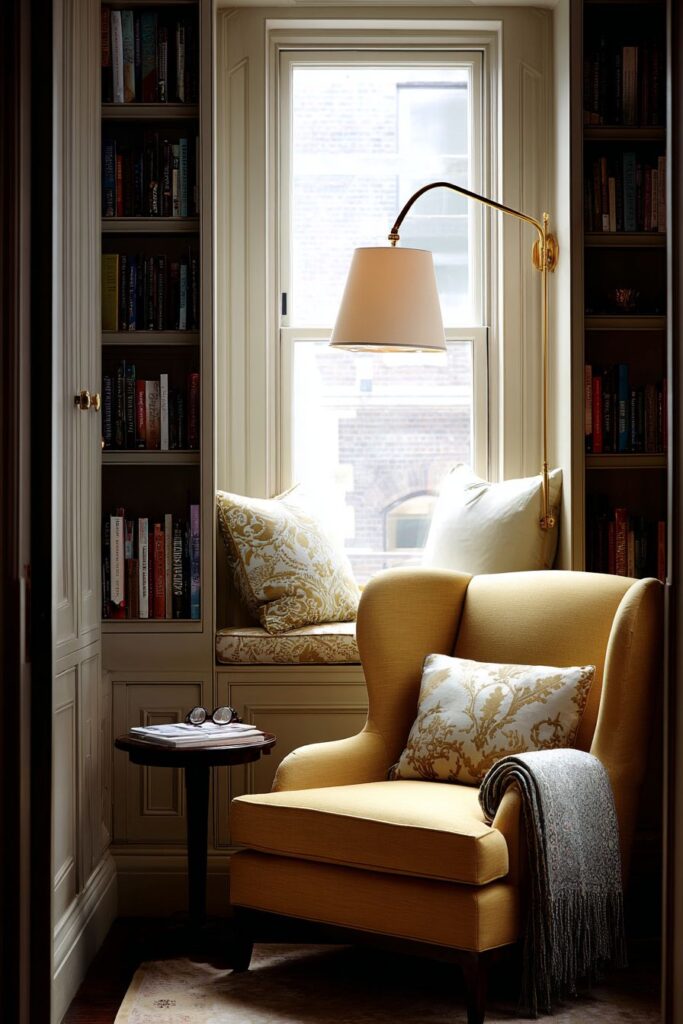
A built-in window seat with cushion in complementary pattern offers additional seating while maximizing the window’s potential. Floating shelves above display book collection within arm’s reach, combining storage with personal library display. A textured wool throw blanket drapes over the chair arm, adding warmth and inviting curl-up comfort. Soft afternoon light streaming through the window creates cozy atmosphere perfect for extended reading sessions. This dedicated corner honors the importance of quiet, focused activities within the home.
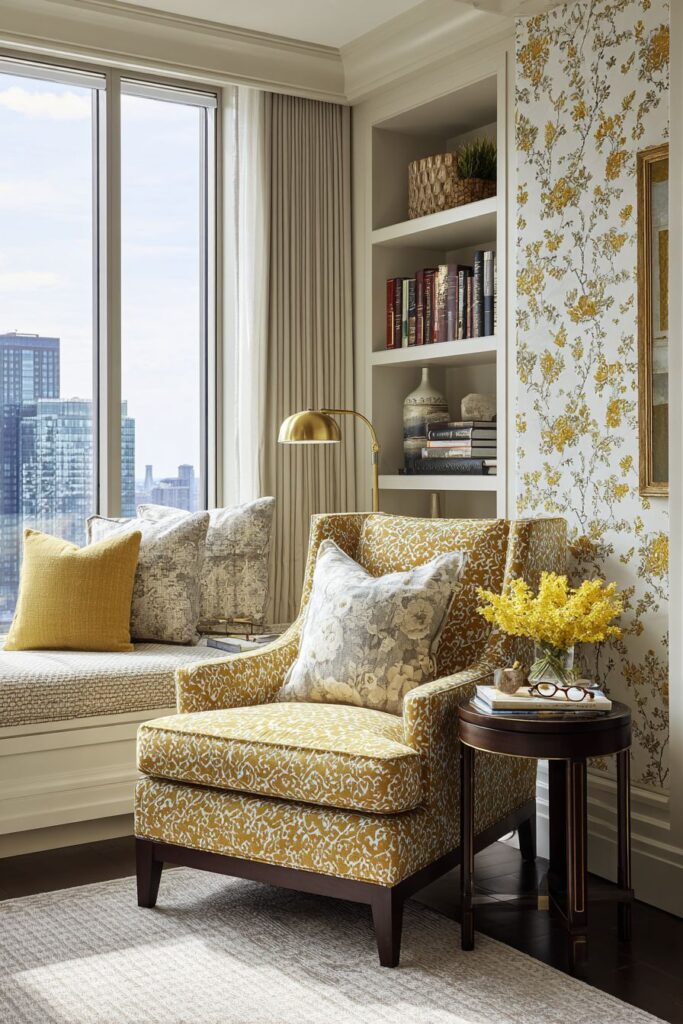
The reading nook demonstrates how larger rooms can incorporate specialized zones for specific activities. The corner arrangement utilizes space that might otherwise remain underutilized while creating intimate scale within expansive rooms. The warm mustard color provides cheerful accent that energizes without overwhelming, while the brass lamp adds metallic warmth. This attention to creating spaces for solitary contemplation acknowledges that homes must serve diverse needs, from social gathering to quiet retreat.
Key Design Tips:
- Position reading chairs near windows for natural light
- Add arc floor lamps for adjustable task lighting
- Include small side tables for book and drink storage
- Install floating shelves for accessible book display
- Create built-in window seats to maximize seating options
- Choose warm accent colors like mustard for cheerful atmosphere
- Layer textured throws for comfort and warmth
- Design intimate zones within larger rooms for varied activities
Why These Living Room Design Concepts Excel
These twenty living room design concepts represent the finest approaches to interior styling because they address fundamental human needs while demonstrating technical excellence. Each design balances aesthetic beauty with practical functionality, ensuring spaces serve real life rather than existing as mere showpieces. The diversity of styles—from minimalist to maximalist, from coastal to industrial—acknowledges that successful design must reflect individual personalities, lifestyles, and preferences rather than imposing single correct approach.
The modern comfort concept excels through its sophisticated material layering and emphasis on natural light manipulation. Scandinavian serenity succeeds by proving that restraint and simplicity create tranquil environments that reduce stress. The fireplace-centered design demonstrates how architectural features can organize space and foster human connection. Each concept addresses specific needs, whether maximizing small spaces, creating work-from-home zones, or establishing conversation areas that prioritize interpersonal engagement over media consumption.
These designs incorporate current trends like biophilic elements, organic modern aesthetics, and sustainable material choices while avoiding fleeting fads. The emphasis on natural materials, quality craftsmanship, and timeless proportions ensures longevity beyond seasonal trends. The maximalist approach validates those who find joy in abundance while the minimalist concept serves those craving simplicity. This inclusive range acknowledges diverse aesthetic preferences as equally valid.
Technical excellence defines these concepts through proper scale, appropriate color theory application, and strategic lighting implementation. The furniture selections demonstrate understanding of proportion—oversized pieces in spacious rooms, compact options in smaller areas. The lighting strategies layer ambient, task, and accent sources for functional flexibility. The color palettes show sophisticated restraint or confident boldness as appropriate to each style, demonstrating color theory knowledge.
Material selection throughout these designs prioritizes authenticity and quality over synthetic substitutes. Natural linen, genuine leather, solid wood, and authentic stone appear repeatedly, celebrating materials’ inherent beauty rather than disguising origins. The reclaimed and vintage elements demonstrate sustainability while adding character impossible to achieve with new purchases. This material honesty creates spaces with depth, texture, and lasting appeal that synthetic materials cannot replicate.
The spatial planning evident in these concepts maximizes functionality while maintaining beauty. Traffic flow receives consideration alongside aesthetic composition. Storage solutions integrate seamlessly rather than appearing as afterthoughts. Multi-functional furniture addresses space efficiency without sacrificing comfort. This balance between form and function defines professional interior design, separating beautiful but impractical showrooms from livable, beautiful homes.
These design concepts succeed because they create emotional responses alongside visual pleasure. The cozy farmhouse evokes nostalgia and comfort. The sleek minimalist space promotes calm and focus. The bohemian room celebrates personality and creativity. The coastal retreat suggests vacation relaxation. Each design cultivates specific mood and feeling, demonstrating that successful interior design impacts emotional wellbeing alongside physical comfort.
The attention to lighting throughout these concepts recognizes illumination as crucial design element. Natural light receives maximization through window treatments and strategic mirror placement. Artificial lighting layers multiple sources at various heights for functional flexibility and atmospheric control. The sculptural quality of selected fixtures demonstrates that lighting serves decorative purposes alongside illumination. This sophisticated lighting approach transforms spaces throughout the day, creating dynamic rather than static environments.
Pattern and texture application across these designs shows professional restraint and intentionality. Patterns appear selectively, avoiding overwhelming visual chaos while preventing boring monotony. Textures layer throughout, engaging tactile senses through varied surfaces. The geometric rug in the modern concept, the ornate Persian in the maximalist room, and the simple jute in the Scandinavian space each serve their aesthetic appropriately. This demonstrates how single design element must adapt to overall vision.
Color theory application ranges from neutral palettes that calm and expand space to bold jewel tones that energize and create drama. The coastal palette of blues and whites evokes ocean and sky. The farmhouse grays and whites suggest rural simplicity. The maximalist jewel tones create opulent richness. Each palette serves its style while demonstrating sophisticated color understanding. The repeated use of earth tones across multiple concepts reflects current preference for nature-connected palettes that promote wellbeing.
These designs acknowledge real-life needs through practical solutions. The small-space concept addresses urban dwelling realities. The reading nook honors quiet solitary activities. The conversation area prioritizes human connection. The media console styling accommodates technology while maintaining beauty. This attention to how spaces actually function separates idealistic photography from livable design. Successful interiors must serve daily life while inspiring and delighting inhabitants.
The accessibility of these concepts varies intentionally—some require significant investment in quality furniture while others achieve beauty through creative resourcefulness. The bohemian style proves that abundant textiles and thrifted finds create richness without luxury budgets. The minimalist concept demonstrates that fewer, better pieces can satisfy more effectively than abundant mediocre furniture. This range ensures readers at various budget levels find applicable inspiration rather than feeling excluded by inaccessible luxury.
Sustainability emerges throughout these concepts through reclaimed materials, vintage furniture, abundant plants, and quality pieces built for longevity. The industrial design’s reclaimed wood shelving, the farmhouse’s repurposed agricultural items, and multiple concepts’ vintage rugs demonstrate environmental consciousness. The biophilic design’s abundant plant life improves air quality naturally. This sustainable approach addresses growing environmental awareness while creating unique, characterful spaces impossible to achieve with all-new purchases.
The professional photography approach mentioned throughout ensures these spaces translate effectively in visual media. Understanding of lighting, angles, and composition means these designs photograph beautifully while remaining functional in person. This dual success—spaces that work in lived experience and translate compellingly in photographs—defines contemporary design excellence in our image-saturated culture. The ability to share inspiring spaces through social media democratizes design access while elevating standards.
Conclusion
Creating beautiful, functional living rooms requires balancing aesthetic vision with practical needs, personal style with timeless design principles, and individual elements with cohesive composition. These twenty design concepts demonstrate the remarkable diversity available in contemporary interior design, from serene minimalism to abundant maximalism, from coastal lightness to industrial weight. Each approach offers valid pathway to creating spaces that enhance daily life while expressing individual personality and values.
The key takeaways from these diverse concepts include the importance of quality over quantity, the power of natural light and strategic illumination, the value of authentic materials, and the necessity of balancing beauty with functionality. Whether your preference leans toward the pared-down simplicity of Scandinavian design or the richly layered abundance of maximalist spaces, success lies in intentional selection and thoughtful composition rather than random accumulation or rigid rule-following.
Experiment confidently with these ideas in your own home, adapting elements that resonate with your lifestyle and aesthetic preferences. Consider your space’s specific requirements, your daily activities, and your emotional responses to color, texture, and form. Remember that creating a home is ongoing process rather than single project with defined endpoint. Allow your space to evolve as your needs change and your confidence grows. The most successful living rooms reflect authentic personality while providing comfort, beauty, and functionality that enhance quality of life daily.
"As an Amazon Associate, I earn from qualifying purchases."
