
The heart of every home deserves cabinetry that speaks to both function and beauty, and nothing accomplishes this balance quite like expertly crafted wood kitchen cabinets. In an era where kitchen design trends come and go with surprising frequency, wood cabinetry remains a steadfast choice that transcends temporary fashions while offering unparalleled warmth, character, and versatility. The natural grain patterns, rich textures, and inherent durability of wood create kitchen spaces that not only serve daily needs but also become gathering places where memories are made and stories are shared.
From the rustic charm of reclaimed barn wood to the sleek sophistication of contemporary cherry, wood kitchen cabinets offer an extraordinary range of design possibilities that can complement any architectural style or personal aesthetic. Whether you’re drawn to the clean lines of Scandinavian birch, the rich depth of walnut, or the timeless appeal of painted oak, wood cabinetry provides the foundation for creating truly personalized kitchen environments. The beauty of wood lies not only in its visual appeal but also in its ability to age gracefully, developing character and patina that synthetic materials simply cannot replicate.
This comprehensive exploration delves into twenty distinct approaches to wood kitchen cabinet design, each representing a unique vision of how natural materials can transform cooking spaces into extraordinary environments. From compact galley kitchens to expansive luxury designs, from traditional colonial styling to cutting-edge contemporary aesthetics, these examples demonstrate the remarkable versatility and enduring appeal of wood as the premier choice for kitchen cabinetry.
1. Modern Farmhouse Honey Oak Elegance
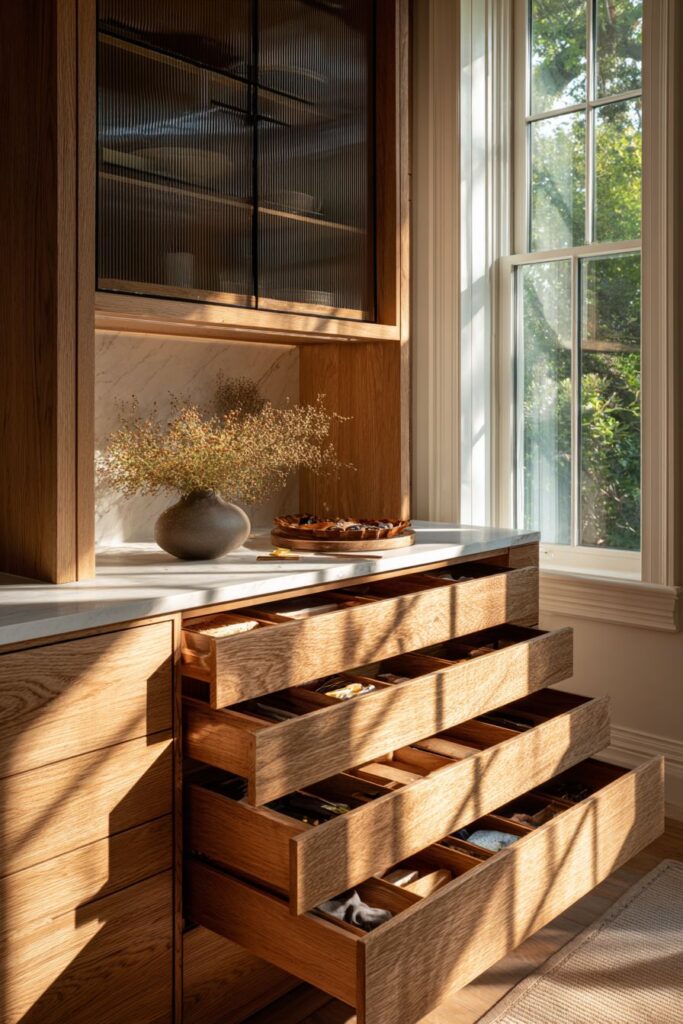
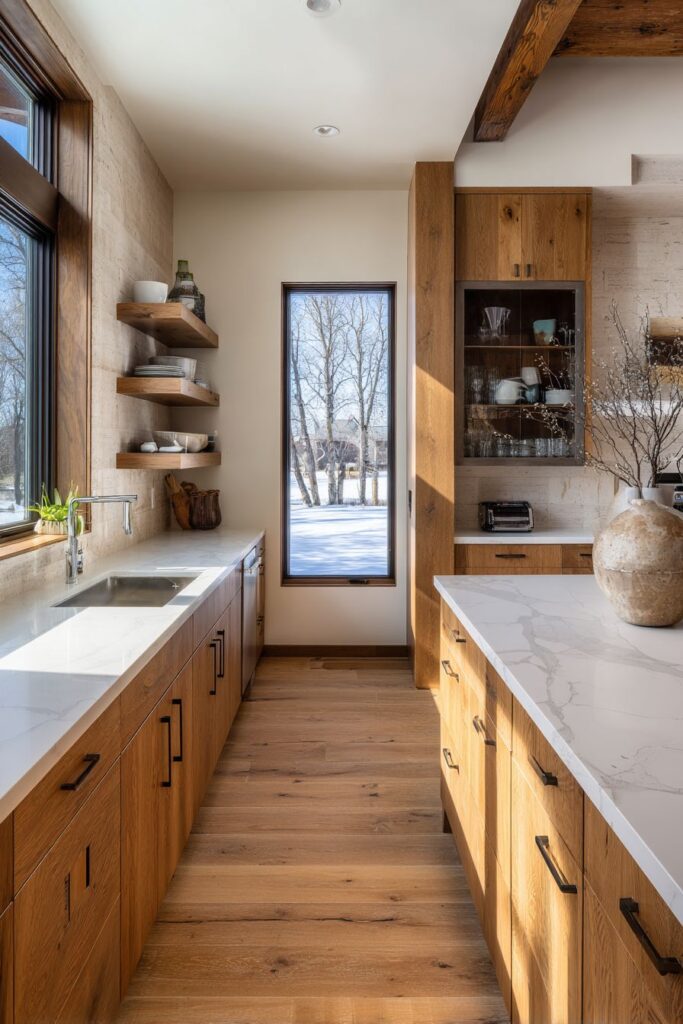
The modern farmhouse kitchen represents a perfect marriage of contemporary functionality and rustic charm, anchored by custom wood kitchen cabinets crafted from warm honey oak. These cabinets showcase the natural beauty of oak grain patterns while incorporating modern conveniences like soft-close hinges and precision-engineered drawer systems. The honey-toned wood creates an inviting atmosphere that feels both sophisticated and approachably comfortable, making it ideal for families who appreciate traditional aesthetics with modern performance.
The upper cabinets feature elegant glass inserts that allow for both display and storage, creating visual lightness while maintaining the substantial presence that oak cabinetry provides. The lower cabinets are designed with deep drawers equipped with integrated dividers, maximizing storage efficiency while keeping everyday items organized and easily accessible. This thoughtful approach to cabinet interior design reflects the modern farmhouse philosophy of combining beauty with practical functionality.
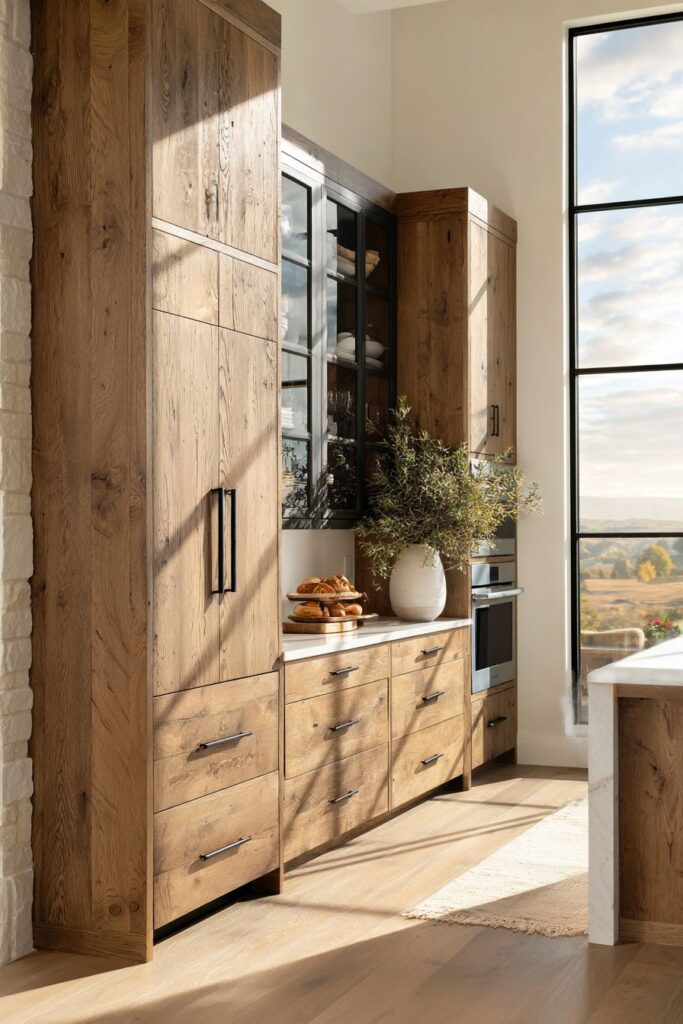
Natural quartz countertops provide the perfect complement to the warm oak tones, offering a durable surface that harmonizes beautifully with the wood’s natural warmth. The interplay between the organic grain patterns of the oak and the consistent surface of the quartz creates visual interest without overwhelming the space. Morning light streaming through farmhouse windows illuminates the wood texture, creating gentle shadows that emphasize the superior craftsmanship and attention to detail in every cabinet door and drawer face.
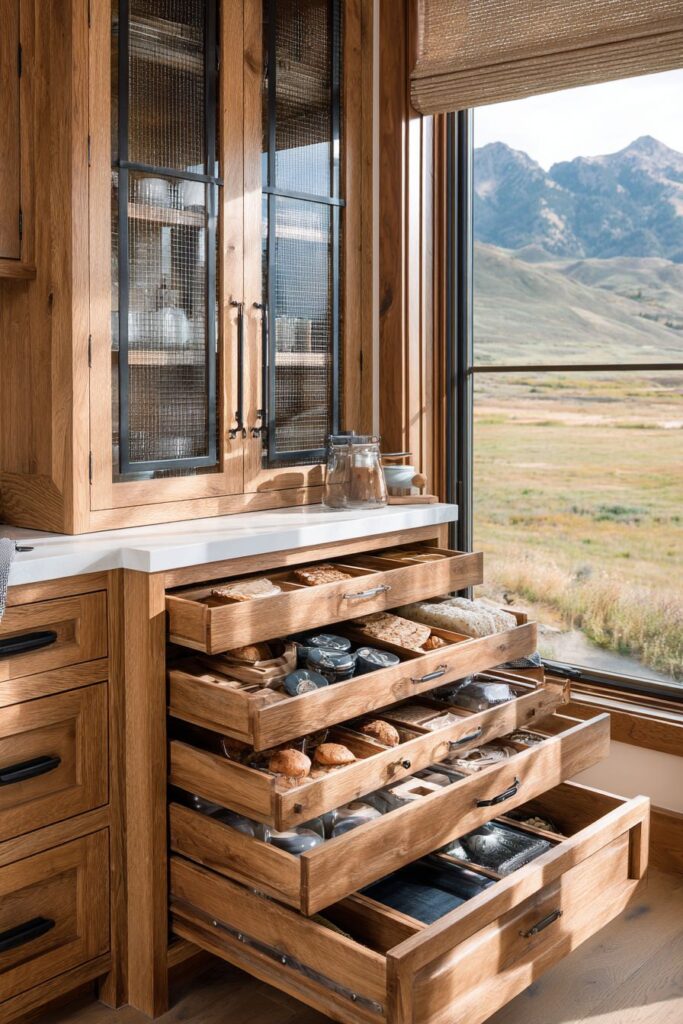
The overall effect is a kitchen that feels both timeless and thoroughly contemporary, where the honey oak cabinets serve as the warm, welcoming foundation for a space designed for both everyday living and special occasions. This design approach demonstrates how traditional wood species can be reimagined for modern lifestyles without losing their inherent character and appeal.
Key Design Tips:
- Select oak with prominent grain patterns to add visual interest and character
- Install soft-close hinges for a premium feel and extended cabinet life
- Use glass inserts in upper cabinets to create visual lightness and display opportunities
- Choose quartz countertops that complement rather than compete with wood tones
- Position cabinets to maximize natural light exposure on wood surfaces
2. Compact Galley Kitchen Light Maple Efficiency
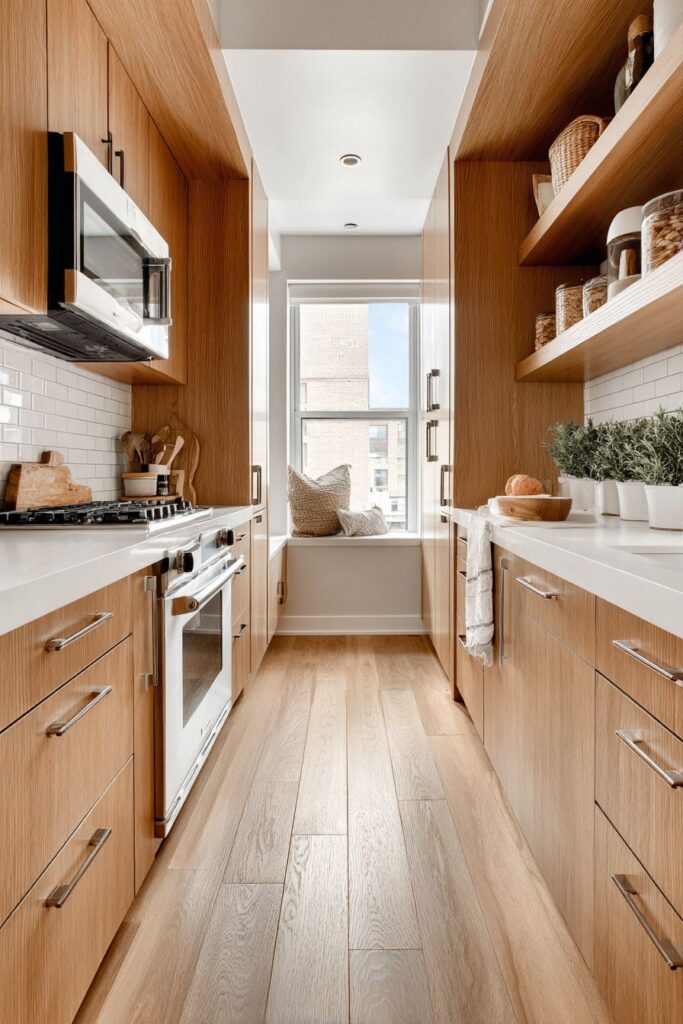
In smaller kitchen spaces, light maple wood kitchen cabinets prove that limited square footage doesn’t require compromising on style or functionality. The pale, creamy tones of maple naturally reflect light, making compact galley kitchens feel more spacious and inviting than darker alternatives. These cabinets feature clean lines and minimalist design elements that prevent visual clutter while maximizing every inch of available storage space.
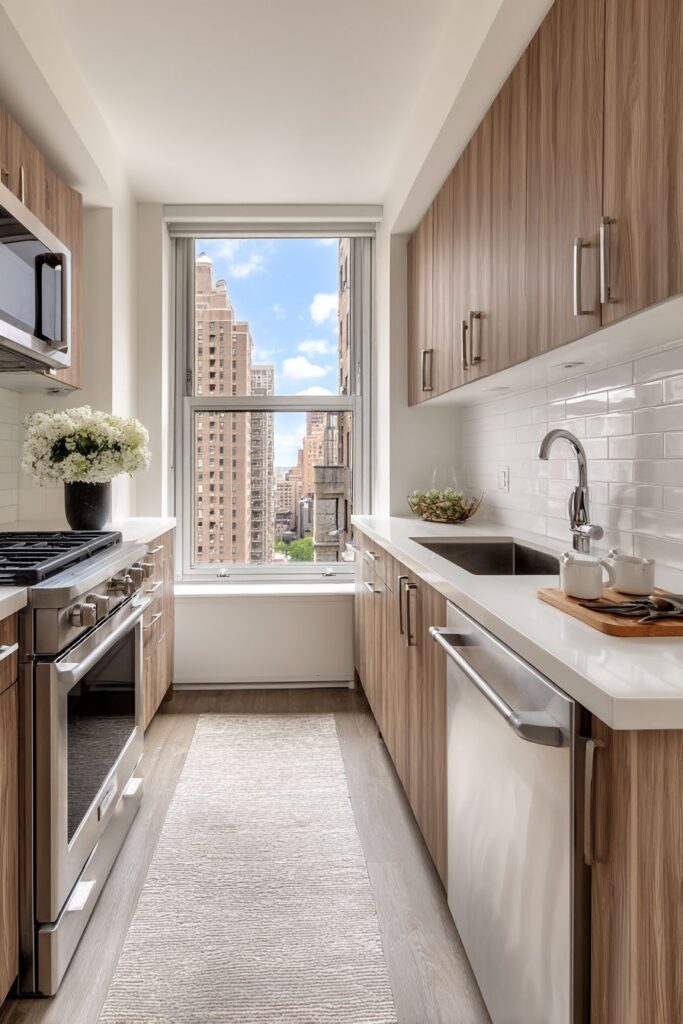
The genius of this design lies in its vertical emphasis, with upper cabinets extending all the way to the ceiling to capture otherwise wasted storage space. This approach not only provides additional storage for seasonal items and less frequently used kitchenware but also creates the illusion of height that makes the entire space feel more generous. Integrated under-cabinet LED lighting serves a dual purpose, providing essential task lighting for food preparation while highlighting the subtle beauty of the maple’s grain pattern.
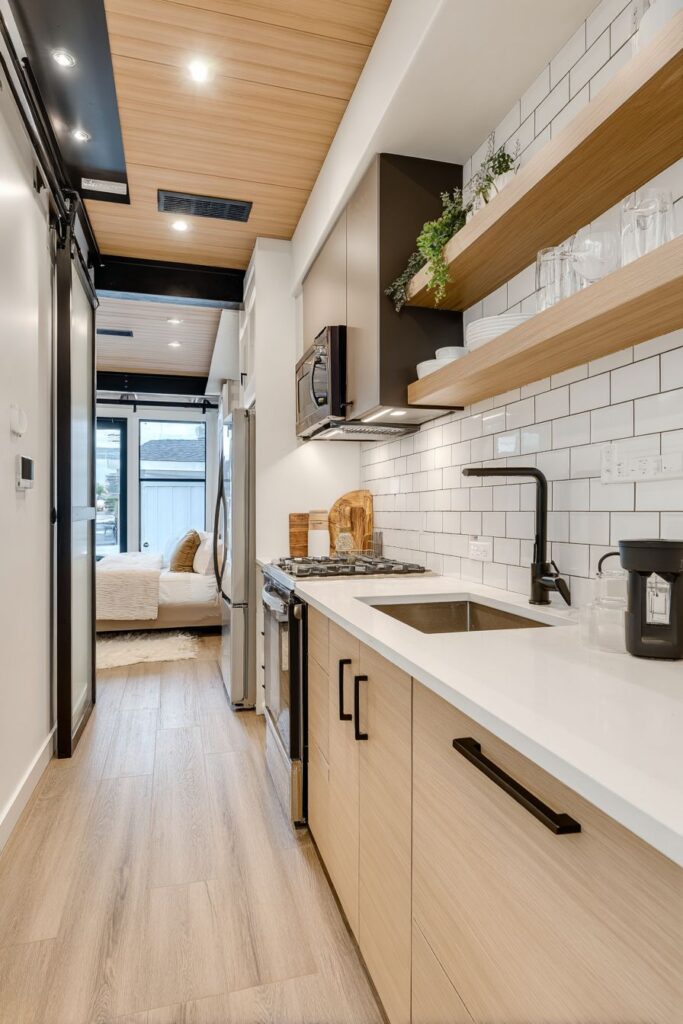
The white subway tile backsplash creates a perfect counterpoint to the warm wood tones, adding brightness and visual interest without competing with the cabinet design. The contrast between the cool white tiles and warm maple creates a balanced color palette that feels fresh and timeless. Brushed nickel hardware adds a contemporary touch while maintaining the clean, uncluttered aesthetic that makes small spaces feel larger and more organized.
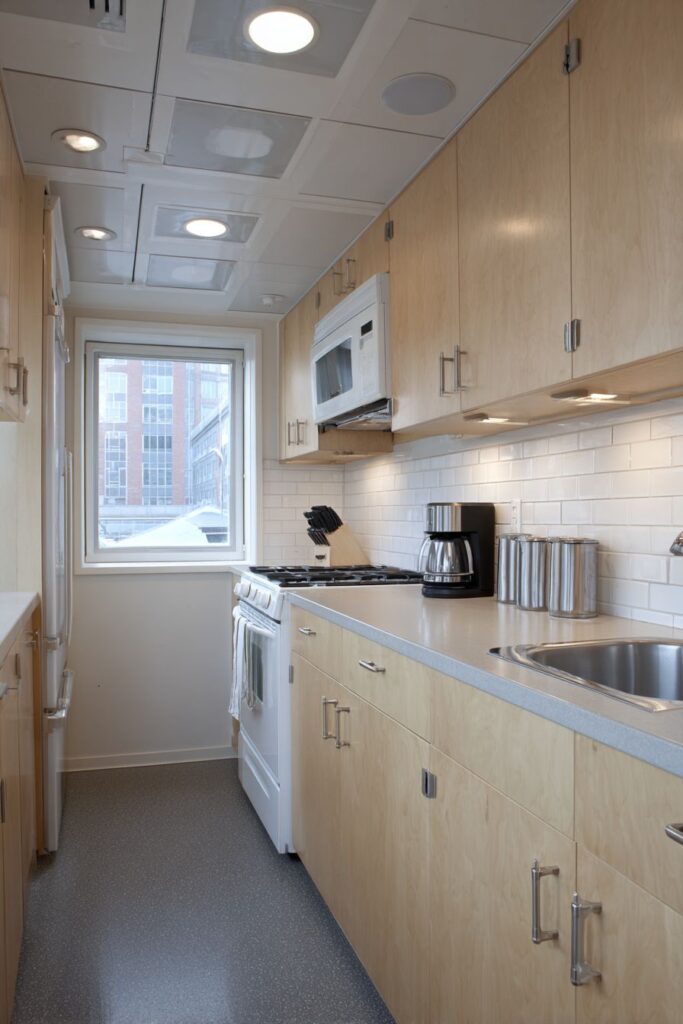
Professional interior photography of such spaces reveals how natural daylight from the end window can transform a potentially cramped galley into a bright, welcoming workspace. The light maple wood responds beautifully to natural illumination, showcasing the wood’s subtle grain variations while maintaining the clean, efficient aesthetic that makes compact kitchens highly functional.
Key Design Tips:
- Choose light wood species like maple to maximize brightness in small spaces
- Extend upper cabinets to the ceiling for maximum storage capacity
- Install under-cabinet LED lighting for both function and wood grain enhancement
- Use white or light-colored backsplashes to create contrast and reflect light
- Select hardware that complements the wood tone without adding visual weight
3. Transitional Walnut Kitchen Island Sophistication
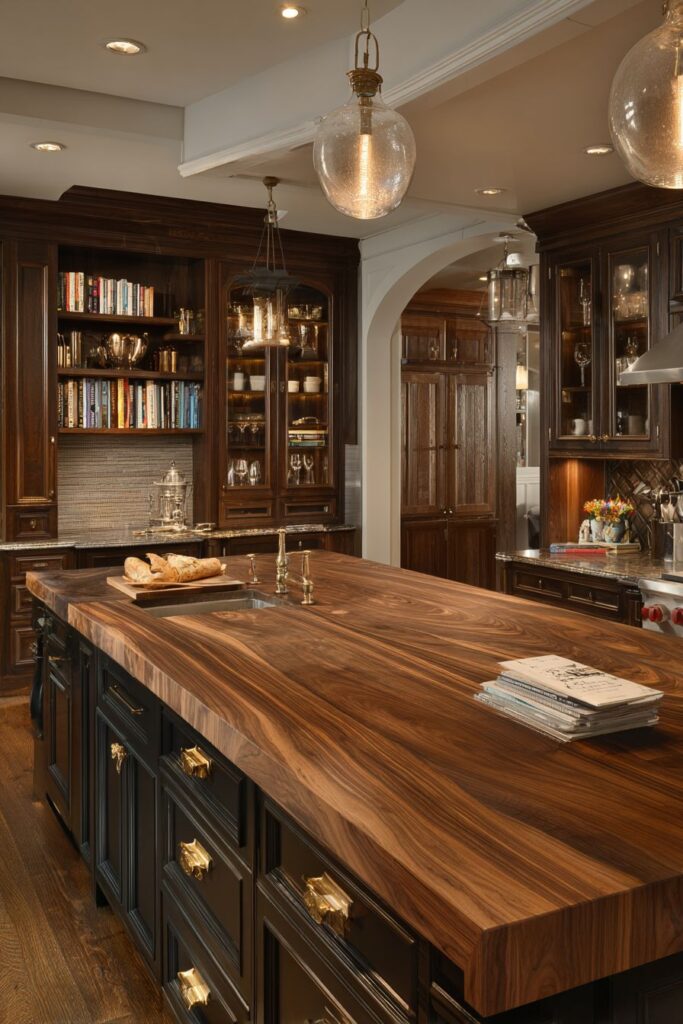
Rich walnut wood kitchen cabinets represent the pinnacle of sophisticated kitchen design, offering deep, complex coloring and dramatic grain patterns that create an atmosphere of luxury and refinement. In transitional kitchen designs, walnut cabinets bridge the gap between traditional craftsmanship and contemporary sensibilities, featuring classic raised panel doors enhanced with antique brass pulls that add warmth and character to the overall design scheme.
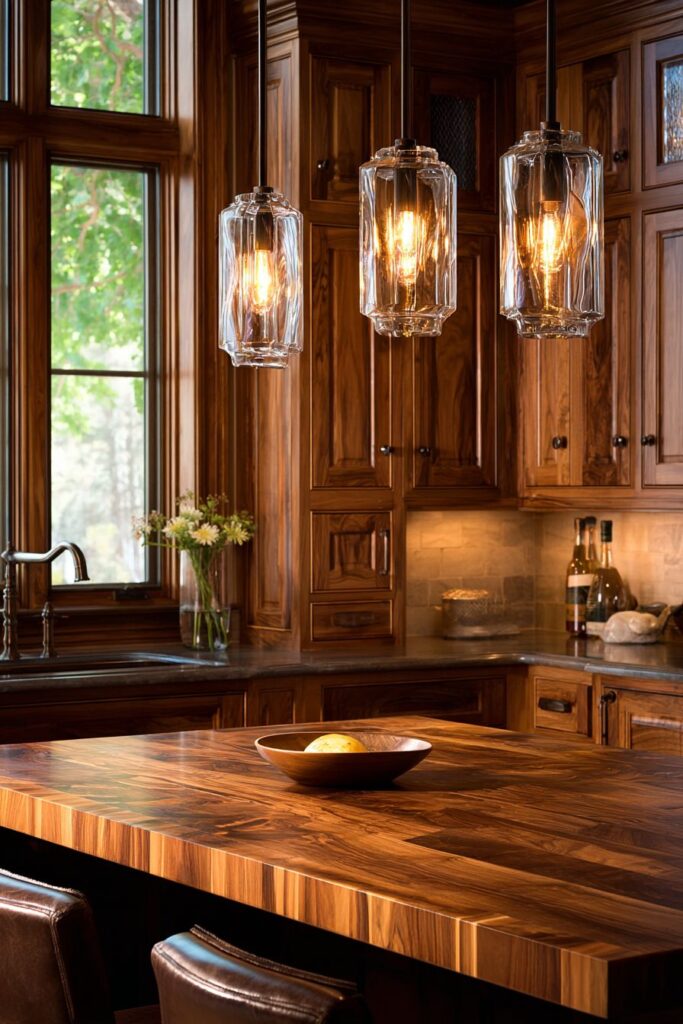
The kitchen island becomes the centerpiece of this design, incorporating matching walnut cabinetry topped with a stunning butcher block countertop that showcases the wood’s natural beauty in its most tactile form. This combination of walnut cabinet faces with a walnut butcher block surface creates a harmonious flow of wood tones while providing a practical workspace that will develop character and patina through years of use. The contrast between the smooth cabinet surfaces and the more textural butcher block adds visual and tactile interest.
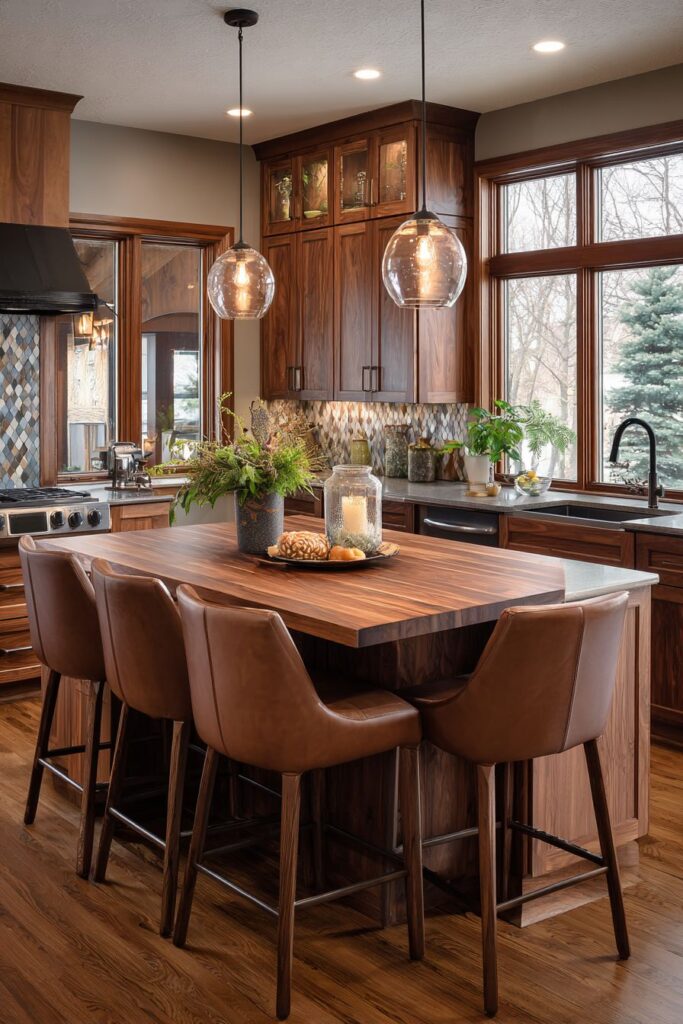
Pendant lighting suspended over the island creates pools of warm, ambient light that emphasize the rich depth of the walnut’s coloring and bring out the subtle variations in grain pattern that make each cabinet door unique. The interplay of light and shadow across the wood surfaces creates a dynamic visual experience that changes throughout the day, ensuring that the kitchen remains visually engaging from morning coffee preparation through evening meal cleanup.
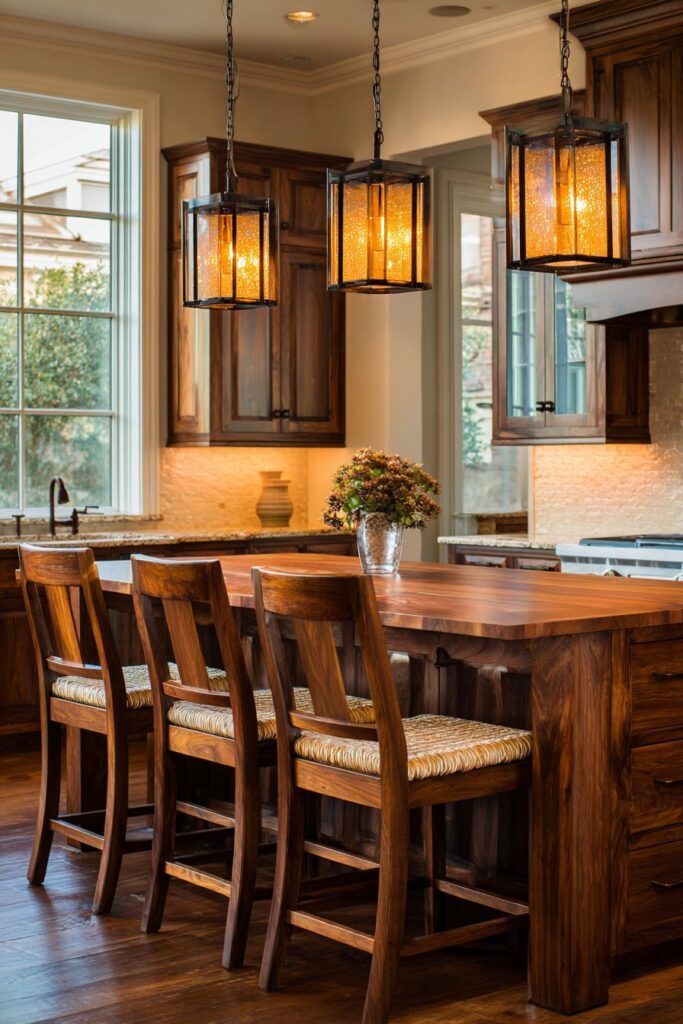
The sophisticated wood craftsmanship evident in these walnut cabinets speaks to traditional joinery techniques while incorporating modern conveniences like soft-close drawers and precision-fit doors. This attention to both aesthetic beauty and functional performance makes walnut cabinetry an investment in both the immediate enjoyment and long-term value of the kitchen space.
Key Design Tips:
- Select walnut with rich color variation for maximum visual impact
- Pair raised panel doors with appropriate hardware to enhance traditional styling
- Use butcher block countertops to showcase wood beauty in functional surfaces
- Install pendant lighting to create dramatic highlighting of wood grain patterns
- Choose antique brass hardware to complement walnut’s warm undertones
4. Scandinavian-Inspired Pale Birch Minimalism
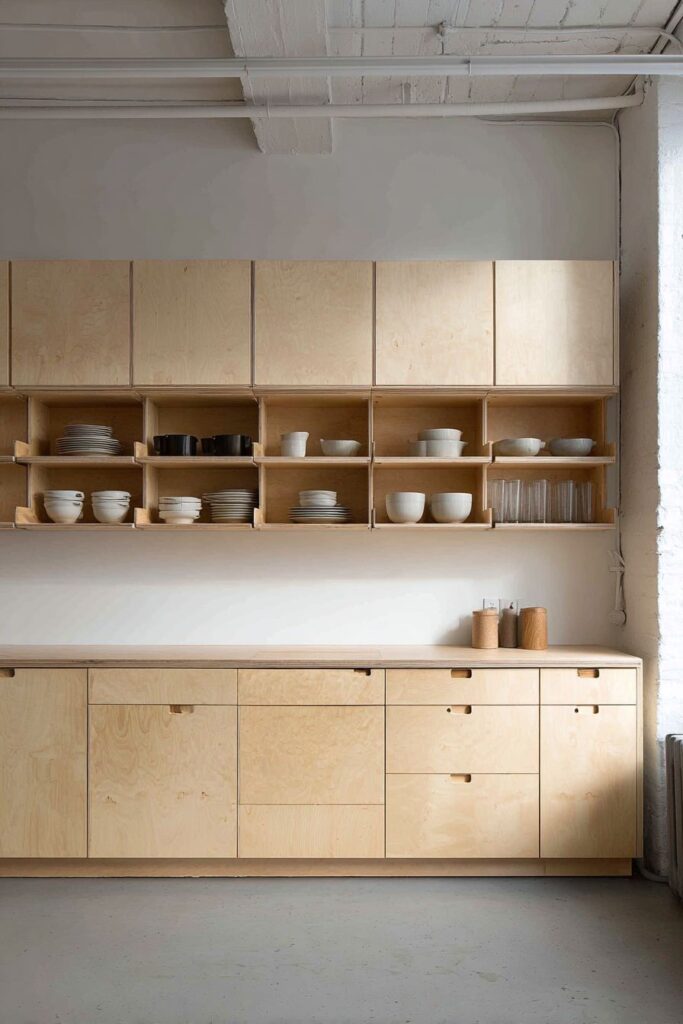
Scandinavian design principles find perfect expression in pale birch wood kitchen cabinets that embody the Nordic philosophy of functional beauty and understated elegance. These flat-panel doors with integrated handles create a seamlessly clean appearance that eliminates visual distractions while celebrating the subtle beauty of birch’s light, even grain pattern. The minimalist aesthetic doesn’t mean sacrificing functionality; instead, it represents a thoughtful approach to design where every element serves both practical and aesthetic purposes.
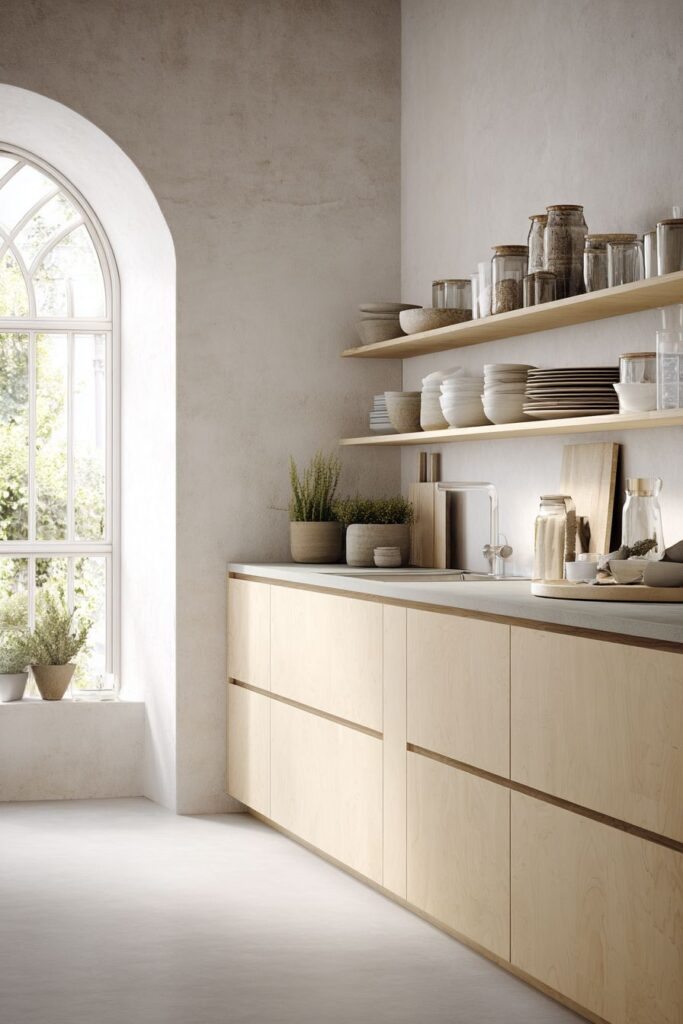
Open shelving integrated with closed cabinet storage creates opportunities for displaying carefully curated dishware and kitchen accessories while maintaining the clean, uncluttered appearance that defines Scandinavian style. The pale birch wood provides a warm counterpoint to the cool white walls and concrete countertops, creating a balanced color palette that feels both serene and energizing. This careful balance of warm and cool elements is fundamental to achieving authentic Scandinavian design.
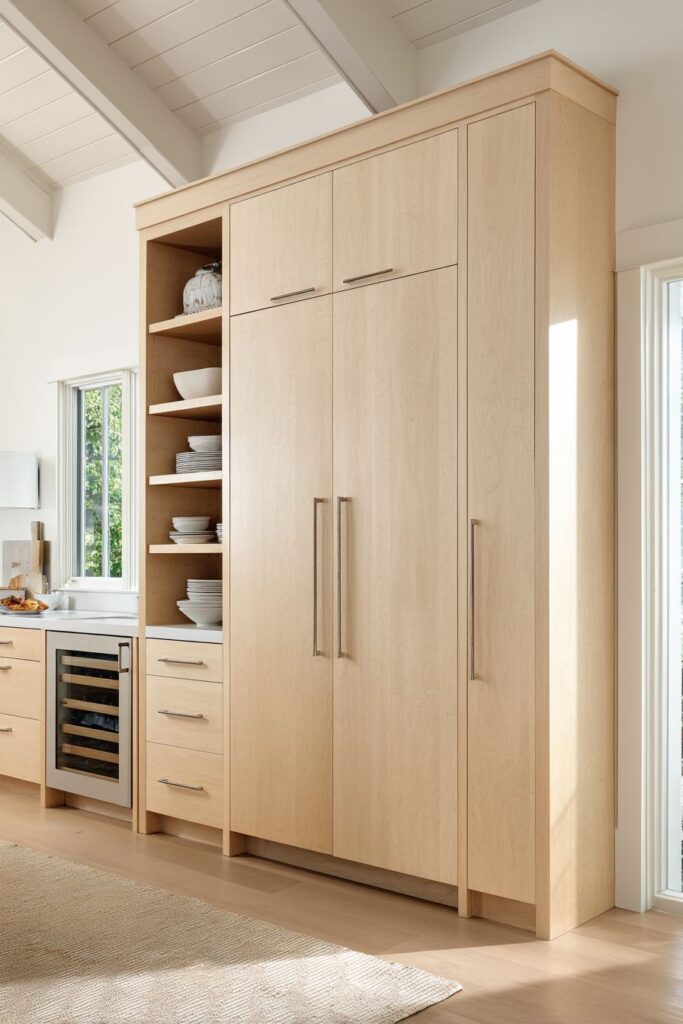
The light wood finish naturally enhances the sense of spaciousness in the kitchen, reflecting and diffusing natural light throughout the space. Concrete countertops add textural interest and industrial edge while maintaining the minimalist aesthetic through their smooth, monolithic appearance. The contrast between the organic warmth of the birch and the industrial coolness of the concrete creates visual tension that keeps the design from feeling cold or sterile.
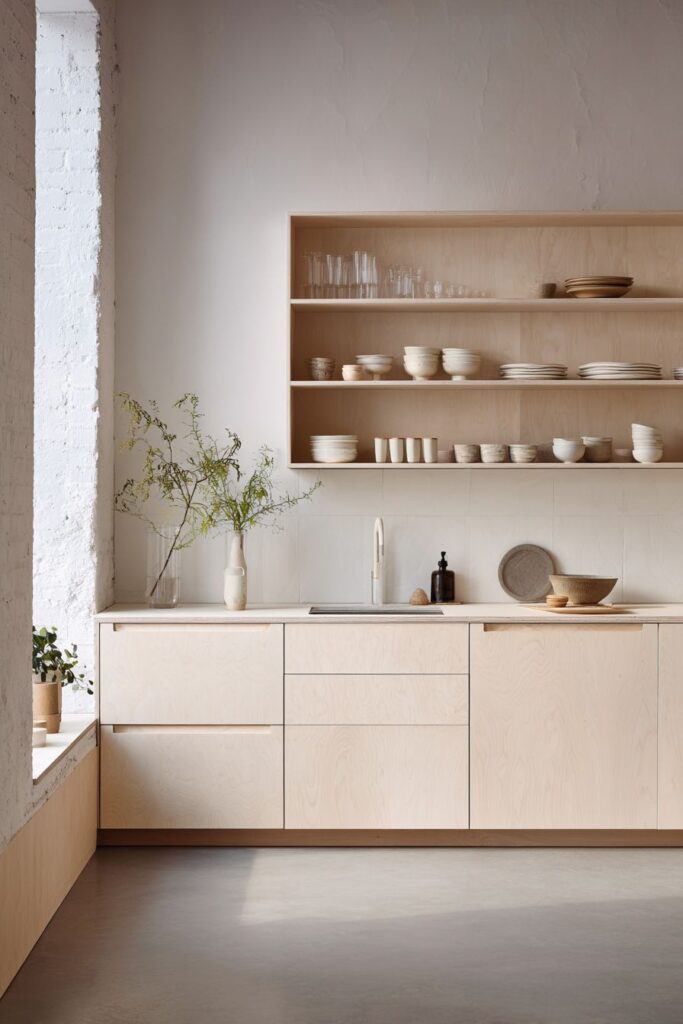
Wide-angle photography captures how natural lighting interacts with the pale birch surfaces, creating an airy, uncluttered atmosphere that exemplifies the Scandinavian approach to interior design. The subtle wood grain becomes more apparent in changing light conditions, providing visual interest without overwhelming the serene, functional aesthetic that makes Scandinavian kitchens so appealing and timeless.
Key Design Tips:
- Choose pale wood species with subtle grain patterns for authentic Scandinavian styling
- Integrate handles into cabinet doors for seamless, minimalist appearance
- Balance open and closed storage for both display and organization
- Pair light wood with white walls and industrial materials for contrast
- Maximize natural light to enhance the pale wood’s brightness and grain visibility
5. Rustic Reclaimed Barn Wood Character
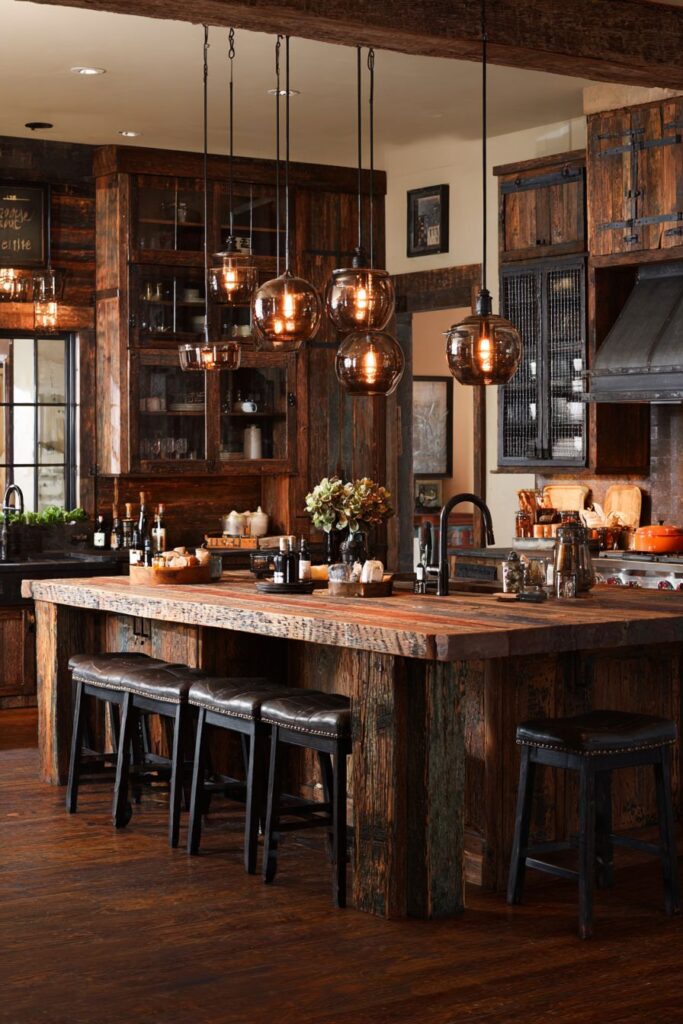
Reclaimed barn wood kitchen cabinets bring authentic history and character into contemporary kitchen spaces, showcasing weathered surfaces, visible nail holes, and distressed finishes that tell stories of agricultural heritage and sustainable design practices. These cabinets represent more than just kitchen storage; they’re conversation pieces that connect modern homes to America’s farming tradition while demonstrating environmental consciousness through the reuse of historical building materials.
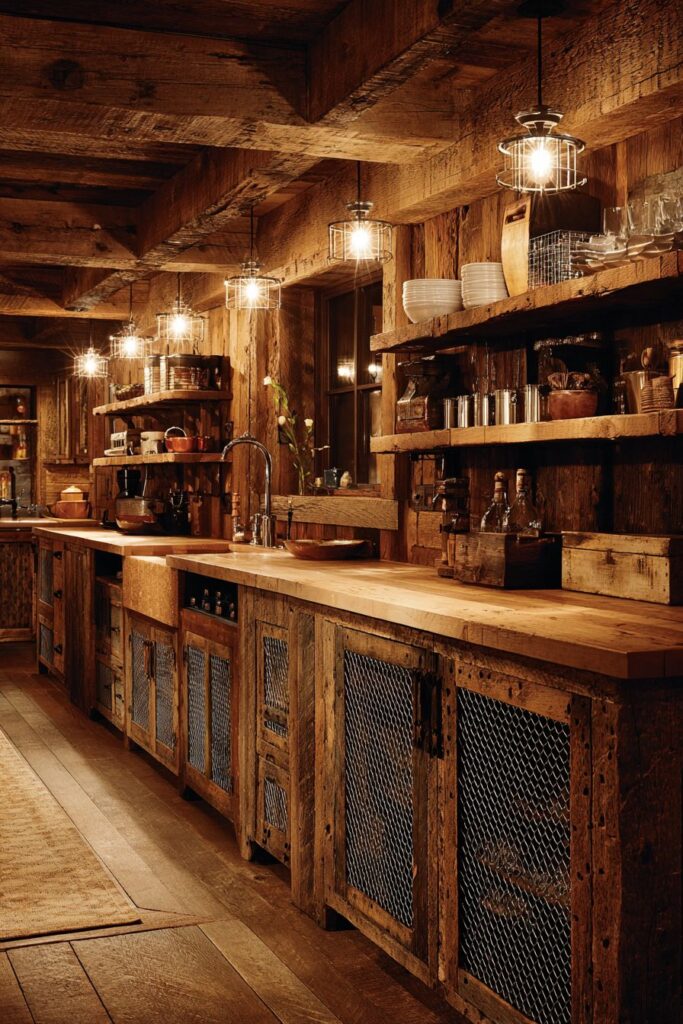
The distressed finish on these reclaimed wood cabinets isn’t artificially created but earned through decades of weathering and use, resulting in unique patina patterns that cannot be replicated in new wood. Visible nail holes, saw marks, and natural weathering create texture and visual interest that adds depth and character to every cabinet surface. Heavy iron hardware reinforces the authentic farmhouse aesthetic while providing the durability needed for daily kitchen use.
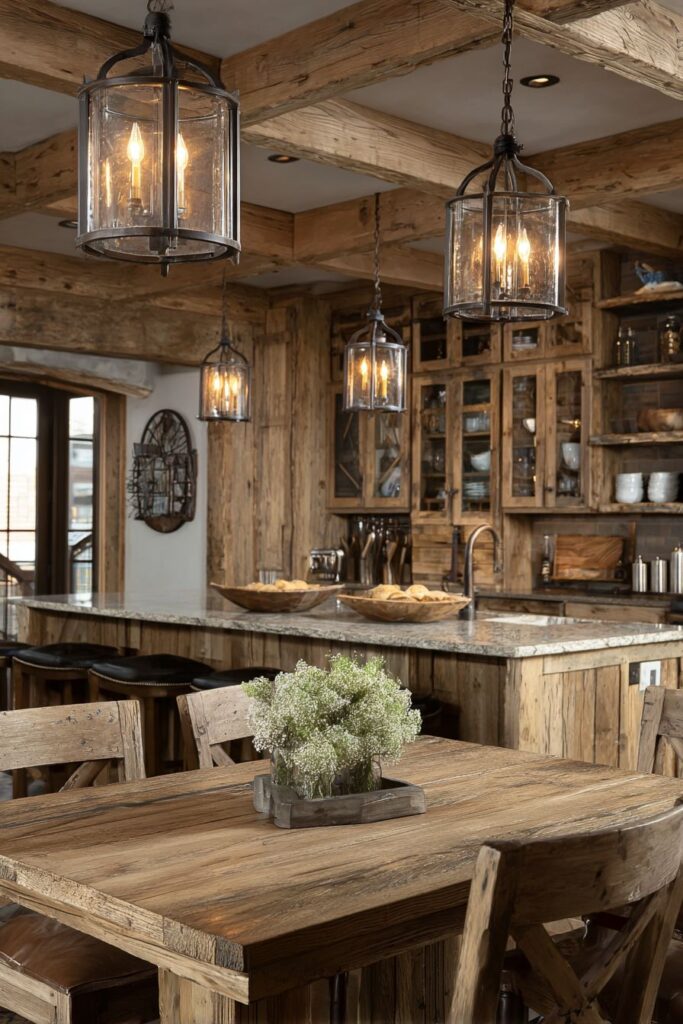
A thoughtful mix of open shelving and closed storage with chicken wire inserts creates functional variety while maintaining the rustic theme throughout the cabinet design. The chicken wire inserts allow air circulation for certain stored items while adding textural interest and authentic farmhouse detailing. Open shelving provides opportunities to display vintage kitchenware, mason jars, and other rustic accessories that complement the reclaimed wood aesthetic.
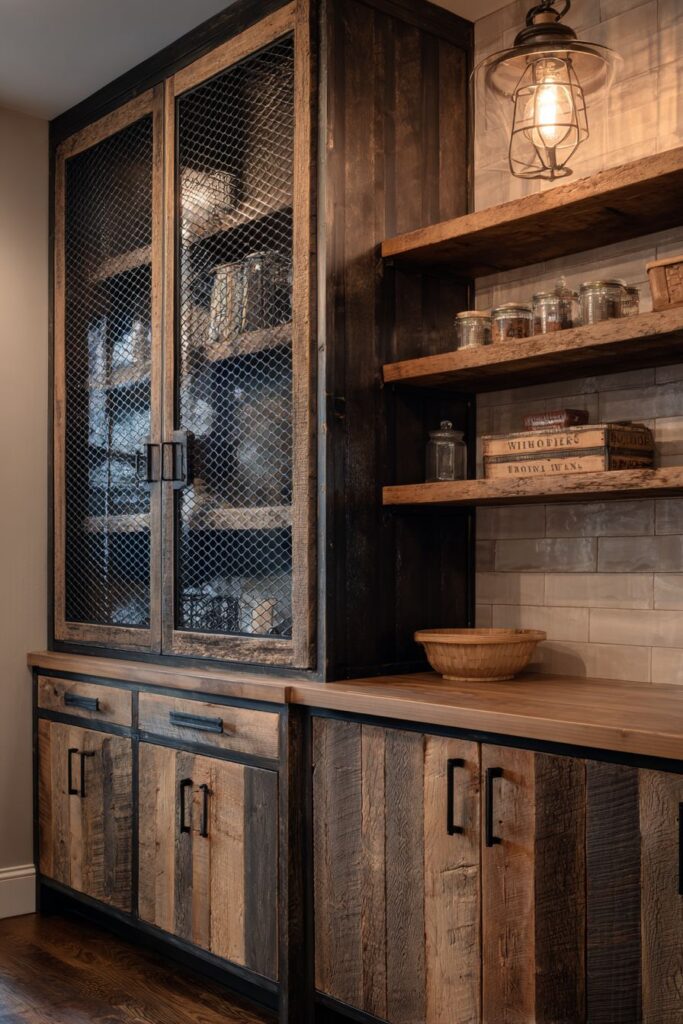
Warm pendant lighting creates a cozy ambiance that emphasizes the character-rich wood textures while providing essential task lighting for kitchen activities. The interplay of warm artificial light with the weathered wood surfaces creates an inviting atmosphere that transforms the kitchen into a gathering space reminiscent of traditional farmhouse kitchens where families and communities came together for meals and conversation.
Key Design Tips:
- Source authentic reclaimed barn wood for genuine character and history
- Preserve natural weathering patterns and nail holes for authentic patina
- Use heavy iron hardware to complement the rustic aesthetic
- Mix open shelving with closed storage for functional variety
- Install warm pendant lighting to enhance wood character and create ambiance
6. Contemporary Cherry Wood Minimalist Design
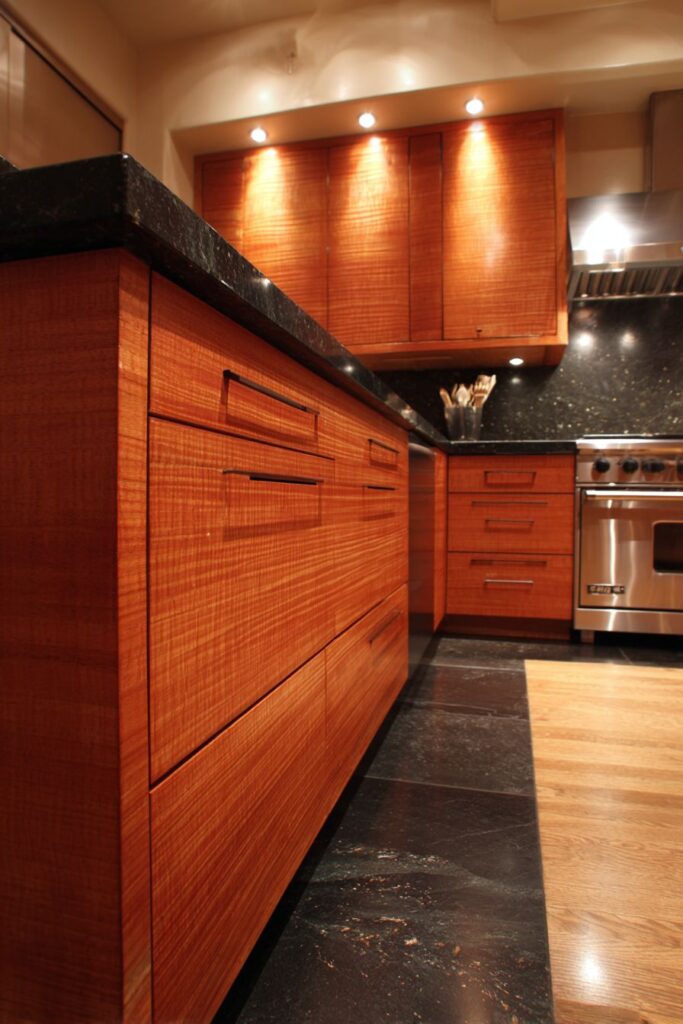
Sleek cherry wood kitchen cabinets with horizontal grain patterns represent the sophisticated end of contemporary kitchen design, where rich natural beauty meets minimalist aesthetic principles. The distinctive reddish-brown tones of cherry wood create warmth and luxury while hidden hinges and seamless construction maintain the clean lines essential to contemporary styling. This approach to cabinet design demonstrates how traditional wood species can be reimagined for modern sensibilities without losing their inherent character.
The horizontal grain orientation creates visual flow and emphasizes the cabinet’s clean lines while showcasing cherry’s naturally lustrous surface. Hidden hinges eliminate visual hardware distractions, allowing the beauty of the wood grain and the precision of the construction to take center stage. Under-cabinet lighting creates dramatic highlighting that brings out cherry’s natural depth and richness while providing essential task lighting for food preparation activities.
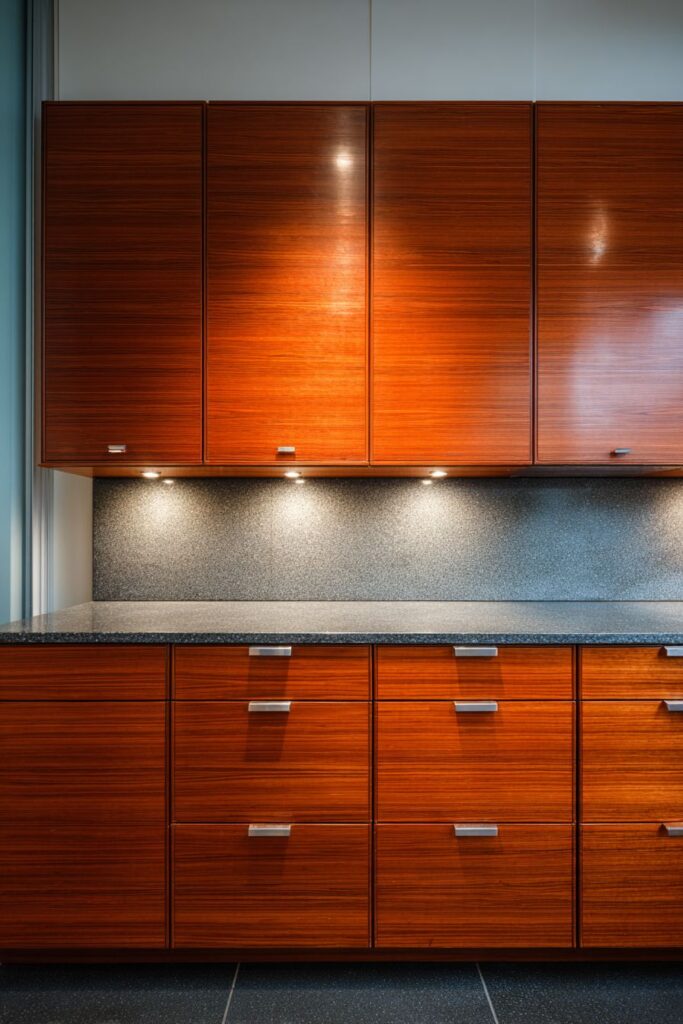
Black granite countertops provide a sophisticated contrast to the warm cherry wood, creating a striking color combination that feels both bold and refined. The reflective surface of the granite creates interesting light patterns while the dark color grounds the warm wood tones and prevents the design from feeling overly warm or overwhelming. Stainless steel appliances add contemporary functionality while their cool metallic surfaces provide additional contrast to the rich wood cabinetry.
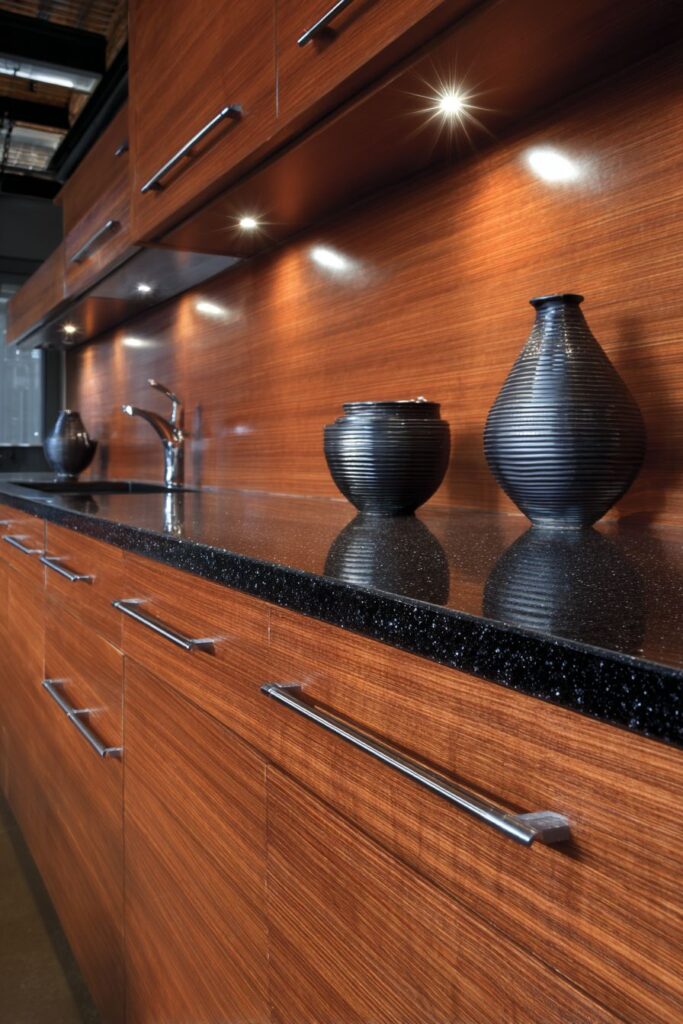
Professional architectural photography reveals how balanced exposure can capture both the sophisticated craftsmanship of the cherry cabinets and the interplay between warm wood and cool surfaces. The natural luster of cherry wood responds beautifully to controlled lighting, creating depth and visual interest that changes throughout the day as natural and artificial light sources shift and change.
Key Design Tips:
- Orient wood grain horizontally to emphasize clean contemporary lines
- Use hidden hinges to maintain seamless, minimalist appearance
- Install under-cabinet lighting to highlight cherry’s natural luster
- Pair with dark granite countertops for sophisticated color contrast
- Choose stainless steel appliances to complement the contemporary aesthetic
7. Traditional Colonial Painted Wood Elegance
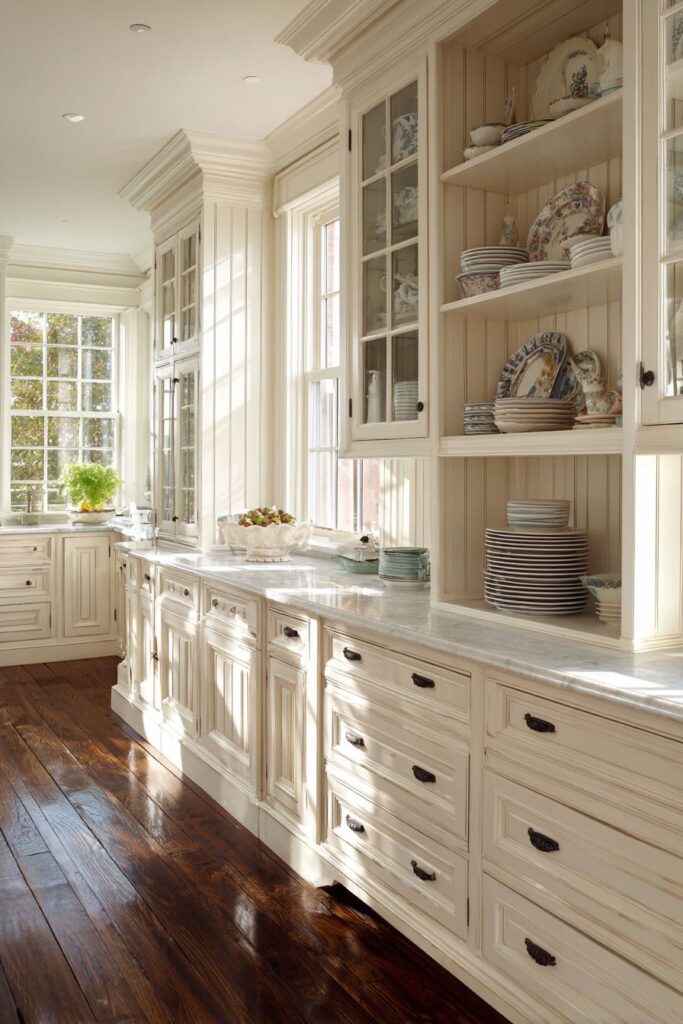
Painted wood kitchen cabinets in soft cream with classic beadboard panels represent timeless American design traditions that continue to appeal to homeowners seeking elegant, refined kitchen spaces. These cabinets embody traditional colonial styling through careful attention to historical details like beadboard paneling, dovetail joinery, and antique bronze hardware that references the craftsmanship traditions of America’s colonial period while providing thoroughly modern functionality.
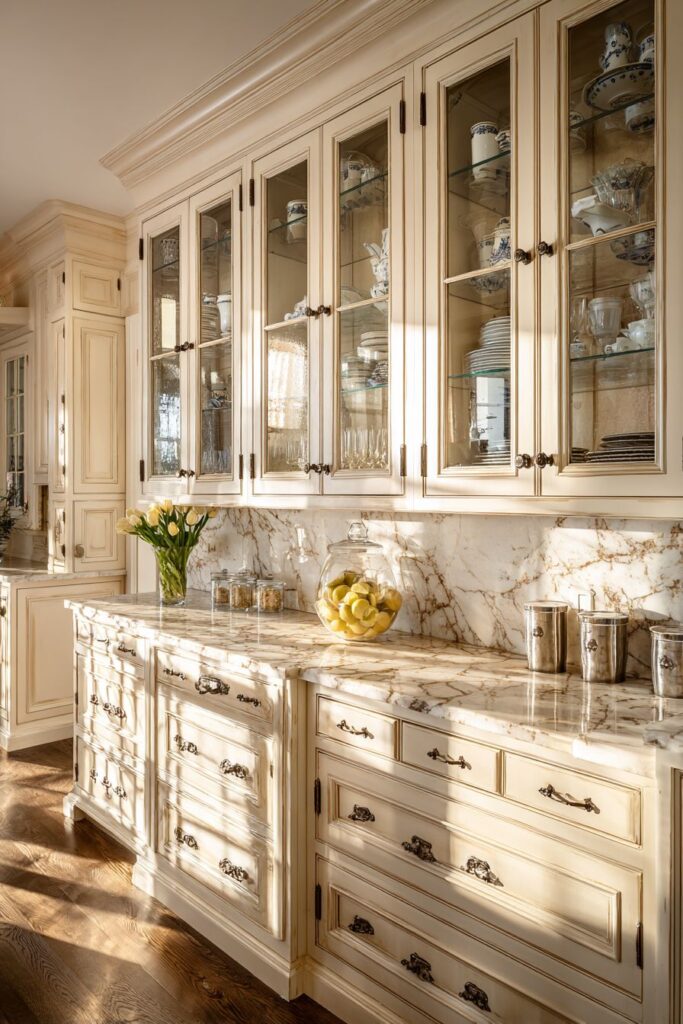
The soft cream paint finish creates a sophisticated, neutral background that works beautifully with both traditional and contemporary accessories while highlighting the fine craftsmanship evident in every panel and joint. Glass-front upper cabinets provide display opportunities for fine china, glassware, and collectibles while maintaining the enclosed storage capacity needed for everyday kitchen items. Deep lower drawers with traditional dovetail joints combine time-tested construction techniques with modern storage solutions.
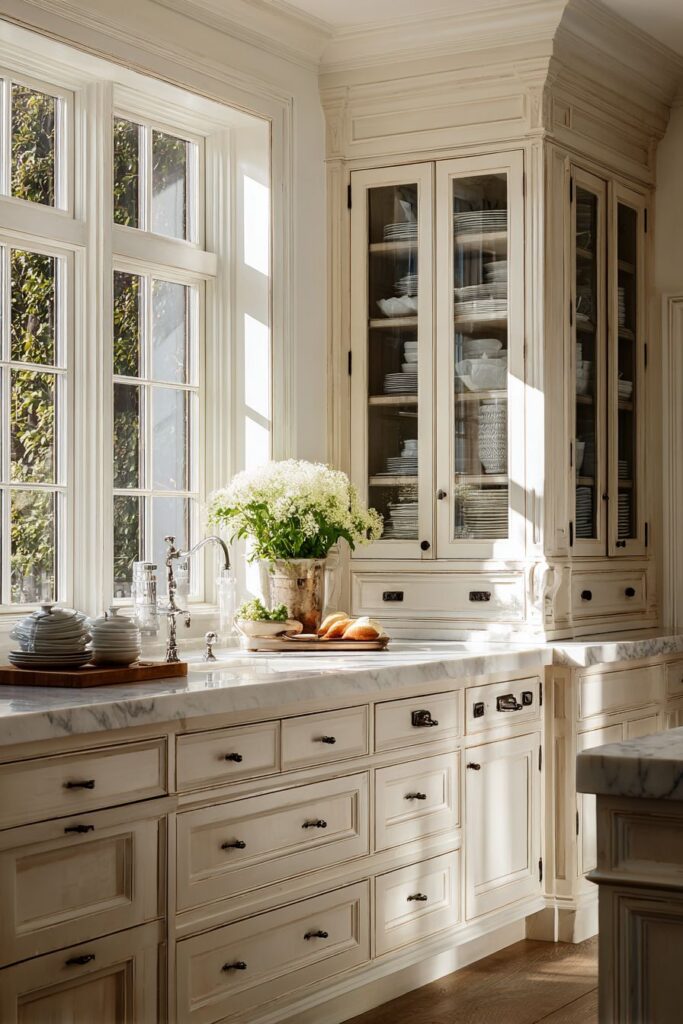
Natural marble countertops complement the painted wood cabinets while adding luxury and sophistication to the overall design. The veining patterns in marble create visual interest and movement that prevents the neutral color scheme from feeling static or boring. Antique bronze hardware adds warmth and character while referencing historical precedents for colonial kitchen design.
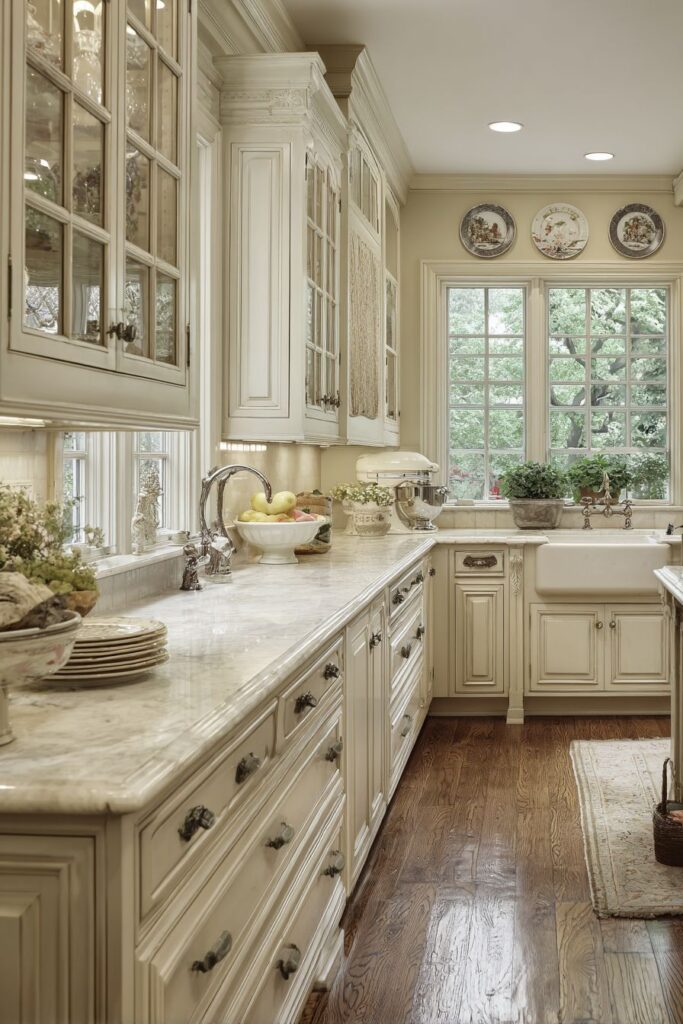
Interior design photography captures how natural lighting from divided-light windows creates gentle highlights on the painted wood surfaces, emphasizing the quality of the paint finish and the precision of the cabinet construction. The soft cream color responds beautifully to changing light conditions, appearing warmer in morning light and cooler in afternoon shadows, demonstrating the versatility and timeless appeal of painted wood cabinetry.
Key Design Tips:
- Choose cream or off-white paint colors for timeless, versatile appeal
- Include beadboard panels for authentic traditional colonial styling
- Install glass-front upper cabinets for display and visual lightness
- Use antique bronze hardware for warmth and historical reference
- Pair with natural marble countertops for luxury and pattern interest
8. Small Apartment White Oak Space Maximization
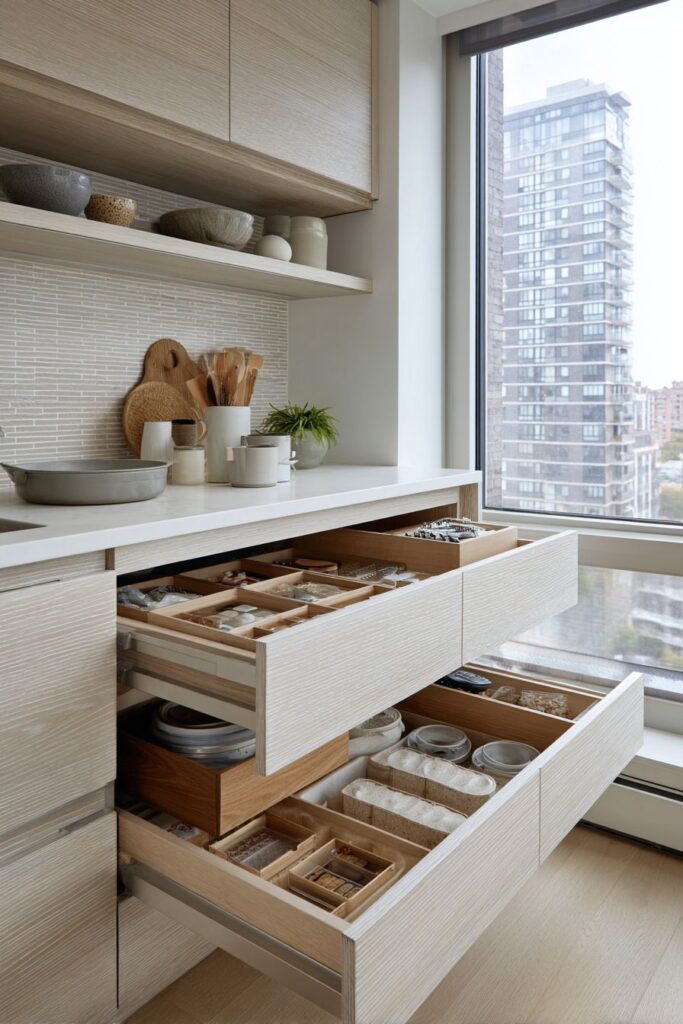
Floor-to-ceiling white oak wood kitchen cabinets demonstrate how thoughtful design can maximize storage capacity in small apartment kitchens without sacrificing style or quality. These shaker-style doors represent classic American craftsmanship adapted for contemporary urban living, where efficient use of vertical space becomes essential for creating functional kitchen environments. The light oak finish naturally brightens compact spaces while providing the warmth and character that only natural wood can offer.
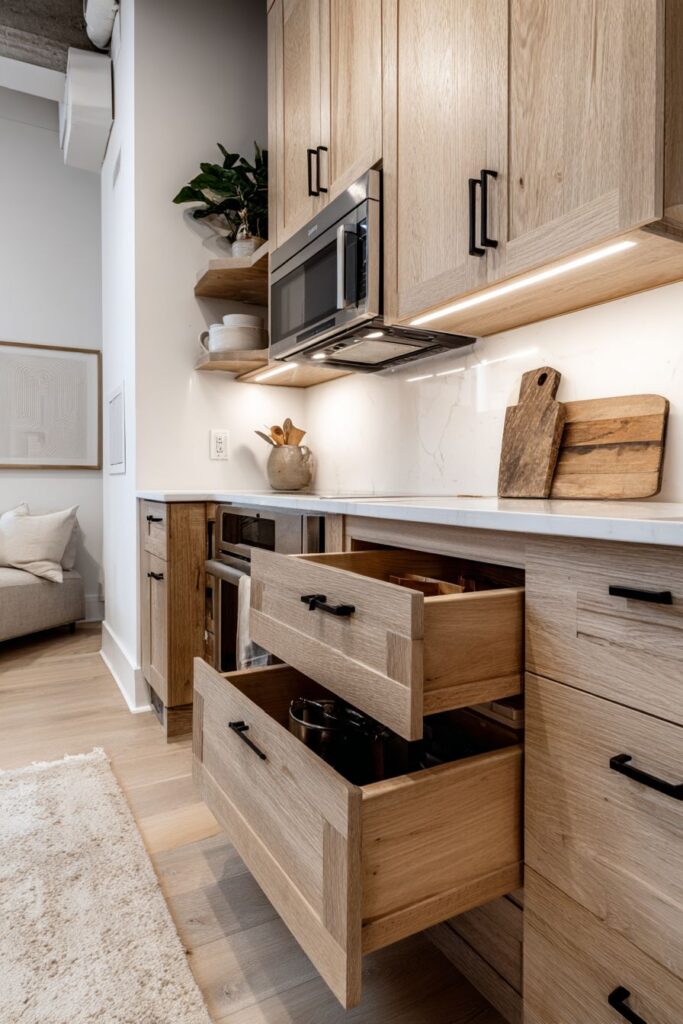
Clever corner solutions and pull-out drawer systems optimize every available inch of storage space, demonstrating how modern cabinet hardware and accessories can transform challenging small spaces into highly functional work areas. These storage solutions include lazy Susans, pull-out shelves, and drawer organizers that make small kitchen storage both accessible and efficient. The shaker-style doors provide traditional aesthetic appeal while their simple, clean lines prevent visual clutter in tight spaces.
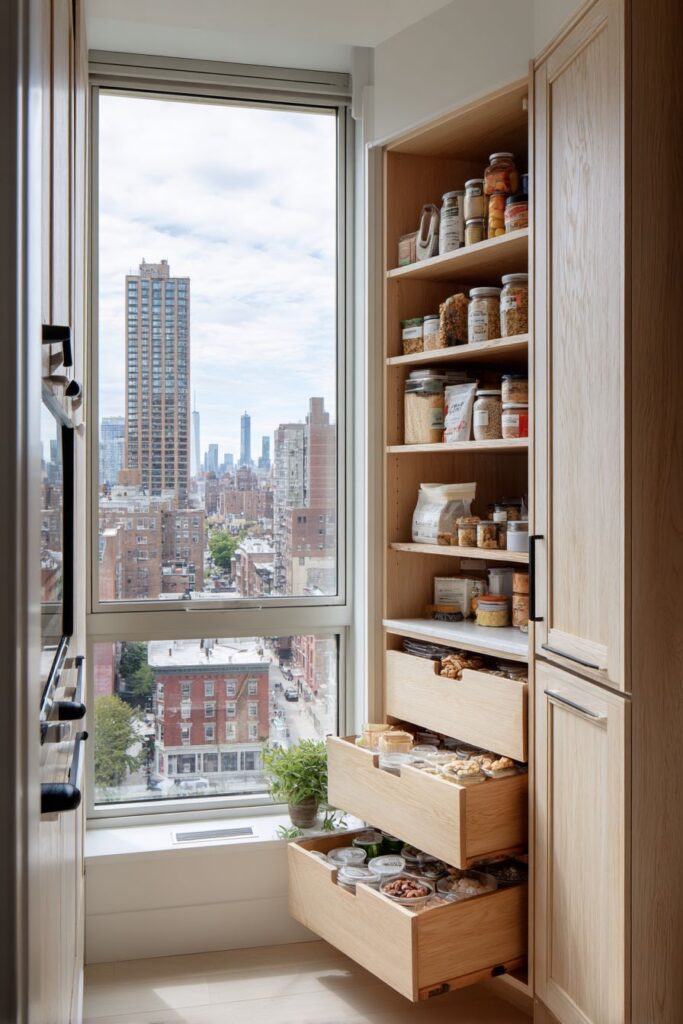
Brushed stainless steel handles add contemporary touches while maintaining the clean, uncluttered appearance essential for small space design. The hardware choice reflects the apartment kitchen’s need for durability and easy maintenance while complementing the oak’s natural warmth. The light wood finish works particularly well in apartments where natural light may be limited, helping to reflect and amplify whatever illumination is available.
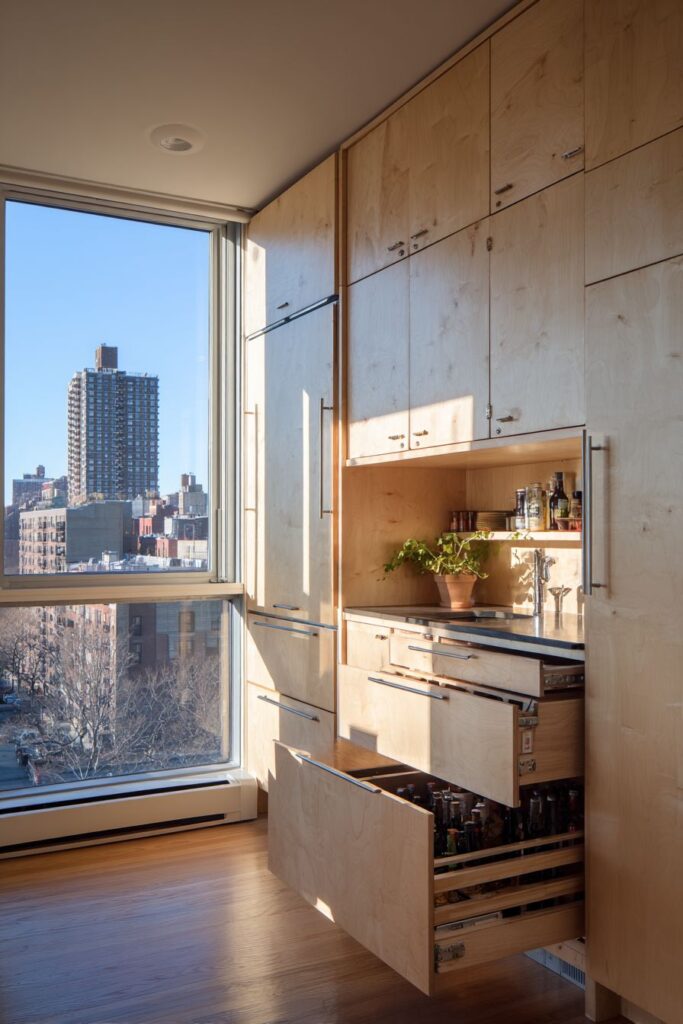
Wide-angle photography reveals how efficient layout planning combined with quality wood cabinetry can create apartment kitchens that feel both spacious and inviting. The oak’s subtle grain pattern provides visual interest without overwhelming the small space, while the floor-to-ceiling design draws the eye upward, creating the illusion of greater height and spaciousness than the actual square footage might suggest.
Key Design Tips:
- Extend cabinets to the ceiling for maximum vertical storage capacity
- Use light wood finishes to brighten and expand small spaces visually
- Install pull-out drawers and corner solutions for efficient access
- Choose simple, clean hardware that doesn’t add visual weight
- Plan cabinet layouts to maximize every inch of available space
9. Industrial-Style Weathered Pine Authenticity
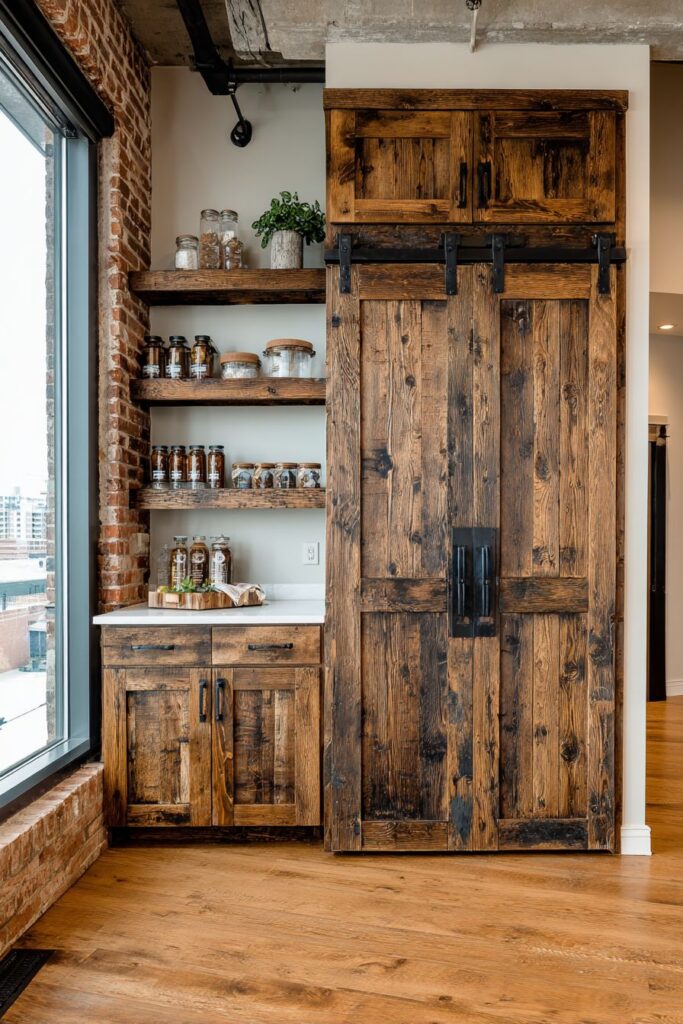
Weathered pine wood kitchen cabinets with metal accents and exposed hinges create authentic industrial aesthetics that celebrate the beauty of utilitarian design and honest materials. These cabinets showcase natural wear patterns and distressed finishes that reflect industrial design’s emphasis on function over ornamentation, while exposed hardware and metal accents reinforce the utilitarian aesthetic that defines this popular design style.
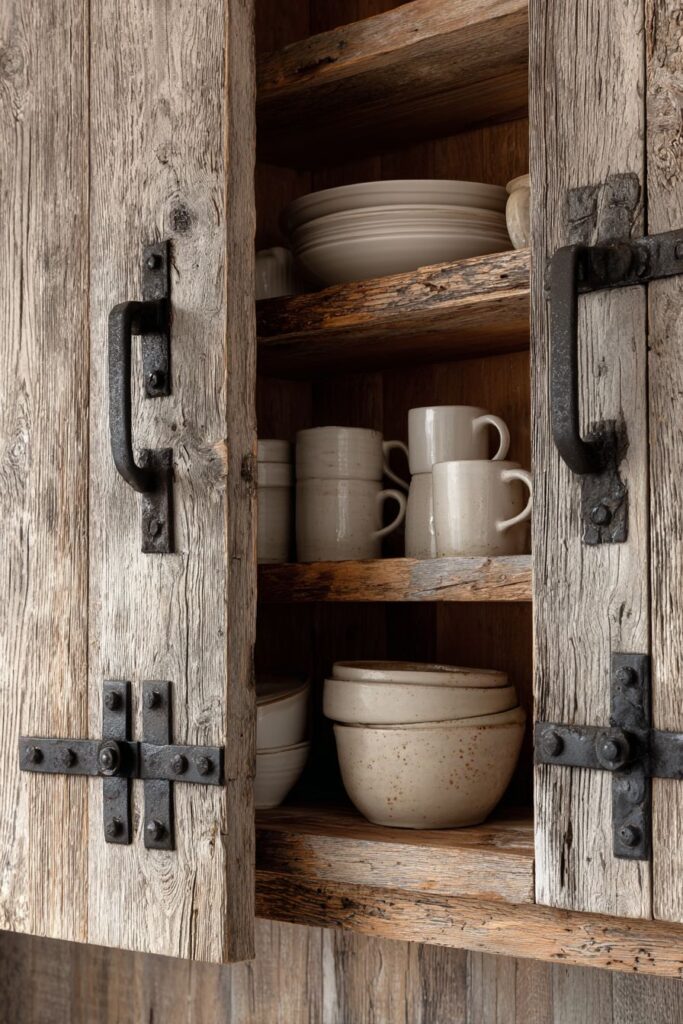
The distressed pine shows natural aging and wear patterns that cannot be artificially reproduced, creating unique character in every cabinet door and drawer face. Black iron hardware reinforces the industrial theme while providing the heavy-duty functionality that industrial design demands. Exposed hinges become design elements rather than hidden hardware, celebrating the mechanical aspects of cabinet construction while adding visual interest and authentic industrial character.
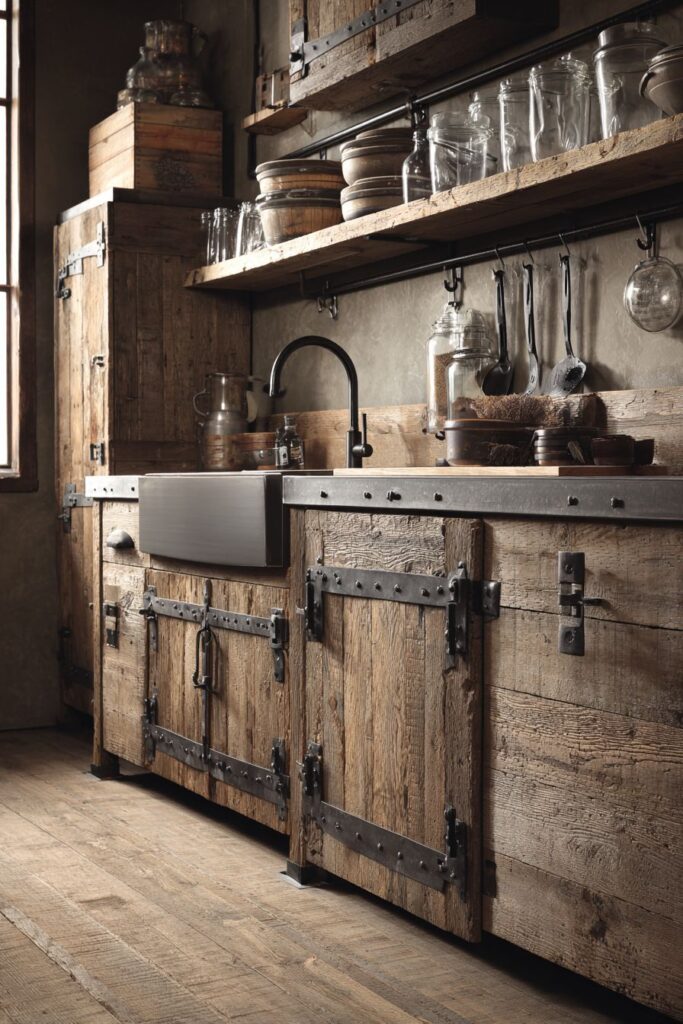
Open shelving integrated with closed cabinet storage reflects industrial design’s practical approach to storage solutions, where frequently used items remain visible and accessible while less attractive necessities remain hidden. This mix of storage types also provides opportunities to display industrial-inspired accessories and practical kitchen items that complement the overall aesthetic theme.
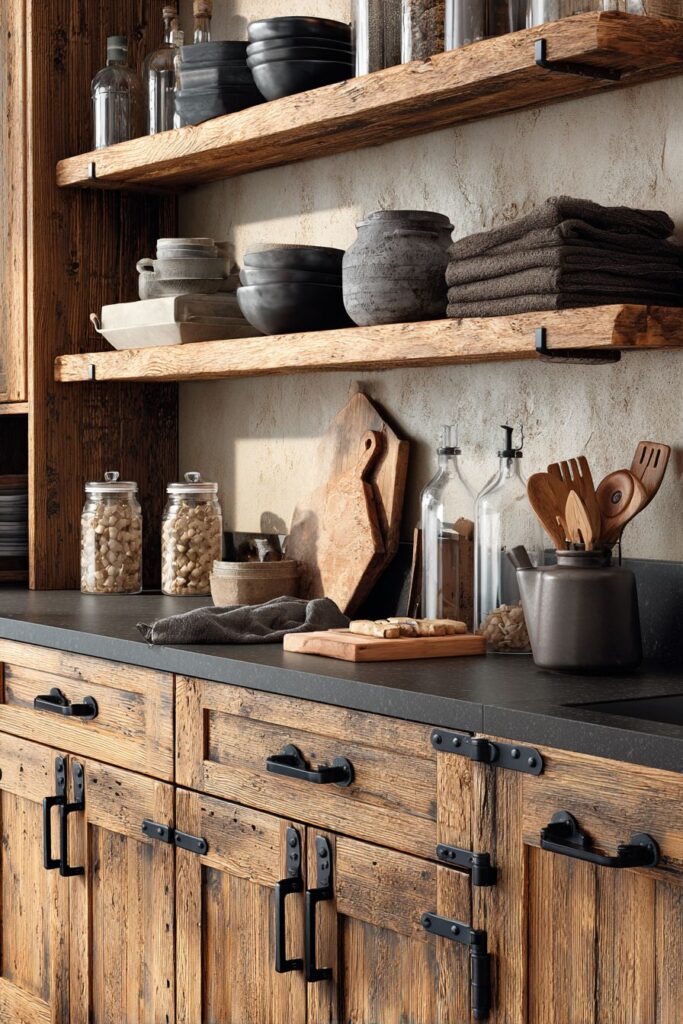
Professional interior photography with dramatic lighting creates strong contrasts that emphasize the raw wood texture and authentic industrial character of the cabinet design. The interplay of light and shadow across the weathered pine surfaces highlights the natural imperfections and wear patterns that give these cabinets their unique personality and authentic industrial appeal.
Key Design Tips:
- Choose weathered pine with natural wear patterns for authentic character
- Use black iron hardware to reinforce industrial aesthetic themes
- Expose hinges and mechanical elements as design features
- Mix open shelving with closed storage for practical functionality
- Employ dramatic lighting to emphasize texture and authenticity
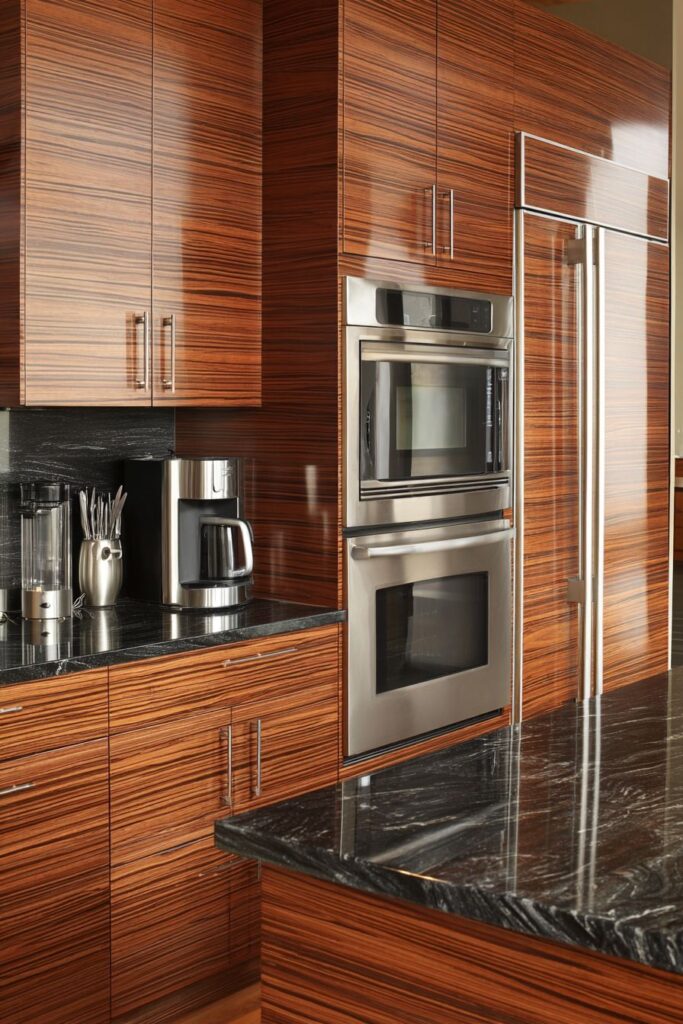
10. Luxury Exotic Zebrawood Statement Design
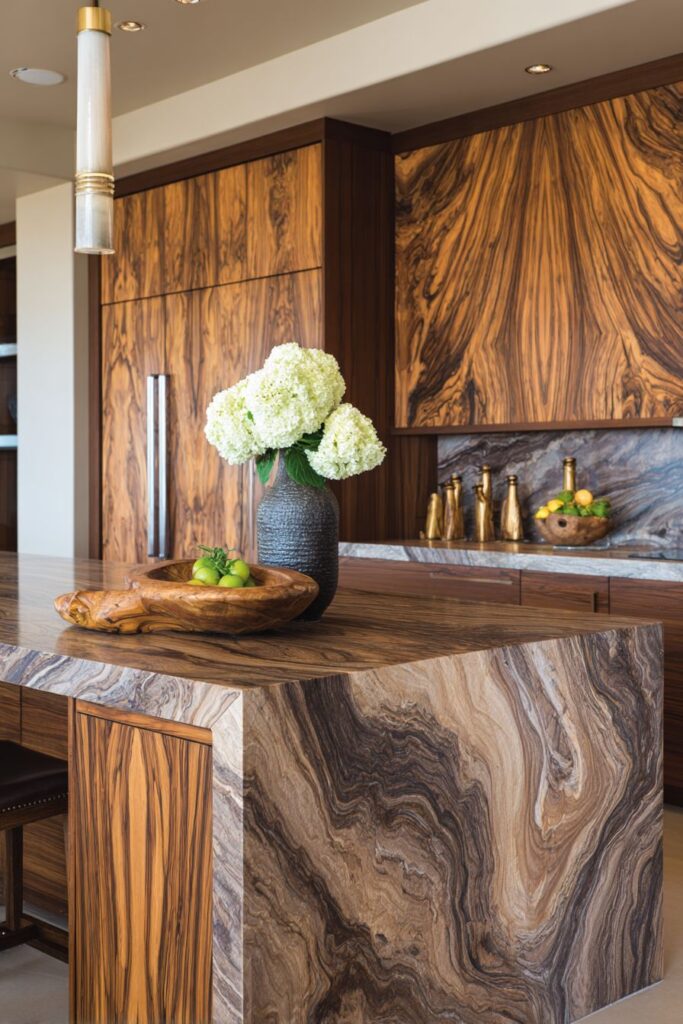
Exotic zebrawood kitchen cabinets represent the ultimate in luxury kitchen design, featuring striking natural grain patterns that create built-in artwork across every cabinet surface. The distinctive black and golden-brown striping of zebrawood creates visual drama that transforms kitchen cabinetry from functional storage into stunning design focal points. High-gloss finishes enhance the wood’s natural patterns while providing protection and easy maintenance for busy kitchen environments.
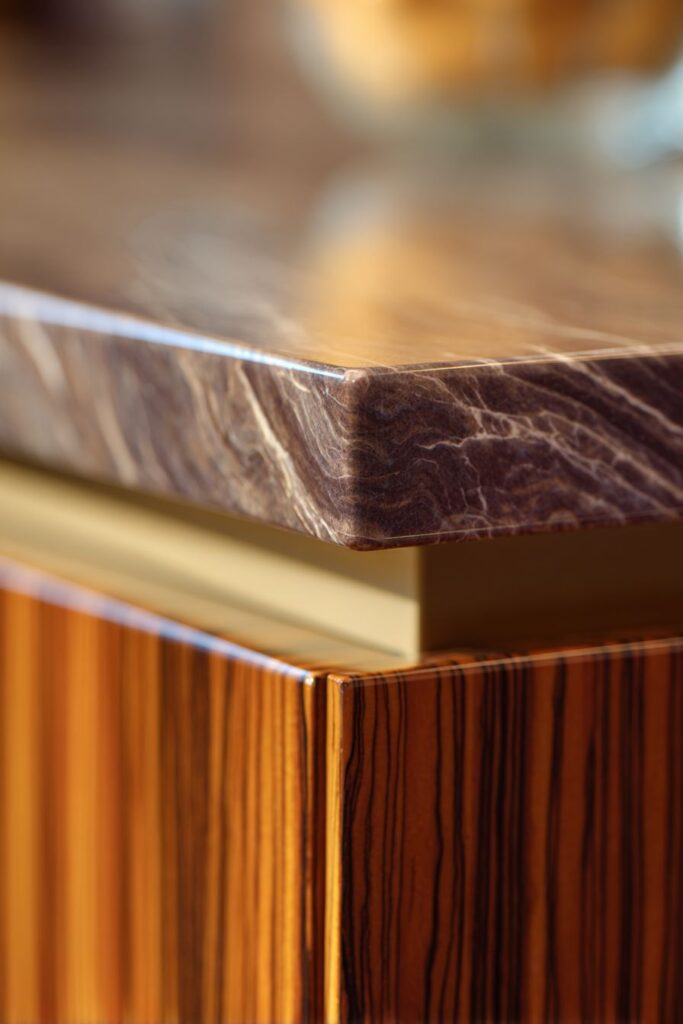
The unique characteristics of zebrawood make each cabinet door and drawer face a one-of-a-kind work of natural art, with no two pieces displaying identical grain patterns. Soft-close mechanisms ensure that the premium functionality matches the exceptional visual appeal, providing the smooth, quiet operation expected in luxury kitchen environments. The investment in exotic wood species like zebrawood reflects a commitment to unique design and exceptional craftsmanship.
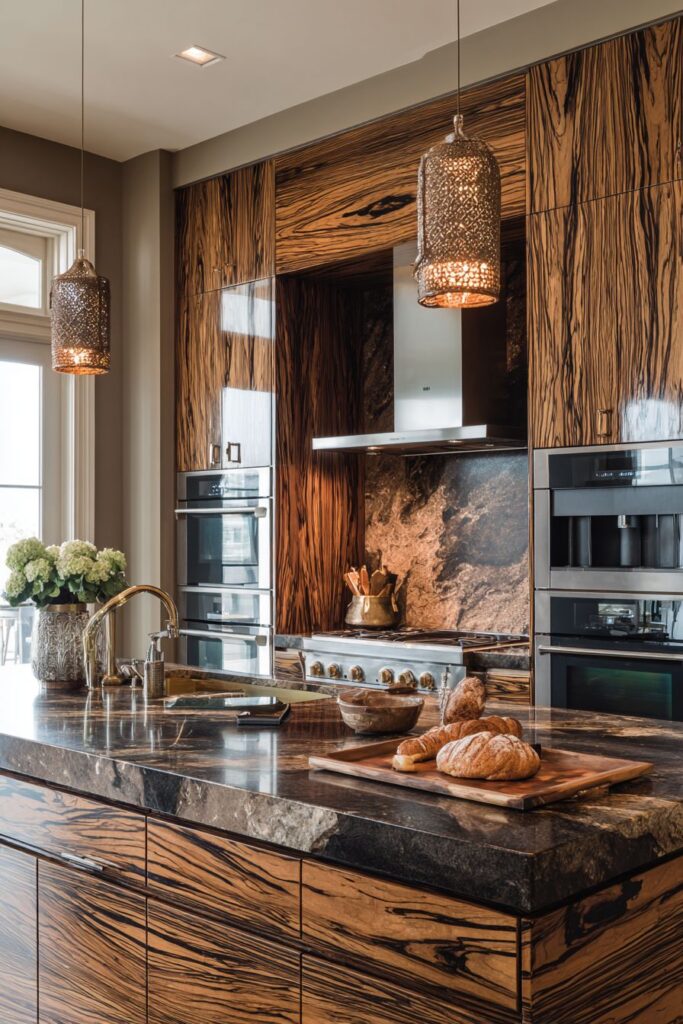
Quartzite countertops provide a sophisticated complement to the dramatic wood patterns while offering the durability and low maintenance requirements essential for luxury kitchen design. Gold accents in hardware and fixtures complement the golden tones in the zebrawood while adding another layer of luxury and refinement to the overall design scheme.
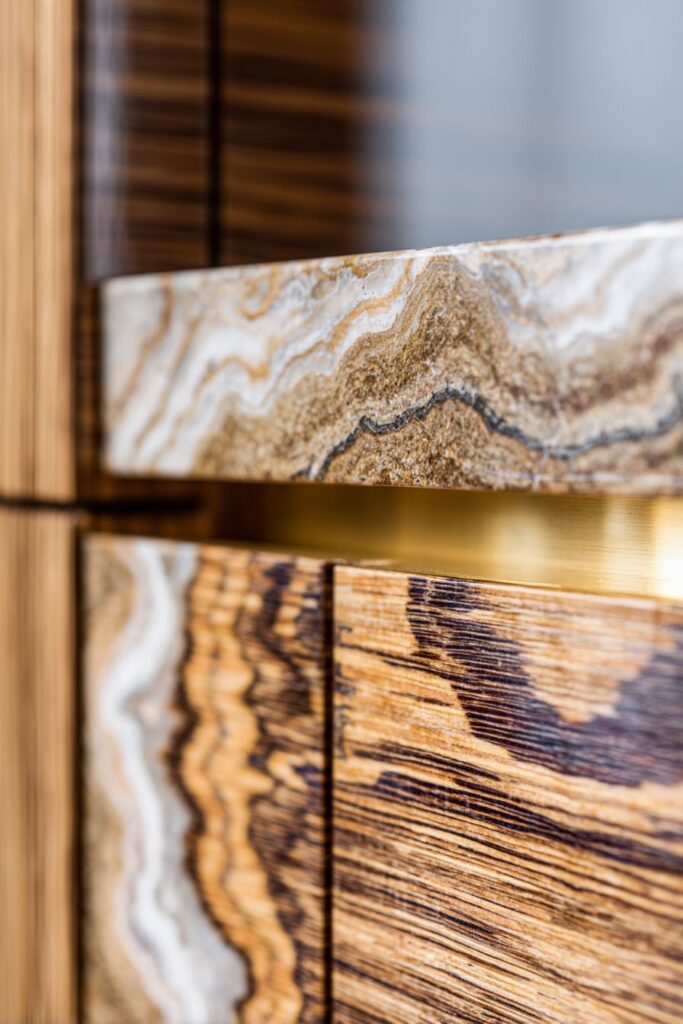
Interior design photography with professional lighting captures the spectacular zebrawood patterns and sophisticated craftsmanship that justify the investment in exotic wood species. The dramatic grain patterns create visual movement and interest that ensures the kitchen remains a compelling focal point in any home, while the high-gloss finish reflects light beautifully, adding depth and richness to the already stunning natural patterns.
Key Design Tips:
- Select exotic woods with dramatic grain patterns for maximum visual impact
- Use high-gloss finishes to enhance natural patterns and provide protection
- Install soft-close mechanisms for premium functionality
- Pair with neutral countertops that complement rather than compete
- Add gold accents to enhance warm tones in exotic wood species
11. Mediterranean Knotty Alder Old World Charm
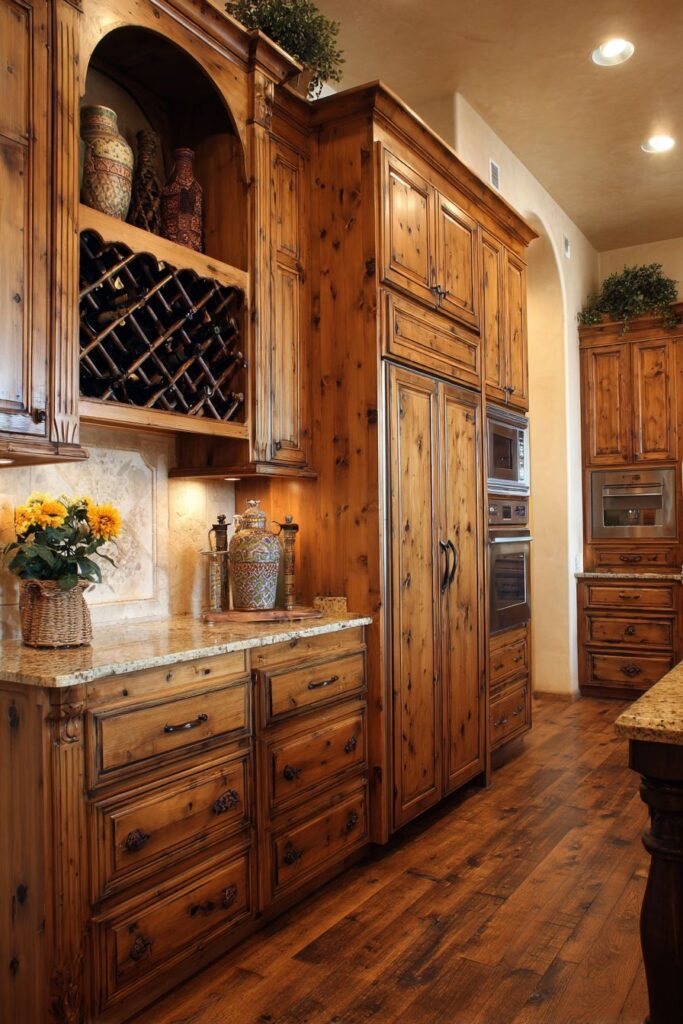
Knotty alder wood kitchen cabinets with warm golden tones and decorative corbels transport kitchen design to the sun-soaked hillsides of the Mediterranean, where traditional craftsmanship and natural materials create spaces that feel both timeless and deeply rooted in place. The distinctive knots and grain patterns of alder wood provide character and visual interest while the warm golden color creates an inviting atmosphere reminiscent of traditional Mediterranean villas and farmhouses.
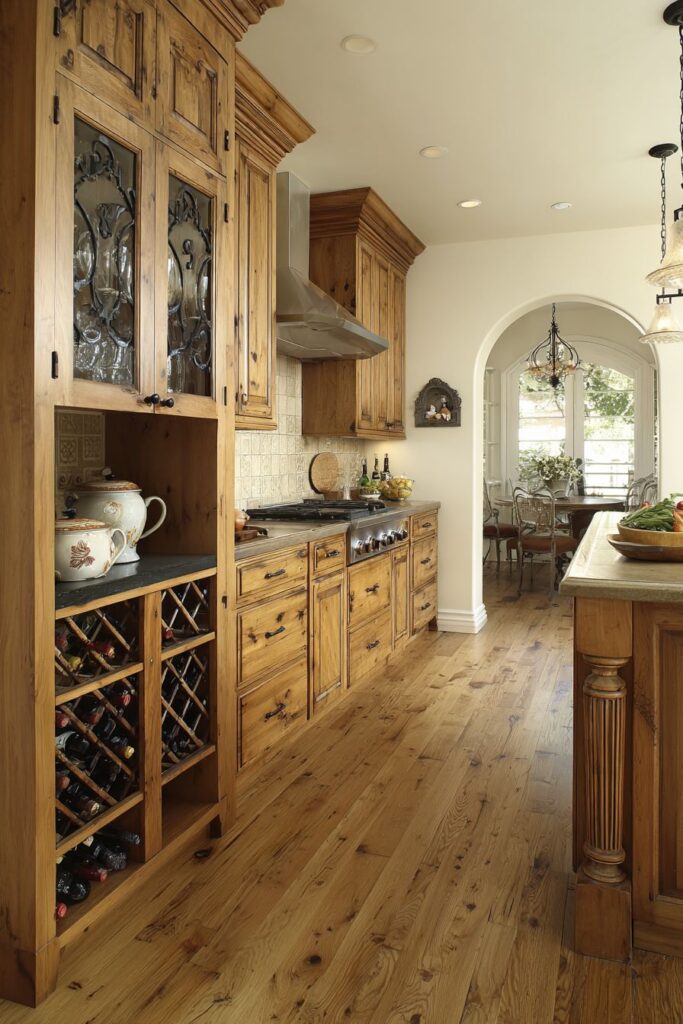
Wine storage cubbies integrated into the cabinet design reflect Mediterranean lifestyle priorities while providing practical storage for wine collections. Display areas for ceramics and pottery allow homeowners to showcase Mediterranean-inspired accessories and collectibles that reinforce the overall design theme. Practical storage drawers ensure that the romantic aesthetic doesn’t compromise functional requirements.
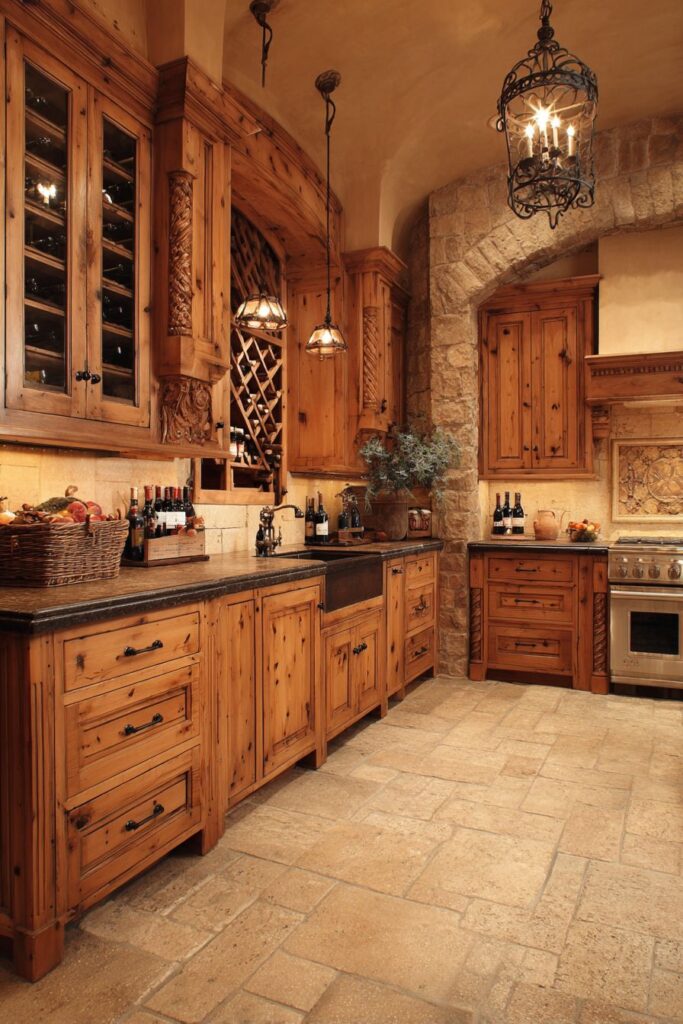
Wrought iron hardware adds authentic Mediterranean character while providing the durability needed for daily kitchen use. The hand-forged appearance of quality wrought iron reinforces the old-world craftsmanship theme while warm pendant lighting creates the ambient atmosphere essential to Mediterranean design. The combination of warm wood, iron accents, and soft lighting creates an inviting environment perfect for leisurely cooking and extended family gatherings.
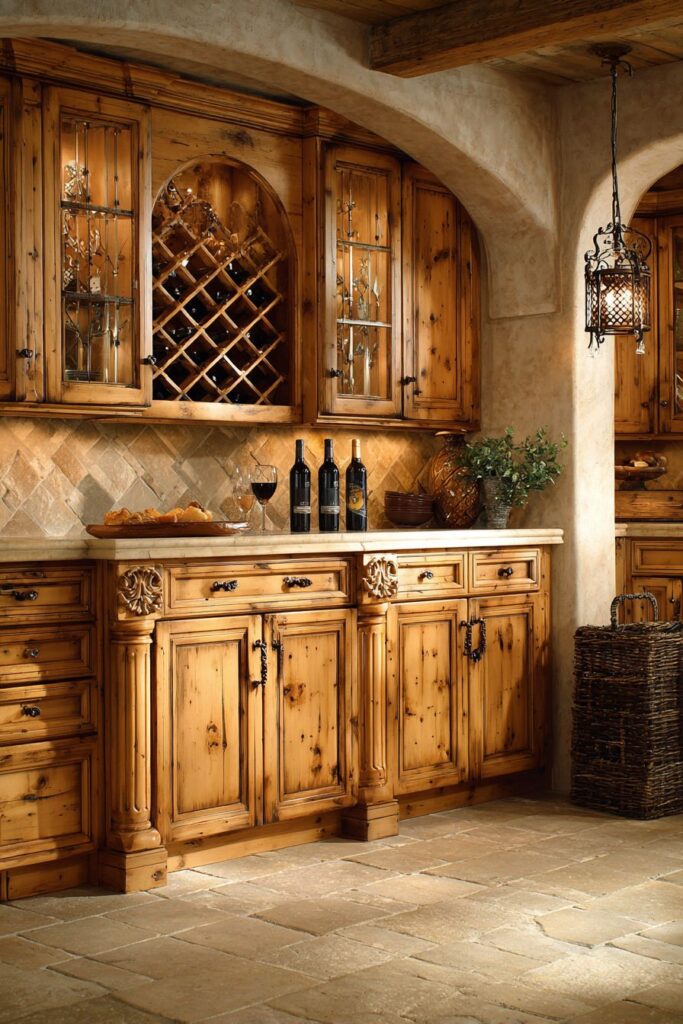
Professional photography captures the rich wood character and handcrafted cabinet details that make Mediterranean-style kitchens so appealing. Natural lighting highlights the distinctive knots and golden tones of alder wood while emphasizing the quality craftsmanship evident in every decorative corbel and carefully fitted joint.
Key Design Tips:
- Choose knotty alder for authentic Mediterranean character and warm color
- Include wine storage and display areas for lifestyle-appropriate functionality
- Use wrought iron hardware for authentic old-world styling
- Install warm pendant lighting to create ambient Mediterranean atmosphere
- Incorporate decorative corbels and traditional woodworking details
12. Coastal Weathered Cedar Driftwood Aesthetic
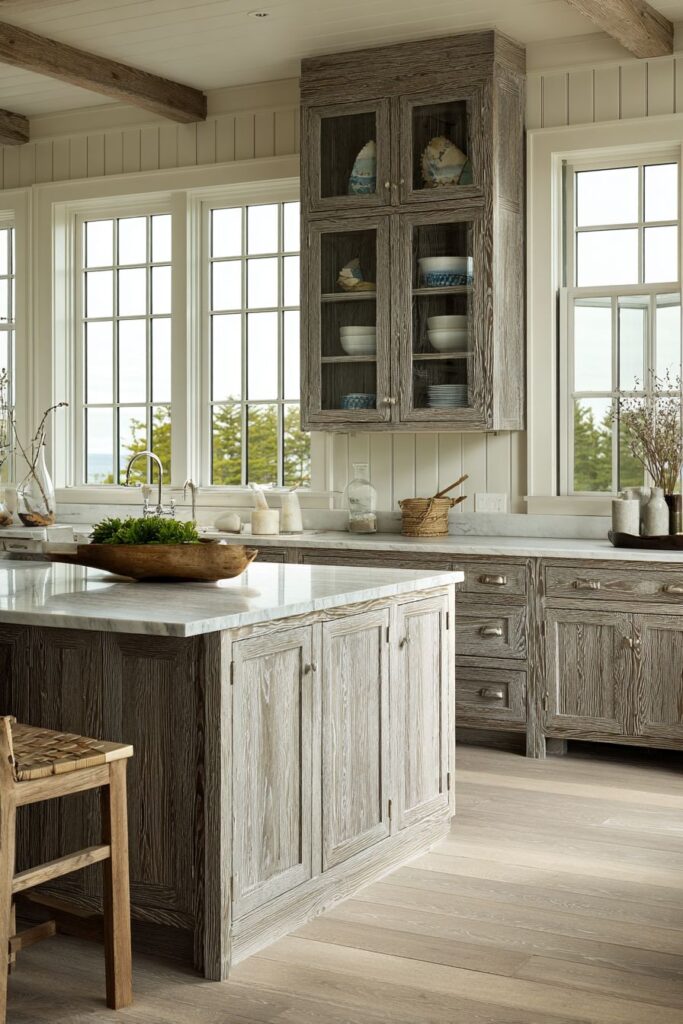
Weathered cedar wood kitchen cabinets with driftwood gray finish create authentic coastal atmosphere by mimicking the natural weathering effects of salt air and ocean spray on beach-worn timber. This finish technique transforms new cedar into cabinets that appear to have been naturally aged by coastal elements, providing instant character and connection to seaside environments. Glass-front upper cabinets provide perfect display opportunities for coastal collections, shells, and beach glass while maintaining practical storage capacity.
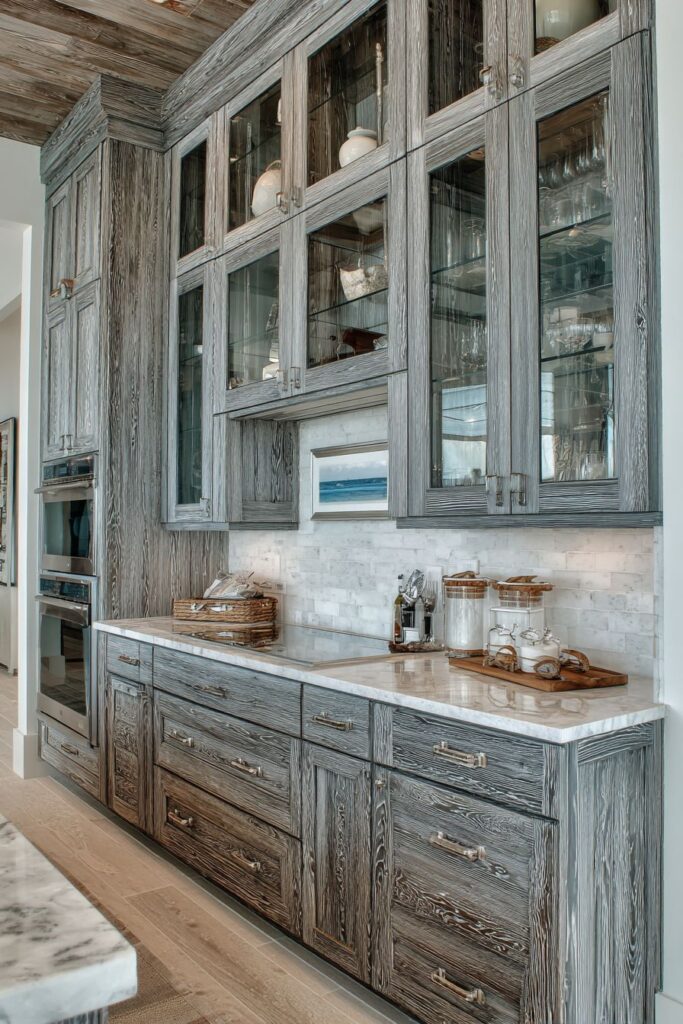
Beadboard backing in upper cabinets adds textural interest and authentic coastal cottage detailing while providing attractive backgrounds for displayed items. The vertical lines of beadboard reference traditional coastal construction techniques while adding visual rhythm and pattern to the cabinet design. Rope-style hardware reinforces the nautical theme while providing durable, comfortable operation for daily kitchen use.
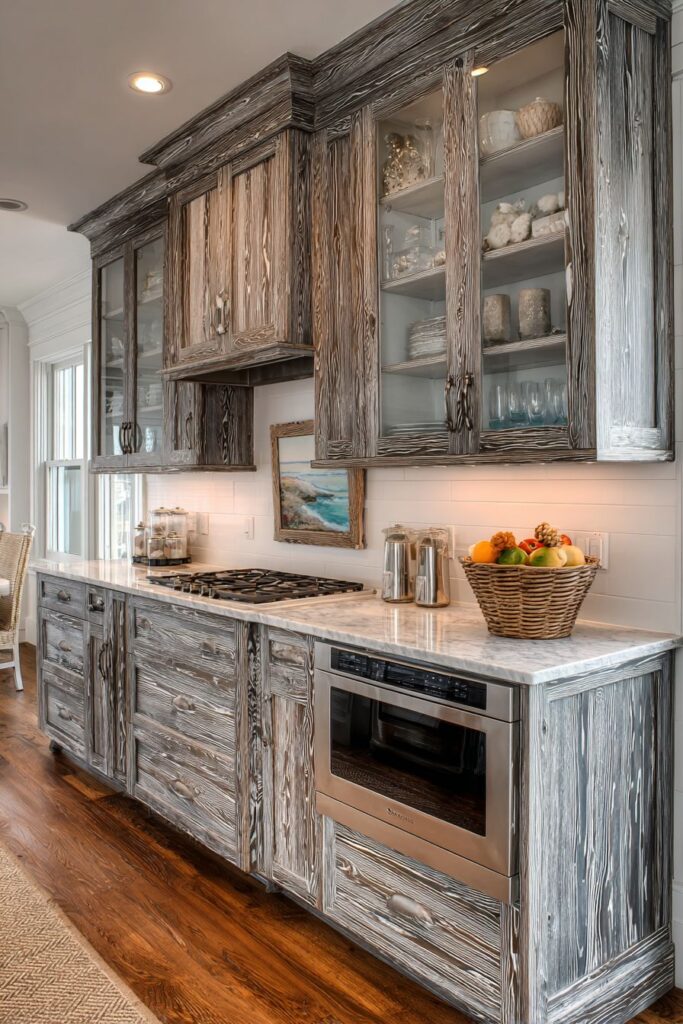
The driftwood gray finish works beautifully with coastal color palettes, providing neutral backgrounds for ocean blues, sandy beiges, and crisp whites that define coastal interior design. This versatile finish also works well with natural materials like jute, rope, and weathered metals that are essential to authentic coastal styling.
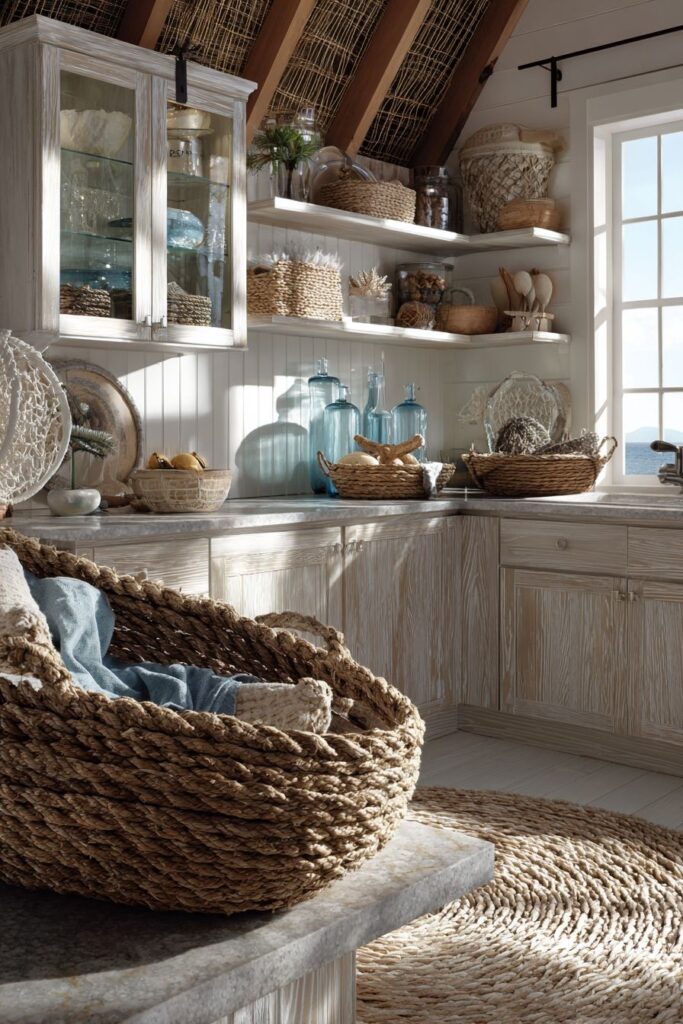
Wide-angle interior photography captures the relaxed coastal atmosphere created by weathered cedar cabinets, showing how the gray finish interacts with natural lighting to create the serene ambiance of seaside cottage kitchens. The weathered wood texture adds visual interest while maintaining the calm, peaceful feeling that makes coastal kitchens such retreats from busy modern life.
Key Design Tips:
- Use weathered finish techniques to create authentic coastal aging effects
- Install glass-front uppers for coastal collection display opportunities
- Add beadboard backing for texture and traditional coastal detailing
- Choose rope-style hardware to reinforce nautical themes
- Maintain neutral color palettes that complement coastal lifestyle aesthetics
13. Modern Eco-Friendly Sustainable Bamboo Innovation
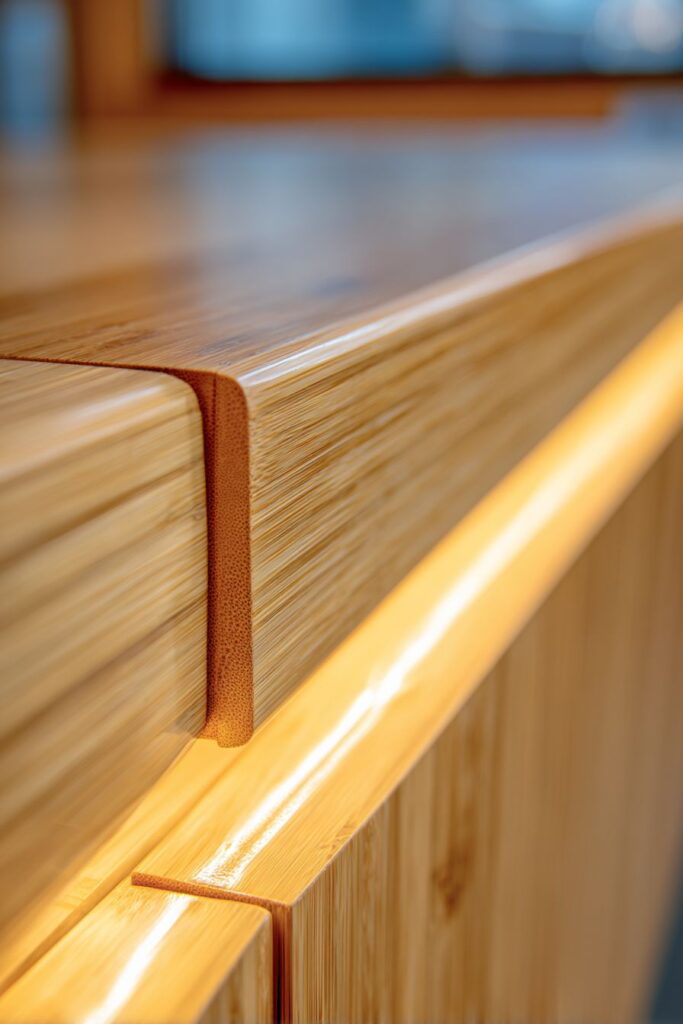
Sustainably sourced bamboo wood kitchen cabinets represent the cutting edge of eco-conscious design, utilizing rapidly renewable materials that offer both environmental benefits and distinctive aesthetic appeal. The natural honey coloring and sleek horizontal grain patterns of bamboo create contemporary cabinet designs that feel both modern and naturally warm. This innovative material choice demonstrates how environmental responsibility can enhance rather than compromise kitchen design quality.
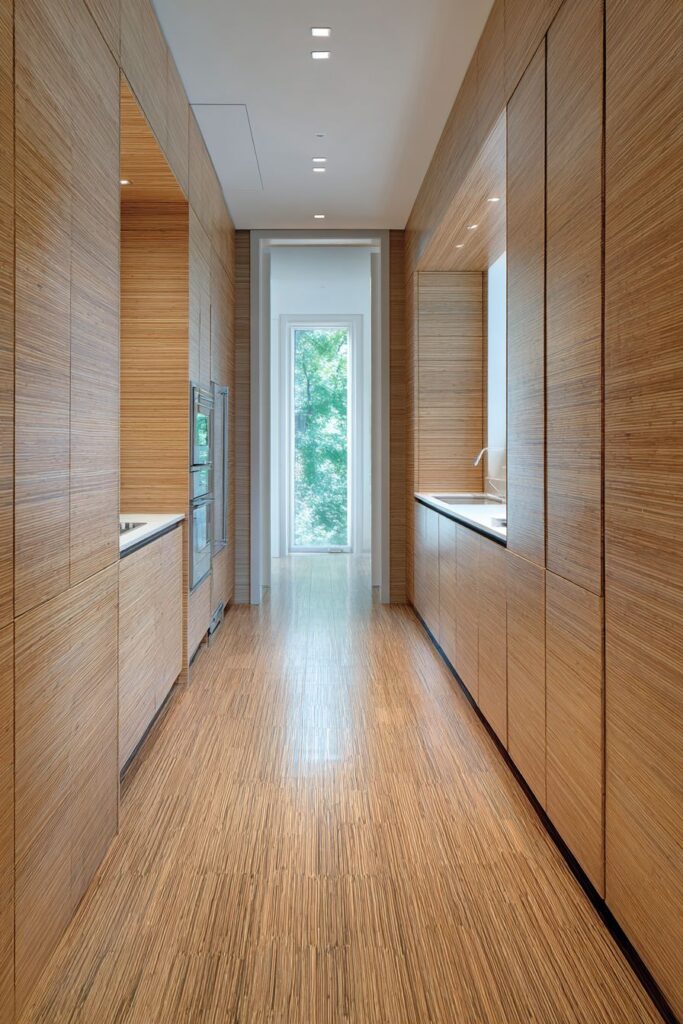
The rapid growth rate of bamboo makes it one of the most sustainable wood alternatives available, regenerating in just a few years compared to the decades required for traditional hardwood species. Integrated LED lighting and hidden hardware maintain the clean, contemporary lines that showcase bamboo’s unique characteristics while providing the modern functionality expected in contemporary kitchen design.
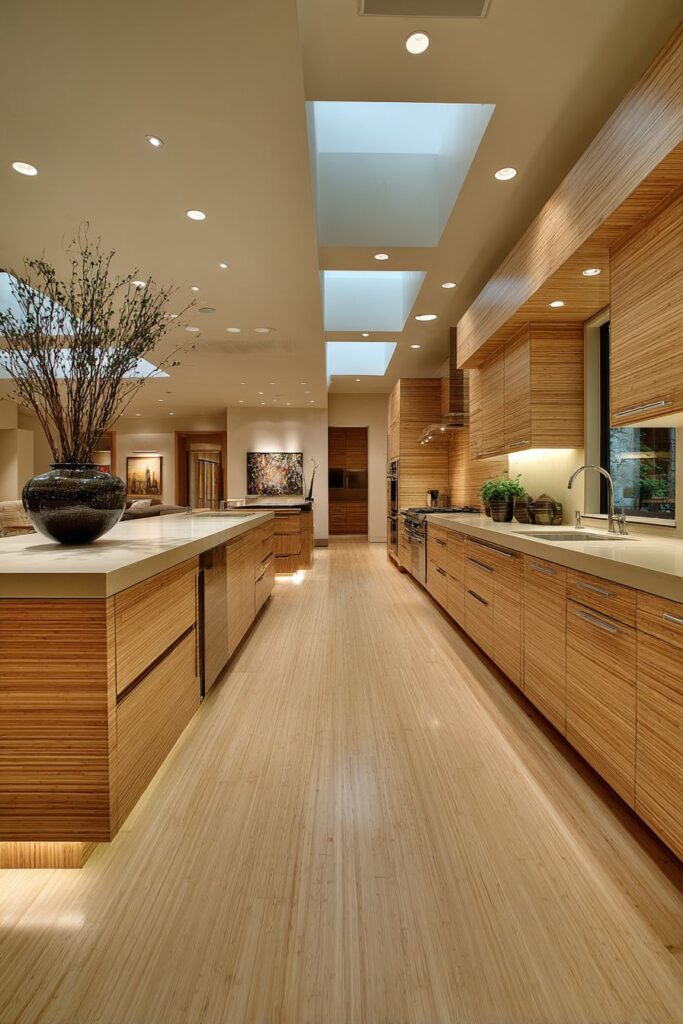
Professional interior photography captures the innovative use of bamboo while showcasing the unique grain characteristics that distinguish this material from traditional wood species. The horizontal grain patterns create visual flow and contemporary appeal while the natural honey coloring provides warmth and character. Balanced lighting reveals the subtle variations in bamboo’s grain pattern while emphasizing the precision and quality of the contemporary cabinet construction.
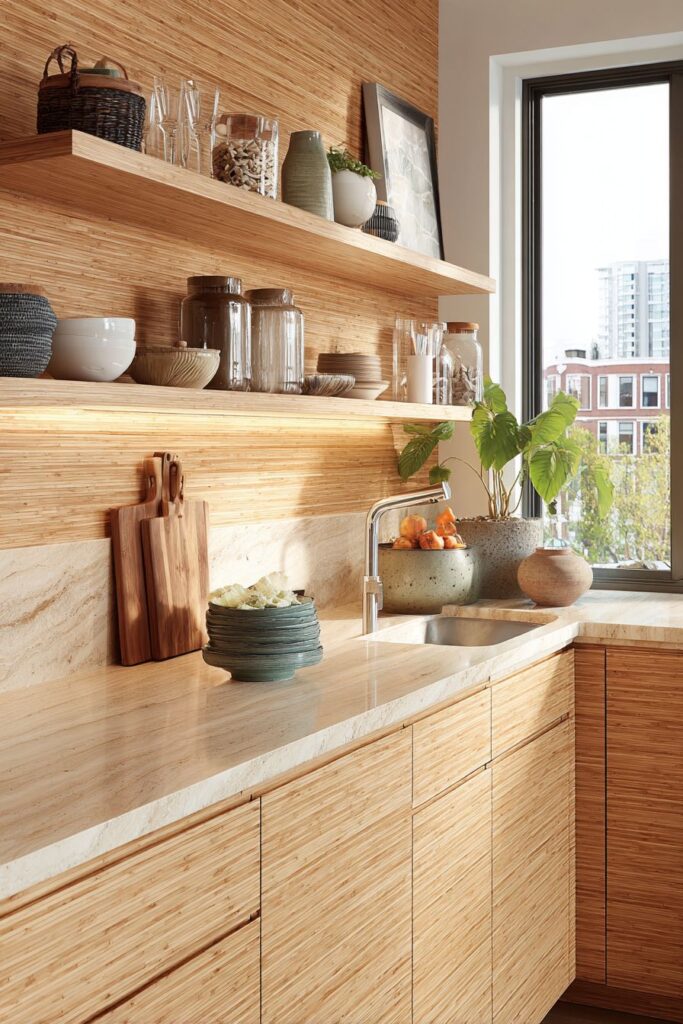
The contemporary cabinet design maximizes bamboo’s natural beauty while incorporating modern conveniences like soft-close mechanisms and precision-fit doors and drawers. This combination of sustainable materials with high-quality construction demonstrates how environmental consciousness and luxury kitchen design can work together to create spaces that are both beautiful and responsible.
Key Design Tips:
- Choose sustainably certified bamboo for authentic environmental benefits
- Emphasize horizontal grain patterns for contemporary aesthetic appeal
- Integrate LED lighting and hidden hardware for clean, modern lines
- Highlight bamboo’s unique characteristics through appropriate photography
- Combine sustainable materials with high-quality construction techniques
14. Craftsman-Style Quarter-Sawn White Oak Heritage
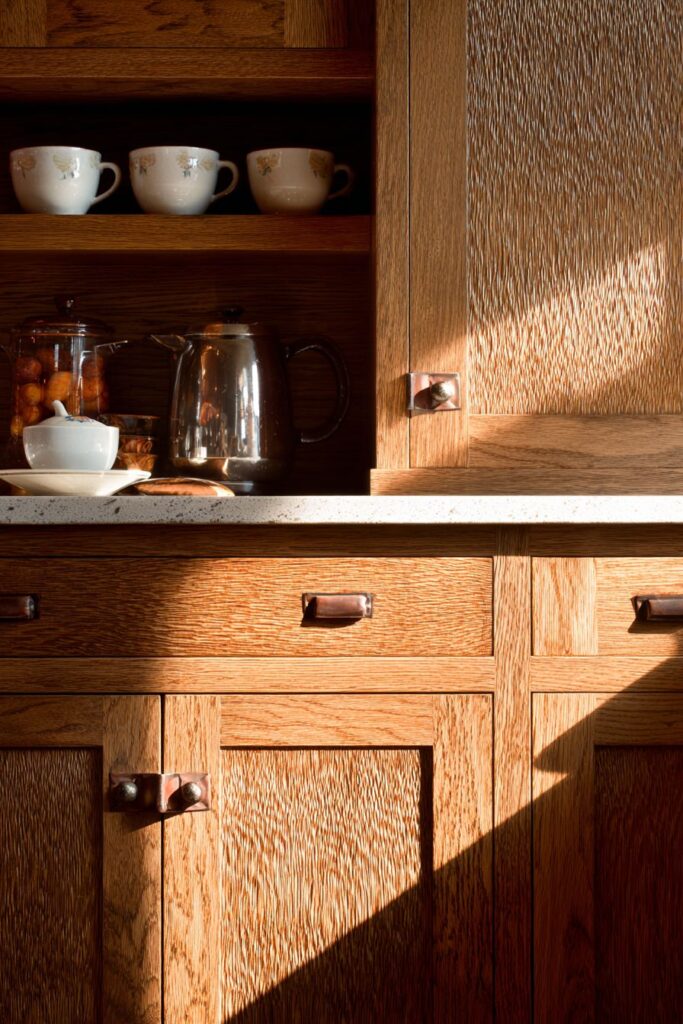
Quarter-sawn white oak wood kitchen cabinets with distinctive ray patterns and mission-style hardware represent the pinnacle of American craftsman tradition, showcasing woodworking techniques that emphasize both beauty and structural integrity. The quarter-sawn cutting method reveals the dramatic ray patterns that make white oak so prized among woodworkers while providing superior dimensional stability and resistance to warping that ensures these cabinets will remain beautiful and functional for generations.
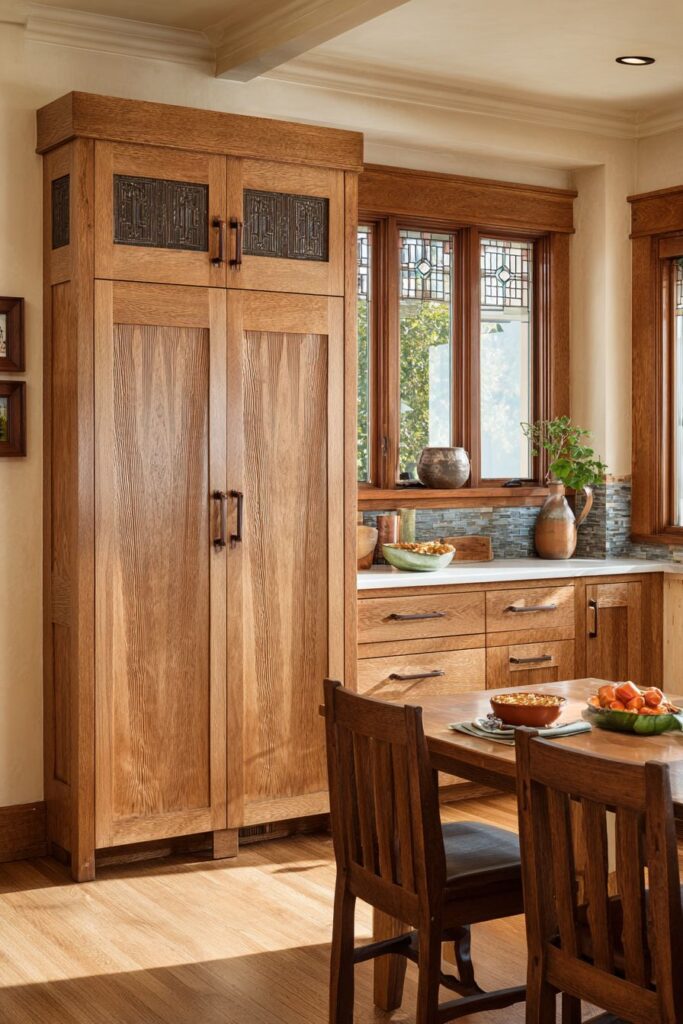
Traditional mortise and tenon joinery visible throughout the cabinet construction demonstrates the commitment to authentic craftsman building techniques that prioritize strength and longevity over quick assembly methods. These time-tested joinery techniques create furniture-quality cabinets that represent true investment pieces rather than mere kitchen components. Aged copper hardware adds warmth and authenticity while aging gracefully to develop the natural patina that craftsman design celebrates.
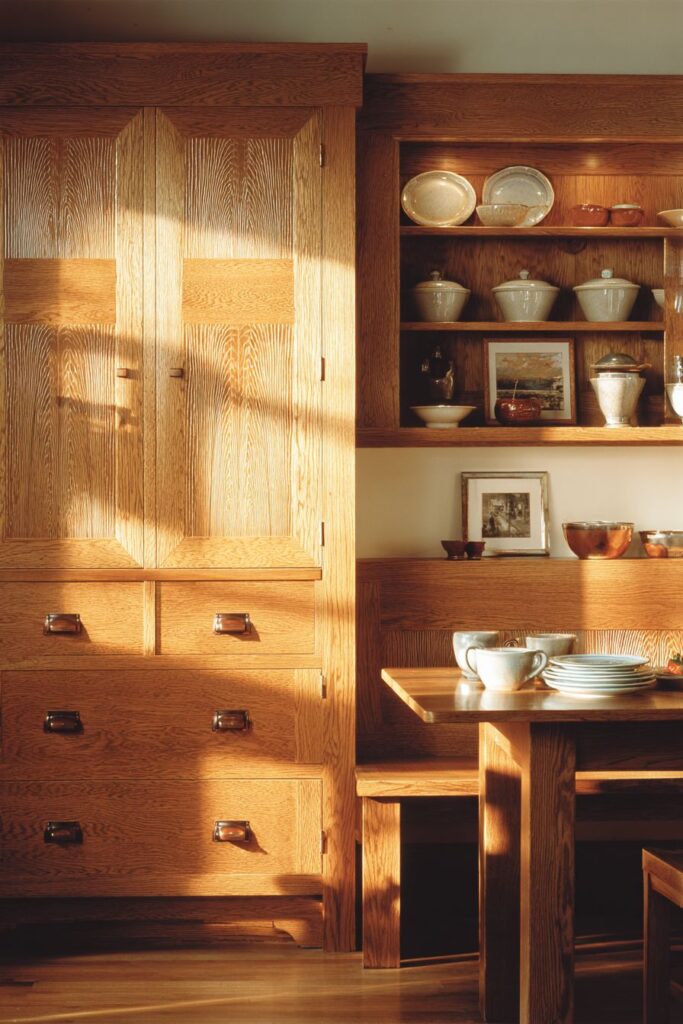
Built-in breakfast nook seating incorporating matching cabinetry extends the craftsman aesthetic throughout the kitchen space while providing practical seating and additional storage. This integrated approach to kitchen design reflects craftsman philosophy that emphasizes harmony between form and function while creating spaces that feel cohesive and thoughtfully planned.
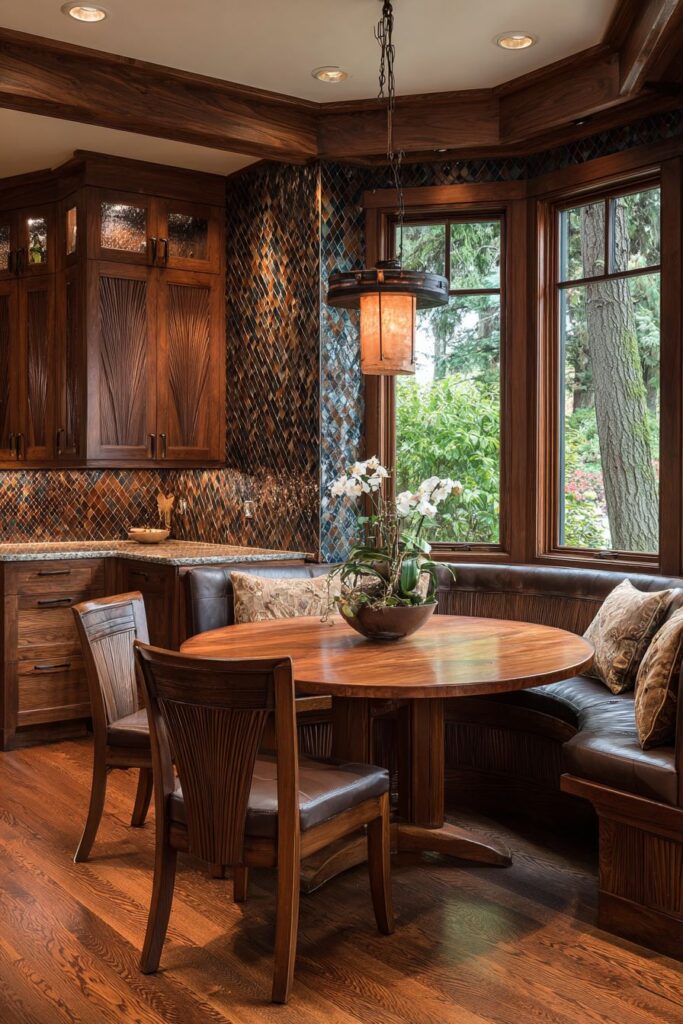
Interior design photography with warm natural lighting highlights the architectural woodworking details and authentic craftsman character that make these handcrafted cabinets so compelling. The distinctive ray patterns of quarter-sawn oak create visual interest and movement while the traditional joinery techniques ensure that these cabinets will develop character and beauty through decades of use.
Key Design Tips:
- Specify quarter-sawn oak for distinctive ray patterns and superior stability
- Use traditional mortise and tenon joinery for authentic craftsman construction
- Choose aged copper hardware for warmth and authentic aging characteristics
- Incorporate built-in seating for integrated craftsman design approach
- Highlight architectural woodworking details through appropriate lighting
15. Vintage-Inspired 1950s Metal-Wrapped Restoration
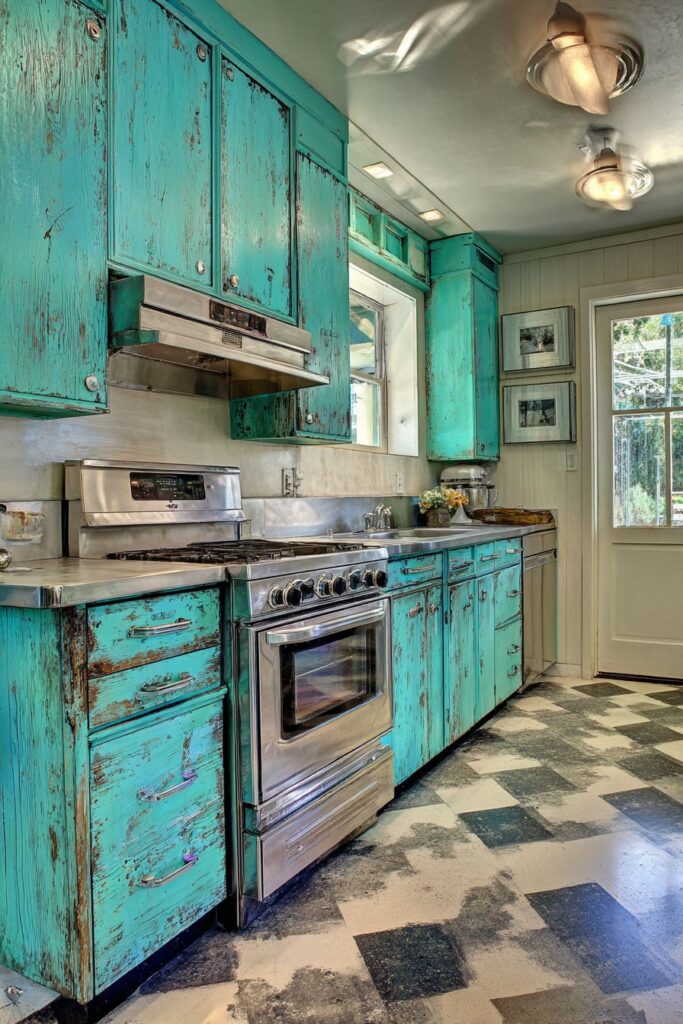
Restored 1950s metal-wrapped wood kitchen cabinets with original hardware and turquoise accents represent a unique intersection of mid-century design and restoration craftsmanship, preserving the distinctive cabinet construction techniques of the post-war building boom while maintaining authentic period aesthetics. The wood core showing through natural wear spots creates authentic patina that cannot be artificially reproduced, while curved corners and chrome details maintain the distinctive retro aesthetic that defines 1950s kitchen design.
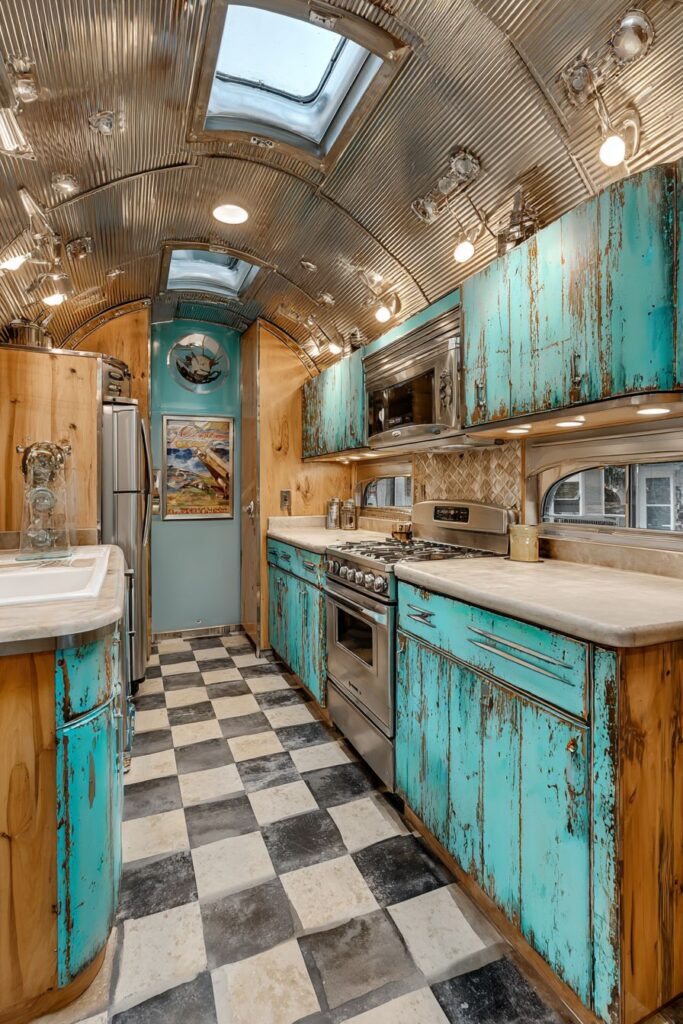
The original hardware and turquoise accents reference the optimistic color palettes and space-age design influences that characterized 1950s domestic design. Chrome details and checkerboard flooring complete the period look while providing durable surfaces appropriate for busy kitchen environments. These vintage cabinets represent both historical preservation and sustainable design practices through the restoration and reuse of existing materials.
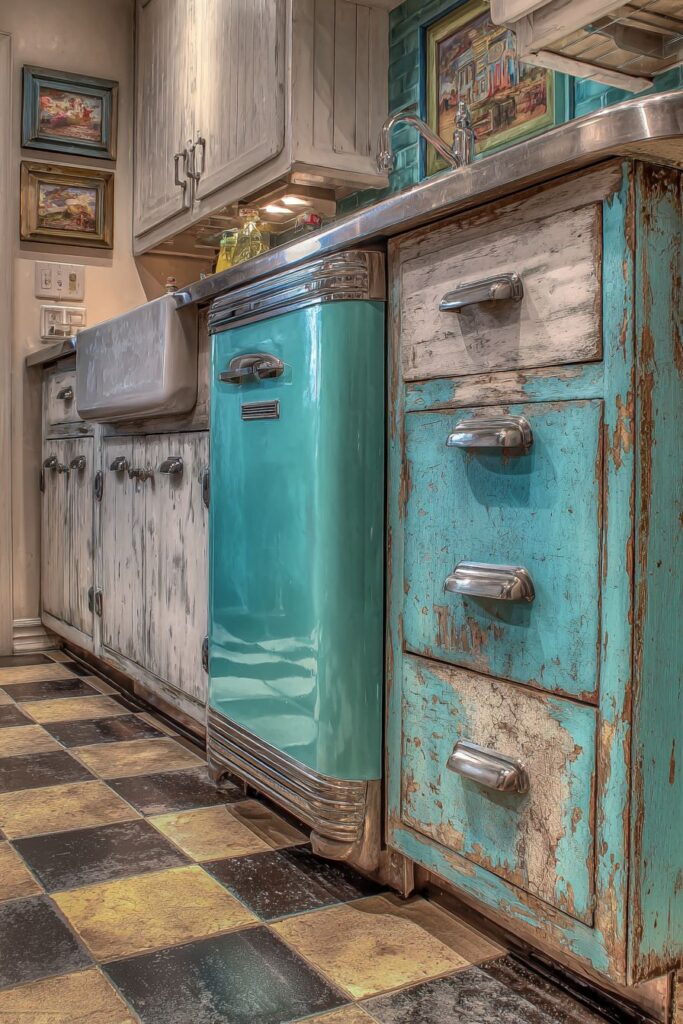
Professional photography captures the nostalgic charm of authentic 1950s design while period-appropriate lighting emphasizes the unique cabinet construction and vintage wood character. The metal wrapping technique used in these cabinets represents a distinctive construction method that was popular during the post-war housing boom, when new materials and manufacturing techniques were being incorporated into domestic design.
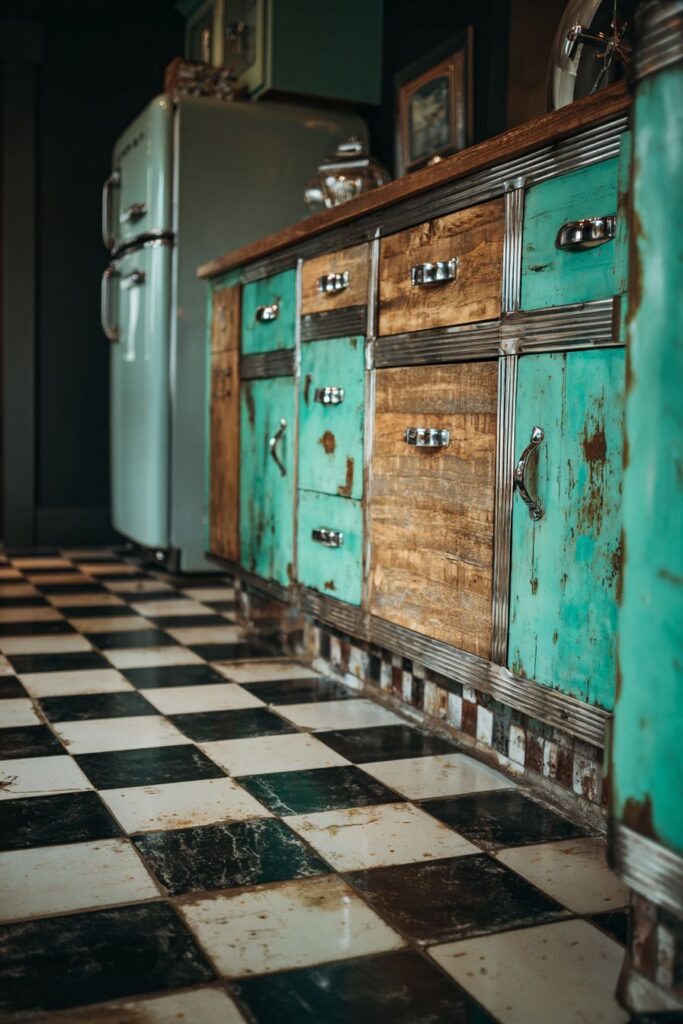
The authentic patina and wear patterns visible in these restored cabinets tell the story of decades of family use while demonstrating the quality construction that allowed these cabinets to survive and be restored for contemporary use. This approach to kitchen design celebrates American design history while providing functional storage solutions for modern kitchen needs.
Key Design Tips:
- Preserve authentic wear patterns and patina for genuine vintage character
- Maintain original hardware and color schemes for historical accuracy
- Use period-appropriate lighting to enhance vintage atmosphere
- Combine restoration with modern functionality for contemporary use
- Celebrate unique construction techniques of the 1950s era
16. Transitional Two-Tone Mixed Wood Sophistication
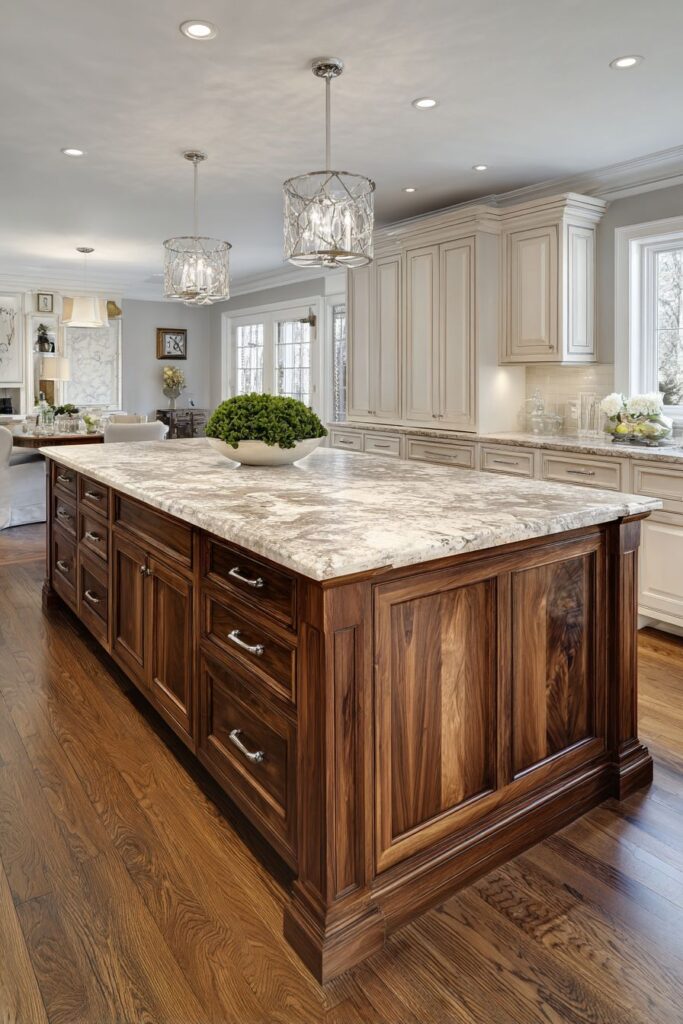
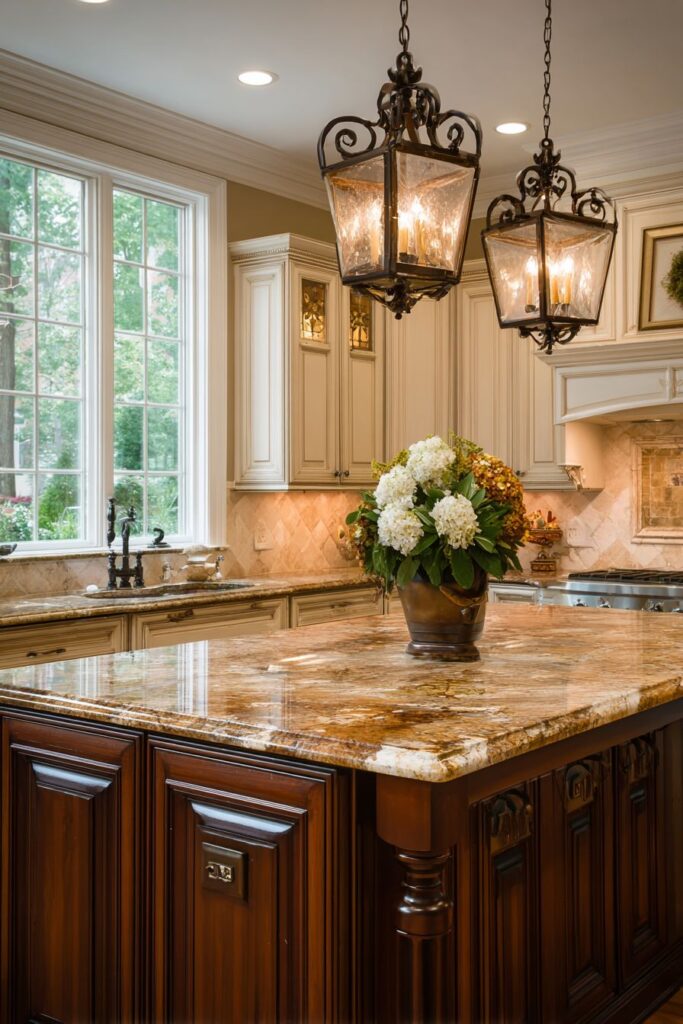
Mixed wood kitchen cabinets featuring darker walnut base units and lighter maple upper cabinets create sophisticated visual interest through thoughtful tonal contrast while maintaining design cohesion through matching hardware and architectural details. This two-tone approach adds depth and complexity to kitchen design while allowing homeowners to enjoy the characteristics of multiple wood species within a single, unified design scheme.
The darker walnut base cabinets provide grounding and stability to the overall design while hiding everyday wear and dirt that lighter cabinets might show more readily. Lighter maple upper cabinets create visual lightness and help the kitchen feel more open and spacious while showcasing the distinctive grain patterns that make maple such a popular cabinet wood. Crown molding and matching hardware create continuity between the two wood species.
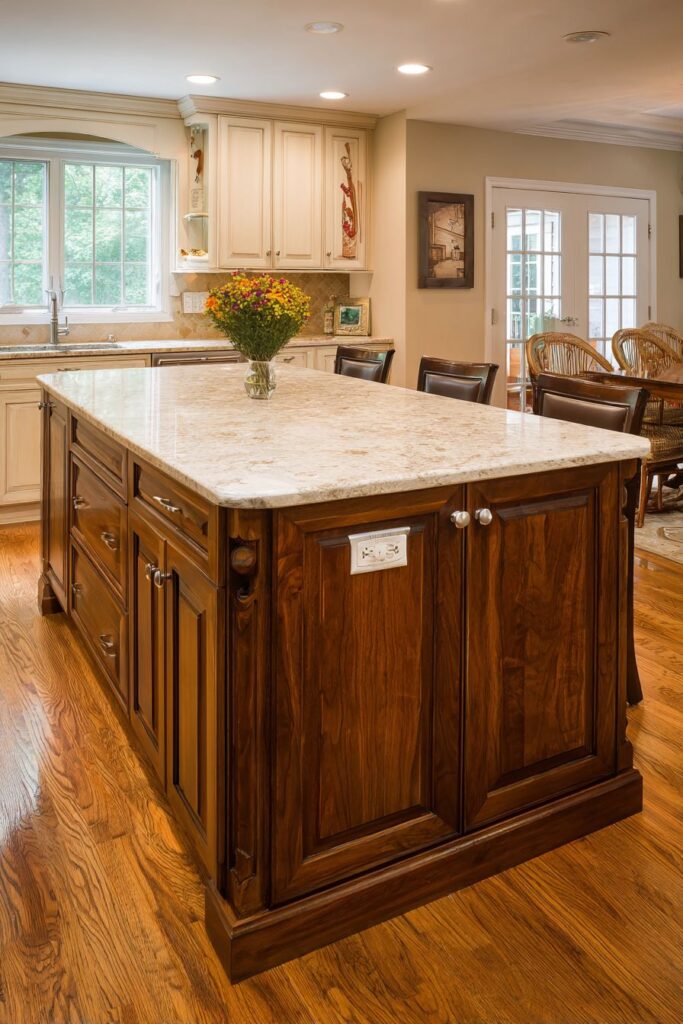
Natural stone countertops bridge the color difference between the two wood species while adding natural texture and pattern that complements both the dark walnut and light maple. The stone surface provides a neutral transition that allows both wood species to maintain their distinctive characteristics while working together harmoniously within the overall design composition.
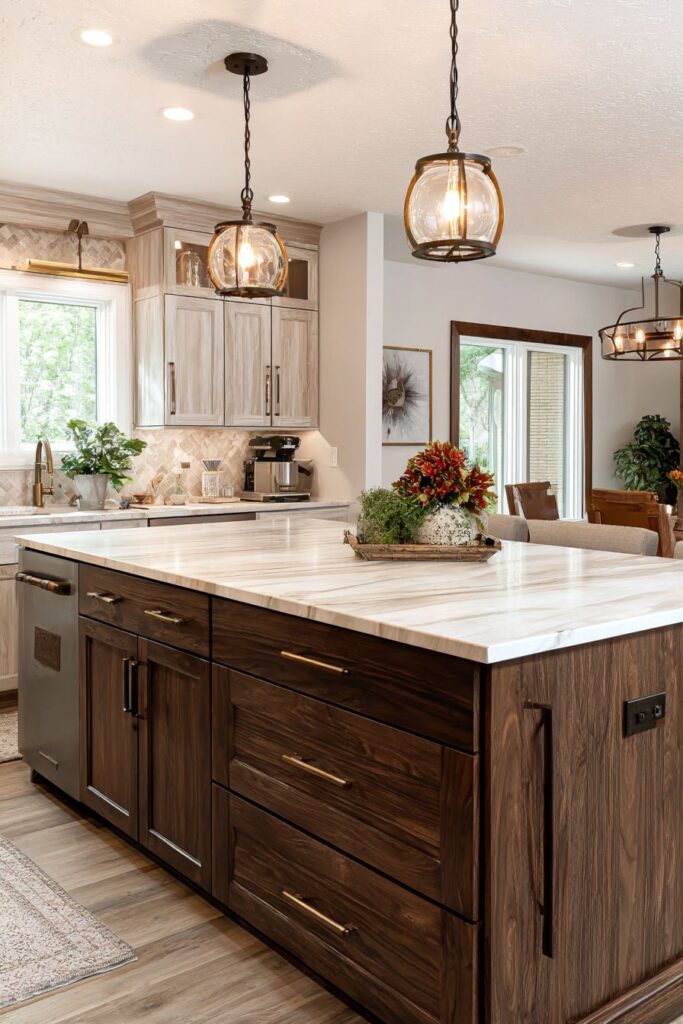
Wide-angle photography with balanced lighting showcases the sophisticated color play between the two wood species while highlighting how proper design planning can create complex, layered aesthetics that remain cohesive and sophisticated. The contrast between dark and light wood creates visual interest while the matching architectural details ensure that the design feels intentional and carefully planned rather than randomly mixed.
Key Design Tips:
- Choose wood species with complementary rather than competing characteristics
- Use darker woods for base cabinets to hide wear and provide visual grounding
- Install lighter woods for upper cabinets to create spaciousness and lightness
- Maintain design cohesion through matching hardware and crown molding
- Bridge color differences with neutral natural stone countertops
17. Mountain Cabin Rough-Hewn Pine Lodge Authenticity
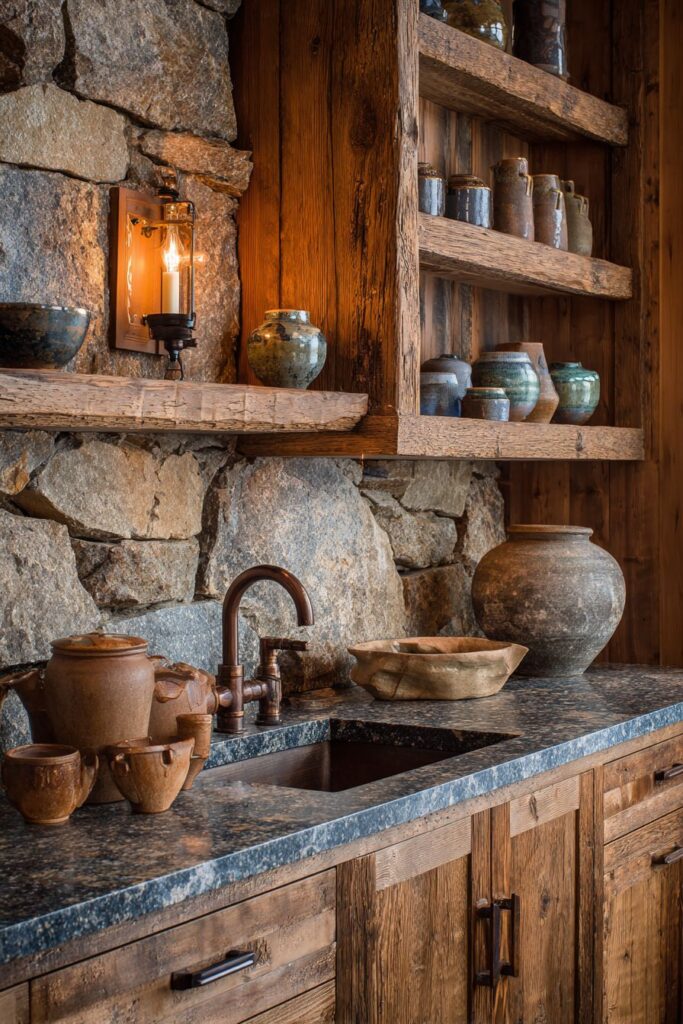
Rough-hewn pine wood kitchen cabinets with live-edge details and natural log construction elements create authentic mountain lodge atmospheres that celebrate the raw beauty of natural materials and traditional building techniques. These cabinets showcase the character and texture that can only be achieved through hand-crafted construction methods that preserve the natural irregularities and organic beauty of tree growth patterns.
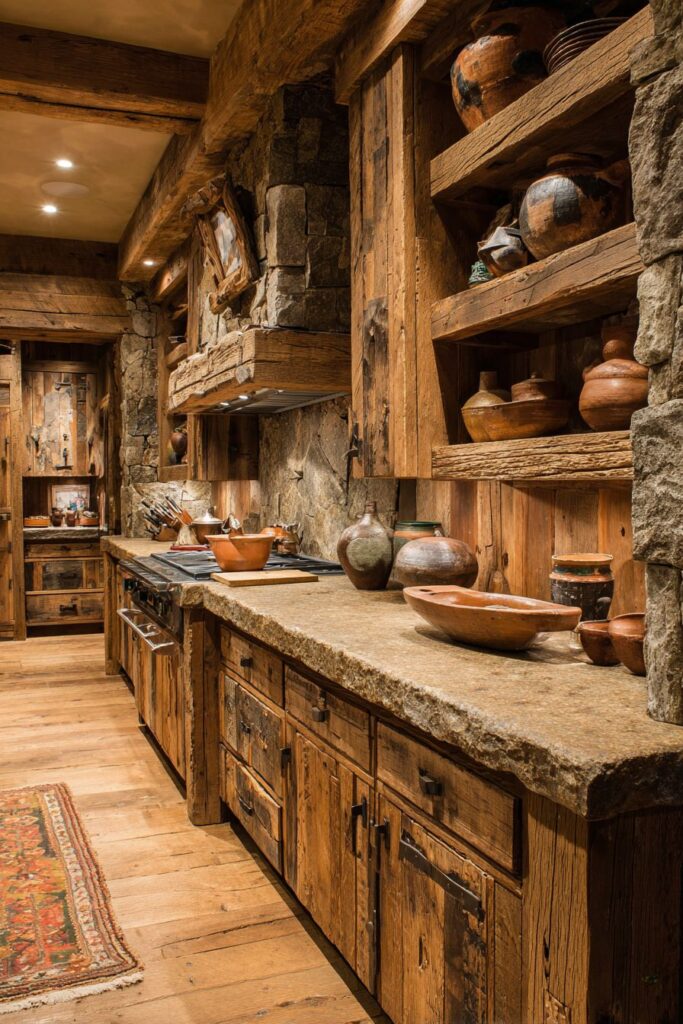
Hand-forged iron hardware reinforces the wilderness aesthetic while providing the heavy-duty functionality needed for lodge environments where durability and authenticity are equally important. Display areas for mountain pottery and rustic accessories allow homeowners to showcase collections that complement the lodge aesthetic while providing practical storage for everyday kitchen items.
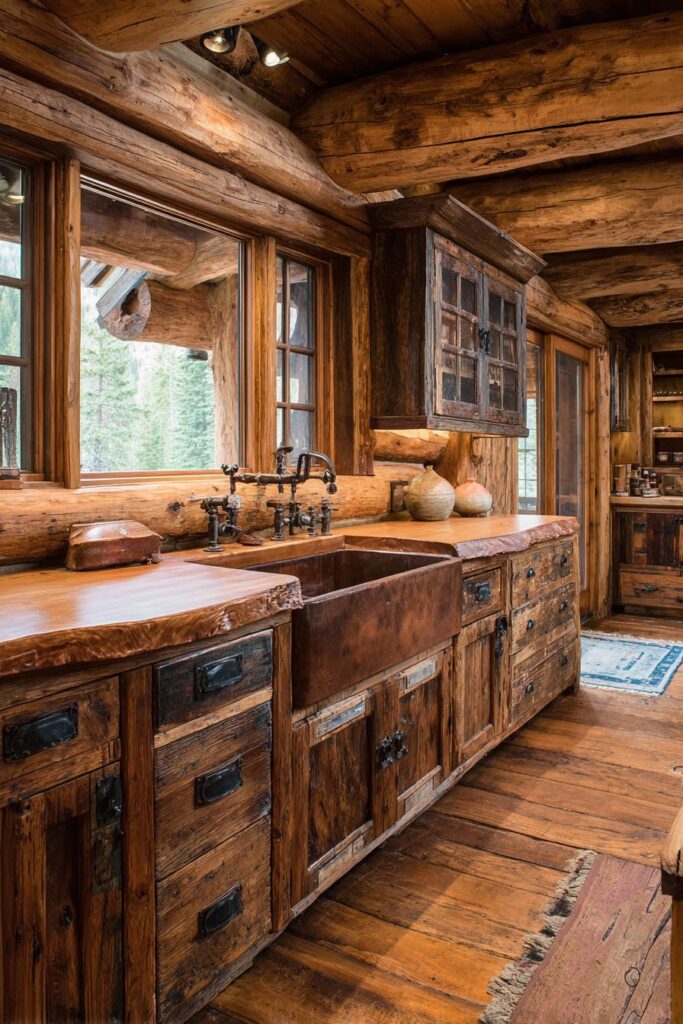
Stone accents and copper sinks complete the wilderness aesthetic while providing durable, natural materials that age beautifully and require minimal maintenance. The combination of rough wood, iron hardware, and natural stone creates a material palette that feels completely appropriate for mountain environments while providing all the functionality required for modern kitchen use.
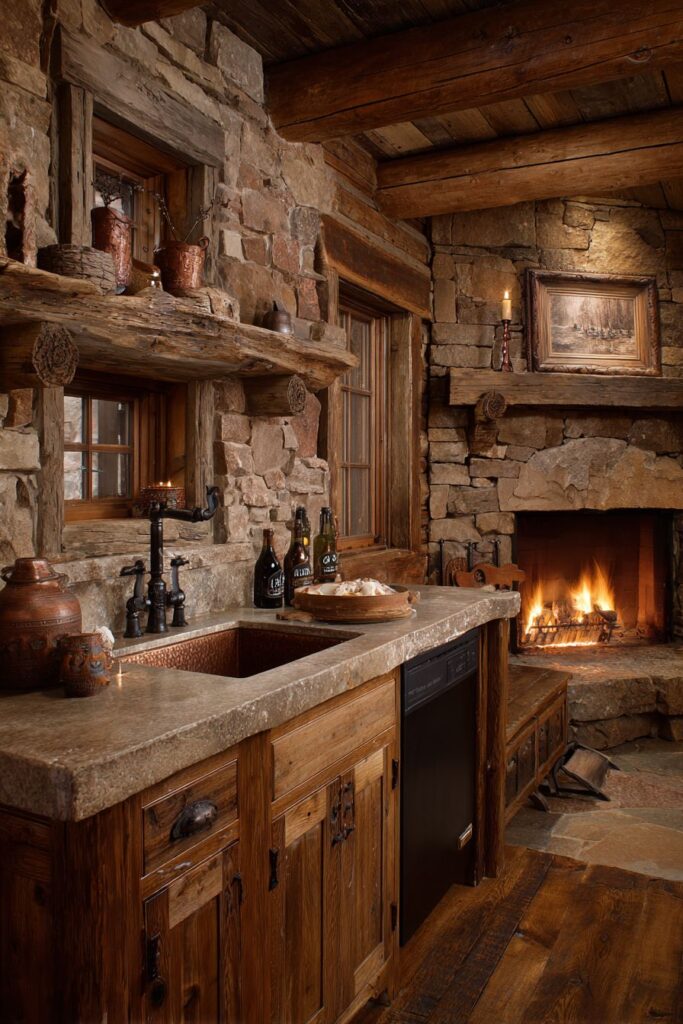
Interior photography captures the authentic lodge character while warm firelight dancing across the textured wood surfaces emphasizes the handcrafted cabinet construction and natural material beauty. The irregular surfaces and natural variations in the rough-hewn pine create constantly changing patterns of light and shadow that ensure the kitchen remains visually engaging throughout the day and into the evening hours.
Key Design Tips:
- Use rough-hewn construction techniques to preserve natural wood character
- Include live-edge details for authentic organic beauty
- Install hand-forged iron hardware for wilderness authenticity
- Add stone accents and natural materials for complete lodge aesthetic
- Plan lighting to emphasize texture and handcrafted construction details
18. Minimalist Precision-Milled Ash Contemporary Perfection
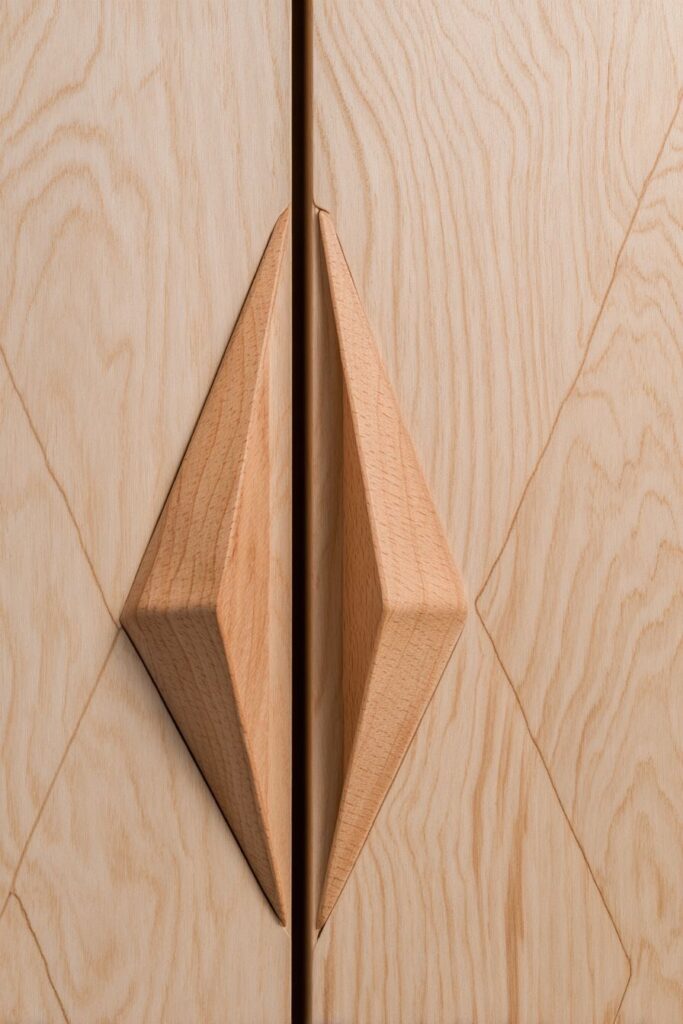
Precision-milled ash wood kitchen cabinets with book-matched veneer creating mirror-image grain patterns represent the sophisticated end of minimalist design, where technical excellence and natural beauty combine to create cabinet designs of exceptional refinement and visual impact. The book-matching technique requires careful material selection and precise construction to achieve the symmetrical grain patterns that make these cabinets true works of functional art.
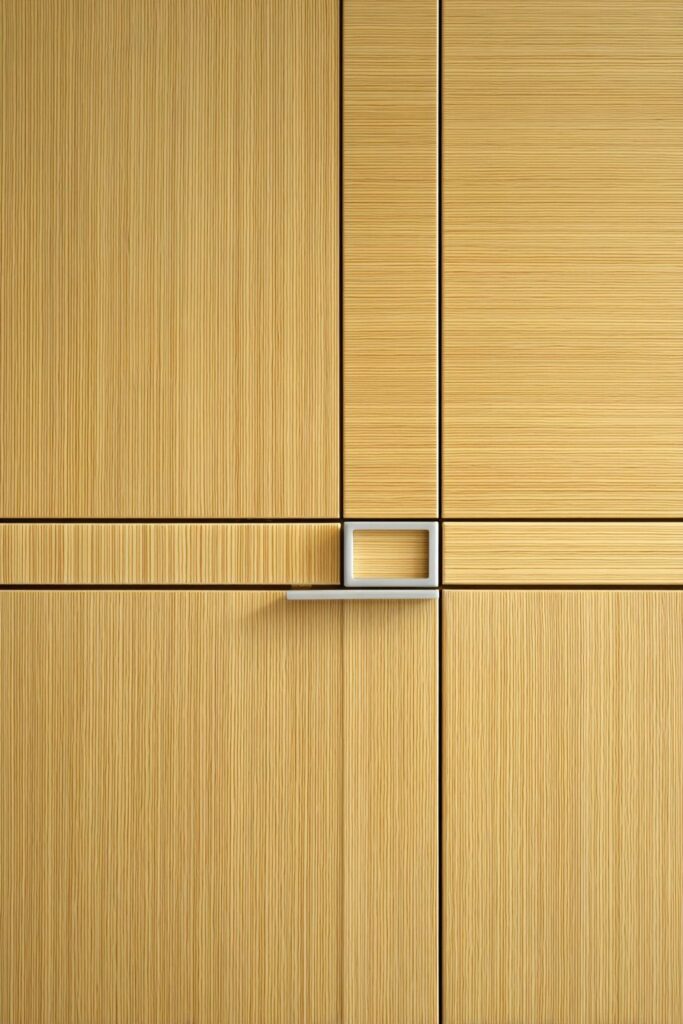
The pale color and subtle grain variations of ash wood maintain clean geometric lines while adding natural interest that prevents minimalist design from feeling cold or sterile. Integrated pulls preserve the seamless aesthetic that defines contemporary minimalist design while providing comfortable, functional operation for daily kitchen use. The precision milling required for this level of quality demonstrates the highest levels of woodworking craftsmanship.
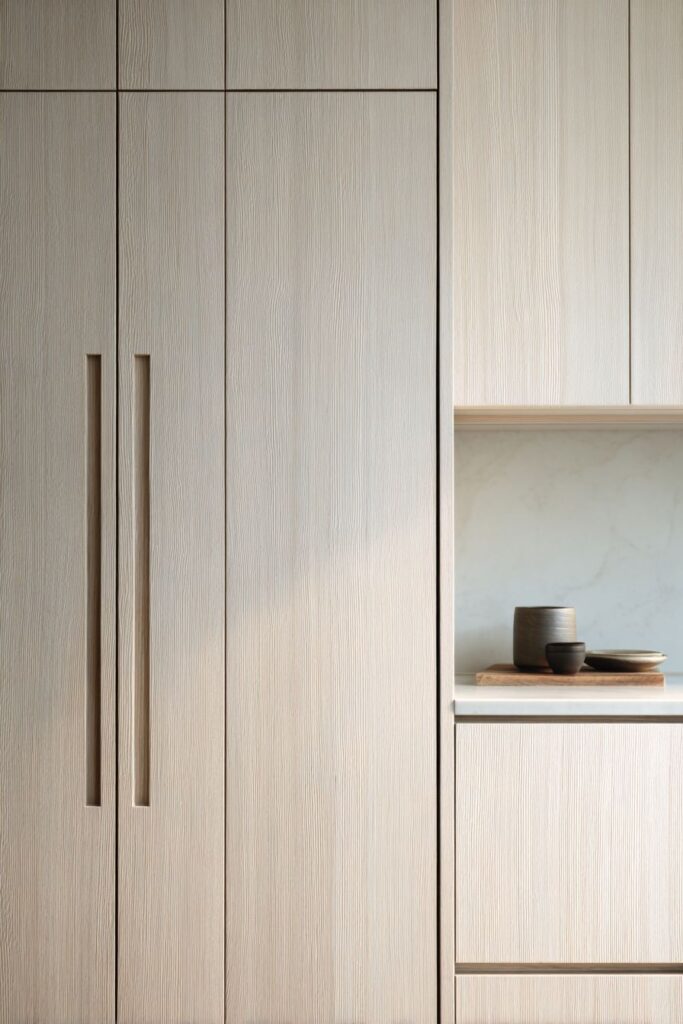
Professional architectural photography with controlled lighting showcases the meticulous woodworking craftsmanship and sophisticated simplicity that make these cabinets exceptional examples of contemporary design. The book-matched grain patterns create visual rhythm and movement while the pale ash wood provides subtle warmth that prevents the minimalist aesthetic from feeling harsh or unwelcoming.
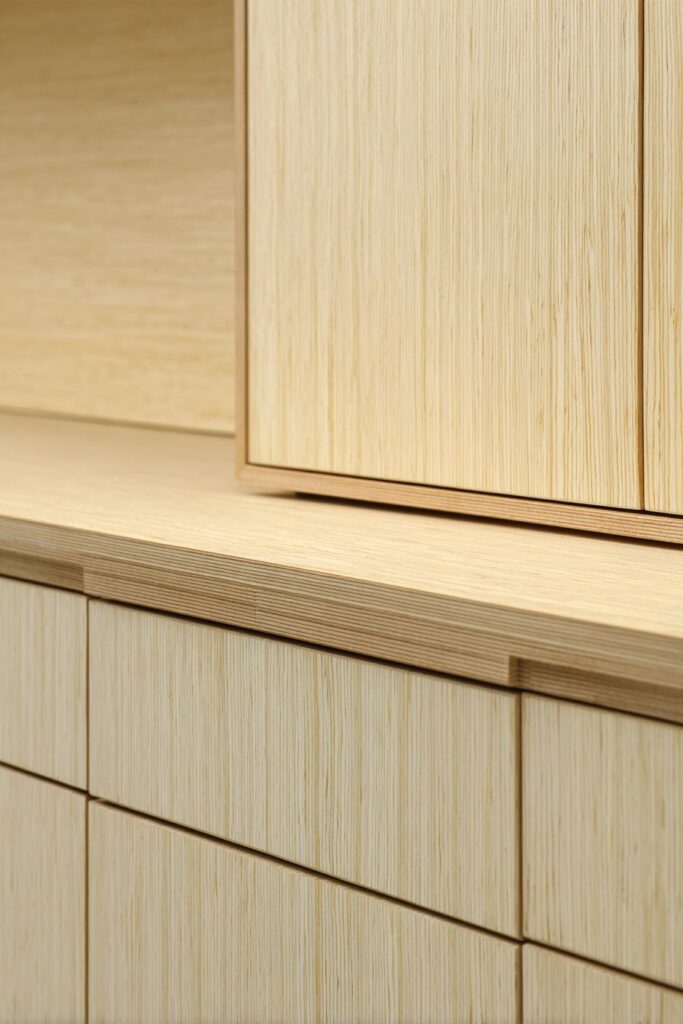
The sophisticated cabinet design maximizes ash wood’s natural beauty while incorporating the precision construction techniques required for contemporary minimalist aesthetics. This combination of natural materials with technological precision demonstrates how traditional woodworking can be adapted for the most demanding contemporary design requirements while maintaining the warmth and character that only natural materials can provide.
Key Design Tips:
- Use book-matching techniques for symmetrical grain pattern impact
- Choose pale woods like ash for minimalist aesthetic requirements
- Integrate pulls for seamless, uninterrupted cabinet surfaces
- Employ precision milling for contemporary construction quality
- Use controlled lighting to showcase craftsmanship and grain patterns
19. French Country Distressed Hickory Provincial Romance
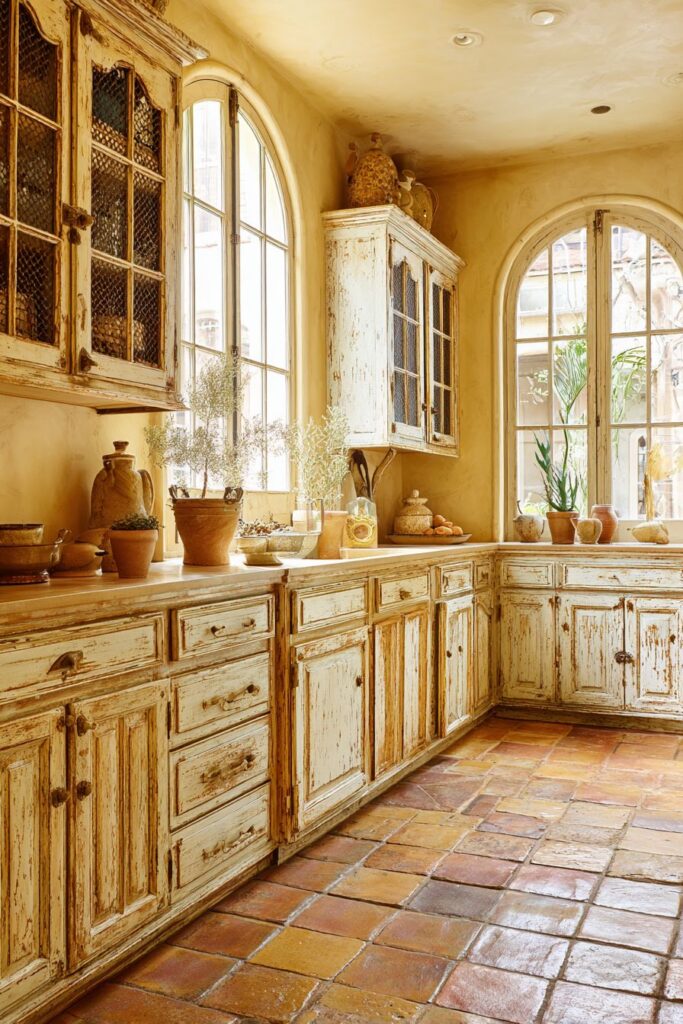
Distressed hickory wood kitchen cabinets with hand-scraped surfaces and cream-painted finish featuring deliberate wear-through to reveal natural wood underneath create authentic French provincial charm through artisanal finishing techniques that celebrate the romance of European countryside design traditions. The hand-scraped surfaces and carefully planned wear patterns create the authentic aged appearance that defines French country styling while showcasing the beautiful grain patterns that make hickory such a prized wood species.
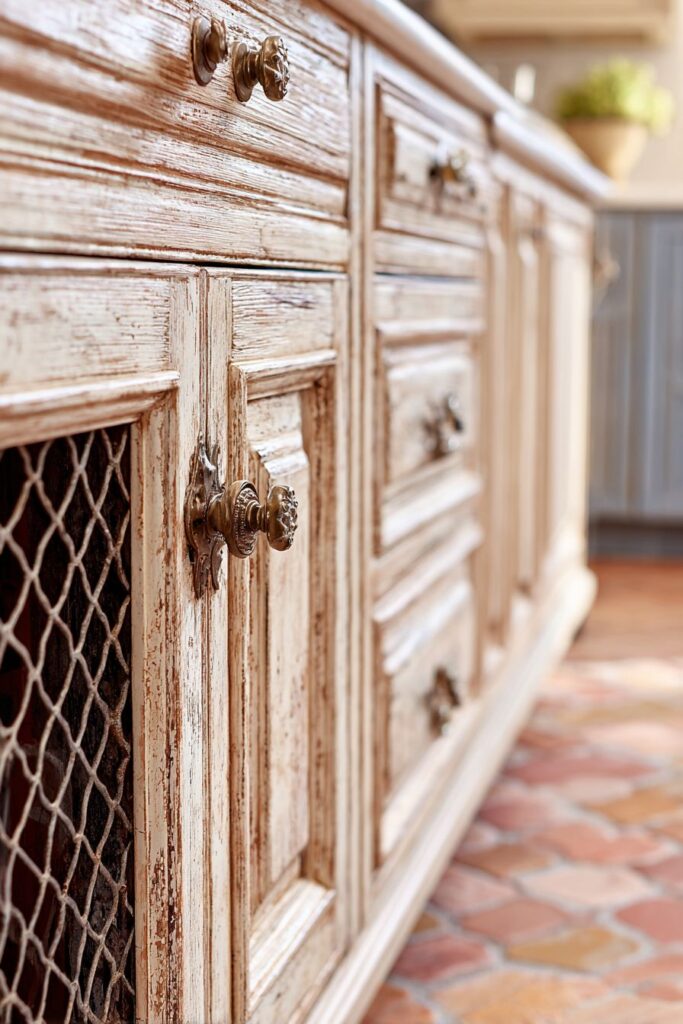
Ornate brass hardware and chicken wire inserts create authentic provincial charm while providing the functionality needed for modern kitchen storage requirements. The brass hardware ages beautifully to develop the warm patina that French country design celebrates, while chicken wire inserts allow air circulation and add textural interest that reinforces the rural French aesthetic.
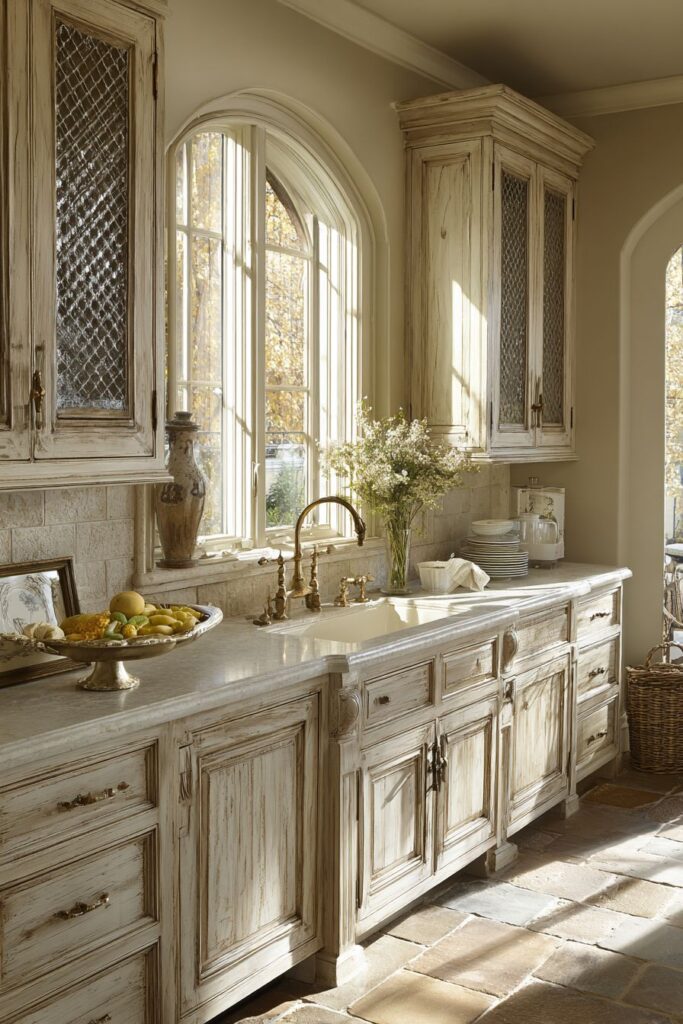
Terra cotta tile flooring complements the warm wood tones while adding authentic European materials that complete the French country design story. The warm, earthy color of terra cotta works beautifully with the cream and natural wood color palette while providing durable flooring appropriate for busy kitchen environments.
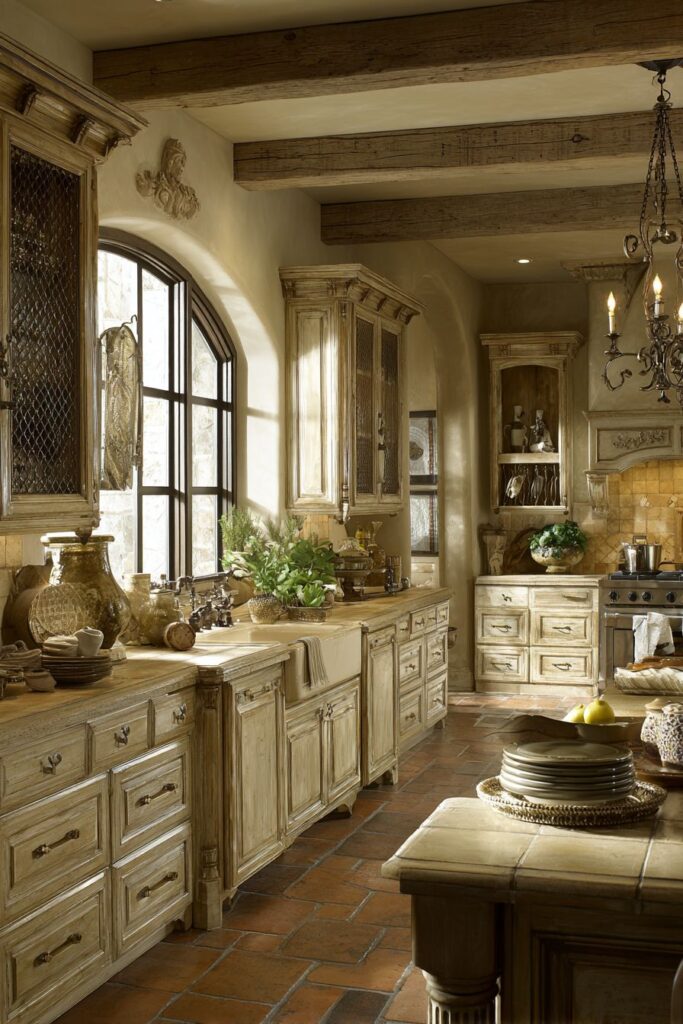
Interior design photography captures the romantic European aesthetic while soft natural lighting highlights the artisanal cabinet finishing techniques that create such compelling character and charm. The deliberate wear patterns and hand-scraped textures create constantly changing patterns of light and shadow that ensure the kitchen remains visually interesting while maintaining the comfortable, lived-in feeling that makes French country design so enduringly popular.
Key Design Tips:
- Use hand-scraping techniques for authentic texture and character
- Create deliberate wear-through patterns to reveal natural wood beauty
- Install ornate brass hardware for authentic provincial styling
- Add chicken wire inserts for textural interest and rural references
- Choose terra cotta flooring for warm, authentic European materials
20. Contemporary Loft Dramatic Ebony Monolithic Design
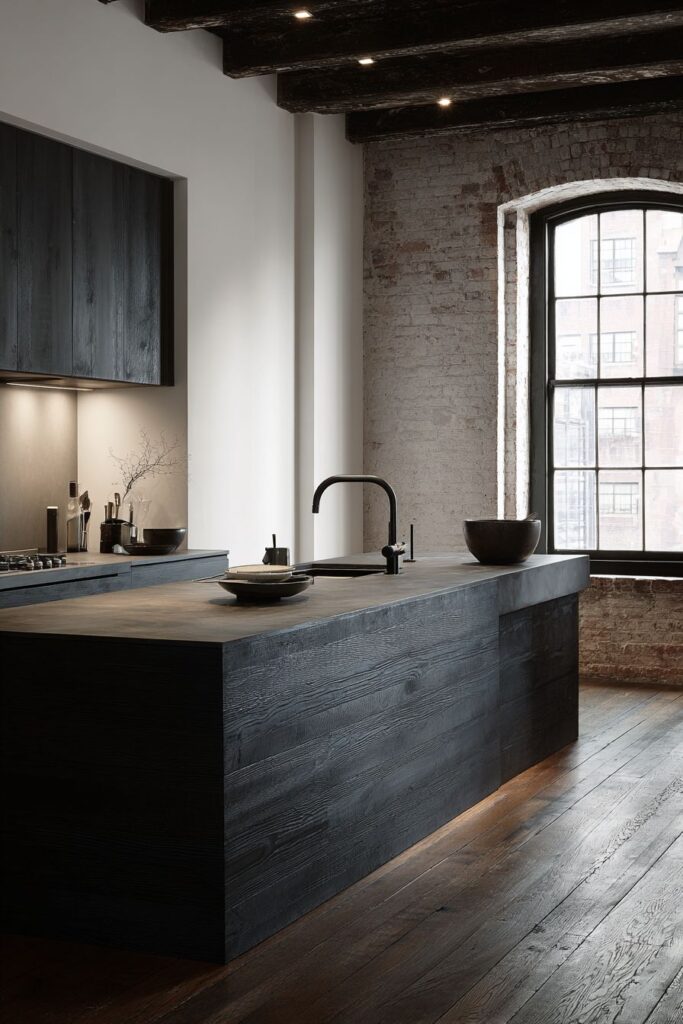
Dramatic ebony-stained wood kitchen cabinets with matte black finish and invisible hardware create monolithic contemporary statements that demonstrate how dark wood finishes can provide sophisticated elegance in urban loft environments. The dark finish contrasts sharply with white walls and concrete floors while maintaining the sophisticated elegance that defines high-end contemporary design. Invisible hardware preserves the seamless, uninterrupted surfaces that make these cabinets appear to float within the space.
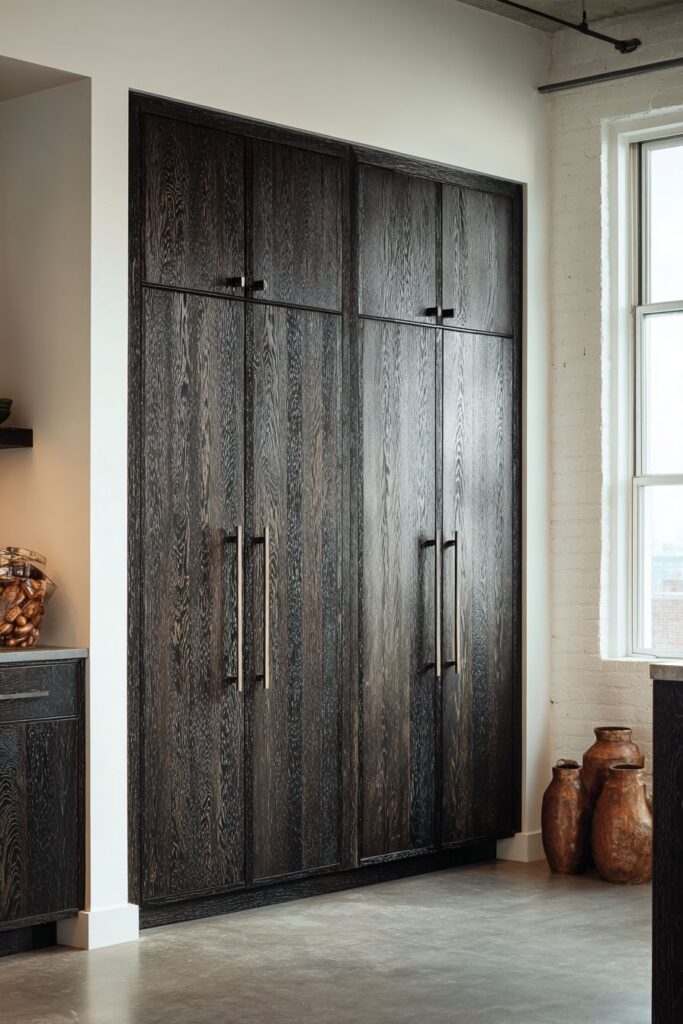
Integrated lighting reveals subtle wood grain patterns beneath the dark stain while providing essential task lighting for kitchen activities. The dramatic contrast between the dark cabinets and light walls creates strong visual impact while the matte finish prevents the dark color from appearing harsh or overwhelming. The monolithic appearance creates clean, contemporary lines that work perfectly in urban loft environments.
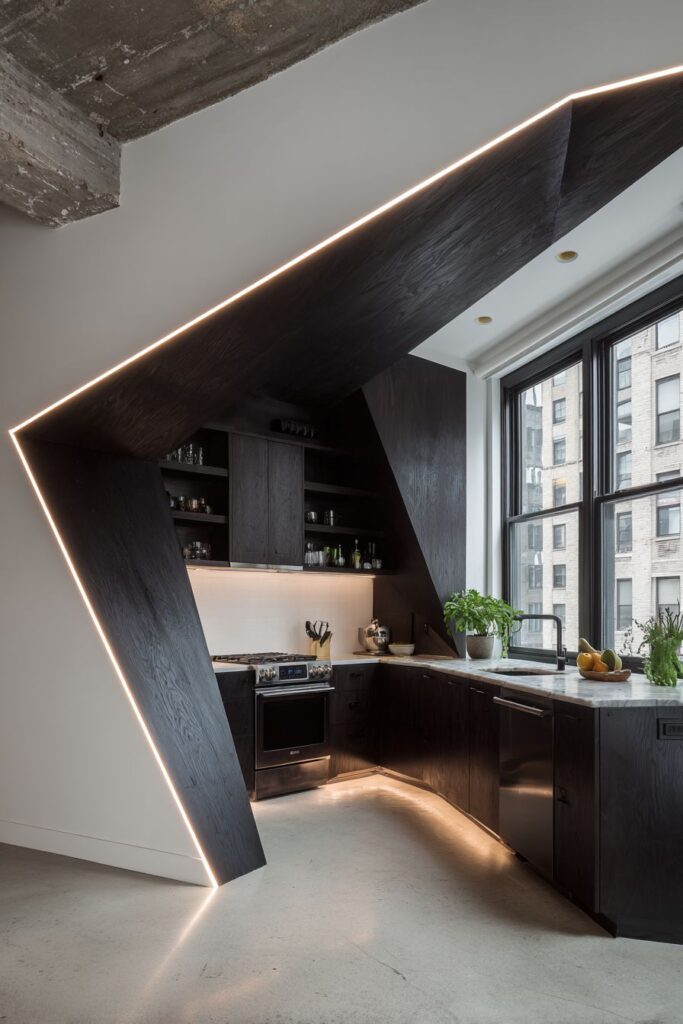
Professional interior photography with dramatic lighting creates strong contrasts that emphasize the bold cabinet design and urban loft atmosphere. The interplay between the dark wood surfaces and architectural lighting creates constantly changing patterns that ensure the kitchen remains visually dynamic while maintaining the sophisticated elegance that makes contemporary design so compelling.
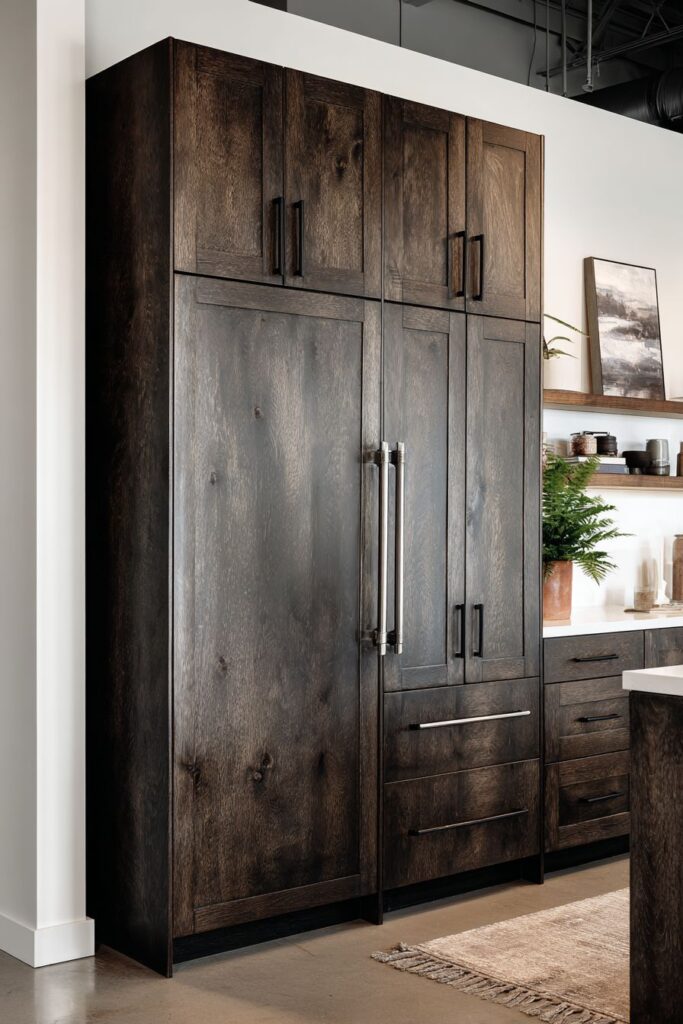
The sophisticated cabinet design demonstrates how traditional wood materials can be transformed through contemporary finishing techniques to create designs that feel thoroughly modern while retaining the warmth and character that only natural wood can provide. This approach to cabinet design shows how dark finishes can create drama and sophistication without sacrificing the natural beauty that makes wood cabinetry so enduringly popular.
Key Design Tips:
- Use ebony stain for dramatic contemporary impact
- Choose matte finishes to prevent harsh reflections from dark surfaces
- Install invisible hardware for seamless, monolithic appearance
- Plan integrated lighting to reveal wood grain beneath dark stains
- Create strong contrast with light walls and floors for maximum impact
Why These Wood Cabinet Designs Represent the Best in Kitchen Cabinetry
Each of these twenty wood kitchen cabinet designs represents excellence in different aspects of kitchen design, from the sustainable innovation of bamboo cabinetry to the luxury sophistication of exotic zebrawood installations. The diversity of wood species, construction techniques, and design approaches demonstrates the remarkable versatility of wood as a cabinet material while highlighting how different finishing techniques, hardware choices, and design philosophies can transform the same basic material into completely different aesthetic experiences.
Traditional approaches like the craftsman-style quarter-sawn oak and French country distressed hickory showcase time-tested techniques and design principles that have proven their worth through decades of use and changing style trends. These designs represent investments in quality craftsmanship and authentic materials that will continue to provide beauty and functionality for generations while developing character and patina that enhance their appeal over time.
Contemporary designs like the minimalist precision-milled ash and dramatic ebony-stained loft cabinets demonstrate how traditional wood materials can be adapted for modern aesthetics without losing their inherent warmth and character. These designs push the boundaries of woodworking technology while maintaining the natural beauty that makes wood such a compelling choice for kitchen cabinetry.
The variety of wood species represented in these designs showcases the remarkable range of colors, grain patterns, and working characteristics available to contemporary kitchen designers. From the pale subtlety of birch and ash to the dramatic impact of walnut and zebrawood, each species offers unique aesthetic and functional characteristics that can be matched to specific design requirements and personal preferences.
Conclusion
Wood kitchen cabinets continue to represent the gold standard in kitchen design, offering unmatched versatility, natural beauty, and long-term value that synthetic alternatives simply cannot match. From the rustic charm of reclaimed barn wood to the sophisticated elegance of exotic zebrawood, wood cabinetry provides options for every design aesthetic, budget level, and functional requirement. The twenty designs explored in this comprehensive guide demonstrate how thoughtful material selection, expert craftsmanship, and appropriate finishing techniques can transform kitchens into extraordinary spaces that serve as both functional work areas and beautiful gathering places for family and friends.
The key to successful wood cabinet design lies in understanding how different wood species, construction techniques, and finishing approaches can be combined to create designs that reflect personal style while providing the functionality required for modern kitchen use. Whether drawn to the clean lines of contemporary design, the romantic charm of French country styling, or the authentic character of rustic farmhouse aesthetics, wood cabinetry offers the flexibility and natural beauty needed to create truly personalized kitchen environments.
As you consider your own kitchen cabinet choices, remember that quality wood cabinetry represents an investment in both immediate enjoyment and long-term home value. The natural beauty of wood grain, the warmth of natural materials, and the potential for developing character and patina over time make wood cabinets a choice that will continue to provide satisfaction and beauty for decades to come.
"As an Amazon Associate, I earn from qualifying purchases."
