
The kitchen island has evolved from a simple food preparation surface to become the heart of modern home design—a multifunctional centerpiece that serves as a cooking station, dining area, storage solution, and social gathering space. In today’s open-concept living environments, the kitchen island with seating represents the perfect marriage of form and function, creating an inviting atmosphere where families connect over meals and friends gather for casual entertaining.
The beauty of kitchen islands with seating lies in their versatility and ability to adapt to diverse design preferences and lifestyle needs. Whether you’re drawn to the clean lines of contemporary minimalism, the warmth of rustic farmhouse charm, or the sophisticated elegance of luxury materials, there’s an island design that perfectly complements your vision. These functional focal points not only maximize your kitchen’s efficiency but also serve as architectural statements that define the character of your entire living space.
This comprehensive guide explores twenty distinctive kitchen island designs, each offering unique approaches to materials, styling, and functionality. From space-saving solutions for compact kitchens to grand statement pieces for expansive culinary spaces, these designs showcase how thoughtful planning and creative vision can transform any kitchen into a stunning and practical environment that enhances daily life while reflecting personal style and aesthetic preferences.
1. Modern Waterfall Quartz Elegance
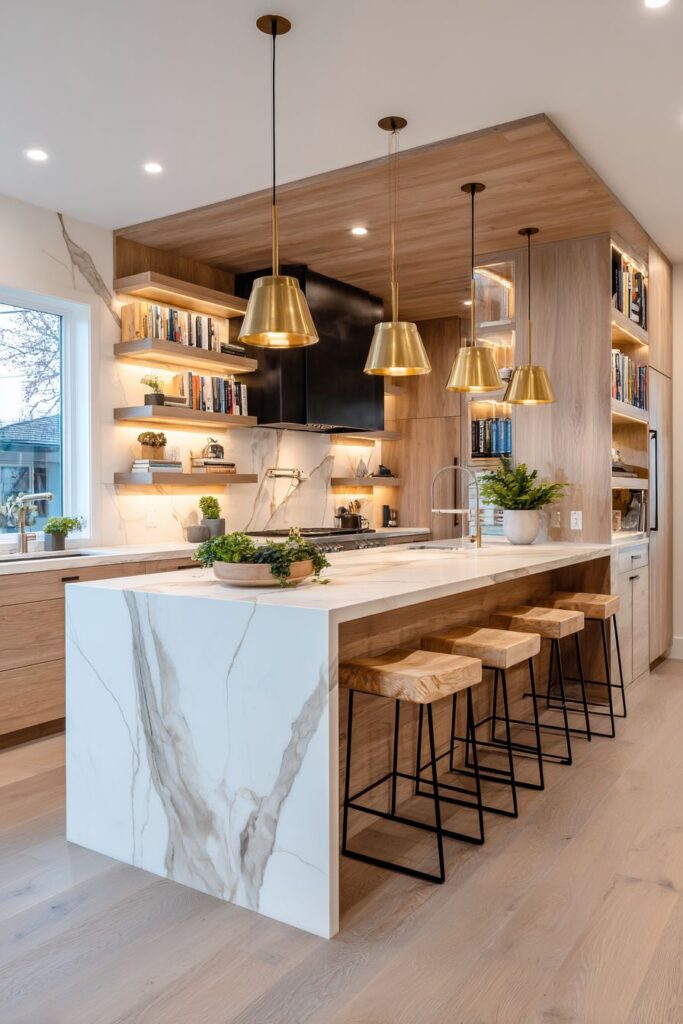
The modern kitchen island with waterfall quartz countertop represents the pinnacle of contemporary design sophistication. The warm white quartz surface, enhanced by subtle grey veining, creates a stunning visual impact that extends seamlessly down both sides of the island in a dramatic waterfall effect. This continuous flow of material eliminates visual breaks and creates a monolithic appearance that serves as the kitchen’s sculptural centerpiece.
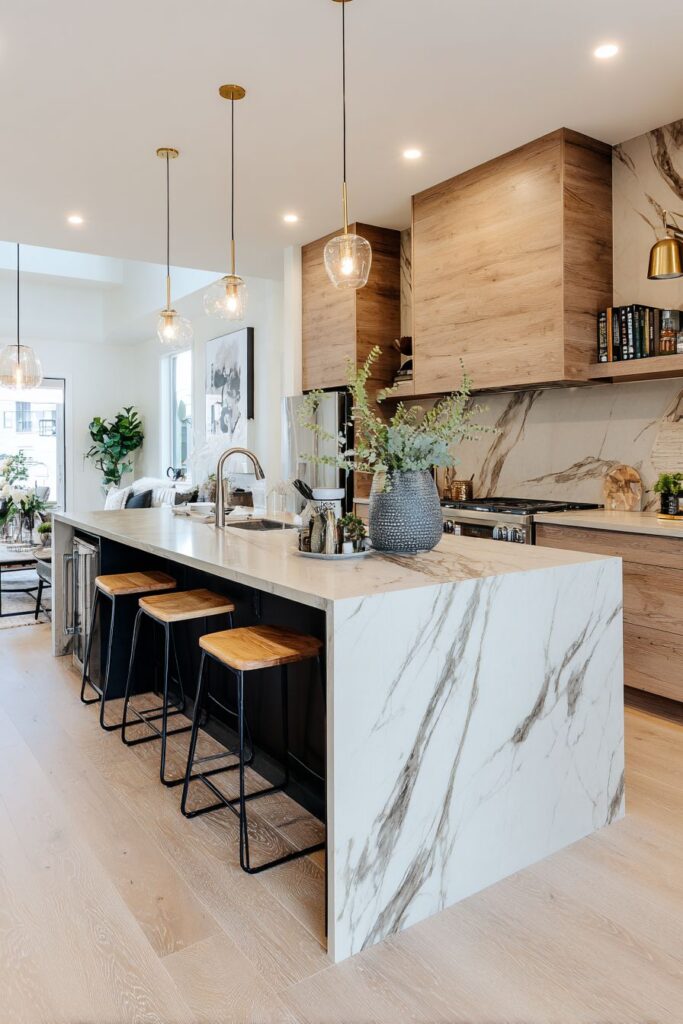
Three sleek bar stools with black metal frames and natural oak seats provide the perfect contrast against the pristine quartz surface. The combination of industrial metal framework with warm wood seating creates visual interest while maintaining the overall contemporary aesthetic. The positioning along one side of the island ensures efficient traffic flow while creating an intimate dining experience for casual meals and quick breakfasts.
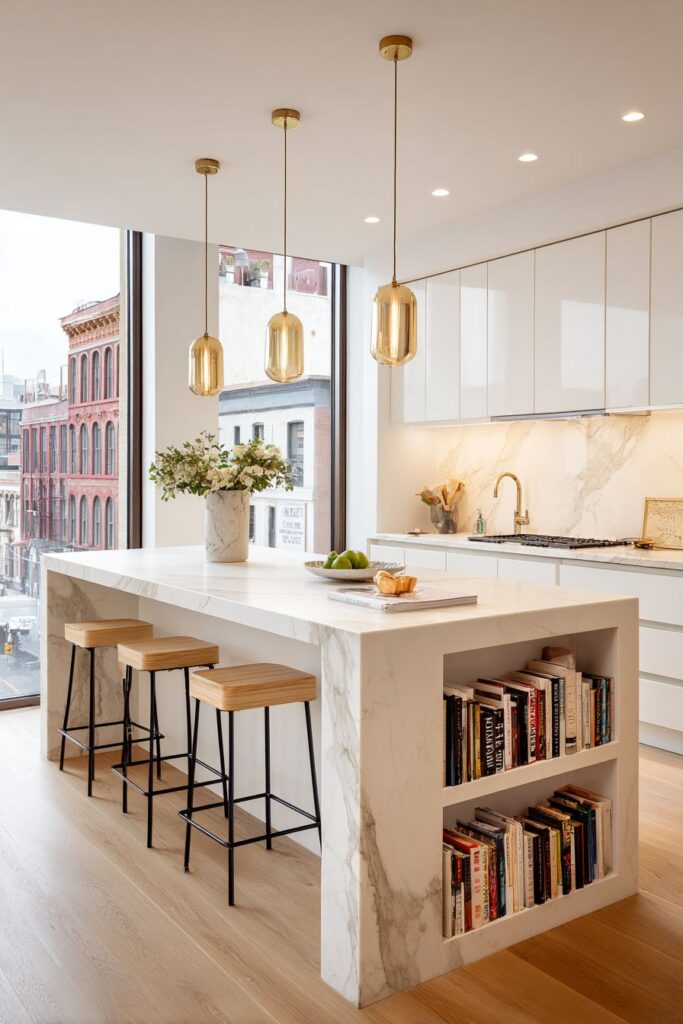
The integrated storage solutions maximize functionality without compromising the clean aesthetic. Soft-close drawers ensure quiet operation while built-in shelving provides convenient storage for frequently used cookbooks and serving pieces. The open shelving creates visual breathing space and prevents the design from appearing too heavy or imposing.
Pendant lights with brass accents add warmth and sophistication to the space while providing essential task lighting for food preparation and dining. The metallic finish creates subtle connections to other design elements throughout the kitchen, establishing cohesive visual flow.
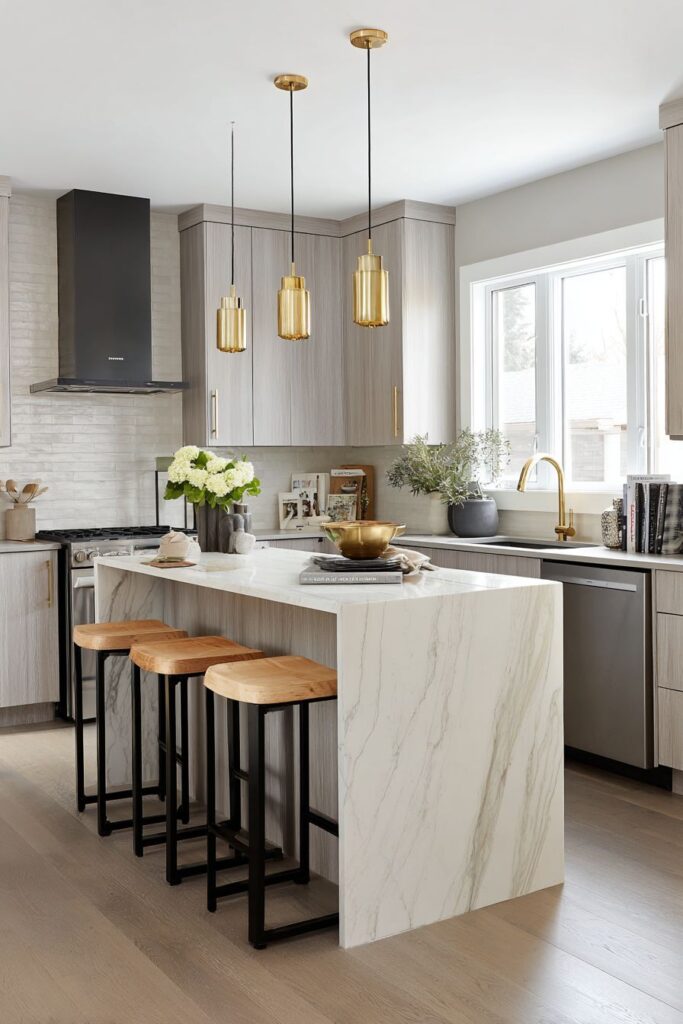
Key design tips for achieving this modern waterfall quartz look include choosing a quartz slab with consistent veining patterns that will align properly at the waterfall edges, ensuring adequate structural support for the extended countertop overhang, selecting pendant lighting that provides both ambient and task illumination without overwhelming the clean lines, and incorporating storage solutions that maintain the minimalist aesthetic while maximizing functionality.
2. Farmhouse Butcher Block Warmth
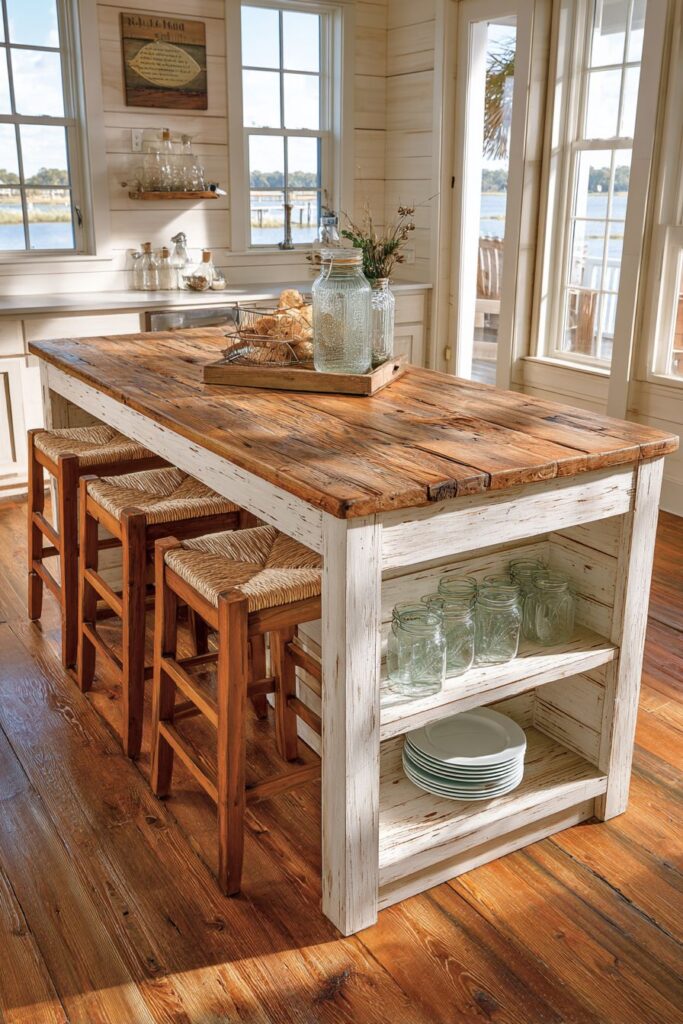
The farmhouse-style kitchen island embodies rustic authenticity through its carefully selected materials and traditional craftsmanship details. The reclaimed oak butcher block countertop showcases natural grain patterns and character marks that tell the story of the wood’s previous life, creating an immediate connection to agricultural heritage and sustainable design practices.
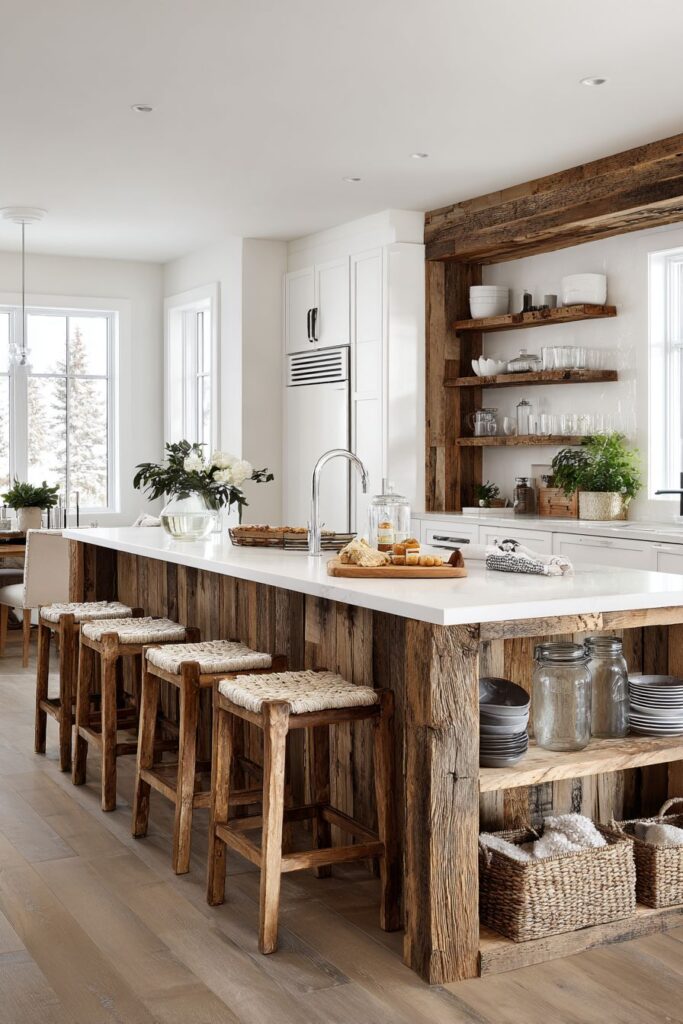
Four rustic wooden bar stools with woven rush seats provide comfortable seating that complements the authentic farmhouse aesthetic. The traditional rush weaving technique adds texture and visual interest while offering surprising durability and comfort for everyday use. The natural materials work harmoniously together to create a cohesive design narrative that feels both timeless and relevant.
The shiplap paneling base painted in crisp white creates beautiful contrast against the warm wood tones while incorporating traditional farmhouse architectural details. The beadboard elements add vertical lines that draw the eye upward and create visual sophistication within the rustic framework. This combination of horizontal and vertical lines prevents the design from appearing too uniform while maintaining classic proportions.
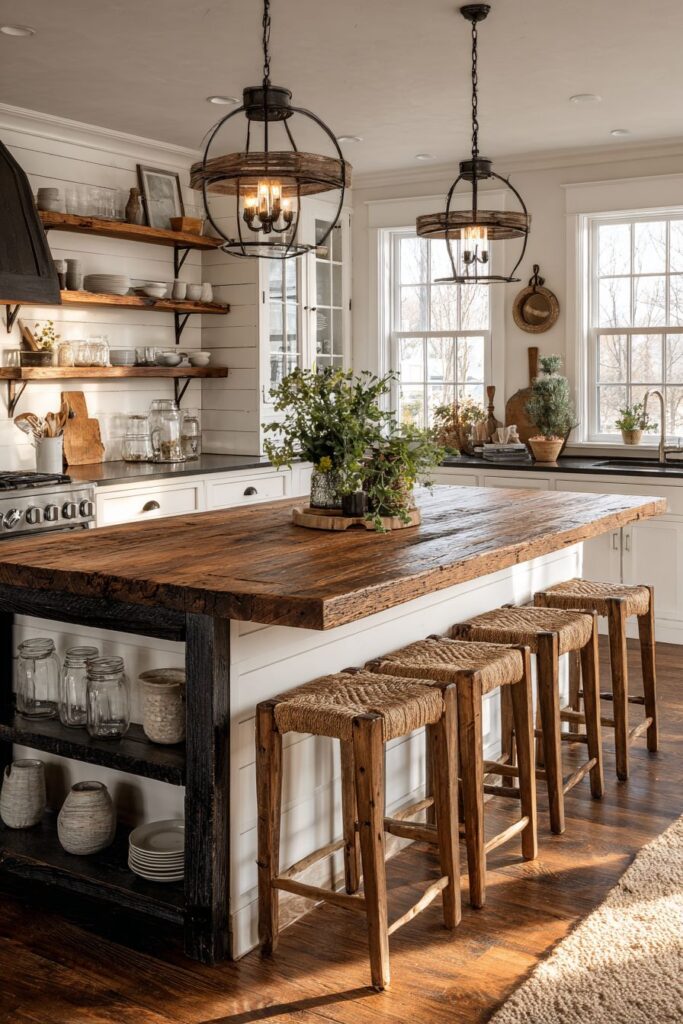
Open shelving on one end displays vintage Mason jars and ceramic dishes, transforming everyday items into decorative elements that reinforce the farmhouse theme. This practical storage solution keeps frequently used items within easy reach while contributing to the overall aesthetic through carefully curated displays.
Natural lighting from nearby windows creates gentle shadows that emphasize the authentic wood textures and enhance the lived-in charm that defines successful farmhouse design. The interplay of light and shadow across the varied surfaces adds depth and visual complexity to the space.
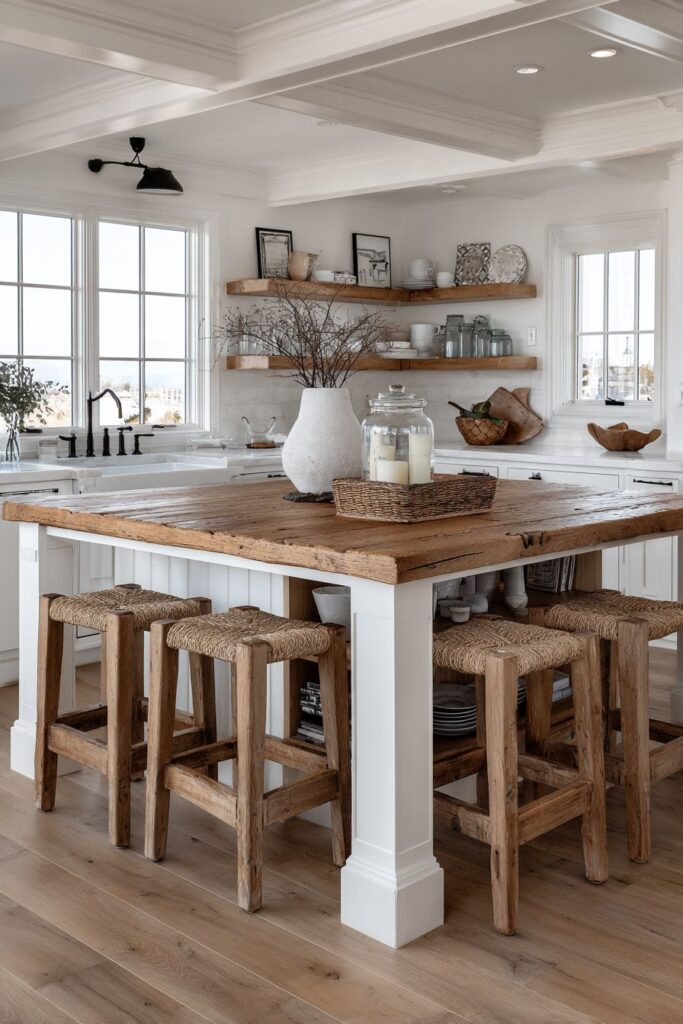
Essential elements for recreating this farmhouse charm include selecting reclaimed wood with visible character marks and authentic patina, choosing seating materials that reference traditional craft techniques, incorporating architectural details like shiplap and beadboard that reflect historical building practices, using a neutral base color that allows natural materials to take center stage, and arranging storage displays that feel curated rather than contrived.
3. Compact Space-Saving Marvel
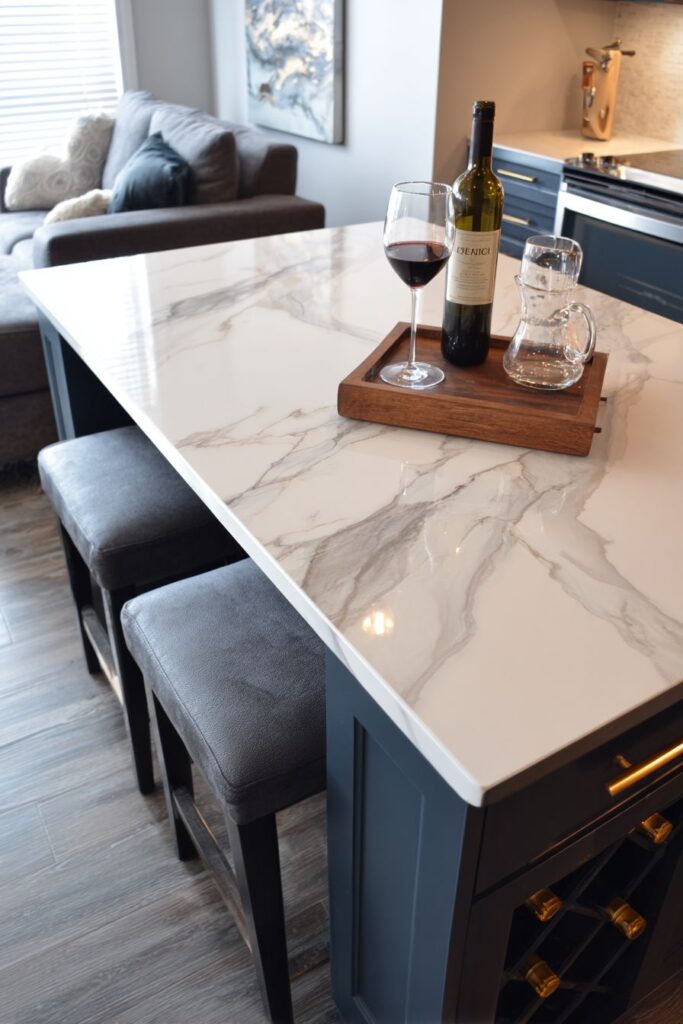
The compact kitchen island design proves that limited space doesn’t require compromising on style or functionality. The marble-look quartz surface provides luxurious visual appeal while offering practical benefits like stain resistance and easy maintenance. The integrated breakfast bar overhang creates additional dining space without expanding the island’s footprint, making it perfect for smaller kitchens where every inch matters.
Two contemporary swivel stools in charcoal grey upholstery can tuck neatly underneath when not in use, maintaining clear sight lines and traffic flow throughout the kitchen. The swivel mechanism allows for easy conversation and movement while the compact design ensures the stools don’t overwhelm the proportions of the smaller space.
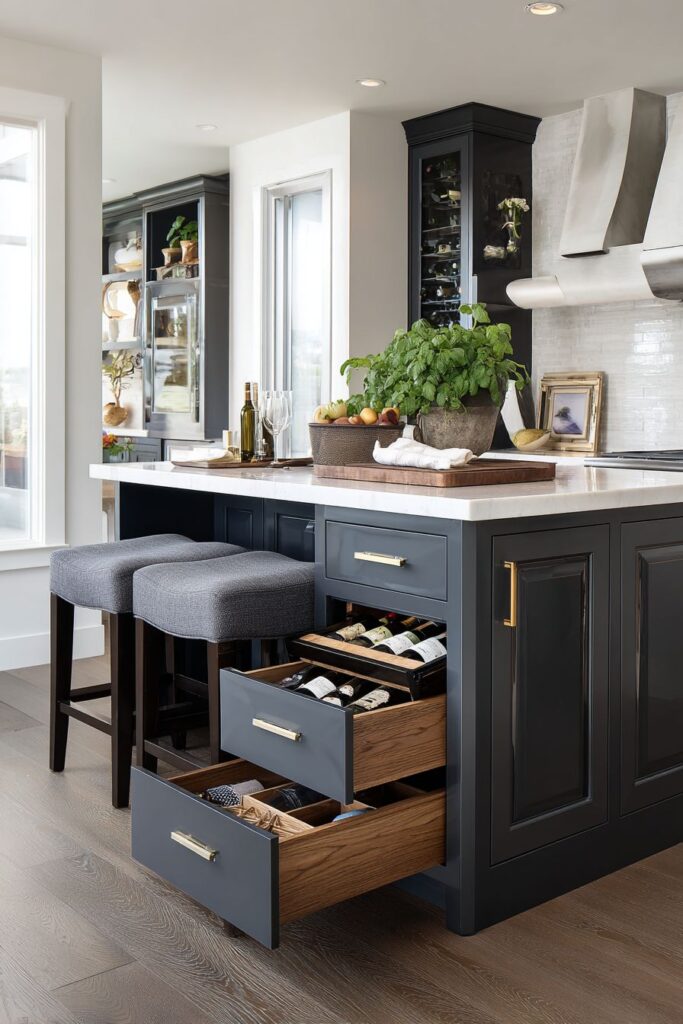
The island’s storage solutions maximize every available inch through thoughtful organization systems. Pull-out drawers provide easy access to stored items while the wine storage adds an element of sophisticated entertaining capability. The built-in cutting board offers additional prep space that can be easily stored when not needed, demonstrating how smart design can multiply functionality within compact dimensions.
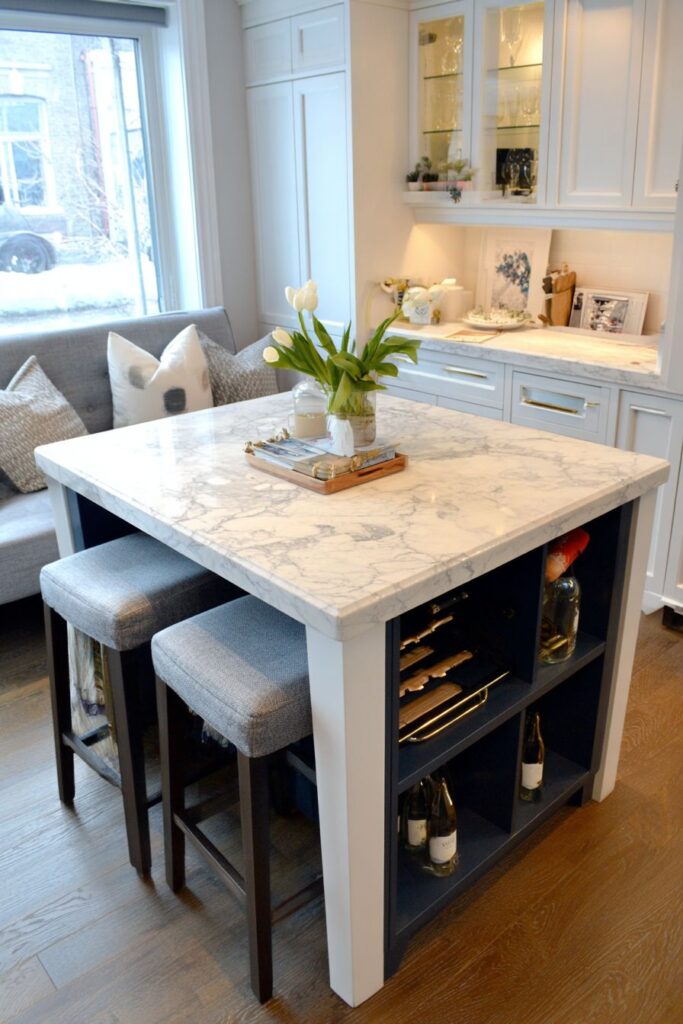
The navy blue base color creates visual depth and sophistication while the brushed gold hardware accents add luxury touches that elevate the overall design. This rich color choice prevents the island from disappearing in the space while the metallic accents catch and reflect light to create visual interest.
Professional interior photography captures the space-saving functionality while highlighting how efficient design can create practical elegance within smaller kitchen layouts. The balanced exposure ensures that both the surface materials and the storage solutions are clearly visible and appealing.
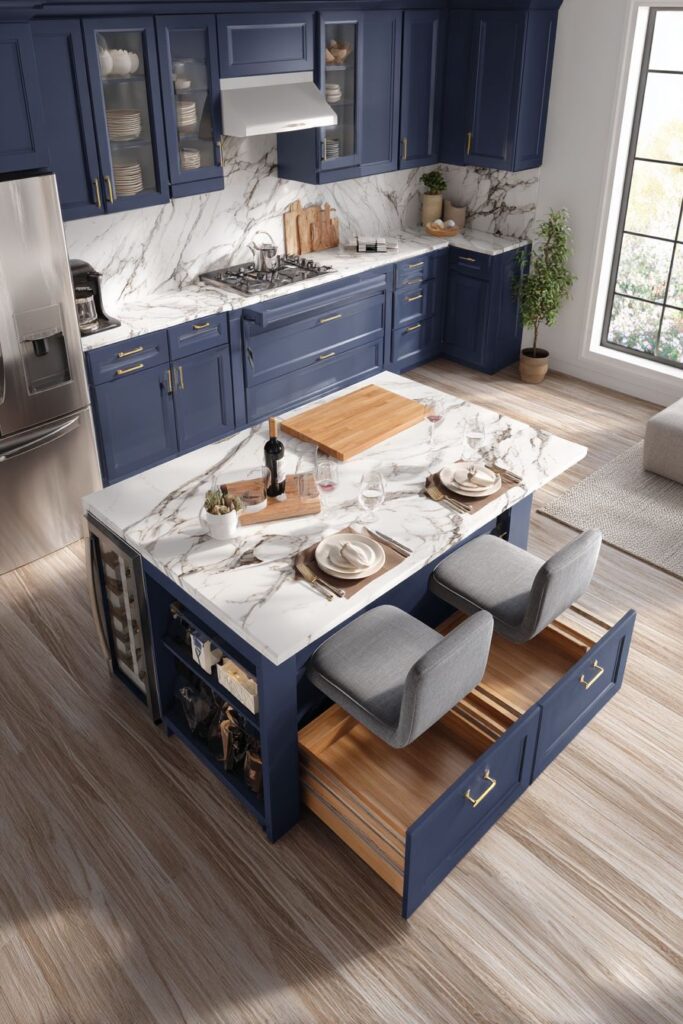
Successful compact island design requires careful attention to proportion and scale, selecting multi-functional elements that serve multiple purposes, choosing colors and materials that create visual weight without overwhelming the space, incorporating seating that can be completely concealed when not in use, and planning storage solutions that maximize organization within limited cubic footage.
4. Industrial Raw Material Authenticity
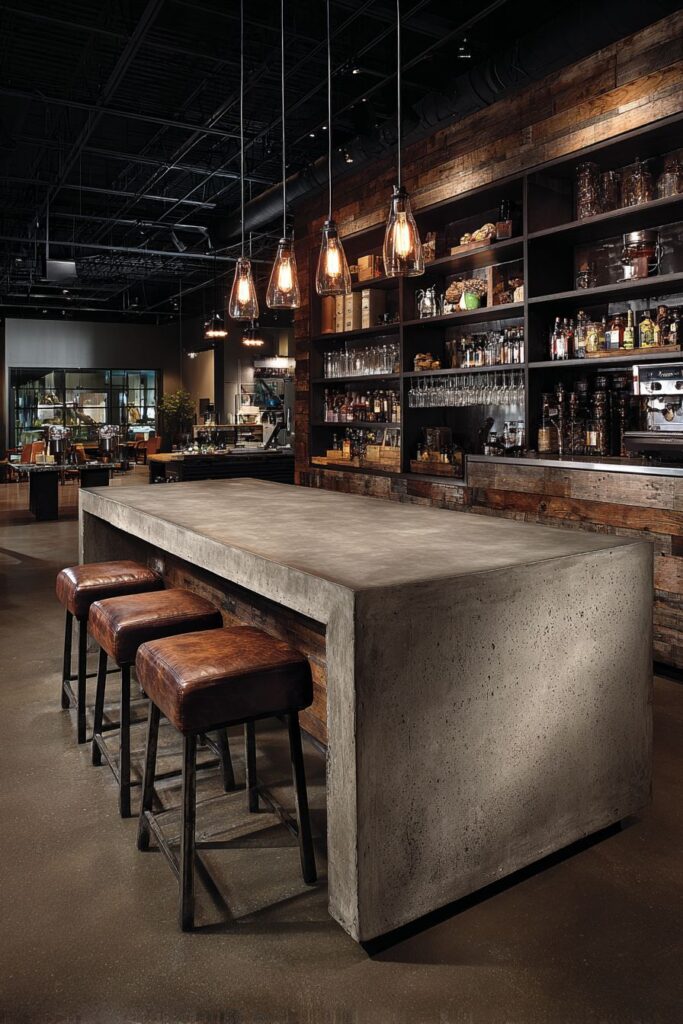
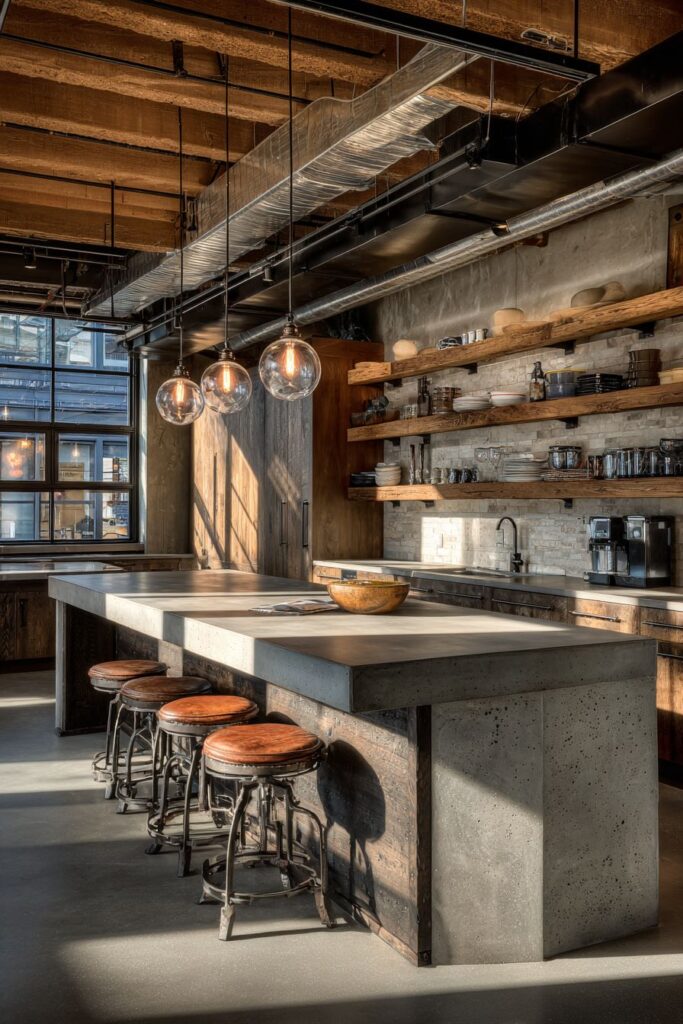
The industrial-style kitchen island embraces the beauty of raw materials and exposed structural elements to create a design that celebrates authenticity and functionality. The concrete countertop showcases natural variations and subtle aggregate texture that can only be achieved through genuine material use rather than imitation finishes. This honest approach to materials creates immediate visual impact and lasting appeal.
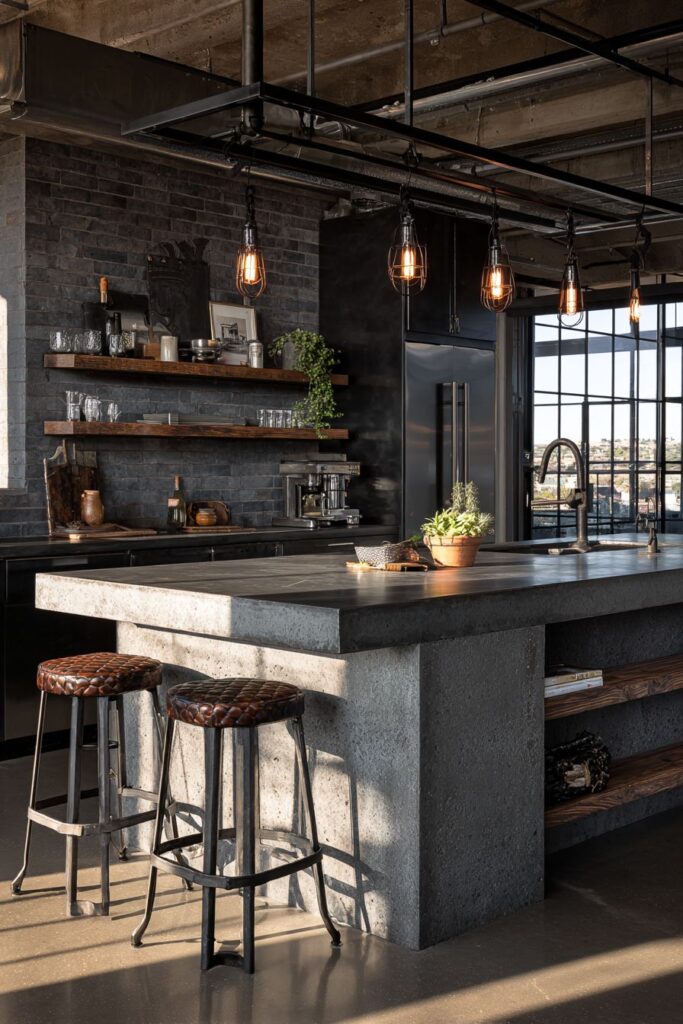
Three metal bar stools with weathered leather seats complement the raw material aesthetic while providing comfortable seating that improves with age and use. The combination of industrial metal framework with leather upholstery creates a sophisticated contrast while maintaining the authentic industrial character that defines this design approach.
The exposed steel framework base creates visual lightness despite the weight of the concrete top, while reclaimed wood shelving adds warmth and storage functionality. This combination of materials—concrete, steel, and reclaimed wood—represents the classic industrial design palette while providing practical benefits for kitchen use.
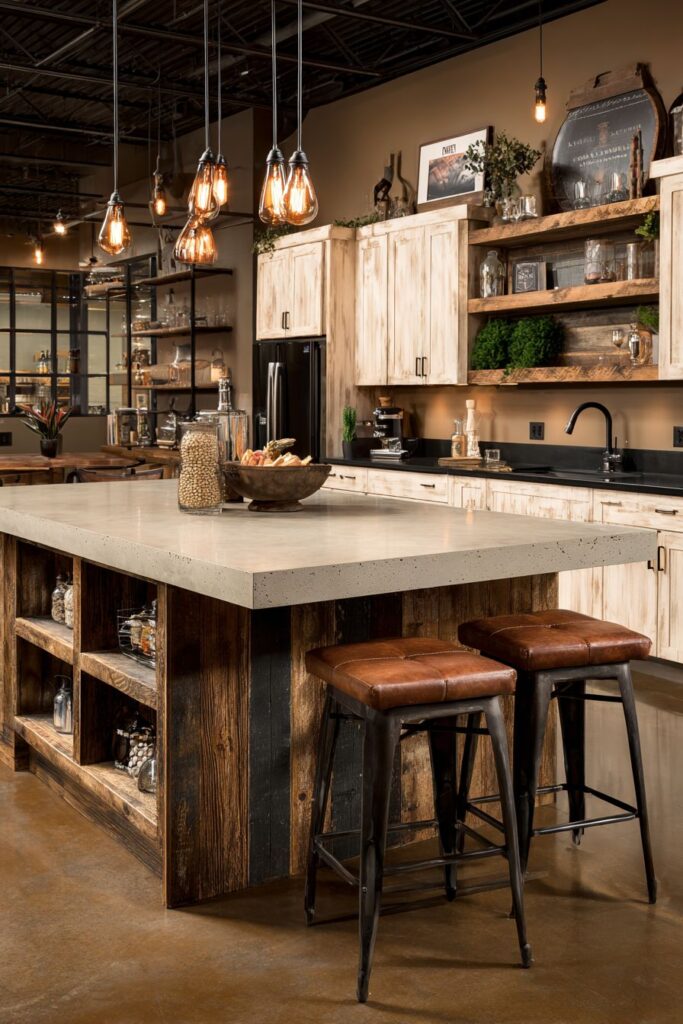
Edison bulb pendant lights suspended from black iron fixtures provide both task lighting and atmospheric ambiance. The exposed filament bulbs reference historical industrial lighting while the black iron fixtures reinforce the authentic industrial aesthetic throughout the space.
The interplay between rough and refined textures creates visual sophistication within the industrial framework. The smooth leather seating provides tactile comfort against the rougher concrete and steel surfaces, while the weathered wood adds natural warmth that prevents the design from feeling cold or unwelcoming.
Achieving authentic industrial style requires selecting genuine materials rather than imitation finishes, embracing imperfections and natural variations as design features, balancing hard materials with softer textural elements for comfort, incorporating lighting that references industrial heritage, and allowing the natural aging process to enhance rather than diminish the design’s character over time.
5. Scandinavian Minimalist Serenity
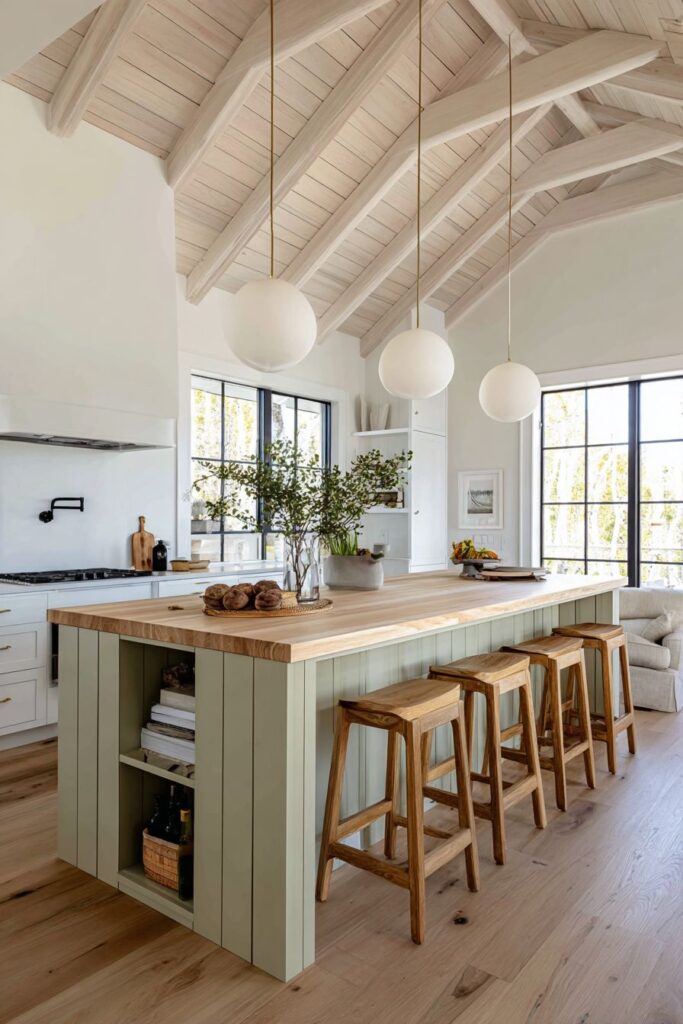
The Scandinavian kitchen island design embodies the principles of functional minimalism and natural beauty that define Nordic aesthetic philosophy. The light oak butcher block surface showcases blonde wood tones with minimal grain variation, creating a serene foundation that feels both sophisticated and approachable. This careful material selection reflects the Scandinavian appreciation for natural materials in their purest form.
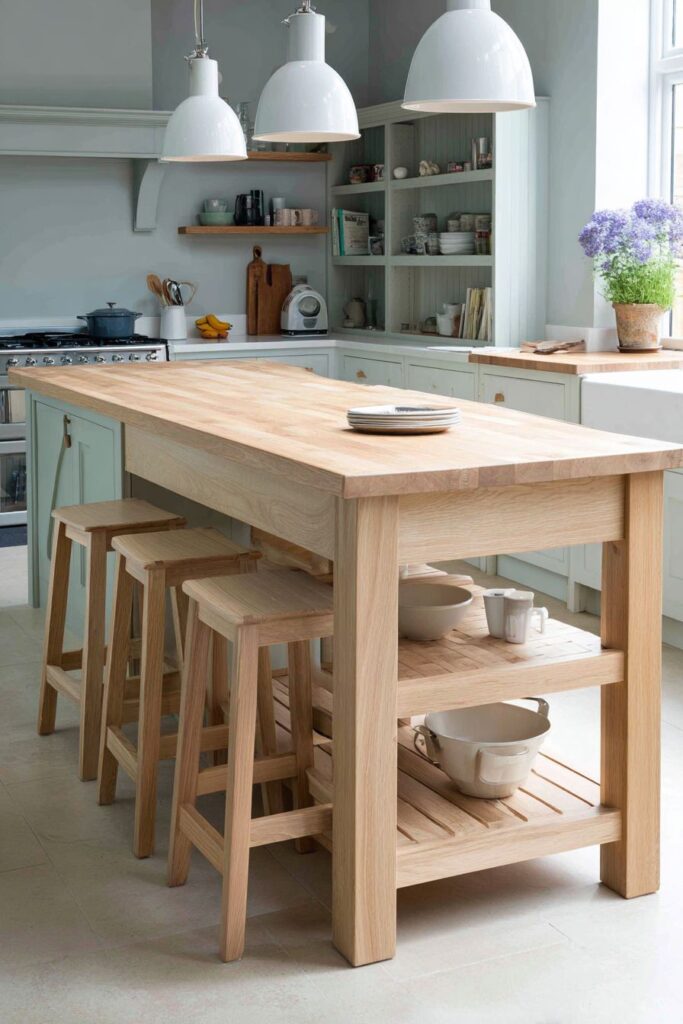
Four simple wooden bar stools with clean lines and natural finish create visual harmony while providing comfortable seating that aligns with Nordic design principles. The consistent use of light wood tones throughout the seating and countertop creates a cohesive aesthetic that feels calm and unified rather than busy or contrived.
The soft sage green painted base introduces subtle color while maintaining the peaceful atmosphere that characterizes successful Scandinavian design. This gentle green hue references the Nordic landscape while providing enough visual interest to prevent the design from appearing bland. The integrated storage compartments and open display areas maximize functionality while maintaining the clean aesthetic.
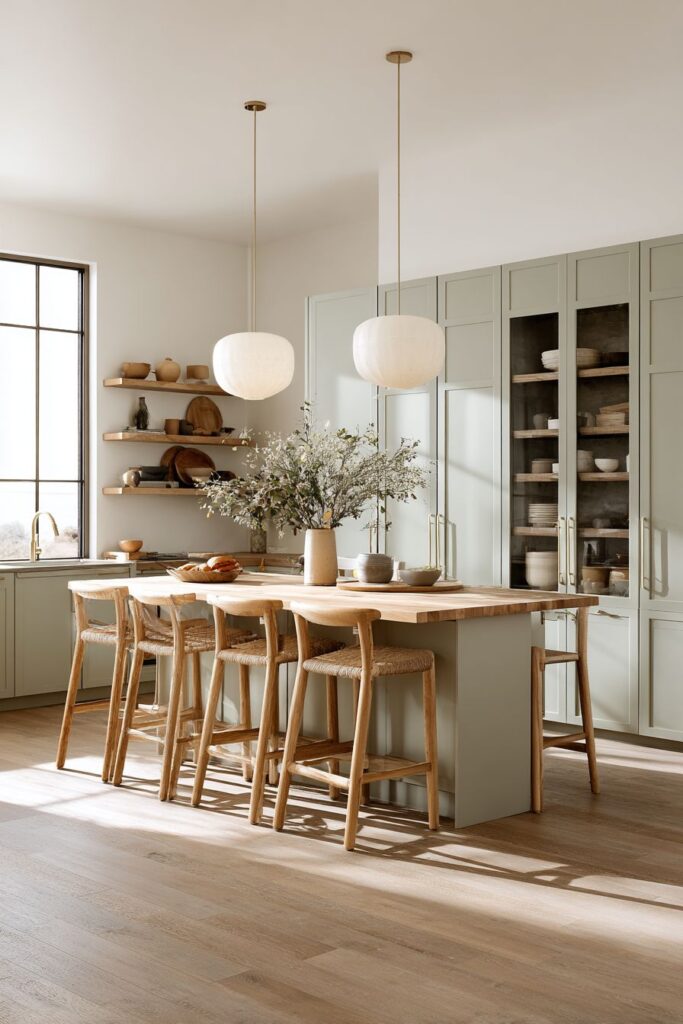
Minimalist pendant lights in matte white provide gentle illumination that enhances rather than competes with the natural materials. The simple forms and neutral color ensure that the lighting supports the overall design narrative rather than becoming distracting focal points.
The use of natural daylight to highlight organic textures and the calming color palette demonstrates how Scandinavian design relies on the interplay between natural elements and artificial lighting to create spaces that feel both energizing and restful.
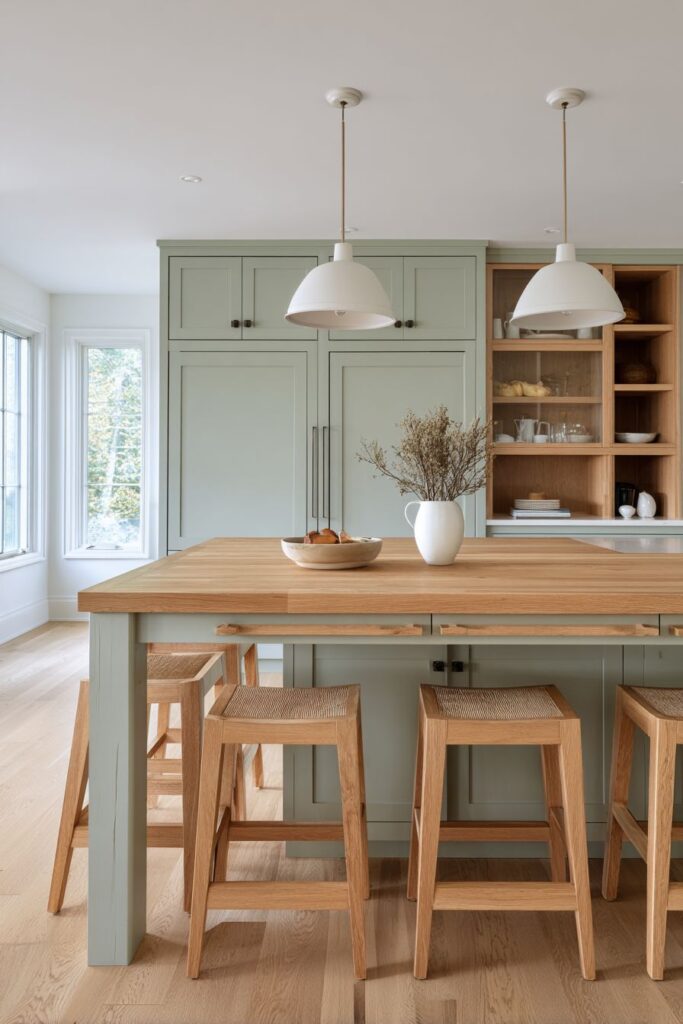
Essential elements for achieving authentic Scandinavian style include selecting light-colored natural materials that showcase inherent beauty, incorporating subtle colors inspired by Nordic landscapes, choosing simple geometric forms that emphasize function over ornamentation, maximizing natural light to enhance material textures, and creating storage solutions that maintain visual simplicity while providing practical organization.
6. Contemporary Black Granite Sophistication
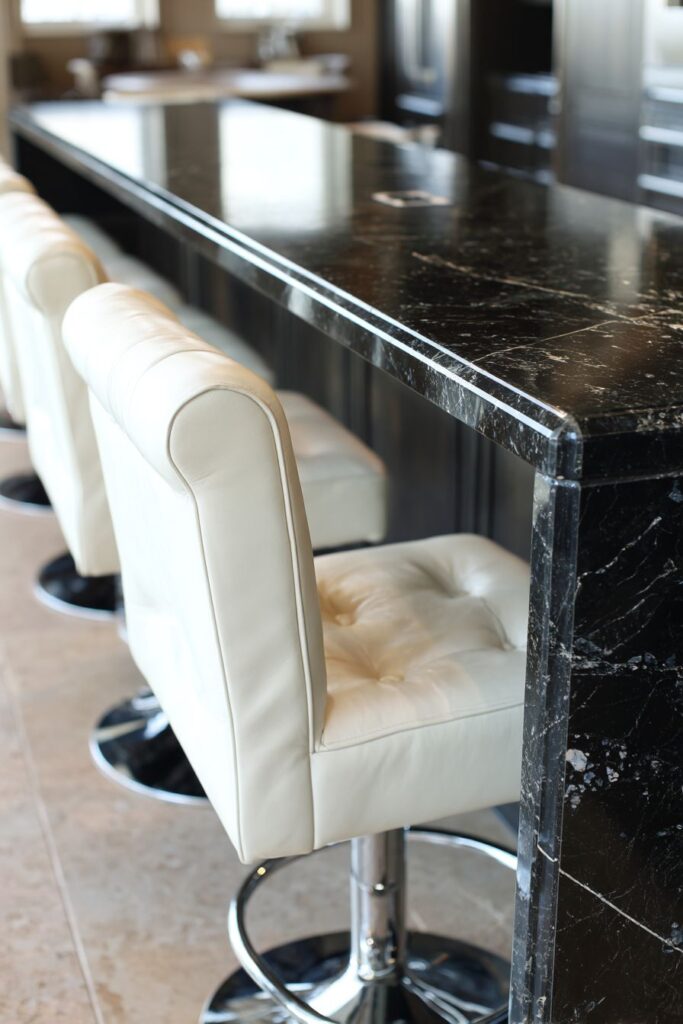
The contemporary kitchen island featuring sleek black granite represents modern luxury through sophisticated material selection and refined design details. The polished granite surface with subtle sparkle creates dramatic visual impact while providing exceptional durability and heat resistance for serious cooking enthusiasts. The deep black color serves as a sophisticated backdrop that makes other design elements appear more vibrant and defined.
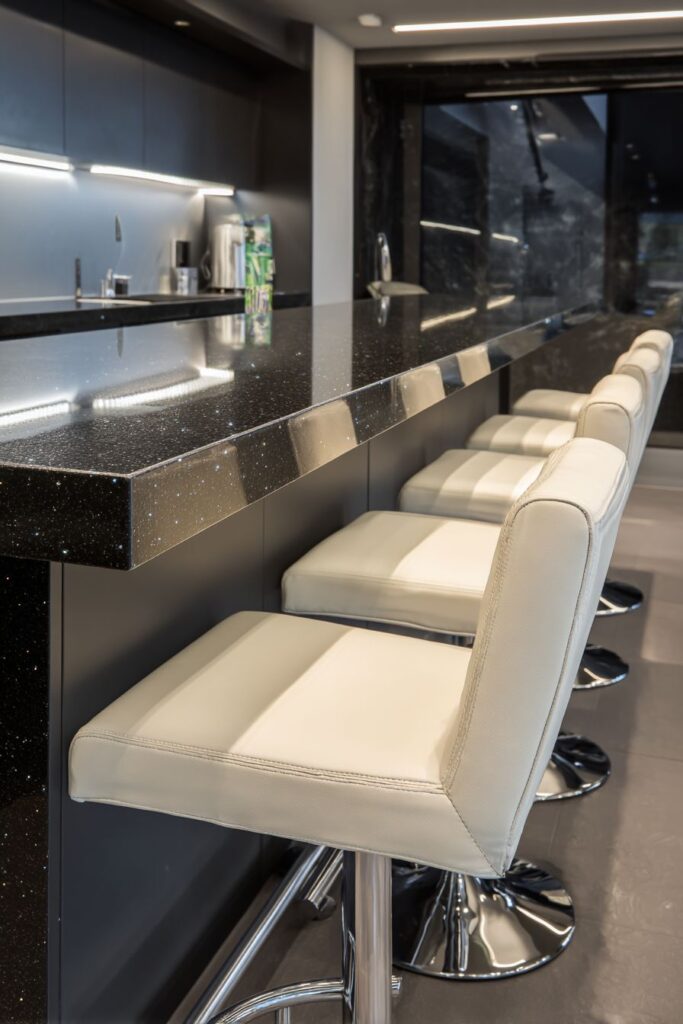
Three upholstered counter-height chairs in cream leather provide comfortable seating with chrome swivel bases that offer both functionality and visual lightness. The contrast between the dark stone surface and light seating creates sophisticated balance while the chrome bases add reflective elements that enhance the contemporary aesthetic.
The waterfall edges on both ends of the island create dramatic visual impact while showcasing the granite’s full thickness and natural beauty. This design detail requires expert fabrication but creates stunning results that serve as focal points within the kitchen space. The continuous material flow eliminates visual interruptions and creates a monolithic appearance that commands attention.
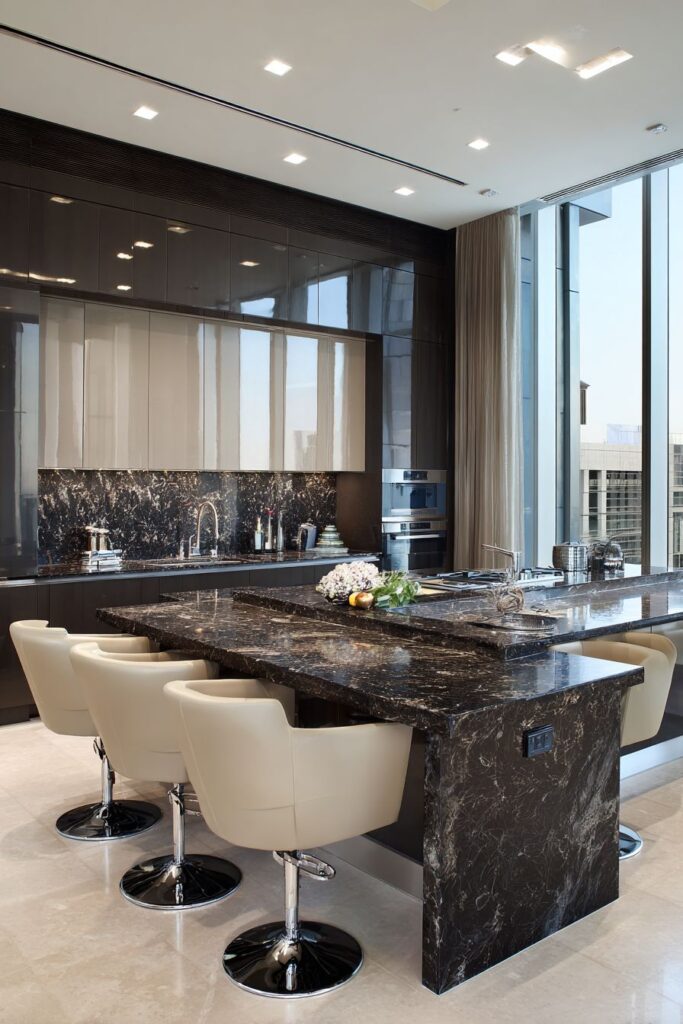
Built-in electrical outlets provide convenient device charging capability, demonstrating how contemporary design integrates modern lifestyle needs into traditional kitchen functions. This practical addition reflects the reality of modern living while maintaining the sophisticated aesthetic.
Under-cabinet LED strip lighting illuminates the workspace below while creating dramatic uplighting effects that enhance the granite’s natural sparkle. This layered lighting approach provides both functional task lighting and atmospheric ambiance for entertaining.
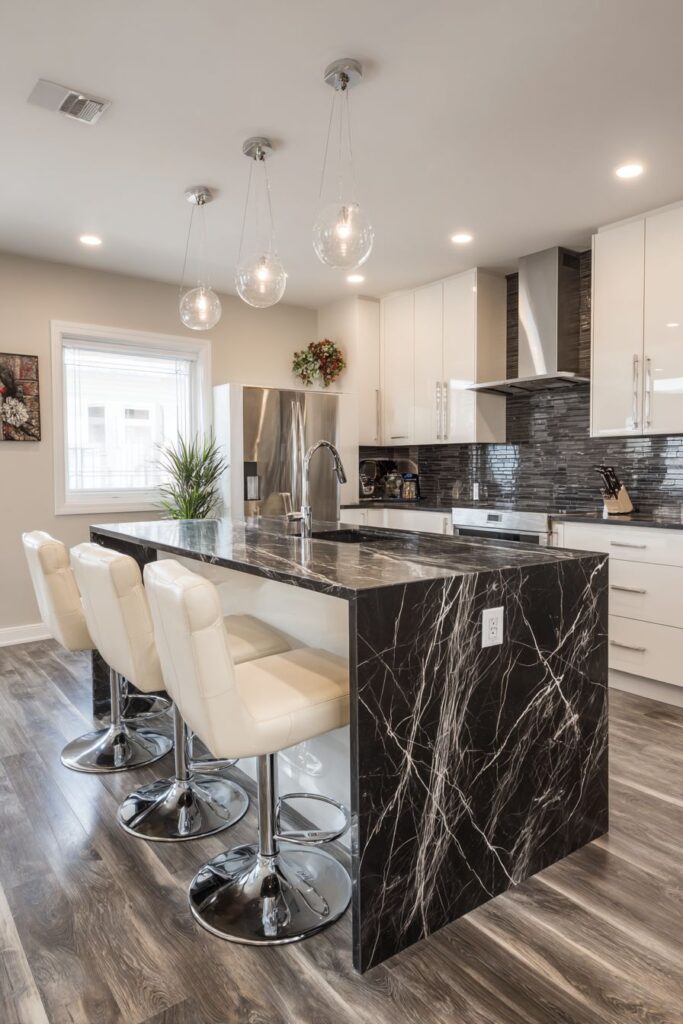
Creating successful contemporary granite design requires selecting stone slabs with consistent patterns and coloring, ensuring expert fabrication for waterfall edges and complex cuts, incorporating seating materials that create sophisticated contrast, integrating modern convenience features without compromising aesthetic integrity, and planning lighting that enhances natural material properties while providing practical functionality.
7. Rustic Barn Wood Character
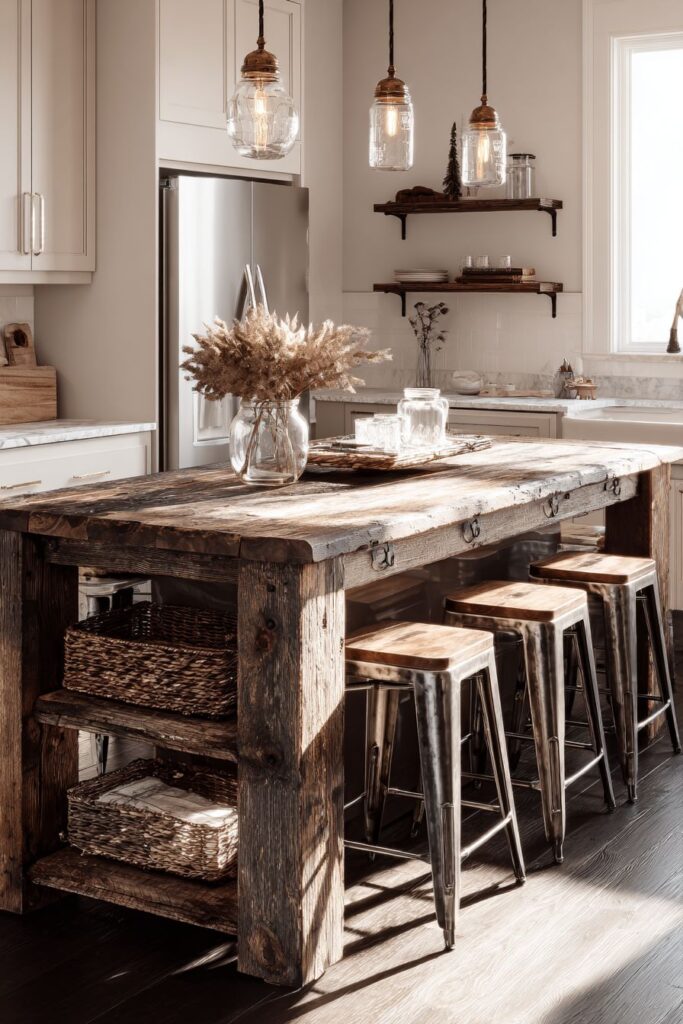
The rustic kitchen island crafted from weathered barn wood celebrates authentic agricultural heritage through genuine reclaimed materials and traditional craftsmanship techniques. The natural patina and authentic aging marks tell the story of the wood’s previous life while creating immediate visual character that cannot be replicated through artificial aging processes.
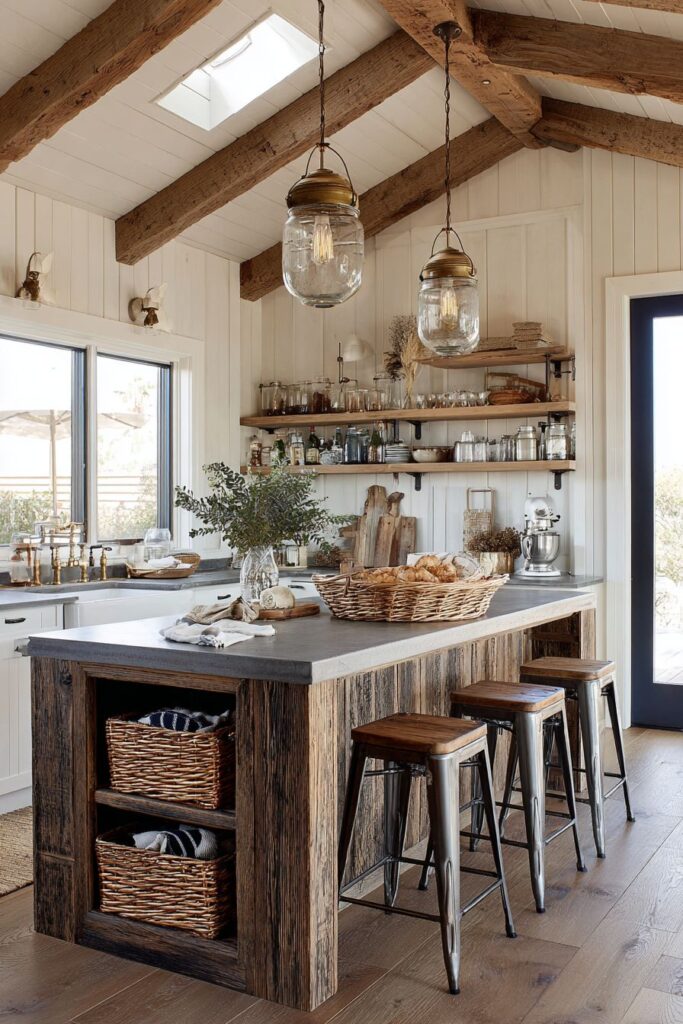
Four vintage-inspired metal stools with distressed finishes and wooden seats create an authentic farmhouse dining experience that complements the reclaimed wood aesthetic. The combination of weathered metal and aged wood creates sophisticated harmony while providing comfortable seating that improves with continued use and natural aging.
The open basket storage provides practical organization while maintaining the authentic farmhouse character through natural material selection. Wrought iron hardware adds traditional detailing that references historical building practices while providing reliable functionality. The prep sink with aged brass faucet creates a functional work zone that enhances the island’s utility while maintaining design consistency.
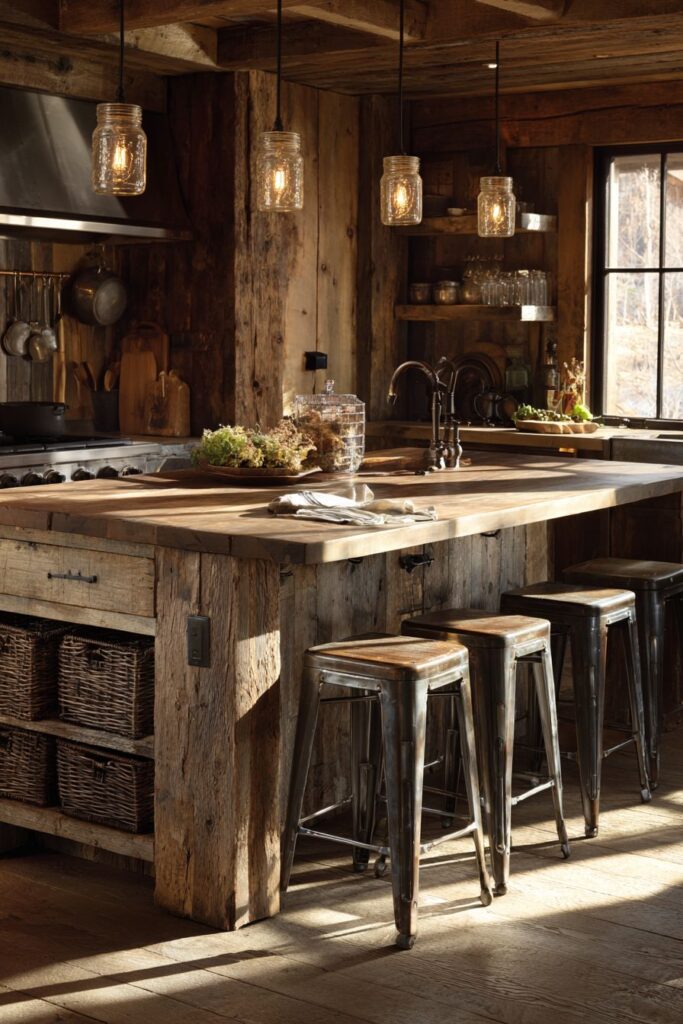
Warm pendant lighting with mason jar shades casts golden light that enhances the natural wood textures while creating intimate atmospheric lighting for dining and food preparation. The mason jar elements reinforce the authentic farmhouse theme while providing practical lighting solutions.
The emphasis on handcrafted details and authentic materials creates a design that feels genuine rather than manufactured. This approach requires careful sourcing and attention to traditional construction methods but results in spaces that possess character and warmth that develops over time.
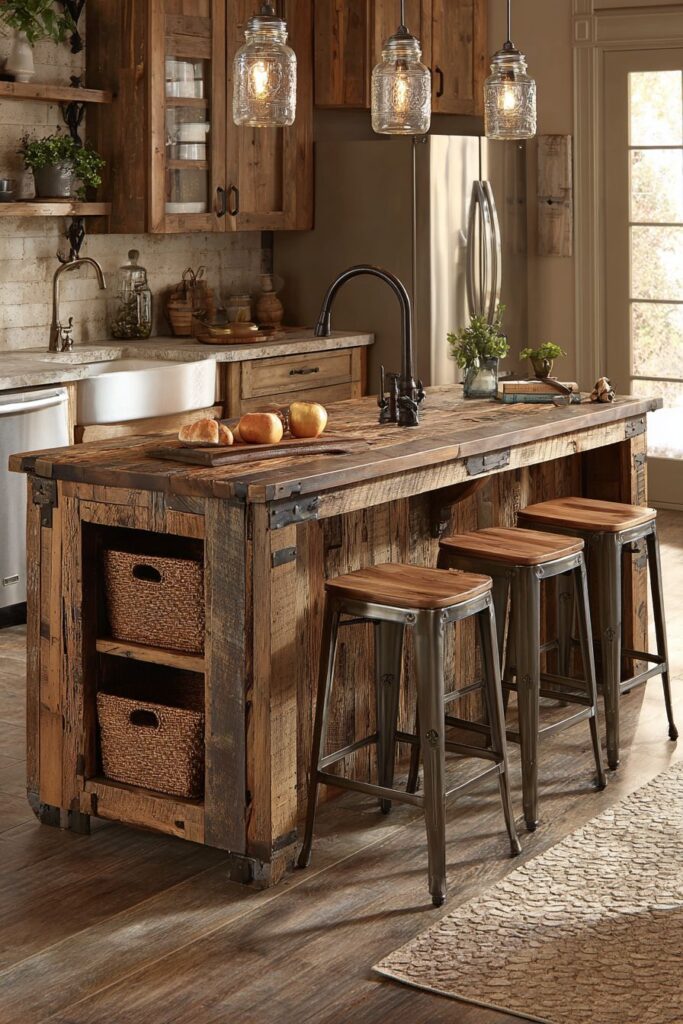
Achieving authentic rustic character requires sourcing genuine reclaimed materials with documented provenance, embracing natural imperfections as design features rather than flaws, selecting hardware and fixtures that reference historical building practices, incorporating traditional craft techniques in construction and finishing, and allowing natural aging processes to enhance the design’s character over time.
8. Transitional Two-Tone Elegance
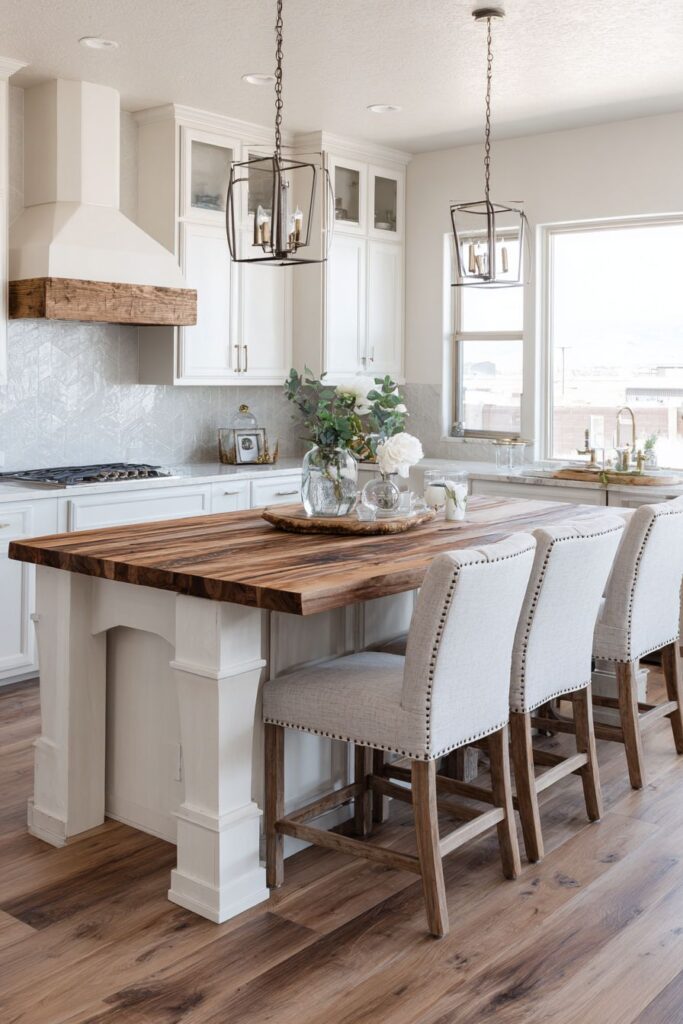
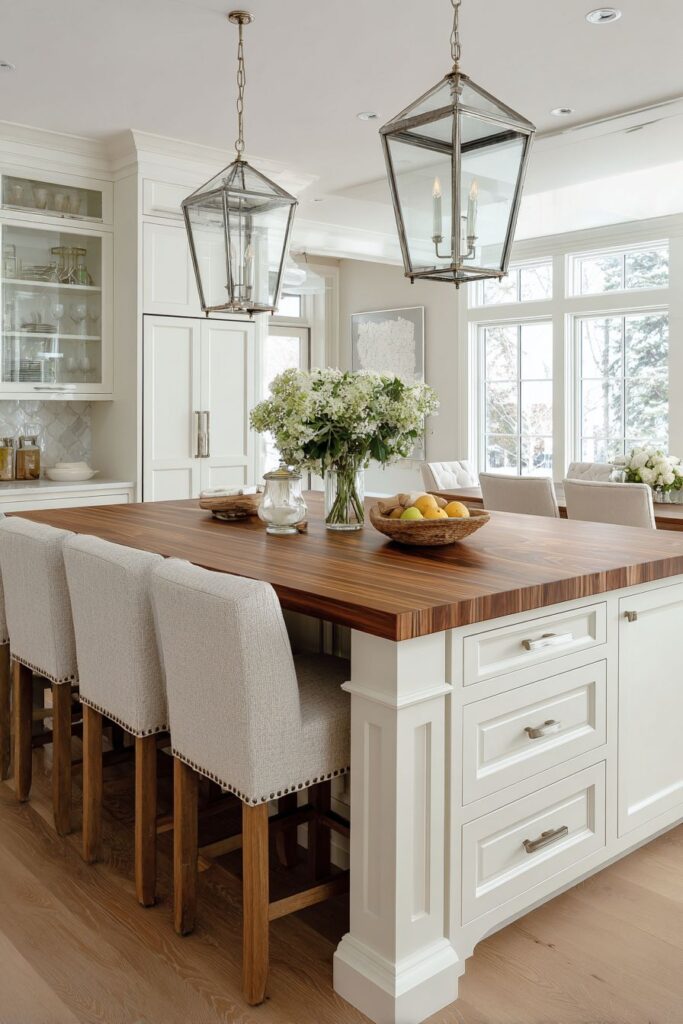
The transitional kitchen island design successfully bridges traditional and contemporary aesthetics through thoughtful material combinations and classic proportions. The two-tone approach featuring white shaker-style base cabinets paired with rich walnut wood countertop creates visual interest while maintaining sophisticated balance between contrasting elements.
Three upholstered bar stools in neutral linen fabric with nailhead trim details provide comfortable seating that references both traditional and contemporary design elements. The classic upholstery technique combined with neutral coloring creates timeless appeal while the nailhead details add subtle textural interest.
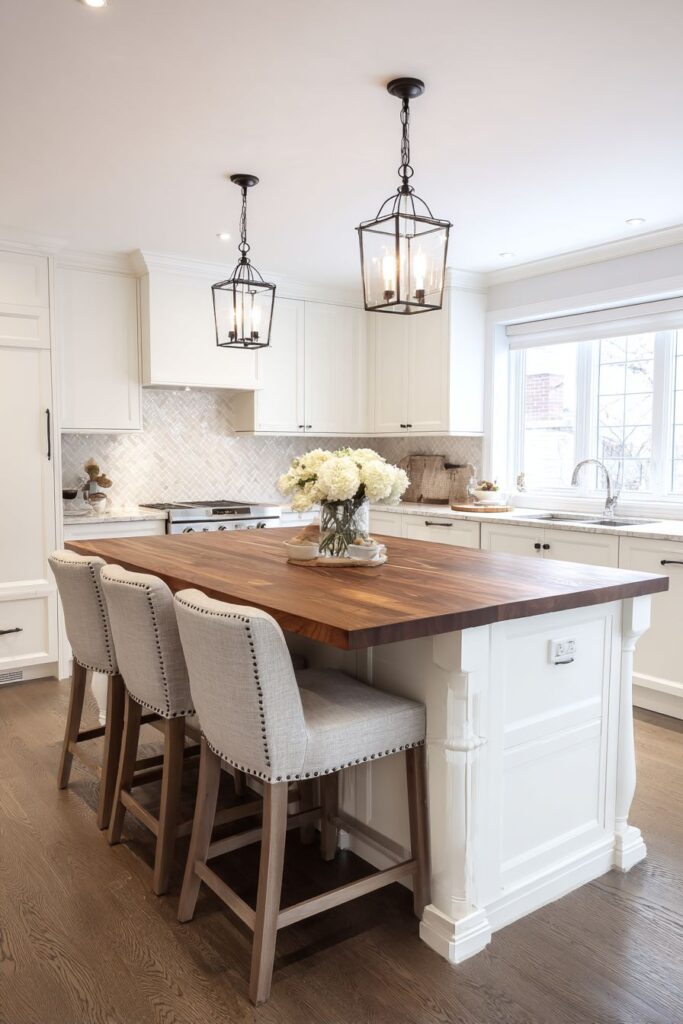
The rich walnut countertop showcases natural grain patterns that create visual warmth and tactile appeal. This natural material choice provides beautiful contrast against the painted base while offering practical benefits like durability and the ability to be refinished as needed over time.
Soft-close drawers and specialized spice storage demonstrate how transitional design incorporates modern convenience features within traditional aesthetic frameworks. The decorative corbels supporting the overhang add architectural interest while providing necessary structural support for the extended countertop.
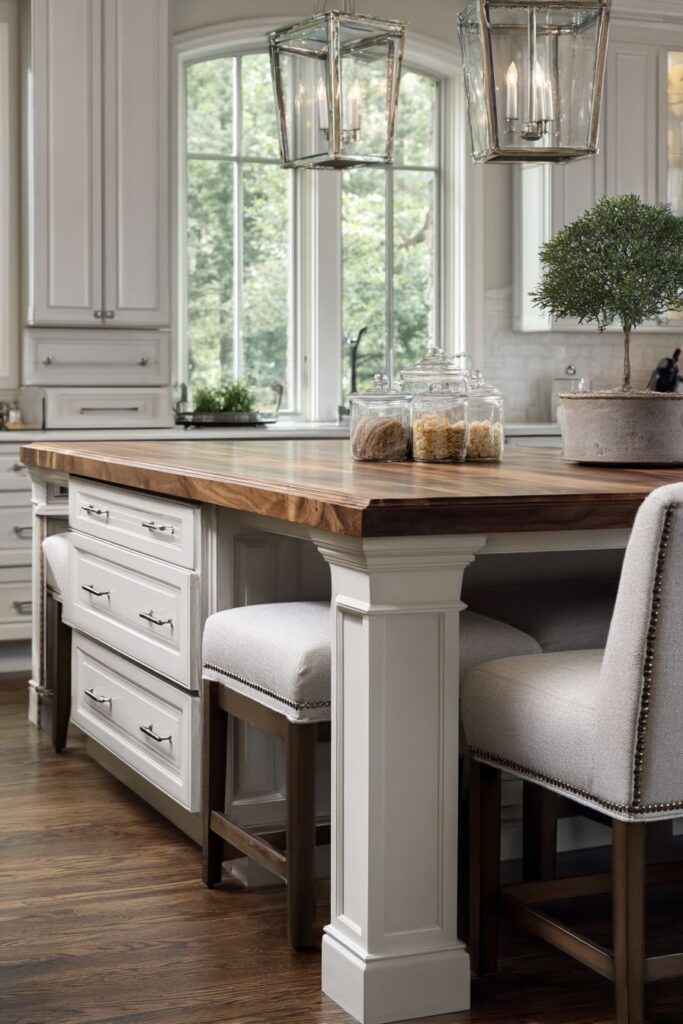
Classic lantern-style pendant lights provide ambient lighting that complements both traditional and contemporary elements while maintaining appropriate scale for the island’s proportions. The timeless lighting design ensures long-term appeal while providing practical illumination for food preparation and dining.
Natural window light creates a welcoming atmosphere that highlights the beautiful wood grain while demonstrating how transitional design relies on balanced natural and artificial lighting to create comfortable, livable spaces.
Successful transitional design requires balancing traditional and contemporary elements without favoring either extreme, selecting materials that offer both beauty and practical functionality, incorporating architectural details that add visual interest without overwhelming the space, choosing hardware and fixtures that bridge different style periods, and creating color palettes that feel both current and timeless.
9. Mediterranean Old World Charm
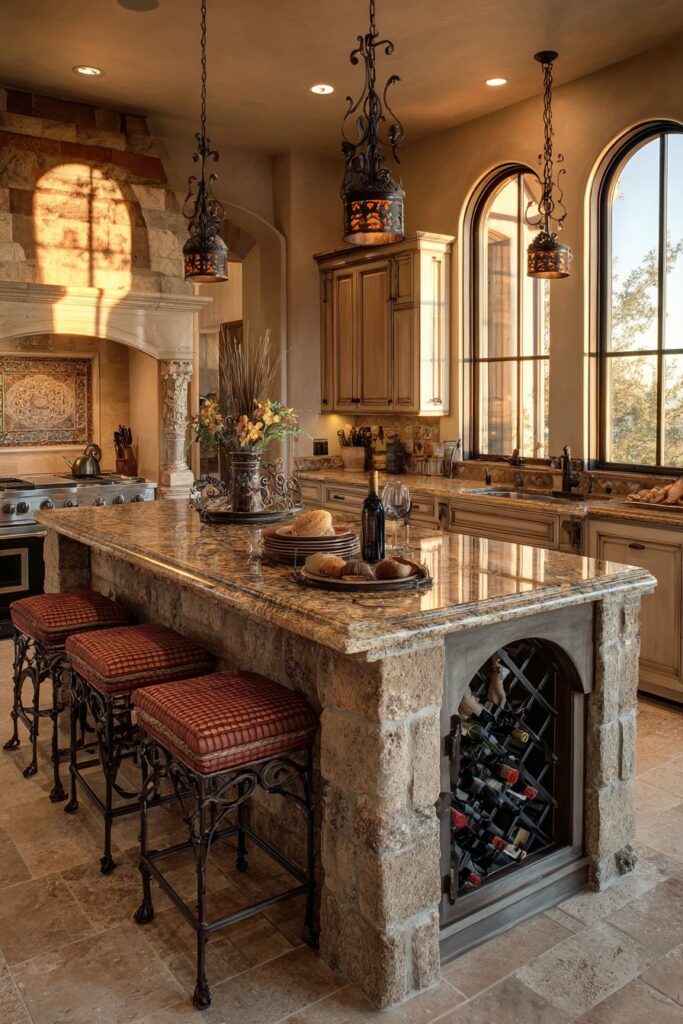
The Mediterranean kitchen island transports the space to sun-drenched coastal regions through authentic material selections and traditional craftsmanship details. The tumbled travertine countertop showcases natural stone variations and earth-tone coloring that reflects the geological diversity of Mediterranean landscapes while providing practical durability for kitchen use.
Four wrought iron bar stools with woven seat cushions in terracotta tones create comfortable seating that reinforces the Old World aesthetic through traditional craft techniques and authentic color palettes. The combination of metalwork and textile elements references the artisanal traditions that define Mediterranean design philosophy.
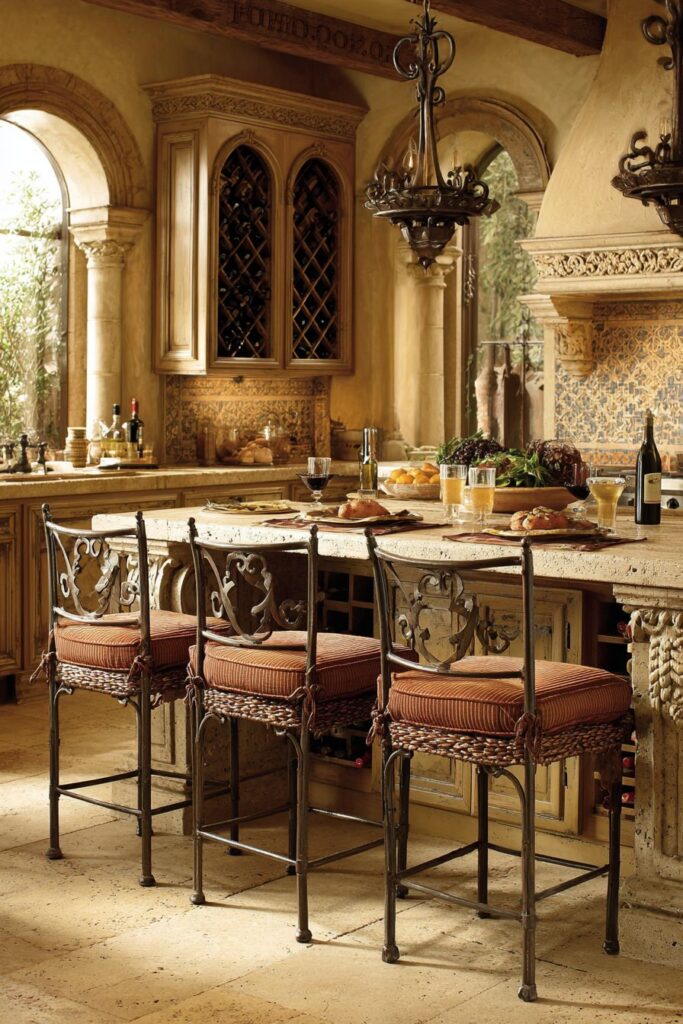
The island base features arched openings with decorative tile insets that create visual interest while providing practical storage solutions. The open wine storage with wrought iron details demonstrates how Mediterranean design integrates entertaining functions into everyday kitchen use while maintaining aesthetic consistency.
Rustic pendant lights with aged bronze finishes cast warm ambient light that enhances the natural stone textures while creating atmospheric lighting for dining and entertaining. The weathered metal finishes reference the patina that develops naturally in coastal Mediterranean environments.
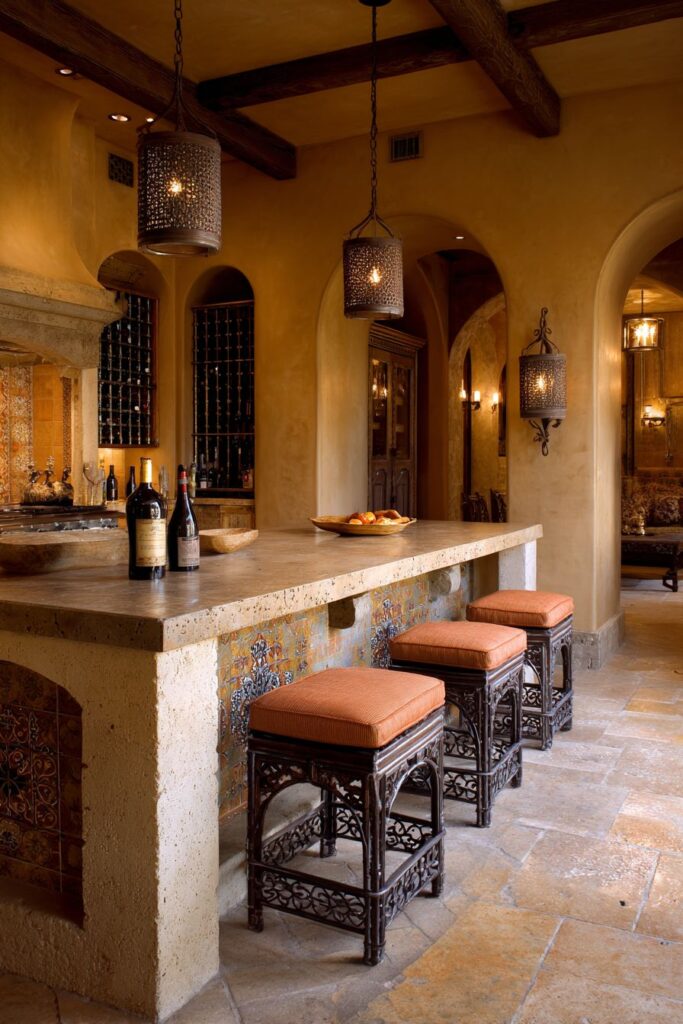
The emphasis on natural stone textures and warm color palettes creates spaces that feel connected to their natural surroundings while providing modern functionality. This approach requires careful attention to authentic material selection and traditional construction techniques.
Golden hour lighting conditions demonstrate how Mediterranean design relies on the interplay between natural light and earth-tone materials to create spaces that feel warm and welcoming throughout the day.
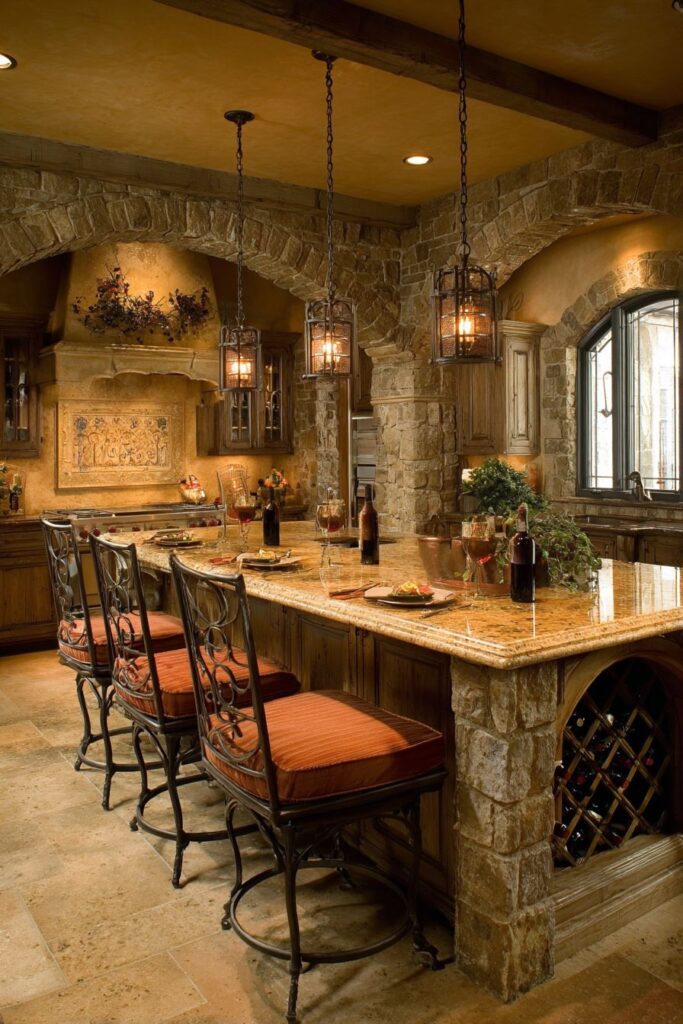
Authentic Mediterranean design requires selecting natural stone materials with genuine geological characteristics, incorporating traditional metalworking techniques in hardware and fixtures, using color palettes inspired by Mediterranean landscapes, integrating wine storage and entertaining functions into kitchen design, and planning lighting that enhances natural material properties while creating warm, atmospheric conditions.
10. Modern Minimalist Precision
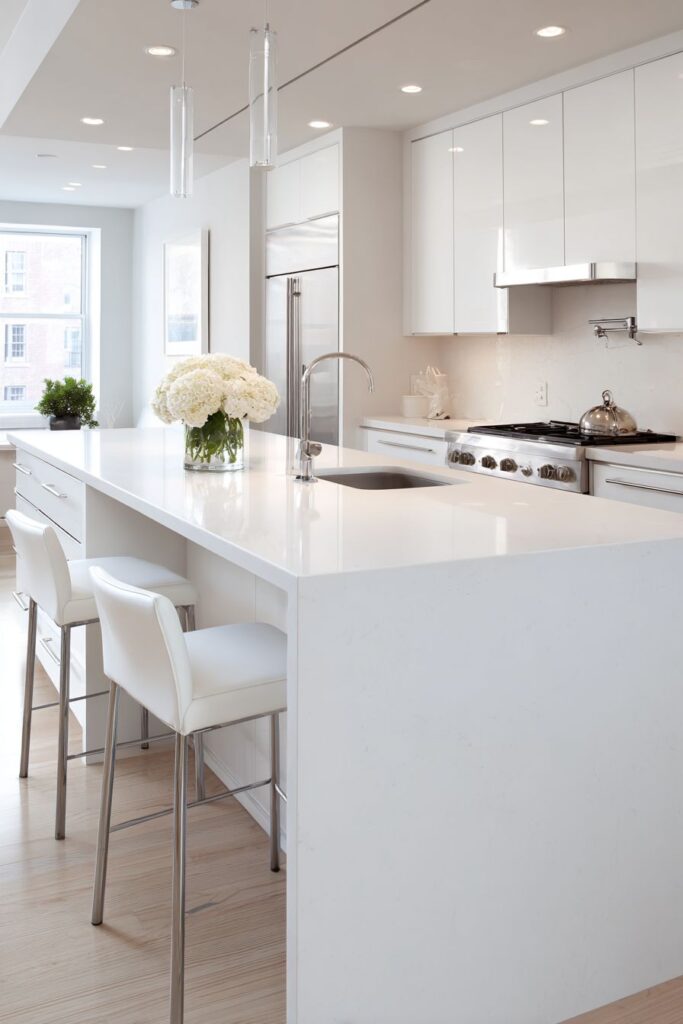
The modern minimalist kitchen island represents design philosophy that celebrates function through elimination of unnecessary elements and perfect execution of essential components. The pristine white Corian countertop with seamless integrated sink demonstrates advanced fabrication techniques that create flawless surfaces without visible joints or interruptions.
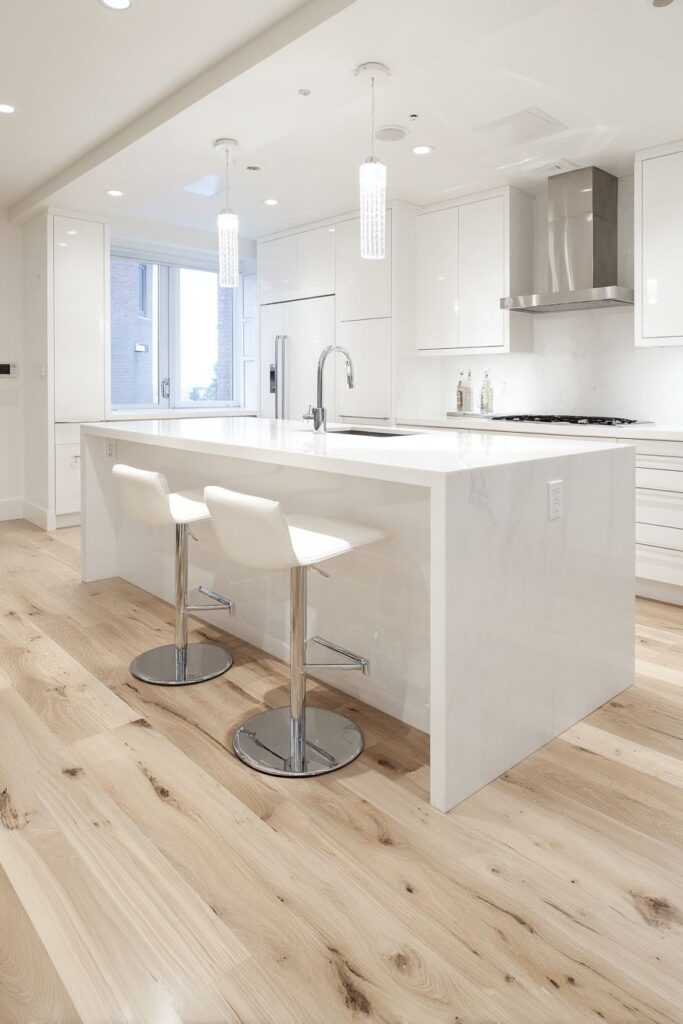
Two sleek white bar stools with chrome legs maintain the clean aesthetic while providing comfortable seating that disappears visually when not in use. The consistent color palette and simple geometric forms create visual harmony while chrome accents add reflective elements that enhance the space’s sense of light and openness.
Handle-less drawers with push-to-open mechanisms eliminate visual clutter while providing practical storage access. Hidden storage compartments maximize organization capability while maintaining the seamless exterior appearance that defines successful minimalist design. These advanced hardware solutions require precise installation but create superior functionality.
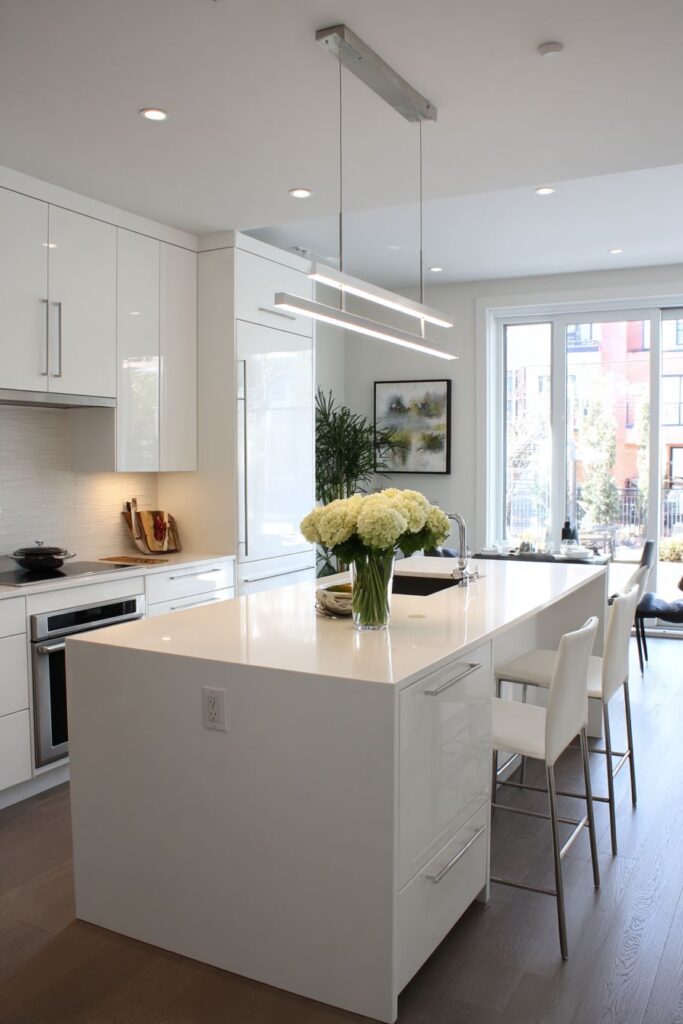
Linear LED pendant lights provide crisp task lighting without visual clutter or unnecessary decorative elements. The clean geometric forms and neutral coloring ensure that lighting supports the overall design aesthetic rather than competing for attention.
The emphasis on seamless surfaces and invisible joints requires expert fabrication and installation but creates spaces that feel calm and uncluttered. This approach works particularly well in smaller kitchens where visual simplicity can make spaces appear larger and more sophisticated.
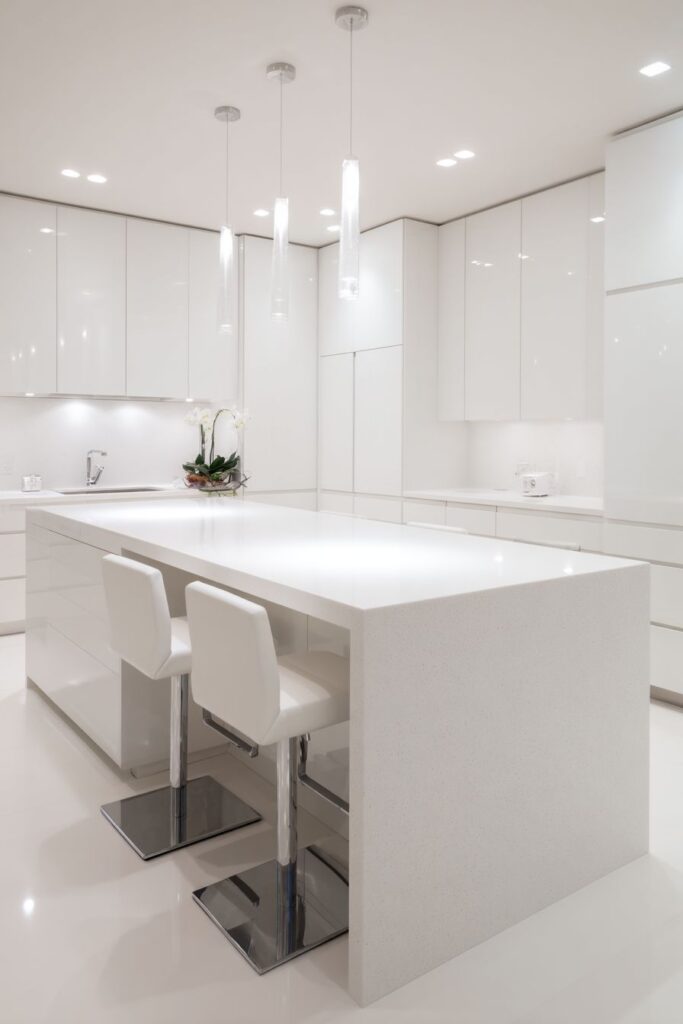
Achieving authentic minimalist design requires investing in high-quality materials and expert fabrication, selecting hardware that disappears visually while providing superior functionality, planning storage solutions that maintain exterior simplicity while maximizing interior organization, choosing lighting that provides practical illumination without decorative distraction, and maintaining consistent color palettes that create visual harmony throughout the space.
11. Coastal Nautical Inspiration
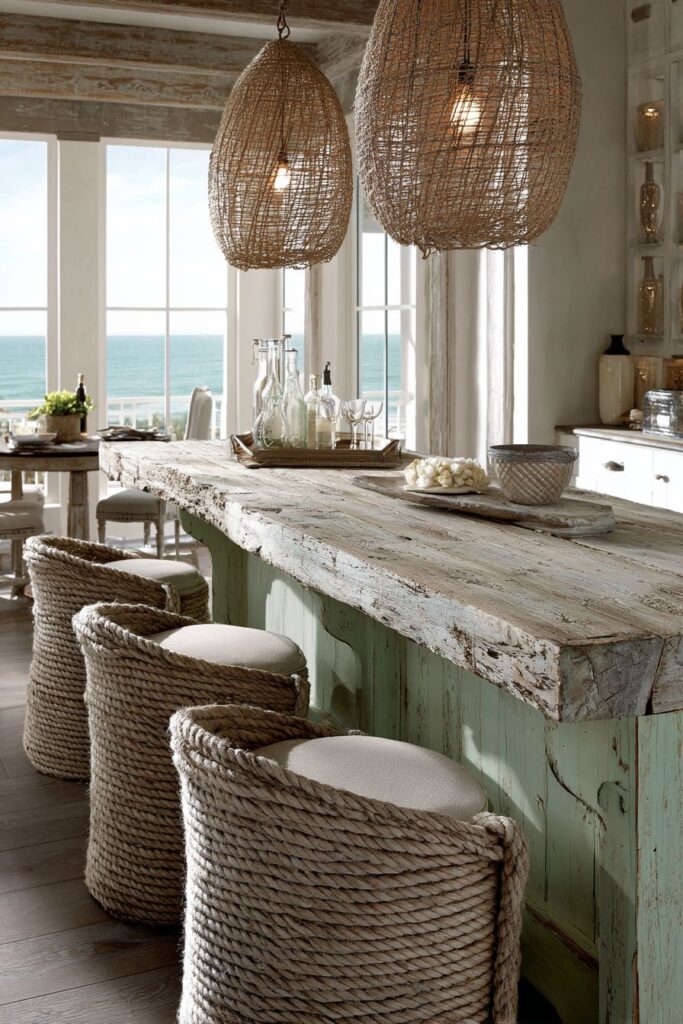
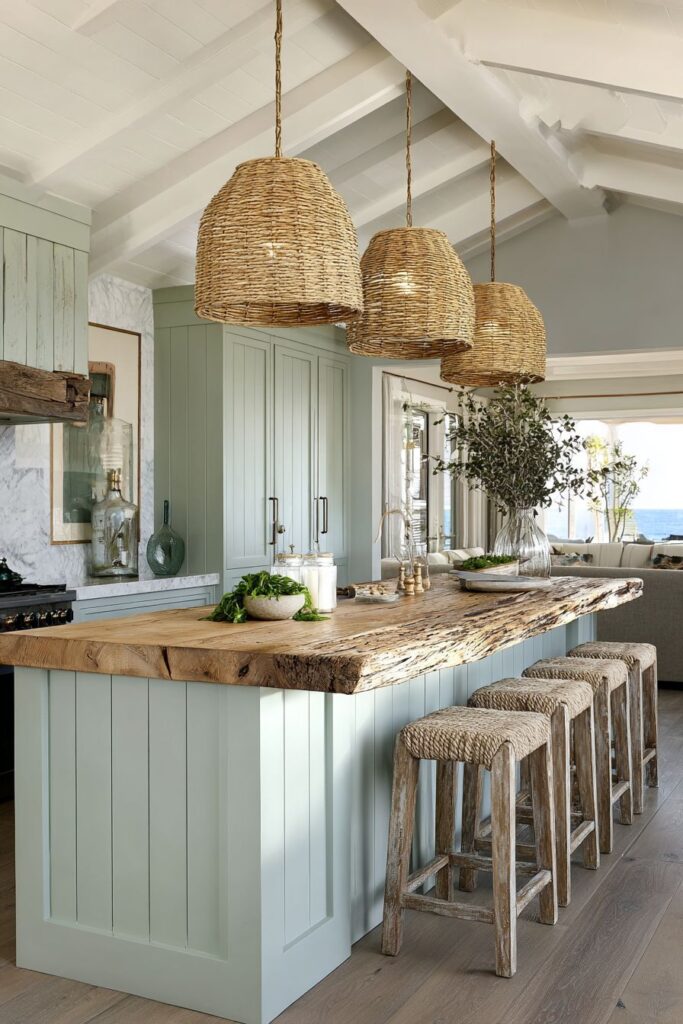
The coastal kitchen island captures the relaxed atmosphere of seaside living through authentic weathered materials and nautical-inspired design elements. The driftwood-finished reclaimed timber countertop showcases natural weathering and sea-worn texture that references the transformative power of salt air and ocean conditions on natural materials.
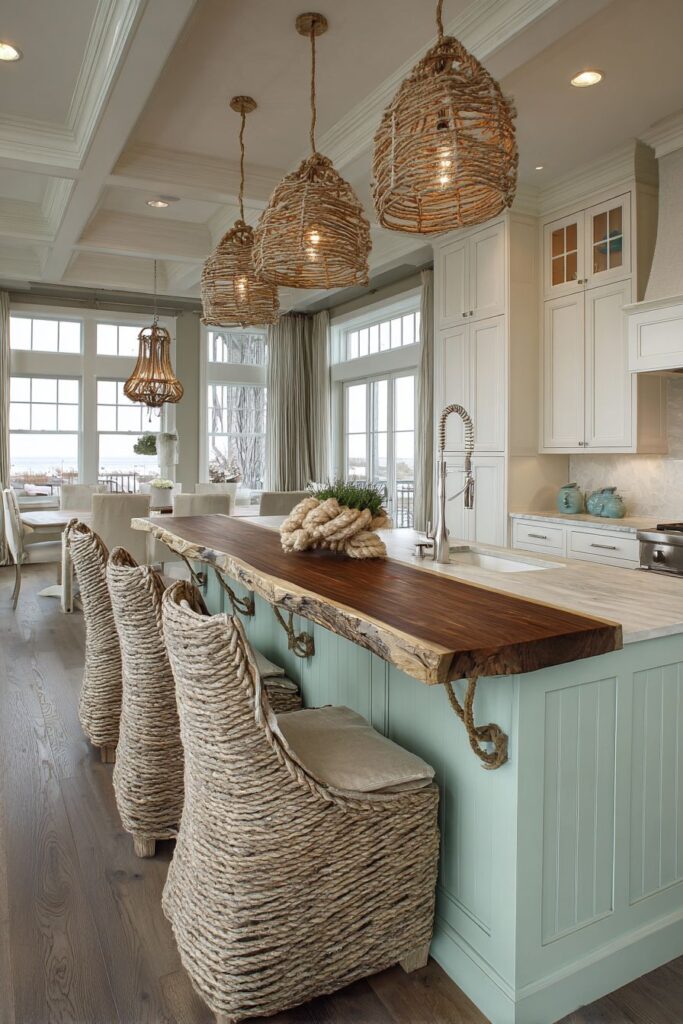
Three rope-wrapped bar stools with weathered wood seats evoke nautical charm while providing comfortable casual dining that encourages lingering conversations over morning coffee or evening cocktails. The rope wrapping technique references traditional maritime craftsmanship while providing tactile interest and durability.
The soft seafoam green base color creates immediate associations with coastal waters while the shiplap detailing references traditional coastal architecture. Rope hardware accents reinforce the nautical theme while providing functional cabinet and drawer pulls that feel appropriate to the overall design narrative.
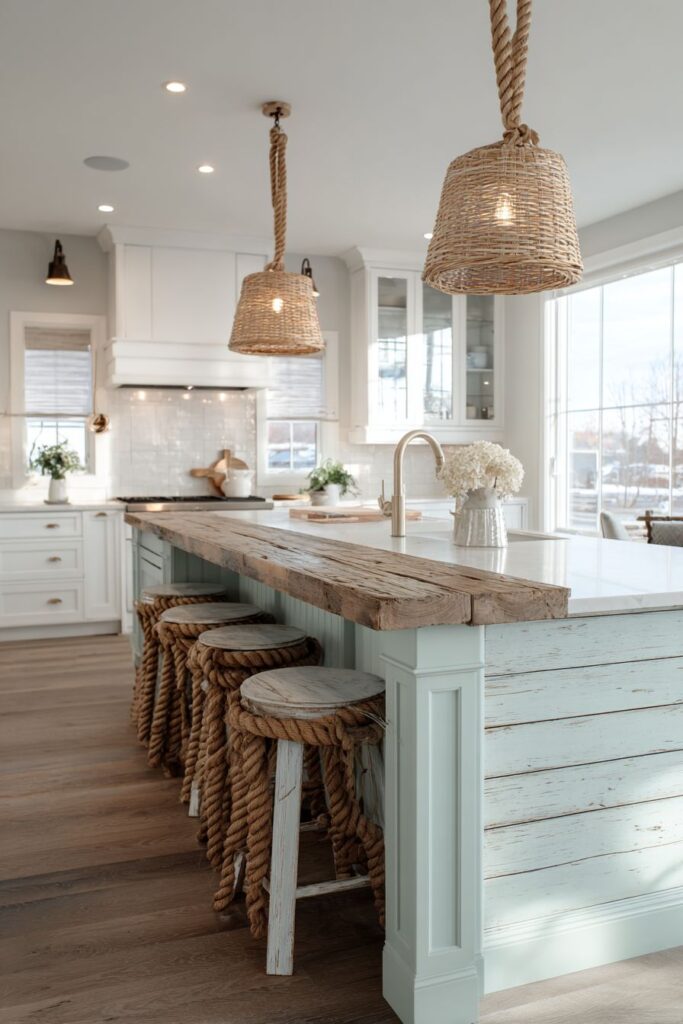
Woven pendant lights in natural jute fibers cast warm, diffused light that creates intimate atmospheric lighting while reinforcing the natural material palette. The organic forms and neutral coloring prevent the lighting from overwhelming the relaxed coastal aesthetic.
The emphasis on weathered textures and ocean-inspired colors creates spaces that feel connected to coastal environments while providing modern functionality. Natural lighting highlights the authentic weathered surfaces while demonstrating how coastal design relies on the interplay between natural materials and soft, diffused illumination.
Successful coastal design requires selecting materials that reference authentic weathering processes, incorporating traditional maritime crafts and techniques into hardware and accessories, using color palettes inspired by ocean and beach environments, choosing lighting materials that reinforce the natural aesthetic, and embracing imperfections as design features that add character and authenticity.
12. Luxury Dramatic Statement
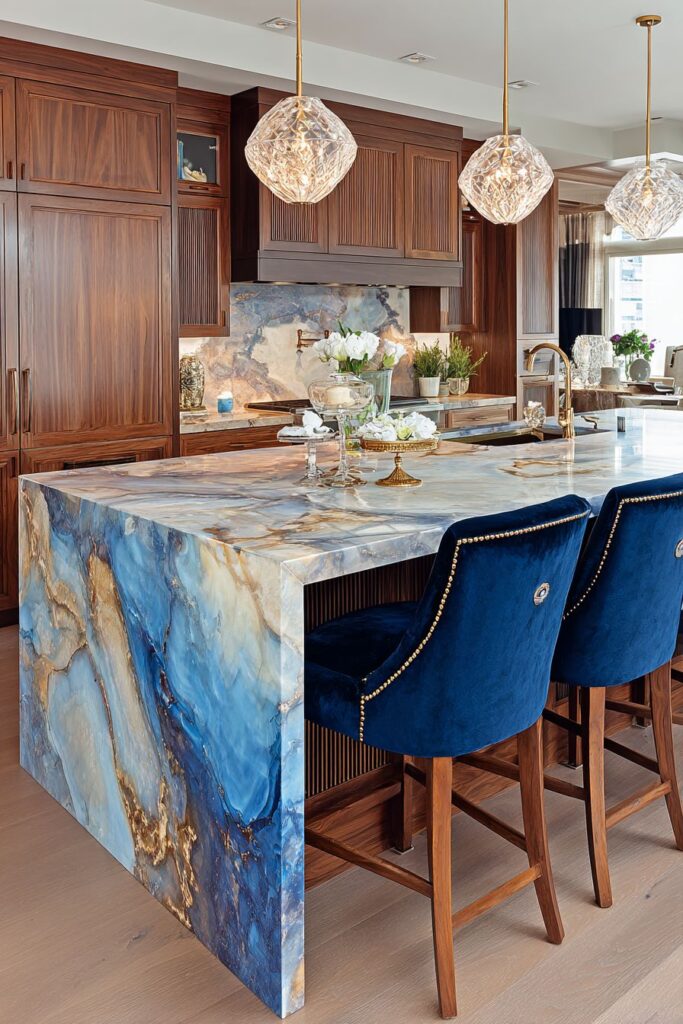
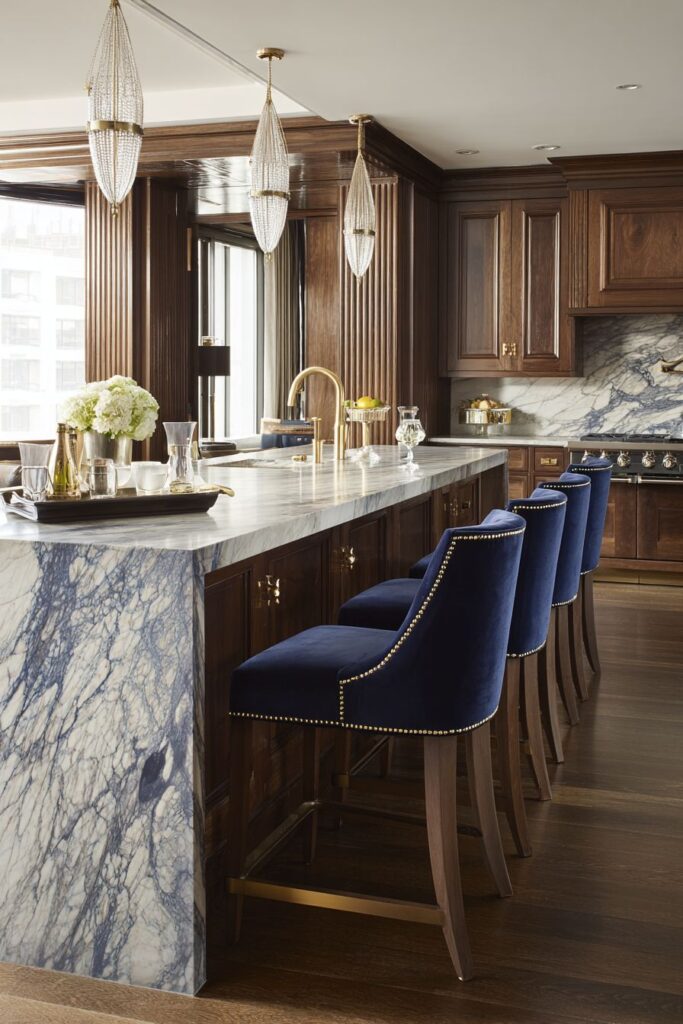
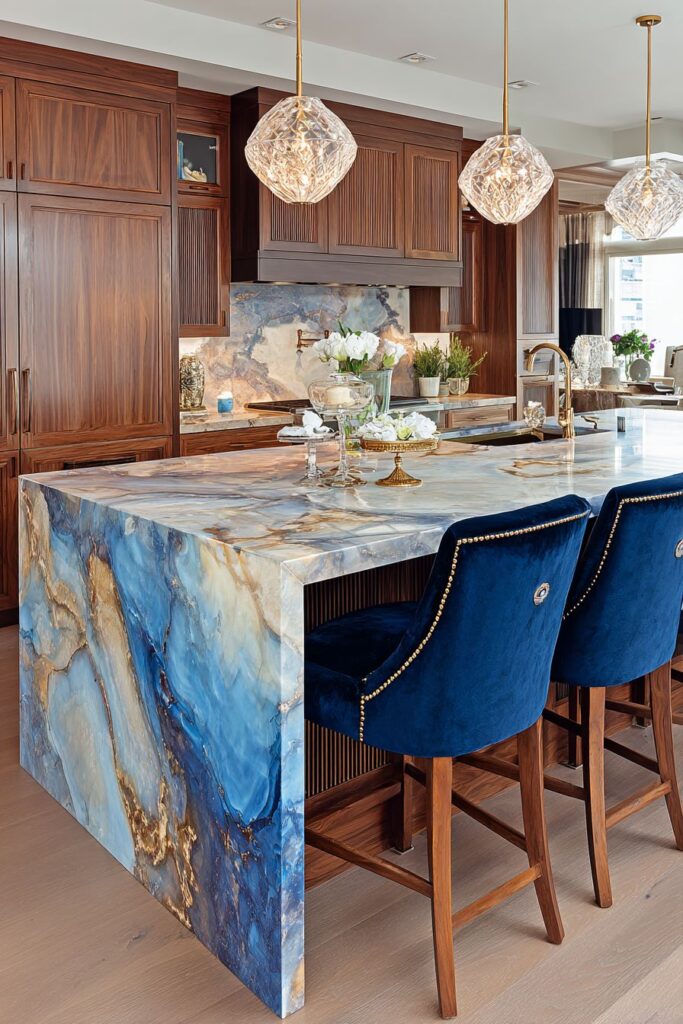
The luxury kitchen island featuring dramatic Calacatta marble represents the pinnacle of sophisticated material selection and expert craftsmanship. The bold white and gold veining patterns create stunning visual impact that serves as the kitchen’s primary focal point while demonstrating the natural artistry that makes each marble slab unique and irreplaceable.
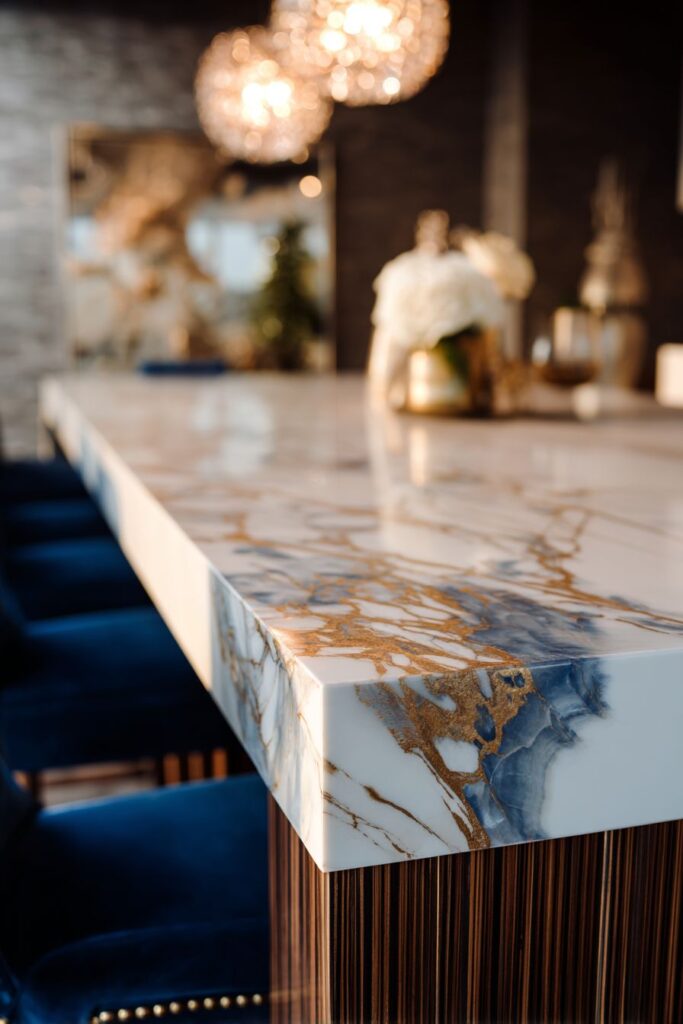
Four velvet-upholstered bar stools in deep navy blue with brass nail heads provide elegant seating that complements the marble’s luxury status while creating sophisticated color contrast. The rich fabric texture and metallic details add layers of visual and tactile luxury that enhance the overall design sophistication.
Fluted wood panels in rich walnut finish add textural interest and warmth while brass hardware details throughout create cohesive metallic accents that tie together various design elements. These luxury details require expert fabrication and installation but create spaces that feel professionally designed and executed.
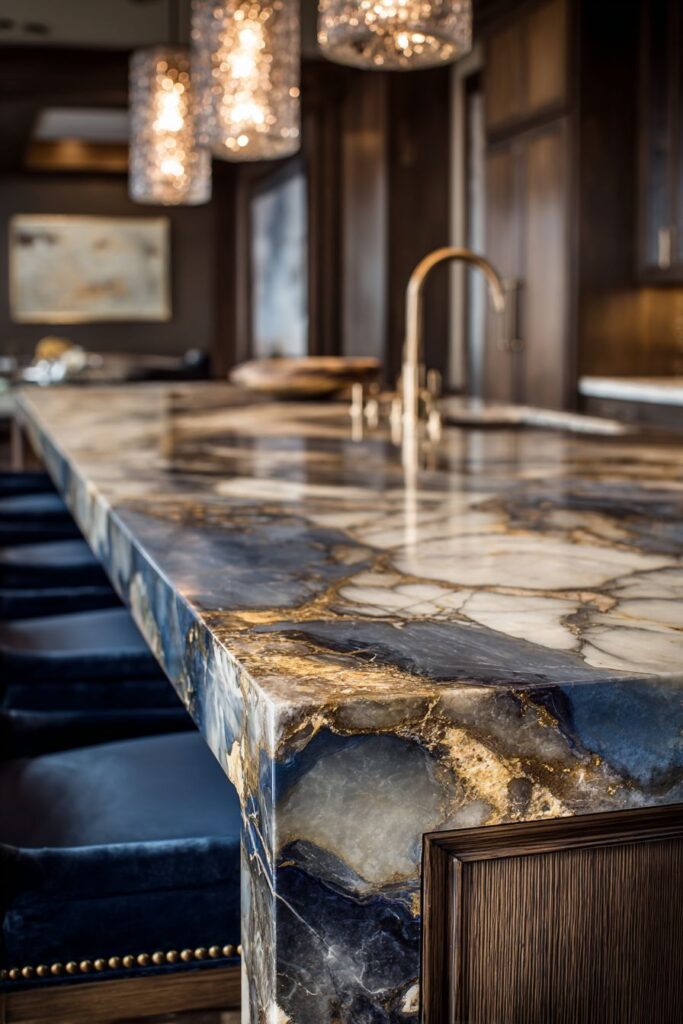
Crystal pendant lights add glamorous illumination that creates prismatic light effects while providing practical task lighting for food preparation and dining. The crystal elements catch and reflect light to create dynamic visual interest that changes throughout the day as lighting conditions vary.
Sophisticated lighting design emphasizes the marble’s natural beauty while creating dramatic shadows that highlight the rich textures throughout the space. This requires careful planning and expert installation but results in spaces that feel both functional and theatrical.
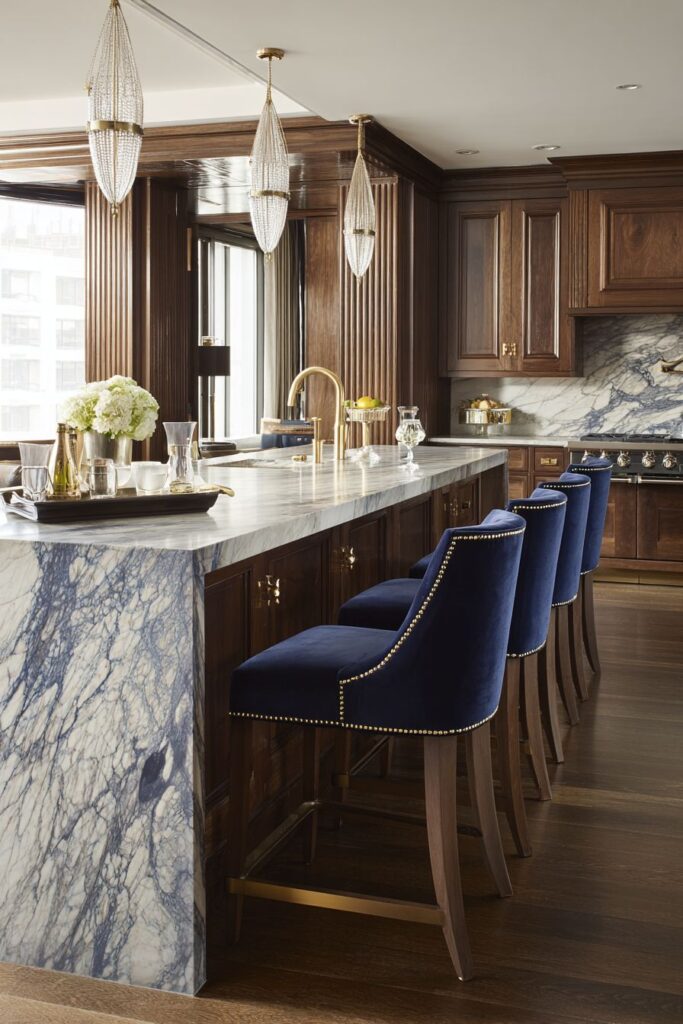
Creating authentic luxury design requires investing in genuine premium materials rather than imitation alternatives, incorporating expert craftsmanship in fabrication and installation details, selecting hardware and accessories that match the quality level of primary materials, planning sophisticated lighting that enhances rather than competes with natural material beauty, and maintaining consistent luxury standards throughout all design elements.
13. Eclectic Artistic Expression
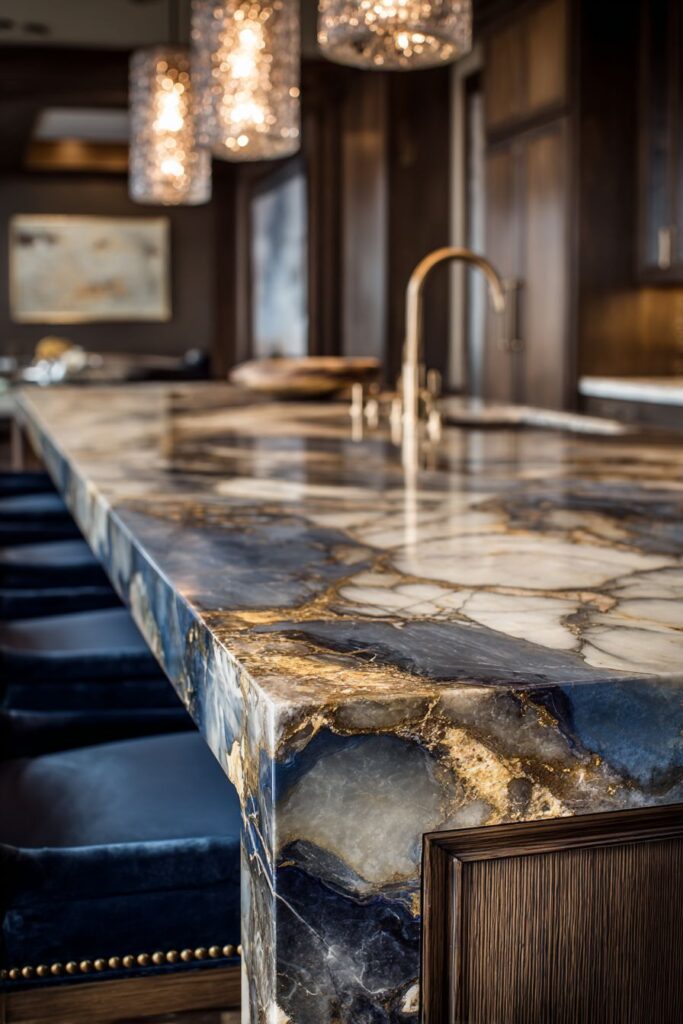
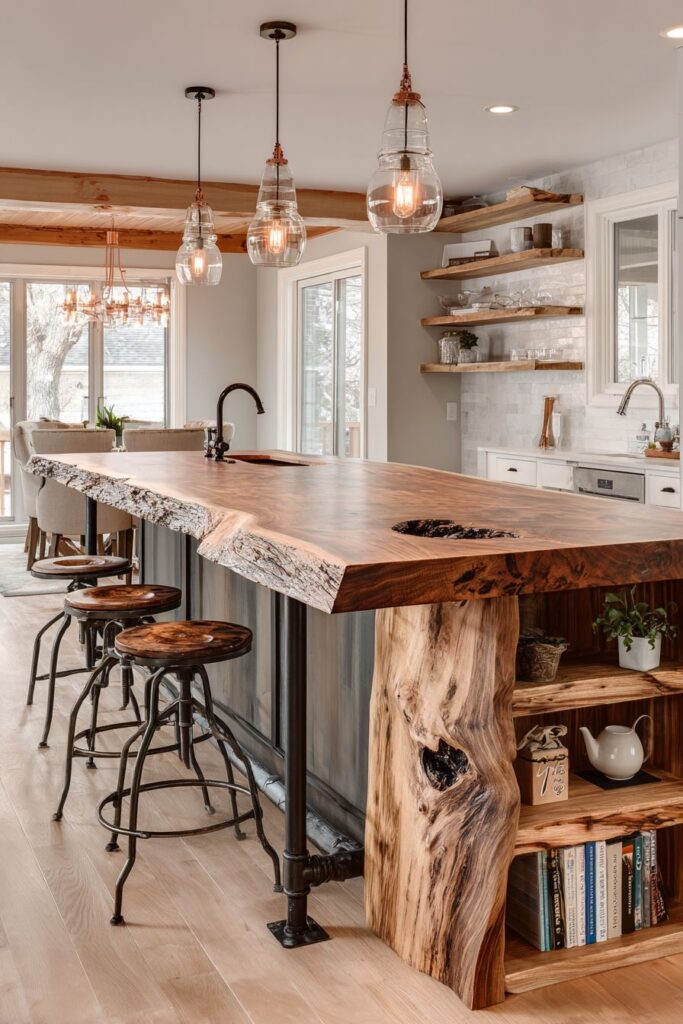
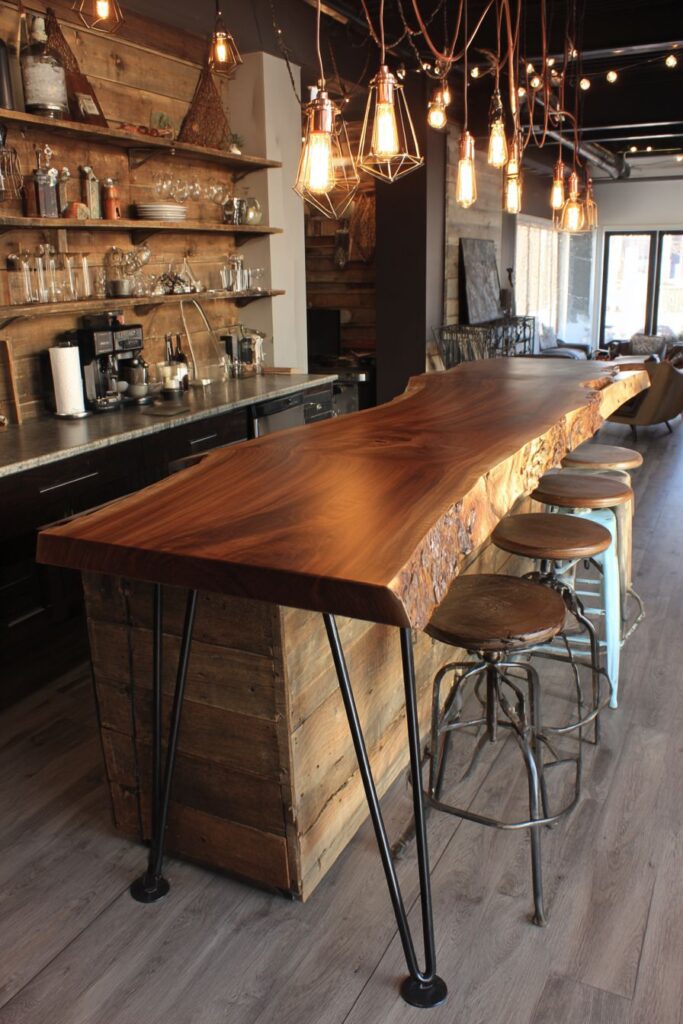
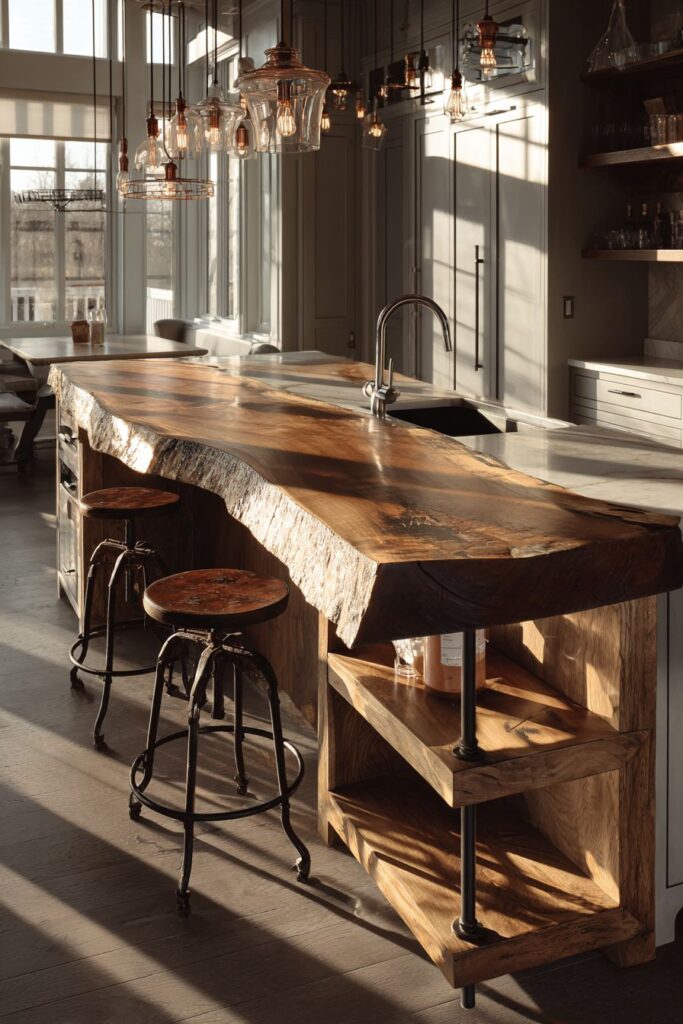
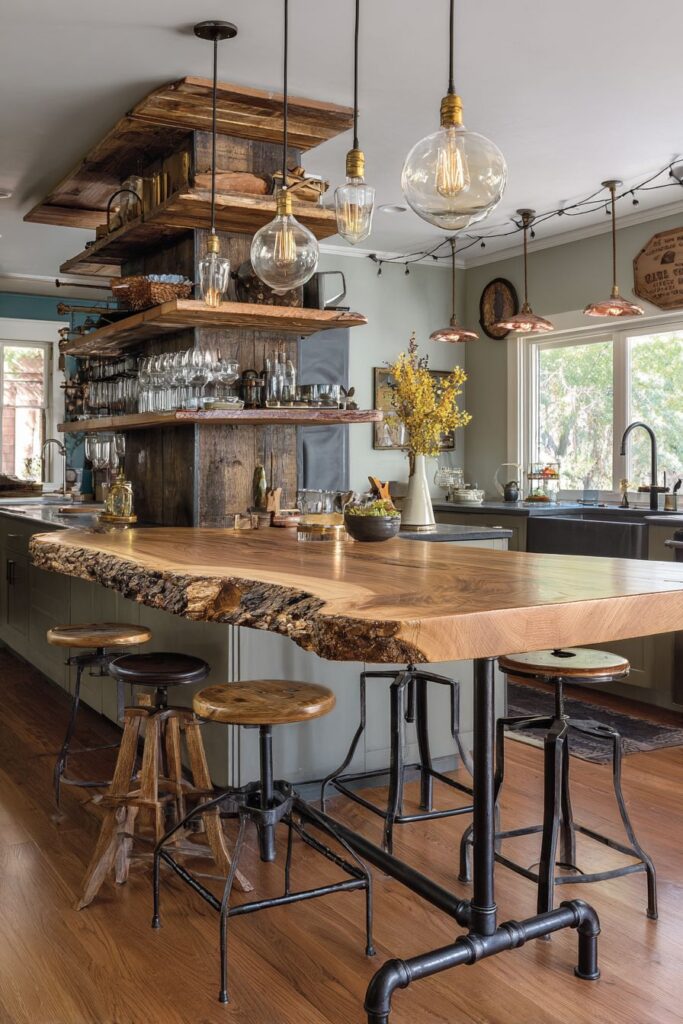
The eclectic kitchen island celebrates creative individual expression through the thoughtful combination of diverse materials and collected-over-time aesthetic sensibilities. The live-edge walnut slab countertop showcases natural wood grain and preserved bark edges while industrial pipe legs in black iron create unexpected contrast that demonstrates how different design periods can coexist successfully.
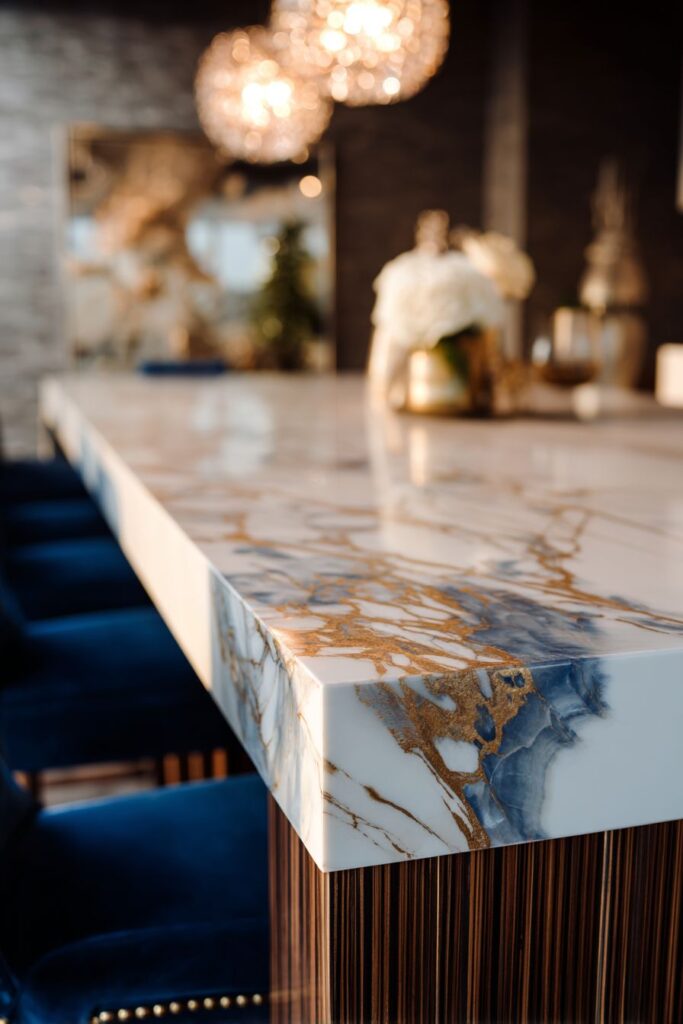
Three mismatched vintage bar stools in different finishes create visual interest while reflecting the genuine collecting process that defines authentic eclectic style. This approach requires careful curation to ensure that different elements complement rather than compete with each other while maintaining overall design cohesion.
Open shelving made from reclaimed wood planks provides practical storage while displaying collected objects and books that reflect personal interests and travels. Edison bulb string lighting overhead creates warm, atmospheric illumination that enhances the artistic arrangement of diverse elements.
Mixed pendant lights in copper and brass finishes provide layered illumination while demonstrating how different metallic finishes can work together when carefully balanced. This approach requires confidence and careful editing but creates spaces that feel personal and collected rather than manufactured.
The emphasis on authentic textures and artistic arrangement creates spaces that tell personal stories while providing practical functionality. Natural lighting highlights the creative mix of materials while demonstrating how eclectic design can feel both sophisticated and approachable.
Successful eclectic design requires developing strong editing skills to balance diverse elements, collecting pieces over time rather than purchasing everything at once, understanding how different textures and materials complement each other, incorporating personal collections and travel objects into functional design, and maintaining confident individual style rather than following current trends.
14. Galley Space Optimization
The galley kitchen island designed for narrow spaces demonstrates how thoughtful planning can maximize functionality within challenging spatial constraints. The sleek stainless steel countertop with subtle brushed finish provides professional-grade durability while rounded edges ensure safety in tight spaces where traffic flow is concentrated.
Two compact folding bar stools in black metal with wood seats can be stored underneath when not needed, maintaining clear traffic flow through narrow kitchen layouts. The folding mechanism allows for flexible use while the compact proportions ensure that stored stools don’t interfere with cabinet access or foot space.
Specialized storage solutions including magnetic knife strips, spice racks, and pull-out cutting boards maximize every available inch while maintaining organized functionality. These space-saving features require careful planning and precise installation but create storage capacity that rivals much larger kitchen islands.
Track lighting with adjustable spotlights provides precise task illumination that can be directed exactly where needed while eliminating the shadows that can make narrow spaces feel darker and more cramped. The adjustability ensures optimal lighting for various tasks throughout the day.
The emphasis on stainless steel surfaces and efficient organization demonstrates how commercial kitchen principles can be adapted for residential use in space-constrained environments. This approach prioritizes functionality while creating sophisticated industrial aesthetic appeal.
Effective narrow space design requires maximizing vertical storage capacity, selecting materials that reflect light to enhance spaciousness, incorporating flexible elements that can be reconfigured as needed, planning traffic flow to prevent bottlenecks during busy cooking periods, and choosing fixtures that provide optimal lighting without taking up valuable space.
15. Traditional Handcrafted Quality
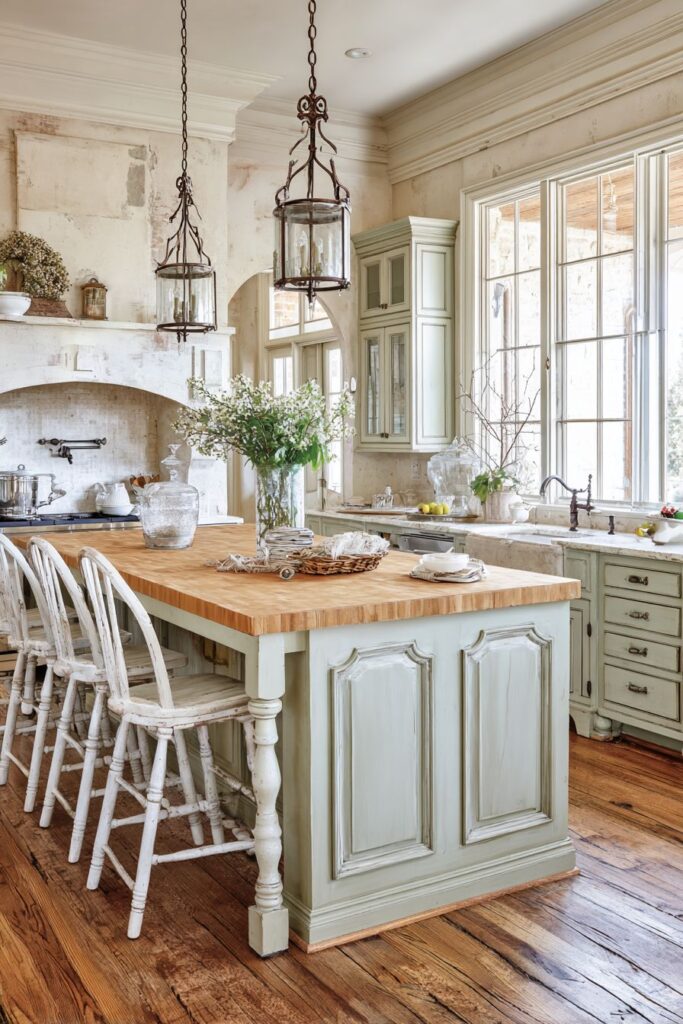
The traditional kitchen island celebrates timeless design principles through authentic materials and classic architectural proportions. The rich butcher block maple countertop with honey-colored staining showcases visible end grain patterns that create natural visual interest while providing exceptional durability for food preparation activities.
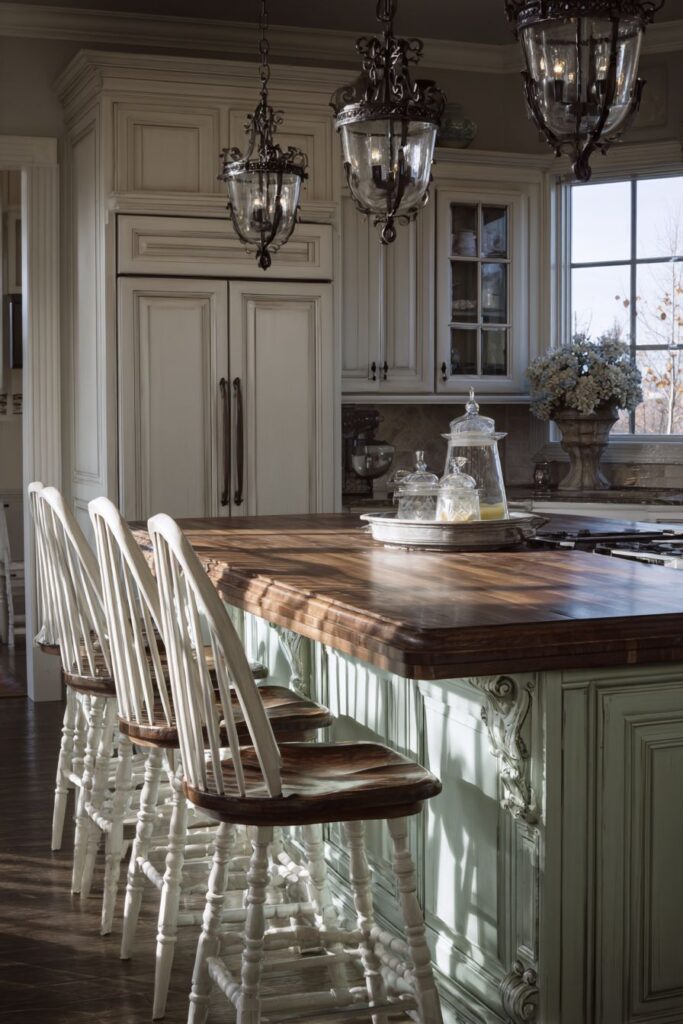
Four Windsor-style bar stools in antique white finish with carved spindle backs provide classic seating comfort while referencing historical furniture-making traditions. The traditional joinery techniques and authentic proportions create seating that improves with age while maintaining structural integrity over time.
The island base includes raised panel doors in sage green paint that creates sophisticated color depth while antique brass hardware provides functional beauty that references traditional metalworking techniques. Decorative molding details add architectural interest while maintaining classical proportions.
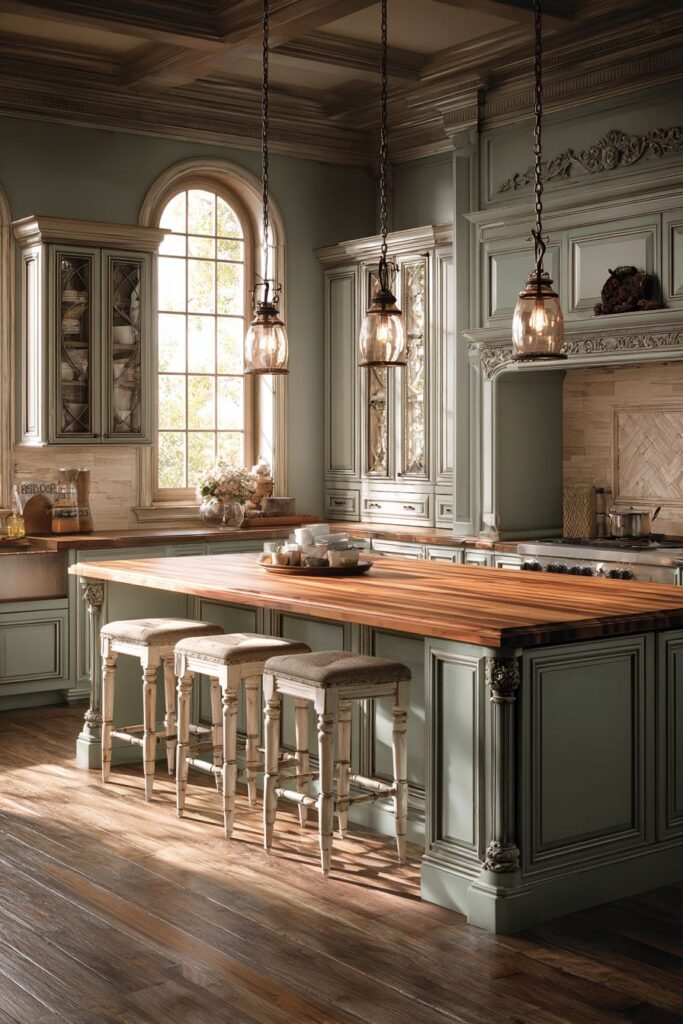
Wrought iron pendant lights with seeded glass shades cast warm, traditional lighting that enhances the handcrafted quality throughout the space. The authentic materials and traditional fabrication techniques create lighting fixtures that complement rather than compete with the architectural details.
Soft natural window light emphasizes the handcrafted quality and timeless appeal while demonstrating how traditional design relies on the interplay between natural materials and gentle illumination to create comfortable, livable spaces.
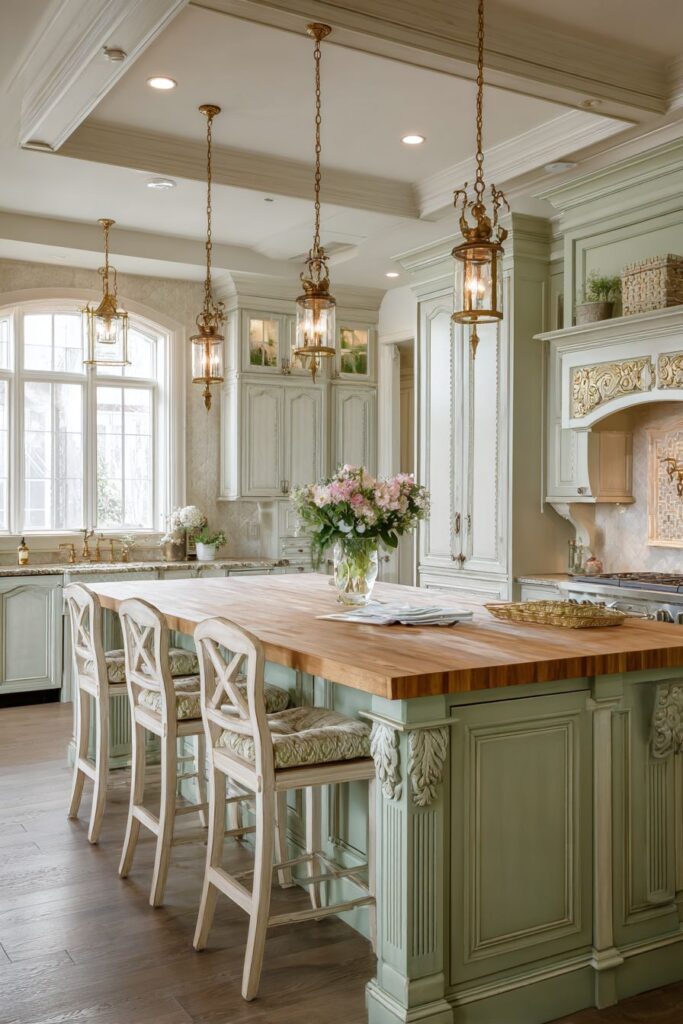
Authentic traditional design requires selecting materials that reference historical building practices, incorporating classical architectural proportions in all design elements, choosing hardware and fixtures that demonstrate traditional craftsmanship techniques, using color palettes that create sophistication without overwhelming natural material beauty, and maintaining consistent quality standards that honor historical furniture-making traditions.
16. Contemporary Sleek Innovation
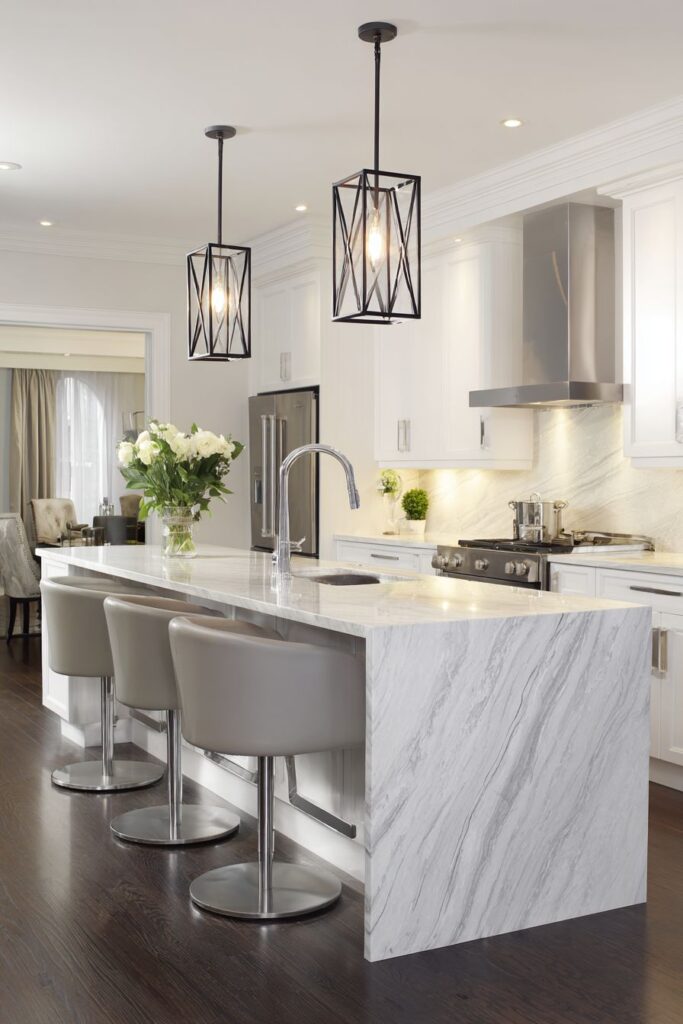
The contemporary kitchen island incorporating sleek quartz in charcoal grey represents modern design innovation through advanced material technology and sophisticated aesthetic sensibilities. The subtle white veining and matte finish create visual depth while providing practical benefits like stain resistance and consistent appearance that traditional materials cannot match.
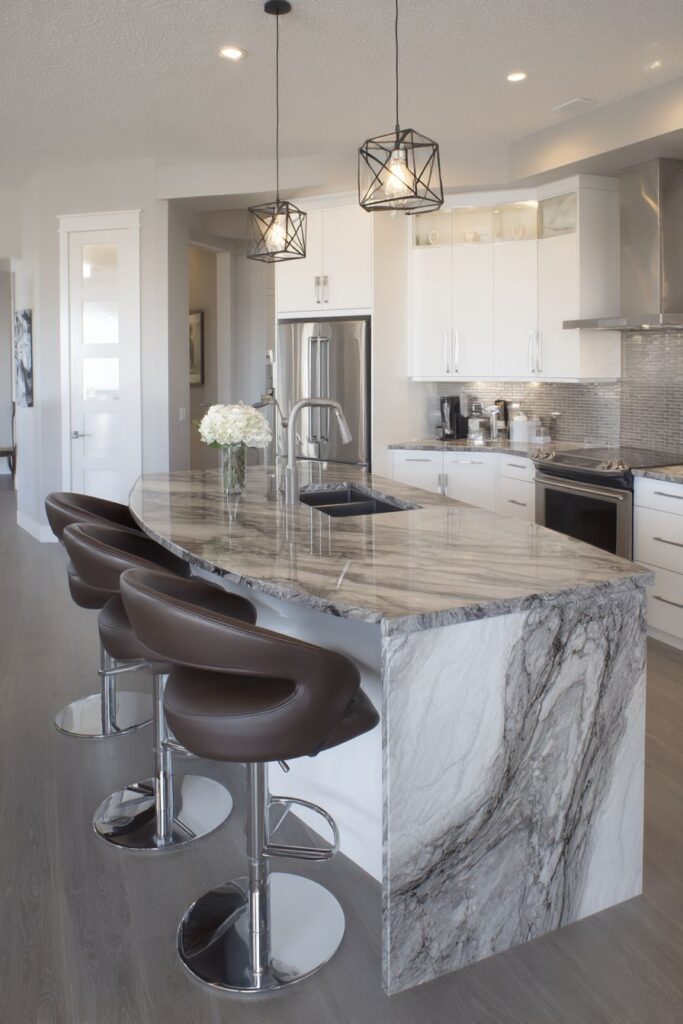
Three modern swivel bar stools with curved backs in cognac leather provide sophisticated seating with brushed steel bases that create visual lightness while supporting practical functionality. The rich leather coloring creates beautiful contrast against the grey quartz while the swivel mechanism encourages conversation and flexibility.
Handle-less cabinetry in glossy white lacquer with soft-close mechanisms demonstrates how contemporary design integrates advanced hardware technology into seamless aesthetic presentations. The integrated wine refrigeration adds luxury convenience while maintaining the clean geometric lines that define modern style.
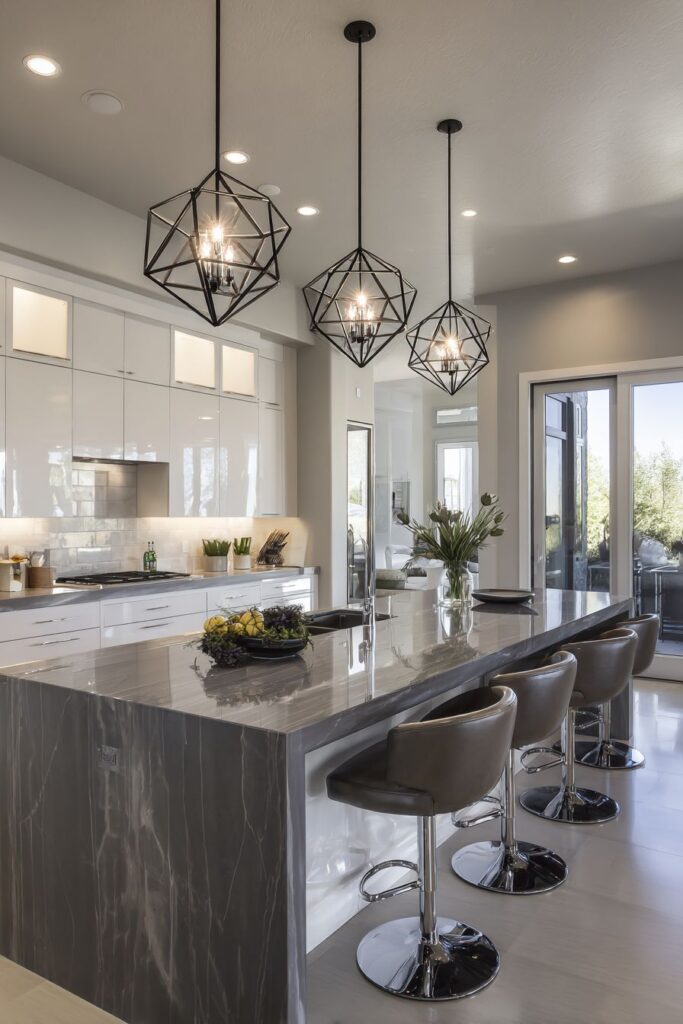
Geometric pendant lights in matte black provide focused task lighting while creating sculptural elements that complement the sophisticated material palette. The consistent use of geometric forms throughout the design creates visual harmony while preventing individual elements from competing for attention.
The interplay between matte and glossy finishes creates sophisticated visual texture while maintaining the clean aesthetic that characterizes successful contemporary design. This approach requires careful attention to surface preparation and expert installation techniques.
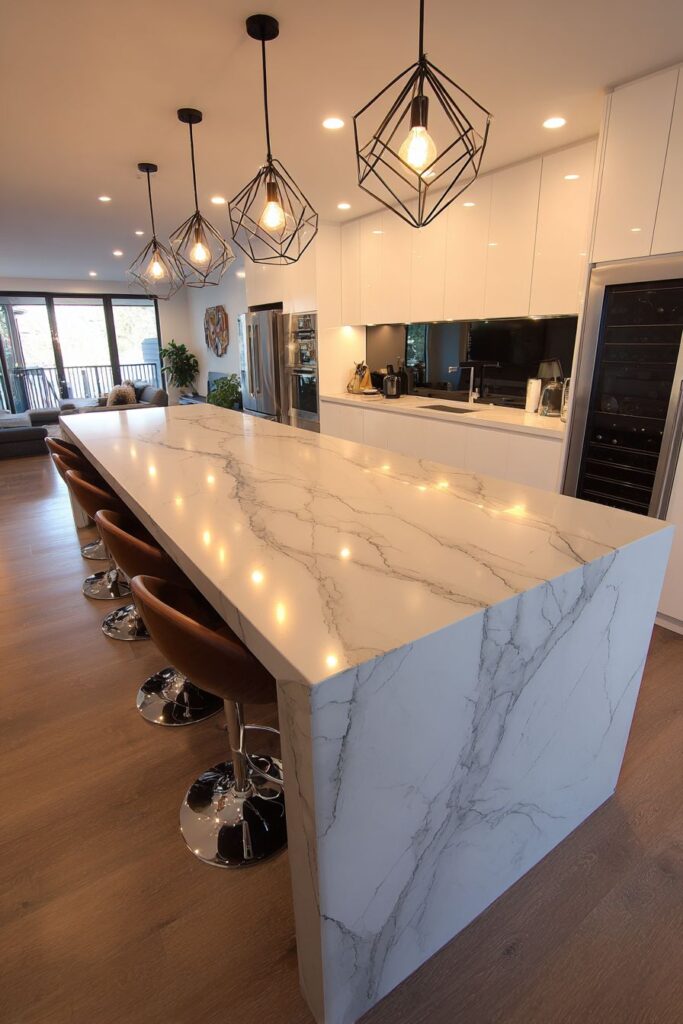
Achieving sophisticated contemporary style requires investing in advanced materials and fabrication techniques, selecting hardware that provides superior functionality while maintaining clean aesthetic lines, planning lighting that creates visual interest without overwhelming geometric simplicity, balancing different surface finishes to create subtle textural variation, and maintaining consistent quality standards throughout all design elements.
17. French Country Provincial Charm
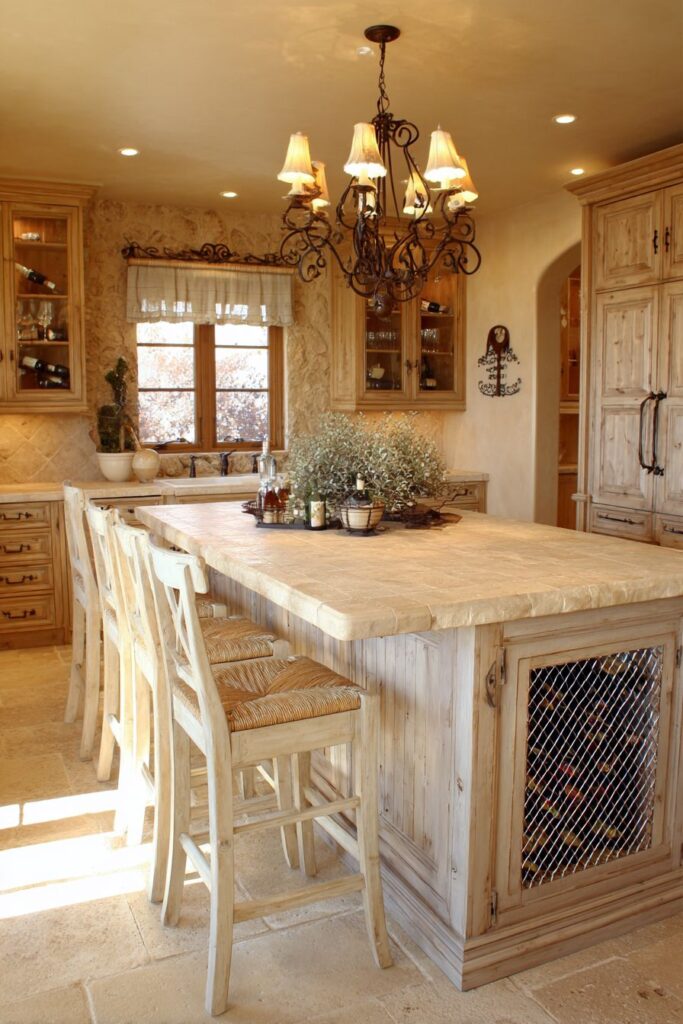
The French country kitchen island evokes the romantic countryside of provincial France through authentic material selections and traditional craftsmanship details. The limestone countertop with natural fossil inclusions and tumbled edges demonstrates how authentic materials develop character through use and time rather than artificial aging processes.
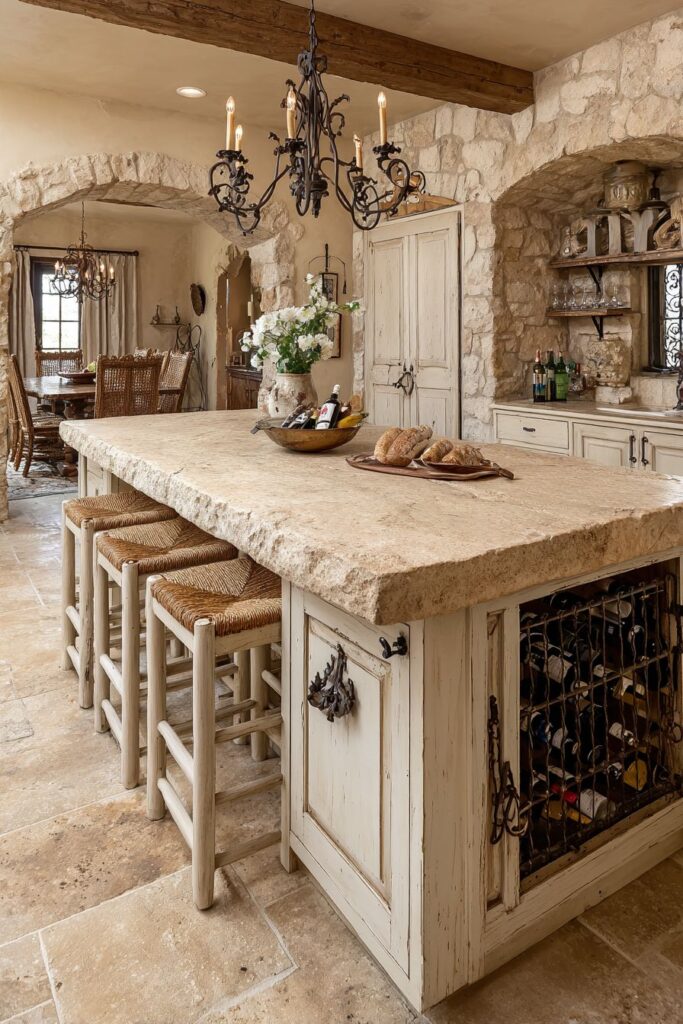
Four ladder-back bar stools in distressed cream paint with woven rush seats create provincial dining experiences that reference traditional French furniture-making techniques. The combination of painted wood and natural woven materials creates sophisticated harmony while providing comfortable seating that improves with continued use.
Chicken wire cabinet doors and vintage-style latches add authentic detailing that references historical French farmhouse storage solutions while providing practical visibility for stored items. Open wine bottle storage with wrought iron details demonstrates how French design integrates entertaining functions into everyday kitchen use.
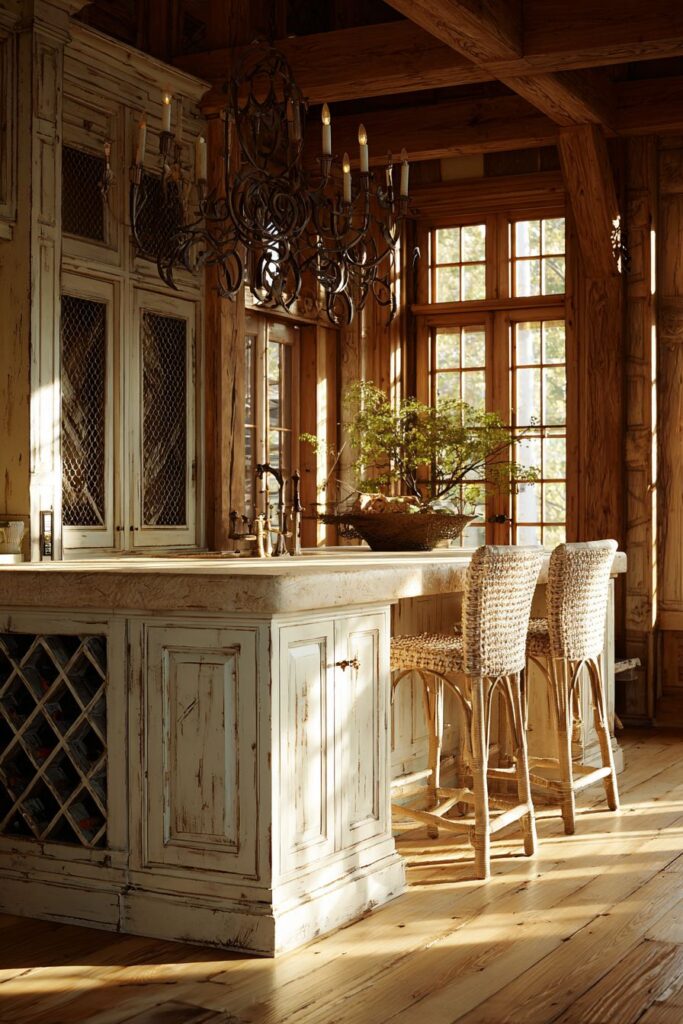
The wrought iron chandelier with fabric lampshades provides romantic ambient lighting that enhances the natural stone textures while creating intimate atmospheric conditions for dining and entertaining. The traditional metalworking techniques and fabric elements soften the overall aesthetic.
Warm golden hour lighting highlights the natural stone textures and handcrafted details while demonstrating how French country design relies on the interplay between authentic materials and soft, romantic illumination to create spaces that feel both sophisticated and comfortable.
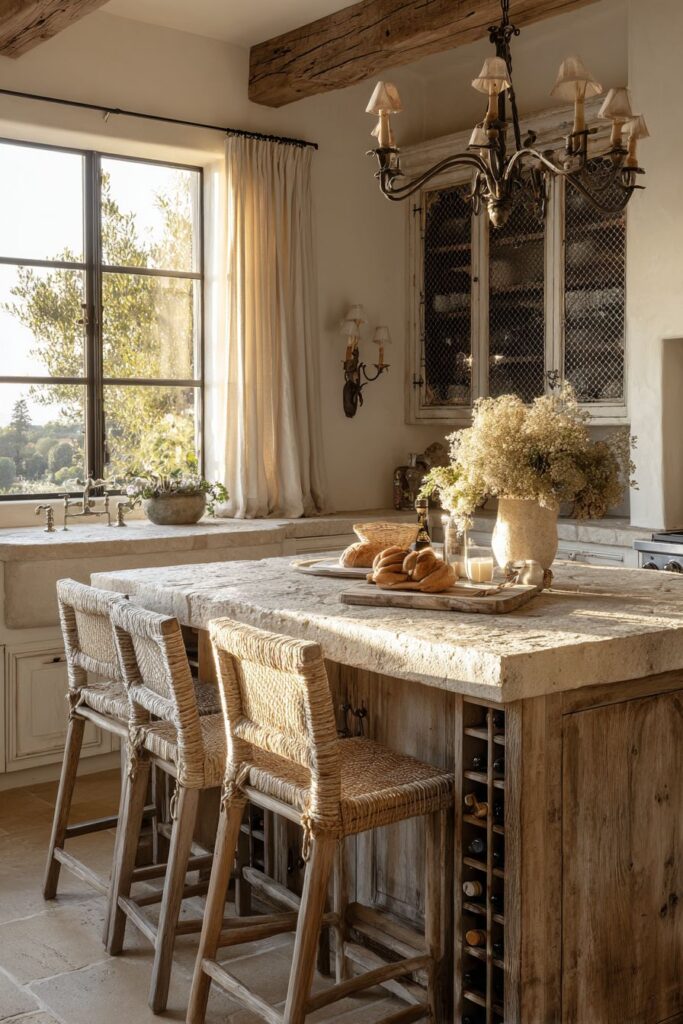
Authentic French country design requires selecting natural materials with genuine geological or botanical characteristics, incorporating traditional French furniture-making techniques, using color palettes inspired by French countryside landscapes, integrating wine storage and entertaining functions into practical design, and planning lighting that creates romantic atmospheric conditions while providing practical functionality.
18. Mid-Century Modern Icon
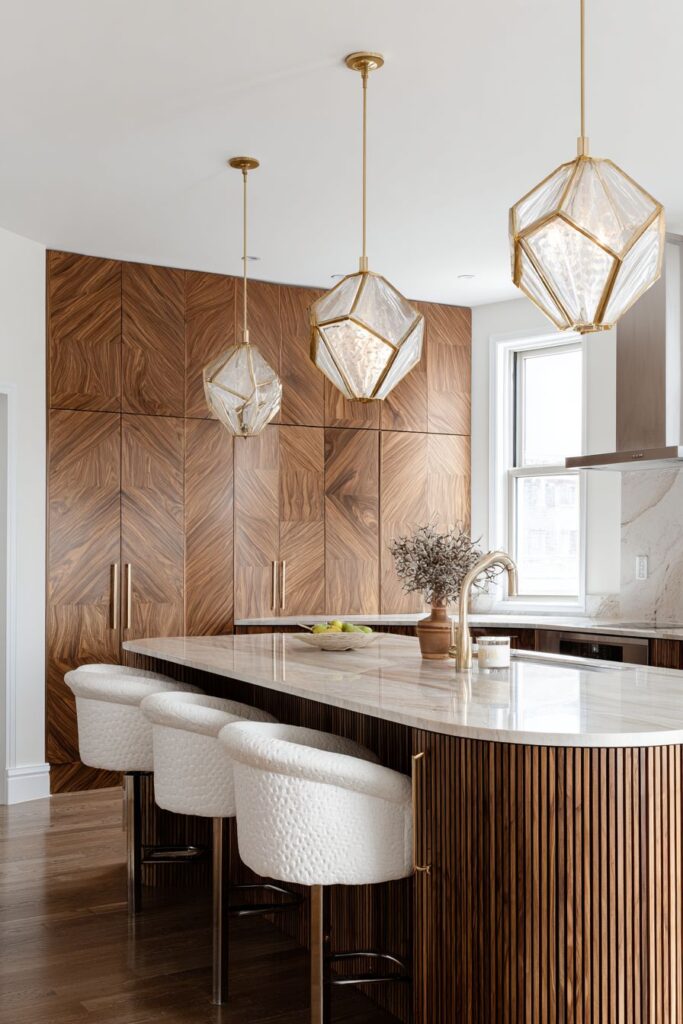
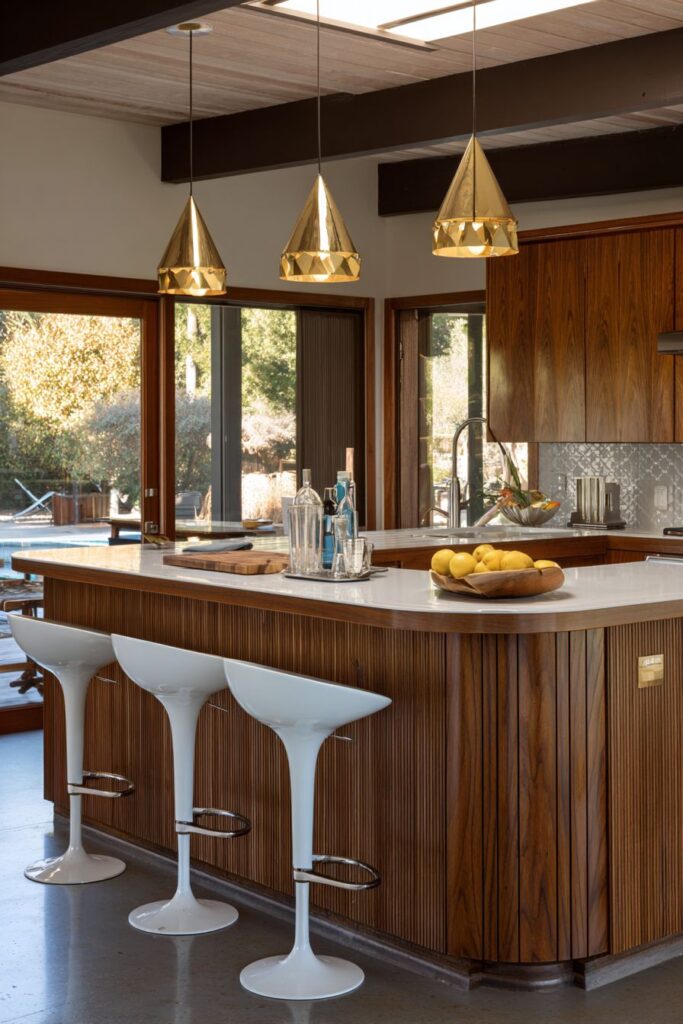
The mid-century modern kitchen island celebrates the design innovation and optimistic aesthetic that defined post-war American design culture. The teak wood countertop showcases characteristic warm brown tones and subtle grain patterns that create immediate associations with this iconic design period while providing practical durability for contemporary kitchen use.
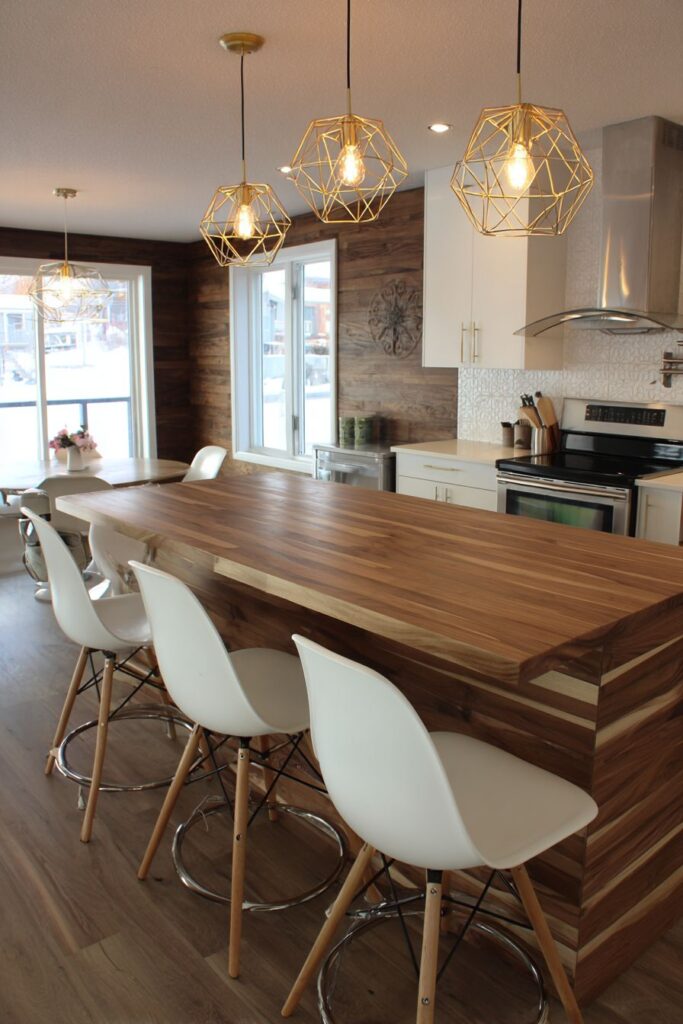
Three tulip-style bar stools in white fiberglass with swivel mechanisms represent the period’s embrace of new materials and manufacturing techniques while providing comfortable seating that has achieved iconic status in design history. The consistent use of period-appropriate forms creates authentic aesthetic cohesion.
Horizontal wood slats in walnut finish with tapered legs create visual lightness while brass accent details add metallic warmth that references the period’s sophisticated material combinations. These authentic proportions and details require careful attention to historical accuracy while providing modern functionality.
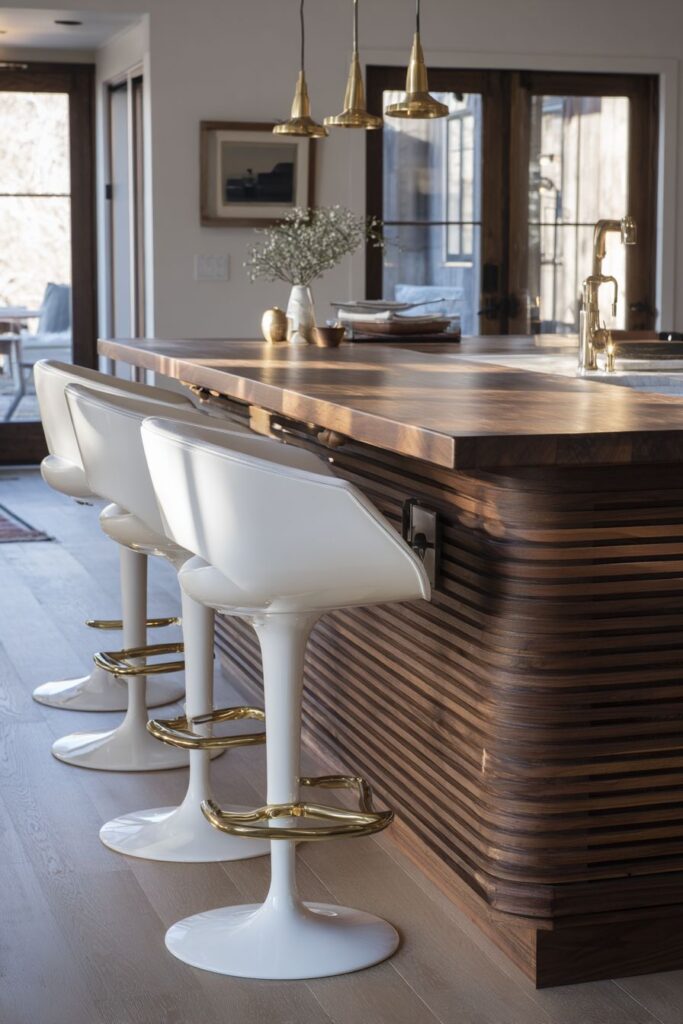
Atomic-inspired pendant lights with geometric brass shades create sculptural lighting elements that complement the sophisticated material palette while providing practical task illumination. The period-appropriate lighting design ensures authentic aesthetic consistency while meeting contemporary lighting standards.
The emphasis on clean lines and functional beauty demonstrates how mid-century design principles create spaces that feel both historically significant and remarkably current. This approach requires understanding of historical design principles while adapting them for contemporary lifestyle needs.
Authentic mid-century modern design requires selecting materials that were actually available during the historical period, incorporating furniture and lighting designs that reference iconic pieces from the era, understanding the period’s commitment to functional beauty over decorative excess, using color palettes that reflect post-war optimism and innovation, and maintaining authentic proportions that honor the period’s sophisticated aesthetic sensibilities.
19. Bohemian Artistic Expression
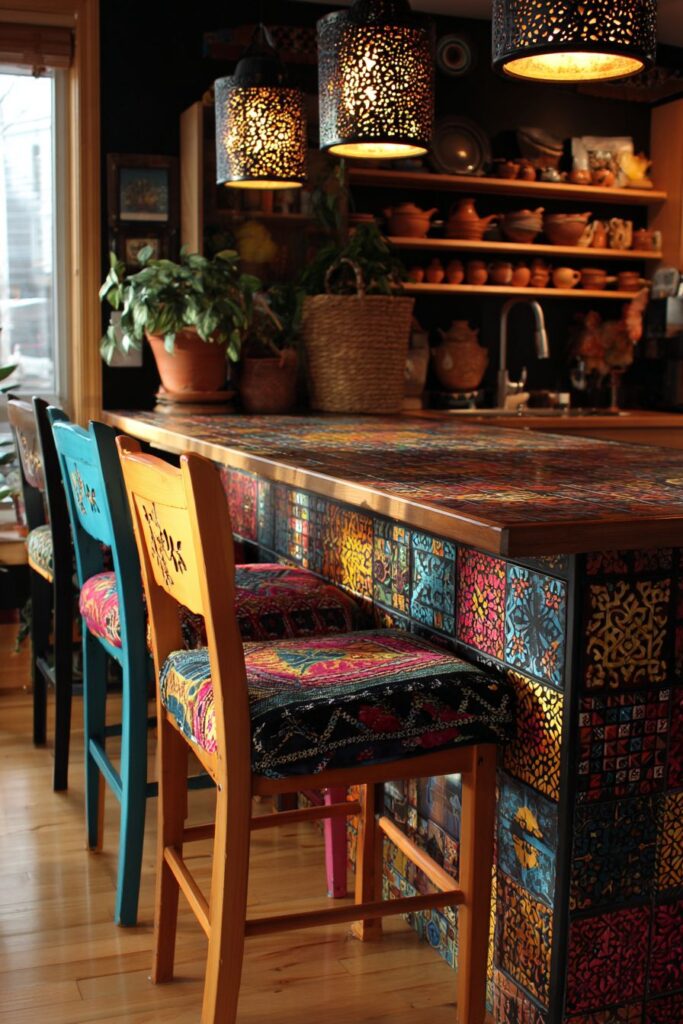
The bohemian kitchen island celebrates global cultural influences and artistic expression through eclectic material combinations and handcrafted elements. The mosaic tile countertop in earth tones features hand-cut ceramic pieces that create artistic surface patterns while demonstrating the artisanal traditions that define authentic bohemian aesthetic sensibilities.
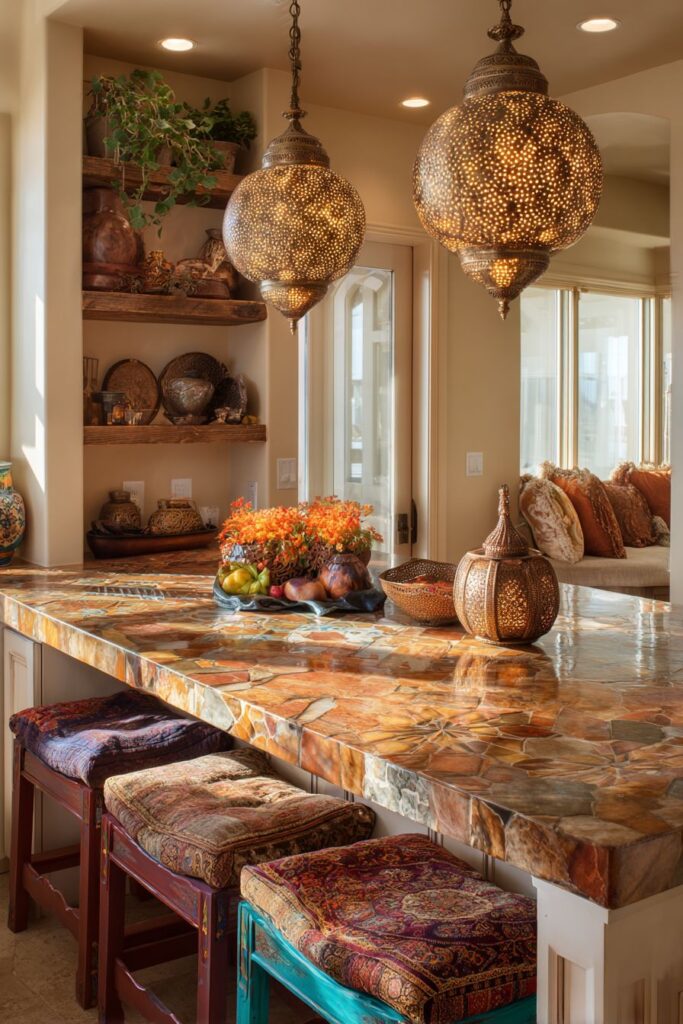
Four colorful painted wooden bar stools with carved details and ethnic textile cushions provide eclectic seating options that reflect the global collecting spirit that characterizes successful bohemian design. The combination of traditional woodworking techniques with cultural textile elements creates visual interest while maintaining comfortable functionality.
Open shelving displays handmade pottery, macrame plant hangers, and woven storage baskets that transform functional storage into artistic displays. This approach requires careful curation to balance practical needs with aesthetic expression while maintaining organized functionality.
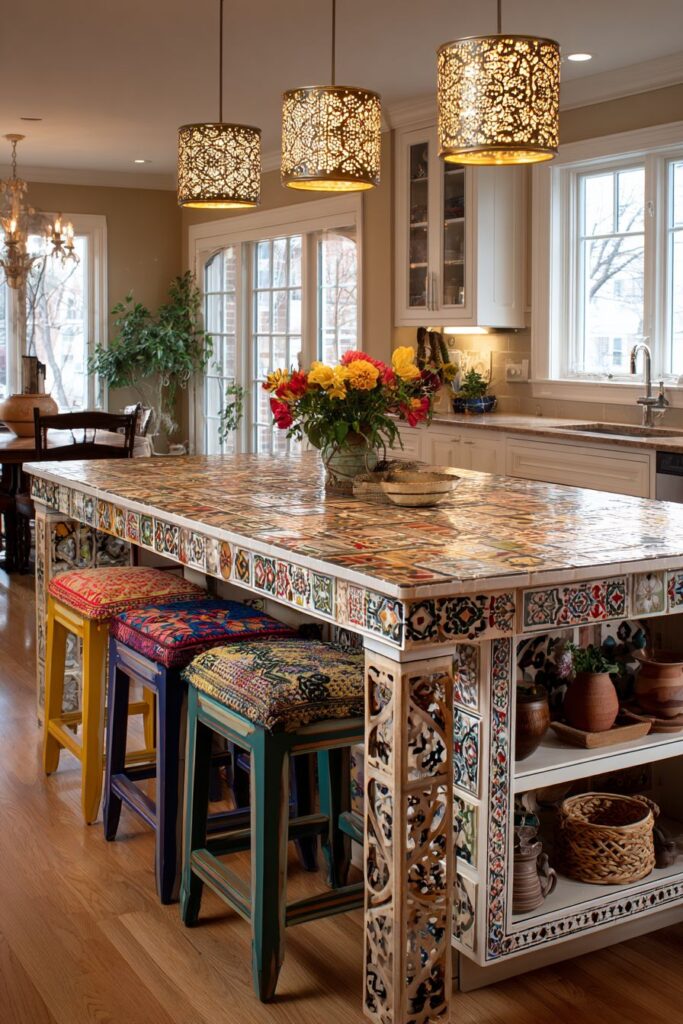
Moroccan-inspired pendant lights with perforated metal shades create intricate shadow patterns that change throughout the day as lighting conditions vary. The traditional metalworking techniques reference North African craft traditions while providing practical illumination for food preparation and dining.
The emphasis on handcrafted textures and vibrant colors creates spaces that feel personal and collected while demonstrating how global cultural influences can be integrated into functional kitchen design. Warm ambient lighting captures the artistic elements while highlighting the diverse textures and patterns.
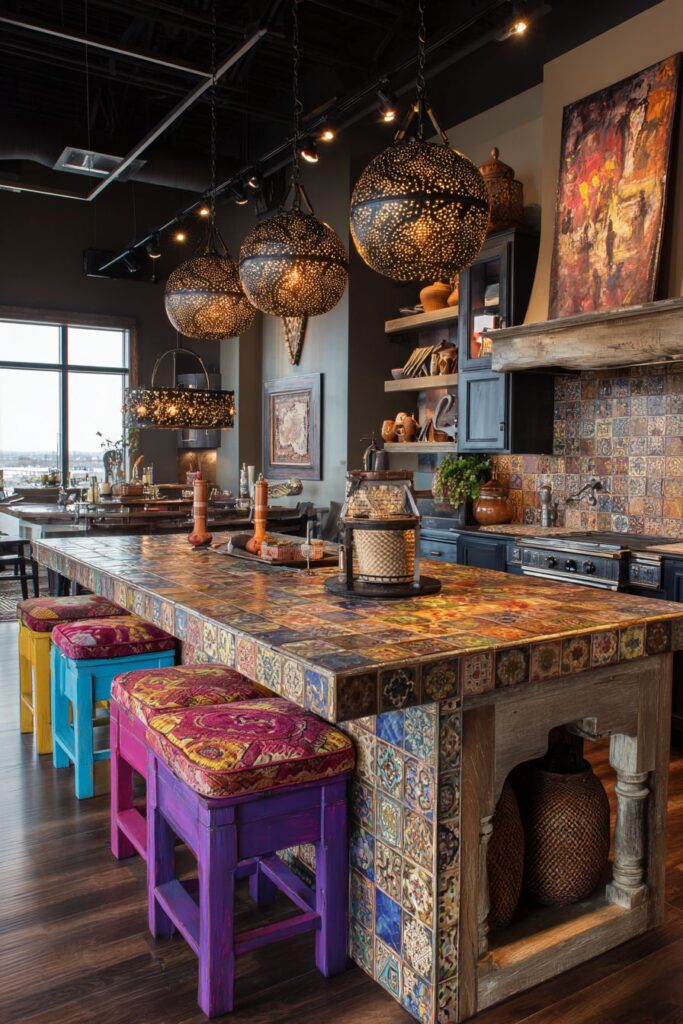
Successful bohemian design requires developing confidence in mixing diverse cultural elements, collecting handcrafted items that reflect authentic artisanal traditions, understanding how different patterns and textures can complement rather than compete with each other, incorporating global cultural influences respectfully and authentically, and maintaining artistic balance while providing practical functionality for daily kitchen use.
20. Studio Apartment Space Innovation
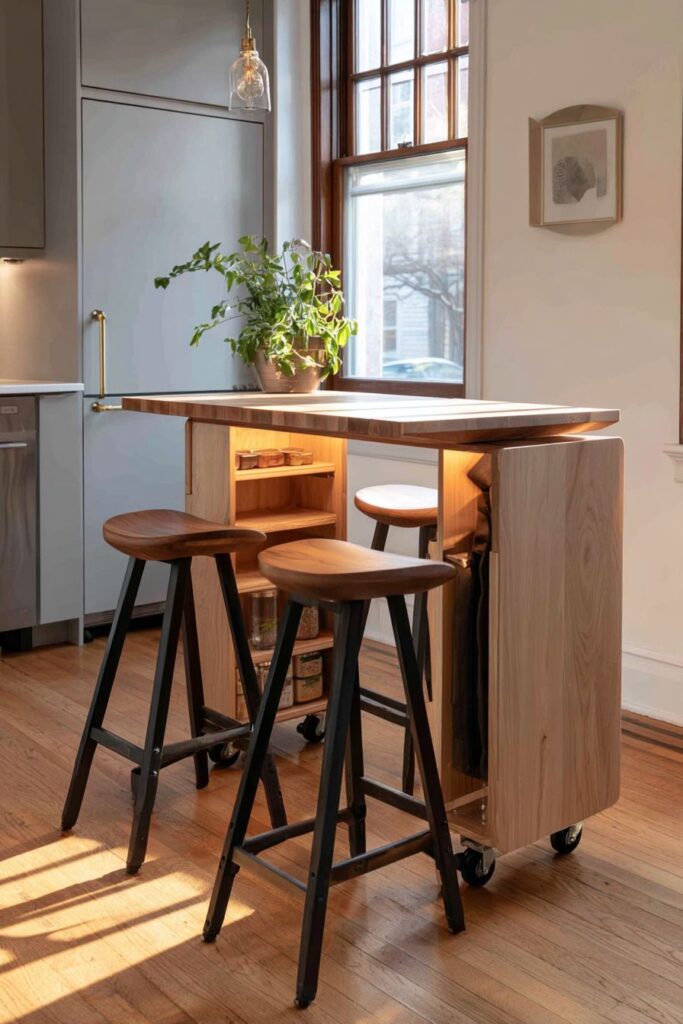
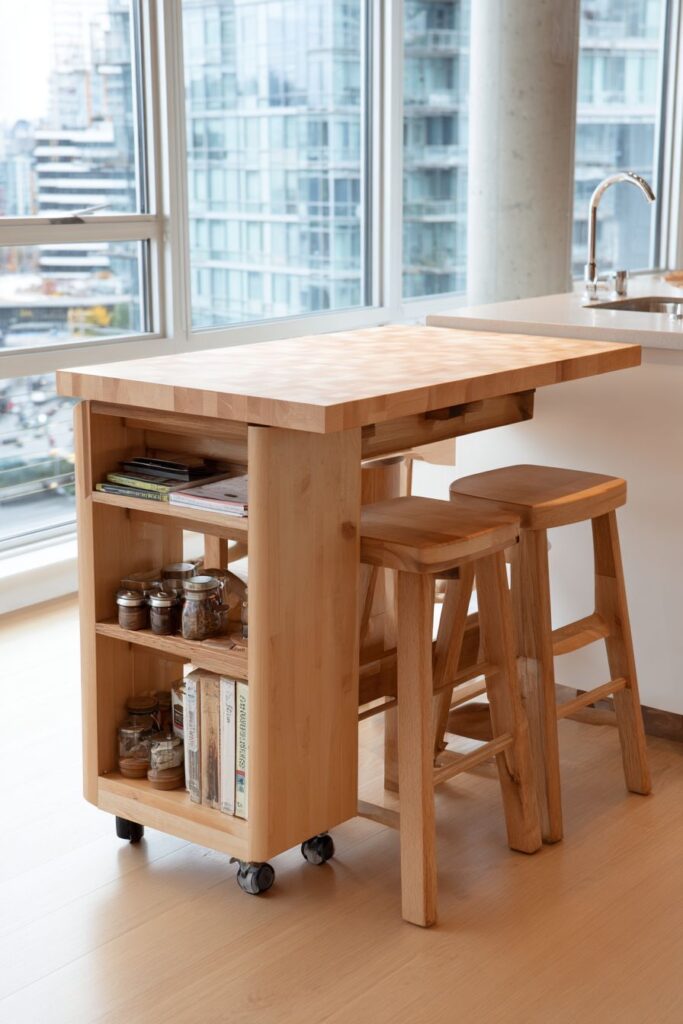
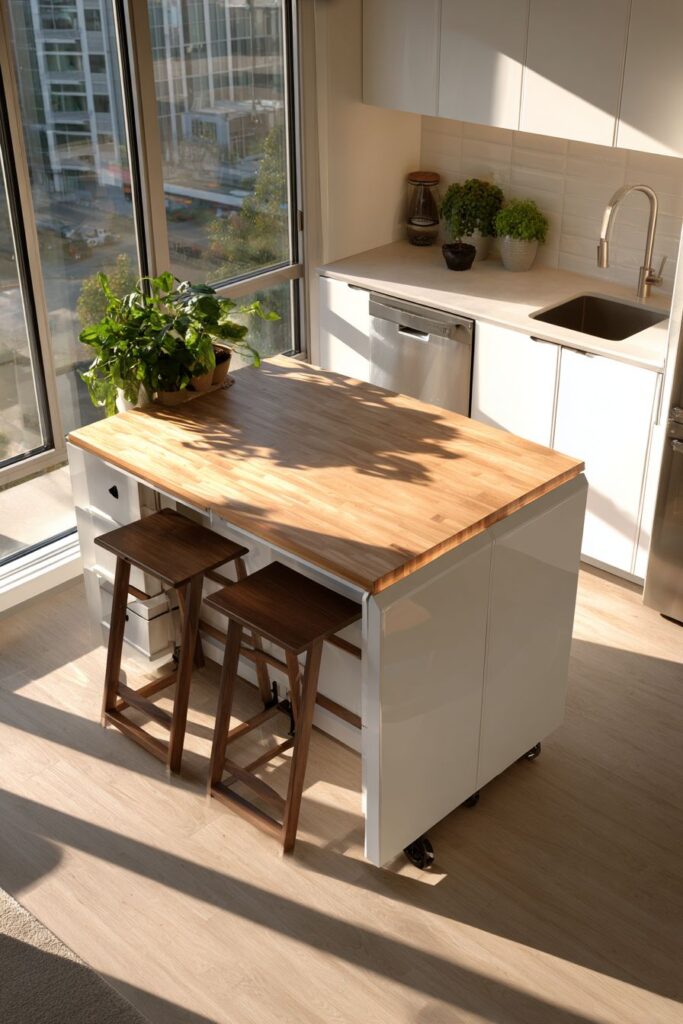
The space-saving kitchen island designed for studio apartments demonstrates how innovative design can maximize functionality within extremely limited square footage. The compact butcher block countertop in natural beech with rounded corners prioritizes safety while providing essential food preparation surface in minimal space.
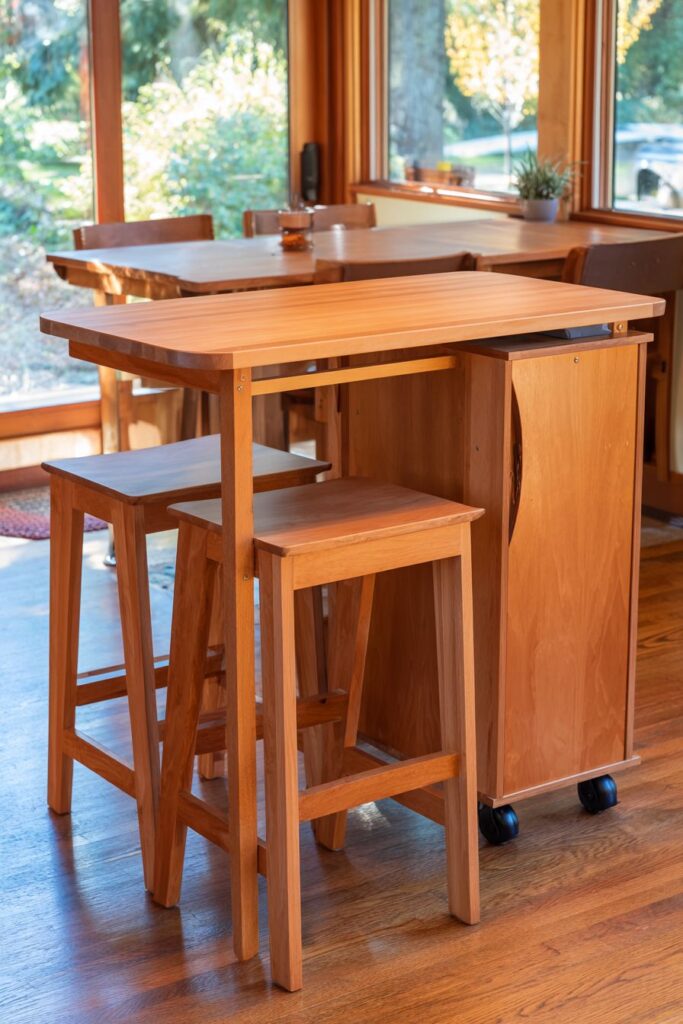
Two slim profile bar stools in walnut wood with minimal design fold completely flat for storage, maintaining clear sight lines and traffic flow when not in use. This innovative approach to seating ensures that small spaces don’t sacrifice dining capability while maintaining flexibility for different activities throughout the day.
Wheels for mobility allow the island to be repositioned as needed while built-in spice storage and flip-up breakfast bar extension multiply the functional capability without increasing the permanent footprint. These multi-functional features require careful engineering but create remarkable versatility within compact dimensions.
Under-cabinet task lighting provides efficient workspace illumination while eliminating the need for pendant lights that could overwhelm small space proportions. The streamlined lighting approach ensures adequate functionality while maintaining visual simplicity.
The emphasis on multi-functional elements and mobile design demonstrates how contemporary urban living challenges can be addressed through innovative thinking and expert execution. Natural daylight streaming from nearby windows highlights the clever space-saving features while creating an open, airy feeling despite the compact dimensions.
Effective studio apartment design requires maximizing every square foot through multi-functional elements, selecting furniture that can be completely concealed when not needed, planning traffic flow to prevent congestion in limited space, choosing colors and materials that create visual spaciousness, and incorporating innovative storage solutions that maintain organized functionality within minimal cubic footage.
Why These Kitchen Island Designs Represent the Best Options
Each of these twenty kitchen island designs represents excellence in different aspects of interior design, functionality, and lifestyle adaptation. The modern waterfall quartz elegance demonstrates how contemporary materials and fabrication techniques can create stunning focal points that serve as sculptural elements while providing practical functionality. This design approach appeals to homeowners who appreciate clean lines, sophisticated materials, and the seamless integration of form and function.
The farmhouse butcher block warmth exemplifies how traditional materials and craftsmanship techniques create timeless appeal that transcends temporary design trends. This style resonates with individuals who value sustainability, authenticity, and connection to agricultural heritage while requiring practical durability for daily kitchen use. The emphasis on reclaimed materials and traditional joinery techniques creates spaces that improve with age and use.
Compact space-saving designs address the growing need for efficient solutions in urban environments where square footage comes at premium pricing. These innovative approaches demonstrate how thoughtful planning and multi-functional elements can create remarkable functionality within limited dimensions, making sophisticated kitchen design accessible to apartment dwellers and small home owners.
Industrial raw material authenticity appeals to design enthusiasts who appreciate honest material expression and the aesthetic beauty of functional elements. This approach celebrates the structural and mechanical systems that are typically hidden, creating spaces that feel authentic and unpretentious while providing exceptional durability and unique visual character.
The Scandinavian minimalist serenity represents a design philosophy that prioritizes mental wellbeing and environmental consciousness while maintaining sophisticated aesthetic standards. This approach creates spaces that feel calm and organized while demonstrating how limitation can lead to greater design sophistication rather than aesthetic compromise.
Contemporary designs featuring advanced materials like engineered quartz and integrated technology solutions address modern lifestyle needs while maintaining sophisticated aesthetic standards. These designs demonstrate how innovation can enhance rather than compromise traditional kitchen functionality while creating spaces that feel current and forward-thinking.
Luxury statement designs showcase how premium materials and expert craftsmanship can create spaces that serve as personal sanctuaries and entertaining showpieces. These designs appeal to homeowners who view their kitchens as investments in lifestyle enhancement and long-term property value while demanding the highest quality in materials and execution.
Eclectic and bohemian approaches celebrate individual expression and global cultural appreciation while demonstrating how diverse influences can be successfully integrated into functional kitchen design. These styles appeal to creative individuals who want their spaces to reflect personal stories and collected experiences rather than conforming to predetermined aesthetic categories.
Traditional designs honor historical architectural principles and craftsmanship traditions while adapting these approaches for contemporary lifestyle needs. These styles create connections to cultural heritage while providing practical functionality that meets modern family requirements and entertaining expectations.
Space-saving innovations address the challenges of contemporary urban living while maintaining design sophistication and functional capability. These solutions demonstrate how constraints can inspire creative problem-solving that results in more efficient and innovative design approaches than unlimited resources might produce.
The variety of seating options across these designs demonstrates how different materials, styles, and configurations can enhance both functionality and aesthetic appeal. From sleek contemporary stools that disappear when not in use to traditional wooden seating that serves as decorative elements, each approach addresses different lifestyle needs while maintaining design consistency.
Storage solutions across these designs showcase how thoughtful planning can maximize organization capability while maintaining clean aesthetic lines. Whether through hidden compartments, open shelving displays, or specialized storage systems, each design demonstrates how practical needs can be addressed without compromising visual appeal or spatial flow.
The lighting approaches featured across these twenty designs illustrate how illumination serves both functional and atmospheric purposes while contributing to overall design narratives. From dramatic crystal chandeliers that create luxury focal points to minimalist LED strips that provide task lighting without visual clutter, each lighting solution demonstrates how thoughtful selection can enhance both usability and aesthetic impact.
Material combinations throughout these designs showcase how different textures, colors, and finishes can work together to create sophisticated visual harmony while addressing practical durability requirements. The successful pairing of natural materials like wood and stone with manufactured surfaces like quartz and stainless steel demonstrates how contemporary design can honor traditional craftsmanship while embracing modern innovation.
Color palette selections across these designs demonstrate how thoughtful color choices can create different emotional responses while maintaining sophisticated aesthetic standards. From the calming neutral tones of Scandinavian design to the vibrant earth colors of bohemian style, each approach shows how color can enhance rather than dominate overall design narratives.
The integration of modern convenience features like built-in charging stations, wine storage, and specialized organization systems demonstrates how contemporary kitchen islands must address current lifestyle needs while maintaining timeless design appeal. These functional enhancements show how technology can be seamlessly integrated without compromising aesthetic integrity.
Architectural details featured throughout these designs, from waterfall countertop edges to decorative corbels and traditional molding, demonstrate how structural elements can serve as design features that add visual interest while providing necessary support and functionality. These details show how technical requirements can become aesthetic opportunities.
The emphasis on expert craftsmanship and quality materials throughout these designs reflects the understanding that kitchen islands represent significant investments that must provide both immediate satisfaction and long-term durability. The attention to fabrication details and hardware quality demonstrates how successful design requires commitment to excellence at every level.
Sustainability considerations embedded within many of these designs, particularly those featuring reclaimed materials and locally sourced elements, demonstrate how environmental responsibility can enhance rather than compromise design sophistication. These approaches show how conscious material selection can create spaces that feel both current and responsible.
The adaptability of these designs to different kitchen sizes and configurations demonstrates how successful design principles can be scaled and modified to address various spatial constraints while maintaining essential character and functionality. This flexibility ensures that excellent design remains accessible regardless of budget or space limitations.
Cultural influences represented throughout these designs showcase how global design traditions can be respectfully integrated into contemporary American kitchen design while maintaining authenticity and avoiding superficial appropriation. These approaches demonstrate how cross-cultural design exchange can create richer, more meaningful spaces.
The balance between open and closed storage solutions across these designs demonstrates how successful kitchen organization requires both display and concealed storage to maintain visual appeal while addressing practical needs. This balance shows how functional requirements can support rather than compromise aesthetic goals.
Conclusion
These twenty distinctive kitchen island designs demonstrate the remarkable versatility and potential that these functional centerpieces offer for transforming culinary spaces into beautiful, efficient, and personally meaningful environments. Each design approach addresses different lifestyle needs, aesthetic preferences, and spatial constraints while maintaining the fundamental principle that successful kitchen design must seamlessly integrate form and function.
The diversity of materials showcased across these designs—from natural stone and reclaimed wood to advanced engineered surfaces and industrial metals—illustrates how contemporary kitchen design can honor traditional craftsmanship while embracing modern innovation. This material diversity ensures that every homeowner can find approaches that resonate with their personal style while meeting practical durability and maintenance requirements.
The range of seating solutions demonstrates how kitchen islands serve as social gathering spaces that bring families together while providing comfortable environments for casual dining, homework completion, and friendly conversation. Whether through sleek contemporary stools that maintain clean sight lines or traditional wooden seating that serves as decorative elements, each approach enhances both functionality and visual appeal.
Storage innovations featured throughout these designs prove that organization and beauty are not competing priorities but complementary goals that enhance each other when thoughtfully planned and expertly executed. From hidden compartments that maintain clean aesthetics to open shelving that transforms everyday items into decorative displays, each storage approach demonstrates how practical needs can become design opportunities.
The lighting strategies employed across these designs illustrate how illumination serves multiple purposes beyond basic visibility, creating atmospheric conditions that enhance daily activities while contributing to overall design narratives. Whether through dramatic statement fixtures that serve as sculptural elements or subtle task lighting that supports food preparation activities, each approach demonstrates how thoughtful lighting planning can transform functional spaces into inspiring environments.
As you consider incorporating these ideas into your own kitchen renovation or new construction project, remember that the most successful designs result from careful consideration of your family’s specific needs, lifestyle patterns, and aesthetic preferences. The best kitchen island design is not necessarily the most elaborate or expensive option, but rather the one that most effectively serves your daily routines while creating a space that inspires and energizes you.
Take time to evaluate your current kitchen usage patterns, storage needs, and entertaining habits before making design decisions. Consider how different material choices will age and maintain over time, and think about how your chosen design will integrate with existing architectural elements and adjacent living spaces.
Most importantly, view your kitchen island as an investment in your family’s daily quality of life and long-term home value. By selecting approaches that balance immediate aesthetic appeal with practical functionality and timeless design principles, you can create spaces that will continue to serve and inspire your family for years to come while adapting to changing needs and lifestyle evolution.
"As an Amazon Associate, I earn from qualifying purchases."
