

The cottage kitchen represents more than just a cooking space—it embodies a philosophy of living that celebrates authenticity, warmth, and the beauty found in imperfection. These charming culinary havens transport us to a simpler time when every meal was prepared with love and every gathering felt like coming home. In today’s fast-paced world, cottage kitchens offer a sanctuary where natural materials, vintage finds, and time-honored traditions create spaces that are both deeply functional and soul-stirring.
The appeal of cottage kitchen design lies in its ability to blend practicality with romance, creating environments that feel lived-in yet carefully curated. These spaces tell stories through weathered wood, vintage ceramics, and the gentle patina that comes with years of loving use. From the soft glow of mason jar pendant lights to the comforting presence of well-worn butcher blocks, cottage kitchens invite us to slow down and savor both the process of cooking and the joy of gathering.
In this comprehensive exploration, we’ll journey through twenty distinct cottage kitchen concepts, each offering unique insights into creating spaces that celebrate rustic elegance, functional beauty, and timeless appeal. Whether you’re drawn to the pastoral charm of herb-filled windowsills or the organized sophistication of vintage storage solutions, these designs showcase how cottage style can be adapted to modern living while maintaining its essential character and warmth.
1. Classic White Shaker Cottage Kitchen
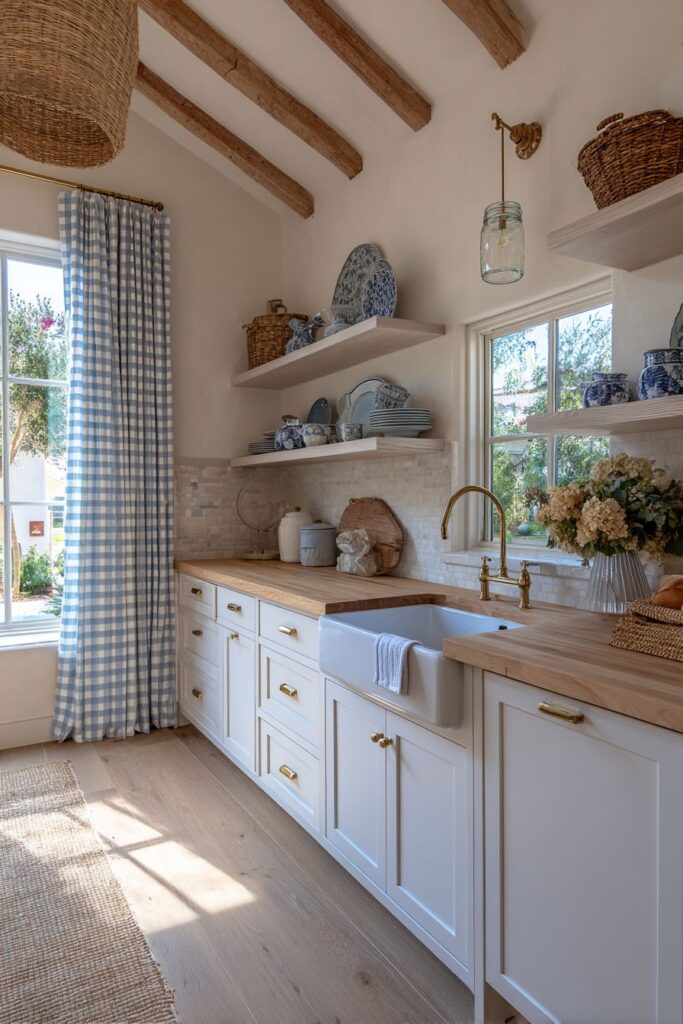
The quintessential cottage kitchen begins with the timeless appeal of white shaker-style cabinets, their clean lines and recessed panels creating a foundation that feels both traditional and eternally fresh. Brushed brass hardware adds subtle warmth while maintaining the understated elegance that defines cottage style. Open shelving becomes a gallery for displaying vintage dishware, transforming everyday pieces into decorative elements that speak to the kitchen’s lived-in authenticity.

Butcher block countertops provide a warm contrast to the crisp white cabinetry, their natural wood grain adding texture and organic beauty that improves with age and use. The exposed ceiling beams, whether original or thoughtfully added, create architectural interest while reinforcing the cottage’s connection to traditional craftsmanship. These horizontal lines draw the eye upward, making the space feel more expansive while adding rustic character.
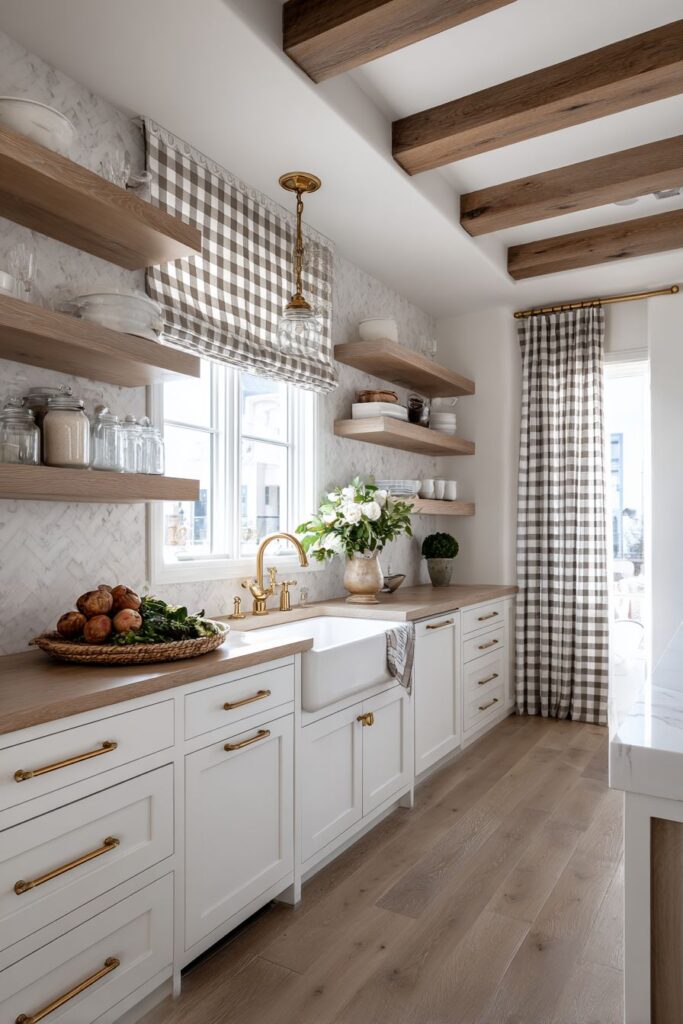
The farmhouse sink beneath gingham-curtained windows creates a focal point that perfectly captures cottage charm. Natural daylight streaming through these windows illuminates the space with ever-changing patterns, while mason jar pendant lights provide ambient lighting that feels both practical and romantic. The interplay between natural and artificial light creates depth and dimension, highlighting textures and creating the cozy atmosphere that makes cottage kitchens so inviting.
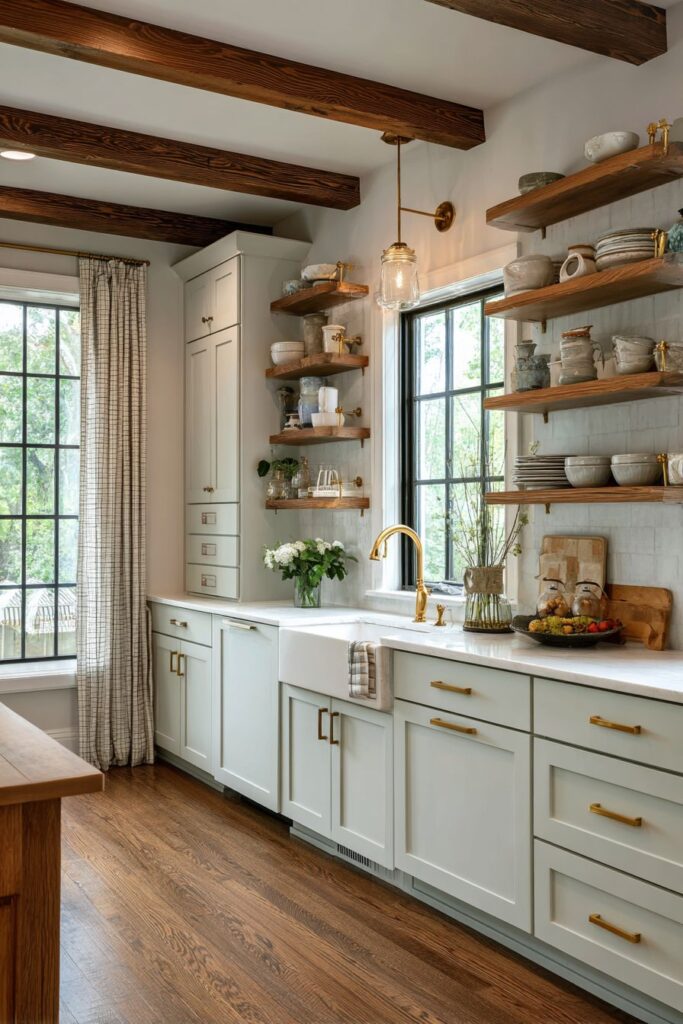
Key Design Tips:
- Choose brushed brass hardware for warmth that won’t overwhelm white cabinetry
- Display vintage dishes on open shelving to add personality and color
- Install butcher block counters in areas where warmth and functionality matter most
- Use gingham curtains for authentic cottage window treatments that filter light beautifully
- Select mason jar lighting for fixtures that provide both illumination and style
2. Central Island Cottage Kitchen Hub

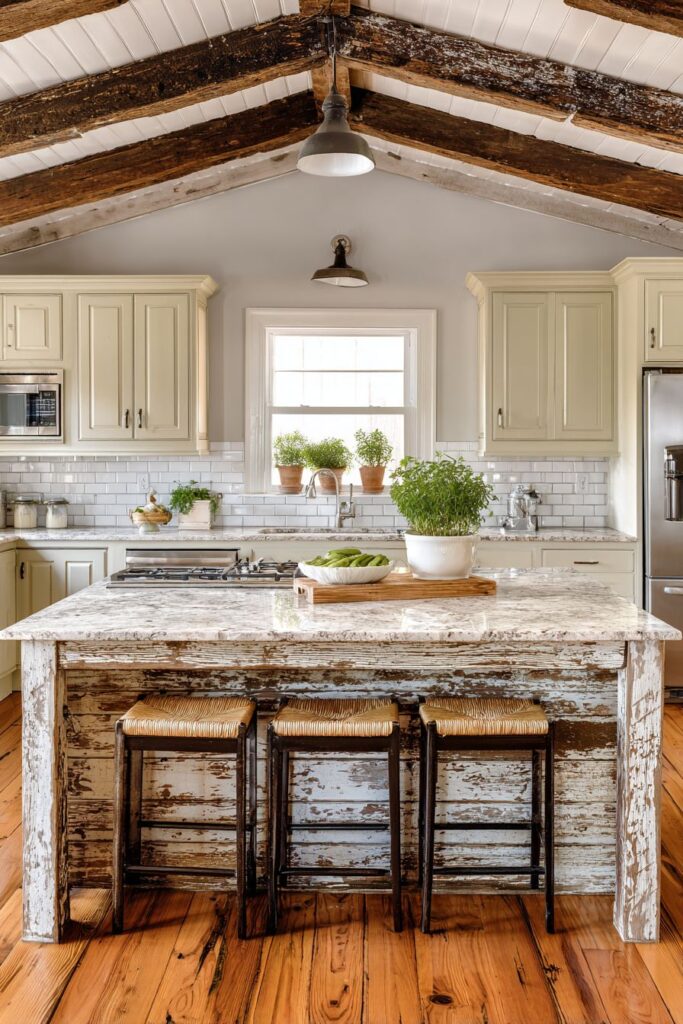
The cottage kitchen island serves as the heart of the home, combining functionality with rustic beauty in a design that encourages both cooking and conversation. A distressed wood base provides character and warmth, its weathered finish telling stories of countless meals prepared and memories made. The marble countertop offers a luxurious contrast, providing the ideal surface for pastry making while adding elegant durability that will age beautifully over time.
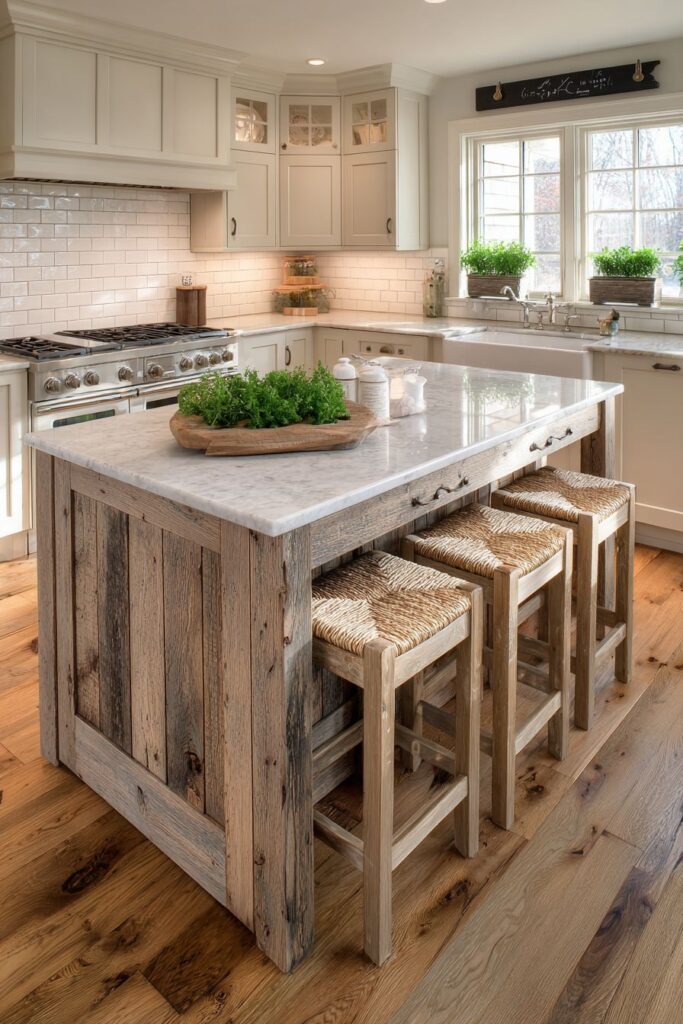
Vintage bar stools with woven rush seats surround the island, their natural materials and handcrafted appearance reinforcing the cottage aesthetic while providing comfortable seating for casual meals and homework sessions. The rush seats add texture and warmth, their golden tones complementing the distressed wood base while providing surprising durability for everyday family use.
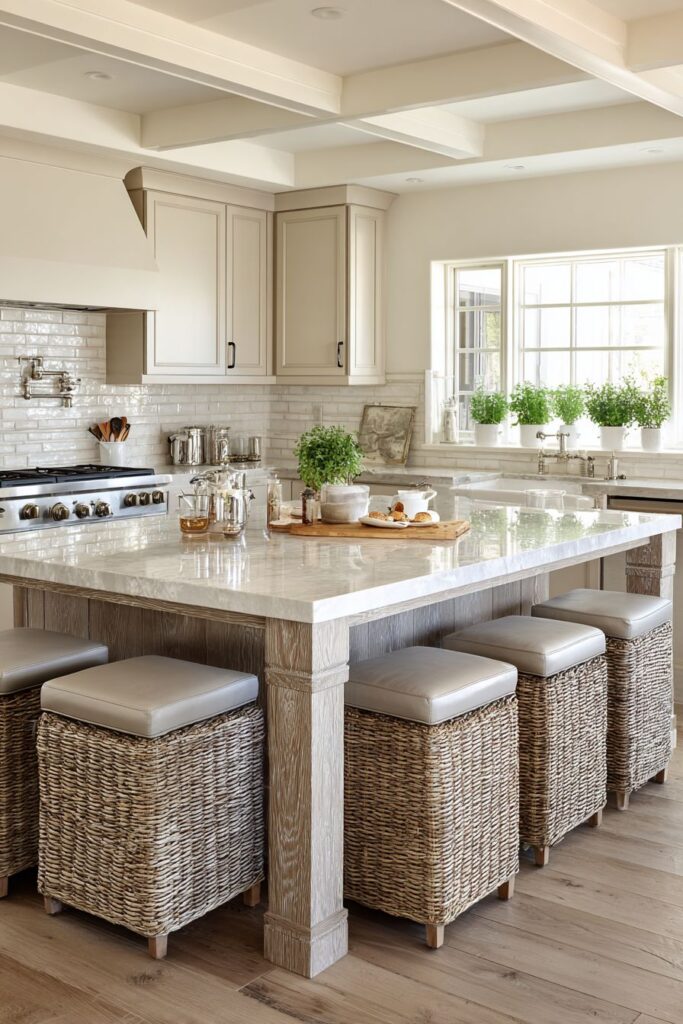
The surrounding cottage kitchen elements work in harmony to support the island’s central role. Cream-colored cabinets create a soft backdrop that allows the island to shine, while the subway tile backsplash with dark grout provides classic appeal with contemporary edge. Fresh herbs growing in small pots on the windowsill bring life and fragrance to the space, connecting the indoor kitchen with the natural world outside.
Key Design Tips:
- Choose distressed wood for island bases to add instant character and age
- Combine marble countertops with rustic elements for sophisticated contrast
- Select rush-seated stools for authentic cottage seating that’s both comfortable and durable
- Use dark grout with subway tiles to add definition and prevent staining
- Grow herbs in windowsill pots for fresh ingredients and natural beauty
3. Sage Green Cottage Pantry
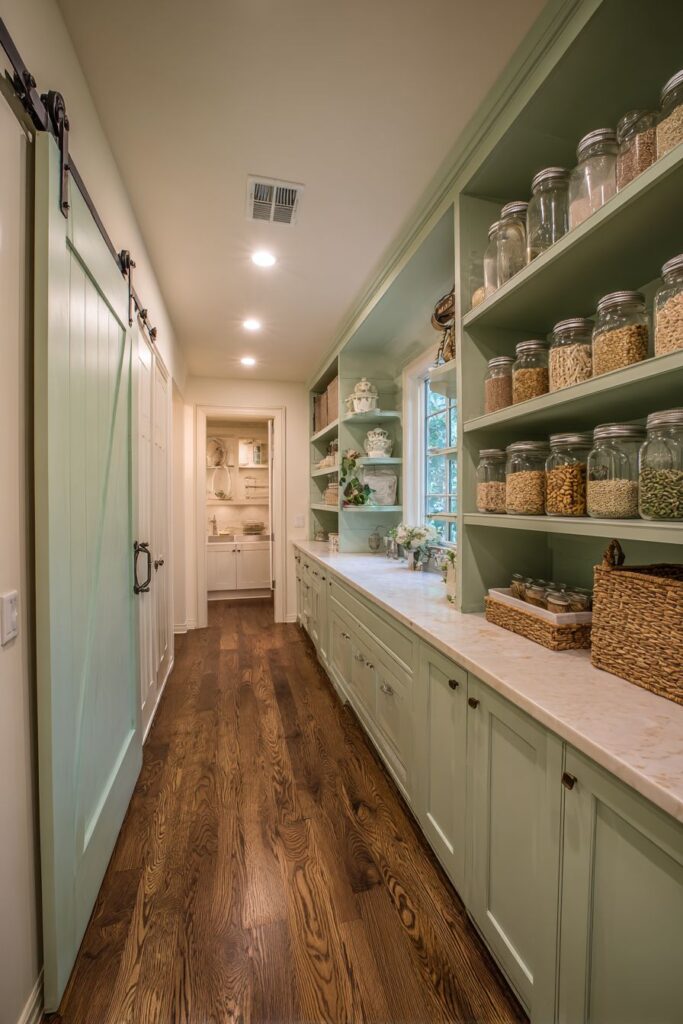
The cottage kitchen pantry painted in soft sage green creates a calming storage sanctuary that feels both organized and beautiful. Floor-to-ceiling built-in shelving maximizes storage while maintaining the custom look that elevates cottage style beyond mere rustic charm. The sage green color choice brings nature indoors while providing a sophisticated backdrop for the carefully arranged pantry contents.
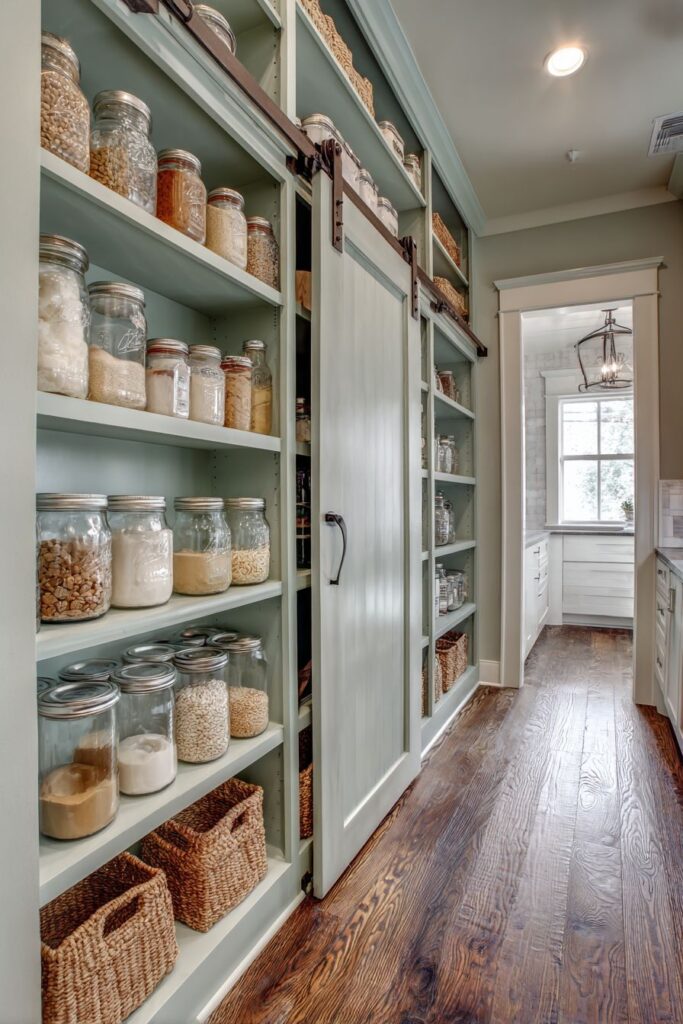
Glass jars filled with dry goods transform storage into display, their contents creating a rainbow of textures and colors that change with the seasons and family preferences. Vintage canisters and woven baskets add layers of texture while concealing less photogenic items, proving that organization and beauty can coexist seamlessly in cottage design.

The sliding barn door on rustic hardware provides privacy when needed while serving as a striking design element when open. This functional choice maximizes floor space while adding to the pantry’s farmhouse appeal. Warm overhead lighting creates inviting shadows and highlights the organized storage solutions, proving that even utilitarian spaces can embody cottage charm when designed with care and attention to detail.

Key Design Tips:
- Paint built-in pantry storage in sage green for a calming, nature-inspired feel
- Use glass jars for dry goods to create beautiful displays while maintaining organization
- Install sliding barn doors to save space while adding farmhouse character
- Combine vintage canisters with modern organization for the best of both worlds
- Include warm overhead lighting to make pantry spaces feel welcoming rather than utilitarian
4. Cottage Kitchen Breakfast Nook
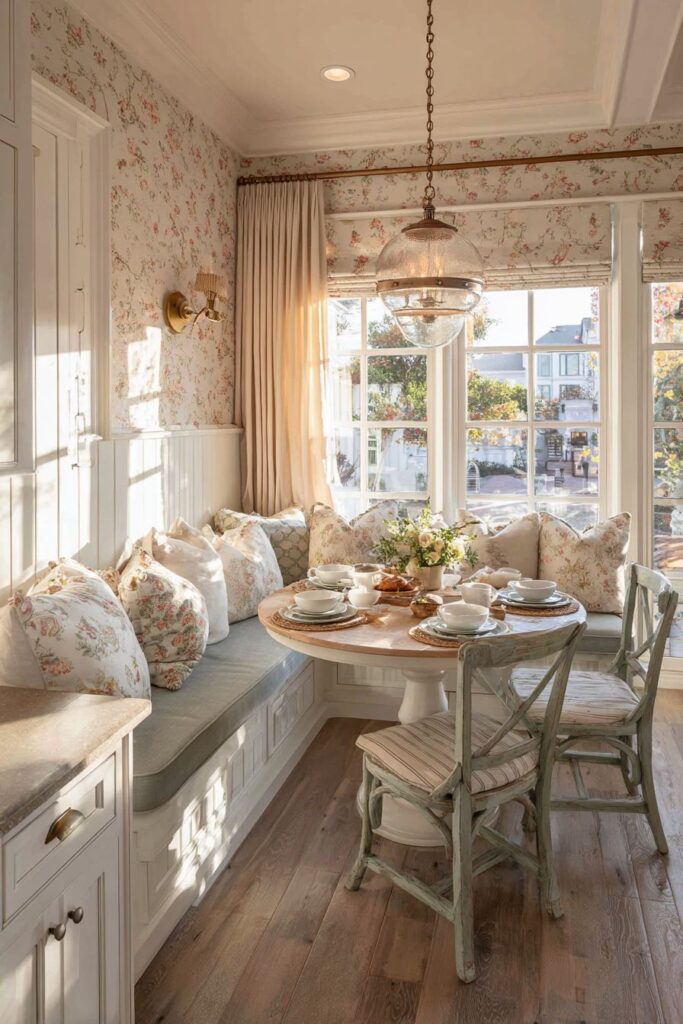
The cottage kitchen breakfast nook creates an intimate dining space where a round pedestal table becomes the centerpiece for morning coffee and evening conversations. Mismatched vintage chairs painted in coordinating soft pastels embody the cottage philosophy that imperfection creates character, while their varied styles tell stories and add visual interest that uniform seating cannot achieve.
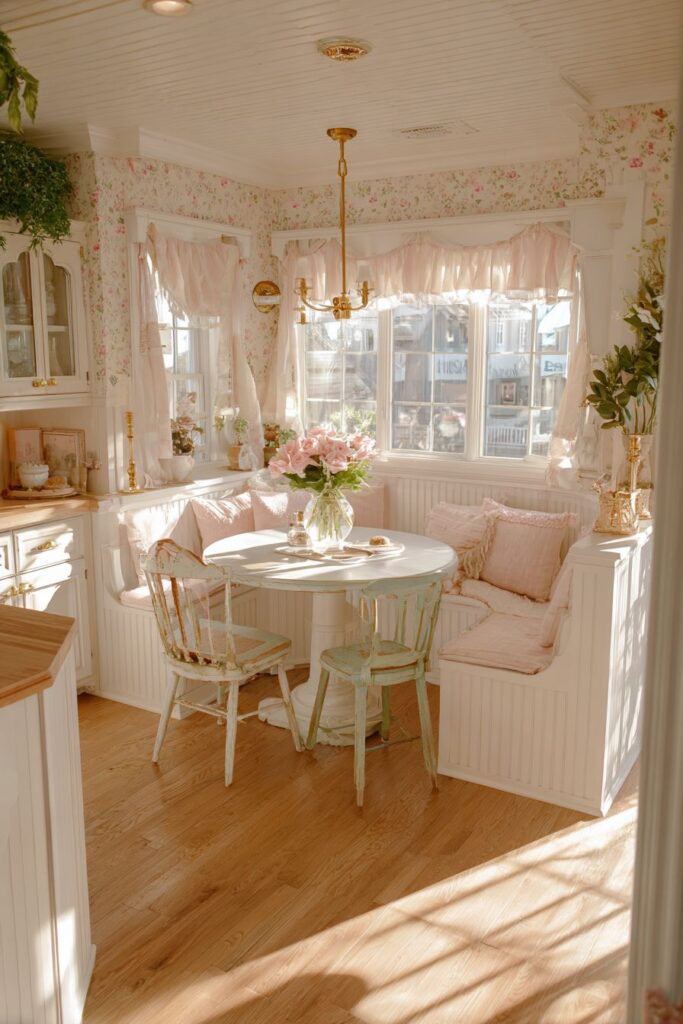
Built-in bench seating lined with floral cushions maximizes seating while creating cozy comfort along the wall beneath windows dressed with cafe curtains. This arrangement encourages lingering over meals and creates the kind of gathering space that makes cottage kitchens the heart of the home. The combination of fixed seating and moveable chairs provides flexibility for different occasions while maintaining the intimate scale that makes breakfast nooks so appealing.

Beadboard wainscoting adds vertical texture while protecting walls from chair backs and daily wear. The wallpaper with small floral prints above creates pattern and color without overwhelming the intimate space. Golden hour natural light filtering through the cafe curtains creates a warm, romantic atmosphere that transforms simple meals into special occasions, proving that cottage style excels at making everyday moments feel extraordinary.

Key Design Tips:
- Choose a round pedestal table to maximize seating in small breakfast nook spaces
- Paint mismatched chairs in coordinating pastels for cohesive charm without uniformity
- Install built-in benches with floral cushions for maximum seating and cottage comfort
- Use beadboard wainscoting to add texture while protecting walls from daily wear
- Select small-scale floral wallpaper patterns that won’t overwhelm intimate spaces
5. Functional Cottage Kitchen Workspace
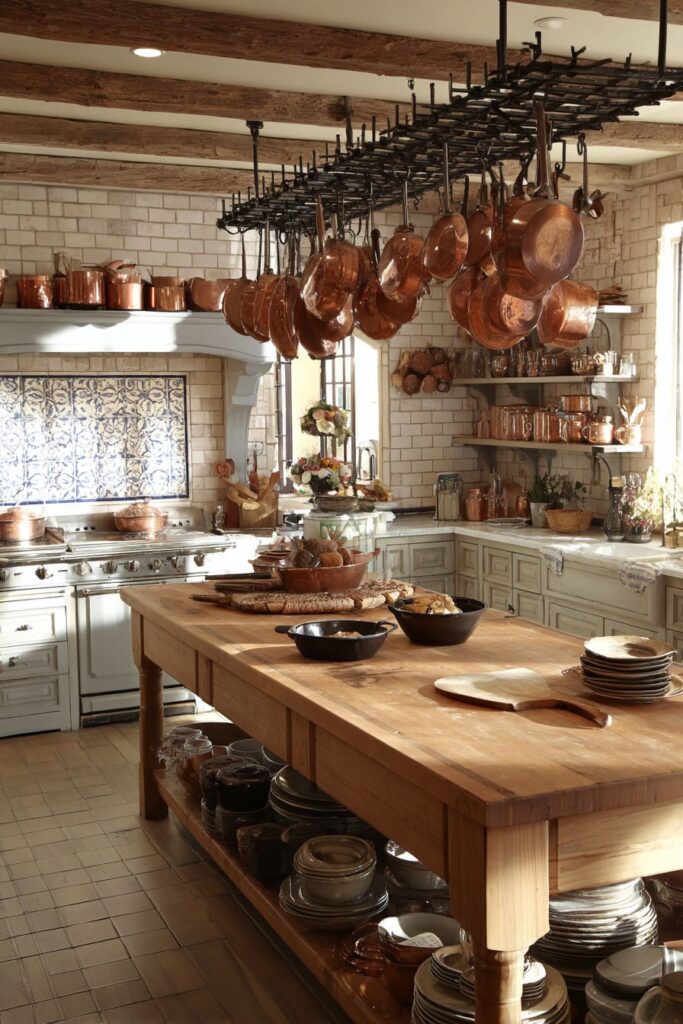
The cottage kitchen workspace celebrates the tools and implements that make cooking a joy, transforming functional necessities into decorative elements that honor culinary traditions. A large wooden cutting board positioned on butcher block counters creates a dedicated preparation area that improves with use, developing the patina and character that defines authentic cottage style.
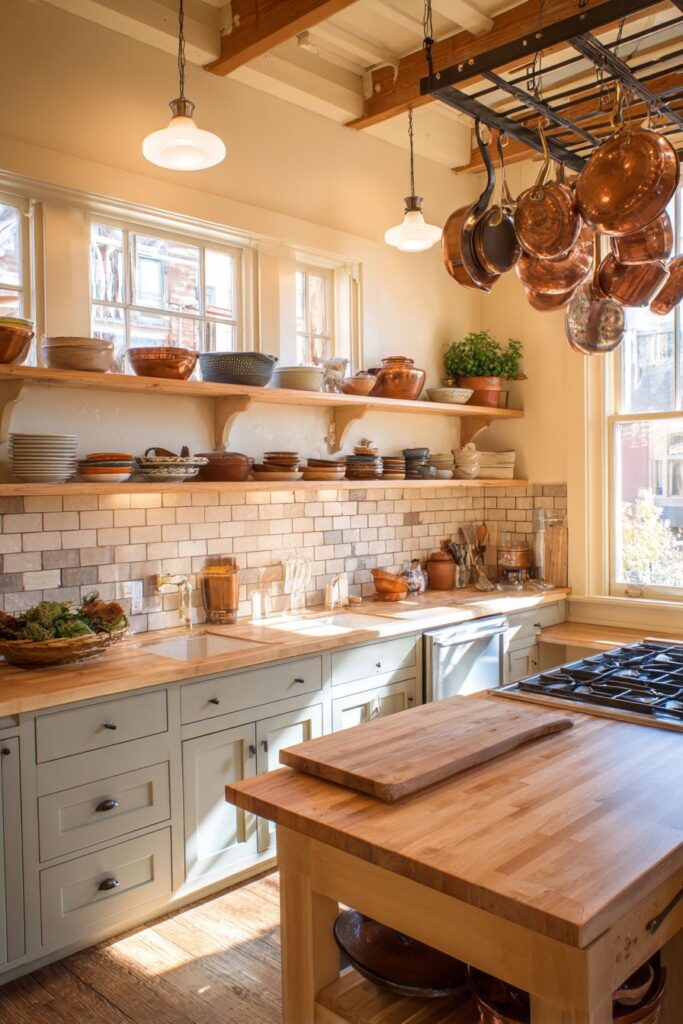
Hanging copper pots and cast iron skillets suspended from hooks and pot racks turn cookware into art, their warm metals adding color and texture while keeping frequently used items within easy reach. This practical storage solution reflects cottage values of functionality and beauty working in harmony, where every element serves a purpose while contributing to the overall aesthetic.
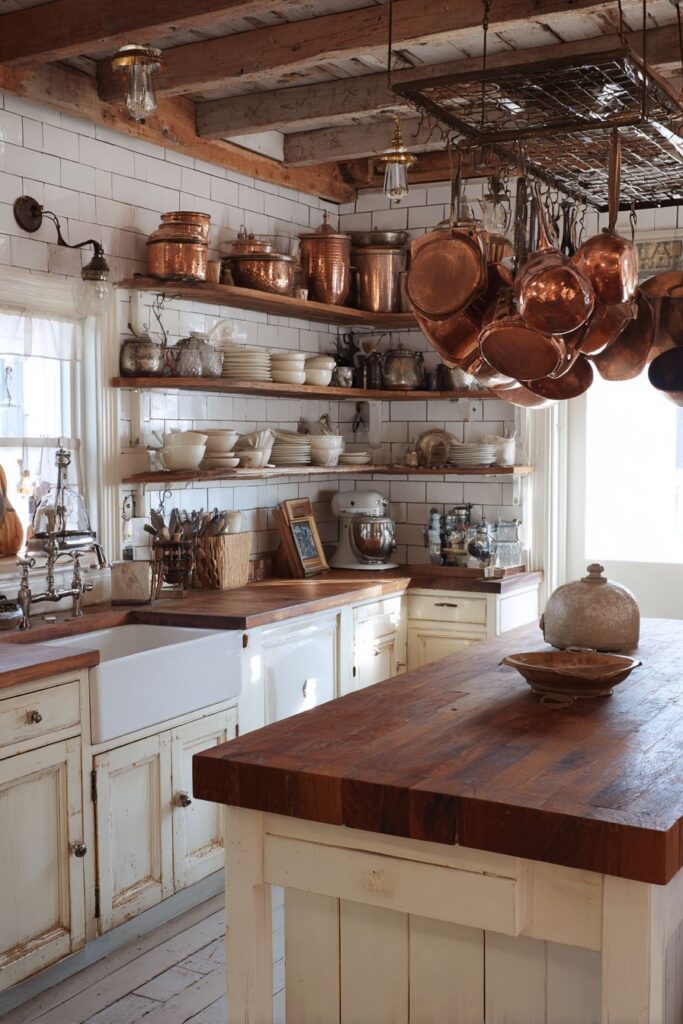
Open shelving displays stoneware bowls and vintage mixing tools, creating vignettes that celebrate the craft of cooking while providing easy access to daily essentials. The pot rack suspended from exposed ceiling beams showcases well-used cookware, their battle scars telling stories of countless meals prepared with love and care. These elements combine to create a workspace that feels both professional and homey, where serious cooking happens in surroundings that nurture the soul.

Key Design Tips:
- Display cookware on hooks and pot racks to combine storage with decorative appeal
- Choose wooden cutting boards that will develop character and patina over time
- Use open shelving to showcase beautiful stoneware and vintage tools
- Install pot racks on exposed beams for maximum storage without sacrificing style
- Embrace the beauty of well-used cooking implements rather than hiding them away
6. Cozy Cottage Kitchen Reading Corner
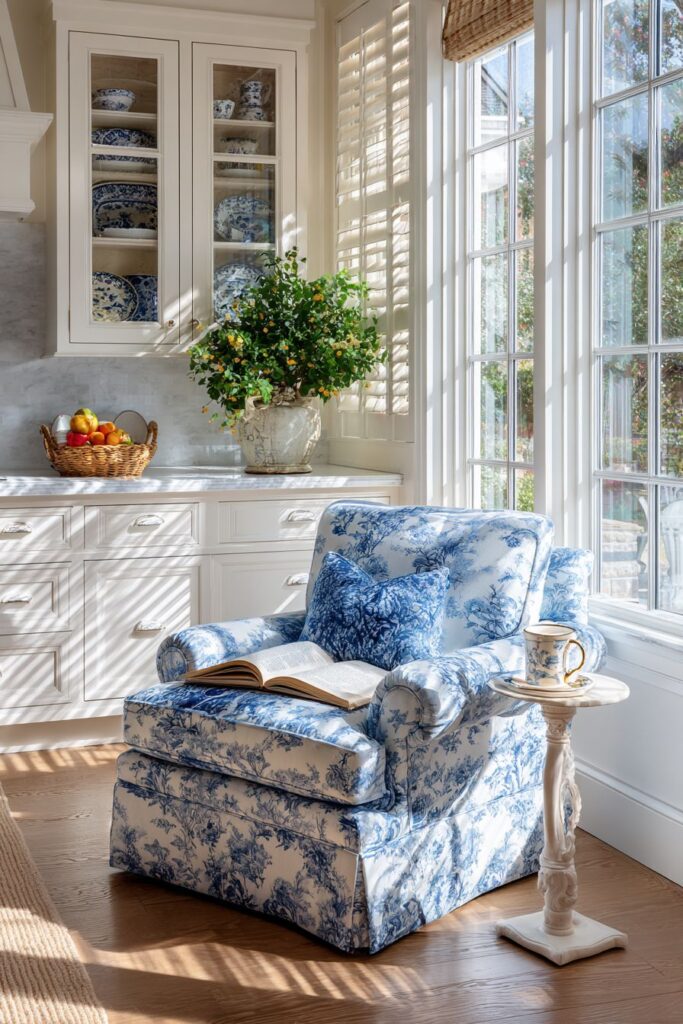
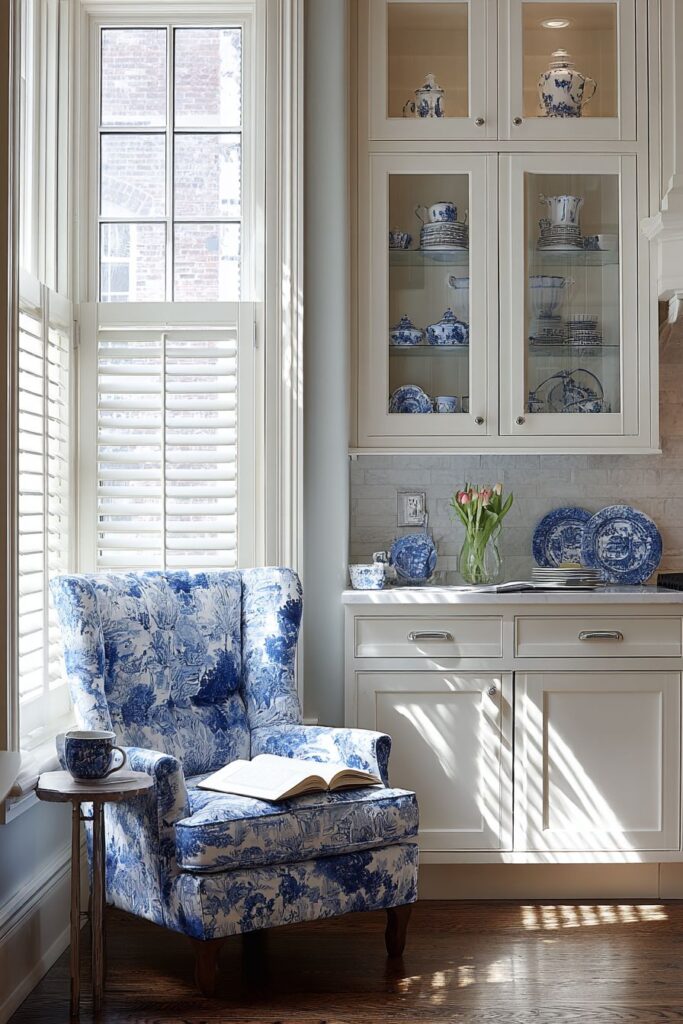
The cottage kitchen reading corner proves that kitchens can serve multiple purposes while maintaining their culinary focus, creating a space where cookbooks become literature and meal planning feels like leisure. An upholstered chair in blue and white toile fabric positioned beside a tall window with plantation shutters creates a comfortable retreat within the active kitchen environment.
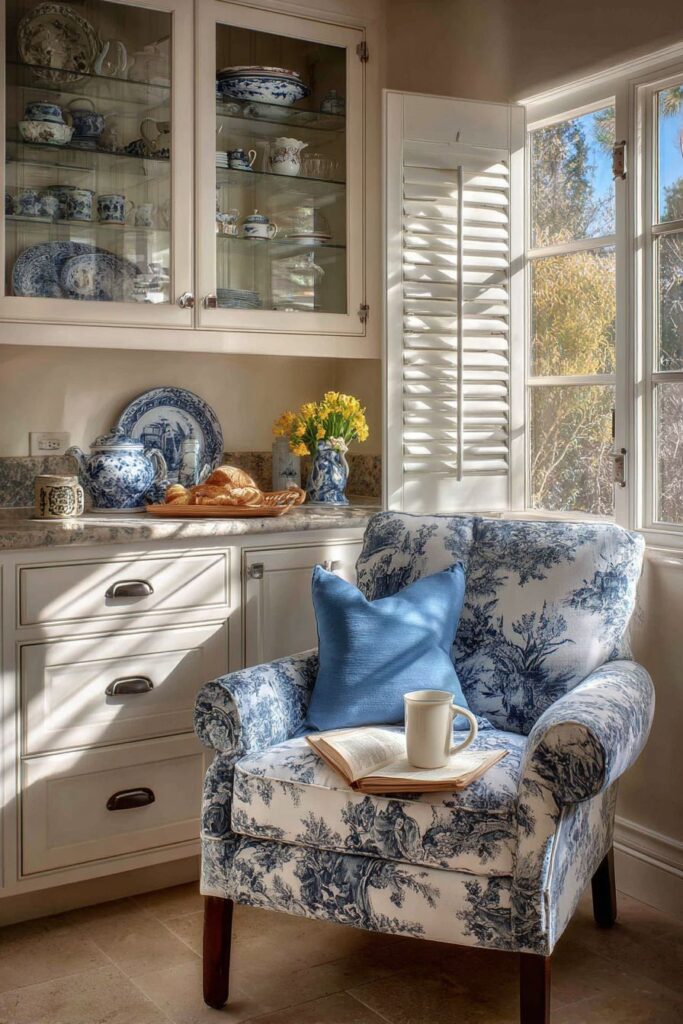
The fabric choice connects the seating area with cottage traditions while providing comfort for extended reading sessions. A small side table positioned perfectly for holding a steaming mug and open cookbook creates a dedicated space for recipe exploration and menu planning. This thoughtful arrangement transforms what might otherwise be wasted corner space into a functional area that supports both cooking and relaxation.
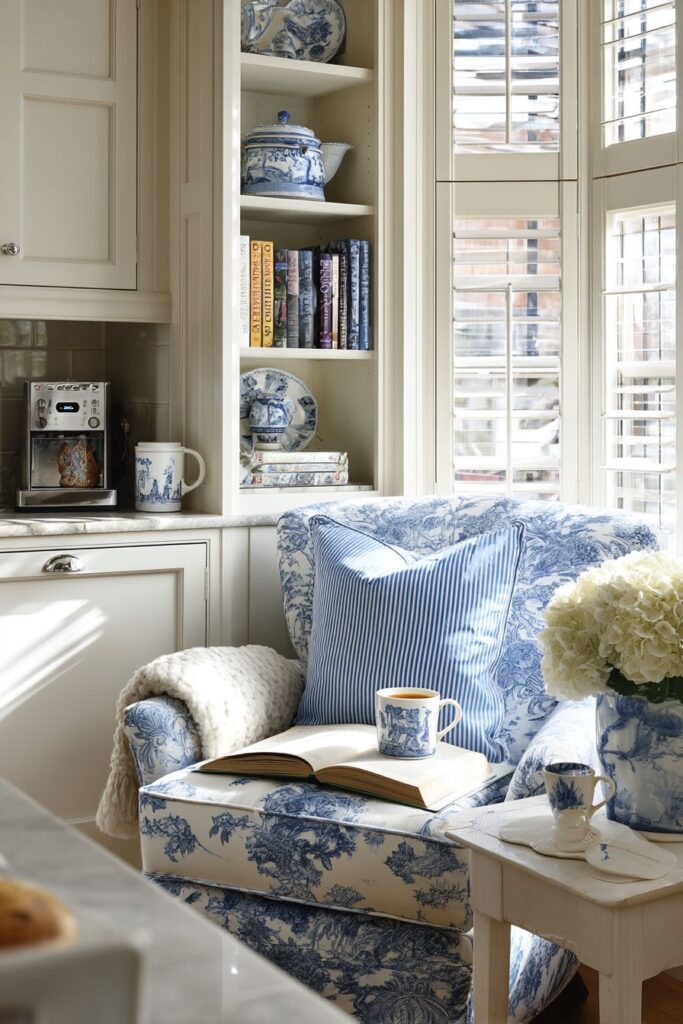
White cabinetry with glass-front upper cabinets provides a clean backdrop while displaying vintage china that adds color and pattern to the reading area. Natural afternoon light filtering through plantation shutters creates gentle patterns that change throughout the day, providing ideal reading light while maintaining the cottage kitchen’s connection to the rhythms of natural time.
Key Design Tips:
- Position reading chairs near windows to take advantage of natural light
- Choose toile fabrics for authentic cottage pattern and timeless appeal
- Install glass-front cabinets to display collections while maintaining clean lines
- Use plantation shutters to control light while adding architectural interest
- Include small side tables for books, drinks, and cooking accessories
7. Farmhouse Cottage Kitchen Dining
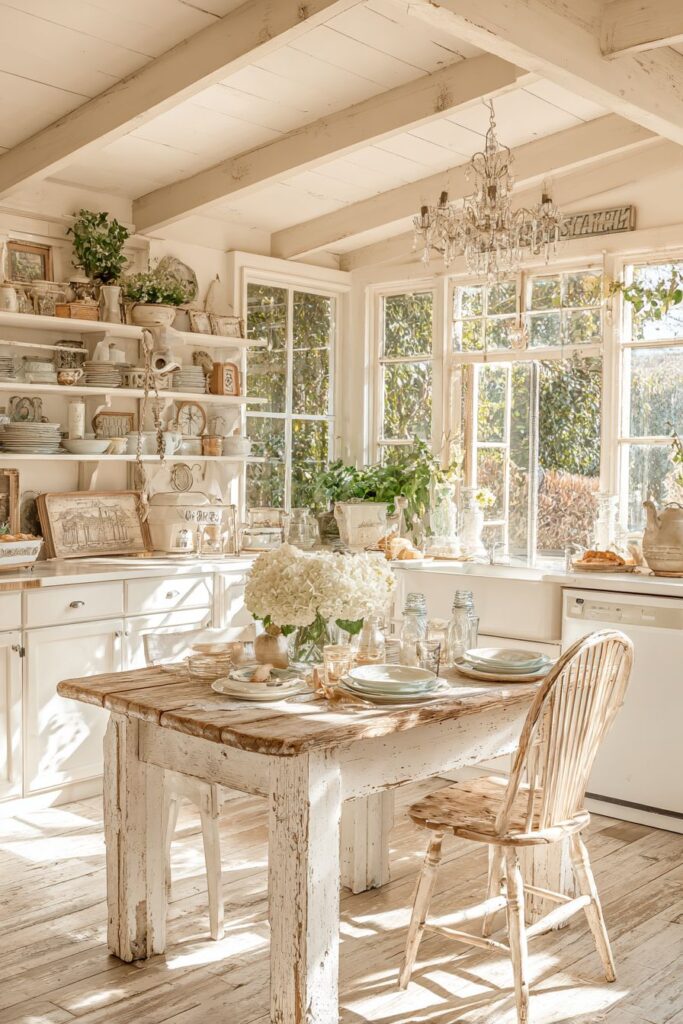
The farmhouse dining area within the cottage kitchen creates a gathering space where meals become celebrations and everyday dining feels special. A rectangular farmhouse table made from reclaimed wood serves as the centerpiece, its weathered surface bearing the marks of countless meals and conversations. This authentic patina cannot be manufactured, making reclaimed wood the perfect choice for cottage kitchens that value authenticity over perfection.
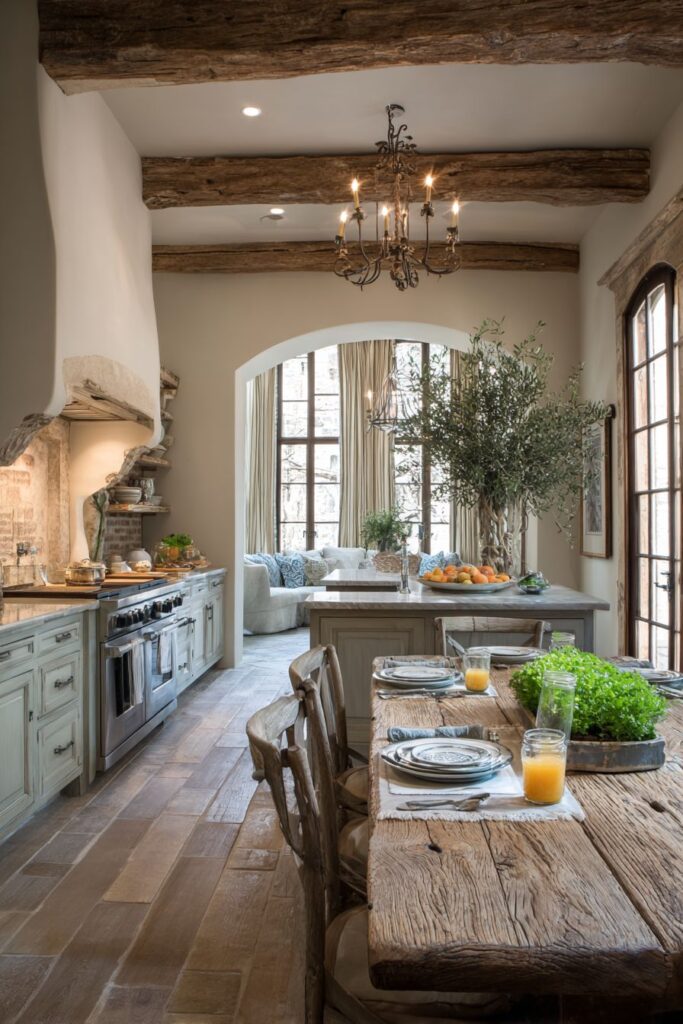
Mismatched vintage plates and mason jar drinking glasses embody the cottage philosophy that character trumps coordination, creating table settings that feel collected over time rather than purchased in sets. Windsor chairs in various stages of distressed paint surround the table, their traditional forms and weathered finishes adding to the authentic farmhouse atmosphere while providing comfortable seating for extended meals.

Cream-colored lower cabinets provide storage without overwhelming the dining area, while open upper shelving displays ironstone dishes that add neutral color and traditional appeal. The vintage chandelier provides overhead lighting that feels both elegant and rustic, its aged patina and traditional form perfectly complementing the farmhouse table below. Natural light streaming through multi-paned windows creates the perfect balance of illumination for both daytime and evening dining.

Key Design Tips:
- Choose reclaimed wood tables for authentic character that can’t be replicated
- Mix vintage plates and glasses for collected-over-time charm
- Use Windsor chairs in distressed paint for traditional comfort and cottage appeal
- Display ironstone dishes for neutral color and timeless cottage style
- Install vintage chandeliers that provide both light and architectural interest
8. Window Herb Garden Integration

The cottage kitchen herb garden windowsill transforms a simple window area into a productive growing space that brings fresh flavors and natural beauty into the heart of the kitchen. An assortment of potted herbs in vintage terracotta pots and repurposed tin cans creates an eclectic display that embodies cottage values of resourcefulness and connection to the garden.
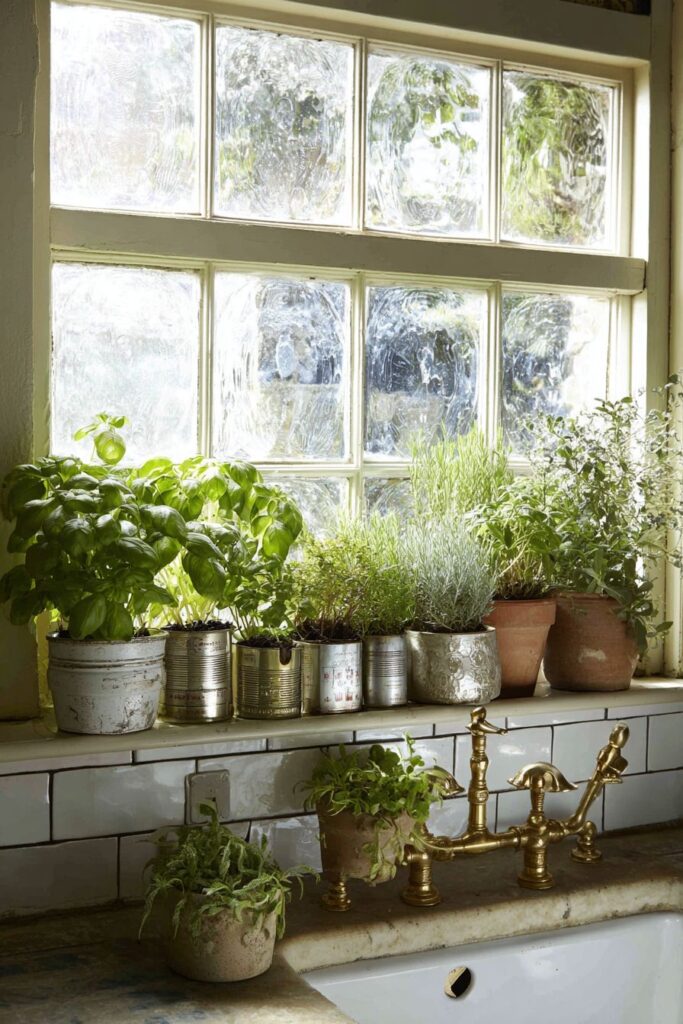
The window frame painted in soft white with mullioned glass panes provides traditional architecture that frames the herb display while maximizing natural light penetration. This classic window style connects the kitchen with cottage traditions while providing the divided light patterns that add visual interest and charm to both interior and exterior views.
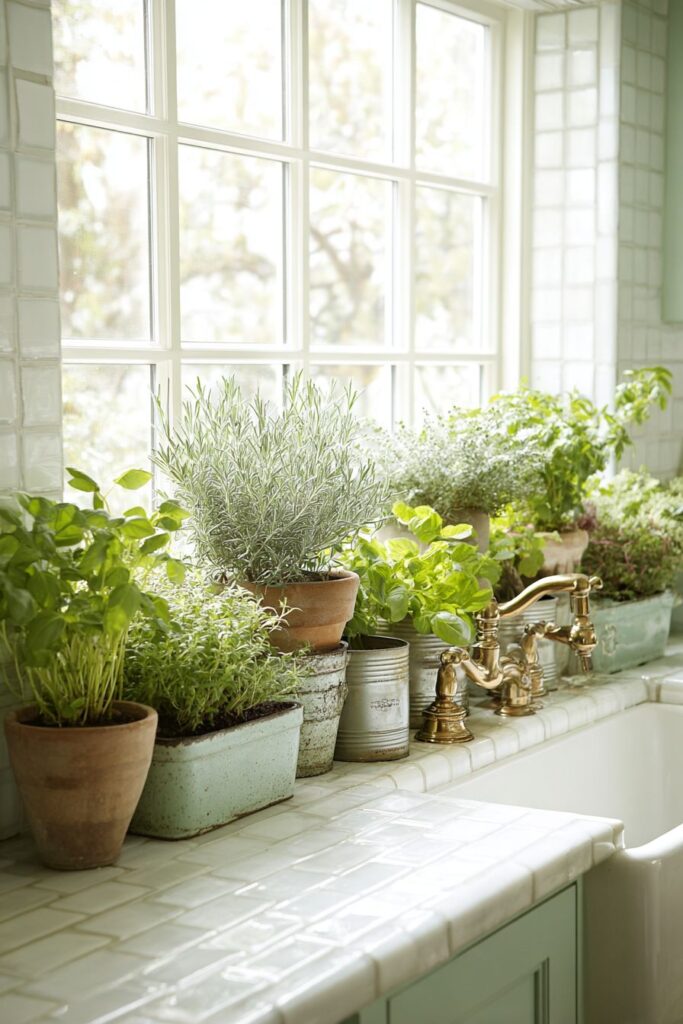
Below the herb garden, the deep apron-front sink with brass fixtures creates a perfect workspace for both cooking preparation and plant care. The proximity of herbs to sink makes daily watering convenient while keeping fresh seasonings within arm’s reach of cooking areas. Natural morning light illuminating the green herbs against the backdrop of white subway tiles creates a fresh, clean atmosphere that celebrates both function and beauty.

Key Design Tips:
- Use vintage terracotta pots for herb growing that adds authentic cottage character
- Repurpose tin cans as charming planters that embody cottage resourcefulness
- Choose mullioned windows to maximize light while adding traditional architectural detail
- Position herbs near sinks for convenient watering and cooking access
- Plant a variety of herbs for both culinary use and visual interest
9. Vintage Cottage Kitchen Storage
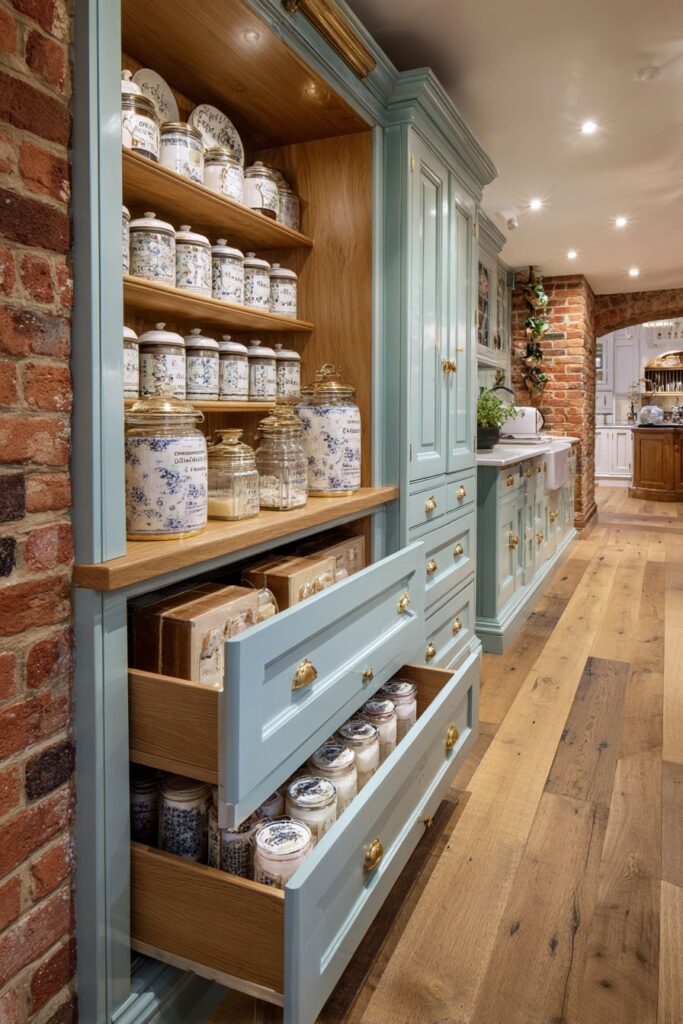
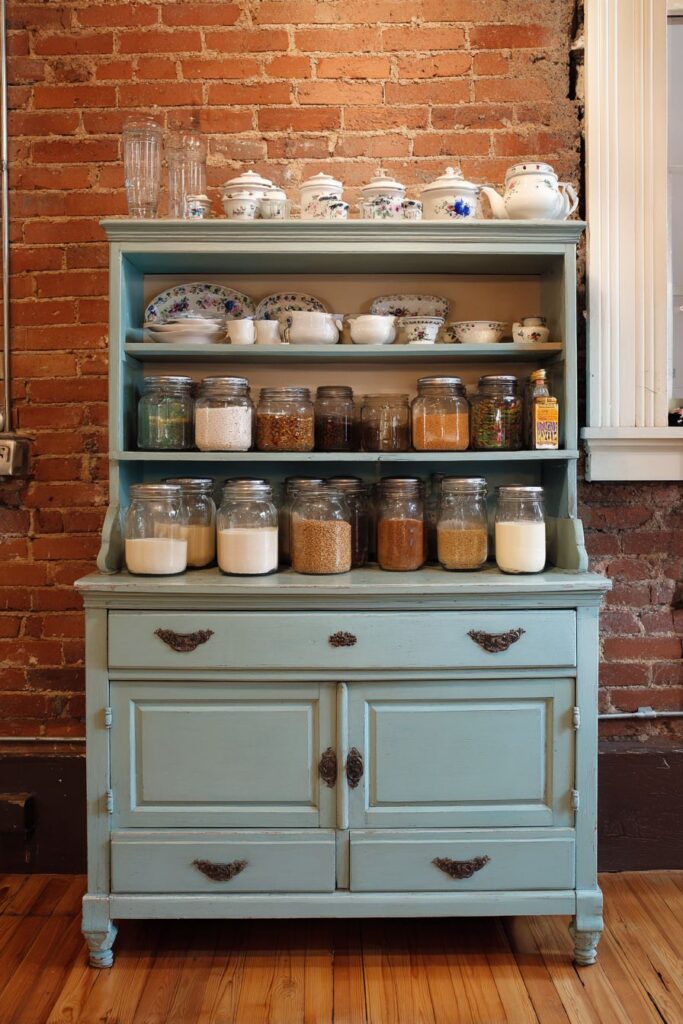
The vintage hutch painted in duck egg blue becomes a stunning focal point that combines storage with display, proving that functional pieces can serve as furniture-quality statements in cottage kitchens. The soft blue-green color adds calm sophistication while complementing the exposed brick walls and wide-plank wooden floors that provide textural foundation for the cottage aesthetic.
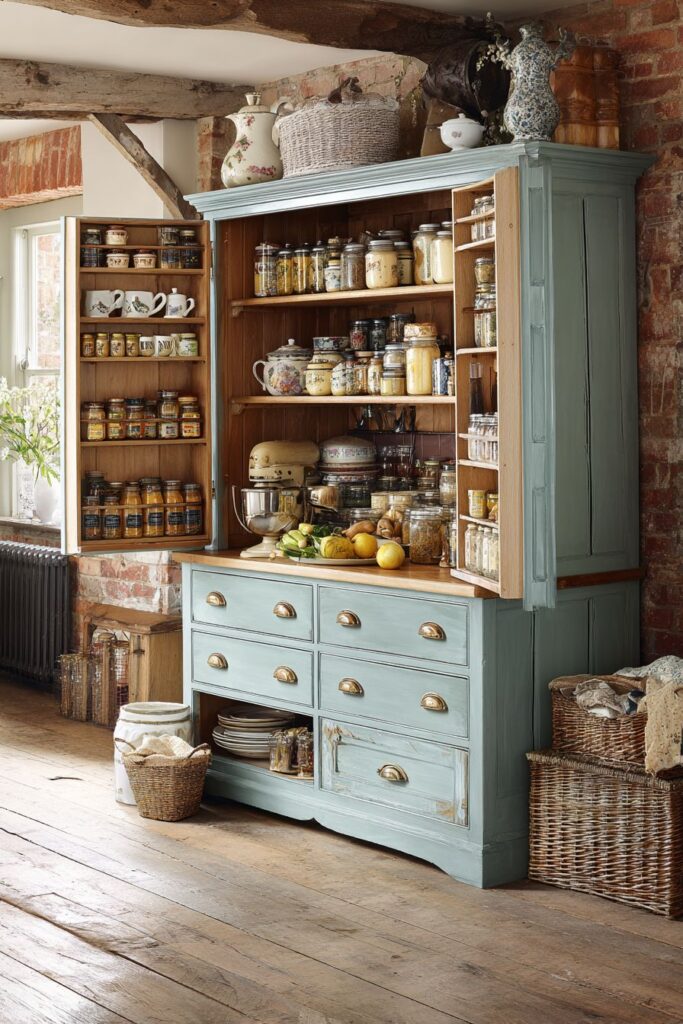
Collections of transferware and mason jars filled with baking ingredients transform the hutch into a curated display that celebrates both form and function. The transferware adds pattern and color while showcasing cottage collections, and the mason jars provide practical storage that maintains the vintage aesthetic while keeping baking supplies organized and accessible.
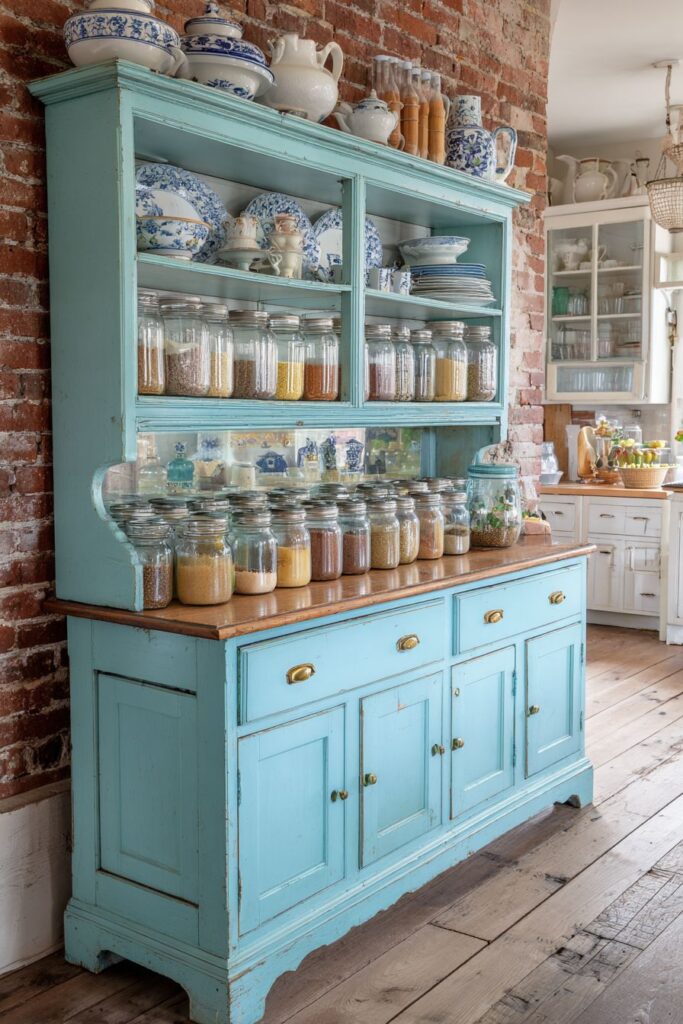
The lower portion with original brass hardware and organized pantry storage proves that vintage pieces can meet modern organizational needs without sacrificing character. Exposed brick walls add texture and warmth while connecting the kitchen with cottage traditions of honest materials and authentic construction. The wide-plank wooden floors provide the perfect foundation, their natural variations and gentle wear creating the lived-in comfort that defines cottage style.
Key Design Tips:
- Paint vintage hutches in duck egg blue for sophisticated cottage color
- Display transferware collections for pattern and traditional cottage appeal
- Use mason jars for storage that maintains vintage aesthetics while staying organized
- Preserve original brass hardware on vintage pieces for authentic character
- Embrace exposed brick walls for texture and connection to cottage building traditions
10. Dedicated Cottage Baking Station
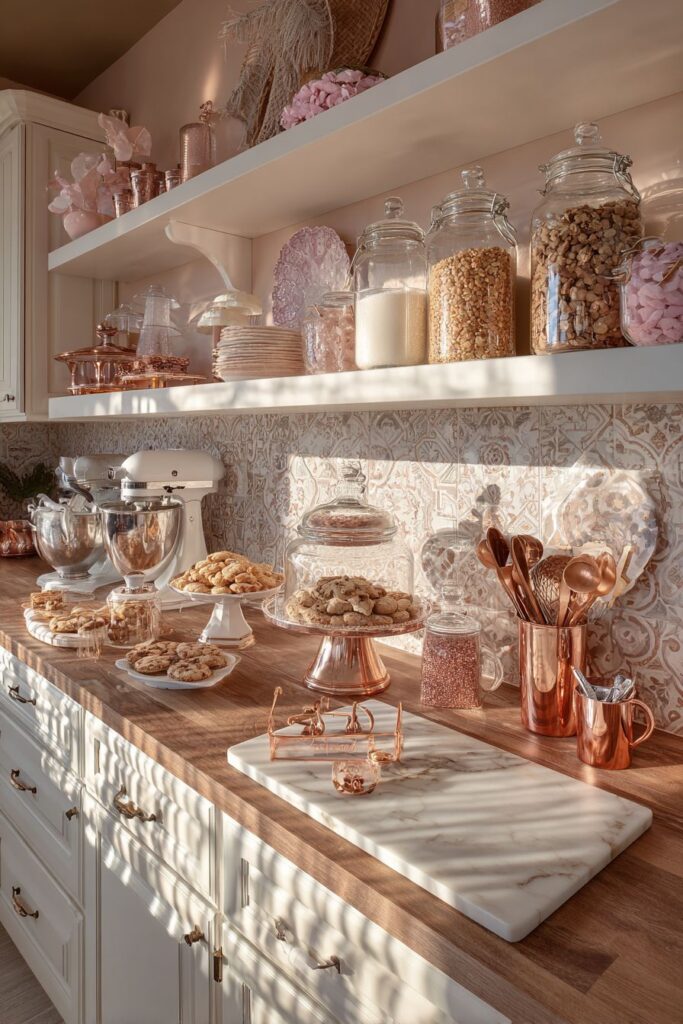
The cottage kitchen baking station creates a specialized workspace where a marble pastry slab built into butcher block countertops provides the perfect surface for pie crusts and bread dough. This thoughtful integration of materials combines the functionality of marble’s cool surface with the warmth of wood, creating a workspace that serious bakers will treasure while maintaining cottage aesthetic values.

Vintage baking tools and copper measuring cups displayed within easy reach transform functional implements into decorative elements that honor baking traditions. Open shelving holds cake stands, mixing bowls, and glass canisters of flour and sugar, creating organized storage that doubles as display space. These elements work together to create a baking station that feels both professional and homey.
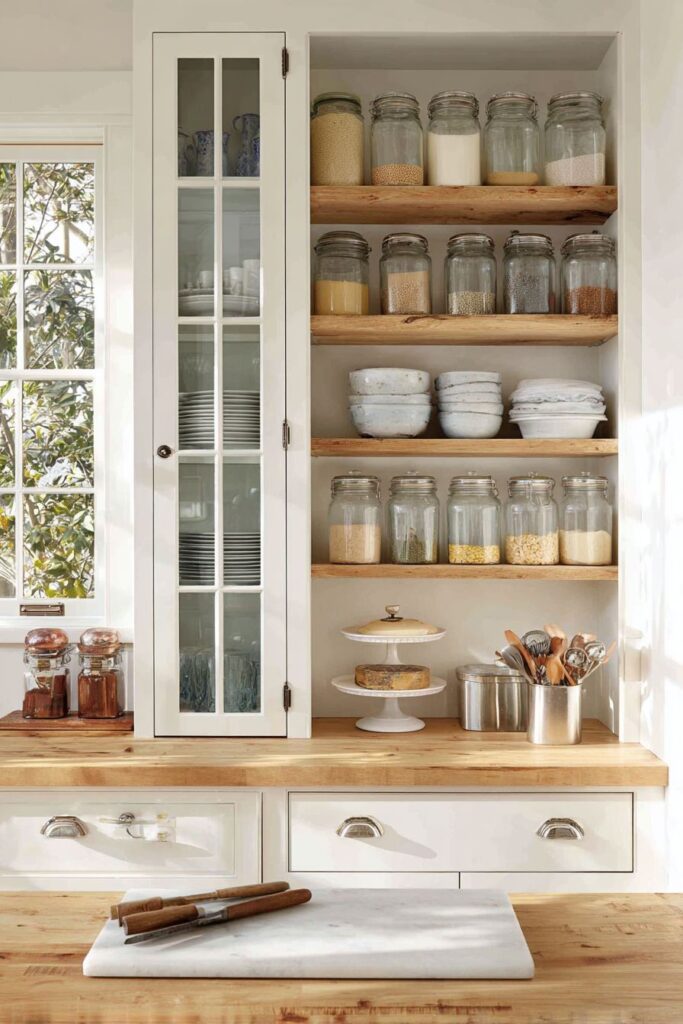
White painted cabinets with bin pulls provide clean storage that doesn’t compete with the baking display, while a patterned tile backsplash adds visual interest without overwhelming the workspace. The combination of warm kitchen lighting and natural illumination creates ideal working conditions while highlighting the functional workspace. This dedicated area proves that cottage kitchens can accommodate serious cooking while maintaining their characteristic charm.

Key Design Tips:
- Install marble pastry slabs in baking areas for optimal dough preparation
- Display vintage baking tools as decorative elements that honor culinary traditions
- Use glass canisters for baking ingredients that stay fresh while looking beautiful
- Choose bin pulls for cabinets that provide easy access while maintaining cottage style
- Install task lighting specifically designed for detailed baking work
11. Cottage Kitchen Coffee Station
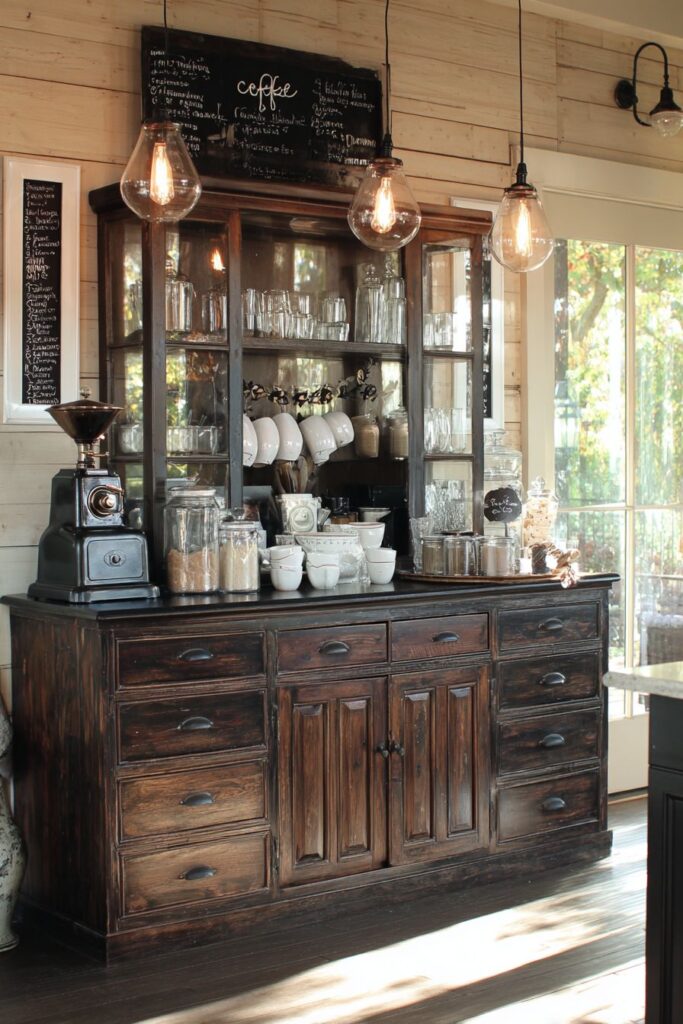
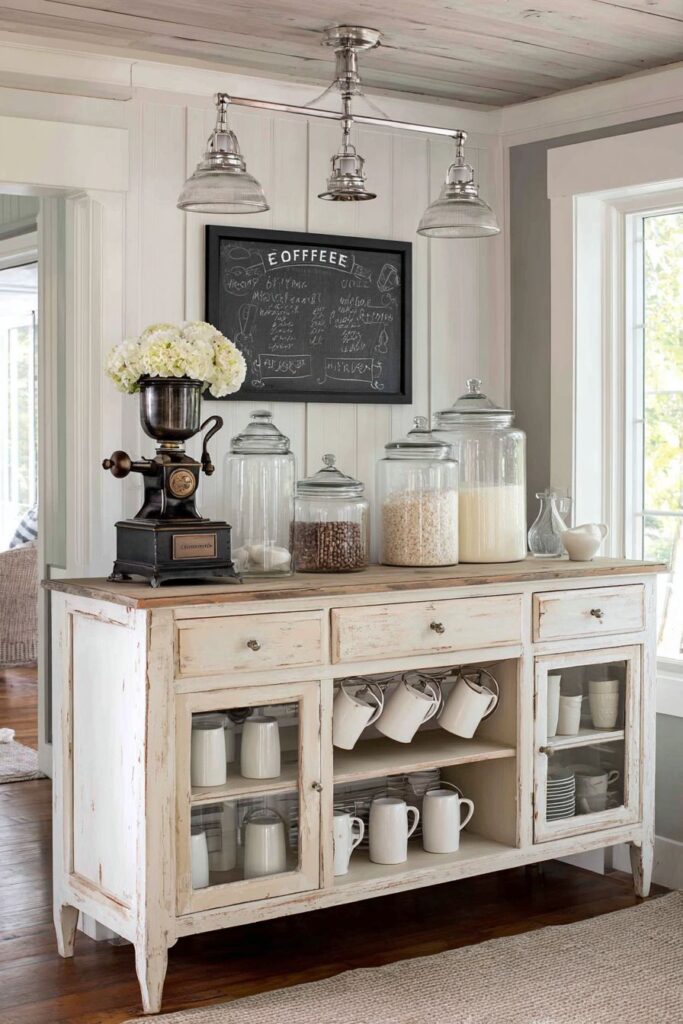
The cottage kitchen coffee bar area transforms a vintage sideboard into a dedicated coffee station, proving that cottage style can accommodate modern conveniences while maintaining authentic character. An antique coffee grinder and collection of mismatched mugs hanging from hooks create a display that celebrates coffee culture within cottage aesthetic values.
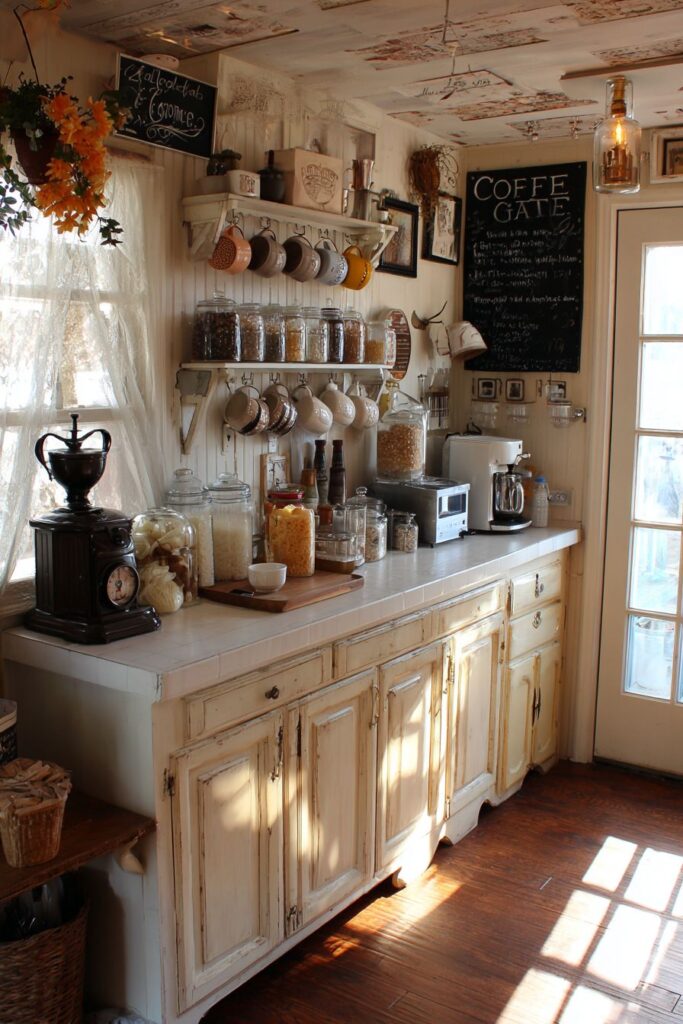
Glass jars storing coffee beans and sugar cubes provide practical storage while adding to the vintage display, their contents creating visual interest that changes with coffee preferences and seasonal selections. A small chalkboard listing daily specials adds personal touches that make the coffee station feel like a favorite neighborhood cafe, bringing commercial charm into the domestic setting.
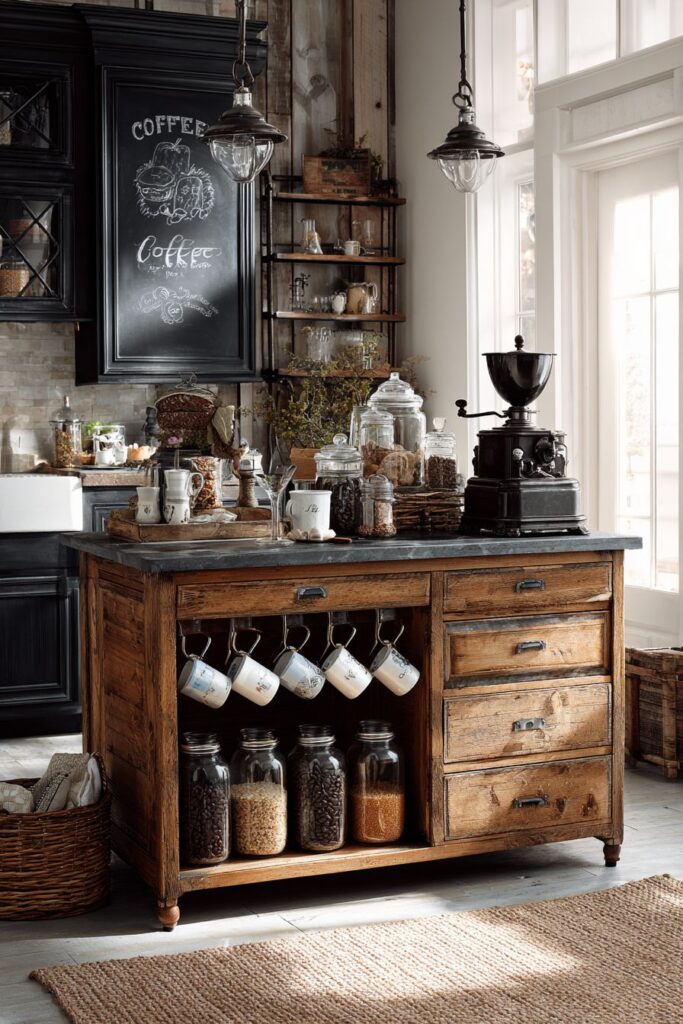
The cottage kitchen backdrop of painted wood paneling and vintage-style lighting fixtures provides the perfect setting for this specialized area. Morning sunlight streaming through nearby windows creates the ideal atmosphere for beginning each day, while the organized station makes coffee preparation a pleasure rather than a chore. This coffee bar proves that cottage kitchens can incorporate specialized functions while maintaining their overall design integrity.
Key Design Tips:
- Convert vintage sideboards into coffee stations for authentic cottage character
- Display antique coffee grinders as functional decorative elements
- Hang mismatched mugs for collected-over-time charm and easy access
- Use glass jars for coffee storage that maintains freshness while looking beautiful
- Include chalkboards for personal touches that make the space feel special
12. Cottage Kitchen Mudroom Transition
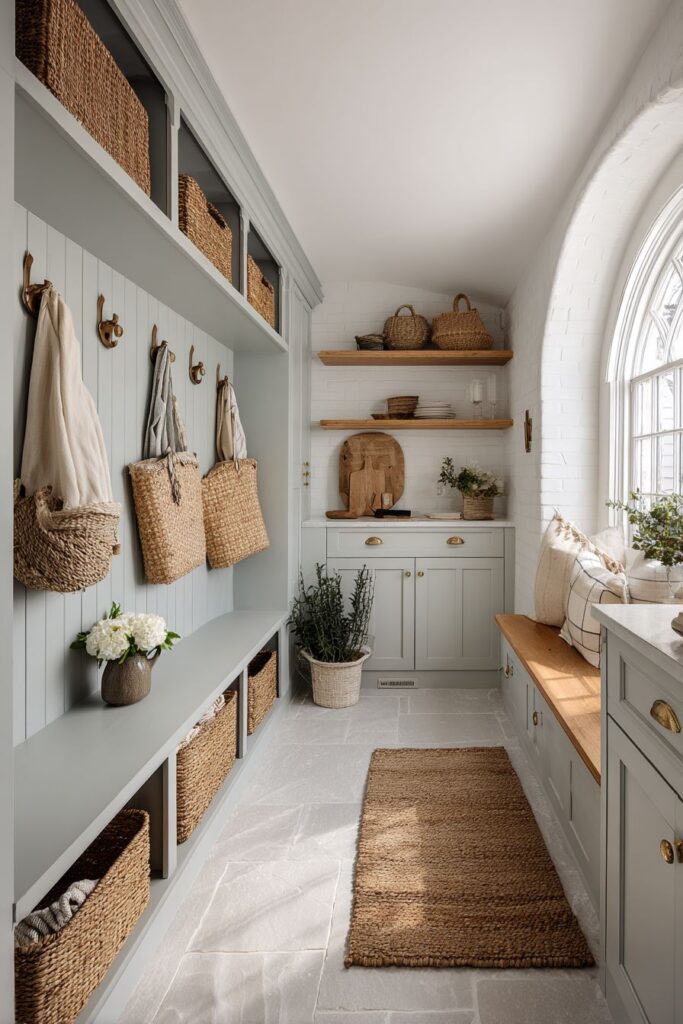
The cottage kitchen mudroom transition area creates organized storage that connects outdoor activities with indoor comfort, proving that functional spaces can maintain cottage charm while serving practical needs. Built-in cubbies painted in soft gray-green provide individual storage solutions while maintaining the custom look that elevates cottage design beyond simple rustic styling.
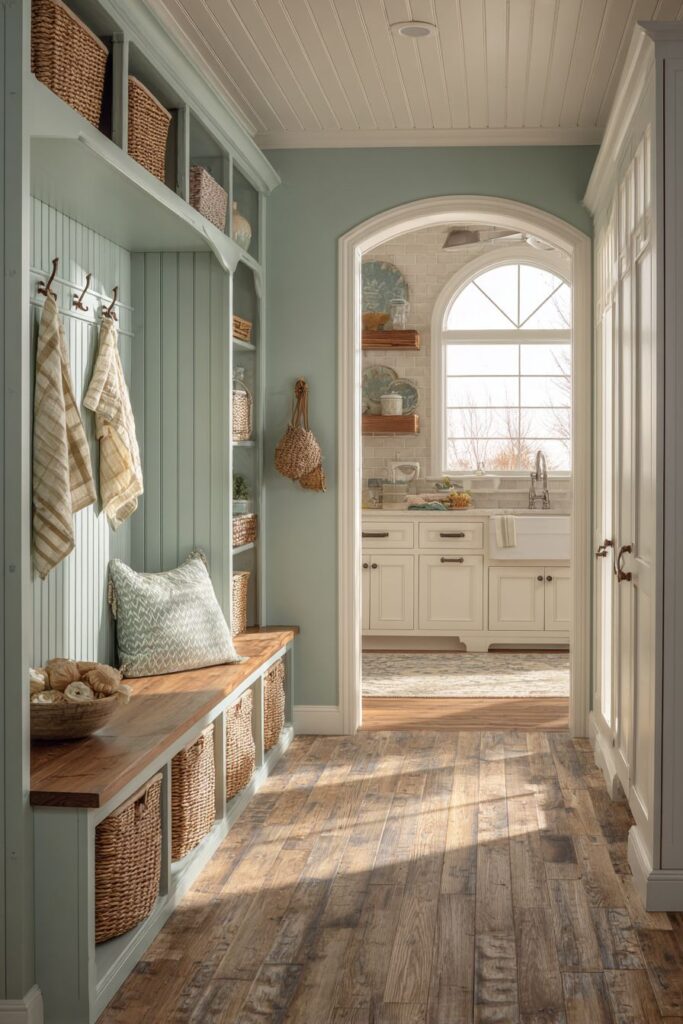
Woven baskets within each cubby offer flexible storage for seasonal items, sports equipment, and daily necessities, their natural textures adding warmth while concealing clutter. Vintage hooks holding aprons and tea towels create functional storage that doubles as cottage decoration, while a small bench provides practical seating for removing shoes and organizing daily transitions.
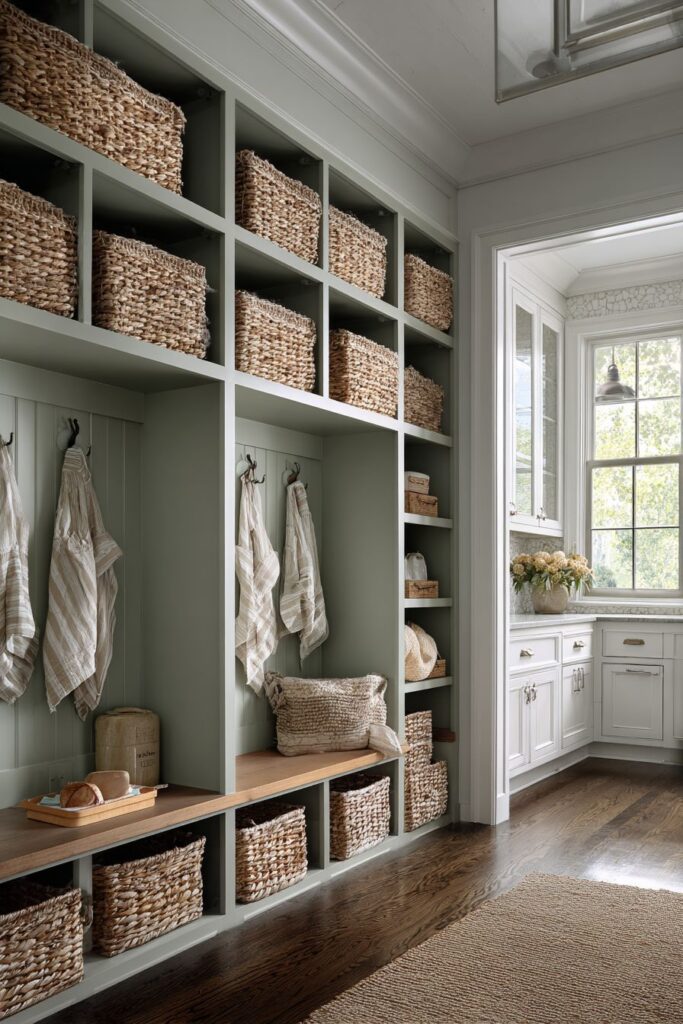
The connection between mudroom and cottage kitchen creates seamless flow while maintaining distinct functions for each space. White cabinets and natural wood accents in the kitchen beyond provide visual continuity that makes the transition feel intentional rather than accidental. Natural lighting from a transom window illuminates the organized space while maintaining the cottage kitchen’s connection to natural rhythms and outdoor activities.

Key Design Tips:
- Paint mudroom storage in soft gray-green for calming transition colors
- Use woven baskets within built-in cubbies for flexible, attractive storage
- Install vintage hooks for both function and cottage decorative appeal
- Include seating for practical daily use and comfortable transitions
- Connect mudroom and kitchen design elements for seamless flow
13. Layered Cottage Window Treatments
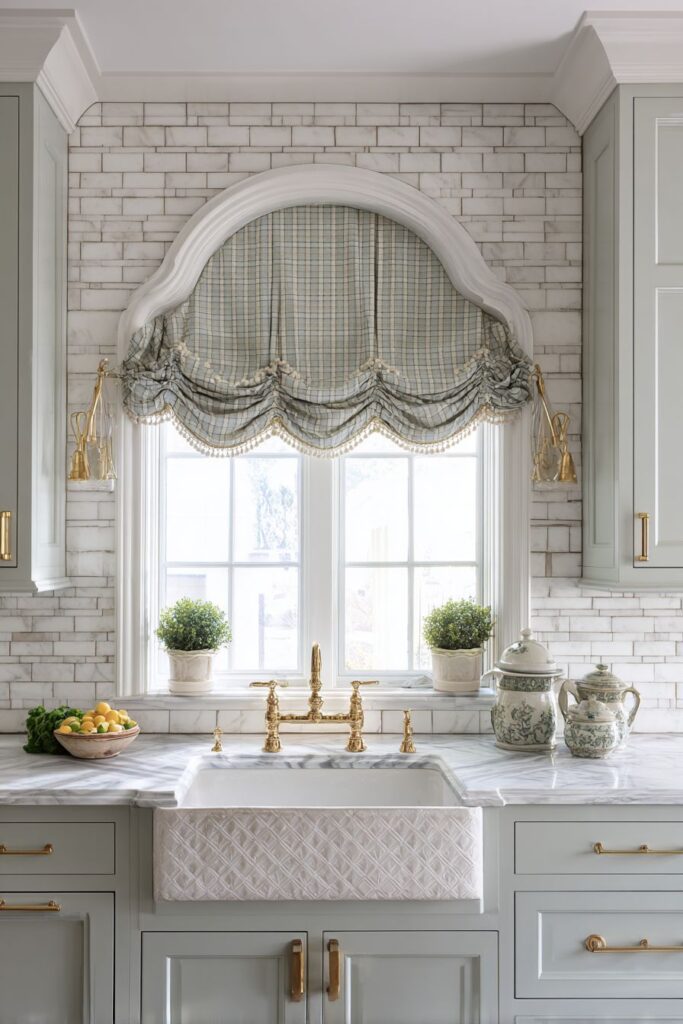
The cottage kitchen window treatment featuring layered textiles creates privacy and light control while adding softness and pattern that define cottage interior design. Linen cafe curtains in natural beige provide the base layer, their relaxed texture and neutral color allowing natural light to filter through while maintaining casual cottage elegance.

A coordinating valance in soft blue checks adds pattern and color without overwhelming the window treatment, creating the kind of thoughtful layering that makes cottage design feel collected and comfortable rather than decorated. This combination of solid and pattern, natural and colored elements exemplifies cottage design principles of mixing textures and patterns in harmonious ways.
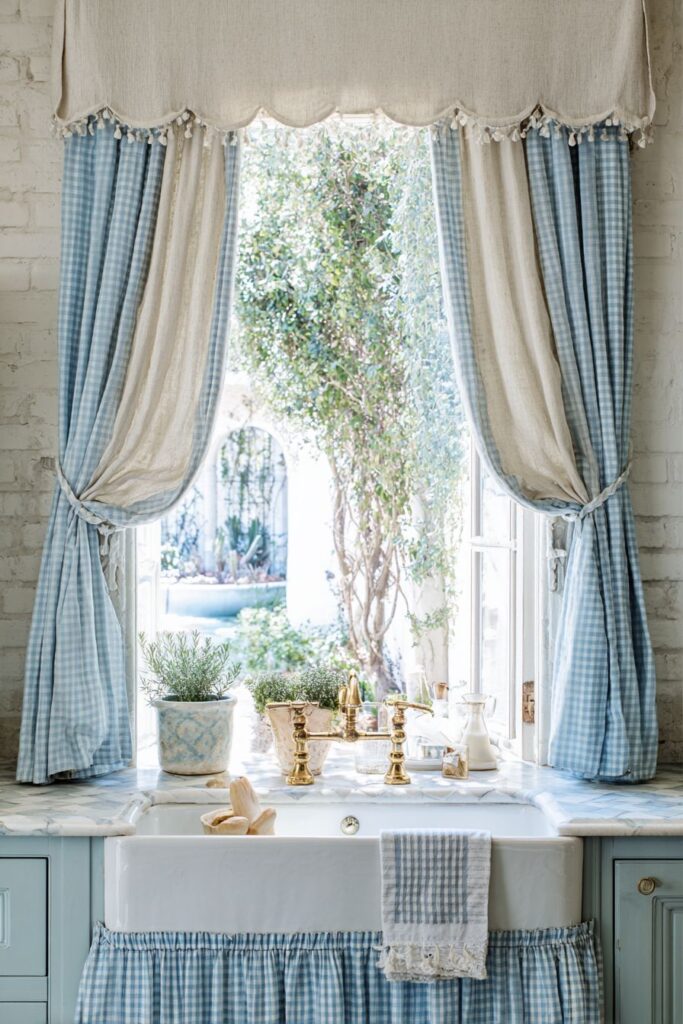
The window overlooking a small herb garden connects the indoor kitchen with outdoor growing spaces, reinforcing cottage values of self-sufficiency and connection to nature. The white apron-front sink with brass fixtures provides the perfect workspace for both food preparation and garden care, while natural light filtering through the layered fabrics creates soft patterns on the white subway tile backsplash.

Key Design Tips:
- Layer linen cafe curtains with patterned valances for cottage window charm
- Choose natural beige as a base color that works with any cottage color scheme
- Add soft blue checks for pattern that won’t overwhelm small kitchen windows
- Position herb gardens outside kitchen windows for convenient access and beautiful views
- Use window treatments that filter light while maintaining connection to outdoors
14. Architectural Cottage Kitchen Details
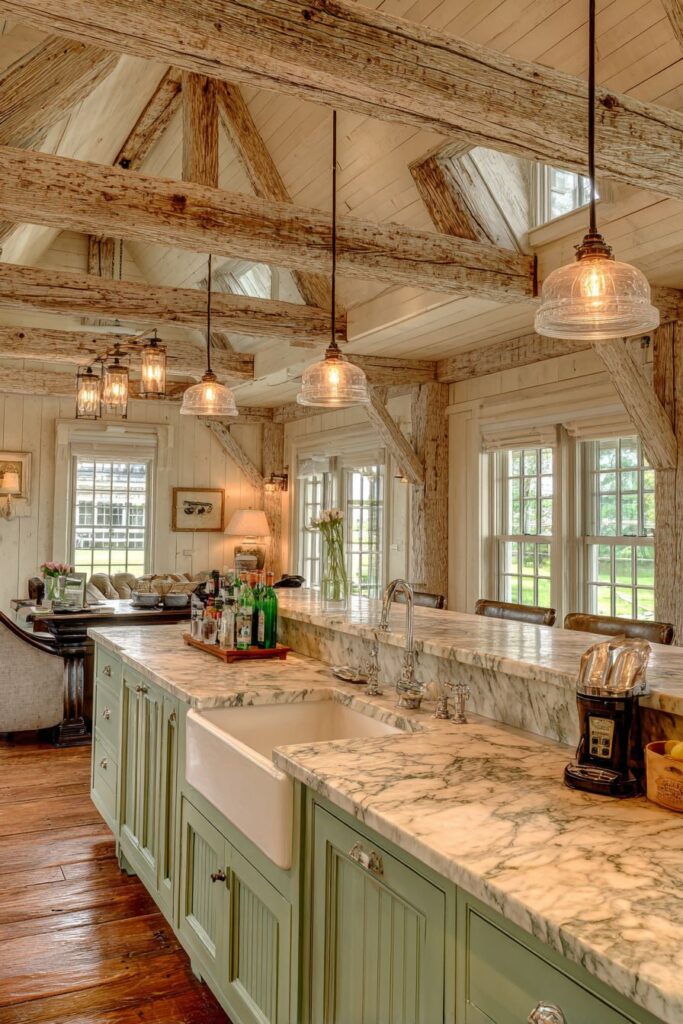
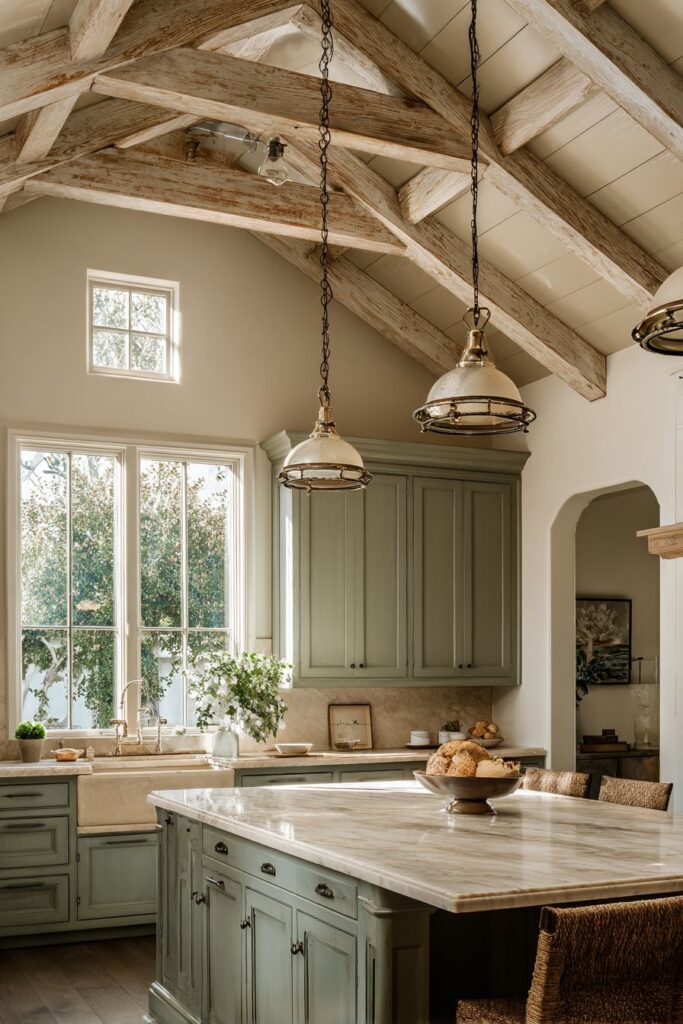
The cottage kitchen ceiling showcasing exposed wooden beams painted in soft white creates architectural interest while maintaining the light, airy feeling that makes cottage kitchens so welcoming. Vintage-style pendant lights hanging at varying heights over the kitchen island create visual rhythm while providing task lighting that adapts to different activities and times of day.
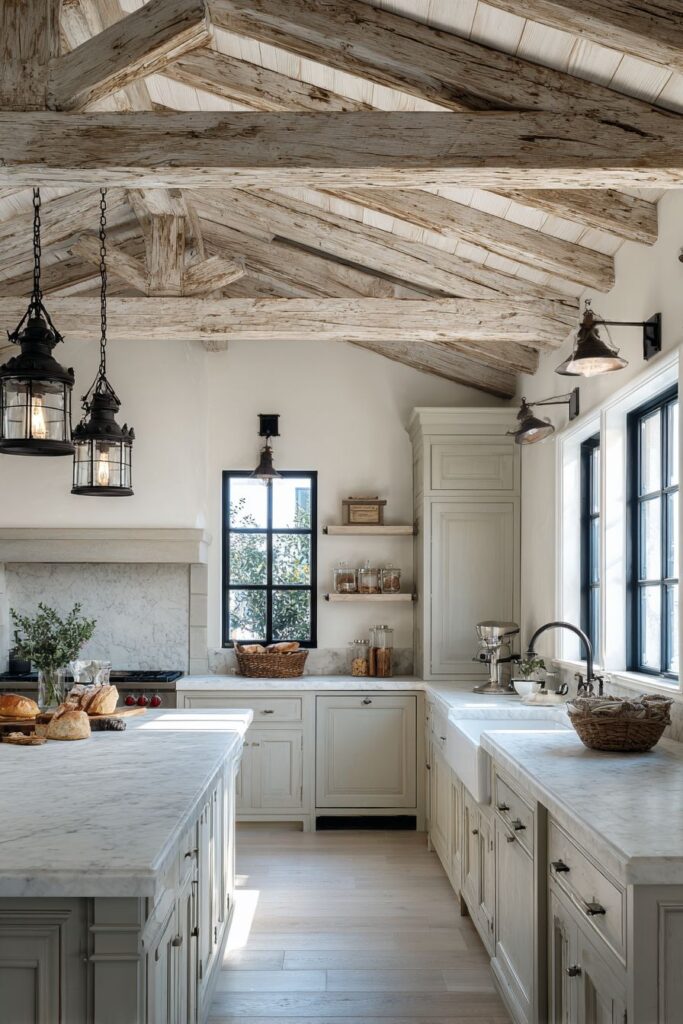
The exposed beams provide the perfect mounting system for pendant lights while adding structural honesty that cottage style values. Their white finish keeps the ceiling feeling light and open while maintaining the rustic character that defines cottage architecture. The varying heights of pendant lights create visual interest while accommodating different users and activities around the island.
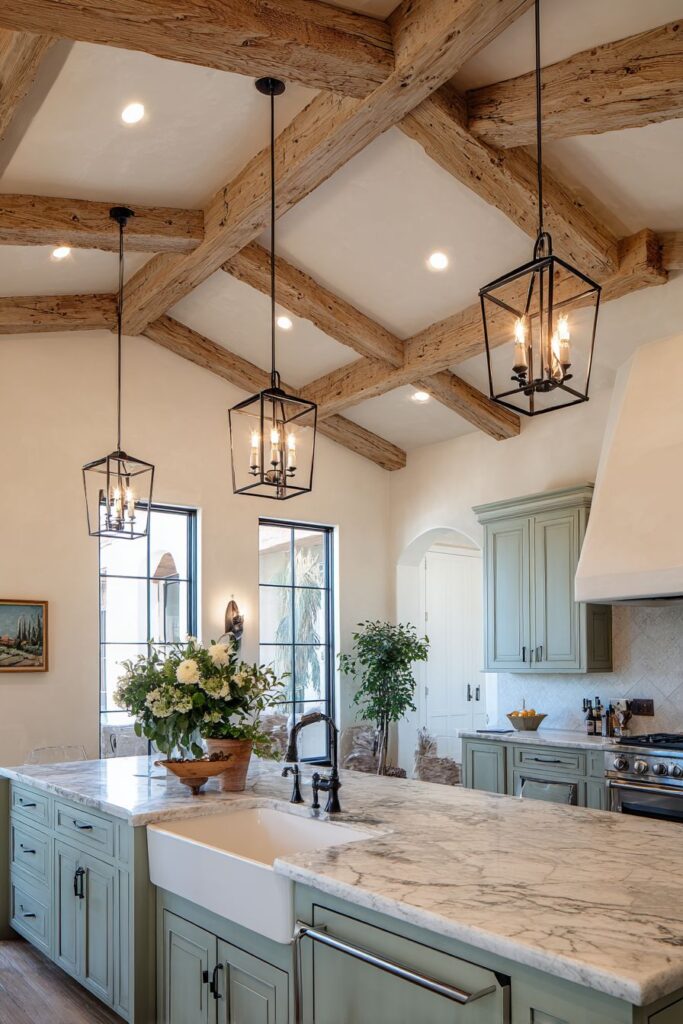
Sage green painted cabinets below provide sophisticated color that complements the white beams while adding depth and richness to the cottage kitchen palette. Marble countertops and a farmhouse sink complete the cottage kitchen elements, their traditional forms and quality materials ensuring that style and function work together seamlessly. The balance of natural and artificial lighting highlights architectural elements while creating the layered illumination that makes cottage kitchens feel warm and inviting.
Key Design Tips:
- Paint exposed beams white to maintain light, airy cottage kitchen atmosphere
- Hang pendant lights at varying heights for visual interest and functional lighting
- Use sage green cabinet colors for sophisticated cottage palette depth
- Choose marble countertops that will age beautifully while providing luxury durability
- Balance architectural elements with functional needs for successful cottage design
15. Handcrafted Cottage Kitchen Backsplash

The cottage kitchen backsplash featuring handmade ceramic tiles in soft cream creates a custom backdrop that celebrates craftsmanship while providing practical wall protection. Subtle color variations and irregular edges prove that imperfection creates character, embodying cottage values that celebrate handmade quality over machine-made uniformity.
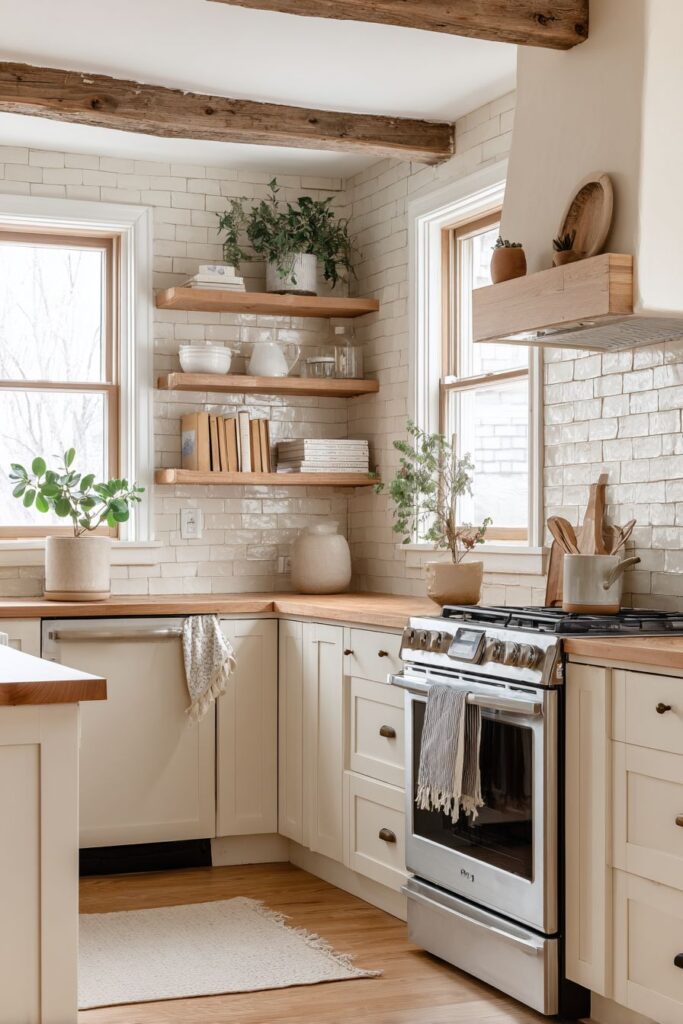
The tiles extending from counter to ceiling behind the range area create a dramatic focal point while providing maximum protection in the kitchen’s hardest-working area. Floating shelves displaying vintage cookbooks and small potted plants add functionality and life to the backsplash area, proving that even utilitarian surfaces can serve multiple purposes in cottage design.
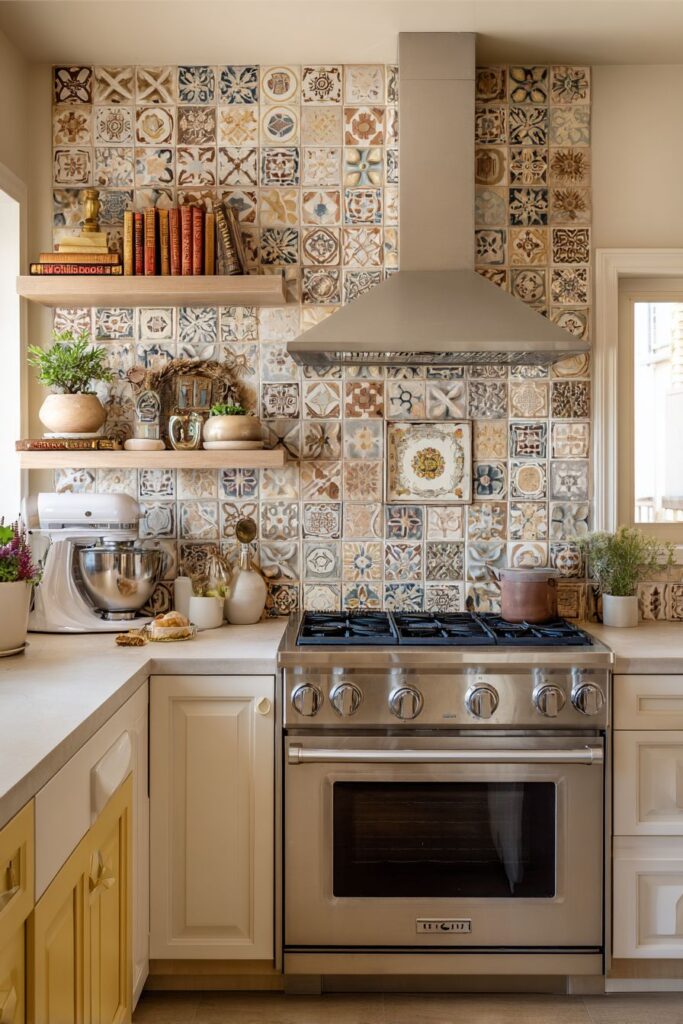
Soft yellow painted cabinets provide a cheerful backdrop that complements the cream tiles while adding cottage warmth and personality. Natural wood countertops add organic texture that balances the ceramic tiles while providing practical workspace that improves with use. Warm kitchen lighting highlights the handcrafted tile texture while creating the inviting atmosphere that makes cottage kitchens gathering places rather than just cooking spaces.
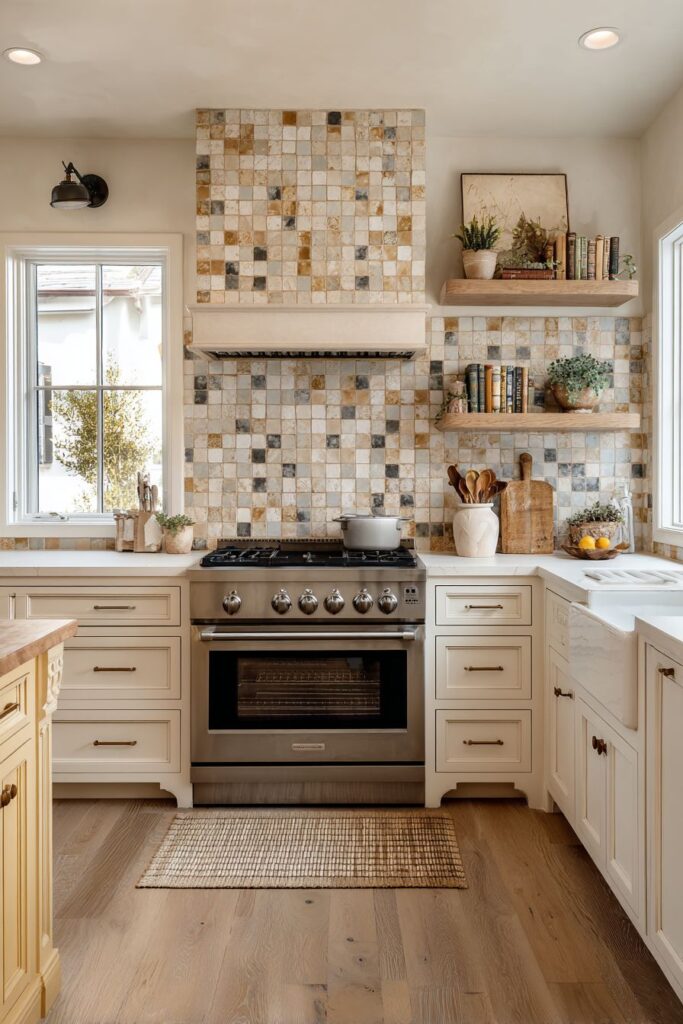
Key Design Tips:
- Choose handmade ceramic tiles for authentic cottage character and unique variations
- Extend backsplash tiles from counter to ceiling for maximum impact and protection
- Install floating shelves on backsplash areas for additional functional display space
- Paint cabinets in soft yellow for cheerful cottage warmth and personality
- Use natural wood countertops that develop character and patina over time
16. Cottage Kitchen Banquette Seating
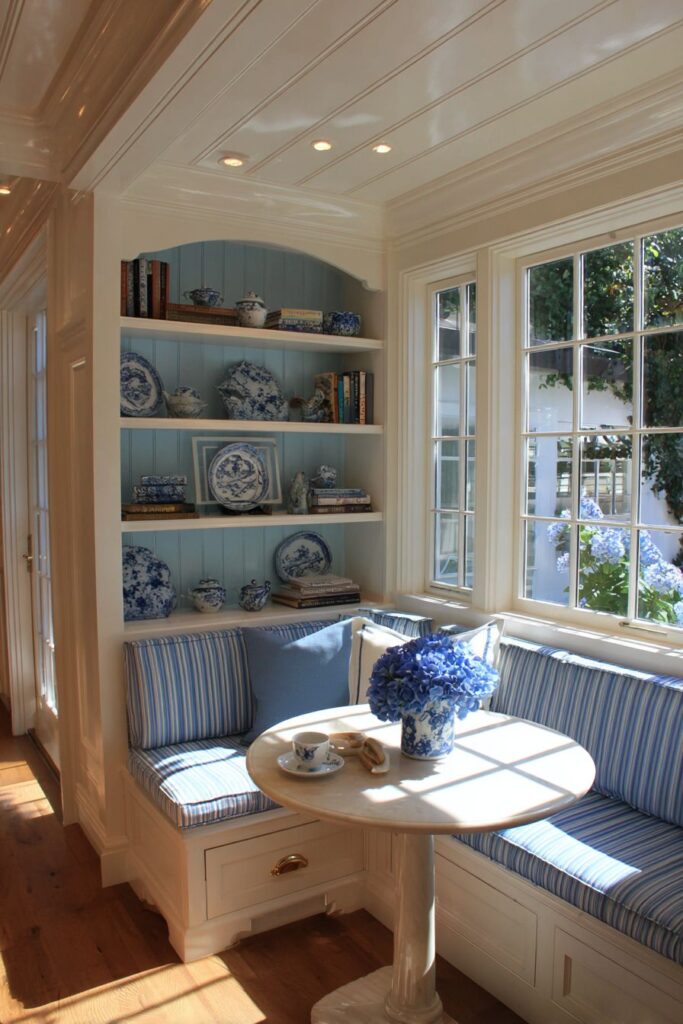
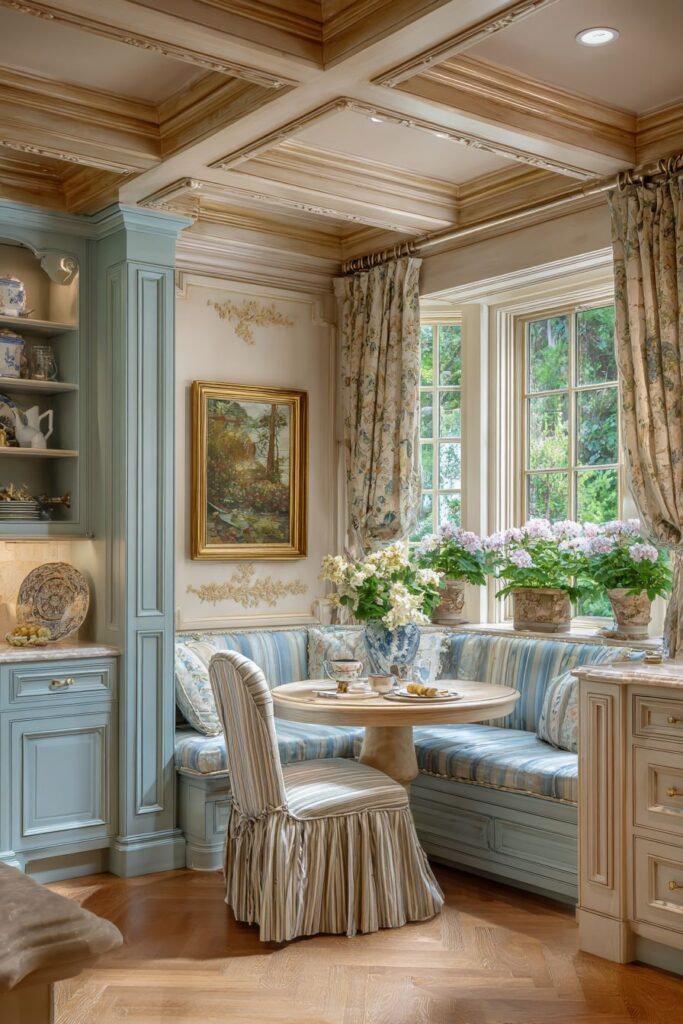
The cottage kitchen banquette seating area creates an intimate dining space where built-in bench seating upholstered in blue and white striped fabric maximizes seating while adding classic cottage pattern and color. The banquette arrangement around a small round table creates the perfect spot for morning coffee and casual meals, proving that cottage kitchens can accommodate dining without requiring separate rooms.

Windows on two sides provide ample natural light while creating the kind of bright, cheerful atmosphere that makes cottage kitchens feel welcoming throughout the day. Potted geraniums on the windowsills add living color while connecting the indoor space with cottage gardening traditions. The combination of natural light and living plants creates a garden room feeling within the kitchen environment.

Painted wood paneling and open shelving with everyday dishes provide cottage architecture and practical storage that keeps the dining area connected with kitchen functions. The integration of dining and kitchen elements proves that cottage design excels at creating multi-functional spaces that feel cohesive rather than divided. Golden hour lighting creates warm, inviting atmosphere that transforms simple meals into special occasions.
Key Design Tips:
- Build in banquette seating for maximum cottage kitchen seating in minimal space
- Choose blue and white striped fabric for classic cottage pattern and timeless appeal
- Position dining areas near windows for natural light and garden connections
- Plant geraniums in windowsill pots for cottage flower tradition and living color
- Use painted wood paneling to add cottage architecture and visual warmth
17. Concealed Cottage Kitchen Storage
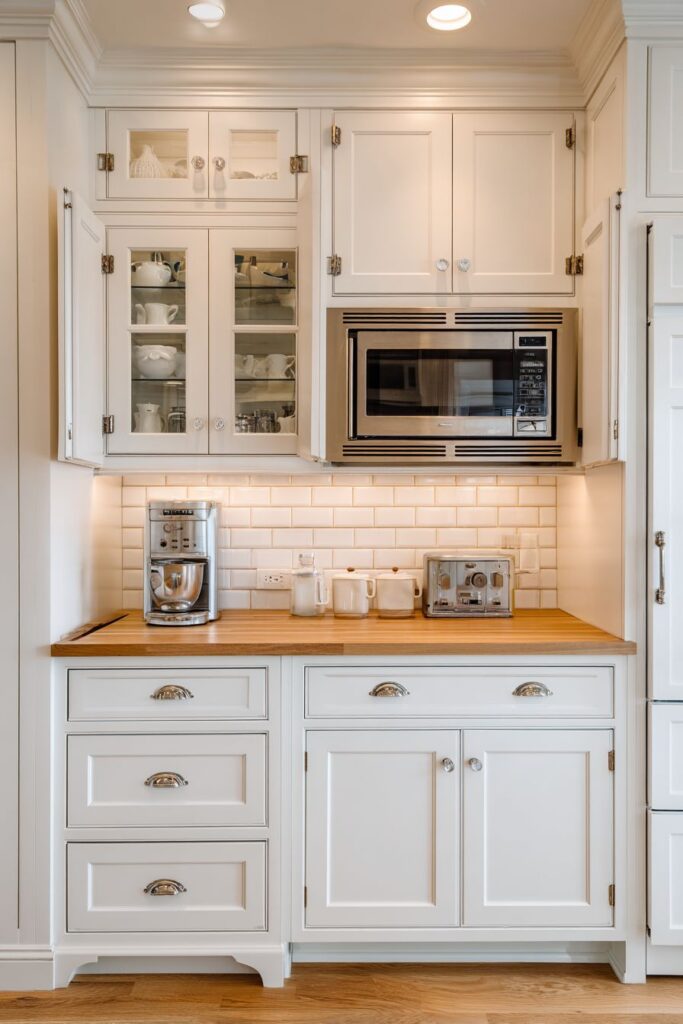
The cottage kitchen appliance garage featuring custom cabinetry demonstrates how modern conveniences can be incorporated into cottage design without compromising aesthetic integrity. Tambour doors conceal small appliances while maintaining easy access, proving that cottage kitchens can be both beautiful and practical for contemporary cooking needs.

The surrounding white painted cabinets with glass knobs provide clean storage that doesn’t compete with the appliance garage while maintaining cottage hardware traditions. Butcher block countertops add warmth and natural texture that balances the clean lines of modern appliances, while subway tile backsplash provides classic cottage backdrop that never goes out of style.
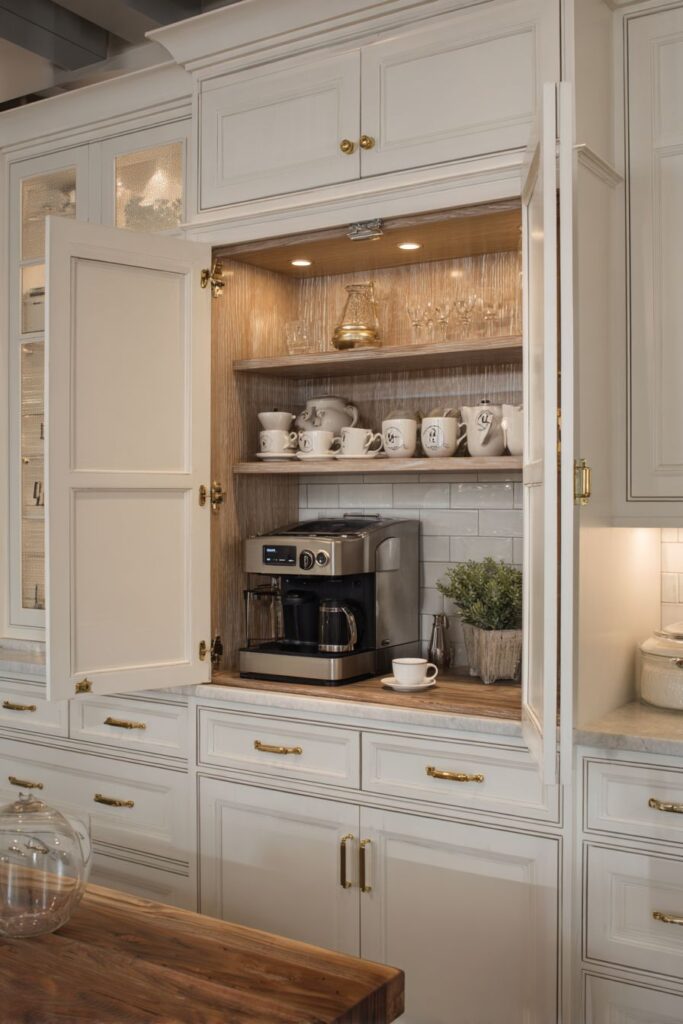
Brass hardware throughout adds warmth and connection to cottage traditions while providing the quality and durability that cottage design values. The clever storage solution proves that thoughtful design can accommodate modern appliances while maintaining cottage character, creating kitchens that work for contemporary families while honoring traditional aesthetic values.

Key Design Tips:
- Design appliance garages with tambour doors for easy access and clean concealment
- Use white painted cabinets as neutral backdrop for specialty storage solutions
- Choose glass knobs for cottage cabinet hardware that adds subtle elegance
- Install butcher block countertops to add warmth and natural texture
- Include brass hardware details for cottage authenticity and lasting quality
18. Traditional Cottage Plate Display
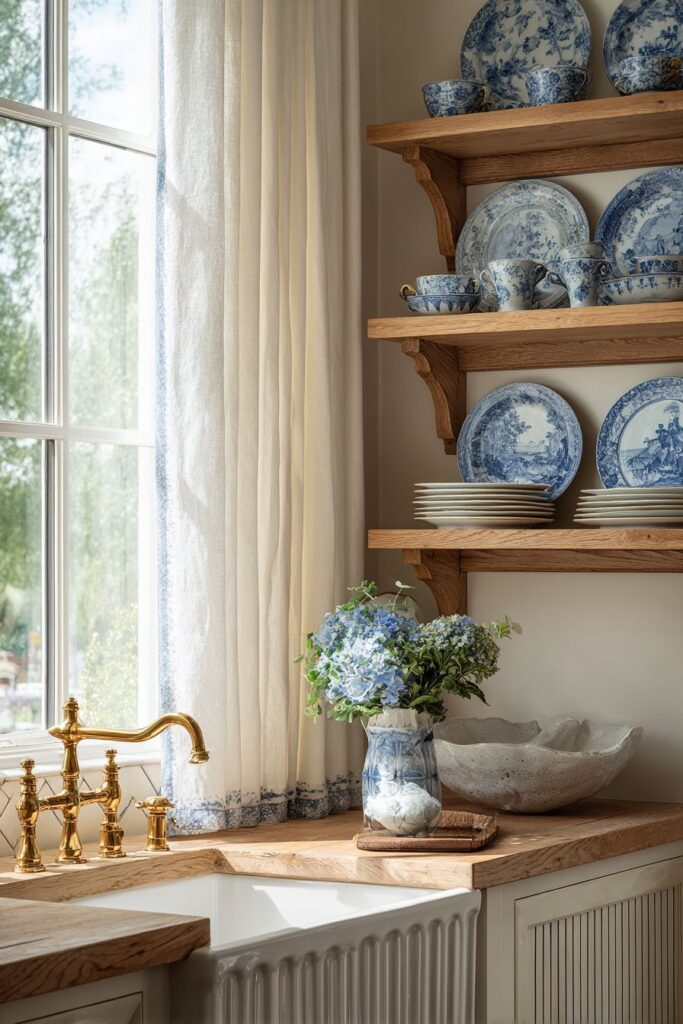
The cottage kitchen plate rack mounted above the sink creates functional storage that doubles as decorative display, showcasing a collection of vintage blue and white transferware plates and bowls. The wooden rack with traditional grooved shelving and small rail for cups and saucers embodies cottage values of displaying everyday beauty while keeping dishes accessible for regular use.

The plate rack positioning above the white apron-front sink with brass fixtures creates a logical storage solution that keeps clean dishes within easy reach while adding visual interest to the kitchen’s primary work area. This traditional storage method connects modern cottage kitchens with historical practices while providing practical solutions for small kitchen storage needs.
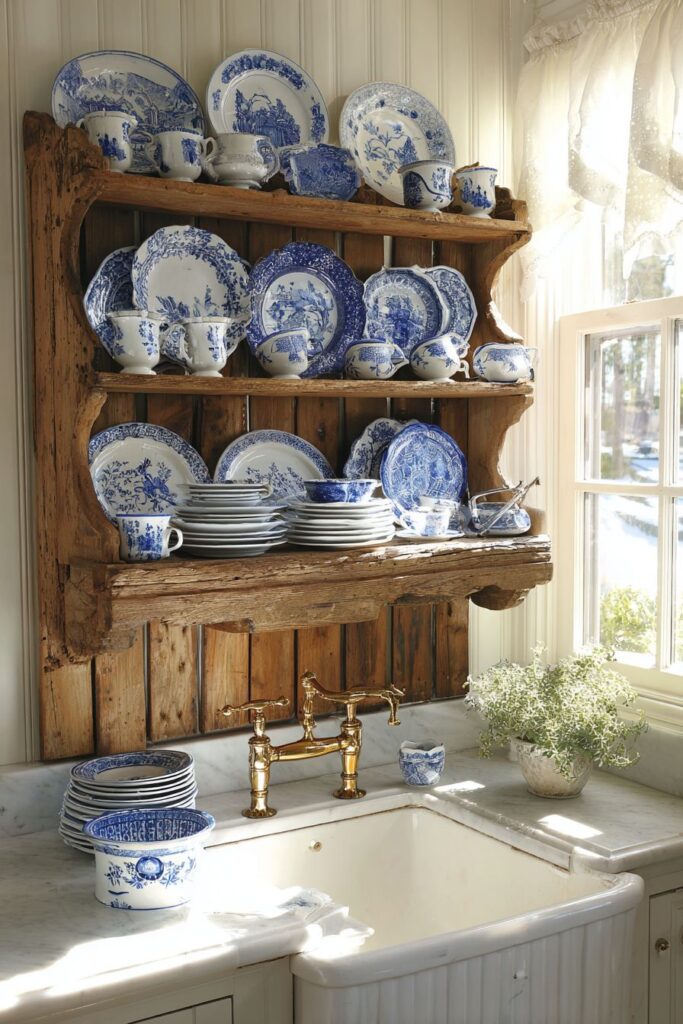
Simple white curtains dressing the window above the sink maintain the clean, uncluttered look that allows the blue and white transferware to shine as the focal point. Natural daylight illuminating the displayed china creates ever-changing color and shadow patterns while highlighting the beauty of everyday objects elevated through thoughtful display and cottage design principles.

Key Design Tips:
- Install traditional plate racks for storage that doubles as cottage kitchen decoration
- Choose blue and white transferware for classic cottage color and pattern combinations
- Position dish storage near sinks for logical workflow and convenient access
- Use simple white curtains that won’t compete with displayed dish collections
- Mount plate racks to take advantage of natural window light for dish display
19. Organized Cottage Spice Storage
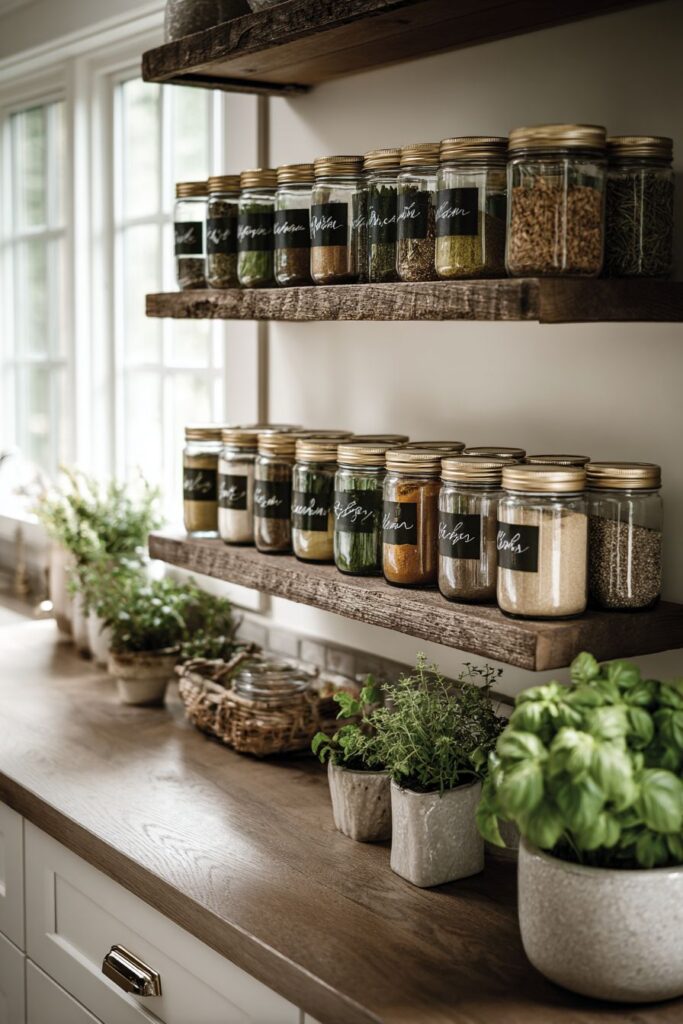
The cottage kitchen spice storage system featuring vintage apothecary jars demonstrates how organization can be beautiful when approached with cottage design principles. Hand-written labels in calligraphy script add personal touches that make the spice collection feel curated and special, transforming everyday cooking ingredients into decorative elements.

Floating wooden shelves provide the perfect display system for apothecary jars while maintaining the natural materials preference that defines cottage style. The proximity of fresh herbs from the garden in small ceramic pots creates connections between indoor storage and outdoor growing, reinforcing cottage values of self-sufficiency and fresh ingredient cooking.
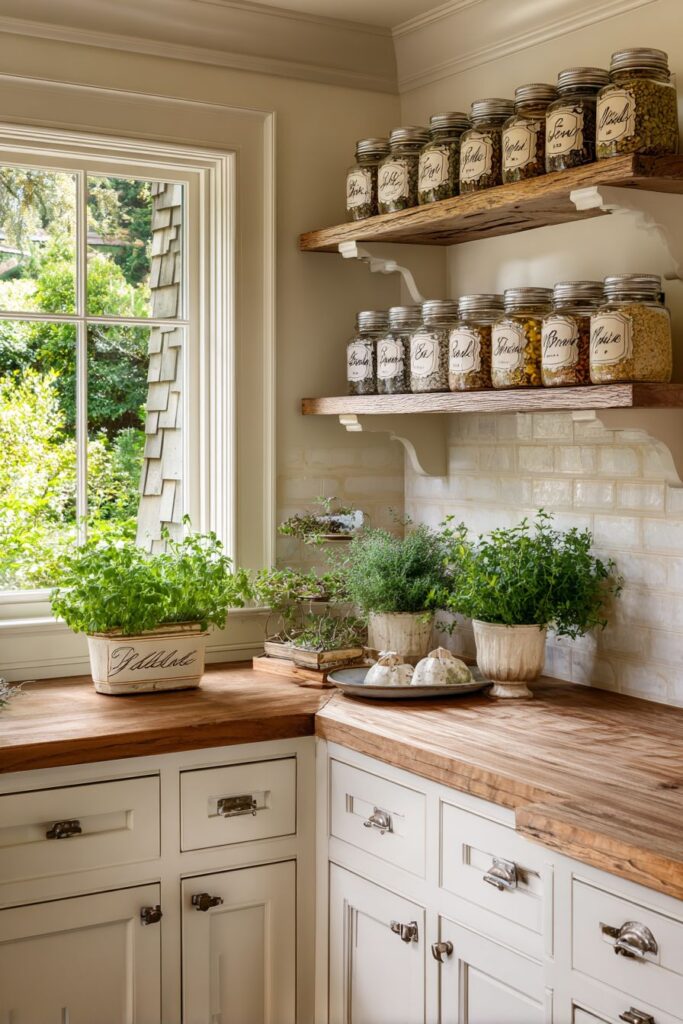
The spice storage positioning above butcher block counters and white painted cabinets creates an organized workspace where ingredients are visible and accessible while adding visual interest to the cottage kitchen. Soft natural lighting from nearby windows highlights the organized spice collection while creating the kind of functional beauty that makes cottage kitchens both practical and inspiring for daily cooking.

Key Design Tips:
- Use vintage apothecary jars for spice storage that adds cottage character and function
- Create hand-written labels in calligraphy for personal touches and organized beauty
- Install floating wooden shelves for display storage that maintains cottage material preferences
- Position herbs and spices near windows for natural lighting and easy identification
- Combine stored and fresh herbs for complete cottage kitchen seasoning solutions
20. Authentic Cottage Kitchen Flooring
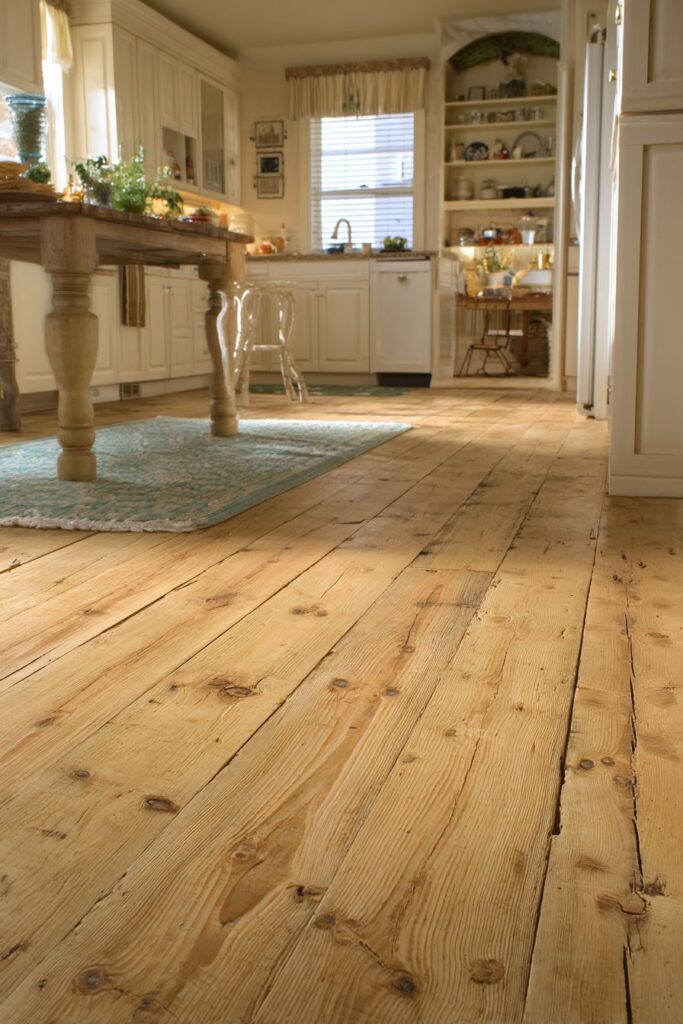
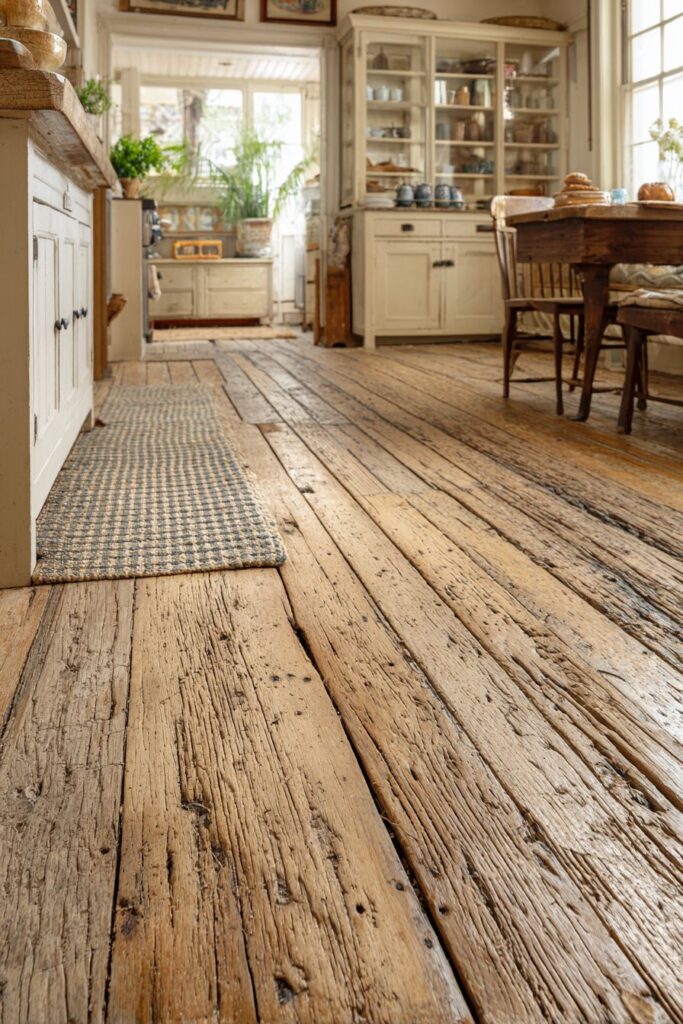
The cottage kitchen floor featuring wide-plank reclaimed wood in natural honey tones provides the foundation for authentic cottage style while telling stories through visible grain patterns and gentle wear marks that speak to genuine age and use. This flooring choice embodies cottage values of authentic materials over artificial recreations, providing beauty that increases with time rather than diminishing.

A vintage braided rug in soft blues and creams provides comfort at the sink area while adding textile warmth and cottage color to the natural wood foundation. The rug positioning creates practical cushioning for extended standing while adding the kind of layered comfort that makes cottage kitchens feel homey rather than institutional.

The cottage kitchen showcasing painted cabinets in cream with natural wood open shelving creates perfect harmony with the reclaimed wood floors while maintaining the mixed material approach that defines successful cottage design. A farmhouse table serving as the central island completes the cottage kitchen elements, providing additional workspace while reinforcing the farmhouse heritage that influences cottage style.
Key Design Tips:
- Choose wide-plank reclaimed wood flooring for authentic cottage character and natural beauty
- Select honey tones that complement both warm and cool cottage color schemes
- Use braided rugs for traditional cottage textile comfort and pattern
- Position rugs at sink areas for practical comfort during extended food preparation
- Combine painted cabinets with natural wood elements for classic cottage material mixing
Why These Cottage Kitchen Designs Represent the Best of the Style
These twenty cottage kitchen designs represent the pinnacle of cottage style because they successfully balance authenticity with functionality, creating spaces that honor traditional craftsmanship while meeting contemporary living needs. Each design incorporates the essential elements that define cottage kitchens: natural materials, vintage character, handcrafted details, and the kind of lived-in comfort that makes these spaces the heart of the home.
The white shaker cabinets with brushed brass hardware featured in multiple designs provide the clean foundation that allows other cottage elements to shine while maintaining the timeless appeal that makes cottage kitchens eternally stylish. Butcher block countertops appear throughout because they offer the perfect combination of functionality and natural beauty, developing character and patina that improves with age and use.
Vintage storage solutions like plate racks, apothecary jars, and repurposed furniture demonstrate cottage resourcefulness while creating functional beauty that cannot be achieved with mass-produced alternatives. These authentic vintage elements connect modern cottage kitchens with historical traditions while providing practical solutions for contemporary storage needs.
The integration of natural light and garden elements throughout these designs reinforces cottage connections to nature and seasonal rhythms. Herb gardens, window boxes, and garden views create living beauty that changes throughout the year while providing fresh ingredients that connect cooking with growing traditions that define cottage lifestyle values.
Handcrafted details like exposed beams, handmade tiles, and custom cabinetry elevate these cottage kitchens beyond simple rustic styling, proving that cottage design can incorporate luxury elements while maintaining authentic character. These quality materials and traditional construction methods ensure that cottage kitchens age beautifully while providing lasting value and enduring style.
Mixed textures and layered comfort appear in every successful cottage kitchen design, from braided rugs and linen curtains to copper pots and ceramic dishes. This thoughtful layering creates visual richness and tactile comfort that makes cottage kitchens gathering places where families naturally congregate and memories are made around shared meals and daily activities.
These designs succeed because they understand that cottage kitchens must serve multiple functions while maintaining aesthetic coherence. Breakfast nooks, coffee stations, reading corners, and herb gardens prove that cottage kitchens can accommodate diverse activities while feeling unified and purposeful rather than scattered and chaotic.
The authentic color palettes featuring soft whites, sage greens, duck egg blues, and natural wood tones create sophisticated cottage schemes that feel both timeless and fresh. These carefully chosen colors complement each other while providing enough variety to create visual interest without overwhelming the clean, comfortable atmosphere that defines successful cottage design.
Most importantly, these cottage kitchen designs celebrate the imperfect beauty that makes cottage style so appealing and enduring. Distressed finishes, mismatched elements, and visible wear patterns create character that cannot be manufactured, proving that the most beautiful cottage kitchens are those that show evidence of being lived in and loved throughout their lifetime.
Conclusion
Cottage kitchens represent more than a design style—they embody a way of living that values authenticity, comfort, and the beauty found in everyday moments. These twenty designs demonstrate that cottage style can be adapted to contemporary needs while maintaining the essential character that makes these kitchens so enduringly popular and deeply satisfying to inhabit.
The key to successful cottage kitchen design lies in understanding that perfection is not the goal; rather, it’s the thoughtful combination of natural materials, vintage character, and functional beauty that creates spaces where cooking becomes a pleasure and gathering feels natural. Whether you’re drawn to the classic appeal of white shaker cabinets or the organized beauty of vintage storage solutions, cottage kitchens offer endless opportunities for creating spaces that reflect personal style while honoring timeless traditions.
As you consider incorporating cottage elements into your own kitchen, remember that authenticity trumps coordination, that imperfection creates character, and that the most beautiful cottage kitchens are those that show evidence of being lived in and loved. Start with quality natural materials, add vintage character through carefully chosen accessories and finishes, and always prioritize function alongside beauty to create cottage kitchens that will serve your family beautifully for generations to come.
"As an Amazon Associate, I earn from qualifying purchases."
