
In today’s fast-paced world, the kitchen has evolved far beyond its traditional role as merely a place for food preparation. It has become the heart of the home—a gathering space where families connect, friends celebrate, and memories are created. The thoughtful design of this essential space can profoundly impact our daily lives, influencing everything from our cooking enthusiasm to our overall sense of well-being. When it comes to creating a kitchen that truly resonates with our desire for authenticity and connection to nature, nothing surpasses the timeless appeal of earthy design concepts.
Earthy kitchen design celebrates the raw beauty of natural materials, embracing imperfections and organic textures that tell stories of craftsmanship and time. This design philosophy draws inspiration from the earth itself—incorporating warm terracotta tones, rich wood grains, natural stone formations, and sustainable materials that create spaces filled with warmth, character, and soul. Unlike sterile modern designs that prioritize perfection, earthy kitchens invite touch, encourage gathering, and create an atmosphere where cooking becomes a meditative, joyful experience.
The following collection presents thirty distinct earthy kitchen concepts, each showcasing unique combinations of natural materials, organic textures, and earth-inspired color palettes. From rustic farmhouse charm to contemporary natural elegance, these designs demonstrate how various earthy elements can be woven together to create kitchens that are both functionally superior and emotionally nurturing. Whether you’re drawn to the warmth of reclaimed wood, the authenticity of handmade tiles, or the grounding presence of natural stone, you’ll discover inspiration for transforming your kitchen into a space that celebrates the beauty of our natural world.
1. Terracotta Warmth with Honey Oak Harmony
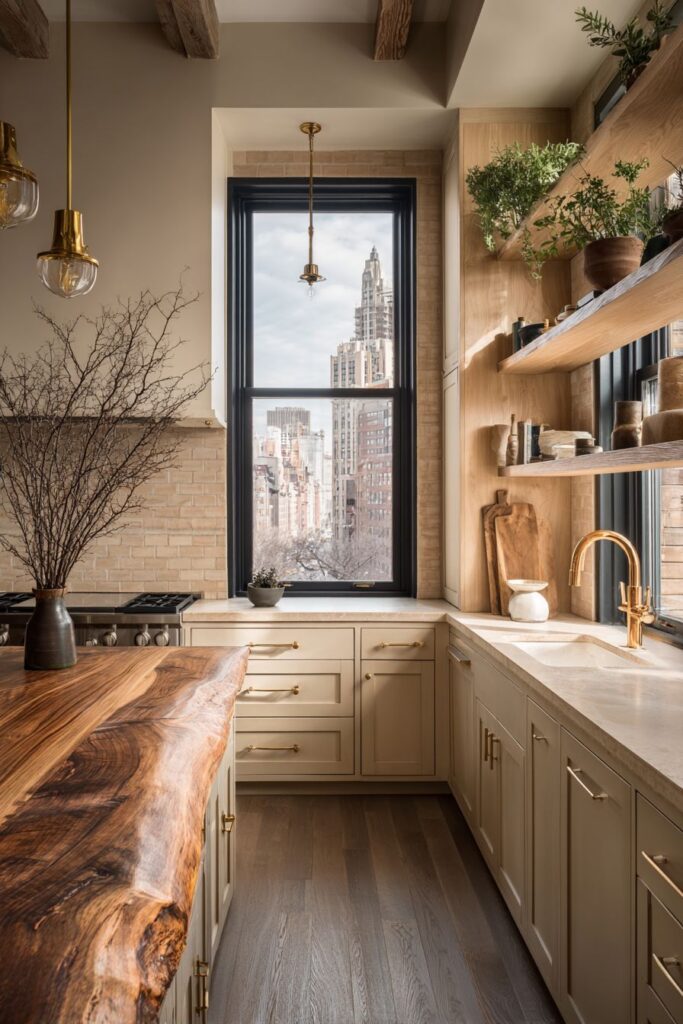
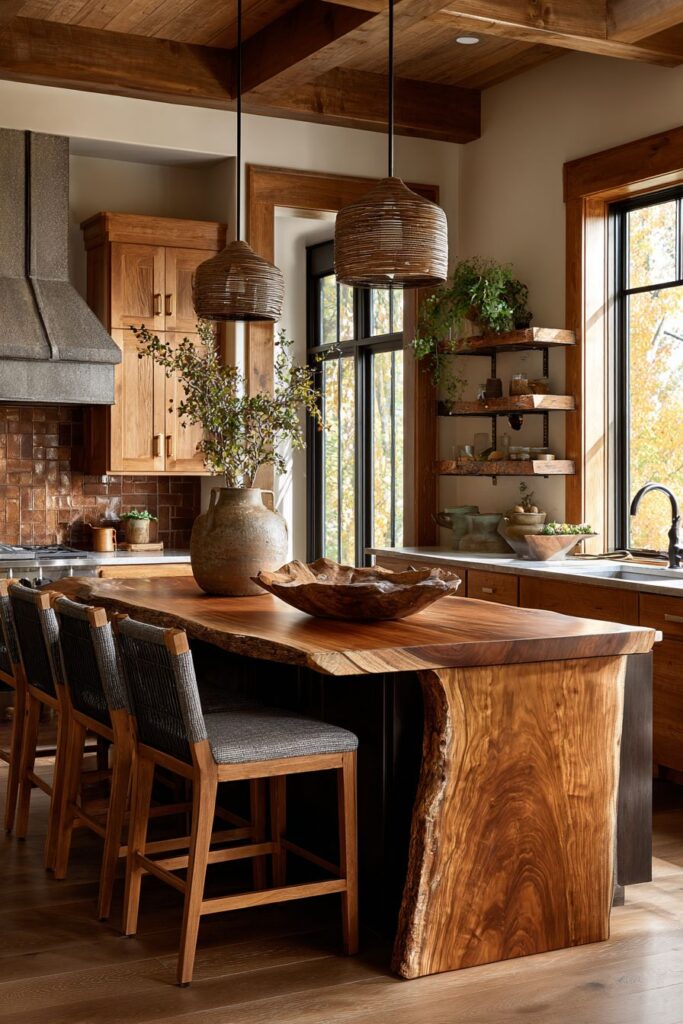
Step into a kitchen where warm terracotta subway tiles create a stunning backsplash that immediately draws the eye with their earthy sophistication. These tiles, with their rich clay origins, bring an authentic warmth that transforms the entire space into a welcoming culinary haven. The natural variations in each tile’s surface catch and reflect light differently, creating a dynamic visual experience that changes throughout the day as natural sunlight shifts and dances across the surface.
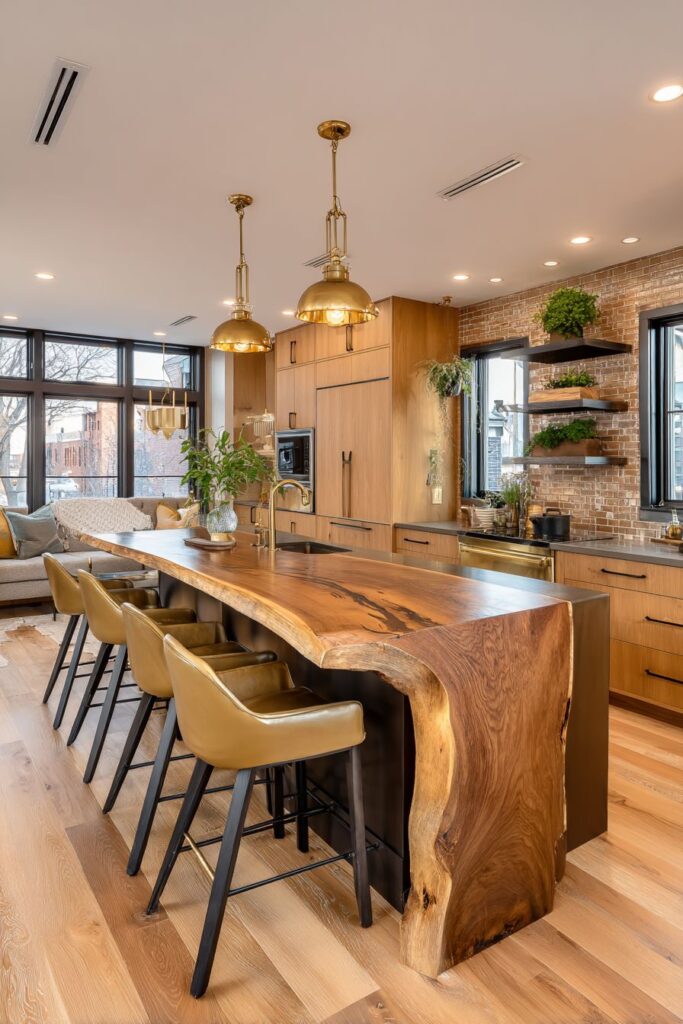
The natural oak cabinetry, finished in honey tones, provides a perfect complement to the terracotta backdrop. Each cabinet door showcases the wood’s natural grain patterns, telling the story of the tree’s growth and creating unique fingerprints that make this kitchen truly one-of-a-kind. The live-edge walnut countertop on the kitchen island serves as a magnificent centerpiece, its organic curves and visible wood grain patterns creating a striking contrast to the more structured elements while maintaining the overall earthy aesthetic.
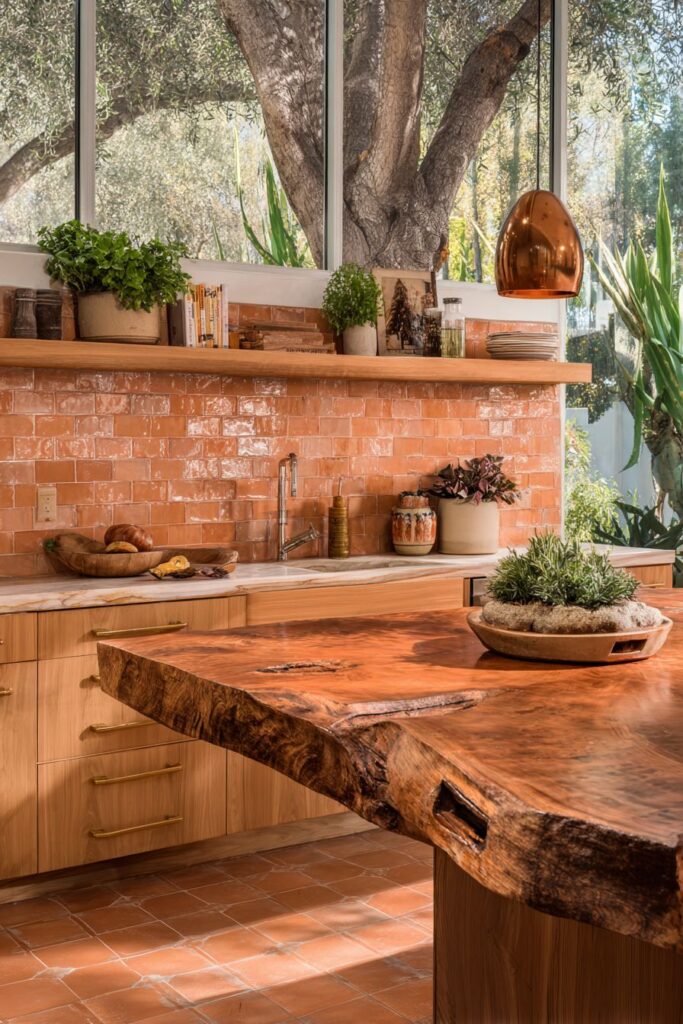
Brass hardware and pendant lights add layers of warmth that elevate the natural materials without overwhelming them. The golden undertones in the brass create a beautiful bridge between the terracotta tiles and honey oak, while potted herbs on open shelving introduce living elements that bring fresh scents and vibrant greens into the space. Large windows flood the area with soft natural lighting, highlighting the organic textures and creating an atmosphere that feels both grounded and uplifting.
The thoughtful integration of these elements creates a kitchen that feels both timeless and contemporary, where every surface invites touch and every corner tells a story of natural beauty and skilled craftsmanship.
Key Design Tips:
- Choose terracotta tiles with natural variations to create visual depth and authentic character in your backsplash design
- Select honey-toned oak cabinetry to complement warm earth tones while showcasing beautiful natural wood grain patterns
- Incorporate live-edge countertops to add organic curves and unique character that celebrates the natural form of the wood
- Use brass hardware and fixtures to bridge warm tones and add sophisticated metallic accents that enhance rather than compete
- Add fresh herbs in pots to introduce living elements that provide both functionality and natural fragrance to your cooking space
2. Sage Green Serenity with Reclaimed Wood Character
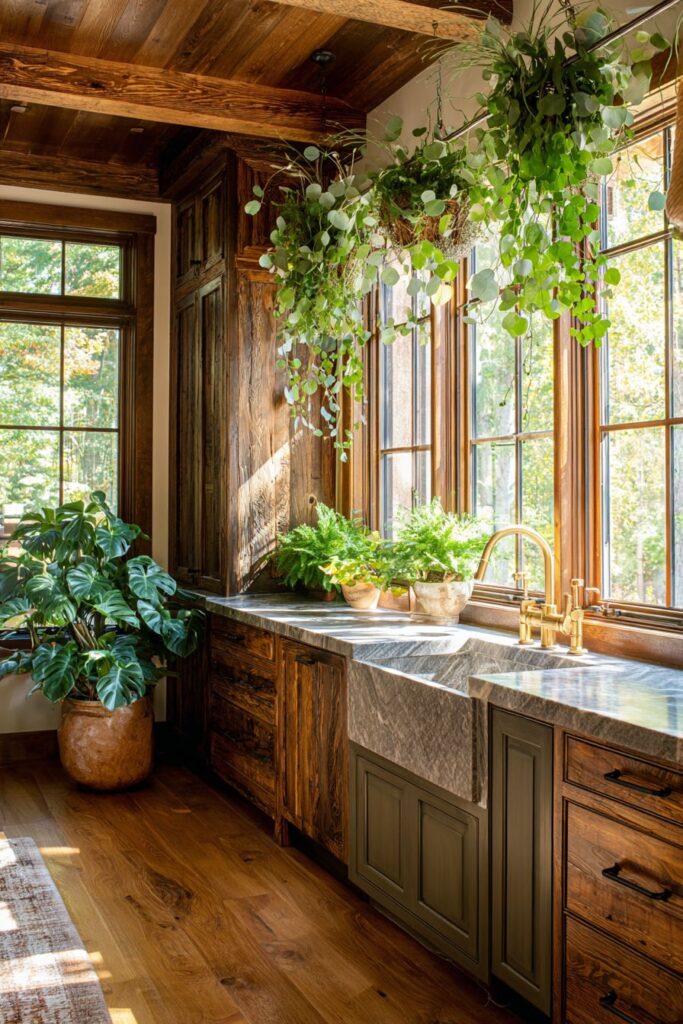
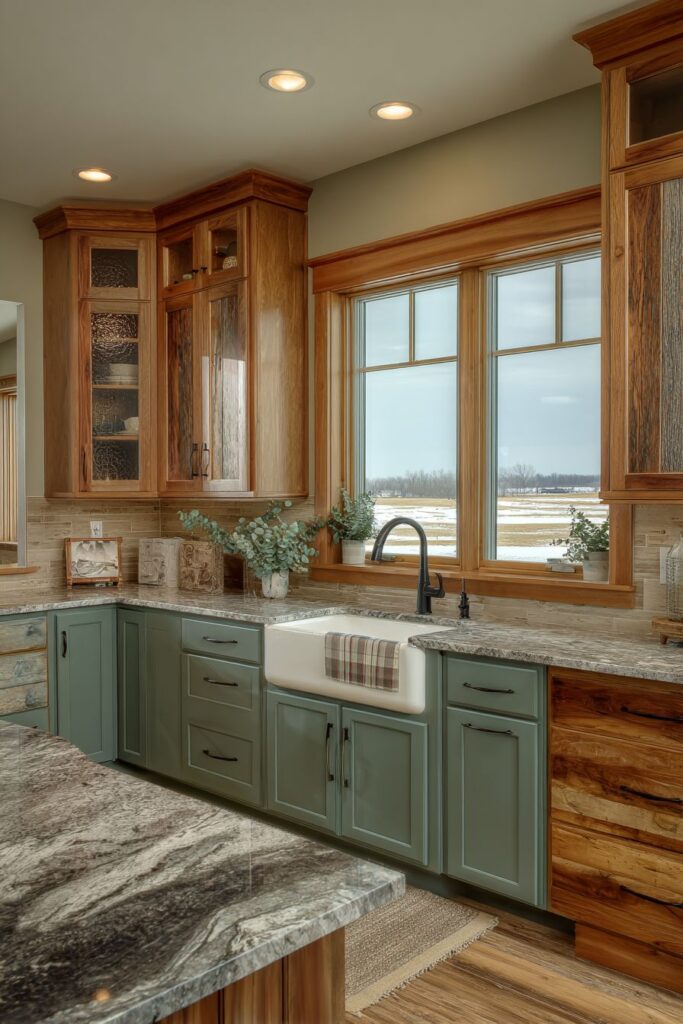
This kitchen concept embraces the calming influence of sage green painted lower cabinets, a color that evokes the peaceful essence of Mediterranean herbs and brings a sense of tranquility to the bustling activity of meal preparation. The sage green serves as a grounding element that pairs beautifully with the reclaimed barn wood finish of the upper cabinetry, creating a two-toned design approach that adds visual interest while maintaining earthy sophistication.
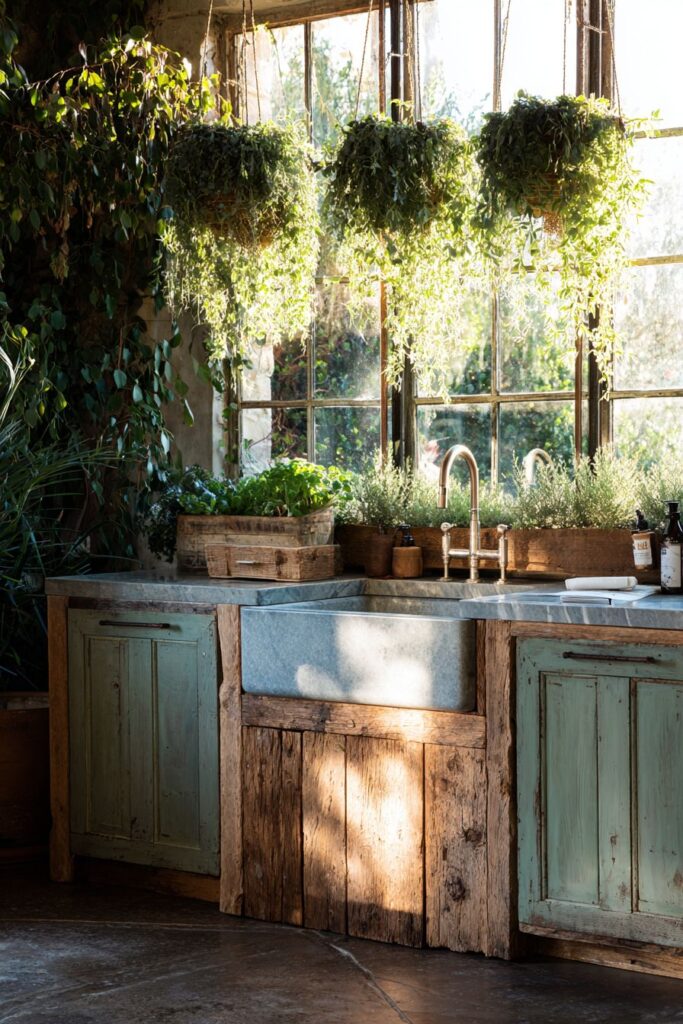
The reclaimed barn wood upper cabinets bring authentic history into the space, with each board carrying the patina and character marks that speak of decades weathering the elements. These natural imperfections—nail holes, weathering patterns, and grain variations—transform the cabinetry into a storytelling element that adds depth and personality to the kitchen’s overall narrative.
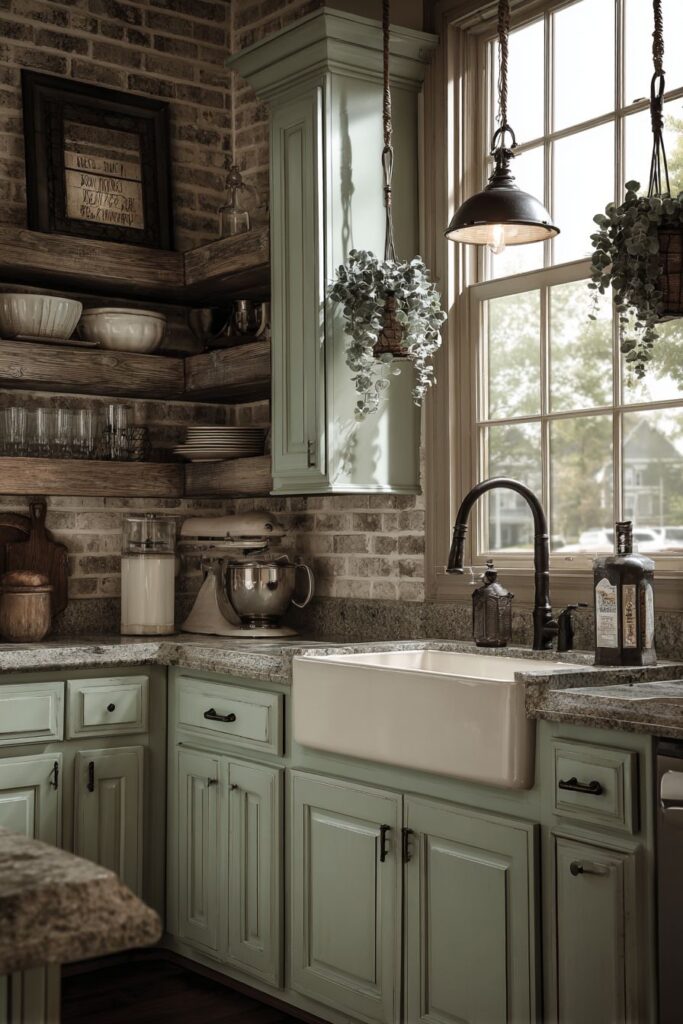
A farmhouse sink positioned beneath a window creates the perfect workspace for food preparation while offering views to the outdoors. Hanging eucalyptus plants frame the window, their silvery-green leaves adding aromatic elements that complement the sage cabinetry while creating a connection to nature. The honed granite countertops in warm grey tones provide a durable work surface that showcases natural stone variations, each vein and mineral inclusion telling the geological story of the stone’s formation.
Golden hour lighting streaming through the windows emphasizes the natural material textures and creates an atmosphere of warmth and welcome that makes this kitchen a natural gathering place for family and friends.
Key Design Tips:
- Paint lower cabinets in sage green to create a calming, herb-inspired foundation that connects to nature
- Use reclaimed barn wood for upper cabinets to add authentic character and historical depth to your design
- Install a farmhouse sink beneath a window to create a functional workspace with natural views and light
- Choose honed granite countertops to showcase natural stone variations while providing durable work surfaces
- Hang eucalyptus plants near windows to add aromatic elements that complement the herbal color palette
3. Waterfall Edge Stone Island Centerpiece
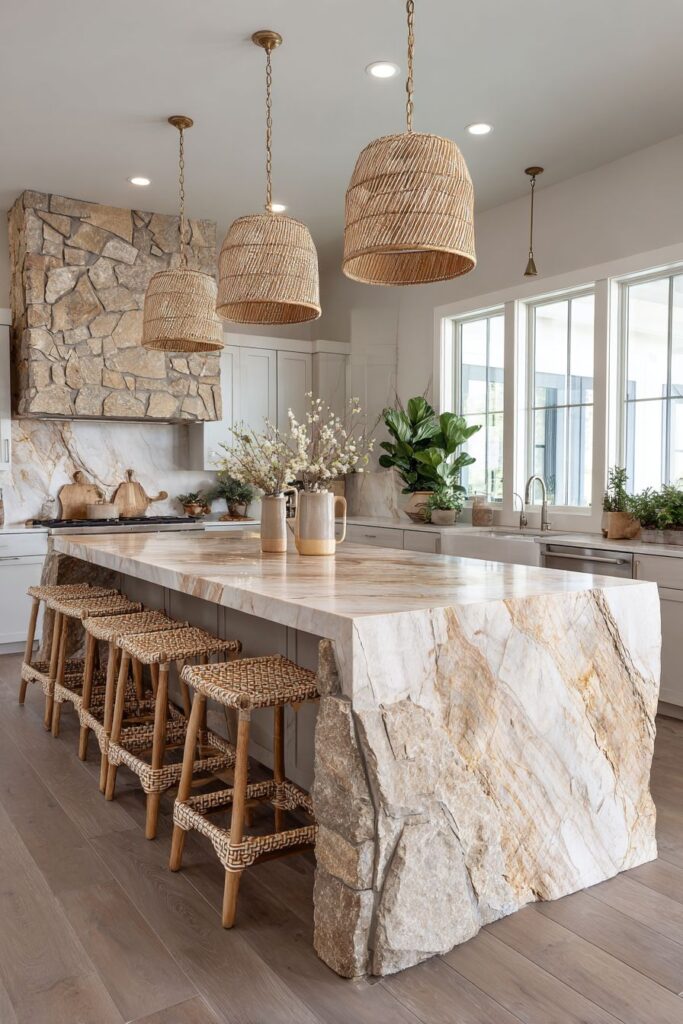
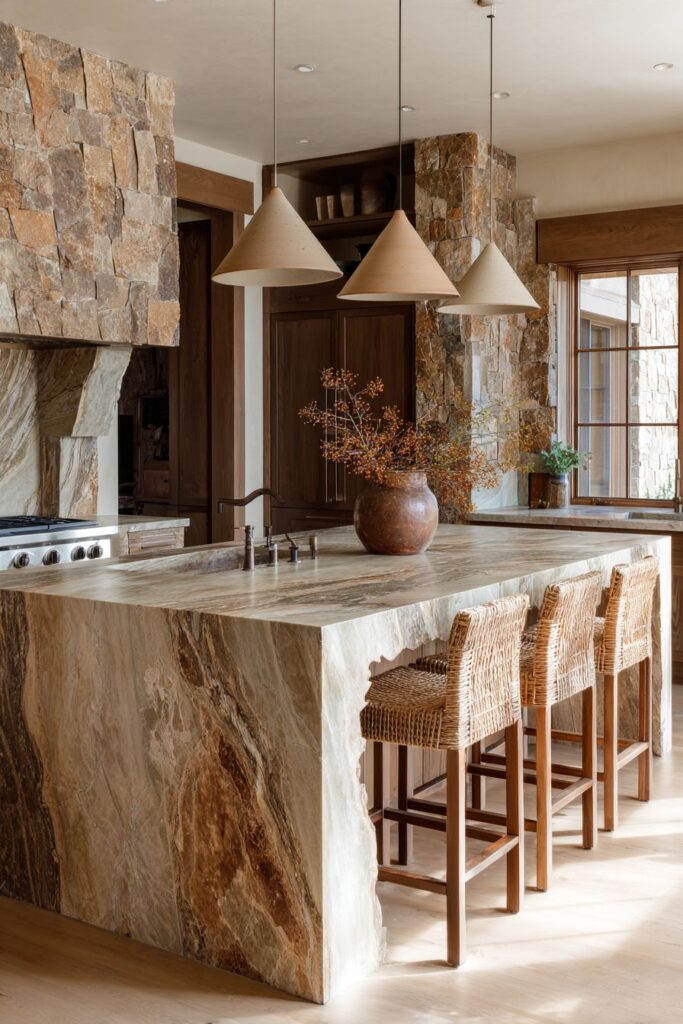
The kitchen island takes center stage in this design, featuring a waterfall edge countertop in warm quartzite that showcases nature’s artistic hand through stunning veining patterns. This dramatic countertop treatment creates a continuous flow from horizontal surface to vertical edge, emphasizing the stone’s natural beauty while adding contemporary sophistication to the earthy design concept.
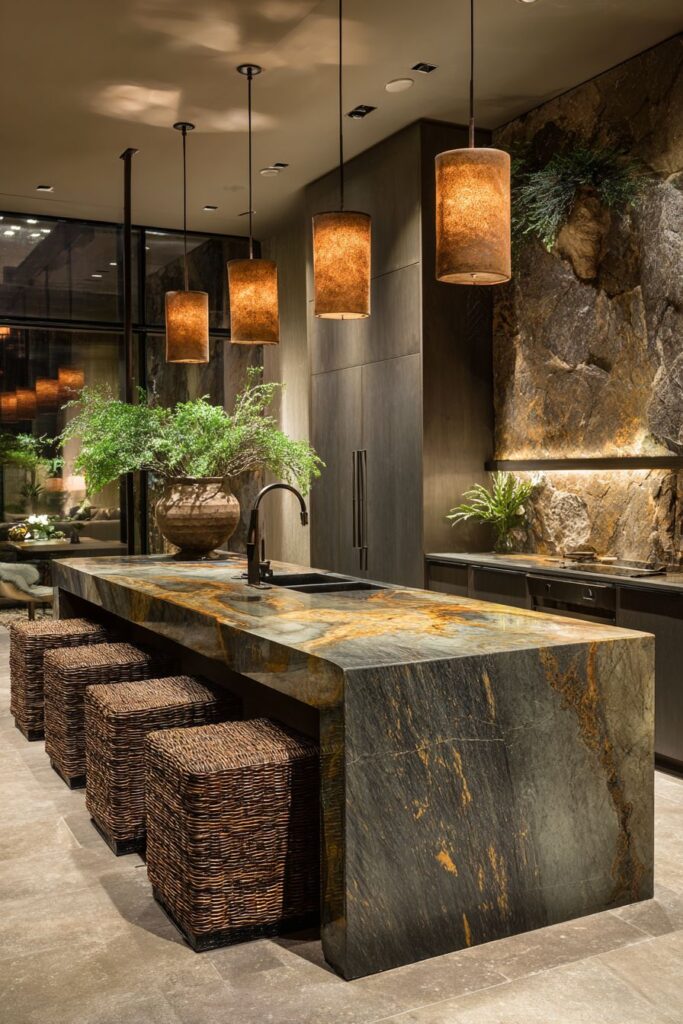
The island base incorporates natural stone cladding in complementary earth tones, creating a foundation that appears to rise organically from the ground. This stone cladding adds texture and visual weight to the island, making it feel like a natural formation rather than a manufactured piece of furniture. The varying tones and textures in the stone create depth and interest that draws the eye and invites closer inspection.
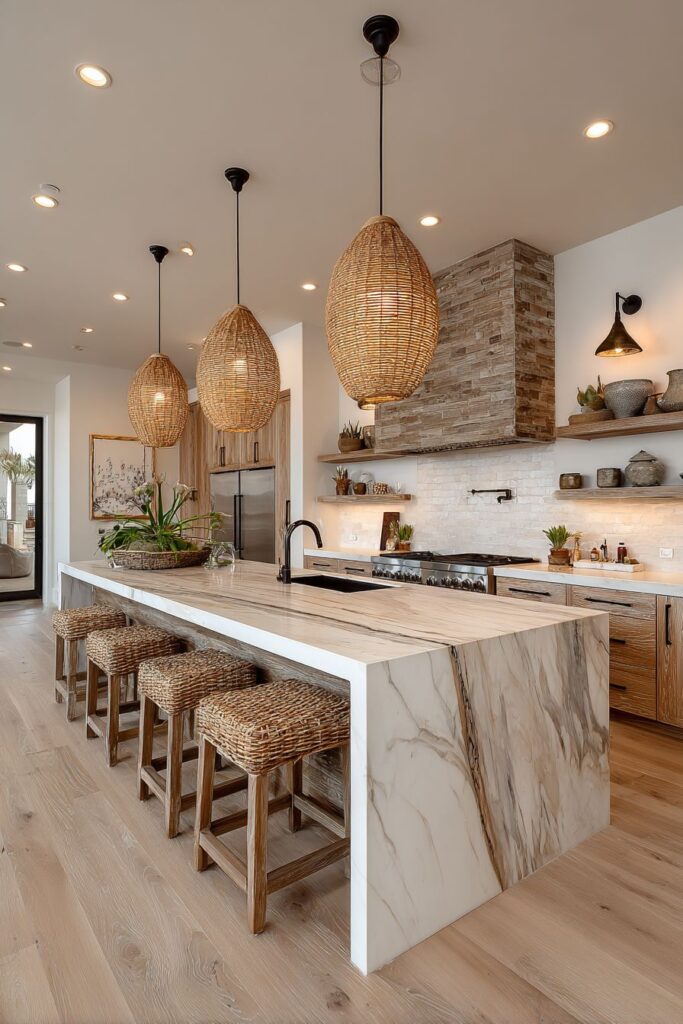
Bar stools with woven rattan seats provide organic texture that contrasts beautifully with the stone’s smooth surfaces. The natural fibers in the rattan add warmth and tactile interest while maintaining the earthy aesthetic through their neutral tones and handcrafted appearance. Above the island, pendant lights with clay ceramic shades cast focused task lighting while their earthy materials echo the natural theme throughout the space.
The combination of these elements creates an island that serves as both a functional workspace and a sculptural centerpiece, demonstrating how natural materials can be elevated to create stunning focal points that celebrate the beauty of the earth.
Key Design Tips:
- Choose quartzite with dramatic veining for waterfall edge countertops to showcase nature’s artistic patterns
- Use natural stone cladding on island bases to create the appearance of organic formation rising from the ground
- Select bar stools with woven rattan seats to add organic texture that complements stone surfaces
- Install clay ceramic pendant lights to provide focused task lighting while maintaining the earthy material palette
- Position the island to take advantage of natural light that will highlight the stone’s veining and texture variations
4. Live-Edge Cedar Storage with Organic Display
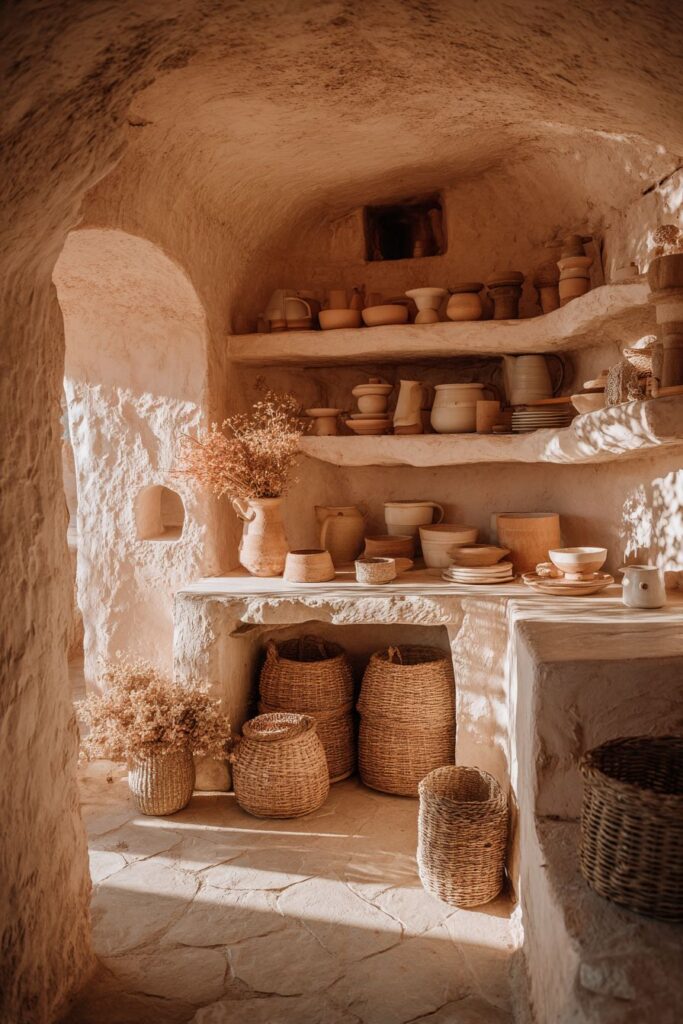
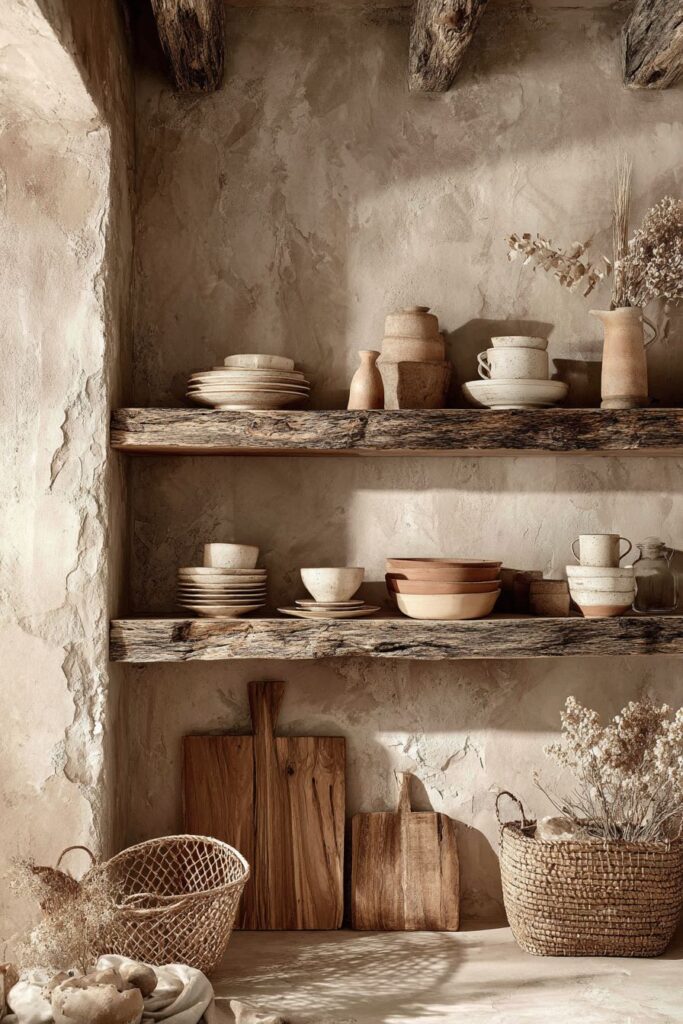
Open floating shelves crafted from live-edge cedar boards transform kitchen storage into an artistic display that celebrates the natural form of wood. These shelves, with their organic edges intact, bring the essence of the forest indoors while providing practical storage solutions that feel more like curated exhibitions than utilitarian necessities. The live edge creates visual movement and interest that draws the eye along the length of each shelf.
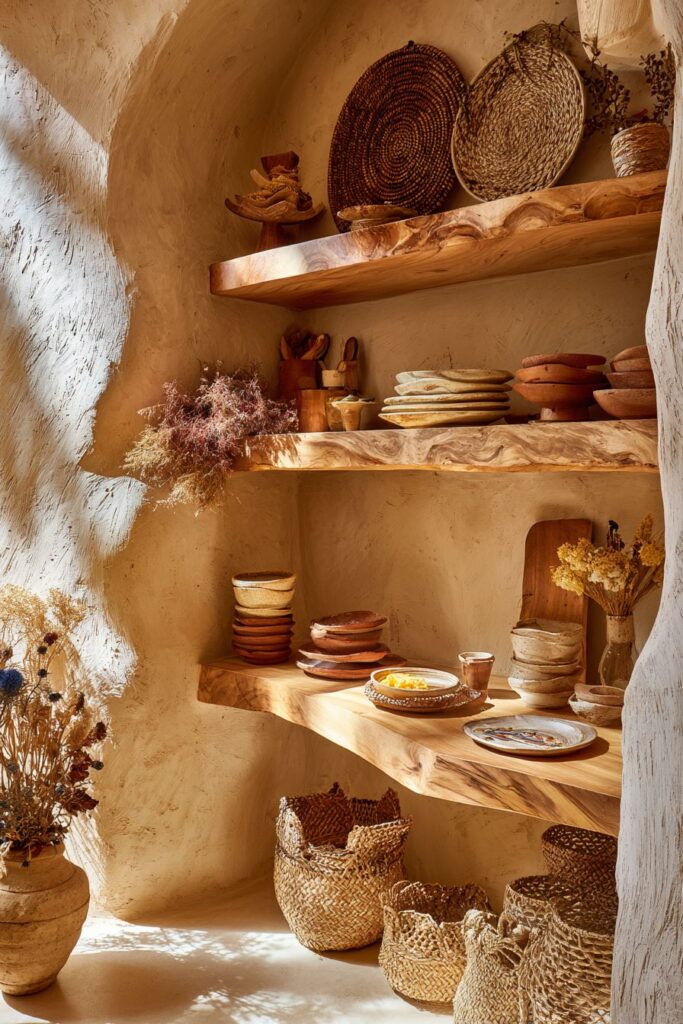
The cedar wood, with its natural oils and aromatic properties, brings both beauty and function to the space. Its resistance to moisture and insects makes it an ideal choice for kitchen environments, while its warm honey tones create a perfect backdrop for displaying ceramic dishware in cream and terracotta tones. Each piece of pottery appears to float against the wood grain, creating vignettes that change with use and seasonal displays.
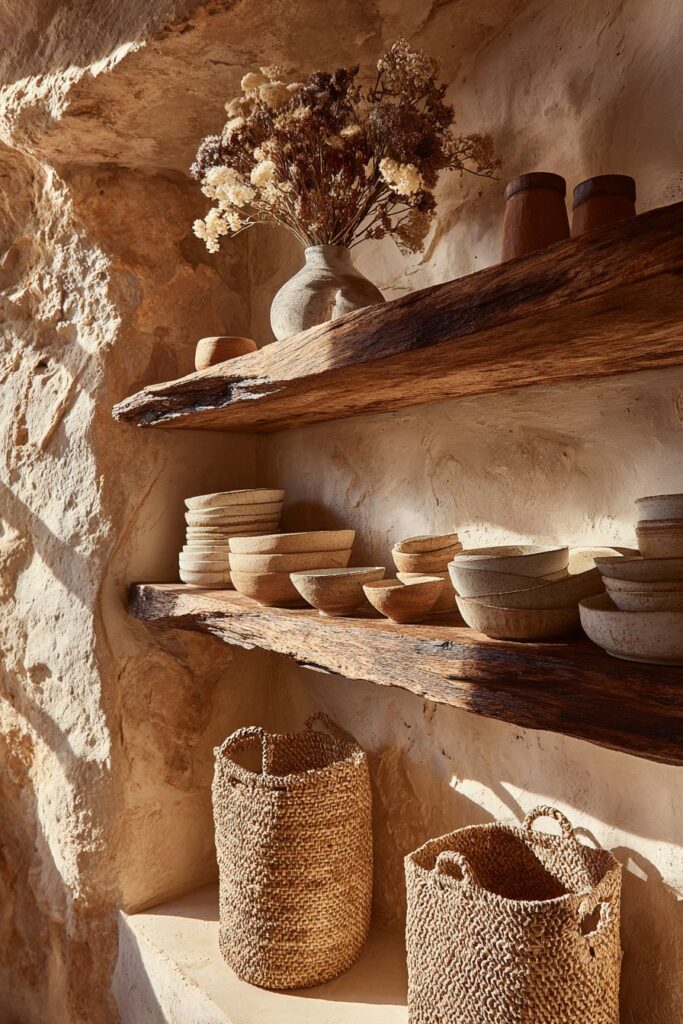
Natural clay plaster walls in warm beige provide a textured backdrop that complements the wood shelving without competing for attention. The subtle texture variations in the plaster create depth and interest while maintaining a neutral canvas that allows the displayed items to shine. Woven baskets tucked beneath the shelves provide concealed storage for less attractive necessities while adding another layer of natural texture.
Dried flowers and grasses arranged in ceramic vessels add organic elements that bring movement and seasonal change to the display, creating a living composition that evolves throughout the year.
Key Design Tips:
- Use live-edge cedar boards for floating shelves to celebrate the natural form and aromatic properties of wood
- Display ceramic dishware in earth tones to create curated vignettes against the wood grain backdrop
- Apply natural clay plaster to walls for subtle texture that complements without competing with displayed items
- Incorporate woven baskets for practical storage that maintains the natural material aesthetic
- Add dried flowers in ceramic vessels to introduce organic movement and seasonal variety to your displays
5. Terracotta Tile Foundation with Sage Sophistication
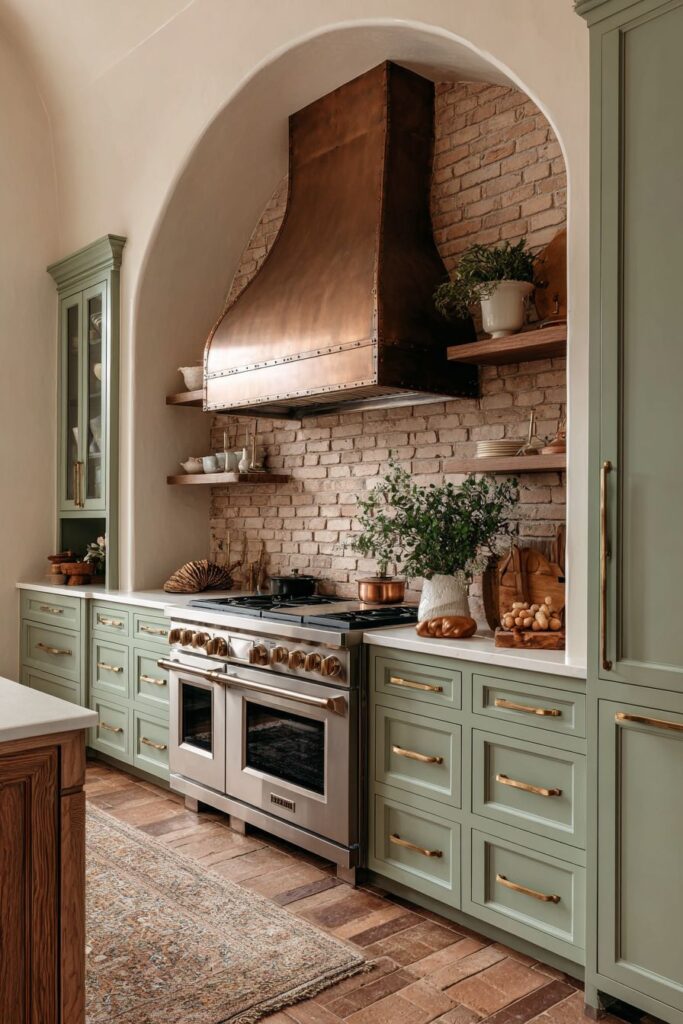
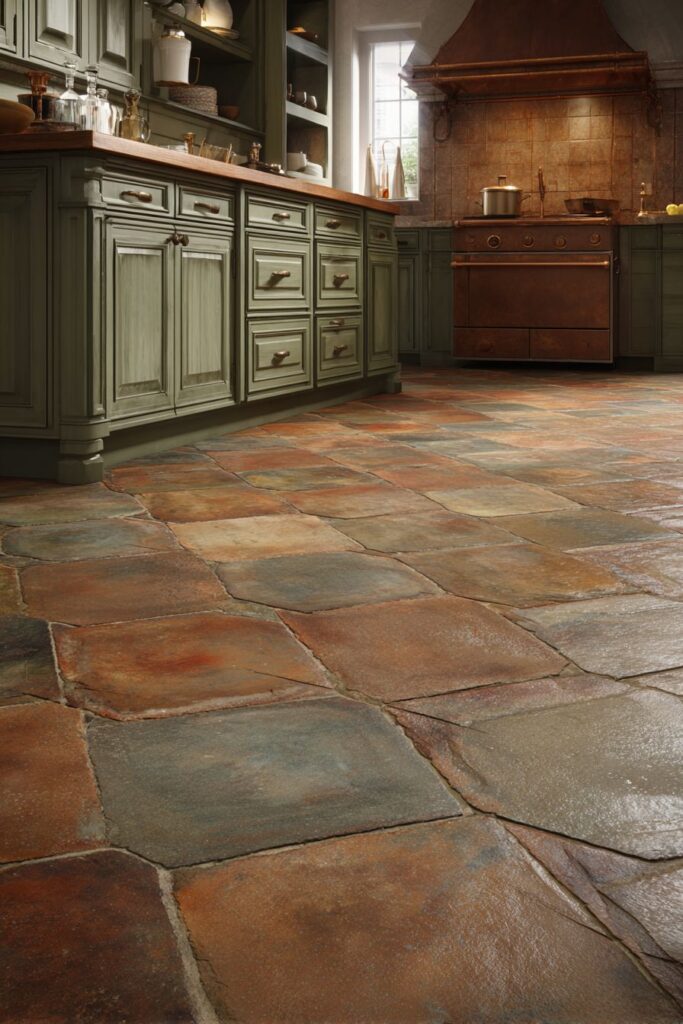
Clay tile flooring in warm terracotta tones creates a foundation that immediately establishes the earthy character of this kitchen design. Each tile carries natural color variations that tell the story of its clay origins, with subtle shifts in hue and tone that create a rich tapestry underfoot. The natural texture of the tiles provides both visual interest and practical benefits, offering slip resistance and easy maintenance that makes them ideal for busy kitchen environments.
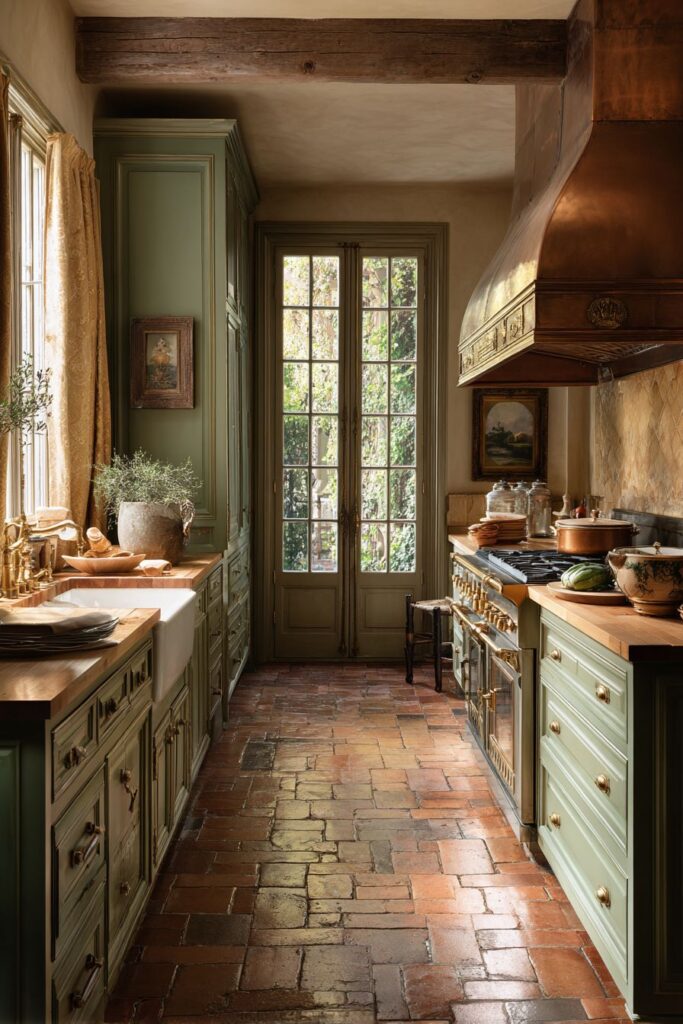
The sage green lower cabinetry provides a sophisticated counterpoint to the warm floor tiles, creating a color combination that feels both fresh and grounded. The brushed brass hardware adds warmth and elegance while complementing both the terracotta floor and sage cabinetry. Butcher block countertops showcase natural wood grain patterns that add another layer of organic texture while providing durable work surfaces that improve with age and use.
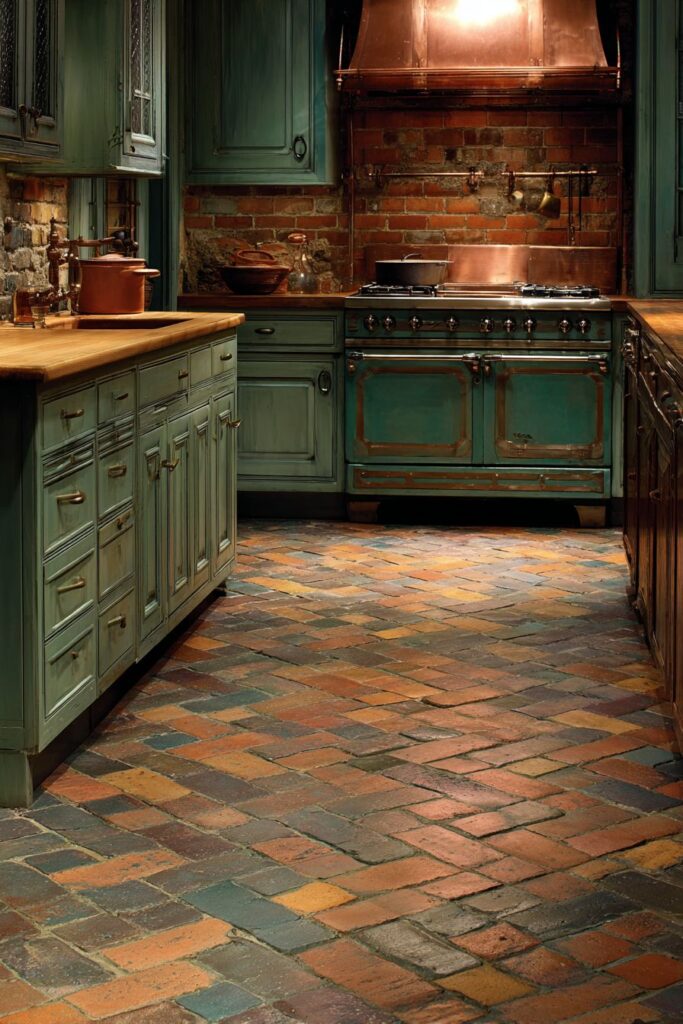
A vintage copper range hood serves as a stunning focal point that bridges the warm tones throughout the space. The copper’s natural patina development over time adds character and authenticity while providing excellent ventilation performance. The metallic warmth of the copper creates beautiful reflections that enhance the overall lighting in the space.
The combination of these elements creates a kitchen that feels both timeless and contemporary, where traditional materials are used in ways that feel fresh and relevant for modern living.
Key Design Tips:
- Choose terracotta clay tiles with natural color variations to create rich foundation textures that ground your design
- Paint lower cabinets in sage green to provide sophisticated color that complements warm earth tones
- Select brushed brass hardware to add warm metallic accents that bridge different color elements
- Install butcher block countertops to showcase natural wood grain while providing surfaces that improve with use
- Use a copper range hood as a focal point that adds metallic warmth and develops beautiful patina over time
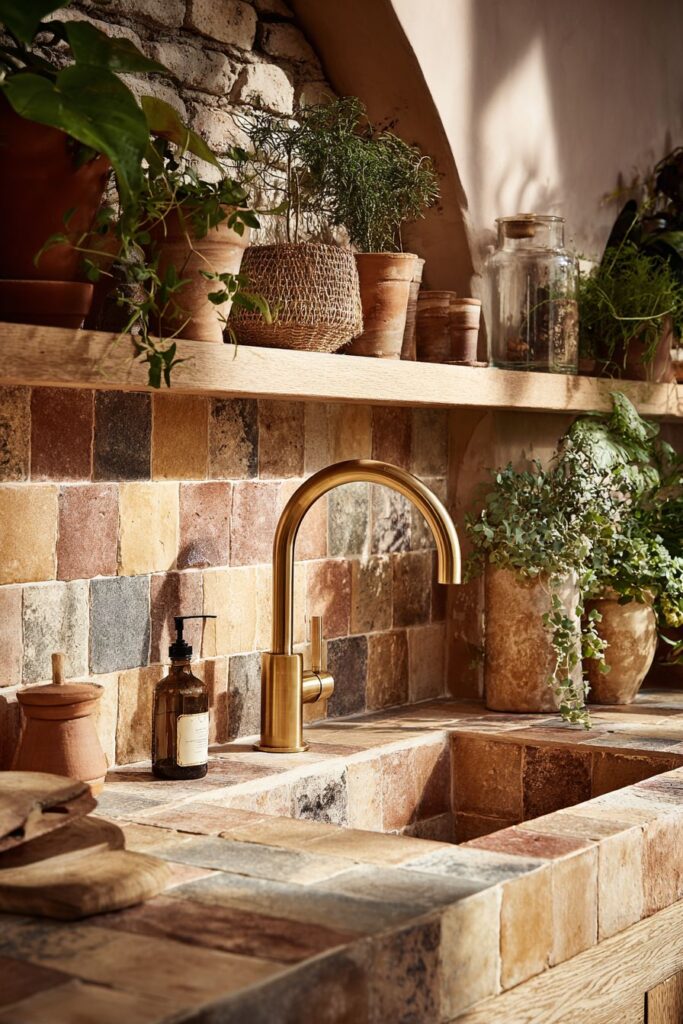
6. Handmade Ceramic Tile Artistry
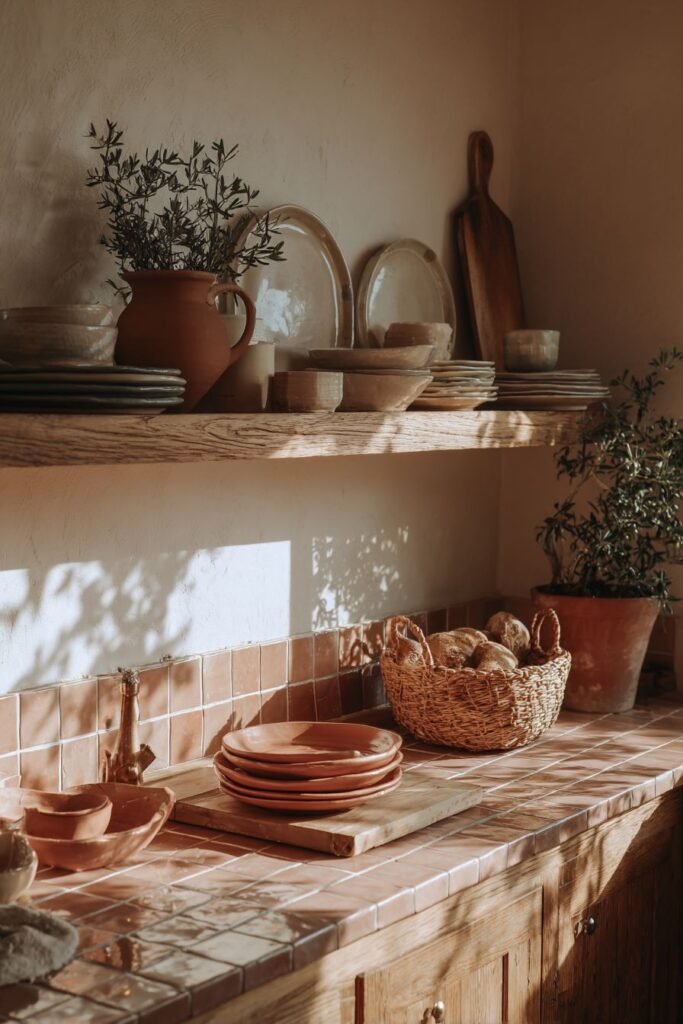
This backsplash concept celebrates the beauty of imperfection through handmade ceramic tiles that showcase the artisan’s touch in every piece. Arranged in a subway pattern, these tiles in varying shades of cream, sage, and terracotta create a subtle gradient that adds depth and visual interest without overwhelming the space. The natural irregularities in each tile—slight size variations, glaze inconsistencies, and surface textures—transform the backsplash into a work of art.
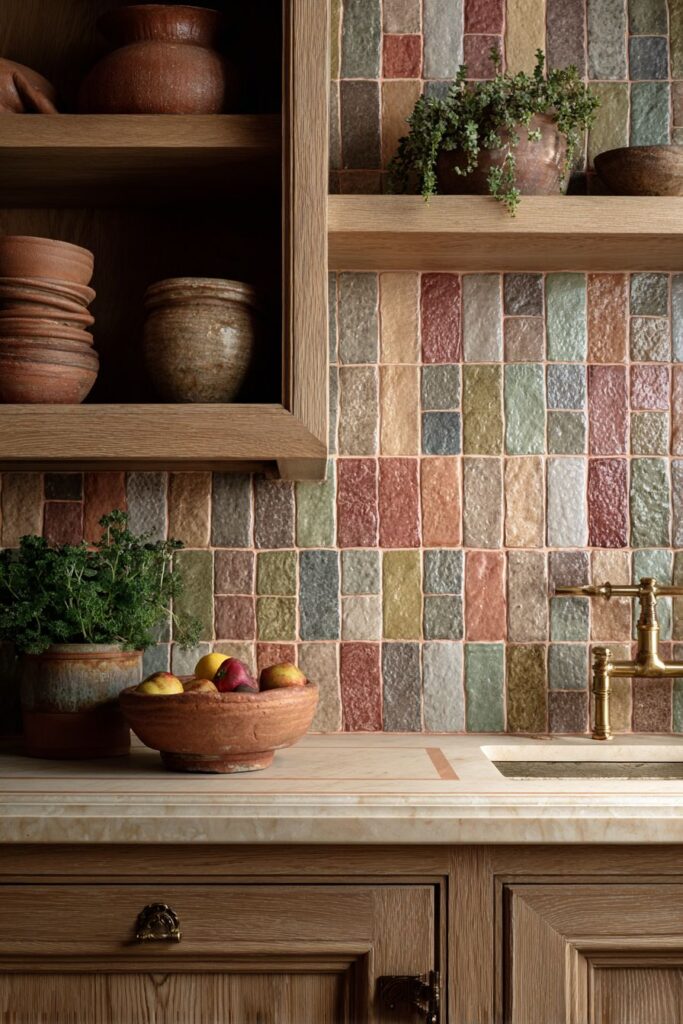
The handcrafted nature of these tiles means that no two are exactly alike, creating a surface that invites closer inspection and appreciation. Light plays across the varied surfaces differently throughout the day, creating an ever-changing display that brings life and movement to the kitchen walls. The earthy color palette creates a perfect backdrop for both food preparation and display of kitchen essentials.
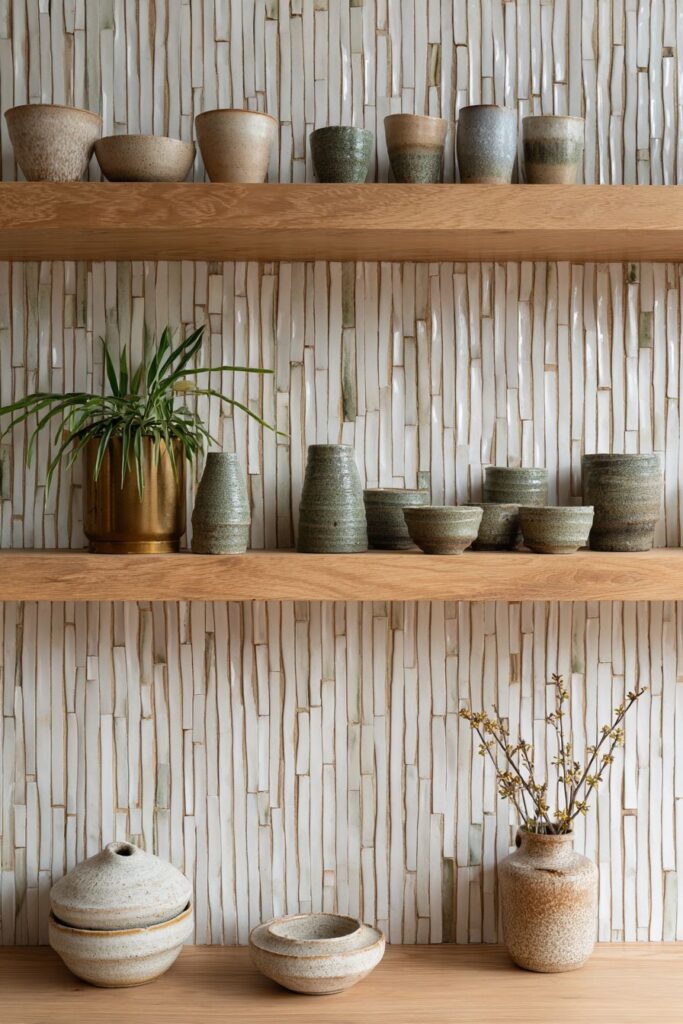
Natural wood shelving provides both practical storage and display space for pottery and plants that echo the handmade aesthetic of the tile backsplash. The wood’s natural grain patterns complement the organic irregularities in the ceramic work while providing warm contrast to the cooler tile tones. Brass fixtures throughout the space add sophisticated metallic accents that warm up the overall palette without competing with the artisanal tile work.
The integration of living plants brings fresh elements that change with seasons and care, adding another layer of natural beauty that complements the handcrafted ceramic elements.
Key Design Tips:
- Choose handmade ceramic tiles to celebrate artisanal craftsmanship and embrace natural imperfections as beauty
- Arrange tiles in subway patterns to create structure while allowing individual tile character to shine through
- Use natural wood shelving to complement ceramic work while providing practical storage and display opportunities
- Install brass fixtures to add warm metallic accents that enhance without overwhelming handcrafted elements
- Include living plants to introduce fresh organic elements that complement the artisanal ceramic aesthetic
7. Natural Stone Farmhouse Sink Heritage
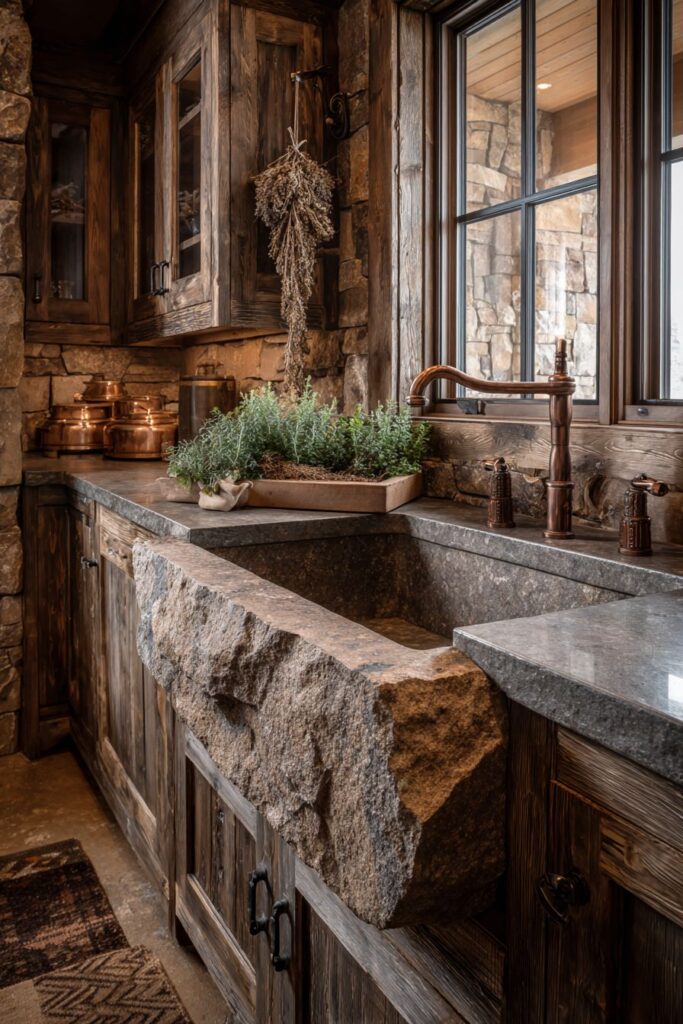
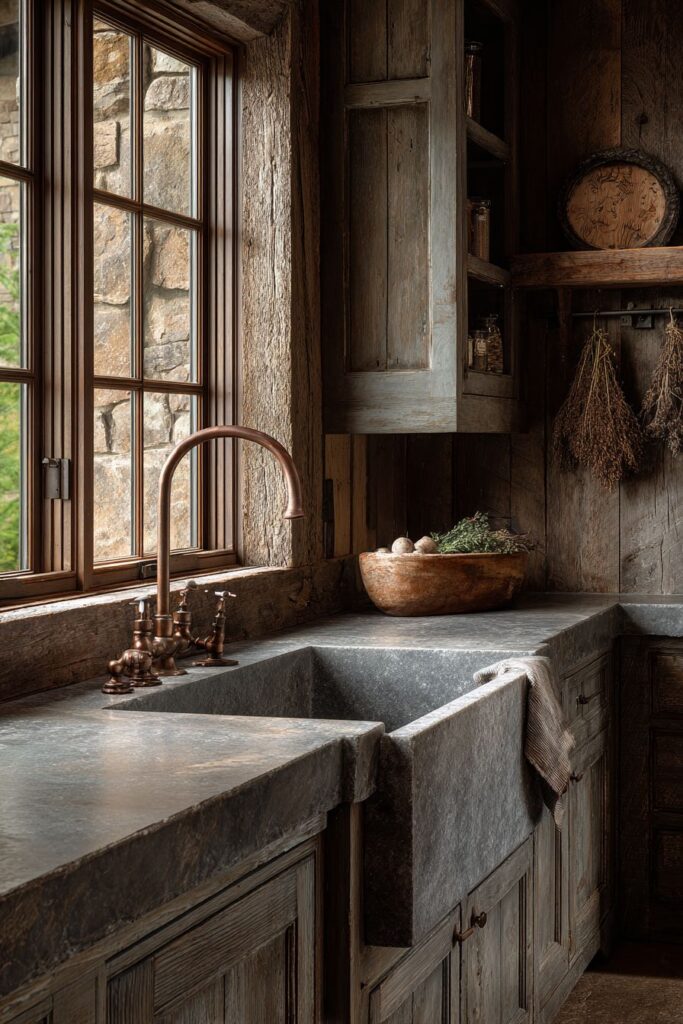
A farmhouse-style apron sink carved from natural stone creates a stunning centerpiece that celebrates both traditional craftsmanship and natural beauty. This sink, crafted from warm grey stone with visible mineral patterns, brings geological history into daily use while providing a durable and beautiful workspace for food preparation and cleanup. The natural variations in the stone create a unique piece that serves as both functional necessity and sculptural art.
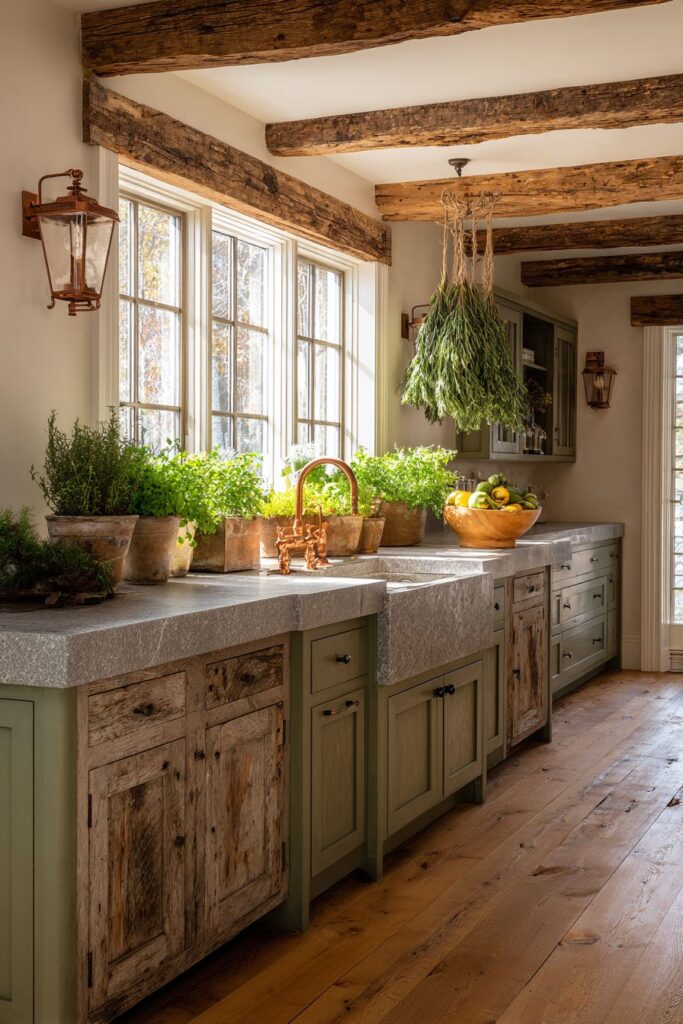
The surrounding cabinetry features weathered wood finishes in sage green with natural distressing that speaks to years of loving use and care. This intentional aging process creates depth and character that new materials simply cannot replicate, bringing authenticity and warmth to the kitchen environment. Each cabinet door tells its own story through wear patterns and natural aging.
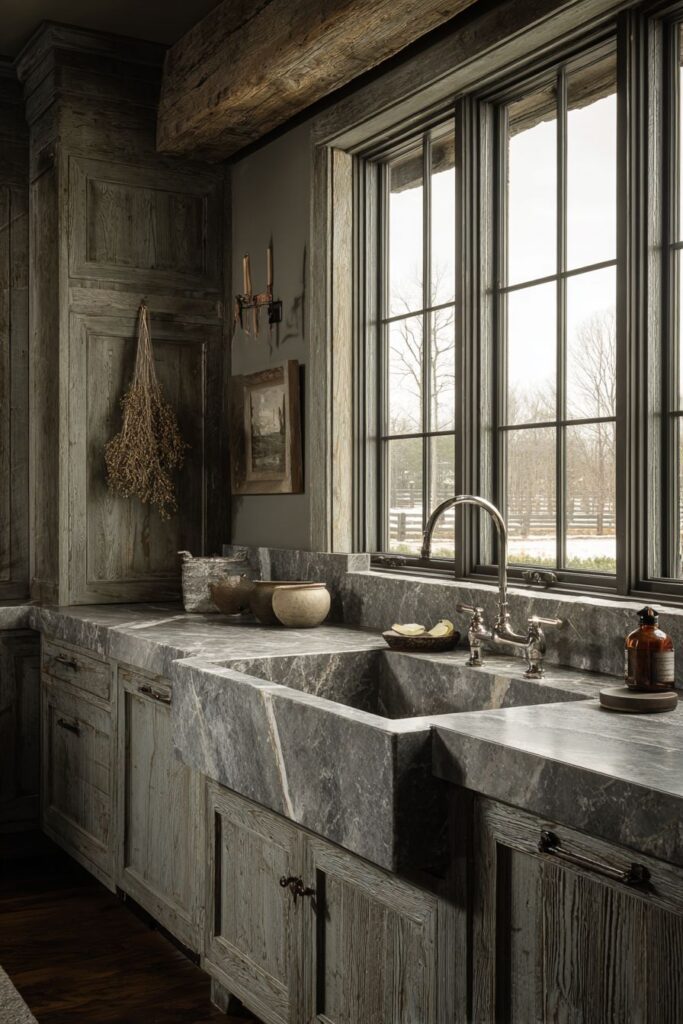
Copper fixtures complement the stone and wood elements while adding warm metallic tones that enhance the overall earthiness of the design. The copper’s ability to develop patina over time creates an evolving element that grows more beautiful with age and use. Hanging dried herbs from the ceiling beams adds aromatic elements while creating visual connections between the earth-toned materials.
Natural window lighting emphasizes the stone’s texture and creates beautiful shadows that highlight the carved details and natural mineral patterns throughout the day.
Key Design Tips:
- Choose natural stone sinks to bring geological beauty and durability into your daily kitchen routines
- Use weathered wood finishes to create authentic aging that adds character and depth to cabinetry design
- Install copper fixtures to provide warm metallic accents that develop beautiful patina over time
- Hang dried herbs to add aromatic elements while creating visual connections to earth-toned materials
- Position sinks near windows to take advantage of natural light that highlights stone texture and mineral patterns
8. Organic Pantry Organization Systems
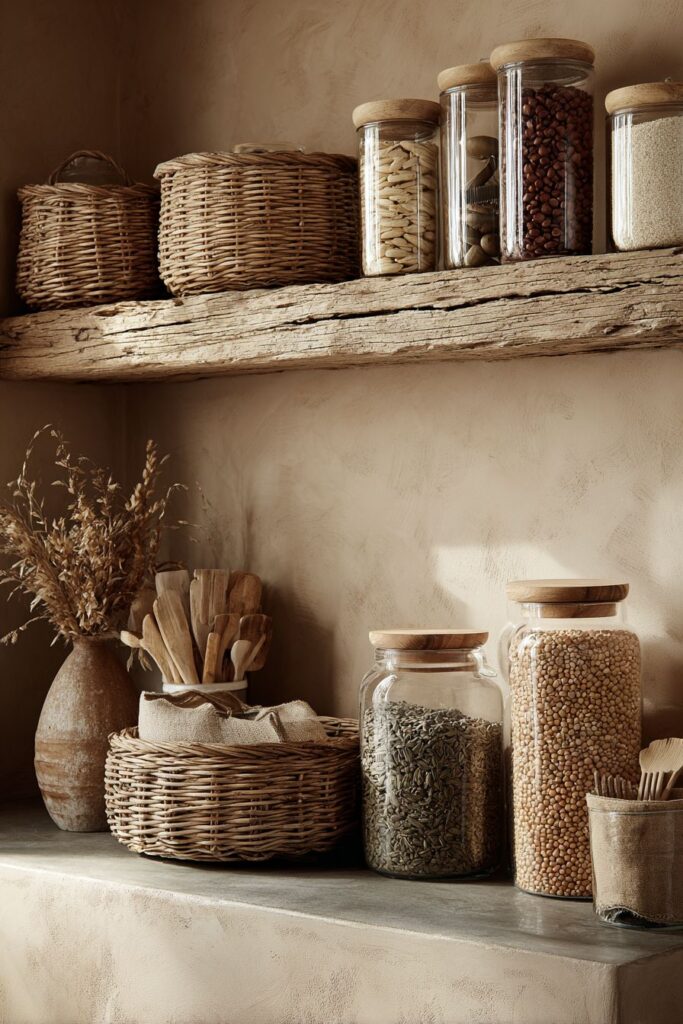
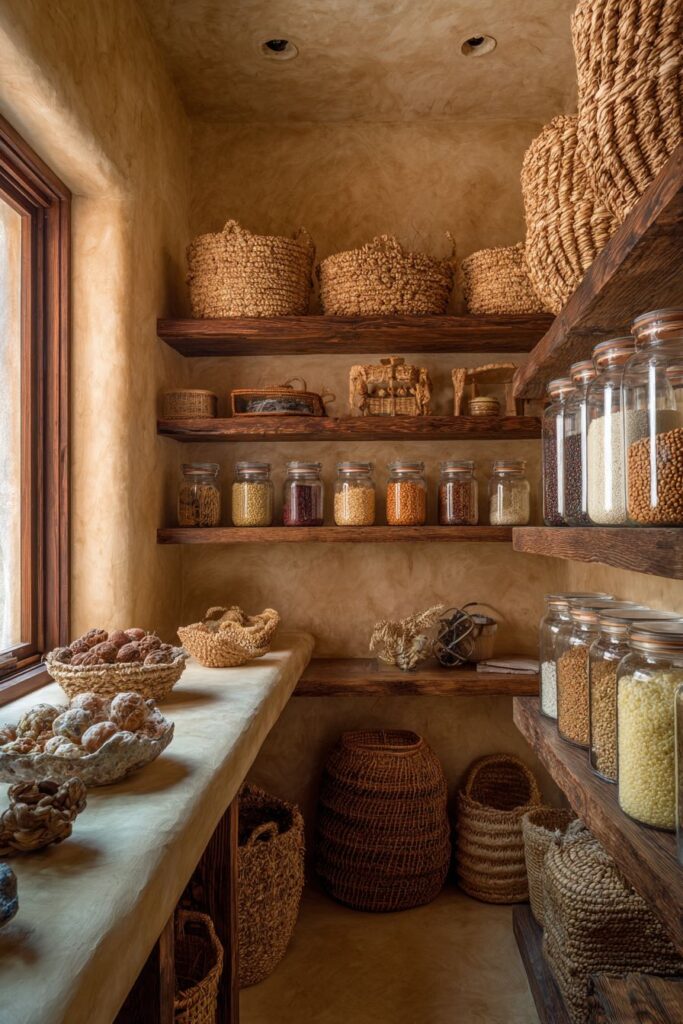
This pantry design transforms storage into an aesthetic experience through the use of natural materials that celebrate both form and function. Natural wicker baskets in varying sizes provide flexible storage solutions while adding organic texture that softens the utilitarian nature of food storage. The wicker’s natural fibers create visual warmth while offering practical benefits like breathability for stored produce and easy transport for shopping and organizing.
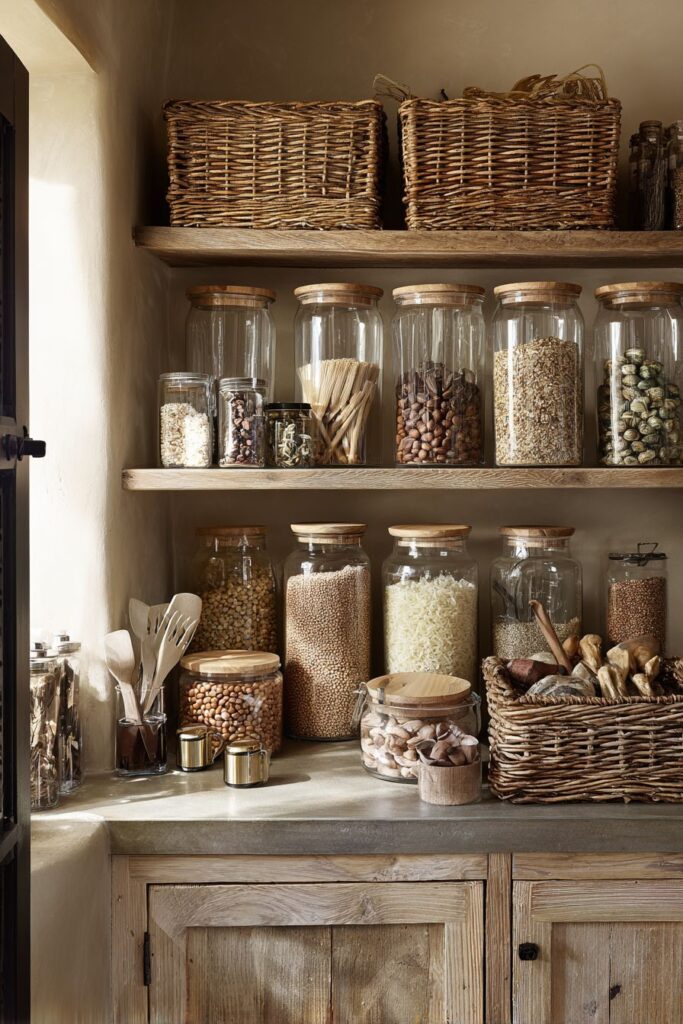
Glass storage jars with wooden lids create beautiful displays of colorful grains, legumes, and pantry staples that become decorative elements in their own right. The transparency of glass allows the natural colors and textures of stored foods to become part of the design scheme while providing airtight storage that keeps ingredients fresh. The wooden lids add warmth and natural texture while creating a cohesive aesthetic throughout the storage system.
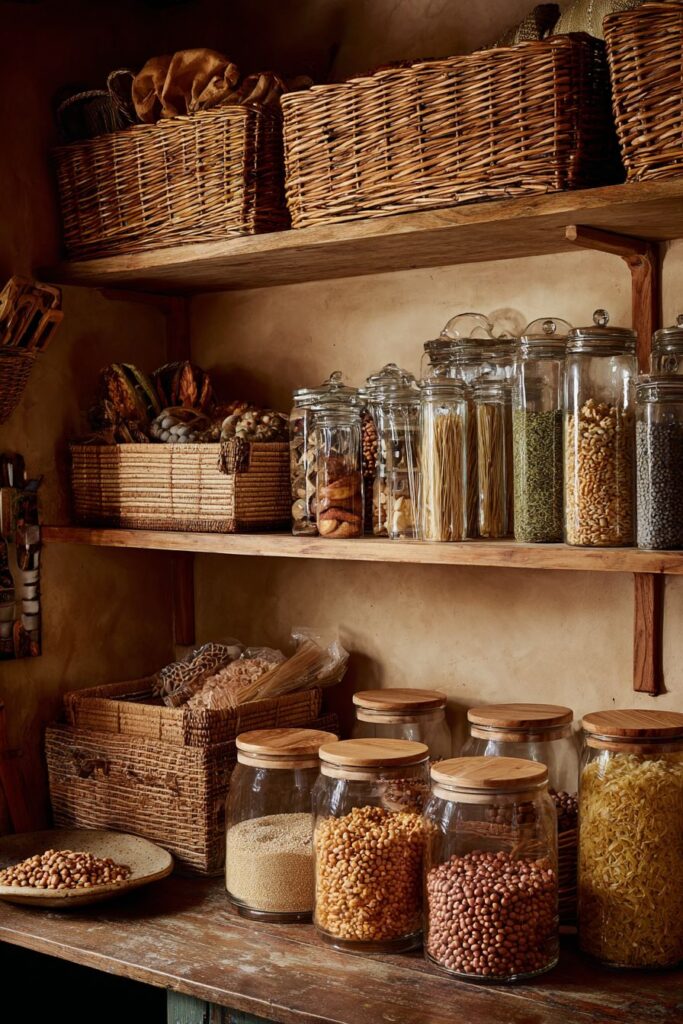
Reclaimed wood shelving provides the framework for this organic storage system, with each board showing unique grain patterns and character marks that add visual interest. The natural variations in the wood create a backdrop that complements rather than competes with the stored items, allowing the pantry contents to shine while maintaining the earthy aesthetic.
Natural clay paint in warm beige tones creates a soothing backdrop that unifies the various natural materials while providing a neutral canvas that doesn’t interfere with food identification and selection.
Key Design Tips:
- Use natural wicker baskets for flexible storage that adds organic texture while providing practical functionality
- Display dry goods in glass jars with wooden lids to turn pantry staples into decorative design elements
- Install reclaimed wood shelving to provide character-rich framework that complements stored natural materials
- Paint walls with natural clay paints to create soothing backdrops that unify various storage elements
- Organize items by color and texture to create visual harmony while maintaining practical accessibility
9. Breakfast Nook Natural Integration
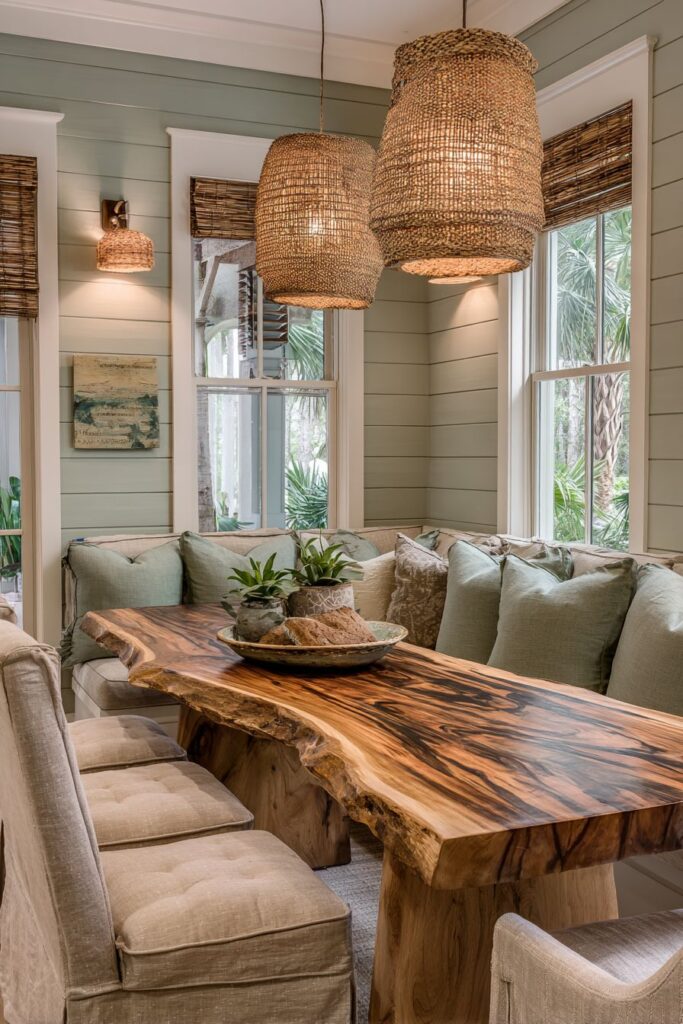
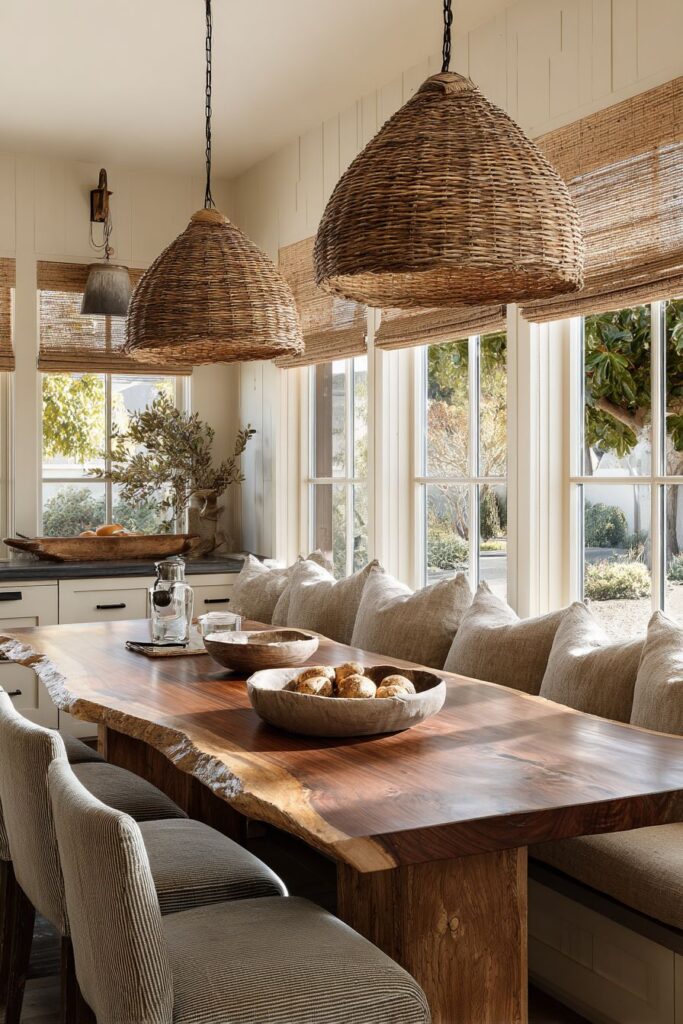
The breakfast nook becomes a celebration of natural materials and comfortable living through the integration of a live-edge wooden table that showcases the tree’s natural growth patterns. This table, with its organic curves and visible grain, creates an intimate dining space that feels connected to nature while providing practical functionality for daily meals and casual gatherings. The live edge adds movement and interest that draws the eye and invites touch.
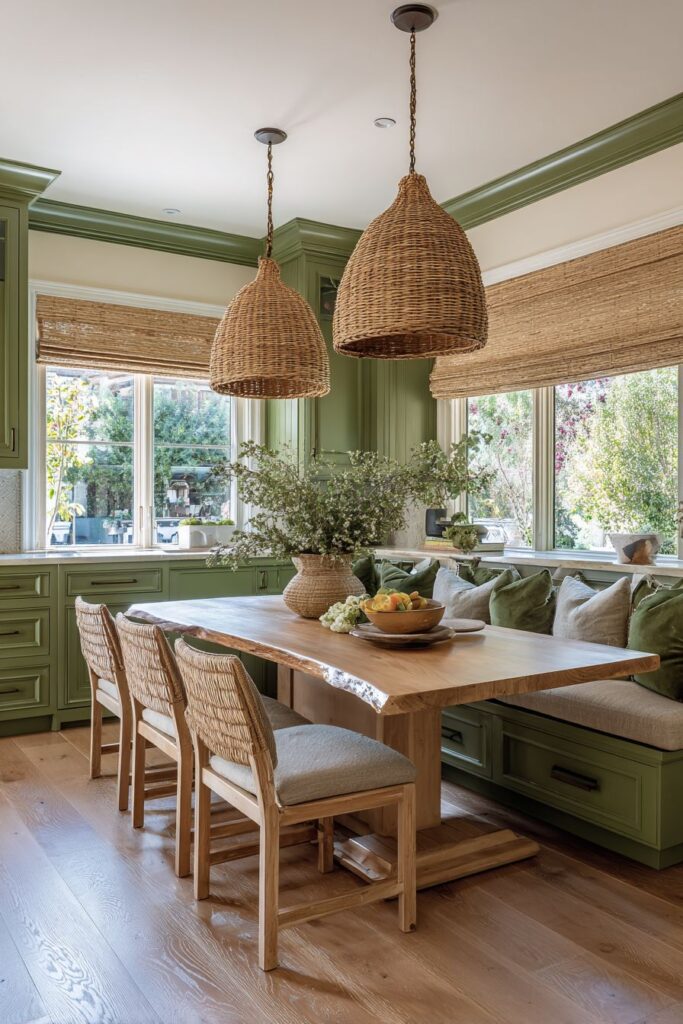
Benches upholstered in natural linen fabric in sage green provide comfortable seating while maintaining the earthy color palette. The linen’s natural texture and breathability make it ideal for daily use while adding softness to the harder elements of wood and stone. The sage green color creates continuity with other elements throughout the kitchen while providing a calming backdrop for morning coffee and evening conversations.
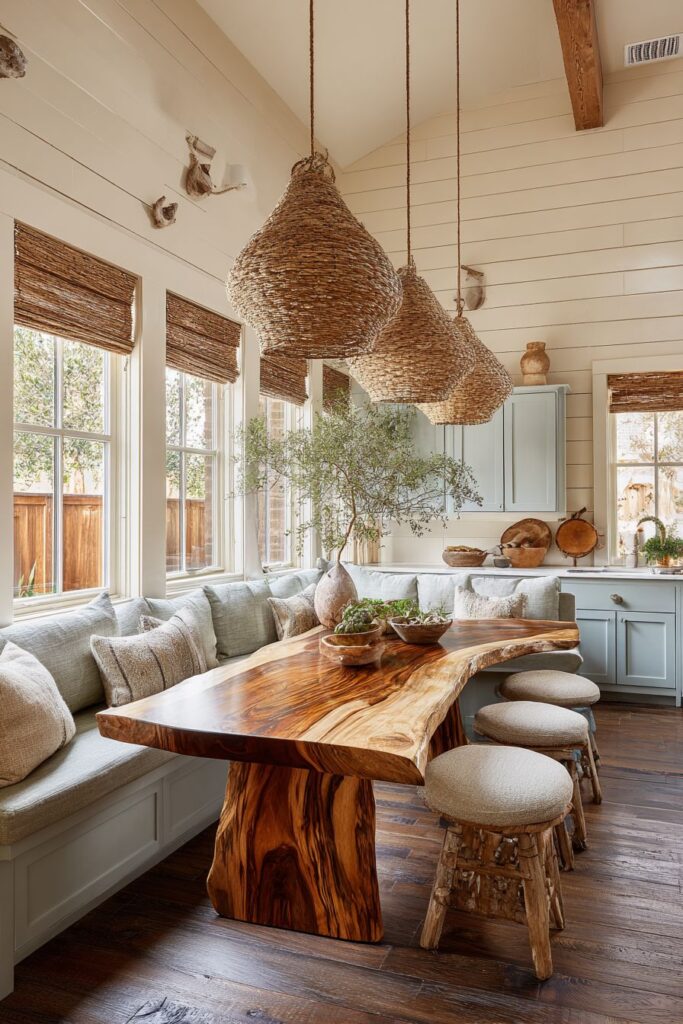
Shiplap walls painted in warm cream tones create texture and visual interest while maintaining a neutral backdrop that allows the furniture and accessories to take center stage. The horizontal lines of the shiplap add architectural detail while creating a cozy, cottage-like atmosphere that invites relaxation and connection.
Woven pendant lights overhead add organic texture while providing focused lighting for dining and reading. Their natural materials and handcrafted appearance complement the live-edge table while adding visual interest to the ceiling plane.
Key Design Tips:
- Choose live-edge wooden tables to bring organic movement and natural beauty into intimate dining spaces
- Upholster seating in natural linen fabrics to add softness and comfort while maintaining earthy color schemes
- Use shiplap walls in warm cream tones to create architectural texture without overwhelming other design elements
- Install woven pendant lights to add organic overhead texture while providing functional task lighting
- Position seating near windows to take advantage of natural light that enhances the warmth of natural materials
10. Copper Range Hood Focal Point
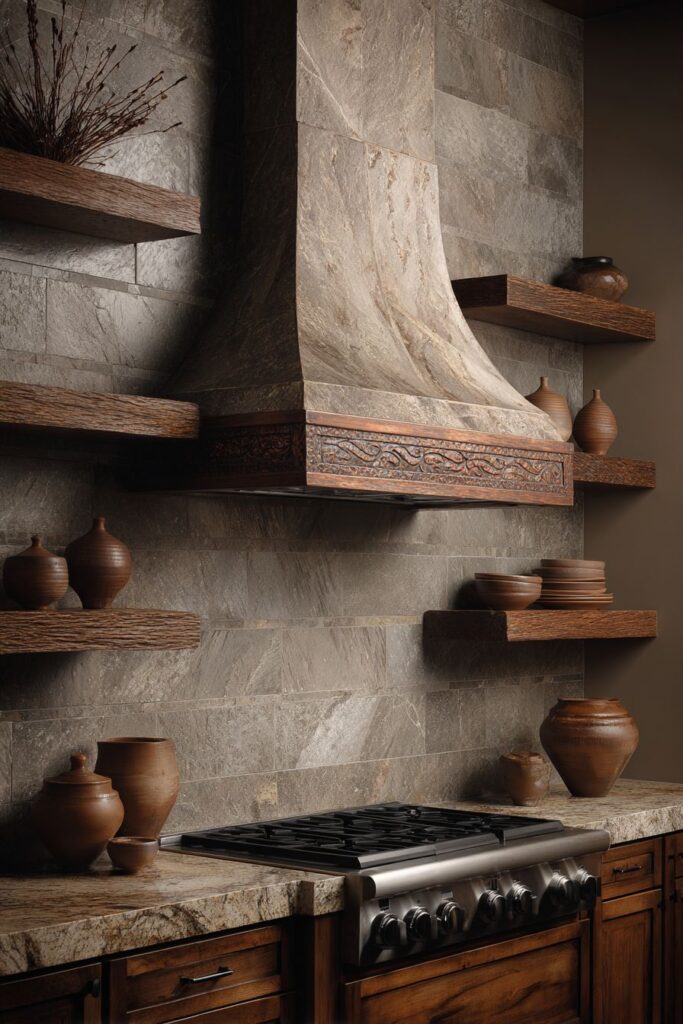
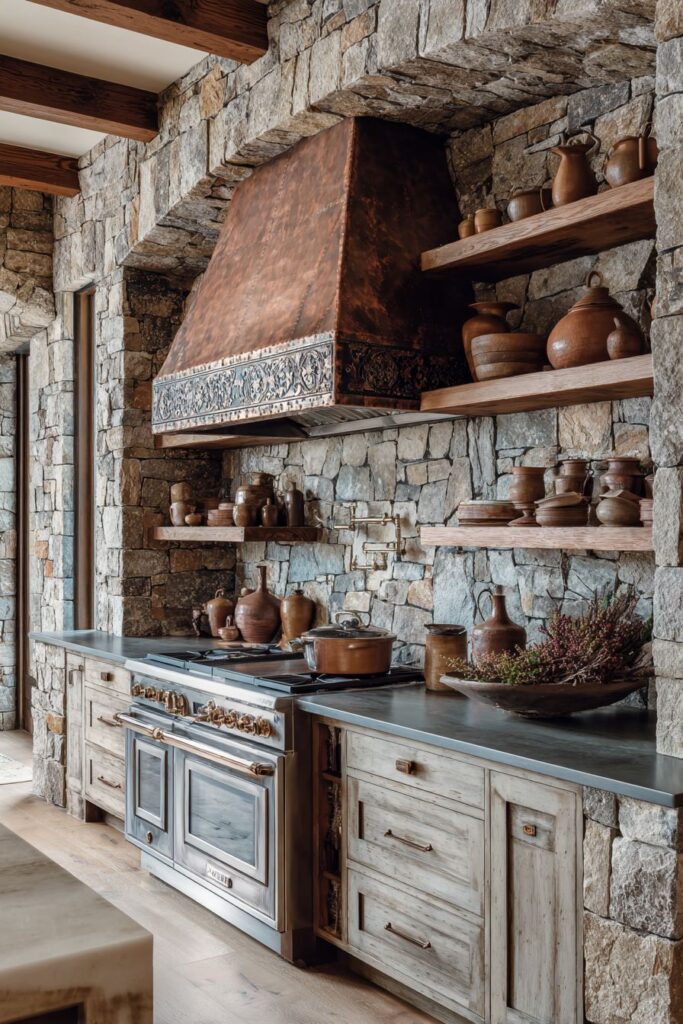
A custom hood crafted from aged copper serves as the commanding centerpiece of this kitchen design, bringing together functionality and artistic beauty in one stunning element. The natural patina patterns that develop on copper create an ever-evolving surface that becomes more beautiful with time and use. Each copper panel tells the story of its creation and aging, with subtle color variations and texture changes that add depth and character to the overall design.
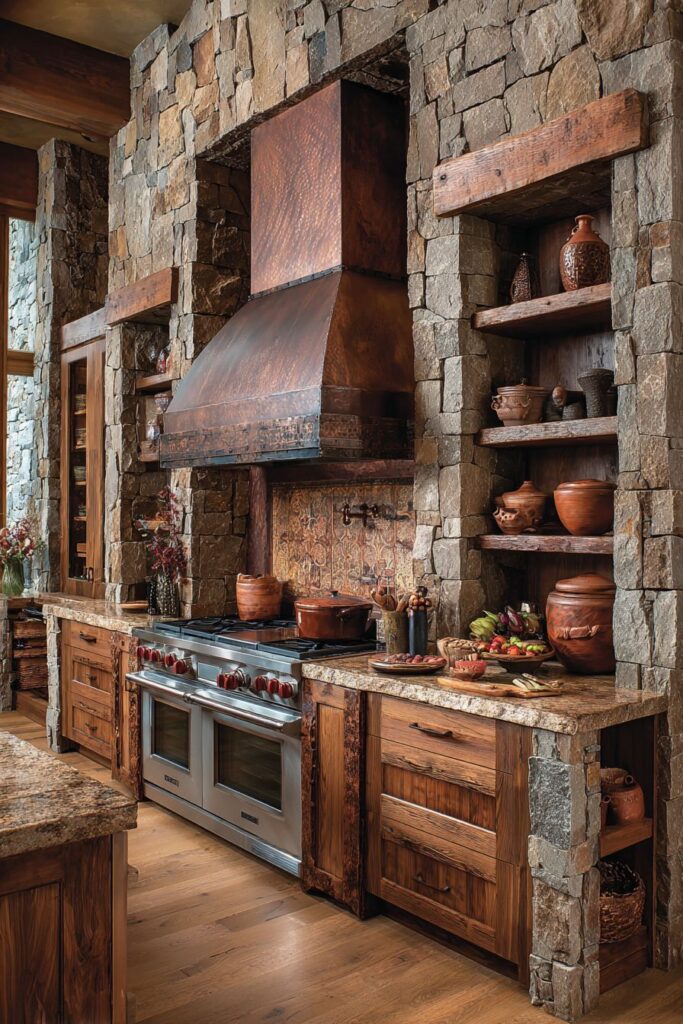
The surrounding walls showcase natural stone in warm grey tones with visible texture variations that complement the copper’s organic patina development. The stone’s natural formations and mineral inclusions create a backdrop that celebrates geological processes while providing durable surfaces that stand up to kitchen heat and moisture. The interplay between the warm copper tones and cool stone creates visual balance and interest.
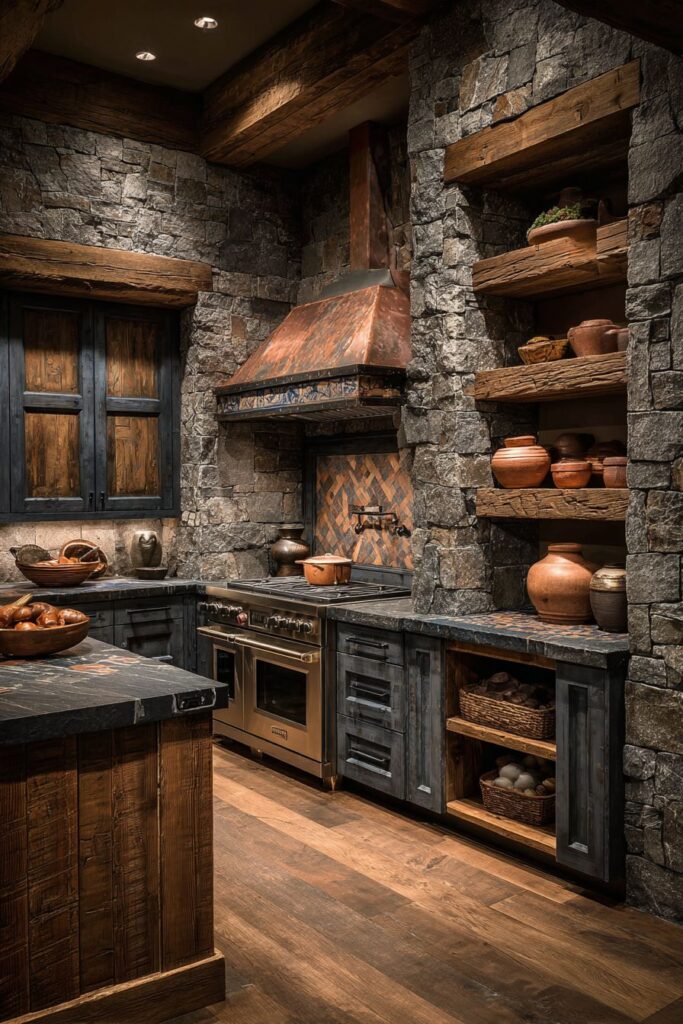
Open shelving crafted from reclaimed wood displays pottery in complementary earth tones, creating curated vignettes that change with use and seasons. The wood’s natural aging and character marks add authenticity while providing practical storage for frequently used items. The pottery’s handcrafted appearance echoes the artisanal quality of the copper hood while maintaining the overall earthy aesthetic.
The combination of these materials creates a range area that feels both sophisticated and grounded, where cooking becomes a celebration of natural materials and traditional craftsmanship techniques.
Key Design Tips:
- Use aged copper for range hoods to create evolving focal points that develop beautiful patina over time
- Install natural stone surrounds to provide durable backdrops that complement metallic patina development
- Display earth-toned pottery on open shelving to create curated vignettes that echo artisanal copper work
- Balance warm copper tones with cool stone elements to create visual harmony and material contrast
- Position range areas to showcase both functionality and artistic beauty of natural material combinations
11. Concrete and Wood Texture Symphony
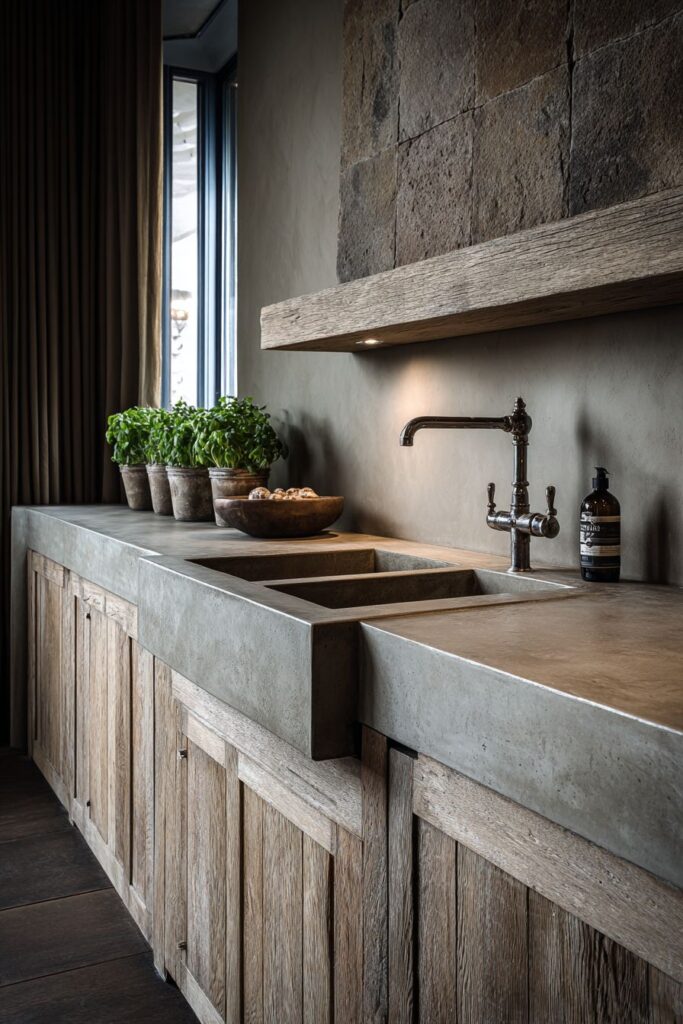
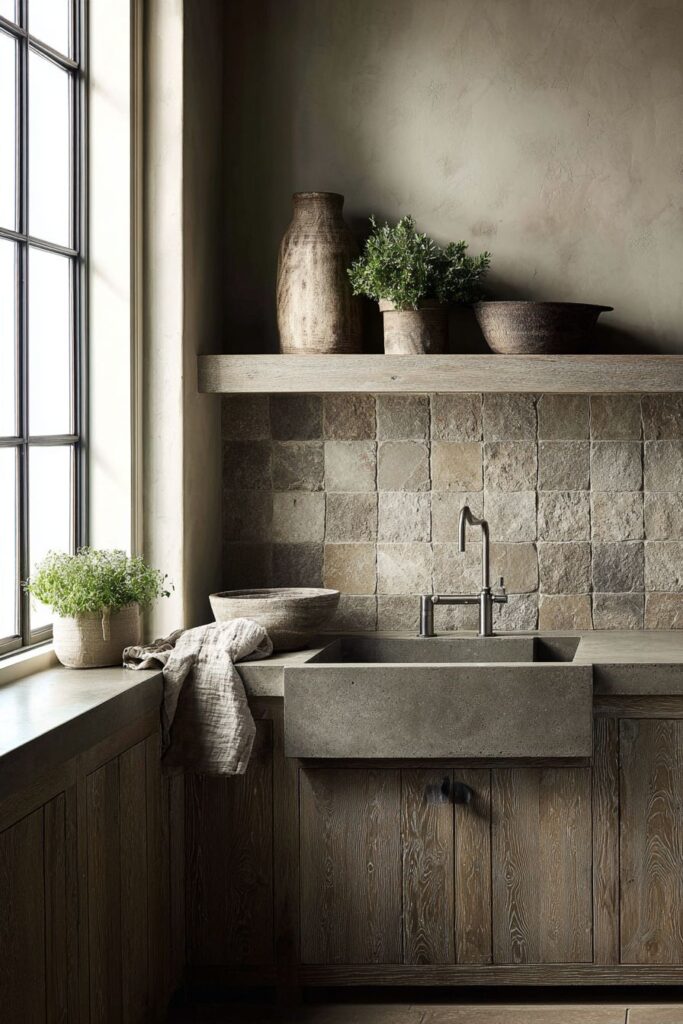
Concrete countertops with visible aggregate create a sophisticated industrial element that feels surprisingly warm and organic when paired with natural wood cabinetry. The concrete’s smooth surface reveals the natural stones and minerals embedded within, creating a speckled pattern that changes subtly across the surface. This natural aggregation tells the geological story of the materials while providing durable work surfaces that improve with age and use.
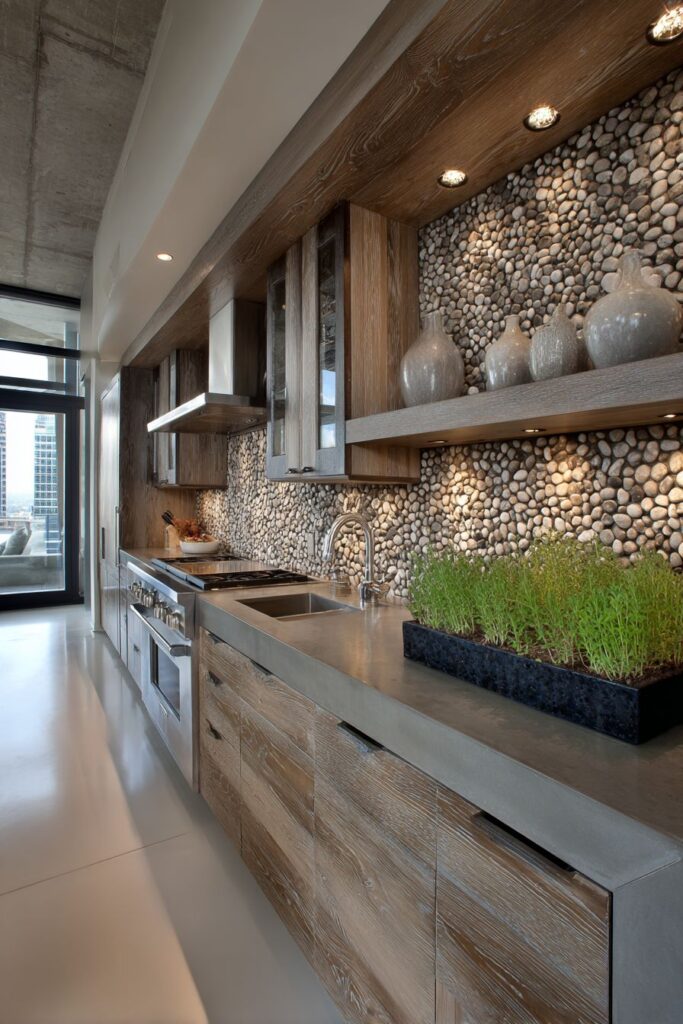
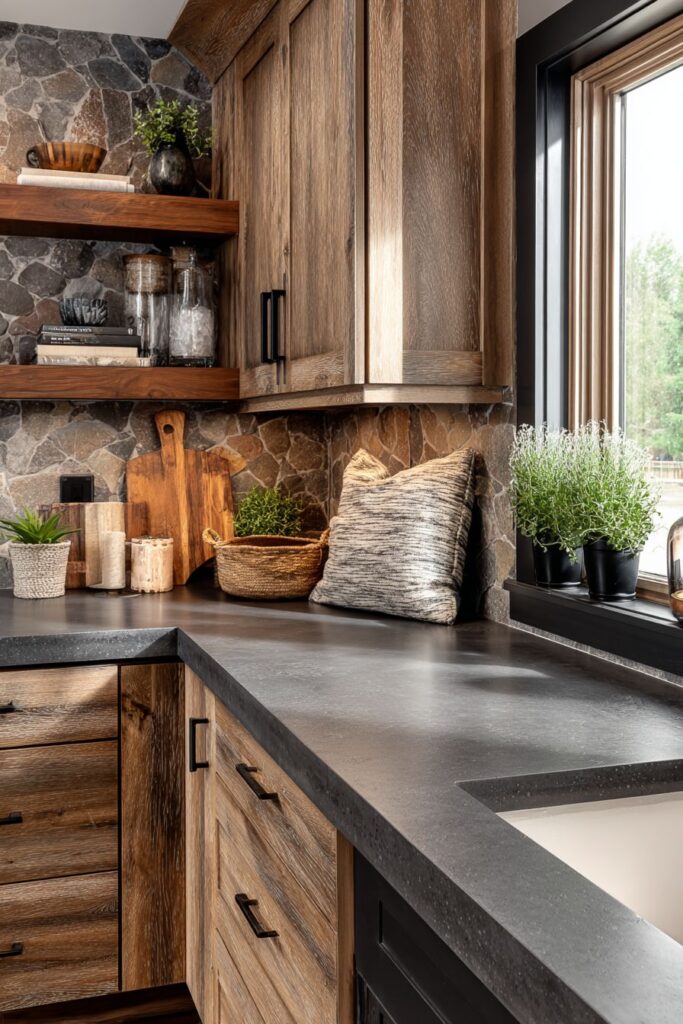
The weathered oak cabinetry finish brings warmth and organic texture that softens the harder qualities of the concrete while maintaining the earthy aesthetic. Each cabinet door showcases unique grain patterns and natural character marks that create visual interest and touchable surfaces. The wood’s natural aging process complements the concrete’s industrial heritage while adding warmth and approachability.
River rock tiles create an organic backsplash that bridges the gap between the smooth concrete and textured wood surfaces. Each stone’s natural shape and color variation adds movement and interest while creating a tactile surface that invites touch. The earth tones in the river rocks complement both the concrete’s mineral content and the wood’s natural coloration.
Potted herbs on windowsills introduce living elements that bring fresh scents and seasonal change to the space while maintaining the connection to natural materials and processes.
Key Design Tips:
- Choose concrete countertops with visible aggregate to showcase natural mineral beauty in industrial materials
- Pair concrete with weathered oak cabinetry to balance hard and soft natural textures effectively
- Use river rock tile backsplashes to create organic transitions between different surface materials
- Add potted herbs near windows to introduce living elements that complement natural material palettes
- Embrace the aging process in both concrete and wood to allow materials to develop character over time
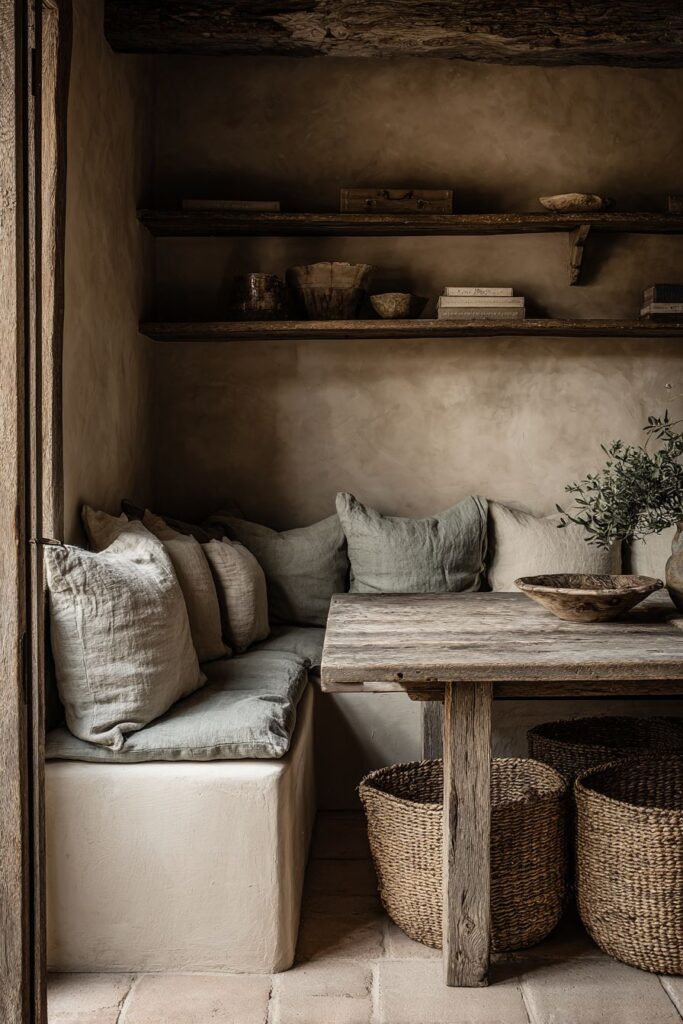
12. Built-in Banquette Comfort Zone
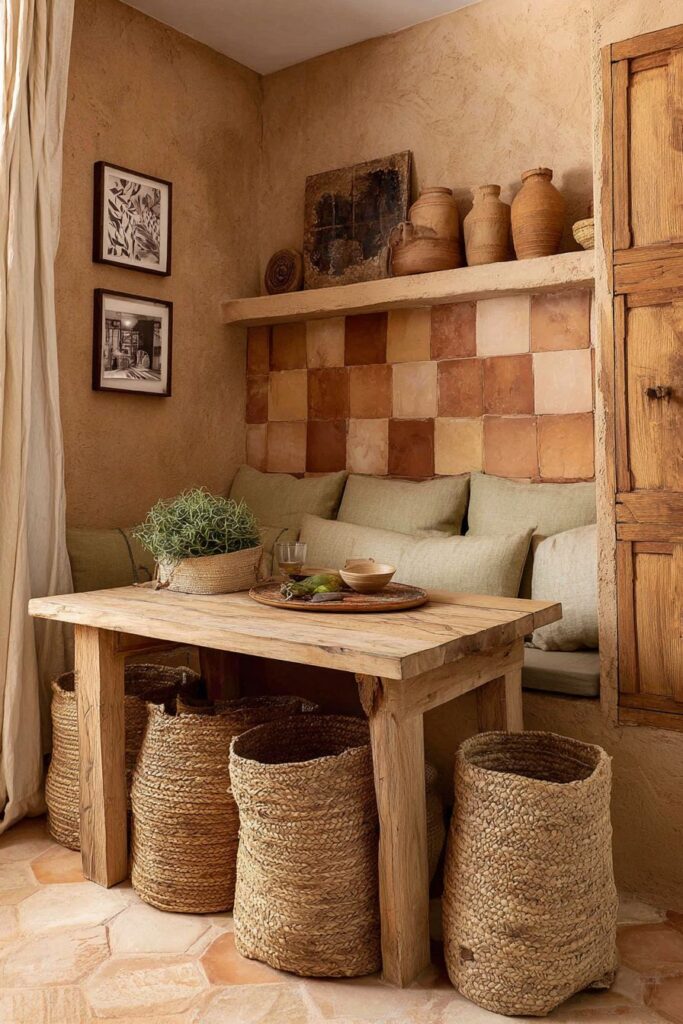
The built-in banquette transforms a corner of the kitchen into an intimate gathering space where natural materials create comfort and warmth. Natural linen cushions in sage green provide soft seating that invites lingering over morning coffee or evening conversations. The linen’s natural texture and breathability make it ideal for daily use while adding organic softness to harder architectural elements.
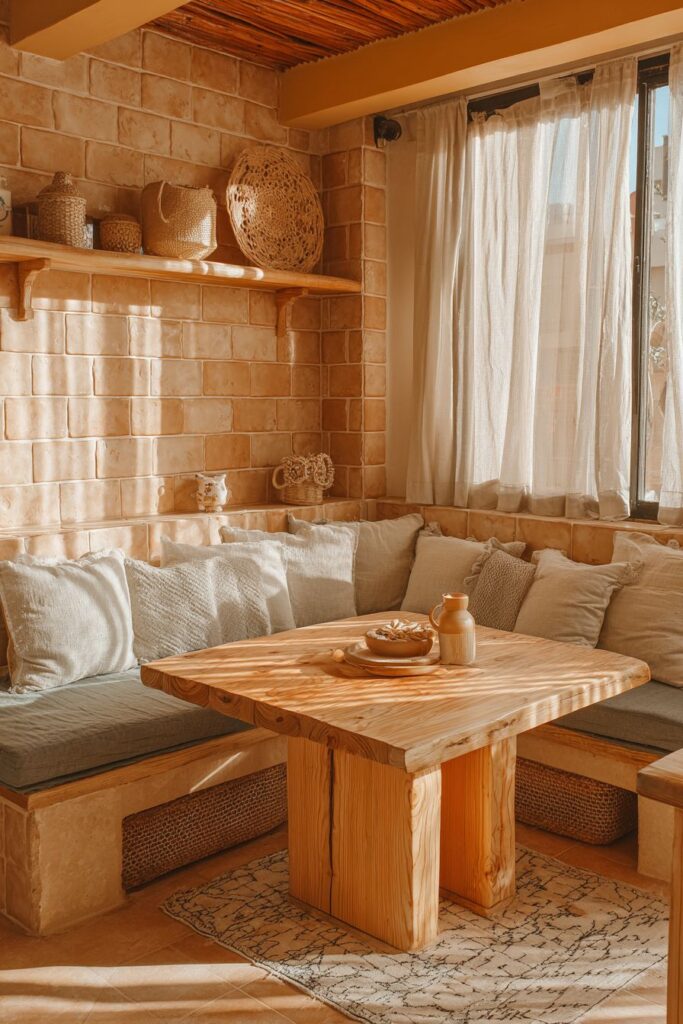
A reclaimed wood table with visible knots and grain patterns serves as the centerpiece of this cozy nook, bringing the story of the tree’s growth into daily use. Each knot and grain line creates unique character that makes this table one-of-a-kind while providing durable surface for meals and activities. The wood’s natural aging adds authenticity that cannot be replicated in manufactured materials.
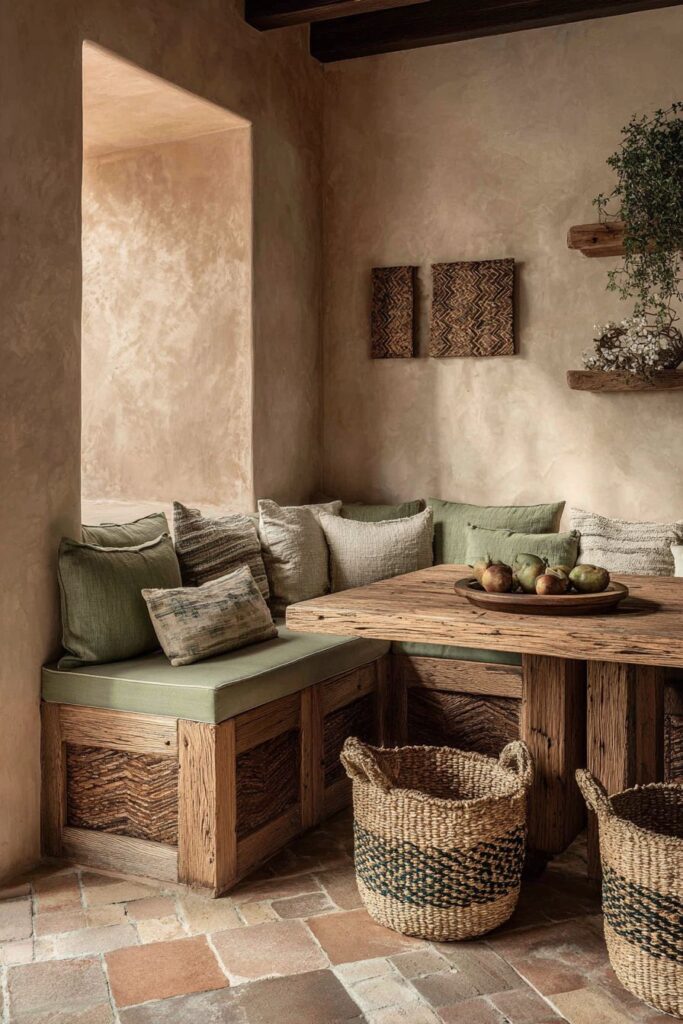
Natural clay tiles in terracotta tones with handmade irregularities create wall surfaces that add warmth and texture while maintaining the earthy color palette. The handcrafted nature of these tiles means each one is slightly different, creating a surface that rewards close inspection while providing rich color and texture variation.
Woven baskets tucked beneath the seating provide practical storage for everything from table linens to children’s activities while adding another layer of natural texture that complements the other organic materials throughout the space.
Key Design Tips:
- Create built-in banquettes to maximize seating while integrating storage and architectural interest
- Choose natural linen cushions in earth tones to provide comfort while maintaining organic material aesthetics
- Use reclaimed wood tables to bring authentic character and unique grain patterns into intimate dining spaces
- Install handmade clay tiles to add wall texture that celebrates artisanal craftsmanship and natural color variation
- Include woven basket storage to maintain organization while adding functional natural texture elements
13. Sustainable Bamboo and Soapstone Harmony
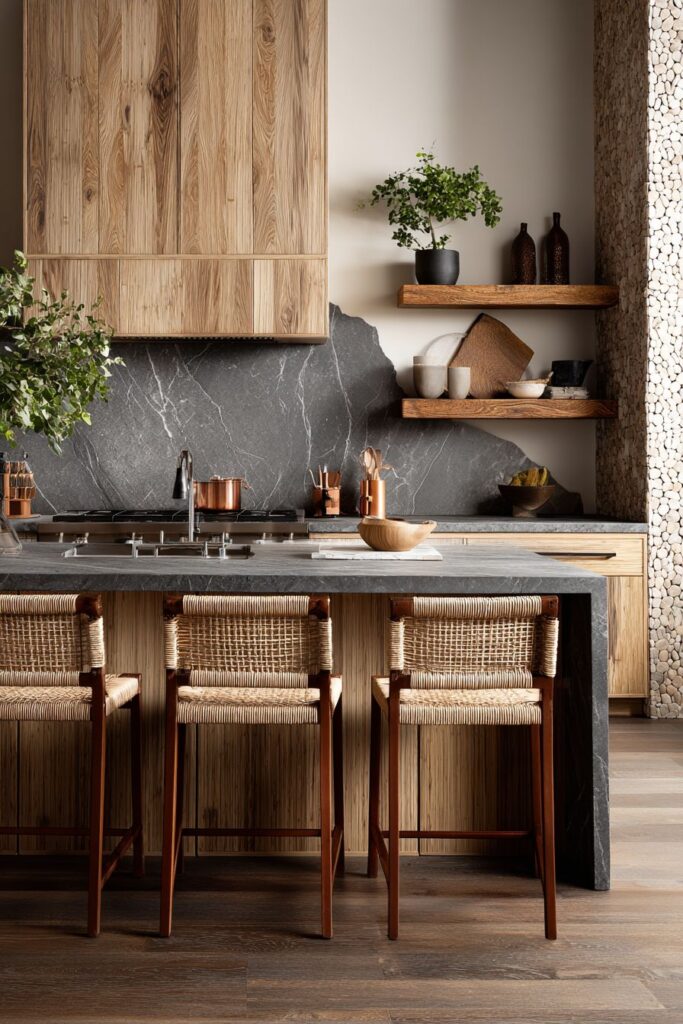
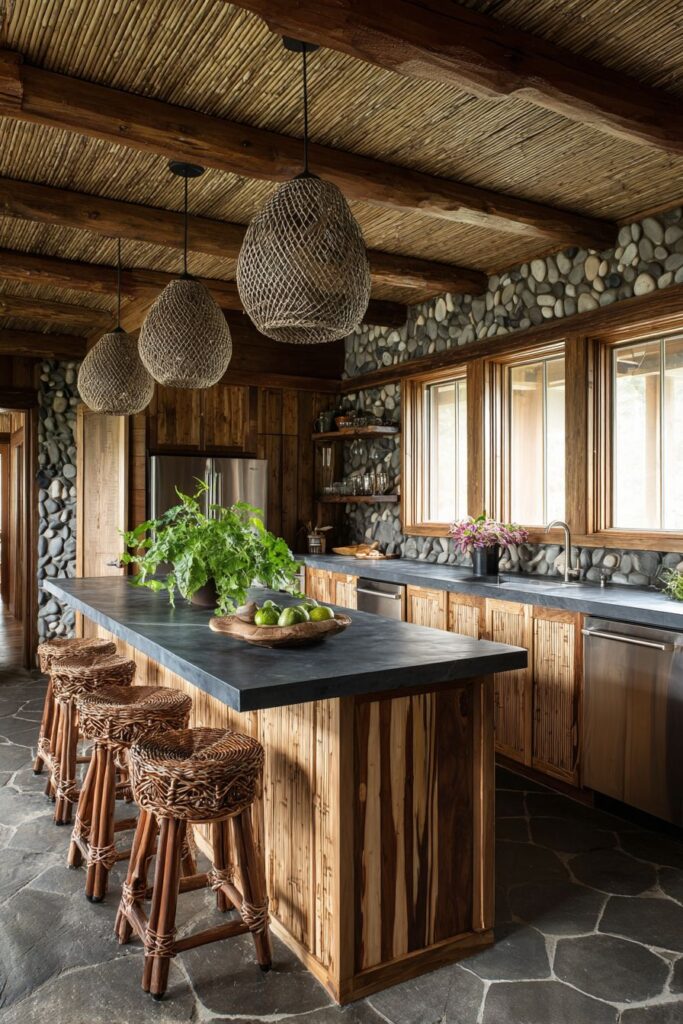
Bamboo cabinetry brings sustainable beauty to this kitchen concept while showcasing one of nature’s most rapidly renewable resources. The natural grain patterns in bamboo create subtle linear designs that add visual interest while maintaining clean, contemporary lines. Bamboo’s natural strength and moisture resistance make it ideal for kitchen environments while its light color and fine grain create an airy, peaceful atmosphere.
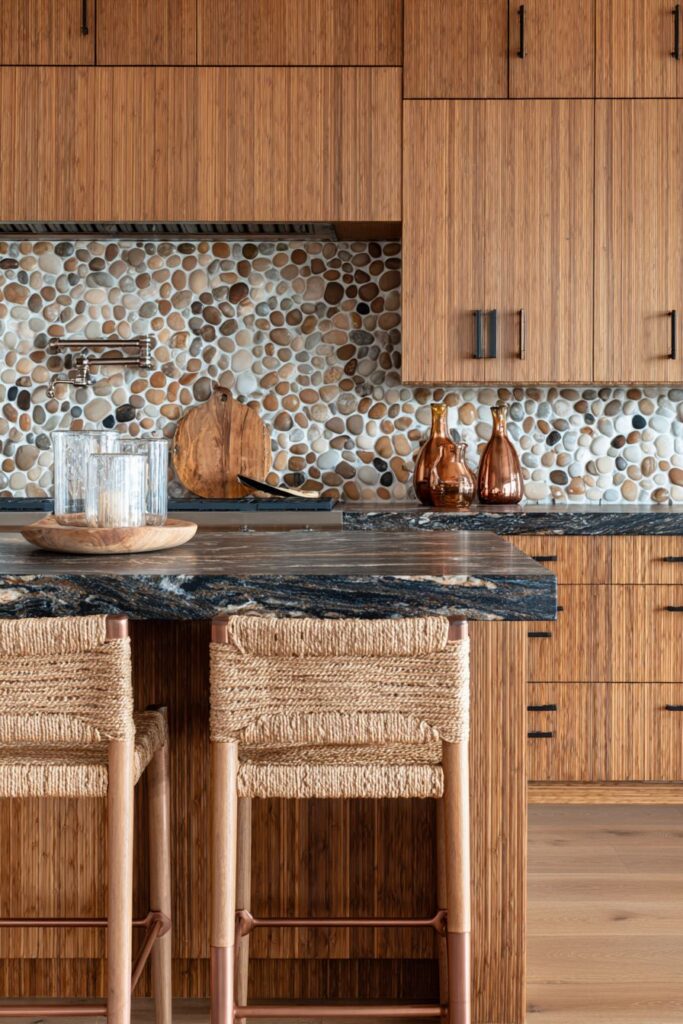
Soapstone countertops in deep grey with natural veining provide dramatic contrast to the light bamboo while offering practical benefits that improve with use. Soapstone’s natural ability to patinate and develop character over time makes it an ideal choice for those who appreciate materials that age gracefully. The deep grey color provides sophisticated contrast while the natural veining adds organic movement and interest.
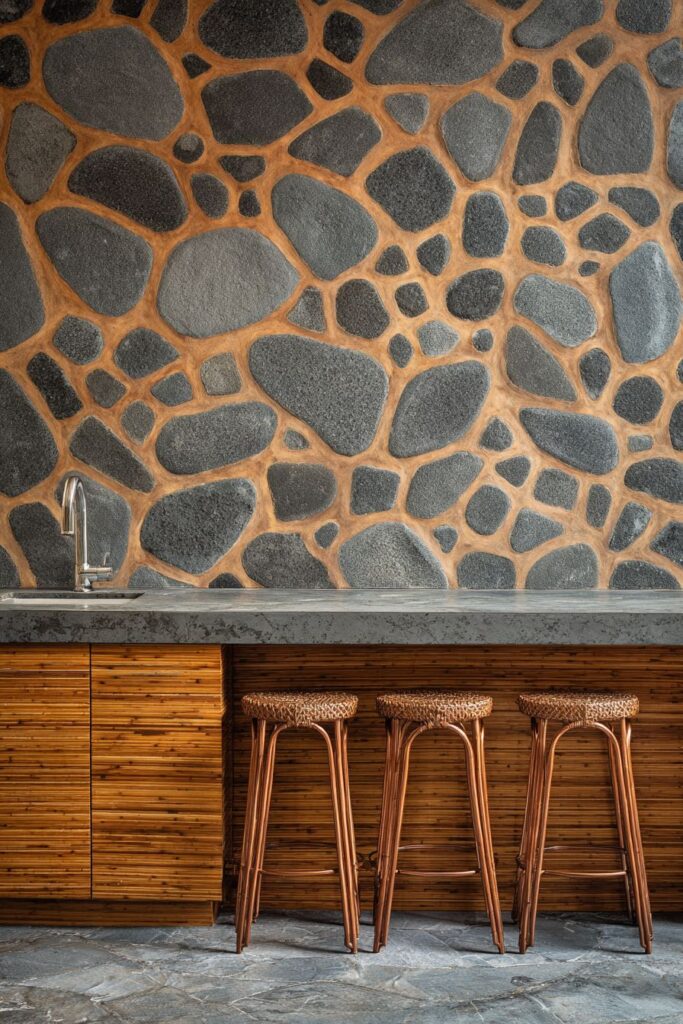
Pebble tiles in earth tones create an organic backsplash that adds textural interest while maintaining the natural material aesthetic. Each pebble’s unique shape and color variation creates a surface that feels like a beach or riverbed, bringing the calming influence of natural water environments into the kitchen space.
Copper bar stools with woven seats add warm metallic accents while providing comfortable seating that complements the natural material palette. The combination of copper and woven textures creates visual warmth while maintaining the sustainable theme through natural materials.
Key Design Tips:
- Choose bamboo cabinetry to embrace sustainable materials while adding light natural grain patterns to your design
- Install soapstone countertops for surfaces that develop beautiful patina and character with daily use
- Use pebble tile backsplashes to create organic texture that evokes natural water environments
- Add copper and woven elements to provide warm metallic accents while maintaining natural material aesthetics
- Embrace materials that improve with age to create kitchens that become more beautiful over time
14. Butcher Block Island Authenticity
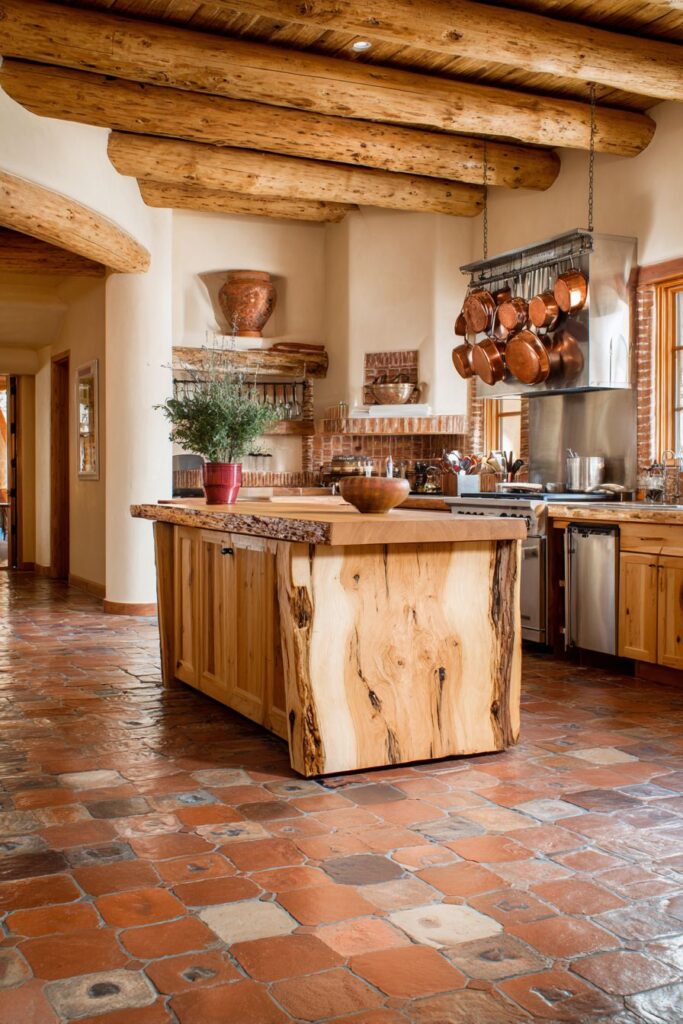
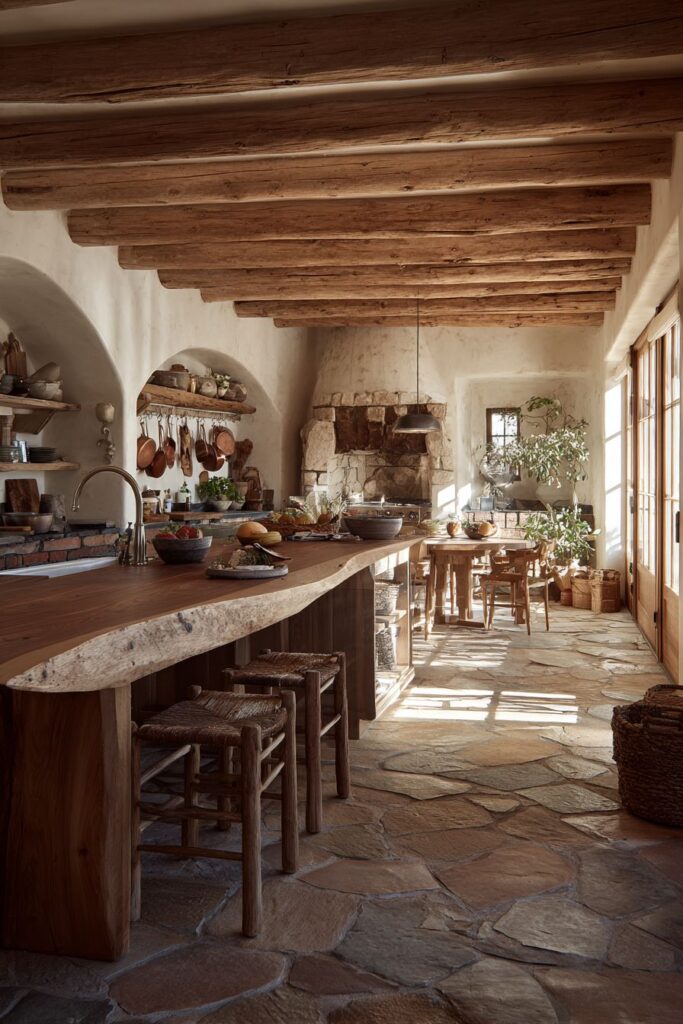
The heart of this kitchen concept centers on a butcher block island with natural edge details that celebrates the working kitchen aesthetic. This island, with its thick wood construction and visible grain patterns, provides both beautiful form and practical function as a primary workspace for food preparation. The natural edge details add organic movement while showcasing the wood’s natural growth patterns and character.
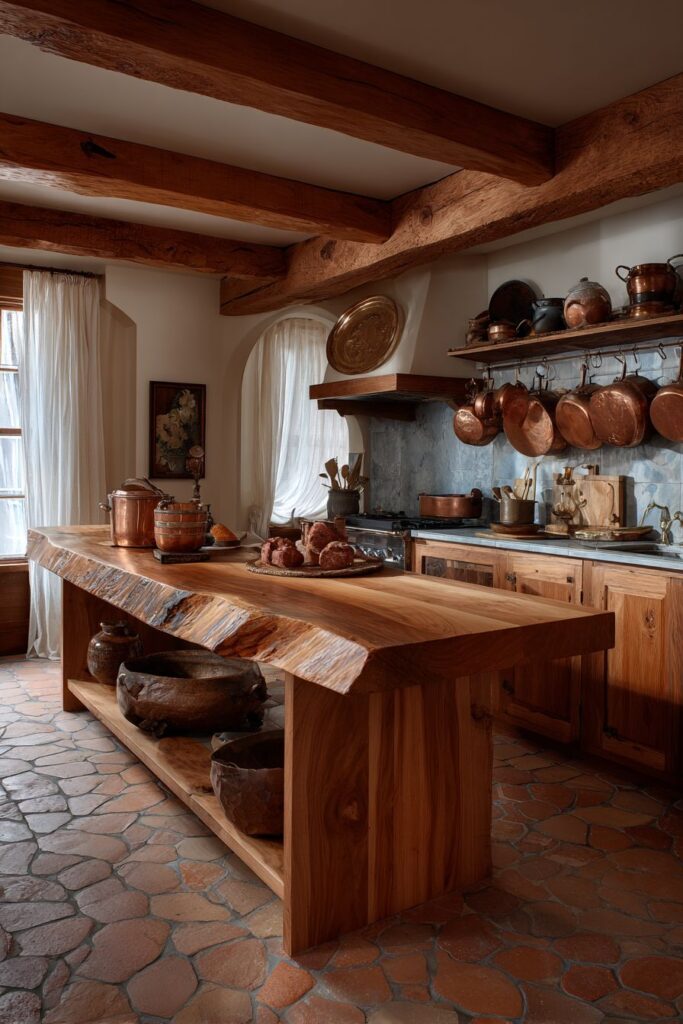
Terracotta floor tiles with natural variations create a warm foundation that complements the wood island while providing durable surfaces that stand up to kitchen traffic. Each tile’s unique color and texture variation tells the story of its clay origins while creating a rich tapestry underfoot that grows more beautiful with age and use.
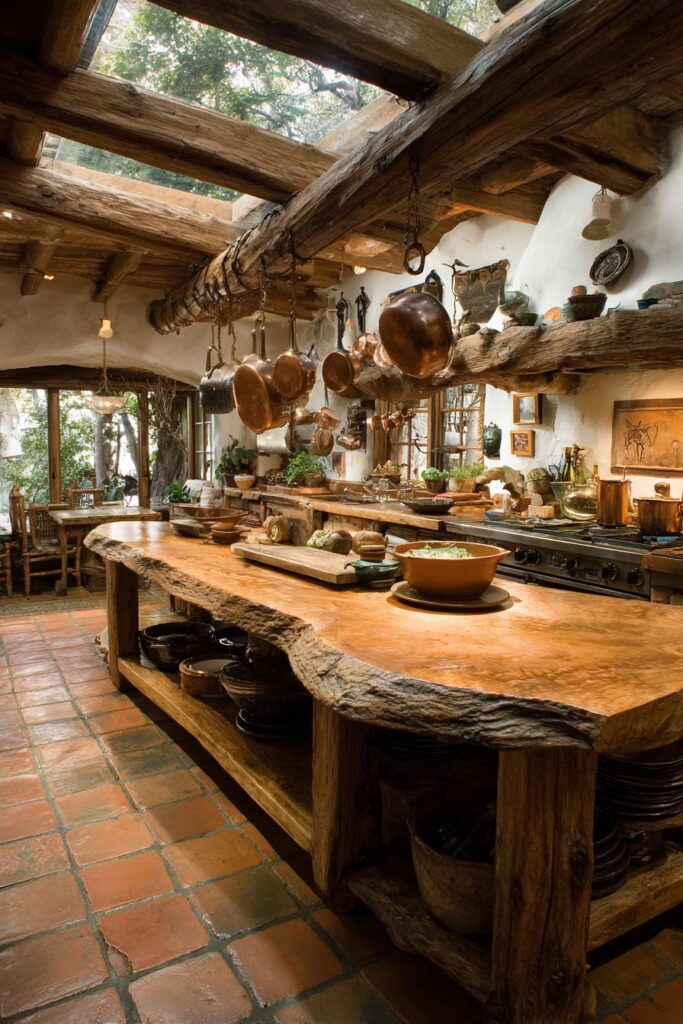
Hanging copper pots and cast iron cookware add authentic functionality while creating visual interest and easy access to frequently used cooking tools. The warm tones of copper and the deep black of cast iron create beautiful contrast while adding practical elements that celebrate the art of cooking. The patina development on both materials adds character that improves with use.
Open beam ceilings in natural wood complete the organic feeling while adding architectural interest and visual height to the space. The natural wood grain and character marks in the beams echo the island’s authentic materials while creating continuity throughout the vertical elements of the design.
Key Design Tips:
- Create butcher block islands with natural edges to provide working surfaces that celebrate wood’s organic beauty
- Choose terracotta floor tiles with natural variations to establish warm foundations that complement wood elements
- Display copper pots and cast iron cookware to add functional beauty while celebrating traditional cooking methods
- Install open beam ceilings to add architectural interest while maintaining natural wood material continuity
- Embrace the working kitchen aesthetic to create spaces where cooking becomes a celebration of natural materials
15. Cork Flooring Sustainability Showcase
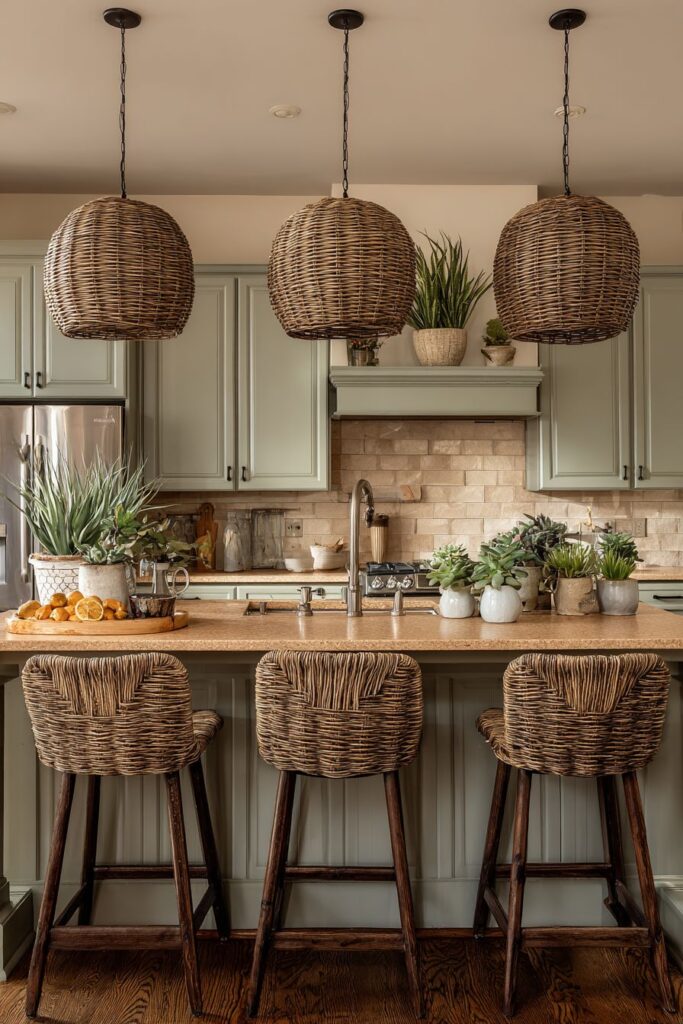
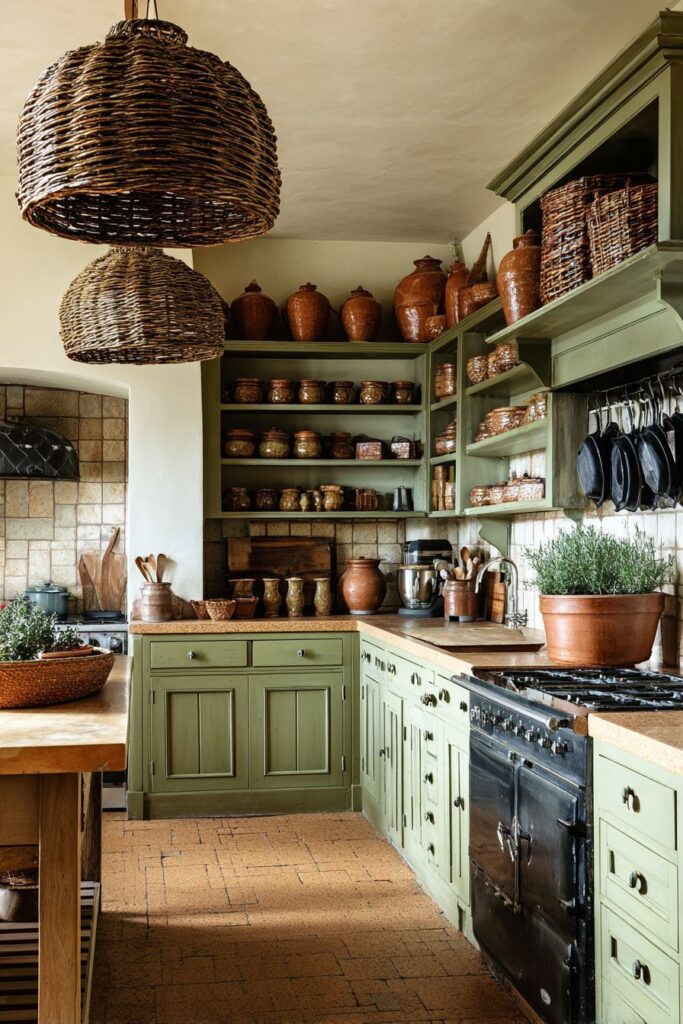
Cork flooring in natural honey tones brings sustainable beauty to this kitchen while showcasing one of nature’s most remarkable renewable resources. The visible grain patterns in cork create subtle texture underfoot while providing natural comfort and warmth that makes standing and working in the kitchen more comfortable. Cork’s natural antimicrobial properties and resilience make it ideal for kitchen environments while its warm honey tones complement other natural materials beautifully.
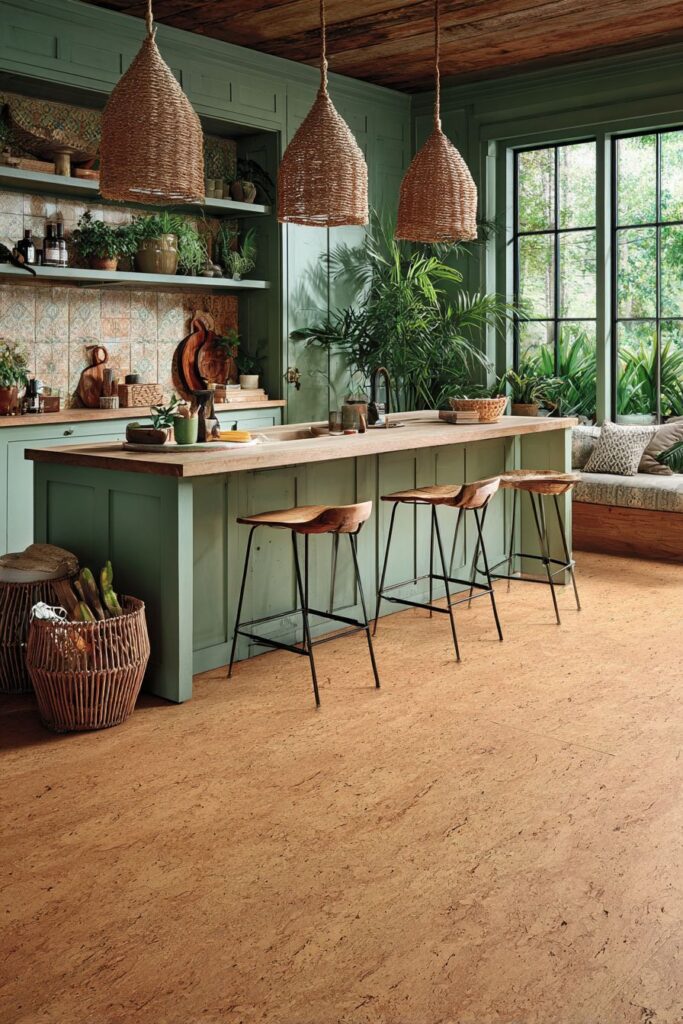
Sage green painted cabinetry provides calming color that works harmoniously with the warm cork flooring while creating visual interest through color contrast. The sage green evokes natural herbs and outdoor environments while providing sophisticated color that feels both fresh and grounded. Natural stone countertops in warm beige add durability while showcasing natural mineral patterns and geological beauty.
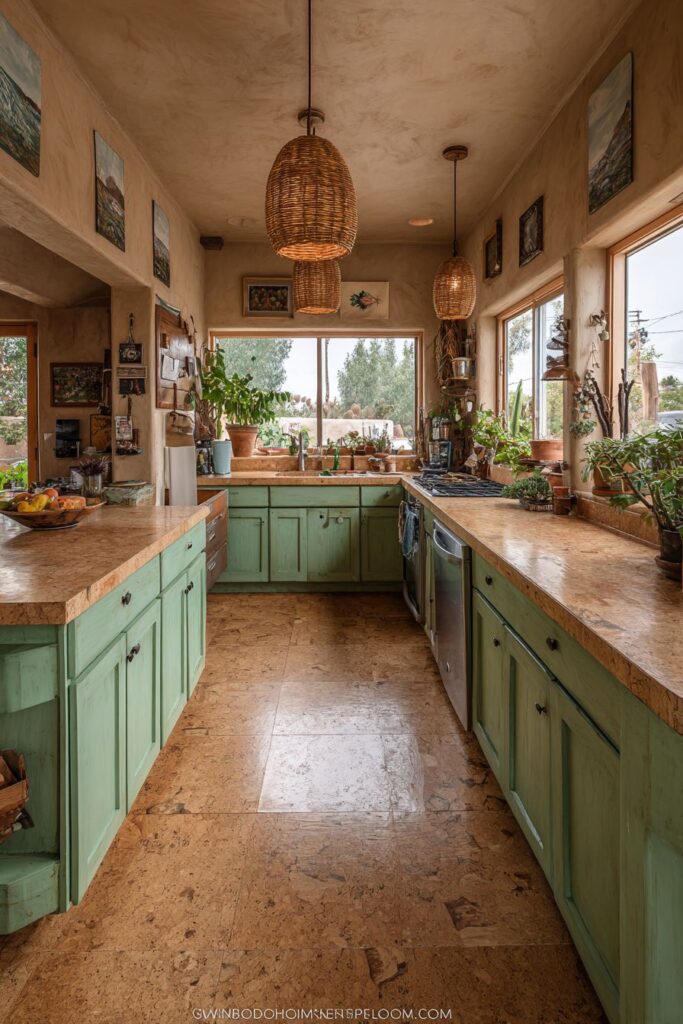
Woven pendant lights introduce organic texture overhead while providing focused task lighting for work areas. The natural fibers used in these fixtures add warmth and visual interest while maintaining the sustainable theme through renewable materials. Their handcrafted appearance complements the other artisanal elements throughout the space.
Handmade ceramic tiles in earth tones create backsplash interest while celebrating artisanal craftsmanship. Each tile’s unique character adds visual depth while maintaining the natural color palette and sustainable material theme.
Key Design Tips:
- Install cork flooring to embrace sustainable materials while adding natural comfort and antimicrobial benefits
- Paint cabinetry in sage green to create calming color that complements warm natural flooring materials
- Choose natural stone countertops to showcase geological beauty while providing durable work surfaces
- Use woven pendant lights to add overhead organic texture while maintaining sustainable material themes
- Include handmade ceramic tiles to celebrate artisanal craftsmanship while adding natural color variations
16. Coffee Station Artisanal Corner
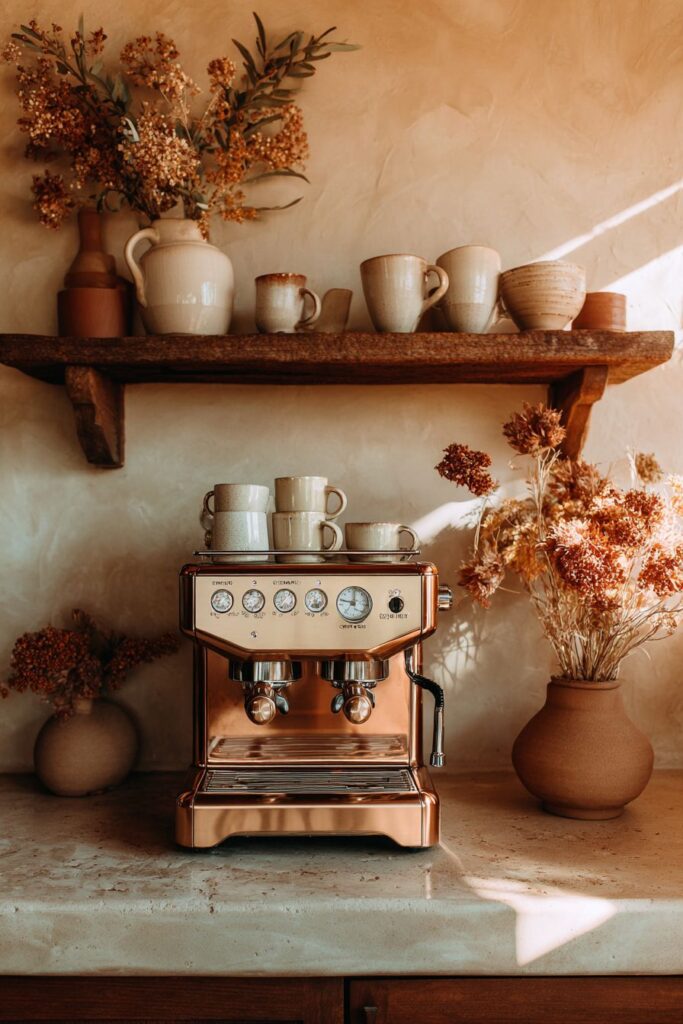
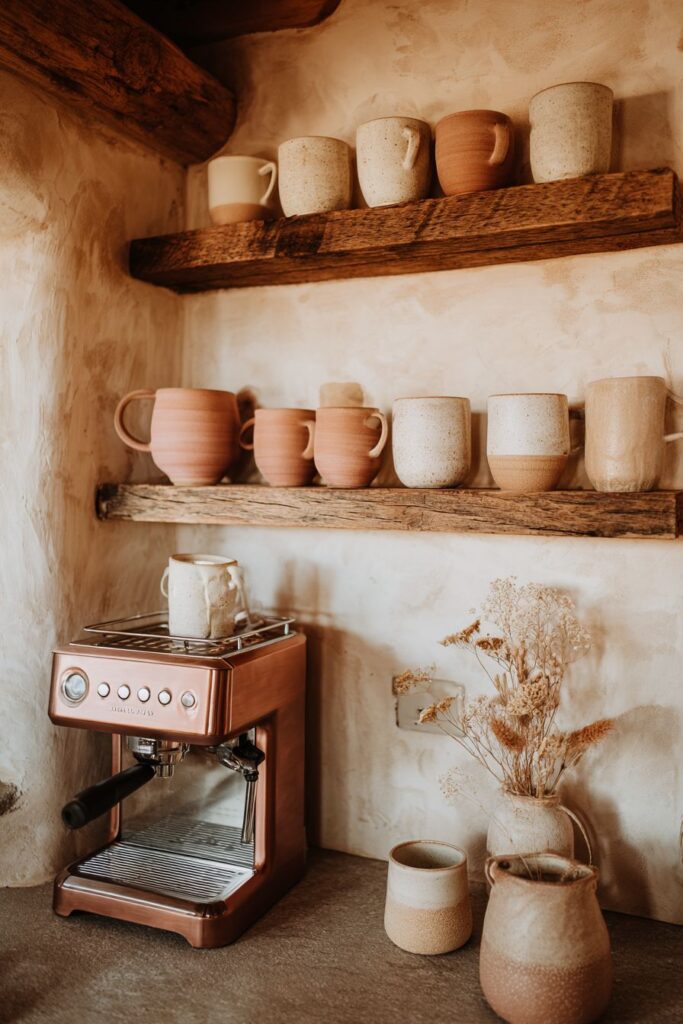
A dedicated coffee station transforms a corner of the kitchen into an artisanal retreat where the ritual of coffee preparation becomes a celebration of craftsmanship and natural materials. Reclaimed wood floating shelves provide display space for ceramic mugs in cream and terracotta tones, creating curated collections that showcase handmade pottery while keeping frequently used items easily accessible.
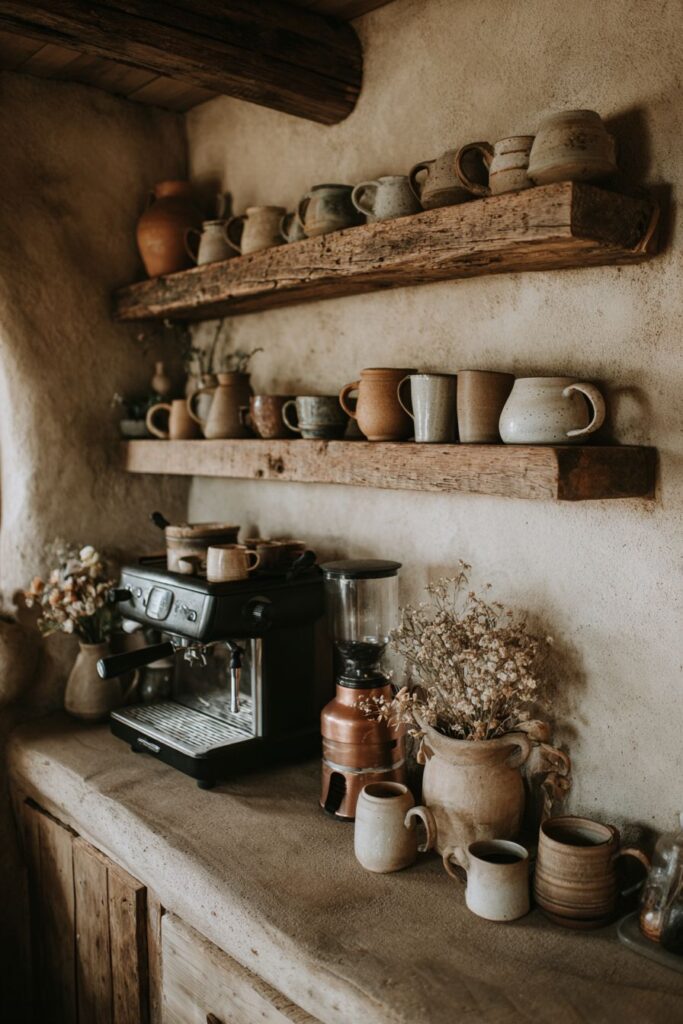
A copper espresso machine serves as the functional centerpiece while adding warm metallic beauty that develops patina over time. The copper’s natural aging process creates an evolving element that grows more beautiful with daily use while providing exceptional heat conductivity for perfect espresso preparation. The warm copper tones complement the earth-toned ceramics while adding sophisticated metallic accents.
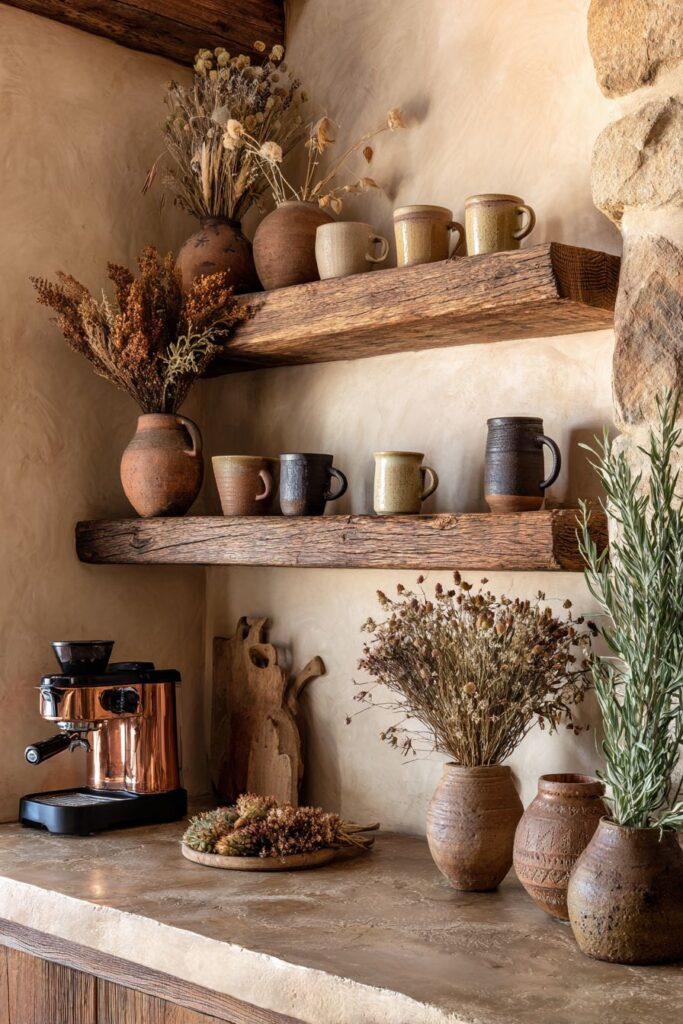
Natural stone countertops provide durable surfaces for coffee preparation while showcasing mineral patterns and geological beauty. The stone’s natural coolness helps with temperature-sensitive coffee preparation while its durability ensures long-lasting performance. Each stone surface tells a unique geological story through its mineral inclusions and natural formations.
Dried flowers in clay vases add organic decoration that changes seasonally while maintaining the earth-toned color palette. The clay vessels echo the ceramic mug collection while the dried flowers bring natural movement and texture that softens the harder elements of stone and metal.
Key Design Tips:
- Create dedicated coffee stations to elevate daily rituals while showcasing artisanal equipment and accessories
- Display ceramic collections on reclaimed wood shelves to create curated vignettes of handcrafted beauty
- Choose copper espresso machines for functional beauty that develops character through daily use and aging
- Use natural stone counters for temperature stability and geological beauty in coffee preparation areas
- Add dried flowers in clay vessels to introduce seasonal organic elements that complement earth-toned ceramics
17. Clay Tile Backsplash Artistry
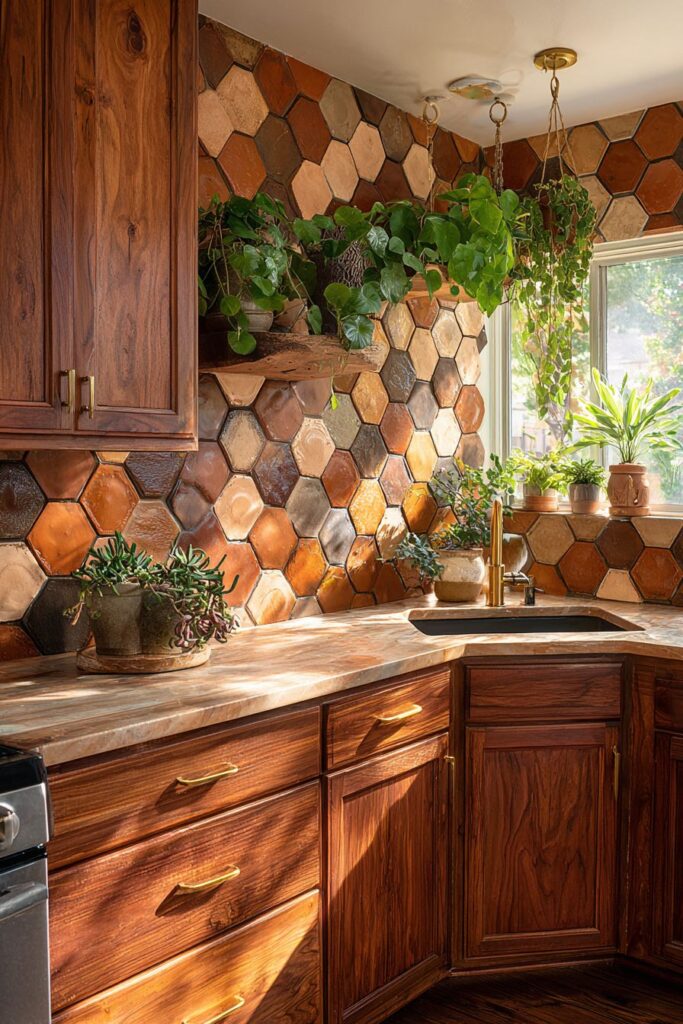
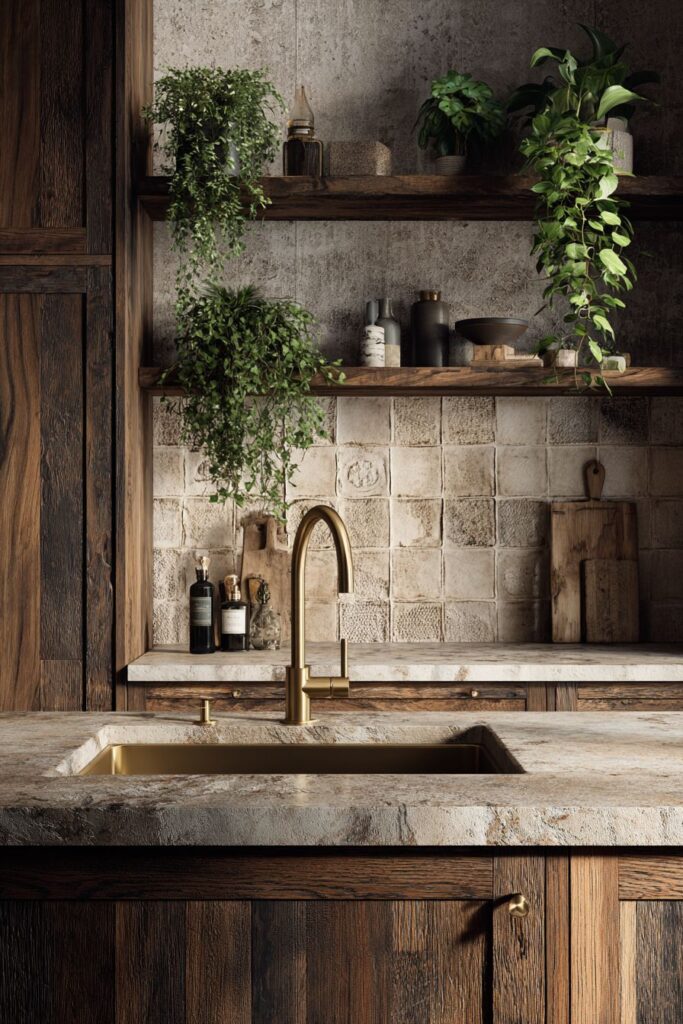
This backsplash concept celebrates the ancient art of tile-making through handcrafted clay tiles in varying terracotta shades that showcase the potter’s skill and the clay’s natural beauty. Each tile carries unique characteristics—slight size variations, color shifts, and surface textures—that transform the backsplash into a work of art that rewards close inspection while providing practical protection for kitchen walls.
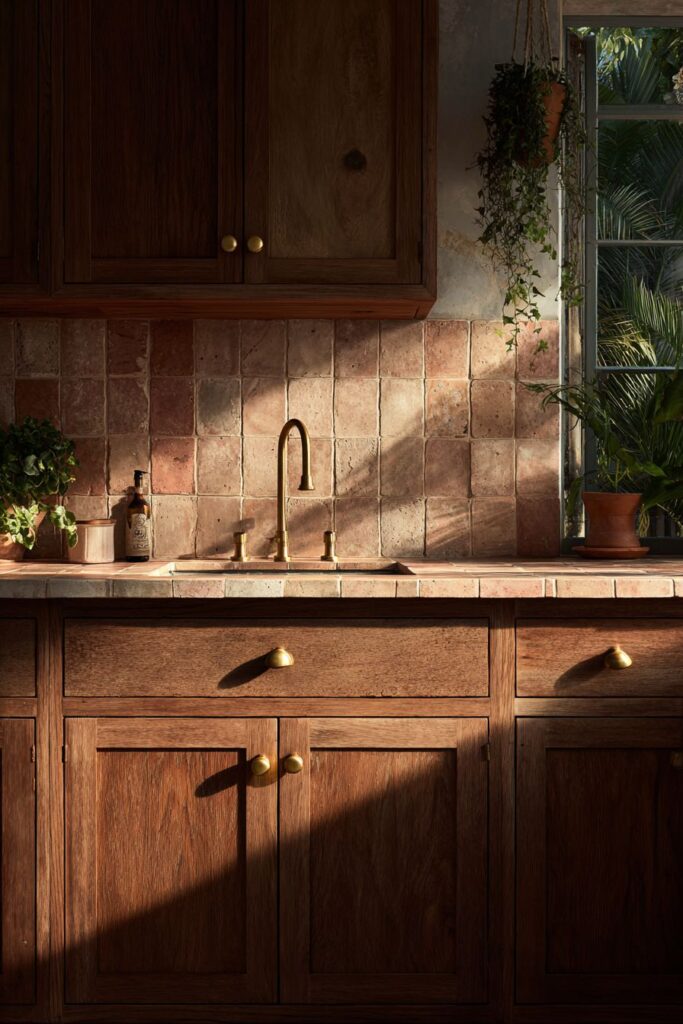
The natural irregularities in these handmade tiles create surface interest that changes throughout the day as light moves across the varied textures. The terracotta shades range from deep rust to lighter clay tones, creating subtle gradations that add depth and warmth to the entire kitchen space. This variation in color and texture makes each installation unique and personal.
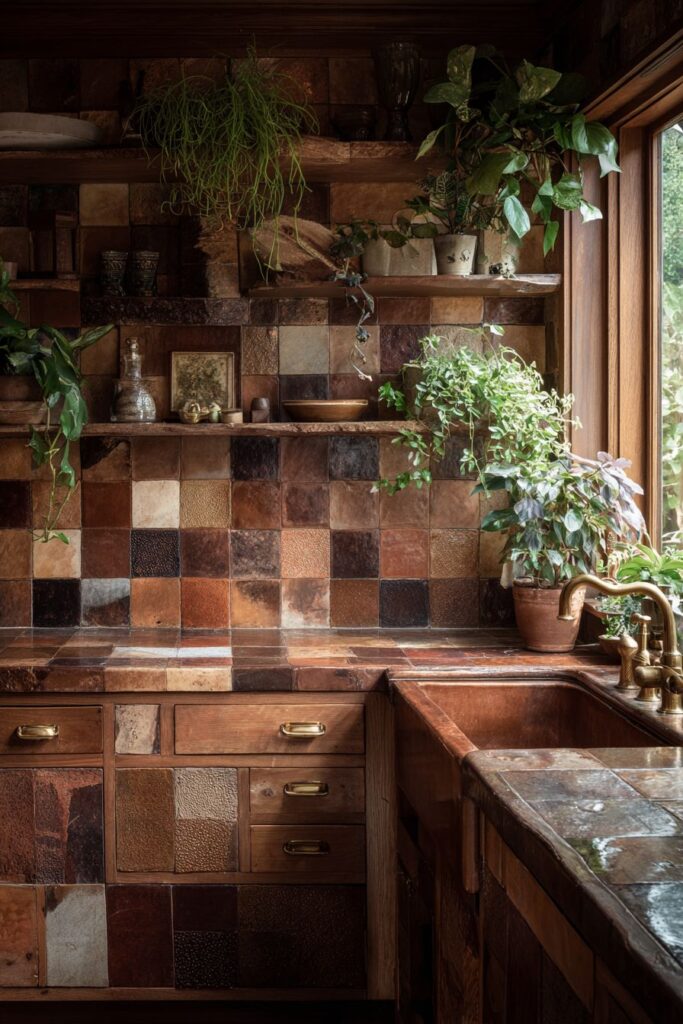
Natural wood cabinetry in warm walnut finish provides rich contrast to the terracotta tiles while showcasing beautiful grain patterns that complement the organic nature of the handmade ceramics. The walnut’s deep brown tones create sophisticated color harmony while adding warmth and natural beauty through visible wood grain and character marks.
Brass hardware and fixtures complement the warm earth tones throughout while adding sophisticated metallic accents that enhance rather than compete with the artisanal tile work. Hanging plants introduce living elements that bring fresh green colors and organic movement to balance the warmer earth tones.
Key Design Tips:
- Choose handmade clay tiles to celebrate traditional pottery arts while creating unique backsplash installations
- Vary terracotta tile shades to create subtle color gradations that add depth and visual interest
- Pair handmade tiles with natural walnut cabinetry to create sophisticated earth-toned color harmonies
- Use brass fixtures to add warm metallic accents that complement rather than compete with ceramic artistry
- Include hanging plants to introduce fresh organic elements that balance warm earth-toned materials
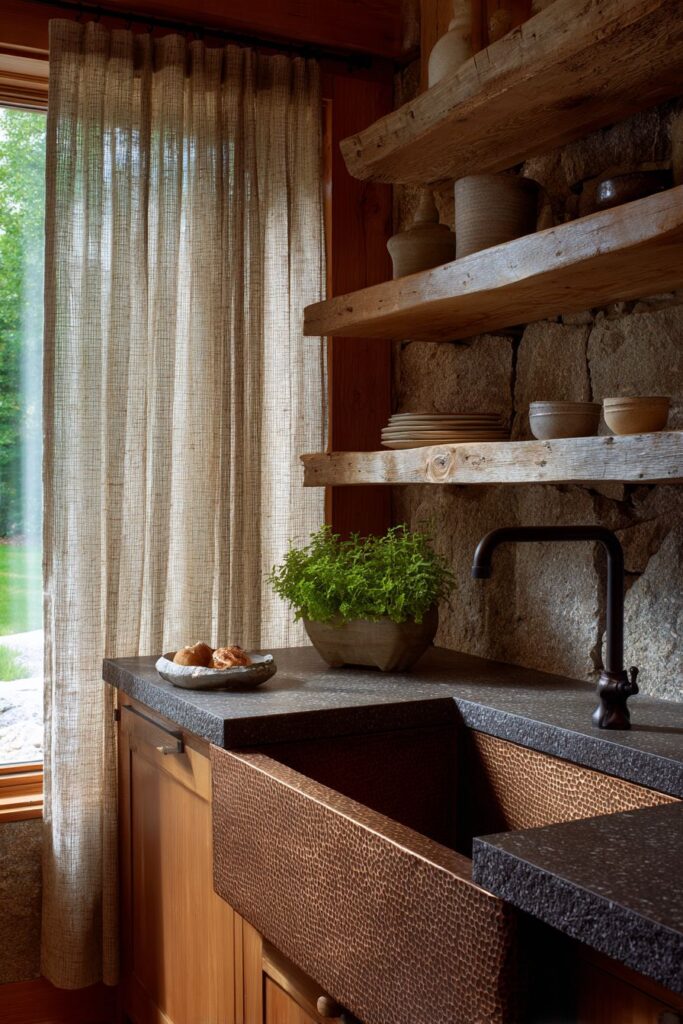
18. Hammered Copper Sink Heritage
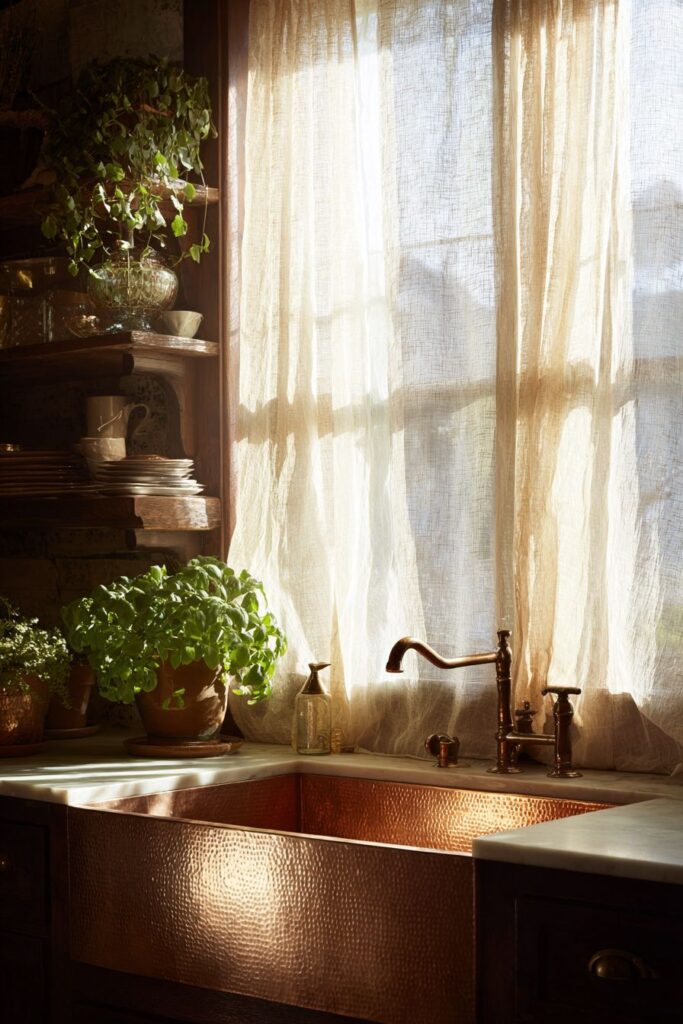
A hammered copper farmhouse sink brings traditional metalworking artistry into daily kitchen use while creating a stunning focal point that celebrates both craftsmanship and natural material beauty. The hammered surface texture catches and reflects light differently throughout the day while the natural patina patterns that develop over time create an ever-evolving surface that becomes more beautiful with age and use.
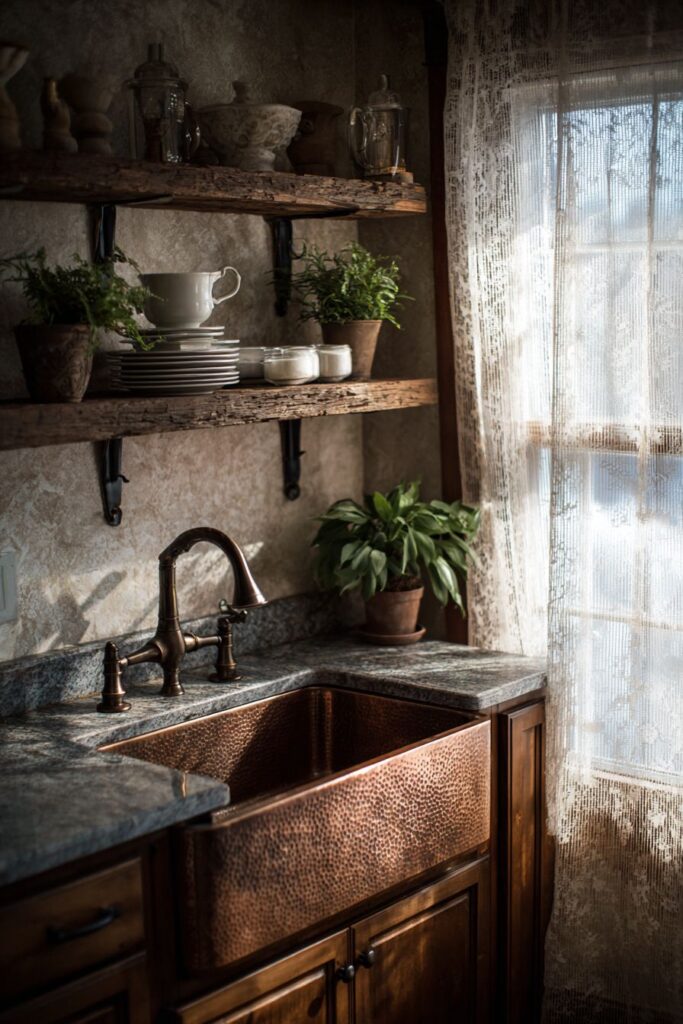
Honed granite countertops in warm grey with natural mineral variations provide sophisticated contrast to the warm copper while offering durable work surfaces that showcase geological beauty. The honing process reveals the stone’s natural mineral content while creating smooth surfaces that feel wonderful to touch. Each granite slab tells a unique geological story through its mineral patterns and natural formations.
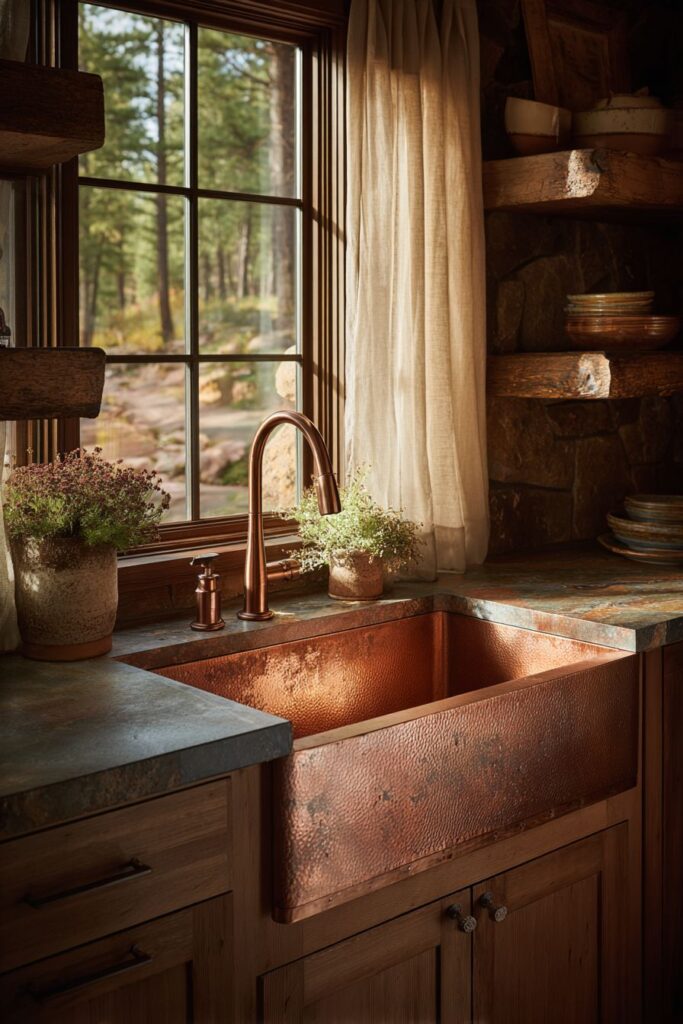
Open shelving crafted from reclaimed barn wood displays pottery and plants while adding authentic aged character to the space. The barn wood’s natural weathering and character marks speak to decades of use and exposure while providing practical storage that doubles as display space for beautiful objects. The wood’s natural aging complements the copper’s developing patina.
Natural light filtering through sheer linen curtains creates soft illumination that emphasizes the copper’s texture and the stone’s mineral patterns while adding gentle movement as breezes shift the fabric. The linen’s natural texture and neutral color maintain the organic material theme while providing privacy and light control.
Key Design Tips:
- Choose hammered copper sinks to bring traditional metalworking artistry into functional kitchen elements
- Pair copper with honed granite countertops to create sophisticated contrast while showcasing natural materials
- Use reclaimed barn wood shelving to add authentic aged character while providing practical storage solutions
- Install sheer linen curtains to create soft natural light that enhances metallic and stone surface textures
- Embrace patina development to allow copper elements to evolve and become more beautiful with daily use
19. Teak and Travertine Natural Partnership
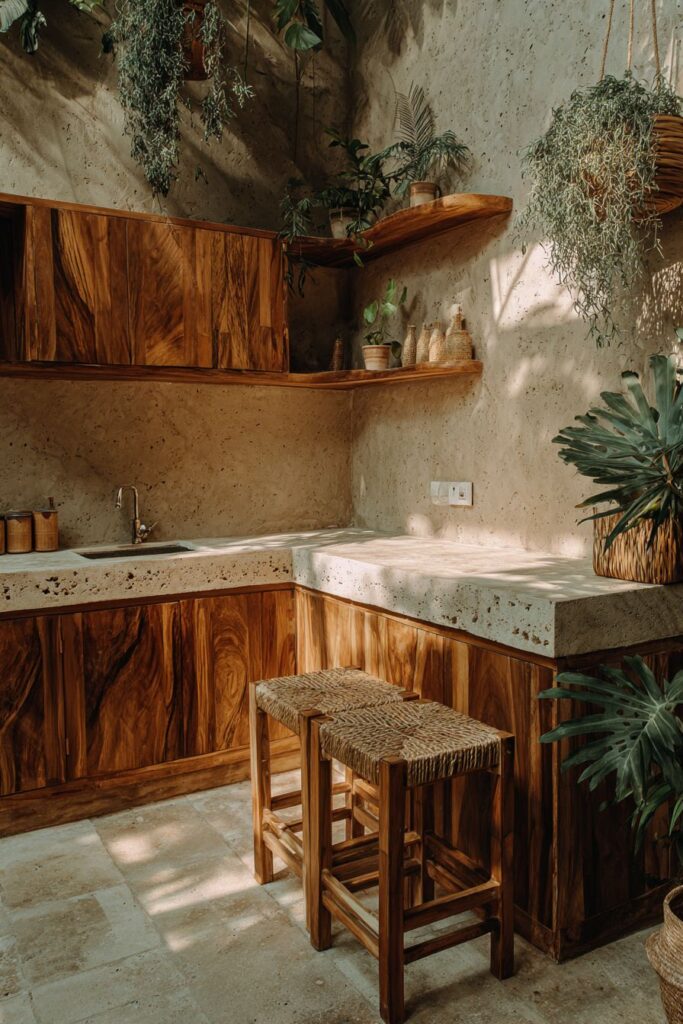
Teak wood cabinetry with natural oil finish showcases one of nature’s most durable and beautiful hardwoods while displaying grain patterns that tell the story of tropical growth and natural resilience. The natural oil finish penetrates deep into the wood while allowing the grain to show through clearly, creating surfaces that feel wonderful to touch while developing richer color with age and exposure to light.
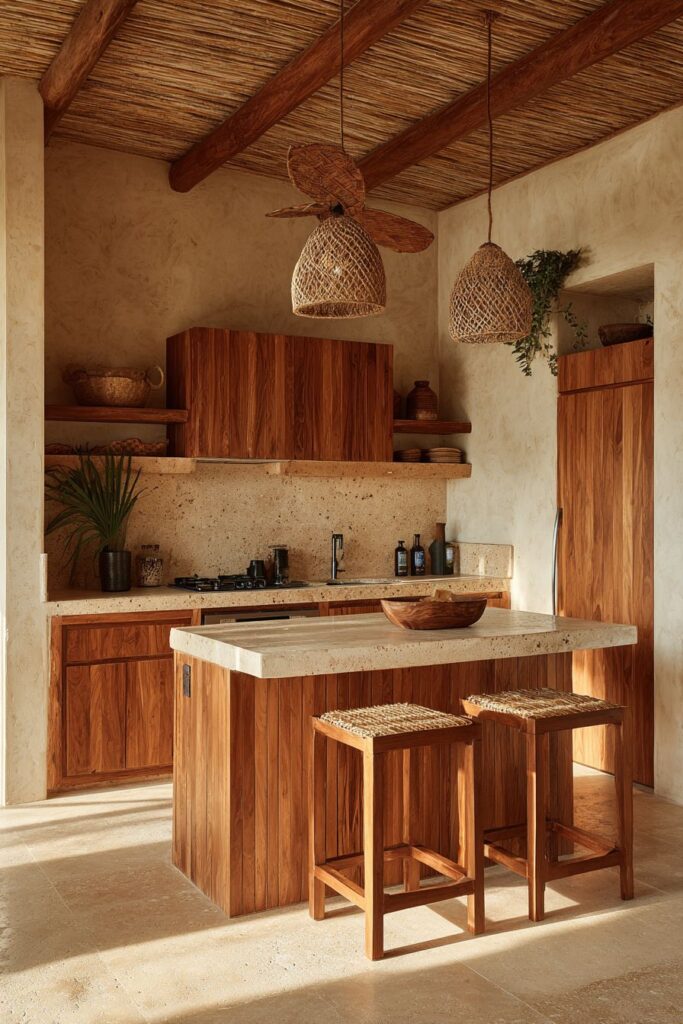
Travertine countertops display natural stone holes and texture that celebrate the geological processes that created this remarkable material. Each travertine surface shows unique patterns of mineral deposits and natural formations that create one-of-a-kind work surfaces while providing durability that improves with age. The natural holes and texture add visual interest while creating surfaces that feel organic and authentic.
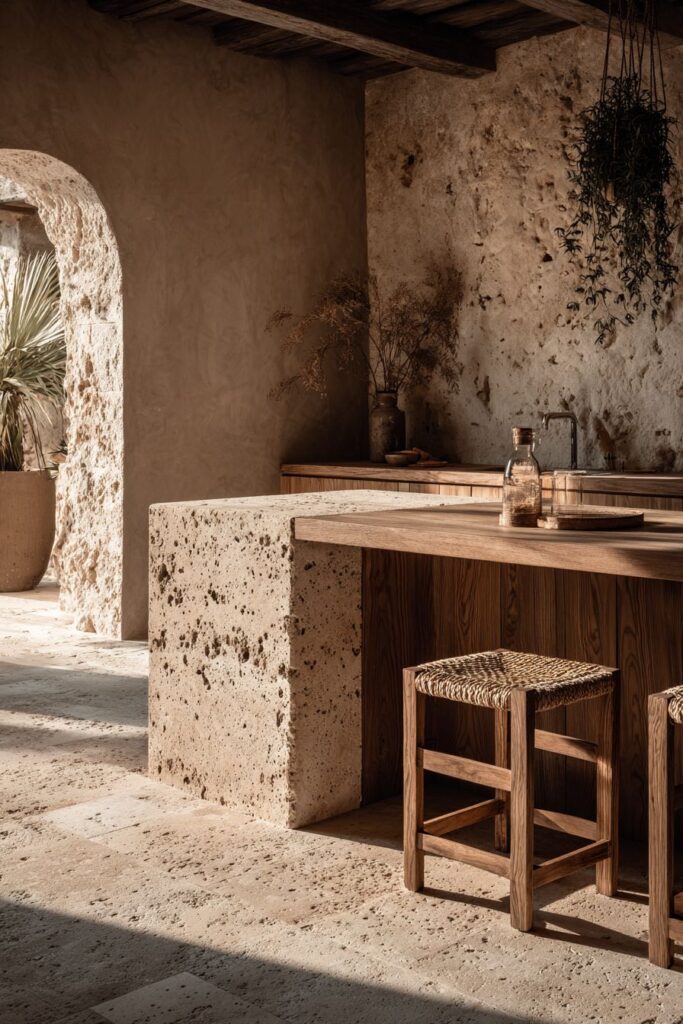
Natural stone flooring in warm beige tones provides a neutral foundation that complements both the teak cabinetry and travertine countertops while adding another layer of geological beauty to the overall design. The stone’s natural color variations create subtle pattern underfoot while providing durable surfaces that stand up to kitchen traffic and moisture.
Woven bar stools and hanging plants complete the organic aesthetic by adding natural fiber textures and living elements that bring the outdoors inside while maintaining the sophisticated natural material palette throughout the space.
Teak and Travertine Natural Partnership
Key Design Tips:
- Choose teak cabinetry with natural oil finishes to showcase tropical hardwood beauty while ensuring durability
- Install travertine countertops to celebrate natural stone holes and geological formation processes
- Use natural stone flooring in warm beige tones to provide neutral foundations that complement other natural materials
- Add woven seating to introduce natural fiber textures that soften harder stone and wood elements
- Include hanging plants to bring living elements that complement the sophisticated natural material aesthetic
20. Living Herb Garden Integration
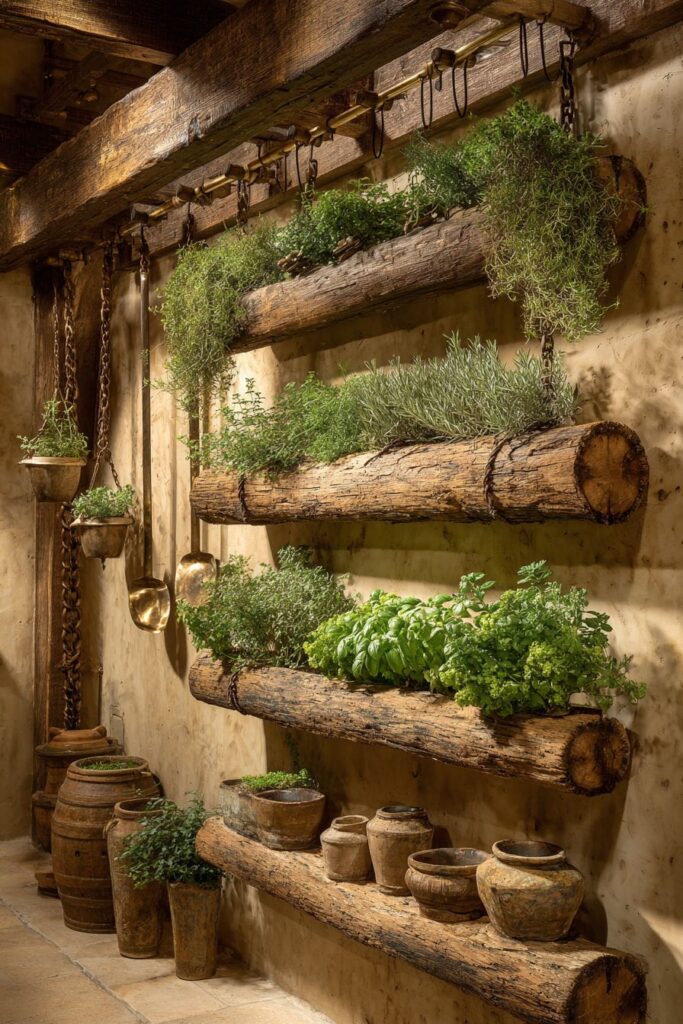
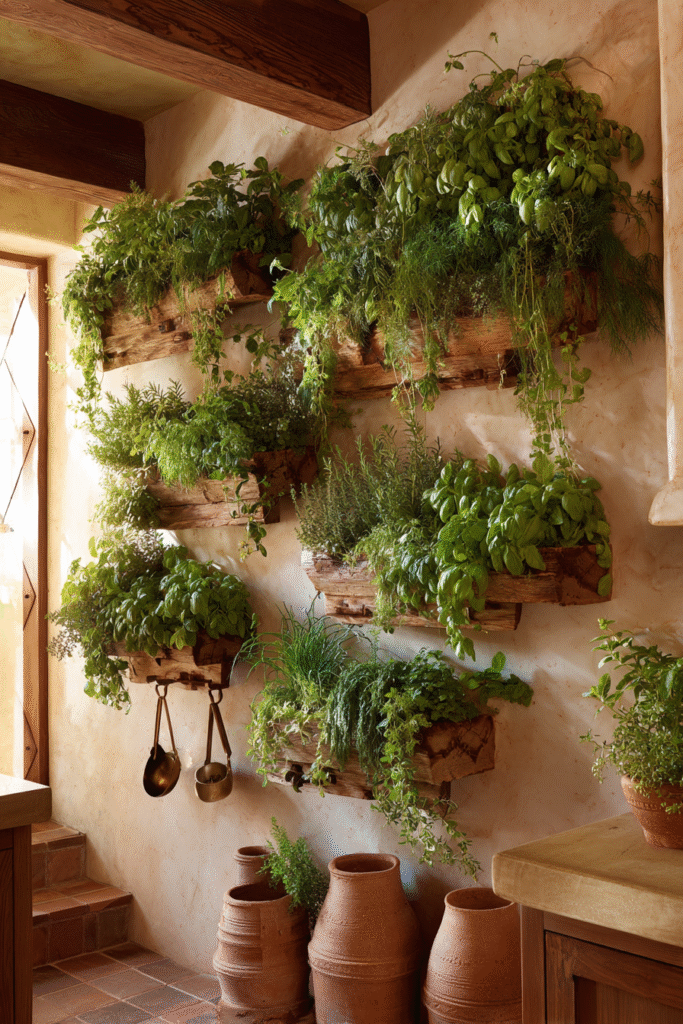
Transform a kitchen wall into a living herb garden that brings fresh aromatics and vibrant greens into daily cooking routines while creating a stunning natural feature that changes with seasons and care. Natural wood planters built into the wall design provide growing space for culinary herbs while adding architectural interest and organic texture that complements other natural materials throughout the space.
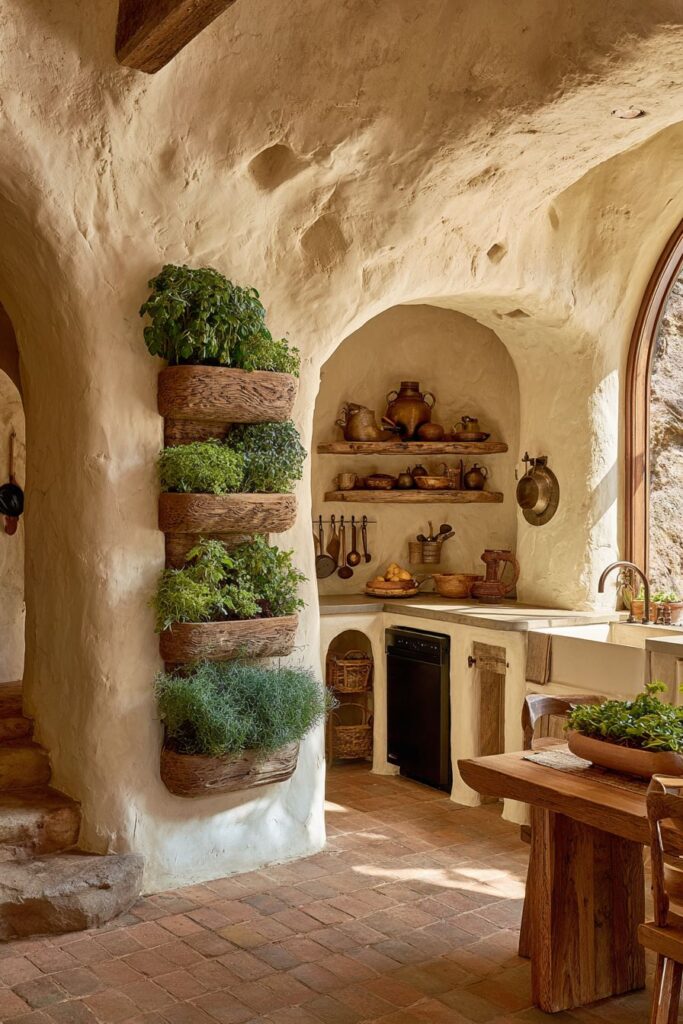
Terra cotta pots arranged on natural wood shelving create additional growing space while adding traditional pottery elements that echo ancient growing traditions. The terra cotta’s porous nature provides ideal growing conditions for herbs while its warm earth tones complement the natural wood planters and shelving. Each pot develops unique patina and mineral deposits that add character over time.
Natural adobe plaster walls in warm cream tones provide a textured backdrop that complements the growing herbs while creating surfaces that feel organic and handmade. The subtle texture variations in the plaster add depth and interest while providing neutral color that doesn’t compete with the vibrant greens of growing plants.
Brass watering tools displayed nearby add functional beauty while maintaining the warm metallic theme throughout the space. These tools become decorative elements when not in use while providing practical functionality for herb care and maintenance.
Key Design Tips:
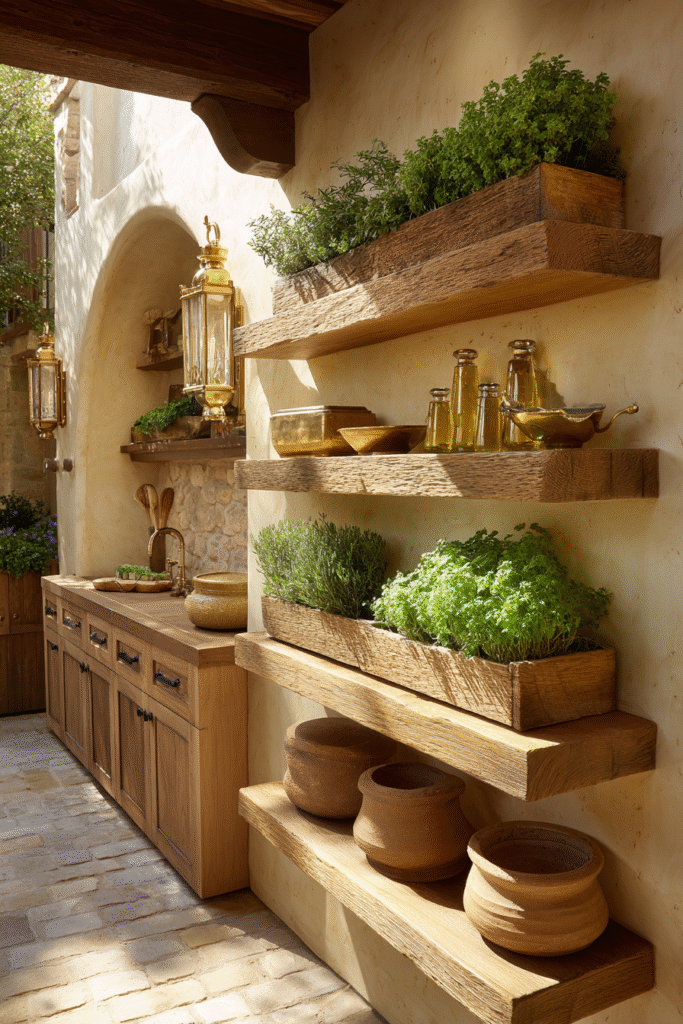
- Create living herb gardens to bring fresh aromatics and seasonal change into kitchen environments
- Use natural wood planters to integrate growing systems while adding architectural interest and organic texture
- Display terra cotta pots on wood shelving to provide flexible growing space while celebrating pottery traditions
- Apply natural adobe plaster to create textured backdrops that complement living plants without competing
- Include brass watering tools to add functional beauty while maintaining warm metallic design themes
21. Stone Pizza Oven Culinary Theater
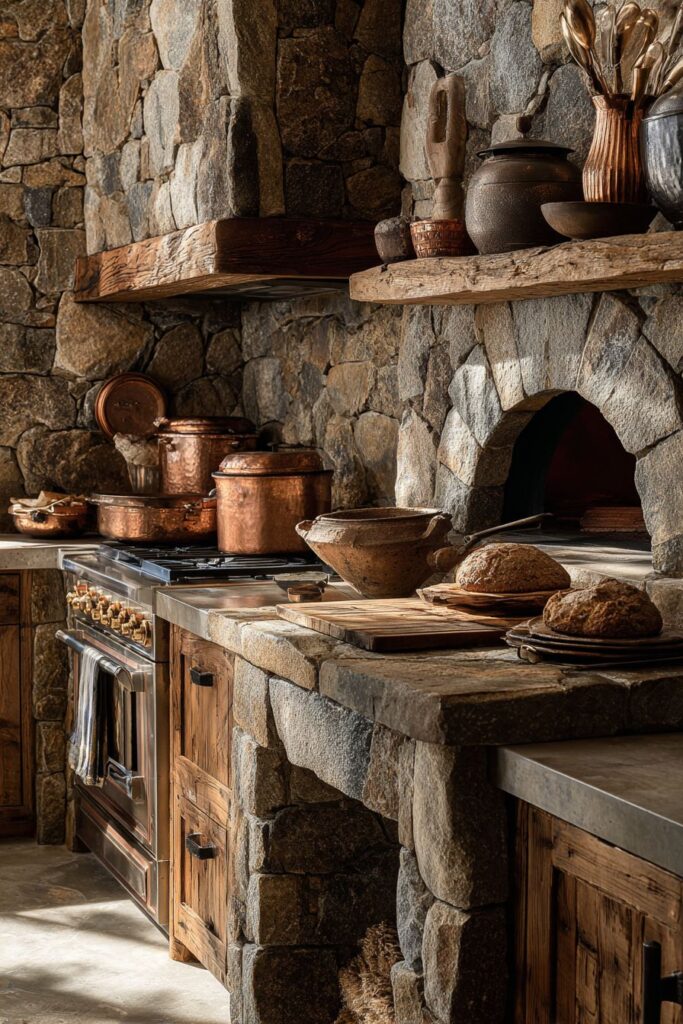
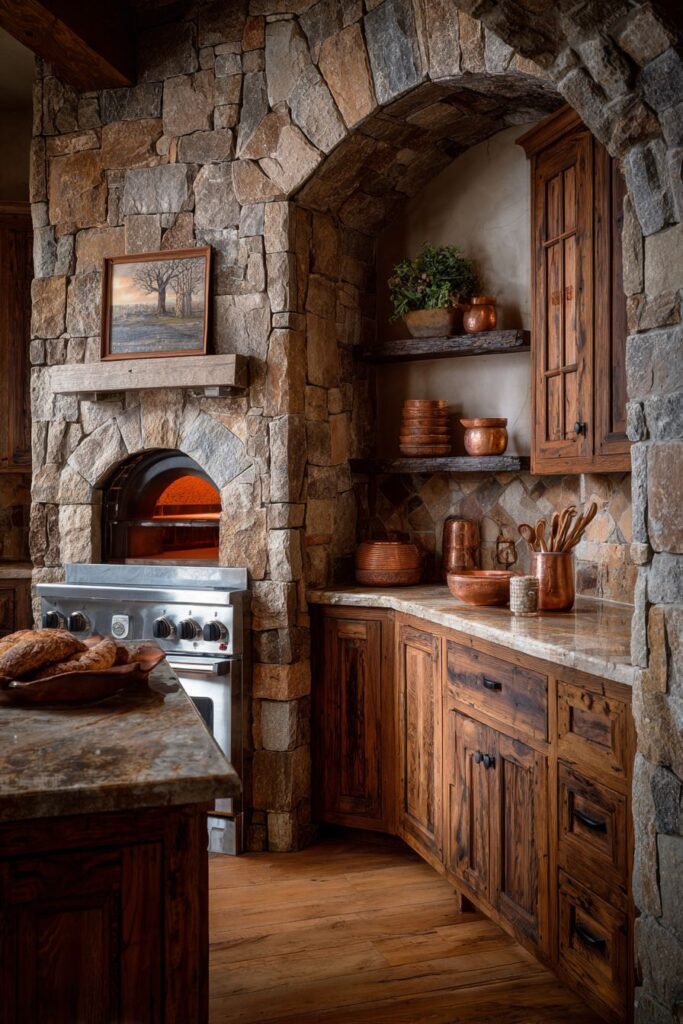
A natural stone pizza oven built into a wall of stacked stone creates a dramatic focal point that celebrates both culinary tradition and natural material beauty. The oven construction uses warm grey and brown stones with natural variations that tell geological stories while providing thermal mass that creates perfect cooking conditions for artisanal breads and pizzas.
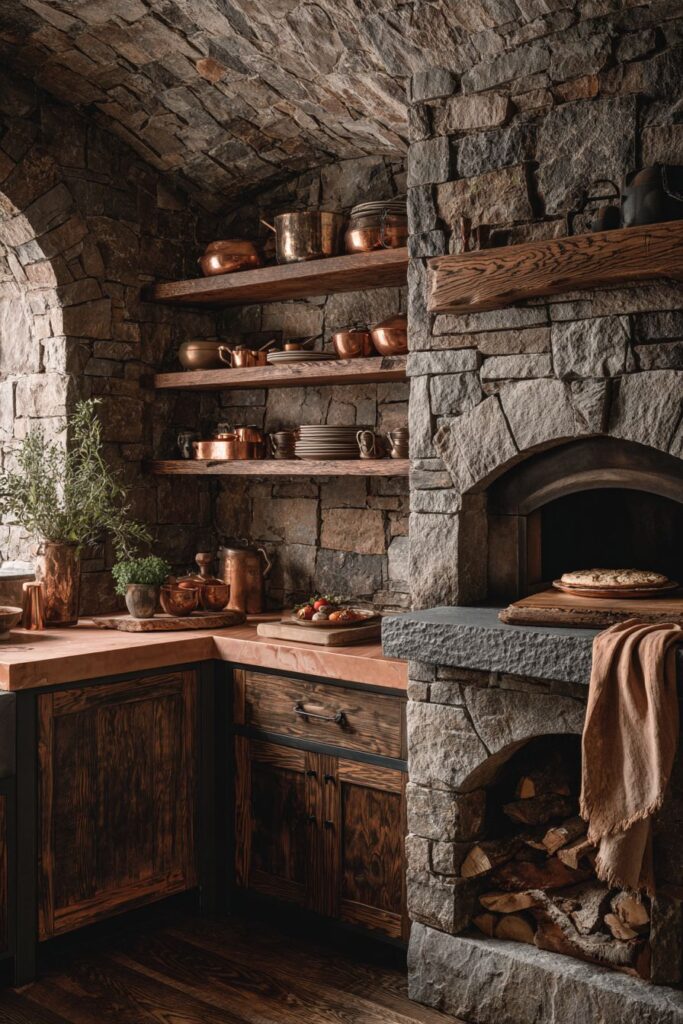
The surrounding cabinetry crafted from reclaimed chestnut wood brings authentic character through visible character marks, nail holes, and natural aging that speaks to the wood’s previous life in barns and structures. Each board tells its own story while providing practical storage for cooking tools and ingredients needed for oven cooking.
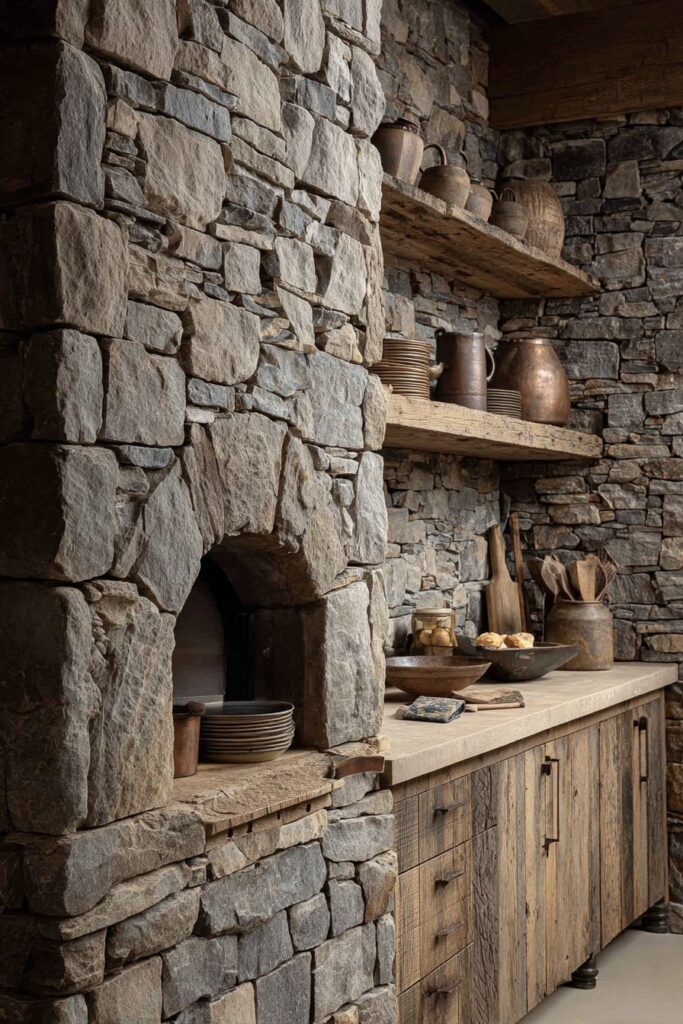
Copper cookware and ceramic serving pieces create functional displays that add warm metallic tones and earth-colored ceramics to complement the stone and wood elements. The copper’s natural ability to conduct heat perfectly makes it ideal for oven cooking while its developing patina adds beauty that improves with use.
The integration of these elements creates a cooking area that feels like the heart of a traditional European kitchen where cooking becomes a celebration of fire, stone, and natural materials working together to create memorable meals and gathering experiences.
Key Design Tips:
- Install natural stone pizza ovens to create culinary focal points that celebrate traditional cooking methods
- Use reclaimed chestnut cabinetry to add authentic character while providing practical storage for cooking essentials
- Display copper cookware to add functional beauty while providing ideal heat conduction for oven cooking
- Stack natural stones with geological variations to create thermal mass while showcasing natural material beauty
- Design cooking areas as culinary theaters where food preparation becomes entertainment and celebration
22. Book-Matched Walnut Waterfall Luxury
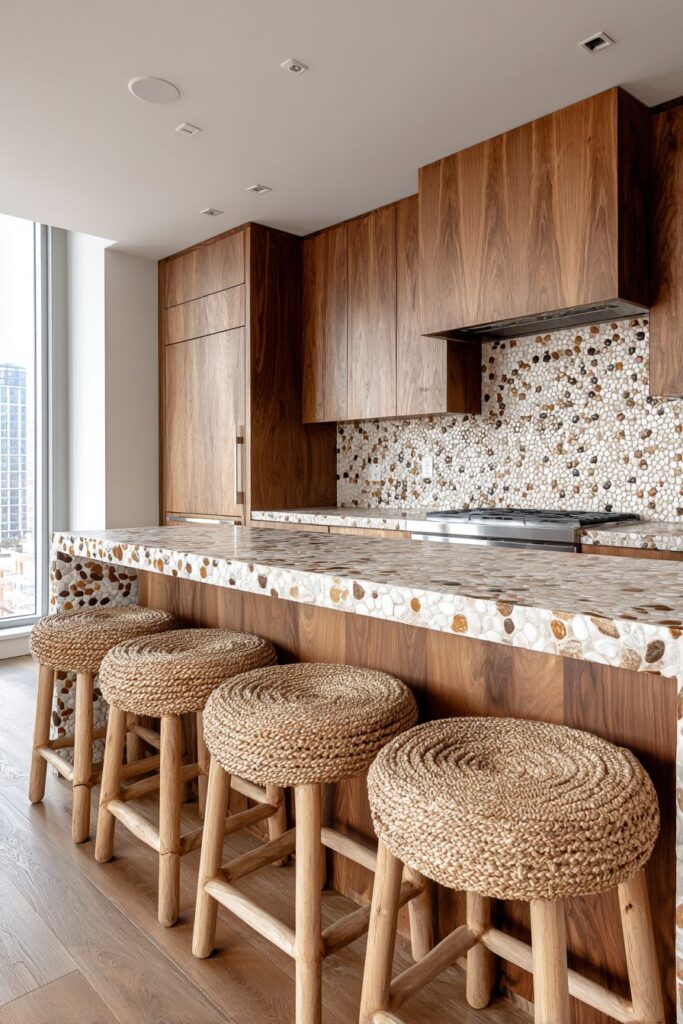
A breakfast bar featuring waterfall edge countertops in book-matched walnut creates a stunning display of natural wood artistry where the grain patterns mirror each other perfectly across the horizontal and vertical surfaces. This book-matching technique reveals the wood’s natural beauty while creating dramatic visual impact that transforms the breakfast bar into a sculptural centerpiece.
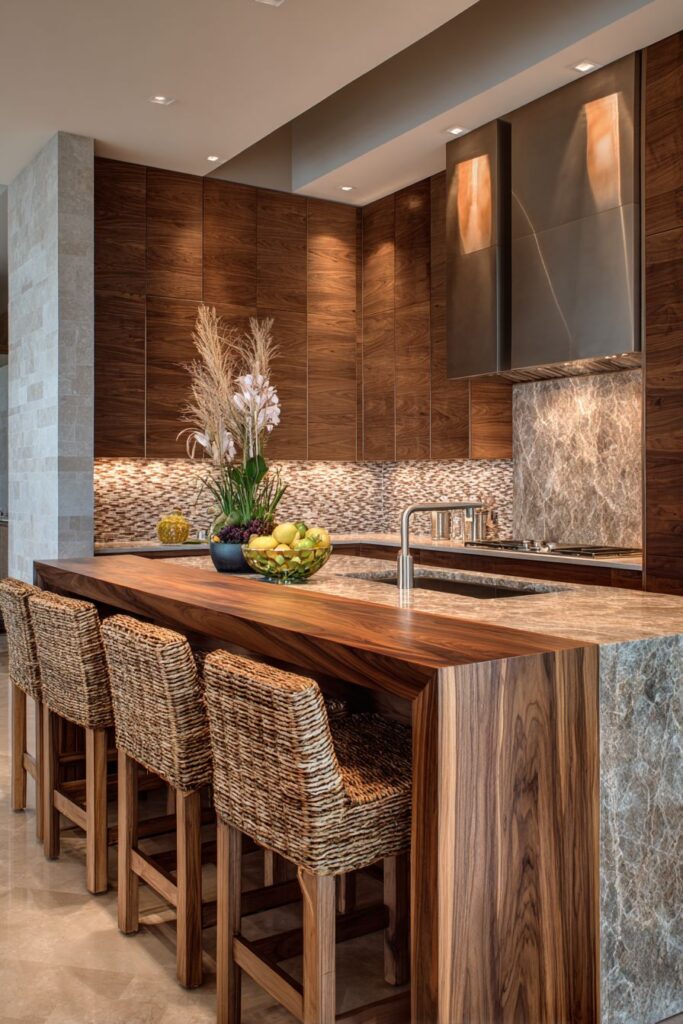
The continuous grain flow from horizontal surface to vertical edge emphasizes the walnut’s natural patterns while creating seamless transitions that appear to flow like frozen water. Each grain line and color variation becomes part of a larger artistic composition that celebrates the tree’s natural growth patterns and unique character.
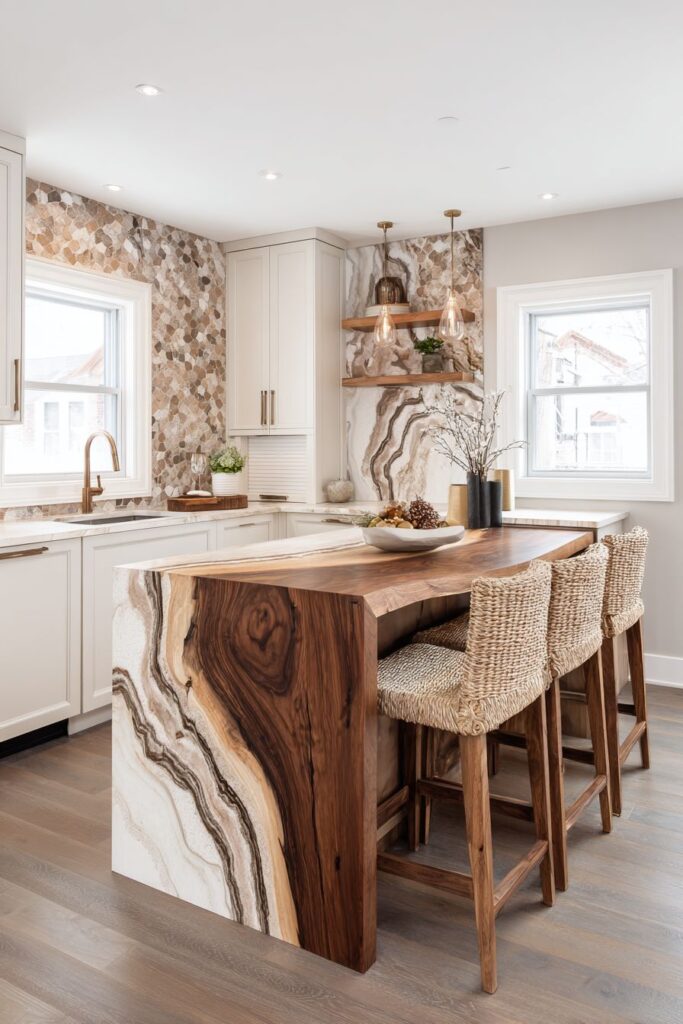
Bar stools with woven jute seats provide organic texture contrast to the smooth walnut surfaces while maintaining the natural material aesthetic through plant-based fibers. The jute’s natural color and texture add warmth and tactile interest while providing comfortable seating that complements the sophisticated wood artistry.
Natural stone mosaic backsplash in earth tones creates organic texture that complements the walnut’s smooth surfaces while adding another layer of natural material beauty. Each small stone piece adds color and texture variation that creates visual interest without competing with the dramatic walnut waterfall edge.
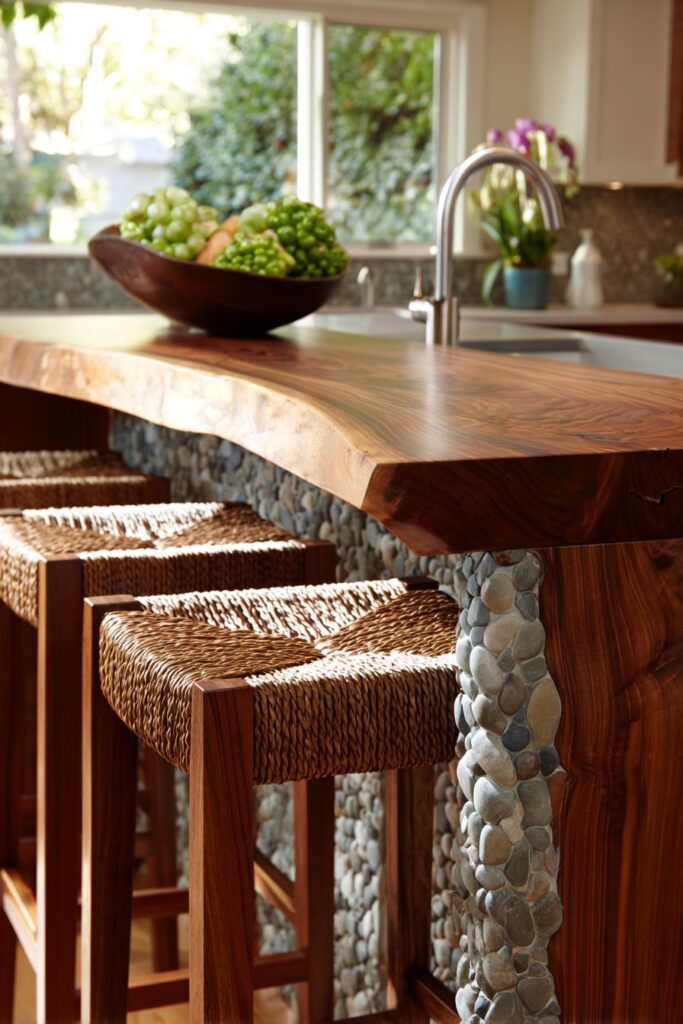
Key Design Tips:
- Use book-matched walnut for waterfall edges to create dramatic displays of natural wood grain artistry
- Emphasize continuous grain flow to transform functional surfaces into sculptural design elements
- Choose jute-seated bar stools to provide organic texture contrast while maintaining natural material themes
- Install natural stone mosaic backsplashes to add texture variety without competing with dramatic wood features
- Position waterfall edges to take advantage of lighting that highlights grain patterns and natural wood beauty
23. Spice Storage Living Artwork
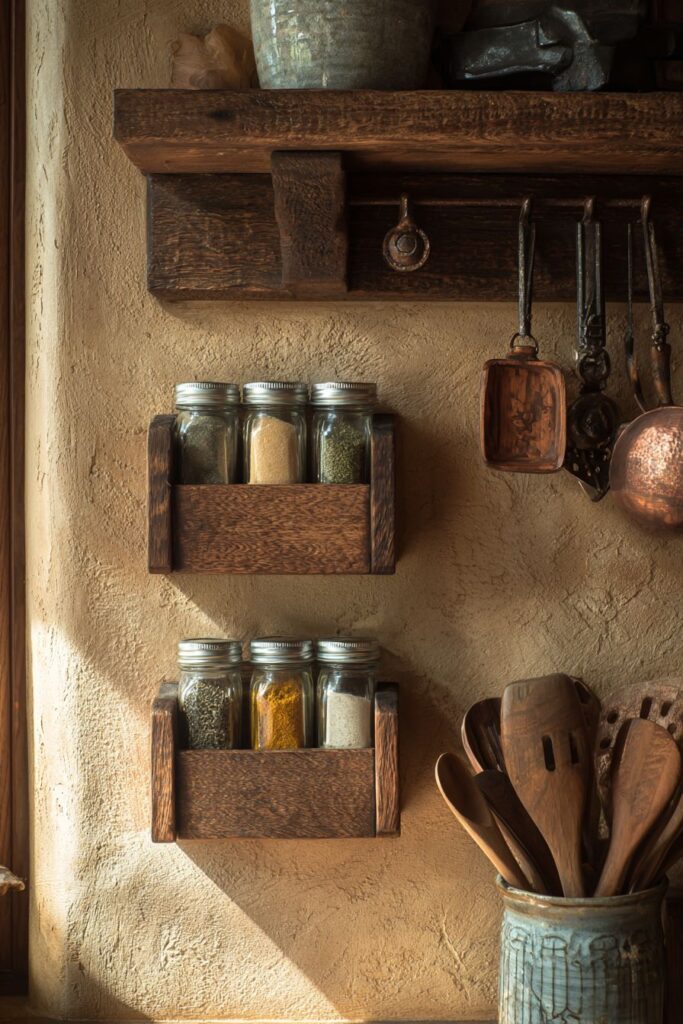
Transform spice storage into living artwork through natural wood spice racks that display colorful spices in small glass jars, creating a functional gallery that celebrates both culinary diversity and natural beauty. The variety of spice colors—from golden turmeric to deep red paprika to vibrant green herbs—creates a rainbow of natural hues that becomes a constantly changing art installation.
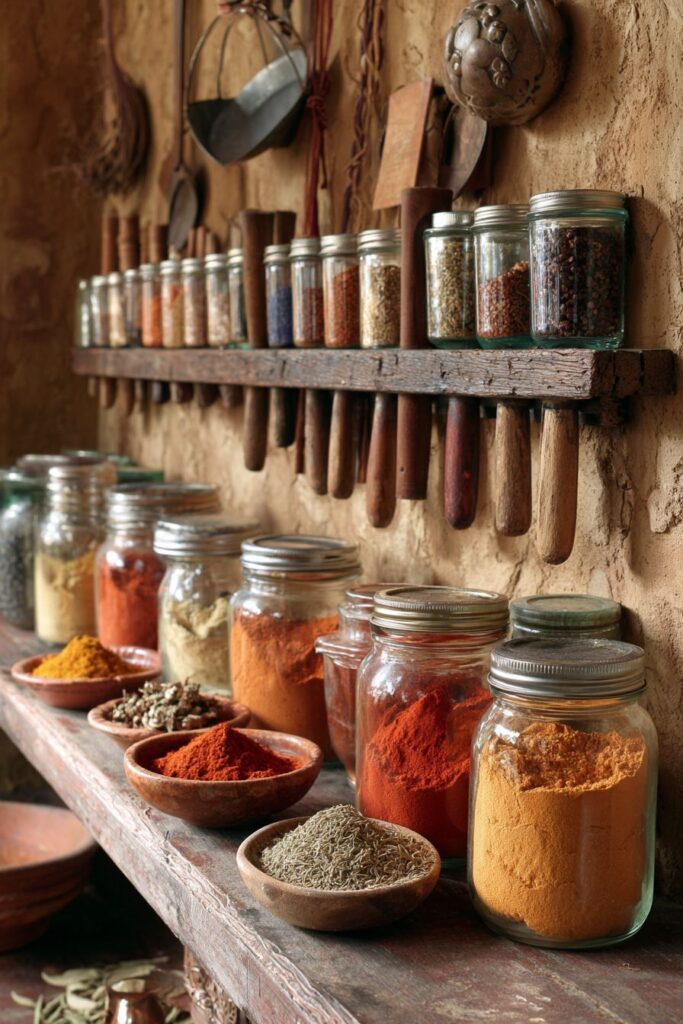
Each glass jar reveals the unique texture and color of its contents while wooden lids add warmth and natural texture that unifies the collection. The transparency of glass allows the spices’ natural beauty to shine while providing airtight storage that preserves flavor and potency. The wooden lids create visual continuity while adding organic warmth to the display.
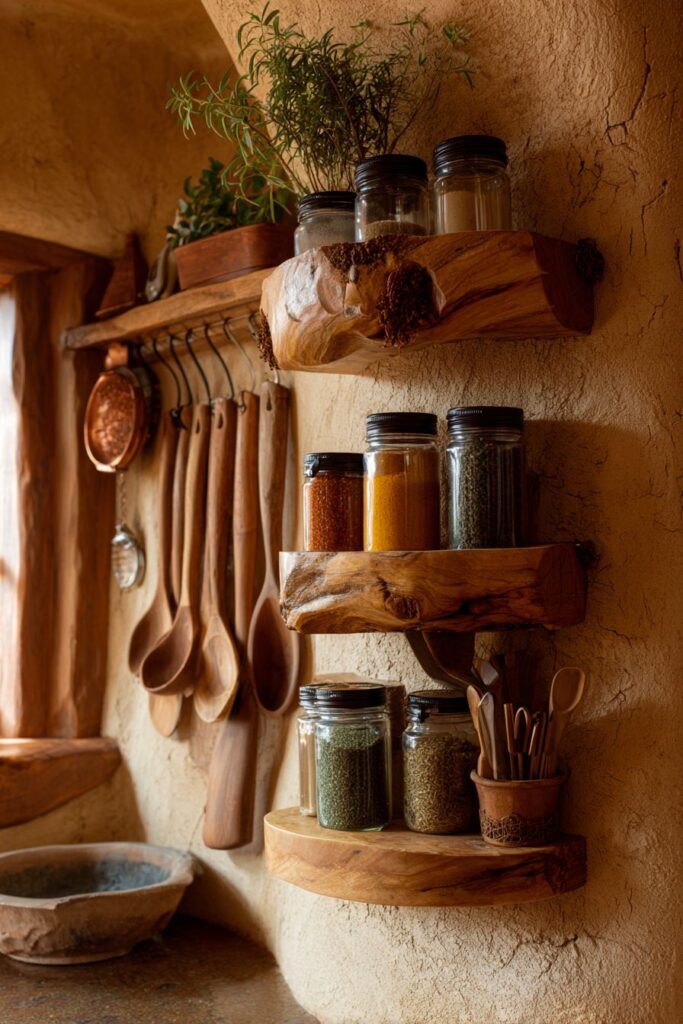
Natural hemp plaster walls in warm beige tones provide textured backdrops that complement the colorful spice display without competing for attention. The hemp plaster’s subtle texture and neutral color create perfect canvases for the vibrant spice colors while maintaining the natural material theme throughout the space.
Copper measuring spoons and wooden utensils displayed nearby add functional beauty while maintaining the warm color palette. These tools become decorative elements when not in use while providing practical functionality for cooking and spice measurement.
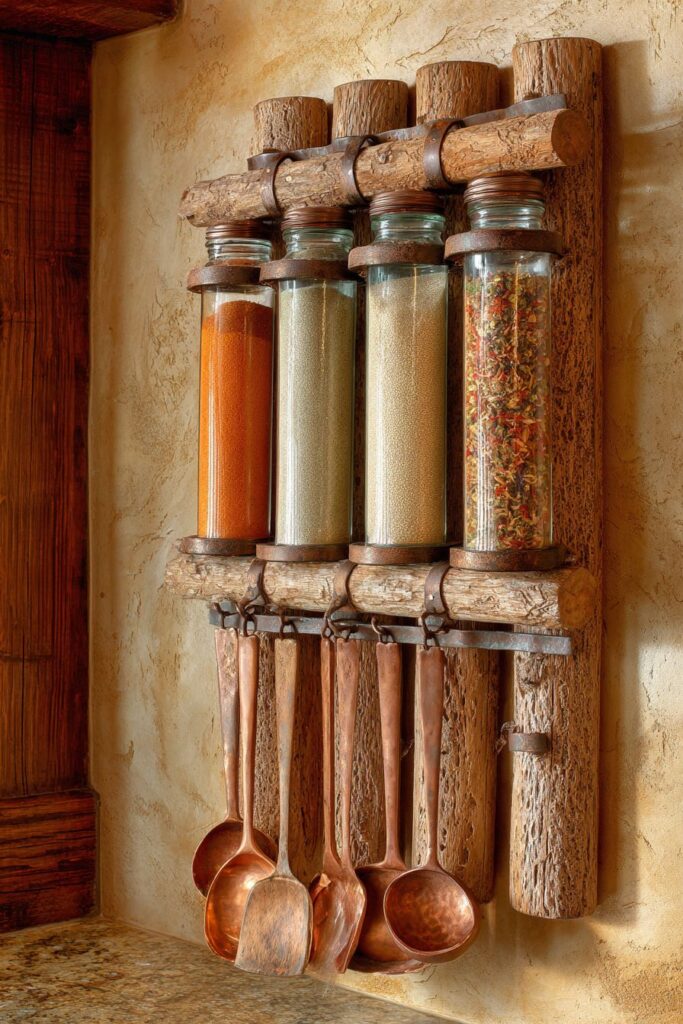
Key Design Tips:
- Create spice displays that celebrate natural color diversity while providing functional ingredient storage
- Use glass jars with wooden lids to showcase spice colors while maintaining natural material continuity
- Apply hemp plaster to walls to create neutral textured backdrops that complement colorful displays
- Display copper and wooden tools to add functional beauty while maintaining warm natural color palettes
- Organize spices by color and texture to create living artwork that changes with cooking and restocking
24. Terracotta and Cedar Natural Harmony
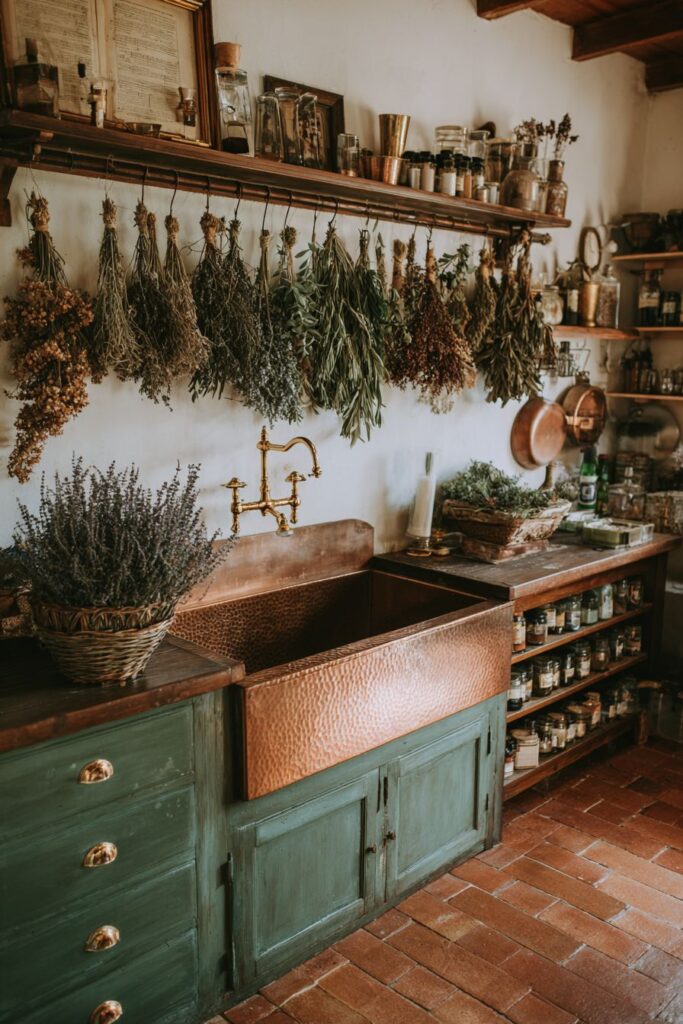
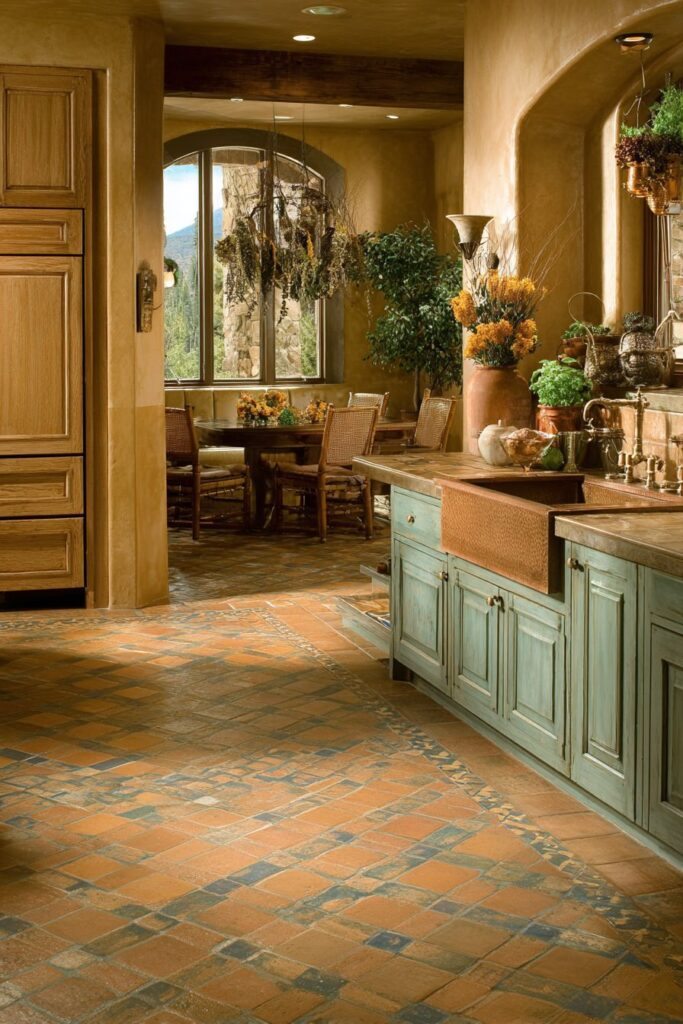
Clay tile flooring in warm terracotta with natural color variations creates a rich foundation that immediately establishes the earthy character while providing durable surfaces that improve with age and use. Each tile carries unique color shifts and texture variations that tell the story of its clay origins while creating rich patterns underfoot that ground the entire design in natural beauty.
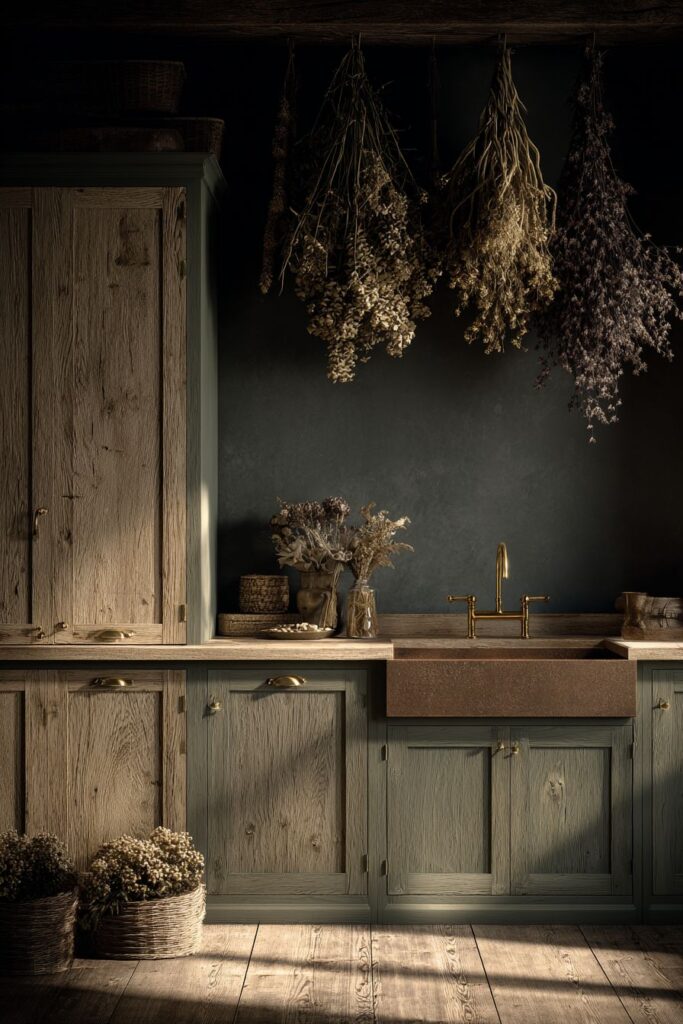
Sage green lower cabinetry provides calming color contrast to the warm terracotta floors while natural cedar upper cabinets showcase wood grain patterns that add organic texture and aromatic properties to the space. The cedar’s natural resistance to moisture and insects makes it ideal for kitchen environments while its light color and fine grain create visual lightness that balances the deeper terracotta tones.
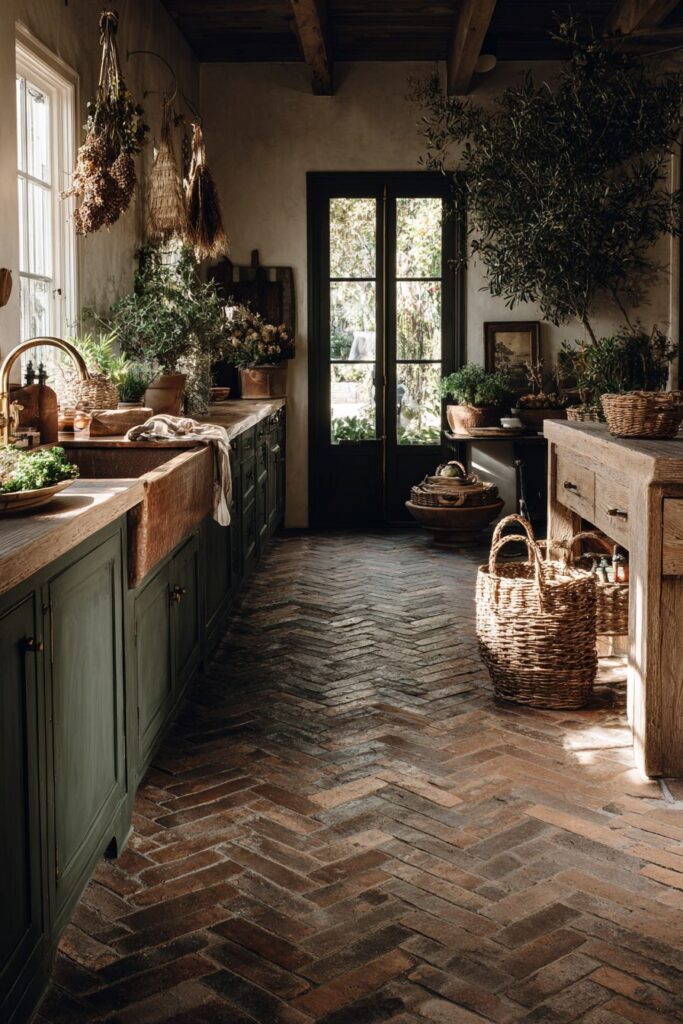
A copper farmhouse sink serves as a functional centerpiece while brass fixtures add warm metallic accents throughout the space. The copper’s natural patina development creates an evolving element while the brass maintains consistent warm metallic tones that bridge the various earth-colored elements.
Hanging dried flowers and herbs complete the natural aesthetic by adding organic movement and seasonal variety while providing aromatics that complement the cedar’s natural scent. These dried elements change with seasons while maintaining the earth-toned color palette.
Key Design Tips:
- Use terracotta clay tiles with natural variations to create rich foundations that establish earthy character
- Combine sage green and cedar cabinetry to balance calm colors with aromatic natural wood properties
- Install copper sinks to create functional centerpieces that develop beautiful patina with daily use
- Add brass fixtures to provide consistent warm metallic accents that unify various earth-toned elements
- Include dried flowers and herbs to introduce seasonal organic elements while adding natural aromatics
25. Limestone with Heart Pine History
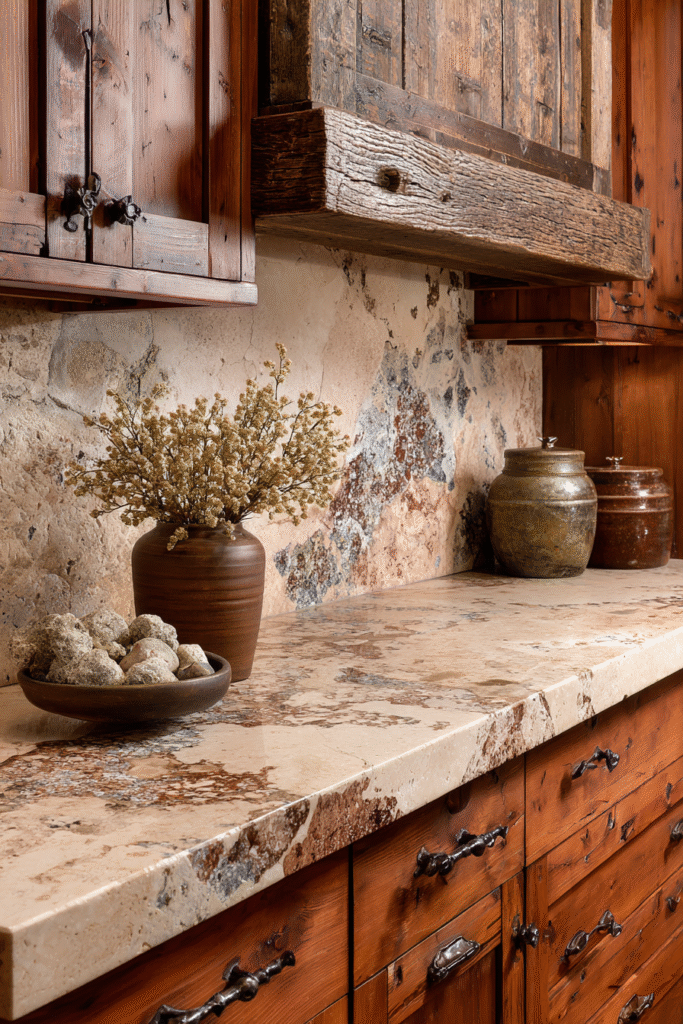
Natural limestone countertops with fossil inclusions and natural edge details bring geological history directly into daily kitchen use while creating surfaces that tell stories spanning millions of years. Each fossil inclusion represents ancient life preserved in stone while the natural edge details showcase the stone’s original formation patterns and geological beauty.
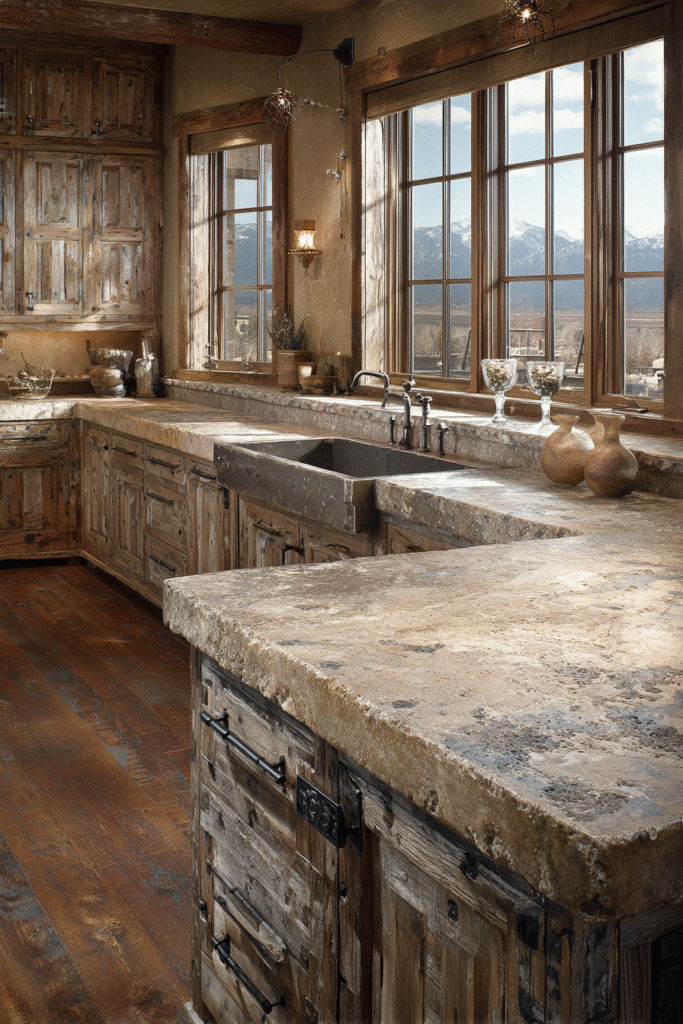
Reclaimed heart pine cabinetry displays authentic character through nail holes and character marks that speak to the wood’s previous life in historic structures. Heart pine’s density and natural resin content create durability while its warm color and distinctive grain patterns add beauty that cannot be replicated in newer materials. Each board carries history while providing practical storage.
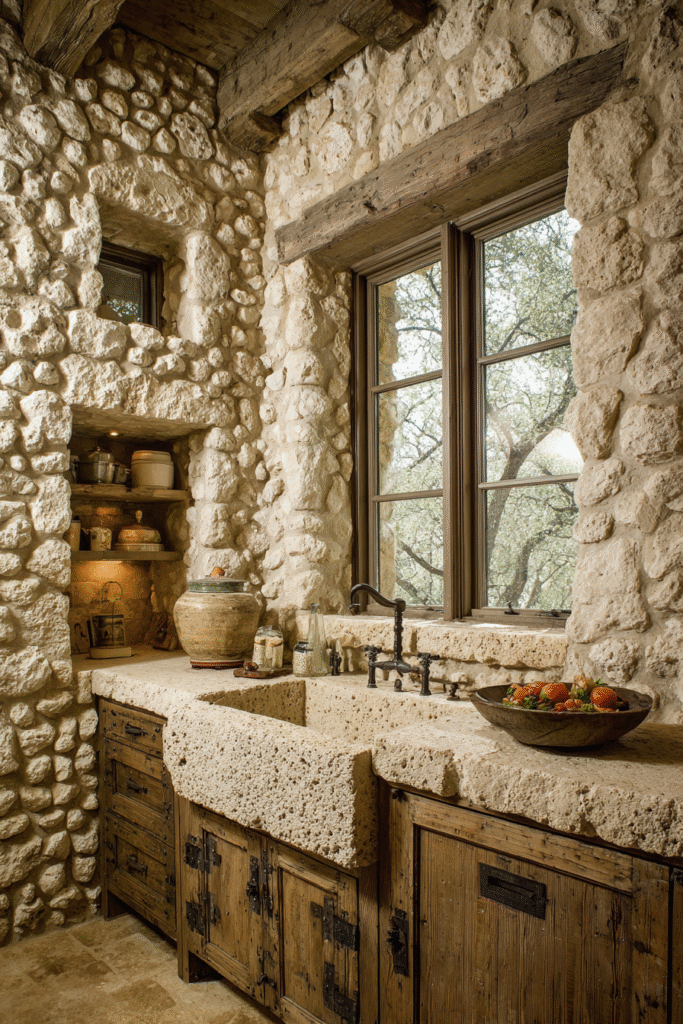
River rock backsplash creates organic texture that complements both the limestone’s geological origins and the pine’s natural character while adding surface interest through varied stone shapes and earth tones. Each river rock tells the story of water action and geological processes while creating tactile surfaces that invite touch.
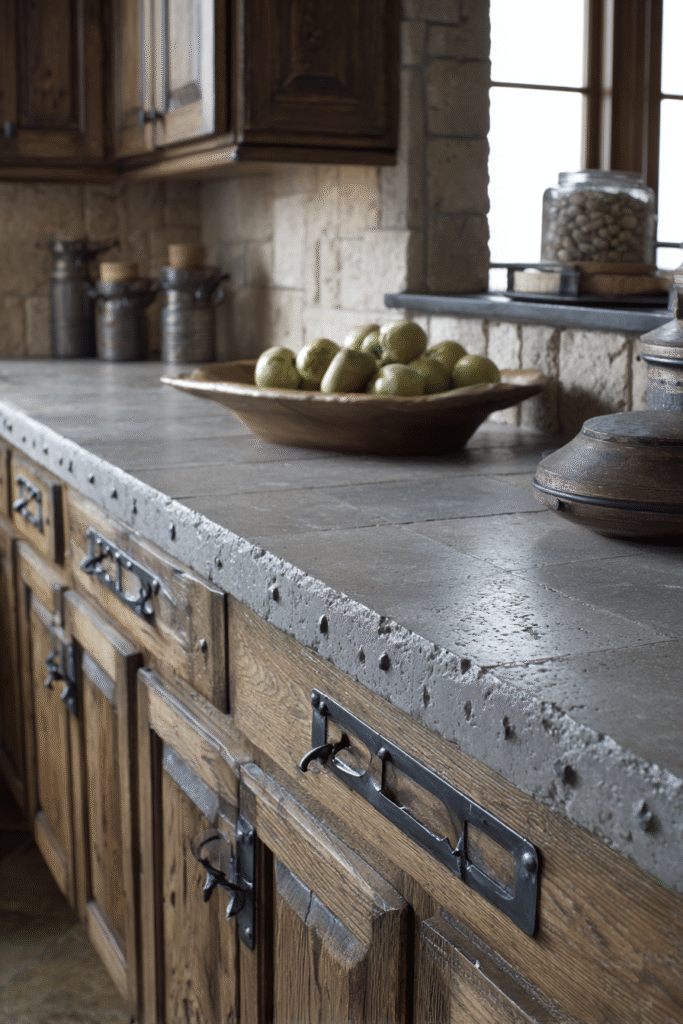
Wrought iron hardware adds rustic metallic elements that complement the historic character of both the limestone and reclaimed pine while providing durable functionality that improves with age and use.
Key Design Tips:
- Choose limestone countertops with fossil inclusions to bring geological history into functional kitchen surfaces
- Use reclaimed heart pine cabinetry to showcase authentic historic character while providing durable storage
- Install river rock backsplashes to create organic texture that complements both stone and wood elements
- Add wrought iron hardware to provide rustic metallic accents that celebrate historic craftsmanship traditions
- Embrace natural edge details to showcase original stone formation patterns and geological processes
26. Natural Wood Beam Ceiling Drama
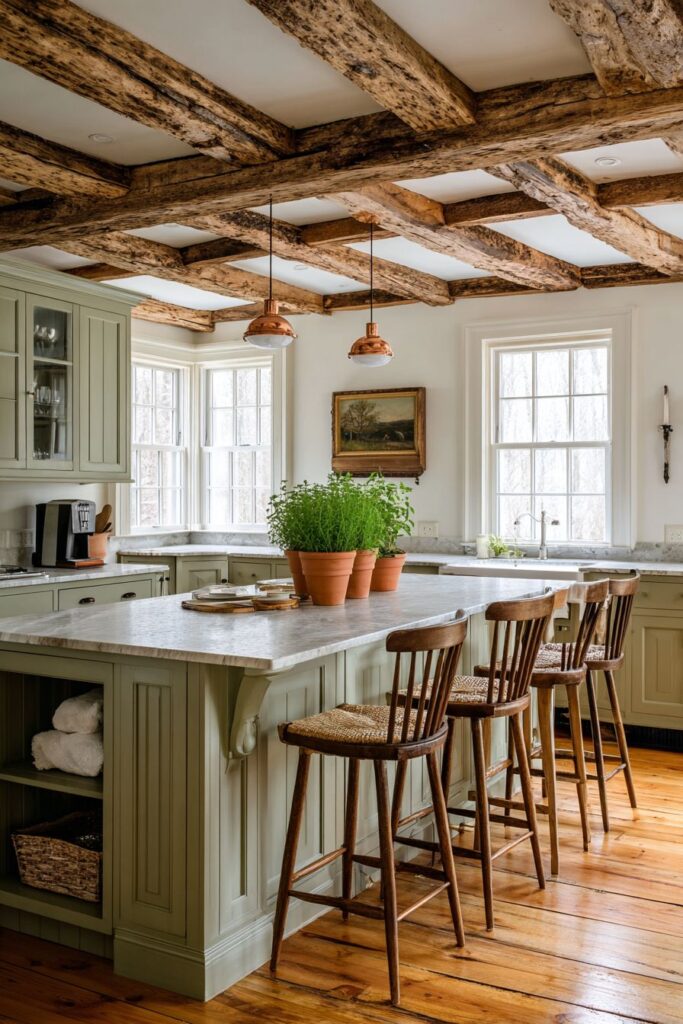
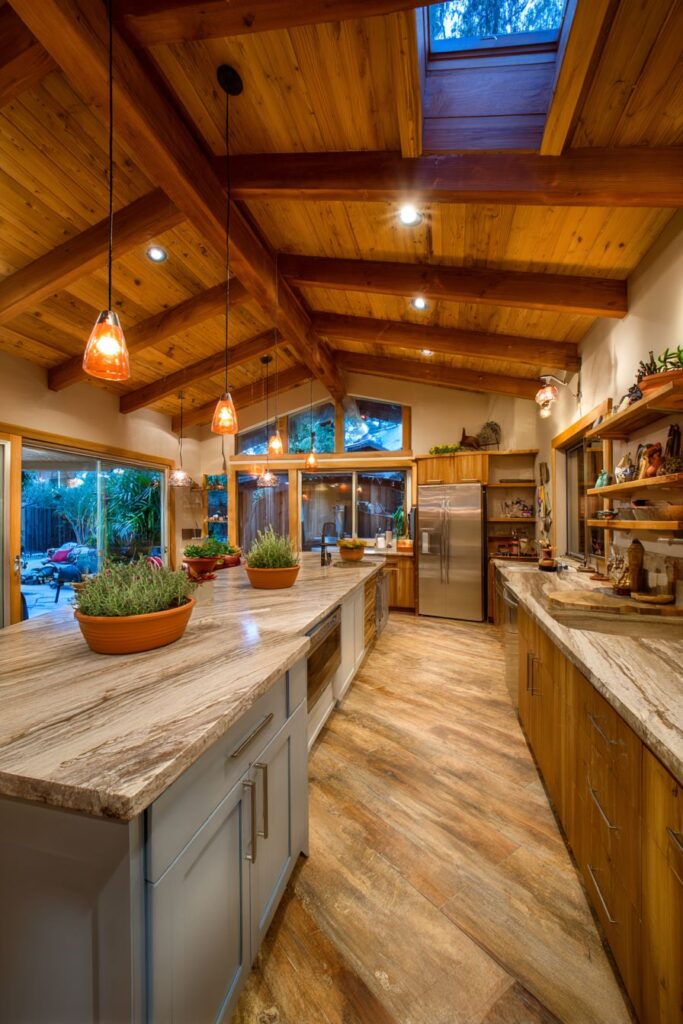
A natural wood beam ceiling with visible grain and character marks creates architectural drama overhead while bringing forest-like canopy feelings into the kitchen environment. These beams, with their authentic character marks and natural aging, add vertical interest while creating the feeling of dining beneath ancient trees. The natural wood grain patterns create visual texture that changes throughout the day as light shifts and moves.
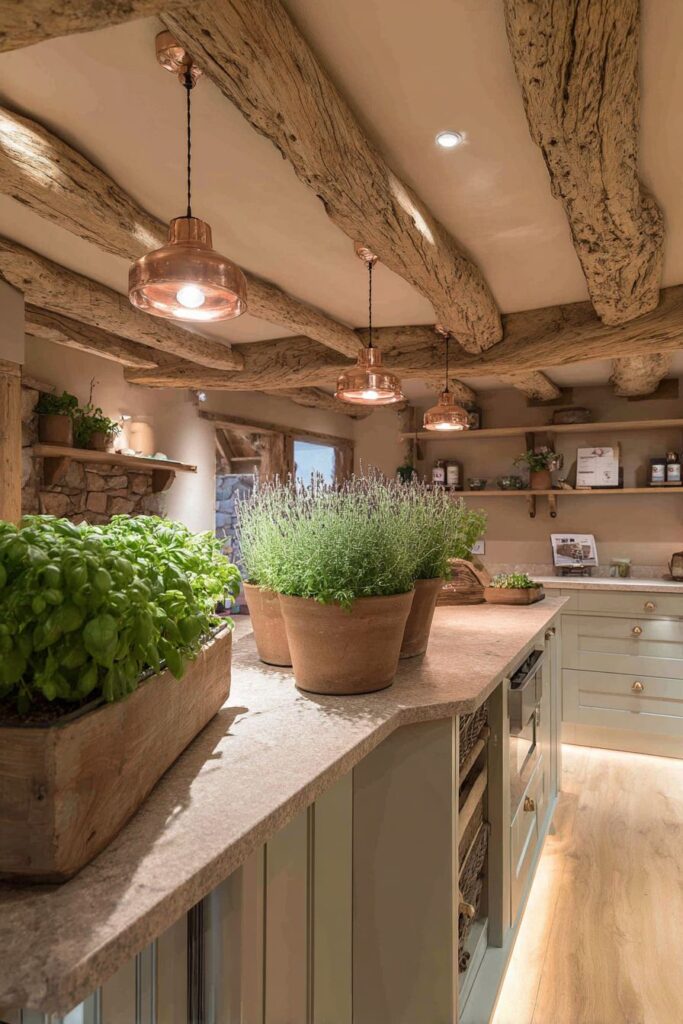
Sage green cabinetry below provides calming color that grounds the space while natural quartzite countertops in warm grey tones add sophisticated surfaces that showcase mineral patterns and geological beauty. The quartzite’s natural veining creates movement that complements the wood beams while providing durable work surfaces.
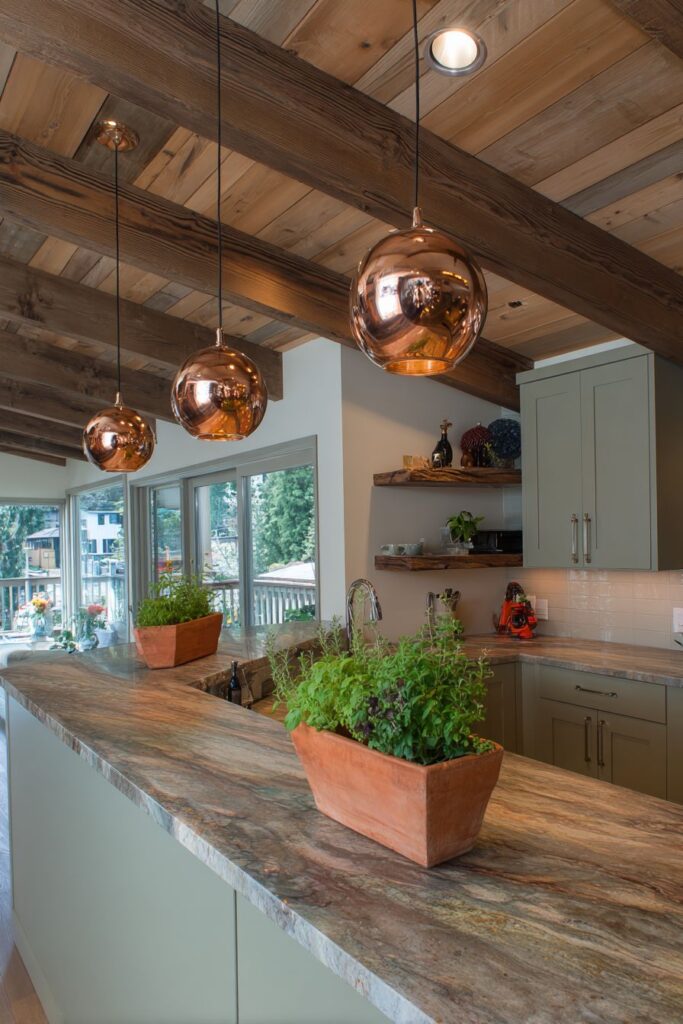
Terra cotta planters with fresh herbs positioned on open shelving introduce living elements that bring fresh scents and seasonal color changes while maintaining the earth-toned palette. The planters’ warm color complements both the wood beams and sage cabinetry while providing functional growing space for culinary herbs.
Copper pendant lights suspended from the beams add warm metallic accents while providing focused task lighting for work areas. The copper’s developing patina creates evolving beauty while the warm metal tones bridge the various natural elements throughout the space.
Key Design Tips:
- Install natural wood beam ceilings to create architectural drama while bringing forest canopy feelings indoors
- Pair wood beams with sage green cabinetry to balance natural wood warmth with calming earth-toned colors
- Choose quartzite countertops to showcase natural mineral patterns while providing sophisticated work surfaces
- Use terra cotta planters for herbs to maintain earth-toned palettes while adding living aromatic elements
- Suspend copper pendant lights from beams to provide focused lighting while adding warm metallic bridge elements
27. Wine Storage Natural Integration
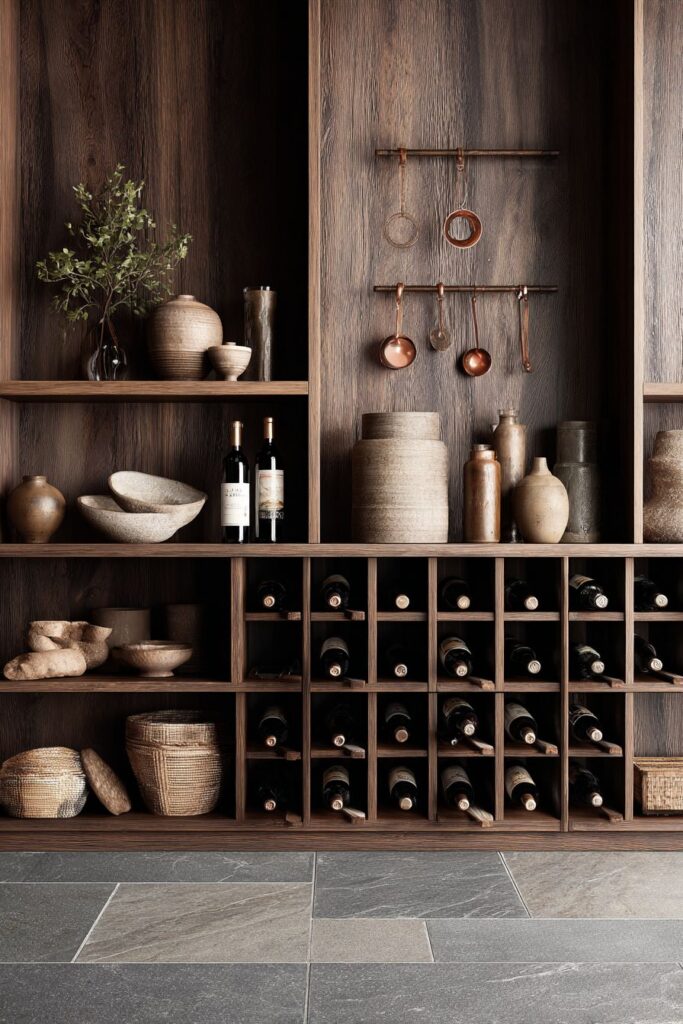
Natural wood wine racks with visible grain patterns built into natural stone alcoves create sophisticated storage that celebrates both the beauty of wine aging and the artistry of natural materials. The wood’s natural grain provides ideal storage conditions while showcasing organic patterns that complement the wine bottles’ varied shapes and colors.
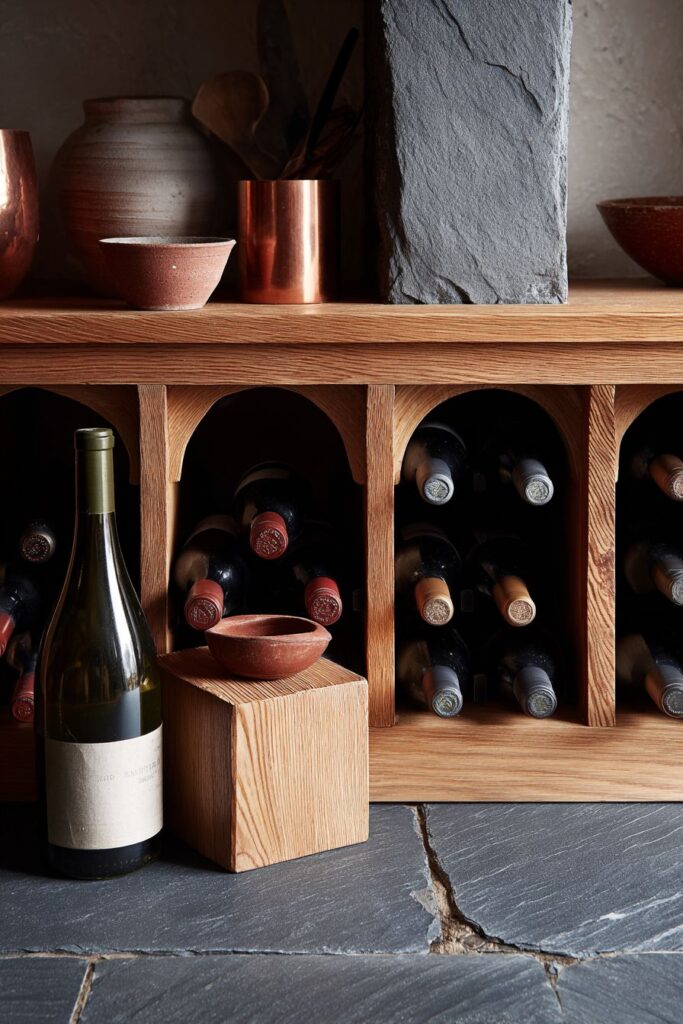
The stone alcoves in warm grey tones provide temperature stability for proper wine storage while creating architectural interest through natural mineral patterns and geological beauty. Each stone’s unique formation tells geological stories while providing practical functionality that protects wine investments.
Clay vessels and ceramic serving pieces displayed nearby add earthy decoration that complements both the wood wine racks and stone alcoves while providing functional beauty for wine service and entertaining. The clay’s warm earth tones create visual harmony while adding handcrafted elements that celebrate pottery traditions.
Natural slate flooring with color variations provides durable surfaces that complement the stone alcoves while adding another layer of geological beauty through varied mineral content and natural formation patterns.
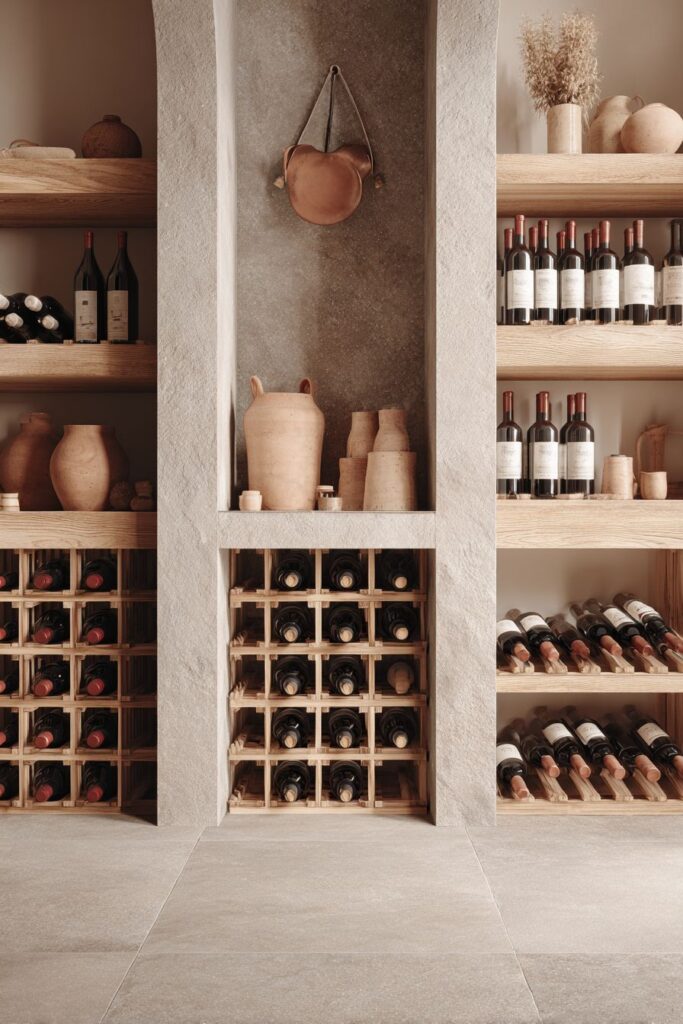
Key Design Tips:
- Build wood wine racks into stone alcoves to create sophisticated storage that celebrates natural material beauty
- Use natural stone for temperature stability while showcasing geological patterns and mineral variations
- Display clay vessels for wine service to add earthy decoration while maintaining functional entertaining capability
- Install slate flooring to provide durable surfaces that complement stone elements through geological harmony
- Position wine storage to take advantage of temperature stability while creating architectural focal points
28. Rattan Cabinet Texture Innovation
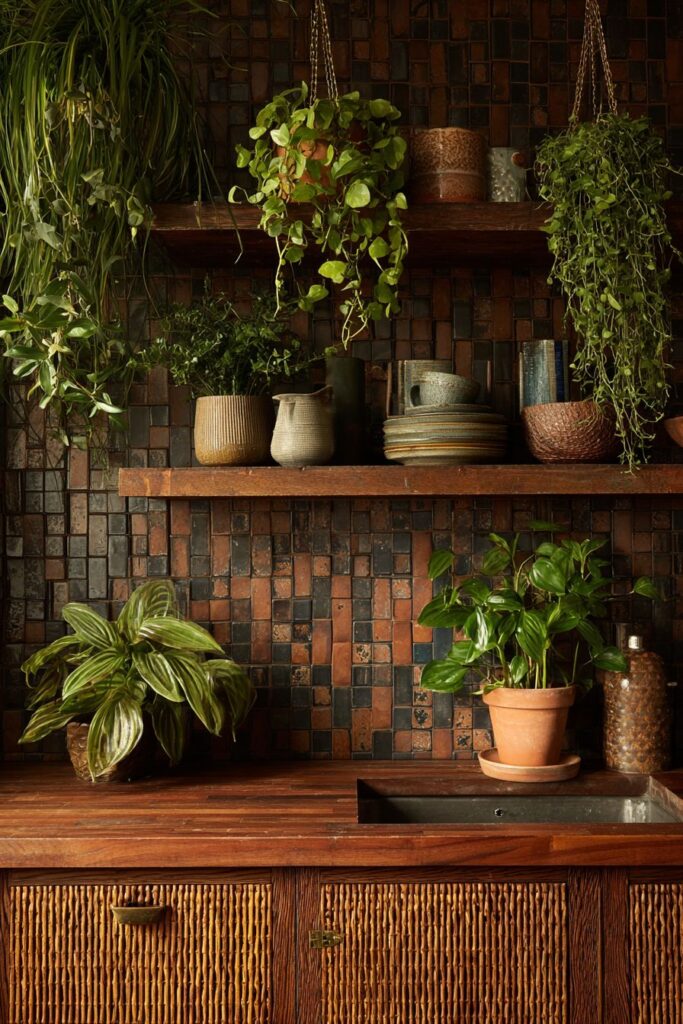
Rattan cabinet door inserts create unique natural texture that transforms ordinary cabinetry into tactile art pieces while adding organic pattern and visual interest that celebrates traditional weaving crafts. The rattan’s natural fiber weave creates shadow patterns that change throughout the day while providing ventilation for stored items and adding tropical warmth to the overall design.
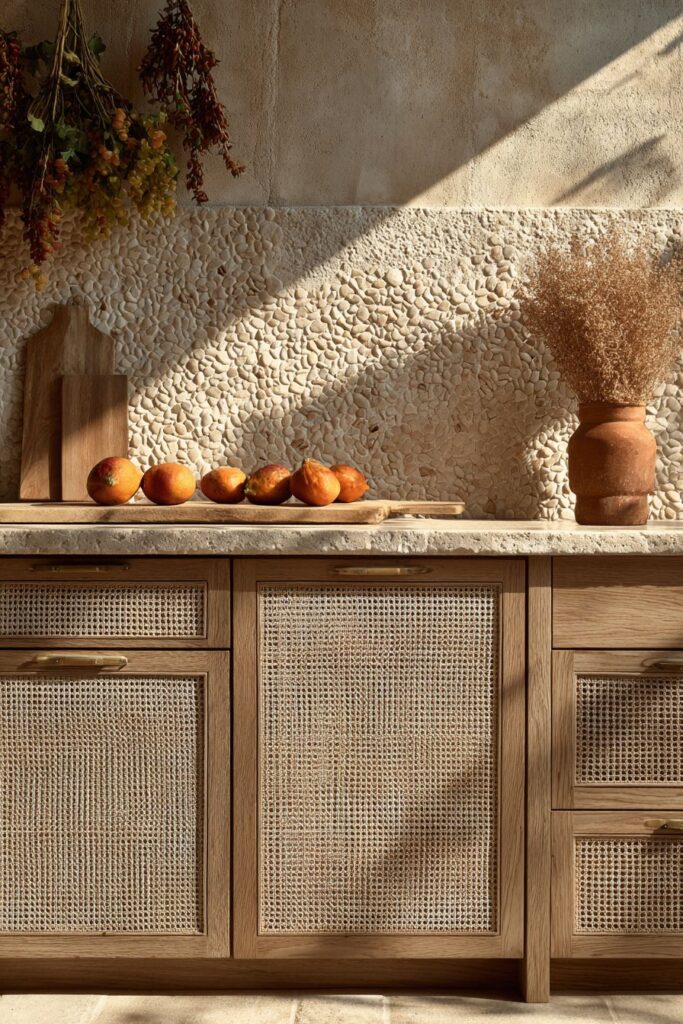
Butcher block countertops showcasing end grain patterns provide durable work surfaces while displaying the wood’s cellular structure in beautiful geometric patterns. The end grain orientation creates surfaces that are kind to knives while showcasing natural wood beauty through cross-sectional views that reveal growth patterns and natural character.
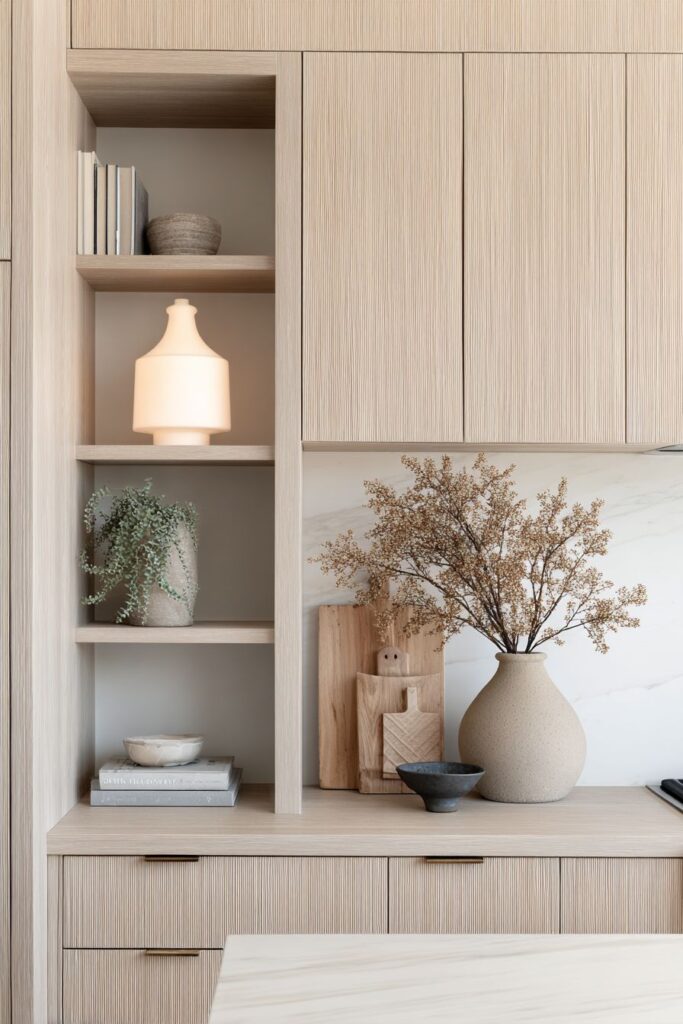
Natural pebble stone backsplash in earth tones creates organic texture that complements both the rattan weaving and wood grain patterns while adding another layer of natural material beauty. Each pebble’s unique shape and color creates surfaces that feel like natural riverbeds while providing practical protection for kitchen walls.
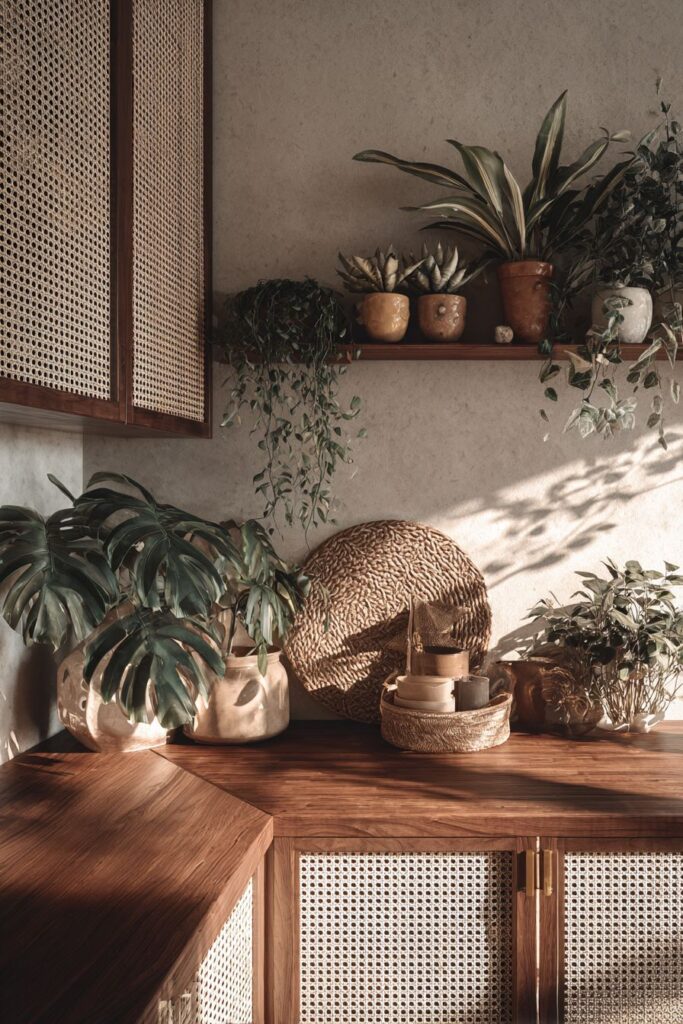
Brass hardware provides warm metallic accents that complement the organic materials while hanging plants add living elements that bring fresh greens and natural movement to balance the various textures and earth tones throughout the space.
Key Design Tips:
- Use rattan cabinet inserts to add natural weave texture while celebrating traditional tropical craftsmanship
- Choose end grain butcher blocks to showcase wood cellular structure while providing knife-friendly work surfaces
- Install pebble stone backsplashes to create riverbed-like texture that complements other organic materials
- Add brass hardware to provide warm metallic bridge elements that unify various natural textures
- Include hanging plants to introduce living elements that balance earth-toned materials with fresh green colors
29. Live Edge Dining Integration
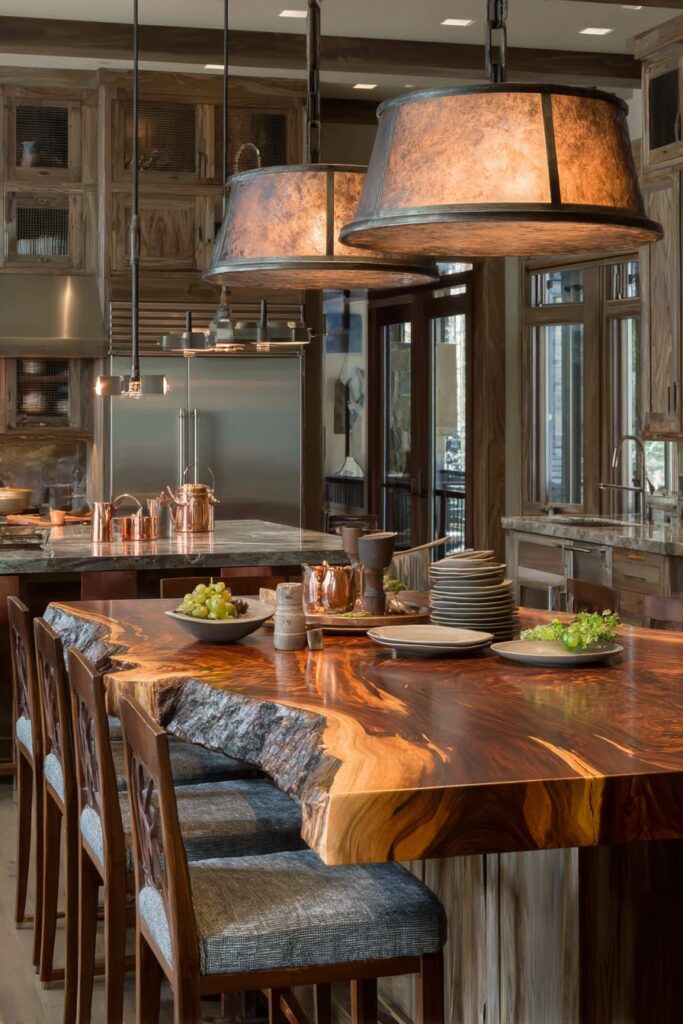
A natural edge wood dining table integrated into the kitchen island showcases live edge beauty while creating multifunctional surfaces that serve both food preparation and casual dining needs. The live edge details preserve the tree’s natural growth patterns while creating organic movement that adds sculptural interest to the functional island design.
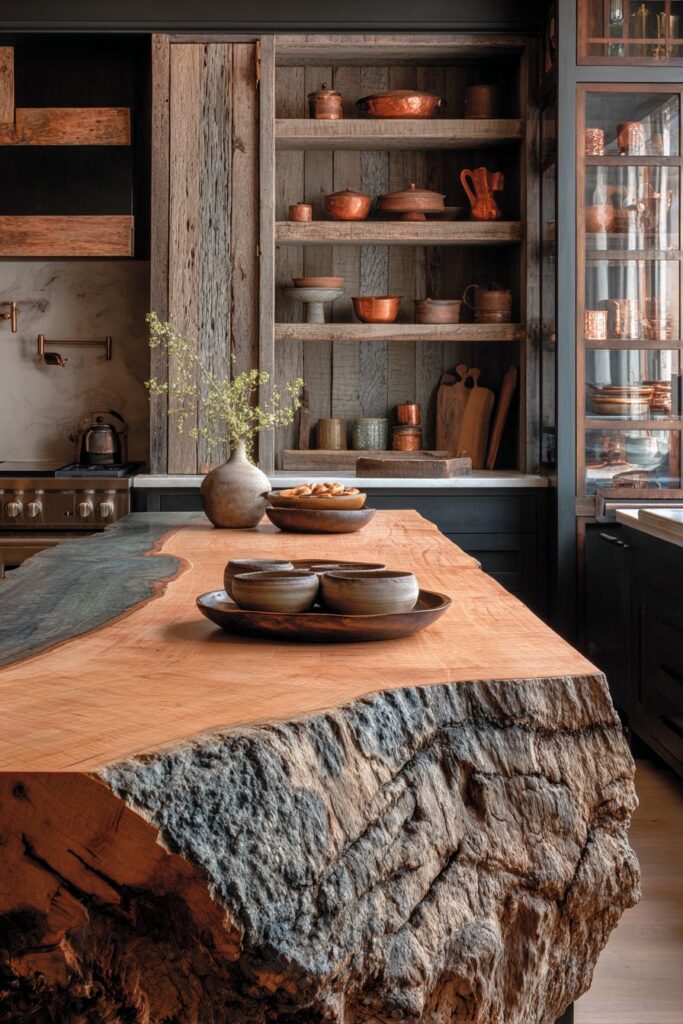
Clay ceramic dishes and copper serving pieces create functional displays that celebrate both pottery traditions and metalworking artistry while adding warm earth tones and metallic accents that complement the natural wood surfaces. The ceramic’s handcrafted character echoes the wood’s organic origins while the copper adds warm metallic beauty that develops patina over time.
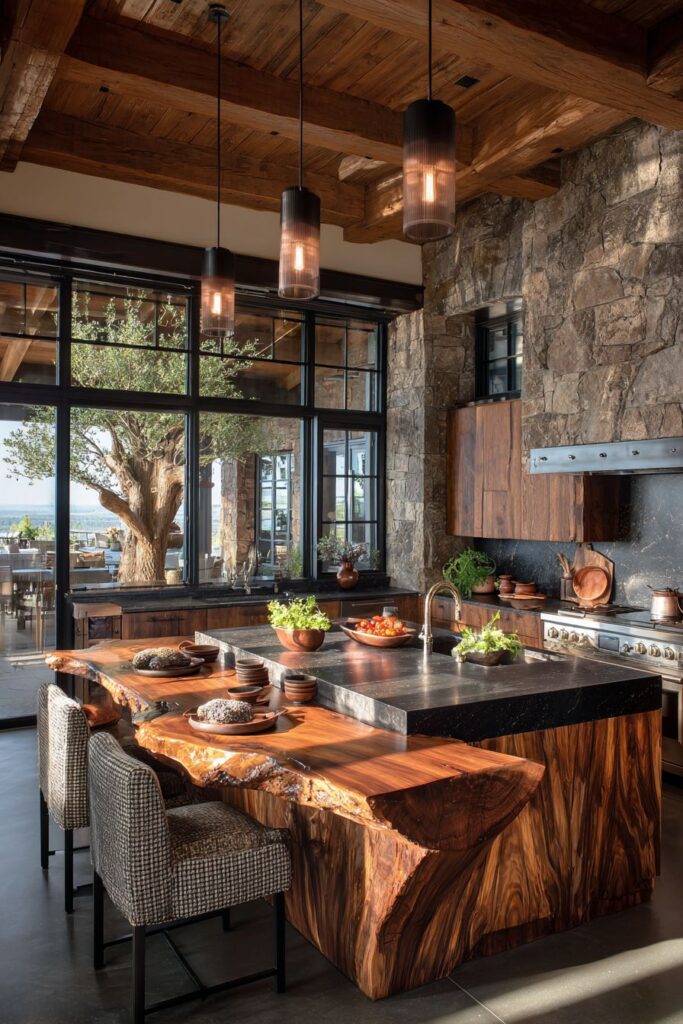
Weathered barn wood cabinetry surrounding the island provides authentic aged character while maintaining practical storage functionality. The barn wood’s natural patina and character marks tell stories of agricultural heritage while creating texture and visual interest that complements the live edge table surface.
The integration of these elements creates an island that serves as both practical workspace and social gathering point where food preparation becomes interactive entertainment and casual dining feels naturally integrated into kitchen activities.
Key Design Tips:
- Integrate live edge dining tables into islands to create multifunctional surfaces that showcase natural wood beauty
- Display ceramic and copper serving pieces to celebrate traditional crafts while adding functional beauty
- Use weathered barn wood cabinetry to provide authentic aged character while maintaining practical storage needs
- Create interactive workspace areas where food preparation becomes social entertainment and gathering activity
- Balance organic live edge movement with structured cabinetry to create visual interest while maintaining functionality
30. Hemp Fiber and Concrete Contemporary Earth
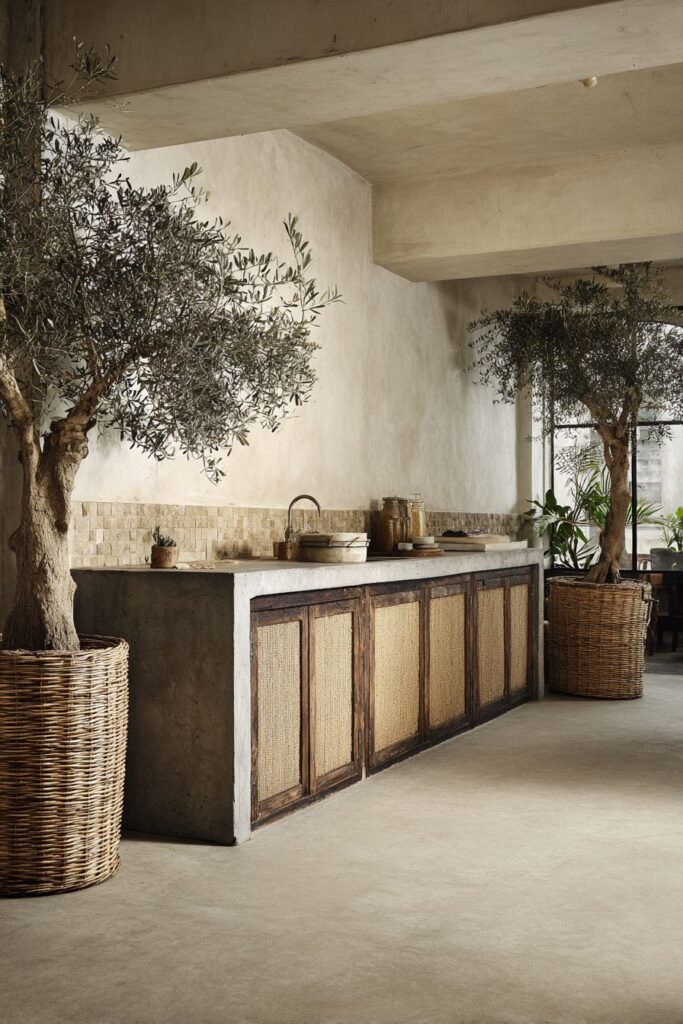
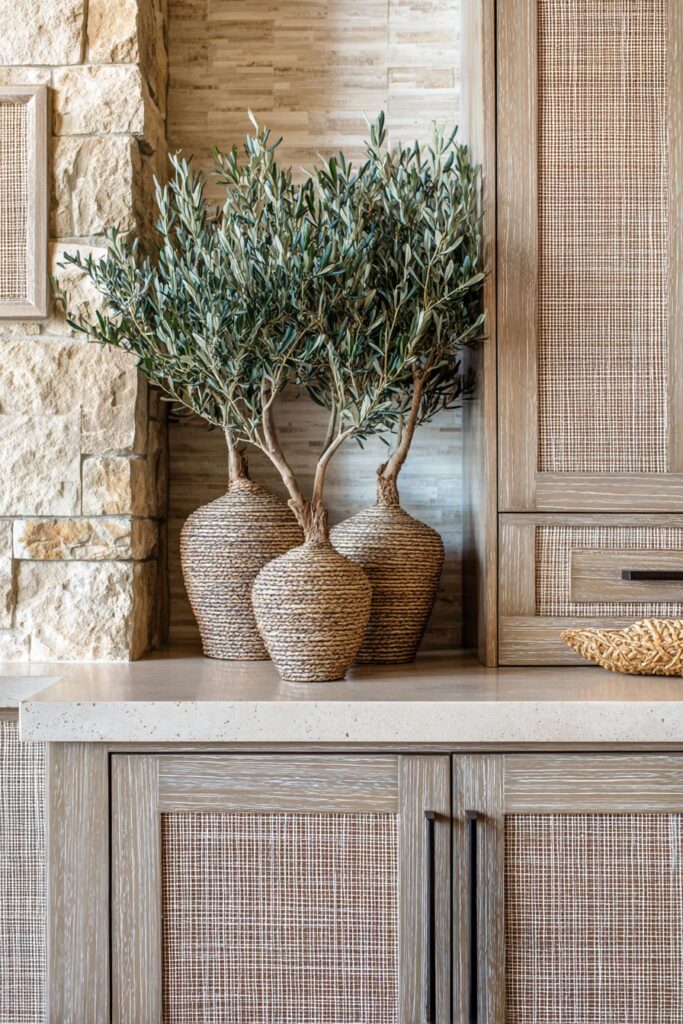
Natural hemp fiber cabinet doors with visible weave texture bring sustainable innovation to traditional cabinetry while showcasing plant-based materials that celebrate agricultural heritage and environmental responsibility. The hemp’s natural fiber weave creates subtle texture that adds organic pattern while providing durable surfaces that improve with age and use.
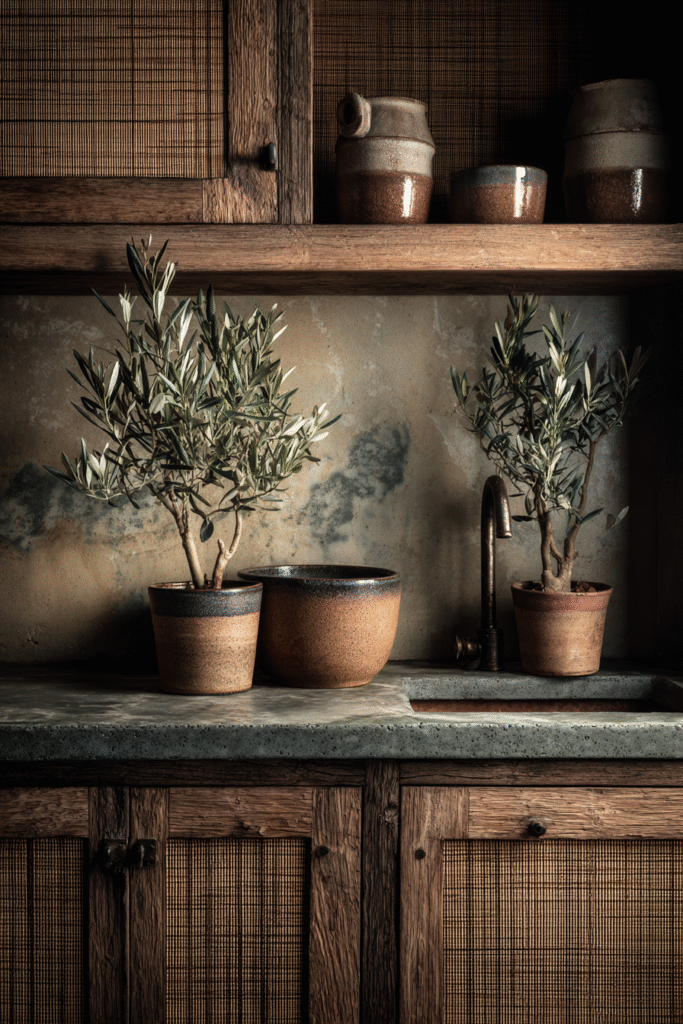
Natural concrete countertops showing aggregate and natural color variations create sophisticated industrial elements that feel surprisingly organic when combined with plant-based materials. The concrete’s exposed aggregate reveals mineral beauty while providing durable work surfaces that develop character through daily use and natural aging processes.
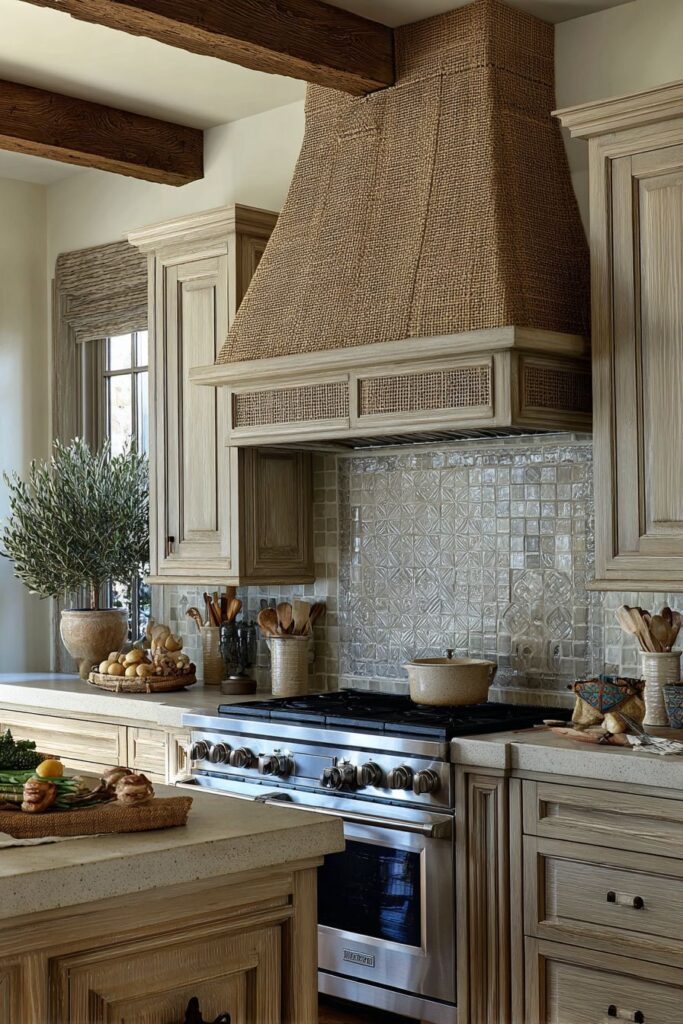
Handmade ceramic tiles in sage and cream tones create backsplash artistry that celebrates pottery traditions while adding color variation and surface texture that complements both the hemp weave and concrete aggregate. Each tile’s handcrafted character adds unique personality while maintaining the overall natural material theme.
Potted olive trees add Mediterranean elements that bring living greenery and architectural plant forms while maintaining the sophisticated earth-toned palette. The olive trees’ silvery-green foliage complements the sage ceramic tiles while their sculptural forms add vertical interest.
Key Design Tips:
- Use hemp fiber cabinet doors to embrace sustainable plant-based materials while adding natural weave textures
- Choose concrete countertops with visible aggregate to create sophisticated industrial elements with organic mineral beauty
- Install handmade ceramic tiles to celebrate pottery artistry while adding color variation and surface texture interest
- Add olive trees for Mediterranean elements that provide living architecture while maintaining earth-toned color schemes
- Balance plant-based and mineral materials to create contemporary designs that celebrate both agricultural and geological heritage
Why These Earthy Kitchen Designs Are the Ultimate Choice for Natural Living
These thirty earthy kitchen designs represent the pinnacle of natural living integration, where functionality meets beauty through the celebration of authentic materials and traditional craftsmanship. Each concept demonstrates how earthy kitchen design transcends mere aesthetics to create spaces that nurture both body and soul while connecting us to the natural world in meaningful ways.
The terracotta and honey oak combinations showcase how warm earth tones create inviting atmospheres that make cooking and gathering feel like natural extensions of outdoor living. These designs prove that earthy kitchen materials like clay tiles and natural wood create foundations that improve with age, developing character and patina that manufactured materials simply cannot replicate.
Sage green cabinetry paired with reclaimed wood elements demonstrates how sustainable kitchen design can honor both environmental responsibility and aesthetic beauty. These combinations show that eco-friendly kitchen materials like reclaimed barn wood and low-VOC natural paints create healthier indoor environments while adding authentic character that tells stories of agricultural heritage and traditional craftsmanship.
The integration of natural stone elements like limestone countertops with fossil inclusions and river rock backsplashes brings geological history into daily kitchen use, creating surfaces that celebrate millions of years of earth processes while providing practical functionality. These organic kitchen textures add tactile interest that engages our senses and creates deeper connections to our food preparation rituals.
Live edge wood surfaces and waterfall edge countertops in designs like the book-matched walnut breakfast bar prove that natural kitchen aesthetics can achieve both rustic charm and contemporary sophistication. These elements demonstrate how earthy kitchen style celebrates the inherent beauty of natural materials without sacrificing modern functionality or design innovation.
The copper and brass metallic accents throughout these designs show how warm metals complement earth-toned palettes while developing beautiful patina that evolves with daily use. These natural kitchen finishes prove that authentic materials become more beautiful over time, creating kitchens that improve with age rather than showing wear.
Clay and ceramic elements like handmade tiles and pottery displays celebrate artisanal traditions while adding color and texture variations that make each kitchen unique. These handcrafted kitchen details demonstrate how supporting traditional crafts creates more meaningful spaces than mass-produced alternatives.
The integration of living elements like herb gardens and potted plants shows how biophilic kitchen design brings the outdoors inside while providing functional benefits like fresh aromatics and air purification. These design choices prove that natural kitchen living extends beyond materials to include growing systems that connect us to agricultural traditions and seasonal cycles.
These designs excel because they understand that authentic earthy kitchens must balance beauty with functionality, creating spaces where natural materials enhance rather than complicate daily activities. The sustainable design principles demonstrated throughout these concepts show how environmental responsibility and design excellence can work together to create kitchens that are both ethically sound and aesthetically superior.
Each design concept proves that earthy kitchen renovation ideas can transform ordinary spaces into extraordinary environments that celebrate our connection to nature while providing all the modern conveniences necessary for contemporary living. These are the ultimate expressions of how natural design philosophy can create kitchens that nurture our relationships with food, family, and the natural world.
Conclusion
These thirty earthy kitchen concepts demonstrate that the most beautiful and meaningful kitchen designs emerge when we embrace the authentic beauty of natural materials and traditional craftsmanship techniques. From warm terracotta tiles that tell stories of ancient clay traditions to live-edge walnut countertops that celebrate forest heritage, each design shows how connecting with natural materials can transform ordinary kitchens into extraordinary spaces that nurture both practical needs and emotional well-being.
The integration of sustainable materials like bamboo cabinetry, cork flooring, and hemp fiber surfaces proves that environmental responsibility and design excellence are not competing priorities but complementary values that create more meaningful and healthier living spaces. These designs show that choosing natural materials over manufactured alternatives creates kitchens that improve with age, developing character and patina that manufactured materials cannot replicate.
Whether you’re drawn to the rustic charm of reclaimed barn wood cabinetry, the sophisticated beauty of natural stone countertops with fossil inclusions, or the contemporary elegance of book-matched walnut waterfall edges, these concepts provide inspiration for creating kitchens that celebrate your personal connection to the natural world while meeting all your functional cooking and entertaining needs.
The key to successful earthy kitchen design lies in understanding that authentic natural materials work best when their inherent beauty is celebrated rather than hidden, when their imperfections are embraced as character rather than flaws, and when their aging processes are welcomed as evolution rather than deterioration. These thirty concepts provide the roadmap for creating kitchens where cooking becomes a celebration of natural beauty, gathering feels like a return to our agricultural roots, and daily activities connect us more deeply to the earth that sustains us all.
"As an Amazon Associate, I earn from qualifying purchases."
