
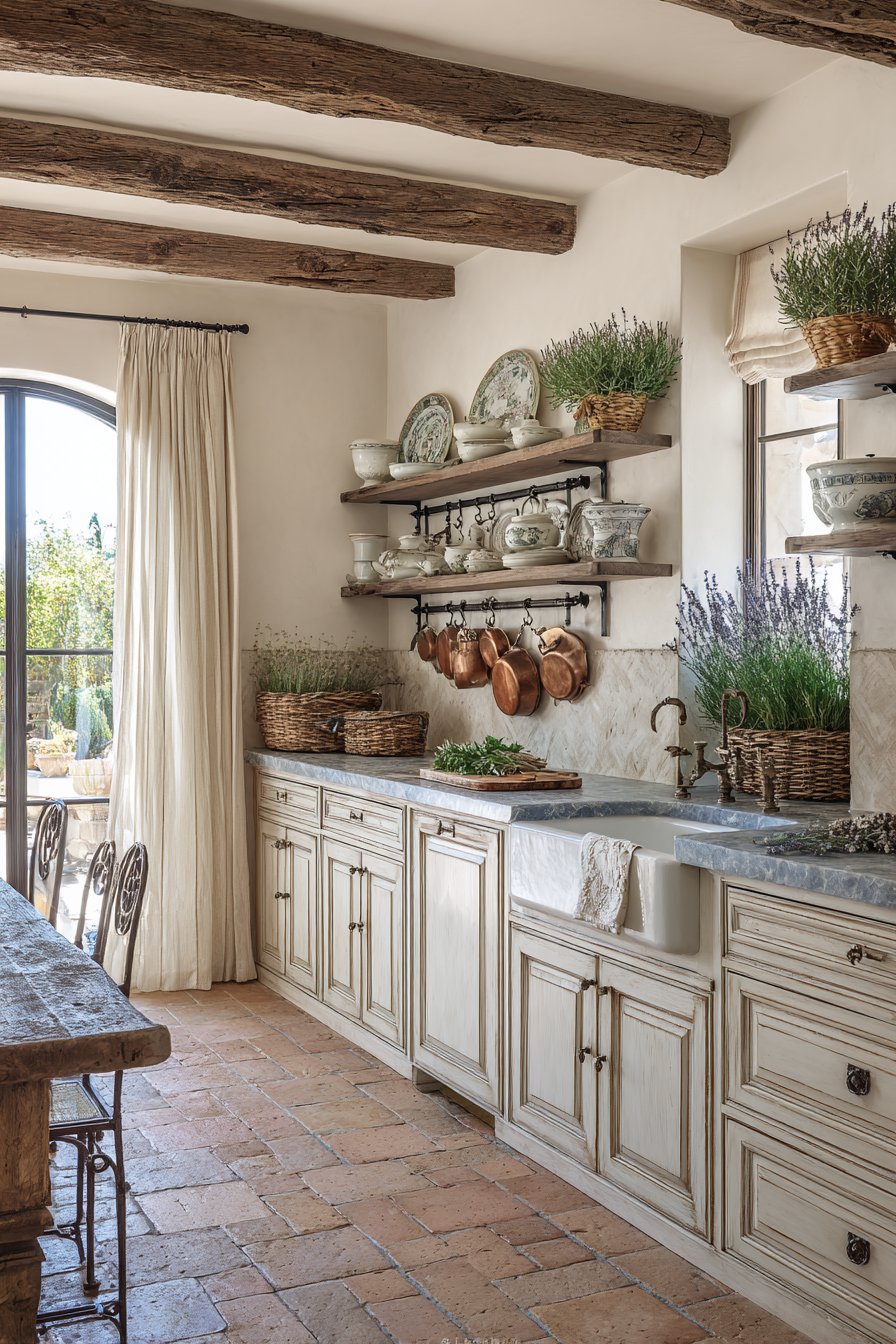
French cottage kitchens evoke an irresistible romance that transcends mere design trends. These timeless spaces capture the essence of provincial living where cooking becomes an art form and the kitchen serves as the home’s welcoming heart. Rooted in centuries of tradition, French cottage style balances rustic authenticity with refined elegance, creating environments that feel both lived-in and luxurious.
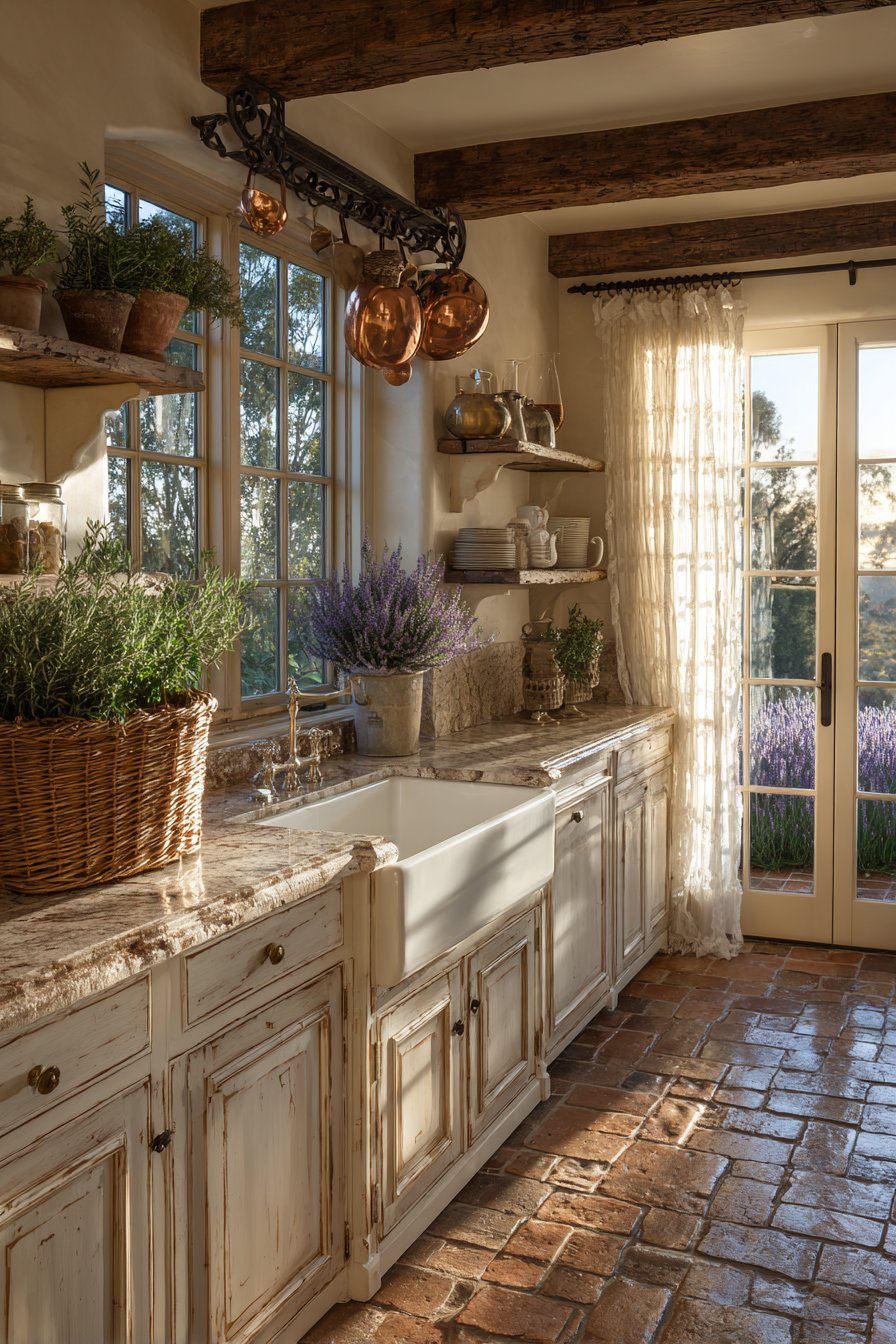
The allure of French cottage design lies in its effortless sophistication. Unlike stark minimalism or ornate excess, this aesthetic embraces imperfection, patina, and the accumulation of treasured objects over time. Worn wooden tables, chipped enamelware, and mismatched vintage finds coexist harmoniously with beautiful linens and carefully selected antiques. This layered approach creates depth and character impossible to achieve through coordinated store purchases alone.
Understanding the essential elements that define French cottage kitchens allows you to recreate this enchanting aesthetic in your own home. From architectural details to finishing touches, each component contributes to an atmosphere of warmth, history, and unpretentious beauty. This guide explores twelve fundamental elements that transform ordinary kitchens into charming French-inspired sanctuaries where every meal feels like a celebration of life’s simple pleasures and enduring traditions.
1. Distressed Wood Furniture and Open Shelving
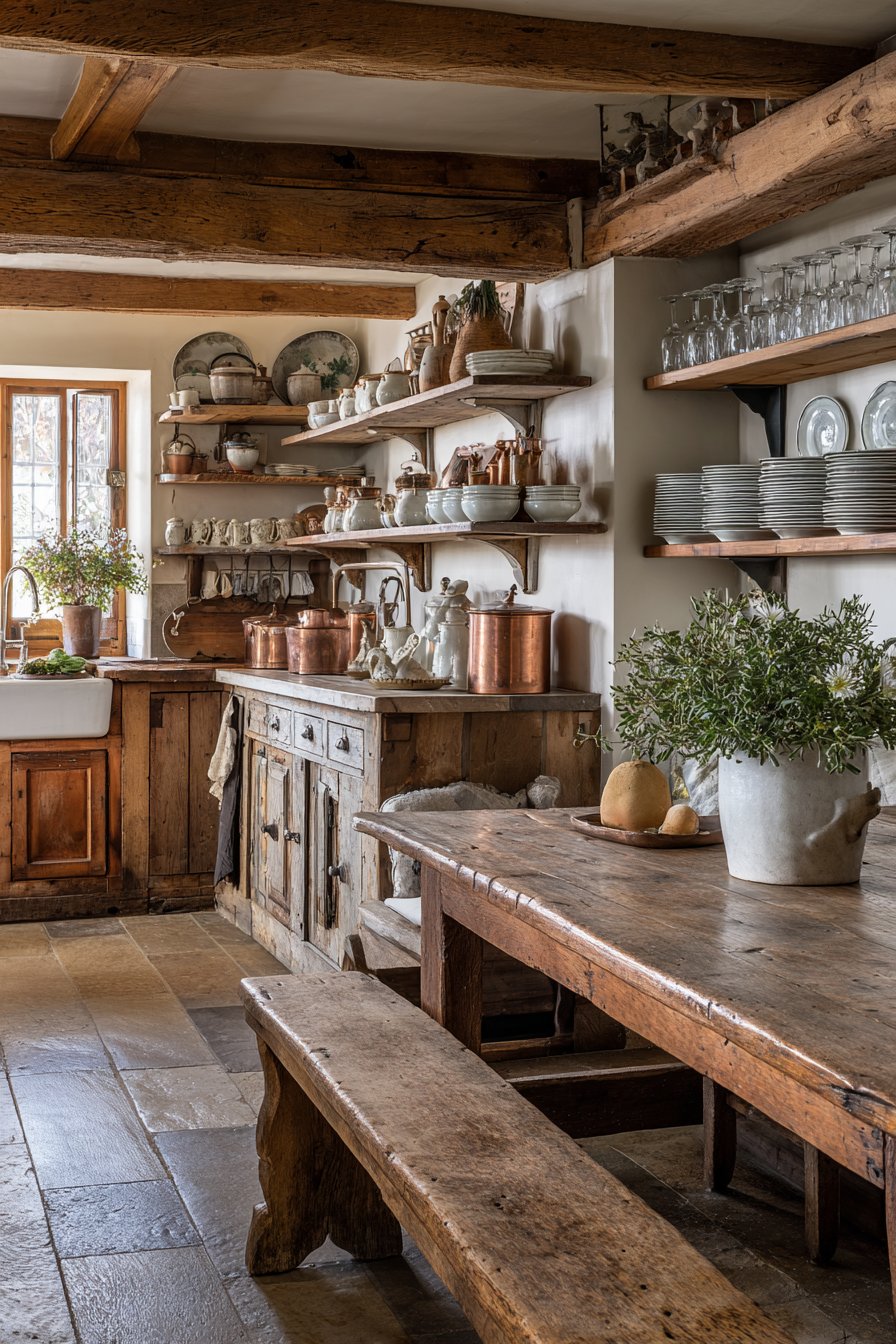
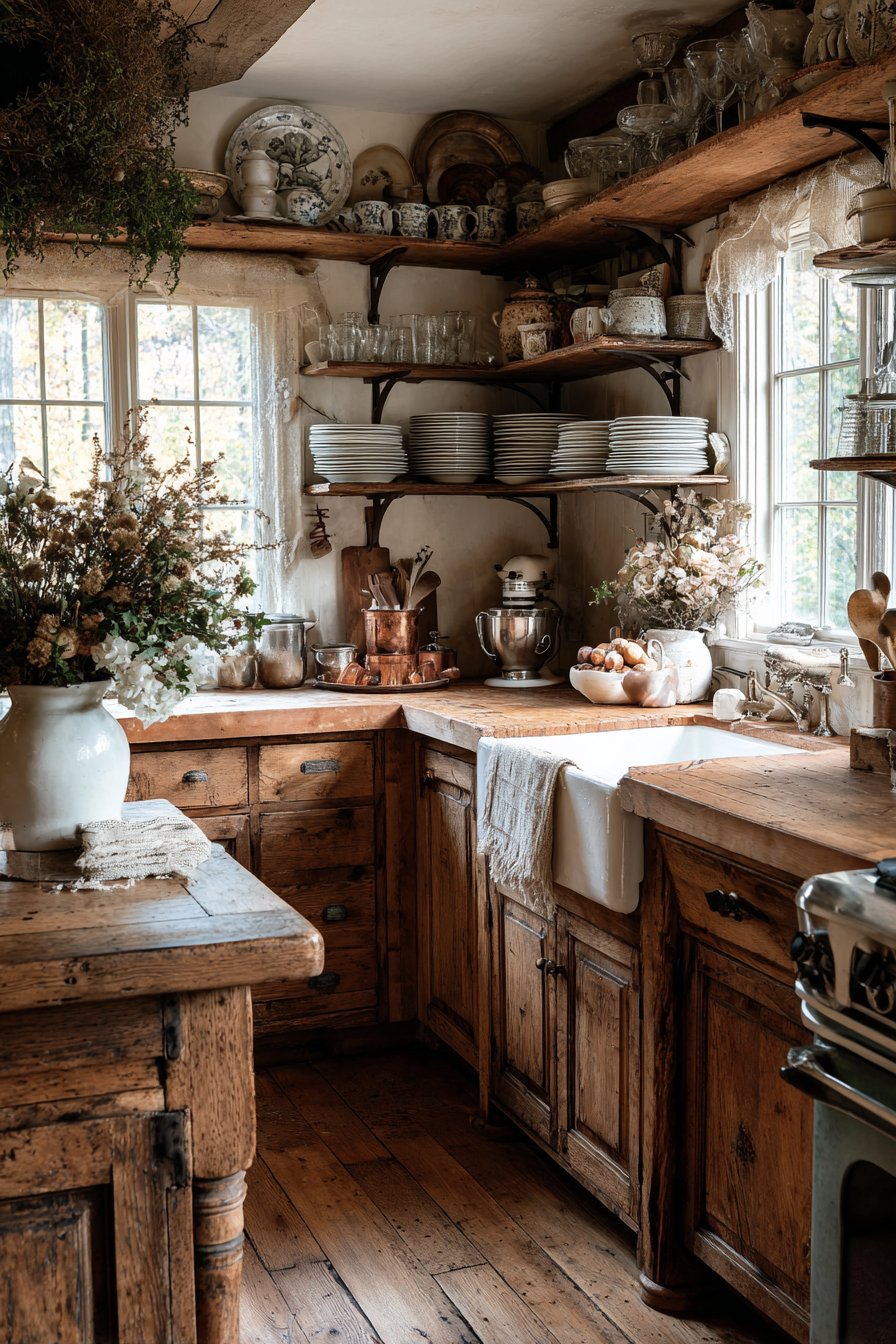
Reclaimed wood forms the foundation of authentic French cottage kitchens. Weathered farm tables, antique hutches, and rustic shelving showcase the beauty of aged timber with visible grain patterns, natural imperfections, and softened edges. These pieces tell stories through their worn surfaces, creating instant history that new furniture cannot replicate.

Open shelving crafted from thick wooden planks displays everyday dishes as decorative elements. The French approach to storage celebrates beautiful objects rather than hiding them behind closed doors. This philosophy transforms functional items into visual poetry, where stacked ironstone, vintage glassware, and copper cookware become the kitchen’s primary ornamentation.
- Source antique armoires or hutches for combined storage and display
- Install chunky wooden shelves with simple iron or wooden brackets
- Choose farm tables or butcher blocks showing natural wear and character
- Embrace wood with knots, grain variations, and minor imperfections
- Allow wood to age naturally without excessive refinishing or sealing
- Mix various wood tones rather than matching everything precisely
2. Apron-Front Farmhouse Sinks
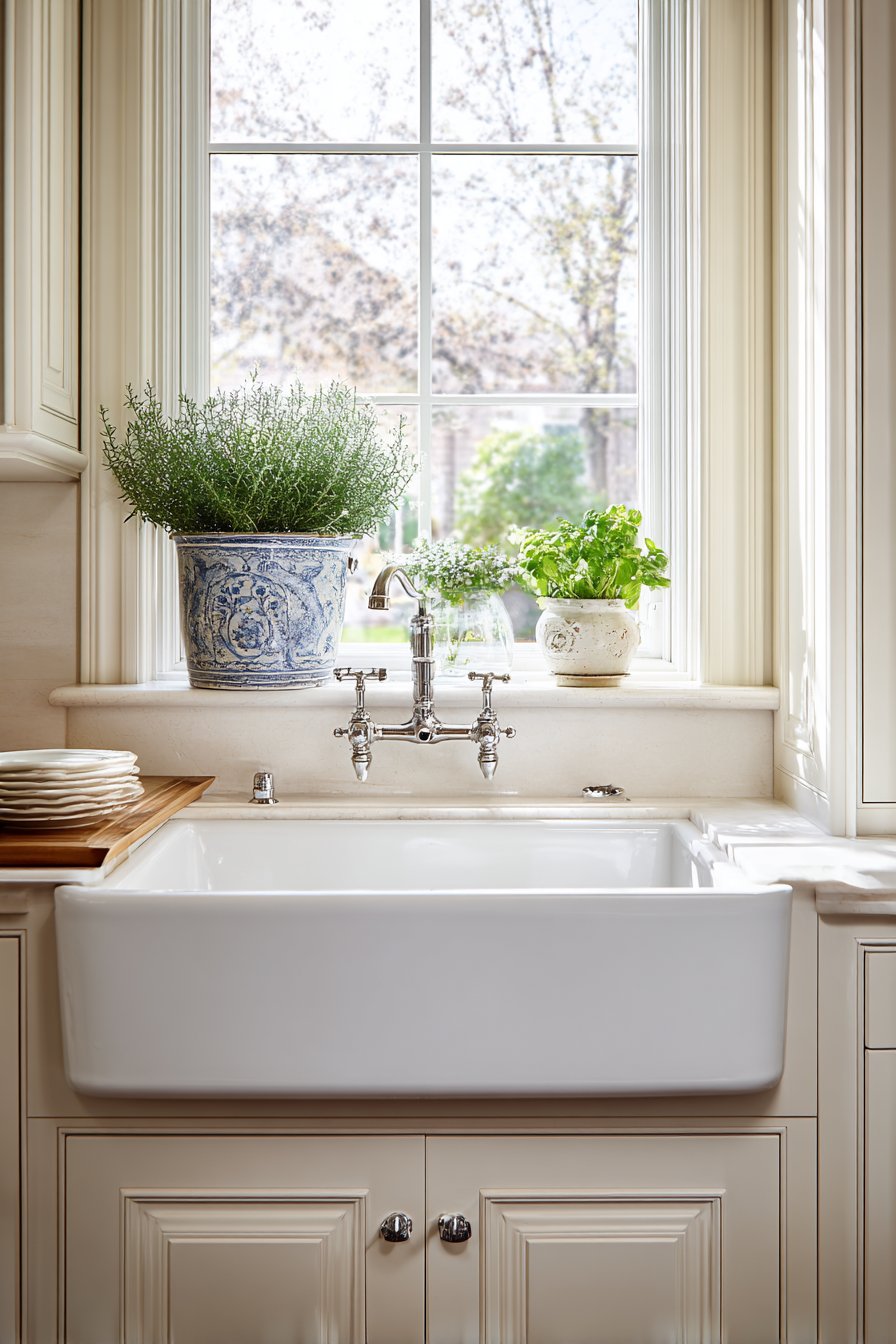
The iconic fireclay farmhouse sink anchors French cottage kitchens with substantial presence and timeless utility. These deep, apron-front basins originated in rural France where they accommodated large pots, produce washing, and family laundry. The generous proportions and classic white finish provide both practical advantages and unmistakable visual appeal.
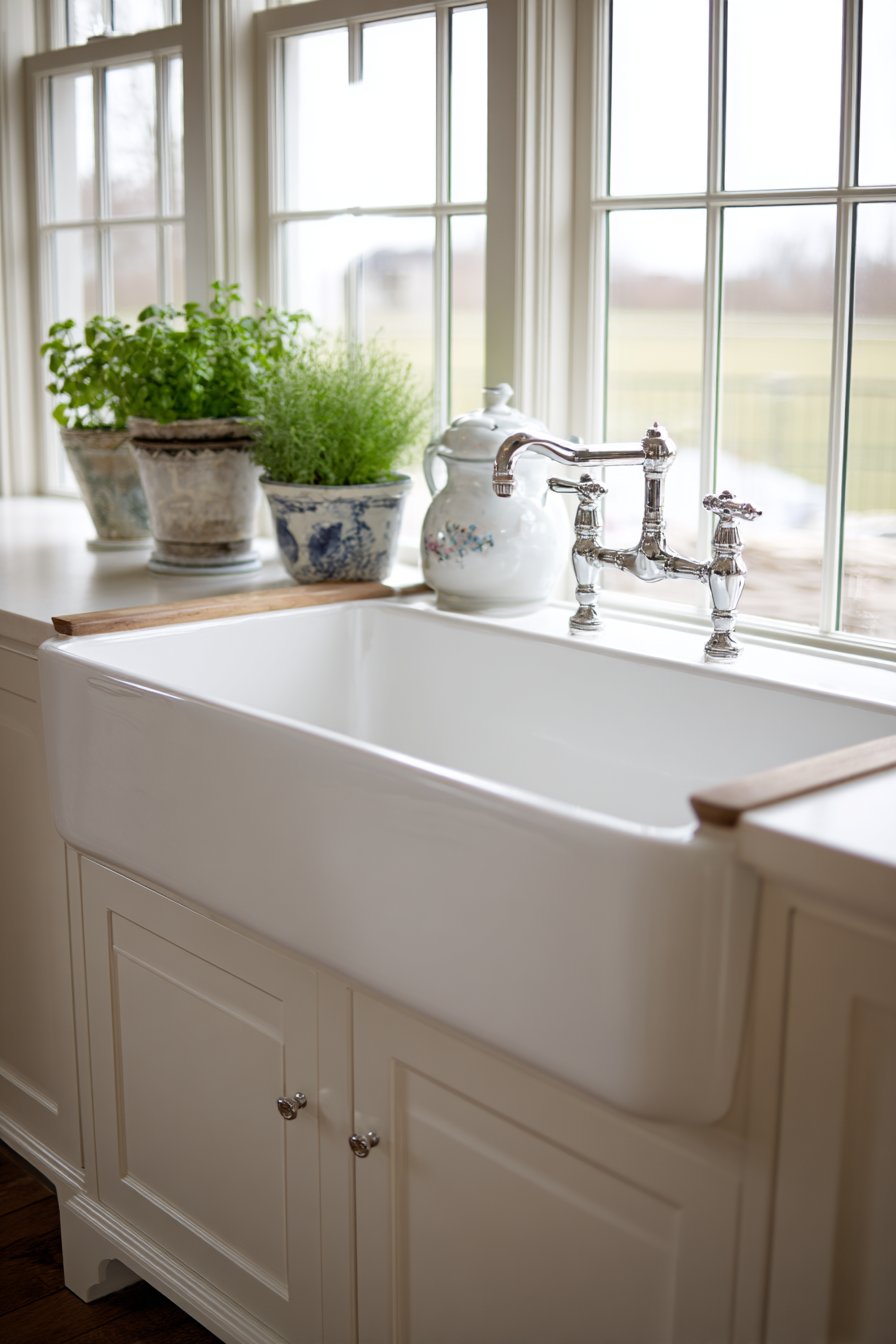
Modern farmhouse sinks honor traditional aesthetics while incorporating contemporary conveniences like divided bowls and extended aprons. The substantial depth handles oversized cookware while the front-facing installation creates a furniture-like quality that integrates beautifully with surrounding cabinetry. This signature element immediately establishes French cottage character in any kitchen.
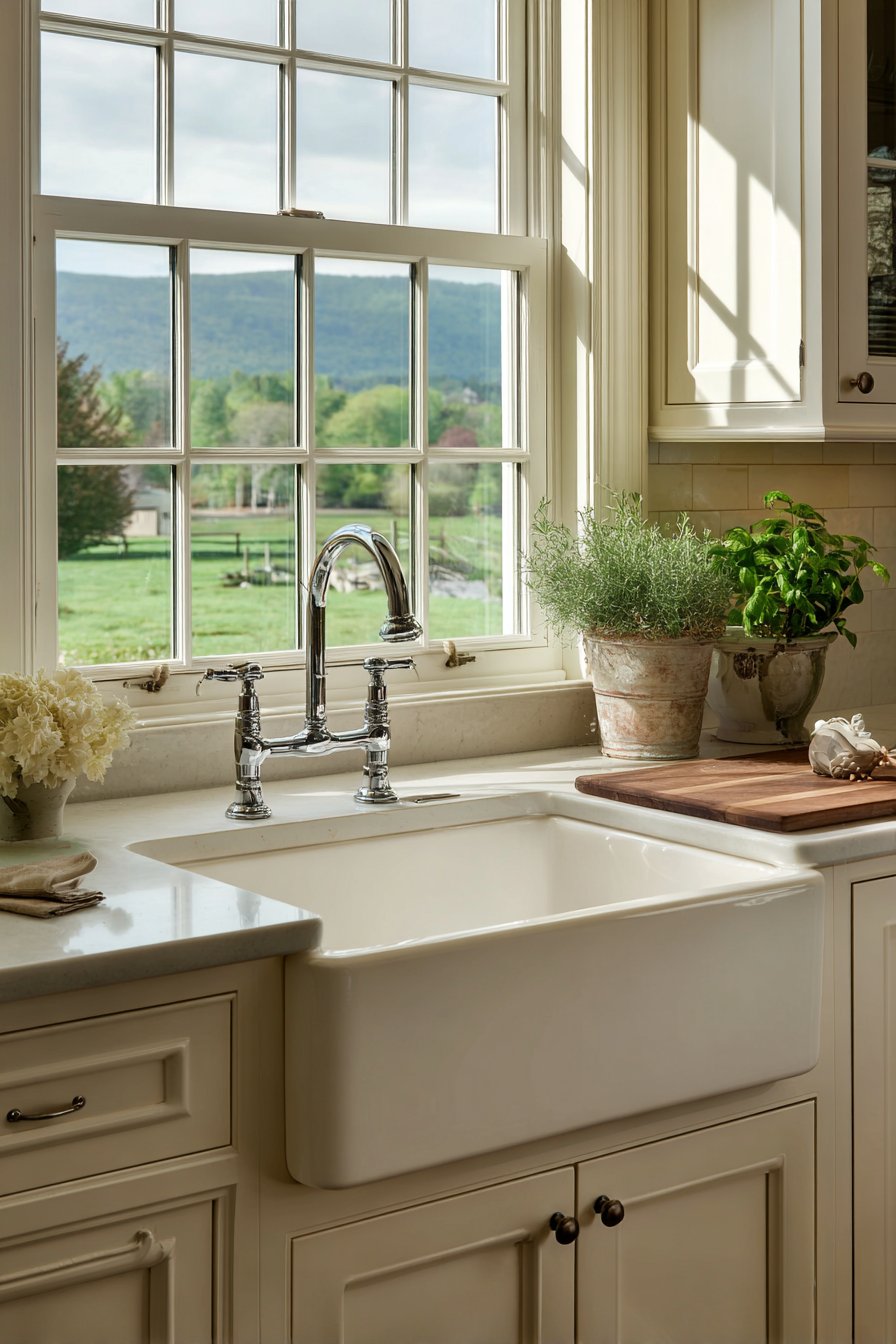
- Select fireclay or cast iron sinks in classic white or cream
- Choose single-bowl designs for maximum flexibility and authenticity
- Ensure proper cabinet support for the sink’s considerable weight
- Install a traditional bridge faucet with cross handles or porcelain accents
- Position the sink beneath a window for natural light during tasks
- Add a wooden drainboard alongside for authentic French functionality
3. Soft, Muted Color Palettes
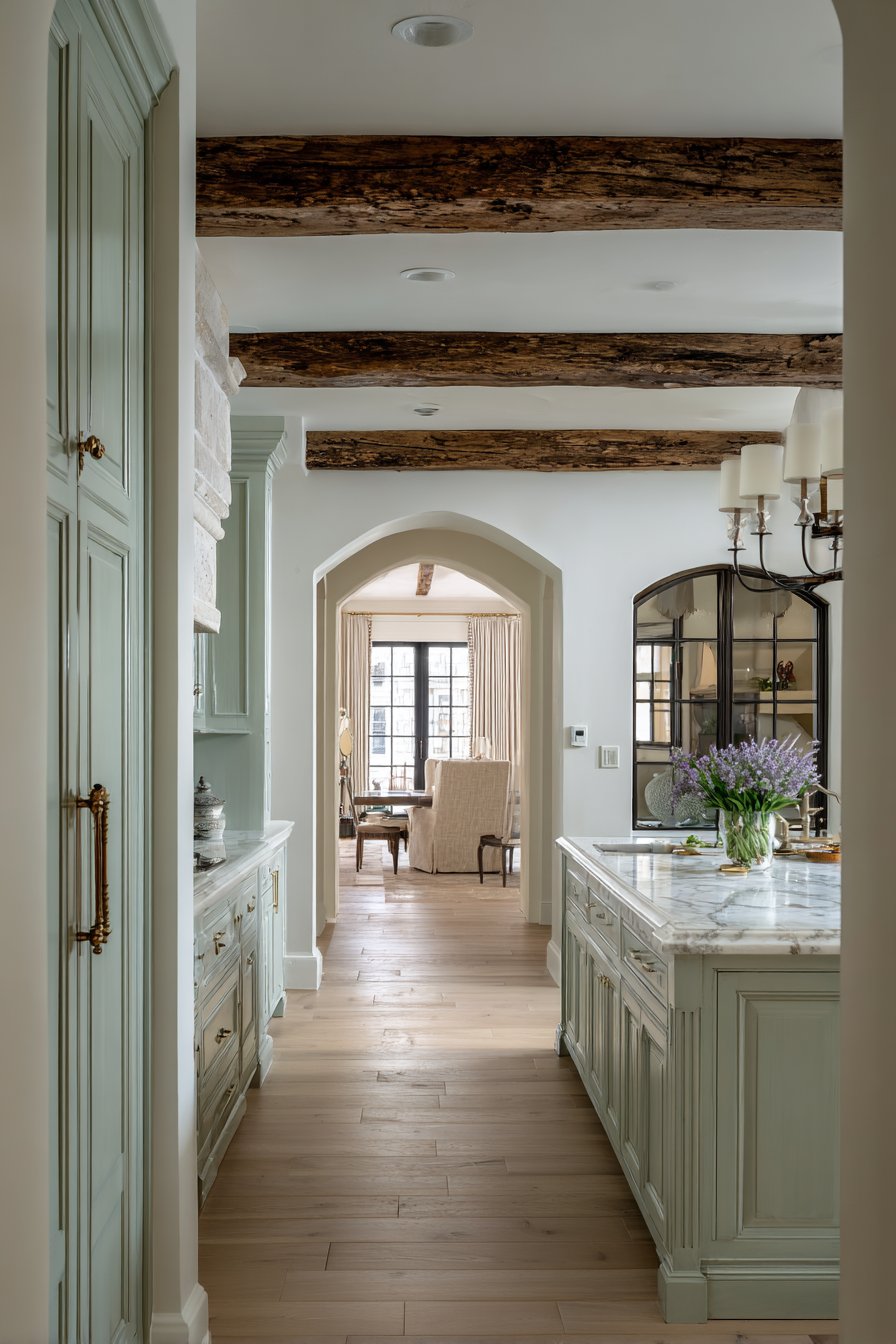
French cottage kitchens embrace gentle, sophisticated colors inspired by the Provençal landscape and aged plaster walls. Soft grays, pale blues, weathered greens, and warm creams create serene backgrounds that allow natural materials and vintage finds to shine. These understated hues feel both calming and elegant, never competing with architectural details or collected treasures.
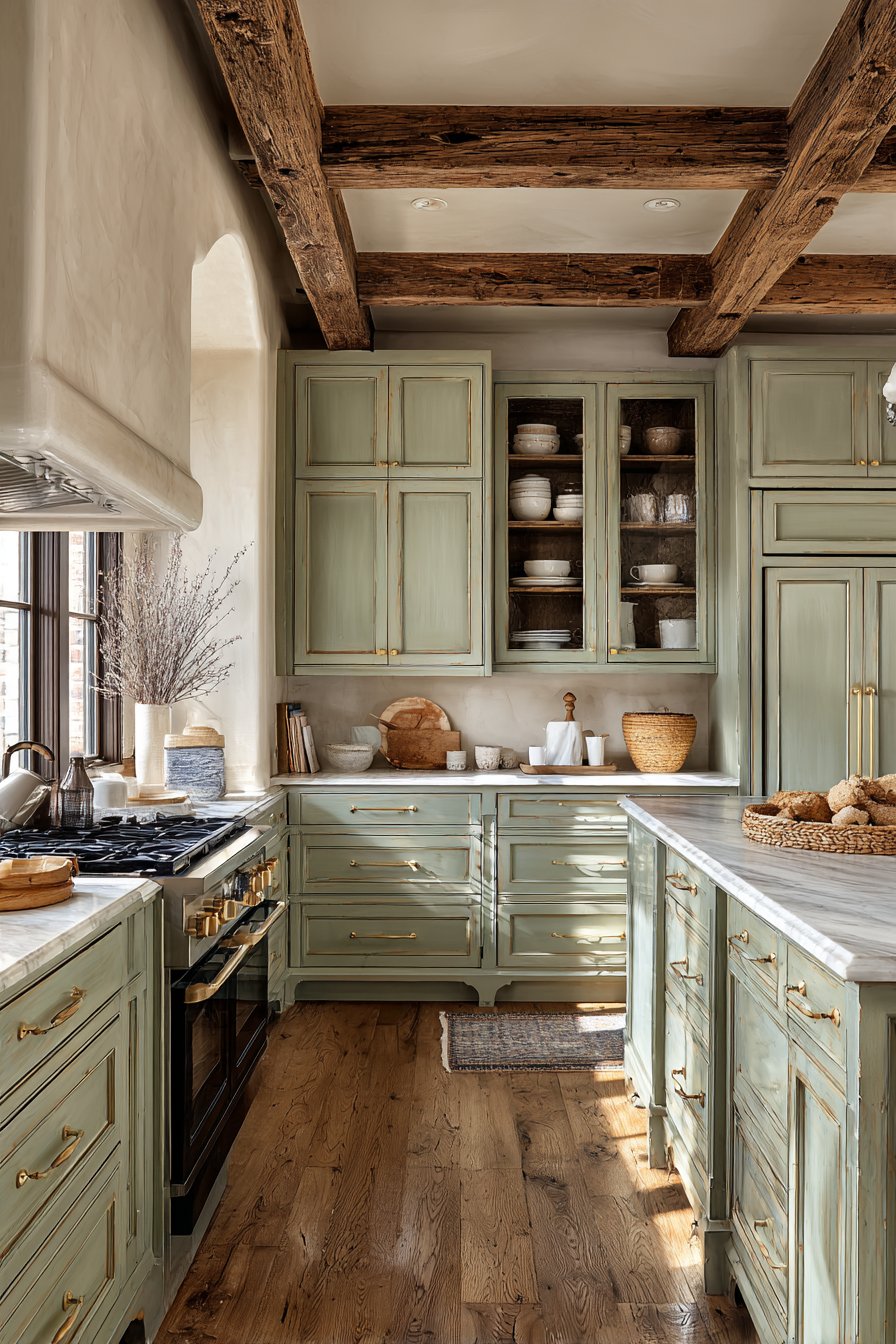
The French approach to color favors subtlety over boldness, with variations and layers creating depth rather than uniform application. Walls might show traces of previous paint colors through deliberate distressing, while cabinets display gentle gradations suggesting years of sun exposure. This nuanced treatment produces the lived-in patina characteristic of authentic French interiors.
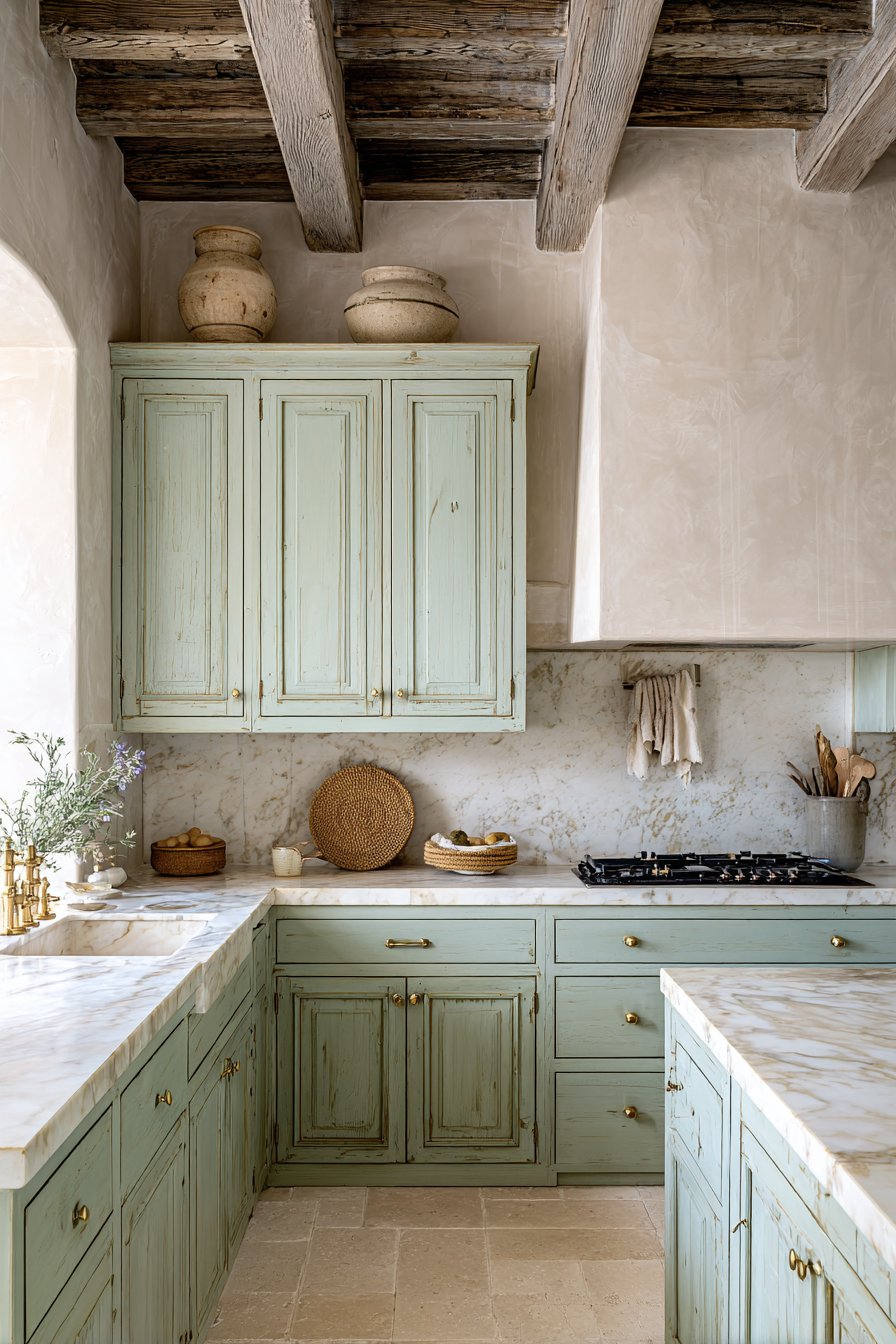
- Paint walls in soft white, pale gray, or gentle sage tones
- Choose cabinetry in muted blues, greens, or classic French gray
- Incorporate cream and ivory rather than stark white for warmth
- Layer similar tones for subtle depth instead of high contrast
- Allow natural materials like wood and stone to provide color variation
- Add touches of soft lavender or blush through textiles and accessories
4. Rustic Terracotta and Stone Flooring
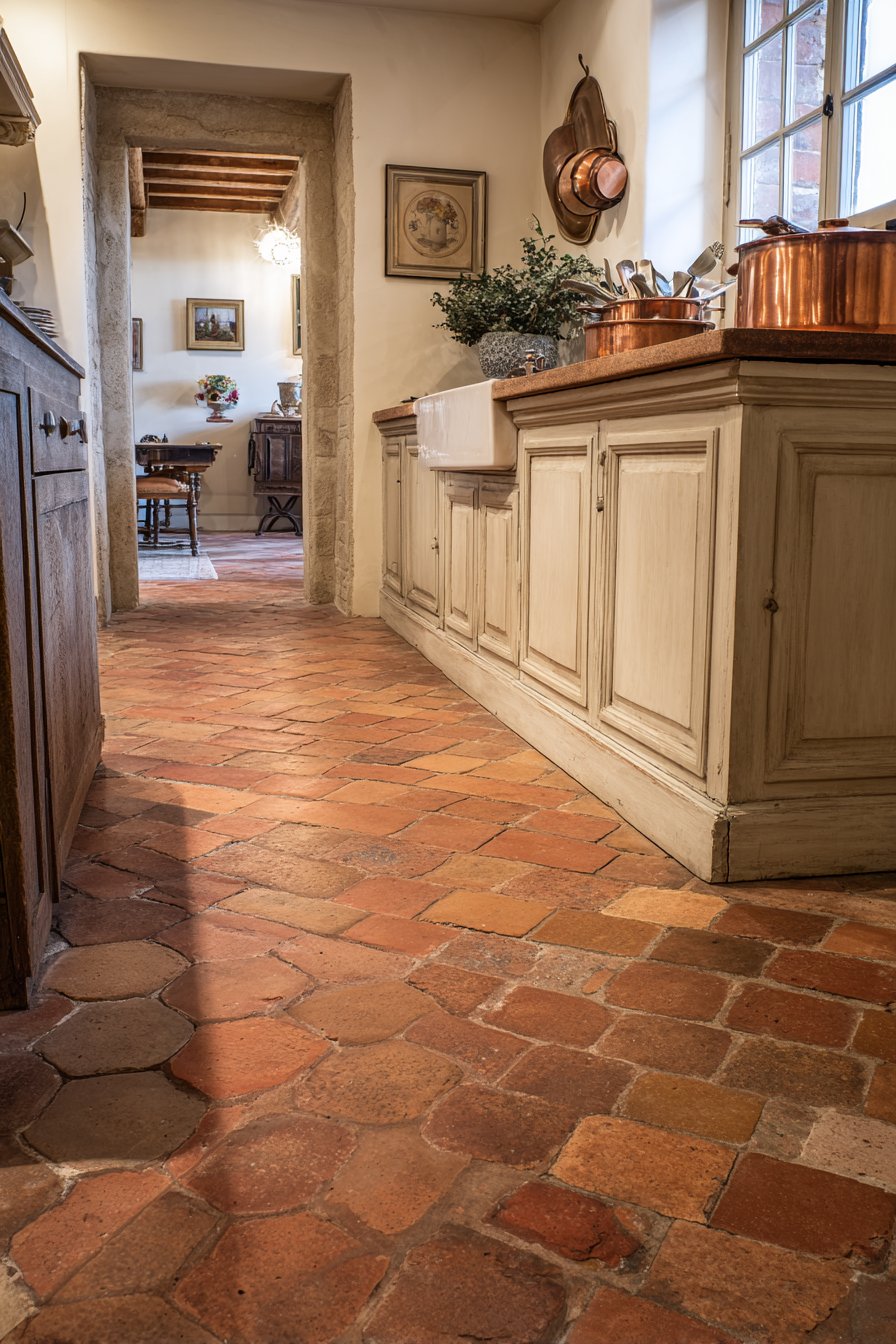
Terracotta tiles with irregular surfaces and varied coloration bring authentic French cottage character underfoot. These earthenware tiles develop beautiful patinas as they age, absorbing spills and traffic patterns that enhance rather than diminish their appearance. The warm, earthy tones provide perfect counterbalance to cool wall colors and white fixtures.
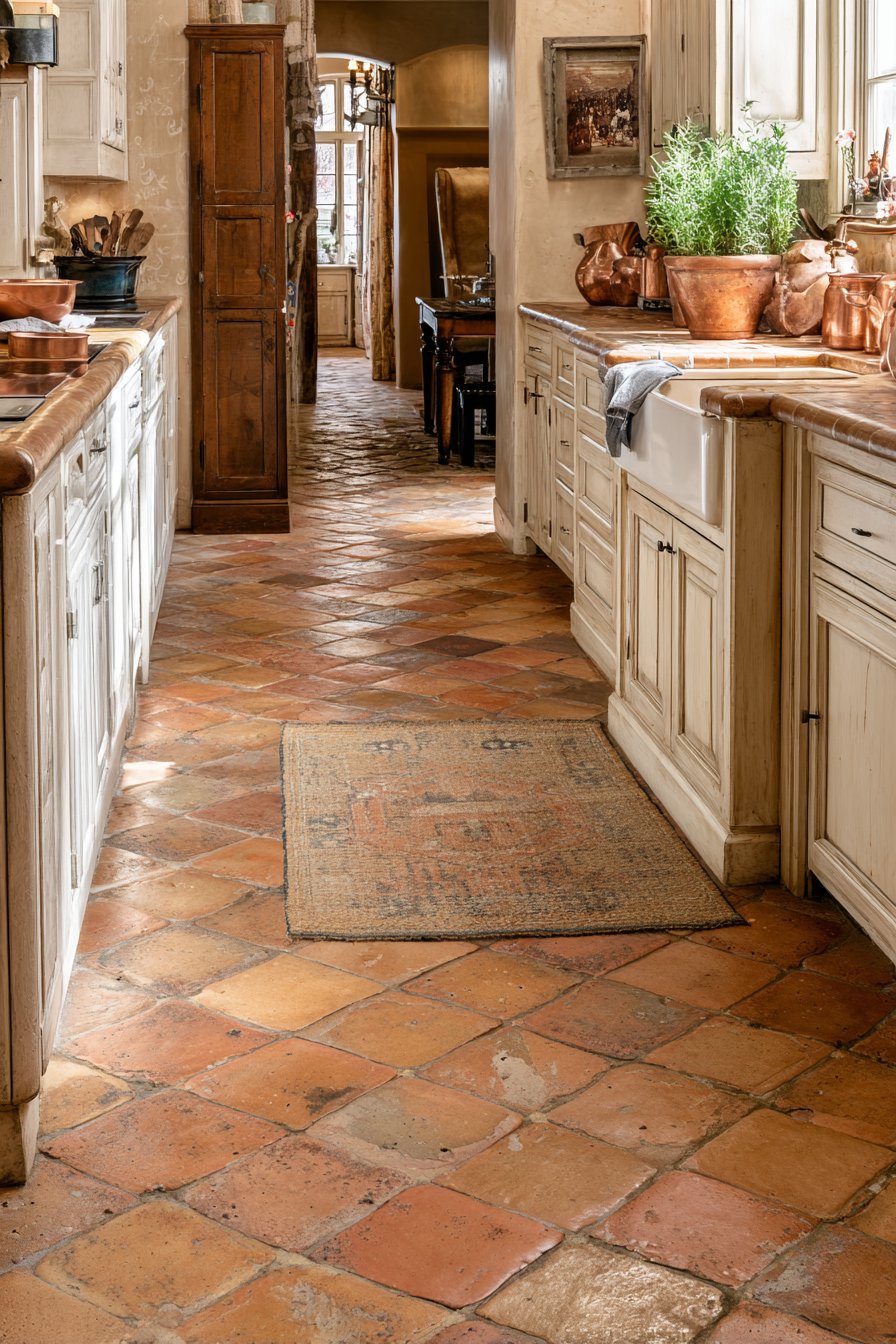
Natural stone flooring like limestone or travertine offers another quintessentially French option. These materials feel cool in summer, warm in winter, and improve with age as their surfaces develop subtle polish from years of foot traffic. Both terracotta and stone connect kitchens to their rural origins while providing durable, low-maintenance surfaces.
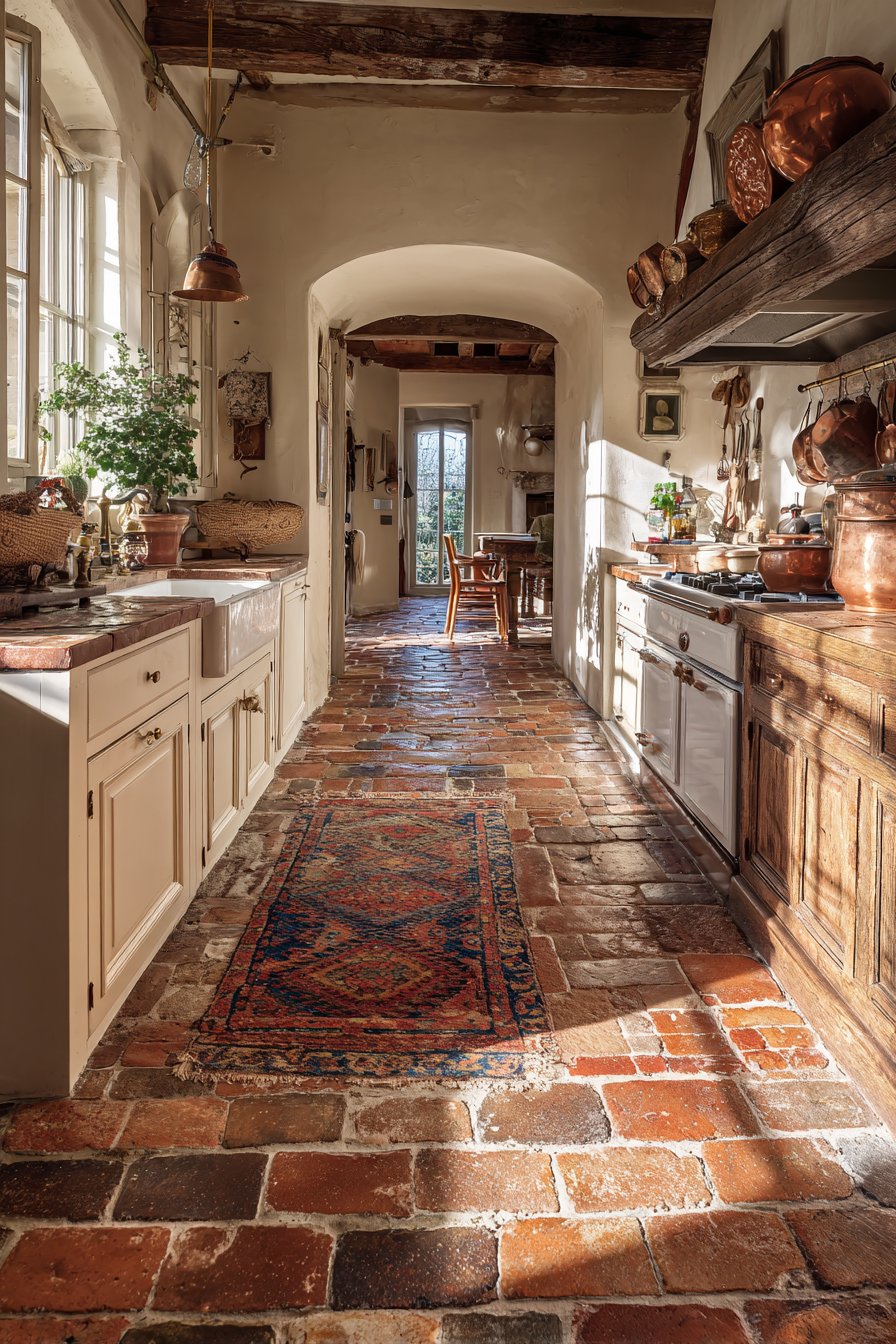
- Select handmade terracotta tiles with size and color variations
- Choose tumbled or antiqued stone with softened edges for authenticity
- Incorporate underfloor heating for comfort with naturally cool materials
- Seal terracotta properly to prevent excessive staining while allowing patina
- Consider reclaimed materials for instant aged appearance and character
- Add vintage or distressed area rugs for comfort at work stations
5. Wrought Iron Fixtures and Hardware
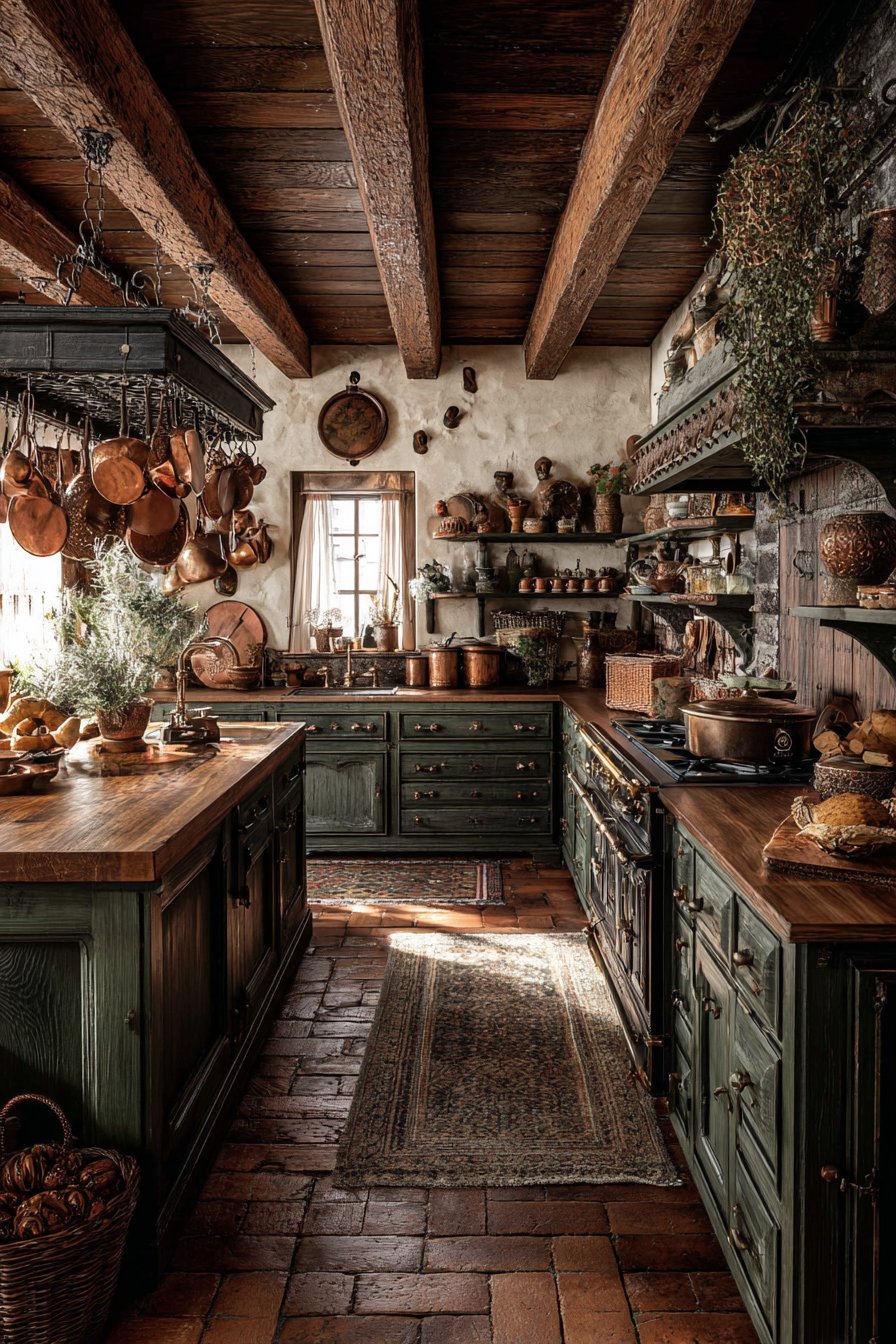
Hand-forged iron elements introduce the craftsmanship and artisanal quality essential to French cottage style. Pot racks suspended from exposed beams, curtain rods with decorative finials, and cabinet hardware in antiqued black iron provide functional beauty that honors traditional metalworking techniques. These substantial pieces anchor lighter elements with grounding presence.
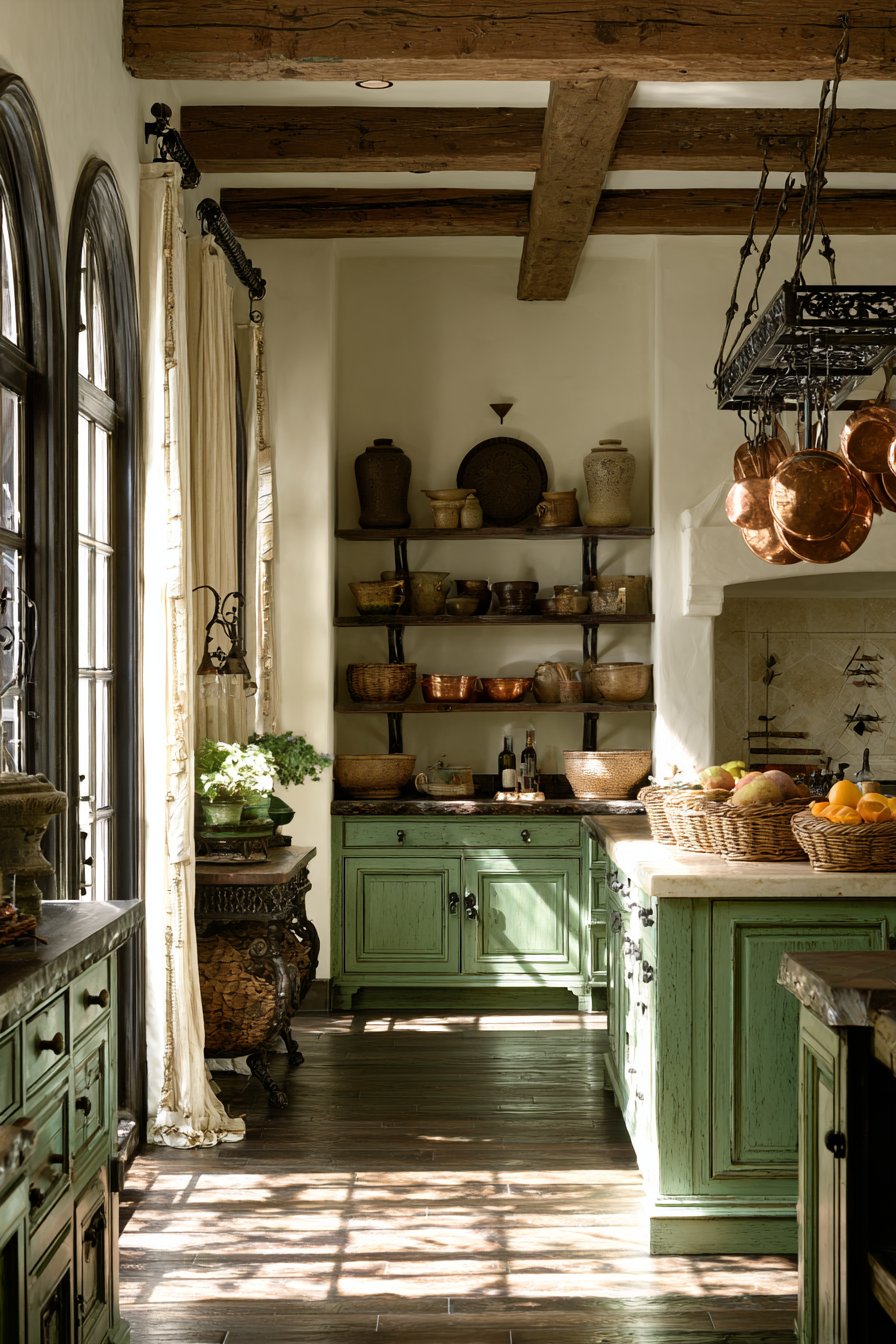
The deliberate choice of matte black or aged bronze finishes over shiny chrome maintains period authenticity. Simple, substantial forms without excessive ornamentation reflect rural French sensibilities where utility guided design. Hinges, pulls, and hooks become sculptural details that contribute to the overall aesthetic while serving practical purposes.
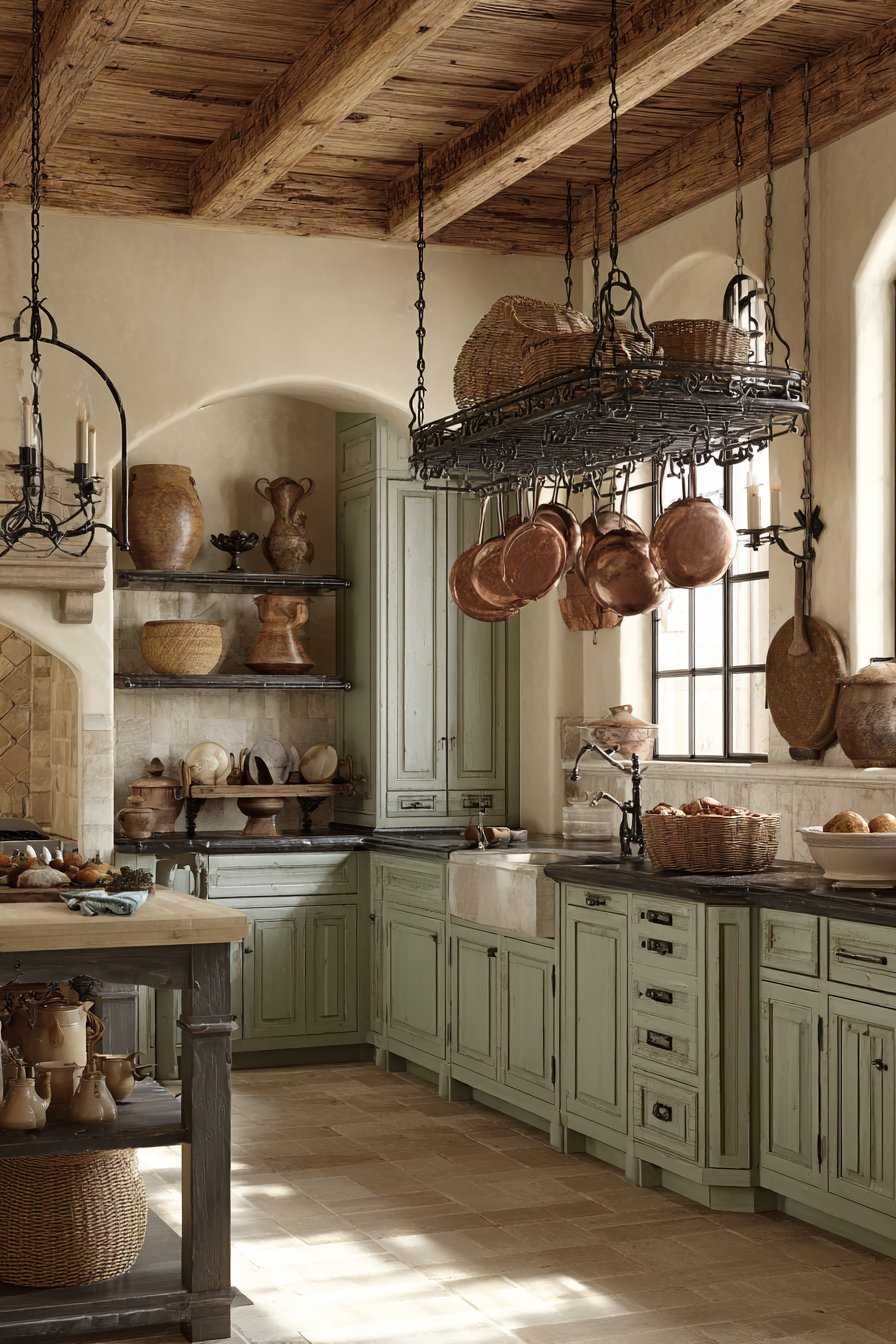
- Install a wrought iron pot rack as both storage and focal point
- Choose substantial cabinet pulls and bin pulls in aged black iron
- Add iron hooks for hanging utensils, towels, and market baskets
- Select iron curtain rods with simple finial designs
- Incorporate an iron baker’s rack for additional storage and display
- Use iron trivets and pot stands as functional decorative elements
6. Collections of White Ironstone and Earthenware
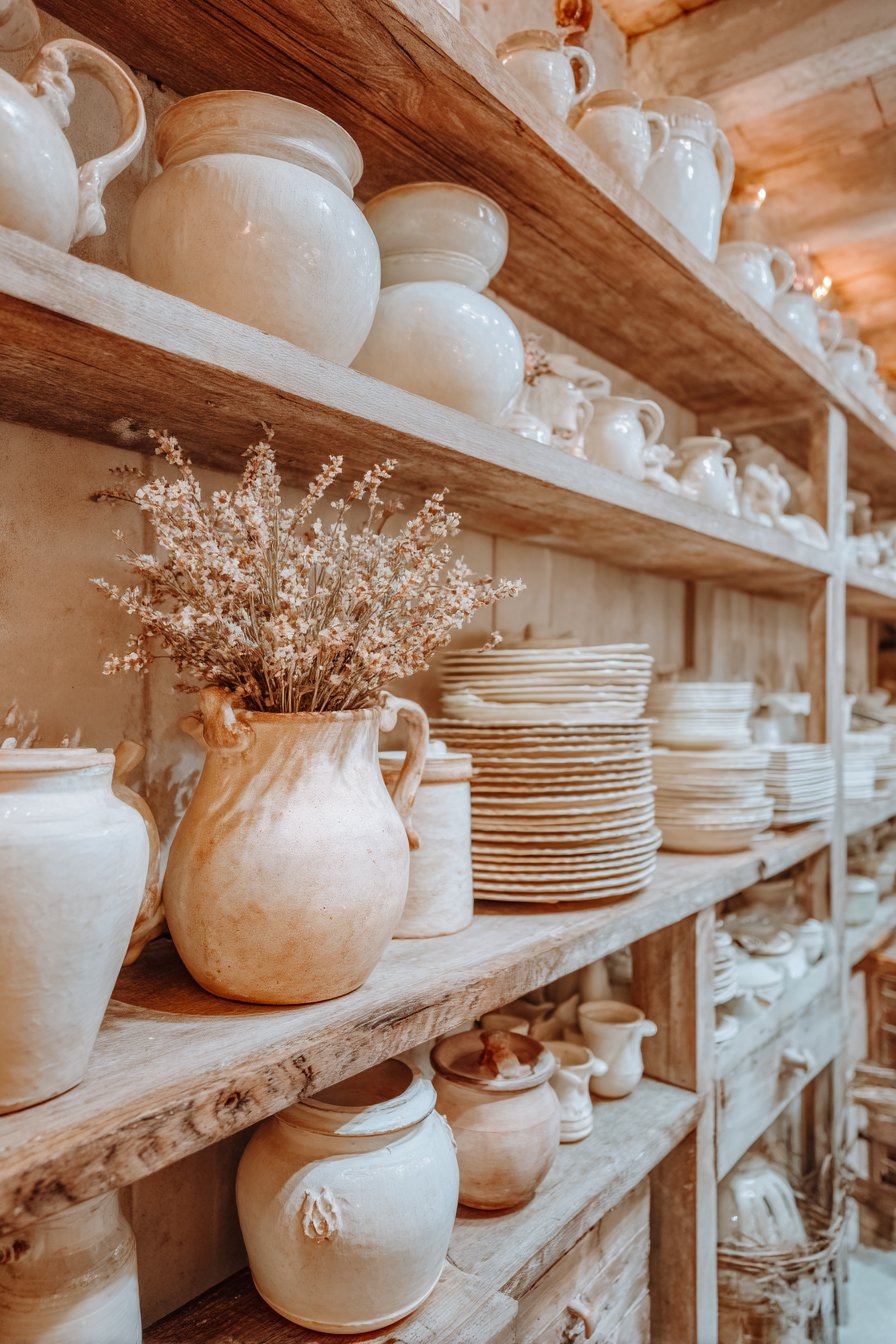
Creamy white dishes stacked on open shelves epitomize French cottage charm. Ironstone platters, tureens, and pitchers in various shapes and sizes create cohesive collections despite originating from different makers and eras. The subtle variations in white tones—from pure white to ivory to cream—add depth while maintaining visual harmony.
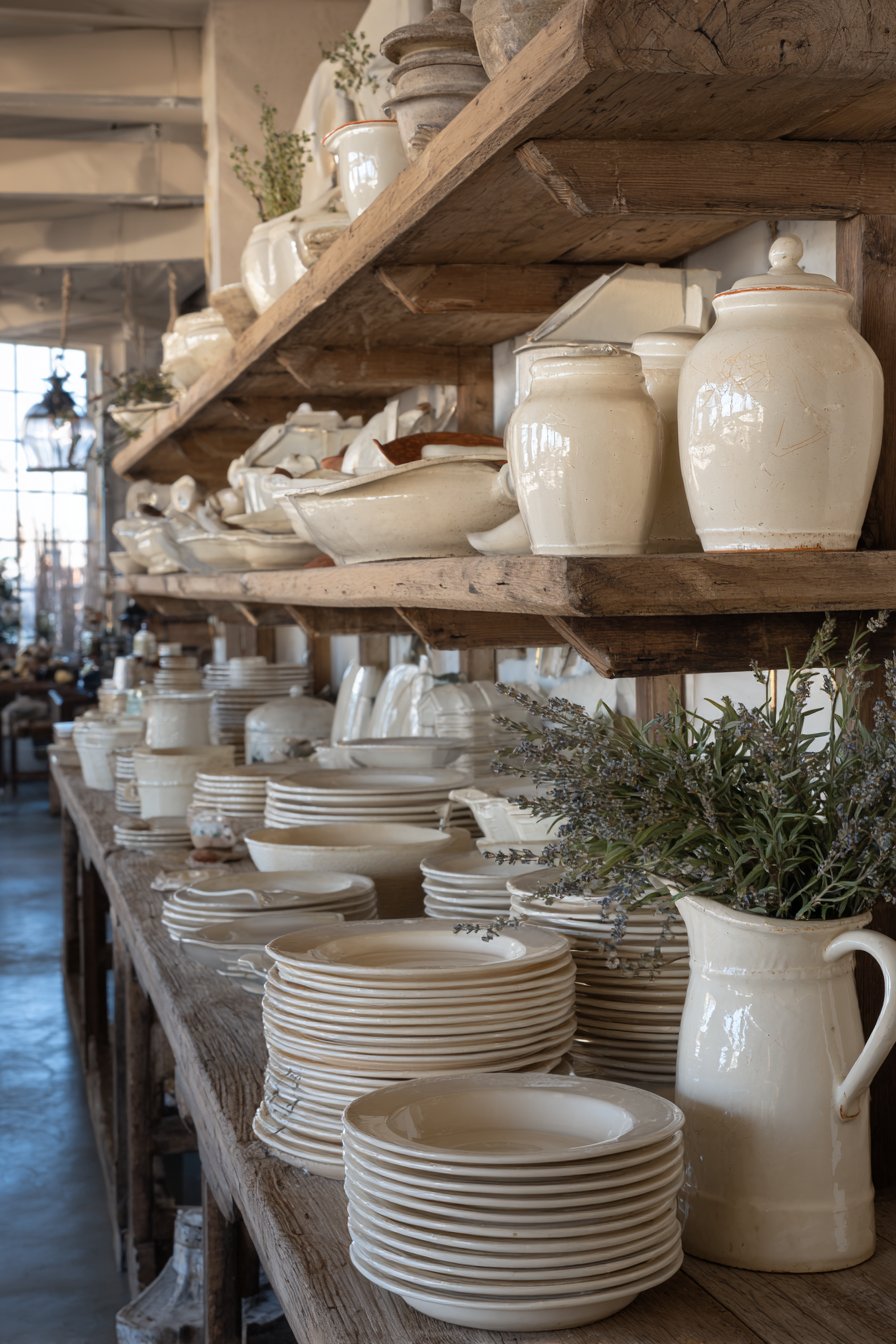
Mixing ironstone with rustic earthenware in natural clay tones introduces textural contrast. French confit pots, olive jars, and stoneware crocks bring authentic provincial elements that serve both storage and display purposes. These humble, handcrafted pieces celebrate the artisanal traditions of French pottery and countryside living.
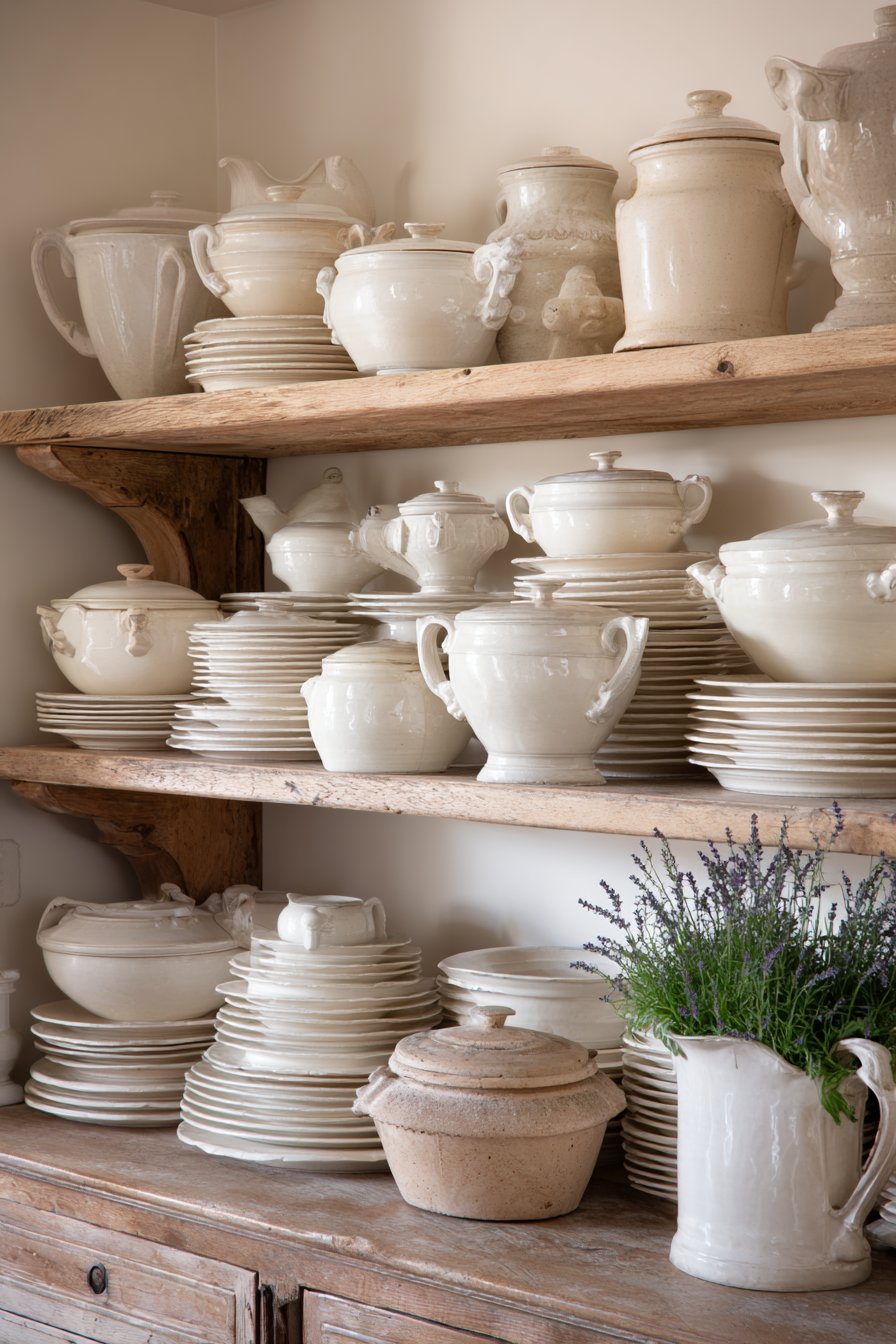
- Build collections gradually from antique shops and flea markets
- Display dishes grouped by type rather than matching sets
- Mix white ironstone with natural clay pottery for texture
- Include pieces with minor chips or crazing for authentic character
- Stack plates vertically on shelves for easier access and visual interest
- Use pitchers and tureens as vases for fresh flowers and herbs
7. Fresh Herbs and Flowers in Simple Vessels
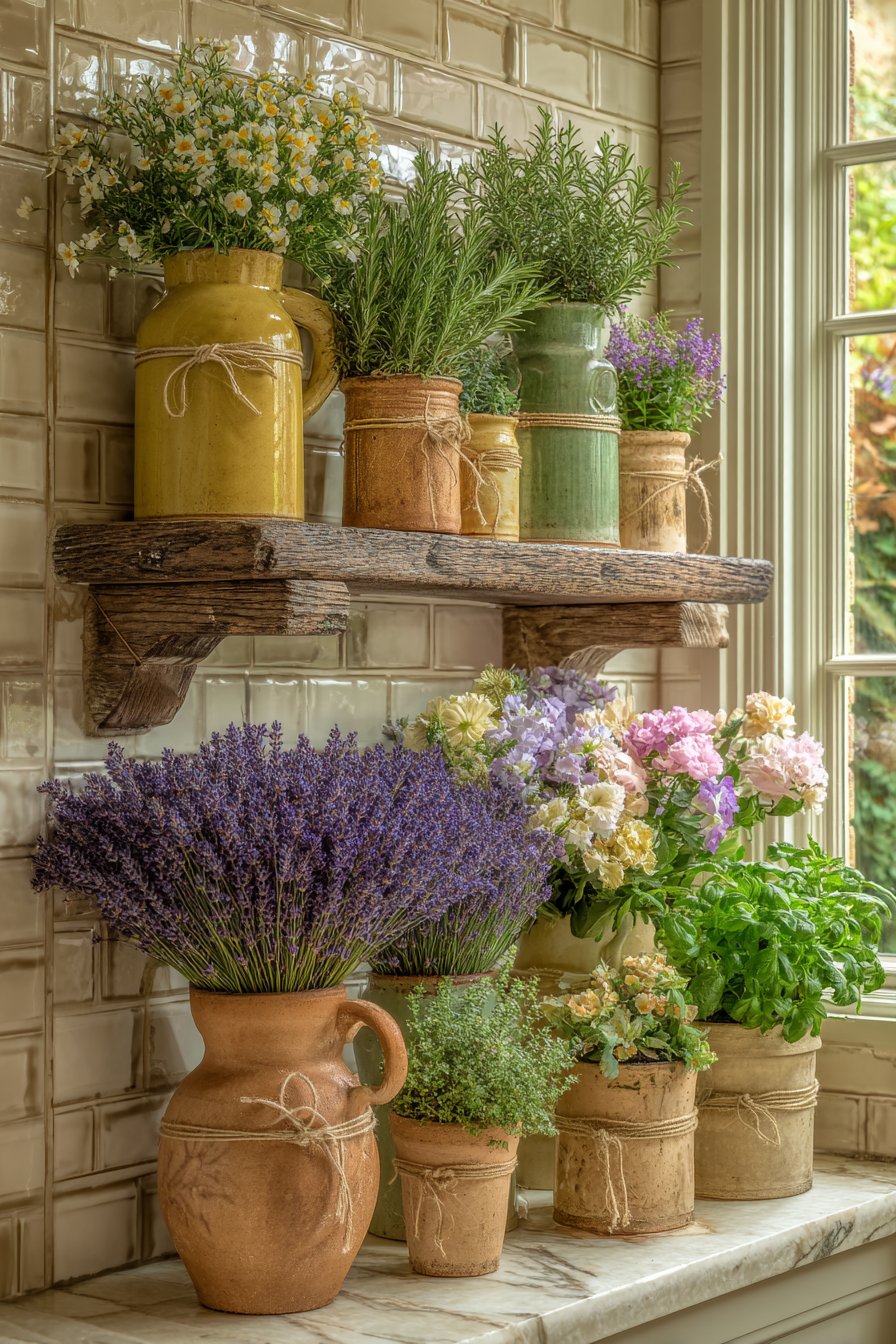
The French cottage kitchen maintains constant connection with the garden through abundant fresh herbs and seasonal flowers. Lavender bundles, rosemary sprigs, and mixed bouquets arranged in vintage pitchers, mason jars, or simple pottery bring life, fragrance, and natural beauty throughout the space. This organic element prevents the kitchen from feeling overly styled or static.
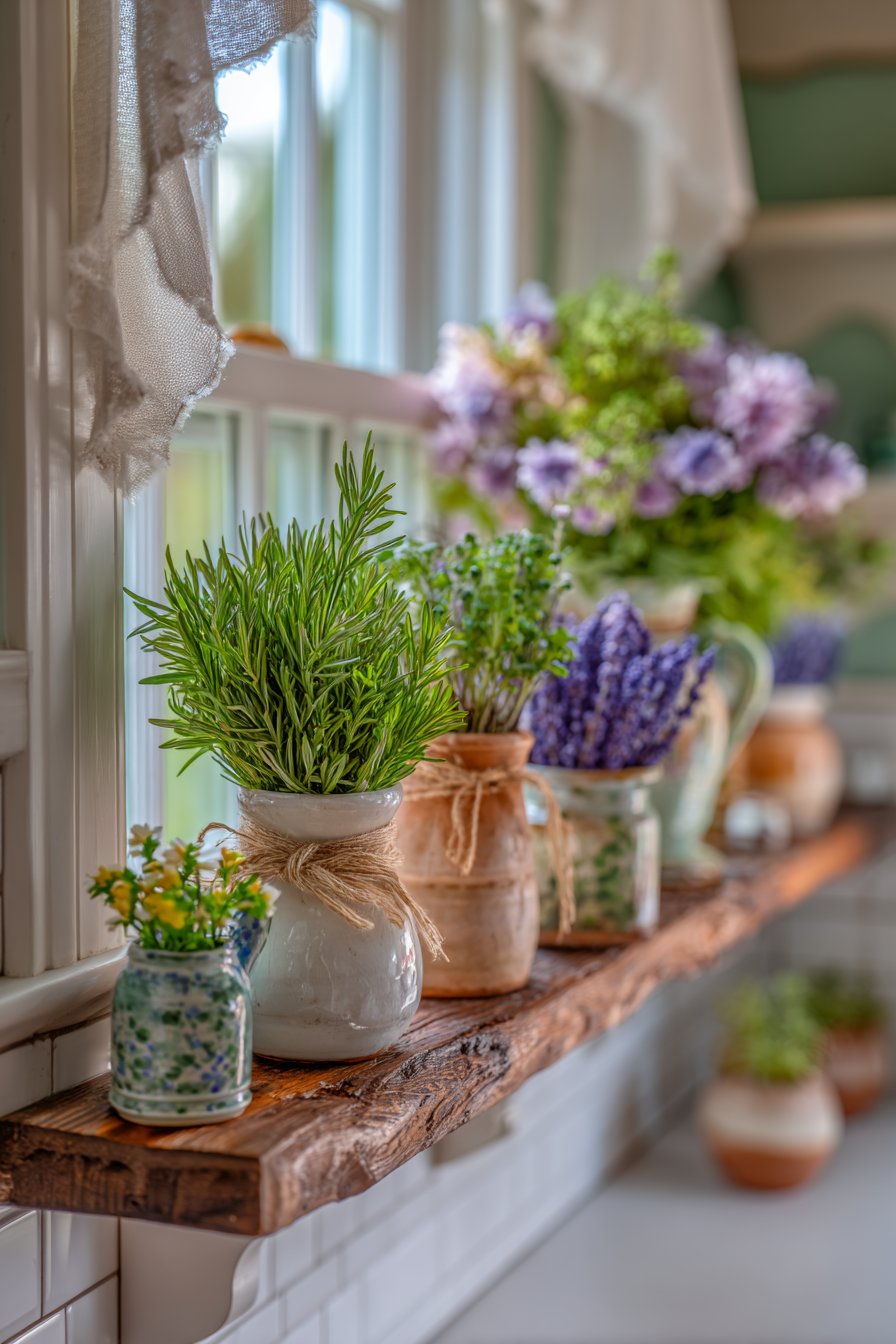
Growing potted herbs on windowsills or counters provides both practical ingredients and living decoration. The French approach values beauty in everyday functionality—herbs serve cooking while their green presence and aromatic qualities enhance the environment. This integration of nature and utility reflects the cottage philosophy where practical and beautiful are inseparable.
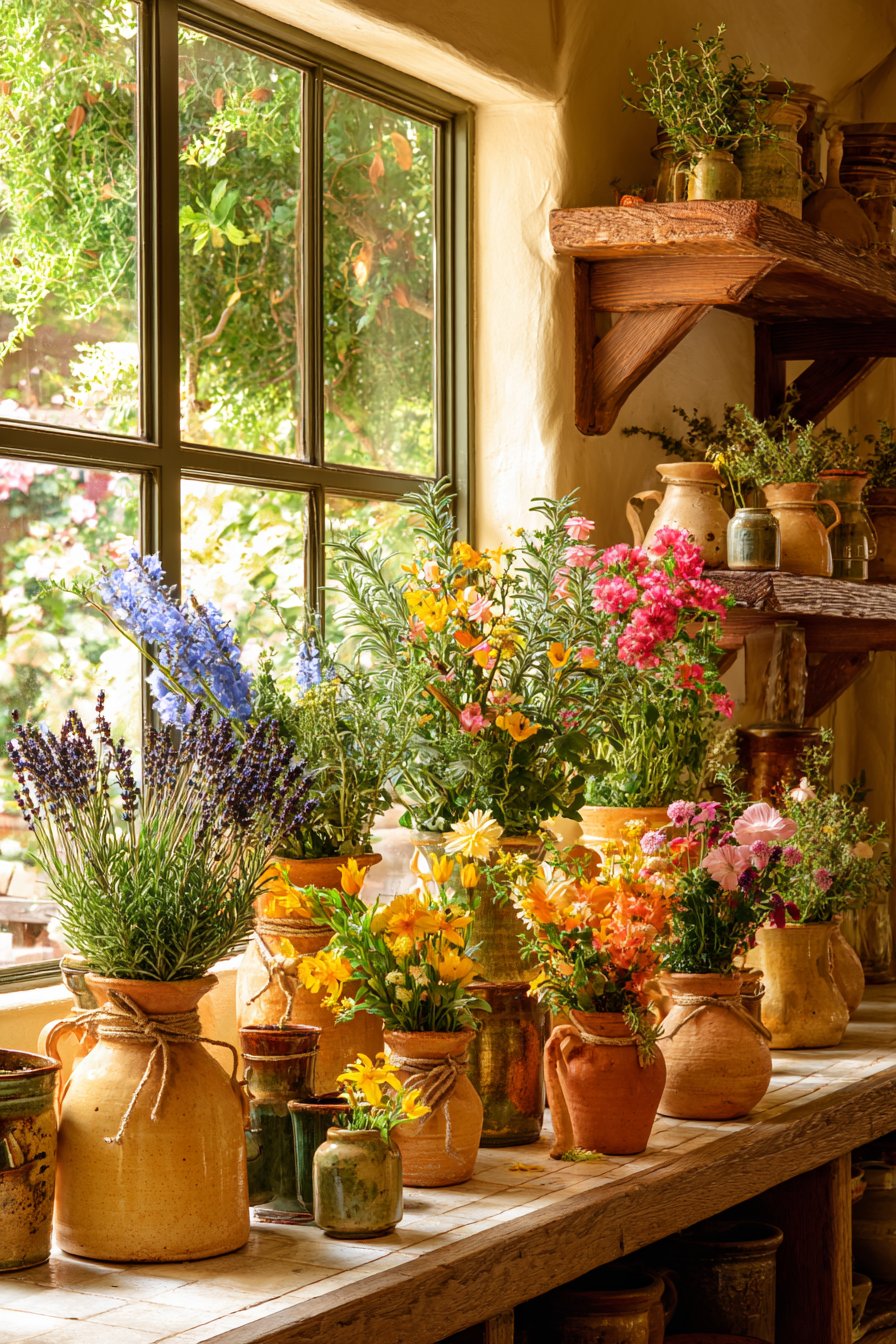
- Display fresh lavender bundles tied with twine or ribbon
- Arrange garden flowers loosely in vintage pitchers and crocks
- Grow herbs in terracotta pots along sunny windowsills
- Fill old olive oil tins with seasonal blooms from the market
- Change displays frequently to reflect seasons and garden offerings
- Embrace slightly wild, unstructured arrangements over formal bouquets
8. Vintage French Linens and Textiles
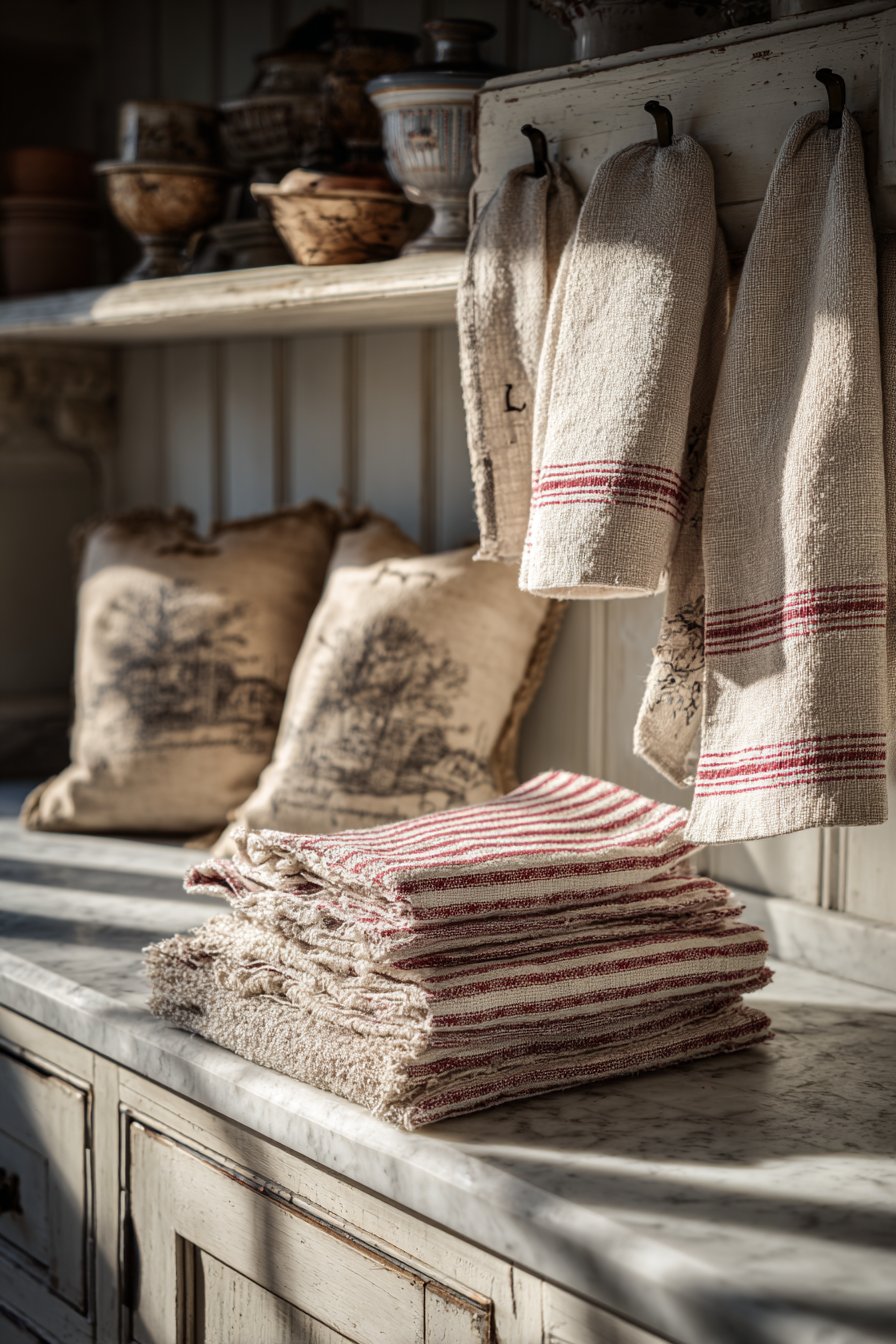
Antique French linens introduce softness, texture, and historical authenticity to cottage kitchens. Monogrammed tea towels, grain sack fabric, and hemp or linen dish towels embroidered with red stripes bring tactile warmth while serving practical purposes. These textiles improve with washing, developing the soft, lived-in quality impossible to achieve with new materials.
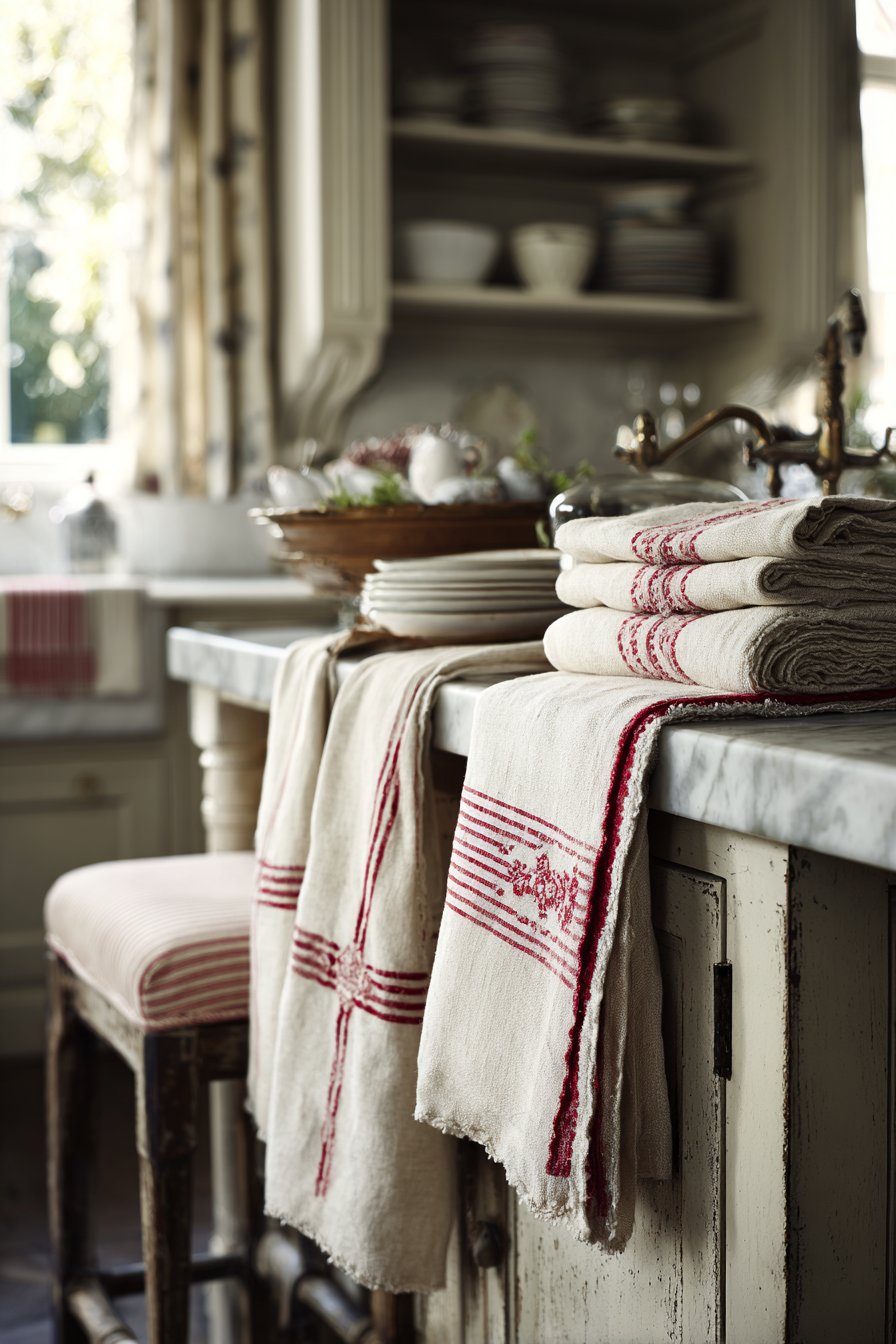
Vintage ticking stripes and toile patterns on cushions, curtains, or table runners add subtle pattern without overwhelming the space. The French preference for natural fibers like linen, cotton, and hemp ensures textiles age beautifully while maintaining their utility. These heirloom-quality pieces represent the cottage ethos of investment in lasting beauty.
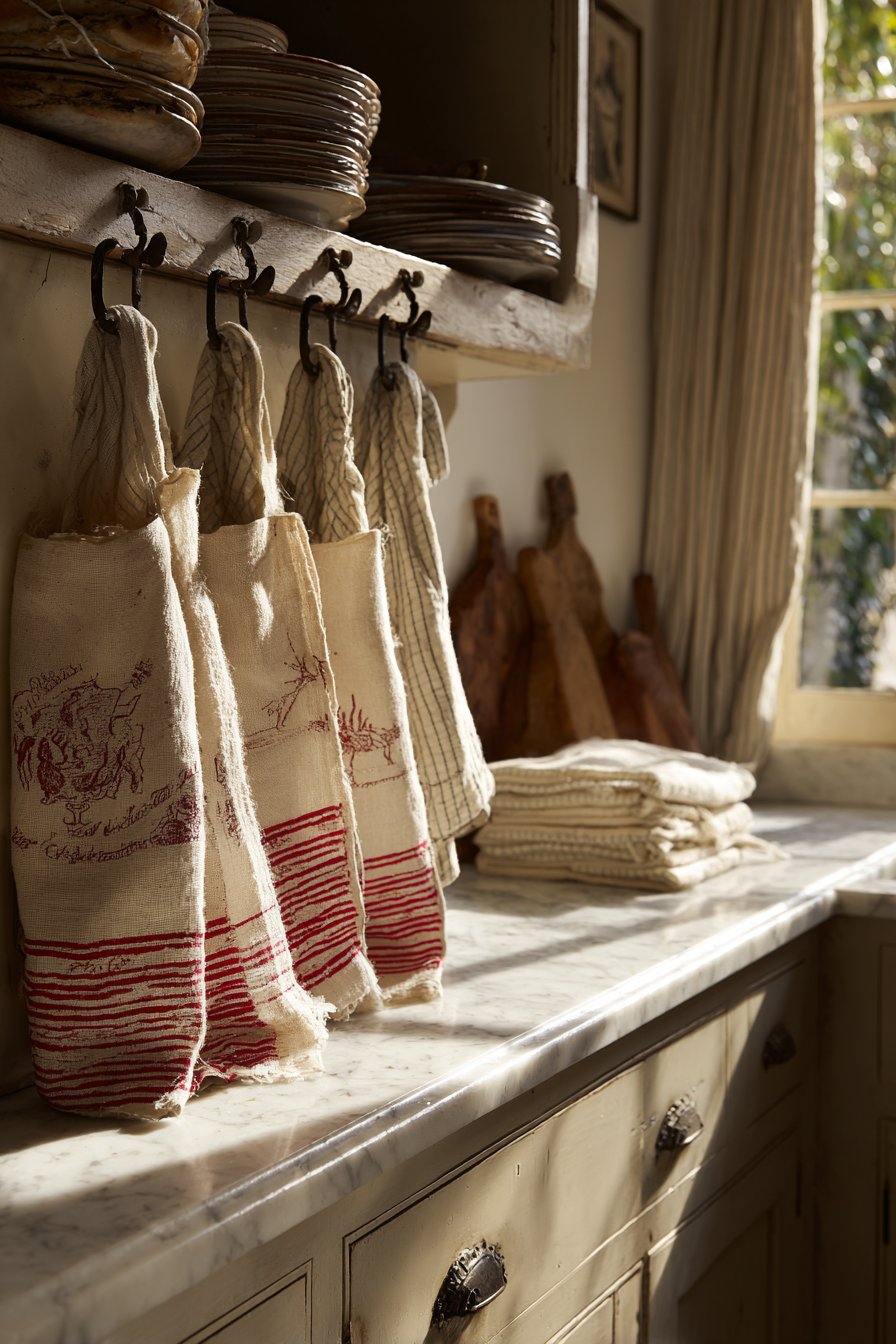
- Source antique French grain sacks for upholstery or pillow covers
- Use vintage linen tea towels monogrammed with decorative initials
- Choose cafe curtains in traditional cream linen with lace trim
- Add cushions covered in ticking stripes or faded toile patterns
- Display folded vintage linens on open shelves as decoration
- Incorporate hemp or linen table runners for casual dining elegance
9. Exposed Ceiling Beams and Architectural Details
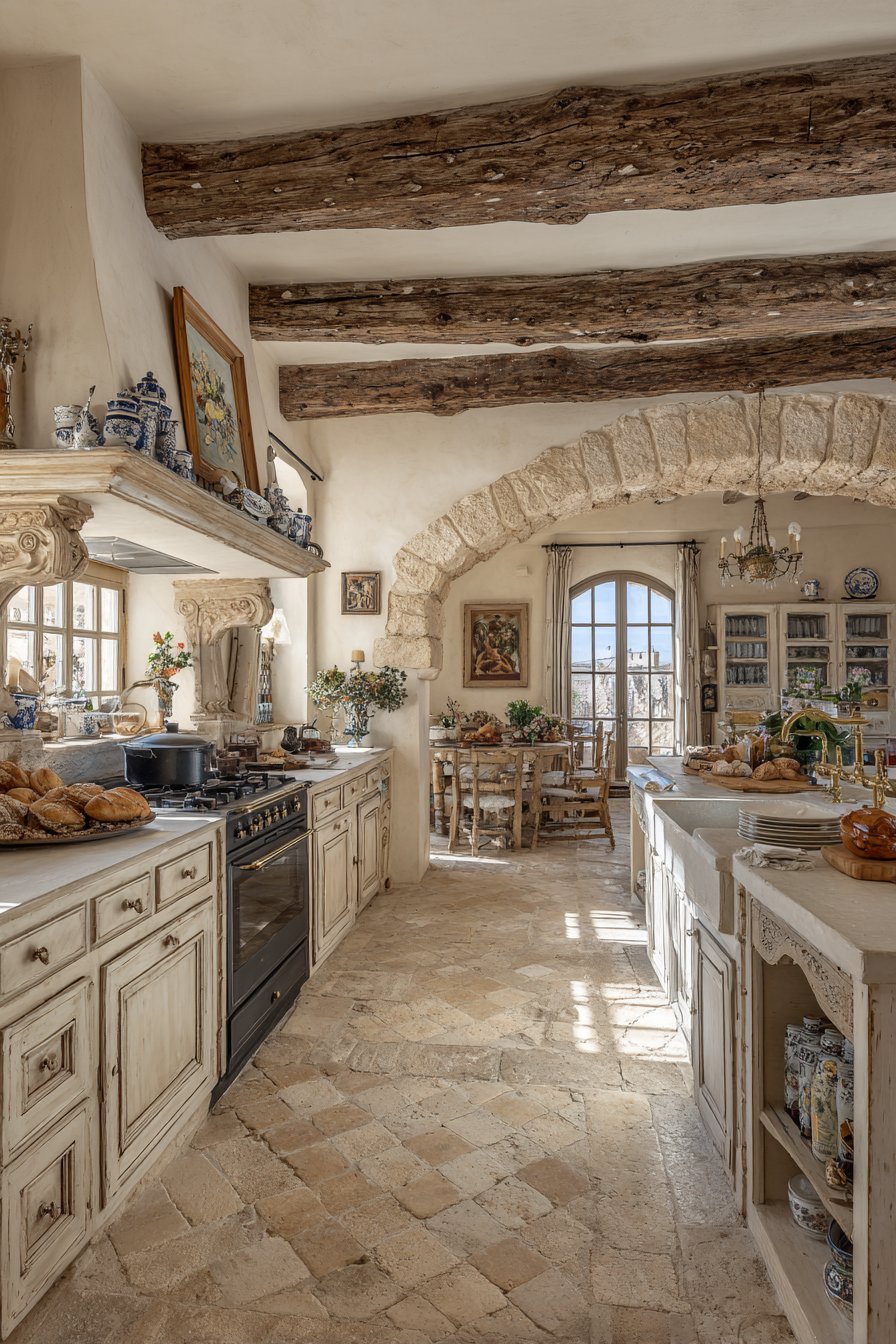
Rustic wooden beams crossing the ceiling establish immediate French cottage character. Whether original timber or reclaimed wood additions, these structural elements create visual rhythm and architectural interest overhead. Dark, weathered beams contrast beautifully against white or cream ceilings, emphasizing the cottage’s historical roots and connection to rural building traditions.
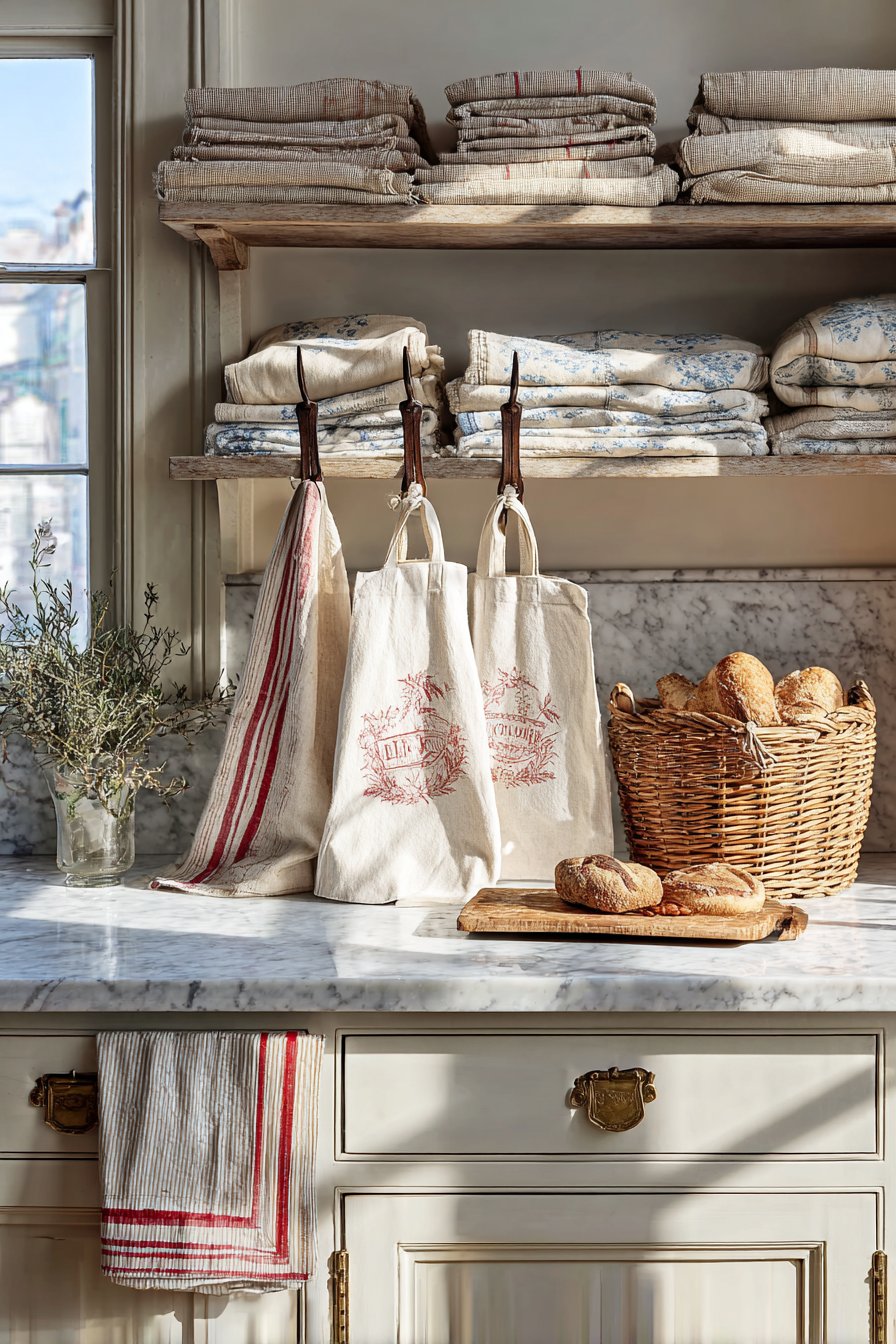
Additional architectural details like plaster range hoods, arched doorways, or exposed stone walls reinforce authentic cottage aesthetics. The French approach celebrates rather than conceals structural elements, viewing them as design features worthy of preservation and prominence. These permanent architectural choices provide the foundation upon which other design layers build.
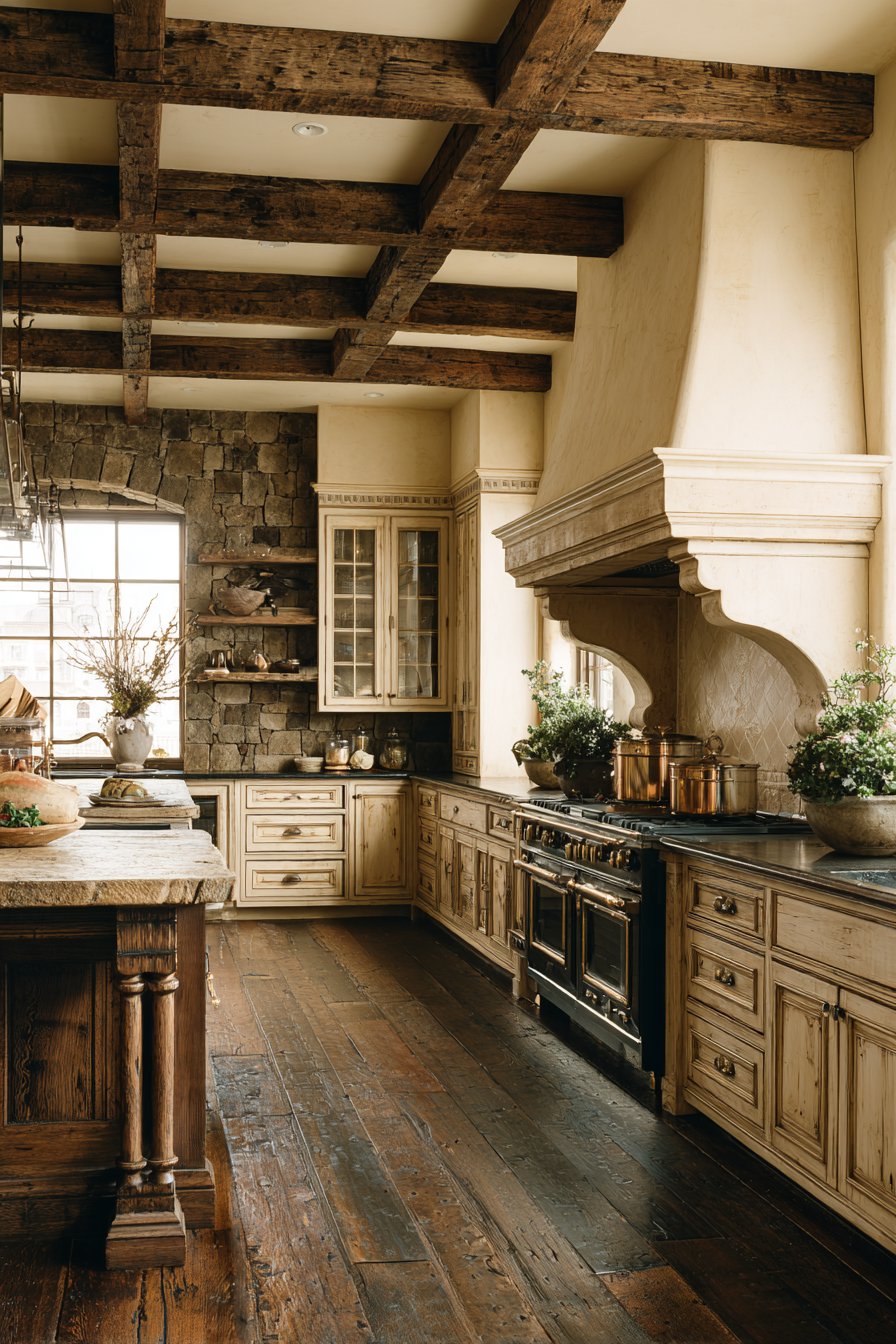
- Install reclaimed beams or wood-clad box beams for instant character
- Stain or paint beams in dark walnut or leave naturally weathered
- Incorporate corbels or brackets as decorative architectural supports
- Design custom plaster range hoods with arched or curved details
- Expose brick or stone walls where possible for textural interest
- Add crown molding or picture rails in classical proportions
10. Copper Cookware and Brass Accents
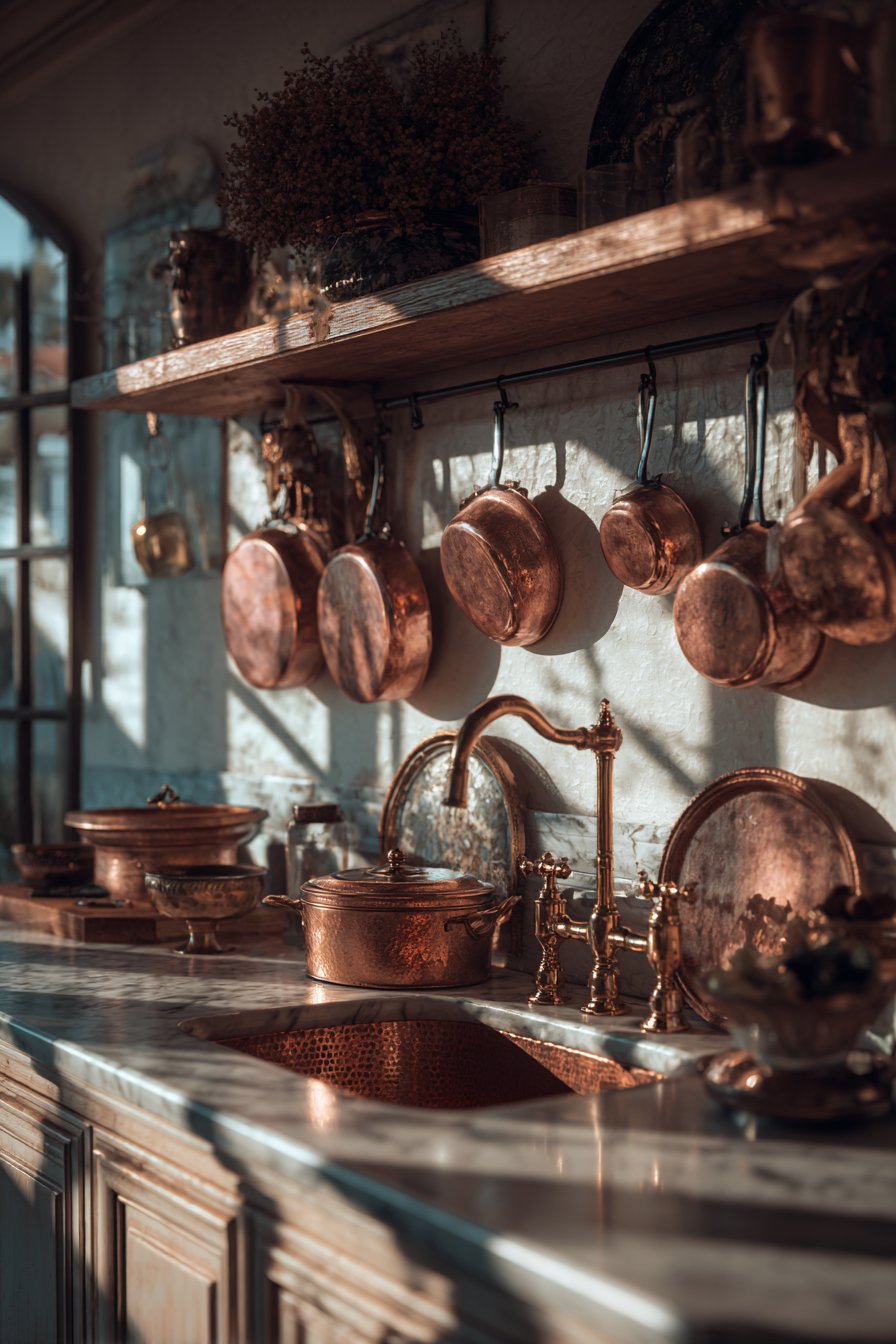
Gleaming copper pots hanging from racks or displayed on open shelves bring warmth and traditional craftsmanship to French cottage kitchens. These functional heirlooms represent serious cooking equipment favored by French chefs for superior heat conductivity. The warm metallic tones complement both cool and warm color palettes while adding luminous reflective quality.
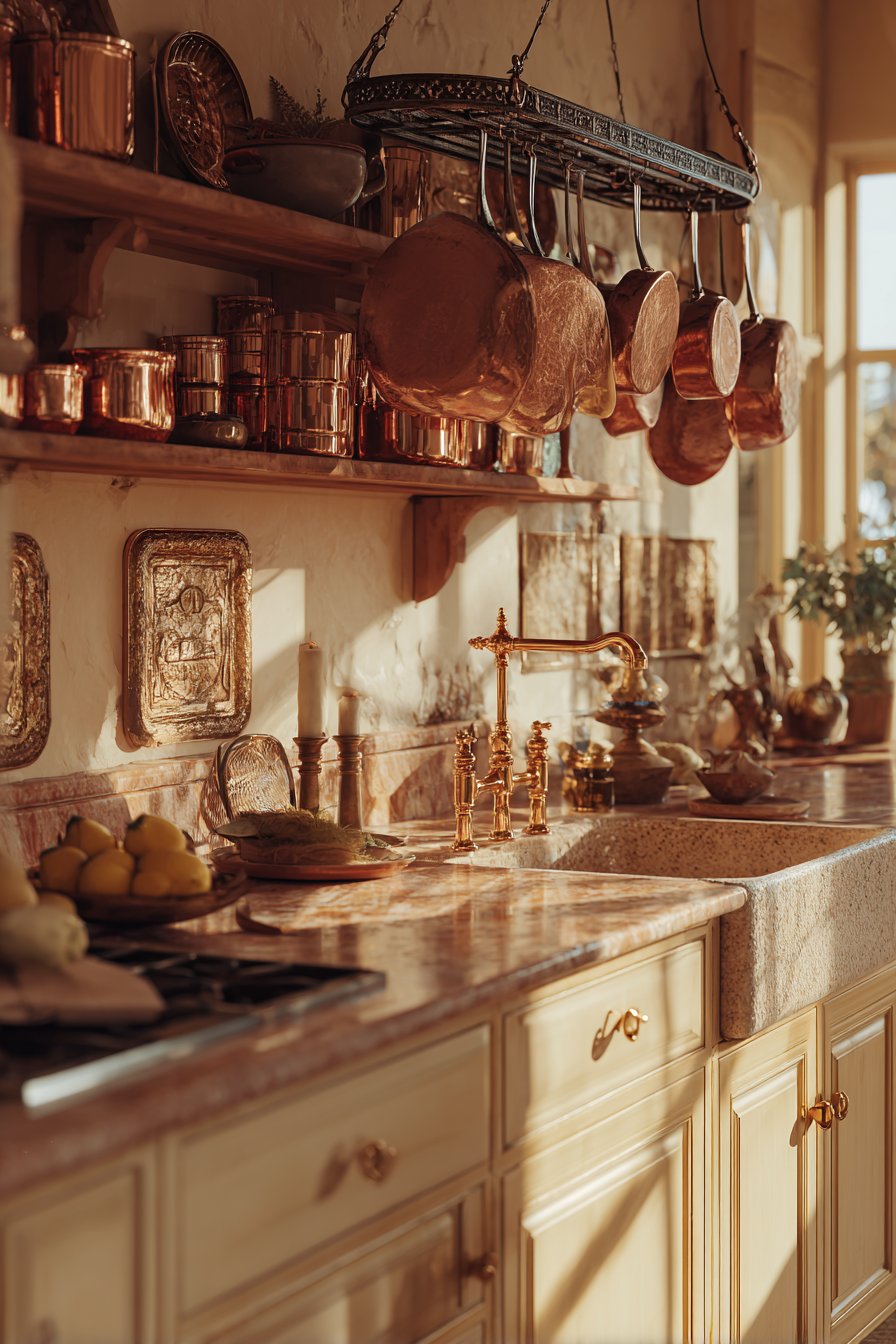
Brass fixtures, lighting, and decorative elements provide golden accents that enhance the cottage’s warm atmosphere. Aged or unlacquered brass develops natural patina over time, creating the authentic appearance of well-loved antiques. These metallic elements catch and reflect light beautifully throughout the day, adding dimensional richness to the overall design.
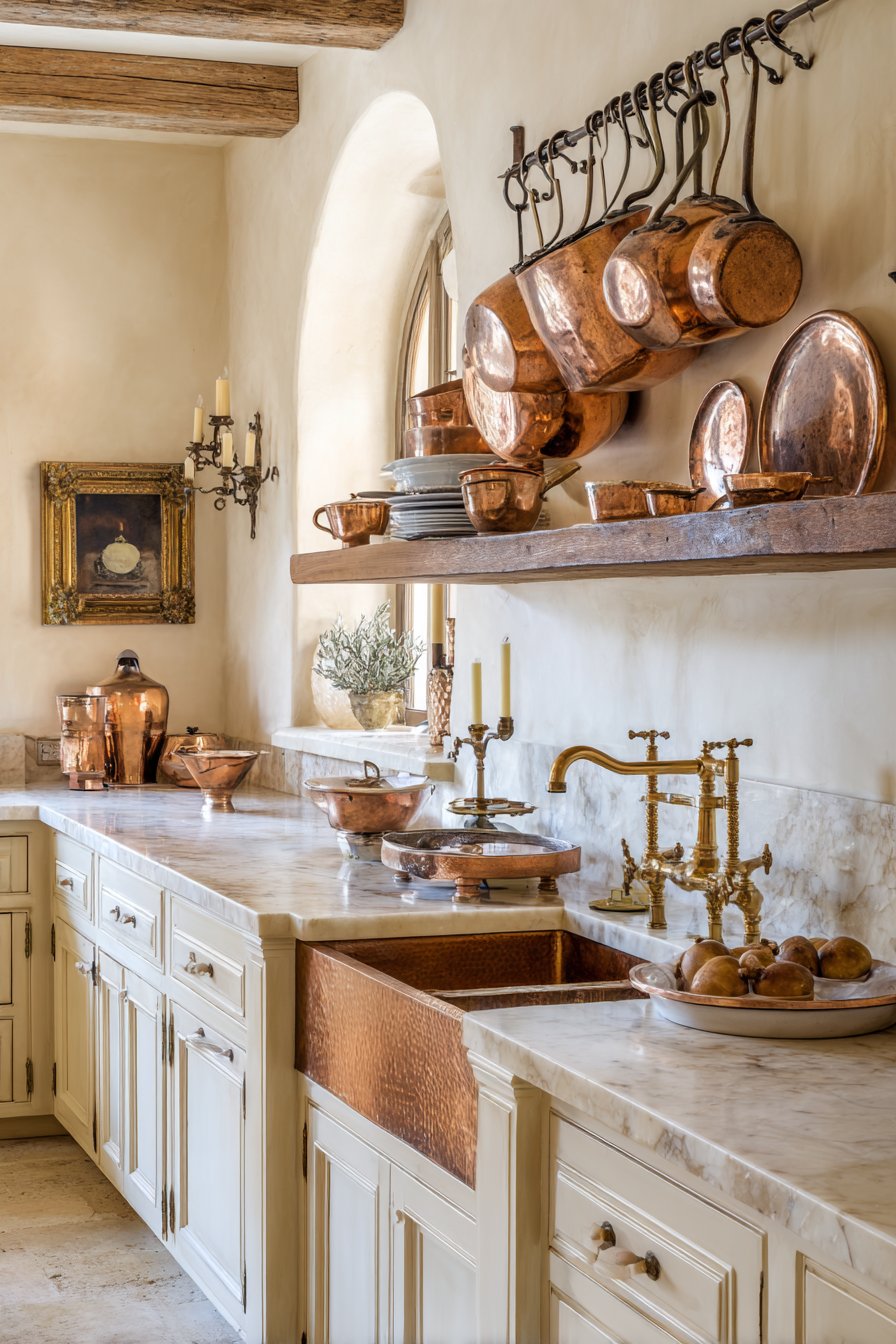
- Display copper pots on overhead racks or wall-mounted pot rails
- Choose brass or unlacquered bronze faucets that age naturally
- Add brass candlesticks, trivets, or decorative scales as accents
- Mix copper and brass rather than matching all metallics uniformly
- Polish copper occasionally but embrace natural tarnish variations
- Incorporate vintage copper molds as wall art or display pieces
11. Marble or Butcher Block Countertops
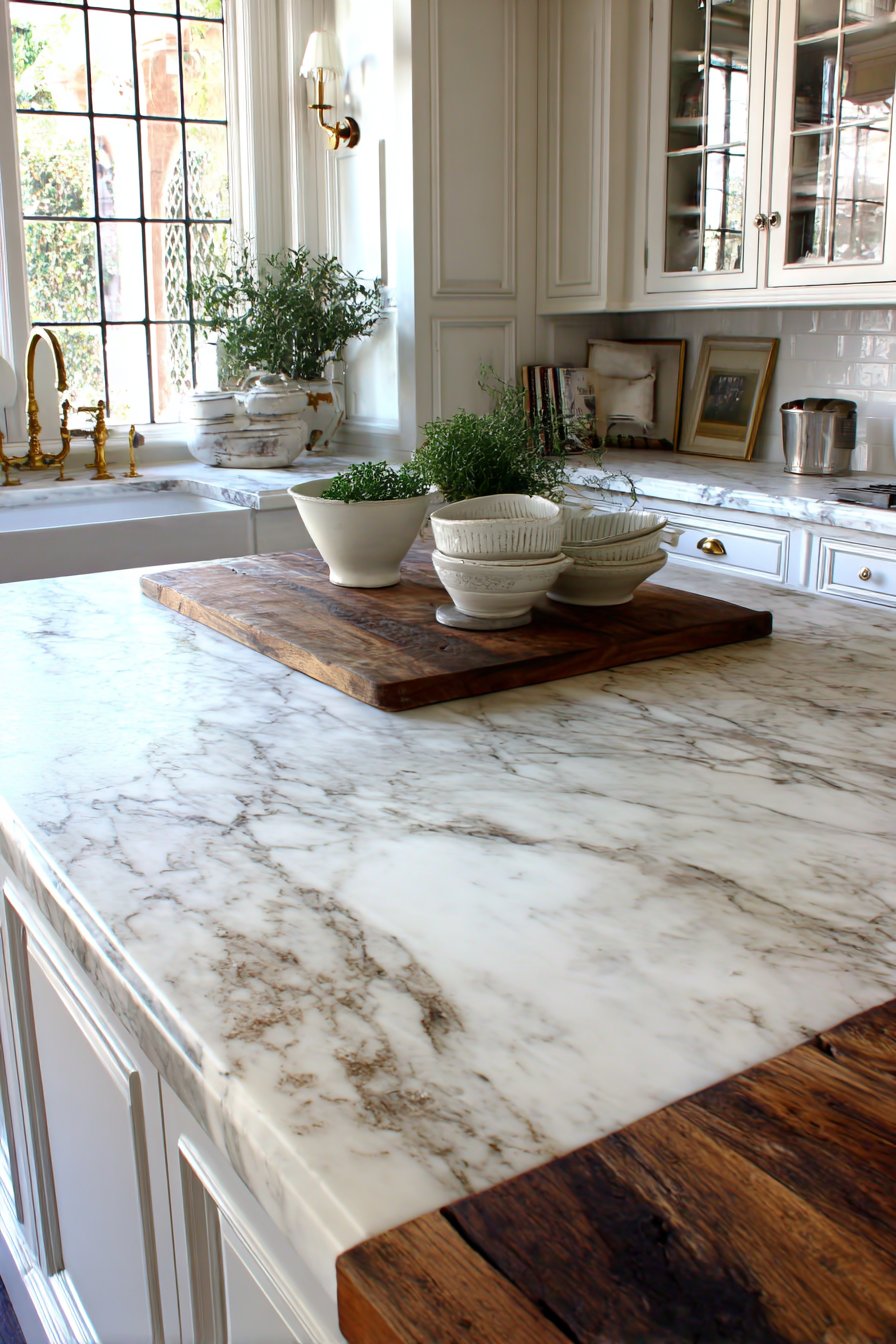
Carrara marble countertops introduce elegant simplicity characteristic of French design. The subtle gray veining and cool white background create sophisticated work surfaces that develop character through use. The French embrace marble’s tendency to stain and etch, viewing these marks as evidence of a kitchen actively lived in rather than flaws requiring prevention.
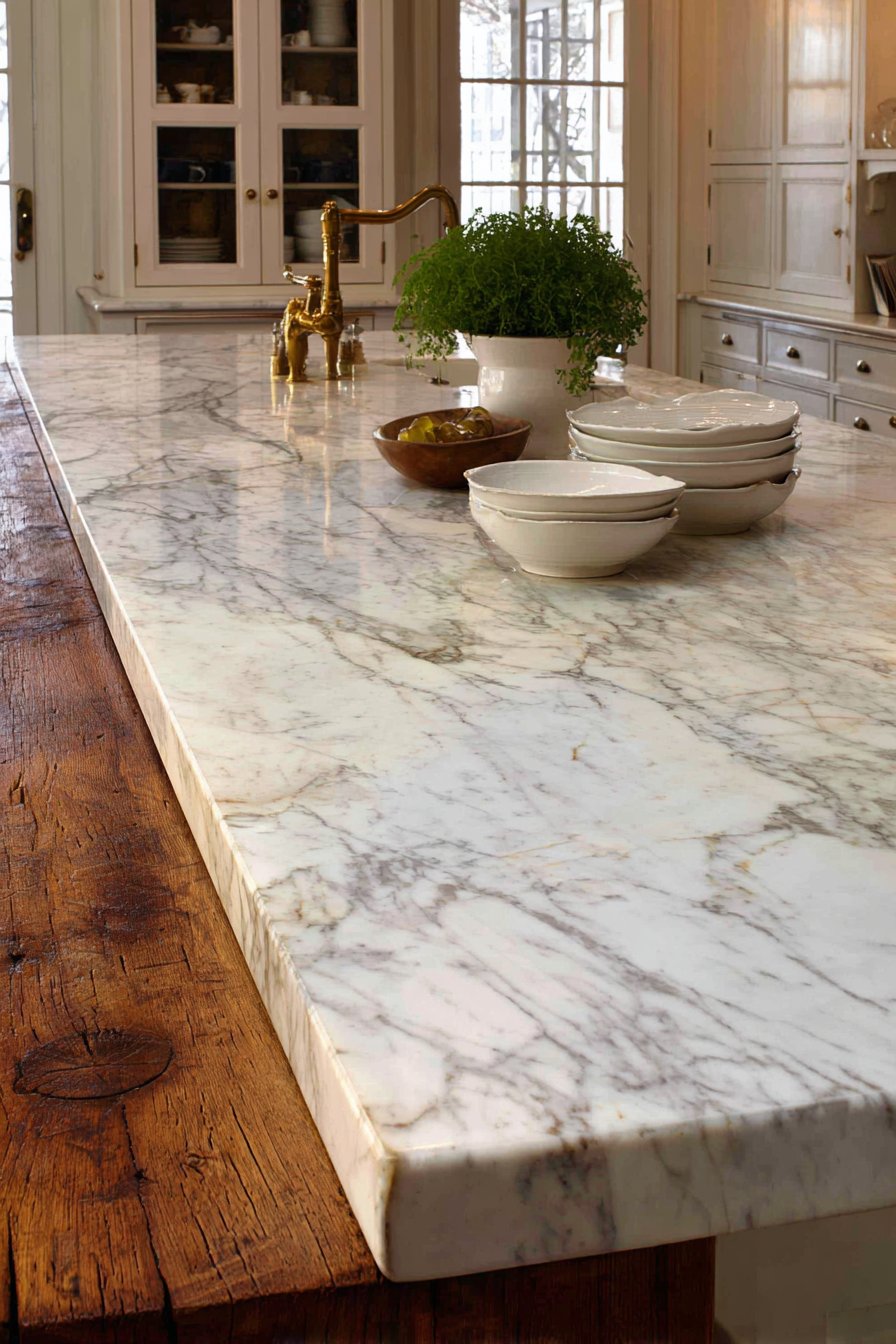
Thick butcher block counters provide warm, organic alternatives that honor French culinary traditions. Substantial wood surfaces show knife marks and develop rich patinas that tell stories of countless meals prepared. Both materials require maintenance but reward with beauty that improves rather than deteriorates over time.
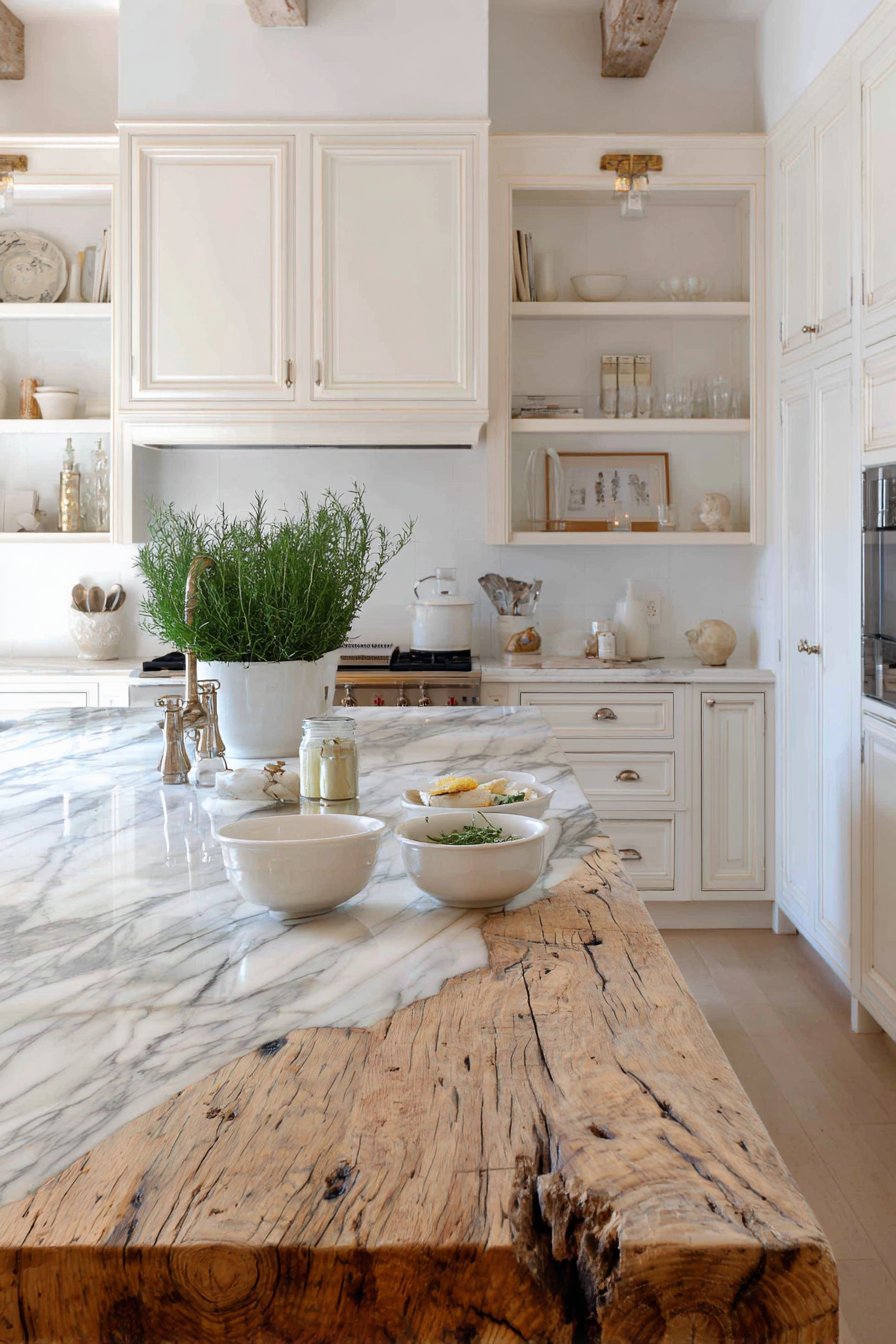
- Select Carrara or Calacatta marble for classic French elegance
- Choose thick butcher block in walnut, oak, or mixed hardwoods
- Embrace the natural aging process of both materials
- Maintain marble with appropriate sealers but accept some etching
- Oil butcher block regularly to develop rich, deep color
- Consider combining both materials in different kitchen zones
12. Woven Baskets and Natural Storage Solutions
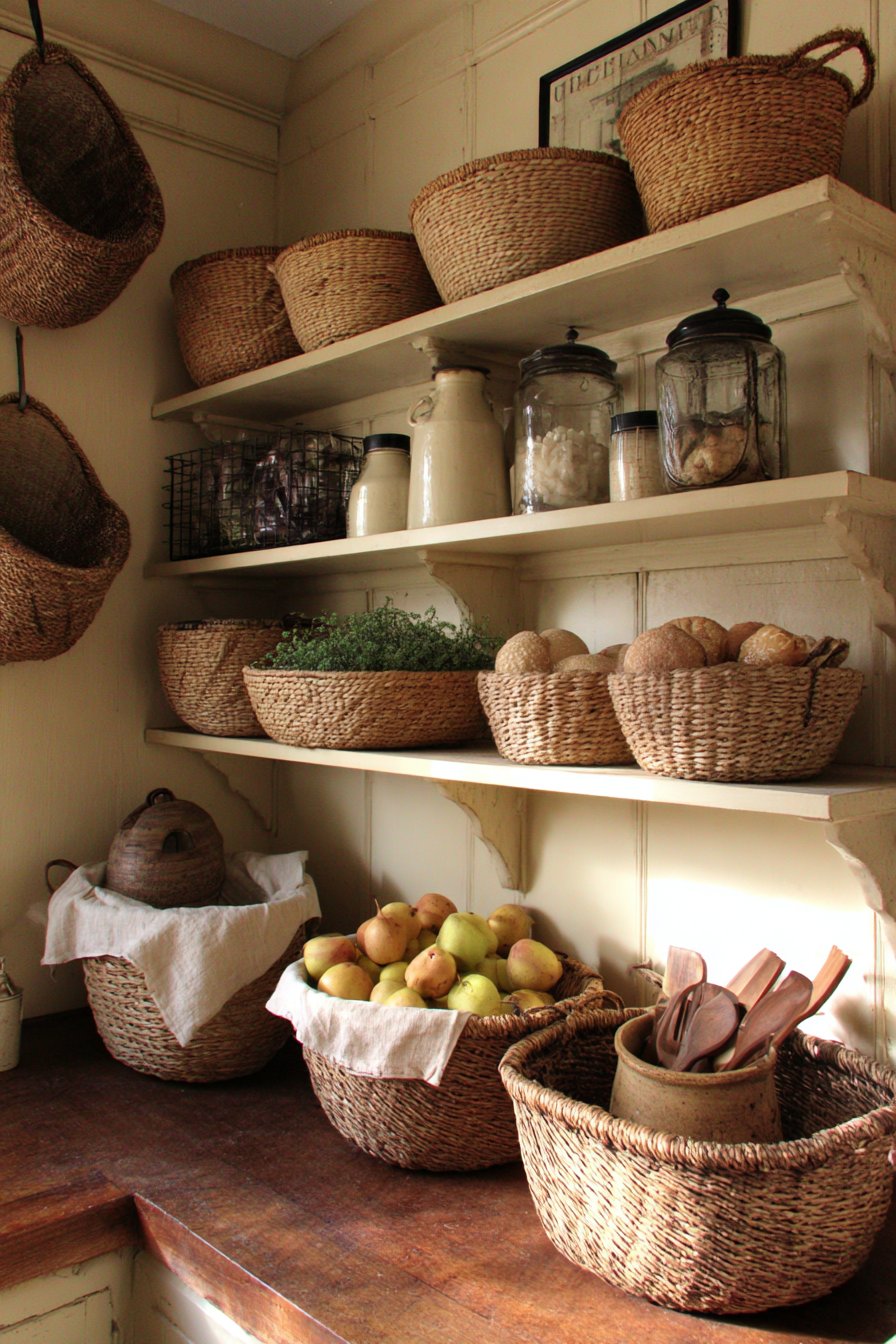
Hand-woven baskets serve countless purposes in French cottage kitchens while adding textural warmth and organic forms. French market baskets, wire egg baskets, and woven bread baskets provide storage that feels decorative rather than utilitarian. These natural materials bring countryside authenticity while organizing everything from produce to linens to utensils.
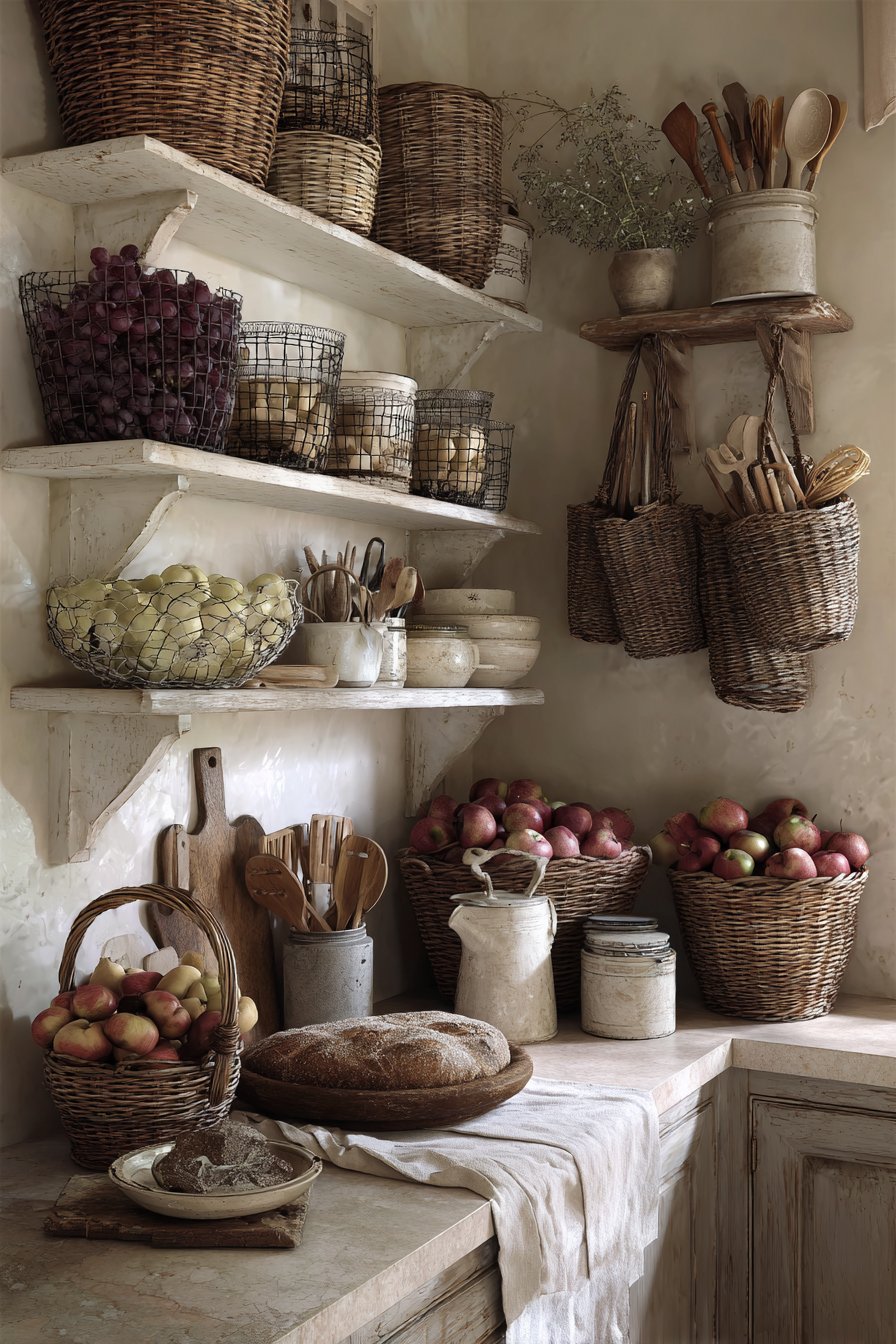
The French approach to storage favors visible, attractive containers over hidden plastic bins. Stoneware crocks hold utensils, vintage tins store tea and coffee, and enamelware canisters organize dry goods. This philosophy ensures frequently used items remain accessible while contributing to the kitchen’s layered, collected appearance rather than creating visual clutter.
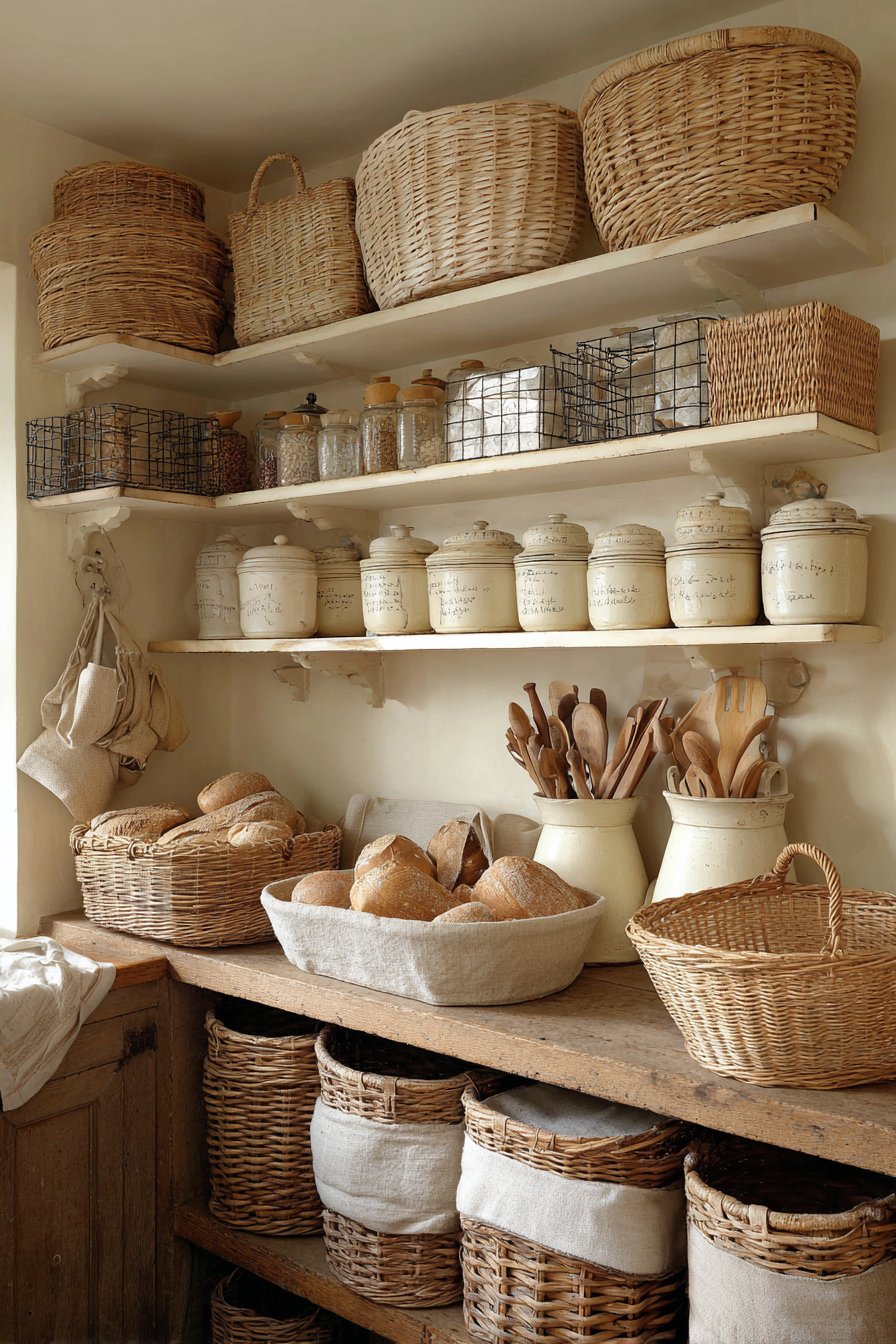
- Display French market baskets hung on walls or tucked on shelves
- Use wire baskets for storing produce, eggs, or root vegetables
- Incorporate woven breadbaskets lined with vintage linens
- Store utensils in stoneware crocks or vintage enamel pitchers
- Choose natural fiber baskets in varied sizes for flexible storage
- Arrange baskets to show their beautiful construction and materials
Conclusion
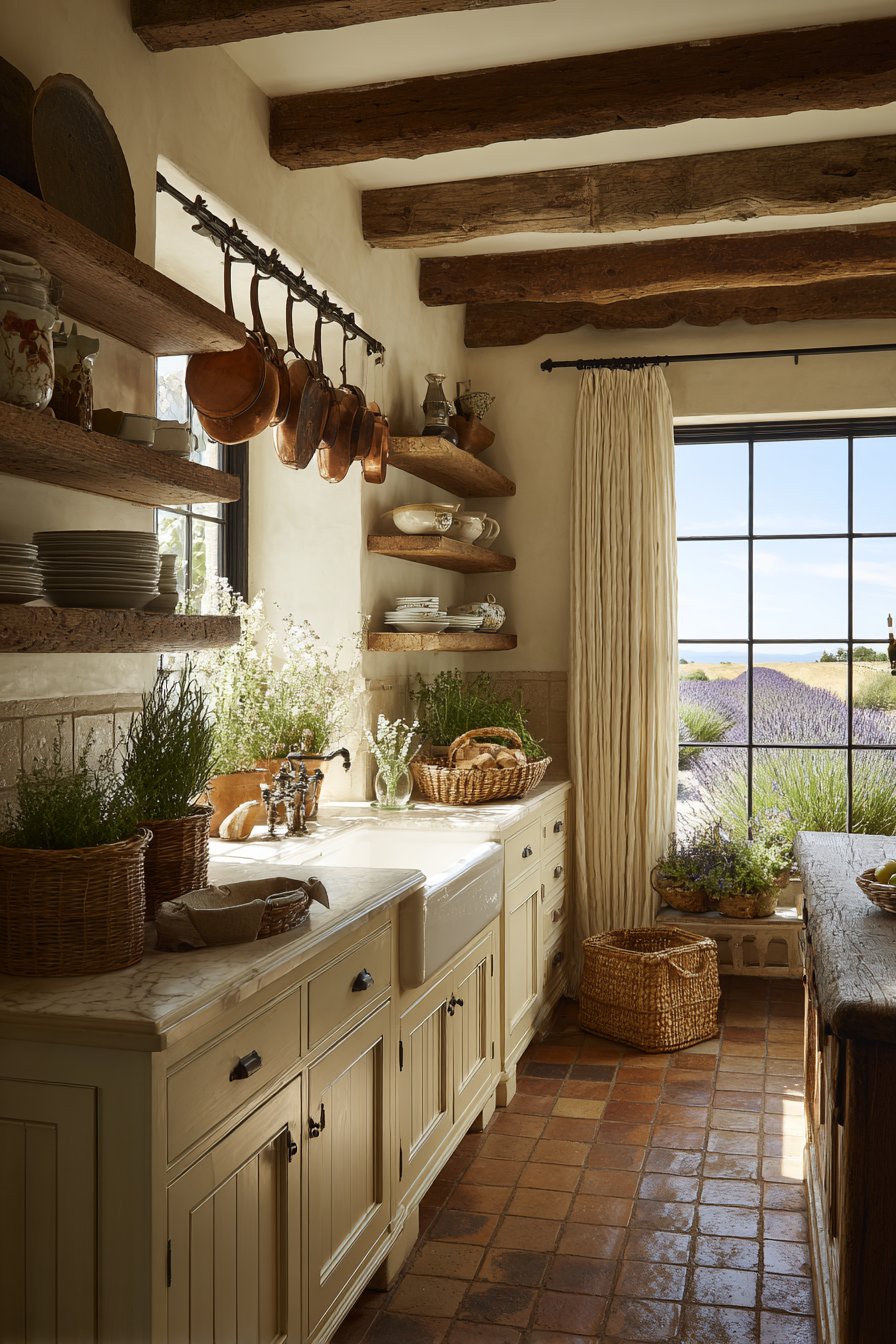
Creating an authentic French cottage kitchen requires understanding that charm emerges from layers accumulated thoughtfully over time rather than instant transformations. The twelve essential elements explored here work together to produce spaces that feel warm, lived-in, and effortlessly elegant. From architectural foundations like exposed beams and farmhouse sinks to finishing touches like fresh herbs and vintage linens, each component contributes to the romantic, timeless aesthetic that makes French cottage style enduringly appealing.
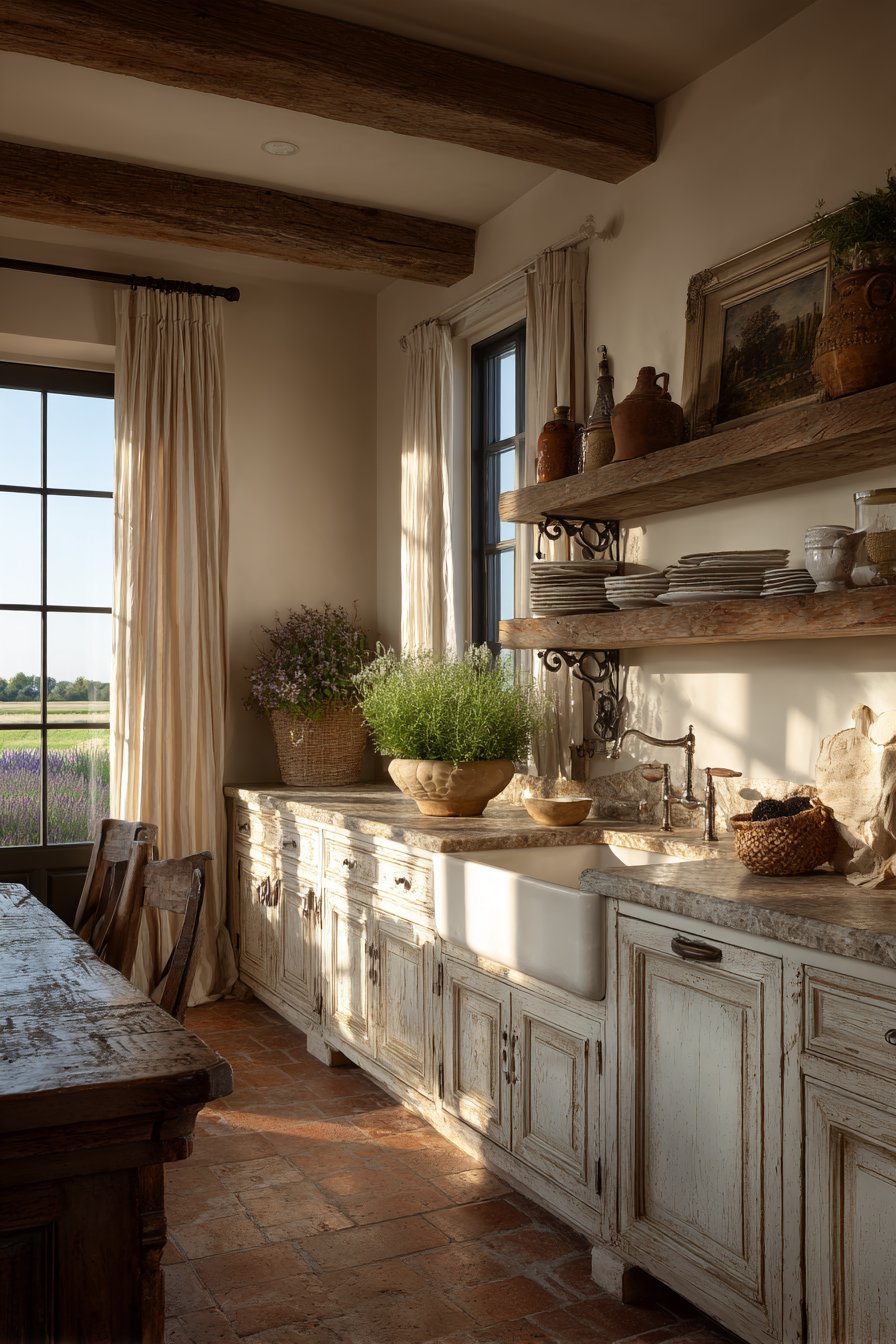
Begin your transformation by focusing on permanent elements like flooring, cabinetry, colors, and major fixtures before layering in collected treasures. Source items gradually from antique markets, estate sales, and specialty suppliers rather than purchasing complete coordinated sets. Remember that authentic French cottage style embraces imperfection—the chip in an ironstone platter, the patina on copper cookware, and the wear on wooden surfaces all contribute to genuine character that cannot be manufactured.
The true magic of French cottage kitchens lies in their ability to make daily cooking feel like a celebration of life’s simple pleasures. These spaces honor tradition while serving modern needs, creating environments where beauty and function exist in perfect harmony. By incorporating these essential elements with patience and personal taste, you’ll craft a kitchen that captures the soul of French countryside living while providing a welcoming, functional heart for your own home.
"As an Amazon Associate, I earn from qualifying purchases."
