

Designing a baby boy’s bedroom is both an exciting and challenging journey for parents. The key lies in creating a space that evolves alongside your child, adapting seamlessly from infant needs to toddler adventures and beyond. A well-planned nursery doesn’t just serve immediate requirements; it establishes a foundation for years of comfort, creativity, and personal growth.
Smart design choices today can save you countless hours and expenses tomorrow. Rather than committing to themes that quickly feel outdated, focus on flexible design elements that transition effortlessly through different life stages. This approach combines practicality with aesthetic appeal, ensuring your investment stands the test of time while nurturing your child’s development.
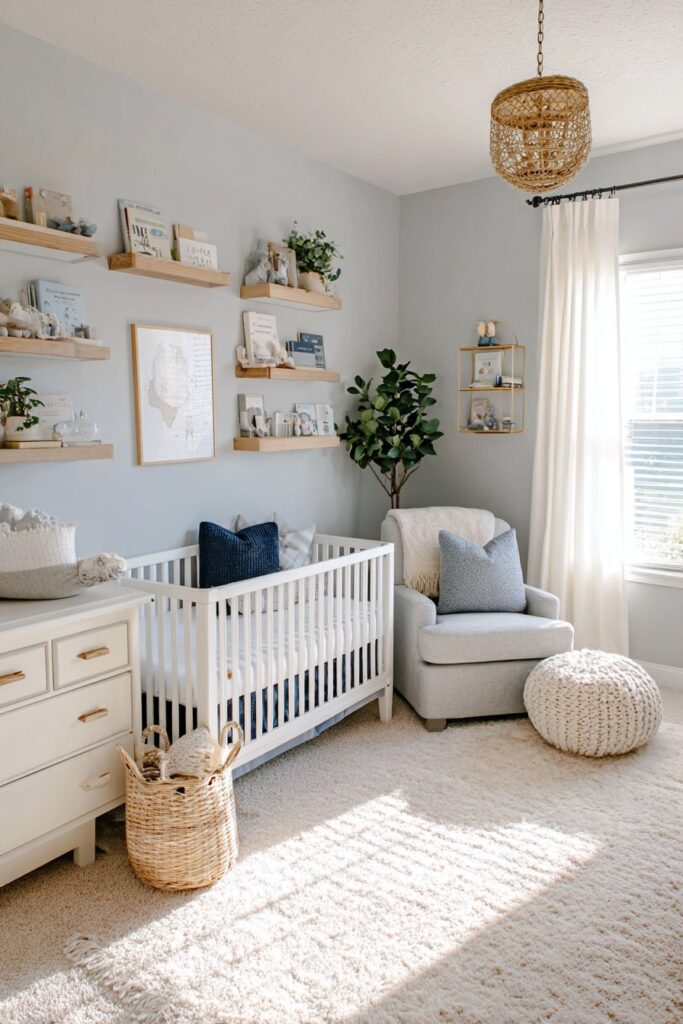
This guide explores strategic design principles that balance adorable baby-friendly features with long-term versatility. From color palettes to furniture selections, you’ll discover actionable ideas that create a functional, inspiring space your son will love from infancy through his early years.
1. Choose a Neutral Base Palette With Pops of Blue
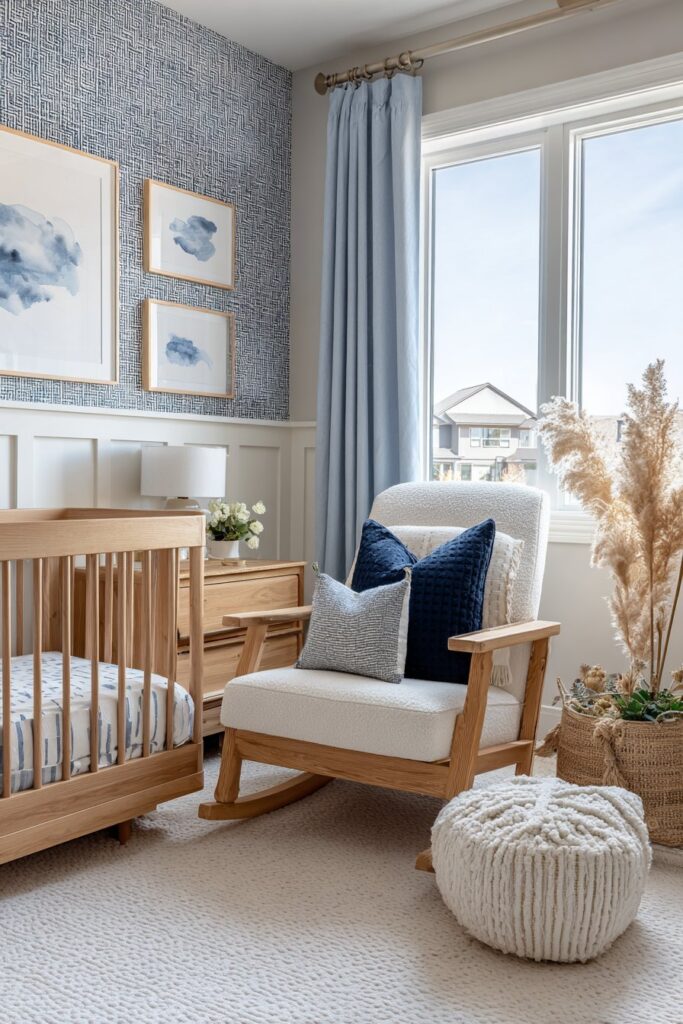
A neutral foundation provides the perfect canvas for a growth-friendly bedroom design. Starting with whites, grays, or soft beiges on walls allows you to modify the room’s personality without major renovations. These timeless shades create a calming atmosphere while offering flexibility for future style changes.
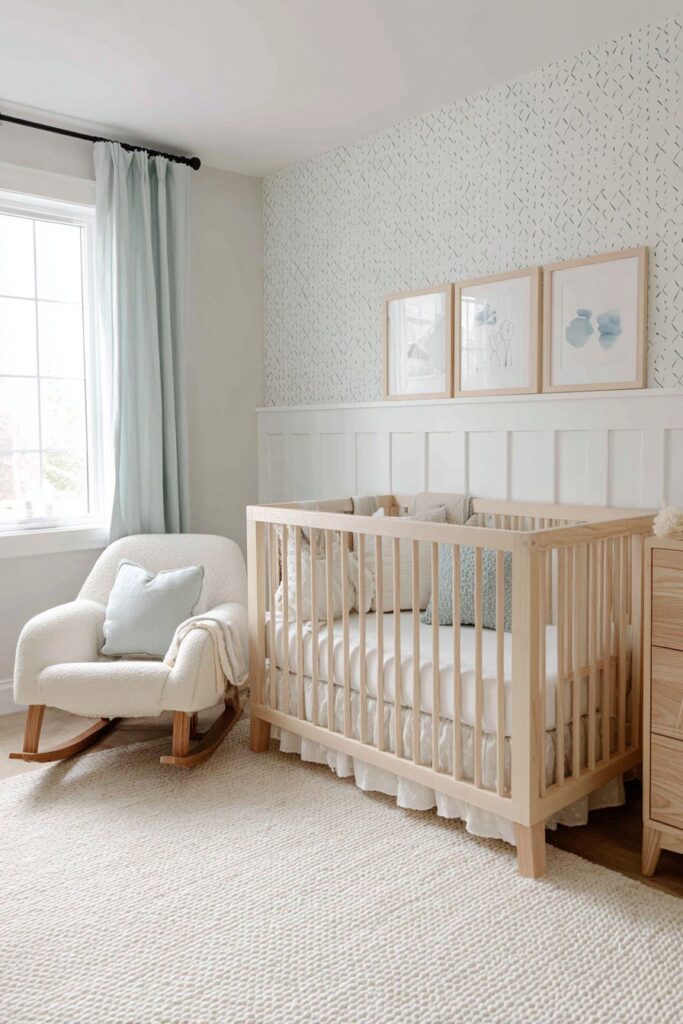
Incorporate blue through easily changeable accent pieces rather than permanent fixtures. Think throw pillows, artwork, rugs, and curtains that introduce personality without long-term commitment. This strategy lets you adjust color intensity as your child grows and develops personal preferences.
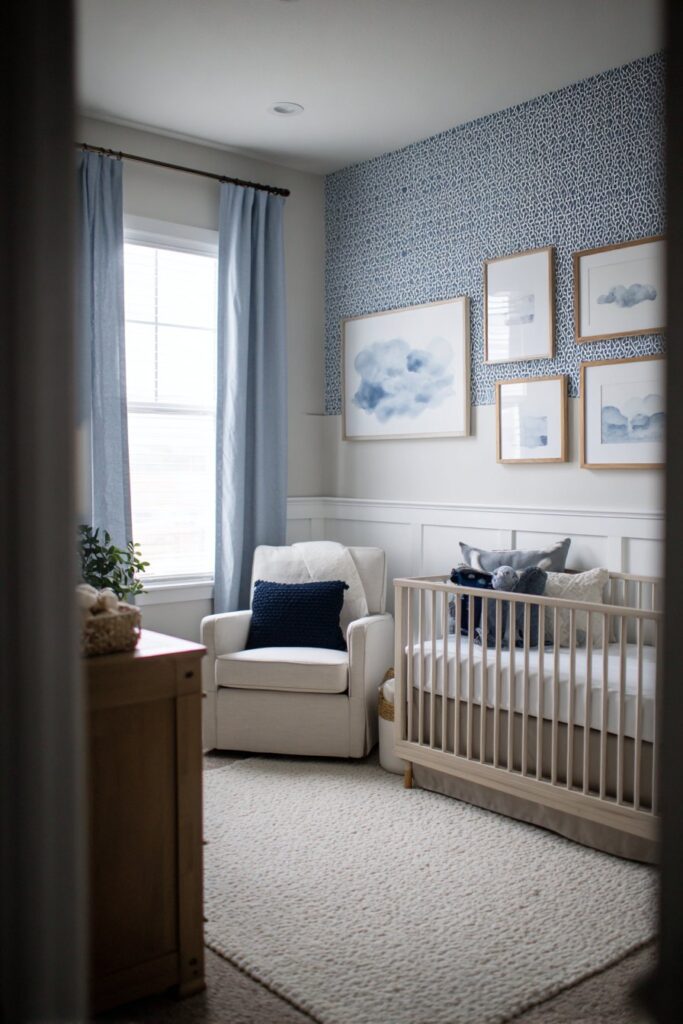
- Select warm gray or greige tones for walls that complement multiple color schemes
- Use removable wallpaper on one accent wall for visual interest without permanence
- Choose white or natural wood furniture that coordinates with any color palette
- Add navy, sky blue, or teal through bedding and decorative accessories
- Consider sage green or warm taupe as sophisticated neutral alternatives
- Invest in quality neutral curtains that filter light effectively
2. Invest in Convertible Furniture Pieces
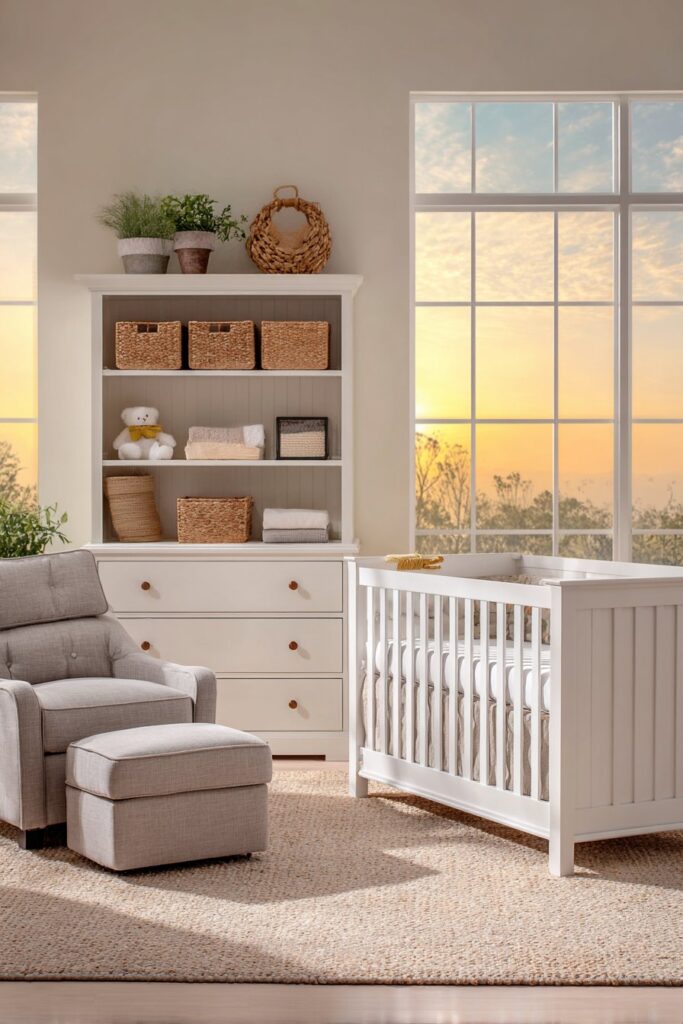
Convertible cribs represent one of the smartest investments for a baby’s room. These multi-functional pieces transform from cribs to toddler beds and eventually full-size beds, eliminating the need for multiple furniture purchases. Look for solid construction and timeless designs that won’t feel dated.
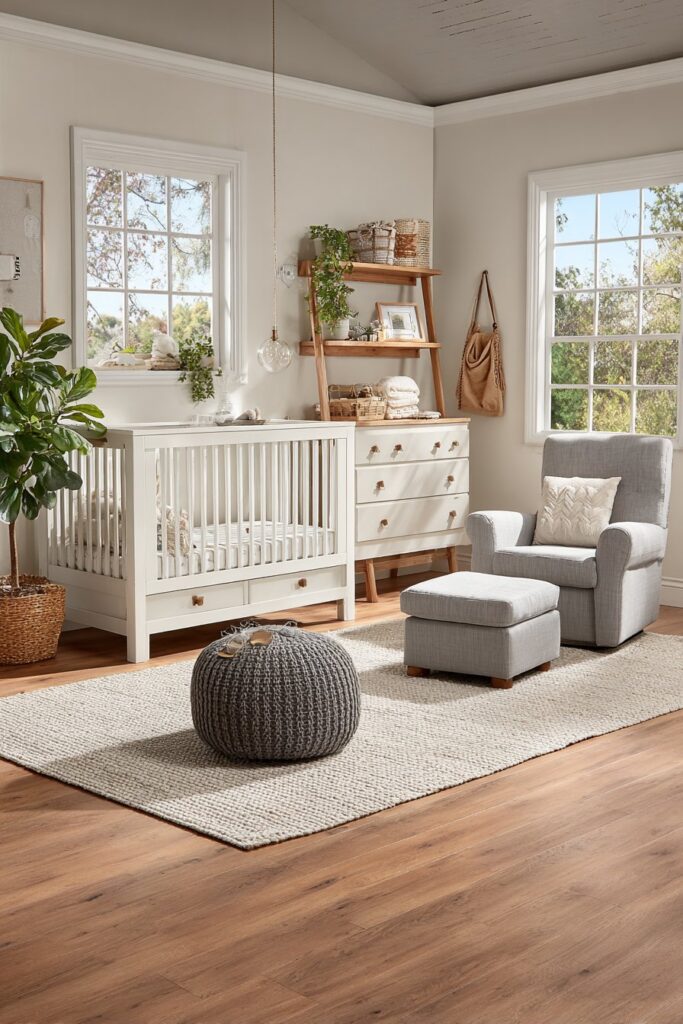
Beyond the crib, consider other adaptable furniture solutions that serve changing needs. A changing table that converts to a dresser continues providing storage long after diaper days end. Select pieces with adjustable components that accommodate growth spurts and evolving room functions.
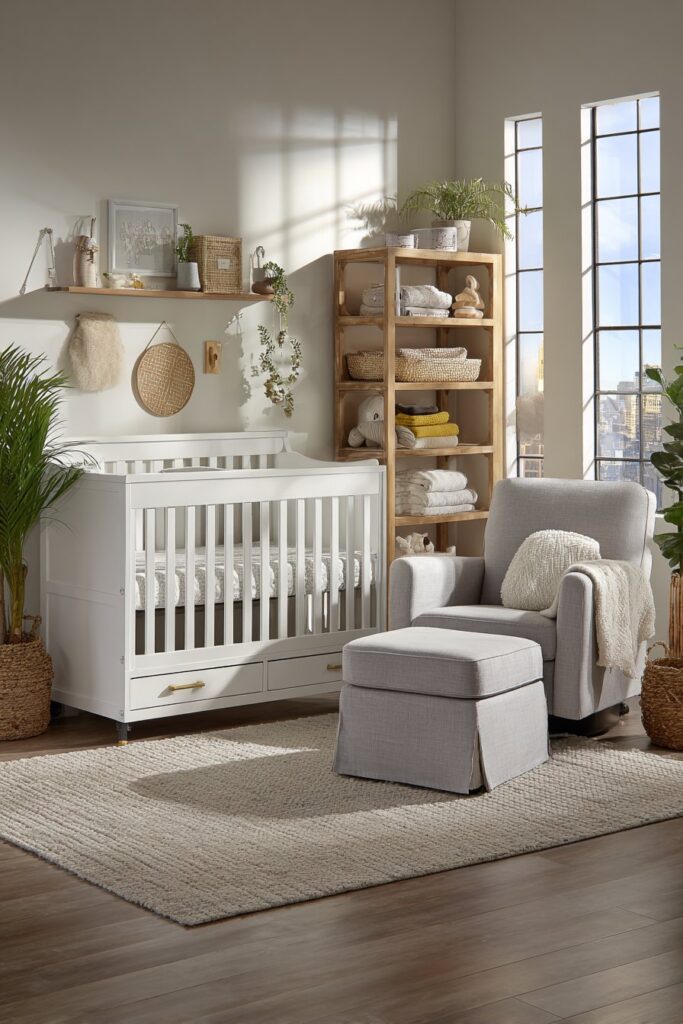
- Choose a 3-in-1 or 4-in-1 convertible crib with sturdy construction
- Select dressers with removable changing toppers for extended use
- Opt for adjustable shelving systems that grow with storage needs
- Consider a quality rocking chair that transitions to reading corner seating
- Look for toy storage that later holds books or sports equipment
- Avoid character-themed furniture that quickly loses appeal
3. Create Flexible Storage Solutions
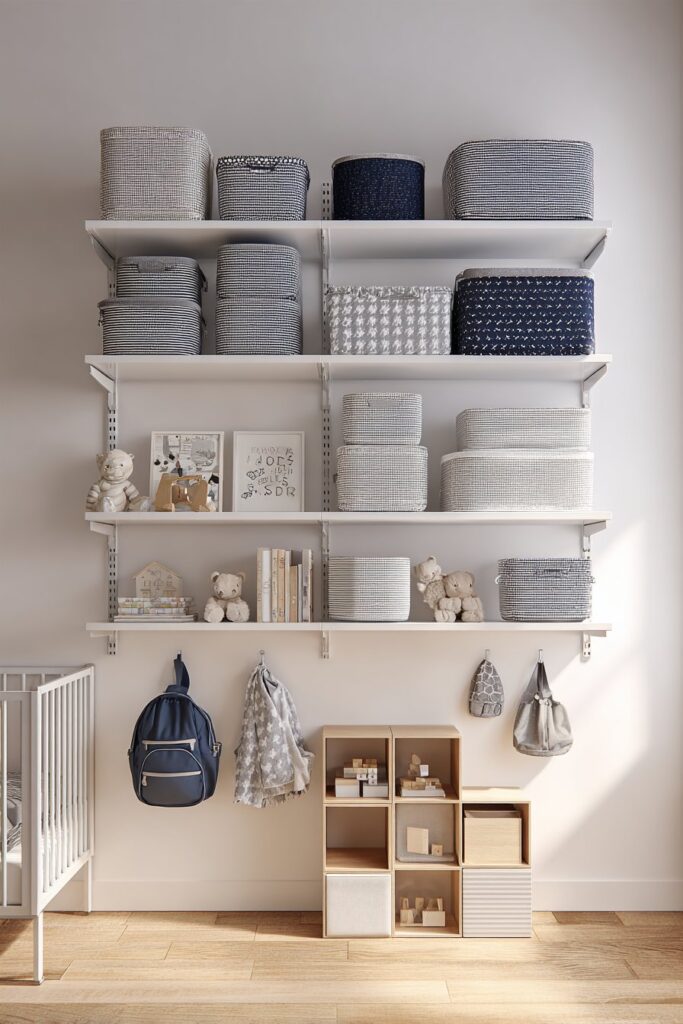
Organized storage forms the backbone of any functional nursery. Design a system that handles everything from tiny onesies to bulky toys while adapting to future needs. Open shelving, baskets, and modular units offer accessibility and visual appeal throughout childhood stages.
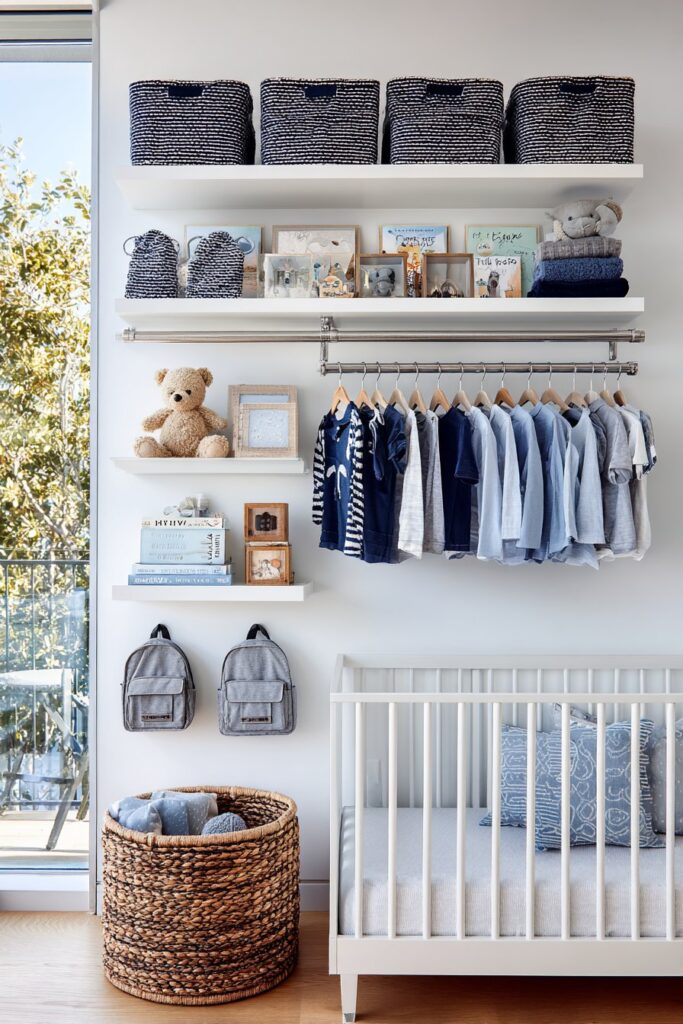
Think vertically to maximize floor space for play areas. Wall-mounted shelves, hanging organizers, and tall storage units keep essentials accessible while preserving valuable square footage. This approach maintains a tidy appearance and teaches organizational skills as your child grows.
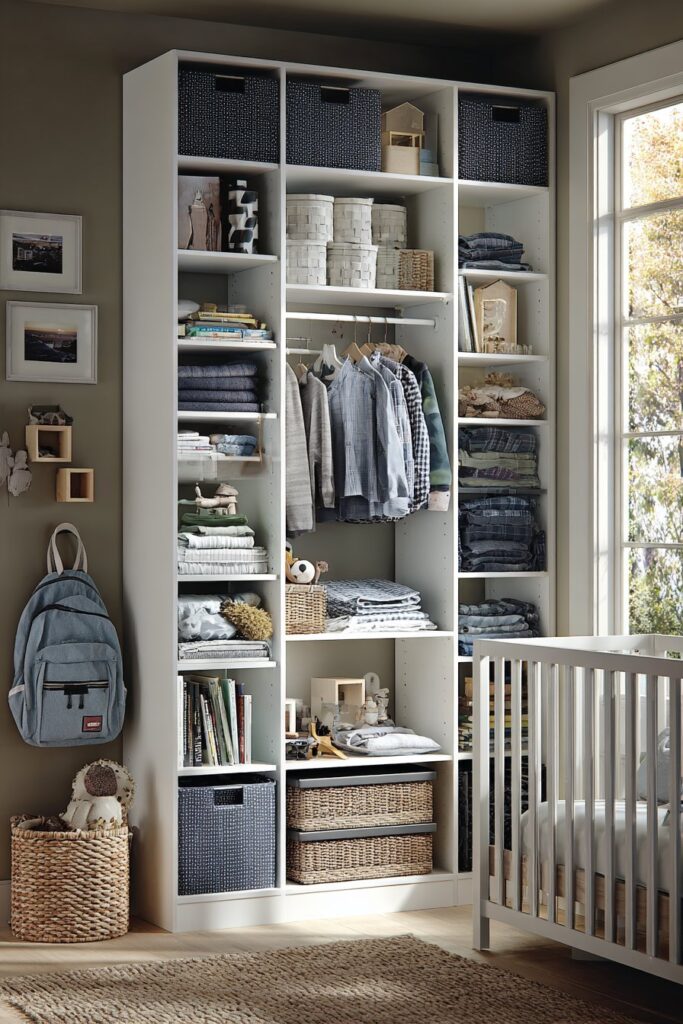
- Install adjustable closet systems that accommodate changing wardrobe sizes
- Use labeled fabric bins for toys that later store craft supplies
- Mount floating shelves at varying heights for books and decorations
- Choose a toy chest with safety hinges that becomes sports equipment storage
- Incorporate under-bed storage drawers for seasonal items and extra linens
- Select stackable cubes that reconfigure as needs change
4. Design Smart Lighting Layers
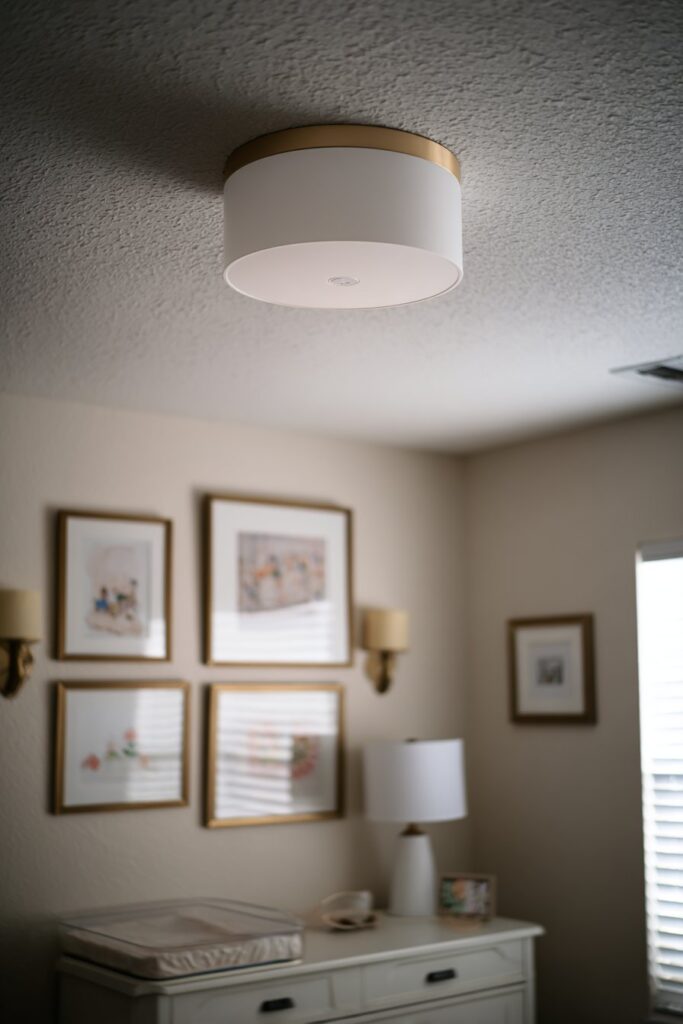
Proper illumination serves multiple functional purposes in a nursery. Combine overhead lighting with task lights for nighttime feedings and diaper changes. Dimmers allow you to adjust brightness levels, creating the perfect ambiance for different activities and times of day.
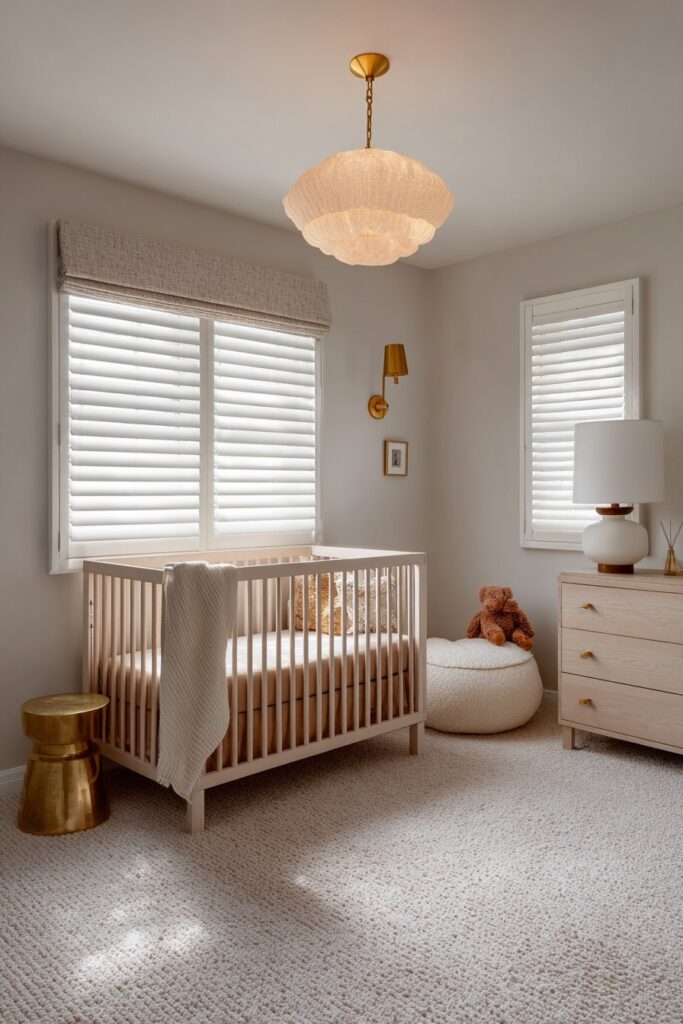
Add a gentle night light that provides comfort during dark hours without disrupting sleep patterns. As your child ages, this same lighting foundation supports homework sessions, reading time, and creative projects. Quality fixtures last years and adapt to changing requirements.
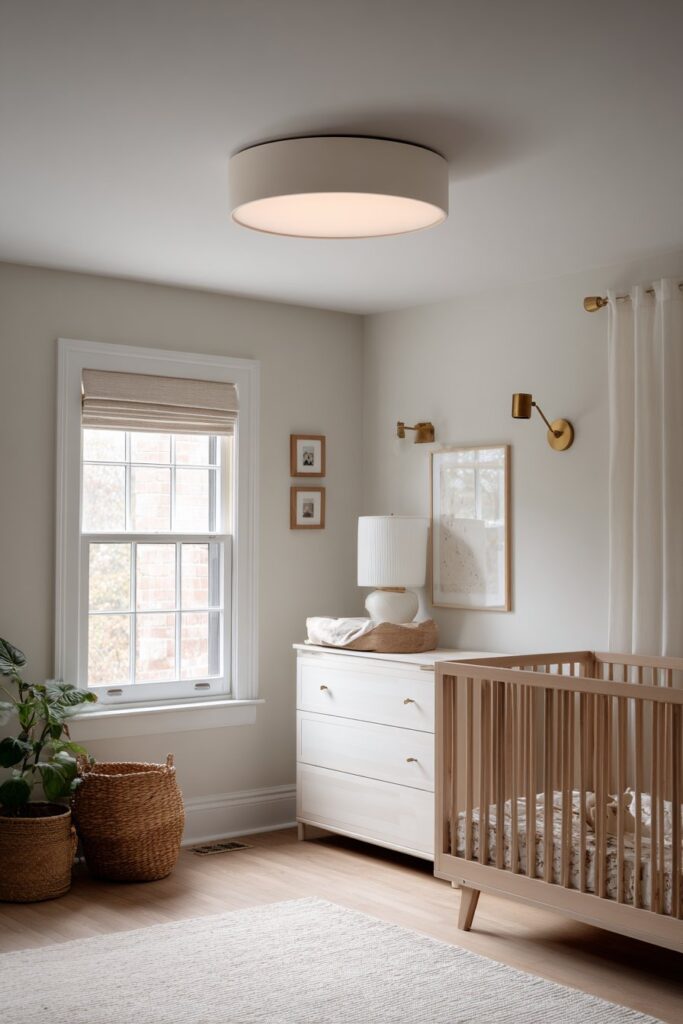
- Install a dimmer switch on overhead fixtures for versatility
- Choose a stylish table lamp for the changing area
- Add plug-in night lights with soft, warm glows
- Consider smart bulbs that adjust color temperature throughout the day
- Mount wall sconces to save surface space on furniture
- Select fixtures with timeless designs that complement various decor styles
5. Incorporate Removable Wall Decor
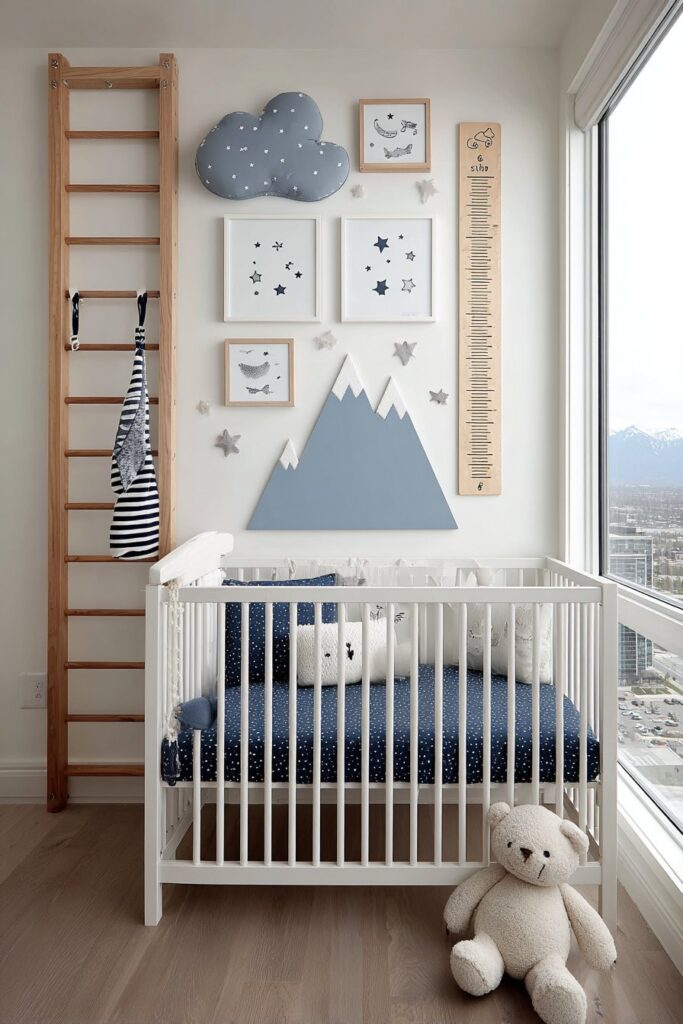
Wall decorations add personality without permanent commitment or damage. Removable decals, framed prints, and fabric wall hangings introduce visual interest while remaining easily changeable. This flexibility allows the room to evolve from nursery themes to big-kid interests.
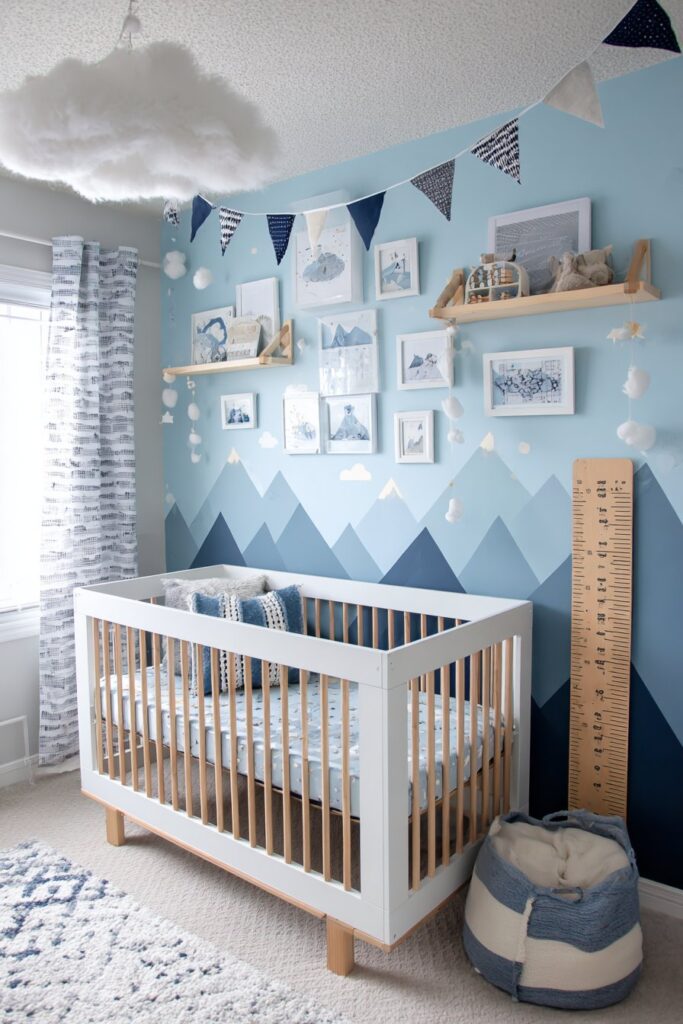
Create a gallery wall using matching frames that can hold different artwork over time. Start with baby-appropriate images and simply swap them out as your son’s interests develop. This approach maintains design cohesion while celebrating growth and changing passions.
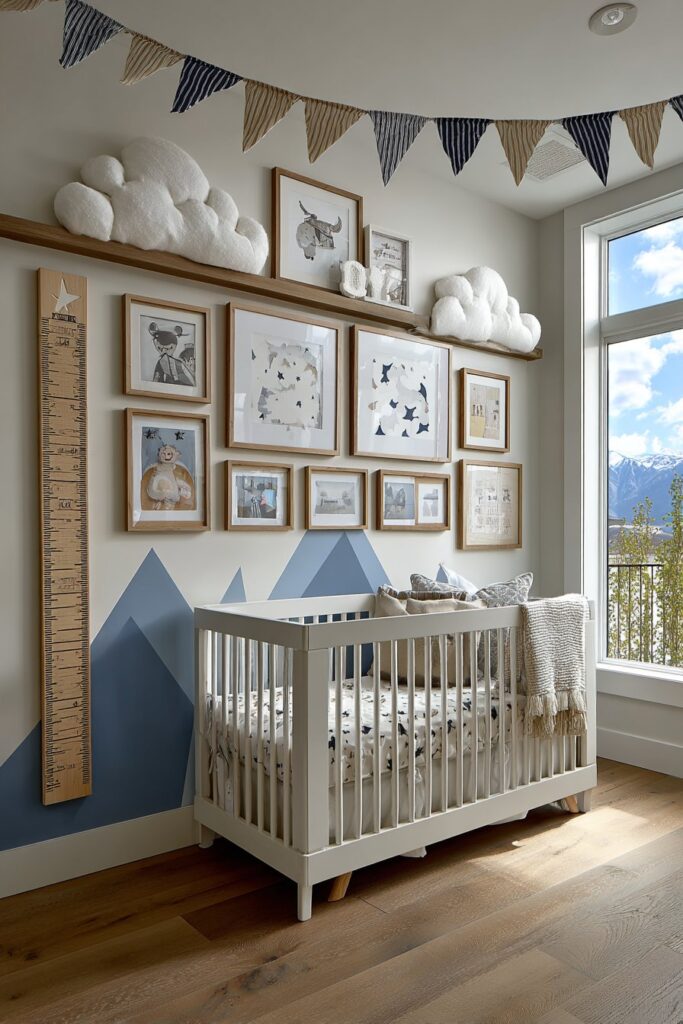
- Use peel-and-stick wall decals featuring clouds, stars, or geometric shapes
- Hang lightweight canvas prints with command strips for damage-free installation
- Create a photo ledge that displays changing artwork and pictures
- Choose fabric pennant banners that add texture and color
- Mount a growth chart that becomes a cherished keepsake
- Avoid painted murals that require repainting during updates
6. Plan for Activity Zones
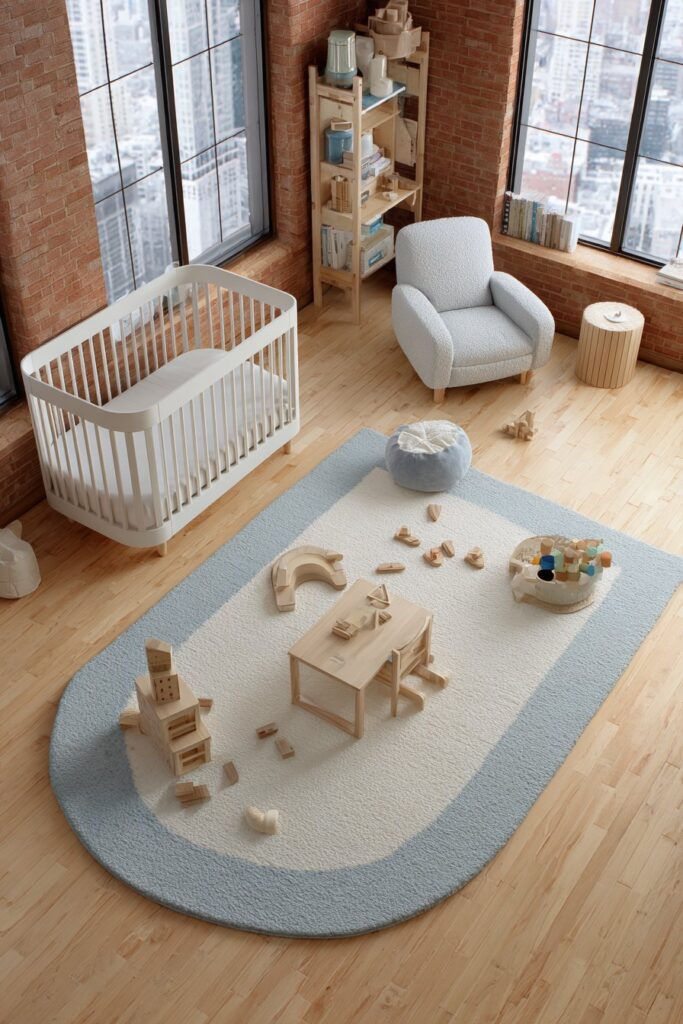
Designating specific areas for different activities promotes healthy development and organization. Even in smaller rooms, create distinct zones for sleeping, playing, and eventually reading or studying. This spatial planning teaches boundaries and helps establish routines.
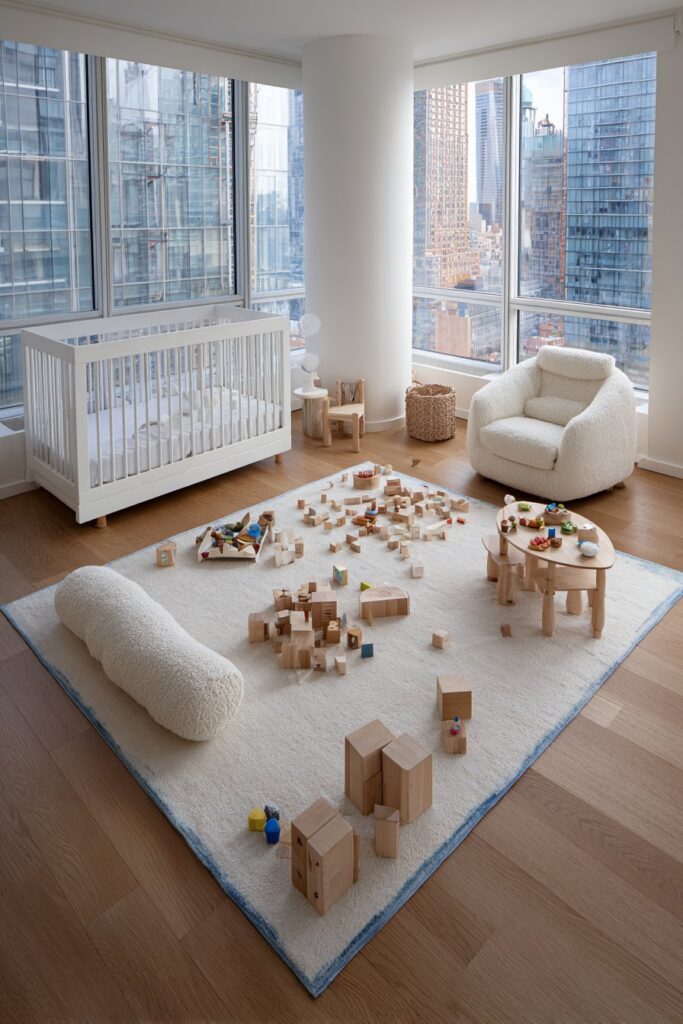
As mobility increases, a safe play area becomes essential for exploration and learning. Choose soft rugs that cushion falls and define the play zone visually. This same space later accommodates building blocks, train sets, and imaginative play scenarios.
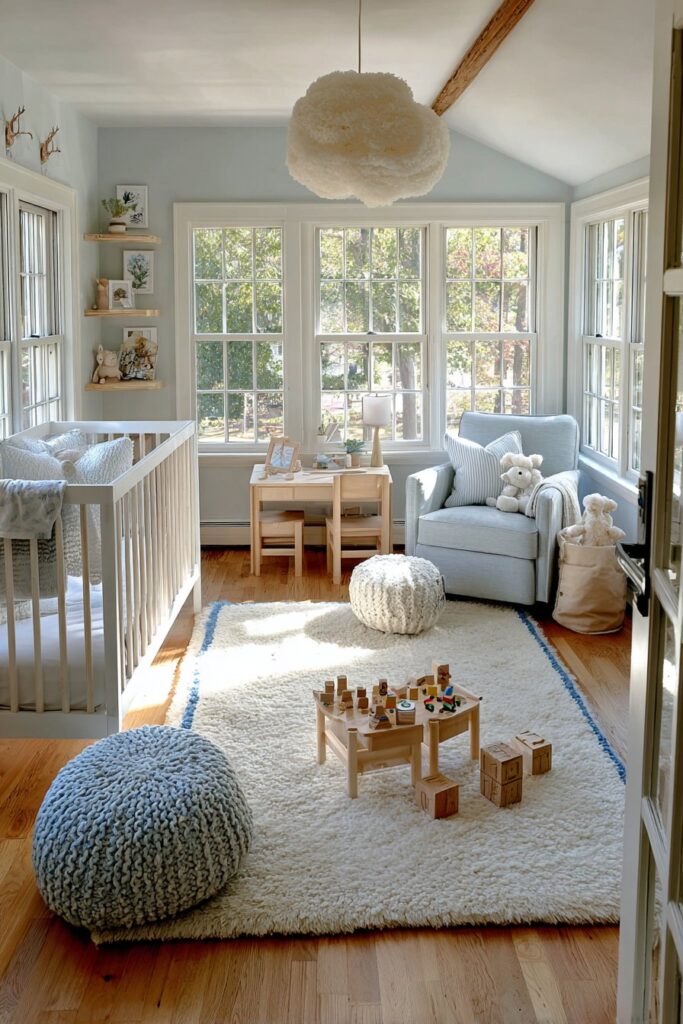
- Position the crib away from windows for temperature control and safety
- Define a cozy corner with a comfortable chair for feeding and bonding
- Place a soft area rug to designate the primary play zone
- Ensure adequate clearance around furniture for crawling and walking
- Keep frequently used items within easy reach of care areas
- Plan for a small table and chairs that support future creative activities
7. Select Durable, Easy-Care Textiles
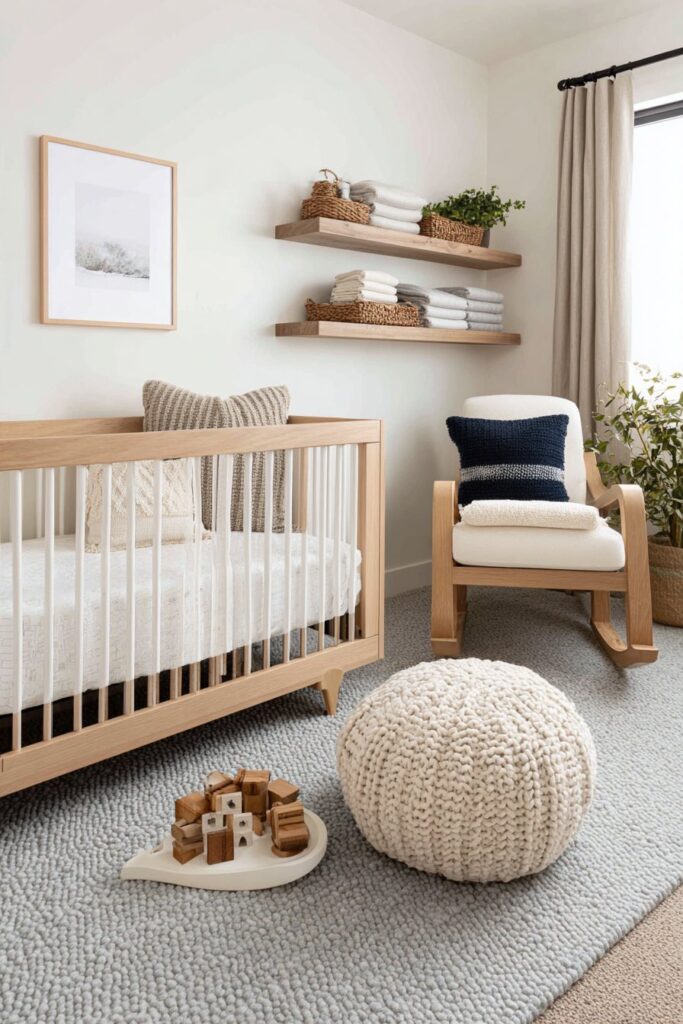
Washable fabrics prove invaluable in a baby’s room where spills and accidents happen frequently. Choose materials that withstand repeated laundering without losing color or shape. Performance fabrics offer style without sacrificing practicality, maintaining their appearance through years of use.
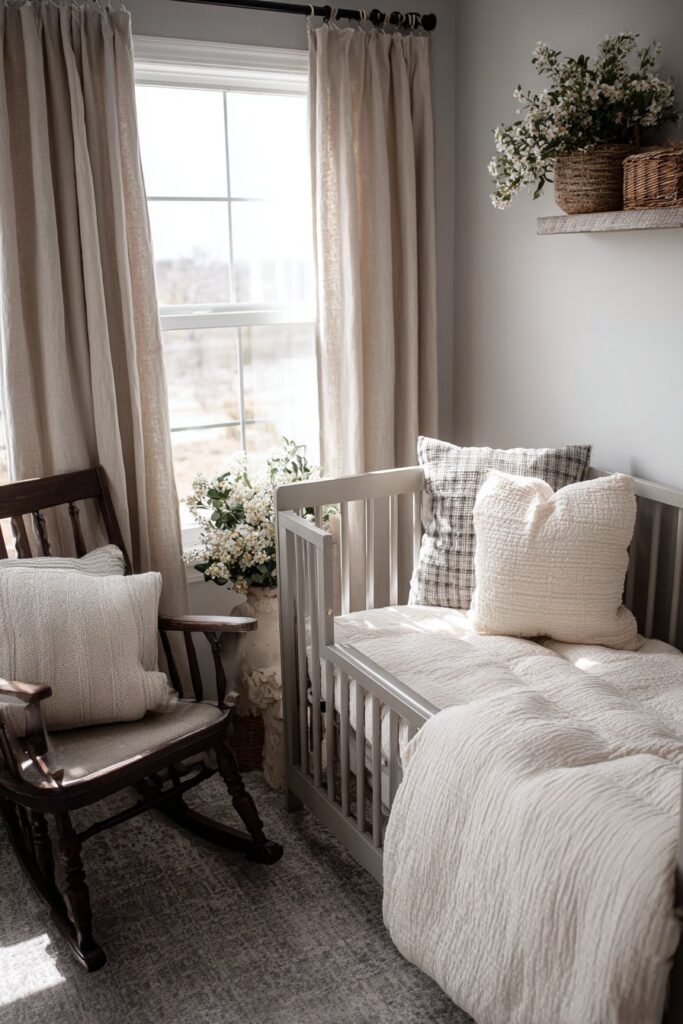
Avoid heavy, difficult-to-clean window treatments in favor of simple, machine-washable options. Cellular shades or light-filtering curtains provide privacy and light control while remaining low-maintenance. Layer textures through pillows and throws that easily remove for cleaning.
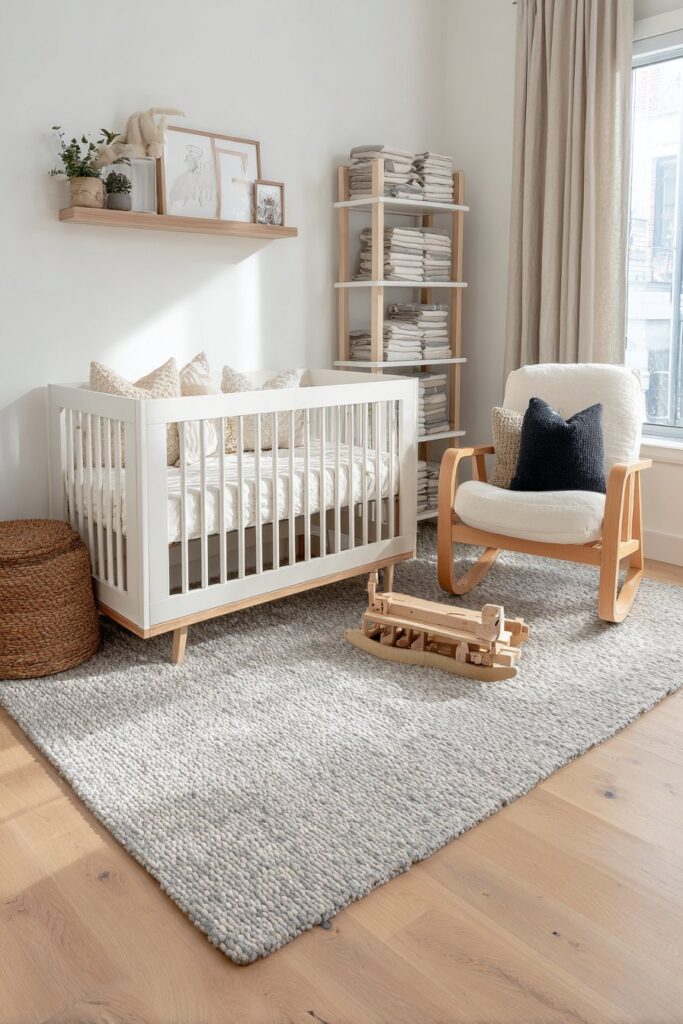
- Select cotton or cotton-blend bedding that softens with each wash
- Choose stain-resistant rugs designed for high-traffic areas
- Opt for machine-washable curtain panels in neutral colors
- Use mattress protectors and pillow covers for hygiene
- Avoid delicate fabrics requiring dry cleaning or special care
- Stock multiple sheet sets for quick changes during accidents
Conclusion
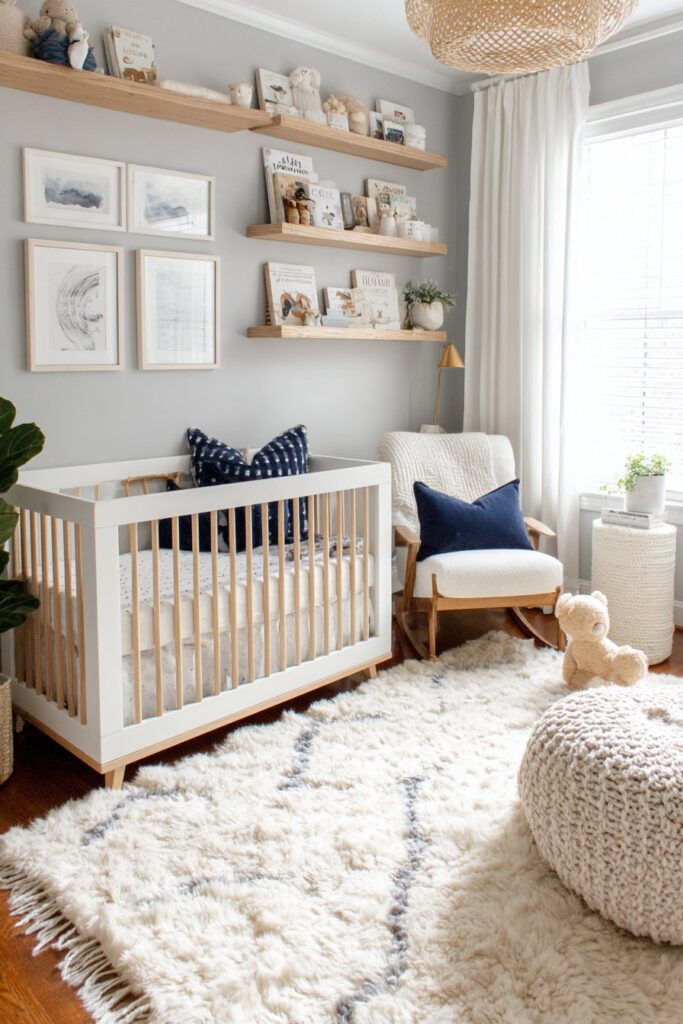
Designing a baby boy’s bedroom that grows alongside him requires thoughtful planning and strategic choices. By focusing on neutral foundations, convertible furniture, and flexible decor, you create a space that adapts rather than requires constant overhauls. These principles balance immediate nursery needs with long-term functionality.
Remember that the best children’s rooms evolve gradually, reflecting changing interests and developmental stages. The investment in quality, timeless pieces pays dividends through years of use. Start with this solid foundation, and you’ll find that simple updates—new bedding, different artwork, adjusted storage—keep the space feeling fresh and appropriate as your son grows into his unique personality and interests.
"As an Amazon Associate, I earn from qualifying purchases."
