
Midcentury modern design represents one of the most enduring and beloved aesthetic movements in interior design history. Born in the post-war era of the 1940s through 1960s, this style emphasized clean lines, organic forms, and functional beauty that continue to captivate homeowners today. The kitchen, as the heart of midcentury homes, showcased innovative materials and forward-thinking design principles that remain remarkably relevant.
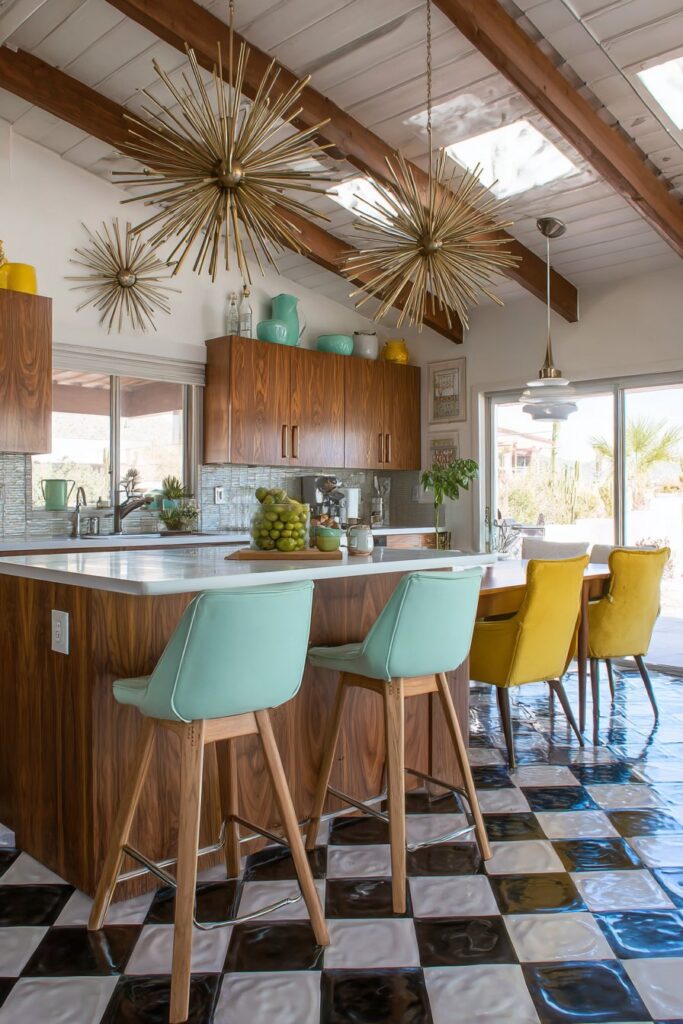
Achieving authentic midcentury style requires understanding the core philosophy behind this movement. Designers like Charles and Ray Eames, George Nelson, and Arne Jacobsen believed that beautiful design should be accessible and practical. They celebrated new manufacturing techniques and materials while maintaining warmth through natural wood tones and thoughtful spatial planning.
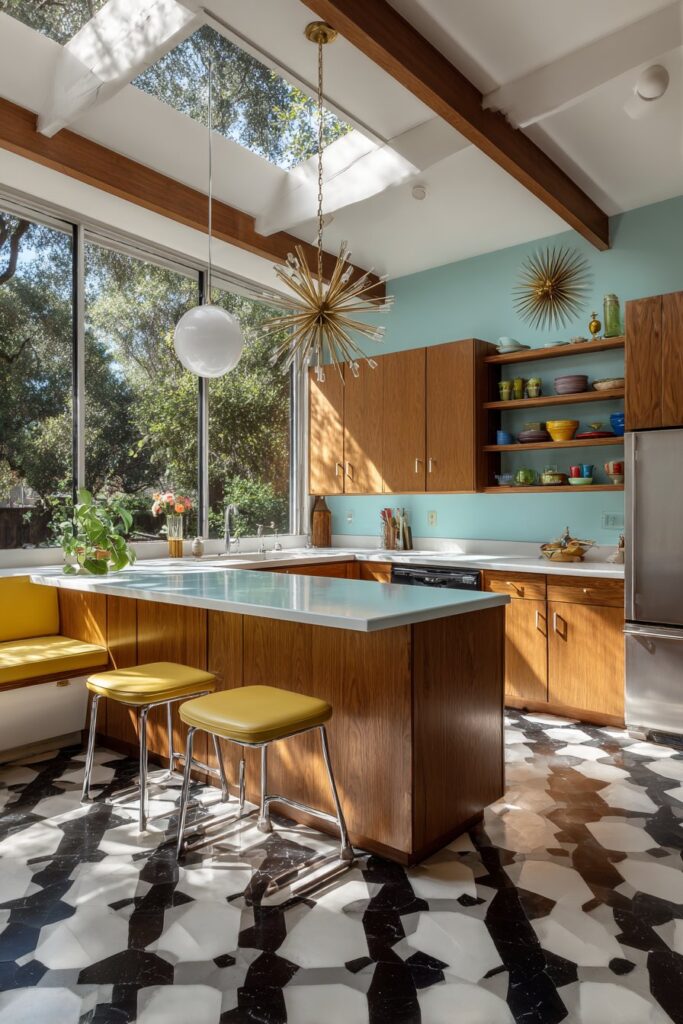
This comprehensive guide explores eleven essential elements that define genuine midcentury kitchen design. Whether you’re renovating a period home or introducing retro charm into a contemporary space, these carefully curated features will help you capture the timeless sophistication of this iconic era. From cabinetry choices to lighting fixtures, each element plays a crucial role in creating a cohesive, authentic midcentury aesthetic that balances vintage appeal with modern functionality.
1. Flat-Front Slab Cabinets in Warm Wood Tones
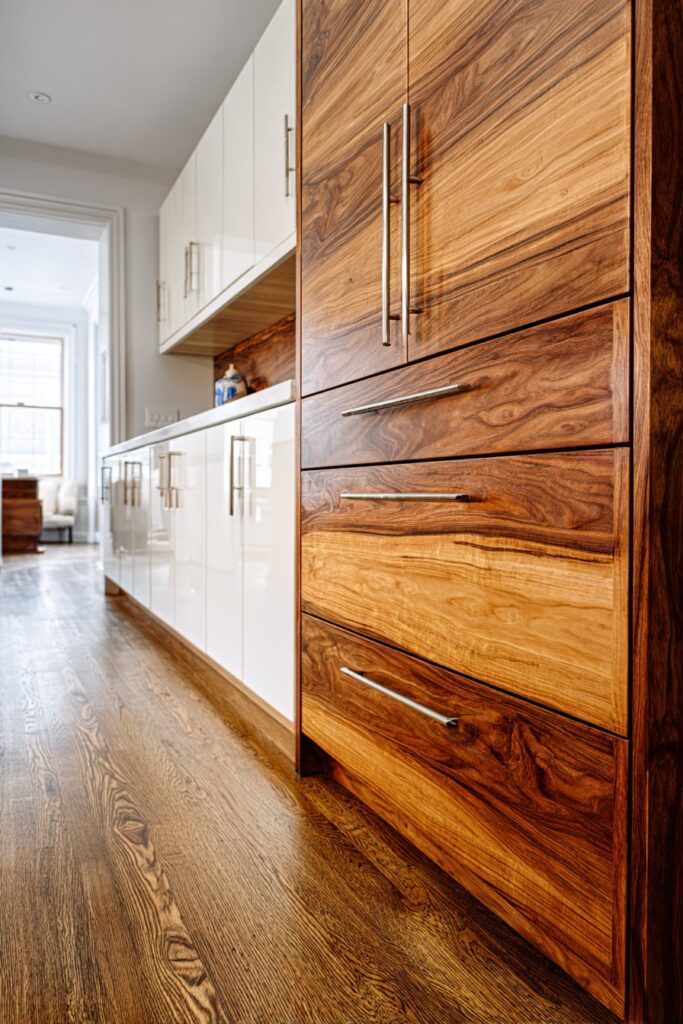
The hallmark of midcentury kitchen design is simple slab-door cabinetry without ornate details or raised panels. These flat-fronted cabinets emphasize horizontal lines and uninterrupted surfaces that create a sleek, streamlined appearance. The minimalist approach allows natural wood grain to become the primary decorative element.
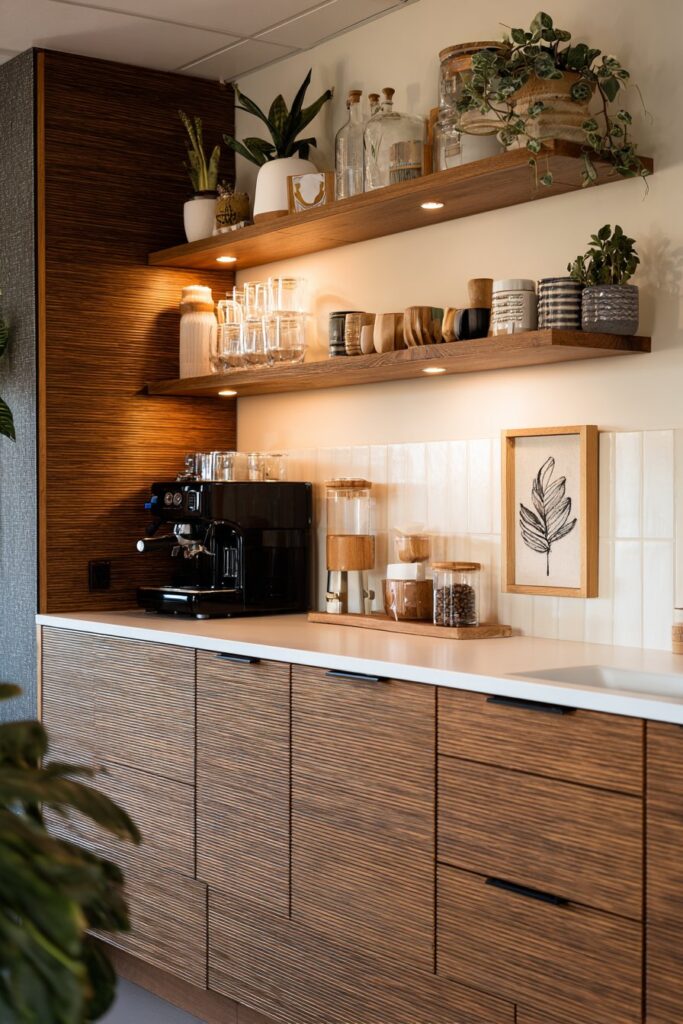
Teak, walnut, and oak dominated midcentury cabinet selections, bringing warmth and organic beauty to functional spaces. These wood species offered durability while providing rich, varied grain patterns that added visual interest without fussy ornamentation. The natural variation in wood tones created depth and character that improved with age.
Modern recreations can achieve authentic appearance using quality veneers or solid wood construction with simple hardware. Look for cabinets with subtle grain patterns and medium to dark stains that capture the era’s preference for warm, inviting tones. The key lies in maintaining clean lines and avoiding contemporary embellishments that disrupt the period aesthetic.
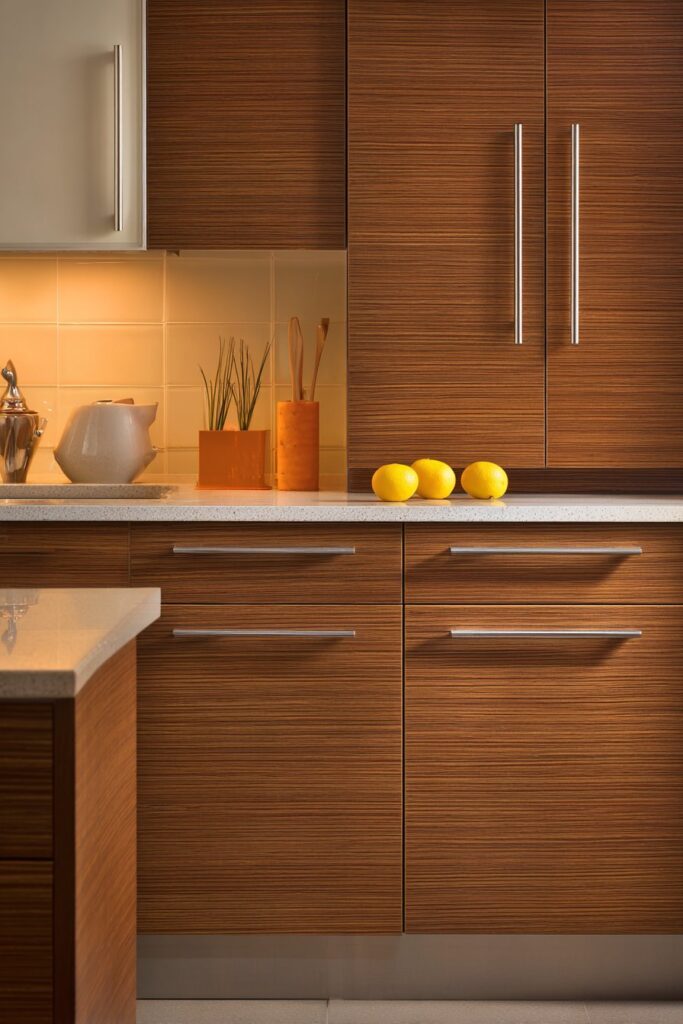
- Choose horizontal grain patterns that emphasize width over height
- Select minimal hardware like simple pulls or touch-latch mechanisms
- Incorporate open shelving sections to break up solid cabinet runs
- Mix upper and lower cabinets with varying depths for visual interest
- Consider two-tone combinations with wood lowers and painted uppers
- Maintain consistent door heights and alignment for a cohesive appearance
2. Colorful Laminate Countertops and Backsplashes
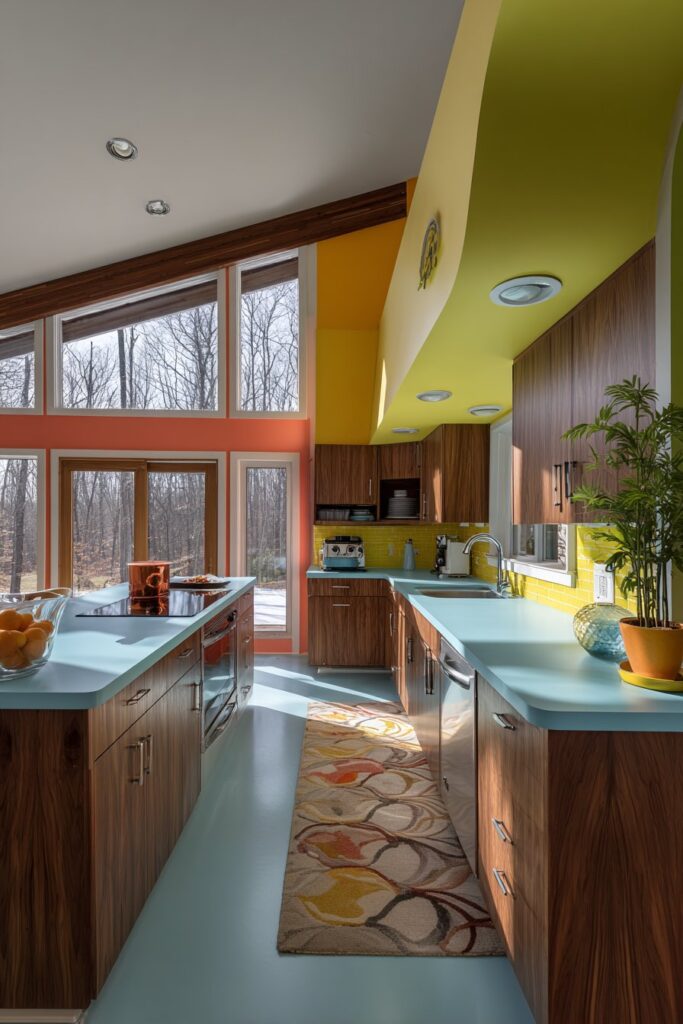
Formica and other laminate materials represented cutting-edge technology during the midcentury period, offering unprecedented color options and durability. Bold hues like turquoise, sunny yellow, coral, and avocado green appeared on countertops, creating cheerful, optimistic kitchen environments. These surfaces embodied the era’s enthusiasm for synthetic materials and modern manufacturing.
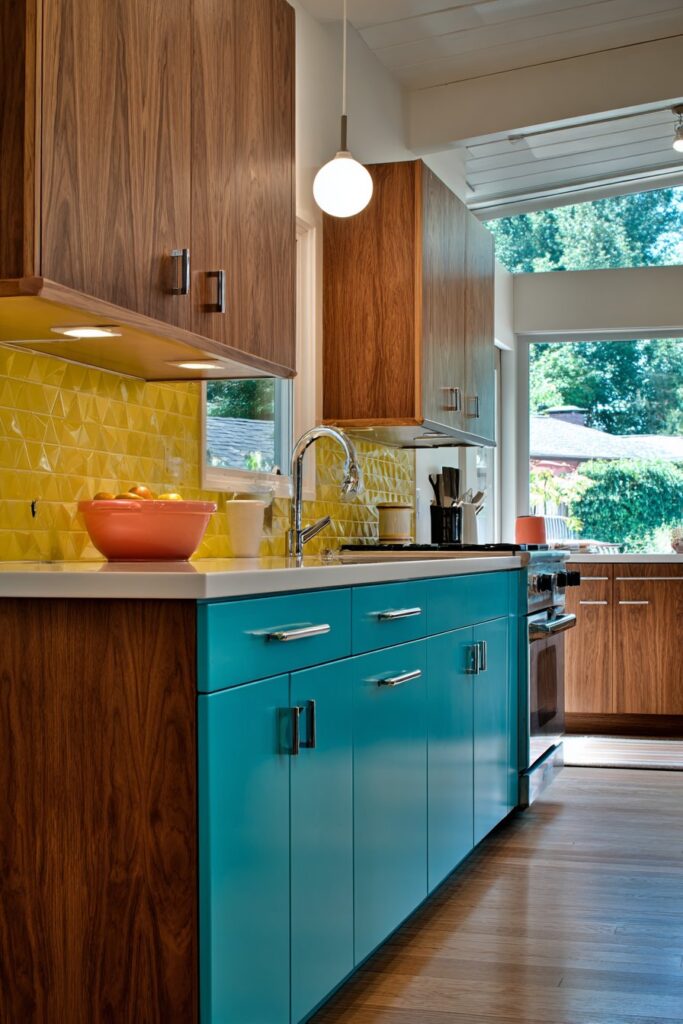
The practical advantages of laminate perfectly aligned with midcentury values of functionality meeting beauty. Easy maintenance, stain resistance, and affordability made these materials ideal for busy family kitchens. Today’s laminate options recreate vintage patterns while incorporating contemporary performance improvements.
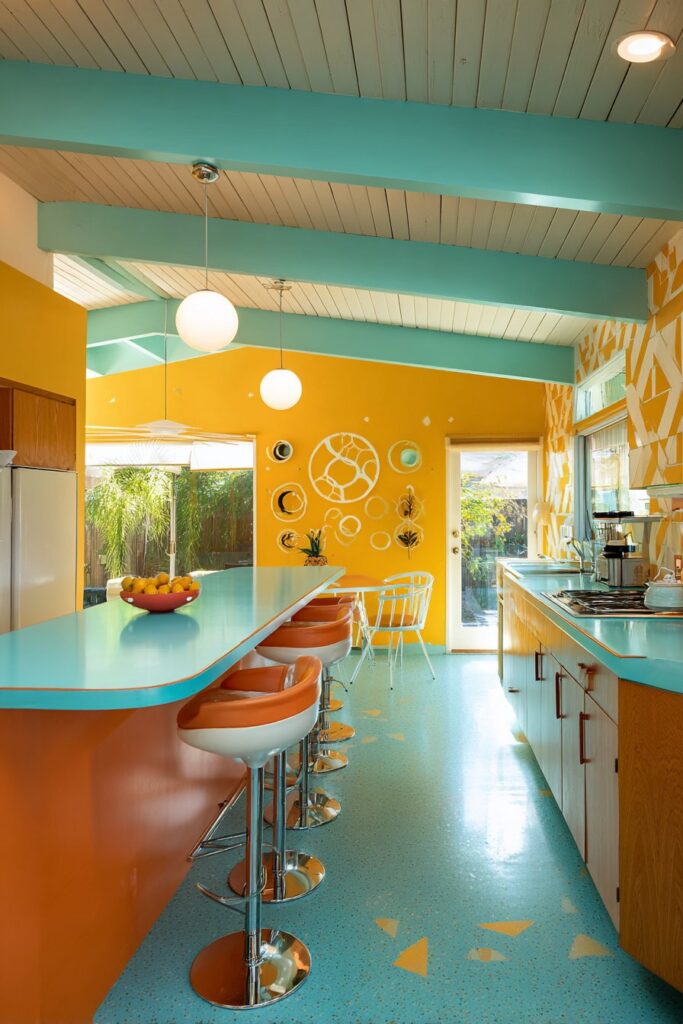
- Select boomerang, atomic, or geometric patterns for authentic flair
- Choose solid bold colors for a cleaner, more refined approach
- Combine laminate counters with simple tile backsplashes in complementary colors
- Look for reproductions of classic midcentury laminate designs
- Consider edge treatments like waterfall or metal trim details
- Balance bold surfaces with neutral cabinets to avoid overwhelming spaces
3. Starburst Clocks and Atomic-Era Accessories
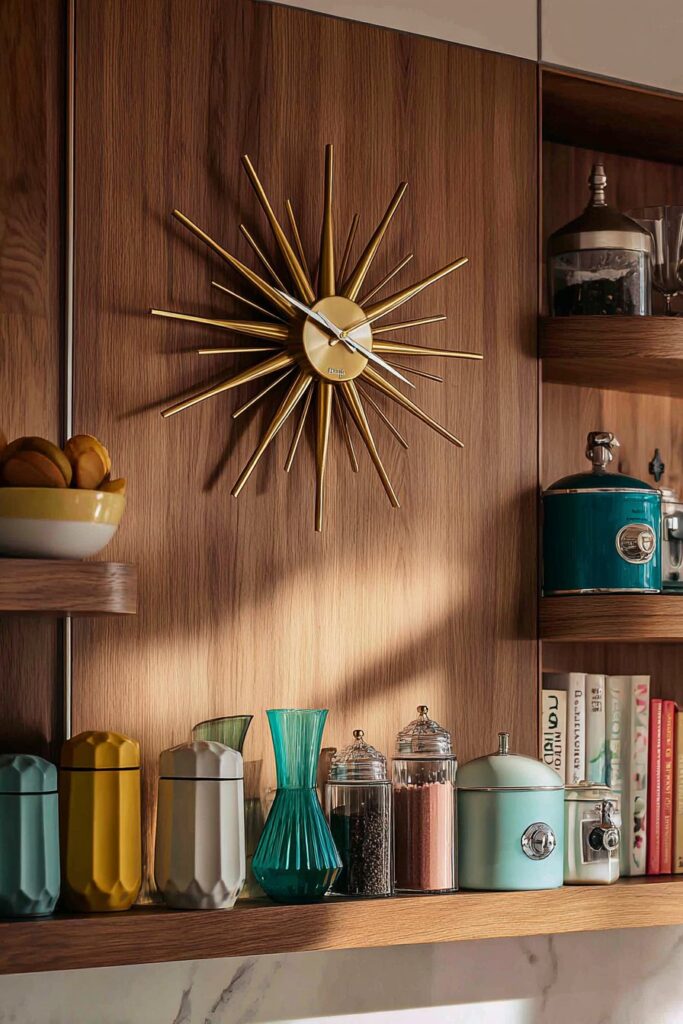
The starburst motif became synonymous with midcentury modern design, appearing on clocks, mirrors, and decorative objects. These pieces featured radiating spokes or rays extending from central hubs, symbolizing the era’s fascination with atomic science and space exploration. A starburst clock serves as an instant focal point that anchors kitchen design.
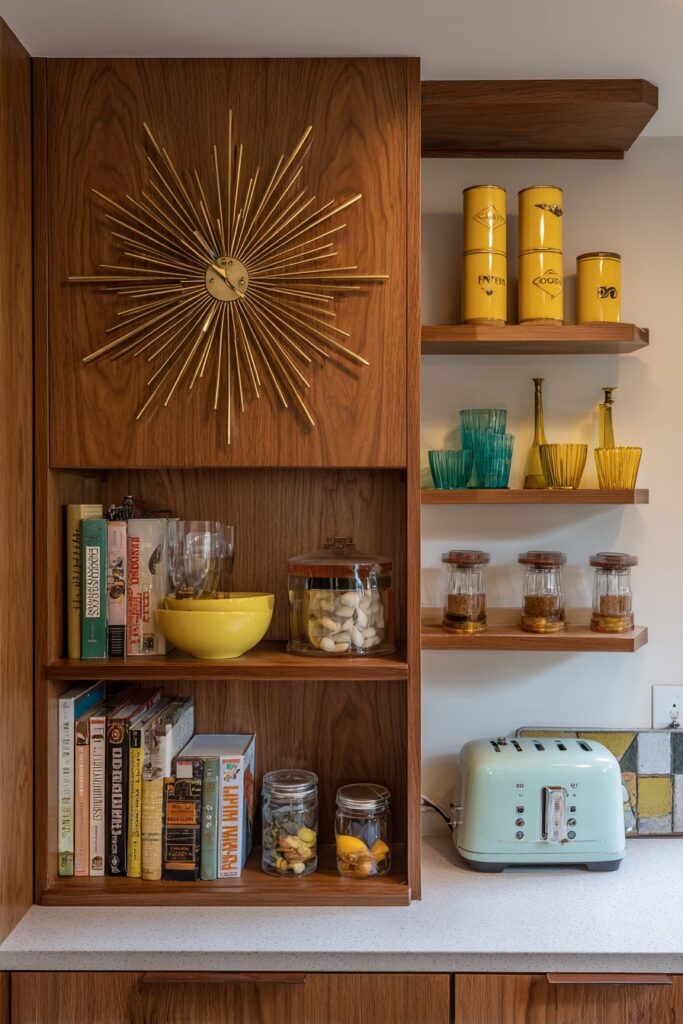
Atomic-inspired accessories brought playful sophistication to functional spaces without sacrificing the clean aesthetic. Geometric salt and pepper shakers, sculptural fruit bowls, and angular canisters added personality while maintaining the streamlined philosophy. These carefully chosen accents provided visual interest without creating clutter.
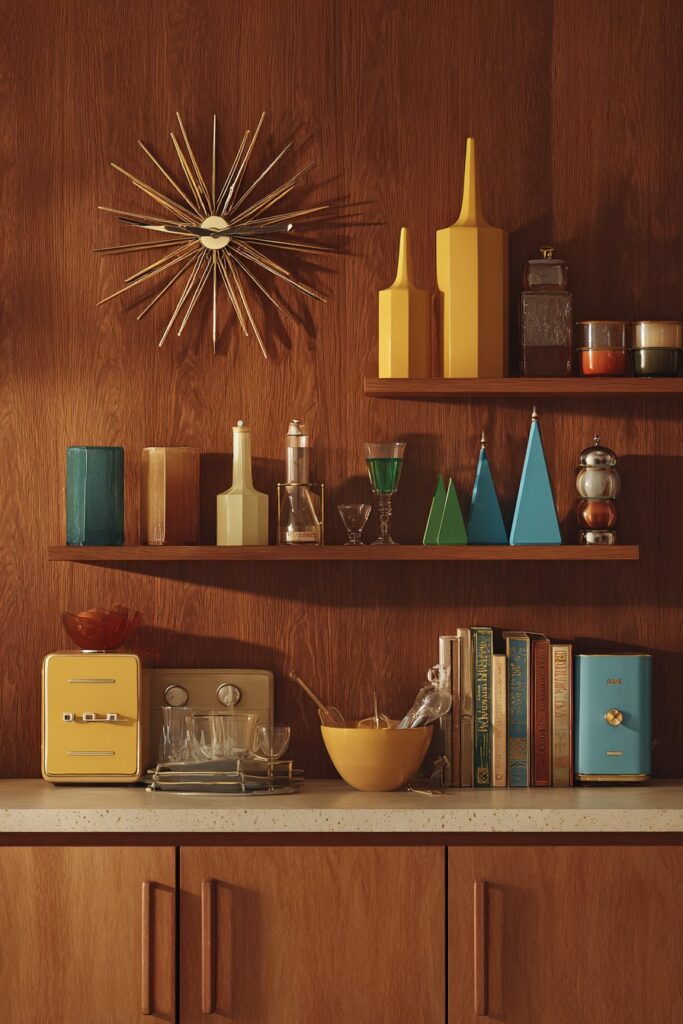
- Mount a brass or wood starburst clock as a statement piece
- Display vintage barware and cocktail accessories on open shelving
- Choose ceramic canisters with clean typography and bold colors
- Incorporate geometric trivets and pot holders as functional art
- Select vintage-inspired small appliances in retro colors
- Display cookbooks from the era for authentic period detail
4. Pendant Lighting with Geometric Shapes
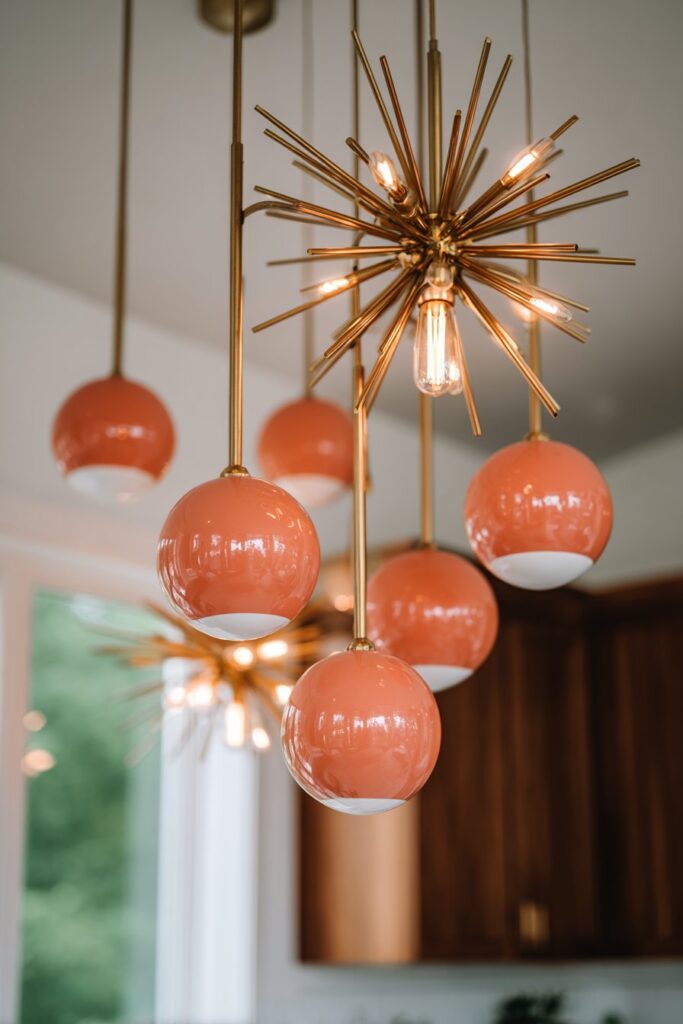
Sculptural pendant lights defined midcentury kitchen illumination, combining artistic form with practical function. Sputnik chandeliers, globe pendants, and cone-shaped fixtures featuring brass, copper, or colored glass became signature elements. These lights floated above counters and dining areas, providing focused illumination while serving as conversation pieces.
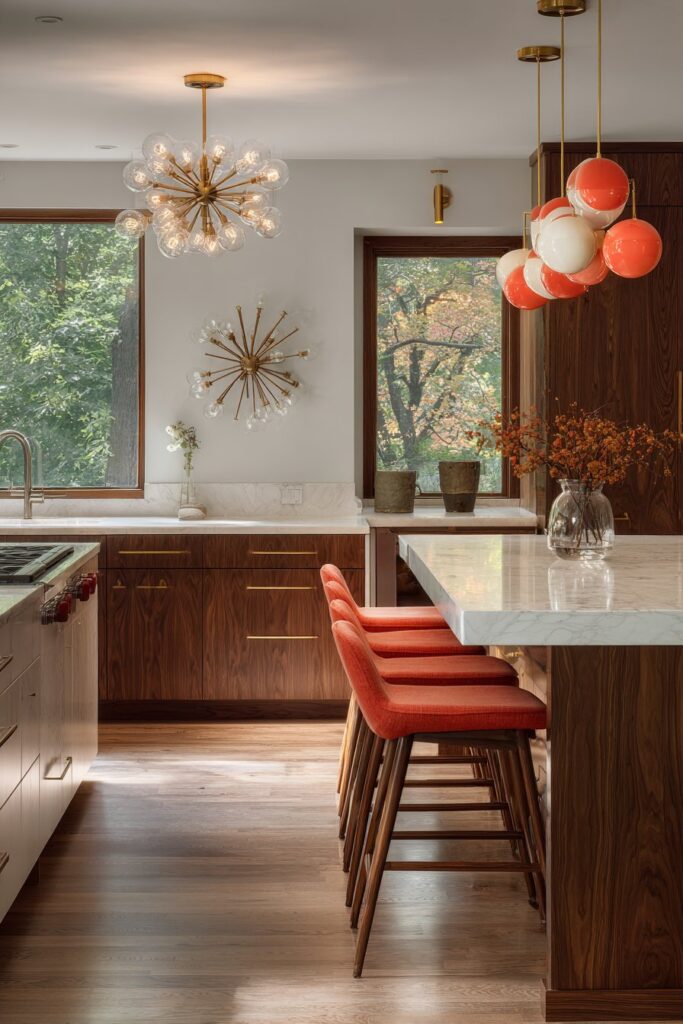
The emphasis on quality craftsmanship in lighting fixtures reflected broader midcentury values. Designers created pieces that cast beautiful light patterns while showcasing interesting materials and innovative construction techniques. Proper lighting placement enhanced the functional workflow while contributing to the overall aesthetic narrative.
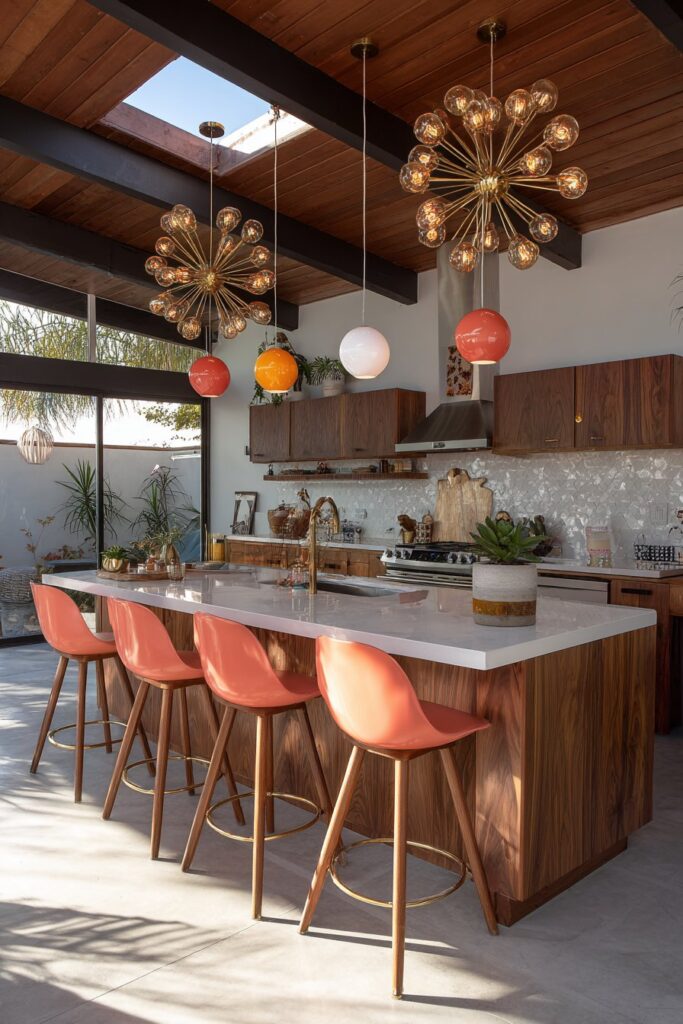
- Install globe pendants with brass or wood accents over islands
- Choose fixtures with exposed Edison bulbs for vintage authenticity
- Select cone-shaped shades in enamel finishes of period colors
- Incorporate dimmer switches to adjust ambiance throughout the day
- Mix pendant styles while maintaining complementary finishes and scale
- Position lights at appropriate heights for both function and visual balance
5. Seamless Integration of Appliances
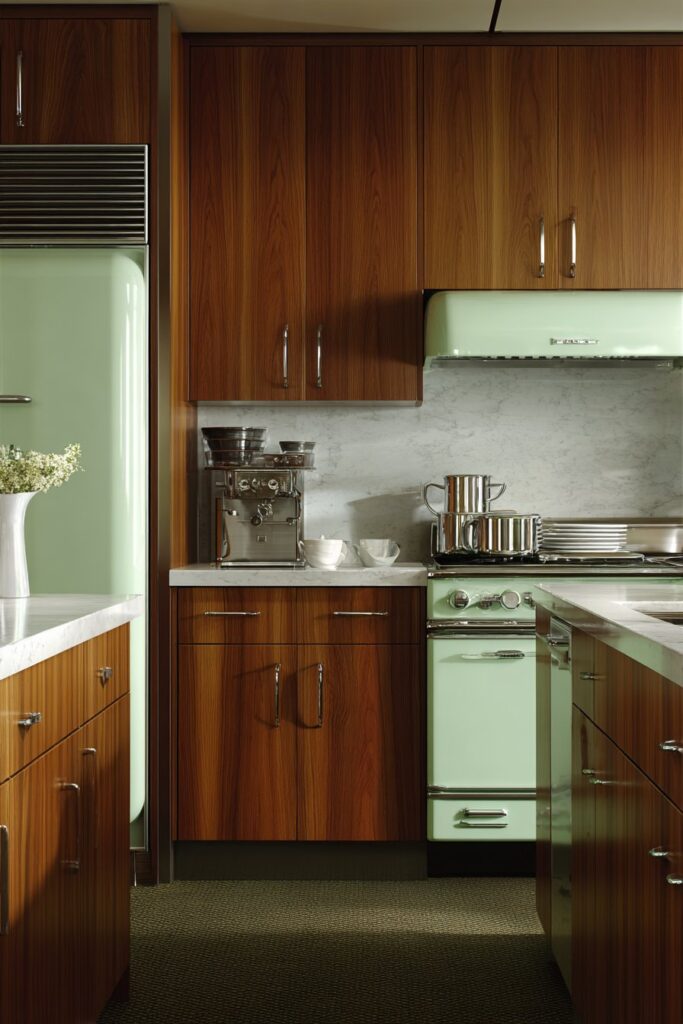
Midcentury designers pioneered the concept of built-in appliances that created streamlined, uninterrupted cabinet lines. Refrigerators, dishwashers, and ranges were increasingly designed to integrate with cabinetry rather than standing as separate units. This approach emphasized clean visual flow and maximized the appearance of available space.
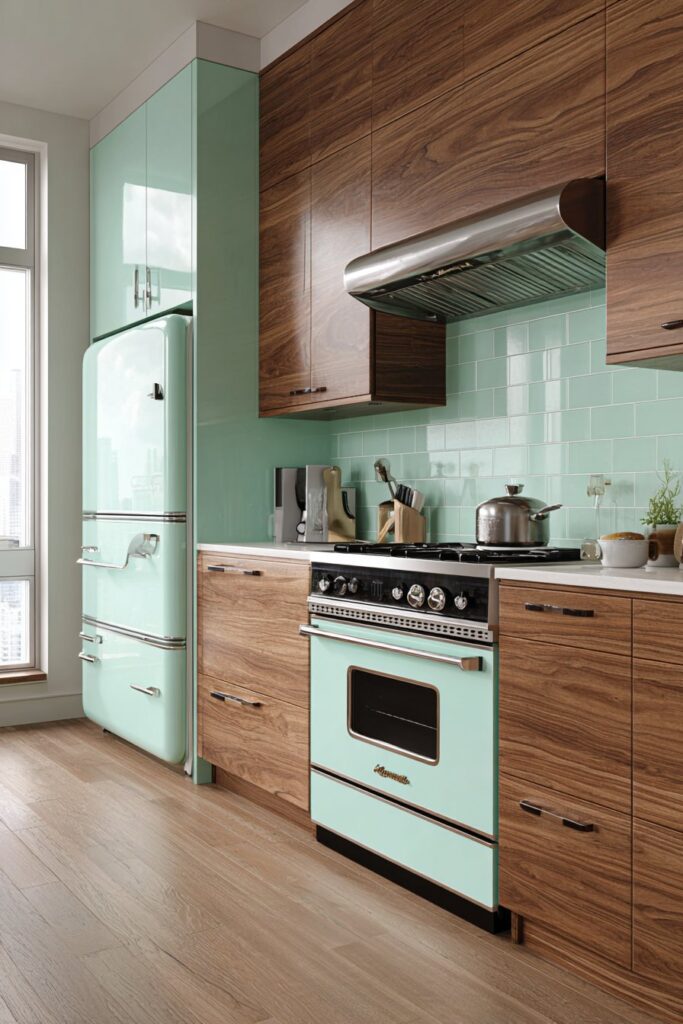
The aesthetic continuity achieved through integrated appliances represented a significant departure from earlier kitchen design. Chrome and stainless steel accents on appliances coordinated with hardware and fixtures, creating cohesive metallic moments throughout spaces. Appliances became design elements rather than purely functional necessities.
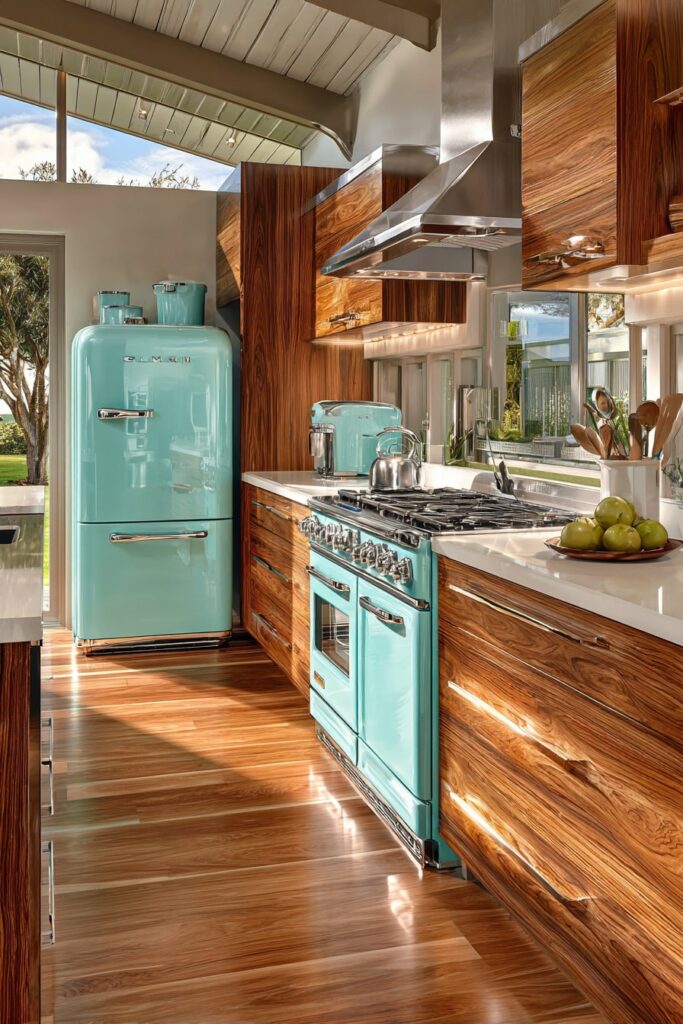
- Select panel-ready appliances that accept matching cabinet fronts
- Choose retro-style ranges with chrome details and period-appropriate colors
- Look for refrigerators with simple handles and clean lines
- Incorporate vintage-inspired small appliances in coordinating finishes
- Position appliances to maintain the kitchen work triangle efficiently
- Avoid ultra-modern digital displays that disrupt the vintage aesthetic
6. Vinyl or Cork Flooring in Bold Patterns
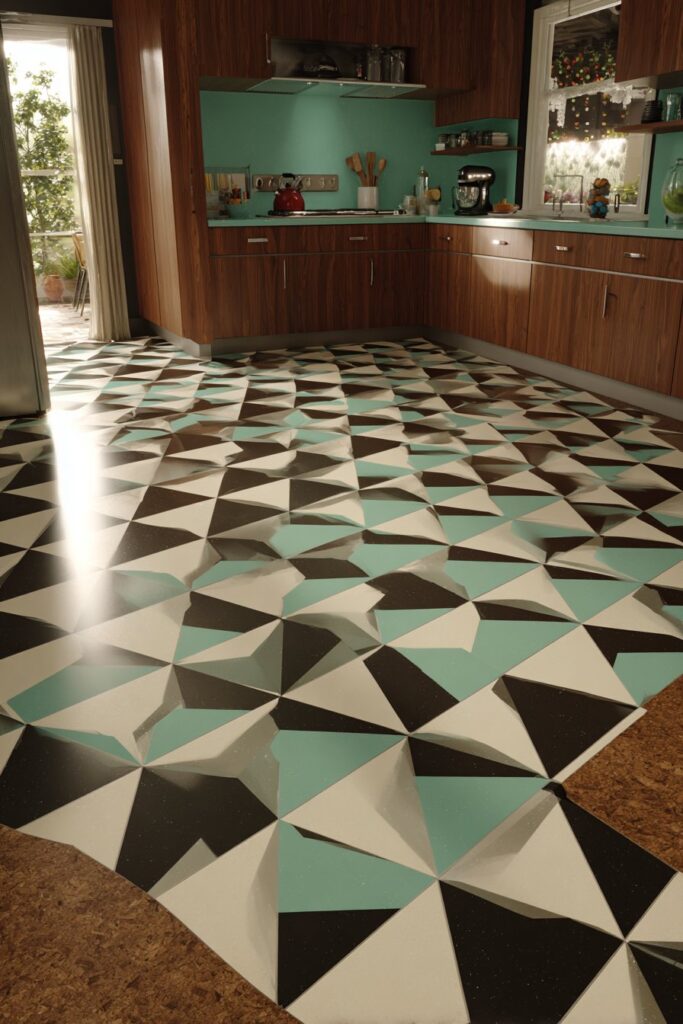
Resilient flooring materials gained popularity during the midcentury era for their durability, comfort, and design versatility. Vinyl tiles in checkerboard patterns or geometric designs brought visual excitement to kitchen floors. Cork flooring offered warmth, cushioning, and distinctive texture while maintaining the natural material aesthetic valued in midcentury design.
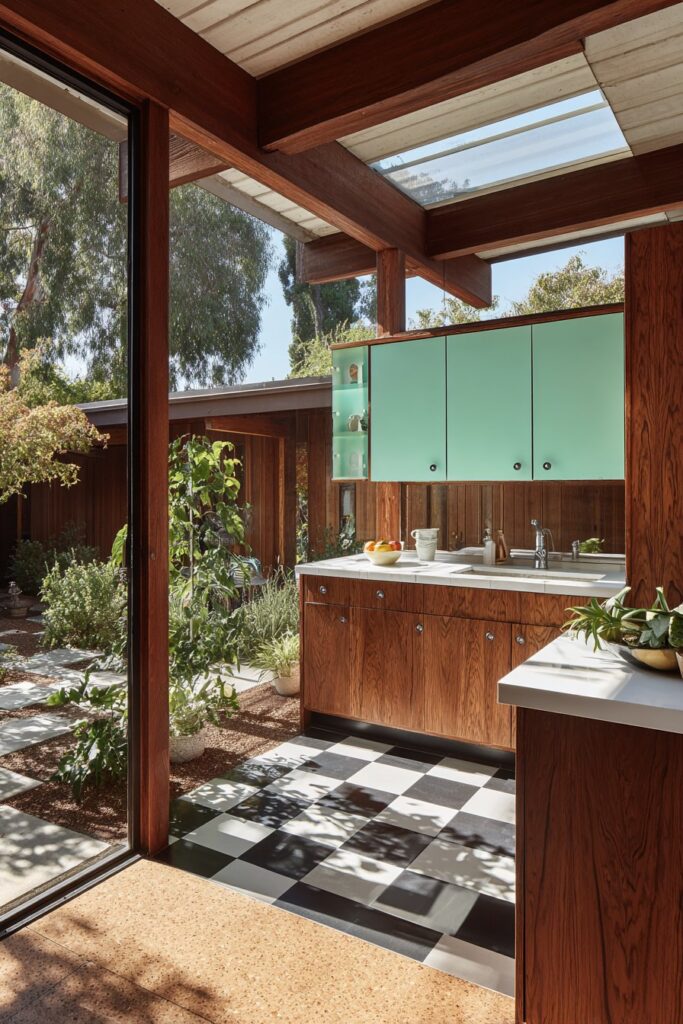
These flooring choices provided practical benefits that aligned with the era’s emphasis on low-maintenance living. Easy cleaning, resistance to moisture, and comfortable standing surfaces made them ideal for hardworking kitchens. The wide range of available colors and patterns allowed homeowners to express personal style within the broader design movement.
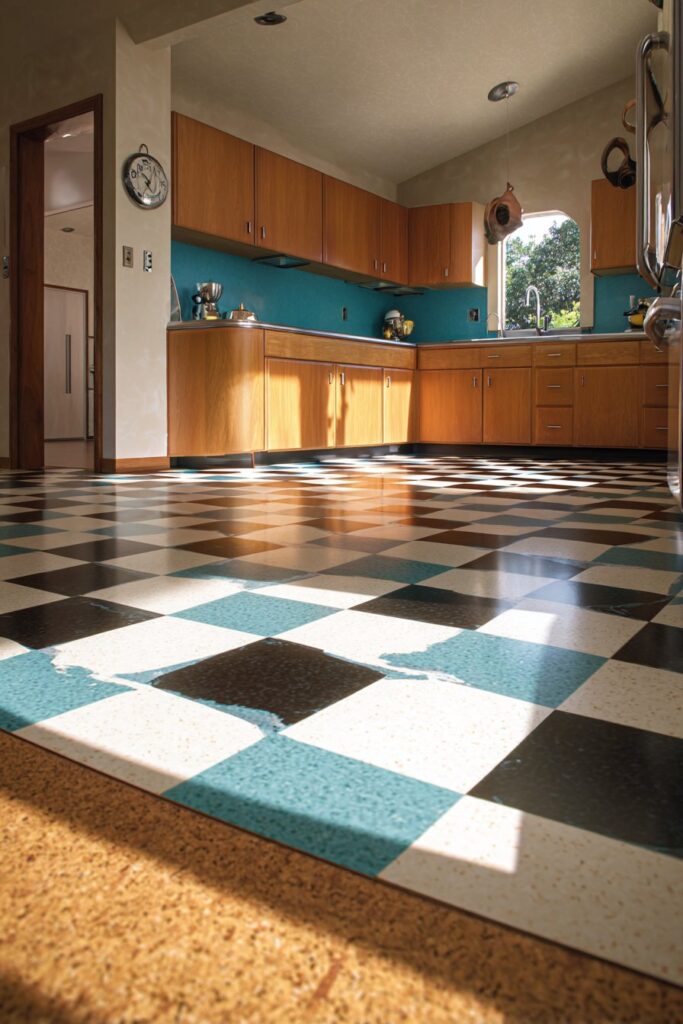
- Install black and white checkerboard vinyl for classic midcentury appeal
- Choose geometric patterns featuring period colors like teal and coral
- Consider cork tiles in natural tones for organic warmth
- Select linoleum in solid bold colors for a cleaner aesthetic
- Ensure proper subfloor preparation for longevity and performance
- Coordinate flooring colors with cabinet and countertop selections
7. Open Shelving with Minimal Display
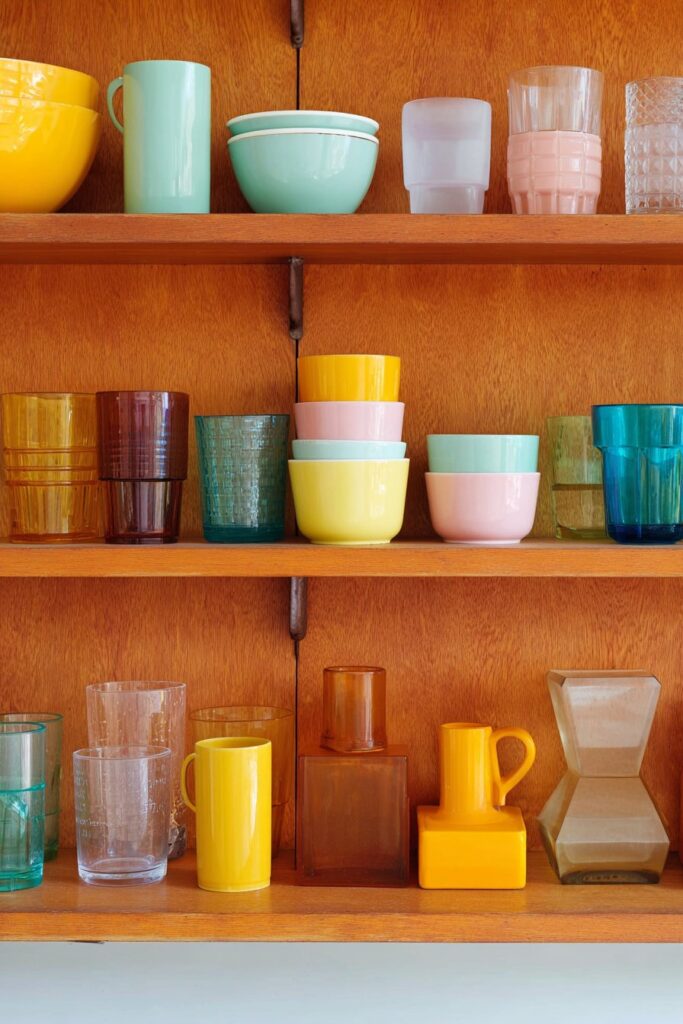
Floating shelves made from wood or metal brackets showcased dishware and glassware as decorative elements. This open storage approach reflected midcentury transparency and the celebration of everyday objects as design components. Carefully curated displays avoided clutter while making frequently used items easily accessible.
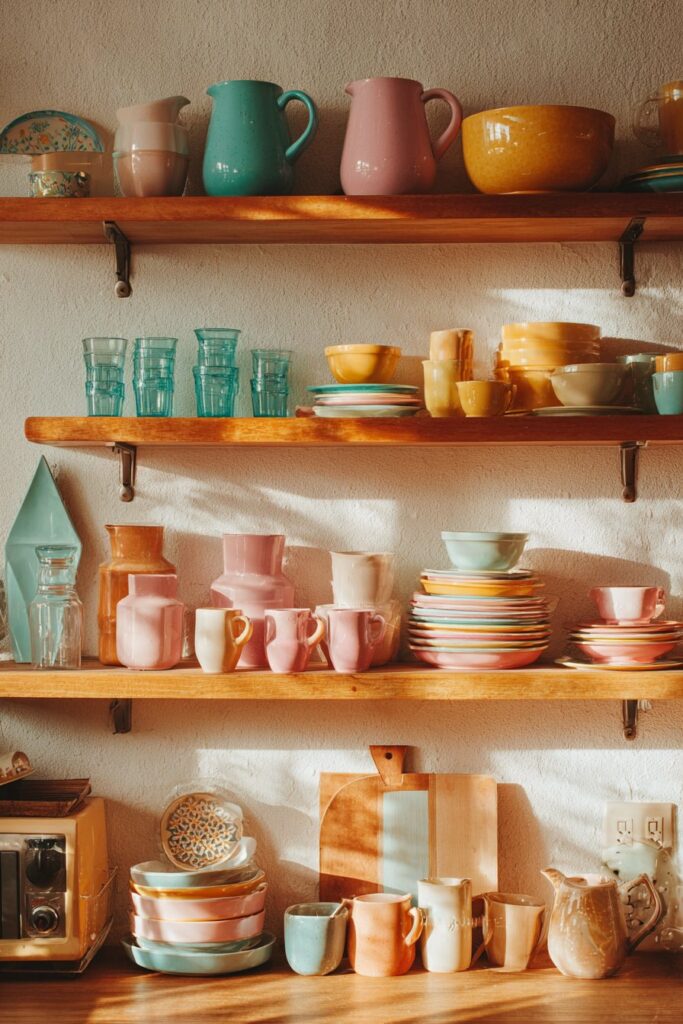
The balance between function and aesthetics in open shelving exemplified midcentury design principles. Simple dishes in solid colors, geometric glassware, and vintage cookware became part of the room’s visual composition. This display strategy required discipline but rewarded with authentic period character and practical convenience.
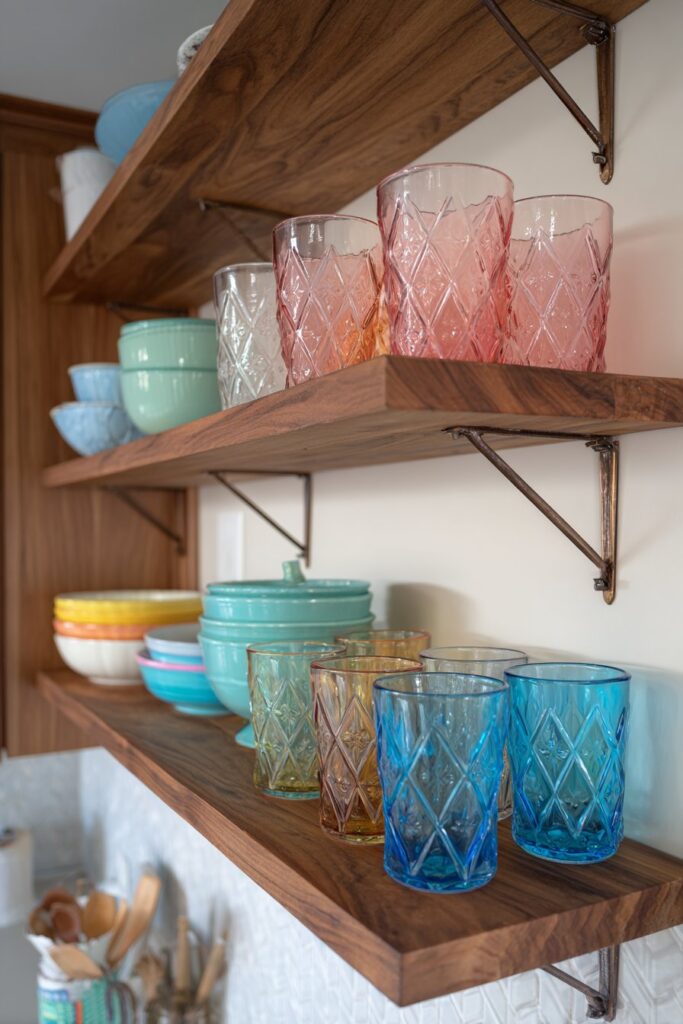
- Install slim wooden shelves with simple metal brackets or cleats
- Display collections of vintage Pyrex in graduated sizes and colors
- Showcase period glassware like colored tumblers and geometric vases
- Limit displayed items to maintain the clean, uncluttered aesthetic
- Coordinate dishware colors with the overall kitchen palette
- Mix functional storage with a few carefully chosen decorative objects
8. Chrome and Brass Hardware Details
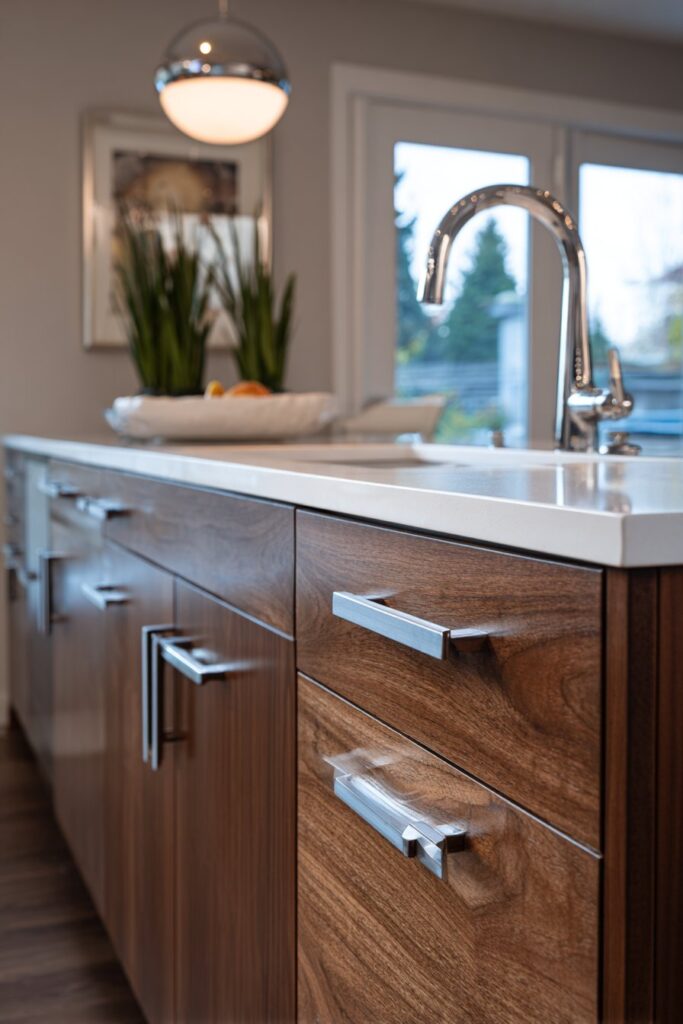
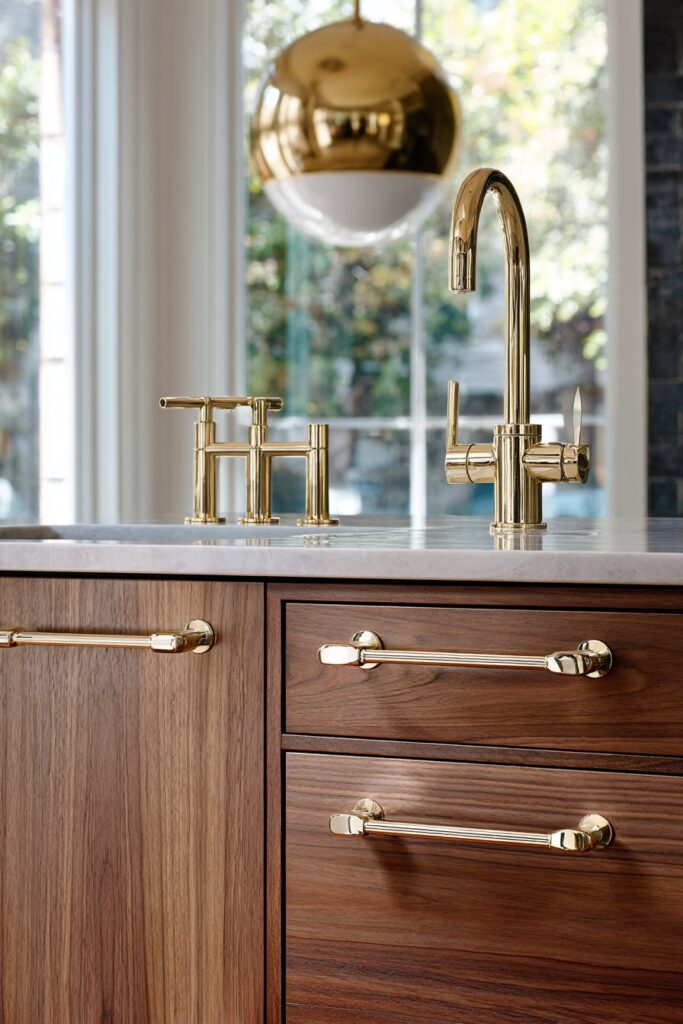
Metallic accents provided sophisticated contrast against warm wood tones and bold colors. Chrome became the preferred finish for faucets, cabinet pulls, and light fixtures, offering a cool, reflective quality that felt modern and fresh. Brass details added warmth and elegance, often appearing in lighting fixtures and decorative accessories.
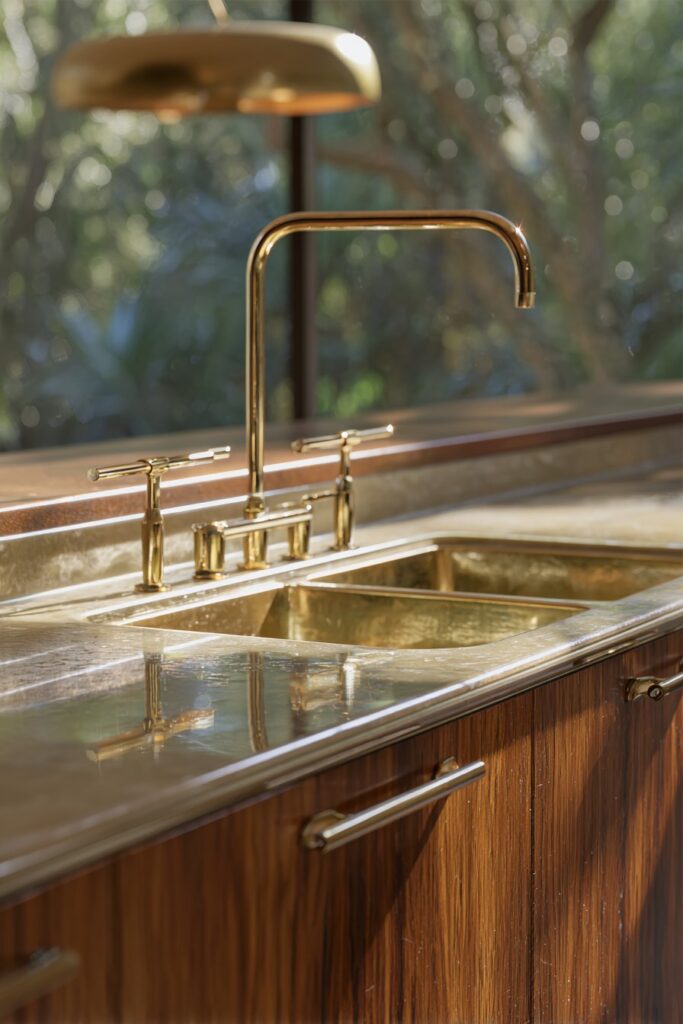
The quality of hardware received careful attention during the midcentury period, with designers creating distinctive pulls, knobs, and handles. Simple bar pulls, tapered handles, and sculptural knobs featured clean lines and excellent proportions. These small details significantly impacted the overall aesthetic while improving functionality.
- Select slim chrome bar pulls for cabinet doors and drawers
- Choose bridge-style faucets with cross handles or lever controls
- Incorporate brass pendant lights or wall sconces for warmth
- Mix chrome and brass thoughtfully in separate zones or applications
- Avoid overly ornate or contemporary hardware styles
- Ensure hardware proportions suit cabinet door and drawer sizes
9. Breakfast Nooks with Built-In Banquette Seating
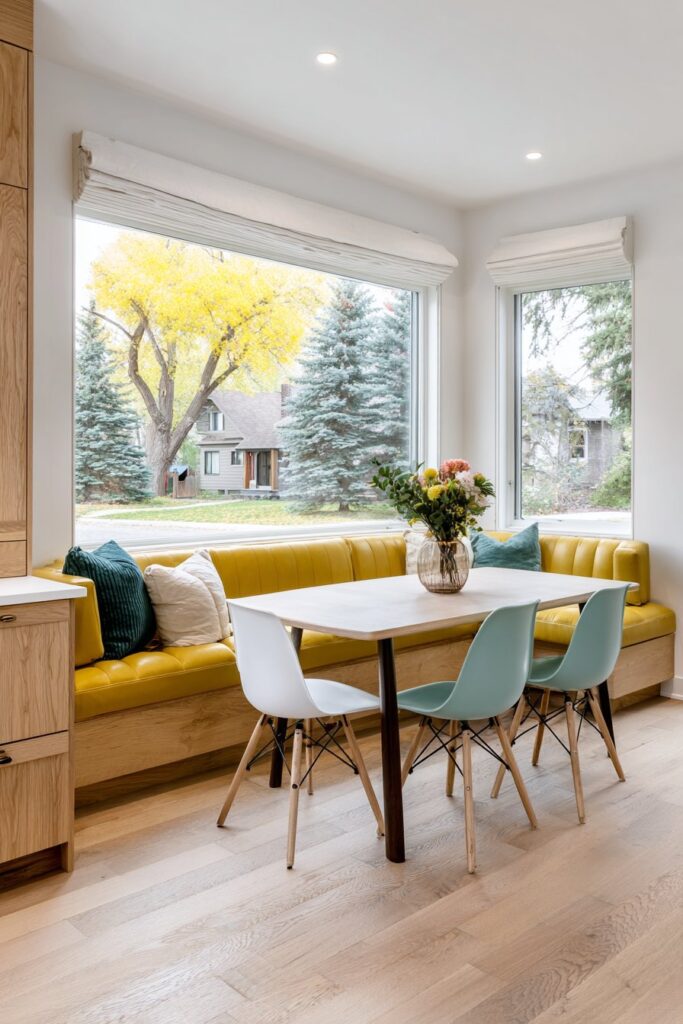
Integrated dining spaces became signature features of midcentury kitchens, often featuring built-in banquettes with vinyl upholstery. These cozy nooks maximized seating capacity while maintaining the streamlined aesthetic. The emphasis on efficient space planning made kitchens feel larger and more inviting.
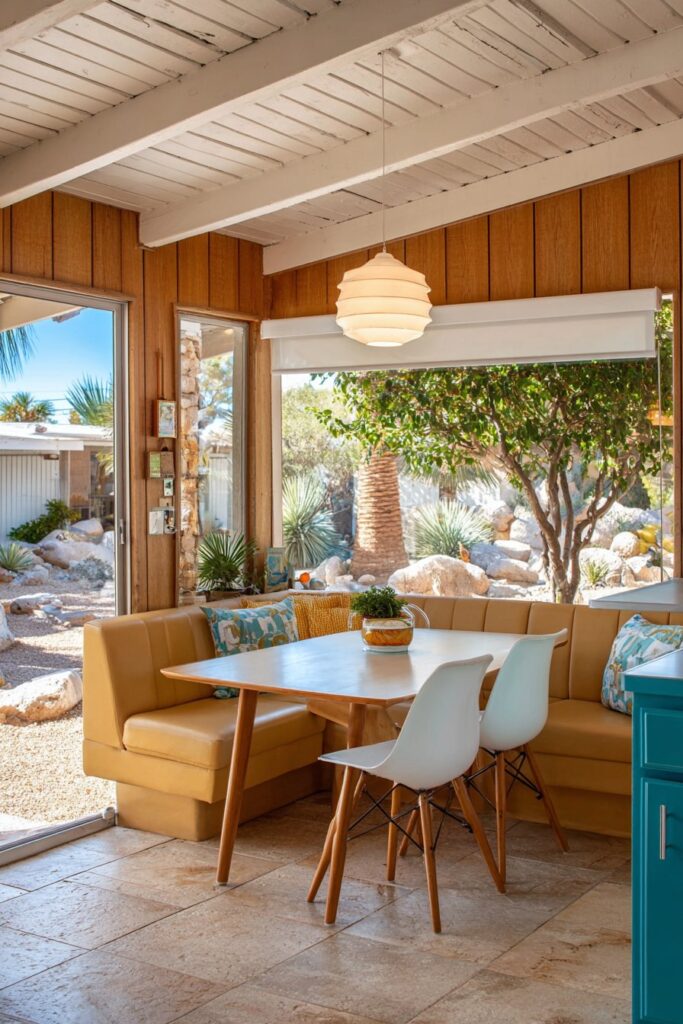
Banquettes typically featured simple geometric forms with clean lines and minimal ornamentation. Vinyl upholstery in bold colors or simple patterns provided easy maintenance and visual interest. Paired with sleek tables and iconic molded plastic or bent plywood chairs, these dining areas became social hubs that embodied midcentury living ideals.
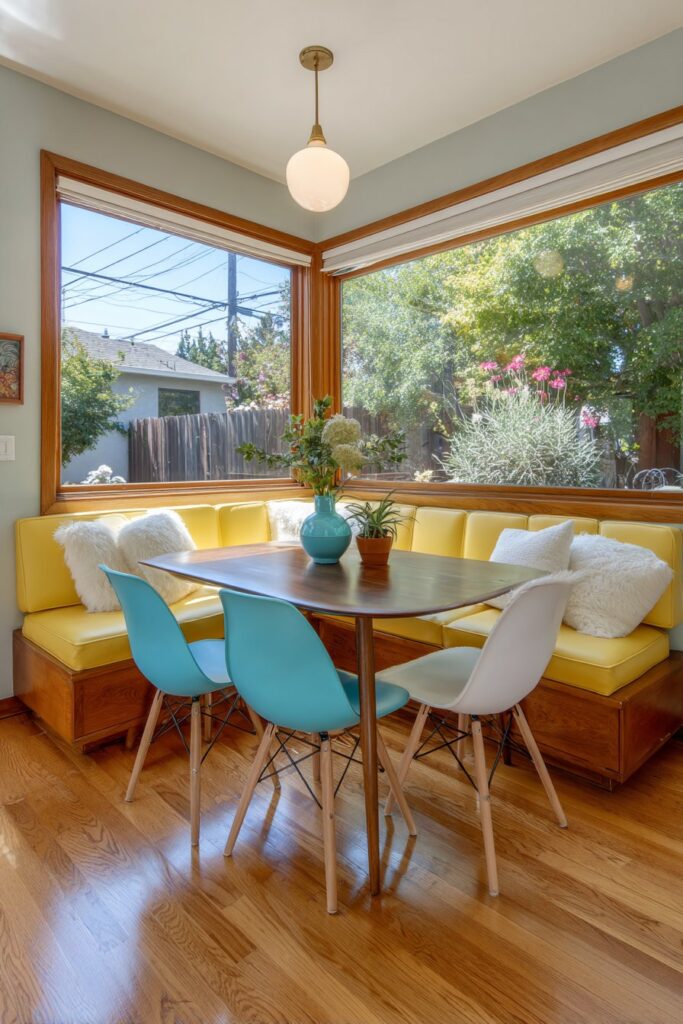
- Design L-shaped or U-shaped banquettes for corner installations
- Choose vinyl upholstery in period colors like mustard or turquoise
- Incorporate hidden storage beneath banquette seating for practicality
- Select tables with simple tapered legs or pedestal bases
- Add molded plastic chairs in coordinating colors for flexible seating
- Position banquettes near windows to maximize natural light
10. Large Windows with Minimal Treatments
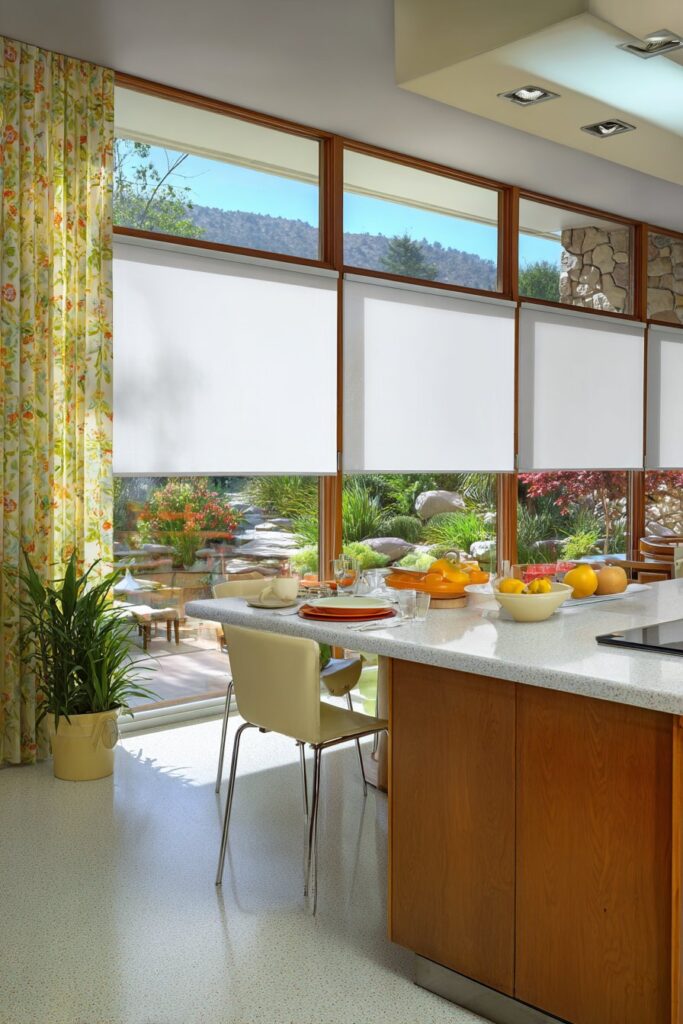
Expansive windows brought abundant natural light and blurred boundaries between interior and exterior spaces. The midcentury emphasis on connection with nature made large, unobstructed views essential design features. Picture windows, clerestory windows, and sliding glass doors flooded kitchens with daylight while providing visual access to gardens and landscapes.
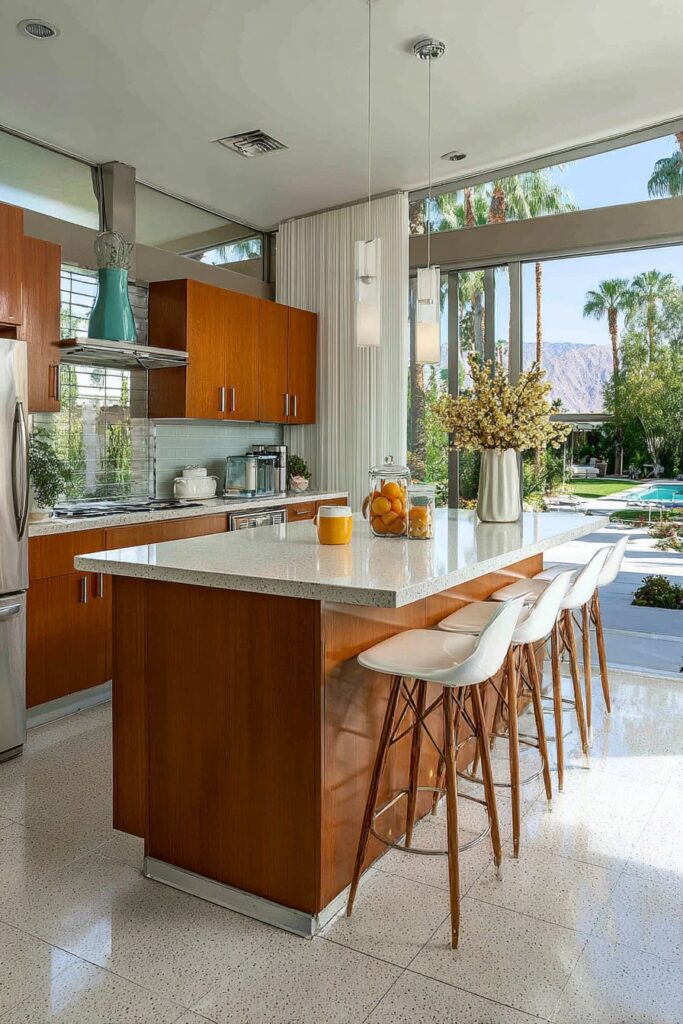
Window treatments remained deliberately simple to avoid blocking light or obscuring architectural lines. When privacy required coverage, homeowners chose simple roller shades, sheer curtains, or horizontal blinds in neutral colors. The minimalist approach to window dressing allowed natural light to become a primary design element throughout the day.
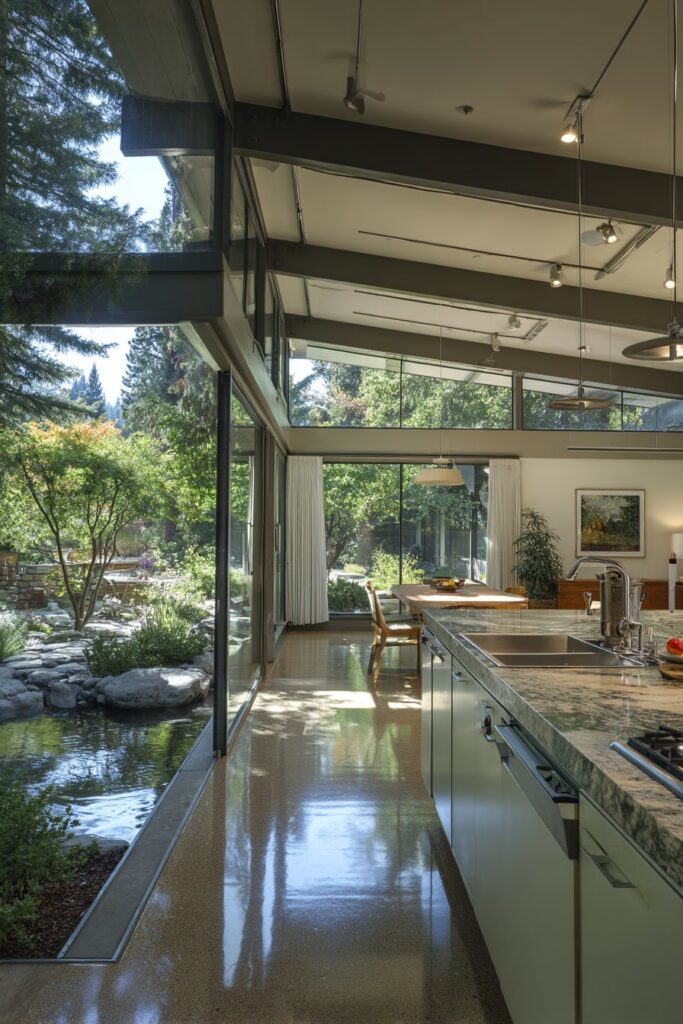
- Maximize existing window sizes or add new windows where possible
- Install simple roller shades in white or neutral tones
- Choose sheer curtains that filter light without blocking views
- Select horizontal blinds in wood or aluminum for adjustable control
- Avoid heavy drapes, valances, or ornate window treatments
- Position windows to frame attractive outdoor views as living art
11. Clean Lines and Functional Simplicity
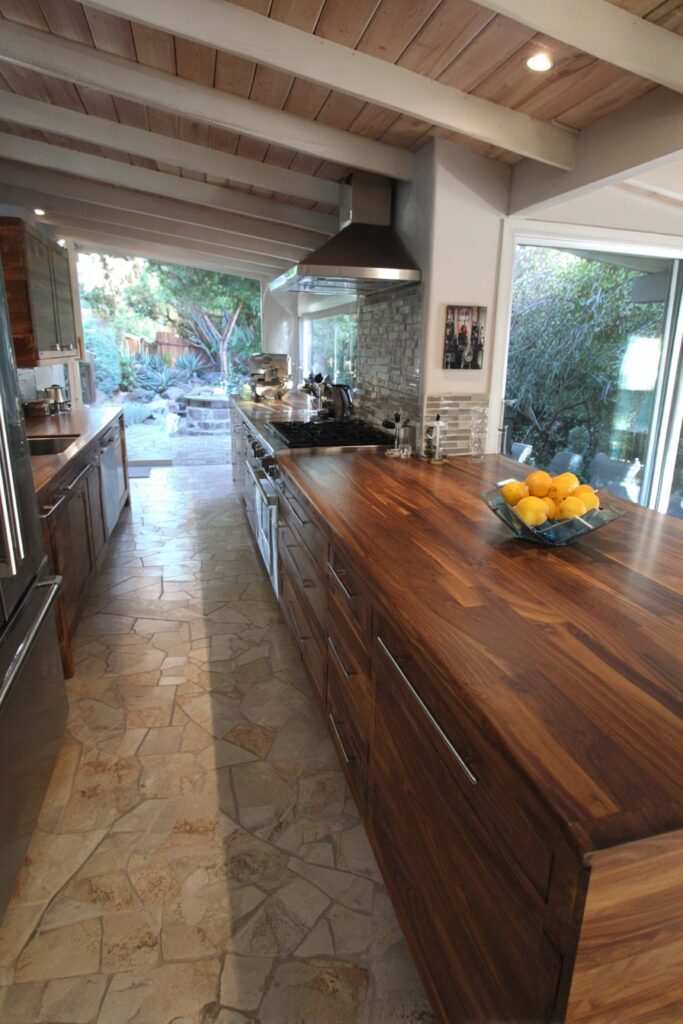
The overarching principle of midcentury kitchen design emphasized purposeful simplicity without sacrificing warmth or personality. Every element served a function while contributing to the overall aesthetic harmony. This philosophy rejected unnecessary ornamentation in favor of honest materials, quality craftsmanship, and thoughtful spatial organization.
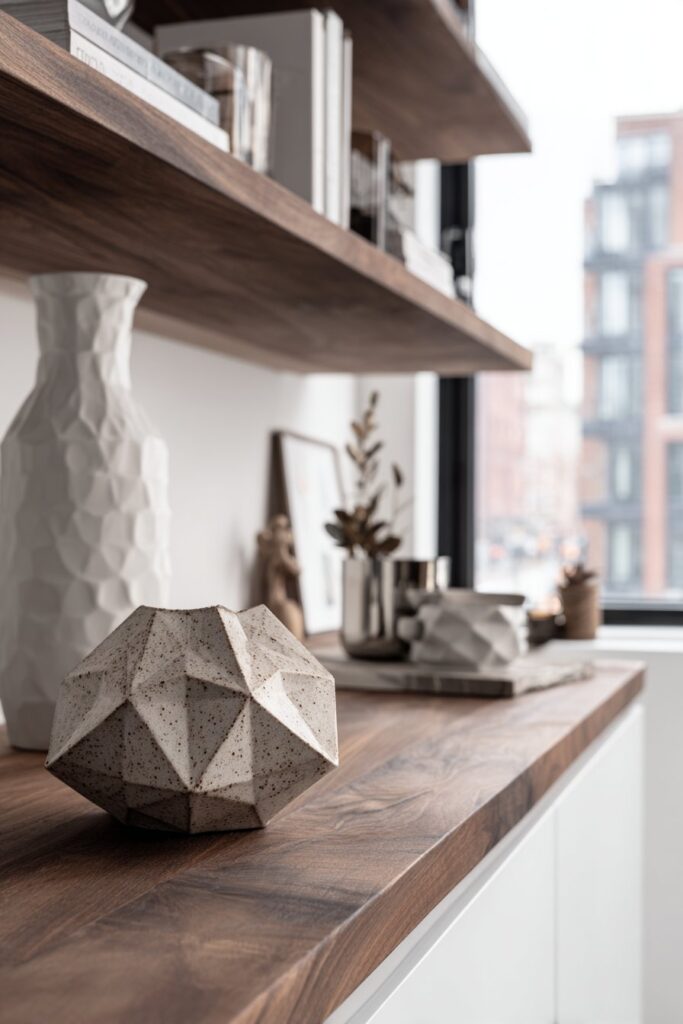
Functional beauty remained the guiding principle, with designers believing that well-designed objects needed no additional decoration. Storage solutions were integrated seamlessly, appliances chosen for both performance and appearance, and layouts planned to support efficient workflow. This approach created kitchens that worked beautifully while looking timelessly elegant.
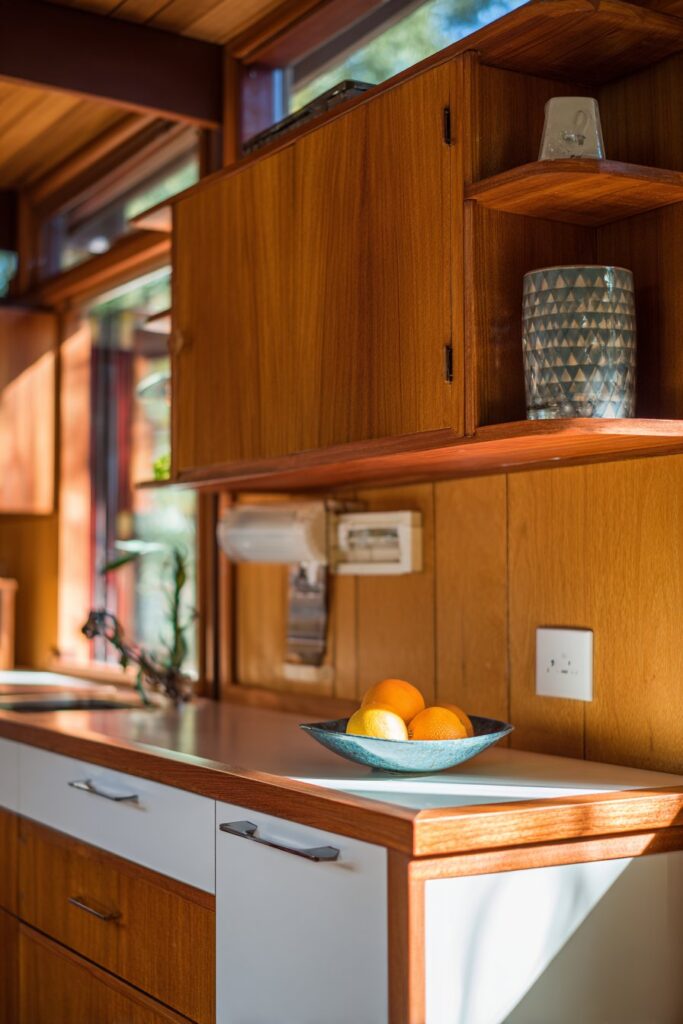
- Maintain clear countertops with only essential items visible
- Choose quality over quantity in accessories and decorative objects
- Organize storage logically to support cooking and cleaning workflows
- Avoid trendy additions that conflict with period authenticity
- Respect the balance between warm wood tones and cool metallic accents
- Remember that restraint and editing create the most successful midcentury spaces
Conclusion
Achieving authentic midcentury kitchen style requires understanding the design philosophy that made this movement so influential and enduring. The eleven essential elements outlined here work together to create spaces that honor historical accuracy while meeting contemporary needs. From flat-front cabinets to sculptural lighting, each component contributes to the cohesive, timeless aesthetic that defines this beloved design era.
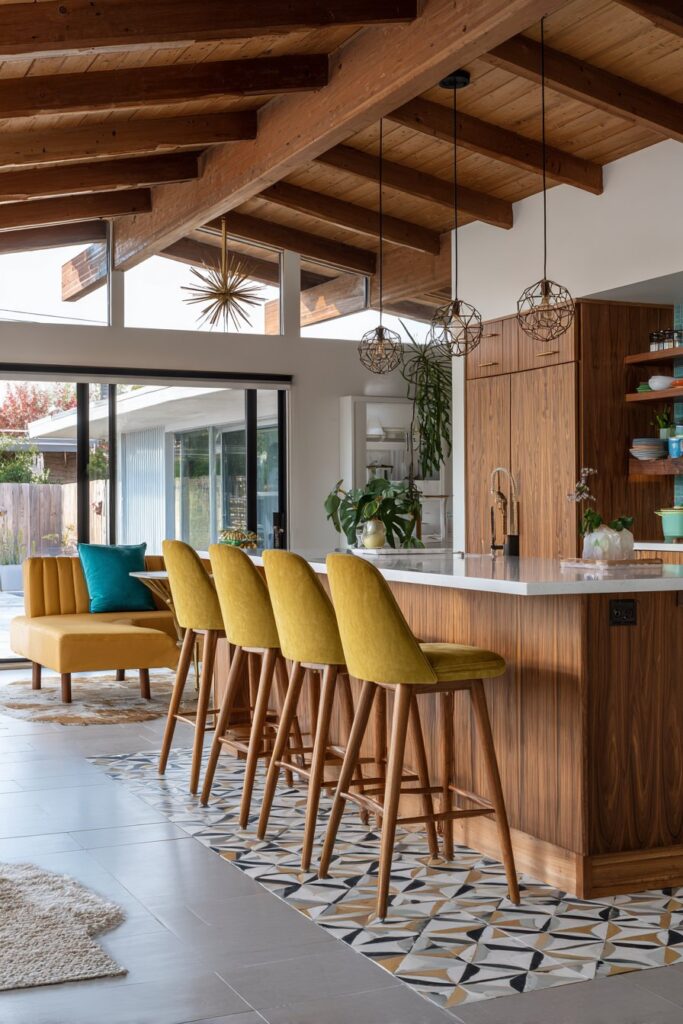
The beauty of midcentury modern design lies in its remarkable versatility and accessibility. Whether you’re restoring a period home or introducing vintage character into a newer space, these principles adapt gracefully to various budgets and architectural contexts. By focusing on clean lines, quality materials, and thoughtful simplicity, you’ll create a kitchen that celebrates the optimism and innovation of the midcentury era.Start with the foundational elements like cabinetry and flooring, then layer in lighting, hardware, and accessories that reinforce the aesthetic. Remember that authentic midcentury style balances restraint with warmth, creating spaces that feel both sophisticated and inviting. With careful attention to these essential details, your kitchen will embody the enduring appeal of midcentury modern design for years to come.
"As an Amazon Associate, I earn from qualifying purchases."
