

A bedroom should be more than just a place to sleep—it’s your personal sanctuary where you retreat from the world’s demands and truly relax. The feeling of home in a bedroom comes from creating spaces that wrap you in comfort, reflect your personality, and support genuine rest and rejuvenation. Unlike showroom-perfect bedrooms that prioritize appearance over comfort, truly homey spaces embrace warmth, softness, and the personal touches that make you feel completely at ease.
Creating cozy bedrooms requires understanding the elements that trigger feelings of safety, comfort, and belonging. Warm lighting, soft textures, inviting colors, and meaningful personal items work together to transform generic sleeping spaces into nurturing retreats. The most successful bedrooms balance aesthetic appeal with sensory comfort, ensuring spaces look beautiful while feeling genuinely welcoming and restorative.
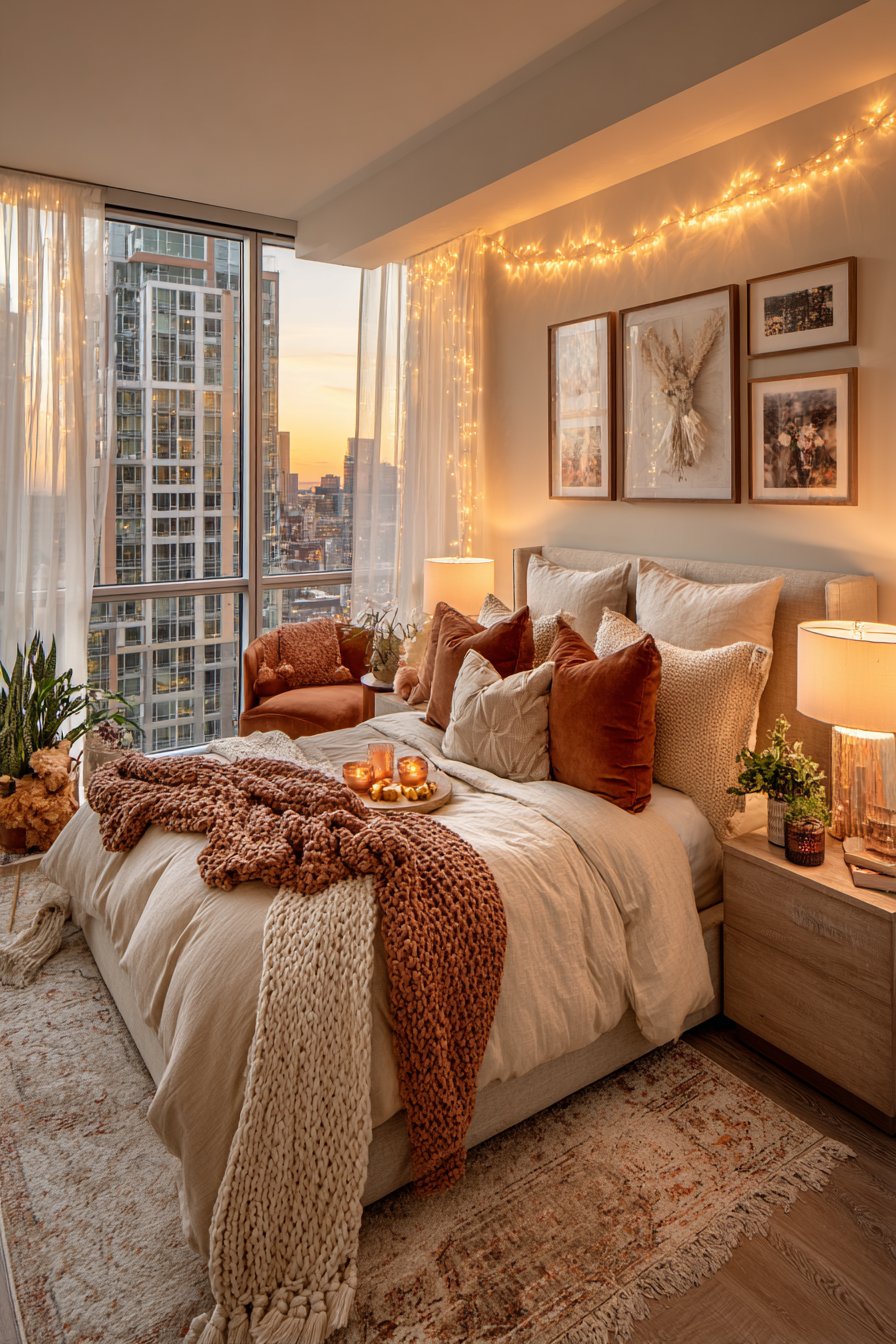
This comprehensive guide explores ten essential elements that make bedrooms feel warm, cozy, and unmistakably like home. From layering textiles and optimizing lighting to incorporating personal memories and managing clutter thoughtfully, each strategy contributes to creating spaces where you truly want to spend time. Whether you’re starting from scratch or refreshing an existing bedroom, these principles will help you craft a haven that nurtures your wellbeing while reflecting your unique story and style preferences.
1. Layer Multiple Soft Textiles
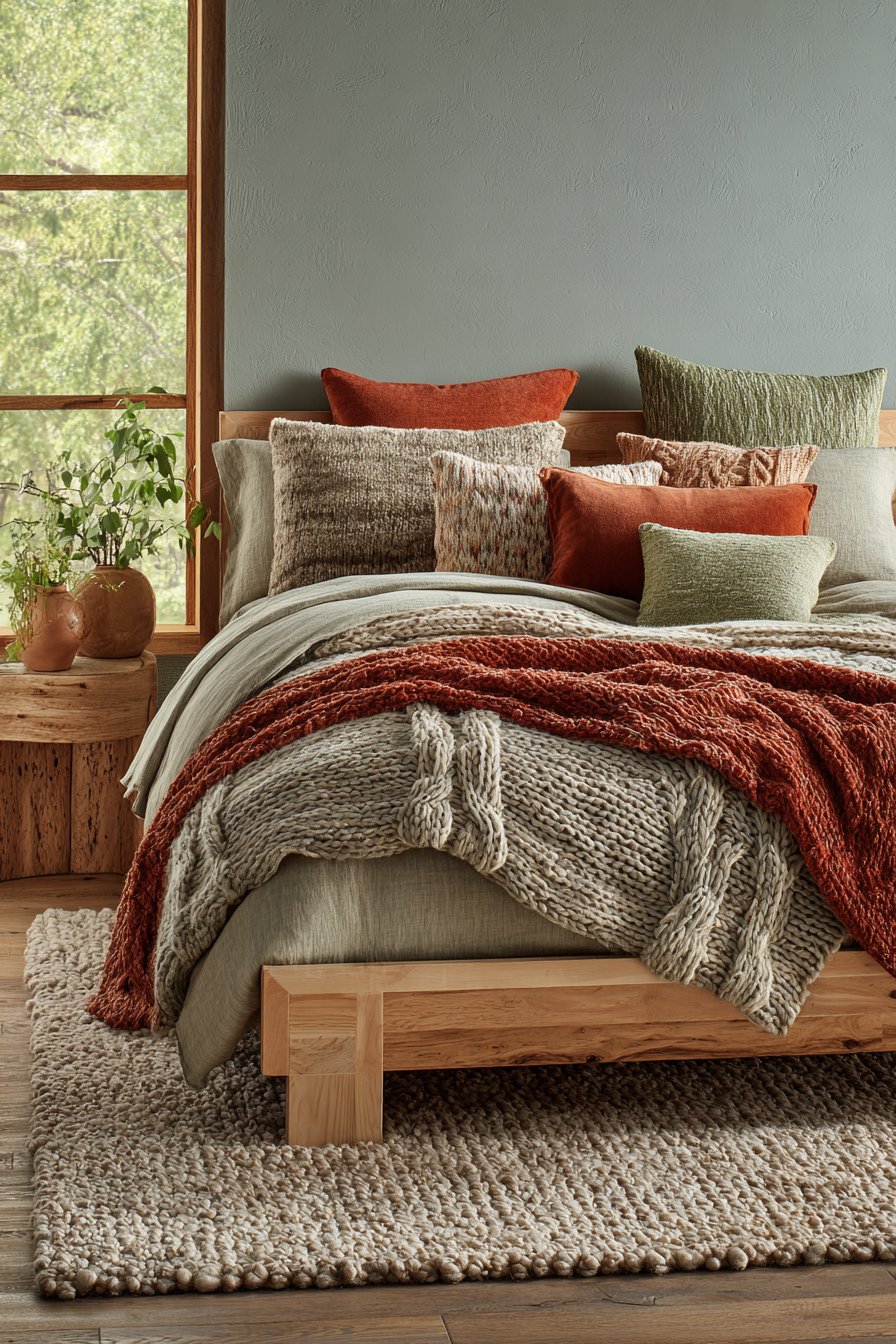
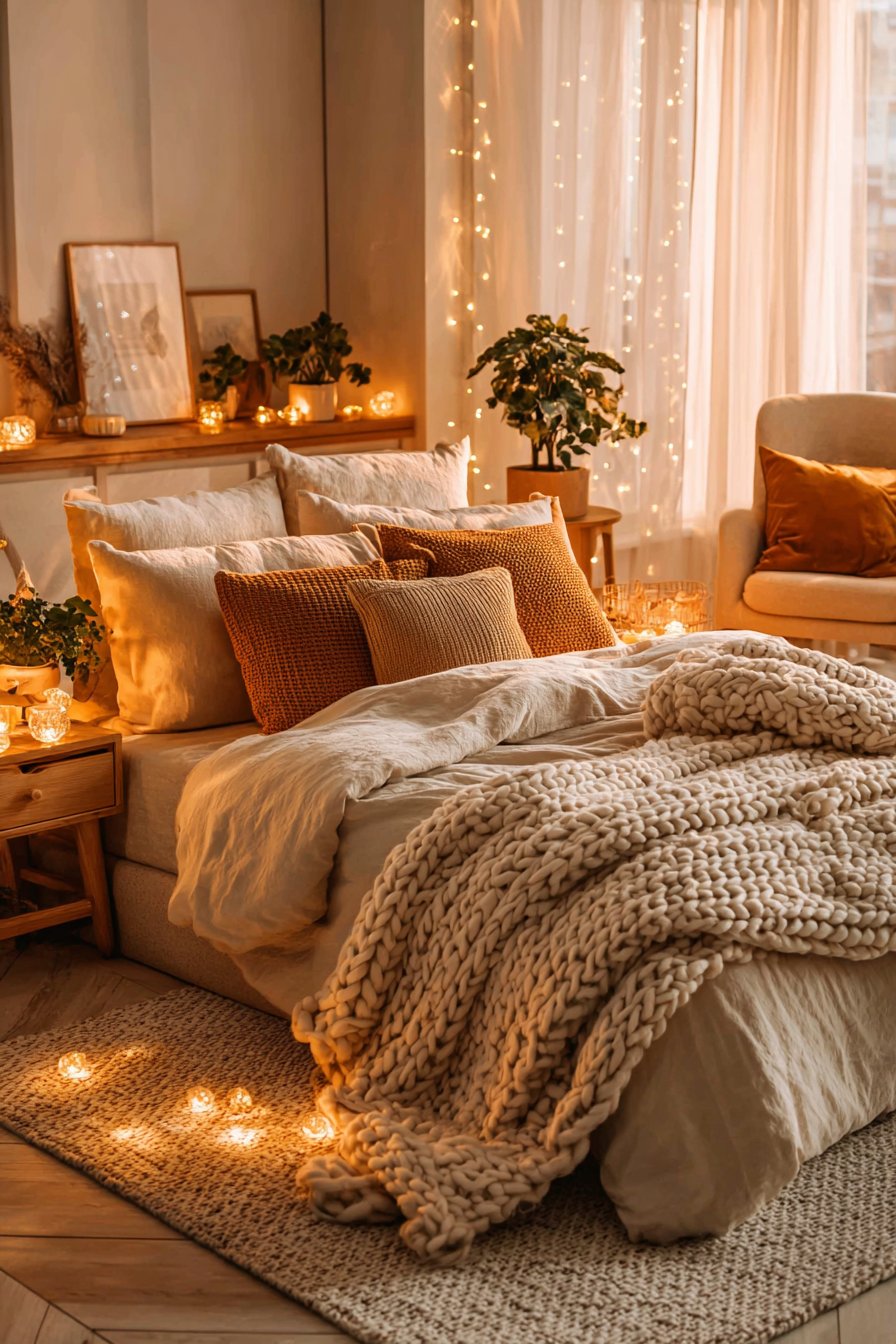
Textile layering creates the touchable, inviting quality that defines truly cozy bedrooms. Multiple blankets, throws, decorative pillows, and plush rugs provide visual richness and tactile comfort that sparse, minimalist bedrooms lack. This abundance of soft materials invites you to sink in, get comfortable, and truly relax in your personal space.
The variety in textures matters as much as quantity when layering bedroom textiles. Combine smooth cotton sheets with chunky knit throws, velvet pillows with linen duvet covers, and faux fur rugs with woven blankets. These contrasting textures create dimensional interest while providing different tactile experiences that engage multiple senses simultaneously.
Practical layering also serves functional purposes beyond aesthetics. Multiple blankets allow temperature adjustment throughout the night, extra pillows support various reading and relaxing positions, and throws provide quick warmth when needed. This functional abundance makes bedrooms feel prepared for your comfort needs rather than existing merely for visual display.
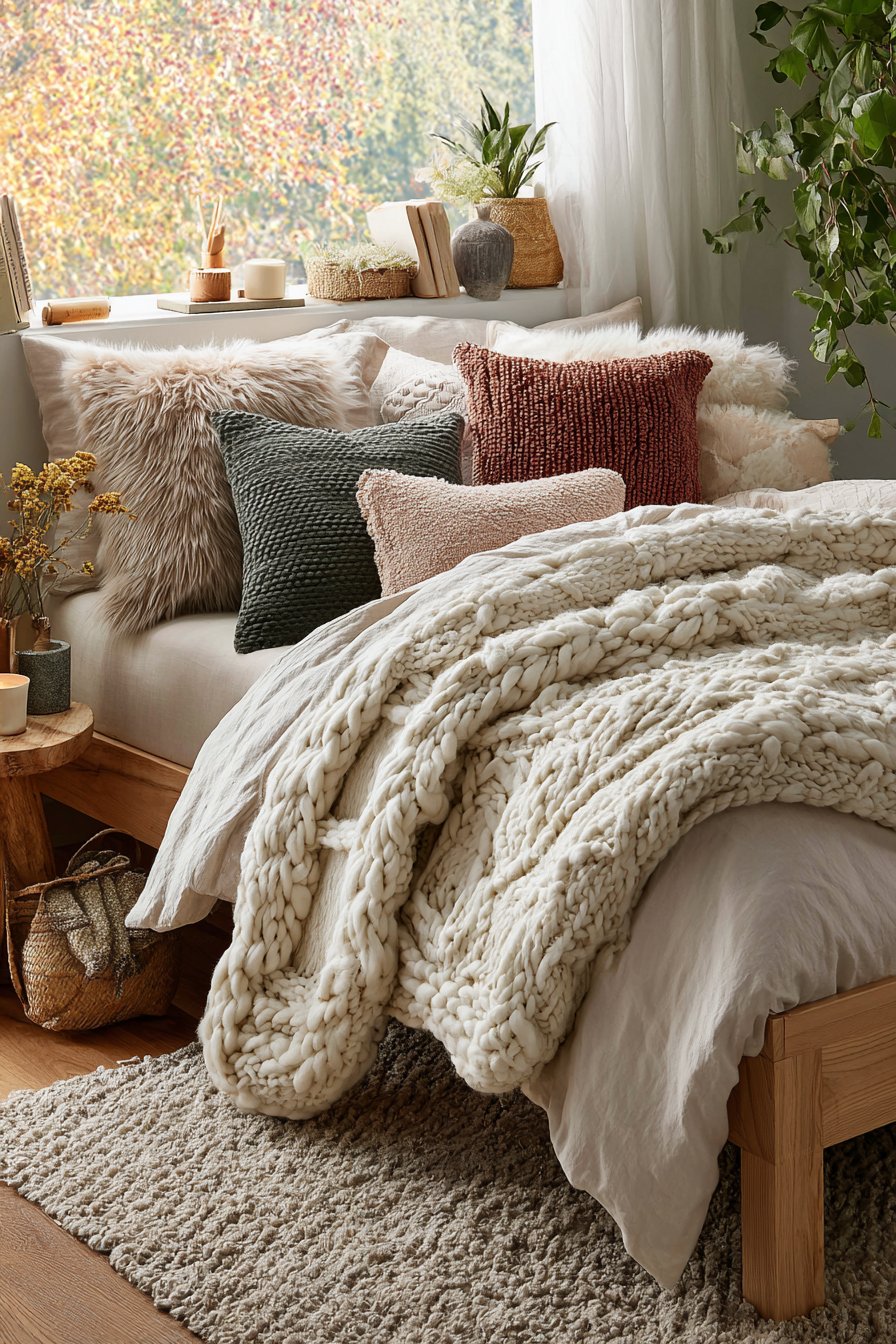
- Layer at least three blanket weights from light to heavy on your bed
- Include 4-6 decorative pillows in varying sizes and textures
- Add throw blankets at the foot of the bed or draped over chairs
- Place a plush rug beside the bed for warm, soft morning footsteps
- Mix textures like velvet, knit, faux fur, and linen for dimensional interest
- Choose washable textiles for practical maintenance of layered comfort
2. Embrace Warm Lighting at Multiple Levels
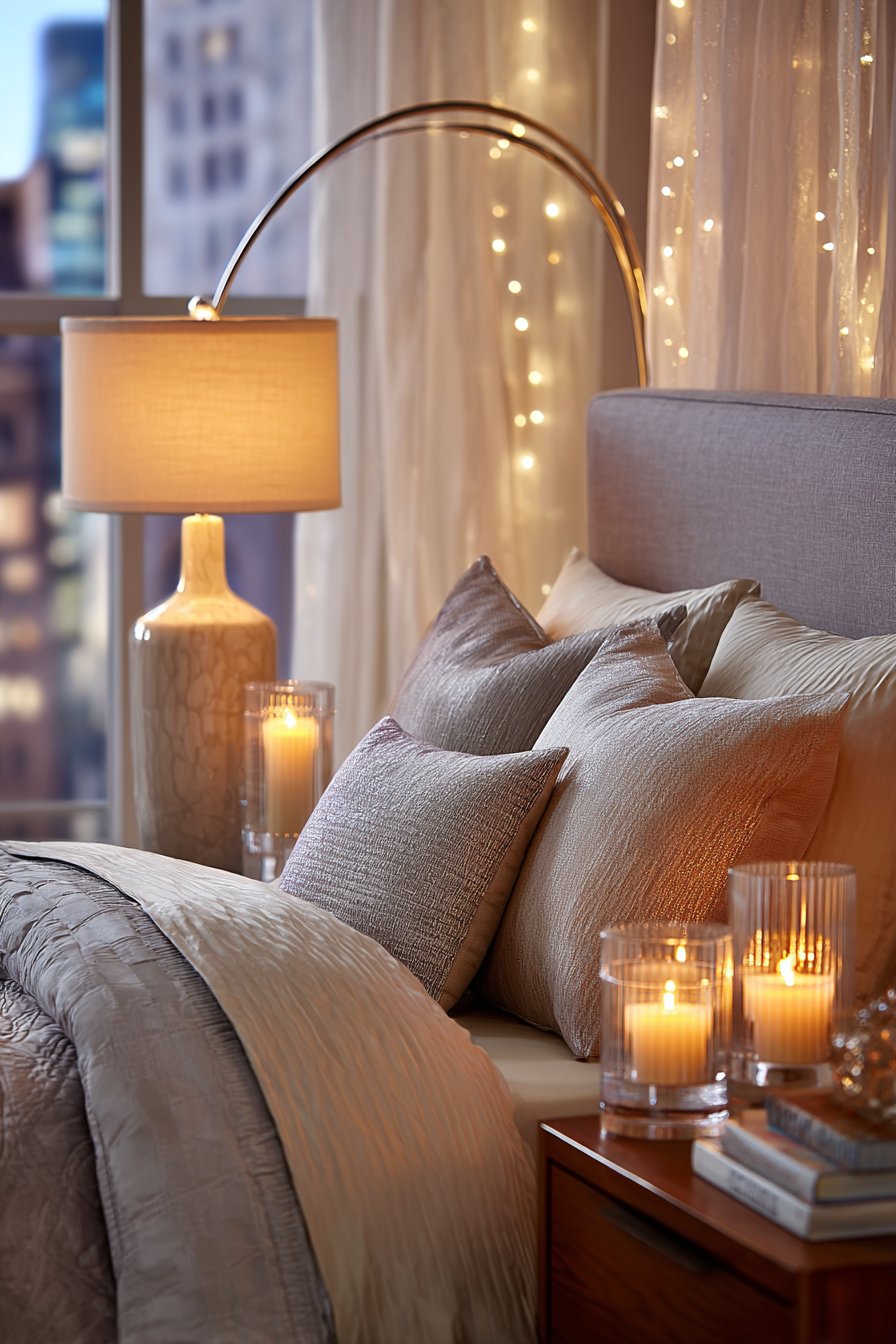
Warm light temperature between 2700-3000K creates the golden glow that defines cozy, homey atmospheres. Cool, blue-toned lighting feels clinical and unwelcoming, undermining the warm sanctuary you’re trying to create. Switching to warm bulbs throughout your bedroom represents the single most impactful change for increasing perceived coziness and comfort.
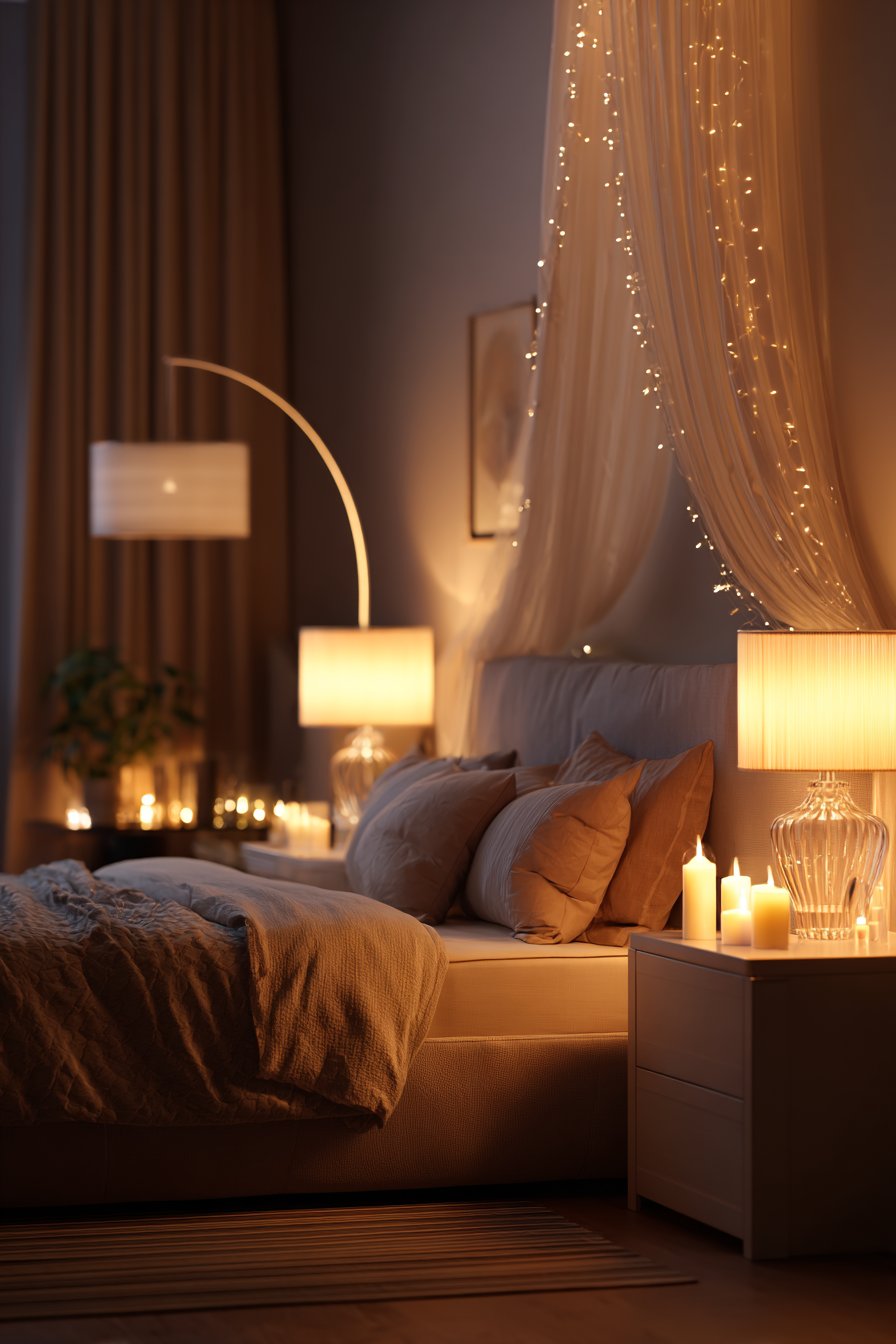
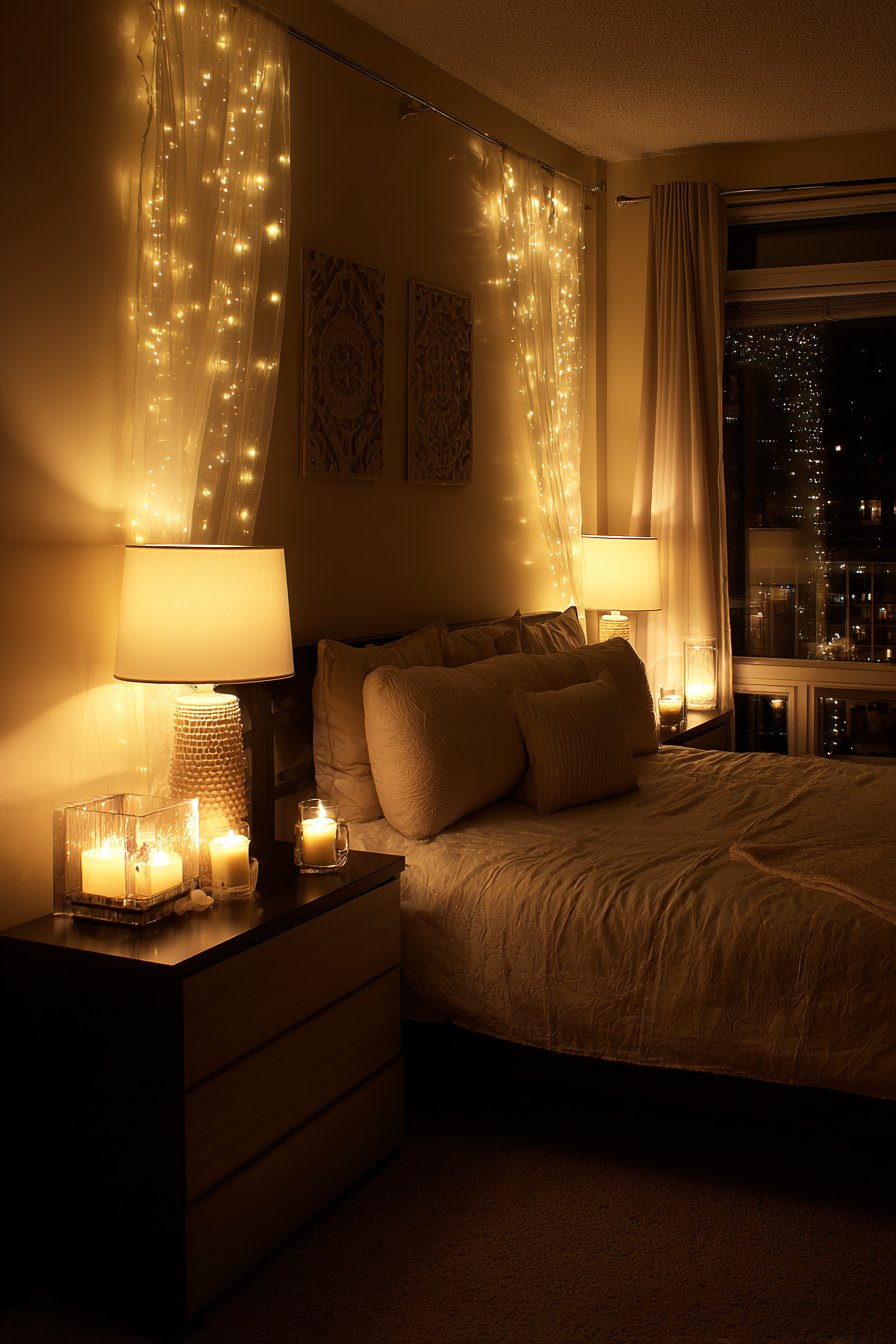
Layered light sources at different heights create dimensional illumination that flat, single-source lighting cannot achieve. Bedside table lamps provide reading light and ambient glow, floor lamps add height and drama, string lights create magical sparkle, and candles contribute flickering warmth. This multi-level approach mimics natural environments where light comes from various sources and heights.
Adjustable lighting through dimmer switches or three-way bulbs allows mood control that supports different bedroom activities. Bright light works for getting dressed or cleaning, while dimmed illumination creates relaxing evening ambiance. This control over lighting intensity makes bedrooms feel more responsive to your needs rather than fixed in one inflexible mode.
- Replace all bulbs with warm white (2700-3000K) temperatures
- Install dimmer switches on overhead fixtures for adjustable brightness
- Add table lamps on both nightstands for symmetrical, functional lighting
- Include string lights or fairy lights for magical ambient sparkle
- Use candles safely in sturdy holders for flickering, romantic warmth
- Ensure each light source can be controlled independently for flexibility
3. Choose a Warm, Comforting Color Palette
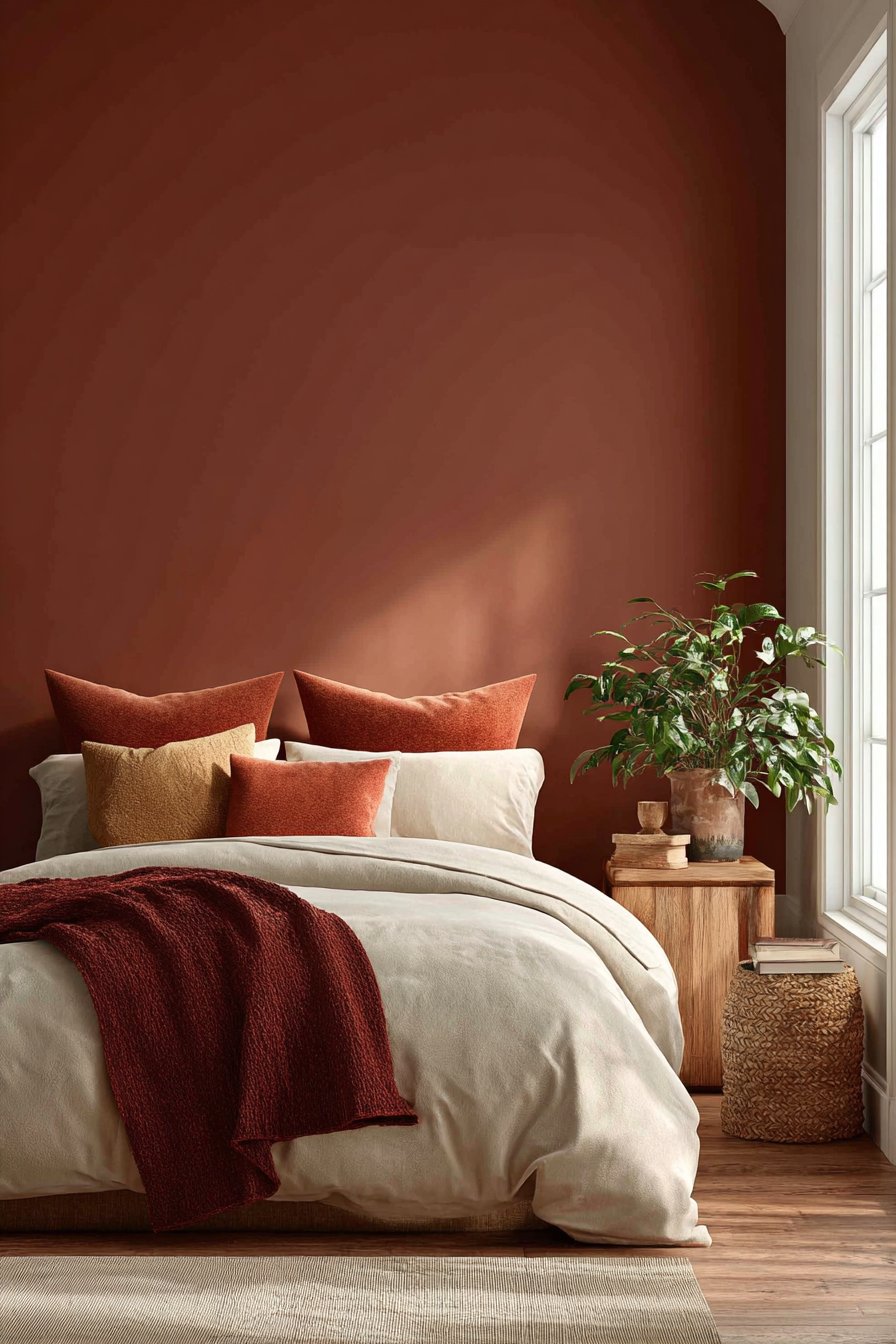
Warm colors like soft terracotta, creamy beige, warm gray, and muted gold create the enveloping comfort that makes bedrooms feel like safe retreats. These hues trigger psychological warmth and security, making spaces feel more intimate and protective. Unlike cool blues or stark whites that can feel distant, warm tones embrace you visually.
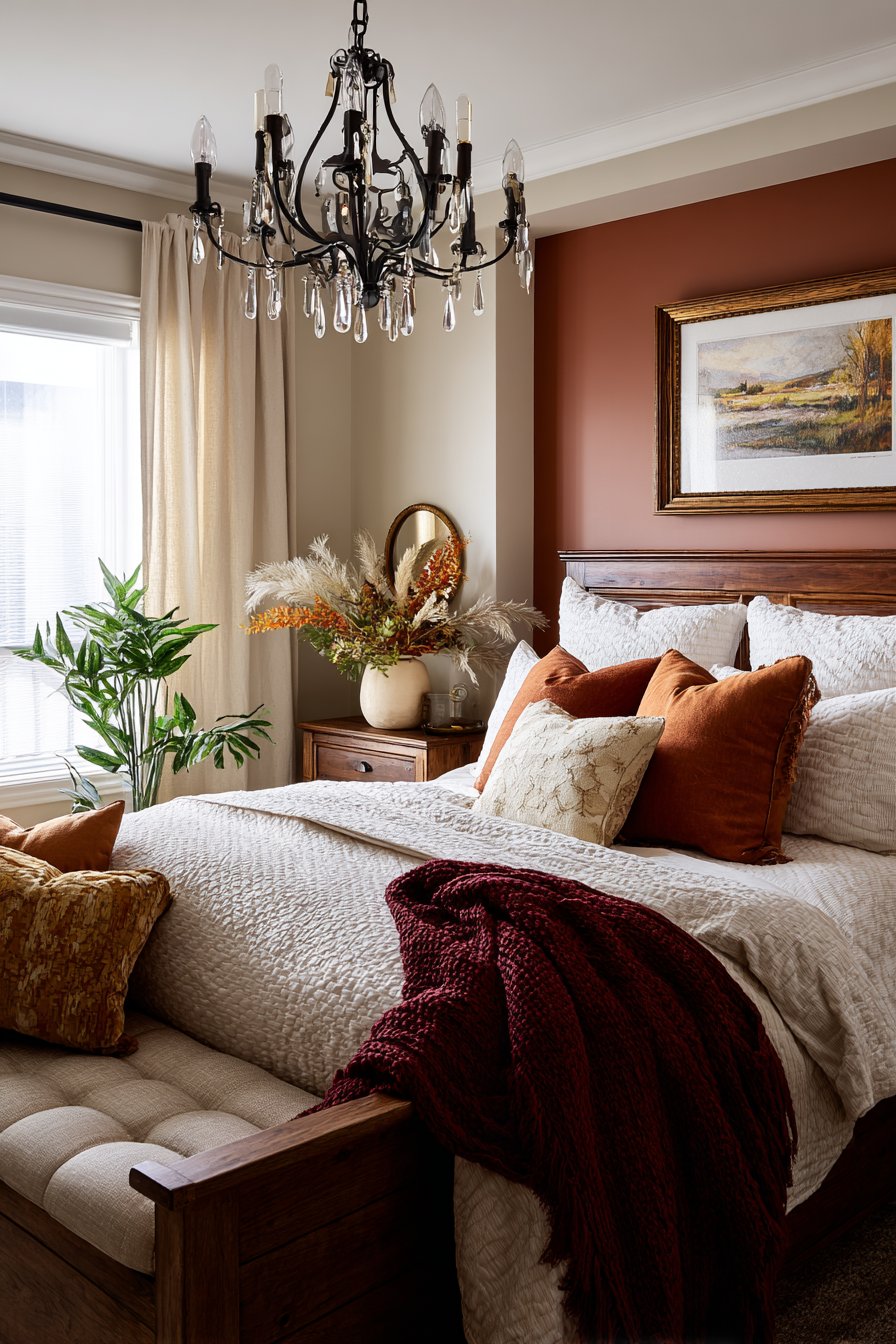
Earth-inspired palettes connect bedrooms to nature’s comforting qualities while maintaining sophisticated appeal. Think clay, sand, rust, moss, and wheat—colors found in peaceful natural settings that humans instinctively find calming. These organic hues work together harmoniously, creating cohesive schemes that feel timeless and personally nurturing rather than trend-driven.
Accent colors should enhance rather than compete with your warm foundation. Deep burgundy, forest green, or burnt orange add richness without disrupting the cozy atmosphere. Introduce these deeper tones through textiles, artwork, or accessories that can be easily changed as preferences evolve, maintaining flexibility within your comforting color story.
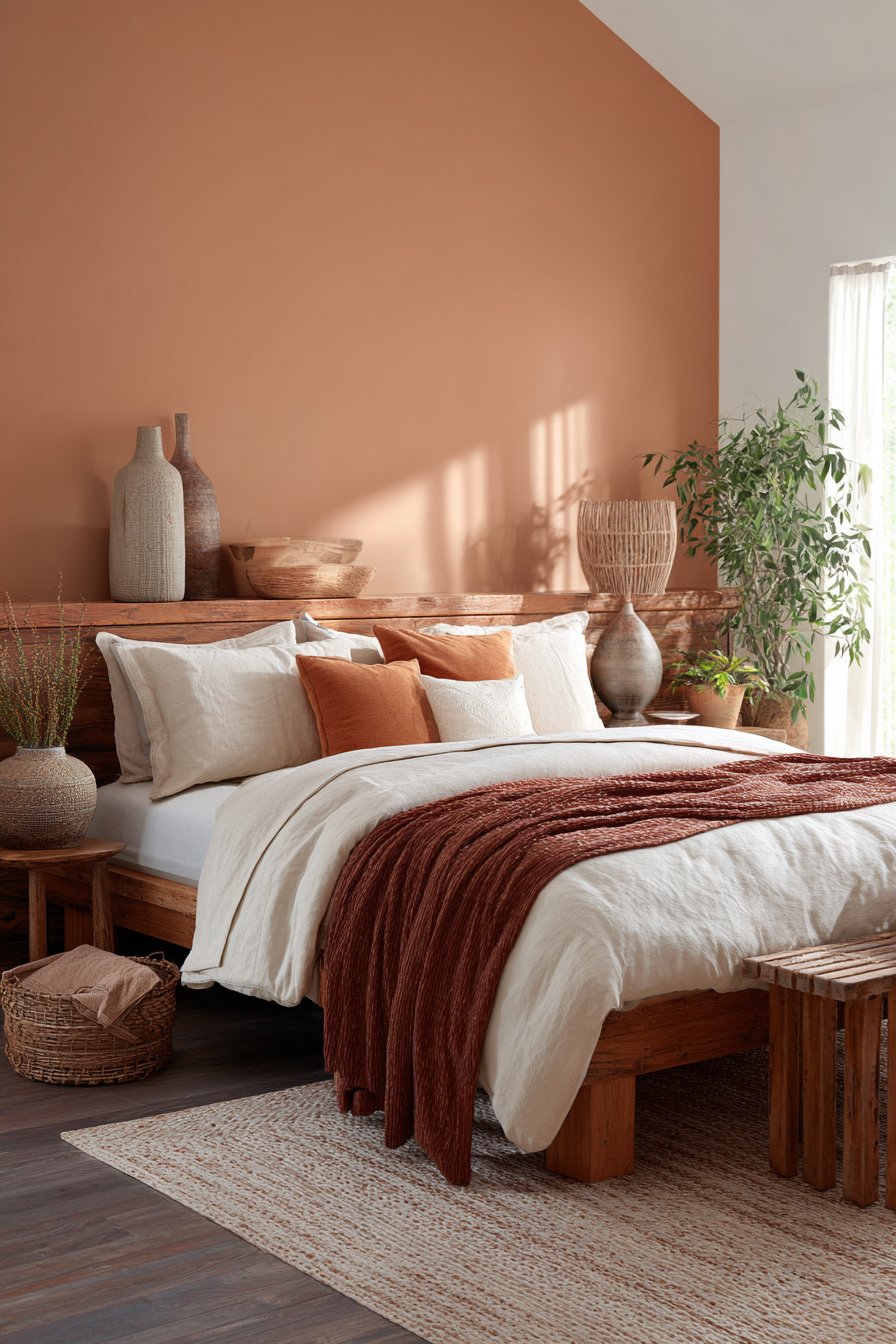
- Paint walls in warm neutrals like beige, taupe, or soft terracotta
- Choose bedding in cream, warm white, or gentle earth tones
- Add accent colors through pillows, throws, and artwork
- Avoid stark white or cool grays that can feel clinical
- Test paint colors in your actual bedroom lighting before committing
- Layer multiple warm shades for depth rather than using single tones
4. Display Personal Memories and Meaningful Items
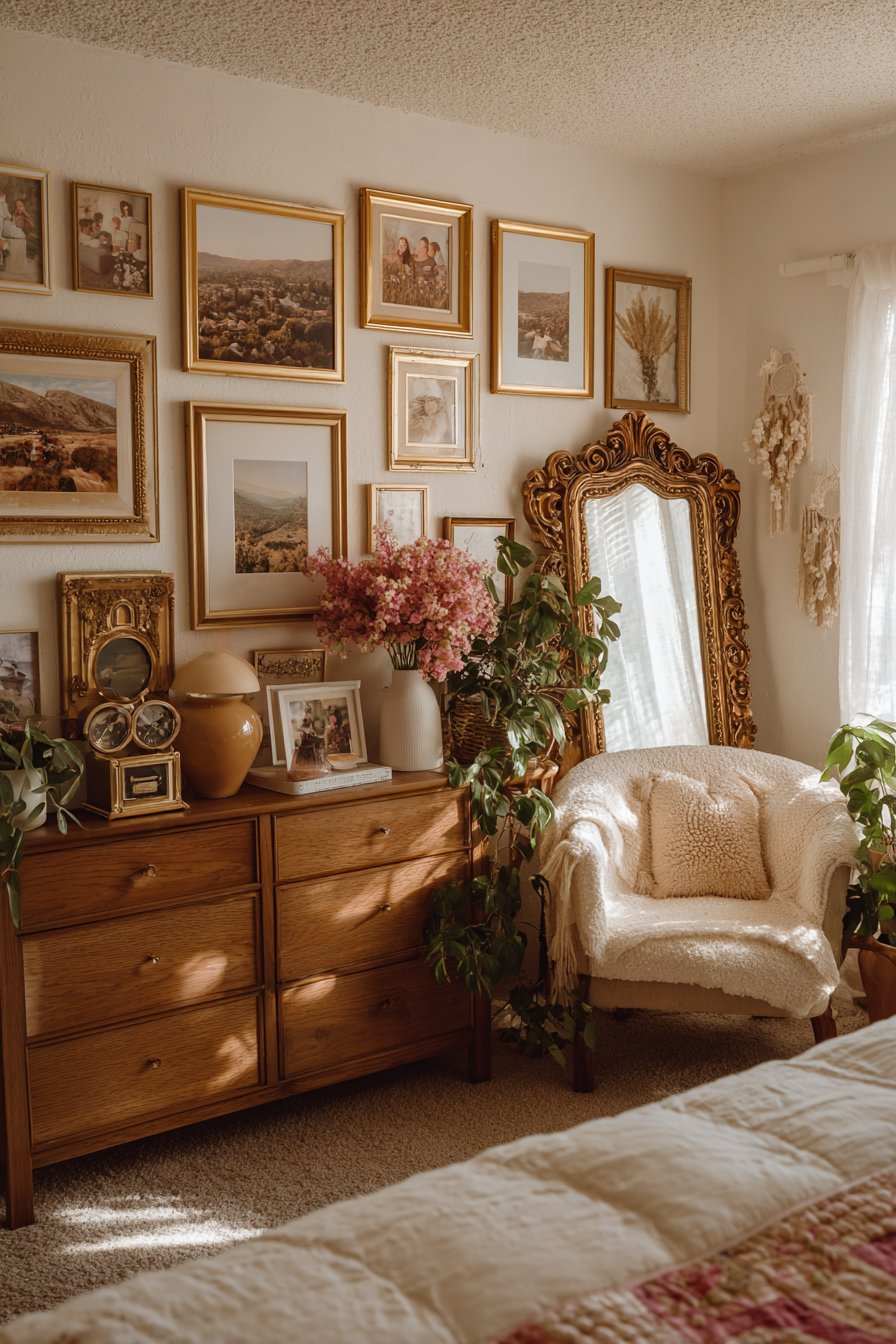
Personal photographs transform generic bedrooms into spaces that tell your unique story. Family pictures, travel memories, and milestone moments create emotional connections that make rooms feel distinctly yours. These visual reminders of loved ones and experiences provide comfort and belonging that generic decorative art cannot replicate.
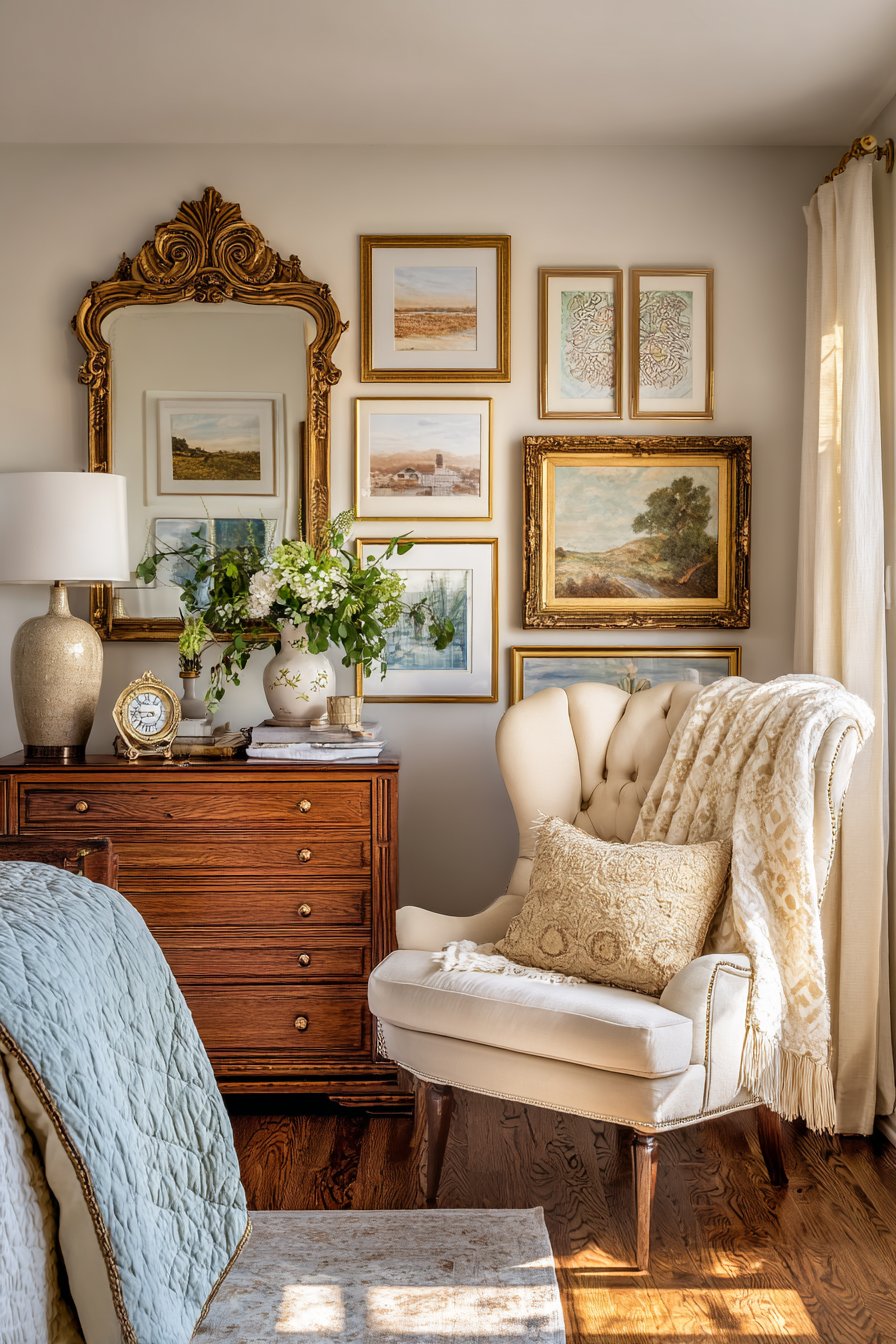
Meaningful objects from your life add authenticity that purchased decor lacks entirely. Grandmother’s vintage mirror, a handmade quilt, travel souvenirs, or inherited furniture pieces carry emotional weight that makes spaces feel rooted in your personal history. These treasured items connect you to people, places, and memories that define your sense of home.
Thoughtful display prevents meaningful items from becoming clutter while ensuring they remain visible and appreciated. Group photos in coordinating frames, dedicate a shelf to special objects, or create a gallery wall of meaningful artwork. This intentional presentation honors your treasures while maintaining the organized, peaceful atmosphere essential to restful bedrooms.
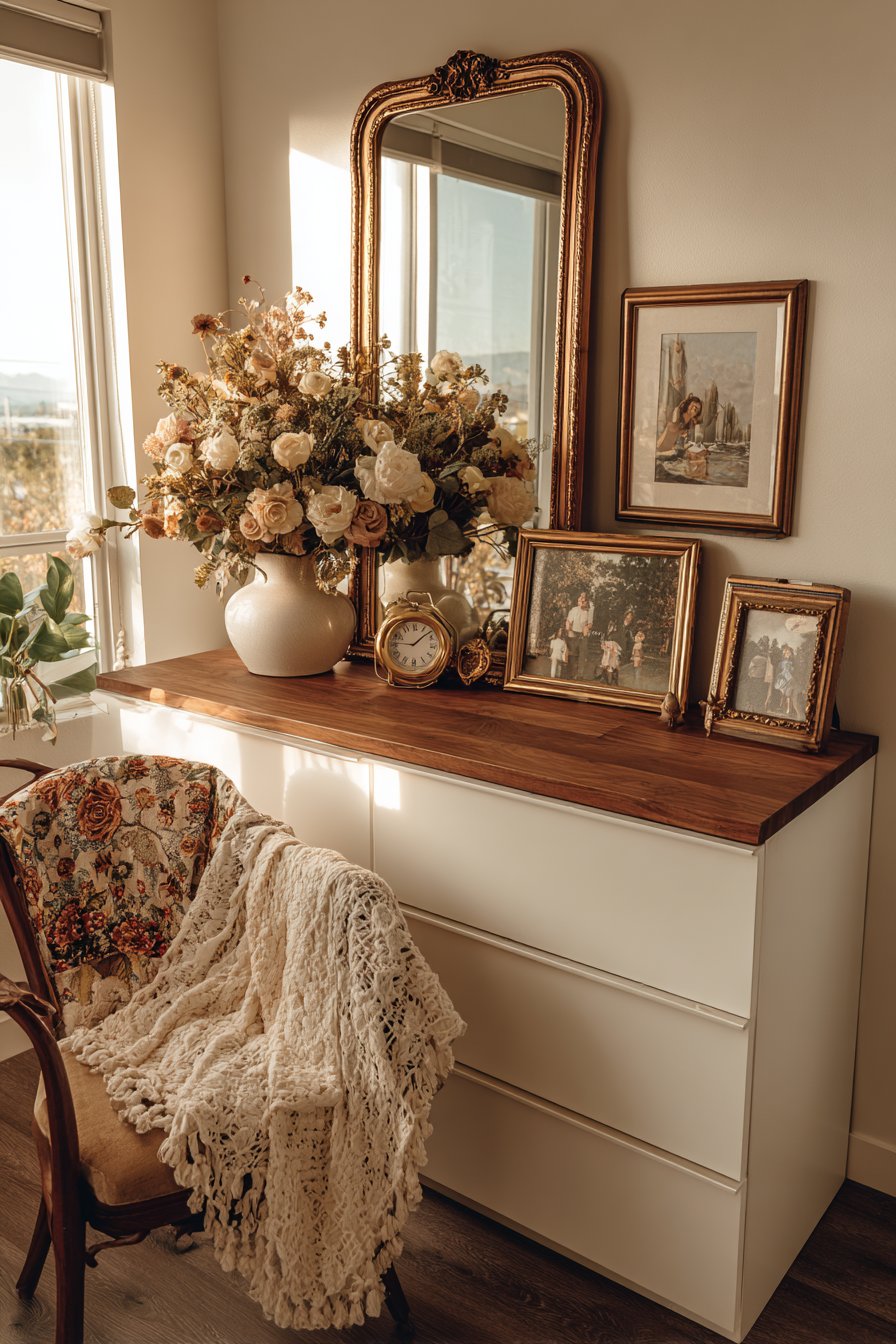
- Create a gallery wall with family photos in coordinating frames
- Display 3-5 meaningful objects on your dresser or nightstand
- Incorporate inherited or handmade items into your bedroom design
- Rotate seasonal photos or memories to keep displays fresh
- Limit meaningful items to favorites that truly resonate emotionally
- Ensure personal displays enhance rather than clutter your peaceful space
5. Invest in Quality, Comfortable Bedding
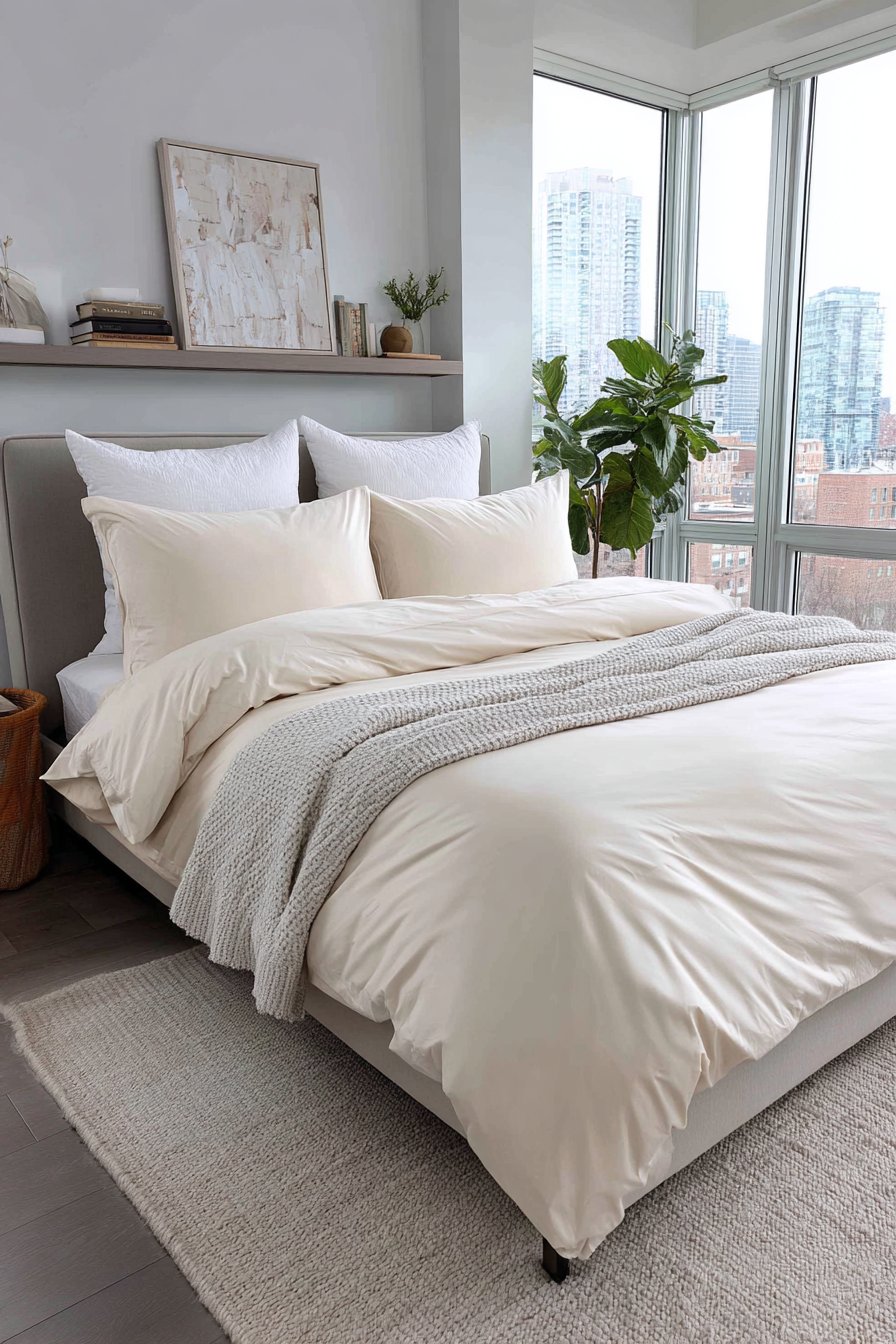
Thread count and fabric quality directly impact sleep comfort and perceived luxury. Sheets between 300-500 thread count in natural fibers like cotton or linen provide the perfect balance of softness, breathability, and durability. This investment in quality bedding pays dividends nightly through better sleep and the simple pleasure of sliding into genuinely comfortable sheets.

Mattress and pillow quality forms the foundation of bedroom comfort that no amount of decorative styling can overcome. A supportive mattress suited to your sleep style and properly filled pillows make the difference between genuine rest and restless nights. These functional investments matter more than any decorative element when creating bedrooms that truly feel like home.
Seasonal adjustments to bedding weight and materials maintain year-round comfort that responds to changing needs. Lightweight cotton for summer, flannel for winter, and layered options for transitional seasons ensure your bed always feels inviting regardless of temperature. This attentive seasonal rotation demonstrates the care that makes spaces feel thoughtfully maintained and personally tuned to comfort.

- Invest in quality sheets with 300-500 thread count in natural fibers
- Replace pillows every 1-2 years to maintain proper support
- Use mattress toppers to extend mattress life and adjust comfort
- Layer bedding weights to accommodate temperature changes
- Choose duvet covers you can easily wash for practical maintenance
- Select hypoallergenic materials if you have sensitivities or allergies
6. Add Natural Elements and Living Plants
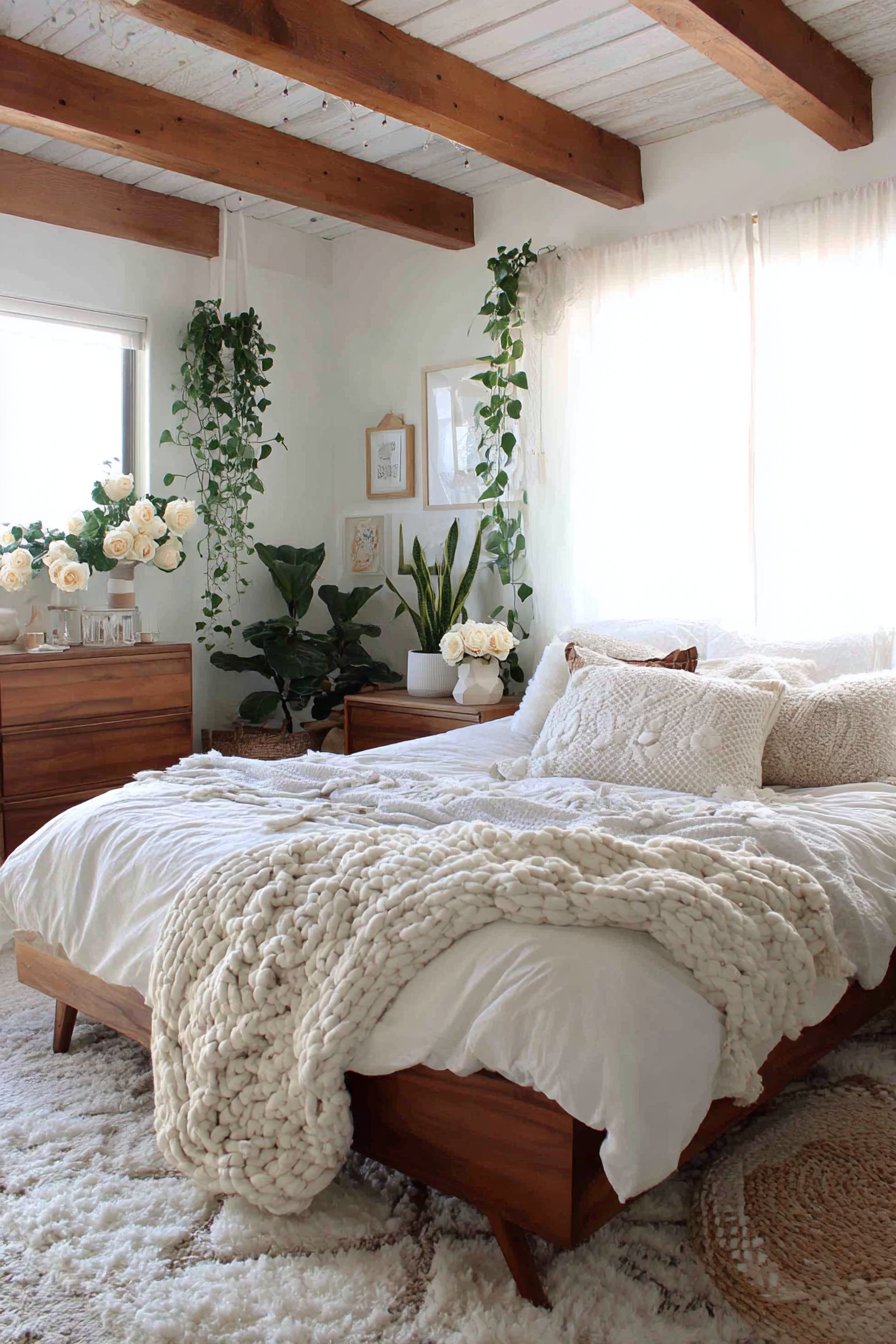
Houseplants bring life, color, and air-purifying benefits to bedrooms while connecting you to nature. The presence of living things creates psychological comfort and wellbeing that artificial decorations cannot replicate. Even low-maintenance plants like pothos, snake plants, or peace lilies add vitality that makes bedrooms feel more alive and nurturing.
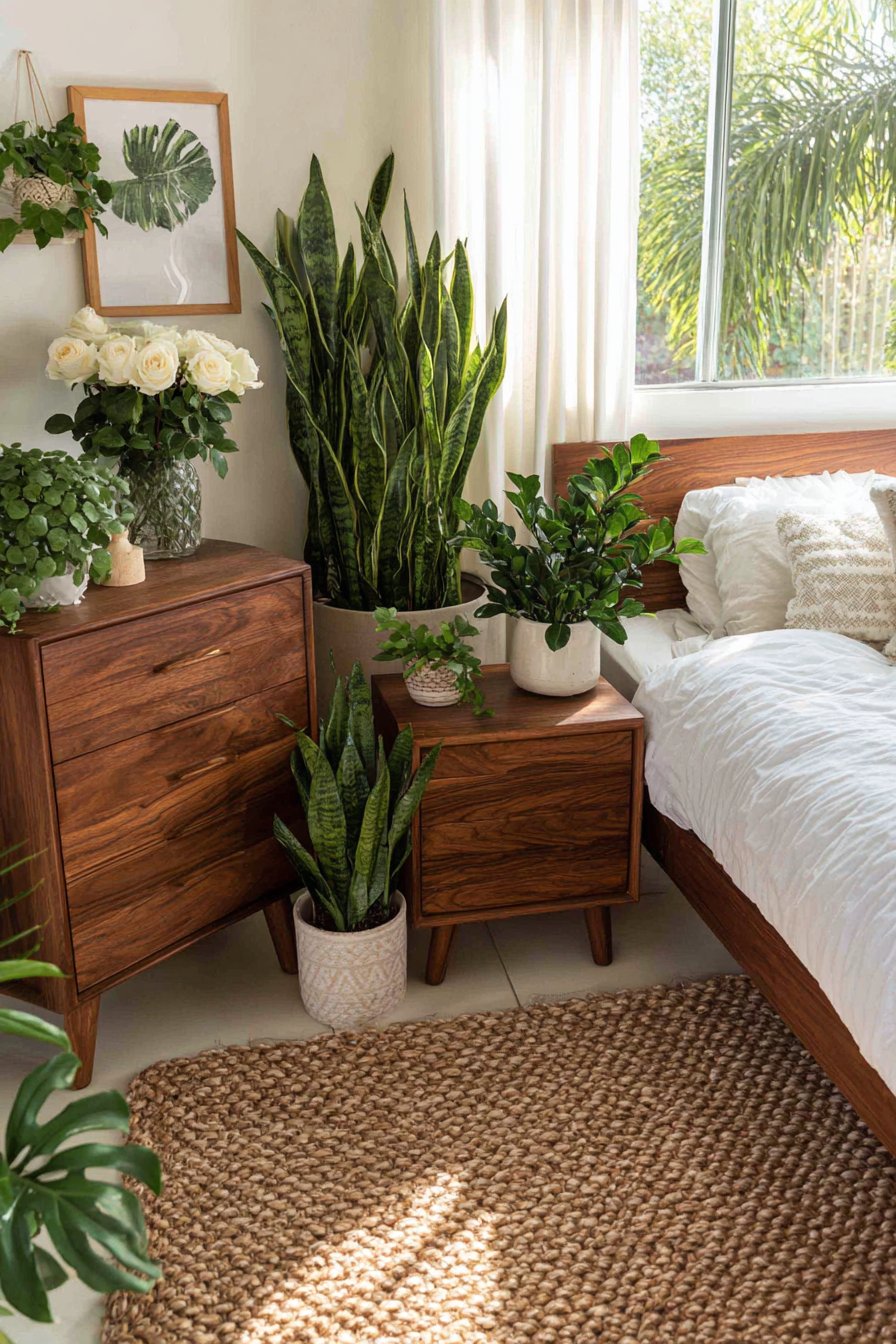
Natural materials throughout the space reinforce the organic comfort that defines homey atmospheres. Wood furniture, cotton textiles, wool rugs, and stone accessories possess inherent warmth that synthetic materials lack. These authentic materials age beautifully, developing patina and character that synthetic alternatives never achieve, making them investment pieces in your home’s story.
Fresh flowers or branches provide temporary natural beauty that changes with seasons and occasions. A simple vase of seasonal blooms or interesting branches adds color, texture, and natural fragrance that enhances the sensory experience of your bedroom. This rotating natural element keeps the space feeling fresh and cared for without requiring permanent decorative commitment.
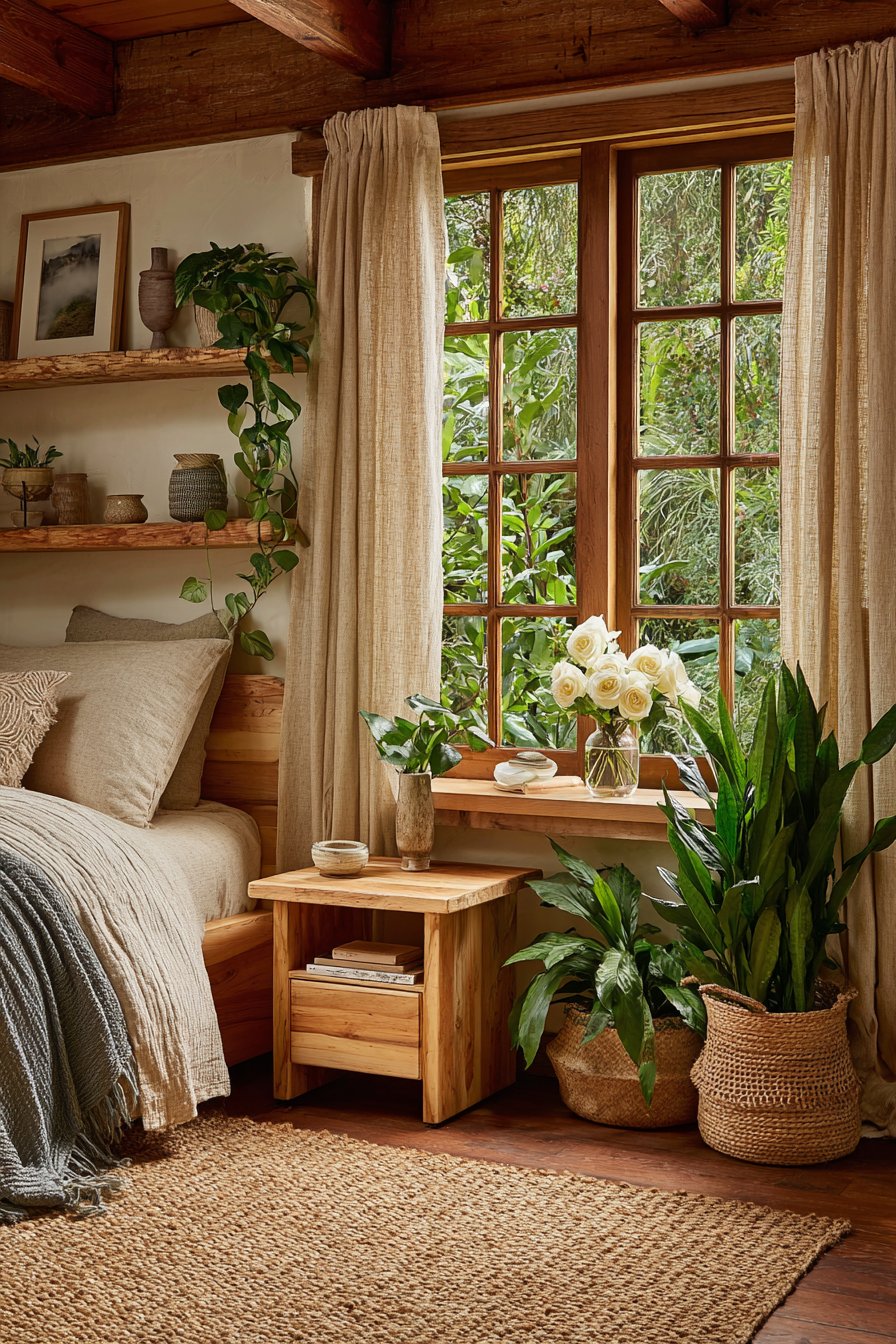
- Add 1-3 low-maintenance houseplants appropriate for bedroom light levels
- Choose wood furniture in natural finishes over synthetic alternatives
- Display fresh flowers or seasonal branches in attractive vases
- Use natural fiber rugs like wool, cotton, or jute
- Incorporate stone or ceramic accessories for organic texture
- Ensure plants receive adequate light and care to remain healthy
7. Create Ambient Scent Experiences
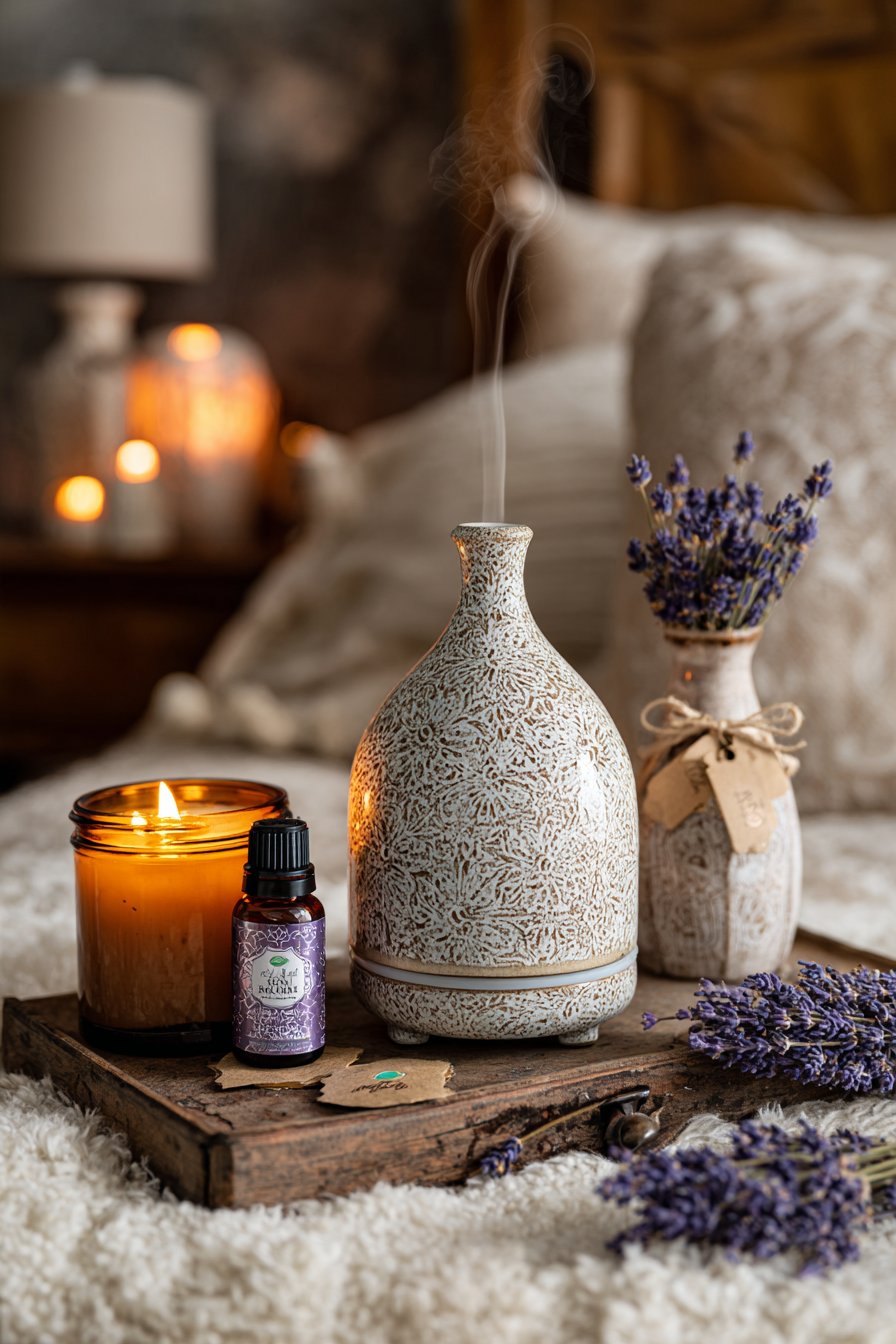
Pleasant aromas powerfully influence how comfortable and homey spaces feel, working on subconscious levels to trigger relaxation and wellbeing. Lavender promotes sleep, vanilla creates warmth, and eucalyptus provides clarity—choosing appropriate bedroom scents enhances the functional and emotional experience of your personal sanctuary significantly.
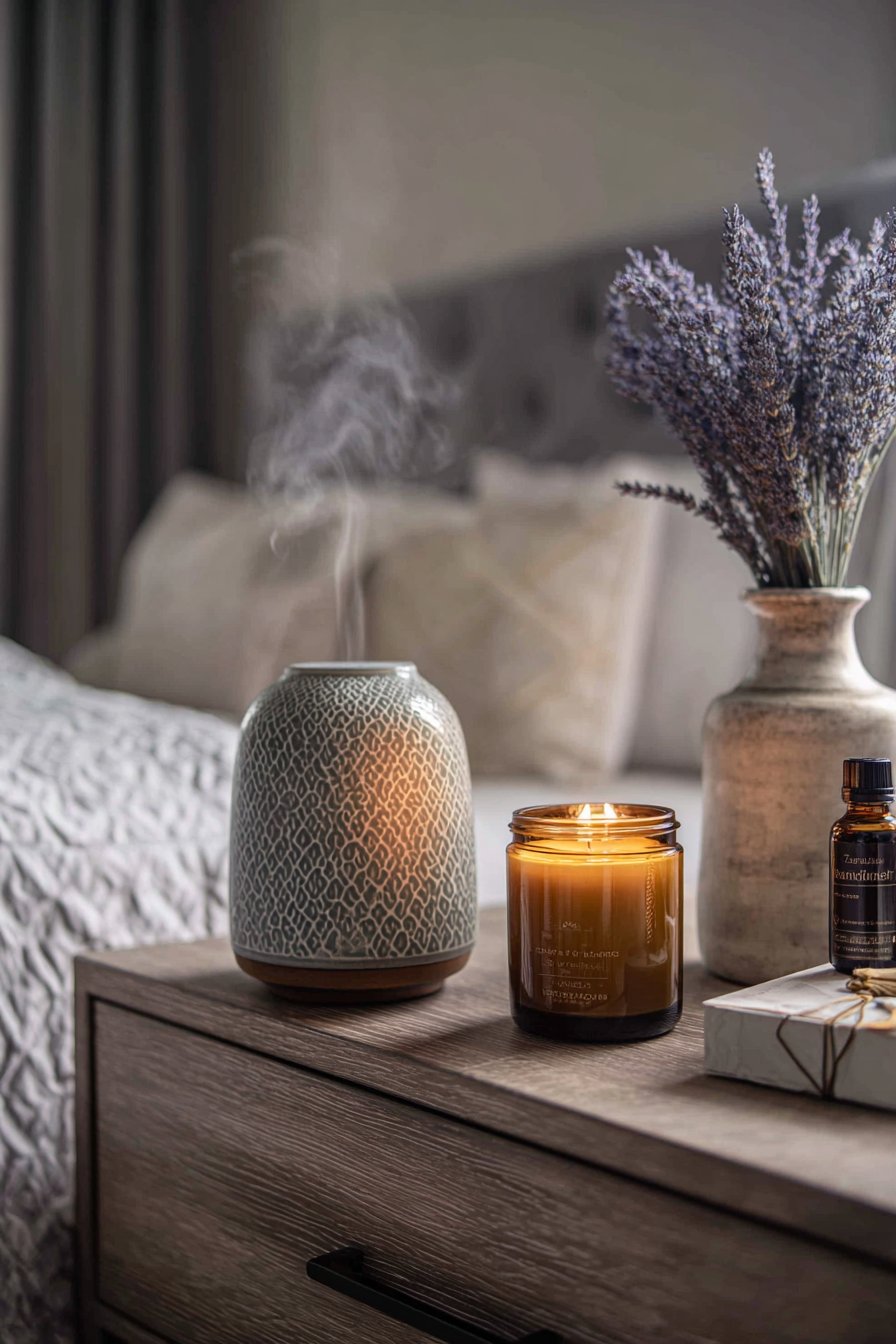
Scent delivery methods should be safe and controllable in bedroom environments where you spend extended periods. Essential oil diffusers, linen sprays, scented sachets in drawers, or naturally scented candles provide fragrance without overwhelming or irritating. Avoid synthetic air fresheners that can disrupt sleep or cause sensitivities in the confined bedroom space.
Seasonal scent rotation keeps bedroom atmospheres feeling current and connected to the changing year. Light florals for spring, fresh citrus for summer, warm spices for fall, and cozy vanilla for winter create sensory experiences that mark time’s passage. This subtle variation prevents olfactory fatigue while making your bedroom feel responsive to natural seasonal rhythms.
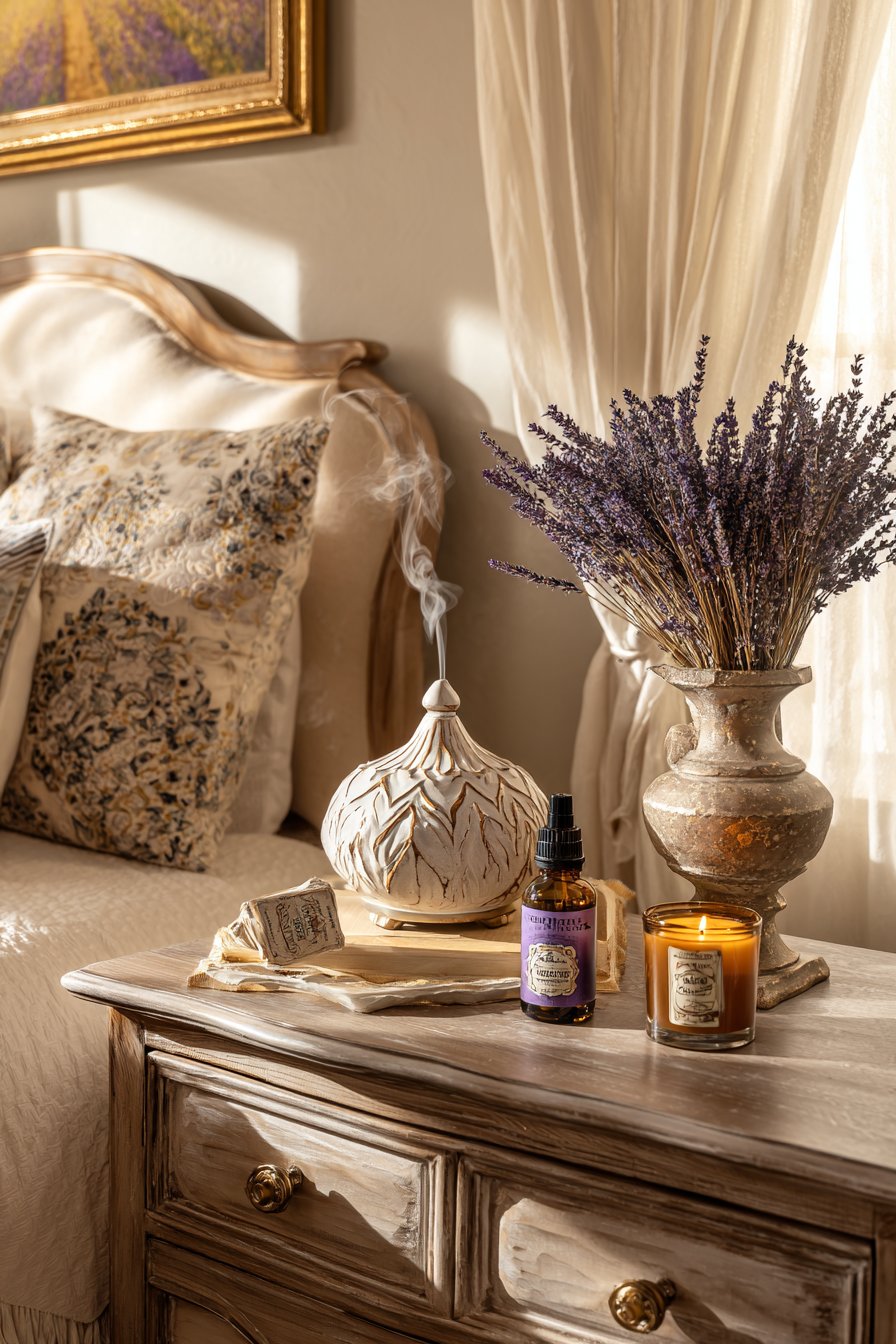
- Use essential oil diffusers with sleep-promoting scents like lavender
- Spray linen mist on sheets and pillows before bed
- Place scented sachets in drawers and closets for subtle fragrance
- Choose naturally scented candles in warm, relaxing fragrances
- Avoid overpowering scents that might disrupt sleep quality
- Rotate seasonal scents to keep bedroom atmosphere fresh and interesting
8. Manage Clutter While Maintaining Personality
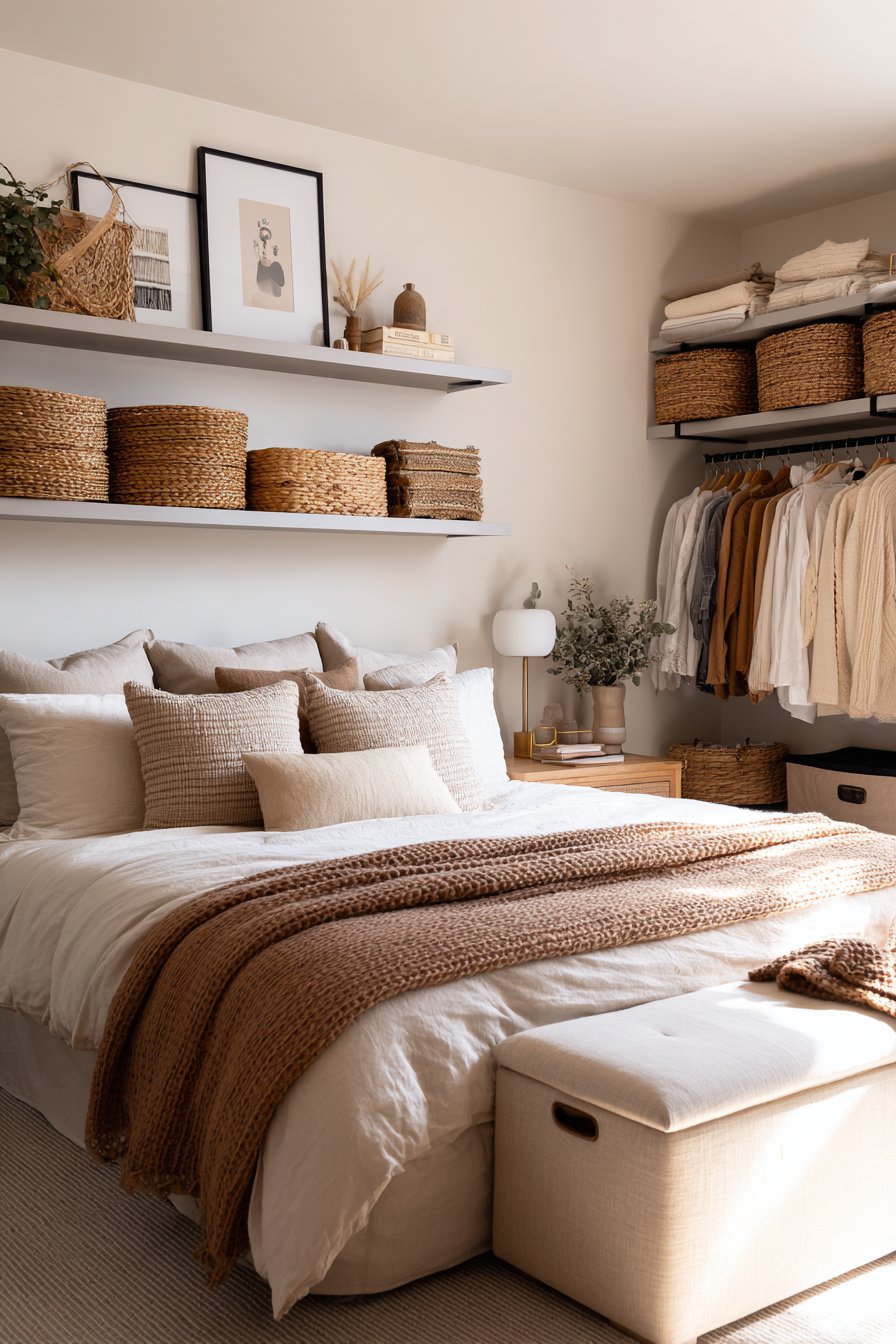
Thoughtful storage maintains the clean, peaceful atmosphere essential to restful bedrooms while keeping necessary items accessible. Clutter creates visual stress that undermines the calm you’re trying to achieve, but sterile minimalism feels unwelcoming. The key lies in providing adequate storage that hides chaos while displaying meaningful items intentionally.
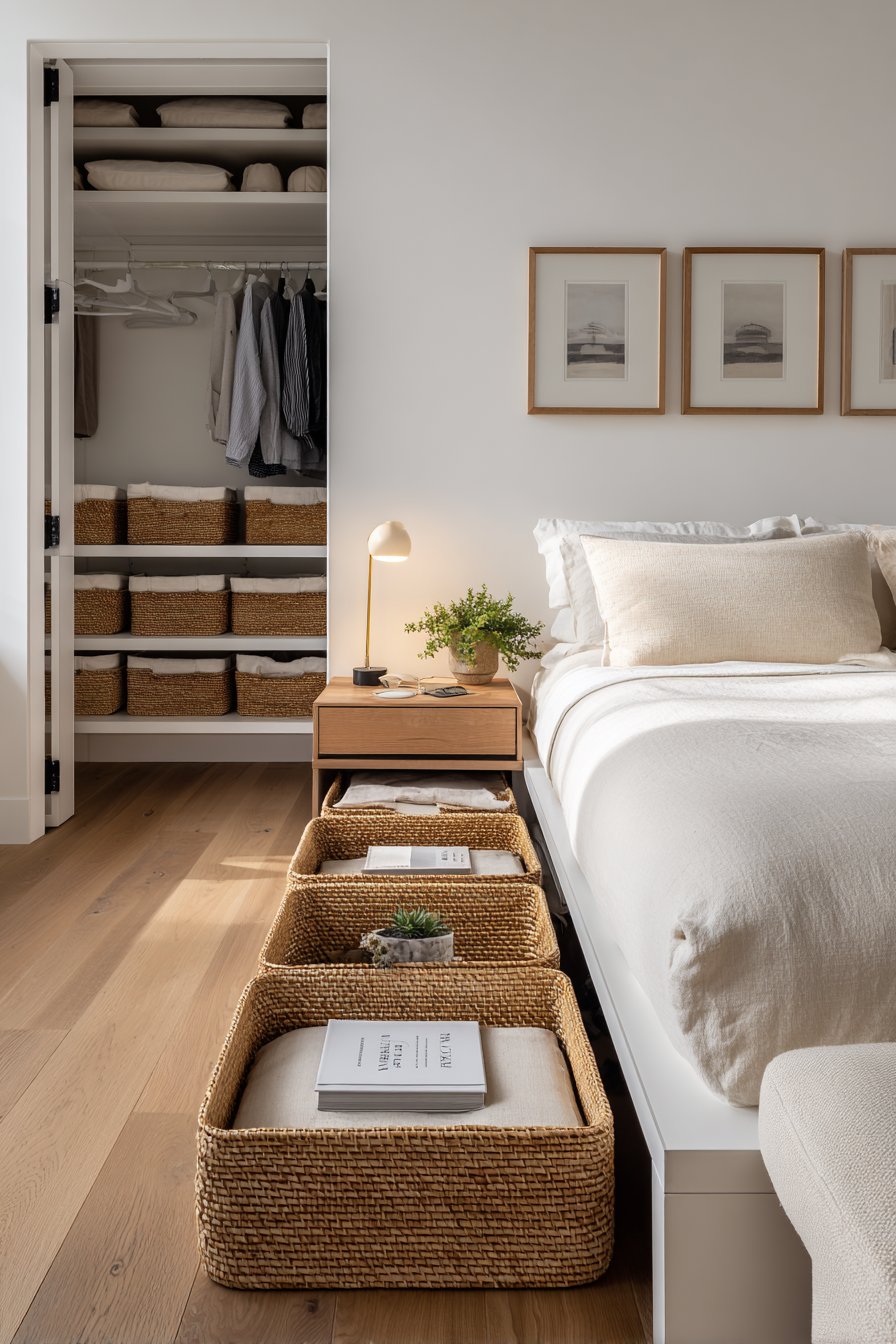
Hidden storage solutions like under-bed boxes, built-in closets, and furniture with concealed compartments keep daily necessities organized without visible disorder. When everything has a designated home, maintaining tidiness requires minimal effort, allowing your bedroom to remain a peaceful retreat rather than requiring constant organizational battles that drain energy.
Visible items should be limited to things that genuinely add beauty or meaning to your space. A stack of favorite books, a beautiful jewelry box, or carefully chosen decorative objects enhance the room’s personality. This curated approach to visible storage ensures everything contributing to your bedroom’s appearance earns its place through beauty or significance.
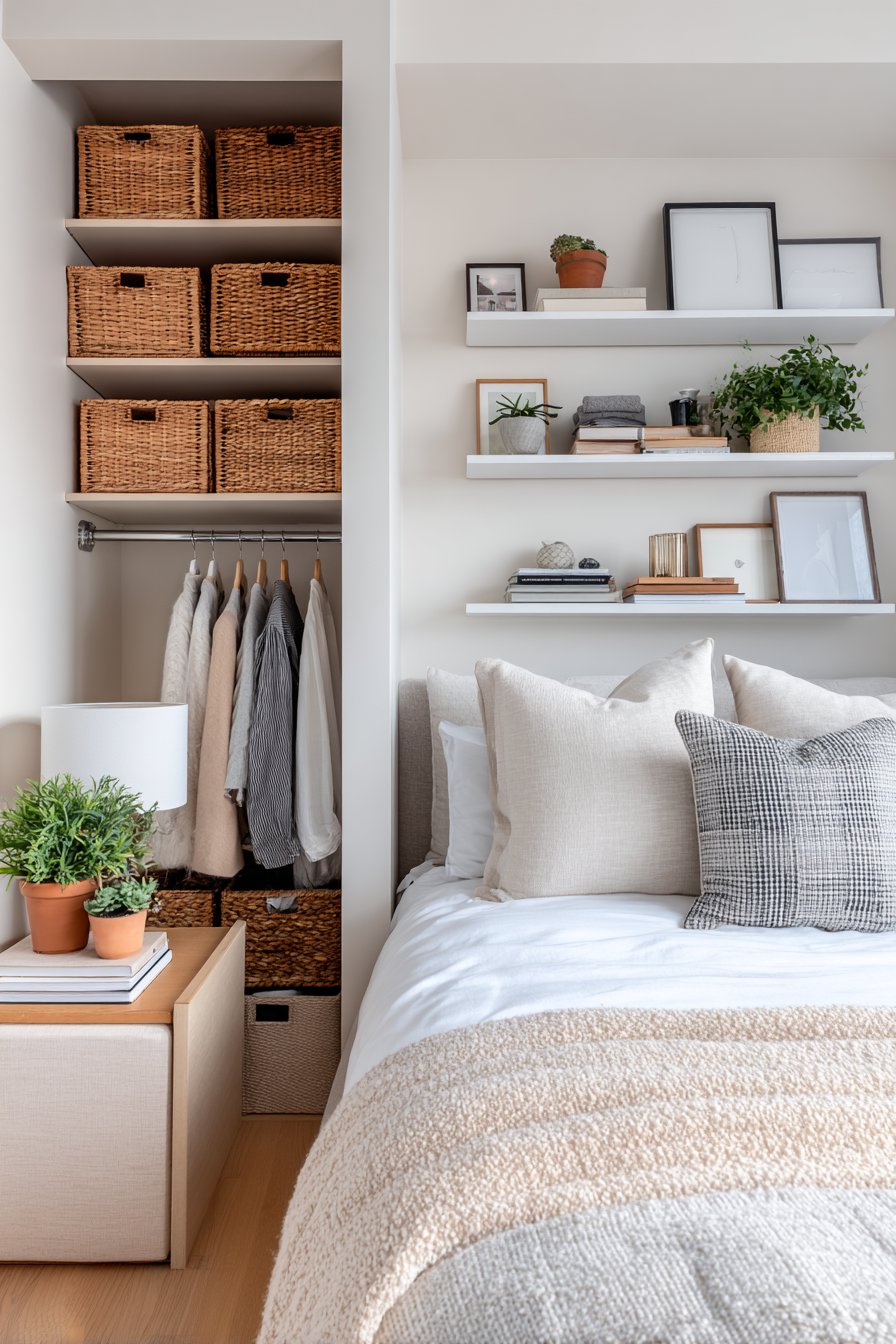
- Invest in attractive storage boxes or baskets for visible organization
- Use under-bed storage for seasonal items or extra linens
- Limit nightstand surfaces to 3-5 items maximum
- Install adequate closet organization to contain clothing properly
- Adopt a “one in, one out” policy to prevent accumulation
- Regularly edit belongings to maintain only items you use or love
9. Incorporate Soft, Flattering Ambient Lighting
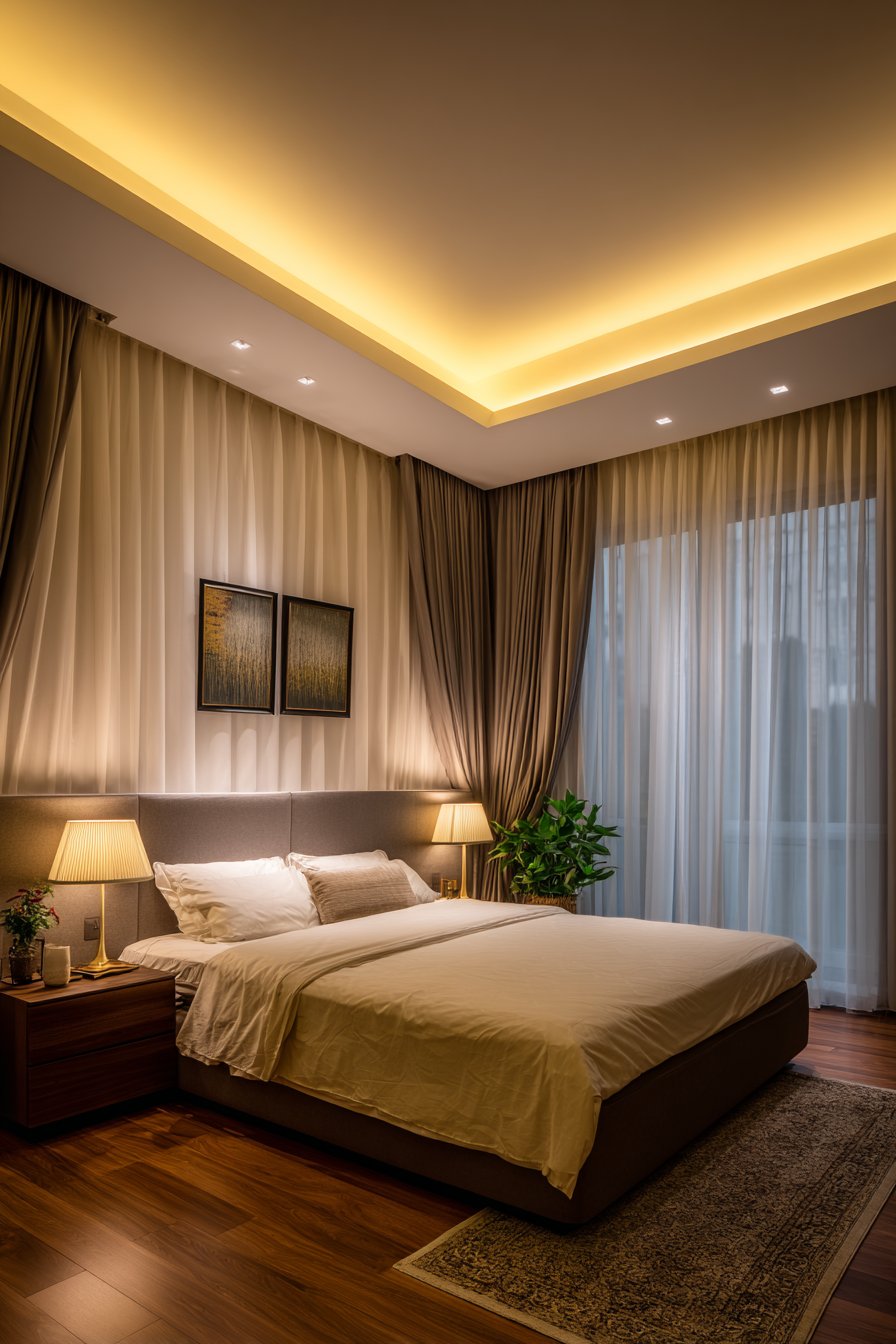
No harsh overhead lighting should ever be your primary bedroom illumination. Overhead fixtures create unflattering shadows and institutional feelings that undermine coziness. Instead, rely on peripheral lighting from lamps, sconces, and accent lights that create gentle, indirect illumination flattering to both people and spaces.
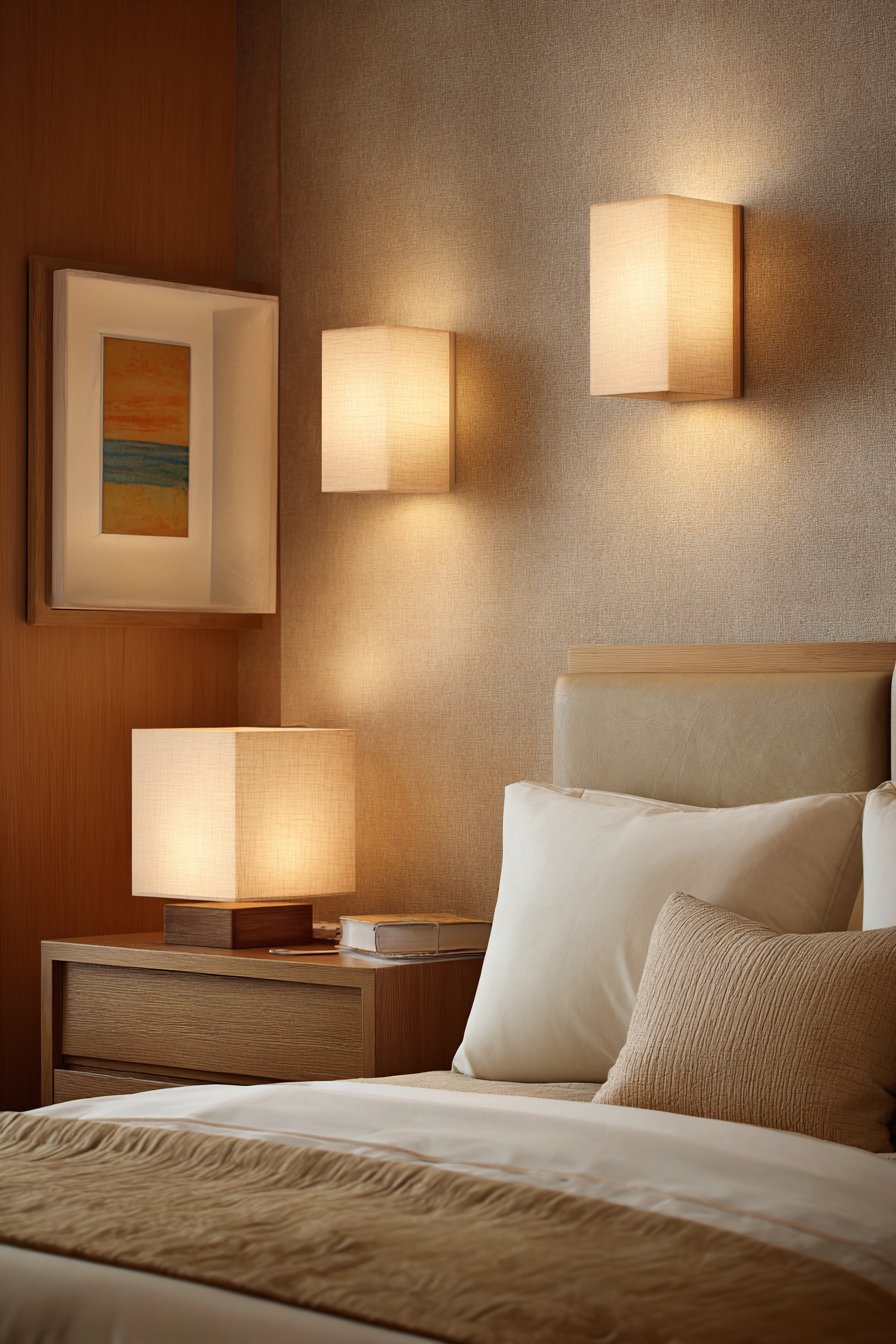
Lampshade selection significantly affects light quality and ambiance in bedrooms. Fabric shades diffuse light softly, creating warm glows rather than harsh spots. Choose shades in warm tones like cream or beige that enhance rather than cool the light temperature. The right lampshade transforms a basic lamp into a source of beautiful, flattering illumination.
Indirect lighting techniques like uplighting, backlighting, or wall washing create sophisticated ambiance that feels intentionally designed. Place lamps behind furniture to cast soft glows on walls, add LED strips behind headboards for gentle backlighting, or use picture lights to highlight artwork. These professional techniques elevate bedroom lighting from functional to atmospheric and genuinely cozy.
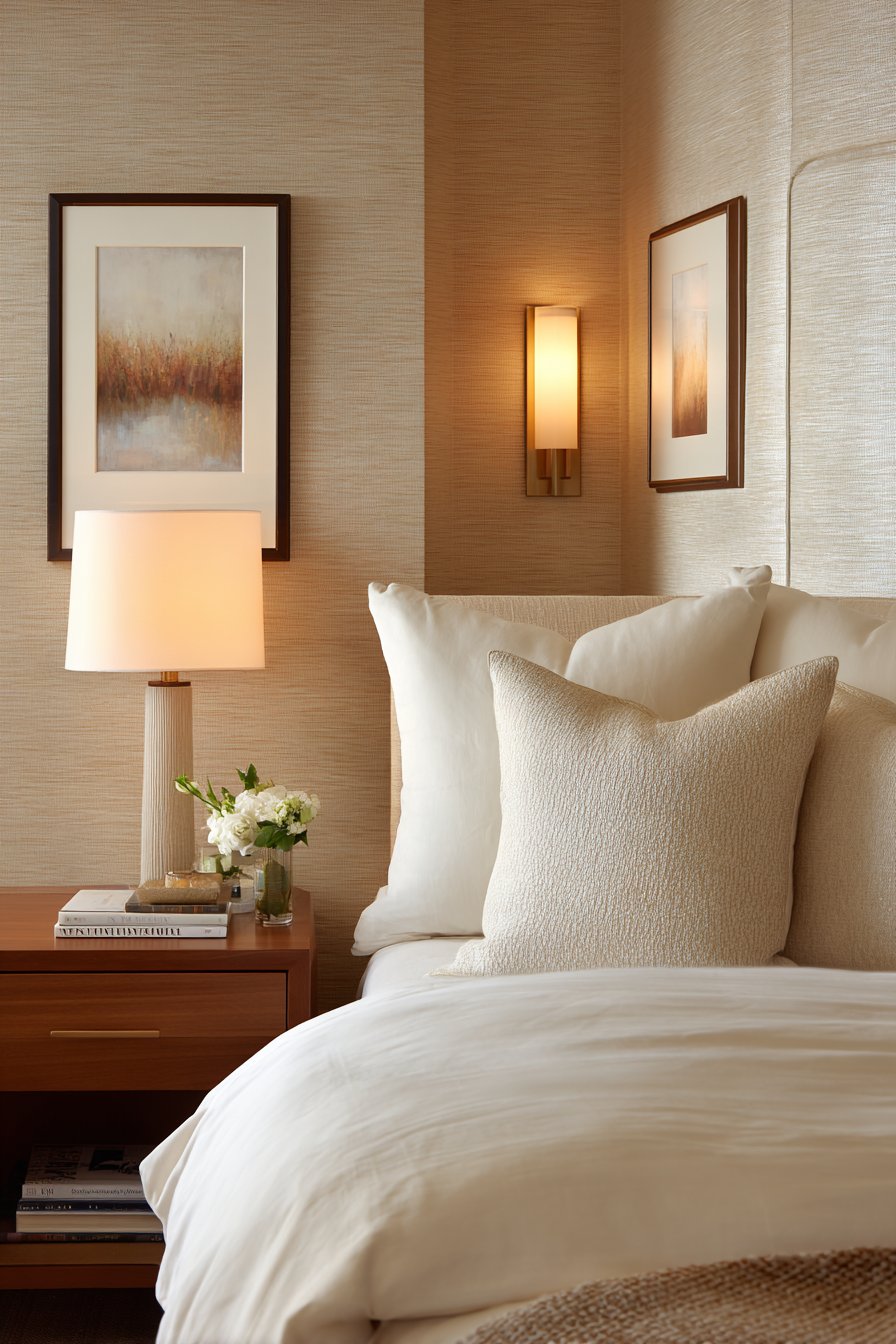
- Replace harsh overhead lighting with multiple softer light sources
- Choose fabric lampshades in warm colors for diffused, flattering light
- Position lamps to create indirect lighting that bounces off walls
- Add uplights in corners to wash walls with gentle illumination
- Use picture lights or LED strips for subtle accent lighting
- Ensure all light sources use warm bulbs for consistent cozy atmosphere
10. Establish Comfortable, Inviting Seating
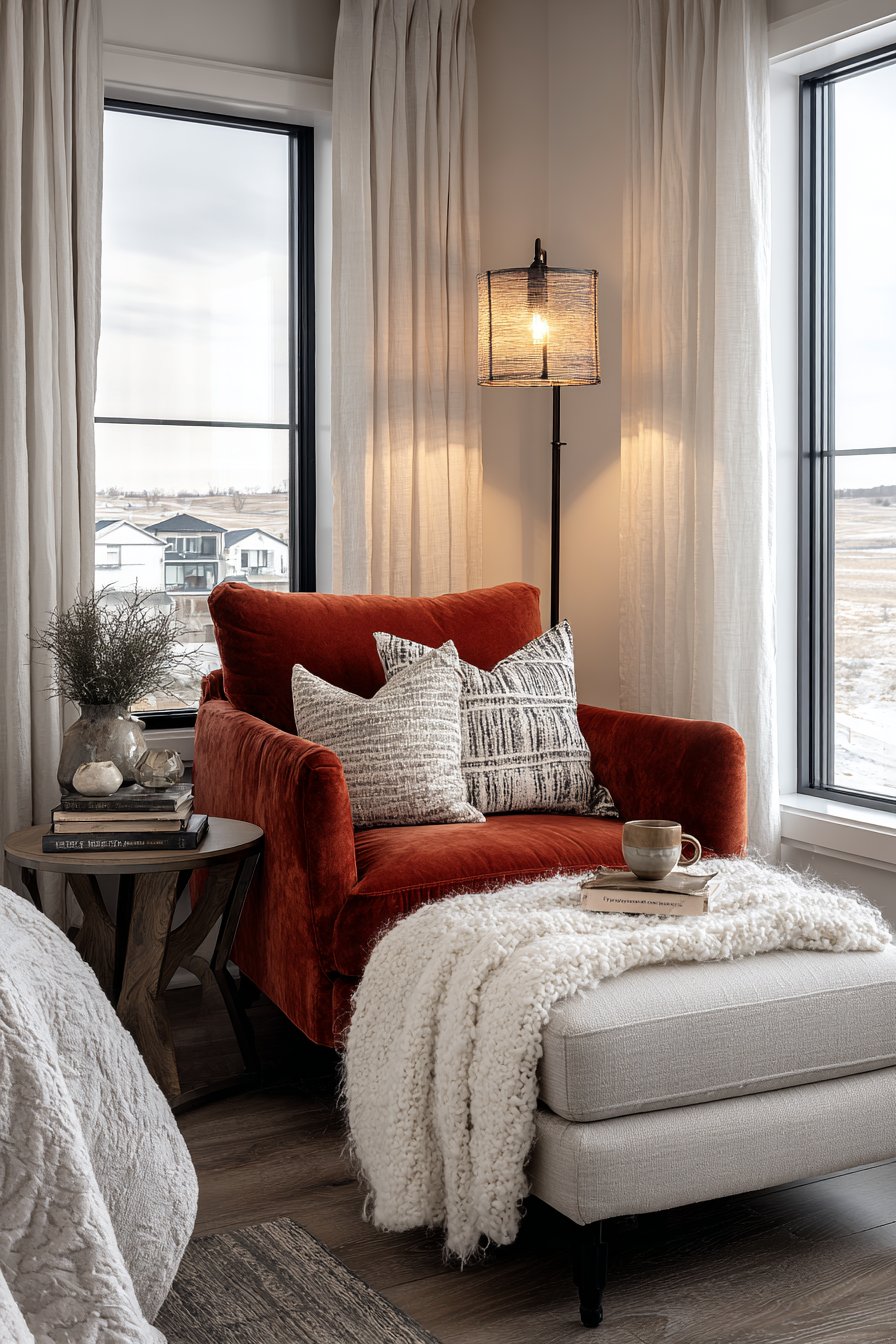
Reading nooks or seating areas transform bedrooms from purely functional sleeping spaces into multifunctional retreats where you want to spend time. A comfortable chair with good light provides spots for reading, putting on shoes, or simply sitting with morning coffee. This additional seating makes bedrooms feel more like living spaces and less like utilitarian sleeping quarters.
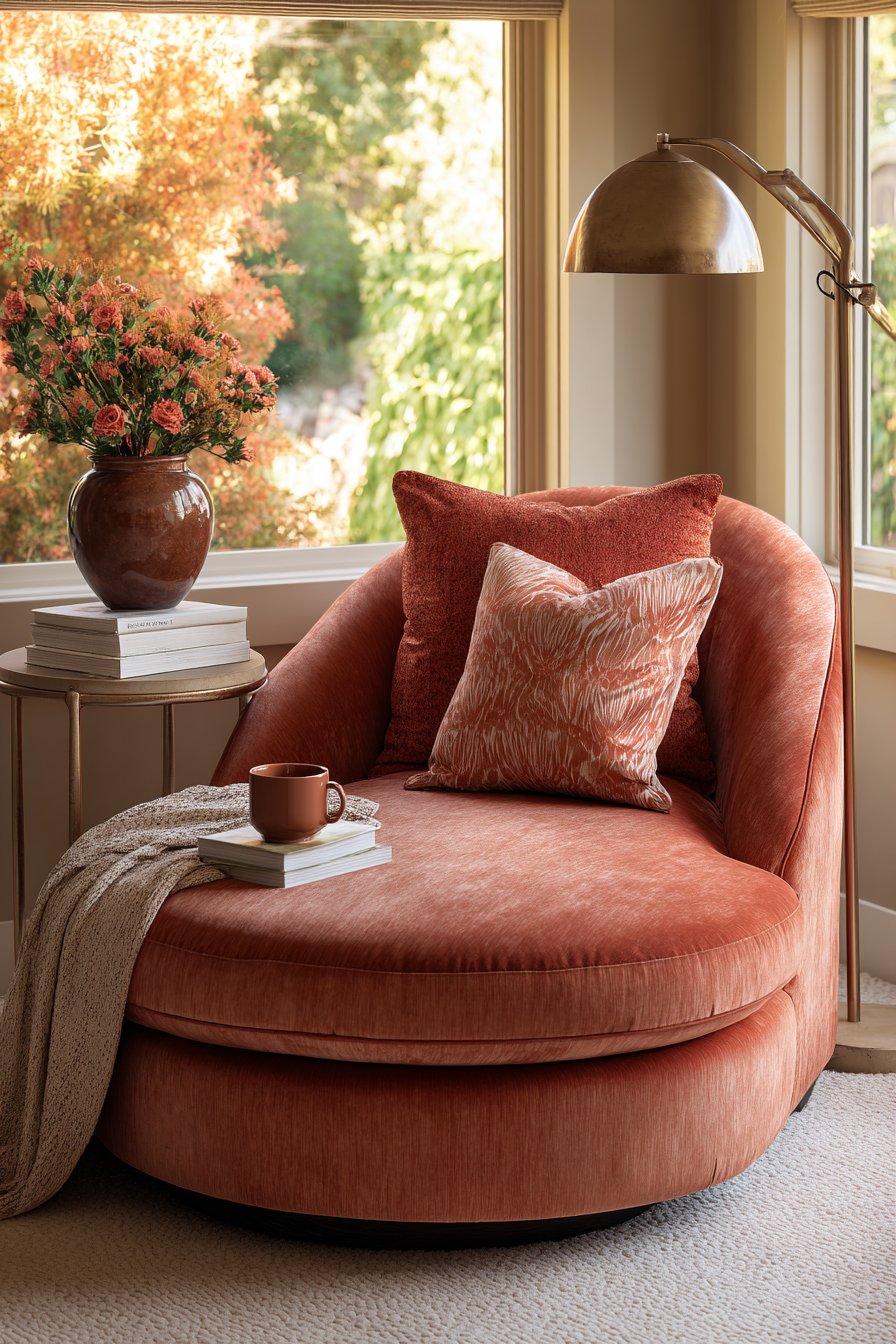
Upholstered seating adds softness and visual warmth that hard surfaces lack. A cozy armchair, upholstered bench at the foot of the bed, or cushioned window seat invites lingering and relaxation. Choose fabrics in warm textures like velvet, linen, or wool that reinforce the tactile comfort you’re creating throughout the bedroom.
Functional placement ensures seating serves real purposes rather than existing as unused decoration. Position chairs near windows for natural reading light, place benches where they’re useful for getting dressed, or create conversation areas if the room accommodates pairs of chairs. Furniture that serves your actual lifestyle patterns makes spaces feel more lived-in and authentically homey.
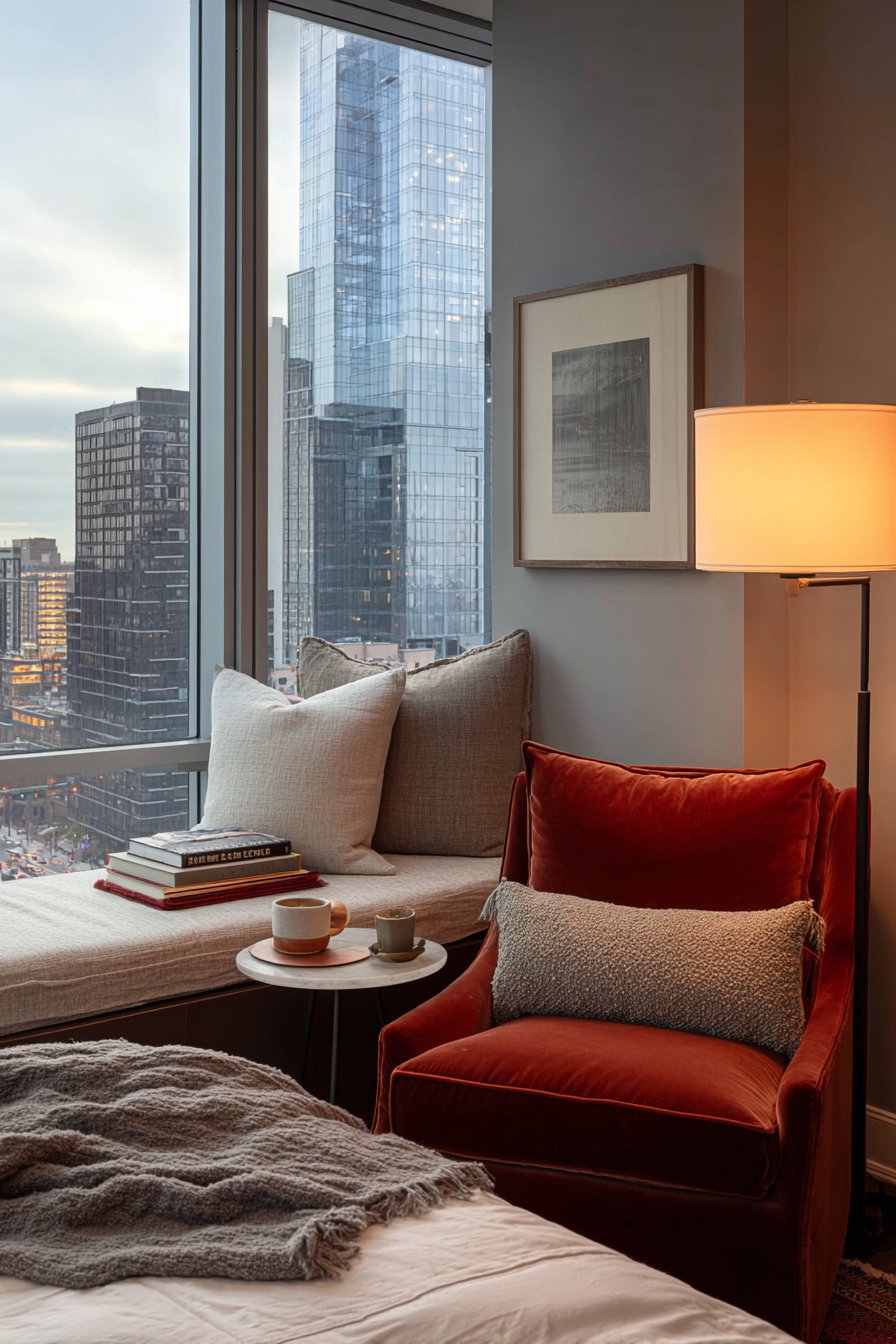
- Add a comfortable reading chair near a window for natural light
- Place an upholstered bench at the foot of the bed for functionality
- Include a small side table next to seating for books and beverages
- Choose seating proportional to your available bedroom space
- Upholster seating in warm, soft fabrics like velvet or linen
- Ensure seating placement supports how you actually use your bedroom
Conclusion
Creating a warm, cozy bedroom that truly feels like home requires layering multiple elements that work together to nurture your senses and soul. The ten strategies explored here—from layering soft textiles to incorporating meaningful personal items—combine to produce spaces that embrace you with comfort while reflecting your unique story. Remember that the most homey bedrooms balance beauty with genuine comfort, creating environments optimized for rest, rejuvenation, and the simple pleasure of being in spaces designed entirely around your wellbeing.
Start gradually by addressing foundational elements like lighting and bedding quality before adding layers of texture, scent, and personal touches. Your bedroom should evolve organically to reflect your needs and preferences rather than following rigid design rules that may not serve your lifestyle.
Trust your instincts about what makes you feel comfortable and at home—the most successful bedrooms feel authentically yours rather than resembling magazine spreads. Invest in quality where it matters most to your daily comfort, embrace warmth in all its forms, and create a sanctuary that welcomes you home every single day. Your bedroom should be your favorite room in your home, and with these thoughtful strategies, it absolutely can be.
"As an Amazon Associate, I earn from qualifying purchases."
