
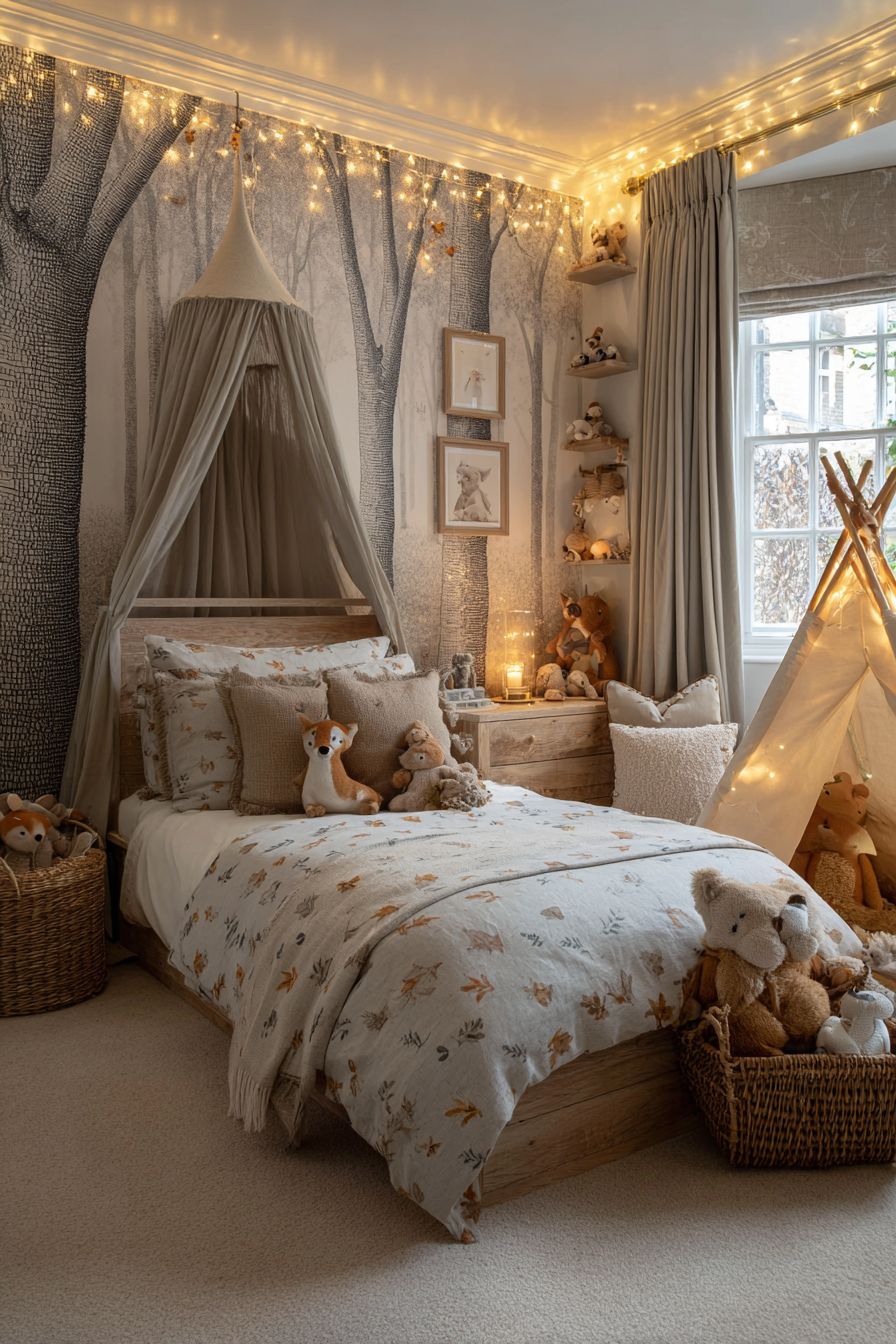
A forest-themed bedroom transports children into an enchanting woodland sanctuary where imagination flourishes and bedtime becomes an adventure. The magical appeal of forest themes lies in their ability to connect children with nature while creating calming, nurturing environments that support healthy sleep and creative play. Unlike character-based themes that children quickly outgrow, forest motifs offer timeless beauty that adapts as kids mature from toddlers to teens.
Thoughtful forest bedroom design balances whimsy with functionality, creating spaces that serve practical needs while sparking wonder and curiosity. The best forest themes incorporate natural materials, earthy color palettes, and layered details that reveal new discoveries over time. This approach creates rooms that feel cohesive and intentional rather than cluttered with random woodland decorations that lack connection or purpose.
This comprehensive guide presents ten essential strategies for creating authentic, engaging forest bedroom themes that children will love for years. From establishing the right color foundation to incorporating interactive elements and proper lighting, each section provides actionable insights for transforming ordinary bedrooms into extraordinary woodland retreats.
Whether you’re working with a small space or a generous room, these principles adapt to any budget and skill level, helping you create a nature-inspired sanctuary that nurtures your child’s development and imagination.
1. Establish an Earthy Color Palette
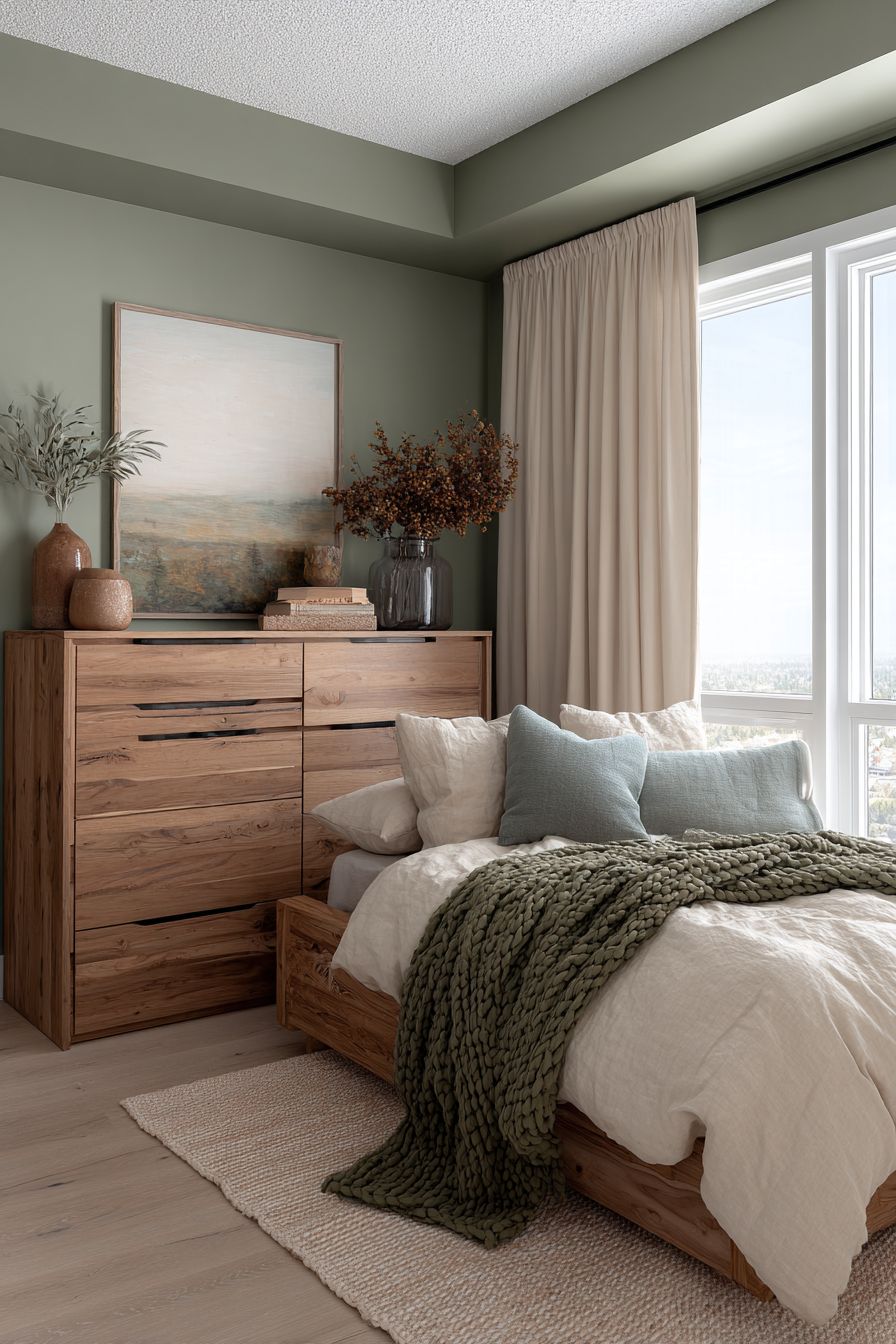
Forest-inspired colors create the foundation for authentic woodland atmospheres in children’s bedrooms. Deep greens, warm browns, soft mossy tones, and sky blues mimic natural forest environments while providing calming backgrounds that support restful sleep. These organic hues feel timeless and sophisticated, avoiding the overly bright primary colors that can overstimulate children before bedtime.
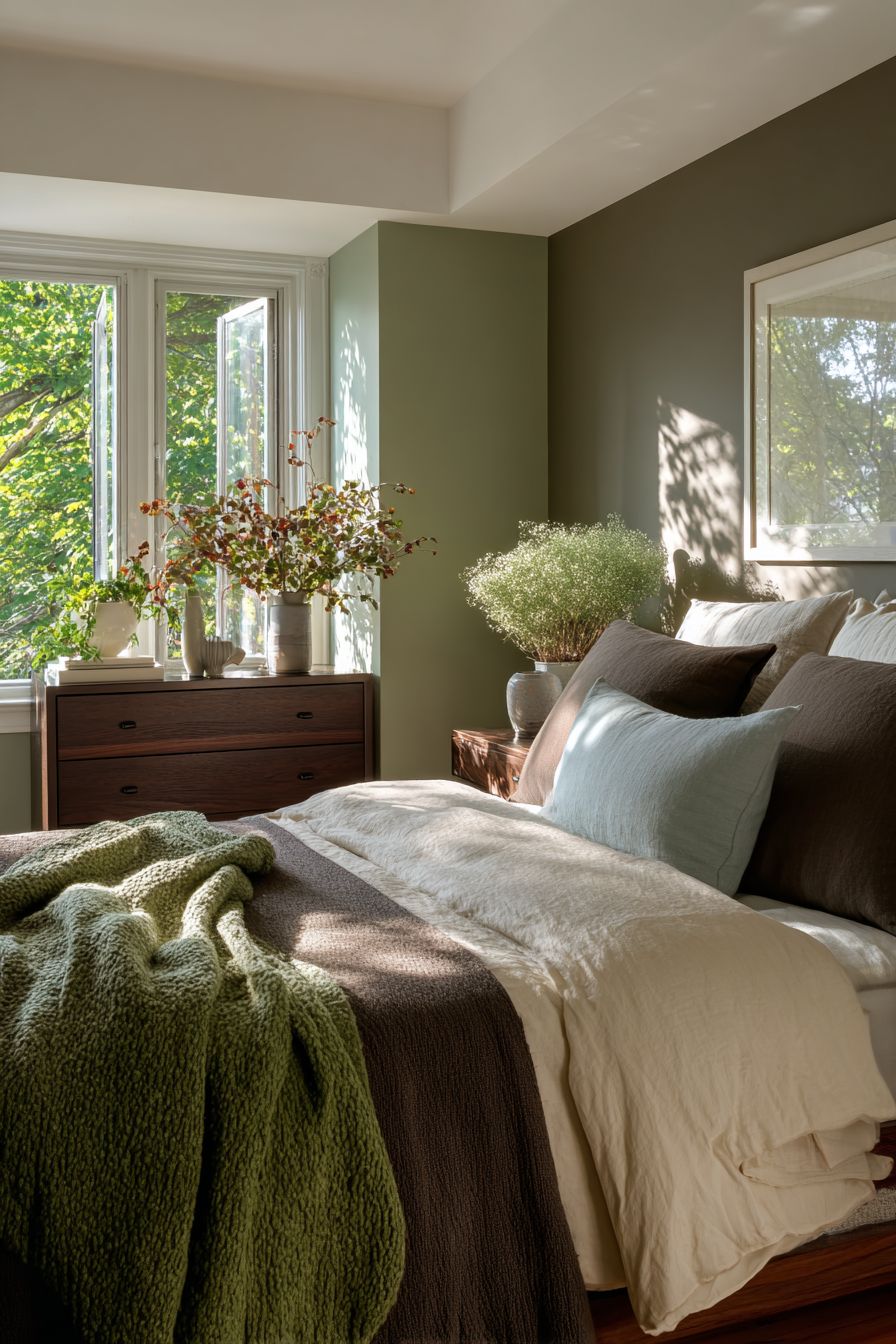
Layering multiple shades within the green and brown families creates depth and visual interest that flat, single-color walls cannot achieve. Consider sage green walls with deeper forest green accents, or warm taupe with rich chocolate brown details. This tonal variation mimics how light filters through actual forest canopies, creating realistic woodland ambiance.
Neutral backgrounds allow flexibility as your child grows and interests evolve. Painting walls in soft greens, warm grays, or creamy beiges provides forest atmosphere while remaining subtle enough to work with changing decor preferences. Add bolder forest colors through easily replaceable elements like bedding, curtains, and artwork rather than committing to intense wall colors that might overwhelm or date quickly.
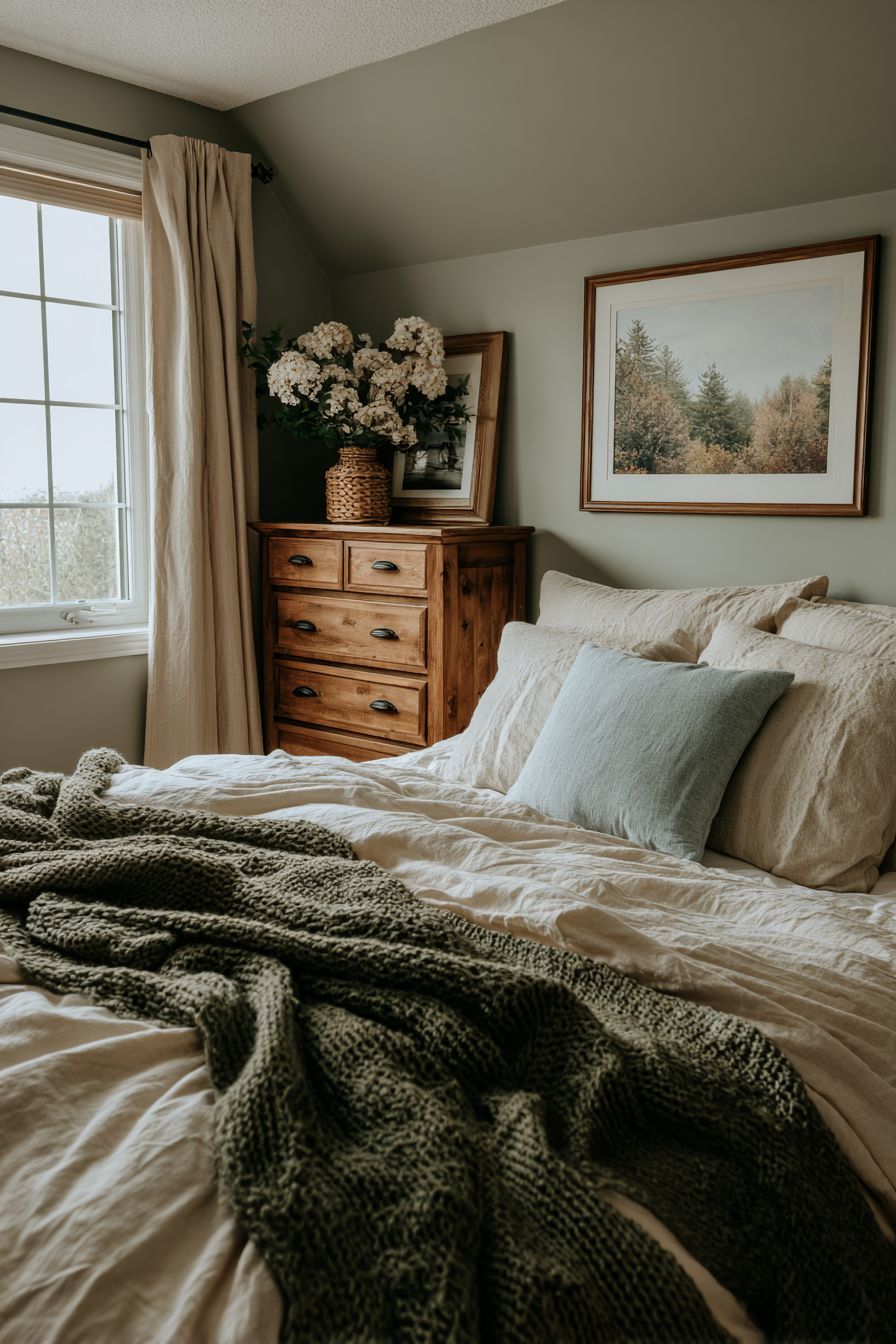
- Paint walls in soft sage, moss green, or warm gray for versatile backgrounds
- Use deeper forest greens and browns as accent colors on single walls
- Incorporate sky blue or soft yellow to represent sunlight filtering through trees
- Add cream or warm white for balance and to prevent rooms from feeling dark
- Test paint samples in various lighting conditions before committing
- Choose low-VOC paints for healthier indoor air quality in children’s spaces
2. Create a Tree Feature Wall
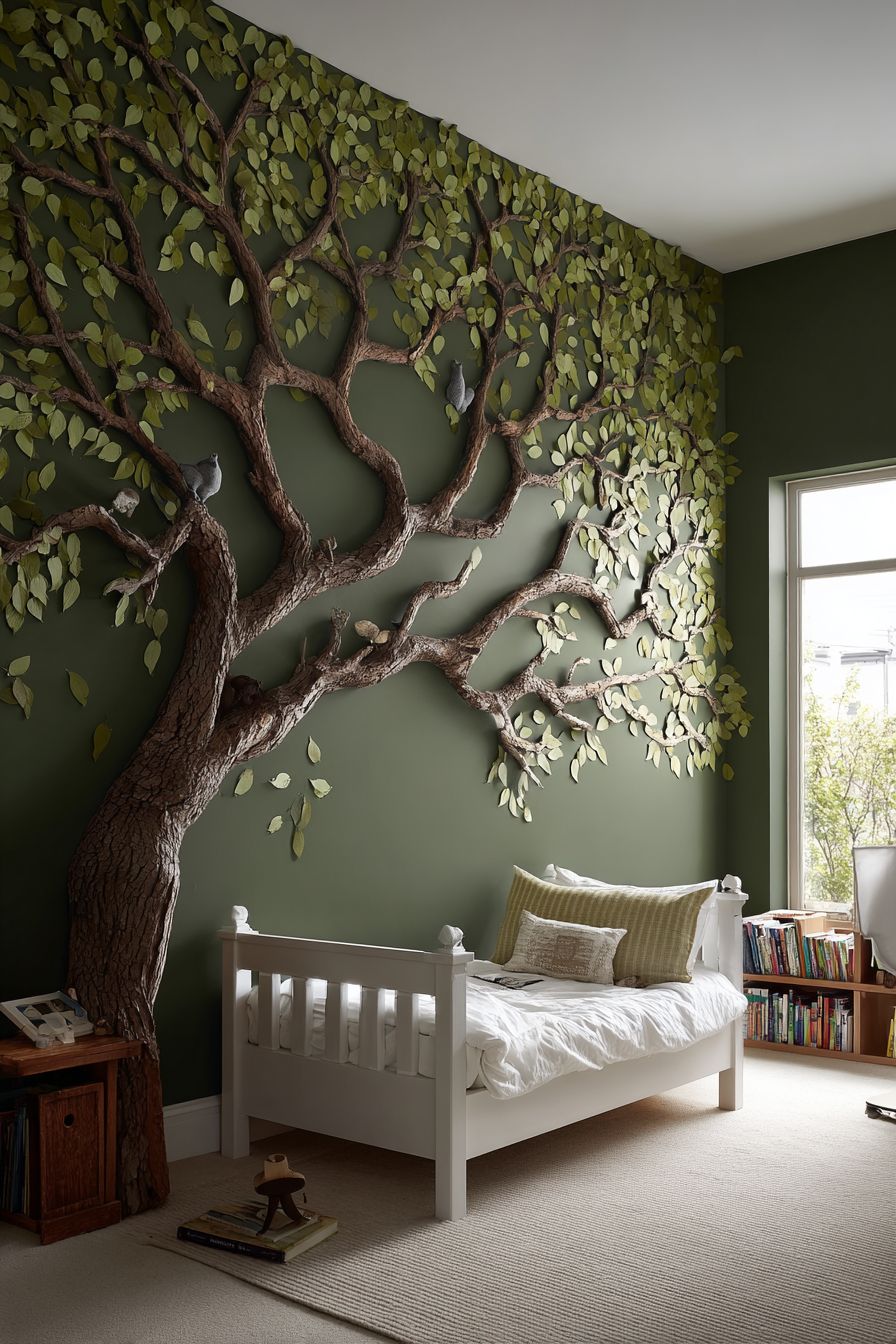
A tree mural or decal serves as the forest theme’s dramatic focal point and immediate visual identifier. Position this feature behind the bed to create a natural headboard effect that anchors the entire room design. Whether hand-painted by an artist, applied as a large decal, or created with wallpaper, a tree feature wall establishes undeniable forest atmosphere.
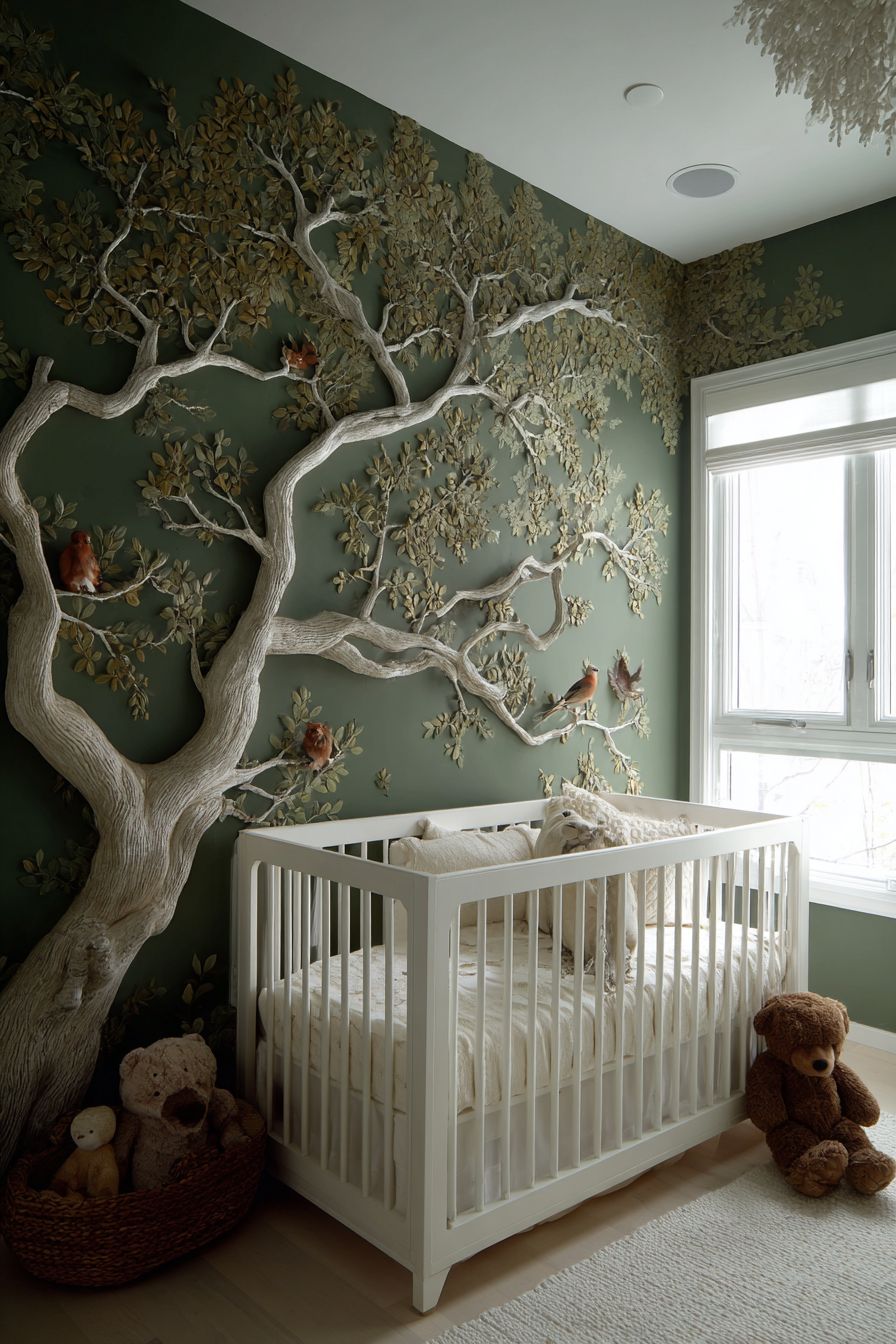
Scale matters significantly when creating tree features in children’s rooms. The tree should reach from floor to ceiling for maximum impact, with branches extending across significant wall space. This substantial presence creates the immersive feeling of being inside a forest rather than merely looking at tree pictures on walls.
DIY-friendly options make tree walls accessible regardless of artistic ability or budget. Large wall decals peel and stick easily, removable wallpaper offers professional results, or even painter’s tape and multiple paint shades create stylized tree silhouettes. The key lies in choosing an approach matching your skill level and commitment, ensuring completed results look intentional rather than abandoned halfway through.
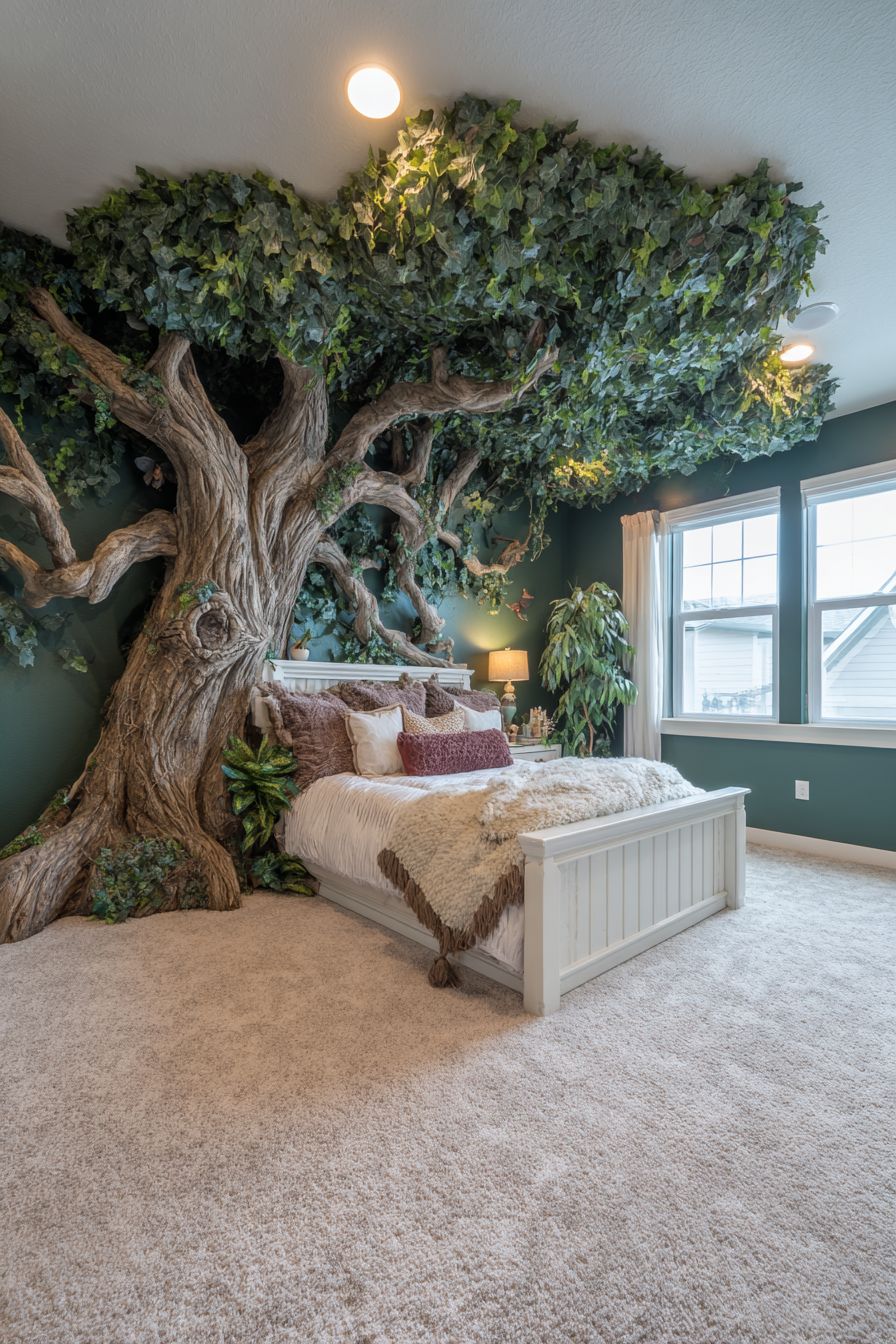
- Position the tree feature wall behind the bed as a natural focal point
- Ensure trees reach floor-to-ceiling for maximum immersive effect
- Use removable wall decals for rental-friendly or temporary installations
- Consider wallpaper with forest scenes for professional-looking results
- Add dimensional elements like fabric leaves or 3D branches for texture
- Include woodland creatures among branches for added whimsy and interest
3. Incorporate Natural Materials and Textures
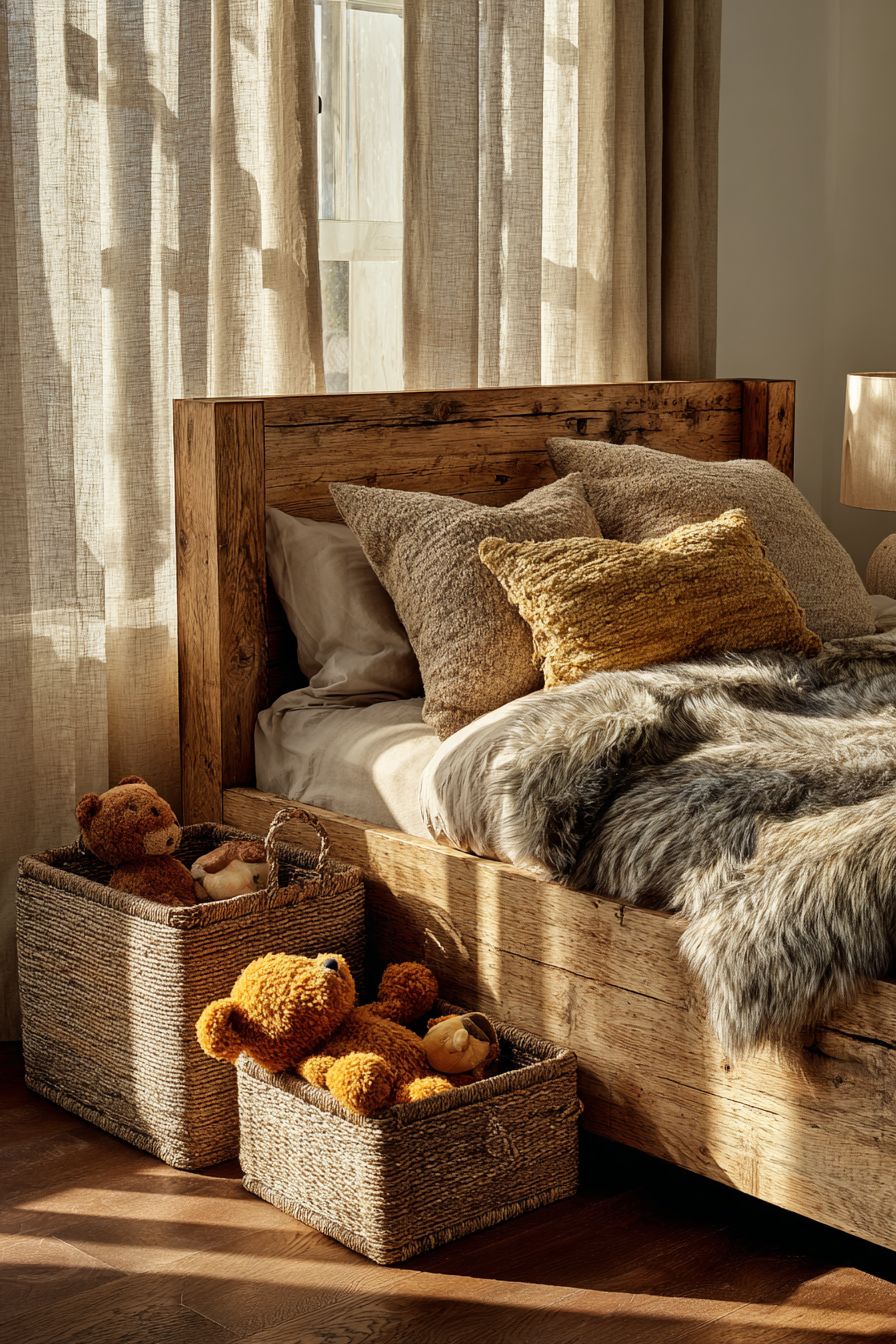
Wood furniture reinforces forest themes authentically while providing durable, timeless pieces that outlast trend-based alternatives. Natural wood beds, dressers, and shelving units connect children to organic materials while supporting the woodland aesthetic. Choose finishes that showcase wood grain rather than heavy paints that hide the natural beauty underneath.
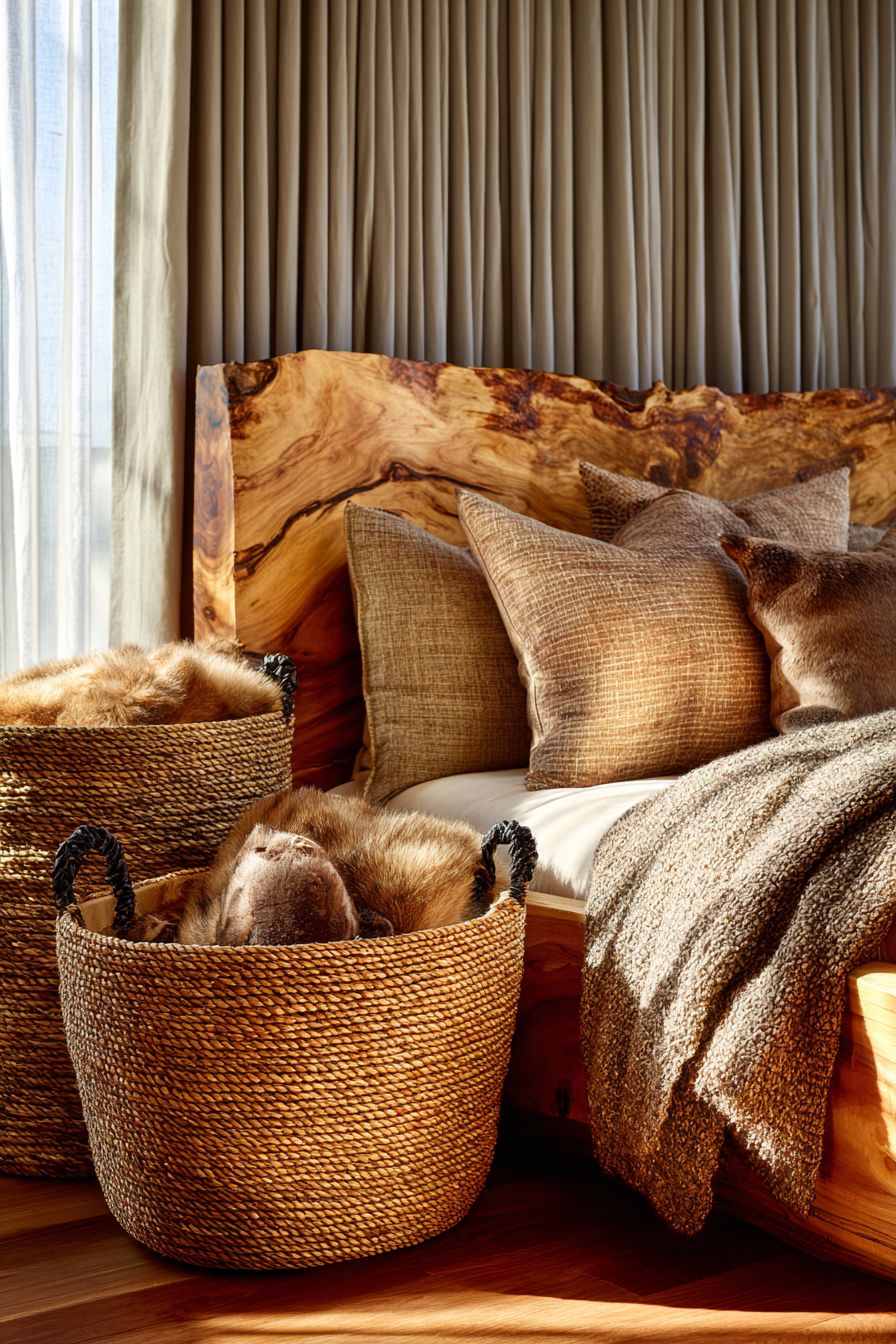
Textured textiles layer forest atmosphere through tactile elements that invite touching and exploration. Faux fur rugs mimic forest floor softness, knit blankets represent cozy dens, and linen curtains filter light like leaves. These varied textures create sensory-rich environments that support children’s development while enhancing the theme’s authenticity.
Natural fiber accessories like jute baskets, cotton rope, and woven wall hangings add organic elements without overwhelming the space. These practical storage solutions serve functional purposes while maintaining thematic consistency. The rough, natural textures contrast beautifully with smooth painted walls, creating visual interest that keeps rooms from feeling flat or one-dimensional.
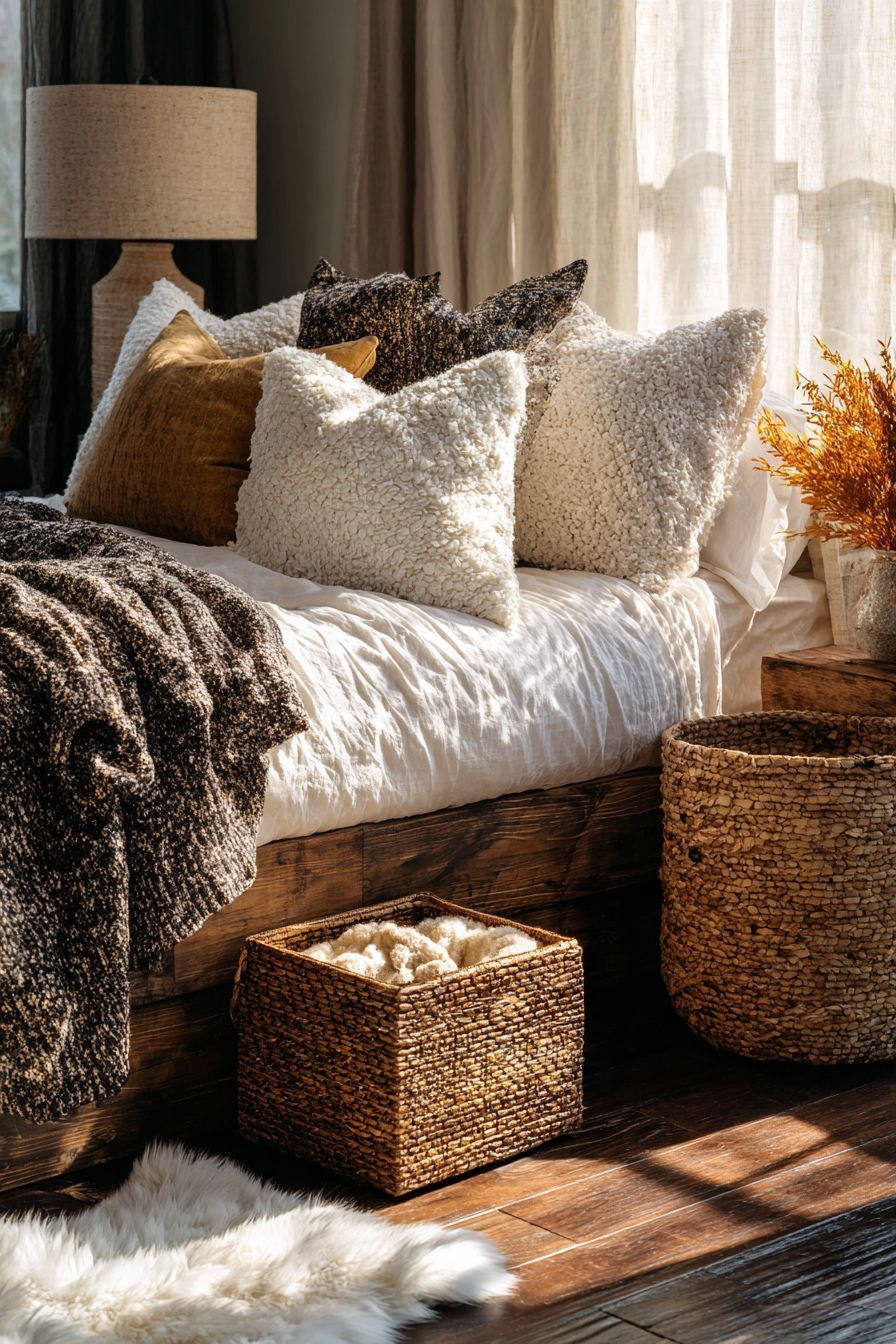
- Choose solid wood furniture in natural finishes over painted pieces
- Add faux fur or high-pile rugs to represent soft forest floor
- Use woven baskets for toy storage that doubles as thematic decor
- Incorporate linen or cotton curtains in earth tones for natural light filtering
- Layer knit throws and textured pillows on beds for cozy woodland feel
- Select natural fiber lampshades that cast warm, dappled light
4. Add Woodland Creature Accents
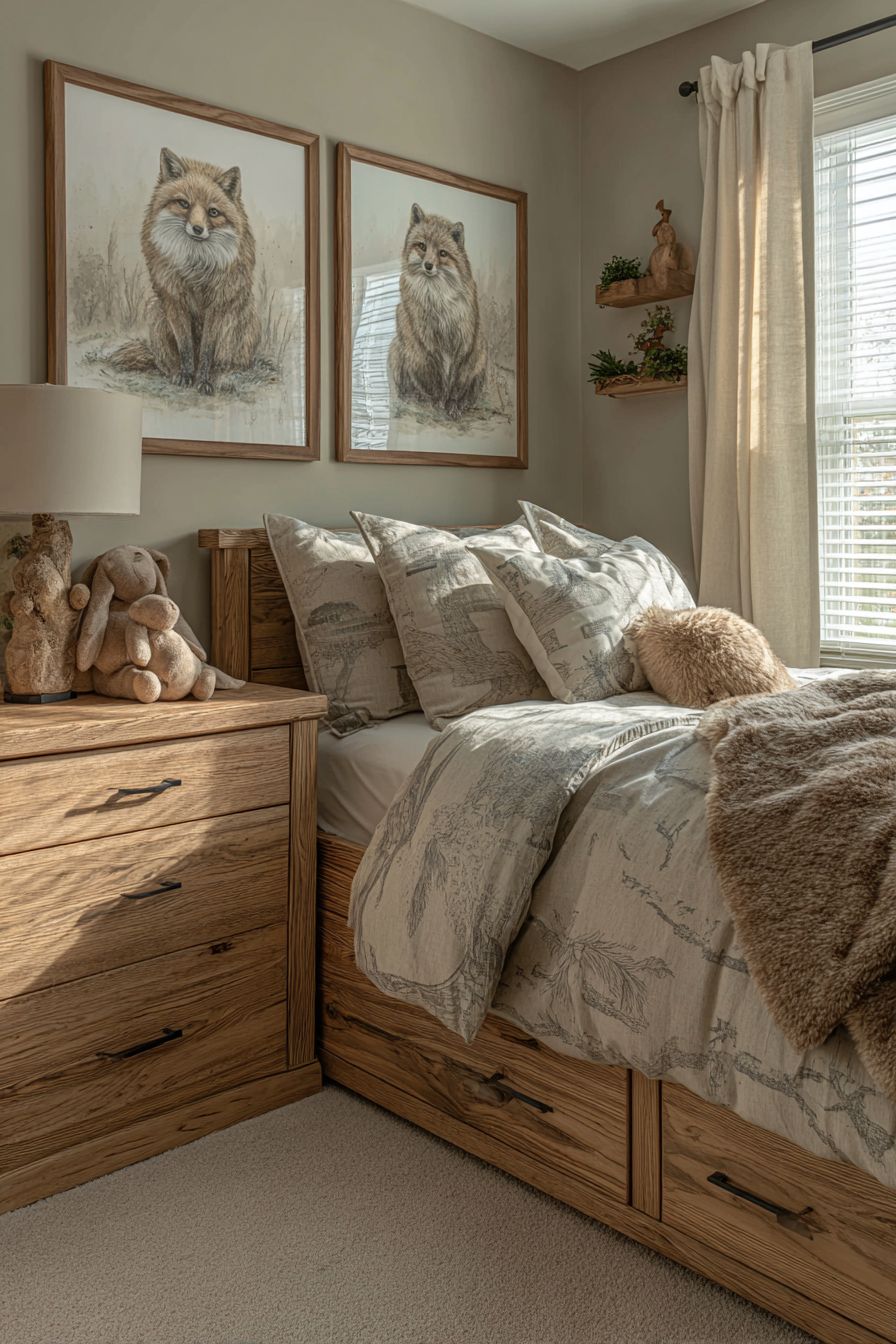
Animal characters bring forest themes to life while creating emotional connections that children cherish. Foxes, deer, owls, bears, and rabbits appear throughout successful forest bedrooms in artwork, stuffed animals, and decorative objects. These creatures add personality and storytelling elements that make rooms feel inhabited and magical rather than merely decorated.
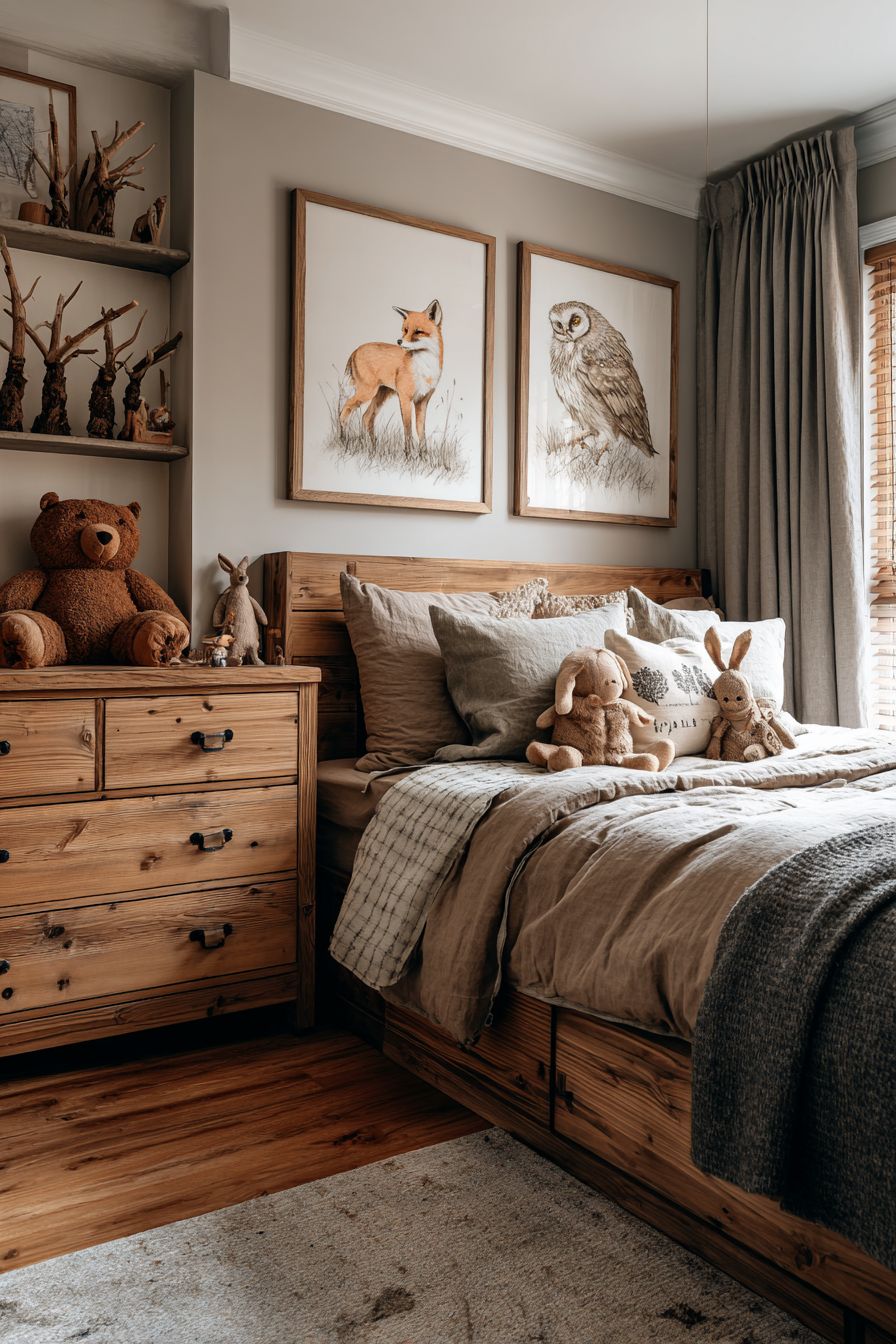
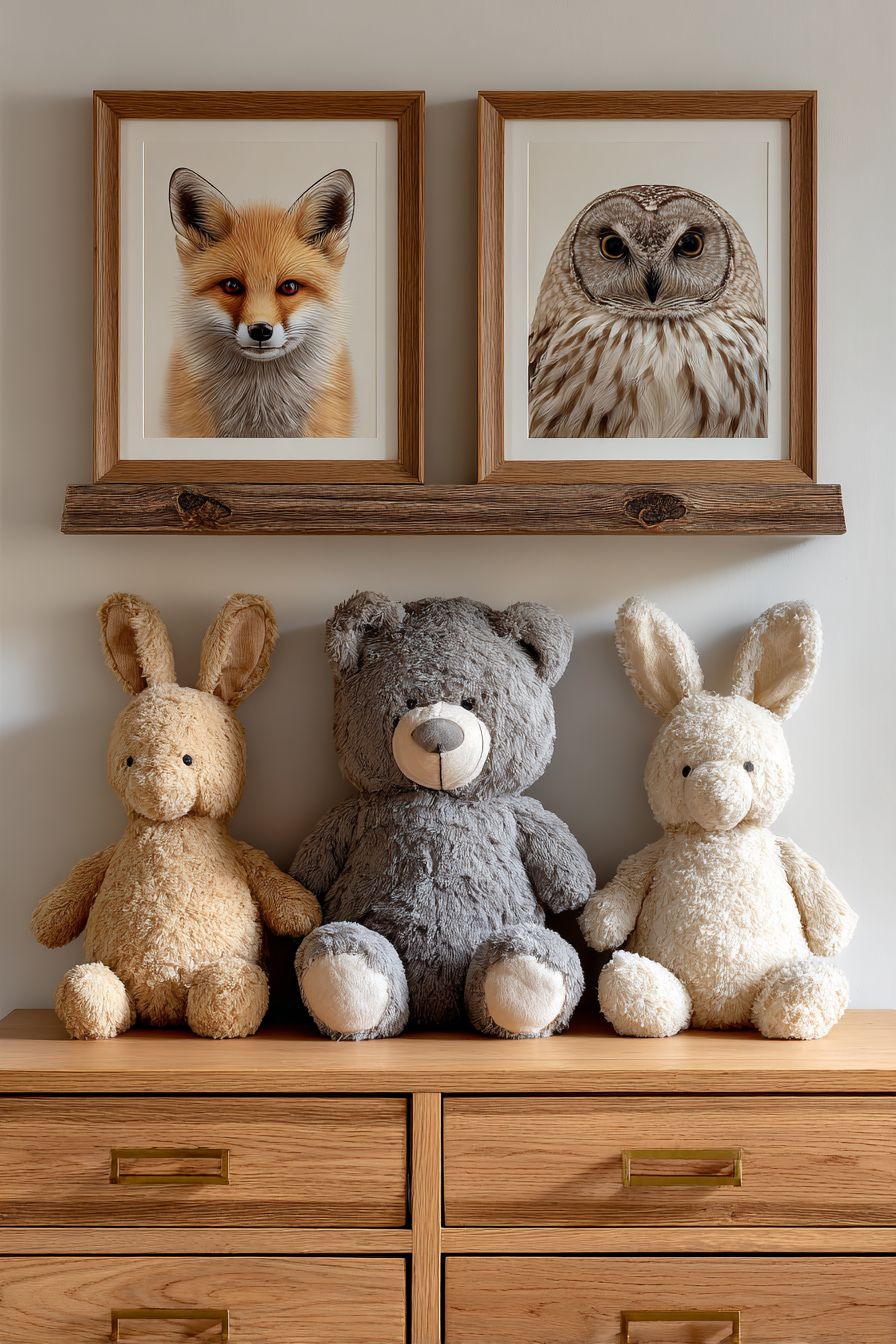
Subtle incorporation works better than overwhelming every surface with animal prints. Choose a few key pieces like framed animal portraits above the dresser, a fox-shaped pillow on the bed, or owl bookends on shelves. This restraint maintains sophistication while preventing the theme from becoming too juvenile or cluttered with competing elements.
Three-dimensional elements create more engaging displays than flat printed images alone. Stuffed animal displays, wooden animal figurines, or even taxidermy-style fabric wall mounts add depth and shadow that increase visual interest. Position these dimensional pieces at varying heights throughout the room to guide eyes around the space and create discovery moments.
- Select two or three favorite woodland animals as primary theme characters
- Display quality stuffed animals as intentional decor rather than clutter
- Use animal portraits or illustrations in coordinating frames as wall art
- Add animal-shaped pillows or throws for functional decorative elements
- Incorporate subtle animal prints in bedding or curtains for pattern interest
- Position animal figurines on shelves at child’s eye level for engagement
5. Install Forest-Inspired Lighting
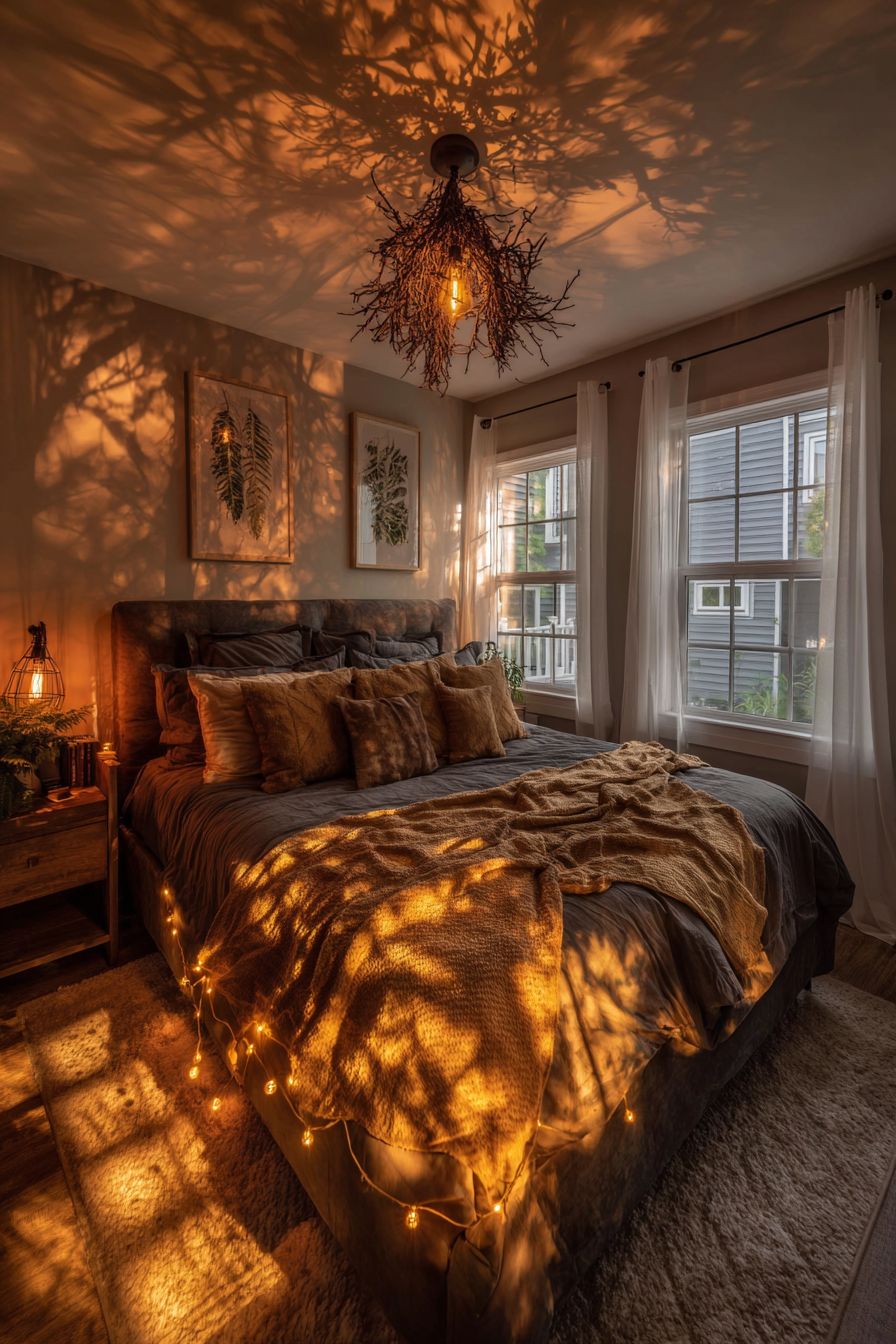
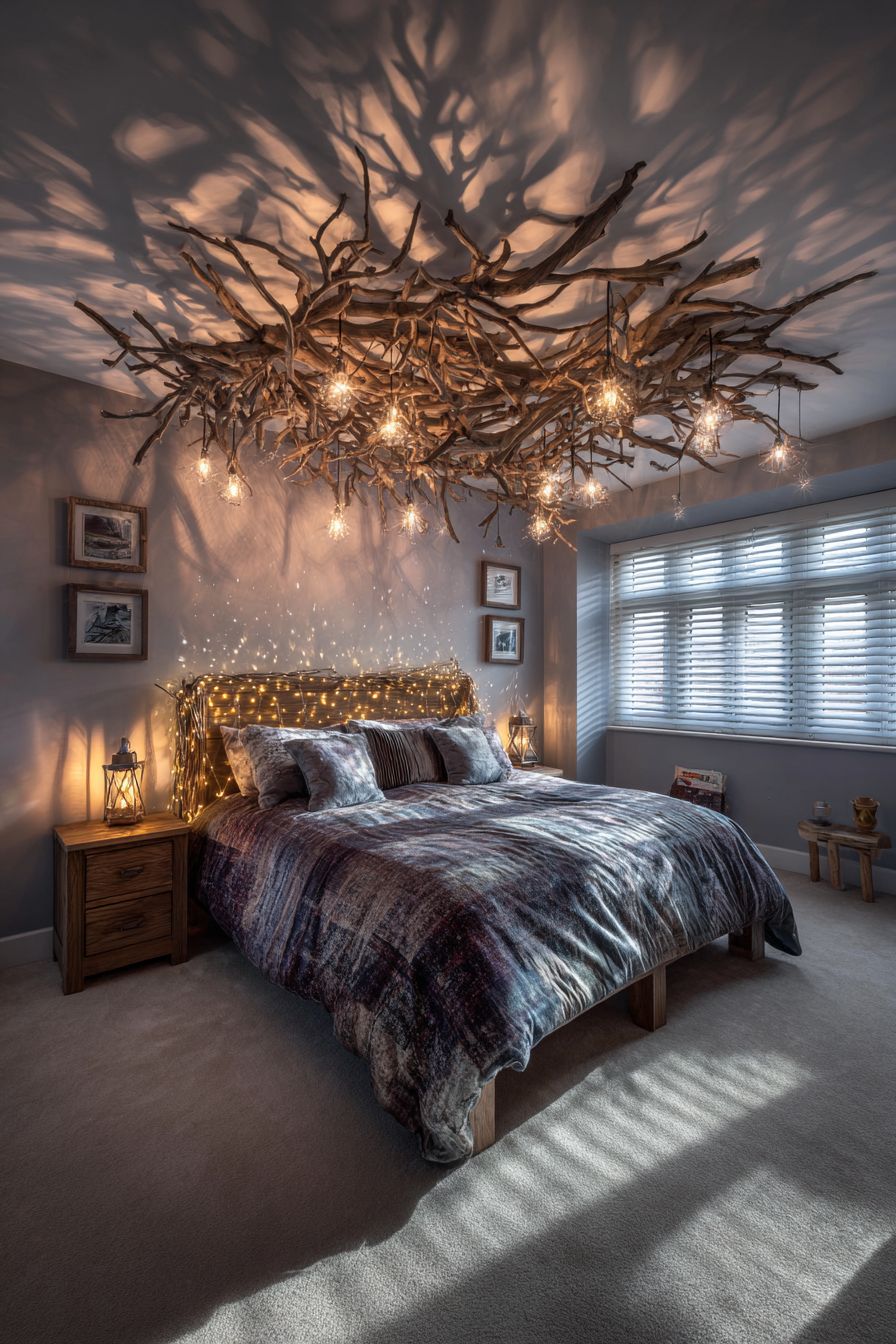
Layered lighting creates the dappled, filtered quality of sunlight through tree canopies that defines forest atmospheres. Combine overhead fixtures with table lamps and string lights to mimic how natural light penetrates woodland environments at different levels. This multi-source approach provides functional illumination while enhancing the thematic experience throughout the day.
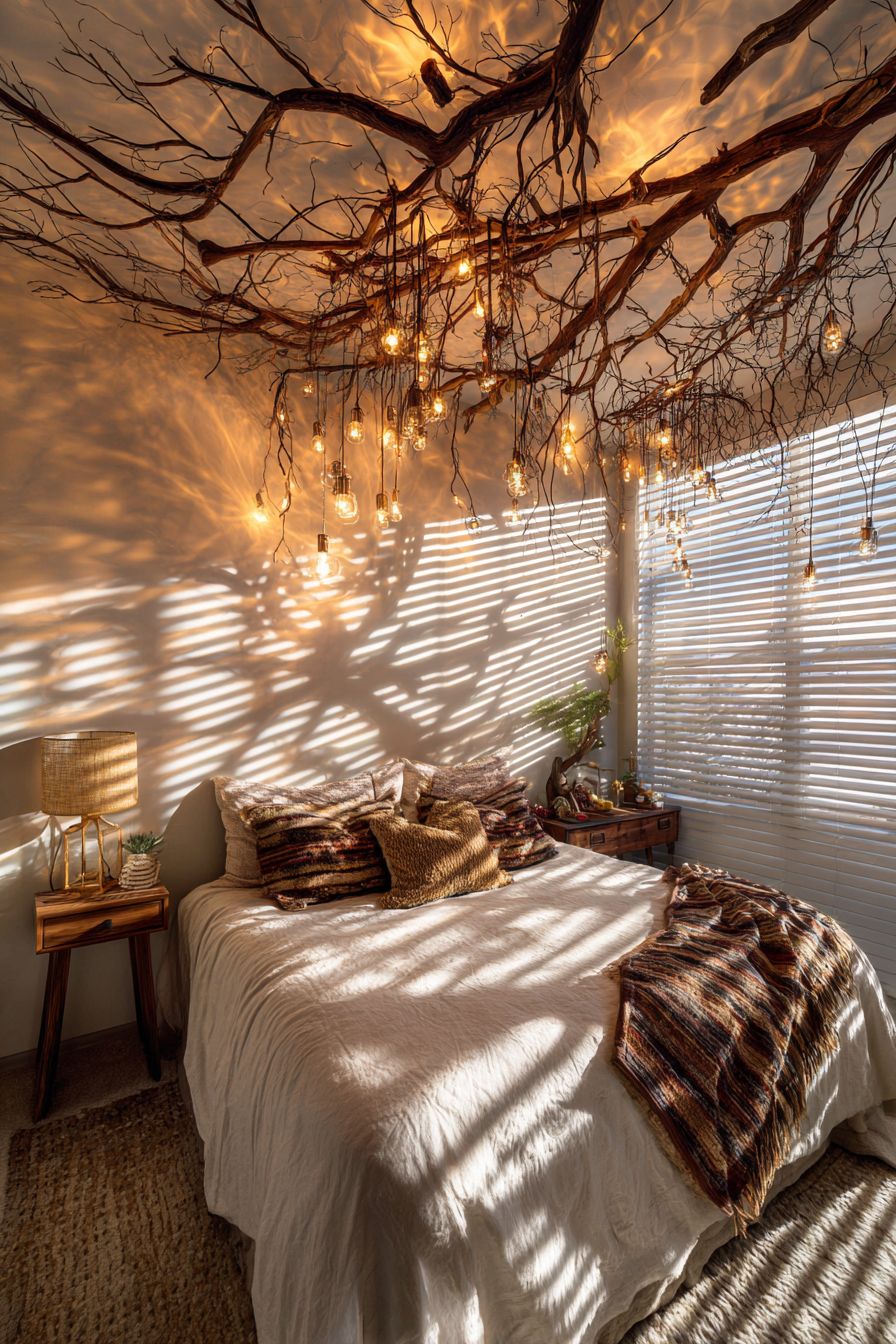
Warm light temperatures between 2700-3000K create the golden, cozy glow associated with peaceful forest settings. Avoid cool, blue-toned lights that feel clinical and undermine the warm, natural atmosphere you’re creating. Warm lighting supports healthy circadian rhythms while making bedrooms feel more inviting and conducive to restful sleep.
Decorative light fixtures reinforce forest themes while serving essential functions. Tree branch chandeliers, lantern-style pendant lights, or animal-shaped table lamps add character while illuminating space effectively. String lights wrapped around bed frames or draped along walls create magical starlit forest ambiance perfect for bedtime routines and creating calming pre-sleep environments.
- Install dimmer switches for adjustable lighting that supports various activities
- Use warm bulbs (2700-3000K) throughout the room for cozy forest atmosphere
- Add battery-operated string lights for magical starlight effects without wiring
- Choose nature-inspired fixture shapes like branches, leaves, or lanterns
- Position reading lamps near beds for functional task lighting
- Consider color-changing smart bulbs for forest sunrise/sunset simulation
6. Create Vertical Interest with Canopy Elements
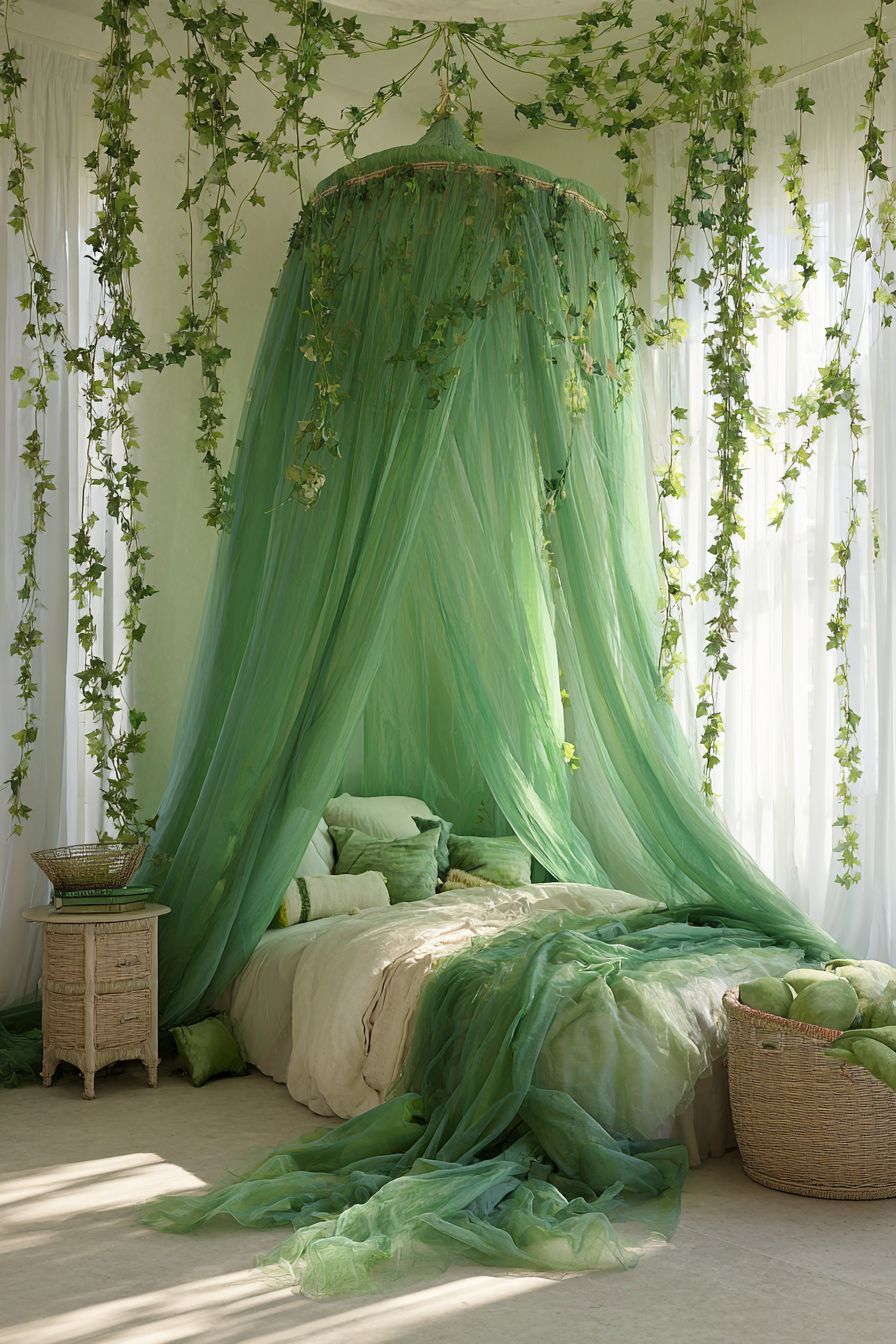
Fabric canopies suspended above beds create enchanting treehouse or forest grove feelings that children adore. Sheer fabrics in greens, whites, or earth tones drape from ceiling-mounted hooks or hoops, transforming ordinary beds into magical woodland sleeping nests. This vertical element draws eyes upward and adds dimension to rooms that might otherwise feel flat.
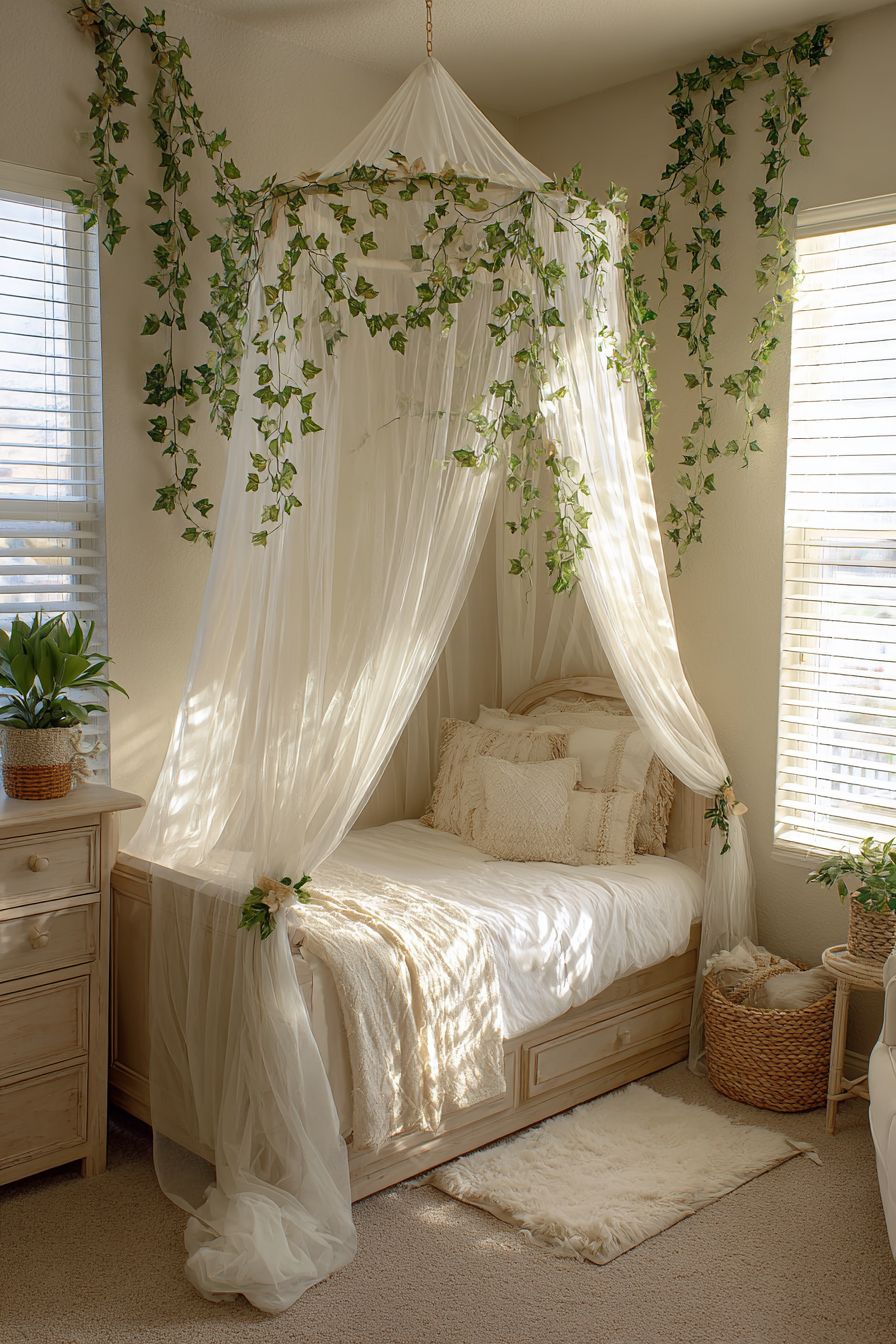
Leaf garlands or fabric vines trailing from ceilings mimic forest canopies overhead while remaining lightweight and safe. These hanging elements create immersive environments where children feel surrounded by nature rather than simply looking at forest-themed walls. Position these overhead decorations to avoid interfering with ceiling fans or light fixtures while maximizing visual impact.
Safety considerations must guide all overhead installations in children’s rooms. Ensure all hanging elements are securely attached to ceiling joists or studs rather than just drywall. Use lightweight materials that won’t cause injury if they fall, and position elements away from where children might jump on beds or reach from furniture.
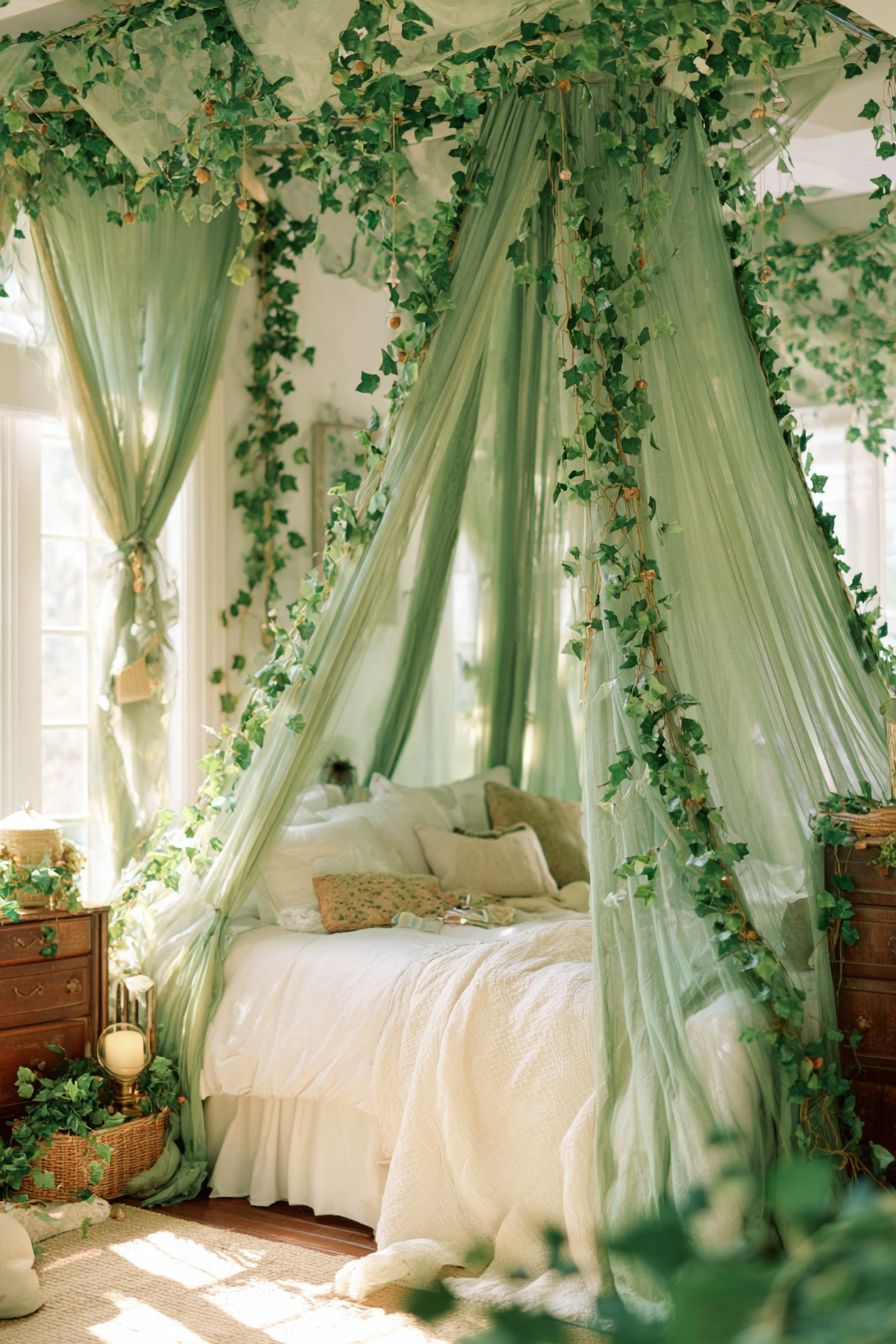
- Mount canopy hoops securely to ceiling joists for safe installation
- Choose lightweight, breathable fabrics that won’t feel claustrophobic
- Position canopies to avoid interfering with ceiling fans or fixtures
- Add leaf garlands using removable adhesive hooks for rental-friendly options
- Ensure all overhead elements are firmly attached and regularly checked
- Keep hanging decorations away from potential jumping or climbing zones
7. Design a Reading Nook Forest Hideaway
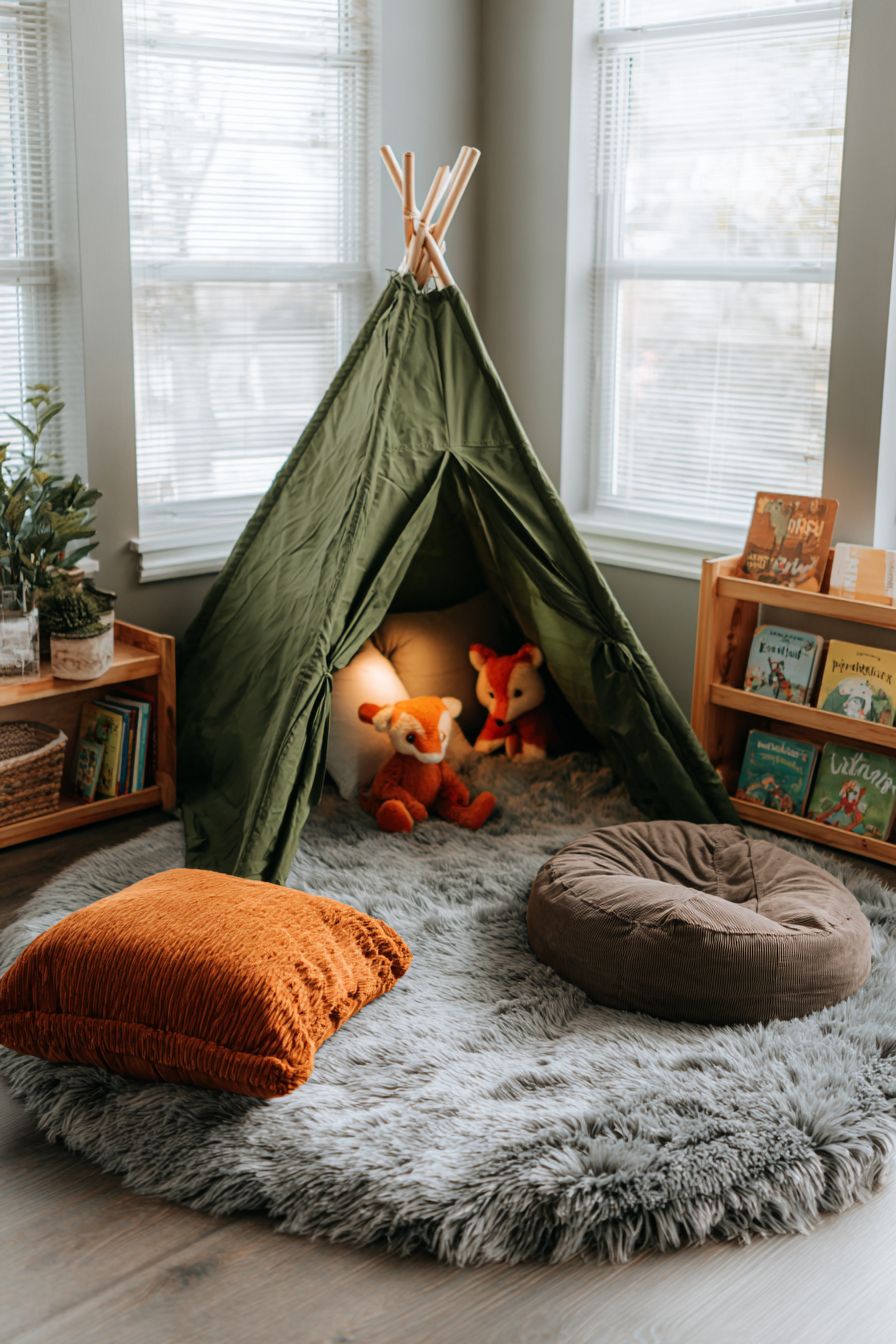
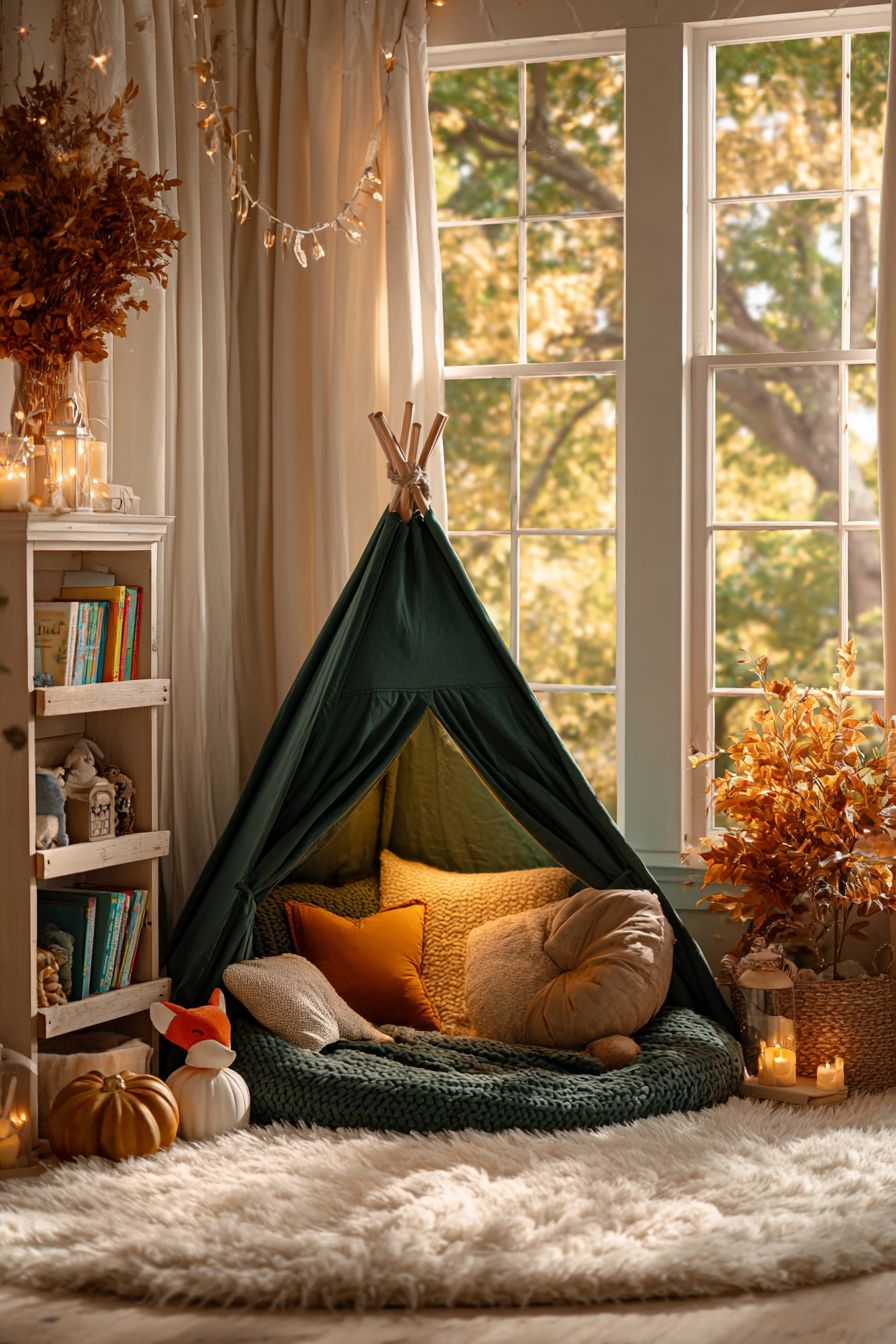
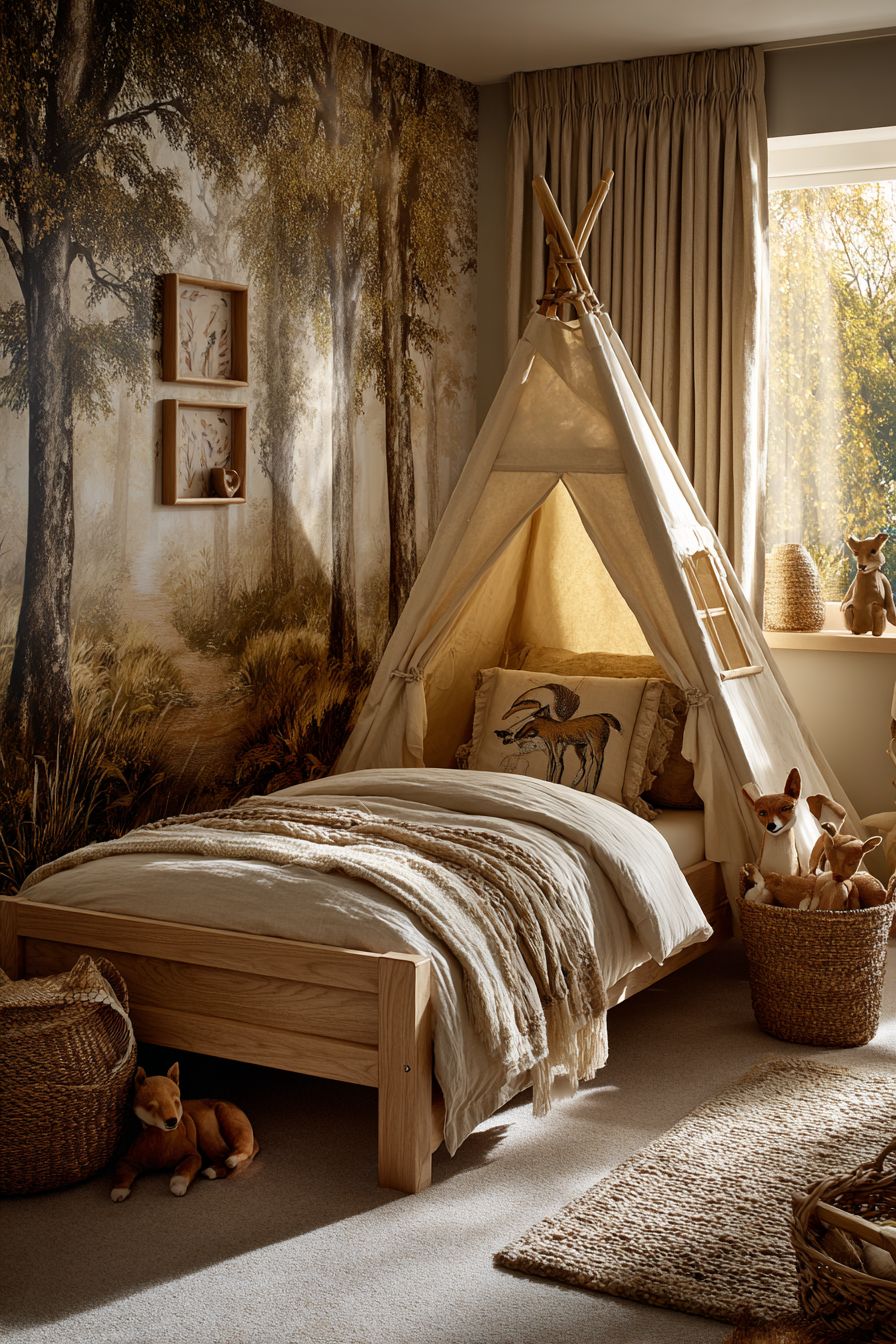
Dedicated reading spaces transform corners into magical forest hideaways that encourage literacy and quiet time. A small tent, teepee, or canopy-covered bean bag creates defined zones within bedrooms where children can retreat for stories and imagination. These cozy nooks mimic forest shelters and dens, connecting to the theme while serving important developmental functions.
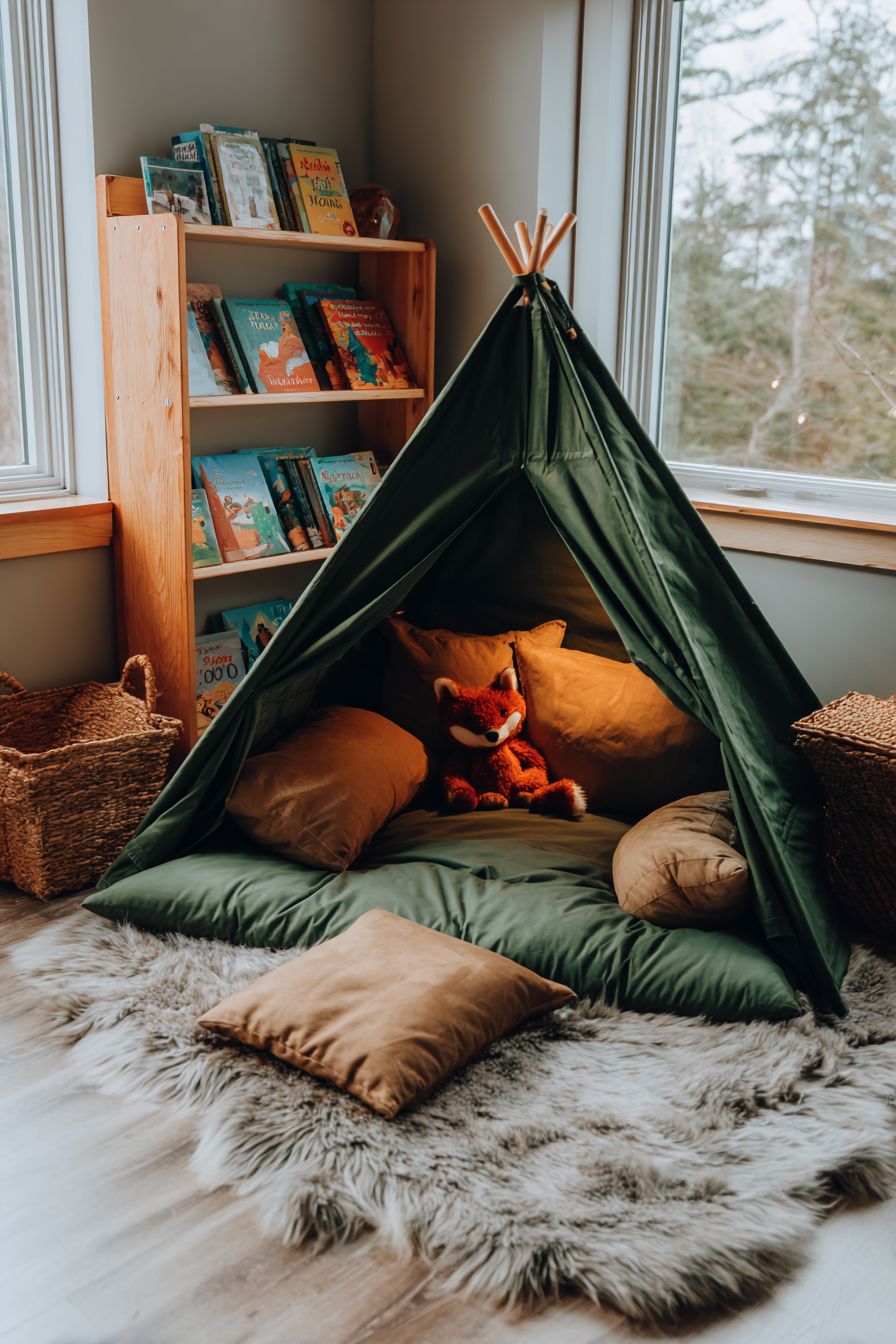
Low seating at child height makes reading nooks accessible and inviting for independent use. Floor cushions, bean bags, or low chairs allow children to enter and exit spaces easily without adult assistance. Add small bookshelves or baskets within arm’s reach so books remain accessible, encouraging frequent use of the special reading area.
Soft lighting dedicated to the reading nook ensures functionality while maintaining cozy atmosphere. Battery-operated touch lights, small table lamps, or even glow-in-the-dark stars provide adequate illumination for reading without requiring complicated electrical work. This dedicated lighting signals that the nook is a special place separate from the rest of the bedroom.
- Position reading nooks in corners or underutilized spaces
- Add floor cushions or bean bags in forest colors for comfortable seating
- Install battery-operated touch lights for child-friendly illumination
- Store books in low baskets or small shelves within easy reach
- Use teepees or small canopies to define the special reading zone
- Include favorite stuffed woodland animals as reading companions
8. Add Interactive and Educational Elements
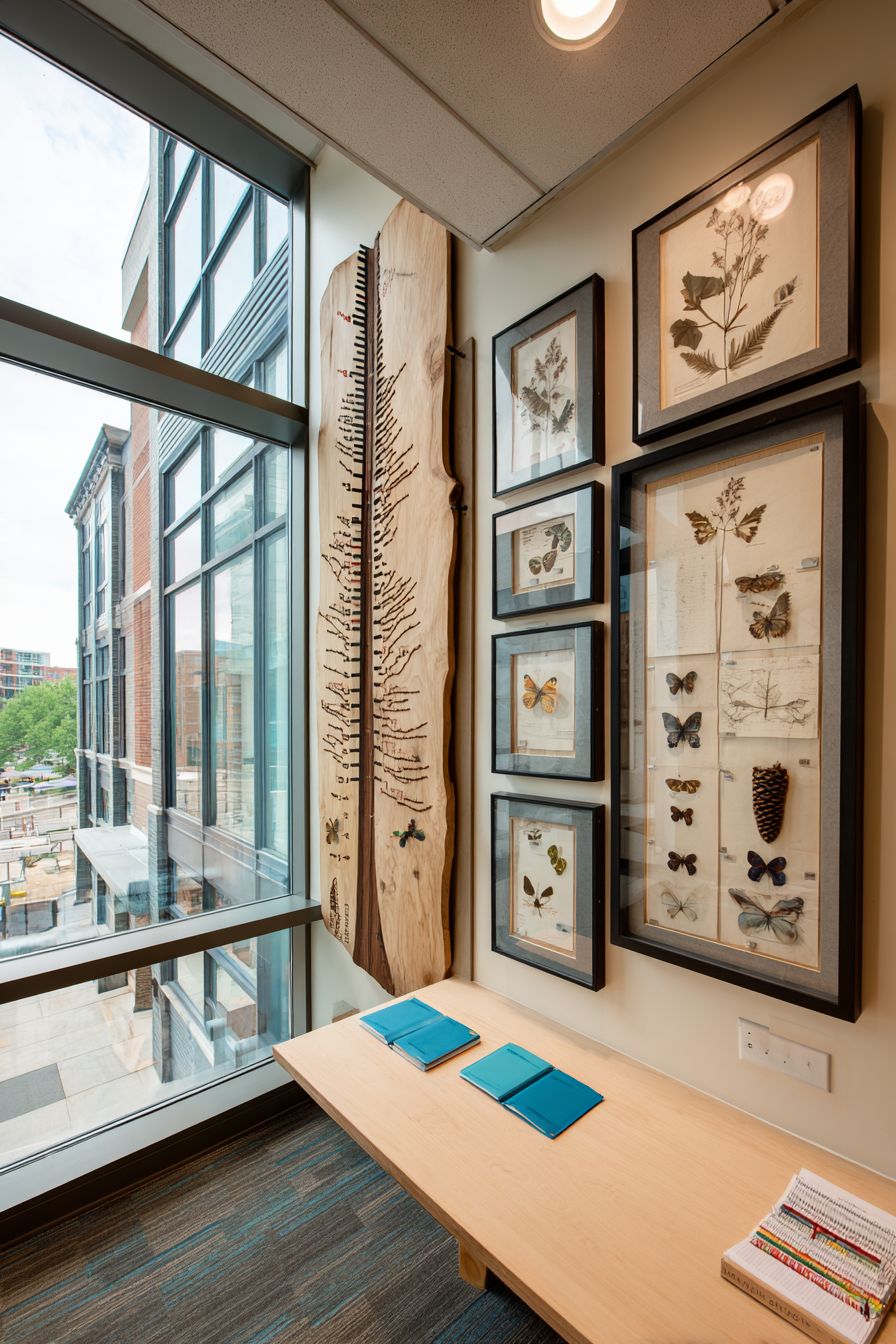
Growth chart trees combine decoration with developmental tracking, marking children’s height on painted or decal tree trunks. This functional art piece becomes a cherished keepsake while reinforcing the forest theme daily. Position growth charts on easily accessible walls where regular measuring becomes part of family routines and celebrates growing up.
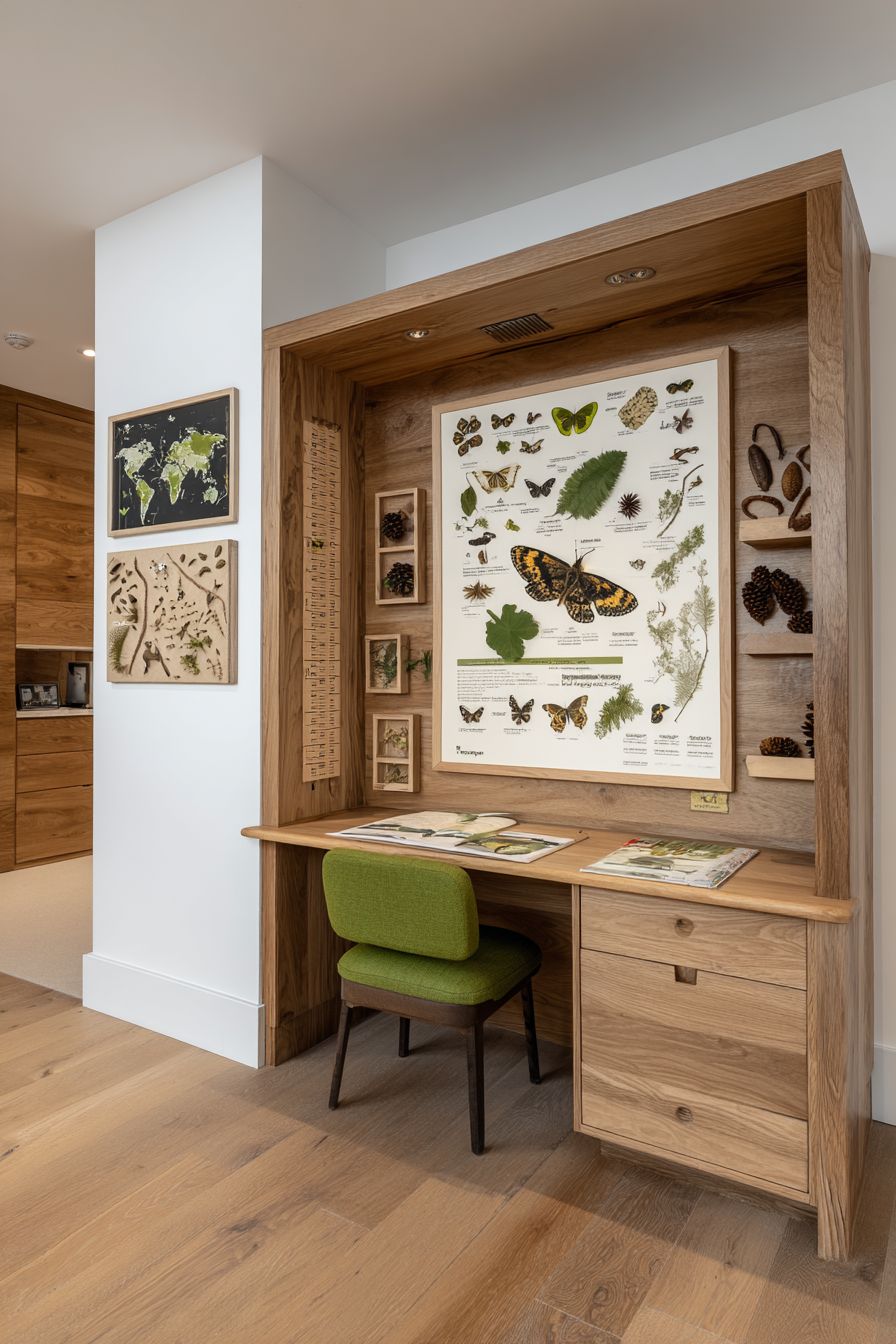
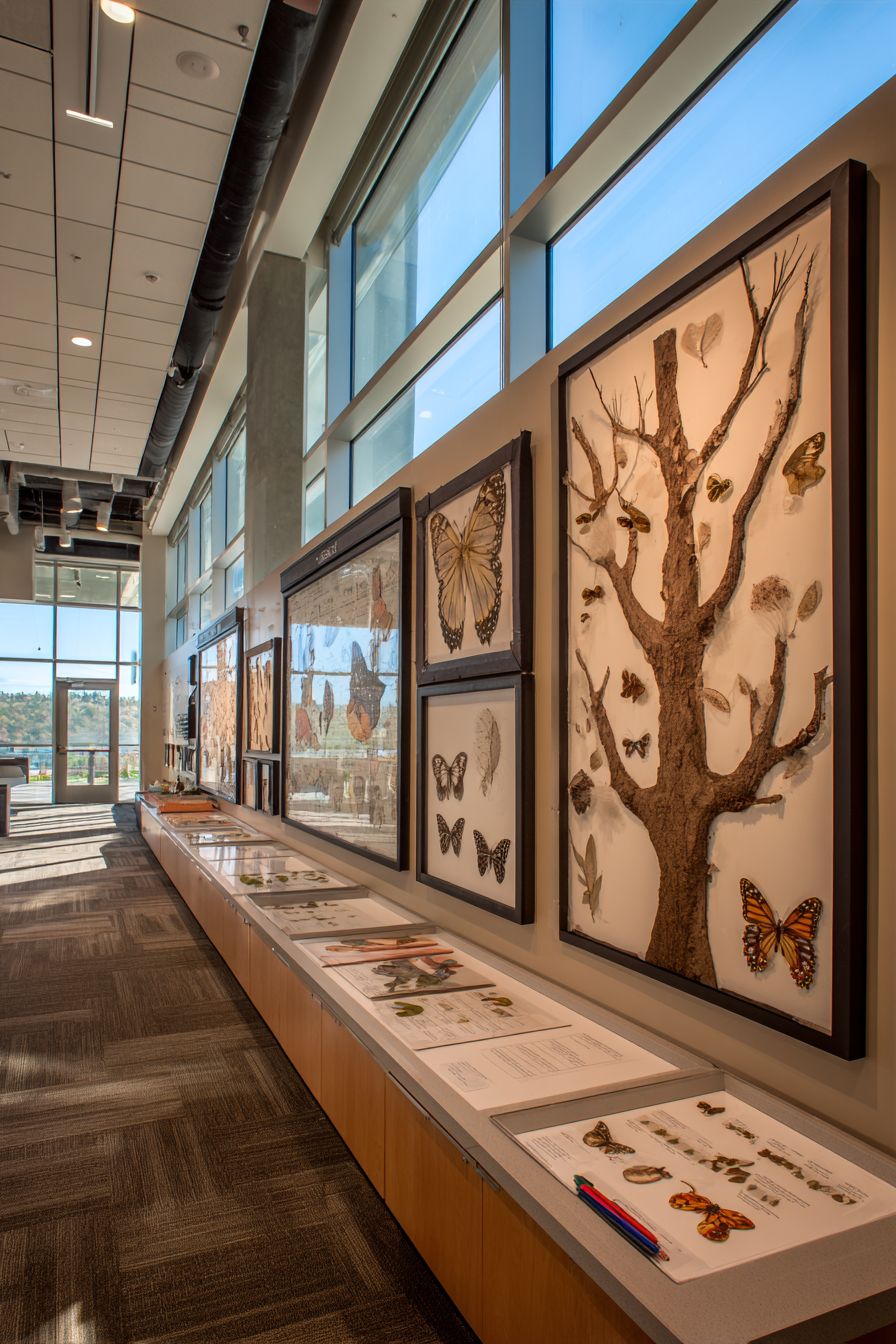
Nature collections displayed intentionally teach children to observe and appreciate natural details while decorating authentically. Shadow boxes with pressed leaves, pinecone displays on shelves, or framed butterfly specimens add real natural elements to themed rooms. These collections evolve as children discover new treasures during outdoor adventures, keeping the theme dynamic and personally meaningful.
Educational posters featuring tree types, animal species, or forest ecosystems blend learning with decor in age-appropriate ways. Choose illustrations matching your room’s color palette and frame them properly for professional presentation. These educational elements support school learning while keeping the forest theme grounded in actual nature rather than fantasy alone.
- Install a tree-shaped growth chart on an easily accessible wall
- Create shadow boxes for displaying pressed leaves or pinecones
- Frame educational posters about forest animals or trees
- Add a world map highlighting different forest types globally
- Include a nature journal and art supplies for documenting discoveries
- Rotate seasonal nature finds to keep displays fresh and relevant
9. Incorporate Storage Solutions as Thematic Elements
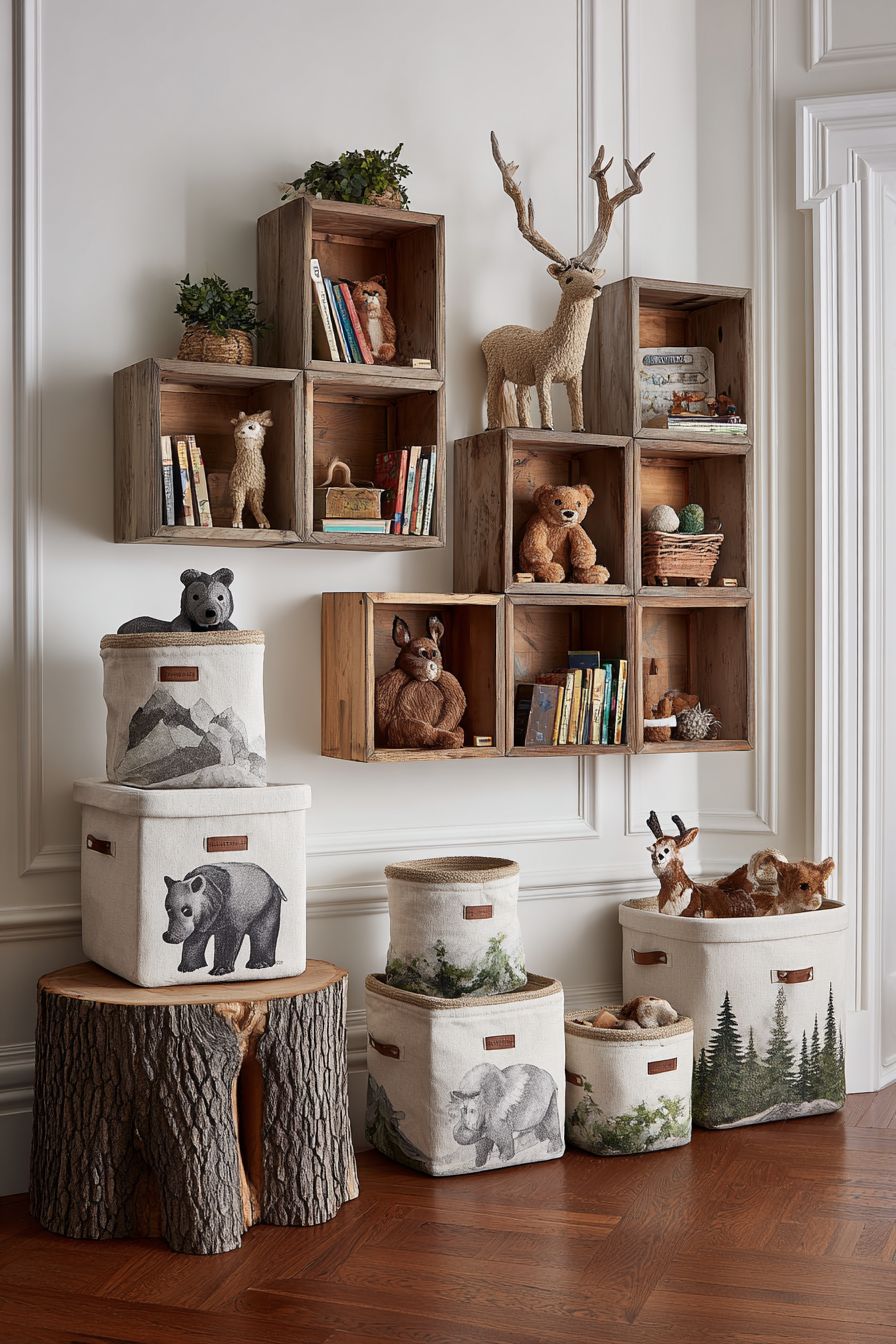
Tree-shaped shelving transforms necessary storage into decorative focal points that reinforce woodland themes. Branch-style wall shelves, tree trunk bookcases, or log-inspired storage cubes serve practical functions while maintaining thematic consistency. This dual-purpose approach maximizes space efficiency while ensuring every element contributes to the overall forest atmosphere.
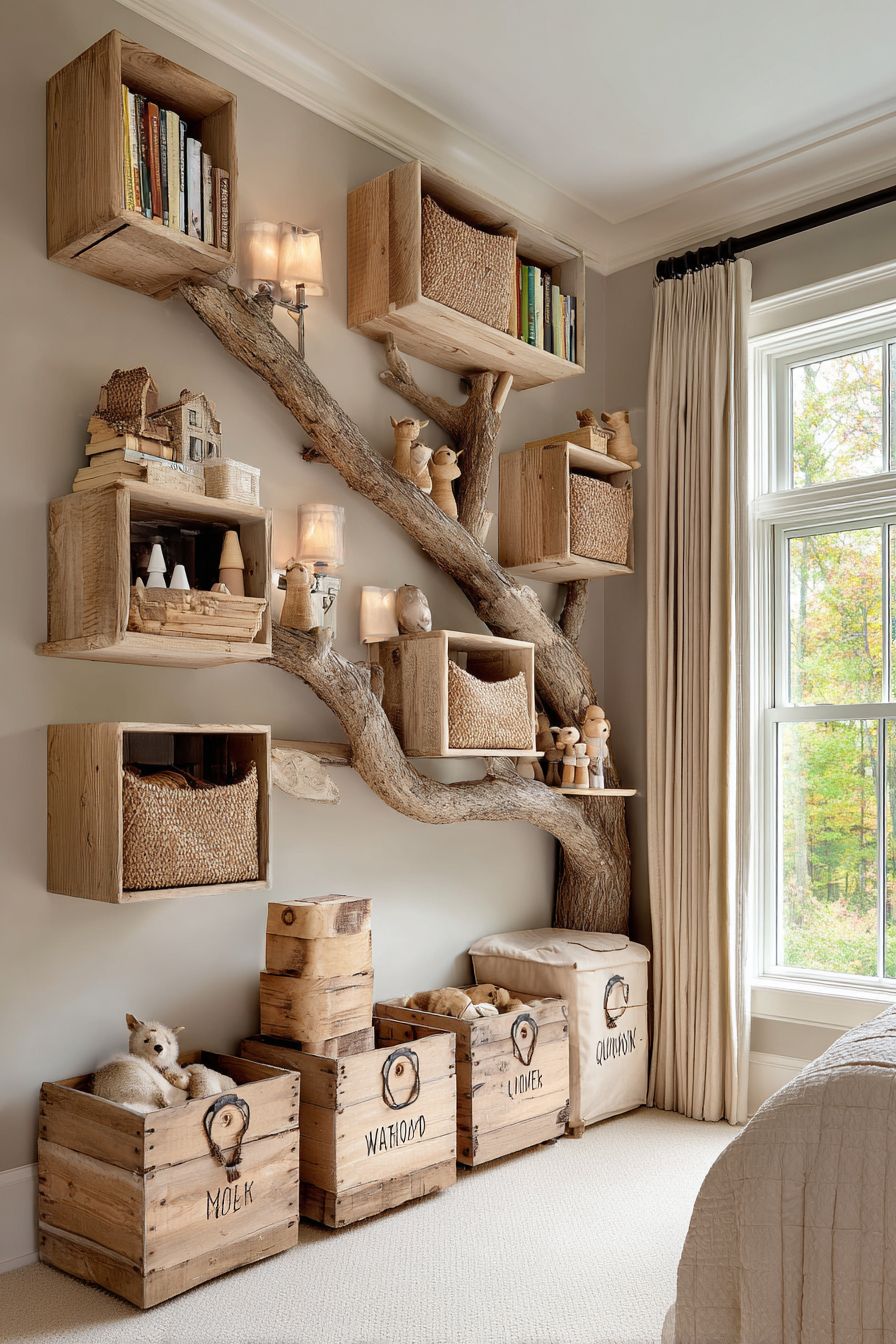
Natural storage containers like woven baskets, wooden crates, and canvas bins organize toys and belongings while feeling authentic to forest themes. Label these containers with animal names or forest terms to make cleanup more engaging for children. The natural materials photograph beautifully and age gracefully, maintaining appeal as children grow and storage needs evolve.
Under-bed storage designed as forest floor hideaways maximizes space while adding play value. Rolling bins decorated with woodland scenes or natural wood drawers slide beneath beds invisibly during the day. This hidden storage prevents clutter while maintaining the room’s peaceful forest atmosphere rather than disrupting it with visible toy chaos.
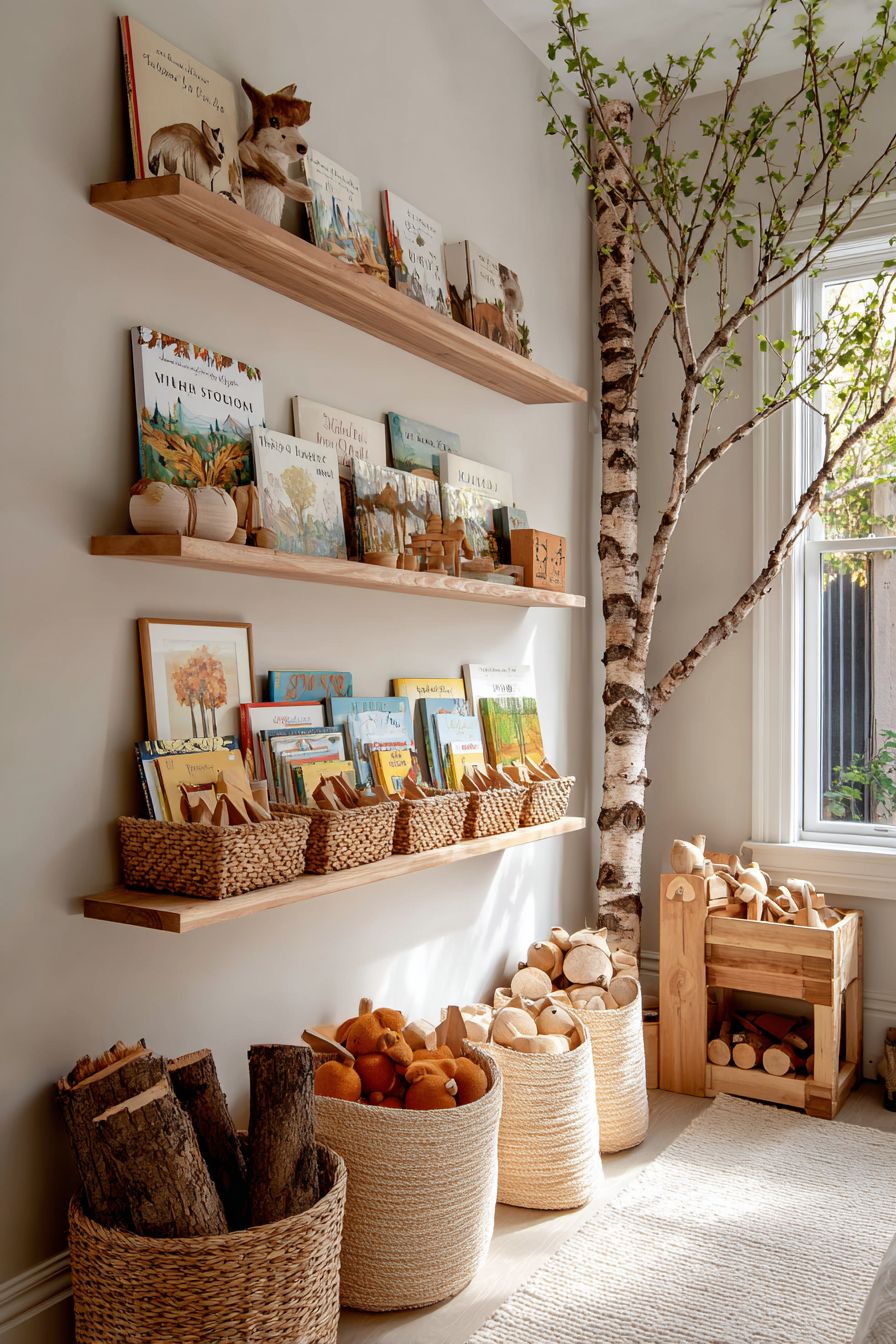
- Install branch-shaped wall shelves for books and small decorative items
- Use woven baskets labeled with woodland animal names for toy organization
- Add wooden crates or log-style storage cubes for larger item containment
- Utilize under-bed rolling bins to maximize floor space
- Choose storage furniture in natural wood finishes rather than bright plastics
- Incorporate storage ottomans or benches with hidden compartments
10. Complete the Theme with Coordinated Textiles

Forest-themed bedding ties the entire room together while providing comfort and warmth. Choose duvet covers or comforters featuring woodland animals, tree patterns, or leaf prints in colors matching your established palette. Layer multiple patterns in similar color families for sophisticated results that avoid matching-set monotony that can feel overly theme-park-like.
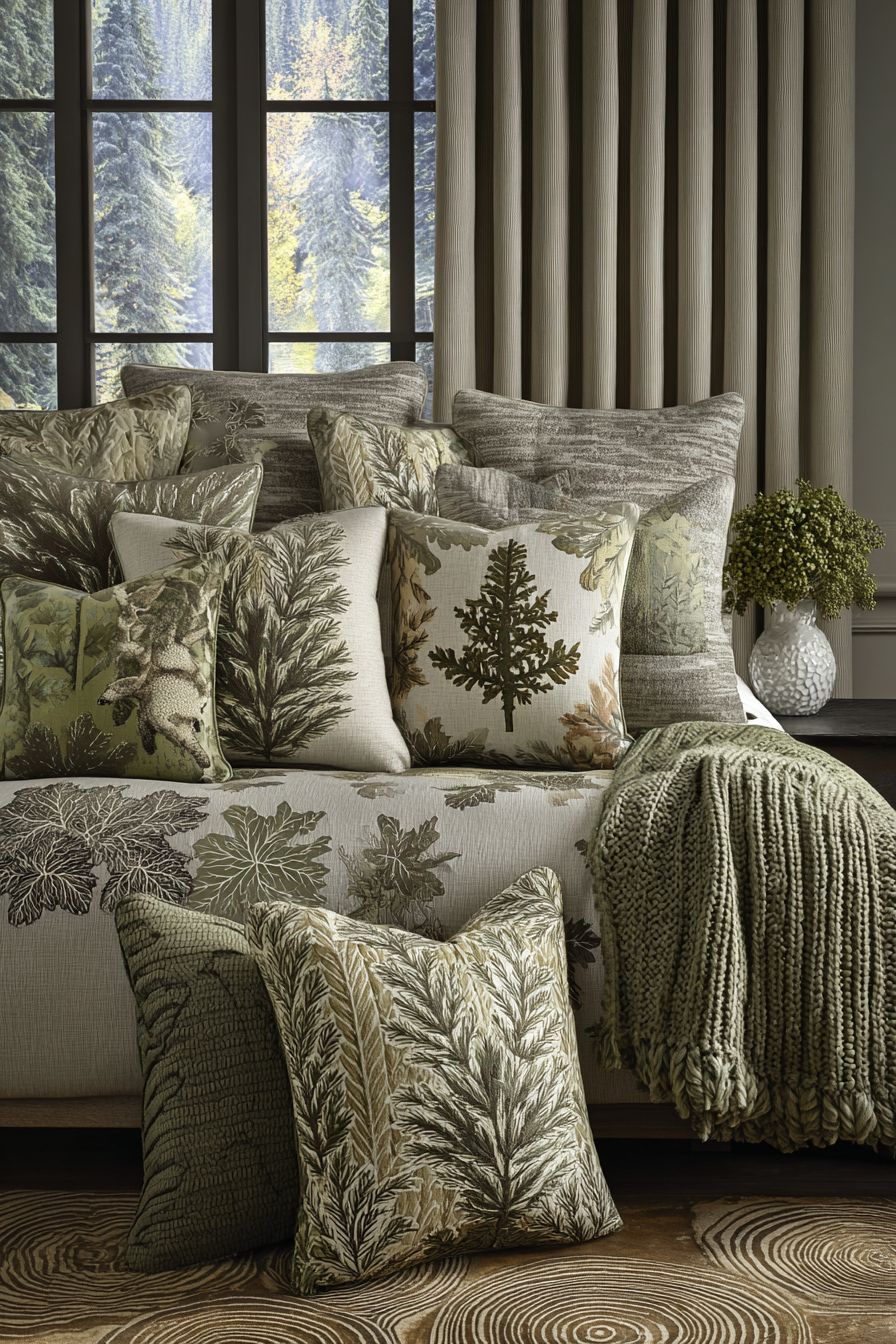
Window treatments control light while contributing significantly to forest atmosphere. Canvas or linen curtains in earth tones filter natural light softly, mimicking how tree canopies scatter sunlight. Consider adding blackout liners for better sleep quality while maintaining the natural fabric appearance that reinforces organic, woodland feelings.
Rug selection grounds the forest theme literally while providing comfort underfoot and defining play areas. Choose rugs with leaf patterns, tree rings, or forest scenes in durable materials that withstand active play. Natural fiber rugs like jute or wool add authentic texture, though synthetic options offer easier cleaning for practical family life.
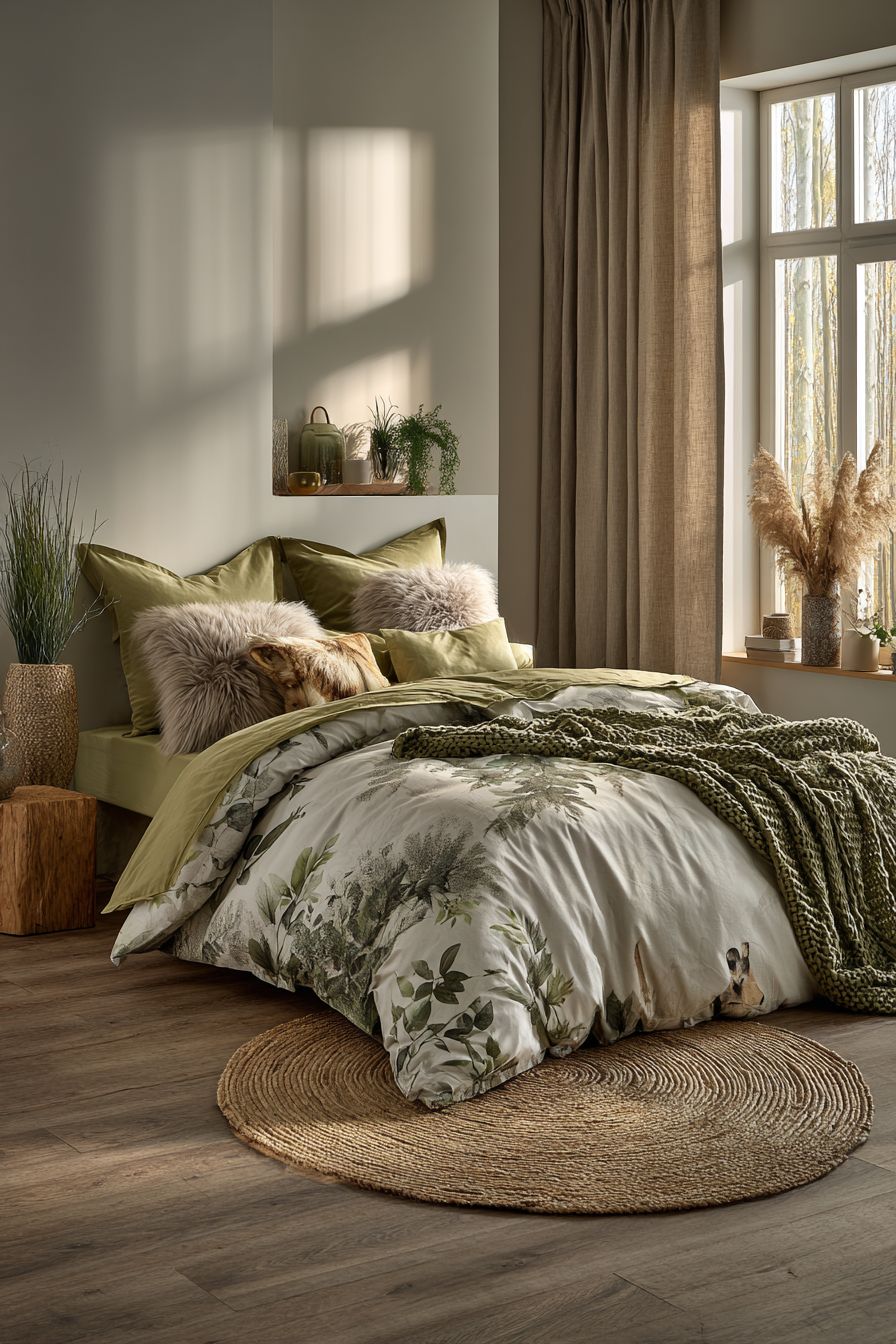
- Select bedding in forest colors with woodland patterns or animals
- Layer different patterns in coordinating colors for sophisticated looks
- Choose blackout-lined curtains in natural fabrics for better sleep
- Add throw pillows in various forest-inspired patterns and textures
- Select area rugs featuring leaf patterns, tree rings, or forest scenes
- Ensure all textiles are machine-washable for practical maintenance
Conclusion
Creating an enchanting forest bedroom theme combines thoughtful color selection, natural materials, woodland creatures, and interactive elements that transport children into magical nature-inspired sanctuaries. The ten strategies explored here—from establishing earthy palettes to coordinating textiles—work together harmoniously to produce cohesive, engaging spaces that support healthy development while sparking imagination. Remember that the most successful themes balance whimsy with functionality, creating rooms that serve practical daily needs while feeling special and inspiring.
Start with foundational elements like paint colors and major furniture pieces before layering in decorative details and accessories. This approach prevents overwhelm while allowing the theme to develop organically as you discover what resonates with your child. The beauty of forest themes lies in their flexibility and longevity—they adapt easily as children grow, requiring only minor updates to remain relevant and beloved.
Trust your instincts, incorporate your child’s input, and create a woodland retreat that nurtures their connection to nature while providing a peaceful sanctuary for rest, play, and growth. Your child’s forest bedroom will become a cherished space where memories are made and imaginations flourish for years to come.
"As an Amazon Associate, I earn from qualifying purchases."
