

Elegance in dining room design transcends fleeting trends and expensive price tags. It represents a timeless quality that combines refined simplicity with thoughtful curation, creating spaces that feel both sophisticated and welcoming. An elegant dining room doesn’t shout for attention but rather commands it through subtle details, harmonious proportions, and a cohesive design philosophy that reflects cultivated taste.
The pursuit of dining room elegance requires understanding fundamental design principles that have stood the test of time. Classic proportions, quality materials, and restrained color palettes form the foundation, while personal touches and strategic styling bring warmth and personality. The most elegant spaces balance formality with livability, creating rooms that work beautifully for both intimate family dinners and special celebrations.
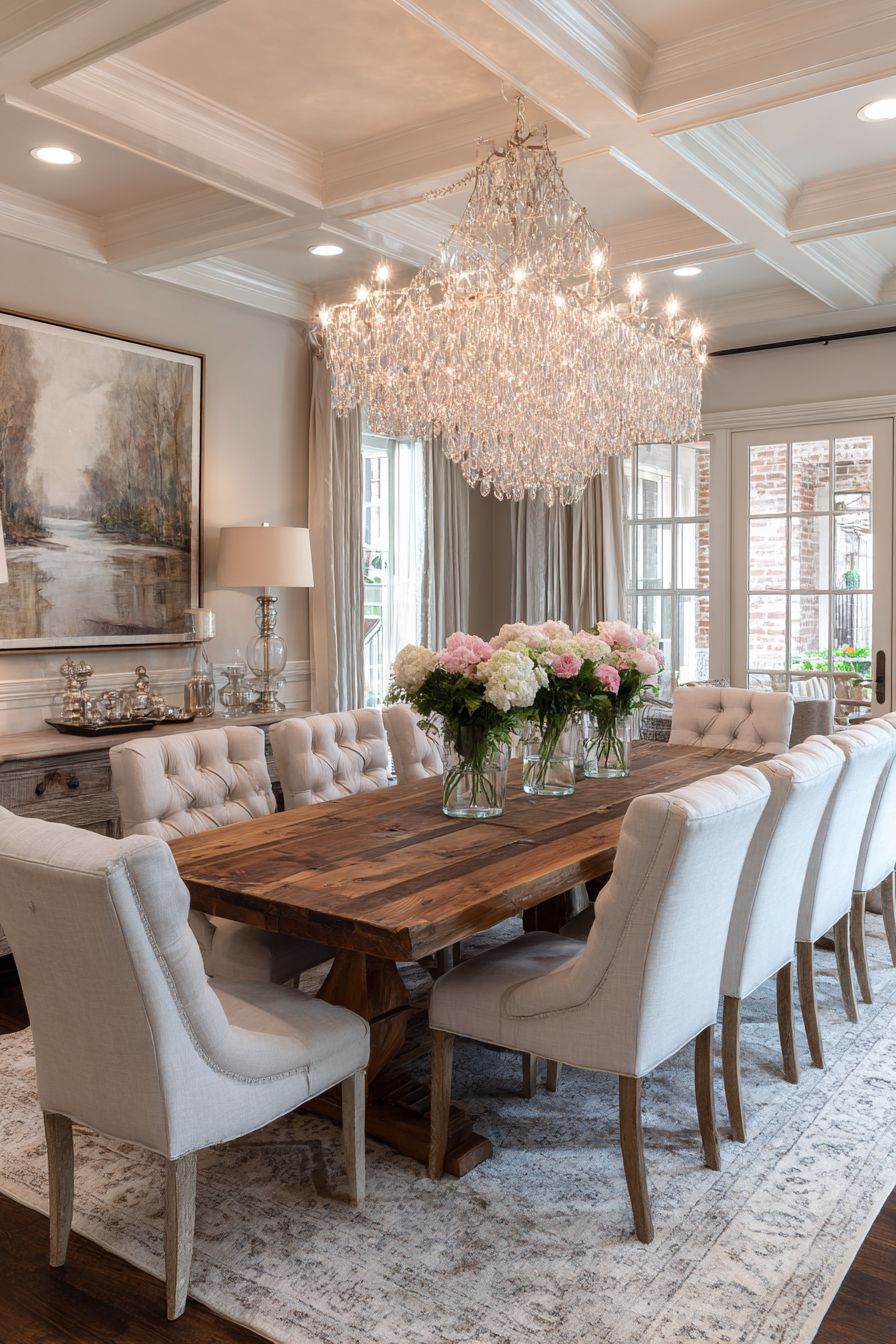
This guide reveals seven essential secrets that interior designers use to achieve elegant dining room aesthetics. From mastering symmetry and balance to selecting timeless furniture pieces, each strategy contributes to an overall impression of sophistication and grace. Whether you’re working with a grand formal dining room or a modest eating area, these principles adapt to any space and budget, helping you create a refined atmosphere that enhances every dining experience.
1. Master the Art of Symmetry and Balance
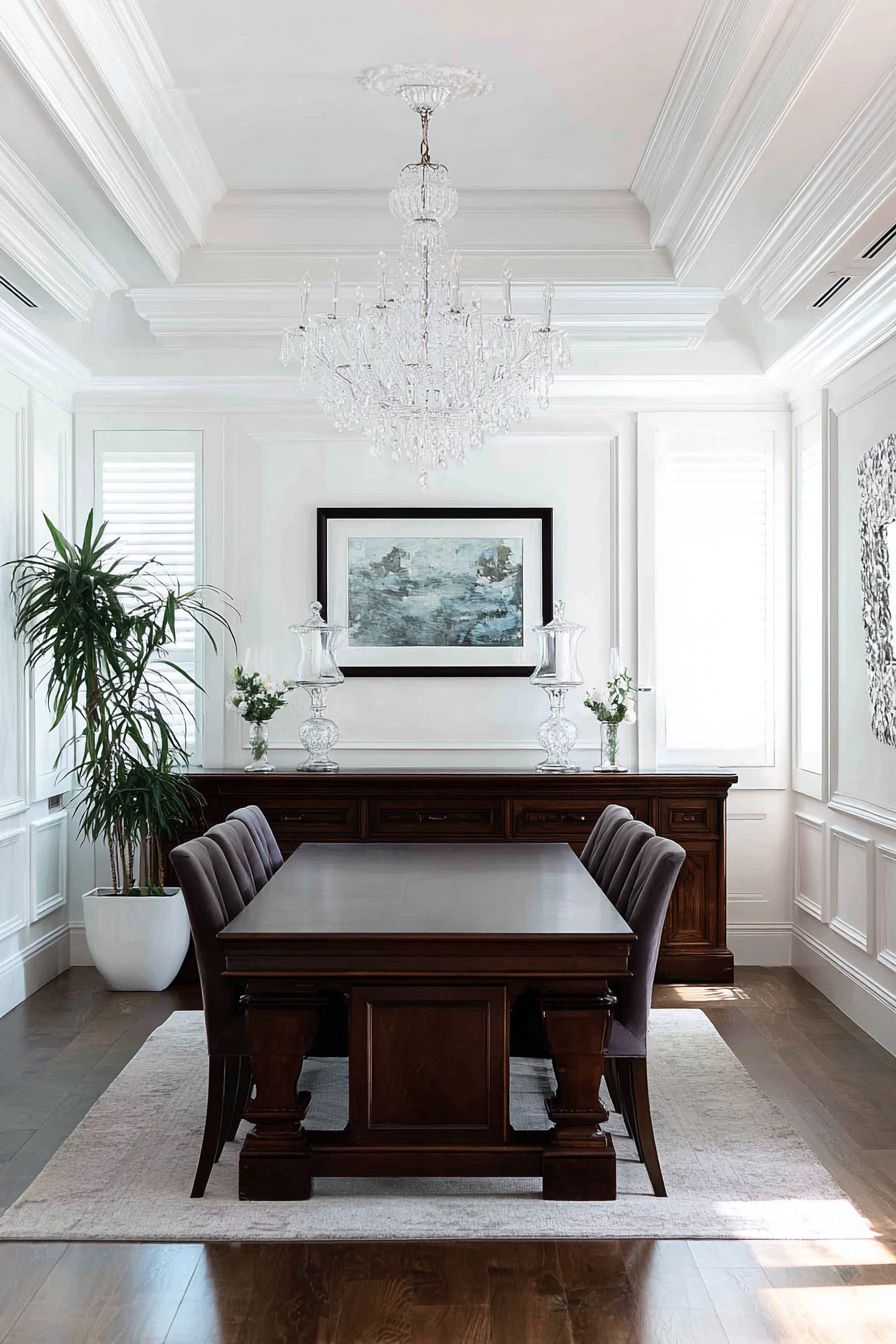
Visual symmetry creates immediate elegance by appealing to our innate appreciation for order and harmony. Positioning matching elements on either side of a central axis—whether flanking a buffet with identical lamps or centering artwork above the table—produces a calm, organized aesthetic that reads as sophisticated and intentional.
Balanced arrangements don’t always require perfect symmetry but do need visual equilibrium. If you place a tall plant on one side of the room, balance it with a substantial piece of furniture or artwork on the opposite side. This approach maintains harmony while allowing more creative, asymmetrical compositions that feel dynamic rather than static.
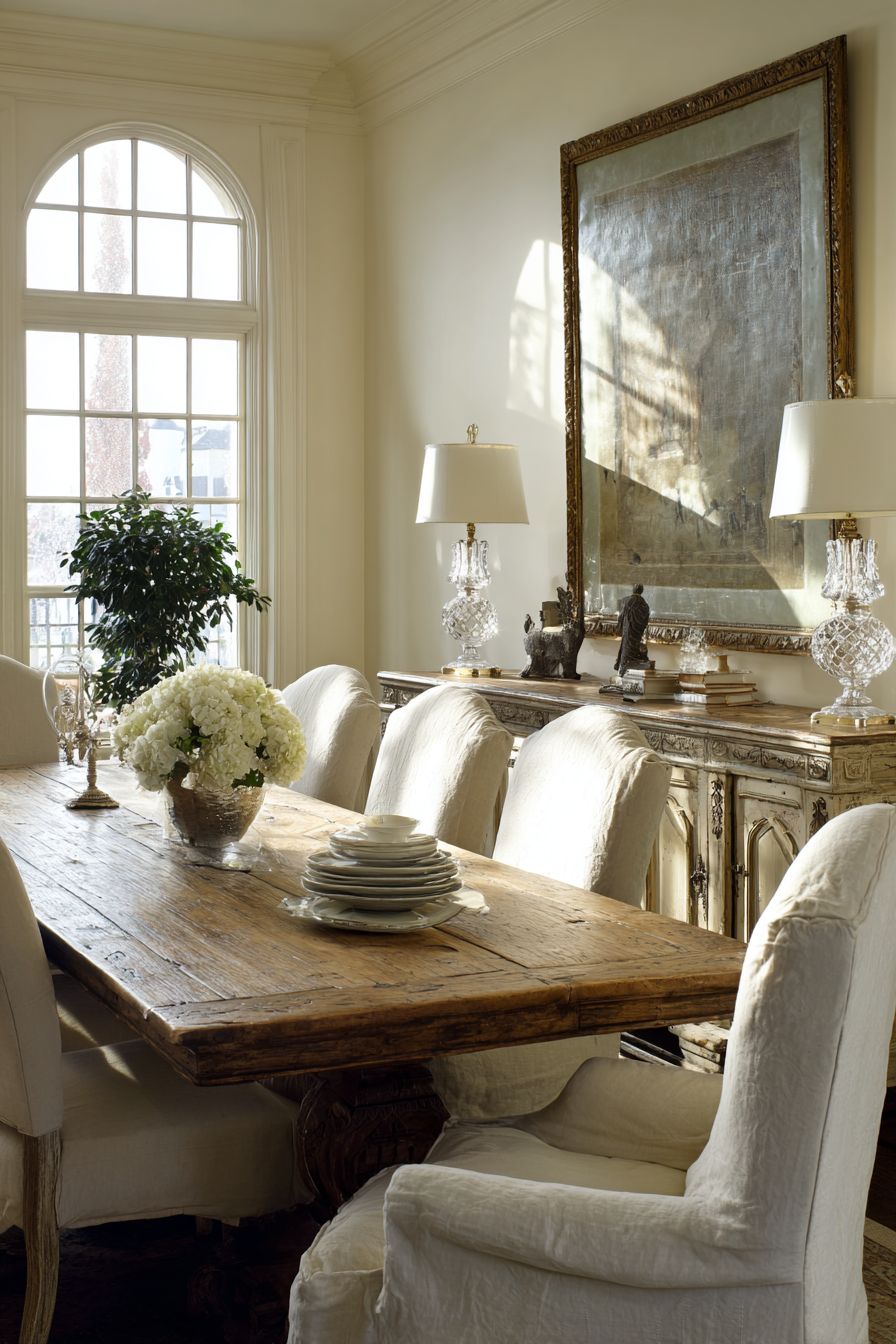
The dining table itself serves as the natural focal point around which symmetrical elements should radiate. Center it within the room when possible, ensuring equal clearance on all sides for chairs and circulation. This centered positioning creates balance that grounds the entire space and establishes elegant proportions automatically.
- Position the dining table in the room’s center with equal space on all sides
- Flank buffets or sideboards with matching lamps, candlesticks, or decorative objects
- Hang artwork centered above key furniture pieces for classical balance
- Use pairs of chairs at table ends to create symmetrical seating arrangements
- Balance tall elements on one side with substantial pieces opposite
- Maintain consistent spacing between furniture pieces for visual rhythm
2. Embrace a Refined Color Palette
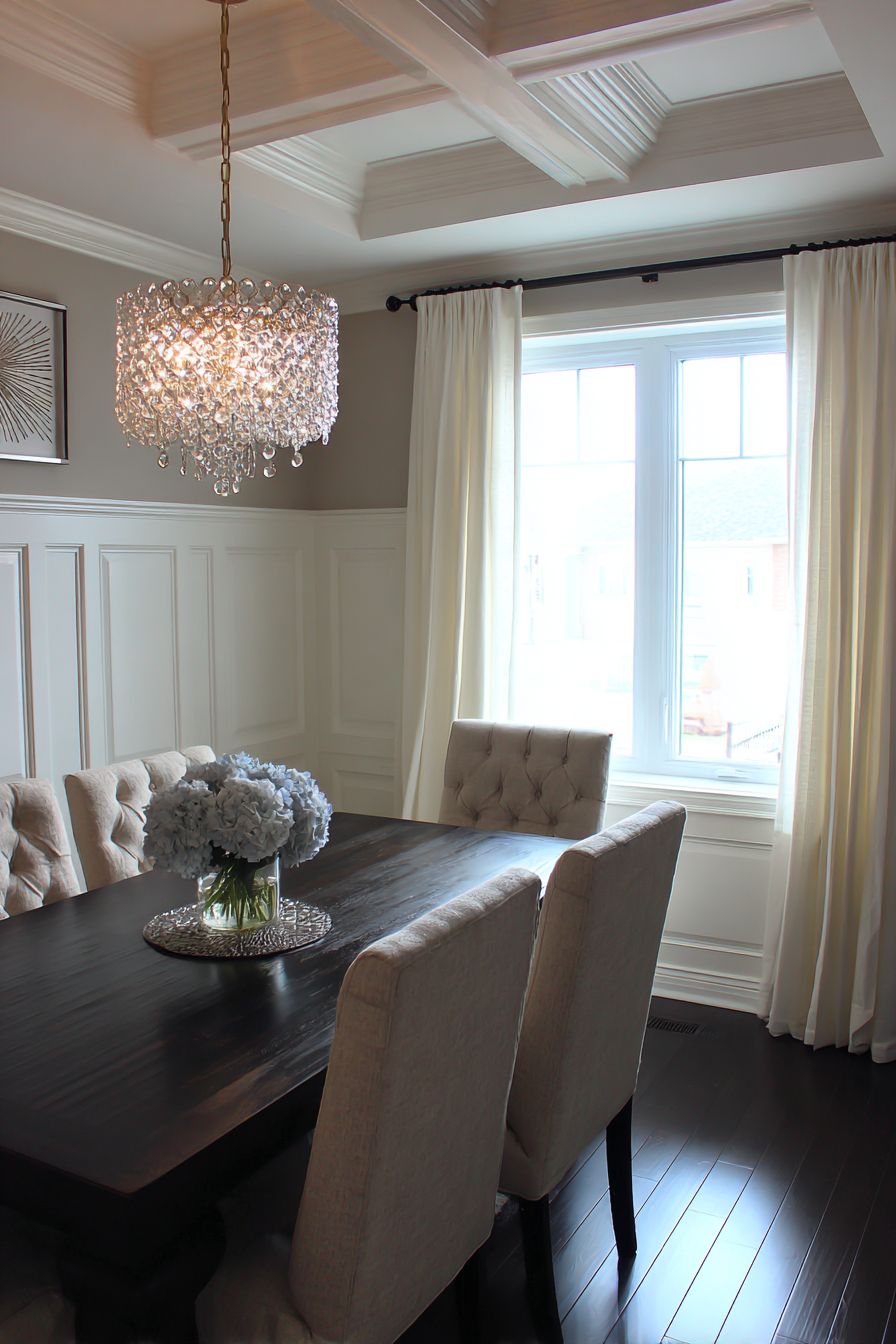
Neutral color schemes form the backbone of elegant dining room design, providing a sophisticated canvas that never feels dated or overwhelming. Shades of white, cream, beige, gray, and taupe create serene environments where furniture and architectural details take center stage. These understated palettes allow flexibility in styling and seasonal decorating.
Monochromatic approaches within a single color family deliver particularly elegant results. Layering various shades of gray, from pale silver to charcoal, or working through the spectrum of warm beiges and taupes creates sophisticated depth without visual chaos. This technique feels cohesive and refined while avoiding the flatness of single-tone schemes.
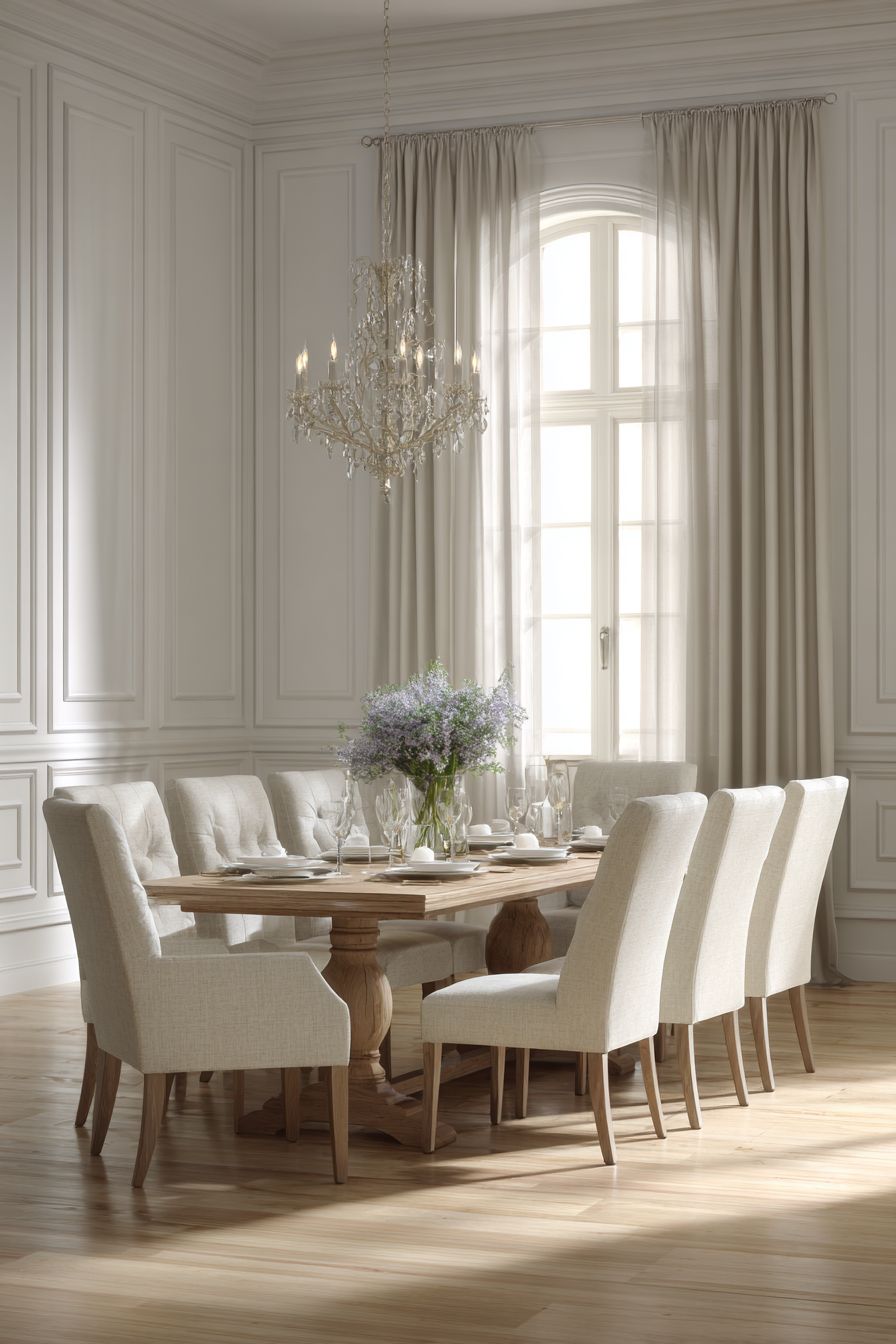
Strategic accent colors should be introduced sparingly through artwork, fresh flowers, or small decorative items rather than large furniture pieces. When you do add color, choose muted, sophisticated tones like dusty blue, sage green, or blush pink rather than bright, saturated hues. This restraint maintains the elegant atmosphere while preventing monotony.
- Build your palette around two to three neutral colors maximum
- Layer different shades within the same color family for dimensional interest
- Choose muted accent colors in sophisticated tones rather than bright hues
- Use white or cream for architectural trim to add crisp definition
- Consider soft metallics like champagne gold or pewter as neutral accents
- Test colors in your actual lighting conditions before committing to large areas
3. Invest in Quality Over Quantity
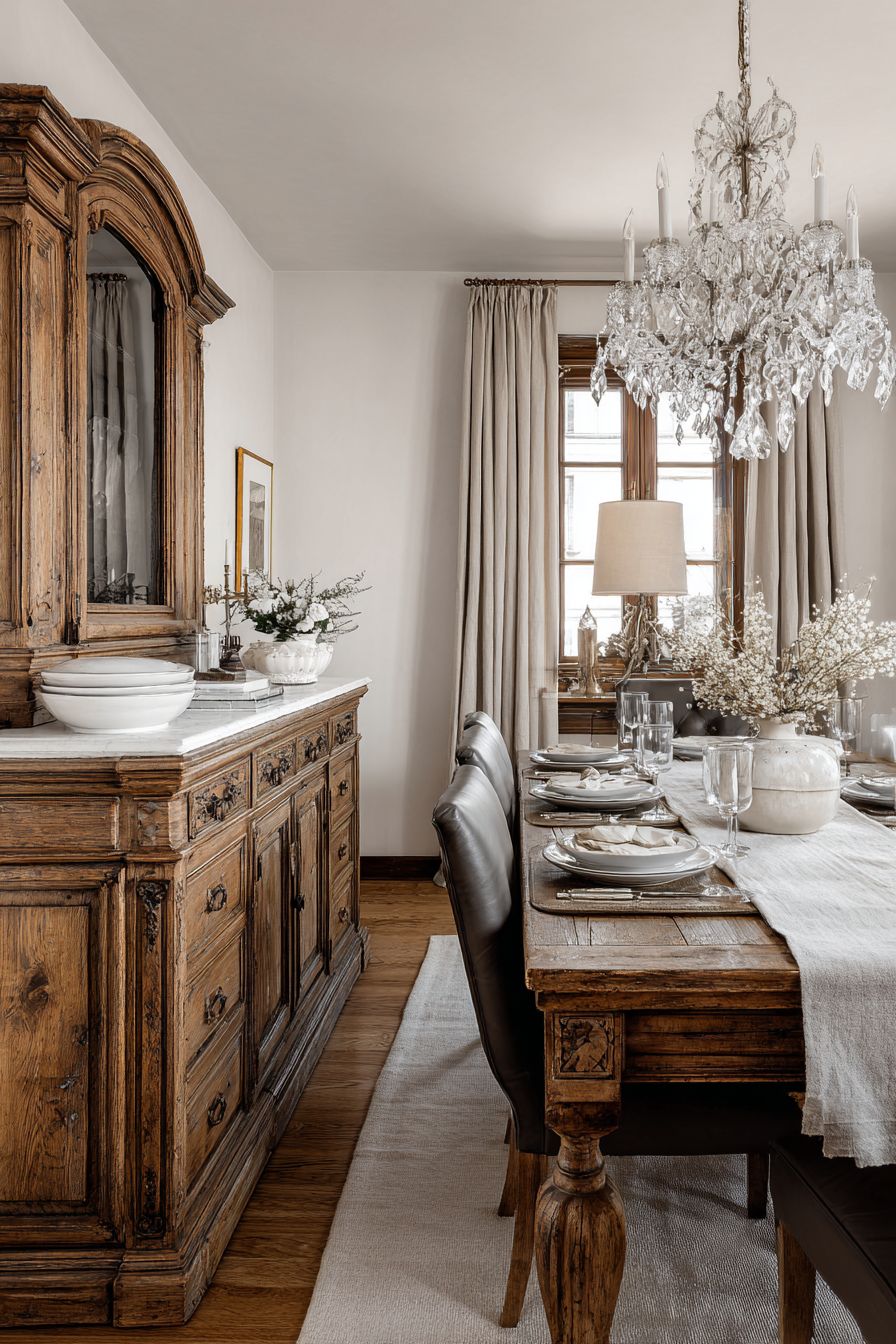
Fewer exceptional pieces create more elegance than rooms crowded with mediocre furniture and accessories. A single stunning chandelier makes more impact than multiple cheap light fixtures. One substantial antique buffet outshines several mass-produced pieces. This principle of quality over quantity defines truly elegant spaces.
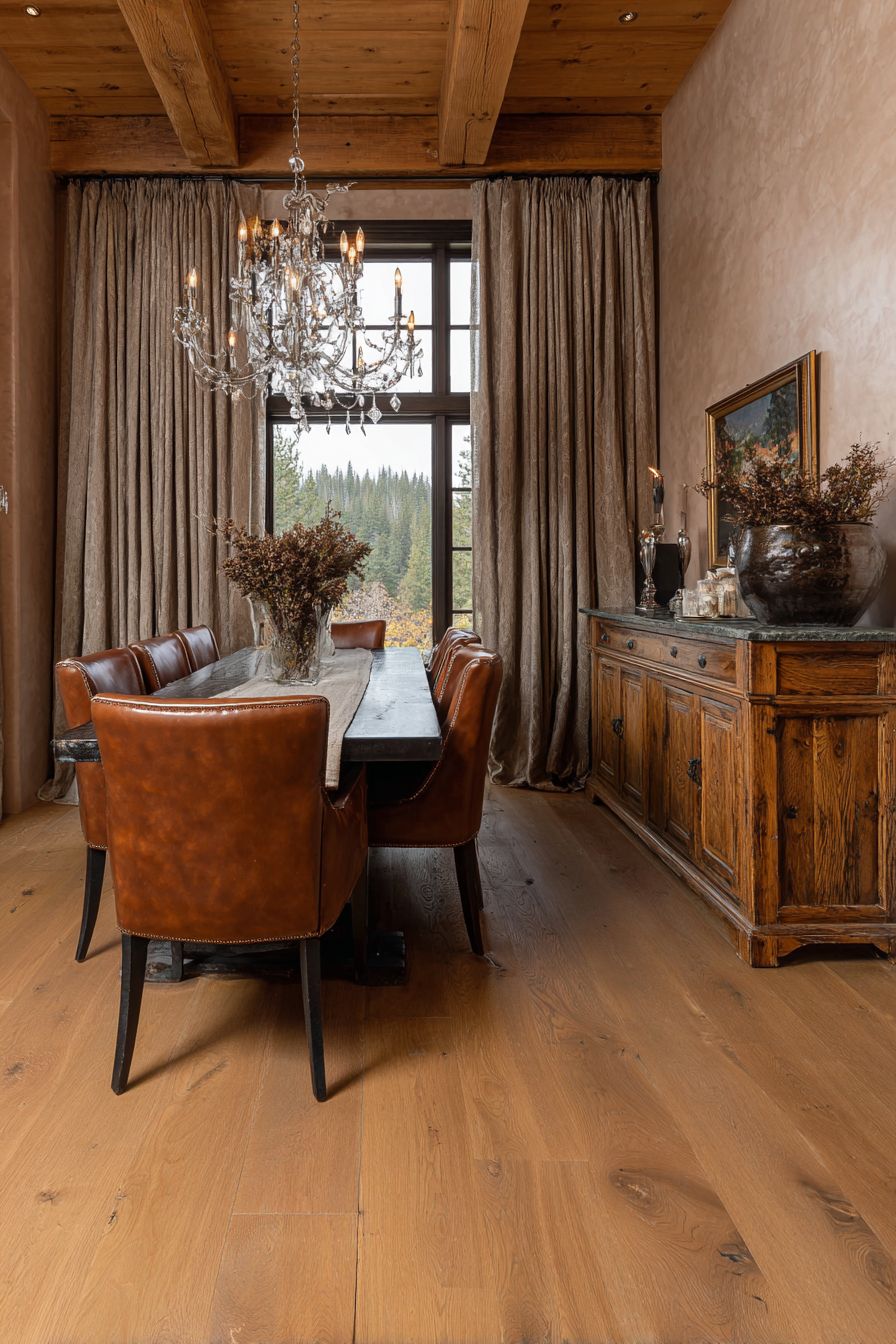
Material authenticity matters significantly in elegant design. Real wood furniture, genuine leather upholstery, natural stone surfaces, and silk textiles possess inherent beauty and durability that synthetic alternatives cannot match. These materials age gracefully, developing character and patina that enhance rather than diminish their appeal over time.
The weight and substance of quality pieces contribute to elegance in ways we perceive almost unconsciously. Solid wood chairs feel more substantial than hollow construction. Heavy linen napkins communicate luxury more than thin synthetics. These tactile qualities register as quality even before we consciously analyze why something feels elegant.
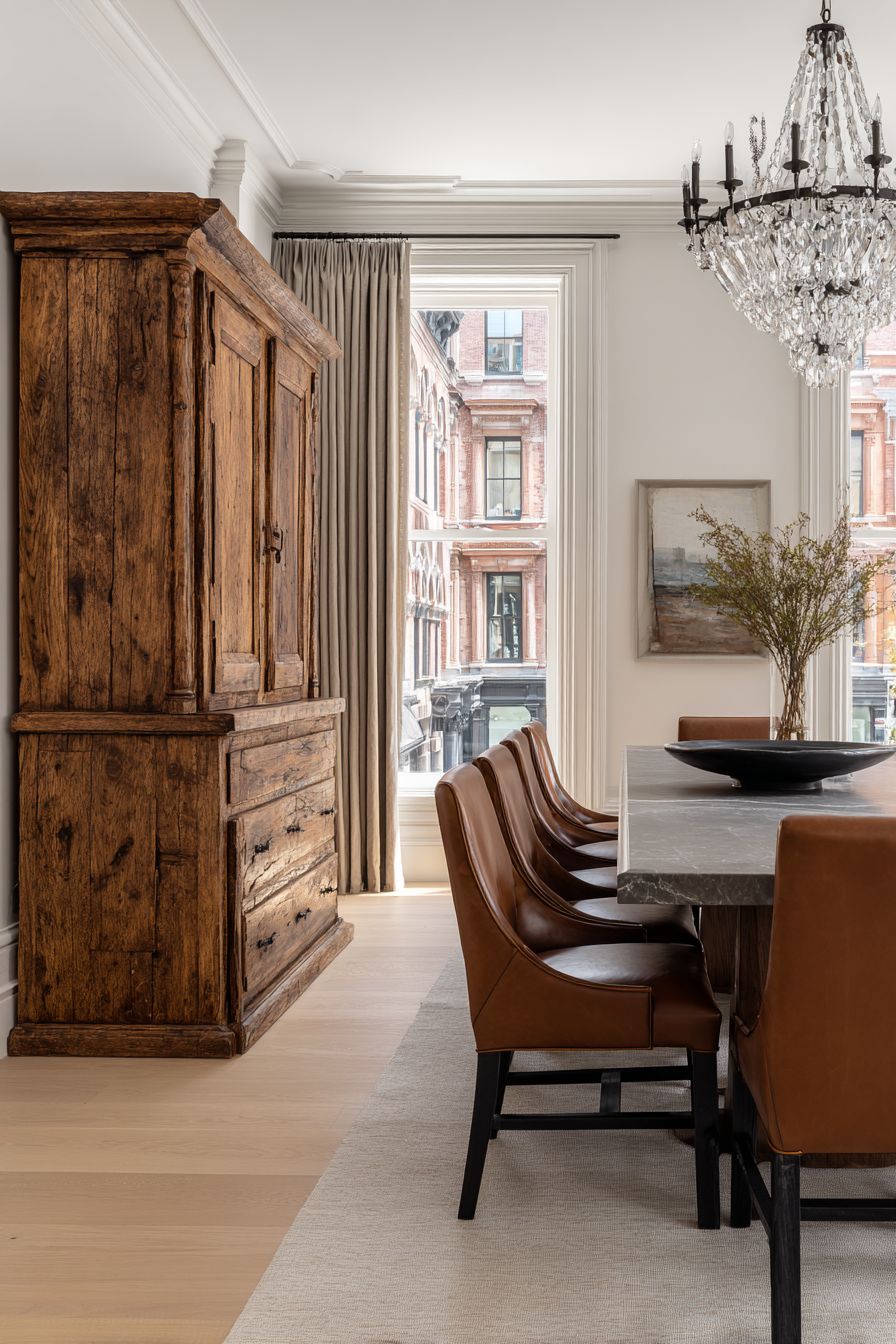
- Choose solid wood dining furniture over veneer or laminate alternatives
- Invest in one statement lighting fixture rather than multiple mediocre lights
- Select natural fiber textiles like linen, silk, or wool for window treatments
- Purchase fewer dining chairs with superior construction and upholstery
- Opt for real materials like marble, granite, or quality ceramics for surfaces
- Build your collection gradually, adding only pieces that meet high standards
4. Perfect Your Lighting Layers
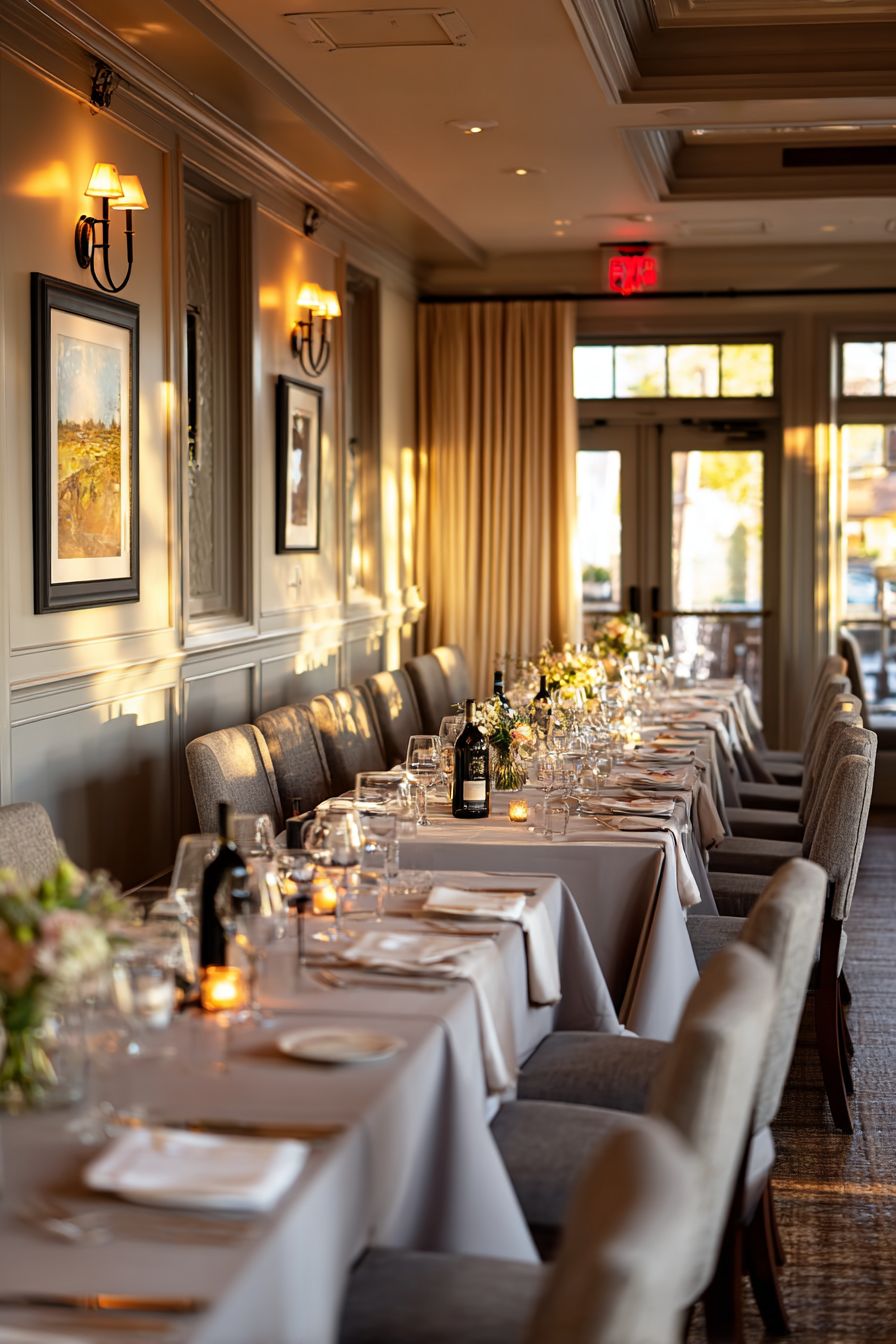
Chandelier selection represents the most critical lighting decision in elegant dining rooms. This centerpiece fixture should be substantial enough to anchor the space without overwhelming it. The traditional guideline suggests the chandelier width should equal the table width minus 12 inches, ensuring proper scale and proportion.
Ambient lighting sources beyond the primary chandelier add sophistication and flexibility that single-source lighting lacks. Wall sconces provide gentle illumination that softens the space, while buffet lamps create intimate pools of light. This layered approach allows you to adjust brightness and mood for different occasions while maintaining elegant ambiance.
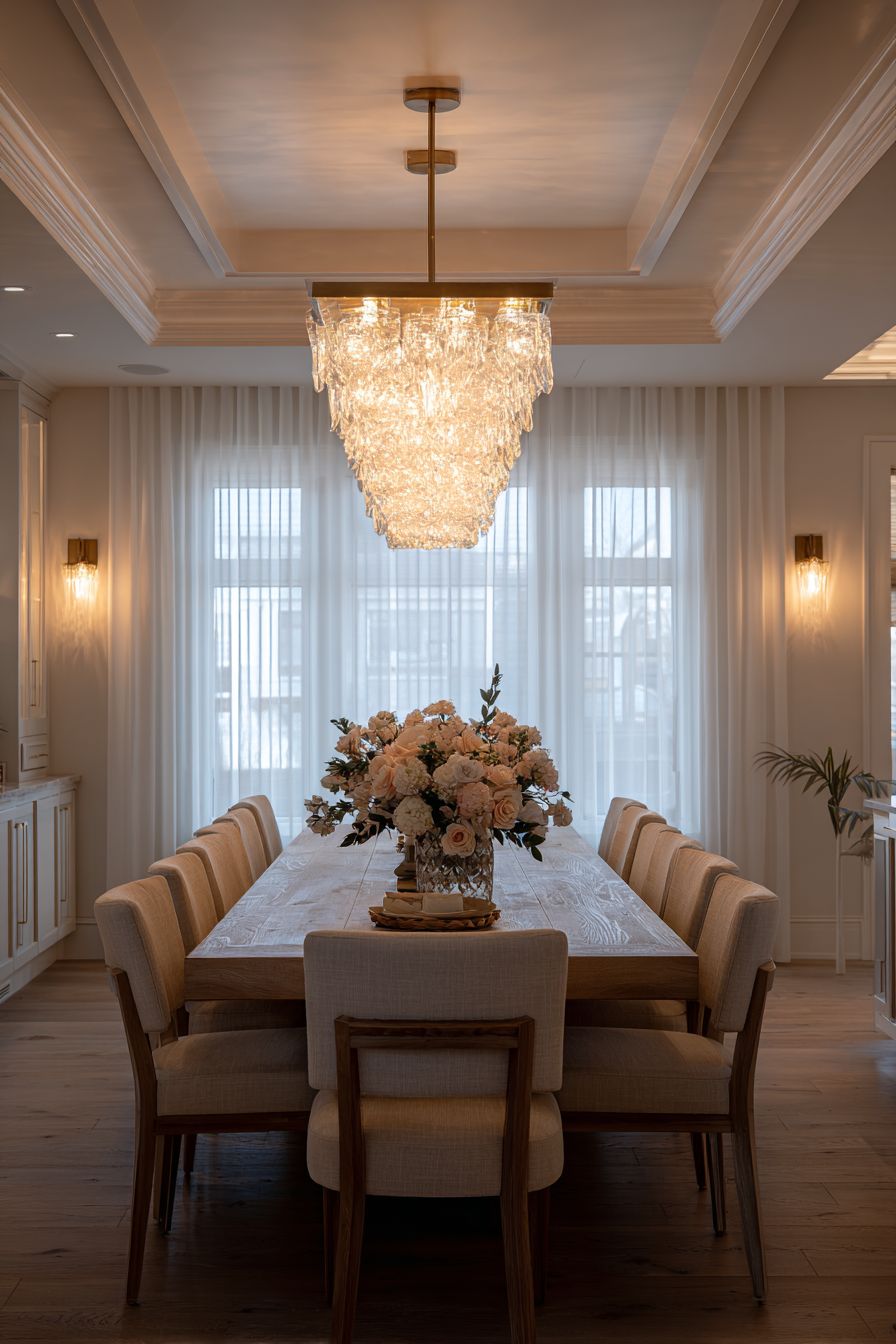
Dimmer switches on all light sources provide essential control over atmosphere and elegance. Bright lighting works for family meals, while dimmed illumination creates intimate, sophisticated settings for entertaining. The ability to modulate lighting intensity transforms the same space from casual to formal effortlessly, maximizing versatility and refinement.
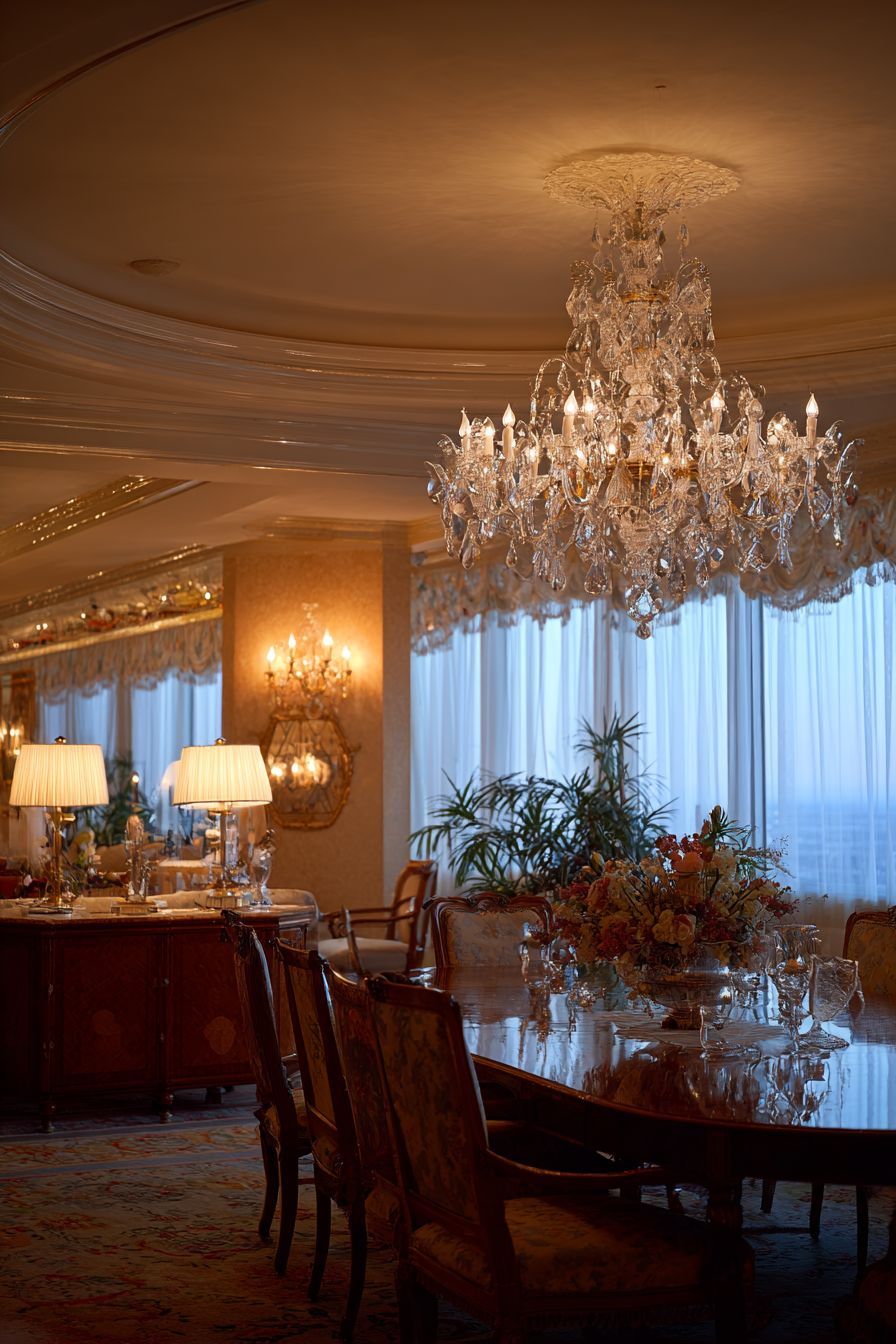
- Choose a chandelier measuring your table width minus 12 inches
- Hang the fixture 30-36 inches above the table surface for proper clearance
- Install wall sconces for supplemental ambient lighting and visual interest
- Add dimmer switches to every light source for complete atmosphere control
- Use warm white bulbs (2700K) for flattering, restaurant-quality illumination
- Consider uplighting or picture lights to highlight architectural features
5. Select Timeless Furniture Styles
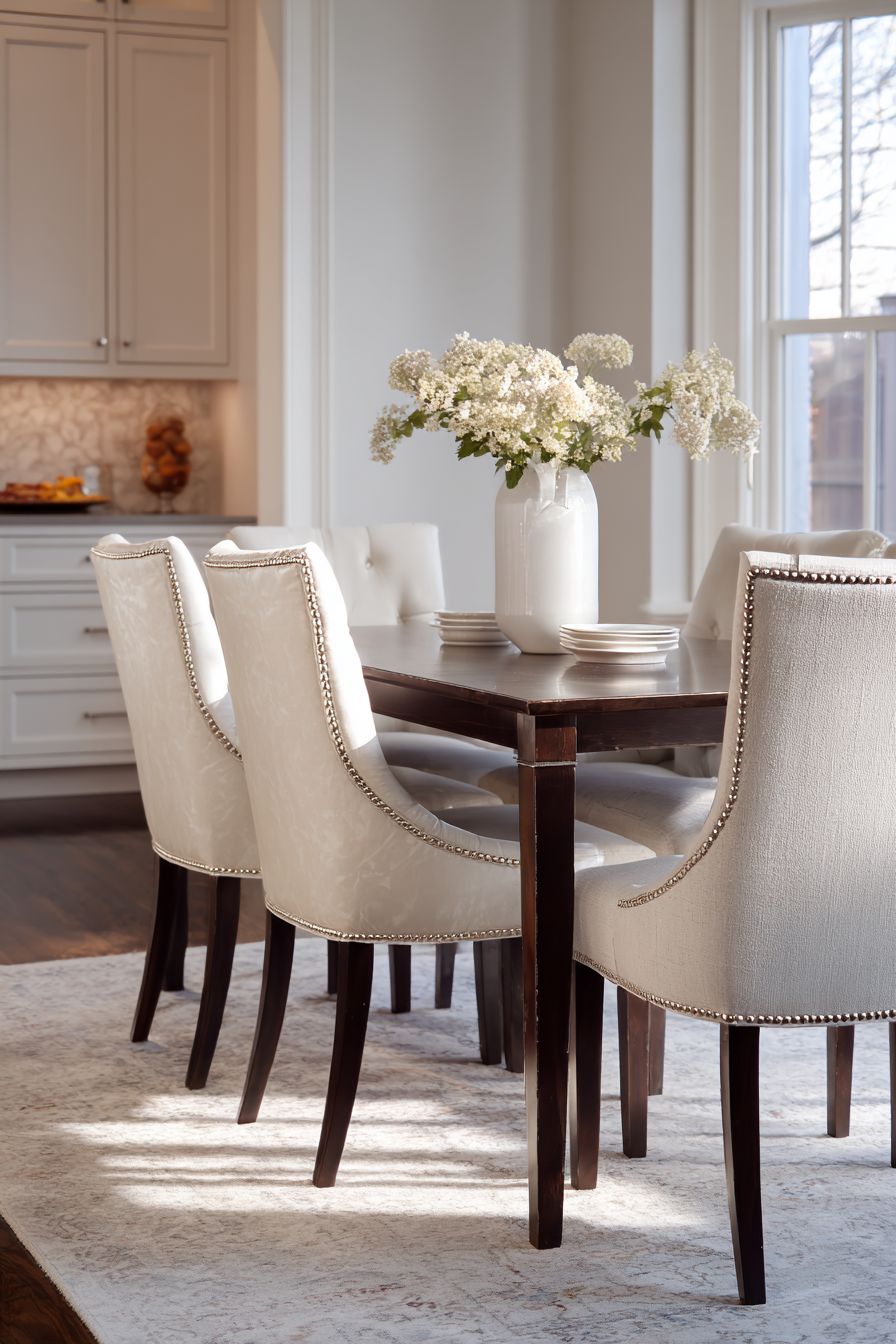
Classic furniture designs endure for decades because they avoid trendy details that quickly date. Traditional styles like Windsor chairs, Chippendale designs, or simple Parsons tables maintain elegance regardless of changing fashions. These time-tested forms provide a reliable foundation for elegant dining rooms that won’t require updating every few years.
Clean-lined furniture with minimal ornamentation reads as sophisticated and refined. Avoid overly carved, embellished, or ornate pieces unless working within a specific traditional style. Simple silhouettes with excellent proportions and quality construction create more enduring elegance than heavily decorated alternatives that can feel dated or overdone.
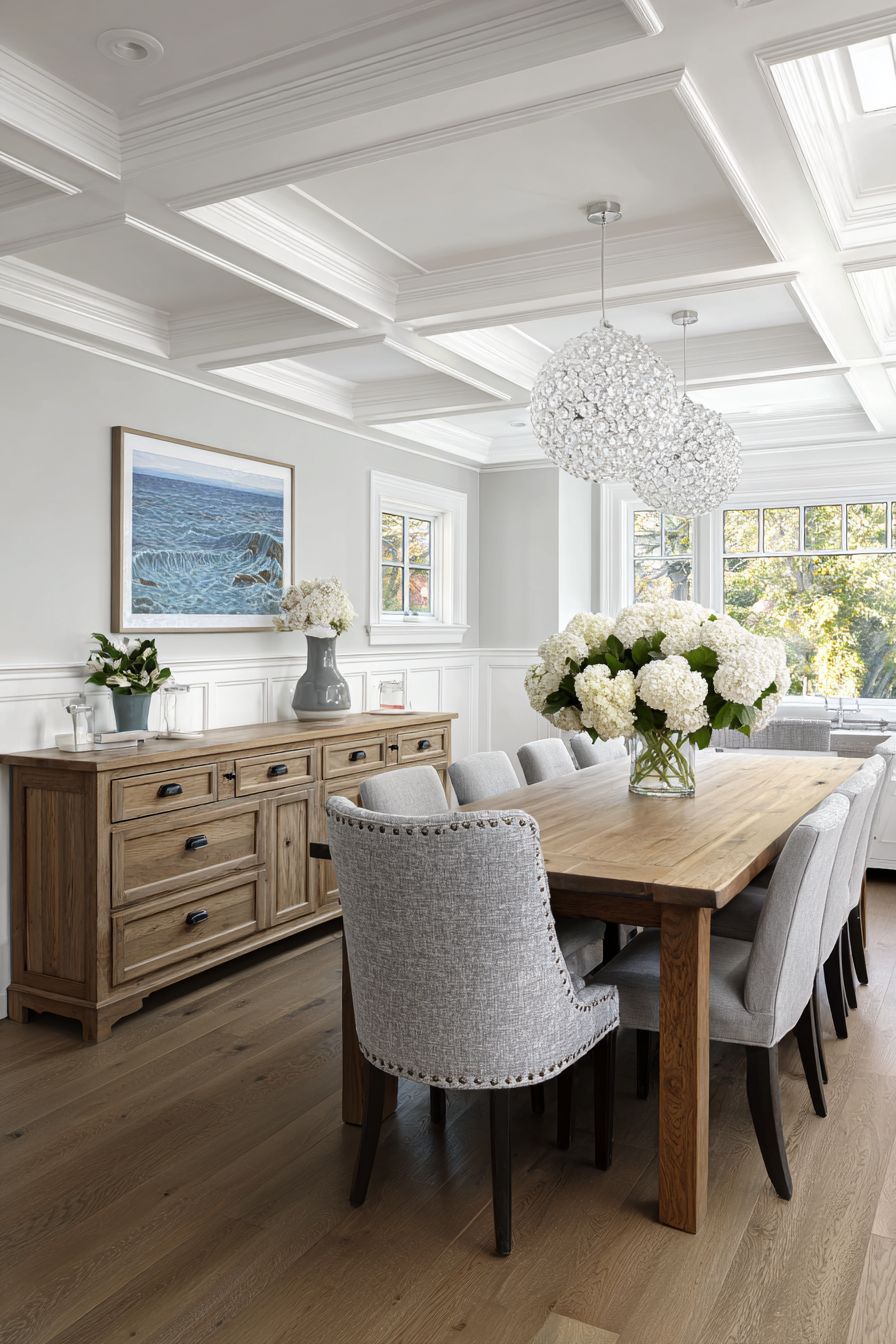
Upholstered seating in neutral fabrics adds comfort while maintaining sophistication. Choose dining chairs with subtle details like nailhead trim, elegant curves, or refined wood finishes rather than bold patterns or colors. This approach ensures your furniture remains stylish through changing trends while providing the comfort that makes dining rooms truly functional.
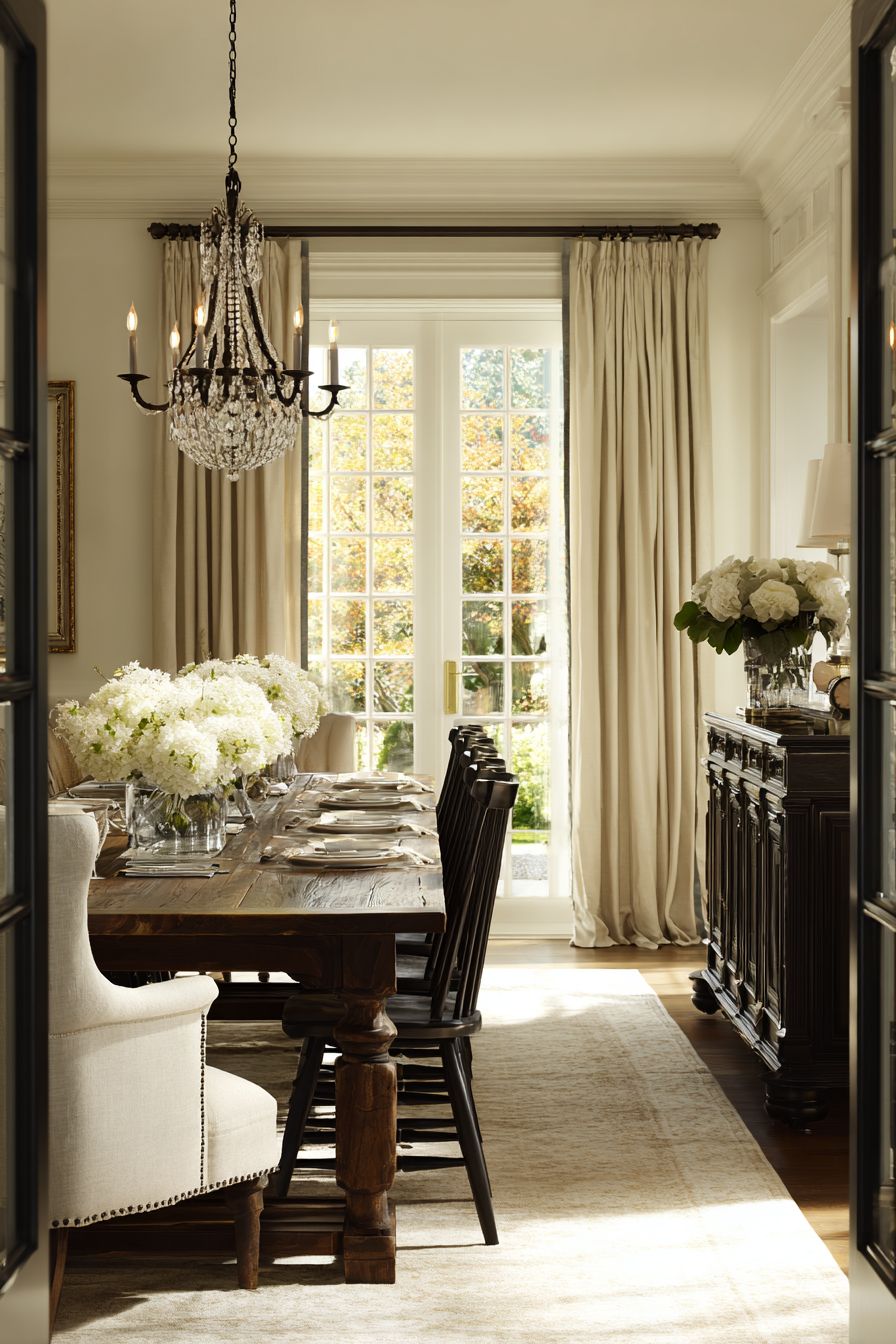
- Select furniture in classical styles that have proven staying power
- Choose clean lines and simple silhouettes over heavily ornate designs
- Opt for neutral upholstery fabrics that won’t tire or date quickly
- Ensure proper scale by measuring your space before purchasing furniture
- Look for quality joinery and substantial construction in all pieces
- Consider slipcovered chairs for versatile elegance and easy maintenance
6. Incorporate Architectural Details
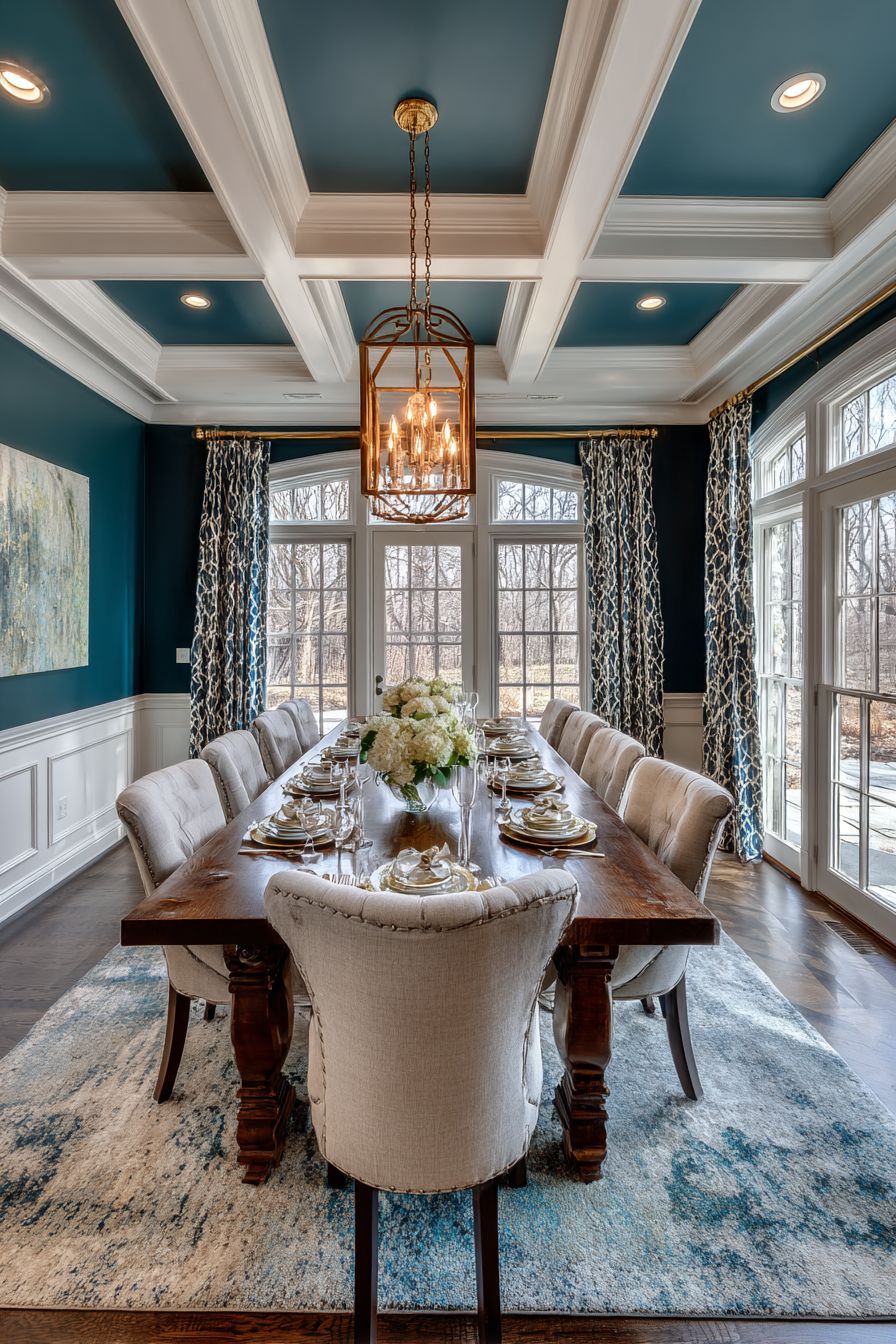
Crown molding instantly elevates rooms by adding architectural sophistication and visual interest. Even simple profiles create shadow lines and dimensionality that flat walls lack. This permanent upgrade communicates quality and attention to detail that defines elegant spaces, making rooms feel finished and professionally designed.
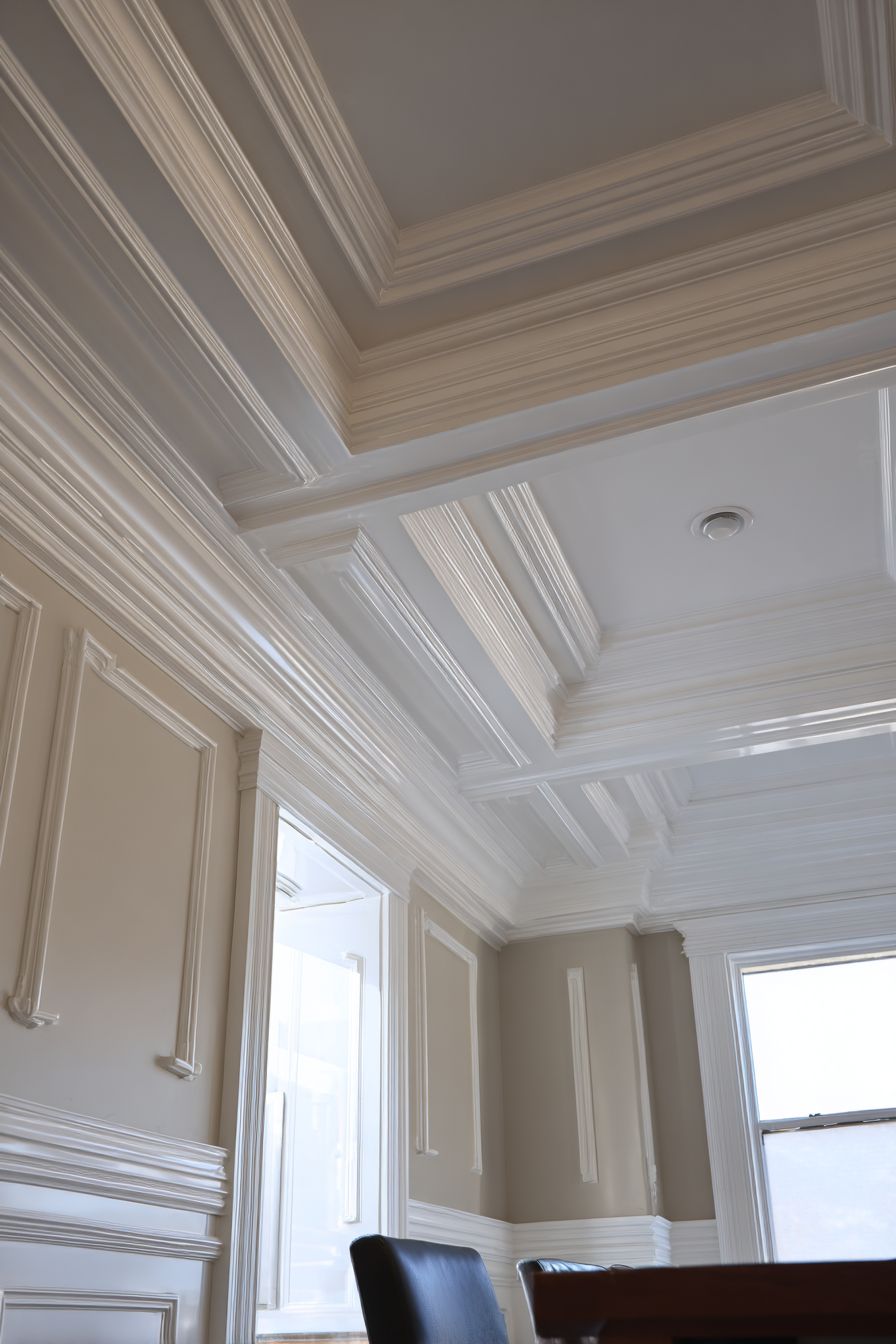
Wainscoting or chair rails add classical elegance while protecting walls from chair damage. These traditional elements create horizontal divisions that improve room proportions and provide opportunities for two-tone paint treatments. The combination of painted panels below and smooth walls above delivers timeless sophistication found in the finest historic homes.
Door and window casings in substantial profiles frame openings beautifully and contribute to overall elegance. Upgrade builder-grade trim to more substantial moldings with classic profiles. Paint trim in crisp white or a contrasting color to make architectural elements stand out, creating definition and polish throughout the space.
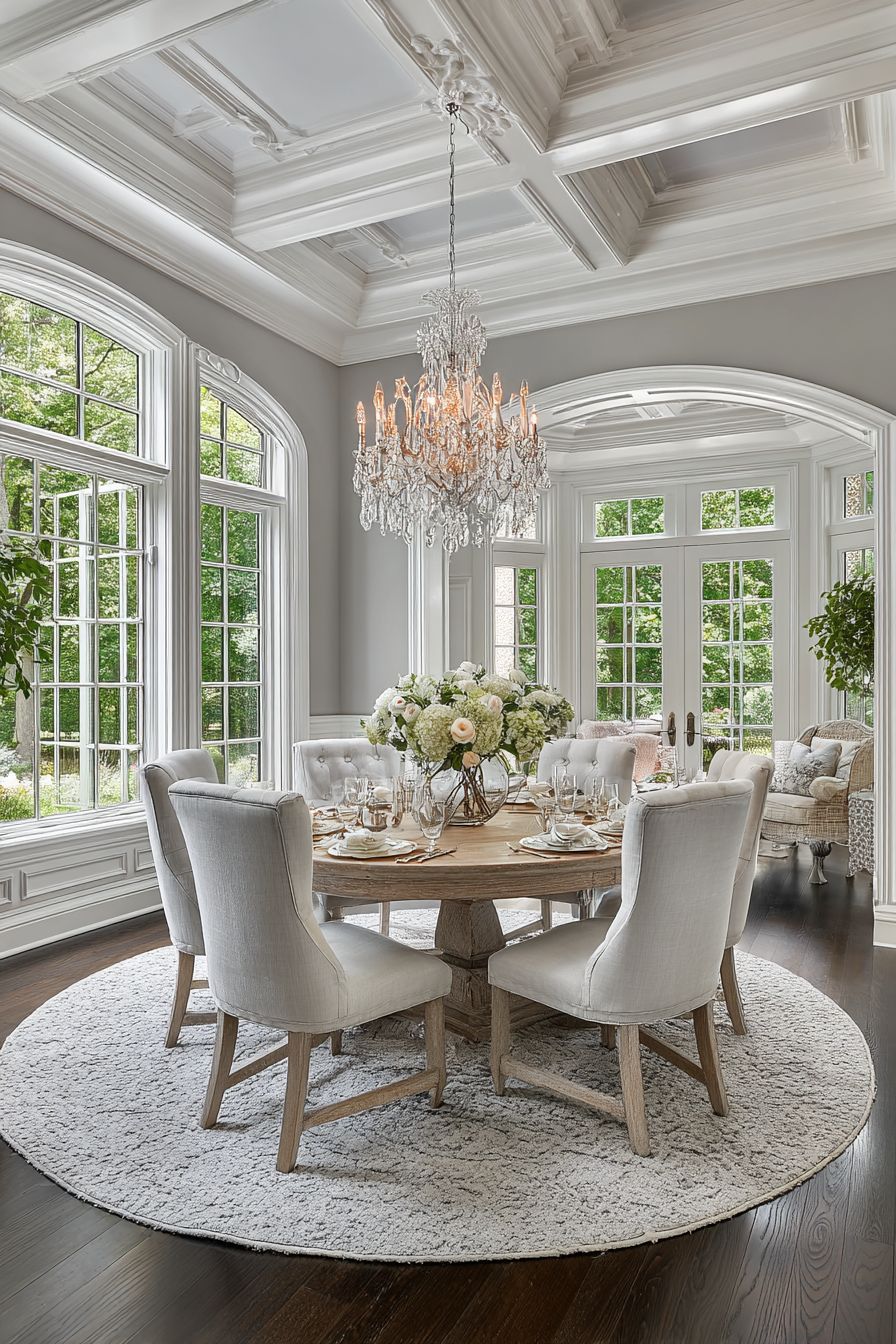
- Install crown molding in profiles proportional to your ceiling height
- Add chair rails at 32-36 inches from the floor for classical proportions
- Upgrade door and window trim to more substantial, detailed profiles
- Paint all trim in high-gloss white for crisp, elegant definition
- Consider coffered or tray ceilings for dramatic architectural interest
- Ensure all molding profiles coordinate for cohesive, professional appearance
7. Curate Rather Than Clutter
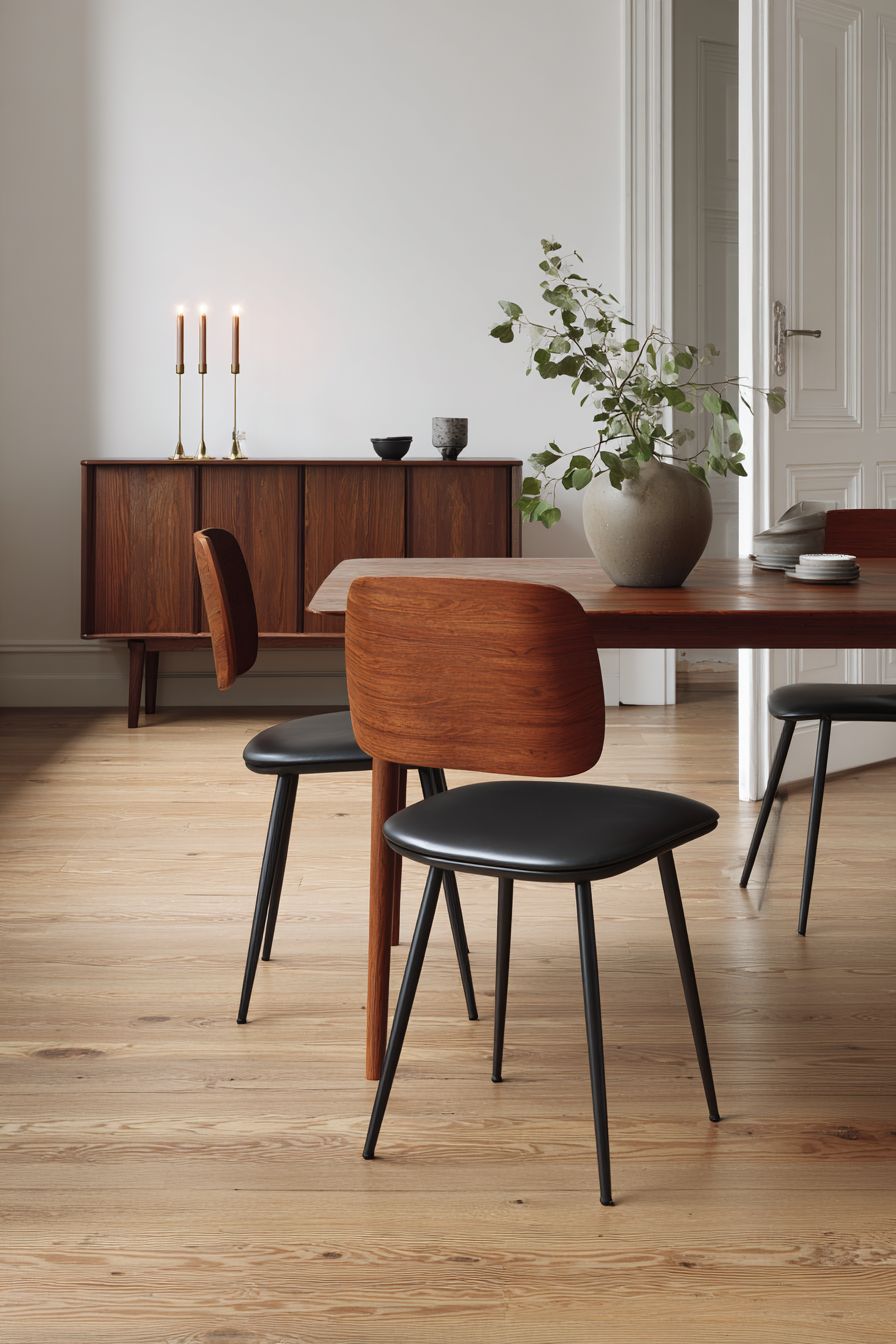
Strategic minimalism distinguishes elegant spaces from busy, cluttered rooms. Every item in an elegant dining room should earn its place through beauty, function, or meaning. Remove excess decorations, unnecessary furniture, and anything that doesn’t contribute to the refined atmosphere you’re creating. Less truly is more in elegant design.
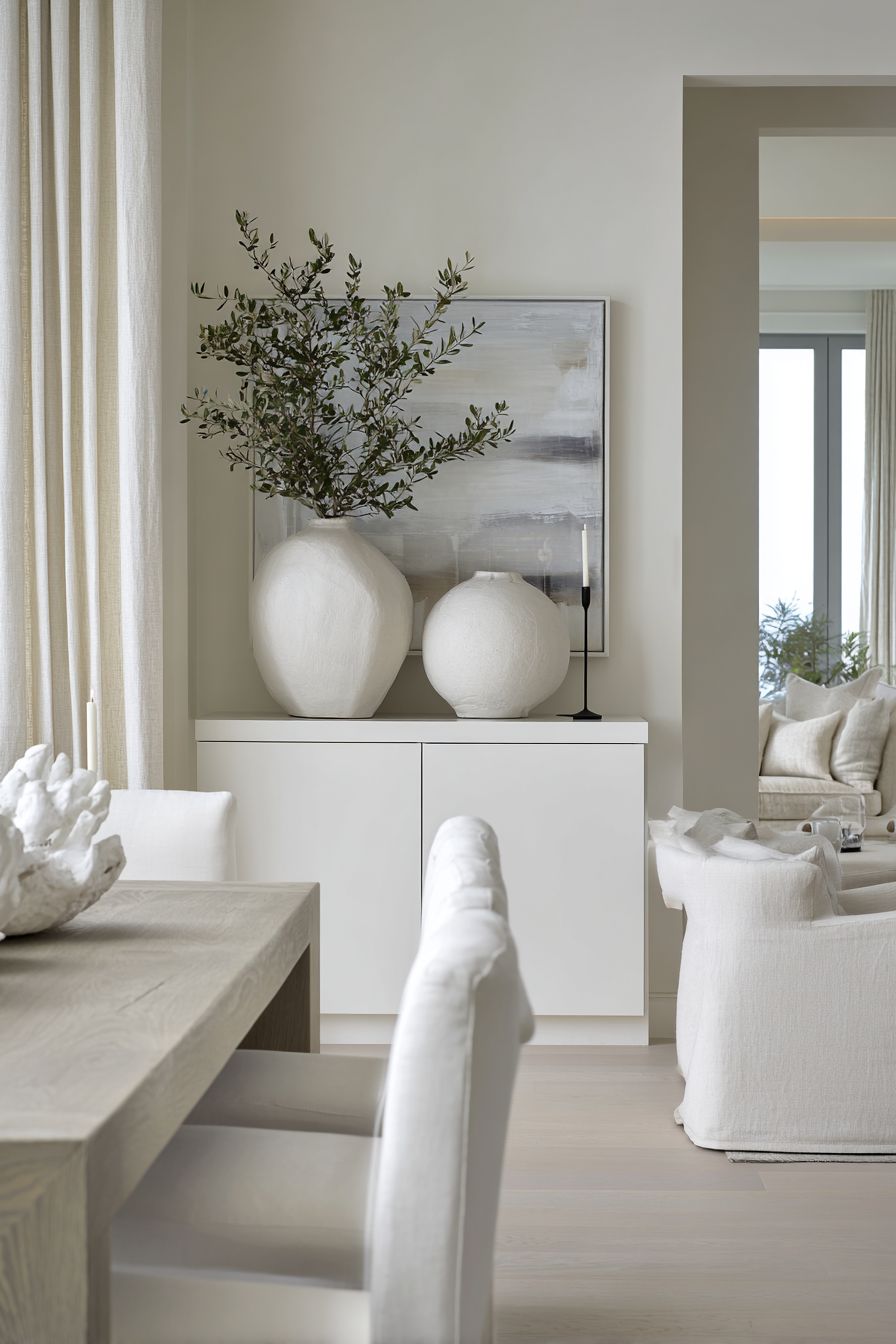
Surface styling requires particular restraint in elegant dining rooms. A buffet might display a single dramatic vase, a pair of candlesticks, and perhaps a small decorative bowl—nothing more. The dining table itself should remain largely clear between meals, allowing the table’s beauty to shine. This restraint creates visual calm and sophisticated simplicity.
Seasonal rotation keeps elegant spaces feeling fresh without permanent clutter. Store decorative items and rotate them throughout the year rather than displaying everything simultaneously. This approach prevents visual overwhelm while giving you opportunities to refresh the space regularly. Each season brings carefully chosen pieces that maintain the room’s elegant restraint.
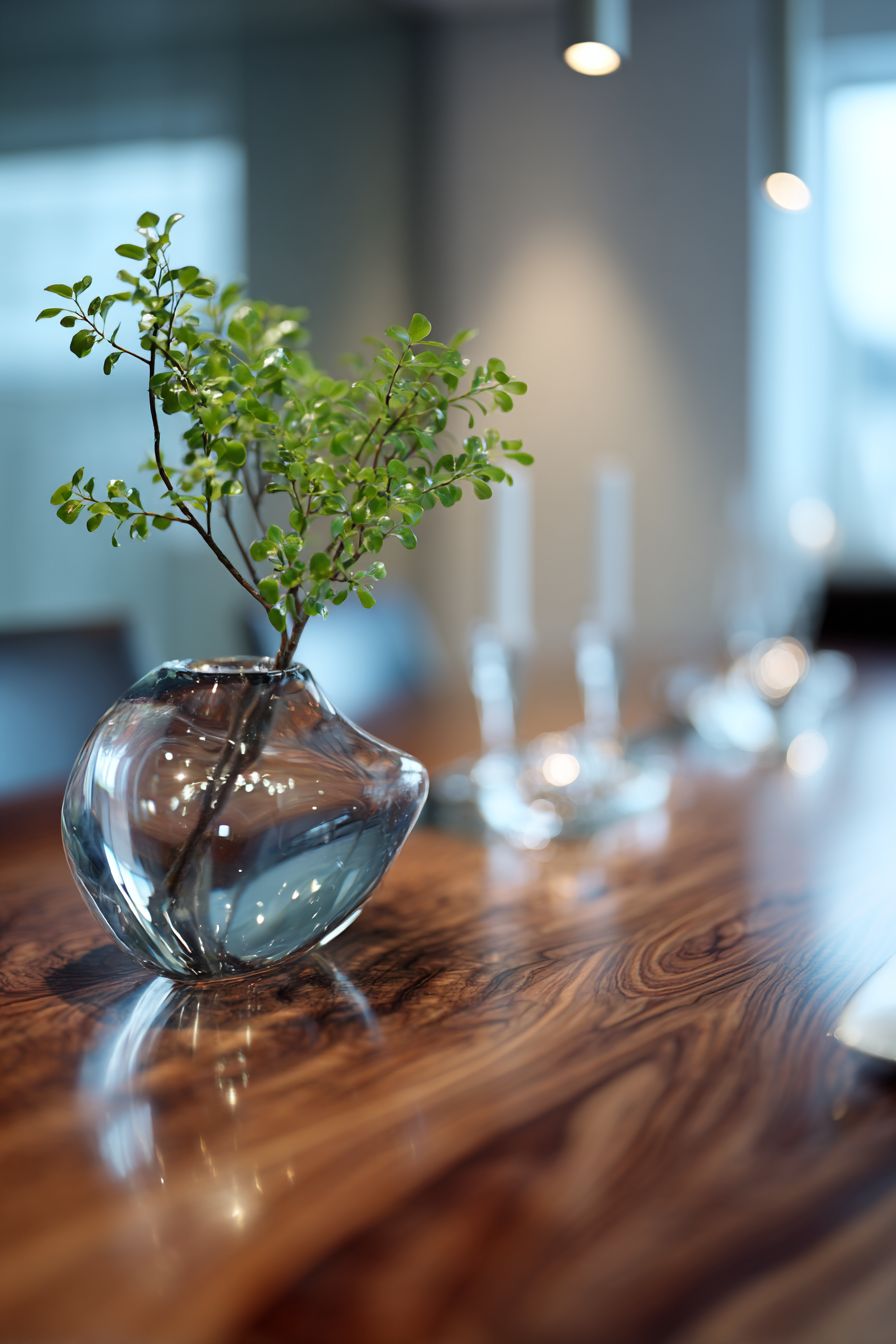
- Remove any items that don’t serve a clear purpose or bring beauty
- Keep dining table surfaces clear between meals to showcase their quality
- Limit buffet displays to three to five carefully chosen objects maximum
- Store seasonal decorations and rotate them rather than displaying everything
- Edit ruthlessly, removing anything that feels excessive or chaotic
- Allow negative space to exist—empty surfaces contribute to elegant calm
Conclusion
Achieving elegant dining room design centers on restraint, quality, and timeless principles rather than following trends or filling spaces with unnecessary elements. The seven secrets revealed here—mastering symmetry, embracing refined colors, prioritizing quality, layering lighting, selecting classic furniture, adding architectural details, and curating thoughtfully—work together to create sophisticated spaces that improve with age rather than feeling dated.
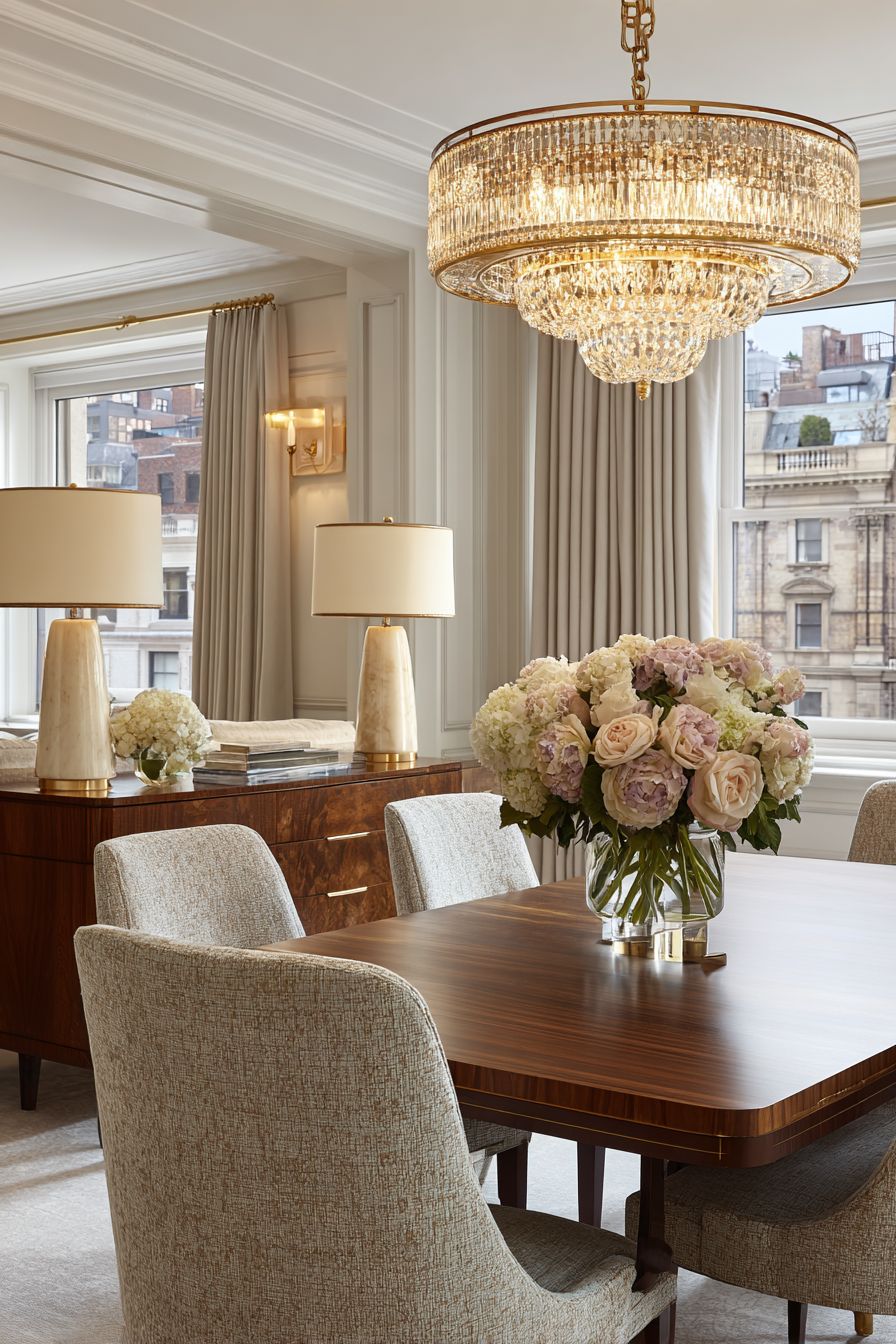
Remember that true elegance develops gradually as you thoughtfully select and refine elements over time. Start with foundational improvements like quality furniture and architectural details, then layer in lighting, color, and carefully curated accessories. Trust your instincts toward simplicity and restraint, removing elements that feel excessive rather than adding more.
The most elegant dining rooms tell cohesive stories through carefully chosen pieces that work harmoniously together. Your space should feel sophisticated yet welcoming, impressive yet comfortable for everyday use. Embrace these principles and create a dining room that embodies timeless elegance for years to come.
"As an Amazon Associate, I earn from qualifying purchases."
