

Minimalist bedroom design offers an antidote to modern life’s overwhelming clutter and constant stimulation. This intentional approach to interior design creates spaces that promote rest, clarity, and genuine tranquility. By removing excess and focusing on essentials, minimalism transforms bedrooms into serene sanctuaries where the mind can truly unwind. The style’s clean lines, neutral palettes, and deliberate simplicity create environments that feel both calming and sophisticated.
The beauty of minimalism lies in its profound simplicity and the freedom it provides. Unlike maximalist approaches that celebrate abundance, minimalist design asks us to consider what we truly need. This philosophy extends beyond aesthetics into lifestyle choices that reduce stress and increase focus. When applied to bedroom design, minimalism creates spaces where sleep comes easier, mornings feel calmer, and the mental clarity we all seek becomes more accessible.

These ten essential principles will guide you in creating a minimalist bedroom that genuinely feels peaceful. Each concept focuses on intentional choices that eliminate visual noise while maintaining warmth and livability. From color selection to furniture placement, you’ll discover how thoughtful restraint creates powerful impact. The result is a bedroom that serves its primary purpose perfectly—providing restful, rejuvenating sleep in an environment free from distraction.
1. Embrace a Neutral Color Palette
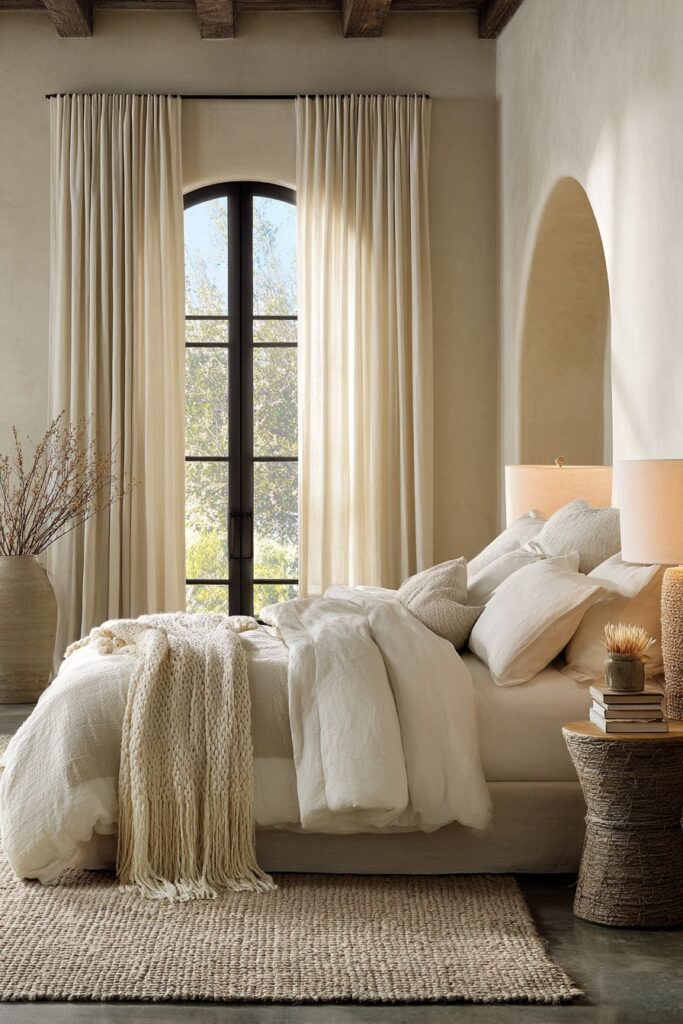
Neutral colors form the foundation of peaceful minimalist bedrooms by creating visual calm. Choose a palette centered on whites, grays, beiges, and soft taupes that don’t demand attention. These understated hues allow the mind to rest rather than process bold color statements. The psychological impact of neutral colors reduces stimulation, making it easier to transition into sleep mode.
Build your color scheme using tonal variations within your chosen neutral family. Layer different shades of white—perhaps warm ivory walls with crisp white bedding and cream accents. This monochromatic approach creates depth without introducing visual complexity. The subtle shifts in tone provide sufficient interest while maintaining the calm atmosphere essential to minimalist design.
Avoid the temptation to add colorful accent pieces that disrupt your neutral foundation. If you crave warmth, introduce it through natural wood tones or soft beige textiles rather than bright colors. The restraint required by minimalism might feel challenging initially, but the resulting peace becomes addictive. Your bedroom becomes a visual oasis where eyes rest easily on every surface.
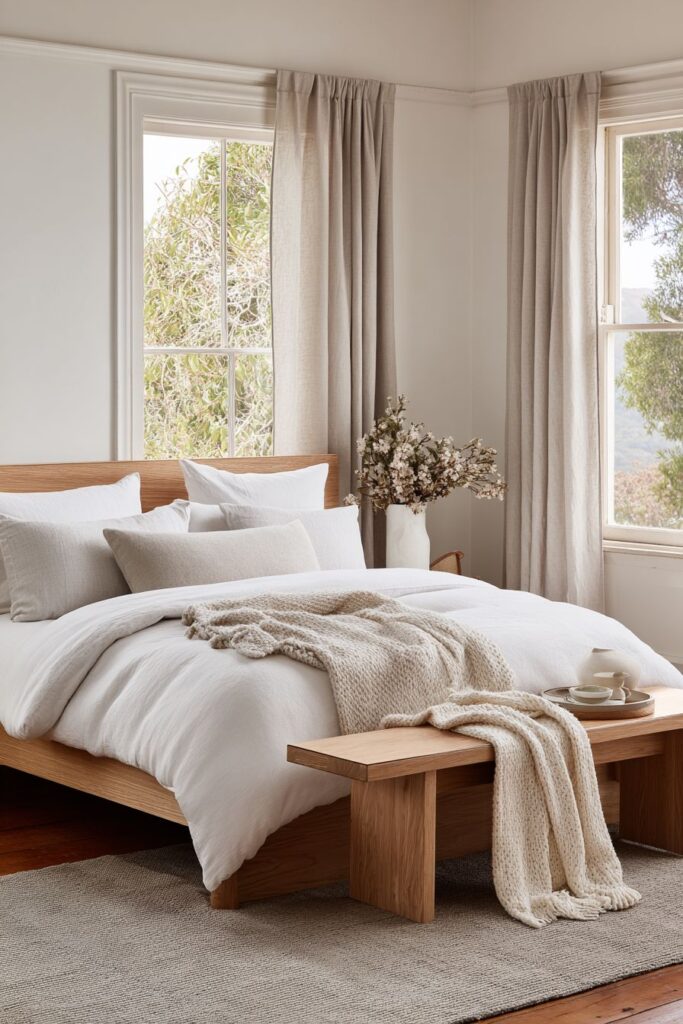
- Paint walls in soft white or warm gray for a calming base
- Choose bedding in crisp white or natural linen tones
- Use varying shades of one neutral color for dimensional interest
- Select window treatments in light-filtering neutral fabrics
- Avoid colorful artwork or accessories that break the calm palette
- Consider warm beige or taupe if pure white feels too clinical
2. Declutter and Remove Non-Essentials
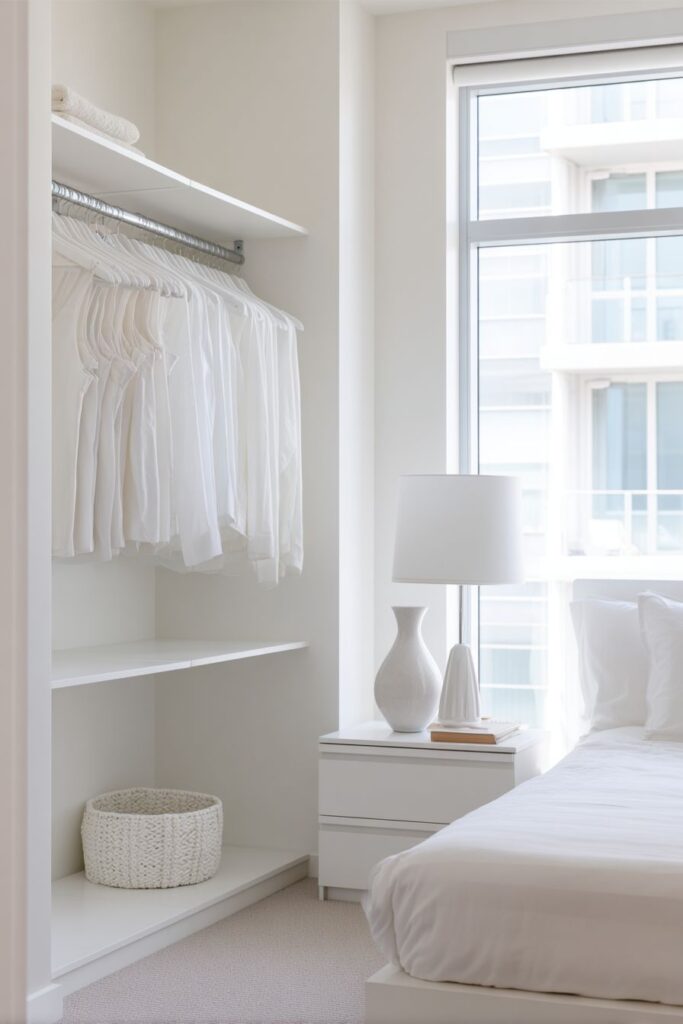
Ruthless decluttering separates successful minimalist bedrooms from merely sparse ones. Remove everything that doesn’t serve a clear purpose or bring genuine joy. Ask yourself whether each item in your bedroom truly belongs there. Most bedrooms accumulate objects over time—exercise equipment, paperwork, random decor—that create visual chaos rather than contributing to rest.
Start by clearing all surfaces including nightstands, dressers, and window sills. Keep only absolute essentials like a lamp, alarm clock, or single meaningful object. This doesn’t mean your bedroom should feel cold or empty—it means every remaining item earns its place through function or deep personal significance. The difference in mental clarity becomes immediately apparent.
Create systems to prevent clutter from returning through intentional habits. Designate specific homes for items outside the bedroom—workout clothes in the closet, paperwork in a home office. Make your bed daily and return items to their designated spots each evening. These small disciplines maintain the peaceful minimalism you’ve created and prevent gradual clutter accumulation that undermines your design efforts.
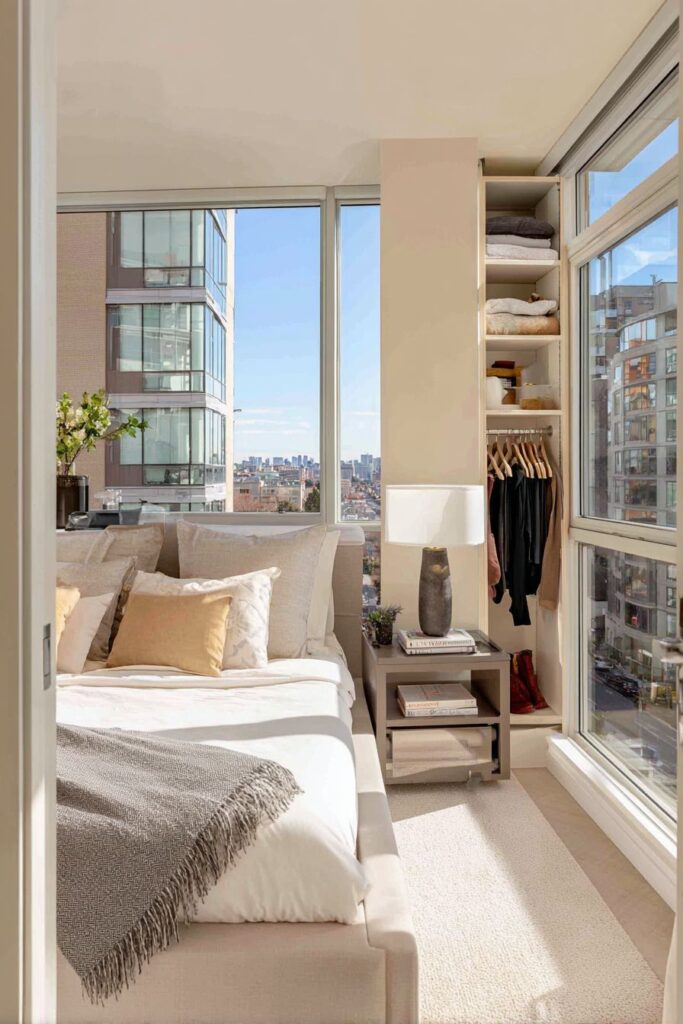
- Remove all items from surfaces and return only true essentials
- Relocate exercise equipment, work materials, and hobby supplies to other rooms
- Keep nightstands limited to lamp, book, and perhaps small plant
- Clear closet floors and organize items vertically using slim hangers
- Digitize paperwork and photos to eliminate physical storage needs
- Implement one-in-one-out rule for maintaining minimal possessions
3. Choose Quality Over Quantity in Furniture
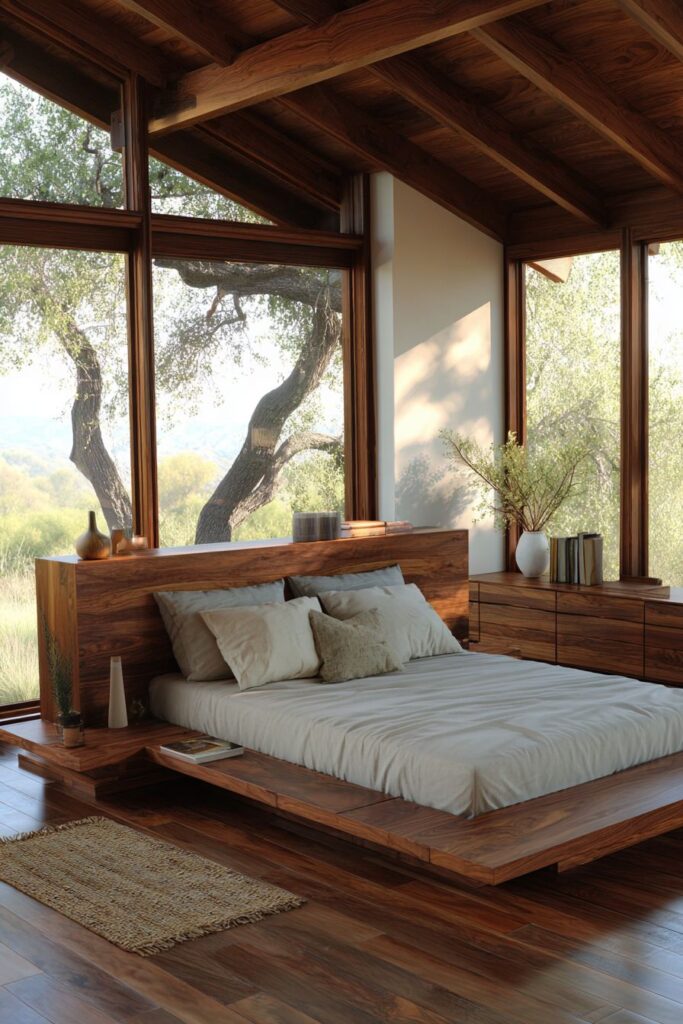
Fewer, better pieces define minimalist bedroom furniture selection. Invest in a high-quality bed frame that will last decades rather than accumulating cheap furniture. Choose pieces with clean lines, simple silhouettes, and excellent craftsmanship. Each furniture item should serve clear purpose while contributing to the room’s overall tranquility. This approach saves money long-term while creating more peaceful spaces.
Limit bedroom furniture to true necessities—bed, nightstands, and perhaps dresser or chair. Resist the urge to fill space simply because it’s available. Empty floor space contributes significantly to the calm, uncluttered feeling minimalism provides. If you don’t genuinely need a piece, leave that area open. The breathing room created by thoughtful furniture placement makes bedrooms feel larger and more serene.
Select furniture with built-in functionality that serves multiple purposes. A bed frame with integrated storage eliminates the need for additional pieces. A nightstand with single drawer provides necessary storage without visual bulk. Choose platform beds over frames requiring box springs—the lower profile creates cleaner lines and more open feeling essential to minimalist aesthetics.
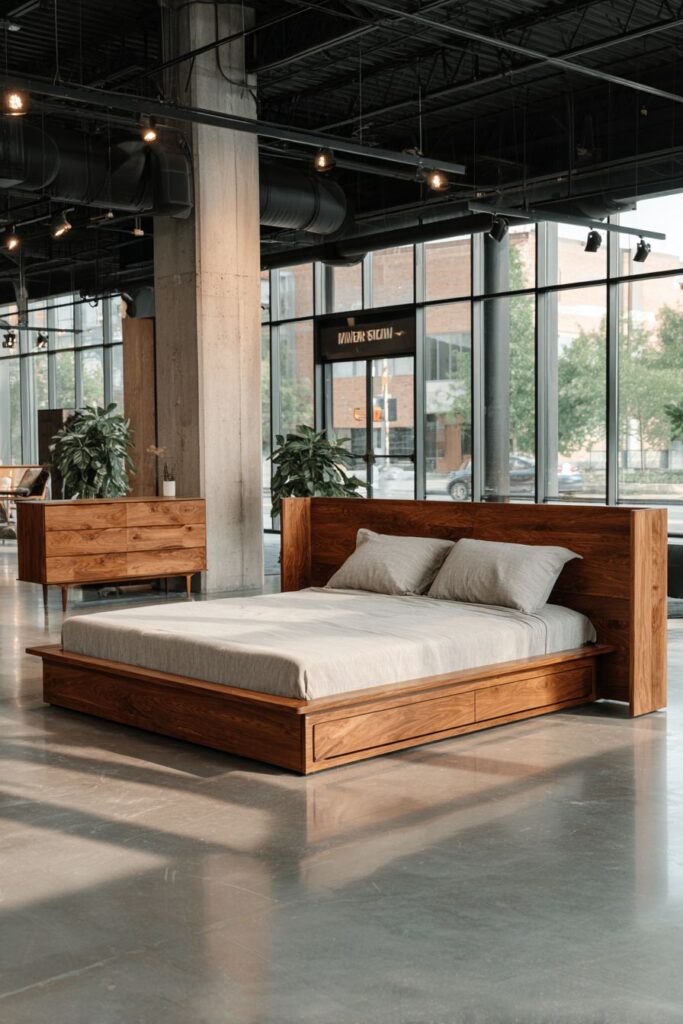
- Invest in solid wood or high-quality upholstered bed frame
- Limit furniture pieces to bed, two nightstands, and one dresser maximum
- Choose low-profile platform beds for cleaner visual lines
- Select nightstands with single drawer rather than bulky multi-drawer designs
- Avoid unnecessary seating unless you genuinely use it daily
- Consider wall-mounted floating nightstands to maximize floor space
4. Maximize Natural Light
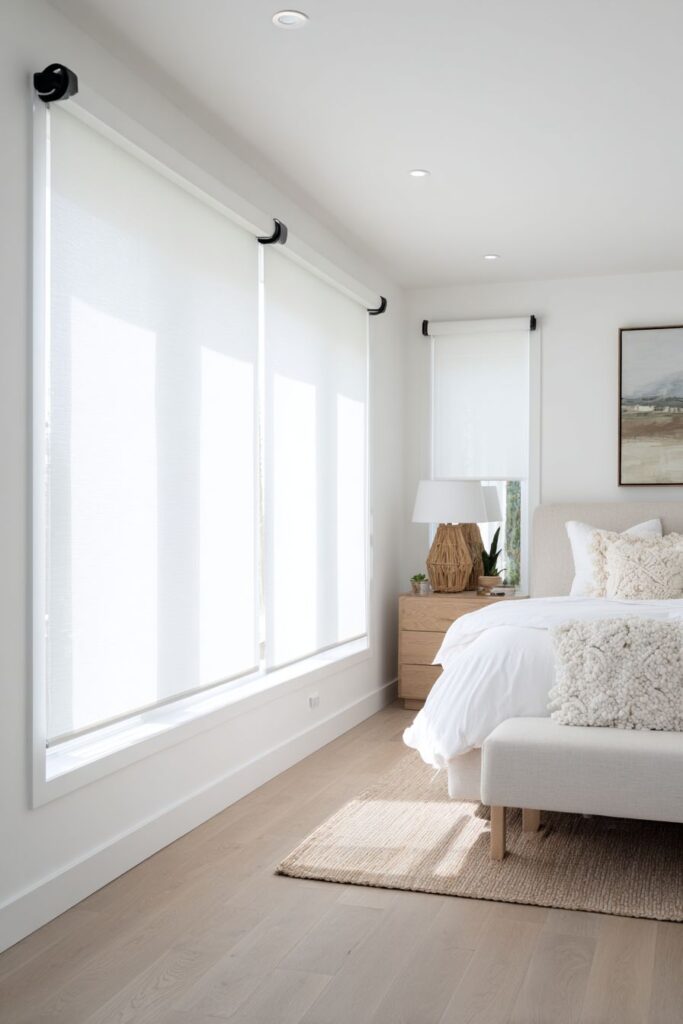
Natural light serves as minimalism’s best friend, creating bright, airy spaces that feel peaceful and spacious. Remove heavy window treatments that block sunlight in favor of simple solutions that provide privacy while allowing light penetration. Light-filtering sheer curtains, roller shades, or cellular blinds all work beautifully. The goal is flooding your bedroom with natural illumination during the day.
Position your bed and other furniture to maximize light flow throughout the space. Avoid blocking windows with tall furniture pieces. Use mirrors strategically to reflect and amplify available natural light. A large mirror opposite a window effectively doubles the light while maintaining minimalist aesthetics through its simple, functional presence.
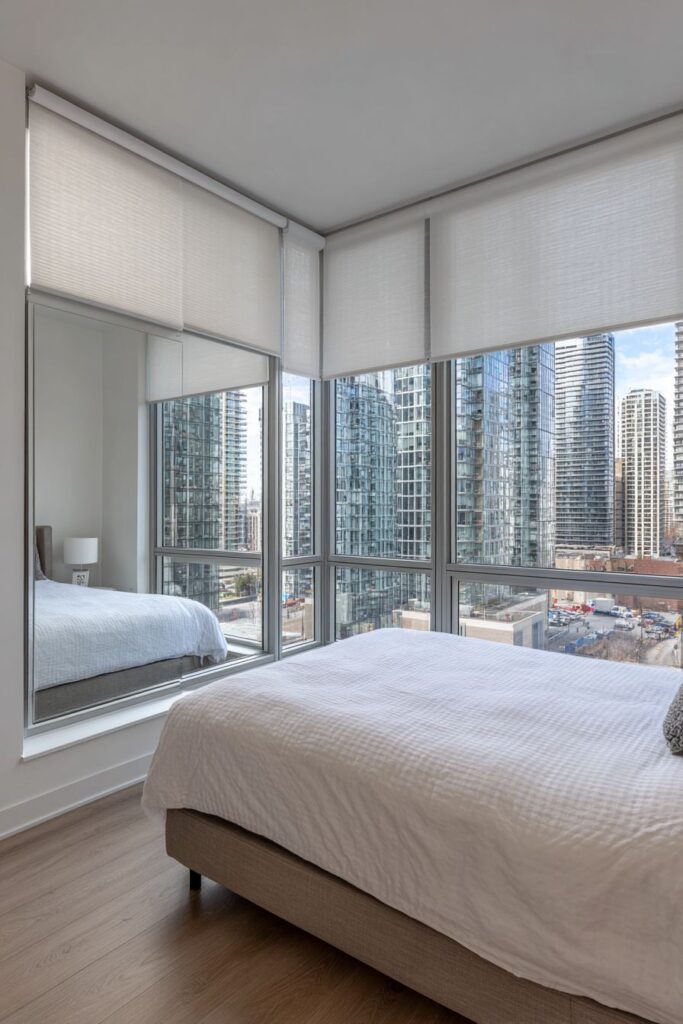
Keep windows clean and unobstructed to allow maximum light transmission. Remove window sills decorations and plants that block light. The psychological benefits of natural light include improved mood, better sleep cycles, and increased energy. These advantages align perfectly with minimalism’s goal of creating peaceful, functional spaces that support wellbeing.
- Install simple roller shades or cellular blinds for clean window treatments
- Remove heavy curtains that block natural light unnecessarily
- Position mirrors opposite windows to reflect and amplify daylight
- Keep window sills completely clear of decorative objects
- Clean windows monthly inside and out for maximum light transmission
- Consider skylights or larger windows if undertaking renovations
5. Incorporate Hidden Storage Solutions
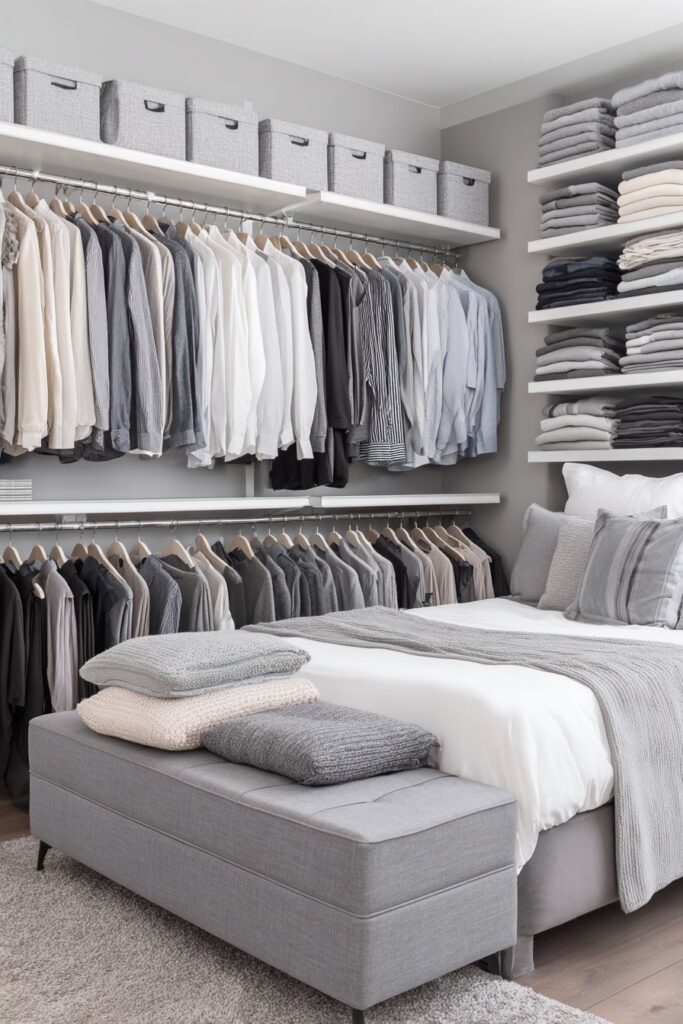
Concealed storage allows minimalist bedrooms to remain clutter-free without sacrificing functionality. Choose furniture with integrated storage that keeps belongings hidden from view. Beds with built-in drawers, ottoman benches with internal compartments, and floating shelves with closed cabinets all provide necessary storage while maintaining clean visual lines essential to minimalist design.
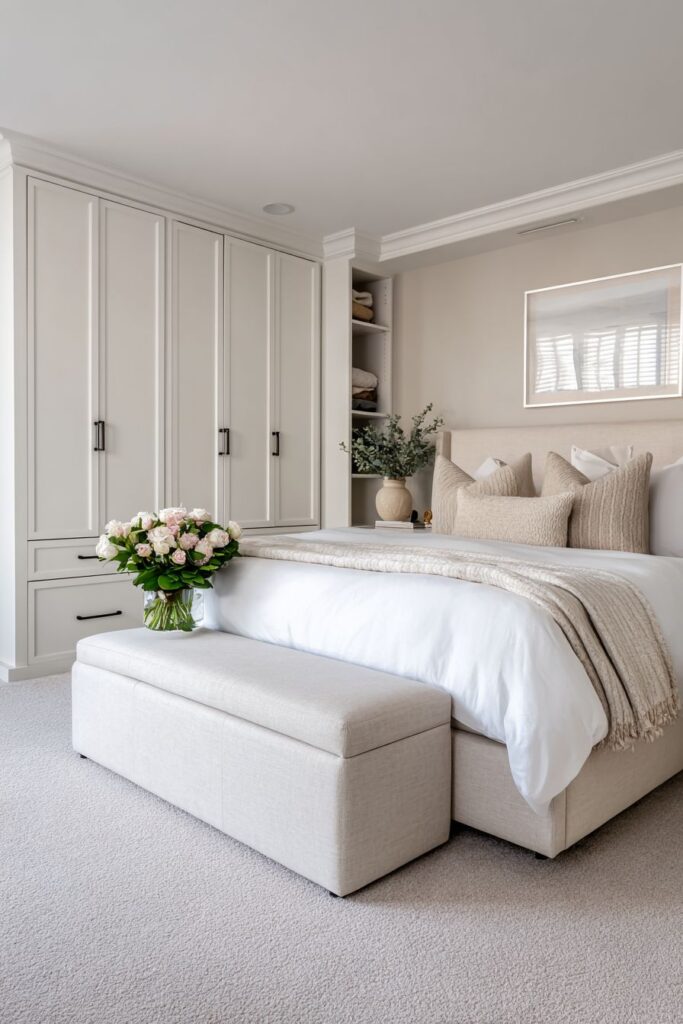
Maximize closet efficiency to reduce furniture needs in the bedroom proper. Install closet organization systems that use vertical space effectively. Use uniform hangers, storage boxes in matching colors, and drawer dividers to create order. An extremely well-organized closet eliminates the need for dressers or additional storage furniture that clutters bedroom space.
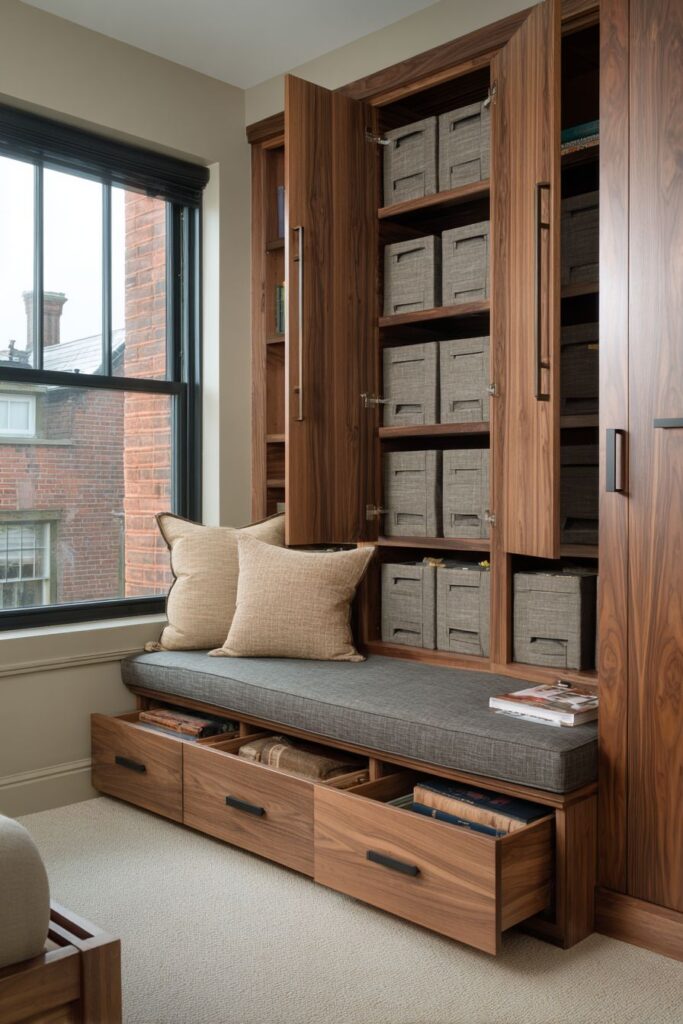
Under-bed storage offers significant capacity without visual presence. Use low-profile storage containers that slide underneath platform beds or add bed risers for additional clearance. Keep stored items organized in labeled containers so you can access them easily without creating mess. The key is maintaining zero visual evidence of storage—everything stays completely hidden from view.
- Choose bed frames with built-in drawer storage underneath
- Install floor-to-ceiling closet organization systems for maximum efficiency
- Use uniform storage boxes and containers in neutral colors
- Add slim bed risers for additional under-bed storage capacity
- Select nightstands with closed storage rather than open shelving
- Maximize vertical closet space with double hanging rods and shelf dividers
6. Select Simple, Functional Bedding
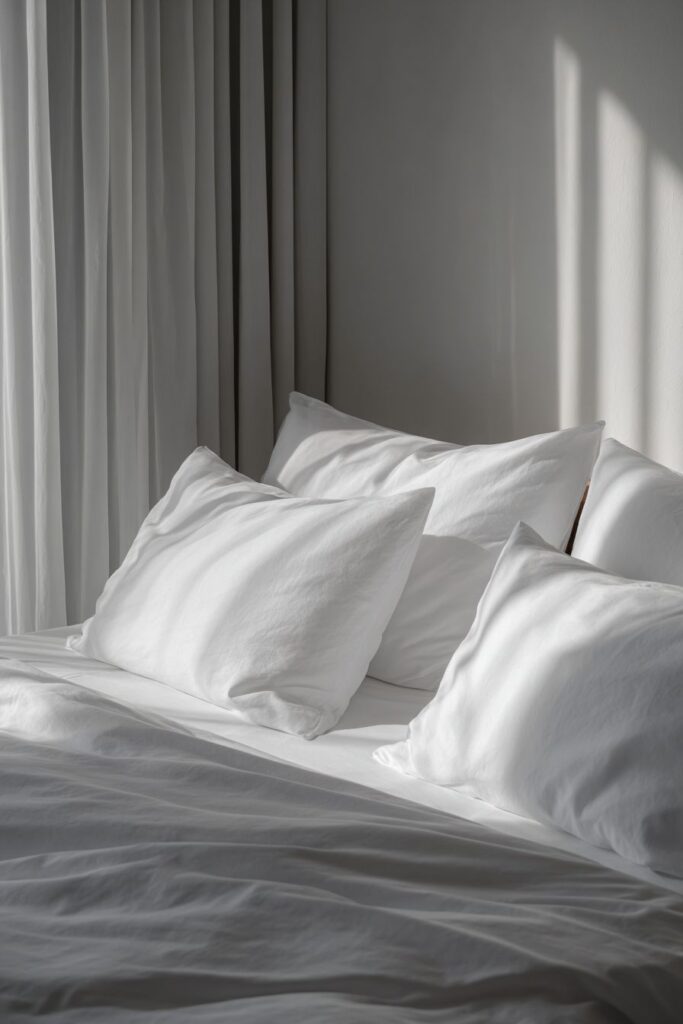
Minimalist bedding emphasizes quality materials in simple designs without pattern or embellishment. Choose high-thread-count white or neutral sheets that feel luxurious against skin. The tactile experience becomes more important when visual stimulation decreases. Invest in the best quality bedding you can afford—it directly impacts sleep quality and bedroom aesthetics simultaneously.
Layer bedding thoughtfully using limited pieces in coordinating neutrals. A fitted sheet, flat sheet, duvet or coverlet, and two pillows often suffice. Avoid excessive throw pillows, decorative shams, or complicated layering that requires daily maintenance. The goal is a bed that looks effortlessly beautiful while remaining functional and easy to make each morning.
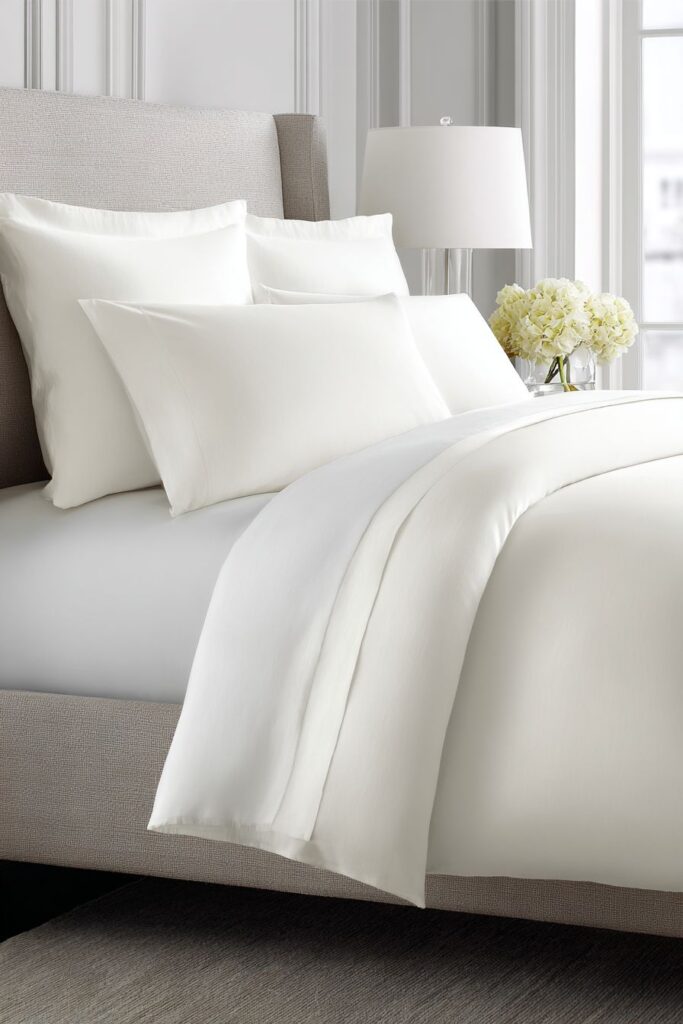
Choose bedding materials that support the minimalist aesthetic through their natural simplicity. Crisp cotton percale, soft linen, or smooth sateen all work beautifully. Avoid busy patterns, ruffles, or decorative details that add visual complexity. Let material quality and subtle texture provide interest rather than pattern or color. This approach creates beds that invite rest through pure simplicity.
- Invest in high-quality cotton or linen sheets in white or neutral tones
- Limit bed layers to sheets, duvet, and two sleeping pillows
- Choose solid colors exclusively—avoid patterns or decorative designs
- Select a simple duvet cover rather than complicated comforters
- Use hotel-style bed-making techniques for crisp, clean appearance
- Wash bedding weekly in unscented detergent for fresh, clean feel
7. Create Clean Lines and Uncluttered Surfaces
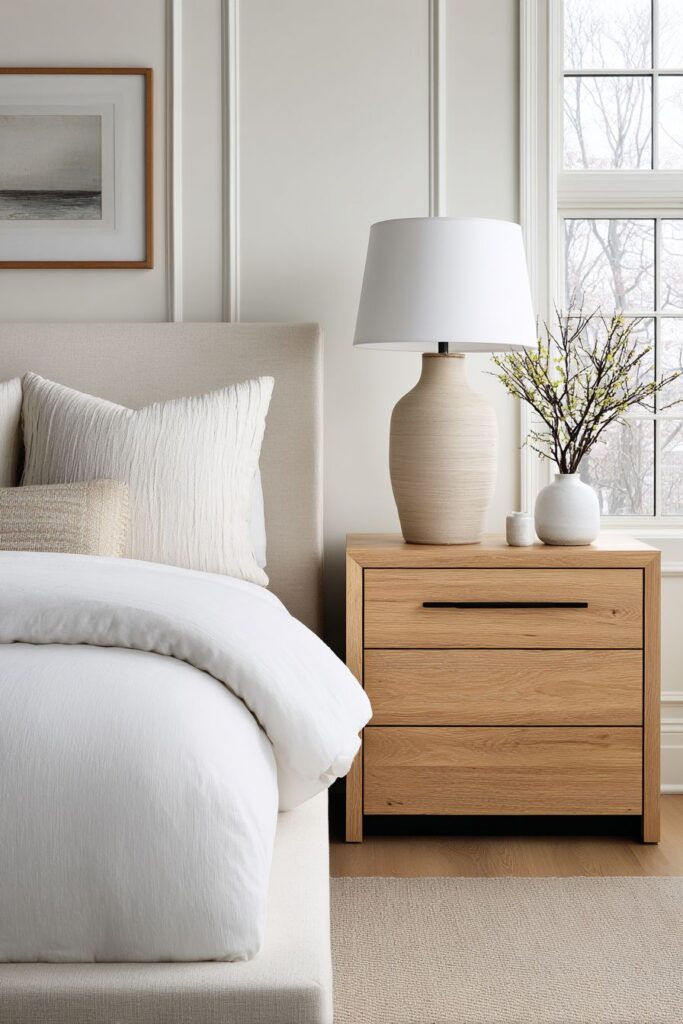
Horizontal surfaces in minimalist bedrooms remain virtually empty to maintain visual peace. Nightstands hold only a single lamp and perhaps one additional item like a book or small plant. Dressers stay completely clear except for minimal decorative elements. This discipline creates the clean, uncluttered appearance that makes minimalist spaces feel so restful and organized.
Train yourself to avoid using surfaces as catch-all spaces for random items. Designate specific storage spots for items that tend to accumulate—jewelry, watches, spare change. Use small drawer organizers to keep these items contained and hidden. The effort required to maintain clear surfaces becomes automatic with practice and pays enormous dividends in reduced stress and increased peace.
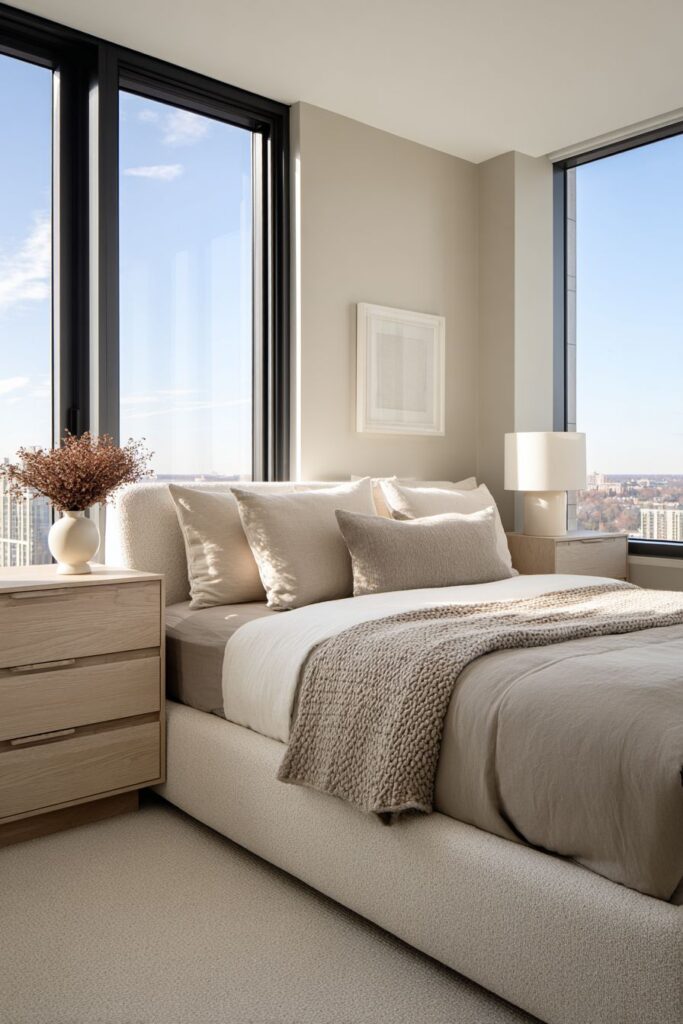
Embrace the power of empty space as a design element itself. Blank walls, clear surfaces, and open floors aren’t voids needing filling—they’re intentional choices that allow the eye and mind to rest. This concept represents minimalism’s most radical departure from traditional design thinking. The psychological relief of uncluttered surfaces contributes significantly to bedroom peacefulness.
- Keep nightstands limited to lamp and single additional item maximum
- Maintain completely clear dresser tops except one small decorative object
- Remove all items from window sills and other horizontal surfaces
- Use drawer organizers to contain small items out of sight
- Resist the urge to fill empty wall space with artwork
- Make clearing surfaces part of your nightly routine
8. Use Minimal Wall Decor
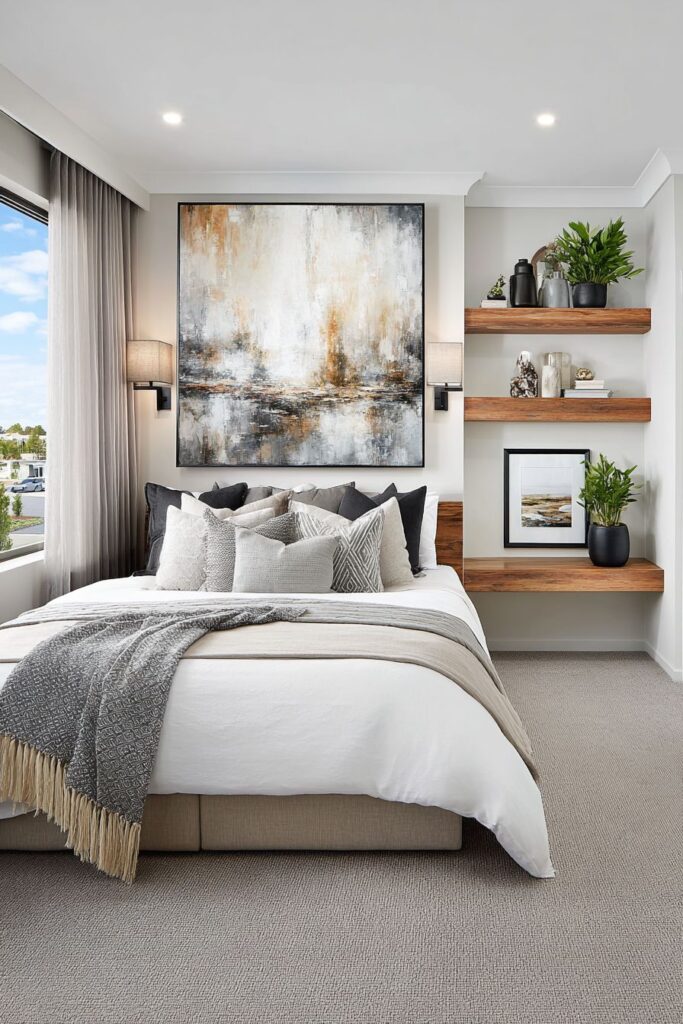
Sparse wall treatment maintains the calm, uncluttered feeling essential to minimalist bedrooms. Choose one statement piece rather than gallery walls or multiple small artworks. A single large photograph, painting, or simple mirror provides visual interest without creating complexity. Position artwork at proper height—center should sit approximately 57 inches from the floor for optimal viewing.
If you include wall decor, choose pieces that reinforce peaceful feelings. Abstract art in neutral tones, nature photography, or simple line drawings all work well. Avoid busy, colorful, or stimulating images that prevent relaxation. Remember that blank walls serve minimalist design beautifully—they’re not failures to decorate but intentional choices creating visual calm.

Consider the practical function of wall-mounted elements rather than purely decorative ones. A simple wall-mounted reading light serves purpose while maintaining clean lines. Floating shelves hold only essential items, displayed with generous spacing. Every wall element should earn its place through function, beauty, or both—never simply filling space.
- Limit wall art to one large statement piece per wall maximum
- Choose artwork in neutral colors that promote calm feelings
- Position artwork at proper 57-inch center height from floor
- Consider leaving some walls completely blank for visual rest
- Use wall-mounted reading lights for function without bulk
- Avoid gallery walls, shelves with multiple small items, or busy patterns
9. Add Natural Materials and Textures
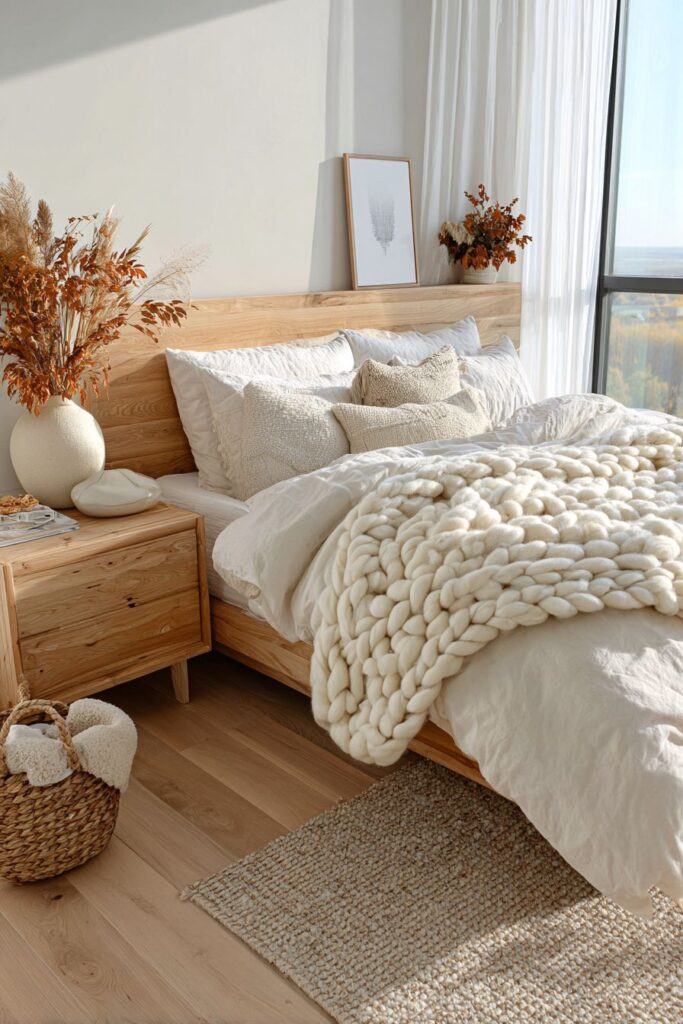
Natural materials bring essential warmth to minimalist bedrooms that might otherwise feel cold. Incorporate wood, linen, cotton, and wool in furniture and textiles. These organic materials add subtle texture and visual interest without introducing pattern or color complexity. A solid wood nightstand or linen curtains provides sensory richness while maintaining minimalist principles.
Layer different textures thoughtfully to create tactile variety within your neutral palette. Smooth cotton sheets contrast beautifully with a chunky knit throw. A wool area rug adds warmth underfoot while jute baskets provide natural storage. These textural variations prevent minimalist spaces from feeling flat or sterile while keeping the overall aesthetic clean and calm.
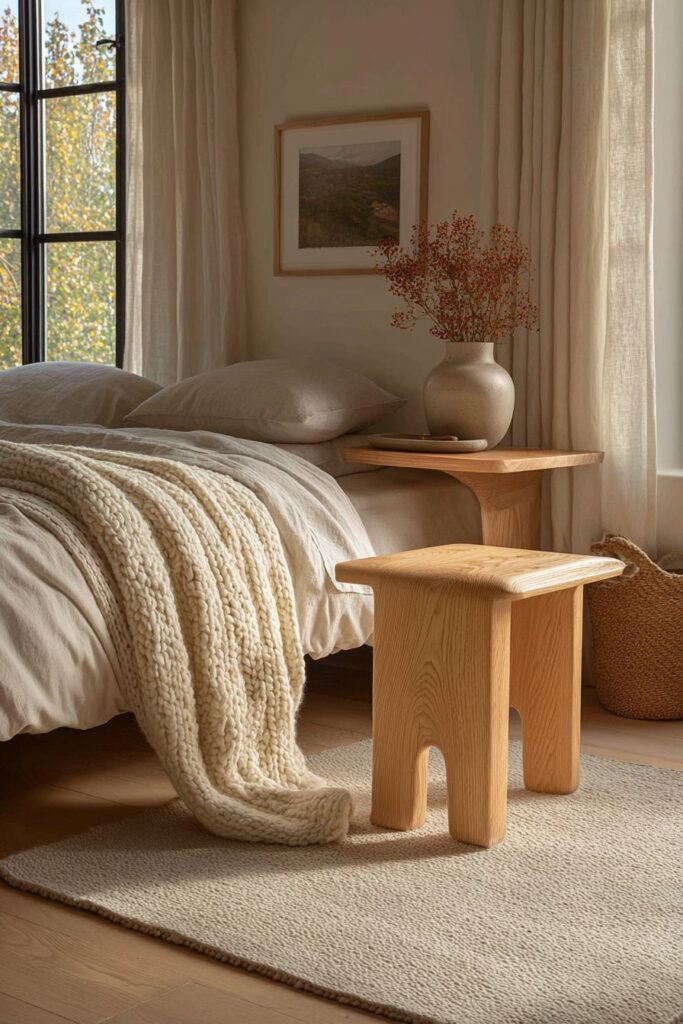
Choose materials with inherent beauty that improve with age. Natural linen wrinkles charmingly, solid wood develops patina, and quality cotton softens over time. These materials align with minimalism’s emphasis on quality and longevity rather than disposable trendy items. The investment in natural materials pays dividends through their enduring beauty and sustainable nature.
- Choose solid wood furniture in natural finishes rather than painted pieces
- Add texture through natural fiber rugs like wool, jute, or sisal
- Use linen or cotton curtains for soft, natural window treatments
- Include one chunky knit throw in natural fiber for tactile interest
- Select pottery or ceramic vases in simple, organic shapes
- Avoid synthetic materials that feel or look artificial
10. Maintain Open Floor Space
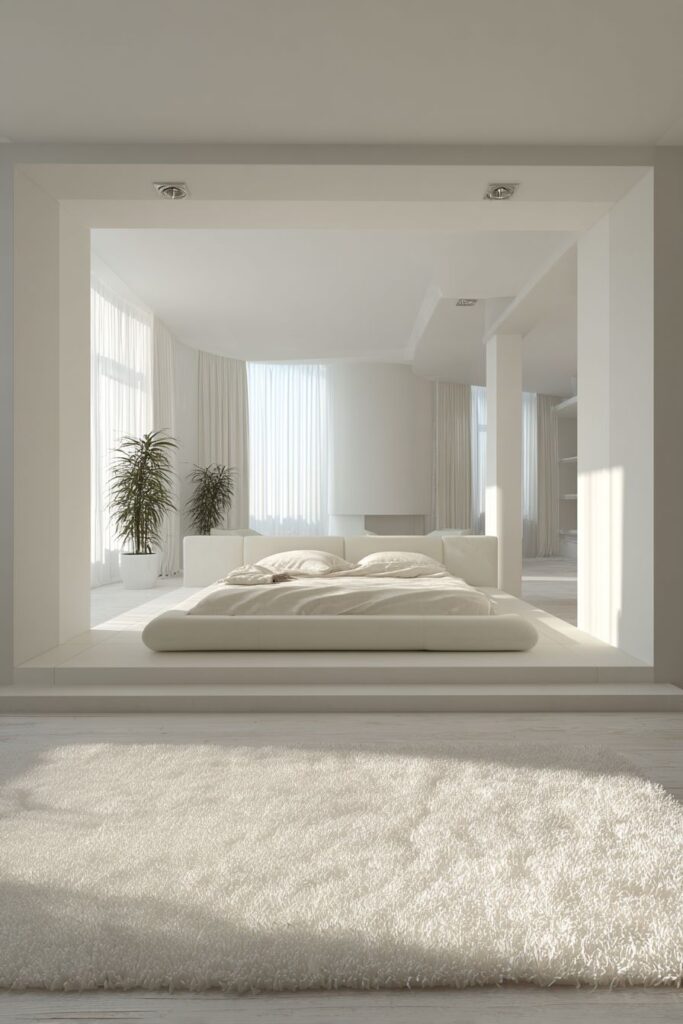
Empty floor space contributes enormously to minimalist bedroom peacefulness by creating visual breathing room. Resist the urge to fill every corner with furniture or decorative objects. Leave generous space around furniture pieces, allowing easy movement throughout the room. This openness makes bedrooms feel larger, calmer, and more psychologically spacious regardless of actual square footage.
Strategic furniture placement maximizes open floor while maintaining functionality. Position the bed as the room’s clear focal point with generous space on both sides for easy access. Keep walking paths clear and direct. Avoid placing furniture at awkward angles that fragment space—parallel and perpendicular placement creates cleaner lines and more usable floor area.
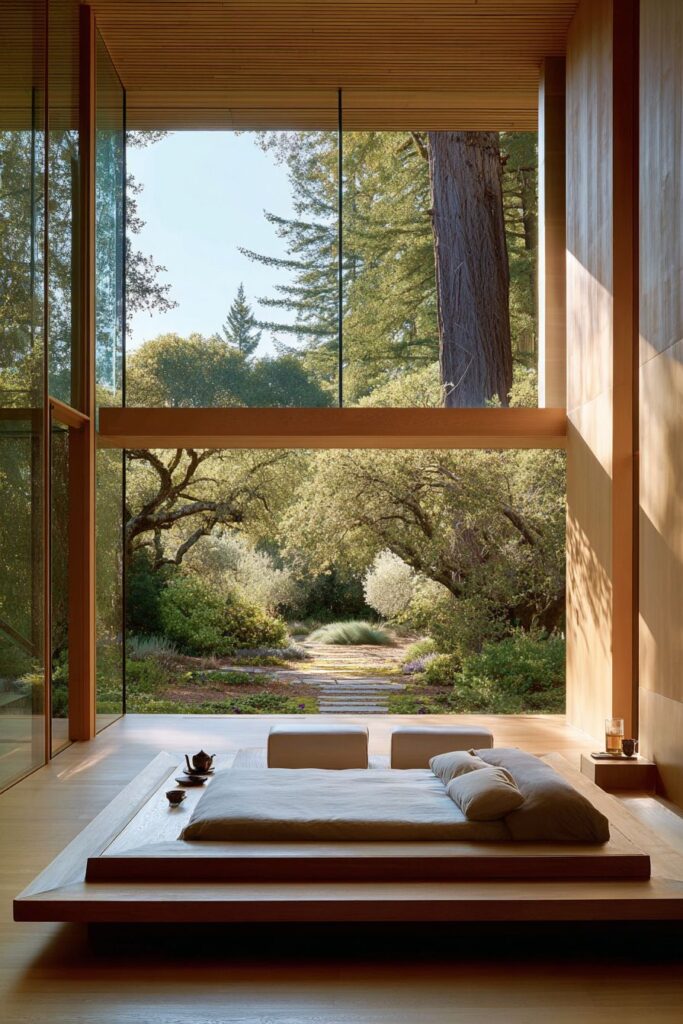
The discipline of maintaining open floor space requires ongoing commitment. Avoid the gradual furniture creep that fills rooms over time. When considering new furniture additions, ask whether the piece genuinely improves your bedroom or simply fills space. More often than not, the answer favors maintaining empty floor rather than adding furniture. This restraint creates the peaceful atmosphere minimalism promises.
- Keep at least two feet of clearance around bed for easy access
- Maintain straight, clear pathways through the bedroom
- Leave corners empty rather than filling them with furniture
- Position furniture parallel or perpendicular to walls for clean lines
- Avoid area rugs that fragment floor space visually
- Regularly assess whether every furniture piece truly earns its footprint
Conclusion
Designing a minimalist bedroom that genuinely feels peaceful requires intentional choices and ongoing discipline. These ten principles provide a comprehensive framework for creating spaces that promote rest, reduce stress, and support mental clarity. Remember that minimalism isn’t about deprivation—it’s about intentional curation of only what serves you well. Each element in your bedroom should enhance your life through function, beauty, or both.
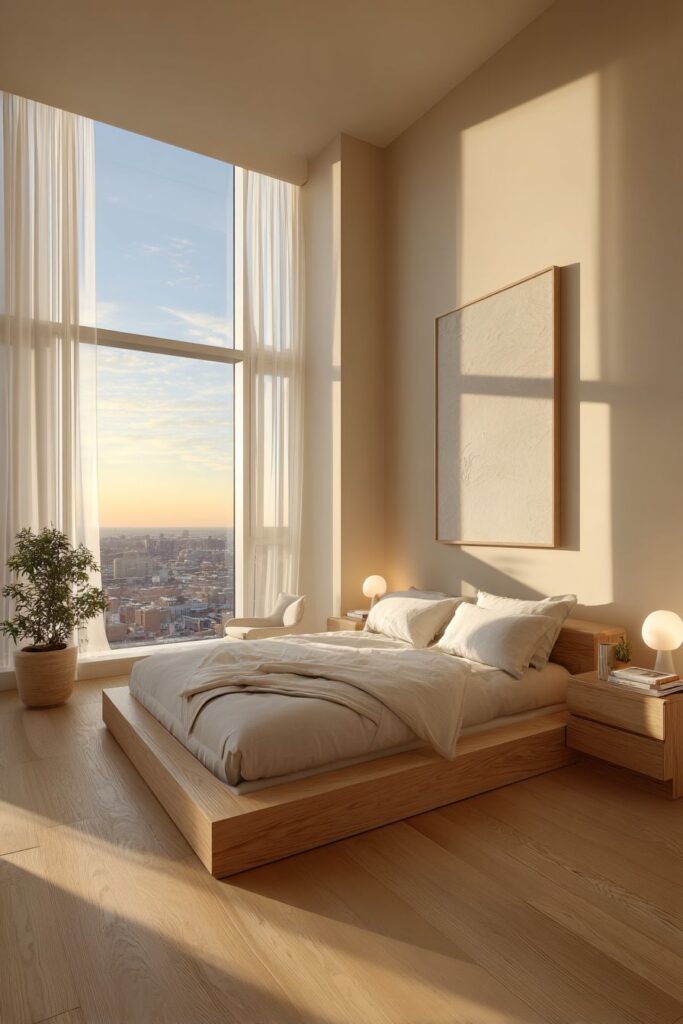
The journey toward minimalist living starts with small, consistent steps rather than dramatic overnight transformations. Begin with decluttering, then gradually refine your choices around furniture, color, and decor. Your bedroom will evolve into a peaceful sanctuary that supports your wellbeing every single day. Trust the process, embrace the empty space, and discover how profoundly minimalist design can transform both your bedroom and your quality of rest. Sweet, peaceful dreams await in your newly simplified space.
"As an Amazon Associate, I earn from qualifying purchases."
