
The art of table setting has evolved far beyond simple functionality, transforming into a sophisticated expression of personal style and design sensibility. Among the most versatile and impactful elements in dining room decor, table runners stand as unsung heroes that bridge the gap between practicality and aesthetics. These fabric strips do more than protect your table surface—they serve as the foundation for creating memorable dining experiences, establishing mood, and reflecting the homeowner’s unique personality.
In today’s diverse design landscape, table runners have emerged as essential accessories that can instantly transform any dining space from ordinary to extraordinary. Whether you’re hosting an intimate dinner party, celebrating seasonal holidays, or simply elevating everyday meals, the right table runner can set the perfect tone. From rustic farmhouse charm to sleek contemporary elegance, these textile elements offer endless possibilities for creative expression while serving practical purposes such as protecting furniture and defining table settings.
This comprehensive guide explores twenty distinctive table runner styles, each representing a unique approach to dining room design. We’ll journey through various aesthetic movements—from the timeless appeal of French country toile to the bold statements of mid-century modern patterns, and from the natural textures of coastal jute to the luxurious feel of silk runners. Each style offers its own personality, practical benefits, and design opportunities that can complement existing decor or inspire complete room transformations.
1. Elegant Linen in Sage Green Farmhouse Style
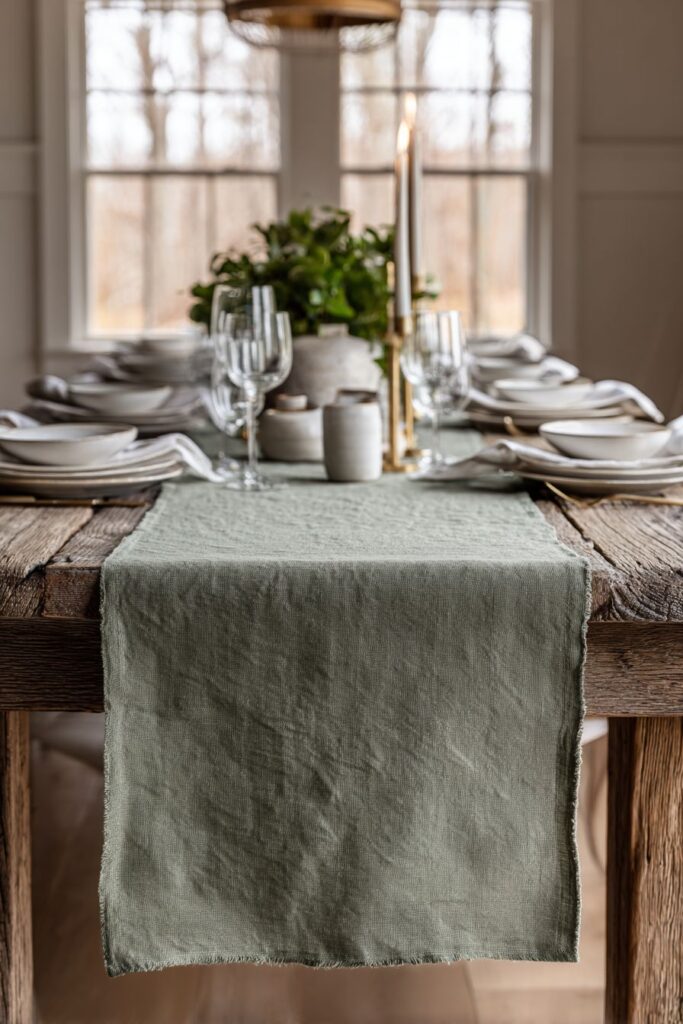
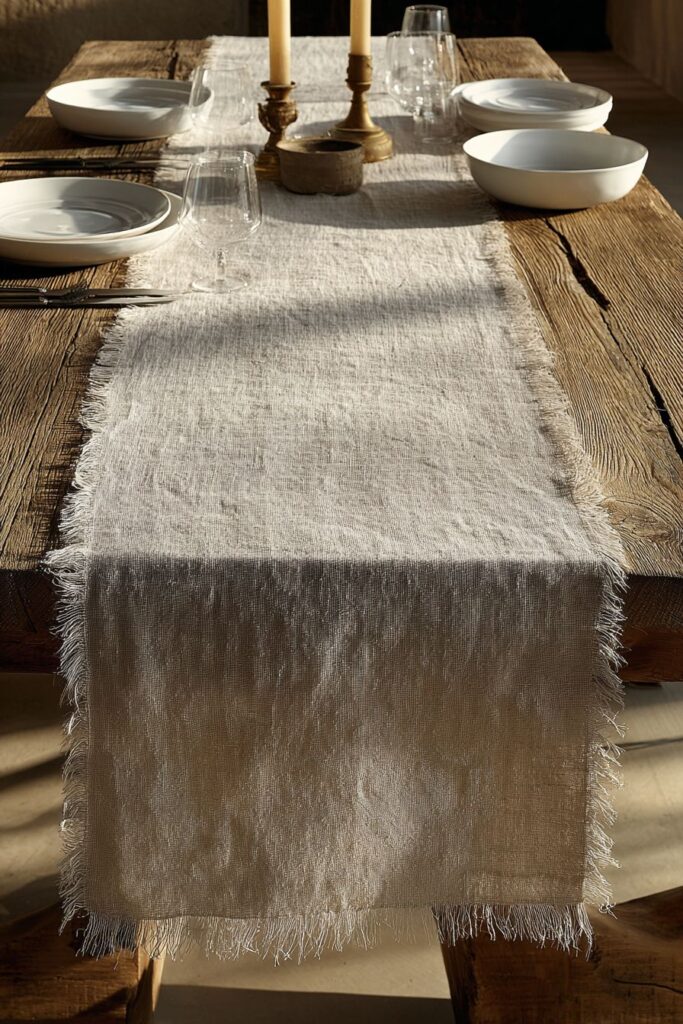
The gentle sophistication of sage green linen creates an atmosphere of refined rusticity that perfectly embodies modern farmhouse aesthetics. This particular styling approach celebrates the beauty of natural materials while maintaining an elevated sensibility that works equally well for casual family dinners and more formal entertaining. The soft sage hue brings a calming, nature-inspired element to the dining space, while the linen’s inherent texture adds visual and tactile interest that synthetic materials simply cannot replicate.
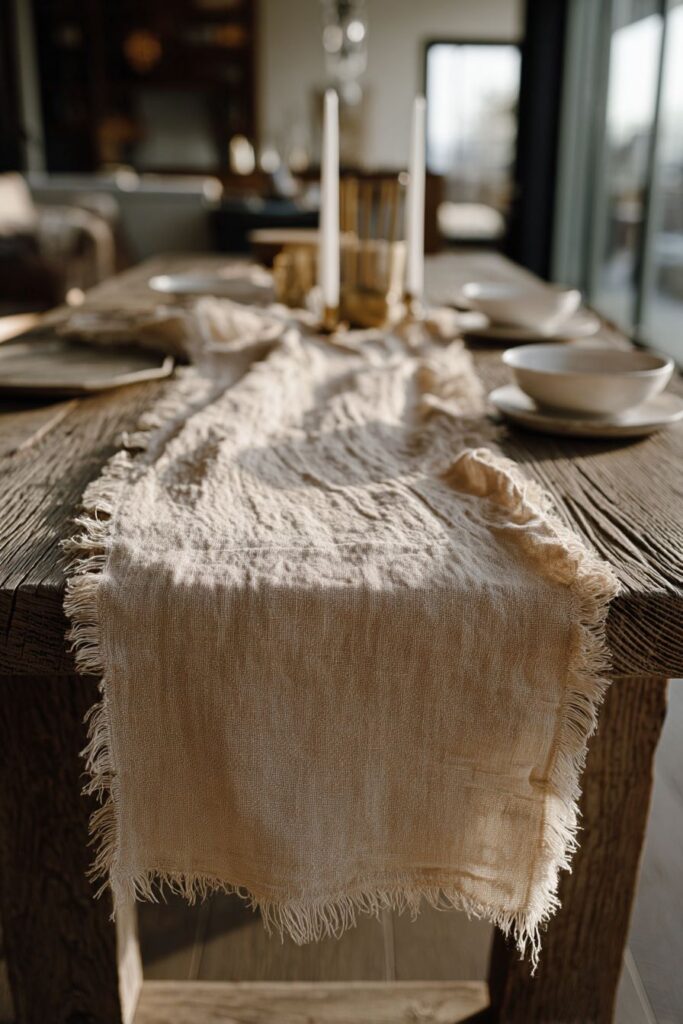
The beauty of this approach lies in its understated elegance—the natural wrinkles and subtle frayed edges of linen tell a story of authenticity and lived-in comfort. When paired with rustic wooden tables, particularly those with visible grain patterns and natural imperfections, the contrast creates a harmonious balance between refined and relaxed. The warm glow of brass candlesticks against the cool sage backdrop demonstrates how metallic accents can bridge color temperatures, while white ceramic dinnerware provides clean contrast that allows both the runner and table to shine.
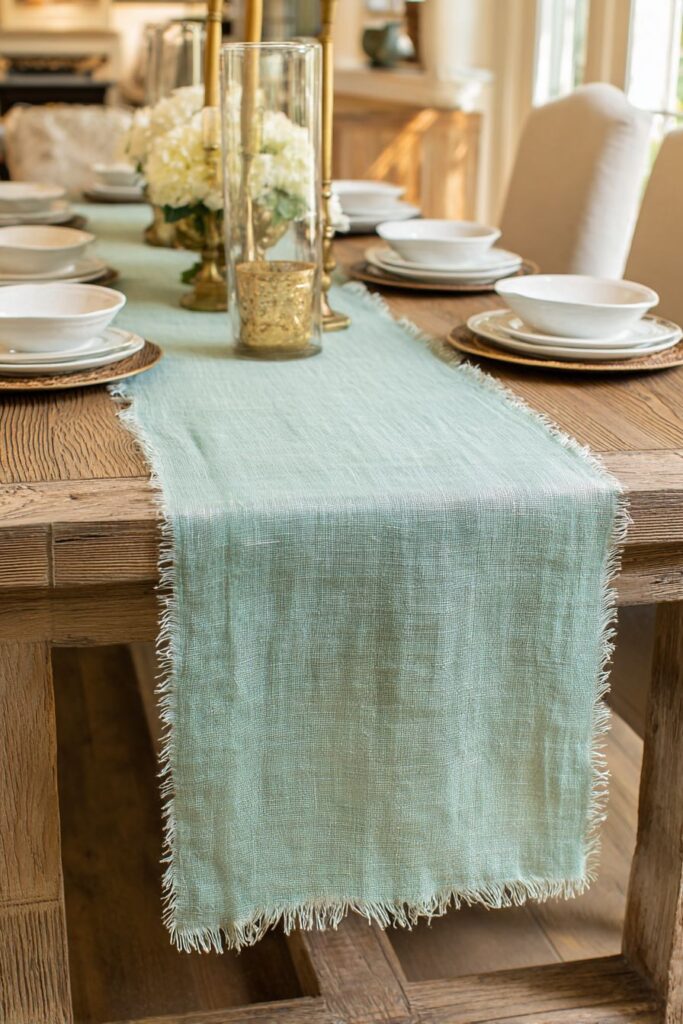
Lighting plays a crucial role in this design approach, with warm pendant fixtures casting gentle shadows that accentuate the linen’s natural weave texture. This interplay of light and shadow adds depth and dimension to the table setting, creating visual interest that changes throughout the day as natural light shifts and evening illumination takes over. The result is a dining space that feels both timeless and contemporary, sophisticated yet approachable.
Professional interior designers often recommend this combination for homeowners seeking to create spaces that feel collected over time rather than recently purchased. The sage green linen runner serves as an anchor piece that can accommodate seasonal changes—from fresh spring florals to rich autumn accents—while maintaining its core aesthetic appeal.
Key design tips include:
- Choosing linen with visible texture rather than overly pressed smooth surfaces
- Allowing natural draping rather than forcing rigid placement
- Incorporating warm metallic accents like brass or copper for visual warmth
- Balancing cool green tones with warm lighting elements
2. Modern Minimalist Geometric Design
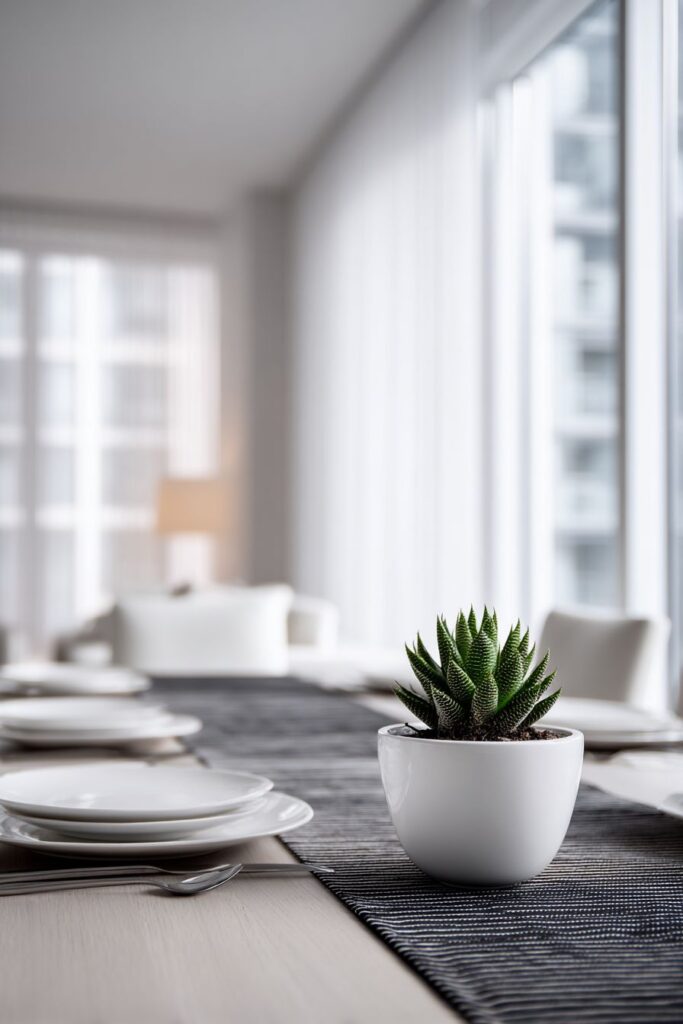
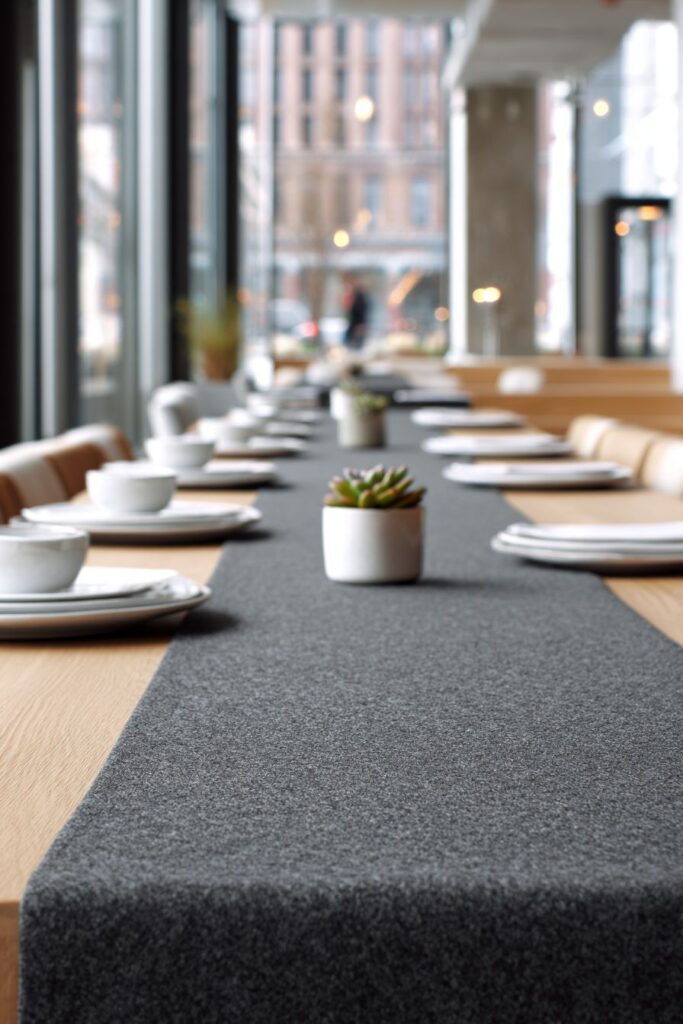
The power of restraint shines through in minimalist table runner design, where every element serves a purpose and nothing is superfluous. A charcoal grey geometric runner represents the pinnacle of contemporary design thinking—clean, purposeful, and architecturally inspired. This approach to table styling reflects broader minimalist principles that prioritize quality over quantity, function alongside form, and the beauty found in simplicity itself.
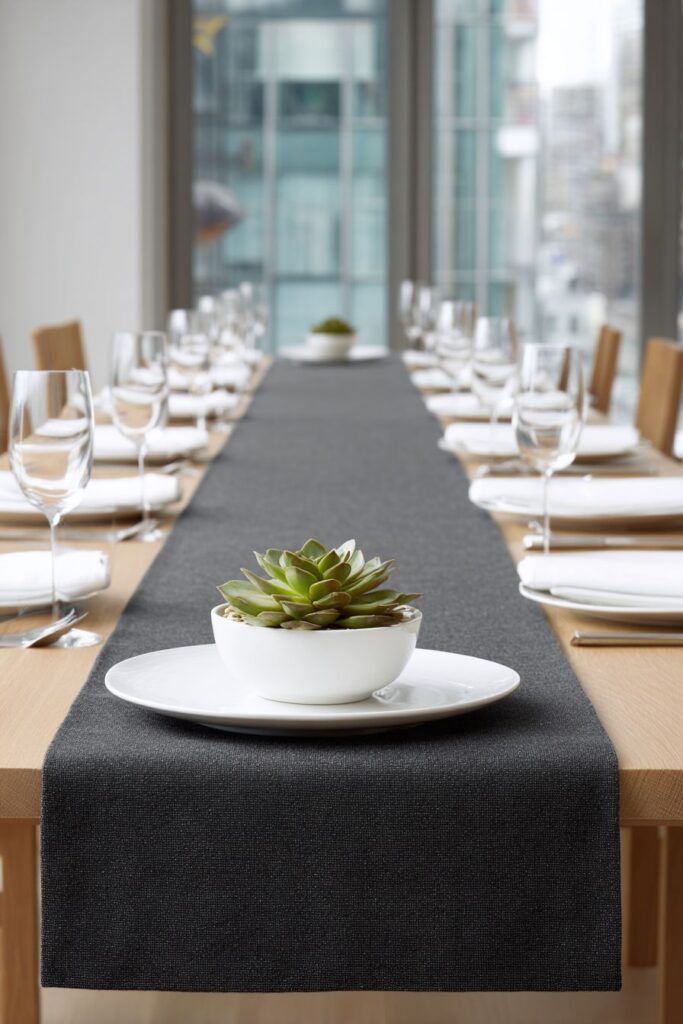
The geometric precision of modern table runners often mirrors architectural elements found throughout contemporary homes—clean lines, right angles, and carefully considered proportions. When placed on white oak dining tables, the contrast between organic wood grain and geometric fabric creates visual tension that keeps the eye engaged without overwhelming the senses. The charcoal grey color choice demonstrates sophisticated color theory application—dark enough to provide contrast against light wood, yet neutral enough to serve as a backdrop for various dinnerware colors and styles.
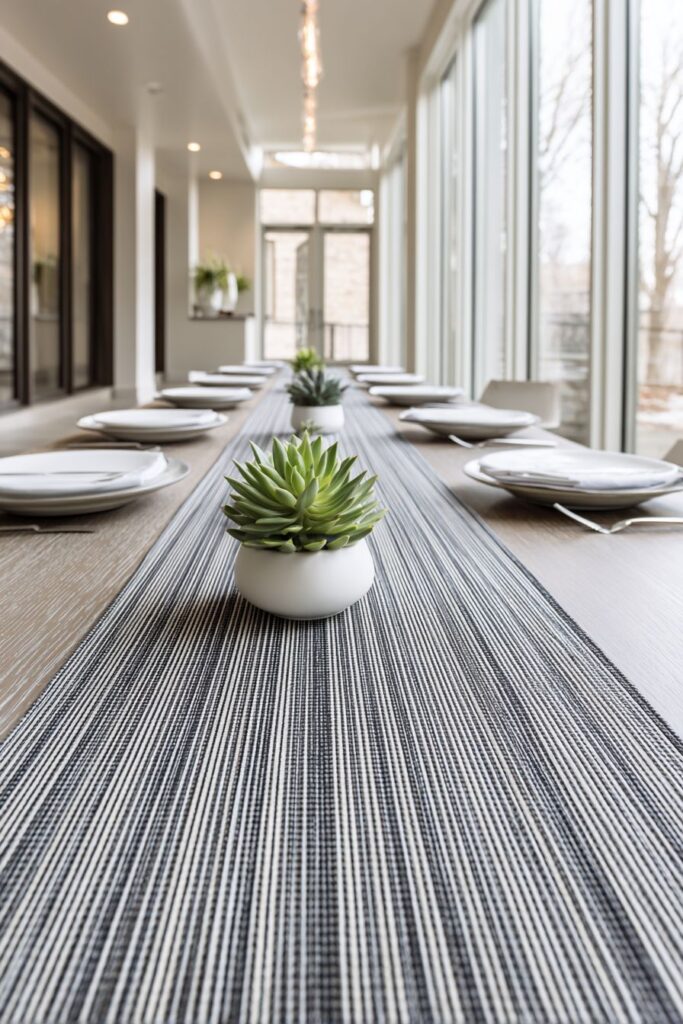
Large windows in minimalist spaces serve multiple purposes beyond natural lighting—they create connection with the outdoors while emphasizing the clean lines and uncluttered surfaces within. The diffused daylight filtering through these windows reveals subtle texture variations in both the runner fabric and table surface, adding layers of visual interest that might be missed under artificial lighting alone. This natural lighting approach aligns with minimalist philosophy that celebrates authentic materials and conditions.
The single succulent centerpiece exemplifies minimalist styling principles—one carefully chosen element that provides life and color without competing with the runner’s geometric patterns. This restraint allows each element to be fully appreciated rather than lost in visual chaos.
Essential design strategies include:
- Selecting runners with precise edges and clean geometric patterns
- Pairing bold patterns with simple solid-colored dinnerware
- Utilizing natural lighting whenever possible to reveal fabric texture details
- Maintaining negative space around the runner to emphasize its geometric impact
3. Seasonal Autumn Burlap Elegance
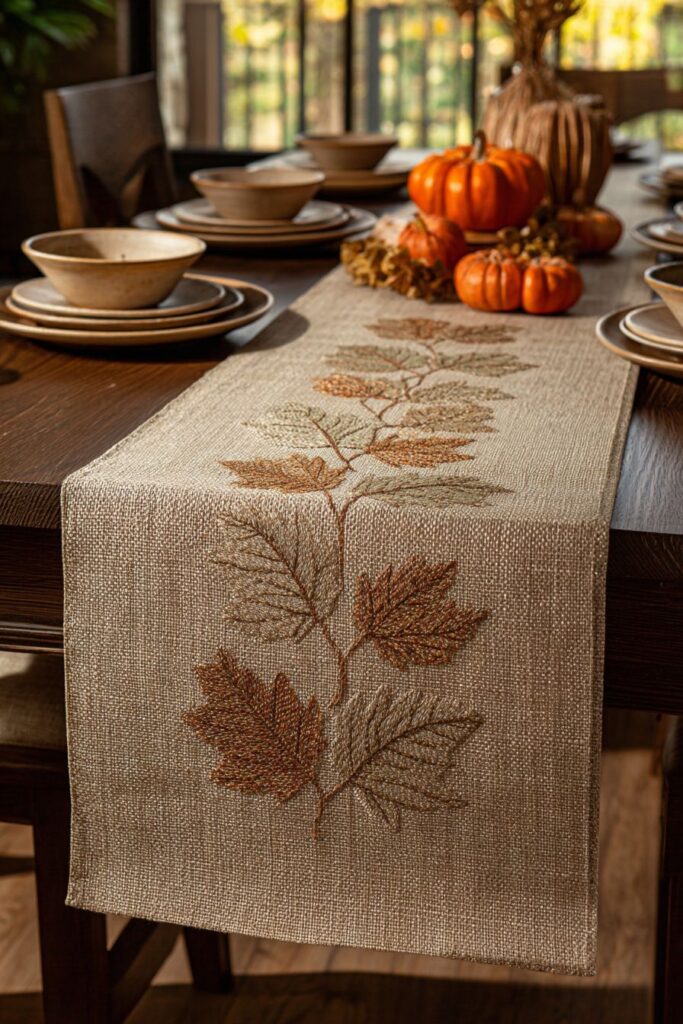
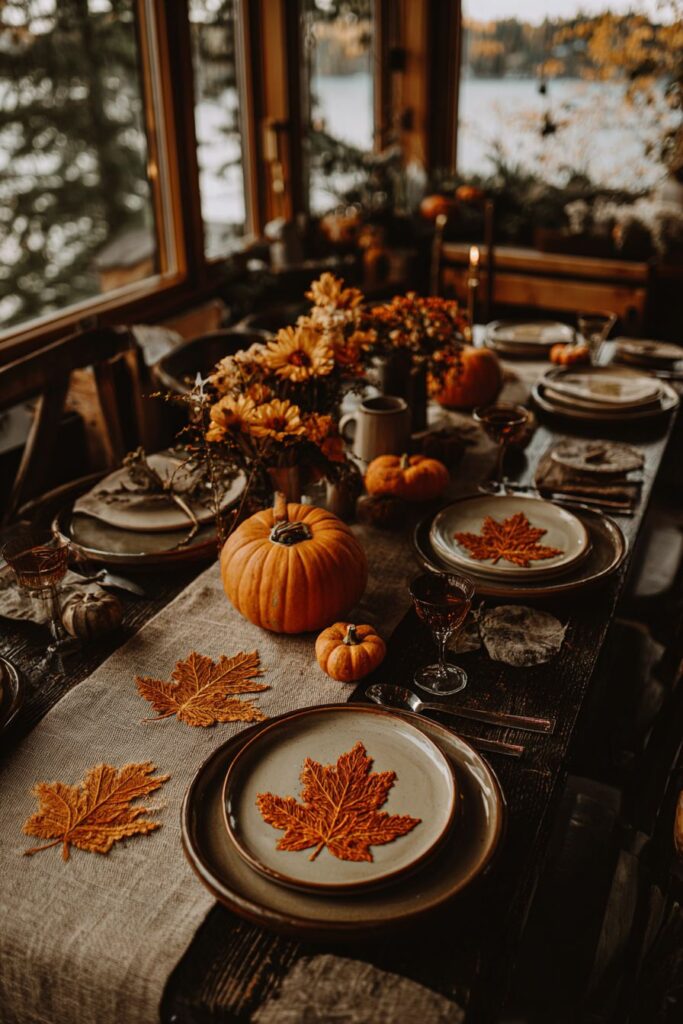
Seasonal styling reaches its peak with autumn-inspired table runners that capture the essence of fall’s natural beauty while maintaining sophisticated design sensibility. Burlap, once relegated to purely utilitarian applications, has evolved into a beloved interior design material that brings organic texture and rustic charm to contemporary dining spaces. When enhanced with embroidered leaf details in burnt orange and gold, this humble fabric transforms into a statement piece that celebrates seasonal transition while providing year-round design appeal.
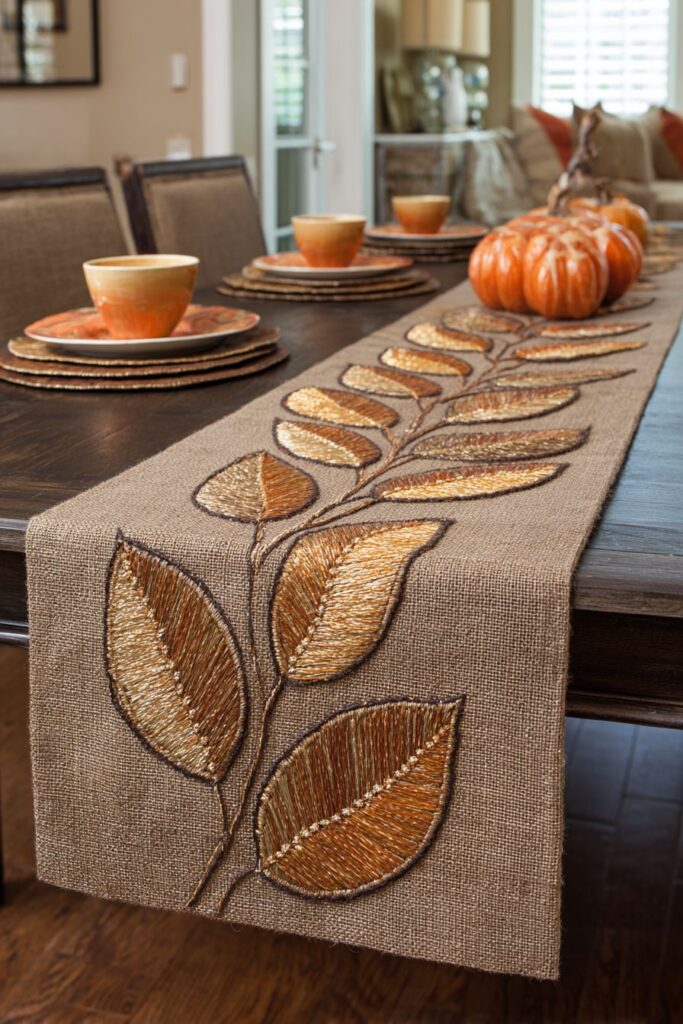
The marriage of burlap’s coarse texture with delicate embroidered details creates compelling visual and tactile contrast that invites closer examination. Each leaf motif tells a story of autumn’s progression, while the burnt orange and gold color palette echoes the season’s most beloved hues—from changing maple leaves to harvest pumpkins. This color combination works particularly well against dark walnut tables, where the rich wood tones provide grounding contrast that prevents the warm colors from overwhelming the space.
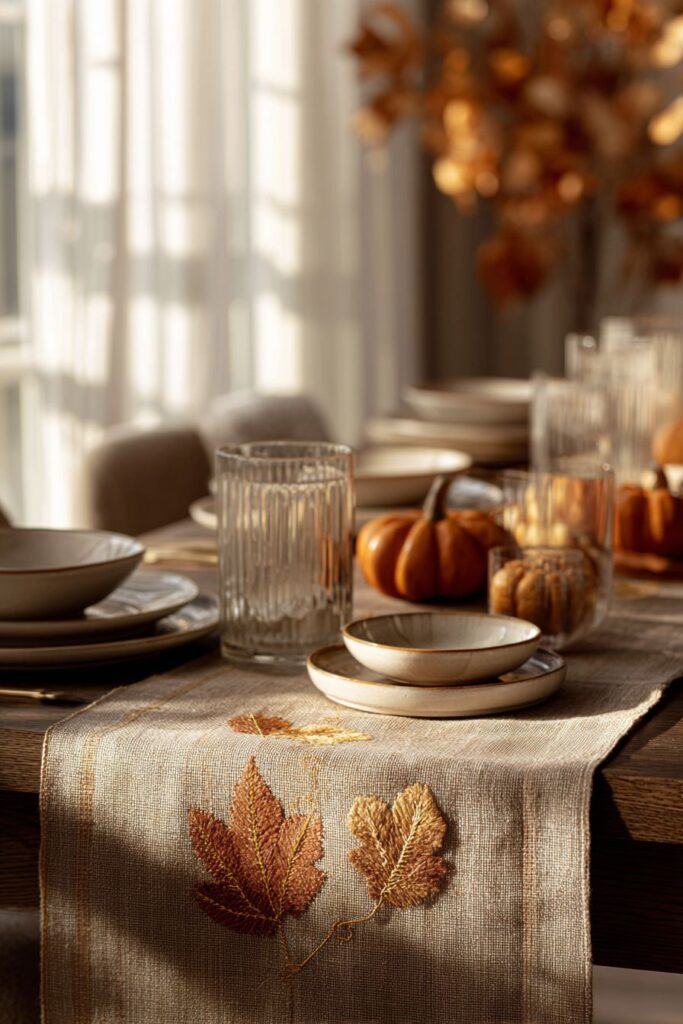
Golden hour lighting transforms this seasonal styling from pleasant to magical, as natural sunlight streaming through windows creates shifting patterns of light and shadow across the burlap’s textured surface. This type of lighting enhancement cannot be replicated with artificial sources—the quality of late afternoon sunlight brings out hidden depths in both the burlap weave and embroidered details, creating a constantly changing display that adds living energy to the dining space.
The addition of small pumpkin accents and warm-toned ceramic dishes completes the seasonal narrative without becoming cliché. These elements work together to create cohesive seasonal styling that feels intentional rather than hastily assembled. Professional designers appreciate this approach because it demonstrates how seasonal decorating can be sophisticated rather than overwrought.
Key implementation strategies include:
- Choosing burlap with consistent weave patterns for a polished appearance
- Incorporating embroidered details that complement rather than compete with natural textures
- Timing seasonal displays to take advantage of optimal natural lighting conditions
- Balancing seasonal elements with permanent design features for year-round appeal
4. Formal Silk Paisley Sophistication
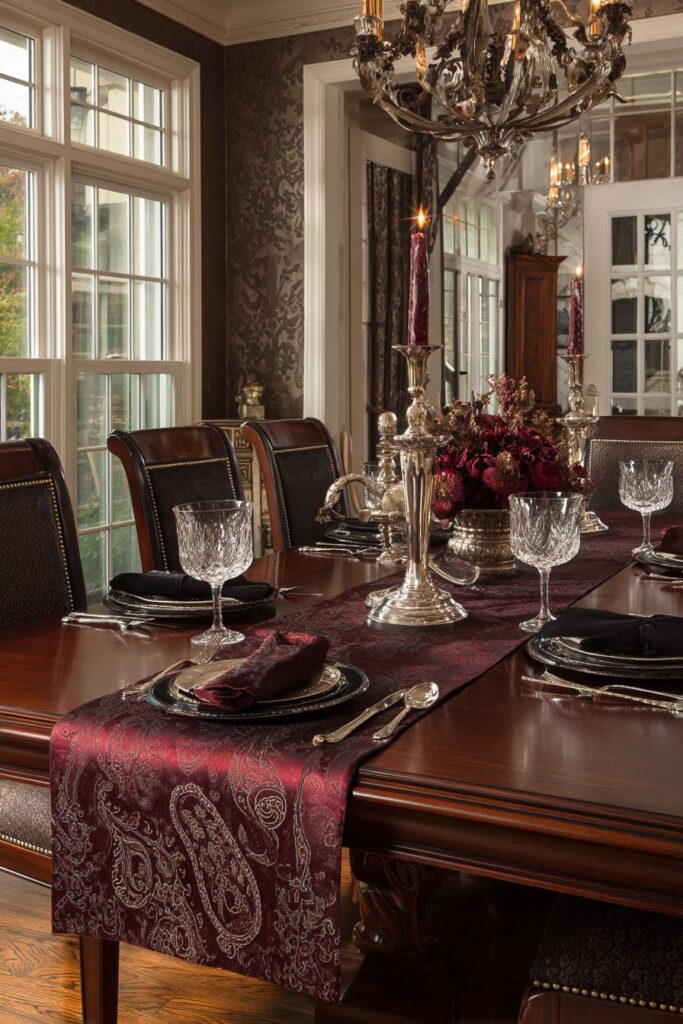
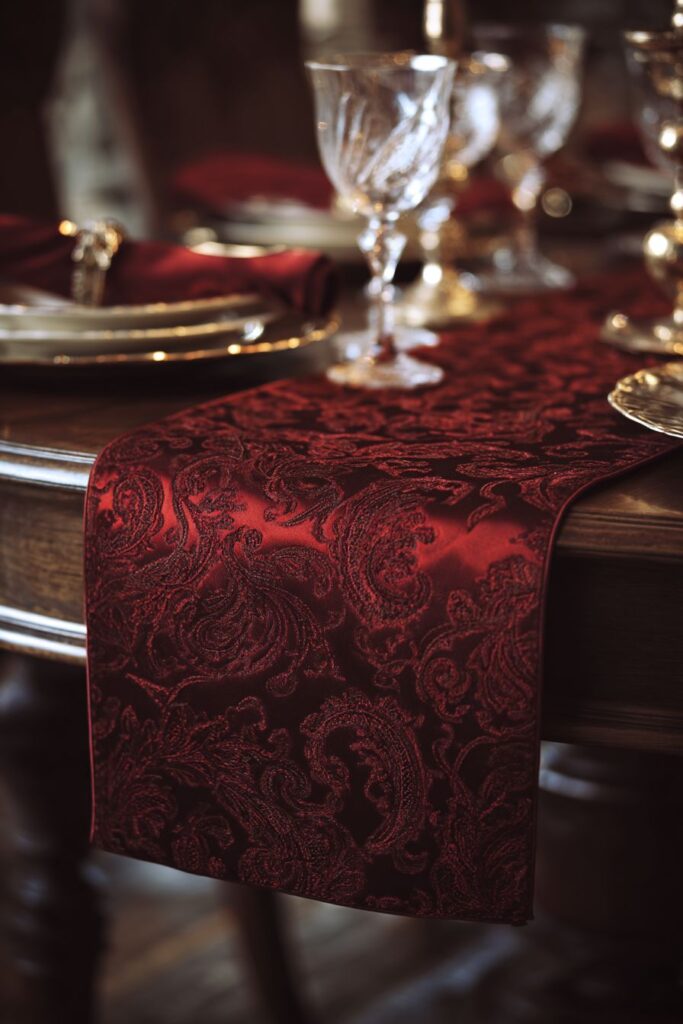
Luxury materials in dining room design reach their zenith with silk table runners that embody centuries of textile tradition while meeting contemporary aesthetic standards. Deep burgundy silk with subtle paisley patterns represents the intersection of classical elegance and modern sophistication—a design approach that honors historical textile artistry while serving today’s formal dining requirements. The inherent properties of silk—its lustrous surface, fluid draping, and color depth—create an immediate sense of occasion that elevates any dining experience.
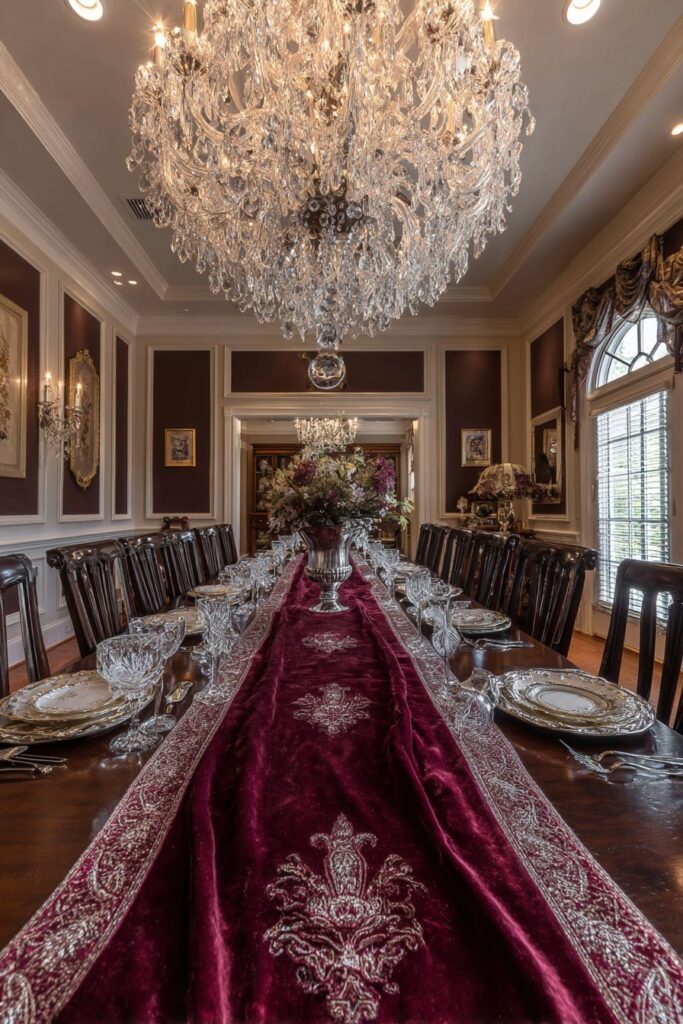
The paisley pattern, with its rich cultural history spanning centuries and continents, adds layers of visual complexity that reward closer examination. When rendered in subtle tones that complement rather than dominate the burgundy base, these patterns create sophisticated surface interest that changes appearance based on viewing angle and lighting conditions. Against mahogany dining tables, this creates a harmonious relationship between warm wood tones and jewel-toned fabric that speaks to traditional design sensibilities while remaining thoroughly contemporary.
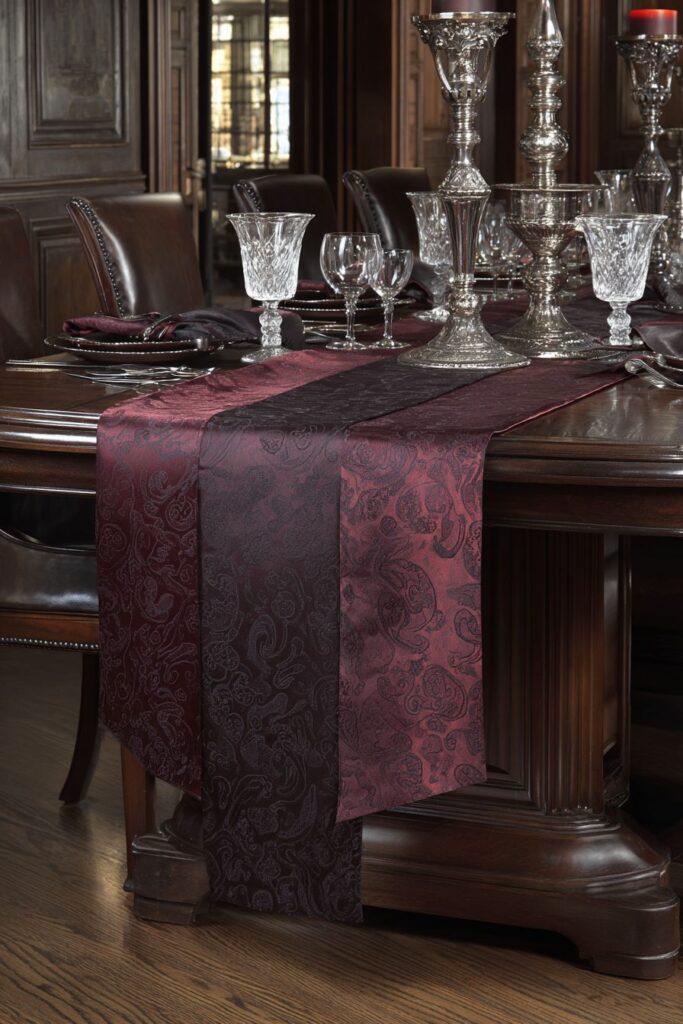
Crystal glassware and silver serving pieces naturally complement silk’s inherent elegance, creating a cohesive formal table setting that reflects careful attention to material relationships and quality craftsmanship. The interplay between silk’s soft fluidity, crystal’s hard brilliance, and silver’s warm reflection creates a table setting with multiple layers of visual and textural interest that changes throughout the dining experience as light conditions shift and table elements are used.
Chandelier lighting serves as the perfect complement to silk table runners, as the multiple light sources create complex patterns of reflection and shadow across the silk’s lustrous surface. This type of lighting design transforms the table runner from simple decoration into a dynamic element that contributes to the overall ambiance of formal dining experiences.
Essential design considerations include:
- Selecting silk runners with subtle rather than dominant patterns for versatility
- Pairing silk textures with complementary hard materials like crystal and metal
- Utilizing multiple light sources to maximize silk’s natural luster
- Ensuring proper draping that showcases silk’s fluid characteristics
5. Coastal Jute and Rope Detailing
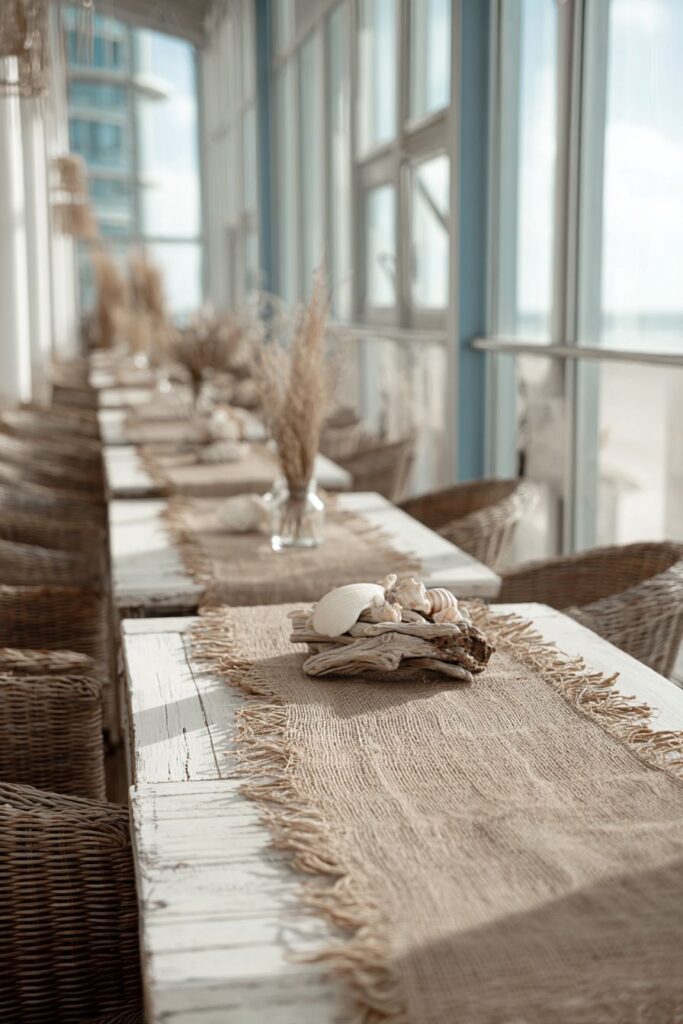
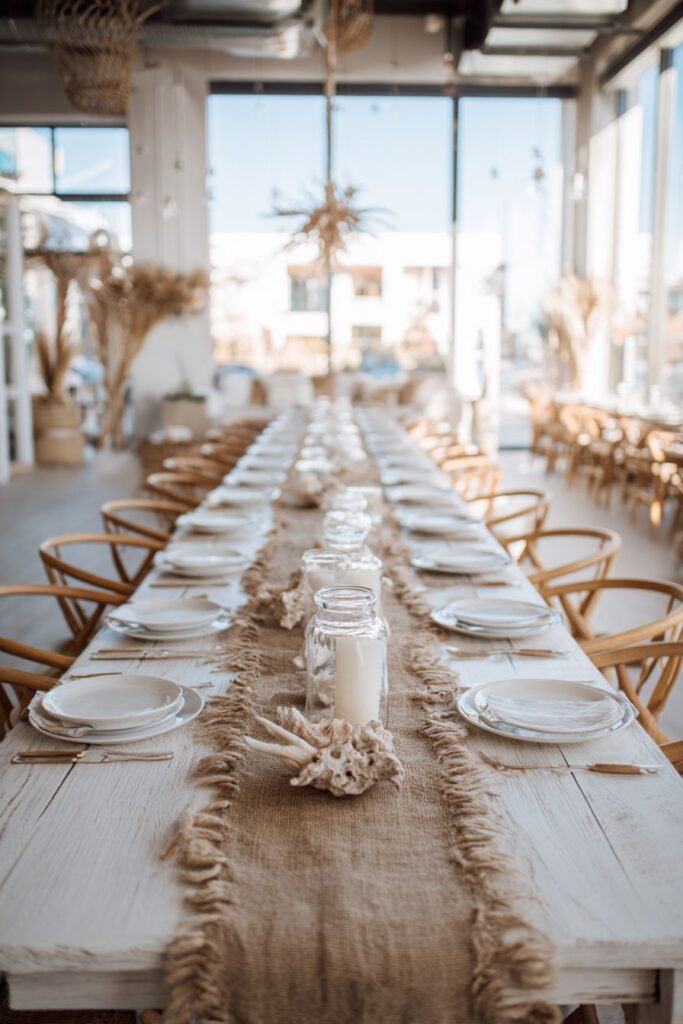
Natural fiber table runners capture the essence of coastal living through their inherent connection to organic materials and seaside aesthetics. Jute, with its distinctive texture and neutral color palette, serves as an ideal foundation for coastal-inspired dining spaces that celebrate the beauty of natural materials while maintaining sophisticated design sensibility. The addition of rope detailing along runner edges demonstrates how thoughtful embellishment can enhance rather than mask a material’s natural characteristics.
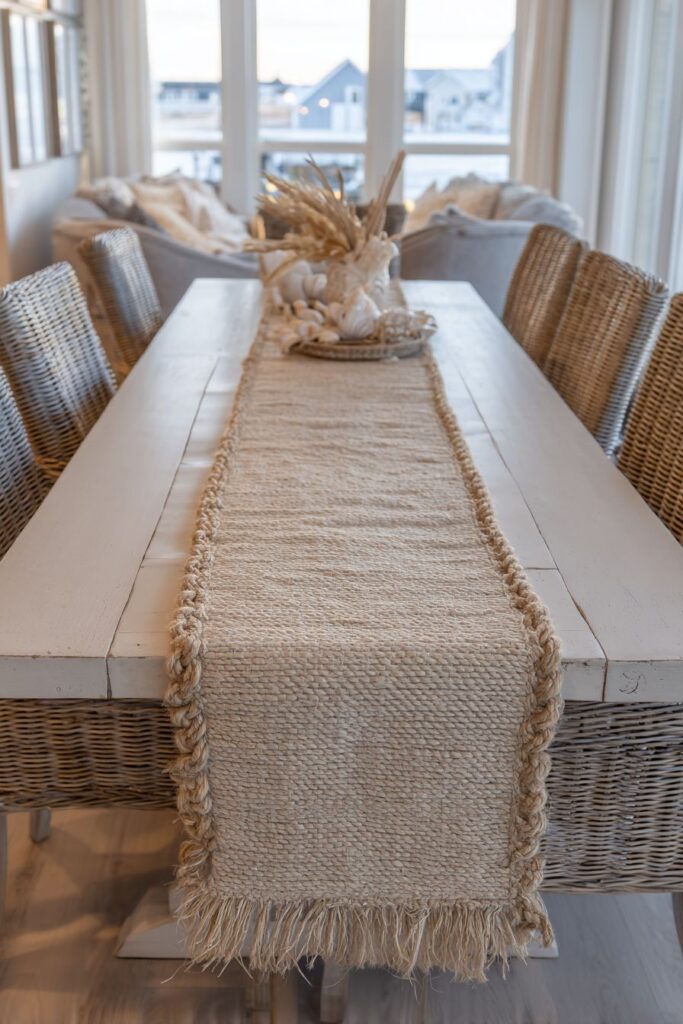
The weathered white-washed table provides the perfect backdrop for jute’s earthy texture, creating a relationship that celebrates both natural aging processes and conscious design choices. This pairing demonstrates sophisticated color theory application—the contrast between jute’s warm beige tones and weathered wood’s cool whites creates visual interest while maintaining the overall coastal color palette. Wicker chairs further reinforce the natural material theme while providing textural variety that prevents the space from becoming monotonous.
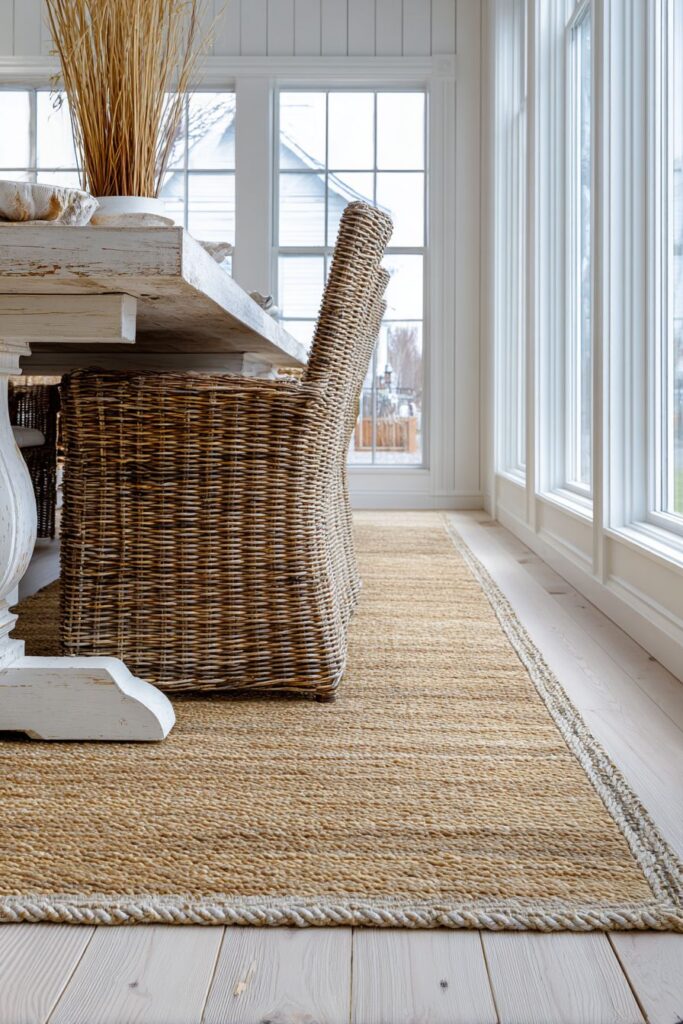
Seashell and driftwood accents complete the coastal narrative without becoming cliché tourist decorations. These natural elements work best when they appear collected rather than purchased—pieces that tell stories of beach walks and seaside discoveries rather than retail shopping trips. The key to successful coastal styling lies in creating authentic connections to the seaside environment while maintaining sophisticated design sensibility.
Soft natural lighting from coastal windows serves multiple purposes in this design approach—it reveals the intricate texture variations in jute fibers while creating gentle shadows that add depth and dimension to the overall table setting. This type of lighting changes throughout the day, creating a dynamic display that connects the indoor dining space with the natural coastal environment beyond.
Coastal design implementation includes:
- Selecting jute runners with rope or natural fiber edge treatments
- Balancing multiple natural textures without creating visual chaos
- Incorporating authentic coastal elements that feel collected rather than purchased
- Maximizing natural lighting to showcase organic material textures
6. Scandinavian Linen Simplicity
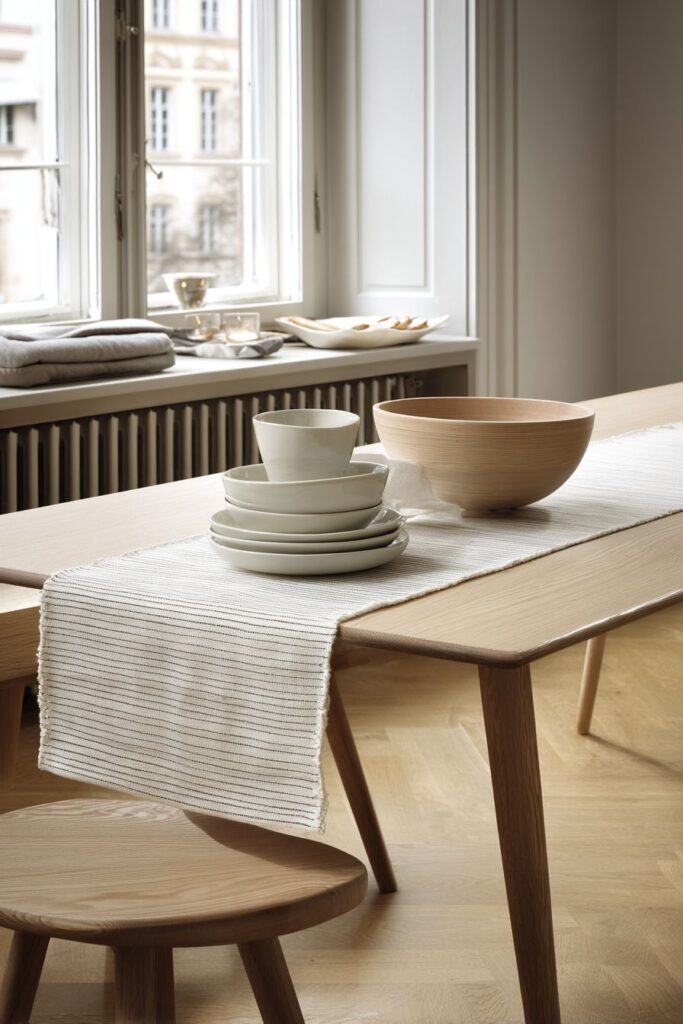
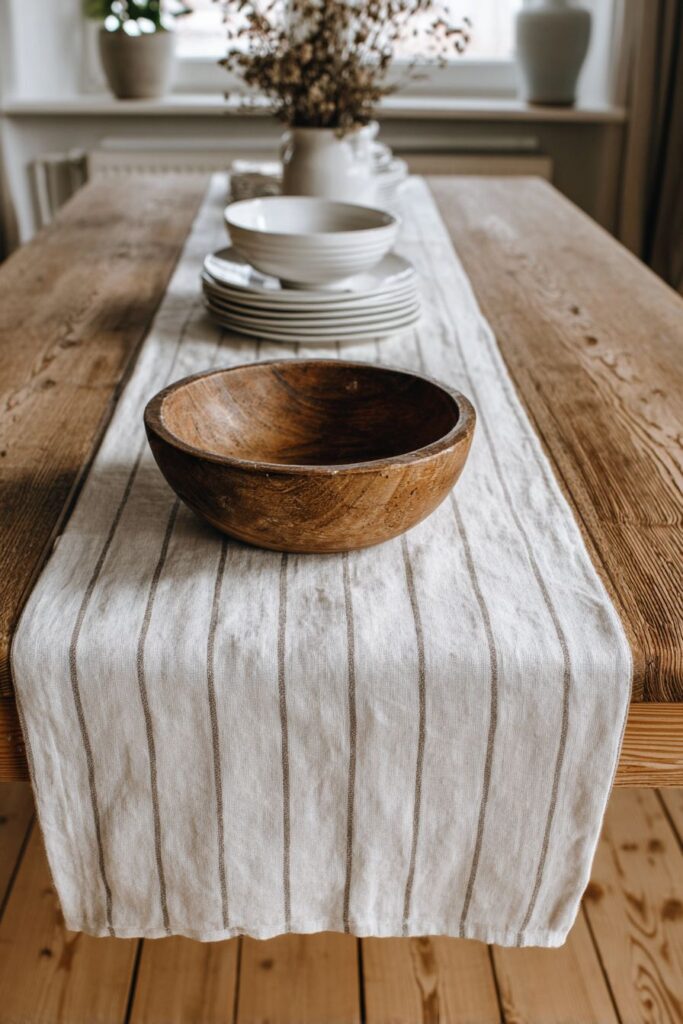
The Nordic approach to table runner styling embodies the essence of hygge and lagom—concepts that celebrate comfort, balance, and the beauty found in simplicity. Cream white linen with subtle horizontal stripes represents the pinnacle of Scandinavian design thinking, where every element serves both functional and aesthetic purposes without excess or pretension. This design philosophy creates dining spaces that feel inherently peaceful and welcoming while maintaining sophisticated visual appeal.
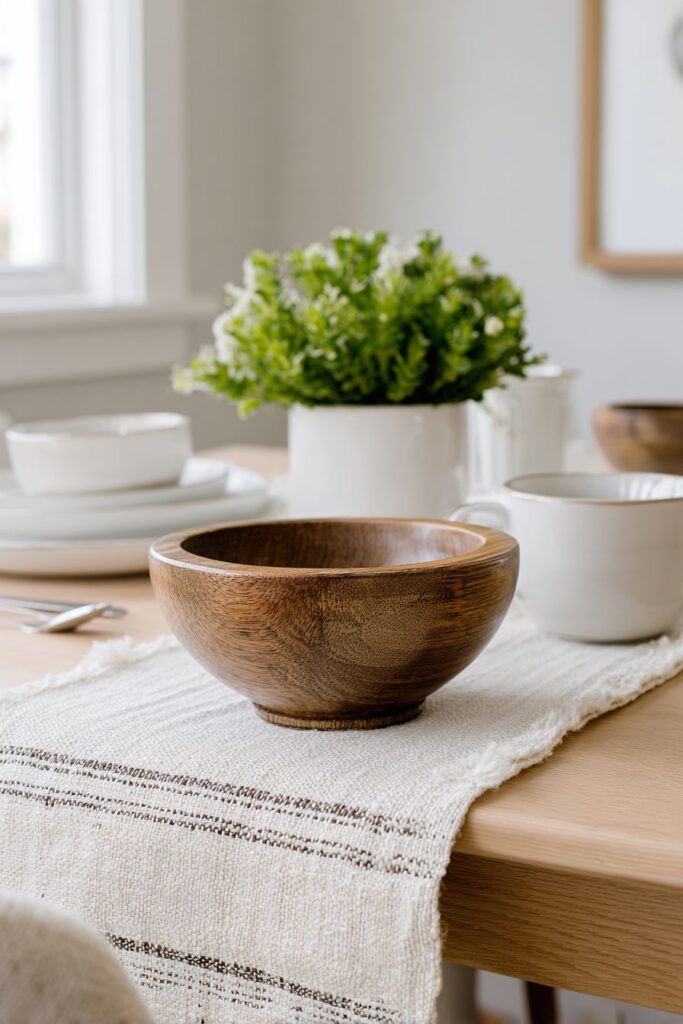
The light pine dining table serves as more than just functional furniture—it becomes a canvas that showcases the linen’s natural beauty while reinforcing the Nordic commitment to sustainable, locally-sourced materials. The contrast between the linen’s soft texture and pine’s distinctive grain pattern creates visual interest through material relationship rather than color contrast or ornate decoration. This approach demonstrates how sophisticated design can emerge from thoughtful material selection rather than elaborate embellishment.
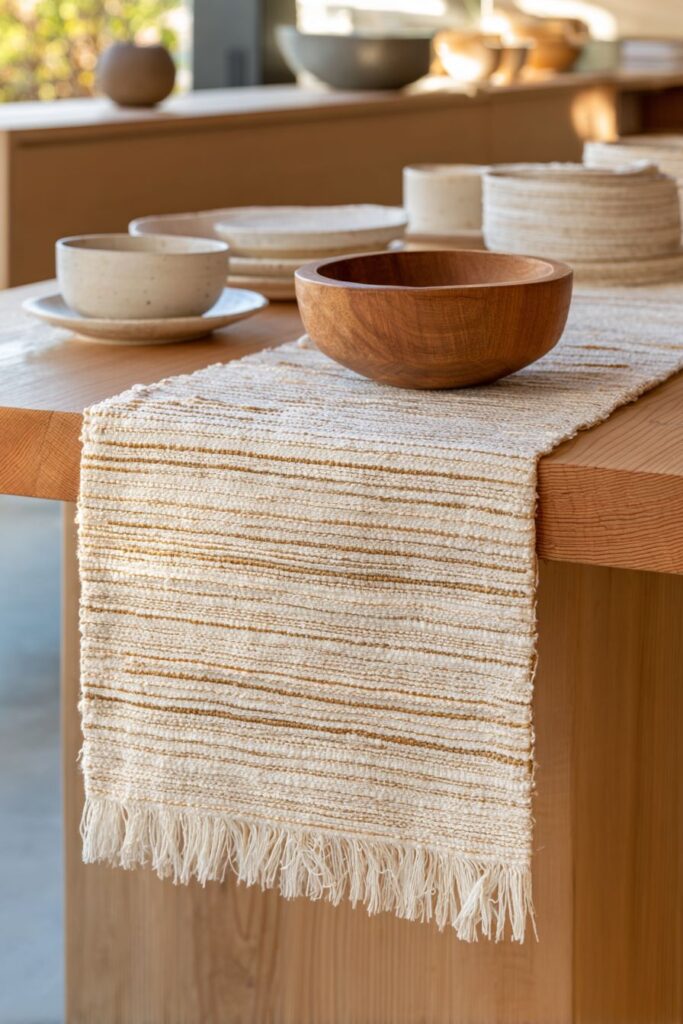
Minimalist white dinnerware paired with a single wooden bowl centerpiece exemplifies Scandinavian styling principles that prioritize function alongside beauty. Each element serves a clear purpose while contributing to the overall aesthetic harmony—the dinnerware provides necessary function while maintaining visual simplicity, and the wooden bowl adds warmth and natural texture without competing for attention with the linen runner.
Clean natural lighting from large windows creates the perfect environment for appreciating subtle design details—the horizontal stripes in the linen become more apparent, the pine grain patterns emerge more clearly, and the overall sense of calm and order that defines Scandinavian design becomes tangible. This lighting approach avoids artificial enhancement in favor of celebrating natural conditions and authentic material characteristics.
Nordic styling essentials include:
- Choosing natural fiber runners with subtle pattern details
- Emphasizing material relationships over color contrasts
- Incorporating single-purpose items that also provide aesthetic value
- Maximizing natural lighting to create authentic Nordic ambiance
7. Bohemian Tapestry Jewel Tones
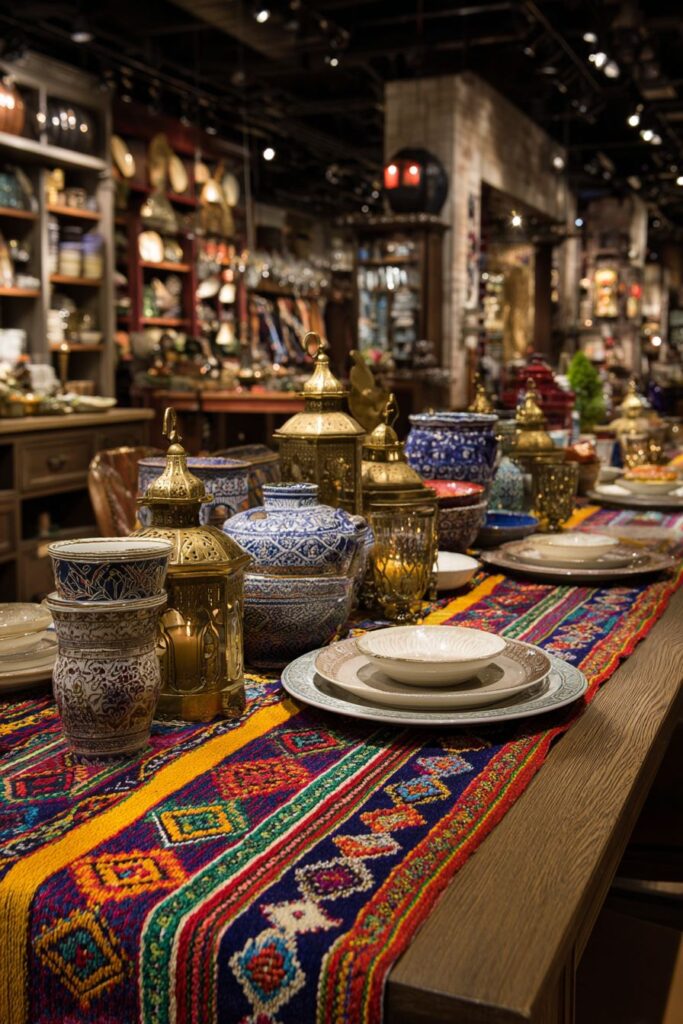
Bohemian style table runners celebrate the beauty of global textile traditions while creating dining spaces that feel collected, traveled, and deeply personal. Vibrant tapestry-style runners with intricate geometric patterns in jewel tones represent the bohemian commitment to artistic expression, cultural appreciation, and the layering of colors, textures, and patterns that conventional design wisdom might discourage. This approach creates dining experiences that feel like extensions of the homeowner’s personality and life experiences.
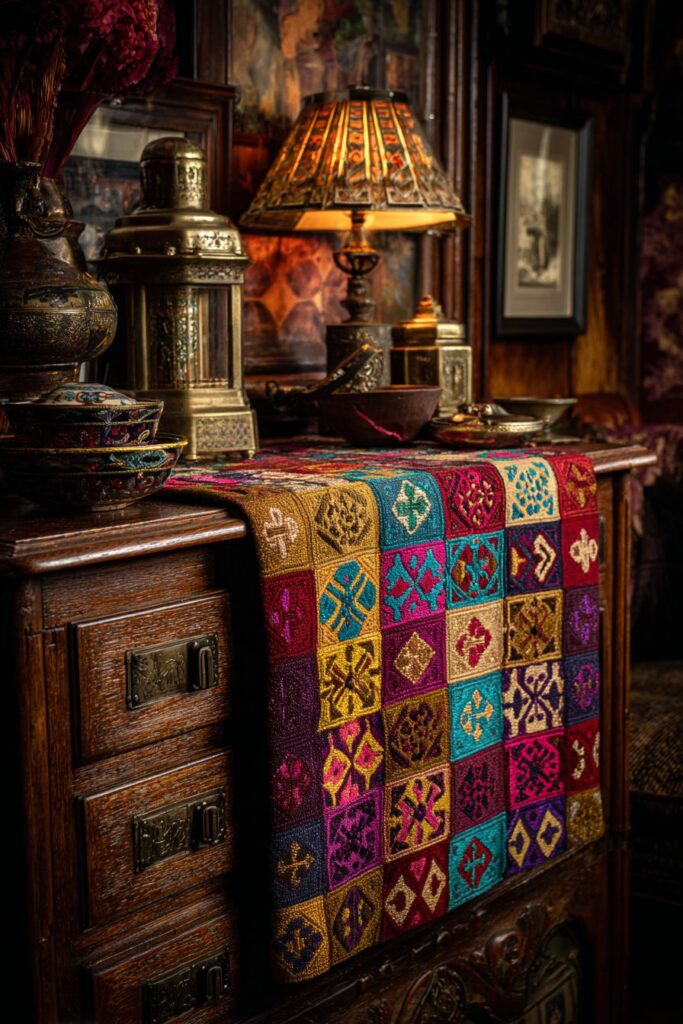
The intricate geometric patterns found in bohemian table runners often carry cultural significance and artistic traditions that span generations and continents. When rendered in jewel tones—deep emeralds, rich sapphires, warm ambers—these patterns create visual complexity that rewards close examination while contributing to the overall sense of abundance and creativity that defines bohemian interiors. The cascading drape over vintage wooden tables creates fluid lines that soften geometric patterns while maintaining their visual impact.
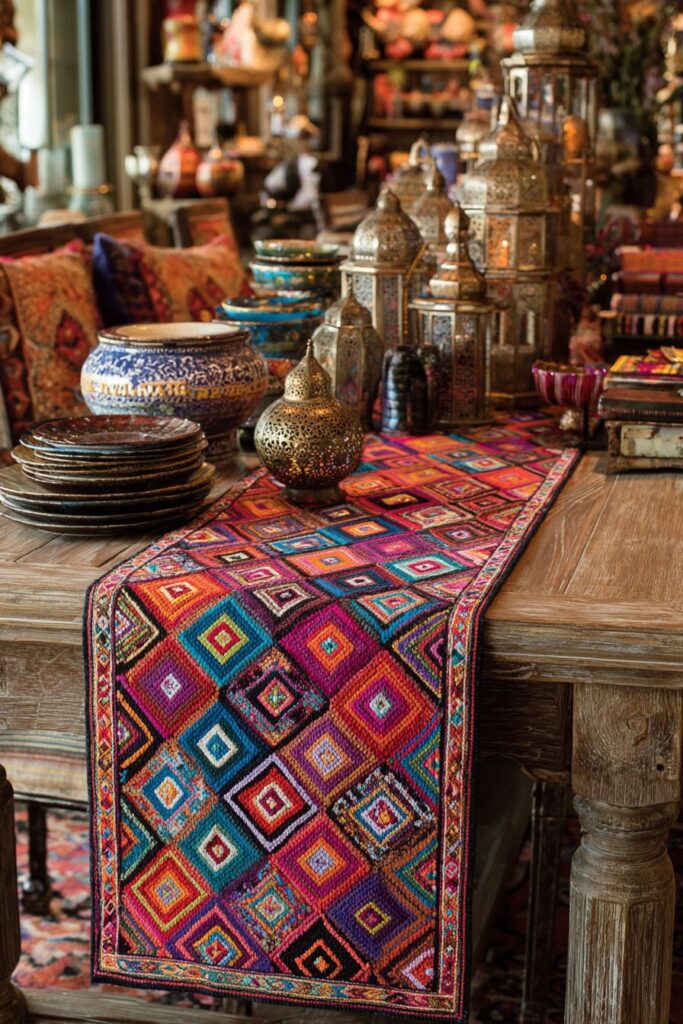
Eclectic dishware and brass lanterns complete the bohemian narrative by celebrating the beauty of mixing rather than matching. This approach to table setting reflects broader bohemian principles that value personal expression over design rules, cultural appreciation over conventional aesthetics, and the beauty of objects that carry stories and histories. Each element contributes to a larger narrative of travel, discovery, and artistic appreciation.
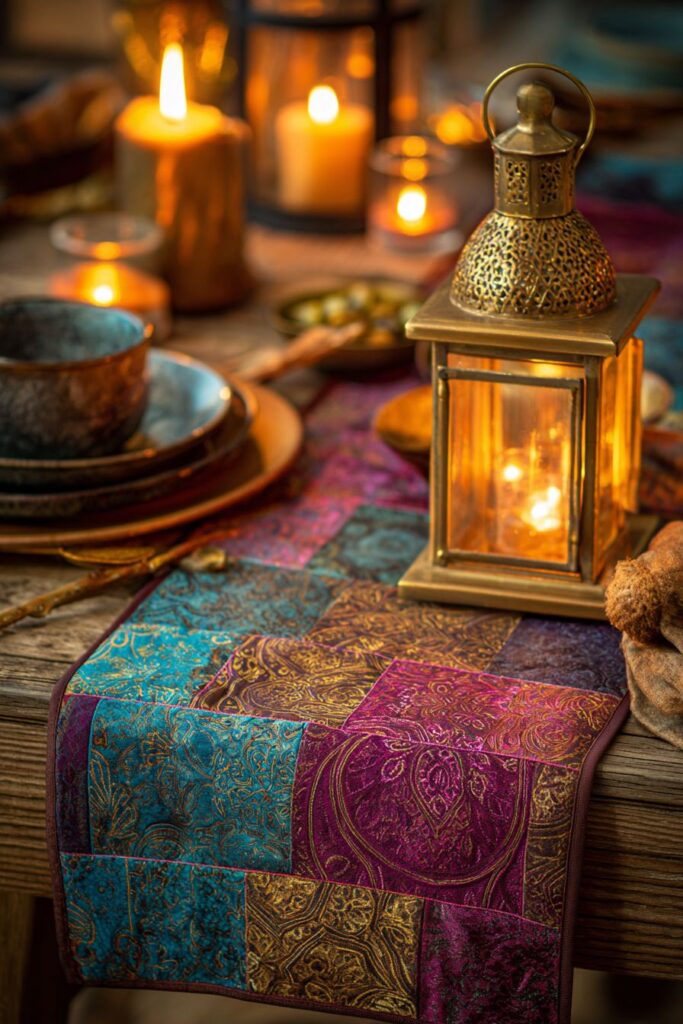
Warm artificial lighting creates intimate atmosphere that transforms the dining space into a sanctuary that feels separate from the everyday world. The interplay between warm light and rich colors creates an enveloping sense of comfort and creativity that encourages lingering conversations and memorable dining experiences. This lighting approach emphasizes the handcrafted details and rich colors that make bohemian styling so appealing.
Bohemian design principles include:
- Embracing pattern mixing and color layering for visual richness
- Incorporating textile pieces with cultural significance and artistic merit
- Creating eclectic collections that tell personal stories
- Using warm lighting to enhance rich colors and intricate details
8. Farmhouse Gingham Navy and White
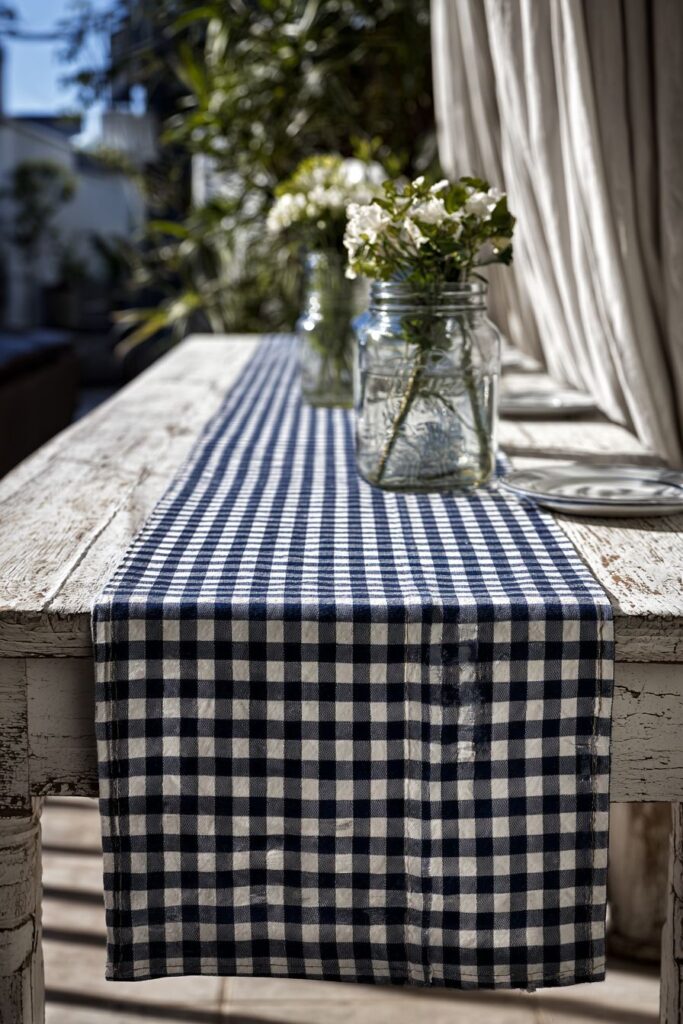
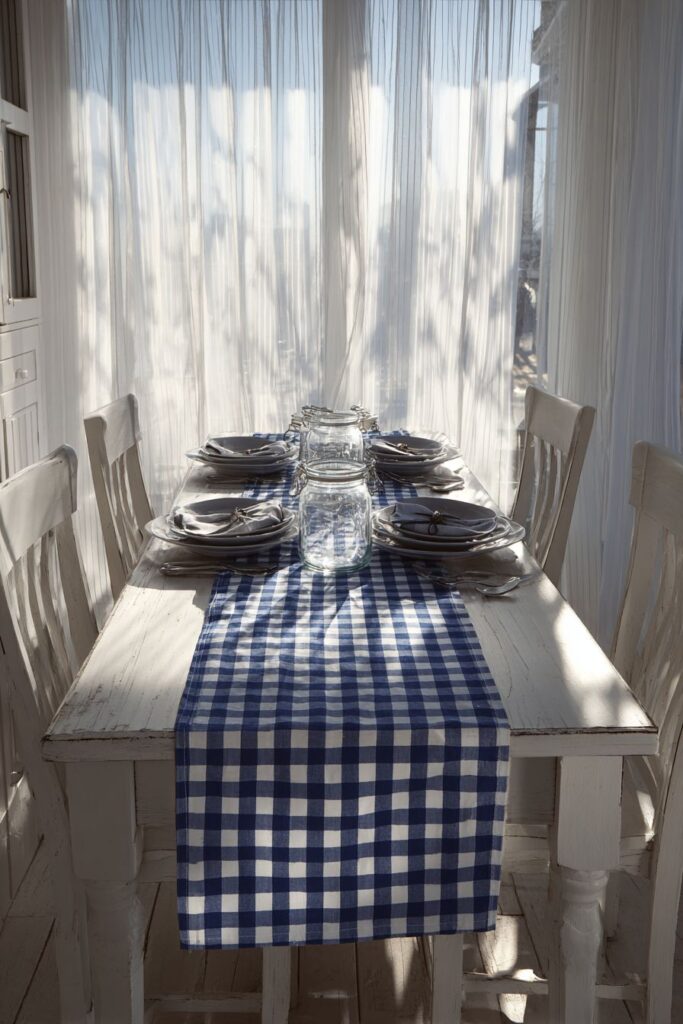
Classic American farmhouse style finds perfect expression in navy and white gingham table runners that celebrate timeless pattern traditions while serving contemporary dining needs. This particular color combination represents the evolution of farmhouse design from purely utilitarian to consciously stylistic—maintaining the comfort and authenticity of traditional farmhouse aesthetics while meeting today’s expectations for sophisticated design sensibility.
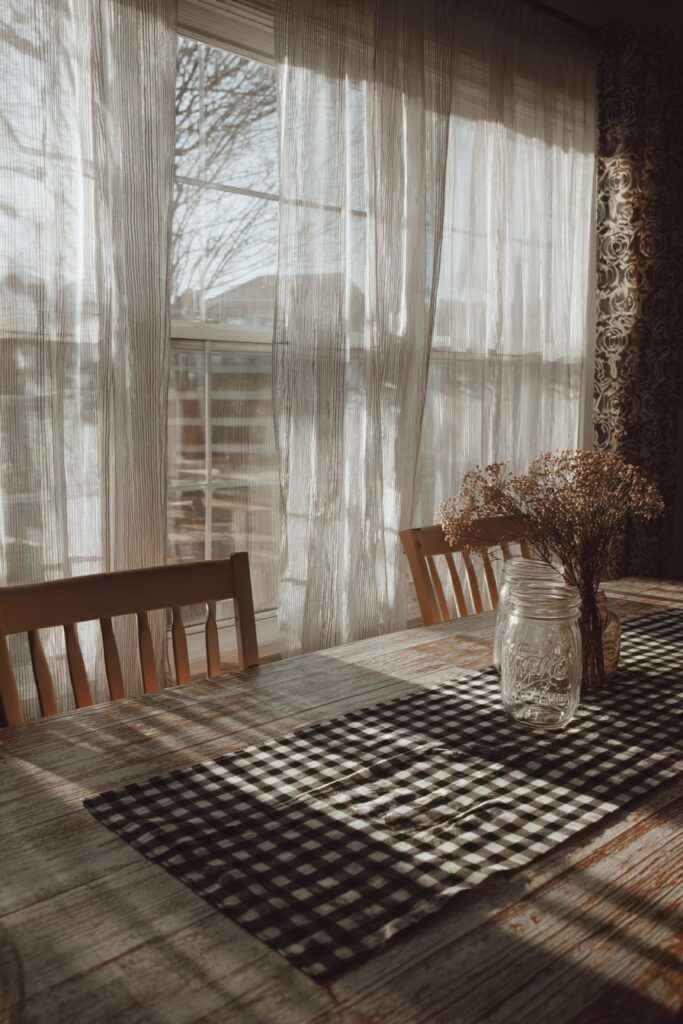
The gingham pattern itself carries rich historical significance, representing generations of American textile tradition while remaining perpetually fresh and appealing. When rendered in navy and white, this pattern creates sophisticated contrast that works equally well for casual family meals and more formal entertaining. The visible cotton weave patterns add textural interest that invites tactile appreciation while reinforcing the authentic material story that modern farmhouse design celebrates.
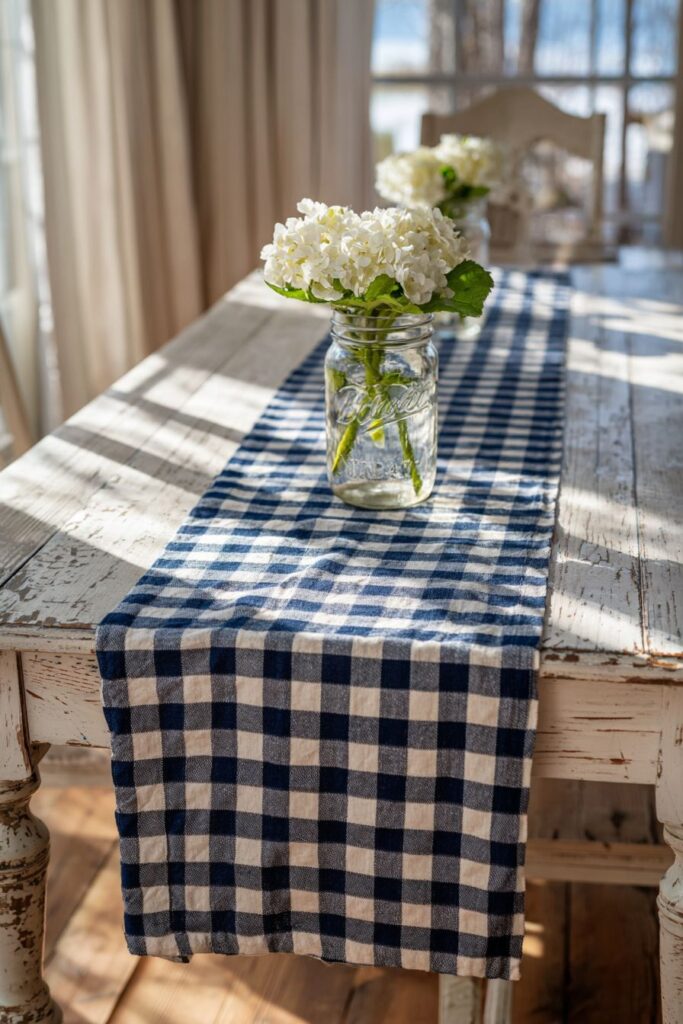
Distressed white dining tables provide ideal backdrop for navy gingham, creating color relationships that feel both intentional and naturally evolved. This pairing demonstrates sophisticated understanding of how patina and aging can enhance rather than diminish design appeal—the table’s distressed finish speaks to years of family meals and gathering, while the crisp gingham pattern adds fresh energy and visual organization to the space.
Mason jar centerpieces and vintage enamelware complete the farmhouse narrative while serving practical functions that honor the style’s utilitarian roots. These elements work together to create authentic farmhouse styling that feels lived-in rather than recently assembled. The key to successful farmhouse design lies in balancing nostalgic elements with contemporary comfort and functionality.
Farmhouse styling essentials include:
- Selecting classic patterns with authentic historical significance
- Balancing distressed and fresh elements for visual interest
- Incorporating functional vintage pieces that tell stories
- Emphasizing natural materials and traditional craftsmanship
9. Contemporary Leather Sophistication
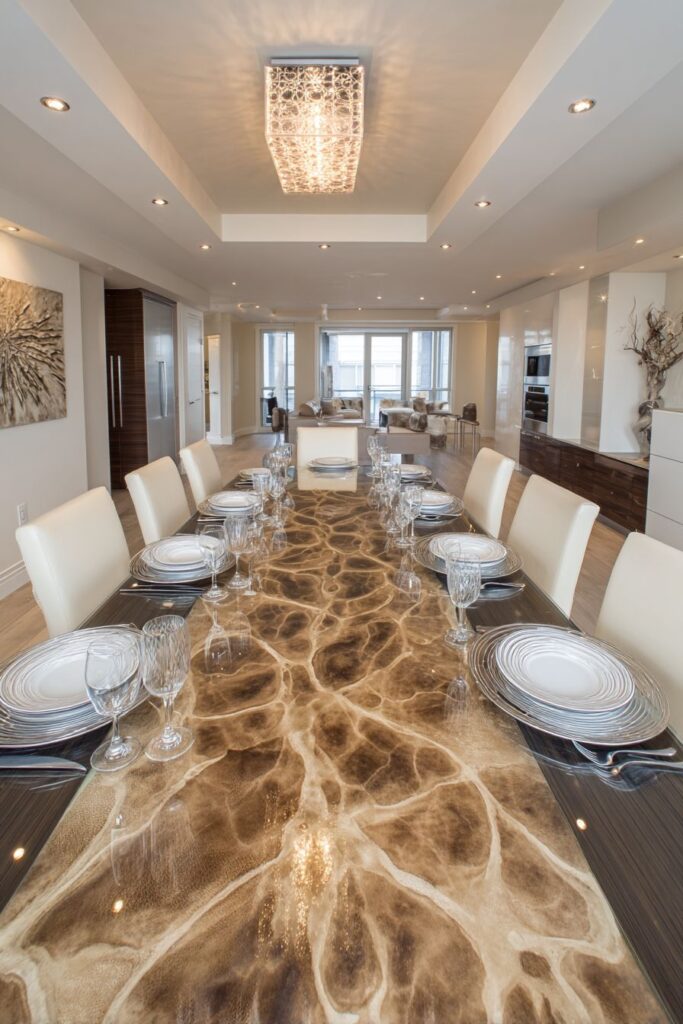
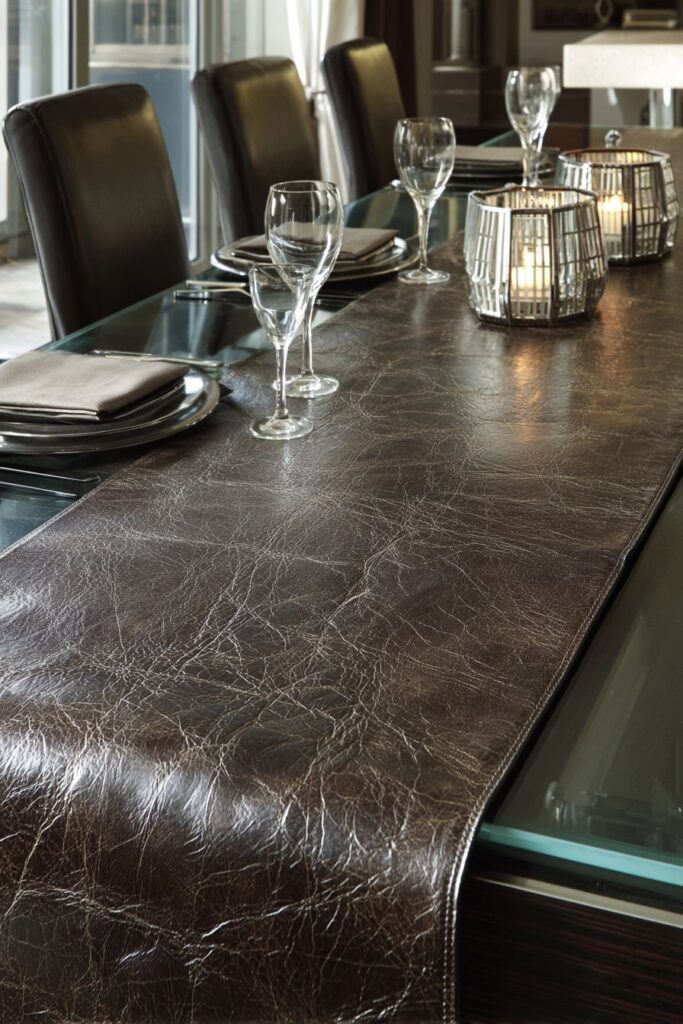
Modern material innovation in table runner design reaches new heights with leather runners that challenge traditional expectations while serving contemporary aesthetic and functional needs. Rich cognac brown leather stretched across glass-top dining tables creates striking material contrast that embodies contemporary design principles—the unexpected pairing of materials, the celebration of both natural and manufactured elements, and the commitment to creating spaces that feel both sophisticated and approachable.
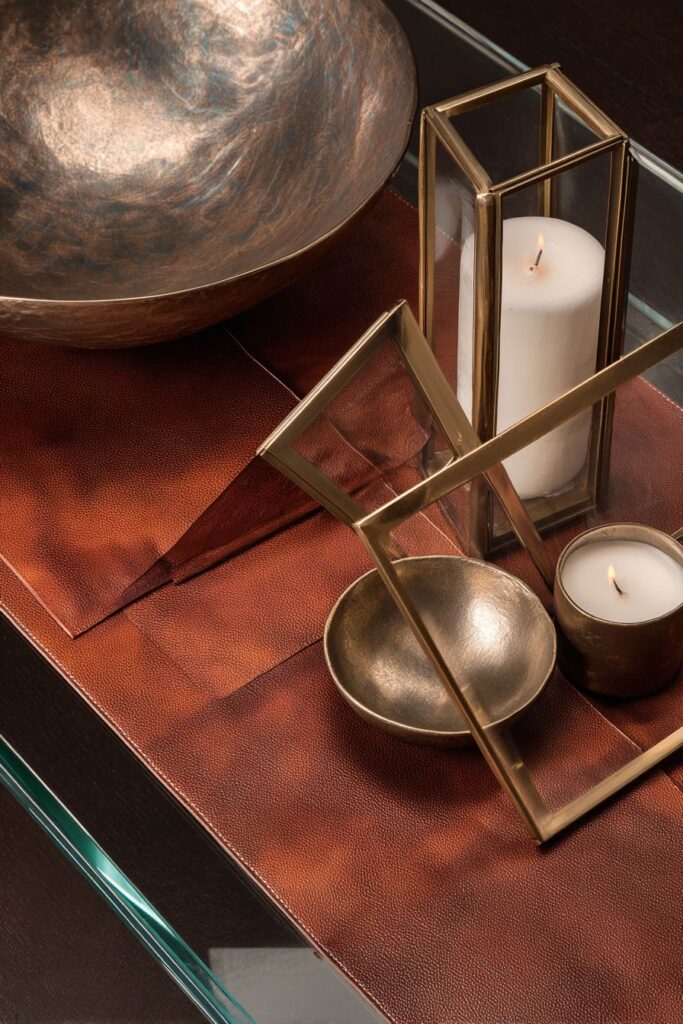
The natural grain patterns and subtle aging in quality leather create visual interest that changes over time, developing character and patina that adds to rather than detracts from its aesthetic appeal. This aging process aligns with contemporary design values that appreciate materials which improve with use rather than requiring constant replacement or maintenance. Against glass table surfaces, leather provides warmth and texture that prevents the space from feeling cold or impersonal.
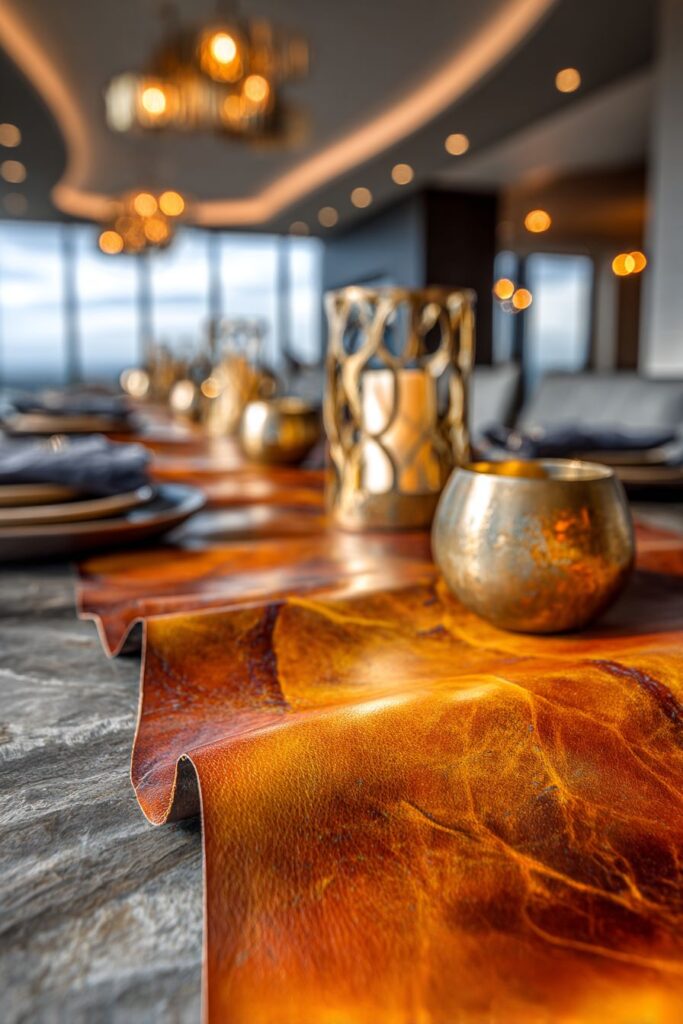
Modern metallic dinnerware and geometric candleholders complete the contemporary styling by reinforcing the theme of material contrast and geometric precision. These elements work together to create table settings that feel current and sophisticated while remaining comfortable for everyday use. The interplay between leather’s organic texture, glass’s pristine clarity, and metal’s industrial precision creates layered visual interest that rewards closer examination.
Recessed lighting provides the ideal illumination for appreciating leather’s subtle surface variations while creating sophisticated ambiance that enhances the overall contemporary aesthetic. This lighting approach avoids harsh shadows while providing adequate illumination for dining, demonstrating how technical lighting solutions can serve both functional and aesthetic purposes in contemporary interiors.
Contemporary design strategies include:
- Embracing unexpected material combinations for visual interest
- Selecting pieces that improve with age and use
- Incorporating geometric elements that reinforce modern aesthetic principles
- Utilizing technical lighting solutions that serve multiple purposes
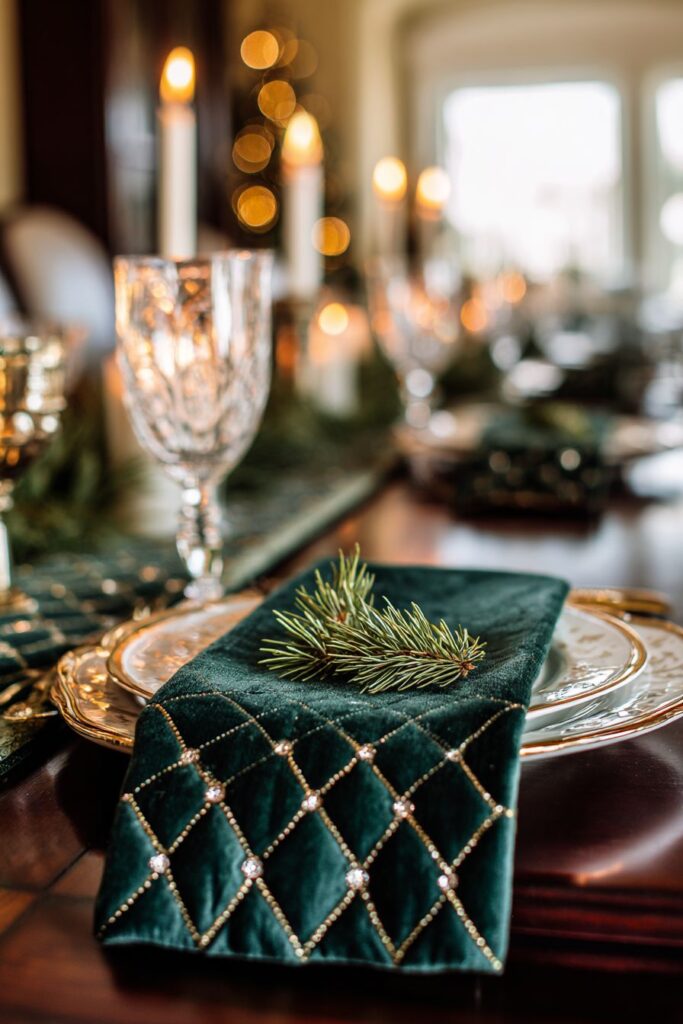
10. Holiday Metallic Festivity
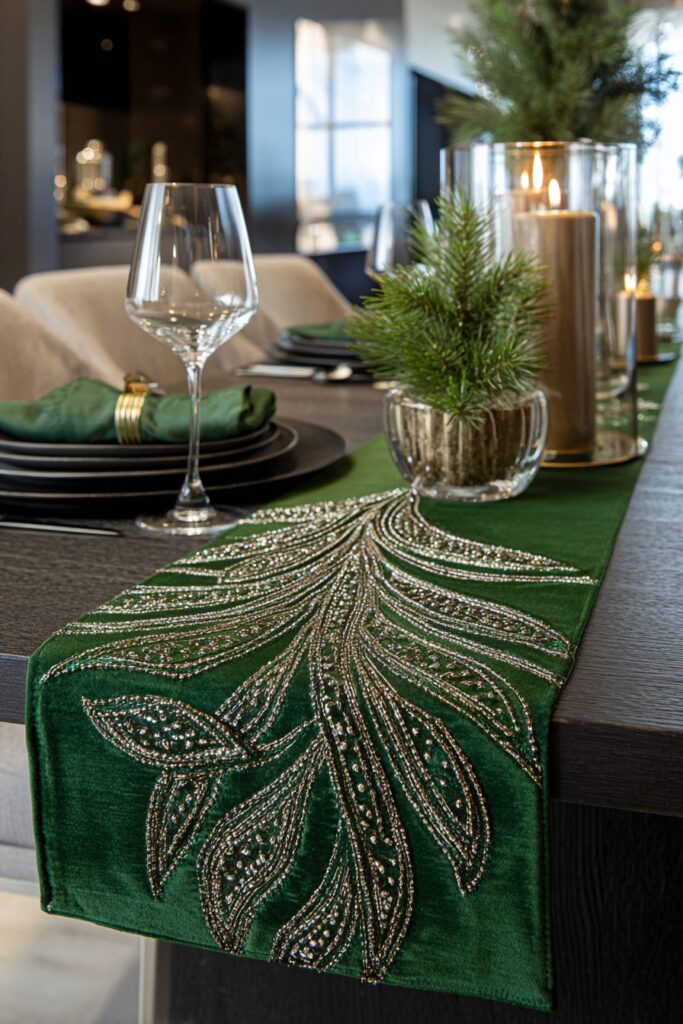
Seasonal celebration reaches its pinnacle with holiday table runners that transform ordinary dining spaces into magical settings worthy of special occasions and cherished memories. Gold and silver metallic threading on deep forest green fabric represents sophisticated approach to holiday decorating that honors tradition while maintaining contemporary design sensibility. This combination creates visual richness and festive atmosphere without relying on cliché or overly commercial holiday imagery.
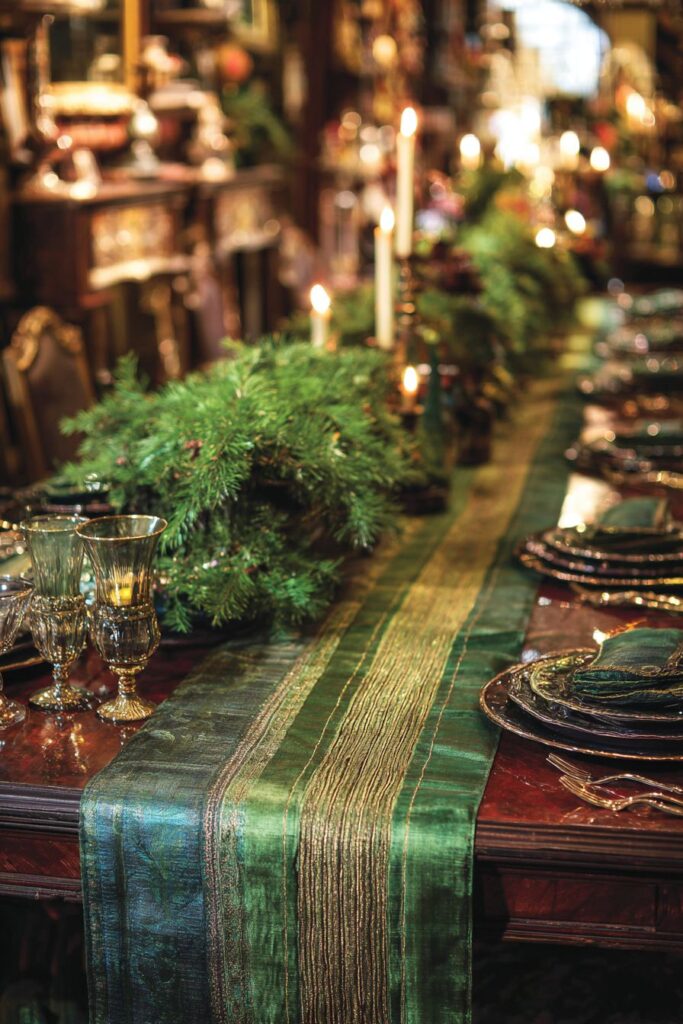
The deep forest green base color provides sophisticated backdrop that allows metallic details to shine without overwhelming the overall design. This color choice demonstrates understanding of how traditional holiday colors can be elevated through thoughtful material selection and execution. When paired with dark cherry dining tables, this creates rich, warm environment that feels both celebratory and elegant—perfect for holiday entertaining that ranges from intimate family gatherings to formal dinner parties.
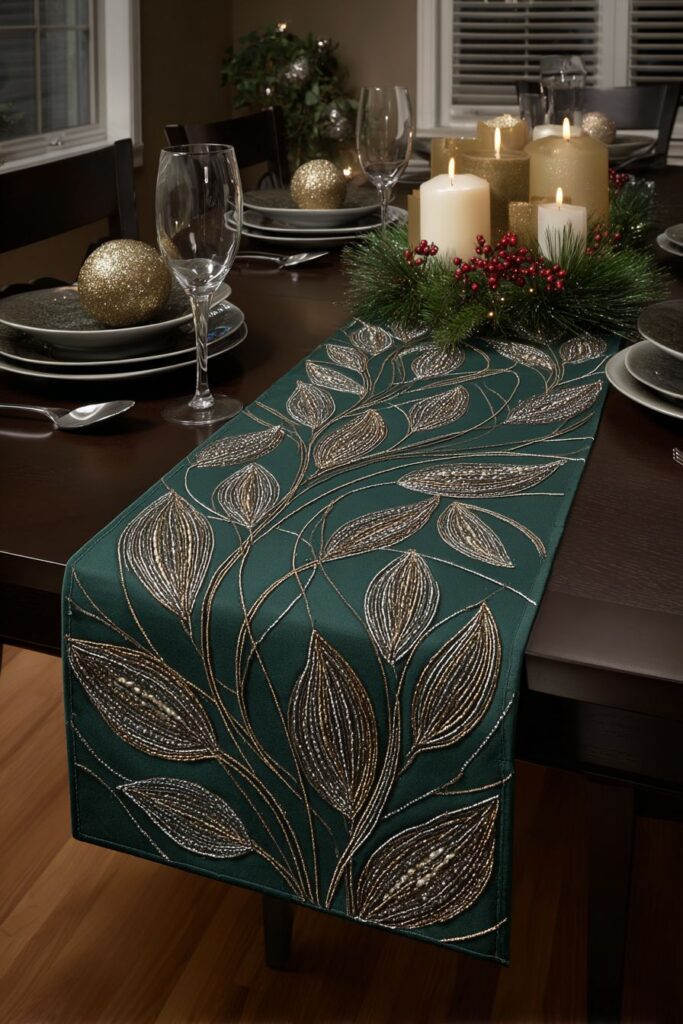
Evergreen sprigs and elegant holiday place settings complete the festive narrative while maintaining sophisticated aesthetic that feels appropriate for adult entertaining. These natural elements bring authentic seasonal fragrance and texture while reinforcing the connection between indoor celebration and outdoor seasonal beauty. The key to successful holiday styling lies in creating abundance without chaos, celebration without kitsch.
Warm candlelight mixed with overhead lighting creates magical ambiance that transforms the ordinary into extraordinary. This layered lighting approach creates depth and warmth while highlighting the metallic details that make this holiday styling so effective. The interplay between natural candlelight and architectural lighting creates dynamic environment that changes throughout the evening, maintaining visual interest and festive atmosphere.
Holiday design excellence includes:
- Incorporating metallic elements that catch and reflect light beautifully
- Balancing traditional colors with sophisticated material choices
- Creating abundance through layering rather than overwhelming quantity
- Utilizing multiple light sources for magical evening ambiance
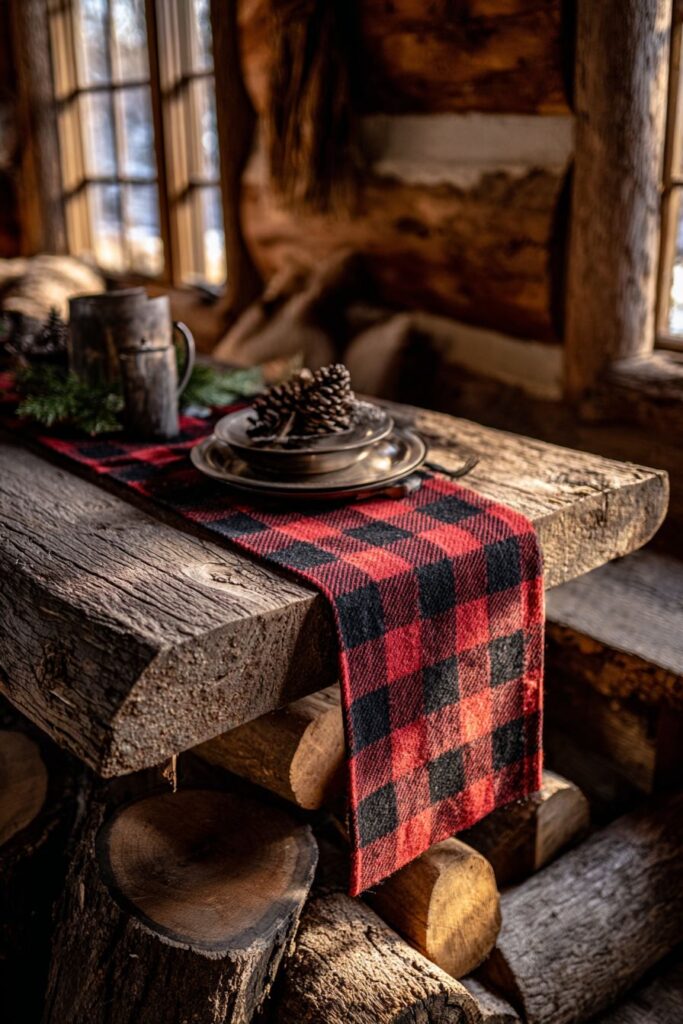
11. Rustic Cabin Buffalo Check
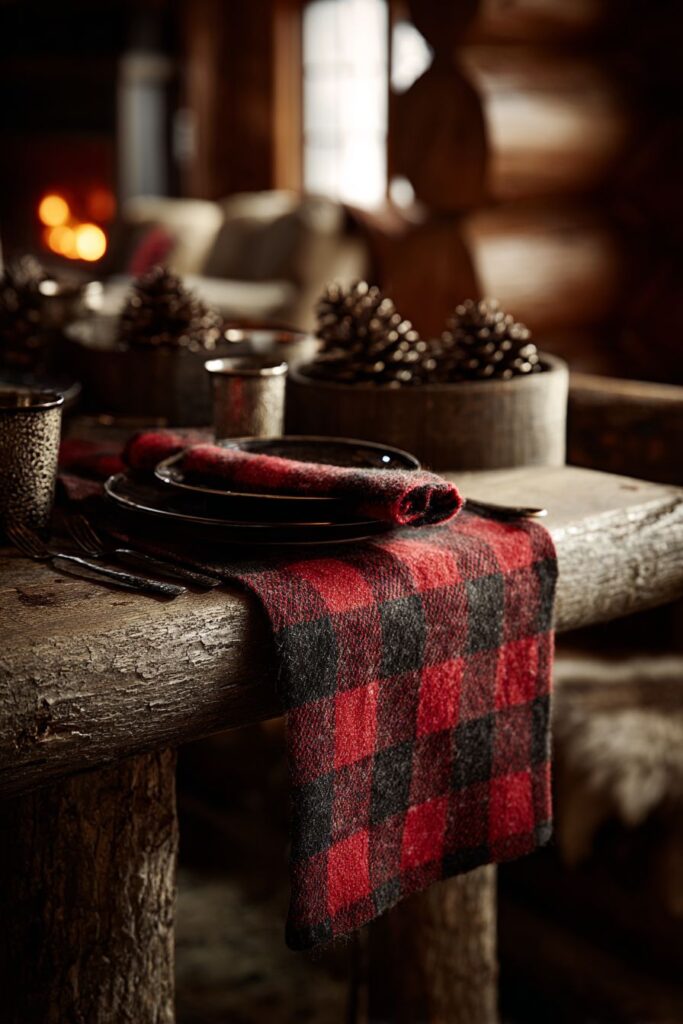
Traditional American cabin aesthetic finds perfect expression in red and black buffalo check wool table runners that celebrate the enduring appeal of classic outdoor-inspired design. This particular pattern combination represents more than simple decoration—it embodies a lifestyle philosophy that values authenticity, natural materials, and connection to outdoor traditions. The wool material adds both visual warmth and practical function, providing insulation and comfort that synthetic materials cannot replicate.
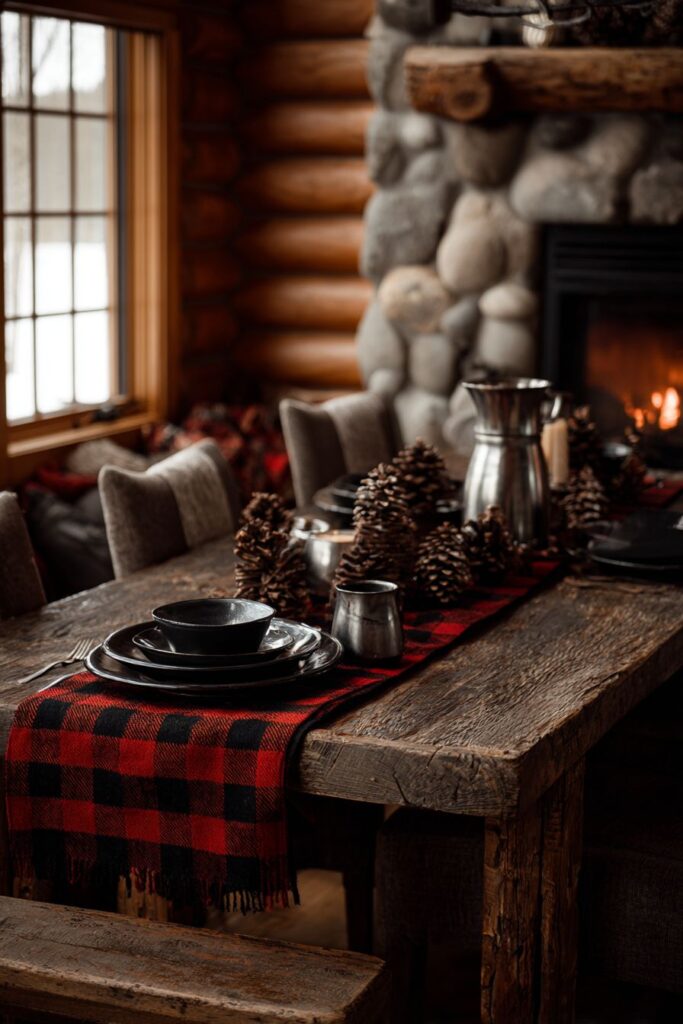
The rough-hewn log dining table serves as ideal foundation for buffalo check styling, creating authentic material relationships that feel naturally evolved rather than consciously designed. This pairing demonstrates understanding of how texture combinations can enhance rather than compete with each other—the wool’s soft warmth provides perfect contrast to the log’s rugged surface while maintaining the overall rustic aesthetic that defines cabin style.
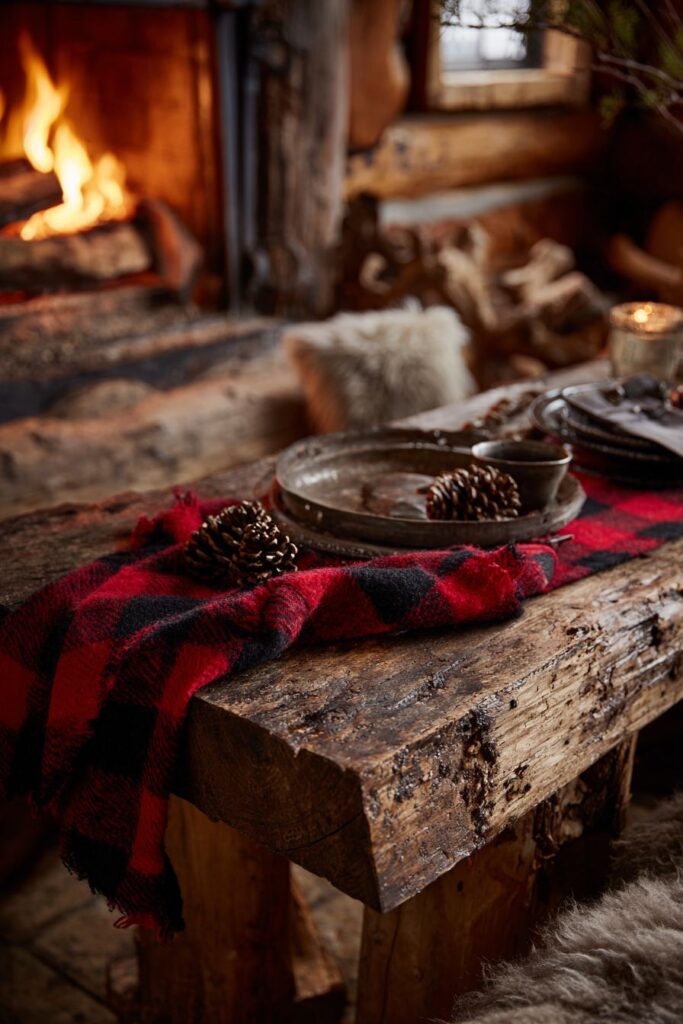
Pewter dishes and pinecone decorations complete the cabin narrative by incorporating materials and elements that speak to outdoor traditions and natural gathering. These choices reflect broader cabin design principles that value authenticity over artifice, natural materials over manufactured alternatives, and functional beauty over purely decorative elements. Each piece contributes to overall story of outdoor living and natural appreciation.
Fireplace light casts warm glows that create intimate atmosphere while emphasizing the wool’s texture and traditional pattern. This natural lighting source aligns perfectly with cabin aesthetic values while providing practical warmth and illumination. The dancing firelight creates constantly changing patterns of light and shadow that add living energy to the cabin interior.
Cabin style fundamentals include:
- Embracing traditional patterns with authentic outdoor significance
- Pairing natural materials that complement rather than compete
- Incorporating functional elements that also provide aesthetic value
- Utilizing natural light sources that enhance authentic atmosphere
12. Mediterranean Hand-Woven Artistry
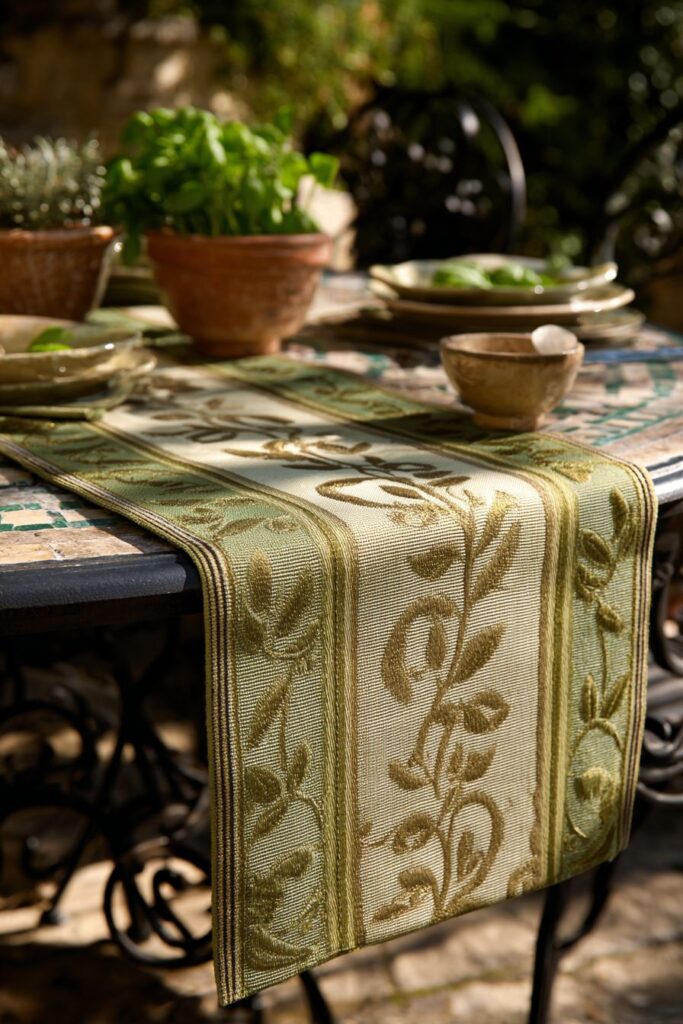
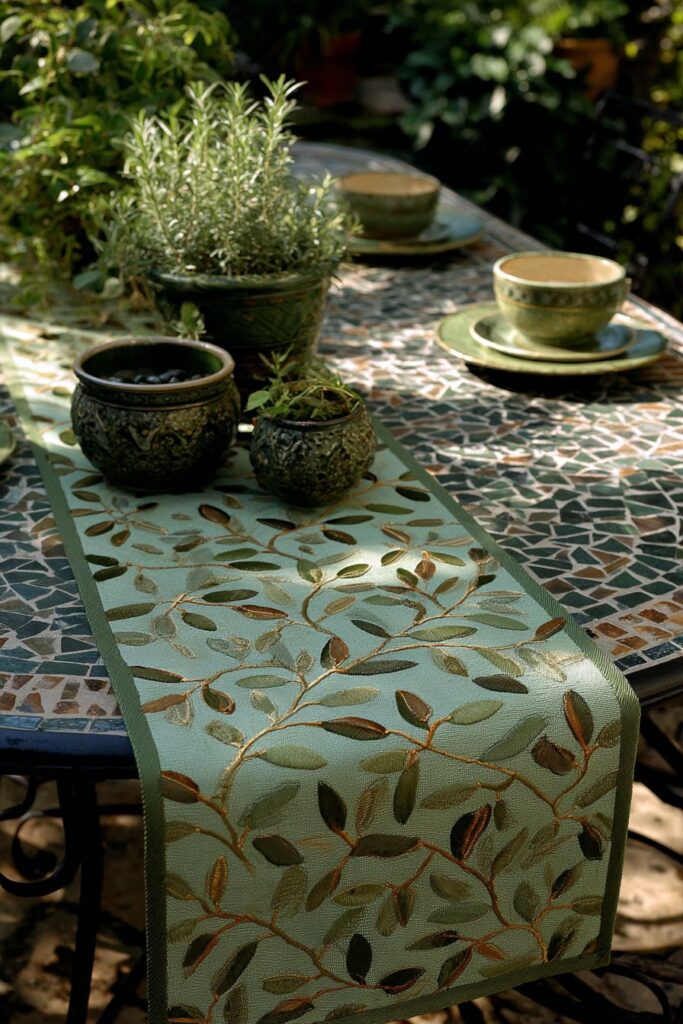
Mediterranean style table runners celebrate the rich textile traditions of olive-growing regions while bringing sophisticated international flair to contemporary dining spaces. Hand-woven runners with olive branch motifs in earthy terracotta and sage represent more than decorative elements—they embody cultural appreciation, artisanal craftsmanship, and the Mediterranean philosophy that celebrates the beauty of natural materials and traditional techniques.
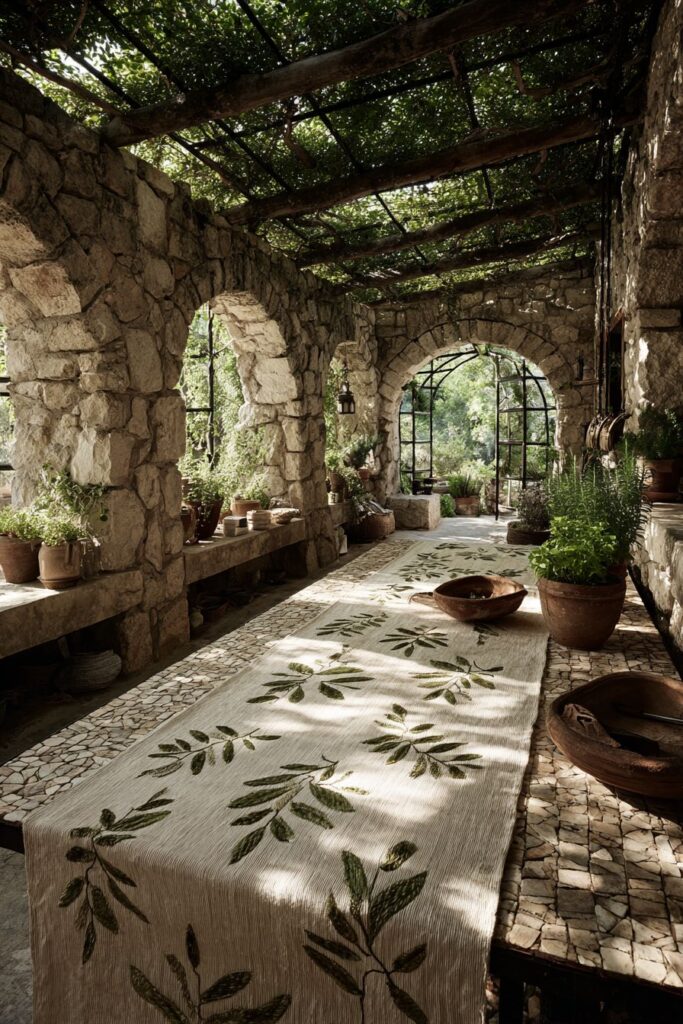
The olive branch motif carries deep cultural significance throughout Mediterranean cultures, representing peace, abundance, and connection to the land. When rendered in earthy terracotta and sage colors, these patterns create sophisticated color relationships that feel both worldly and grounded. The hand-woven construction adds textural richness and authentic character that machine-made alternatives cannot replicate, creating table runners that feel like treasured travel discoveries rather than retail purchases.
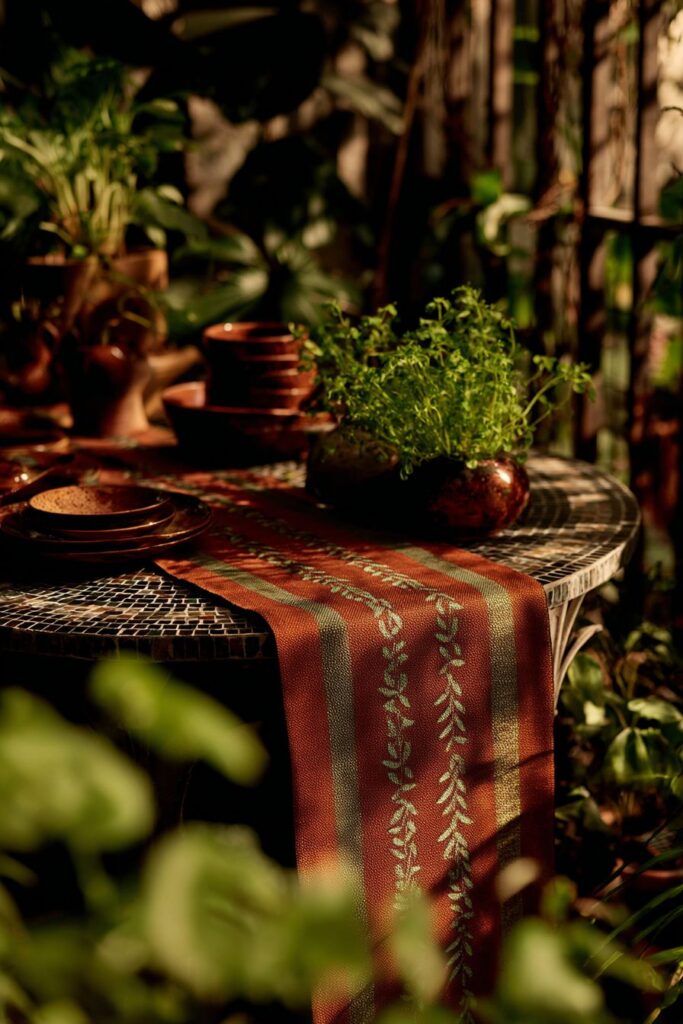
Wrought iron tables with mosaic tops provide ideal foundation for Mediterranean styling, creating material relationships that speak to outdoor living traditions and artisanal craftsmanship. The combination of iron’s industrial strength, mosaic’s artistic beauty, and textile’s soft warmth creates layered aesthetic that reflects Mediterranean design complexity. Ceramic dishes and fresh herbs complete the narrative while serving practical functions that honor the region’s emphasis on fresh, local ingredients.
Dappled sunlight through overhead vines creates natural lighting patterns that change throughout the day, connecting indoor dining spaces with outdoor garden environments. This natural lighting approach reflects Mediterranean lifestyle values that blur boundaries between indoor and outdoor living while celebrating the beauty of natural light and shadow patterns.
Mediterranean design principles include:
- Incorporating textile pieces with authentic cultural significance
- Celebrating artisanal craftsmanship over mass production
- Creating indoor-outdoor connections through natural materials
- Utilizing natural lighting that changes throughout the day
13. Industrial Loft Denim Innovation
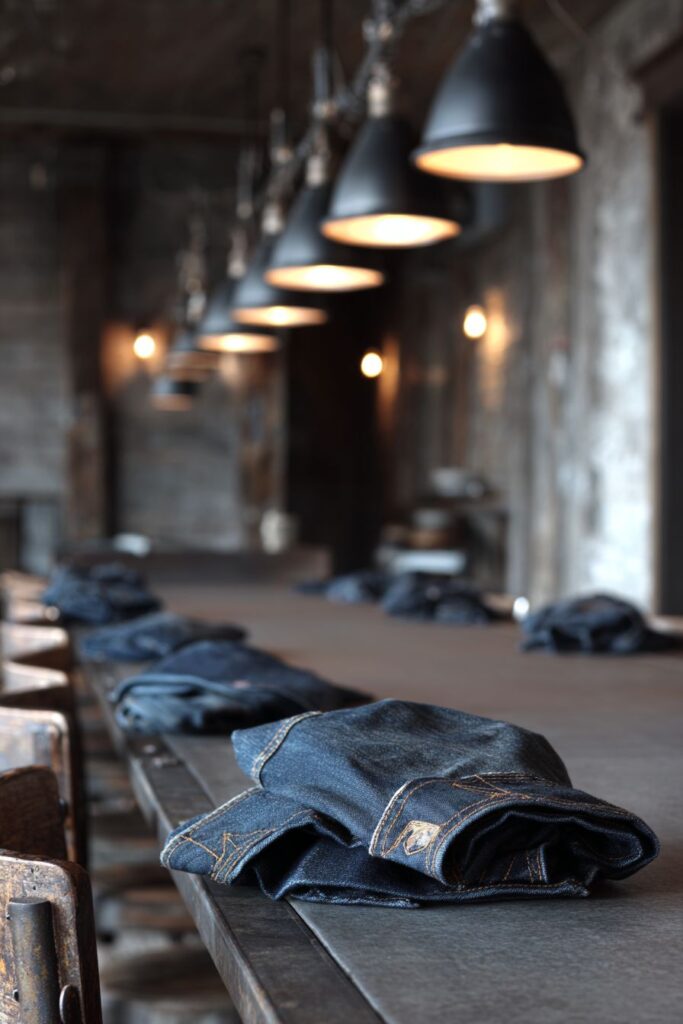
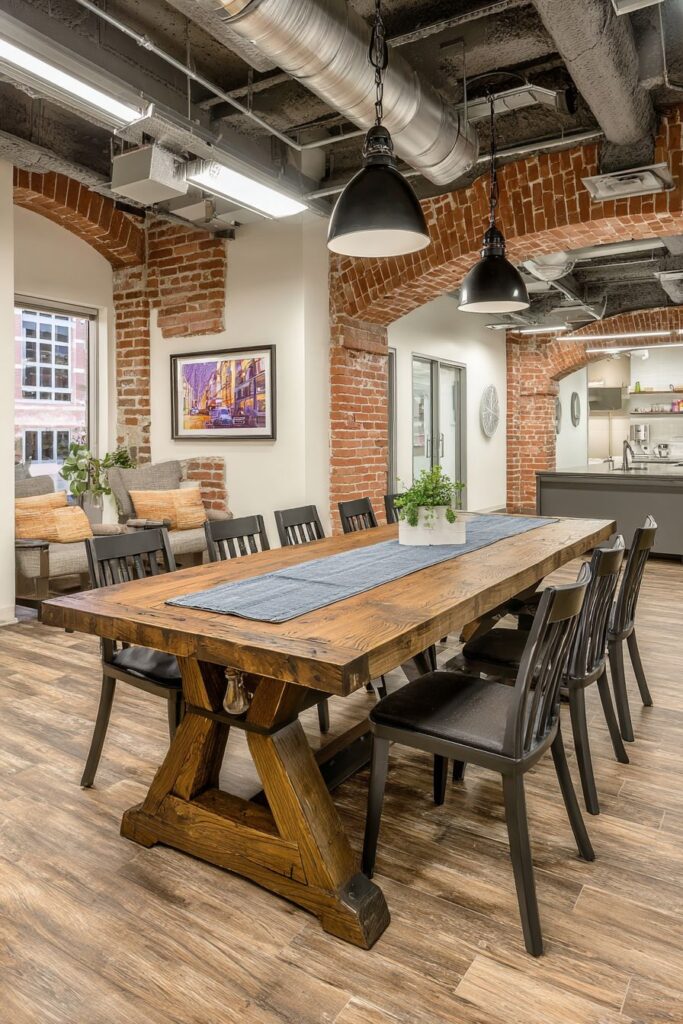
Urban loft design embraces unexpected materials and authentic wear patterns through raw denim table runners that challenge conventional decorating wisdom while serving contemporary aesthetic needs. This approach represents the evolution of industrial design from purely utilitarian to consciously stylistic—maintaining the authenticity and edge that defines loft living while creating comfortable, sophisticated dining environments.
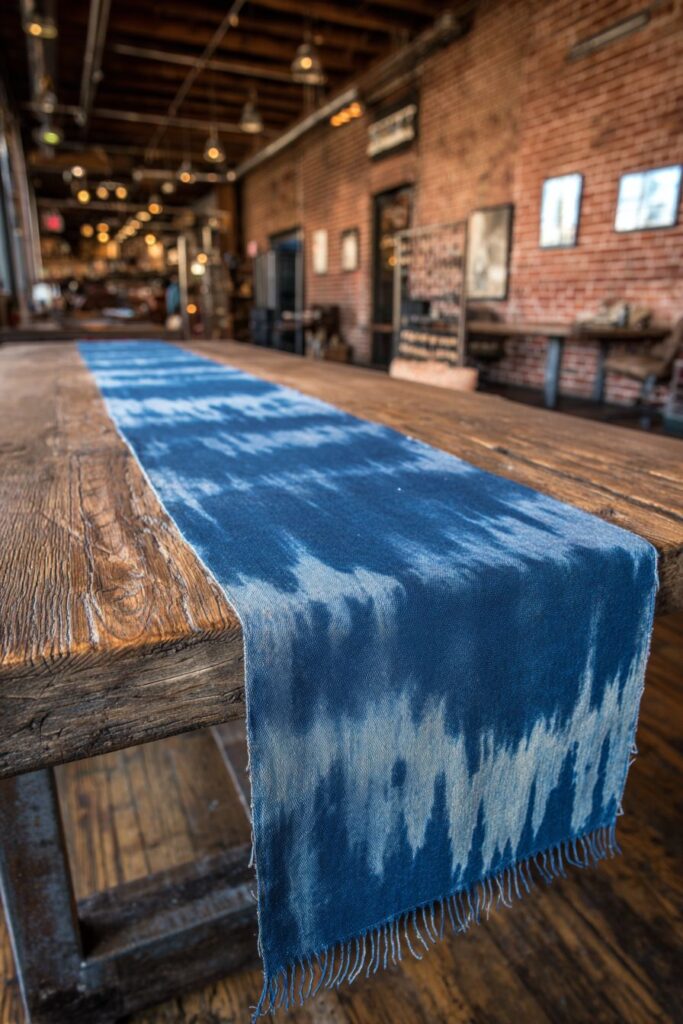
The authentic wear patterns and natural fading in quality denim create visual interest that tells stories of use and time rather than artificial aging processes. This material choice aligns with industrial design values that appreciate authentic patina and the beauty of materials that improve through use. When positioned on reclaimed steel and wood dining tables, denim creates material relationships that celebrate both industrial heritage and contemporary comfort.
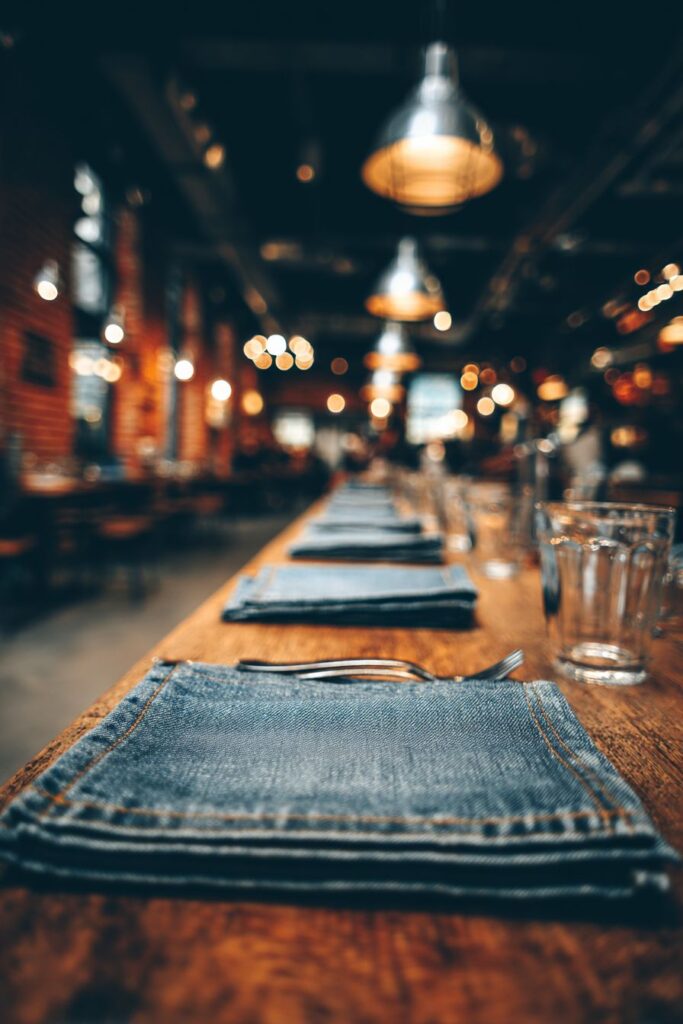
Exposed brick walls and metal fixtures provide ideal backdrop for denim styling, creating cohesive industrial aesthetic that feels authentically evolved rather than recently assembled. These architectural elements work together to create environments that honor industrial heritage while meeting contemporary living needs. The key to successful industrial styling lies in balancing authentic materials with contemporary comfort and functionality.
Factory-style pendant lighting highlights denim’s casual texture while providing practical illumination that serves both aesthetic and functional purposes. This lighting approach reinforces industrial themes while creating atmosphere that feels appropriate for contemporary urban living. The interplay between industrial materials and comfortable textiles creates layered design that appeals to both aesthetic and practical sensibilities.
Industrial loft essentials include:
- Embracing authentic wear patterns and natural aging
- Creating material relationships that honor industrial heritage
- Balancing utilitarian elements with contemporary comfort
- Utilizing industrial lighting that serves multiple purposes
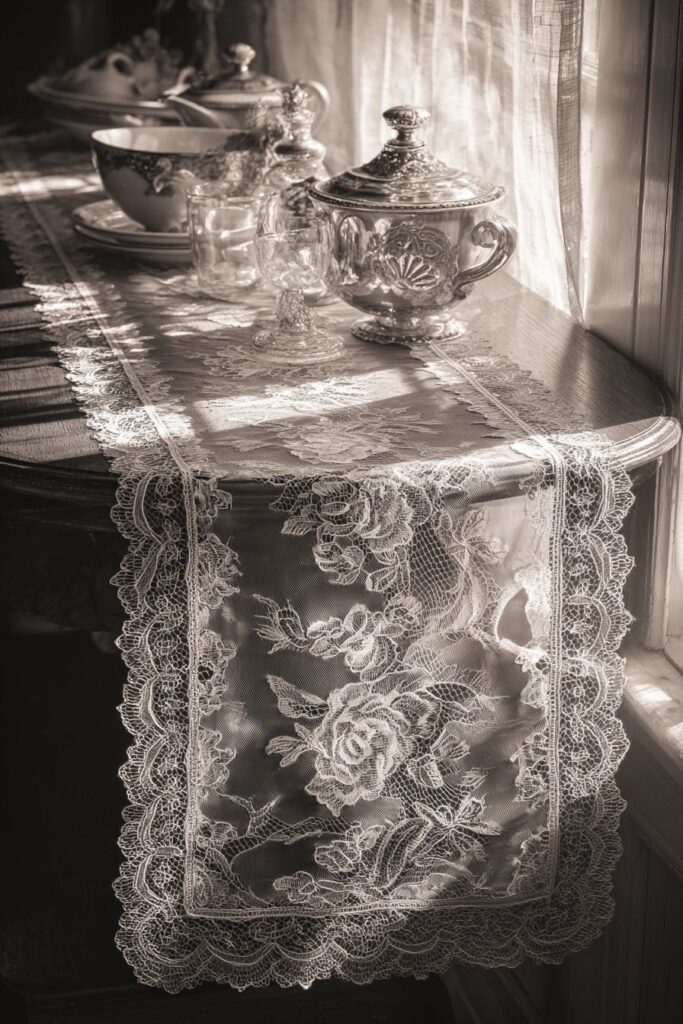
14. Vintage Lace Delicate Artistry
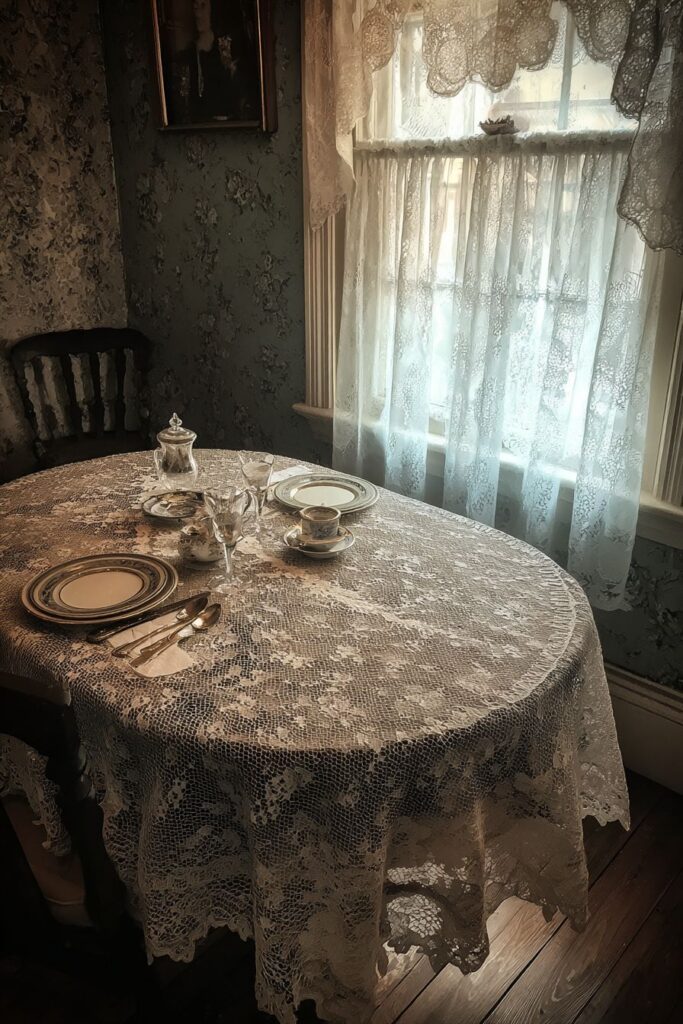
Antique textile traditions find elegant expression in delicate lace table runners that transform dining spaces into celebrations of historical craftsmanship and timeless beauty. Intricate floral patterns in antique lace represent more than decoration—they embody appreciation for traditional needlework arts, attention to detail, and the understanding that some aesthetic achievements improve rather than diminish with age.
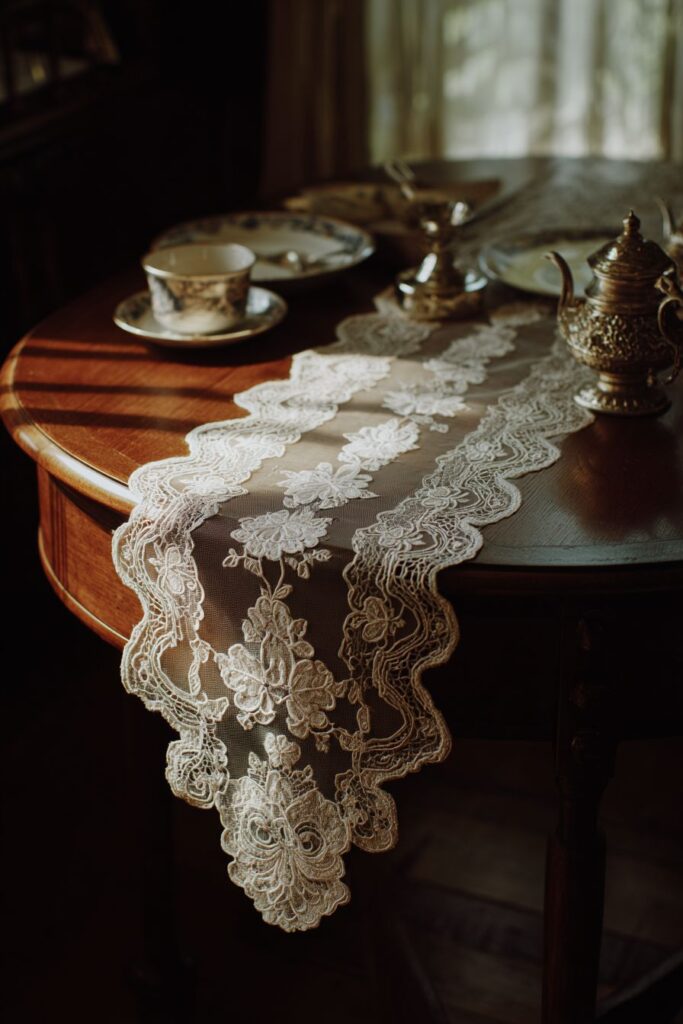
The Victorian-style oval table provides perfect foundation for lace display, creating historical continuity that honors both the textile’s origins and its contemporary applications. This pairing demonstrates sophisticated understanding of how furniture and textiles can work together to create cohesive historical narratives while serving modern functional needs. The oval shape allows the lace patterns to drape naturally while showcasing the intricate details that make antique lace so precious.
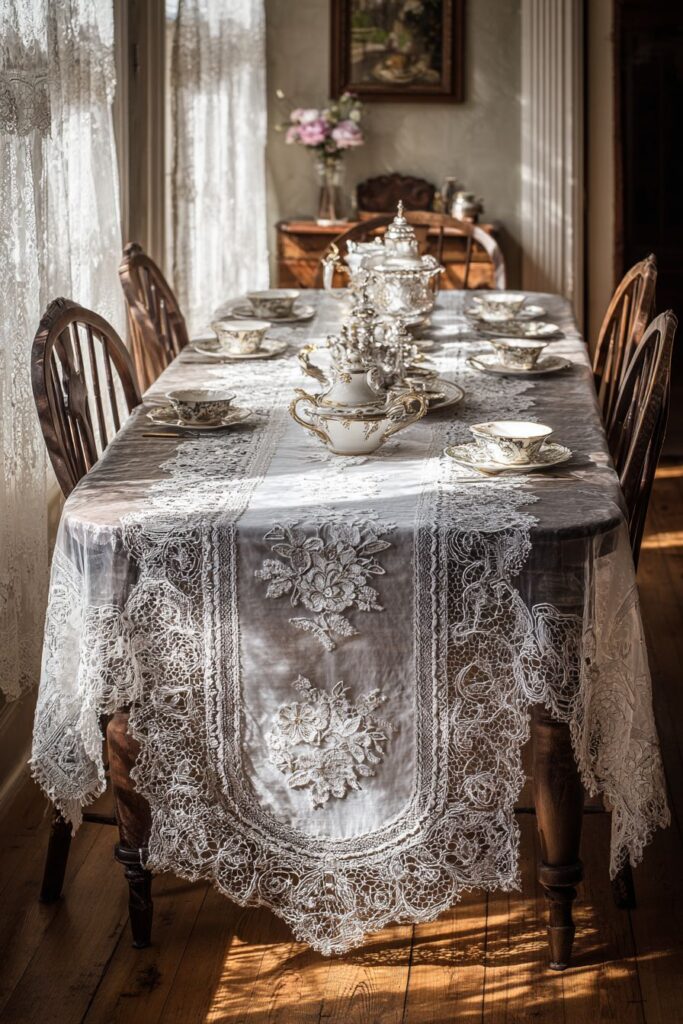
Fine china and silver serving pieces complete the vintage narrative while maintaining the level of formality that antique lace deserves. These material choices create elegant table settings that feel appropriate for special occasions while honoring the craftsmanship traditions that created such beautiful textile art. Each element contributes to overall sense of refined elegance and historical appreciation.
Soft window light filtering through sheer curtains provides ideal illumination for appreciating lace’s delicate details while creating romantic ambiance that enhances the overall vintage aesthetic. This natural lighting approach reveals the intricate shadow patterns that lace creates while avoiding harsh illumination that might diminish its delicate beauty.
Vintage elegance principles include:
- Celebrating authentic historical craftsmanship and traditional techniques
- Creating appropriate settings that honor textile artistry
- Incorporating complementary materials that maintain historical continuity
- Utilizing gentle lighting that reveals rather than overwhelms delicate details
15. Zen Bamboo Fiber Serenity
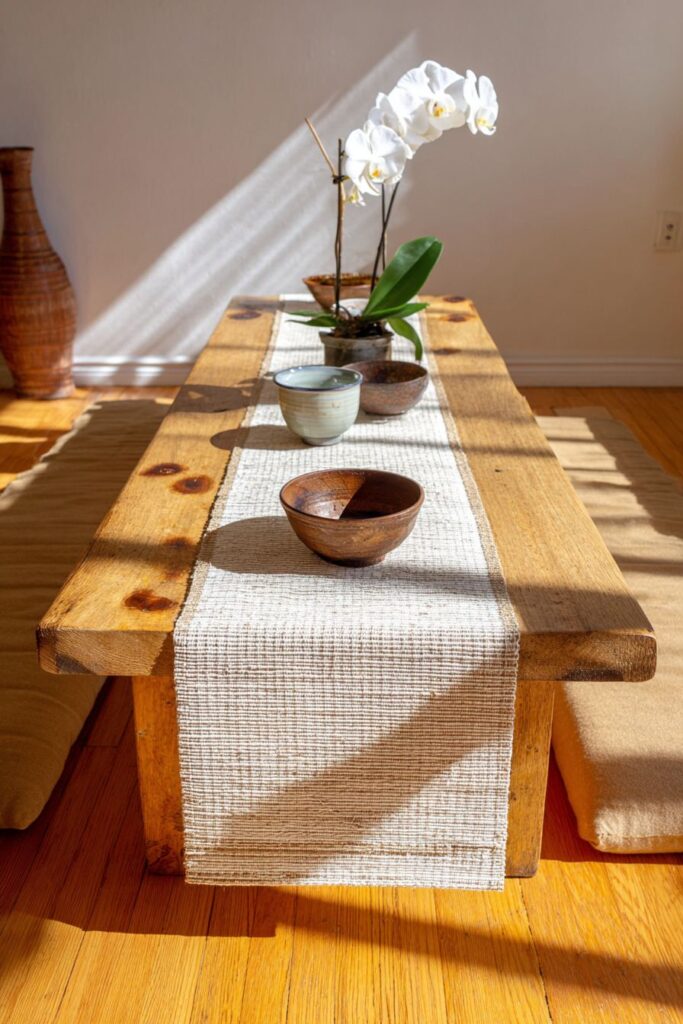
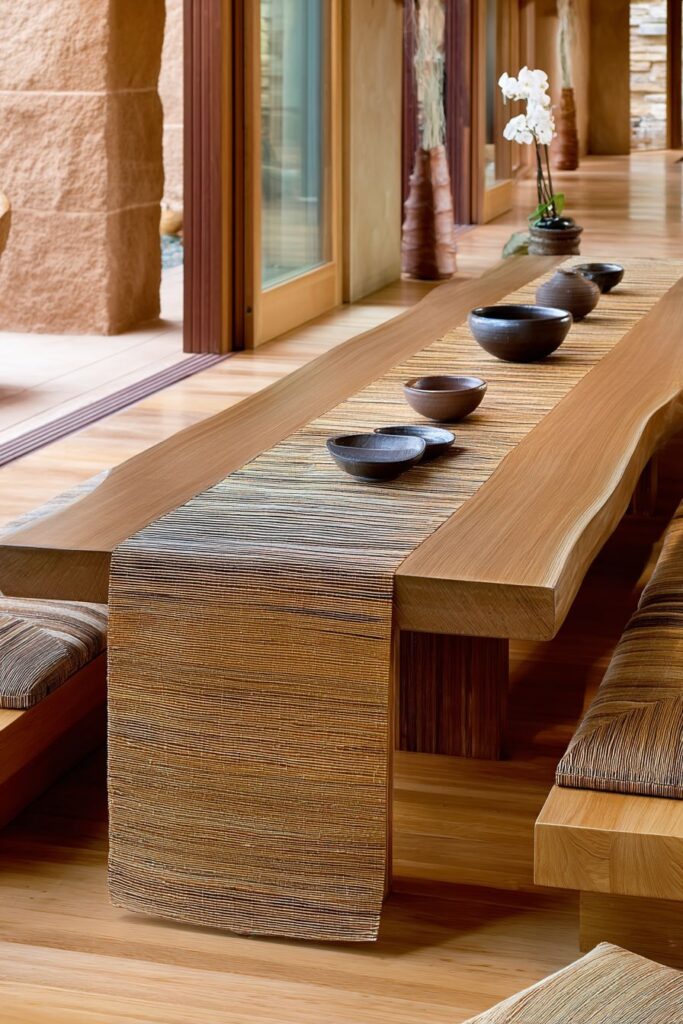
Eastern philosophy meets contemporary interior design through bamboo fiber table runners that create dining spaces dedicated to mindfulness, simplicity, and appreciation of natural materials. Natural beige bamboo runners positioned on low Japanese-style tables represent more than aesthetic choices—they embody philosophical approaches to living that value simplicity, sustainability, and connection to natural world.
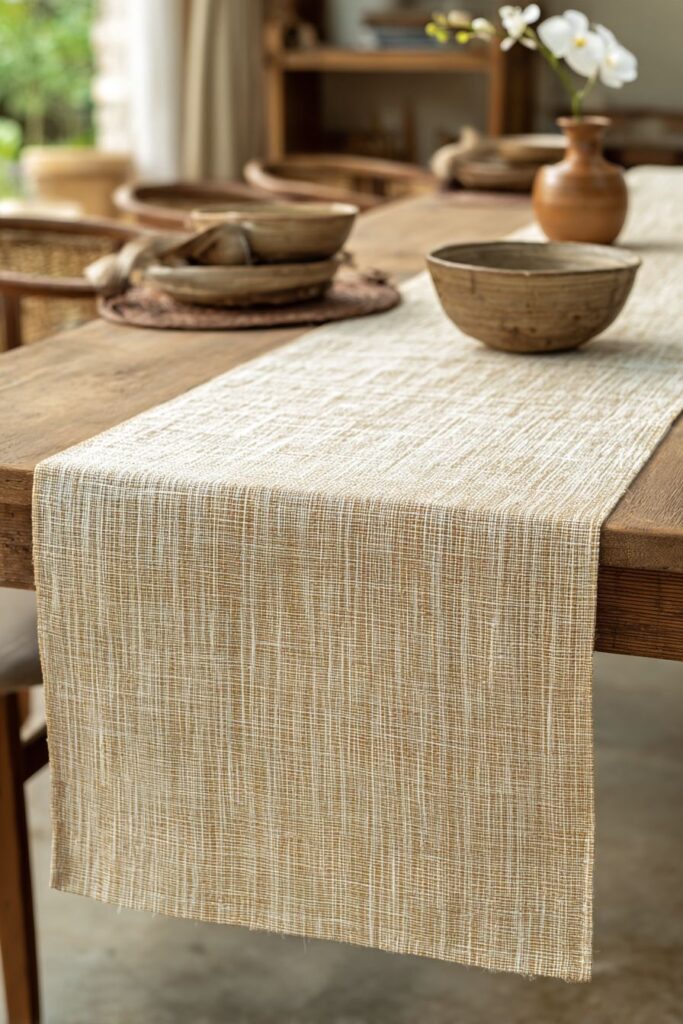
The subtle bamboo weave patterns create visual interest through texture rather than color or elaborate decoration, demonstrating how sophisticated design can emerge from material appreciation rather than ornate embellishment. This approach aligns with Zen principles that find beauty in simplicity while serving practical needs through thoughtful material selection. The natural beige color palette creates calming environment that encourages mindful dining experiences.
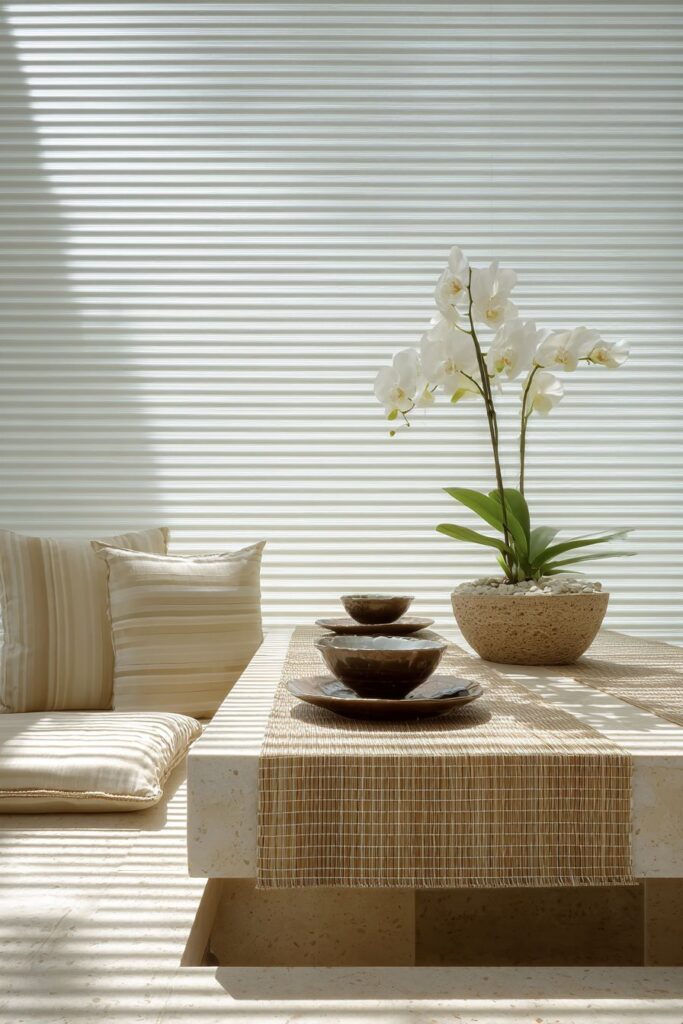
Ceramic bowls and single orchid centerpieces complete the Zen narrative while maintaining the restraint and purposefulness that defines this aesthetic approach. These choices reflect broader Eastern design principles that value quality over quantity, mindfulness over excess, and the beauty of single perfect elements rather than abundant decoration. Each piece serves both functional and aesthetic purposes without redundancy or excess.
Diffused natural lighting creates serene shadows that emphasize organic textures while maintaining the peaceful atmosphere that makes Zen-inspired dining so appealing. This lighting approach avoids artificial enhancement in favor of celebrating natural conditions and authentic material characteristics that support mindful living practices.
Zen design fundamentals include:
- Selecting natural materials that support mindful living practices
- Emphasizing texture and quality over color and quantity
- Creating spaces that encourage peaceful, contemplative dining
- Utilizing natural lighting that supports serene atmosphere
16. Mexican Otomi Cultural Celebration
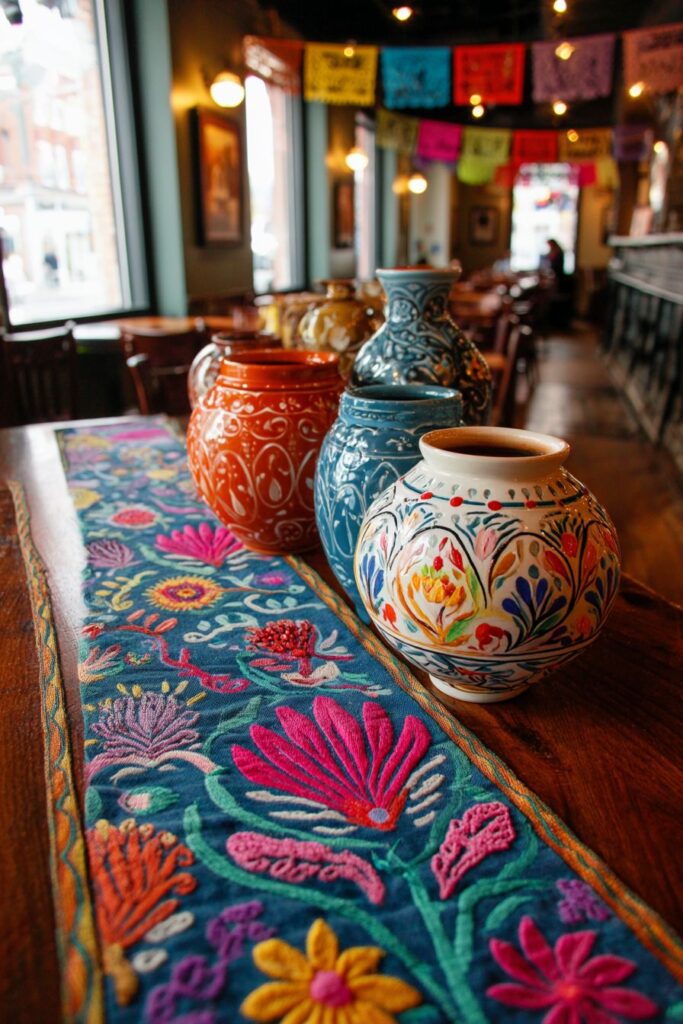
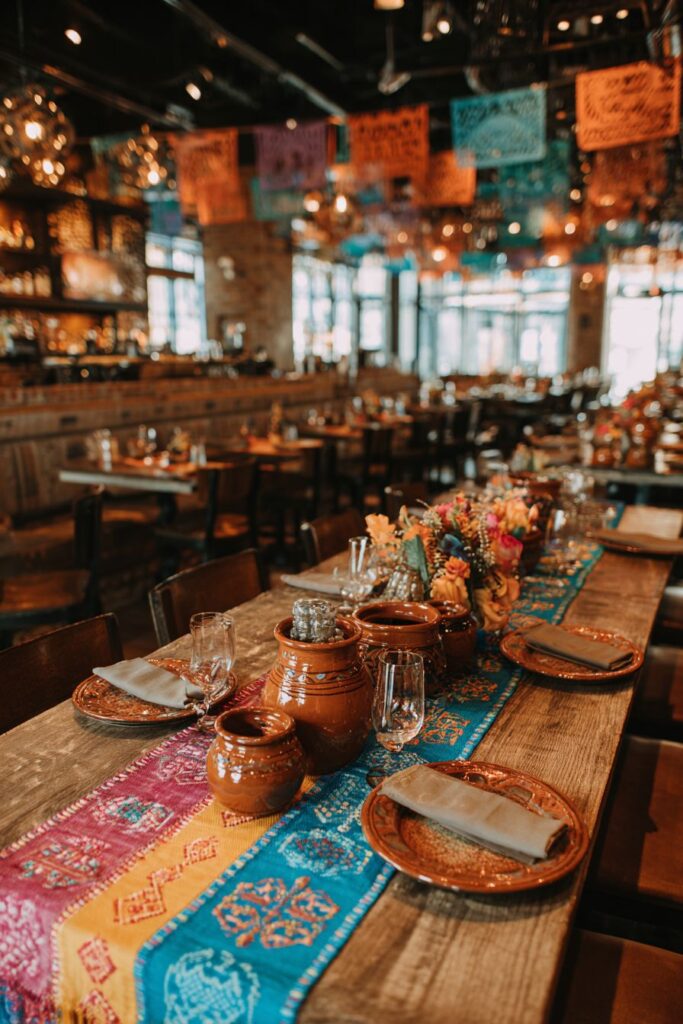
Traditional Mexican textile artistry finds vibrant expression in embroidered table runners featuring authentic Otomi patterns that celebrate indigenous craftsmanship while bringing cultural richness to contemporary dining spaces. Bright blues, pinks, and yellows in traditional Otomi embroidery represent more than decorative elements—they embody cultural appreciation, support for artisanal communities, and the understanding that authentic cultural textiles carry stories and significance beyond their aesthetic appeal.
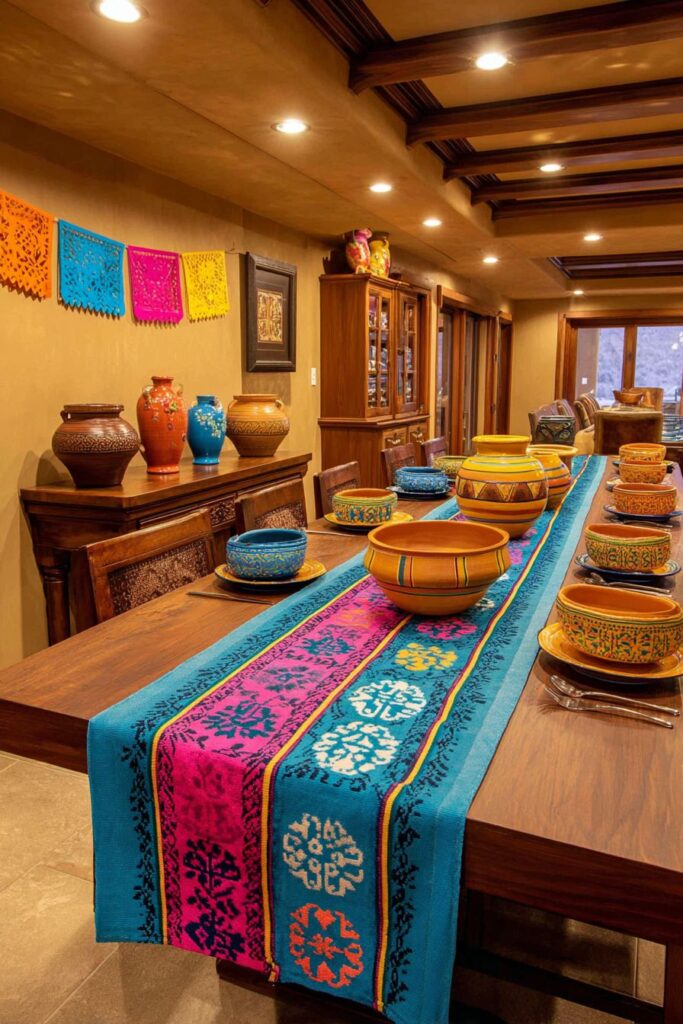
The intricate hand-stitched details in Otomi embroidery demonstrate traditional needlework techniques that have been passed down through generations of indigenous artisans. Each pattern and color choice carries cultural meaning while creating visual richness that rewards close examination. When displayed on painted wooden tables, these runners create cultural narratives that honor Mexican artistic traditions while serving contemporary dining needs.
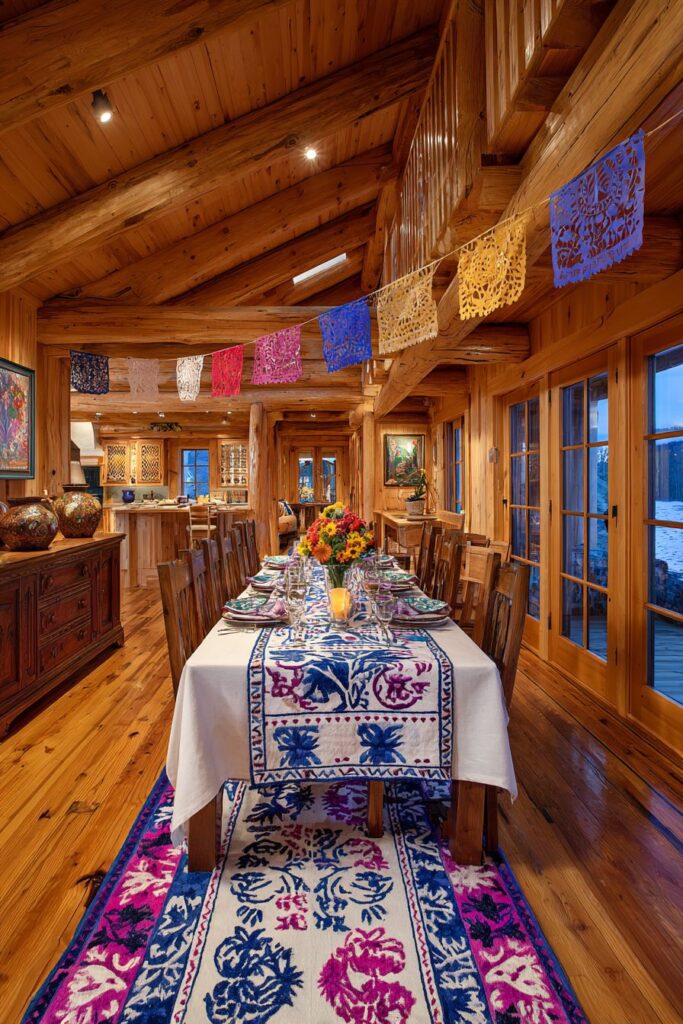
Handcrafted pottery and papel picado decorations complete the Mexican styling while maintaining authenticity that feels respectful rather than appropriative. These elements work together to create celebratory atmosphere that honors Mexican cultural traditions while creating welcoming environment for contemporary dining and entertaining. The key to successful cultural styling lies in supporting authentic artisans while learning about and respecting cultural significance.
Warm overhead lighting showcases the intricate embroidery details while creating festive atmosphere that enhances the overall cultural celebration. This lighting approach brings out the vibrant colors while highlighting the handcrafted quality that makes authentic cultural textiles so valuable and meaningful.
Cultural celebration principles include:
- Supporting authentic artisanal communities and traditional techniques
- Learning about and respecting cultural significance behind decorative elements
- Creating respectful rather than appropriative cultural styling
- Highlighting handcrafted quality through appropriate lighting and display
17. Contemporary Concrete Innovation
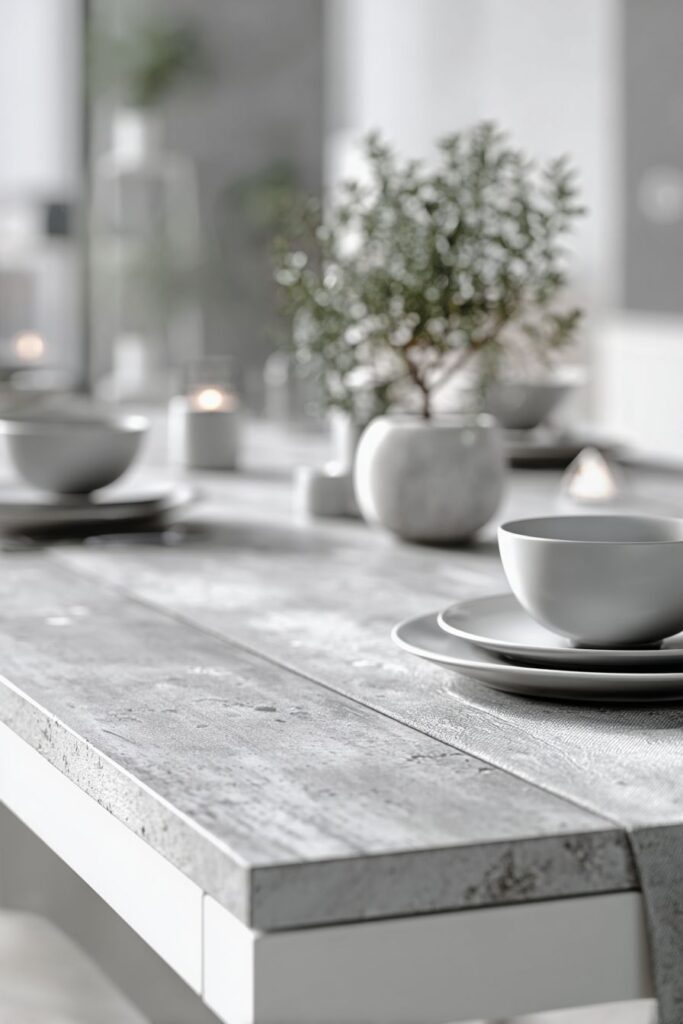
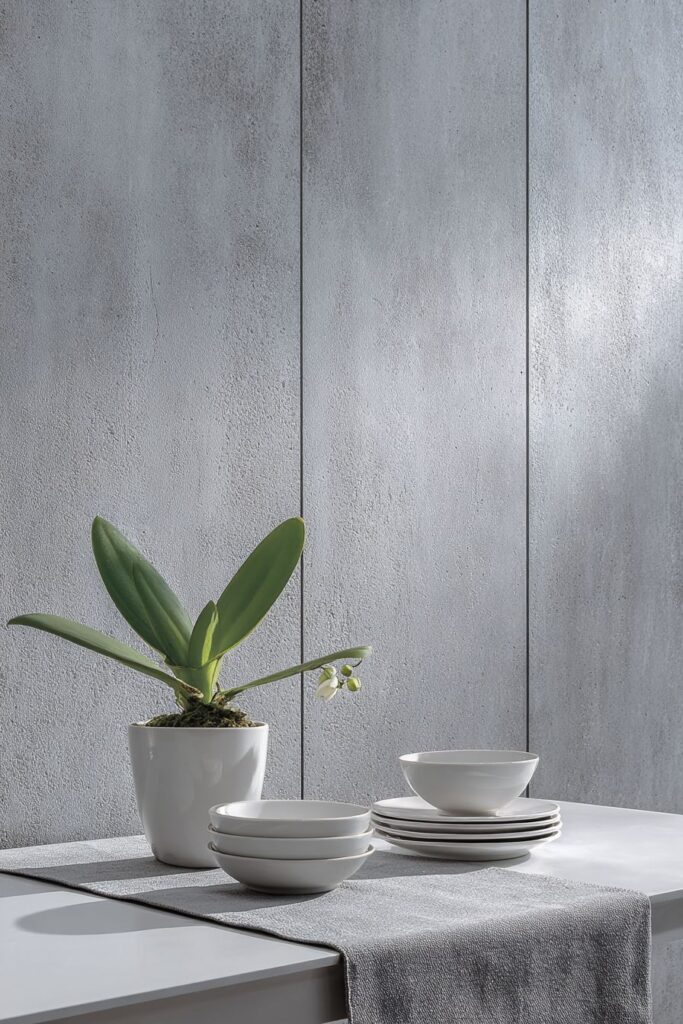
Material innovation in contemporary design reaches new heights with concrete-textured table runners that challenge traditional expectations while serving modern aesthetic and functional needs. Soft grey runners that mimic industrial concrete surfaces while maintaining fabric flexibility represent the cutting edge of contemporary design thinking—the ability to recreate industrial aesthetics in comfortable, functional forms that serve residential rather than commercial applications.
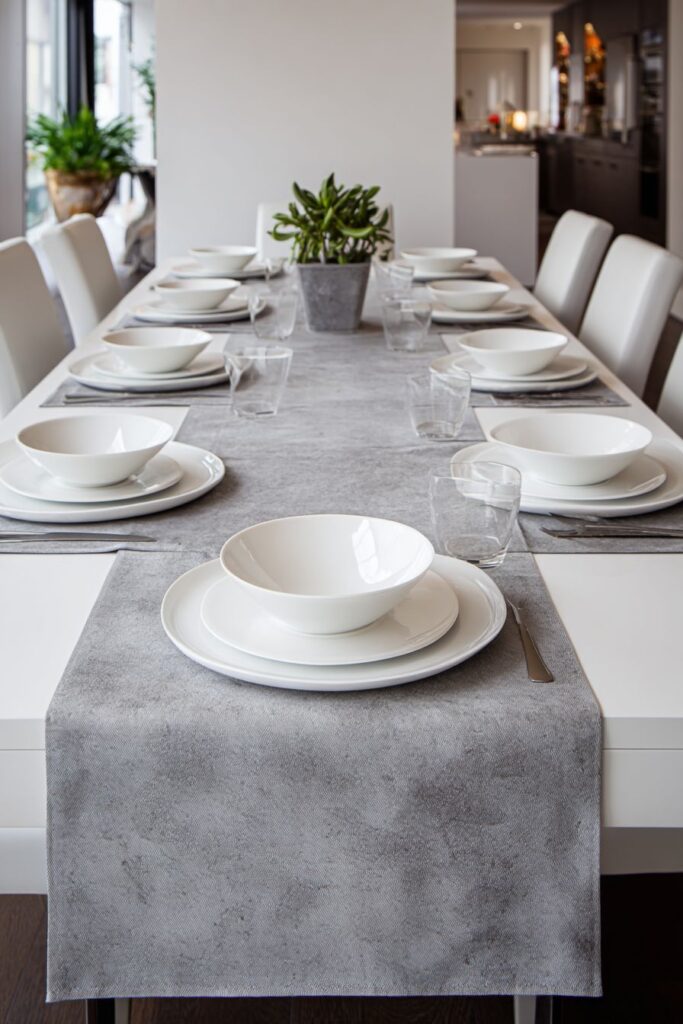
The unique texture contrast between concrete-inspired fabric and sleek white dining tables creates visual tension that keeps contemporary spaces interesting while maintaining the clean lines and minimal aesthetic that defines modern design. This material innovation demonstrates how contemporary designers continue to push boundaries by finding new ways to incorporate industrial references into comfortable living environments.
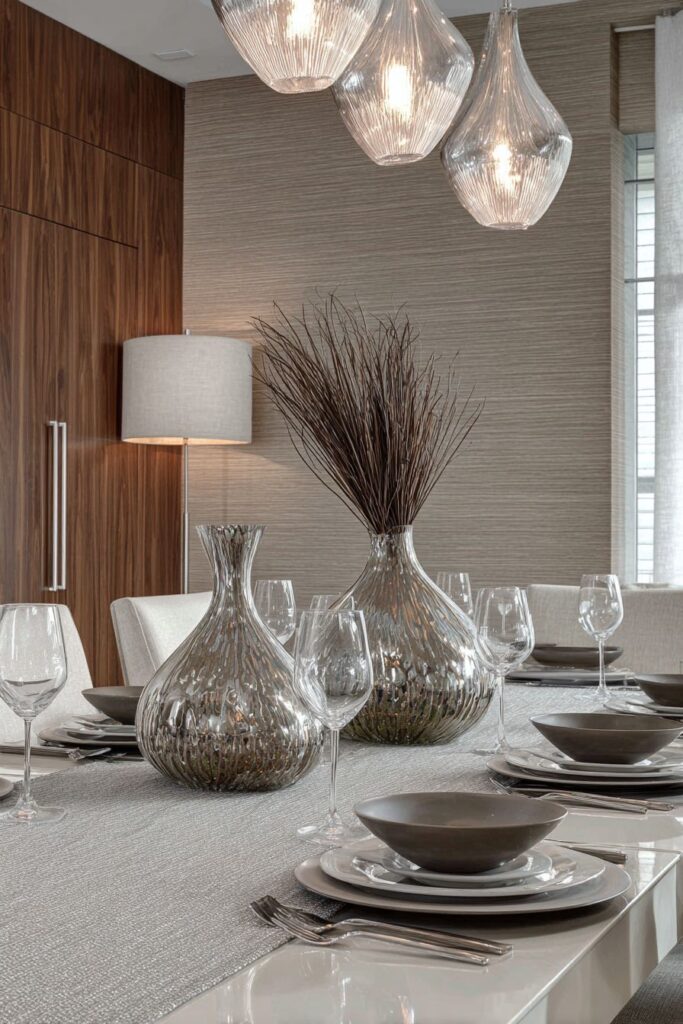
Modernist dinnerware and single architectural plants complete the contemporary narrative while maintaining the restraint and purposefulness that defines this aesthetic approach. These choices reflect broader contemporary design principles that value innovation over tradition, material experimentation over conventional approaches, and the beauty of unexpected combinations rather than predictable pairings.
Clean LED lighting emphasizes the texture contrast while providing practical illumination that serves both aesthetic and functional purposes. This technical lighting approach reflects contemporary values that appreciate precision and innovation while creating environments that feel both sophisticated and comfortable for everyday living.
Contemporary innovation includes:
- Embracing material innovation that challenges traditional expectations
- Creating texture contrasts that maintain visual interest
- Incorporating technical solutions that serve multiple purposes
- Balancing industrial references with residential comfort
18. French Country Toile Romance
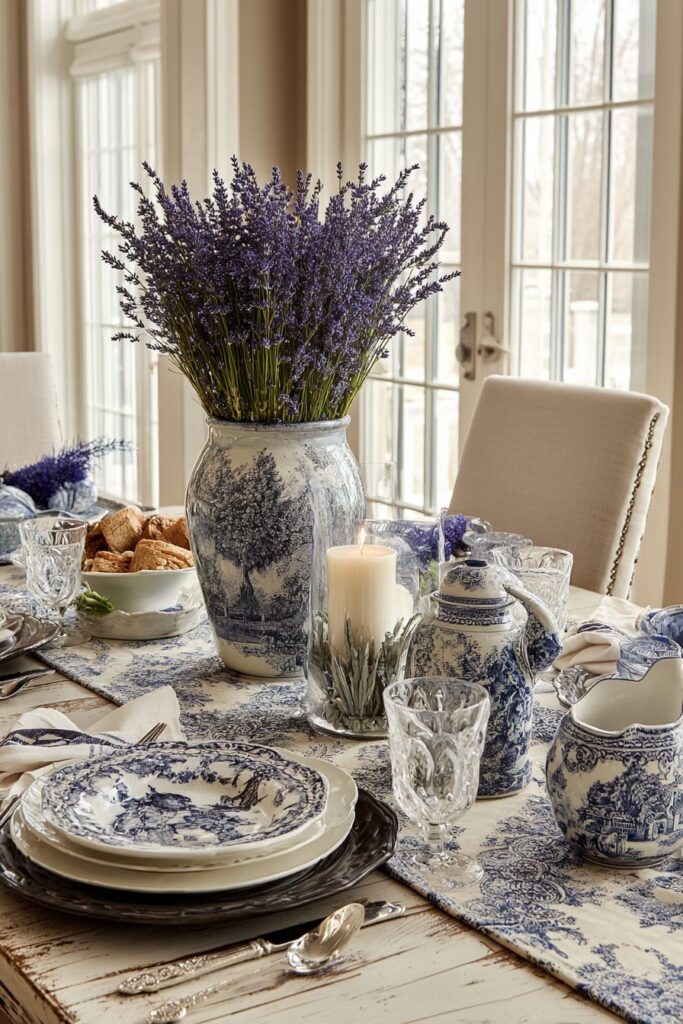
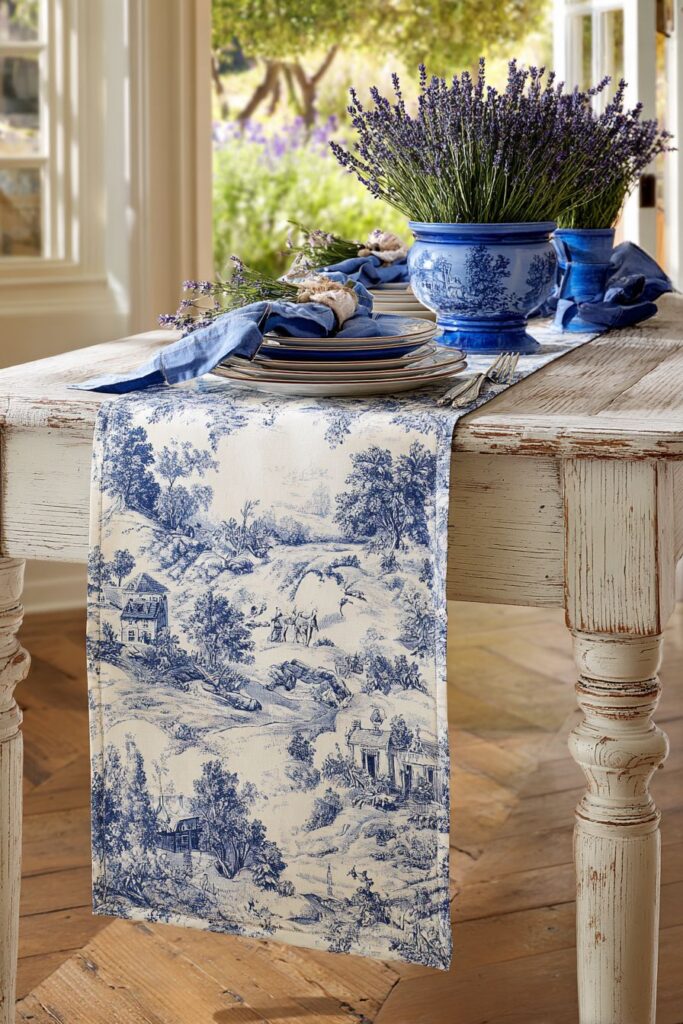
Classical French textile traditions find elegant expression in toile-patterned table runners that transform dining spaces into celebrations of pastoral beauty and timeless sophistication. Classic blue and cream toile featuring traditional pastoral scenes represents more than decorative choice—it embodies appreciation for historical textile arts, romantic aesthetic sensibilities, and the French approach to interior design that values both beauty and comfort.
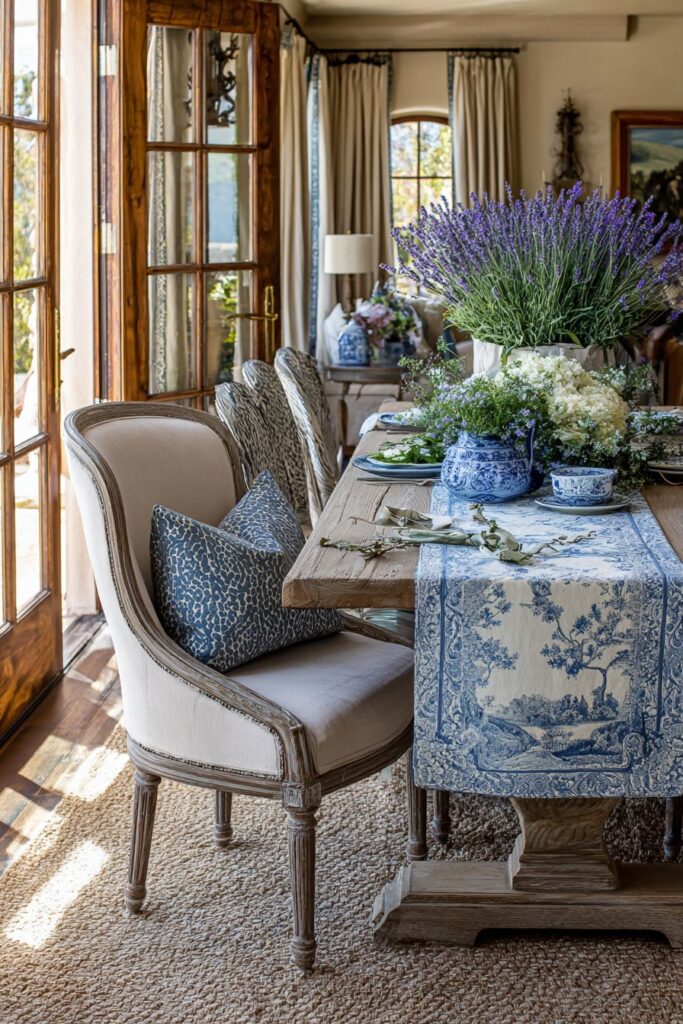
The traditional pastoral scenes depicted in quality toile patterns tell stories of French countryside life while creating visual interest that rewards close examination. When rendered in classic blue and cream color combinations, these patterns create sophisticated color relationships that feel both historical and timelessly elegant. The distressed white dining table provides perfect backdrop that allows the toile patterns to shine while reinforcing French country aesthetic values.
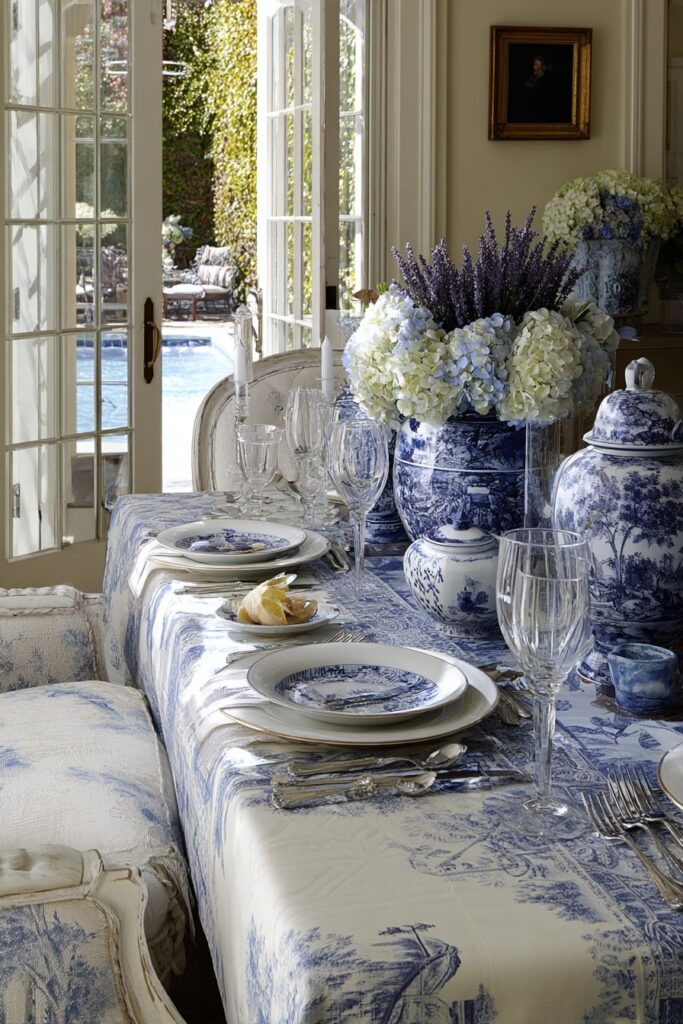
Blue transferware and fresh lavender centerpieces complete the French country narrative while serving practical functions that honor the style’s emphasis on beautiful everyday living. These elements work together to create dining environments that feel both sophisticated and comfortable—perfect for entertaining that ranges from casual family meals to more formal dinner parties.
Soft natural lighting from French doors creates romantic ambiance while showcasing the pattern details that make quality toile so appealing. This natural lighting approach reflects French design values that blur boundaries between indoor and outdoor living while celebrating the beauty of natural light and authentic materials.
French country principles include:
- Celebrating historical textile patterns with authentic cultural significance
- Creating romantic atmosphere through thoughtful material and color choices
- Incorporating functional elements that also provide aesthetic beauty
- Utilizing natural lighting that enhances romantic and sophisticated atmosphere
19. Tropical Botanical Paradise
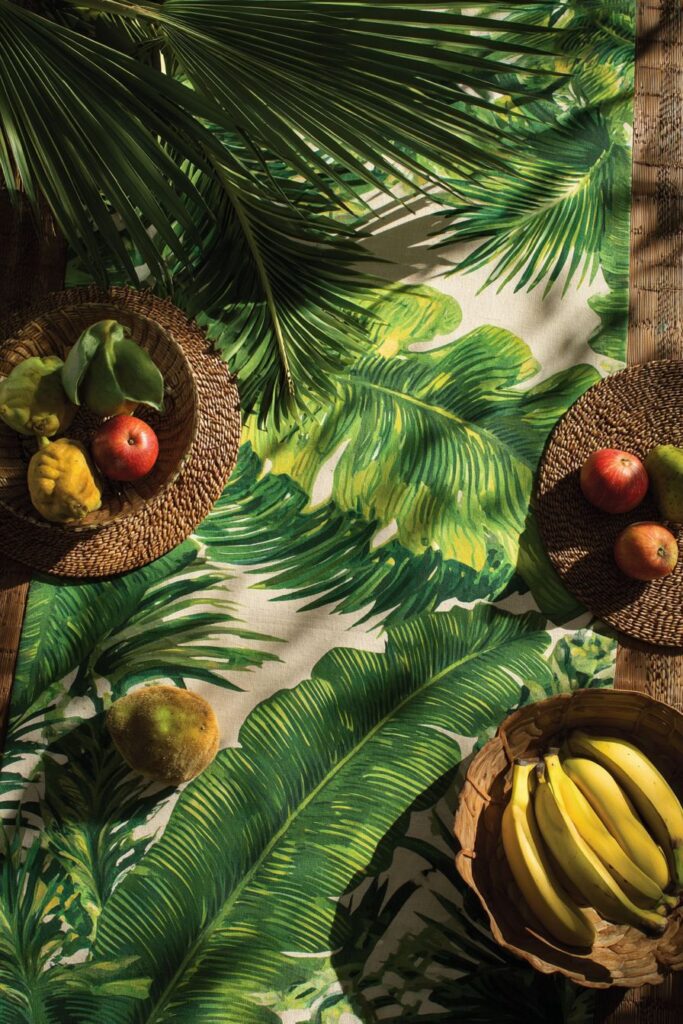
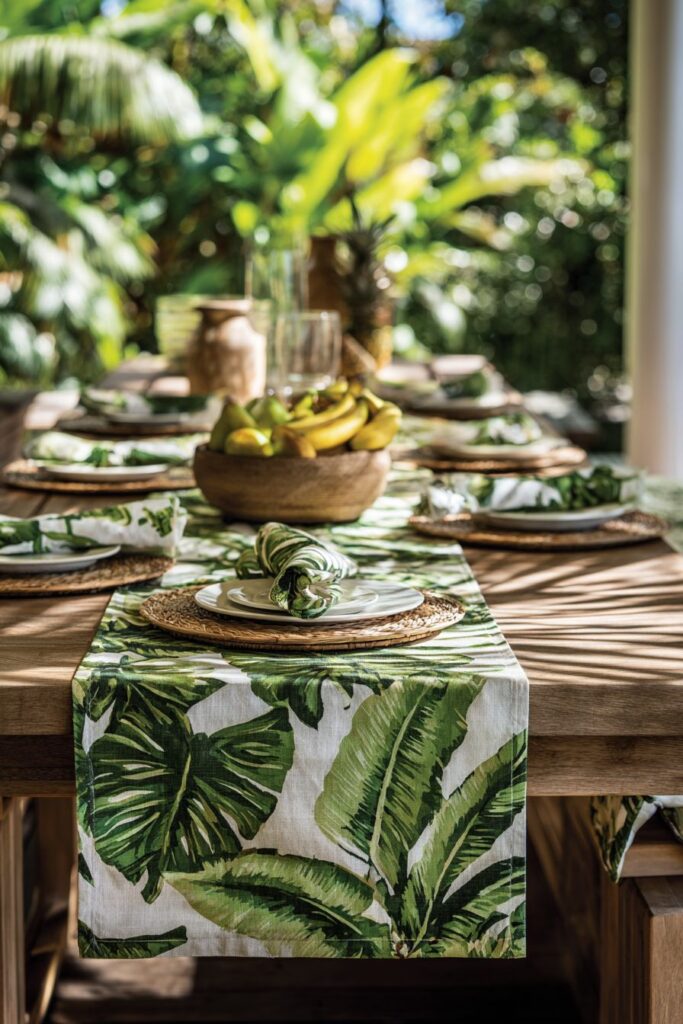
Exotic destination styling finds sophisticated expression in banana leaf-printed table runners that bring tropical paradise to contemporary dining spaces without resorting to cliché resort imagery. Lush greens on natural linen create botanical ambiance that celebrates the beauty of tropical environments while maintaining design sophistication that works in a variety of interior contexts.
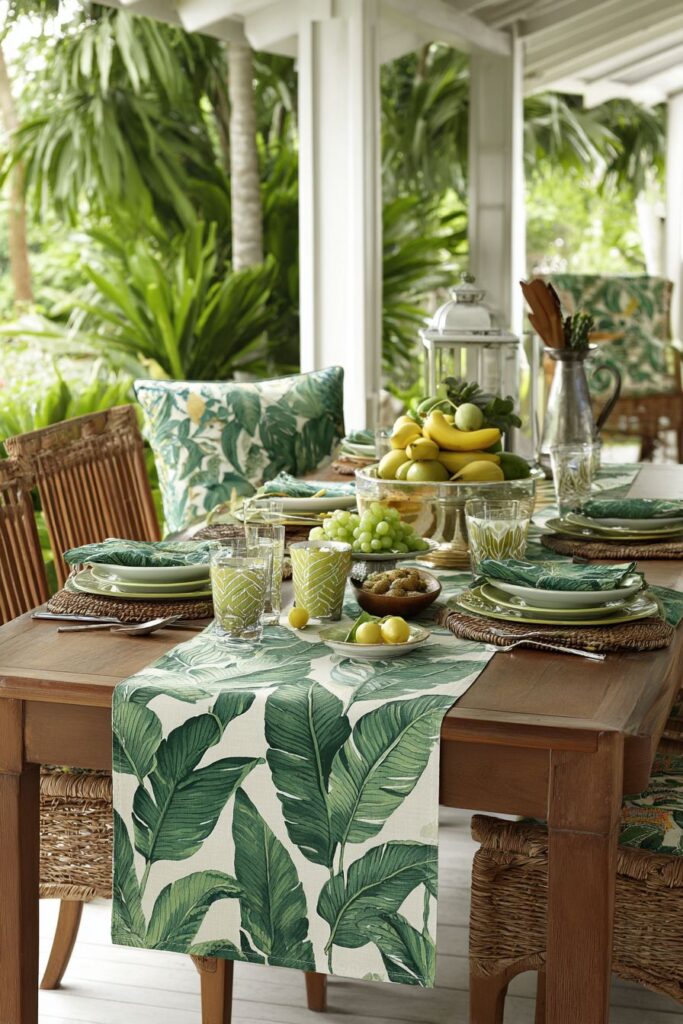
The botanical print creates exotic atmosphere that transports diners to tropical destinations while serving practical table protection functions. When positioned across teak dining tables, these runners create authentic tropical material relationships that honor the natural beauty of exotic destinations. The combination of botanical imagery with natural wood creates layered aesthetic that feels both worldly and grounded.
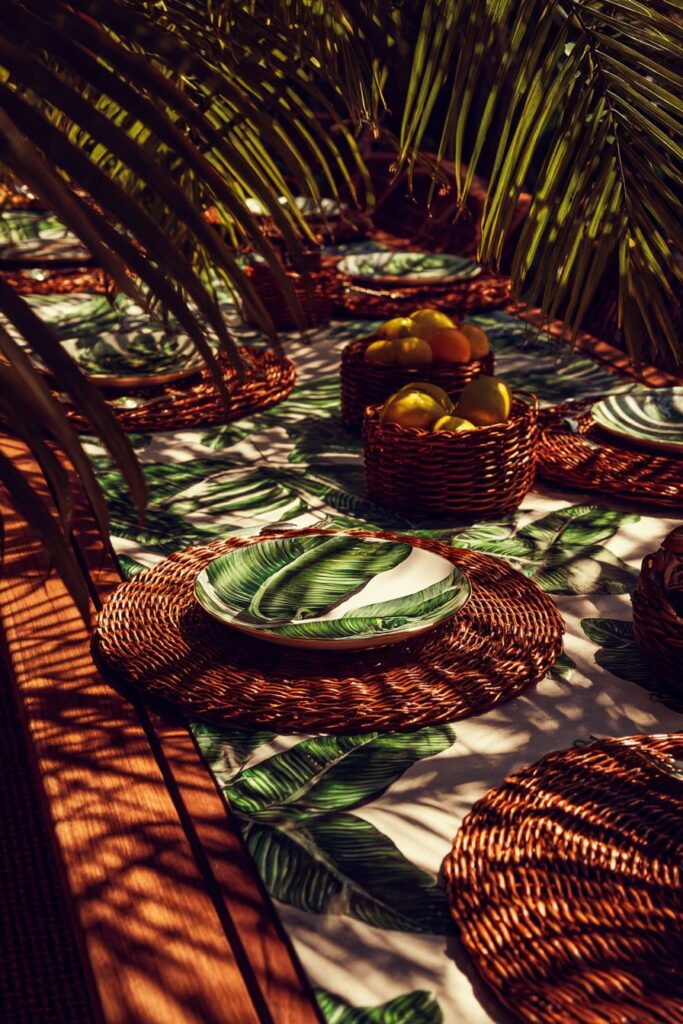
Wicker chargers and tropical fruit displays complete the tropical narrative while serving practical functions that honor the style’s emphasis on natural materials and fresh, local ingredients. These choices reflect broader tropical design principles that value natural materials over artificial alternatives and the beauty of organic forms rather than geometric precision.
Filtered sunlight through palm fronds creates natural dappled lighting that changes throughout the day, connecting indoor dining spaces with outdoor tropical environments. This natural lighting approach reflects tropical lifestyle values that celebrate outdoor living while creating dynamic visual displays that add living energy to interior spaces.
Tropical design excellence includes:
- Incorporating authentic botanical imagery that celebrates natural beauty
- Creating material relationships that honor tropical environmental characteristics
- Utilizing natural elements that blur indoor-outdoor boundaries
- Maximizing natural lighting that creates dynamic, changing displays
20. Mid-Century Modern Atomic Age
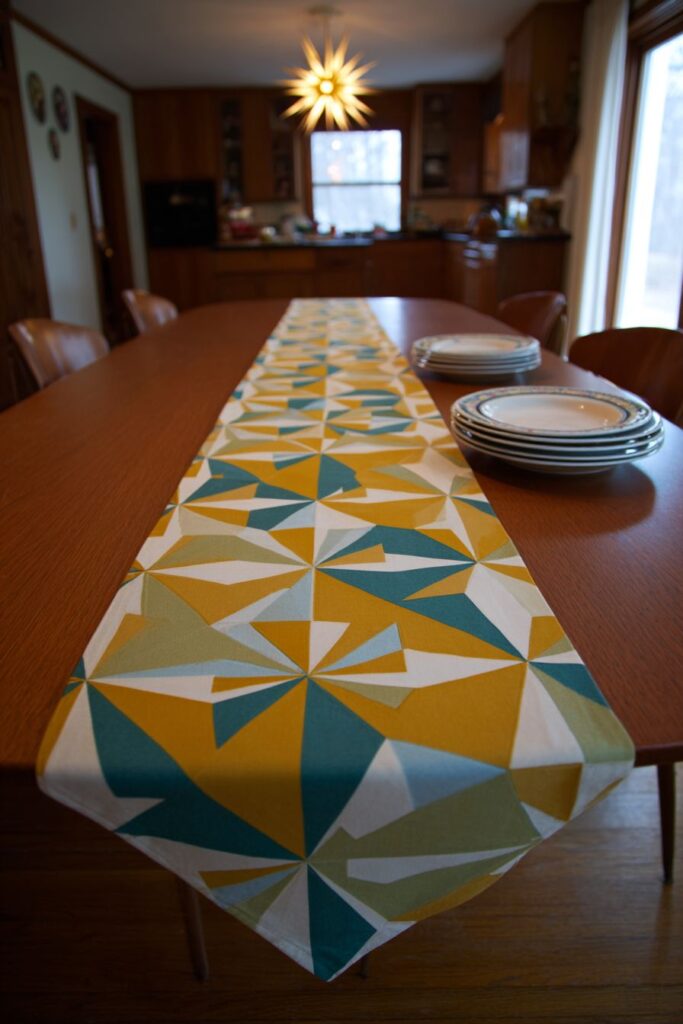
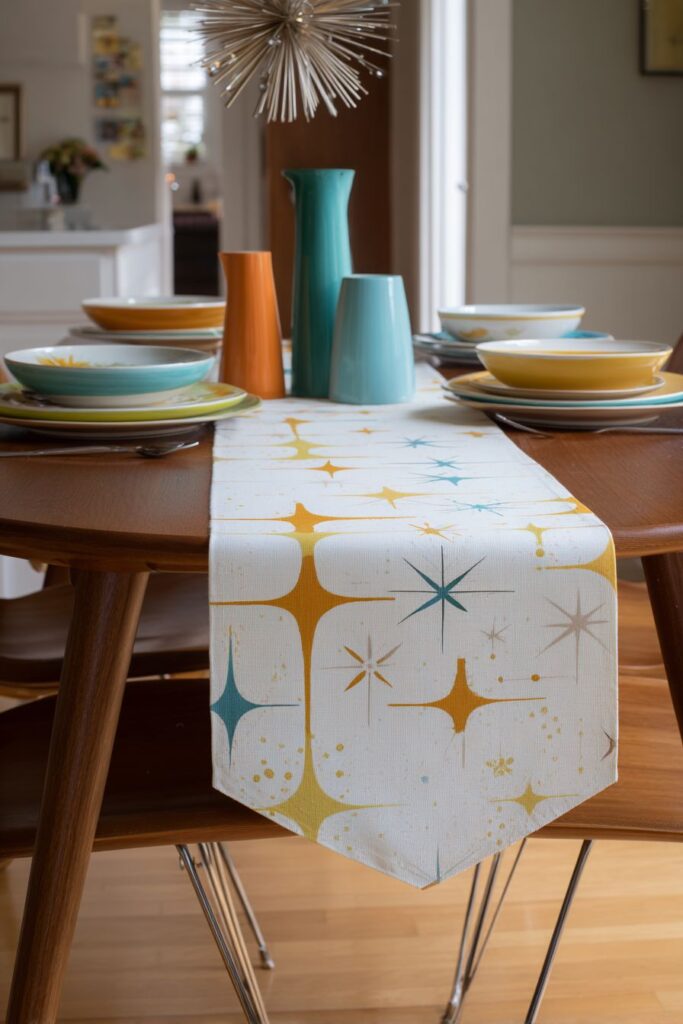
Retro design heritage finds contemporary relevance in geometric table runners featuring abstract atomic-age patterns that celebrate the optimism and innovation of mid-century modern design. Mustard yellow and teal on cream fabric represents more than nostalgic decoration—it embodies appreciation for design history, atomic-age optimism, and the mid-century commitment to bringing sophisticated design to everyday living.
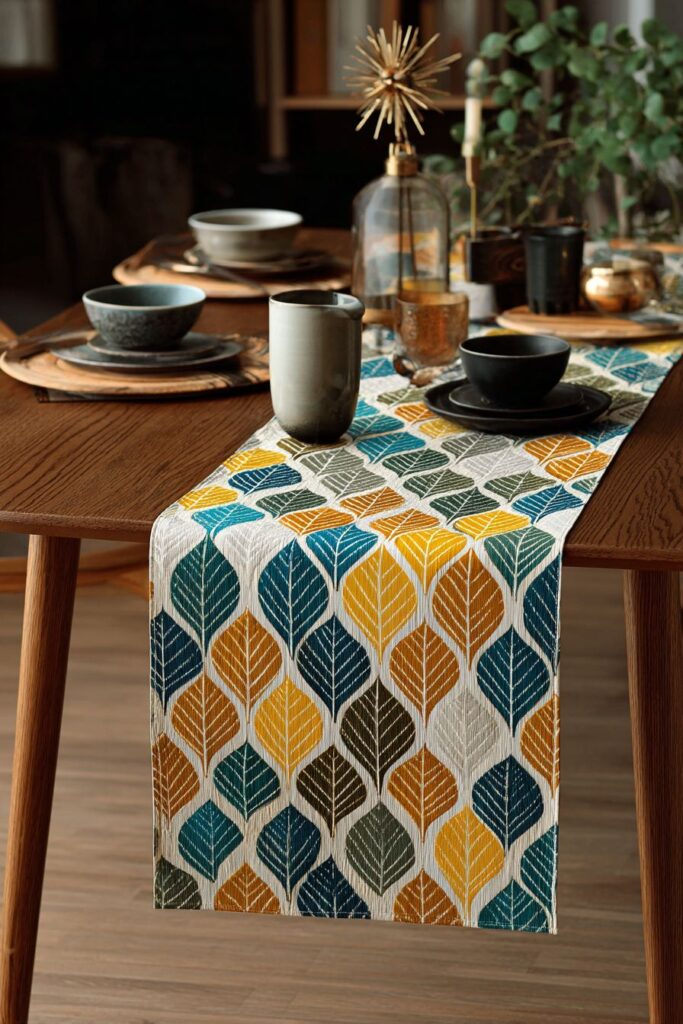
The abstract atomic-age patterns reflect the era’s fascination with scientific discovery and technological innovation while creating visual interest that feels both historical and surprisingly contemporary. When paired with walnut dining tables featuring hairpin legs, these runners create authentic mid-century material relationships that honor the period’s commitment to quality craftsmanship and innovative design solutions.
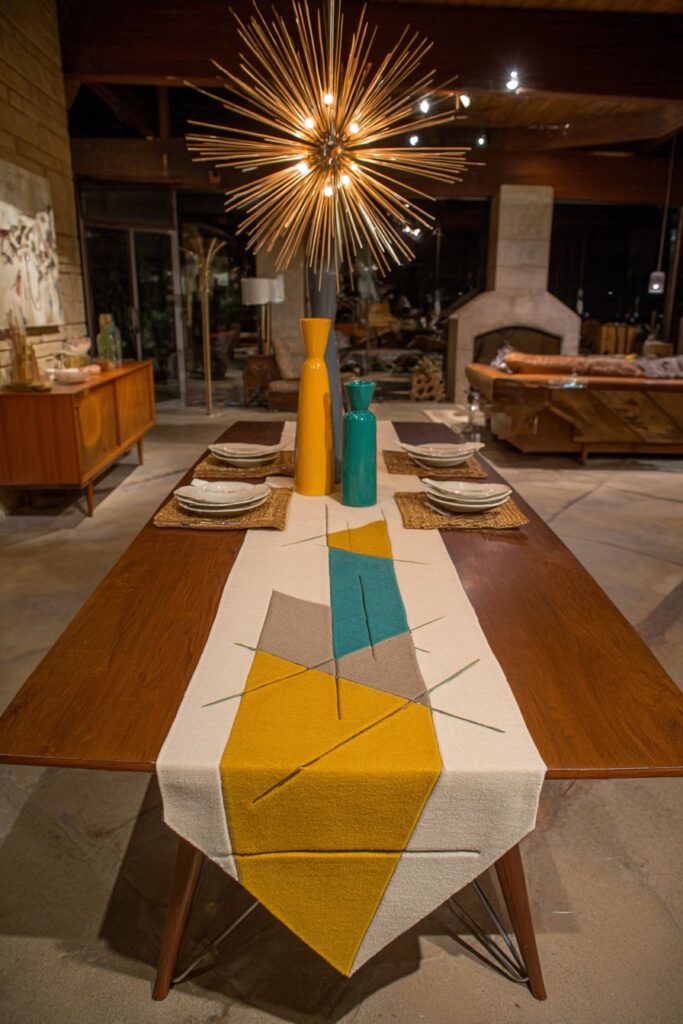
Vintage dinnerware and starburst chandeliers complete the mid-century narrative while maintaining authenticity that feels collected rather than recently assembled. These elements work together to create cohesive mid-century environments that celebrate the period’s distinctive aesthetic while serving contemporary functional needs.
Warm ambient lighting highlights the retro patterns while maintaining period-appropriate atmosphere that enhances the overall mid-century aesthetic. This lighting approach creates nostalgic ambiance while providing practical illumination that serves contemporary dining needs.
Mid-century modern essentials include:
- Embracing authentic period patterns that reflect historical optimism
- Creating material relationships that honor mid-century design innovation
- Incorporating vintage elements that feel authentically collected
- Utilizing period-appropriate lighting that maintains historical accuracy
Conclusion
The journey through these twenty distinctive table runner styles reveals the remarkable versatility and impact that thoughtful textile selection can have on dining room design and overall home aesthetics. From the rustic charm of burlap with embroidered details to the sophisticated elegance of silk paisley, each approach offers unique opportunities for personal expression while serving practical functions that enhance daily living experiences.
The key to successful table runner styling lies in understanding how these textile elements interact with existing architectural features, furniture choices, and lighting conditions to create cohesive design narratives. Whether embracing the minimalist restraint of Scandinavian linen, the cultural richness of Mexican Otomi embroidery, or the innovative materials of contemporary concrete-inspired fabrics, the most effective table runners serve as both functional elements and design anchors that reflect the homeowner’s personality and lifestyle preferences.
As we’ve explored through these diverse styling approaches, table runners offer exceptional value in interior design—they provide instant transformation capabilities, seasonal adaptability, and the opportunity to experiment with colors, patterns, and textures without major investment or permanent commitment. From formal silk elegance to casual denim innovation, these textile elements prove that sophisticated design can be both accessible and adaptable to changing needs and preferences.
The future of table runner design continues to evolve with advancing material technologies, growing appreciation for artisanal craftsmanship, and increasing awareness of sustainable design practices. Whether selecting traditional patterns that honor cultural heritage or embracing innovative materials that push design boundaries, the most successful table runners will always balance aesthetic appeal with practical functionality while reflecting the unique personality and lifestyle of their owners.
The twenty styles explored in this comprehensive guide demonstrate that effective table runner selection transcends simple decoration—it becomes an integral part of creating dining experiences that nourish both body and spirit. From the meditative simplicity of bamboo fiber runners that encourage mindful dining to the festive celebration of metallic holiday patterns that transform ordinary meals into special occasions, these textile elements possess the remarkable ability to influence mood, atmosphere, and the overall quality of our daily interactions around the dining table.
Perhaps most importantly, the diversity of styles available today means that every homeowner can find table runner options that authentically reflect their personal aesthetic while meeting their practical needs. Whether drawn to the timeless elegance of French country toile, the urban sophistication of industrial loft denim, or the cultural richness of traditional textile artistry, the perfect table runner exists to enhance and celebrate individual design sensibilities.
The investment in quality table runners pays dividends far beyond their initial cost—they provide years of design flexibility, seasonal adaptability, and the satisfaction that comes from creating beautiful, functional dining environments. As central elements in the art of table setting, these versatile textiles continue to prove their worth as essential tools for transforming everyday dining into memorable experiences that celebrate both the food we share and the people we gather with around our tables.
Through thoughtful selection and styling, table runners become more than mere accessories—they become integral components of home design that reflect our values, celebrate our heritage, and enhance our daily living experiences in ways both subtle and profound. The journey of discovering the perfect table runner for your dining space represents an opportunity to explore personal style, experiment with design possibilities, and create a dining environment that truly feels like home.
"As an Amazon Associate, I earn from qualifying purchases."
