
The kitchen has always been more than just a place to prepare meals. It’s the heart of the home, where families gather and memories are made. Recently, interior designers and homeowners alike have been embracing retro aesthetics with renewed passion, particularly the distinctive charm of 1970s kitchen design. This nostalgic trend isn’t simply about recreating the past—it’s about reimagining vintage elements for contemporary living.
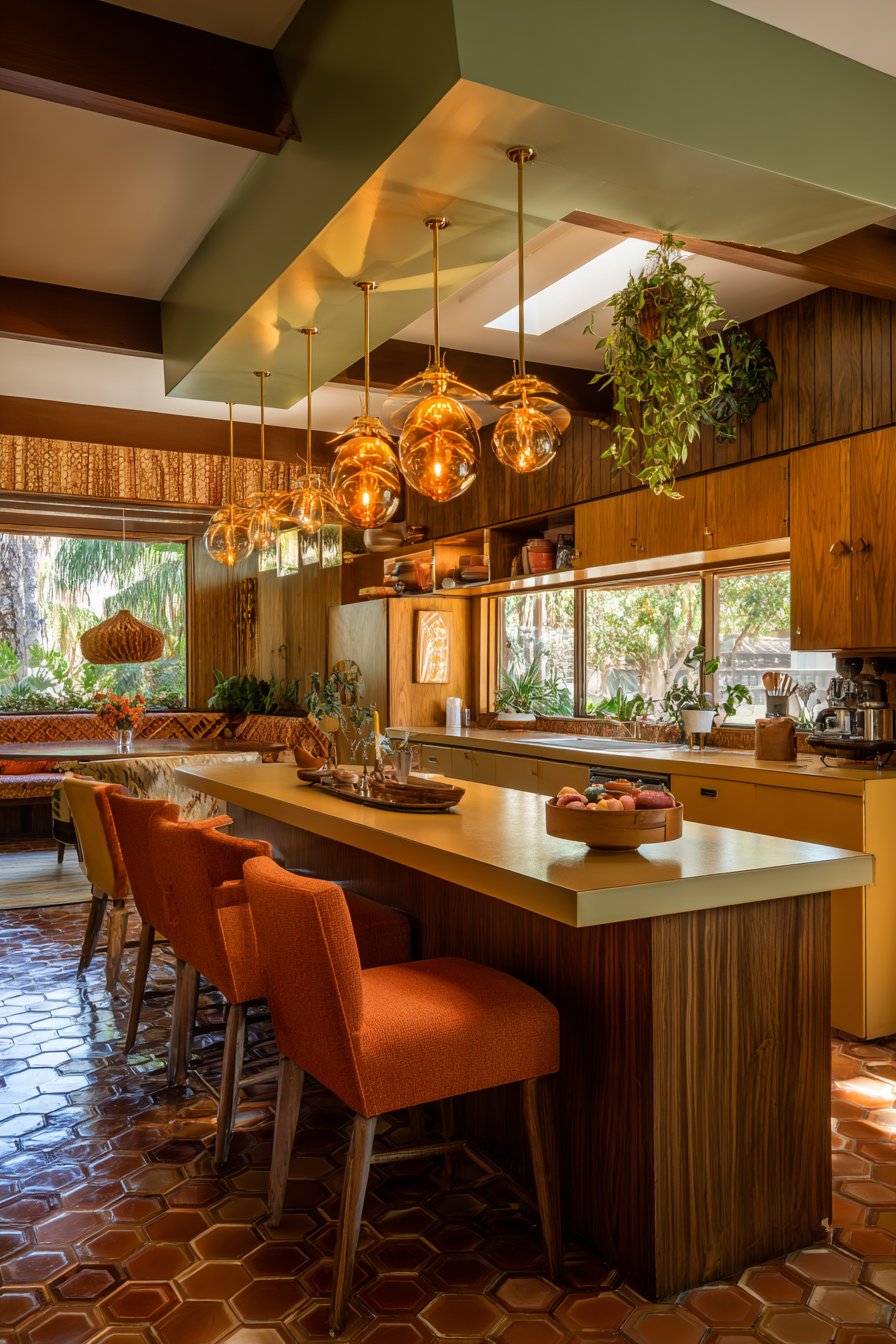
The 1970s kitchen aesthetic offers a refreshing departure from the stark minimalism that has dominated interior design for years. With its warm earth tones, bold geometric patterns, and emphasis on natural materials, this style creates inviting spaces that feel both lived-in and stylish. The comeback represents a cultural shift toward personality-driven design that celebrates individuality over conformity.
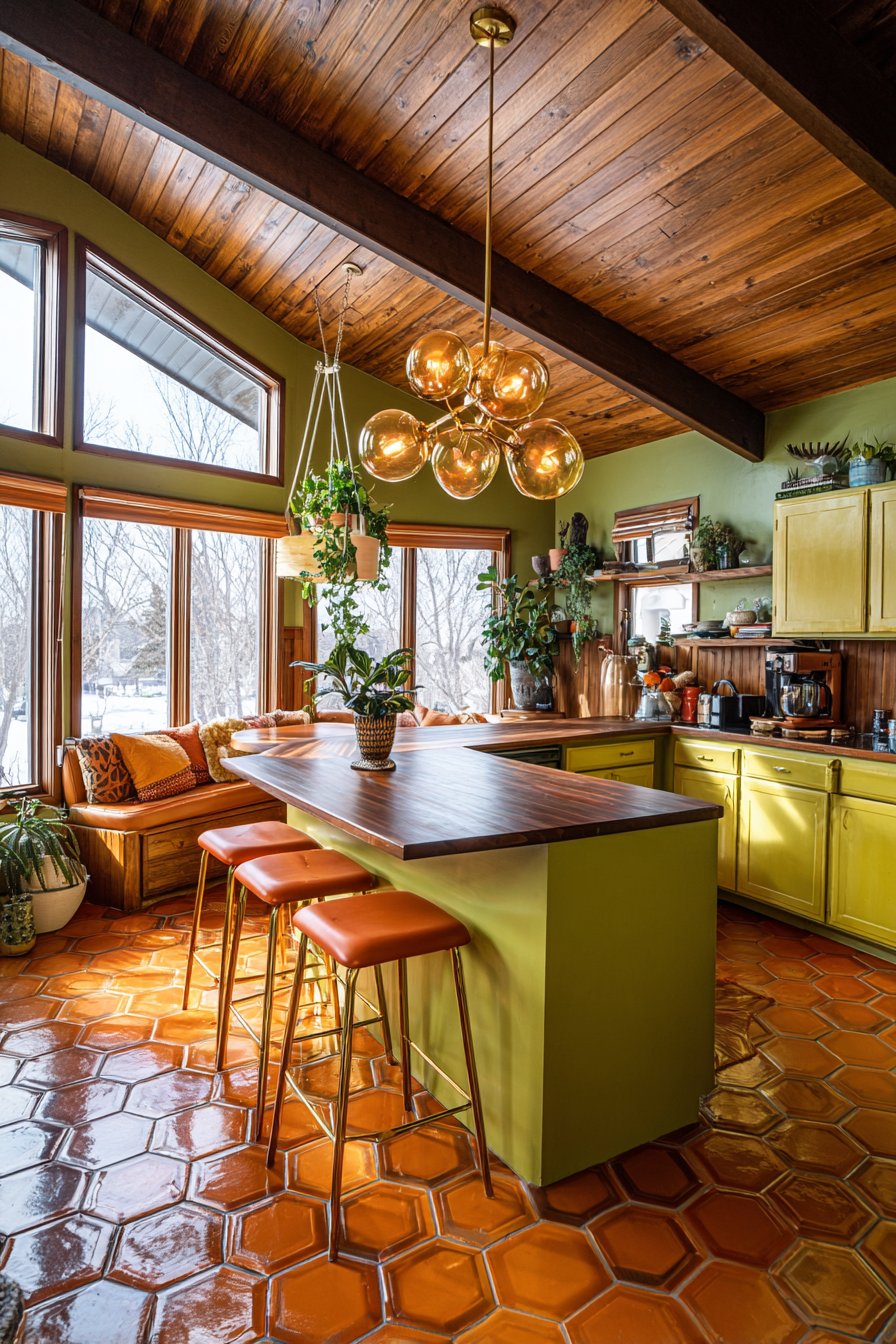
This article explores the key elements driving the 1970s kitchen revival and provides actionable insights for incorporating this timeless style into modern homes. Whether you’re planning a complete renovation or seeking subtle vintage touches, these ideas will help you capture authentic 70s charm while maintaining contemporary functionality.
1. Embrace Warm Earth Tone Color Palettes
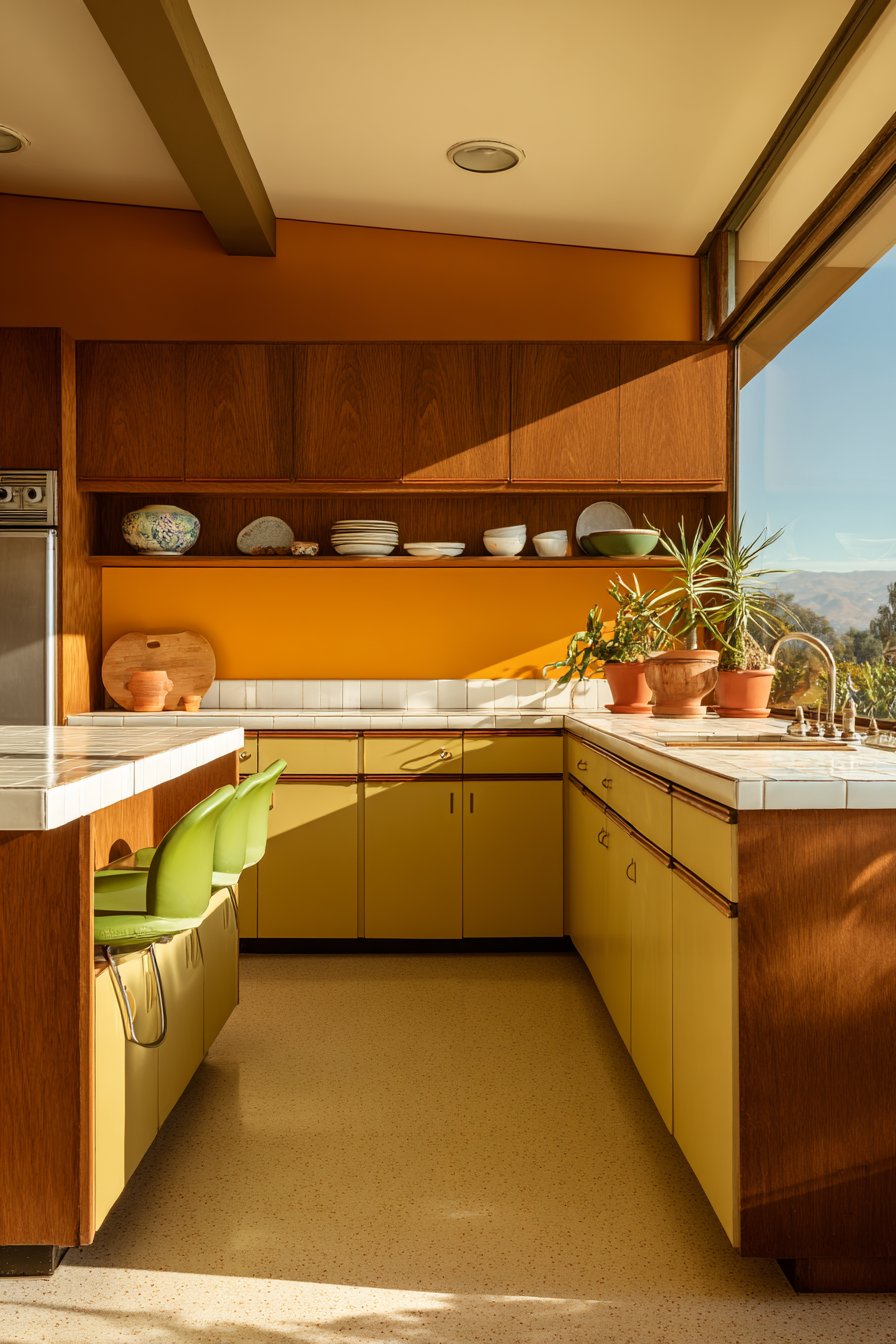
The color story of 1970s kitchens centered around earthy, grounding hues that created cozy, welcoming atmospheres. Harvest gold, avocado green, burnt orange, and chocolate brown dominated cabinetry, appliances, and walls. These colors reflected the era’s connection to natural environments and organic living movements. Modern interpretations soften these tones slightly while maintaining their warmth and character.
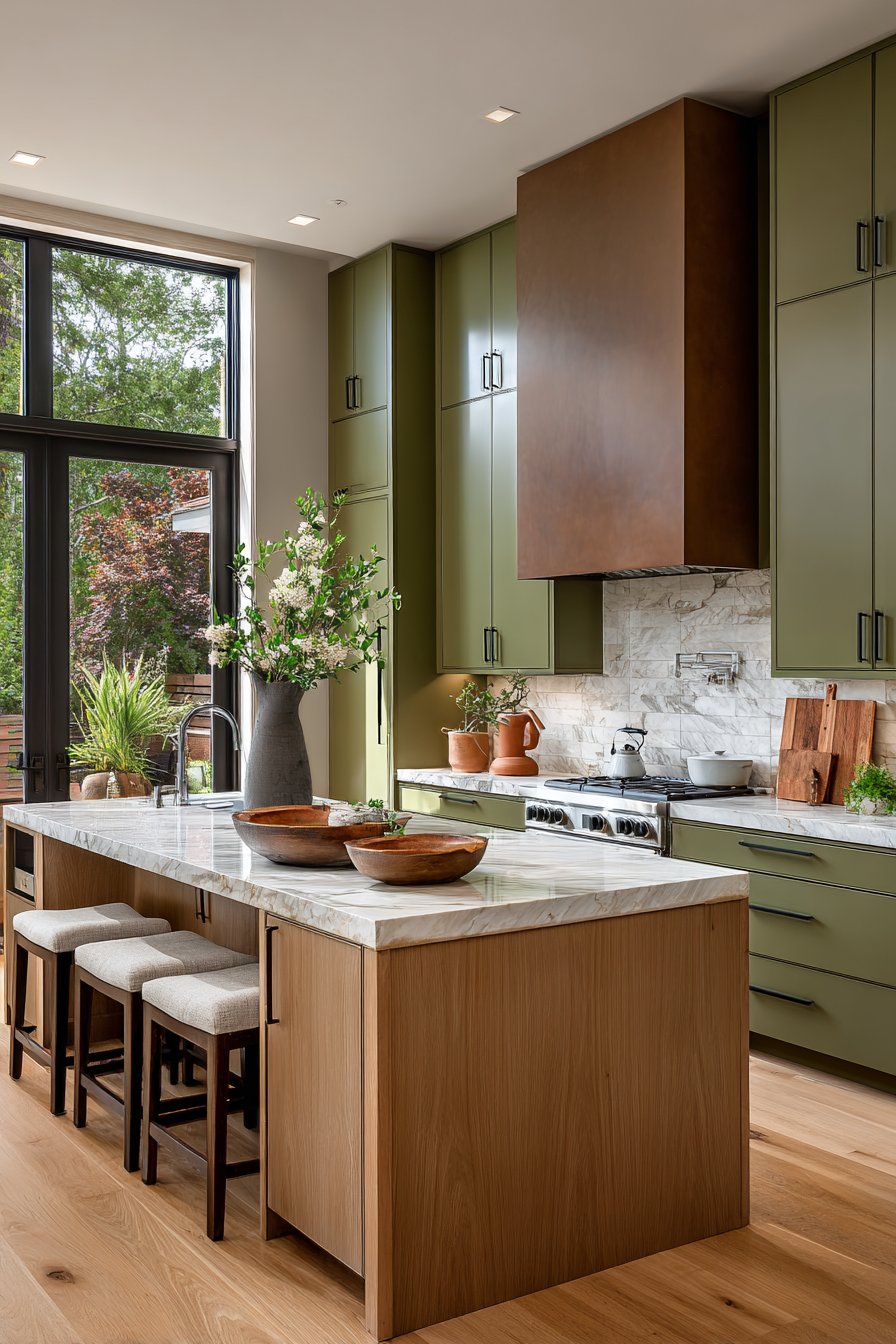
Today’s designers are pairing these vintage color schemes with contemporary neutrals to create balanced, livable spaces. The key is avoiding overwhelming darkness by incorporating lighter elements like cream-colored countertops or white subway tiles. These earth tones work exceptionally well in kitchens with abundant natural light, where they create rich, inviting ambiance without feeling heavy or dated.
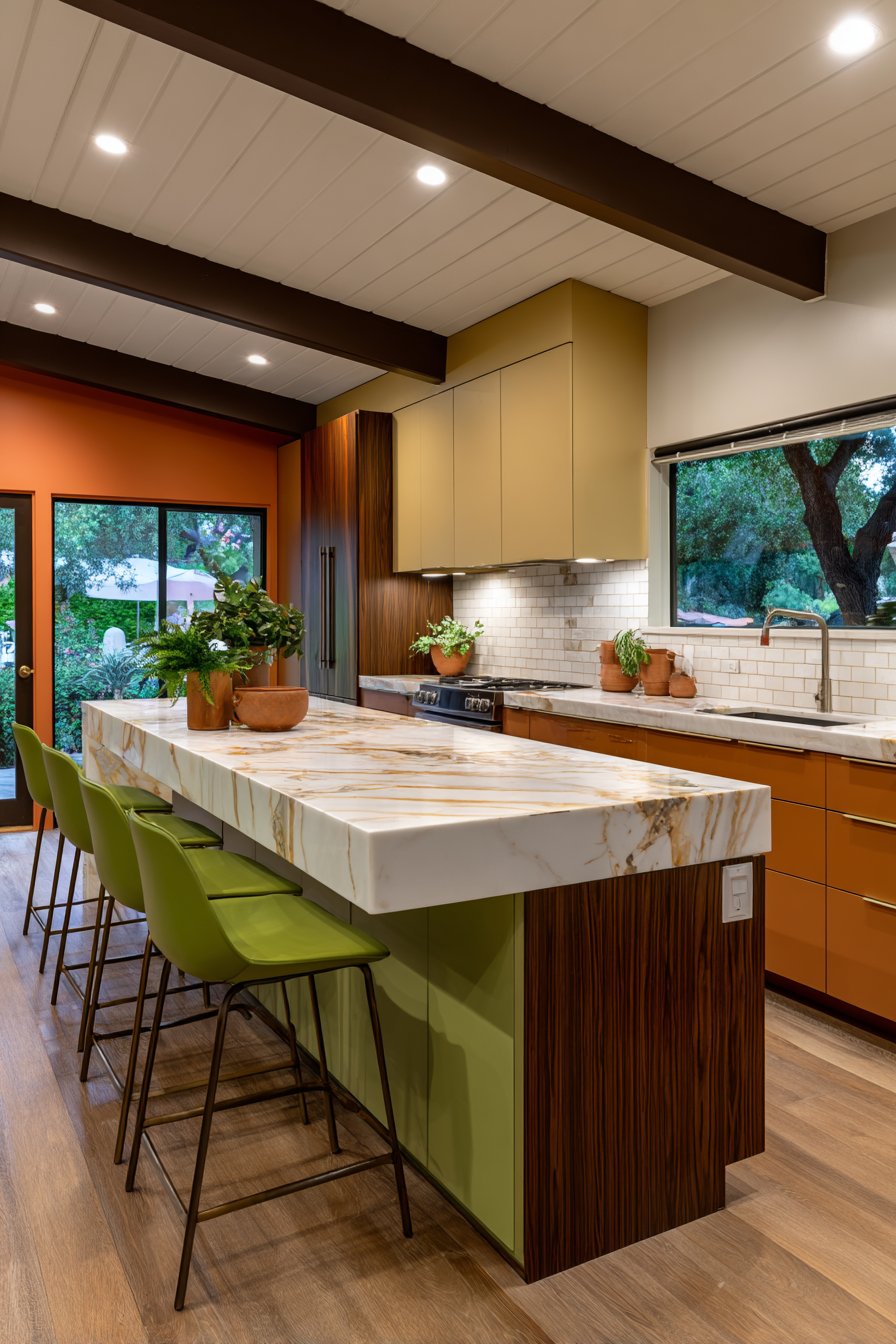
The psychological impact of these colors shouldn’t be underestimated. Unlike cool grays and whites, warm earth tones promote feelings of comfort and security. They make kitchens feel like gathering spaces rather than sterile work zones, perfectly aligning with current desires for homes that nurture wellbeing and connection.
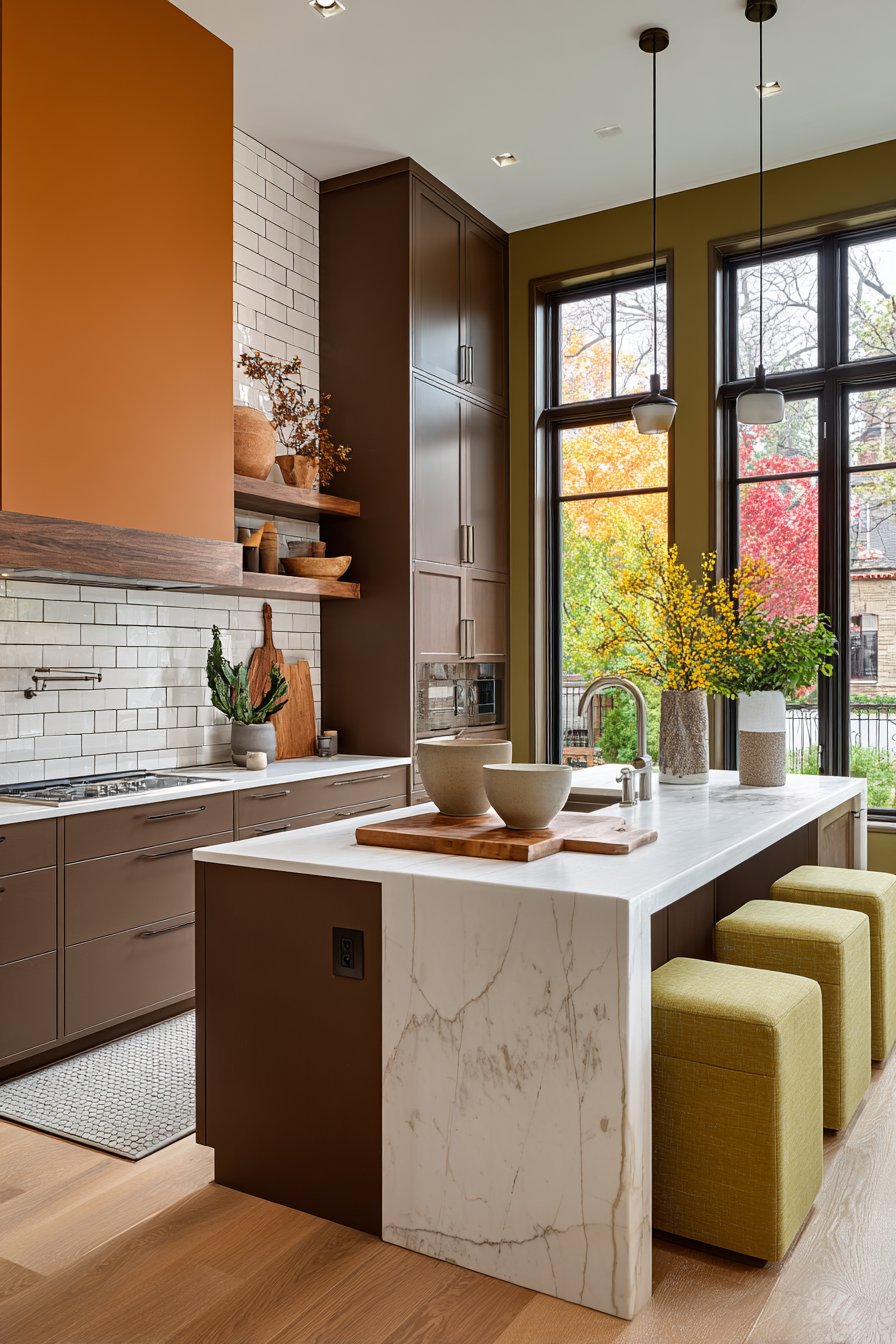
- Choose one dominant earth tone and use it for lower cabinets or a statement wall
- Balance darker colors with lighter countertops in marble, butcher block, or cream laminate
- Add complementary accent colors through textiles, dishware, and small appliances
- Consider matte finishes rather than high-gloss to achieve authentic vintage appeal
- Test colors in your actual lighting conditions before committing to full application
2. Incorporate Geometric and Bold Pattern Work
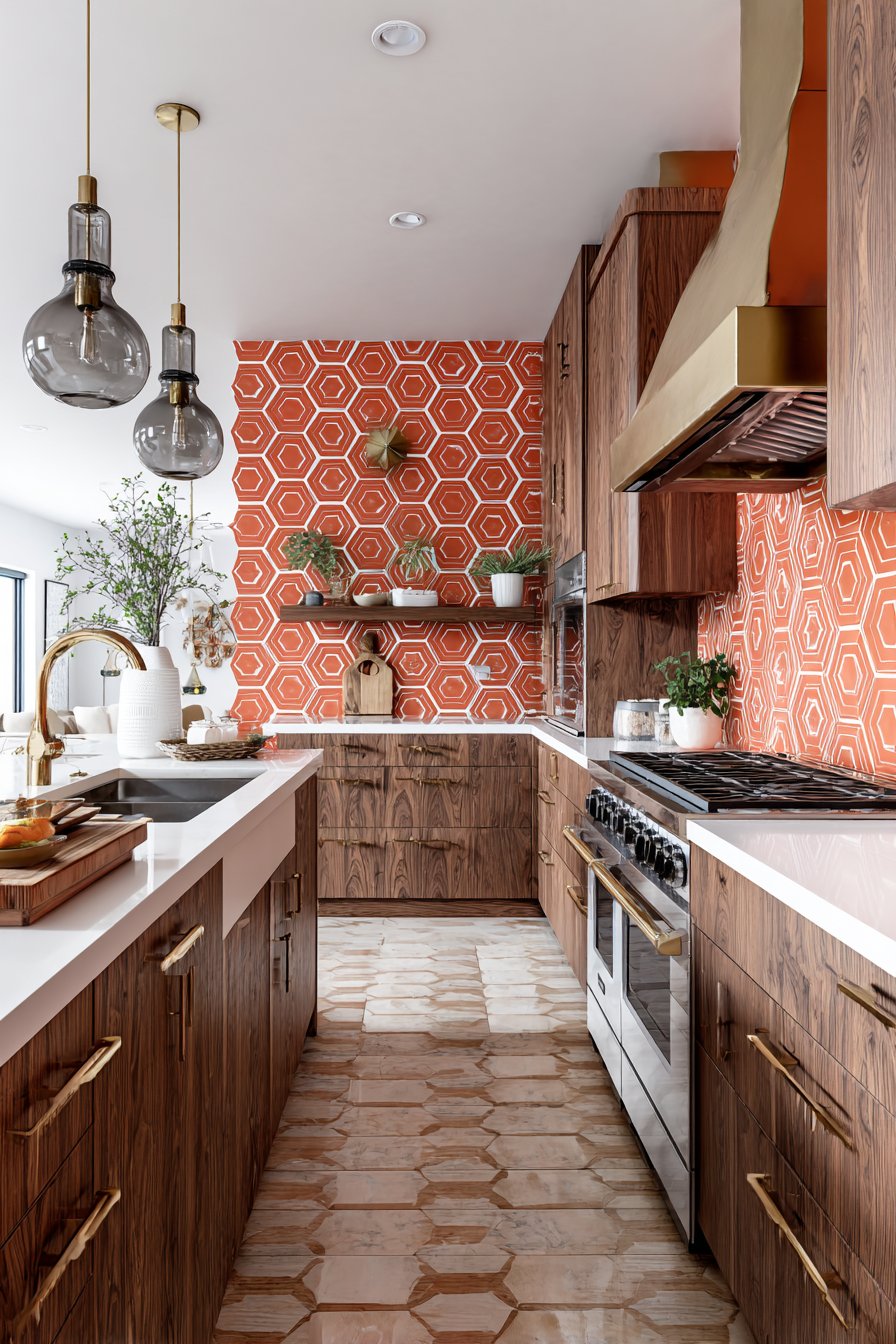
The 1970s celebrated fearless pattern mixing that would make today’s minimalists uncomfortable. Geometric wallpapers, patterned backsplashes, and graphic floor tiles created visual interest and personality. These designs ranged from subtle repeating patterns to eye-catching op-art inspired arrangements. The boldness reflected cultural confidence and optimism about design experimentation.
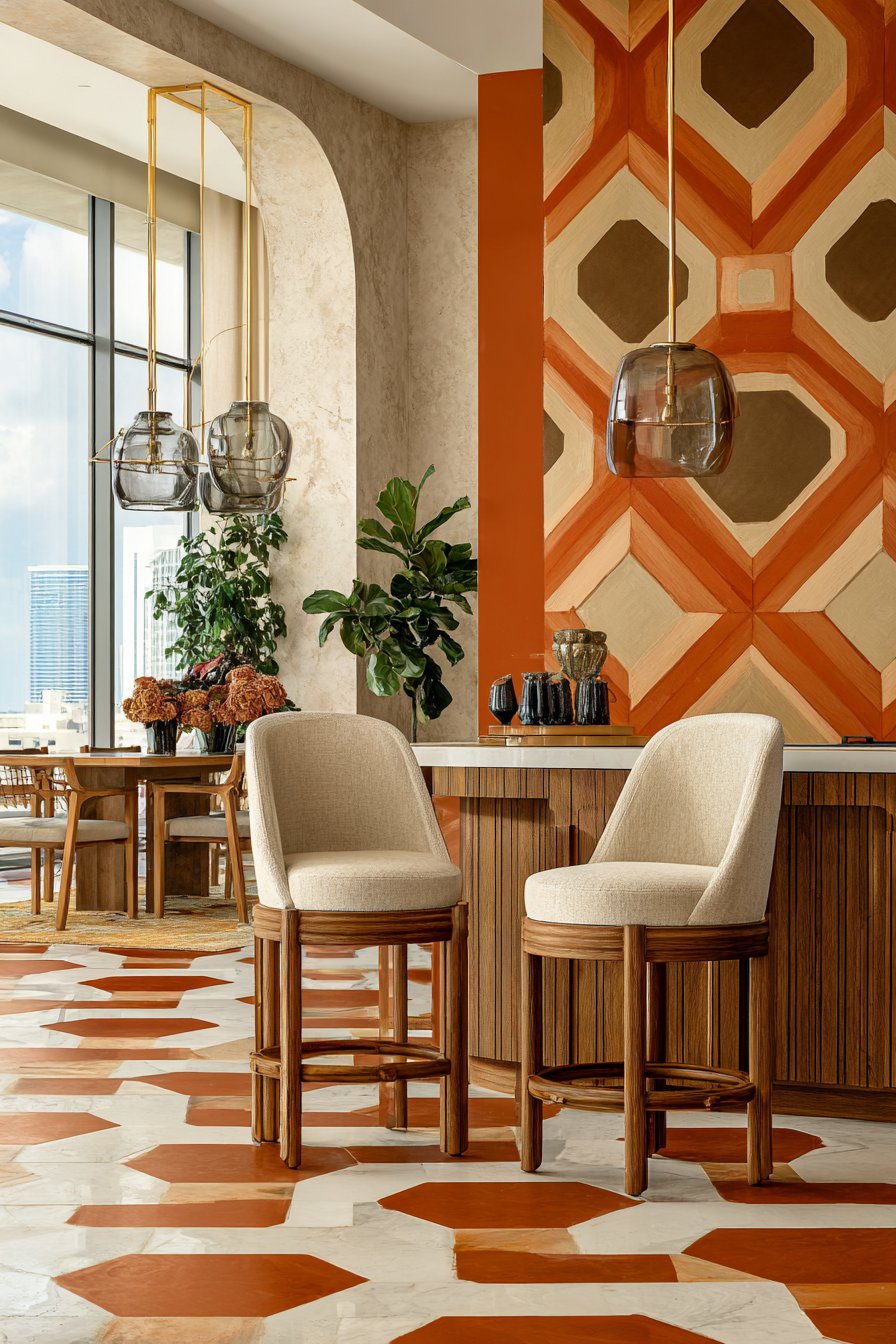
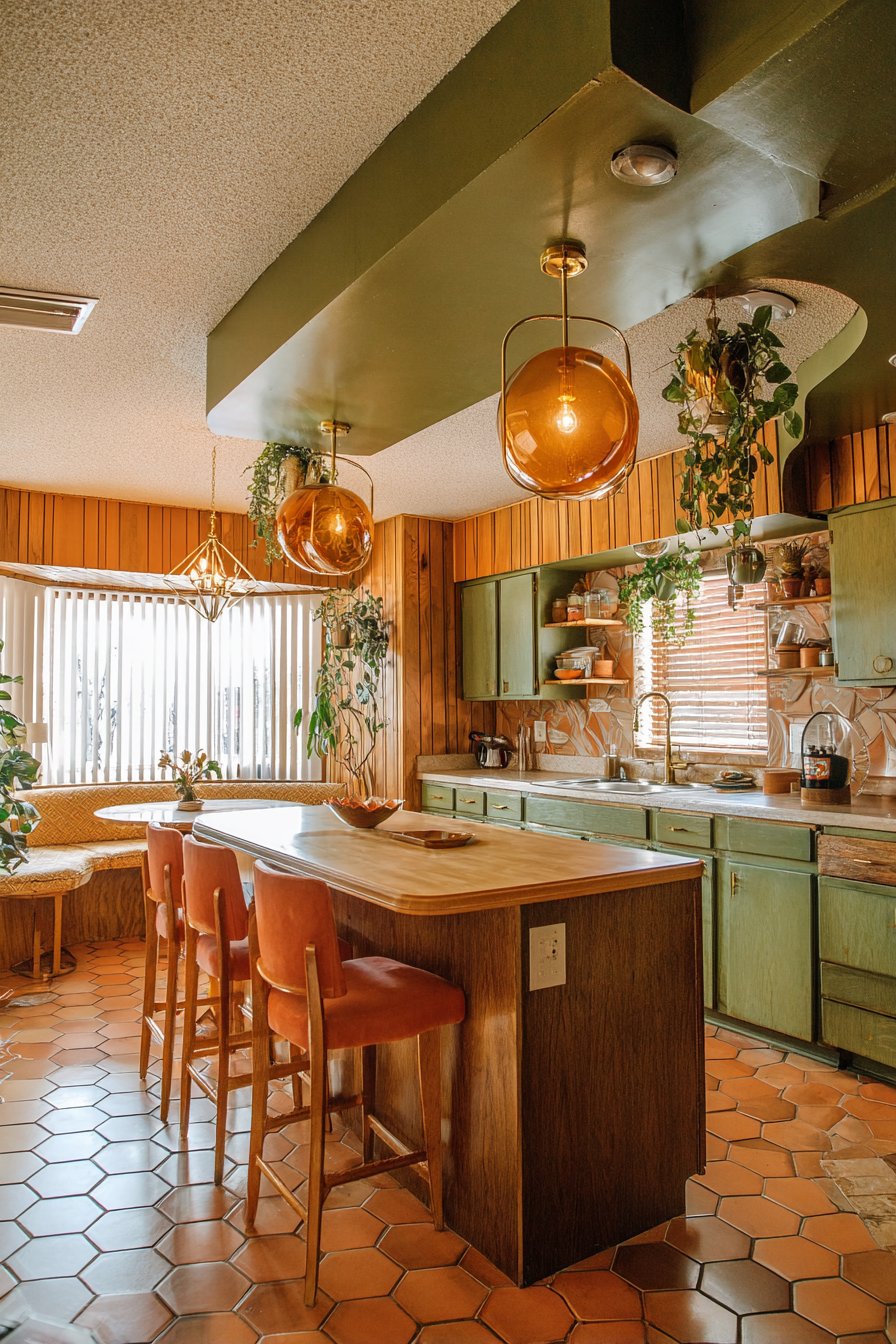
Modern applications of this trend show more restraint while maintaining vintage energy. Consider using geometric tiles as a backsplash focal point rather than covering every surface. Hexagonal floor tiles in earth tones can ground a space beautifully without overwhelming it. The key is selecting one statement pattern area and keeping surrounding surfaces relatively simple.
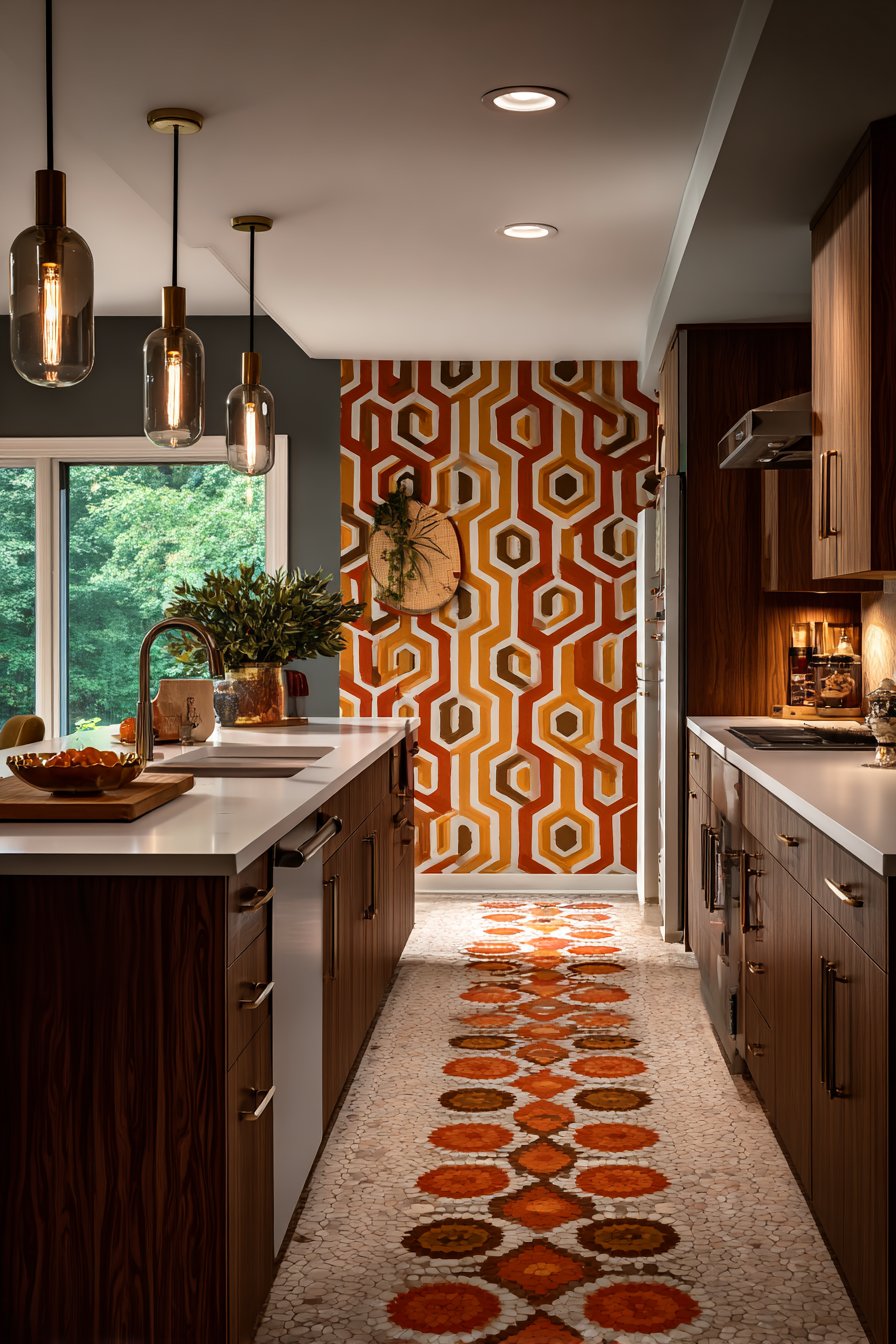
Pattern scale matters tremendously in achieving the right balance. Large-scale geometrics work best in spacious kitchens, while smaller patterns suit compact spaces better. Mixing pattern with solid colors creates rhythm and prevents visual fatigue while honoring the 70s aesthetic of layered, textured design.
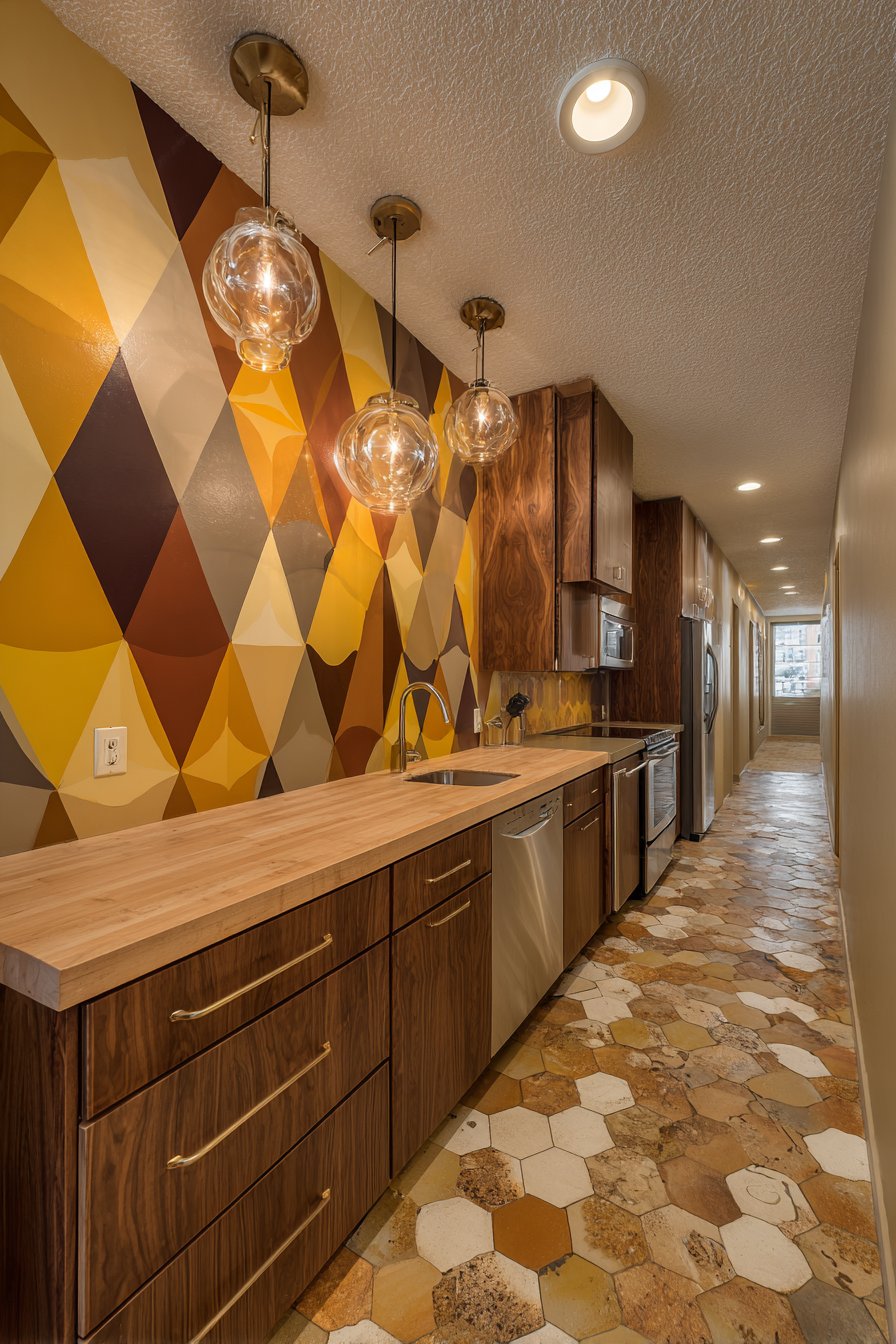
- Use geometric tile for backsplashes in complementary earth tones
- Consider patterned wallpaper on a single accent wall rather than entire rooms
- Select one bold pattern element and keep other surfaces more subdued
- Look for vintage-inspired linoleum or vinyl flooring with geometric designs
- Balance pattern intensity with solid-colored cabinetry and simple hardware
3. Choose Natural Wood Cabinetry and Paneling
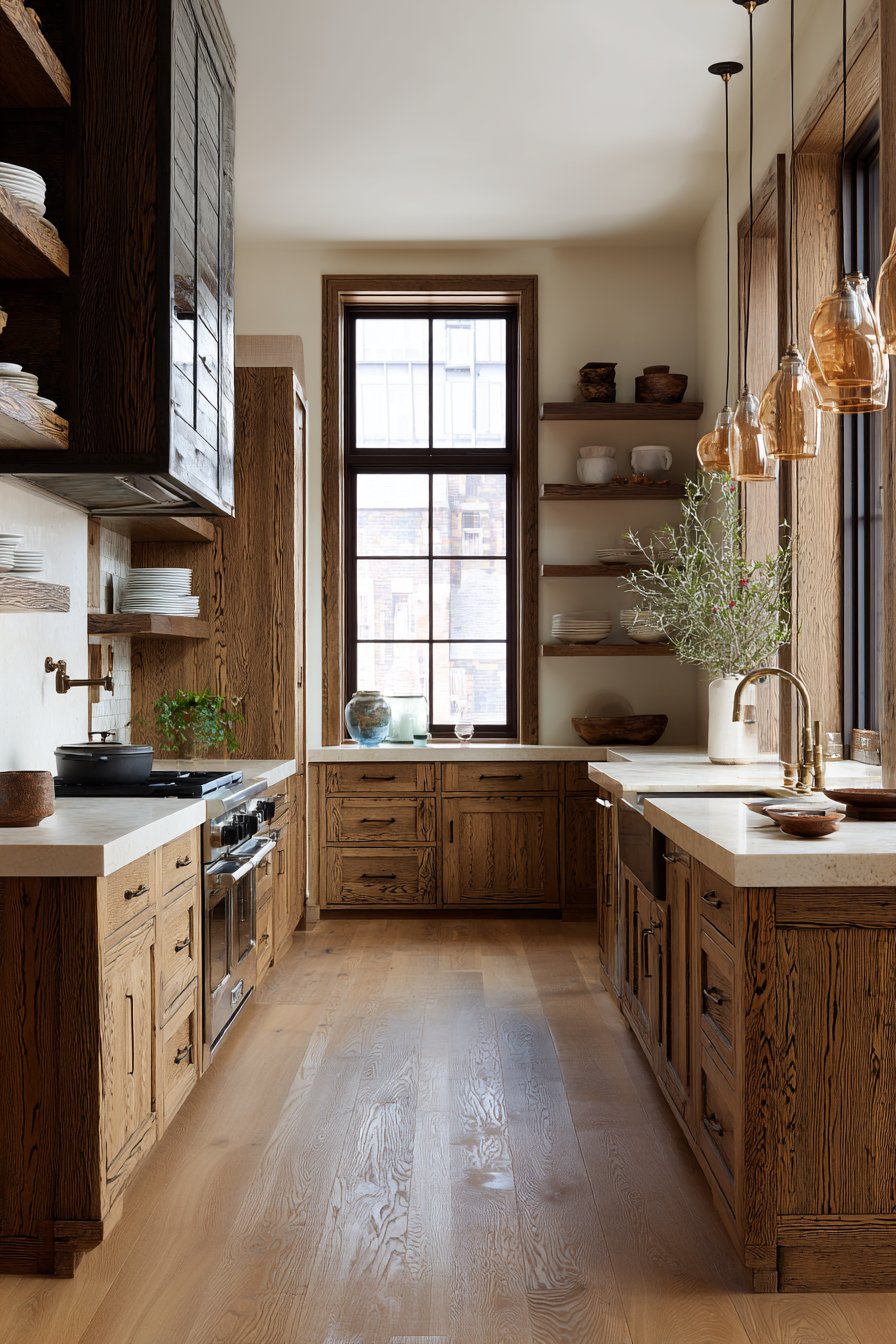
Wood paneling defined 1970s interiors, bringing warmth and natural texture into every room. In kitchens, honey-toned oak, rich walnut, and knotty pine cabinetry created organic, lived-in feelings. The era favored visible wood grain and natural finishes over painted surfaces. This approach reflected environmental awareness and appreciation for authentic materials.
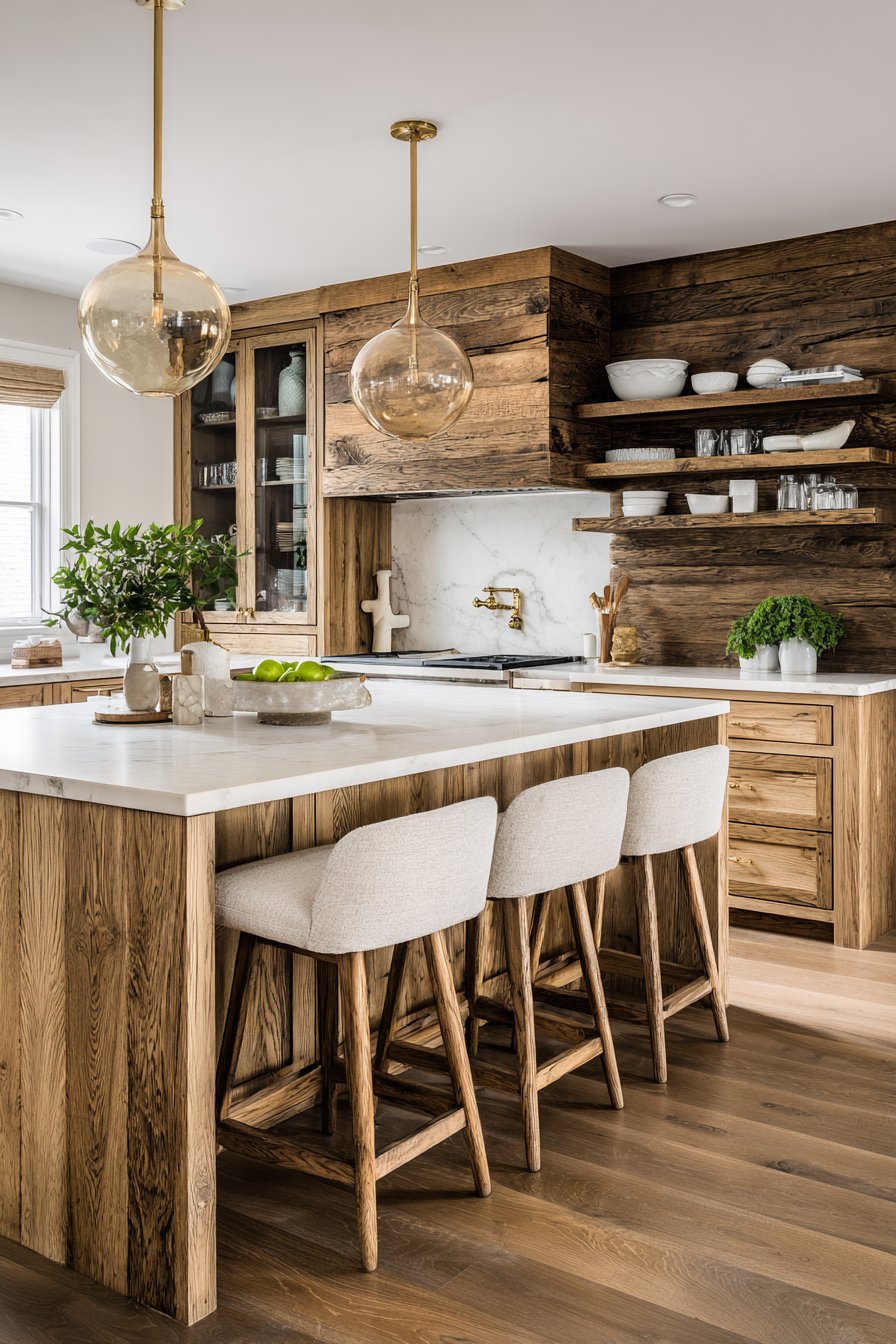
Contemporary takes on this trend often involve lighter wood tones or mixing wood with painted elements for balance. Consider leaving upper cabinets open or using glass fronts to prevent heaviness. Wood paneling works beautifully as an accent wall behind open shelving, creating depth without the cave-like feeling that full-room paneling can produce.
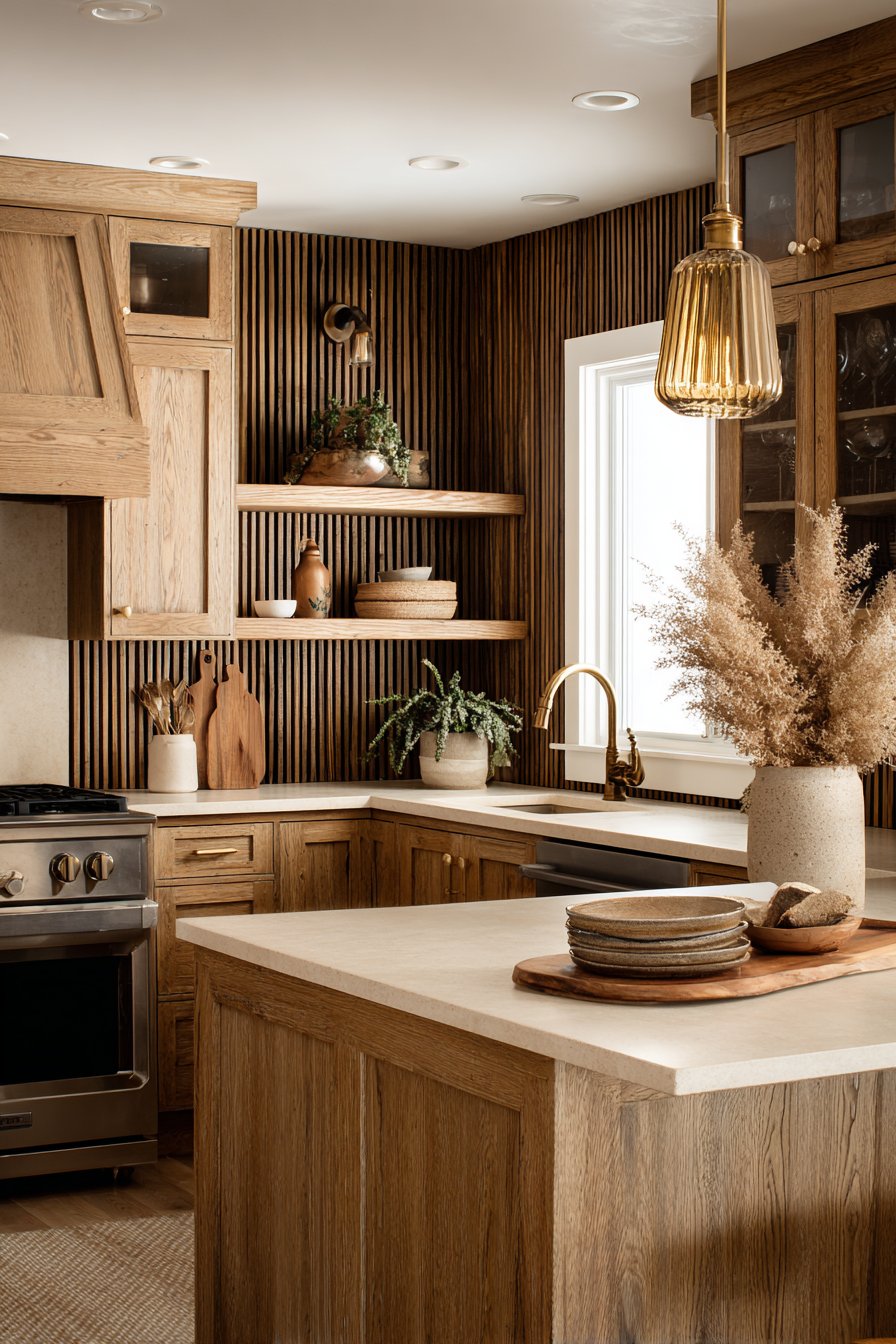
The sustainability angle makes wood cabinetry particularly relevant today. Quality hardwood cabinets last decades and age beautifully, developing character over time. Unlike trendy painted finishes that date quickly, natural wood maintains timeless appeal while offering the vintage aesthetic modern homeowners seek.
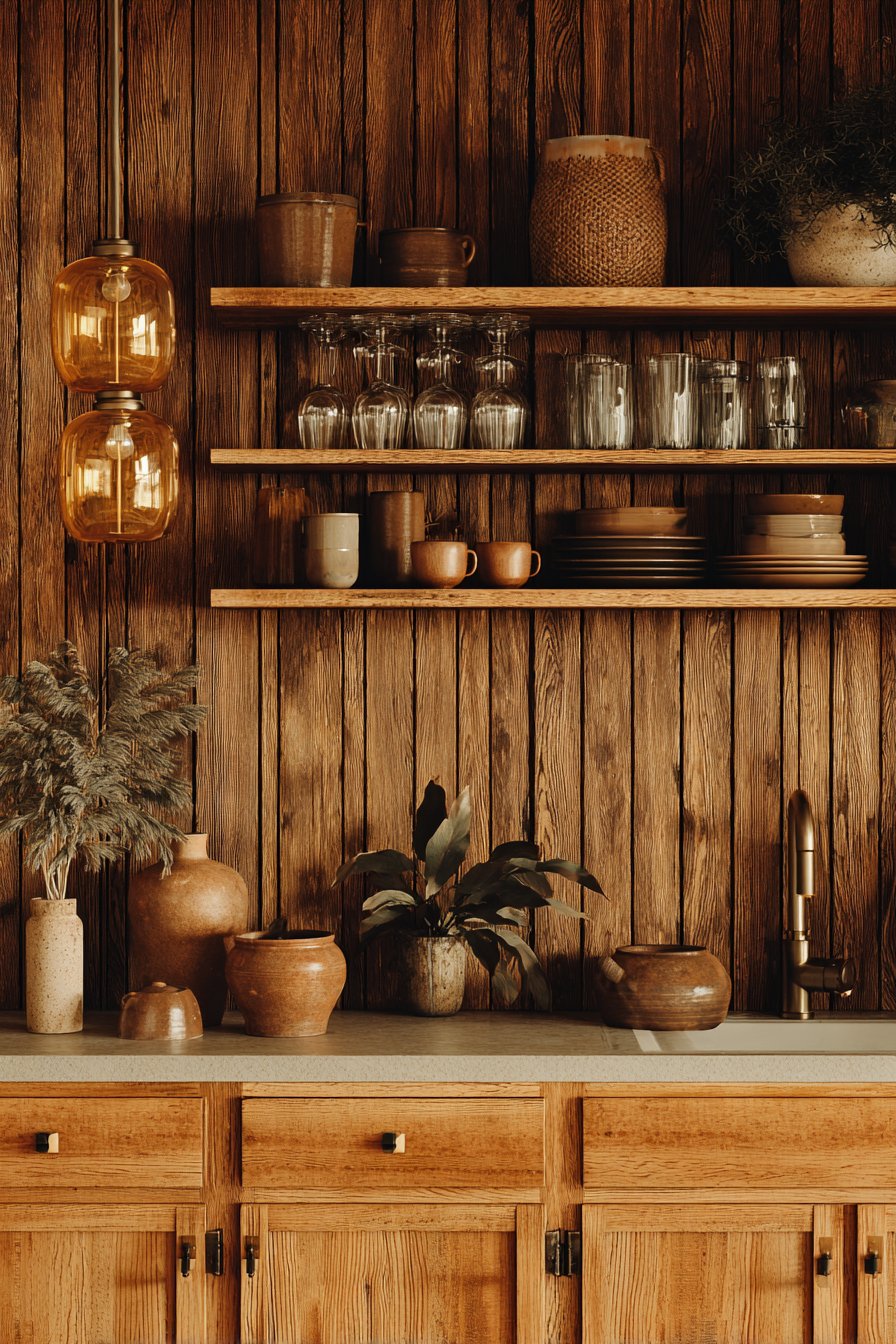
- Select medium-toned woods like oak or walnut for authentic 70s appeal
- Consider horizontal wood paneling on one accent wall for visual interest
- Mix wood cabinetry with open shelving to create lighter, airier feelings
- Use natural oil finishes that highlight grain patterns and develop patina
- Balance wood-heavy kitchens with lighter countertops and plenty of natural light
4. Install Vintage-Style Lighting Fixtures
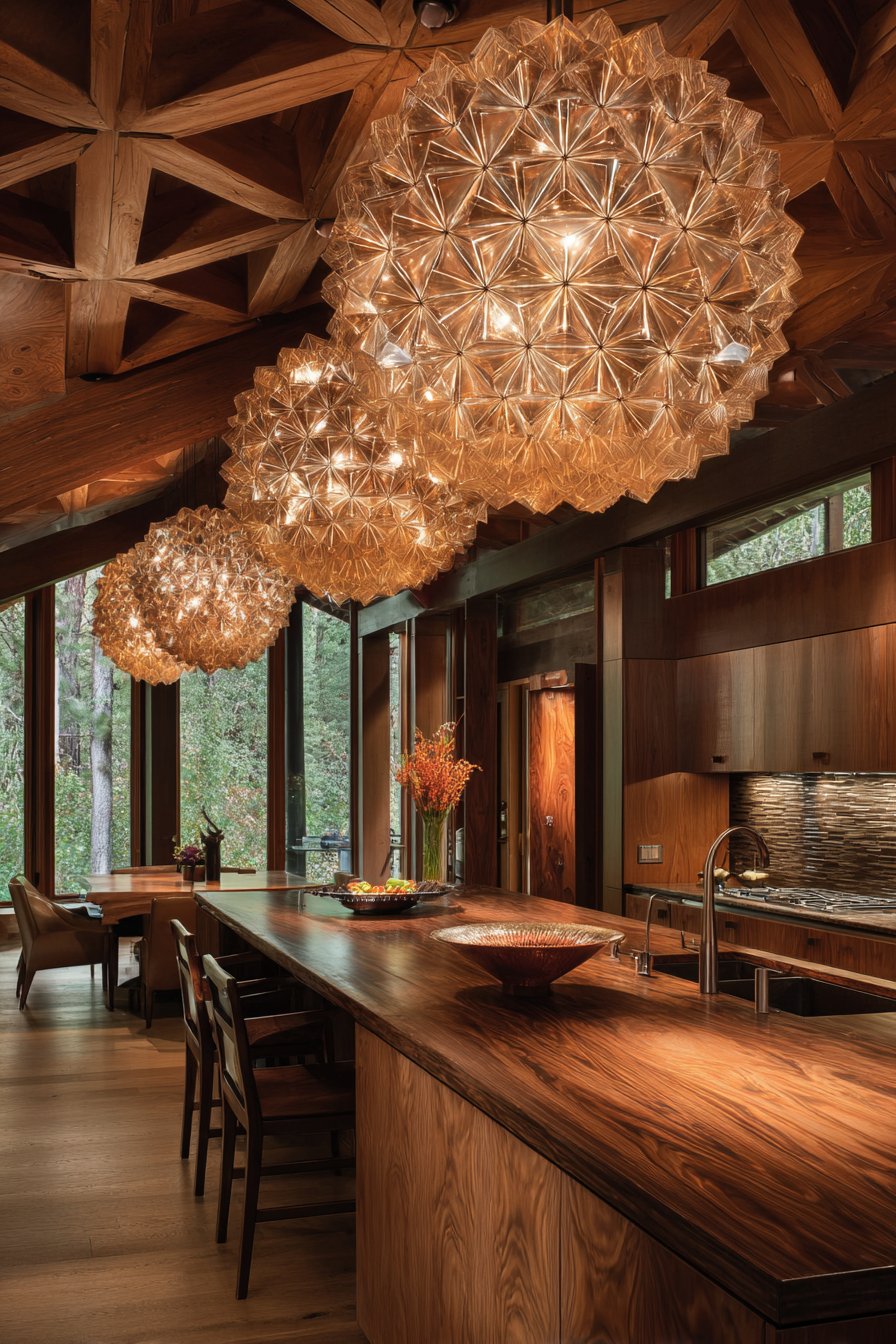
Lighting in 1970s kitchens made bold statements through sculptural pendant lights, amber glass globes, and brass or copper finishes. These fixtures weren’t merely functional—they served as artistic focal points that defined spaces. The era favored warm, diffused lighting over harsh overhead fluorescents, creating intimate, welcoming atmospheres perfect for family gatherings.
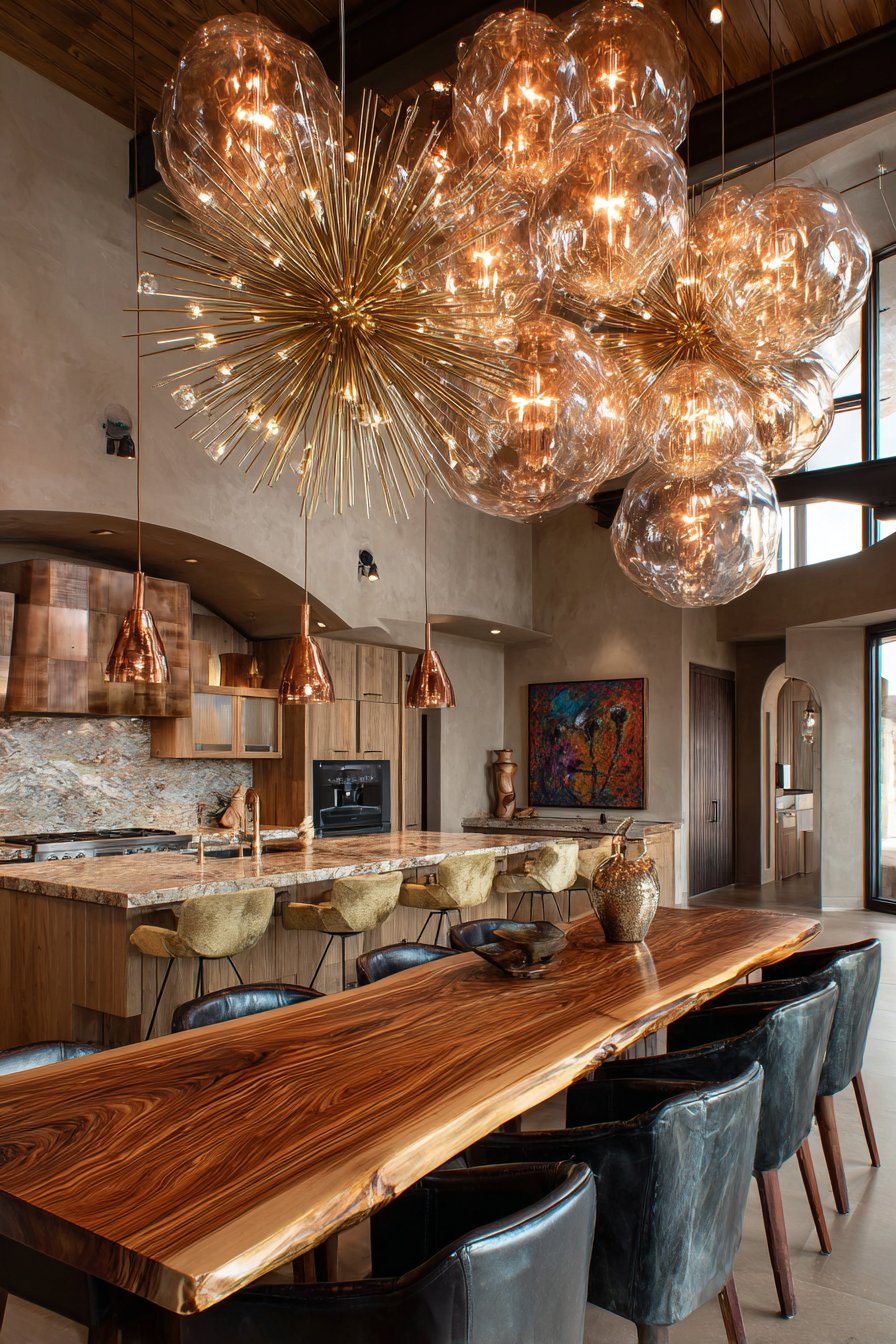
Today’s market offers excellent reproductions of classic 70s lighting styles alongside authentic vintage pieces. Sputnik chandeliers, mushroom-shaped pendants, and geometric fixtures in brass or smoked glass bring instant retro charm. The key is selecting lighting that provides adequate illumination while contributing to overall aesthetic cohesion.
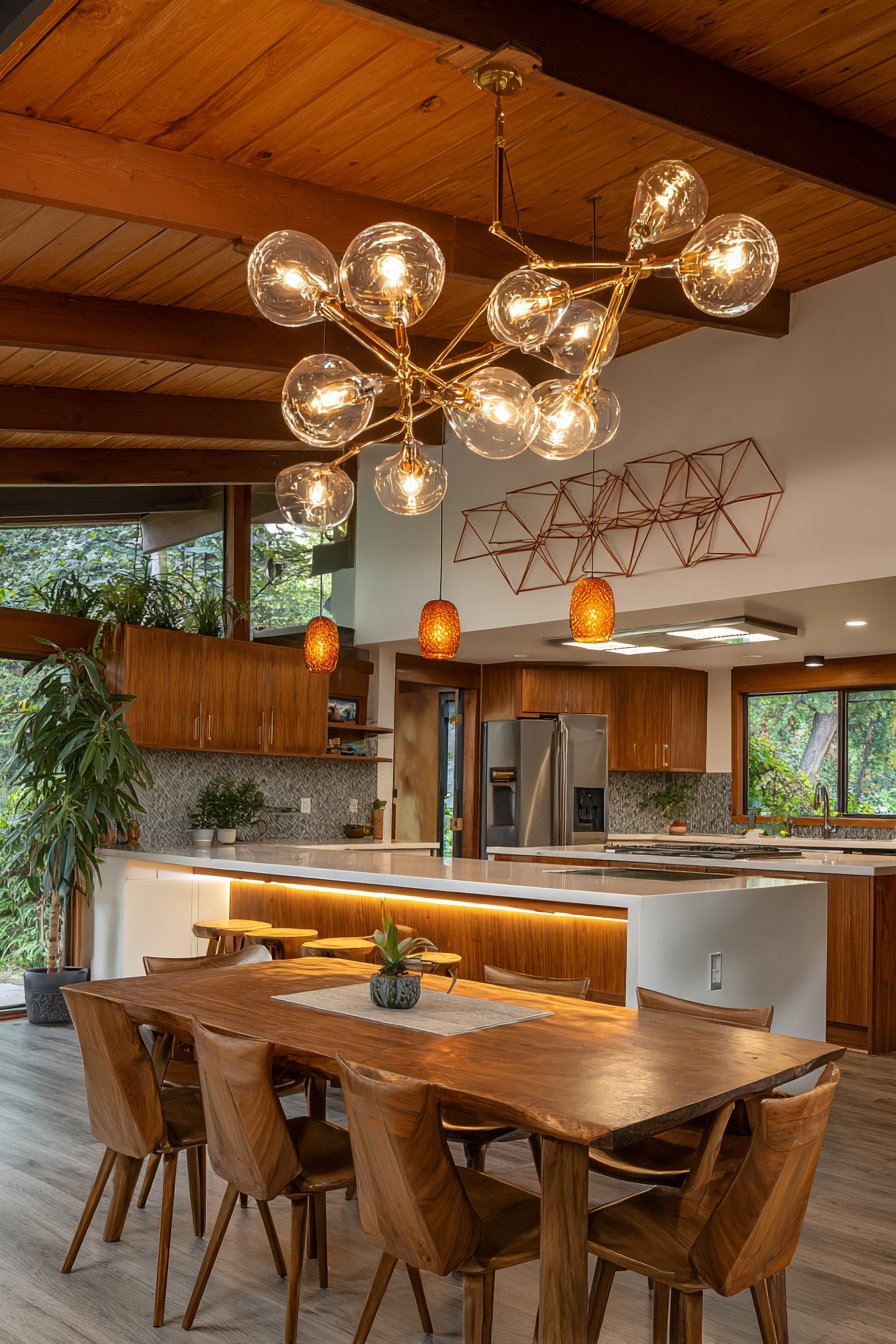
Layered lighting approaches work best, combining ambient, task, and accent lighting. Install vintage-style pendants over islands or dining areas, use under-cabinet strips for work surfaces, and add decorative wall sconces for additional warmth. This multi-source approach honors 70s design sensibilities while meeting contemporary functional needs.
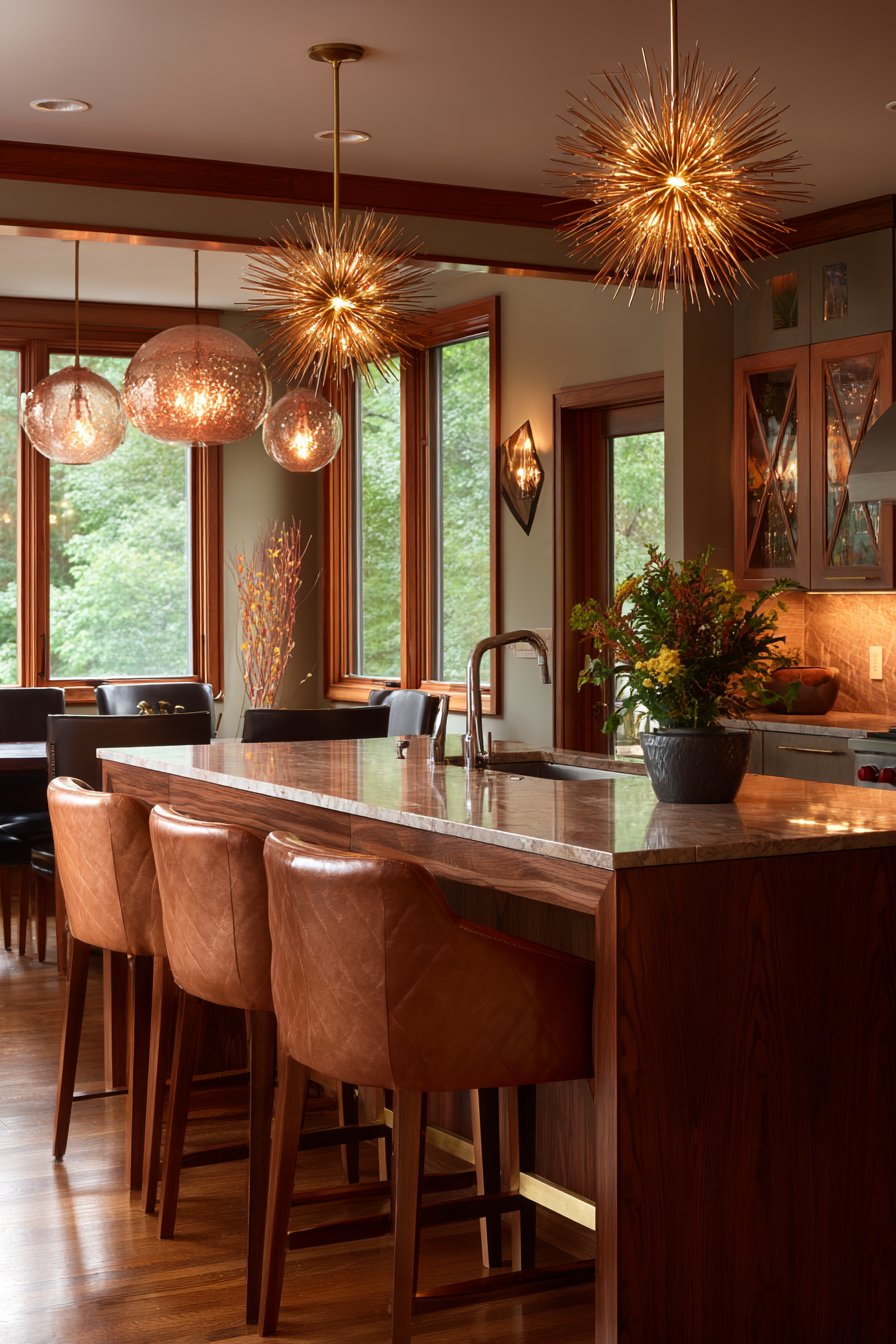
- Choose brass or copper finish fixtures for authentic metallic warmth
- Look for amber, smoked, or frosted glass shades that diffuse light softly
- Install dimmer switches to control ambiance and energy consumption
- Consider multiple smaller fixtures rather than single harsh overhead lights
- Mix vintage-inspired pieces with modern LED technology for efficiency
5. Add Textured Elements and Natural Materials
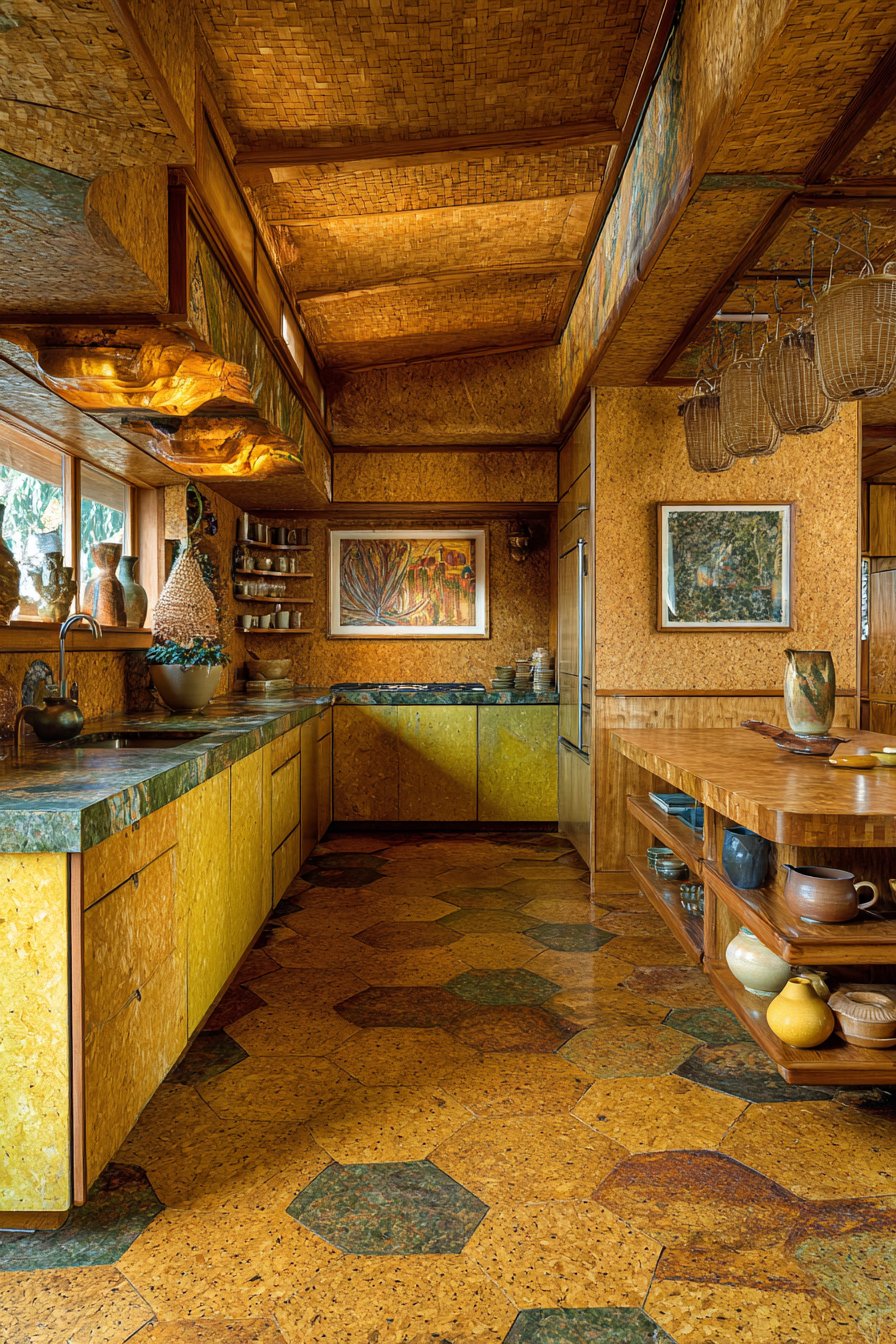
The 1970s embraced tactile richness through varied textures and natural materials. Kitchens featured woven elements, ceramic tiles, cork flooring, and stone accents that created sensory depth. This textural approach made spaces feel crafted and intentional rather than mass-produced. Macramé plant hangers, woven baskets, and ceramic containers added handmade warmth.
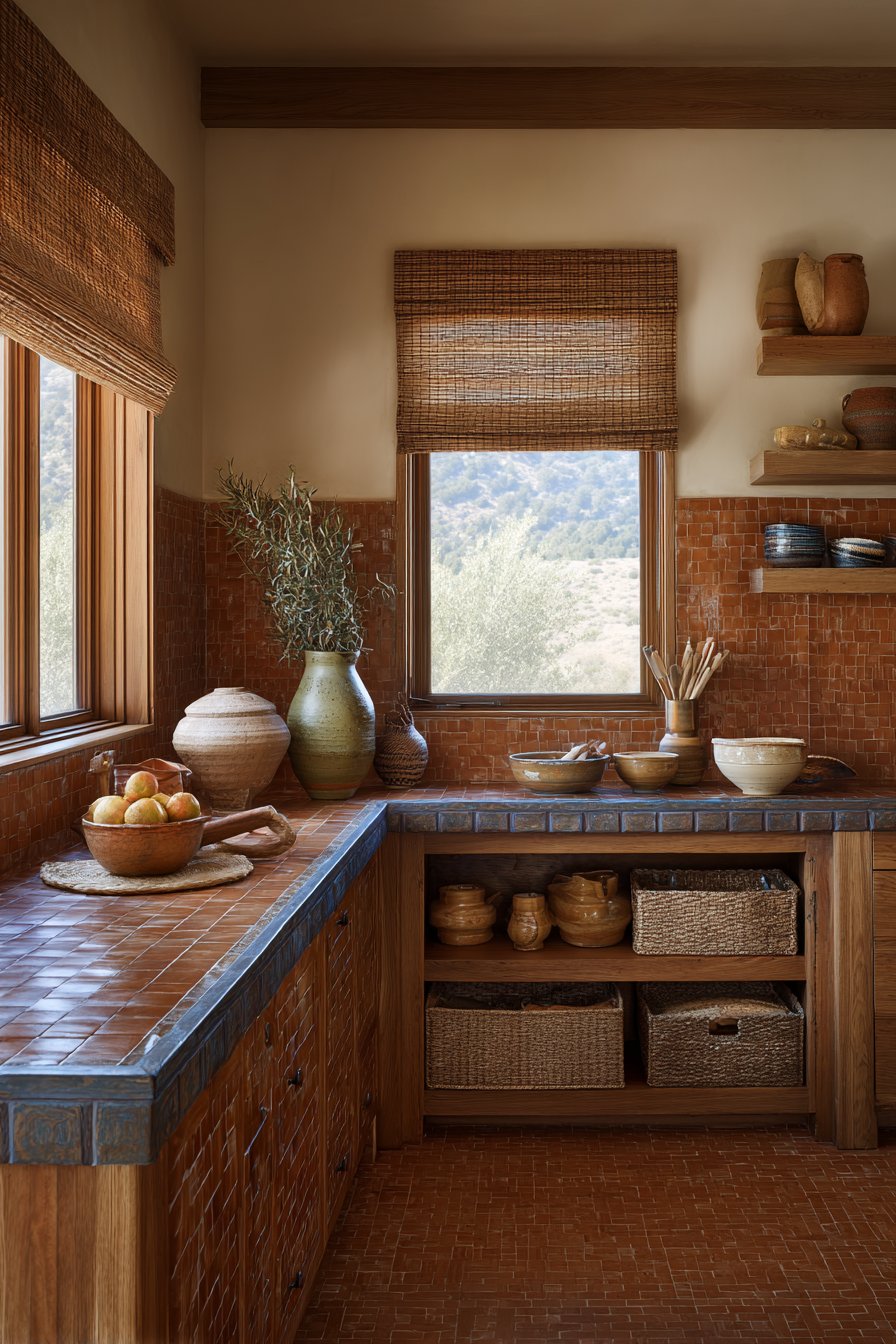
Modern interpretations focus on natural stone countertops, textured backsplash tiles, and woven window treatments that honor this philosophy. Cork flooring has experienced renewed popularity due to its sustainability, comfort underfoot, and distinctive appearance. These materials improve with age, developing authentic patina that enhances rather than diminishes their appeal.
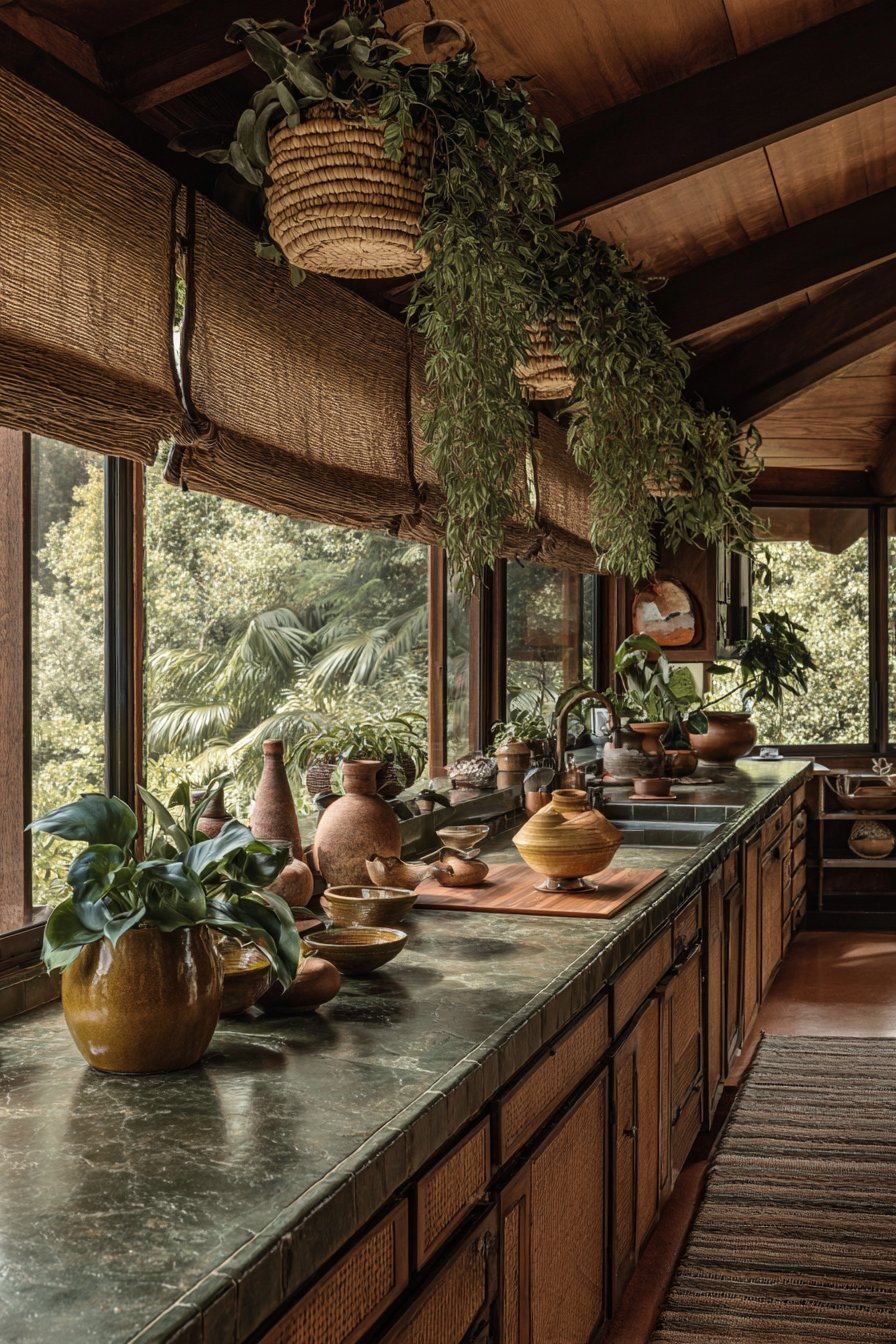
The combination of multiple textures prevents monotony and adds visual interest without requiring bold colors or patterns. Smooth countertops pair beautifully with textured tile backsplashes, while woven blinds soften hard surfaces. This layered approach creates sophisticated, lived-in feelings that characterize the best 70s-inspired designs.
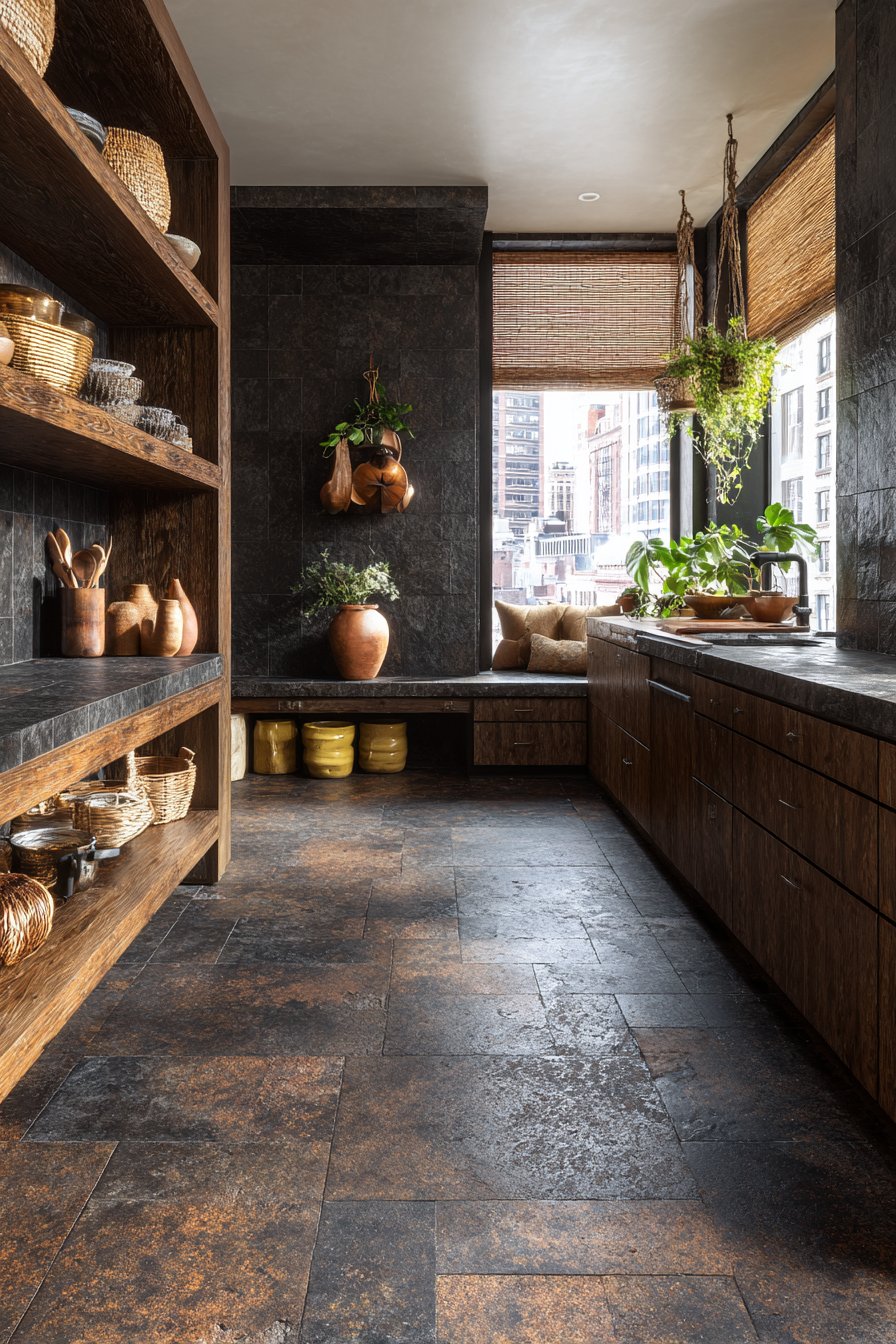
- Incorporate butcher block countertops or cutting board sections for warmth
- Use natural stone like slate or quartzite in earth-tone colors
- Add woven Roman shades or bamboo blinds for window treatments
- Display pottery, wooden utensils, and ceramic containers as functional decor
- Consider cork flooring for sustainability, comfort, and authentic vintage appeal
6. Create Conversation-Friendly Layouts
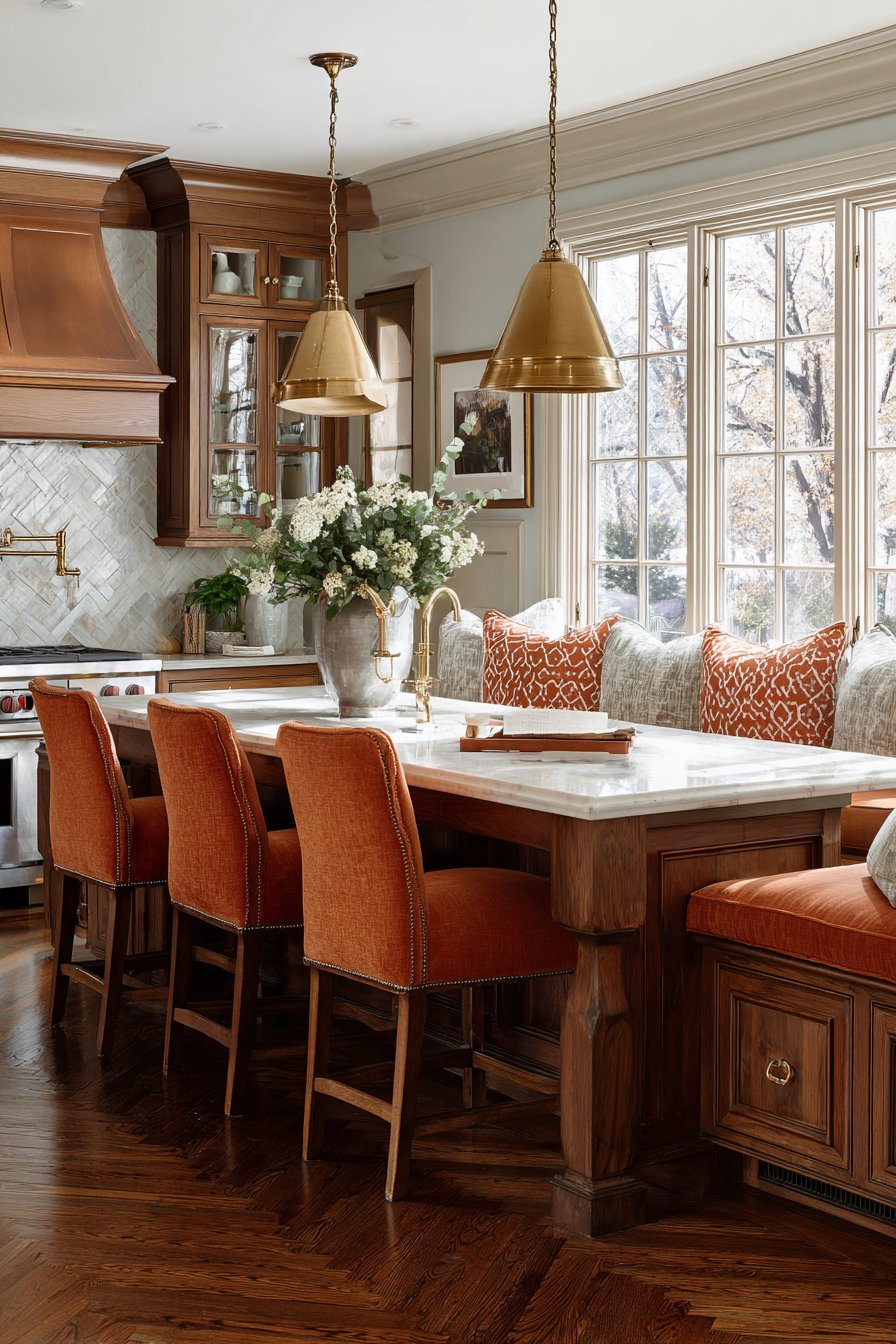
The 1970s kitchen broke from purely utilitarian design by incorporating social spaces within the cooking area. Breakfast nooks with built-in banquettes, peninsula seating, and informal dining areas acknowledged that kitchens served as family gathering hubs. This approach anticipated today’s open-concept layouts and kitchen-as-living-space philosophy.
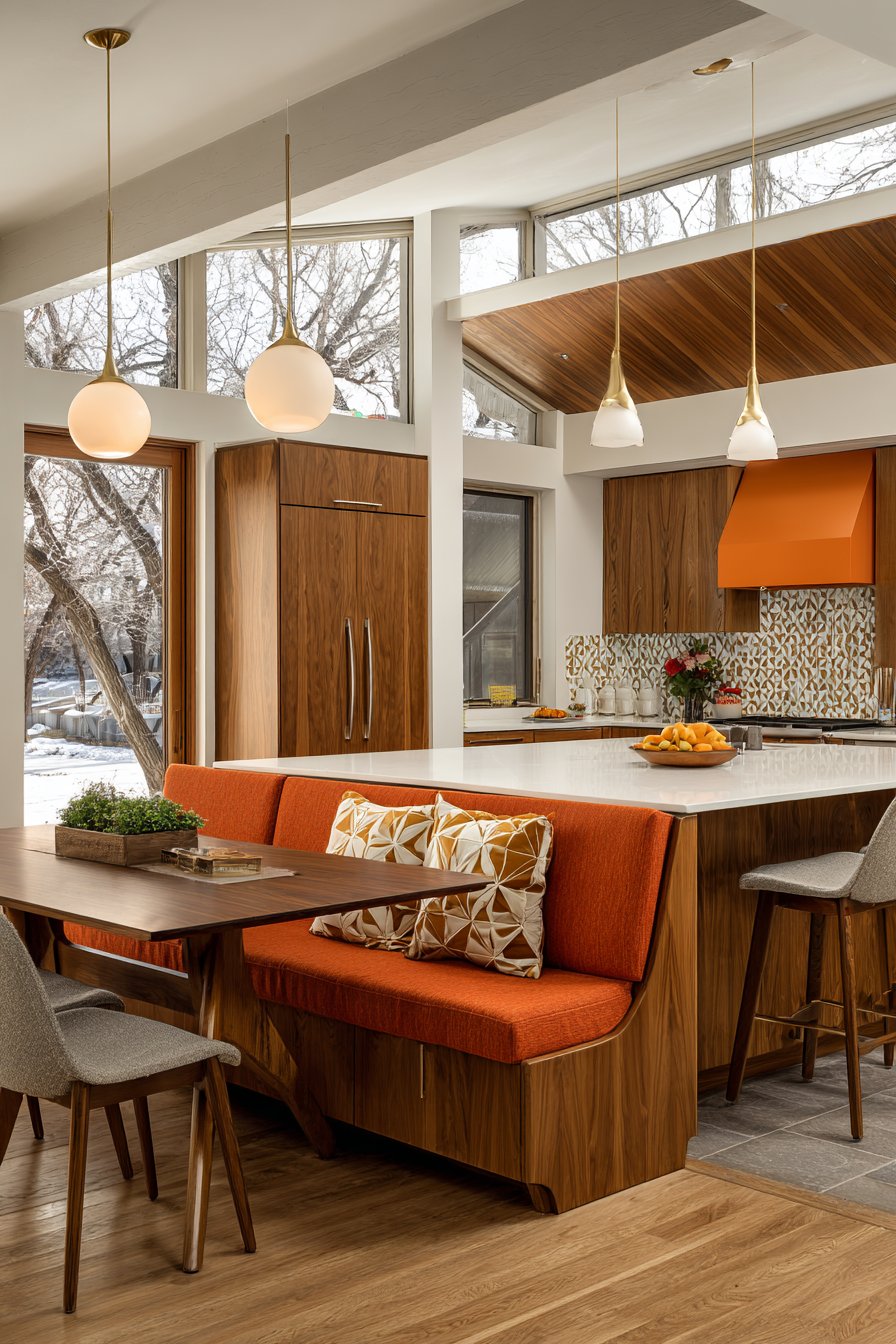
Modern applications maintain this social emphasis through thoughtful layout planning. Islands with seating, comfortable breakfast areas with cushioned benches, and strategic appliance placement that allows cooks to face guests all reflect 70s social sensibilities. The goal is creating spaces where people naturally congregate and linger.
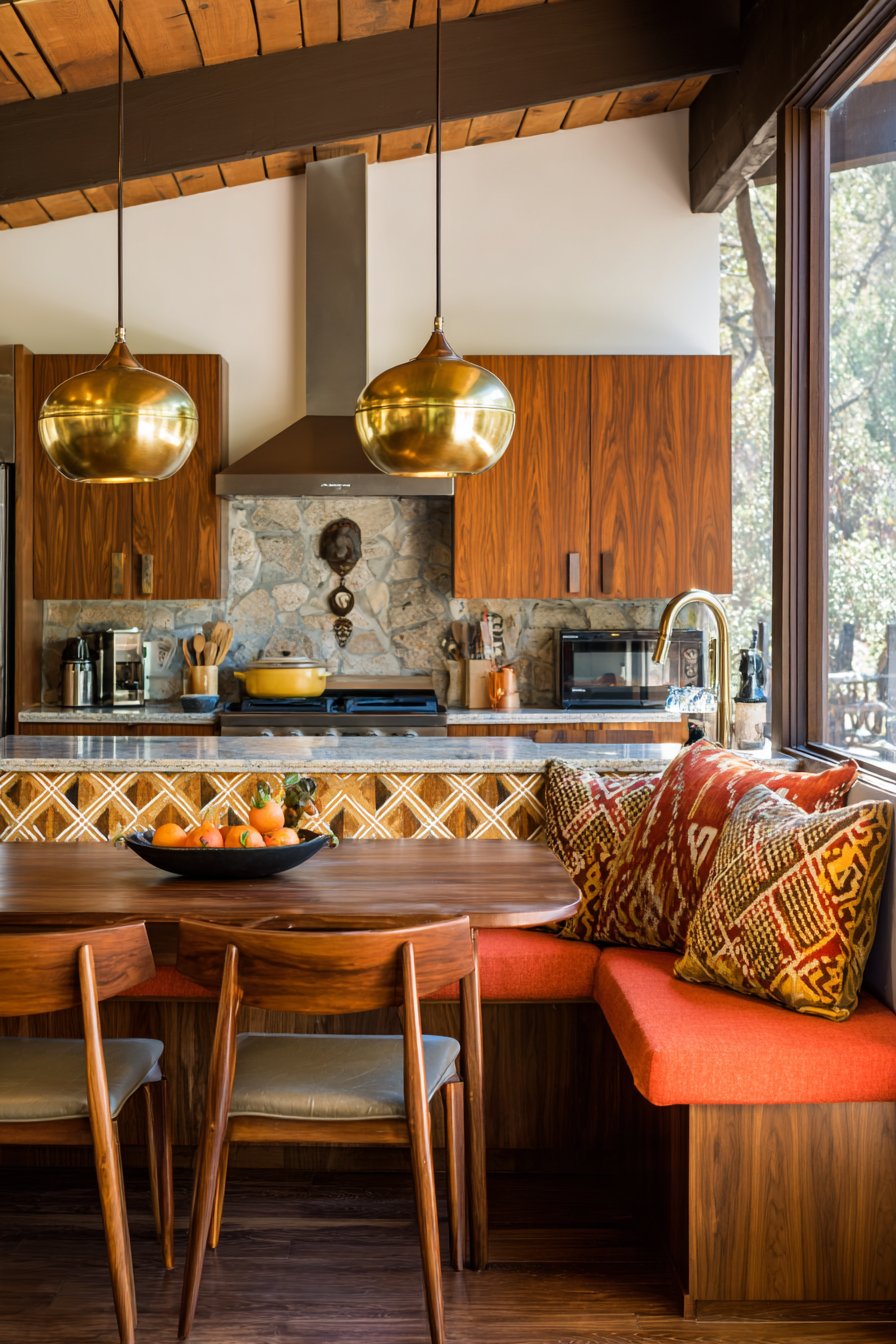
This layout philosophy requires careful space planning but delivers tremendous lifestyle value. Even compact kitchens can incorporate small dining nooks or counter-height seating that transforms the space from purely functional to truly livable. These social zones make kitchens feel like the heart of the home.
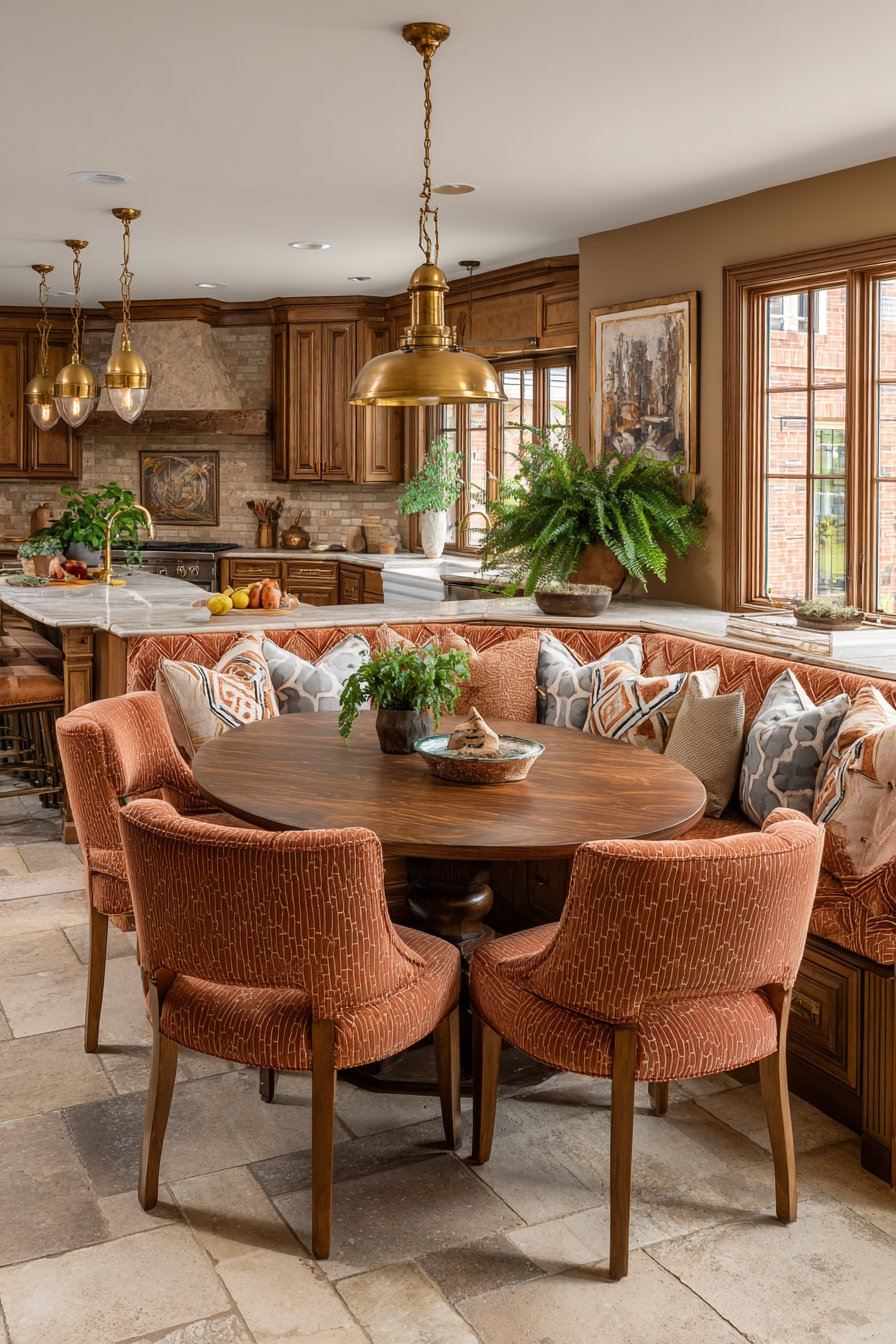
- Add peninsula or island seating for casual dining and conversation
- Create a cozy breakfast nook with built-in banquette seating
- Position primary work areas to allow visual connection with dining spaces
- Include comfortable seating with cushions in vintage-inspired fabrics
- Design layouts that accommodate both cooking and socializing simultaneously
7. Display Colorful Dishware and Vintage Accessories
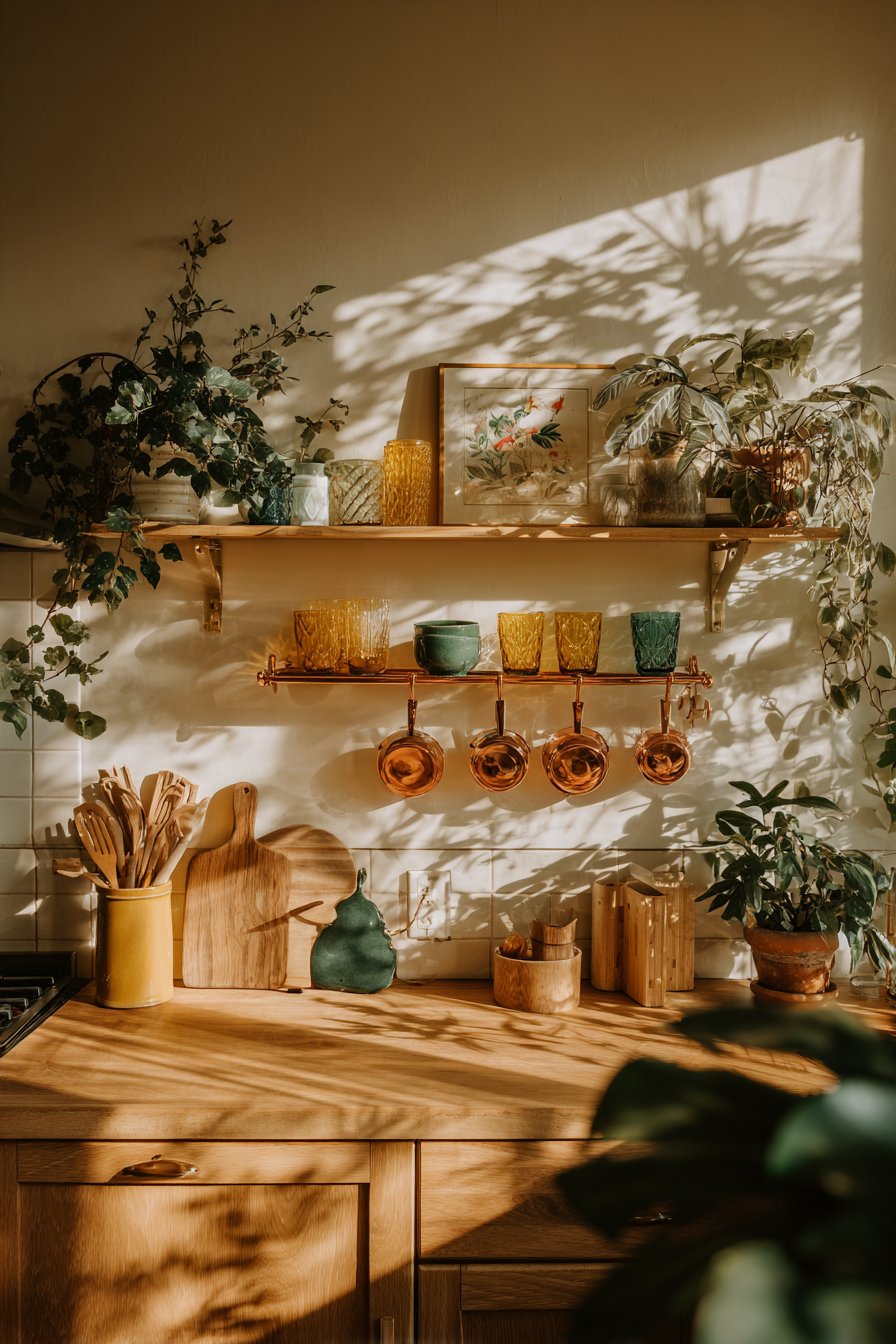
The 1970s kitchen proudly displayed colorful collections of dishes, glassware, and accessories rather than hiding everything behind closed doors. Open shelving showcased coordinated sets in harvest gold, avocado, or burnt orange. This approach made kitchens feel personally curated rather than showroom-perfect, reflecting the personalities and tastes of inhabitants.
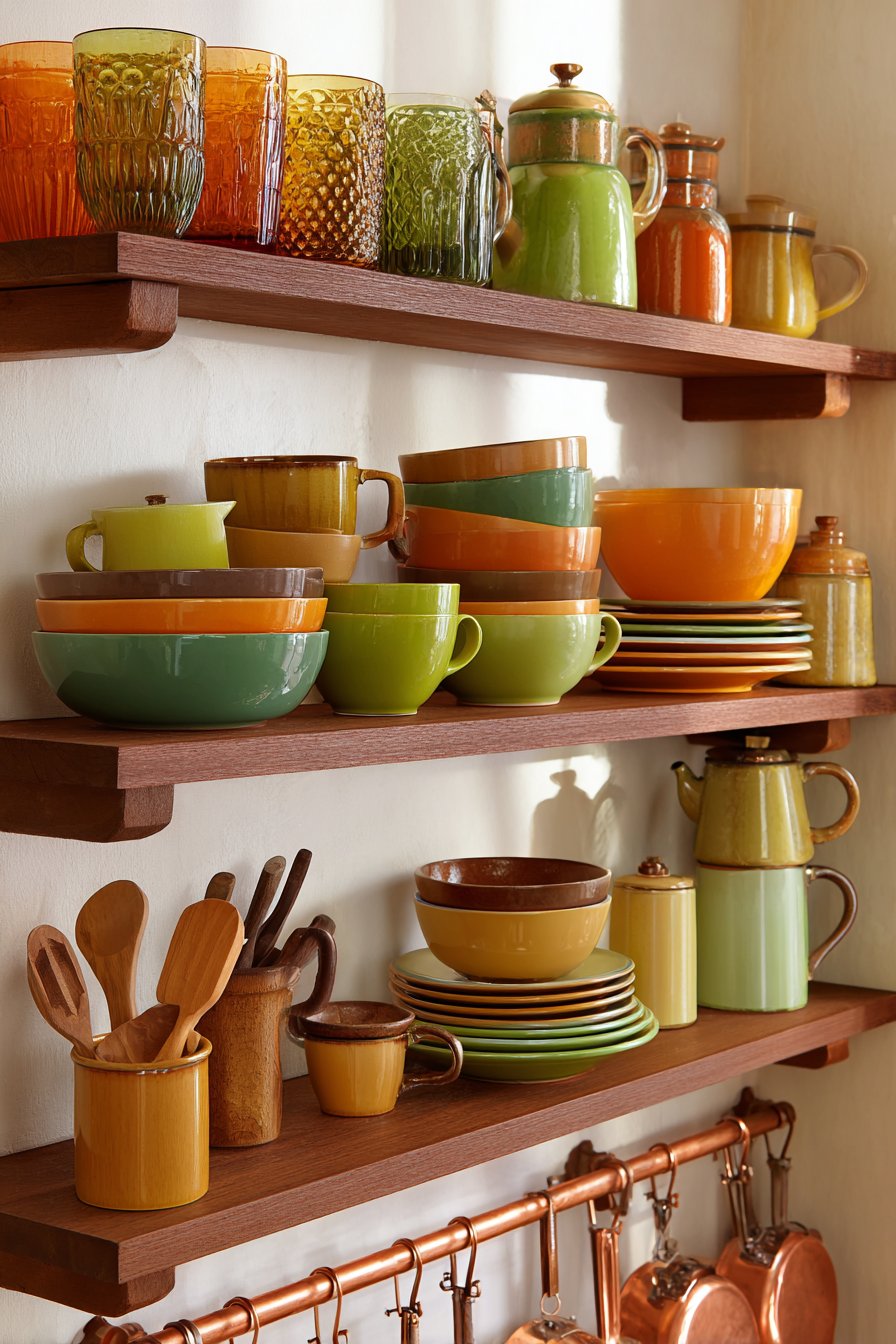
Contemporary versions of this trend emphasize thoughtful curation over cluttered display. Select a cohesive color palette for displayed items, mixing vintage finds with modern pieces that complement the overall aesthetic. Open shelving works best when items are both beautiful and functional, creating practical storage that doubles as decoration.
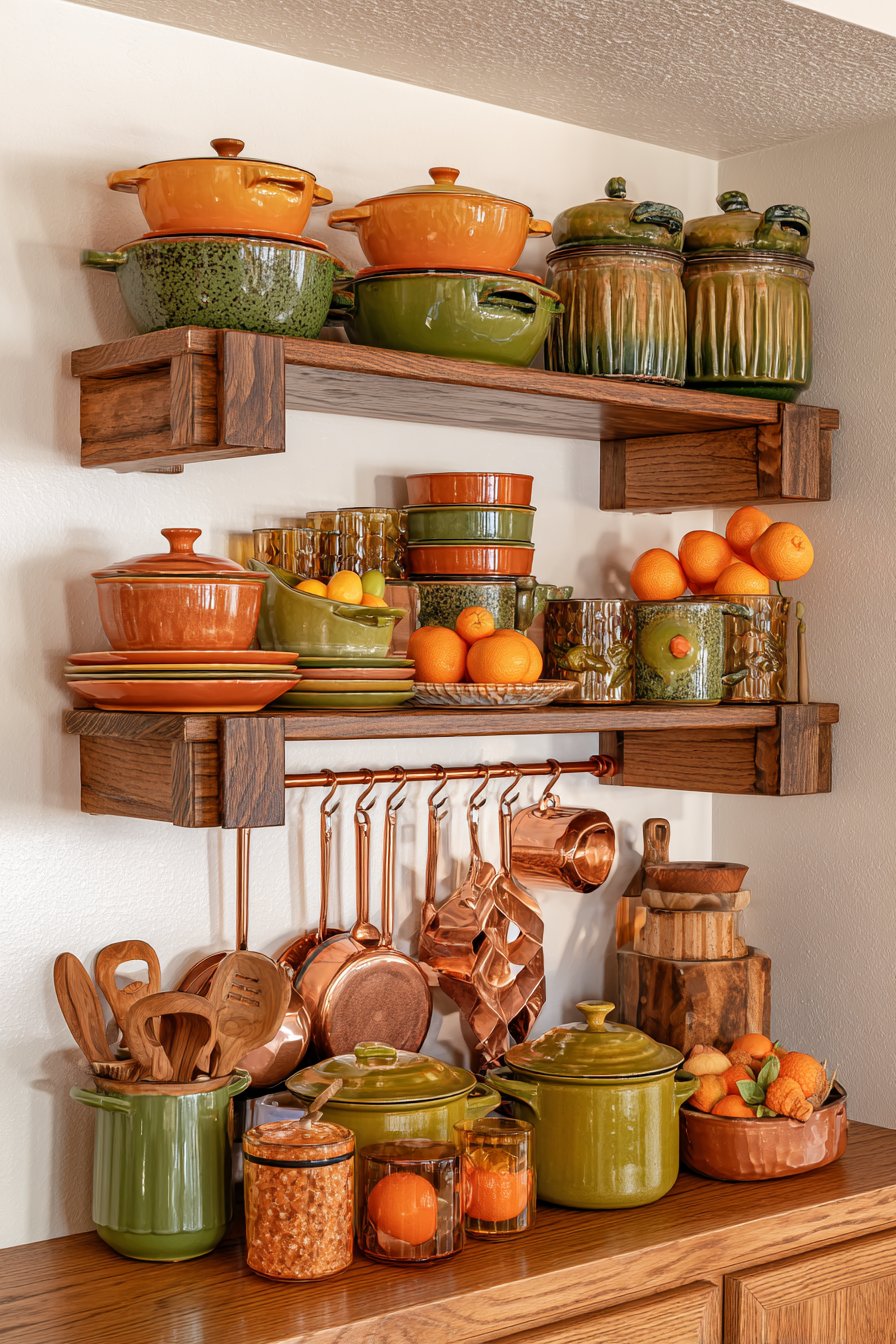
The key to successful display is editing and organization. Group similar items together, vary heights and shapes for visual interest, and maintain some negative space to prevent overwhelm. This balanced approach captures 70s display philosophy while maintaining contemporary sophistication.
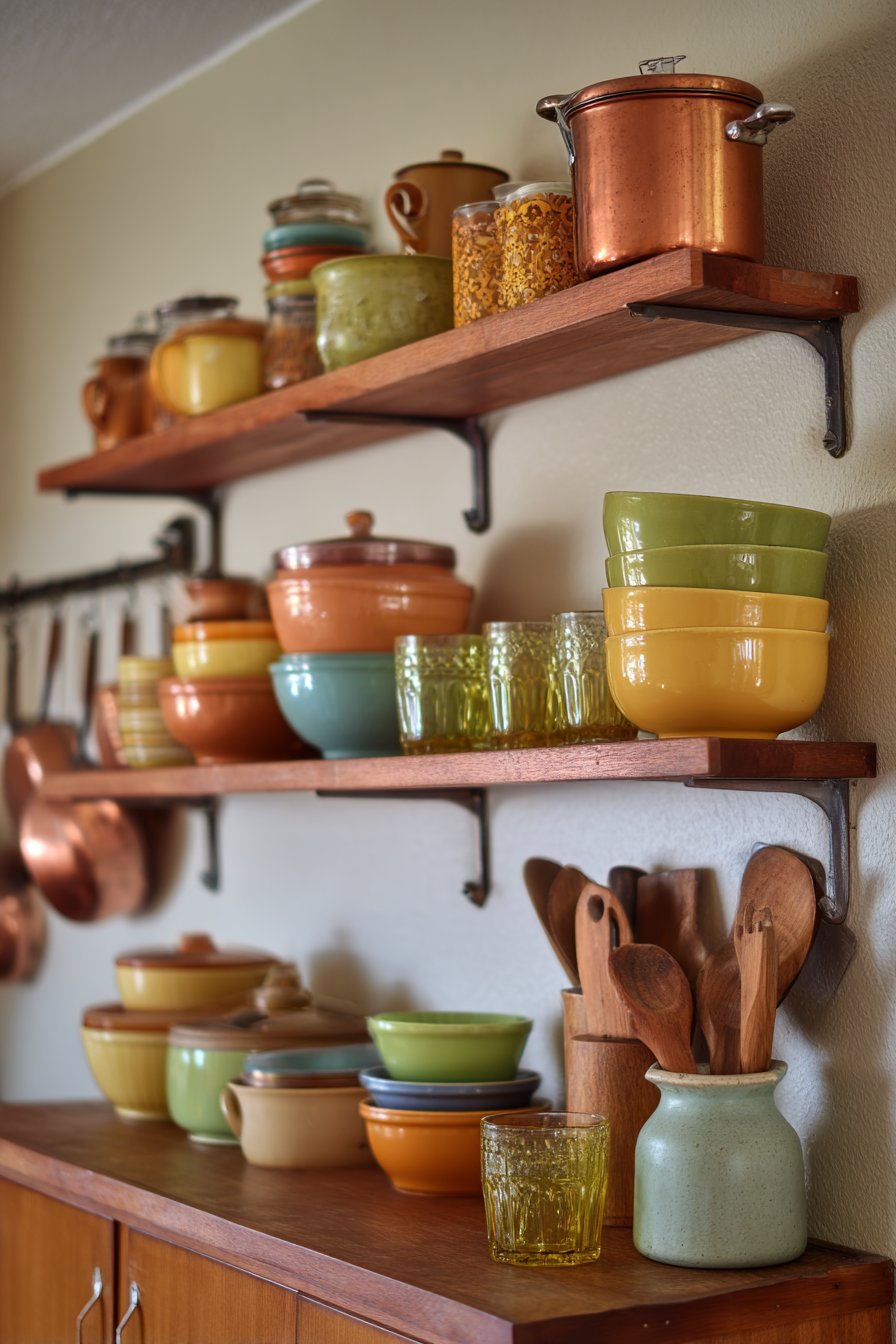
- Install open shelving to display vintage dishware in coordinated colors
- Collect and showcase colorful glassware, ceramic bowls, and serving pieces
- Use vintage canisters and storage containers as functional decoration
- Incorporate hanging pot racks or wall-mounted utensil storage
- Edit displays regularly to maintain visual appeal and prevent clutter
Conclusion
The 1970s kitchen revival represents more than nostalgia—it’s a meaningful response to years of cold minimalism and cookie-cutter design. By embracing warm colors, natural materials, bold patterns, and social layouts, homeowners create spaces with genuine personality and comfort. These elements combine to produce kitchens that feel welcoming, lived-in, and authentically personal.
Incorporating 70s style doesn’t require complete renovation or perfect period accuracy. Start with simple changes like swapping light fixtures, adding textured textiles, or displaying vintage dishware. Layer elements gradually, allowing your space to evolve naturally into a kitchen that honors retro charm while meeting modern needs. The beauty of this trend lies in its flexibility and warmth—qualities that never truly go out of style.
"As an Amazon Associate, I earn from qualifying purchases."
